Article

Investigation of Machine Learning Techniques for Disruption Prediction Using JET Data

Centre for Mathematical Plasma Astrophysics, KU Leuven, 3000 Leuven, Belgium
*
Author to whom correspondence should be addressed.
Plasma 2023, 6(1), 89-102; https://doi.org/10.3390/plasma6010008
Submission received: 5 December 2022 / Revised: 13 February 2023 / Accepted: 21 February 2023 / Published: 24 February 2023
(This article belongs to the Special Issue Feature Papers in Plasma Sciences)

Abstract

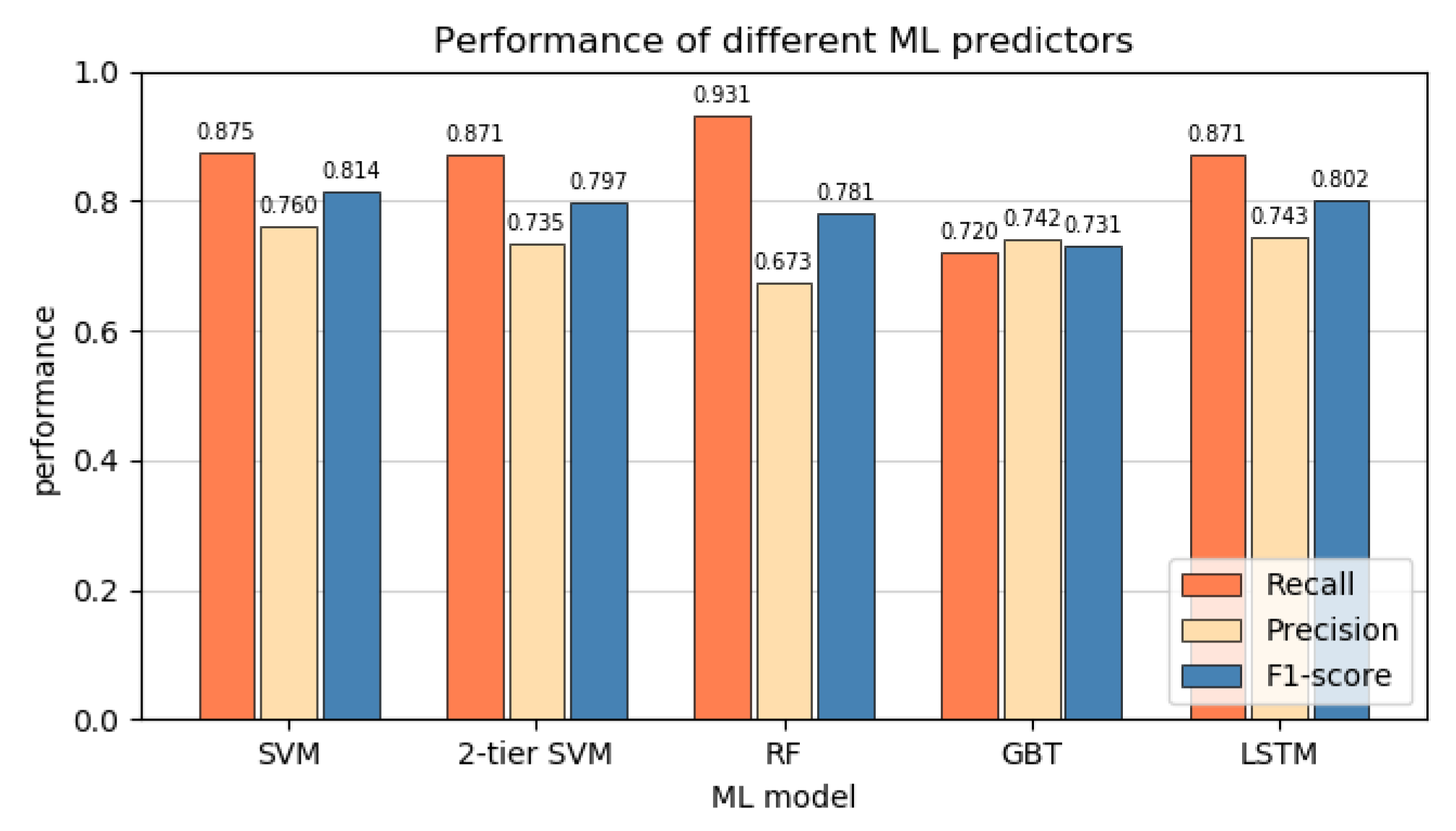
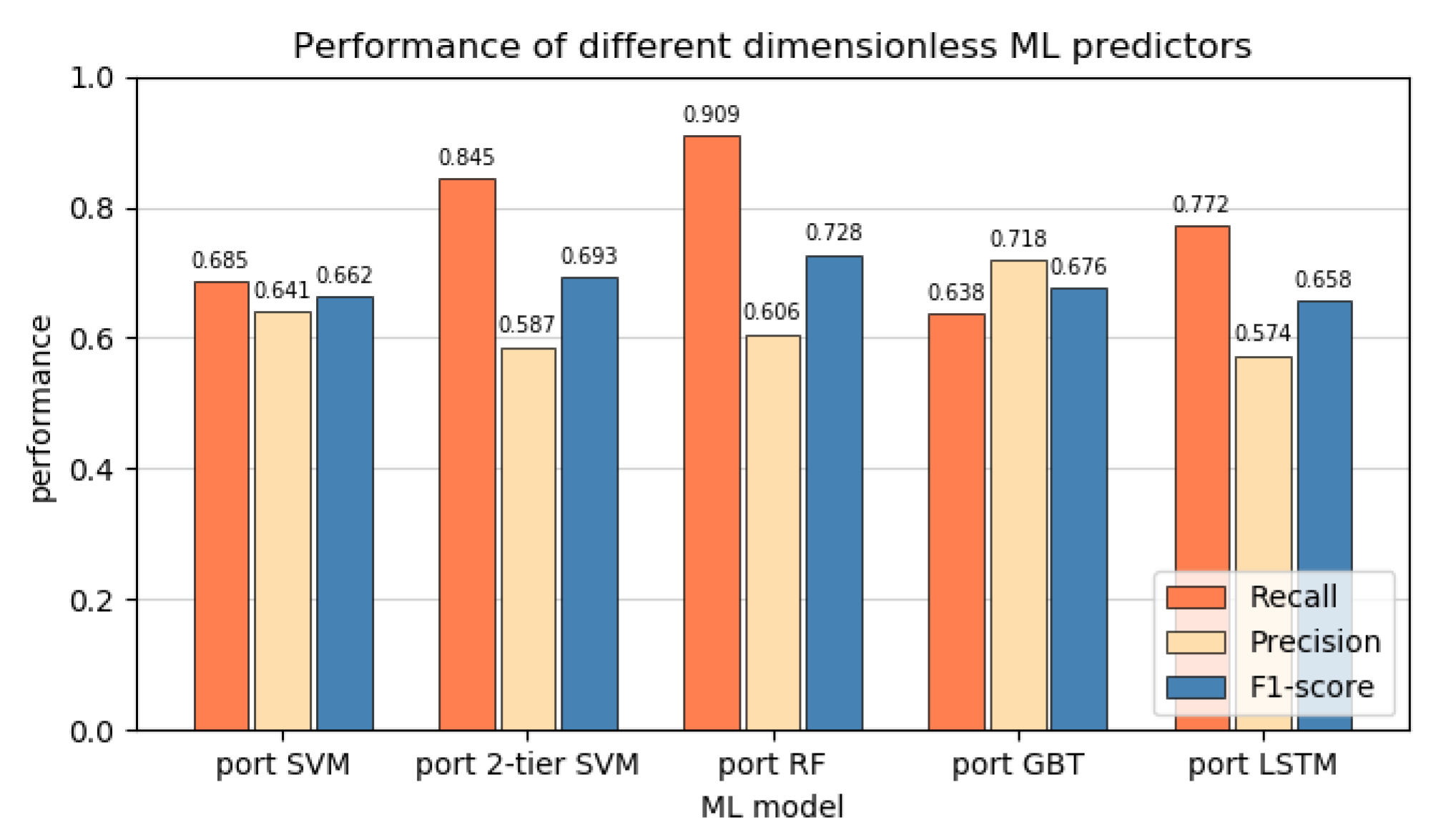
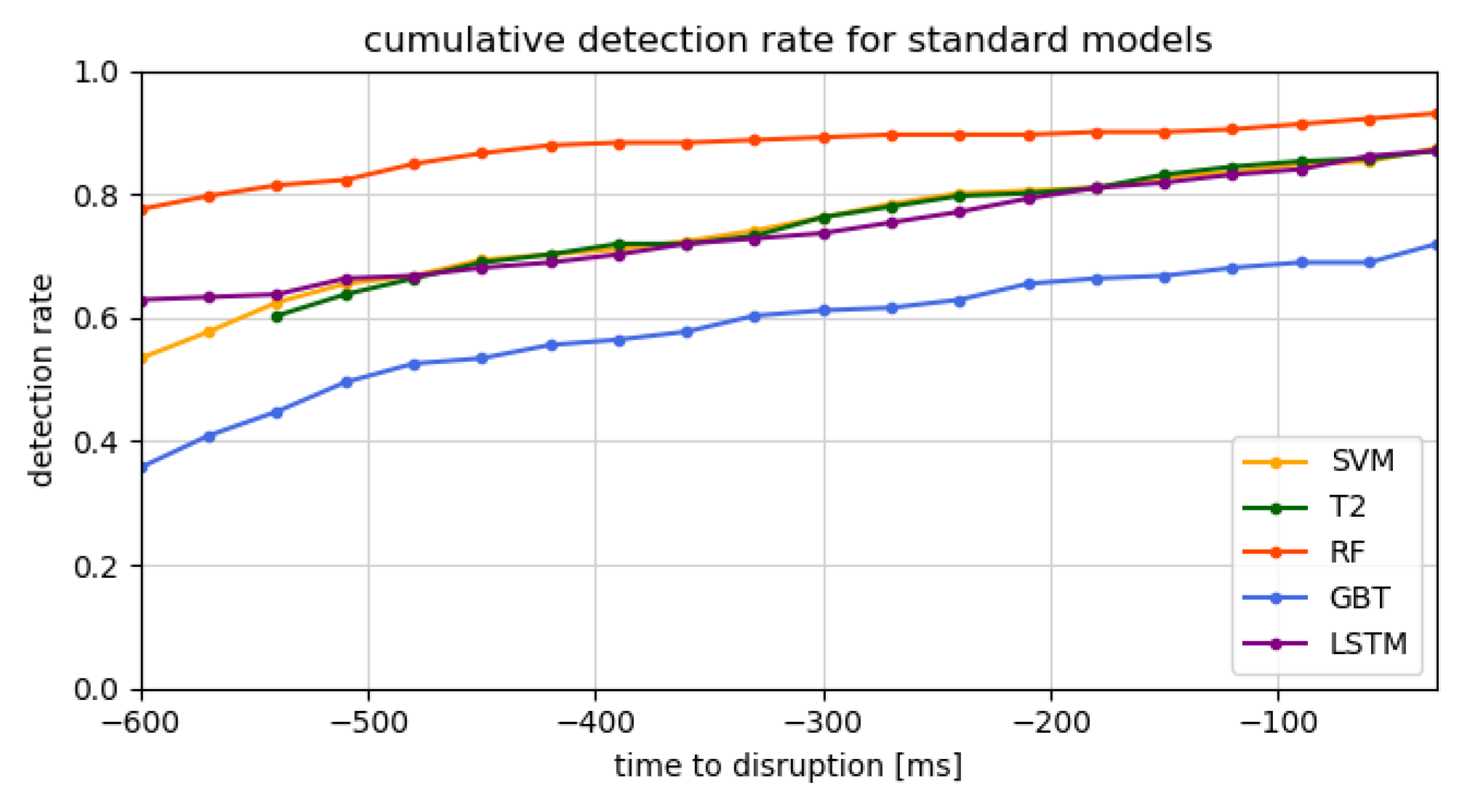
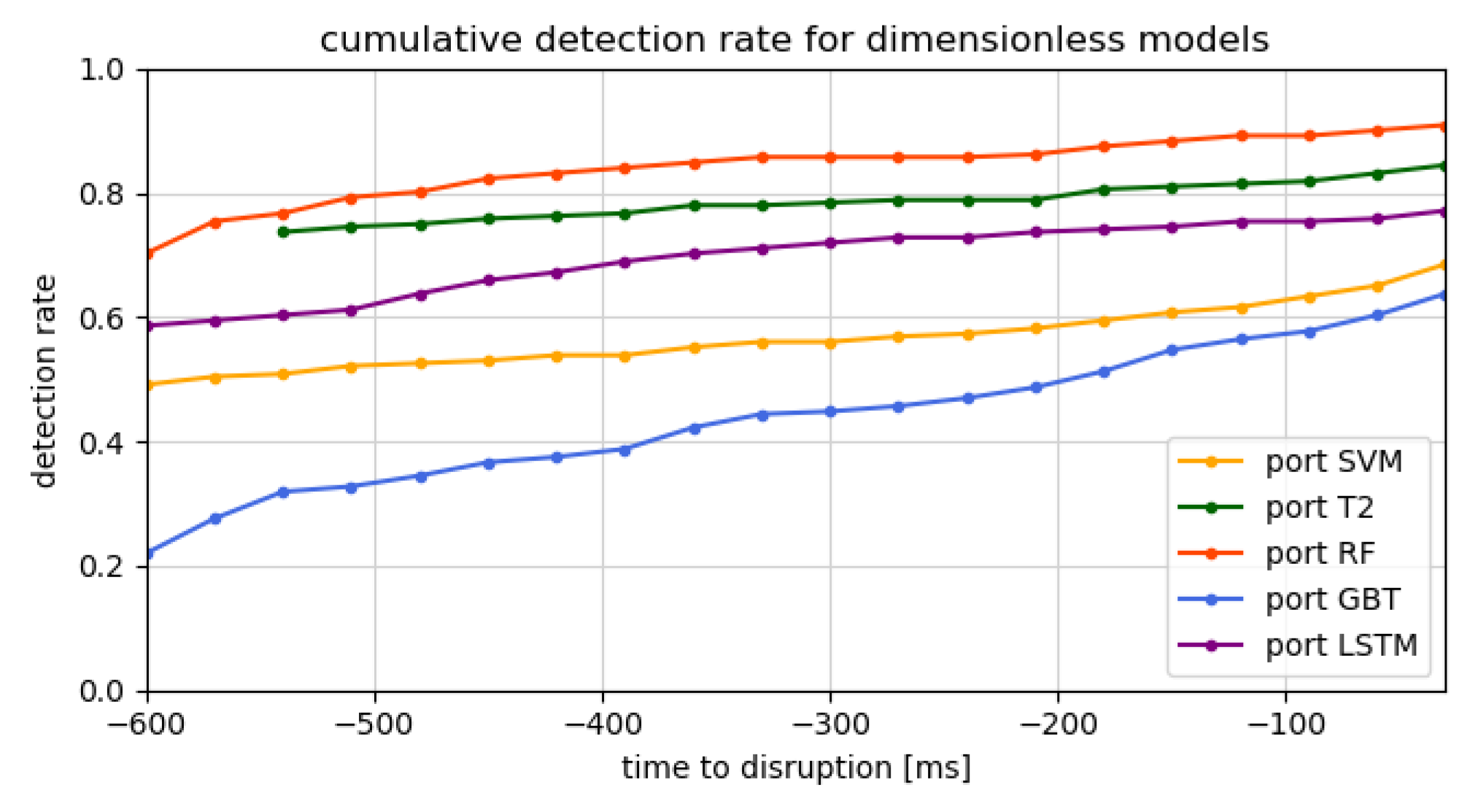
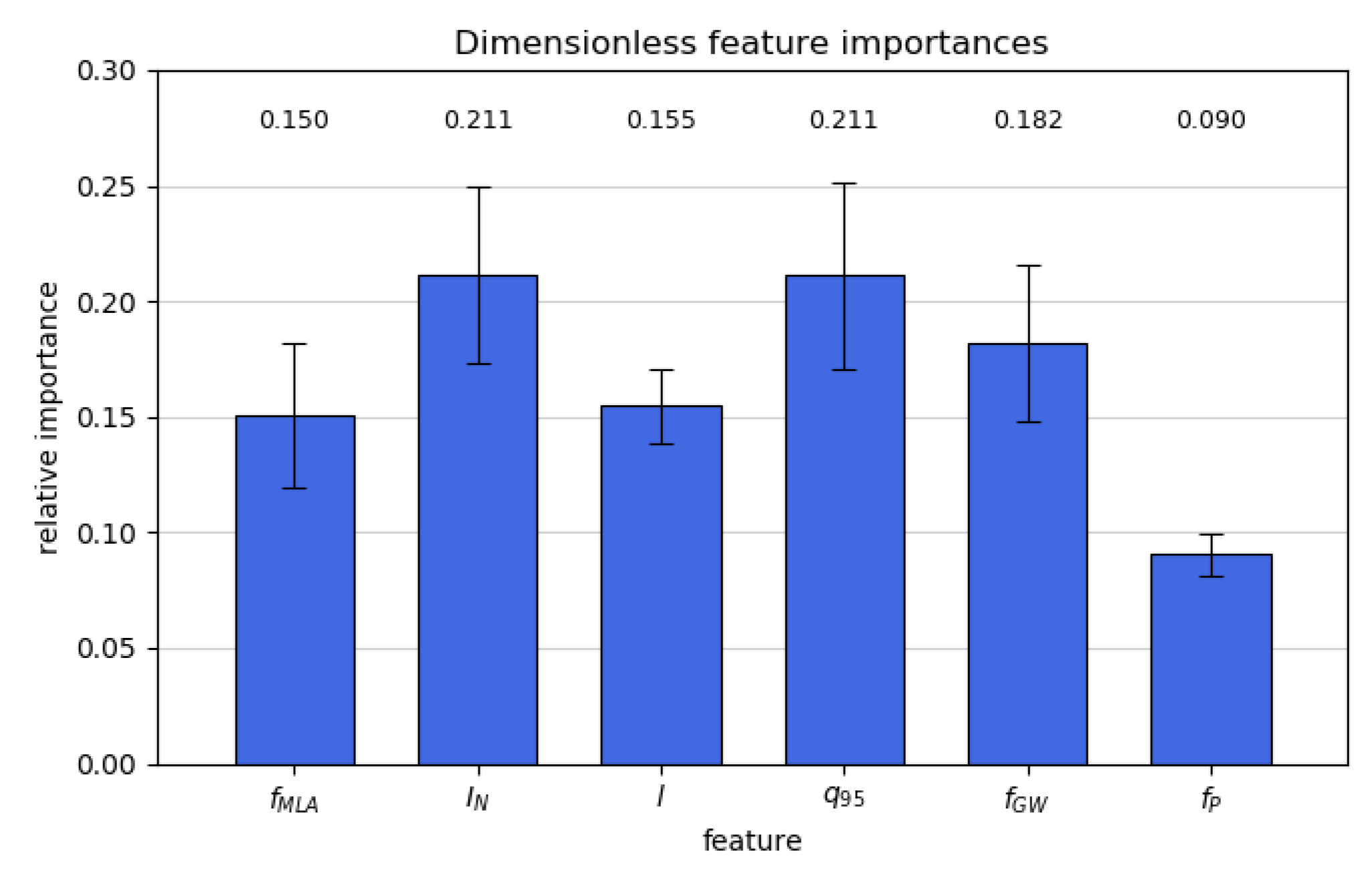
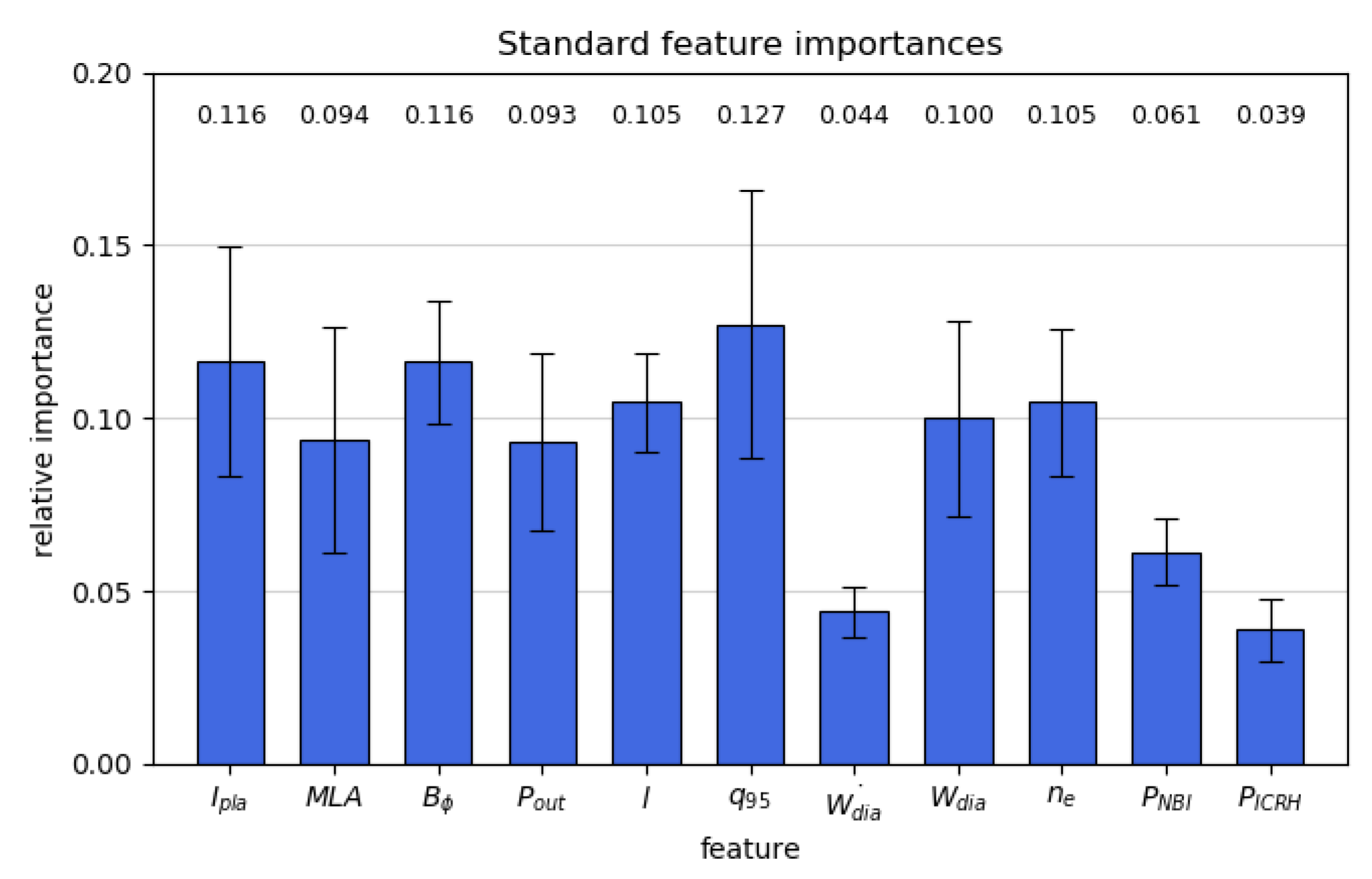
Disruption prediction and mitigation is of key importance in the development of sustainable tokamak reactors. Machine learning has become a key tool in this endeavour. In this paper, multiple machine learning models are tested and compared. A focus has been placed on the analysis of a transition to dimensionless input quantities. The methods used in this paper are the support vector machine, two-tiered support vector machine, random forest, gradient-boosted trees and long-short term memory. The performance between different models is remarkably similar, with the support vector machine attaining a slightly better accuracy score. The similarity could indicate issues with the dataset, but further study is required to confirm this. Both the two-tiered model and long-short term memory performed below expectations. The former could be attributed to an implementation which did not allow error propagation between tiers. The latter could be attributed to high noise and low frequency of the input signals. Dimensionless models experienced an expected decrease in performance, caused by a loss of information in the conversion. However, random forest and gradient boosted trees experienced a significantly lower decrease, making them more suitable for dimensionless predictors. From the disruption detection times, it was concluded that several disruptions could be predicted at more than 600 ms in advance. A feature importance study using the random forest indicated the negative impact of high noise and missing data in the database, suggesting improvements in data preparation for future work and the potential reevaluation of some of the selected portable features due to poor performance.
Keywords: machine learning; plasma physics; tokamak; disruptions; portable prediction models; SVM; gradient-boosted trees; random forest; LSTM; JET machine learning; plasma physics; tokamak; disruptions; portable prediction models; SVM; gradient-boosted trees; random forest; LSTM; JET