Article

Clay-Based Filter for Industrial Liquid Purification and Separation

VINČA Institute of Nuclear Sciences—National Institute of the Republic of Serbia, University of Belgrade, 12-14 Mike Petrovića Alasa Street, Vinča, 11351 Belgrade, Serbia
*
Author to whom correspondence should be addressed.
Ceramics 2026, 9(7), 66; https://doi.org/10.3390/ceramics9070066
Submission received: 26 May 2026 / Revised: 12 June 2026 / Accepted: 22 June 2026 / Published: 26 June 2026

Abstract

Clay, as a sediment material, is an attractive option for the production of porous ceramics due to its low price and high abundance. Porous ceramics possess a combination of essential properties of clay-based materials, including high porosity and thermal and chemical stability, making them suitable for various industrial applications, such as filters, heat insulators, and absorbents. In this study, thermally and chemically purified clay was mixed with boric acid as a pore-forming agent. Obtained results reveal that different contents of boric acid (2 wt.% and 0.5 wt.%) and variations in synthesis conditions, including low pressing pressures up to 60 MPa and low sintering temperatures of 1150 °C and 1300 °C, optimize the production of a filter medium with good separation and mechanical properties. Further, these findings indicate that an adequate combination of boric acid content and synthesis conditions positively affects mechanical properties, including values of hardness, Young’s modulus, compressive and tensile strength of clay-based filters. The clay-based filter with 2 wt.% boric acid exhibited a larger maximum pore diameter of nearly 0.2 mm, compared to the one with 0.5 wt.% boric acid. The filtering efficiencies of both filters were tested on pharmaceutical-grade ciprofloxacin with removal efficiency above 80% for two tested concentrations (6 μM and 9 μM).

1. Introduction

In recent decades, significant advancements have been made in developing porous materials from natural minerals. One of the oldest materials still in use today is clay. Ever since the Neolithic era, when many of the clay ceramic vessels and artifacts we know today were created, particularly during the time of the Vinča culture, considered the most technologically advanced prehistoric culture [1], people have started to recognize the vast potential of clay as a natural material for practical applications.
Filtration is a key water purification process that involves the passage of water through a porous medium that removes impurities as the water flows through. The effectiveness of water quality improvement through filtration relies on the extent to which the filter material can retain or eliminate impurities. Porous ceramics, which originate from clay, offer a combination of desirable material properties, including high porosity as well as excellent thermal and chemical stability. These attributes make them highly suitable for various applications, including filtration [2,3,4,5], thermal insulation [6,7,8,9], adsorption [10,11], catalyst support [12,13], and advanced environmental technologies, such as membranes [14,15] and chromatography columns [16].
Numerous studies have been conducted on the production and application of clay-based materials. For example, the removal efficiency of impurities and the microbial activity of a ceramic filter produced from kaolin and soft wood, with clay and activated carbon, were investigated [17,18]. Similarly, ceramic filters have been made from clay using optimized mixing proportions of clay and sawdust, an organic combustible material, as well as with clay and boric acid, an inorganic additive [19,20,21,22]. Clay-based filters exhibit enhanced filtration rates compared to those of conventional slow sand filters, particularly when blended with fly ash [23]. Furthermore, it has been reported that the durability and resistance of water filters can be improved by modifying the clay material through engineering of soil characteristics, such as grain size and mineralogical composition [24].
During surface coal mining in the Kolubara mining basin near Belgrade, Serbia, a considerable amount of clay is generated as a byproduct. This material is typically deposited in open-air landfills, creating significant environmental concerns. However, the deposited clay has significant economic potential, as it is a low-cost, widely available raw material suitable for the synthesis of porous ceramics.
The development of clay-based filters for purifying industrial water is currently underway. This process involves using boric acid (H3BO3) as an inexpensive, environmentally friendly agent to promote the formation of a porous structure. By applying a low-temperature synthesis approach, the aim is to produce ceramic filters with a porous structure, which is achieved by burning out the additive during processing [20,21,22,24,25,26,27]. Boric acid was added to promote the formation of a porous microstructure. When heated above 170 °C, boric acid dehydrates to form metaboric acid (HBO2), and, with further heating, it converts into boron trioxide (B2O3). The presence of H3BO3 lowers the sintering temperature of silicon dioxide ceramics, thereby enhancing process efficiency. Even small additions of B2O3 to clay can significantly improve its performance and applicability. Since ceramic materials are naturally susceptible to fracture, optimizing the microstructure to enhance the effective tensile strength of these filters without compromising their porosity or filtration capacity is also an important factor. In many industrial applications, filters are expected to withstand long durations of service where tensile strength is a key indicator of the material’s ability to resist fatigue and higher temperatures and maintain their geometric integrity under mechanical stress during assembly. Despite the recognized importance of tensile strength as a critical mechanical property, there is a notable scarcity of literature on the subject.
One of the pioneering studies investigating the influence of B2O3 on clay properties was conducted by Kokunešoski et al. [20]. Subsequent articles provided a detailed characterization of clay obtained from coal mines, as well as mixtures of clay with H3BO3 containing up to 2 wt.% of the additive [20,21,22,23,24,25,26,27]. These studies also examined the effects of pressing pressure (40–80 MPa) and sintering temperature (850–1300 °C) on the formation and properties of porous sintered compacts.
In this way, filters with tailored properties can be mass-produced from inexpensive, readily available clay, a natural raw material. In the presence of H3BO3 (as low-melting glass), the sintering temperature of SiO2 and alkali and alkali–earth oxides like MgO, Na2O, K2O, etc. (originating from clay) will be lowered. During the cooling process, the places where these oxides were present remain in the form of vacancies (pores). This study showed that clay, as a natural source of SiO2 containing a small amount of H3BO3, can be used as an additive to produce durable porous pilot SiO2-based filters [20,21,22,25,26,27]. According to all mentioned above, in previous work [20,25], the early phase of laboratory level research performed on a series of samples synthesized by varying the content of H3BO3 up to 2 wt.% used as a pore-forming agent, and by applying a pressure of up to 80 MPa on compacts with a diameter of ~10 mm, and sintering them at lower temperatures up to 1300 °C was discussed. It was reported that the microstructure and mechanical properties of macroporous sintered clay filters significantly depend on process parameters, but with the remaining question of the specific application of each obtained ceramic filter.
This study focuses on developing a low-temperature synthesis method for a filter based on porous ceramics with a macropore size by burning out the additive [2,3,17,18]. Based on previous findings, powder mixtures containing 0.5 wt.% and 2 wt.% H3BO3 were selected for filter production [20]. The clay from the Serbian Kolubara mine, as a natural source of SiO2, was used for the production of ceramic filters in this work. Until now, no optimization of the content of H3BO3 and sintering parameters has been performed on Kolubara mine’s clay to produce a filter that balances permeability and mechanical properties for application in various industrial and urban wastewater treatments. The effects of processing parameters on the filtration performance characteristics of clay monoliths were systematically studied, with the main focus on the removal efficiency of suspended matter from solution after biological processes. Moreover, the influence of process parameters on tensile strength was discussed. To the best of our knowledge, this is one of the few studies to propose the use of simple and inexpensive resources, such as clay from the Serbian Kolubara mine, for the production of efficient and reliable filters suitable for applications. Particularly, these filters are suitable for application in less developed regions with limited capital investments in water purification infrastructure.

2. Materials and Methods

The chemical composition of clay from the Kolubara coal mine (44°28′31.2″ N, 20°14′16.2″ E) in Serbia was determined using inductively coupled plasma spectrometry (Spectro-Flame, Spectro-Analytical Instruments, Kleve, Germany). The results are listed in Table 1.
The analysis revealed that the clay is primarily composed of SiO2, with additional components such as Al2O3, Na2O, and K2O present as impurities (Table 1). It should be noted that the clay from the Kolubara surface mine in Serbia has been previously characterized in detail elsewhere [20,26].

2.1. Preparation of Clay for the Synthesis of the Pressing Mixture

Raw clay, granulated to a particle size of 250 μm, was thermally treated in air at 600 °C for 2 h to remove organic impurities. The clay was then leached with an aqueous solution of 0.5 M HCl (p.a., 37%, BDH Prolabo, Sremska Mitrovica, Serbia) at a solid-to-liquid ratio of 1:10 (wt.%) to reduce the iron oxide content. After decanting the liquid phase, the residual sediment was washed with distilled water until reaching a pH of approximately 5.5 and subsequently dried to constant weight at 100 °C in a laboratory oven. The dried purified clay was then granulated to a particle size of 250 µm.

2.2. Preparing the Clay Mixture for Pressing

Based on previous research, powder mixtures for the manufactured filters were prepared with 2 wt.% and 0.5 wt.% H3BO3. The clay mixtures were obtained by blending purified clay with aqueous H3BO3 solution in weight ratios of 98:2 and 99.5:0.5, respectively. Both synthesized powder mixtures were then granulated to a particle size of 250 µm. The aqueous solution of H3BO3 was prepared by dissolving 5.8 g of H3BO3 powder (Alkaloid AD, Skopje, North Macedonia) in 100 mL of distilled water at 25 °C using a magnetic stirrer [28].

2.3. Pilot Filter Manufacturing

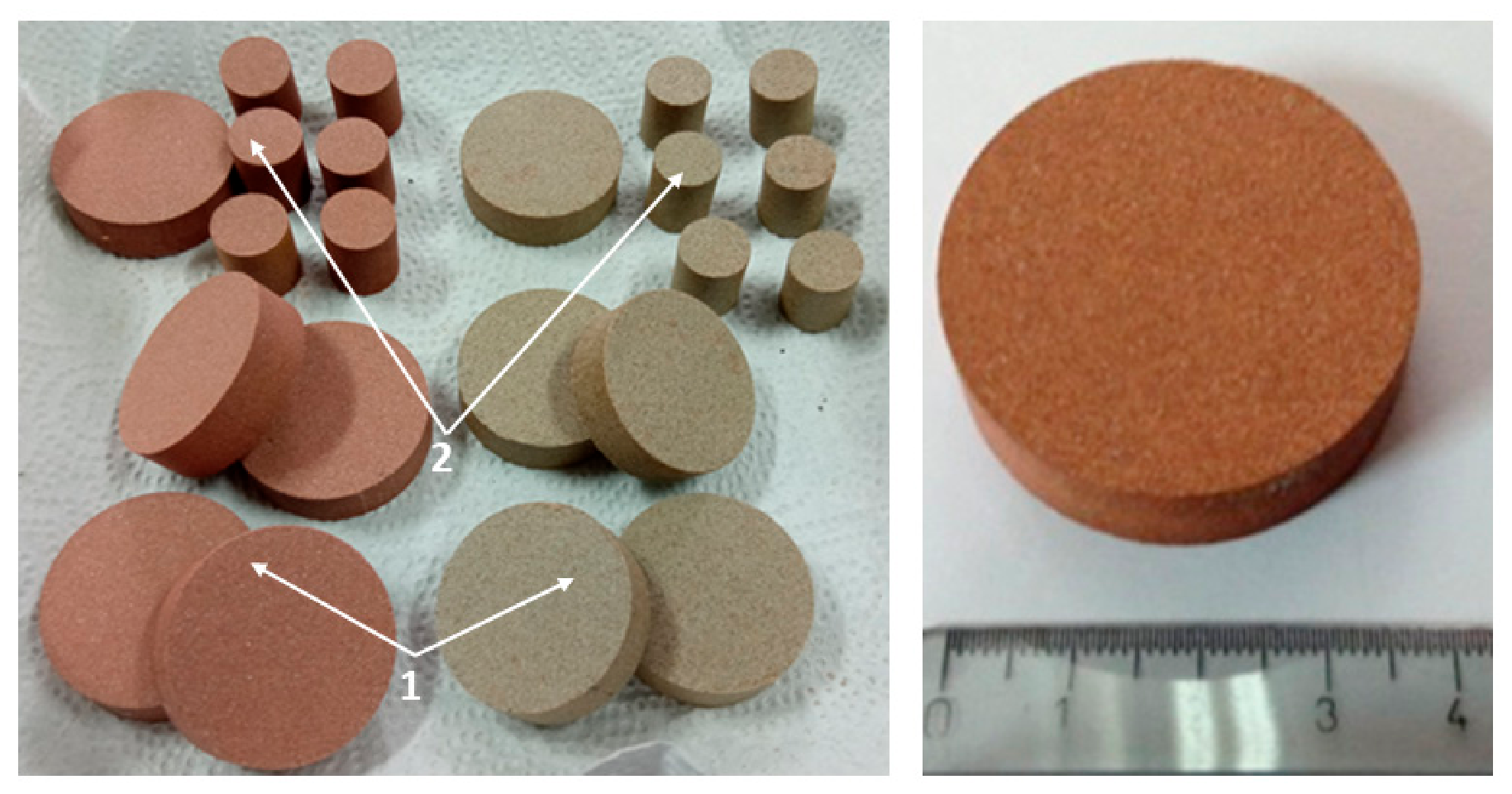
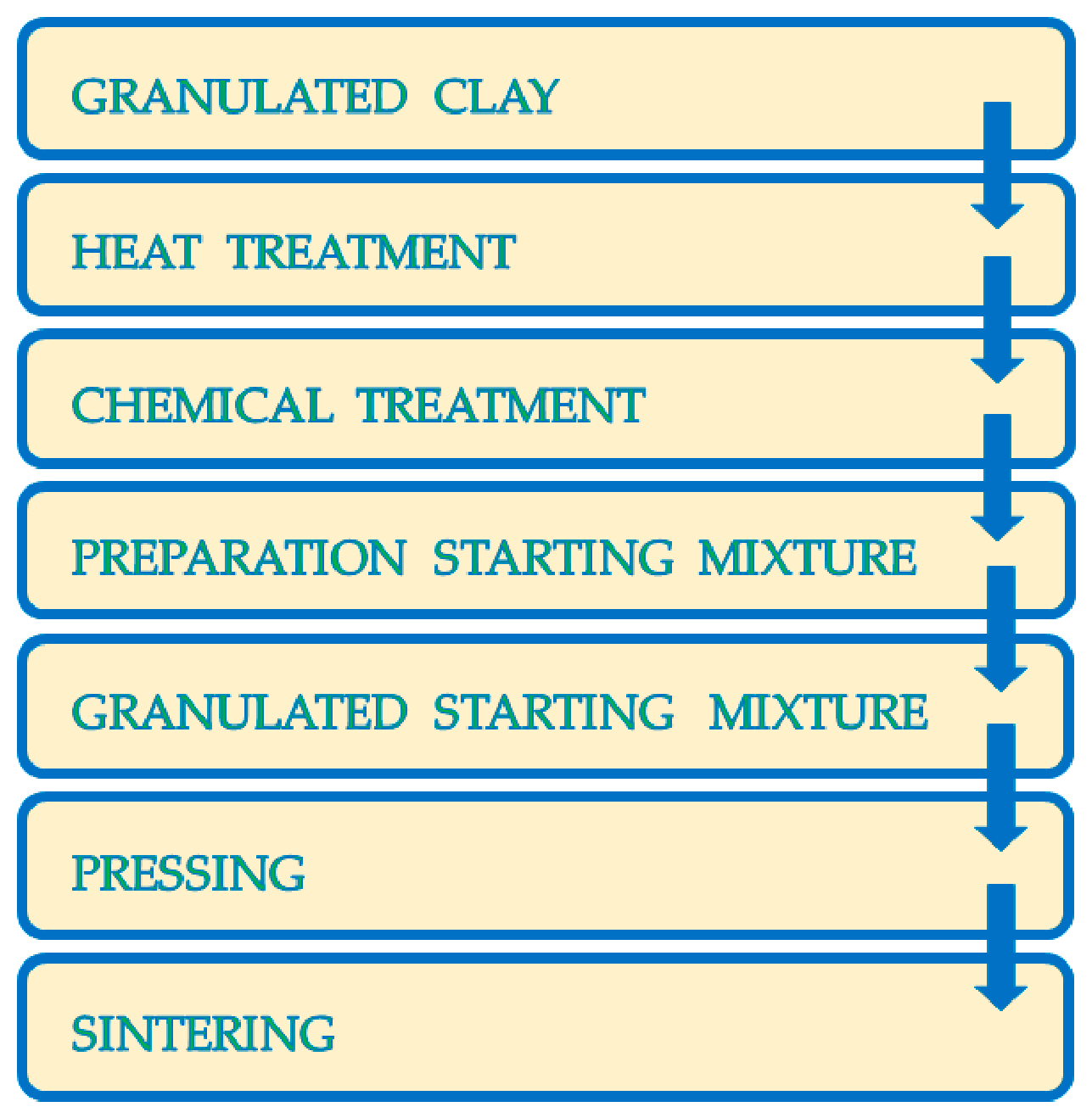
Pilot filters containing 2 wt.% and 0.5 wt.% H3BO3 were prepared using 24 g of each powder mixture (particle size of 250 µm) and formed on a laboratory uniaxial mechanical cold press. The samples were pressed in a mold Ø 40 mm and a height of approximately 10 mm. Before sintering, all pressed samples were heated to 600 °C in air to remove H3BO3. Red samples containing 2 wt.% H3BO3 was pressed at 60 MPa and sintered at 1150 °C for 4 h in air. Gray samples with 0.5 wt.% H3BO3 was pressed at 40 MPa and sintered at 1300 °C for 4 h in air. Figure 1 presents images of the sintered samples, while Figure 2 provides a schematic illustration of the laboratory-scale manufacturing procedure.

2.4. Characterization of Microstructural Properties of Pilot-Type Filters

Samples were characterized by X-ray powder diffraction (XRD) using the Ultima IV Rigaku diffractometer, equipped with Cu Kα1,2 radiation (Rigaku, Tokyo, Japan). The generator voltage and current were set to 40.0 kV and 40.0 mA, respectively. The range of 2θ angle was 10–90° with a scanning step size of 0.02° at a scan rate of 10 °/min. An optical stereo microscope (OM) Zeiss Stemi 508 (Zeiss, Oberkochen, Germany) was employed for the investigation of the microstructure and pore distribution at the surface of the observed pilot-type filters.

2.5. Characterization of Mechanical Properties of Pilot-Type Filters

The mechanical properties, including compressive and tensile strength, and Vickers macro hardness, were determined on test tubes of the tested samples with 2 wt.% H3BO3 pressed at 60 MPa and 0.5 wt.% H3BO3 pressed at 40 MPa before sintering at 1150 °C and 1300 °C, respectively, while tensile strength was measured on corresponding cylindrical samples (Figure 1). Results were obtained from measurements performed on three test specimens for each sample type.

2.5.1. Compressive and Tensile Strength

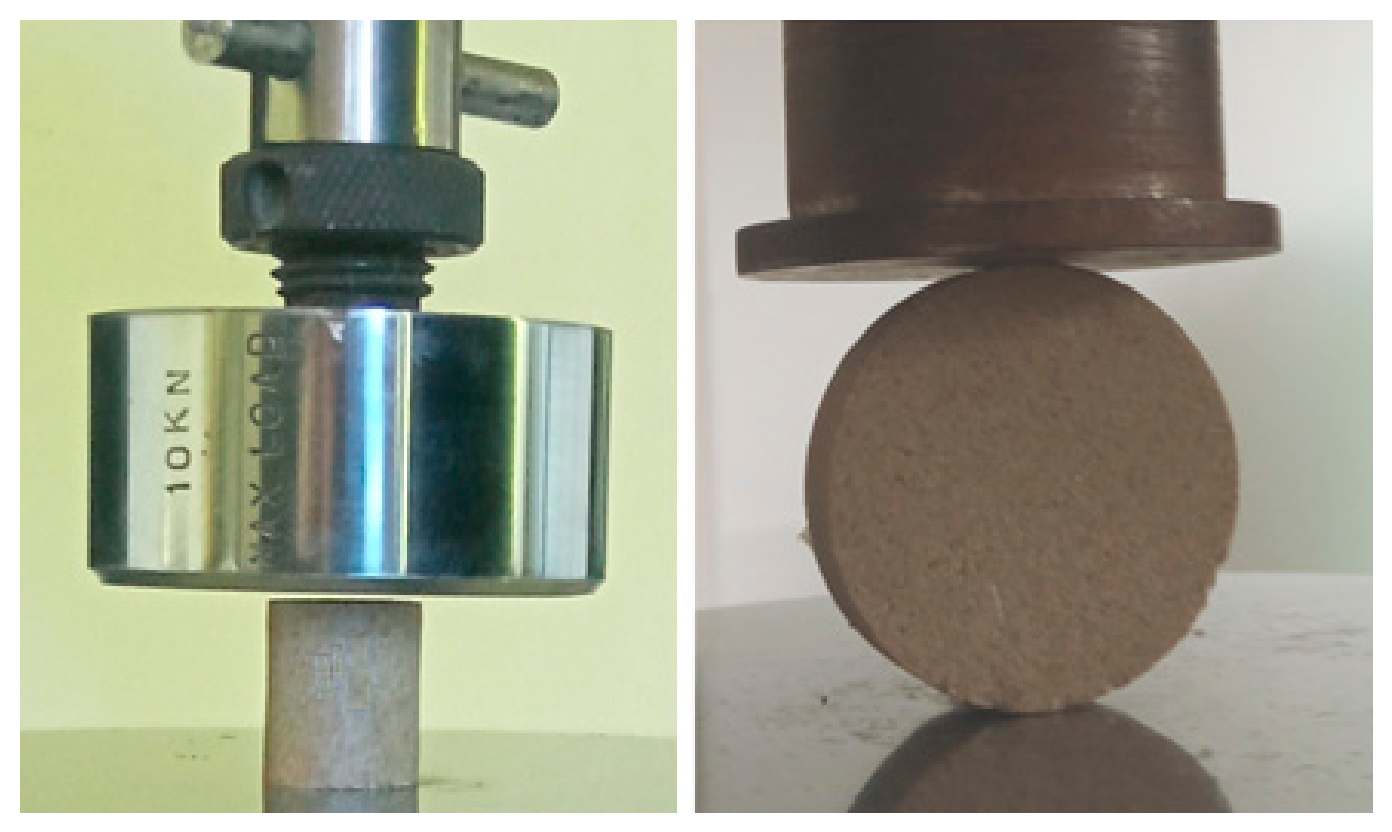
The compressive strength (σ) was determined using an Instron testing machine (Instron, Norwood, MA, USA) equipped with a 10 kN load cell, and a crosshead speed of 1 mm/min (Figure 3). The compressive strength was determined based on the load applied at fracture of the cylindrical samples (about Ø 14, Figure 1) while the tensile strength was determined on disk-shaped samples (about Ø 38, Figure 1). Young’s modulus (E) was calculated based on the axial strain in the linear elastic region of a material, using the initial length and the reduced length of the test tube.
Indirect method (Brazilian test) was used to determine tensile strength (σt) according to standard SRPS B.B7.127:2020 [29], by using equation σ t   = 2 F / π Dt , where F is the maximum applied load, π is a constant, D is the diameter of the sample, and t is thickness. Young’s modulus and compressive and tensile strength were determined as the mean obtained from measurements on three test specimens for each sample type.

2.5.2. Hardness

Vickers macro hardness (HV) was determined using the indentation method on a Buehler 5101 instrument (Buehler, Lake Bluff, IL, USA). The HV value represents the material’s resistance to penetration by a diamond, four-sided pyramid indenter with an apex angle of 136°, subjected to an applied load F(N). Measurements were performed on the polished surfaces of the test specimens using a load of 0.5 kg and a dwell time of 10 s, with indentation applied until the appearance of cracks. Vickers hardness is expressed as stress on the indentation surface. The surface area of the indentation made by the diamond four-sided pyramid was calculated using the mean value of the two diagonals. The Vickers hardness was determined as the mean of measurements on 6 test tubes for the tested samples.

2.6. Methods of Testing the Functionality of the Pilot-Type Filter

The pilot filters were immersed in distilled water to neutralize their surface activity. Passivation of surface activity was followed by measuring the electrical conductivity of the distilled water in which the pilot filters were submerged, with results expressed in µS/cm. After one day, the conductivity reached 5 µS/cm for the pilot filter containing 2 wt.% H3BO3 and 12 µS/cm for the pilot filter containing 0.5 wt.% H3BO3. By the third day, the conductivity of both tested distilled waters decreased to zero. For safety and stability purposes, all filtration tests were conducted using filters that had been immersed in distilled water for seven days. The passivation process was completed prior to functional characterization of the pilot filters.

The First Bubble Method

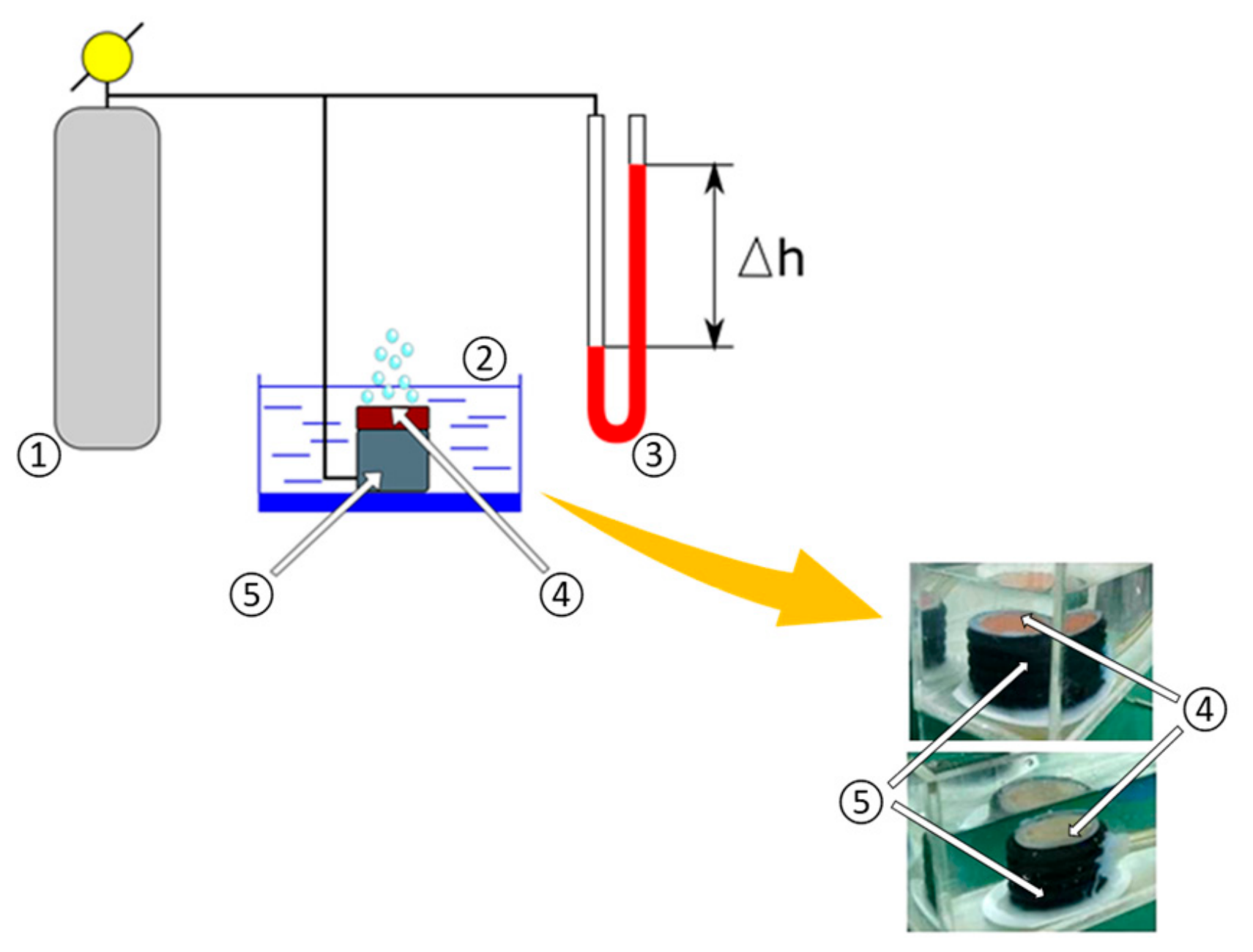
The functional characteristics of the pilot filters were evaluated under laboratory conditions using the first bubble-point method, as described in the American Society for Testing and Materials (ASTM) Standard F316 [30]. The in-house built setup for determining the first bubble on tested samples (Figure 4) consisted of a compressed air source, a glass U-tube filled with red-dyed water, a water bath containing distilled water, and a shell with the pilot filter mounted on its upper side. Figure 4 shows two water baths containing assemblies with a shell and a red (gray) pilot filter located to the right of the equipment schematic. In the experimental procedure, air was introduced into the bottom of the shell, which had been immersed in distilled water. The test concluded when the first air bubble appeared on the surface of the tested filter.
The theoretical relation between this transition pressure and the bubble-point pressure is expressed by D =   4   g cos q / P , where P (N/ m 2) is the bubble-point pressure, g is the surface tension of the liquid (72 mN/m for water), and q is the liquid-solid contact angle (which for water is generally assumed to be zero). The maximum diameter D (mm) of the pores is expressed by relation D = K 1 / P where K 1 = 0.288   N / m is the empirical factor dependent on the filter material, form of the pores, and bubble point pressure.

2.7. Filtering Power

The filtration performance of the pilot filters was evaluated under laboratory conditions using a suspension of water and soil. A glass bottle with an integrated filter was connected to a water pump to simulate filtration. The suspension of water and soil was prepared in accordance with the standard SRPS EN 12457-4:2008 [31], by mixing 1 L of distilled water with 90 g of soil and agitating the mixture for 24 h using a custom-built Vinča (44°45′23.3″ N, 20°36′17.7″ E). The initial suspension and the corresponding filtrate obtained from the pilot filters were analyzed and compared according to the Standard Methods 2540 A. SOLIDS [32].

2.8. Ciprofloxacin Removal Efficiency

Ciprofloxacin (CIP) removal efficiency (RECIP) by both filters was tested on the aqueous solutions of the pharmaceutical-grade ciprofloxacin hydrochloride suspended in phosphate buffer (pH = 5) [33], with two concentrations of 6 μM and 9 μM CIP. CIP concentrations in the solutions before and after the filtration were tested commercially at the Faculty of Pharmacy (Belgrade University) on the HPLC device with the UV detector. CIP removal was calculated as RE CIP % = 100 · ( C before C after ) / C before where Cbefore and Cafter are CIP concentrations (in μM) before and after the filtration, respectively.

3. Results and Discussion

3.1. Microstructural Properties

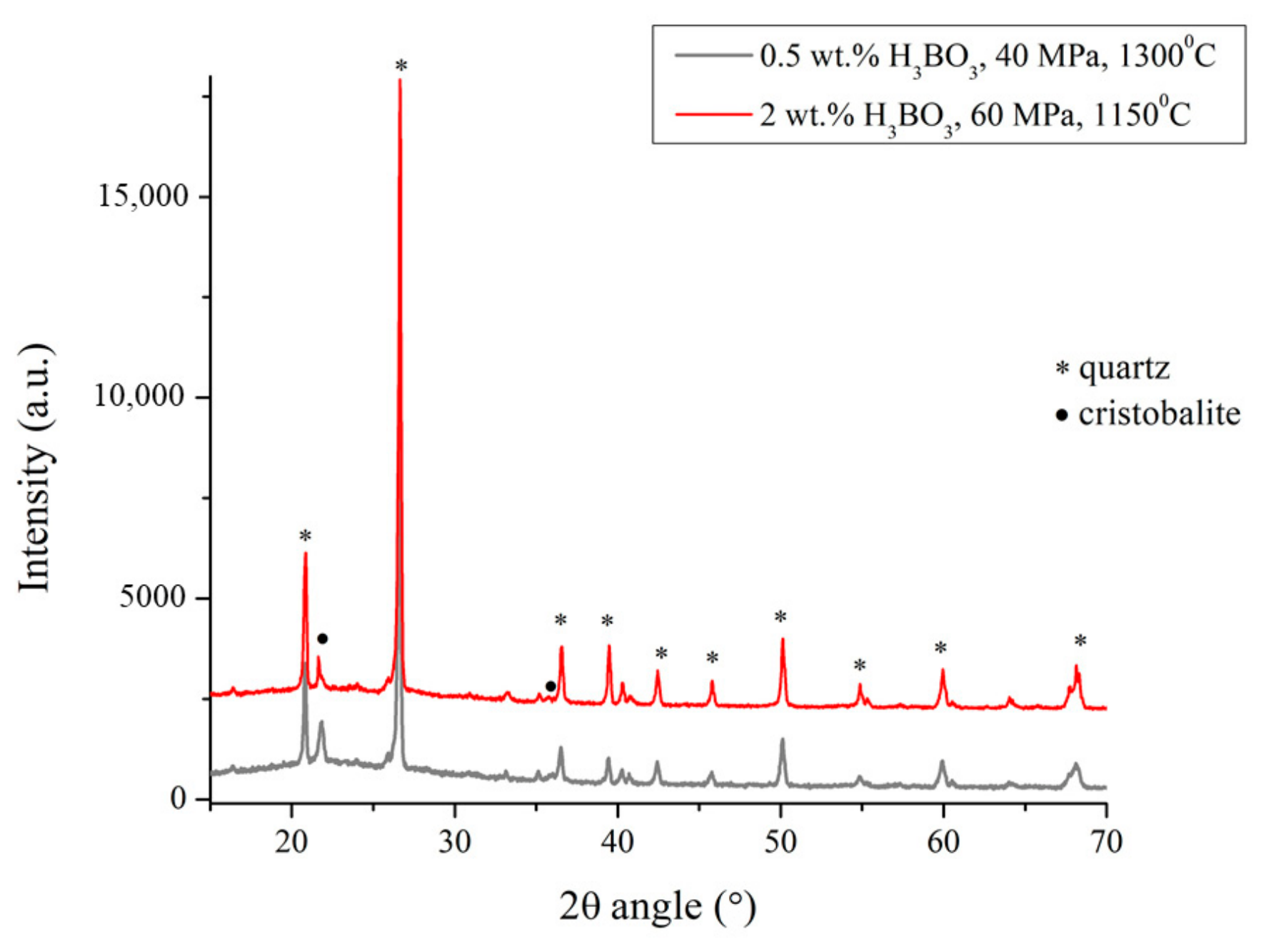
XRD analysis of the red and gray samples, made with 2 wt.% and 0.5 wt.% H3BO3, respectively, identified quartz as the main crystalline phase in both samples (Figure 5). No significant differences in phase composition were found among the samples formed with different boric acid contents, pressures, or sintering temperatures. Minor variations in peak intensities were observed between the samples, reflecting differences in H3BO3 content, compaction pressure, and sintering temperature. Cristobalite was also detected on XRD diffractograms of both samples (Figure 5) which was formed by quartz recrystallizations. Although the phase diagram of Rocket and Foster [34] shows that cristobalite forms at about 1500 °C, the presence of B2O3 and alkaline-earth oxides in the raw clay lowers this and promotes quartz recrystallization.
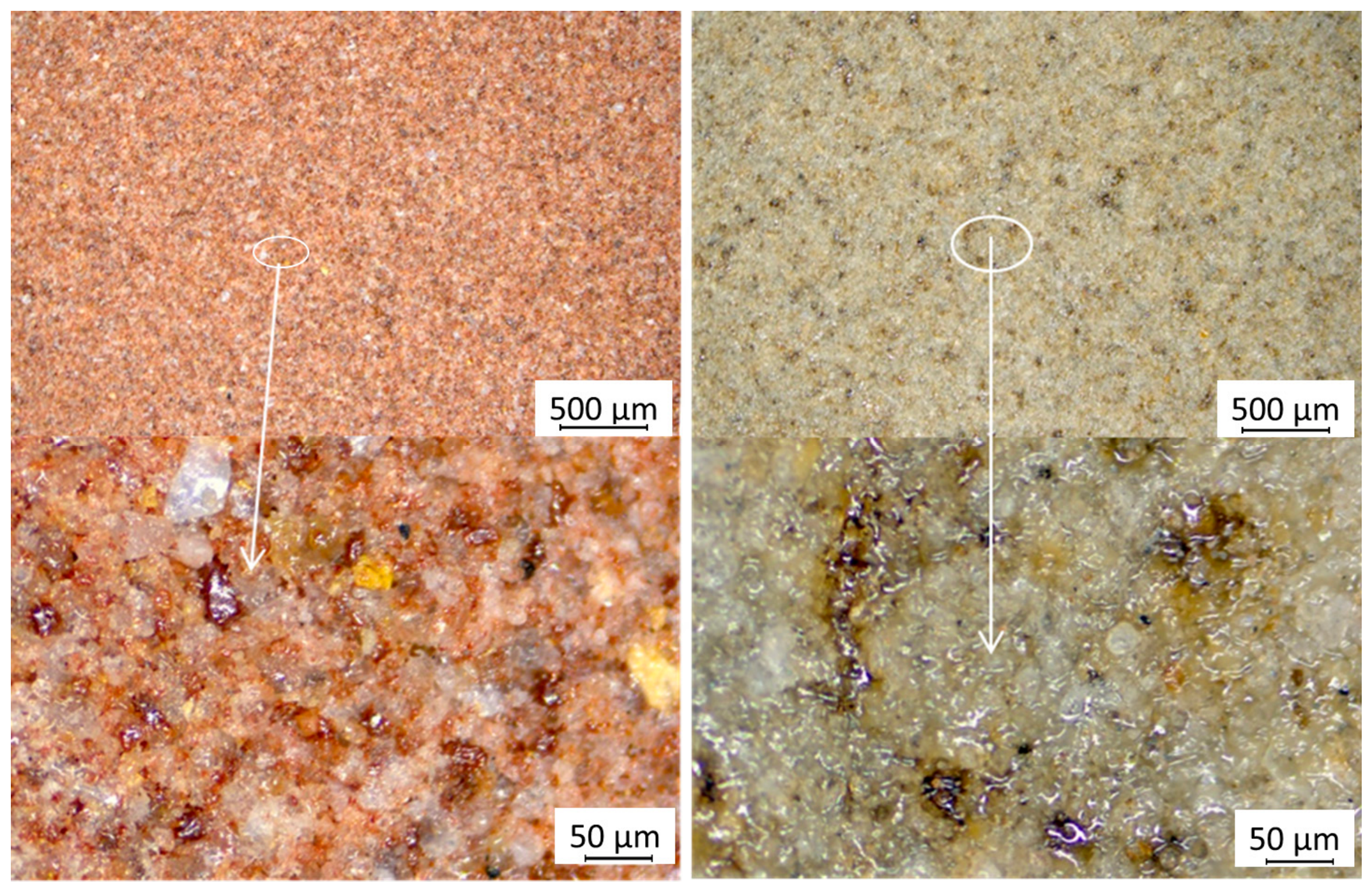
During the preparation of raw clay to make a pressing mixture (Section 2.1), the reduction in impurities through acid and heat treatments introduced changes in the structure, making the clay more porous [20]. OM analyses showed that some single plate grains are visible in the red sample synthetized with 2 wt.% H3BO3. The surface of the red sample pressed at 60 MPa and sintered at 1150 °C exhibits a more pronounced grain structure and higher porosity compared to the gray sample with 0.5 wt.% H3BO3, pressed at 40 MPa and sintered at 1300 °C. Moreover, the gray sample shows a low glassy-phase content and more pronounced grain merging, leading to reduced porosity (Figure 6).

3.2. Determining the Mechanical Properties of Materials Used to Make the Pilot-Type Filters

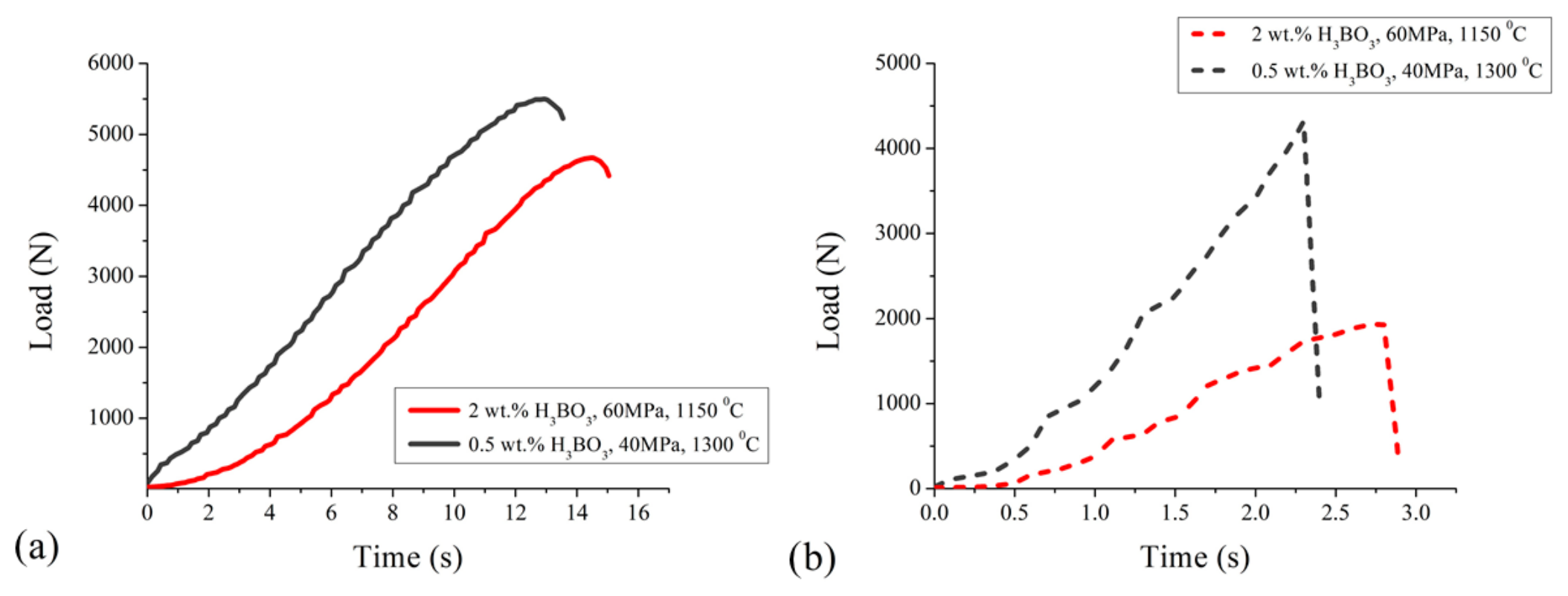
The results of compression measurements and tensile strength measurements by the Brazilian method for both tested groups of samples, with representative curves (Force versus time) given in Figure 7. It can be seen that the gray sample with 0.5 wt.% H3BO3 can withstand a higher load in both tests compared to red samples containing 2 wt.% H3BO3.
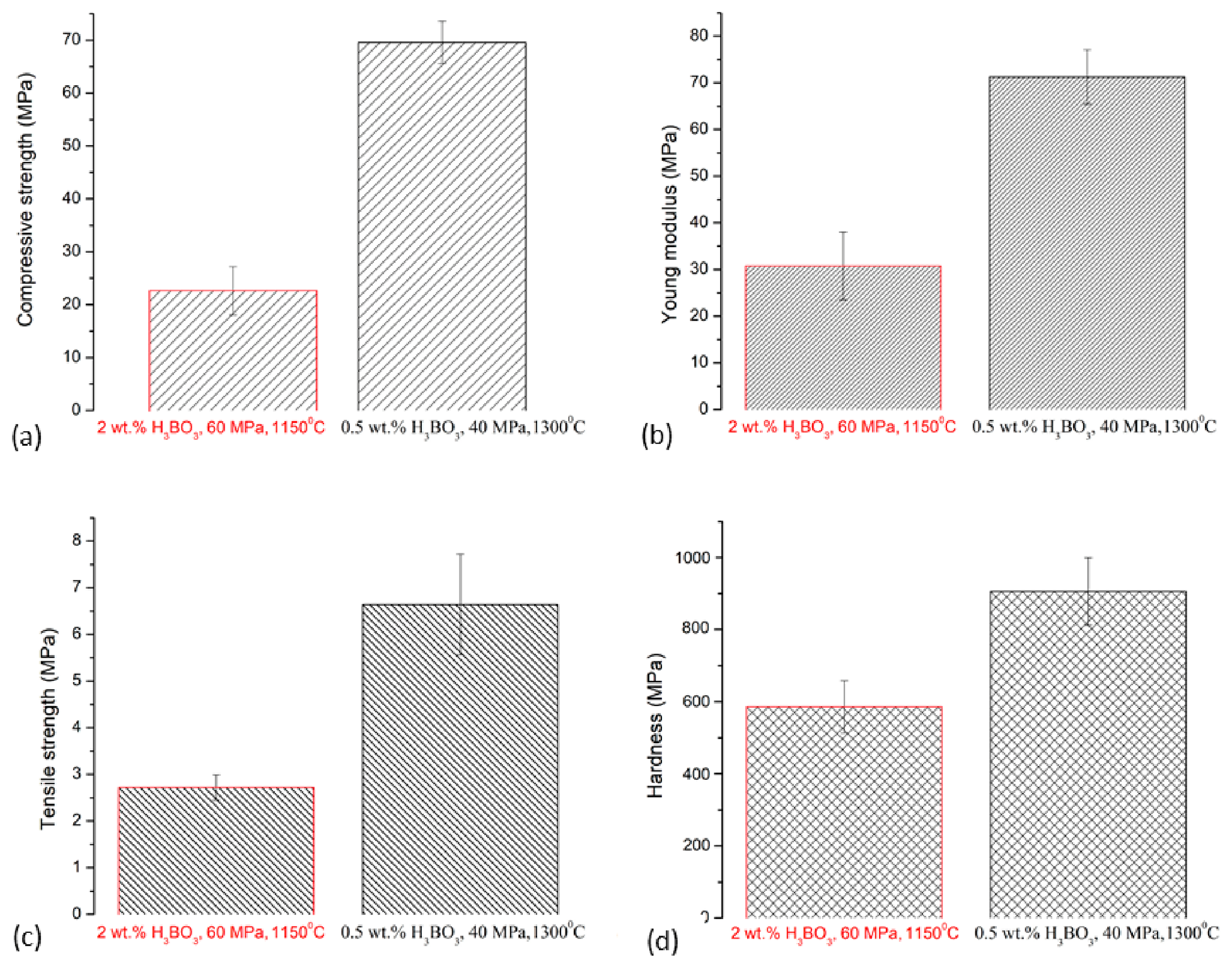
Tested red samples containing 2 wt.% H3BO3 exhibited lower mechanical values compared to the gray sample with 0.5 wt.% H3BO3 (Figure 8). The measured compressive strength values were 22.64 MPa and 69.60 MPa for the red and gray samples, respectively, while the corresponding Young’s modulus values were 30.80 MPa and 71.27 MPa, respectively (Figure 8a,b). The same trend was observed for tensile strength, where values were 2.72 MPa and 6.64 MPa for the red and gray samples, respectively (Figure 8c). Using the indentation method (Figure 8d), the hardness values were determined to be 570 MPa and 880 MPa for the samples containing 2 wt.% and 0.5 wt.% H3BO3, respectively [22]. Good mechanical properties of ceramic filters are required to follow their filtration capacities, where compressive strength was identified as an important indicator of ceramic filter quality. The measured compressive strength of the red porous filter, 22.64 MPa, was obtained using 2 wt.% H3BO3 is almost identical to the value of 20.76 MPa reported in the literature for homogeneous and dense-structured ceramics samples sintered at 1150 °C [35]. Similarly, Zhu et al. [36] prepared porous ceramics from tungsten ore tailings as a raw material, using polymethyl methacrylate as a pore-forming agent, and a compressive strength of 14.10 MPa was obtained at a sintering temperature of 1200 °C. Comparing the obtained mechanical values of red and gray filters with published literature demonstrates that these filters are promising candidates for various industrial applications due to their sufficient mechanical strength.
These results indicate that with a decreasing amount of H3BO3 (gray sample), the mechanical properties increase. It can be assumed that these results are a consequence of a small amount of glassy phase present in the sample with 0.5 wt.% H3BO3, sintered at 1300 °C, which is responsible for binding the ceramic particles. Further, the increased amount of H3BO3 generates pore structure (red sample) and potentially leads to a weaker structure and a change in the pore network (forming larger or less uniform pores), which reduces the overall mechanical stability. These findings align with the surface analysis results for both pilot filter types, as determined by XRD and MO, and previously discussed in Section 3.1.

3.3. Determining the Functionality of Pilot-Type Filters

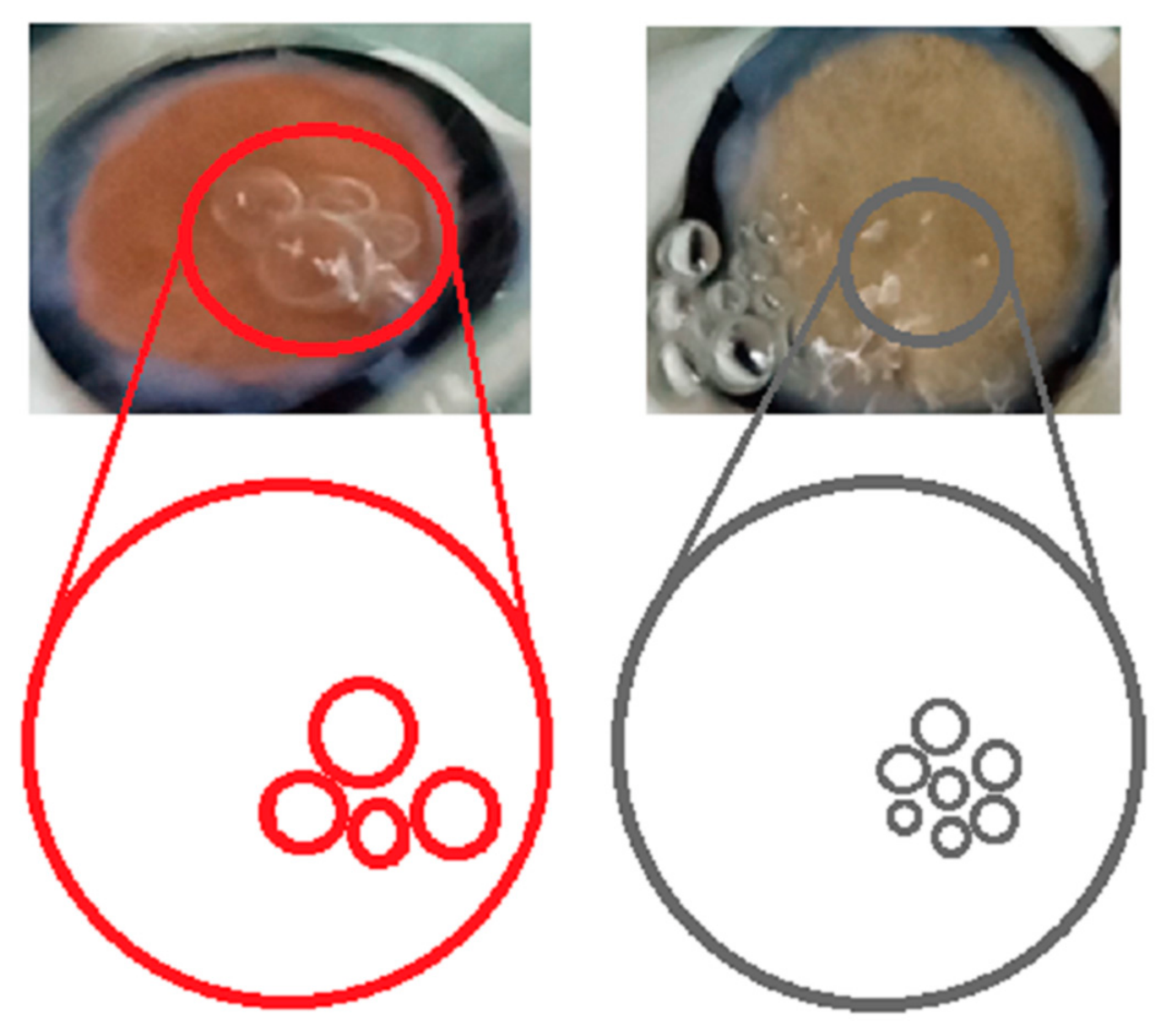
A schematic illustration of the in-house built equipment used to determine the first bubble point of the tested samples is presented in Figure 4. The setup consisted of a compressed-air bottle, a glass U-tube filled with red-dyed water where Δh (mm H2O) represents the difference in height between the water columns, a water bath filled with distilled water, and a shell fitted with a pilot filter sealed to its upper surface. The bubble test was used for gathering information about the pore distribution at the sample surface (Figure 9) and to determine the maximum pore diameter (D).
The bubble test showed an uneven pore distribution across the surface of both tested samples. The pores were primarily grouped and shifted toward the rim of the sample in both types of pilot filters (Figure 9). Based on the bubble-point test results (Table 2), the maximum pore diameter (D) of the pilot filters was calculated using D = K 1 / P . The sample containing 2 wt.% H3BO3, compacted at 60 MPa and sintered at 1150 °C, exhibited a maximum pore diameter of 0.1956 mm, while the sample containing 0.5 wt.% H3BO3, compacted at 40 MPa and sintered at 1300 °C, showed a maximum pore diameter of 0.1335 mm [22].
The sample synthesized with 0.5 wt.% H3BO3 exhibited significantly better mechanical properties and a notably smaller maximum pore diameter compared to the sample synthesized with 2 wt.% H3BO3. The slightly higher sintering temperature of 1300 °C was used for the gray-colored sample containing 0.5 wt.% H3BO3 facilitated merging the particles of clay materials into a more solid form and stronger particle bonding, resulting in a denser structure with smaller pore diameters compared to the red-colored sample synthesized with 2 wt.% H3BO3 and sintered at 1150 °C.
Before testing the separation performance of the synthesized pilot filters, both types of filters were passivated with iron leaching by immersion in distilled water to neutralize their surface activity. The separation ability of the synthesized pilot filters was evaluated under laboratory conditions: surface activity was determined by conductivity measurement (µS) in aliquots of the tested filter after 1, 2, 3, 7, 14, and 28 days (Table 3).
After the first day, the conductivity was 5 µS for the pilot filter with 0.5 wt.% H3BO3, and 12 µS for the pilot filters with 2 wt.% H3BO3. On the third day, the conductivities of both tested aliquots were zero. Based on these results, filters should be immersed in distilled water for 7 days to neutralize their surface activity before safe use.
Analysis and comparison of the initial suspension and the corresponding filtrate were carried out using filters sintered at 1150 °C with 2 wt.% H3BO3, which demonstrated effective liquid permeability and impurity retention. The test water initially contained 2.769 g/L of impurities, which decreased to 0.899 g/L after filtration. The filter medium was prepared with 2 wt.% H3BO3 successfully removed approximately 67.5% of suspended impurities [22]. In contrast, the medium sintered at 1300 °C with 0.5 wt.% H3BO3 allowed only a small amount of the initial suspension to pass through, which was insufficient for measuring impurity retention during testing.
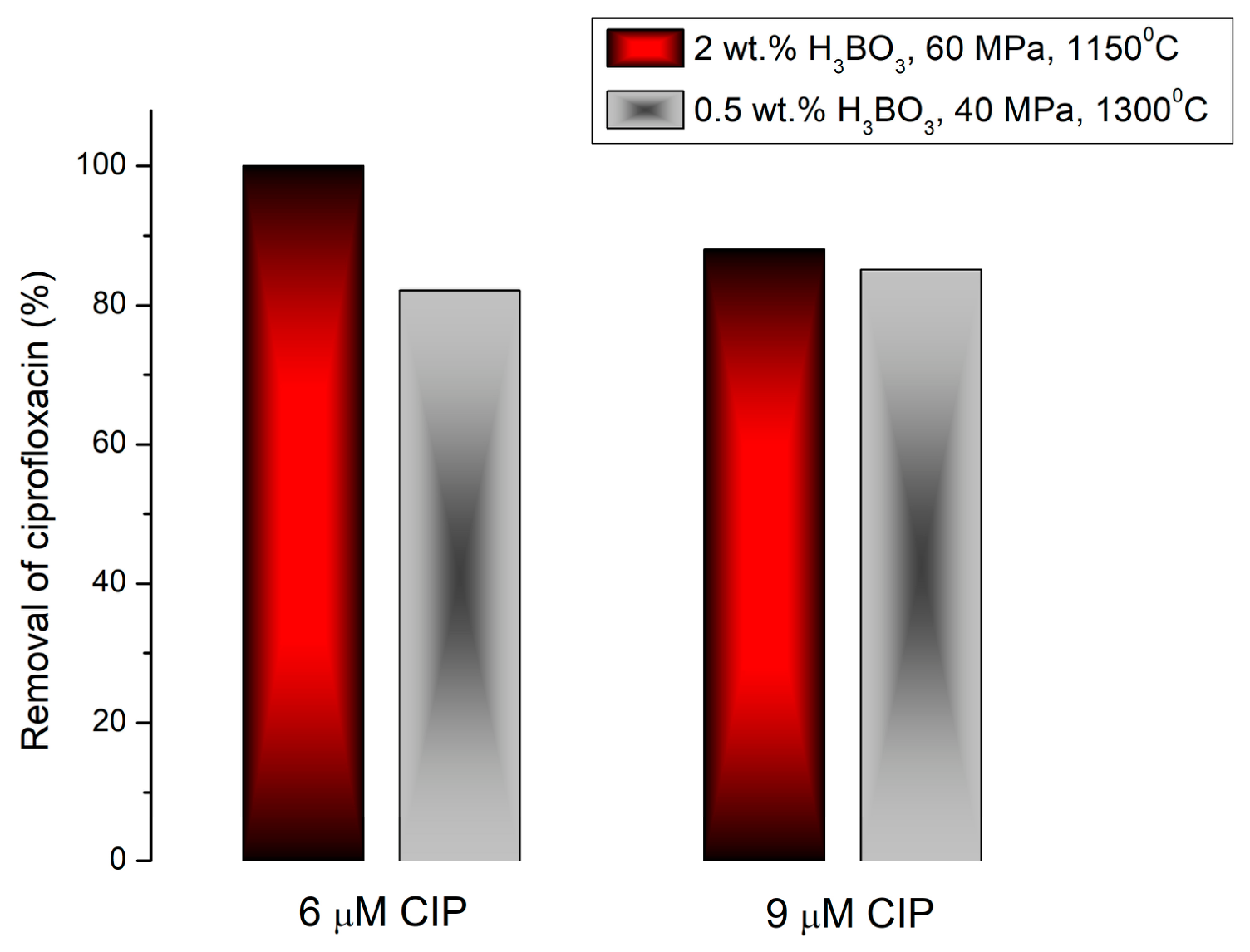
The filter media prepared with 2 wt.% H3BO3 and 0.5 wt.% H3BO3 achieved CIP removal efficiencies RECIP > 80% from 6 μM and 9 μM CIP aqueous solutions (Figure 10). The 2 wt.% H3BO3 filter (red) demonstrated superior performance, reaching 100% RECIP for the 6 µM solution and nearly 90% for the 9 µM solution. Furthermore, the 0.5 wt.% H3BO3 filter (gray) maintained RECIP > 80% for both tested CIP concentrations.
The filter sintered at 1150 °C shows excellent separation capabilities but exhibits lower mechanical durability. This filter has lower production costs due to the lower sintering temperature compared to the filter sintered at 1300 °C. The latter possesses superior mechanical properties, rendering it suitable for critical conditions, such as aggressive environments or extremely high temperatures. Furthermore, it can be concluded that the addition of 0.5 wt.% H3BO3 does not significantly affect the properties of raw clay material made out of boric acid, pressed at 40 MPa and sintered at 1300 °C.

3.4. Discussion Summary of Key Findings

Our findings, outlined in Table 4, highlight the performance of two synthesized filter samples. The first sample was made with 2 wt.% H3BO3 pressed at 60 MPa and then sintered at a temperature of 1150 °C. The second sample was made with 0.5 wt.% H3BO3 pressed at 40 MPa and then sintered at 1300 °C.
It is well known that H3BO3 simultaneously acts as a pore former and a flux agent in the production of ceramic-based filters. The effectiveness of H3BO3 in ceramic filters rises from balancing between the fluxing action, which ensures the ceramic has sufficient mechanical strength and stability, and the pore-forming action responsible for creating the necessary open structure to allow filtration of fluids. Based on pore size analysis it is clear that H3BO3 at 2 wt.% enables better networks of pore formation. On the other hand, besides quartz and cristobalite, the XRD results exposed a small amount of glassy phase, which could be observed between 20 and 30 degrees of 2θ angle (Figure 5). This finding suggests the boric acids’ fluxing role at both 0.5 and 2 wt.% results in lowering the sintering temperature. The observed trends for tensile strength (Section 3.2) align with previous findings regarding mechanical properties such as compressive strength at similar sintering temperatures [35,36]. Specifically, higher levels of pore-forming agents result in increased porosity and, consequently, reduced mechanical strength. For comparison, secondary wastewater treatment, typically a biological process that uses microorganisms to decompose organic compounds, achieves removal efficiencies of 70–90% of suspended solids [37]. This process is often carried out via activated sludge systems or filtration through filter beds, where wastewater is slowly distributed over gravel media to enhance surface area for oxidation [37]. Similarly, Biological Aerated Filters (BAF) used for domestic wastewater treatment have achieved reductions in particulate matter of about 73% [38], comparable to the results obtained in this study. Furthermore, filtration using expanded clay aggregates (Filtralite) for tap water with 9 mg/L of humic concentrate reduced total organic carbon (TOC) by 60–80% at a filtration rate of 7.5 m/h [39]. Ceramic filters fabricated from clay mixed with coffee bean residues and sintered at 900 °C for 4 h were also reported to remove 42.99–59.21% of methylene blue and 79.95–92.72% of ortho-toluidine blue dyes [40]. CIP is an important clinical antibiotic acting as a DNA gyrase inhibitor of both Gram-positive and Gram-negative bacteria [33]. Chemically it is an ampholytic fluoroquinolone with pK = 6.09 for the carboxylic group and 8.74 for the nitrogen on the piperazinyl ring with the isoelectric point at pH = 7.4 [33], which is why we tested it in phosphate buffer at pH = 5. Both filters were very efficient (RECIP > 80%) in CIP removal from water solutions, with a maximal 100% removal using 2 wt.% H3BO3 clay filter (red) to filter 6 μM CIP. These results demonstrate the high efficiency of our filters in the removal of complex synthetic substances from water solutions, such as active pharmaceutical ingredients. Further, results of testing the removal efficiency of suspended particles from the corresponding suspension prepared according to the standard SRPS EN 12457-4:2008 [31] indicate that the red filter with a pore size of ~200 μm possess good filtration performance (particle removal 67.5%), while gray filter with pore size of ~133 μm (Section 3.3) was able to pass a very small amount of the observed suspension. Based on this we can declare gray filter as filter with no application in removing suspended particles from this specified suspension. On the other hand, both filters, red and gray, have shown excellent filtration performance during CIP testing (Section 3.3). Moreover, the gray filter exhibits superior mechanical properties, including tensile strength, which facilitates its deployment in chemically and thermally aggressive environments. These experiments confirmed that sintered macroporous clay with controlled porosity in the macroporous area can be used in industrial separation processes. Further removal capacities of both filters in various environments merit future investigations.

4. Conclusions

Low-temperature synthesis of clay-based pilot filters was successfully achieved using H3BO3 as a low-cost and environmentally friendly additive to promote pore formation. The filters were fabricated under mild processing conditions, with pressing pressures up to 60 MPa and sintering temperatures up to 1300 °C.
For the synthesized filter media containing 2 wt.% and 0.5 wt.% H3BO3, the obtained hardness values (570 MPa and 880 MPa), together with compressive strength (22.64 MPa and 69.6 MPa), tensile strength (about 2.72 MPa and 6.94 MPa) and Young’s moduli (30.8 MPa and 71.27 MPa), confirmed the good mechanical stability of the sintered compacts. Bubble-point testing showed that the largest pores (<0.2 mm) were unevenly distributed across the surfaces of both samples. Filter medium containing 0.5 wt.% H3BO3 has allowed neglected amount of liquid suspension of water and soil to pass under the applied conditions, whereas the pilot filter prepared with 2 wt.% H3BO3 demonstrated effective liquid permeability and an impurity retention of approximately 67.5%. It has been shown that the filter with 2 wt.% H3BO3 demonstrated superior performance, achieving 100% and 88% ciprofloxacin removal for the 6 µM and 9 µM solutions, compared to the 0.5 wt.% H3BO3 filter, which had a removal efficiency of 82.1% and 85.1% for the same CIP concentrations, respectively. The primary goal of this research was to demonstrate that filters made from local clay from the Kolubara mine tailings can remove suspended matter from solution. This method converts abundant and inexpensive natural clay, a mining by-product, into a functional filter that supports circular economy principles. Future work will focus on optimizing processing parameters to develop customized filter media for specific industrial applications. Additionally, the next phase of research aims to design an innovative wastewater treatment system that integrates clay-based filters with microalgae and bacteria in a biological pre-treatment step, thereby providing a sustainable, cost-effective solution with the potential for significant positive environmental impact.

Author Contributions

Conceptualization, M.K.; methodology, M.K. and J.R.; validation, M.K. and J.R.; formal analysis, M.K.; investigation, M.K.; writing—original draft preparation, M.K.; writing—review and editing, M.K., Z.G. and J.R.; supervision, M.K.; project administration, M.K.; funding acquisition, M.K. All authors have read and agreed to the published version of the manuscript.

Funding

This research was funded by The Fund for Innovation Activity, Republic of Serbia, the program of Proof of Concept (Grant no. PoC 5925), and the Serbian Ministry of Education, Science, and Technological Development (contract number: 451-03-33/2026-03/200017).

Data Availability Statement

The original contributions presented in this study are included in the article. Further inquiries can be directed to the corresponding author.

Acknowledgments

This work was partially supported by the Fund for Innovation Activity Republic of Serbia, the program of Proof of Concept (Grant no. PoC 5925), and the Serbian Ministry of Education, Science, and Technological Development (contract number: 451-03-33/2026-03/200017). We would like to thank Aleksandra Skrobonja (from the VINČA Institute of Nuclear Sciences) for the help with manuscript preparation. We would also like to thank Branka Ivkovic (from The Faculty of Pharmacy, Belgrade University) for the ciprofloxacin measurements.

Conflicts of Interest

The authors declare no conflicts of interest.

References

  1. Roberts, B.W.; Radivojevic, M.; Maric, M. The Vinca Culture: An Overview. In The Rise of Metallurgy in Eurasia: Evolution, Organisation and Consumption of Early Metal in the Balkans; Roberts, B.W., Radivojevic, M., Maric, M., Cvetkovic, J.K., Rehren, T., Eds.; Archaeopress: Oxford, UK, 2021; pp. 38–46. [Google Scholar] [CrossRef]
  2. Maury Njoya, I.Q.; Lecomte-Nana, G.L.; Barry, K.; Njoya, D.; El Hafiane, Y.; Peyratout, C. An Overview on the Manufacture and Properties of Clay-Based Porous Ceramics for Water Filtration. Ceramics 2025, 8, 3. [Google Scholar] [CrossRef]
  3. Shivaraju, H.P.; Egumbo, H.; Madhusudan, P.; Anil Kumar, K.M.; Midhun, G. Preparation of Affordable and Multifunctional Clay-Based Ceramic Filter Matrix for Treatment of Drinking Water. Environ. Technol. 2019, 40, 1633–1643. [Google Scholar] [CrossRef] [PubMed]
  4. Sadaqat, M.; Kausar, A.; Iqbal, M.; Alzahrani, F.M.; Abbas, M.; Mnif, W.; Nazir, A. Clay and Sawdust-Based Filters Efficiency for the Removal of Dyes, Chromium, and Bacterial Load: A Promising Approach for the Treatment of Industrial Effluents. Desalin. Water Treat. 2025, 322, 101075. [Google Scholar] [CrossRef]
  5. Wang, P.; Shen, X.; Qiu, S.; Zhang, L.; Ma, Y.; Liang, J. Clay-Based Materials for Heavy Metals Adsorption: Mechanisms, Advancements, and Future Prospects in Environmental Remediation. Crystals 2024, 14, 1046. [Google Scholar] [CrossRef]
  6. Watanabe, T.; Sasaki, H.; Nakashima, Y.; Miyamoto, N.; Takamura, H.; Nakano, K.; Okada, T. Clay-Based Polyurethane Foam Nanocomposites for Thermal Insulation. Mater. Adv. 2025, 6, 7837–7846. [Google Scholar] [CrossRef]
  7. Makrygiannis, I.; Karalis, K.; Tzampoglou, P. Enhancing the Thermal Insulation Properties of Clay Materials Using Coffee Grounds and Expanded Perlite Waste: A Sustainable Approach to Masonry Applications. Ceramics 2025, 8, 30. [Google Scholar] [CrossRef]
  8. Lawanwadeekul, S.; Srisuwan, A.; Phonphuak, N.; Chindaprasirt, P. Addition of Spent Coffee Grounds and Waste Glass to Enhance the Physical–Mechanical and Thermal Properties of Fired Clay Bricks at Reduced Temperatures. Innov. Infrastruct. Solut. 2024, 9, 206. [Google Scholar] [CrossRef]
  9. Makrygiannis, I.; Tsetsekou, A. Effect of Expanded Perlite in the Brick Mixture on the Physicochemical and Thermal Properties of the Final Products. J. Compos. Sci. 2022, 6, 211. [Google Scholar] [CrossRef]
  10. Perelomov, L.; Gertsen, M.; Mandzhieva, S.; Sychev, V.; Dudnikova, T.; Khaidanov, I.; Perelomova, I.; Minkina, T.; Atroshchenko, Y. Adsorption of Antibiotics by Natural Clay Minerals. Minerals 2025, 15, 733. [Google Scholar] [CrossRef]
  11. Azanfire, B.-E.; Bulgariu, D.; Cimpoeşu, N.; Bulgariu, L. Efficient Removal of Toxic Heavy Metals on Kaolinite-Based Clay: Adsorption Characteristics, Mechanism and Applicability Perspectives. Water 2025, 17, 1938. [Google Scholar] [CrossRef]
  12. Ochirkhuyag, A.; Temuujin, J. The Catalytic Potential of Modified Clays: A Review. Minerals 2024, 14, 629. [Google Scholar] [CrossRef]
  13. Lin, S.; Sun, S.; Tang, H.; Li, X.; Liu, J. Clay Mineral-Based Photocatalysis. Adv. Sustain. Syst. 2025, 9, e00761. [Google Scholar] [CrossRef]
  14. Almasri, D.; Manawi, Y.; Makki, S.; Tasneem, N.; Simson, S.; Abdel-Hadi, I.; Agcaoili, J.; Lawler, J.; Kochkodan, V. A Novel, Low-Cost Clay Ceramic Membrane for the Separation of Oil-Water Emulsions. Sci. Rep. 2025, 15, 14457. [Google Scholar] [CrossRef] [PubMed]
  15. Malebadi, K.A.; Sawunyama, L.; Seheri, N.H.; Onwudiwe, D.C. Application of Ceramic Membranes Derived from Waste and Natural Materials for the Removal of Organic Dyes from Wastewater: A Review. Ceramics 2025, 8, 80. [Google Scholar] [CrossRef]
  16. Yamagishi, A.; Yamamoto, S.; Takimoto, K.; Tamura, K.; Kamon, M.; Sato, F.; Sato, H. Clay Column Chromatography for Optical Resolution: A Series of Derivatized Amino Acids. Bull. Chem. Soc. Jpn. 2022, 95, 961–967. [Google Scholar] [CrossRef]
  17. Zereffa, E.A.; Bekalo, T. Clay Ceramic Filter for Water Treatment. Mater. Sci. Appl. Chem. 2017, 34, 69–74. [Google Scholar] [CrossRef]
  18. Grema, A.S.; Idriss, I.M.; Alkali, A.N.; Ahmed, M.M.; Iyodo, H.M. Production of Clay-based Ceramic Filter for Water Purification. Eur. J. Eng. Technol. Res. 2021, 6, 140–143. [Google Scholar] [CrossRef]
  19. Solomon, A.; Andoshe, D.M.; Abebe, A.M.; Terfasa, T.T.; Ganesh, T.; Hone, F.G.; Tegegne, N.A.; Tesfamariam, B.B. Optimization of Preparation Parameters of Ceramic Pot Water Filters for Potential Application of Microbial and Fluoride Removal from Groundwater. Heliyon 2023, 9, e13261. [Google Scholar] [CrossRef] [PubMed]
  20. Kokunešoski, M.; Šaponjić, A.; Maksimović, V.; Stanković, M.; Pavlović, M.; Pantić, J.; Majstorović, J. Preparation and Characterization of Clay-Based Porous Ceramics with Boric Acid as Additive. Ceram. Int. 2014, 40, 14191–14196. [Google Scholar] [CrossRef]
  21. Kokunešoski, M.; Ruzic, J. Filters Development for the Purification of Industrial Water of Clay Minerals. In Proceedings of the Filters Development for the Purification of Industrial Water of Clay Minerals, Belgrade, Serbia, 26 September 2024; pp. 37–40. [Google Scholar]
  22. Kokunešoski, M. Clay-Based Filters for Industrial Liquid Separation. In Proceedings of the 6th Metallurgical and Materials Engineering Congress, Trebinje, Bosnia and Herzegovina, 4–7 June 2025; pp. 1–3. [Google Scholar] [CrossRef]
  23. Subriyer, N. Treatment of Domestic Water Using Ceramic Filter from Natural Clay and Fly-Ash. J. Eng. Stud. Res. 2013, 9, 71–75. [Google Scholar] [CrossRef]
  24. Kavas, T. Use of Boron Waste as a Fluxing Agent in Production of Red Mud Brick. Build. Environ. 2006, 41, 1779–1783. [Google Scholar] [CrossRef]
  25. Kokunešoski, M.; Šaponjić, A.; Stanković, M.; Majstorović, J.; Egelja, A.; Ilić, S.; Matović, B. Effect of Boric Acid on the Porosity of Clay and Diatomite Monoliths. Ceram. Int. 2016, 42, 6383–6390. [Google Scholar] [CrossRef]
  26. Kokunesoski, M.; Stankovic, M.; Vukovic, M.; Majstorovic, J.; Saponjic, D.; Ilic, S.; Saponjic, A. Macroporous Monoliths Based on Natural Mineral Sources, Clay and Diatomite. Sci. Sinter. 2020, 52, 339–348. [Google Scholar] [CrossRef]
  27. Hernández, M.F.; Violini, M.A.; Serra, M.F.; Conconi, M.S.; Suarez, G.; Rendtorff, N.M. Boric Acid (H3BO3) as Flux Agent of Clay-Based Ceramics, B2O3 Effect in Clay Thermal Behavior and Resultant Ceramics Properties. J. Therm. Anal. Calorim. 2020, 139, 1717–1729. [Google Scholar] [CrossRef]
  28. Lide, D.R. CRC Handbook of Chemistry and Physics; CRC Press LLC: Boca Raton, FL, USA, 2003. [Google Scholar]
  29. SRPS B.B7.127:2020; 127:2020; Rock Mechanics—Testing of Physical and Mechanical Properties—Method for the Determination of Uniaxial Compressive Strength. Institute for Standardization of Serbia (ISS): Belgrade, Serbia, 2025. Available online: https://iss.rs/en/project/show/iss:proj:101135 (accessed on 21 June 2026).
  30. ASTM Standard F316 2003; Standard Test Methods for Pore Size Characteristics of Membrane Filters by Bubble Point and Mean Flow Pore Test. ASTM International: West Conshohocken, PA, USA, 2019. [CrossRef]
  31. SRPS EN 12457-4:2008; Characterisation of Waste—Leaching—Compliance Test for Leaching of Granular Waste Ma-Terials and Sludges—Part 4: One Stage Batch Test at a Liquid to Solid Ratio of 10 l/Kg for Materials with Particle Size below 10 Mm (Without or with Size Reduction). Institute for Standardization of Serbia (ISS): Belgrade, Serbia, 2008. Available online: https://iss.rs/en/project/show/iss:proj:20736 (accessed on 21 June 2026).
  32. 2540 SOLIDS; Standard Methods for the Examination of Water and Wastewater. APHA Press: Washington, DC, USA, 2023. Available online: https://www.standardmethods.org/doi/10.2105/SMWW.2882.030 (accessed on 21 June 2026).
  33. Torniainen, K.; Tammilehto, S.; Ulvi, V. The Effect of pH, Buffer Type and Drug Concentration on the Photodegradation of Ciprofloxacin. Int. J. Pharm. 1996, 132, 53–61. [Google Scholar] [CrossRef]
  34. Roccket, T.J.; Foster, W. Phase Relations in the System Boron Oxide–Silica. J. Am. Ceram. Soc. 1965, 48, 75–80. [Google Scholar] [CrossRef]
  35. Manni, A.; Haddar, A.E.; Hassani, I.-E.E.A.E.; Bouari, A.E.; Sadik, C. Valorization of Coffee Waste with Moroccan Clay to Produce a Porous Red Ceramics (Class BIII). Boletín Soc. Española Cerámica Vidr. 2019, 58, 211–220. [Google Scholar] [CrossRef]
  36. Zhu, Y.; Guo, B.; Zuo, W.; Jiang, K.; Chen, H.; Ku, J. Effect of Sintering Temperature on Structure and Properties of Porous Ceramics from Tungsten Ore Tailings. Mater. Chem. Phys. 2022, 287, 126315. [Google Scholar] [CrossRef]
  37. Silva, J.A. Wastewater Treatment and Reuse for Sustainable Water Resources Management: A Systematic Literature Review. Sustainability 2023, 15, 940. [Google Scholar] [CrossRef]
  38. Farabegoli, G.; Chiavola, A.; Rolle, E. The Biological Aerated Filter (BAF) as Alternative Treatment for Domestic Sewage. Optimization of Plant Performance. J. Hazard. Mater. 2009, 171, 1126–1132. [Google Scholar] [CrossRef] [PubMed]
  39. Saltnes, T.; Eikebrokk, B.; Ødegaard, H. Contact Filtration of Humic Waters: Performance of an Expanded Clay Aggregate Filter (Filtralite) Compared to a Dual Anthracite/Sand Filter. Water Supply 2002, 2, 17–23. [Google Scholar] [CrossRef]
  40. Oaikhena, M.; Oluwalana-Sanusi, A.E.; Mokoena, P.P.; Mabuba, N.; Tshabalala, T.; Chaukura, N. Ceramic Filters for the Efficient Removal of Azo Dyes and Pathogens in Water. Ceramics 2023, 6, 2134–2147. [Google Scholar] [CrossRef]
Figure 1. (Left): Red and gray pilot filters with disk shape—1, and their corresponding test cylindrical-shaped filters—2. (Right): The actual size of the red disk-shaped filters.
Ceramics 09 00066 g001
Figure 2. Schematic representation of pilot-type filters made in laboratory conditions.
Ceramics 09 00066 g002
Figure 3. Gray samples with 0.5 wt.% H3BO3 prepared for strength testing. (Left) shows a cylindrical filter for compressive strength testing. (Right) shows a disk filter for tensile strength testing.
Ceramics 09 00066 g003
Figure 4. Schematic representation of the in-house built equipment for determining the first bubble in the tested samples: (1) bottle with compressed air, (2) bathtub filled with distilled water, (3) glass U-tube filled with red-dyed water, and (4) shell with (5) pilot filter. Equipment parts used to test the red and gray filter with 2 wt.% and 0.5 wt.% H3BO3, respectively, are presented in the images located to the right of the scheme.
Ceramics 09 00066 g004
Figure 5. XRD patterns of the red sample with 2 wt.% H3BO3, and the gray sample with 0.5 wt.% H3BO3. Legend: asterisk (*) quartz (SiO2); dot (•) cristobalite (SiO2).
Ceramics 09 00066 g005
Figure 6. Optical microscopy images of the red sample made with 2 wt.% H3BO3 pressed at 60 MPa, before sintering at 1150 °C, and gray sample made with 0.5 wt.% H3BO3, pressed at 40 MPa, before sintering at 1300 °C.
Ceramics 09 00066 g006
Figure 7. Applied force on compacts to the first visible deformation of the red sample (2 wt.% H3BO3), and a gray sample (0.5 wt.% H3BO3) using: (a) compressive test, and (b) Brazilian test.
Ceramics 09 00066 g007
Figure 8. Mechanical properties: (a) compressive strength, (b) Young’s modulus, (c) tensile strength, and (d) Vickers macro hardness of tested samples with 2 wt.% H3BO3 and 0.5 wt.% H3BO3.
Ceramics 09 00066 g008
Figure 9. The schematic view of the surface pore location of the largest pores on the tested sample. (Left): red sample with 2 wt.% H3BO3. (Right): gray sample with 0.5 wt.% H3BO3.
Ceramics 09 00066 g009
Figure 10. Removal efficiencies (RECIP, %) of CIP in 6 μM and 9 μM aqueous solution, by 2 wt.% H3BO3 clay filter (red) and 0.5 wt.% H3BO3 clay filter (gray).
Ceramics 09 00066 g010
Table 1. Chemical composition of the clay in percentage of weight (wt.%).
ElementAl2O3Fe2O3TiO2MgOCaONa2OK2OSiO2
wt.%6.052.060.480.350.181.051.7688
Table 2. Results of testing filter samples by the first bubble method: difference in height between the water columns of the U-tube (Δh), bubble point pressure (P), diameter of the tested filter (R), and maximum diameter of the pore (D).
Filter SamplesΔh (mm H2O)R (mm)P (Pa)D (mm)
2 wt.% H3BO3, 60 MPa, 1150 °C15039814710.1956
0.5 wt.% H3BO3, 40 MPa, 1300 °C22037321570.1335
Table 3. Conductivity measurement (µS) over a time span of 28 days in aliquots of tested filter samples immersed in distilled water.
Filter Samples
Time (Days)
Conductivity (µS) in Function of Time
1237142128
2 wt.% H3BO3, 60 MPa, 1150 °C12100221
0.5 wt.% H3BO3, 40 MPa, 1300 °C5000221
Table 4. For two filter samples: compressive strength (σ), tensile strength (σt), Young’s modulus (E), Vickers hardness (HV), maximum pore diameter (D), quantity of removing suspended impurities (Q) and quantity of CIP removal (RECIP) from aqueous solutions of 6 μM and 9 μM. The first sample contains 2 wt.% H3BO3 was pressed at 60 MPa before being sintered at 1150 °C. The second sample contains 0.5 wt.% H3BO3 was pressed at 40 MPa before being sintered at 1300 °C.
Filter Samplesσ
(MPa)
σt
(MPa)
E
(MPa)
HV (MPa)D
(mm)
Q
(%)
RECIP (%)
6 μM9 μM
2 wt.% H3BO322.642.7230.805700.195667.5100.088.02
0.5 wt.% H3BO369.606.6471.278800.1335-82.1085.11
Disclaimer/Publisher’s Note: The statements, opinions and data contained in all publications are solely those of the individual author(s) and contributor(s) and not of MDPI and/or the editor(s). MDPI and/or the editor(s) disclaim responsibility for any injury to people or property resulting from any ideas, methods, instructions or products referred to in the content.