
Article

Total Ionizing Dose Effects Investigation on the Performance of MEMS Microphone Irradiated by γ-Ray

1
School of Nuclear Science and Technology, University of South China, Hengyang 421001, China
2
China Nuclear Power Operation Technology Corporation, Ltd., Wuhan 430223, China
3
China Institute for Radiation Protection, Taiyuan 030006, China
*
Author to whom correspondence should be addressed.
Appl. Syst. Innov. 2026, 9(5), 97; https://doi.org/10.3390/asi9050097
Submission received: 24 March 2026 / Revised: 23 April 2026 / Accepted: 28 April 2026 / Published: 9 May 2026
(This article belongs to the Topic Collection Series on Applied System Innovation)

Abstract

Data collected by sensors plays a critical role in system decision-making. Microphone arrays enable distance measurement and fault localization, which is particularly critical in the radiation environments of nuclear facilities. Acoustic localization based on microphone arrays can effectively fulfill this requirement. This study experimentally evaluates the Total Ionizing Dose (TID) effects of 60Co γ-ray radiation on commercial MEMS (micro-electro-mechanical systems) silicon microphones. Five identical microphone units were simultaneously irradiated at a dose rate of 0.0342 Gy(Si)/s while continuously monitoring operating current and spectral response. Experimental results show that the commercial MEMS silicon microphones exhibit an average TID failure threshold of 932.6 ± 62.8 Gy(Si), with a 95% confidence interval of [875.5, 989.7] Gy(Si). Three degradation/failure levels are clearly defined: channel degradation, channel failure, and full system failure. Radiation exposure causes a progressive increase in operating current (up to 6.7 times the initial value), severe spectral distortion, and ultimately complete loss of localization function. This indicated that standard commercial MEMS silicon microphones possess a certain degree of tolerance to TID radiation. Subsequently, an annealing test was performed. However, Post-irradiation annealing restored the operating current but not the acoustic performance, indicating irreversible radiation-induced damage.

1. Introduction

With the rapid advancement of industrial intelligence, ensuring the safe and stable operation of critical infrastructure, such as nuclear power facilities, has become increasingly vital. This shift is driving the adoption of intelligent, condition-based operation and maintenance strategies. At the heart of this transformation lies sensing technology, with intelligent inspection systems that integrate multiple MEMS sensors for infrared, temperature, and acoustic monitoring playing a pivotal role. These sensors enable real-time, multi-dimensional monitoring of key parameters such as equipment temperature and vibration, allowing for timely detection of anomalies. When integrated with computer vision technology, such systems can further support precise infrared thermographic analysis and accurate fault localization. Particularly, in harsh radiation-prone environments, the development of robust, radiation-hardened sensor systems is essential to ensure the reliability and effectiveness of intelligent operation and maintenance. Advanced sensing technology is therefore fundamental to predictive maintenance and the safety of industrial systems [1].
In nuclear power plants, gamma rays and neutrons pose significant threats to microelectronic devices, including MEMS sensors and control systems, making low-dose-rate gamma radiation a primary concern for nuclear system reliability [2,3,4]. Among various MEMS devices, MEMS microphones are increasingly used in acoustic-based fault detection and source localization through microphone arrays. However, the total ionizing dose effect—the cumulative damage caused by ionizing radiation over time—can severely degrade the electrical and mechanical performance of MEMS microphones. Unlike accelerometers or image sensors, MEMS microphones integrate a fragile mechanical diaphragm (for sound-pressure transduction) with an on-chip ASIC (for biasing, amplification, and analog-to-digital conversion). Both components are susceptible to TID-induced damage: the ASIC may suffer threshold voltage shifts and increased leakage currents, while the MEMS structure may experience charge accumulation leading to diaphragm adhesion or pull-in collapse. Despite these vulnerabilities, the TID response of MEMS microphones has received very little research attention [5,6,7].
A review of the existing literature reveals that research on radiation effects in MEMS has focused predominantly on accelerometers, CCD/CMOS image sensors, and photodiodes. For example, Lee et al. studied TID effects on MEMS accelerometers and reported dose-dependent sensitivity changes. Barnaby reviewed TID effects in modern CMOS technologies, which are relevant to the ASIC portion of MEMS microphones. However, only a few studies have touched upon MEMS microphones, and those were limited to either packaging effects or acoustic response under benign conditions, not systematic gamma irradiation with quantitative performance metrics. King and Underbrink characterized a MEMS microphone for aeroacoustic applications but did not investigate radiation damage. Zhang and Xiong analyzed failure mechanisms of MEMS microphones under general stress, not specifically TID. Consequently, there is a clear gap in understanding how TID exposure degrades key parameters such as operating current, spectral distortion, and array-based localization accuracy. Moreover, it remains unclear whether observed failures originate from the MEMS transducer, the ASIC, or system-level interactions—a distinction critical for future radiation-hardened design [6,7,8,9,10,11,12].
Therefore, the problem addressed in this study is the lack of quantitative, device-level characterization of TID effects on commercial MEMS silicon microphones. The primary research objective is to experimentally evaluate the TID response of a MEMS microphone array under controlled 60Co gamma irradiation, with the following scientific questions: The accumulated TID level at which functional failures begin to occur. The change in key performance parameters as a function of TID. Whether the observed effects are reversible by annealing or constitute permanent damage.
This study establishes a baseline evaluation of the total ionizing dose radiation performance of a MEMS microphone array-based positioning system and examines its radiation-induced effects, thereby laying the foundation for future radiation-hardened design of MEMS microphone devices. The audio acquisition and raw audio data processing and analysis were implemented on an Orange Pi using a MEMS microphone. A preliminary assessment of its radiation tolerance and operational mechanisms was conducted using a gamma radiation source.
The paper is organized as follows: Section 2 introduces the selection of the MEMS microphone and its functional implementation on the Orange Pi, along with the experimental platform and procedure. Section 3 presents the observed phenomena of the MEMS microphone during radiation testing, including frequency response and current variations. Section 4 analyzes the underlying physical mechanisms behind these experimental results and compares the response characteristics with those of other MEMS devices. Finally, Section 5 summarizes the research work presented in this paper.

2. Device Selection and Test Methods

2.1. Device Selection

WMM7040DTHN0 (Will Semiconductor Co., Ltd., Shanghai, China) is a silicon microphone with a digital output and a top inlet for sound input. It integrates a MEMS acoustic sensor and an encoder IC, which converts the sensor’s analog signal into a 1-bit digital pulse-density modulation (PDM) data stream. The digital interface eliminates the need for AC coupling capacitors, reduces RF noise susceptibility, and simplifies PCB layout requirements.
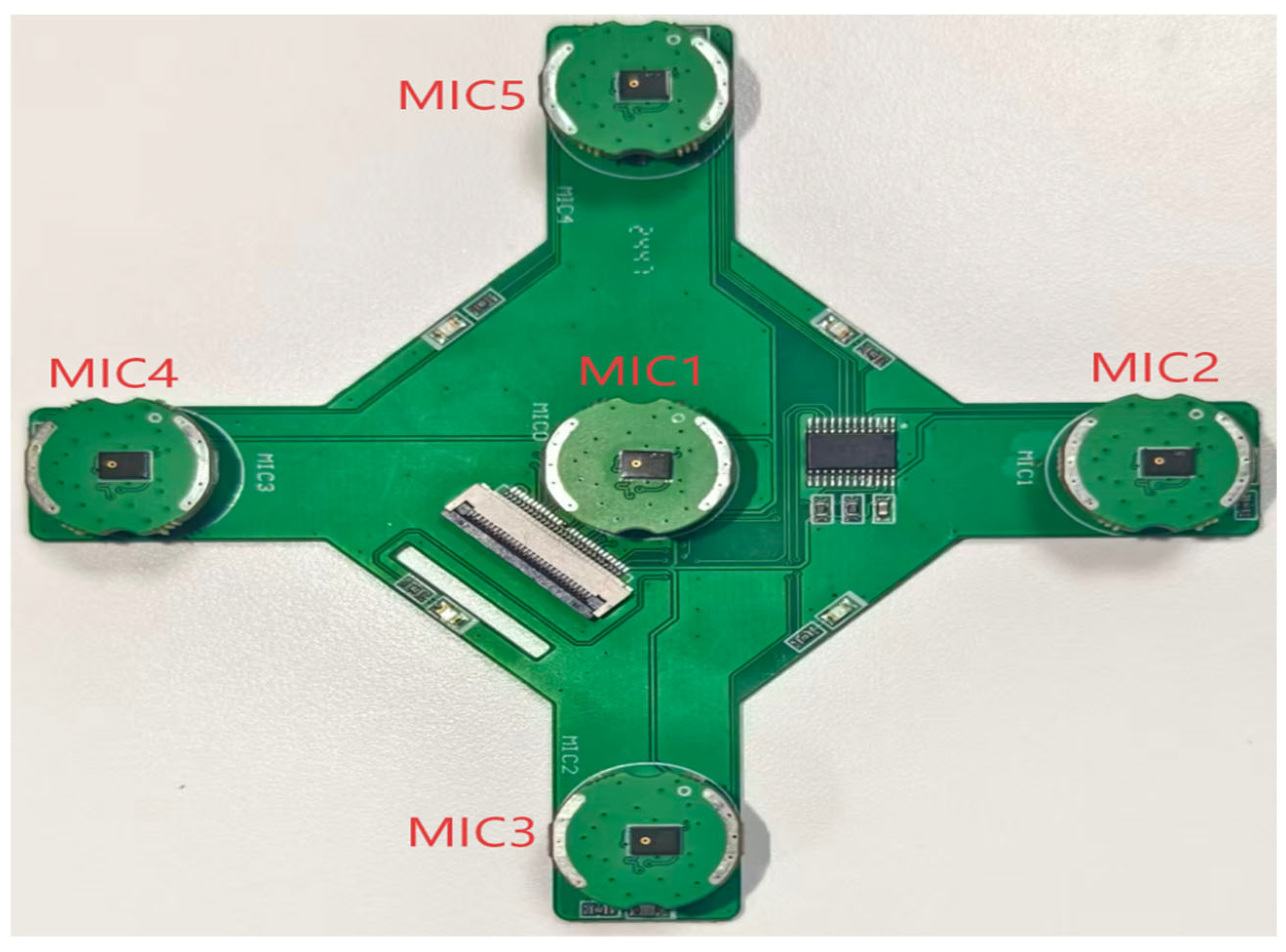
Designed for high-volume manufacturing, the WMM7040DTHN0 is fully compatible with standard SMT processes and can be directly mounted onto the customer’s PCB using conventional automated pick-and-place and solder-reflow equipment. It is suitable for implementing microphone arrays (Figure 1), where the use of multiple microphones can significantly enhance speech quality through spatial filtering and noise reduction. The WMM7040DTHN0 is manufactured in a compact 4.00 mm × 3.00 mm × 1.00 mm, 8-pin package.
The microphone array employed in this study consisted of five identical microphone units. Considering the portability and cost of the system, as well as the increase in computational power requirements, five microphones were determined to be the most appropriate choice. This number was selected as a compromise among three key considerations. Firstly, in terms of localization algorithm requirements, a minimum of three microphones is necessary for two-dimensional time-difference-of-arrival (TDOA) localization. The use of five units provides redundancy, ensuring that even if one or two microphones fail during irradiation, the remaining units can still support normal localization operations, thereby enabling the observation of progressive system-level degradation. Secondly, regarding device-to-device variability assessment, with only two or three microphones, it is impossible to meaningfully estimate the statistical spread (i.e., standard deviation) of failure thresholds. In contrast, five units allow for the preliminary calculation of the mean and standard deviation of failure thresholds. While a larger sample would strengthen statistical confidence, the consistent failure modes observed across all five units under identical conditions strongly support a causal relationship with radiation exposure, ruling out accidental single-device anomalies.
Orange Pi (Shenzhen Xunlong Software Co., Ltd., Shenzhen, China) is an open-source, single-board card computer based on a new-generation ARM64 architecture. It supports multiple operating systems, including Android TV 10, Ubuntu, and Debian. The Orange Pi Zero 2 development board used in this study is equipped with an All winner H616 system-on-chip and 1 GB of DDR3 memory.

2.2. TID Methods and System

The TID irradiation was performed using a 60Co γ source at a dose rate of 0.0342 Gy(Si)/s. This dose rate was selected to ensure that the total dose required to observe device degradation could be accumulated within a practical experimental timeframe, while avoiding an excessively high dose rate that could introduce unwanted transient effects. All five MEMS microphone devices in the array were simultaneously irradiated under the same dose rate.
Throughout the experiment, raw audio data from all microphones were continuously recorded and stored locally on the Orange Pi. High-sampling-rate time-domain current data (including timestamps) were recorded using dedicated current monitoring software.

2.2.1. Data Processing and Localization Algorithm

A critical aspect of this study is the assessment of radiation-induced degradation on array-based fault localization. The primary localization algorithm employed is based on Time Difference of Arrival estimation using Generalized Cross-Correlation (GCC) with Phase Transform (PHAT) weighting.
Acquisition and Pre-processing: The five digital MEMS microphones output 1-bit Pulse Density Modulation (PDM) streams. The Orange Pi’s integrated audio interface decimates and filters these streams to generate synchronized 16-bit Pulse Code Modulation (PCM) data at a sampling rate of 48 kHz. A Hanning window is applied to each audio frame (frame length: 2048 samples) to minimize spectral leakage.
Time Delay Estimation: For a given pair of microphones i and j , the GCC-PHAT function is computed to determine the time lag τ i j :
R i j τ   =   Ƒ 1 X i f X j * f X i f X j * f
where X i f and X i f are the Fourier transforms of the signals. The PHAT weighting normalizes the magnitude spectrum, emphasizing phase information and providing robustness against the reverberant and noisy conditions expected during irradiation tests. The time delay estimate τ ^ i j corresponds to the peak of R i j τ .
Source Localization: The estimated TDOAs are used to solve for the sound source coordinates x i , y i , which are the fixed positions of the microphones. The resulting coordinates were automatically logged via MATLAB R2022a scripts to track the degradation of positioning accuracy as a function of accumulated dose [13,14].

2.2.2. Experimental Setup and Environmental Control

A critical aspect was the stringent control of environmental variables to isolate radiation-induced effects. The MEMS microphone array was positioned directly facing the 60Co source on a movable platform. To ensure only the MEMS microphones were exposed, a 10 cm thick lead shield enclosed the Orange Pi controller, current monitoring module, and power circuitry. This shielding was verified via pre-irradiation tests to eliminate measurable radiation effects in the support electronics, ensuring all observed degradation originated from the microphone array.
A standard 1 kHz tone was generated by a loudspeaker placed at a fixed distance and angle relative to the array, with the laboratory ambient temperature maintained at approximately 22 degrees Celsius throughout the experiment. The loudspeaker was positioned outside the primary radiation beam to prevent damage that could alter the acoustic reference signal. Its output amplitude was monitored and maintained constant. This fixed geometry, together with the controlled temperature environment, provided a known reference for validating the TDOA-based localization accuracy during baseline measurements.

2.2.3. Annealing Tests

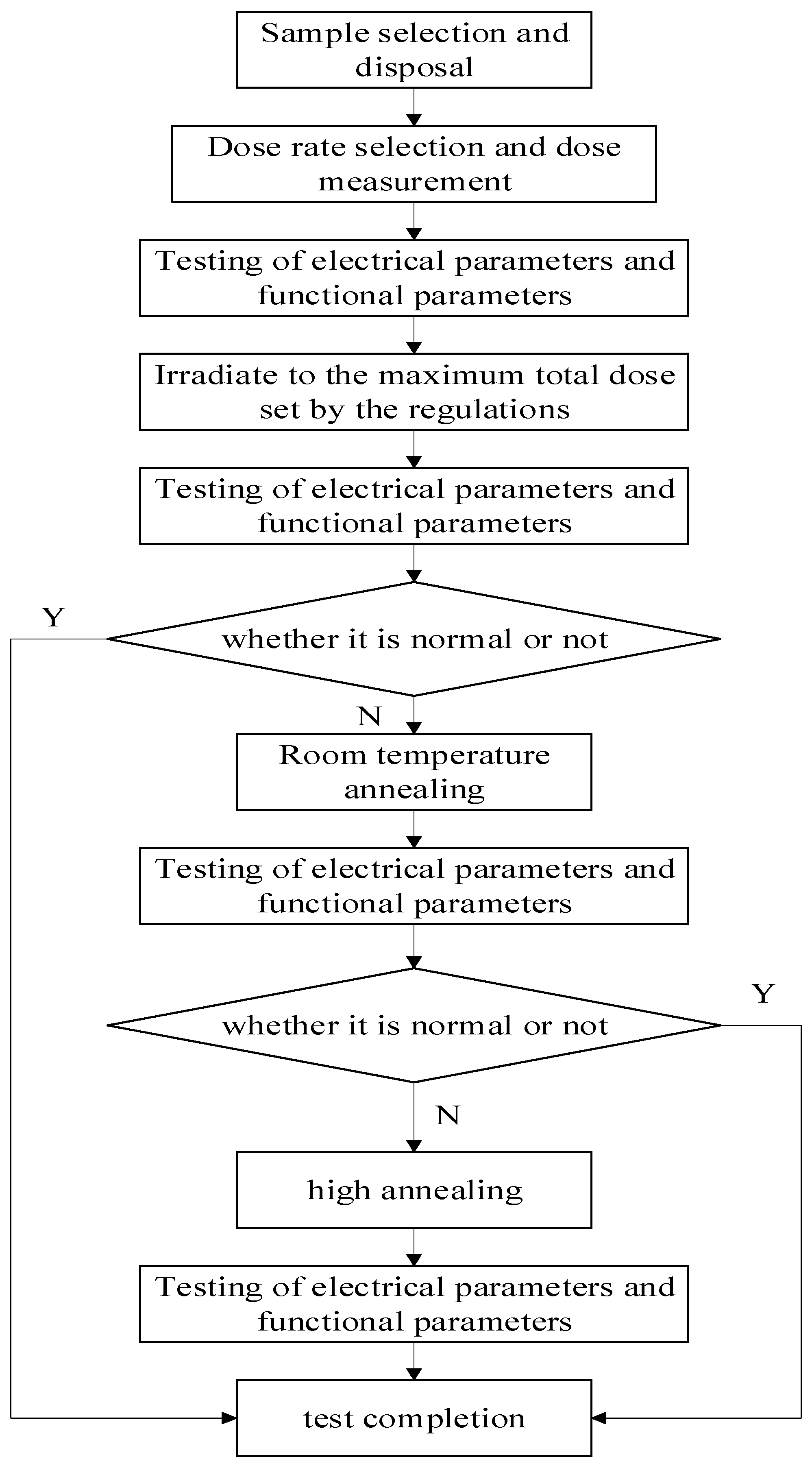
After irradiation, the MEMS microphones were collected for annealing tests. If they did not recover after room-temperature annealing, high-temperature annealing was subsequently performed. Each annealing stage lasted 168 h, after which detailed parameter measurements were carried out. The overall experimental procedure is illustrated in Figure 2.

3. TID Experiment Results and Analysis

3.1. MEMS Test Analysis

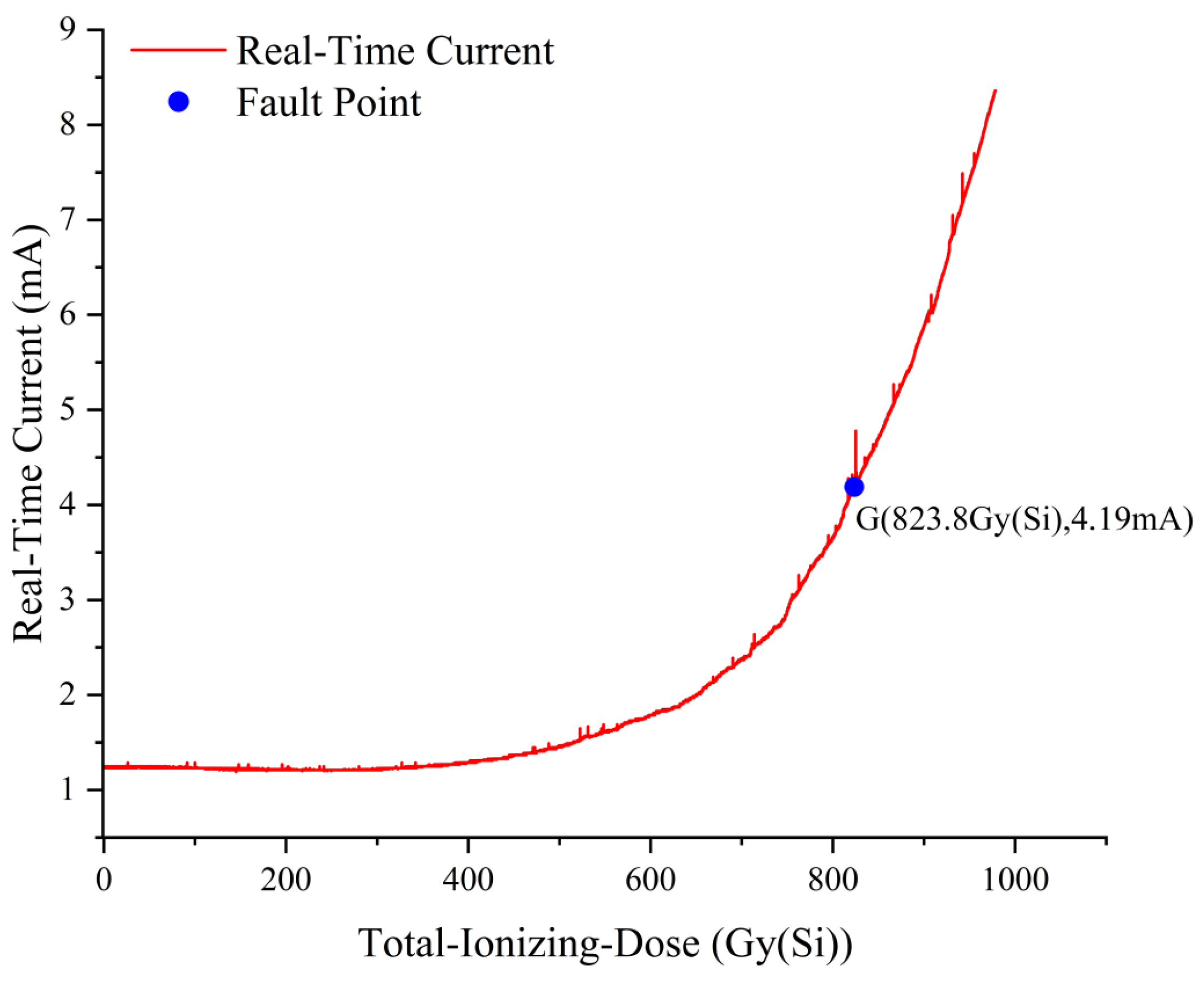
During the irradiation test, a 1 kHz standard audio signal was used as the sound source for the entire MEMS microphone array. When the TID reached 823.8 Gy(Si) (point G), channel failure occurred for Microphone No. 1. The real-time current variation observed during the experiment is shown in Figure 3. At the onset of irradiation, the operating current of each MEMS microphone remained stable at approximately 1.25 mA. When the accumulated TID reached approximately 383.8 Gy(Si), the continuous gamma irradiation began to induce a substantial change in the current. When the TID reached 823.8 Gy(Si), the current rose to 4.19 mA, representing an increase by a factor of 3.35. As the total gamma radiation dose continues to accumulate, the operating current of the MEMS microphones maintains an upward trend, with the growth rate accelerating as the dose rises. The progressively steepening slope of the current curve in Figure 3 directly illustrates this accelerated growth trend [8].
To clarify the radiation-induced performance evolution, we clearly define three standardized failure levels in this study: channel degradation refers to parametric drift such as current increase and noise elevation while acoustic function remains valid; channel failure denotes the loss of valid acoustic output and severe spectral distortion; and full system failure indicates the complete loss of array localization capability.
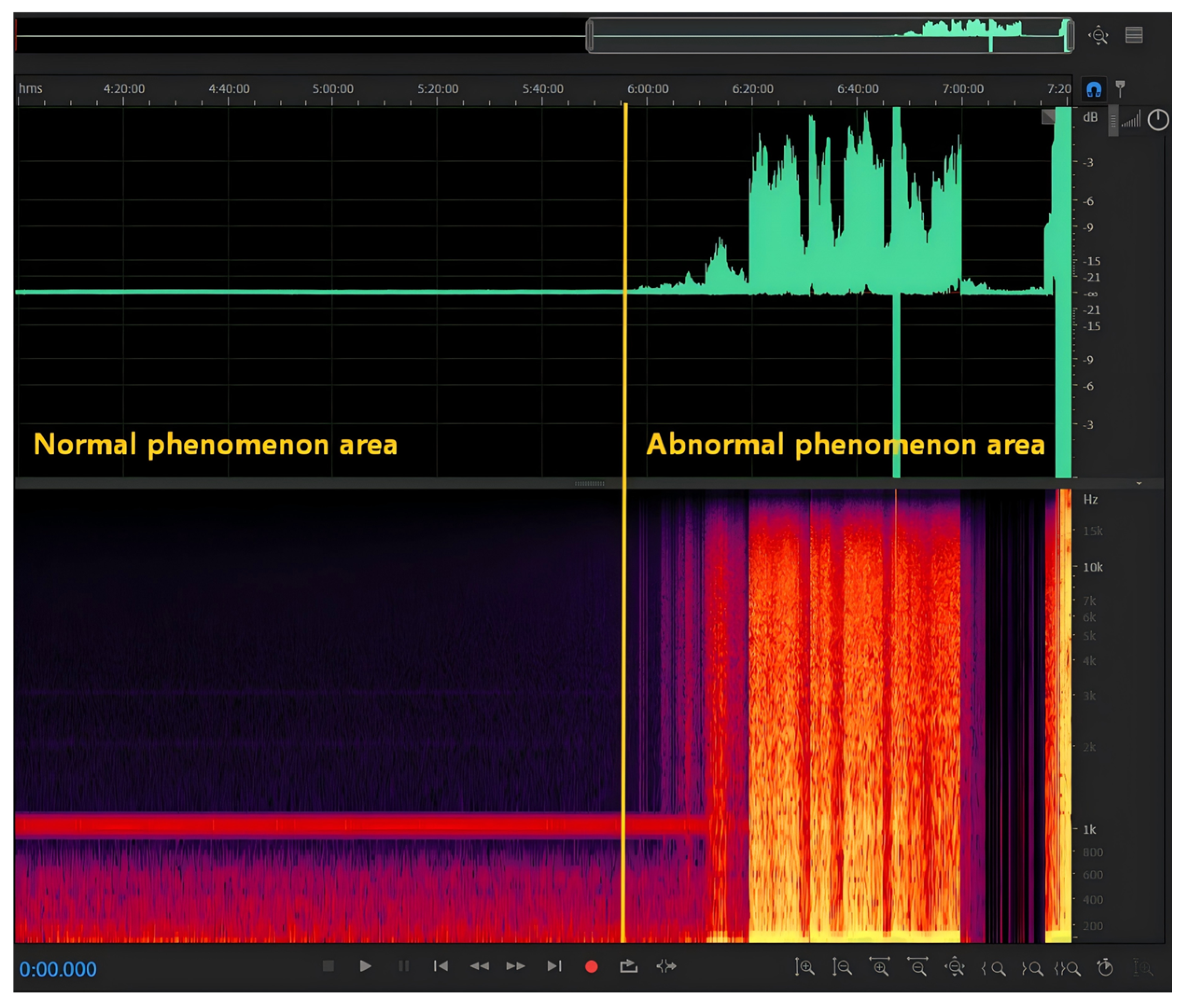
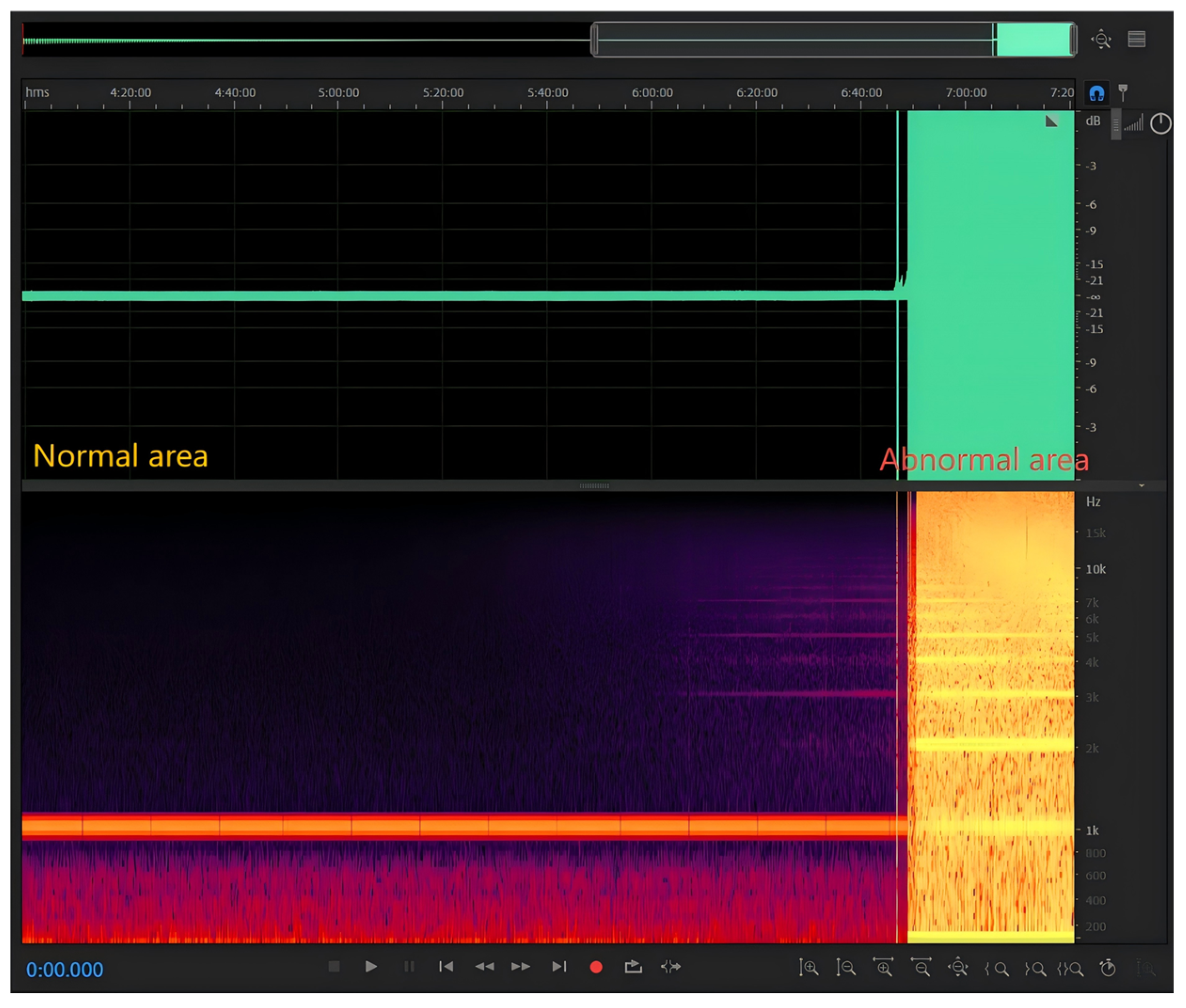
In the initial stage of abnormal current rise, and up until just before Point G (823.8 Gy(Si)), the spectral characteristics and audio output functions of Microphone No. 1 remained normal, indicating that the device was still operating properly within this range. When the total ionizing dose reached 823.8 Gy(Si), Microphone No. 1 failed, and its spectral characteristics and audio output exhibited varying degrees of degradation. These included severe distortion in the spectral output and failure of the audio acquisition and recording function, as shown in Figure 4.
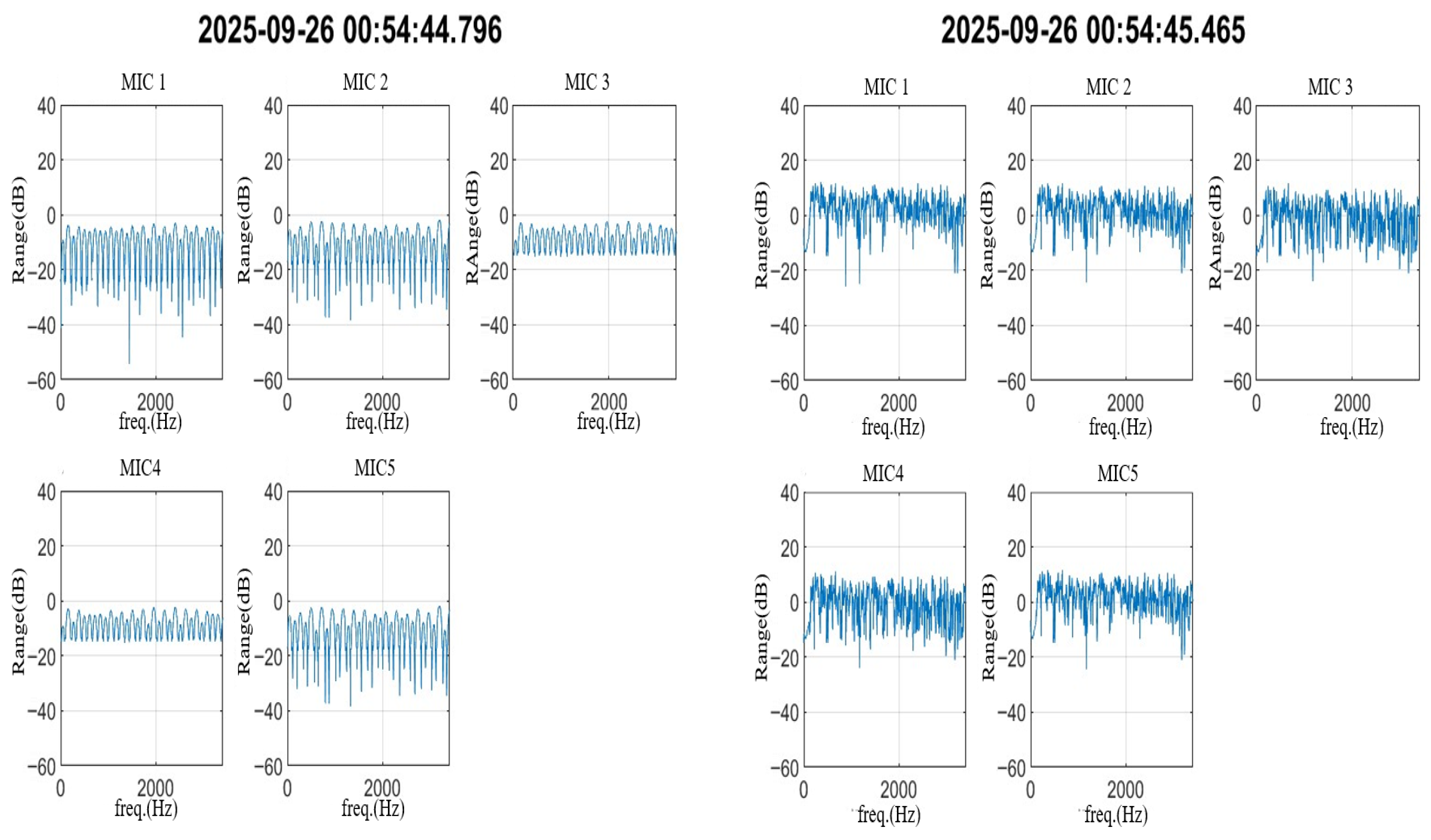
The observed spectral distortion can be attributed to the Microphone No.1’s failure to acquire audio. Since the real-time spectrogram relies on audio data from each microphone, the loss of input from this microphone caused pronounced irregularities in the spectrogram. As shown in Figure 5, the spectrum exhibits a regular and stable 1 kHz pattern before point G. Once the accumulated dose at point G reached 823.8 Gy(Si) and Microphone No. 1 experienced functional degradation, the spectrum changed significantly.
It is clear that at the moment the microphone malfunctions, specifically when its audio acquisition capability becomes impaired, the spectrogram transitions from the initially smooth and well-defined pattern to a continuous, irregular, and distorted form.
When Microphone No. 1 exhibited anomalies, the real-time spectrogram displayed abnormal fluctuations, as illustrated in Figure 6. It is evident that at the instant of failure—when the recording functionality was compromised—the spectral characteristics transitioned from smooth and well-defined to continuous and jagged. Since the real-time spectrum is generated from the digital audio signals uploaded by the five microphones, a malfunction in one unit results in data loss or corrupted data.
From the perspective of the audio acquisition and recording module, once Microphone No. 1 is damaged, it loses the ability to accurately capture sound or amplify the audio signal. Its output becomes a distorted “noise” signal containing numerous harmonics. This malfunctioning microphone produces a high-energy, chaotic signal that spans almost the entire frequency domain.
As shown in Figure 5, prior to failure, the spectral curves are relatively flat and smooth, remaining close to the noise floor of the figure. The amplitudes are generally stable below 20 dB. By contrast, after failure, the noise floor across the entire frequency band rises by approximately 10–20 dB. This indicates that even in the absence of an input signal, the intrinsic or environmental noise has increased dramatically, leading to a sharp decline in the signal-to-noise ratio [9].
Additionally, the post-irradiation spectrogram becomes extremely irregular and exhibits numerous anomalies. A large number of random, non-harmonic spikes appear throughout the spectrum. These spikes are comparable to those of the attenuated main signal. Such behavior indicates that several hours of gamma irradiation have severely degraded the performance of the semiconductor components within the microphone, resulting in a significant increase in the noise floor and a decrease in sensitivity, as evidenced by the attenuation of the main spectral peak [10].
Around the region corresponding to a total TID of 904.7 Gy(Si) in the current graph, additional anomalies appear in both the real-time spectrogram and the current behavior. Owing to cumulative radiation effects and inherent device-to-device variations, different MEMS microphone units exhibit different levels of radiation tolerance.
According to the audio acquisition module (Figure 5), after Microphone No. 4 was damaged, it lost the ability to properly amplify audio signals. Its output becomes a distorted “noise” signal containing a large number of harmonics.
As the experiment progressed, when the TID reached 978.1 Gy(Si), both the real-time spectrum and current exhibited severe abnormalities. At this point, the system’s positioning function completely failed: the coordinate points on the algorithm’s positioning map were lost, and the calculated positional data became entirely random. Simultaneously, the operating current rose to 8.36 mA, approximately 6.69 times the initial value.
The failure doses of the five individual microphones were measured as 823.8, 904.7, 978.1, 978.1, and 978.1 Gy(Si), respectively. The mean failure threshold was 932.6 Gy(Si), with a standard deviation of 62.8 Gy(Si), a coefficient of variation (CV) of 6.7%, and a 95% confidence interval of [875.5, 989.7] Gy(Si). These values quantify the device-to-device variation and statistical dispersion of the TID failure thresholds.
Analysis of the spectrum indicates that the system could no longer acquire data from the MEMS microphone array. The spectral performance had deteriorated drastically compared to its initial state. All output data appeared random, and the spectrum became sparse and isolated, no longer responding to variations in the sound source. This behavior confirms that all the microphones had fully failed successively, and the system lost all responsiveness to audio signals.
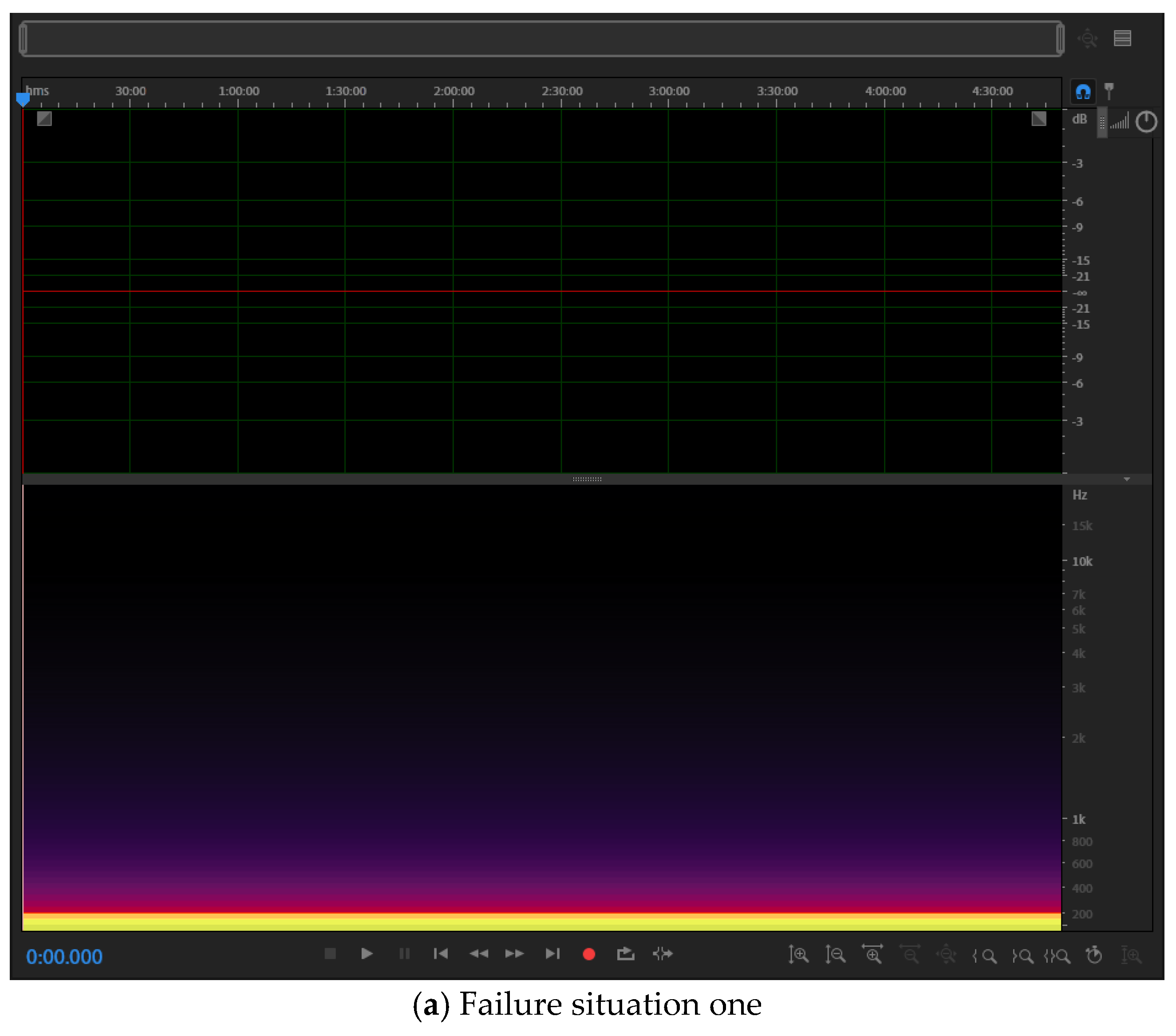
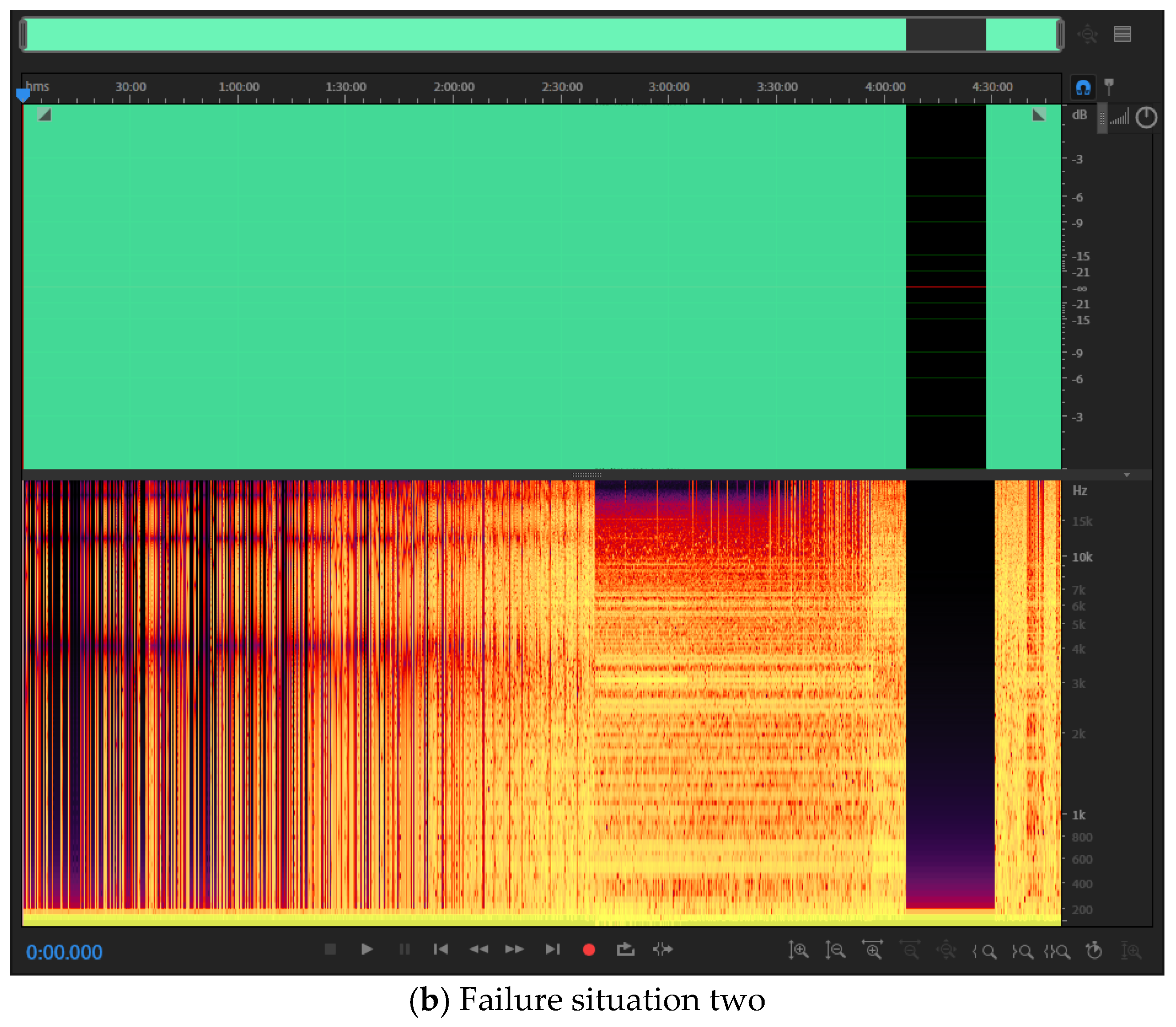
From the audio acquisition module, two distinct abnormal phenomena were observed, as shown in Figure 7. In Figure 7a, the waveform appears as a flat line with no discernible characteristics, and the corresponding spectrum shows no effective signal components. This indicates that the microphone can no longer output any varying electrical signals. Figure 7b indicates that the microphone produces a signal, but it does not originate from acoustic conversion; rather, it is self-generated noise from the chip itself [11,12,13].
The distinct abnormal outputs observed in Figure 7a,b can be attributed to two different structural-level failure mechanisms induced by total ionizing dose exposure. In the case of the flat-line output (Figure 7a), it is hypothesized that accumulated positive charge in the dielectric layers between the MEMS diaphragm and the rigid backplate creates a sufficiently strong electrostatic force to overcome the mechanical restoring force of the diaphragm, leading to permanent pull-in adhesion (stiction). Once the diaphragm is physically collapsed onto the backplate, it can no longer vibrate in response to acoustic pressure waves, and the variable capacitance transducer ceases to function. Consequently, no alternating electrical signal is generated, resulting in a direct-current-like flat output. In contrast, the broadband self-noise observed in Figure 7b likely originates from severe degradation of the application-specific integrated circuit (ASIC) encoder rather than complete mechanical stiction. TID-induced threshold voltage shifts and increased leakage currents in the CMOS transistors of the ASIC can drive the amplification stage into an unstable, highly nonlinear operating region or even self-oscillation. Under such conditions, even if the MEMS diaphragm retains partial mechanical mobility, the corrupted bias circuitry and saturated amplifier produce a high-level, chaotic noise floor that masks any residual acoustic response, manifesting as the persistent broadband distortion captured in the spectrogram [15,16].
As the placement of the five microphones is random and the TID effect is stochastic, the relatively rapid variations and significant impacts observed in Microphones 1 and 4 are also random. Since Microphone 1 is located at the center of the array, once it fails and enters a deep saturation state, it can no longer provide valid phase information to any paired channel, thus rendering the entire array incapable of accurate delay calculation. The combination of a silent central reference (Mic 1) and a noisy edge channel (Mic 4) shifts the estimated source position from the true third quadrant to the erroneous fourth quadrant, or results in the complete loss of valid coordinate output due to a collapse in the system’s confidence in TDOA data.
The observed failure phenomena across multiple MEMS microphones clearly demonstrate that standard commercial MEMS silicon microphones are susceptible to TID effects in a gamma radiation environment. Notably, the failure modes were highly regular and repeatable, highlighting the significance and reliability of this experimental study.
The failure doses of the five individual microphones were 823.8, 904.7, 978.1, 978.1, and 978.1 Gy(Si), respectively. The mean failure threshold was 932.6 Gy(Si), with a standard deviation of 62.8 Gy(Si) and a 95% confidence interval of [875.5, 989.7] Gy(Si). And according to the unified criteria established at the beginning of Section 3.1, the key dose points are categorized as follows: ~383.8 Gy(Si) corresponds to channel degradation, 823.8 Gy(Si) marks the first channel failure of Microphone No. 1, around 904.7 Gy(Si) represents the second channel failure of Microphone No. 4, and 978.1 Gy(Si) indicates full system failure.

3.2. Annealing Experiment

Following the irradiation experiment, the device was subjected to room-temperature annealing for 168 h. However, no functional recovery was observed. Subsequently, high-temperature annealing was performed at 80 °C. Post-annealing, the operating current returned to approximately 1.27 mA, consistent with the normal working range. Despite this recovery in current, the microphones’ functional performance was not restored, indicating that the radiation-induced damage was irreversible and permanent. The real-time spectrum after annealing confirms that the audio acquisition remained nonfunctional after annealing.

4. TID Results Discussion

Statistical evaluation of the five tested devices reveals a standard deviation of 62.8 Gy(Si) and a coefficient of variation of 6.7% for the TID failure thresholds, which reflects typical device-to-device variation in commercial MEMS devices. In this experiment, five microphones of the same model showed nearly similar failure modes (amplifier saturation and broadband noise) under the same irradiation conditions. This observation rules out accidental single-device failure and strongly supports a causal relationship between the observed malfunctions and radiation exposure. The differences in failure onset between devices indicate that even chips manufactured in the same batch have subtle variations in their internal microstructures, resulting in slightly different TID failure thresholds. Such device-to-device variability is a well-known and typical phenomenon in radiation effect research [15,16,17].
For MEMS microphones, the primary role of the ASIC chip is to provide an appropriate bias voltage to the MEMS sensor and amplify the minute voltage variations generated by the MEMS during operation. Depending on the design, the ASIC may also perform on-chip digital processing before output. Consequently, the electrical performance of the ASIC chip directly affects the overall acoustic performance of the MEMS microphone [17,18,19,20].
The progressive increase in operating current suggests the formation of radiation-induced leakage paths within the device. One possible explanation for the abrupt functional failure is related to electrostatic pull-in and subsequent permanent damage. A MEMS microphone operates as a miniature parallel plate capacitor in which the diaphragm and backplate form the two electrodes. Under normal operating conditions, the diaphragm vibrates in response to sound waves, modulating the capacitance and thus converting acoustic signals into electrical signals. It is hypothesized that TID-induced charge trapping in the dielectric layers could alter the effective bias voltage across the gap. If the effective voltage exceeds a critical threshold (i.e., the pull-in voltage), the electrostatic force surpasses the mechanical restoring force of the diaphragm, causing it to collapse onto the backplate. Should this occur, the voltage at the moment of contact may remain high, potentially generating a large surge current at the contact point. The resulting localized high temperature could melt the silicon material, leading to permanent physical bridging (short circuit) and structural damage.
A comparative analysis of failure phenomena of two microphones (No. 1 and 4) reveals distinct characteristics. Microphone No. 1 exhibited a saturation cut-off phenomenon after approximately seven hours of gamma irradiation, suggesting that the radiation damage may have caused the amplifier’s input stage to completely lose linearity or bias stability. Consequently, its conduction current reached the maximum limit, accompanied by a stable and constant high-voltage output. This condition resembles what is referred to as “deep hard saturation.” By contrast, after radiation damage, Microphone No. 4 appeared to enter a highly unstable critical operating state. Although it was saturated, the internal carriers and other components likely continued to fluctuate rapidly, producing slight, fast variations or oscillations in the output voltage. In conclusion, both devices experienced saturation failure due to TID effects. However, due to inherent microscopic differences in semiconductor fabrication, even identical devices subjected to the same irradiation conditions can exhibit subtle variations in their failure patterns [21,22,23,24,25].
We hypothesize that the observed functional loss and noise floor elevation could stem from one or a combination of the following mechanisms, acting either on the MEMS transducer itself or the accompanying ASIC circuitry:
Hypothesized Mechanism 1: Diaphragm adhesion due to charge accumulation.
Diaphragm adhesion due to charge accumulation: Gamma irradiation is known to generate and accumulate positive charges in the insulating layers. If sufficient charge were to accumulate in the insulating medium between the MEMS diaphragm and the backplate, the resulting electrostatic force could become strong enough to pull the diaphragm into full contact with the backplate, causing permanent adhesion. In this state, the diaphragm loses its vibration capability, preventing sound pressure from modulating the capacitance. Essentially, the sensor function is lost, and the output signal disappears. This mechanism would account for the complete loss of acoustic signal observed in some units [26].
Hypothesized Mechanism 2: Loss of ASIC bias voltage or reference circuit failure.
Loss of ASIC bias voltage: The charge pump or voltage reference circuit responsible for providing the polarization voltage (Vbias) to the MEMS sensor could be damaged by irradiation, preventing the sensor from receiving the required bias voltage. Without proper biasing, the capacitive transducer would be unable to operate.
A third and equally plausible hypothesis centers on degradation of the ASIC’s analog front-end. Gamma-ray ionization in CMOS transistors can cause threshold voltage shifts and a significant increase in leakage current, resulting in severe degradation of amplifier performance. Consequently, the self-noise of the amplifier could increase dramatically, gain may become abnormal, and the amplifier cannot effectively amplify the weak audio signal from the MEMS sensor. The recorded output would then be wideband, high-intensity white noise. In this case, the MEMS sensor itself might still retain partial functionality, but due to the failure of the downstream amplification circuit, the system ultimately produces only noise output across the entire frequency band [27,28,29,30,31,32,33].
It is important to emphasize that the above descriptions are proposed failure hypotheses based on the observed system-level electrical and acoustic degradation. Definitive identification of the dominant failure mechanism (s) would require future work involving destructive physical analysis, selective electrical probing of the MEMS and ASIC components, and potentially radiation testing of the MEMS transducer and ASIC in isolation.

5. Conclusions

This study experimentally evaluated the total ionizing dose effects on a five-channel array of commercial MEMS silicon microphones under 60Co γ-ray irradiation at a dose rate of 0.0342 Gy(Si)/s. The degradation sequence was characterized by three distinct, quantifiable phases. Initially, up to an accumulated dose of approximately 383.8 Gy(Si), the microphones maintained nominal operation with a stable supply current of ~1.25 mA and a clean 1 kHz spectral response. Second, beyond this threshold, a progressive parametric drift was observed: the operating current increased monotonically, rising by a factor of 3.35 (to 4.19 mA) at 823.8 Gy(Si) for the first failing unit and ultimately reaching a maximum of 8.36 mA—a 6.7-fold increase relative to the initial value—at a TID of 978.1 Gy(Si). Third, functional failure occurred, marked by severe spectral distortion, a rise in the noise floor of 10–20 dB across the full frequency band, and the complete loss of acoustic localization capability. The average TID failure threshold across the five units was 932.6 ± 62.8 Gy(Si) (mean ± standard deviation, n = 5), with a 95% confidence interval of [875.5, 989.7] Gy(Si). Post-irradiation annealing at 80 °C for 168 h restored the operating current to the pre-irradiation level of ~1.27 mA, but the acoustic and spectral performance remained permanently degraded, confirming irreversible structural or electrical damage within the MEMS-ASIC system. All experimental phenomena are categorized into three clearly distinguished levels: channel degradation, channel failure, and full system failure. This unified failure definition improves the rigor and repeatability of radiation tolerance evaluation for MEMS microphone arrays. However, the present study has specific limitations that must be acknowledged. The experiments were conducted in a controlled laboratory setting at a single, relatively low dose rate (0.0342 Gy(Si)/s); the effects of enhanced low-dose-rate sensitivity or high-dose-rate irradiation remain uncharacterized. Additionally, the investigation was limited to a single batch of one commercial microphone model, and the sample size (n = 5) constrains the statistical certainty of the reported failure threshold variance. Finally, while the system-level failure is clear, the deconvolution of damage between the MEMS transducer (charge accumulation and stiction) and the ASIC (threshold voltage shifts) requires further post-mortem physical analysis. Addressing these limitations in future work will be essential for developing fully radiation-hardened acoustic monitoring solutions.

Author Contributions

Conceptualization, P.Z. and X.D.; methodology, X.D.; software, P.Z. and C.M.; validation, P.Z. and Y.W.; formal analysis, Z.Z. and J.W.; investigation, P.Z. and C.M.; resources, X.D.; data curation, P.Z.; writing—original draft preparation, P.Z.; writing—review and editing, X.D.; visualization, P.Z.; supervision, H.Y. and Z.L.; project administration, H.Y.; funding acquisition, X.D. All authors have read and agreed to the published version of the manuscript.

Funding

This work was supported by the National Natural Science Foundation of China (No. 12305303), the 2025 Applied Basic Research Program of Material Aging Research & Development Center of China National Nuclear Corporation (No. YYJJ-CNPO-2024-04), the Science and Technology on Reactor System Design Technology Laboratory (No. HT-KFKT-24-2021004), and the Doctoral Research Fund of University of South China (No. 200XOD033).

Data Availability Statement

Data are available upon request to the corresponding author.

Conflicts of Interest

Authors Zhenya Li and Hao Yun were employed by the company China Nuclear Power Operation Technology Corporation, Ltd. The remaining authors declare that the research was conducted in the absence of any commercial or financial relationships that could be construed as a potential conflict of interest.

References

  1. Kumar, A.; Varghese, A.; Sharma, A.; Prasad, M.; Janyani, V.; Yadav, R.P.; Elgaid, K. Recent development and futuristic applications of MEMS based piezoelectric microphones. Sens. Actuators A-Phys. 2022, 347, 113887. [Google Scholar] [CrossRef]
  2. Fleetwood, D.M. Total-Ionizing-Dose Effects, Border Traps, and 1/f Noise in Emerging MOS Technologies. IEEE Trans. Nucl. Sci. 2020, 67, 897–905. [Google Scholar] [CrossRef]
  3. Algamili, A.S.; Khir, M.H.M.; Dennis, J.O.; Ahmed, A.Y.; Alabsi, S.S.; Hashwan, S.S.B.; Junaid, M.M. A review of actuation and sensing mechanisms in MEMS-based sensor devices. Nanoscale Res. Lett. 2021, 16, 16. [Google Scholar] [CrossRef]
  4. Raju, H.; Vishnuvardhan, R.; Srikanth, R. MEMS based sensors–A comprehensive review of commonly used fabrication techniques. Mater. Today 2022, 49, 720. [Google Scholar]
  5. Ahmad, A.M.F.; Yaser, S.; Koichi, S. Application of Micro-Electro-Mechanical Systems (MEMS) as Sensors: A Review. J. Robot. Mechatron. 2020, 32, 281–288. [Google Scholar]
  6. Lee, C.I.; Johnston, A.H.; Tang, W.C.; Barnes, C.E.; Lyke, J. Total dose effects on Microelectromechanical Systems (MEMS): Accelerometers. IEEE Trans. Nucl. Sci. 1996, 43, 3127. [Google Scholar] [CrossRef]
  7. Barnaby, H.J. Total-Ionizing-Dose Effects in Modern CMOS Technologies. IEEE Trans. Nucl. Sci. 2006, 53, 3103–3121. [Google Scholar] [CrossRef]
  8. King, J.P.; Underbrink, J. Characterization of a Microelectromechanical Systems (MEMS) Microphone. In Proceedings of the 14th AIAA Aeroacoustics Conference, Vancouver, BC, Canada, 5–7 May 2008; American Institute of Aeronautics and Astronautics, AIAA: Reston, VA, USA, 2012; Volume 4, p. 2912. Available online: https://arc.aiaa.org/doi/abs/10.2514/6.2008-2912 (accessed on 22 April 2026).
  9. Xu, Y.T.; Sun, J.; Guo, J.J.; Yan, H. Total Ionizing Dose Radiation Effects Test and Research of SRAM Type FPGA Based on 40 nm Process. Electron. Packag. 2017, 18, 42–44. [Google Scholar]
  10. Bala, S.; Kumar, R.; Kumar, A. Comparative performance analysis of Carbon Nanotube and Si-Nanotube based Field effect Transistors. Trans. Electr. Electron. Mater. 2021, 22, 012028. [Google Scholar]
  11. Zhang, Y.Q.; Xiong, X.P. The Failure Mechanism and Analysis of MEMS Microphone. Electron. Packag. 2017, 17, 24–29. [Google Scholar]
  12. Gemelli, A.; Tambussi, M.; Fusetto, S.; Aprile, A.; Moisello, E.; Bonizzoni, E.; Malcovati, P. Recent Trends in Structures and Interfaces of MEMS Transducers for Audio Applications: A Review. Micromachines 2023, 14, 847. [Google Scholar] [CrossRef]
  13. Tiete, J.; Dominguez, F.; Da Silva, B.; Segers, L.; Steenhaut, K.; Touhafi, A. SoundCompass: A Distributed MEMS Microphone Array-Based Sensor for Sound Source Localization. Sensors 2014, 14, 1918–1949. [Google Scholar] [CrossRef]
  14. Chung, M.A.; Chou, H.C.; Lin, C.W. Sound Localization Based on Acoustic Source Using Multiple Microphone Array in an Indoor Environment. Electronics 2022, 11, 890. [Google Scholar] [CrossRef]
  15. Weigold, J.W.; Brosnihan, T.J.; Bergeron, J.; Zhang, X. A MEMS Condenser Microphone for Consumer Applications. In Proceedings of the 19th IEEE International Conference on Micro Electro Mechanical Systems, Istanbul, Turkey, 22–26 January 2006; IEEE: Piscataway, NJ, USA, 2006; Volume 19, p. 86. Available online: https://ieeexplore.ieee.org/abstract/document/1627742/citations (accessed on 6 December 2025).
  16. Hantos, G.; Desmulliez, M. Acoustic methods for detection of specific failure modes in capacitive MEMS microphones. In Proceedings of the 2020 IEEE 8th Electronics System-Integration Technology Conference (ESTC), Tønsberg, Norway, 15–18 September 2020; IEEE: Piscataway, NJ, USA, 2020; pp. 1–8. Available online: https://ieeexplore.ieee.org/abstract/document/9229745 (accessed on 18 April 2026).
  17. Homentcovschi, D.; Miles, R.N.; Loeppert, P.V.; Zuckerwar, A.J. A microacoustic analysis including viscosity and thermal conductivity to model the effect of the protective cap on the acoustic response of a MEMS microphone. Microsyst. Technol. 2014, 20, 265. [Google Scholar] [CrossRef]
  18. Oldham, T.R.; McLean, F.B. Total ionizing dose effects in MOS oxides and devices. IEEE Trans. Nucl. Sci. 2003, 50, 483. [Google Scholar] [CrossRef]
  19. Song, S.D.; Liu, G.Z.; He, Q.; Gu, X.; Hong, G.S.; Wu, J.W. Combined effects of cycling endurance and total ionizing dose on floating gate memory cells. Chin. Phys. B 2022, 31, 056107. [Google Scholar] [CrossRef]
  20. Wenzel, T.; Rettig, R. Design of MEMS microphone protective membranes for continuous outdoor applications. Appl. Acoust. 2021, 183, 108304. [Google Scholar] [CrossRef]
  21. Tsuchikawa, Y.; Kai, T.; Abe, Y.; Ohishi, Y.; Sun, Y.; Oikawa, K.; Nakatani, T.; Sato, I. Measurement of Doppler broadening of prompt gamma-rays from various zirconium-and ferro-borons. Nucl. Instrum. Methods Phys. Res. A 2021, 991, 169464. [Google Scholar] [CrossRef]
  22. Antonin, N.; Honzík, P. Measurement of nonlinear distortion of MEMS microphones. Appl. Acoust. 2021, 175, 107802. [Google Scholar] [CrossRef]
  23. Yew, M.C.; Huang, C.W.; Lin, W.J.; Wang, C.H.; Chang, P. A study of residual stress effects on CMOS-MEMS microphone technology. In Proceedings of the 2009 4th International Microsystems, Packaging, Assembly and Circuits Technology Conference, Taipei, 21–23 October 2009; IEEE: Piscataway, NJ, USA, 2009; p. 323. Available online: https://ieeexplore.ieee.org/abstract/document/5382182 (accessed on 23 December 2025).
  24. Ali, W.R.; Prasad, M. Piezoelectric MEMS based acoustic sensors: A review. Sens. Actuators A Phys. 2020, 301, 111756. [Google Scholar] [CrossRef]
  25. Zhang, M.Y.; Hu, Z.Y.; Bi, D.W.; Dai, L.H.; Zhang, Z.X. Enhanced radiation-induced narrow channel effects in 0.13-μm PDSOI nMOSFETs with shallow trench isolation. Chin. Phys. B 2018, 27, 028501. [Google Scholar] [CrossRef]
  26. İlik, S.; Yelten, M.B. Total Ionizing Dose (TID) Impact on Basic Amplifier Stages. IEEE Trans. Device Mater. Reliab. 2022, 23, 51. [Google Scholar] [CrossRef]
  27. Fleetwood, D.M. Total Ionizing Dose Effects in MOS and Low-Dose-Rate-Sensitive Linear-Bipolar Devices. IEEE Trans. Nucl. Sci. 2013, 60, 1706. [Google Scholar] [CrossRef]
  28. Gaillardin, M.; Martinez, M.; Girard, S.; Goiffon, V.; Paillet, P.; Leray, J.L.; Magnan, P.; Ouerdane, Y.; Boukenter, A.; Marcandella, C.; et al. High Total Ionizing Dose and Temperature Effects on Micro- and Nano-Electronic Devices. IEEE Trans. Nucl. Sci. 2015, 62, 1226. [Google Scholar] [CrossRef]
  29. Lu, G.B.; Liu, J.; Zhang, C.G.; Gao, Y.; Li, Y.G. Dynamic modeling of total ionizing dose-induced threshold voltage shifts in MOS devices. Chin. Phys. B 2023, 32, 018506. [Google Scholar] [CrossRef]
  30. Lall, P.; Abrol, A.; Locker, D. Effects of Sustained Exposure to Temperature and Humidity on the Reliability and Performance of MEMS Microphone. In Proceedings of the ASME 2017 International Technical Conference and Exhibition on Packaging and Integration of Electronic and Photonic Microsystems (2017), San Francisco, CA, USA, 29 August–9 January 2017; ASME: New York, NY, USA, 2017; Available online: https://asmedigitalcollection.asme.org/InterPACK/proceedings-abstract/InterPACK2017/V001T01A022/266279 (accessed on 18 April 2026).
  31. Rahaman, A.; Boor, S.; Bradt, C.; Lee, S.B.; Albahri, S. Nonlinear Behavioral Model of Capacitive MEMS Microphone for Predicting Ultrasound Intermodulation Distortion. IEEE Sens. J. 2025, 25, 236–243. [Google Scholar] [CrossRef]
  32. Fueldner, M. Microphones, Handbook of Silicon Based MEMS Materials and Technologies, 3rd ed.; Elsevier: Amsterdam, The Netherlands, 2020; pp. 937–948. Available online: https://www.sciencedirect.com/science/chapter/edited-volume/abs/pii/B9780128177860000487 (accessed on 18 April 2026).
  33. Wang, T.; Ji, J.; Lan, J.; Wang, B. Ultrasonic Beamforming-Based Visual Localisation of Minor and Multiple Gas Leaks Using a Microelectromechanical System (MEMS) Microphone Array. Sensors 2025, 25, 3190. [Google Scholar] [CrossRef] [PubMed]
Figure 1. MEMS microphone array.
Asi 09 00097 g001
Figure 2. TID Test flow chart.
Asi 09 00097 g002
Figure 3. Real-time current variation diagram.
Asi 09 00097 g003
Figure 4. The intensity and spectral signal of Microphone No. 1 in Au software Adobe Audition 2025.
Asi 09 00097 g004
Figure 5. The intensity and spectral signal of Microphone No. 4 in Au software.
Asi 09 00097 g005
Figure 6. Shows the real-time spectrum before and after the first failure point.
Asi 09 00097 g006
Figure 7. Two situations after the complete failure of the microphone.
Asi 09 00097 g007aAsi 09 00097 g007b
Disclaimer/Publisher’s Note: The statements, opinions and data contained in all publications are solely those of the individual author(s) and contributor(s) and not of MDPI and/or the editor(s). MDPI and/or the editor(s) disclaim responsibility for any injury to people or property resulting from any ideas, methods, instructions or products referred to in the content.