1. Introduction
Wetting is a fundamental interfacial phenomenon describing the interaction of liquids with solids, and it plays a crucial role in diverse scientific and technological processes such as coating, lubrication, detergency, inkjet printing, and drug delivery [
1]. The degree of wetting is generally characterized by the contact angle (CA), defined as the angle between the liquid–vapor interface and the solid surface at the three–phase contact line [
2,
3]. According to Young’s equation, the equilibrium CA is determined by the balance of interfacial tensions at the solid–liquid, solid–vapor, and liquid–vapor interfaces. Hydrophilic surfaces typically exhibit low contact and angles (<90°), whereas hydrophobic surfaces display high contact angles (>90°), and superhydrophobic surfaces display high values exceeding 150°, indicating extreme repellency [
4].
As described by the classical Wenzel and Cassie–Baxter models, physical factors such as surface roughness affect the wetting property. The Wenzel model suggests that when a liquid completely penetrates the roughness grooves, surface roughness amplifies the inherent wettability of the substrate, making hydrophilic surfaces more wettable and hydrophobic surfaces more water-repellent. In contrast, the Cassie–Baxter model describes situations where air pockets are trapped beneath the liquid, resulting in a composite interface that can lead to even higher contact angles and enhanced hydrophobicity [
5].
Surfactant molecules are characterized by their distinct structural features: a hydrophilic (water-loving) headgroup and a hydrophobic (water-repellent) tail. This amphiphilic configuration allows surfactants to position themselves at interfaces, such as between a liquid and a solid, where their hydrophilic heads interact with the aqueous phase while the hydrophobic tails orient away. As a result, surfactants can effectively lower surface tension and adjust interfacial energies, enabling precise regulation of wettability. The ability of these molecules to adsorb at interfaces is central to their role in controlling wetting phenomena and underpins a wide variety of applications, from detergency to surface-coating technologies [
3]. As the concentration of surfactant in solution increases, the surface tension of the liquid decreases steadily due to the accumulation of surfactant molecules at the liquid–air interface. This reduction continues up to a characteristic threshold known as the critical micelle concentration (CMC). Beyond the CMC, the surface tension levels off and remains nearly constant, indicating that the interface has become saturated with surfactant molecules. At this point, any additional surfactant added to the system aggregates to form micelles in the bulk solution rather than adsorbing at the interface, signifying the saturation of the liquid–air interface and the onset of micellization [
6]. The slope of the surface tension versus the logarithm of surfactant concentration is a key parameter in the Gibbs adsorption isotherm, which effectively explains how surfactant molecules cover the interface. Specifically, the surface excess concentration, representing the amount of surfactant adsorbed per unit area, can be directly calculated from this slope. This relationship allows researchers to quantify the efficiency of surfactant adsorption and assess the packing density at the interface, providing valuable insight into interfacial phenomena.
This allows for direct calculation of the surface excess from experimental surface tension data, providing valuable insight into the efficiency of interfacial adsorption and the packing density of surfactant molecules at the interface.
Several studies have shown that surface tension reduction is not linear across all concentration ranges; significant decreases occur as interfacial coverage approaches saturation, underscoring the cooperative nature of adsorption at the air–water interface [
7].
Cationic and anionic surfactants exhibit distinct surface and wetting properties due to differences in their molecular structures and the nature of their charged headgroups. Cetyltrimethylammonium bromide (CTAB), as a cationic surfactant, not only finds utility in drug formulations, corrosion protection, and nanoparticle synthesis, but also demonstrates a strong tendency to adsorb onto negatively charged or polar substrates, often leading to significant alterations in surface wettability [
8,
9]. In contrast, anionic surfactants like sodium bis(2-ethylhexyl) sulfosuccinate (AOT) typically interact more efficiently with hydrophobic or neutral surfaces, promoting different interfacial behaviors and spreading characteristics. The interplay between surfactant charge, substrate type, and solvent environment ultimately governs the efficiency of surface tension reduction and the degree of wettability enhancement observed in practical applications [
10].
Their adsorption, aggregation, and spreading characteristics depend strongly on the nature of the substrate and the surrounding environmental conditions. For instance, quartz and glass surfaces have been used extensively to probe wettability and adsorption, showing that cationic surfactants can induce strong hydrophobization of otherwise hydrophilic surfaces [
5,
11]. In contrast, spreading on non-polar substrates such as paraffin wax and polytetrafluoroethylene (PTFE) requires significant surface tension reduction to overcome their inherently low surface energies [
2].
Recent advancements in understanding surfactant-induced wetting behavior on hydrophobic surfaces have been driven by studies emphasizing dynamic, molecular, and surface-specific factors. Early work by Kwieciński et al. [
12] highlighted the dynamic nature of surfactant interactions, revealing non-monotonic contact angle variations and hysteresis during droplet evaporation on hydrophobic substrates.
Shardt et al. [
13] further investigated the effect of surface morphology, illustrating how it influences transitions between Cassie–Baxter and Wenzel states in the presence of surfactants. Huang et al. [
14] elaborated on dynamic effects, highlighting the impact of adsorption at the wetting front and local depletion on microporous hydrophobic membranes.
Jiang et al. [
15] focused on the molecular structure of surfactant, showing how branching and adsorption competition at interfaces significantly affect wettability. Bera et al. [
16] introduced the concept of “antisurfactant” behavior, where superspreader solutions paradoxically increase contact angles, challenging traditional assumptions about surfactant-induced wetting. Ogunmokum and Wallach [
17] examined infiltration dynamics in hydrophobic porous media, showing that surface heterogeneity and surfactant adsorption work together to control fluid penetration.
Zhang et al. [
11] demonstrated that the adsorption of cationic surfactants on quartz surfaces leads to pronounced changes in wettability, emphasizing that both the molecular structure of the headgroup and the nature of the counterion play pivotal roles in determining the extent and nature of this effect. Variations in these structural features can influence how strongly surfactant molecules interact with the quartz surface, thereby modulating the degree of hydrophobization or hydrophilization observed. Similarly, studies by Zdziennicka and co-workers [
18,
19] demonstrated that the intrinsic properties of surfaces, such as their charge and polarity, have a significant influence on how surfactants spread and alter wettability. These investigations underscore the importance of using both surface tension measurements and contact angle analysis together, as this dual approach provides a more complete and nuanced understanding of wetting behavior across different substrates.
Alcohols and glycol are another important class of additives that significantly influence surfactant-related wetting properties. Alcohol–water mixtures often show non-ideal surface behavior, as low-molecular-weight alcohols tend to adsorb preferentially at interfaces, altering the arrangement and orientation of nearby water molecules and thereby modifying interfacial properties [
20]. Ethanol–water mixtures, for example, show complex interfacial activity resulting from both hydrogen-bonding rearrangements and changes in surface tension, as confirmed by experimental and molecular dynamics studies [
21]. Ethylene glycol (EG), a polar polyol with relatively high viscosity, can further modify surfactant aggregation and interfacial adsorption by changing the dielectric environment of the solution and reshaping hydrogen-bonding networks [
22,
23].
Although many advances have been made, our understanding of how surfactant type, substrate hydrophobicity, and mixed solvents work together to control wetting is still incomplete. Most studies focus on one variable at a time, such as surfactant adsorption, spreading behavior, or the influence of co-solvents, so the combined effects remain less explored.
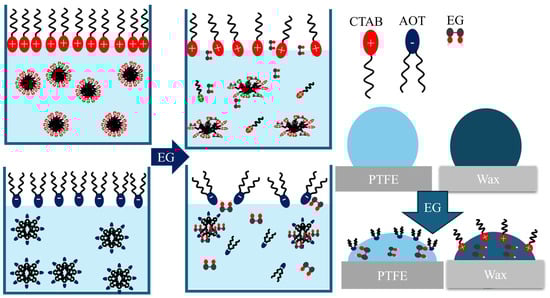
The primary objective of this study is to systematically investigate how cationic (CTAB) and anionic (AOT) surfactant solutions influence the surface and wetting properties of hydrophobic PTFE and dental wax substrates. In addition, the work aims to elucidate the role of ethylene glycol (EG) as a co-solvent in modifying both surfactant adsorption and spreading behavior. By analyzing the interplay between surfactant type, co-solvent presence, and surface characteristics, this research seeks to provide a comprehensive understanding of the factors that govern wetting and interfacial phenomena on low-energy surfaces.
3. Results and Discussion
3.1. Surface Tension and Surface Properties
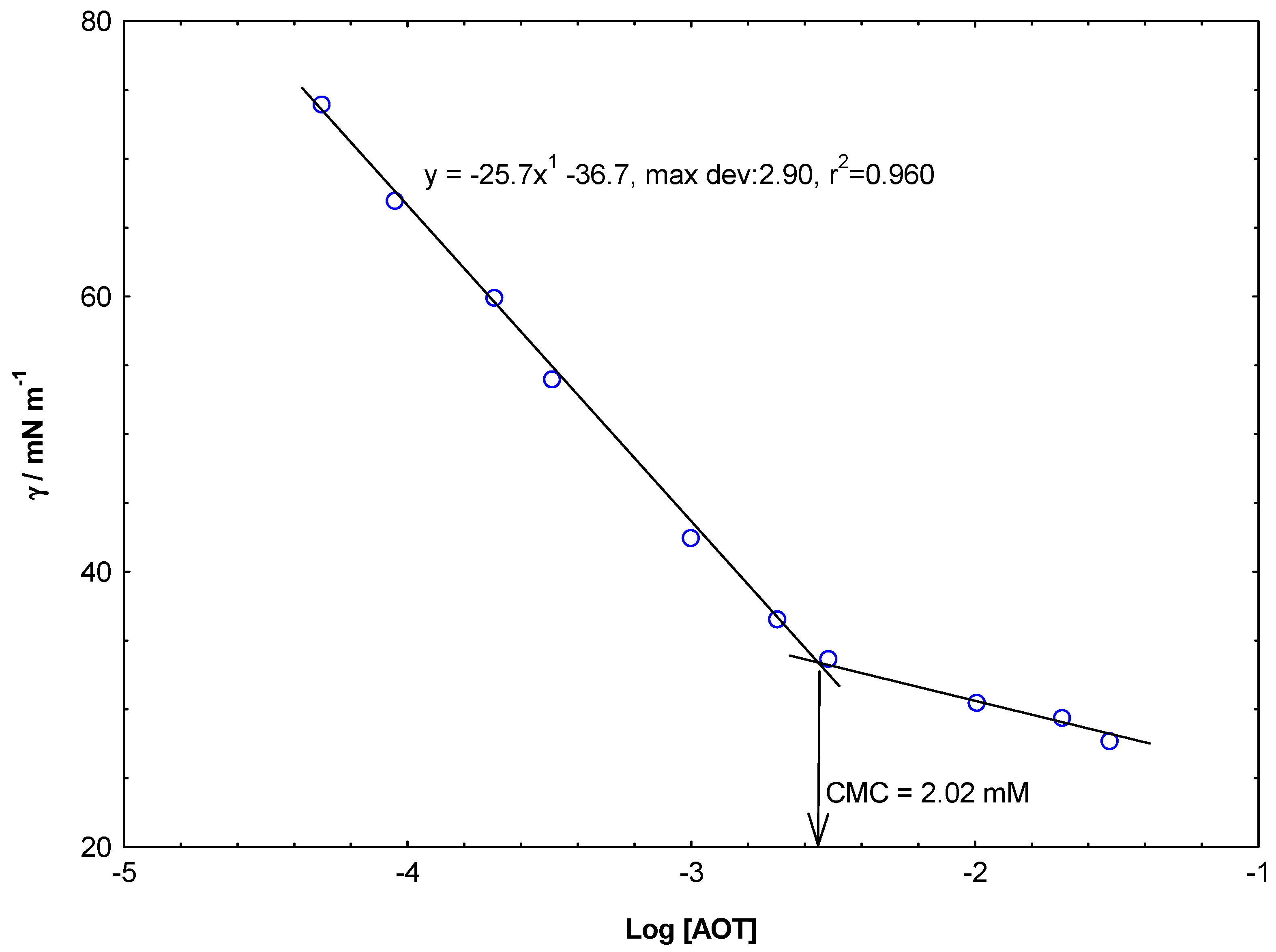
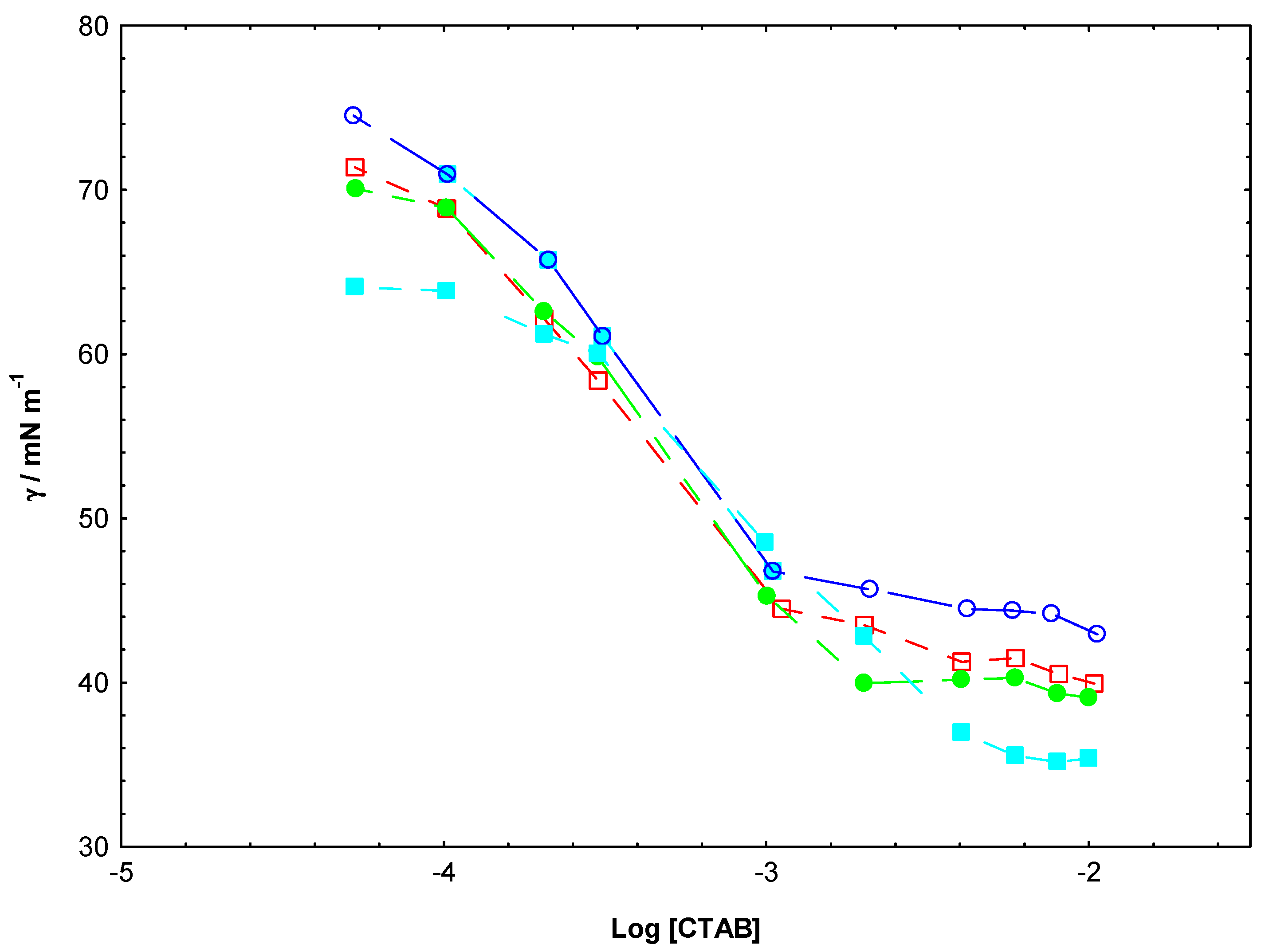
Surface tension (γ) measurements were carried out for both CTAB and AOT in pure water as well as in water–EG mixed solvents containing 5%, 10%, and 20% EG by volume at 298.15 K. The data were plotted as surface tension versus the logarithm of surfactant concentration to observe the relationship between concentration and surface tension. As anticipated, increasing the concentration of surfactant led to a progressive decrease in surface tension, which eventually plateaued at the critical micelle concentration (CMC), where additional surfactant molecules aggregate into micelles rather than further reducing surface tension. This reduction in surface tension is primarily due to the adsorption of surfactant molecules at the air–solution interface, effectively lowering the surface free energy. Eventually, the surface tension shows a break point—this point is called the critical micelle concentration (CMC), as shown in
Figure 1. At CMC, the surface becomes saturated with surfactant molecules, and the further addition of surfactant forms micelles the in solution rather than affecting surface tension.
The premicellar slope of the graph,
, represents the pattern of surface tension decrease with the
. This slope is useful in determining surface properties such as surface excess concentration
using Equation (1):
R (8.314 J mol−1 K−1) denotes the universal gas constant, T indicates the absolute temperature, and C indicates the concentration of surfactant. The value of n taken as the constant is a pre-factor that is taken as 2 for the normal surfactant.
Minimum area per molecule,
, represents the smallest surface area occupied by a molecule at the air–solution interface. It is determined by using Equation (2)
where
denotes Avogadro’s Number.
Table 1 lists the CMC
,
, and
of AOT and CTAB in water, and the various volume percentages of EG at 298.15 K.
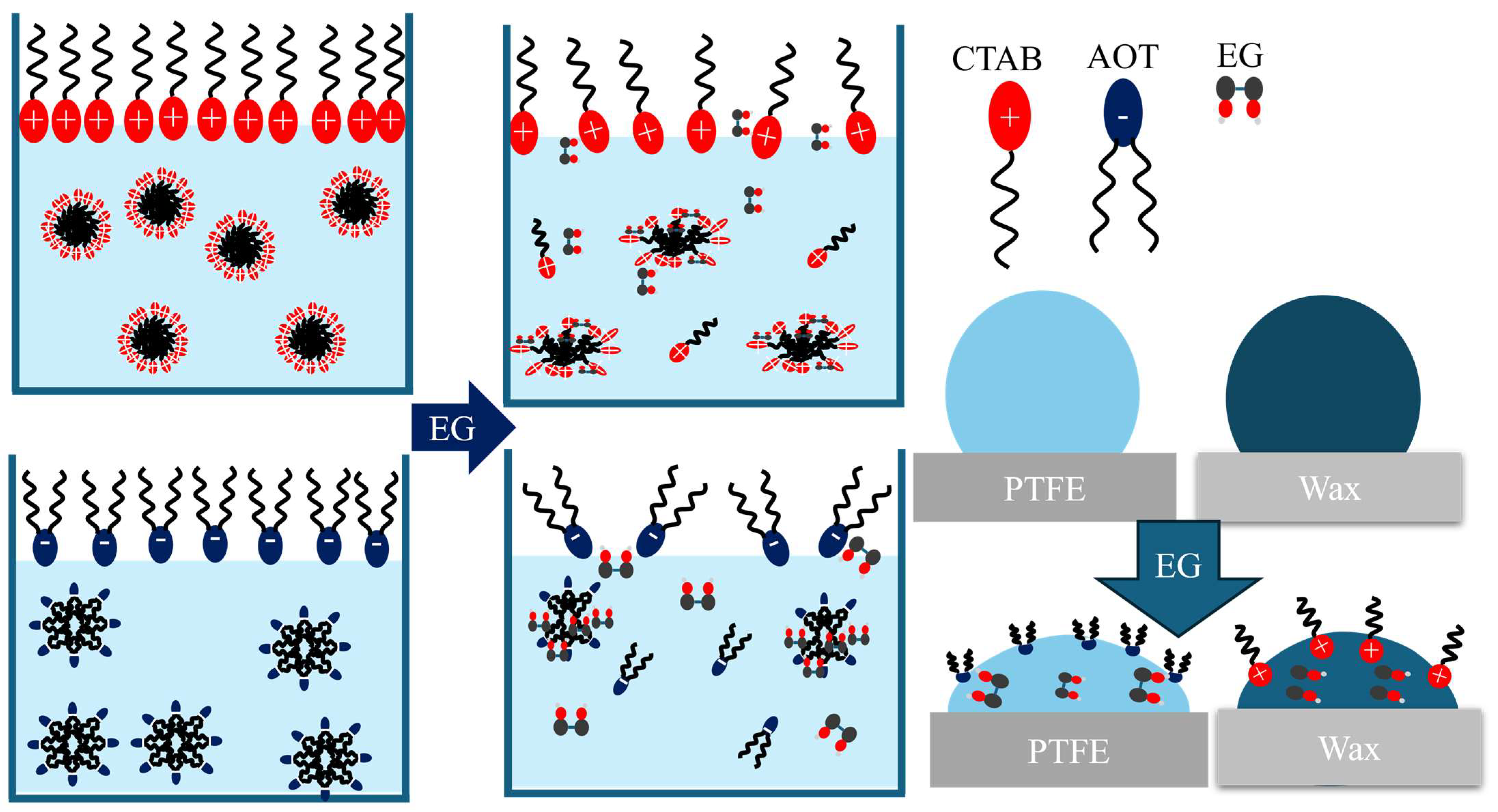
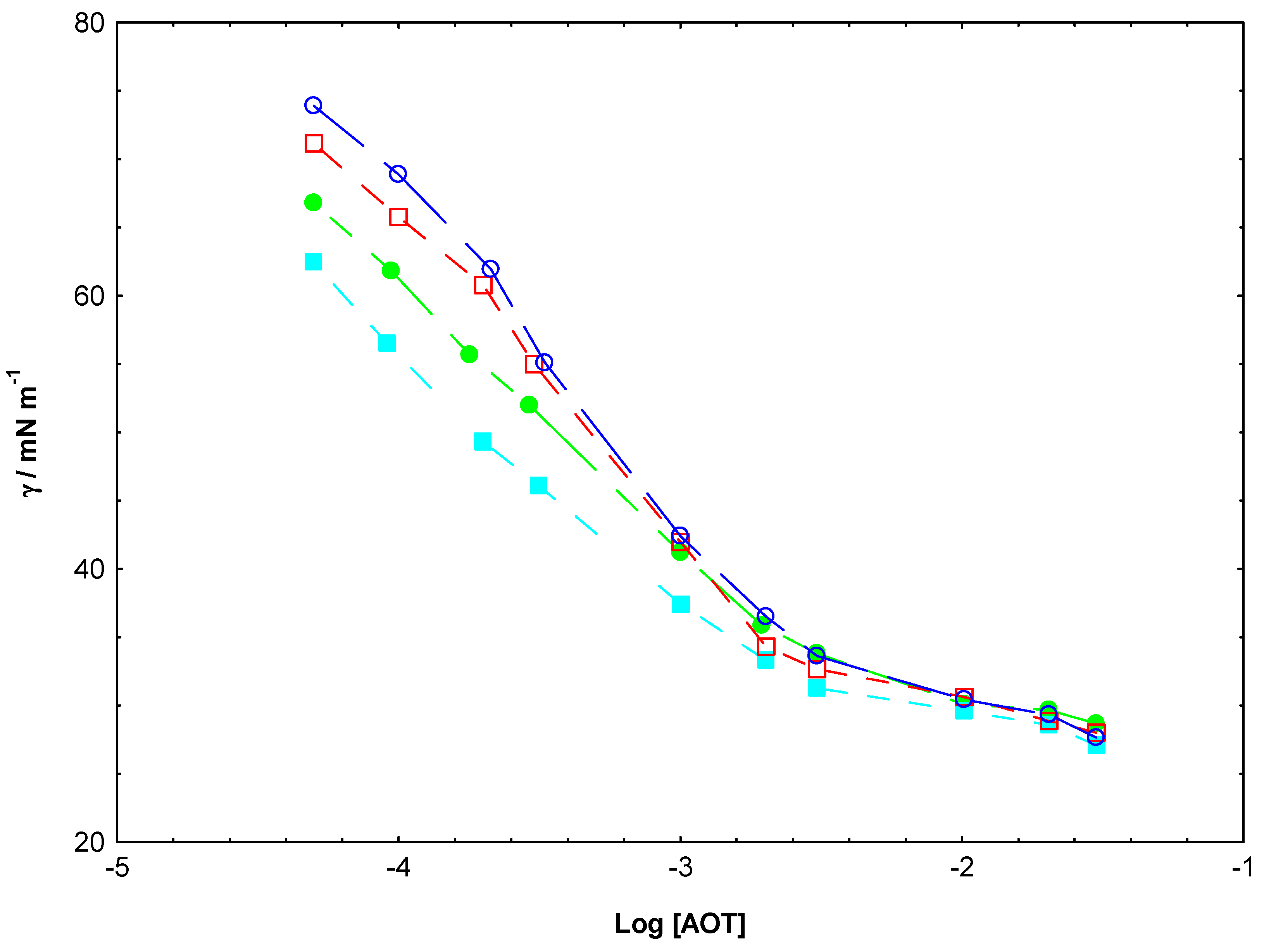
Ethylene glycol (EG) is a strongly hydrogen-bonding, moderately polar organic co-solvent with a dielectric constant of 37 at 25 °C. When mixed with water, it breaks part of the three-dimensional H-bond network and reduces water’s cohesive forces, producing a monotonic fall in the solvent’s surface tension. This trend has been seen in
Figure 2 and
Figure 3, where an increase in the volume % of EG causes a decrease in the surface tension of both the surfactants.
The CMC of both surfactants increases systematically with EG content (
Table 1), although the magnitude of the shift differs for the two ionic types. In water, CTAB exhibits 0.98 mM, whereas AOT’s CMC is 2.02 mM. The upward shift in CMC with increasing EG content is attributed to weakened hydrophobic interactions and reduced dielectric screening in the solvent. The addition of EG lowers the solvent polarity, thereby diminishing the contrast between the hydrophobic tail and solvent environment, which makes micelle formation less favorable. Lower dielectric constant also increases Coulombic repulsion between ionic headgroups, further destabilizing the micelle for both cationic and anionic surfactants [
22].
The premicellar slope
of the plot of the surface tension vs. logarithm of molar concentration plot is characterized by a steep linear decrease in surface tension, governed by the progressive accumulation of surfactant molecules at the air–solution interface.
Figure 1,
Figure 2 and
Figure 3 show that the premicellar slope becomes less steep as the EG volume % increases. The numerical values are presented in
Table 1. The reduction in the premicellar slope arises from two concurrent mechanisms. The first one is that EG molecules themselves adsorb at the air–solution interface, and the second is that the dielectric constant of EG–water mixtures is much lower than that of water. This decreases the strength of hydrophobic interactions that drive surfactant adsorption and increases the electrostatic repulsion between ionic headgroups.
The presence of EG in aqueous medium significantly influences the surface excess concentration (
) of both CTAB and AOT, as presented in
Table 1. In pure water, the high polarity and extensive H-bond network of water provide a strong driving force for surfactant adsorption at the air–solution interface. As the surfactant concentration increases, molecules rapidly accumulate at the interface, displacing water molecules and reducing surface free energy. Consequently, both surfactants exhibit their highest
values in water. When EG is introduced into the solvent mixture,
decreases systematically with increasing EG volume %. This decline confirms that fewer surfactant molecules occupy a unit interfacial area in the EG-rich environment.
The corresponding minimum area per molecule () shows the inverse trend expanding as EG volume % increases. This expansion signifies looser molecular packing at the interface, consistent with decreased . The increase in () arises primarily because EG molecules intercalate between surfactant headgroups, diluting the interfacial film and causing a lateral spread of surfactant molecules. The weaker hydrophobic contrast between surfactant tails and the EG–water subphase also reduces tail–tail interaction, so the molecules adopt a more tilted or disordered orientation at the interface, further enlarging the effective .
Comparing the two surfactants, CTAB consistently exhibits higher and smaller values than AOT in all solvent compositions, demonstrating more efficient packing and stronger adsorption. This difference stems from molecular structure and charge distribution. CTAB possesses a single long C16 hydrogen chain and a compact quaternary ammonium headgroup, which allows dense interfacial packing and efficient reduction in surface tension. AOT, on the other hand, has a bulky double-tailed structure with a large sulfosuccinate head carrying two negative charges. Electrostatic repulsion between these doubly charged headgroups and steric hindrance from the twin tails prevent tight packing, producing lower and larger values even in water. The structural difference also modulates their sensitivity to solvent composition: CTAB shows a more pronounced decline in and a corresponding increase in upon adding EG, whereas AOT exhibits a somewhat smaller relative change. This implies that cationic surfactants are more susceptible to polarity and solvation changes introduced by EG, while already strongly hydrated anionic AOT is less affected.
This trend agrees with the work of Ruiz et al. [
22], who showed that the addition of EG reduces the surface activity of Triton X-100 by decreasing
and increasing
. This effect is attributed to EG’s structure-breaking ability and its interactions with the surfactant, which alter the solvation layer and enhance steric repulsions at the air–liquid interface. These findings further support the observed decrease in surfactant adsorption and looser molecular packing as EG content increases in the solution.
3.2. Contact Angle and Wettability
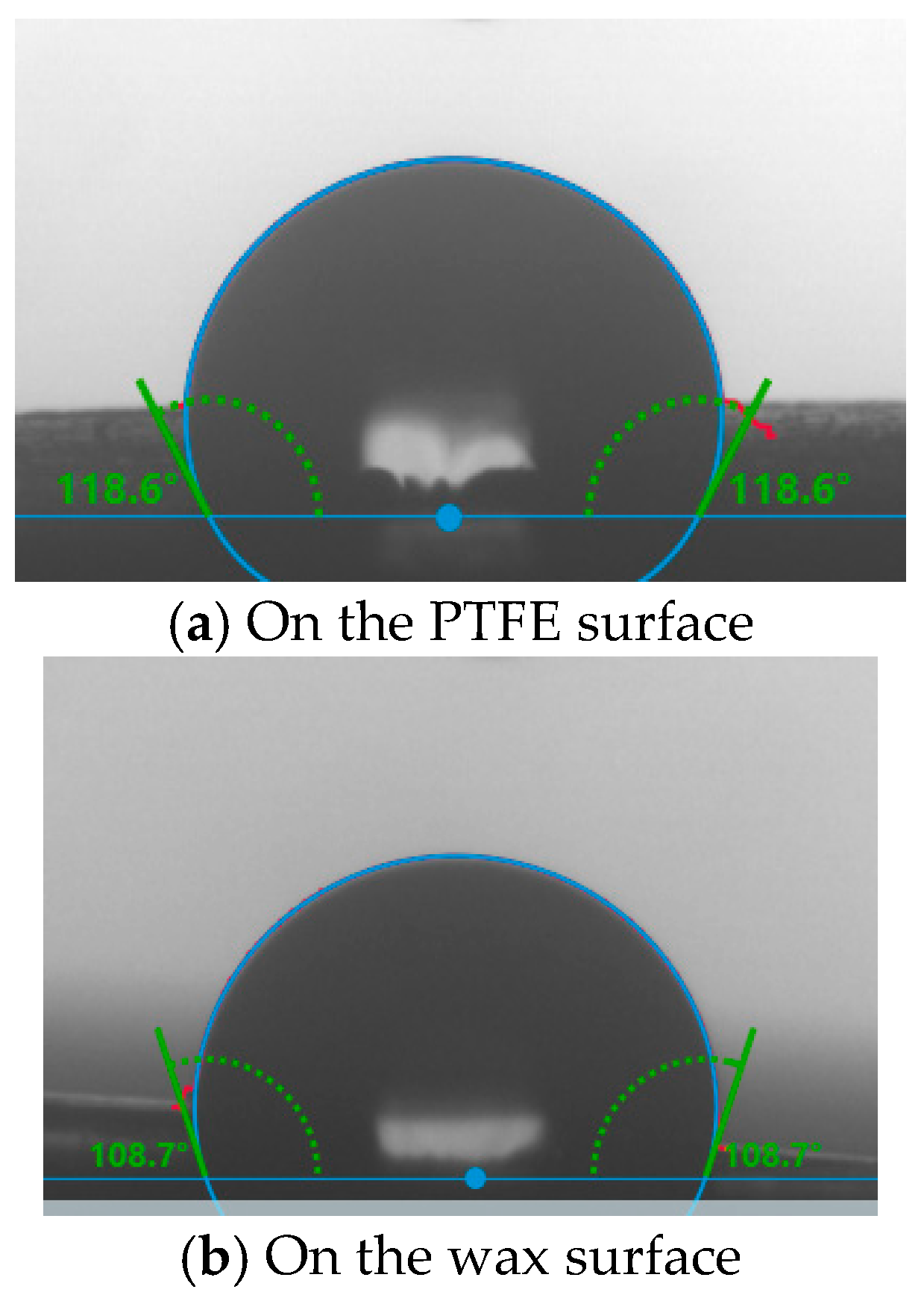
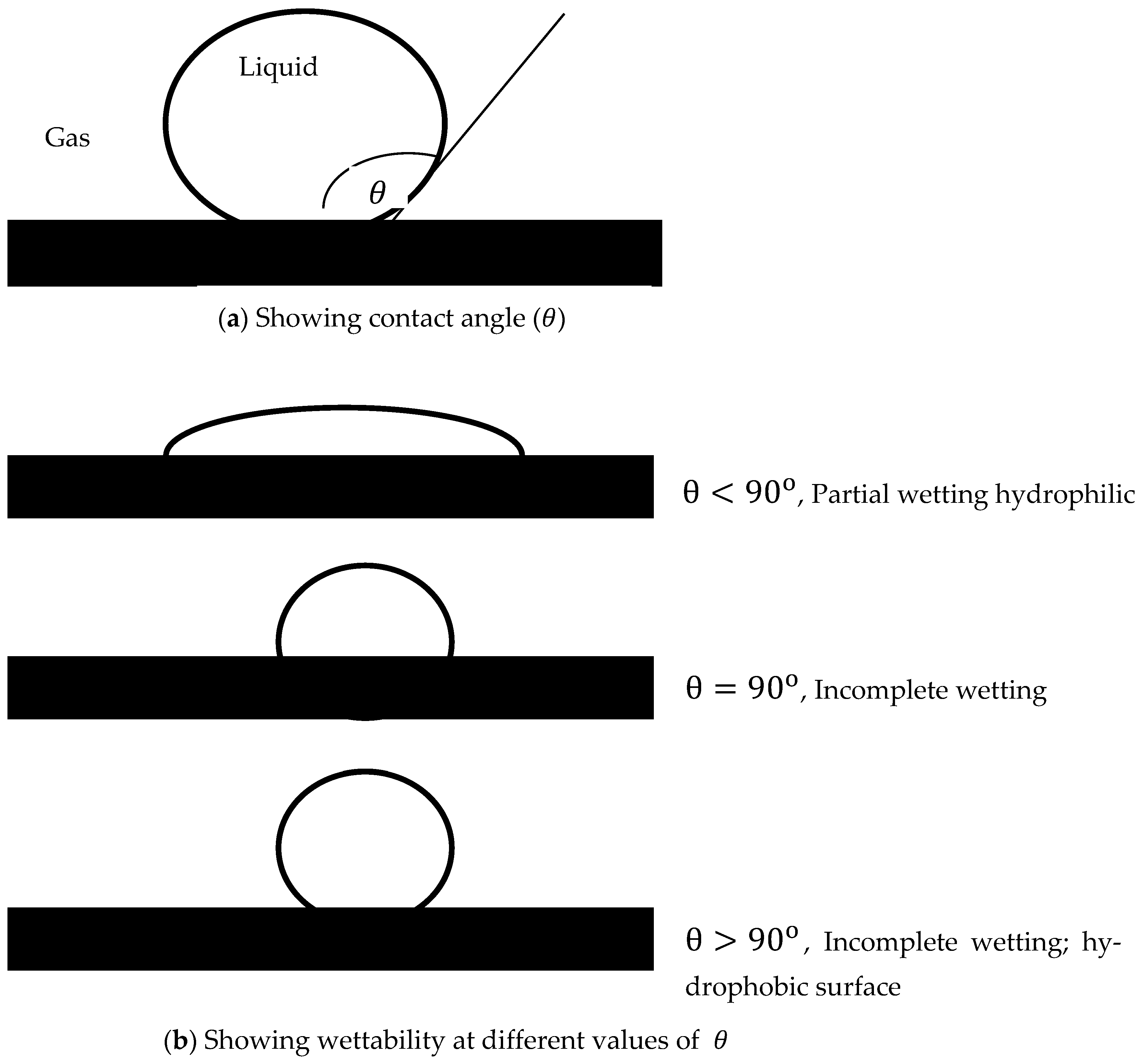
The spreading of liquid over a solid surface is described as wetting. Situationally, it can also be the penetration of liquid into a porous medium. Quantitatively, the wettability is calculated using the measurement of contact angle (CA), denoted by
. Geometrically, it is defined as the angle between the liquid phase and the solid phase when these phases are in contact with the gaseous phase, the values of which let us know the extent of wettability, as shown in
Scheme 2.
Surfactants are also used as wetting agents, as they lower the surface tension of a liquid by adsorption at the air–liquid interface; at the same time, they also adsorb at the solid–liquid interface.
Mathematically, CA on the solid surface is related to interfacial tension by Young’s Equation (3)
where
,
, and
are interfacial tensions between the solid–gas, solid–liquid, and liquid–gas interfaces, respectively.
Surface excess concentration at the gas–liquid interface is calculated using Equation (4)
The Lucassen–Reynolds equation is used to show the relation of surface excess concentrations at three interfaces (
, and
) with their respective interfacial tensions as shown below.
Assuming , the ratio of and can be obtained from the slope of a plot of , known as adhesion tension (AT), and
Work of Adhesion
This is defined by the reversible work required to separate a unit area of liquid from a solid surface. It measures the interactive forces between the two different phases (solid and liquid). It can be obtained from CA using Equation (6) [
2]
For , . This means that the attraction between liquid–solid is equal to or greater than that between liquid–liquid.
Among the additives, alcohol is considered a special additive used in surfactant solutions in physicochemical investigations.
3.2.1. Adhesion Tension vs. Surface Tension—Effect of Ethylene Glycol
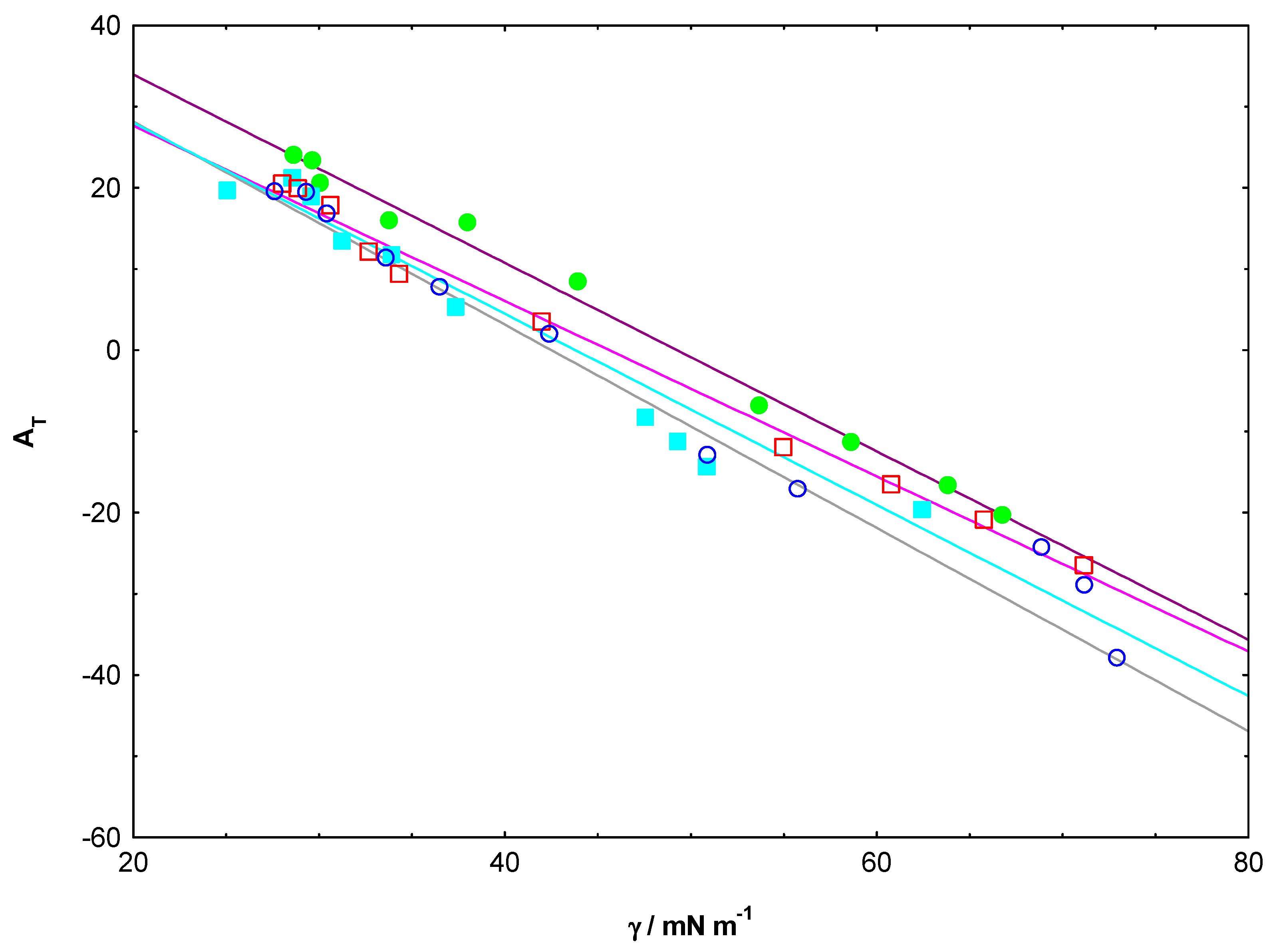
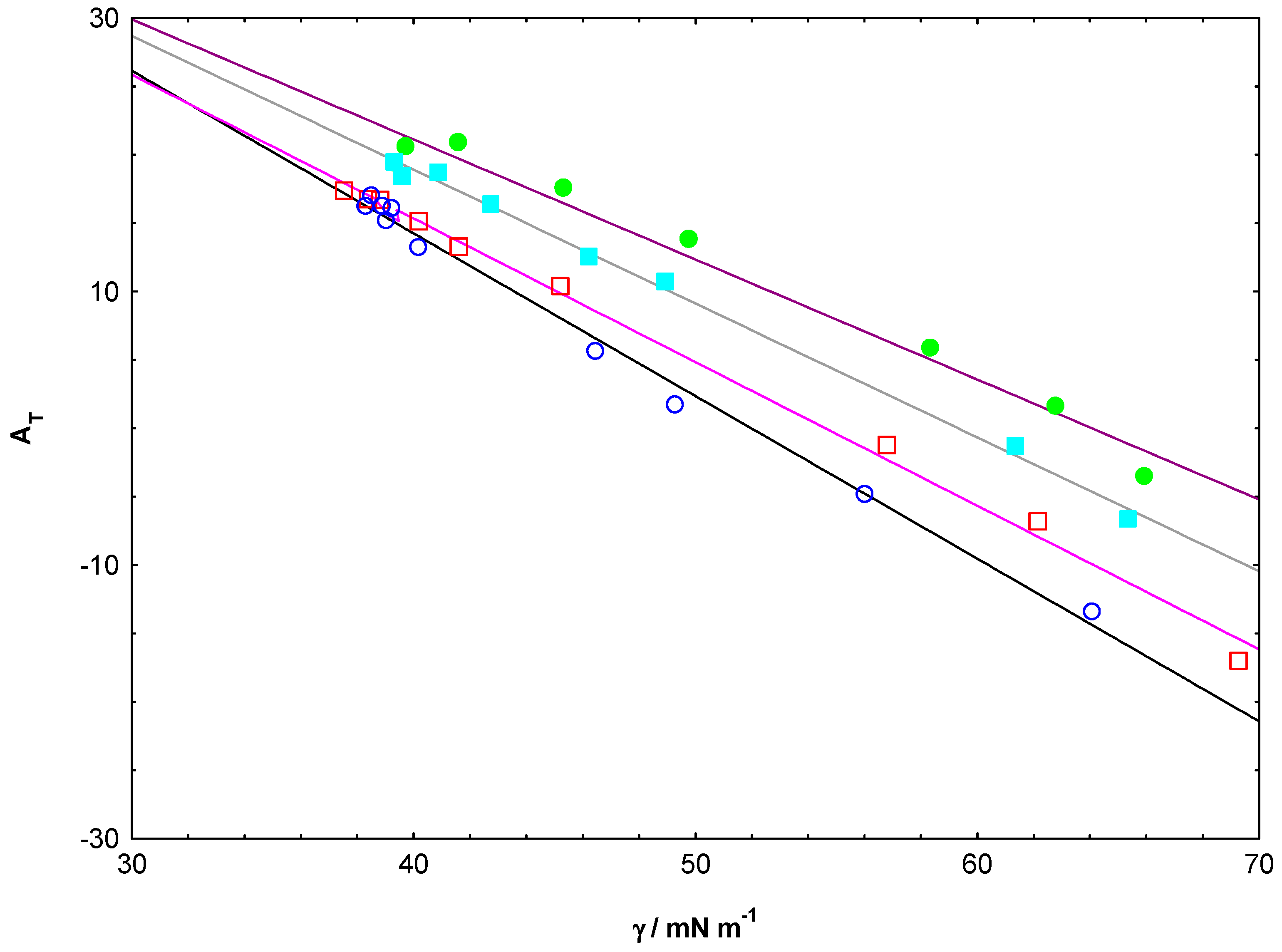
Figure 4,
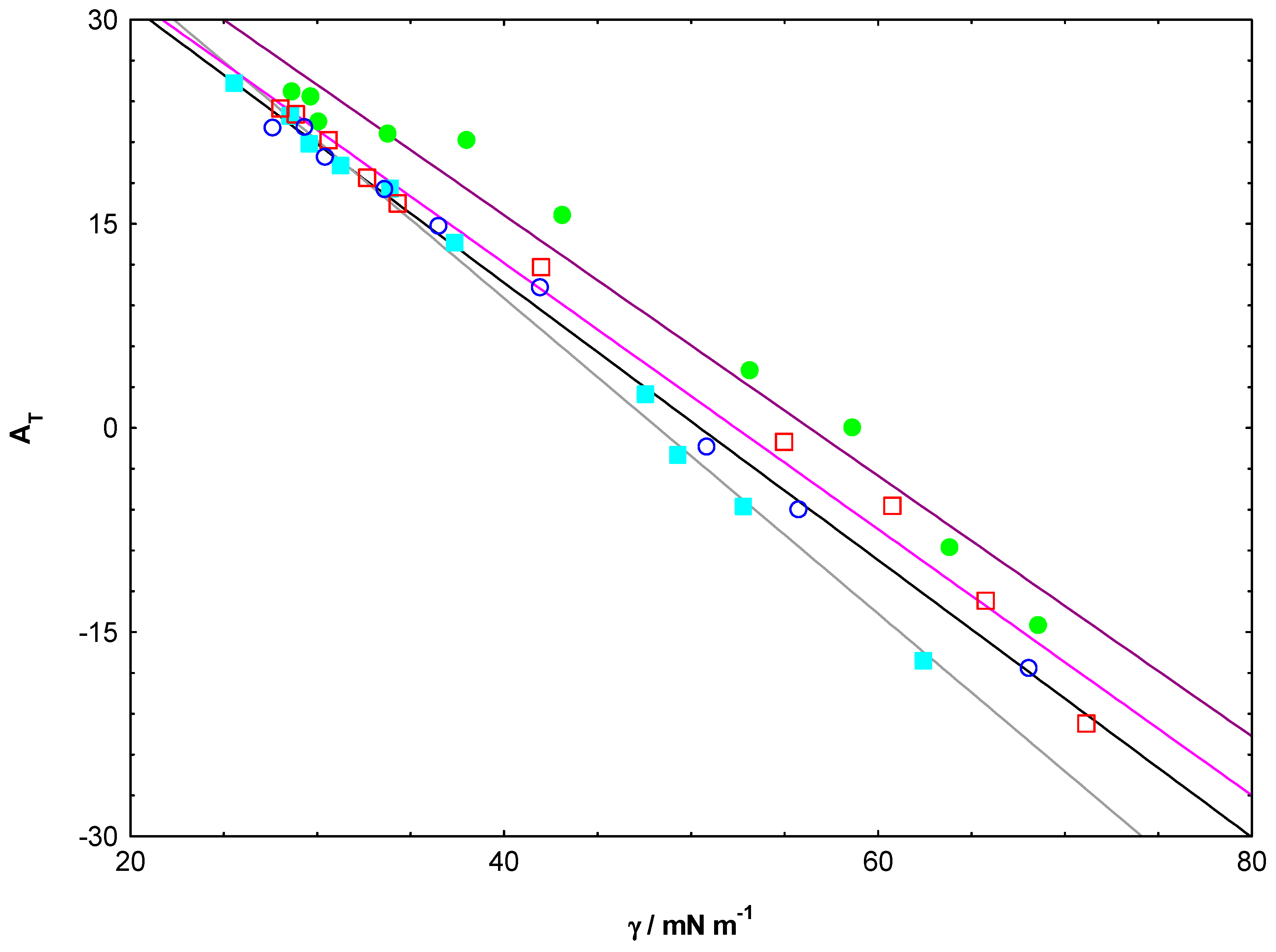
Figure 5,
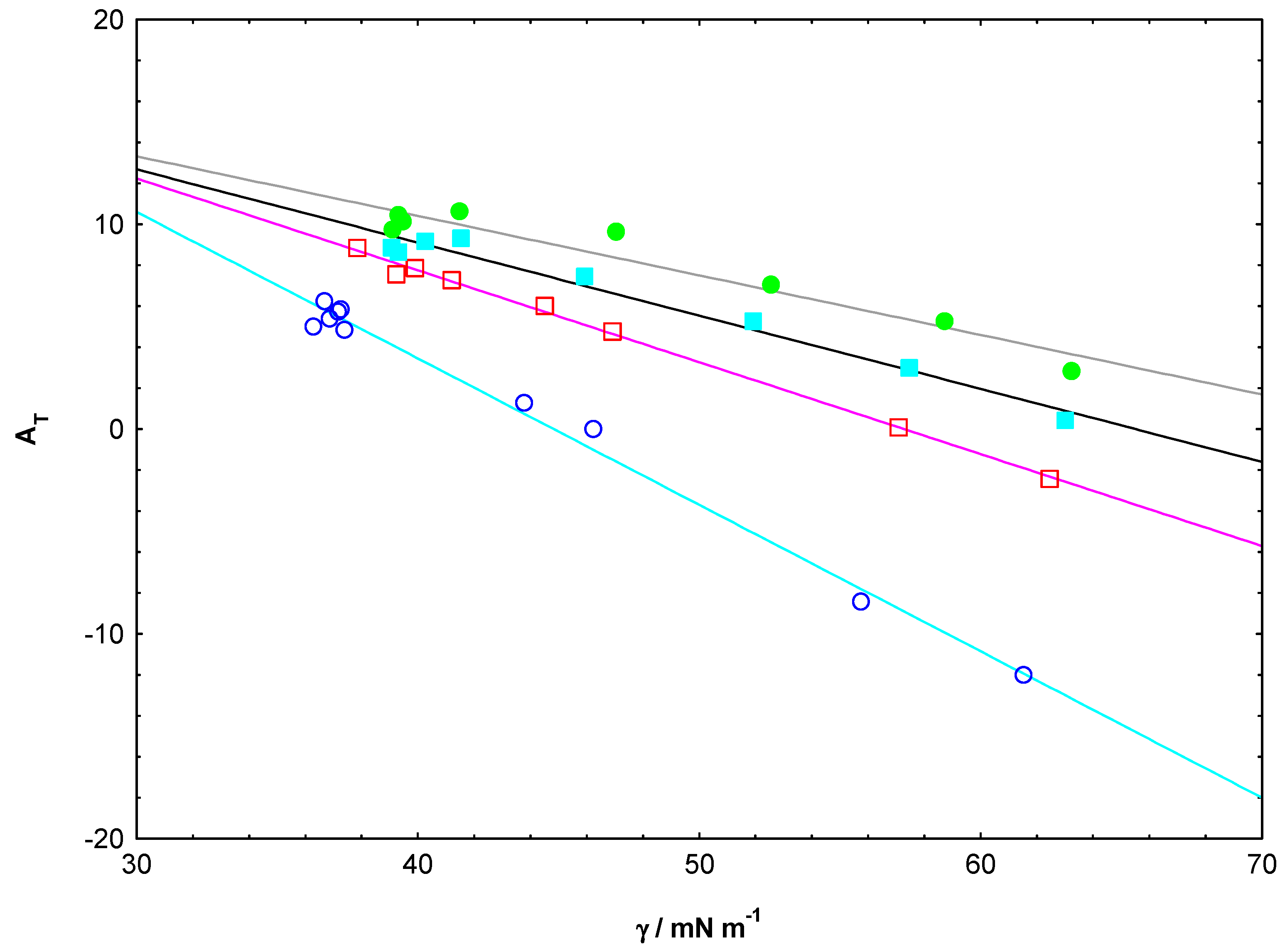
Figure 6 and
Figure 7 illustrate how adding ethylene glycol (EG) influences the relationship between
and
for AOT and CTAB surfactant solutions on PTFE and wax surfaces in water and various volume percentages of EG at 298 K. The slope of
and
Equations (4) and (5) plot reflects how the contact angle varies with changing liquid surface tension due to surfactant adsorption at the interfaces. On hydrophobic surfaces, the slope is typically negative [
2]. A slope of −1 signifies equal surfactant adsorption at the solid–liquid and air–liquid interfaces, which in turn means the work of adhesion and contact angle remain essentially constant as surface tension changes [
24]. On low-energy surfaces like PTFE and wax, however, the measured slopes are negative and deviate from −1, indicating a variable contact angle with surfactant concentration. All our systems show a negative slope, confirming that surfactant adsorption lowers the solid–liquid interfacial tension disproportionately to the drop in liquid surface tension, thereby decreasing the contact angle (enhancing wettability). For example, AOT on PTFE exhibits a slope increasing from −1.25 to 1.08 with EG present, while AOT on wax goes from −1.10 to −0.95. These slopes are more negative than unity in magnitude for AOT on PTFE, implying greater surfactant adsorption at the solid–liquid interface than at the air–water interface, causing pronounced contact angle reduction. In contrast, CTAB on PTFE and wax without EG shows gentler slopes around −0.75, well below unity in magnitude, consistent with less surfactant at the solid–liquid interface relative to the air–liquid interface (single-tail CTAB is less effective at wetting hydrophobic solids).
Szymczyk et al. [
25] found slopes of −1 for SDs and SDDS on PTFE, indicating equal adsorption densities at the air–liquid interface and PTFE–water interface. AOT’s slope of −1.25 to −1.08 aligns with this trend, suggesting strong adsorption at both interfaces. Biswal & Paria [
2] reported slopes of −0.80 for Triton X 100 and −0.58 for Igepal CO-630 on PTFE, indicating lower adsorption density at the solid–liquid interface compared to the air–liquid interface. CTAB’s slope range (−0.75 to −0.29) is consistent with this trend, reflecting weaker adsorption. Chang et al. [
26] observed slopes of −0.69 to −0.94 for Gemini surfactants on paraffin (similar to wax), indicating lower adsorption density at the solid–liquid interface compared to the air–liquid interface. AOT’s slope range (−1.16 to −0.95) is slightly more negative, suggesting stronger adsorption compared to Gemini surfactants.
3.2.2. Work of Adhesion
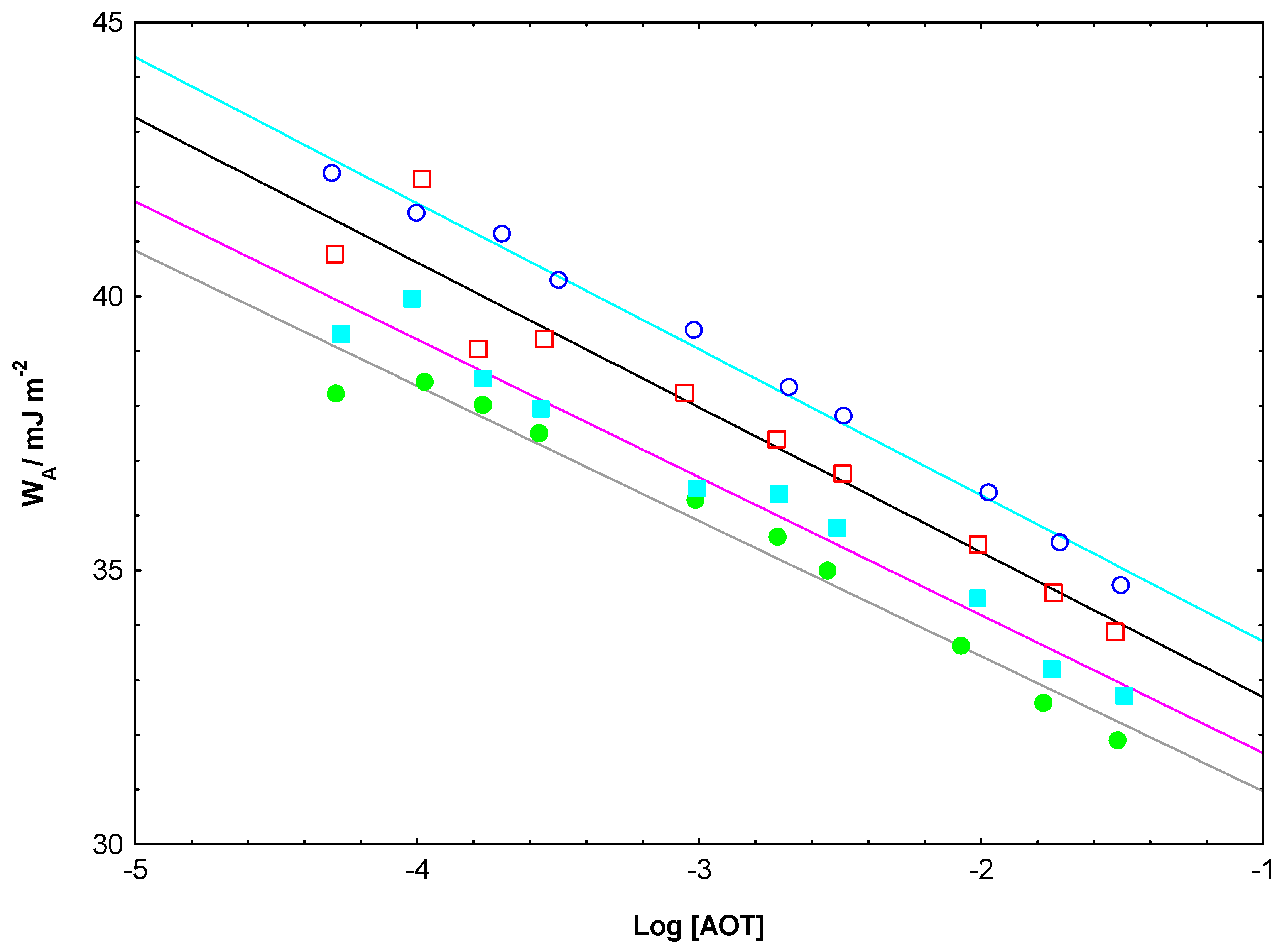
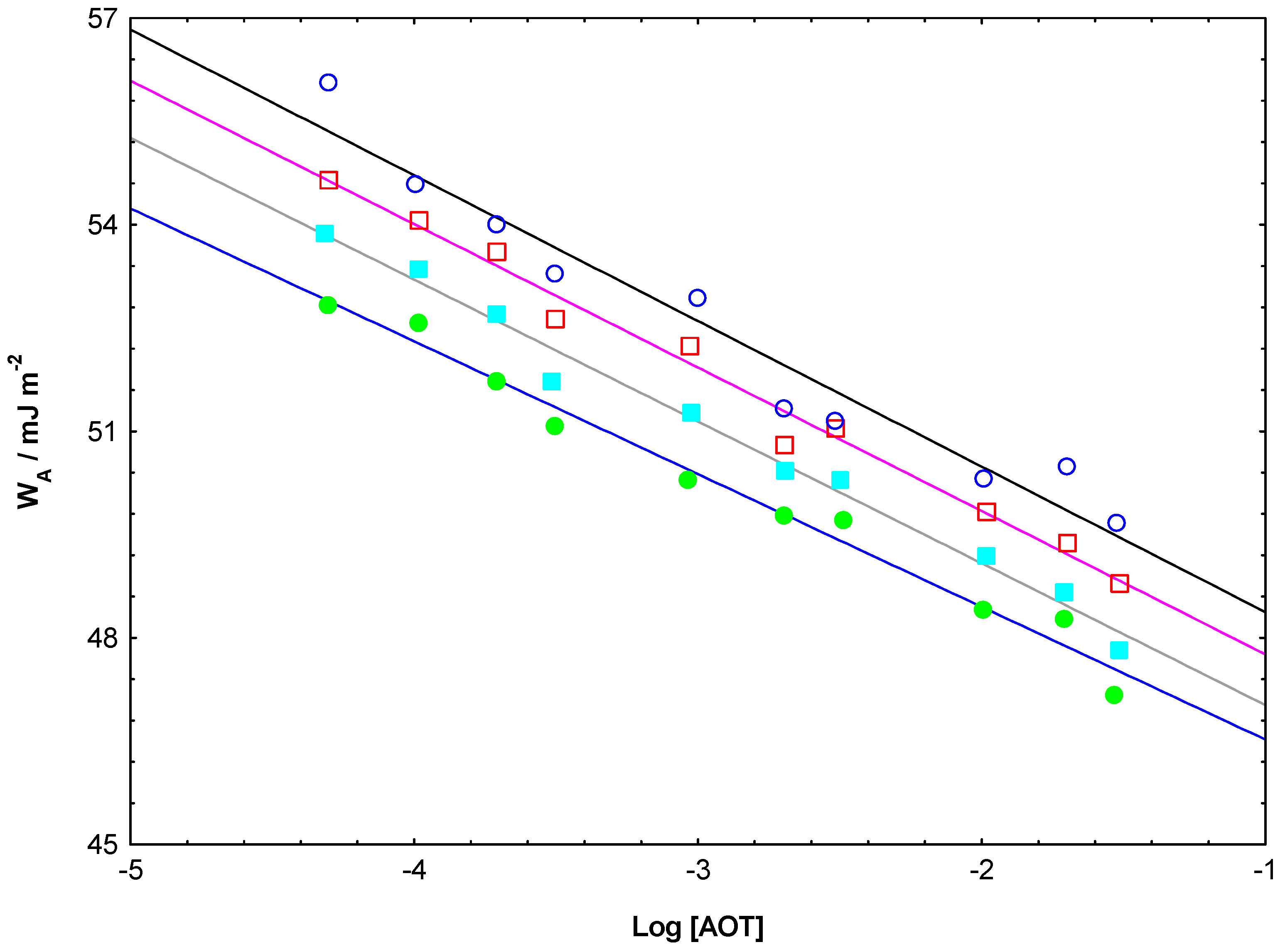
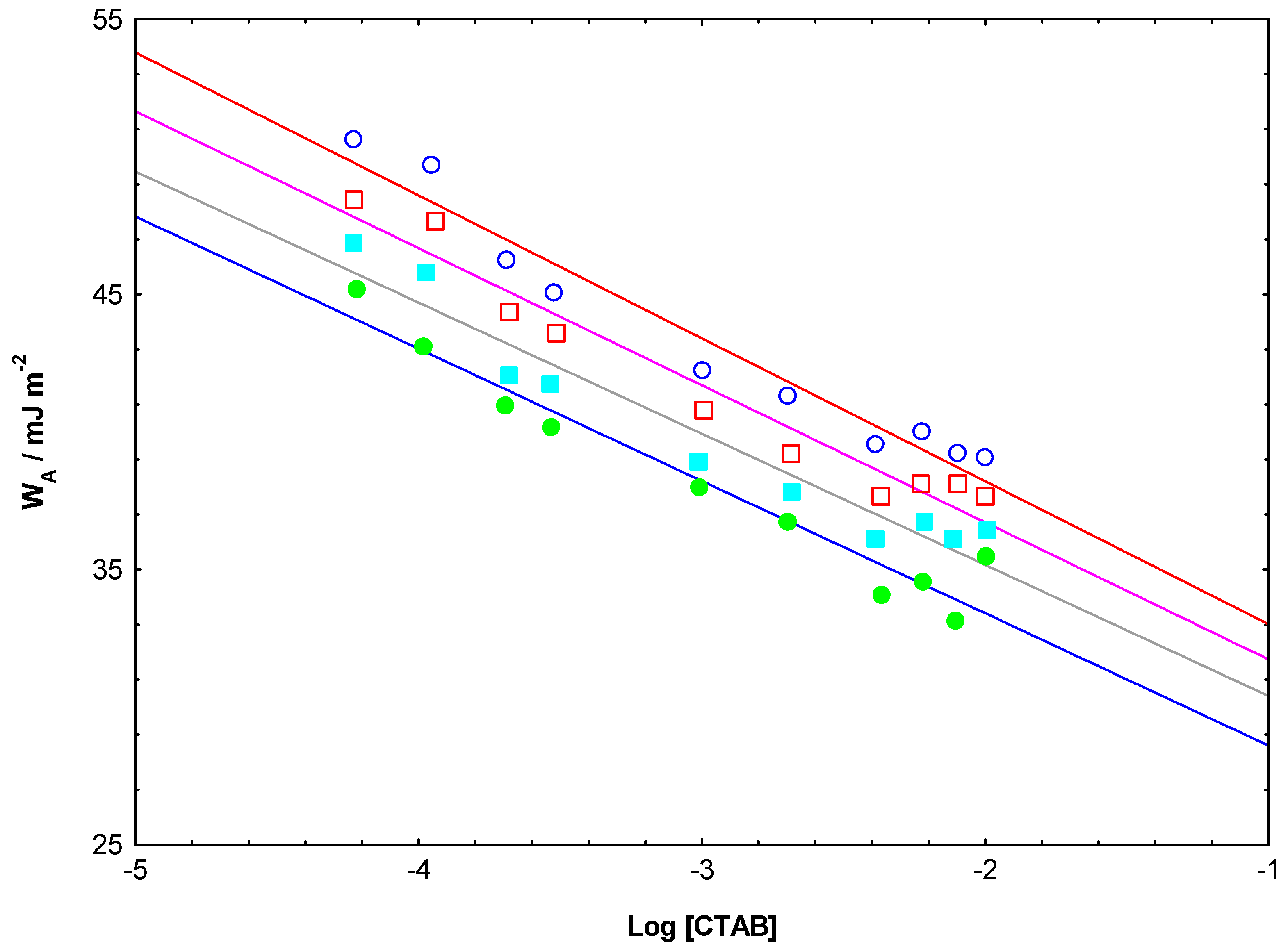
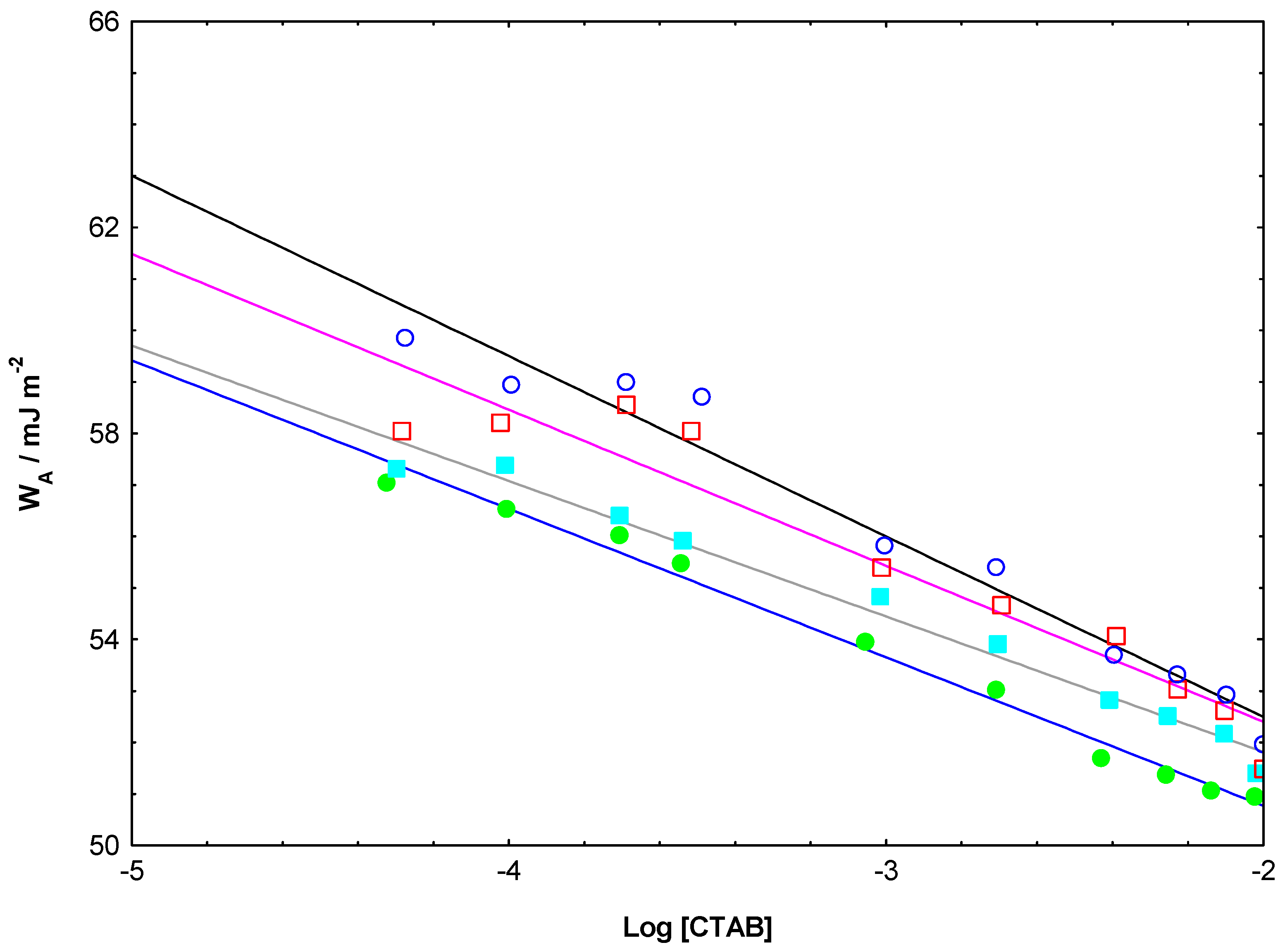
Figure 8,
Figure 9,
Figure 10 and
Figure 11 present
as a function of surfactant concentration for both AOT and CTAB on PTFE and wax surfaces in water and various volume % of EG at 298 K. For AOT solutions (
Figure 8 and
Figure 9),
systematically decreases with increasing surfactant concentration across all temperatures and substrates tested. The initial
values (at low concentrations) reflect the adhesion of nearly pure water to the hydrophobic surface, which is relatively low due to the energetically unfavorable water-hydrophobe contact. As AOT concentration increases, the work of adhesion decreases, indicating that the surfactant-modified interface requires less energy to maintain contact with the hydrophobic surface.
The decrease in
with surfactant concentration can be understood through the lens of interfacial energy balance. Surfactant adsorption at both the liquid-vapor and solid–liquid interfaces reduces the interfacial tensions, thereby reducing the net energy required for adhesion. The temperature dependence shows that higher temperatures generally result in lower
values at equivalent concentrations, consistent with enhanced thermal motion and reduced intermolecular cohesion [
2].
For CTAB solutions (
Figure 10 and
Figure 11), the trends are qualitatively similar but quantitatively distinct. The cationic headgroup of CTAB can form more favorable interactions with certain hydrophobic surfaces through induced polarization effects. The parallel nature of the curves across different temperatures indicates that the fundamental adsorption mechanism is temperature-independent, though the equilibrium adsorption density varies with temperature.
Comparing the two surfactants, AOT generally achieves lower values at equivalent concentrations, suggesting more effective modification of the solid–liquid interface. This difference may arise from the double-chain structure of AOT, which provides greater hydrophobic character and potentially stronger interactions with hydrophobic substrates compared to the single-chain CTAB.