Communication

Simple Approximate Relations for van der Waals Interaction Energy Between Spherical Particles of Different Radii and Variable Distances


Institute of Hydrology, Czech Academy of Sciences, Pod Patankou 30/5, 160 00 Prague, Czech Republic
*
Author to whom correspondence should be addressed.
Authors’ affiliation, as of 1st January 2026, formerly Institute of Hydrodynamics.
Colloids Interfaces 2026, 10(1), 9; https://doi.org/10.3390/colloids10010009
Submission received: 10 November 2025 / Revised: 19 December 2025 / Accepted: 7 January 2026 / Published: 9 January 2026

Abstract

The van der Waals (vdW) interaction energy is a crucial factor in evaluating the potential destabilization of colloidal systems, such as those found in drinking-water treatment, where particles are often assumed to be spherical. Although the explicit dependence of the vdW interaction energy on the radii of spherical particles and their distances is known, a simple view is lacking due to the complexity of the relations. Here, we propose explicit, algebraically simple, approximate relations that provide insight into the fundamental influence of the input geometrical parameters. These relations, when combined with the exponentially decaying potential generated by the electrical double layer, can provide an approximate evaluation of the onset of raw water destabilization in drinking-water treatment, in other words, establishing the conditions under which pollutants in raw water begin to aggregate.

1. Introduction

In the early 1940s, Derjaguin and Landau [1] and Verwey and Overbeek [2] introduced the DLVO theory to describe colloid dispersions. This theory models particle interactions by combining two inputs: the attractive van der Waals (vdW) forces and the repulsive forces generated by the overlapping of electrical double layers (EDLs). By convention, vdW forces are assigned a negative sign, and repulsive forces a positive sign. Later, other interactions, known as eXtended interactions, were added, leading to the XDLVO theory.
The addition of other interactions, such as the Lewis acid–base interaction [3], is essential for polar liquids like water. For water, the contributions of the individual vdW forces—Keesom, Debye, and London—are in the ratio of 84.8:4.5:10.5 [4,5]. In drinking-water treatment, the unwanted particles are commonly assumed to have a spherical shape, as this assumption allows their behavior to be well-approximated. For example, assuming a spherical shape ensures that particles collide at a single point located on the line segment connecting their centers of gravity. The description of spherical particles is highly straightforward, requiring only a single parameter: the radius. The characterization of their mutual locations is similarly simplified. Due to this geometric simplicity, it is possible to derive the relations (introduced below) that characterize their physical attributes. In contrast, such derivations are not impossible for asymmetric geometries. Consequently, spherical geometry provides the primary approximation of real-world conditions in drinking-water treatment.
Interactions induced by the EDL can be expressed through exponential functions, the Debye–Hückel approximation [4], which provides a relatively clear insight into the weight of this component within the overall mosaic of individual interaction inputs, as shown in Figure 1. The ζ-potential at the slipping plane distinguishes the mobile portion of the colloidal suspension from the layer attached to the wall. This value serves as a primary indicator of colloidal stability. When the absolute value falls below approximately 30, the colloids become unstable and begin to form aggregates. However, this boundary is not universal and depends heavily on the specific materials being processed.
A different situation exists with the description of vdW interaction forces. Hamaker [6] extended the expressions for van der Waals interactions from molecules to larger bodies. For two generally unequal spherical particles with radii r1 and r2 and with L representing the distance between their centers, the following relation was derived [6]:
V a ( L ; r 1 , r 2 ) = A 6 2 r 1 r 2 L 2 ( r 1 + r 2 ) 2 + 2 r 1 r 2 L 2 ( r 1 r 2 ) 2 + ln L 2 ( r 1 + r 2 ) 2 L 2 ( r 1 r 2 ) 2 ,
where the Hamaker constant A typically ranges from 1 × 10⁻¹⁹ to 1 × 10⁻²⁰ [4,7].
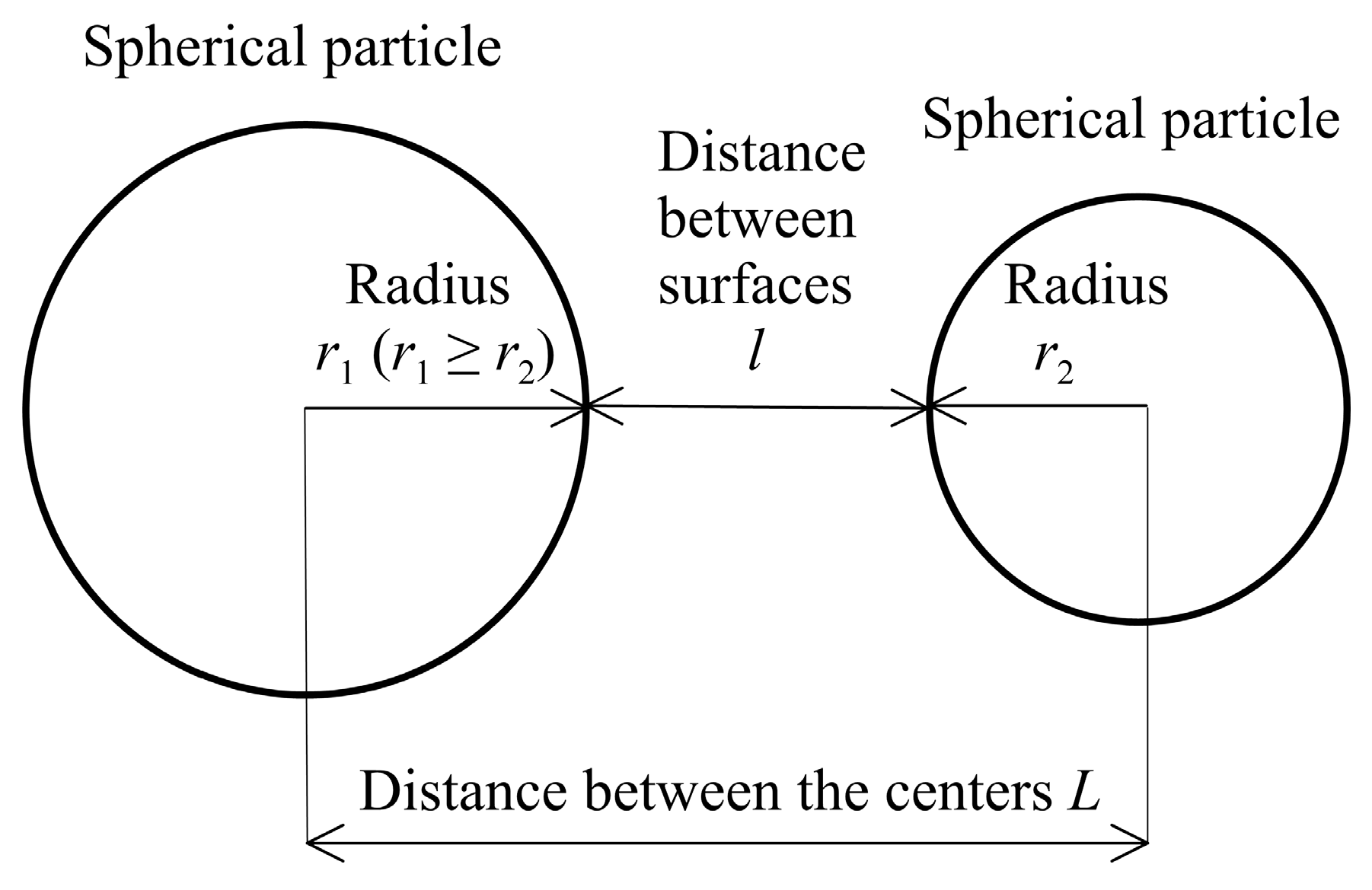
Denoting (see Figure 2)
L = r 1 + r 2 + l , l r = l r 1 , q r = r 2 r 1 ,
where l represents the distance between the spherical particles (their surfaces); we can re-write rel. (1) as
V a ( l r , q r ) = A 6 2 q r ( 1 + q r + l r ) 2 ( 1 + q r ) 2 + 2 q r ( 1 + q r + l r ) 2 ( 1 q r ) 2 + ln ( 1 + q r + l r ) 2 ( 1 + q r ) 2 ( 1 + q r + l r ) 2 ( 1 q r ) 2
Despite the explicit expression of non-retarded vdW interaction energy as a function of lr and qr, it is not easy to see how Va(lr,qr) changes with a variation in lr or qr or both. This holds true even for the case of equally sized spherical particles (r = r1 = r2) implying qr = 1. In this case, rel. (1) [8,9] simplifies to [10]
V a ( s ) = A 6 2 s 2 4 + 2 s 2 + ln s 2 4 s 2 ,
where s = L/r (≡2 + l/r).
The following analysis aims to approximate relations (3) and (4) with simpler ones that maintain sufficient accuracy (deviations in the low percentage range). This will allow for the determination of functionally simple relations, which in turn contributes to a better understanding of the decay of vdW interaction energy as a function of the distance between generally unequal spherical particles, as well as the difference in interaction energy based on the ratio of particle sizes (shifted power dependence). As far as the authors are aware, no approximation of rels. (1) and (4) has been presented yet.

2. Methods

The functional relations approximating the van der Waals interaction forces will be presented in three parts:
(1)
Starting with general values of lr (a ratio of surface distance between the spherical particles and a larger radius) and qr (ratio of lower-to-larger radii);
(2)
Introducing approximate relations for the limiting case qr = 1 (r1 = r2);
(3)
Expressing the approximate relations for general values of lr and qr based on application of the preceding limiting case.

2.1. Approximate Relations for lr ≥ 0.1

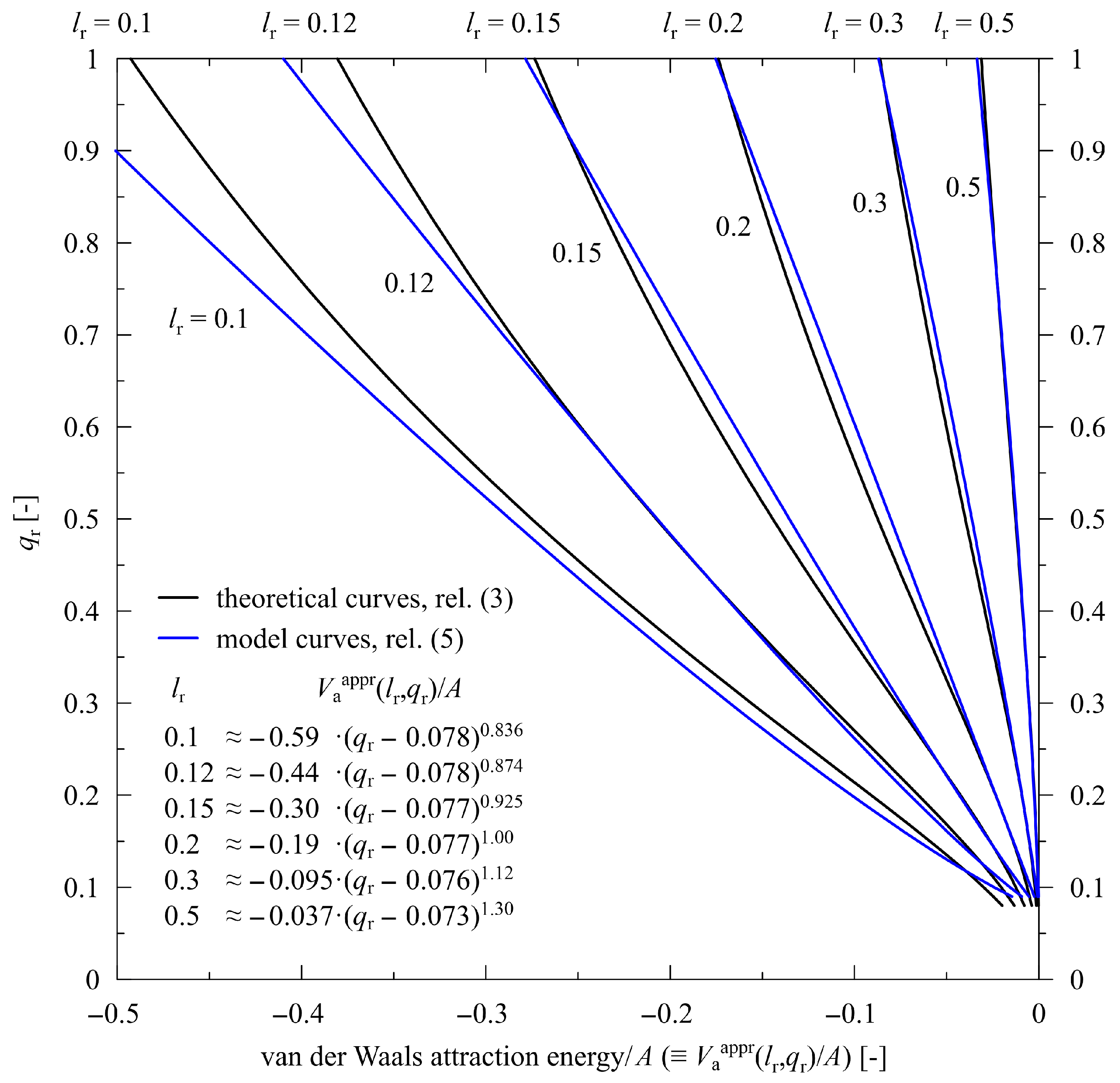
The van der Waals interaction forces normalized by the Hamaker constant, Va(lr,qr)/A, can be approximated by the relation
V a appr ( l r , q r ) / A = a ( l r ) q r b ( l r ) c ( l r ) ,
where
a ( l r ) = 0.00843 0.015 l r 1.6
b ( l r ) = 0.0787 0.0135 l r 1.26
c ( l r ) = 0.326 + 1.28 l r 0.4
This implies that for constant values of lr, the corresponding curves represent shifted power functions of the variable qr, as shown in Figure 3. This figure also illustrates the rapid drop of the vdW attractive force as the distance lr between the spherical particles increases. This dramatic decay is described below.
As is apparent from Figure 3, the approximate relation (5) loses its accuracy with decreasing values of lr (lr ≤ 0.1) and increasing values of qr (qr → 1). These cases are discussed, and the acceptable approximations are proposed below.

2.2. Approximate Relations for General lr and Equally Sized Spherical Particles (qr = 1)

The approximation of the vdW attraction force for the limiting case of equally sized spherical particles (qr = 1), as given by relation (4), is useful to separate for low (lr ≤ 0.1) and large (lr ≥ 0.1) values of the relative surface-to-surface distance. The separate approximations are as follows:
V a appr ( l r , 1 ) = 0.038 × ( l r + 0.0003 ) 1.15 × A for l r [ 0.001 , 0.1 ] ,
V a appr ( l r , 1 ) = 0.0089 × ( l r + 0.15 ) 2.86 × A for l r [ 0.1 , 1.1 ] .
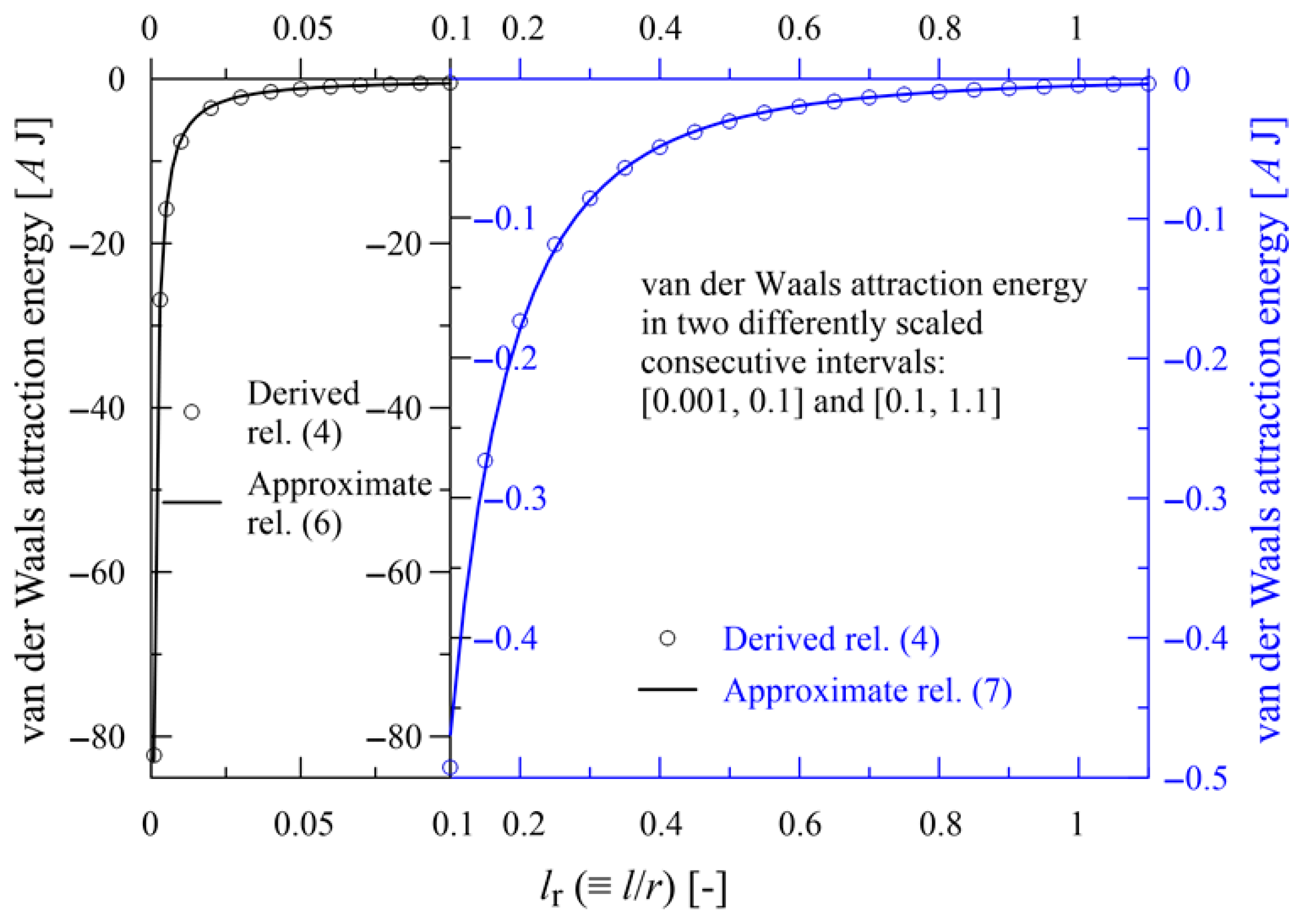
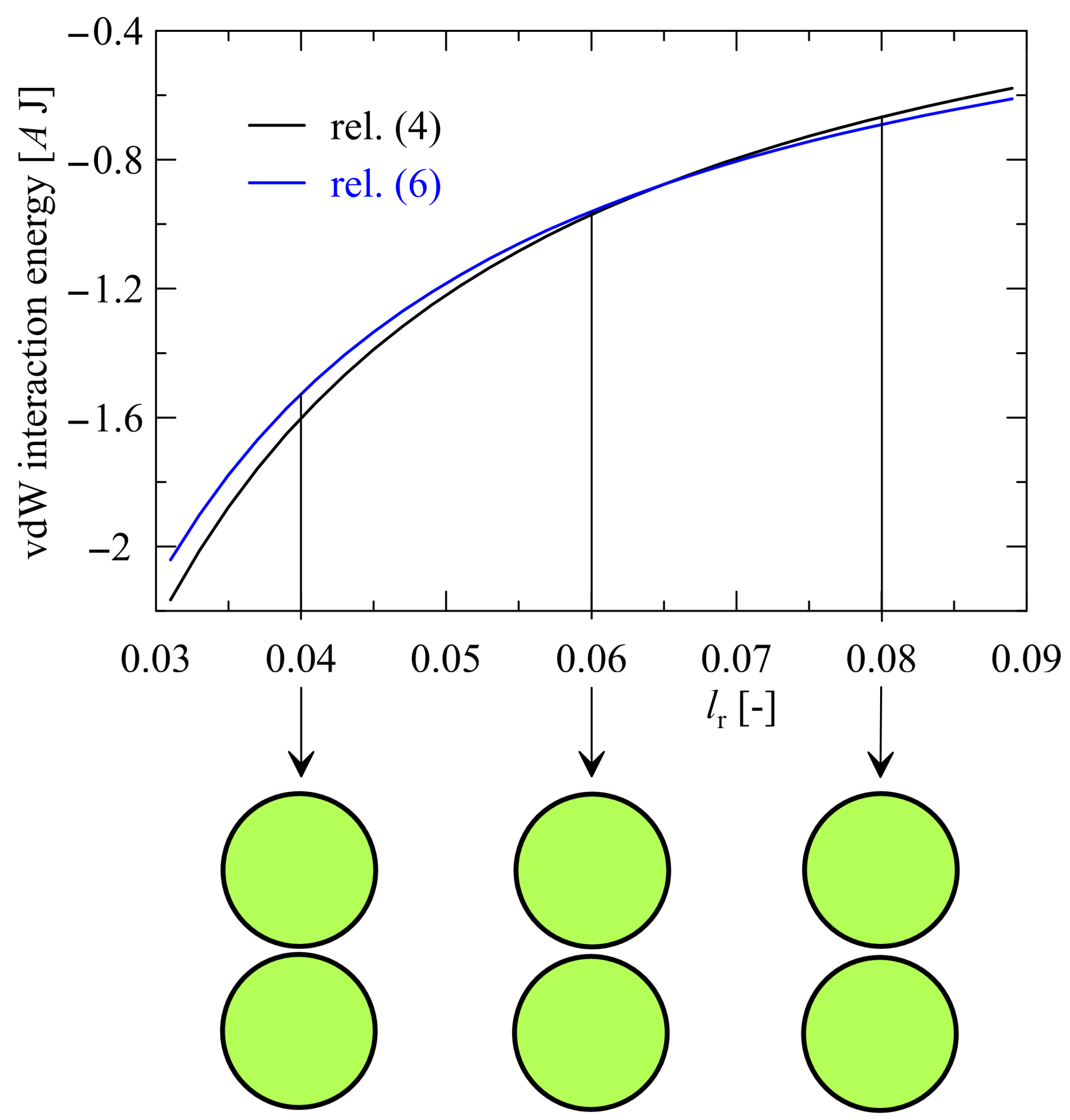
The deviation from rel. (4) does not exceed 4% (and is predominantly much less). This is a reason why the courses illustrated in Figure 4 for the approximate rels. (6) and (7) are indicated only by selected points to improve legibility when compared with the curve from rel. (4).
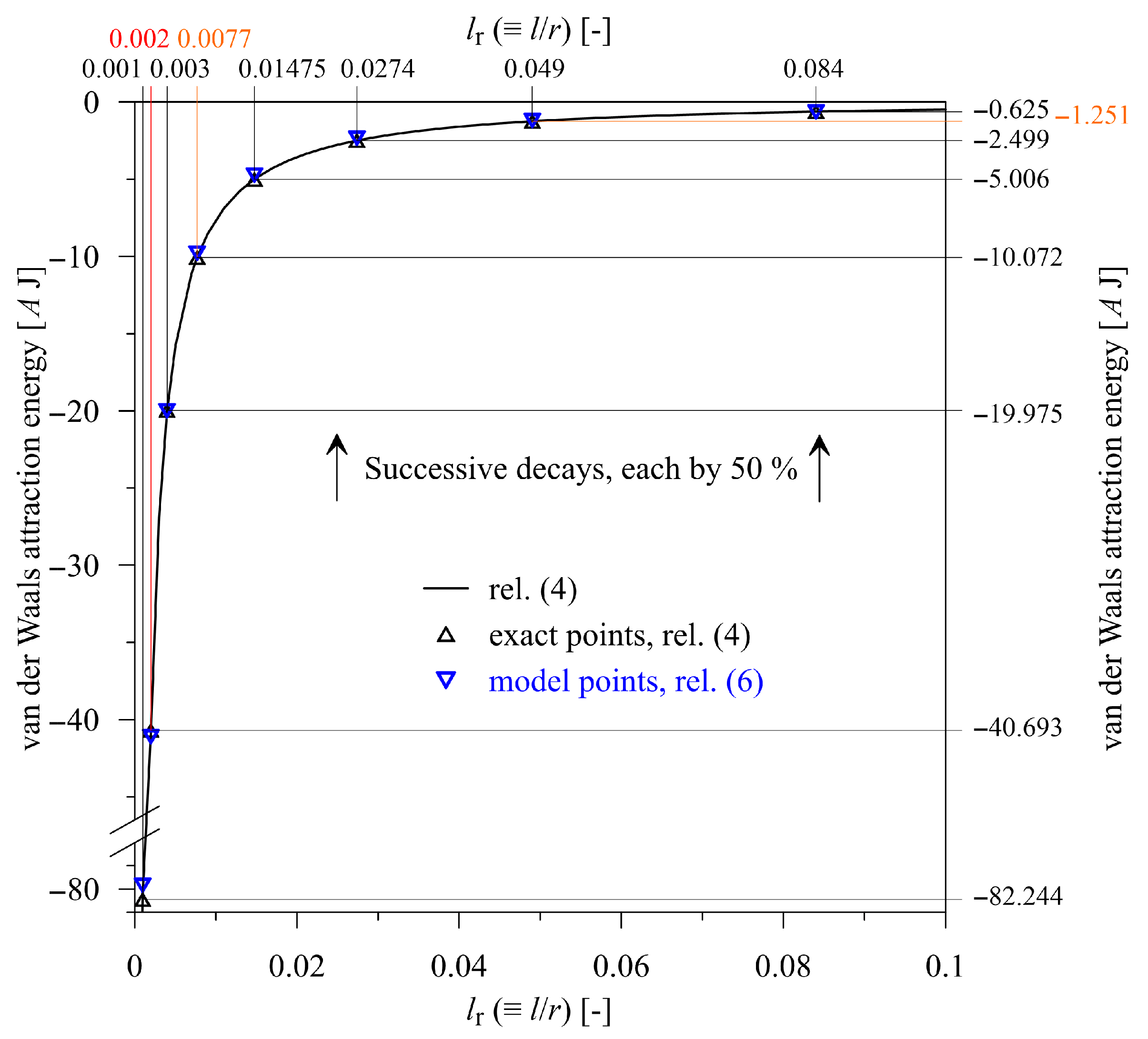
The significant dependence of the vdW attraction energy on the distance between two equally sized spherical particles is documented in Figure 5, where any successive value of lr corresponds to a decay by 50%. This implies, for instance, that particles drawn apart from lr = 0.001 to lr = 0.084 exhibit attraction energy reduced by (1/2)7 (≈0.0078) times, as with a distance increasing from 0.001 to 0.084, they pass 7 times the points, with 50% drop (Figure 5).

2.3. Approximate Relations for General lr and qr

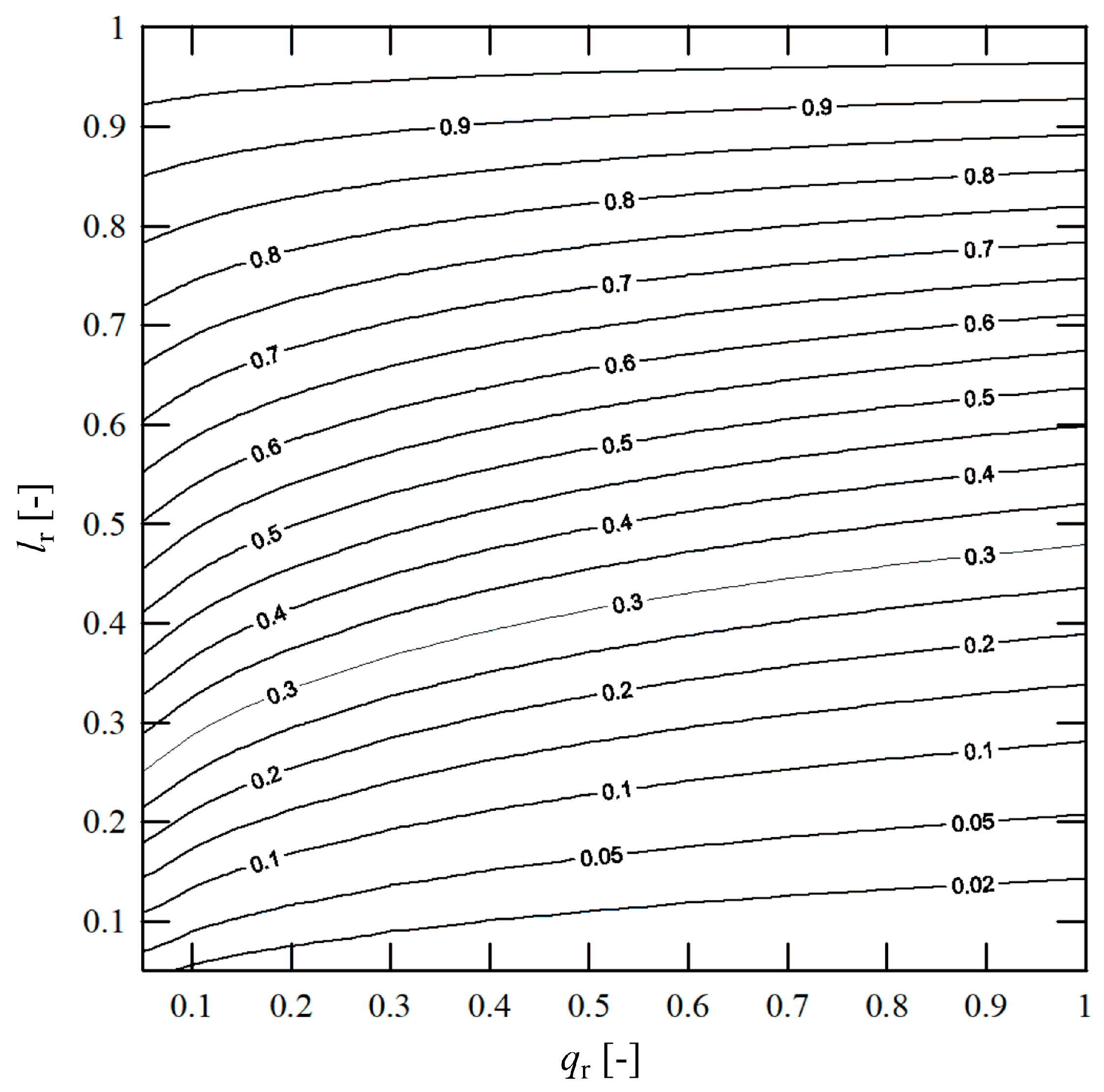
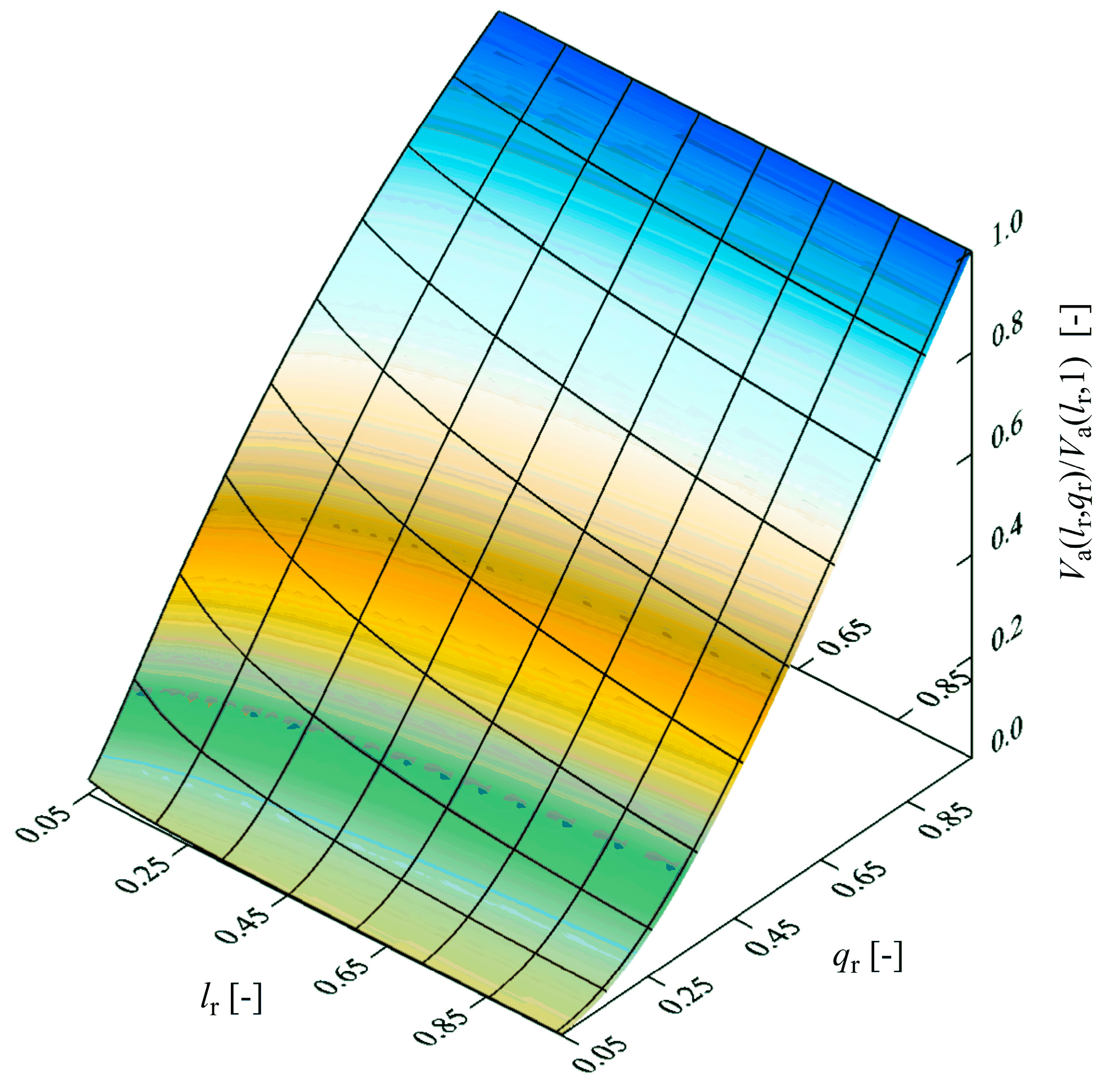
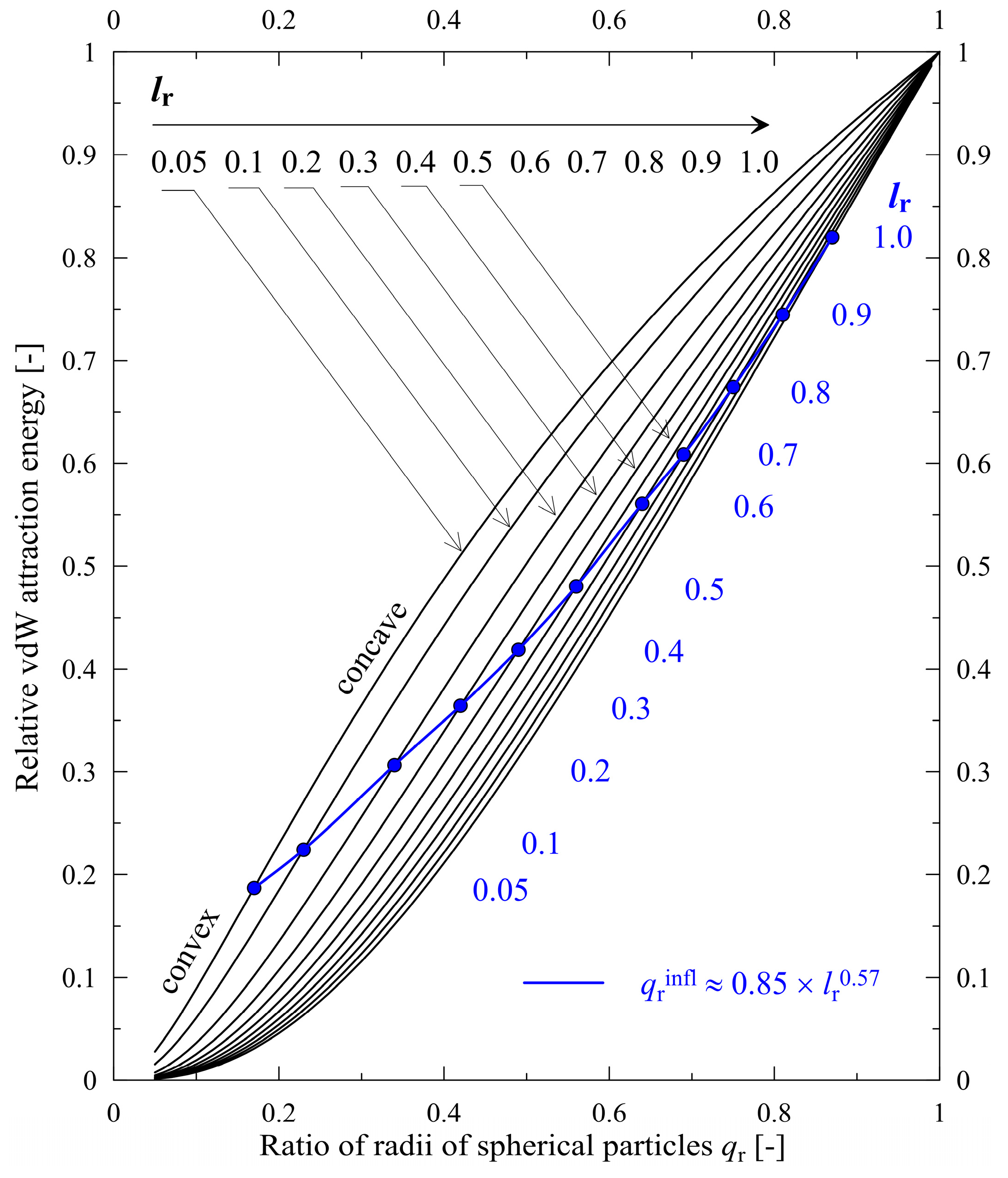
As shown in Figure 3, the maximum van der Waals interaction energy for a fixed lr is attained in the case of equisized spherical particles (qr = 1), i.e., Va(lr,1). This allows for the introduction of a relative van der Waals interaction energy, defined as the ratio Va(lr,qr)/Va(lr,1), which falls within the interval (0,1]. An advantage of utilizing this ratio is the ability to depict the behavior of Va(lr,qr) in relation to Va(lr,1) as it varies with lr; see Figure 6. Figure 7 is a contour plot corresponding to Figure 6, depicting the lines of the same relative values. However, these values—when converted to real vdW interaction energy—will differ substantially (usage of approximate rels. (6) and (7)).
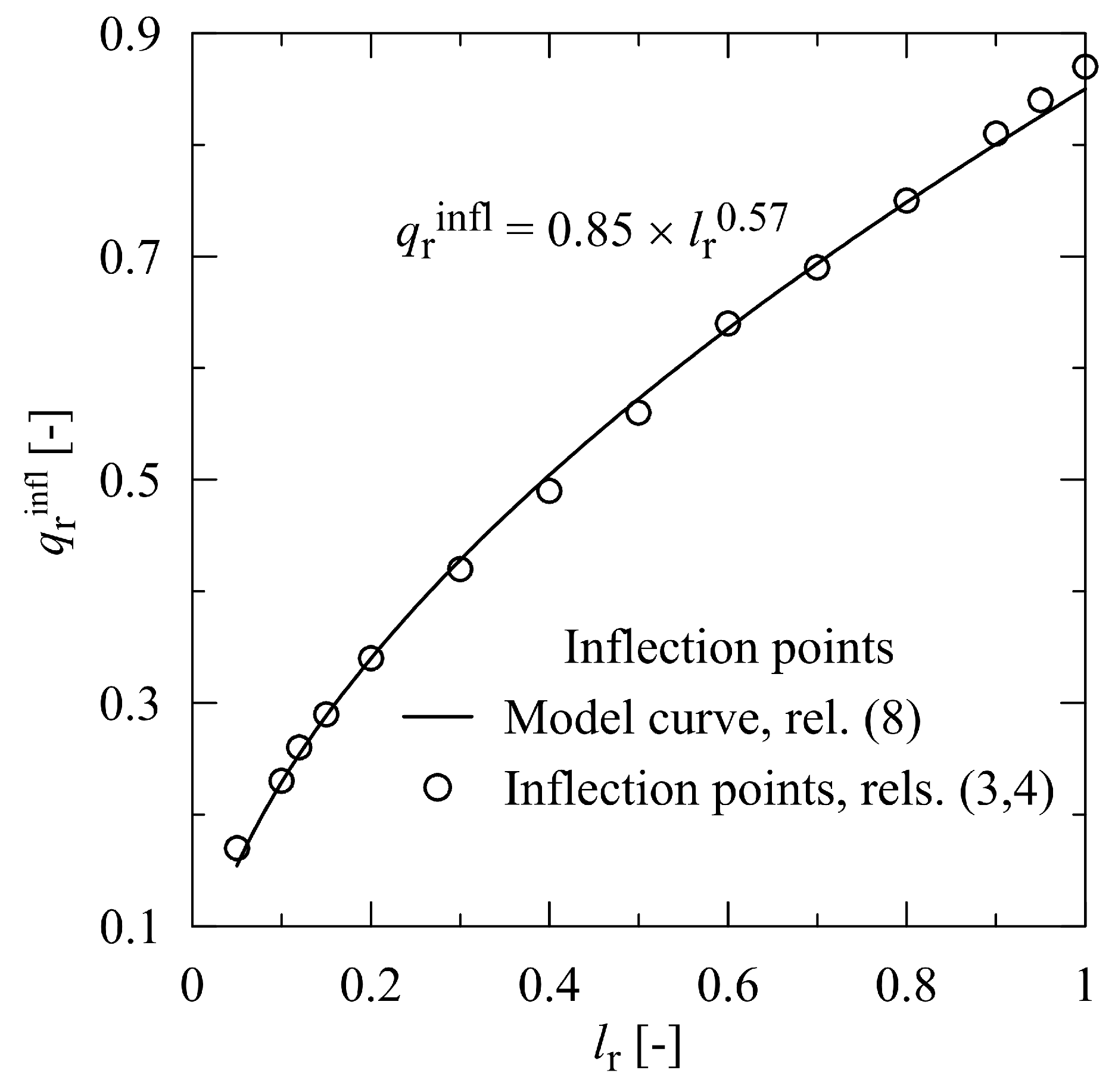
It is apparent from Figure 6 that every lr-section curve (i.e., a curve with a constant lr) exhibits an inflection point, as is characteristic of rel. (3). These points are represented by a dashed line in Figure 6. This means that every lr-section curve first exhibits a convex shape, which is subsequently transformed into a concave one; see Figure 8. The approximate curve determining the inflection points qrinfl can be expressed in the form
q r infl ( l r ) = 0.85 × l r 0 . 57 .
The deviation of this approximate curve from the points calculated using rels. (3) and (4) is acceptable, with a mean deviation of 1.6%; see Figure 9.
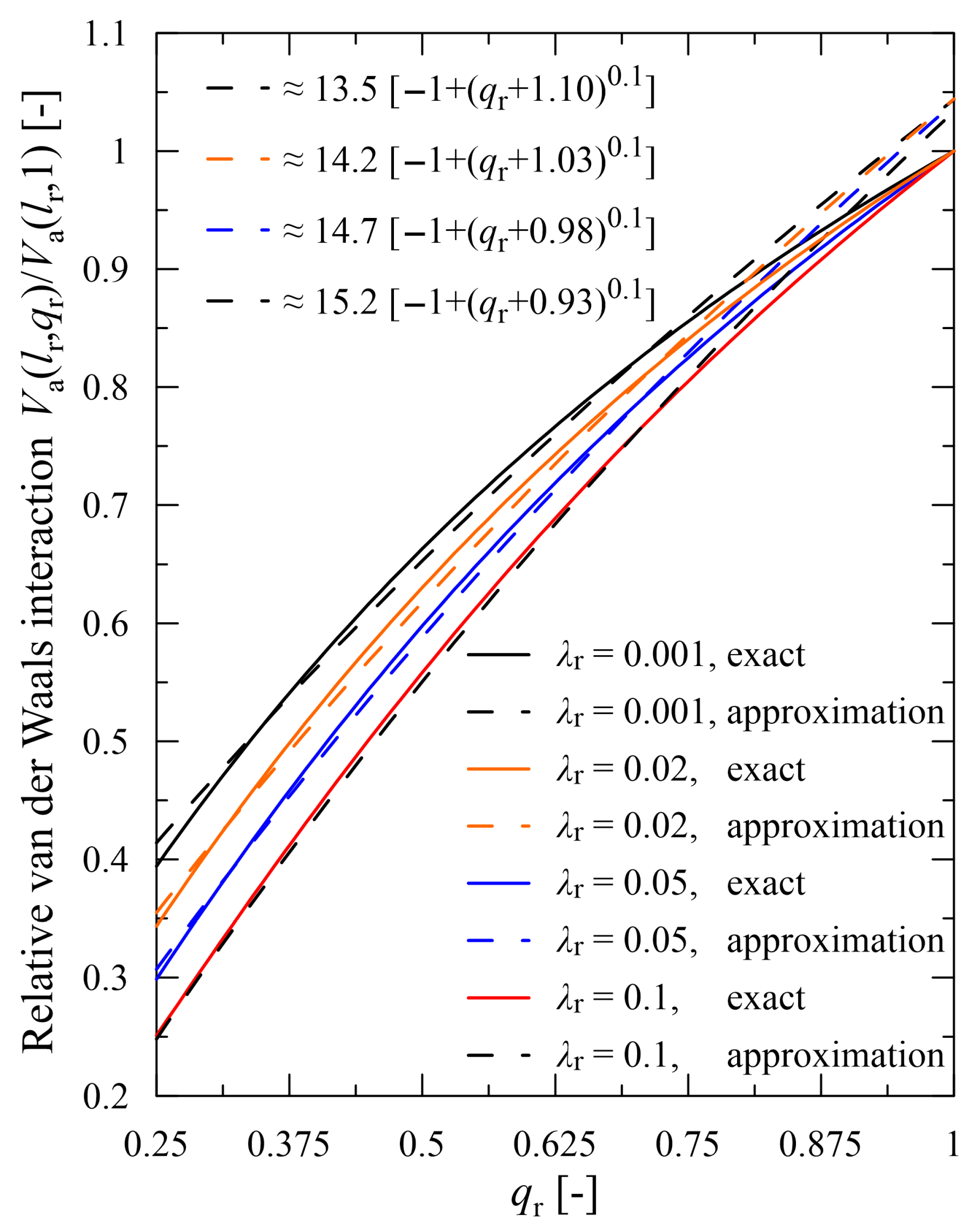
The question is whether in addition to rel. (6) providing a clear functional dependence of Vaappr(lr,1) on lr, there is also a possibility of approximating the relative vdW interaction energy (Figure 6) for low lr. In the range lr ∈ [0.001, 0.1] and qr ∈ [0.25, 1], this fulfills the following relations:
V a ( l r , q r ) V a ( l r , 1 ) appr = 24.5 + 10 w ( l r ) × 1 + ( q r w ( l r ) ) 0.1 ,
where
w ( l r ) = 1.13 + 0.57 l r 0.45 .
The courses of model curves for selected values of lr are depicted in Figure 10. Deviations are practically negligible for all lr ∈ [0.001, 0.1], apart from an interval where qr approaches 1, where a deviation attains maximally 4%.

3. Discussion

The explicit rels. (1) and (4) for the vdW interaction energy derived by Hamaker [6] are not overly complicated; however, they do not provide a direct view of the functional influence of the individual input geometrical parameters. The proposed approximate relations make it easier—as documented, for instance, in Figure 11—for equally sized spherical particles, where the interaction energy can be described by means of a simple power function of lr (rel. (6)).
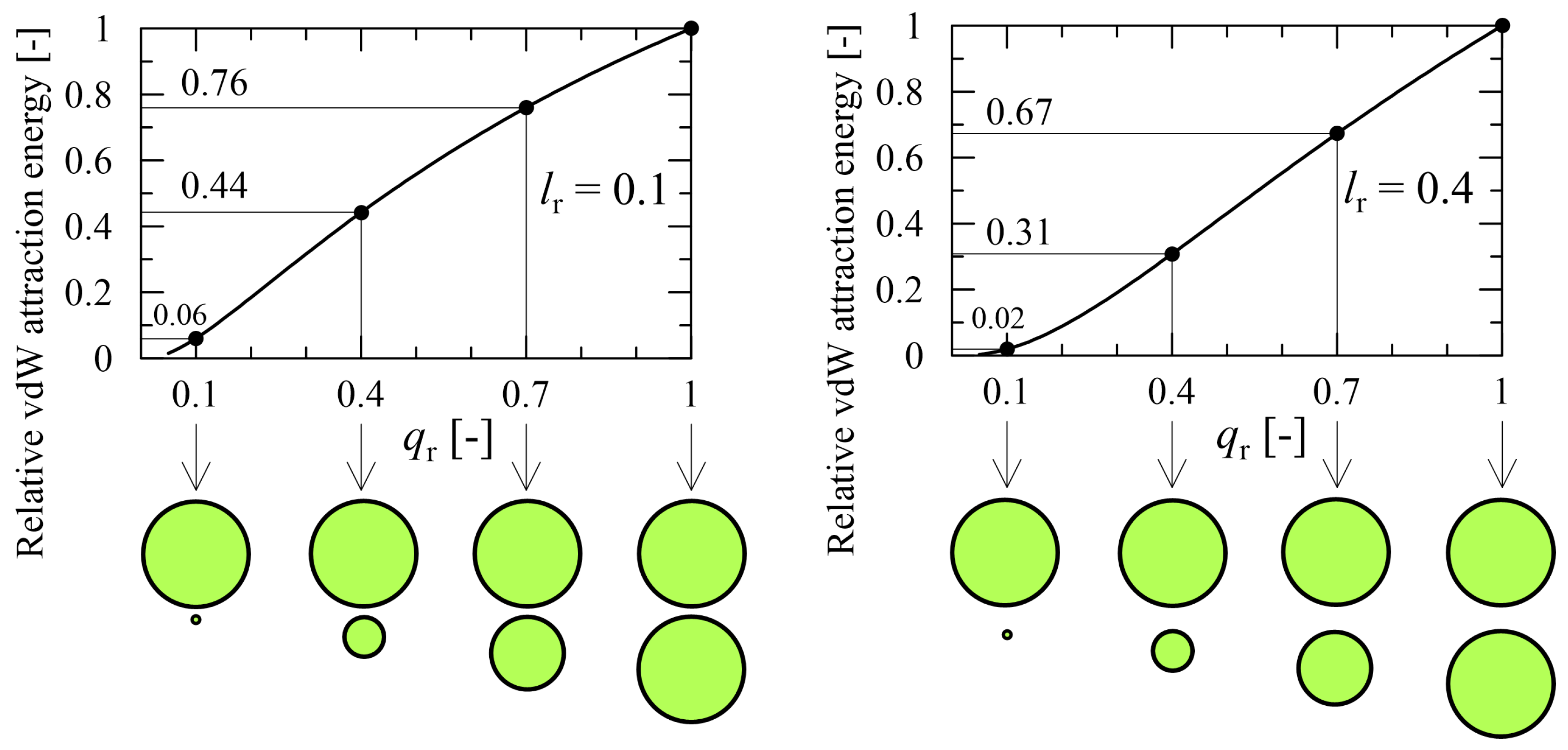
A different character of (relative) vdW interaction energy for various distances between spherical particles is illustrated in Figure 12, where the rate of decay is subject to the convexity/concavity of a curve corresponding to a specific value of lr. This rate can be estimated by differentiation of the power functions of qr (rels. (5) and (9)).
In the preceding sections, the Hamaker constant was treated as a fixed value, corresponding to the original derivation of relations (1) and (4). A more efficient approach involves replacing this non-retarded Hamaker constant with a retarded Lifshitz-type constant while preserving the Hamaker-type contribution regarding geometric aspects (in this case, the spheres); see, for instance, Bowen and Jenner [11]. The retardation effects cause a more pronounced decrease in the Va/A ratio with increasing distance between the spheres, compared to the non-retarded ratio. This further intensifies the dramatic drop in Va/A as the distance between the spheres increases, as presented in Figure 4 and Figure 5.

4. Conclusions

The van der Waals interaction energy is highly sensitive to the sizes of particles and their mutual distances. Even a very small change can be reflected in multiples of energy values. The introduced, relatively precise approximate relations can provide a basic insight into the rates of these changes. This has an impact on the range of the energy barrier that must be surpassed to initiate, as is necessary in drinking-water treatment, and to achieve the second minimum in the DLVO balancing. Once this barrier is exceeded—based on a comparison of the contributions from attractive van der Waals forces and the repulsive forces generated by overlapping electrical double layers—the pollutants begin to aggregate. This aggregation facilitates their removal through processes such as sedimentation, filtration, and flotation.
The algebraic relations (1) and (4) are relatively complex, as they do not offer a clear insight into the behavior of the vdW interaction energy relative to the radii of spherical particles and their separation distances. This limitation can be overcome by the proposed shifted power relations, which render these dependencies more transparent. Furthermore, this mathematical form aligns more closely with the exponential decay observed in the EDL. The exponent in the power dependence can also indicate which terms in the exponential expansion are significant and which may be truncated. In drinking-water treatment, these exponents are governed by the mean radius and concentration of the colloidal particles typically found in treatment plants.
The presented approximate relations are categorized into three regions based on the aspect ratio of the radii qr and the aspect ratio relating particle distance to the larger radius lr: lr ∈ [0.001, 0.1] and qr ∈ [0.25, 1]; lr > 0.1 and qr ∈ [0.1, 1]; and equisized spherical particles. Deviations from the fundamental full formulas are predominantly restricted to within 4%. However, in cases where lr~0.1 and qr approaches 1, the deviations are approximately 10%.

Author Contributions

Conceptualization, P.F.; methodology, P.F.; investigation, P.F. and M.P.; writing—original draft preparation, P.F.; writing—review and editing, P.F.; project administration, M.P.; funding acquisition, M.P. All authors have read and agreed to the published version of the manuscript.

Funding

The authors acknowledge the support of the Czech Academy of Sciences Premium Academiae and the support of the Grant Agency CR, Grant Project No. GA25-17383S.

Data Availability Statement

No new data is generated.

Conflicts of Interest

The authors declare no conflicts of interest.

References

  1. Derjaguin, B.; Landau, L.D. Theory of the stability of strongly charged lyophobic sols and of the adhesion of strongly charged particles in solutions of electrolytes. Prog. Surf. Sci. 1993, 43, 30–59. [Google Scholar] [CrossRef] [Scilit]
  2. Verwey, E.J.W.; Overbeek, J.T.G. Theory of Stability of Lyophobic Colloids. The Interaction of Sol Particles Having an Electric Double Layer; Elsevier Publishing Company: New York, NY, USA; Amsterdam, The Netherlands; London, UK; Brussels, Belgium, 1948. [Google Scholar]
  3. Lewis, G.N. The atom and the molecule. J. Am. Chem. Soc. 1916, 38, 762–785. [Google Scholar] [CrossRef] [Scilit]
  4. Hiemenz, P.C.; Rajagopalan, R. Principles of Colloid and Surface Chemistry, 3rd ed.; CRC Press: Boca Raton, FL, USA; Taylor & Francis Group: Boca Raton, FL, USA, 1997; pp. 477, 485, 510. [Google Scholar]
  5. McClellan, A.L. Tables of Experimental Dipole Moments; W.H. Freeman & Co.: San Francisco, CA, USA; London, UK, 1963. [Google Scholar]
  6. Hamaker, H.C. The London—van der Waals attraction between spherical particles. Physica 1937, 4, 1058–1072. [Google Scholar] [CrossRef] [Scilit]
  7. Israelachvili, J.N. Intermolecular and Surface Forces, 3rd ed.; Elsevier, Academic Press: Amsterdam, The Netherlands, 2011; pp. 253–254. [Google Scholar]
  8. Parsegian, V.A. Van der Waals Forces. A Handbook for Biologists, Chemists, Engineers, and Physicists; Cambridge University Press: Cambridge, UK, 2006; p. 155. [Google Scholar]
  9. Bhattacharjee, S.; Elimelech, M.; Borkovec, M. DLVO Interaction between colloidal particles: Beyond Derjaguin’s approximation. Croat. Chem. Acta 1998, 71, 883–903. Available online: https://hrcak.srce.hr/132427 (accessed on 5 January 2026).
  10. Stumm, W.; Morgan, J.J. Aquatic Chemistry. Chemical Equilibria and Rates in Natural Waters, 3rd ed.; Wiley & Sons: New York, NY, USA, 1996; p. 868. [Google Scholar]
  11. Bowen, W.R.; Jenner, F. The calculation of dispersion forces for engineering applications. Adv. Colloid Interface Sci. 1995, 56, 201–243. [Google Scholar] [CrossRef] [Scilit]
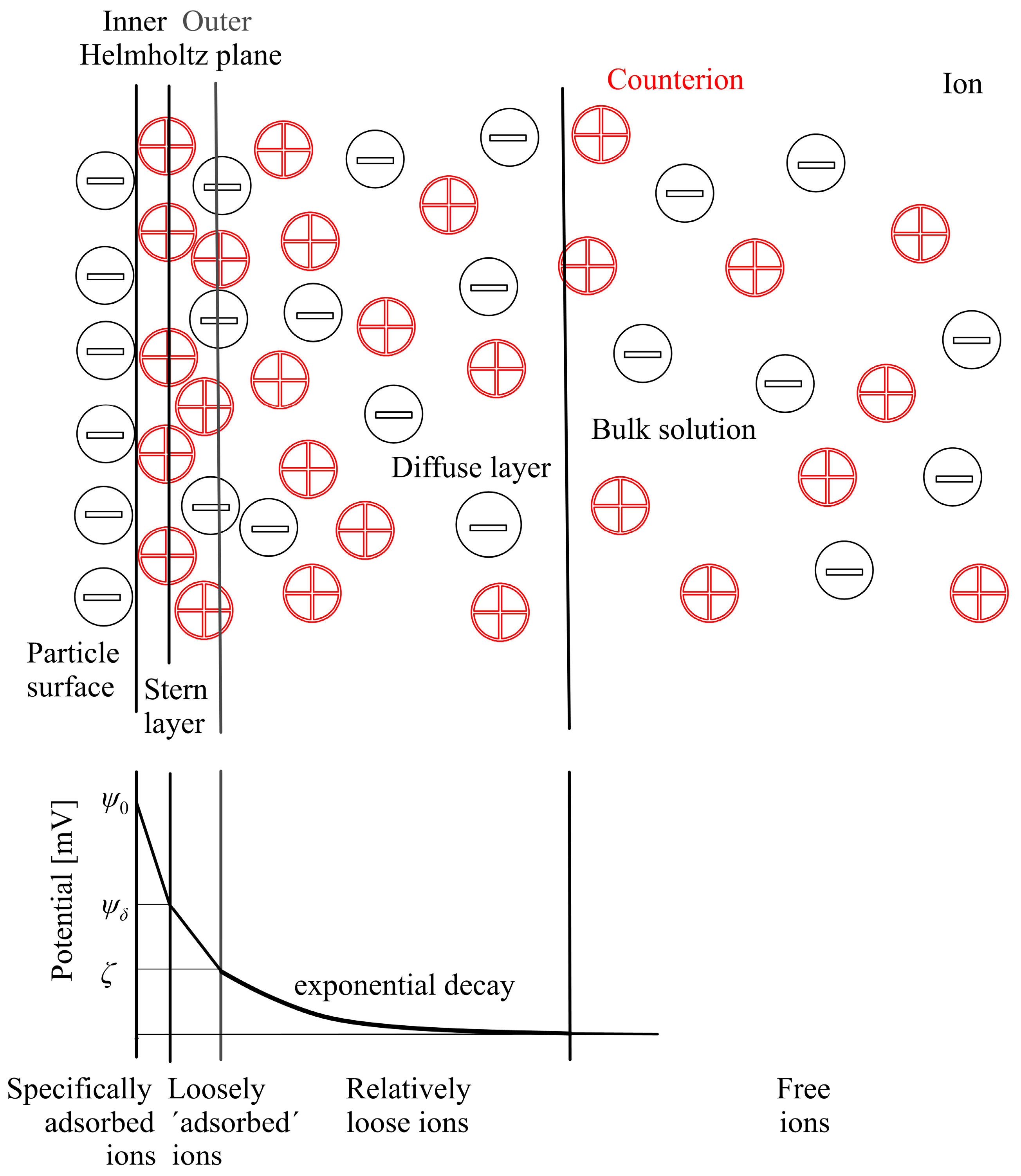
Figure 1. Electrical double layer, exponential decay of potential starting at ζ-potential.
Colloids 10 00009 g001
Figure 2. A sketch of the introduced parameters.
Colloids 10 00009 g002
Figure 3. Approximation of courses of Va(lr,qr)/A by shifted power functions of qr for fixed lr.
Colloids 10 00009 g003
Figure 4. The approximate relations for the van der Waals attraction energy in the limiting case of equally sized spherical particles.
Colloids 10 00009 g004
Figure 5. The van der Waals attraction energy’s dependence on the relative distance between two equally sized spherical particles.
Colloids 10 00009 g005
Figure 6. The relative van der Waals interaction energy’s dependence on lr and qr.
Colloids 10 00009 g006
Figure 7. A contour plot of the relative van der Waals interaction energy’s dependence on lr and qr.
Colloids 10 00009 g007
Figure 8. A course of inflection points for lr-section curves.
Colloids 10 00009 g008
Figure 9. An approximation of the inflection points along the lr-section curves.
Colloids 10 00009 g009
Figure 10. An approximation of the relative van der Waals interaction energy by rel. (9).
Colloids 10 00009 g010
Figure 11. The decay of the vdW interaction energy with the distance between spherical particles.
Colloids 10 00009 g011
Figure 12. The change in relative vdW attraction energy in dependence on qr for two fixed values of lr.
Colloids 10 00009 g012
Disclaimer/Publisher’s Note: The statements, opinions and data contained in all publications are solely those of the individual author(s) and contributor(s) and not of MDPI and/or the editor(s). MDPI and/or the editor(s) disclaim responsibility for any injury to people or property resulting from any ideas, methods, instructions or products referred to in the content.