
Article

Impact Resistance of Fibre Reinforced Composite Railway Freight Tank Wagons

by
George Edward Street
*,
Preetum Jayantilal Mistry
and
Michael Sylvester Johnson
Composites Research Group, Faculty of Engineering, University of Nottingham, Advanced Manufacturing Building, Jubilee Campus, Nottingham NG8 1BB, UK
*
Author to whom correspondence should be addressed.
J. Compos. Sci. 2021, 5(6), 152; https://doi.org/10.3390/jcs5060152
Submission received: 11 May 2021 / Revised: 31 May 2021 / Accepted: 31 May 2021 / Published: 4 June 2021
(This article belongs to the Special Issue Recent Advances in Composite Process Modeling and Characterization)

Abstract

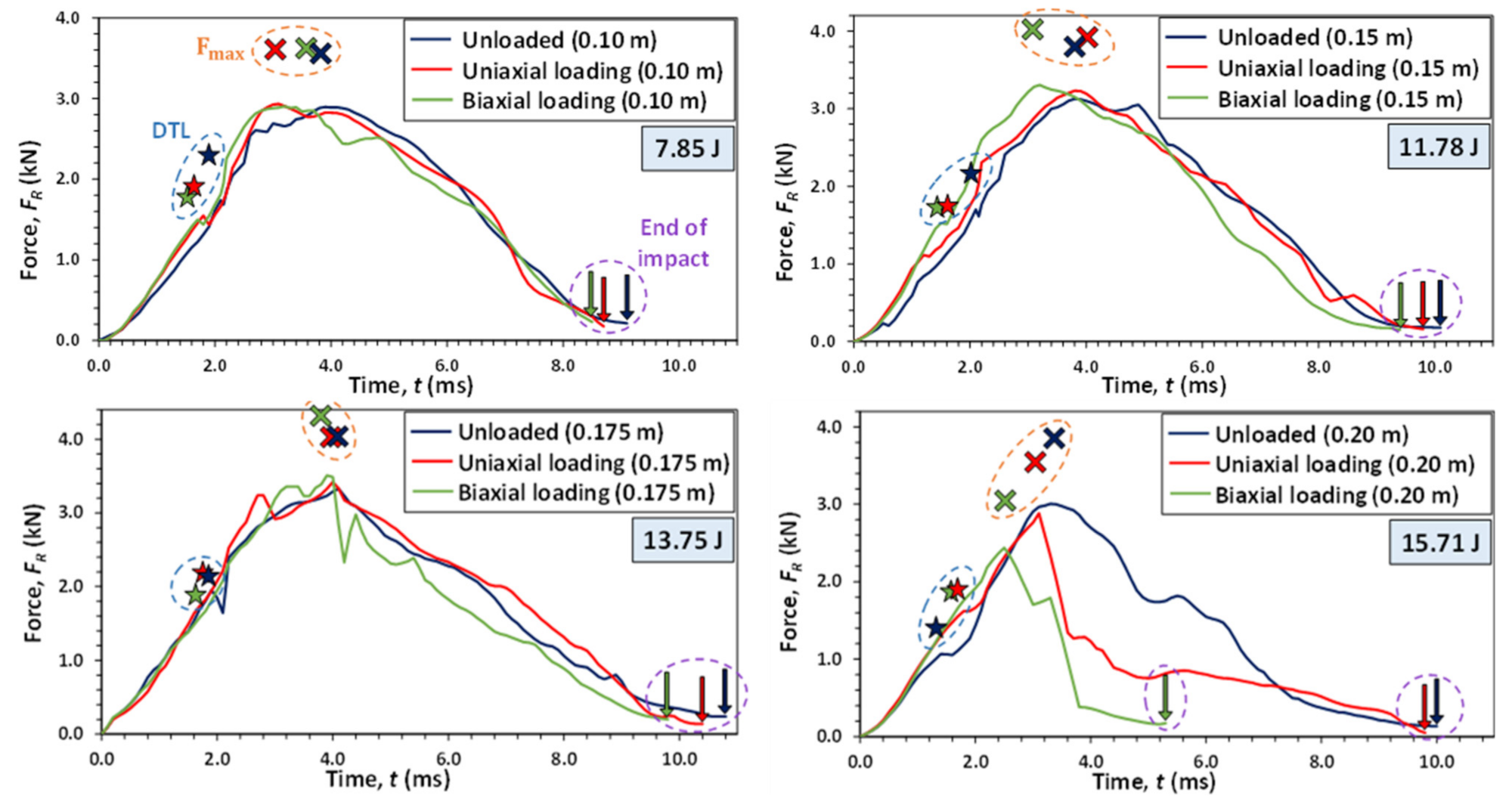
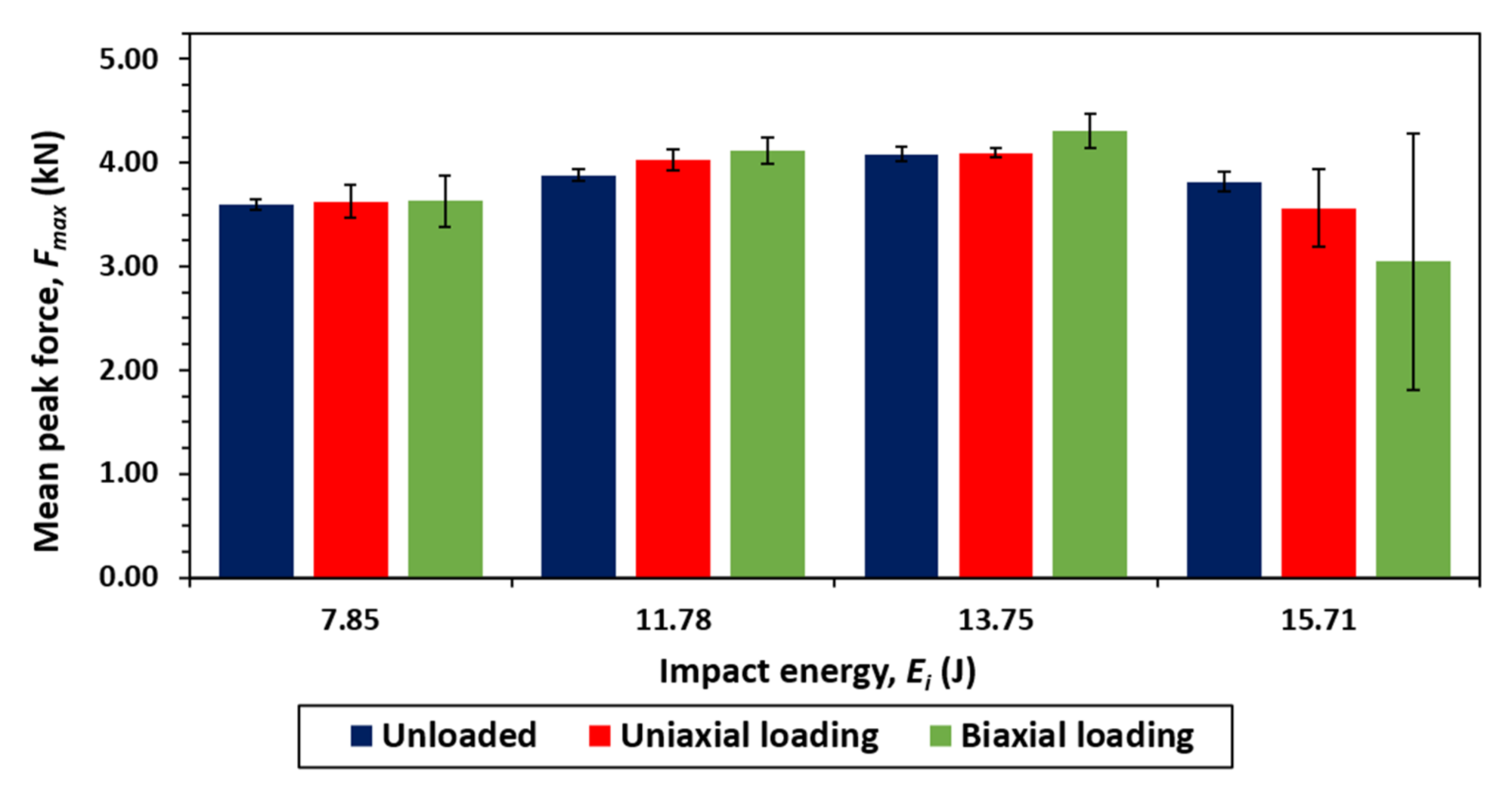
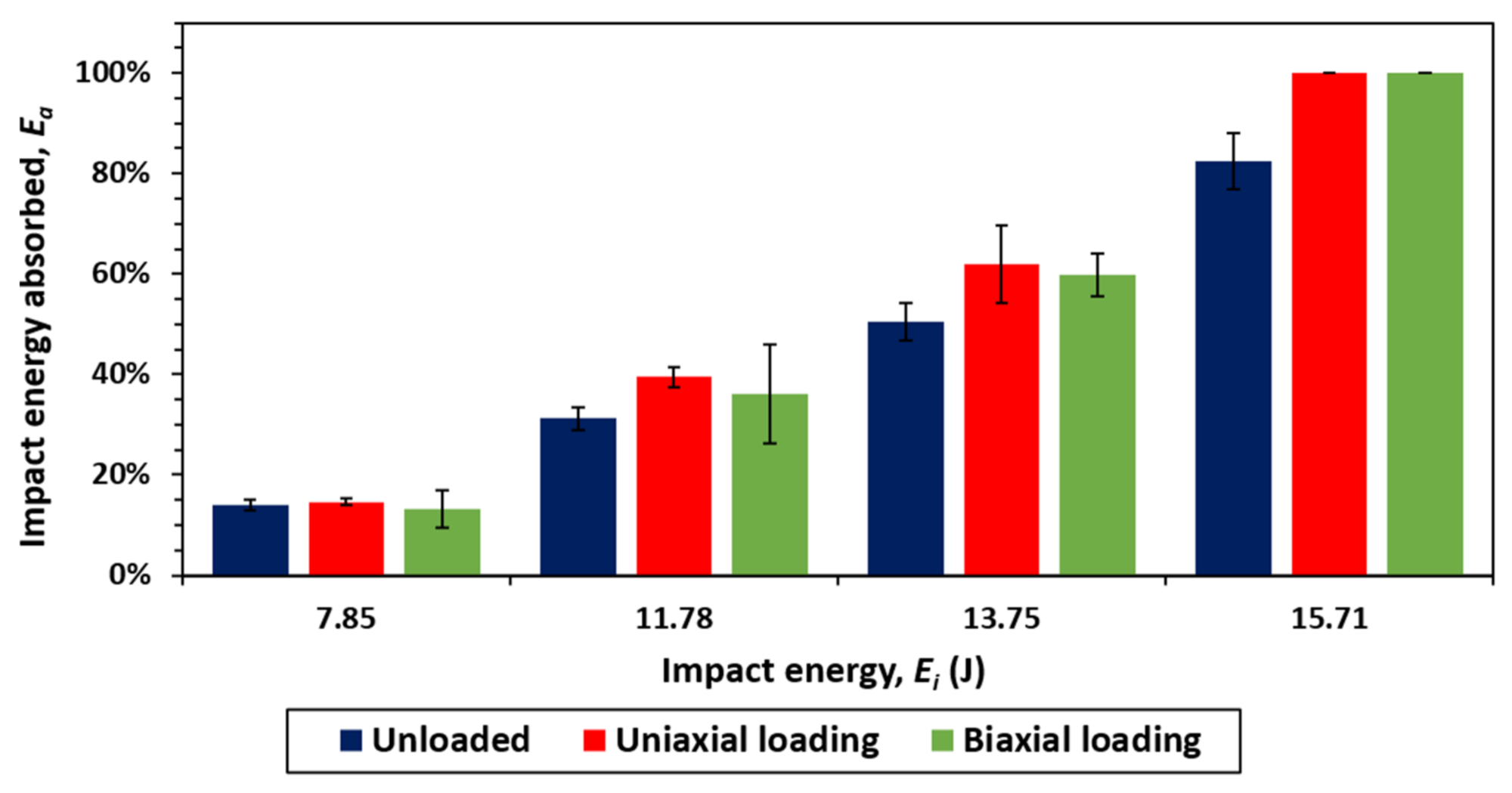
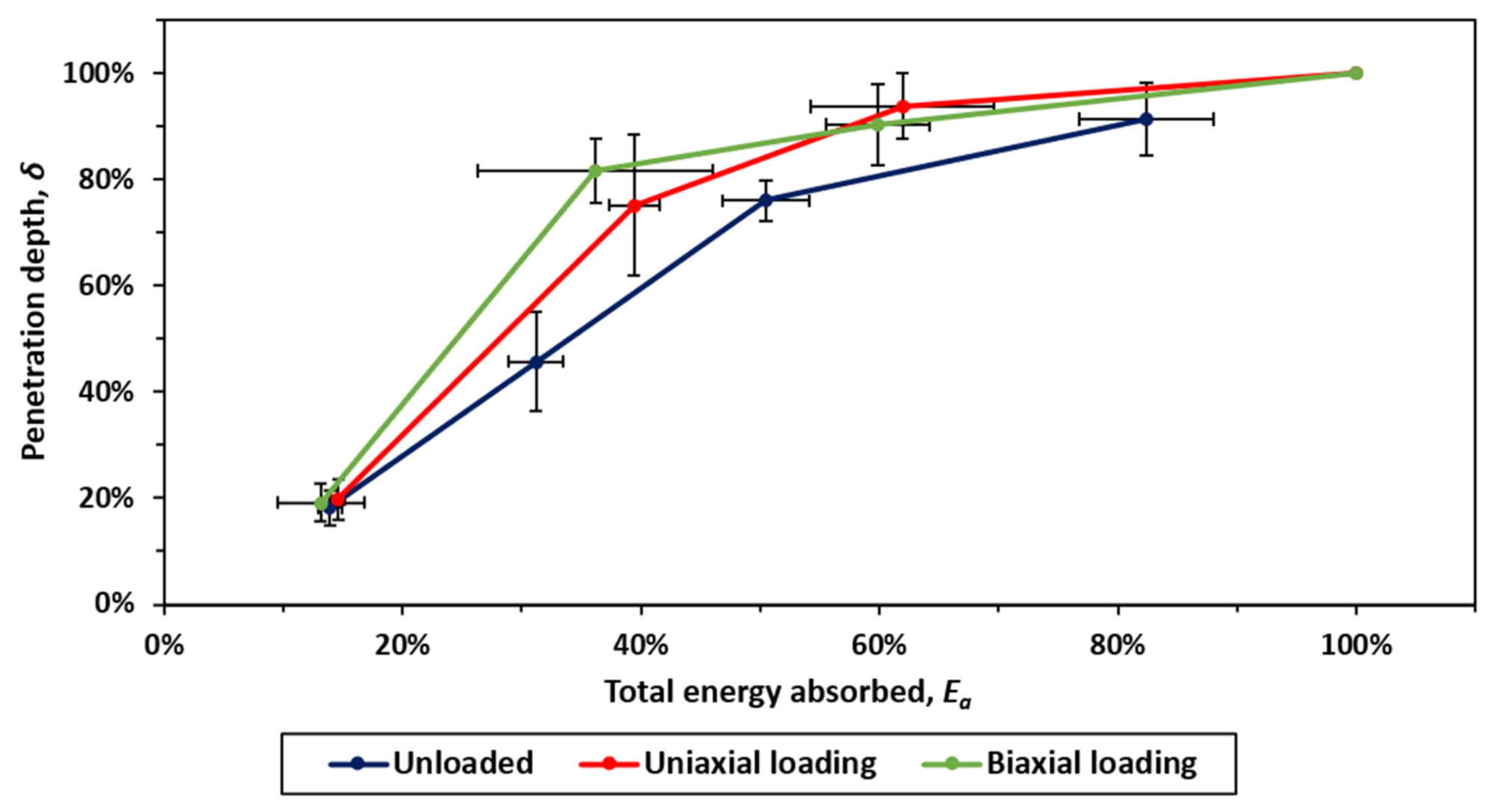
The use of fibre reinforced composite materials is one method by which the lightweighting of rail vehicles can be achieved. However, the issue of impact damage, amongst other challenges, limits their safety certification. This issue is accentuated by the high levels of loading a rail vehicle may be subjected to during service. This paper addresses the significance of pre-tension on large composite structures, specifically for a composite redesign of a pressure vessel for a freight tank wagon. Preloading was determined to be detrimental to the overall impact resistance of a large composite vessel. At 15.71 J of impact energy, there was a 22% increase in mean absorbed energy for a uniaxially loaded panel over an unloaded panel. However, there was only a 4% difference in penetration depth between uniaxial and biaxial loading. A novel finding from these results is that the effects of preloading are more profound if the loading does not act parallel to a principal fibre direction. Matrix cracking and delaminations are the most common failure modes observed for specimens under low-velocity impact and are intensified by preload.
Keywords: lightweighting; fibre reinforced composite; railway freight tank wagon; impact resistance; biaxial loading; pressure vessel lightweighting; fibre reinforced composite; railway freight tank wagon; impact resistance; biaxial loading; pressure vessel