
Article

Analytical Solution for Static and Dynamic Analysis of Graphene-Based Hybrid Flexoelectric Nanostructures


by
Kishor Balasaheb Shingare
and
Susmita Naskar
*
Department of Aerospace Engineering, Indian Institute of Technology Bombay, Mumbai 400 076, India
*
Author to whom correspondence should be addressed.
J. Compos. Sci. 2021, 5(3), 74; https://doi.org/10.3390/jcs5030074
Submission received: 13 February 2021 / Revised: 27 February 2021 / Accepted: 28 February 2021 / Published: 6 March 2021
(This article belongs to the Special Issue Advanced Multi-functional Composites and Metamaterials)

Abstract

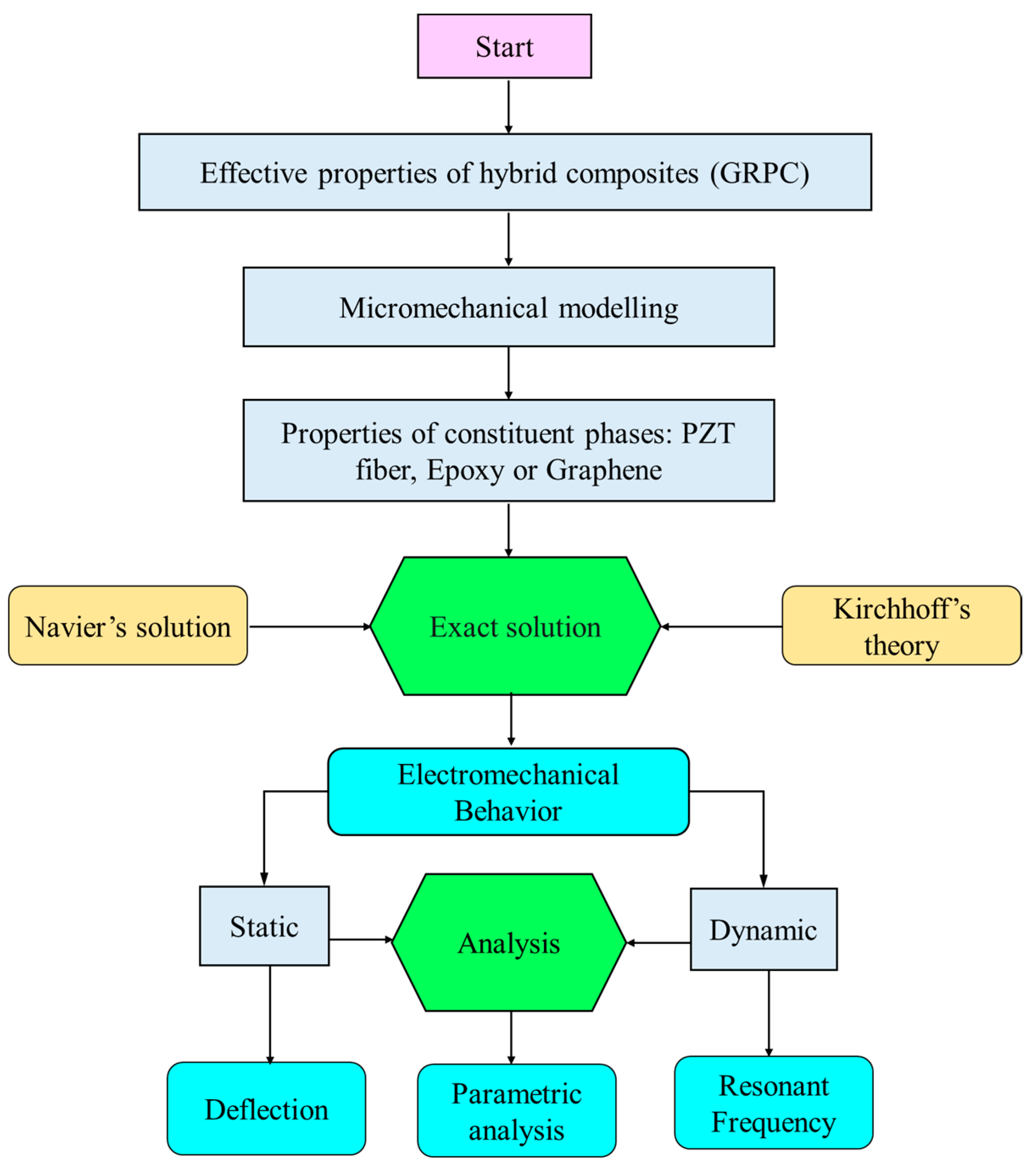
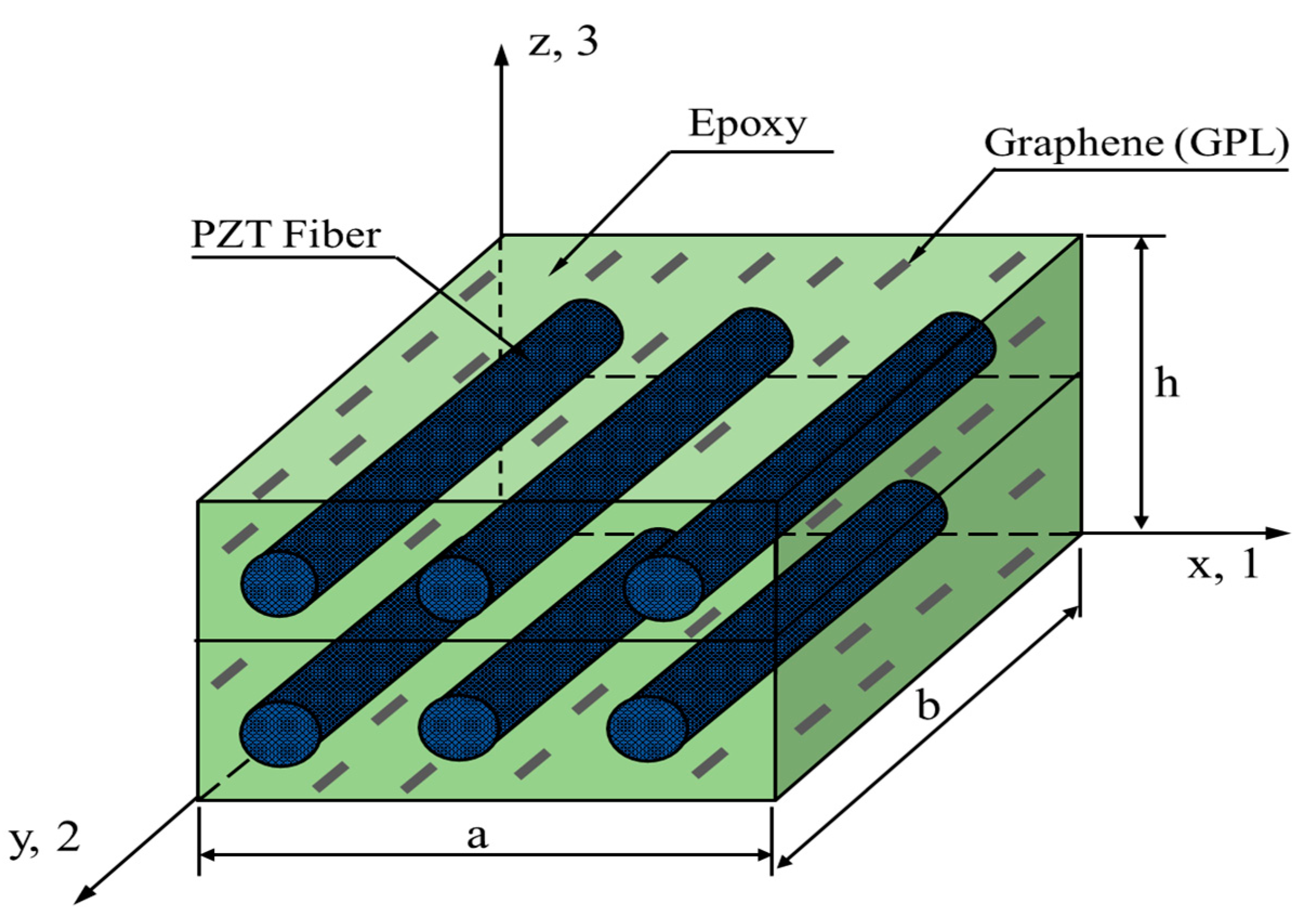
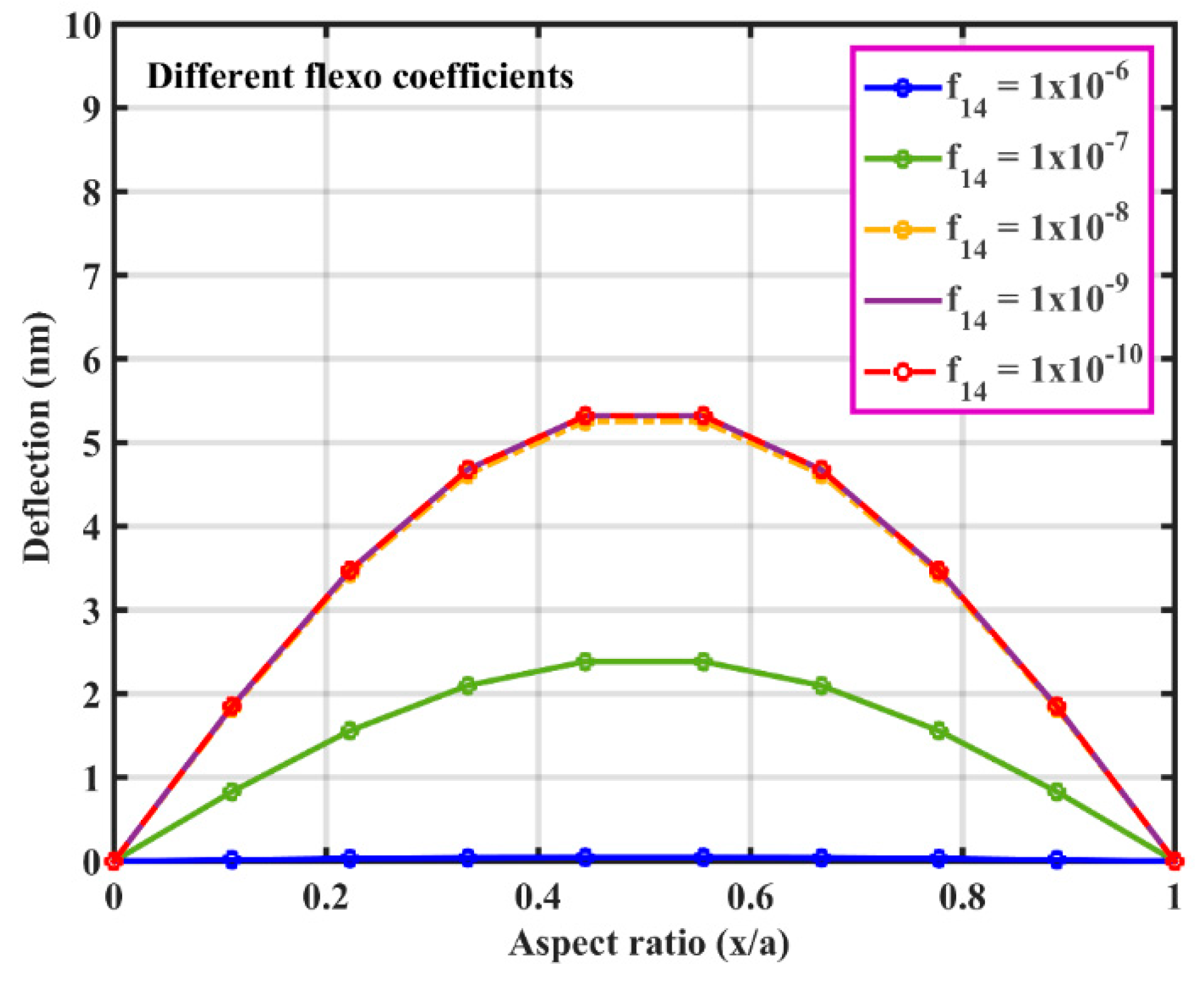
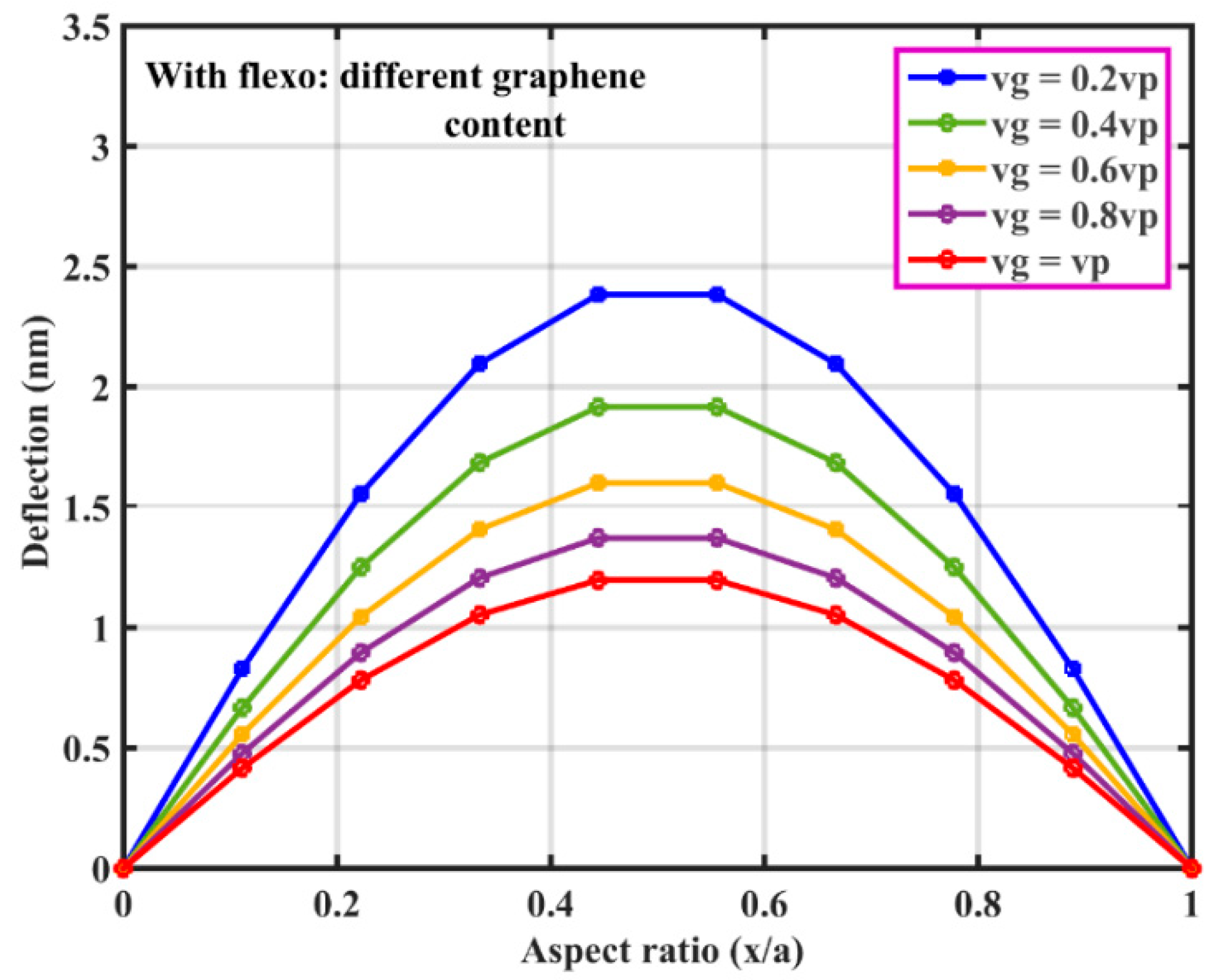
Owing to their applications in devices such as in electromechanical sensors, actuators and nanogenerators, the consideration of size-dependent properties in the electromechanical response of composites is of great importance. In this study, a closed-form solution based on the linear piezoelectricity, Kirchhoff’s plate theory and Navier’s solution was developed, to envisage the electromechanical behaviors of hybrid graphene-reinforced piezoelectric composite (GRPC) plates, considering the flexoelectric effect. The governing equations and respective boundary conditions were obtained, using Hamilton’s variational principle for achieving static deflection and resonant frequency. Moreover, the different parameters considering aspect ratio, thickness of plate, different loadings (inline, point, uniformly distributed load (UDL), uniformly varying load (UVL)), the combination of different volume fraction of graphene and piezoelectric lead zirconate titanate are considered to attain the desired bending deflection and frequency response of GRPC. Different mode shapes and flexoelectric coefficients are also considered and the results reveal that the proper addition of graphene percentage and flexoelectric effect on the static and dynamic responses of GRPC plate is substantial. The obtained results expose that the flexoelectric effect on the piezoelastic response of the bending of nanocomposite plates are worth paying attention to, in order to develop a nanoelectromechanical system (NEMS). Our fundamental study sheds the possibility of evolving lightweight and high-performance NEMS applications over the existing piezoelectric materials.
Keywords: graphene; lead zirconate titanate (PZT); flexoelectricity; piezoelectricity; nanocomposite graphene; lead zirconate titanate (PZT); flexoelectricity; piezoelectricity; nanocomposite