
Article

A Bayesian Network Framework to Predict Compressive Strength of Recycled Aggregate Concrete

by
Tien-Dung Nguyen
1,2,
Rachid Cherif
1,
Pierre-Yves Mahieux
1 and
Emilio Bastidas-Arteaga
1,*
1
Laboratory of Engineering Sciences for the Environment (LaSIE) UMR CNRS 7356, University of La Rochelle, Avenue Michel Crépeau, 17042 La Rochelle Cedex 1, France
2
Faculty of Road and Bridge Engineering, The University of Danang—University of Science and Technology, 54 Nguyen Luong Bang Street, Lien Chieu District, Danang City 550000, Vietnam
*
Author to whom correspondence should be addressed.
J. Compos. Sci. 2025, 9(2), 72; https://doi.org/10.3390/jcs9020072
Submission received: 23 November 2024 / Revised: 15 January 2025 / Accepted: 3 February 2025 / Published: 5 February 2025
(This article belongs to the Special Issue Novel Cement and Concrete Materials)

Abstract

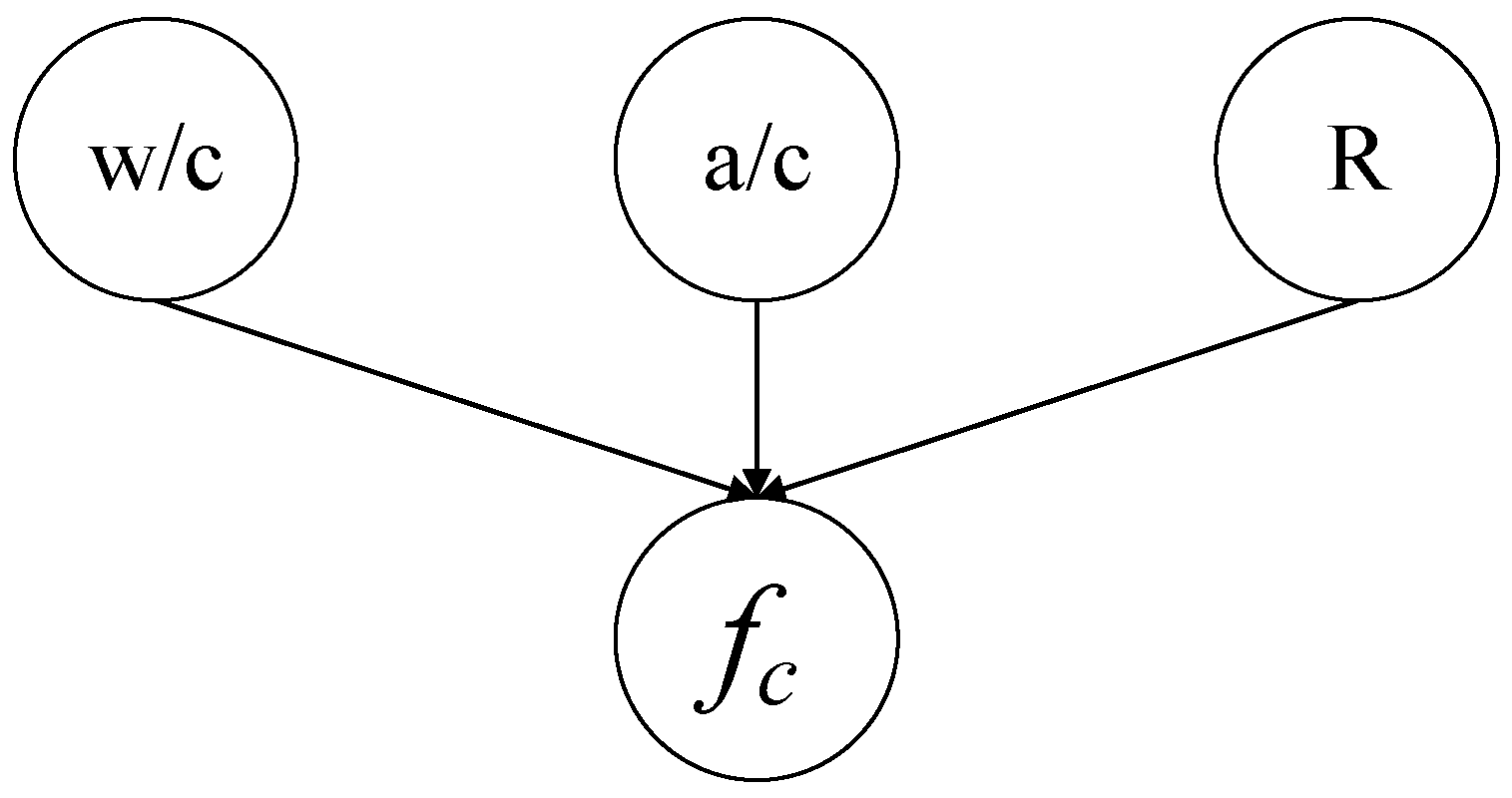
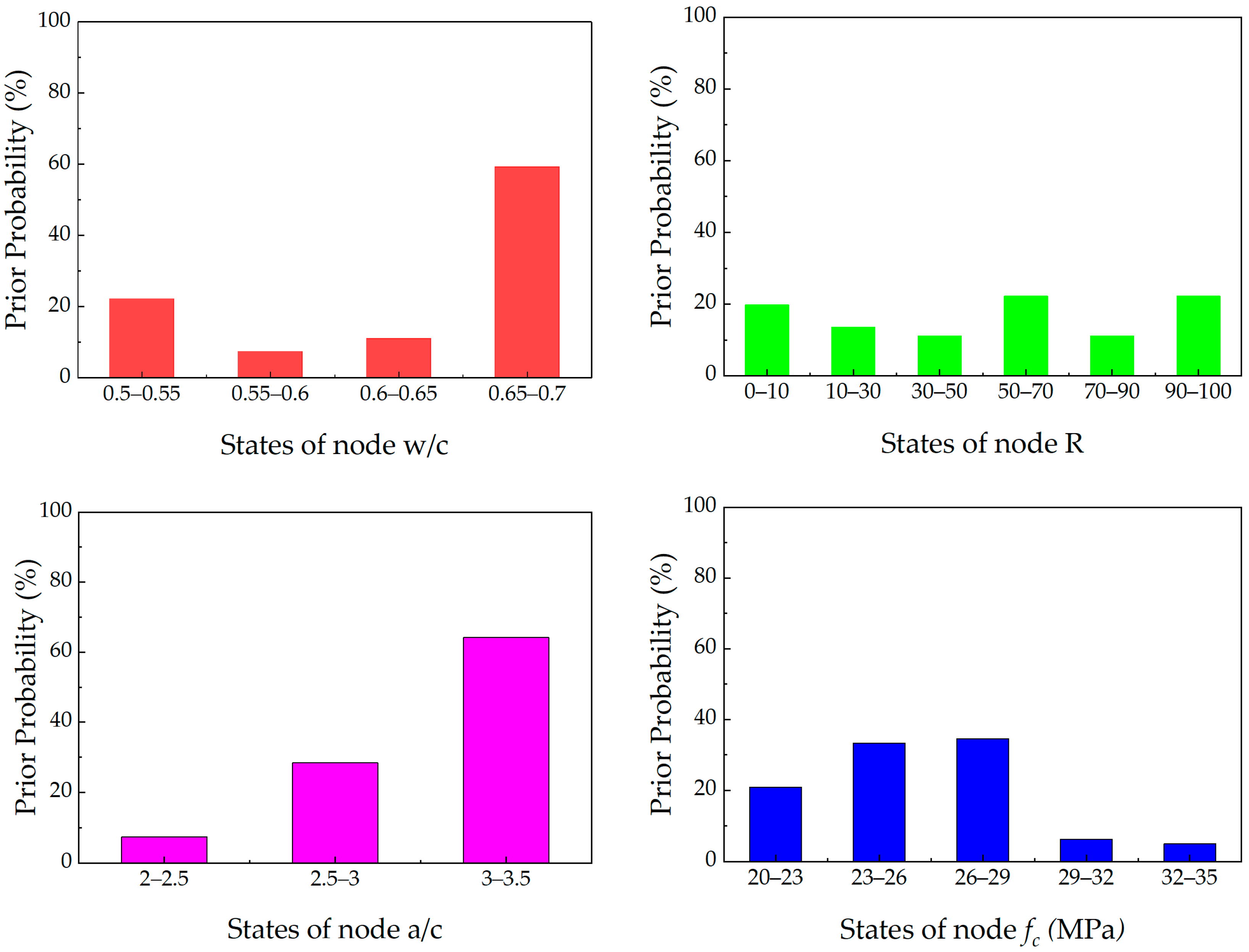
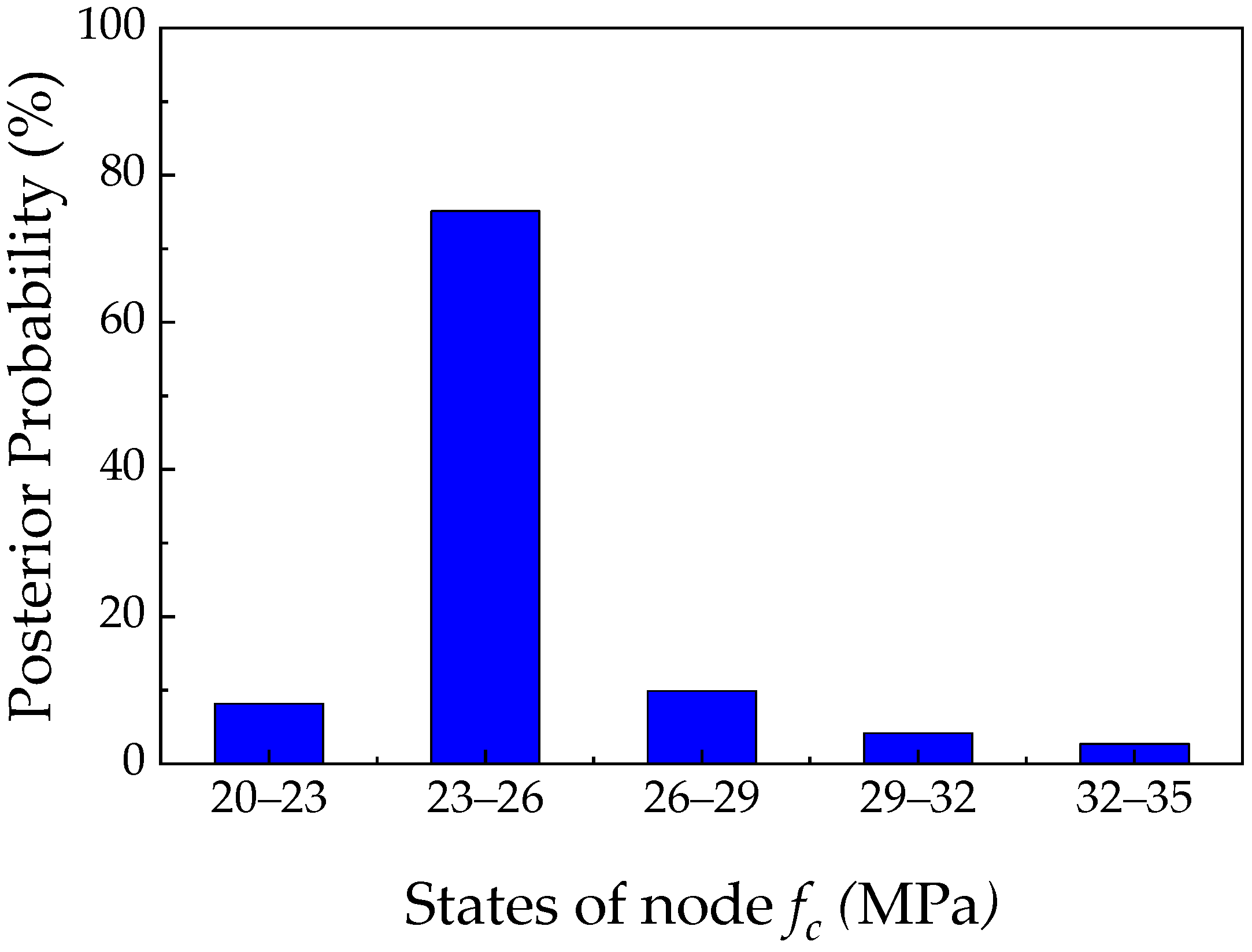
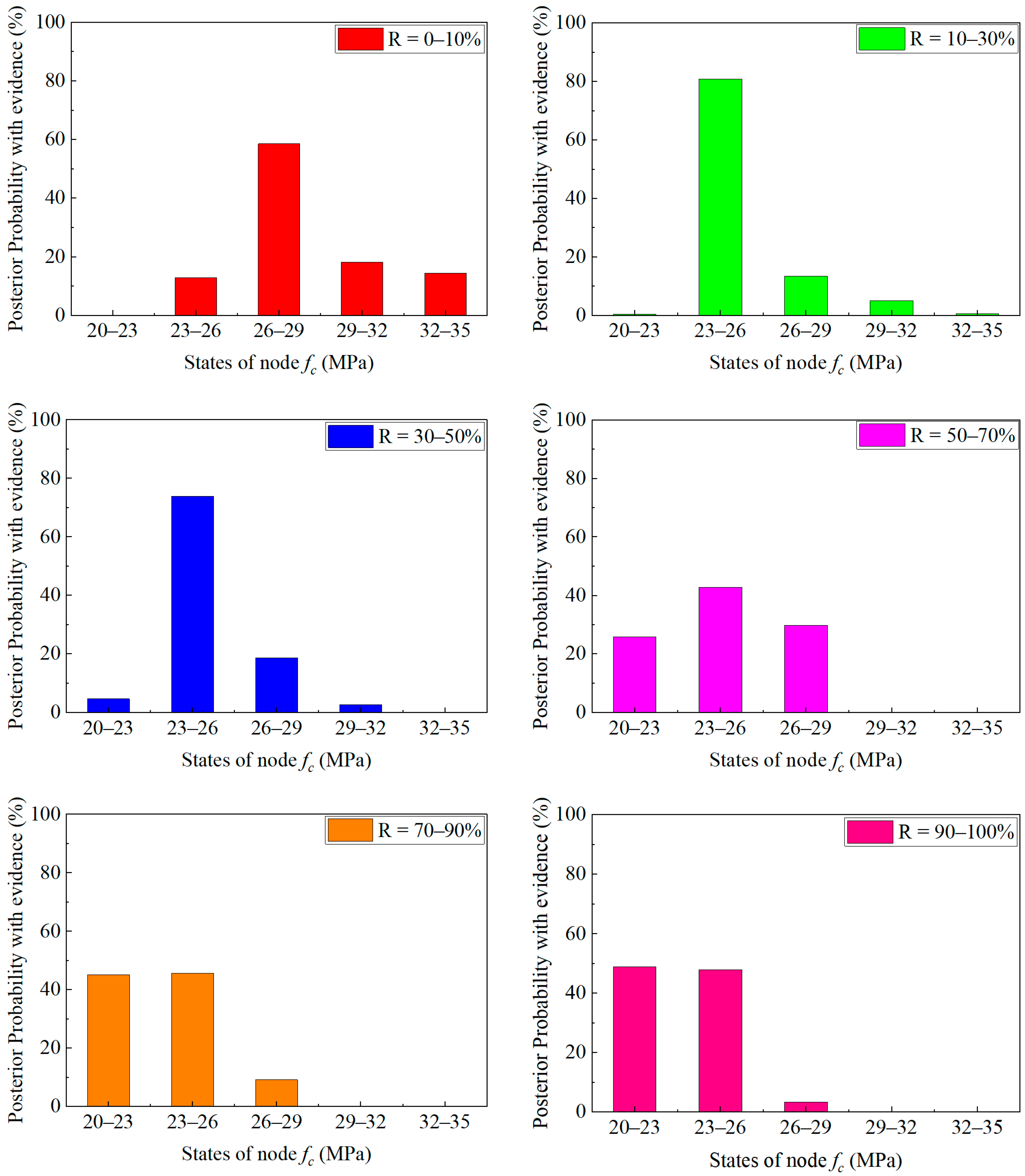
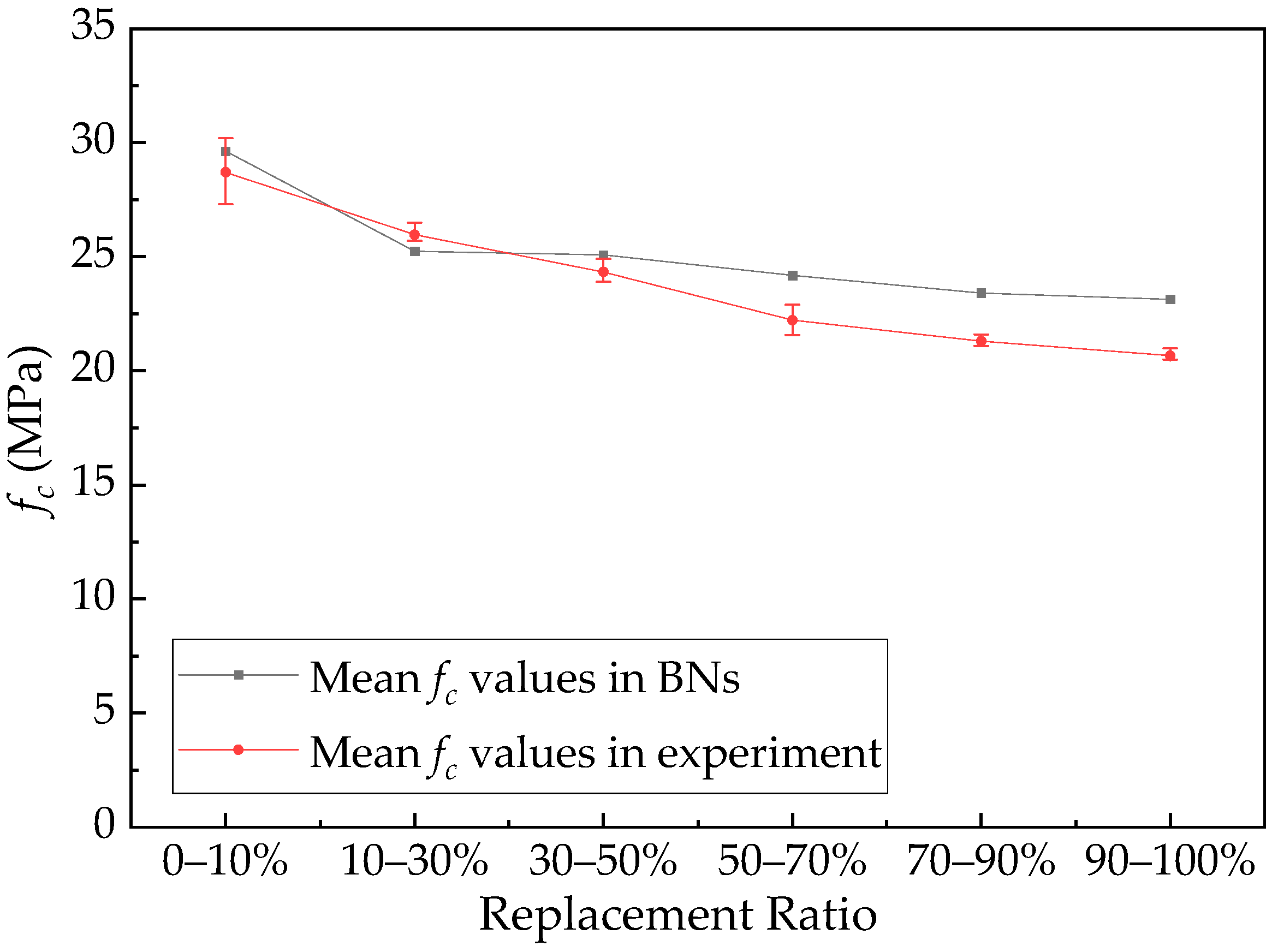
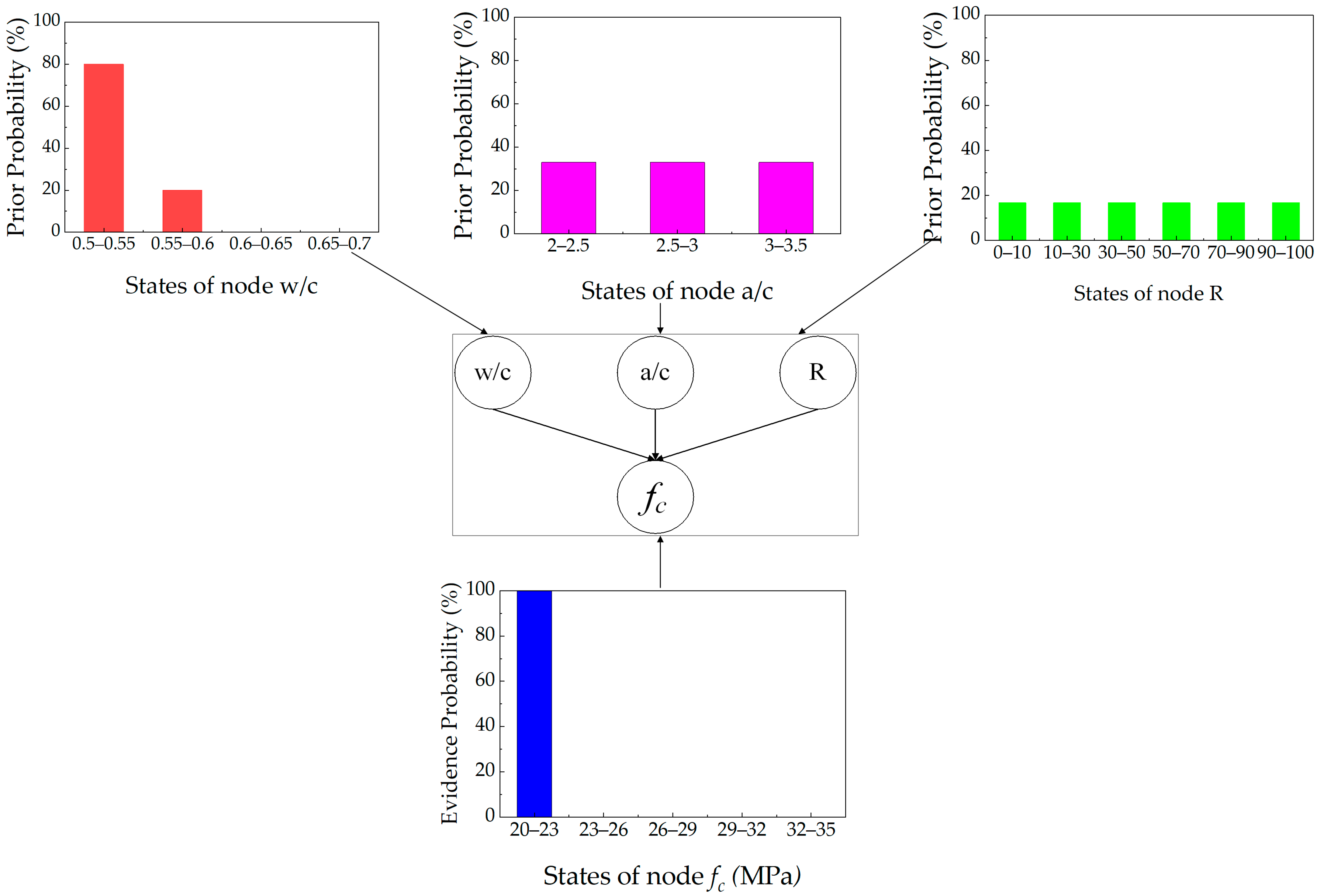
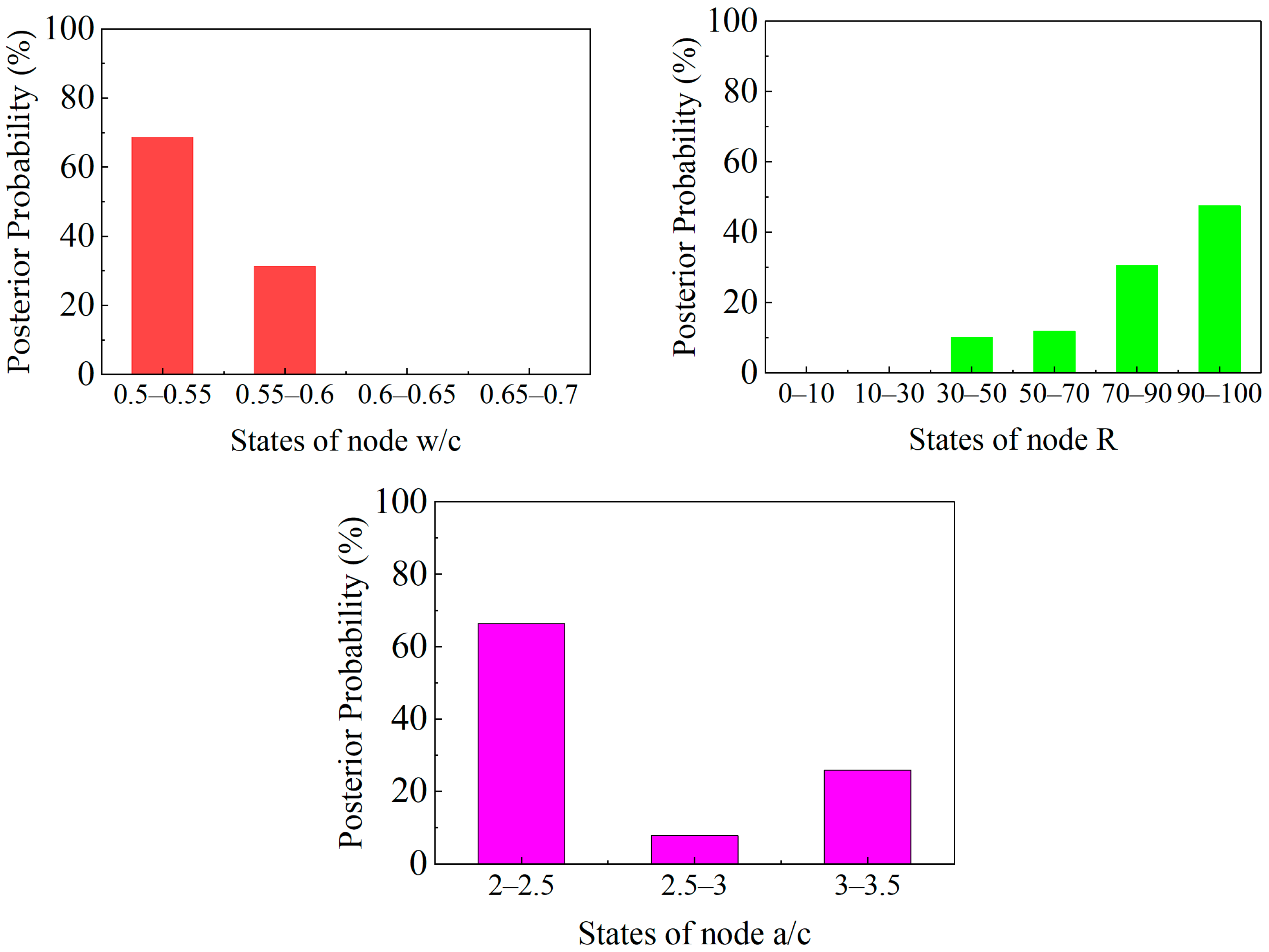
In recent years, the use of recycled aggregate concrete (RAC) has become a major concern when promoting sustainable development in construction. However, the design of concrete mixes and the prediction of their compressive strength becomes difficult due to the heterogeneity of recycled aggregates (RA). Artificial-intelligence (AI) approaches for the prediction of RAC compressive strength (fc) need a sizable database to have the ability to generalize models. Additionally, not all AI methods may update input values in the model to improve the performance of the algorithms or to identify some model parameters. To overcome these challenges, this study proposes a new method based on Bayesian Networks (BNs) to predict the fc of RAC, as well as to identify some parameters of the RAC formulation to achieve a given fc target. The BN approach utilizes the available data from three input variables: water-to-cement ratio, aggregate-to-cement ratio, and RA replacement ratio to calculate the prior and posterior probability of fc. The outcomes demonstrate how BNs may be used to forecast both forward and backward, related to the fc of RAC, and the parameters of the concrete formulation.
Keywords: Bayesian networks; compressive strength; formulation; recycled aggregate concrete; prediction Bayesian networks; compressive strength; formulation; recycled aggregate concrete; prediction