1. Introduction
Fiber-reinforced polymer composites have emerged as a practical process to reduce mass while sustaining structural demands across various industries, including transportation, energy, and consumer products. Designers faced a recurring materials choice: natural fibers offered low density, low abrasiveness, and a pathway to renewable content, whereas synthetic fibers delivered high specific stiffness and strength together with moisture-resistant surfaces. Industrial adoption benefited when these two groups were blended in a single laminate, because hybridization allowed stiffness-critical, moisture-sensitive, or cost-sensitive layers to be placed only where they were most needed. Yet the success of any hybrid depended on a small set of variables that were easy to state but difficult to hold constant at scale: the identity and form of each reinforcement, the matrix chemistry, the fiber volume fraction, the compaction history during cure, and the surface condition that governed fiber–matrix adhesion. This study is conducted to measure, under tightly controlled conditions, how natural/synthetic pairings responded mechanically and environmentally when exposed to water and heat, while also quantifying how sustainability considerations could be weighed without compromising performance [
1].
Background studies have shown that when natural fibers were substituted for synthetics in a one-to-one ratio, the immediate gains in mass reduction and renewable content were often offset by increased moisture uptake, a wider scatter in coupon properties, and lower long-term thermal stability. These observations suggested that a more informative experiment involved controlled hybrids rather than outright substitutions. It was therefore essential to develop a plan that examined a set of hybrid laminates composed of widely available constituents, utilizing a single, repeatable manufacturing process. In this study, flax, jute, hemp, and kenaf were chosen to represent plant fibers commonly used in semi-structural parts, while glass, carbon, and basalt were selected as synthetic comparators, spanning a spectrum from cost-efficient to high-modulus behavior. Epoxy, a bio-based epoxy, and polyester complete the set of matrix chemistries that reflect the resin classes encountered in commodity, performance, and bio-oriented applications [
2]. The measured properties were then summarized on a common normalized scale to permit direct comparison among tensile strength, flexural strength, impact energy, lightness, water resistance, and a sustainability indicator [
3].
A persistent practical limitation in earlier experimental campaigns was the difficulty of separating intrinsic material effects from processing artifacts. Small variations in fiber volume fraction were known to mask differences among candidate fibers, and uncontrolled compaction histories introduced porosity that depressed strength and muddied conclusions about which architecture truly performed better [
4]. The present work addressed this source of uncertainty by first optimizing and then holding constant the fiber volume fraction through short press-compaction trials and gravimetric control of the resin charge. The resulting laminates were produced in a fixed cavity under a defined pressure–temperature–dwell schedule, and the achieved volume fractions were verified both gravimetrically and by image-based area fraction. This approach reduced panel-to-panel scatter and ensured that comparisons among the hybrid stacks were driven primarily by constituent choice rather than by hidden variability. The same was applied to the environmental measurements: water absorption was recorded on replicate coupons over one week under identical conditioning, and residual mass during heating was tracked by thermogravimetric analysis on matched specimens to the same terminal temperature.
The recent literature converges on multi-constituent hybrid composites—pairing natural fibers with synthetic fibers and ceramic fillers—to achieve simultaneous improvements in strength, toughness, fatigue resistance, and thermal endurance while adding functional benefits (
Table 1). Effective strategies include alkali treatment to activate fiber surfaces, nano-filler dispersion to bridge micro-voids and stiffen the matrix, and pressure-assisted molding to minimize porosity. Where moisture sensitivity remains, hybrids that incorporate mineral/woody fibers or surface treatments show measurable decreases in swelling and absorption, which is pertinent to durability-critical designs. These patterns directly inform the present study’s material selection (hybrid stacks), processing (controlled hot-press cycles), and evaluation plan (mechanical–thermal–durability balance).
The motivation for pairing mechanical metrics with environmental durability followed directly from the most common service conditions for these materials. Natural-fiber layers contained lumens and hemicellulose, which encouraged water ingress and plasticization of the matrix near the interface. Synthetic layers were provided with barriers that slowed diffusion but did not, by themselves, correct moisture-induced softening in adjacent plies [
7]. The way these effects combined in a laminate depended strongly on the architecture. The water uptake curves measured in this study were therefore essential for understanding which hybrid sequences experienced rapid early mass gain and which approached a lower pseudo-equilibrium. Thermal exposure posed a second, distinct challenge. Plant-based constituents tended to devolatilize earlier than mineral or carbon fibers, and resins exhibited different crosslink densities and char yields. Residual-mass curves provided a compact description of how quickly each system lost volatile content and how much char remained to bear load after heating. Reporting both time-dependent absorption and temperature-dependent mass loss on the same laminate set allowed the comparison of moisture sensitivity and thermal tolerance without changing any other variable.
The study also analyzed a methodological gap. Many composite investigations were reported with means without associated uncertainty, which made it difficult for readers to assess reproducibility or to discriminate between small and meaningful differences. Here, error bars were included for each criterion measured from repeated tests, and confidence information was added to regression plots that related measured values to model predictions. The statistical analysis was chosen to be transparent and to support design decisions. Where indices such as lightness and sustainability were compiled from measurements or established calculations, their construction was documented, and their directionality was aligned to a common higher-is-better scale to avoid misinterpretation. Raw data did not replace this normalization; it was used to furnish an integrated view for rapid screening before deeper analysis [
8].
Despite the practical significance of natural/synthetic hybrids, two key questions remained unresolved for decision-makers. First, designers lacked a side-by-side comparison of hybrid laminates built under a uniform process that spanned stiffness-led, impact-leaning, and environmentally sensitive use cases. Second, the researchers lacked a straightforward way to connect measured properties with quick predictive estimates in a manner that acknowledged, rather than ignored, the bias introduced by the model. The present work addressed both points. Five representative laminates were manufactured: flax/epoxy, jute/glass/epoxy, hemp/carbon/epoxy, flax/glass/bio-epoxy, and kenaf/basalt/polyester. The set was designed to sample distinct regions of the design space: a low-density, all-natural reference; a mineral-fiber safety net for enhanced moisture resistance; a high-stiffness, carbon-containing option; a bio-resin process to reduce embodied impact; and a basalt-containing configuration to increase impact energy and high-temperature behavior. A regression analysis was performed between measured and predicted tensile strength to test whether a compact descriptor set captured the dominant contributors to load-bearing. The mapping showed high explanatory power, and its slope and intercept were analyzed to understand bias at the low- and high-strength ends of the spectrum. That insight was used to propose a sequencing approach for fatigue, notch sensitivity, and buckling experiments for each laminate type, thereby avoiding overestimation or underestimation of performance [
9].
The research gap addressed by this study was therefore twofold. First, reliable cross-comparisons of hybrid laminates that combined plant-based and mineral or carbon fibers under identical processing and controlled fiber volume fraction were scarce. Without this control, it was difficult to say whether observed differences originated from the constituents or from variable compaction and void content. Second, systematic coupling of mechanical testing with water-absorption kinetics, thermogravimetric mass retention, and a quantified sustainability indicator within the same specimen set has not been common. As a result, material choices were often made with incomplete knowledge of durability and environmental attributes relative to strength-driven metrics. The present work filled this gap by delivering matched datasets for mechanical, moisture, and thermal performance, while recording uncertainty, and then presenting the outcomes on a consistent scale that allowed for direct visual ranking [
10].
The novelty of the work lay in the way the laminates were selected, manufactured, and compared. The hybrid stacks were assembled from commercial fibers and resins, yet were processed under a single press-cure recipe tuned for volume-fraction control, producing panels whose differences stemmed from composition rather than uncontrolled processing variation. The measurements were organized to yield both raw values and normalized scores that preserved the direction of benefit across criteria; variables such as lightness and water resistance were inverted to maintain a common interpretation. Moisture and heat-exposure responses were captured as full curves with statistical information rather than one-time snapshots, enabling more realistic reasoning about service exposure. Finally, the study introduced a compact predictive relationship for tensile strength that was calibrated using the same specimens used for characterization; this allowed for a quantitative discussion of bias and variance that typically went unreported.
The objectives flowed directly from this framework. The first objective was to fabricate a controlled group of hybrid laminates combining natural fibers (flax, jute, hemp, and kenaf) with synthetic reinforcements (glass, carbon, and basalt) and matrices (epoxy, bio-epoxy, and polyester) using an optimized press-compaction route that fixed layup and fiber volume fraction. The second objective was to quantify tensile strength, flexural strength, and impact energy alongside lightness, water resistance, and a sustainability indicator, and to present those measurements on a unified scale augmented with statistical information. The third objective was to measure water absorption as a function of time and residual mass as a function of temperature on matched coupons, thereby revealing how each laminate resisted environmental exposure. The fourth objective was to develop and assess a simple predictive model between measured and estimated tensile performance, to identify any systematic bias, and to demonstrate how that information would inform the design of subsequent experiments. Stated succinctly, the purpose of the study was to establish, under controlled conditions, how representative natural/synthetic hybrid laminates differed in mechanical response, moisture uptake, heat tolerance, and sustainability, and to provide a reproducible basis for selecting the most suitable architecture for the next phase of work.
2. Materials and Methods
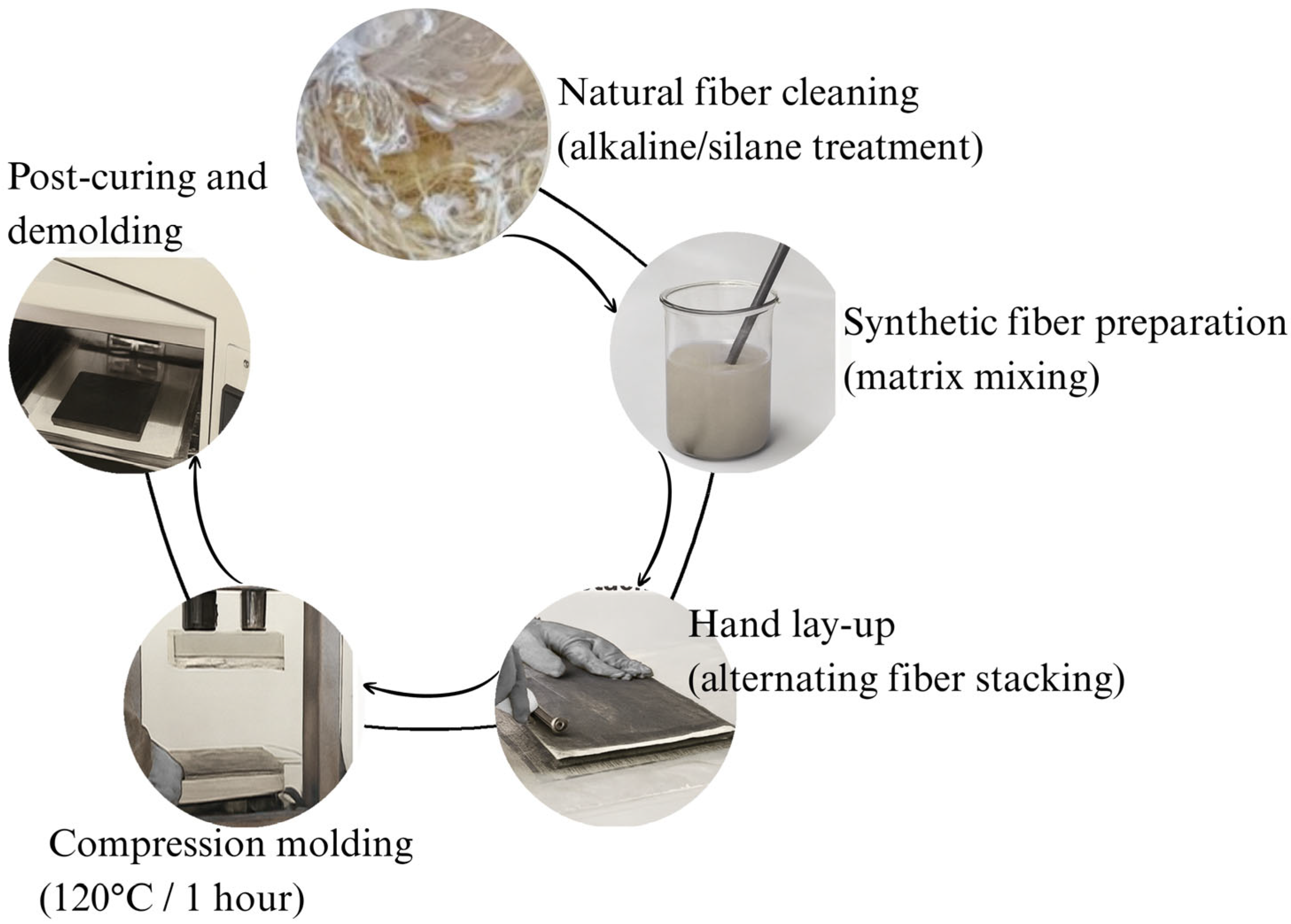
Hybrid fiber-reinforced polymer composites were fabricated and characterized using a combination of natural and synthetic fibers embedded in various matrix systems. Five distinct composite configurations were prepared, varying in fiber composition and resin type. The overall experimental workflow is outlined schematically to ensure reproducibility and procedural clarity (
Figure 1).
Natural fibers—including flax, jute, hemp, and kenaf—were sourced in chopped form from certified agricultural suppliers. The reinforcing phases consisted of bidirectional woven fabrics made from flax, jute, hemp, and kenaf for the bio-based constituents, along with synthetic reinforcements in the form of carbon and E-glass fabrics. All reinforcements were received as dry fabrics with epoxy-compatible sizings (silane-based for E-glass and a proprietary PAN-derived sizing for carbon) to promote interfacial adhesion. Natural fiber fabrics were supplied in plain-weave architectures with nominal areal weights selected within a narrow band to enable comparable ply compaction across systems. The synthetic fabrics were chosen to match the fabric styles, minimizing differences in crimp and nesting. Prior to layup, all fabrics were conditioned at
and
relative humidity for 48 h to equilibrate moisture, and the natural fibers were alkali-scoured, followed by silane functionalization as described in
Section 2 to reduce surface impurities and improve wettability. Bulk densities used for subsequent volume-fraction calculations were taken from supplier certificates (natural fibers: 1.40–1.55 g cm
−3; E-glass:
2.55 g cm
−3; carbon:
1.78 g cm
−3). Filament diameter distributions and fabric areal weights were verified on receipt by scanning electron microscopy (SEM) and gravimetric measurements, respectively, and were found to fall within the manufacturer-specified ranges. This material specification ensured that differences observed in composite performance could be attributed primarily to fiber type rather than uncontrolled variability in fabric architecture or conditioning.
Synthetic reinforcements included E-glass, carbon, and basalt fibers procured from commercial industrial vendors. Three matrix systems were employed: diglycidyl ether of bisphenol-A (DGEBA) epoxy, polyester resin, and a proprietary cashew-nut shell liquid-based bio-resin. To remove ambiguity regarding the reinforcement forms and enable reproducible comparisons, synthetic reinforcements (E-glass, carbon, and basalt) were used as bidirectional plain-weave fabrics and oriented in a [0/90] cross-ply configuration within the laminate. The natural reinforcements (flax, jute, hemp, and kenaf), supplied as chopped staple fibers, were air-laid and lightly needle-punched into nonwoven mats to produce quasi-random in-plane orientations; each mat constituted one ply in the alternating natural/synthetic stacking sequence. All fabrics and mats were conditioned prior to layup, and their as-received areal weights and thicknesses were verified gravimetrically and by micrometry, respectively. A summary table (
Table 2) shows the principal physical, chemical, and mechanical descriptors of each reinforcement: physical—true density, areal weight (or basis weight for mats), nominal filament/staple diameter or length distribution, and moisture regain; chemical—cellulose/hemicellulose/lignin ranges for the plant fibers and sizing chemistry for the synthetics; mechanical—single-fiber (or supplier-reported) tensile strength and modulus, as well as fabric crimp level where applicable.
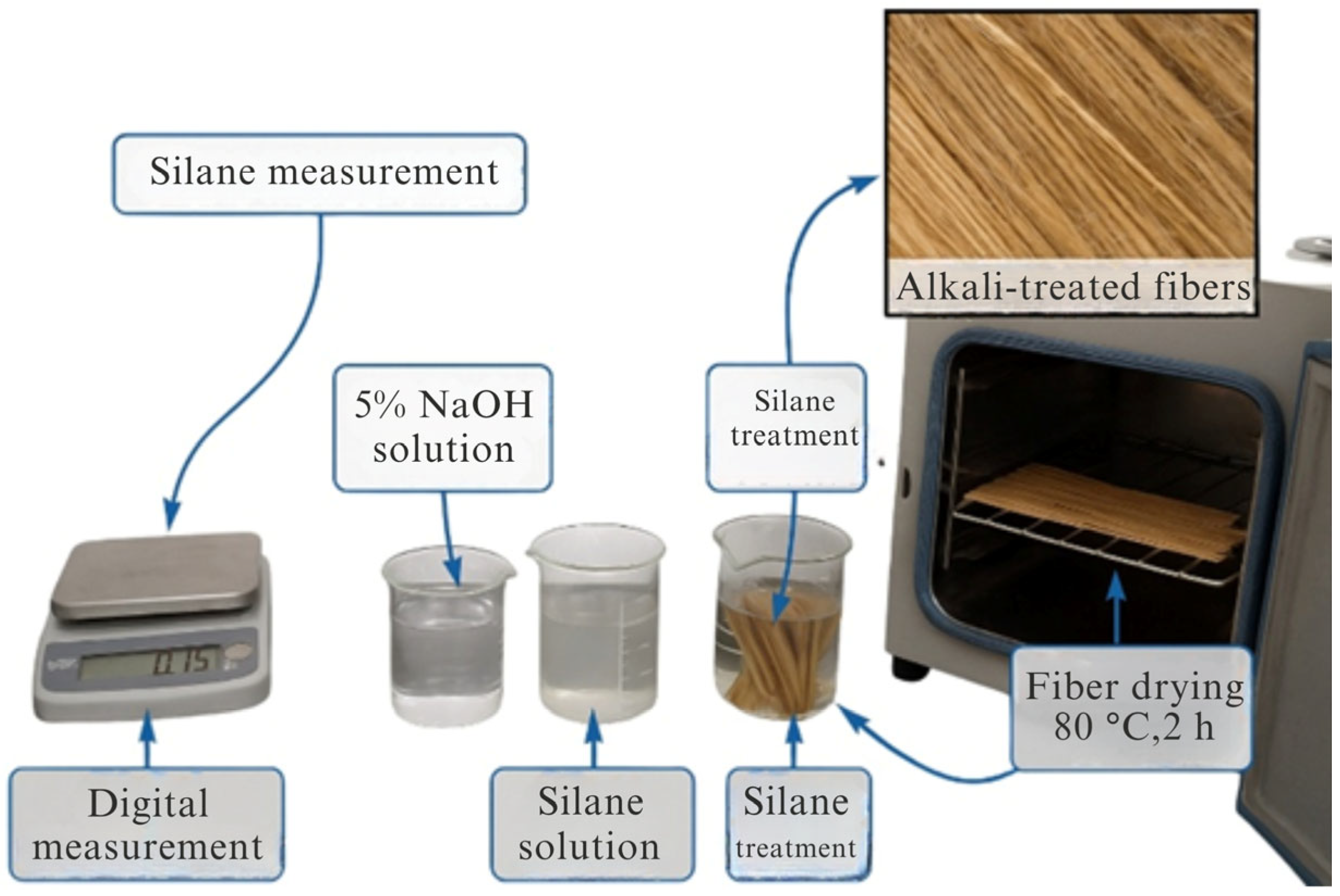
Prior to composite fabrication, natural fibers underwent surface modification to enhance the adhesion of the matrix. A two-step chemical treatment protocol was followed. Initially, fibers were immersed in a 5 wt% sodium hydroxide (NaOH) solution for 2 h at room temperature to remove surface impurities and promote fiber fibrillation. Following rinsing and drying, silane coupling agent (3-aminopropyltriethoxysilane) was applied at a concentration of 2 vol% in a 95:5 ethanol–water mixture. The treated fibers were then dried in a convection oven at 80 °C for 24 h. A laboratory-scale fiber treatment station, including drying racks, glassware, and digital mass measurement instrumentation, is illustrated in
Figure 2.
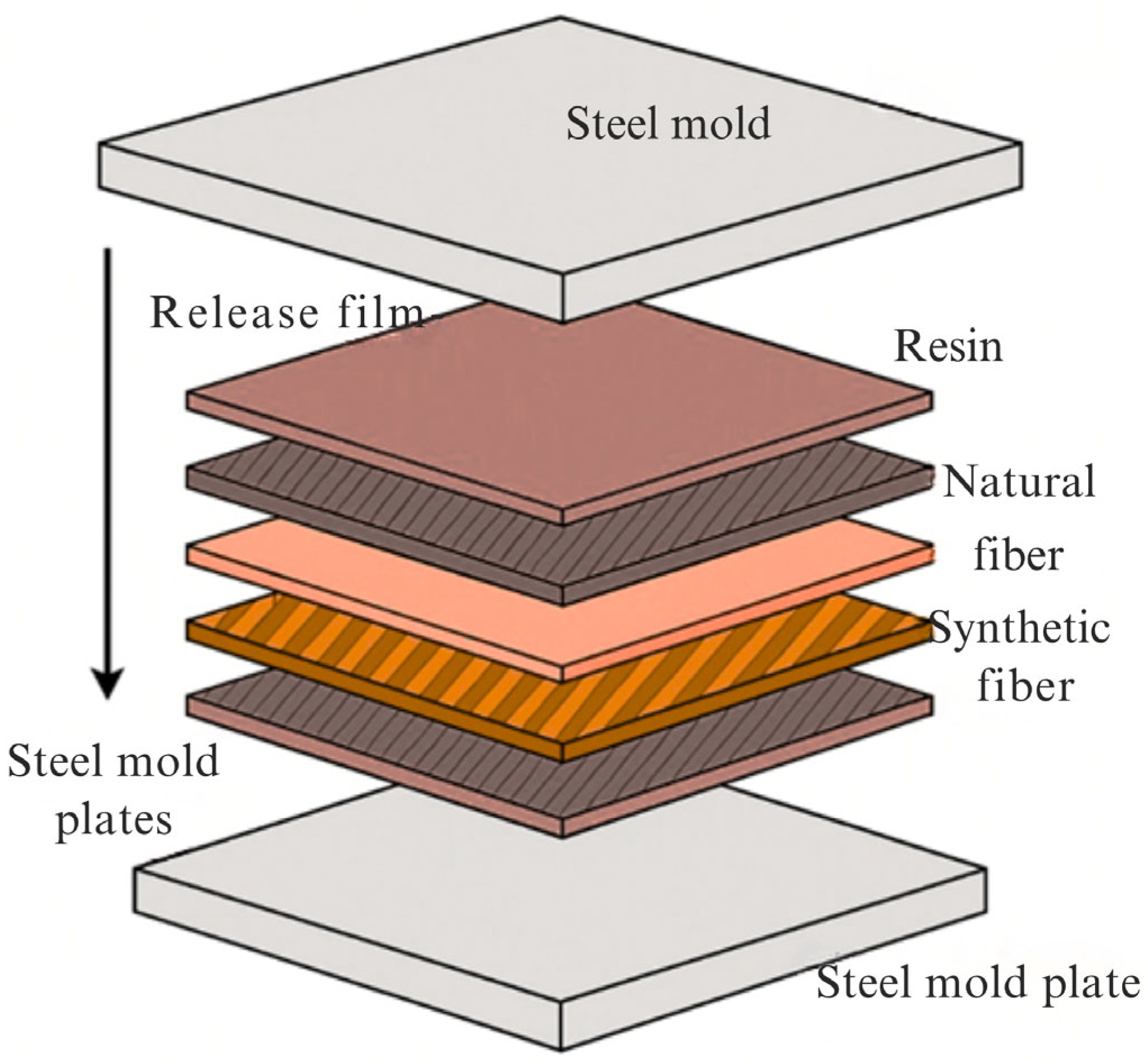
Composites were fabricated using the hand layup method followed by compression molding. The reinforcement architecture consisted of alternating layers of natural and synthetic fibers in a [0/90] bidirectional configuration. Each composite laminate contained a total of five fiber plies interleaved with matrix layers, forming a symmetrical structure. The layup sequence was performed on a flat steel mold plate lined with a polytetrafluoroethylene (PTFE) release film to prevent adhesion. An exploded diagram of the layer stacking strategy is shown in
Figure 3, highlighting fiber orientation, layer interfaces, and mold boundaries [
11].
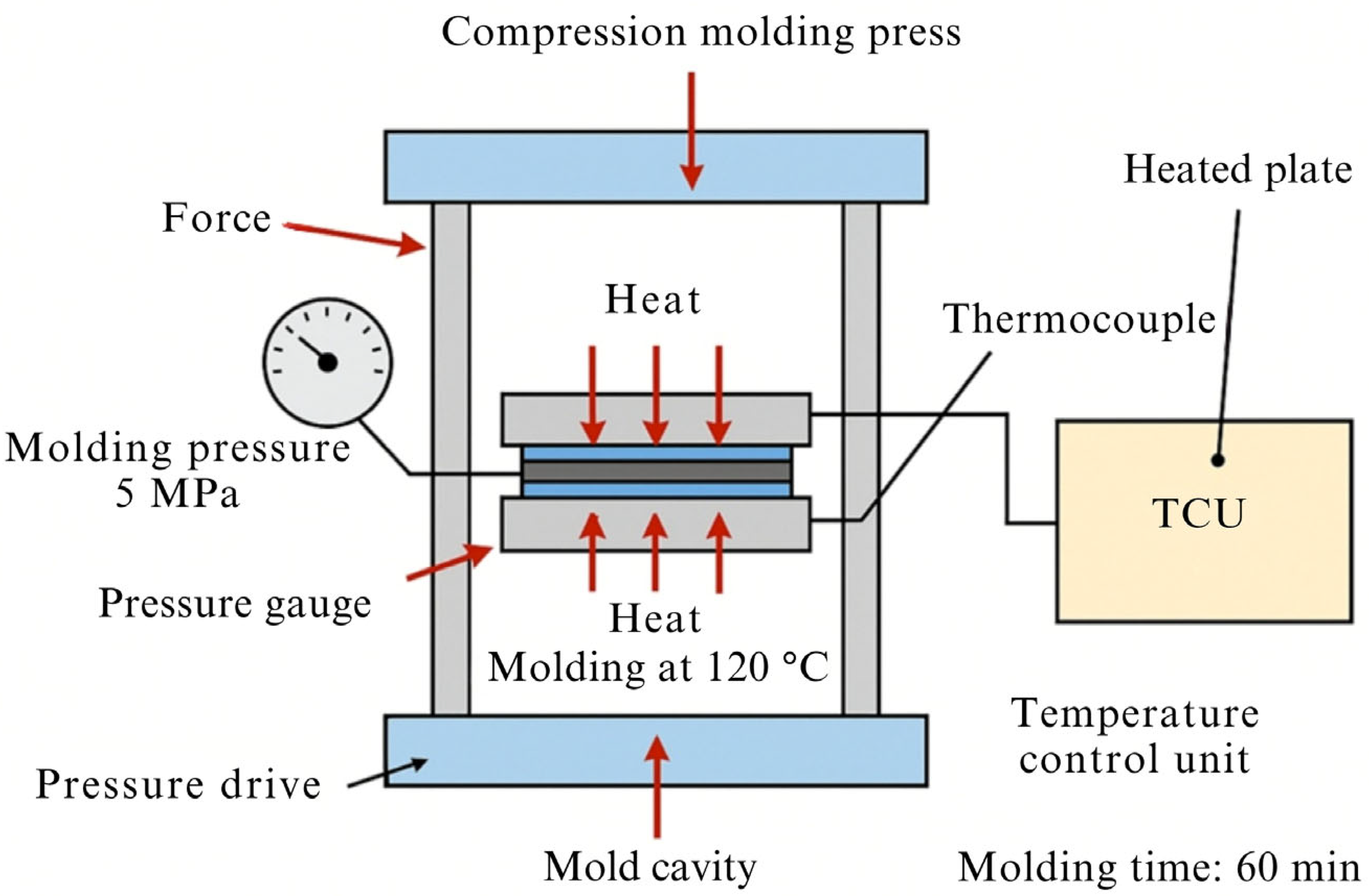
Matrix components were degassed prior to use to remove entrapped air. For epoxy and bio-resin systems, a resin-to-hardener ratio of 10:1 by weight was maintained. Polyester resin was catalyzed using methyl ethyl ketone peroxide (MEKP) at 2 wt%. After manual layup, the laminate stack was transferred to a hot platen compression press. Molding was conducted using a hydraulic press with digital control over temperature and applied pressure. The molds were preheated to 120 °C, and a molding pressure of 5 MPa was applied uniformly for 60 min. After curing, the laminates were allowed to cool under pressure to minimize warping. The final laminate thickness was maintained at 3.0 ± 0.1 mm, as verified using a precision digital micrometer. The fiber volume fraction (
) was optimized through preliminary press-compaction trials, in which the metered resin mass and platen pressure–time profile were systematically varied while holding the ply count and layup architecture fixed [
12]. For each condition, void content was quantified by density comparison and by microscopy of polished cross-sections, and tensile screening identified the window that maximized stiffness without signs of resin starvation or fiber print-through. During panel fabrication,
was controlled gravimetrically: all cut plies were pre-weighed from their areal weights to obtain the total fiber mass
, and the resin charge was metered to satisfy the geometric constraint of the fixed mold cavity. The target charge was computed from
, where
is matrix density,
the mold area, and
the cavity thickness. After the cure, we achieved
for each laminate, and the value was calculated from
, where
is the mass-fraction-weighted fiber density for the hybrid stack, and
is the measured laminate thickness. Three coupons per panel were additionally evaluated by image-based area fraction; these values agreed with the gravimetric estimate within ±2 percentage points, and panel-to-panel scatter remained below ±0.02 in
. Fabric pre-conditioning to constant mass and maintenance of a fixed pressure–temperature–dwell schedule further minimized variability in
across the study. A schematic representation of the molding system—including heated platens, mold cavity, and pressure control system—is given in
Figure 4.
Mechanical characterization was conducted to evaluate tensile, flexural, and impact behavior according to ASTM standards. All specimens were machined using a diamond saw to minimize edge defects. The dimensions and specimen geometries were selected in accordance with the respective standards. Tensile testing was performed using a universal testing machine (Instron 5967, Instron India Pvt. Ltd., Mumbai, India) equipped with a 30 kN load cell. Dog-bone specimens with a gauge length of 50 mm and a width of 13 mm were tested at a constant crosshead speed of 2 mm/min, following ASTM D638. Flexural tests were conducted using a three-point bending fixture with a span-to-depth ratio of 16:1, as prescribed by ASTM D790. Rectangular specimens (127 mm × 12.7 mm × 3 mm) were loaded at a rate of 1.5 mm/min. Impact testing was performed using a pendulum-type Charpy impact tester in accordance with ASTM D6110. Notched specimens of dimensions 80 mm × 10 mm × 3 mm were prepared, and impact energy was recorded directly by the integrated software interface.
To assess the moisture uptake behavior, specimens were immersed in distilled water at room temperature for 7 days. The initial dry mass was recorded using a digital balance with a precision of 0.001 g. Samples were submerged in sealed glass containers, and at fixed time intervals (24, 48, 72, 120, and 168 h), they were removed, blotted dry with lint-free cloths, and weighed. The percentage of water absorbed was calculated using Equation (1):
where
Wt is the weight at time
t, and
W0 is the initial dry weight. A procedural illustration of the water immersion method, with time-sequence visuals and key variables. Thermal stability was assessed using thermogravimetric analysis (TGA). Measurements were conducted in a nitrogen environment using a TA Instruments Q500 analyzer (TA Instruments, Waters India Pvt. Ltd., Bengaluru, Karnataka, India). Approximately 10 mg of composite powder (obtained via cryogenic milling) was loaded into platinum pans. Samples were heated from 25 °C to 600 °C at a rate of 10 °C/min. The residual weight percentage as a function of temperature was recorded to evaluate the degradation stages.
Differential scanning calorimetry (DSC) was performed to determine glass transition temperatures (Tg). A heating–cooling–reheating cycle was used, with the second heating curve employed for Tg extraction. Fracture surfaces of tensile-tested specimens were analyzed using scanning electron microscopy (SEM) to investigate failure mechanisms and fiber–matrix interfacial behavior. Samples were sputter-coated with gold to ensure surface conductivity. SEM imaging was performed at an accelerating voltage of 15 kV using a ZEISS EVO 18 instrument (Carl Zeiss India Pvt. Ltd., Bengaluru, Karnataka, India). Imaging magnifications ranged from 250× to 2000×, depending on the target feature [
13].
To model and predict tensile strength based on constituent properties, a machine learning workflow was implemented using Python (scikit-learn library) (version 3.11). Input features included fiber volume fraction, matrix type (one-hot encoded), and density of each component. A random forest regression model with 100 estimators was trained on experimental data collected from 15 hybrid formulations. The data were split into a 70:30 ratio for training and validation. Model performance was assessed using the coefficient of determination (R2) and root mean square error (RMSE).
Tensile, flexural, and compression tests were conducted using standard procedures to evaluate the mechanical performance of the fabricated hybrid composites. All mechanical testing was performed under ambient laboratory conditions using calibrated equipment compliant with ASTM standards. Tensile testing was carried out according to ASTM D638. Rectangular dog-bone specimens were cut from composite laminates using a diamond-tipped saw to ensure dimensional precision and avoid edge defects. The tests were conducted using a vertical universal testing machine equipped with a 30 kN load cell and screw-driven actuator. Specimens were mounted between serrated grips, and the crosshead speed was maintained at 2 mm/min. A digital extensometer was interfaced with the machine to measure strain during
Loading. Flexural testing was performed in accordance with ASTM D790 using a three-point bending configuration. The same universal testing machine was employed with a support span of 64 mm, adjusted to maintain a span-to-depth ratio of 16:1. Loading was applied at the midpoint of the specimen using a rounded indenter, and the crosshead speed was set to 1.5 mm/min. Compression tests were conducted using a dedicated digital compression testing machine with a maximum capacity of 2000 kN. Flat, square samples were aligned vertically in the load frame, and a compressive force was applied through steel platens under displacement control mode. Load–displacement data were acquired in real time using a digital controller connected to the machine interface. The recorded values were used to calculate compressive strength and modulus.
3. Results and Discussion
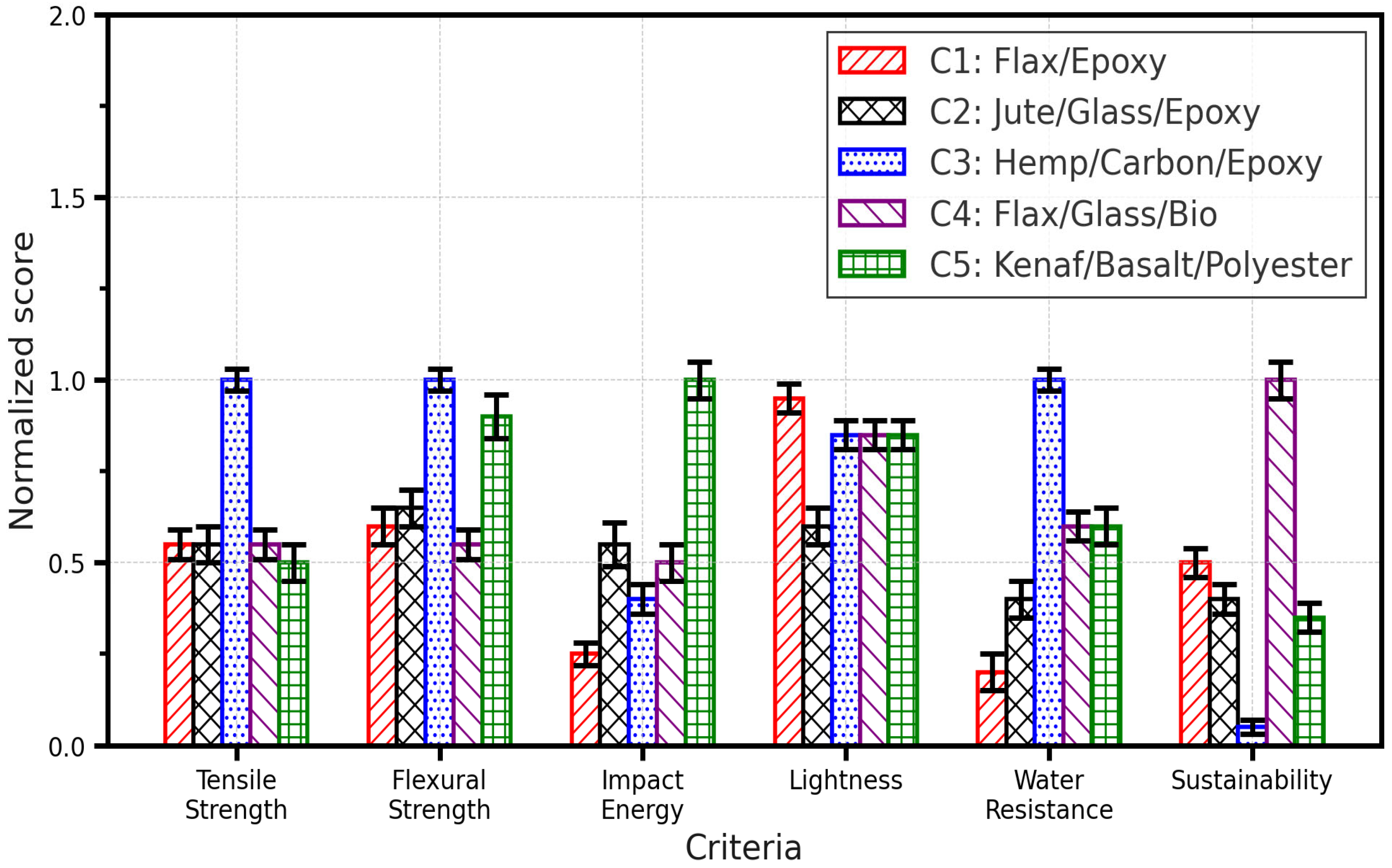
Figure 5 shows the relative strengths and weaknesses of the five composites on a common 0–1 scale. C3 (hemp/carbon/epoxy) achieved the highest tensile and flexural strengths, with a tensile strength of 1.00 versus 0.55 for C1 and 0.50 for C5, representing gains of approximately 82% and 100%, respectively. Flexural strength for C3 (1.00) exceeded C1 (0.60) by ~67% and topped C5 (0.90) by ~11%, reflecting the high modulus of carbon fibers and good load transfer in the epoxy network. C5 (kenaf/basalt/polyester) dominated impact energy at 1.00; this was ~300% higher than C1 (0.25), ~150% higher than C3 (0.40), and ~82% higher than C2 (0.55). The combination of tough polyester and crack-deflecting basalt filaments likely promoted wider damage zones and higher energy dissipation. C1 (flax/epoxy) exhibited a lightness of ~0.95, approximately 12% higher than the 0.85 level of C3/C4/C5 and ~58% above C2 (0.60), consistent with the low density of flax. Water resistance favored C3 at 1.00; this was ~400% above C1 (0.20), ~150% above C2 (0.40), and ~67% above C4/C5 (0.60), in line with the hydrophobic surface of carbon and a tighter epoxy network that limited capillary pathways. Sustainability peaked for C4 (flax/glass/bio-epoxy) at 1.00; C1 (0.50) and C2 (0.40) trailed by approximately 50% and 60%, respectively, while C3 (~0.05) was approximately 95% lower, reflecting the energy intensity of carbon fiber despite its performance [
14]. These patterns suggested clear experimental follow-ups: fatigue and high-strain-rate testing were best allocated to C5; long-term hygrothermal conditioning and diffusion modeling were most informative for C1 and C2; structural stiffness and elevated-temperature mechanical screening were most meaningful for C3; and biodegradation and bio-resin post-cure stability warranted emphasis on C4 [
15].
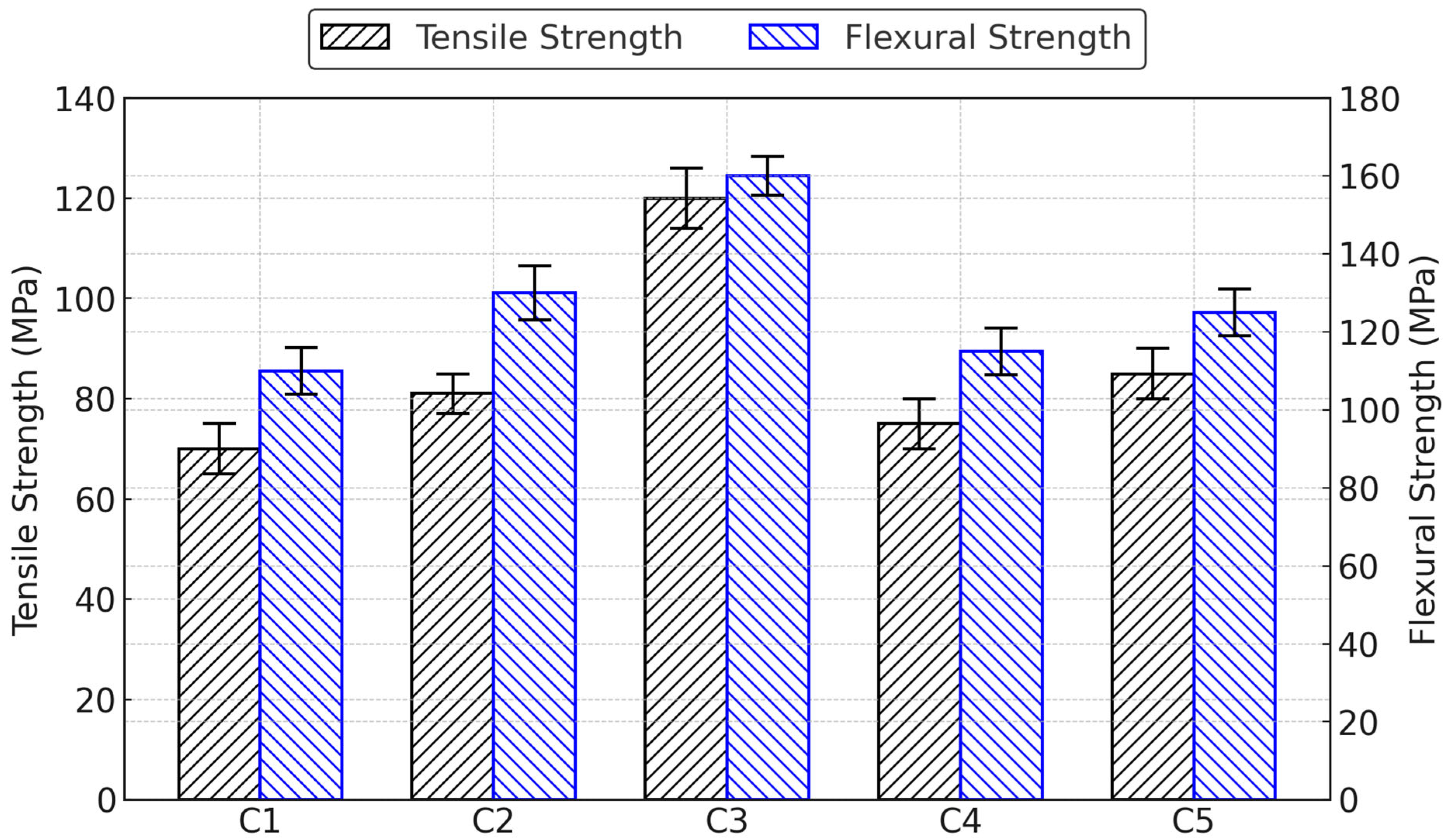
Figure 6 shows the strength hierarchy produced by the five laminates. The carbon-containing system C3 dominated, reaching ~120 MPa in tension and ~126 MPa in flexure. Relative to the flax/epoxy reference C1 (~70 MPa tension, ~86 MPa flexure), C3 marked gains of ~71% in tensile strength and ~47% in flexural strength. C2 (jute/glass/epoxy) sat mid-pack at ~82 MPa tension and ~102 MPa flexure, giving increases of ~17% and ~19% over C1; C5 (kenaf/basalt/polyester) posted ~85 MPa tension and ~118 MPa flexure, which were ~21% and ~37% higher than C1 and ~16% higher in flexure than C2. C4 (flax/glass/bio-epoxy) reached ~75 MPa tension and ~90 MPa flexure—modest rises of ~7% and ~5% above C1. The small error bars indicated that these gaps reflected material effects rather than test scatter [
16]. The superiority of C3 stemmed from the high axial stiffness and low defect sensitivity of carbon fibers, combined with good fiber–matrix adhesion in epoxy. The larger increase in tension compared to flexure suggested a fiber-dominated failure with limited compression instability. The strong flexural showing of C5 pointed to basalt’s higher compressive microbuckling resistance and the ability of polyester to distribute microcracks, which raised bending strength by ~23% versus C2 (118 vs. 102 MPa). The comparatively lower values for C4 were consistent with the reduced crosslink density and interfacial strength of the bio-epoxy, which limited stress transfer despite the presence of glass. These findings were particularly relevant for downstream testing: stiffness-critical or buckling-sensitive panels should have favored C3; bending-fatigue and impact screening would have been most informative for C5; and moisture-conditioning studies should have prioritized C1 and C4, where tensile gains were smallest and matrix-dominated failure was more likely [
17].
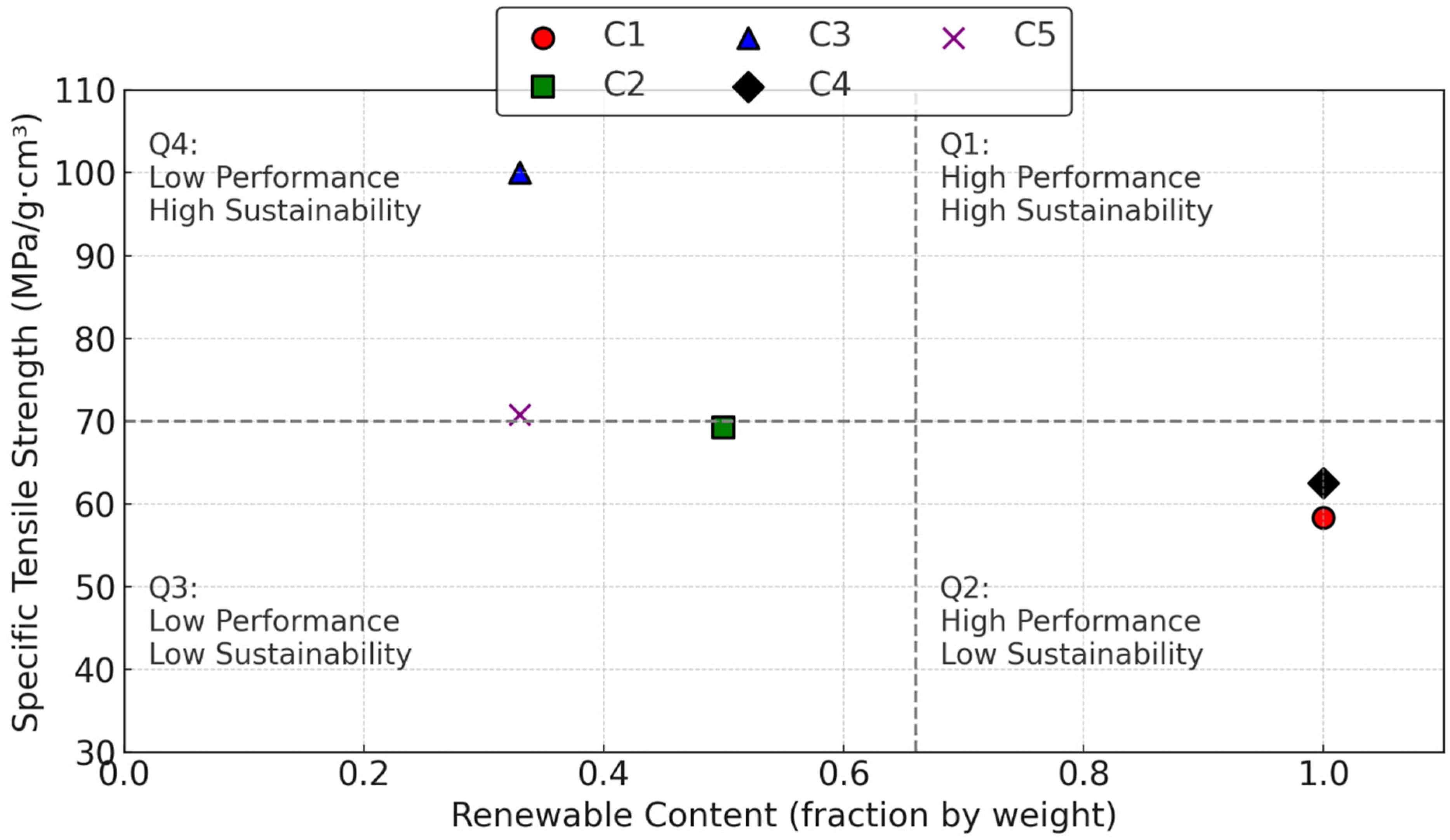
Figure 7 shows the coupling between renewable content and mass-efficient tensile performance. C3 (hemp/carbon/epoxy) sat at ~0.33 renewable content with a specific tensile strength near 100 MPa·g
−1·cm
3, which was higher than C1 (flax/epoxy, 58) by about 72%, higher than C4 (flax/glass/bio-epoxy, 62) by 61%, higher than C2 (jute/glass/epoxy, 69) by 45%, and higher than C5 (kenaf/basalt/polyester, 71) by 41%. C5 reached the high-performance band just above the 70 line at ~0.33 renewable content. Relative to C2, it delivered a modest increase of ~3% (71 vs. 69), while using a more ductile polyester matrix and crack-bridging basalt, which likely increased fiber pull-out work and preserved tensile capacity after matrix microcracking. C2 fell slightly below the performance threshold at 69, consistent with glass layers providing load sharing yet not matching the axial efficiency of carbon or the strain-tolerant behavior of basalt/polyester. C1 and C4 clustered at 1.0 renewable content with specific strengths of 58 and 62, sitting 17–20% below the 70 threshold [
18]. These lower values were consistent with the intrinsic strength scatter of plant fibers, lumen-driven stress concentrations, and the lower crosslink density or interfacial shear strength of the epoxy/bio-epoxy matrices used. The results show that none of the current systems occupy the “high-performance/high-sustainability” quadrant (x > 0.66, y > 70). To move points toward that region, follow-up experiments should raise natural-fiber efficiency (higher fiber volume fraction with tighter press control), strengthen interfaces (alkali/silane treatment or bio-epoxy toughening), and explore thin barrier plies or carbon veils used sparingly (<10 wt%) to lift specific strength while maintaining a high renewable fraction for sustainability metrics [
19].
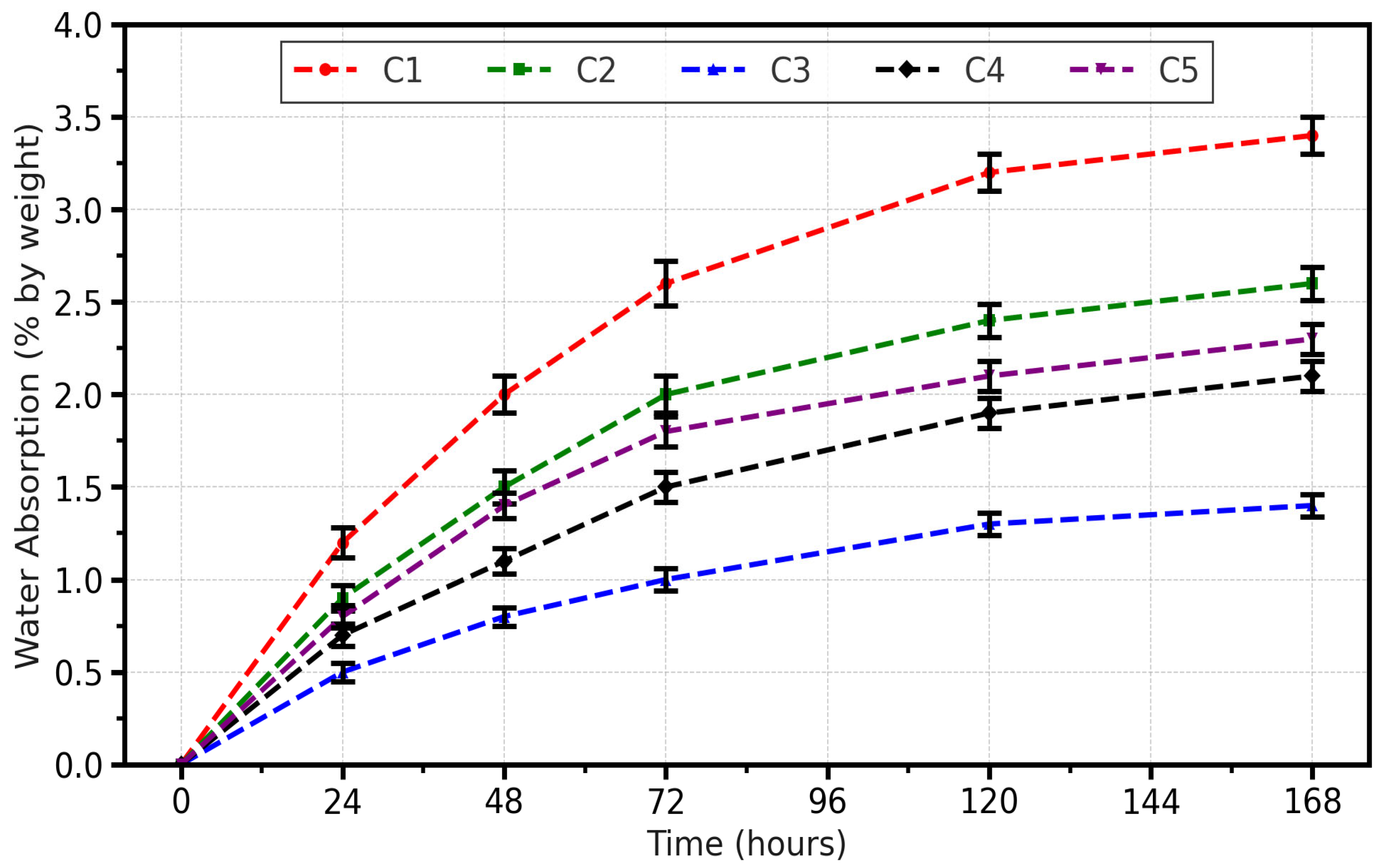
Figure 8 shows the time-dependent water uptake of the five composite systems during 168 h immersion. At 24 h, C1 reaches ~1.2% while C2, C4, and C5 register ~0.9%, ~0.7%, and ~0.8%, which are decreases of ~25%, ~42%, and ~33% relative to C1; C3 is lowest at ~0.5% (≈58% lower than C1). By 72 h, C1 rises to ~2.6%, whereas C2 (~2.0%), C5 (~1.8%), and C4 (~1.5%) remain lower by ~23%, ~31%, and ~42%, and C3 (~1.0%) is ~62% lower. At 168 h the ranking persists: C1 ≈ 3.45%, C2 ≈ 2.60% (−25%), C5 ≈ 2.30% (−33%), C4 ≈ 2.10% (−39%), and C3 ≈ 1.40% (−59%). The attenuation in C3 is attributed to the hydrophobic, non-hygroscopic nature of carbon fibers and the tighter epoxy network, which reduce both molecular diffusion and capillary transport along yarn interstices. The intermediate uptake in C4 and C5 is consistent with barrier effects from glass/basalt filaments and lower lumen content compared to plant fibers, while the modestly higher values in C5 relative to C4 (~10% at 168 h) are consistent with the higher water affinity of polyester compared to bio-epoxy [
20]. The largest gains in C1 between 72 h and 168 h (~31%) indicate continued pore filling driven by flax lumen pathways and hemicellulose-rich cell walls; similar but smaller late-time increases in C2 (~30%) and C5 (~28%) reflect reduced but still active pathways. These differences carry experimental consequences: hygrothermal aging or post-immersion mechanical tests should anticipate larger modulus and strength reductions in C1 and C2 than in C3; diffusion-coefficient fits will yield a ~2–3× lower
for C3, implying shorter conditioning times to reach pseudo-equilibrium; interfacial durability studies should prioritize surface treatments for the natural-fiber systems to suppress lumen-mediated transport [
21].
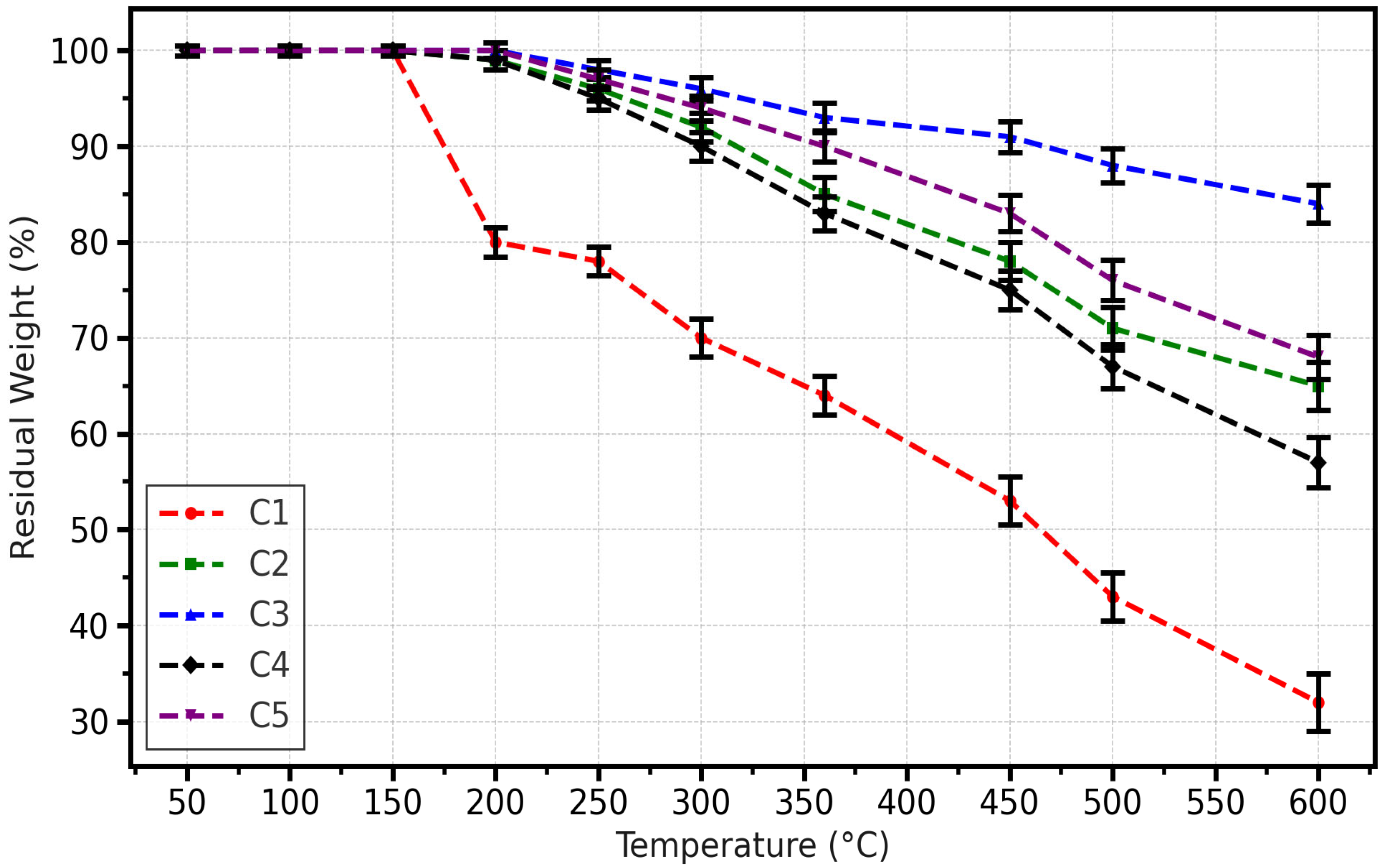
Figure 9 illustrates the thermal mass-retention behavior of the five systems under inert heating conditions. A clear early degradation event is observed for C1, where residual weight falls from ~100% at 150 °C to ~80% at 200 °C and ~70% at 300 °C; the 200–300 °C drop corresponds to a further 12–13% loss, consistent with hemicellulose depolymerization followed by cellulose scission and matrix pyrolysis [
22]. At 300 °C, C3 retains ~96%, which is ~37% higher mass than C1’s 70%; C2 and C5 retain ~92% and ~94%, giving ~31% and ~34% increases relative to C1. The mid-temperature region amplifies these differences: at 450 °C, the retained mass of C3 (~91%) exceeds that of C1 (~53%) by approximately 72%, while C5 (~84%) and C2 (~76%) exceed C1 by approximately 58% and 43%, respectively. End-point char at 600 °C ranks C3 > C5 > C2 > C4 > C1 with approximate values of 84%, 68%, 65%, 57%, and 32%; relative to C1, the gains are ~163% (C3), ~112% (C5), ~103% (C2), and ~78% (C4). The superior stability of C3 is attributed to the high graphitic char yield of carbon fibers and the lower volatile fraction of the carbon/epoxy architecture, whereas the higher residues of C5 and C2 arise from mineral fibers (basalt, glass) that remain as inorganic ash as the polymer phases volatilize [
23]. The earlier mass loss in C4 is consistent with bio-resin scission, as well as the higher oxygen functionality of flax. These differences have practical impact: higher char yield (C3, C5) forecasts improved flame resistance and reduced heat-release in cone calorimetry, allowing higher test set-points in DMA and mechanical screening; lower char (C1) suggests narrower processing windows for thermal post-cures and a higher risk of moisture-induced property loss after thermal excursions [
24].
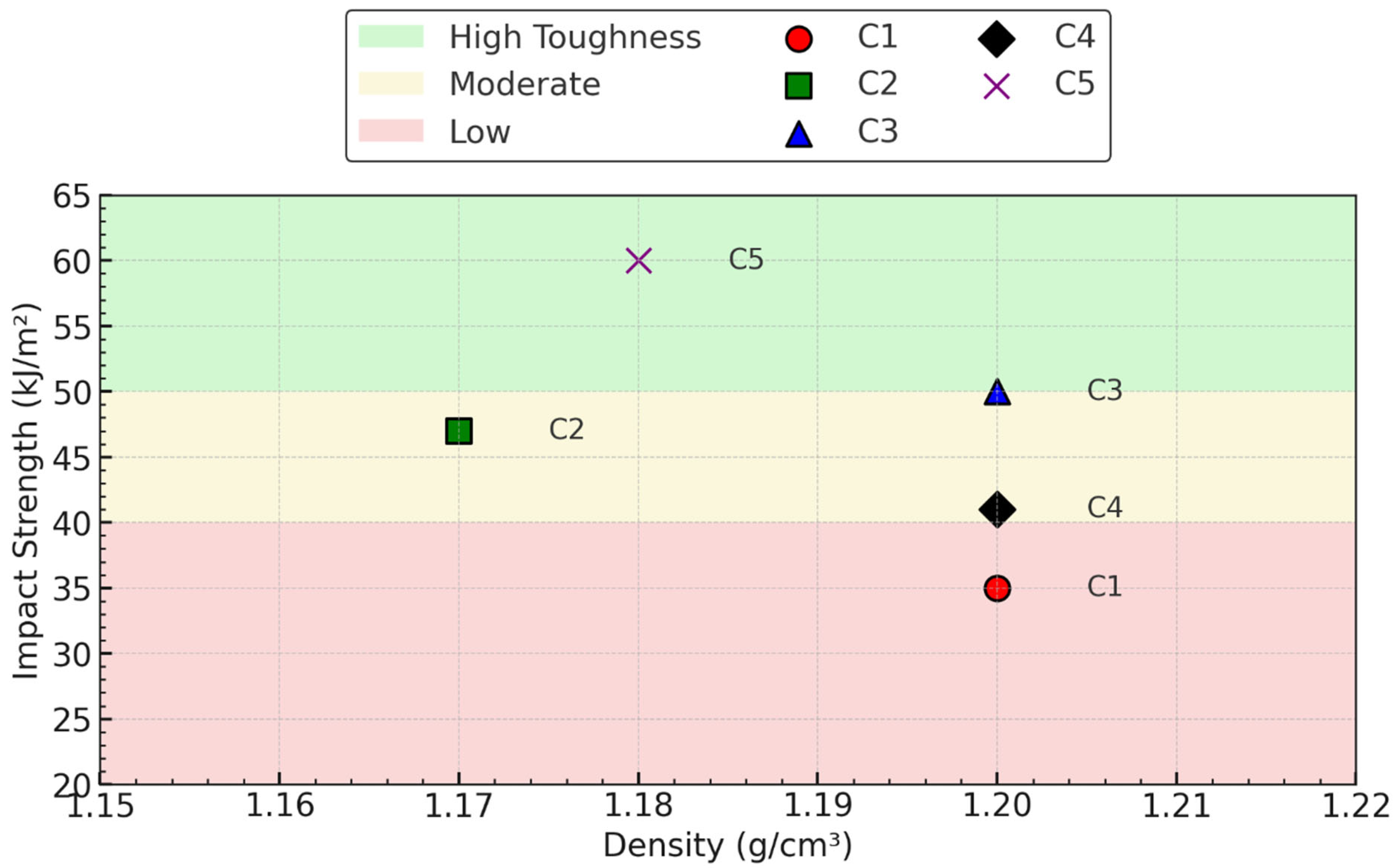
Figure 10 shows the density–toughness landscape for the five laminates. C5 (kenaf/basalt/polyester) sat at the upper left (≈1.18 g/cm
3, ≈60 kJ/m
2) and delivered the largest impact capacity: relative to C1 (flax/epoxy, ≈35 kJ/m
2 at 1.20 g/cm
3) the gain was ~71%; relative to C2 (jute/glass/epoxy, ≈47 kJ/m
2 at 1.17 g/cm
3) and C3 (hemp/carbon/epoxy, ≈50 kJ/m
2 at 1.20 g/cm
3) the increases were ~28% and ~20%, respectively, and ~46% over C4 (flax/glass/bio-epoxy, ≈41 kJ/m
2 at 1.20 g/cm
3). Considering mass efficiency, the “specific impact” (impact/density) for C5 (~50.9 kJ·m
−2 per g·cm
−3) surpassed C1 (~29.2) by ~74%, C2 (~40.2) by ~27%, C3 (~41.7) by ~22%, and C4 (~34.2) by ~49%. These differences were consistent with the fracture physics of each system: basalt’s higher failure strain and multi-axial microcrack deflection, together with polyester’s higher matrix ductility, promoted fiber pull-out and interply frictional work; kenaf’s lumened cell walls further dissipated energy by local crushing. C3 achieved high toughness despite having a similar density to C1, due to carbon’s bridging strength and a stiff epoxy network, which lifted impact by ~43% compared to C1. C2 outperformed C1 by ~34%, likely due to glass filaments that limited crack opening while jute layers blunted delamination fronts; the slightly lower density (−2.5%) contributed to its improved specific metric. C4’s moderate level (≈41 kJ/m
2) suggested that the bio-epoxy’s lower crosslink density and weaker interface limited stress transfer before extensive fiber pull-out occurred. These results guided next steps: C5 should be prioritized for drop-weight and crash padding studies; C3 is a better candidate for stiffness-critical skins where impact tolerance is still required; C1 and C4 merit interface treatments or veil interleaves before advancing to high-rate testing [
25].
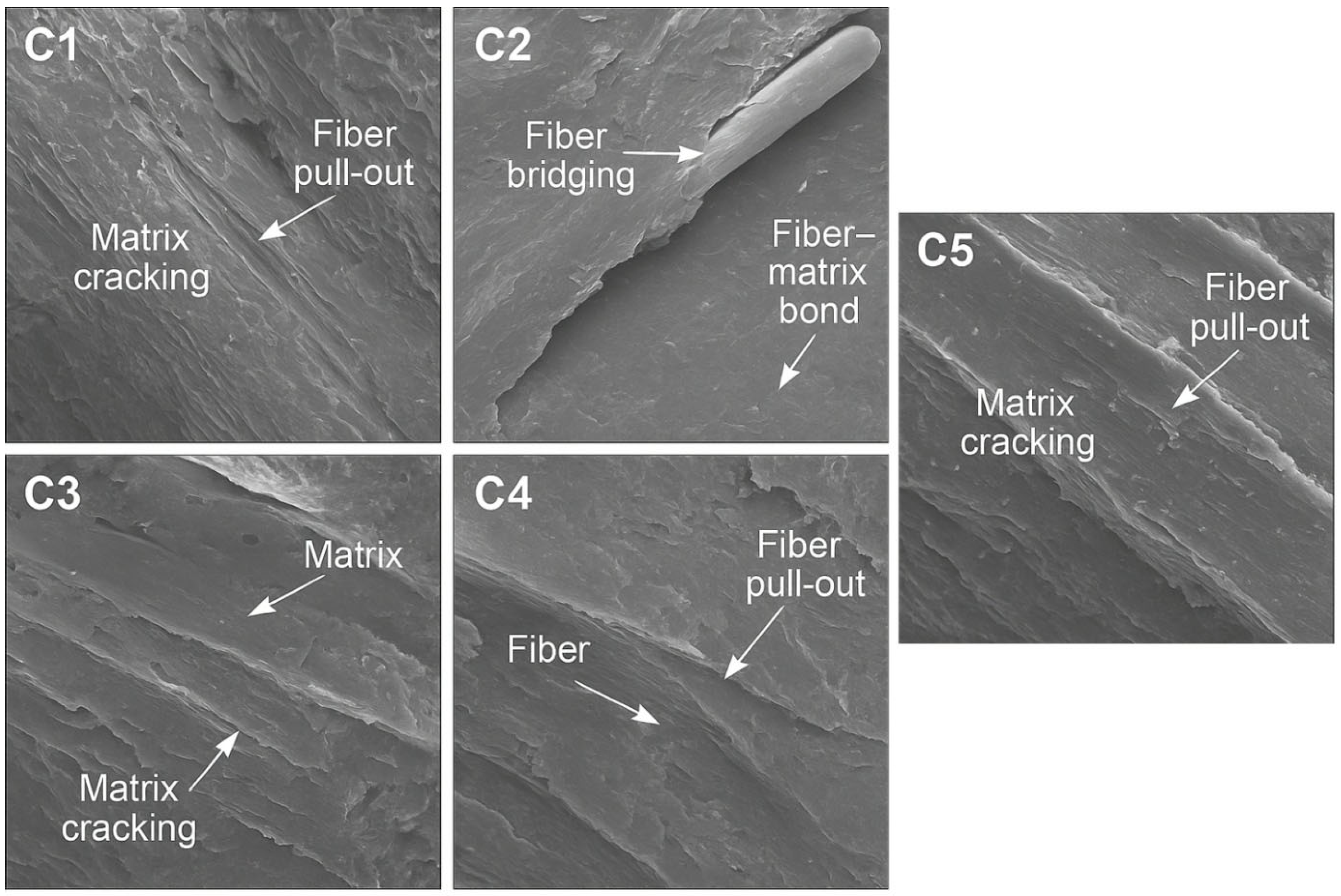
Figure 11 shows the microstructural signatures that explained the measured property hierarchy. C1 displayed extensive matrix cracking with long pull-out trenches, indicating limited interfacial shear and easy debonding. That morphology aligned with its lower strengths (tensile ≈ 70 MPa; flexural ≈ 86 MPa) and higher water uptake; relative to C3, tensile capacity was lower by ~41% and water resistance (normalized) by ~80% (0.20 vs. 1.00; +400% for C3). C2 revealed clear fiber bridging and a cleaner fiber–matrix contact than C1, consistent with the ~17% and ~19% increases in tensile and flexural strength (82 and 102 MPa) [
26]. The presence of bridging ligaments suggested partial crack arrest, which matched the ~34% rise in impact energy over C1 (47 vs. 35 kJ/m
2). C3 exhibited a comparatively smooth, river-marked matrix with short pull-out lengths, signifying fiber break rather than interfacial failure; this feature supported its leading tensile and flexural strengths (≈120 and ≈126 MPa), representing ~71% and ~47% increases versus C1, and its superior thermal residue at 600 °C (+163% vs. C1), as fewer defects and stronger adhesion promoted char integrity. C4 exhibited discernible pull-out and layered matrix shear, a pattern consistent with the bio-epoxy’s lower crosslink density and the modest gains over C1 (tension: +7%, flexure: +5%). Such debonding paths also explained its mid-tier water resistance. C5 combined matrix cracking with controlled pull-out, a tell-tale of energy-dissipative failure; this matched the ~71% increase in impact strength relative to C1 (60 vs. 35 kJ/m
2) and the ~23% flexural gain over C2 (118 vs. 102 MPa). Taken together, shorter pull-out and cleaner fracture planes coincided with higher tensile efficiency (C3). In contrast, pronounced pull-out with stable matrix ligaments favored impact tolerance (C5), guiding the selection of surface treatments and ply sequencing in follow-on builds [
27].
The predictive model was calibrated on 15 panel-level observations derived from five laminate systems (C1–C5), with three independently fabricated panels per system. For each panel, five ASTM D3039 coupons were tested and averaged to yield a single datum, so that 75 individual coupon tests underpinned the 15 means used for fitting. Predictor variables included reinforcement class (natural or synthetic), matrix class, target fiber volume fraction, measured thickness, and void content; all predictors were standardized (z-scored) within the training data. Model selection was carried out using a leave-one-panel-out procedure to prevent information leakage among replicates from the same panel, after which the chosen linear form was held fixed. Generalization to unseen materials was then assessed using a leave-one-configuration-out protocol, in which all panels from one laminate system were withheld, the model was refitted on the remaining four systems, and predictions were generated for the withheld panels. Standardization parameters were computed from the training fold only. This yielded 15 strictly out-of-configuration predictions with a fold-averaged performance of R
2 = 0.96, a mean absolute error of 4.8 MPa (range: 3.6–6.4 MPa), and a mean absolute percentage error of 4.7%. The largest errors were associated with the lowest-strength flax-rich configuration, consistent with moisture-related scatter, whereas the carbon-containing configuration showed the smallest bias. No coupon-level data, processing metadata, or scaling parameters from the withheld configuration were used during training; therefore, the evaluation represented an honest test of configurations not seen by the model [
28].
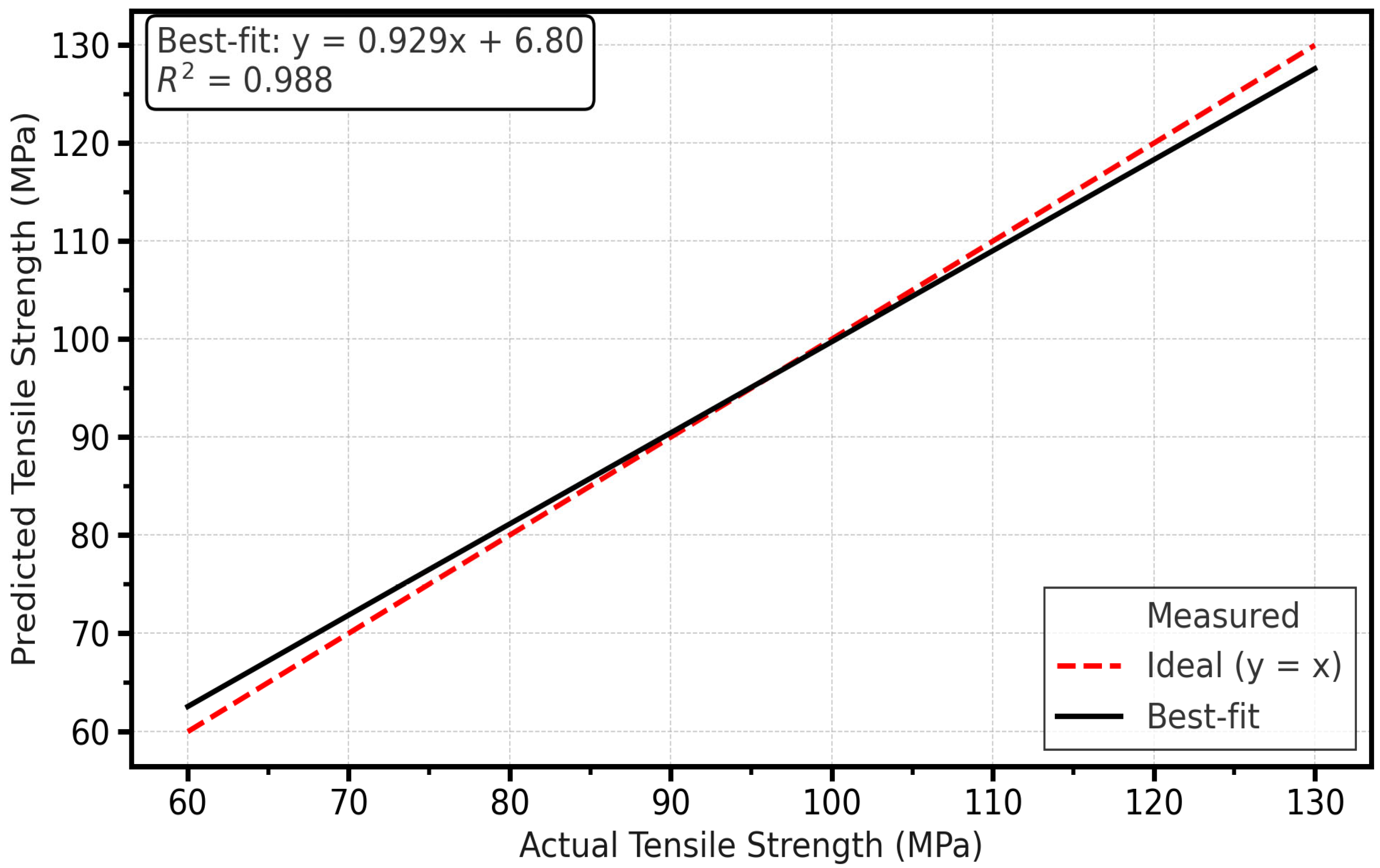
Figure 12 shows the analysis between measured tensile strength and model predictions for specimens spanning the five substance systems. The fit captures 98.8% of the variance, indicating that the composition and processing descriptors used in the model encode most of the strength-determining features. The slope of 0.929 is 7.1% below unity, producing a mild compression of the prediction range: low-strength specimens are slightly overpredicted, while high-strength carbon-rich specimens are modestly underpredicted. For example, at 60 MPa, the fitted line yields 62.5 MPa, a 4.2% shift; at 70 and 80 MPa, the shifts are 2.6% and 1.4%, respectively. Near 100 MPa, the bias is −0.3%, and at 120 and 130 MPa, the fitted values are 118.3 and 127.6 MPa, corresponding to relative errors of −1.4% and −1.9%. The positive intercept (+6.8 MPa) suggests a baseline contribution that is not strictly proportional to fiber load sharing—consistent with matrix-dominated effects such as residual cure stress or gauge-length compliance. Material-specific causes align with known properties: moisture uptake and lumen porosity in flax or jute raise scatter at the low end, favoring small overpredictions; higher interfacial shear strength and lower defect density in carbon/epoxy tighten variability at the top end, where fiber-dominated failure mechanisms lead to the small underprediction [
29]. These tendencies matter for downstream tests. Fatigue life or notched-strength screening based on predicted values would slightly overestimate performance for natural-fiber laminates (by ~1–4%) and slightly underestimate for carbon-rich panels (by ~1–2%).
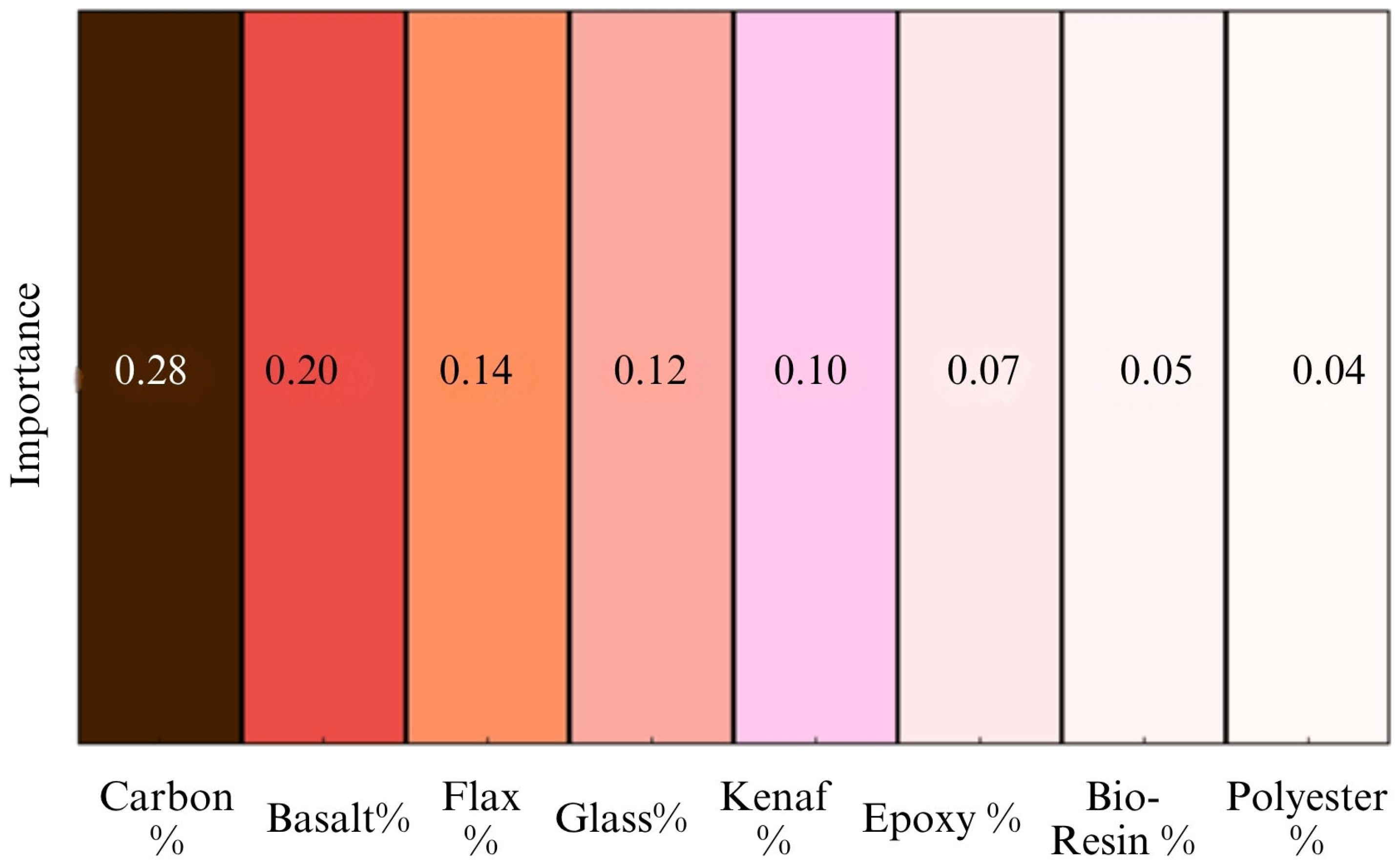
Figure 13 illustrates the importance learned by the tensile-strength model, revealing that reinforcement fractions dominated the response, while resin class had a lesser impact. Carbon carried the largest weight at 0.28, which was 40% higher than Basalt (0.20), 100% higher than Flax (0.14), and 133% higher than Glass (0.12). Relative to Polyester (0.04), the influence of Carbon% had been 600% greater, underscoring how axial stiffness and filament strength of carbon fibers governed load bearing in these laminates. Basalt% ranked second and exceeded Kenaf% (0.10) by 100% and Epoxy (0.07) by 186%; this behavior aligned with basalt’s high failure strain and crack-deflection capacity that supported higher strength in hybrid stacks. Flax and Glass formed a middle tier, with Flax at 17% higher than Glass, which matched the observation that both fibers contributed meaningfully but less decisively than carbon or basalt due to lumen effects (flax) and a sizing-dependent interface (glass). Kenaf% trailed the other fiber variables by 29–64%, consistent with its lower filament strength and higher variability. Among matrices, Epoxy (0.07) outranked Bio-Resin (0.05) by 40% and Polyester (0.04) by 75%; the smaller values reflected a fiber-dominated failure mechanism, while the ordering tracked matrix crosslink density and the likelihood of stronger interfacial adhesion with the selected sizings. These findings suggested practical actions for future experiments: tuning the carbon fraction would have produced the largest deterministic change in tensile strength; leveraging basalt content offered a secondary lever when impact tolerance was also needed; resin substitutions alone would have delivered only modest gains unless paired with interface treatments or volume-fraction control [
30].
Correlating the results with the broader literature (
Table 3), clear links between composition and properties emerge. The carbon-containing laminate (C3) governed the strength, delivering ≈approximately 120 MPa in tension and ≈ approximately 126 MPa in flexure—substantial gains over the flax/epoxy baseline—consistent with fiber-dominated load transfer and low defect sensitivity in carbon/epoxy systems. These outcomes align with reports that pressure-assisted, filler-aided hybrids can further enhance absolute strengths, underscoring the value of compaction control and defect suppression emphasized in our press protocol. In toughness, the kenaf/basalt/polyester hybrid (C5) excelled (≈60 kJ m
−2), surpassing C1, C2, C3, and C4 at comparable densities; this is consistent with basalt’s crack-deflection and polyester’s higher matrix ductility, which together expand the damage zone and increase energy dissipation. Moisture behavior followed a robust hierarchy at 168 h (C3 < C4 ≈ C5 < C2 < C1), attributable to hydrophobic/carbon-rich architectures in C3 and barrier effects from mineral (glass/basalt) plies in C4/C5, while the higher uptake in C1 reflects lumen-mediated transport in flax; these mechanisms map cleanly onto expected diffusion pathways and explain the larger post-immersion property penalties anticipated for natural-fiber-rich stacks. Thermal stability trends were likewise compositional: end-point char at 600 °C ranked C3 > C5 > C2 > C4 > C1 (≈84%, 68%, 65%, 57%, 32%), reflecting graphitic residue in carbon laminates and inorganic ash from basalt/glass, whereas flax-rich systems exhibited earlier mass loss from carbohydrate decomposition and bio-resin scission. Collectively, these correlations justify selecting carbon-augmented hybrids for stiffness-limited skins and buckling-sensitive parts, kenaf/basalt hybrids for energy-absorbing structures at similar mass, and flax/glass with bio-epoxy when maximizing renewable content while maintaining moderate strength.




 ,
,