Article

Flexural Behavior of Biocompatible High-Performance Polymer Composites for CAD/CAM Dentistry

Department of Restorative Dentistry, Faculty of Dentistry, King Abdulaziz University, P.O. Box 80209, Jeddah 21589, Saudi Arabia
J. Compos. Sci. 2023, 7(7), 270; https://doi.org/10.3390/jcs7070270
Submission received: 5 June 2023 / Revised: 24 June 2023 / Accepted: 28 June 2023 / Published: 30 June 2023
(This article belongs to the Special Issue Innovations in Direct and Indirect Dental Composite Restorations)

Abstract

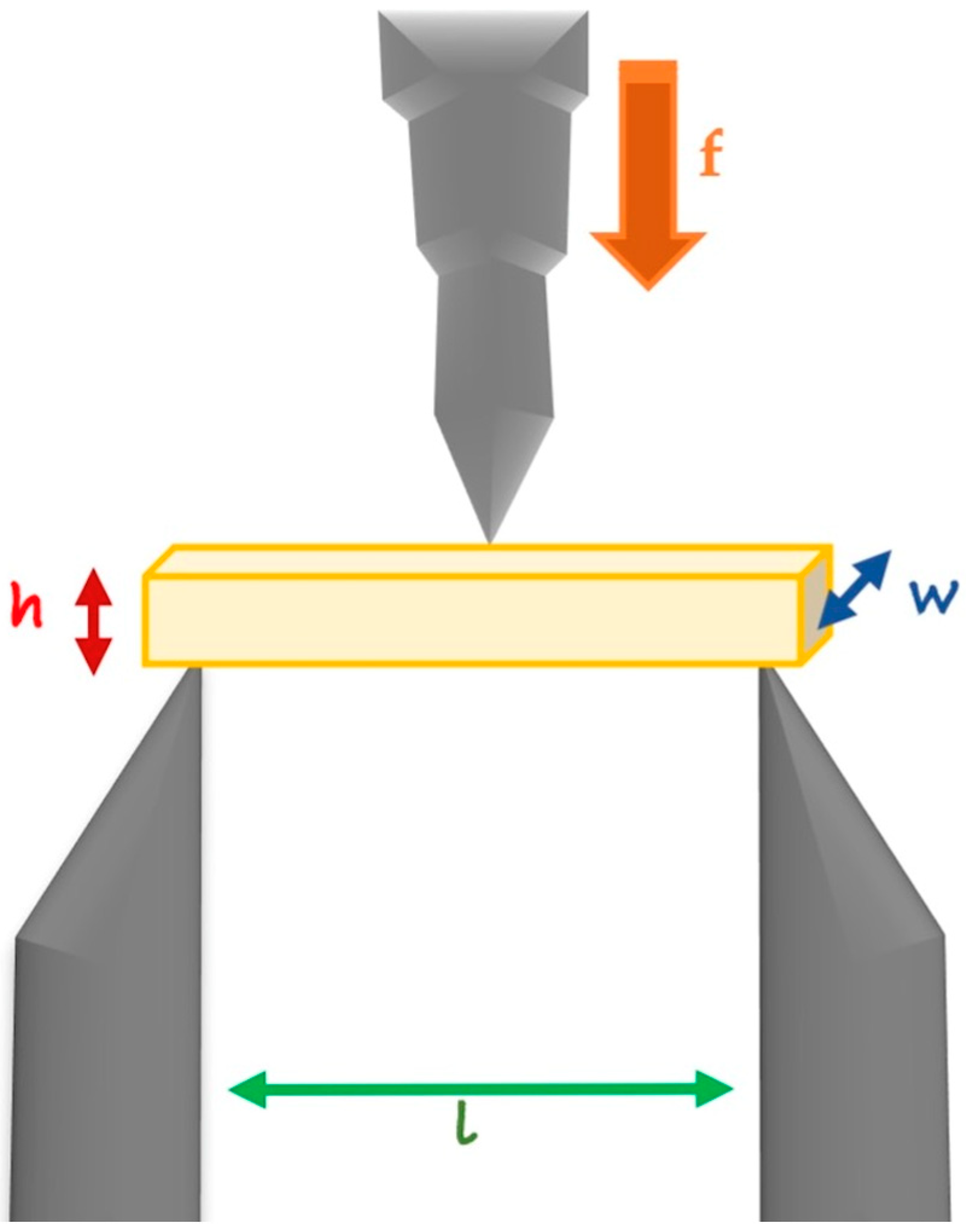
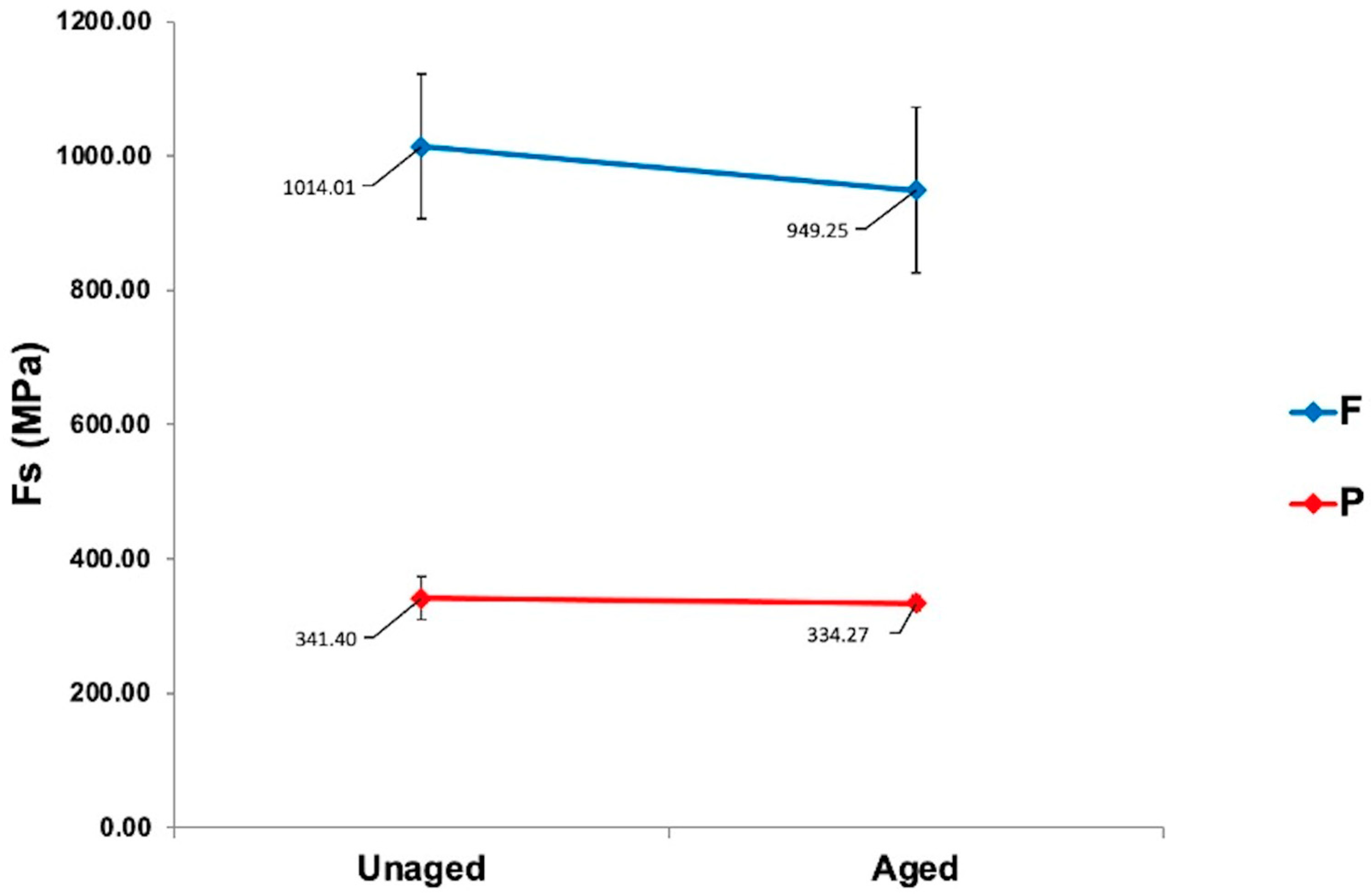
High-performance polymeric materials have been used in computer-assisted design/ computer-assisted milling (CAD/CAM) dental restorative treatments due to their favorable esthetics as well as their mechanical and biological properties. Biocompatible poly-ether-ether-ketone (PEEK) and glass-fiber-reinforced composite techno-polymer (FRC) resins reportedly possess good flexural and shock absorption properties. However, intraoral thermal fluctuations may adversely affect them. This study aimed to investigate the flexural strength and effect of thermal aging on two commercially available high-performance polymers intended for CAD/CAM milled frameworks for definitive restorations. A total of 20 bar specimens were prepared using two CAD/CAM materials (n = 10); PEEK(P) and Bioloren FRC(F). Specimens from each material group were randomly divided into two sub-groups (n = 5): before aging (uP and uF) and after aging, with 10,000 thermocycles (5–55 °C) (aP and aF). All specimens were subjected to a three-point bending test in a universal testing machine. Flexural strength (Fs) values were calculated for all specimens, and their means were statistically analyzed using a t-test, and a general linear model (GLM) repeated measure ANOVA (p < 0.05). There was a statistically significant decrease in the Fs of (F) materials after aging (p = 0.03). (F) specimens exhibited significantly higher Fs than (P) before and after aging (p < 0.001). This type of material had a significant effect on Fs (p < 0.001). Within the limitations of this study, both materials exceeded the ISO recommendations of dental resins for flexural strength. However, FRC materials may benefit CAD/CAM milled long-span fixed partial dentures and implant-supported denture frameworks.
Keywords: computer-aided design/computer-assisted manufacture; digital dentistry; fiber-reinforced composites; fixed partial dentures; flexural strength; poly-ether-ether-ketone; restorative dentistry; techno-polymer computer-aided design/computer-assisted manufacture; digital dentistry; fiber-reinforced composites; fixed partial dentures; flexural strength; poly-ether-ether-ketone; restorative dentistry; techno-polymer