Article

The Interface Stabilization Effects of Silane in SEBS/BaTiO3 Composites—Part I—Thermal Approach

1
National Institute for Electrical Engineering, Advanced Research (INCDIE ICPE CA), 313 Splaiul Unirii, 030138 Bucharest, Romania
2
SC Roseal SA, RO 535600 Odorheiu Secuiesc, Romania
3
Romanian Research and Development Institute for Gas Turbines—COMOTI, 061125 Bucharest, Romania
*
Author to whom correspondence should be addressed.
J. Compos. Sci. 2026, 10(7), 355; https://doi.org/10.3390/jcs10070355
Submission received: 2 June 2026 / Revised: 25 June 2026 / Accepted: 28 June 2026 / Published: 2 July 2026
(This article belongs to the Section Polymer Composites)

Abstract

The contributions of BaTiO3 as the filler and 3-glycidoxypropyltrimethoxysilane as the binder in the matrices of styrene–ethylene–butylene–styrene are evaluated for extended applications in medicine and dentistry. The determinations of stability are achieved by chemiluminescence (CL) under isothermal and nonisothermal modes, measuring the values of oxidation induction time (OIT) and onset oxidation temperature (OOT), respectively, which characterize the progress of material oxidation. The calculation of activation energies for the progress of oxidation from isothermal CL measurements based on OIT values provides proof of the modification of interaction activity on the polymer/barium titanate interface. The increases in the activation energy values from 80 kJ mol−1 for neat polymer to 83 kJ mol−1 for SEBS/BaTiO3 1 wt% and 109 kJ mol−1 for SEBS/BaTiO3 1 wt%/GPTMS 1 wt% is evidence of the contribution of silane to the structuration of the polymer surface. The influence of the two compounds, filler and additive, makes possible the extension of oxidation induction temperatures measured at 170 °C from 36 min, displayed by pristine polymer, to 245 min and 278 min for the titanate composites free of silane and in the presence of GPTMS 1 wt%, respectively.

1. Introduction

The wear evaluation of polymer materials or their composites is a necessity to be investigated for the correct assessment of product durability [1,2]. The contribution of each component influencing interface conditioning and structural surface modifications [3] has to be depicted for the prediction of material lifetime by the detailed characterization of thermal behavior. Based on the previous studies describing the integrity of composite matrices, the interactions between the attending compounds explain the insight of acting factors related to the molecular structures and the significance of energetic barriers for reaching certain performances [4]. The stabilization effect of graphene in the matrix of styrene–butylene–styrene confirms the barrier role of the inorganic structure to delay the progress of degradation during material oxidative aging by specific interphase correlation [5]. The material performances are improved by the rigorous selection of constitutive phases, whose interactions ensure the preservation of primary oxidation state. This stabilization effect is compulsory when the accelerated degradation is envisaged for material processing [6]. Usually, researchers conduct their studies on the essential improvement of the functional characteristics by discarding the analysis of the produced effects on the material strength over time. These holes may be filled by understanding the contributions of the surface and interfaces in all the polymer composites, which characterize the intimate modifications and lifespan [7]. The key of the interaction between various blending components of polymer composites is the energetic involvement that controls the method of modification [8]. The interfacial interaction of BaTiO3 with host polymers, like low-density polyethylene, shapes material properties, including thermal strength [9].
The concept of polymer composites is tightly related to material stability and interphase coexistence, which influence the main features characterizing long-term durability, especially for applications in the nuclear range [10,11]. The filler is always carefully selected due to the bridges established between components [12]. The variety of inorganic fillers that endow high functional characteristics includes oxides, salts, or metallic particles, whose several industrial and household applications are based on electronic coupling at the surface of particles [13]. Building up new connections between the basic components achieved through treatments defines the dependence of material stability on external action stress. The adjustment of new structures that preserve the properties for a longer period is tailored by favorable embedding conditions [14]. Accordingly, well-conducted processing provides high-performance products [15,16], which ensure long-term employment due to the strengthening of the material structure.
The mitigation of degradation by the addition of appropriate compounds is achieved by the presence of a binder, which may connect the filler molecules on polymer chains by suitable interphase connections. While the filler protects the polymer matrix by their involvement in the progress of degradation [17], the added binder increases the material stability by new intermolecular bridging [18,19]. The presence of silane, for example 3-glycidoxypropyltrimethoxysilane (GPTMS) and methacryloxymethyltrimethoxysilane (MAMTMS), accomplishes efficient surface integration by improving the process of silanization [20]. The modification of polyethylene vinyl alcohol (PVA) by the interfacial matching of filler (natural bentonite) increases the thermal stability of the host polymer (PVA). Consequently, the specific surface energies that govern the intensities of interactions adjust the foreseen characteristics of structural transformation [20]. The incorporation of this kind of binder into any macromolecular matrix is a pertinent option because the adjustment of material strengths is based on the strong new connections between polymer (for example—PVC) and filler (for example—sawdust) [21]. The addition of silane structures in the composition of EPDM/lead oxide radiation shielding material makes possible the homogenization of filler dispersion and the amelioration of thermal stability [22]. The application of energetic processing for the improvement of mechanical properties is an appropriate method by which product storage and operation lives are significantly extended [23]. Similarly, the bonding of Al2O3 nanoparticles on PP samples is identified, where the reactive radicals formed during the radiolysis of components are involved in the attachment of alumina particles on the PP skeleton through the electronic effect [24]. The structural consequences caused by the presence of silane in the compositions of colloid silica ensure that the particles surround the inorganic filler [25] followed by the electronic coupling of SiO2 on the molecules of polymer substrates. The reactive treatment of various silane structures is one of the promising accelerated procedures of material reinforcement by which radical intermediates act as the crosslinking component [26]. Various radicals are generated by splitting silane molecules. They initiate the attachment onto polymer structures, the homopolymerization of the silane fraction [27], or condensation, including radiolytic radicals [28]. These steps are possible because the energetic constraints limit the progress of decay.
The preparation of every composite introduces new applicative directions based on the type and strength of the interaction, which may satisfy the foreseen goals of a wide spectrum of needs. In the case of BaTiO3, the structural nature of perovskite allows it to be compatibilized in polymer materials by its coupling with silane structures as an appropriate filler for piezoelectric materials [29]. The barium titanate/polymer composites are suitable raw materials for the production of performant radiation shielings [30] or biomedical appliances [31]. The choice of SEBS for the major phase in this investigation is legitimized by its superior thermal strength and its structural peculiarities regarding the versatility of materials due to the presence of a hydrocarbon backbone, benzene nuclei, tertiary carbon atoms, and unsaturation [32]. The present paper investigates the contributions of the blending components (SEBS, BaTiO3, and GPTMS) under the improvement of polymer stability by thermal exposure. The experimental procedure involving CL accurately reveals the participative implication of the binder in the delay of oxidation by the integration of inorganic particles into the polymer matrix.

2. Materials and Methods

The examination of the thermal effects on the prepared composites is accomplished by taking into consideration the stability behavior of BaTiO3 in different styrene block copolymers (SIS, SBS and SEBS), which were previously tested by γ-irradiation [33]. The basic material, SEBS, was provided by KRATON (Houston, TX, USA), as G1633 E containing 29.5 wt% bonded styrene. It was manufactured by the condensation of two fractions: styrene–butylene and styrene–ethylene. The silane binder, 3-glycidoxypropyltrimethoxysilane (GPTMS), was purchased from Dow (Midland, MI, USA) as XIAMETER™ OFS-6040 Silane product with a purity > 98.5 wt% evaluated by chromatography. BaTiO3 was manufactured by Thermo Fisher Scientific (Waltham, MA, USA) with 99 wt% purity. None of these products have undergone any modification processes.
The samples were prepared using a primary chloroform solution of SEBS. A certain amount of polymer balls (5 g) was added to a 100 mL glass vial. The mother solution of 1 wt% was prepared. The appropriate amounts of each component were separately added: 1 and 3 wt% BaTiO3 and 1 wt% silane for the preparation of planned samples by mechanical shaking. The granulometric measurements indicate that the maximum size of particles is 120 nm. The specimens were obtained in round aluminum caps (diameter 6 mm), where the solvent was removed by gentle evaporation at room temperature, providing thin polymer films. The mass of samples was around 4 mg. The mass of each specimen was used for the calculation of specific CL intensities expressed in Hz g−1. The average thickness of dry pellicles was 50 mm. This sheet does not act as a photon absorber. Thermal aging was accomplished in a thermally controlled electrical oven provided with circulating air. Three different cycles (8 h, 16 h and 32 h) were carried out at 80 °C.
The stability evaluation was obtained by the chemiluminescence method, a very accurate thermal procedure, which counts the number of emitted photons by the carbonyl intermediates formed during the progress of degradation chains. The chemiluminescence unit is LUMIPOL 3 provided by Institute of Polymers (Slovak Academy of Sciences, SAS), Bratislava, Slovak Republic. The measurements were accomplished in stationary air. The temperatures for the performed isothermal determinations were chosen based on when the oxidation rate is conveniently measured. The values of heating rates were established according to thermal regimes that decrease the range of small measurement errors. The proportionality between the peroxyl number and the counted photons ensures the proper evolutive studying of the degradation of the polymer phase [34]. The isothermal measurements were carried out at 170 °C, 180 °C, and 190 °C, while the nonisothermal determinations were accomplished at four heating rates (5 °C min−1, 10 °C min−1, 15 °C min−1, and 20 °C min−1). For the evaluation of the activation energies required for thermal degradation, the Arrhenius relationship was applied using the OIT values characterizing each composition and thermal measurement condition:
( O I T ) T = ( O I T ) 0 e E a R T
where the indices T and 0 denote the values of absolute temperatures of measurement and reference, respectively; Ea is activation energy; R is the gas constant (8.314 J mol−1 K−1). The Ea values are calculated from the ratio Ea/R obtained from the slope of the line ln(OIT) vs. 103/T.

3. Results

The improvement of stability for special applications may be achieved by the addition of proper compounds, which ensure the reinforcement of polymer material by the optimization of interfacial coexistence [35]. Under our circumstances, the increase in homogeneity in gel fractions is attained by the addition of crosslinkers [36]. The augmentation of the insoluble fraction demonstrates the efficient mitigation of degradation due to the augmentation of product stability and the minimization of oxygen diffusivity [37]. The rise in gelation degree determines the higher thermal stability (Figure 1).
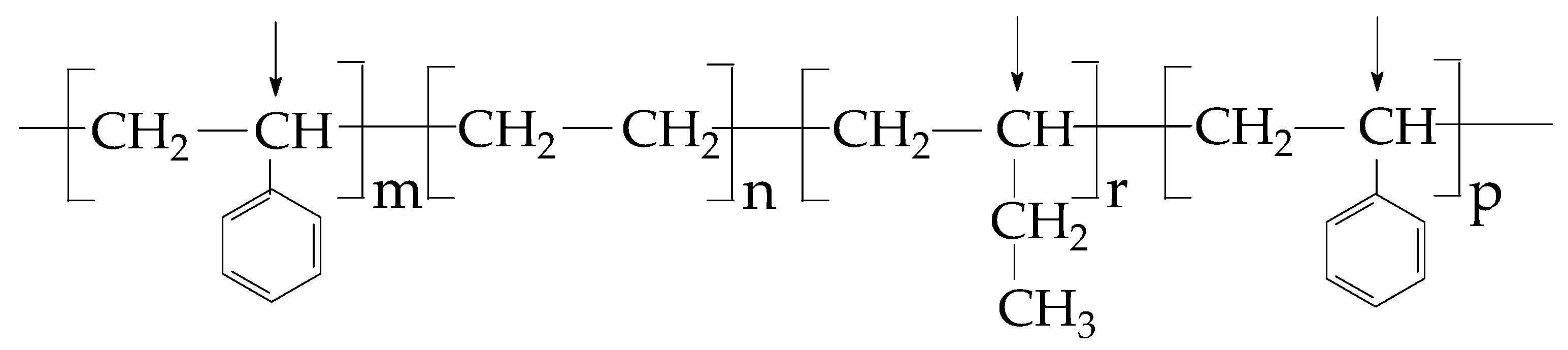
Figure 1 demonstrates the filler activity of the oxidation delay in the polymer for the manifold of polymer/BaTiO3 composites implemented in several applications like the preparation of flexible piezoelectric materials [38] or radiation shielding protection [30]. Titanates are able to scavenge radiolysis free radicals in ethylene–propylene elastomers (EPDM and EPR), where the slowing of degradation is assisted by superficial interactions [39]. The participating organic components (SEBS and GPTMS) are defined by the reactions of intermediates, which appear due to different breaking susceptibilities, indicated in Figure 2 by individual arrows. The sequence of bond dissociation energy [40] dictates the order of the increasing probability of scission:
Si–C (348 kJ mol−1)~C–C (348 kJ mol−1) < C–O (359 kJ mol−1) < C–H (415 kJ mol−1) <
< Si–O (462 kJ mol−1) < H–O (487 kJ mol−1)
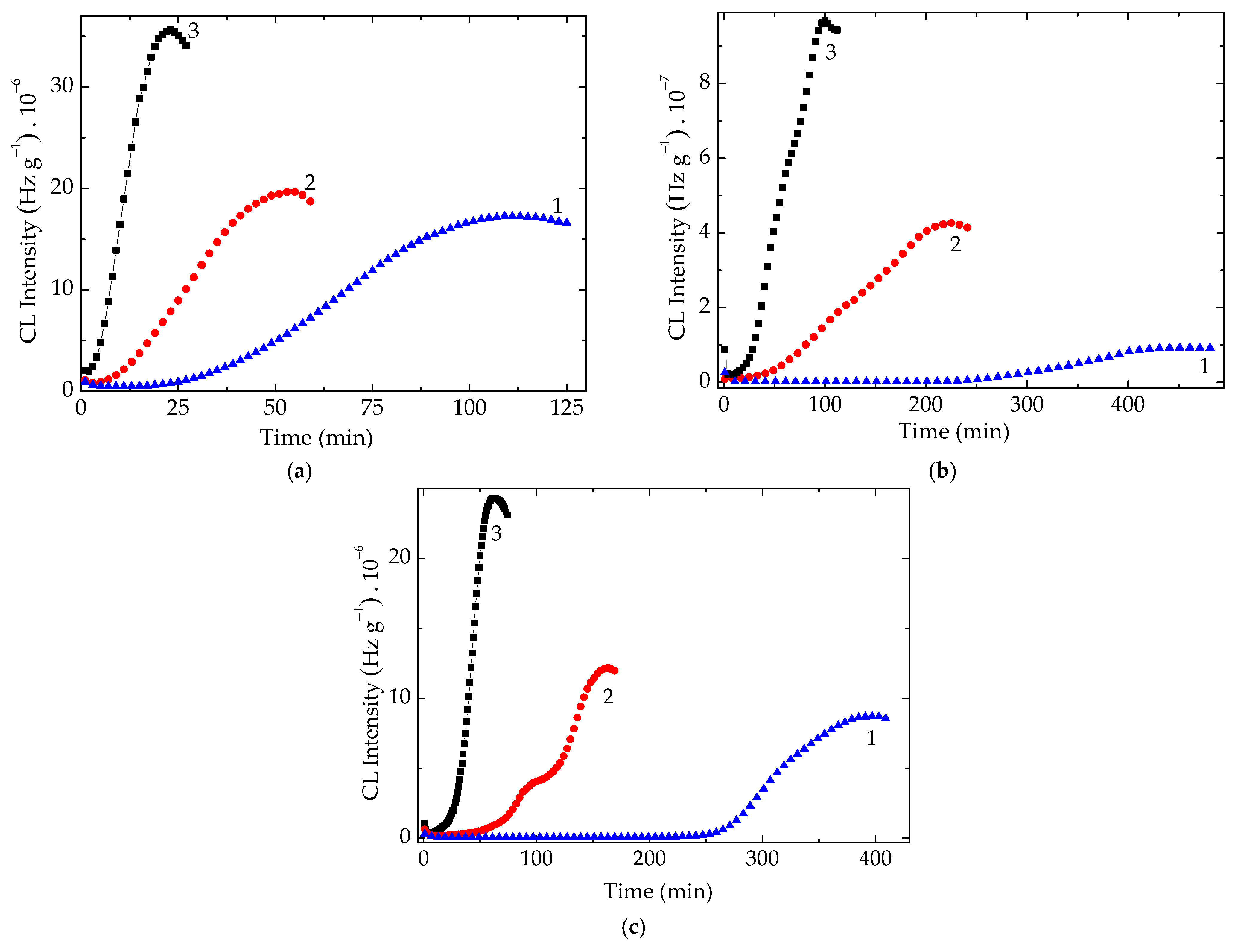
However, the protons bonded to the multiple-substituted carbon atoms require only 370 kJ mol−1. Accordingly, the protons joined to the same tertiary carbon atoms as benzene rings will be more easily removed. This feature characterizes the thermal stability of unmodified SEBS. Starting from these considerations, Figure 3 points out the characterization of thermal strength for inspected composites by isothermal chemiluminescence. The largest differences between the thermal behavior of materials are noticed, when the measurements are carried out at 160 °C. The large extensions of OIT explain the real contributions of titanate particles during the early stages of measurements (Figure 3b) and the association of the titanate phase with the presence of the silane additive. The combination of these three components may be successfully applied to the preparation of materials for medical applications, where drastic energetic conditions are implemented as well as the recycling of several polymer wastes. The double-step shape of the isothermal CL spectrum recorded at 170 °C (Figure 3c) proves that the sequence of the stabilization partition between the two compositional fractions exists in the studied polymer substrate. The extrapolation of the thermal behavior of SEBS/BaTiO3/GPTMS samples at low temperatures around room values would suggest the appropriate reparation of a large variety of materials for special safety applications over long life periods. The calculated activation energies support the favorable picture of the acquired stabilization, where the synergistic effects of titanate and GPTMS act efficiently to decay free radicals.
An interesting feature depicted by this Table 1 is the sharp increase in the values of oxidation induction time that reveals the noticeable contributions of the filler and silane. Additionally, the jump observed in the modified polymer with silane is connected to the coupling effect of the additive in relation to the surface of the titanate particle. The achieved strength is assisted by radical reactions, where silane molecules are shared between their condensation and integration in the polymer structure [41], engaging the embedment of neighbor inorganic particles. It is possible that silane couples with the intermediate radicals of the polymer by siloxane bonds [22] or the opening of structures [26,42]. These considerations are evidenced by the structural configuration (Figure 2), where the bond scissions provide reactive entities for emphasizing improved functional characteristics. The superior level of performance is reached due to the sharp consumption rates of local radical accumulation, where the added components are supplied after the start of heating. The intimate involvement of the silane component was previously described [43], where UHMWPE, a very stable polymer, was processed in the presence of VTES. This silane has an available vinyl moiety, which is preferentially split. However, the contribution of ethoxysilane was demonstrated by the labialization of the double bond. Accordingly, the methoxysilane fragments may contribute to the intermolecular bridge formation of homolinking [44]. The stable perovskite nature of barium titanate allows for the formation of hydrogen bonds between the studied components [45], which enhances the stability of the composite.
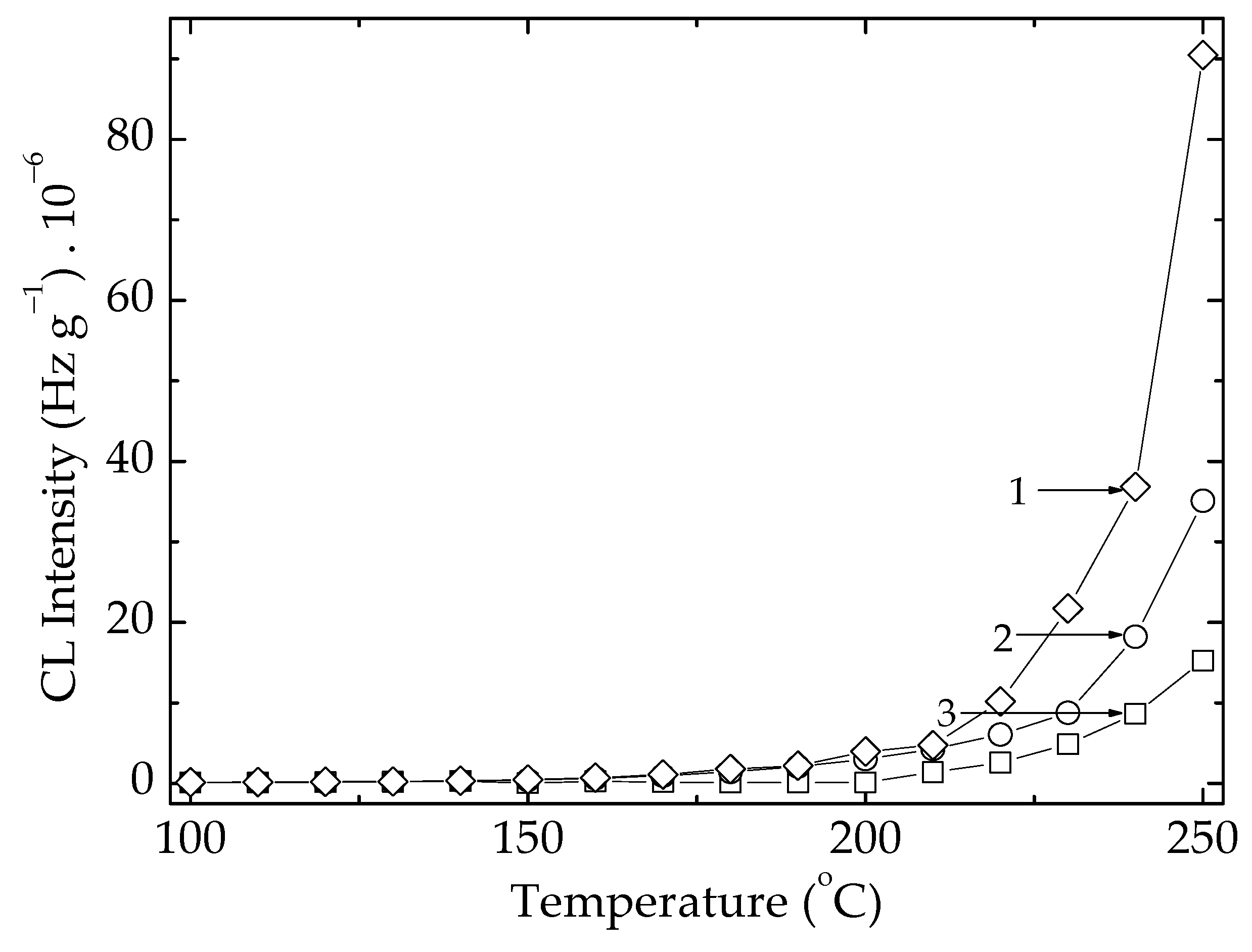
The results of this study afford the validation of the mechanistic approach through which the synergic stabilization effect of BaTiO3 and GPTMS is suitably supported by the two complementary contributions: the permeation of free radicals in the empty holes of the lattice inside the barium titanate particles [46] and the minimization of intermolecular distance in the polymer phase due to the crosslinking and bonding between organic polymers and inorganic materials like glass and minerals initiated by silane [47]. The characterization of the stability of SEBS [48] and SEBS/BaTiO3 composites [49] was previously accomplished based on OIT values. Despite their strength against oxidation being satisfactory, the addition of GPTMS offers the possibility of its improvement for the optimization of the operation modes in various energetic circumstances. While the activation energy for the oxidative degradation of neat SEBS is 76 kJ mol−1, the presence of barium titanate particles and silane promotes the protection of the polymer substrate. As the final result, the activation energy becomes 101 kJ mol−1 (Figure 3). A similar effect occurs in PMMA [48]; a higher amount of filler ensures a rising degree of durability (Figure 4). The participation of silane, with its reactive positions, in completing the upgraded thermal performance of the composite, meets the requirements of long-term durability. The attendance of the higher loading of the minor component is sustained by the larger contribution of the filler to the delay of oxidation. In Figure 4, the protection activity of barium titanate increases proportionally with the compound loadings. This trend is valid not only for the extension of the product durability but also for the augmentation of functional properties such as dielectric properties [50], biomedical applications [51], and radiation technology in medicine and pharmacy [52].
A detailed study concerning the effects of polysilane prepared by sonification [53] reveals that the mechanical inspection as well as the FTIR analysis are proof of the modifications induced by intense transferred energy. This affirmation leads us to believe that thermal exposure also causes the splitting of GPTMS. Consequently, the silane additive becomes a real source of radicals, which sustains the improvement of polymer stability by silyl bridges amidst the detriment of Si–Si moieties. On the other hand, the integration of GPTMS in PEO has achieved coalescence [54]. Therefore, the participation of GPTMS in the amelioration of the degree of stability of PLA takes place in two ways: the involvement of silyl in the bonding of radical intermediates and the reaction of double bonds with various molecules, including fillers, by covalent bridges.
Another proper alternative to the addition of GPTMS for the increase in molecular cohesion in the manufacture of several SEBS-based products is the presence of maleic anhydride in modified polymers [55]. This solution solves the problem of compatibility as it occurs in the blends consisting of SEBS and PP [56]. This presence brings about good mechanical characteristics. Unfortunately, this does not promote an appropriate delay of oxidation, which is obtained in the case of the composite formulation including BaTiO3 and GPTMS.
The general scheme describing the ways through which a silane compound contributes to the structuration of polymer has been previously reported [57]. Thus, chemical grafting and self-condensation prevail over other routes like adsorption. These suggested transformations have strong effects on the thermal strength of processed fiber composites that are accompanied by interphase assembling [58]. Similar conclusions were drawn for the processing of PLA wasted in the presence of some coupling agents—silanes [59].
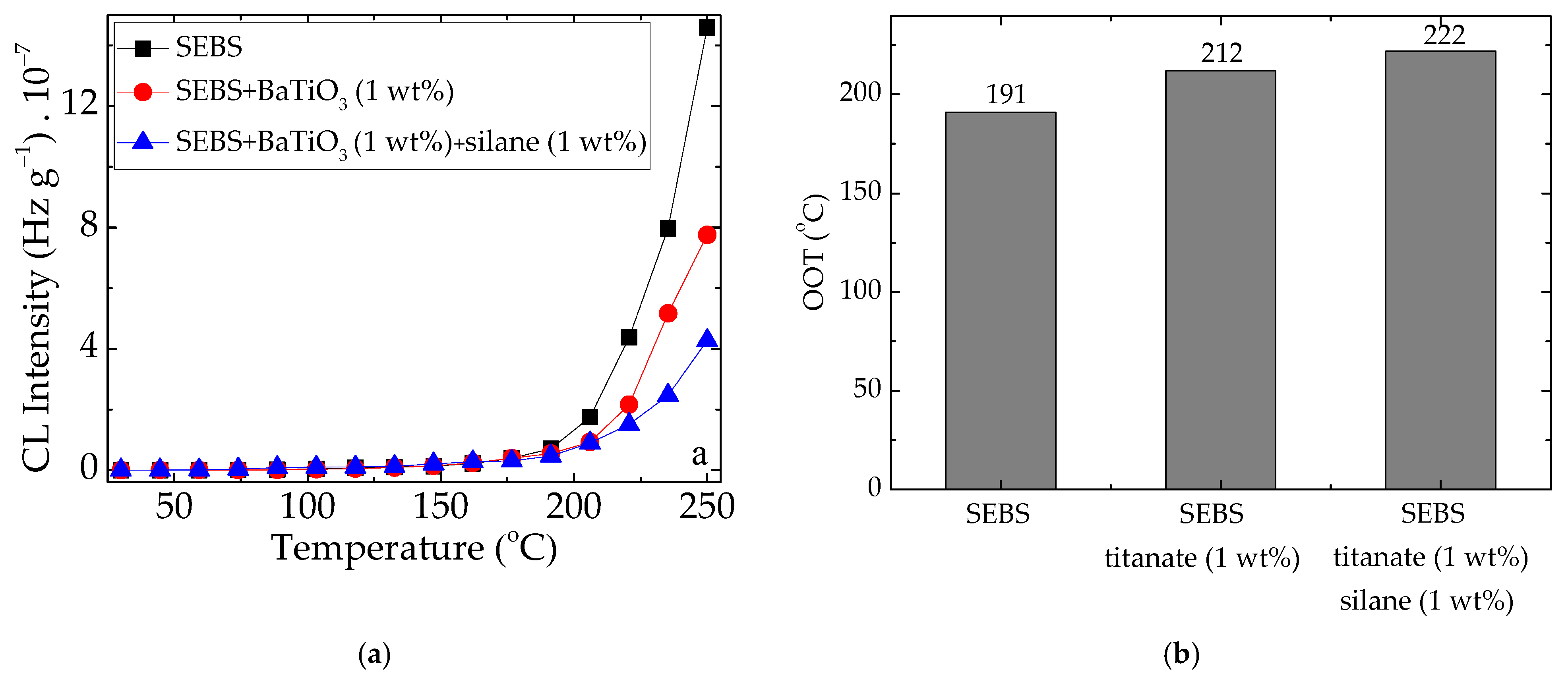
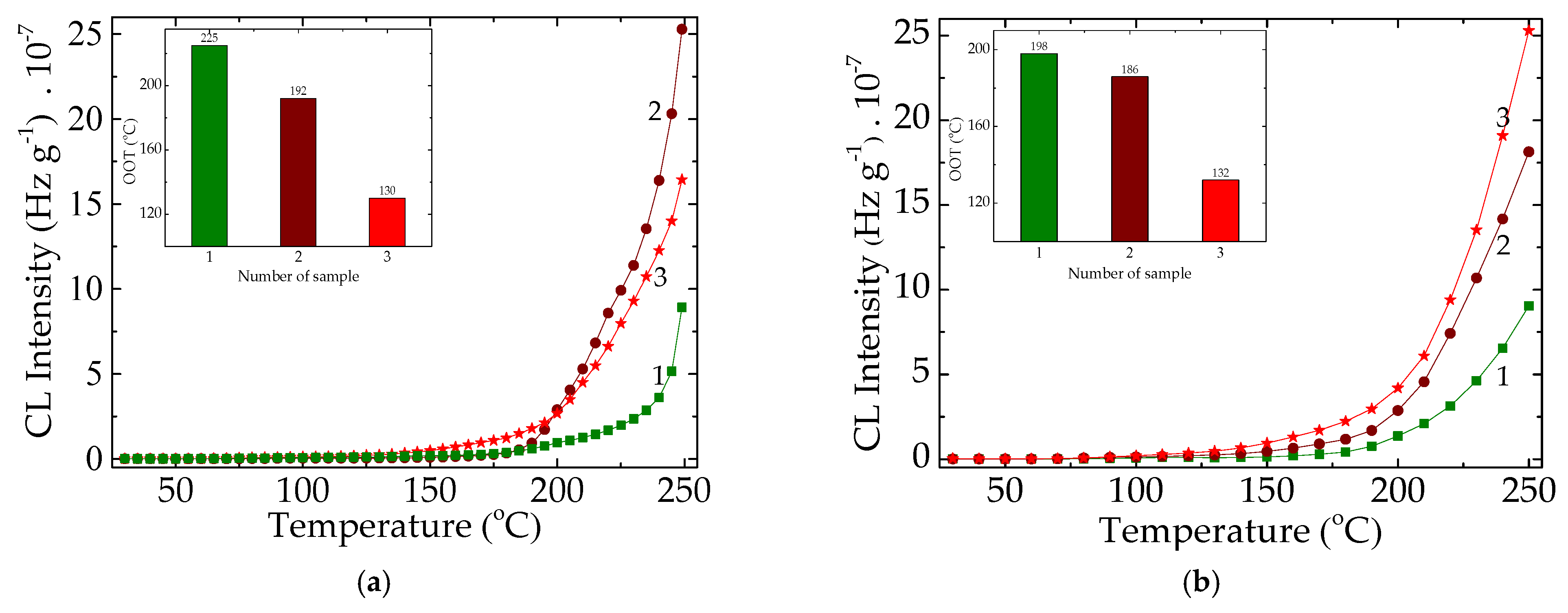
Various investigations into the modifications of polymer properties in polymer composites characterize the amplitudes of changes [60], but a few of them indicate the compatibilization of phases by their interaction, as chemiluminescence allows [39]. Figure 5 illustrates the influence of oxidation rates, where the competition between scission and crosslinking influences sample stability.
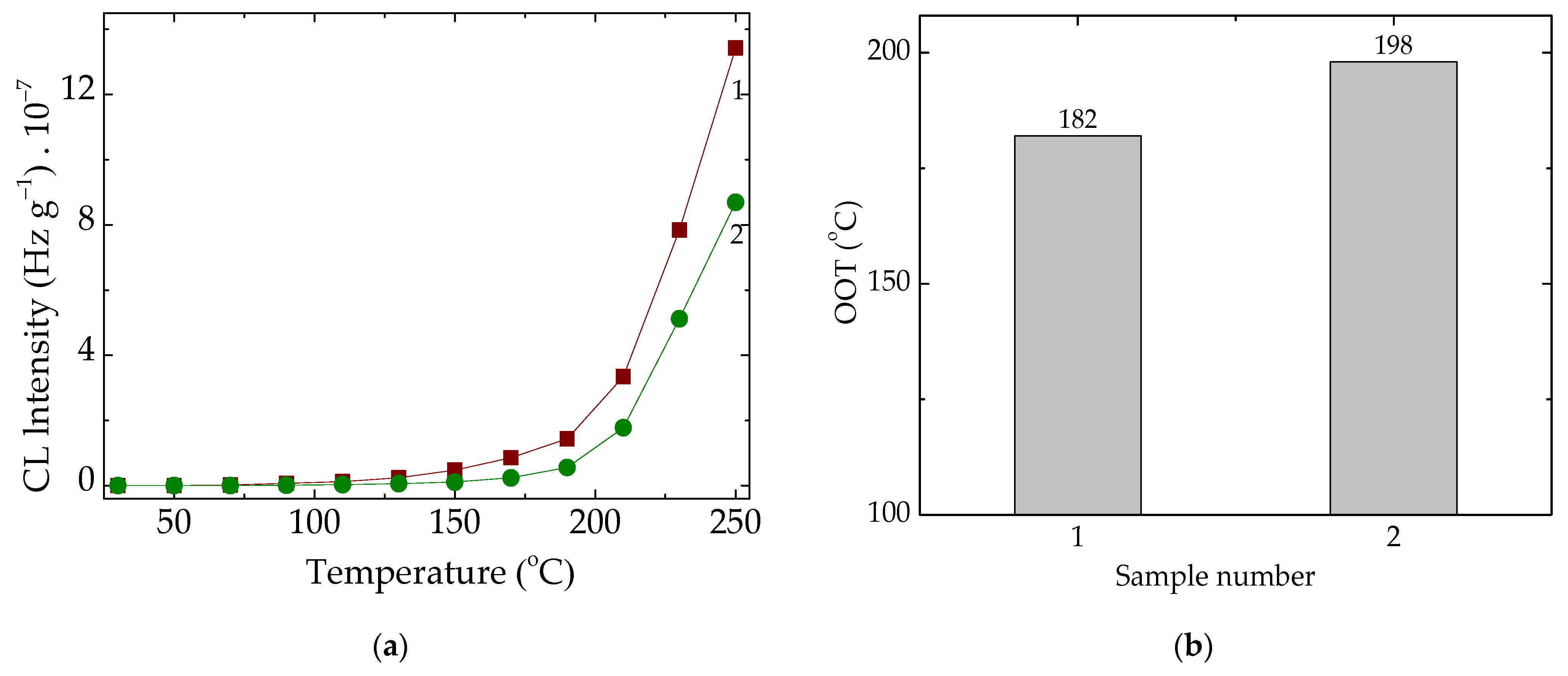
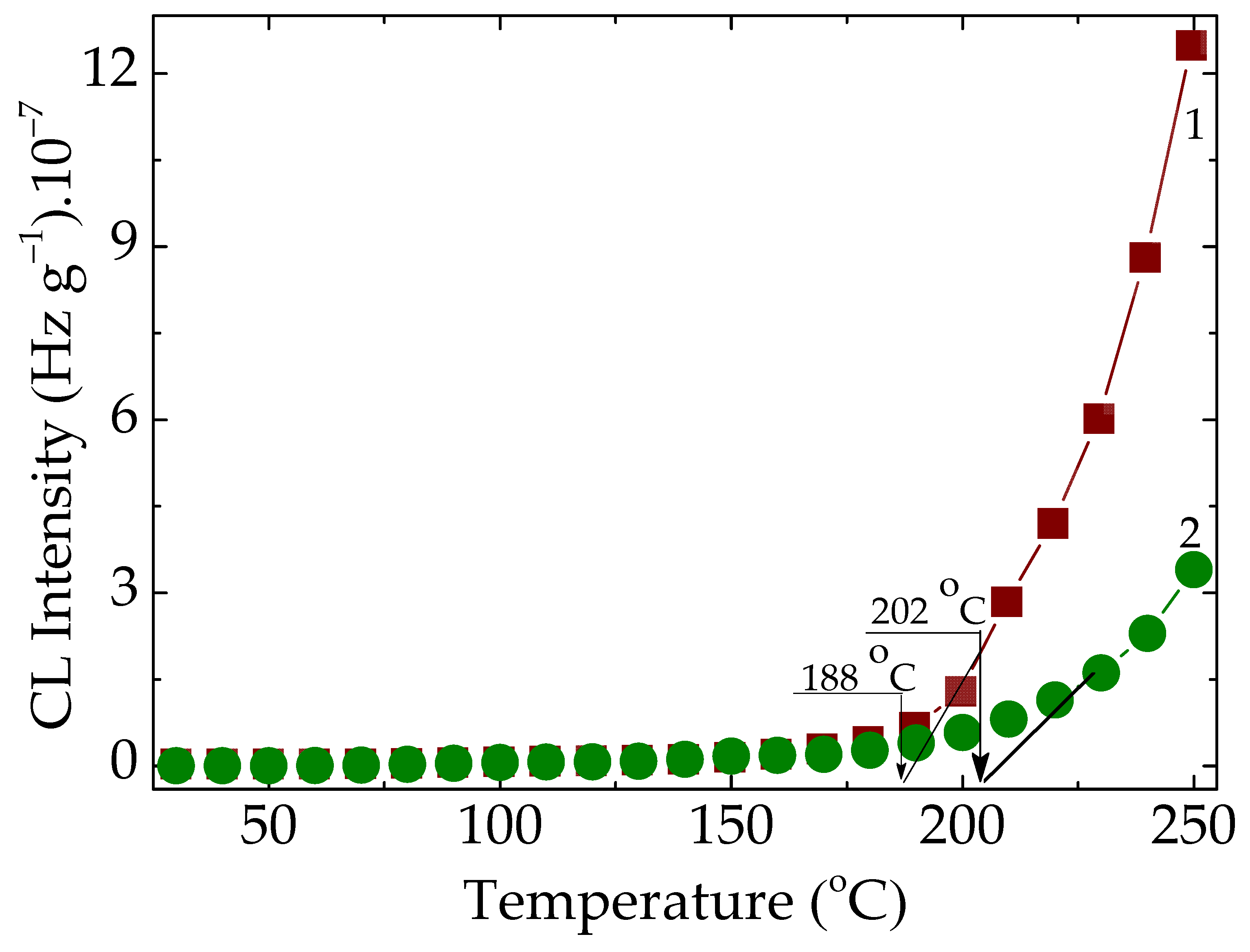
When advanced heating for 32 h is applied, the differences between the neat polymer and the composite in the presence of silane become significant, demonstrating the involvement of this compound in the polymer-strengthening phase. It may be easily noticed that the higher oxidation rate causes the diminution of the OOT, causing faster aging. This means that the diffusion of oxygen is conditioned by the structuration degree of SEBS. The detailed CL investigation may also reveal the capacity of SEBS to resist greater oxidation (β = 15 °C min−1). The higher the content of titanate, the greater the stability obtained. The accelerated degradation of SEBS composites with various loadings of titanate after their conditioning stage for 16 h at 80 °C (Figure 6) is preferential compared to the rates without. The steric considerations, higher specific surface area, and larger intermolecular distances allow for modifications to the kinetics of oxidation (Figure 7). Although degradation attains a significant degree of oxidation, and the minor composite components justify their stabilization potentials, protection remains dependent on the concentration of the titanate filler.
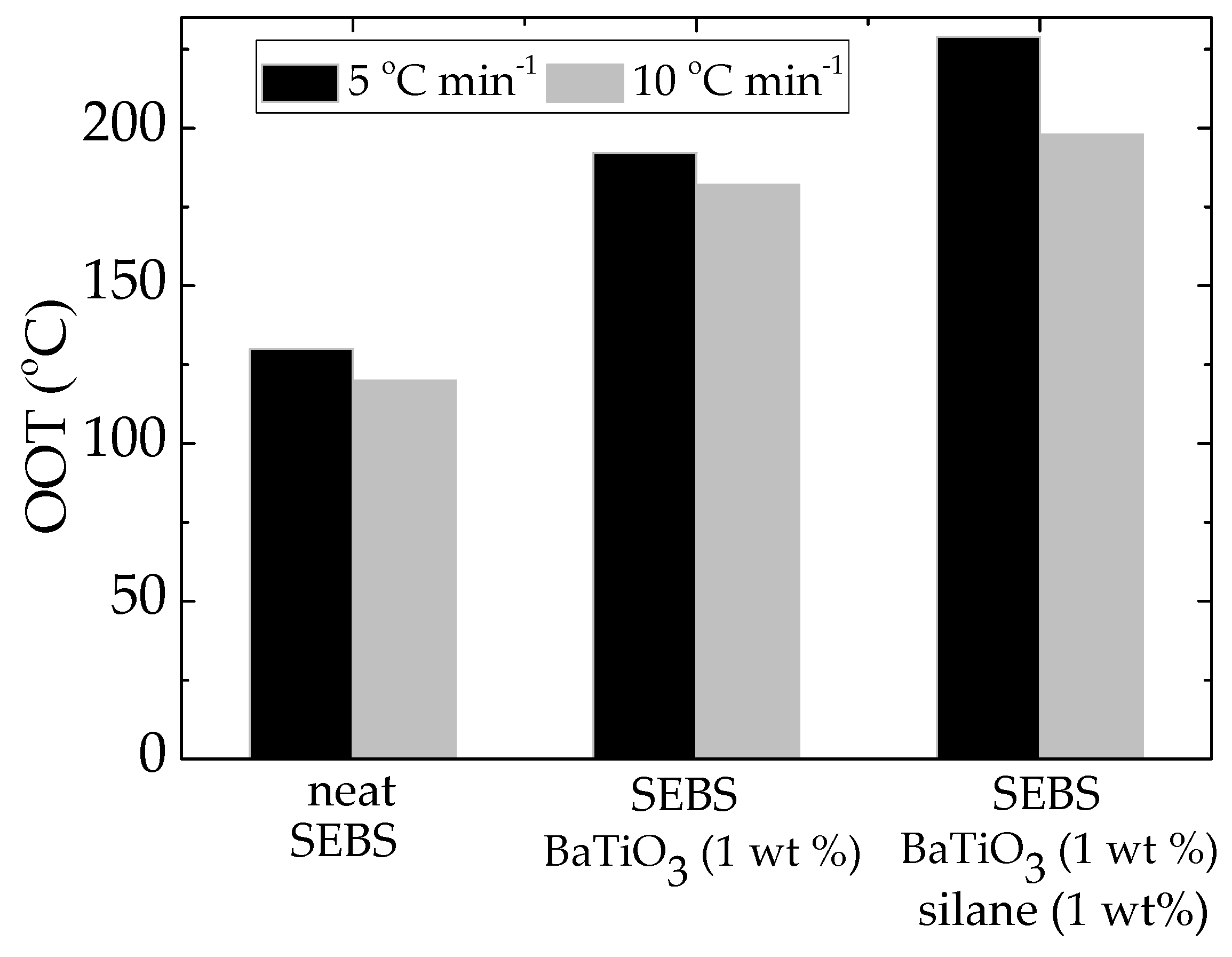
The comparison of degradation results between the samples with similar compositions subjected to different heating rates revealed the importance of practical conditions. The higher the OOT values, the greater the material stability (Figure 8). The extension of interphase boundary surface plays an important role defined by the higher loading of titanate; the inhibition of oxidation is assured by the cooperation of silane with inorganic compounds, which participates in its ability to scavenge free radicals before their initiation of delayed oxidation.
The efficiency of heat strengthening is achieved by the coupling of BaTiO3/GPTMS due to complementary activities that withdraw reactive radicals from the oxidation chain.
A recent paper describes the contribution of the silane fraction to the improvement of polymer properties in the presence of BaTiO3 [29]. It is reported that the achieved performances are supported by the grafting of silane molecules onto ceramic particles. In spite of the simplicity of assumption, we believe in the contribution of silane via its coupling with polymer composite after the splitting of silane molecules. The scission investigations of silane by FTIR and NMR spectroscopy [61] demonstrate the breaking susceptibility of silane (GPTMS). The main degradation product is SiCH3 (methyl groups bonded to silicon), accompanied by several radicals: CH2 (methylene groups), OCH3 (methoxy groups), and CO (epoxide carbons). Their decay rate depends on the thermal regime that influences the CL profiles.
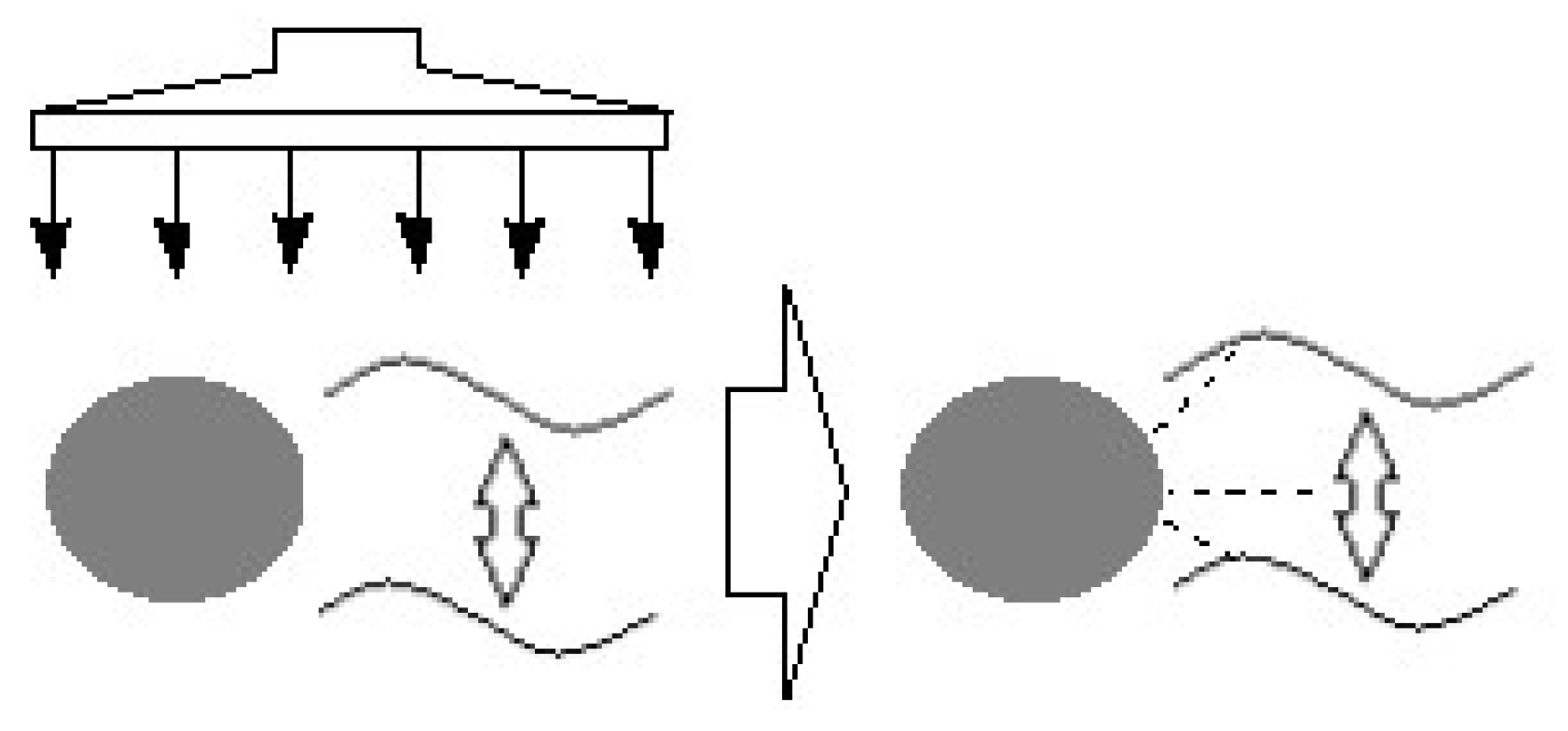
Starting from the primary radiation effects consisting of the scission of organic molecules and crosslinking of free radicals in both blended components on the one hand, and the mitigation of oxidative degradation by the electronic interaction between the structural gaps existing on the particle surface and the unpaired electrons of generated radicals on the other hand, Figure 9 illustrates how the oxidation is delayed in the degrading polymer.

4. Discussion and Perspectives

The diminution of material life span dominates the approval mechanism for thermally processed materials, which becomes a barrier for certain applications, especially in medicine and nuclear fields. The control of the stability degree defines the material quality, whereas the incorporated phases determines the product functionality. The trapping of radicals by the present inorganic fraction may change the kinetics of degradation [39]. The oxidation-prone polymer substrate induces the evolution of the degradation state by the energetic barrier, and material performances become worse (Figure 3). The enhancement of durability by the addition of silane ensures protection against aging, whereby the cohabitation filler/additive limits the progress of quality decay by further structuration [18,22]. The involvement of the silane fraction is conditioned by interface activity, which introduces new intermolecular bridges constraining the extension of oxidation sensitivity and the migration of reactive radicals (Figure 5). The studied systems demonstrate the positive interaction between blending components, which optimizes the material performances of degrading polymer composites subjected to special conditions of operation [59].
The coupling of a suitable inorganic compound with silanes guarantees safe operation during rapid damage. The simultaneous incorporation of the appropriate inorganic particles into the structure of polymer composites and the addition of silanes ensures the preservation of the quality of materials by chemical interaction, and the contributions of both phases prevent the dropping down of oxidizing substrates [62].
The application of this stabilization protocol is valid for any polymer that may be subjected to molecular scission, and the intermediate radicals are able to be joined to the inorganic particle surface by the silane additive [63]. The development of high-performance composites based on the specificity of silanes to prepare compatibilized polymer composites is the unique interfacial functionalization by which the migration barrier reduces the amount of diffused oxygen and increases the material durability by the mitigation of the degradation progress. The silane-assisted fabrication of composites containing nanofillers is possible due to the inorganic phase.

5. Conclusions

The improvement of the thermal strength of SEBS/BaTiO3/GPTMS composites becomes an important sequence in the preparation of composites as demonstrated by the measurements of chemiluminescence emissions of aged samples. The progress of oxidative aging is slowed down by the ability to immobilize radicals, which involves an increase in the activation energy of oxidative degradation. The deactivation of radicals with respect to the oxidation reaction is explained by the superficial electronic interaction between barium titanate particles and the radicals that are formed during thermolysis. The simultaneous action of titanate and silane extends the inertness of SEBS on its oxidation by withdrawing radicals from the developing degradation chains in the particle outer boundary zone. The activation energies required for the thermal aging of pristine composites maintain higher values in the presence of BaTiO3, silane, and GPTMS due to the formation of stable states of molecular fragments by scavenging on the filler particle surface and the bridging of polymer chains by means of silane moieties. The addition of higher loadings of barium titanate enlarges the temperature range where the polymer remains somewhat unchanged. The covalent coupling of silane molecules is proved by enlarging the period of inertness by five when titanate is present and six when coupled titanate/silane acts efficiently. These studied formulations define a preparative procedure for recycling polymer wastes, where the peroxidized fraction may be efficiently blocked by the cooperation of these two compounds. The chemiluminescence measurements provide reliable information, which is in good agreement with other complementary studies. The presented results may be taken into consideration for the evaluation of environmental consequences of PLA products operating under varying conditions.

Author Contributions

Conceptualization, T.Z.; methodology, T.Z. and R.M.; software, R.M.; validation, T.Z., R.M., T.B. and I.B.; formal analysis, T.B.; investigation, T.Z., R.M., T.B. and I.B.; data curation, R.M. and T.B.; writing—original draft preparation, T.Z.; writing—review and editing, I.B.; visualization, R.M.; supervision, T.Z. All authors have read and agreed to the published version of the manuscript.

Funding

This research received no external funding.

Institutional Review Board Statement

Not applicable.

Data Availability Statement

The CL data presented in figures within the manuscript are Origin graphs that can be visualized or analyzed by double-clicking the graphs on the word version of manuscript.

Conflicts of Interest

Authors Traian Zaharescu, Tunde Borbath and Istvan Borbath were employed by the company ROSEAL SA. The remaining authors declare that the research was conducted in the absence of any commercial or financial relationships that could be construed as a potential conflict of interest.

Abbreviations

The following abbreviations are used in this manuscript:
Al2O3aluminum trioxide
BaTiO3barium titanate
CLchemiluminescence
EPDMethylene–propylene–diene monomer
EPRethylene–propylene rubber
FTIRFourier Transform Infrared spectroscopy
GPTMS3-glycidoxypropyltrimethoxysilane
MAMTMSmethacryloxymethyltrimethoxysilane
NMRNuclear Magnetic Resonance spectroscopy
OIToxidation induction time
OOTonset oxidation temperature
PEOpoly(ethylene oxide)
PLApoly(lactic acid)
PMMApoly(methyl methacrylate)
PPpolypropylene
PVApoly(ethylene vinyl alcohol)
PVCpoly(vinyl chloride)
SEBSstyrene–ethylene–butylene–styrene
SiO2silicon dioxide
UHMWPEultrahigh molecular weight polyethylene
VTESvinyltriethoxysilane
wt%weight percentage

References

  1. Pielichowski, K.; Njuguna, J.; Majka, T.M. Thermal Degradation of Polymeric Materials; Elsevier: New York, NY, USA, 2023. [Google Scholar]
  2. Yang, Y.-L.; Wang, S.-Q.; Zou, Y.-C.; Wen, L.; Huang, L.; Chen, G.-L.; Zhu, J.-Q.; Ye, Z.-Y.; Xie, E.-Y.; Zhao, Q.-Y.; et al. High-temperature oxidation-resistant composite coatings for extreme environments: Material systems, design strategies, preparation technologies, performance characterizations, and research challenges. J. Compos. Sci. 2026, 10, 51. [Google Scholar]
  3. Jesson, D.A.; Watts, J.F. The interface and interphase in polymer matrix composites: Effect on mechanical properties and methods for identification. Polym. Rev. 2012, 52, 321–354. [Google Scholar] [CrossRef]
  4. Lagaron, J.M.; Catalá, R.; Gavara, R. Structural characteristics defining high barrier properties in polymeric materials. Mater. Sci. Technol. 2004, 20, 1–7. [Google Scholar] [CrossRef]
  5. Li, H.; Wu, H.; Wang, C.; Zheng, J. Styrene–butadiene–styrene/graphene nanocomposites with improved thermal oxidation stability. Polym. Int. 2024, 73, 446–453. [Google Scholar] [CrossRef]
  6. Starkova, O.; Gagani, A.I.; Karl, C.W.; Rocha, I.B.C.M.; Burlakovs, J.; Krauklis, A.E. Modelling of environmental ageing of polymers and polymer composites—Durability prediction methods. Polymers 2022, 14, 907. [Google Scholar] [CrossRef] [PubMed]
  7. Pritchard, A.; Fuentes, H.; Santosa, J.; Gonzalez, M.; Garan, J.; Bartling, V.; Nelson, K.; Dato, A.; Monson, T.; Van Ginhoven, R. Understanding surfaces and interfaces in nanocomposites of silicone and barium titanate through experiments and modeling. MRS Commun. 2024, 14, 1319–1327. [Google Scholar] [CrossRef]
  8. Kumar, A.; Naskar, S.; Mandal, D. Single material with multiple interfaces: A key one dimensional barium titanate filler for enhancing energy density in polymer nanocomposite. Surf. Interfaces 2023, 38, 102863. [Google Scholar] [CrossRef]
  9. Roy, A.; Panda, S.; Gupta, J.; Anu; Singh, R.P.; Deeksha; Kour, P.; Sharma, M.P.; Yadav, K. Effects of interfacial interactions on structural, optical, thermal degradation properties and photocatalytic activity of low-density polyethylene/BaTiO3 nanocomposite. Polymer 2023, 276, 125932. [Google Scholar] [CrossRef]
  10. Darabut, A.M.; Lobko, Y.; Rodríguez, M.G.; Kopecky, V., Jr.; Dinhová, T.N.; Mazur, M.; Dopita, M.; Kalinovych, V.; Yakovlev, Y.; Matolínová, I. Study of surface interactions between graphite oxide and epoxy resin components. Surf. Interfaces 2025, 65, 106491. [Google Scholar] [CrossRef]
  11. Tusher, M.H.; Imam, A.; Khatun, M.A. (Eds.) Polymer composites: Its processing, advantages, properties and applications. In Hybrid Composite Materials. Experimental and Theoretical Analysis; Springer: Berlin/Heidelberg, Germany, 2024; pp. 45–65. [Google Scholar]
  12. Idumah, C.I.; Obele, C.M. Understanding interfacial influence on properties of polymer nanocomposites. Surf. Interfaces 2021, 22, 100879. [Google Scholar] [CrossRef]
  13. Muhammed Shameem, M.; Sasikanth, S.M.; Annamalai, R.; Ganapathi Raman, R. A brief review on polymer nanocomposites and its applications. Mater. Today Proc. 2021, 45, 2536–2539. [Google Scholar] [CrossRef]
  14. Jeder, K.; Bouhamed, A.; Aloulou, J.; Dhifallah, N.; Johrmann, N.; Wunderle, B.; Khemakhem, H.; Kanoun, O. Tailoring the properties of lead-free BZT-based polymer composites for the realization of efficient and robust nanogenerator. Surf. Interfaces 2025, 72, 107371. [Google Scholar] [CrossRef]
  15. Bukvić, M.; Milojević, S.; Gajević, S.; Ðordević, M.; Stojanović, B. Production technologies and application of polymer composites in engineering: A review. Polymers 2025, 17, 2187. [Google Scholar] [CrossRef] [PubMed]
  16. Wu, C.; Xu, F.; Wang, H.; Liu, H.; Feng Yan, F.; Ma, C. Technologies of polymer composites—A review. Polymers 2023, 15, 712. [Google Scholar] [CrossRef] [PubMed]
  17. Mayana, P.; Raviprakash, A.V.; Mohamed, A.S.; Raffi, M. Erosion wear behavior of polymer based hybrid composites—A review. Mater. Today Proc. 2023, 77, 424–429. [Google Scholar] [CrossRef]
  18. Pape, P.G.; Plueddemann, E.P. Methods for improving the performance of silane coupling agents. J. Adhes. Sci. Technol. 1991, 5, 831–842. [Google Scholar] [CrossRef]
  19. Varghese, A.; Sunajadevi, K.R.P.; Pinheiro, D. Composite revolution: Unleashing the potential of polymers in sustainable energy and environmental applications. Energ. Adv. 2025, 4, 743–762. [Google Scholar] [CrossRef]
  20. Geyer, B.; Röhner, S.; Lorenz, G.; Kandelbauer, A. Improved thermostability and interfacial matching of nanoclay filler and ethylene vinyl alcohol matrix by silane-modification. J. Appl. Polym. Sci. 2015, 132, 41227. [Google Scholar]
  21. Sombatsompop, N.; Chaochanchaikul, K. Average mixing torque, tensile and impact properties, and thermal stability of poly(vinyl chloride)/sawdust composites with different silane coupling agents. J. Appl. Polym. Sci. 2005, 96, 213–221. [Google Scholar]
  22. DeArmitt, C.; Rothon, R. Dispersants and coupling agents. In Applied Plastics Engineering Handbook; Processing and Materials; Kutz, M., Ed.; Elsevier: London, UK, 2011; pp. 441–454. [Google Scholar]
  23. Cao, J.; Wang, Y.; Liu, G.; Shang, Q.; Wang, B.; Sun, J.; Bai, Y.; Liu, M.; Yu, F.; Ma, G.; et al. Surface modification of nano-Al2O3 with silane coupling agent and its effect on the compressive strength of PI/Al2O3 composites. Coatings 2024, 14, 27. [Google Scholar]
  24. Truong, T.L.; Larsen, A.; Holme, B.; Diplas, S.; Hansen, F.K.; Roots, J. Dispersibility of silane-functionalized alumina nanoparticles in syndiotactic polypropylene. Surf. Interface Anal. 2010, 42, 1046–1049. [Google Scholar]
  25. Nishiyama, N.; Shick, R.; Ishida, H. Adsorption behavior of a silane coupling agent on colloidal silica studied by gel permeation chromatography. J. Colloid Interf. Sci. 1991, 143, 146–156. [Google Scholar] [CrossRef]
  26. Ortega, A.; Toral, E.; Burillo, G.; García-Uriostegui, L. Gamma radiation as an approach for the synthesis of silane-crosslinked xanthan gum films for drug delivery applications. Mater. Today Commun. 2025, 46, 112627. [Google Scholar] [CrossRef]
  27. Howarter, J.A.; Youngblood, J.P. Surface modification of polymers with 3-aminopropyltriethoxysilane as a general pretreatment for controlled wettability. Macromolecules 2007, 40, 1128–1139. [Google Scholar] [CrossRef]
  28. Karna, N.; Borse, P.Y.; Mhaske, S.T. Advancing polyurethane acrylate coating with silane termination: Influence on structural and functional performance. Polymer 2025, 324, 128263. [Google Scholar] [CrossRef]
  29. Zamperlin, N.; Bottacini, A.; Callone, E.; Pegoretti, A.; Fontana, M.; Dirè, S. Barium titanate functionalization with organosilanes: Effect on particle compatibility and permittivity in nanocomposites. Molecules 2022, 27, 6499. [Google Scholar] [CrossRef] [PubMed]
  30. Ismail, A.M.; Gad Elmoulaa, N.B.; El Shazly, R.M.; Ashry, A. Impact of BaTiO3 on the structural, optical, and nuclear radiation shielding parameters of poly(methyl methacrylate) nanocomposites as transparent shielding material. Radiat. Phys. Chem. 2023, 212, 111100. [Google Scholar] [CrossRef]
  31. Chang, Q.; Guo, S.; Zhang, X. Radiation shielding polymer composites: Ray-interaction mechanism, structural design, manufacture and biomedical applications. Mater. Des. 2023, 223, 112253. [Google Scholar]
  32. Hou, Z.; Cao, X.; Bai, Y.; Jiao, X.; He, X.; Dai, Y.; Xu, F. SEBS effect on 60Co radiation resistance behavior of PP/HDPE matrix for medical device applications. Radiat. Phys. Chem. 2021, 184, 109442. [Google Scholar] [CrossRef]
  33. Zaharescu, T.; Borbath, T.; Borbath, I.; Simion, E.; Mirea, R. Thermal stability of styrene block copolymers for nuclear applications. Radiat. Phys. Chem. 2024, 223, 111828. [Google Scholar] [CrossRef]
  34. Kellogg, R.E. Mechanism of chemiluminescence from peroxy radicals. J. Am. Chem. Soc. 1969, 91, 5433–5436. [Google Scholar] [CrossRef]
  35. Jayalath, S.; Herath, M.; Epaarachchi, J.; Trifoni, E.; Gdoutos, E.E.; Fang, L. Durability and long-term behaviour of shape memory polymers and composites for the space industry—A review of current status and future perspectives. Polym. Degrad. Stab. 2023, 211, 110297. [Google Scholar]
  36. Parvez, M.S.; Rahman, M.M.; Misnon, I.I.; Samykano, M. Polyaniline hydrogel in flexible energy systems: Synthesis techniques, hybrid architecture, sustainability and techno-economic analysis. Renew. Sust. Energ. Rev. 2025, 218, 115784. [Google Scholar] [CrossRef]
  37. Nho, Y.-C.; Sohn, J.-Y.; Shin, J.; Park, J.-S.; Lin, Y.-M.; Kang, P.-H. Preparation of nanocomposite γ-Al2O3/polyethylene separator crosslinked by electron beam irradiation for lithium secondary battery. Radiat. Phys. Chem. 2017, 132, 65–70. [Google Scholar] [CrossRef]
  38. Cai, E.; Peng, S.; Lin, Q. Superior piezoelectricity in lead-free barium titanate piezoceramics. J. Mater. 2024, 10, 694–706. [Google Scholar] [CrossRef]
  39. Zaharescu, T.; Borbath, T.; Borbath, I. The contribution of BaTiO3 to the stability improvement of ethylene-propylene-diene rubber. Part III.—Comparative assay: EPDM vs EPR. Radiat. Phys. Chem. 2024, 218, 111595. [Google Scholar]
  40. Luo, Y.-R. Chemical Bond Energy; CRC Press: Boca Raton, FL, USA, 2007. [Google Scholar]
  41. Baur, S.I.; Easteal, A.J. Improved photoprotection of wood by chemical modification with silanes: NMR and ESR studies. Polym. Adv. Technol. 2013, 24, 97–103. [Google Scholar]
  42. Connell, L.S.; Gabrielli, L.; Mahoni, O.; Russo, L.; Cipolla, L.; Jones, J.R. Functionalizing natural polymers with alkoxysilane coupling agents: Reacting 3-glycidoxypropyl trimethoxysilane with poly(γ-glutamic acid) and gelatin. Polym. Chem. 2017, 8, 1095–1103. [Google Scholar]
  43. Shafiq, M.; Mehmood, M.S.; Yasin, T. On the structural and physicochemical properties of gamma irradiated UHMWPE/silane hybrid. Mater. Chem. Phys. 2013, 143, 425–433. [Google Scholar] [CrossRef]
  44. Sirisinha, K.; Kamphunthong, W. Rheological analysis as a means for determining the silane crosslink network structure and content in crosslinked polymer composites. Polym. Test. 2009, 28, 636–641. [Google Scholar] [CrossRef]
  45. Cheng, J.; Zhang, X.; Gao, K.; Wang, K.; Zhang, B.; Sun, X.; Peng, C.; Zhang, L.; Wang, X.; Pang, S. In situ silane crosslinking enables coordination and hydrogen bonding synergistic passivation for stable perovskite solar cells. Chem. Eng. J. 2025, 520, 166330. [Google Scholar] [CrossRef]
  46. Zaharescu, T. Stabilization effects of EPDM by doped inorganic filler for space and terrestrial applications. Mater. Chem. Phys. 2019, 234, 102–109. [Google Scholar]
  47. Kim, S.; Lee, W.; Hwang, T.; Park, J.; Lee, N.; Su, P.-C.; Kim, J. Phase change material composites in a clay-like structure featuring GPTMS and butylated epoxy for heat buffering and thermal interface performance. J. Mater. Res. Technol. 2025, 39, 5573–5581. [Google Scholar] [CrossRef]
  48. Bumbac, M.; Zaharescu, T.; Nicolescu, C.M.; Borbath, T.; Borbath, I. Chemiluminescence-based evaluation of styrene block copolymers’ recyclability. Sci. Rep. 2024, 14, 28221. [Google Scholar] [CrossRef] [PubMed]
  49. Umashankar, K.; Kamala Vasanth, G.; Krishna Prasad, R. Micromechanical modeling, thermal, and dielectric studies of poly (methyl methacrylate)-barium titanate composites. Int. J. Polym. Anal. Charact. 2024, 29, 521–532. [Google Scholar] [CrossRef]
  50. Schumacher, B.; Geßwein, H.; Haußelt, J.; Hanemann, T. Temperature treatment of nano-scaled barium titanate filler to improve the dielectric properties of high-k polymer based composites. Microelectron. Eng. 2010, 87, 1978–1983. [Google Scholar]
  51. Ibrahim, S.W.; Hamad, T.I.; Haider, J. Biological properties of polycaprolactone and barium titanate composite in biomedical applications. Sci. Prog. 2023, 106, 00368504231215942. [Google Scholar] [CrossRef] [PubMed]
  52. Hannachi, E.; Sayyed, M.I.; Slimani, Y.; Almessiere, M.A.; Baykal, A.; Elsafi, M. Experimental study on the radiation protecting ability of composites containing barium titanate and nanospinel ferrite. Radiat. Phys. Chem. 2023, 212, 111126. [Google Scholar] [CrossRef]
  53. Rotaru, R.; Furtună, M.E.; Ungureanu, E.; Sacarescu, L. Polysilane–barium titanate polymeric composite obtained through ultrasonication. Inorganics 2024, 12, 213. [Google Scholar] [CrossRef]
  54. Jeon, E.J.; Haidar, S.; Helmers, L.; Kwade, A.; Garnweitner, G. Ion-conductiv vs. non-ion-conductive ceramic fillers in silane-linked polyethylene oxide-based composite polymer electrolytes with high room-temperature ionic conductivity. Energy Adv. 2024, 3, 2328–2438. [Google Scholar] [CrossRef]
  55. Arman, N.; Tekay, E.; Şen, S. Preparation of high-strength SEBS nanocomposites reinforced with halloysite nanotube: Effect of SEBS-g-MA compatibilizer. J. Thermopl. Comp. Mater. 2019, 33, 1336–1357. [Google Scholar]
  56. Denac, M.; Šmit, I.; Musil, V. Polypropylene/talc/SEBS (SEBS-g-MA) composites. Part 1. Structure. Compos. Part A 2005, 36, 1094–1101. [Google Scholar] [CrossRef]
  57. Xie, Y.; Hill, C.A.S.; Xiao, Z.; Militz, H.; Mai, C. Silane coupling agents used for natural fiber/polymer composites: A review. Compos. Part A Appl. Sci. Manuf. 2010, 41, 806–819. [Google Scholar] [CrossRef]
  58. Wu, H.F.; Dwight, D.W.; Huff, N.T. Effects of silane coupling agents on the interphase and performance of glass-fiber-reinforced polymer composites. Compos. Sci. Technol. 1997, 57, 975–983. [Google Scholar]
  59. Yang, M.; Su, J.; Zheng, Y.; Fang, C.; Lei, W.; Li, L. Effect of different silane coupling agents on properties of waste corrugated paper fiber/polylactic acid composites. Polymers 2023, 15, 3525. [Google Scholar] [CrossRef] [PubMed]
  60. Shokoohi, S.; Arefazar, A.; Khosrokhavar, R. Silane coupling agents in polymer-based reinforced composites: A review. J. Reinf. Plast. Compos. 2008, 14, 473–485. [Google Scholar] [CrossRef]
  61. Shivhare, H. Ftir Spectroscopy of (3glycidoxypropyl)trimethoxysilane (Gptms): Insights into molecular structure and properties. Mater. Today Chem. 2025. [Google Scholar] [CrossRef]
  62. Ganguly, S. Fundamentals of aging and degradation of polymer nanocomposites. In Aging and Degradation of Polymer Nanocomposites; Sohel, M.A., Gupta, A.S., Thomas, S., Eds.; Woodhead Publishing: Cambridge, UK, 2025; pp. 39–63. [Google Scholar]
  63. Sundriyal, P.; Sahu, M.; Prakash, M.; Bhattacharya, S. Long-term surface modification of PEEK polymer using plasma and PEG silane treatment. Surf. Interfaces 2021, 25, 101253. [Google Scholar] [CrossRef]
Figure 1. Nonisothermal chemiluminescence spectra recorded on unaged SEBS/Ba TiO3 1 wt% (1) and SEBS/Ba TiO3 3 wt% (2) at the heating rate of 5 °C min−1.
Jcs 10 00355 g001
Figure 2. Molecular structures of organic components in the investigated composite samples.
Jcs 10 00355 g002
Figure 3. Isothermal chemiluminescence spectra of various SEBS-based specimens. Composition: (a) neat SEBS; (b) SEBS/BaTiO3 1 wt%; (c) SEBS/BaTiO3 1 wt%/GPTMS 1 wt%. Testing temperatures: (1) 170 °C, (2) 180 °C, (3) 190 °C.
Jcs 10 00355 g003
Figure 4. Nonisothermal chemiluminescence spectra recorded on pristine SEBS-based samples. Heating rate: β = 5 °C min−1. (1) pristine SEBS, (2) SEBS/BaTiO3 1 wt%, (3) SEBS/BaTiO3 3 wt%.
Jcs 10 00355 g004
Figure 5. Nonisothermal comparative view of the nonisothermal chemiluminescence spectra recorded for several aged SEBS composite samples at 80 °C over 32 h. Heating rate: (a) 5 °C min−1, (b) 10 °C min−1; (1) neat polymer, (2) polymer + titanate (1 wt%), (3) polymer + titanate (1 wt%) + silane (1 wt%).
Jcs 10 00355 g005
Figure 6. (a) The nonisothermal chemiluminescence spectra; (b) corresponding OOT values of thermal stability of SEBS composites after their aging at 80 °C for 16 h. Heating rate: β = 15 °C min−1.
Jcs 10 00355 g006
Figure 7. (a) Nonisothermal chemiluminescence spectra (β = 20 °C min−1) recorded on neat SEBS/Ba TiO3 1 wt% (1) and SEBS/Ba TiO3 3 wt% (2) aged for 16 h at 80 °C. (b) Histogram of the corresponding OIT values. Heating rate: β = 20 °C min−1.
Jcs 10 00355 g007
Figure 8. Histogram of OOT determined for unaged SEBS-based composites.
Jcs 10 00355 g008
Figure 9. The bonding illustration of SEBS and silane binder molecules on the surface of inorganic particles.
Jcs 10 00355 g009
Table 1. The calculated values of required activation energy during thermal oxidation.
SampleOxidation Induction Time (OIT)
(min)
Correlation Factor
(R2)
Activation Energy
(kJ mol−1)
170 °C180 °C190 °C
neat SEBS2115100.9977880
SEBS/BaTiO3 1 wt%18097770.9702683
SEBS/BaTiO3 1 wt%/GPTMS 1 wt%270135990.97929109
Disclaimer/Publisher’s Note: The statements, opinions and data contained in all publications are solely those of the individual author(s) and contributor(s) and not of MDPI and/or the editor(s). MDPI and/or the editor(s) disclaim responsibility for any injury to people or property resulting from any ideas, methods, instructions or products referred to in the content.