

Experimental Study on Permeability and Infusion Simulation of Automatically Placed Dry Fiber Preforms
 , ,
, ,
Abstract
1. Introduction
2. Materials and Methods
2.1. Materials
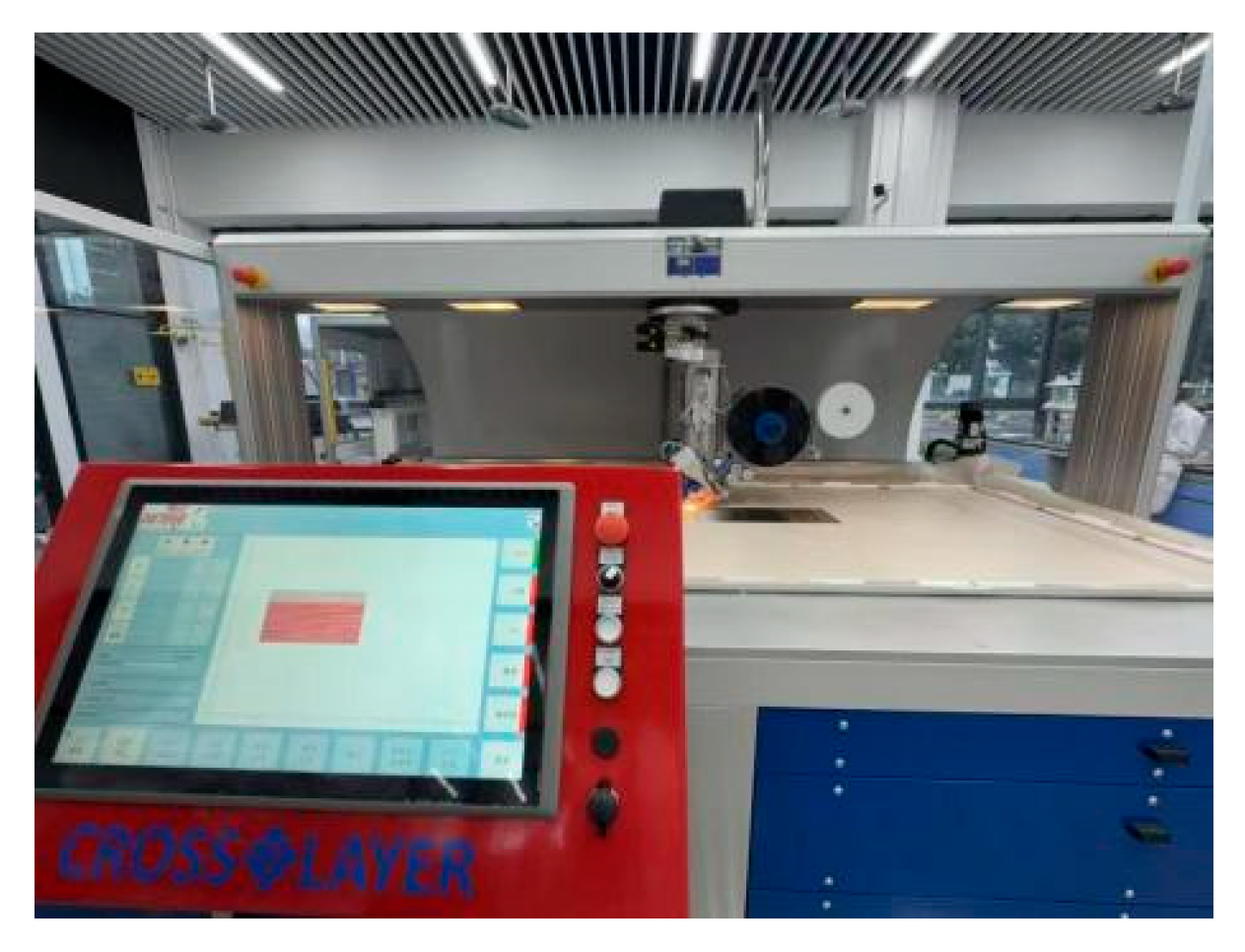
2.2. Main Instruments and Equipment
2.3. Theoretical Model for Radial and Out-of-Plane Permeability
2.4. Preparation of Dry Fiber Preforms
2.4.1. Preparation of Dry Fiber Preforms for Three-Dimensional Permeability Measurement
2.4.2. Preparation of Dry Fiber Preforms for Wing Skin
2.5. Determination of Three-Dimensional Permeability of Dry Fiber Preforms
2.5.1. Determination of In-Plane Permeability of Dry Fiber Preforms
2.5.2. Determination of Out-of-Plane Permeability of Dry Fiber Preforms
3. Results
3.1. Results of Three-Dimensional Permeability Determination for Dry Fiber Preforms
3.1.1. Results of In-Plane Permeability Determination
3.1.2. Results of Out-of-Plane Permeability Determination
3.2. Numerical Simulation of Resin Infusion Process for Liquid Molding of Wing Skin
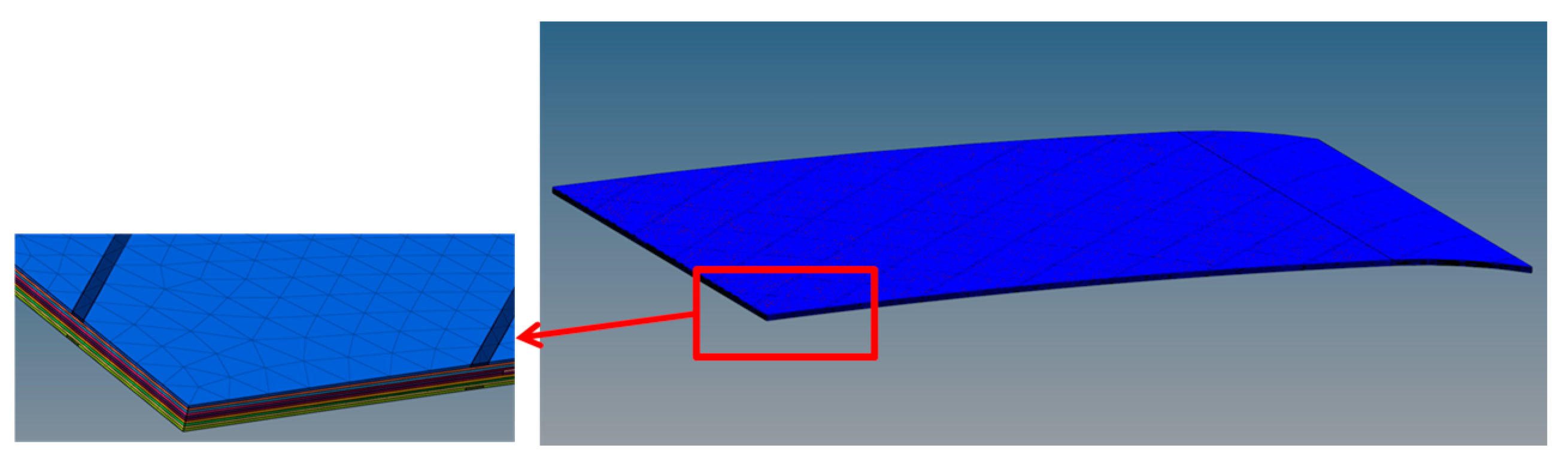
3.2.1. Establishment of Wing Skin Model
3.2.2. Material Properties
3.2.3. Design of Resin Injection Scheme
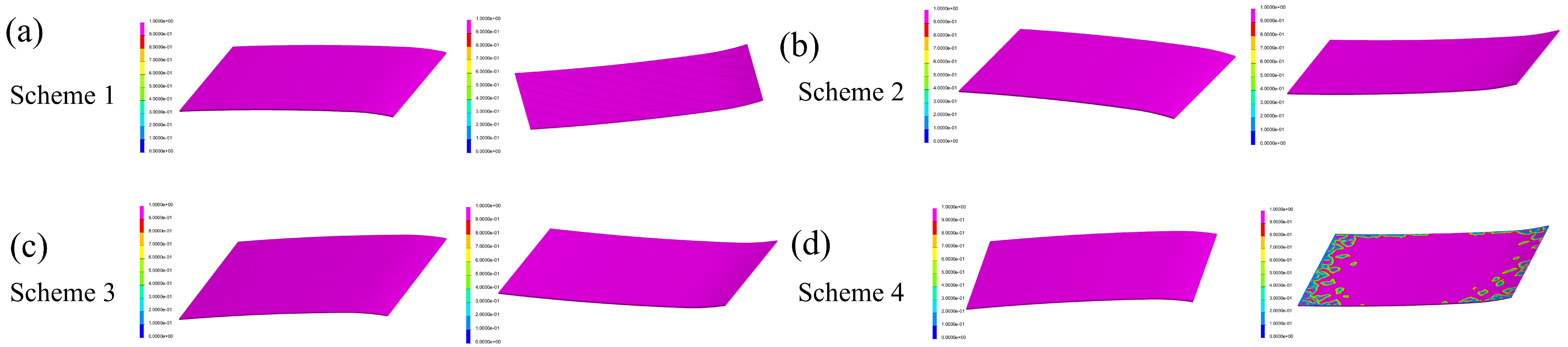
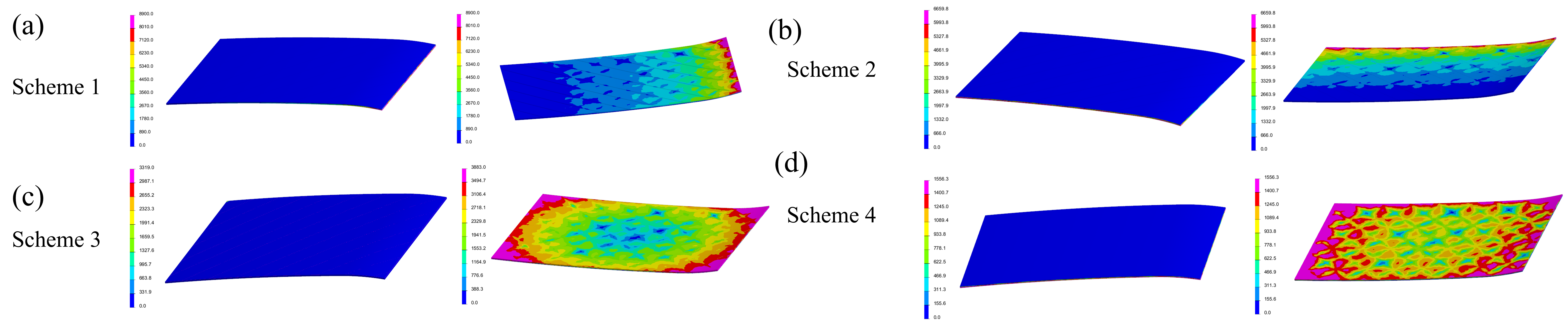
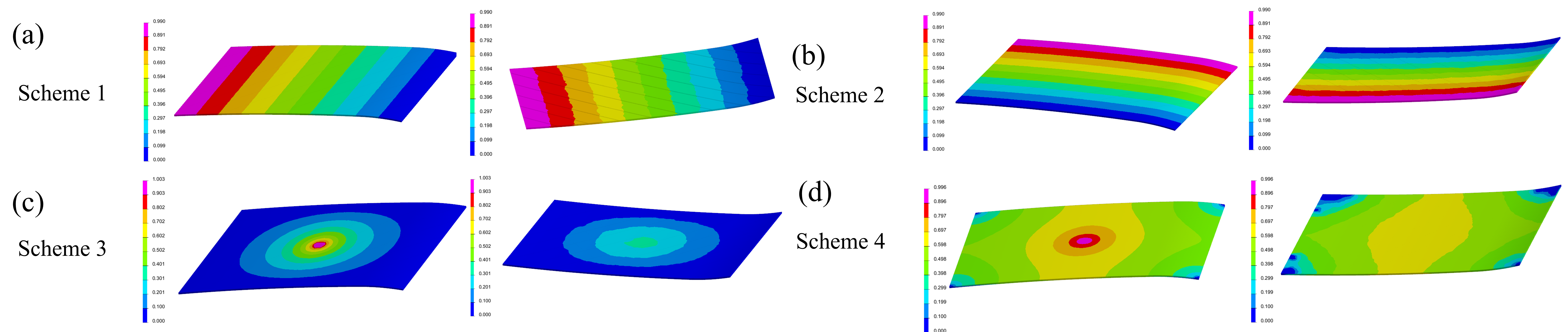
3.2.4. Analysis of Simulation Results for Wing Skin
3.3. Molding and Analysis of Wing Skin
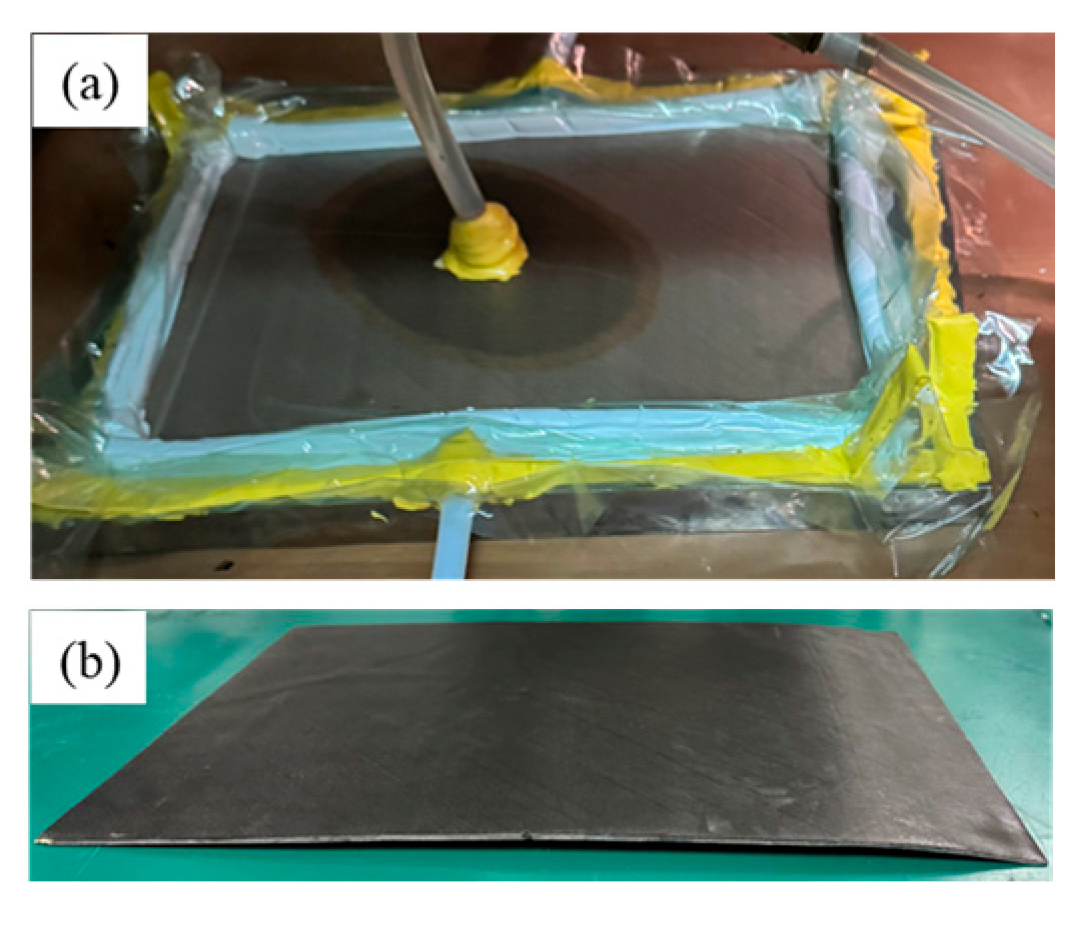
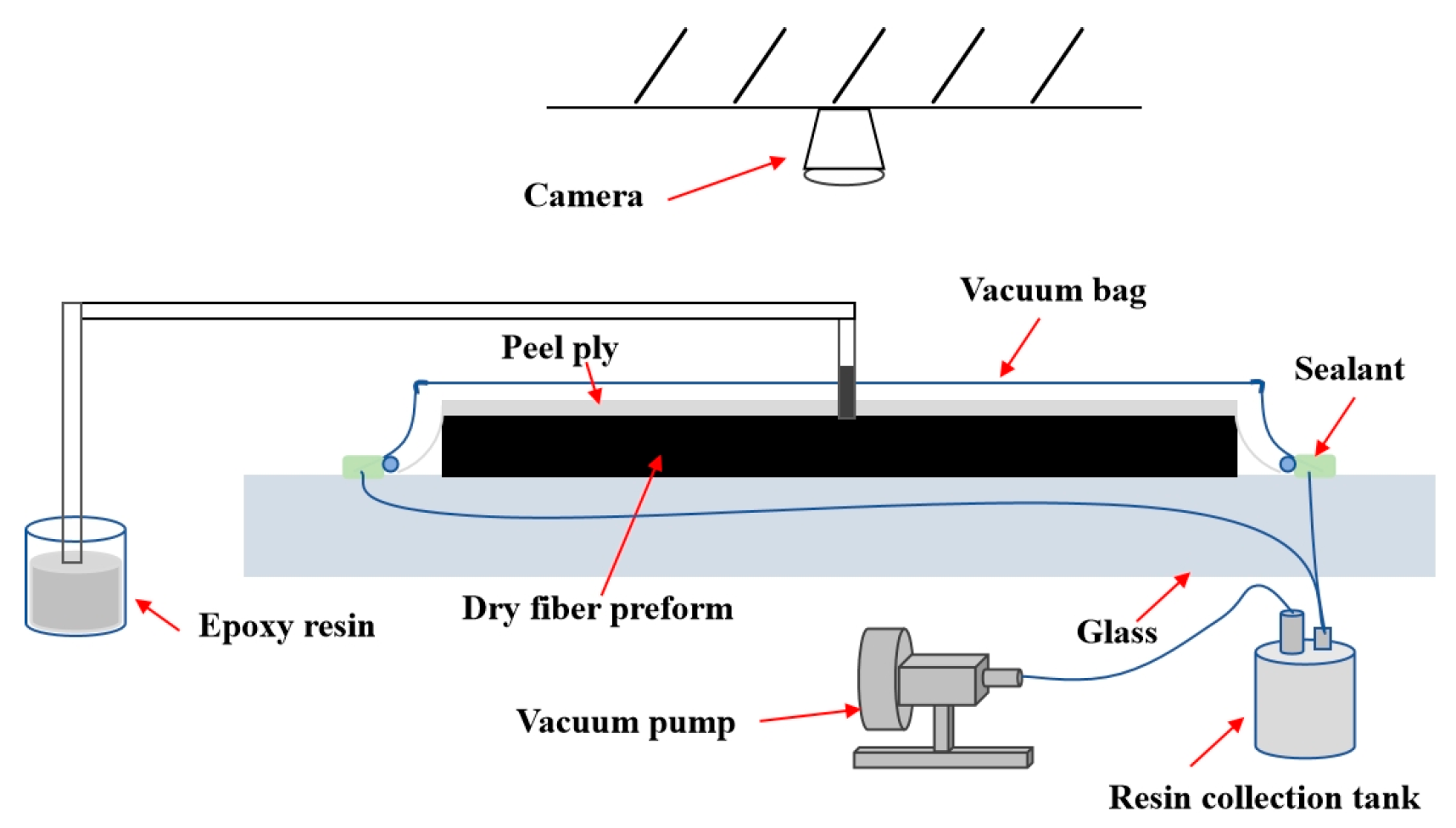
3.3.1. Process Flow of Vacuum-Assisted Resin Infusion (VARI) for Wing Skin Molding
3.3.2. Experimental Analysis of Vacuum-Assisted Resin Infusion (VARI) for Wing Skin
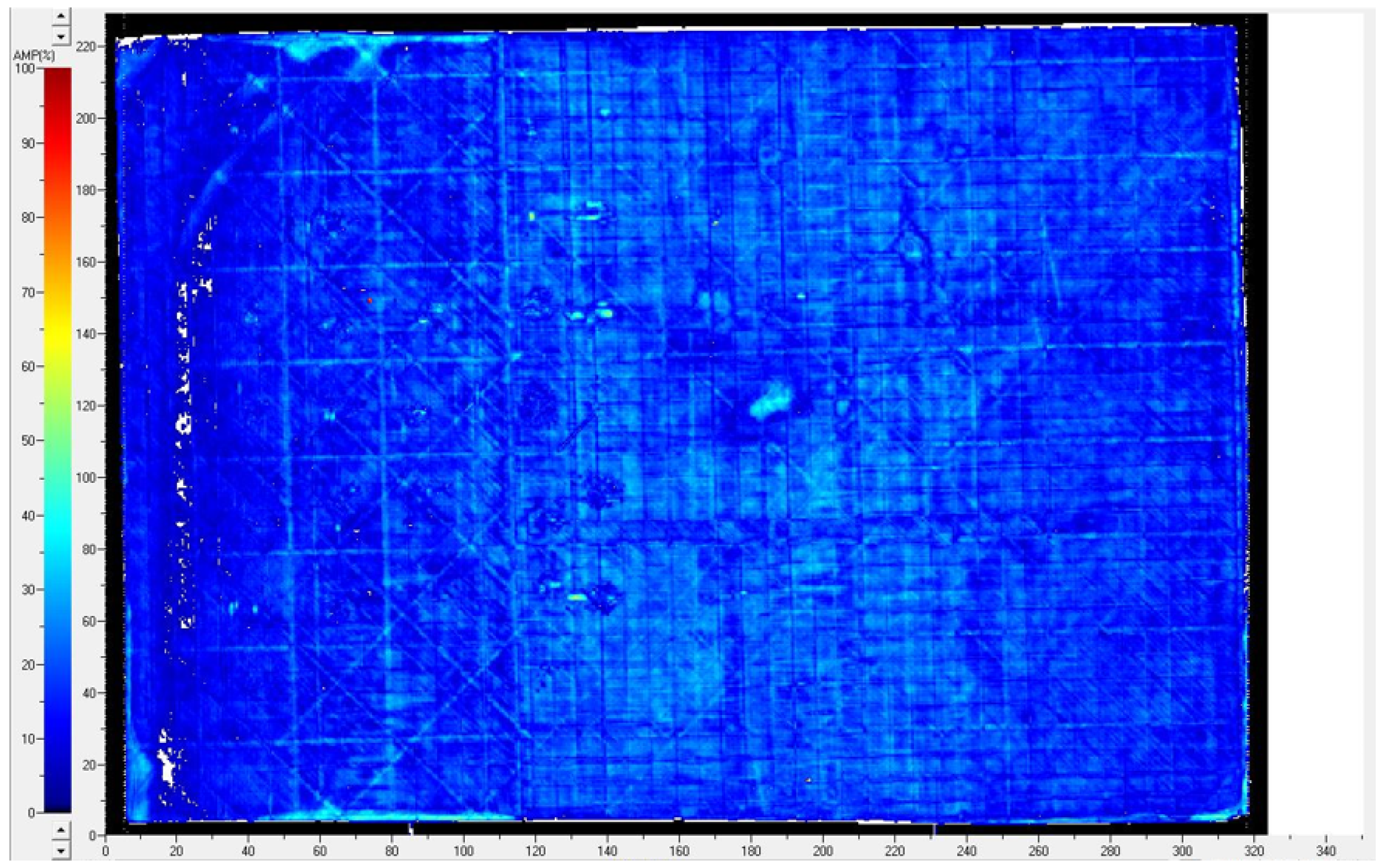
3.3.3. Non-Destructive Testing of the Wing Skin
4. Conclusions
- (1)
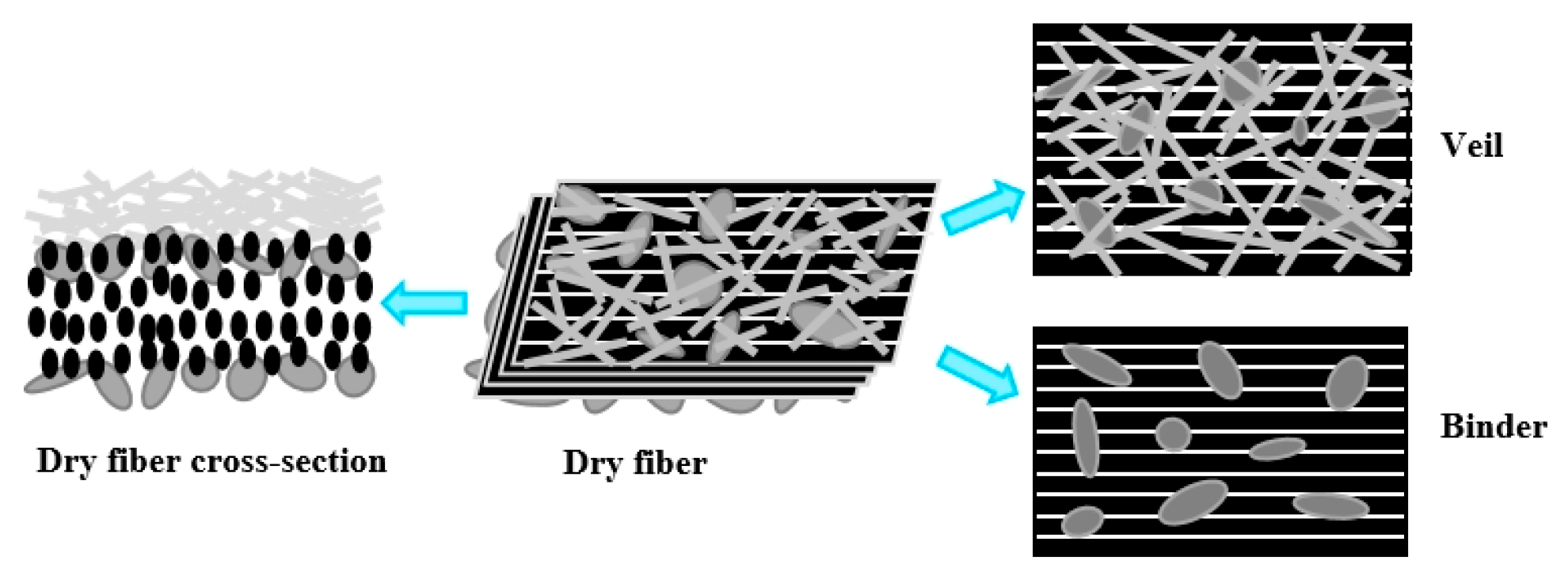
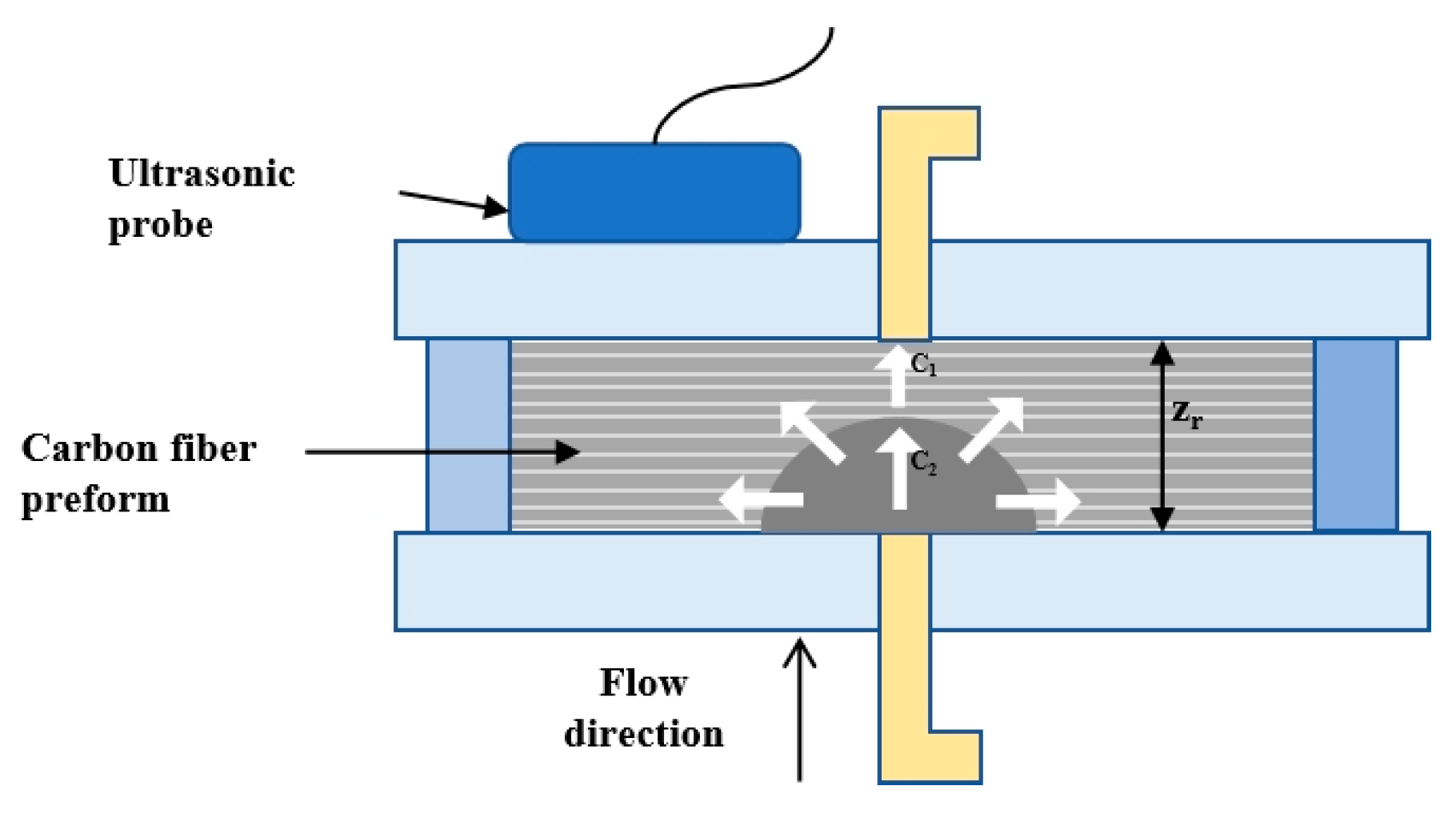
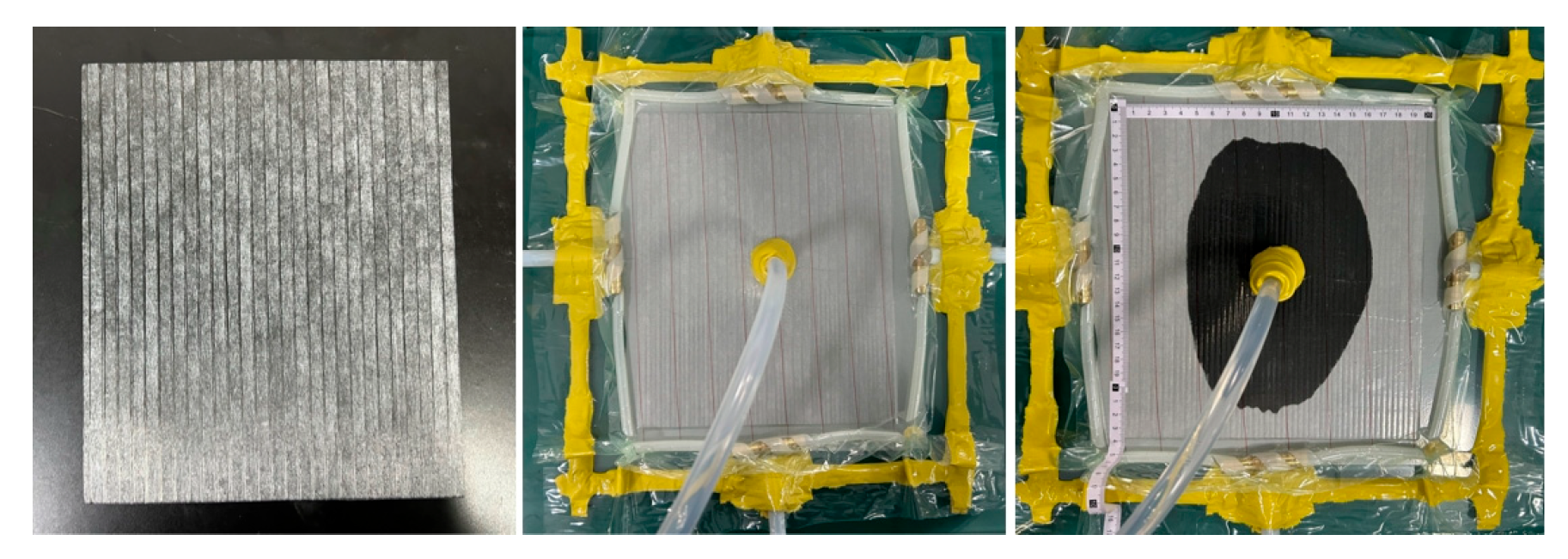
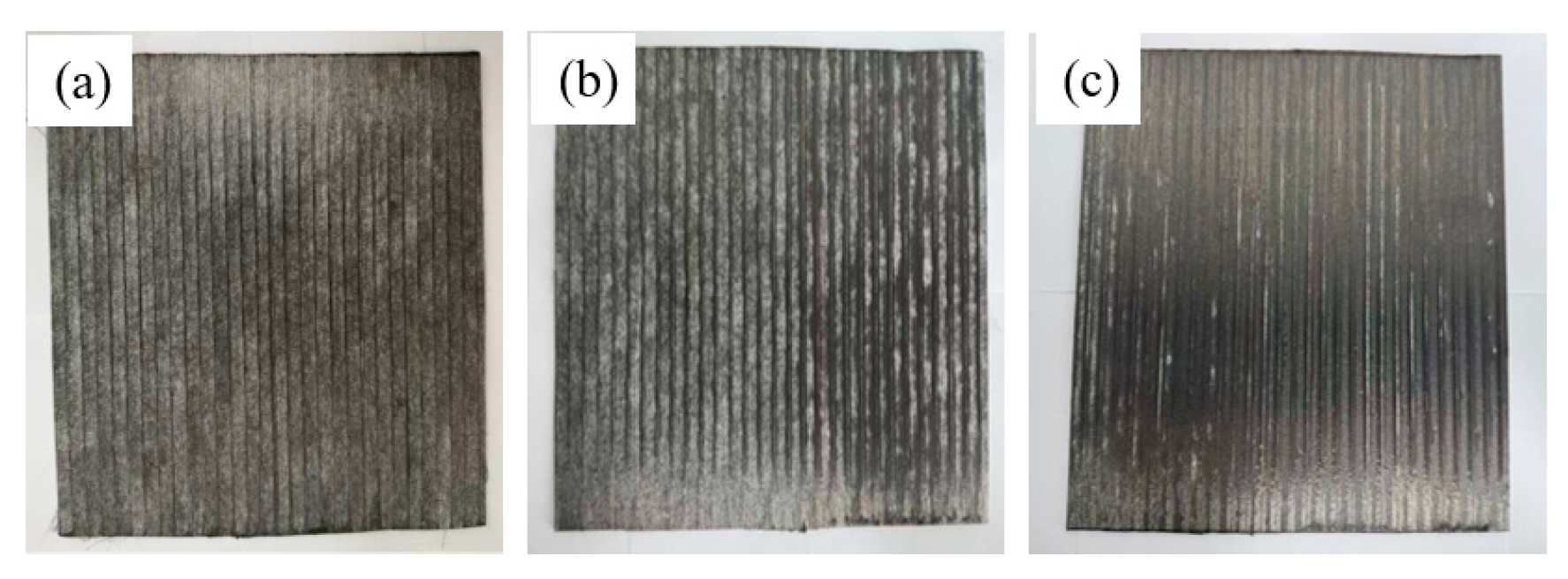
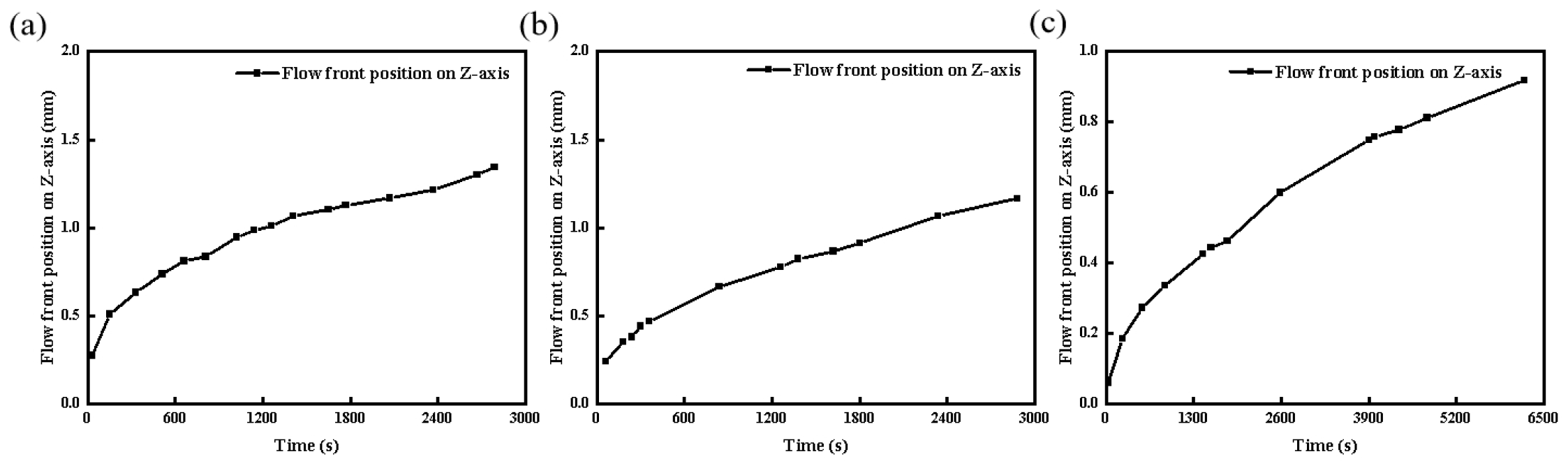
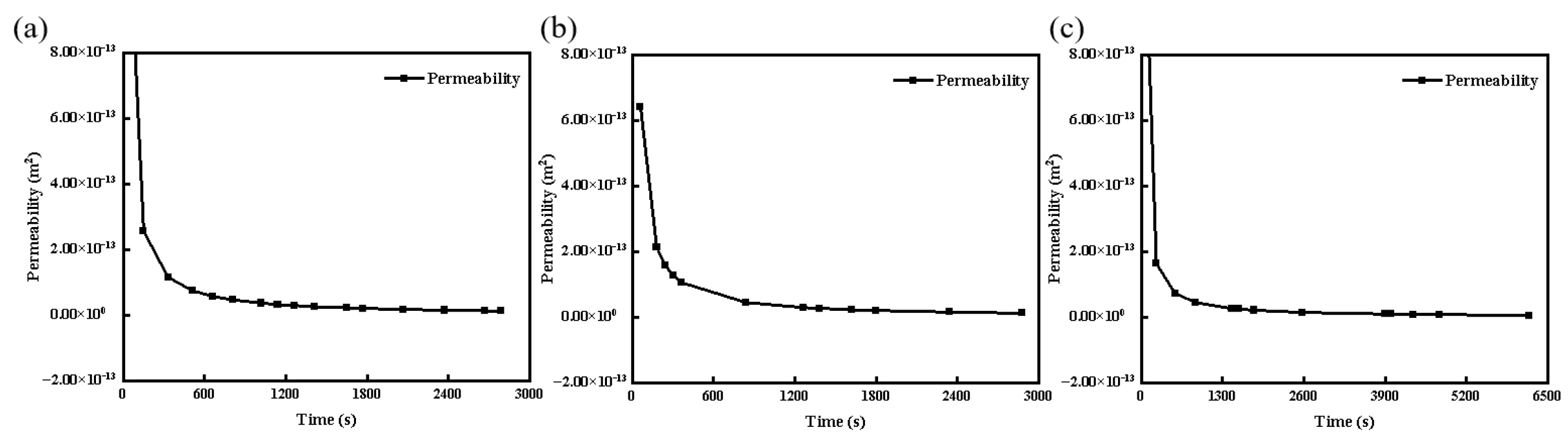
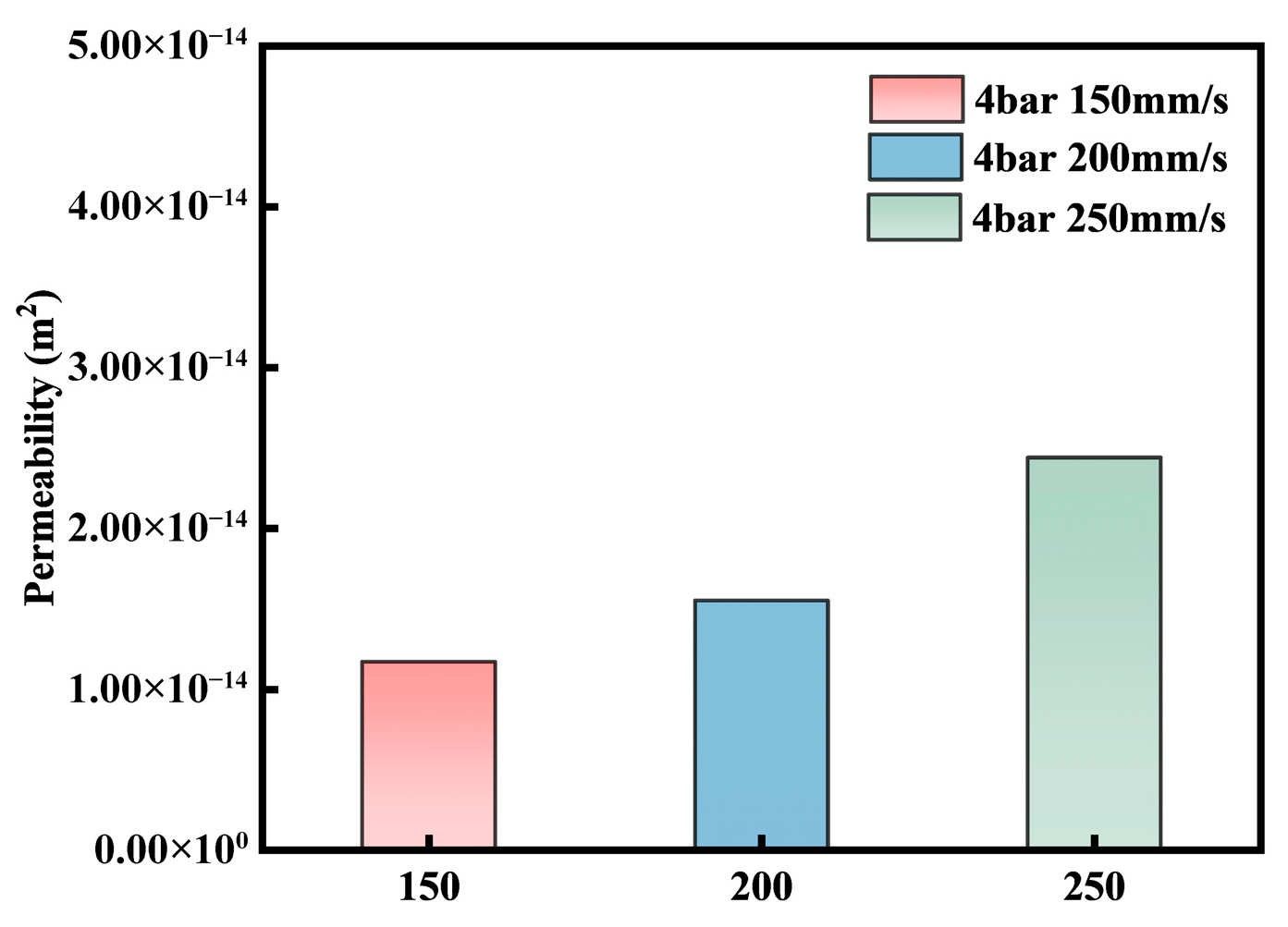
- Using the unsaturated radial flow method combined with ultrasonic measurement method, the three-dimensional permeability of dry fiber preforms produced by automated dry fiber placement (ADFP) was investigated. The results indicate that placement speed is a critical parameter governing interlayer fixation and out-of-plane permeability. An excessively high speed (250 mm/s) leads to partial melting of the veil, resulting in weak interlayer bonding and high permeability, whereas a low speed (150 mm/s) causes complete melting of the veil, providing excellent interlayer fixation but drastically reducing permeability and causing inefficient resin impregnation. A balanced speed of 200 mm/s achieves partial melting of the veil, offering both satisfactory permeability and good interlayer bonding, thus representing the optimal process window for manufacturing wing skin components.
- (2)
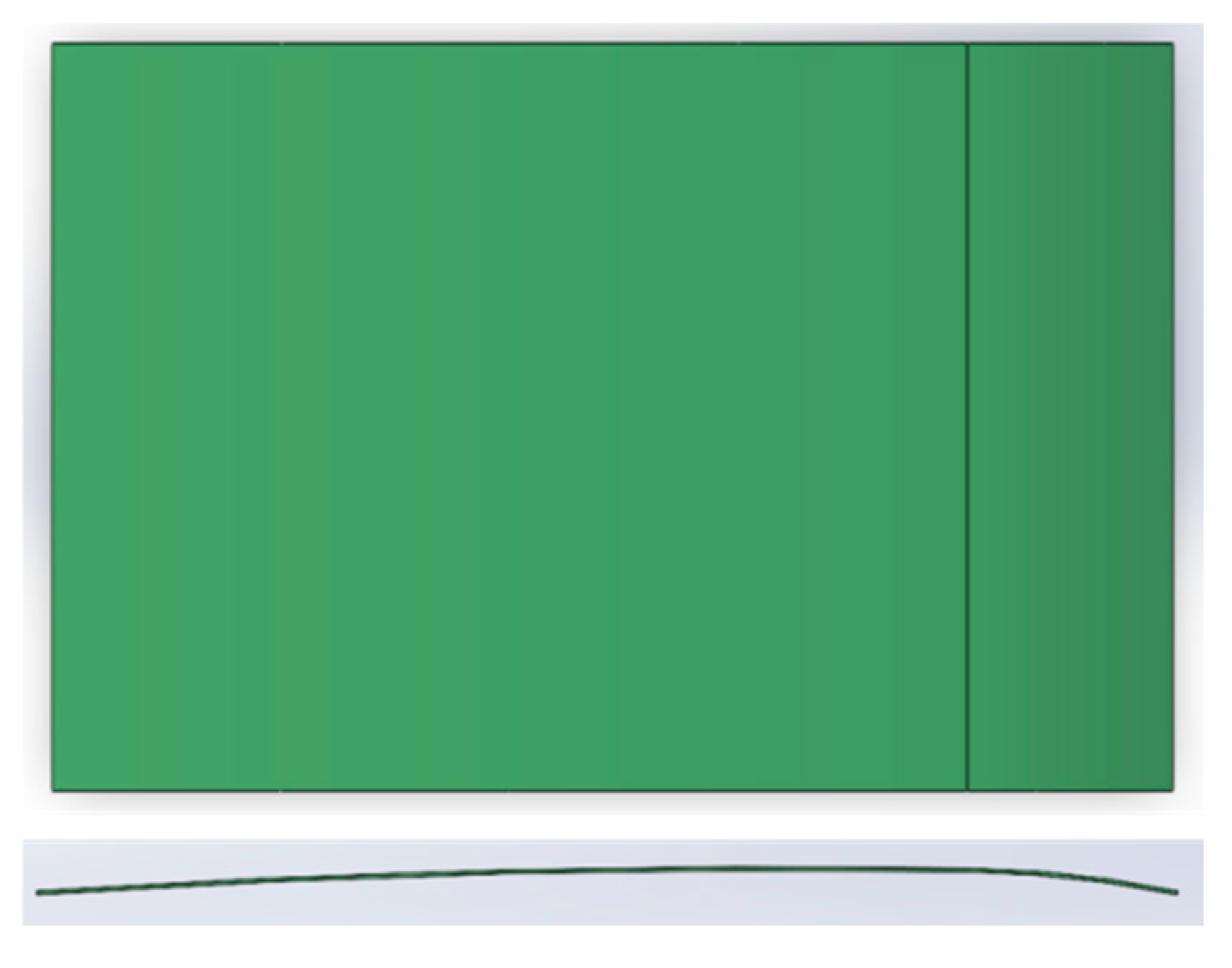
- The PAM-RTM software was employed to simulate the infusion process of dry fiber wing skin structures manufactured using the VARI process. Both the simulation and experimental preparation successfully produced high-quality components, with a discrepancy of 7% in the infusion time. This agreement indicates that the numerical model can be reliably applied to analyze and validate the VARI molding process for composite materials. The validated numerical model offers an effective tool for the pre-design and process optimization of VARI-molded dry fiber composite wing skin components, reducing the cost and cycle of experimental trials.
- (3)
- The discrepancy between the simulation and experimental results mainly arises from the fact that during the actual infusion process of the wing skin preform, the three-dimensional permeability coefficients were measured at room temperature, whereas the real resin infusion was conducted at an elevated temperature, leading to a difference in resin viscosity and flow behavior that causes a slight deviation in the overall infusion time.
- (4)
- Based on the lessons learned from this investigation, several future research directions are suggested. First, the experimental matrix should be extended to include more component geometries (e.g., parts with varying curvatures and thicknesses) and a broader range of placement parameters, so that sufficient data can be collected to enable the future development of empirical or semi-empirical models. Second, systematic studies on the effect of resin temperature and viscosity on infusion behavior using the measured permeability data, possibly incorporating coupled flow–cure simulations, are needed. Third, the proposed framework can be adapted to other liquid molding processes (e.g., RTM) and to other newly emerging dry fiber materials.
Author Contributions
Funding
Data Availability Statement
Conflicts of Interest
Abbreviations
| LCM | Liquid Composite Molding |
| RTM | Resin Transfer Molding |
| VARI | Vacuum-Assisted Resin Infusion |
| AFP | Automated Fiber Placement |
References
- Wang, Y.; Thorn, T.D.S.; Liu, Y.; Advani, S.G.; Papageorgiou, D.G.; Bilotti, E.; Zhang, H. A review on energy-efficient manufacturing for high-performance fibre-reinforced composites. Compos. Part A Appl. Sci. Manuf. 2025, 192, 108779. [Google Scholar] [CrossRef] [Scilit]
- Seong, G.-C.; Kim, D.-K.; Han, W.; Kim, K.-W.; Kim, B.-J. Comparative analysis of carbon fiber reinforced composites: Evaluating recycled carbon fibers as substitutes for commercial grades. Compos. Part B Eng. 2025, 307, 112932. [Google Scholar] [CrossRef] [Scilit]
- Mamat, R.; Rashid, M.I.M.; Syahir, A.Z.; Erdiwansyah, E.; Yusop, A.F.; Tamimi, A. Carbon fibre for applications in aerospace: A review. J. Alloys Metall. Syst. 2025, 12, 100227. [Google Scholar] [CrossRef] [Scilit]
- Liu, Y.-N.; Yuan, C.; Liu, C.; Pan, J.; Dong, Q. Study on the resin infusion process based on automated fiber placement fabricated dry fiber preform. Sci. Rep. 2019, 9, 7440. [Google Scholar] [CrossRef] [Scilit]
- Frketic, J.; Dickens, T.; Ramakrishnan, S. Automated manufacturing and processing of fiber-reinforced polymer (FRP) composites: An additive review of contemporary and modern techniques for advanced materials manufacturing. Addit. Manuf. 2017, 14, 69–86. [Google Scholar] [CrossRef] [Scilit]
- Carosella, S.; Hügle, S.; Helber, F.; Middendorf, P. A short review on recent advances in automated fiber placement and filament winding technologies. Compos. Part B Eng. 2024, 287, 111843. [Google Scholar] [CrossRef] [Scilit]
- Kadiyala, A.K.; Portela, A.; Devlin, K.; Lee, S.; O’Carroll, A.; Jones, D.; Comer, A. Mechanical evaluation and failure analysis of composite laminates manufactured using automated dry fibre tape placement followed by liquid resin infusion. Compos. Sci. Technol. 2021, 201, 108512. [Google Scholar] [CrossRef] [Scilit]
- Bickerton, S.; Govignon, Q.; Kelly, P. Resin infusion/liquid composite moulding (LCM) of advanced fibre-reinforced polymer (FRP). In Advanced Fibre-Reinforced Polymer (FRP) Composites for Structural Applications; Woodhead Publishing: Cambridge, UK, 2013; pp. 155–186. [Google Scholar]
- Seyednourani, M.; Yildiz, M.; Sas, H.S. A two-stage optimization methodology for gate and vent locations and distribution media layout for liquid composite molding process. Compos. Part A Appl. Sci. Manuf. 2021, 149, 106522. [Google Scholar] [CrossRef] [Scilit]
- Aziz, A.R.; Ali, M.A.; Zeng, X.; Umer, R.; Schubel, P.; Cantwell, W.J. Transverse permeability of dry fiber preforms manufactured by automated fiber placement. Compos. Sci. Technol. 2017, 152, 57–67. [Google Scholar] [CrossRef] [Scilit]
- Di Fratta, C.; Koutsoukis, G.; Klunker, F.; Ermanni, P. Fast method to monitor the flow front and control injection parameters in resin transfer molding using pressure sensors. J. Compos. Mater. 2016, 50, 2941–2957. [Google Scholar] [CrossRef] [Scilit]
- Lee, H.; Jung, K.; Park, H. Study on structural design and analysis of composite boat hull manufactured by resin infusion simulation. Materials 2021, 14, 5918. [Google Scholar] [CrossRef] [Scilit]
- Sarojini Narayana, S.; Khoun, L.; Trudeau, P.; Milliken, N.; Hubert, P. Numerical and experimental investigation of resin flow, heat transfer and cure in a 3D compression resin transfer moulding process using fast curing resin. Adv. Manuf. Polym. Compos. Sci. 2024, 10, 2378586. [Google Scholar] [CrossRef] [Scilit]
- Chai, B.X.; Eisenbart, B.; Nikzad, M.; Fox, B.; Blythe, A.; Blanchard, P.; Dahl, J. Simulation-based optimisation for injection configuration design of liquid composite moulding processes: A review. Compos. Part A Appl. Sci. Manuf. 2021, 149, 106540. [Google Scholar] [CrossRef] [Scilit]
- Lisegaard, J.; Kergomard, Y.D.; Adhikari, D.; Hattel, J.; Mohanty, S. Resin flow models for reinforcement learning for optimal control of LCM. IOP Conf. Ser. Mater. Sci. Eng. 2025, 1338, 012042. [Google Scholar]
- Siddig, N.; Denis, Y.; De Fontgalland, A.; Lecointe, D.; Le Bot, P. Optimization of the infusion process with acrylic resin through physics-based simulation. In Materials Research Proceedings; Materials Research Forum LLC: Millersville, PA, USA, 2025; p. 54. [Google Scholar]
- Trochu, F.; Ruiz, E.; Achim, V.; Soukane, S. Advanced numerical simulation of liquid composite molding for process analysis and optimization. Compos. Part A Appl. Sci. Manuf. 2006, 37, 890–902. [Google Scholar]
- Laurenzi, S.; Grilli, A.; Pinna, M.; De Nicola, F.; Cattaneo, G.; Marchetti, M. Process simulation for a large composite aeronautic beam by resin transfer molding. Compos. Part B Eng. 2014, 57, 47–55. [Google Scholar]
- Rodrigues, I.; Amico, S.C.; Souza, J.A.; de Lima, A.G.B. Numerical analysis of the resin transfer molding process via PAM-RTM software. Defect Diffus. Forum 2015, 365, 88–93. [Google Scholar] [CrossRef] [Scilit]
- Kozioł, M. Simplified simulation of VARI process using PAM-RTM software. Compos. Theory Pract. 2015, 15, 218–227. [Google Scholar]
- Grössing, H.; Stadlmajer, N.; Fauster, E.; Fleischmann, M.; Schledjewski, R. Flow front advancement during composite processing: Predictions from numerical filling simulation tools in comparison with real-world experiments. Polym. Compos. 2016, 37, 2782–2793. [Google Scholar] [CrossRef] [Scilit]
- Khalili, P.; Kádár, R.; Skrifvars, M.; Blinzler, B. Impregnation behaviour of regenerated cellulose fabric Elium® composite: Experiment, simulation and analytical solution. J. Mater. Res. Technol. 2021, 10, 66–73. [Google Scholar] [CrossRef] [Scilit]
- Magagnato, D.; Seuffert, J.; Bernath, A.; Kärger, L.; Henning, F. Experimental and numerical study of the influence of integrated load transmission elements on filling behavior in resin transfer molding. Compos. Struct. 2018, 198, 135–143. [Google Scholar] [CrossRef] [Scilit]
- Kim, J.-I.; Hwang, Y.-T.; Choi, K.-H.; Kim, H.-J.; Kim, H.-S. Prediction of the vacuum assisted resin transfer molding (VARTM) process considering the directional permeability of sheared woven fabric. Compos. Struct. 2019, 211, 236–243. [Google Scholar] [CrossRef] [Scilit]
- Falaschetti, M.P.; Rondina, F.; Zavatta, N.; Gragnani, L.; Gironi, M.; Troiani, E.; Donati, L. Material characterization for reliable resin transfer molding process simulation. Appl. Sci. 2020, 10, 1814. [Google Scholar] [CrossRef] [Scilit]
- Siddig, N.; Mulye, P.; Le Guennec, Y.; Le Bot, P.; Lecointe, D.; Denis, Y.; Syerko, E.; Fouché, O.; Binetruy, C. Towards the optimization of the infusion process through numerical permeability analysis and simulation. In Proceedings of the 21st European Conference on Composite Materials (ECCM-21); European Society for Composite Materials (ESCM): Nantes, France, 2024; Volume 5. [Google Scholar]
- Chen, T.; Wang, T.; Liu, Y.; Guo, M.; Zhou, J.; Zhao, Z.; Yan, B.; Yang, P.; Chen, Z. Numerical simulation study on VARTM processing of large-tow carbon fiber reinforced composite automotive floor panel. In Proceedings of the 13th Annual International Conference on Material Science and Environmental Engineering (MSEE 2025); SPIE (Society of Photo-Optical Instrumentation Engineers): Bellingham, WA, USA, 2025; Volume 13811. [Google Scholar]
- Fauster, E.; Berg, D.C.; Abliz, D.; Grössing, H.; Meiners, D.; Ziegmann, G.; Schledjewski, R. Image processing and data evaluation algorithms for reproducible optical in-plane permeability characterization by radial flow experiments. J. Compos. Mater. 2019, 53, 45–63. [Google Scholar]
- Weitzenböck, J.R.; Shenoi, R.A.; Wilson, P.A. Radial flow permeability measurement. Part A: Theory. Compos. Part A Appl. Sci. Manuf. 1999, 30, 781–796. [Google Scholar]
- Ahn, S.H.; Lee, W.I.; Springer, G.S. Measurement of the three-dimensional permeability of fiber preforms using embedded fiber optic sensors. J. Compos. Mater. 1995, 29, 714–733. [Google Scholar] [CrossRef] [Scilit]











| Parameter | Numerical Value |
|---|---|
| Resin Density/(g/cm3) | 1.15 |
| Resin Viscosity/(Pa·s) | 0.83 |
| Injection Pressure/MPa | 0.099 |
| Fiber Volume Fraction/% | 64 |
| Fiber Permeability in X-direction (Kxx/m2) | 1.8 × 10⁻¹¹ |
| Fiber Permeability in Y-direction (Kyy/m2) | 9.8 × 10⁻¹² |
| Fiber Permeability in Z-direction (Kzz/m2) | 1.55 × 10⁻¹⁴ |
| Resin Injection Scheme | Filling Time/s | Presence of Dry Spots |
|---|---|---|
| Resin injection scheme 1 | 8900 | No |
| Resin injection scheme 2 | 6659 | No |
| Resin injection scheme 3 | 3883 | No |
| Resin injection scheme 4 | 1556 | Yes |
| Total Infused Resin Mass/g | Filling Time/s | Error Relative to Simulated Filling Time/% |
|---|---|---|
| 365 g | 3611 s | 7% |
Disclaimer/Publisher’s Note: The statements, opinions and data contained in all publications are solely those of the individual author(s) and contributor(s) and not of MDPI and/or the editor(s). MDPI and/or the editor(s) disclaim responsibility for any injury to people or property resulting from any ideas, methods, instructions or products referred to in the content. |
© 2026 by the authors. Licensee MDPI, Basel, Switzerland. This article is an open access article distributed under the terms and conditions of the Creative Commons Attribution (CC BY) license.
Share and Cite
Du, W.; Liu, J.; Song, H.; Jiang, M.; Ning, B.; Yang, Y.; Liu, W.; Han, K.; Zhang, H.; Yu, J. Experimental Study on Permeability and Infusion Simulation of Automatically Placed Dry Fiber Preforms. J. Compos. Sci. 2026, 10, 279. https://doi.org/10.3390/jcs10050279
Du W, Liu J, Song H, Jiang M, Ning B, Yang Y, Liu W, Han K, Zhang H, Yu J. Experimental Study on Permeability and Infusion Simulation of Automatically Placed Dry Fiber Preforms. Journal of Composites Science. 2026; 10(5):279. https://doi.org/10.3390/jcs10050279
Chicago/Turabian StyleDu, Wei, Jun Liu, Hao Song, Minqiang Jiang, Bo Ning, Yang Yang, Weiping Liu, Keqing Han, Hui Zhang, and Jianyong Yu. 2026. "Experimental Study on Permeability and Infusion Simulation of Automatically Placed Dry Fiber Preforms" Journal of Composites Science 10, no. 5: 279. https://doi.org/10.3390/jcs10050279
APA StyleDu, W., Liu, J., Song, H., Jiang, M., Ning, B., Yang, Y., Liu, W., Han, K., Zhang, H., & Yu, J. (2026). Experimental Study on Permeability and Infusion Simulation of Automatically Placed Dry Fiber Preforms. Journal of Composites Science, 10(5), 279. https://doi.org/10.3390/jcs10050279