
Feasibility of Solvent-Cast PLLA/Iron Composites for Biomedical Applications

 ,
,  , , , , and
Abstract
1. Introduction
2. Materials and Methods
2.1. Materials and Production Process
2.2. Morphology and Surface Analysis
2.3. Thermal Analysis
2.4. Mechanical Analysis
2.5. Cell Biological Investigations
3. Results
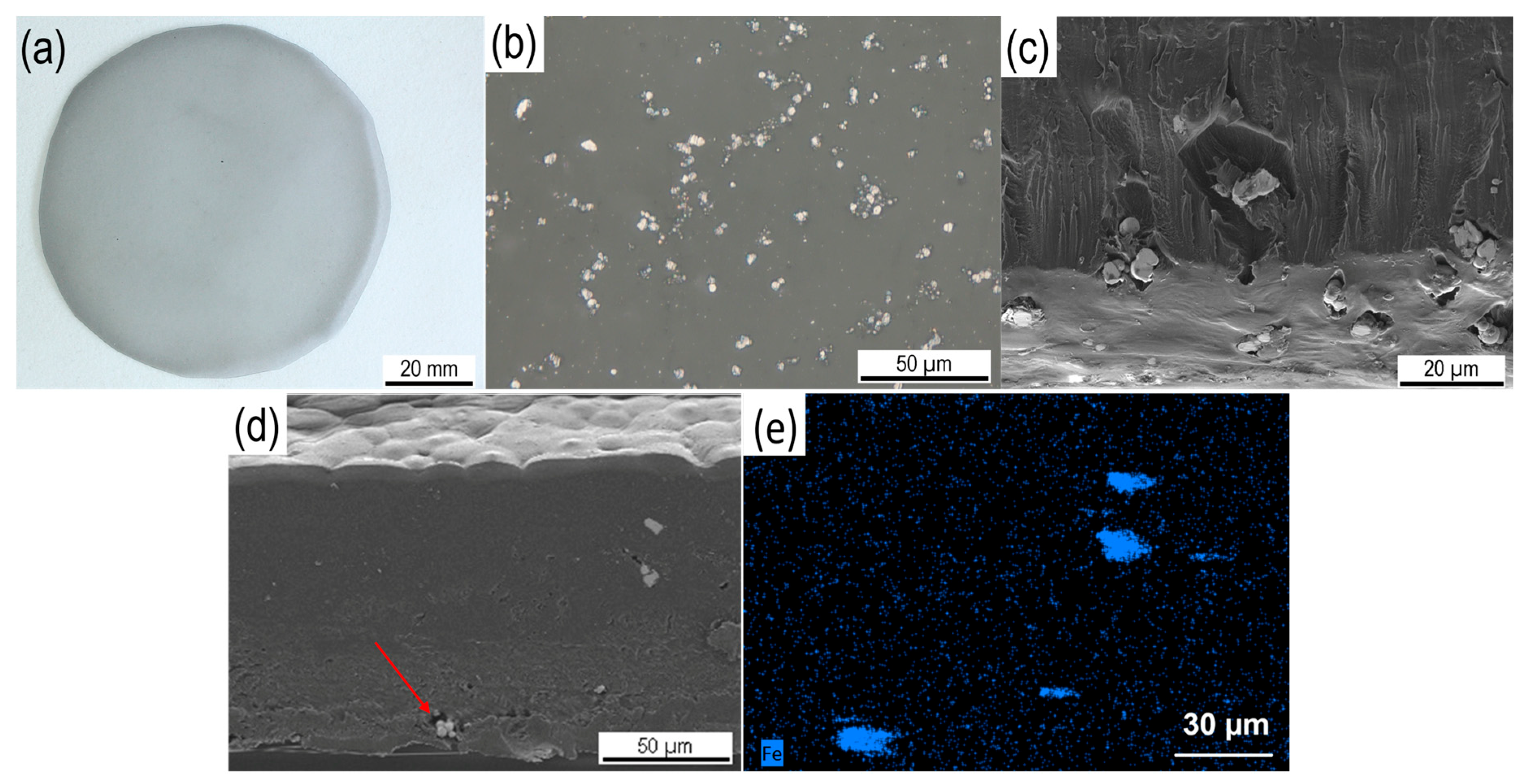
3.1. Microstructure
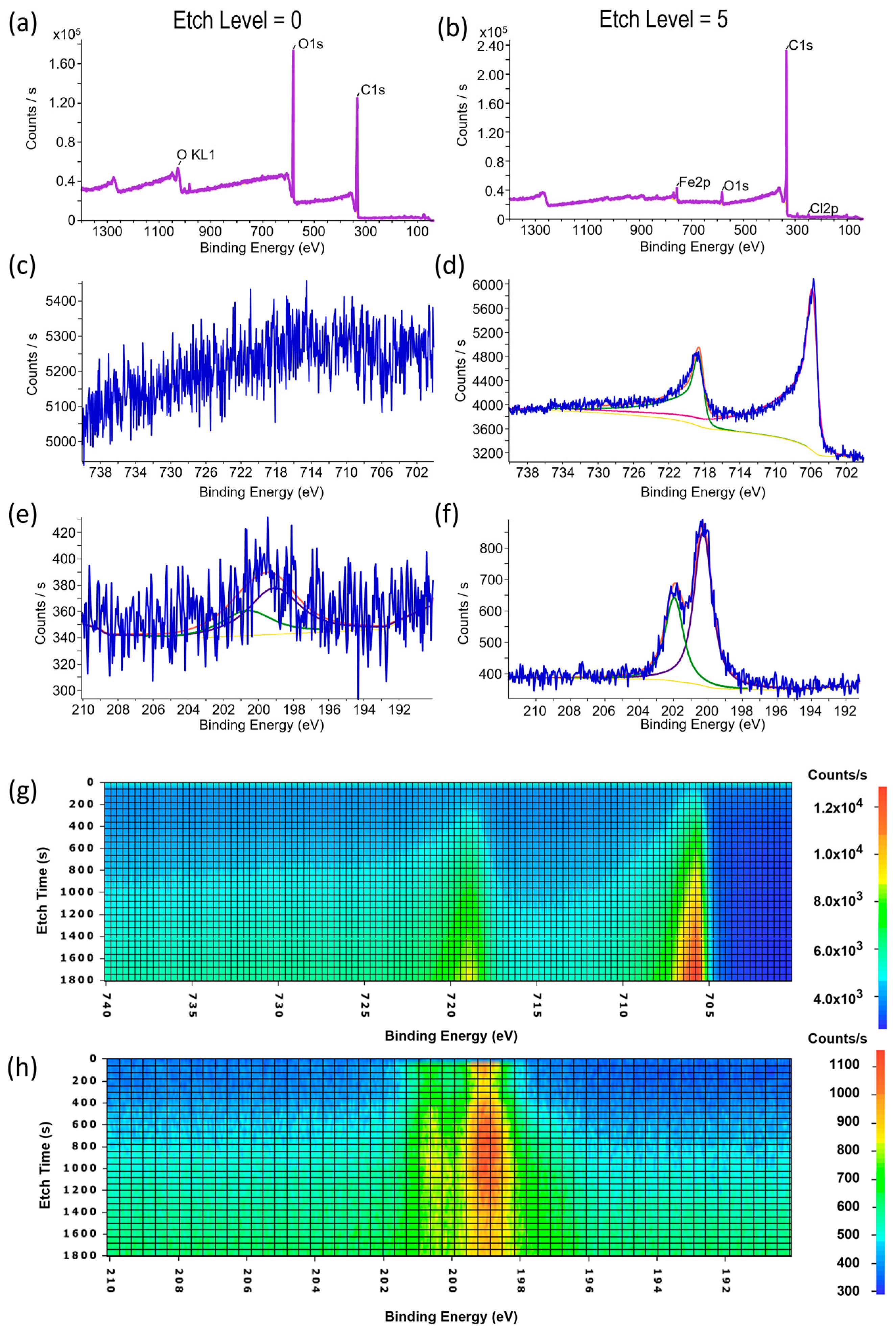
3.2. X-Ray Photoelectron Spectroscopy
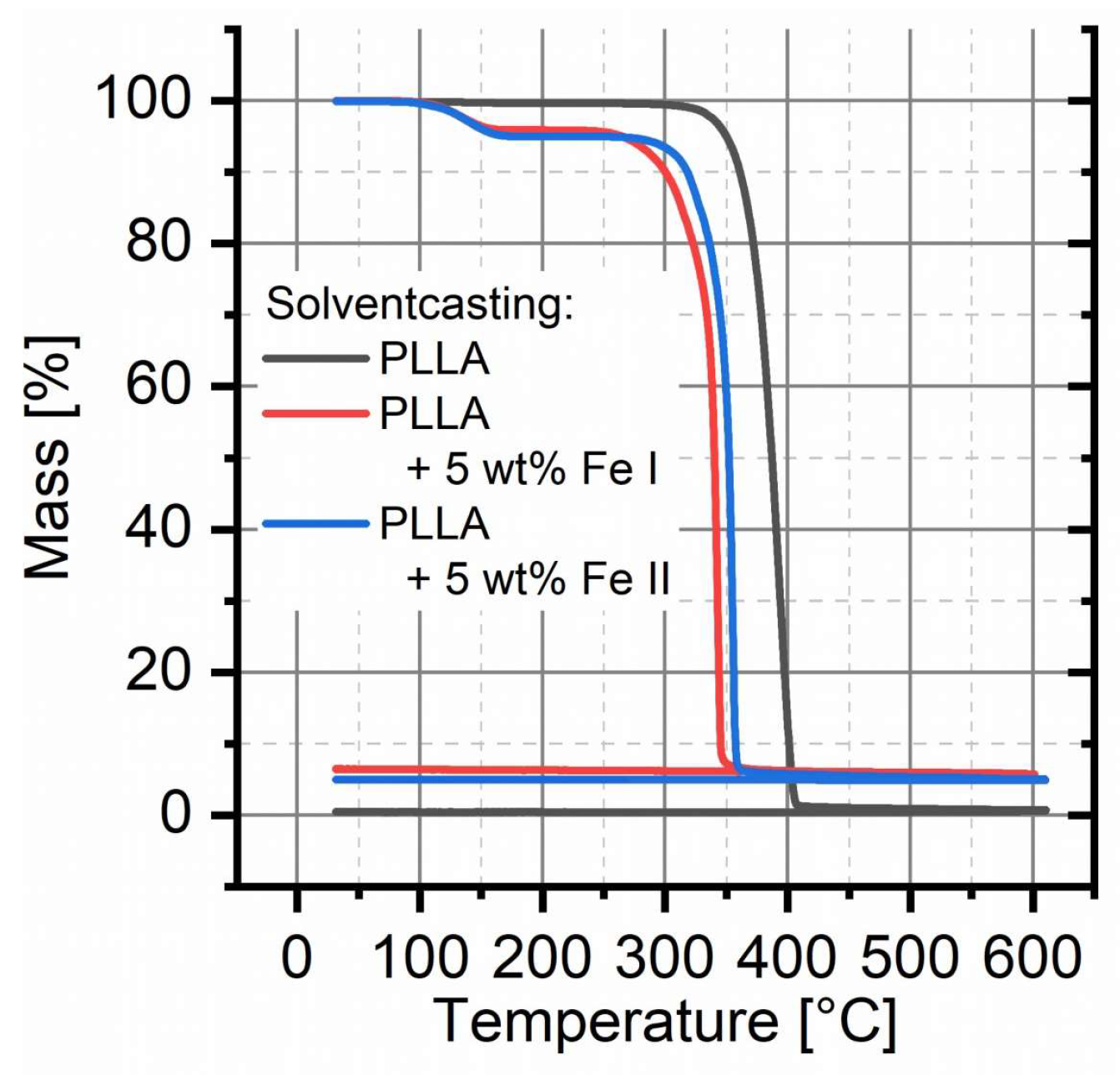
3.3. Thermogravimetric Analysis
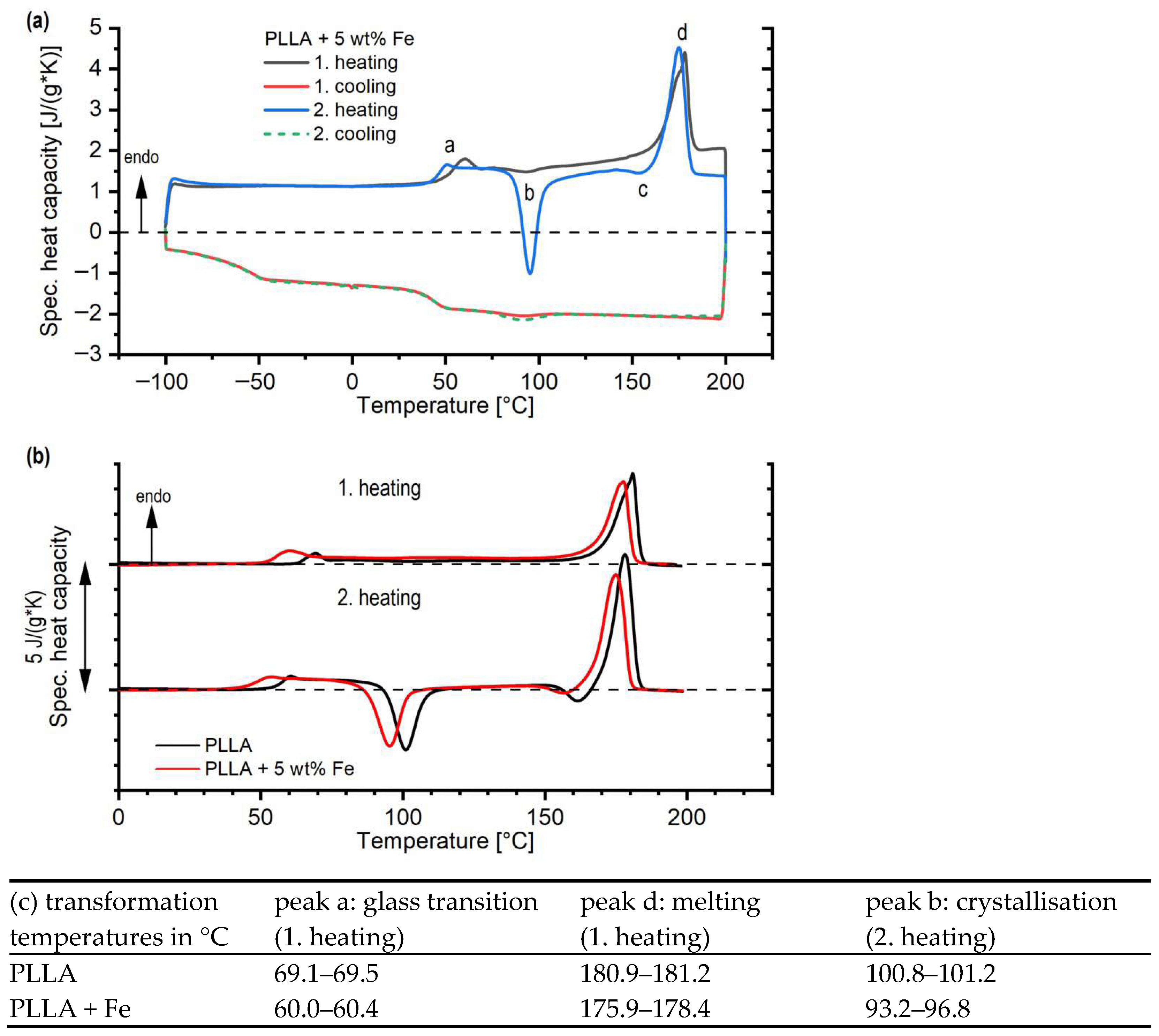
3.4. Differential Scanning Calorimetry
3.5. Mechanical Analysis
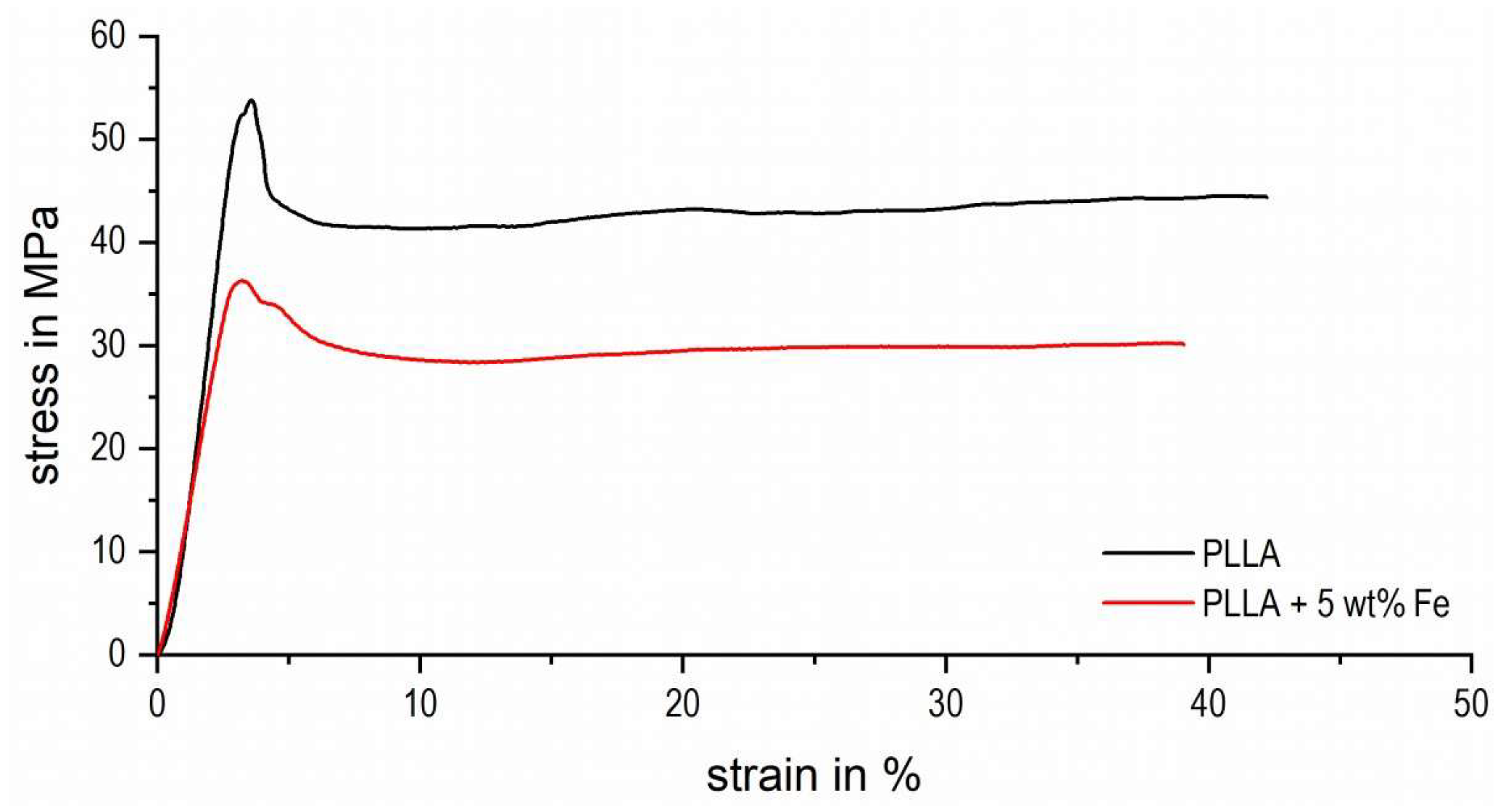
3.5.1. Uniaxial Tensile Testing
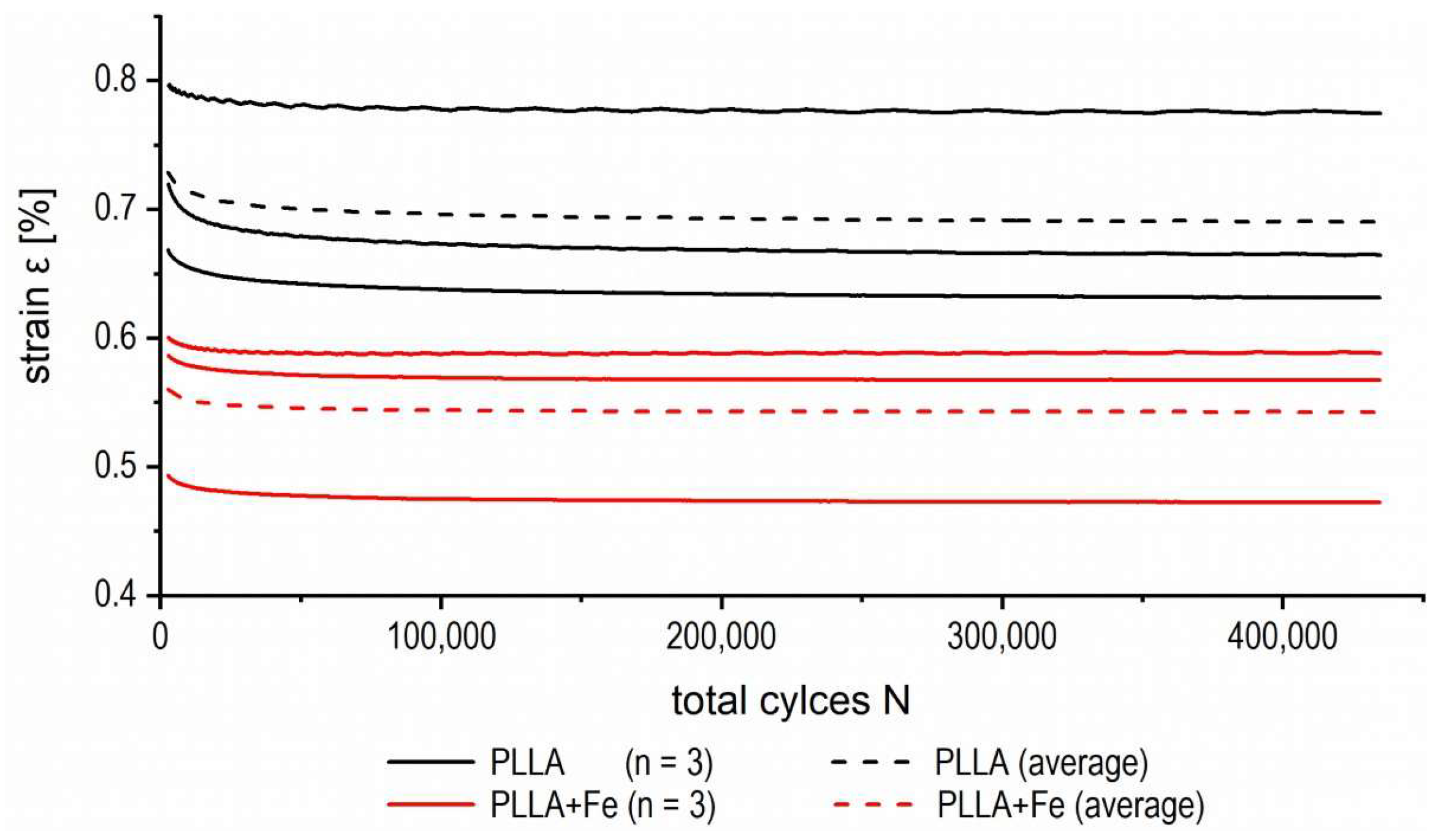
3.5.2. Dynamic Mechanical Analysis
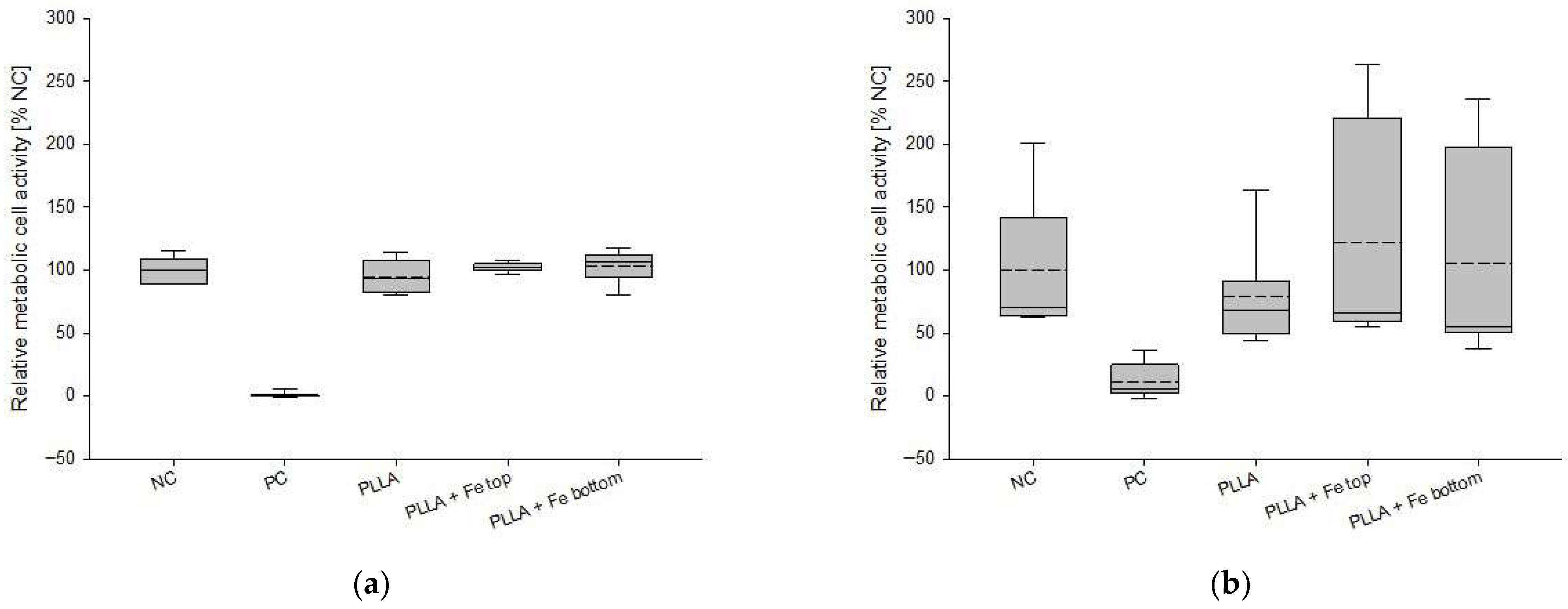
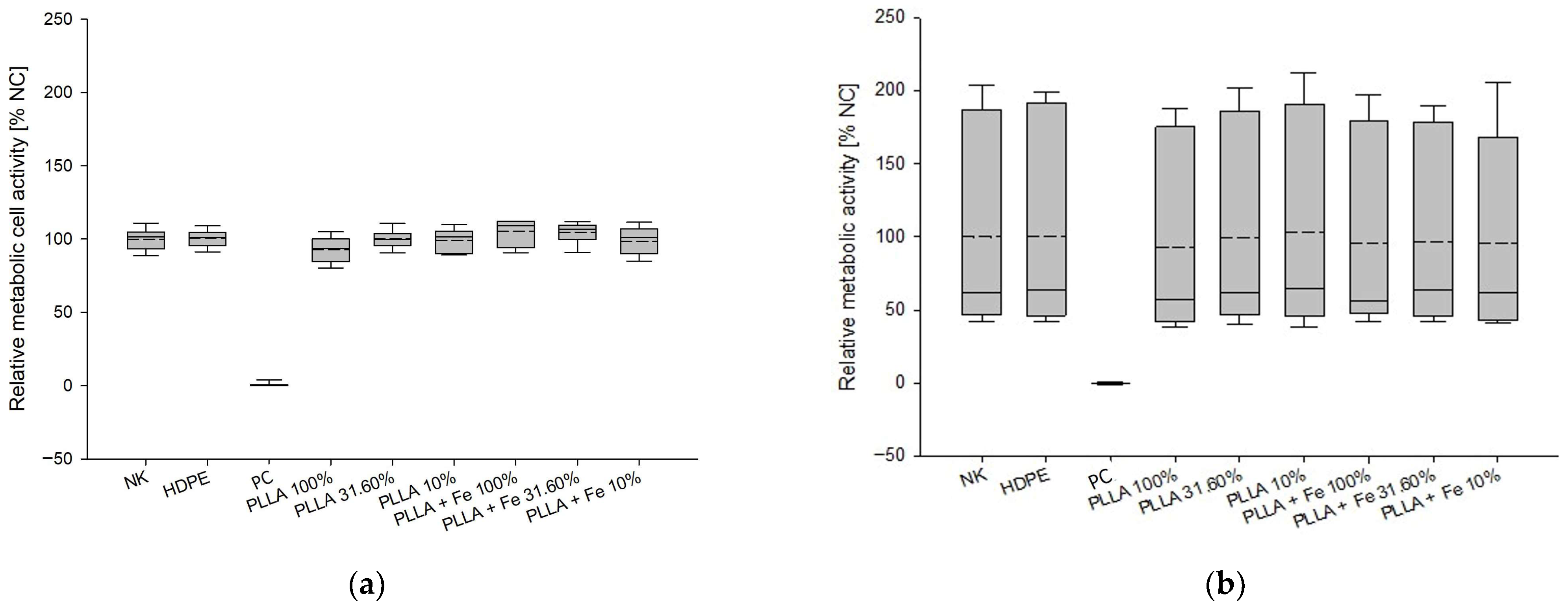
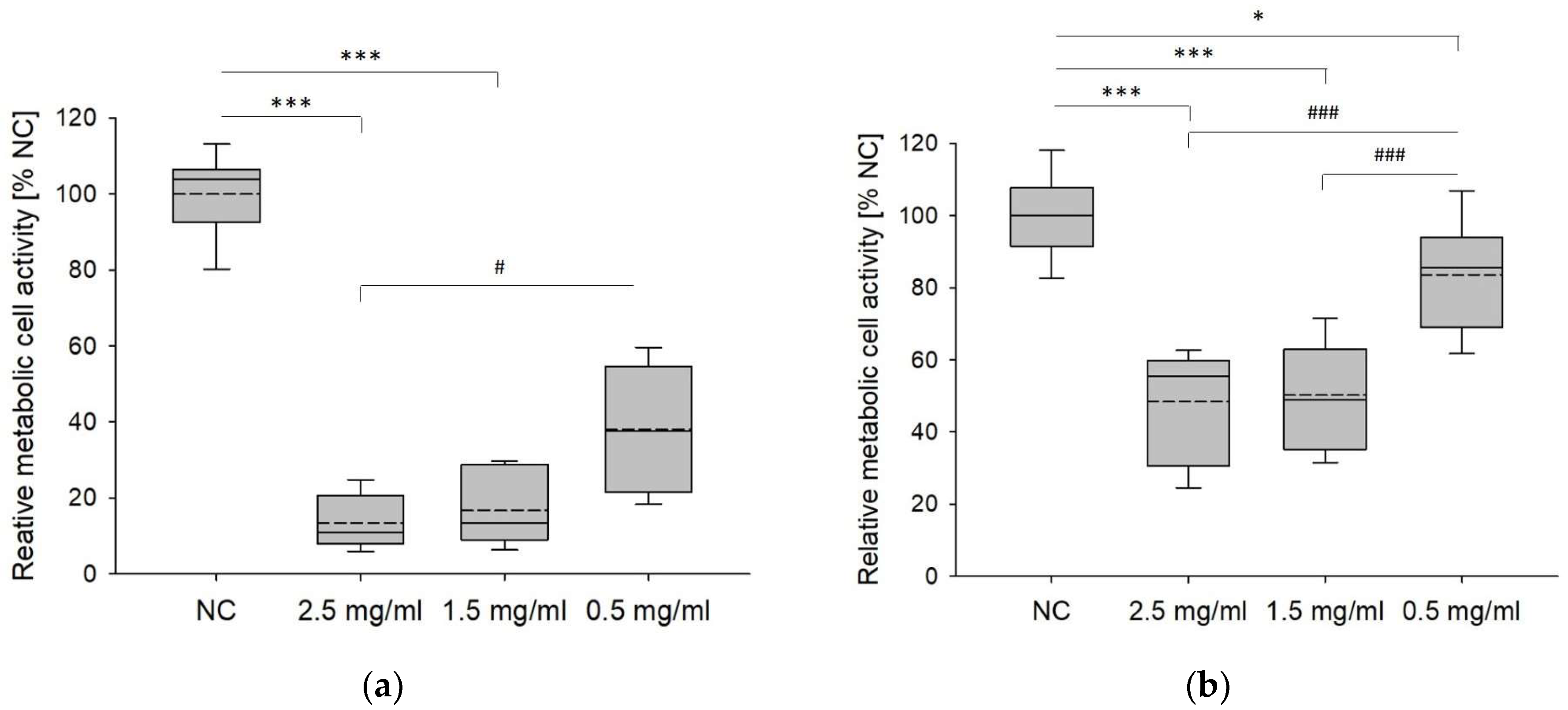
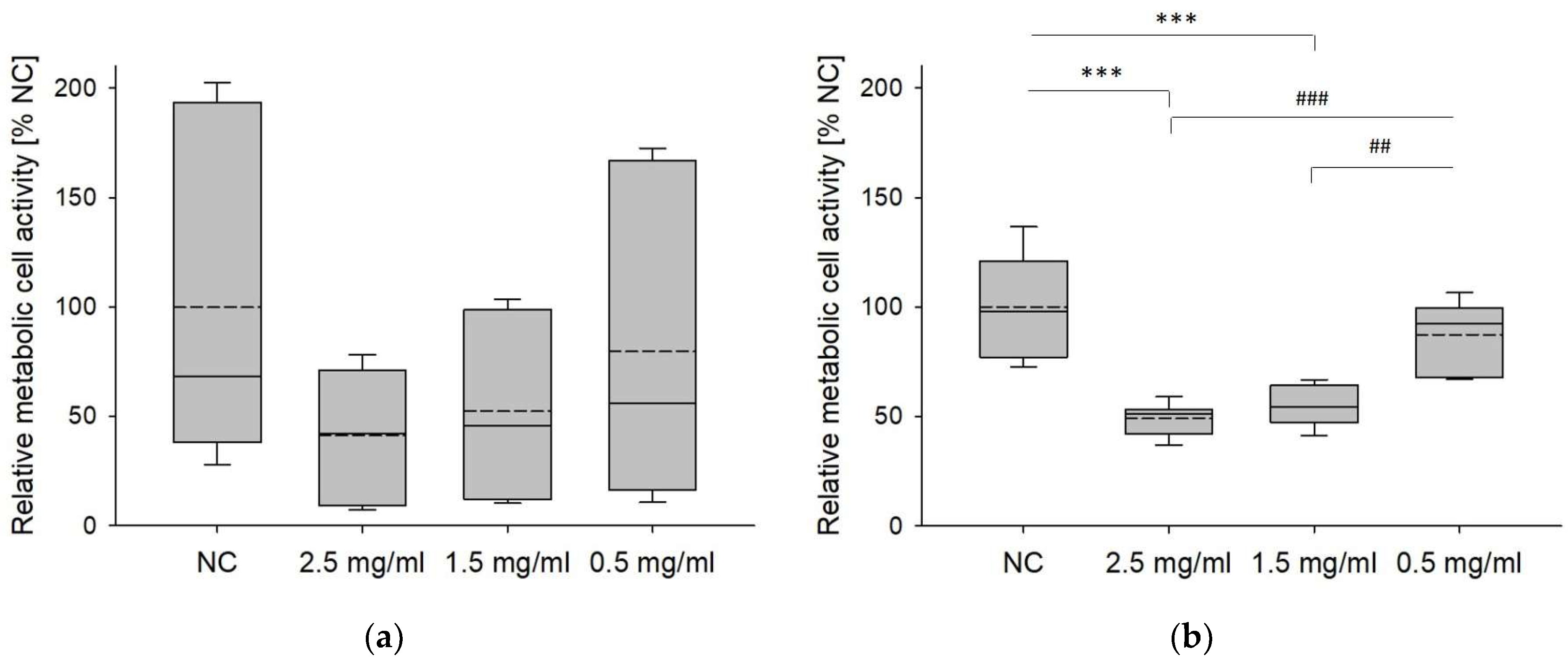
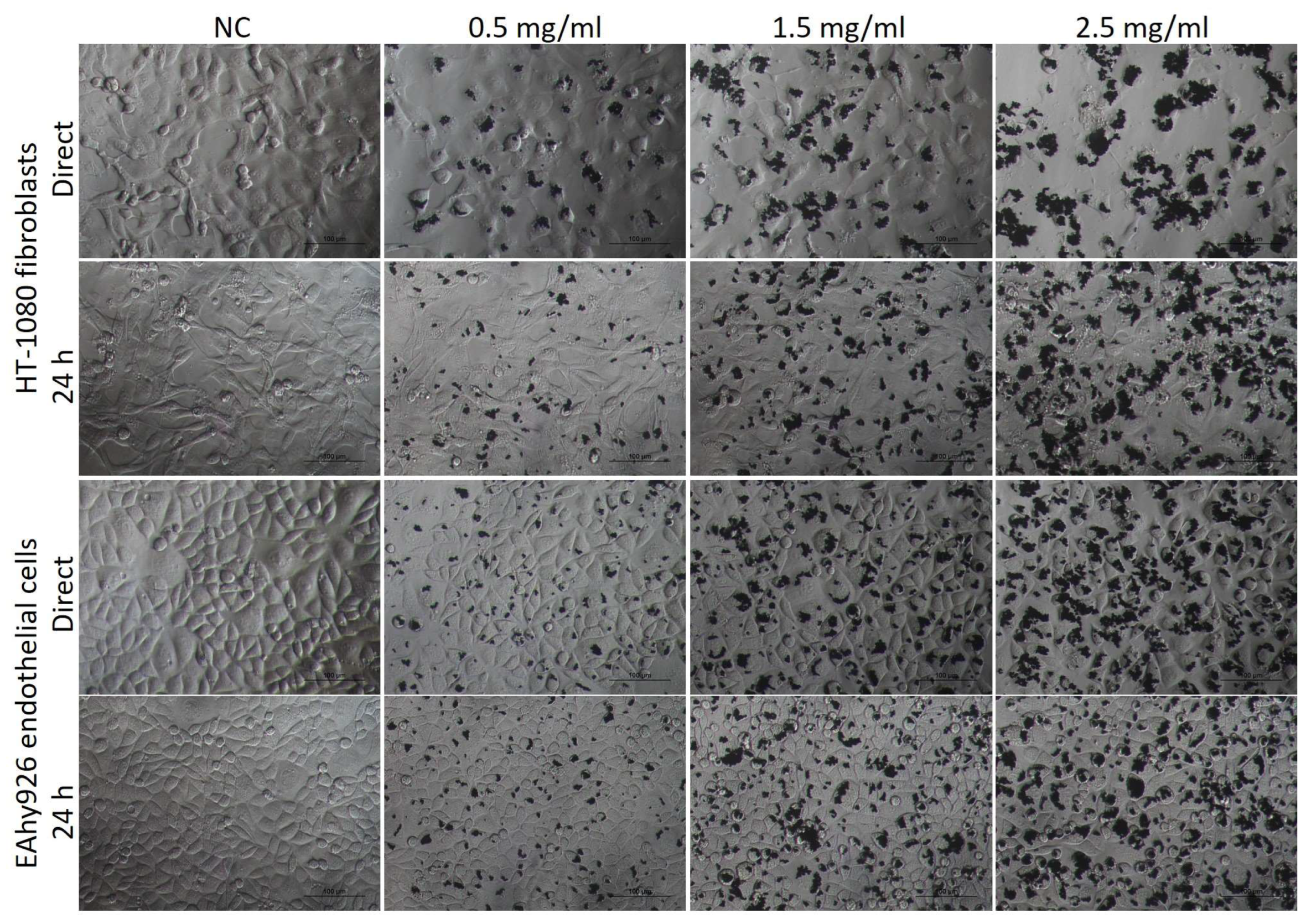
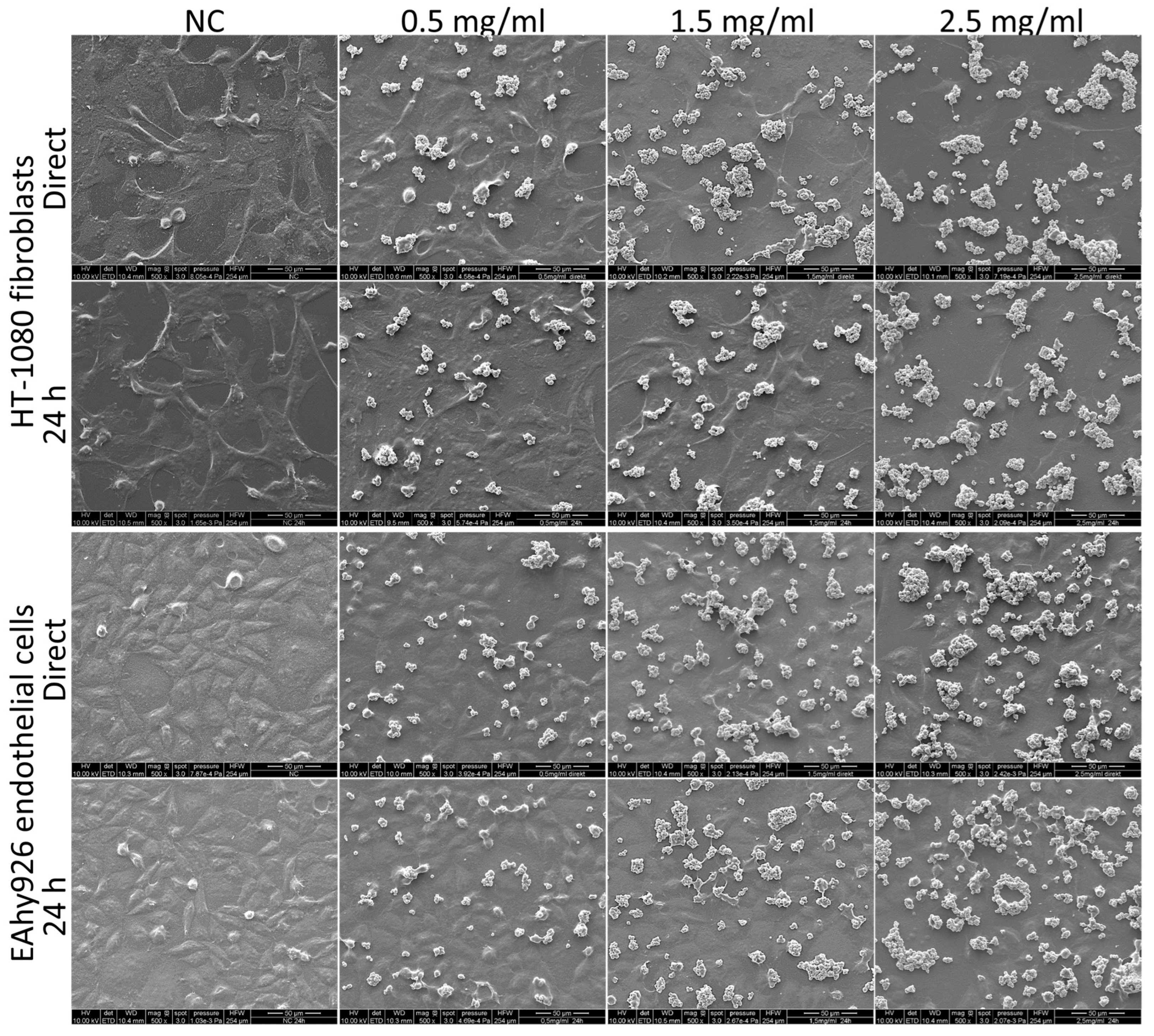
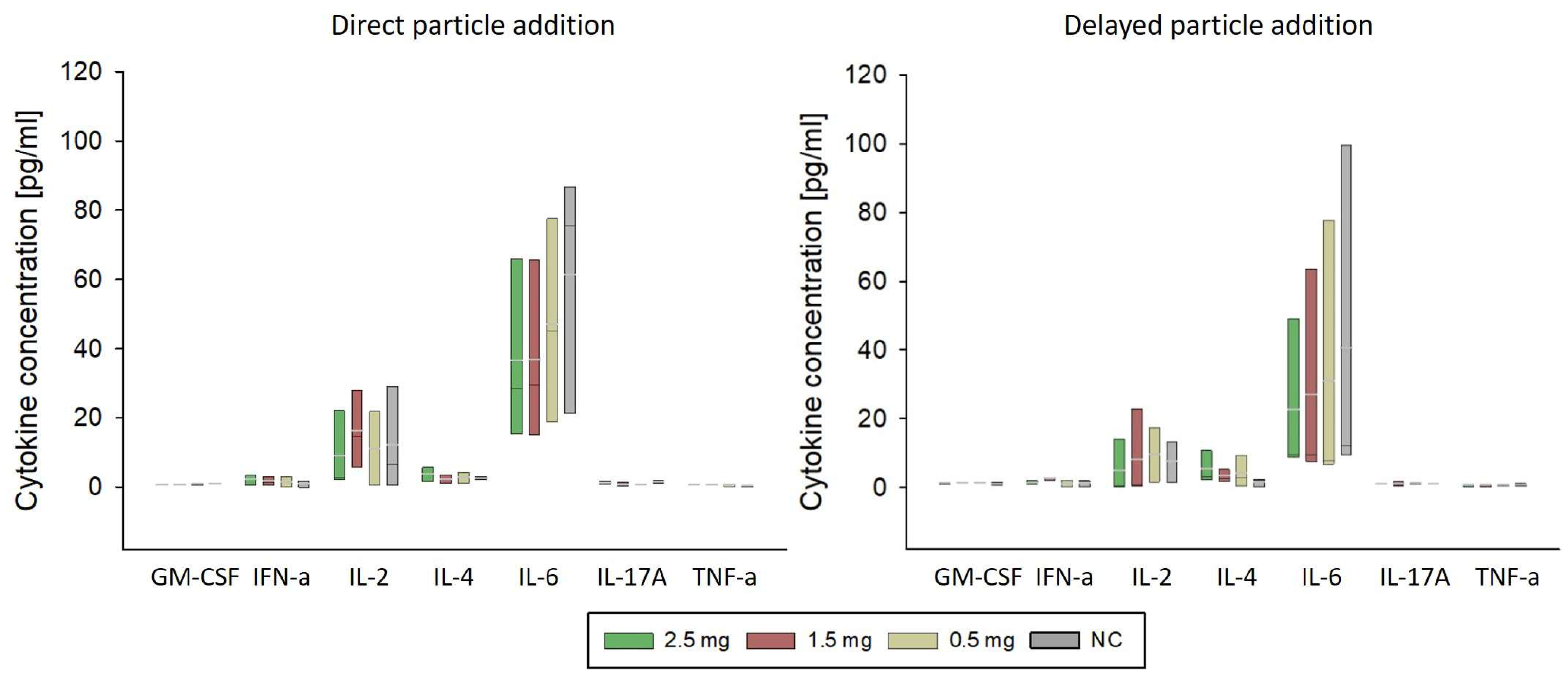
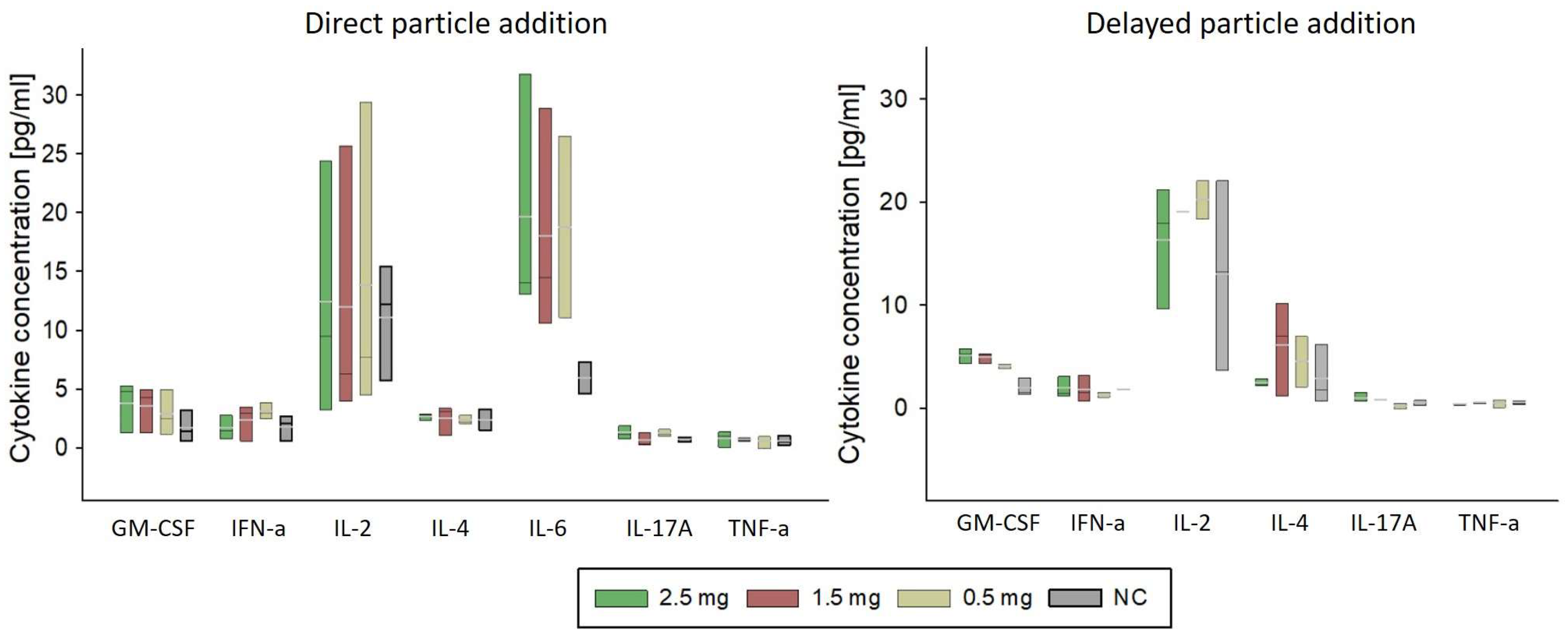
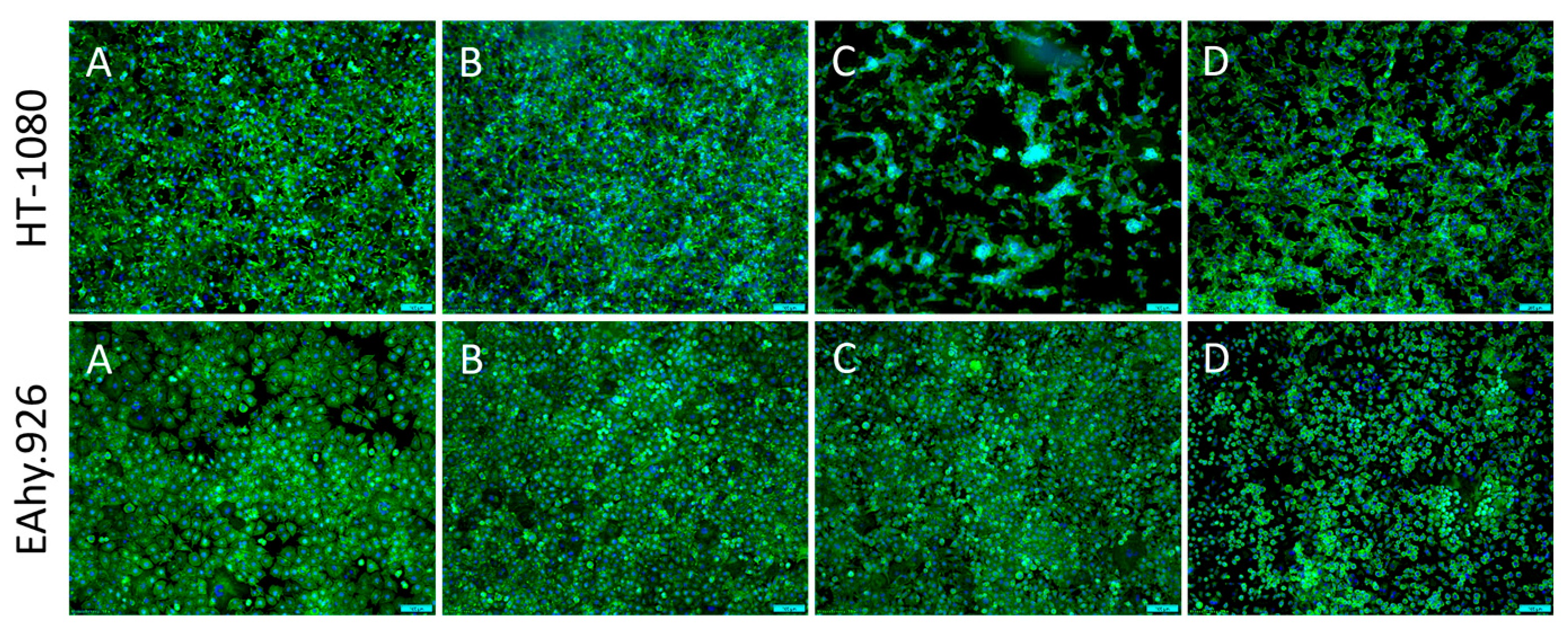
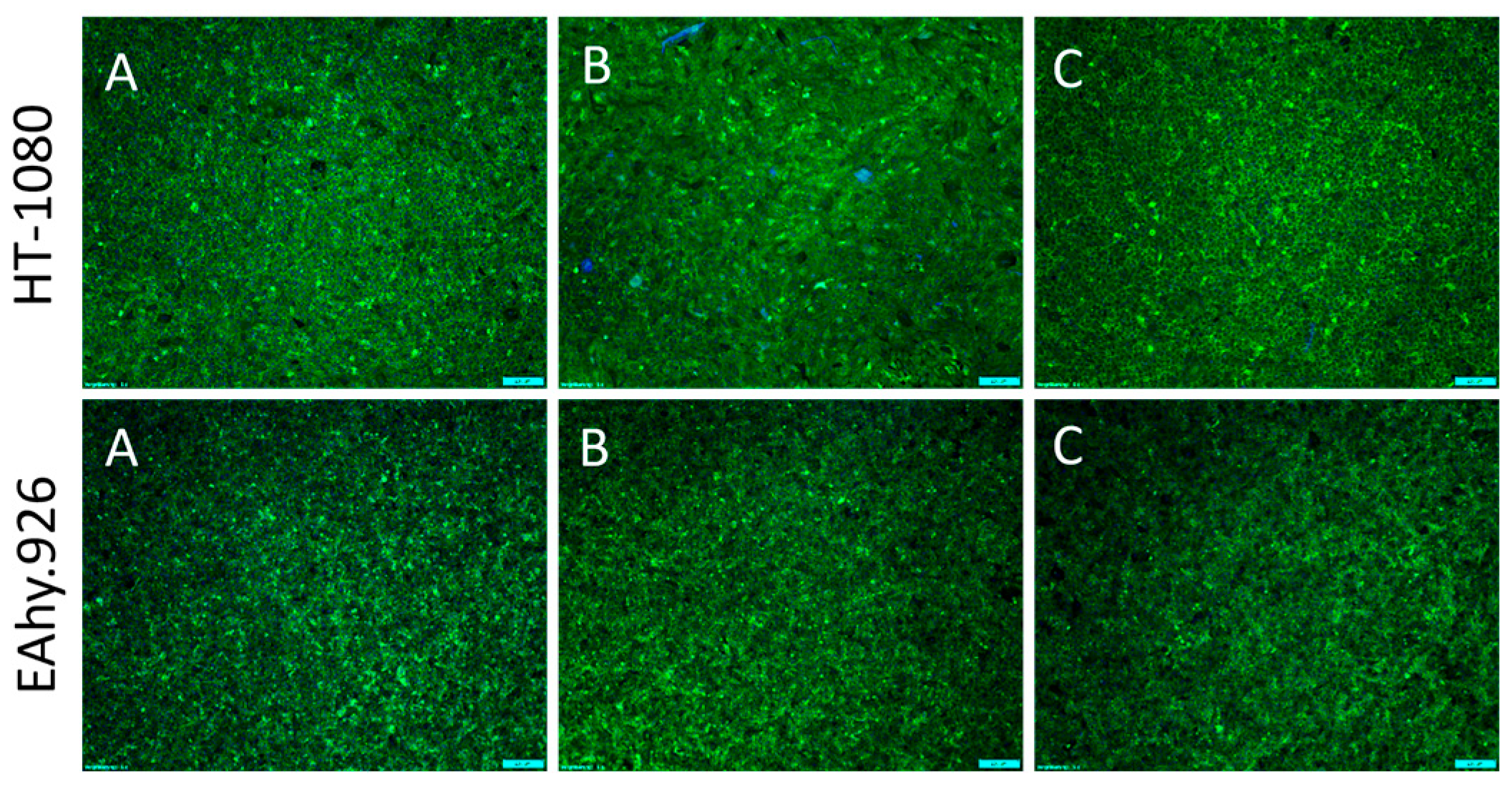
3.6. Cell Biological Analysis
4. Discussion
4.1. Thermal Analyses
4.2. Mechanical Analyses
4.3. Cell Biological Analysis
5. Conclusions
Author Contributions
Funding
Data Availability Statement
Acknowledgments
Conflicts of Interest
Abbreviations
| DMA | Dynamic Mechanical Analyses |
| DMEM | Dulbecco’s modified Eagle’s medium |
| DSC | Differential scanning calorimetry |
| EDS | energy dispersive X-ray spectroscopy |
| FCS | Fetal calf serum |
| GM-CSF | Granulocyte-macrophage colony-stimulating factor |
| HDPE | High-density polyethylene |
| IFN | Interferon |
| IL | Interleukin |
| NC | Negative control |
| PC | Positive control |
| PCL | Polycaprolactone |
| PLLA | Poly(L-lactide) |
| SEM | Scanning electron microscopy |
| TETD | Disulfiram/tetraethylthiuram disulfide |
| TGA | Thermogravimetric analysis |
| TNF-a | Tumour necrosis factor |
| XPS | X-ray photoelectron spectroscopy |
References
- Huang, H.-M. Medical Application of Polymer-Based Composites. Polymers 2020, 12, 2560. [Google Scholar] [CrossRef]
- Guo, Z.; Poot, A.A.; Grijpma, D.W. Advanced polymer-based composites and structures for biomedical applications. Eur. Polym. J. 2021, 149, 110388. [Google Scholar] [CrossRef]
- Dobrzański, L.A.; Hudecki, A.; Chladek, G.; Król, W.; Mertas, A. Surface properties and antimicrobial activity of composite nanofibers of polycaprolactone with silver precipitations. Arch. Mater. Sci. Eng. 2014, 70, 53–60. [Google Scholar]
- Liu, C.; Chan, K.W.; Shen, J.; Wong, H.M.; Kwok Yeung, K.W.; Tjong, S.C. Melt-compounded polylactic acid composite hybrids with hydroxyapatite nanorods and silver nanoparticles: Biodegradation, antibacterial ability, bioactivity and cytotoxicity. RSC Adv. 2015, 5, 72288–72299. [Google Scholar] [CrossRef]
- Munteanu, B.S.; Aytac, Z.; Pricope, G.M.; Uyar, T.; Vasile, C. Polylactic acid (PLA)/Silver-NP/Vitamin E bionanocomposite electrospun nanofibers with antibacterial and antioxidant activity. J. Nanopart. Res. 2014, 16, S550. [Google Scholar] [CrossRef]
- Tematio, C.; Bassas-Galia, M.; Fosso, N.; Gaillard, V.; Mathieu, M.; Zinn, M.; Staderini, E.M.; Schintke, S. Design and Characterization of Conductive Biopolymer Nanocomposite Electrodes for Medical Applications. Mater. Sci. Forum 2016, 879, 1921–1926. [Google Scholar] [CrossRef]
- Walker, J.S.; Arnold, J.; Shrestha, C.; Smith, D. Antibacterial silver submicron wire-polylactic acid composites for fused filament fabrication. Rapid Prototyp. J. 2020, 26, 32–38. [Google Scholar] [CrossRef]
- Wang, J.; Chen, H.; Chen, Z.; Chen, Y.; Guo, D.; Ni, M.; Liu, S.; Peng, C. In-situ formation of silver nanoparticles on poly (lactic acid) film by γ-radiation induced grafting of N-vinyl pyrrolidone. Mater. Sci. Eng. C Mater. Biol. Appl. 2016, 63, 142–149. [Google Scholar] [CrossRef]
- Brown, A.; Zaky, S.; Ray, H.; Sfeir, C. Porous magnesium/PLGA composite scaffolds for enhanced bone regeneration following tooth extraction. Acta Biomater. 2015, 11, 543–553. [Google Scholar] [CrossRef]
- Zhang, E.; Zhao, X.; Hu, J.; Wang, R.; Fu, S.; Qin, G. Antibacterial metals and alloys for potential biomedical implants. Bioact. Mater. 2021, 6, 2569–2612. [Google Scholar] [CrossRef]
- Niinomi, M.; Nakai, M.; Hieda, J. Development of new metallic alloys for biomedical applications. Acta Biomater. 2012, 8, 3888–3903. [Google Scholar] [CrossRef] [PubMed]
- Hermawan, H.; Dubé, D.; Mantovani, D. Developments in metallic biodegradable stents. Acta Biomater. 2010, 6, 1693–1697. [Google Scholar] [CrossRef]
- Capuana, E.; Lopresti, F.; Ceraulo, M.; La Carrubba, V. Poly-l-Lactic Acid (PLLA)-Based Biomaterials for Regenerative Medicine: A Review on Processing and Applications. Polymers 2022, 14, 1153. [Google Scholar] [CrossRef]
- Şahin, İ.B.; Korkut, İ.; Urtekin, L.; Yavuzyegit, B. Recent Advances in Metal Particle Reinforced Polylactic Acid Biocomposites via Additive Manufacturing for Biomedical Applications. Arab. J. Sci. Eng. 2025, 51, 3649–3689. [Google Scholar] [CrossRef]
- Da Silva, D.; Kaduri, M.; Poley, M.; Adir, O.; Krinsky, N.; Shainsky-Roitman, J.; Schroeder, A. Biocompatibility, biodegradation and excretion of polylactic acid (PLA) in medical implants and theranostic systems. Chem. Eng. J. 2018, 340, 9–14. [Google Scholar] [CrossRef]
- Casalini, T.; Rossi, F.; Castrovinci, A.; Perale, G. A Perspective on Polylactic Acid-Based Polymers Use for Nanoparticles Synthesis and Applications. Front. Bioeng. Biotechnol. 2019, 7, 259. [Google Scholar] [CrossRef]
- Ranakoti, L.; Gangil, B.; Bhandari, P.; Singh, T.; Sharma, S.; Singh, J.; Singh, S. Promising Role of Polylactic Acid as an Ingenious Biomaterial in Scaffolds, Drug Delivery, Tissue Engineering, and Medical Implants: Research Developments, and Prospective Applications. Molecules 2023, 28, 485. [Google Scholar] [CrossRef] [PubMed]
- Hussain, M.; Khan, S.M.; Shafiq, M.; Abbas, N. A review on PLA-based biodegradable materials for biomedical applications. Giant 2024, 18, 100261. [Google Scholar] [CrossRef]
- Ju, J.; Peng, X.; Huang, K.; Li, L.; Liu, X.; Chitrakar, C.; Chang, L.; Gu, Z.; Kuang, T. High-performance porous PLLA-based scaffolds for bone tissue engineering: Preparation, characterization, and in vitro and in vivo evaluation. Polymer 2019, 180, 121707. [Google Scholar] [CrossRef]
- Ang, H.Y.; Huang, Y.Y.; Lim, S.T.; Wong, P.; Joner, M.; Foin, N. Mechanical behavior of polymer-based vs. metallic-based bioresorbable stents. J. Thorac. Dis. 2017, 9, S923–S934. [Google Scholar] [CrossRef]
- Donate, R.; Monzón, M.; Alemán-Domínguez, M.E. Additive manufacturing of PLA-based scaffolds intended for bone regeneration and strategies to improve their biological properties. e-Polymers 2020, 20, 571–599. [Google Scholar] [CrossRef]
- Naseem, R.; Zhao, L.; Liu, Y.; Silberschmidt, V.V. Experimental and computational studies of poly-L-lactic acid for cardiovascular applications: Recent progress. Mech. Adv. Mater. Mod. Process. 2017, 3, 13. [Google Scholar] [CrossRef]
- Estrada, R.G.; Multigner, M.; Fagali, N.; Lozano, R.M.; Muñoz, M.; Cifuentes, S.C.; Torres, B.; Lieblich, M. Metastable FeMg particles for controlling degradation rate, mechanical properties, and biocompatibility of Poly(l-lactic) acid (PLLA) for orthopedic applications. Heliyon 2023, 9, e22552. [Google Scholar] [CrossRef]
- Yoo, H.M.; Jeong, S.-Y.; Choi, S.-W. Analysis of the rheological property and crystallization behavior of polylactic acid (Ingeo™ Biopolymer 4032D) at different process temperatures. e-Polymers 2021, 21, 702–709. [Google Scholar] [CrossRef]
- Mokhena, T.C.; Sefadi, J.S.; Sadiku, E.R.; John, M.J.; Mochane, M.J.; Mtibe, A. Thermoplastic Processing of PLA/Cellulose Nanomaterials Composites. Polymers 2018, 10, 1363. [Google Scholar] [CrossRef] [PubMed]
- Tümer, E.H.; Erbil, H.Y. Extrusion-Based 3D Printing Applications of PLA Composites: A Review. Coatings 2021, 11, 390. [Google Scholar] [CrossRef]
- Mohammadizadeh, M.; Lu, H.; Fidan, I.; Tantawi, K.; Gupta, A.; Hasanov, S.; Zhang, Z.; Alifui-Segbaya, F.; Rennie, A. Mechanical and Thermal Analyses of Metal-PLA Components Fabricated by Metal Material Extrusion. Inventions 2020, 5, 44. [Google Scholar] [CrossRef]
- Mishra, D.K.; Pandey, P.M. Experimental investigation into the fabrication of green body developed by micro-extrusion-based 3D printing process. Polym. Compos. 2020, 41, 1986–2002. [Google Scholar] [CrossRef]
- Srivastava, A.; Bhati, P.; Singh, S.; Agrawal, M.; Kumari, N.; Vashisth, P.; Chauhan, P.; Bhatnagar, N. A review on polylactic acid-based blends/composites and the role of compatibilizers in biomedical engineering applications. Polym. Eng. Sci. 2024, 64, 1003–1044. [Google Scholar] [CrossRef]
- Laureto, J.; Tomasi, J.; King, J.A.; Pearce, J.M. Thermal properties of 3-D printed polylactic acid-metal composites. Prog. Addit. Manuf. 2017, 2, 57–71. [Google Scholar] [CrossRef]
- Flaata, T.; Michna, G.J.; Letcher, T. Thermal Conductivity Testing Apparatus for 3D Printed Materials. In Proceedings of the ASME 2017 Summer Heat Transfer Conference, Bellevue, WA, USA, 9–12 July 2017. [Google Scholar] [CrossRef]
- Pandey, K.; Saha, S. Microencapsulated Zero Valent Iron NanoParticles in Polylactic acid matrix for in situ remediation of contaminated water. J. Environ. Chem. Eng. 2020, 8, 103909. [Google Scholar] [CrossRef]
- Wang, H.-T.; Chiang, P.-C.; Tzeng, J.-J.; Wu, T.-L.; Pan, Y.-H.; Chang, W.-J.; Huang, H.-M. In Vitro Biocompatibility, Radiopacity, and Physical Property Tests of Nano-Fe3O4 Incorporated Poly-l-lactide Bone Screws. Polymers 2017, 9, 191. [Google Scholar] [CrossRef]
- Ramezani, R.; Alizadeh, R.; Labbaf, S. 3D-printed PLA/Fe3O4/MgO hybrid composite scaffolds with improved properties. Bioprinting 2025, 47, e00398. [Google Scholar] [CrossRef]
- Liu, Z.; Zheng, Y.; Lin, L.; Liu, X.; Qiang, N. Fabrication of Magnetic Poly(L-lactide) (PLLA)/Fe3O4 Composite Electrospun Fibers. Materials 2024, 17, 3773. [Google Scholar] [CrossRef]
- Zachanowicz, E.; Tomaszewska, A.; Kulpa-Greszta, M.; Krzemiński, P.; Nedelec, J.-M.; Zákutná, D.; Hricov, Š.; Nurzyńska, A.; Belcarz-Romaniuk, A.; Pązik, R. Triggered by light and magnetism: Smart foam PLLA/HAP/Fe3O4 scaffolds for heat-controlled biomedical applications. J. Mater. Chem. B 2025, 13, 9465–9485. [Google Scholar] [CrossRef]
- Mussin, A.; AlJulaih, A.A.; Mintcheva, N.; Aman, D.; Iwamori, S.; Gurbatov, S.O.; Bhardwaj, A.K.; Kulinich, S.A. PLLA Nanosheets for Wound Healing: Embedding with Iron-Ion-Containing Nanoparticles. Nanomanufacturing 2023, 3, 401–415. [Google Scholar] [CrossRef]
- Rath, U.; Pandey, P.M. Investigations into the microwave shielding behavior of oriented Polycaprolactone/Carbonyl iron particles composites fabricated using magnetic field assisted extrusion 3D printing. Proc. Inst. Mech. Eng. Part C J. Mech. Eng. Sci. 2020, 235, 2768–2781. [Google Scholar] [CrossRef]
- Rath, U.; Pandey, P.M. Experimental investigations into extrusion-based 3D printing of PCL/CIP composites for microwave shielding applications. J. Thermoplast. Compos. Mater. 2020, 24, 998–1021. [Google Scholar] [CrossRef]
- Singh, J.; Kaur, T.; Singh, N.; Pandey, P.M. Biological and mechanical characterization of biodegradable carbonyl iron powder/polycaprolactone composite material fabricated using three-dimensional printing for cardiovascular stent application. Proc. Inst. Mech. Engineers. Part H. J. Eng. Med. 2020, 234, 975–987. [Google Scholar] [CrossRef]
- Xu, Y.; Zhang, S.; Li, Z.; Li, M.; Chen, M. Mechanical Strengthening and Degradation Regulation of Iron Foam-Polycaprolactone Interpenetrating Composite Scaffolds. ACS Appl. Bio Mater. 2025, 8, 4104–4118. [Google Scholar] [CrossRef]
- Zhang, T.; Tsang, M.; Allen, M.G. Biodegradable Electrical Interconnects for Transient Implantable Systems: Hilton Head Workshop 2016; Transducer Research Foundation: San Diego, CA, USA, 2016. [Google Scholar]
- Zhang, T.; Tsang, M.; Du, L.; Kim, M.; Allen, M.G. Electrical Interconnects Fabricated From Biodegradable Conductive Polymer Composites. IEEE Trans. Compon. Packag. Manuf. Technol. 2019, 9, 822–829. [Google Scholar] [CrossRef] [PubMed]
- Chuah, W.H.; Zhang, W.L.; Choi, H.J.; Seo, Y. Magnetorheology of Core–Shell Structured Carbonyl Iron/Polystyrene Foam Microparticles Suspension with Enhanced Stability. Macromolecules 2015, 48, 7311–7319. [Google Scholar] [CrossRef]
- Mirghaffari, M.; Mahmoodiyan, A.; Mahboubizadeh, S.; Shahbazi, A.; Soleimani, Y.; Mirghaffari, S.; Shahravi, Z. Electro-spun piezoelectric PLLA smart composites as a scaffold on bone fracture: A review. Regen. Ther. 2025, 28, 591–605. [Google Scholar] [CrossRef] [PubMed]
- Lin, D.; Yang, F.; Di Gong Lin, Z.; Li, R.; Qian, W.; Li, C.; Jia, S.; Chen, H. Magnetoactive Soft Drivers with Radial-Chain Iron Microparticles. ACS Appl. Mater. Interfaces 2021, 13, 34935–34941. [Google Scholar] [CrossRef]
- Södergård, A.; Näsman, J.H. Stabilization of poly(l-lactide) in the melt. Polym. Degrad. Stab. 1994, 46, 25–30. [Google Scholar] [CrossRef]
- Velghe, I.; Buffel, B.; Vandeginste, V.; Thielemans, W.; Desplentere, F. Review on the Degradation of Poly(lactic acid) during Melt Processing. Polymers 2023, 15, 2047. [Google Scholar] [CrossRef]
- Anderson, K.S.; Hillmyer, M.A. Melt preparation and nucleation efficiency of polylactide stereocomplex crystallites. Polymer 2006, 47, 2030–2035. [Google Scholar] [CrossRef]
- Averous, L.; Moro, L.; Dole, P.; Fringant, C. Properties of thermoplastic blends: Starch–polycaprolactone. Polymer 2000, 41, 4157–4167. [Google Scholar] [CrossRef]
- DIN EN ISO 527-1:2019-12; Kunststoffe—Bestimmung der Zugeigenschaften—Teil 1: Allgemeine Grundsätze (ISO 527-1:2019); Deutsche Fassung EN ISO 527-1:2019. DIN Media, GmbH: Berlin, Germany, 2019.
- DIN EN ISO 10993-5:2009-10; Biologische Beurteilung von Medizinprodukten—Teil 5: Prüfungen auf In-vitro-Zytotoxizität ISO 10993-5:2009); Deutsche Fassung EN ISO 10993-5:2009. DIN Media, GmbH: Berlin, Germany, 2009.
- DIN EN ISO 10993-12:2021-08; Biologische Beurteilung von Medizinprodukten—Teil 12: Probenvorbereitung und Referenzmaterialien (ISO 10993-12:2021); Deutsche Fassung EN ISO 10993-12:2021. DIN Media, GmbH: Berlin, Germany, 2021.
- Eickner, T.; Lange, H.; Illner, S.; Wulf, K.; Senz, V.; Grabow, N. XPS-Analysis of solvent residues in different polymeric biomaterials. Curr. Dir. Biomed. Eng. 2022, 8, 584–587. [Google Scholar] [CrossRef]
- More, S.E.; Raut, S.A.; Premkumar, S.; Bhopale, S.R.; Deduytsche, D.; Bhoraskar, S.V.; More, M.A.; Thiry, D.; Detavernier, C.; De Geyter, N.; et al. Oxidation behavior of iron and binder-mixed iron: Insights from TGA–DSC and in situ XRD analysis for field emission application. Mater. Adv. 2026, 7, 198–213. [Google Scholar] [CrossRef]
- Zhang, J.; Tashiro, K.; Tsuji, H.; Domb, A.J. Disorder-to-Order Phase Transition and Multiple Melting Behavior of Poly(l -lactide) Investigated by Simultaneous Measurements of WAXD and DSC. Macromolecules 2008, 41, 1352–1357. [Google Scholar] [CrossRef]
- Chen, C.C.; Chueh, J.Y.; Tseng, H.; Huang, H.M.; Lee, S.Y. Preparation and characterization of biodegradable PLA polymeric blends. Biomaterials 2003, 24, 1167–1173. [Google Scholar] [CrossRef] [PubMed]
- Islam, M.R.; Januddi, M.A.F.M.S.; Zakaria, M.H.; Safie, S.I.; Yahaya, A.N.A.; Sumdani, M.G.; Firouzi, A. Mechanical and Thermal Properties of Polylactic Acid Composites Filled with Iron Particles. In Materials Innovations and Solutions in Science and Technology; Ismail, A., Nur Zulkipli, F., Mohd Daril, M.A., Öchsner, A., Eds.; Springer Nature: Cham, Switzerland, 2023; pp. 127–134. [Google Scholar]
- Mano, J.F.; Gómez Ribelles, J.L.; Alves, N.M.; Salmerón Sanchez, M. Glass transition dynamics and structural relaxation of PLLA studied by DSC: Influence of crystallinity. Polymer 2005, 46, 8258–8265. [Google Scholar] [CrossRef]
- Gao, P.; Masato, D. The Effects of Nucleating Agents and Processing on the Crystallization and Mechanical Properties of Polylactic Acid: A Review. Micromachines 2024, 15, 776. [Google Scholar] [CrossRef]
- Morsi, M.A.; Hezma, A.E.M. Effect of iron doped hydroxyapatite nanoparticles on the structural, morphological, mechanical and magnetic properties of polylactic acid polymer. J. Mater. Res. Technol. 2019, 8, 2098–2210. [Google Scholar] [CrossRef]
- Oksiuta, Z.; Nowinska, D.; Yildiz, M.J.; Jalbrzykowski, M. The Influence of Iron Particles and Polyethylene Glycol on Selected Properties of Polylactide-Based Composites. Polymers 2025, 146, 146. [Google Scholar] [CrossRef]
- Oksiuta, Z.; Jalbrzykowski, M.; Mystkowska, J.; Romanczuk, E.; Osiecki, T. Mechanical and Thermal Properties of Polylactide (PLA) Composites Modified with Mg, Fe, and Polyethylene (PE) Additives. Polymers 2020, 12, 2939. [Google Scholar] [CrossRef]
- Savaris, M.; Braga, G.L.; dos Santos, V.; Carvalho, G.A.; Falavigna, A.; Machado, D.C.; Viezzer, C.; Brandalise, R.N. Biocompatibility Assessment of Poly(lactic acid) Films after Sterilization with Ethylene Oxide in Histological Study In Vivo with Wistar Rats and Cellular Adhesion of Fibroblasts In Vitro. Int. J. Polym. Sci. 2017, 2017, 1–9. [Google Scholar] [CrossRef]
- Sarasua, J.R.; López-Rodríguez, N.; Zuza, E.; Petisco, S.; Castro, B.; del Olmo, M.; Palomares, T.; Alonso-Varona, A. Crystallinity assessment and in vitro cytotoxicity of polylactide scaffolds for biomedical applications. J. Mater. Sci. Mater. Med. 2011, 22, 2513–2523. [Google Scholar] [CrossRef]
- Xu, H.; Deshmukh, R.; Timmons, R.; Nguyen, K.T. Enhanced endothelialization on surface modified poly(L-lactic acid) substrates. Tissue Eng. Part A 2011, 17, 865–876. [Google Scholar] [CrossRef] [PubMed]
- Busch, R.; Strohbach, A.; Rethfeldt, S.; Walz, S.; Busch, M.; Petersen, S.; Felix, S.; Sternberg, K. New stent surface materials: The impact of polymer-dependent interactions of human endothelial cells, smooth muscle cells, and platelets. Acta Biomater. 2014, 10, 688–700. [Google Scholar] [CrossRef]
- Maus, M.; López-Polo, V.; Mateo, L.; Lafarga, M.; Aguilera, M.; de Lama, E.; Meyer, K.; Sola, A.; Lopez-Martinez, C.; López-Alonso, I.; et al. Iron accumulation drives fibrosis, senescence and the senescence-associated secretory phenotype. Nat. Metab. 2023, 5, 2111–2130. [Google Scholar] [CrossRef]
- Berry, C.C.; Wells, S.; Charles, S.; Curtis, A.S.G. Dextran and albumin derivatised iron oxide nanoparticles: Influence on fibroblasts in vitro. Biomaterials 2003, 24, 4551–4557. [Google Scholar] [CrossRef]
- Apopa, P.L.; Qian, Y.; Shao, R.; Guo, N.L.; Schwegler-Berry, D.; Pacurari, M.; Porter, D.; Shi, X.; Vallyathan, V.; Castranova, V.; et al. Iron oxide nanoparticles induce human microvascular endothelial cell permeability through reactive oxygen species production and microtubule remodeling. Part. Fibre Toxicol. 2009, 6, 1. [Google Scholar] [CrossRef]
- Madsen, M.C.; Podieh, F.; Overboom, M.C.; Thijs, A.; Heijer Mden Hordijk, P.L. The effect of circulating iron on barrier integrity of primary human endothelial cells. Sci. Rep. 2023, 13, 16857. [Google Scholar] [CrossRef]
- Zhao, L.; Yang, N.; Song, Y.; Si, H.; Qin, Q.; Guo, Z. Effect of iron overload on endothelial cell calcification and its mechanism. Ann. Transl. Med. 2021, 9, 1658. [Google Scholar] [CrossRef] [PubMed]
- Sun, J.; Wang, S.; Zhao, D.; Hun, F.H.; Weng, L.; Liu, H. Cytotoxicity, permeability, and inflammation of metal oxide nanoparticles in human cardiac microvascular endothelial cells: Cytotoxicity, permeability, and inflammation of metal oxide nanoparticles. Cell Biol. Toxicol. 2011, 27, 333–342. [Google Scholar] [CrossRef] [PubMed]
- Palombella, S.; Pirrone, C.; Rossi, F.; Armenia, I.; Cherubino, M.; Valdatta, L.; Raspanti, M.; Bernardini, G.; Gornati, R. Effects of Metal Micro and Nano-Particles on hASCs: An In Vitro Model. Nanomaterials 2017, 7, 212. [Google Scholar] [CrossRef]
- Zhong, M.; Wang, Y.; Min, J.; Wang, F. Iron metabolism and ferroptosis in human health and disease. BMC Biol. 2025, 23, 263. [Google Scholar] [CrossRef]
- Chen, Y.; Hou, S. Recent progress in the effect of magnetic iron oxide nanoparticles on cells and extracellular vesicles. Cell Death Discov. 2023, 9, 195. [Google Scholar] [CrossRef] [PubMed]
- Fagali, N.S.; Grillo, C.A.; Puntarulo, S.; Fernández Lorenzo de Mele, M.A. Is there any difference in the biological impact of soluble and insoluble degradation products of iron-containing biomaterials? Colloids Surf. B Biointerfaces 2017, 160, 238–246. [Google Scholar] [CrossRef] [PubMed]
- Janik-Olchawa, N.; Drozdz, A.; Ryszawy, D.; Pudełek, M.; Planeta, K.; Setkowicz, Z.; Śniegocki, M.; Żądło, A.; Ostachowicz, B.; Chwiej, J. Comparison of ultrasmall IONPs and Fe salts biocompatibility and activity in multi-cellular in vitro models. Sci. Rep. 2020, 10, 15447. [Google Scholar] [CrossRef] [PubMed]






| Young’s Modulus [MPa] Between 1% and 2% Strain | Tensile Strength [MPa] | Nominal Elongation at Break [%] | |
|---|---|---|---|
| PLLA | 2130 ± 270 | 58.9 ± 14.6 | 84.7 ± 23.1 |
| PLLA+Fe | 1450 ± 390 | 41.6 ± 7.4 | 47.0 ± 4.6 |
Disclaimer/Publisher’s Note: The statements, opinions and data contained in all publications are solely those of the individual author(s) and contributor(s) and not of MDPI and/or the editor(s). MDPI and/or the editor(s) disclaim responsibility for any injury to people or property resulting from any ideas, methods, instructions or products referred to in the content. |
© 2026 by the authors. Licensee MDPI, Basel, Switzerland. This article is an open access article distributed under the terms and conditions of the Creative Commons Attribution (CC BY) license.
Share and Cite
Markhoff, J.; Wiechmann, P.; Schultz, S.; Lebahn, K.; Senz, V.; Grabow, N.; Kessler, O.; Eickner, T. Feasibility of Solvent-Cast PLLA/Iron Composites for Biomedical Applications. J. Compos. Sci. 2026, 10, 179. https://doi.org/10.3390/jcs10040179
Markhoff J, Wiechmann P, Schultz S, Lebahn K, Senz V, Grabow N, Kessler O, Eickner T. Feasibility of Solvent-Cast PLLA/Iron Composites for Biomedical Applications. Journal of Composites Science. 2026; 10(4):179. https://doi.org/10.3390/jcs10040179
Chicago/Turabian StyleMarkhoff, Jana, Philipp Wiechmann, Selina Schultz, Kerstin Lebahn, Volkmar Senz, Niels Grabow, Olaf Kessler, and Thomas Eickner. 2026. "Feasibility of Solvent-Cast PLLA/Iron Composites for Biomedical Applications" Journal of Composites Science 10, no. 4: 179. https://doi.org/10.3390/jcs10040179
APA StyleMarkhoff, J., Wiechmann, P., Schultz, S., Lebahn, K., Senz, V., Grabow, N., Kessler, O., & Eickner, T. (2026). Feasibility of Solvent-Cast PLLA/Iron Composites for Biomedical Applications. Journal of Composites Science, 10(4), 179. https://doi.org/10.3390/jcs10040179