1. Introduction
Lightweight cellular structure designs are highly sought after in many applications, such as aerospace and automobile, where high performance-to-weight ratios of structures are often of critical importance [
1,
2,
3]. In addition, due to their large surface-to-volume ratios, highly porous cellular structures are also extensively studied for biomedical applications [
4,
5]. Compared with the structures generated via topology optimization-based designs, cellular structures and especially non-stochastic periodic cellular structures often possess the advantage of having fully pre-determined geometries, which results in better control of the manufacturability of structures when realized via additive-manufacturing (AM) processes [
6]. In the design of non-stochastic cellular structures, the unit cell design approach is often employed [
7,
8,
9,
10,
11,
12,
13,
14]. With unit cell design, the cellular structures that exhibit geometrical periodicity are treated as spatial patterns of representative unit geometries (i.e., unit cells) and subsequently analyzed. The simplification of the structures into representative unit geometries enables modeling and analysis of cellular designs with significantly reduced computational costs and makes it easier to realize multi-functional structural designs [
6,
15,
16,
17,
18]. Further, as the boundaries of the unit cells are defined by their geometrical bounding volumes, whose geometrical transformation (e.g., scaling, translation, rotation, twist, and shearing) could be readily described mathematically, enabling fully parametric design across a broad range of spatial volumes.
Meanwhile, the unit cell modeling approaches generally require multiple assumptions that could potentially introduce errors into the designs [
6]. One such example is the assumption that the stress/strain status of the unit cell is representative of the entire cellular structure. As such, the mechanical boundary conditions of the unit cells (e.g., constraints and loading) are either treated as periodic or represented via homogenization. However, for many design applications, the local stress–strain conditions of individual unit cells within the finite-size cellular structures often exhibit high heterogeneity, as observed experimentally in literatures [
7,
8,
9]. For these cellular designs, the numbers of unit cells within the structures are relatively small, and the influences of boundary conditions on the local stress status of the individual elements in the structures (e.g., thin struts and thin walls) are more pronounced. Because such boundary conditions do not satisfy periodicity, unit cells and their elements that are located at spatially different locations within a structure could exhibit very different stress–strain characteristics, giving rise to local heterogeneity. It could also be readily inferred that as the boundary geometry design with the cellular structures becomes more complex, as is the case with most real-life applications, the local stress–strain heterogeneity with the finite-size cellular structures could further increase, leading to significantly altered mechanical properties at the macroscopic structural level.
The dependency of mechanical properties on the number of unit cells in the structures is usually referred to as pattern size effects or simply size effects. Both experimental and modeling-based studies of pattern size effect have been reported for a number of different cellular structure designs [
19,
20,
21,
22,
23,
24,
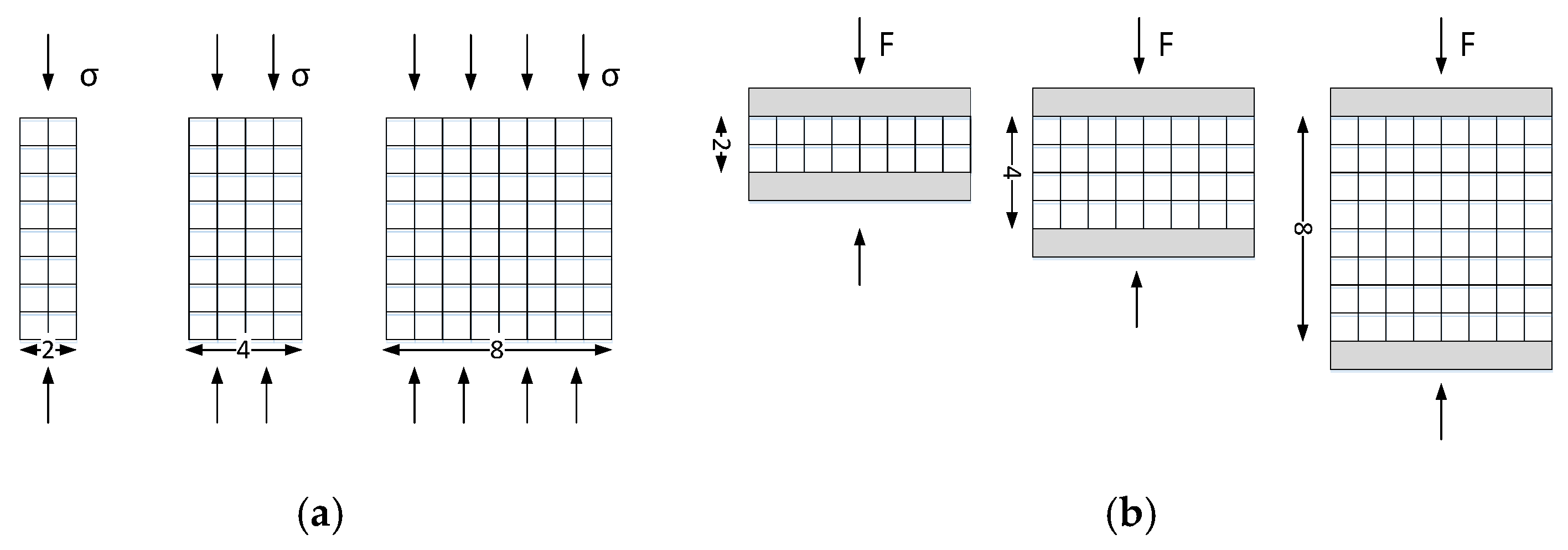
25]. From the previous literature, it was generally concluded that both the elastic modulus and strength of the cellular structures increase with increasing pattern sizes, and the pattern size effects converge to stable levels when the unit cell number reaches 8–12, depending on the actual cellular geometry. Although often unintentional, in many of the works, the pattern sizes of the cellular structures were adjusted simultaneously in all the pattern directions for investigation, i.e., the numbers of unit cells in all the principal symmetry directions of the cellular structures were kept consistent when the pattern size varied. A potential issue with such an investigation scenario is that as the pattern sizes in different symmetry directions were not differentiated, the effect of the pattern size aspect ratio could not be effectively identified. Meanwhile, from the perspective of structural mechanics, it would appear plausible that the aspect ratio of the cellular patterns also plays certain roles in influencing the local stress–strain characteristics, as is generally the case with solids under tension/compression. In this regard, the pattern size effects could be further categorized as lateral size effects and along-stress size effects, as shown in
Figure 1. Lateral size effects evaluate the influence of lateral boundary conditions (e.g., free surface) on the mechanical properties of structures, and along-stress size effects evaluate the influence of boundary constraints at the loading boundaries (i.e., fixed boundaries for a sandwich panel subjected to tension/compression). Onck et al. [
23] modeled the lateral size effects with 2.5D honeycomb cellular structures and concluded that the size effect stabilizes when the pattern size approaches 10, which was subsequently validated experimentally [
20]. Tekoglu and Onck [
24] studied the along-stress size effects of both 2D honeycomb and Voronoi cellular structures and concluded that the size effects diminish at a pattern size of around 8. A limitation with the current results is that in most of these works, the cellular structures were treated as semi-infinite structures that have infinite pattern sizes in the directions perpendicular to the ones of interest. As such, the two types of pattern size effects were fully decoupled, but their potential interactions were also excluded from the investigation. When both the lateral and along-stress size effects are present, the compound effects that are expected to result in certain changes in the stress–strain characteristics of the cellular structures are currently not well-established. This work aims to provide a preliminary understanding of this issue using simulation-based studies. Although the simulation approach can suffer from computational cost issues, it provides the significant advantage of reduced noise factors (e.g., manufacturing quality issues) as well as the costs of experimentation for the purpose of this investigation. With cellular structures, due to their small feature sizes and complex architectures, they often exhibit significant manufacturing process-induced property and quality variabilities within the structures. For example, most additive-manufacturing (AM) processes exhibit significantly altered part quality at lower feature orientation angles. As a consequence, experiment-based cellular structure investigation is often compounded by these significant factors. Also, in order to enhance the generalizability of the results, multiple representative unit cell structures were considered for this investigation. To obtain further insights into the effects of the aspect ratio of the cellular pattern vs. the aspect ratio of the overall cellular geometry dimensions, geometry design variations for certain cellular unit cell designs were also introduced in this study. The initial results and analysis of this work were published previously [
26]. However, many of the discussions with the results were not systematic, and some of the conclusions were later identified to be inaccurate. Also, it was found that although this topic is sometimes considered well-established, there still exist significant knowledge gaps in reconciling various discrepancies and inconsistencies in the literature. As such, in this paper, the results were analyzed more carefully and discussed in a more structured and detailed manner in order to provide a more comprehensive perspective on the subject.
2. Design of Cellular Structures
Although the design of cellular unit cell geometries can be considered an unbounded problem, many of these structures generally exhibit similar property tailorability, that is, their mechanical characteristics of structures follow similar trends when certain geometric variation rules are introduced [
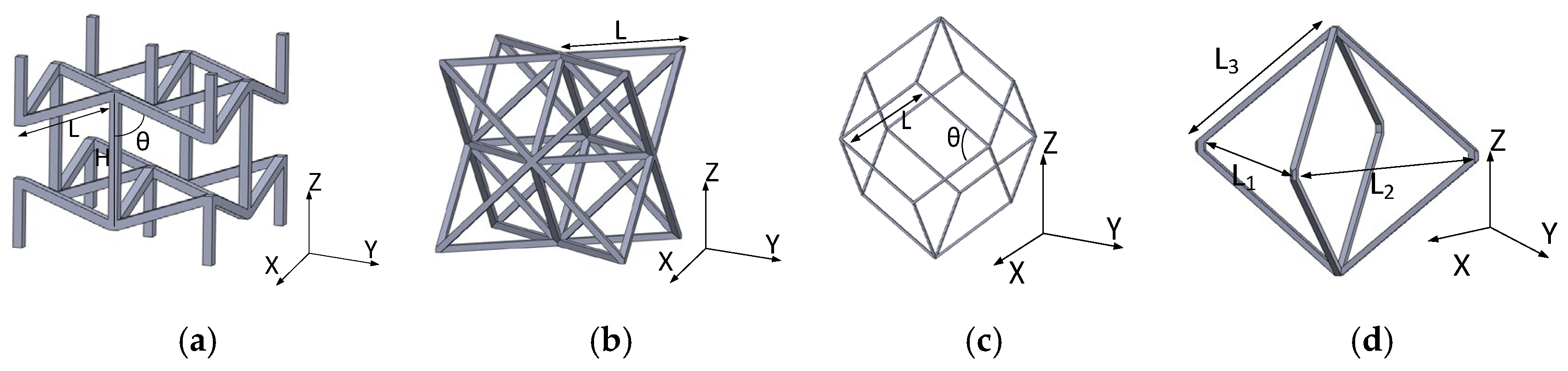
27]. Therefore, in this study, four different types of strut-based cellular structures were studied, including the re-entrant auxetic structure, the octet-truss structure, the BCC lattice structure, and the rhombic structure, which are shown in
Figure 2. All four cellular designs have been designed and realized via additive manufacturing (AM) and studied for mechanical properties [
10,
12,
13,
14,
25,
27,
28,
29,
30]. These cellular designs were selected to investigate the potential relationship between the pattern size effects and some of the well-established cellular design mechanisms, such as Poisson’s ratios, deformation mechanisms (stretch-dominated vs. bending-dominated mechanisms) and structural symmetry. Among these designs, the re-entrant auxetic structure exhibits negative Poisson’s ratios in all three principal directions as well as bending-dominated deformation, the octet-truss structure exhibits stretch-dominated deformation and identical geometry in all three principal directions [
16], and the BCC lattice and rhombic structures both exhibit bending-dominated deformation while having different levels of structural symmetries. The typical geometrical design parameters of each type of cellular structure are shown in
Figure 2. Note that the cross-sectional geometry parameters are not shown. In this study, square cross-sections with dimension
t were used for all cellular designs.
All four cellular designs in the current study have a cubic geometric bounding volume (GBV) and, therefore, exhibit three principal directions in which the structures can be patterned (shown as
x-,
y-, and
z-axes in
Figure 2). Different cellular designs exhibit different levels of geometrical symmetry and, therefore, different anisotropic characteristics. For example, for the re-entrant auxetic structure, the x- and y-directions, as shown in
Figure 2, are geometrically identical; therefore, the structure exhibits two distinct symmetry orientations of mechanical properties, i.e., in the
x/
y- and
z-directions. Similarly, the rhombic structure exhibits two distinct symmetry orientations in the
x/
y- and
z-directions. Meanwhile, the octet-truss structure exhibits identical symmetry in all the
x/
y/
z-directions. The BCC lattice exhibits design-dependent structural symmetry with up to three distinct patterns of mechanical properties in the
x-,
y-, and
z-directions depending on the actual designs of its geometrical parameters (
L1,
L2 and
L3). In order to establish more comprehensive knowledge of size effects with each structure, all distinctive principal directions were investigated.
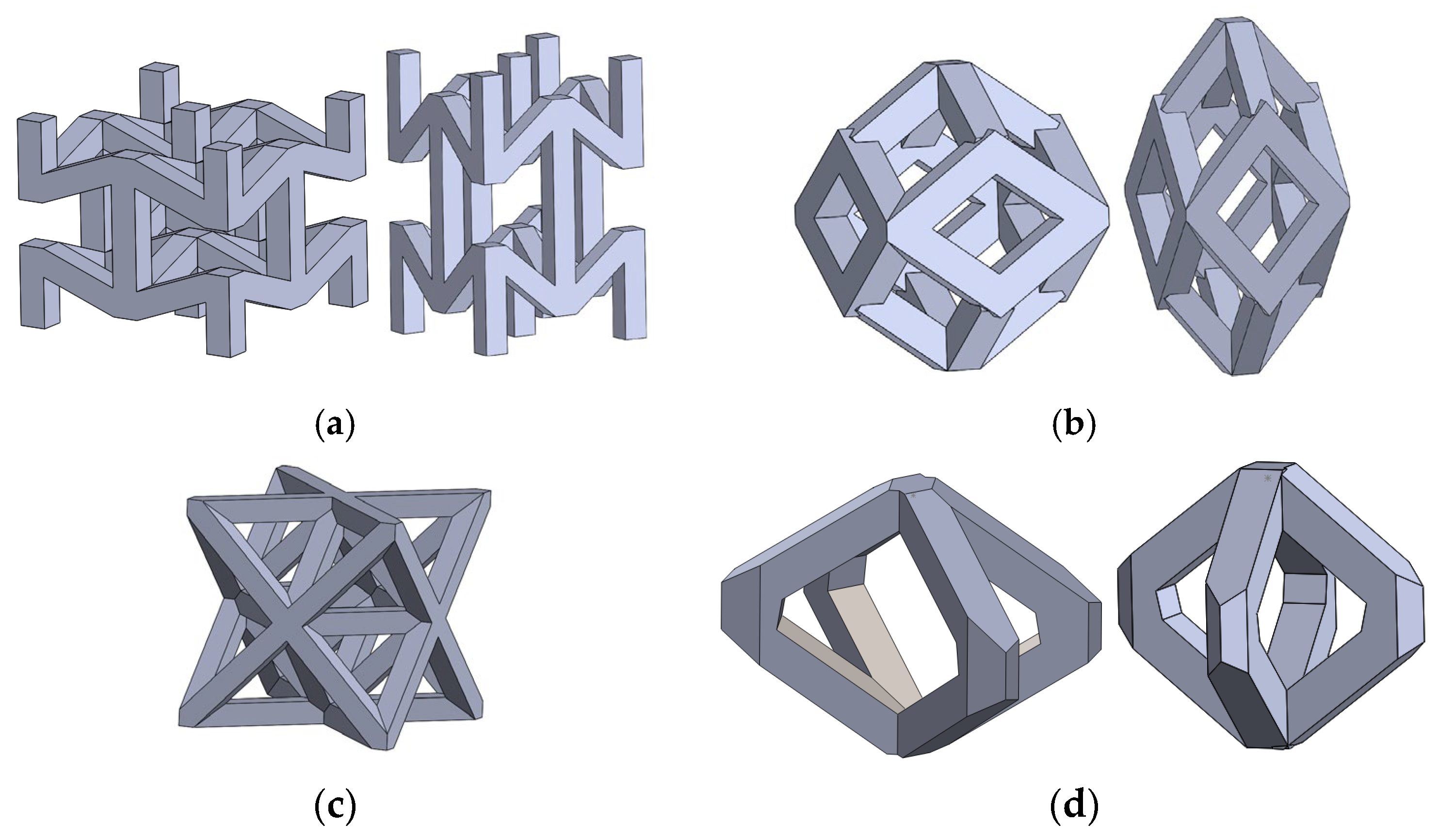
Table 1 shows the geometrical designs of all the unit cells. For the auxetic unit cells, the two designs exhibit significantly different Poisson’s ratios. Aux1 has Poisson’s ratios of
νzx = −0.24 and
νxz = −3.13 in the
z- and
x/
y-directions, respectively, and Aux2 has Poisson’s ratios of
νzx = −0.79 and
νxz = −0.67 in the
z- and
x/
y-directions, respectively (
Figure 3a), following the theoretical model reported in [
25]. Also, the two designs exhibit contrast with their dimensional aspect ratios, with Aux2 exhibiting larger height-to-width aspect ratios with respect to the
z-direction (in reference to
Figure 2a). For the rhombic unit cells, the two designs also exhibit different dimensional aspect ratios, with Rhomb1 exhibiting more isotropic dimensions in all three principal directions and Rhomb2 exhibiting more anisotropic dimensions (
Figure 3b). For the octet-truss unit cell, only one geometry variation was designed, since the topology is directionally identical and the dimensional scaling was not expected to influence the pattern size effects (
Figure 3c). For BCC unit cells (
Figure 3d), the two designs also exhibit different dimensional aspect ratios, with BCC1 exhibiting more anisotropic dimensions and BCC2 exhibiting more isotropic dimensions. For all the unit cell designs, the cross-sectional thickness t was set to be 0.8 mm. The relative densities of the resulting cellular structures were maintained within a small range between 0.16 and 0.18 (the small variation was introduced by half-struts at the boundaries of the structures from solid patterning in SolidWorks). Subsequently, it was expected that the relative density would have a negligible influence on the comparisons of results, which allows for the investigation to focus on geometrical designs and pattern sizes.
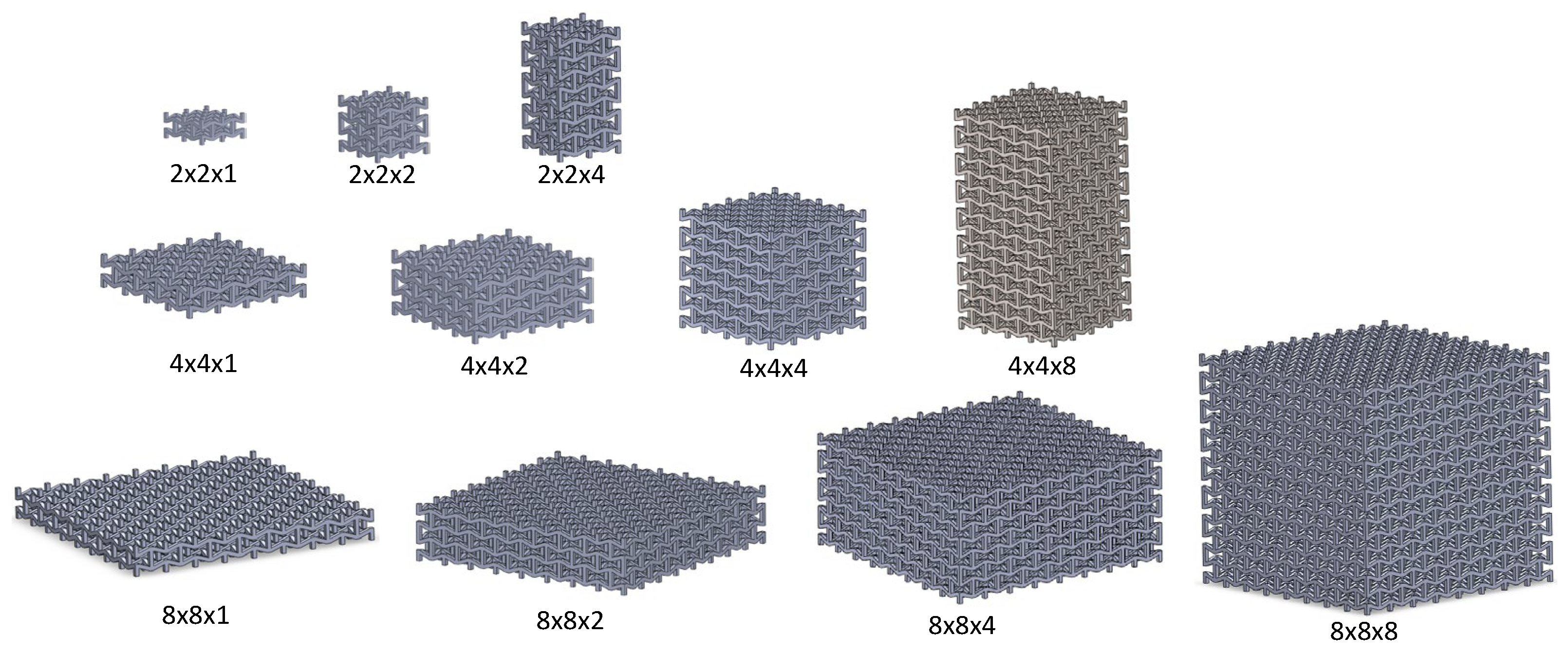
To evaluate the size effects, for each cellular design, instances with pattern sizes of 1, 2, 4 and 8 in both lateral and along-the-stress directions were included in the investigation. An example for the auxetic 1 design is shown in
Figure 4. The pattern combination of 2 × 2 × 8 was not investigated due to the consideration that it would lead to a single highest-aspect-ratio pattern that might be more prone to structural buckling effects, thus introducing a new mechanism that could not be effectively analyzed within the scope of the investigation.
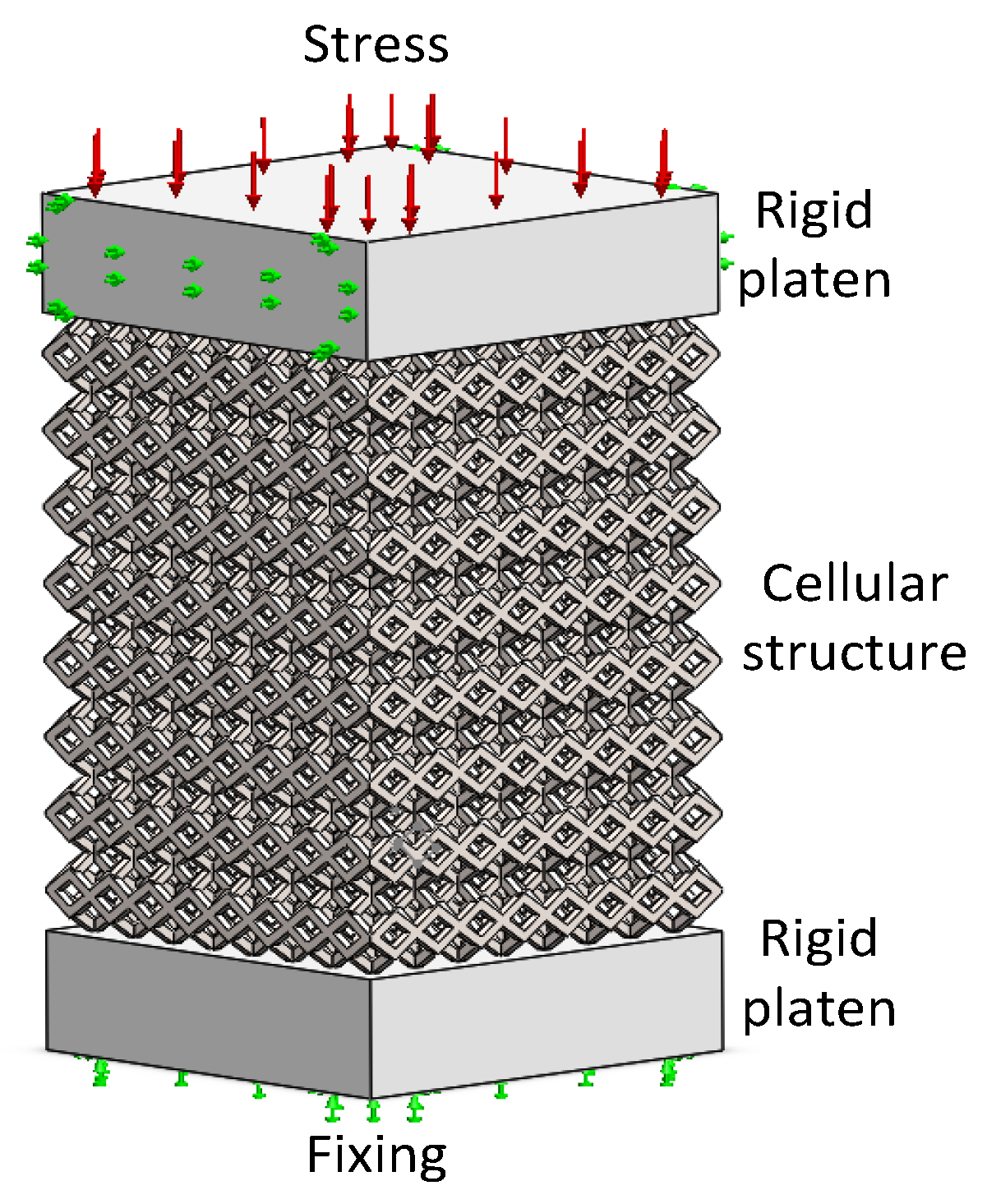
The simulations were carried out using SolidWorks Simulation. Although this simulation module does not provide comprehensive finite element analysis capabilities compared with other commercial FEA software, it provides adequate accuracy in simulating static elastic problems and is also relatively convenient to use due to its integration within the SolidWorks modeling environment. For all simulations, the boundary conditions, as shown in
Figure 5, were set up. Two rigid blocks were modeled at both ends in the loading directions for the cellular structures and subsequently used as loading platens. Fully bonded conditions were defined between the cellular structures and the rigid platens in order to simulate completely constrained boundary conditions. The meshing was carried out with the default tetrahedron element with an element size of 0.4 mm, which was determined after a sensitivity study with the maximum stress levels.
As shown in
Figure 5, one rigid platen was completely fixed during the simulations, and an arbitrarily selected stress of 1 kPa or 1 MPa was applied to the other side of the rigid platen in the normal direction. Additional zero lateral displacement constraints were added to the movable platen for simulations of several models with large overall aspect ratios in order to minimize structural skew errors introduced by simulation tolerances.
Figure 5 only illustrates the instance with
z-direction loading, while for the investigation, each of the pattern designs was investigated for
z-direction and
x/
y-direction loading, following the same manner of boundary condition setup. In addition, the mechanical properties of the single unit cells (i.e., a pattern size of 1 × 1 × 1) for each geometrical design and loading condition combination were also simulated and used as references. Ti6Al4V was assigned as the material, but such a choice was considered trivial as it would not affect the generality of the investigation. After the simulation, the elastic modulus of the structures and the maximum Von Mises stress levels were obtained, and the results were compiled for analysis.
3. Results
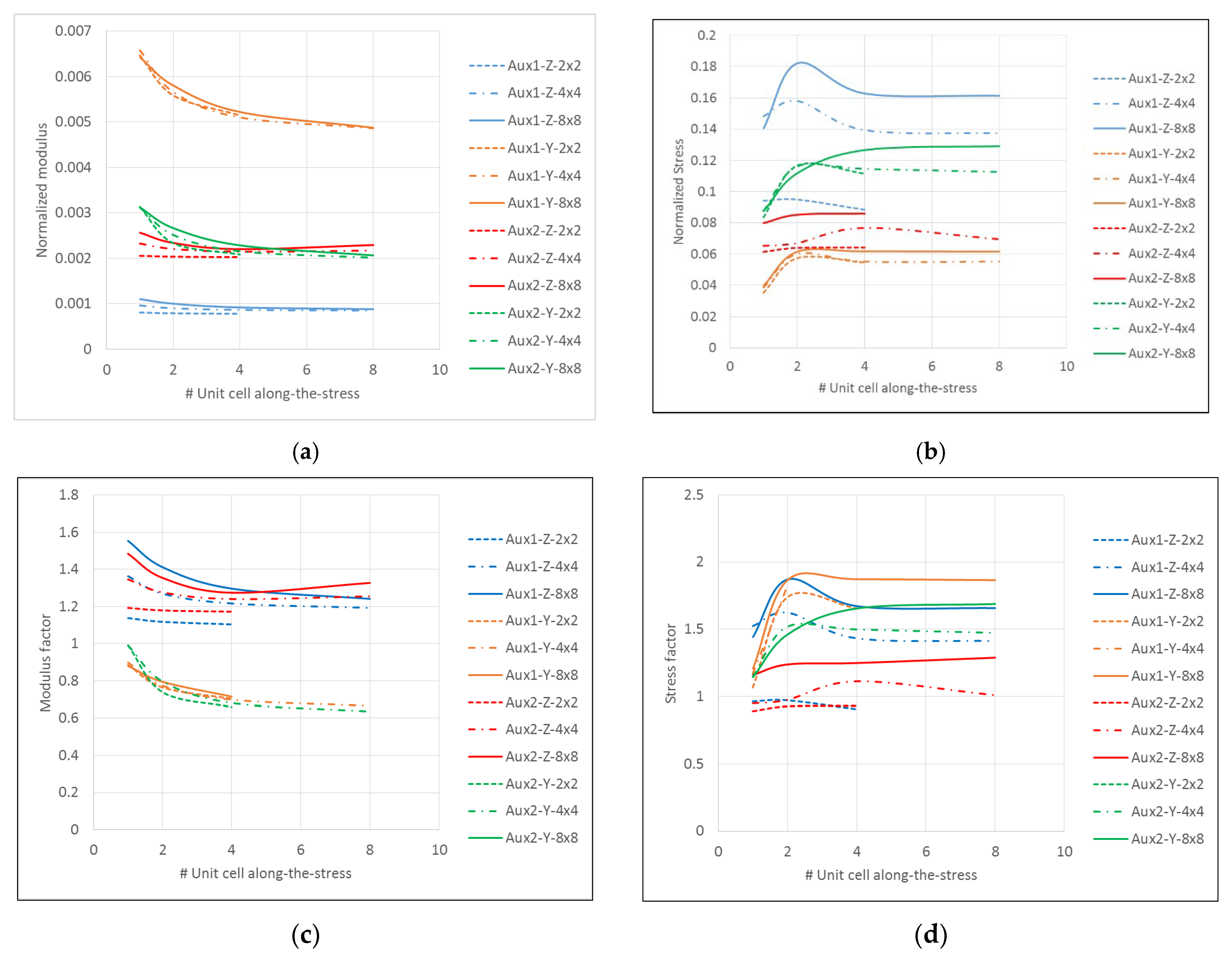
The size effects of re-entrant cellular structures are shown in
Table 2 and
Figure 6.
Es and
σU are the elastic modulus and ultimate strength of Ti6Al4V and were taken as 104.8 GPa and 980 MPa from the material database of the software.
It was known from analytical modeling that the two auxetic structures exhibit different mechanical properties in both directions [
31]. Auxetic 1 design exhibits a higher elastic modulus in the
x/
y-directions, while auxetic 2 design exhibits a similar elastic modulus in all three directions (detailed calculations omitted here for brevity). The simulation results from the current study clearly suggested the same characteristics across the entire investigated pattern size effect range. From the results, both auxetic designs exhibit rather small pattern size effects on elastic modulus. The along-stress size effect stabilizes when the pattern size is greater than 2 or 4, while the lateral size effect is not obvious. This agrees well with the conclusions from previous studies with this structure [
31]. Although it appears that the along-stress size effect is somewhat more significant in the direction of a greater negative Poisson’s ratio (
x/
y), when compared with other structures that exhibit positive Poisson’s ratios, the pattern size effects of auxetic structures are still considerably smaller, which also agrees well with the earlier discussion about Saint-Venant stress decay with these structures [
32]. In comparison, when loaded in the
z-direction, the re-entrant auxetic structure exhibits a more heterogeneous lateral size effect with maximum stress levels (
Figure 6b). Although the simulations were carried out with elastic materials, it could be reasonably assumed that the relative trend with the maximum stress is expected to correlate directly with that of the ultimate strength of the structures. As such, higher normalized maximum stress levels in the structures would likely correspond to higher stress concentration factors in the structures and, therefore, lower ultimate strength. For the maximum stress levels, the lateral size effect appears to be more significant with larger along-stress pattern sizes in general, which is clearly reflected by the larger differences in values between the individual trend lines at an along-stress pattern size of 4 or 8. The dependency of the lateral size effect on the pattern aspect ratio reveals an interesting characteristic of the re-entrant auxetic structures that draws analogy from traditional solid structures. As such pattern aspect ratio dependency is absent with the along-stress size effect, it could be speculated that the constrained boundary, which would scale with the lateral pattern size, is the more prominent factor for the pattern aspect ratio dependency of the local stress status of the cellular structures. Also, there exists a clear correlation between Poisson’s ratio and the significance of lateral size effects, as the design with the smallest negative Poisson’s ratio (Aux1-Z) exhibits the most significant lateral size effect, whereas the design with the greatest negative Poisson’s ratio (Aux1-X/Y) exhibits the least significant lateral size effect. Overall, the along-stress size effect for maximum stress levels also appears to stabilize as the pattern size reaches 2–4.
As the mechanical properties of the unit cell-based cellular structures are often modeled through unit cells, the mechanical characteristics of the cellular patterns were also compared with the corresponding unit cells.
Figure 6c,d illustrate the pattern size effects for relative modulus factors and stress factors, which correspond to the ratios between cellular structures and the unit cell for the elastic modulus and maximum stress levels, respectively. Such a comparison revealed additional characteristics of the cellular designs. From
Figure 6c, when the auxetic structures are loaded in the
z-direction, the elastic moduli of the structures are higher than those of the unit cells, indicating a “stiffening” effect of the design. Meanwhile, when the auxetic structures are loaded in the
x/
y-direction, the resulting elastic modulus is lower than that of the unit cells, indicating a “softening” effect. It was also noticed that the stiffening/softening effects converge to similar values (1.2–1.3 for the
z-direction and 0.65 for the
x/
y-direction) regardless of the actual geometrical design of the auxetic structure. The auxetic structures also exhibit higher stress factors when loaded in the
x/
y-directions, while in most cases, the auxetic structures exhibit stress factors larger than 1, indicating an overall “weakening” effect of pattern size effects for mechanical strength.
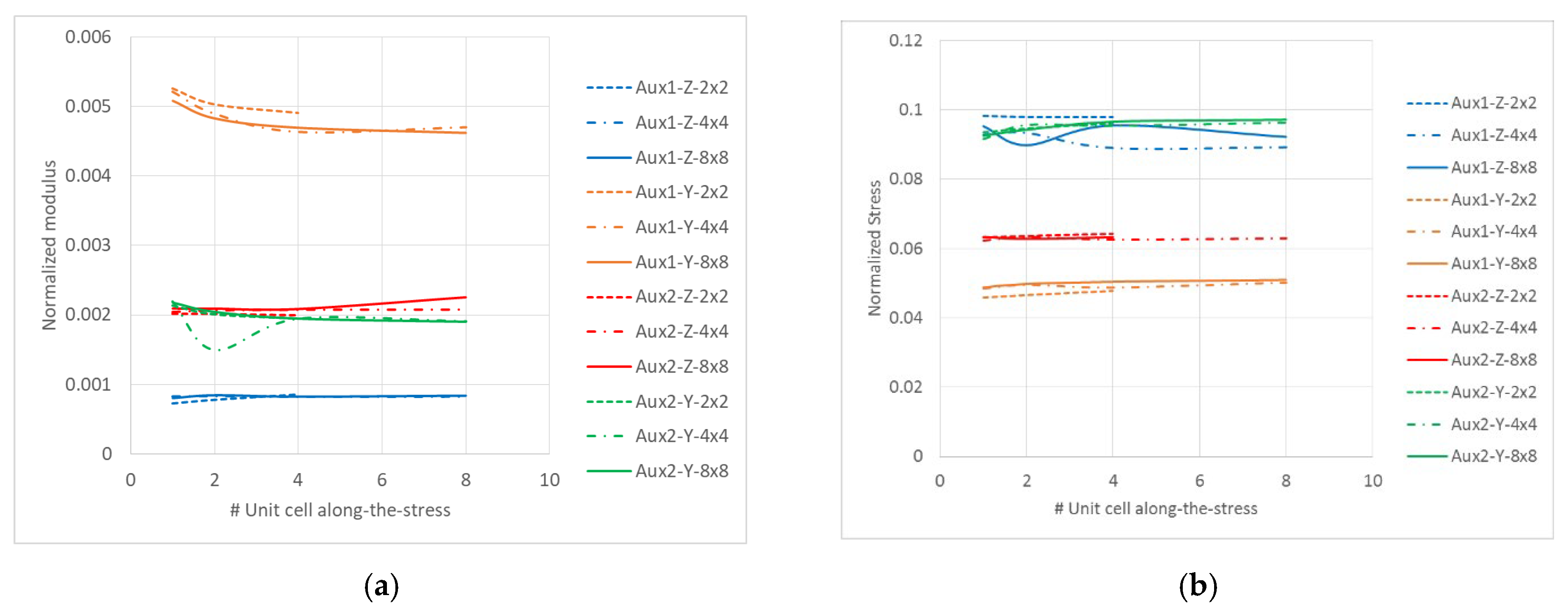
As discussed earlier, the boundary constraint is a significant contributing factor to the lateral size effects. To further understand this aspect, additional simulations with altered boundary conditions were carried out, in which the cellular structures were not bonded to the stiff platens (referencing
Figure 5). Instead, full lateral slippage was allowed between the cellular structures and the stiff platens, which essentially eliminated lateral constraints of the cellular struts at the contact boundaries.
Figure 7 summarizes the simulation results of both the elastic modulus and the maximum stress levels for the auxetic cellular structure. The results clearly indicated the absence of both lateral and along-stress size effects. When comparing
Figure 7 with
Figure 6, the coupling of the two pattern size effects with maximum stress levels in the auxetic structures is clearly discernible. The coupling effect not only leads to a more significant lateral size effect but also results in a 50–60% increase in maximum stress levels within the structures. Meanwhile, such a coupling effect appears less significant for the elastic modulus of the structure. This might be due to the fact that elastic modulus describes an “averaged” behavior of the entire structure upon elastic deformation.
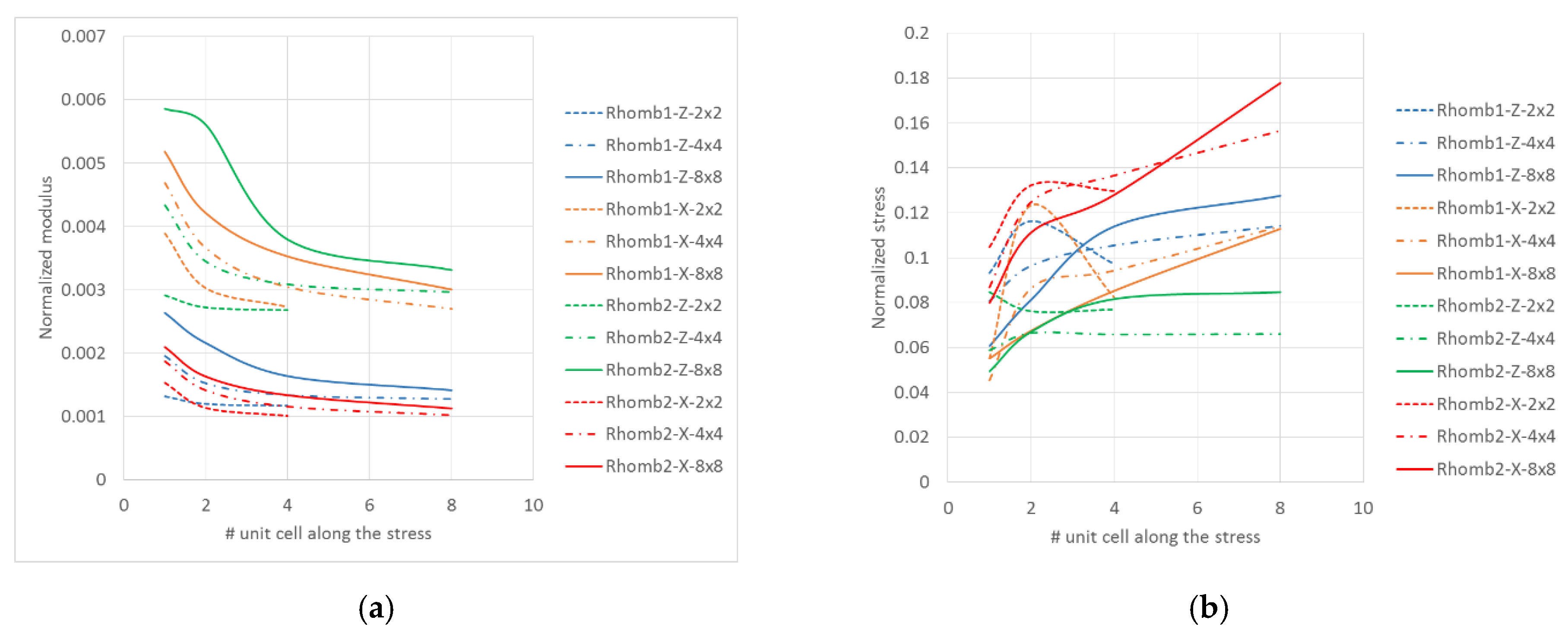
Next, the pattern size effects of the rhombic cellular structures are shown in
Table 3 and
Figure 8. From the results, for the elastic modulus of both rhombic designs, the lateral size effect stabilizes when the pattern size is greater than 4–6, while the along-stress size effect appears to increase with increasing pattern size. Also, at larger lateral pattern sizes, the along-stress size effects tend to decrease, as can be noticed from the convergence of curves at large lateral pattern sizes. For maximum stress levels, the along-stress size effects along the
z-direction of both rhombic designs appear to stabilize as pattern size increases, whereas for the
x/
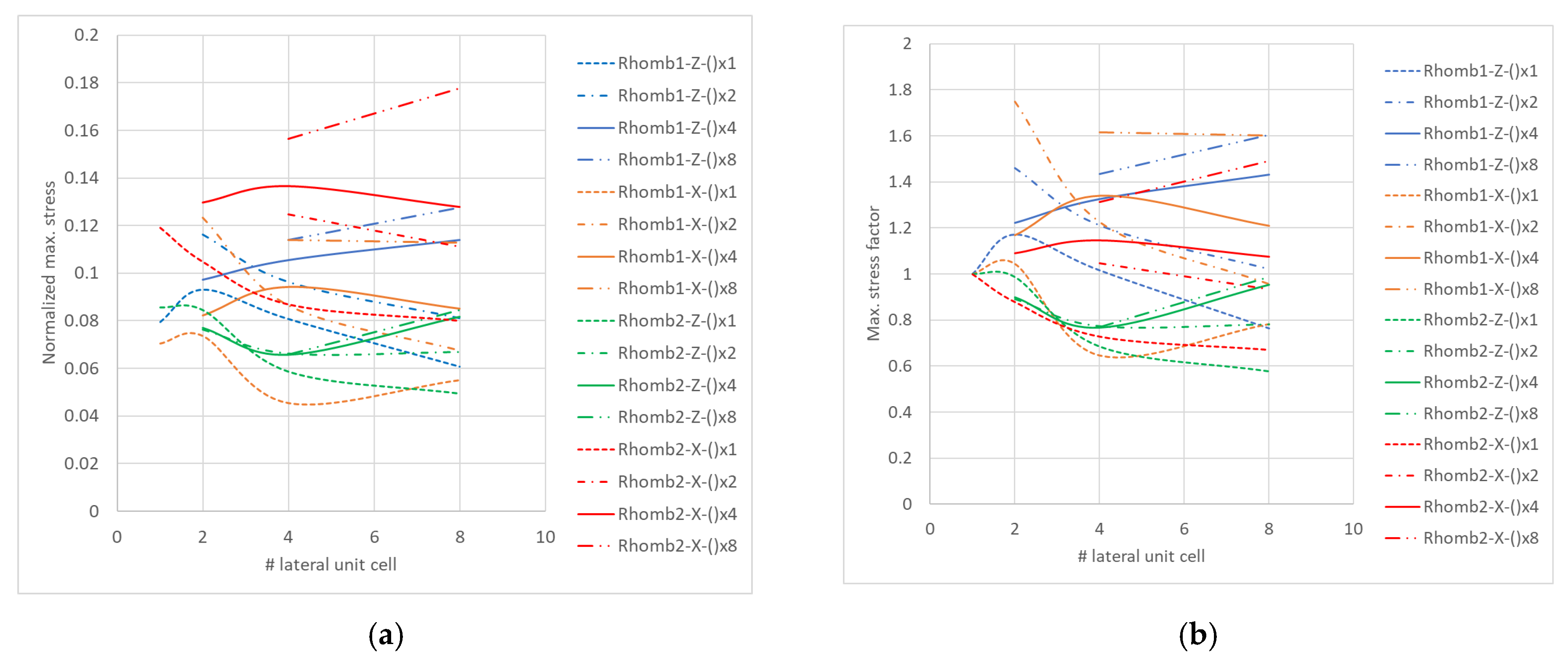
y-direction, the along-stress size effects consistently increase as pattern size increases. Also, when the lateral pattern size is 2, the along-stress size effects for Rhomb1 and Rhomb2-X/Y appear to peak at a pattern size of 2. The coupling effect of the two pattern size effects for maximum stress levels is not obvious from
Figure 8 but is more clearly illustrated in
Figure 9, with the lateral size plotted on the
x-axis. From
Figure 9a, the lateral size effect of maximum stress levels for all the design and loading instances becomes larger in magnitude at larger along-stress pattern sizes. It is also noted that due to the topology design, individual struts in the rhombic2 design are more aligned in the
z-direction, which might be partially responsible for the lower maximum stress levels and higher elastic modulus. Based on the results, for rhombic structures, a higher pattern aspect ratio in the loading direction is expected to correspond to stronger designs.
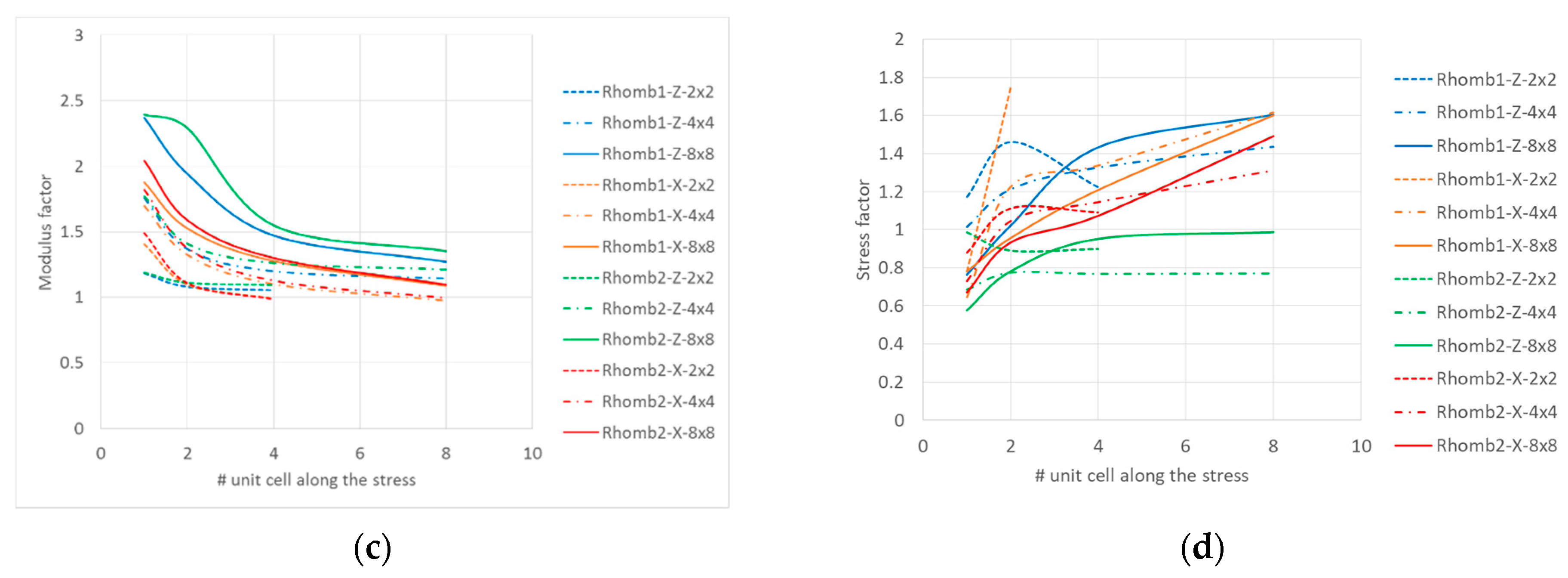
Figure 8c,d show the relative size effects of rhombic cellular structures compared with unit cells. In general, both types of size effects enhance the elastic modulus of rhombic structures compared with unit cells. Meanwhile, for maximum stress levels, while the along-stress size effect results in increased stress levels in general, the lateral size effect again exhibits a non-monotonous trend that is dependent on the along-stress pattern size (
Figure 9b). Based on the results, rhombic cellular designs with a larger lateral pattern size and small along-stress pattern sizes should exhibit the optimal combination of modulus and strength, which suggests the use of such designs in thin sandwich panel structures.
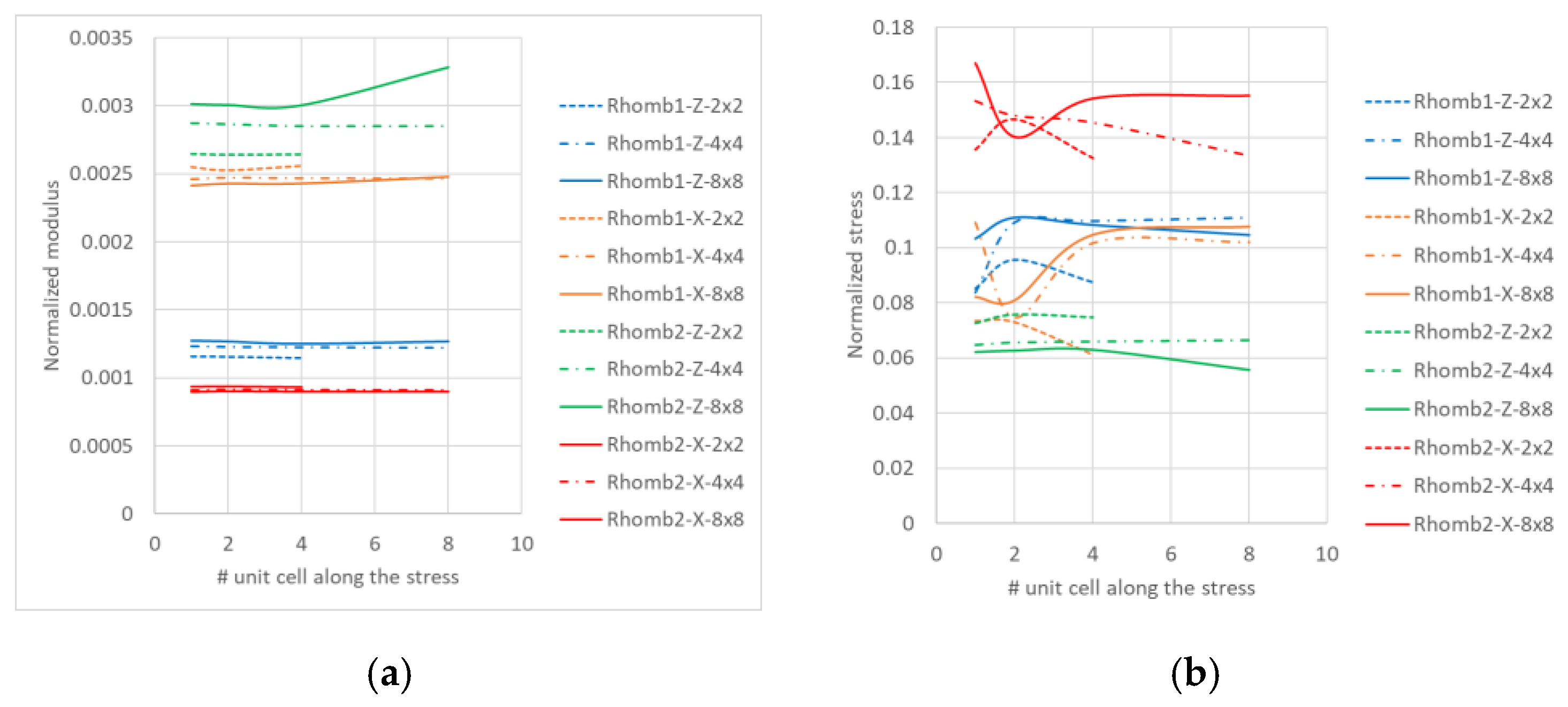
Additional simulations with fully slipping boundary conditions were carried out following the same approach used for auxetic cellular structures.
Figure 10 shows the pattern size effects for elastic modulus and maximum stress levels under such boundary conditions. For the elastic modulus of rhombic structures, the removal of the boundary constraints appears to eliminate the along-stress size effect, as shown in
Figure 10a. This is different from the characteristics observed for the re-entrant auxetic. This is also considered intuitive as the free surfaces at the lateral boundaries of the cellular patterns are expected to introduce localized stress heterogeneity near the free surfaces. For the maximum stress levels, constraint-free boundary conditions also resulted in significantly reduced pattern size effects, although at a small along-stress pattern size, the slight non-monotonous characteristic is still present (also illustrated in
Figure 9b).
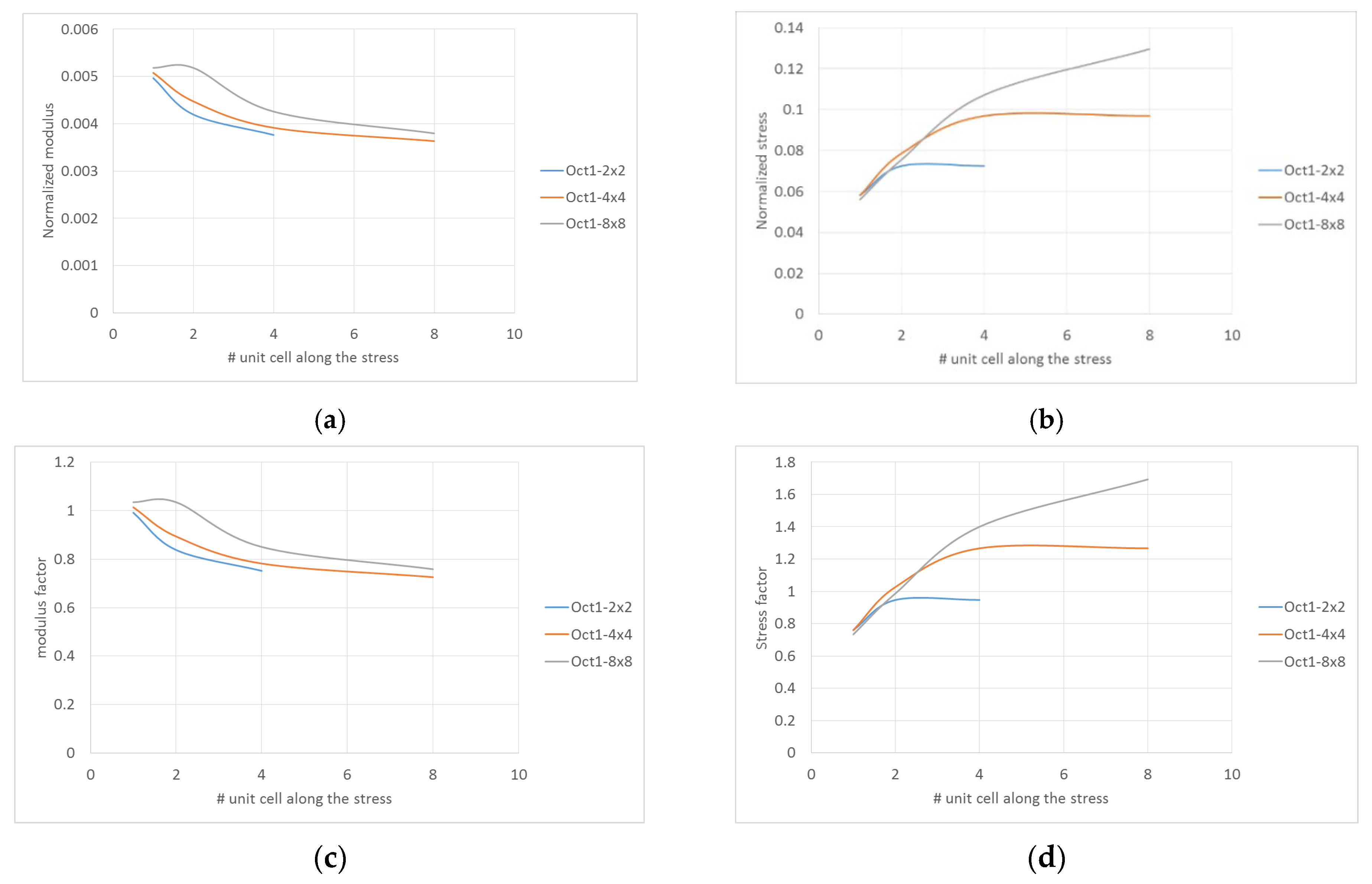
The size effects of the octet-truss structures are shown in
Table 4 and
Figure 11. Due to the symmetry of the unit cell, the analysis was only carried out for one direction (Z). For the elastic modulus, the along-stress size effect appears to stabilize as the pattern size approaches 8, regardless of the lateral pattern size. In comparison, the lateral size effect appears to be less significant. For maximum stress levels, the along-stress size effect becomes more significant with a larger lateral pattern size. It appears that the stabilizing size of the along-stress size effect is directly associated with the lateral pattern size. As shown in
Figure 10b, with lateral pattern sizes of 2 and 4, the along-stress size effect stabilizes at pattern sizes of 2 and 4, respectively, and from the trend, it is reasonable to deduct that the stabilizing size for the along-stress size effect with a lateral pattern size of 8 is 8 as well, despite the absence of results for larger pattern sizes for verification. For the design of octet-truss-based cellular structures, such a pattern size effect characteristic could provide easier design analysis. The relative size effects are shown in
Figure 11c,d. It could also be seen that for octet-truss patterns, the elastic modulus is generally lower than that of the unit cell, and the stress concentration factor is usually larger than that of the unit cell except when the pattern size along the stress direction is very small (1 or 2). Therefore, for large sandwich panel structures using octet-truss designs, fewer layers might be preferred for a reduced stress concentration factor.
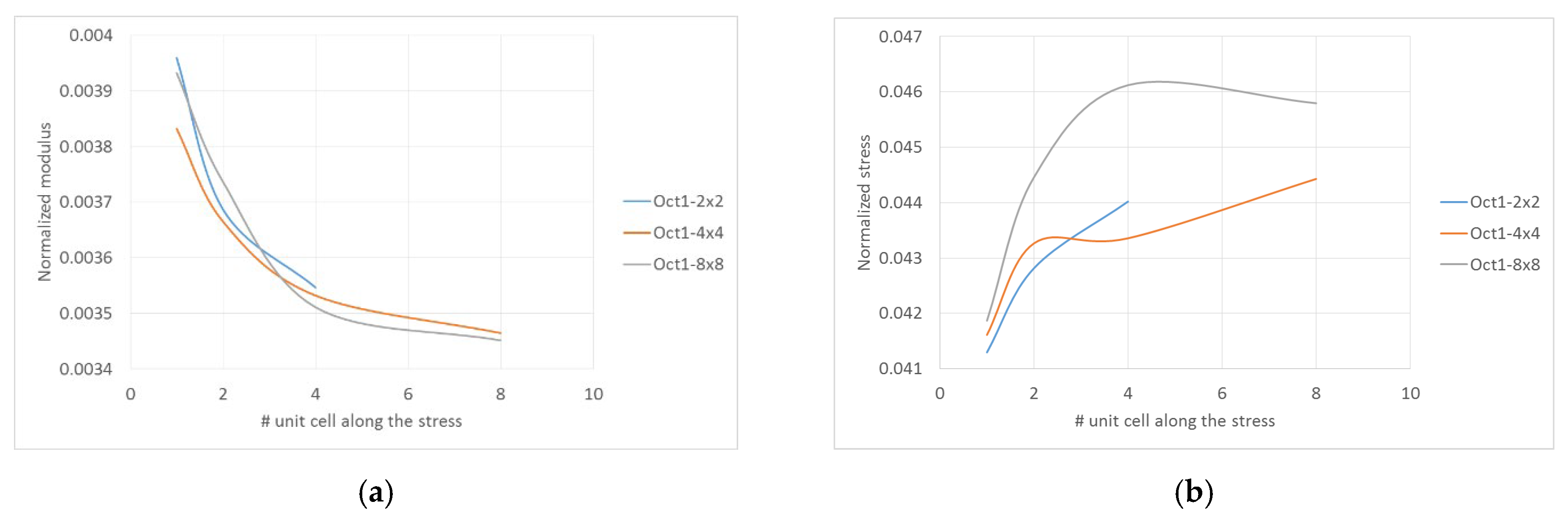
The size effects of octet-truss structures with no boundary constraints are shown in
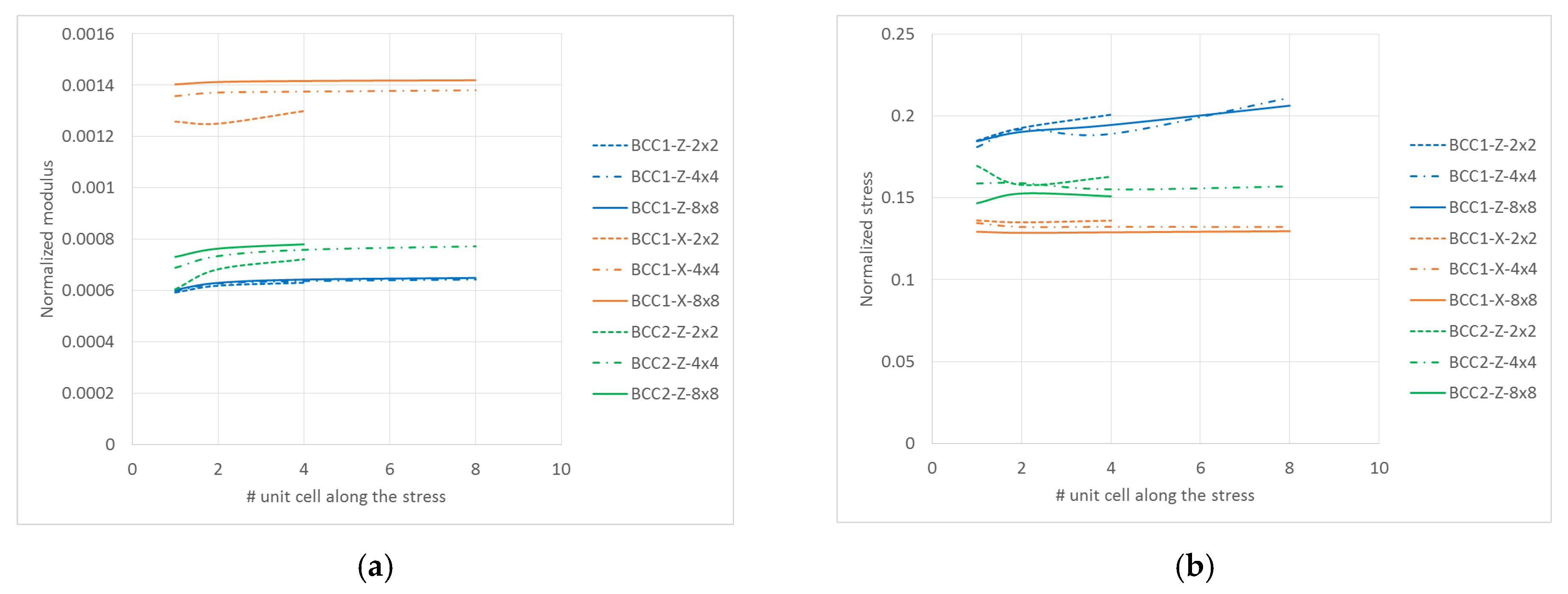
Figure 12. Overall, the size effects become significantly smaller without boundary constraints. For the elastic modulus, the along-stress size effect exhibits the same trend as in the boundary-constrained cases, as well as appearing to converge to similar values (
Figure 11a). However, the total range of values for the pattern size effects is considerably smaller. Similarly, the pattern size effects for maximum stress levels also exhibit a similar trend compared with the boundary-constrained cases, but are reduced by over 90% in magnitude. In comparison with both the re-entrant auxetic and rhombic designs, octet-truss cellular structures exhibit vastly more significant stress concentration effects from boundary constraints. This should likely be considered as a more prominent design aspect in future designs with these structures.
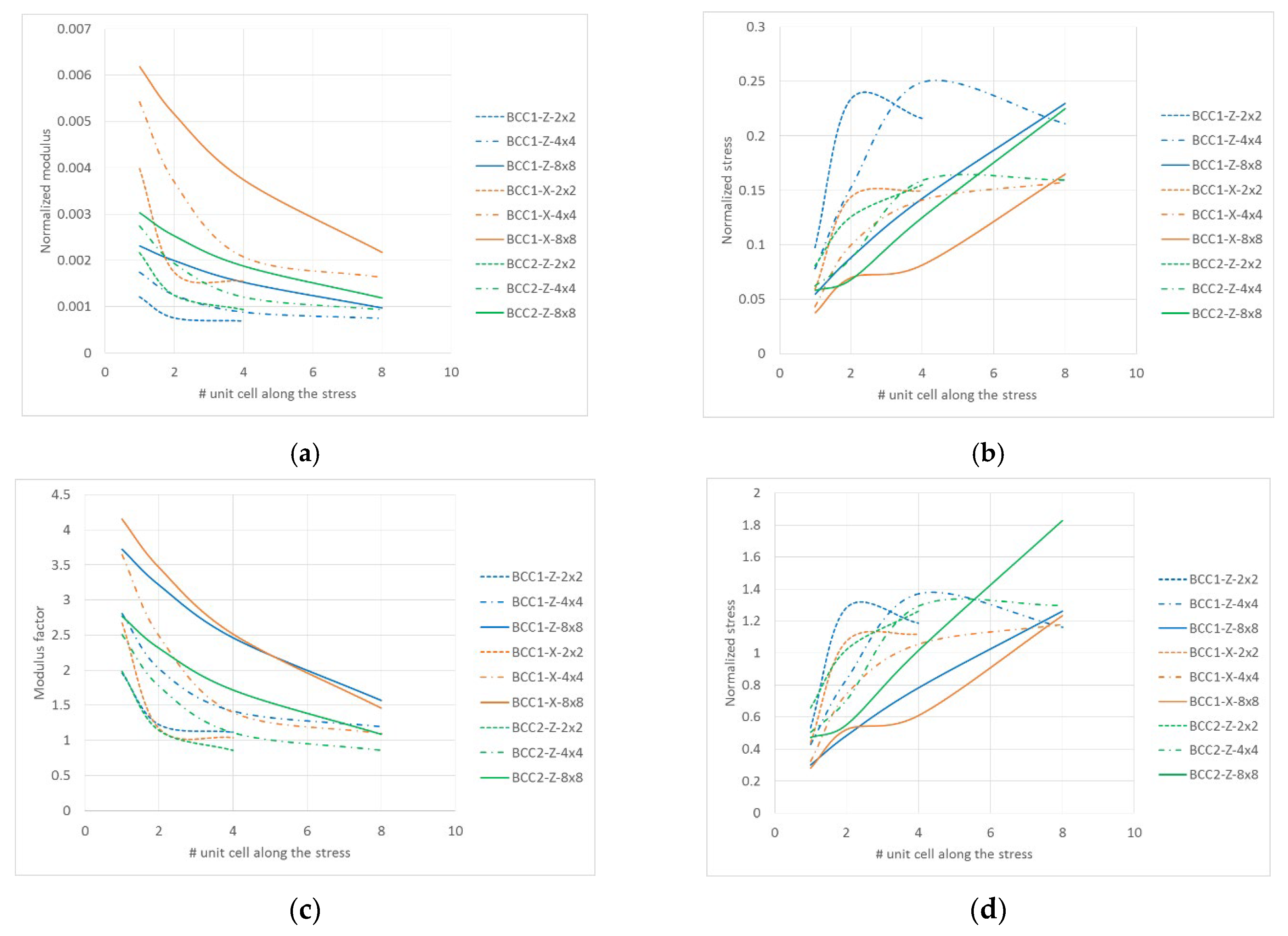
Lastly, the pattern size effects of BCC lattice cellular structures are shown in
Table 5 and
Figure 13. Note that as the BCC2 lattice design exhibits identical topology in all three directions, the results from an arbitrary direction are representative of the other directions. In general, the BCC lattice exhibits significant pattern size effects. The lateral size effect leads to an increased elastic modulus, while the along-stress size effect has the opposite effect. Meanwhile, the lateral size effect leads to a reduction in the maximum stress levels, while the along-stress size effect leads to the opposite. In addition, for both the elastic modulus and maximum stress levels, the along-stress size effect also appears to be directly related to the lateral pattern size, that is, BCC lattice designs with a lateral pattern size of 8 × 8 exhibit stabilized along-stress size effects at the pattern size of 8, and similarly, for designs with 4 × 4 and 2 × 2 lateral patterns, the along-stress size effects stabilize at pattern sizes of 4 and 2 respectively. Such characteristics have been demonstrated previously, and they are likely caused by the unique stress concentration patterns with the compression of BCC lattice structures that are analogous to those of a solid material [
19].
The relative size effects of the BCC lattice are shown in
Figure 13c,d. Again, similar pattern size effect trends are observed for the modulus and maximum stress. When the pattern sizes in both directions are sufficiently large, the relative elastic modulus size effect of the BCC lattice appears to converge to unity, meaning that the property design with the unit cell design could be employed as a reasonable approximation of the patterns. Meanwhile, the stress concentration factors appear to be most significant when the lateral pattern size is equal to the along-stress pattern size.
The size effects of the BCC lattice structures with no boundary constraints are shown in
Figure 14. Similar characteristics to the rhombic designs can be observed here: the along-stress size effects appear insignificant, whereas the lateral size effect appears generally significant. It could be speculated that this is generalizable to bending-dominated designs. The lateral size effects for the BCC also appear more regular than those of the rhombic designs. Although further investigation into the root cause of the difference was out of the scope of this work, it was speculated that this might be related to the more complex strut deformation modes with the rhombic designs, which might translate into more significant local stress concentration effects at very small along-stress pattern sizes.