Systematic Review

Matrix Band Systems in Class II Composites: A Systematic Review

1
Department of Conservative Dentistry and Endoodntics, Faculty of Dentistry, University of Hassan II, Casablanca 21100, Morocco
2
Department of Restorative and Esthetic Dentistry, Faculty of Dental Medicine, Saint-Joseph University of Beirut, Beirut 1107 2180, Lebanon
3
Department of Biomaterials and Bioengineering, INSERM UMR_S 1121, University of Strasbourg, 67000 Strasbourg, France
4
Department of Restorative Sciences, Faculty of Dentistry, Beirut Arab University, Beirut 115020, Lebanon
*
Author to whom correspondence should be addressed.
J. Compos. Sci. 2026, 10(2), 97; https://doi.org/10.3390/jcs10020097
Submission received: 5 January 2026 / Revised: 30 January 2026 / Accepted: 2 February 2026 / Published: 11 February 2026
(This article belongs to the Section Composites Manufacturing and Processing)

Abstract

Background/Objectives: The integrity of proximal contact and marginal adaptation in Class II composite restorations is essential for mechanical stability, interfacial integrity, and long-term clinical performance. These outcomes are strongly influenced by the matrix system used during restoration. This systematic review aimed to evaluate the performance of different matrix systems in restoring posterior proximal cavities, with a specific focus on their interaction with composite materials. Materials and Methods: A systematic literature search was performed in PubMed, Cochrane Library, ScienceDirect, and Scopus for studies published between 2014 and 2024. Clinical and in vitro studies comparing different matrix systems used in Class II posterior composite restorations were included. Sixteen studies met the eligibility criteria. Risk of bias was assessed using the RoB 2 tool for randomized clinical trials and the ROBINS-I tool for non-randomized studies. Results: Sectional matrix systems consistently demonstrated superior performance in achieving anatomically accurate and tight proximal contacts compared with circumferential and transparent matrix systems. Metal matrices generally showed better contact tightness and marginal adaptation than transparent matrices, likely due to their higher rigidity and improved resistance to deformation during composite placement and polymerization. The adjunctive use of separation rings and contact-forming instruments further enhanced proximal contact quality and marginal integrity. Regarding composite types, high-viscosity bulk-fill composites provided better marginal adaptation and proximal contact tightness than flowable bulk-fill and conventional composites. Conclusions: Within the limitations of the included studies, proximal contact quality and marginal adaptation in Class II composite restorations are influenced by the matrix system, composite material behavior, and clinical application protocol. Sectional metal matrix systems combined with separation rings appear to be associated with improved outcomes in the included studies, while auxiliary contact-forming instruments may further improve restorative outcomes.

1. Introduction

Achieving appropriate proximal contact and contour is a fundamental objective in direct posterior restorative procedures. An adequate proximal contact is essential to maintain the stability of the dental arch, protect the adjacent teeth and periodontal tissues, and ensure the proper functioning of the stomatognathic system [1]. Properly established contact areas protect the interdental papilla by limiting the accumulation of food debris and preserve the integrity of the dental arch by transmitting masticatory forces along the longitudinal axis of the teeth, thereby contributing to periodontal health and long-term restoration success [1,2].
Inadequate proximal contact can cause food impaction, which may lead to periodontal inflammation and subsequent alveolar bone loss. It can also increase the risk of secondary caries and contribute to tooth migration. These complications may compromise the longevity of both the restoration and the tooth, ultimately resulting in restoration failure [2].
Resin-based composite restorations have demonstrated excellent clinical outcomes due to their favorable aesthetic qualities and mechanical properties, while allowing for minimally invasive restorative approaches. However, establishing effective and predictable direct composite restorations in posterior teeth remains a clinical challenge for dental practitioners. The difficulty in achieving a tight proximal contact with composite resin is attributed to several factors, including polymerization shrinkage and the lack of condensability of these materials which may result in open or weak proximal contacts. These shortcomings can compromise restoration longevity and increase the risk of secondary caries, periodontal inflammation, and patient discomfort [3,4,5].
Over the past decades, considerable advances have been made in dental composite resins. Instruments and restorative techniques have evolved to facilitate their use in posterior Class II restorations. The constant search for the “ideal” matrix system continues, with matrices being continually developed to achieve good proximal contact. Dental matrix systems can be categorized based on the design of the matrix band and the technique of application. They can be circumferential or sectional, metal or transparent, pre-contoured or straight [6]. Circumferential matrix systems were originally developed for amalgam restorations, and are still widely used in clinical practice. However, with composite materials, they tend to produce a flat interproximal contour, a decrease in the contact tightness and the migration of the contact toward marginal ridge. This is mainly due to the tension created in the matrix band and the limited resistance of composite materials to deformation during placement. To address these limitations, pre-contoured sectional matrix systems were introduced [7].
Although numerous in vitro and clinical studies have investigated different matrix band systems for Class II composite restorations, the available evidence remains highly heterogeneous. Previous studies differ considerably in matrix system design (sectional versus circumferential), wedging techniques, restorative materials, outcome measures, and assessment methods, leading to inconsistent and sometimes conflicting findings regarding proximal contact tightness, contour accuracy, and marginal integrity. Furthermore, many studies focus on isolated variables without considering the combined influence of matrix system design and composite material properties, limiting the clinical applicability of their conclusions. As a result, no clear consensus has been established regarding the most effective matrix system for achieving predictable and optimal proximal contacts in direct posterior composite restorations. Therefore, a comprehensive and updated systematic evaluation of the literature is warranted to synthesize existing evidence and address these limitations.
Accordingly, this systematic review aimed to evaluate the influence of the type of matrix system used on the quality of the proximal contact obtained during direct proximal composite restorations.

2. Materials and Methods

2.1. Study Design

This systematic review was prepared in accordance with the PRISMA (Preferred Reporting Items for Systematic Reviews and Meta-Analyses) (Table S1) [8]. The protocol was registered in the International Prospective Register of Systematic Reviews (PROSPERO) under the identifier CRD420251249598.
The research question was formulated using the Population, Intervention, Comparison, Outcomes, and Study design (PICOS) framework:
-
Population (P): Adults requiring Class II restorations, extracted posterior teeth, or plastic posterior teeth.
-
Intervention (I): Posterior proximal composite restorations using a specific matrix system.
-
Comparison (C): Alternative matrix system or composite type.
-
Outcome (O): Proximal contact tightness, proximal contour, proximal overhangs, and marginal gap formation.

2.2. Search Strategy

Although Web of Science was not directly searched, an online search was conducted in the following electronic databases: MEDLINE (PubMed), Cochrane Library, ScienceDirect, and Scopus. The search was limited to articles published in English between 2014 and 2024. The final search was conducted in September 2024.
The following keywords were used in each database:
  • ((class II composite) OR (direct class II composite) OR (class II restorations)) AND (posterior restorations) AND ((proximal contacts) OR (proximal contact tightness)) AND (matrix band system)
  • ((composite resin restoration) OR (posterior restorations)) AND ((proximal contacts) OR (proximal contacts and contours)) AND (matrix band system)
  • ((resin composite) OR (posterior restorations)) AND (proximal contact tightness) AND ((saddle matrix) OR (sectional matrix) OR (circumferential matrix) OR (pre-contoured matrix))
  • ((resin composite) OR (posterior restorations)) AND ((proximal emergence profile) OR (proximal contacts)) AND ((dental matrices) OR (matrix band system))
The search strategy was adapted for each database. Boolean operators (“AND”, “OR”) were used to combine keywords. Filters were applied to include studies published in English between January 2014 and September 2024. Reference lists of included articles were also manually screened to identify additional relevant studies.

2.3. Inclusion Criteria

  • Studies on posterior Class II composite restorations;
  • Articles comparing two or more protocols within the same study;
  • Articles reporting clinical studies conducted on human subjects and in vitro studies;
  • Studies conducted on mature permanent teeth.

2.4. Exclusion Criteria

  • Case reports, commentary editorials, reviews and books;
  • Studies involving indirect restorations or restorative materials other than composite resins;
  • Studies conducted on primary teeth.
These criteria were defined to ensure clinical relevance and methodological consistency with the objectives of the review.

2.5. Screening Process

Study selection was performed independently by two reviewers (S.D. and S.B.) in two phases. In the first phase, titles and abstracts were screened according to predefined inclusion criteria, and articles were categorized as “include,” “exclude”, or “uncertain.”
Articles deemed eligible or classified as uncertain at this stage were then assessed in full text, again independently, by the same reviewers. Discrepancies were resolved through discussion, and if consensus could not be reached, a third reviewer (H.E.M.) was consulted to make the final decision.

2.6. Data Extraction

Two reviewers (S.D. and S.B.) independently screened studies and extracted the following data using a standardized form: authors and year of publication, study design (randomized clinical trials, randomized controlled clinical trials, non- randomized clinical trials, or in vitro studies), participant characteristics (patients or plastic molars), type of composite material used (conventional composite or bulk-fill composite), study groups (matrix system used in each group), evaluated parameters (proximal contact tightness, proximal contour, marginal adaptation, intra-restoration surface void and other parameters), measurement instruments (dental floss, radiographic examination, probe, metal matrix band, metal gauges, dynamometer, tooth pressure meter, microscope, scanner or other instruments) and reported outcomes. Matrix band systems were classified according to their design: circumferential or sectional, pre-contoured or straight, metallic or transparent. Data consistency was ensured by cross-checking the extracted information between reviewers and any disagreements were resolved through discussion and consensus. When data were not explicitly reported in the text or tables and could not be reliably extracted from figures, the corresponding results were interpreted qualitatively. Study authors were not contacted to obtain missing or additional data. Due to methodological heterogeneity, effect measures were reported descriptively, and no quantitative synthesis was performed. Extracted data were summarized in structured tables presenting each study’s characteristics, interventions, comparators and reported outcomes.

2.7. Risk of Bias Assessment

Risk-of-bias assessments were conducted independently by two reviewers following calibration exercises. Disagreements were resolved by consensus of a third reviewer.
The risk of bias assessment in randomized clinical trials was performed using the RoB 2 (Risk of Bias 2.0) tool, proposed by the Cochrane Collaboration.
This tool evaluates five domains: bias related to the randomization process, bias due to deviations from intended interventions, bias arising from missing outcome data, bias in measurement of the outcome, and bias in the selection of the reported result. Each domain was rated as low, unclear, or high risk of bias, and the overall risk for each study was determined based on the combined assessment of these domains.
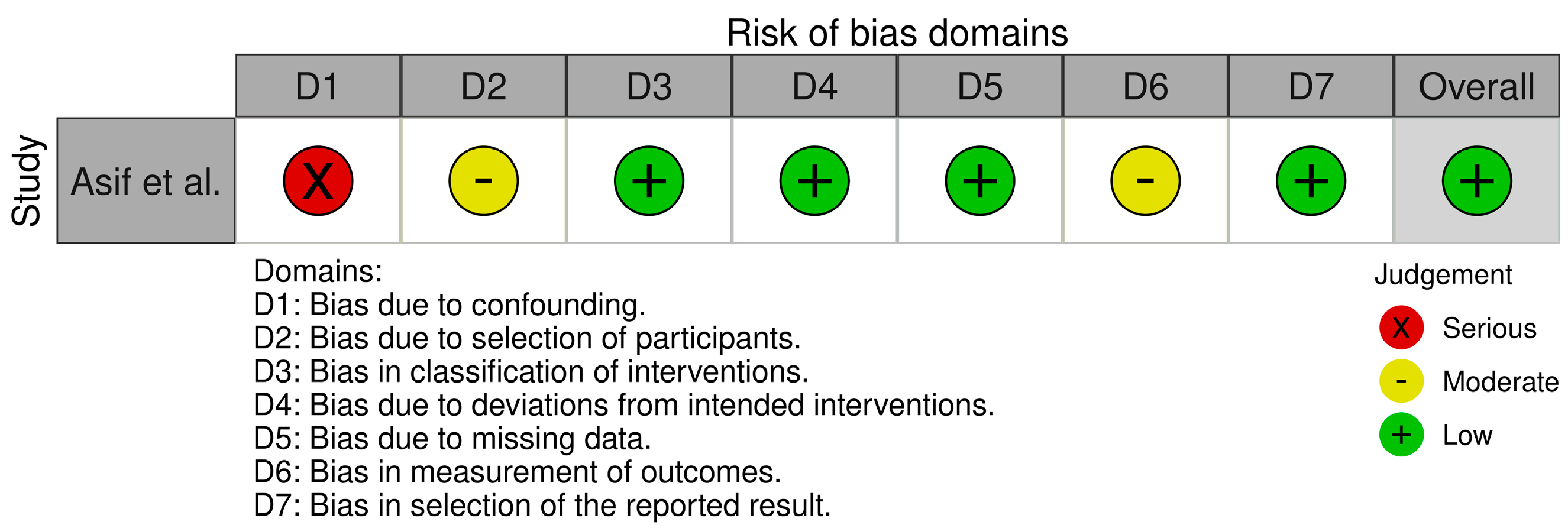
The risk of bias in non-randomized clinical trials was assessed using the ROBINS-I tool (Risk Of Bias In Non-randomized Studies—of Interventions), recommended by the Cochrane Collaboration for this type of study. This tool evaluates bias across seven domains: bias due to confounding, bias in the selection of participants, bias in the classification of interventions, bias due to deviations from intended interventions, bias due to missing data, bias in the measurement of outcomes, and bias in the selection of the reported results. Each domain was rated qualitatively as low risk, moderate risk, serious risk, or critical risk of bias. The overall judgment was based on a synthesis of all domains.
After assessing the quality of the studies, the robvis tool [9] was used to generate a traffic light plot.
The risk of bias assessment for in vitro studies was performed using the QUIN tool [10]. This tool evaluates studies according to 12 criteria: clear statement of the objective, sample size calculation, sampling technique, details of the comparison group, description of the methodology, information about the operator, randomization, details of the outcome assessor, method of outcome measurement, blinding, details of the statistical analysis, and presentation of results. Each criterion was rated as “adequately described” (score = 2), “inadequately described” (score = 1), or “not specified” (score = 0). The total score was converted to a percentage using the following formula: total score × 100/(number of applicable criteria × 2). The risk of bias was classified as: high (<50%), moderate (between 50 and 70%), or low (>70%).
Risk-of-bias judgments were considered when interpreting the results of the included studies.

3. Results

3.1. Study Selection

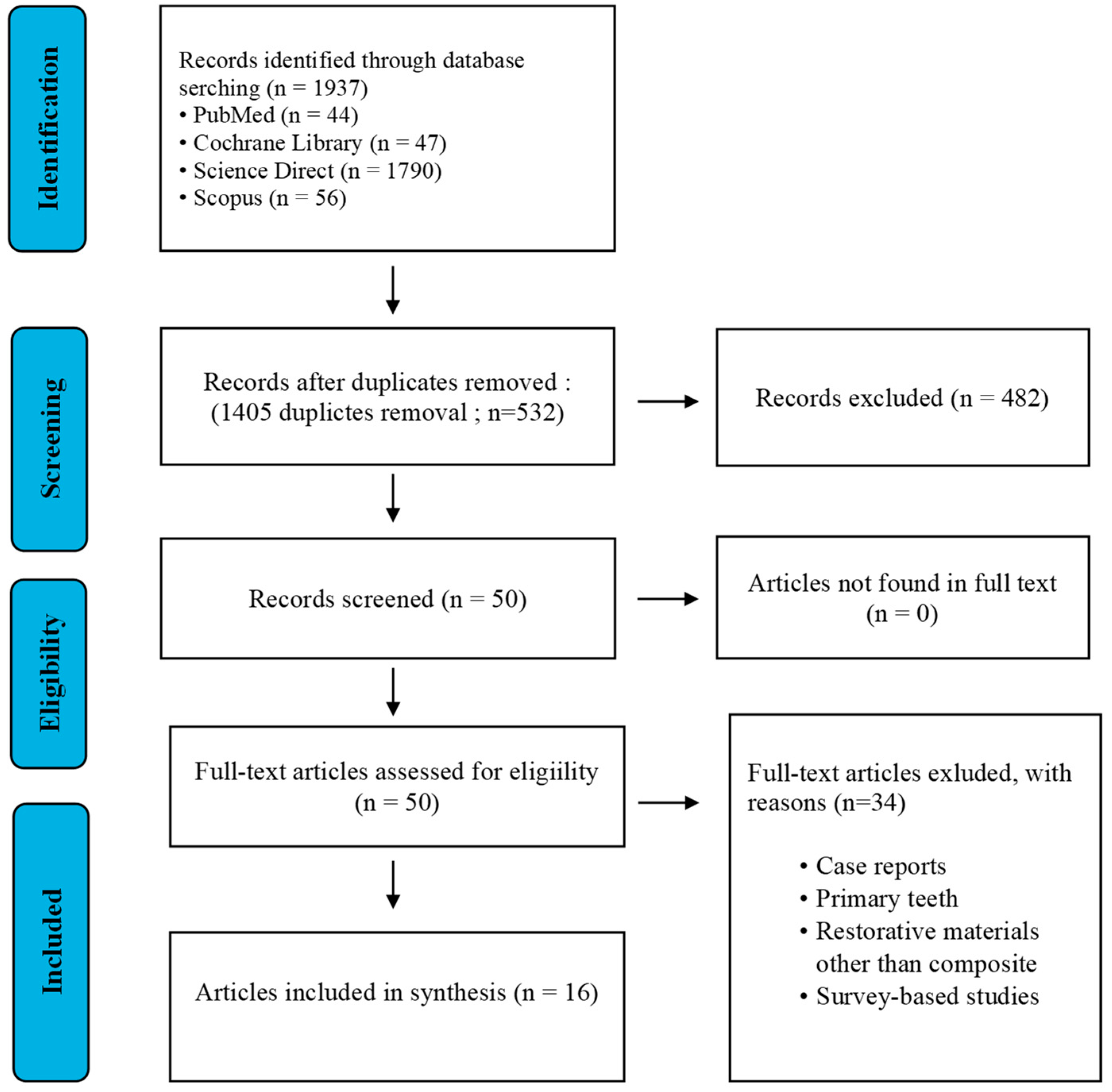
Initially, 1937 articles were identified through searches in the four databases. After removing duplicates, a selection based on reading the titles, abstracts, and full texts resulted in 16 articles being retained according to the defined inclusion and exclusion criteria. The selected articles are presented in the form of a flowchart following “The PRISMA Statement” as shown in Figure 1.
The selected studies are summarized in Table 1. The following data were extracted from the included articles: author and year of publication, study type, participants, composite used, groups, parameters studied, measurement instruments, and results.

3.2. Synthesis of Results

Due to heterogeneity in study designs and outcome measures, no quantitative synthesis was performed. Effect measures were therefore reported descriptively, based on the direction and magnitude of outcomes as reported in the included studies.
No sensitivity analyses were conducted because of the limited number of included studies and the absence of a meta-analysis. The certainty of evidence was not formally assessed using the GRADE approach, given the narrative nature of the synthesis and heterogeneity of the included studies.
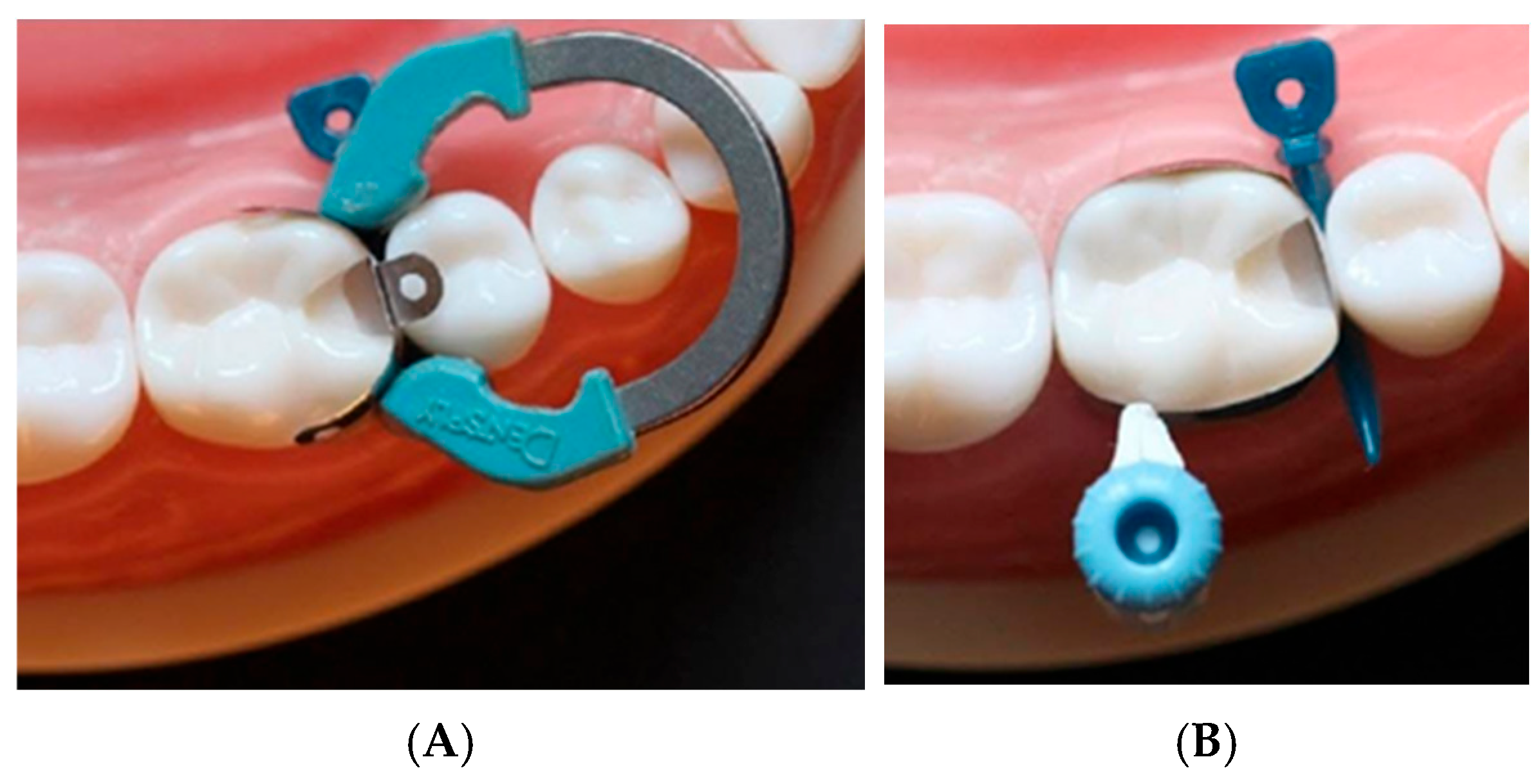
The 9 included clinical studies were primarily RCTS [12,13,14,15,16,17,18,19] and one non-randomized clinical trial [20]. Only two of the included studies [15,19] explicitly reported the type of tooth used in their methodology, while the remaining studies did not specify whether premolars or molars were evaluated. Assessment methods were heterogeneous (dental floss, radiographic examination, probe, metal matrix band, metal gauges, dynamometer, tooth pressure meter, microscope, scanner or other instruments) and variations in parameters assessed were observed (proximal contact tightness, marginal gap formation, proximal overhangs, proximal contour). Clinically, the use of sectional, metal, and pre-contoured matrices was associated with tighter proximal contacts and improved marginal adaptation compared with circumferential, transparent, and straight matrix systems. (Figure 2) These findings should be interpreted with caution due to the limited number of clinical studies and their methodological heterogeneity.
Among the in vitro studies included, seven used plastic molars [21,22,23,24,25,26], whereas only one study used an extracted human third molar [11], which may limit the clinical extrapolation of laboratory findings. These studies consistently demonstrated that sectional matrix systems generate higher proximal contact tightness, fewer proximal overhangs, and reduced marginal gap formation compared with circumferential matrices. Metal matrix bands showed greater resistance to deformation during composite placement and polymerization, resulting in more stable proximal contours and improved marginal adaptation than transparent matrices. In addition, pre-contoured matrix designs more effectively reproduced the natural proximal anatomy than straight bands. Nevertheless, the heterogeneity of restorative protocols and outcome measures across in vitro studies limits direct comparison and contributes to variability in reported results.
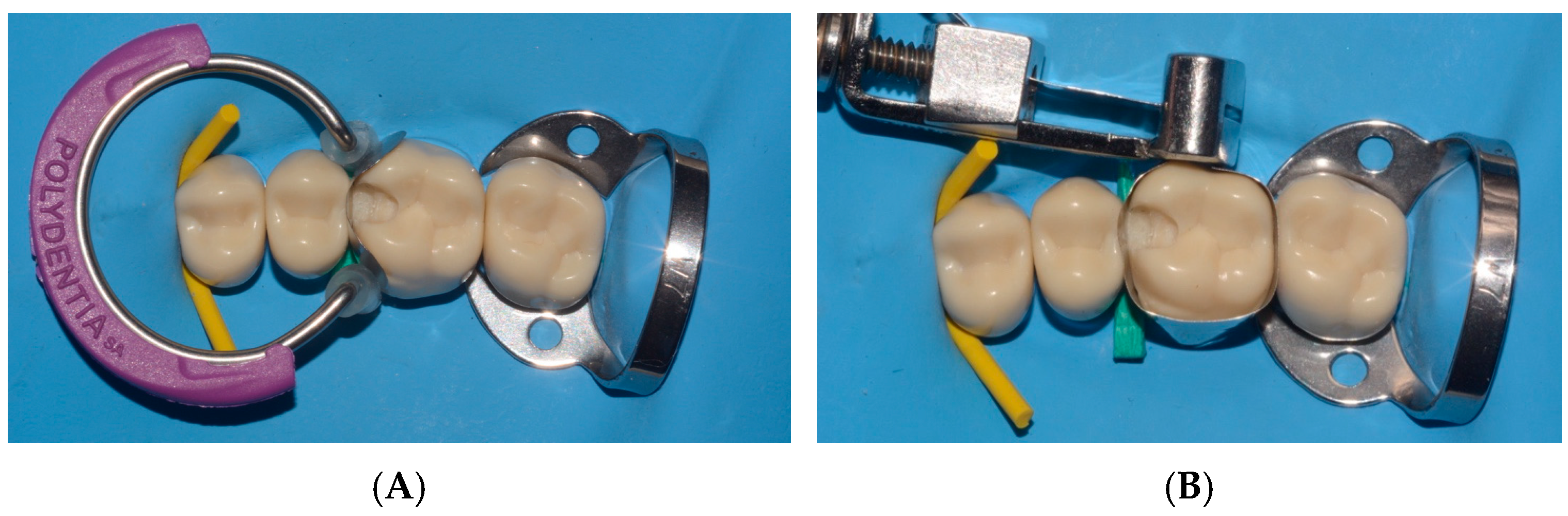
Figure 2 and Figure 3 illustrate the two principal matrix concepts used in clinical practice—sectional and circumferential matrix systems—highlighting their design, positioning, and mechanisms for achieving proximal contact formation.

3.3. Risk of Bias

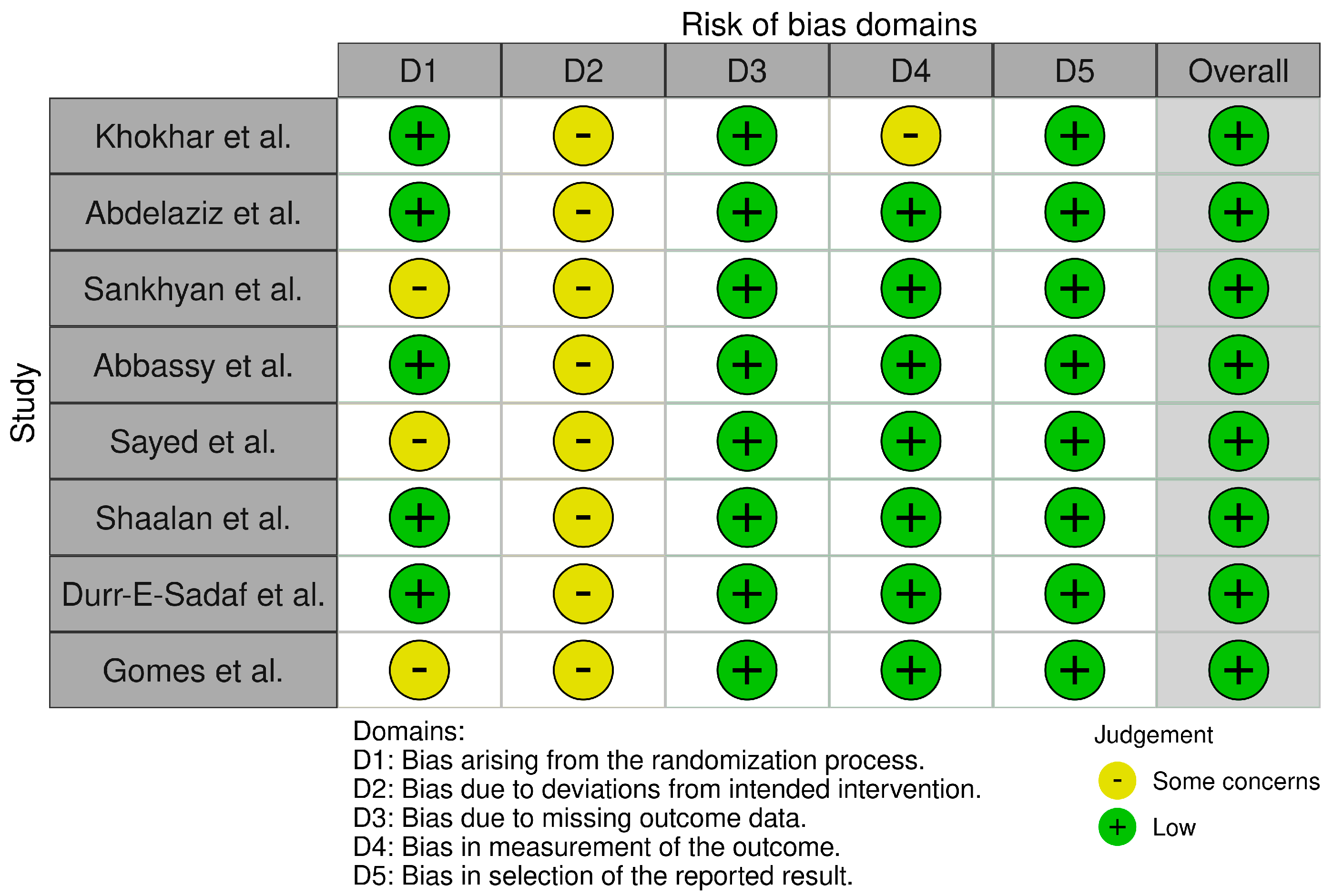
The risk of bias assessment performed using the Cochrane Risk of Bias 2 (RoB 2) tool indicated that all included randomized controlled trials exhibited an overall low risk of bias. (Figure 4)
Figure 5 shows that the included non-randomized clinical trial exhibited an overall low risk of bias according to the ROBINS-I assessment.
The risk of bias assessment of the in vitro studies was conducted using the QUIN tool (Table 2), revealing a low risk of bias in three studies, a moderate risk in two studies, and a high risk in two studies. All included studies demonstrated an overall low risk of bias due to missing results.

4. Discussion

4.1. Selection of Matrix System

The findings of this review indicate that sectional matrix systems with separation rings produce more favorable proximal contacts and contours compared to conventional circumferential matrix systems. This has been consistently reported in both in vitro and in vivo studies [11,16], underscoring the importance of selecting an appropriate matrix system for successful Class II restorations.
Abdelaziz et al. [12] and Sankhyan et al. [14] have shown that sectional matrix bands produce tight proximal contacts, better marginal adaptation, and more adequate contours than circumferential systems. In addition, the pre-contoured sectional matrix band is considered the most appropriate option for reproducing the anatomy and emergence profile, which are essential elements in restoring the proximal contour [16,20]. The improved proximal contact tightness achieved with sectional matrix systems can be explained using a separation ring. Pre-restorative tooth separation facilitates access to the prepared cavity and simplifies restoration sculpting, finishing, and polishing. The application of a separation ring produces a temporary tooth separation of approximately 100–200 μm. This space compensates for the thickness of the matrix band, polymerization shrinkage of the resin composite, and the effects of rubber dam isolation, thereby contributing to the formation of proximal contacts with optimal tightness after matrix removal [12]. In addition, restorations placed using sectional matrix systems showed an absence of proximal overhangs, whereas restorations performed with a circumferential matrix system exhibited both positive and negative overhangs. These differences may be explained by the improved adaptation and intimate contact between the sectional matrix band and the proximal tooth surface, achieved through the combined action of the separation ring and the wedge [12].
In the study by Shaalan et al. [22], pre-curved matrix bands demonstrated greater effectiveness in restoring proximal contacts. In contrast, straight matrix bands produced weaker contacts that were positioned more occlusally than their original location. This new position reduces the contact area at the cervical region, leaving the gingival embrasure insufficiently protected. As a result, the interdental papilla is more exposed and vulnerable. Weaker or improperly positioned contacts allow food debris to be forced into the interdental space during mastication. Repeated food impaction is a well-recognized risk factor for gingival inflammation and patient discomfort. Properly positioned contact areas also play a role in supporting the interdental papilla and distributing occlusal forces along the long axis of the teeth; therefore, occlusally displaced or weakened contacts produced by straight matrices may compromise papillary stability and alter physiological force transmission [22].
These results are consistent with previous studies [27,28,29,30], which confirm that pre-curved sectional matrix bands produce better proximal contours compared to straight circumferential matrices.

4.2. Matrix Type and Contact Forming Instruments

Another factor influencing the quality of proximal restorations is the choice between metal and transparent matrix bands. Metal bands are more rigid, resistant to deformation, and easier to place and adapt to tooth surfaces; however, they may compromise composite light-curing by blocking light transmission [21].
Transparent matrix bands, in contrast, permit light curing and provide good visual control during most procedural steps [13]. However, they are more difficult to adapt and more prone to deformation [31].
El-Shamy et al. [23] observed better proximal contact with metal matrix bands. Similarly Hahn et al. [21] demonstrated that the use of metal matrix bands decreased marginal gap formation in Class II restorations.
However, the study by Demarco et al. [30], conducted over a four-year period, revealed that both types of matrices, metal and transparent, offered similar and durable clinical results over time. The discrepancy between the findings may be explained by differences in study design.
Several instruments have been proposed to optimize the quality of the proximal contact during direct restorations. Abbassy et al. [18] compared contacts achieved with a sectional matrix system alone to those obtained when the same system was combined with manual instruments used to compress the inner wall of the matrix band. Their results showed that using contact-forming instruments in conjunction with a sectional matrix system produced tighter proximal contacts.
Similarly, Sayed et al. [19] reported that applying pressure to the sectional matrix band with a contact forming instrument produced stronger and more correct proximal contacts than the sectional matrix system alone. However, no significant differences were observed between the two groups at any follow-up period (immediately after restoration, at 3 months, and at 6 months).
In contrast to the findings with sectional matrix systems, Loomans et al. [31] showed that using a manual instrument in combination with a circumferential matrix band produced weaker proximal contacts than the original state. These results indicate that the effectiveness of contact-forming instruments is variable and highly dependent on operator skill, the type of matrix system used, and cavity anatomy. Excessive force may distort the matrix or composite, resulting in over contoured restorations or marginal gaps. These instruments may also be less effective in wide or irregular cavities. Evidence supporting their clinical use remains limited, and further studies are required to determine their clinical benefits compared with conventional separation methods such as wedges and separation rings.

4.3. Restoration Material and Application Protocol

The viscosity of the composite also affects the quality of proximal restorations. The results of this review showed that high-viscosity materials provide more reliable marginal adaptation. Composite viscosity is closely related to elastic modulus and resistance to deformation, high-viscosity materials typically exhibit a higher elastic modulus, enabling them to better withstand polymerization-induced stresses and maintain marginal integrity during curing.
The study by Dietschi et al. [32] evaluated the influence of composite type on the marginal fit of Class II restorations. The results revealed significant differences related to both material viscosity and application technique. High-viscosity bulk-fill composites applied in a single layer demonstrated better marginal adaptation than flowable bulk-fill composites used with the same technique. In addition, multilayer restorations made with conventional or high-viscosity bulk-fill composites showed superior performance at the enamel margin compared to flowable composites. Restorative procedures and functional loading generate complex stress patterns within tooth structures, restorative materials, and the tooth/restoration interface. Differences in structure and stiffness between enamel, dentin, and composite materials lead to distinct deformation behaviors before and after thermomechanical fatigue. Material stiffness (elastic modulus) and polymerization shrinkage are key factors influencing marginal adaptation. High-viscosity composites, owing to their higher elastic modulus and reduced shrinkage, may limit differential deformation between the restoration and tooth tissues, thereby reducing microcrack formation at enamel margins. In contrast, flowable bulk-fill composites are more prone to deformation under loading, which may increase the risk of enamel microcracks, particularly at cervical margins [32].
Gerula-Szymańska et al. [33] analyzed the data of multiple in vitro studies to compare the performance of flowable and high-viscosity bulk-fill materials in terms of marginal adaptation. The authors concluded that high-viscosity bulk-fill composites exhibit superior marginal adaptation, mainly due to their low polymerization shrinkage and higher modulus of elasticity. In contrast, flowable bulk-fill composites, although easier to apply and to adapt to the cavity walls during initial placement, are more prone to deformation during polymerization, resulting in reduced cervical seal.
With regard to the proximal contacts tightness, El-Shamy et al. [23] showed that flowable composites, whether bulk-fill or conventional, showed lower tightness values than high-viscosity composites (bulk-fill and conventional).
The results regarding the application protocol remain controversial. Dietschi et al. [32] compared the influence of different composite application protocols on the marginal adaptation of Class II restorations. Their findings showed that the layering technique with a conventional composite provided satisfactory marginal adaptation at the enamel level, comparable to that achieved with the bulk-fill technique. However, at the dentin level, a marked reduction in marginal adaptation was observed for both techniques after the three phases of thermomechanical loading. In addition, applying bulk-fill composites—whether flowable or high-viscosity—in two layers resulted in better marginal adaptation than a single-layer application. The choice of composite application technique (bulk-fill versus layering) has important clinical implications for marginal adaptation and restoration longevity. Bulk-fill techniques simplify the procedure and reduce operative time, but in larger cavities or at cervical dentin margins, polymerization stress may lead to gap formation, particularly under thermomechanical loading. In contrast, the layering technique allows better stress control and adaptation, especially at enamel margins, minimizing interfacial deformation and preserving marginal integrity [32]. Therefore, cavity configuration, including depth, width, and C-factor, as well as the location of the margin (enamel versus dentin), should guide the selection of application technique to optimize clinical outcomes under functional loading conditions.
Torres et al. [34] evaluated the clinical performance of Class II restorations using two application protocols: the layering technique and the bulk-fill technique. After 24 months of follow-up, both techniques exhibited similar clinical performance, with no statistically significant differences observed in the FDI criteria assessed (aesthetic, functional, and biological). Furthermore, both approaches demonstrated a high clinical success rate after two years.
This systematic review has some limitations. The number of included clinical studies was limited, and considerable clinical and methodological heterogeneity was observed in terms of restorative techniques, materials used, outcome definitions, and measurement instruments, which precluded quantitative synthesis. Consequently, a narrative synthesis was performed, and the certainty of evidence was not formally assessed using the GRADE approach. In addition, the inclusion of both clinical and in vitro studies may limit the direct clinical applicability of the findings.
The overall evidence from the included studies suggests that proximal contact quality and marginal adaptation in Class II composite restorations are influenced by multiple interacting factors, including the matrix system, composite type, and application protocol. Sectional matrices with separation rings and high-viscosity composites generally demonstrated superior performance. However, the findings should be interpreted with caution due to heterogeneity in study designs, cavity configurations, restorative materials, and assessment methods, as well as the predominance of in vitro data, which may not fully replicate clinical conditions. Few studies provided long-term clinical follow-up, highlighting a gap in evidence regarding restoration longevity and periodontal outcomes.
The effectiveness of proximal contact formation and composite adaptation is not only influenced by the design and use of matrix systems, but also by the efficiency of light-curing units. Adequate polymerization of resin composite in Class II restorations depends on sufficient irradiance, wavelength compatibility, and uniform light distribution through the restoration. Matrix systems can affect light transmission by modifying the geometry and thickness of the composite increment; proper adaptation of the matrix can therefore enhance light-curing efficiency at proximal areas, improving polymer network formation, physical properties, and ultimately clinical performance.
In this context, the VEGA light-curing unit (Dentac, Istanbul, Turkey) was utilized in some studies due to its clinical specifications that support efficient polymerization. The VEGA unit typically operates at a broad wavelength range suitable for all the resin composites and delivers an output irradiance in the range recommended for bulk and incremental curing protocols [35,36]. This combination of spectral compatibility and high irradiance promotes deeper light penetration and more consistent polymerization across composite layers, which is particularly important when curing through matrix systems that may shadow certain surfaces. Although in vitro measurements such as contact tightness and surface integrity cannot fully replicate intraoral clinical outcomes, they offer a reliable proxy for comparing restorative techniques and materials in a controlled setting and help predict clinical relevance when interpreted alongside factors such as light-curing performance.

4.4. Clinical Implications

From a clinical perspective, the findings of this review suggest that the selection of an appropriate matrix system plays a critical role in achieving optimal proximal contact and marginal adaptation in Class II composite restorations. When clinically feasible, the use of sectional matrix systems with separation rings, in combination with adequately viscous composites and controlled placement techniques, may enhance restoration quality. Nevertheless, clinicians should consider patient-specific factors, cavity morphology, and operator experience when selecting a matrix system, as no single approach can be universally recommended based on the current evidence.

4.5. Future Research Directions

Future research should prioritize well-designed randomized clinical trials with standardized outcome measures to allow meaningful comparison across studies. Long-term clinical follow-up is particularly needed to assess restoration longevity, marginal stability, and periodontal health outcomes associated with different matrix systems. In addition, comparative studies evaluating newer matrix designs and materials under clinically relevant conditions are warranted to strengthen the evidence base and support evidence-based clinical decision-making.

5. Conclusions

Within the limitations of this review and considering the heterogeneity of the included studies, the quality of proximal posterior composite restorations appears to be influenced by the matrix system, restorative material, and application protocol. Sectional matrix systems with separation rings generally provide tight and anatomically accurate proximal contacts. Metal matrix bands tend to produce better contacts, reduced overhangs and marginal gaps than transparent ones. Contact-forming instruments may offer additional improvements when used with sectional matrix systems. These findings are relevant to daily restorative practice, as appropriate matrix selection and application can minimize postoperative complications and contribute to the long-term success of class II composite restorations. Nevertheless, the variability in study designs, materials tested, and evaluation methods limits the strength of these conclusions, and further high-quality, standardized clinical studies are needed to confirm these findings and guide evidence-based restorative practice.

Supplementary Materials

The following supporting information can be downloaded at: https://www.mdpi.com/article/10.3390/jcs10020097/s1, Table S1: PRISMA Checklist.

Author Contributions

Conceptualization, S.D., S.B. and H.E.M.; methodology, S.D., S.B. and H.E.M.; software, S.D., S.B., R.B., and H.EL.; validation, S.D., S.B. and H.EL.; formal analysis S.D., S.B. and H.EL.; investigation, S.D., S.B., R.B., and H.EL.; resources, R.B.; data curation, S.D., S.B. and H.EL.; writing—original draft preparation, S.D., S.B. and H.EL.; writing—review and editing, S.D., R.B., S.B. and H.EL.; visualization, R.B.; supervision, H.EL.; project administration, S.D., S.B. and H.EL.; funding acquisition All authors have read and agreed to the published version of the manuscript.

Funding

This review received no financial or non-financial support. The authors conducted all work independently, with no influence from any funders or sponsors.

Institutional Review Board Statement

Not applicable.

Informed Consent Statement

Not applicable.

Data Availability Statement

Dataset available on request from the authors.

Conflicts of Interest

The authors declare no conflicts of interest.

References

  1. Chuang, S.-F.; Su, K.-C.; Wang, C.-H.; Chang, C.-H. Morphological Analysis of Proximal Contacts in Class II Direct Restorations with 3D Image Reconstruction. J. Dent. 2011, 39, 448–456. [Google Scholar] [CrossRef]
  2. Raghu, R.; Srinivasan, R. Optimizing Tooth Form with Direct Posterior Composite Restorations. J. Conserv. Dent. 2011, 14, 330–336. [Google Scholar] [CrossRef]
  3. Muduroglu, R.; Ionescu, A.C.; Del Fabbro, M.; Scolavino, S.; Brambilla, E. Distribution of Adhesive Layer in Class II Composite Resin Restorations Before/After Interproximal Matrix Application. J. Dent. 2020, 103, 103494. [Google Scholar] [CrossRef] [PubMed]
  4. Lynch, C.D.; Frazier, K.B.; McConnell, R.J.; Blum, I.R.; Wilson, N.H.F. State-of-the-Art Techniques in Operative Dentistry: Contemporary Teaching of Posterior Composites in UK and Irish Dental Schools. Br. Dent. J. 2010, 209, 129–136. [Google Scholar] [CrossRef] [PubMed]
  5. Ranjini, M.A.; Geetha, V.; Vedavathi, B.; Ashok, H.K.; Airsang, A.J.; Swathi, S. Comparative Evaluation of Microleakage in Class II Cavities Restored with Snowplow Technique Using Flowable or Preheated Packable Bulk-Fill Composite Resin as Gingival Increment by Dye Extraction Method: An In Vitro Study. J. Conserv. Dent. Endod. 2024, 27, 1158–1162. [Google Scholar] [CrossRef]
  6. Alshehadat, S.A.; Halim, M.S.; Carmen, K.; Fung, C.S. The Stamp Technique for Direct Class II Composite Restorations: A Case Series. J. Conserv. Dent. 2016, 19, 490–493. [Google Scholar] [CrossRef] [PubMed]
  7. Wilson, N.H.F.; Lynch, C.D. The Teaching of Posterior Resin Composites: Planning for the Future Based on 25 Years of Research. J. Dent. 2014, 42, 503–516. [Google Scholar] [CrossRef]
  8. Page, M.J.; McKenzie, J.E.; Bossuyt, P.M.; Boutron, I.; Hoffmann, T.C.; Mulrow, C.D.; Shamseer, L.; Tetzlaff, J.M.; Akl, E.A.; Brennan, S.E.; et al. The PRISMA 2020 Statement: An Updated Guideline for Reporting Systematic Reviews. BMJ 2021, 372, n71. [Google Scholar] [CrossRef]
  9. McGuinness, L.A.; Higgins, J.P.T. Risk-of-bias VISualization (Robvis): An R Package and Shiny Web App for Visualizing Risk-of-bias Assessments. Res. Synth. Methods 2021, 12, 55–61. [Google Scholar] [CrossRef]
  10. Sheth, V.H.; Shah, N.P.; Jain, R.; Bhanushali, N.; Bhatnagar, V. Development and Validation of a Risk-of-Bias Tool for Assessing In Vitro Studies Conducted in Dentistry: The QUIN. J. Prosthet. Dent. 2024, 131, 1038–1042. [Google Scholar] [CrossRef]
  11. Sarwar, N.; Khokhar, S.A. Comparison of Saddle Contoured Metal Matrix and Pre-Contoured Self-Adhesive Matrix in Composite Resin Class II Restorations; an In Vivo Study. J. Pak. Med. Assoc. 2024, 74, 209–215. [Google Scholar] [CrossRef]
  12. Abdelaziz, M.; Fahim, S.; Abdelwahed, A. Clinical and Radiographic Evaluation of Sectional versus Circumferential Matrix Systems: A One-Year Randomized Clinical Trial. Egypt. Dent. J. 2024, 70, 1923–1934. [Google Scholar] [CrossRef]
  13. Marcov, E.-C.; Burlibasa, M.; Marcov, N.; Costea, R.M.; Voinescu, I.; Popescu, M.; Costea, R.-C.; Bodnar, D.C. In Vitro Comparison of the Efficiency of Celluloid and Metallic Matrices in Proximal Restorations with a Bulk Polymer-Based Biomaterial. Mater. Plast. 2024, 61, 1–14. [Google Scholar] [CrossRef]
  14. Sankhyan, V.; Makkar, S.; Negi, S.; Gupta, S.; Jain, A.; Arora, G. Comparison of Proximal Contact and Contours of Class II Restoration in Premolars and Molars Restored with Three Different Matrix Systems Using FDI Criteria: An In Vivo Study. J. Conserv. Dent. Endod. 2024, 27, 913–919. [Google Scholar] [CrossRef]
  15. Tolba, Z.O.; Oraby, E.; Abd El Aziz, P.M. Impact of Matrix Systems on Proximal Contact Tightness and Surface Geometry in Class II Direct Composite Restoration In-Vitro. BMC Oral Health 2023, 23, 535. [Google Scholar] [CrossRef]
  16. Kumari, S.; Raghu, R.; Shetty, A.; Rajasekhara, S.; Padmini, S.D. Morphological Assessment of the Surface Profile, Mesiodistal Diameter, and Contact Tightness of Class II Composite Restorations Using Three Matrix Systems: An In Vitro Study. J. Conserv. Dent. 2023, 26, 67–72. [Google Scholar] [CrossRef] [PubMed]
  17. Asif, M.; Khattak, I.; Qureshi, A.; Zain, M.; Aslam, N.; Khan, M.I. Comparison Between Two Types of Matrix Systems for Contact Tightness in Class-II Composite Restorations. J. Ayub Med. Coll. Abbottabad 2023, 35, 253–258. [Google Scholar] [CrossRef]
  18. Abbassy, K.M.; Elmahy, W.A.; Holiel, A.A. Evaluation of the Proximal Contact Tightness in Class II Resin Composite Restorations Using Different Contact Forming Instruments: A 1-Year Randomized Controlled Clinical Trial. BMC Oral Health 2023, 23, 729. [Google Scholar] [CrossRef] [PubMed]
  19. Sayed, S.; Hassanien, O.-S.; Alsherbiney, H. The Influence of Lateral Pressure on Sectional Matrix in Optimizing Proximal Contact Tightness in Class II Resin Composite Restoration: Randomized Clinical Trial. NeuroQuantology 2023, 21, 389–401. [Google Scholar] [CrossRef]
  20. Bailey, O.; Shand, B.; Ellis, I. Class II Composite Restoration Technique Teaching: A Randomised Controlled Crossover Laboratory-based Trial Involving a Novel Ringless Sectional Matrix Technique. Eur. J. Dent. Educ. 2023, 27, 963–973. [Google Scholar] [CrossRef] [PubMed]
  21. Hahn, B.; Haubitz, I.; Krug, R.; Krastl, G.; Soliman, S. Influence of Matrix Type on Marginal Gap Formation of Deep Class II Bulk-Fill Composite Restorations. Int. J. Environ. Res. Public Health 2022, 19, 4961. [Google Scholar] [CrossRef]
  22. Shaalan, O.O.; Ibrahim, S.H. Clinical Evaluation of Sectional Matrix versus Circumferential Matrix for Reproduction of Proximal Contact by Undergraduate Students and Postgraduate Dentists: A Randomized Controlled Trial. J. Int. Oral Health 2021, 13, 10–16. [Google Scholar] [CrossRef]
  23. El-Shamy, H.; Sonbul, H.; Alturkestani, N.; Tashkandi, A.; Loomans, B.A.; Dörfer, C.; El-Badrawy, W. Proximal Contact Tightness of Class Ⅱ Bulk-Fill Composite Resin Restorations: An In Vitro Study. Dent. Mater. J. 2019, 38, 96–100. [Google Scholar] [CrossRef]
  24. Sadaf, D.E.; Ahmad, M.Z.; Gaikwad, R.N.; Arjumand, B. Comparison of Two Different Matrix Band Systems in Restoring Two Surface Cavities in Posterior Teeth Done by Senior Undergraduate Students at Qassim University, Saudi Arabia: A Randomized Controlled Clinical Trial. Indian J. Dent. Res. 2018, 29, 459–464. [Google Scholar] [CrossRef] [PubMed]
  25. Nguyen, D.P.; Motyka, N.C.; Meyers, E.J.; Vandewalle, K.S. Depth of Cure of Proximal Composite Resin Restorations Using a New Perforated Metal Matrix. Gen. Dent. 2018, 66, 68–74. [Google Scholar] [PubMed]
  26. Gomes, I.A.; Filho, E.M.M.; Mariz, D.C.B.R.; Borges, A.H.; Tonetto, M.R.; Firoozmand, L.M.; Kuga, C.M.; De Jesus, R.R.T.; Bandéca, M.C. In Vivo Evaluation of Proximal Resin Composite Restorations Performed Using Three Different Matrix Systems. J. Contemp. Dent. Pract. 2015, 16, 643–647. [Google Scholar] [CrossRef]
  27. Anantula, K.; Vankayala, B.; Yadav, S.S. Proximal Contact Tightness of Direct Class II Composite Resin Restorations with Various Matrix Systems: A Systematic Review. J. Conserv. Dent. Endod. 2024, 27, 11–16. [Google Scholar] [CrossRef]
  28. Saber, M.H.; Loomans, B.A.C.; El Zohairy, A.; Dörfer, C.E.; El-Badrawy, W. Evaluation of Proximal Contact Tightness of Class II Resin Composite Restorations. Oper. Dent. 2010, 35, 37–43. [Google Scholar] [CrossRef]
  29. Prakki, A.; Cilli, R.; Saad, J.O.C.; Rodrigues, J.R. Clinical Evaluation of Proximal Contacts of Class II Esthetic Direct Restorations. Quintessence Int. 2004, 35, 785–789. [Google Scholar]
  30. Demarco, F.F.; Cenci, M.S.; Lima, F.G.; Donassollo, T.A.; André, D.d.A.; Leida, F.L. Class II Composite Restorations with Metallic and Translucent Matrices: 2-Year Follow-up Findings. J. Dent. 2007, 35, 231–237. [Google Scholar] [CrossRef]
  31. Loomans, B.A.C.; Opdam, N.J.M.; Roeters, F.J.M.; Bronkhorst, E.M.; Burgersdijk, R.C.W.; Dörfer, C.E. A Randomized Clinical Trial on Proximal Contacts of Posterior Composites. J. Dent. 2006, 34, 292–297. [Google Scholar] [CrossRef]
  32. Dietschi, D.; Askari, M.; Rossier, I.; Caseiro, L.; Krejci, I.; Leprince, J.G.; Di Bella, E.; Ardu, S. Marginal Adaptation of In Vitro Class II Restorations Made Out of Bulk or Conventional Composite Using Single- or Multi-Layered Techniques. Materials 2023, 16, 6325. [Google Scholar] [CrossRef]
  33. Gerula-Szymańska, A.; Kaczor, K.; Lewusz-Butkiewicz, K.; Nowicka, A. Marginal Integrity of Flowable and Packable Bulk Fill Materials Used for Class II Restorations—A Systematic Review and Meta-Analysis of In Vitro Studies. Dent. Mater. J. 2020, 39, 335–344. [Google Scholar] [CrossRef]
  34. Torres, C.R.G.; Mailart, M.C.; Moecke, S.E.; Matuda, A.G.N.; Veloso, S.M.; da Silva Ávila, D.M.; Nicoló, R.D.; Borges, A.B. Flowable Bulk-Fill versus Layering Restorative Material on Class II Restorations: A Randomized Clinical Trial. J. Dent. 2024, 148, 105154. [Google Scholar] [CrossRef] [PubMed]
  35. Harlow, J.E.; Sullivan, B.; Shortall, A.C.; Labrie, D.; Price, R.B. Characterizing the output settings of dental curing lights. J. Dent. 2016, 44, 20–26. [Google Scholar] [CrossRef] [PubMed]
  36. Karabay, F.; Tuncer, S.; Berkman, M.; Demirci, M.; Tekçe, N. Resin composite microhardness ratio: Effect of light curing modes. Int. Dent. J. 2024, 74, S305–S306. [Google Scholar] [CrossRef]
Figure 1. Flowchart of study selection framework with PRISMA 2020 guidelines.
Jcs 10 00097 g001
Figure 2. Sectional (A) and circumferential (B) matrix systems [15].
Jcs 10 00097 g002
Figure 3. (A) Sectional matrix system: The precontoured metallic matrix is positioned along the mesial proximal surface of the maxillary molar to re-establish the anatomical contour and proximal contact. A separation ring and an interproximal wedge are applied to achieve slight tooth separation, improve cervical adaptation of the matrix, and optimize the formation of a tight proximal contact. (B) Tofflemire circumferential matrix system: The Tofflemire retainer is secured around the maxillary molar, with a tensioned metal matrix band encircling the tooth to re-establish the anatomical contour and proximal contact on the mesial surface. An interproximal wedge is inserted to achieve slight tooth separation, improve cervical adaptation of the band, and optimize the formation of a tight proximal contact.
Jcs 10 00097 g003
Figure 4. Visual representation of risk of bias in randomized clinical trials (traffic light plot) [11,12,14,18,19,22,24,26].
Jcs 10 00097 g004
Figure 5. Visual representation of risk of bias in non-randomized clinical trials. (traffic light plot) [17].
Jcs 10 00097 g005
Table 1. Characteristics of included articles.
Author and YearType of Study ParticipantsComposite UsedGroupsParameters StudiedMeasuring InstrumentsResults
Khokhar et al. 2024 [11]Randomized controlled clinical trial60 patients with class II supragingival cavities.i-XCITE® LC N USA1. Sectional metallic band, a separating ring, and an anatomical wedge (TOR VM № 1.310 Moscow, Russia)
2. Transparent self-adhesive circumferential matrix band with anatomical wedge (TOR VM № 1.490-1 Moscow, Russia)
Proximal contact tightness

Proximal contour
Dental floss (Oral-B Essential Floss, Cincinnati, OH, USA)
Probe
Radiographic examination
Proximal contact tightness:
No statistically significant difference.
Proximal contour:
Metal sectional matrix band > transparent circumferential matrix band.
No statistically significant difference.
Abdelaziz et al. 2024 [12]Randomized clinical trial39 patientsX-tra fil, Voco, AllemagneGroup 1: Sectional system (TOR VM dental manufacturing company, Russia)
Group 2: Composi-Tight 3D Fusion sectional matrix system (Garrison Dental Solutions, United States).
Group 3: Tofflemire circumferential matrix system (Produits Dentaires S.A.,
Switzerland).
Proximal contact tightness

Proximal overhangs
Floss (Oral-B, Procter and Gamble, New Cairo, Egypt)
Radiographic examination
Proximal contact tightness:
In comparison to the other groups,
the Tofflemire system produced more inadequate contacts, either tight or open, but
no statistically significant difference.
Percentage of restorations free of overhangs:
TOR VM and ComposiTight 3D Fusion > Tofflemire.
Marcov et al. 2024 [13]In vitro study300 plastic upper right molars 3M Filtek One Bulk Fill Restorative150 teeth: Celluloid circumferential matrix bands (Adapt SuperCap® Matrix no. 2171).
150 teeth: Sectional metallic matrix bands (TOR VM, Moscow, Russia).
Proximal contact tightnessDental floss (Sensodyne Expanding Floss)
Measuring system with a dynamometer (Kern)
Compared to the sound surfaces:
Celluloid matrices produced less tight distal contacts and stronger mesial contacts.
Metallic matrices generated stronger mesial and distal contacts.
Sankhyan et al. 2024 [14]Randomized clinical trial60 patients Microhybrid composite, Ivoclar Te-Econom Plus Composite Kit1. (n = 20): Circumferential matrix system (Tofflemire)
2. (n = 20): Sectional matrix system (Garrison Dental Solutions, Spring Lake, MI, USA)
3. (n = 20): Sectional band (Bioclear Matrix Systems, Tacoma, WA, USA)
Proximal contacts
Proximal contour
Marginal gaps and overhangs
Dental floss
25 µm metal matrix band
Radiographic examination
Normal contacts:
Bioclear > Garrison > Tofflemire

Normal contours:
Bioclear = Garrison > Tofflemire

The difference was not statistically significant.

Restorations with no marginal gaps and overhangs:
Bioclear = Garrison > Tofflemire
No statistically significant difference.
Tolba et al. 2023 [15]In vitro study20 plastic right mandibular first molars.Tetric® N-Ceram nano-hybrid.1. Sectional band with a separation ring (Palodent V3, Dentsply Sirona, USA).
2. Circumferential band with integrated tightener
(Palodent 360, Dentsply Sirona, USA).
Proximal contact tightness.
Proximal contour.
Stylus profilometer (Taly-surf version i60; Metek, UK with Ultra software [M1.1])
Universal testing machine (Instron model 3345)
Proximal contact tightness: The sectional matrix system demonstrated greater contact tightness compared to the circumferential matrix system.
Proximal contour:
Both groups exhibited concave surfaces, but the depth of the concavity with the circumferential matrix system exceeds that of the sectional matrix system.
Kumari et al. 2023 [16]In vitro study30 plastic molarsTetric-N Ceram (Ivoclar, Vivadent)1. Metallic sectional matrix system (TORVM, Russia).
2. Palodent metallic sectional matrix band (Dentsply, Caulk, USA).
3. Palodent Plus metal sectional matrix band (Dentsply, Sirona USA).
Mesio-distal diameter (M-D)

Proximal contact tightness

Qualitative assessment of the proximal contour

Quantitative assessment of the proximal contour
Digital calipers
Dental floss (Unifloss)
30 µm metallic matrix band
Scanner (Medit scanner superimposing method) and ExoCAD
M-D diameter:
In the occlusal and middle thirds: Palodent Plus > Palodent and TORVM

Proximal contact tightness: Palodent Plus > Palodent and TORVM

Proximal contour:
Flatter contours were observed with the TORVM system.
Asif et al. 2023 [17]Non-randomized clinical trial30 patients, or 60 cavities.3M ESPE, Seefeld, Germany1. Circumferential system, Tofflemire.
2. Sectional system, Palodent Plus (Dentsply, Konstanz, Germany).
Proximal contact tightness. Dental floss (Oral-B® Essential Floss)The Palodent Plus system produced tighter proximal contacts than the Tofflemire system.
Abbassy et al. 2023 [18]Randomized clinical trial72 patients with mesial caries in the first permanent molar.Filtek P60 Posterior Restorative, 3 M ESPE, St Paul, USAGroup 1 (n = 18): Sectional matrix system, separation ring, and Palodent Plus interdental wedge (DENTSPLY Sirona, USA)


Group 2 (n = 18): Trimax (AdDent, USA) and Palodent Plus.
Group 3 (n = 18): Perform (Garrison Dental Solutions, USA) and Palodent Plus.
Group 4 (n = 18): Contact pro-2 (CEJ, USA) and Palodent Plus.
Proximal contact tightness (PCT)A digital dynamometer (Mark-10 series 2, Mark Corporation, USA)
A 0.05 mm metal matrix (TorVM, Moscow, Russia)
Using contact-forming instruments along with the Palodent Plus sectional matrix system resulted in improved PCT.

Trimax produced better proximal contacts compared to the other groups.

No statistically significant difference was observed in the proximal contact tightness among Contact pro-2, Perform, and Palodent Plus sectional matrix.
Sayed et al. 2023 [19]Randomized clinical trial 46 participants with Class II carious lesions. Kerr XRV Nano-Hybrid composite, Kerrdental, ItalyGroup 1: Palodent V3 sectional matrix band (Dentsply Sirona, USA) with OptraContact (Ivoclar Vivadent, USA).
Group 2: Palodent V3 sectional matrix band (Dentsply Sirona, USA).
Proximal contact tightnessDental FlossNo statistically significant difference was found across the follow-up periods: baseline, 3 months, and 6 months.
Bailey et al. 2023 [20]In vitro study112 plastic molars.Conventional layered composite technique: Ceram.xSpectra™ STHV A2 classic paste composite

Bulk-fill injection-moulded composite technique:
SDR Plus Universal composite resin (Dentsply) and Filtek One A2 (3M)
1. Palodent Plus V3 sectional metallic matrix band, along with a separation ring and a plastic wedge (Dentsply, Sirona, USA), used with conventional composite.

2. Sectional metallic matrix band (TOR VM dental manufacturing company, Russia), without a separation ring, a wooden wedge (TOR VM), and bulk-fill composite.

3. Sectional metal matrix band without a separation ring, with a wooden wedge and a conventional composite.

4. Sectional metal matrix band, a separation ring, and a plastic interdental wedge with bulk-fill composite.
Proximal contact tightness

Marginal adaptation

Intra-restoration surface void


Student preferences
Metal gauges of increasing thicknesses (25, 50, and 100 μm)
Probe
Questionnaire
The ringless technique produced a higher number of "correct" restorations.

The bulk-fill technique produced better results than the incremental technique.

The ringless sectional matrix technique and the injection-moulding bulk-fill method were preferred by the majority of students.
Hahn et al. 2022 [21]In vitro study40 human molars. Tetric EvoCeram nano-hybrid composite, Ivoclar Vivadent.

Tetric EvoCeram Bulk Fill, Ivoclar Vivadent.
1. Conventional nano-hybrid composite with a metallic circumferential matrix band (399 C, Kerr, Bioggio, Switzerland).
2. Conventional nano-hybrid composite with a transparent circumferential matrix band (DEL, Dental Exports London, Feltham, UK).
3. Bulk-fill composite used with a metallic circumferential matrix band.
4. Bulk-fill composite used with a transparent circumferential matrix band.
The matrices were secured in a Tofflemire retainer.
Marginal gap formationMicroscope (DSM 940, Zeiss, Oberkochen, Germany)Marginal quality:
Metallic matrices > transparent matrices.
The difference was not significant between nano-hybrid composite and bulk-fill composite (p = 0.56).
The type of matrix did not affect the formation of marginal gaps in bulk-fill restorations (p = 0.27).
The type of matrix influenced the marginal gap formation in restorations with conventional nano-hybrid composite (p = 0.001).
Shaalan et al. 2021 [22]Randomized controlled clinical trial60 patients with class II cavities.Filtek Z350XT, 3M ESPE, USAGroup 1: Sectional matrix system (TOR VM®) and undergraduate students.
Group 2: Sectional matrix system (TOR VM®) and qualified dentists.
Group 3: Circumferential matrix system (Tofflemire) and undergraduate students.
Group 4: Circumferential matrix system (Tofflemire) and qualified dentists.
Proximal contact tightness.Dental floss (Oral-B, Procter and Gamble, USA)The risk of poor proximal contact (tight or open) was lower with the sectional matrix system.

The operator’s level of experience (student or qualified dentist) did not have a significant effect on the reproduction of a tight contact.
EL-SHAMY et al. 2019 [23]In vitro study150 plastic left lower first molars.Group 1: Bulk-fill flowable composite (Smart Dentin Replacement, Dentsply, Milford, MA, USA).
Group 2: Bulk-fill composite, SonicFill (Kerr, Orange, CA, USA).
Group 3: Tetric EvoCeram Bulk Fill (Ivoclar Vivadent, Amherst, NY, USA)
Group 4: Incremental placed flowable composite G-ænial Universal Flo (GC Europe, Leuven, Belgium)
Group 5: Incrementally placed universal nano-hybrid composite, Tetric EvoCeram (Ivoclar Vivadent)
Each group was subdivided into three subgroups (n = 10):
Subgroup 1: Circumferential matrix band (Dixieland band) (Waterpik, Welshpool, Wales, UK) in a Tofflemire retainer with an anatomical plastic wedge.
Subgroup 2: FenderMate stainless steel sectional matrix band attached -as a one unit- with a pre-curved plastic wedge (Directa, Upplans Väsby, Sweden).
Subgroup 3: Sectional contoured metallic matrix band (Palodent plus, Dentsply) with a separation ring and a plastic wedge (Dentsply).
Proximal contact tightness (PCT)Tooth Pressure MeterSonicFill and Tetric EvoCeram Bulk-Fill composites showed comparable PCT.
The sectional metallic matrix band with separation ring is the recommended method for mesio-occlusal composite restorations.
Durr-E-Sadaf et al. 2018 [24]Randomized controlled clinical trial1200 class II dental cavities in teeth.Not mentioned Group 1: Circumferential bands (Hawe Contoured Tofflemire Bands) in a retainer (Tofflemire Retainer Universal).
Group 2: Sectional metal bands (Palodent, Dentsply) with a wooden wedge and a separation ring. (BiTine Ring, dentsply).
Proximal contact tightness.
Marginal adaptation.
Dental floss (Oral-B® Essential Floss tarpaulin)
Radiographic examination
All optimum contacts
389 (100%) were produced using the sectional matrix system.
The sectional matrix bands produced fewer over- or under-contours.
Nguyen et al. 2018 [25]In vitro studyAn extracted human third molar.- SonicFill 2 ™
- Herculite Ultra ™
Group 1: SonicFill 2 composite, a perforated sectional metal matrix band (ClearMetal matrix), a transparent wedge (V4 Wedge, Triodent), and a separation ring (V4 Ring, Triodent). Occlusal, vestibular, and lingual polymerization (tri-sited light curing).
Group 2: SonicFill 2, a sectional metal matrix band (V3 Tab-Matrix), and the same wedge and ring as in group 1. The ring and matrix were removed before occlusal, vestibular, and lingual polymerization.
Group 3: SonicFill 2 with a transparent sectional matrix band (Composi-Tight 3D Clear matrix) and the same ring and wedge as before.
Occlusal, vestibular, and lingual polymerization.
Group 4: Herculite Ultra composite with a perforated matrix band, wedge, and ring, similar to Group 1, using the same polymerization method.
Group 5: Herculite Ultra with a metal matrix band, a wedge and a ring similar to group 2 and the same polymerization method.
Group 6: Herculite Ultra with a transparent matrix band, a wedge and a ring similar to group 3 and the same polymerization method.
Groups 7 and 8: polymerization for 20 s from the occlusal only for each of the two composites using the metal matrix band (V3 Tab-Matrix), the transparent wedge, and the ring (V4 Ring, Triodent).
Depth of cureA Knoop hardness tester. (Leco, LM300AT, St Joseph, MI).The difference was not statistically significant between the perforated metal matrix band (ClearMetal) and other types of matrices after tri-sited light curing.
SonicFill > Herculite Ultra after tri-sited light curing.
Tri-sited light curing > occlusal light curing only.
Gomes et al. 2015 [26]Randomized controlled clinical trial30 premolarsCharisma
microhybrid composite resin (Heraeus Kulzer,
Pacaembu, SP, Brazil)
1. Tofllemire carrier matrix type (Jon, Porto Alegre, RS, Brazil), combined with a metal matrix band and interproximal wooden wedges (TDV, Curitiba, PR, Brazil).
2. Unimatrix sectioned metal matrix band (TDV, Curitiba, PR, Brazil), with a retaining ring (Pomerode, SC, Brazil) and elastic interproximal wedges (TDV, Pomerode, SC, Brazil).
3. self-regulating circumferential polyester matrix band (unimatrix) and a reflective wedge (TDV, Curitiba, PR, Brazil).
The quality of the proximal contact.
Marginal
adaptation.
Radiographic
examination
The sectional matrix system produced a higher frequency of correct proximal contours.
Table 2. Risk of bias assessment for in vitro studies.
StudyClearly Stated Aims/ObjectivesDetailed Explanation of Sample Size CollectionDetailed Explanation of Sampling TechniqueDetails of Comparison Group Details of Methodology Operator DetailsRandomizationOutcome Assessor DetailsMeasurement of OutcomeBlindingStatistical AnalysisResultsScoreBias Evaluation (Score × 100)/2 × Number of Criteria ApplicableRisk
Marcov et al. [13]2002200122221562.5Medium
Tolba et al. [15]2222201210221875Low
Kumari et al. [16]2002200021021145.8High
Bailey et al. [20]2002211221221770.8Low 
Hahn et al. [21]2002201121221562.5Medium
El-shamy et al. [23]2212201211221875Low
Nguyen et al. [25]2002200020021041.6High
Disclaimer/Publisher’s Note: The statements, opinions and data contained in all publications are solely those of the individual author(s) and contributor(s) and not of MDPI and/or the editor(s). MDPI and/or the editor(s) disclaim responsibility for any injury to people or property resulting from any ideas, methods, instructions or products referred to in the content.