Article

Reinforced, Toughened, and Antibacterial Polylactides Facilitated by Multi-Arm Zn/Resin Microsphere-Based Polymers


Institute of Functional Textiles and Advanced Materials, College of Textiles and Clothing, Qingdao University, Qingdao 266071, China
*
Author to whom correspondence should be addressed.
J. Compos. Sci. 2026, 10(2), 75; https://doi.org/10.3390/jcs10020075 (registering DOI)
Submission received: 10 December 2025 / Revised: 17 January 2026 / Accepted: 30 January 2026 / Published: 1 February 2026
(This article belongs to the Section Polymer Composites)

Abstract

This study presents a novel modified polylactic acid (PLA) composite material engineered to simultaneously achieve enhanced mechanical performance, crystallinity, degradability, and antibacterial activity through the incorporation of multi-arm Zn/CFR-PLA modifiers, derived from ZnO-loaded phenolic resin microspheres. The modifiers were synthesized via ring-opening polymerization (ROP) of lactide, initiated by phenolic resin microspheres with multiple surface hydroxyl groups, where multi-arm architecture was tailored to improve compatibility and interfacial bonding with PLA matrices. Mechanical characterization revealed significant reinforcement and toughening effects: the (Zn/CFR2-PLLA)2/PLLA composite exhibited an elongation at break of 102.7% (≈13-fold higher than pristine PLA) and a tensile strength of 19.6 MPa, alongside markedly improved impact strength. Notably, the Zn/CFR2-PDLA/PLLA composite, leveraging stereocomplex formation between PDLA and PLLA, achieved a higher tensile strength of 27.2 MPa with an elongation at break of 47.3%. Furthermore, the release of zinc ions from the modifiers endowed the composites with exceptional antibacterial activity, achieving more than 98% inhibition against Escherichia coli and Staphylococcus aureus. The composites also demonstrated degradability and processability, as melt-spun PLA fibers derived from them exhibited enhanced modulus (up to 4.51 GPa) and moisture-wicking capability. The composites can serve as potential candidates for biodegradable packaging films, antibacterial textiles for medical or hygienic uses, and sustainable materials for consumer products.

1. Introduction

Polylactic acid (PLA) is a renewable aliphatic thermoplastic polyester synthesized from lactic acid or lactide, which are primarily obtained through the fermentation of bio-based resources such as corn, potatoes, and sugarcane [1,2,3]. PLA is fully biodegradable under industrial composting conditions, ultimately breaking down into water and carbon dioxide [4,5,6]. Due to its excellent biodegradability and biocompatibility, PLA serves as a promising alternative to petrochemical-based polymers and has been widely used in disposable tableware, packaging, and medical materials [3,7,8,9]. However, the inherent brittleness and low impact strength of PLA limit its processability and restrict its broader application in durable materials [10,11,12,13].
Current strategies for strengthening PLA involve both chemical and physical blending approaches [14,15]. Chemical modification improves toughness by introducing flexible segments into the PLA molecular structure through copolymerization or grafting [16,17]. However, these methods are often complex, costly, and time-consuming. To expand PLA applications, more efficient and economical modification techniques are actively being explored [18,19,20]. In contrast, physical blending presents a more straightforward approach, that involves the incorporation of various additives such as biogenic nanoparticles combined with natural polymers (e.g., chitosan) [21], lactic acid oligomers [22,23], core–shell modifiers [24], flexible polymers/elastomers [25,26], shish-kebab crystals [27], stereocomplex (SC) crystals [28], or branched polymers [29]. Each of these methods, however, has notable limitations. Lactic acid oligomers can enhance toughness but often reduce mechanical strength [30,31,32]. While core–shell modifiers offer effective toughening with minimal impact on stiffness [33,34,35], they often lack multifunctionality. Similarly, while flexible polymers or elastomers are non-migratory, their addition can cause compatibility issues and reductions in strength and modulus [36,37]. Shish-kebab crystal reinforcement can achieve excellent toughening and property enhancement, but its prevalent lamellar structures and low production efficiency limit large-scale application [38,39]. Branched polymers exhibit good compatibility with PLA; the increased free volume they introduce enhances chain mobility and toughness, but this often comes at the expense of mechanical strength [40,41]. Similarly, the formation of SC crystals offers exceptional toughening and strengthening effects [42,43]; however, it requires stringent processing conditions and the use of high-cost poly(D-lactic acid) (PDLA), severely limiting industrial scalability [29,44,45]. In addition, the strategy of multi-arm complexes has also been applied in biomedical field. Owing to their unique topological features, multi-arm complexes can be used not only to enhance strength and toughness but also to control drug release or specific biointeractions, which opens new avenues for high-value biomedical applications [46,47].
In this study, we introduce a novel and integrated strategy to develop high-performance PLA composites with reinforcing, improved toughening, and antibacterial properties through the multi-arm Zn/CFR-PLA modifiers, which were first designed and synthesized by Zn/CFR-induced bulk ring-opening polymerization. The Zn/CFR-PLA modifiers with PLA multi-arm exhibited excellent compatibility and interfacial adhesion with the PLA matrix in the composites. In addition, the multi-arm modifier acts synergistically as a potent heterogeneous nucleating agent to enhance crystallinity and strengthening, while its branched topology introduces free volume and facilitates microfibrillation under stress. Furthermore, when PDLA-grafted modifiers (Zn/CFR-PDLA) are blended with PLLA, in situ formation of SC crystals provides an additional reinforcement mechanism unparalleled by single-component tougheners. In addition, the PLA composites blended with ZnO-loaded phenolic resin microspheres showed an intrinsic antibacterial property.

2. Experimental Methods

2.1. General Procedures and Materials

Catechol (99%), zinc chloride (98%), polyethylene glycol 2000 (PEG2000), and formaldehyde aqueous solution (37%) were obtained from Shanghai Macklin Biochemical Technology (Shanghai, China). L-lactide and D-lactide (LA, >99%) and tin(II) 2-ethylhexanoate (Sn(Oct)2) were purchased from Energy Chemical (Shanghai, China). Poly(L-lactide) (PLLA, IngeoTM 3001D) was obtained from NatureWorks (Blair, NE, USA). All other chemicals and reagents were of commercial grade and used as received. ZnO-loaded phenolic resin (Zn/CFR) was synthesized according to the literature [48].
Synthesis of Zn/CFR-PLLA and Zn/CFR-PDLA. Taking Zn/CFR1-PLLA as an example, Zn/CFR (9.0 mg), L-lactide (L-LA, 0.90 g, 10 mmol), and toluene (20 mL) were added to a Schlenk tube. The mixture was heated to 100 °C under N2 while stirring for 1 h. Sn(Oct)2 (0.5 mol% relative to monomer) was then added, and the reaction temperature was increased to 125 °C for 24 h [40]. The resulting viscous mixture was dissolved in chloroform and precipitated into excess ethanol. The product was collected by filtration and vacuum-dried at 80 °C for 8 h. The final product is denoted as Zn/CFRx-PLLA, where m represents the weight percentage (wt%) of Zn/CFR relative to the LA monomer (x = 1, 2, 4, 8).
Preparation of (Zn/CFR-PLLA)/PLLA and (Zn/CFR-PDLA)/PLLA composites. Taking (Zn/CFR-PLLA)/PLLA as an example, Zn/CFR-PLLA and PLLA (IngeoTM 3001D) were blended using an RM-200C torque rheometer (HAPRO, Harbin, China) at 190 °C for 5 min at 60 rpm. The thoroughly blended material was then injection-molded at 190 °C into 80 × 10 × 4-mm3 impact bars (ASTM D256) using an IM-12 Micro Injector (Xplore, Sittard, The Netherlands). Alternatively, Zn/CFR-PLA and PLLA (IngeoTM 3001D) were dissolved in chloroform and dispersed by ultrasonication at room temperature for 1 h. The resulting mixture was cast onto a clean glass mold and kept at 40 °C for 24 h to evaporate the solvent, followed by vacuum drying at 40 °C for 48 h to obtain the final film.
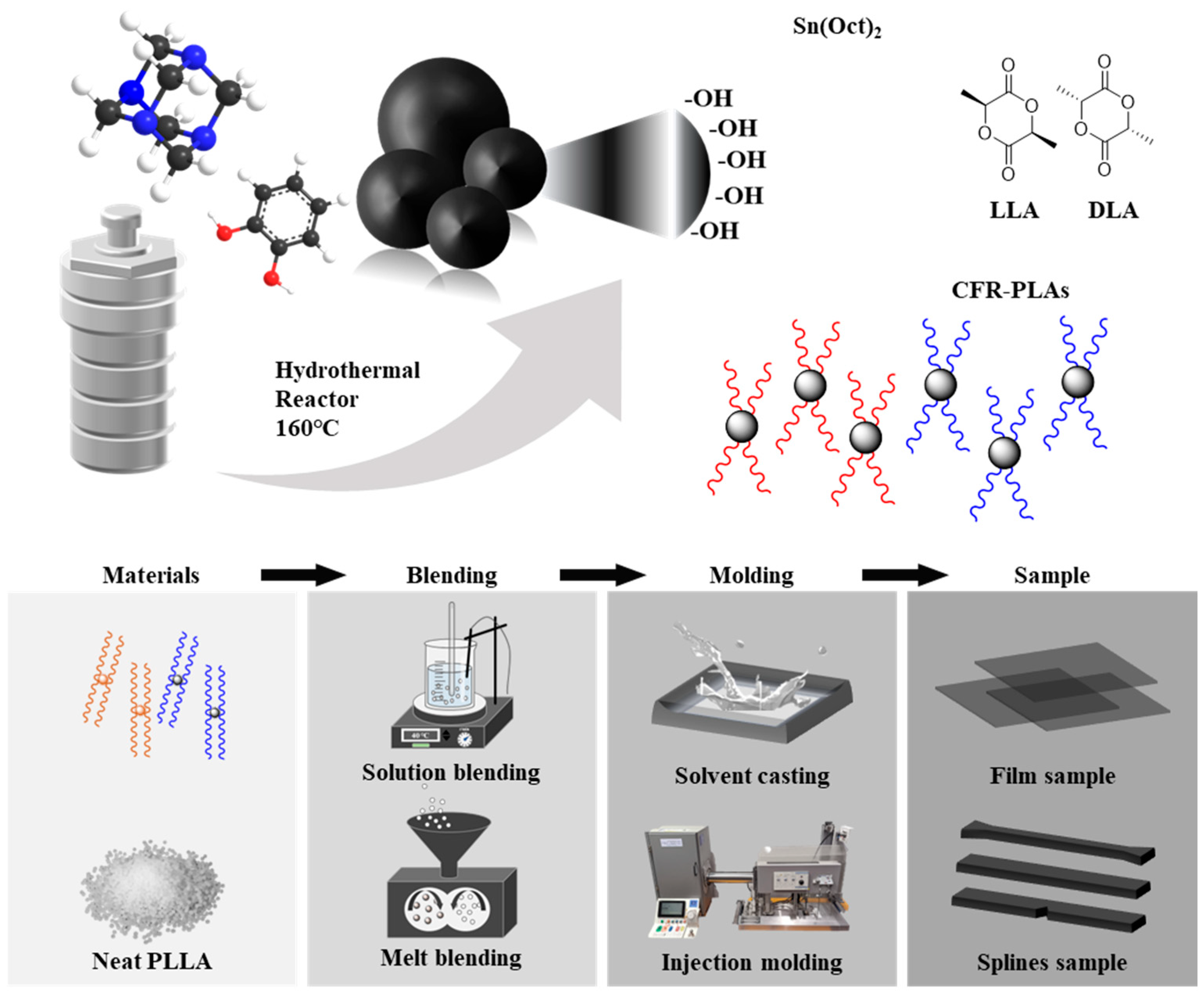
Preparation of the (Zn/CFR2-PLLA)/PLLA composite fibers. A twin-screw extruder (HAAKE Eurolab16, Haren, Germany) was employed to melt-blend Zn/CFR2-PLLA with PLLA at a predetermined ratio to produce blended pellets (Figure 1). The extruder’s temperature zones were set to 160, 165, 175, 185, and 190 °C. The procedure for preparing the (Zn/CFR2-PDLA)/PLLA fibers is as follows, using the same temperature settings of 200, 205, 215, 225, and 230 °C for the extruder zones. The spinning temperature was increased to 220 °C, and the drawing temperature was set to 120 °C. All other parameters, including screw speed and take-up speed, as well as the procedures, were consistent with those used for the (Zn/CFR2-PLLA)/PLLA fiber preparation.

2.2. Characterization

Nuclear Magnetic Resonance (NMR). The NMR spectra were recorded on a Bruker AVANCE II 500 NMR spectrometer and referenced to SiMe4 (TMS) or residual solvent resonances. Generally speaking, small amounts of samples (30–100 mg) were dissolved in a deuterated reagent and transferred to an NMR tube for NMR testing.
Differential Scanning Calorimetry (DSC). The crystallization and melting behavior of the polymers were analyzed using a Discovery DSC 2500 (TA Instruments, New Castle, DE, USA) under a nitrogen flow of 40 mL/min. Accurately weighed samples (8–10 mg) were sealed in aluminum crucibles. For non-isothermal melt crystallization, samples were first melted at 250 °C for 3 min to eliminate their thermal history and then cooled to 0 °C and reheated to 250 °C. Both cooling and heating were performed at a rate of 10 °C/min. For isothermal melt crystallization, samples were first melted at 250 °C for 3 min and then cooled at 100 °C/min to the desired crystallization temperature (Tc = 130–170 °C) and held at this temperature until crystallization was complete. For non-isothermal cold crystallization, samples were melted at 250 °C for 3 min, immediately quenched in liquid nitrogen, and then reheated to 250 °C at 10 °C/min.
Wide-Angle X-ray diffraction (WAXD). WAXD patterns were recorded using a Rigaku Ultima IV diffractometer with Ni-filtered Cu Kα radiation (λ = 0.154 nm), operated at 40 kV and 200 mA. Thin film samples (~0.6 mm thick) were placed on an Instec HCS402 hot stage (Instec Co., Boulder, CO, USA) and analyzed using the same thermal program as in DSC. Samples were scanned from 5° to 50° at a 10°/min 2θ scanning rate.
Fourier Transform Infrared Spectrometer (FTIR). FTIR spectra were recorded in transmission mode using a Nicolet iS50 FTIR spectrometer (Thermo Scientific, Waltham, MA, USA). Each spectrum was recorded with 64 scans at a resolution of 2 cm−1.
Thermogravimetric Analysis (TGA). Thermogravimetric analysis was performed using a TGA5500 analyzer (TA Instruments, New Castle, DE, USA). Accurately weighed samples (ca. 10 mg) were added to crucibles and heated from 30 to 700 °C at a rate of 10 °C/min in a nitrogen atmosphere. The differential thermogravimetric (DTG) curve was obtained by taking the first derivative of the TGA curve with respect to temperature.
Scanning Electron Microscopy (SEM). The surface morphology of the polymers was examined using a Hitachi S-3000N SEM (Tokyo, Japan). Samples were mounted with conductive adhesive and coated with gold prior to imaging. Observations were made at magnifications of 300× and 1000×.
Mechanical Properties. The tensile properties of the polymers were measured using a Universal Testing Machine (INSTRON 5967, Norwood, MA, USA) equipped with a 50-kN load cell and ±0.5% full-scale accuracy. Tests were conducted at 25 °C (50% relative humidity) with a constant crosshead speed of 2 mm/min, following the ASTM D828-22 standard for plastic film tensile testing [49].
Antibacterial Activity. The antibacterial effects of pure PLA and modified PLA against Staphylococcus aureus (S. aureus) and Escherichia coli (E. coli) were evaluated according to GB/T 20944.3-2008. Experimental vessels were first disinfected at 120 °C for 15 min. PLA fragments (0.75 g, 5 × 5 mm) were placed in a flask containing 75 mL of phosphate-buffered saline (PBS), followed by inoculation with 5 mL of bacterial stock solution of S. aureus or E. coli (106 CFU/mL). The mixture was shaken at 150 rpm for 18 h at 25 °C. Subsequently, 100 μL of the solution was diluted with 900 μL of PBS (pH 7.4), ensuring even mixing, and further serially diluted twice to obtain four concentrations (105, 104, 103, and 102 CFU/mL). Nutrient agar (20 mL per plate) served as the bacterial growth medium, and the diluted solutions were added to four separate zones on each agar plate. After incubation at 37 °C for 24 h, viable colonies were counted, and the antibacterial rate was calculated according to the provided formula.
Data Analysis. The mechanical properties were characterized using five specimens per batch. The antibacterial tests were conducted in duplicate. The results were averaged with standard deviation analysis to ensure statistical significance, and reported as the mean ± standard deviation to account for material variability. The data from moisture absorption tests were characterized using three specimens per batch. The comparisons discussed in this study (e.g., between different composite formulations and neat PLLA) were descriptive in nature. No formal statistical significance testing was performed.

3. Results and Discussion

3.1. Synthesis and Characterization of Zn/CFR-PLAs

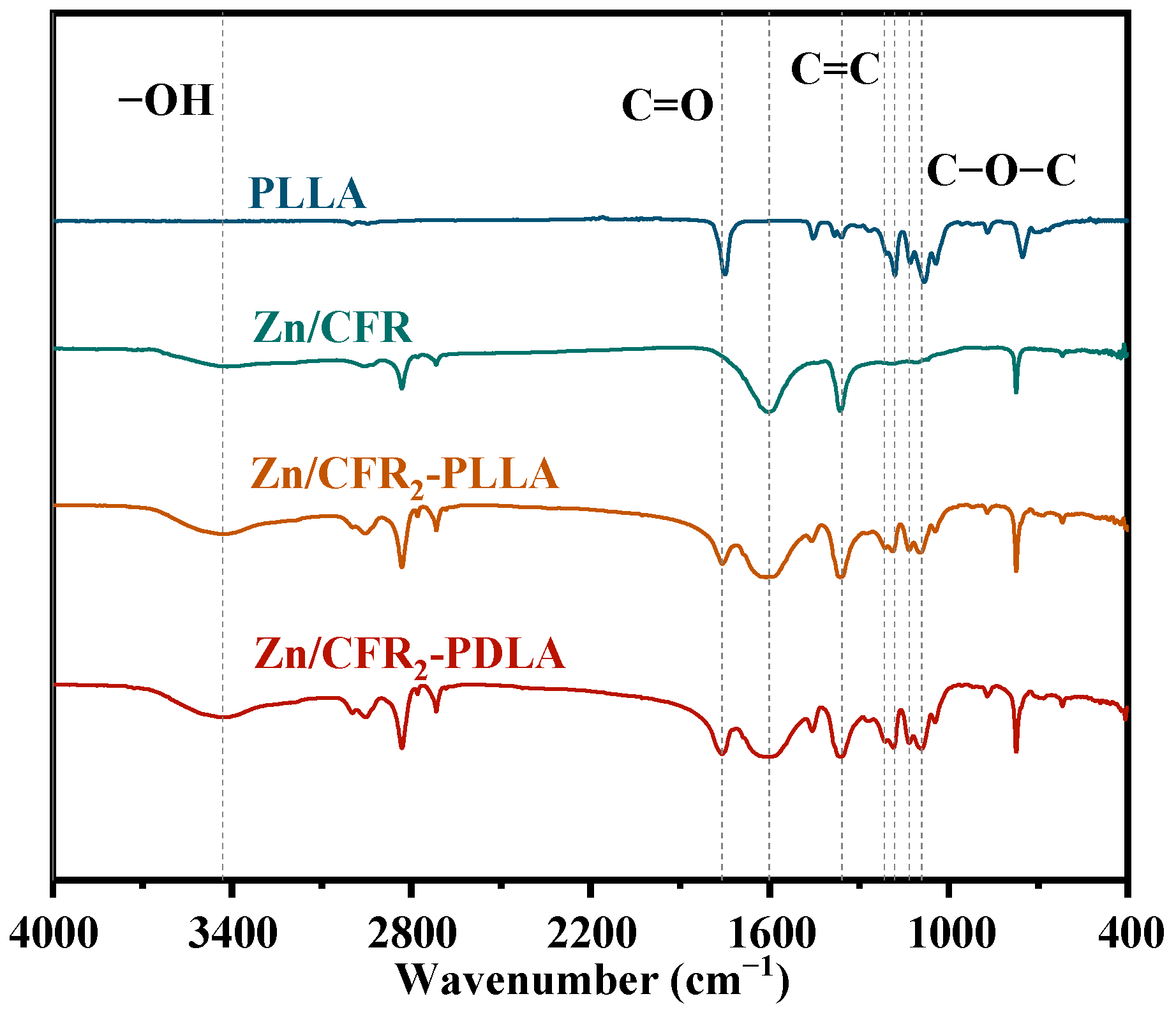
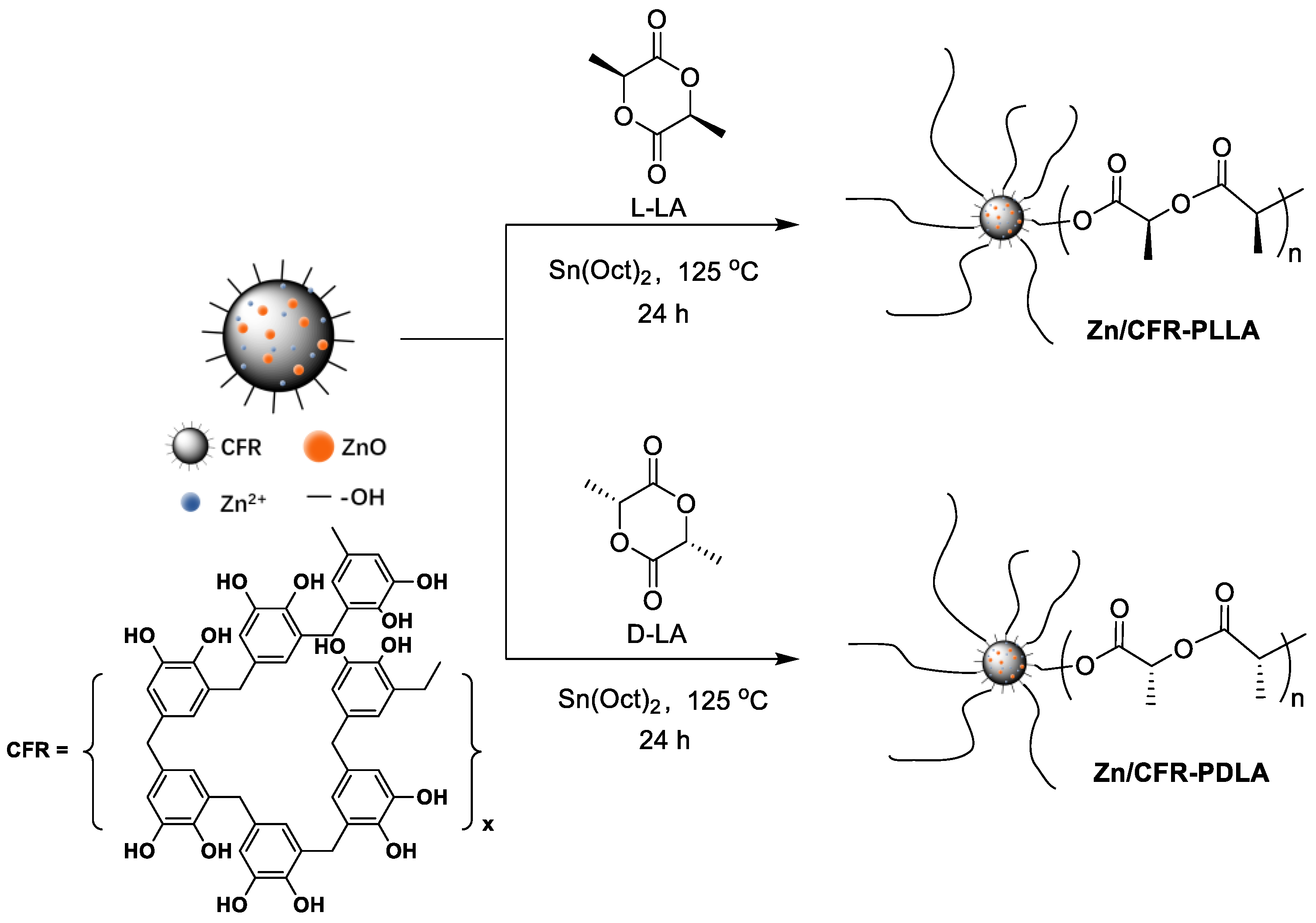
The ZnO-loaded phenolic resin (Zn/CFR) was conveniently synthesized via a one-pot hydrothermal method using catechol, zinc chloride, ammonia water, formaldehyde, and PEG2000 [48]. After that, we proceeded to synthesize Zn/CFR-based PLA through bulk ring-opening polymerization (ROP) of lactide (LA) (Table 1). The phenolic hydroxyl (–OH) groups on the surface of the Zn/CFR microspheres initiated the ROP of LA at 125 °C using Sn(Oct)2 as a catalyst. Through bulk ROP, resin-microsphere-based PLA (Zn/CFR-PLA) was successfully synthesized (Scheme 1). The resulting Zn/CFR-PLAs exhibited excellent dispersion stability: after 24 h, no sedimentation was observed in their dichloromethane dispersion, similar to that of PLA, whereas the dichloromethane dispersion of the Zn/CFR microspheres alone showed significant sedimentation. Fourier transform infrared (FTIR) analysis of the Zn/CFR-PLAs revealed a strong absorption peak at approximately 1750 cm−1, corresponding to the C=O stretching vibration of ester bonds (Figure 2). The multiplet absorption peaks observed between 1050 and 1200 cm−1 were attributed to ether bonds, indicating the successful initiation of LA polymerization by Zn/CFR microspheres to form Zn/CFR-PLA. From the NMR spectra of Zn/CFR-PLA (Figure S1), the average molecular weight was calculated using the integral area ratio of the methyl protons (δ = 1.56 ppm, d, J = 5.34 Hz) to the terminal methyl protons (δ = 1.41 ppm, d, J = 5.34 Hz).
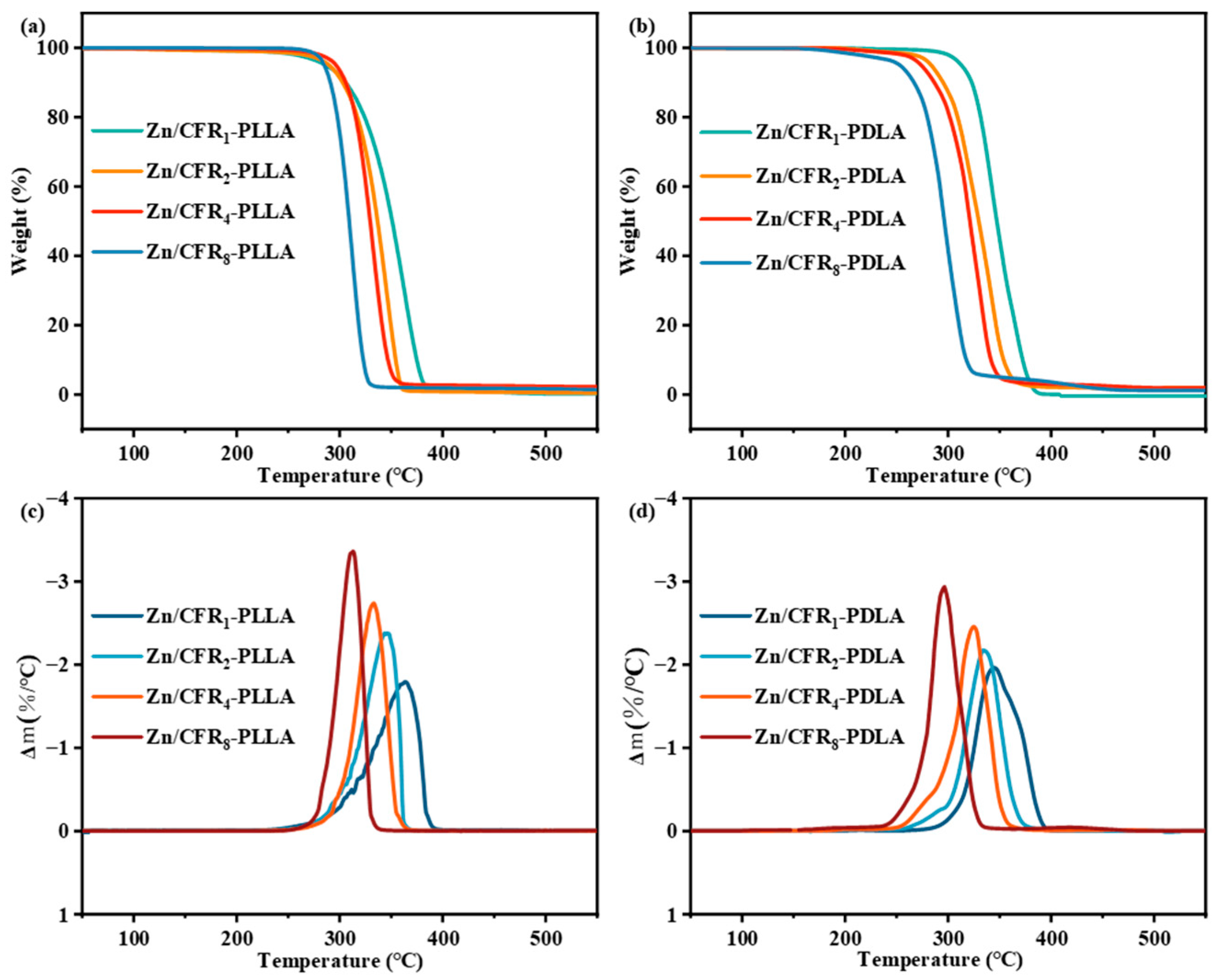
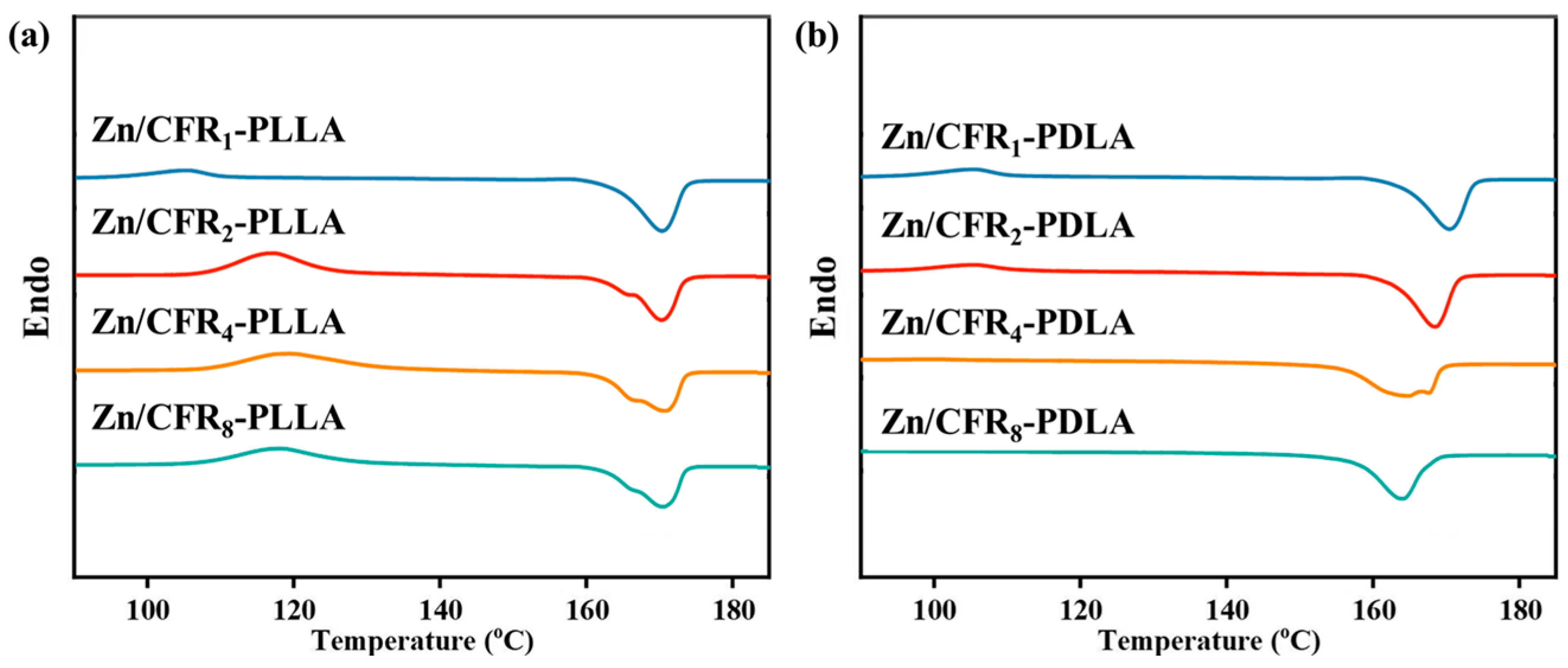
The thermal stabilities of the synthesized Zn/CFR-PLAs were evaluated by TGA, with results shown in Figure 3. It was observed that increasing the Zn/CFR content in the grafted polymers led to a decrease in both the initial thermal decomposition temperature (T5%, the temperature at which significant weight loss begins) and the temperature corresponding to the maximum weight-loss rate (Tmax, determined from the DTG curve). For example, as the composition changed from Zn/CFR1-PLLA to Zn/CFR2-PLLA, Zn/CFR4-PLLA, and finally to Zn/CFR8-PLLA, the T5% decreased from 325.6 to 278.3, while Tmax decreased from 346.2 to 308.8 °C. This behavior can be attributed to the higher Zn2+ content in the grafted polymers, which accelerates the hydrolysis of ester bonds, with increased Zn/CFR loading serving as the main factor driving enhanced catalytic degradation of the polymer chains [50]. DSC analysis revealed that as the Zn/CFR content increased, the intensity of the cold-crystallization peak of Zn/CFR-PLA gradually decreased (Figure 4), indicating that Zn/CFR effectively inhibited non-isothermal crystallization [51]. Additionally, the melting temperatures (Tm) of the polymers gradually decreased with higher Zn/CFR content, likely due to the gradual reduction in average molecular weight [52]. Nevertheless, relatively high degrees of crystallinity (Xc) were observed. The Xc values were calculated using the equation Xc = ΔHmHm0 × 100%, where ΔHm0 is the melting enthalpy of 100% crystalline PLA (93.7 J/g) [53,54]. Based on this, the crystallization enthalpy (ΔHc) values exceeded 35.7 J/g, corresponding to Xc values above 38.1%. Notably, both Zn/CFR2-PLLA and Zn/CFR2-PDLA exhibited the highest degrees of crystallinity among the grafted polymers, Zn/CFR-PLLA and Zn/CFR-PDLA, respectively [55]. This behavior may be attributed to an optimal combination of Zn/CFR content and macromolecular chain structure, which promoted more effective crystallite growth while limiting excessive structural disorder [56,57].
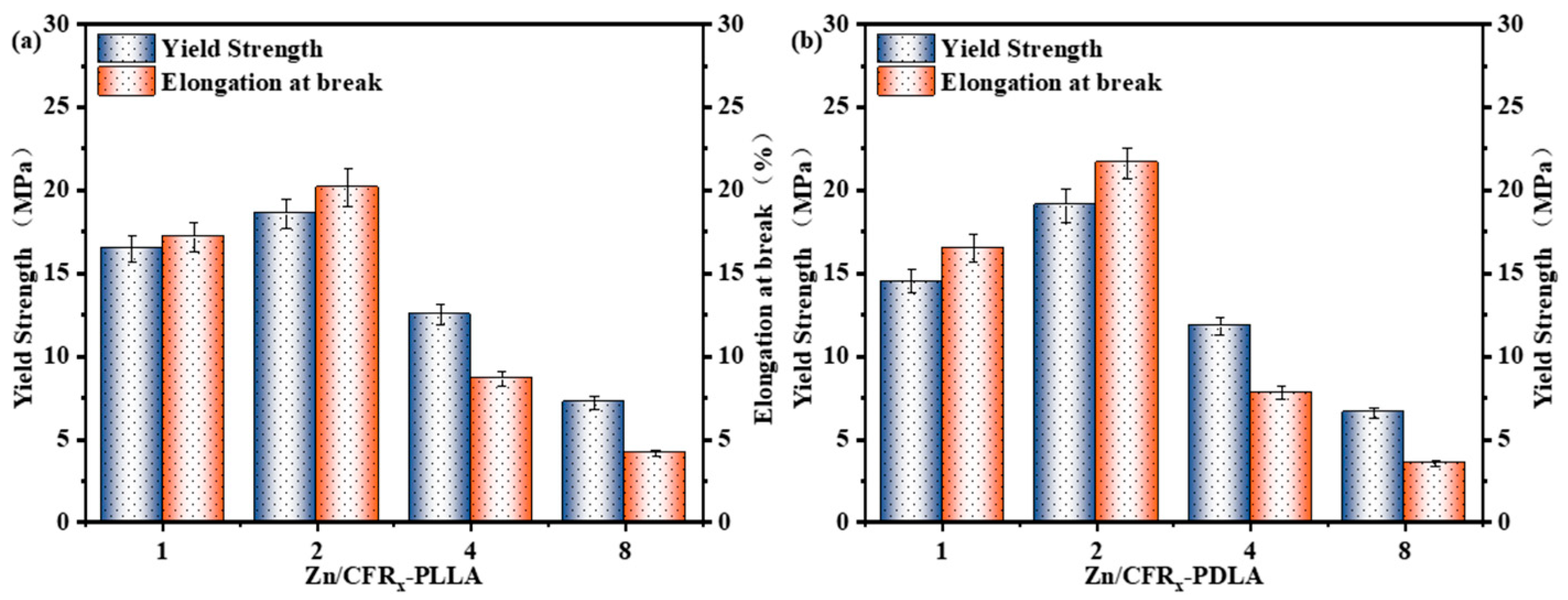
Mechanical testing revealed a nonlinear effect of Zn/CFR content on the material performance. In PLLA-based composites (Figure 5), at ≤2 wt% Zn/CFR loading, the films exhibited high yield strength (>15 MPa) and low elongation at break (<25%), consistent with DSC first-heating curves showing that increased crystallinity restricted chain mobility [58]. When the Zn/CFR content exceeded 4 wt%, excessive chain termination induced by Zn/CFR produced low-molecular-weight polymers, leading to a marked reduction in both yield strength and elongation at break. Considering the balance between mechanical strength and performance stability, Zn/CFR2-PLLA and Zn/CFR2-PDLA were identified as optimal matrices. For PLA-based composites, a 2-wt% Zn/CFR loading provided a favorable combination of high strength and adequate ductility without significant degradation.

3.2. Preparation and Characterization of (Zn/CFR2-PLLA)/PLLA and (Zn/CFR2-PDLA)/PLLA Composites

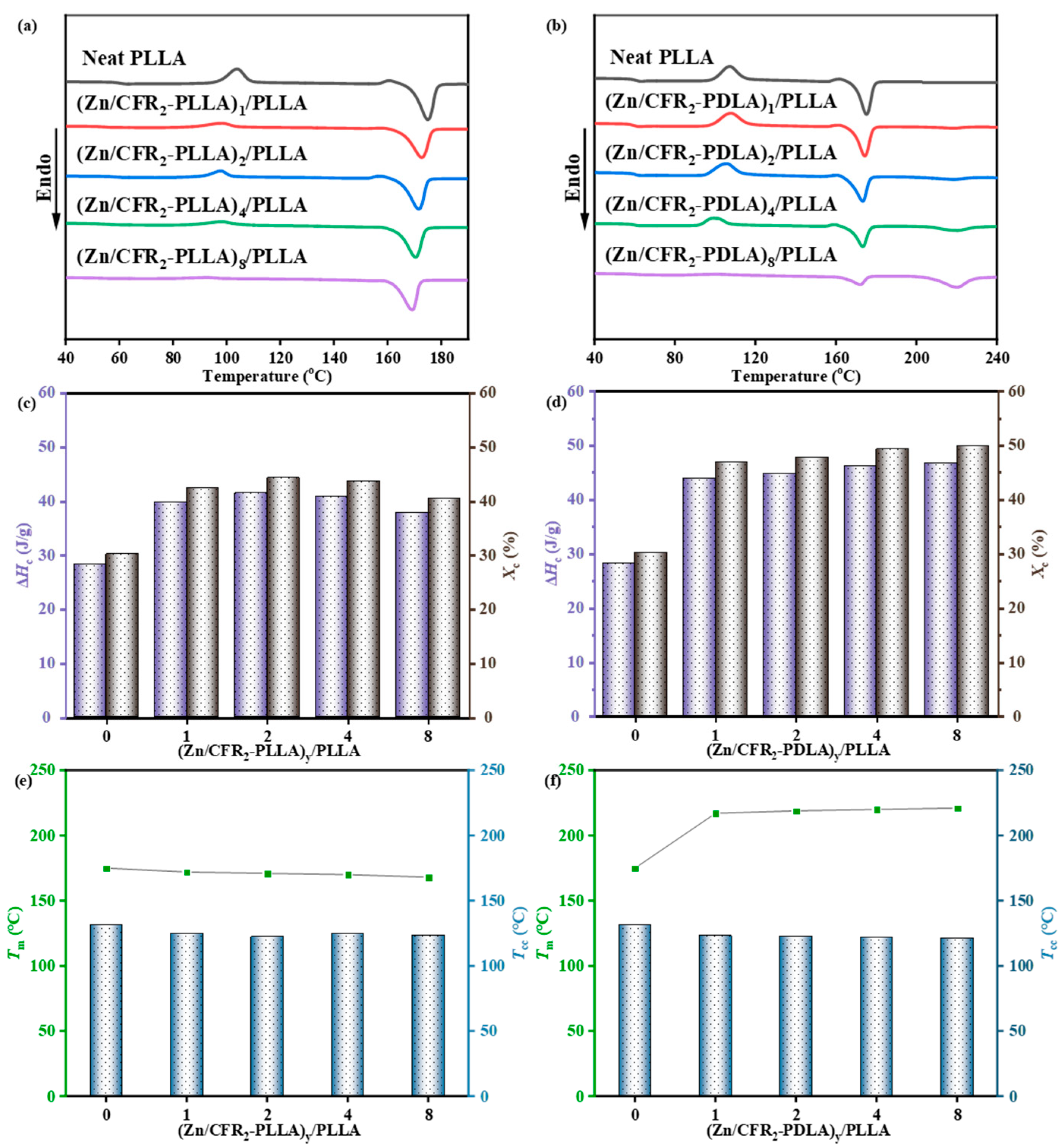
Owing to their superior crystallinity and mechanical properties, Zn/CFR2-PLLA and Zn/CFR2-PDLA were selected as modifiers for blending with commercial PLLA. By varying the type and proportion of these modifiers, a series of (Zn/CFR2-PLLA)y/PLLA and (Zn/CFR2-PDLA)y/PLLA composites were prepared, where y represents the mass percentage of the added modifier. DSC analysis of the (Zn/CFR2-PLA)/PLLA composites revealed a single, symmetric melting peak (Tm = 169.4–173.6 °C; FWHM = 6–8 °C), in contrast to the dual-melting behavior typically observed in systems undergoing melt-recrystallization [59] (e.g., βα phase transitions) (Figure 6a,b). This simplification of the melting behavior indicated that Zn/CFR2 acted as an efficient heterogeneous nucleating agent, suppressing secondary crystal reorganization. Batch-to-batch Xc remained highly consistent (ΔXc < 2%), demonstrating robust process stability (Figure 6c,d). XRD analysis (Figure S2) revealed that pure PLLA exhibited a main α-crystal diffraction peak at 2θ = 16.9° (d-spacing = 5.24 Å) with no secondary phase. In Zn/CFR2-PLLA, a new peak appeared at 19.2° (intensity ratio I19.2/I16.9 = 1.2) while retaining α-phase characteristics, indicating the formation of some β-crystals induced by Zn/CFR2 interactions. Zn/CFR2-PDLA showed strong SC crystal peaks at 20.8° (I = 24.0 a.u.) and 24.0° (I = 12.0 a.u.) [54], with peak broadening at higher 2θ (FWHM increased by 15%), reflecting reduced grain integrity due to spatial constraints from CFR2.
The cold crystallization temperature (Tcc) exhibited a non-monotonic, “V-shaped” trend (Figure 6e). At 2 wt% (Zn/CFR2) loading, Tcc decreased by 9.2 °C (from 131.6 to 122.4 °C) due to the nucleating effect of Zn/CFR2. At higher loadings (>4 wt%), Tcc increased again (126.8 °C at 8 wt%) as nanoparticle aggregation hindered chain mobility, as evidenced by XRD peak broadening. Xc and ΔHc reached their maxima at 2 wt% (Xc = 44.3%, ΔHc = 41.5 J/g), which were significantly higher than those for neat PLLA (Xc = 30.2%, ΔHc = 10.2 J/g). This reflected the synergistic nucleation effect of ZnO and CFR2 that optimized spherulite growth. At 8 wt%, Xc decreased to 26.5%, and the melting peak became more asymmetric (FWHM increased from 8.5 to 9.8 °C), indicating aggregation-induced crystal defects. Similar trends were observed for PDLA/PLLA blends (Figure 6f). Dual melting peaks (Tm1 = 210–215 °C, Tm2 = 225–230 °C) confirmed the competition between homopolymer (Tm1) and SC crystals (Tm2) (Table 2). Increasing Zn/CFR2 content from 2 to 8 wt% reduced the SC crystal fraction from 68 to 42% (based on peak area ratios), attributed to steric hindrance from nanoparticle aggregation, which limited PDLA–PLLA chain interactions [60]. Zn/CFR2-PLA composites thus enable tunable crystallization through concentration-dependent nucleation and dispersion effects. An optimal loading of 2–4 wt% balances nucleation efficiency and aggregation resistance, facilitating scalable production of high-crystallinity PLA. XRD and DSC analyses collectively confirmed the suppression of melt-recrystallization pathways and the role of Zn/CFR2 in modulating crystal hierarchy.
The static water contact angles have been tested in order to evaluate the surface wettability of the samples. As shown in Figure S3, the static water contact angles of neat PLLA, (Zn/CFR2-PLLA)2/PLLA, and (Zn/CFR2-PDLA)2/PLLA are 66.8°, 54.2°, and 59.1°, respectively. The lower contact angles of the composites indicated higher surface wettability compared to neat PLLA. The results are consistent with the moisture absorption of fabricated fibers (vide infra).

3.3. Mechanical Properties and Toughening Mechanism

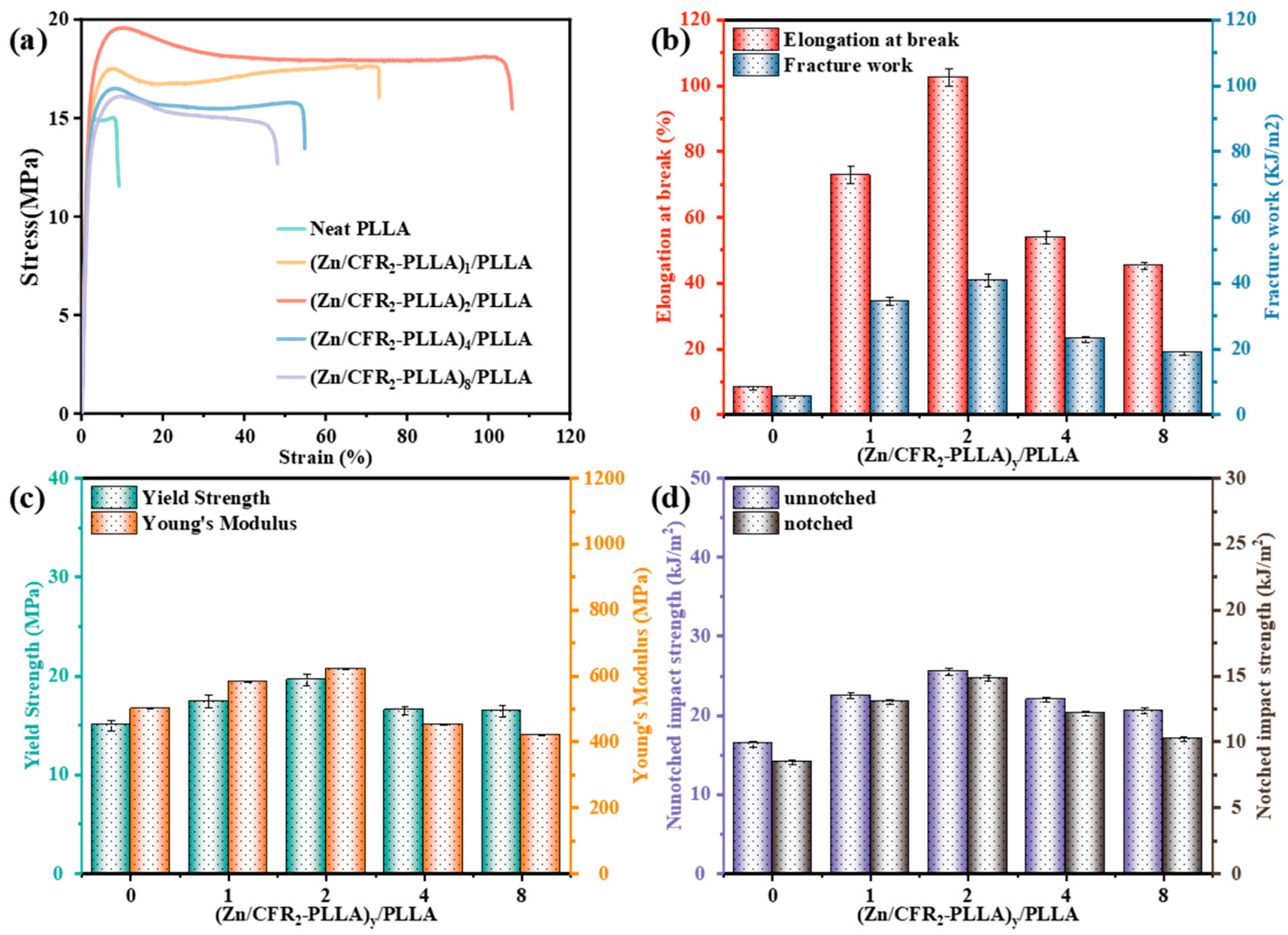
The stress–strain curves of (Zn/CFR2-PLLA)/PLLA composites revealed a notable transition from brittle to ductile behavior upon filler incorporation (Figure 7a). Neat PLLA exhibited typical brittleness, with an elongation at break of 8.0% and a fracture work of 5.4 kJ/m2. In contrast, composites containing Zn/CFR2-PLLA showed markedly enhanced ductility, with elongation at break exceeding 45.2% across all formulations. The (Zn/CFR2-PLLA)2/PLA composite achieved the highest elongation (102.7%, a 1180% increase) and fracture work (40.7 kJ/m2), demonstrating the synergistic toughening effect of Zn/CFR2-PLLA (Figure 7b). Yield strength and Young’s modulus exhibited a concentration-dependent trend (Figure 7c). At 2 wt% loading, the composite maintained a high yield strength (>19.5 MPa) while retaining a Young’s modulus of 600 MPa, comparable to neat PLLA (500 MPa). This balance of strength and ductility indicates that Zn/CFR2-PLLA functions as a stress-transfer mediator, redistributing applied loads through interfacial interactions between the filler and matrix [61,62]. Both non-notch and notch impact strengths were considerably enhanced by Zn/CFR2-PLLA incorporation (Figure 7d). At 2 wt% loading, the non-notch impact strength reached 25.5 kJ/m2 (a 55% increase compared with neat PLLA, 16.4 kJ/m2), while the notch impact strength increased to 14.8 kJ/m2 (a 76% increase versus 8.4 kJ/m2 for PLLA). This performance arises from the synergistic effects of filler dispersion and matrix–filler adhesion positioning Zn/CFR2-PLLA as a transformative additive for high-performance, sustainable PLA materials.
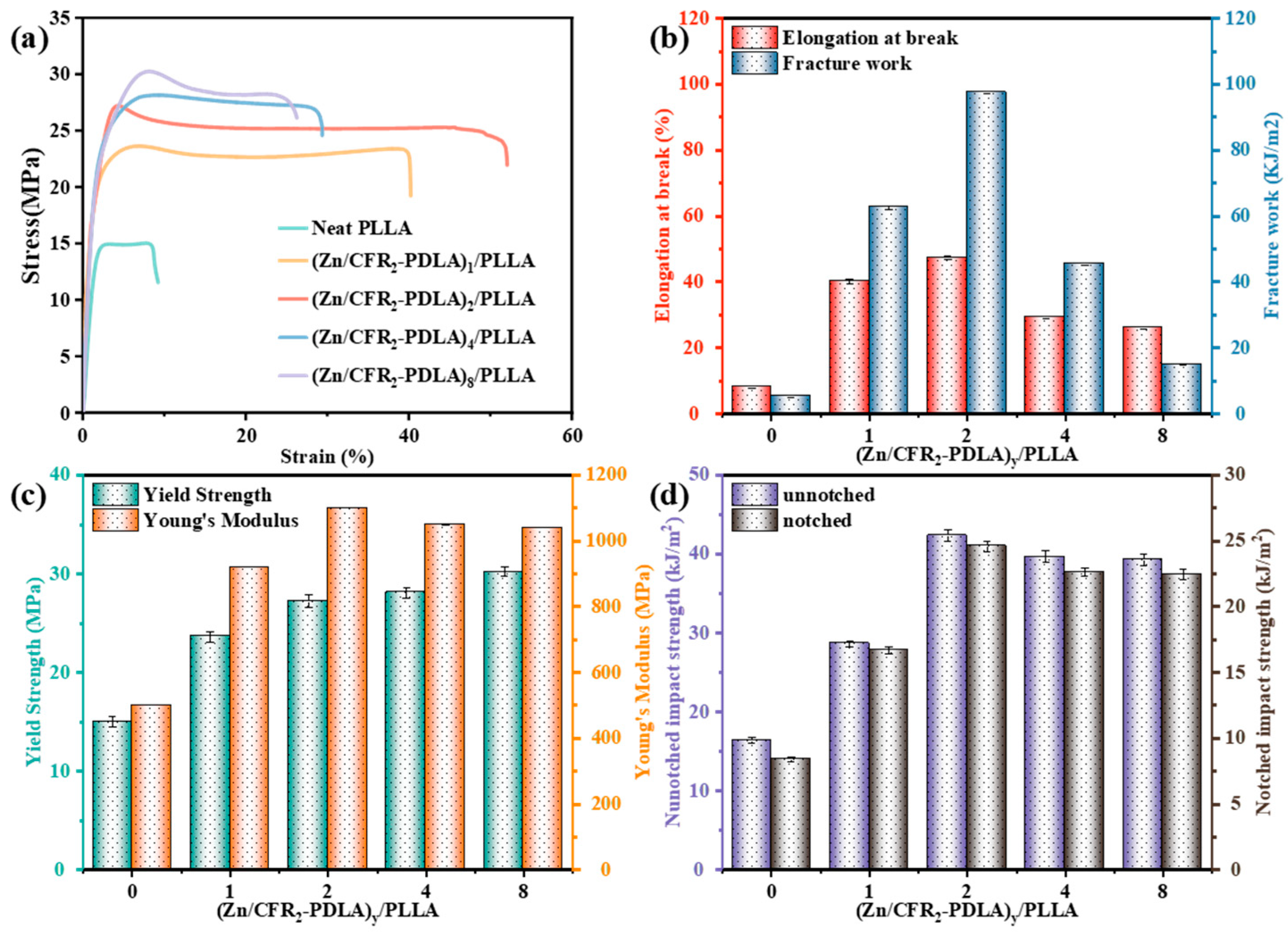
The stress–strain curves and mechanical property histograms (Figure 8a) demonstrate substantial improvements in the PLA-based composites, resulting from the synergistic effect of the multi-arm branched topology and SC crystallite formation. Neat PLLA exhibits brittle fracture, with a fracture strain of ~8% and yield strength of ~15 MPa (Figure 8b). In contrast, composites containing Zn/CFR2-PDLA show dramatic increases in fracture strain (up to 47.3%) and yield strength (~27.2 MPa) at 2 wt% filler. The incorporation of PDLA chains in Zn/CFR-PDLA facilitates stereocomplexation with the PLLA matrix. SC crystallites, with a higher melting point (~230 °C) than homocrystallites, act as rigid physical crosslinks that enhance interfacial adhesion and improve stress transfer between the Zn/CFR cores and the PLLA matrix. The observed 101.3% increase in yield strength (from 15.0 to 30.2 MPa) correlates with the SC crystallite density, which reinforces the filler–matrix interface [63]. Simultaneously, the Young’s modulus (0.9–1.1 GPa) reflects a balance between the rigid SC domains and the compliant, branched PLLA network (Figure 8c). The toughening effect is further unequivocally demonstrated by the dramatic improvement in impact resistance (Figure 8d). The (Zn/CFR2-PDLA)/PLLA composite exhibits the most balanced performance, with unnotched and notched impact strengths reaching 28.6 kJ/m2 and 16.7 kJ/m2, respectively. These values represent increases of approximately 74% and 99% compared to neat PLLA (16.4 kJ/m2 and 8.4 kJ/m2).
The mechanical superiority of (Zn/CFR-PDLA)/PLLA composites arises from the synergistic effects of the branched topology and SC crystallites. SC domains enhance the interfacial strength and modulus, while the multi-arm architecture facilitates large-scale plasticity [42,64]. Filler concentration-dependent trends (Figure 8) indicate that an optimal SC crystallite density (~2 wt%) is critical for balancing toughness and strength. These findings demonstrate the potential of combining controlled topology with stereocomplexation to design sustainable, high-performance PLA composites.

3.4. Morphological Analyses of Fracture Surfaces

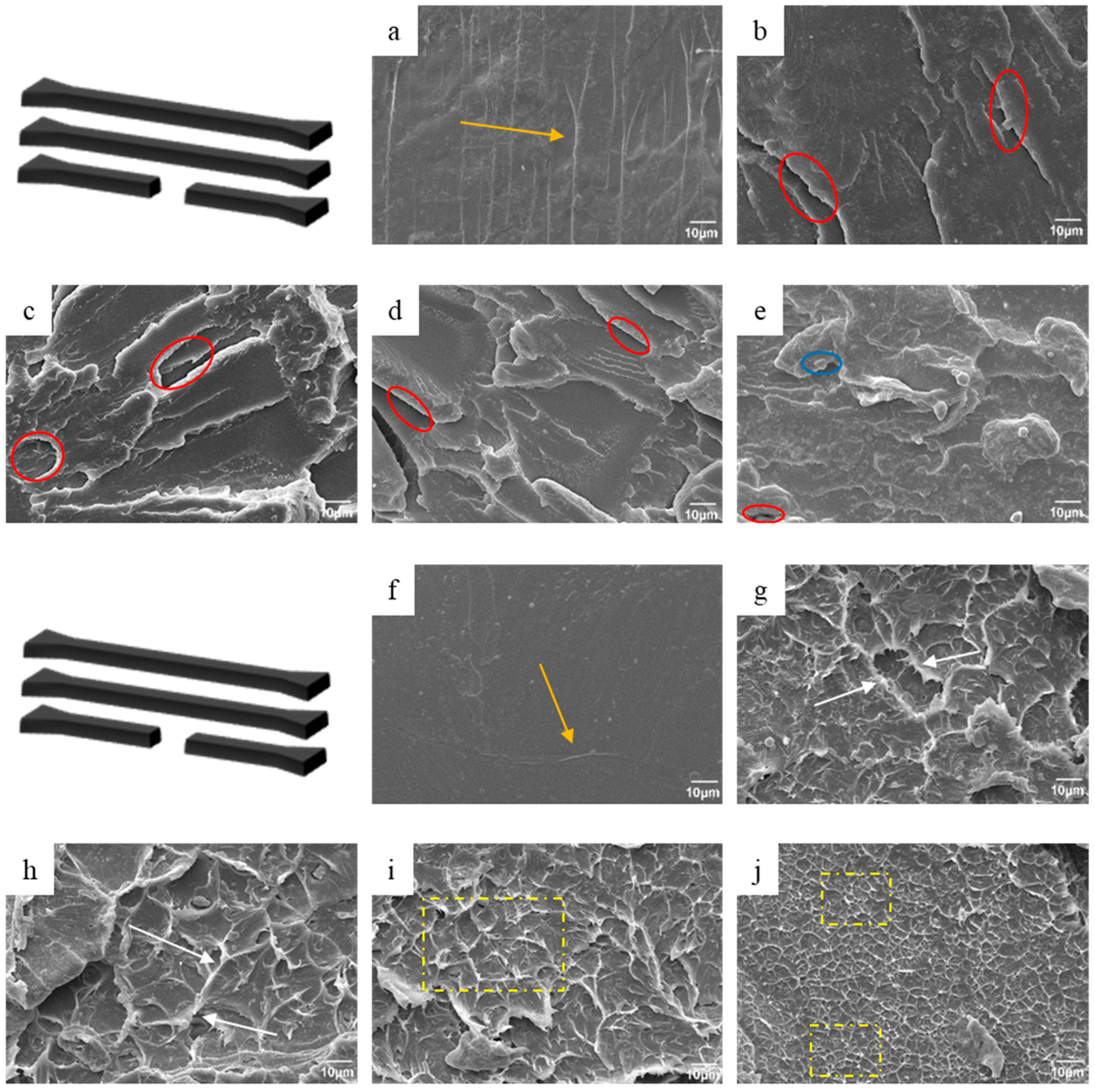
To elucidate the influence of the Zn/CFR2-PLAs on the PLLA matrix, the impact-fractured surfaces of the composites were examined via SEM. Dumbbell-shaped specimens were prepared for impact testing, and their morphologies are shown in Figure 9a. SEM images (Figure 9) reveal morphological transitions in the (Zn/CFR2-PLLA)/PLLA (LL system) and (Zn/CFR2-PDLA)/PLLA (DL system) composites as the Zn/CFR2 content was varied from 0 to 8 wt%. Neat PLLA (Figure 9) exhibits a smooth, glassy surface with a “river-like” pattern (yellow arrow), characteristic of brittle fracture [65].
At low Zn/CFR2 loadings (1–2 wt%, Figure 9b,c), micropores (~1–3 μm, red circles) appear, indicating localized plastic deformation. Uniformly dispersed Zn/CFR2 particles (~1.5 μm) act as stress concentrators, promoting crack branching and energy dissipation. At higher loadings (4–8 wt%, Figure 9d,e), aggregation-induced voids (~3–5 μm, red circles) dominate. At 8 wt% (Figure 9e), large particle pull-out voids (~3 μm) and smooth debonded surfaces are prevalent, correlating with decreased elongation at break. Fibril formation (Figure 9c,d) is limited to ≤4 wt%, as PLLA chain entanglements cannot compensate for filler agglomeration. Critical agglomeration occurs at 4 wt% (Figure 9d), evidenced by clustered particles (blue circles) and the disappearance of fibrillar structures.
SC crystallites at the PDLA–PLLA interfaces (bright-contrast regions, white arrows in Figure 9g,h) act as physical crosslinks, suppressing void growth (voids < 1 μm at 8 wt%). Fine crack networks persist even at 8 wt%, enabling sustained ductility. The observed zigzag crack paths indicate enhanced crack deflection. SC crystallites effectively delay the adverse effects of agglomeration up to 8 wt% (Figure 9j), where minor particle clustering is compensated by SC-mediated stress redistribution.

3.5. Antibacterial Performance Analysis

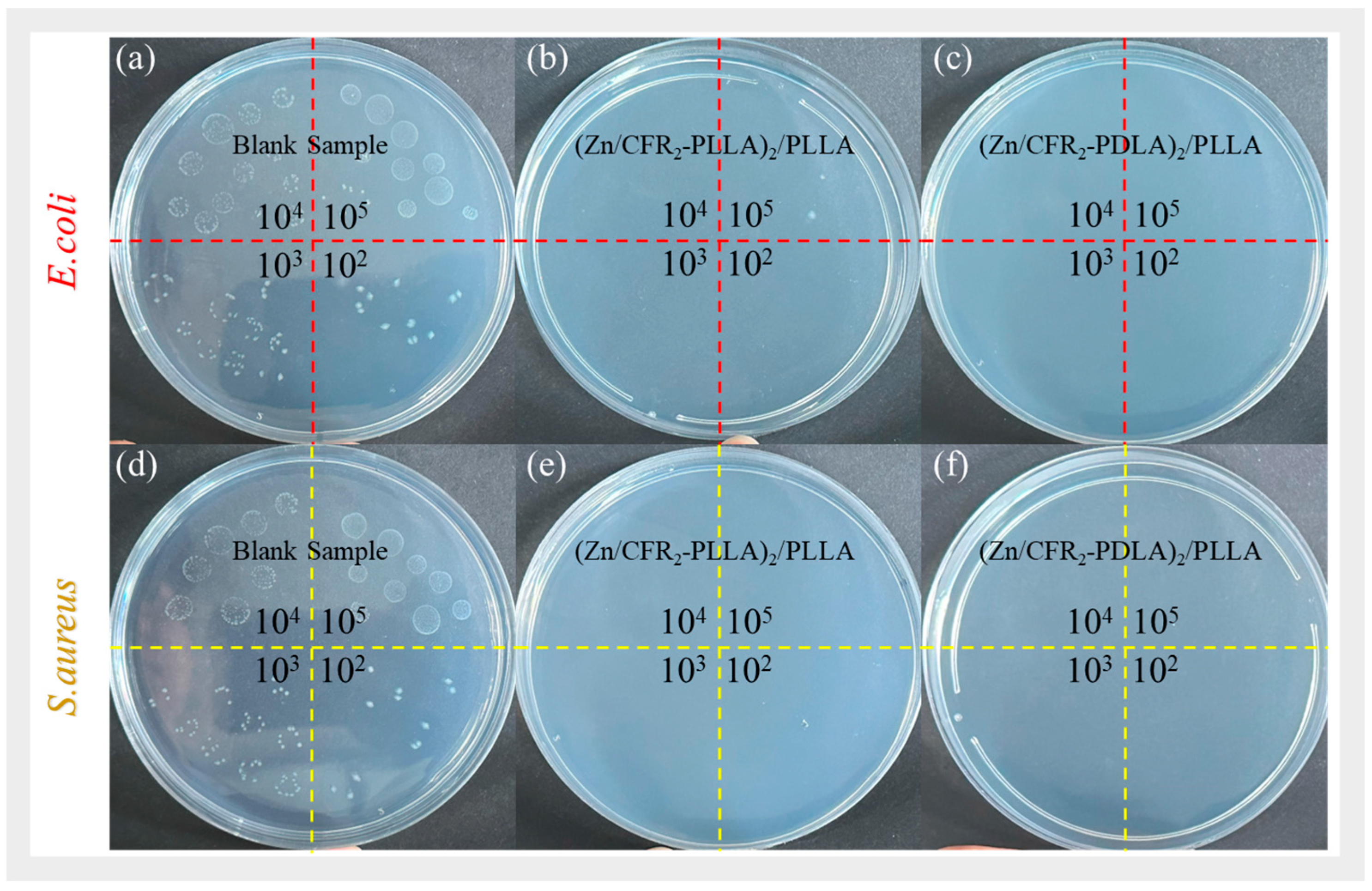
The antibacterial efficacies of the (Zn/CFR2-PLLA)/PLLA and (Zn/CFR2-PDLA)/PLLA composites against E. coli (Gram-negative) and S. aureus (Gram-positive) were evaluated using agar plate assays (Figure 10a–f). The agar plate diffusion method was employed as a direct and visual preliminary screening assay to assess the antibacterial ability. Colony images show that both composites exhibited strong antimicrobial activity, achieving inhibition rates greater than 98% against both bacterial strains (Table 3), as confirmed by colony counting and statistical analysis [66]. The initial antibacterial tests suggested that the fabricated composites possessed activity against representative Gram-negative (E. coli) and Gram-positive (S. aureus) bacteria, offering preliminary evidence of this effect. The broader-spectrum antibacterial properties of the fabricated composites, as well as the minimum inhibitory concentration (MIC) and minimum bactericidal concentration (MBC) assays, require further investigation.
The exceptional antibacterial performance of the (Zn/CFR2-PLA)/PLLA composites is primarily attributed to the sustained release of Zn2+ ions, a well-established mechanism for metal oxide antimicrobials [67,68]. The proposed mechanism involves the dissolution of ZnO nanoparticles and subsequent Zn2+ release. Because of the multi-arm architecture and the encapsulation effect of the Zn/CFR-PLA particle, the release of Zn2+ ions may follow a controlled release profile, which is crucial for long-term efficacy [48]. Similarly, the Zn2+-incorporated polysaccharide microspheres released Zn2+ in the range of 0.5 to 1.5 ppm over a period of 24 to 72 h [69]. Moreover, Zn-doped Prussian blue frameworks, with Zn2+ release amounts ranging from 0.35 to 0.57 ppm within 24 h, and sustained release for 1 week [70]. In contrast, in simple physical blends, nanoparticles are prone to rapid release [71,72]. Further research on the release of Zn2+ and the antibacterial mechanism will be carried out through experimental designs and instrumental tests (such as ICP-MS) to determine the relevant details.

3.6. Spinning Analysis

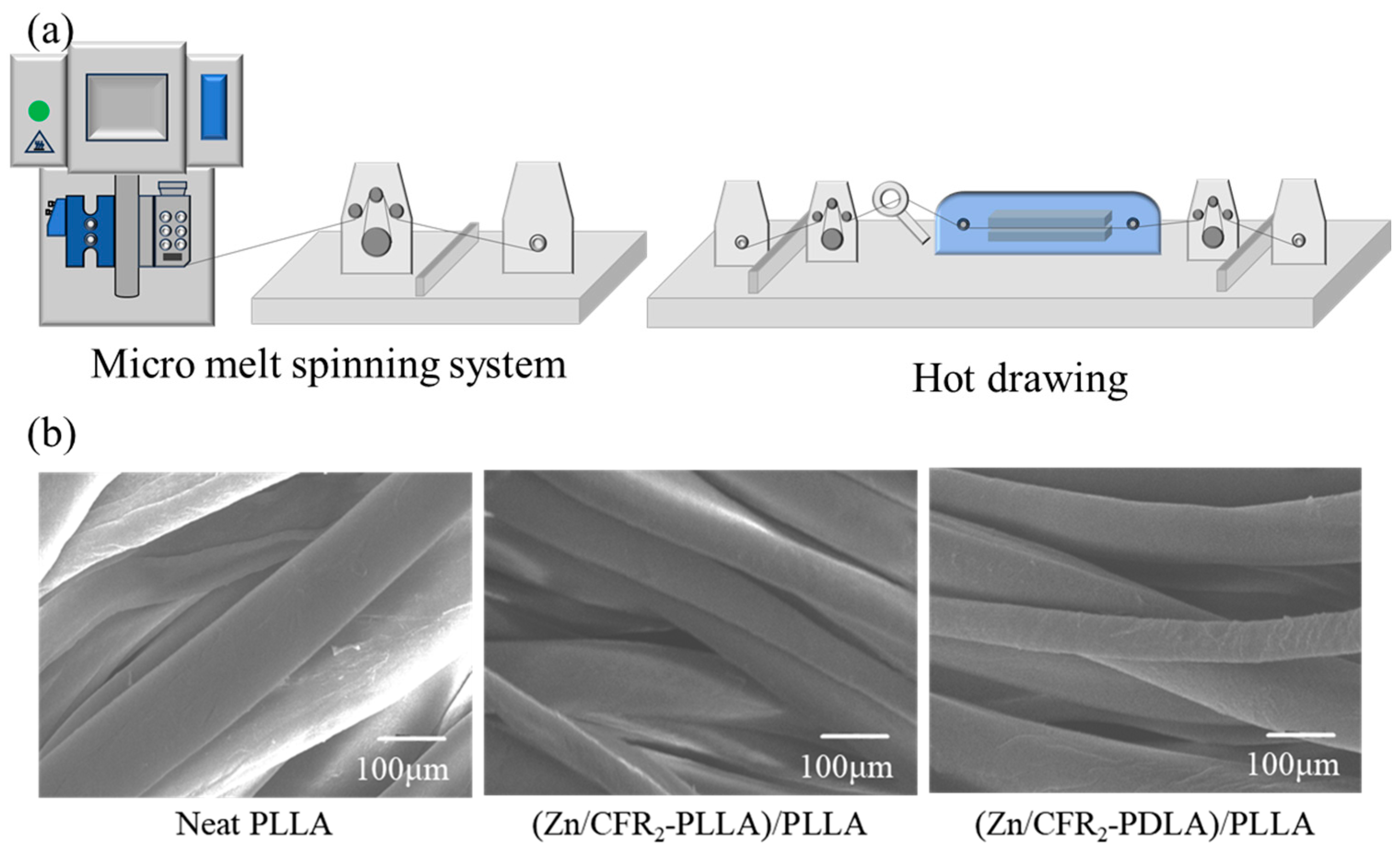
The twin-screw extrusion process enabled uniform dispersion of Zn/CFR2-PLA fillers within the PLLA matrix, as confirmed by SEM observations (Figure 11b). Nonetheless, micron-scale filler agglomerates (0.9–2.3 μm) persisted, likely due to high shear stress during extrusion that promoted partial filler migration toward the fiber surface [73]. This resulted in alternating “filler-rich” and “matrix-dominated” zones along the fiber axis. Interfacial adhesion between Zn/CFR2-PDLA and PLLA was considerably enhanced by SC crystallization, as evidenced in the XRD (Figure S2), reducing stress concentration at the interface relative to the Zn/CFR2-PLLA composites [74]. Additionally, the drawing process exerted a strong influence on the crystalline architecture of the fibers. For neat PLLA, rapid cooling during spinning limited α-crystal growth, resulting in low crystallinity. In contrast, Zn/CFR2 fillers acted as heterogeneous nucleation sites, promoting β-crystal formation and increasing overall crystallinity to 33.7%. The high draw ratio (1:3) applied during spinning likely induced molecular chain alignment along the fiber axis, as evidenced by axial microgrooves observed in the SEM images (Figure 11b), characteristic of shear-induced flow orientation. The SC-PLA system exhibited superior crystallization kinetics, achieving 48.9% crystallinity due to intermolecular hydrogen bonding between PLLA and PDLA chains [75,76]. This enhanced crystallinity, combined with shear alignment from extrusion, contributed to an increase in tensile modulus from 2.73 GPa for neat PLLA to 4.51 GPa (Table 4). The SC-PLA system exhibited exceptional interfacial reinforcement, delaying crack propagation, as evidenced by the reduced depth of axial microgrooves in the SEM images. Surface roughness (Ra ≈ 42 μm) and capillary porosity (50 nm interfacial gaps within the β-crystals) were synergistically optimized through shear-induced flow during extrusion, resulting in a 116% enhancement in moisture-wicking capacity [77] (Table 5). The melt-spinning process effectively incorporated the Zn/CFR2-PLA fillers into the PLLA fibers, leveraging shear-induced molecular orientation (driven by a 1:3 draw ratio) and SC to achieve tunable crystallinity, mechanical strength, and hydrophilicity [78]. Critical processing parameters, including the draw ratio, extrusion temperature, and filler loading, were optimized to minimize defects while maximizing functional performance. The resultant materials, exhibiting enhanced mechanical properties, crystallinity, and antibacterial activity, show potential applicability in areas such as biomedical materials and technical textiles, suggesting a scalable approach for further development towards these fields.

4. Conclusions

In conclusion, a novel and efficient approach for simultaneously improving the mechanical properties, crystallinity, degradability, and antibacterial performance of PLA composites through the incorporation of multi-arm Zn/CFR-PLA modifiers has been developed. The Zn/CFR-based modifiers were synthesized via ROP of LA, which was initiated by ZnO-loaded phenolic resin microspheres with multiple hydroxyl groups on the surface. Remarkably, after blending with modifiers, the (Zn/CFR2-PLLA)2/PLLA composite displayed an elongation at break of 102.7%, which was approximately thirteen times that of pristine PLA (8.0%). Meanwhile, the composite also exhibited a high tensile strength of 19.6 MPa, alongside a significant increase in impact strength. The PLLA composite based on Zn/CFR2-PDLA showed an elongation at break of 47.3% under the same conditions, but its tensile strength was up to 27.2 MPa. This enhancement was attributed to the formation of SC crystals between Zn/CFR2-PDLA and the PLLA matrix. The superior performance probably resulted from multiple effects; that is to say, Zn/CFR2-PLA exhibited a heterogeneous nucleation effect, which could enhance the crystallization properties of PLAs. Additionally, its multi-arm architecture could increase the entanglement between molecular chains, facilitate microfibrillation of the material, and induce the formation of multiple cracks, thereby improving the mechanical properties of PLA composites. Furthermore, owing to the induction of Zn2+ ions, the composites displayed excellent antibacterial activity, achieving more than 98% inhibition against both E. coli and S. aureus. The composites could also be melt-spun to prepare relevant PLA fibers, which exhibited enhanced modulus (up to 4.51 GPa) and moisture-wicking capability. This is probably due to both the reinforcing and toughening effect of Zn/CFR2-PLA on PLA, which significantly improved the mechanical properties of PLA composites. This study provides a new paradigm for the development of high-performance PLA materials by tailoring molecular topology, stereochemical interactions, and metal ions of modifiers. These prepared materials exhibit suitability for demanding applications, including active food packaging aimed at extending shelf life, biomedical materials, and technical textiles with biodegradability and functional performance. However, regarding scale-up, maintaining the uniform dispersion of Zn/CFR-PLA modifiers at a large scale without inducing agglomeration will be a critical challenge. Furthermore, the long-term antimicrobial property and stability, as well degradation behavior of the composites under real-world application conditions, require further investigation.

Supplementary Materials

The following supporting information can be downloaded at: https://www.mdpi.com/article/10.3390/jcs10020075/s1, Figure S1: 1H NMR spectra of the synthesized Zn/CFR-PLAs samples; Figure S2: XRD patterns of neat PLLA and (Zn/CFR2-PLAs)2/PLLA; Figure S3: The static water contact angles of (a) neat PLLA, (b) (Zn/CFR2-PLLA)2/PLLA composite, and (c) (Zn/CFR2-PDLA)2/PLLA composite.

Author Contributions

Conceptualization, Y.-J.X. and Y.P.; methodology, L.Z., N.L., Y.-L.S. and K.Z.; validation, L.Z.; formal analysis, L.Z.; investigation, L.Z. and N.L.; resources, L.Z. and K.Z.; data curation, L.Z. and N.L.; writing—original draft preparation, L.Z.; writing—review and editing, L.Z. and Y.P.; visualization, L.Z. and Y.-L.S.; supervision, Y.-J.X. and Y.P.; project administration, Y.P.; funding acquisition, Y.-J.X. and Y.P. All authors have read and agreed to the published version of the manuscript.

Funding

This research was funded by the National Key Research and Development Program of China, grant number 2021YFB3801905; the Natural Science Foundation of Shandong Province, grant number ZR2024ME197; and the National Natural Science Foundation of China, grant number 21971029.

Data Availability Statement

Data are contained within the article and Supplementary Materials.

Acknowledgments

We gratefully acknowledge Gangqiang Zhang for his assistance and contributions to discussions.

Conflicts of Interest

The authors declare no conflicts of interest.

References

  1. Shahdan, D.; Rosli, N.A.; Chen, R.S.; Ahmad, S.; Gan, S. Strategies for strengthening toughened poly(lactic acid) blend via natural reinforcement with enhanced biodegradability: A review. Int. J. Biol. Macromol. 2023, 251, 126214. [Google Scholar] [CrossRef] [PubMed]
  2. Islam, M.S.; Elahee, G.M.F.; Fang, Y.H.; Yu, X.; Advincula, R.C.; Cao, C.Y. Polylactic acid (PLA)-based multifunctional and biodegradable nanocomposites and their applications. Compos. Part B Eng. 2025, 306, 112842. [Google Scholar] [CrossRef]
  3. Tripathi, N.; Misra, M.; Mohanty, A.K. Durable polylactic acid (PLA)-based sustainable engineered blends and biocomposites: Recent developments, challenges, and opportunities. ACS Eng. Au 2021, 1, 7–38. [Google Scholar] [CrossRef]
  4. Ahsan, W.A.; Hussain, A.; Lin, C.; Nguyen, M.K. Biodegradation of different types of bioplastics through composting—A recent trend in green recycling. Catalysts 2023, 13, 294. [Google Scholar] [CrossRef]
  5. Maragkaki, A.; Malliaros, N.G.; Sampathianakis, I.; Lolos, T.; Tsompanidis, C.; Manios, T. Evaluation of biodegradability of polylactic acid and compostable bags from food waste under industrial composting. Sustainability 2023, 15, 15963. [Google Scholar] [CrossRef]
  6. Lors, C.; Leleux, P.; Park, C.H. State of the art on biodegradability of bio-based plastics containing polylactic acid. Front. Mater. 2025, 11, 1476484. [Google Scholar] [CrossRef]
  7. Baccar Chaabane, A.; Robbe, E.; Schernewski, G.; Schubert, H. Decomposition behavior of biodegradable and single-use tableware items in the Warnow Estuary (Baltic Sea). Sustainability 2022, 14, 2544. [Google Scholar] [CrossRef]
  8. Nagarajan, V.; Mohanty, A.K.; Misra, M. Perspective on polylactic acid (PLA) based sustainable materials for durable applications: Focus on toughness and heat resistance. ACS Sustain. Chem. Eng. 2016, 4, 2899–2916. [Google Scholar] [CrossRef]
  9. Sasidharan, S.; Tey, L.-H.; Djearamane, S.; Ab Rashid, N.K.M.; Pa, R.; Rajendran, V.; Syed, A.; Wong, L.S.; Santhanakrishnan, V.K.; Asirvadam, V.S.; et al. Innovative use of chitosan/ZnO NPs bio-nanocomposites for sustainable antimicrobial food packaging of poultry meat. Food Packag. Shelf Life 2024, 43, 101298. [Google Scholar] [CrossRef]
  10. Farah, S.; Anderson, D.G.; Langer, R. Physical and mechanical properties of PLA, and their functions in widespread applications—A comprehensive review. Adv. Drug Deliv. Rev. 2016, 107, 367–392. [Google Scholar] [CrossRef]
  11. Anderson, K.; Schreck, K.; Hillmyer, M. Toughening polylactide. Polym. Rev. 2008, 48, 85–108. [Google Scholar] [CrossRef]
  12. Razavi, M.; Wang, S.Q. Why is crystalline poly(lactic acid) brittle at room temperature? Macromolecules 2019, 52, 5429–5441. [Google Scholar] [CrossRef]
  13. Hou, B.Y.; Wang, Y.N.; Gong, T.Y.; Wang, R.; Huang, L.P.; Li, B.J.; Li, J.C. Fabrication of highly efficient biodegradable oligomeric lactate flame-retardant plasticizers for ultra-flexible flame-retardant poly (lactic acid) composites. Chem. Eng. J. 2024, 485, 149932. [Google Scholar] [CrossRef]
  14. Komeijani, M.; Bahri-Laleh, N.; Mirjafary, Z.; D’Alterio, M.C.; Rouhani, M.; Sakhaeinia, H.; Moghaddam, A.H.; Mirmohammadi, S.A.; Poater, A. PLA/PMMA reactive blending in the presence of MgO as an exchange reaction catalyst. Polymers 2025, 17, 845. [Google Scholar] [CrossRef]
  15. Sun, M.T.; Zhang, Z.Q.; He, Y.P.; Yan, W.X.; Yu, M.H.; Han, K.Q. Synergistic toughening of polylactide by layer structure and network structure. Polymer 2025, 317, 127969. [Google Scholar] [CrossRef]
  16. Ye, G.Y.; Yong, Q.W.; Hu, L.Q.; Rosqvist, E.; Peltonen, J.; Hu, Y.C.; Xu, W.Y.; Xu, C.L. Molecular engineering of nanocellulose-poly(lactic acid) bio-nanocomposite interface by reactive surface grafting from copolymerization. Int. J. Biol. Macromol. 2025, 306, 141371. [Google Scholar] [CrossRef]
  17. Mastalygina, E.E.; Aleksanyan, K.V. Recent approaches to the plasticization of poly(lactic Acid) (PLA) (A Review). Polymers 2023, 16, 87. [Google Scholar] [CrossRef]
  18. Samadi, K.; Francisco, M.; Hegde, S.; Diaz, C.A.; Trabold, T.A.; Dell, E.M.; Lewis, C.L. Mechanical, rheological and anaerobic biodegradation behavior of a Poly(lactic acid) blend containing a Poly(lactic acid)-co-poly(glycolic acid) copolymer. Polym. Degrad. Stab. 2019, 170, 109018. [Google Scholar] [CrossRef]
  19. Gisbert Roca, F.; Martínez-Ramos, C.; Ivashchenko, S.; García-Bernabé, A.; Compañ, V.; Monleón Pradas, M. Polylactic acid nanofiber membranes grafted with carbon nanotubes with enhanced mechanical and electrical properties. ACS Appl. Polym. Mater. 2023, 5, 6081–6094. [Google Scholar] [CrossRef]
  20. Valle Reyes, O.S.; Orozco-Guareño, E.; Hernández-Montelongo, R.; Alvarado Mendoza, A.G.; Martínez Chávez, L.; González Núñez, R.; Aguilar Martínez, J.; Moscoso Sánchez, F.J. Grafting of lactic acid and ε-caprolactone onto alpha-cellulose and sugarcane bagasse cellulose: Evaluation of mechanical properties in polylactic acid composites. Polymers 2024, 16, 2964. [Google Scholar] [CrossRef] [PubMed]
  21. Sasidharan, S.; Tey, L.-H.; Djearamane, S.; Mahmud Ab Rashid, N.K.; Pa, R.; Shing Wong, L.; Tanislaus Antony Dhanapal, A.C. Development of novel biofilm using Musa acuminata (waste banana leaves) mediated biogenic zinc oxide nanoparticles reinforced with chitosan blend. J. King Saud Univ. Sci. 2024, 36, 103080. [Google Scholar] [CrossRef]
  22. Gerard, T.; Budtova, T. Morphology and molten-state rheology of polylactide and polyhydroxyalkanoate blends. Eur. Polym. J. 2012, 48, 1110–1117. [Google Scholar] [CrossRef]
  23. Zhang, X.F.; Lu, X.; Huang, D.; Ding, Y.L.; Li, J.S.; Dai, Z.Y.; Sun, L.M.; Li, J.; Wei, X.H.; Wei, J.; et al. Ultra-tough polylactide/bromobutyl rubber-based ionomer blends via reactive blending strategy. Front. Chem. 2022, 10, 923174. [Google Scholar] [CrossRef]
  24. Afshar, S.; Rashedi, S.; Nazockdast, H.; Ghazalian, M. Preparation and characterization of electrospun poly(lactic acid)-chitosan core-shell nanofibers with a new solvent system. Int. J. Biol. Macromol. 2019, 138, 1130–1137. [Google Scholar] [CrossRef]
  25. Zhang, Y.M.; Zhu, M.K.; Huang, Z.G.; Yang, F.; Weng, Y.X.; Zhang, C.L. The effect of polylactic acid-based blend films modified with various biodegradable polymers on the preservation of strawberries. Food Packag. Shelf Life 2024, 45, 101333. [Google Scholar] [CrossRef]
  26. Alias, N.F.; Ismail, H. An overview of toughening polylactic acid by an elastomer. Polym. Plast. Technol. Mater. 2019, 58, 1399–1422. [Google Scholar] [CrossRef]
  27. Geng, L.H.; Li, L.W.; Mi, H.Y.; Chen, B.Y.; Sharma, P.; Ma, H.Y.; Hsiao, B.S.; Peng, X.F.; Kuang, T.R. Superior impact toughness and excellent storage modulus of poly(lactic acid) foams reinforced by shish-kebab nanoporous structure. ACS Appl. Mater. Interfaces 2017, 9, 21071–21076. [Google Scholar] [CrossRef]
  28. Zhao, X.P.; Li, J.C.; Liu, J.C.; Zhou, W.Y.; Peng, S.X. Recent progress of preparation of branched poly(lactic acid) and its application in the modification of polylactic acid materials. Int. J. Biol. Macromol. 2021, 193, 874–892. [Google Scholar] [CrossRef] [PubMed]
  29. He, Y.; Jia, S.H.; Fang, C.; Tan, L.C.; Qin, S.; Yin, X.C.; Park, C.B.; Qu, J.P. Constructing synergistically strengthening-toughening 3D network bundle structures by stereocomplex crystals for manufacturing high-performance thermoplastic polyurethane nanofibers reinforced poly(lactic acid) composites. Compos. Sci. Technol. 2023, 232, 109847. [Google Scholar] [CrossRef]
  30. Liu, H.Z.; Zhang, J.W. Research progress in toughening modification of poly(lactic acid). J. Polym. Sci. Part B Polym. Phys. 2011, 49, 1051–1083. [Google Scholar] [CrossRef]
  31. Tejada-Oliveros, R.; Fiori, S.; Gomez-Caturla, J.; Lascano, D.; Montanes, N.; Quiles-Carrillo, L.; Garcia-Sanoguera, D. Development and characterization of polylactide blends with improved toughness by reactive extrusion with lactic acid oligomers. Polymers 2022, 14, 1874. [Google Scholar] [CrossRef]
  32. Li, Y.; Huang, L.P.; Zhou, S.J.; Li, J.J.; Qi, C.Z.; Tao, H.Y. Synthesis and investigation of sustainable long-chain branched poly(lactic acid-r-malic acid) copolymer as toughening agent for PLA blends. Polymer 2024, 293, 126634. [Google Scholar] [CrossRef]
  33. Hao, C.B.; Zheng, S.S.; Sun, S.L. Modification of reactive PB-g-SAG core-shell particles to achieve higher toughening ability for brittle polylactide. Polym. Eng. Sci. 2022, 62, 2283–2293. [Google Scholar] [CrossRef]
  34. Huang, J.; Ma, J.J.; Yang, J.X. Acrylonitrile-styrene–acrylate@ silicone three layers core-shell nanostructure copolymer with excellent impact toughness and highness-strength balance. React. Funct. Polym. 2025, 209, 106168. [Google Scholar] [CrossRef]
  35. Zhang, J.W.; Zhang, Z.; Huang, R.; Tan, L.J. Advances in toughening modification methods for epoxy resins: A comprehensive review. Polymers 2025, 17, 1288. [Google Scholar] [CrossRef] [PubMed]
  36. Zhang, Y.Q.; Chen, J.W.; Ding, S.S.; Kong, W.M.; Xing, M.X.; Wu, M.; Wang, Z.G.; Wang, Z.K. Bio-based polyamide-assisted supertoughening of polylactide through hardening of the EGMA elastomeric domains of much low amount. Appl. Surf. Sci. 2021, 556, 149845. [Google Scholar] [CrossRef]
  37. Yu, S.T.; Zhang, Y.T.; Hu, H.; Li, J.C.; Zhou, W.Y.; Zhao, X.P.; Peng, S.X. Effect of maleic anhydride grafted poly(lactic acid) on rheological behaviors and mechanical performance of poly(lactic acid)/poly(ethylene glycol) (PLA/PEG) blends. RSC Adv. 2022, 12, 31629–31638. [Google Scholar] [CrossRef] [PubMed]
  38. Xie, L.; Xu, H.; Niu, B.; Ji, X.; Chen, J.; Li, Z.M.; Hsiao, B.S.; Zhong, G.J. Unprecedented access to strong and ductile poly(lactic acid) by introducing in situ nanofibrillar poly(butylene succinate) for green packaging. Biomacromolecules 2014, 15, 4054–4064. [Google Scholar] [CrossRef] [PubMed]
  39. Zhou, S.T.; Hrymak, A.N. Injection molding of polymers and polymer composites. Polymers 2024, 16, 1796. [Google Scholar] [CrossRef]
  40. Xin, K.; Wei, Y.; Xiong, J.X.; Ni, Y.P.; Wang, X.F.; Xu, Y.J. Simultaneous strengthening and toughening of PLA with full recyclability enabled by resin-microsphere-modified L-lactide oligomers. Chem. Eng. J. 2024, 500, 156743. [Google Scholar] [CrossRef]
  41. Yang, X.M.; Liu, S.B.; Yu, E.L.; Wei, Z. Toughening of poly(l-Lactide) with branched polycaprolactone: Effect of chain length. ACS Omega 2020, 5, 29284–29291. [Google Scholar] [CrossRef]
  42. Ahmadi, H.; van Heugten, P.M.H.; Veber, A.; Puskar, L.; Anderson, P.D.; Cardinaels, R. Toughening immiscible polymer blends: The role of interface-crystallization-induced compatibilization explored through nanoscale visualization. ACS Appl. Mater. Interfaces 2024, 16, 59174–59187. [Google Scholar] [CrossRef]
  43. Deng, Z.F.; Chen, H.S.; Yang, T.; Jia, Z.A.; Weaver, J.C.; Shevchenko, P.D.; de Carlo, F.; Mirzaeifar, R.; Li, L. Strategies for simultaneous strengthening and toughening via nanoscopic intracrystalline defects in a biogenic ceramic. Nat. Commun. 2020, 11, 5678. [Google Scholar] [CrossRef]
  44. Wang, J.; Lv, R.H.; Wang, B.; Na, B.; Liu, H.S. Direct observation of a stereocomplex crystallite network in the asymmetric polylactide enantiomeric blends. Polymer 2018, 143, 52–57. [Google Scholar] [CrossRef]
  45. Chen, X.J.; Li, C.X.; Ding, Y.L.; Li, Y.; Li, J.S.; Sun, L.M.; Wei, J.; Wei, X.H.; Wang, H.; Zhang, K.Y.; et al. Fully bio-based and supertough PLA blends via a novel interlocking strategy combining strong dipolar interactions and stereocomplexation. Macromolecules 2022, 55, 5864–5878. [Google Scholar] [CrossRef]
  46. El Yousfi, R.; Brahmi, M.; Dalli, M.; Achalhi, N.; Azougagh, O.; Tahani, A.; Touzani, R.; El Idrissi, A. Recent Advances in Nanoparticle Development for Drug Delivery: A Comprehensive Review of Polycaprolactone-Based Multi-Arm Architectures. Polymers 2023, 15, 1835. [Google Scholar] [CrossRef]
  47. Zhao, X.; Si, J.; Huang, D.; Li, K.; Xin, Y.; Sui, M. Application of star poly(ethylene glycol) derivatives in drug delivery and controlled release. J. Control. Release 2020, 323, 565–577. [Google Scholar] [CrossRef]
  48. Qu, L.; Yang, A.; Shi, Y.; Liu, J.; Li, X.; Mao, B.; Li, X.; Zhou, F.; Xu, Y. Heterogeneous zinc/catechol-derived resin microsphere-functionalized composite hydrogels with antibacterial and anti-inflammatory activities promote bacterial-infected wound healing. Regen. Biomater. 2025, 12, rbaf081. [Google Scholar] [CrossRef] [PubMed]
  49. ASTM D828-22; Standard Test Method for Tensile Properties of Paper and Paperboard Using Constant-Rate-of-Elongation Apparatus. ASTM International: West Conshohocken, PA, USA, 2022.
  50. Shuai, C.J.; Zan, J.; Deng, F.; Yang, Y.W.; Peng, S.P.; Zhao, Z.Y. Core–shell-structured ZIF-8@PDA-HA with controllable Zinc Ion release and superior bioactivity for improving a Poly-l-lactic acid scaffold. ACS Sustain. Chem. Eng. 2021, 9, 1814–1825. [Google Scholar] [CrossRef]
  51. Yao, J.Q.; Luo, F.L.; Mao, J.; Li, Y.T.; Liu, Y.D.; Sun, X.L. The effect of nanocrystalline ZnO with bare special crystal planes on the crystallization behavior, thermal stability and mechanical properties of PLLA. Polym. Test. 2021, 100, 107244. [Google Scholar] [CrossRef]
  52. da Cruz Faria, É.; Dias, M.L.; Ferreira, L.M.; Tavares, M.I.B. Crystallization behavior of zinc oxide/poly(lactic acid) nanocomposites. J. Therm. Anal. Calorim. 2021, 146, 1483–1490. [Google Scholar] [CrossRef]
  53. Fischer, E.W.; Sterzel, H.J.; Wegner, G. Investigation of the Structure of Solution Grown Crystals of Lactide Copolymers by Means of Chemical Reactions. Kolloid-Z. Z. Polym. 1973, 251, 980–990. [Google Scholar] [CrossRef]
  54. Saeidlou, S.; Huneault, M.A.; Li, H.; Park, C.B. Poly(lactic acid) crystallization. Prog. Polym. Sci. 2012, 37, 1657–1677. [Google Scholar] [CrossRef]
  55. Liu, X.X.; Jiang, D.B.; Qin, Y.Y.; Zhang, Z.H.; Yuan, M.W. ZnO-PLLA/PLLA preparation and application in air filtration by electrospinning technology. Polymers 2023, 15, 1906. [Google Scholar] [CrossRef] [PubMed]
  56. Yan, Y.F.; Liang, X.B.; Feng, Y.L.; Shi, L.F.; Chen, R.P.; Guo, J.Z.; Guan, Y. Manipulation of crystallization nucleation and thermal degradation of PLA films by multi-morphologies CNC-ZnO nanoparticles. Carbohydr. Polym. 2023, 320, 121251. [Google Scholar] [CrossRef] [PubMed]
  57. Sbardella, F.; Martinelli, A.; Di Lisio, V.; Bavasso, I.; Russo, P.; Tirillò, J.; Sarasini, F. Surface modification of basalt fibres with ZnO nanorods and its effect on thermal and mechanical properties of PLA-based composites. Biomolecules 2021, 11, 200. [Google Scholar] [CrossRef]
  58. Srisuwan, Y.; Srihanam, P.; Rattanasuk, S.; Baimark, Y. Preparation of Poly(L-lactide)-b-poly(ethylene glycol)-b-poly(L-lactide)/Zinc oxide nanocomposite bioplastics for potential use as flexible and antibacterial food packaging. Polymers 2024, 16, 1660. [Google Scholar] [CrossRef]
  59. El-Taweel, S.H.; Hassan, S.S.; Ismail, K.M. Eco-friendly zinc-metal-organic framework as a nucleating agent for poly (lactic acid). Int. J. Biol. Macromol. 2024, 271, 132691. [Google Scholar] [CrossRef]
  60. Lizundia, E.; Ruiz-Rubio, L.; Vilas, J.L.; León, L.M. Towards the development of eco-friendly disposable polymers: ZnO-initiated thermal and hydrolytic degradation in poly(l-lactide)/ZnO nanocomposites. RSC Adv. 2016, 6, 15660–15669. [Google Scholar] [CrossRef]
  61. Khadka, A.; Joshi, B.; Samuel, E.; Ojha, D.P.; An, S.; Lee, H.S.; Yoon, S.S. The effect of ZnO–TiO2 fillers on the electroactive phase of PVDF and effective charge separation for fabricating high-performance piezoelectric nanogenerators. Compos. Commun. 2025, 60, 102640. [Google Scholar] [CrossRef]
  62. Bao, Z.H.; Wang, D.X.; Li, H.L.; Yu, H.L.; Zhou, Y.N.; Yang, B.; Li, Y.L. Reinforcement mechanisms in Core@Shell ZnO/PP composites: Machine learning-driven filler optimization and interfacial engineering strategies for enhanced mechanical performance. J. Appl. Polym. Sci. 2025, 142, e57819. [Google Scholar] [CrossRef]
  63. Wang, A.Y.; Zhang, Z.X.; Sun, D.X.; Wang, Y. Synchronously enhancing crystallization ability and mechanical properties of the polylactide film via incorporating stereocomplex crystallite fibers. Chin. J. Polym. Sci. 2025, 43, 793–807. [Google Scholar] [CrossRef]
  64. Su, X.L.; Feng, L.H.; Yu, D.M. Formation of stereocomplex crystal and its effect on the morphology and property of PDLA/PLLA Blends. Polymers 2020, 12, 2515. [Google Scholar] [CrossRef]
  65. Cunha, D.A.L.V.; Marega, F.M.; Pinto, L.A.; Backes, E.H.; Steffen, T.T.; Klok, L.A.; Hammer, P.; Pessan, L.A.; Becker, D.; Costa, L.C. Controlling plasma-functionalized fillers for enhanced properties of PLA/ZnO biocomposites: Effects of excess l-Lactic acid and biomedical implications. ACS Appl. Mater. Interfaces 2025, 17, 17965–17978. [Google Scholar] [CrossRef]
  66. Kiran, A.S.K.; Kumar, T.S.S.; Sanghavi, R.; Doble, M.; Ramakrishna, S. Antibacterial and bioactive surface modifications of titanium implants by PCL/TiO2 nanocomposite coatings. Nanomaterials 2018, 8, 860. [Google Scholar] [CrossRef]
  67. Subramaniam, H.; Lim, C.K.; Tey, L.H.; Wong, L.S.; Djearamane, S. Oxidative stress-induced cytotoxicity of HCC2998 colon carcinoma cells by ZnO nanoparticles synthesized from Calophyllum teysmannii. Sci. Rep. 2024, 14, 30198. [Google Scholar] [CrossRef] [PubMed]
  68. Luo, L.; Huang, W.; Zhang, J.; Yu, Y.; Sun, T. Metal-Based Nanoparticles as Antimicrobial Agents: A Review. ACS Appl. Nano Mater. 2024, 7, 2529–2545. [Google Scholar] [CrossRef]
  69. Ju, Y.; Zeng, H.; Ye, X.; Dai, M.; Fang, B.; Liu, L. Zn2+ incorporated composite polysaccharide microspheres for sustained growth factor release and wound healing. Mater. Today Bio 2023, 22, 100739. [Google Scholar] [CrossRef]
  70. Li, J.; Liu, X.; Tan, L.; Cui, Z.; Yang, X.; Liang, Y.; Li, Z.; Zhu, S.; Zheng, Y.; Yeung, K.W.K.; et al. Zinc-doped Prussian blue enhances photothermal clearance of Staphylococcus aureus and promotes tissue repair in infected wounds. Nat. Commun. 2019, 10, 4490. [Google Scholar] [CrossRef] [PubMed]
  71. Arrabito, G.; Prestopino, G.; Medaglia, P.G.; Ferrara, V.; Sancataldo, G.; Cavallaro, G.; Di Franco, F.; Scopelliti, M.; Pignataro, B. Freestanding cellulose acetate/ZnO flowers composites for solar photocatalysis and controlled zinc ions release. Colloid Surf. Physicochem. Eng. Asp. 2024, 698, 134526. [Google Scholar] [CrossRef]
  72. Voorhis, C.; González-Benito, J.; Kramar, A. “Nano in Nano”—Incorporation of ZnO Nanoparticles into Cellulose Acetate–Poly(Ethylene Oxide) Composite Nanofibers Using Solution Blow Spinning. Polymers 2024, 16, 341. [Google Scholar] [CrossRef]
  73. Chong, W.J.; Pejak Simunec, D.; Trinchi, A.; Kyratzis, I.; Li, Y.C.; Wright, P.; Shen, S.; Sola, A.; Wen, C. Advancing the additive manufacturing of PLA-ZnO nanocomposites by fused filament fabrication. Virtual Phys. Prototyp. 2024, 19, e2285418. [Google Scholar] [CrossRef]
  74. Gazkooh, H.K.; Sadhu, A.; Liu, K.F. Vibration-based energy harvesting in large-scale civil infrastructure: A comprehensive outlook of current technologies and future prospects. Discov. Civ. Eng. 2025, 2, 154. [Google Scholar] [CrossRef]
  75. Li, Y.J.; Min, J.; Zhang, J.W.; Luo, M.N.; Wang, T.; Fu, Q.; Zhang, J. Enhancing the stereocomplex crystallization of PLLA/PDLA symmetric blend by controlling the degree of molecular chain entanglement. Polymer 2024, 313, 127740. [Google Scholar] [CrossRef]
  76. Guo, W.; Yang, J.; Zhang, T.R.; Li, L. Achieving PLA with excellent heat resistance and transparency via synergistic nucleation effect assisted by hydrogen bonding. ACS Macro Lett. 2025, 14, 1352–1358. [Google Scholar] [CrossRef] [PubMed]
  77. Srinivas, V.; Bertella, F.; van Hooy-Corstjens, C.S.J.; Leeuwen, B.v.; Craenmehr, E.G.M.; Cavallo, D.; Rastogi, S.; Harings, J.A.W. Interfacial stereocomplexation in heterogeneous polymer powder formulations for reinforcing (laser) sintered welds. Addit. Manuf. 2020, 36, 101665. [Google Scholar] [CrossRef]
  78. Marx, B.; Bostan, L.; Herrmann, A.S.; Boskamp, L.; Koschek, K. Properties of stereocomplex PLA for melt spinning. Polymers 2023, 15, 4510. [Google Scholar] [CrossRef] [PubMed]
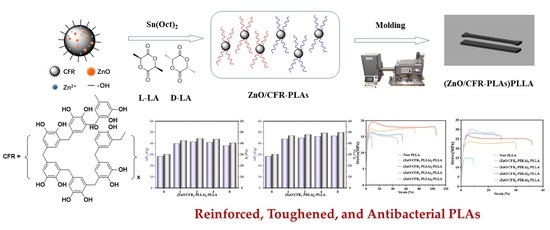
Figure 1. Schematic of the preparation processes of the CFR, CFR-PLA, and (Zn/CFR-PLA)/PLA composites.
Jcs 10 00075 g001
Scheme 1. Synthesis of the Zn/CFR-PLAs.
Jcs 10 00075 sch001
Figure 2. FTIR spectra of Zn/CFR-PLAs.
Jcs 10 00075 g002
Figure 3. Thermogravimetric analysis (TGA) curves of (a) Zn/CFR-PLLA and (b) Zn/CFR-PDLA and DTG curves of (c) Zn/CFR-PLLA and (d) Zn/CFR-PDLA.
Jcs 10 00075 g003
Figure 4. DSC curves of (a) Zn/CFR-PLLA and (b) Zn/CFR-PDLA.
Jcs 10 00075 g004
Figure 5. Yield strengths and elongations at break of (a) Zn/CFR-PLLA and (b) Zn/CFR-PDLA.
Jcs 10 00075 g005
Figure 6. DSC curves of (a) (Zn/CFR2-PLLA)y/PLLA and (b) (Zn/CFR2-PDLA)y/PLLA; enthalpy of crystallization and crystallinity of (c) (Zn/CFR2-PLLA)y/PLLA and (d) (Zn/CFR2-PDLA)y/PLLA; melting points and cold crystallization temperatures of (e) (Zn/CFR2-PLLA)y/PLLA and (f) (Zn/CFR2-PDLA)y/PLLA.
Jcs 10 00075 g006
Figure 7. Mechanical properties of (Zn/CFR2-PLLA)y/PLLA composites compared with neat PLLA. (a) Stress–strain curves. (b) Elongation at break and fracture work. (c) Yield strength and Young’s modulus. (d) Impact strength of the un-notched and notched samples.
Jcs 10 00075 g007
Figure 8. Mechanical properties of (Zn/CFR2-PDLA)y/PLLA composites compared with neat PLLA. (a) Stress–strain curves. (b) Elongation at break and fracture work. (c) Yield strength and Young’s modulus. (d) Impact strength of the un-notched and notched samples.
Jcs 10 00075 g008
Figure 9. SEM images of the fracture surfaces of the (Zn/CFR2-PLAs)/PLLA composites after impact tests. The contents of Zn/CFR2-PLLA in (Zn/CFR2-PLLA)y/PLLA are 0 wt% (a), 1 wt% (b), 2 wt% (c), 4 wt% (d), and 8 wt% (e). The contents of Zn/CFR2-PDLA in (Zn/CFR2-PDLA)y/PLLA are 0 wt% (f), 1 wt% (g), 2 wt% (h), 4 wt% (i), and 8 wt% (j).
Jcs 10 00075 g009
Figure 10. Photographs of test agar plates of blank samples and (Zn/CFR2-PLAs)/PLLA against bacteria. (a) Blank control for E. coli. (b) (Zn/CFR2-PLLA)2/PLLA composite against E. coli. (c) (Zn/CFR2-PDLA)2/PLLA composite against E. coli. (d) Blank control for S. aureus. (e) (Zn/CFR2-PLLA)2/PLLA composite against S. aureus. (f) (Zn/CFR2-PDLA)2/PLLA composite against S. aureus. The red (for E. coli) and yellow (for S. aureus) grid lines demarcate the inoculation zones with bacterial dilutions ranging from 105 to 102 CFU/mL. The clear inhibition zones surrounding the composite sample discs (b,c,e,f) compared to the blank controls (a,d) demonstrate the significant antibacterial activity of the fabricated composites.
Jcs 10 00075 g010
Figure 11. Schematic illustration of the fabrication process, morphology, and crystal structure of (Zn/CFR2-PLAs)/PLLA composite fibers. (a) Diagram of the micro-melt-spinning system and the subsequent hot-drawing process. (b) Scanning electron microscopy (SEM) images showing the surface morphology of neat PLLA, (Zn/CFR2-PLLA)/PLLA, and (Zn/CFR2-PDLA)/PLLA composite fibers.
Jcs 10 00075 g011
Table 1. Synthesis of Zn/CFR-PLA via ring-opening polymerization (ROP) a.
RunPolymerRatio of InitiatorMonomer bAvg. MW c (×104)T5% c
(°C)
Tmax d
(°C)
ΔHm d
(J/g)
Xc d
(%)
Yield Strength
(MPa)
Elongation at Break
(%)
1Zn/CFR1-PLLA1 wt%L-LA13.6292.2334.33638.516.5 ± 0.817.2 ± 0.8
2Zn/CFR2-PLLA2 wt%L-LA8.5297.4326.840.543.218.6 ± 0.920.2 ± 1.1
3Zn/CFR4-PLLA4 wt%L-LA3.4304.3324.539.842.512.5 ± 0.68.7 ± 0.4
4Zn/CFR8-PLLA8 wt%L-LA1.2287.5318.538.240.87.2 ± 0.44.2 ± 0.2
5Zn/CFR1-PDLA1 wt%D-LA14.5281.3300.435.738.114.5 ± 0.716.5 ± 0.8
6Zn/CFR2-PDLA2 wt%D-LA8.6284.4306.539.842.519.1 ± 1.021.6 ± 0.9
7Zn/CFR4-PDLA4 wt%D-LA5.0293.8312.237.940.511.8 ± 0.57.8 ± 0.4
8Zn/CFR8-PDLA8 wt%D-LA1.3297.3316.337.239.76.5 ± 0.33.5 ± 0.2
a Conditions: Initiator: Zn/CFR; catalyst: Sn(Oct)2, and the catalyst concentration was 0.5 wt% relative to the monomer; room temperature; 24 h. b M: Pure L-or D-lactide monomer obtained by recrystallization in ethyl acetate. c avg. MW: The average molecular weight was determined by 1H NMR spectroscopy in CDCl3. d TGA and DSC measurements were performed at a heating rate of 10 °C/min under N2, and the averages of three measurements are provided.
Table 2. Glass transition temperatures, cold crystallization temperatures, enthalpies of crystallization, melting points, and crystallinities of neat PLLA, (Zn/CFR2-PLLA)y/PLLA, and (Zn/CFR2-PDLA)y/PLLA a.
Sample bTg (°C)Tm (°C)Tcc (°C)ΔHc (J/g)Xc (%)
Neat PLLA60.0175131.628.330.2
(Zn/CFR2-PLLA)1/PLLA59.0172125.039.842.5
(Zn/CFR2-PLLA)2/PLLA59.5171122.341.544.3
(Zn/CFR2-PLLA)4/PLLA59.9170124.840.943.7
(Zn/CFR2-PLLA)8/PLLA59.8168123.337.940.4
(Zn/CFR2-PDLA)1/PLLA57.1217123.043.946.9
(Zn/CFR2-PDLA)2/PLLA56.1219122.744.847.8
(Zn/CFR2-PDLA)4/PLLA60.1220122.146.249.3
(Zn/CFR2-PDLA)8/PLLA61.5221121.446.749.8
a Measurement conditions: All data were obtained from the second heating scan of differential scanning calorimetry (DSC) at a heating rate of 10 °C/min in a nitrogen atmosphere. Definition of parameters: Tg, glass transition temperature; Tcc, cold crystallization temperature; Tm, melting temperature; ΔHc, enthalpy of cold crystallization; Xc, degree of crystallinity. b Sample designation: The number in the sample name (e.g., 1, 2, 4, or 8) represents the weight percentage of the (Zn/CFR2-PLA) modifier relative to the commercial PLLA matrix.
Table 3. Antibacterial test agar plates and determined antibacterial rates of (Zn/CFR2-PLAs)/PLLA a.
MaterialE. coli Inhibition RateS. aureus Inhibition Rate
Blank control sample0%0%
(Zn/CFR2-PLLA)2/PLLA98.3 ± 0.3%98.1 ± 0.4%
(Zn/CFR2-PDLA)2/PLLA99.1 ± 0.2%98.6 ± 0.3%
a Calculated via colony counting: Inhibition rate (%) = (1 − Nmaterial/Nblank) × 100%, where N = colony count at 105 CFU/mL.
Table 4. Mechanical properties of PLLA and (Zn/CFR2-PLAs)y/PLLA composite fibers.
SamplesTensile Strength (MPa)Tensile Modulus (GPa)Fracture Elongation (%)
Neat PLLA
(Zn/CFR2-PLLA)1/PLLA
(Zn/CFR2-PLLA)2/PLLA
67.7 ± 0.72.73 ± 0.114.9 ± 1.4
83.2 ± 1.23.15 ± 0.29.8 ± 0.6
105.4 ± 2.53.89 ± 0.37.2 ± 0.4
(Zn/CFR2-PLLA)4/PLLA
(Zn/CFR2-PLLA)8/PLLA
92.7 ± 1.84.02 ± 0.25.1 ± 0.3
85.1 ± 2.14.15 ± 0.33.9 ± 0.2
(Zn/CFR2-PDLA)1/PLLA
(Zn/CFR2-PDLA)2/PLLA
(Zn/CFR2-PDLA)4/PLLA
112.3 ± 2.74.33 ± 0.37.9 ± 0.6
128.6 ± 3.14.51 ± 0.46.5 ± 0.5
115.8 ± 2.54.68 ± 0.35.2 ± 0.4
(Zn/CFR2-PDLA)8/PLLA98.4 ± 2.34.85 ± 0.44.1 ± 0.3
Table 5. Moisture absorption and conductivity of PLLA and (Zn/CFR2-PLAs)2/PLLA composite fibers.
FiberMoisture Regain
(%)
Equilibrium Moisture Absorption Time (min)Capillary Effect Height (mm/10 min)
Neat PLLA
(Zn/CFR2-PLLA)2/PLLA
(Zn/CFR2-PDLA) 2/PLLA
0.49 ± 0.03125 ± 87.5 ± 0.6
0.73 ± 0.0578 ± 416.2 ± 1.3
0.58 ± 0.0492 ± 512.8 ± 1.0
Disclaimer/Publisher’s Note: The statements, opinions and data contained in all publications are solely those of the individual author(s) and contributor(s) and not of MDPI and/or the editor(s). MDPI and/or the editor(s) disclaim responsibility for any injury to people or property resulting from any ideas, methods, instructions or products referred to in the content.