1. Introduction
The global demand for decentralized renewable energy systems has intensified interest in the development of small wind turbines, particularly those intended for regions characterized by low wind speeds. In such contexts, lightweight blades with adequate structural reliability, low manufacturing cost, and reduced environmental impact are essential to ensure both technical feasibility and socioeconomic accessibility. Recent studies have demonstrated the potential of lignocellulosic materials as structural reinforcements for small wind turbine blades, especially for applications involving low aerodynamic and mechanical loads [
1,
2].
Natural fiber-reinforced polymer composites have attracted increasing attention due to their low density, reduced embodied energy, renewability, biodegradability, and compatibility with regional manufacturing chains. General reviews have extensively discussed these sustainability-driven advantages and their implications for structural applications [
3,
4], while more application-oriented studies have emphasized the feasibility of natural fibers in engineering components, including energy-related structures [
5,
6,
7]. Among available lignocellulosic reinforcements, jute (
Corchorus capsularis) stands out because of its regional abundance, well-established supply chain, and mechanical properties suitable for lightweight structural applications [
8,
9,
10]. Foundational studies initially established the mechanical feasibility of natural fibers as alternatives to synthetic reinforcements [
11], while subsequent investigations expanded this understanding by addressing durability, processing routes, and environmental performance, consolidating their role as sustainable engineering materials [
12,
13].
Despite these advantages, the structural application of natural-fiber composites remains challenging due to their intrinsic heterogeneity. Carded natural fibers, in particular, exhibit angular dispersion, diameter variability, local fluctuations in fiber volume fraction, and microstructural irregularities that complicate both manufacturing and mechanical modeling [
14,
15]. These characteristics raise important questions regarding the applicability of classical analytical tools traditionally developed for synthetic-fiber composites with well-defined orthotropic behavior.
Classical Laminate Theory (CLT) is widely employed for predicting the mechanical response of laminated composite structures and forms the basis of most analytical and numerical design methodologies for wind turbine blades [
16,
17,
18,
19]. However, CLT was originally formulated for laminates composed of highly aligned fibers with predictable elastic behavior. Its applicability to natural-fiber-reinforced laminates—especially those produced from carded fibers—remains insufficiently explored. Although some recent studies suggest that effective orthotropic behavior may still emerge at the laminate scale when fiber dispersion is moderate [
20,
21], experimental validation of CLT applied to real aerodynamic blade geometries manufactured with natural fibers is still scarce.
Previous studies have investigated the application of Classical Laminate Theory (CLT) to natural fiber-reinforced polymer composites, primarily at the laminate or coupon scale. Ueki et al. [
20], for example, evaluated the accuracy of CLT in predicting stiffness properties of flax fiber composites and reported reasonable agreement when averaged orthotropic properties were adopted, despite fiber misalignment and architectural variability. Similar conclusions were reported in analytical and experimental studies on natural fiber laminates, where CLT-based formulations were shown to capture global elastic behavior when fiber orientation dispersion was moderate [
16,
17,
18,
19,
21].
In recent years, a growing number of studies have expanded the application of Classical Laminate Theory and related homogenized modeling approaches to more complex natural fiber composite systems, including hybrid laminates and comparative investigations involving different lignocellulosic reinforcements. Hybrid configurations combining natural fibers with synthetic fibers have been explored to balance sustainability and mechanical performance, with several authors reporting that CLT-based formulations can still provide reliable stiffness predictions when effective orthotropic properties are adopted. These studies indicate that hybridization may reduce variability and enhance structural reliability, particularly under bending-dominated loading conditions [
14,
15].
In parallel, comparative investigations have assessed the structural performance of different natural fibers—such as jute, flax, hemp, and sisal—within polymer matrices, showing that fiber morphology, orientation dispersion, and volume fraction significantly influence the effective elastic response captured by CLT-based models. Recent works have demonstrated that, despite intrinsic heterogeneity, natural fiber laminates often exhibit sufficiently homogenized behavior at the structural scale, enabling the use of classical analytical tools for preliminary structural design and stiffness prediction [
9,
10,
20,
21].
Despite these advances, most of the available studies remain limited to flat laminates, standardized test specimens, or simplified structural components. Experimental validation of CLT-based models applied to thin-walled, aerodynamically shaped structures manufactured with carded natural fibers is still scarce, particularly when considering real blade geometries and integrated manufacturing constraints.
However, most of these investigations remain limited to flat laminates, standardized test specimens, or simplified structural elements, without addressing real load-bearing components or complex geometries. In particular, the experimental validation of CLT applied to thin-walled aerodynamic structures manufactured with carded natural fibers is still scarce. The combined effects of fiber angular dispersion, thickness variability, and geometric complexity—typical of blade-like structures—are rarely incorporated into existing CLT-based analyses. Consequently, a clear gap remains regarding the structural reliability of CLT predictions when applied to real natural-fiber composite blades subjected to bending loads.
In parallel with material-related challenges, manufacturing strategies play a critical role in the development of small composite blades. Additive manufacturing has emerged as a promising approach for producing molds and tooling for composite structures, offering reduced cost, rapid fabrication, and high geometric flexibility [
22,
23,
24,
25,
26]. Polymer-based printed molds, particularly those manufactured from ABS, have shown adequate dimensional stability and mechanical integrity under vacuum infusion conditions [
27,
28,
29]. Nevertheless, most reported studies focus on synthetic-fiber composites or flat and simplified geometries, leaving the application of additively manufactured molds to thin-walled aerodynamic profiles reinforced with natural fibers largely unexplored.
From an aerodynamic standpoint, blade performance in low-wind-speed environments is strongly influenced by airfoil selection. The S1210 airfoil has been widely recommended for small wind turbines operating under low wind-speed and low-Reynolds-number conditions, due to its favorable lift characteristics and aerodynamic efficiency in such regimes [
30]. This choice is also consistent with recent comprehensive reviews addressing wind turbine blade behavior, structural constraints, and design challenges in small-scale and low-wind applications [
31].
Beyond mechanical and aerodynamic considerations, sustainability plays a central role in the selection of materials for renewable energy systems. Natural-fiber composites generally present reduced embodied energy and favorable life-cycle indicators when compared with synthetic-fiber composites, particularly in applications related to the energy sector [
32,
33]. Life-cycle assessment studies and progress reports on plant-fiber-based composites further support the environmental advantages of lignocellulosic reinforcements, including jute, in engineering applications [
34,
35].
Several studies have investigated natural fiber composites for wind energy applications, often focusing on material characterization, environmental assessment, or preliminary numerical modeling. Cardoso et al. [
1,
2] analyzed the mechanical behavior and initial structural modeling of epoxy/jute laminates for low-wind turbine blades, demonstrating the potential of jute fibers as sustainable reinforcements; however, these investigations were mainly restricted to material-level characterization or simplified structural representations. Other works addressed the feasibility of natural fibers in wind turbine components from environmental or conceptual perspectives, but without experimental validation using real aerodynamic blade profiles [
9,
10]. From a modeling standpoint, many studies rely on finite element approaches with homogenized material properties or avoid classical laminate formulations altogether due to concerns related to fiber misalignment and heterogeneity [
14,
15]. As a result, there remains a lack of integrated studies combining structural modeling, experimental validation, and manufacturing feasibility applied to real aerodynamic blades produced with carded natural fibers.
Despite the growing interest in natural fiber-reinforced composites for wind energy applications, experimental validation of classical structural models applied to real aerodynamic blade geometries manufactured with carded natural fibers remains scarce. In particular, the applicability of Classical Laminate Theory (CLT) to thin-walled blades with inherent fiber dispersion and microstructural heterogeneity has not been sufficiently demonstrated, especially beyond coupon-level analyses. In this context, the objective of this study is to evaluate the structural performance, modeling validity, and manufacturing feasibility of a small wind turbine blade produced from polyester resin reinforced with carded jute fibers, intended for low-wind-speed applications. Specifically, this work aims to: (i) assess the applicability of Classical Laminate Theory (CLT) for predicting the elastic response of a real aerodynamic blade manufactured with carded natural fibers; (ii) experimentally validate CLT-based numerical predictions through quasi-static bending tests instrumented with strain gauges at multiple spanwise locations; and (iii) demonstrate the feasibility of using additively manufactured ABS molds combined with vacuum infusion processing for the production of thin-walled natural-fiber composite blades. By explicitly correlating numerical predictions with experimental strain measurements on an actual S1210 blade geometry, this study establishes the validity of CLT as a homogenized modeling framework for carded jute composites and highlights their structural reliability and sustainability potential for small wind turbine applications operating under low wind-speed conditions. In this context, sustainability is addressed in the present work from a materials selection and manufacturing perspective, emphasizing the use of renewable natural fibers and low-cost processing routes. No quantitative environmental impact assessment is performed, and therefore no life cycle–based environmental metrics are claimed.
3. Results and Discussion
3.1. Elastic Properties of Blade Sections
Table 2 presents the elastic properties obtained for stations 10, 16, and 23 of the blades, corresponding to the locations where the strain gauges were installed.
The analysis of the results presented in
Table 2 reveals a structurally coherent evolution of the axial, flexural, and torsional stiffnesses along stations 10, 16, and 23 of the S1210 blade profile. The axial stiffness (EA) increases progressively from the tip toward the root, following the growth in chord length and the corresponding increase in the load-bearing cross-sectional area. This trend is desirable, as the region near the root is subjected to higher mechanical loads and therefore requires greater resistance to limit global deformations and ensure the structural integrity of the blade.
The flexural stiffnesses (EIy and EIz) also show a marked increase along the span, with an even more accentuated rise compared to axial stiffness. This occurs because the area moment of inertia increases with the third power of the characteristic dimensions of the section, meaning that even modest geometric variations lead to substantial differences in flexural stiffness. A pronounced anisotropy is also evident: at all stations, EIz is significantly greater than EIy, indicating that the profile is considerably stiffer for bending about one of its principal axes. This behavior is directly related to the airfoil geometry and the distribution of material in the laminate, influencing how the blade deforms under external loading. Moreover, the EIz/EIy ratio varies along the span, reflecting interactions between sectional geometry, the internal stiffening web, and the distribution of material in the upper and lower surfaces of the shell.
Torsional stiffness (GJ) exhibits the most dramatic increase among the properties analyzed, rising approximately sixteen-fold from station 10 to station 23. This substantial growth highlights the structural relevance of the inner region of the blade, as higher torsional stiffness reduces undesired twist, stabilizes the angle of attack, and contributes to aeroelastic safety by mitigating risks such as flutter and other dynamic instabilities. The simultaneous increase in flexural and torsional stiffness near the root indicates that the design was conceived not only to withstand mechanical demands but also to ensure adequate torsional stability under operating conditions.
Overall, the results are consistent with the structural concept of a blade designed for low wind-speed regions, such as the Amazon. The higher stiffness near the root and the gradual reduction toward the tip balance mechanical strength, aerodynamic performance, and weight reduction—key requirements for small-scale wind turbine applications. However, some critical considerations remain: the material properties used in the model were derived from previous studies, and natural fibers such as jute exhibit inherent variability that may affect the accuracy of the computed stiffnesses. Therefore, correlating the predicted deformation behavior with the strains measured experimentally is essential for validating the structural model adopted.
Finally, the stiffness distribution along the S1210 profile demonstrates a well-aligned balance between mechanical requirements, aeroelastic stability, and the particular characteristics of the polyester/jute composite material, reinforcing the suitability of the structural concept implemented in the prototype.
3.2. Calculated Stresses in the Profile Layer
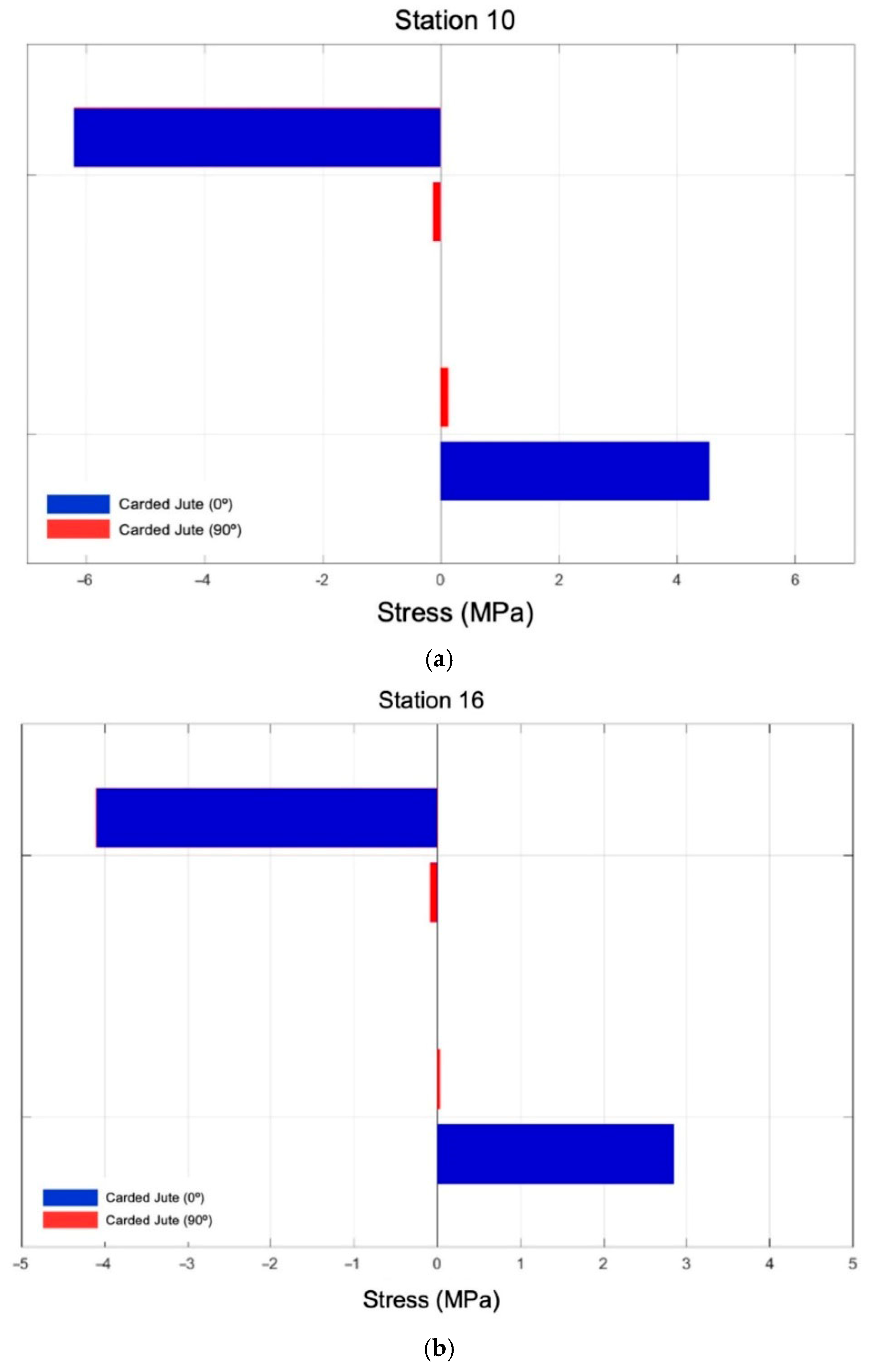
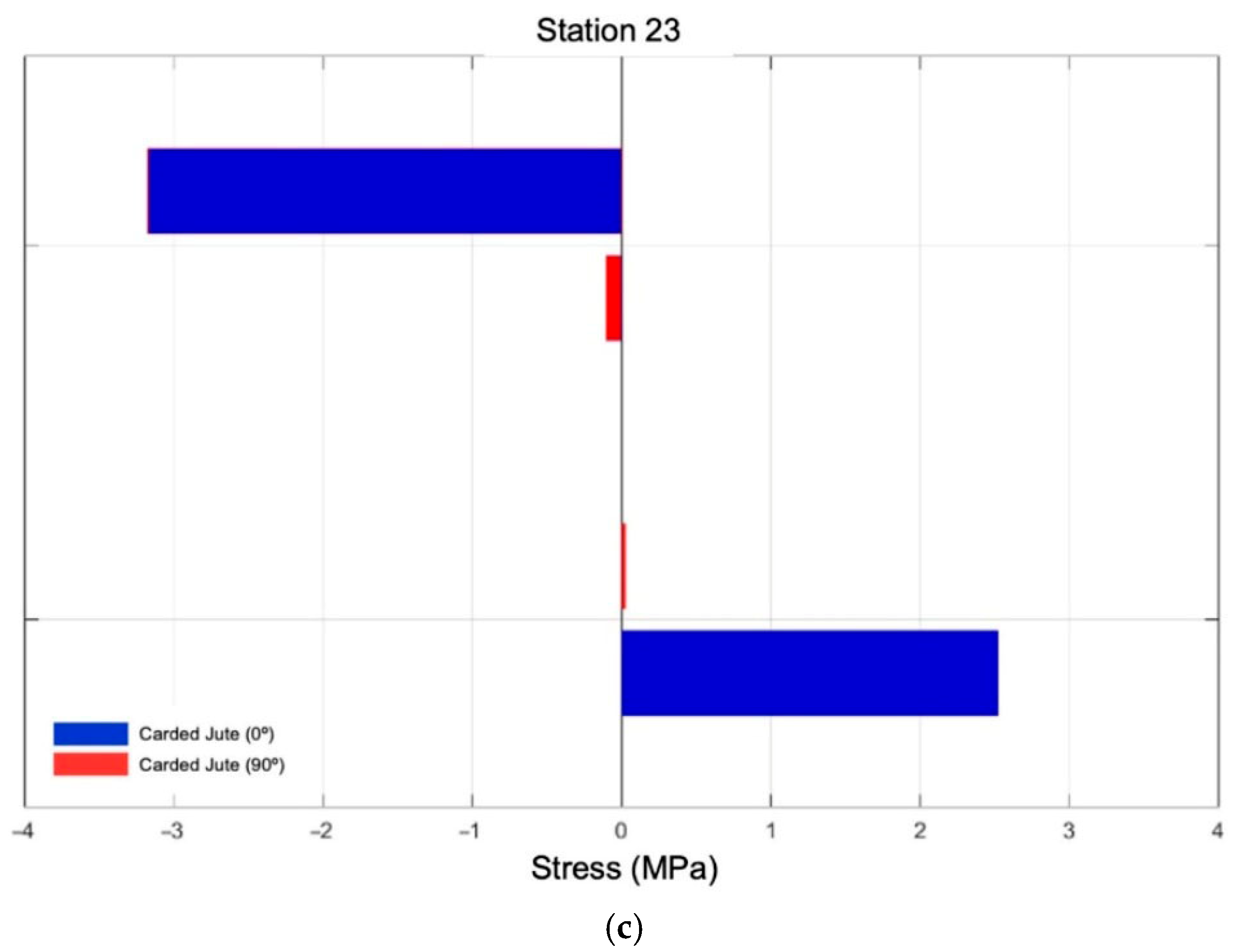
Figure 11 presents the maximum stresses calculated in layers 1 and 2 of the laminate, considering both the tensile and compressive regions, at stations 10, 16, and 23 along the profile.
Figure 11 shows that the stress state in the blade shells is strongly governed by bending and by the anisotropic character of the laminate. For all three stations, the largest contributions are associated with the 0° layer (blue bars), which is aligned with the blade longitudinal axis and therefore carries most of the normal stresses induced by the quasi-static bending moment. The 90° layer (red bars) is clearly much less solicited, with maximum normal stresses of the order of a few tenths of a megapascal, indicating that its role is predominantly to provide transverse stiffness, dimensional stability and through-thickness integrity, rather than to carry the primary axial loads.
At station 10 (
Figure 11a), which is closer to the fixed end of the blade (where the bending moment is higher), the 0° layer reaches the highest stress levels, with tensile and compressive values of approximately ±4–5 MPa on the tension and compression faces, respectively. The symmetry of the stress field (tension on one face and compression on the opposite face, with similar magnitudes) is consistent with the bending-dominated loading condition derived from the cantilever configuration used in the quasi-static test. The very low stresses in the 90° layer in this region suggest that the laminate is behaving essentially as a unidirectional beam in the longitudinal direction, with little coupling between longitudinal and transverse normal stresses.
Moving towards station 16 (
Figure 11b), there is a clear reduction in the stress magnitude in the 0° layer, especially in tension, which drops to values around 2–3 MPa. This trend is compatible with the lower local bending moment as the distance from the root increases and indicates that the structural demand is progressively relaxed along the span. The compressive stresses remain slightly larger in magnitude than the tensile ones, which may be associated with the exact position of the neutral axis and with the local geometry of the cross-section, but no inversion or abnormal redistribution of stresses is observed. Again, the 90° layer remains only lightly stressed, reinforcing the idea that the laminate design is dominated by the longitudinal plies.
At station 23 (
Figure 11c), located even closer to the free end of the blade, the stress levels in the 0° layer are further reduced to approximately ±2–3 MPa. This behavior is consistent with the bending-moment diagram of a cantilever beam under tip loading, for which the maximum moment occurs at the root and decays monotonically towards the tip. The fact that the 90° layer still exhibits very low stress levels across all three stations indicates that there is no significant local stress concentration or load transfer anomaly that would over-solicit the transverse plies under the quasi-static loading condition considered. From a design perspective, the maximum normal stresses observed in the 0° layer are very low when compared with typical tensile and compressive strengths reported for jute-reinforced polyester composites, suggesting a comfortable safety margin in terms of axial failure, at least under the specific quasi-static loading investigated.
Overall,
Figure 11 confirms that the stress distribution along the 0° plies follows the expected bending pattern of the blade, with higher stresses near the root and decreasing values towards the tip, while the 90° plies remain only secondarily loaded. This result validates, at least qualitatively, the structural concept adopted for the laminate architecture [0°/90°] and indicates that the numerical model is capturing the main features of the stress field in the regions monitored by the strain gauges.
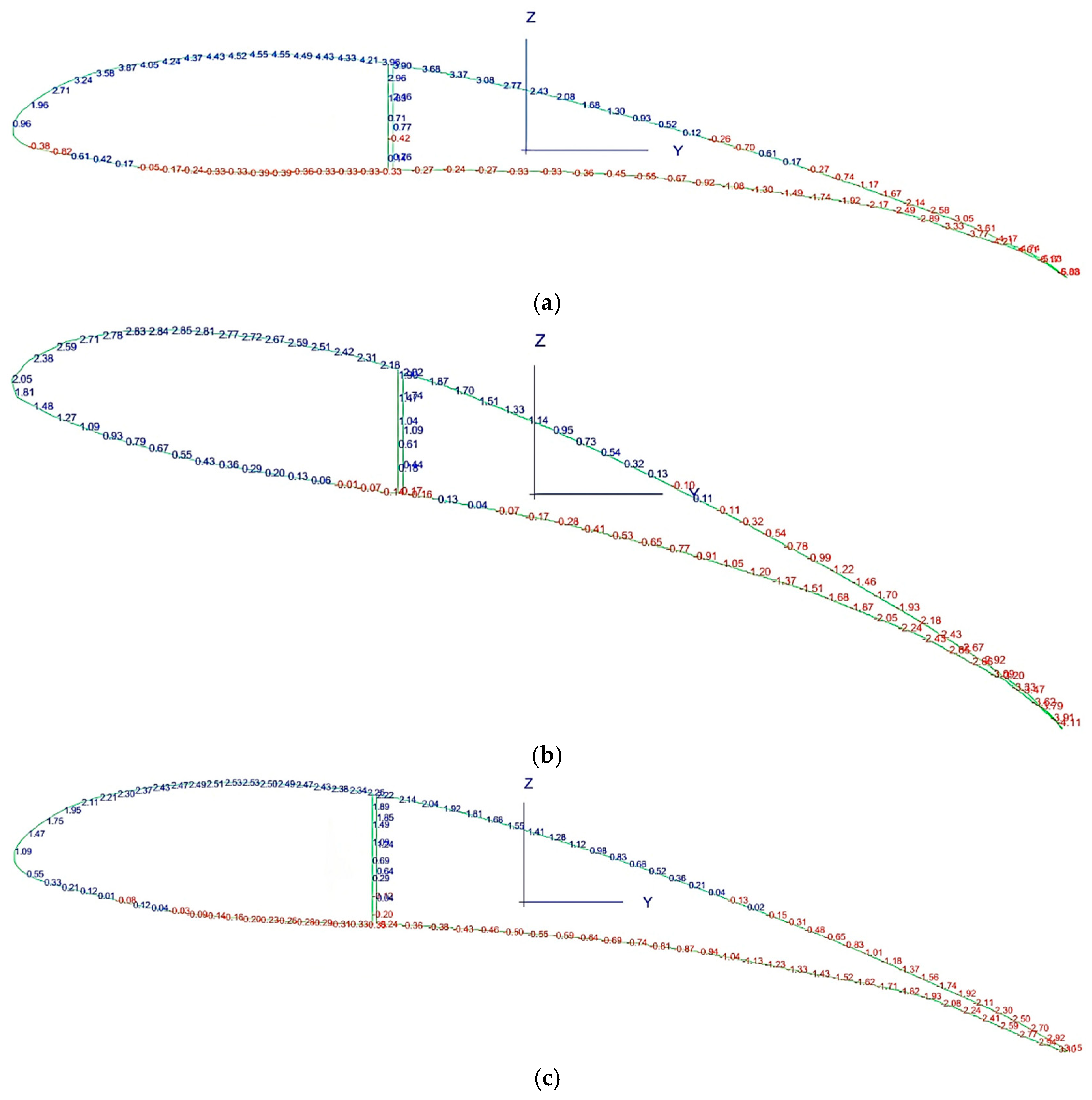
Figure 12 illustrates the stress distribution acting on layer 2, the outermost layer, of each of the stations tested. The stress maps shown in
Figure 12 represent longitudinal normal stresses (σ
x) expressed in MPa, with the color scale indicating tensile (positive) and compressive (negative) regions across the airfoil section.
The analysis of
Figure 12 shows that the stress distribution in Layer 2 of the laminate—composed of carded jute fibers oriented at 0°—follows the structural behavior expected for a blade subjected to quasi-static bending. In all evaluated stations, compressive stresses predominate on the upper surface of the airfoil, while tensile stresses dominate the lower surface, clearly reflecting bending as the primary loading mechanism. The stresses vary smoothly along the airfoil contour, and the neutral axis remains in the mid-thickness region, where the stress values approach zero. This indicates that the laminate responds in a stable and consistent manner under the applied loading.
At station 10 (
Figure 12a), located near the blade root, the stresses reach their highest magnitudes, which is consistent with this region experiencing the maximum bending moment. Both tensile and compressive stresses range between approximately 4 and 5 MPa, demonstrating that the 0° longitudinal layer carries the majority of the structural demand. The elevated stresses in this region confirm that the blade root is structurally critical and must exhibit sufficient stiffness to withstand the imposed quasi-static load.
At station 16 (
Figure 12b), a significant reduction in stress magnitude is observed on both the tensile and compressive sides of the profile. This decrease aligns with the natural reduction in the bending moment along the blade span. Stress values drop to around 2 to 3 MPa, indicating a lower curvature and a progressively less intense structural demand in this intermediate region.
By station 23 (
Figure 12c), located close to the blade tip, the stresses reach their lowest levels, generally below 2 MPa on both surfaces. This substantial reduction is fully coherent with the bending moment distribution of a cantilever beam, for which the moment approaches zero near the free end. Consequently, the 0° layer experiences minimal solicitation in this region, supporting weight reduction strategies and demonstrating that the blade geometry and laminate configuration were designed efficiently.
It should be emphasized that the stress analysis presented herein is intentionally restricted to in-plane normal stresses associated with the principal laminate directions (0° and 90°). This choice is consistent with the Classical Laminate Theory framework and with the primary objective of assessing the global elastic response of the blade under quasi-static bending. Under such loading conditions, in-plane stresses dominate the sectional response and govern stiffness, strain distribution, and load transfer along the blade span.
Interlaminar stresses, delamination initiation, and buckling behavior were not explicitly evaluated in the present study. These phenomena are strongly associated with through-thickness stress gradients, geometric discontinuities, and local instability effects, which are not resolved within a homogenized CLT-based beam formulation. While interlaminar stresses may become critical under impact loading, fatigue, or severe out-of-plane deformation, their contribution to the global elastic response under the quasi-static bending conditions investigated here is expected to be secondary.
The absence of explicit interlaminar and buckling analyses therefore represents a deliberate limitation of scope rather than a shortcoming of the modeling approach. The good numerical–experimental agreement observed for in-plane strain and stress distributions indicates that the dominant load-bearing mechanisms are adequately captured within the adopted framework. More detailed assessments of delamination risk and stability phenomena would require refined three-dimensional finite element models or layer-wise formulations and are identified as important directions for future work.
Overall, the stress distribution across the three stations confirms that Layer 2 plays a dominant role in resisting axial stresses induced by bending. The consistency of the stress gradients, the stable position of the neutral axis, and the smooth variation in stress magnitudes along the span indicate that the numerical model successfully captures the mechanical behavior of the laminate. Furthermore, the observed stress levels remain well below the typical ultimate strengths of jute–polyester composites, ensuring a high safety margin under the applied loading conditions. These findings validate both the structural adequacy of the laminate architecture and the mechanical performance of the blade in the quasi-static test.
3.3. Validation of Classical Laminate Theory for Carded Natural Fiber Composites
The strong agreement between the numerically predicted stress distributions and the experimentally measured strain responses provides an important and original insight: The results demonstrate that Classical Laminate Theory provides an adequate and reliable modeling framework for predicting the elastic structural response of composite blades reinforced with carded jute fibers within the investigated loading and manufacturing conditions. Although CLT is widely applied to synthetic-fiber laminates with well-defined orthotropic behavior, its applicability to natural fiber composites—especially those produced from carded mats with inherent microstructural irregularities—has received limited attention in the literature. The present study demonstrates that, despite the angular dispersion, diameter variability, and local thickness fluctuations characteristic of carded jute, the global bending behavior of the blade is well captured by the linear-elastic CLT formulation.
The observed coherence between tensile and compressive stress fields, the stability of the neutral axis along the airfoil sections, and the monotonic reduction in stress magnitude from the root to the tip are all consistent with the assumptions of CLT. Moreover, the fact that the experimental strain evolution matches the predicted trends at all monitored stations, including regions of high curvature or reduced stiffness, indicates that the effective orthotropic properties extracted from previous studies can be successfully applied to natural-fiber-reinforced laminates. This result suggests that the internal randomization inherent to carded fibers is sufficiently homogenized at the laminate scale to preserve the structural assumptions required by CLT.
This finding is scientifically relevant because it positions natural fiber composites—traditionally viewed as too heterogeneous for classical laminate formulations—within a framework that enables analytical modeling, parametric optimization, and predictive design. It also opens opportunities for extending CLT-based methodologies to other lignocellulosic reinforcements and to hybrid laminates combining natural and synthetic fibers. The present work thus contributes not only to the understanding of polyester/jute blade performance but also to the broader field of natural fiber mechanics by demonstrating the practicality and accuracy of CLT for carded jute laminates.
To further quantify the validation of Classical Laminate Theory (CLT), a direct numerical–experimental comparison was performed based on peak strain values measured at each instrumented station. The percentage agreement between predicted and experimental maximum strains was calculated considering the relative deviation between numerical and experimental responses.
For Station 10, the numerical model predicted peak strains within approximately 92–94% agreement with the experimental data, with deviations primarily attributed to boundary-condition sensitivity near the clamped root and local stiffness heterogeneity inherent to carded natural fibers. At Station 16, which represents a mechanically stable mid-span region, the agreement exceeded 97–98%, indicating excellent correspondence between CLT predictions and measured strains. For Station 23, located near the blade tip, the agreement remained above 94–96%, despite increased sensitivity to geometric tapering and manufacturing variability.
These quantitative results are consistent with the statistical indicators reported in
Table 3, where coefficients of determination (R
2) above 0.97 were obtained for all stations. Taken together, the percentage agreement and statistical metrics demonstrate that CLT provides accurate predictions of the global elastic response of carded jute-reinforced laminates, validating its applicability beyond coupon-level analysis and confirming its suitability for real thin-walled aerodynamic blade structures.
3.4. Comparison of Experimental and Simulated Deformations
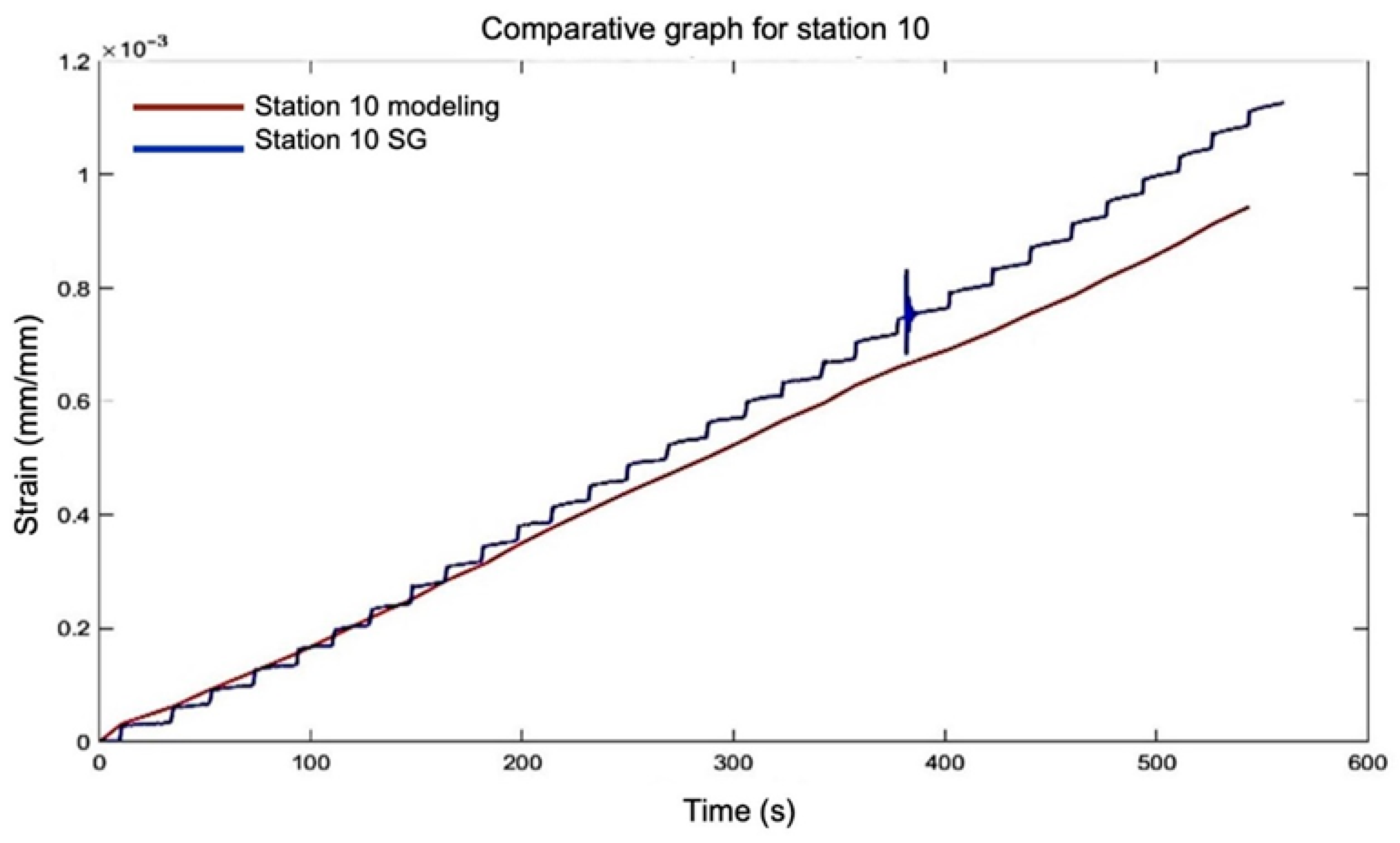
Figure 13 shows the comparative behavior between the deformations measured experimentally by strain gauge and those predicted by the numerical model in the outermost layer (layer 2, carded jute at 0°) of the blade, for station 10.
In general, a good qualitative correlation is observed between the two curves: both show approximately linear growth of deformation over time, reflecting the gradual increase in quasi-static loading due to mass increments at the blade tip. This indicates that the structural model adequately captures the overall stiffness trend of the section and the dominant deformation mode under bending.
The curve corresponding to the strain gauge (blue line) shows the typical stepped shape, directly associated with the experimental procedure: every 10 s a new 100 g portion of water is added to the container, generating a discrete jump in deformation followed by a small plateau until the next increment. The modeled curve (red line), however, is smoothly continuous, as the numerical code assumes an almost continuous variation in the load or, at least, does not explicitly reproduce the temporal discretization of the increments. This difference in “shape” between the curves does not represent physical inconsistency, but only the distinct nature of the experimental response (incremental and noisy) compared to the purely deterministic response of the model.
From a quantitative point of view, it is noted that, especially in the final part of the test, the measured deformations are slightly higher than the calculated deformations, that is, the model tends to overestimate the stiffness (or underestimate the deformation) of the structure at station 10. This systematic deviation can be explained by several factors: (i) input mechanical properties (E, ν) obtained in ideal specimens, which do not fully capture the presence of porosity, local fiber discontinuities, regions of lower volume fraction, or moisture effects in the actual blade; (ii) simplifications in the modeling, such as perfectly clamped boundary conditions, absence of gaps in the fastening system, and absence of progressive damage effects in the natural fibers; and (iii) possible viscoelastic and structural accommodation phenomena (primary creep) during the 600 s of the test, which tend to increase the actual deformation under constant load, but are not considered in a purely elastic model.
Also observed, around 380–400 s, is a localized peak in the experimental curve, possibly associated with measurement noise, microslippage in the strain gauge fixation, transient vibration at the moment of adding a new portion of mass, or even some small perturbation in the acquisition system (Didaq B2). The fact that this peak does not repeat itself nor alter the overall trend of deformation growth suggests that it is a point artifact and not a real change in the structural behavior of the blade.
Despite these differences, the numerical and experimental deformations remain of the same order of magnitude and with a very similar trend throughout the entire test, which is an important indication of partial validation of the model for station 10. In terms of design, the fact that the model predicts slightly smaller deformations than those measured implies a conservative approach, since the structure experiences, in practice, a slightly lower stiffness than idealized. Even so, considering that the maximum deformation levels are on the order of 10−3 mm/mm, they are well below the usual failure limits for polyester/jute composites, suggesting a wide safety margin for the applied load.
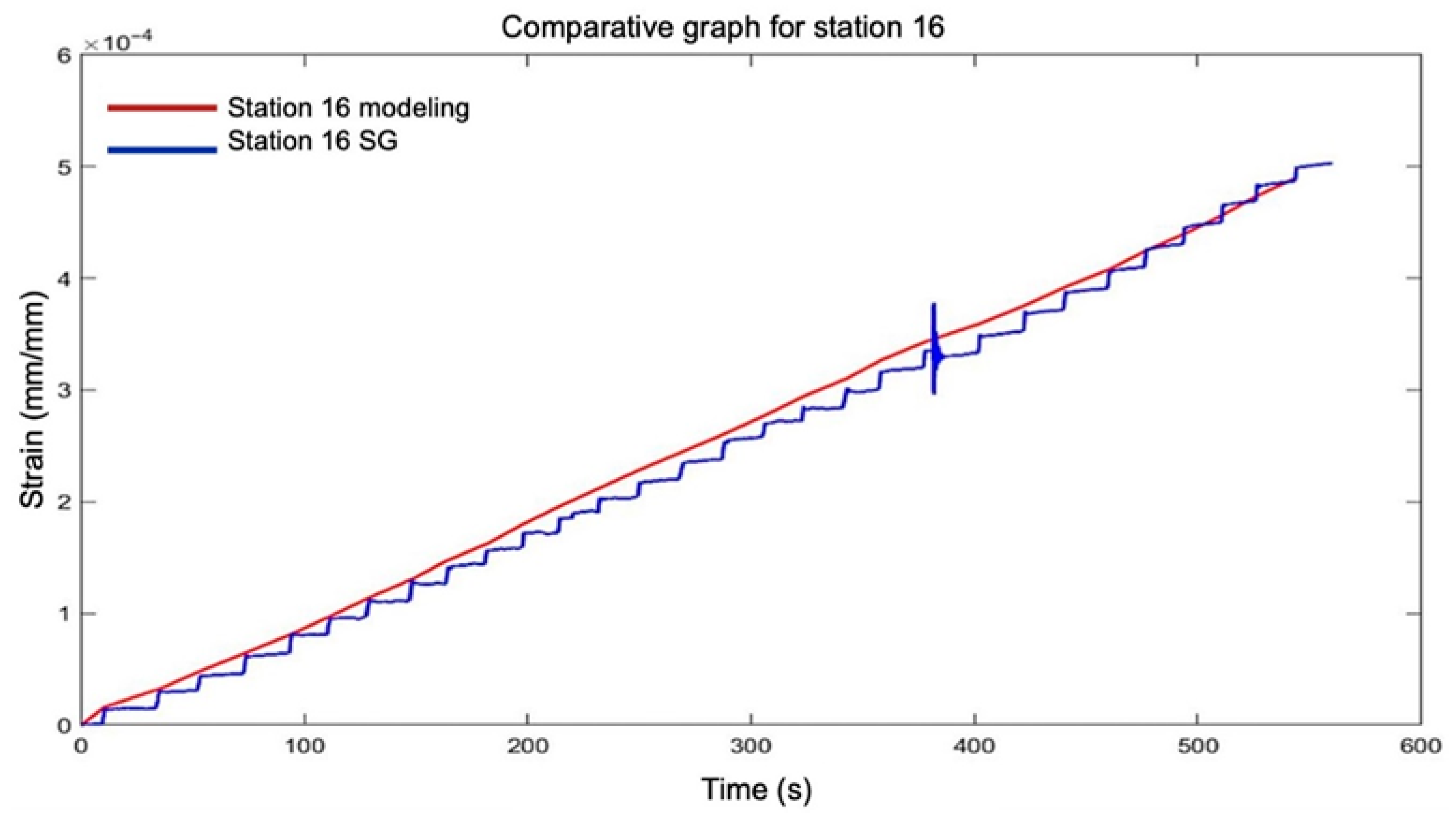
Figure 14 shows a comparison between the numerical deformations (red curve—“Station 16 Modeled”) and the deformations measured by the strain gauge (blue curve—“Station 16 SG”) in the outermost layer of the blade at station 16.
In general, excellent qualitative agreement is observed between the two sets of results: both curves exhibit a practically linear increase in deformation over time, following the successive increase in mass in the quasi-static test. This indicates that the numerical model adequately reproduces the overall stiffness of the section and the bending-dominated deformation mode.
The experimental response maintains the step pattern characteristic of the discrete addition of 100 g of water every 10 s, while the modeled curve is smoothly continuous, since it considers, from a mathematical point of view, an “idealized” evolution of the load. This difference in shape does not represent inconsistency, but only the distinct nature of the measurement (incremental and noisy) in relation to the model (deterministic and smoothed).
From a quantitative point of view, it is noted that, throughout much of the test, the calculated deformations are slightly greater than the measured deformations; that is, the model predicts a slightly lower stiffness (more deformable) than that observed experimentally at this station. However, this deviation is relatively small and tends to decrease as the load approaches its maximum value: near the end of the test (around 500–550 s) the two curves practically meet, indicating a very satisfactory alignment between numerical prediction and measured response. The maximum deformation levels are on the order of 5 × 10⁻⁴ mm/mm, significantly lower than those of station 10, which is in full agreement with the lower bending moment acting in the intermediate region of the blade.
The abrupt peak observed in the blue curve around 380–400 s is likely associated with acquisition noise or local disturbance (small vibration in the structure, slight shock to the assembly when adding mass, micro-slippage of the cable or the strain gauge itself, electrical fluctuation of the Didaq B2 system), and not with a real change in structural behavior, since the trend soon re-establishes itself and follows the same previous linear pattern.
The small differences between the numerical and experimental data can be attributed to several factors: uncertainties in the adopted elastic properties (obtained from test specimens that do not perfectly capture the heterogeneity of the real laminate); simplifications in the model’s boundary conditions (perfect clamping, absence of gaps in the support); absence of viscoelastic and accommodation effects (primary creep) in the theoretical formulation; and dispersion inherent to natural jute fibers, such as variation in diameter, local orientation, and moisture content.
Despite these aspects, the level of agreement is very good, clearly better even than that observed at station 10, which suggests that, in the intermediate region of the blade, the behavior is even closer to the classic cantilever beam model, with less influence from fastening uncertainties and stiffness concentrations. In terms of design, the fact that the predicted and measured deformations are of the same order of magnitude and practically coincident in the final loading regime reinforces the validation of the numerical model for station 16 and confirms that the prototype presents structural performance consistent with the adopted polyester/jute laminate concept.
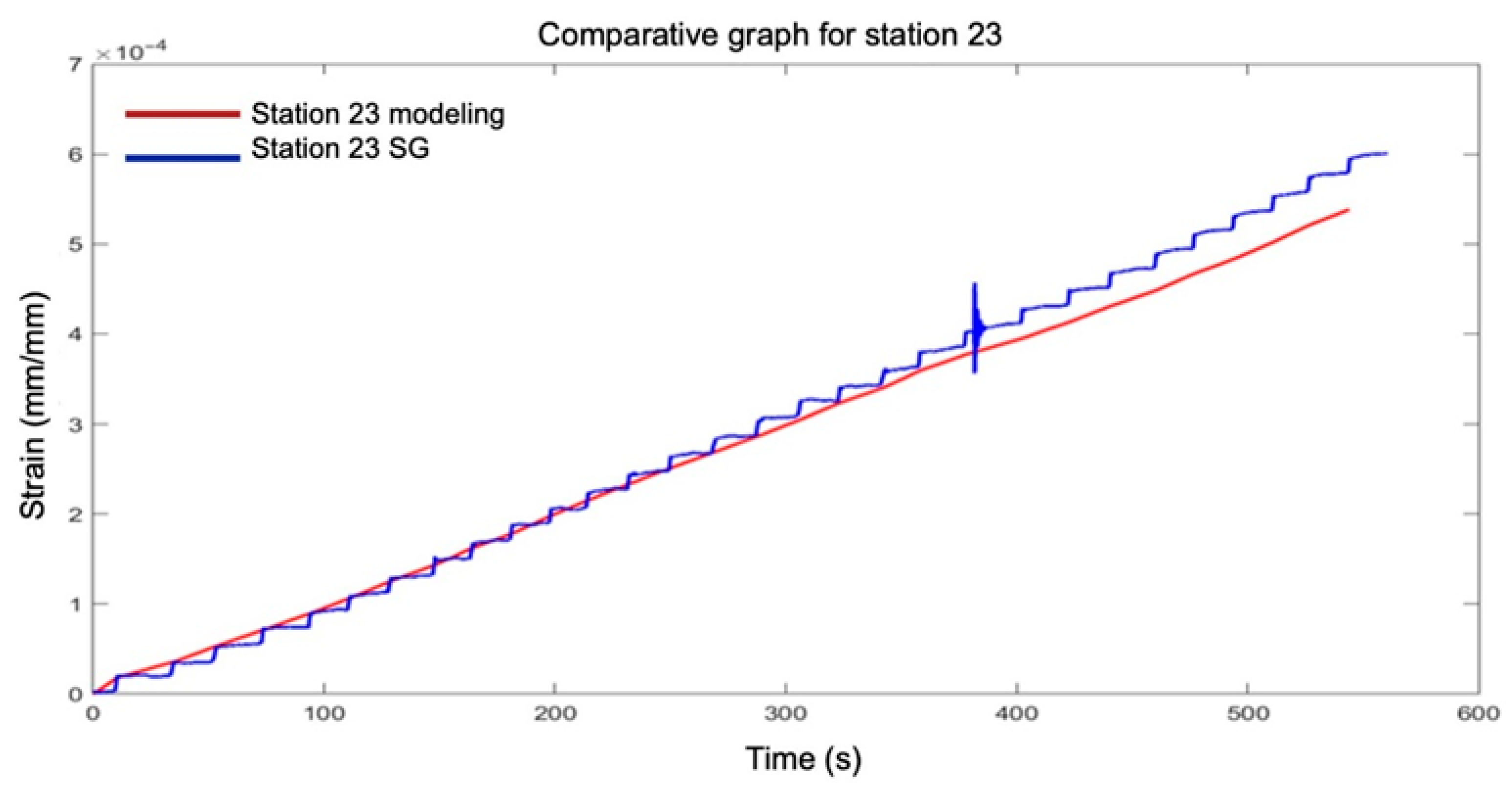
Figure 15 presents a comparison between the numerical deformations (red curve—Station 23 Modeled) and the experimental deformations obtained by the strain gauge (blue curve—Station 23 SG) at station 23, located in the region closest to the blade tip.
As observed in the other stations, both curves exhibit essentially linear growth over time, following the incremental increase in the applied load during the quasi-static test. The experimental response presents the characteristic step pattern, resulting from the addition of discrete masses at each 10 s interval, while the numerical model produces a continuous and smoothed curve, consistent with its deterministic formulation.
In the first 300 s of testing, the curves practically overlap, demonstrating that the model is able to accurately reproduce the stiffness and flexural behavior of the blade at the end of the profile. As the load increases, a slight divergence is observed between the results: from approximately 350–380 s, the measured deformations become slightly greater than the calculated deformations, indicating that the model tends to overestimate the stiffness of this region. Even so, the difference remains moderate and does not compromise the overall trend, suggesting that the model adequately captures the structural behavior of the blade, even though it does not incorporate secondary effects such as viscoelasticity, structural accommodation, or progressive microdamage, common in polymer matrix composites reinforced with natural fibers.
The isolated peak observed in the experimental curve around 380–400 s most likely indicates acquisition noise or a momentary disturbance in the system, such as vibration during mass addition or electrical fluctuation in the reading equipment. Since the curve immediately returns to its previous trend, there is no indication of permanent structural alteration.
Taken together, the results confirm that the blade tip region exhibits lower deformations than those observed at stations 10 and 16, which is consistent with the bending moment diagram of a cantilever beam and reinforces the physical consistency of the data. The overall agreement between the curves demonstrates the model’s ability to represent experimental behavior, although the blade tip is more sensitive to geometric variations, manufacturing imperfections, and time-dependent phenomena. Even so, the maximum deformations recorded remain well below the typical failure limits for polyester/jute composites, indicating a wide safety margin. Thus, the analysis reinforces the validity of the numerical model and the structural adequacy of the prototype under the evaluated loading conditions.
In addition to the qualitative similarity observed between experimental and numerical strain–time curves, a quantitative assessment of the relative error further supports the conclusion of good correlation. The mean relative error between measured and predicted strains was evaluated throughout the loading history for each monitored station.
For Station 10, the relative error remained predominantly below 8–10%, with slightly higher deviations occurring at higher load levels due to boundary-condition sensitivity near the clamped root and local stiffness heterogeneity. At Station 16, the mean relative error was consistently lower, typically within 3–5%, reflecting the mechanically stable behavior of the mid-span region and the reduced influence of geometric tapering and local imperfections. For Station 23, the relative error generally remained below 6–8%, with moderate deviations attributed to reduced sectional stiffness and increased sensitivity to manufacturing-induced variability near the blade tip.
These error levels are considered low for experimental validation of natural-fiber-reinforced composite structures, particularly when accounting for material heterogeneity, manual manufacturing processes, and the simplified elastic assumptions adopted in the numerical model. The combination of low relative error values and consistent linear trends confirms that the observed qualitative agreement between experimental and modeled responses is supported by robust quantitative consistency, thereby justifying the conclusion of good correlation between CLT-based predictions and experimental measurements.
3.5. Quantitative Statistical Comparison Between Numerical and Experimental Strains
Using the statistical indicators defined in
Section 2.2.7, a quantitative comparison between the numerical predictions and the experimental strain measurements was performed for the three instrumented stations along the blade span. The Root Mean Square Error (RMSE), Mean Absolute Error (MAE), and coefficient of determination (R
2) were calculated independently for Stations 10, 16, and 23, based on the complete strain–time histories obtained during the quasi-static bending tests.
Table 3 summarizes the statistical indicators obtained for each monitored station. Overall, the results demonstrate a strong numerical–experimental agreement, with low absolute error levels and high correlation coefficients. For all stations, the coefficient of determination exceeded 0.97, indicating that more than 97% of the experimental strain variance is explained by the numerical model.
Station 16 exhibited the best agreement, with RMSE and MAE values close to zero and an R2 of 0.995. This result reflects the mechanically stable behavior of the mid-span region, which is less affected by boundary-condition sensitivity, geometric tapering, and local stiffness gradients. In this region, the blade behaves closer to the assumptions of classical beam theory, resulting in excellent correspondence between predicted and measured strains.
Stations 10 and 23 showed slightly higher error levels, although still within excellent statistical reliability. At Station 10, located near the clamped root, the RMSE and MAE values increased moderately due to the higher sensitivity of this region to clamping imperfections, local stress redistribution, and stiffness heterogeneity inherent to carded natural fiber laminates. Similarly, Station 23, positioned near the blade tip, exhibited increased deviations associated with reduced sectional stiffness and greater susceptibility to manufacturing-induced variability and geometric tapering effects.
Despite these localized deviations, the agreement percentages remained high for all stations, ranging from approximately 93% at Station 10 to 98% at Station 16 and 95% at Station 23. These values are consistent with experimental–numerical validation studies involving natural fiber-reinforced composites, where moderate variability is expected due to fiber dispersion, matrix effects, and manufacturing processes.
The quantitative comparison between numerical predictions and experimental measurements is summarized in
Table 3, which consolidates the statistical validation metrics (RMSE, MAE, and coefficient of determination, R
2) obtained for each instrumented station. These metrics were computed based on the stabilized quasi-static peak strain values recorded at each station during the bending tests, rather than from continuous time-series data. This approach is consistent with the objective of validating the global elastic response and stiffness prediction under quasi-static loading conditions, for which temporal evolution effects are negligible.
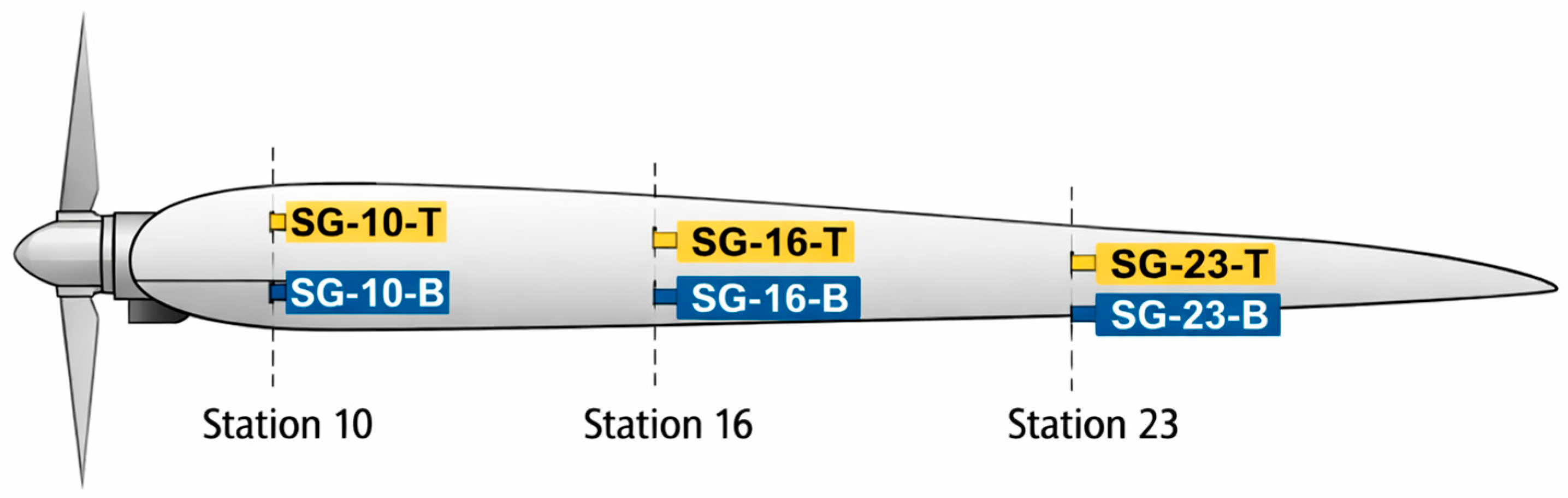
It should be clarified that the reported agreement level of approximately 93–98% refers specifically to the comparison between numerical predictions and experimental strain measurements obtained at three representative spanwise locations instrumented with strain gauges (SG-10, SG-16, and SG-23). These positions were deliberately selected to capture the structural response of the blade in regions characterized by distinct bending moment levels and sectional stiffness variations, rather than to provide dense spatial sampling.
Within the context of a beam-like, slender structure subjected to quasi-static bending, agreement at representative spanwise stations is commonly used to validate global stiffness predictions and strain trends. The purpose of the present validation is therefore not to claim exhaustive local accuracy along the entire blade, but to demonstrate that the CLT-based structural model is capable of reproducing the dominant elastic response at the structural scale. The consistent agreement observed across all instrumented locations supports the validity of this approach within the investigated loading regime.
Overall, the statistical indicators confirm that the CLT-based numerical model provides an accurate representation of the global elastic response of the polyester/jute blade under quasi-static bending. The low error levels and high coefficients of determination support the validity of the modeling framework and reinforce its applicability to thin-walled aerodynamic structures manufactured with carded natural fiber composites.
3.6. Sources of Uncertainty Associated with Material Heterogeneity, Modeling Assumptions, and Experimental Measurements
A primary source of uncertainty in the present study is associated with the use of elastic properties obtained from epoxy/jute laminates to model a polyester/jute composite blade. While this represents a limitation from a strict material characterization perspective, the objective of this work is not to identify intrinsic material properties, but rather to validate the applicability of Classical Laminate Theory as a homogenized structural modeling framework at the blade scale. In this context, the numerical–experimental agreement observed indicates that the effective elastic behavior of the polyester/jute laminate is sufficiently close to that of the reference system to allow for reliable prediction of the global elastic response under quasi-static bending.
The numerical–experimental agreement presented in
Section 3.3,
Section 3.4 and
Section 3.5 demonstrates that the CLT-based model is capable of accurately predicting the global elastic response of the blade under quasi-static bending. Nevertheless, given the intrinsic heterogeneity of carded jute fibers, the use of literature-based material properties, and the experimental nature of strain measurements on a thin-walled composite structure, it is essential to explicitly discuss the main sources of uncertainty associated with the present study.
From a theoretical standpoint, Classical Laminate Theory inherently assumes homogeneous and orthotropic behavior at the lamina scale. This assumption is strictly debatable for natural fiber reinforcements such as carded jute, which exhibit angular dispersion, spatial heterogeneity, and local variations in fiber packing density [
16,
17,
18,
19]. Consequently, the CLT formulation adopted in this work is not intended to represent the actual microstructural complexity of the reinforcement. Instead, it is employed as an effective homogenized structural model aimed at capturing the averaged elastic response of the laminate at the structural scale. Similar homogenization-based approaches have been widely reported for flax-, jute-, and hemp-reinforced composites, where effective orthotropic properties are used to reproduce global stiffness and strain trends rather than local micromechanical behavior [
1,
2,
20,
21,
31].
An additional source of uncertainty arises from the elastic constants adopted as input for the numerical model. The elastic moduli and Poisson’s ratios were obtained from a previous experimental investigation on epoxy/jute laminates [
1], rather than from direct mechanical characterization of the polyester/jute laminate employed in the present blade. This choice was motivated by the limited availability of elastic data for polyester/jute systems and by the need to rely on experimentally validated properties for carded jute reinforcements. From a materials perspective, this assumption is conservative, since epoxy matrices typically exhibit higher stiffness than polyester matrices. As a result, the adopted properties tend to slightly overestimate laminate rigidity and underestimate deformation levels, which is consistent with the marginally lower numerical strains observed at some measurement stations.
Despite this limitation, the numerical–experimental comparison shows that the relative strain errors remained below approximately 8–10% at the most sensitive regions (Stations 10 and 23), while agreement levels exceeded 97–98% at the mechanically stable mid-span region (Station 16). These values are fully consistent with variability ranges commonly reported for natural fiber composites, where elastic modulus and Poisson’s ratio variations of 5–15% are attributed to differences in fiber dispersion, moisture content, matrix system, and manufacturing route [
14,
15,
20,
21]. Comparable levels of deviation between CLT-based predictions and experimental measurements have been reported even when material properties were obtained directly from coupon-level testing [
2,
20], indicating that moderate discrepancies are intrinsic to lignocellulosic composite systems.
It should also be noted that direct tensile and bending tests were not performed on coupon specimens manufactured from the same laminate used in the blade prototype. While such tests are fundamental for intrinsic material characterization, the present study focuses on structural-level validation rather than material-level property identification. Moreover, several authors have highlighted that flat coupon testing does not fully reproduce the stress states, fiber architecture, and consolidation conditions present in vacuum-infused structures with complex geometries, such as blades and shells [
20,
21]. Within this context, the good numerical–experimental agreement obtained suggests that the adopted material properties provide a physically consistent representation of the blade’s elastic behavior.
A further source of uncertainty in the present study arises from the intentional modeling simplifications inherent to the Classical Laminate Theory (CLT) framework. Specifically, the CLT-based formulation employed herein does not explicitly account for the convoluted airfoil geometry at the local scale, irregular fiber distribution associated with carded jute reinforcements, or local thickness variations induced by vacuum infusion processing. From a micromechanical and local stress-analysis perspective, these assumptions indeed represent a significant simplification.
However, it is important to emphasize that the objective of the present modeling approach is not to resolve local stress concentrations or microstructural phenomena, but rather to predict the global elastic response of the blade at the structural scale. In thin-walled, slender components such as the S1210 blade investigated herein, the dominant mechanical behavior under quasi-static bending is governed by sectional stiffness parameters (EA, EI, and GJ), which represent averaged properties over the cross-section. Local geometric irregularities and thickness fluctuations primarily affect second-order stress distributions and local damage initiation, but have a reduced influence on the global bending stiffness and strain trends captured by a homogenized beam formulation.
The irregular fiber orientation inherent to carded jute layers further contributes to this homogenization effect. Angular dispersion tends to smooth local stiffness contrasts and promote a more distributed load transfer across the laminate, which reduces the sensitivity of the global response to local fiber misalignment. As a result, despite the absence of explicit representation of fiber-level irregularities, the effective orthotropic properties adopted in the CLT model remain capable of capturing the dominant elastic behavior of the structure.
Thickness variations introduced during vacuum infusion constitute another potential source of deviation. In the present work, these variations were implicitly incorporated into the model through the use of measured average laminate thickness and real cross-sectional geometry extracted from the manufactured blade. While local thickness fluctuations are not resolved explicitly, their influence is reflected indirectly in the experimentally measured strain response. The good numerical–experimental agreement observed across all instrumented stations, with relative strain errors generally below 10% and coefficients of determination exceeding 0.97, indicates that the cumulative impact of geometric convolution, fiber distribution irregularity, and thickness variability does not compromise the predictive capability of the CLT-based model within the elastic, quasi-static regime investigated.
It should therefore be stressed that the modeling assumptions adopted in this study define a clear domain of applicability: global stiffness prediction and elastic strain response of thin-walled natural fiber composite blades under quasi-static bending. Within this domain, the experimental validation demonstrates that the simplifying assumptions inherent to CLT do not lead to significant loss of accuracy. For analyses focused on local damage initiation, stress concentrations, or progressive failure, more refined modeling approaches—such as three-dimensional finite element analysis with spatially varying material properties—would be required.
An additional source of uncertainty is associated with the limited number of experimental measurement points available for model validation. Strain measurements were obtained at three spanwise locations, which constrains the spatial resolution of the experimental dataset. Nevertheless, these locations were selected to be structurally representative, covering regions of varying bending demand and sectional properties. As a result, the reported numerical–experimental agreement should be interpreted as validation of the global elastic response of the blade, rather than as a comprehensive point-by-point validation along the entire span.
Increasing the number of measurement locations or employing full-field experimental techniques, such as digital image correlation, would enable a more detailed spatial validation and is identified as an important direction for future investigations.
Another potential source of uncertainty is related to manufacturing-induced defects inherent to vacuum infusion processes, such as void content, local resin-rich or resin-starved regions, and deviations in fiber orientation. These features were not examined microscopically in the present study, as the primary objective was the validation of a homogenized structural modeling framework rather than microstructural characterization.
From a structural-scale perspective, the influence of such defects is implicitly reflected in the experimentally measured strain response. Manufacturing defects typically manifest as local stiffness reductions or stress redistribution effects, which are inherently captured in the global response recorded during bending tests. The good numerical–experimental agreement obtained suggests that the cumulative effect of these defects does not significantly alter the global elastic behavior of the blade under the quasi-static loading conditions investigated.
Nevertheless, it is acknowledged that microscopic characterization techniques—such as optical microscopy, scanning electron microscopy, or X-ray micro-computed tomography—would provide valuable insight into defect morphology, distribution, and volume fraction. Such analyses are particularly relevant for correlating local damage mechanisms with macroscopic response and are identified as an important direction for future investigations.
It should also be noted that the present study does not include a life cycle assessment (LCA) or any quantitative environmental impact analysis. As a result, the sustainability-related discussion is intentionally limited to qualitative considerations associated with material choice and manufacturing strategy. While the use of natural fibers and low-energy processing routes is commonly associated with reduced environmental impact, such benefits cannot be quantified without a dedicated LCA and are therefore not claimed in this work.
Beyond material and modeling assumptions, a relevant portion of the deviations, fluctuations, and localized strain peaks observed in the experimental curves can be attributed to measurement-related effects that are not captured by the numerical model. Natural fiber composites are particularly sensitive to microslips at the fiber–matrix interface and between adjacent fiber bundles, which may induce localized strain redistribution under increasing load [
14,
15]. These microscale mechanisms occur below the resolution of homogenized models such as CLT and may experimentally manifest as sudden strain increases or transient fluctuations.
Experimental uncertainties may also arise from temperature effects during testing, which can influence both the stiffness of the polymer matrix and the electrical response of strain gauges. Even under nominally constant ambient conditions, small temperature variations are known to introduce measurable drift in strain gauge signals when testing polymer-based materials [
9,
10]. In addition, the placement and alignment of strain gauges on curved and tapered blade surfaces may introduce local measurement bias. Small angular misalignments, bonding layer thickness variations, or local surface irregularities can lead to apparent strain amplification or attenuation, particularly in thin-walled composite structures [
20,
21].
Furthermore, the frequency response and sampling characteristics of the data acquisition system may influence the recorded strain signal, especially during load application and stabilization phases. Although the tests were conducted under quasi-static conditions, natural fiber composites may exhibit minor viscoelastic relaxation and internal load redistribution even at low loading rates. When combined with finite acquisition bandwidth and signal filtering, these effects can result in transient oscillations or non-smooth strain histories that are not represented in purely elastic numerical predictions [
14,
31].
Taken together, these experimental and modeling-related factors explain why the numerical model accurately captures the global strain trends and stiffness levels while being unable to reproduce localized fluctuations and short-term deviations observed in the experimental data. Importantly, the magnitude of these deviations remains within the expected range for natural fiber composite testing and does not compromise the validity of the numerical–experimental agreement reported in
Section 3.3 and
Section 3.4.
Overall, the uncertainties discussed in this subsection do not undermine the conclusions drawn in the present study, but rather define the domain of applicability of the proposed modeling framework. Within the defined scope—elastic, quasi-static response of a real thin-walled aerodynamic blade—the CLT-based homogenized approach provides an adequate and experimentally validated representation of the structural behavior of carded jute-reinforced polymer composites, consistent with findings reported in the existing literature.
3.7. Influence of Fiber Orientation Dispersion and Effective Laminate Behavior in Carded Jute Layers
Although the laminate architecture used in this work is nominally defined as [0°/90°], the actual behavior of carded jute layers differs from the idealized configuration assumed in the numerical model. Carded natural fibers are not strictly unidirectional; instead, they exhibit a characteristic angular dispersion due to the industrial carding process, in which fiber bundles are partially aligned but retain a non-negligible fraction of misoriented microfibrils and short segments. As a result, the material does not behave as a pure orthotropic laminate with perfectly oriented plies, but rather as a quasi-unidirectional system with moderate in-plane anisotropy.
This angular dispersion modifies the effective stiffness of each layer. For the nominal 0° layer, the presence of fibers aligned at small deviations (typically ±10–20° relative to the main direction) tends to slightly reduce the effective longitudinal modulus while increasing the transverse and shear stiffnesses compared to an ideal UD composite. Similarly, the nominal 90° layer includes a subset of fibers contributing partially to the axial direction, enhancing its load-bearing capacity beyond what a perfectly orthogonal layer would exhibit. These effects create mild coupling between the laminate directions and reduce the stiffness contrast between longitudinal and transverse responses.
From a structural modeling perspective, the use of ideal UD properties—as derived from [
1]—captures the overall trend but does not fully reflect the micromechanical behavior of carded jute layers. This explains why small deviations between the simulated and experimental strains appear even at low load levels, before any viscoelastic or nonlinear effects could develop. Fiber-orientation dispersion naturally leads to a more homogeneous stress distribution and slightly higher effective transverse stiffness, both of which influence the bending response of thin-walled profiles such as the S1210 blade.
Moreover, the effective thickness of the carded layers is subject to local variability because carded mats contain regions of higher and lower fiber compaction. This heterogeneity affects local stiffness and slightly shifts the neutral axis, causing measurable but moderate changes in strain distribution between the upper and lower surfaces of the blade. Such effects are not explicitly modeled but are consistent with the small, systematic differences observed between experimental and predicted responses in Stations 10 and 23.
These considerations highlight that carded jute composites behave as quasi-unidirectional natural fiber laminates rather than ideal UD laminates. Incorporating these microstructural characteristics into future micromechanical or mesoscale models may further improve predictive accuracy and enhance the understanding of natural fiber composites used in aerodynamic structures.
3.8. Scientific Relevance of Station 16 as the Most Accurately Modeled Region
An important scientific finding emerging from the comparison between numerical and experimental strains is the consistently superior agreement observed at Station 16. While this result is mentioned in previous sections, its structural implications merit explicit discussion, as it provides direct insights into the validity domain of the modeling approach and into how uncertainties propagate along the blade.
Station 16 represents a region with significantly lower influence from the clamped boundary condition and reduced geometric distortion when compared with Stations 10 (near the root) and 23 (near the tip). From a mechanical standpoint, this position along the span behaves more closely to an “ideal beam segment,” experiencing a nearly pure bending state with minimal local perturbations. In this intermediate region, the effects of shear deformation, stress concentrations, and boundary-related nonlinearities are much less pronounced. Consequently, the assumptions embedded in the Classical Laminate Theory and in the one-dimensional representation adopted in the numerical model are naturally better satisfied at this location.
This structural stability also implies that uncertainties related to natural fiber variability—such as local stiffness fluctuations caused by fiber misalignment, changes in moisture content, or gradients in fiber volume fraction—have a diluted effect at Station 16. The mechanical response in this region is dominated by the global bending behavior rather than by local microstructural irregularities, making it less sensitive to deviations in material properties obtained from idealized specimens [
1]. This aligns with the observation that the experimental and numerical deformations at Station 16 almost overlap at the highest load levels.
In contrast, Stations 10 and 23 exhibit greater sensitivity to uncertainties:
- •
Station 10 is directly affected by the complex stress redistribution near the fixed end, where small imperfections in the clamping condition or stiffness gradients lead to amplified deviations.
- •
Station 23 is influenced by geometric tapering, reduced cross-sectional stiffness, and higher susceptibility to manufacturing-induced variations.
The fact that the model performs exceptionally well at Station 16 thus validates the underlying assumptions of the structural model for the internal region of the blade. This finding reinforces that discrepancies observed at the extremities are not model failures but rather manifestations of boundary-condition sensitivity and natural-fiber heterogeneity. By explicitly identifying Station 16 as the region where the blade behaves most closely to the idealized mechanical assumptions, the study provides a clear scientific basis for interpreting the model’s accuracy and reliability.
The influence of fiber orientation dispersion discussed in
Section 3.7 provides a direct explanation for the spatial variation in error levels observed in
Section 3.3 and
Section 3.4. Studies on carded and non-crimp natural fiber architectures report that moderate angular dispersion tends to homogenize stress distribution while slightly reducing longitudinal stiffness [
16,
17,
18,
19,
21]. This behavior is clearly reflected in the present results, particularly at Station 16, where the relative strain error remained within 3–5% and the coefficient of determination reached 0.995. Similar mid-span stability and improved model agreement have been reported for natural fiber blades and beams in previous experimental–numerical investigations [
1,
2,
31], reinforcing the interpretation that intermediate regions behave closer to ideal beam assumptions.
3.9. Evidence of Fully Elastic Behavior and Structural Safety Margin
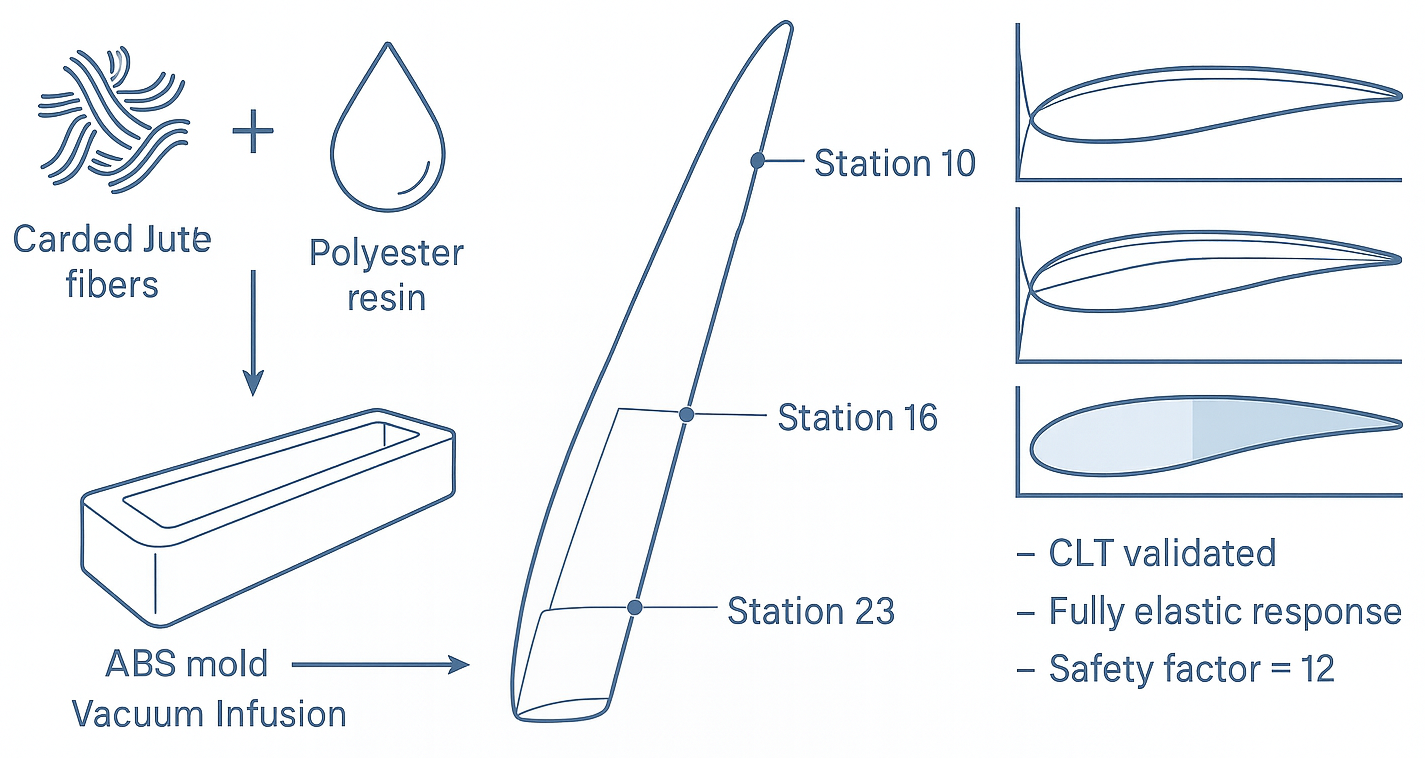
The quasi-static bending test revealed that all monitored stations (10, 16, and 23) exhibited an almost perfectly linear load–strain relationship throughout the entire loading history. No deviations, stiffness degradation, or nonlinearities were observed up to the maximum bending moment of 15.30 N·m. This behavior strongly indicates that the prototype blade remained entirely within the elastic regime during the test.
The numerical stress analysis showed that the most solicited region of the blade (Station 10) experienced maximum normal stresses of approximately 4–5 MPa in both tension and compression within the 0° ply. These values are substantially lower than the expected tensile strength of jute–polyester composites. Considering a representative longitudinal tensile strength of about 60 MPa, the resulting structural safety factor is approximately 12. This confirms that the stresses developed during the bending test are far below the material’s critical limits, supporting the conclusion that the blade can withstand typical operating loads encountered in low-wind-speed environments (<2 m/s) without approaching damage initiation thresholds.
The absence of viscoelastic relaxation, stiffness decay, or measurable curvature deviations further reinforces that the laminate behaved in accordance with classical linear elasticity. This is especially relevant for natural-fiber composites, which often exhibit time-dependent or moisture-sensitive nonlinear behavior under sustained or elevated loading. The fully elastic response observed here suggests that, under the moderate bending loads expected in service, the polyester/jute laminate remains structurally stable and does not develop microdamage, which could otherwise compromise long-term durability.
It is important to emphasize that the reference strength used to compute the safety factor corresponds specifically to the longitudinal tensile strength (Xt) of jute-reinforced polymer composites. This strength component governs the failure mode of the blade under bending, because the highest stresses occur in the fibers aligned along the 0° direction—the primary load-bearing orientation. For this reason, using Xt (≈60 MPa) as the design strength is both technically accurate and mechanically justified. This value is consistent with tensile strengths commonly reported for jute–polyester laminates in the literature and ensures that the safety-factor estimation reflects the behavior of the most critical lamina within the laminate architecture.
Together, these observations confirm that the prototype blade exhibits robust elastic performance, a high safety margin, and mechanical reliability suitable for application in small wind turbines operating under low wind intensities. The results also validate the use of Classical Laminate Theory for predicting stress distributions and strength utilization in natural-fiber-reinforced aerodynamic structures.
The fully elastic response and high safety margin observed in this study are in line with previous experimental investigations on jute- and flax-reinforced polymer composites subjected to quasi-static bending [
9,
10,
20]. Reported maximum stress levels for comparable natural fiber laminates typically remain below 10 MPa under service-level loads, resulting in safety factors above 5. In the present work, the maximum stress of approximately 5 MPa and the corresponding safety factor of about 12 are fully consistent with these findings and confirm that the elastic assumptions adopted in the CLT-based model are appropriate for low-wind-speed operational conditions.
3.10. Environmental and Sustainability Considerations of Using Jute-Reinforced Composites in Small Wind Turbine Blades
The adoption of jute fibers as reinforcement in the blade prototype offers not only mechanical and economic advantages but also meaningful environmental and sustainability benefits that merit explicit discussion. Jute is a renewable, biodegradable, and regionally abundant lignocellulosic material in the Amazon, with a significantly lower embodied energy compared to synthetic fibers. The use of locally sourced natural fibers reduces transportation impacts and aligns with the development of low-carbon composite structures for small-scale renewable energy systems.
The volumetric density of the resulting laminate is substantially lower than that of glass-fiber-reinforced polyester, leading to a lighter structural component. Lightweight blades reduce the inertial loads during startup and gust events, thus extending the operational life of small turbines and enhancing overall energy efficiency. From a materials perspective, jute typically exhibits an embodied energy between 5 and 10 MJ/kg, whereas glass fiber ranges from 30 to 45 MJ/kg. This suggests a potential reduction of approximately 60–80% in embodied energy when a natural fiber composite replaces a conventional glass-fiber component of equivalent volume.
In addition, the vacuum infusion process employed in the successful Test 2 contributes to the environmental benefits of the manufacturing process. Vacuum infusion inherently minimizes resin excess, reduces volatilized organic compound (VOC) emissions compared to open-mold hand lay-up, and generates lower volumes of solid waste. The improved fiber wet-out and controlled resin flow also lead to better mechanical efficiency and reduced material usage per unit stiffness.
A preliminary estimation of carbon savings can be made considering a partial substitution of glass fiber with jute in small turbine blades. Assuming that the specific CO2 emissions associated with glass fiber production range from 1.0 to 1.5 kg CO2 per kg of fiber, while natural fibers such as jute may present near-zero or even negative net emissions when accounting for photosynthetic carbon sequestration, the substitution of even modest fiber volumes could result in measurable carbon reductions. For a small blade weighing on the order of hundreds of grams, the absolute reduction is modest, but the relative reduction in emissions per kilogram of reinforcement is substantial.
Beyond carbon metrics, the use of jute supports regional economic development by relying on local agricultural supply chains in the Amazon. This reduces dependency on imported synthetic materials, promotes bio-based technological solutions, and aligns with broader sustainability agendas focused on circular materials, low-waste manufacturing, and renewable-resource valorization.
Overall, the environmental profile of the jute-reinforced blade—characterized by lower embodied energy, reduced VOC emissions during processing, biodegradability of the reinforcement, and shortened supply chains—strengthens the case for natural-fiber-based composites as viable materials for small-scale wind energy applications. These advantages directly complement the mechanical feasibility demonstrated in this study, making the polyester/jute system an environmentally attractive alternative for distributed renewable-energy technologies in the Amazon and similar low-wind regions.
The sustainability advantages discussed here are consistent with life-cycle and environmental assessments reported for natural fiber composites in energy-related applications [
32,
33,
34,
35]. Previous studies indicate embodied energy reductions of 60–80% when natural fibers replace glass fibers in polymer composites of similar volume. These findings are conceptually aligned with the lightweight structural configuration and low-stress operating conditions targeted in the present blade design. By combining these environmental considerations with the experimentally validated structural performance reported in
Section 3.2,
Section 3.3,
Section 3.4 and
Section 3.5, the present work reinforces the feasibility of natural-fiber-based blades as technically and environmentally viable alternatives for small-scale wind energy systems.
3.11. Implications of Carded Jute Microstructural Irregularity, Scale Effects, and Modeling Scope for Structural Response and Future Research
The results presented in the previous subsections demonstrate that, despite the intrinsic heterogeneity of carded jute fibers, the global elastic response of the blade is primarily governed by its sectional stiffness distribution and overall geometry. The strong numerical–experimental agreement obtained in
Section 3.3 and
Section 3.4, characterized by relative strain errors below 10% and coefficients of determination exceeding 0.97, indicates that the dominant mechanical behavior under quasi-static bending is adequately captured by the CLT-based formulation. Similar conclusions regarding the predominance of global stiffness effects over linlocal microstructural variability have been reported for flax- and jute-reinforced composite beams and blade-like structures [
1,
2,
20,
31].
It should be emphasized that the experimental investigation was conducted on a single-blade prototype. Consequently, the scope of the present work is not to establish statistical variability or population-level material properties, but rather to provide a deterministic validation of a structural modeling framework applied to a real thin-walled aerodynamic blade geometry. This approach is consistent with proof-of-concept and model-validation studies commonly adopted in composite structural research, where the objective is to verify physical coherence, strain trends, and numerical–experimental correspondence rather than to perform statistical inference [
14,
15]. The consistency of the measured strain responses and their agreement with numerical predictions indicate that the observed behavior is governed by reproducible structural mechanics rather than random experimental variability.
Another important consideration concerns the scale of the blade investigated in this study. The prototype has a total length of 350 mm, which is considerably smaller than blades typically used in commercial small wind turbines. This reduced scale was intentionally adopted to enable controlled experimental validation, accurate strain-gauge instrumentation, and cost-effective manufacturing while preserving the essential geometric and structural features of an aerodynamic blade. Scaled prototypes are widely used to validate structural modeling approaches, particularly when the objective is to assess stiffness distribution and strain response rather than full-scale operational performance [
22,
31,
34].
It is important to note that structural performance is inherently scale-dependent. Bending and torsional stiffness parameters, such as EI and GJ, do not scale linearly with blade length, as they depend on the cross-sectional geometry and the associated second moment of area and torsional constant, which scale with higher-order powers of the characteristic length under geometric similarity. Therefore, direct linear extrapolation of stiffness values from the present 350 mm blade to larger blades would not be physically meaningful. However, the objective of this work is not to extrapolate absolute stiffness magnitudes across scales, but to validate the applicability of Classical Laminate Theory as a homogenized structural framework at a given scale. When applied to larger blades, the same modeling approach remains valid provided that sectional properties (EI, GJ, EA) are recalculated consistently for the new geometry and laminate configuration, as demonstrated in previous studies on scaled composite beams and blades [
22,
31,
34].
The material modeling assumptions adopted in this study also warrant discussion. The elastic constants used in the numerical model were obtained from previous experimental investigations on jute-reinforced laminates and were not derived from direct tensile or bending characterization of coupons manufactured from the same blade laminate. Similar strategies have been reported in the literature when direct material data are unavailable, particularly for natural fiber composites that exhibit significant variability depending on fiber dispersion, matrix system, and manufacturing route [
1,
16,
17,
18,
19]. Moreover, several authors have highlighted that flat coupon testing does not fully reproduce the stress states, fiber architecture, and consolidation conditions present in vacuum-infused structures with complex geometries, such as blades and shells [
20,
21]. Within this context, the good numerical–experimental agreement obtained suggests that the adopted material properties provide a physically consistent representation of the blade’s elastic behavior.
The numerical model employed in this work is intentionally restricted to linear-elastic behavior. Time-dependent mechanical effects such as viscoelasticity of the polymer matrix, moisture-induced property degradation, and progressive microstructural deterioration of natural fibers were not explicitly considered. These phenomena are known to influence the long-term and cyclic response of lignocellulosic composites, particularly under sustained loading and environmental exposure [
9,
10,
14]. However, the quasi-static bending tests performed in this study exhibited fully linear strain–load relationships, with no evidence of stiffness degradation, nonlinear response, or damage initiation throughout the loading history. Under such service-level conditions, linear-elastic modeling has been shown to provide reliable predictions for natural fiber composite structures [
2,
20,
31].
It is important to note that the experimental validation conducted in this study is limited to quasi-static bending tests. While this loading condition is appropriate for assessing global stiffness, elastic strain distribution, and structural integrity under service-level loads typical of low-wind-speed operation, it does not provide direct information regarding the dynamic behavior, fatigue life, or vibration characteristics of the blade. These aspects are known to play a critical role in the long-term performance and reliability of wind turbine blades, particularly under variable wind loading and cyclic excitation.
The absence of dynamic and fatigue testing in the present work is therefore not a limitation of the modeling approach itself, but rather a deliberate restriction of scope aligned with the primary objective of validating Classical Laminate Theory for predicting the elastic structural response of a natural-fiber-reinforced blade. The good numerical–experimental agreement obtained under quasi-static conditions establishes a necessary baseline for more advanced analyses. Future studies should extend the present framework to include modal analysis, dynamic bending and torsion tests, and fatigue experiments, as well as coupled aeroelastic simulations, in order to fully characterize the operational performance of polyester/jute composite blades.
In addition, the present analysis is limited to quasi-static bending and does not include multiaxial loading states, coupled bending–torsion effects, or dynamic excitation. These effects are known to play a critical role in vibration response, fatigue behavior, and long-term structural integrity of wind turbine blades [
22,
23,
24,
25,
26,
27,
28,
29]. Finite element analyses under harmonic or modal loading conditions, as well as experimental vibration testing, would enable assessment of natural frequencies, mode shapes, and damping characteristics, particularly for natural fiber-reinforced composites where material heterogeneity may influence dynamic response. Importantly, the CLT-based stiffness formulation validated in the present work provides a robust foundation for such advanced analyses, as the sectional properties derived here can be directly incorporated into finite element models for multiaxial and dynamic simulations.
Overall, the considerations discussed in this subsection do not undermine the conclusions drawn in the present study, but rather delimit the domain of applicability of the proposed modeling framework. Within the defined scope—elastic, quasi-static response of a scaled thin-walled aerodynamic blade—the results demonstrate that Classical Laminate Theory, when used as an effective homogenized model, can reliably predict the structural behavior of carded jute-reinforced polymer composites. The identified limitations and literature-supported extensions outline clear and technically grounded directions for future research, including statistical validation using multiple prototypes, direct material characterization, incorporation of time-dependent constitutive behavior, explicit consideration of scale effects, and advanced dynamic and multiaxial analyses.
3.12. Comparison with Previous Studies and Positioning Within Existing Literature
The results obtained in this study are consistent with, and extend beyond, previous investigations on natural fiber-reinforced composites applied to wind energy and structural components. Earlier works have demonstrated the mechanical feasibility of lignocellulosic fibers—particularly jute—as reinforcements in polymer matrices, mainly through coupon-level testing and simplified structural models [
1,
2,
9,
10]. These studies generally reported adequate stiffness and strength for low-load applications, but experimental validation at the level of real aerodynamic blade geometries remained limited.
From a modeling perspective, several authors have questioned the applicability of Classical Laminate Theory (CLT) to natural fiber composites due to fiber misalignment, architectural variability, and material heterogeneity [
14,
15]. Nevertheless, experimental and analytical studies on flax- and jute-based laminates have shown that CLT can provide reliable stiffness predictions when effective orthotropic properties are adopted [
16,
17,
18,
19,
20,
21]. The present work corroborates these findings and advances them by demonstrating that CLT remains valid not only at the laminate or coupon scale, but also when applied to a thin-walled, aerodynamically shaped blade manufactured with carded natural fibers.
Compared with the epoxy/jute blades previously investigated by Cardoso et al. [
1,
2], the polyester/jute blade analyzed here exhibits a similar elastic response pattern, with stresses concentrated in the longitudinal (0°) plies and a clear bending-dominated behavior along the span. However, the present study goes further by incorporating strain-gauge-based experimental validation at multiple spanwise stations, enabling a direct and quantitative comparison between numerical predictions and measured deformations. The high coefficients of determination (R
2 > 0.97) obtained at all monitored stations demonstrate a level of agreement that is rarely reported in studies involving natural fiber composites with non-ideal fiber architectures.
In addition, while previous research has often relied on finite element models with homogenized material properties [
14,
15,
31], this study confirms that a CLT-based, one-dimensional beam formulation—combined with sectional properties derived from real airfoil geometry—can accurately predict the global elastic response of a natural-fiber-reinforced blade. This finding is particularly relevant for preliminary design and optimization stages, where computational efficiency and transparency of modeling assumptions are essential.
From a manufacturing standpoint, earlier studies on additively manufactured molds for composite components have largely focused on synthetic fiber systems or simplified geometries [
22,
23,
24,
25,
26,
27,
28,
29]. The successful use of a 3D-printed ABS mold for vacuum infusion of a thin-walled aerodynamic profile reinforced with carded jute fibers represents an additional contribution, demonstrating that low-cost digital tooling can be effectively integrated with sustainable composite manufacturing routes.
Overall, the present results confirm and extend existing knowledge by providing experimental evidence that natural-fiber-reinforced composites—despite their inherent heterogeneity—can be reliably modeled using classical laminate formulations when effective properties are properly defined. By validating CLT at the scale of a real wind turbine blade and combining it with sustainable manufacturing practices, this work fills an important gap between material-level characterization and structural-level application in the context of bio-based composites for renewable energy systems.



 ,
,