Article

DSC and TEM Investigation of Precipitation Behavior in a Cold-Rolled Pre-Aged Al-Mg-Si-Cu Alloy

1
Graduate School of Science and Engineering for Research, University of Toyama, Toyama 930-8555, Japan
2
Machinery and Engineering Group, YKK Corporation, Kurobe 938-8601, Japan
*
Author to whom correspondence should be addressed.
J. Manuf. Mater. Process. 2026, 10(5), 167; https://doi.org/10.3390/jmmp10050167
Submission received: 14 April 2026 / Revised: 5 May 2026 / Accepted: 6 May 2026 / Published: 8 May 2026

Abstract

This study investigates the effect of cold rolling on precipitation behavior and mechanical properties in a pre-aged Al–Mg–Si–Cu alloy. Following pre-aging at 35 °C, samples were subjected to various cold-rolling reductions (0–80%) and subsequently aged at 160 °C. Hardness measurements reveal that increasing deformation significantly enhances peak hardness and accelerates aging kinetics, with the 80% cold-rolled sample reaching peak hardness within 6 h compared to 1 week for the undeformed condition. Differential scanning calorimetry (DSC) analysis shows that all precipitation peaks shift to lower temperatures with increasing level of deformation, accompanied by a reduction in activation energy and narrowing of the full width at half-maximum, indicating accelerated precipitation reactions. Transmission electron microscopy (TEM) observations demonstrate that cold rolling introduces a high density of dislocations, which act as preferential nucleation sites for precipitates. As a result, a refined and more uniform distribution of nanoscale precipitates is obtained, with increasing number density and decreasing size at higher deformation levels. The combined results indicate that deformation-induced dislocations play a critical role in modifying precipitation pathways, promoting rapid formation of metastable phases, and enhancing the overall strengthening response of the alloy.

1. Introduction

Age-hardenable aluminum (Al) alloys belonging to the Al–Mg–Si–Cu system are widely used as structural materials in the aerospace industry due to their high strength-to-weight ratio and good corrosion resistance [1]. These alloys are characterized by the coexistence of multiple precipitation sequences, including Al–Mg–Si, Al–Cu, and Al–Cu–Mg systems. During artificial aging, various types of precipitates can form simultaneously, such as GPB zones, GP zones, Q′, β″, β′, θ′, S′, and Ω phases [2,3]. These precipitates play a critical role in determining the strength and corrosion resistance of Al–Mg–Si–Cu alloys [4,5]. Therefore, tailoring the precipitation microstructure is essential for further improving the mechanical performance of these alloys.
Conventionally, Al–Mg–Si–Cu alloys are processed using a T6-type heat treatment, which consists of solution heat treatment (SHT), water quenching (WQ), and final aging (FA) [6]. The strengthening mechanism in this route mainly relies on the formation of β″, β′, and Q′ phases. However, this conventional process offers limited control over the nucleation and spatial distribution of precipitates [7]. In addition, natural aging (NA), which occurs during the time between WQ and FA, often leads to the formation of non-uniform or coarse clusters, resulting in a reduced age-hardening response, commonly referred to as the “negative” NA effect [8]. As a result, the conventional T6 treatment has approached its limitations in achieving an optimal balance between strength and ductility [8,9].
To mitigate the detrimental effects of natural aging and to stabilize solute clusters prior to final aging, a pre-aging (PA) treatment is often introduced immediately after quenching. Pre-aging promotes the formation of fine and thermally stable clusters or GP zones, which serve as effective nucleation sites during subsequent aging. Consequently, pre-aged alloys typically exhibit accelerated precipitation kinetics and improved hardening response compared to non-pre-aged alloys [10].
In addition to thermal treatments, deformation processing, such as cold rolling (CR), has been recognized as an effective approach to enhance precipitation kinetics and mechanical properties [11,12]. The introduction of dislocations during deformation provides additional heterogeneous nucleation sites for precipitates, leading to a refined microstructure and improved strength [13,14]. However, the precipitation behavior of Al–Mg–Si–Cu alloys is highly sensitive to thermomechanical history. Due to the coexistence of multiple precipitation sequences, various metastable phases may form concurrently, and their evolution becomes more complex in the presence of deformation.
Despite these advantages, pre-deformation may also introduce challenges, such as reduced ductility and the influence of prior natural aging on precipitation behavior [15]. The incorporation of a pre-aging step prior to deformation has been shown to mitigate these issues by stabilizing solute clusters and promoting a more uniform precipitation response during subsequent aging [16]. However, only limited studies have systematically investigated the combined effects of pre-aging and pre-deformation on the precipitation behavior and mechanical properties of Al–Mg–Si–Cu alloys [17,18]. Therefore, achieving an optimal balance between strength and ductility requires a comprehensive understanding of the interactions between these processing steps.
In this study, the combined effects of pre-aging and cold rolling on the precipitation behavior of an Al–Mg–Si–Cu alloy are systematically investigated. The evolution of precipitates is characterized by using transmission electron microscopy (TEM), while differential scanning calorimetry (DSC) is employed to analyze precipitation kinetics. Hardness measurements are used to evaluate the corresponding mechanical response. By correlating microstructural evolution with thermal analysis and mechanical properties, this work aims to provide a comprehensive understanding of how thermomechanical processing influences precipitation behavior, thereby offering guidance for optimizing processing routes to achieve improved strength in Al–Mg–Si–Cu alloys.

2. Materials and Experimental Methods

The chemical composition of the alloy used in this study was Al–0.96Mg–0.36Si–1.0Cu (wt.%), provided by YKK Corporation. The alloy samples were first solution heat-treated at 505 °C for 3 h, followed by rapid quenching in ice water (0 °C) to obtain a supersaturated solid solution.
After quenching, the samples were subjected to a pre-aging (PA) treatment at 35 °C for 1 week. Subsequently, the pre-aged plates were cold rolled at room temperature to thickness reductions of 30%, 60%, and 80%. The cold-rolled samples were then subjected to final aging (FA) at 160 °C for various durations to achieve peak-aged conditions.
Vickers hardness measurements were carried out using a Mitutoyo HM-101 hardness tester (Toyama, Japan) with a load of 0.98 N and a dwell time of 15 s. For each condition, 12 indentations were performed, and the average of 10 valid measurements was reported.
For transmission electron microscopy (TEM) observations, specimens were mechanically ground from an initial thickness of 0.2 mm down to approximately 0.08 mm. Final thinning was performed using a twin-jet electropolishing technique. The electrolyte consisted of a mixture of one-third nitric acid (HNO3) and two-thirds methanol (CH3OH), maintained at a temperature between −20 °C and −30 °C. TEM observations were conducted using a TOPCON RM-002B microscope (Toyama, Japan), with images acquired along the <110>Al and <100> zone axis.
Differential scanning calorimetry (DSC) analyses were performed using a PerkinElmer calorimeter (Toyama, Japan) at a constant heating rate of 5, 10, 15, 20 °C/min. The detailed heat-treatment conditions applied in this study are summarized in Table 1.
The precipitate size and number density were quantified from TEM images using ImageJ software (Java 1.8.0). For each condition, at least 5 fields of view were analyzed to ensure statistical reliability. The precipitate size was measured based on the length for elongated precipitates. The number density was determined by counting the total number of precipitates within a known area and converting to number per unit volume, assuming a uniform foil thickness. In total, more than 200 precipitates were measured for each sample to obtain average values. Image contrast and thresholding were carefully adjusted to distinguish precipitates from the matrix.

3. Results and Discussion

3.1. Hardness Evolution as a Function of Aging Time and Deformation Levels

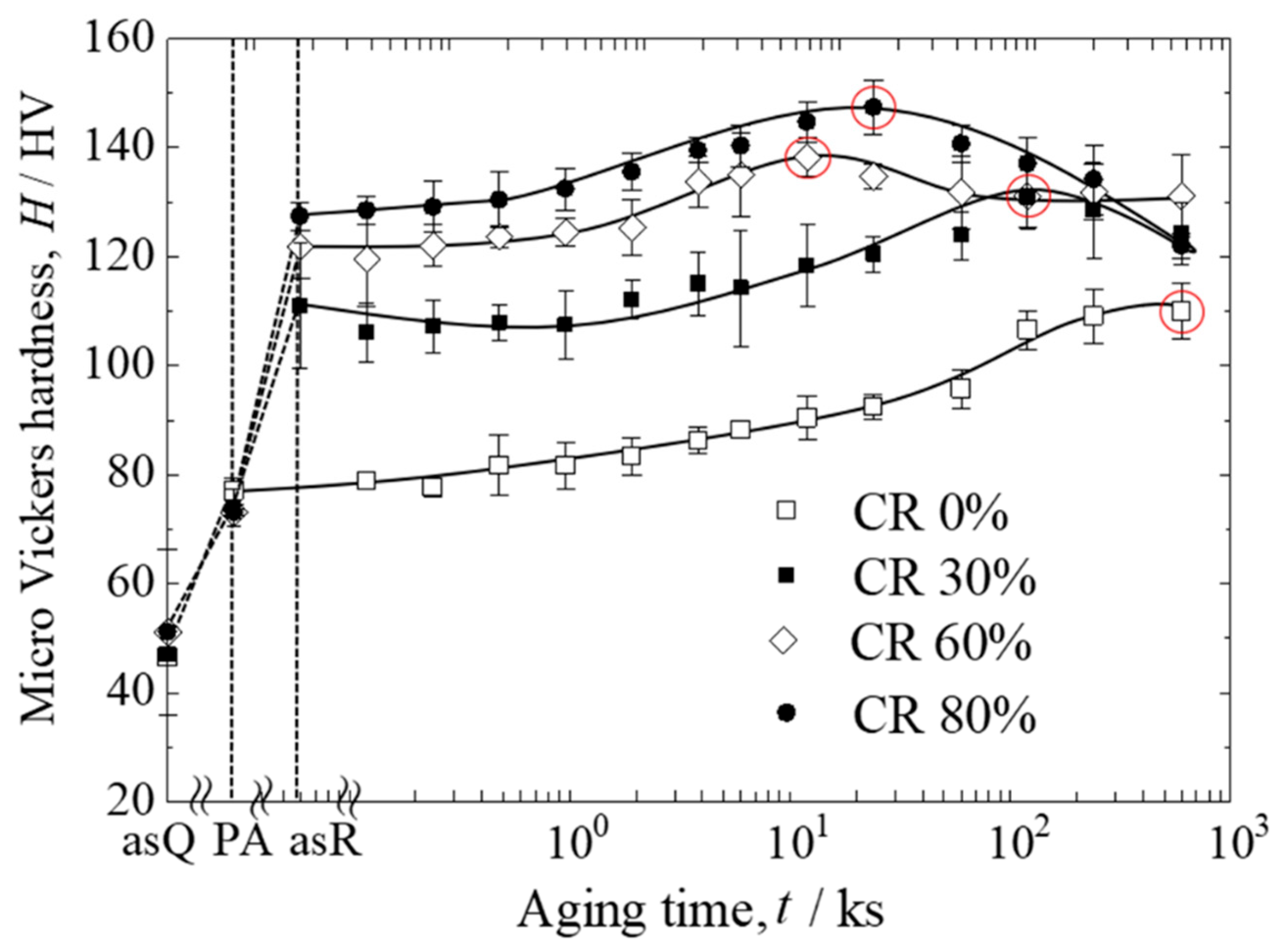
The measured hardness of the cold-rolled alloy during aging is presented in Figure 1. After solution treatment followed by pre-aging at 35 °C for 1 week, the initial hardness of the undeformed alloy is 78 HV. Cold rolling with reductions of 30%, 60%, and 80% significantly increases the hardness, with peak-aged hardness values reaching 120 HV, 131 HV, and 142 HV, respectively. All cold-rolled samples exhibit substantially higher hardness after final aging compared to the undeformed (0% CR) condition.
During subsequent aging, the hardness of all samples initially increases, reaches a peak, and then decreases during over-aging. Among all conditions, the 80% CR sample reaches peak hardness the fastest, within approximately 6 h, whereas the undeformed sample (0% CR) requires up to 1 week to reach peak hardness. The 30% CR sample reaches peak hardness at an intermediate aging time, while both the 60% CR and 80% CR samples exhibit a significantly accelerated aging response. These results indicate that cold-rolling-induced dislocations enhance precipitation kinetics, thereby shortening the time required to achieve peak-aged conditions.
Furthermore, the high density of dislocations introduced by cold rolling strongly affects the precipitation process during aging. Dislocations act as effective heterogeneous nucleation sites, promoting the rapid formation of metastable phases and their uniform distribution within the matrix [19]. This accelerated precipitation of metastable phases accounts for both the reduced time to reach peak hardness and the enhanced hardening response observed in the cold-rolled samples [20].

3.2. Analysis of Precipitation Kinetics and Phase Transformation Using DSC

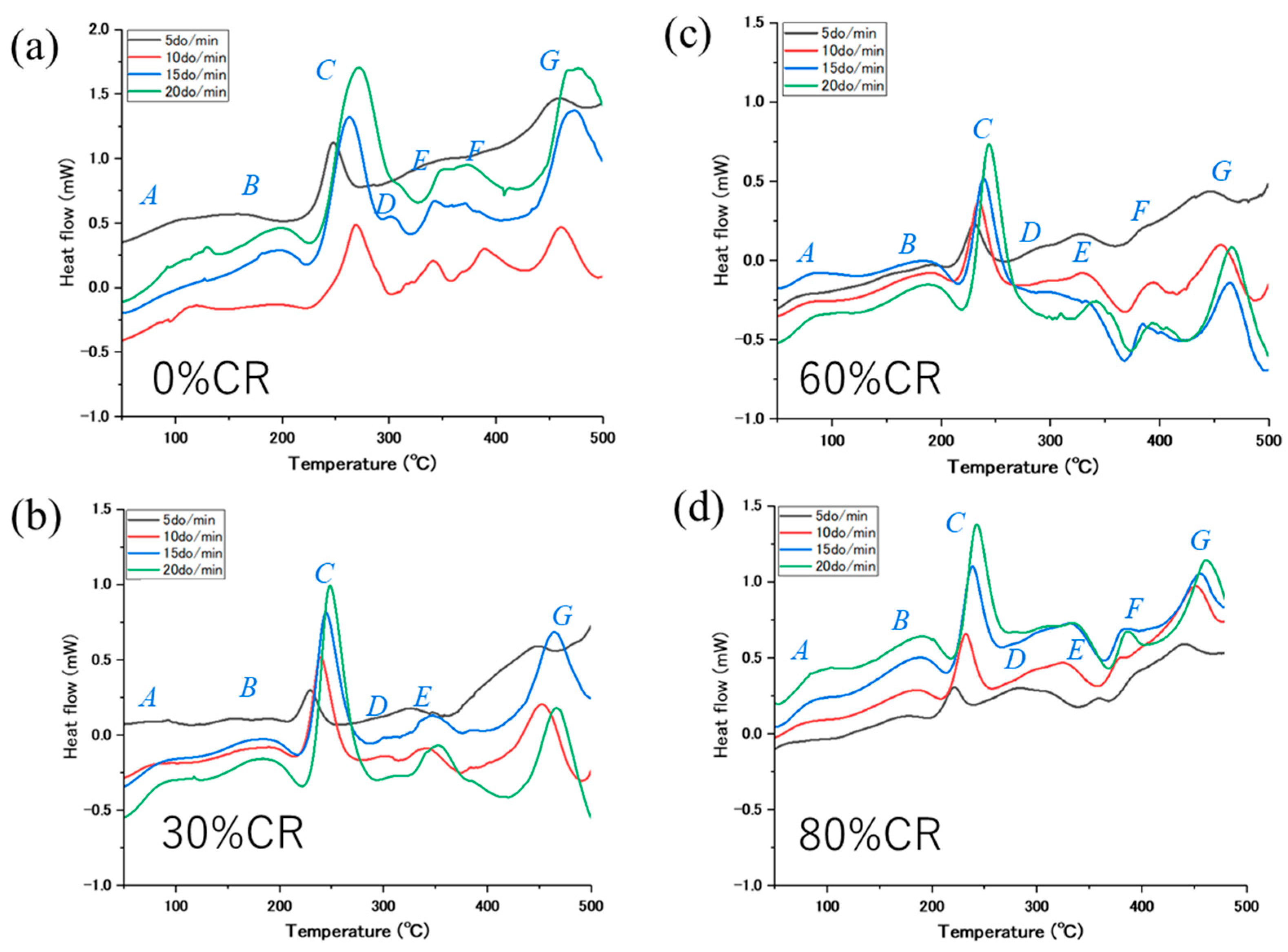
Figure 2 shows the DSC curves of the alloy under four different conditions, corresponding to heating rates of 5, 10, 15, and 20 °C/min. The DSC traces reveal a sequence of thermal events with characteristic peaks labeled A, B, C, D, E, F, and G, arranged in order of increasing temperature. The low-temperature peaks A, B, and C are associated with the early stages of precipitation. Specifically, peak A corresponds to cluster formation, peak B to GPB zone formation [21,22], and peak C to the main precipitation of metastable phases, such as the S′ phase [23]. Among these, peak C is the most prominent, indicating the dominant strengthening reaction in the alloy. The higher-temperature peaks D, E, and F are attributed to the formation of Q′, θ′, and β′ phases, respectively, while peak G corresponds to the formation of equilibrium phases at elevated temperatures [24].
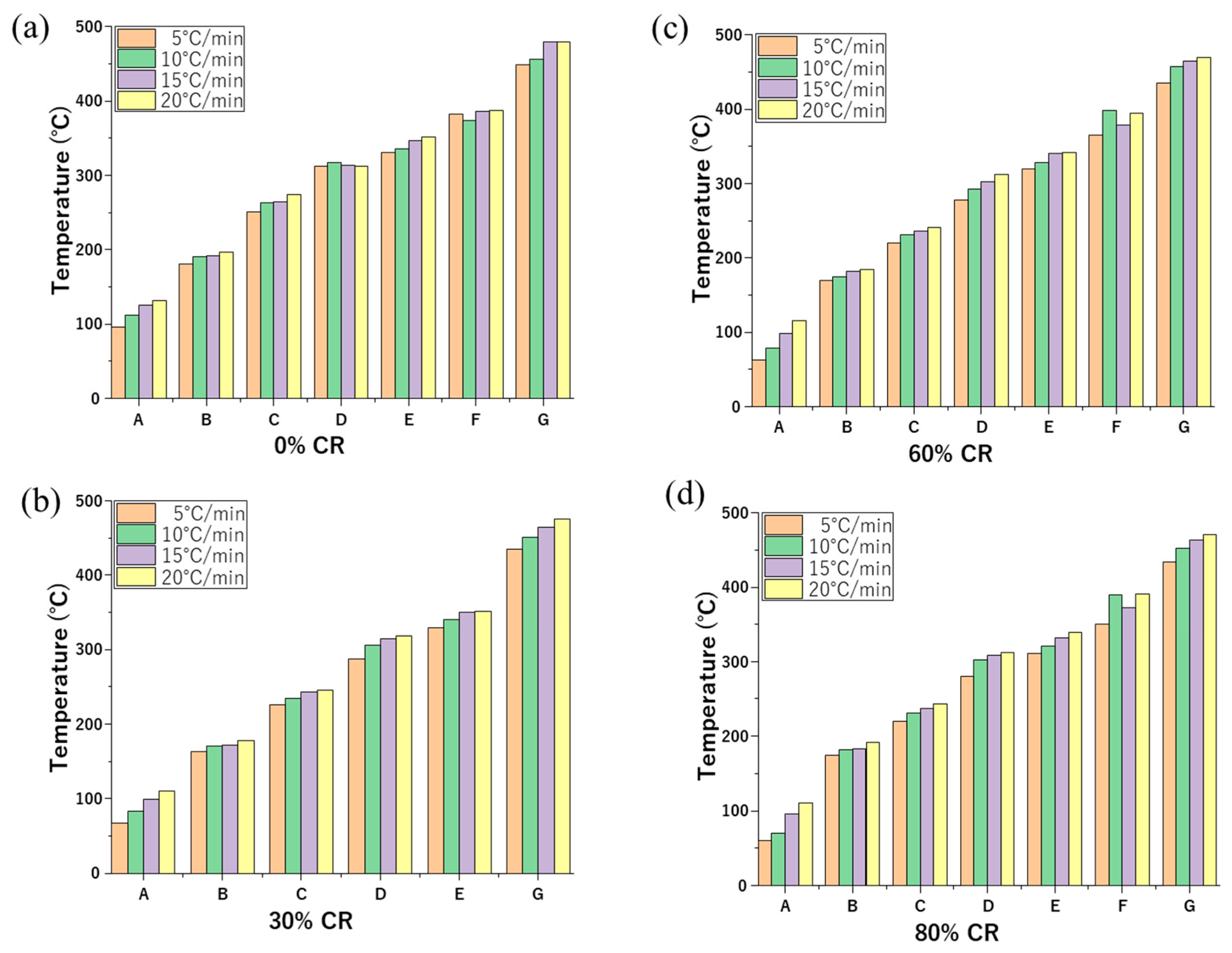
A clear effect of deformation is observed in the DSC curves. With increasing cold-rolling reduction from 0% CR to 80% CR, all precipitation peaks systematically shift toward lower temperatures. This shift indicates that deformation significantly accelerates precipitation kinetics. The high density of dislocations introduced during cold rolling provides abundant heterogeneous nucleation sites, facilitating the formation of precipitates at lower temperatures [25].
Figure 3 and Table 2 summarize the variation in peak temperatures of all precipitation reactions identified in Figure 2. It is evident that, as the level of deformation increases, the peak temperatures of all reactions decrease progressively. This trend confirms that cold-rolling-induced defects enhance the precipitation process. Furthermore, the activation energy associated with each precipitation peak was evaluated using the Kissinger equation [26]:
ln(α/Tp2) = −Q/(RTp) + C
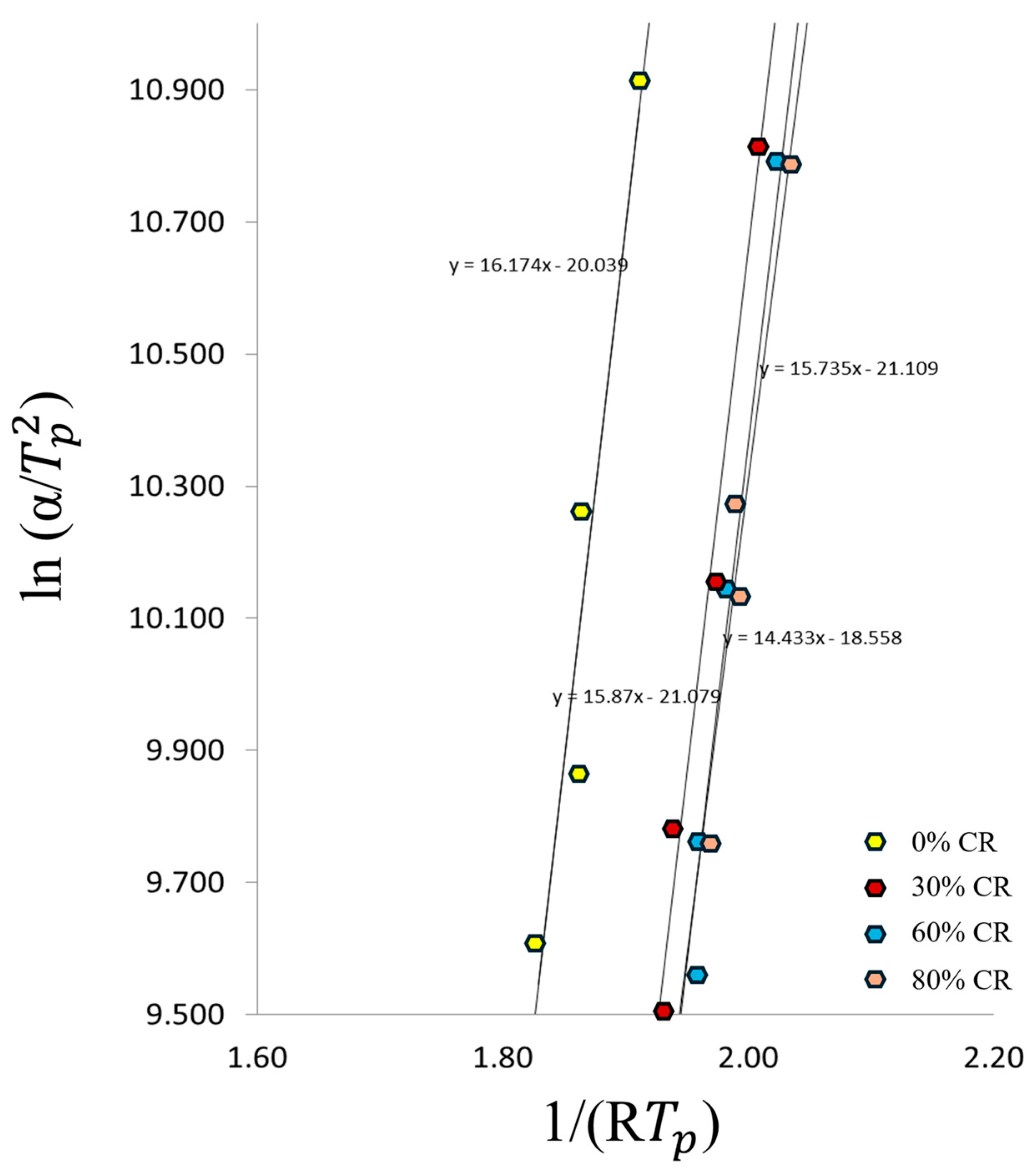
where α is the heating rate, Tp is the peak temperature, Q is the activation energy, R is the universal gas constant, and C is a constant. The activation energy (Q) associated with the main precipitation peak (Peak C) was determined via the Kissinger method using the plots shown in Figure 4, resulting in values of 134, 131, 130, and 120 kJ/mol for 0% CR, 30% CR, 60% CR, and 80% CR conditions, respectively.
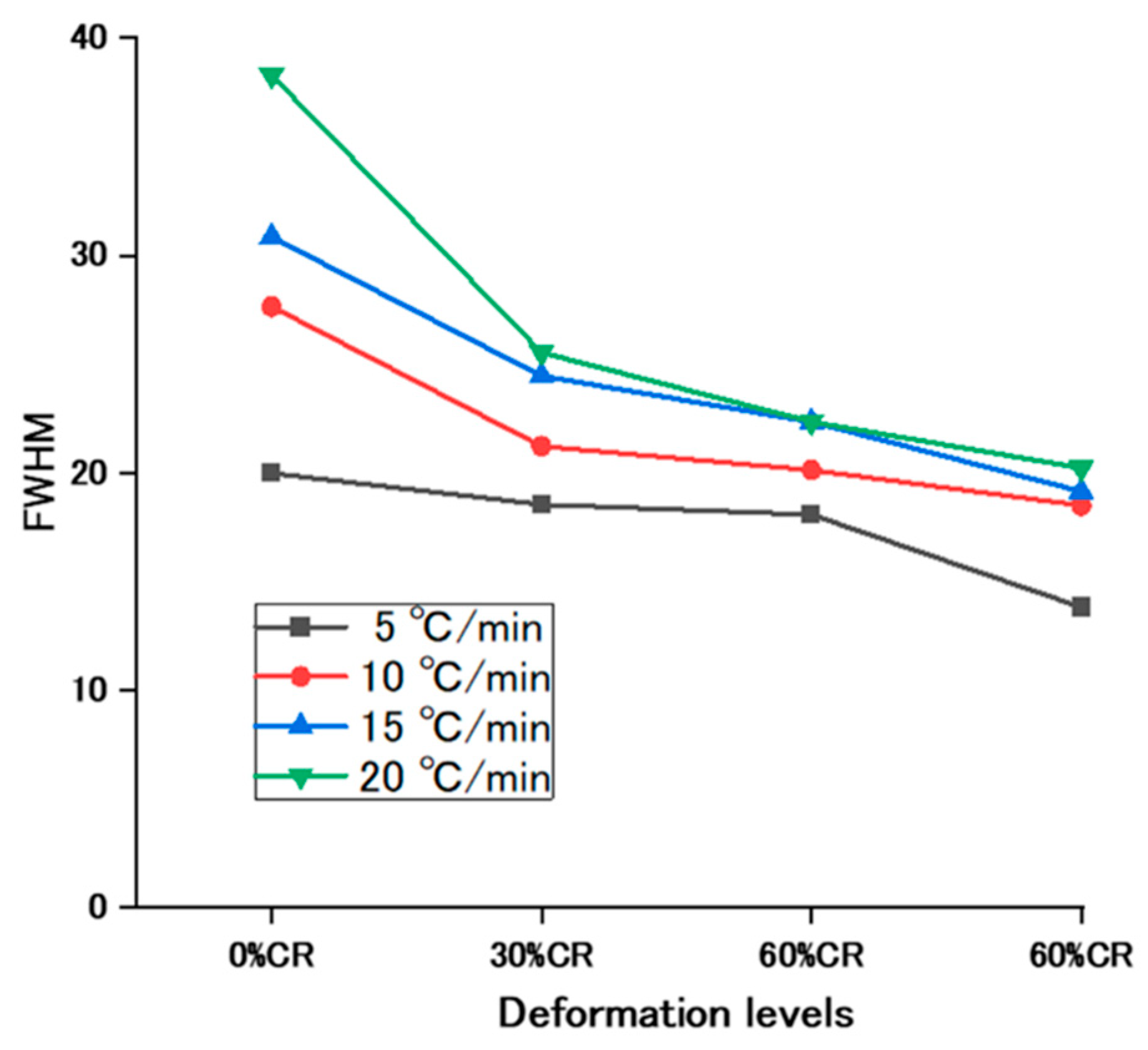
The calculated results show that the activation energy decreases with increasing deformation level, consistent with the observed shift in peak temperatures to lower values. This reduction in activation energy indicates that dislocations introduced by cold rolling lower the energy barrier for precipitation, thereby promoting the nucleation and growth of both metastable and stable phases. Figure 4 presents the variation in the full width at half-maximum (FWHM) of the main precipitation peak (peak C) obtained from the DSC curves. The FWHM reflects the temperature range over which the precipitation reaction occurs and is therefore closely related to the transformation kinetics. A narrower FWHM indicates that the reaction occurs within a shorter temperature interval, corresponding to a faster phase formation rate, whereas a broader FWHM suggests slower and more gradual transformation behavior [27,28].
As shown in Figure 5, the FWHM of peak C decreases with increasing cold-rolling reduction, demonstrating that the precipitation of the metastable phase becomes increasingly rapid with higher deformation levels. This behavior is reasonably attributed to the increased dislocation density introduced by deformation, which may provide favorable sites for heterogeneous nucleation and enhanced solute diffusion [29]. Importantly, the reduction in FWHM is consistent with the decrease in temperature, as shown in Figure 3. Both results indicate that cold rolling enhances precipitation kinetics by lowering the energy barrier and accelerating the transformation rate [27]. Therefore, the combined analysis of peak temperature shift, activation energy reduction, and FWHM narrowing provides strong evidence that deformation significantly promotes the formation of metastable phases in the alloy [26,30].

3.3. TEM Characterization of Microstructure and Precipitate Evolution

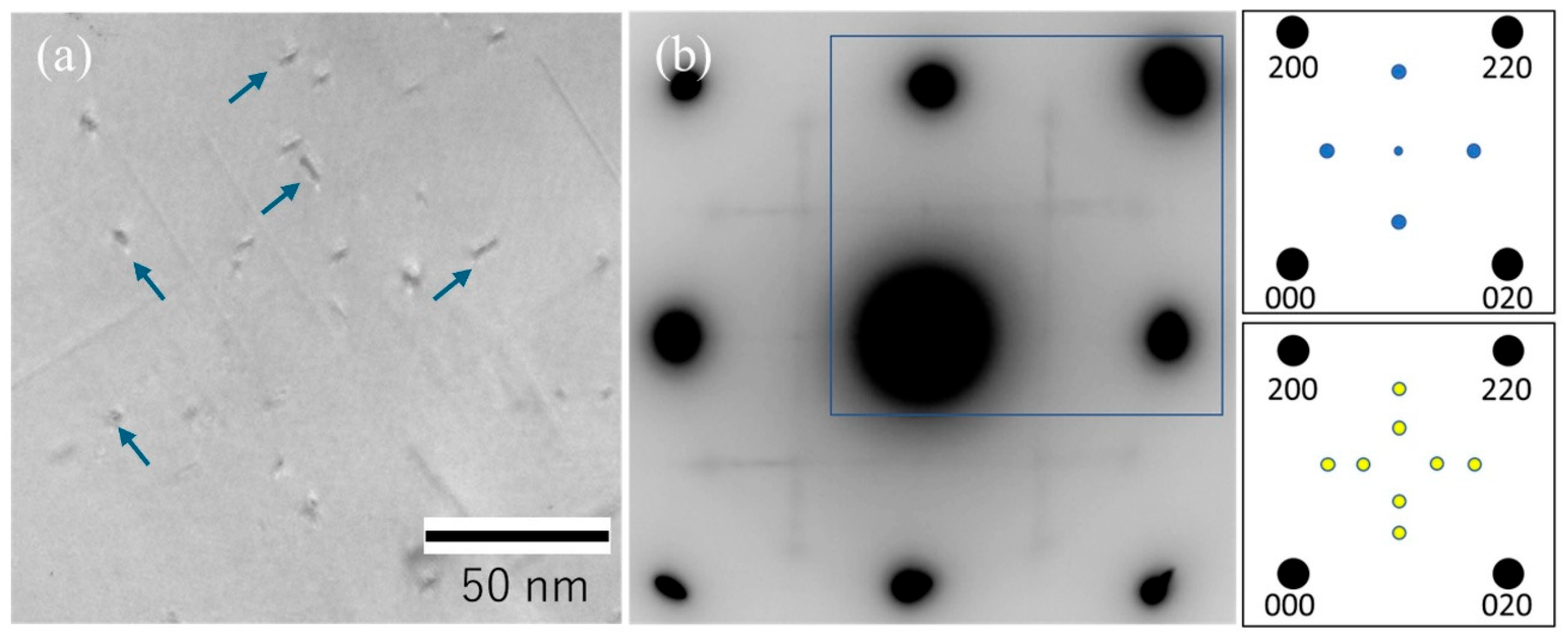
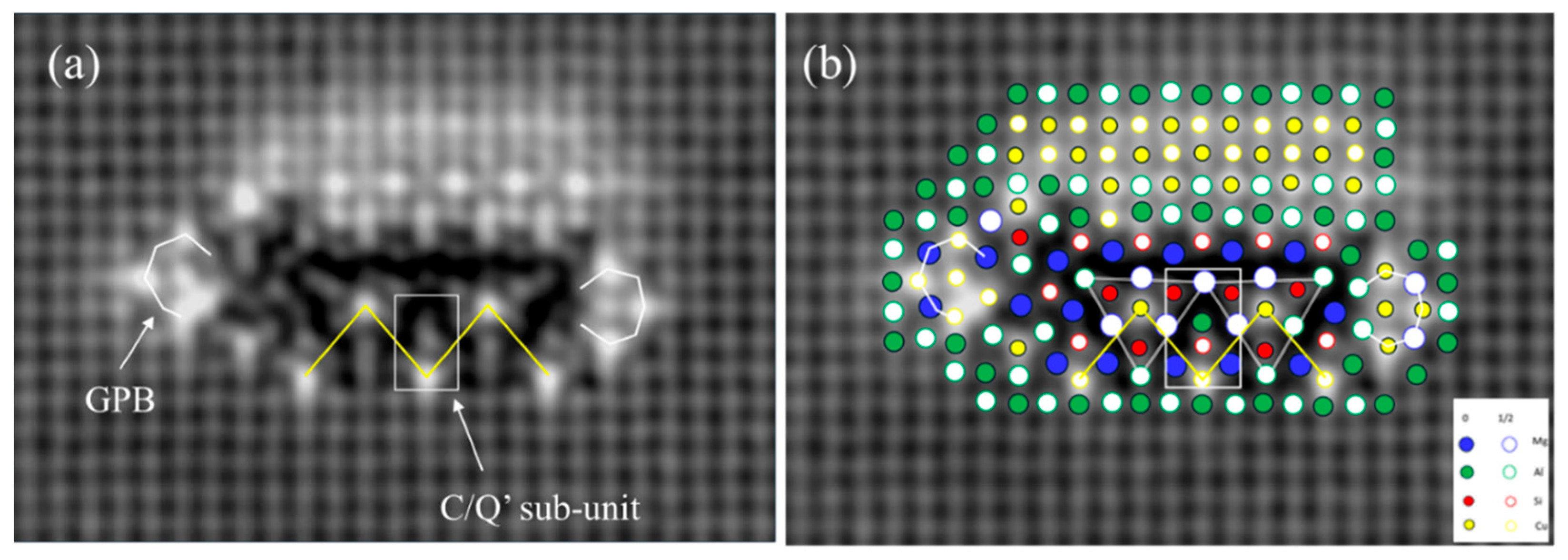
The microstructure of the alloy subjected to pre-aging at 35 °C, without deformation (0% CR), followed by final aging at 160 °C, was examined in detail using TEM. Bright-field (BF) TEM images taken along a zone axis close to [001] Al are presented in Figure 6. Fine precipitates with a small rod-shaped morphology are observed, aligned approximately along the <100>Al direction. The corresponding selected area electron diffraction (SAED) pattern exhibits diffuse scattering associated with clusters/GPB zones (gray spots) [31], together with additional diffraction spots indicating the presence of the L phase (yellow spots) [32]. This is further supported by the HAADF-STEM image in Figure 7, which provides clear evidence that the L phase coexists with GPB zones. The L phase is a disordered version of the C phase [33]. The precipitates containing the unit cell of Q’ are referred to as the precursor Q’ phase [33,34].
The observed microstructure indicates that a high density of fine precipitates is uniformly distributed within the matrix. These precipitates are formed through the evolution of clusters and GPB zones introduced during pre-aging at 35 °C. During subsequent aging at 160 °C, these precursors transform into metastable phases, resulting in a refined and homogeneous precipitate distribution. This transformation behavior suggests that the pre-aging treatment plays a key role in controlling the precipitation pathway. The formation and evolution of clusters and GPB zones during pre-aging provide favorable conditions for the subsequent development of metastable phases, leading to a microstructure dominated by fine and uniformly distributed precipitates.
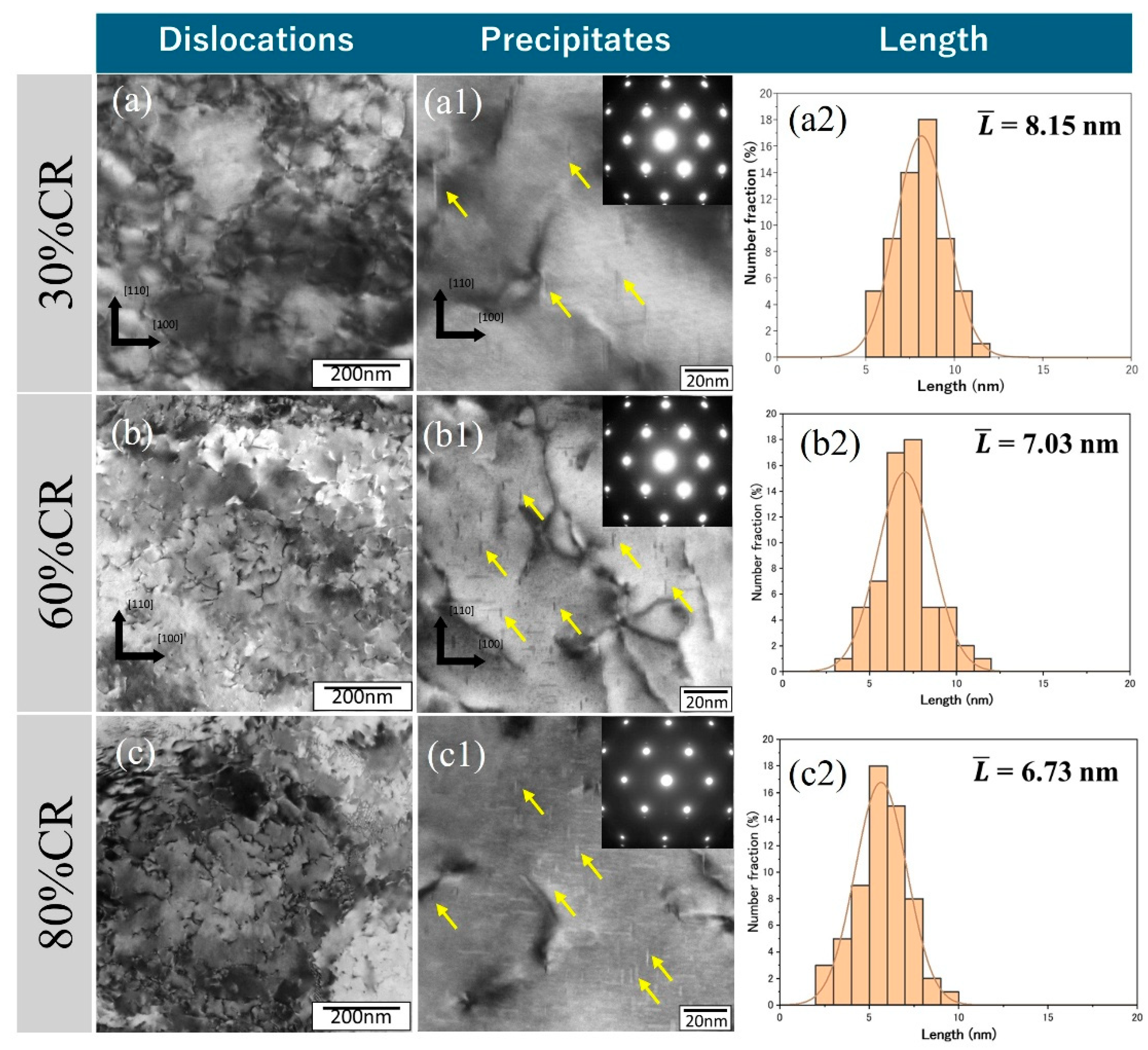
Figure 8 presents bright-field TEM images obtained along the [110] Al zone axis for samples subjected to pre-aging at 35 °C, followed by cold rolling with reductions of (a) 30% CR, (b) 60% CR, and (c) 80% CR, and subsequent final aging. The corresponding higher-magnification images and SAED patterns are shown in Figure 8(a1–c1), while detailed precipitate length is further illustrated in Figure 8(a2–c2).
As shown in Figure 8a–c, a high density of dislocations is introduced after cold rolling, with the degree of dislocation tangling increasing significantly with deformation level. In particular, the 80% CR exhibits a highly entangled dislocation network, indicating severe plastic deformation. These microstructural features play a critical role in controlling the subsequent precipitation behavior.
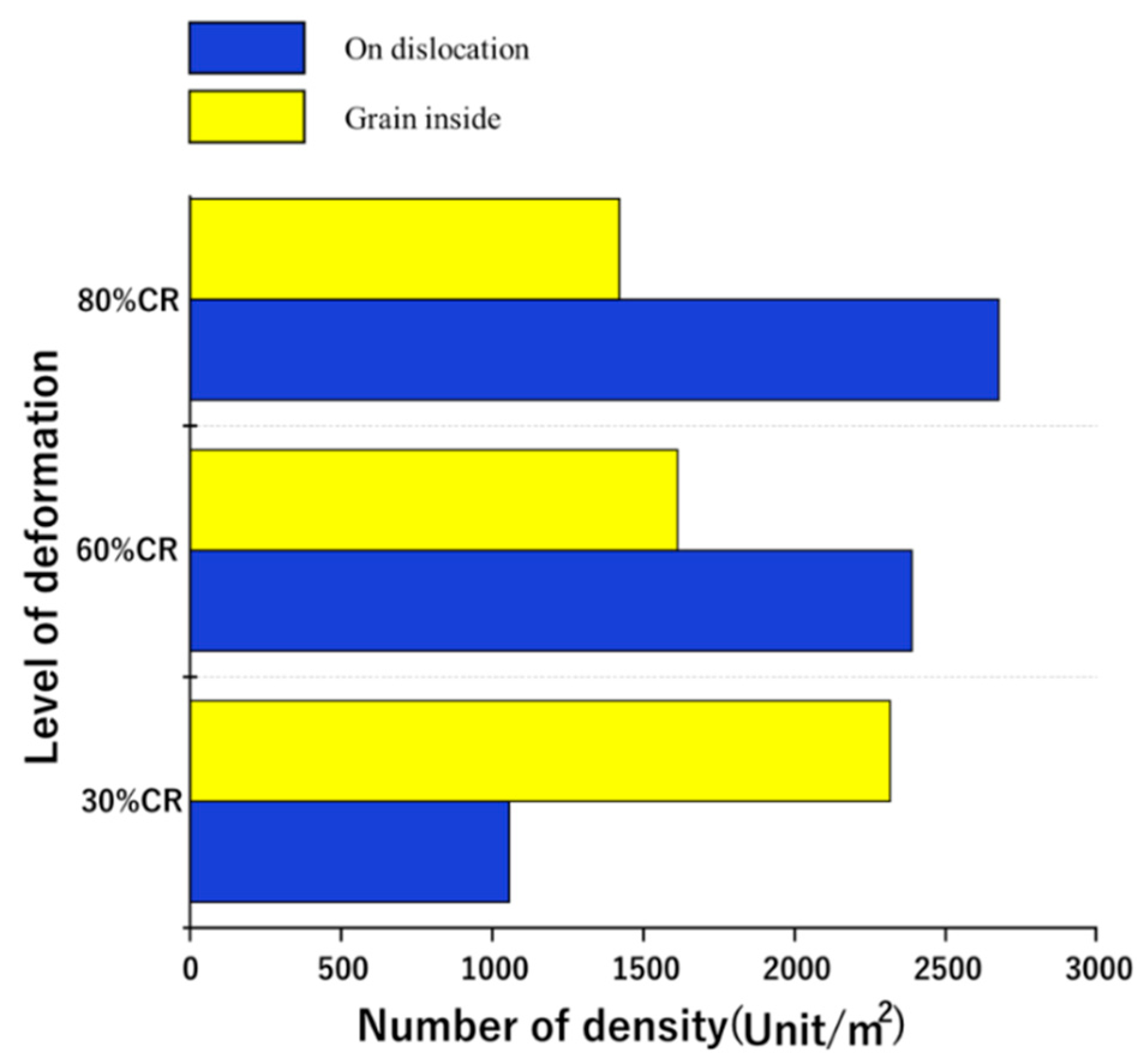
The corresponding SAED patterns and higher magnification images (Figure 8(a1–c1)) reveal that precipitates are distributed both within the matrix and along dislocations. With increasing deformation level, the number density of precipitates increases markedly. Notably, for the 60% CR and 80% CR conditions, the density of precipitates formed along dislocations becomes significantly higher than that within the matrix, as further quantified in Figure 9. In contrast, for the 30% CR condition, the precipitate density is higher in the matrix than on dislocations. This indicates that increasing deformation promotes heterogeneous precipitation, leading to a higher density of nucleation sites [35].
In addition to the increase in number density, the size of precipitates decreases with increasing deformation. As shown in Figure 8(a2–c2), the average precipitate length decreases from approximately 8.15 nm for 30% CR to 7.03 nm for 60% CR and 6.73 nm for 80% CR. This refinement suggests that a larger number of nucleation events occur at higher deformation levels, limiting the growth of individual precipitates and resulting in a finer and more uniform distribution [36].
These TEM observations are consistent with the DSC results shown in Figure 2, Figure 3, Figure 4 and Figure 5. With increasing cold-rolling reduction, all precipitation peaks shift toward lower temperatures, and the corresponding activation energy decreases. This indicates that the precipitation process requires less thermal energy to proceed at higher deformation levels. In addition, the narrowing of the FWHM for the main peak confirms that the precipitation reaction occurs over a shorter temperature range, reflecting faster transformation kinetics [37]. The combined decrease in peak temperature, activation energy, and FWHM clearly demonstrates that increasing deformation accelerates the precipitation process. This accelerated precipitation behavior is directly reflected in the hardness evolution shown in Figure 1. The 80% CR sample exhibits the highest hardness and reaches peak hardness in the shortest time, whereas lower deformation conditions require longer aging times to achieve peak hardness. The faster attainment of peak hardness at higher deformation levels is attributed to the rapid formation of a high number density of fine precipitates, which effectively strengthen the alloy. In contrast, the slower kinetics in the lower deformation conditions result in delayed precipitation and reduced strengthening response [38].
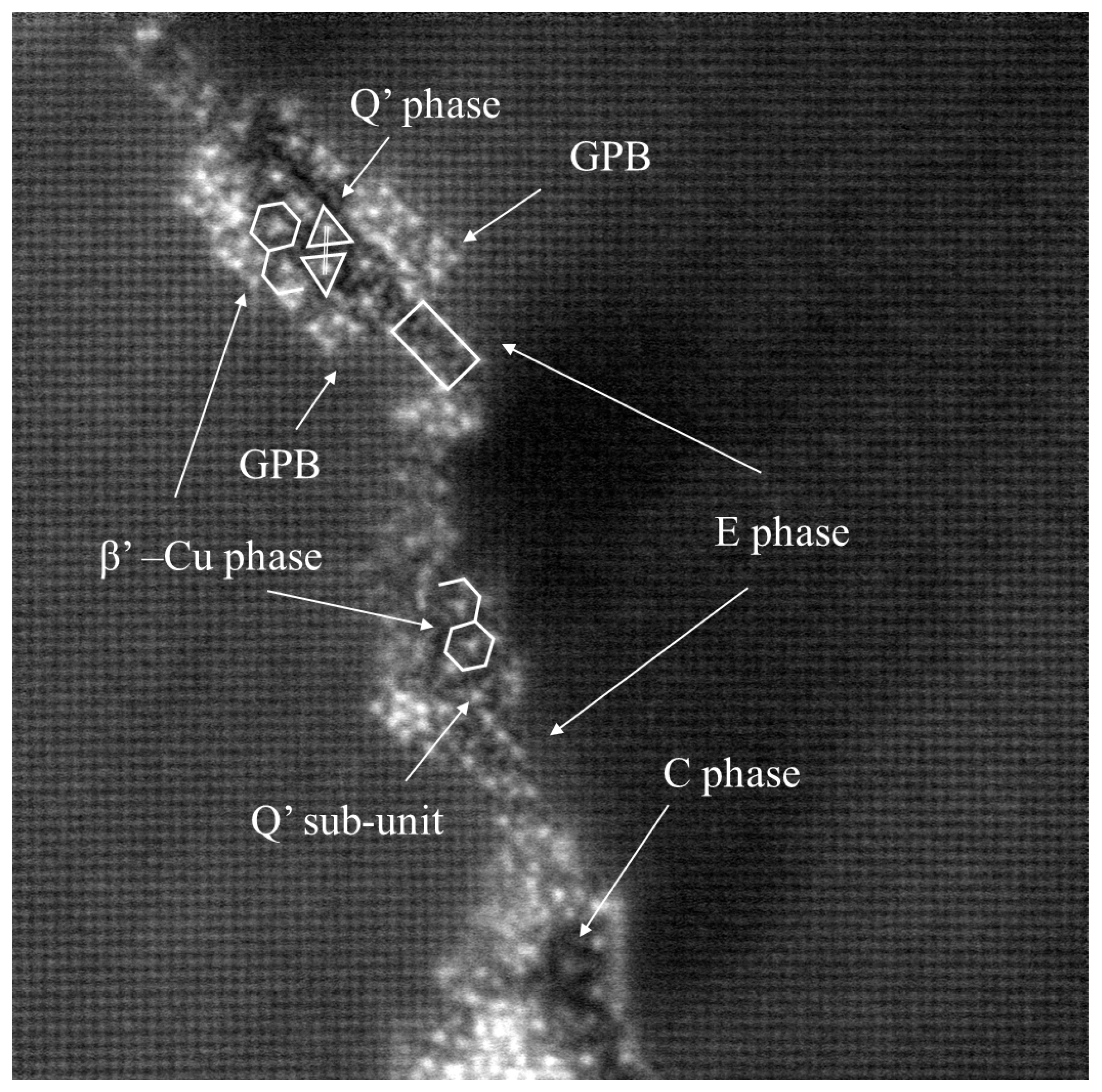
In the HAADF-STEM image from the 80% CR condition from the <100>Al viewing direction, additional structural features are revealed, as shown in Figure 10. A segment displaying the typical atomic arrangement of the C phase is observed, extending along [001]C//[001]Al. The C phase, first reported by Marioara et al. [39] and structurally resolved by Torsæter et al. [40], is characterized by peripheral Mg–Si atomic columns partially replaced by Al atoms, forming a coherent {100}Al interface. Furthermore, a segment corresponding to the E phase is identified along the <110>Al direction, consistent with previous observations reported by E. Thronsen et al. [41]. The coexistence of these phases further reflects the complex precipitation behavior under the applied thermomechanical conditions. The assignment of DSC peaks in Al-Mg-Si-Cu alloys is complex due to overlapping reactions, especially with Cu addition. Low-temperature peaks (A–B) are attributed to clusters and GPB zones, intermediate peaks (C–E) to metastable phases (β″, S′, Q′), and high-temperature peaks (F–G) to more stable precipitates. Cu addition shifts these reactions to lower temperatures. In the present study, the DSC peak assignments are supported by TEM observations. The temperature ranges of the main peaks are consistent with the observed evolution from clusters/GPB zones to Q′-/C, β’-Cu, L types precipitates, providing additional confidence in the interpretation.
Overall, the results demonstrate a clear correlation between deformation level, precipitation kinetics, and mechanical properties. Increasing cold-rolling reduction leads to a higher number density of finer precipitates, which form at lower temperatures and with lower activation energy, resulting in accelerated precipitation kinetics. This, in turn, produces a stronger hardening response and a shorter time to reach peak hardness [42].
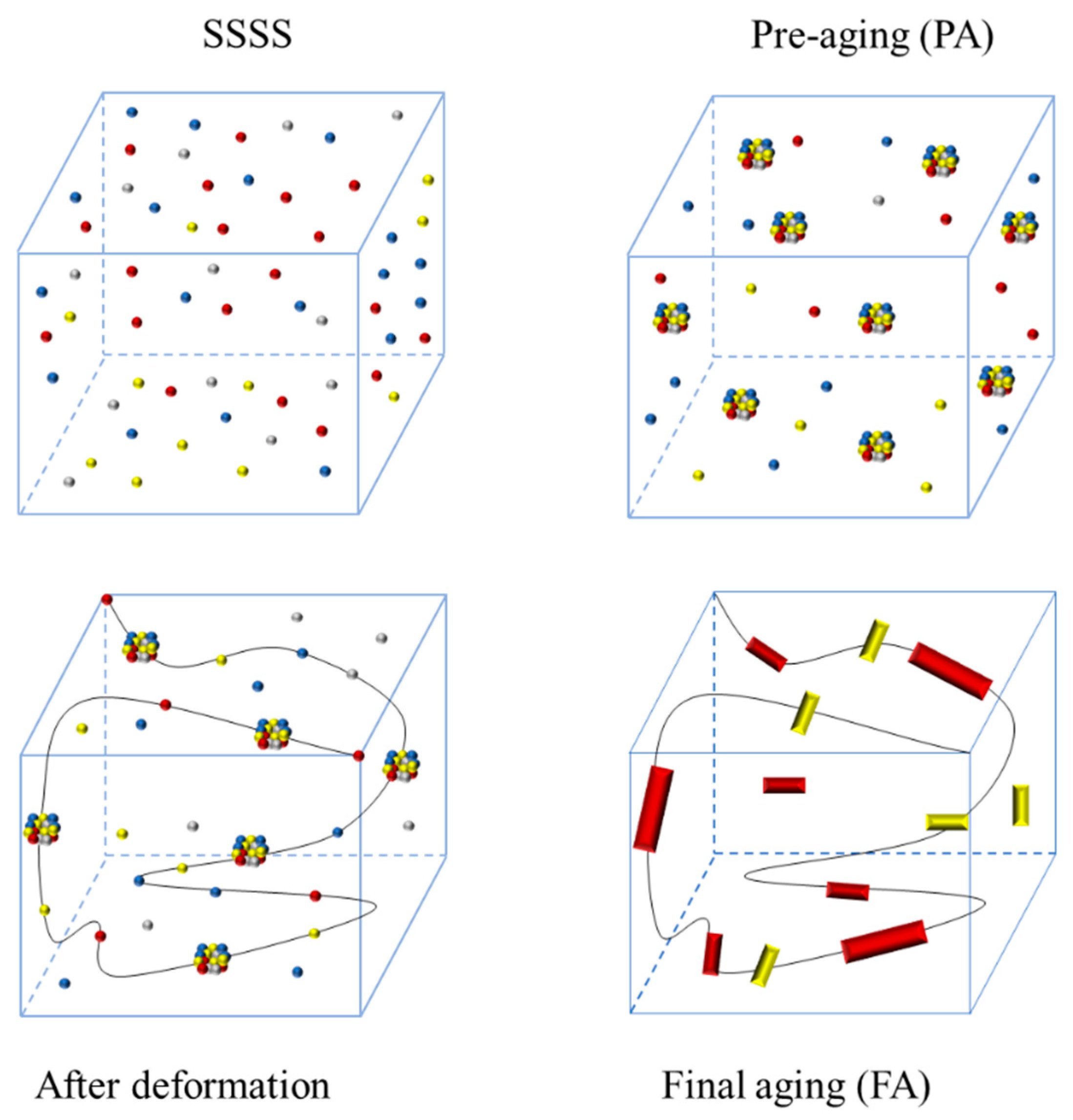
This behavior is schematically illustrated in Figure 11. In the undeformed condition, solute atoms are relatively uniformly distributed in the matrix, and precipitation proceeds slowly through the gradual formation of clusters and metastable phases. With deformation, a high density of dislocations is introduced, which may influence the precipitation behavior by accelerating nucleation and growth kinetics, as inferred from the present experimental observations [43]. As a result, the number density of precipitates increases while their size decreases, consistent with the TEM observations.

4. Conclusions

In this study, the effect of cold-rolling deformation on the precipitation behavior and mechanical properties of a pre-aged Al–Mg–Si–Cu alloy was systematically investigated.
-
Hardness measurements show that increasing cold-rolling reduction significantly improves both the peak hardness and the aging kinetics. The undeformed sample exhibits a peak hardness of approximately 100 HV (increased from ~78 HV after pre-aging), whereas the 30%, 60%, and 80% cold-rolled samples reach peak hardness values of about 120 HV, 131 HV, and 142 HV, respectively. In addition, the time to reach peak hardness is greatly reduced, with the 80% cold-rolled sample reaching peak hardness within ~6 h, compared to ~1 week for the undeformed condition.
-
DSC analysis indicates that all precipitation peaks shift toward lower temperatures with increasing deformation. This is accompanied by a reduction in activation energy and a decrease in the full width at half-maximum of the main precipitation peak, demonstrating that cold rolling accelerates precipitation kinetics and lowers the energy barrier for phase transformation.
-
TEM observations reveal that cold rolling introduces a high density of dislocations, which act as preferential nucleation sites for precipitates. Consequently, precipitates increasingly form along dislocations, resulting in a higher number density and finer size distribution with increasing deformation.

Author Contributions

Conceptualization, V.N.H. and K.M.; methodology, S.L., T.T. and V.N.H.; software, V.N.H.; validation, V.N.H. and S.L.; formal analysis, V.N.H., S.L. and T.T.; investigation, V.N.H.; resources, S.L., T.T., T.K. and K.M.; data curation, V.N.H., K.K. and T.K.; writing—original draft preparation, V.N.H. and K.M.; writing—review and editing, K.M., T.K. and K.K.; supervision, K.M.; project administration, K.K. and T.K.; funding acquisition, K.M. All authors have read and agreed to the published version of the manuscript.

Funding

This research received no external funding.

Data Availability Statement

The original contributions presented in this study are included in the article. Further inquiries can be directed to the corresponding author.

Acknowledgments

The authors sincerely acknowledge the Advanced Aluminum International Research Center (ARC), University of Toyama, for their support.

Conflicts of Interest

Authors Tetsuya Katsumi and Kazuhiko Kita were employed by the company YKK Corporation. The remaining authors declare that the research was conducted in the absence of any commercial or financial relationships that could be construed as potential conflicts of interest.

References

  1. Miller, W.S.; Zhuang, L.; Bottema, J.; Wittebrood, A.; De Smet, P.; Haszler, A.; Vieregge, A.J. Recent development in aluminium alloys for the automotive industry. Mater. Sci. Eng. A 2000, 280, 37–49. [Google Scholar] [CrossRef] [Scilit]
  2. Sabirov, I.; Murashkin, M.Y.; Valiev, R.Z. Nanostructured aluminium alloys produced by severe plastic deformation: New horizons in development. Mater. Sci. Eng. A 2013, 560, 1–24. [Google Scholar] [CrossRef] [Scilit]
  3. Wang, S.H.; Liu, C.H.; Chen, J.H.; Li, X.L.; Zhu, D.H.; Tao, G.H. Hierarchical nanostructures strengthen Al–Mg–Si alloys processed by deformation and aging. Mater. Sci. Eng. A 2013, 585, 233–242. [Google Scholar] [CrossRef] [Scilit]
  4. Liu, C.; Ma, Z.; Ma, P.; Zhan, L.; Huang, M. Multiple precipitation reactions and formation of θ’-phase in a pre-deformed Al–Cu alloy. Mater. Sci. Eng. A 2018, 733, 28–38. [Google Scholar] [CrossRef] [Scilit]
  5. Jin, S.; Ngai, T.; Li, L.; Jia, S.; Zhai, T.; Ke, D. Aging response and precipitation behavior after 5% pre-deformation of an Al-Mg-Si-Cu alloy. Materials 2018, 11, 1422. [Google Scholar] [CrossRef] [Scilit]
  6. Cao, L.; Paul, A.R.; Malcolm, J.C. Clustering behaviour in an Al–Mg–Si–Cu alloy during natural ageing and subsequent under-ageing. Mater. Sci. Eng. A 2013, 559, 257–261. [Google Scholar] [CrossRef] [Scilit]
  7. Ren, J.; Chen, Z.; Peng, J.; Ma, W.; Ringer, S.P. An initial report on achieving high comprehensive performance in an Al-Mg-Si alloy via novel thermomechanical processing. J. Alloys Compd. 2018, 764, 679–683. [Google Scholar] [CrossRef] [Scilit]
  8. Zheng, R.; Sun, Y.; Ameyama, K.; Ma, C. Optimizing the strength and ductility of spark plasma sintered Al 2024 alloy by conventional thermo-mechanical treatment. Mater. Sci. Eng. A 2014, 590, 147–152. [Google Scholar] [CrossRef] [Scilit]
  9. Lan, J.; Han, Z.; Hua, L. Effects of cold deformations on strength and ductility of extruded Al-Cu-Mg-Si alloy. Mater. Lett. 2021, 300, 130188. [Google Scholar] [CrossRef] [Scilit]
  10. Zhang, Z.; Yang, Y.; Gao, Y.; Wang, G.; Shi, W. Performance analysis of 7075 aluminum alloy strengthened by cavitation water jet peening at different scanning speeds. Crystals 2022, 12, 1451. [Google Scholar] [CrossRef] [Scilit]
  11. Koshino, Y.; Aruga, Y.; Mukai, J.; Kaneko, K. Relationship among elongation, work hardening behavior and dislocation characteristics of Al–Mg–Si series alloys. Mater. Trans. 2019, 60, 68–73. [Google Scholar] [CrossRef] [Scilit]
  12. Rhee, Y.; Thronsen, E.; Ryggetangen, O.; Marioara, C.D.; Holmestad, R.; Kobayashi, E. Effect of Pre-Deformation on Precipitation in Al–Zn–Mg–Cu Alloy. Met. Mater. Int. 2024, 30, 3294–3310. [Google Scholar] [CrossRef] [Scilit]
  13. Cui, M.; Jo, Y.H.; Kayani, S.H.; Kim, H.W.; Lee, J.H. Effects of Cu additions on the precipitation activation energy and mechanical properties of prestrained Al–Mg–Si alloys. J. Mater. Res. Technol. 2022, 20, 2629–2637. [Google Scholar] [CrossRef] [Scilit]
  14. Zhai, H.; Zhang, L.; Xing, S.; Hou, H.; Wang, Z.; Liu, S. The Effect of Pre-Deformation on the Microstructure and Hardness of Al-Zn-Mg-Cu Alloy. Coatings 2025, 15, 283. [Google Scholar] [CrossRef] [Scilit]
  15. Gleiter, H.; Hansen, N.; Horsewell, A.; Leffers, T.; Lilholt, H. Deformation of polycrystals: Mechanisms and microstructures. In Proceedings of the 2nd RISO Symposium on Metallurgy and Materials Science, Roskilde, Denmark, 14–18 September 1981; pp. 15–21. [Google Scholar]
  16. Gazizov, M.; Marioara, C.D.; Friis, J.; Wenner, S.; Holmestad, R.; Kaibyshev, R. Unique hybrid precipitate structures forming in an Al–Cu–Mg–Si alloy. J. Alloys Compd. 2020, 826, 153977. [Google Scholar] [CrossRef] [Scilit]
  17. Vu, N.H.; Lee, S.; Tsuchiya, T.; Katsumi, T.; Kita, K.; Matsuda, K. Effect of pre-aging temperature on hardening behavior and precipitation response of deformed Al–1.0% Cu–0.96% Mg–0.36% Si (wt.%) alloy. Arch. Metall. Mater. 2025, 70, 1287–1293. [Google Scholar] [CrossRef] [Scilit]
  18. He, L.; Zhang, H.; Cui, J. Effects of pre-ageing treatment on sub- sequent artificial ageing characteristics of an Al-1.01Mg-0.68Si-1.78Cu alloy. J. Mater. Sci. Technol. 2010, 26, 141–145. [Google Scholar] [CrossRef] [Scilit]
  19. Kirekawa, N.; Saito, K.; O, M.; Kobayashi, E. Effect of Cold Rolling on Cluster(1) Dissolvability during Artificial Aging and Formability during Natural Aging in Al-0.6Mg-1.0Si-0.5Cu Alloy. Metals 2022, 12, 92. [Google Scholar] [CrossRef] [Scilit]
  20. Xie, Y.; Liu, S.; Guo, X.; He, X.; Liang, C.; Deng, Y. Modulation of precipitation behavior by dislocations and alloying for superior strength-ductility balance in Al-Cu-Li alloys. J. Alloys Compd. 2025, 1010, 177334. [Google Scholar] [CrossRef] [Scilit]
  21. Ringer, S.P.; Caraher, S.K.; Polmear, I.J. Response to comments on cluster hardening in an aged Al-Cu-Mg alloy. Scr. Mater. 1998, 39, 1559–1567. [Google Scholar] [CrossRef] [Scilit]
  22. Esin, V.A.; Briez, L.; Sennour, M.; Köster, A.; Gratiot, E.; Crépin, J. Precipitation-hardness map for Al–Cu–Mg alloy (AA2024-T3). J. Alloys Compd. 2021, 854, 157164. [Google Scholar] [CrossRef] [Scilit]
  23. Abis, S. Characteristics of an aluminium alloy/Alumina Metal Matrix composite. Compos. Sci. Technol. 1989, 35, 1–11. [Google Scholar] [CrossRef] [Scilit]
  24. Riontino, G.; Abis, S.; Bottero, C. A DSC Study of Precipitation in Al-Cu-Mg Alloys. Alum. Alloys 1998, 2, 903–908. [Google Scholar]
  25. Jena, A.K.; Gupta, A.K.; Chaturvedi, M.C. A differential scanning calorimetric investigation of precipitation kinetics in the Al-1.53 wt% Cu-0.79 wt% Mg alloy. Acta Metall. 1989, 37, 885–895. [Google Scholar] [CrossRef] [Scilit]
  26. Kissinger, H.E. Reaction Kinetics in Differential Thermal Analysis. Anal. Chem. 1957, 29, 1702–1706. [Google Scholar] [CrossRef] [Scilit]
  27. Zhang, X. Applications of kinetic methods in thermal analysis: A review. Eng. Sci. 2020, 14, 1–3. [Google Scholar] [CrossRef] [Scilit]
  28. Wendlandt, W.W. Thermal Methods of Analysis, 3rd ed.; Wiley: New York, NY, USA, 1986. [Google Scholar]
  29. Zheng, K.; Li, Y.; Yang, S.; Fu, K.; Zheng, J.; He, Z.; Yuan, S. Investigation and modeling of the preheating effects on precipitation and hot flow behavior for forming high strength AA7075 at elevated temperatures. J. Manuf. Mater. Process. 2020, 4, 76. [Google Scholar] [CrossRef] [Scilit]
  30. Irmer, D.; Moussa, C.; Belkacemi, L.T.; Sennour, M.; Vaissière, A.; Esin, V.A. Effect of cold rolling on nucleation, growth and coarsening of S-phase precipitates in Al-Cu-Mg alloy (AA2024): From heterogeneous nucleation to homogeneous spatial distribution. J. Alloys Compd. 2023, 963, 171162. [Google Scholar] [CrossRef] [Scilit]
  31. Matsuda, K.; Kawai, A.; Watanabe, K.; Lee, S.; Marioara, C.D.; Wenner, S.; Nishimure, K.; Matsuzaki, T.; Nunomura, N.; Sato, T.; et al. Extra electron diffraction spots caused by fine precipitates formed at the early stage of aging in Al-Mg-X (X = Si, Ge, Zn)-Cu alloys. Mater. Trans. 2017, 58, 167–175. [Google Scholar] [CrossRef] [Scilit]
  32. Hai, V.N.; Ahmed, A.; Lee, S.; Tsuchiya, T.; Zou, Y.; Katsumi, T.; Kita, K.; Khanh, P.M.; Holmestad, R.; Marioara, C.D.; et al. A comparative investigation of microstructure and mechanical properties in a deformed and aged Al-Mg-Si alloy with high Cu content. Mater. Des. 2025, 260, 115172. [Google Scholar] [CrossRef] [Scilit]
  33. Gazizov, M.; Marioara, C.D.; Friis, J.; Wenner, S.; Holmestad, R.; Kaibyshev, R. Precipitation behavior in an Al–Cu–Mg–Si alloy during ageing. Mater. Sci. Eng. A 2019, 767, 138369. [Google Scholar] [CrossRef] [Scilit]
  34. Niu, F.J.; Chen, J.H.; Duan, S.Y.; Ming, W.Q.; Lu, J.B.; Wu, C.L.; Le, Z. The effect of pre-deformation on the precipitation behavior of AlCuMg (Si) alloys with low Cu/Mg ratios. J. Alloys Compd. 2020, 823, 153831. [Google Scholar] [CrossRef] [Scilit]
  35. Weng, Y.Y.; Jia, Z.H.; Ding, L.P.; Liao, J.; Zhang, P.P.; Xu, Y.Q.; Liu, Q. Effect of pre-straining on structure and formation mechanism of precipitates in Al–Mg–Si–Cu alloy. Trans. Nonferr. Met. Soc. China 2022, 32, 447. [Google Scholar] [CrossRef] [Scilit]
  36. Yuan, Z.; Lu, C.; Ding, L.; Xiang, K.; Weng, Y.; Liu, Q.; Jia, Z. The interactive effect of alloy composition and pre-straining on the precipitation behavior of Al–Mg–Si–Cu alloys. Mater. Sci. Eng. A 2022, 849, 143495. [Google Scholar] [CrossRef] [Scilit]
  37. Ding, L.; Yang, Y.; Zheng, Y.; Yin, T.; Huang, H.; Weng, Y. Effect of Pre-Deformation on Microstructure and Mechanical Properties of a Mg-Rich High-Cu Al-Mg-Si-Cu Alloy. Metals 2026, 16, 366. [Google Scholar] [CrossRef] [Scilit]
  38. Shao, D.; Zhang, P.; Zhang, J.Y.; Liu, G.; Wang, R.H.; Liu, W.Q.; Sha, G.; Sun, J. Effect of pre-strain on the solute clustering, mechanical properties, and work-hardening of a naturally aged Al-Cu-Mg alloy. Metall. Mater. Trans. A 2017, 48, 4121–4134. [Google Scholar] [CrossRef] [Scilit]
  39. Marioara, C.D.; Andersen, S.J.; Stene, T.N.; Hasting, H.; Walmsley, J.; Van Helvoort, A.T.J.; Holmestad, R. The effect of Cu on precipitation in Al–Mg–Si alloys. Philos. Mag. 2007, 87, 3385–3413. [Google Scholar] [CrossRef] [Scilit]
  40. Torsæter, M.; Ehlers, F.J.H.; Marioara, C.D.; Andersen, S.J.; Holmestad, R. Applying precipitate–host lattice coherency for compositional determination of precipitates in Al–Mg–Si–Cu alloys. Philos. Mag. 2012, 92, 3833–3856. [Google Scholar] [CrossRef] [Scilit]
  41. Thronsen, E.; Marioara, C.D.; Sunde, J.K.; Minakuchi, K.; Katsumi, T.; Erga, I.; Matsuda, K.; Holmestad, R. The effect of heavy deformation on the precipitation in an Al-1.3 Cu-1.0 Mg-0.4 Si wt.% alloy. Mater. Des. 2020, 186, 108203. [Google Scholar] [CrossRef] [Scilit]
  42. Weng, Y.; Li, R.; Zheng, L.; Zhao, R.; Zhou, Y.; Chen, J.; Ding, L. Effects of pre-deformation on microstructure evolution and hemming performance for Al-Mg-Si-Cu alloys. J. Mater. Res. Technol. 2025, 35, 2840–2851. [Google Scholar] [CrossRef] [Scilit]
  43. Wang, X.; Pan, Q.; Wang, W.; Huang, Z.; Chen, J.; Pan, B.; Liu, X. Effects of pre-strain and aging treatments on the mechanical property and corrosion resistance of the spray formed ultra-high strength Al-Zn-Mg-Cu alloy. Mater. Charact. 2022, 194, 112381. [Google Scholar] [CrossRef] [Scilit]
Figure 1. Hardness evolution as a function of aging time for samples subjected to different cold-rolling reductions (0% CR, 30% CR, 60% CR, and 80% CR). The red circles denote the peak hardness.
Jmmp 10 00167 g001
Figure 2. DSC curves of the alloy at heating rates of 5, 10, 15, and 20 °C/min under different cold-rolling conditions: (a) 0% CR, (b) 30% CR, (c) 60% CR, and (d) 80% CR. Characteristic precipitation peaks (A–G) are indicated.
Jmmp 10 00167 g002
Figure 3. Variation in peak temperatures of precipitation reactions (A–G) derived from the DSC curves shown in Figure 2 under different cold-rolling conditions: (a) 0% CR, (b) 30% CR, (c) 60% CR, and (d) 80% CR.
Jmmp 10 00167 g003
Figure 4. Kissinger plots between 1/(R T p ) and ln (α/ T p 2 ) of peak C from DSC curves under four conditions.
Jmmp 10 00167 g004
Figure 5. Full width at half-maximum (FWHM) of the main precipitation peak (peak C) as a function of cold-rolling reduction, indicating the effect of deformation on precipitation kinetics.
Jmmp 10 00167 g005
Figure 6. Bright-field TEM image and corresponding analysis of the alloy under 0% CR condition: (a) BF-TEM image showing fine rod-shaped precipitates along the <100>Al direction, (b) corresponding SAED pattern. Precipitates are indicated by the blue arrows and the black squares represent the spot models of the results.
Jmmp 10 00167 g006
Figure 7. Microstructural characterization of the 0% CR condition: (a) HAADF image and (b) corresponding atomic overlay. The yellow line shows the arrangement of Cu.
Jmmp 10 00167 g007
Figure 8. Bright-field TEM images along [110] Al for samples pre-aged at 35 °C, cold-rolled to (a) 30% CR, (b) 60% CR, and (c) 80% CR, followed by final aging. (a1c1) show corresponding SAED patterns; (a2c2) show precipitate length. Precipitates are indicated by the yellow arrows.
Jmmp 10 00167 g008
Figure 9. Number density of precipitates in the matrix and along dislocations as a function of cold-rolling reduction.
Jmmp 10 00167 g009
Figure 10. HAADF-STEM images showing atomic structures of the C phase ([001]C//[001]Al) and E phase (<110>Al).
Jmmp 10 00167 g010
Figure 11. Schematic illustration of precipitation evolution with combining pre-aging and deformation.
Jmmp 10 00167 g011
Table 1. The detailed heat-treatment conditions applied in this study.
ConditionsHeat Treatment
0% CRSHT + Pre-aging 35 °C + cold-rolling 0% + final aging 160 °C
30% CRSHT + Pre-aging 35 °C + cold-rolling 30% + final aging 160 °C
60% CRSHT + Pre-aging 35 °C + cold-rolling 60% + final aging 160 °C
80% CRSHT + Pre-aging 35 °C + cold-rolling 80% + final aging 160 °C
Table 2. Temperatures of all DSC peaks in Figure 3 obtained at a heating rate of 5 °C/min.
PeakCondition
0% CR30% CR60% CR80% CR
A96.567.562.5560.1
B181.3170.2168.10170.4
C250.2233.87220.15218.3
D312.0305.85277.5270.1
E330.4340.45319.15311.1
F382.4382.4365.21350.4
G448.5435.1435.1434.1
Disclaimer/Publisher’s Note: The statements, opinions and data contained in all publications are solely those of the individual author(s) and contributor(s) and not of MDPI and/or the editor(s). MDPI and/or the editor(s) disclaim responsibility for any injury to people or property resulting from any ideas, methods, instructions or products referred to in the content.