1. Introduction
To classify the content of this article in terms of the state of the art, joining connections made of pipes or hollow profiles and sheet metals are considered. Within the construction industry, joining pipe ends with sheet metal is a common application. Arc and laser beam welding processes are often used for this purpose [
1,
2].
There are also joining applications in which the outer surface of pipes is connected to sheet metal components. Examples of this are heat exchangers and heating coils, as well as tube bundles [
3,
4]. In English-language literature, the term “fillet weld” is used in this context. In the context of heat exchangers, the main focus is on thermal influences caused by the weld, and considerations regarding joint strength for structural applications are not the focus [
5,
6].
However, arc welding processes such as MIG lead to local sinking due to high heat input, as reported by Minh and Son, for example [
7]. Four different tube wall thicknesses—2.5 mm, 3.2 mm, 4.0 mm, and 5.2 mm—were examined there. The welding parameters used were a current of 90 A, a voltage of 80 V, and a welding speed of 3.2 mm/s. The maximum deformation is most pronounced for the 2.5 mm wall thickness, at 3.53 mm, whereas for the 5.2 mm wall thickness, it is only 1.3 mm. The argument is based on the lower bending stiffness of thin tubes, as well as their faster heating and uneven cooling [
7]. This is a common type of welding distortion, which can result in unacceptable deviations in shape depending on the application. For thin-walled components, the use of GTAW is particularly recommended, as the heat input can be precisely controlled [
8].
From the preceding discussion, arc welding processes are generally capable of joining profiles and sheet metal. However, the limits of these processes are reached when dealing with thin walls, meaning that the intended joining task cannot be satisfactorily accomplished with a wall thickness of 2.0 mm. Furthermore, with arc and laser welding processes, it is only possible to weld the edge areas of the joining partners.
The aim of this work is not merely to weld the edge areas between the profile and the sheet metal, but to weld across the surface between them due to a design optimized for manufacturing.
In contrast, there are known studies in which resistance spot welding is used to join pipe–sheet metal connections. Due to the limited contact conditions of the welding electrodes, a special machine design is used here in comparison to classic spot welding with two opposing welding electrodes. This involves the use of “Single-sided sheet-to-tube resistance spot welding,” which enables single-sided contacting with two electrodes, as reported by Yang et al. [
9,
10], Liang and Liu [
11], and Najung, Jüttner and Schmicker [
12], for example.
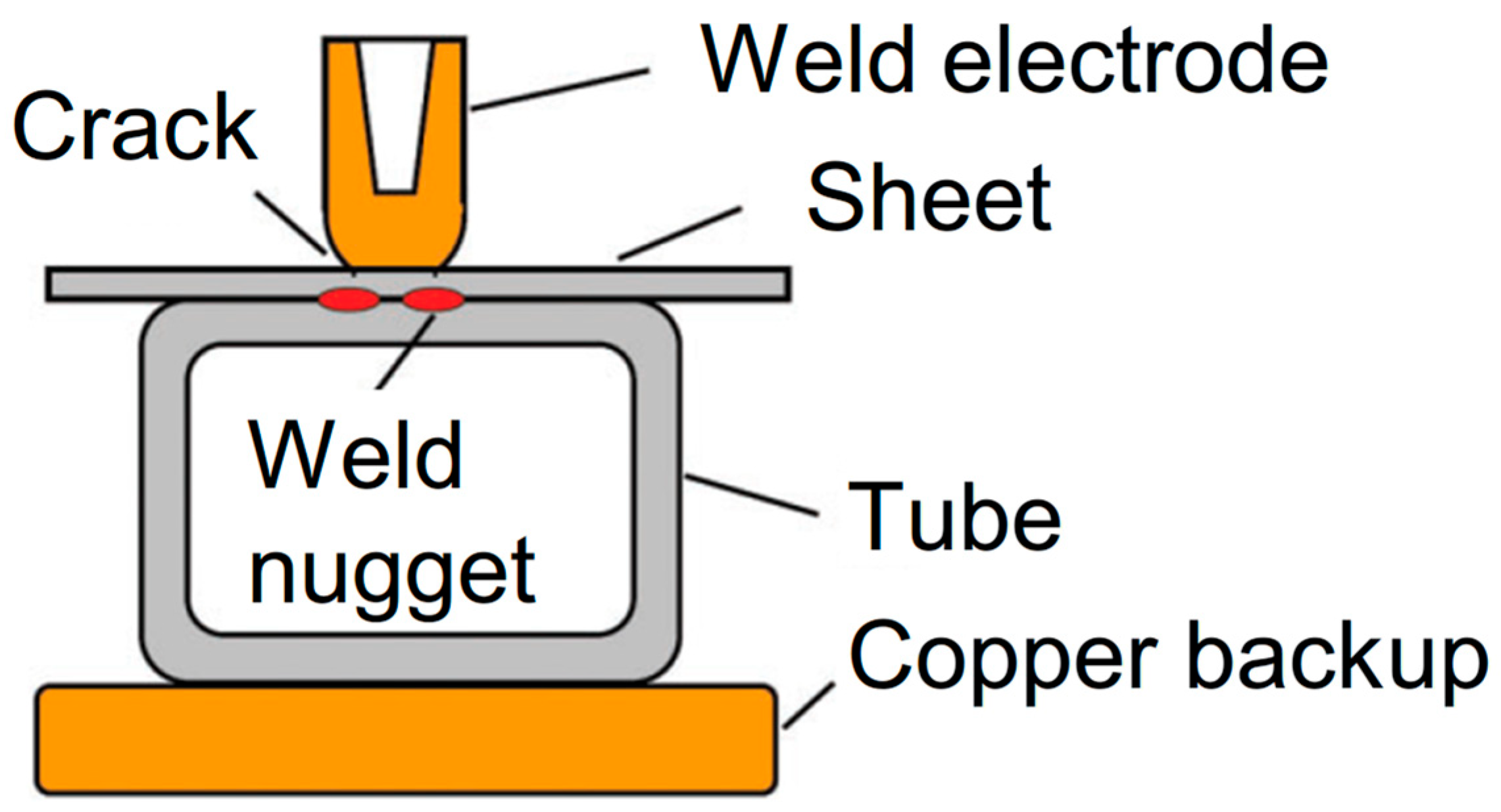
Figure 1 illustrates the process of single-sided spot welding.
The deformation of pipes due to the electrode force and a lack of internal support is cited as a challenge in resistance spot welding of pipes. To improve the joining quality, Yang et al., among others, recommend reducing the electrode force, which is expected to result in less deformation of the pipes. The maximum welding parameters specified are a welding current of up to 15.5 kA and an electrode force of 2.8 kN [
9].
However, this contradicts the usual recommendations for resistance welding technology, as high electrode forces are generally required to achieve the highest quality joints [
13]. According to Zhou and Cai, this is due to the necessary balance between the thermally induced melting pressure and the surface pressure exerted by the electrode force to prevent excessive welding spatter [
14].
Regarding single-sided sheet-to-tube resistance spot welding, 3D FEM analyses are known to primarily deal with the potential for melt penetration into the inside of pipes. Nielsen, Chergui and Zhang showed that the deformation of the tubes, but also reduced electrode forces, lead to lower melt penetration, which reduces the joining quality [
15].
Sennewald and Gruner compared the influence of the free bending length of aluminum hollow profiles with cross-sections of 40, 60, and 100 mm wide hollow profiles for single-sided resistance spot welding of hollow profile-sheet metal joints. It was shown that the plastic deformation of the hollow profiles increases significantly in a non-linear manner with increasing bending length. An uneven distribution of the electrode force is observed, which leads to local overheating and overall deterioration in joining quality [
16].
Concerning resistance projection welding of pipe–sheet metal connections, applying weld projections to pipe sections is one possible solution. Yun et al., for example, presented studies of ring-shaped weld projections on pipes for connecting sheet metal structures using resistance projection welding [
17].
Rudolf has dealt with deformation analyses of hollow profiles during the welding process within the context of resistance spot welding of hollow profile–sheet metal connections [
18]. Here, the deformation of the hollow profiles is understood as a challenge for the joining process. As the deformation of the hollow profiles increases, the contact conditions between the hollow profile and the sheet metal deteriorate, which in turn affects the formation of the melt and weld lens. Thus, Rudolf showed that smaller weld lenses and more pronounced weld spatter occur with increasing profile deformation. In this context, improved contact conditions between the hollow profile and the sheet metal were demonstrated using support structures [
18].
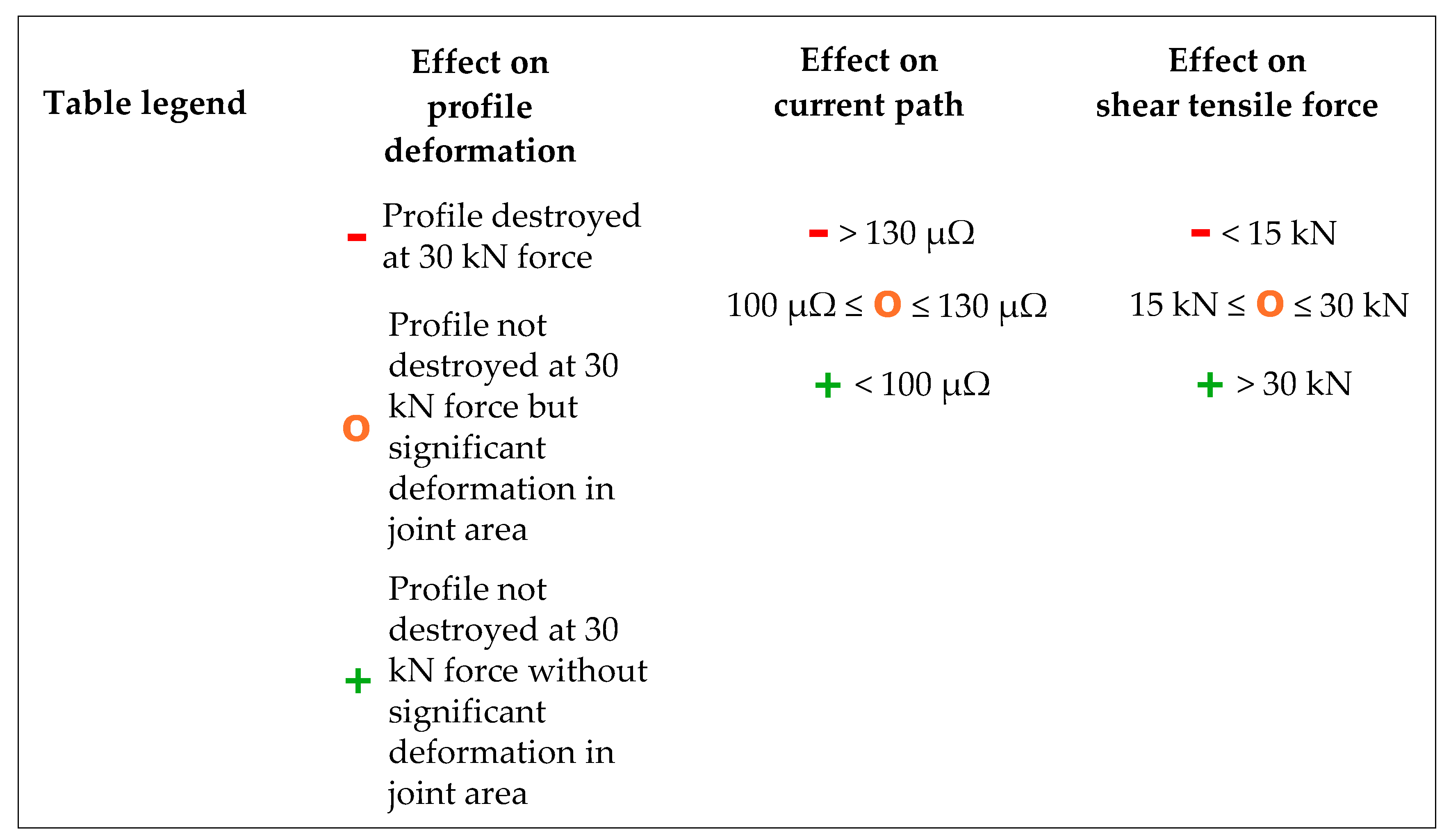
Table 1 provides a summary of the recommended welding parameters from the literature sources reviewed for single-sided resistance spot welding of steel pipes and hollow profiles.
The preliminary investigations described above show that joining hollow profile–sheet metal connections is a challenging task, with the deformation of hollow profiles being particularly relevant. This is an area where research into resistance projection welding with wire mesh inserts in combination with capacitor discharge technology can contribute to the successful joining of hollow profile to sheet metal connections.
On the one hand, the American Welding Society demonstrated that large-area projection welding electrodes can ensure even force distribution across multiple weld beads and reduce local deformation [
19].
On the other hand, Koal et al. emphasized in their observations that the use of capacitor discharge welding technology minimizes thermal heat input, thereby reducing the heat-affected zone. This also reduces component distortion [
20].
Therefore, the approach presented in this paper is motivated by resistance projection welding of wire mesh interlayers for joining hollow profile–sheet metal connections through large-area force distribution and locally limited heat inputs. This is intended to leverage the potential for joining hollow profiles for structural applications.
In the following, scientific contributions on wire joining are considered for classifying scientific findings. In welding technology, the joining of intersecting wires is known as “cross wire welding.” Mikno and Pikuła rated a projection welding machine combined with a follow-up system using spring elements as effective due to its fast follow-up characteristic and reduced occurrence of weld spatter. In comparison between structural steel S235 and stainless steel AISI 316L, Nielsen was able to show that higher penetration depths are already achieved for stainless steel at comparatively low current values [
21].
Xue et al. [
22] and Yang et al. [
23] introduced the term entangled metallic wire mesh (EMWM) for applications in vibration damping and energy absorption. These involve irregular wire–sheet connections, with no emphasis on structural joint strength.
Preliminary investigations by the authors of this work have so far focused on joining sandwich structures consisting of two cover sheets and an intermediate layer of wire mesh. Determined welding areas by maximizing the shear tensile force were presented, depending on the geometry of the wire mesh and the material used. Shear tensile forces of more than 40 kN were achieved using a wire mesh consisting of 50 projections with a diameter of 1.2 mm made of X6Cr17 and sheet metals made of HC340 with a thickness of 2.0 mm. This required the application of a relatively high electrode force of 30 kN [
24].
The literature review shows that previous research topics have primarily focused on resistance spot welding of hollow profiles to sheet metals. Profile buckling was presented as a challenge, resulting in recommendations for comparatively low electrode forces. The joining quality is reduced due to the associated overheating of the joints, which means it does not represent a satisfactory solution and there is a need for further research. For this reason, resistance projection welding using an intermediate layer of wire mesh is considered in order to exploit process-related advantages. The corresponding objectives of the work are listed below.
The primary objective of this work is to assess the suitability of resistance projection welding of wire mesh interlayers as a novel quasi-surface joining process between hollow profiles and sheet metals. The use of capacitor discharge technology aims to concentrate the welding heat at the joints due to rapid current increases and short welding times. Flat projection welding electrodes are intended to enable force distribution over a large area to reduce deformation of the hollow profiles. In addition, natural weld projections at the intersections of wire mesh are used as intermediate layers to create 60 joints with one pulse between sheet metal and hollow profile. This is intended to prevent local buckling of the hollow profiles due to the application of force and heat. From a production standpoint, welding hollow profiles along their edges is not practical in this context as is the case, for example, with beam or arc welding processes and there is a need for a suitable joining technique. For this reason, the novel joining technique under investigation is proposed to leverage technological advantages through a quasi-surface joint. In this context, the objective is to identify welding areas based on the system parameters of electrode force and charging energy, while determining the deformation of the hollow profile and defining acceptable ranges. Moreover, process aids in the form of support structures and welding electrodes with lateral contact points on the hollow profiles are being developed, and their suitability for the joining process will be evaluated.
2. Materials and Methods
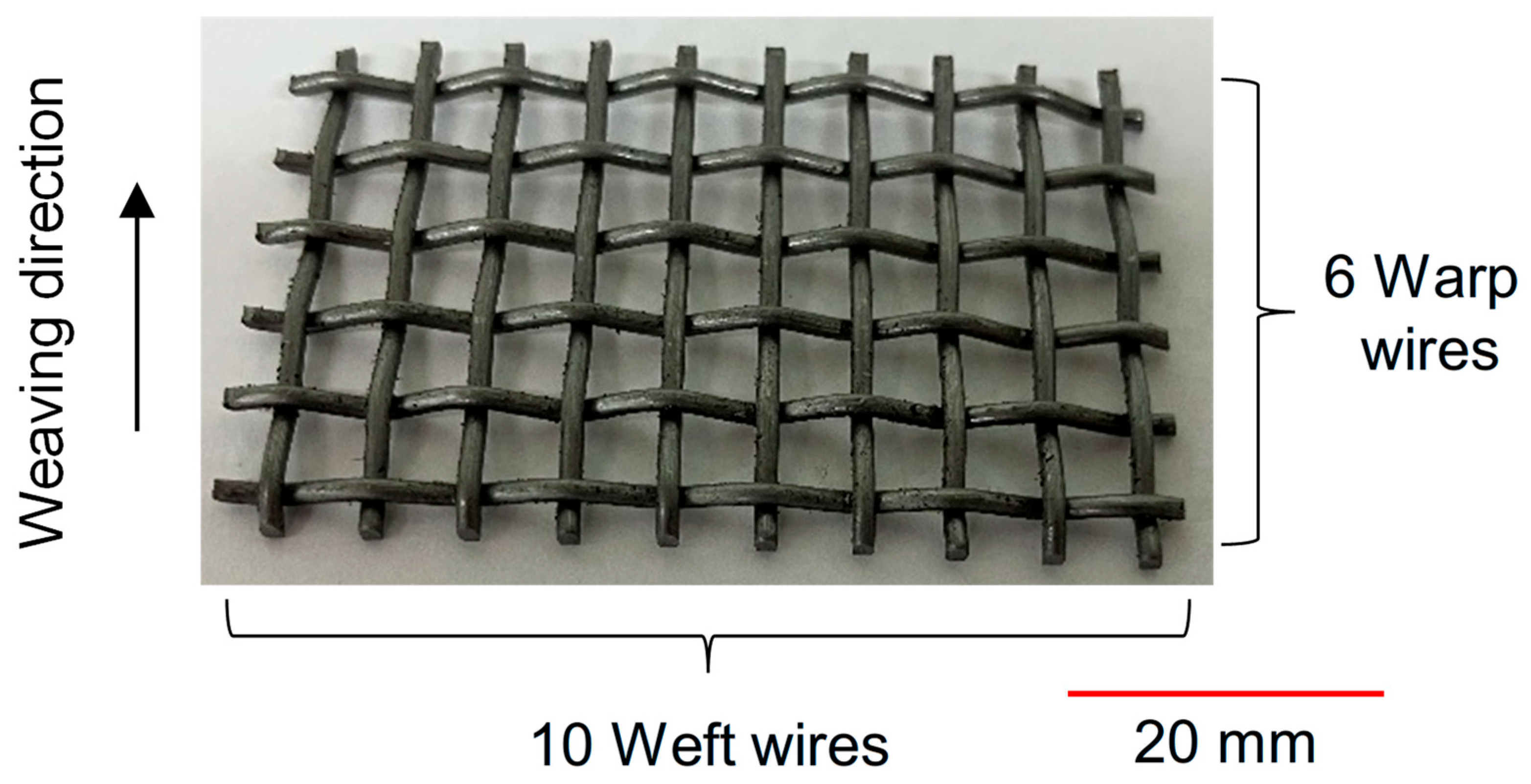
Within this work, welding experiments are carried out on sandwich structures consisting of hollow profiles and sheet metal with an intermediate layer of wire mesh. Wire meshes are manufactured using a weaving technique, consisting of interlaced warp and weft wires. This creates naturally formed weld projections at the intersection points of the wires, which are local elevations. The following
Figure 2 shows a schematic representation of wire mesh and the actual wire mesh used with 60 projections.
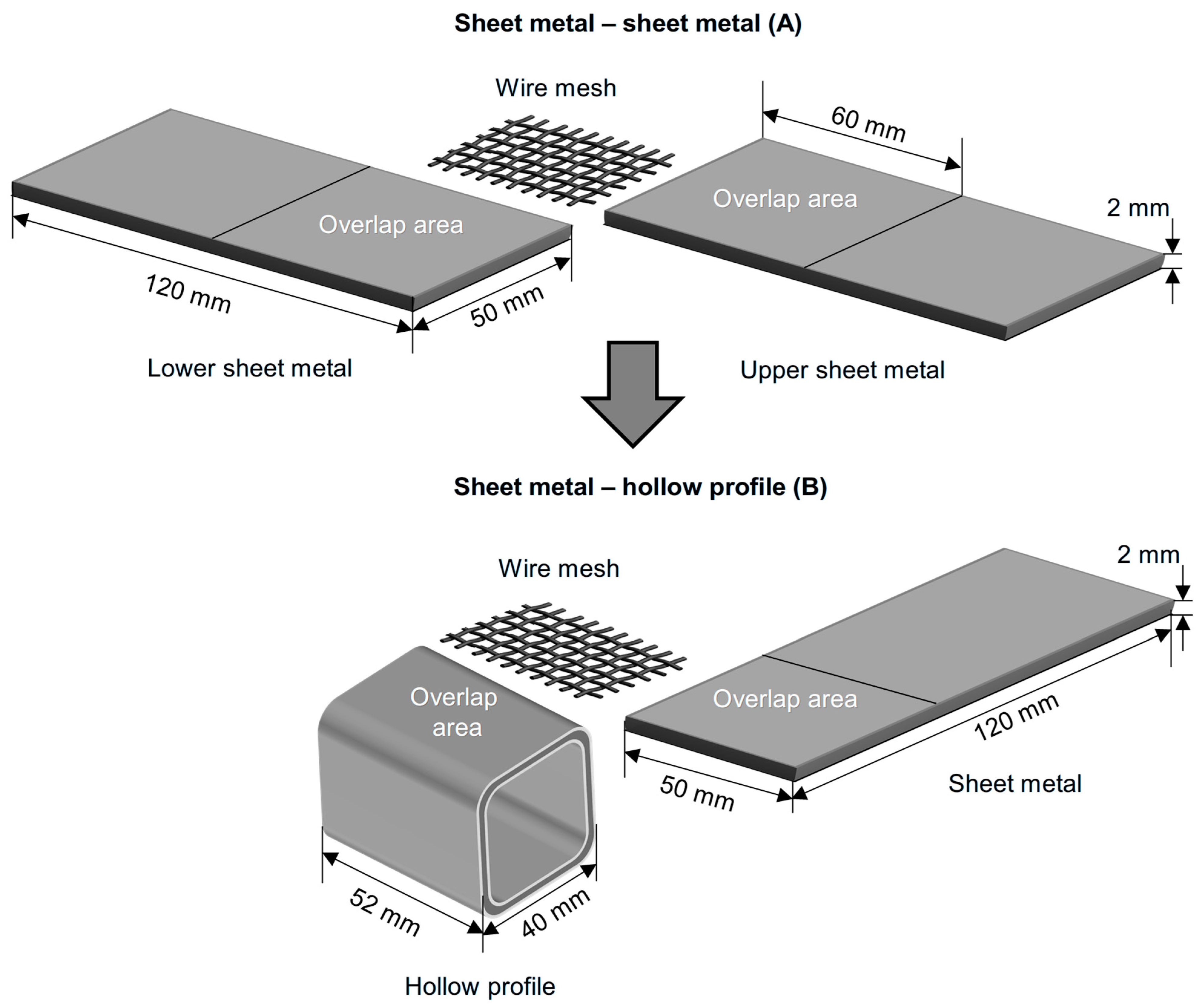
To illustrate the arrangement of the joining partners,
Figure 3 shows the combinations of sheet metal–wire mesh–sheet metal and hollow profile–wire mesh–sheet metal.
Table 2 lists the materials used for the sheet metal, hollow profiles, and wire mesh. High-strength Docol 780 and 800 DP steels are used for sheet metal and hollow sections due to growing efforts to use high-strength steels for structural applications. X6Cr17 is used as a wire mesh material due to its ferritic microstructure and availability. The hollow profiles are manufactured by roll forming and the sheet metal strip is welded, resulting in a weld seam. With reference to
Figure 3, the weld seam is always placed at the bottom of the hollow profiles during the tests.
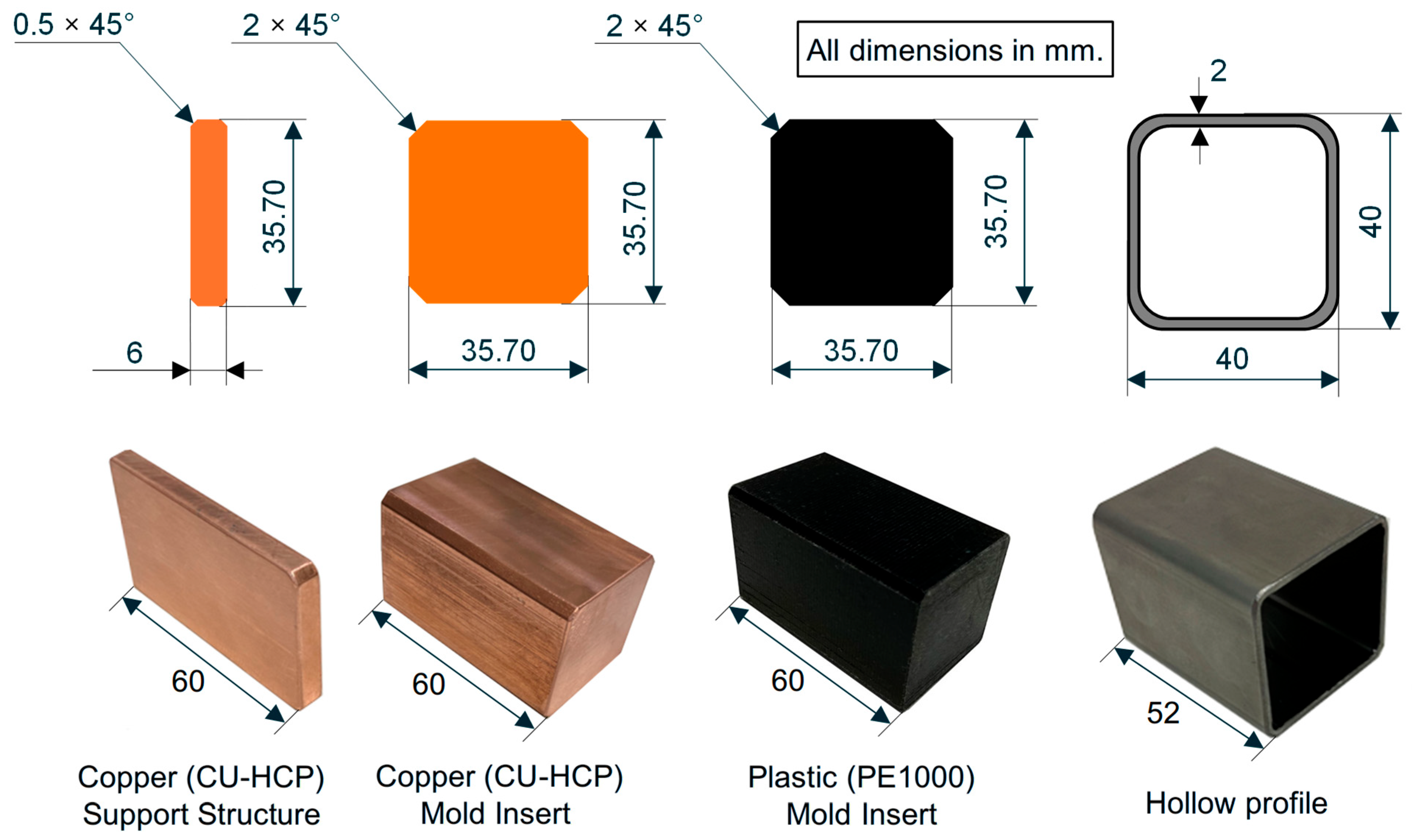
Based on this, various process aids in the form of support structures, mold inserts, and customized electrode design were developed and tested in welding trials. These are made of plastic PE1000 and copper CU-HCP (2.0070). Furthermore, welding tests are carried out on two sheet metal layers with an intermediate layer of wire mesh to compare the influence of geometry of the joining partners.
Figure 4 shows the process aids that have been developed. These are designed to counteract the deflection of the profiles due to the electrode force acting on them.
Regarding the modified electrode design,
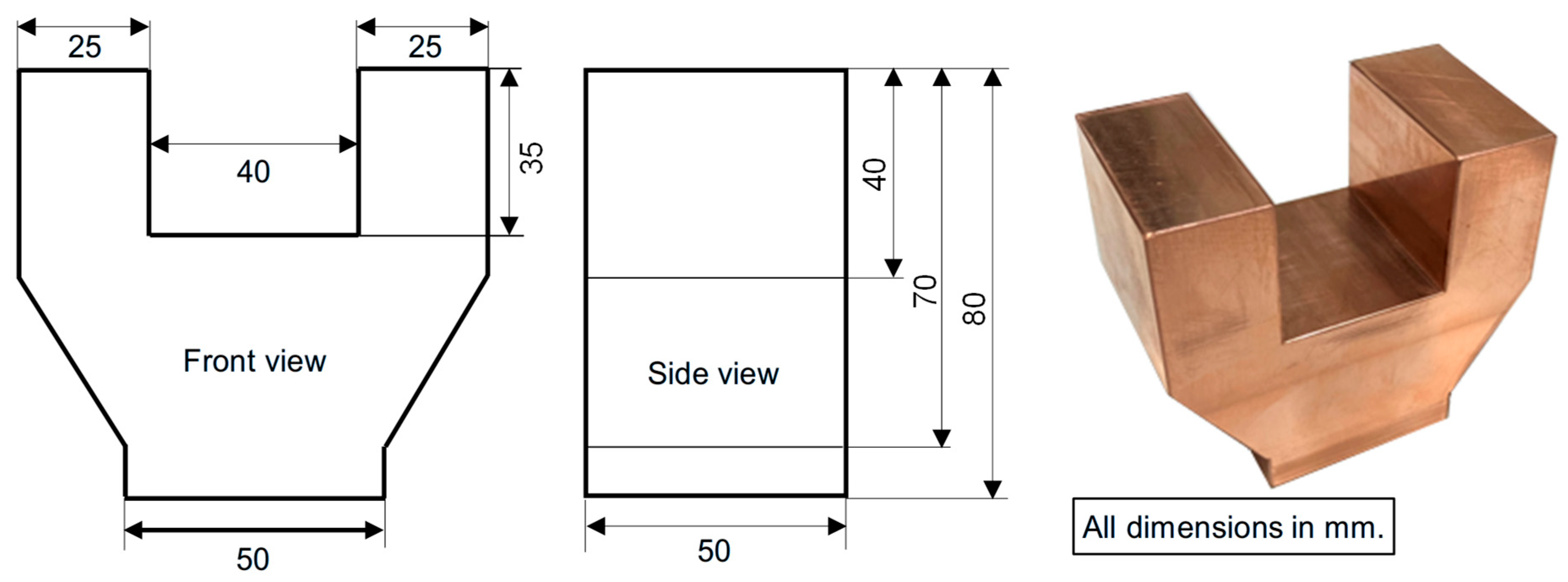
Figure 5 shows the welding electrode made of copper CU-HCP (2.0070) used for inserting hollow profiles. The aim here with the selected geometry is to achieve a technical zero gap between the welding electrode and the sides of the hollow profiles.
To evaluate the process aids and appearing deformations, the geometric dimensions of the hollow profiles were measured using a digital caliper with two decimal places before and after the welding tests and changes are determined. Measurements are taken individually for each hollow profile before and after the welding test in order to determine the plastic deformation as the difference between the measured values. To quantify bulges and dents, the distances are measured at 11 or 3 points on the inside of the hollow profiles.
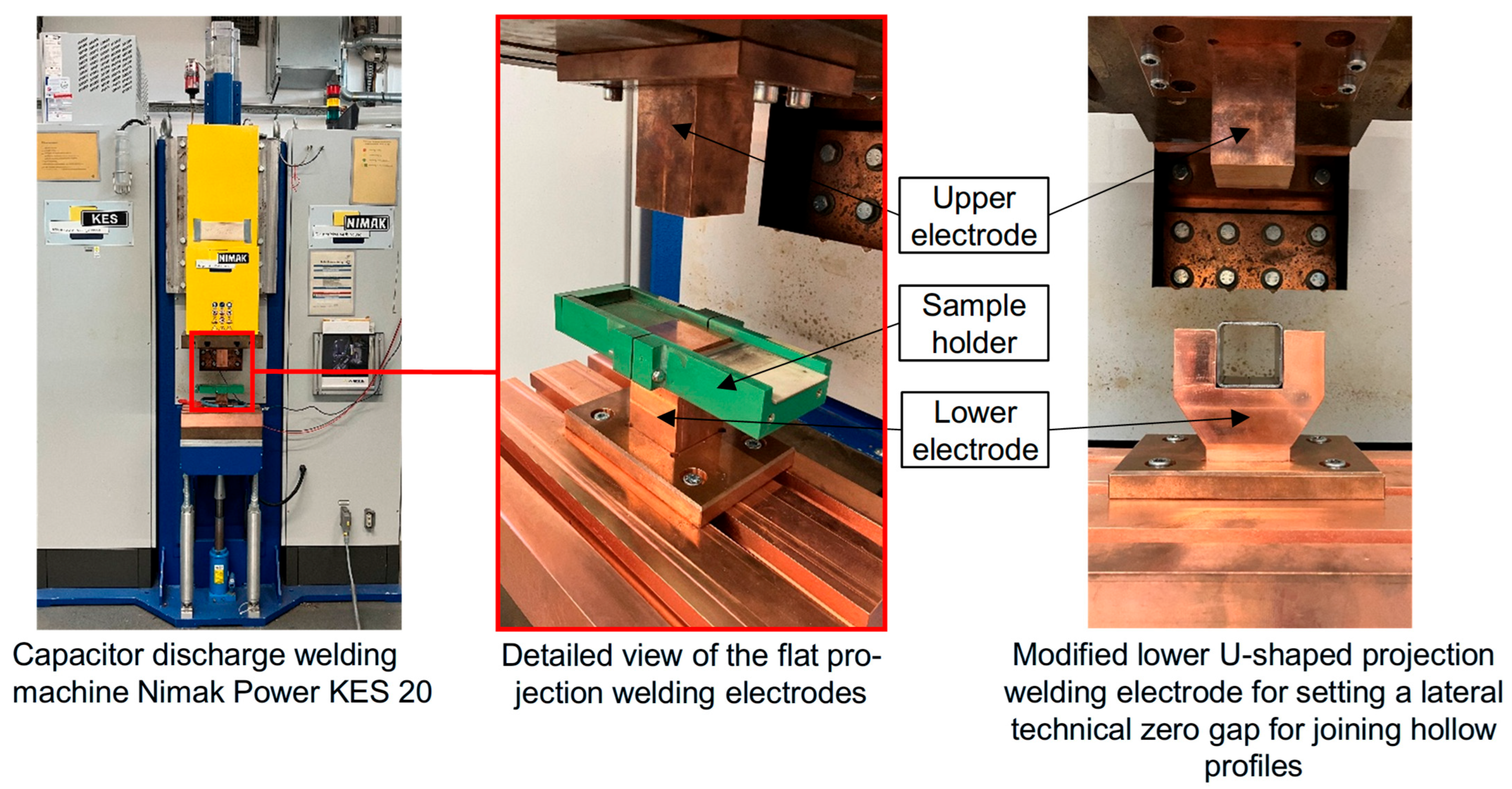
The welding experiments are carried out using a Nimak Power KES 20 capacitor discharge welding machine (Germany, Wissen).
Figure 6 shows the machine and detailed views of the mounted welding electrodes.
This machine provides the parameters “transmission ratio,” “charging energy,” and “electrode force.” In this study, the charging energy and electrode force are systematically varied in areas up to 19,000 Ws energy respectively 30 kN to determine welding ranges. The transmission ratio is kept constant at 100:1 to achieve short welding times. The transformation ratio is the ratio of coil windings in the primary and secondary transformer circuits. This affects the discharge curve.
The machine’s power generation system operates with servo hydraulics, and the capacitors have a combined total capacitance of 4950 μF. The charging voltage is 2771 V at 19,000 Ws charging energy. To follow up the upper electrode and the joining partners during welding, six elastomer springs with a spring stiffness of 640 N∙mm−1 are installed. These allow the electrode to be repositioned quickly and maintain the set electrode force during welding. The initial height and outer diameter of the springs are both 32 mm. In addition, the setdown of the welds is determined by the movement of the upper electrode using a position sensor. This is used to evaluate the joining process and the formation of the joint. The flat projection welding electrodes have a cross-sectional area of 50 × 50 mm2 and are also made of copper CU-HCP (2.0070).
A Matuschek SPATZ MULTI04 welding tester (Matuschek Meßtechnik GmbH, Alsdorf, Germany) is used to record welding times, current values and electrical resistances with a sampling rate of 20 kHz. The resistance value of Rmin indicates the minimum electrical resistance during the welding process and is used to compare different process aids regarding the length of the current path. To determine the electrical voltage and electrical resistance, measuring points are selected on the upper and lower welding electrodes.
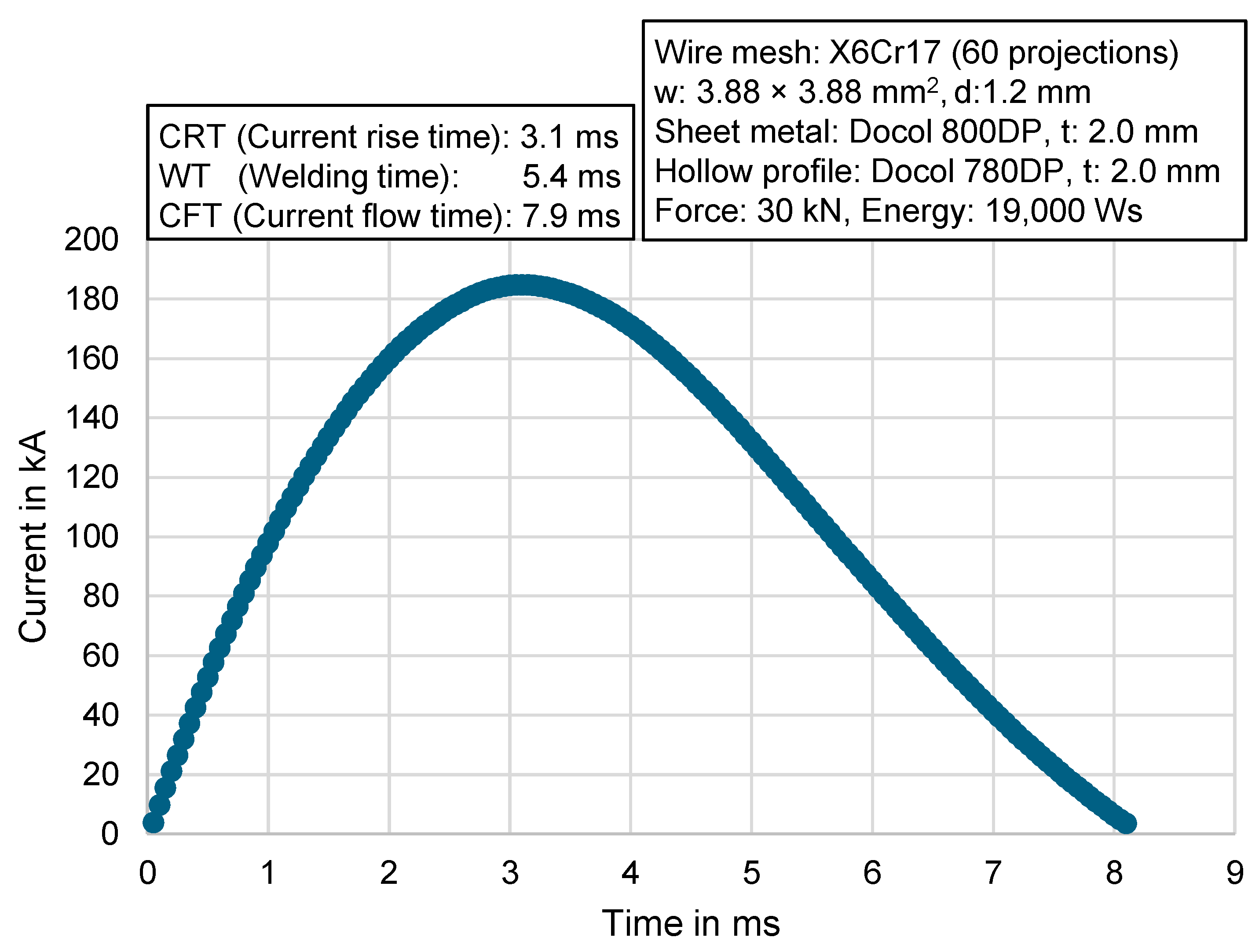
Figure 7 shows characteristics of capacitor discharge welding technology with the current rise time
CRT, welding time
WT and current flow time
CFT for the machine setting with a transmission ratio of 100:1.
Figure 7 illustrates that the used capacitor discharge welding machine can achieve rapid current rises with a
CRT of 3.1 ms and, at the same time, short current flow times with a
CFT of 7.9 ms, according to [
25].
In order to proceed efficiently in terms of experimental effort and result quality, Taguchi’s statistical experimental design is used with Minitab Statistical Software, version 22.4.0, from Minitab GmbH (Germany, Munich). The test plans’ objective is to maximize the permissible shear tensile forces during destructive testing. Shear tensile forces, which are determined in destructive tests, are considered as a quality criterion for the joints.
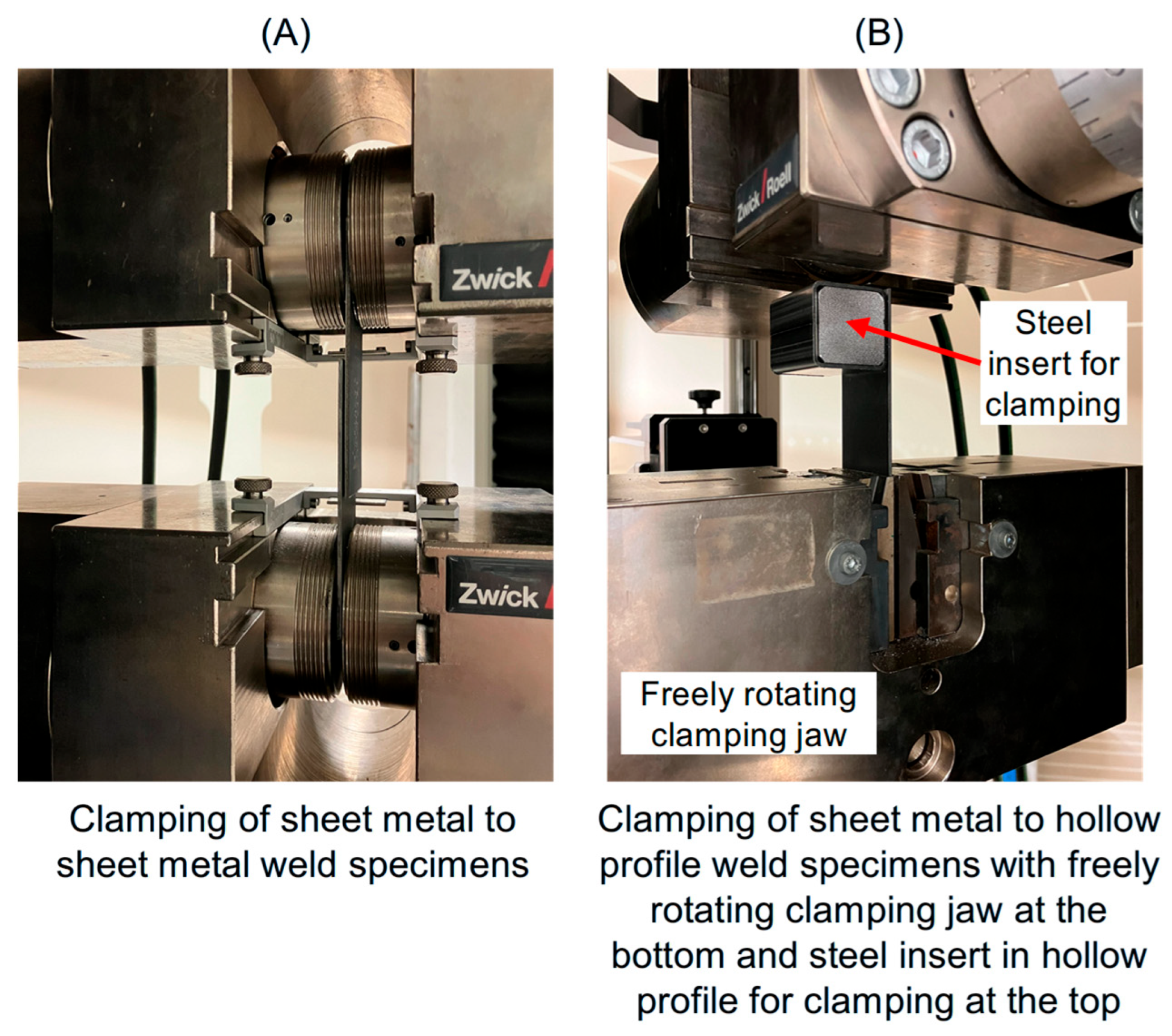
Figure 8 shows the Allroundline Z100 shear tensile testing machine from the manufacturer ZwickRoell GmbH & Co. KG (Germany, Ulm) with the sheet metal–sheet metal and sheet metal–profile test setups. Each parameter combination is tested twice for statistical verification.
A lower free-rotating clamp is used for testing sheet metal to profile. A steel mold insert for the hollow profile is applied for clamping on the machine. Clamping pressures of 120 bar, a test speed of 10 mm∙min−1 and a preload of 15 N are utilized.
3. Results and Discussion
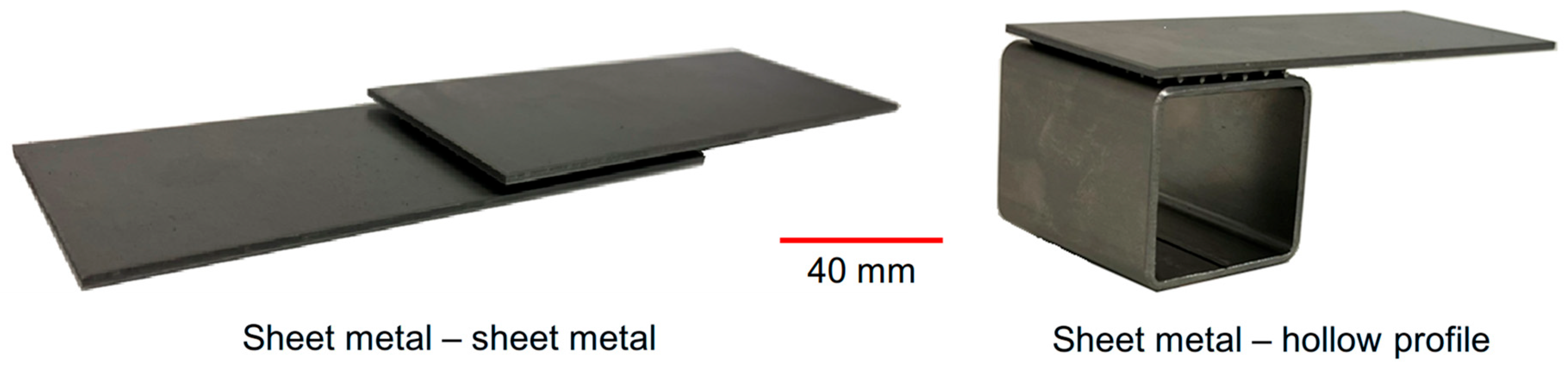
The weld samples from this work in sandwich construction consisting of sheet metal–sheet metal and sheet metal–hollow profile with an intermediate layer of wire mesh are shown in
Figure 9.
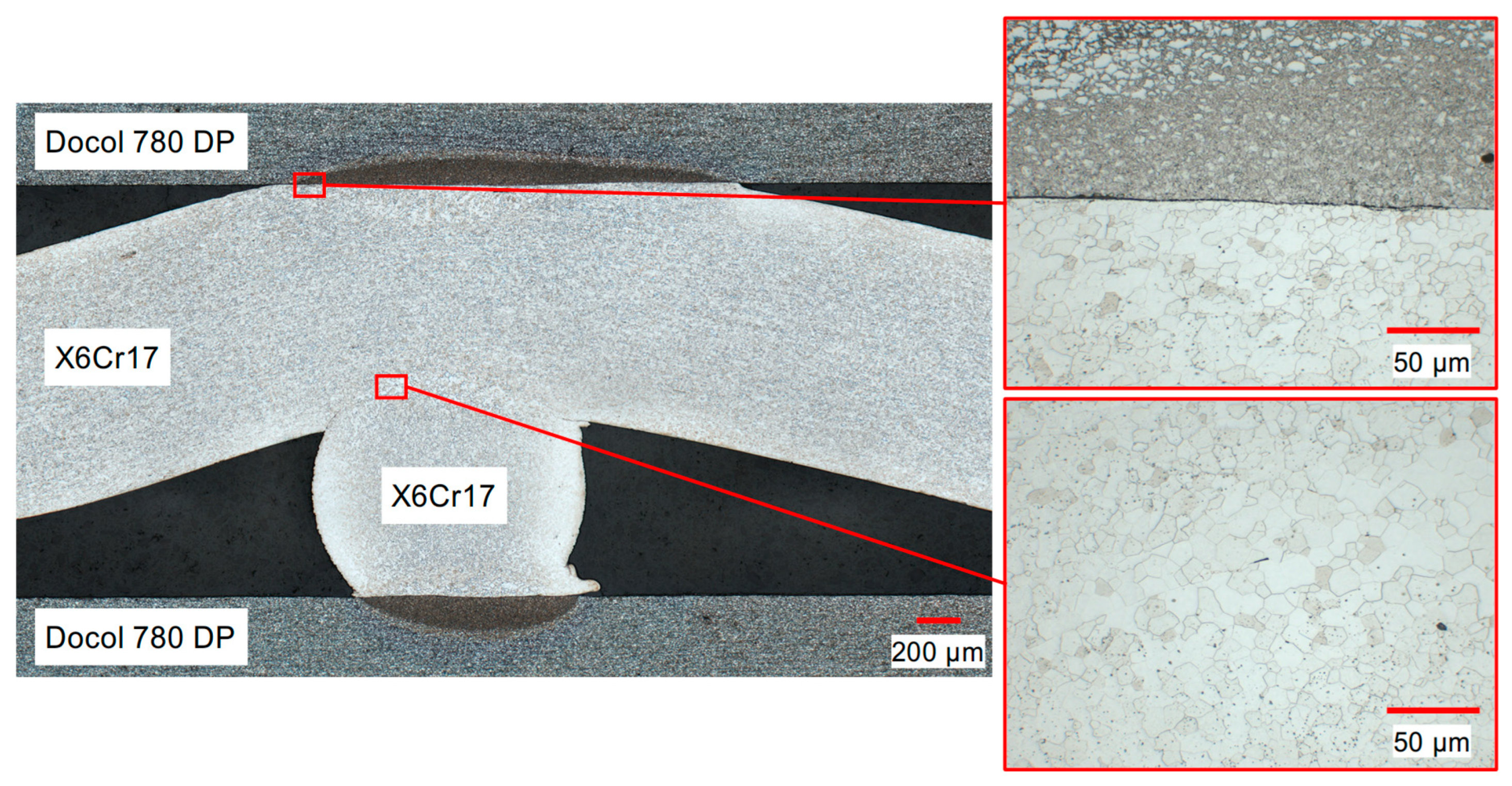
Figure 10 shows a cross-section of a sheet-to-sheet joint with a wire mesh interlayer. This illustrates the characteristics of capacitor discharge welding, in which, due to the short welding times and rapid current rises, no significant mixing processes occur and fine separation lines are present.
3.1. Deformation of Hollow Profiles During Resistance Projection Welding Depending on the Used Process Aids
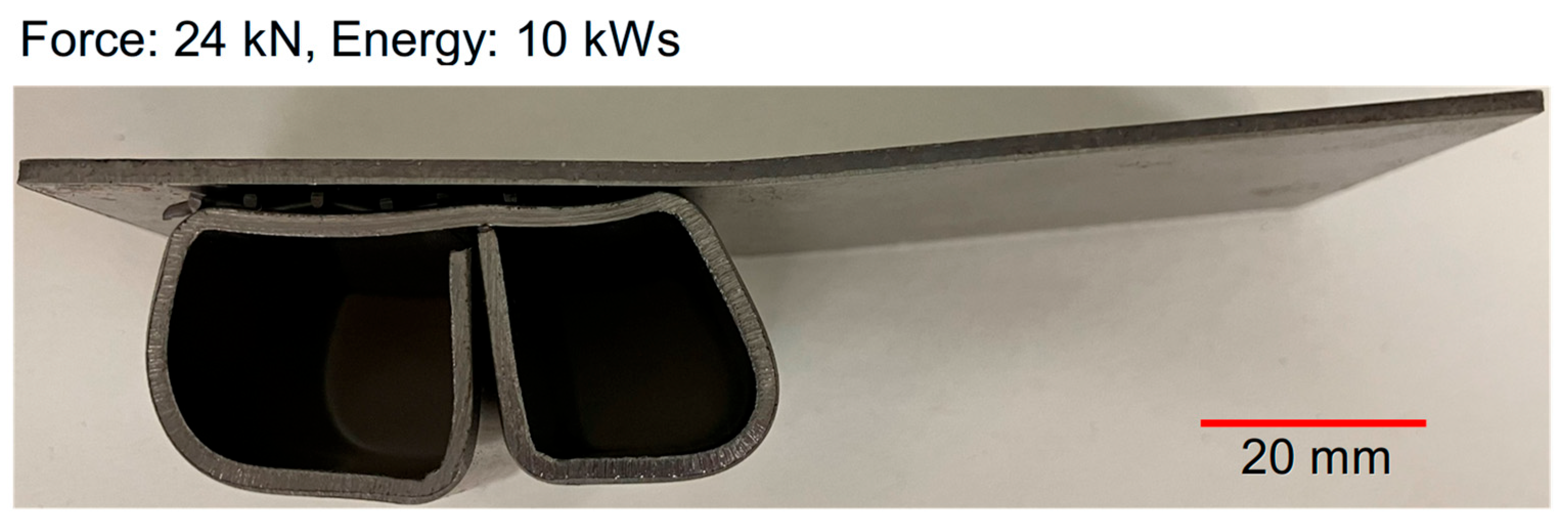
At the beginning of the investigations, the question of whether the selected hollow profile with a length of 52 mm can withstand the maximum electrode force of 30 kN is considered. Regarding this, the electrode force was systematically increased in 1 kN increments at a constant charging energy of 10,000 Ws. At a setting of 24 kN electrode force, the hollow profile fails and undergoes plastic deformation. This causes the weld seam used during production of the profiles to tear, as shown in
Figure 11.
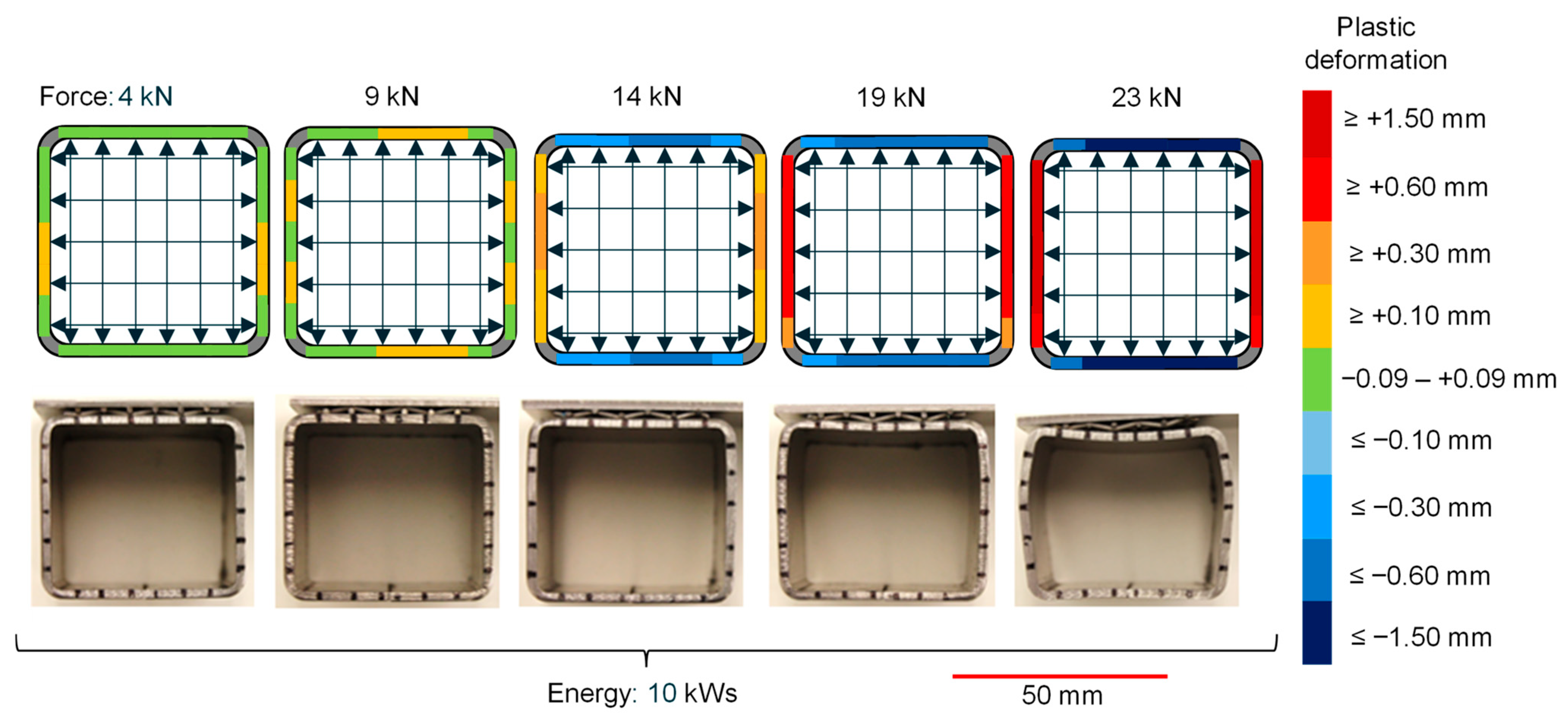
Based on this finding, the upper welding range for joining sheet metal hollow profiles without process aids is set at 23 kN. The plastic deformation of the hollow profiles was then examined in detail based on the following
Figure 11 after the welding process for electrode forces of 4, 9, 14, 19 and 23 kN. The eleven marked measuring points within the hollow profiles are considered. The legend on the right distinguishes between different deformation classes, with positive values indicating outward buckling and negative values indicating inward buckling.
Figure 12 shows that for comparatively low electrode forces of 4 and 9 kN, the plastic deformation is small, at up to 0.3 mm. From an electrode force of 14 kN, there is a strong inward buckling on the upper and lower sides of the profile of up to 1.5 mm. At the same time, the outward buckling on the sides of the profile increases to up to 0.6 mm. This behavior increases for electrode forces of 19 and 23 kN, with inward deformation on the upper and lower profile sides and outward deformation on the profile sides of over 1.5 mm.
Similar to the previous
Figure 12,
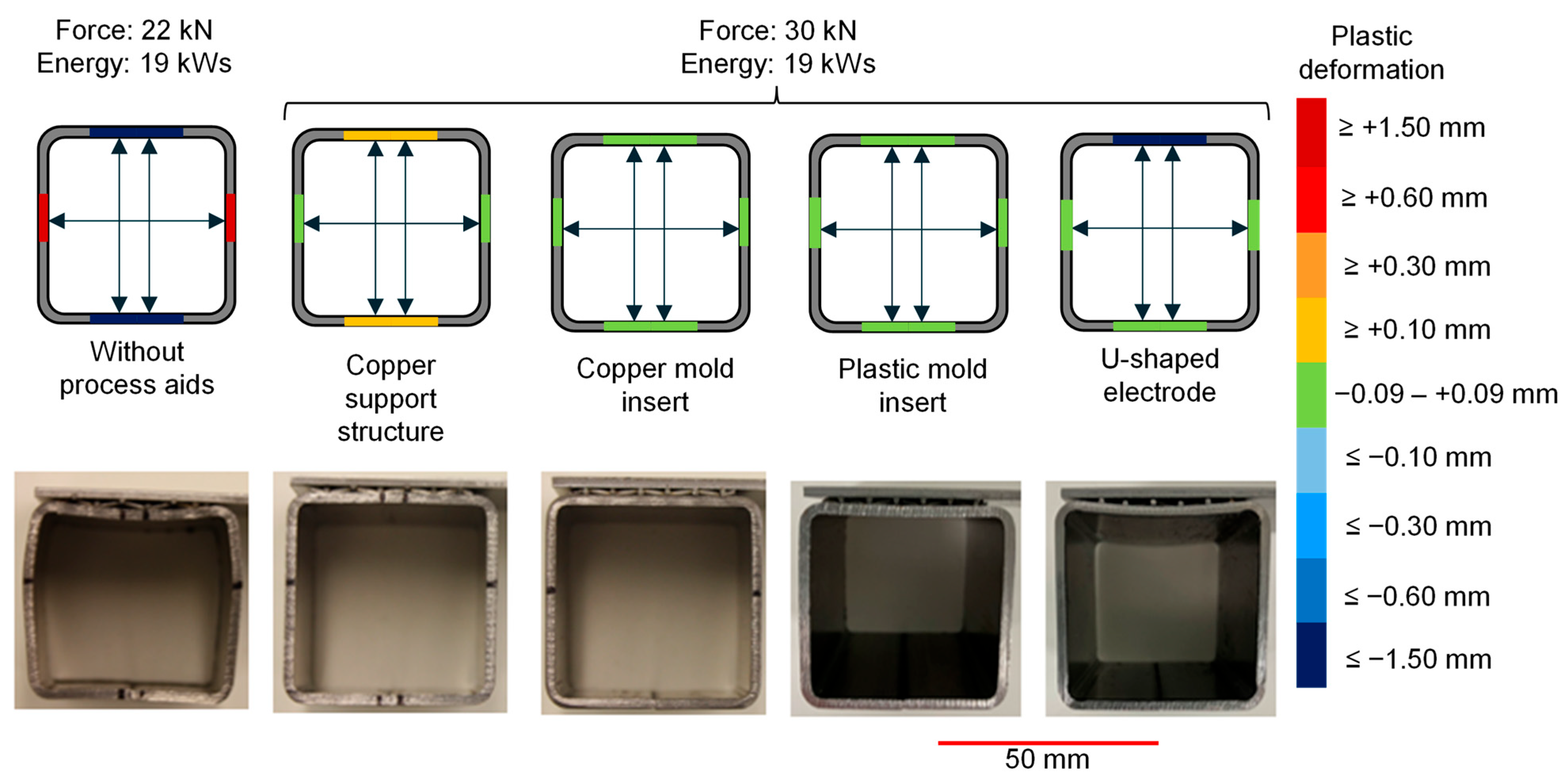
Figure 13 shows the deformation of the hollow profiles using process aids in the form of support structures, inserts, and a U-shaped electrode design. The form design of the support structure and the mold inserts is designed to reduce internal buckling on the lower and upper sides of the profile. In addition, the mold insert is designed in both a copper and a plastic version in order to consider impacts on the current path, which are discussed in more detail in
Section 3.2. The U-shaped electrode design is specifically designed to avoid internal contact with the hollow profiles compared to the other process aids used and to create a technical zero gap on the outer sides of the profiles.
All of the process aids considered allow the maximum electrode force of 30 kN to be set on the machine side without destroying the hollow profiles. As discussed in chapter 2, it is effective to apply high electrode forces to achieve desired welding areas with high shear tensile forces. The use of the support structure and mold inserts results in minimal plastic deformation of up to 0.3 mm after welding sheet metal to hollow profile. For the U-shaped electrode design, it is noticeable that the two profile sides and the lower profile side are almost undeformed after welding. In contrast, the upper profile side shows comparatively strong inward buckling above 1.5 mm.
3.2. Influences of Joining Aids on the Welding Behavior and Achievable Shear Tensile Forces of Sheet Metal–Hollow Profile Joints
In the following, the joining quality is firstly examined based on achievable shear tensile forces of sheet metal–profile connections. For this purpose, L16 test plans according to Taguchi’s statistical test planning are considered with results regarding the use of no process aids, with a copper mold insert, and with a copper support structure.
Four levels of charging energy between 7000 and 19,000 Ws are used. The test series with process aids feature four levels of electrode force between 18 and 30 kN, whereas levels between 10 and 22 kN are used without process aids. The reason for this is the destruction of the hollow profile at an electrode force above 23 kN, as shown in
Section 3.1 and
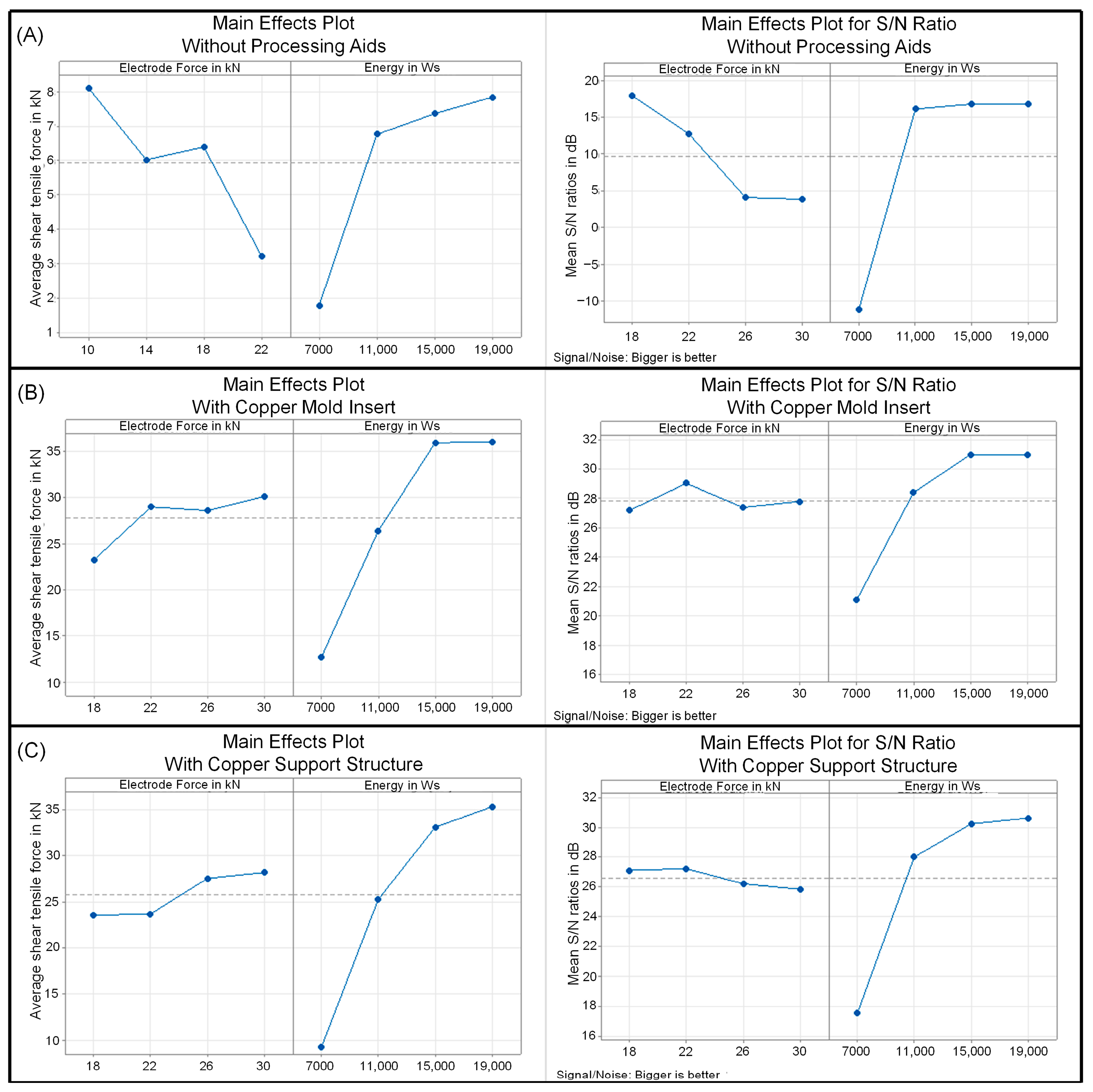
Figure 10. The illustrations in
Figure 14 show the main effects plot on the left-hand side. These indicate the influence of the electrode force and the charging energy on the shear tensile force separately. The respective signal-to-noise ratio (S/N-ratio) is shown on the right-hand side. In a statistical context, the S/N-ratio is considered as a measure of dispersion. A high S/N-ratio indicates a robust process, whereas a low S/N-ratio suggests unreliability.
Figure 14A shows the influence of electrode force and charging energy on the average shear forces without process aids. Overall, the average shear tensile force falls from 8 to 3 kN as the electrode force increases between 10 and 22 kN. This means that the joining quality deteriorates as the electrode force increases due to the increasing profile buckling. With increasing charging energy between 7000 and 19,000 Ws, the average shear tensile force increases from 2 to 8 kN. This illustrates that with increasing charging energy, higher heat inputs occur at the projections, causing more material to melt and resulting in larger overall connection cross-sections within the sandwich structure.
The S/N-ratio decreases with increasing electrode force. This means that the increased buckling at the hollow profiles reduces the robustness of the joining process.
Subareas (B) and (C) show the diagram curves using the support structure and the mold insert made of copper. In contrast to (A), these show an increase in the average shear tensile force up to 27, respectively 30 kN, with increasing electrode force between 18 and 30 kN. These results confirm that the joining quality can be improved with increasing electrode force. The reason for this is that, in the context of resistance welding, a balance between the surface pressure (influenced by the welding electrodes) and the melting pressure (influenced by the temperature input from the charging energy) is required to prevent overheating and excessive weld spatter formation. These relationships are also described by Schuler and Twrdek [
26], for example. For (B) and (C), significant increases in the average shear tensile forces to over 35 kN are recorded with increasing charging energy between 7000 and 19,000 Ws.
The S/N-ratios are clearly positive at more than 26 dB across the entire range of tested electrode forces between 18 and 30 kN, demonstrating that the reduced profile buckling improves not only the formability but also the robustness of the joining process. Moreover, the S/N-ratios for the influence of the charging energy are also significantly higher at more than 30 dB compared to (A).
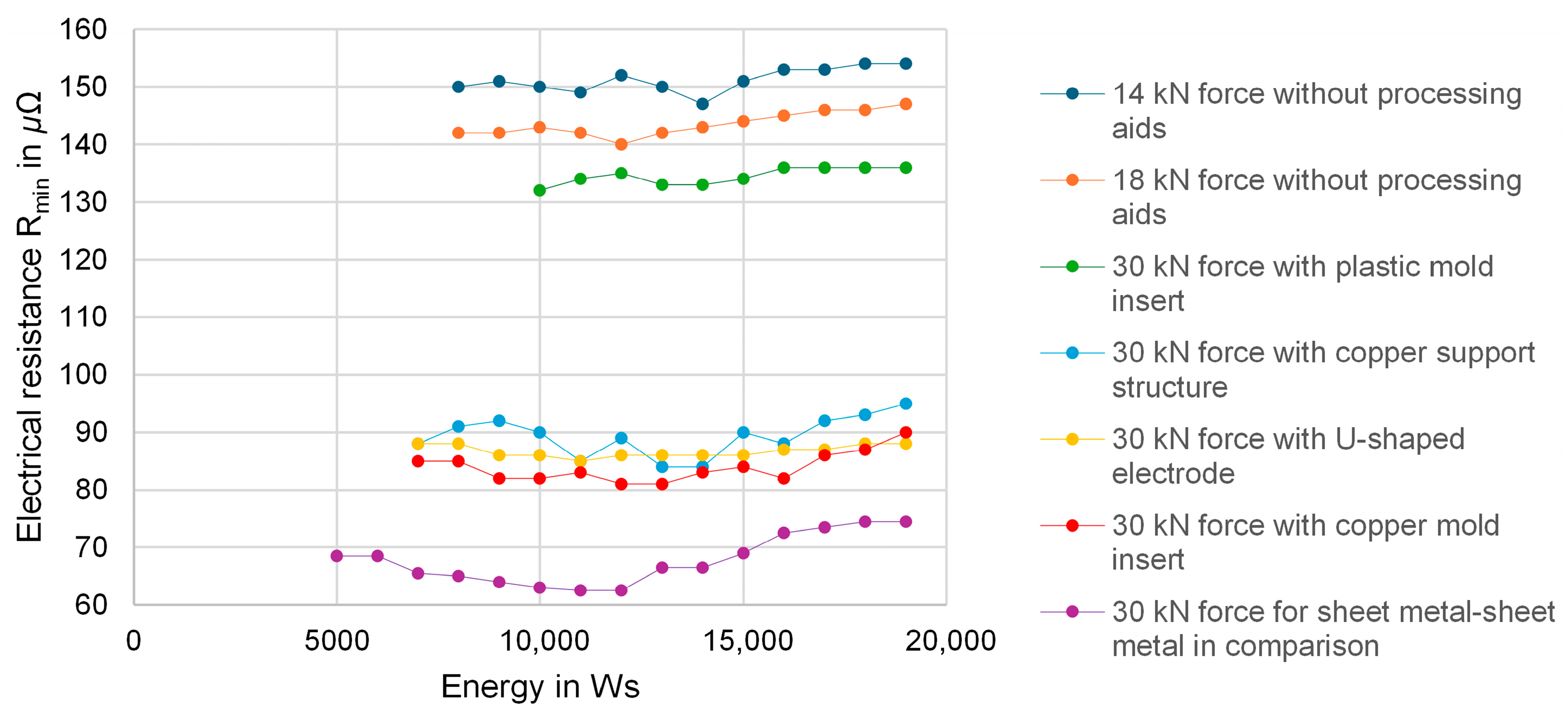
In the following, the electrical resistances during the welding process are now used as a comparison for the process aids under consideration. Electrical resistances are measured between the welding electrodes and allow conclusions to be drawn about the length of the current path between the welding electrodes.
Figure 15 also shows the welding of sheet metal to sheet metal sandwich structures, as a reference. Without the use of process aids, two different electrode forces of 14 and 18 kN are entered to indicate the influence of the electrode force on electrical resistance. An electrode force of 30 kN was used for the remaining test series.
Figure 15 shows that the lowest electrical resistances between 70 and 80 µΩ are measured for the sheet metal to sheet metal arrangement. This means that a comparatively large amount of heat is generated at the projections, while the remaining areas of the joining partners are heated slightly. This can be considered desirable, as it means that there are no significant heat losses due to long current paths, which would otherwise have to be compensated for by increased charging energy.
Low levels of electrical resistance with values between 80 and 95 µΩ are also achieved for the support structure and the copper mold insert. This can be explained by the fact that during the welding process, the electrical current hardly flows over the profile sides with the modifications made, but mostly through the auxiliary tools. The adapted electrode design with a technical zero gap on the profile sides also achieves similarly low electrical resistance values. The design of the welding electrode ensures that the current does not flow completely over the profile sides but is transferred to the side arms of the welding electrode at an early stage. This shortens the overall current path.
While using the plastic mold insert, the electrical resistances are significantly higher, with values ranging from 131 to 136 µΩ. This is because the use of an electrically non-conductive insert material means the current paths cannot be shortened, resulting in greater heating of the profile sides.
The highest electrical resistances are ultimately achieved without process aids at up to 154 µΩ. The values for a higher electrode force of 18 kN are approximately 8 µΩ lower than those for 14 kN. This can be explained by the fact that, as the electrode force increases, better contact conditions between the joining partners are achieved with increased smoothing of surface roughness. This phenomenon is also reported by Zhang, Shen and Lai [
27].
Overall, higher energy values are required for welding hollow profile–sheet metal joints without process aids and when using a plastic insert to achieve comparable heat inputs at the projections. The results show that the electrical resistance between the welding electrodes can be used to estimate the length of the current path.
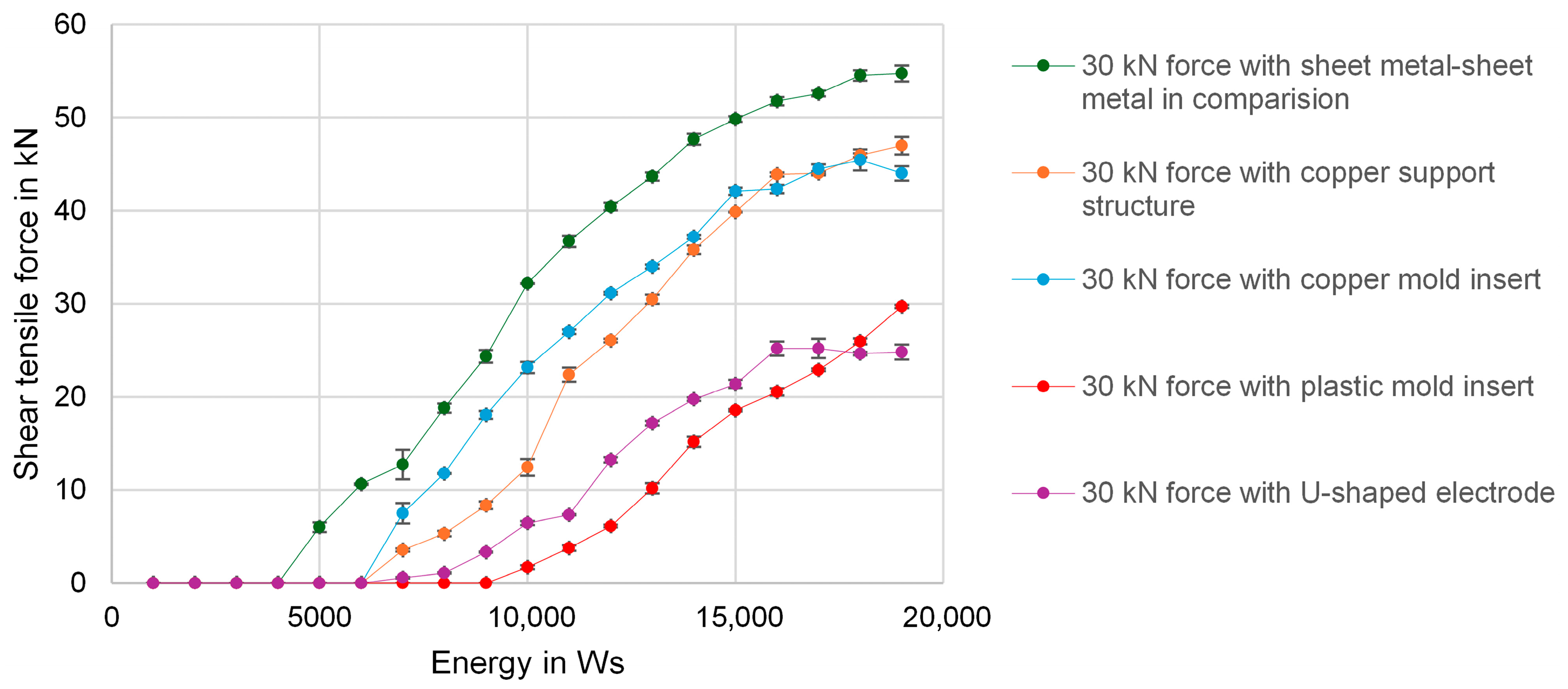
Figure 16 shows the results of the shear tensile forces determined as a function of the charging energy, providing a final assessment of the influence of the process aids considered on the joining quality of hollow profile–sheet metal joints. Additionally, the mean value is presented along with its maximum positive and negative deviations from the data points.
Figure 16 illustrates that the welding range for the sheet metal to sheet metal arrangement begins at 5000 Ws. As the charging energy increases, the shear forces increase approximately linearly up to 54 kN which represents the highest shear tensile forces determined overall. Using the support structure and the copper mold insert, lower but comparatively high values are achieved with a shear tensile force of approximately 45 kN and a charging energy of 19,000 Ws. While using the plastic mold insert, maximum shear tensile forces of 30 kN are achieved, showing a significant increase at 19,000 Ws. In conjunction with the observations from
Figure 13, this illustrates that higher charging energies are required for comparable heat inputs in the projections to compensate for the longer current path. With the U-shaped electrode design, shear tensile forces of around 25 kN are achieved, which results in a plateau from 16,000 Ws onwards.
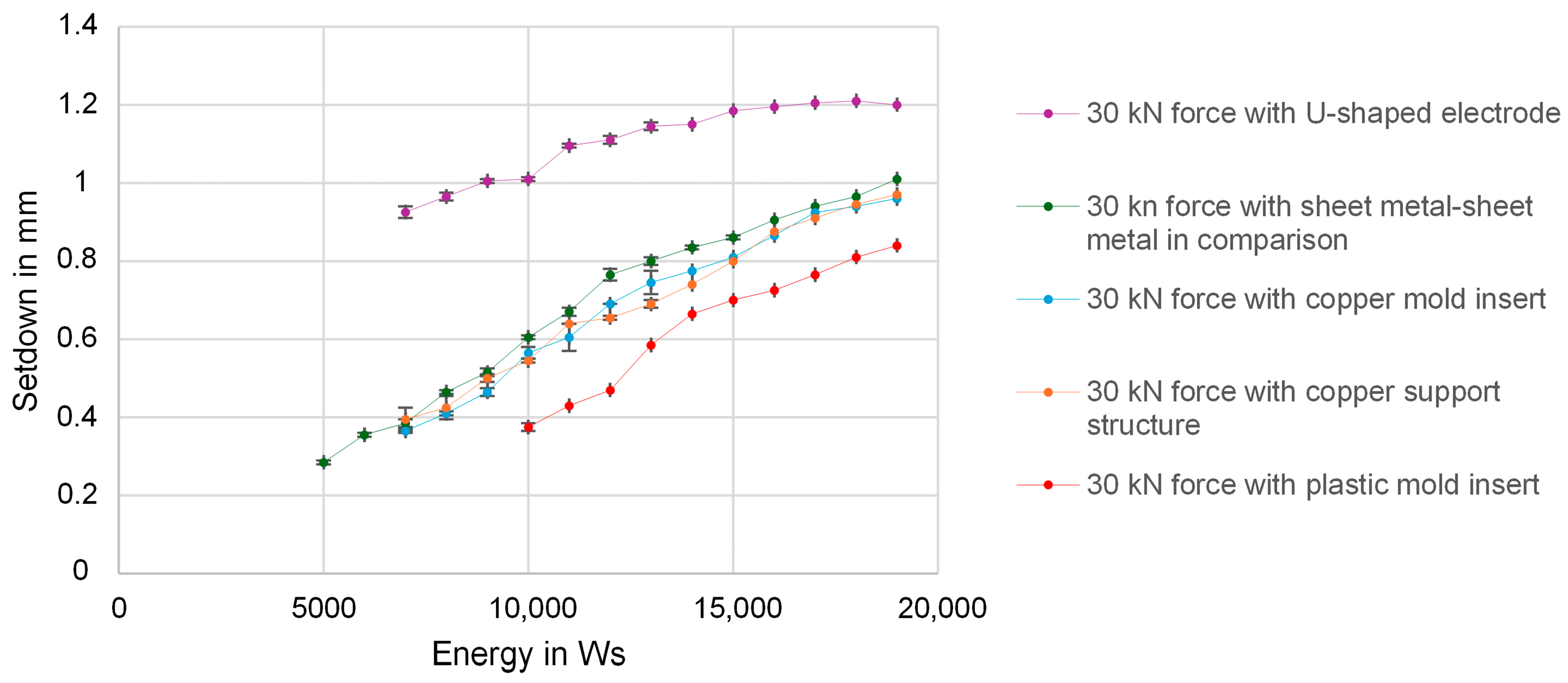
Figure 17 shows the measured setdowns during welding as a function of charging energy.
The setdowns over the charging energy are examined for the sheet-to-sheet arrangement and the process aids with copper support structure and copper mold inserts for joining hollow profiles to sheets. These show an almost linear increase in setdowns averaging between 0.96 and 1.01 mm. As shown in [
24], for the wire mesh made of X6Xr17 with a wire diameter of 1.2 mm, setdowns above 0.9 mm are effective for achieving maximum connection cross-sections at the welding projections and represent the extent of melting at the projections.
For the U-shaped electrode design, setdowns are higher, with values of up to 1.2 mm. The reason for this is that the deformation of the hollow profile during welding is included in the determination of the position. No significant increases can be observed above 16,000 Ws.
The results for the use of the plastic mold insert show that the maximum setdowns are approximately 0.15 mm lower than those of the copper mold insert. This illustrates that higher energy inputs are required here due to the longer current paths from
Figure 15 for comparable setdowns.
3.3. Observation of the Joint Formation Between Hollow Profile and Sheet Metal After Destructive Testing
This
Section 3.3 concludes with an analysis of the joint formation at the projections of the wire mesh between the hollow profile and the sheet metal. To this end, the weld samples are examined after destructive testing and effects are compared without the use of process aids, with the use of a copper mold insert, and with the U-shaped electrode design. In addition, correlations with shear tensile forces and setdowns achieved in
Section 3.2 are given.
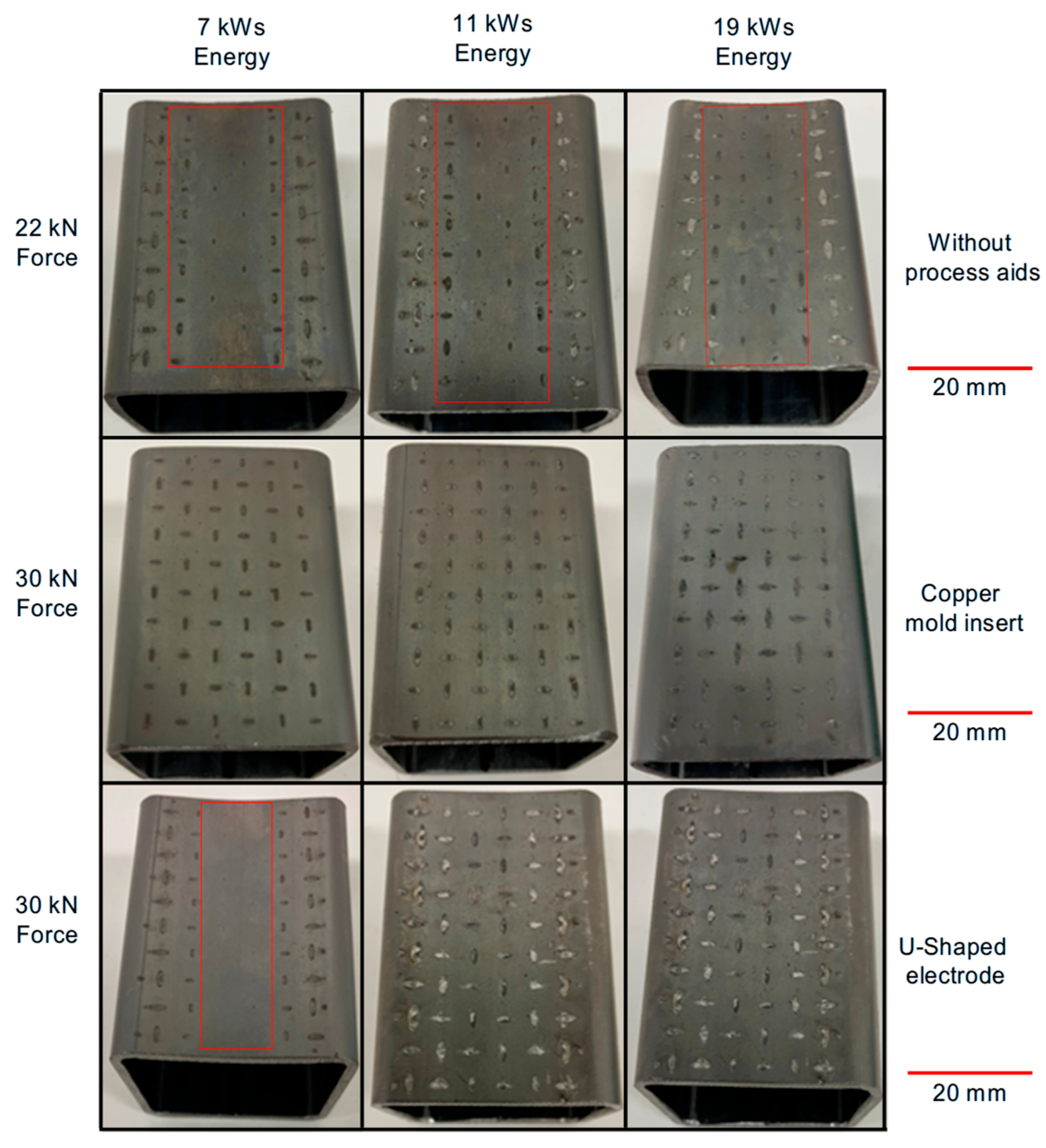
Figure 18 shows the cross-section of the joint resulting from the projections in the wire mesh. Local tearing is observed in the hollow profile at the intersections of the wires in the wire mesh. The areas marked in red illustrate the effects of profile deformation.
Figure 18 shows that without the use of process aids to support the hollow profiles during the welding process, there is no pronounced full-surface connection across all projections. The connection is mainly formed on the sides of the profiles. The reason for this is the lack of a counter surface in the inner profile areas, which means that the set electrode force cannot be reliably applied there. As a result, in some areas no connections are formed, or only significantly smaller ones. Overall, no significant change can be observed in this regard in the charging energy range from 7000 to 19,000 Ws. The comparatively low shear tensile forces with a maximum of 8 kN from
Section 3.2 regarding the results of the L16 plan can be explained by the highly uneven bond formation between the hollow profile and the sheet metal observed here.
In addition, the limitation of the maximum electrode force due to the destruction of the hollow profiles above 24 kN contributes to poorer contact and joint formation. The influence of the measured higher resistance value
Rmin from
Figure 12 must also be considered here, as it causes significant heating of the hollow profiles. This reduces the heat input into the actual joints, requiring significantly higher changes in the charging energy to detect an influence on the joint formation.
Using a mold insert ensures a uniform connection between the hollow profile and the sheet metal across all 60 projections. As shown in
Figure 13, the use of the mold insert not only highly reduces deformation of the hollow profiles but also ensures that the counterplate inside the hollow profile applies the electrode force evenly during the welding process. In combination with the short current paths, this leads to high shear forces in the range of 45 kN.
For the U-shaped electrode design, a similarly uneven formation of the joints can be seen for a low charging energy of 7000 Ws compared to the observations without process aids. Here, the integrity of the hollow profile is maintained, but due to the lower charging energy, the setdowns are too short (compare
Figure 17) to overcome the larger gap area in the middle of the profile due to profile buckling. With increasing charging energy, it can be observed that joints also form in the inner profile areas. This can be explained by the fact that the setdowns here are sufficiently large to also contact the inner profile areas. Overall, shear tensile forces of up to 25 kN are possible, which is a significant increase compared to joining without process aids. In particular, this shows that even without internal support of the hollow profiles, integrity is maintained with a lateral technical zero gap. Nevertheless, the shear tensile forces are lower than those with a support structure and copper mold insert. Due to the buckling of the hollow profile, the projections in the outer profile areas are already flattened at a high charging energy of 19,000 Ws, whereas the inner projections still show further melting potential to increase the connection cross-section. This behavior can be observed in
Figure 16 with a pronounced plateau in the shear tensile force curve starting at a charging energy of 16,000 Ws. In addition,
Figure 17 also shows no significant increase in the setdowns above 16,000 Ws which can be explained by the flattening of the weld projections.