Article

Process–Design Co-Optimisation of Laser Powder Bed Fusion Titanium Gyroid Lattices via Deep Learning

1
School of Mechanical Engineering, University of Birmingham, Birmingham B15 2TT, UK
2
Institute of Engineering, Computing and Advanced Manufacturing, University of Cumbria, Barrow-in-Furness LA14 2PJ, UK
3
School of Engineering, Technology, and Design, Canterbury Christ Church University, Canterbury CT1 1QU, UK
*
Authors to whom correspondence should be addressed.
J. Manuf. Mater. Process. 2026, 10(3), 92; https://doi.org/10.3390/jmmp10030092
Submission received: 24 January 2026 / Revised: 25 February 2026 / Accepted: 2 March 2026 / Published: 9 March 2026
(This article belongs to the Special Issue Digital Twinning for Manufacturing)

Abstract

Laser powder bed fusion (LPBF) enables controlled gyroid lattices, but mapping both process and design to performance remains challenging when datasets are small and interactions are non-linear. In this study, data-driven models that link energy density and lattice geometry to Young’s modulus and yield strength were established for sheet and network gyroid architectures. To stabilise small-data learning, stacked-autoencoder pre-training was benchmarked against greedy layer-wise pre-training. Compression characterisation data at under-represented energy-density conditions were added to fill data gaps and validate predictions. The models support property-driven design in which given modulus and yield strength targets inform a method that returns feasible combinations of laser powder bed fusion settings and gyroid density and size. Pre-trained models reduced error and captured the relationship between stiffness and density and between strength and density, with yield strength prediction errors of 3.51% for sheet architectures and 8.76% for network architectures. Young’s modulus showed a higher variability that is consistent with sensitivities in LPBF such as surface roughness and thin walls. This work contributes an artificial intelligence method for manufacturing datasets using stacked autoencoder pre-training with fine-tuning, and an inverse-design workflow that maps energy density and gyroid geometry to Young’s modulus and yield strength in titanium lattices.

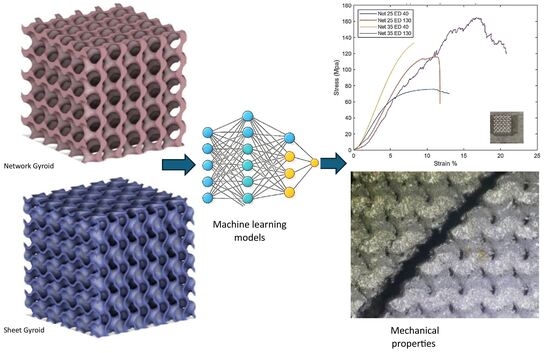
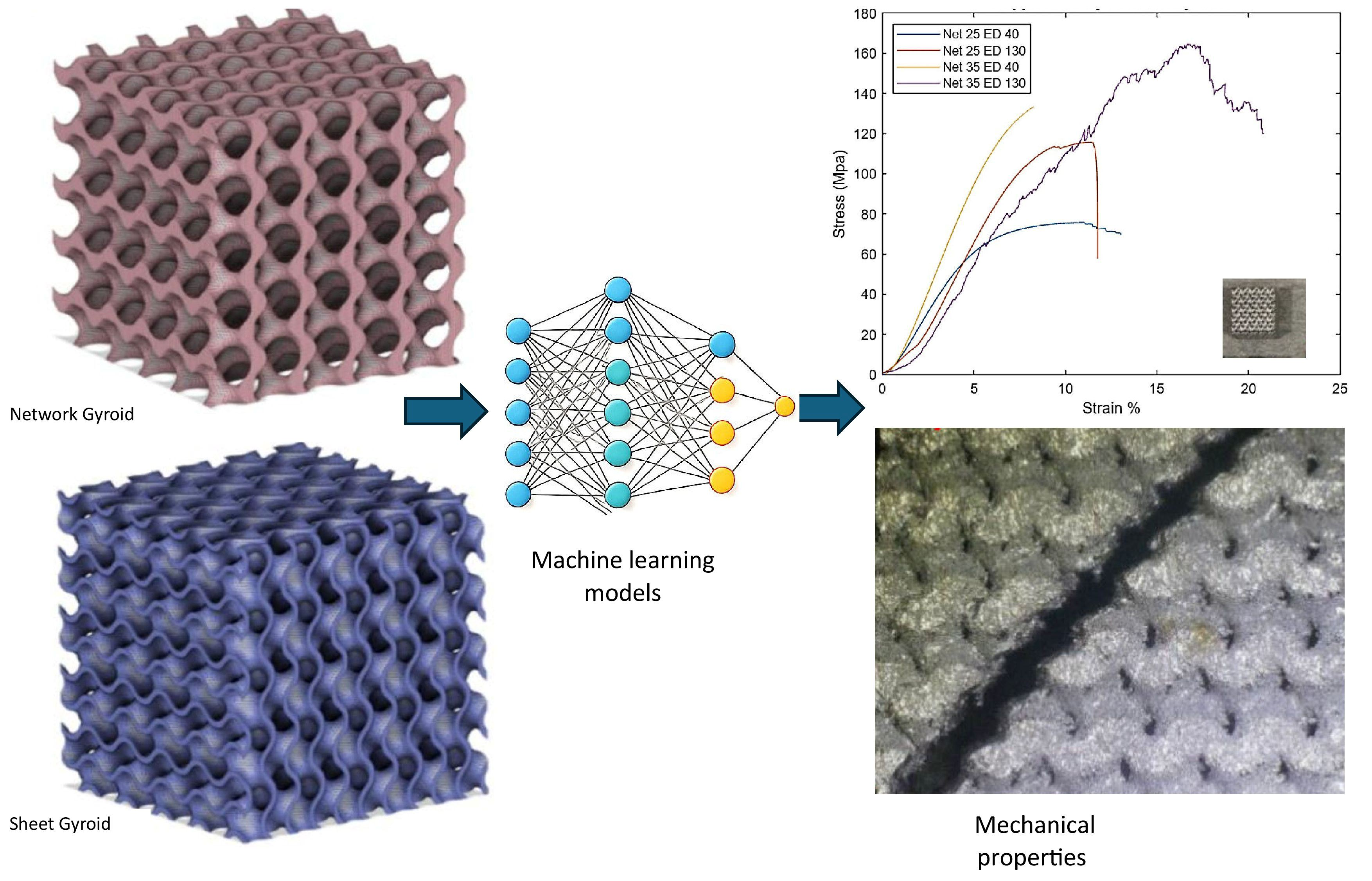
Graphical Abstract

1. Introduction

Gyroid lattices have emerged as transformative structures in biomedical engineering due to their outstanding mechanical properties and biological adaptability [1]. Gyroid lattices have an outstanding strength-to-weight ratio with good permeability and tuneable porosity. This makes them ideal structures for orthopaedic implants and scaffolds for tissue engineering, where adherence to both mechanical integrity and biocompatibility are required. Gyroid lattices are therefore favourable in reducing stress shielding and improving the lifetime of the implant–bone interface [2]. These lattices have no sharp edges, which eliminates any stress concentration and improves mechanical performance over strut-based lattices [3]. As a result, they further improve fatigue resistance, making them suitable for load-bearing applications including spinal cages and knee and hip implants [4,5]. Additive manufacturing (AM) has emerged to enable the production of gyroid lattices, allowing precise fabrication of complex geometries at the micro-scale with enhanced control over porosity and surface properties and at scalable production tailored to specific biomedical applications [6]. The highly curved unit cell architecture of gyroid lattices can be fabricated using AM without internal supports, even at wall thicknesses below 200 microns [7]. This contributes to excellent mass transport, cell attachment, and cell proliferation. Their interconnected pore network mimics the cancellous bone structure, enhancing biological integration [8]. Furthermore, gyroid lattices exhibit excellent permeability, which supports fluid transport, nutrient delivery, and waste removal in tissue scaffolds, all of which are essential for bone regeneration and vascularised tissue engineering. The tuneable porosity of these lattices further enables customisation to meet specific biomedical requirements by balancing mechanical strength and biological functionality [9].
Laser powder bed fusion (LPBF) facilitates the production of gyroid lattices with highly curved unit cell architectures. However, achieving consistent mechanical properties across varying lattice geometries remains a key challenge in the LPBF process [10]. Process parameters such as laser power, scan speed, hatch spacing, and powder layer thickness directly influence melt-pool behaviour, which in turn affects the final microstructure and mechanical integrity of fabricated parts. Volumetric energy density (VED) is widely reported in LPBF studies as a convenient scalar measure of energy input and is often used for cross-study comparison when complete process metadata are not available [11]. These complexities make the prediction of mechanical properties highly non-linear, requiring data-driven modelling strategies to establish reliable Process–Thermal-Structure–Property (PTSP) relationships [12]. Existing process optimisation methods in LPBF often focus either on process parameters or lattice design in isolation, limiting their ability to accurately predict and control mechanical properties [13].
Data-driven modelling provides a promising alternative by leveraging experimental results to establish more accurate correlations between process inputs and mechanical performance. Deep Neural Networks (DNNs) offer excellent accuracy in modelling non-linear relationships compared to traditional machine learning methods such as support vector machines and decision trees [14]. However, the application of DNNs to LPBF is hampered by the limited availability of robust and high-quality datasets. Recent LPBF studies have demonstrated that deep learning models can predict alloy properties from process variables, supporting the feasibility of ML-based process–property prediction despite data constraints [15]. The diversity of lattice structures and materials used in LPBF inherently results in small, fragmented datasets, which impede the development of reliable models. For instance, Feng et al. demonstrated a 5.06% deviation in predicting the Young’s modulus of a diamond lattice using a dataset of only 17 points [16]. However, such small datasets severely limit the generalisation of DNNs, leading to challenges in broader applications. Pre-training methods, such as greedy layer-wise pre-training and stacked autoencoders, have been used to improve model performance in data-limited settings [17]. Despite their promise, these techniques lack a standardised framework for effective implementation, limiting their widespread adoption in LPBF applications. Furthermore, physics-informed machine learning approaches have been explored to address these gaps by integrating domain-specific knowledge into the learning process. Shi et al. developed a physics-enhanced Gaussian process regression model, achieving less than 15% deviation between predictions and experimental results [18]. However, this approach was constrained by its focus on isolated parameters such as laser power, neglecting the broader interplay of the PTSP relationship [19]. While proven useful for initial explorations, such simplifications fail to capture the complexity of interactions critical for optimising LPBF.
Finite element analysis (FEA) is a useful tool for evaluating the mechanical properties of gyroid lattice structures. However, it typically does not account for LPBF-specific process parameters, which limits its predictive accuracy. Luo et al. investigated the mechanical properties of sheet- and skeleton-gyroid Ti6Al4V structures using FEA but did not incorporate the influence of LPBF process parameters, such as energy density, thus missing critical PTSP interactions [20]. Similarly, Zhang et al. analysed the microstructural evolution and mechanical properties of gradient-material lattice structures fabricated via LPBF, focusing on static properties but without addressing dynamic LPBF effects [21]. The biological applications of Triply Periodic Minimal Surface (TPMS) structures have garnered significant attention due to their enhanced osteointegration and cell proliferation capabilities, as demonstrated in studies such as Maevskaia et al.’s study on TPMS-based scaffolds, which reported superior in vitro and in vivo performance [22]. Timercan et al. further examined axial and torsional behaviour in gyroid structures under mechanical loading for load-bearing implants. However, these studies rarely optimise LPBF parameters for such applications, leaving a critical gap in process understanding [23].
Studies in the machine-learning literature have attempted to address these challenges. Yang et al. used deep learning techniques to reconstruct X-ray tomography images and predict the compressive behaviour of 3D-printed lattice structures. However, these studies often lack direct integration with LPBF process variables, such as laser power and scanning speed [24]. Similarly, Zhang et al. employed Convolutional Neural Networks (CNNs) to evaluate melt-pool dynamics and defect formation during LPBF to achieve high accuracy in quality detection but could not address the role of geometry and material interplay in mechanical properties [25]. Kelly et al. studied the fatigue behaviour of as-built LPBF titanium scaffolds, highlighting persistent issues like stress shielding and fatigue failures in the absence of optimised LPBF parameters [26]. Shi et al. compared the compression performance and energy absorption of various gyroid geometries, emphasising the importance of parameter control to meet application-specific requirements [27]. Yang et al. explored the mechanical response of TPMS lattices under dynamic conditions, identifying load-bearing potential but noting inconsistencies due to variations in process parameters [28]. Ge et al. analysed the microstructural features and compressive properties of SLM Ti6Al4V lattices but faced challenges in achieving uniform mechanical properties across builds [29].
Recent work in laser powder bed fusion has increasingly moved beyond purely data-driven models towards physics-informed machine learning, where process knowledge is embedded into inputs, architectures, or the training objective to improve data efficiency and physical consistency [30]. In LPBF monitoring, physically meaningful melt-pool signatures extracted from in situ sensing have been shown to predict porosity accurately using relatively simple learning models, while retaining interpretability [31]. For modelling and defect understanding, hybrid approaches combine mechanistic variables computed from thermal and fluid-flow descriptions with machine learning to rank causal drivers and build physically grounded process maps, which reduces the risk of spurious correlations from sparse datasets [32]. Physics-informed neural networks are also emerging as fast surrogates for LPBF thermal fields, enabling parametric temperature and melt-pool predictions with minimal labelled data and clear links to governing equations [33]. More recent studies extend this idea, using physics-guided surrogate strategies to accelerate part-scale thermal prediction and physics-guided spatiotemporal feature fusion to estimate melt-pool size from process and image data, supporting more credible optimisation workflows under limited experimentation [34,35].
Although significant progress has been made in lattice design and performance, there is limited work that integrates process parameters into predictions of mechanical properties for LPBF gyroid lattices. Most studies focus on either lattice design or process variables, without modelling their combined influence on the final mechanical response. In this context, the present study adopts a data-driven surrogate modelling approach using compiled process and design inputs to support process–design screening and inverse recommendation within a constrained LPBF domain.
Physics-informed ML is relevant to this field and is discussed above as important background. However, it is not implemented in the present workflow. Instead, the modelling framework used here is a manufacturing-driven ANN surrogate based on the most consistently reported process variables and lattice descriptors in the compiled dataset. The aim is to establish a practical proof-of-concept tool for process–design screening and inverse recommendation under small, heterogeneous data conditions, while maintaining clear experimental validation within the explored domain. To evaluate the process-to-structure-to-property relationship, mechanical testing of LPBF-fabricated samples was conducted across a range of process and design settings. Volumetric energy density was used only as a harmonised index for data organisation and visualisation, while the predictive models used the full process and design input vector. The study then explores how process optimisation strategies can improve mechanical consistency and reduce variability in fabricated lattices.

2. Methodology

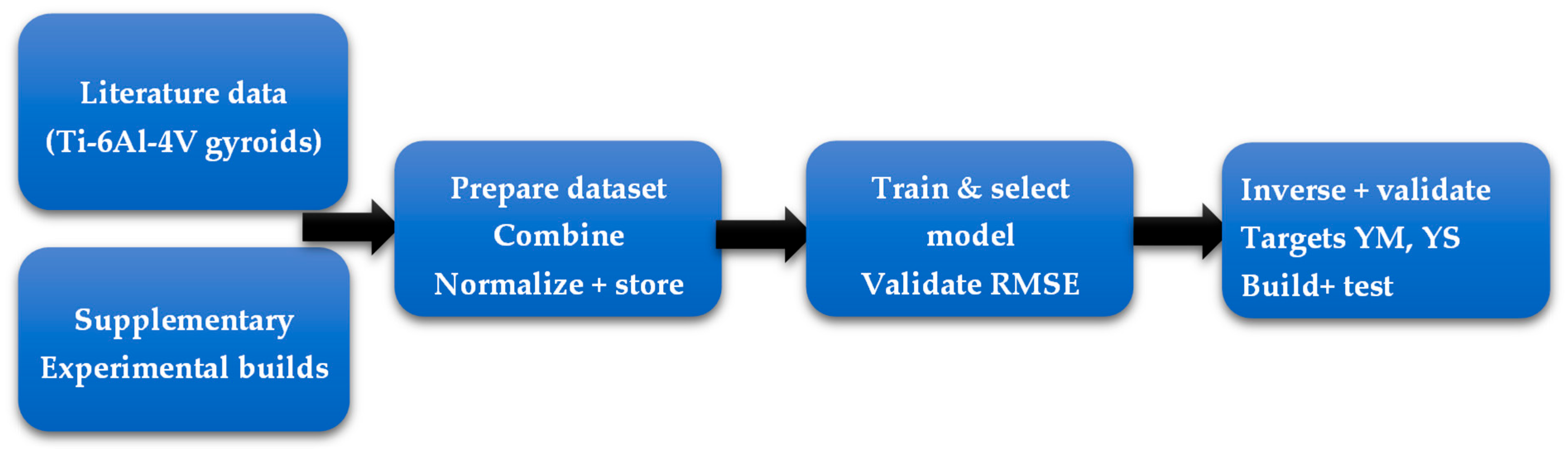
Figure 1 summarises the end-to-end pipeline used in this study. First, literature data are integrated with supplementary builds to improve coverage of the process–design space and to form two training iterations. Inputs and outputs are then scaled consistently so the same transformations are applied during training and inference. Multiple modelling strategies are trained and compared using validation RMSE, and the best-performing model is used as a forward predictor within the inverse-design search. Finally, selected inverse targets are manufactured and evaluated experimentally to verify that the proposed settings produce the intended mechanical response and microstructural features.

2.1. Process Parameters

The key process parameters identified for analysis were laser power (P), scan speed (V), hatch spacing (H), and layer thickness (T). These parameters are widely reported as the primary LPBF controls affecting melt-pool behaviour and part quality. Volumetric energy density (ED), defined in Equation (1), is also commonly reported in the LPBF literature and was used in this study as a first-order variable for organising cross-study data and visualising process–space coverage. However, ED is not a unique process descriptor. Different combinations of P, V, H, and T can produce the same ED value while generating different melt-pool geometries, thermal histories, and defect populations. For this reason, ED was used only for dataset organisation and visualisation. The predictive models were trained using the full process vector (P, V, H, T) together with the lattice design variables of relative density and unit cell size.
E v = P V H T
For the mechanical response, which forms the outputs of the NN, Young’s modulus (YM) and yield strength (YS) in compression were implemented. These properties are among the most frequently studied and are essential for many applications of TPMS lattices. Specifically, they are important to ensure optimal performance in applications such as reducing stress shielding in biomedical implants [36]. The two lattice types investigated were the TPMS network gyroid and TPMS sheet gyroid. Their smooth surface geometries make them particularly suitable for 3D printing [37]. Additionally, both the sheet and network gyroids have been extensively studied due to their superior mechanical properties compared to other TPMS lattice types [38].

2.2. Design of TPMS Gyroid Structures

The network gyroid is mathematically defined by Equation (2) [39]:
N G x , y , z = s i n 2 π x L · c o s ( 2 π y ) L + s i n 2 π y L · c o s ( 2 π x ) L + s i n 2 π z L · c o s ( 2 π z ) L     t 2
The sheet gyroid is generated by subtracting two network phases [38]. It specifies a matrix phase with an arbitrary volume fraction as the region between two isosurfaces of the equation NG(x, y, z) = 0. The implicit function for a sheet gyroid is shown in Equation (3):
S G x , y , z = N G x , y , z 2   t 2
In this definition, the void domain corresponds to the positive region, denoted as (SG ≥ 0), while the solid domain corresponds to the negative region, denoted as (SG ≤ 0SG).
The parameters L and t in the TPMS definitions were adjusted to generate lattices with specific unit cell sizes and relative densities. For clarity, L controls the spatial period of the gyroid field and therefore sets the unit cell size ( U ), while t controls the isosurface offset (and sheet thickness in the sheet gyroid form) and therefore regulates the relative density ( ρ r e l ).
In practical terms, the geometric parameter mapping can be written as:
U L
ρ r e l = f g ( t , U )
where f g denotes the lattice family-dependent geometric mapping (network or sheet gyroid). In this work, the t ρ r e l relationship was handled numerically during CAD generation for each lattice family and selected cell size, rather than using a single closed-form expression. The lattices are therefore reported and modelled using the more intuitive descriptors of relative density and unit cell size, which also improves consistency when compiling data from multiple sources [40].
This design approach reduces the complexity in presenting the design compared to strut-based lattices, which require additional factors such as strut inclination angles [41]. The simplicity of the gyroid lattice design makes it easier to collect and compare data, which is advantageous when training NNs. For this study, relative density and unit cell size were used as inputs to the NNs.
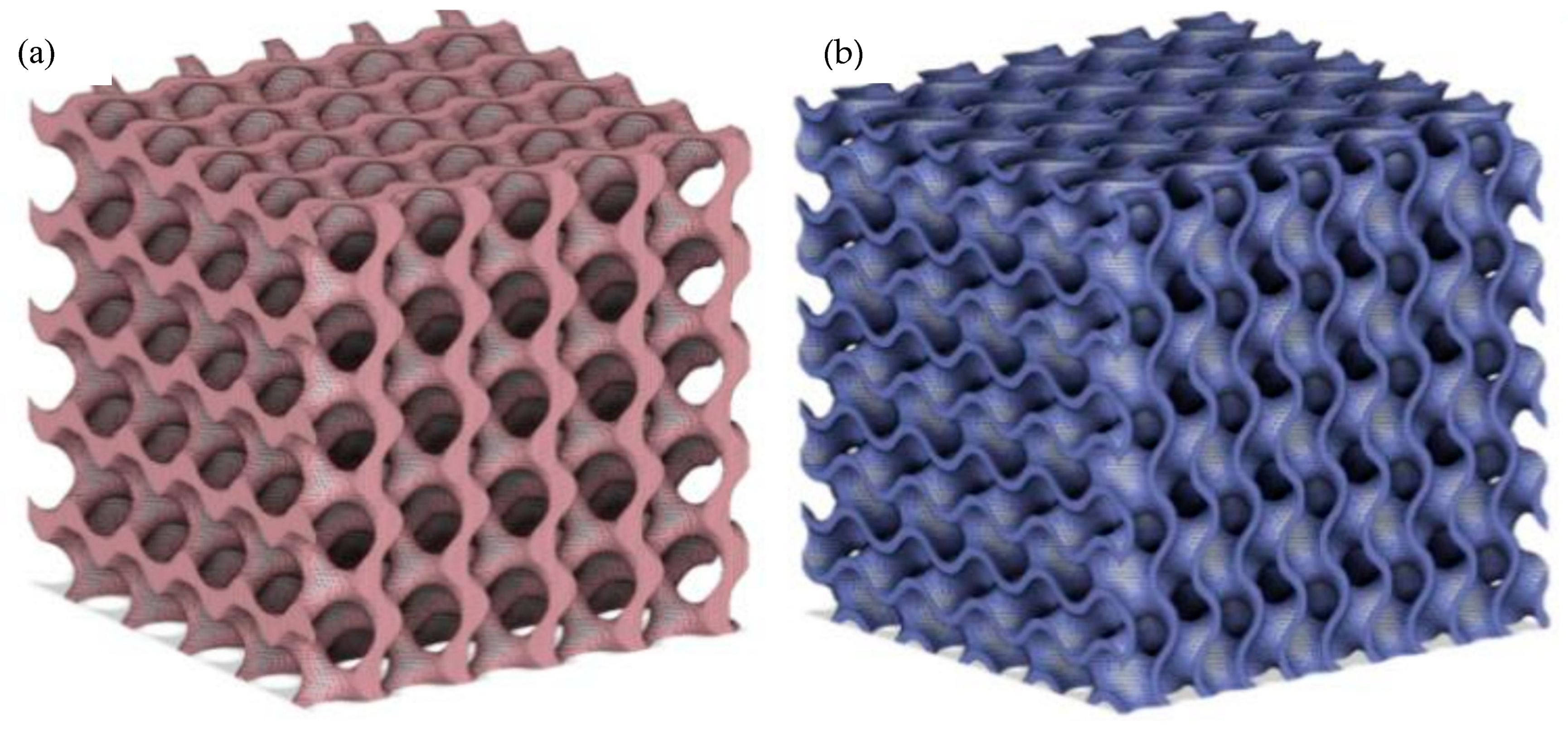
Figure 2 illustrates the structural differences between the network gyroid and the sheet gyroid. The design rationale for the chosen porosities and sizes is as follows: the relative density of 25–62% and unit cell size of 2–2.5 mm ranges were selected to cover stiffness targets used later for bone-mimicking lattices, to ensure the presence of several unit cells across the 15–16 mm cubes for representative behaviour, and to populate the under-represented energy-density regions observed in the literature. Accordingly, sheet gyroids were assigned higher relative densities to enable the high-YM target, while network gyroids were assigned lower densities to achieve the low-YM target. This choice is consistent with our study design, where supplementary specimens were explicitly produced to fill the literature’s energy-density gaps and validate predictions.

2.3. Fabrication and Characterisation of the Lattice Structures

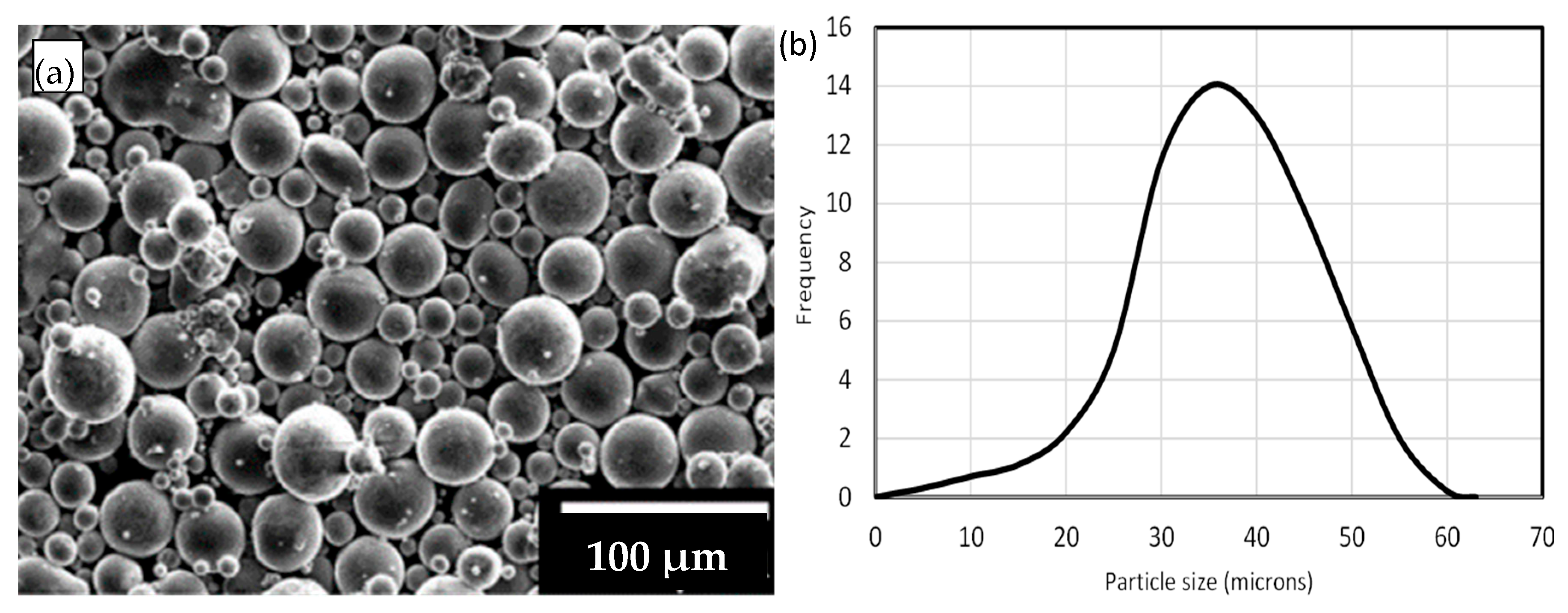
Ti-6Al-4V was used in this study because its LPBF process is well established and it is widely used for biomedical implants, which offers extensive data availability in the literature. In LPBF, material must be atomised into powder form. The powder used to fabricate the samples was sourced from Advanced Powders and Coatings, a GE company, described as spherically atomised Grade 23 Ti-6Al-4V, a low-interstitial powder with a particle size range of 15–45 microns. Its chemical composition is detailed in Table 1. SEM images depicted in Figure 3a,b illustrate predominantly spherical particles with diverse sizes and a uniform distribution, although some particles exhibit an irregular morphology. An Instron 34TM-30 and an Avery 60T load frame were utilised to assess the compression properties of the fabricated lattice samples according to ISO 13314–2011 standards at a strain rate of 1 × 10⁻² s in accordance with ISO 13314–2011 [42].
The compiled datasets are small and heterogeneous, and combine results from multiple literature sources and supplementary builds with differing machine setups, scan strategies, powder histories, build layouts, post-processing conditions, and metrology methods. These factors are not fully harmonised across sources and are not all encoded in the current model inputs, so they should be treated as latent confounding sources of variability. The full row-level NN training dataset used for the compiled Iteration 2 analysis is provided in the Supplementary Materials, including the process/design inputs, target properties, and source grouping used in this study. These datasets were compiled from the peer-reviewed literature on Ti-6Al-4V gyroid lattices and supplemented by our eight newly fabricated specimens described below [26,27,28,29].
Throughout this manuscript, YS is used as a shorthand for the compressive yield reported or extracted from each stress–strain dataset. For the literature entries, the Young’s modulus and YS values were taken as reported in the source papers, which typically provide mean values for a given condition where available, and the original source-specific yield/proof definitions were retained. For the supplementary and target lattices manufactured in this work, the reported Young’s modulus and YS values correspond to individual compression tests performed according to ISO 13314, with the same in-house yield-point extraction criterion applied consistently across all specimens tested in this study. This separation in data sets was necessary due to the distinct PTSP relationships exhibited by the different lattice types [12].
Input parameters for the NNs were normalised between 0 and 1 to ensure consistent scaling across variables. For energy density, normalisation used min–max scaling within each gyroid dataset; thus, a normalised value of 0 denotes the minimum observed energy density and 1 denotes the maximum. The ground truths for training, specifically Young’s modulus and yield strength, were normalised relative to the bulk properties of Ti-6Al-4V, allowing the mechanical properties of the lattices to be expressed as a fraction of the material’s performance. Because the datasets are small, high-capacity DNNs can be prone to overfitting and training instability. Compact network sizes were therefore used and a fixed 80:20 split was maintained to enable consistent benchmarking across models under identical conditions. However, the reported validation performance should be interpreted within the coverage of the compiled dataset. A more rigorous uncertainty and robustness assessment, including k-fold cross-validation and repeated initialisations, is identified as a priority for future work. Identical training indices were maintained across NNs to ensure fair performance, as variations in data division can impact the outcomes. Gaps were identified in the energy density values reported in the literature. To harmonise process descriptions across studies and identify under-sampled regions, volumetric energy density was computed as a compact index for visualisation.
The predictive models themselves use the full P V H T parameter vector and do not rely on energy density alone [43]. It is noted that this consolidation reduces dimensional detail and can mask differences between parameter combinations that share the same ED. To address the gaps in data, the Ti-6Al-4V lattice samples were manufactured and tested. Eight cubic lattice specimens measuring 15mm × 15mm × 15 mm were manufactured: four sheet-based gyroids and four network-based gyroids with Ti-6Al-4V powder. Each supplementary lattice corresponds to a single LPBF condition and was tested once in compression, so these data represent single-specimen measurements per condition. These specimens constitute new experiments conducted in this study to complement literature data and are distinct from the datasets reported in [44].
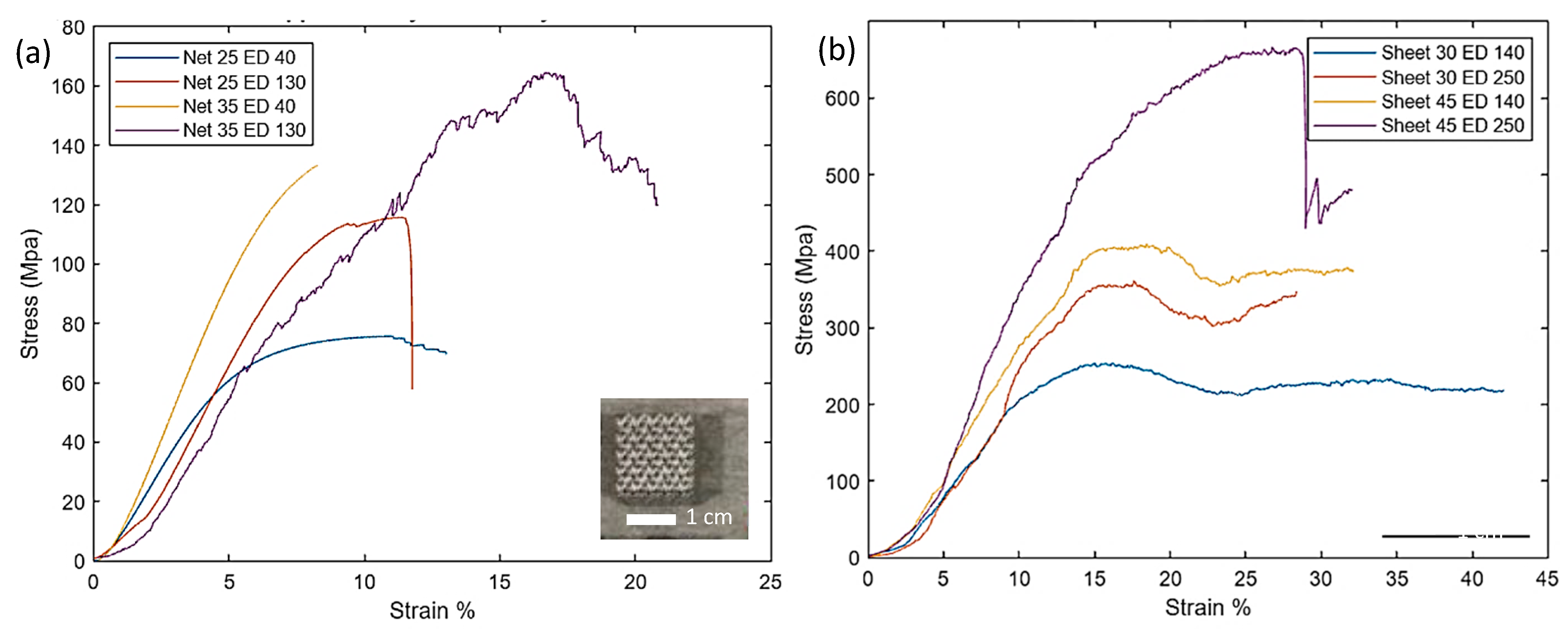
Representative stress–strain curves for both types are shown in Figure 6. These samples were specifically designed to complement and enrich the existing literature by addressing gaps in the understanding of energy density for gyroid structures. Ultrasonic cleaning and microscopy preparation was done as follows: prior to mechanical testing, lattice specimens were cleaned in an ultrasonic bath using a 5% ethanol–water solution (v/v) to assist removal of trapped powder. Scanning electron microscopy (SEM) was performed using a JOEL 6000 microscope (JEOL Ltd., Tokyo, Japan). Samples were mounted in Bakelite and polished on a Struers Tegramin-25 (Struers ApS, Ballerup, Denmark) using OP-S suspension. Areal surface roughness of the lattice samples was assessed using a 3D optical focus-variation system (Alicona InfiniteFocus). Contrast-based 3D reconstructions were acquired on the as-built “upper” surfaces and processed in Alicona IF-MeasureSuite software 5.0 (Bruker Alicona, Graz, Austria).

2.4. Artificial Intelligence

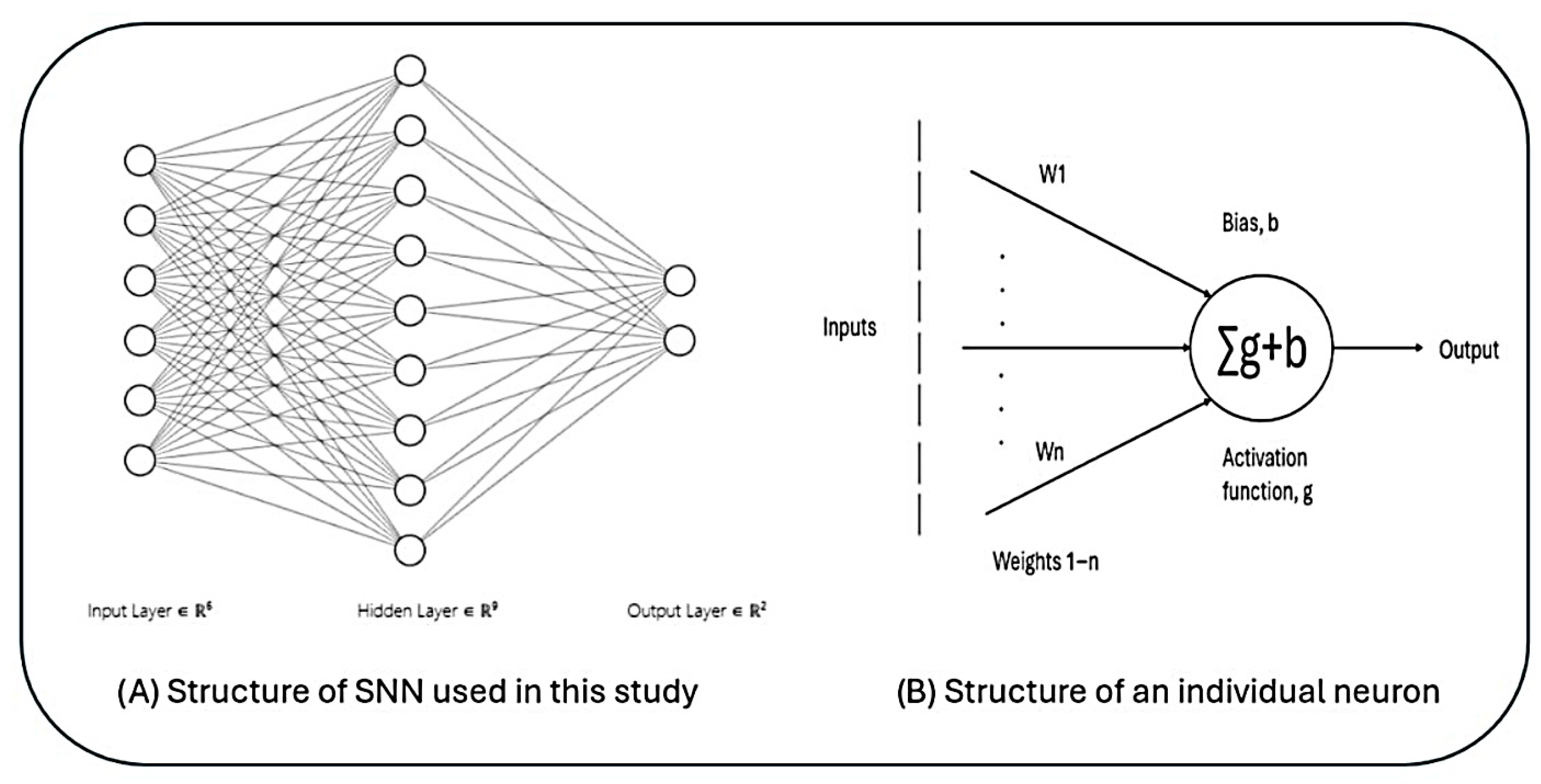
An Artificial Neural Network (ANN) is a type of function-fitting machine learning (ML) method composed of input, hidden, and output layers, inspired by the human brain that makes use of tuneable parameters known as weights and biases [45,46]. These weights and biases are stored in individual neurons in hidden layers and are altered via a training algorithm to capture the trends seen in data. The generic structure of the most basic NN, the shallow NN (SNN) with a single hidden layer, and the structure of an individual neuron in the hidden layer are depicted in Figure 4. The hidden layers consist of neurons which consist of a weight, activation function and bias. The weight multiplies the incoming input. The activation function transforms this multiplied value. All the NN architectures used in this study incorporate the tanh activation function (Equation (4)) [47].
G ( z ) = t a n h ( z ) = 2 1 + e 2 z 1
where z   is the neuron pre-activation input (weighted sum plus bias), and G ( z ) is the neuron output after the tanh activation.
Then the bias is added to the value before being passed to the subsequent neuron. Finally, the output layer displays the predicted output, which is a continuous variable in regression. Training algorithms minimise the difference between the predicted and actual response for the outputs on the training data. Resilient backpropagation was used in this work, in MATLAB, 2024b [48]. Through the addition of more hidden layers and more neurons, increasingly complex relationships can be approximated, although overfitting must be avoided [43]. A SNN consists of a single hidden layer. A DNN consists of three or more hidden layers [41]. Typically, large data sets are needed to train a DNN, on the order of 10,000 data points. For this reason, the present DNN was kept small and fixed across models, and pre-training was used to improve optimisation and generalisation without increasing model size. However, this study used pre-training methods to initialise the weights and biases in the network to values that avoid poor optimal solutions [15], and therefore these methods can be used to avoid overfitting, improve training speed, and reduce the need for large data sets.

2.4.1. Stacked Autoencoder Pre-Training

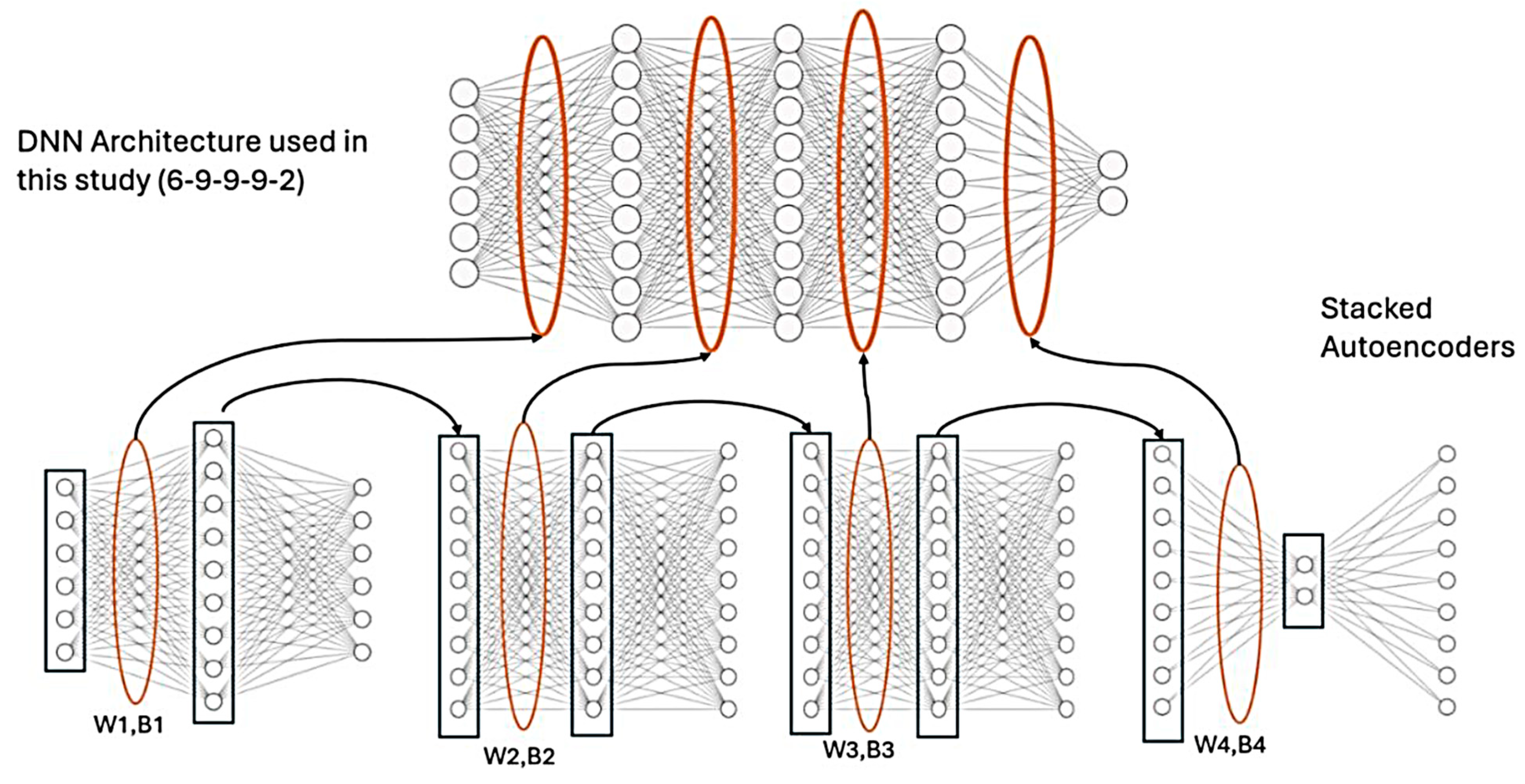
The stacked autoencoder (SAE) method uses a type of NN known as an autoencoder. An autoencoder consists of an input layer, a hidden layer, and an output layer with the same number of nodes as the input layer. The autoencoder attempts to re-create the input in its output [48]. Stacked autoencoder pre-training uses a sequence of autoencoders to find optimal initial weights and biases for the main NN [15]. The first autoencoder has the same number of neurons in the hidden layer as the input layer of the main NN and takes the normalised input data as its input. After training, the weights and biases of the hidden layer are copied to the input layer of the main network and the transformed output of the hidden layer is taken as the input to the second autoencoder. This second autoencoder has the same number of neurons as the first hidden layer of the main network. This is then trained, and the weights and biases of the hidden layer are copied to the first hidden layer of the main network. Then the transformed output is sent to the third autoencoder. This process is repeated until all the neurons of the main network have had their weights and biases initialised, after which regular training ensues. For the SAE pre-training used in this study, the SAE sequence had the following structure: (6-9-6) (9-9-9) (9-9-9) (9-2-9). This process is summarised in Figure 5. Hassanin et al. previously used the SAE method to enhance the performance of a DNN on a small dataset [15]. Here, SAE is used as a pragmatic weight initialisation method for small, heterogeneous literature data rather than as evidence of recovering a unique process–structure manifold. Any advantage is judged empirically by comparison with RandWB and GLWPT under the same architecture and fixed split, and against the non-neural and power-law baselines.

2.4.2. Greedy Layer-Wise Pre-Training

Greedy layer-wise pre-training (GLWPT) builds on the SAE approach by initialising the network with the SAE weights and bias values and then training each individual layer separately, but in sequence. This aims to allow for features in the data to be identified by the initial layer, and then for subsequent layers to operate on these features. This aims to perceive more detailed trends in the data. Hassanin et al. used greedy layer-wise pre-training in the training procedure for a similar NN task of predicting the mechanical properties of diamond strut-based lattice structures [40].

2.4.3. Network Architecture and Training Settings

For each gyroid type, the forward model predicts two continuous outputs, Young’s modulus and yield strength in compression. Other LPBF settings such as scan strategy, build orientation, spot size, beam profile, and gas flow were not included because they are not reported consistently across the compiled literature data. Energy density is used as a compact index to visualise the process space and identify gaps in the compiled literature data, but the networks are trained on the full parameter vector listed above. All deep models used the same compact DNN architecture to limit model degrees of freedom under small-data conditions and to keep comparisons fair across initialisation strategies. The DNN architecture was 6–9–9–9–2 with tanh activation in the hidden layers. The SAE pre-training sequence used to initialise the DNN weights and biases was (6–9–6) (9–9–9) (9–9–9) (9–2–9), as summarised in Figure 5. Training was performed in MATLAB 2024b using resilient backpropagation (trainrp) and RMSE was used for model comparison on the validation set. Given the small datasets, no extensive hyperparameter search was performed. Instead, the architecture across all DNN variants was fixed. This choice reduces the risk of selection bias from tuning against a single validation split and supports reproducible comparisons between RandWB, SAE, and GLWPT.

2.4.4. Analytical Scaling-Law Baseline

To benchmark the proposed models against a simple analytical reference, a density-only scaling-law baseline was fitted for each lattice family and property. Relative density was defined as the designed relative density expressed as a fraction < 1. For each architecture, the Young’s modulus E and yield strength σ y were modelled using power-law forms.
E = A E   ρ r e l   n E
σ y = A σ   ρ r e l   n σ

2.4.5. Cross-Validation Robustness Check

In addition to the fixed 80:20 train–validation split used for like-for-like benchmarking across all models, a 5-fold cross-validation robustness check was performed for the selected forward ANN models used in the final workflow. The same six input descriptors were used as in the main modelling pipeline, namely laser power, scan speed, hatch spacing, layer thickness, relative density, and unit cell size, with separate models for network and sheet gyroids. Model performance was evaluated using RMSE for Young’s modulus and yield strength. To capture variability associated with neural-network initialisation, training was repeated within each fold using different random seeds, and the mean RMSE ± standard deviation was calculated across folds. This analysis was included as a robustness check and does not replace the fixed-split benchmark, which remains the primary protocol for direct comparison across the full set of models.

2.5. Process Optimisation

For both TPMS lattice datasets in this work, a SNN consisting of a single hidden layer and three DNNs were trained. One used SAE, another used GLWPT and another used randomised initial weights and biases, corresponding to the standard initialisation procedure and which will be referred to as RandWB. The architecture of the trained DNNs was kept the same and is shown in Figure 5. The SNNs used a single layer, as shown in Figure 4a. The NNs were compared using the Root Mean Square Error (RMSE) regression metric on the validation data. The target properties were specified by the potential application of these lattices to human bone [48]. The two YM targets of 25 GPa for the sheet gyroid and 3 GPa for the network gyroid were chosen to span the bone-like stiffness envelope while respecting architecture-specific stiffness–density behaviour and LPBF manufacturability. Sheet gyroids achieve higher stiffness at a given relative density than network gyroids. Therefore, the high-YM target was assigned to the sheet design, and the low-YM target to the network design. Using the same YM for both would force impractical densities; reaching around 25 GPa with a network gyroid would require very high relative density that reduces permeability and increases powder entrapment, whereas forcing a sheet gyroid down to 3 GPa would require ultra-thin walls approaching the 200–300 μm thermal-instability range and risk print defects. The target YS was not specified to avoid configuring the ratio of the two mechanical properties into impossible values. However, the NN prediction for the expected YS of these target lattices was evaluated. The design and process parameters that the NNs provided can be found in Table 2. The corresponding laser power–scan speed target maps used to interpret the inverse-design recommendations are provided in the Supplementary Materials, which show the predicted property trends within the fixed target design constraints. In this work, inverse design is performed by searching the trained forward models to identify process and design combinations that match the target properties.
The inverse-design objective and search procedure is as follows: let x denote the input vector (laser power, scan speed, hatch spacing, layer thickness, relative density, and unit cell size), and let the trained forward model predict ŷ(x) = [Ê(x), Ŝ(x)], where Ê is Young’s modulus and Ŝ is yield strength. For a specified target modulus E* (with yield strength reported as a secondary predicted outcome in this study), the inverse-design recommendation is obtained by solving:
x = arg min J x x D , J x = E ^ x E E 2
The feasible domain D is defined by machine constraints and by restricting each variable to the min–max ranges covered by the compiled dataset to avoid extrapolation. For the manufactured demonstrations, hatch spacing and layer thickness were fixed by machine constraints, while laser power, scan speed, relative density, and unit cell size were varied within D . The optimisation was implemented in MATLAB as a bounded discrete search over candidate parameter combinations: the forward model was evaluated across the candidate set and the parameter vector that minimised J ( x ) was returned as the inverse recommendation. To provide a practical uncertainty-aware interpretation of the inverse-design outputs, the inverse search results were also reported as a ranked feasible candidate set rather than a single point only. For each target lattice, candidate combinations were ranked by the absolute Young’s modulus target error, and the top 5 solutions were retained for reporting. In addition, a local sensitivity check was performed around a selected near-target candidate from the ranked set by applying small perturbations to laser power and scan speed (±5%) while holding hatch spacing, layer thickness, relative density, and unit cell size fixed.
The returned settings are therefore model-based recommendations rather than guaranteed outcomes and are intended to support decision making within the explored domain. The initial parameter sets in Table 2 came from Iteration 1 models trained only on literature data, where under-represented energy-density (ED) regions limited generalisation across the process–design space (see Section 3, Figure 7). When fabricated and tested, these initial settings, particularly for Young’s modulus, did not achieve the targets, consistent with the higher variability of YM and the larger modelling error for sheet gyroids in Iteration 1. This motivated a property-oriented optimisation and an Iteration 2 retraining using supplementary specimens placed deliberately in the missing ED ranges, which reduced RMSE and improved target tracking, especially for YS. Two of each target lattice were produced. One specimen was used for compression testing, and the second specimen was used for microscopy and surface roughness imaging. These two targets were selected to provide an end-to-end demonstration of the inverse workflow across both lattice families. They also bracket the stiffness range used in bone-matching applications. To place the sheet (62%, 2 mm) and network (46%, 2.5 mm) cases within the under-sampled ED regions, hatch spacing (0.09 mm) and layer thickness (0.03 mm) were fixed by machine constraints while laser power and scan speed were varied (see Section 3, Figure 7).

3. Results

3.1. Compression Data

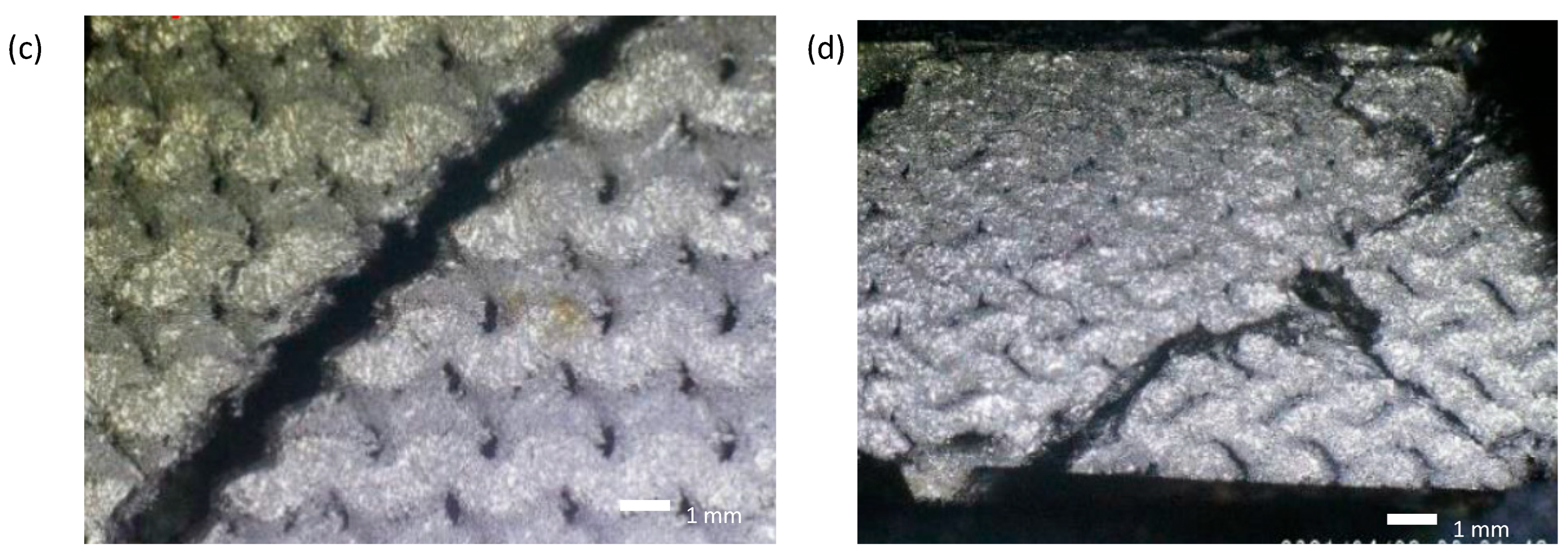
Figure 6 illustrates selected samples used for compressive testing. It was observed that increasing the energy density, while maintaining the same design parameters, generally led to an increase in both Young’s modulus and yield strength of the lattices. However, an exception was noted with the Net 35 gyroid, where both YM and YS decreased with increased energy density, highlighting the non-linearity of the PTSP relationship and the limitation of energy density as a unique descriptor. A plausible LPBF-process explanation is that the higher energy density was achieved through a different laser power/scan speed combination, which changes melt-pool stability and thermal history even at the same lattice design. This can affect the as-built wall geometry and defect state, including balling residues, partially fused powder, and local porosity, and may also the influence local microstructural evolution through different cooling conditions, which together can reduce the effective stiffness and compressive yield response. The network gyroids exhibited yield strength at 6–8% strain, whereas the sheet gyroids yielded at 11–15% strain. In line with [19], the mechanical properties of network gyroids were lower compared to sheet gyroids at higher energy densities. Network gyroids failed in a layer-by-layer manner [22], where individual layers collapsed and densified sequentially, as evidenced by regions of strain hardening followed by sudden drops in the stress–strain curve. This progressive collapse eventually led to shear failure along a diagonal plane, splitting the lattice into two halves (Figure 6c), typically occurring after the third round of densification. In contrast, sheet gyroids demonstrated simultaneous collapse across all layers, consistent with results reported in the literature for continuously graded lattice structures [27]. At high strain levels (60%), the sheet gyroids began to exhibit shear cracking, as shown in Figure 6d. This cracking occurred after densification, when the layers were fully compressed. The resulting shear band, which was off-centre, fragmented the lattice into several pieces, leading to brittle failure.
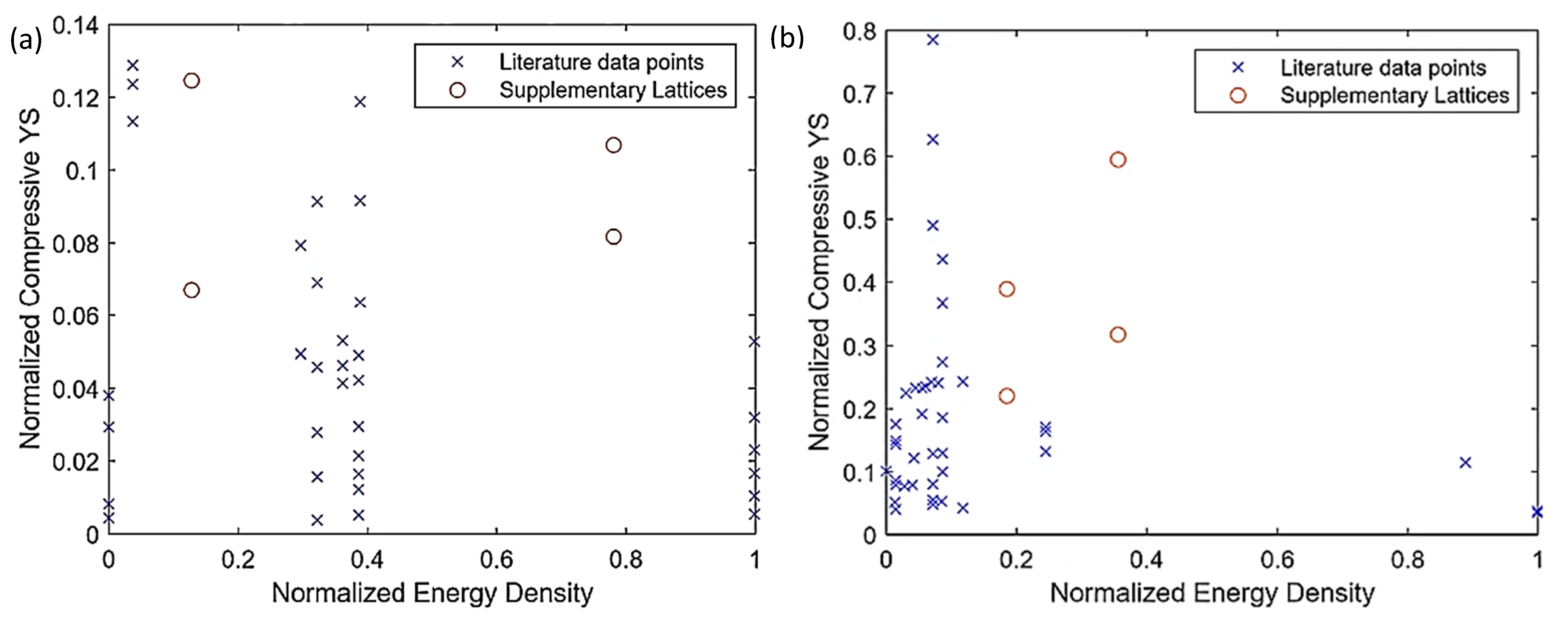
On the other hand, Figure 7 summarises the energy density gaps addressed by the supplementary data. Two training iterations were conducted: Iteration 1, where NNs were trained using only literature data, and Iteration 2, which combined literature data with supplementary experimental data. The best networks from Iteration 1 were used in an objective function to design two lattices with targeted mechanical properties. Based on machine constraints, the hatch spacing, and the layer thickness had to be fixed at 90 and 30 microns respectively. Therefore, the NN could only alter both lattice design parameters, laser power and scan speed to target the properties. For the reproducibility and traceability of the supplementary additions, the detailed supplementary specimen testing curves and supporting plots are provided in the Supplementary Materials.

3.2. Inverse-Design Feasible Solutions and Local Sensitivity

To strengthen the inverse-design workflow as a decision-support tool, the inverse recommendations are reported as a ranked feasible candidate set rather than as a single point only. In addition, a local sensitivity check is provided around selected near-target candidates to show how the predicted mechanical properties change with small process perturbations. These additions complement the inverse-design setup described in Section 2.5 and retain the same target lattices and machine constraints used for the manufactured demonstrations in Table 2. In particular, hatch spacing and layer thickness were fixed at 0.09 mm and 0.03 mm, respectively, while laser power and scan speed were varied within the feasible search domain.
Table 3 reports the ranked top five feasible inverse-design solutions for the network and sheet targets. The candidates are ranked by the absolute Young’s modulus target error, so the table shows multiple parameter combinations that achieve nearly identical predicted modulus values. This demonstrates that the inverse-design problem is not single-valued in the feasible domain, and that several nearby process settings can satisfy the same target stiffness while giving different predicted yield strengths.
Table 4 reports a local sensitivity analysis around selected near-target candidates from the ranked set. For each lattice type, laser power and scan speed were perturbed by ±5% one at a time while hatch spacing, layer thickness, relative density, and unit-cell size were held fixed to the target lattice settings in Table 2. This provides a practical indication of how stable the inverse recommendations are across small process variations.
Table 3 shows the clear solution multiplicity for both lattice families. For the network target, several combinations of laser power and scan speed achieve the 3 GPa target modulus with very small predicted error, while the predicted yield strength varies across those candidates. A similar pattern is observed for the sheet target, where multiple feasible solutions also match the 25 GPa target closely but produce different predicted yield strengths. This supports reporting the inverse output as a feasible process window rather than a single exact setting.
Table 4 shows that the selected near-target candidates are locally stable under small perturbations, but with different sensitivity trends for the two lattice families. For the network candidate, the predicted Young’s modulus is more sensitive to scan-speed perturbation than to laser-power perturbation within the ±5% range, while the predicted yield strength changes remain comparatively small. For the sheet candidate, the predicted Young’s modulus is more sensitive to laser-power perturbation than to scan-speed perturbation in the same range, and again the predicted yield strength shows smaller relative variation than Young’s modulus.

3.3. Microscopy

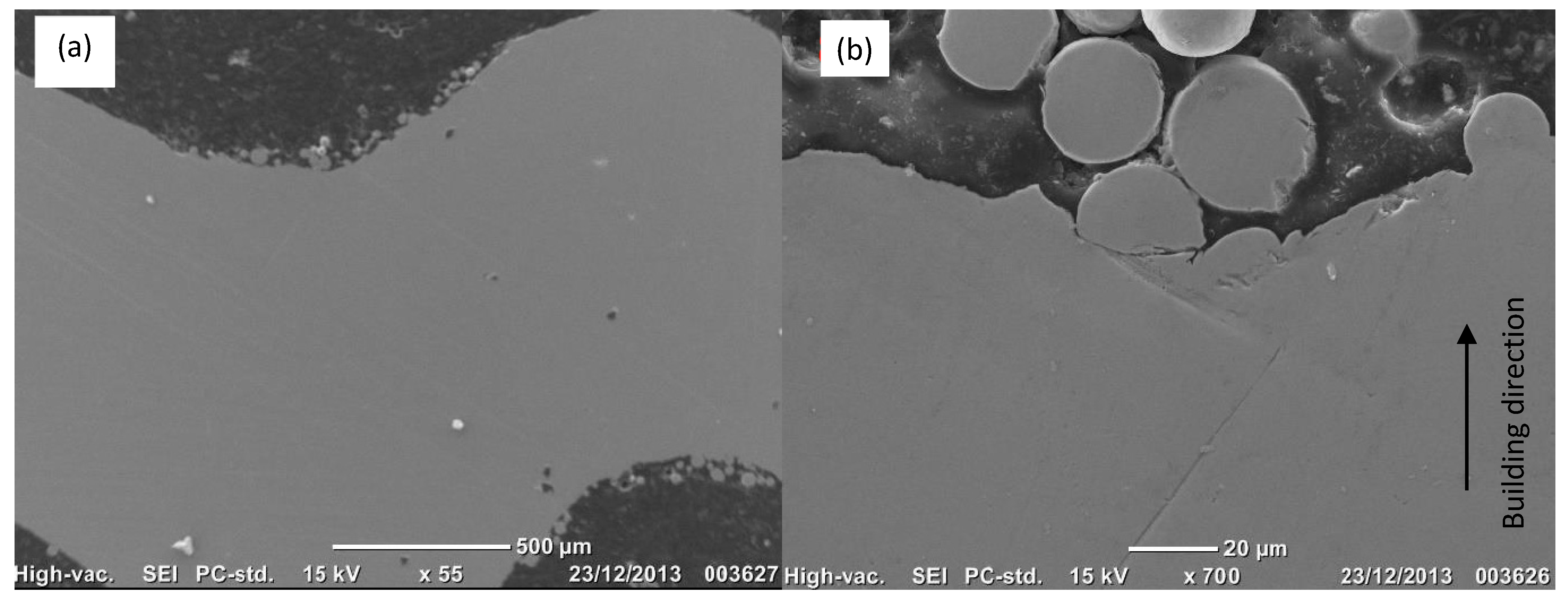
Figure 8 shows SEM images of the target lattices highlighting representative surface features such as adhered powder and balling residues [49] and local geometrical irregularities. Small-scale porosity defects can also be observed, as shown in Figure 8a. Geometrical defects at the edge of the structure can be seen, although these are on the magnitude of 100 microns. Even after polishing, many spherical particulates can be seen at the edges of the geometry. This powder has partially melted into the surface, as shown in Figure 8b. Figure 8c provides a detailed view of the surface and internal features of the target sheet gyroid structure. In Figure 8c, geometrical defects are clearly visible, edge overbuild at cell boundaries and local wall-thickness variation indicating inconsistencies in lattice formation. Figure 8d highlights partially melted and adhered powder particles on the gyroid’s surface, a common defect in LPBF processes. Additionally, the visible lines from melting and subsequent cooling, as seen in Figure 8d, suggest the presence of the layer-wise effect which is typical of LPBF. The microscopy revealed significant residual powder on the surfaces, particularly on internal surfaces and those parallel to the build direction. While surface roughness can promote improved bone integration [50], the presence of partially adhered spherical powders poses a risk of detaching during implant loading, potentially generating wear debris in a size range that may lead to osteolysis [51]. In addition, surface roughness and density in LPBF titanium are strongly governed by process conditions [52].
The surface roughness analysis of the sheet and network gyroids highlights key differences influenced by their geometry and exposure during the LPBF process. For the sheet gyroid, the surface roughness is significantly lower on the top layer. This reduced roughness is attributed to minimal powder contact during the final stages of printing, resulting in fewer adhered particles and smoother surfaces. This phenomenon emphasises the importance of the layer’s orientation relative to the powder bed and its influence on surface characteristics.
In contrast, the network gyroid profile is predominantly cantered on the internal surfaces, where roughness aligns closely with the median particle size of 30 microns. This is due to the large amounts of adhered powder on internal surfaces, which are less accessible to post-processing methods like powder removal or ultrasonic cleaning. The internal geometry exacerbates powder adhesion, with the adhered particles creating peaks and valleys that dominate the surface profile. This is a direct result of the LPBF process’s inherent limitations in removing trapped powder from complex internal structures. Both gyroid types exhibit the presence of significant adhered particles which is more pronounced on internal surfaces, particularly in areas shielded from effective heat distribution or powder recoating. Mitigating powder entrapment in TPMS lattices requires both design and post-processing choices. Powder removal is improved by avoiding enclosed channels, maintaining sufficient pore size, and selecting build orientation that provides open escape paths. Post-processing should include validated de-powdering of internal passages, followed by cleaning steps appropriate to the geometry. Where internal access is limited, more aggressive finishing may be required. These measures are important because retained powder can detach under load and generate debris with potential biological risk. The mean surface roughness across the samples is consistent with the particle size of the powder used, further demonstrating that the adhered powder is a primary factor influencing surface texture. In the Alicona measurements, the mean surface roughness, Ra, was 14.94 µm for the sheet gyroid top skin and 30.21 µm for the network gyroid internal surface. This confirms that the network case has markedly rougher load-bearing surfaces, consistent with powder adhesion on internal features, as seen in Figure 9.

3.4. Training of Neural Networks

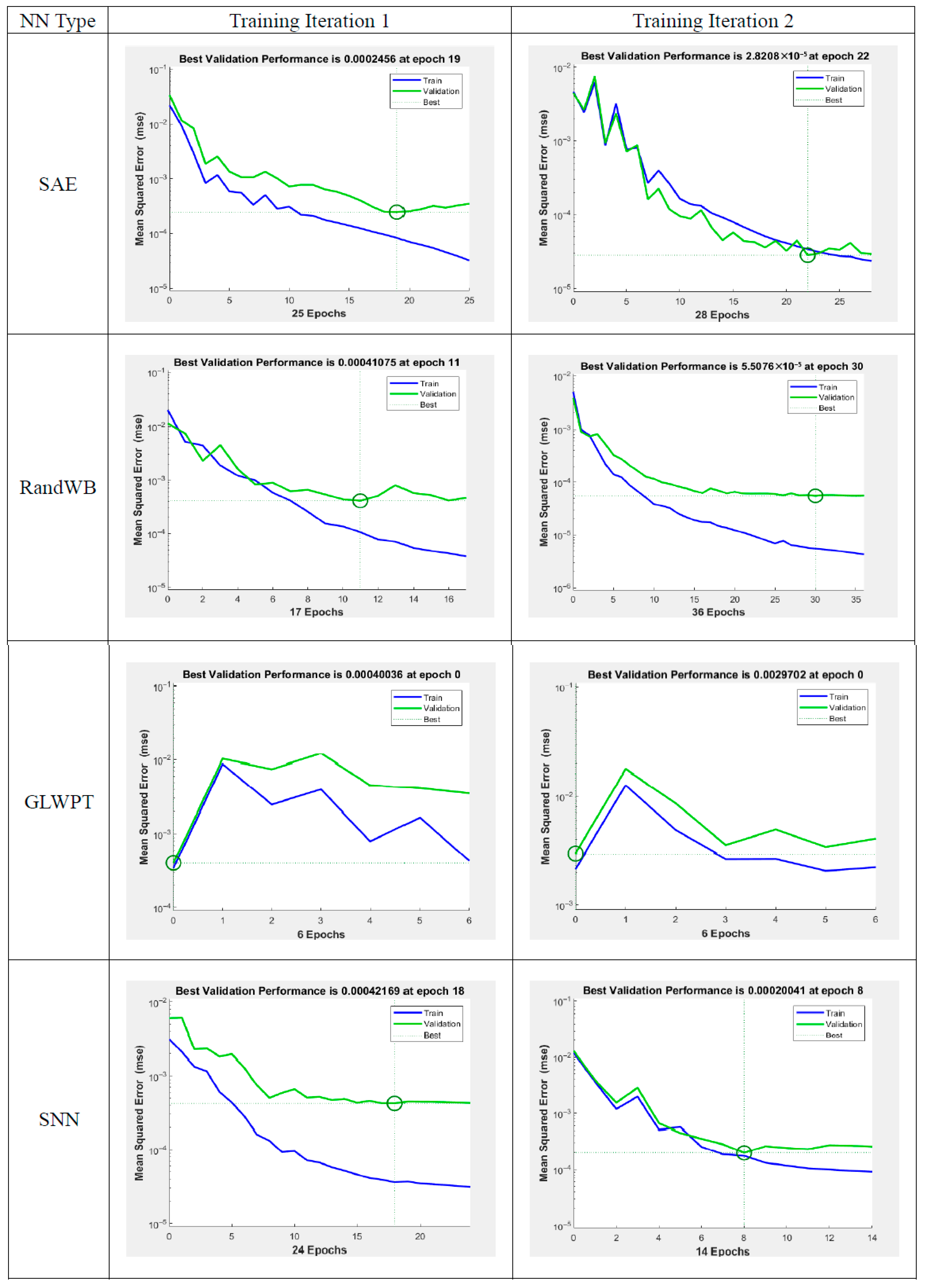
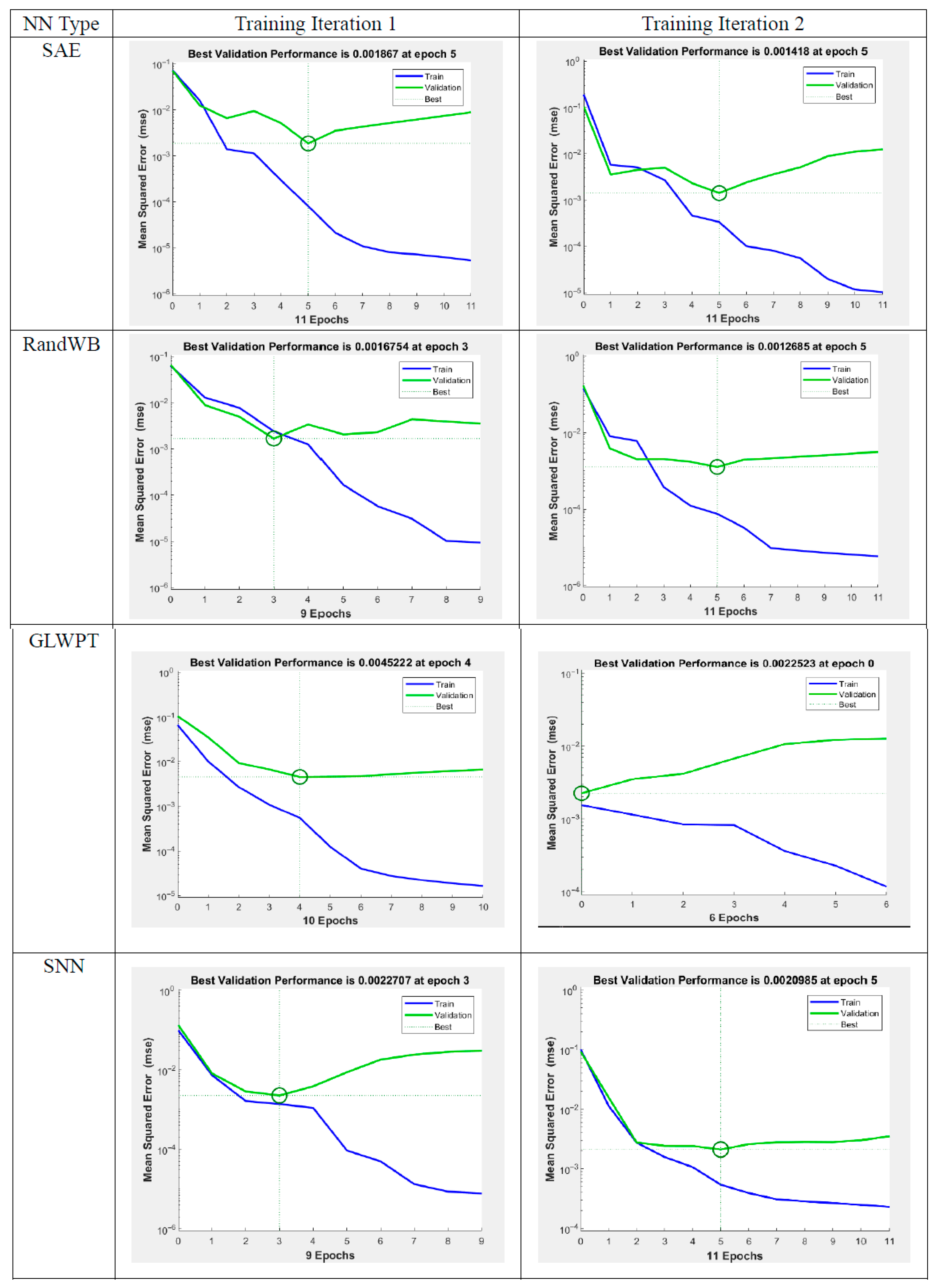
Because the datasets are small, training outcomes can be sensitive to random initialisation and the choice of training and validation partition. To support a fair comparison between architectures, all models were evaluated using the same fixed training and validation indices within each gyroid dataset, and consistent training settings were used. The results reported below should therefore be interpreted as a controlled comparison of modelling approaches under identical data conditions. RMSE values are reported as point estimates for this fixed split, as confidence intervals would require repeated resampling and retraining. The training of neural networks for TPMS gyroid structures, using RMSE values and detailed training plots, provides a comparison across different neural network types including SAE, RandWB, GLWPT, and SNN. The networks underwent extended training periods to capture the complex patterns evident in the dataset, with Figure 10 and Figure 11 illustrating the dynamics of these processes for network and sheet gyroid models, respectively.
Figure 10 shows the network gyroid models and demonstrates that SAE consistently achieves the lowest RMSE across training epochs, highlighting its robustness and superior capability in modelling complex relationships. In contrast, while the GLWPT method starts with a promisingly low RMSE, suggesting effective initial weight initialization, its performance deteriorates over time as training and validation errors begin to diverge, indicative of overfitting. This divergence is less pronounced in the SAE model, which maintains closer alignment between training and validation errors, underlining its effective generalisation. Figure 10 presents the training iterations for the sheet gyroid models, where all neural network types exhibit higher error rates and greater variability across epochs, reflecting the additional complexities associated with sheet gyroids. These may be attributed to their more intricate geometric and deformation characteristics compared to network gyroids. The sheet gyroid models struggle more in reducing errors, showing the challenge in modelling these structures. The consistent pattern of higher RMSE in sheet gyroid models, irrespective of the neural network type, emphasises the inherent difficulties in capturing the nuanced PTSP relationships of these more complex lattices. Despite GLWPT’s initial low errors, its performance was ultimately comparable only to that of the SNN, pointing to its limitations in handling deeper network architectures without overfitting. Network gyroid models, particularly those trained with SAE, generally required more epochs to converge, achieving significantly lower error values compared to the sheet gyroid models.
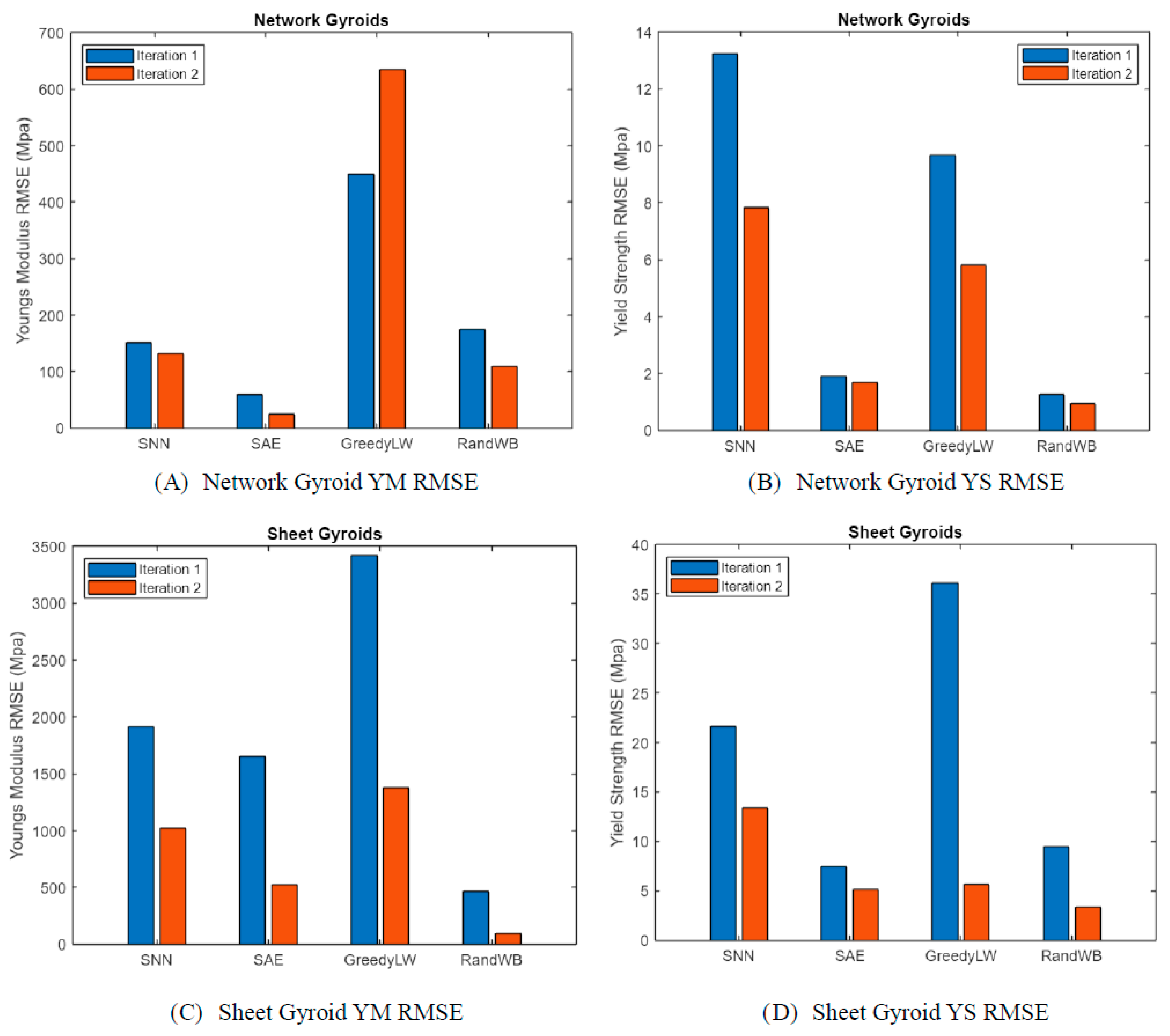
Figure 12 visually summarises the RMSE across two iterations for different neural network models applied to both network and sheet gyroid structures, focusing on Young’s modulus and yield strength. Table 3 provides a baseline reference point and shows that non-neural regressors can capture part of the trend, but performance remains strongly dependent on the model type and property, particularly for sheet YM. In general, the figure shows how additional training data, aimed at filling the gaps in energy density, affects the validation RMSE. For the network gyroids, the charts indicate a general improvement in RMSE for both Young’s modulus and yield strength across all neural networks, including SAE, RandWB, GLWPT, and SNN. However, an exception is observed with the GLWPT model where the RMSE for YM increases, suggesting potential overfitting or model sensitivity to the new data. In contrast, the SAE model shows consistently low RMSE indicating its effective adaptation to the additional data, handling complex relationships with good accuracy. Sheet gyroids exhibit similar trends, with RMSE generally decreasing in the second iteration. The RandWB and SAE models demonstrate notable improvements. However, the GLWPT model shows an increase in RMSE for YM in the second iteration despite reducing RMSE for YS, pointing to its inconsistent performance and challenges in tuning the model for the complex geometry of sheet gyroids.
Across both types of gyroids, YS predictions show consistently lower error than those for YM, suggesting that YS is less influenced by the complexities of the dataset and perhaps more directly related to measurable LPBF process parameters. The observed improvements in prediction error with additional training data highlight the importance of a comprehensive dataset in effectively training neural network models for precision manufacturing applications. The initial choice of SAE for network gyroids and RandWB for sheet gyroids based on their performance in lowering RMSE in respective categories is validated as these models continue to exhibit the best performance after the inclusion of more data in Iteration 2.
To benchmark whether simpler regressors can perform competitively on the same small datasets, Table 5 reports validation RMSE for standard non-neural models using the same inputs and the same validation protocol. Table 5 shows that model choice matters even for non-neural baselines. Linear regression performs poorly for sheet gyroids, especially for Young’s modulus, which indicates that the relationship is not well described by a simple linear trend. Tree-based models perform better. Random forest gives the lowest RMSE for network Young’s modulus and yield strength, and the lowest RMSE for sheet Young’s modulus. Gaussian process regression gives the lowest RMSE for sheet yield strength. Across all baselines, yield strength is consistently easier to predict than Young’s modulus, which agrees with the trends observed in Figure 11. The much larger Young’s modulus errors for sheet gyroids suggest higher variability and stronger sensitivity to factors not fully captured by the current descriptors, which supports the need for richer modelling strategies for sheet lattices. The final row in Table 5 reports a density-only power-law scaling baseline. This provides a transparent analytical reference for what can be predicted from relative density alone. The power-law baseline performs comparably to the weaker non-neural regressors for network properties, but it is markedly worse for sheet Young’s modulus. This behaviour is expected because the compiled dataset includes different LPBF parameter combinations and different sources. These introduce process-driven and study-to-study variation that cannot be represented by a single density descriptor. As a result, the scaling law captures only the first-order trend and leaves substantial residual error. This benchmark therefore clarifies the benefit of including process variables and non-linear modelling when the objective is to recommend process and design combinations for a target response within the explored domain.
Table 3 also provides the small-data baselines needed to judge whether deep learning is warranted. Tree-based models and Gaussian process regression perform well for some cases, particularly network yield strength, but errors remain high for sheet Young’s modulus. The best-performing deep models improve on these baselines for this dataset because they can represent non-linear interactions between process variables and lattice descriptors while remaining constrained by a fixed compact architecture. SAE is not presented here as a current best-practice method for small-data regression, nor as the primary novelty of the study. In this work, it is used as a pragmatic weight-initialisation strategy within a fixed compact DNN benchmark, where it gave the most stable training behaviour for the network gyroid dataset in the controlled comparison. This is reflected by lower validation error and reduced divergence between training and validation trends relative to the other DNN initialisation strategies tested here. The benefit is therefore interpreted as empirical and scope-limited to the compiled dataset and validation setup used in this study.

3.5. Validation

Table 6 provides a statistical robustness check of model performance. The five-fold cross-validation results support the same overall trend observed in the fixed-split analysis, with lower and more stable errors for network gyroids than for sheet gyroids. Yield strength also remains easier to predict than Young’s modulus, particularly for the network gyroid dataset. The largest variability is observed for sheet gyroid Young’s modulus (±2236.2 MPa), which indicates strong sensitivity to data partitioning and is consistent with the heterogeneity of the compiled small-data regime. By contrast, the network gyroid results show lower RMSE and narrower fold-to-fold variation. These findings strengthen the validation by quantifying split sensitivity, while also confirming that the present workflow should be interpreted as a proof-of-concept within the studied process–design domain.
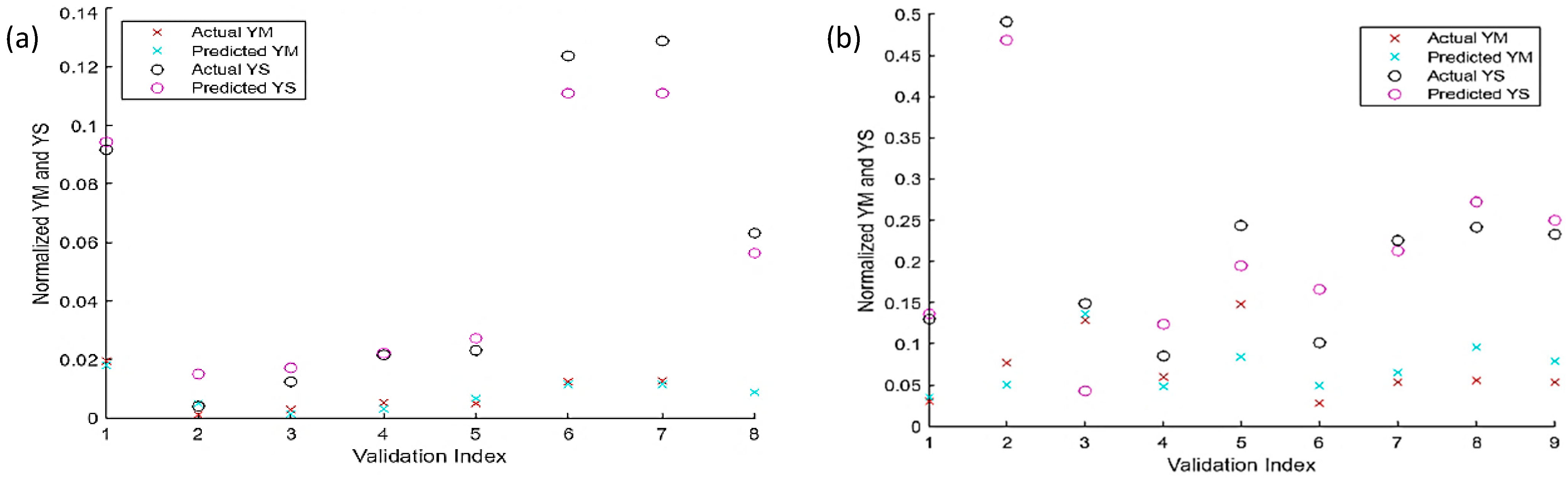
The performance analysis of different neural network models on gyroid structures, as outlined in Figure 13, highlights significant variations in prediction error across models and gyroid types. The validation results for the network gyroid case show more consistent error behaviour for both Young’s modulus and yield strength, with lower validation RMSE and no clear outliers in the validation set. Within the fixed-split benchmark, the SAE model gave the lowest validation RMSE, which supports its use as a stable initialisation strategy for the network gyroid dataset under the present training configuration and dataset coverage. Conversely, the RandWB model shows less consistency in its predictions for sheet gyroids, as seen during the same training iteration. Notable discrepancies at specific validation indices (three and five) highlight the model’s challenges in accurately forecasting the mechanical properties of sheet gyroids. These gyroids, which are known to achieve superior mechanical properties compared to network gyroids, are normalised at higher values relative to bulk material properties. This normalisation potentially exacerbates the prediction challenges, as it may amplify the impact of any deviations between predicted and actual values. The observed variability in the RandWB model’s performance suggests difficulties in adapting to the complex mechanical profiles of sheet gyroids under the present normalisation and training configuration.

3.6. Target Gyroid Behaviour

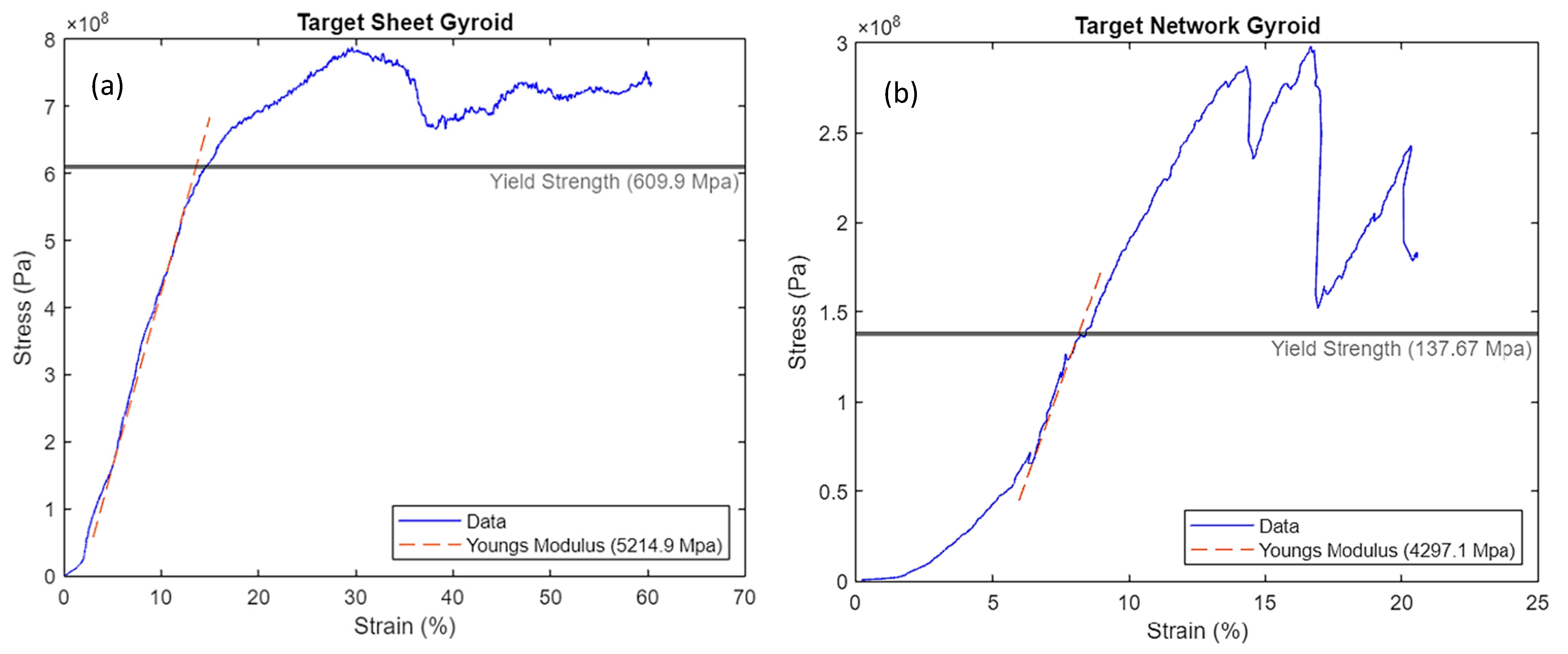
The target sheet gyroid exhibits a consistent elastic region, and the yield point can be easily identified, as shown in Figure 14a. The plastic region exhibits additional strain hardening at 35% strain where the layers fail simultaneously and begin to press into each other. As the target lattice had a relative density of 62%, this highlights the link between the selected relative density and the onset of a secondary period of strain hardening. This link has potential application in energy absorption applications [53]. There was significant deviation from the target modulus and the actual modulus. However, with Iteration 2 the modulus prediction is reduced significantly to within 25.39% of the actual value. The YS prediction shows lower absolute percentage error in both iterations and reduces to 3.51% in Iteration 2. The yield strength of the target network gyroid precedes a strain hardening region, as shown in Figure 14b, without a significant drop in the modulus from the elastic region. The yield point was difficult to identify because a clear drop in slope was not observed. The yield strength was therefore taken from the engineering stress–strain curve using the ISO 13314 procedure. Plastic deformation is evident after this point from the rightward offset of the curve. The layer-by-layer failure and layer densification can be seen, which is typical behaviour for stretch-dominated lattices [54]. The target and actual value for YM differed, and both training iterations under-predict the YM, with minimal variation between iterations, giving an absolute percentage error of 31.8%. The YS error reduces to 8.76% in the second iteration. Overall, the target lattice property prediction behaves similarly to the validation data behaviour, with a much-improved YS prediction compared to YM, although similar absolute percentage errors were observed for both gyroid types.

4. Discussions

The result section shows that the SNN offers a reasonable solution, although there is a clear advantage to the use of DNN architectures. What can be inferred from this is that the PTSP is a very complex function, which requires a more complex architecture to approximate [12]. This complexity arises from the multi-physics of LPBF that interact to form the phenomena of the PTSP, such as the melt pool, plateau-Rayleigh instability, and Marangoni flow [55]. GLWPT has a detrimental effect on the accuracy of the PTSP error. This is due to the complexity of the method leading to overfitting. Even though the initial weights are identical to SAE, the layer-by-layer training identifies overly complex features that are only present in the training data, inhibiting its ability to generalise to new data. Also, divergence is observed between training and validation error, which is a clear sign of overfitting [56]. GLWPT showed less consistent generalisation than SAE under the present training regime. SAE pre-training proved to be the more suitable pre-training method and improved consistency between different training runs. The SAE was the best NN for the network gyroids and was marginally outperformed by the RWB for the sheet gyroids. This method does not cause overfitting and provides a good initial ‘guess’ for the weights and biases for a small data set. A practical way to extend inverse-design validation is to generate an error map in the feasible parameter space. For fixed hatch spacing and layer thickness, a grid of laser power and scan speed values can be sampled within machine limits. The forward model can then predict Young’s modulus and yield strength across this grid, and the deviation from each target can be visualised as a contour map. This would highlight confidence regions where the model is interpolating near training data, and regions where predictions rely on extrapolation.
The approximation of the PTSP is enhanced when using a broader data set. Iteration 2 reduces the RMSE of almost all networks, only increasing RMSE on network gyroid GLWPT, which showed less stable performance across runs than SAE. This improvement can be attributed to the interpolation between data points made by the NNs [57]. If a given validation data point in the high-dimensional space lies ‘between’ two training data set points, the proximity of the training data points improves the quality of the validation point prediction. A better distribution of energy density improves this proximity. This enhanced proximity in the high-dimensional space enables a lower error extrapolation of the PTSP to predict the target lattice properties, which had design and process parameters not seen in the training data. By using the energy density to simplify the process parameter space, the supplementary lattices could effectively reduce the high-dimensional distance between the training and validation lattice data and improve the approximation of the PTSP. This supports the use of volumetric energy density as a consistent scalar coordinate for organising the literature-reported processing conditions used in this study.
The effects of the additional parameters are most easily demonstrated with the target lattices. The implementation of Iteration 2 data significantly reduces the target lattice prediction error. The target lattices were manufactured on the same build plate as the supplementary lattices. Therefore, additional PTSP-influencing parameters were kept constant across supplementary and target lattices. This leads to a ‘micro-trend’ within these lattices that is identified in the NN training and improves the predictions in Iteration 2. This behaviour is consistent with the sensitivity of PTSP relationships to build conditions and the available input descriptors.
Residual variability is expected in LPBF property data due to build- and study-specific influences. Experimental repeatability is also limited in the present study because the supplementary LPBF conditions were represented by single specimens, so these measurements should be interpreted as a proof-of-concept support for the workflow rather than a formal repeatability assessment. Although the added five-fold cross-validation improves statistical robustness, the present model evaluation remains a proof-of-concept assessment within the coverage of the compiled LPBF gyroid dataset and should not be interpreted as evidence of broad out-of-domain generalisability. Uncertainty bounds are not reported in the current implementation because the forward predictors are deterministic. A practical extension would be to quantify uncertainty using resampling-based prediction intervals, ensemble style predictions across independently trained models, or dropout-based approximations during inference, and to report the local sensitivity of recommended settings to small perturbations in target properties. This would enable confidence bounds to be attached to inverse recommendations and improve their use as decision support. The present framework captures the dominant trends within the compiled process–design space [55]. Further factors include the scanning strategy of the laser [55], laser spot size [58], beam profile [59], which can affect the microstructure, and gas flow field, which can affect the melt-pool behaviour [60]. A key observation within this work was that despite the similar sizes of the data sets, there was significantly reduced RMSE for all network gyroid NNs, and larger normalised errors for the sheet gyroid validation points. This infers that the PTSP relationship is more consistent for the network gyroids than the sheet gyroids; therefore, sheet gyroids are more prone to variation. The target property predictions were only similar for both lattice types due to the micro-trend in the supplementary data. As the sheet gyroid is a subtraction of two different network gyroid phases, the thickness of each curved wall is significantly smaller. In the target sheet gyroid, the curved wall thickness is approximately ~250 μm based on the target-lattice geometry shown in Figure 8d, which places it within the thin-wall range where thermal instability effects have been reported in the literature (200–300 μm) [59]. However, this value is an approximate geometric observation and not a statistical wall-thickness metrology dataset for the fabricated target specimens. Thin walls can increase sensitivity to melt-pool dynamics because the wall-thickness-to-melt-pool-size ratio is smaller [60]. As a result, geometrical deviations and defect features associated with LPBF processing can represent a larger fraction of the load-bearing wall thickness than in thicker network gyroid walls, which provides a plausible explanation for the higher prediction error observed for the sheet gyroid [52]. A direct quantitative correlation between wall-thickness deviation and model prediction error was not performed in the present study, so this should be interpreted as a mechanism-level hypothesis rather than a confirmed causal attribution.
As the deformation mechanisms directly affect the mechanical properties, they can affect the PTSP for the two gyroid types. Defects caused by the dynamism of the melt pool, such as small-scale porosities, can lead to stress concentrations [11], which influence the YM and YS of the lattice (elastic deformation region properties). Therefore, when all the layers of the sheet gyroid are compressed simultaneously in its elastic deformation, if the number of defects in each layer remains relatively constant [55] there is a larger number of defects adding variability in the measurement of the mechanical properties. By contrast, network gyroids experience more local deformation in the first layer during elastic compression, which leads to less influence of defects. Therefore, there is a larger proportion of ‘noise’ in the measurement of the elastic mechanical properties for sheet gyroids than for network gyroids, which explains the increased error in PTSP approximation for a similar data set size. The different deformation mechanisms also account for the different mechanical properties observed. Sheet gyroids can achieve a higher yield strain of 11–15% as they undergo simultaneous layer collapse typical of bending-dominated lattices, meaning that the strain energy is distributed across the entire lattice, and accounts for the larger YM and YS observed on sheet gyroids, even with lower relative densities. The network gyroids experience layer-by-layer collapse, meaning that yield occurs at a lower strain, 6–8%, as the first layer experiences a greater concentration of strain energy and localised strain. The regions of strain hardening/densification in Figure 8 showcase this deformation mechanism that is typical of stretch-dominated lattices. The strain energy can be calculated as the area under the stress–strain graph; the decreasing area under the climb and peak regions for each subsequent layer collapse demonstrates the decreasing strain energy released during subsequent layer collapse. Not all the strain energy is stored in the upper layer, but it contains a larger proportion of the distribution. Layer-by-layer collapse is advantageous for energy absorption applications [60]
Within the data from the literature, there are a variety of strain rates from 0.00033 s−1 to 0.01 s−1. Although these are within the range specified by the ISO 13314–2011, some approach much more quasistatic conditions, which has been shown to alter the recorded mechanical properties of bulk titanium alloy [37]. Incorporating the previous analysis of the strain energy distribution, deformation modes and the assumed equal distribution of defects in each layer shows that the increased variability during elastic deformation of the sheet gyroids could make them more sensitive to the varying strain rates used. The YM predictions had a greater error than the YS in all NNs. This highlights the greater complexity in the PTSP relationship for the YM. The PTSP parameters included in this work influence the defect distribution within the lattice and the resulting fusion quality and microstructural state, which can affect the elastic properties, but they do not capture all sources of variability in the present compiled dataset. As there have been further parameters identified in the PTSP relationship, it can be reasoned that as YS demonstrates consistently reduced percentage errors across the validation and target lattices, the PTSP parameters included in this work are the primary factors influencing the YS, whereas the YM has variation associated with other factors, such as those attributed to the creation of micro trends. SEM observations indicate partially adhered powder on the target lattice surfaces, which is consistent with surface condition effects contributing to scatter in elastic response, particularly for thin-walled sheet gyroids. The Alicona roughness results support this interpretation. The measured Ra differs by around a factor of two between the evaluated surfaces, with 14.94 µm for the sheet top skin and 30.21 µm for the network internal surface. In compression, the initial elastic slope is sensitive to surface contact, seating, and local compliance, so changes in surface condition and thin-wall geometry can shift the measured Young’s modulus more than the yield point. This helps explain why Young’s modulus shows larger scatter and higher prediction error than yield strength across both the literature and supplementary datasets. It also indicates that the residual Young’s modulus error is dominated by physical variability that is not captured by the current input set, rather than model capacity alone.


5. Conclusions

ANN pre-training strategies were applied to combined experimental and literature gyroid datasets to predict and target the mechanical properties of TPMS sheet and network gyroid structures manufactured via LPBF. This process involved incorporating process and design parameters as inputs to the ANN, which then predicted mechanical properties such as modulus and yield strength. Two target lattices were specifically designed with mechanical properties corresponding to human bone, utilising process and design parameters supplied by the neural networks. Additionally, supplementary lattices were designed, fabricated, and tested to fill in the energy density gaps in the data set from the literature. Among the pre-training strategies employed, the stacked autoencoder method significantly outperformed the greedy layer-wise method and emerged as the best performing neural network for the network gyroid data set. It also improved the prediction of target properties, achieving absolute percentage errors of 8.76% for yield strength and 31.8% for Young’s modulus. The neural networks modelling network gyroids were more accurate than those modelling sheet gyroids, which suggests that the PTSP relationship for network gyroids is simpler due to geometric differences such as wall thickness and differing deformation mechanisms. Yield strength proved to be more dependent on the study parameters, while Young’s modulus showed more variability associated with broader PTSP factors. The DNN achieved a yield strength absolute percentage prediction of 3.51% for the target sheet gyroid and 8.76% accuracy for the target network gyroid. Sheet gyroids exhibited larger Young’s modulus and higher yield strength than network gyroids at lower relative densities and showcased different deformation mechanisms. The gyroids achieved Young’s modulus within the range suitable for human bone. The surface condition effects are consistent with the observed scatter in Young’s modulus, particularly for thin-walled sheet gyroids. Generalisation is governed by the range of conditions represented in the training data.
Supplementary Materials

The following supporting information can be downloaded at: https://www.mdpi.com/article/10.3390/jmmp10030092/s1, Table S1—Iteration 2 data set, Figure S1—Process map for Youngs modulus, target network gyroid. Figure S2—Process map for yield strength target network gyroid. Figure S3—Process map for Youngs modulus, target sheet gyroid. Figure S4—Process map for Youngs modulus, target network gyroid. Figure S5—Error histograms for SAE network and RandWB Sheet from iteration 2 of training. Corresponding to the validation plots. The more gaussian distribution seen in the network gyroid SAE demonstrates the reduced errors for the network gyroid, which are more centred around 0. Figure S6—Iteration 1 SAENET validation accuracy. Figure S7—Iteration 1 RandWBSHEET validation accuracy, Figure S8—Supplementary network gyroid stress strain curves, Figure S9—Supplementary sheet gyroid stress strain curves.

Author Contributions

Conceptualization, K.E. and H.H.; methodology, A.D.; software, A.D.; validation, A.D., A.A.H. and K.E.; formal analysis, A.D., A.A.H., H.H. and K.E. investigation, A.D.; resources, K.E.; data curation, A.D.; writing—original draft preparation, A.D. and H.H.; writing—review and editing, K.E., H.H. and A.A.H.; visualization, A.D. and H.H.; supervision, H.H. and K.E.; project administration, K.E., H.H. and A.A.H. funding acquisition, K.E., H.H. and A.A.H. All authors have read and agreed to the published version of the manuscript.

Funding

This work was supported by the Royal Society through an International Exchanges Award, grant number IES\R2\212012.

Institutional Review Board Statement

The authors confirm that this work does not contain any studies with human participants performed by any of the authors.

Data Availability Statement

The data supporting the findings of this study are provided in the Supplementary Information. Any additional materials are available from the corresponding author upon request.

Conflicts of Interest

The authors of this article declare that they have no conflicts of interest regarding the publication of this manuscript.

References

  1. Arabnejad, S.; Johnston, R.B.; Tanzer, M.; Pasini, D. Fully porous 3D printed titanium femoral stem to reduce stress-shielding following total hip arthroplasty. J. Orthop. Res. 2016, 35, 1774–1783. [Google Scholar] [CrossRef]
  2. Tyagi, S.A.; Manjaiah, M. Printability, post-processing and mechanical behaviour of sub-millimetre sized SS 17-4PH TPMS lattice structures. Mater. Today Commun. 2024, 38, 108267. [Google Scholar] [CrossRef]
  3. Li, S.; Li, Y.; Feng, S.; Hao, Y.; Yang, R.; Murr, L.E. Fatigue and fracture properties of additively manufactured Ti-6Al-4V lattice structures. Addit. Manuf. 2019, 28, 464–474. [Google Scholar]
  4. Melchels, F.P.W.; Domingos, M.A.N.; Klein, T.J.; Malda, J.; Bartolo, P.J.; Hutmacher, D.W. Additive manufacturing of tissues and organs. Prog. Polym. Sci. 2012, 37, 1079–1104. [Google Scholar] [CrossRef]
  5. Chen, L.Y.; Liang, S.-X.; Liu, Y.; Zhang, L.-C. Additive manufacturing of metallic lattice structures: Unconstrained design, accurate fabrication, fascinated performances, and challenges. Mater. Sci. Eng. R Rep. 2021, 146, 100648. [Google Scholar] [CrossRef]
  6. Wieding, J.; Wolf, A.; Bader, R. Numerical optimization of open-porous bone scaffold structures to match the elastic properties of human cortical bone. J. Mech. Behav. Biomed. Mater. 2014, 37, 56–68. [Google Scholar] [CrossRef] [PubMed]
  7. Singh, R.; Lee, P.D.; Jones, J.R. Understanding the mechanical behavior of hierarchical bioactive glass scaffolds through in situ synchrotron tomography and finite element modeling. Biomaterials 2019, 188, 160–169. [Google Scholar]
  8. Yang, L.; van der Werf, K.O.; Fitie, C.F.C.; Bennink, M.L.; Dijkstra, P.J.; Feijen, J. Mechanical properties of native and cross-linked type I collagen fibrils. Biophys. J. 2008, 94, 2204–2211. [Google Scholar] [CrossRef]
  9. Wang, N.; Meenashisundaram, G.K.; Kandilya, D.; Fuh, J.Y.H.; Dheen, S.T.; Kumar, A.S. A biomechanical evaluation on Cubic, Octet, and TPMS gyroid Ti6Al4V lattice structures fabricated by selective laser melting and the effects of their debris on human osteoblast-like cells. Biomater. Adv. 2022, 137, 212829. [Google Scholar] [CrossRef]
  10. Wang, J.; Zhu, R.; Liu, Y.; Zhang, L. Understanding melt pool characteristics in laser powder bed fusion: An overview of single- and multi-track melt pools for process optimization. Adv. Powder Mater. 2023, 2, 100137. [Google Scholar] [CrossRef]
  11. Huang, Y.; Yin, Y.; Zhong, Z.; Zhang, H. Keyhole fluctuation and pore formation mechanisms during laser powder bed fusion additive manufacturing. Nat. Commun. 2022, 13, 1170. [Google Scholar] [CrossRef]
  12. Wang, P.; Yang, Y.; Moghaddam, N.S. Process modeling in laser powder bed fusion towards defect detection and quality control via machine learning: The state-of-the-art and research challenges. J. Manuf. Process. 2022, 73, 961–984. [Google Scholar] [CrossRef]
  13. Qi, X.; Chen, G.; Li, Y.; Cheng, X.; Li, C. Applying Neural-Network-Based Machine Learning to Additive Manufacturing: Current Applications, Challenges, and Future Perspectives. Engineering 2019, 5, 721–729. [Google Scholar] [CrossRef]
  14. Abele, E.; Stoffregen, H.A.; Klimkeit, K.; Hoche, H.; Oechsner, M. Optimisation of process parameters for lattice structures. Rapid Prototyp. J. 2015, 21, 117–127. [Google Scholar] [CrossRef]
  15. Hassanin, H.; Zweiri, Y.; Finet, L.; Essa, K.; Qiu, C.; Attallah, M. Laser Powder Bed Fusion of Ti-6Al-2Sn-4Zr-6Mo Alloy and Properties Prediction Using Deep Learning Approaches. Materials 2021, 14, 2056. [Google Scholar] [CrossRef]
  16. Feng, S.; Zhou, H.; Dong, H. Using deep neural networks with small datasets to predict material defects. Mater. Des. 2019, 162, 300–310. [Google Scholar] [CrossRef]
  17. Britt, C.; Montgomery, C.J.; Brand, M.J.; Liu, Z.-K.; Carpenter, J.S.; Beese, A.M. Effect of processing parameters and strut dimensions on the microstructures and hardness of stainless steel 316L lattice-emulating structures made by powder bed fusion. Addit. Manuf. 2021, 40, 101943. [Google Scholar] [CrossRef]
  18. Shi, K.; Gu, D.; Liu, H.; Chen, Y.; Lin, K. Process-structure multi-objective inverse optimisation for additive manufacturing of lattice structures using a physics-enhanced data-driven method. Virtual Phys. Prototyp. 2023, 18, e2266641. [Google Scholar] [CrossRef]
  19. Zhang, Y.; Yang, S.; Dong, G.; Zhao, Y.F. Predictive manufacturability assessment system for laser powder bed fusion based on a hybrid machine learning model. Addit. Manuf. 2021, 41, 101946. [Google Scholar] [CrossRef]
  20. Luo, Z.; Xiong, Y.; Zhang, Z.; Rosen, D.W. Finite element analysis of the mechanical properties of sheet- and skeleton-gyroid Ti6Al4V structures produced by laser powder bed fusion. Thin-Walled Struct. 2023, 192, 111098. [Google Scholar] [CrossRef]
  21. Zhang, J.; Song, B.; Yang, L.; Liu, R.; Zhang, L.; Shi, Y. Microstructure evolution and mechanical properties of TiB/Ti6Al4V gradient-material lattice structure fabricated by laser powder bed fusion. Compos. B Eng. 2020, 202, 108417. [Google Scholar] [CrossRef]
  22. Maevskaia, E.; Guerrero, J.; Ghayor, C.; Bhattacharya, I.; Weber, F.E. Triply Periodic Minimal Surface-Based Scaffolds for Bone Tissue Engineering: A Mechanical, In Vitro and In Vivo Study. Tissue Eng. Part A 2023, 29, 507–517. [Google Scholar] [CrossRef] [PubMed]
  23. Timercan, A.; Terriault, P.; Brailovski, V. Axial tension/compression and torsional loading of diamond and gyroid lattice structures for biomedical implants: Simulation and experiment. Mater. Des. 2023, 225, 111585. [Google Scholar] [CrossRef]
  24. Yang, H.; Luo, Z.; Zhao, Y.; Li, Z. Deep learning-based X-ray computed tomography image reconstruction and prediction of compression behavior of 3D printed lattice structures. Addit. Manuf. 2022, 54, 102774. [Google Scholar] [CrossRef]
  25. Zhang, Y.; Hong, G.S.; Ye, D.; Zhu, K.; Fuh, J.Y.H. Extraction and evaluation of melt pool, plume and spatter information for powder-bed fusion AM process monitoring. Mater. Des. 2018, 156, 458–469. [Google Scholar] [CrossRef]
  26. Kelly, C.N.; Rajkumar, S.; Baez, P.M.; Johnson, D.W.; Baines, W.J. Fatigue behavior of As-built selective laser melted titanium scaffolds with sheet-based gyroid microarchitecture for bone tissue engineering. Acta Biomater. 2019, 94, 610–626. [Google Scholar] [CrossRef] [PubMed]
  27. Shi, X.; Zhou, L.; Li, P.; Lin, H. Comparison of Compression Performance and Energy Absorption of Lattice Structures Fabricated by Selective Laser Melting. Adv. Eng. Mater. 2020, 22, 2000453. [Google Scholar] [CrossRef]
  28. Yang, L.; Yan, C.; Han, C.; Chen, P.; Yang, S.; Shi, Y. Mechanical response of a triply periodic minimal surface cellular structures manufactured by selective laser melting. Int. J. Mech. Sci. 2018, 148, 149–157. [Google Scholar] [CrossRef]
  29. Ge, J.; Fu, H.; Zhang, X.; Guo, L. Microstructural features and compressive properties of SLM Ti6Al4V lattice structures. Surf. Coat. Technol. 2020, 403, 126419. [Google Scholar] [CrossRef]
  30. Faegh, M.; Ghungrad, S.; Oliveira, J.P.; Rao, P.; Haghighi, A. A review on physics-informed machine learning for process-structure-property modeling in additive manufacturing. J. Manuf. Process. 2025, 133, 524–555. [Google Scholar] [CrossRef]
  31. Smoqi, Z.; Gaikwad, A.; Bevans, B.; Kobir, M.H.; Craig, J.; Abul-Haj, A.; Peralta, A.; Rao, P. Monitoring and prediction of porosity in laser powder bed fusion using physics-informed meltpool signatures and machine learning. J. Mater. Process. Technol. 2022, 304, 117550. [Google Scholar] [CrossRef]
  32. Du, Y.; Mukherjee, T.; DebRoy, T. Physics-informed machine learning and mechanistic modeling of additive manufacturing to reduce defects. Appl. Mater. Today 2021, 24, 101123. [Google Scholar] [CrossRef]
  33. Hosseini, E.; Scheel, P.; Müller, O.; Molinaro, R.; Mishra, S. Single-track thermal analysis of laser powder bed fusion process: Parametric solution through physics-informed neural networks. Comput. Methods Appl. Mech. Eng. 2023, 410, 116019. [Google Scholar] [CrossRef]
  34. Scheel, P.; Hosseini, E. Pulse approach: A physics-guided machine learning model for thermal analysis in laser-based powder bed fusion of metals. Prog. Addit. Manuf. 2025, 10, 1405–1420. [Google Scholar] [CrossRef]
  35. Mao, Y.; Lin, X.; Zhu, H.; Zhu, K. Physics-guided spatiotemporal approach for melt pool size prediction in laser powder bed fusion. Virtual Phys. Prototyp. 2024, 19, e2427243. [Google Scholar] [CrossRef]
  36. Tyagi, S.A.; Manjaiah, M. Additive manufacturing of titanium-based lattice structures for medical applications—A review. Bioprinting 2023, 30, e00267. [Google Scholar] [CrossRef]
  37. Santiago, R.; Ramos, H.; AlMahri, S.; Banabila, O.; Alabdouli, H.; Lee, D.-W.; Aziz, A.; Rajput, N.; Alves, M.; Guan, Z. Modelling and optimisation of TPMS-based lattices subjected to high strain-rate impact loadings. Int. J. Impact Eng. 2023, 177, 104592. [Google Scholar] [CrossRef]
  38. Zhou, H.; Zhao, M.; Ma, Z.; Zhang, D.Z.; Fu, G. Sheet and network-based functionally graded lattice structures manufactured by selective laser melting: Design, mechanical properties, and simulation. Int. J. Mech. Sci. 2020, 175, 105480. [Google Scholar] [CrossRef]
  39. Distefano, F.; Pasta, S.; Epasto, G. Titanium lattice structures produced via additive manufacturing for a bone scaffold: A review. J. Funct. Biomater. 2023, 14, 125. [Google Scholar] [CrossRef] [PubMed]
  40. Hassanin, H.; Alkendi, Y.; Elsayed, M.; Essa, K.; Zweiri, Y. Controlling the properties of additively manufactured cellular structures using machine learning approaches. Adv. Eng. Mater. 2020, 22, 1901338. [Google Scholar] [CrossRef]
  41. Prashanth, K.G.; Scudino, S.; Maity, T.; Das, J.; Eckert, J. Is the energy density a reliable parameter for materials synthesis by selective laser melting? Mater. Res. Lett. 2017, 5, 386–390. [Google Scholar] [CrossRef]
  42. ISO 13314:2011; Mechanical Testing of Metals—Ductility Testing—Compression Test for Porous and Cellular Metals. ISO: Geneva, Switzerland, 2011.
  43. Jones, A. TPMS Designer. Available online: https://uk.mathworks.com/matlabcentral/fileexchange/78838-tpms-designer (accessed on 6 May 2024).
  44. McGregor, M.; Patel, S.; McLachlin, S.; Vlasea, M. Architectural bone parameters and the relationship to titanium lattice design for powder bed fusion additive manufacturing. Addit. Manuf. 2021, 47, 102273. [Google Scholar] [CrossRef]
  45. Abiodun, O.I.; Jantan, A.; Omolara, A.E.; Dada, K.V.; Mohamed, N.A.; Arshad, H. State-of-the-art in artificial neural network applications: A survey. Heliyon 2018, 4, 938. [Google Scholar] [CrossRef]
  46. Hong, W.-K. Understanding artificial neural networks: Analogy to the biological neuron model. In Artificial Intelligence-Based Design of Reinforced Concrete Structures; Elsevier: Amsterdam, The Netherlands, 2023; pp. 7–13. [Google Scholar] [CrossRef]
  47. Trainrp Matlab Documentation. Available online: https://uk.mathworks.com/help/deeplearning/ref/trainrp.html#responsive_offcanvas (accessed on 2 May 2024).
  48. Yuan, X.; Ou, C.; Wang, Y.; Yang, C.; Gui, W. A novel semi-supervised pre-training strategy for deep networks and its application for quality variable prediction in industrial processes. Chem. Eng. Sci. 2020, 217, 115509. [Google Scholar] [CrossRef]
  49. Khrapov, D.; Paveleva, A.; Kozadayeva, M.; Evsevleev, S.; Mishurova, T.; Bruno, G.; Surmenev, R.; Koptyug, A.; Surmeneva, M. Trapped powder removal from sheet-based porous structures based on triply periodic minimal surfaces fabricated by electron beam powder bed fusion. Mater. Sci. Eng. A 2023, 862, 144479. [Google Scholar] [CrossRef]
  50. Boutaous, M.; Liu, X.; Siginer, D.A.; Xin, S. Balling phenomenon in metallic laser based 3D printing process. Int. J. Therm. Sci. 2021, 167, 107011. [Google Scholar] [CrossRef]
  51. Tang, J.; Sang, Z.; Zhang, X.; Song, C.; Tang, W.; Luo, X.; Yan, M. Impacts of residual 3D printing metal powders on immunological response and bone regeneration: An in vivo study. J. Mater. Sci. Mater. Med. 2023, 34, 29. [Google Scholar] [CrossRef]
  52. Hassanin, H.; El-Sayed, M.A.; Ahmadein, M.; Alsaleh, N.A.; Ataya, S.; Ahmed, M.M.Z.; Essa, K. Optimising Surface Roughness and Density in Titanium Fabrication via Laser Powder Bed Fusion. Micromachines 2023, 14, 1642. [Google Scholar] [CrossRef]
  53. Tang, J.C.; Luo, J.P.; Huang, Y.J.; Sun, J.F.; Zhu, Z.Y.; Xu, J.Y.; Dargusch, M.S.; Yan, M. Immunological response triggered by metallic 3D printing powders. Addit. Manuf. 2020, 35, 101392. [Google Scholar] [CrossRef]
  54. Zhao, M.; Zhang, D.Z.; Liu, F.; Li, Z.; Ma, Z.; Ren, Z. Mechanical and energy absorption characteristics of additively manufactured functionally graded sheet lattice structures with minimal surfaces. Int. J. Mech. Sci. 2020, 167, 105262. [Google Scholar] [CrossRef]
  55. Maconachie, T.; Leary, M.; Lozanovski, B.; Zhang, X.; Qian, M.; Faruque, O.; Brandt, M. SLM lattice structures: Properties, performance, applications and challenges. Mater. Des. 2019, 183, 108137. [Google Scholar] [CrossRef]
  56. Habiba, U.; Hebert, R.J. Powder Spreading Mechanism in Laser Powder Bed Fusion Additive Manufacturing: Experiments and Computational Approach Using Discrete Element Method. Materials 2023, 16, 2824. [Google Scholar] [CrossRef] [PubMed]
  57. Liu, Z.; Yang, Y.; Wang, D.; Chen, J.; Xiao, Y.; Zhou, H.; Chen, Z.; Song, C. Flow field analysis for multilaser powder bed fusion and the influence of gas flow distribution on parts quality. Rapid Prototyp. J. 2022, 28, 1706–1716. [Google Scholar] [CrossRef]
  58. Kranz, J.; Herzog, D.; Emmelmann, C. Design guidelines for laser additive manufacturing of lightweight structures in TiAl6V4. J. Laser Appl. 2014, 27, S14001. [Google Scholar] [CrossRef]
  59. Wang, D.; Wu, S.; Bai, Y.; Lin, H.; Yang, Y.; Song, C. Characteristics of typical geometrical features shaped by selective laser melting. J. Laser Appl. 2017, 29, 022007. [Google Scholar] [CrossRef]
  60. Sun, Q.; Sun, J.; Guo, K.; Wang, L. Compressive mechanical properties and energy absorption characteristics of SLM fabricated Ti6Al4V triply periodic minimal surface cellular structures. Mech. Mater. 2022, 166, 104241. [Google Scholar] [CrossRef]
Figure 1. Workflow of the proposed process–design screening workflow, from data compilation and normalisation to model training, inverse design, and experimental validation.
Jmmp 10 00092 g001
Figure 2. CAD models of the two TPMS gyroid lattices: (a) network gyroid 25% density; (b) sheet gyroid 40% density.
Jmmp 10 00092 g002
Figure 3. (a) A SEM image of Ti6Al4V powder particles. (b) Size distribution of the powder.
Jmmp 10 00092 g003
Figure 4. (A) Shallow neural network (SNN) architecture showing input layer, one hidden layer, and output layer (fully connected). (B) Single-neuron schematic indicating weight W, bias b, and activation function G.
Jmmp 10 00092 g004
Figure 5. Diagram of the stacked autoencoder method used in this study. W and B represent the weights and biases being transferred from the autoencoders to the main DNN. Arrows denote the direction of information transfer.
Jmmp 10 00092 g005
Figure 6. Examples of the stress–strain diagrams at different energy density (ED) of (a) network gyroids, (b) sheet gyroids, (c) a target network gyroid after a compressive mechanical test, with shear failure at 21% strain, and (d) a target sheet gyroid after a compressive test of 60% strain. Legend abbreviations: “Net” = network; “Sheet” = sheet.
Jmmp 10 00092 g006aJmmp 10 00092 g006b
Figure 7. Normalised energy-density (0–1) gaps and supplementary lattices to fill them for (a) a network gyroid and (b) a sheet gyroid. A value of 0 indicates the minimum observed energy density in that dataset.
Jmmp 10 00092 g007
Figure 8. SEM images of the target gyroid lattice surfaces showing representative features: (a) small-scale porosity/geometrical irregularities, (b) partially melted/adhered powder, (c) geometrical irregularities, (d) partially melted/adhered powder.
Jmmp 10 00092 g008aJmmp 10 00092 g008b
Figure 9. Alicona contrast images and surface roughness traces for the evaluated surfaces of the two target gyroid lattices: sheet top skin, normal to BD, Ra 14.94 µm, and network internal surface, Ra 30.21 µm. Process and design settings are sheet 62%, 2.0 mm, 205 W, 700 mm·s−1, H 0.09 mm, and T 0.03 mm, and network 46%, 2.5 mm, 350 W, 970 mm·s−1, H 0.09 mm, and T 0.03 mm.
Jmmp 10 00092 g009
Figure 10. Network gyroid NN training plots comparison of different training strategies and SNN.
Jmmp 10 00092 g010
Figure 11. Sheet gyroid NN training plots comparison of different training strategies and SNN.
Jmmp 10 00092 g011
Figure 12. RMSE plots of all the NN training strategies compared in this study, across both iterations.
Jmmp 10 00092 g012
Figure 13. Validation set prediction vs. actual value plots for the best performing NN from Iteration 2 with (a) SAENET and (b) RWBSheet.
Jmmp 10 00092 g013
Figure 14. Stress–strain curves for the target lattices: (a) target sheet gyroid and (b) target network gyroid.
Jmmp 10 00092 g014
Table 1. Ti6Al4V chemical composition (wt. %) as supplied.
ElementAlVFeCONHTi
wt. %5.93.980.1580.0060.1600.0040.002Bal.
Table 2. Target lattice process and design parameters supplied by best performers from Iteration 1.
LatticeTarget YM (MPa)Laser Power (W)Scan Speed (mm/s)Hatch Spacing (mm)Layer Thickness (mm)Relative Density (%)Unit Cell Size (mm)Dimension (mm)
Target Network30003509700.090.03462.515 × 15 × 15
Target Sheet25,0002057000.090.0362216 × 16 × 16
Table 3. Top 5 feasible inverse-design solutions for each target lattice.
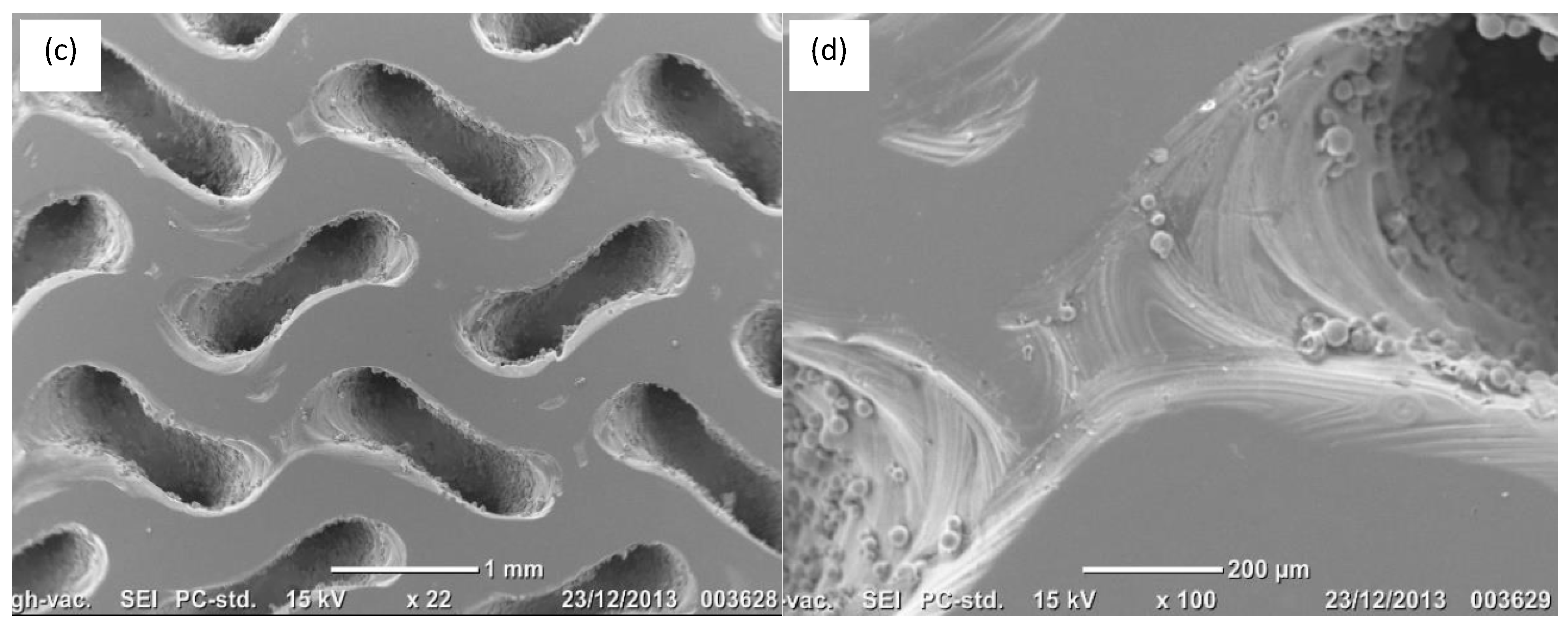
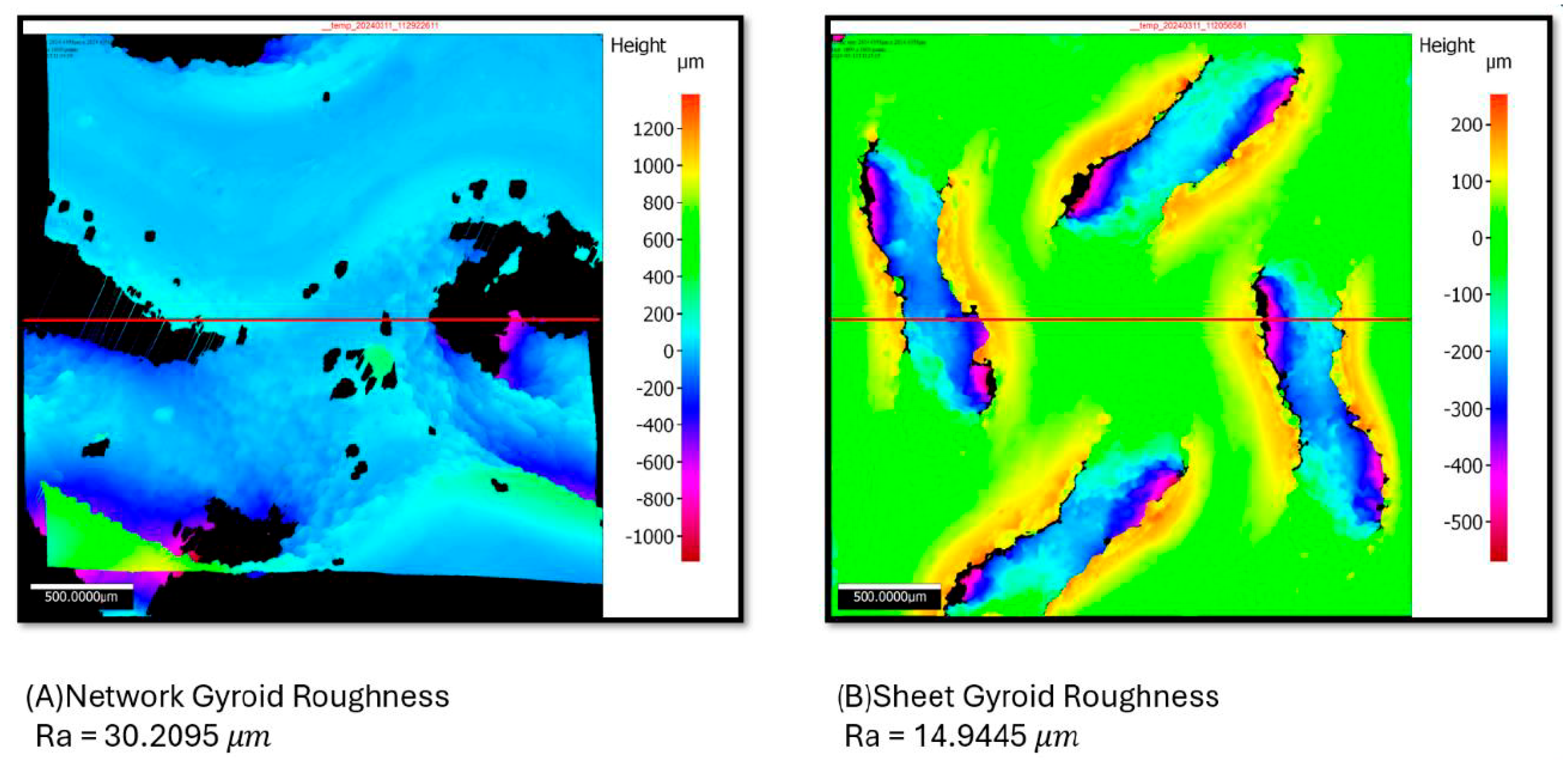
Target LatticeRankLaser Power (W)Scan Speed (mm/s)Predicted YM (MPa)Predicted YS (MPa)
Target Network1145.01250.02999.9135.0
Target Network2130.01290.03000.1133.4
Target Network3170.01185.03000.2137.2
Target Network4265.0980.03000.3142.2
Target Network5205.01100.02999.7139.5
Target Sheet1285.02555.024,999.9766.8
Target Sheet290.02540.024,999.6634.8
Target Sheet3255.0710.025,000.5815.6
Target Sheet4140.01845.024,999.5725.1
Target Sheet5320.0945.024,999.4779.8
Table 4. Local sensitivity of selected inverse-design candidates to ±5% changes in laser power and scan speed.
TargetCaseP (W)V (mm/s)YM (MPa)ΔYM (%)YS (MPa)ΔYS (%)
NetworkBase265.0980.03000.30.00142.20.00
NetworkP − 5%251.8980.02952.0−1.61141.6−0.43
NetworkP + 5%278.3980.03043.51.44142.80.40
NetworkV − 5%265.0931.02899.1−3.37141.8−0.29
NetworkV + 5%265.01029.03093.13.10142.20.01
SheetBase255.0710.025,000.50.00815.60.00
SheetP − 5%242.2710.024,596.2−1.62807.4−1.01
SheetP + 5%267.8710.025,238.40.95819.50.47
SheetV − 5%255.0674.524,854.6−0.58813.8−0.23
SheetV + 5%255.0745.525,140.20.56817.30.21
Table 5. Non-neural baseline benchmarking using the same inputs and validation protocol as the neural network models. Values are validation RMSE in MPa for Iteration 2.
ModelNetwork YM RMSE (MPa)Network YS RMSE (MPa)Sheet YM RMSE (MPa)Sheet YS RMSE (MPa)
Linear regression504.125.73837.6109.1
SVR (RBF)694.437.64072.2152.3
Random forest404.321.41392.5102.2
Gradient boosting439.725.01841.080.4
Gaussian process413.130.22292.653.5
Power-law scaling495.925.54436.5119.2
Table 6. Five-fold cross-validation robustness results (k = 5) for the selected forward ANN models. Values are reported as mean RMSE ± standard deviation across folds for Young’s modulus (YM) and yield strength (YS), with repeated training runs within each fold to capture variability due to random initialisation.
Lattice TypeCross-Validation ModelYM RMSE (MPa)YS RMSE (MPa)FoldsRepeats per Fold
Network gyroidForward ANN (5-fold robustness check)338.8 ± 108.316.4 ± 8.555
Sheet gyroidForward ANN (5-fold robustness check)4956.0 ± 2236.285.5 ± 18.855
Disclaimer/Publisher’s Note: The statements, opinions and data contained in all publications are solely those of the individual author(s) and contributor(s) and not of MDPI and/or the editor(s). MDPI and/or the editor(s) disclaim responsibility for any injury to people or property resulting from any ideas, methods, instructions or products referred to in the content.