Article

Fabrication of Highly Sensitive Conformal Temperature Sensors on Stainless Steel via Aerosol Jet Printing


1
School of Mechanical Engineering, Northwestern Polytechnical University, Xi’an 710072, China
2
Shanghai Institute of Spacecraft Equipment, Shanghai 200240, China
3
The Key Laboratory of Aircraft High Performance Assembly, Ministry of Industry and Information Technology, Northwestern Polytechnical University, Xi’an 710072, China
*
Authors to whom correspondence should be addressed.
J. Manuf. Mater. Process. 2026, 10(1), 41; https://doi.org/10.3390/jmmp10010041
Submission received: 14 November 2025 / Revised: 28 December 2025 / Accepted: 9 January 2026 / Published: 21 January 2026
(This article belongs to the Special Issue 3D Micro/Nano Printing Technologies and Advanced Materials)

Abstract

Promoting the development of aerospace vehicles toward structural–functional integration and intelligent sensing is a key strategy for achieving lightweight, high-reliability, and autonomous operation and maintenance of next-generation aircraft. However, traditional external sensors face significant limitations because of their bulky size, installation challenges, and incompatibility with aerodynamic surfaces. These issues are particularly pronounced on complex, high-curvature substrates, where achieving conformal bonding is difficult, thus restricting their application in critical components. In this study, aerosol jet printing (AJP) was employed to directly fabricate silver nanoparticle-based temperature sensors with real-time monitoring capabilities on the surface of high-curvature stainless steel sleeves, which serve as typical engineering components. This approach enables the in situ manufacturing of high-precision conformal sensors. Through optimized structural design and thermal treatment, the sensors exhibit reliable temperature sensitivity. Microscopic characterization reveals that the printed sensors possess uniform linewidths and well-defined outlines. After gradient sintering at 250 °C, a dense and continuous conductive path is formed, ensuring strong adhesion to the substrate. Temperature-monitoring results indicate that the sensor exhibits a nearly linear resistance response (R2 > 0.999) across a broad detection range of 20–200 °C. It also demonstrates high sensitivity, characterized by a temperature coefficient of resistance (TCR) of 2.15 × 10⁻³/°C at 20 °C. In repeated thermal cycling tests, the sensor demonstrates excellent repeatability and stability over 100 cycles, with resistance fluctuations kept within 0.5% and negligible hysteresis observed. These findings confirm the feasibility of using AJP technology to fabricate high-performance conformal sensors on complex surfaces, offering a promising strategy for the development of intelligent structural components in next-generation aerospace engineering.

1. Introduction

Next-generation aerospace vehicles, hypersonic systems, and propulsion technologies are advancing toward higher thrust-to-weight ratios, improved thermal efficiency, and enhanced reliability. These advancements introduce unprecedented challenges for internal thermal management and condition monitoring systems [1,2,3]. In particular, the real-time and accurate monitoring of surface temperature fields on critical components—such as turbine blades, fuel lines, and high-temperature chambers in aero-engines—is essential for optimizing thermal management strategies, evaluating structural integrity, and enabling predictive maintenance [4,5,6,7]. However, these functional components often feature complex geometries, including high-curvature and irregular surfaces, and operate under harsh conditions characterized by prolonged high temperatures, intense vibrations, and repeated thermal cycling. These factors present substantial obstacles to the accurate monitoring of structural surface temperatures [8,9,10].
Traditional rigid temperature sensors are inherently limited by their shape, making it difficult for them to conform to complex curved surfaces. This mismatch often leads to issues such as installation-induced stress, added mass, and poor surface contact, all of which significantly reduce monitoring accuracy on non-planar structures [11]. In recent years, the rapid development of technologies such as 5G communication, integrated circuits, and intelligent sensing has accelerated the advancement of flexible temperature sensors. Owing to their exceptional mechanical flexibility, these sensors can integrate more easily with complex curved surfaces [12,13,14]. However, their installation typically relies on adhesives to attach them to structural surfaces. Over extended periods in thermally and mechanically demanding environments, these adhesives are prone to creep and fatigue, which leads to degradation and eventual failure. As a result, flexible sensors may suffer from signal drift, delayed response, or even complete functional failure, making it difficult to satisfy the requirements for high reliability and long service life [15,16].
To effectively address this challenge, the concept of conformal temperature sensor has been proposed. This approach involves the direct fabrication of sensors onto the surfaces of complex structures, enabling non-destructive, accurate, and durable monitoring of the true temperature distribution of structural components [17,18,19]. The rapid advancement of conformal printing technologies offers a promising pathway to realize this concept. Currently, representative conformal printing techniques include inkjet printing, electrohydrodynamic printing, and AJP [20,21,22,23]. Among these, AJP is a relatively novel direct-write technique that differs fundamentally from conventional inkjet printing. Its unique atomization and focused deposition mechanism enables consistent and uniform ink delivery at a stand-off distance of 2–5 mm from the substrate, thereby offering greater manufacturing flexibility and broader applicability [24,25,26]. Moreover, AJP offers ultra-high spatial resolution, achieving printing precision as fine as 5 μm. It also accommodates a wide viscosity range from 1 to 1000 centipoise, making it compatible with a broad spectrum of inks. In addition, it supports a diverse array of material systems, including metals, resins, conductive polymers, and two-dimensional composite materials. These unique advantages offer significant design flexibility for fabricating conformal temperature sensors on complex surfaces, thereby providing an advanced technological solution for accurate thermal sensing in intricate engineering components [27,28,29].
To achieve highly sensitive temperature monitoring, a variety of materials such as metals, carbon-based materials, and conductive polymers have been extensively investigated [30,31,32]. Among these, metals have emerged as the preferred option due to their outstanding sensitivity, exceptional linearity, and reliable stability [33,34]. Silver nanoparticles (Ag NPs) inks, in particular, offer a cost advantage over gold and greater chemical stability than copper. Additionally, their relatively low sintering temperature and excellent electrical conductivity make them a leading material for conformal printing applications, especially in AJP-based technologies [35,36].
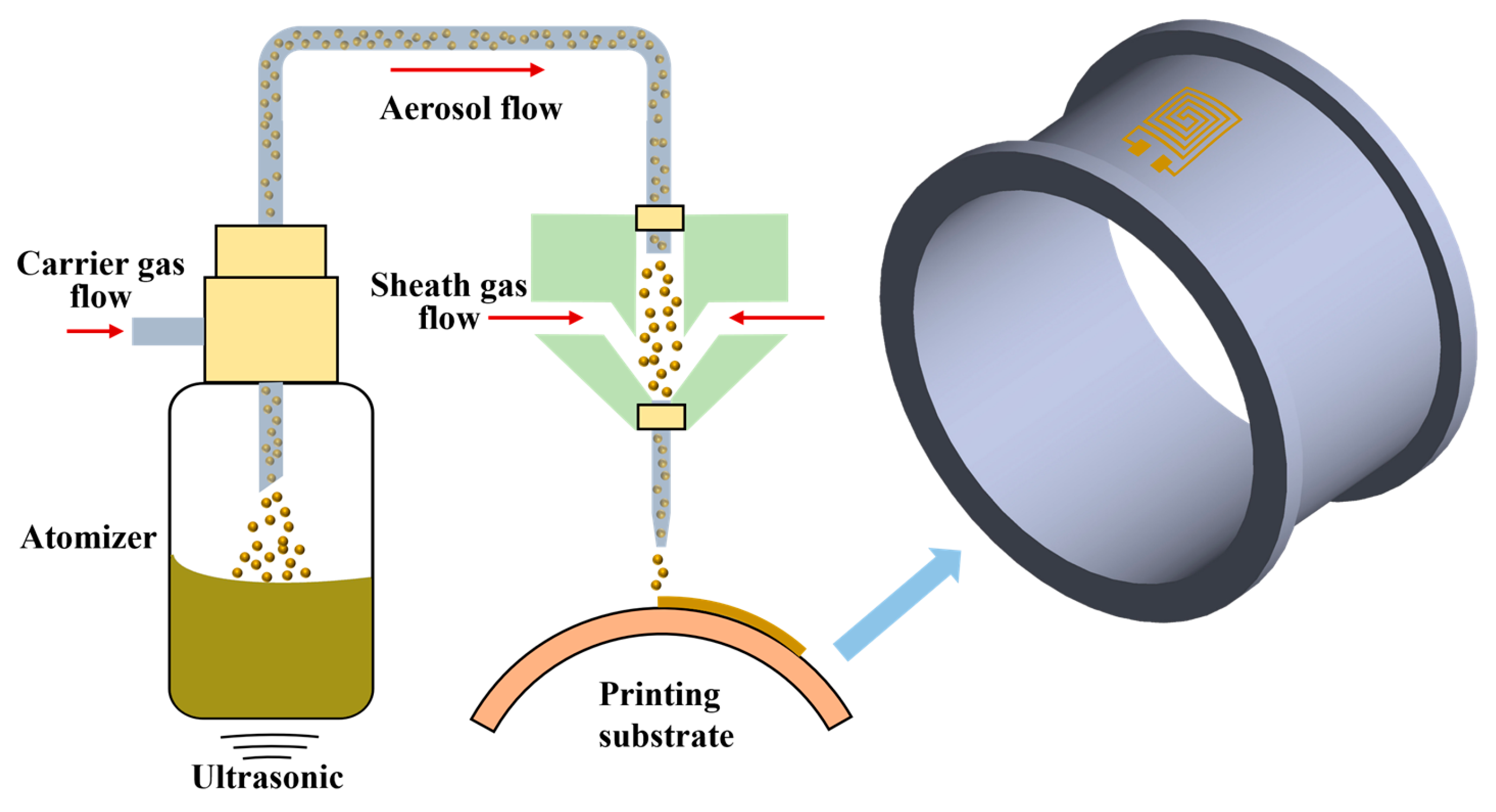
In this study, AJP was employed to directly fabricate a conformal temperature sensor on the surface of a 304 stainless steel sleeve, using Ag NPs ink as the functional material, as illustrated in Figure 1. The adaptability of AJP for direct printing on commonly used aerospace structural components and the temperature-sensing characteristics of the resulting sensor were systematically evaluated. By optimizing the sensor’s structural design and applying a gradient heat treatment process to enhance the density and conductivity of the printed conductive layer, both the temperature sensitivity and long-term durability of the sensor were significantly improved. The fabricated conformal temperature sensor demonstrated highly sensitive temperature monitoring within a range of 20–200 °C, with a TCR as high as 2.15 × 10⁻³/°C at 20 °C. The repeatability error across multiple thermal cycles remained below 0.1%. These results provide both theoretical and technical support for the application of AJP in the fabrication of conformal sensors on engineering materials with complex geometries. This work also presents a promising strategy for the development of next-generation conformal intelligent structures.

2. Materials and Methods

2.1. Materials

Ag NPs conductive ink (JSA426-AE, 1 g/mL) was obtained from Nova Centrix (Austin, TX, USA). 304 stainless steel sleeves with a curvature radius of 60 mm were supplied by Zhongjie Machine Tool Co., Ltd. (Shenyang, China). Photoresist (SU-8, dielectric strength ≥ 5 kV/mm) was sourced from Microchem (Round Rock, TX, USA). Epoxy resin sealant was provided by Tianshan New Materials Technology Co., Ltd. (Beijing, China). Anhydrous ethanol (purity ≥ 99.7%) and isopropanol (purity ≥ 99.5%) were purchased from Aladdin Biochemical Technology Co., Ltd. (Shanghai, China). All chemicals were used as received, without further purification.

2.2. The Structural Design of Conformal Temperature Sensor

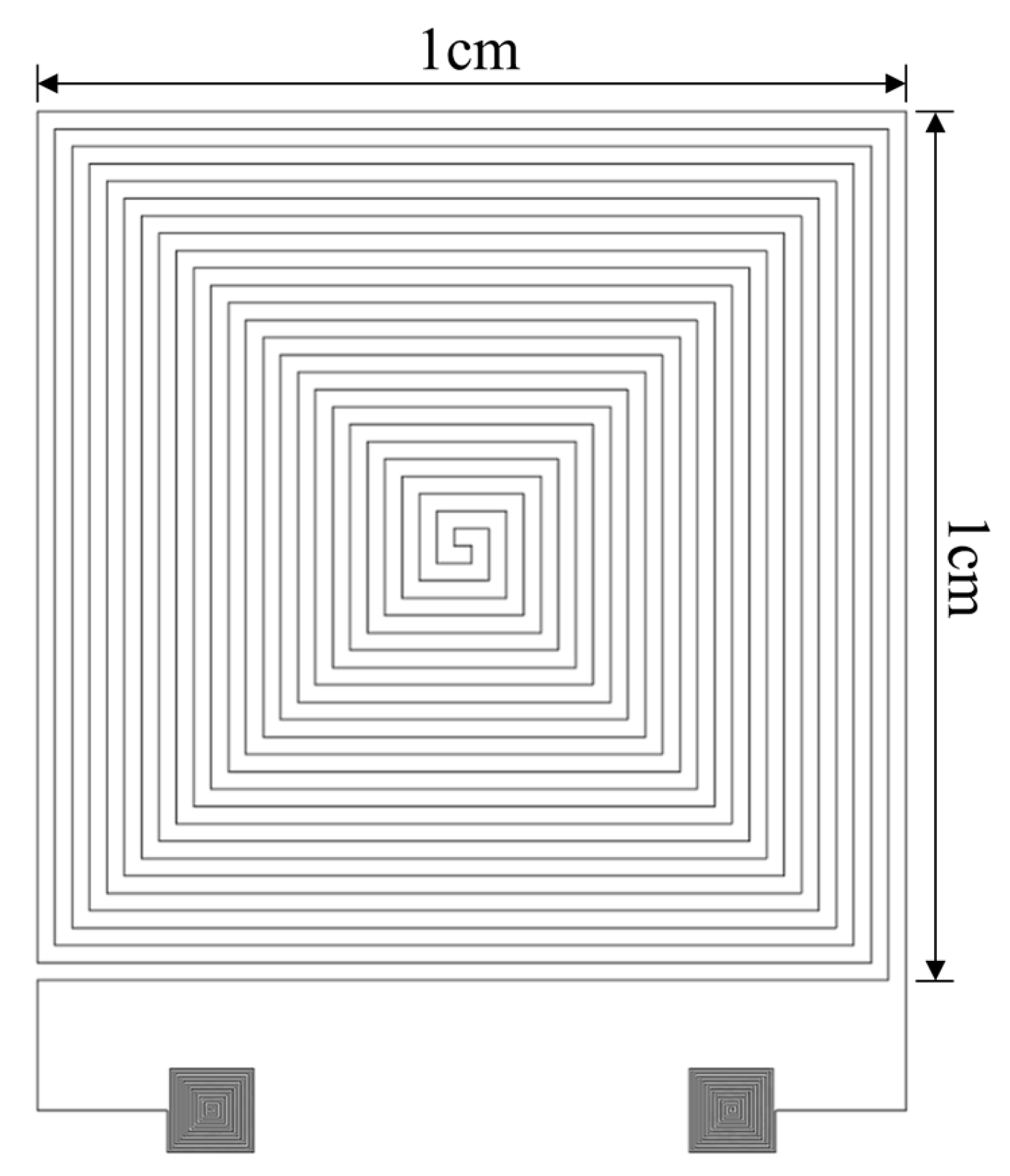
The conformal temperature sensor features a spiral pattern design with an effective sensing area of 1 cm × 1 cm. Two square pads are provided for external leads, as illustrated in Figure 2. Compared to traditional serpentine circuits, the spiral trajectory design ensures uniform distribution at the corners, effectively reducing stress concentration and enhancing the stability of the printed traces. Additionally, the compact layout of the circuit traces maximizes the use of available space, increasing the conductive path length within the effective area. This improves the measurability of the resistance response while maintaining the sensor’s miniaturization.

2.3. Substrate Processing and Fabrication of Conformal Temperature Sensor

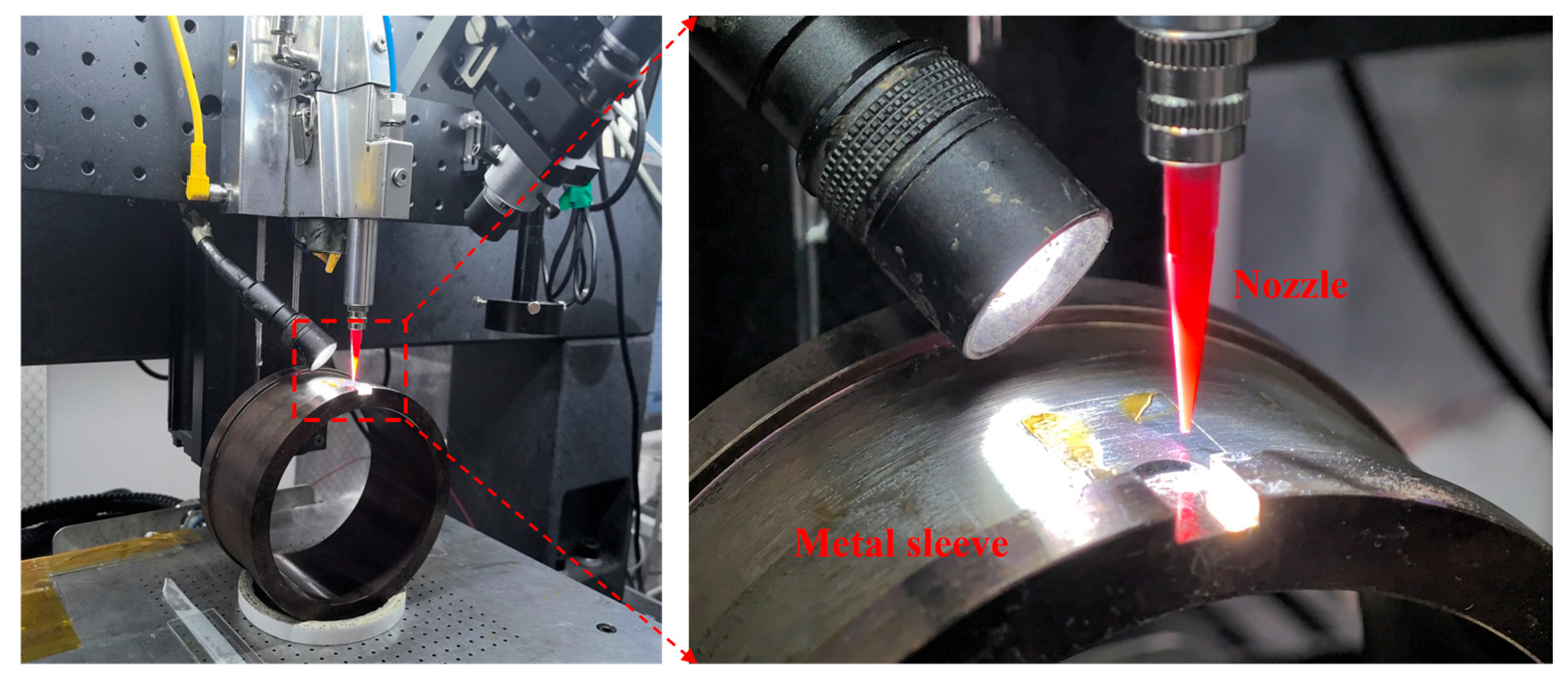
To ensure proper adhesion and continuity of the printed temperature sensor on the stainless steel surface, the stainless steel sleeve was ultrasonically cleaned for 10 min in both anhydrous ethanol and isopropanol to remove surface oil and particulate contaminants. The sleeve was then dried with high-purity nitrogen to eliminate any remaining cleaning agents. Due to the conductive nature of the sleeve, local insulation treatment was applied prior to the printing process. The insulation and sensing layers were fabricated using a self-built AJP device in the laboratory, which consists primarily of an ultrasonic atomization system, a water-cooling circulation system, a carrier gas and sheath gas flow control system, a three-axis motion platform, and an industrial camera. First, based on the designed printing trajectory, the printing path was generated using the self-developed trajectory software Dxf2GcodeV1.7 and imported into the motion control software (SMC Basic Studio). Next, 1.5 mL of ink was added to the ink tank, and all pipes were connected to ensure airtightness. Then, a 300 μm diameter nozzle was moved to a distance of 2–5 mm from the stainless steel substrate. The printing process was monitored in real time with the industrial camera, and printing parameters were adjusted to ensure uniform deposition, as shown in Figure 3. During printing, the water-cooling system was continuously activated to mitigate the temperature rise caused by ultrasonic atomization. After the insulation layer was printed, a cross-linking reaction was initiated through UV treatment. The sample was then pre-cured in a 95 °C drying oven for 10 min, followed by curing at 250 °C for 30 min to form an insulation layer with excellent dielectric properties.
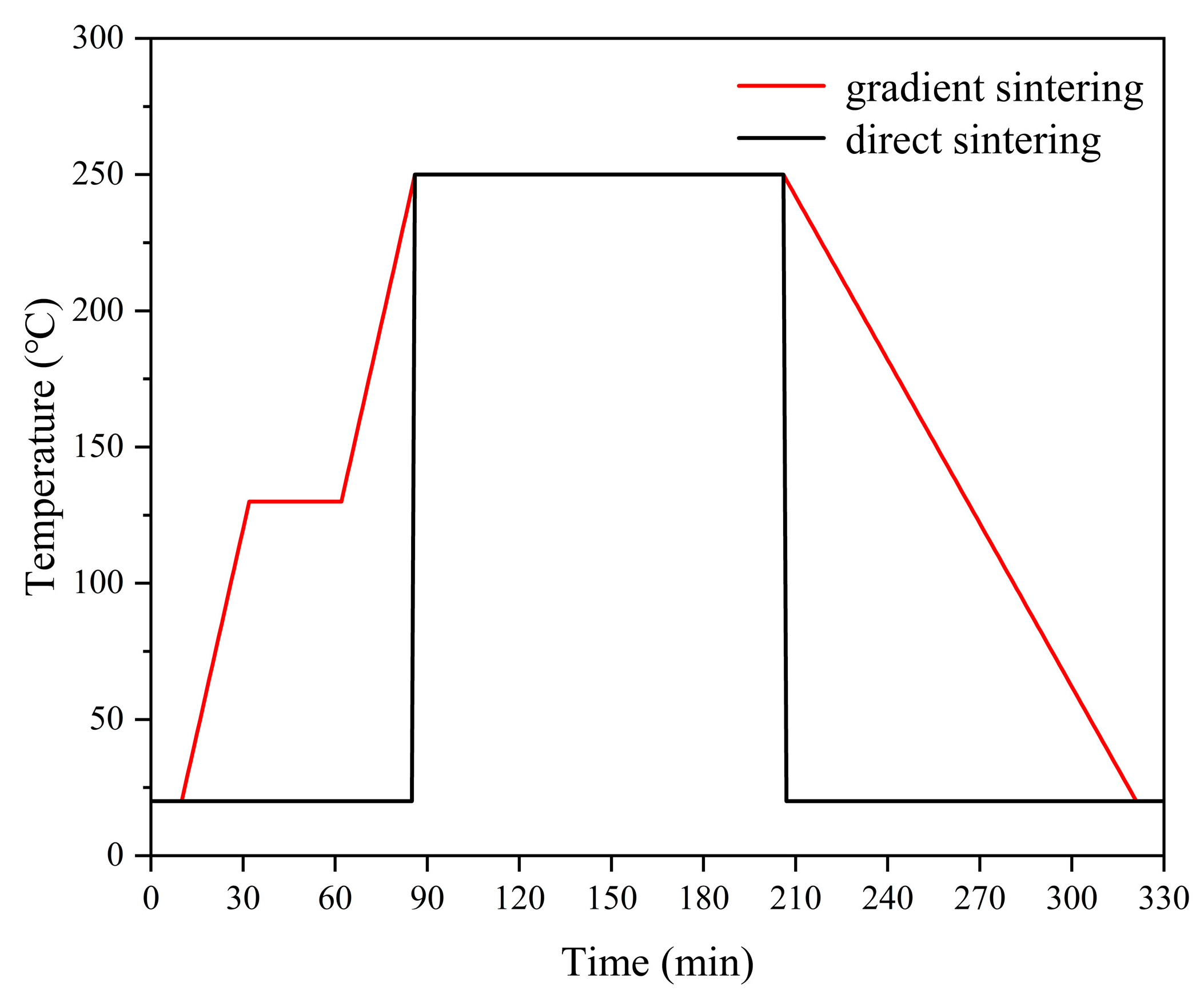
The conductive layer was sintered using a gradient heating strategy: as illustrated in Figure 4, the sample was first heated in a vacuum oven at a rate of 5 °C/min to 130 °C and held for 30 min to completely evaporate residual solvents and low-boiling-point organic compounds. Subsequently, the temperature was raised at the same rate to 250 °C for a 2 h sintering process, which promotes neck growth between Ag NPs and facilitates the formation of a continuous and dense conductive pathway. Finally, the sample was slowly cooled to room temperature at a rate of 2 °C/min. After sintering, conductive Ag paste and wires were used to connect the printed sensor with external leads. To enhance the environmental adaptability and reliability of the sensor, a uniform epoxy resin protective coating was applied to the surface of all samples, serving to prevent moisture ingress, oxidation of Ag traces, and mechanical wear.
In the initial phase of the study, we conducted a series of systematic preliminary experiments focusing on the key process parameters of AJP, including the atomization voltage, carrier gas/shielding gas flow rate, printing speed, and nozzle-substrate distance. By comparatively analyzing indicators such as atomization stability, statistical values of line width and height, uniformity of deposition morphology, layer thickness consistency, and nozzle clogging tendency—combined with a comprehensive evaluation of deposition continuity of insulating and conductive layers under different parameter combinations, edge shrinkage, probability of line breakage/ink accumulation defects, and subsequent sintering densification behavior—we ultimately identified a set of parameters that delivered the best overall performance for the fabrication and performance investigation of the devices presented in this paper. The optimized printing parameters are detailed in Table 1. To ensure the reliability of this study, a total of five sensor samples were prepared.

2.4. Characterization

The morphology of the printed traces was observed using an ultra-depth-of-field 3D microscope (RX-100, Hirox, Xi’an, China), while the microstructure was characterized with a field emission scanning electron microscope (FE-SEM, Gemini 500, Carl Zeiss, Oberkochen, Germany). The conductivity was measured and calculated using a four-probe resistivity measurement system (Y-4, Yuxin Technology, Wuhan, China) and a three-dimensional optical profiler (Contour GT-K, Bruker Nano, Tucson, AZ, USA). A programmable drying oven (Heratherm OGS180, Thermo Fisher Scientific Inc., Waltham, MA, USA) was used to control the variable temperature environment, and electrical performance tests were conducted using a Keithley 2400 (Keithley Instruments, Cleveland, OH, USA) digital source meter and a Fluke 17B+ (Fluke Corporation, Everett, WA, USA) digital multimeter. The digital source meter recorded the sensor’s resistance at various temperatures, while the digital multimeter measured the ambient temperature around the sensor.

3. Results and Discussion

3.1. Printing Quality and Microstructure Analysis

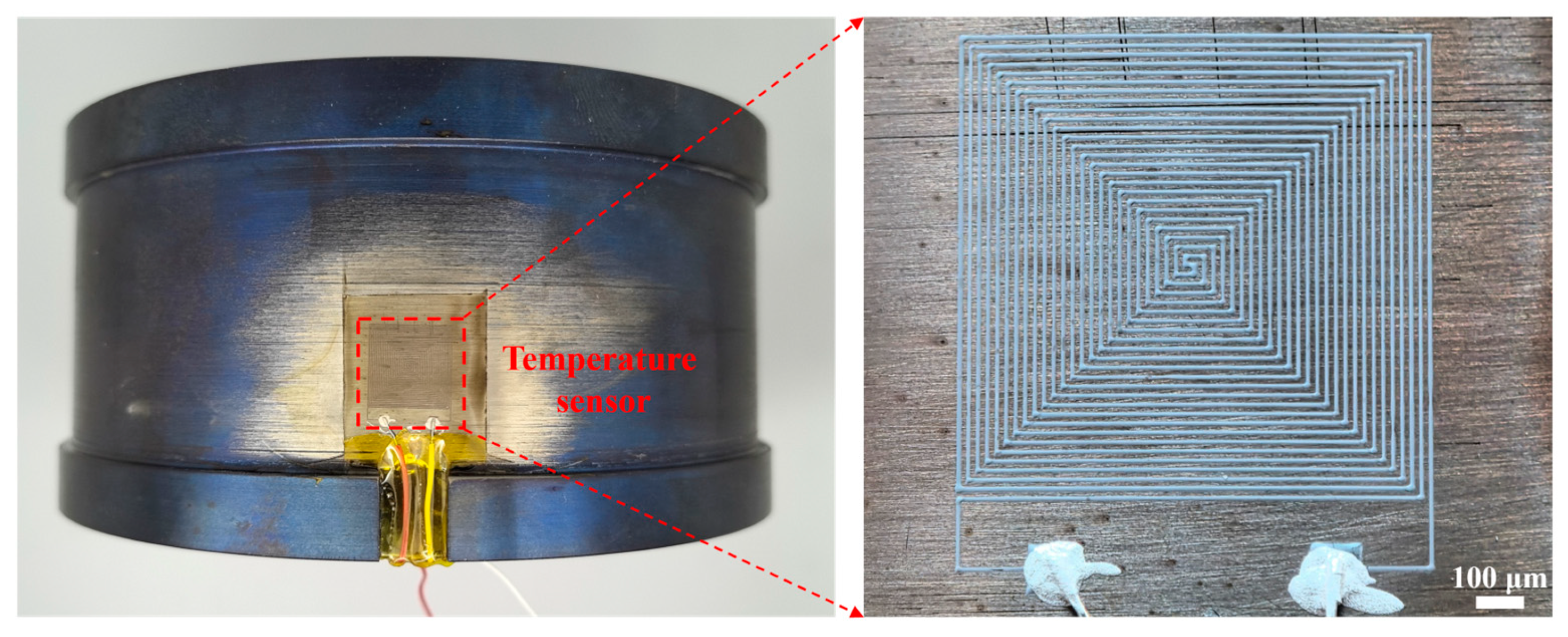
The printing quality of a sensor can influence its sensing performance. To systematically evaluate the printing quality of the sensor on the surface of the insulating stainless steel sleeve, the morphology of the printed trajectory was characterized. The results are shown in Figure 5. The printed pattern exhibits a clear trajectory and uniform line width distribution. Despite the curvature of the sleeve surface, the deposition quality remains consistent across different locations. No noticeable broken lines, short circuits, or ink accumulation were observed, indicating excellent printing quality. This result can be attributed to the low surface roughness of the insulating layer and the non-contact nature of AJP technology.
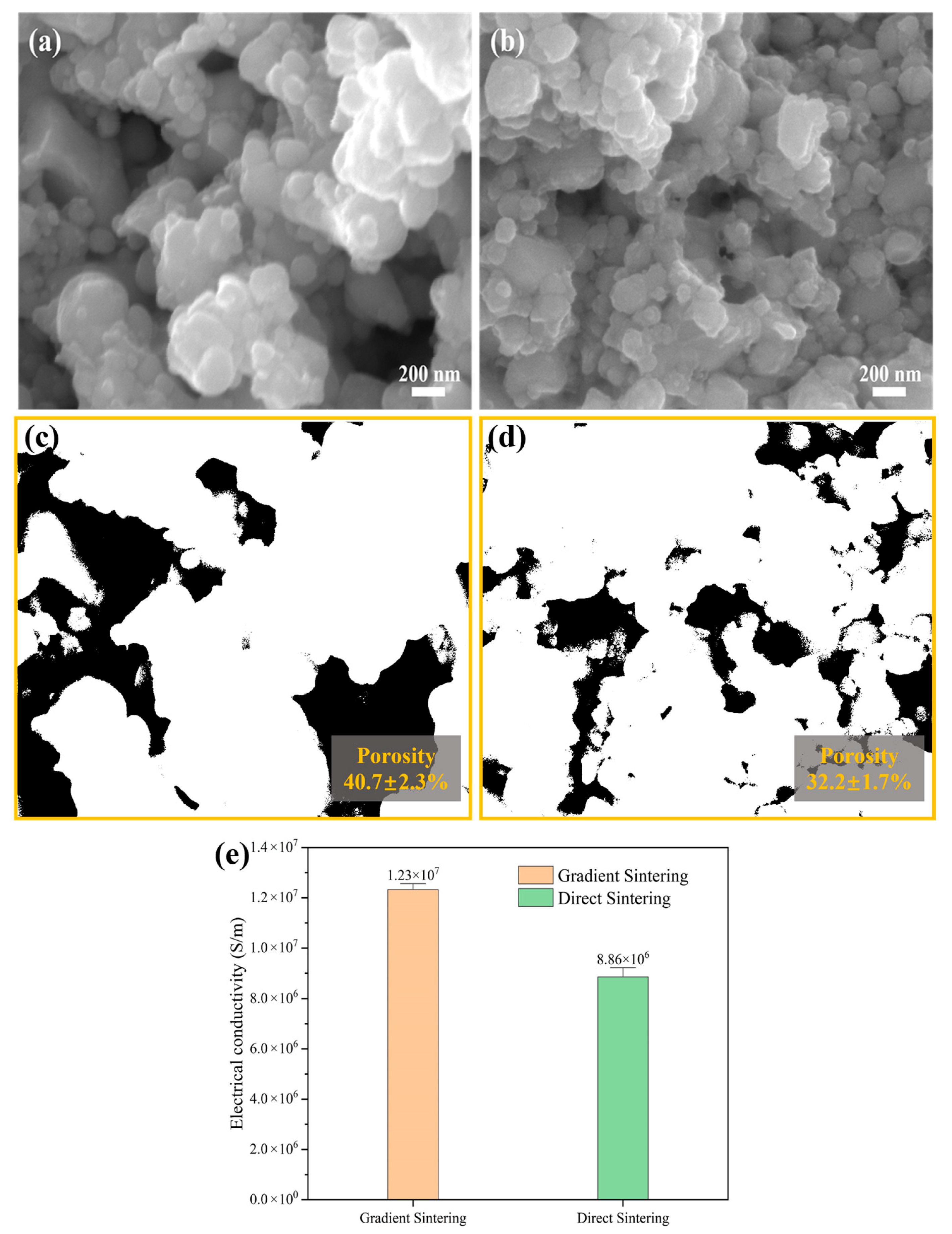
In addition to deposition quality, the sintering quality of printed sensors is a key factor influencing their subsequent sensing characteristics. High-quality sintering can effectively prevent signal deviation caused by secondary sintering during the long-term use of resistive temperature sensors. To further evaluate the effect of the gradient sintering strategy, the microstructure of samples subjected to direct sintering at 250 °C and gradient sintering was characterized, as shown in Figure 6a,b. The binary processing and statistical analysis of SEM images via image processing software (Adobe Photoshop 2021) revealed that the average porosity of the directly sintered samples reached as high as approximately 40.7%, whereas the porosity of the gradient sintered samples decreased significantly to about 32.2%. Furthermore, measurements of the grains formed after nanoparticle fusion indicated that gradient sintering promoted more complete grain growth, with an average grain size of approximately 125 nm, which is notably larger than that of the directly sintered samples (about 78 nm). The improvement in microstructure was directly reflected in the macroscopic electrical properties. Measurements conducted using the four-point probe method demonstrated that the electrical conductivity of the gradient sintered samples was about 1.23 × 10⁷ S/m, while that of the directly sintered samples was only about 8.9 × 10⁶ S/m (Figure 6c). The gradient sintering strategy thus led to an enhancement in electrical conductivity by approximately 39%. The sample directly sintered at 250 °C exhibits noticeable internal pores, while the gradient sintering strategy effectively minimizes pore formation, significantly improving overall density. This difference is mainly due to the faster necking and densification of the surface when the sample is placed directly at high temperature, which hinders the removal of organic matter and decomposition products of additives, resulting in pore formation. The gradient sintering strategy delays surface densification, allowing for the expulsion of internal gases and ensuring overall densification.

3.2. Evaluation of Temperature Sensing Performance

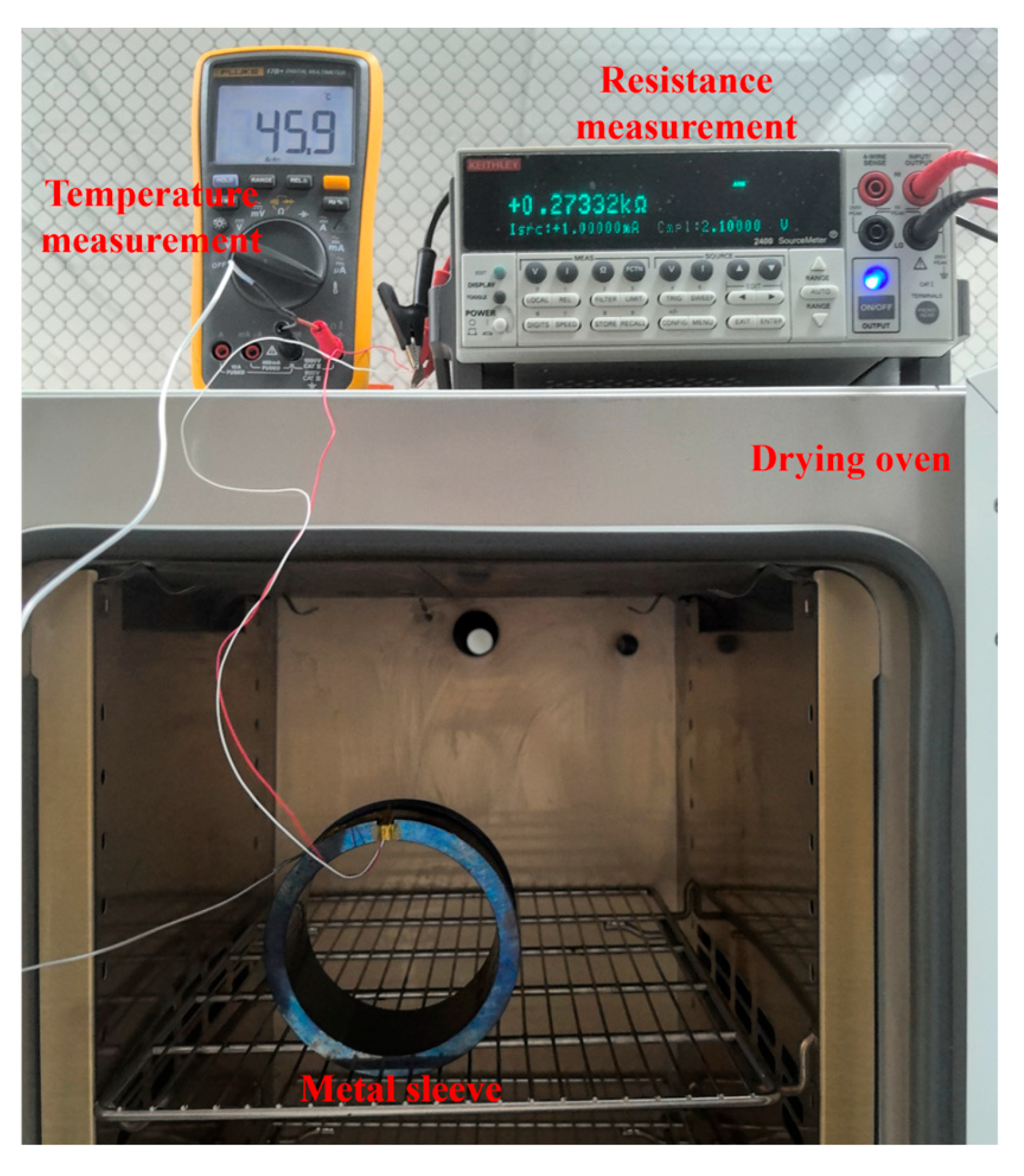
To further evaluate the temperature-sensitive characteristics of the conformal temperature sensor fabricated on the metal sleeve, temperature-sensing tests were performed on the prepared sensor. The metal sleeve was placed inside a drying oven, and external leads were connected to a digital source meter to monitor the variation in sensor resistance. As shown in Figure 7, the thermal environment was provided and controlled by a programmable drying oven (Heratherm OGS180) with a temperature control accuracy of ±0.5 °C. A Keithley digital source meter (Model 2400) was employed to monitor and record the sensor resistance in real time, with a sampling interval set to 1 s per point. To obtain an independent temperature reference, a calibrated K-type thermocouple (accuracy ±0.5 °C) was fixed adjacent to the active sensing area of the sensor, and its temperature readings were synchronously recorded using a Fluke digital multimeter (Model 17B+). During the test, the drying oven was heated from 20 °C to 200 °C at a rate of 5 °C/min. Each target temperature was held for 1 min to ensure thermal equilibrium, after which the steady-state resistance and temperature values were recorded.
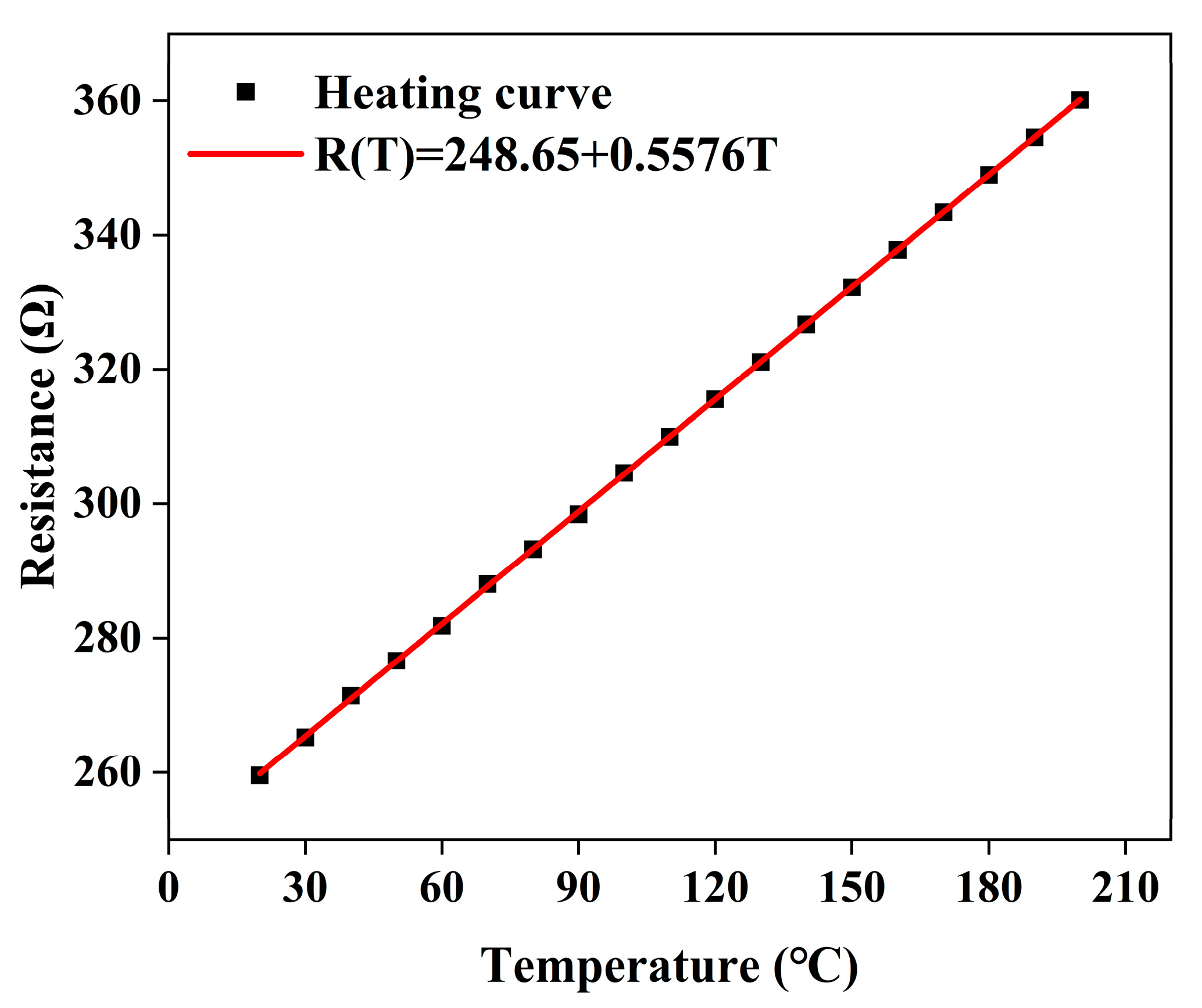
Figure 8 shows how the resistance of the fabricated sensor varies with temperature in the range of 20–200 °C. The resistance increases gradually with temperature, exhibiting a stable positive temperature coefficient. To quantitatively analyze the relationship between the sensor’s resistance and temperature, a polynomial function combined with the least squares method was used to fit the experimental data. The results, shown in Figure 7, indicate a strong linear correlation between the resistance and temperature, with a linear fitting coefficient (R2) of 0.9996, consistent with the temperature-sensitive characteristics of typical metallic materials. Additionally, the slope of the fitted curve (dR/dT) is approximately 0.5575 Ω/°C, representing the change in resistance per unit temperature change. This value demonstrates that the sensor is capable of detecting finer temperature variations, further validating its effectiveness in practical temperature-monitoring applications.
It is important to note that the rate of change in resistance only represents the change in resistance per unit temperature change and does not fully capture the inherent temperature-sensitive characteristics of the printed sensor. The temperature coefficient of resistance (TCR) is a more reliable indicator for evaluating the temperature sensitivity of a sensor. The formula for calculating the TCR is [37]:
α = 1 R d R d T
where α is the TCR, R(T) is the resistance of the sensor at temperature T, and dR/dT is the rate of change in resistance with respect to temperature.
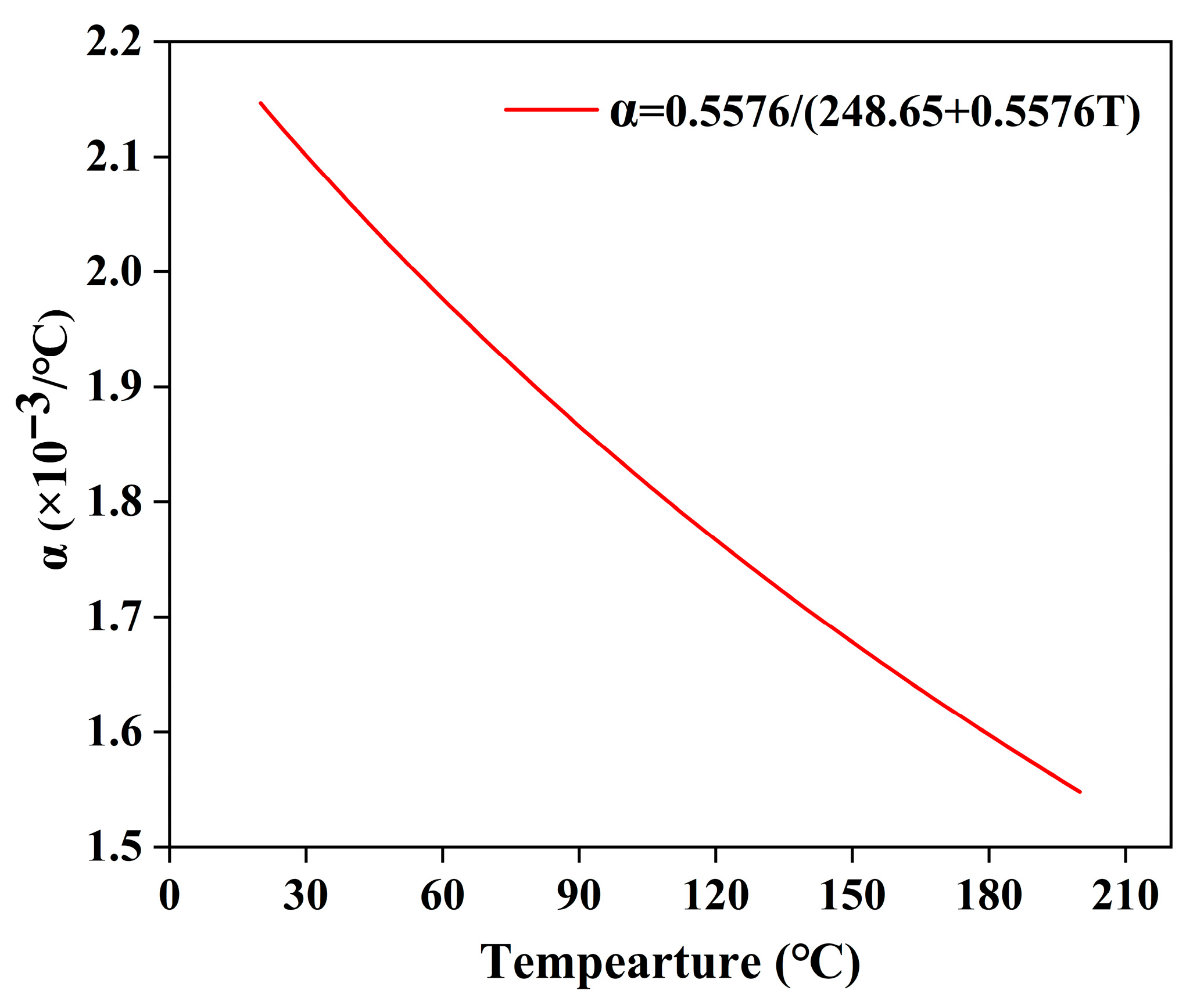
Using the resistance–temperature fitting function, we calculated the TCR value of the fabricated sensor, as shown in Figure 9. The TCR value decreases gradually with increasing temperature. At 20 °C, the TCR value is as high as 2.15 × 10⁻³/°C. The fundamental reason for the higher conductivity and superior TCR performance of gradient-sintered samples lies in their denser microstructure and larger grain size. Firstly, the lower porosity and larger grains directly reduce electron scattering at grain boundaries and pores along conduction paths, thereby enhancing electrical conductivity. More importantly, this optimized conductive network structure plays a critical role in stabilizing TCR. The TCR of metals essentially originates from the enhanced scattering of electron motion by lattice vibrations (phonons) as temperature increases. In porous fine-grained structures formed by direct sintering, in addition to intrinsic lattice scattering, there exists a substantial amount of defect-related scattering associated with the microstructure, such as grain-boundary scattering and pore-surface scattering. These defect-scattering mechanisms are largely temperature-insensitive and contribute a considerable proportion to the total resistance, which dilutes the sensitivity of resistance change to temperature, resulting in measured TCR values lower than the intrinsic TCR of the material. In contrast, gradient sintering significantly suppresses such temperature-independent defect scattering by promoting densification and grain growth, making the resistance change more purely dominated by temperature-dependent lattice scattering. Consequently, sensors exhibit higher TCR values, which directly confirms the effectiveness of gradient sintering in optimizing the conductive network and enhancing temperature-sensing sensitivity.
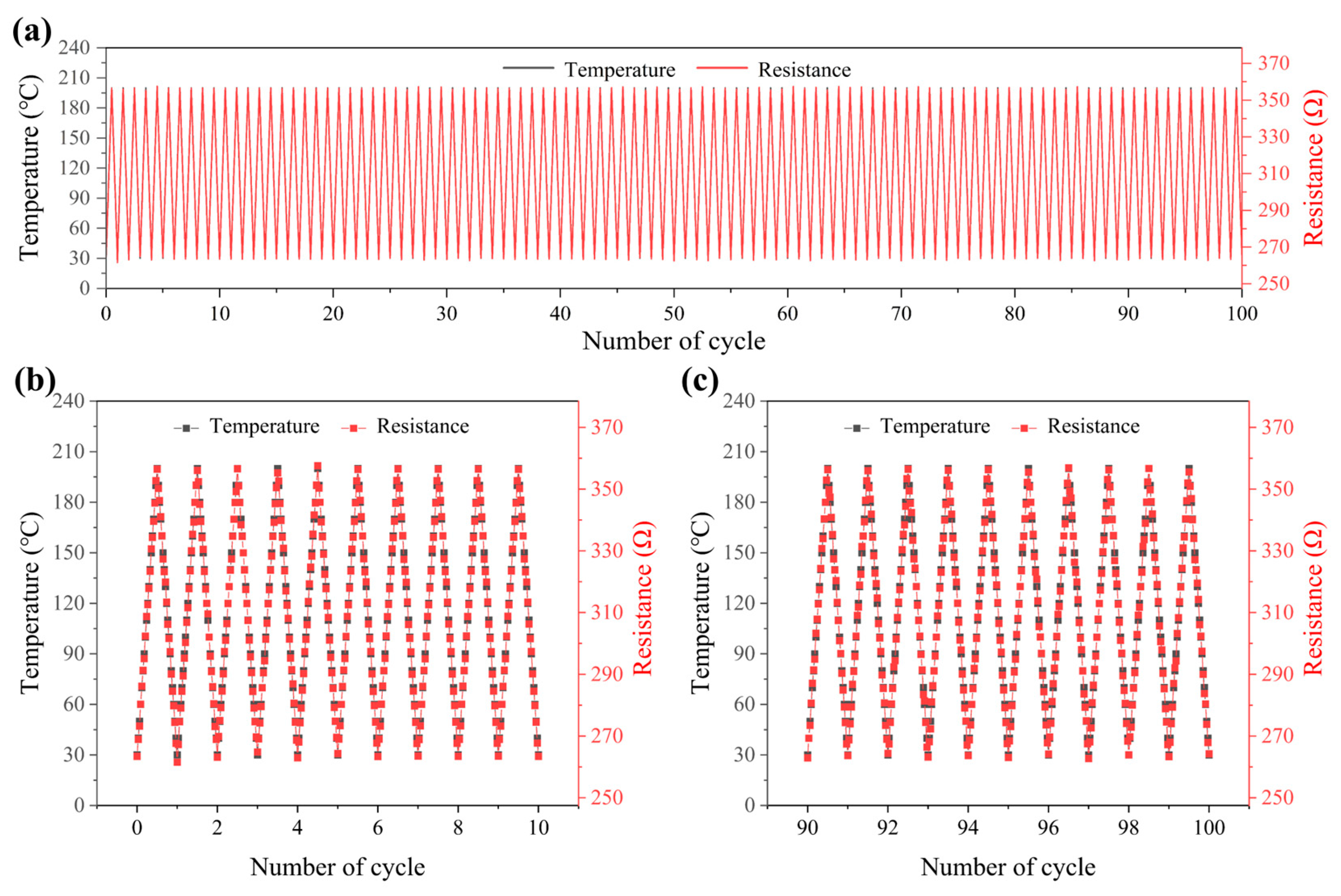
To further evaluate the thermal stability of the fabricated temperature sensor under actual working conditions, multiple temperature cycling tests were performed within the range of 20–200 °C, as shown in Figure 10. Over 100 consecutive cycles, the resistance response curve of the sensor exhibits a consistent trend with the temperature variation curve during both heating and cooling stages, with minimal fluctuation amplitude. Throughout the ongoing hundred thermal cycling tests, the sensor demonstrates exceptional consistency: its resistance response curve remains synchronized with the temperature variation curve during heating and cooling phases, while displaying only minor fluctuations. For the same sensor, measurements taken at identical temperature points in any two thermal cycles yield a maximum relative deviation of no more than 0.5% in resistance values, which fully reflects the sensor’s excellent repeatability and stability. These results demonstrate that the functional layer of the printed sensor did not experience significant structural damage or performance degradation under repeated thermal cycling. This stability is attributed to the strong compatibility and bonding between the functional layer and the substrate, which effectively resists the thermal expansion differences caused by material properties, preventing damage to the microstructure of the printed traces. Furthermore, the resistance showed a rapid response to temperature changes without significant hysteresis, whether during the heating or cooling phase of the test. This further demonstrates the sensor’s rapid and sensitive response capability, ensuring accurate dynamic temperature monitoring of bearing surfaces.

3.3. Comparative Analysis with Recent Related Work

To illustrate the contributions of this study, Table 2 presents a comparative analysis with recent representative achievements in high-curvature or 3D conformal aerosol printing, highlighting the distinct engineering orientation of our work. Unlike most studies that rely on customized or flexible substrates and focus primarily on material property optimization, the uniqueness of this research lies in its direct focus on engineering application requirements. First, in application scenarios, we departed from generic flexible substrates to instead print and test on highly curved 304 stainless steel—a common engineering metal. This ensures thermodynamic and mechanical compatibility between the device and its final application environment, eliminating the risk of interface failure caused by additional bonding layers. Second, in manufacturing methodology, we deliberately employed a single commercial Ag NPs ink, simplifying the process, reducing costs, and enhancing reproducibility and scalability potential. Finally, regarding process reliability, we developed an optimized gradient sintering strategy specifically for multilayer metal–polymer (insulating layer)–Ag NPs structures. This strategy achieves dense conductive layers while prioritizing adhesion strength and structural integrity on curved metal surfaces—a critical engineering consideration often overlooked in performance-driven research. Although the resulting resistive temperature coefficient may not surpass peak values reported for certain novel composites, this study’s value lies in successfully integrating sufficient monitoring sensitivity, robust interfacial stability, broad engineering applicability, and high manufacturing simplicity into a balanced design tailored for practical applications.

4. Conclusions

This study systematically investigated the feasibility of directly fabricating conformal temperature sensors on high-curvature metal sleeves using AJP, and evaluated their printing quality and sensing performance. The results demonstrate that AJP can reliably produce conformal temperature sensors with well-defined contours and uniform linewidths on stainless steel surfaces, without visible trajectory breaks or morphological defects. Through optimized sensor design and a gradient sintering process, the microstructure of the sensor was effectively densified, resulting in high temperature sensitivity. The fabricated sensor exhibited a near-ideal linear response (R2 = 0.9996) over the temperature range of 20–200 °C, with a TCR of 2.15 × 10⁻³/°C at 20 °C. It also demonstrated excellent cyclic stability (fluctuation < 0.5% over 100 temperature cycles) and negligible hysteresis. These findings validate the capability of AJP to directly fabricate high-performance conformal sensors on curved metal structures without the need for molds or complex packaging. This approach offers a practical route for integrated, in situ sensing in structural health monitoring systems for aerospace and other advanced engineering applications. Future research will involve further investigation into sensors designed for higher-temperature environments, systematically exploring the influence of printing parameters on sensing performance. Additionally, efforts will be made to extend this work toward developing multifunctional sensors capable of simultaneously monitoring strain, humidity, and other parameters, thereby achieving more comprehensive intelligent structural state perception.

Author Contributions

Conceptualization, Z.W. and Y.N.; methodology, Z.W., Y.N. and C.Y.; software, Y.T.; validation, B.Y. and C.Y.; formal analysis, B.Y. and C.Y.; investigation, Y.T. And J.X.; resources, C.Y.; writing—original draft preparation, Z.W. and Y.N.; writing—review and editing, B.Y. and C.Y.; visualization, Z.W. and Y.N.; supervision, C.Y.; project administration, C.Y.; All authors have read and agreed to the published version of the manuscript.

Funding

This research did not receive any external funding.

Data Availability Statement

Data available upon request.

Acknowledgments

The authors acknowledge that AI tools were utilized for language polishing during the preparation of this manuscript. This assistance has helped enhance the clarity and quality of the text.

Conflicts of Interest

The authors declare no conflicts of interest.

References

  1. Yu, X.; Wang, C.; Yu, D. Thermodynamic Assessment on Performance Extremes of the Fuel Indirect Precooled Cycle for Hypersonic Airbreathing Propulsion. Energy 2019, 186, 115772. [Google Scholar] [CrossRef]
  2. Eko, A.J.; Zeng, X.; Peerzada, M.; Shelley, T.; Epaarachchi, J.; Tien, C.M.T. Energy Dissipation and Efficiency Challenges of Cryogenic Sloshing in Aerospace Propellant Tanks: A Systematic Review. Energies 2025, 18, 5362. [Google Scholar] [CrossRef]
  3. Zhu, Y.; Peng, W.; Xu, R.; Jiang, P. Review on Active Thermal Protection and Its Heat Transfer for Airbreathing Hypersonic Vehicles. Chin. J. Aeronaut. 2018, 31, 1929–1953. [Google Scholar] [CrossRef]
  4. Li, C.; Feng, Q.; Hong, Y.; Gao, L.; Guo, X.; Xue, W.; Xiong, J. Wireless LC Conformal Temperature Sensor Based on Ag Film (9912-K FL) for Bearing Temperature Measurement. Nanomaterials 2022, 12, 2899. [Google Scholar] [CrossRef] [PubMed]
  5. Li, C.; Feng, Q.; Jia, M.; Gao, L.; Jia, P.; Fang, Z.; Lu, H.; Xiong, J. Accurate Real-Time Temperature Measurement Method in Ultra-High Temperature Rotational Environments for Aero Engines/Turbines. IEEE Sens. J. 2022, 22, 6482–6490. [Google Scholar] [CrossRef]
  6. Li, Y.; Yan, L.; Song, M.; Chen, S.; Guo, A.; Hou, F.; Ye, L.; Han, W.; Liu, J. Integration of Thermal Protection and Structural Health Monitoring for Carbon Fiber Reinforced SiBCN Composites with SiC Coating Enhanced Interfacial Performance. Ceram. Int. 2023, 49, 21678–21687. [Google Scholar] [CrossRef]
  7. Zhu, J.; Wang, B.; Ji, J.; Zhang, Y.; Yu, Y.; Yang, Y.; Liang, T.; Xiao, B.; Wei, Y.; Sun, C.; et al. Fiber Optic Array Temperature Field Measurement System for High-Temperature Turbine Blades. IEEE Trans. Instrum. Meas. 2024, 73, 7007208. [Google Scholar] [CrossRef]
  8. Hwang, C.; Choi, J.; Pang, C.; Kim, M.; Park, S. Skin-conformal Ag Flake-decorated PEDOT:PSS Sensor Arrays for Spatially Resolved Body Temperature Monitoring. Small 2025, 21, 2412675. [Google Scholar] [CrossRef]
  9. Gao, H.; Fei, C.; Bai, G.; Ding, L. Reliability-Based Low-Cycle Fatigue Damage Analysis for Turbine Blade with Thermo-Structural Interaction. Aerosp. Sci. Technol. 2016, 49, 289–300. [Google Scholar] [CrossRef]
  10. Chen, G.; Zeng, Y.; Zhao, F.; Wu, C.; Pan, X.; Lin, F.; Xu, L.; He, Y.; He, G.; Chen, Q.; et al. Conformal Fabrication of Functional Polymer-Derived Ceramics Thin Films. Surf. Coat. Technol. 2023, 464, 129536. [Google Scholar] [CrossRef]
  11. Niu, Y.; Wang, Z.; Xiong, Z.; Tan, Y.; Meng, Z.; Yan, D.; Cheng, H.; Yi, C.; Zhang, K. Ultra-Sensitive and Robust MXene/Ag-Ag Nanocomposite-Based Conformal Temperature Sensor for Broad-Range Thermal Monitoring. Chem. Eng. J. 2025, 523, 168908. [Google Scholar] [CrossRef]
  12. Daus, A.; Jaikissoon, M.; Khan, A.I.; Kumar, A.; Grady, R.W.; Saraswat, K.C.; Pop, E. Fast-Response Flexible Temperature Sensors with Atomically Thin Molybdenum Disulfide. Nano Lett. 2022, 22, 6135–6140. [Google Scholar] [CrossRef]
  13. Liu, Z.; Tian, B.; Jiang, Z.; Li, S.; Lei, J.; Zhang, Z.; Liu, J.; Shi, P.; Lin, Q. Flexible Temperature Sensor with High Sensitivity Ranging from Liquid Nitrogen Temperature to 1200 °C. Int. J. Extrem. Manuf. 2023, 5, 015601. [Google Scholar] [CrossRef]
  14. Li, J.; Fang, Z.; Wei, D.; Liu, Y. Flexible Pressure, Humidity, and Temperature Sensors for Human Health Monitoring. Adv. Healthc. Mater. 2024, 13, 2401532. [Google Scholar] [CrossRef]
  15. Zhuang, Y.; Kopsaftopoulos, F.; Dugnani, R.; Chang, F.-K. Integrity Monitoring of Adhesively Bonded Joints via an Electromechanical Impedance-Based Approach. Struct. Health Monit. 2018, 17, 1031–1045. [Google Scholar] [CrossRef]
  16. Takakuwa, M.; Inoue, D.; Sun, L.; Yamamoto, M.; Umezu, S.; Hashizume, D.; Itoh, T.; Fukuda, K.; Someya, T.; Yokota, T. Robust Full-surface Bonding of Substrate and Electrode for Ultra-flexible Sensor Integration. Adv. Mater. 2025, 37, 2417590. [Google Scholar] [CrossRef] [PubMed]
  17. Hobbie, H.A.; Doherty, J.L.; Smith, B.N.; Maccarini, P.; Franklin, A.D. Conformal Printed Electronics on Flexible Substrates and Inflatable Catheters Using Lathe-Based Aerosol Jet Printing. npj Flex. Electron. 2024, 8, 54. [Google Scholar] [CrossRef] [PubMed]
  18. Xu, L.; Zhou, X.; Huang, Y.; Wang, Y.; Shao, C.; Li, Y.; Wang, L.; Yang, Q.; Sun, D.; Chen, Q. Design and Fabrication of Metal Spherical Conformal Thin Film Multisensor for High-Temperature Environment. Chin. J. Aeronaut. 2024, 37, 535–547. [Google Scholar] [CrossRef]
  19. Zhou, X.; Xu, L.; Tang, L.; Lin, X.; Qian, X.; Wu, M.; Wang, L.; Wu, C. Piezoelectric-Pneumatic Material Jetting Printing for Non-Contact Conformal Fabrication of High-Temperature Thick-Film Sensors. Addit. Manuf. 2024, 83, 104058. [Google Scholar] [CrossRef]
  20. Zeeshan Yousaf, H.M.; Kim, S.W.; Hassan, G.; Karimov, K.; Choi, K.H.; Sajid, M. Highly Sensitive Wide Range Linear Integrated Temperature Compensated Humidity Sensors Fabricated Using Electrohydrodynamic Printing and Electrospray Deposition. Sens. Actuators B Chem. 2020, 308, 127680. [Google Scholar] [CrossRef]
  21. Zeng, M.; Du, Y.; Jiang, Q.; Kempf, N.; Wei, C.; Bimrose, M.V.; Tanvir, A.N.M.; Xu, H.; Chen, J.; Kirsch, D.J.; et al. High-Throughput Printing of Combinatorial Materials from Aerosols. Nature 2023, 617, 292–298. [Google Scholar] [CrossRef]
  22. Kiaee, M.M.; Maeder, T.; Brugger, J. Near-Room-Temperature Detection of Aromatic Compounds with Inkjet-Printed Plasticized Polymer Composites. ACS Sens. 2024, 9, 1382–1390. [Google Scholar] [CrossRef] [PubMed]
  23. Lai, W.; Zhao, C.; Wang, H.; Wu, Q.; Ye, D.; Huang, Y. Micro-Cylindrical Temperature Sensors Array via Conformal Electrohydrodynamic Printing. Sci. China Technol. Sci. 2025, 68, 1520301. [Google Scholar] [CrossRef]
  24. Dankoco, M.D.; Tesfay, G.Y.; Bènevent, E.; Bendahan, M. Temperature sensor realized by inkjet printing process on flexible substrate. Mater. Sci. Eng. B 2016, 205, 1–5. [Google Scholar] [CrossRef]
  25. Raumel, S.; Wurz, M.C. Sensor inserts on spherical surfaces for temperature measurement in wear contacts. In Proceedings of the 2023 IEEE SENSORS, Vienna, Austria, 29 October–1 November 2023; IEEE: New York, NY, USA, 2023; pp. 1–4. [Google Scholar]
  26. Xiao, Y.; Jiang, S.; Li, Y.; Zhang, W. Screen-printed flexible negative temperature coefficient temperature sensor based on polyvinyl chloride/carbon black composites. Smart Mater. Struct. 2021, 30, 025035. [Google Scholar] [CrossRef]
  27. Alshatnawi, F.; Alhendi, M.; Abbara, E.M.; Sivasubramony, R.; Garakani, B.; Enakerakpo, E.; Shaddock, D.; Stoffel, N.; Hoel, C.; Poliks, M.D. Electrical and Mechanical Behavior of Aerosol Jet—Printed Gold on Alumina Substrate for High—Temperature Applications. Adv. Eng. Mater. 2023, 25, 2300439. [Google Scholar] [CrossRef]
  28. Chen, G.; Gu, Y.; Tsang, H.; Hines, D.R.; Das, S. The effect of droplet sizes on overspray in aerosol—Jet printing. Adv. Eng. Mater. 2018, 20, 1701084. [Google Scholar]
  29. Jahn, D.; Eckstein, R.; Schneider, L.M.; Born, N.; Hernandez-Sosa, G.; Balzer, J.C.; Al-Naib, I.; Lemmer, U.; Koch, M. Digital aerosol jet printing for the fabrication of terahertz metamaterials. Adv. Mater. Technol. 2018, 3, 1700236. [Google Scholar] [CrossRef]
  30. Maslik, J.; Andersson, H.; Forsberg, V.; Engholm, M.; Zhang, R.; Olin, H. PEDOT:PSS Temperature Sensor Ink-Jet Printed on Paper Substrate. J. Instrum. 2018, 13, C12010. [Google Scholar] [CrossRef]
  31. Bappy, M.O.; Jiang, Q.; Atampugre, S.; Zhang, Y. Aerosol Jet Printing of High-Temperature Bimodal Sensors for Simultaneous Strain and Temperature Sensing Using Gold and Indium Tin Oxide Nanoparticle Inks. ACS Appl. Nano Mater. 2024, 7, 9453–9459. [Google Scholar] [CrossRef]
  32. Ma, H.; Si, F.; He, C.; Wang, X.; Ding, J.; Zhang, W.; Fan, X. Fully Printed All-Resistive Dual-Mode Sensor with Ultra-Low Temperature Coefficient of Resistance for Crosstalk-Free Detections of Pressure and Humidity. Chem. Eng. J. 2025, 505, 159394. [Google Scholar] [CrossRef]
  33. Cui, Z.; Poblete, F.R.; Zhu, Y. Tailoring the Temperature Coefficient of Resistance of Silver Nanowire Nanocomposites and Their Application as Stretchable Temperature Sensors. ACS Appl. Mater. Interfaces 2019, 11, 17836–17842. [Google Scholar] [CrossRef]
  34. Xu, K.; Cai, Z.; Luo, H.; Lin, X.; Yang, G.; Xie, H.; Ko, S.H.; Yang, H. An In-Situ Hybrid Laser-Induced Integrated Sensor System with Antioxidative Copper. Int. J. Extrem. Manuf. 2024, 6, 065501. [Google Scholar] [CrossRef]
  35. Fisher, C.; Skolrood, L.N.; Li, K.; Joshi, P.C.; Aytug, T. Aerosol-Jet Printed Sensors for Environmental, Safety, and Health Monitoring: A Review. Adv. Mater. Technol. 2023, 8, 2300030. [Google Scholar] [CrossRef]
  36. Niu, Y.; Han, Y.; Cheng, H.; Xiong, Z.; Luo, B.; Ma, T.; Li, L.; Liu, S.; Chen, X.; Yi, C. Synthesized Silver Nanoparticles Decorated Reduced Graphene Oxide/Silver Ink for Aerosol Jet Printed Conformal Temperature Sensor with a Wide Sensing Range and Excellent Stability. J. Mater. Res. Technol. 2023, 25, 873–886. [Google Scholar] [CrossRef]
  37. Tursunniyaz, M.; Meredith, A.; Andrews, J. Aerosol Jet Printed Resistive Temperature Sensors with High Sensitivity. Sens. Actuators A Phys. 2023, 364, 114777. [Google Scholar] [CrossRef]
Figure 1. Schematic illustration of conformal temperature sensor fabrication on a stainless steel sleeve using AJP technology.
Jmmp 10 00041 g001
Figure 2. Structural design of the conformal temperature sensor.
Jmmp 10 00041 g002
Figure 3. Printing process of a conformal temperature sensor on a stainless steel sleeve.
Jmmp 10 00041 g003
Figure 4. Comparison of control curves between gradient sintering and direct sintering.
Jmmp 10 00041 g004
Figure 5. Conformal temperature sensor printed on the surface of a stainless steel sleeve.
Jmmp 10 00041 g005
Figure 6. Cross-sectional SEM images of the printed traces after sintering: (a) direct sintering at 250 °C; (b) gradient sintering at 250 °C; (c) direct sintering porosity; (d) gradient sintering porosity; (e) Comparison of electrical conductivity between gradient sintering and direct sintering.
Jmmp 10 00041 g006
Figure 7. Temperature sensitivity testing process of the conformal temperature sensor.
Jmmp 10 00041 g007
Figure 8. Resistance–temperature curve of the conformal temperature sensor.
Jmmp 10 00041 g008
Figure 9. TCR variation curve of the conformal temperature sensor.
Jmmp 10 00041 g009
Figure 10. (a) Resistance variation in the conformal temperature sensor during 100 temperature cycling tests; (b) 1st to 10th cycle; (c) 90th to 100th cycle.
Jmmp 10 00041 g010
Table 1. The printing parameters of temperature sensors.
Ink TypeAtomization Voltage (mV)Carrier Gas
(sccm)
Sheath Gas
(sccm)
Printing Speed
(mm/s)
Nozzle Size
(μm)
Working
Distance (mm)
Ag NPs3018352.53003
SU-83220302.53003
Table 2. Comparison with relevant data obtained from temperature sensors in other studies.
StudyMaterialConformal
or Not
Process
Complexity
TCRCycle Stability
[11]MXene/Ag-Ag Composite InkYesHigh3.03 × 10−3/°CThe TCR remains essentially unchanged after 300 thermal shock cycles
[24]Ag NPs InkNoLow1.77 × 10−3/°CNot mentioned
[25]Pt thin filmyesHigh2.44 × 10−3/°CNot mentioned
[26]PVC/CB composite inkNoMedium1.48 × 10−3/°CIn the 10 thermal cycles, the max. SD is approximately 0.475
[27]Au inkNoMedium3.00 × 10−3/°CNot mentioned
Commercial PT100PtNoLow3.85 × 10−3/°CDepending on the encapsulation conditions
This workCommercial Ag NPs InkYesLow2.15 × 10−3/°CResistance fluctuation < 0.5% over 100 cycles
Disclaimer/Publisher’s Note: The statements, opinions and data contained in all publications are solely those of the individual author(s) and contributor(s) and not of MDPI and/or the editor(s). MDPI and/or the editor(s) disclaim responsibility for any injury to people or property resulting from any ideas, methods, instructions or products referred to in the content.