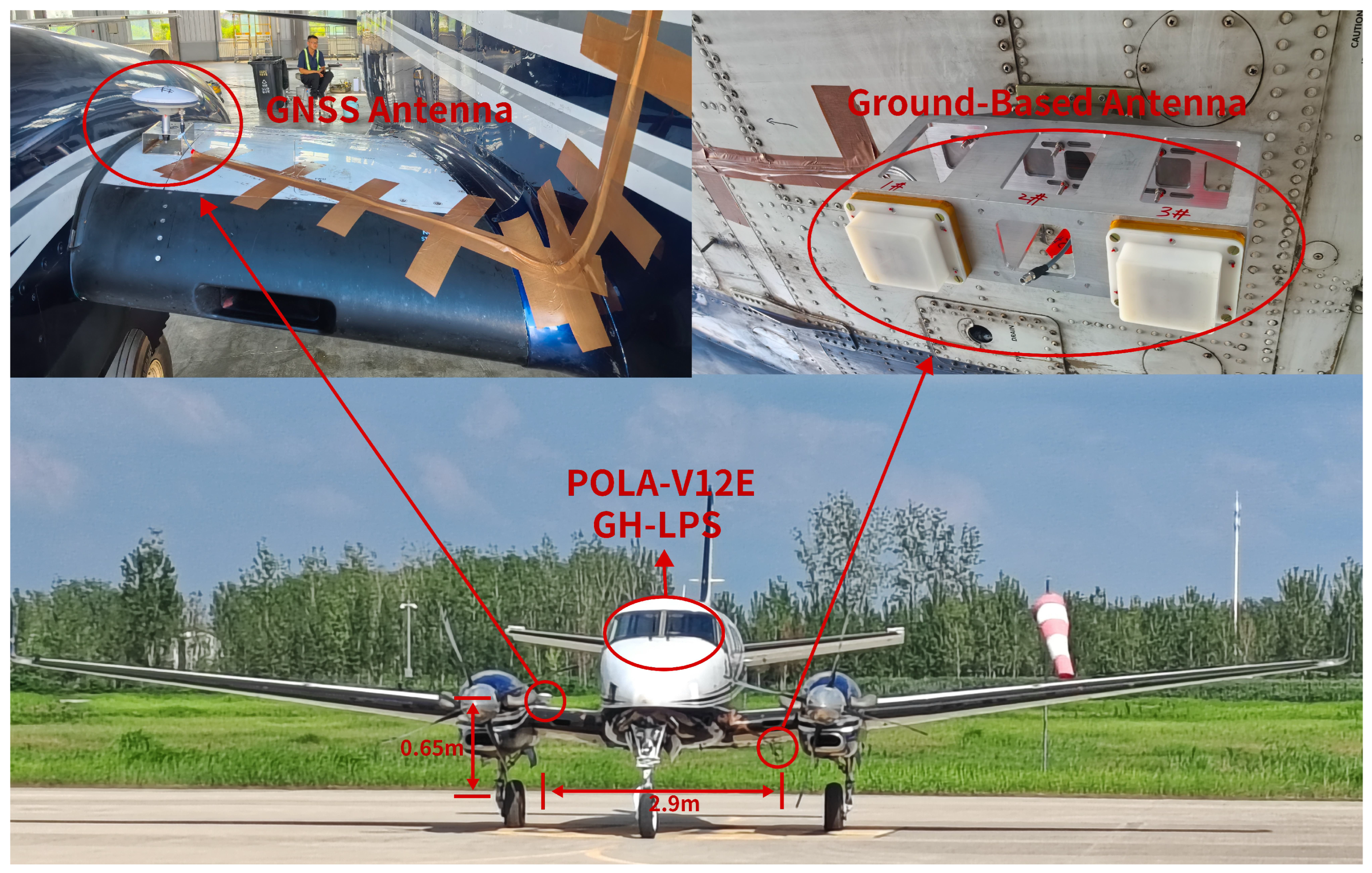
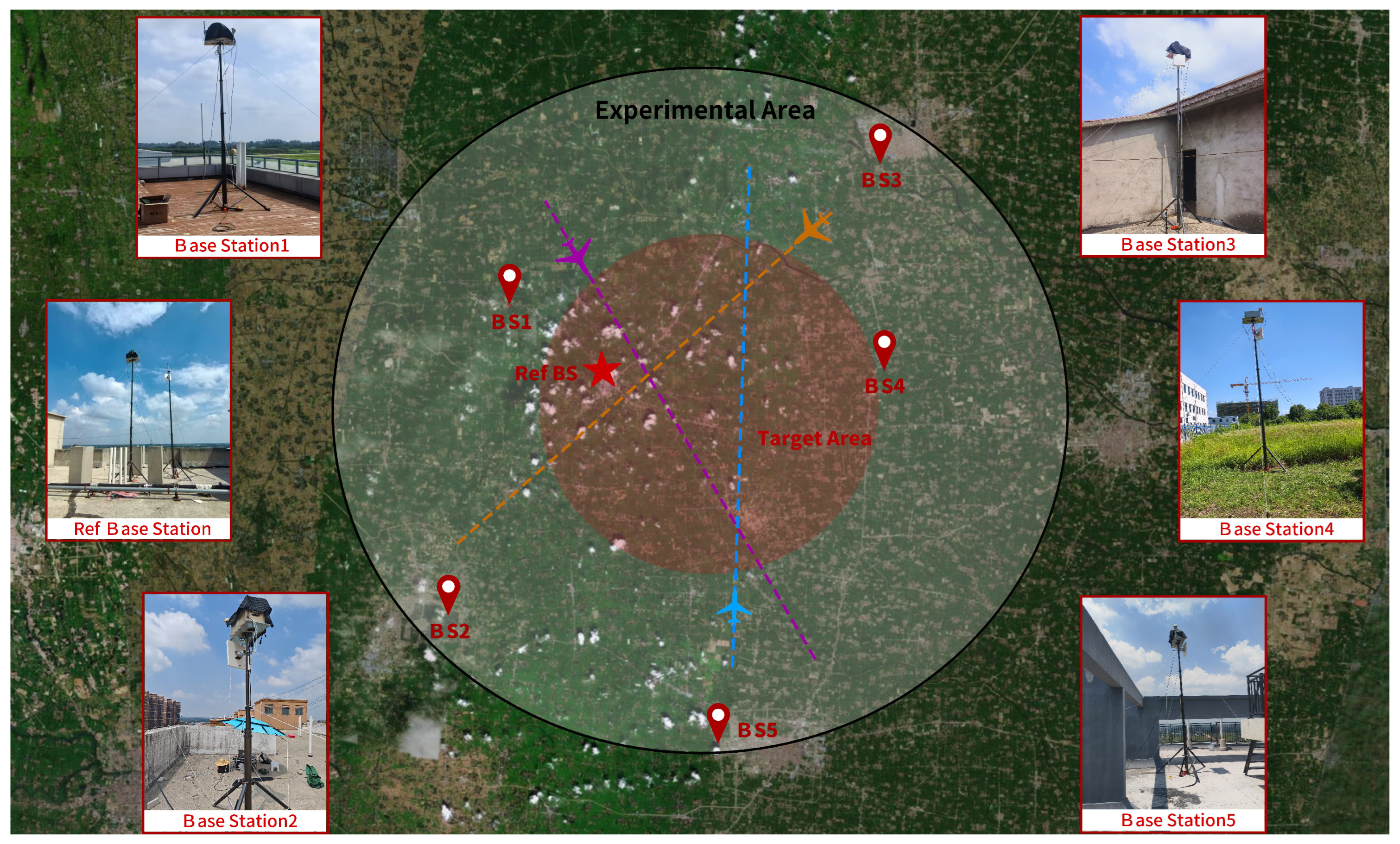
This section validates the effectiveness of the DGCC-AKF method through two sets of experiments. The evaluation is conducted in a semi-physical manner: the UAV flight trajectories and U-B observations are directly measured from a GH-LPS-based fixed-wing platform across three independent flight sessions. The U-U observations are generated from the measured trajectories using noise statistics derived from the analyzed U-B error characteristics. This design enables a controlled comparison of multiple cooperative algorithms under identical real-world flight dynamics and U-B noise conditions; hardware-level inter-UAV ranging effects such as timing synchronization and antenna directionality are not modeled at this stage.
3.2. Algorithm Evaluation Scheme
We compare DGCC-AKF against two recent adaptive Kalman filter paradigms most frequently reported in UAV and integrated navigation literature over the past three years. The first is the Variational Bayesian Adaptive Kalman Filter (VBAKF) [
30,
42], which infers the unknown observation noise covariance jointly with the state through variational Bayes. The second is the Maximum Correntropy Criterion Kalman Filter (MCC-EKF) [
29,
43], which replaces the quadratic measurement cost with a maximum-correntropy cost to down-weight heavy-tailed residuals. Both baselines preserve their published mechanisms and are integrated into our distributed cooperative architecture for fair comparison. All algorithms and statistical analyses in this study were implemented in Python (version 3.13.5).
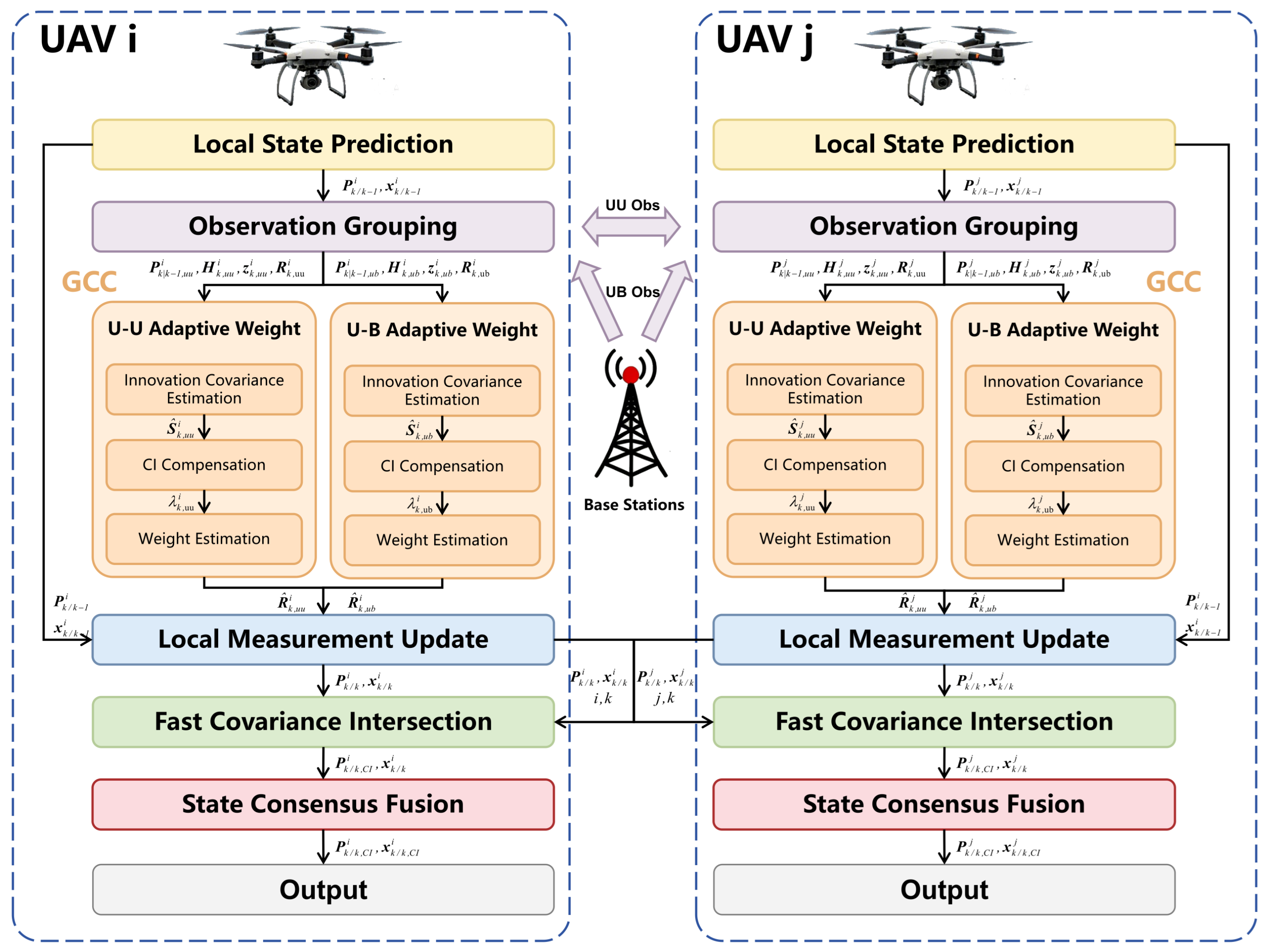
To isolate the contribution of each algorithmic component, we design a factorial ablation across four mechanisms: distributed cooperation, AKF noise adjustment, CI compensation, and group decoupling.
Table 1 lists the six resulting variants and their factor settings.
Performance is evaluated under independent Monte Carlo runs sharing the same random seed across schemes. The following metrics are reported.
3D positioning RMSat each epoch
t across the
runs:
where
and
are the estimated and reference 3D positions at epoch
t in Monte Carlo run
k.
Mean and 95th-percentile (P95) reported in tables and figures denote the mean and 95% quantile of over the epochs in the evaluation period.
Bootstrap CI, Wilcoxon signed-rank test, and Cohen’s are computed on paired samples per algorithm–condition pair, where each sample is the RMS of one Monte Carlo run aggregated over the epochs in the evaluation period.
95% confidence interval (CI
95) of the mean is obtained by bias-corrected and accelerated (BCa) bootstrap with
resamples [
44].
Cohen’s
for the paired RMS difference between two schemes:
, where
and
are the mean and standard deviation of paired differences [
45]. The magnitude of
is categorized by the conventional thresholds as n.s. (
), small (
), medium (
), or large (
). Throughout this paper,
is reported as the effect of a baseline relative to DGCC-AKF, so a positive value indicates that DGCC-AKF attains the lower error. In all result tables, an asterisk (∗) marks a statistically significant difference from DGCC-AKF (
); a dagger (†) marks the cases where a baseline outperforms DGCC-AKF; and the em dash (—) marks the reference method DGCC-AKF itself, against which all baselines are compared, so that no effect size is defined for it.
Pairwise statistical significance is assessed by the paired Wilcoxon signed-rank test, with the resulting
p-values corrected by the Holm–Bonferroni procedure [
46] to control the family-wise error rate within each evaluation period. A difference is regarded as statistically significant when the corrected
p-value satisfies
.
3.3. Simulation of Typical Observation Degradation Scenarios Based on Measured Trajectories
Analysis of the measured data reveals that observation count reduction and quality degradation can occur simultaneously, making it difficult to isolate their individual effects on positioning. To address this, controlled-variable simulations were first conducted to separately evaluate the DGCC-AKF scheme under two conditions: observation loss and observation quality degradation. In the simulations, the flight trajectory and motion state of each UAV were derived from real measured data, while the U-B and U-U observations were synthetically generated with parameters configured based on the statistical characteristics of real observations analyzed in the previous subsection.
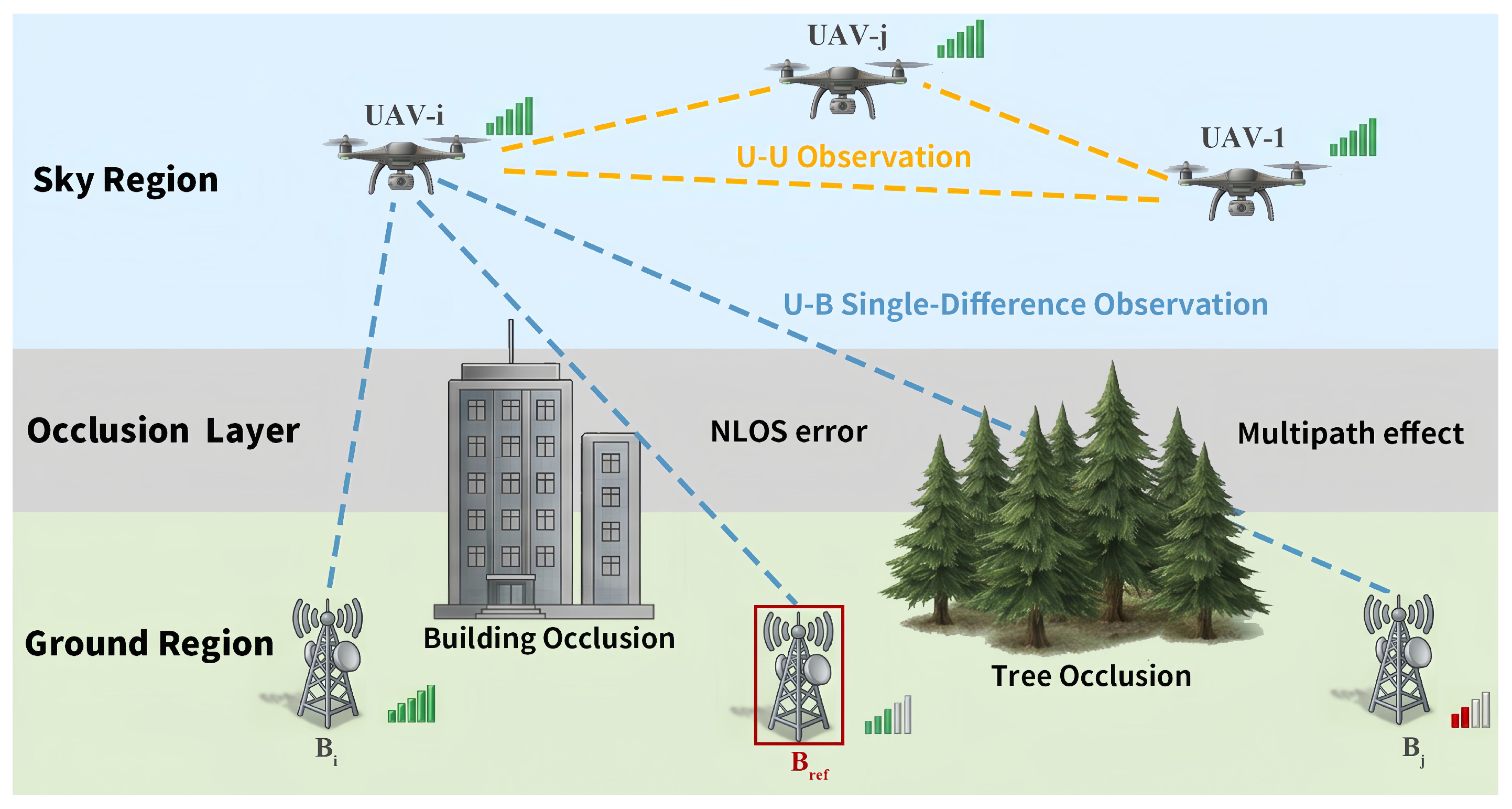
We fixed the U-B and U-U observation accuracy, and simulated three typical observation count loss scenarios in practical applications by adjusting the number of available observations per epoch: (1) insufficient ground base stations limited by environmental and cost constraints; (2) random observation loss from airframe occlusion, base station or receiver malfunctions, or packet loss on the inter-UAV data link; (3) unavailable low-elevation satellite/base station observations due to occlusion by buildings, trees and other obstacles. The experimental scenarios are detailed in
Table 2.
The DGCC-AKF filter is initialized with the settings summarized in
Table 3.
All values in
Table 3 are reported as one-axis standard deviations, with the corresponding covariance matrices constructed as
. The filter prior
and
are kept fixed across all Monte Carlo runs, reflecting a realistic deployment in which the true initial-error magnitude is unknown to the filter.
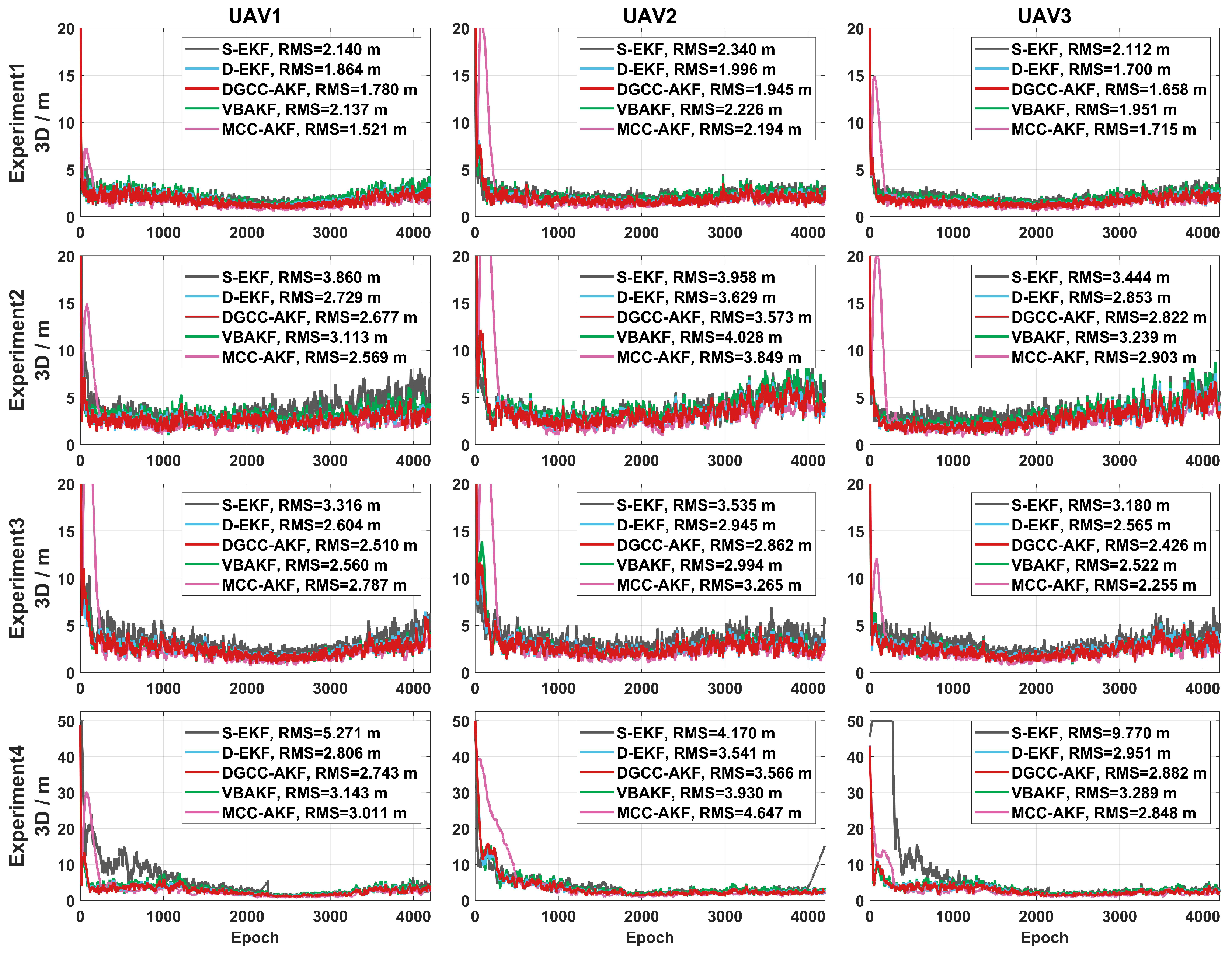
The four experiments primarily test the dependence of each algorithm on the number of available base stations; the observation noise statistics remain stable across them. The ablation variants of DGCC-AKF are therefore expected to perform identically. To keep the comparison focused, we evaluate the positioning performance of five representative schemes: S-EKF, D-EKF, DGCC-AKF, VBAKF, and MCC-EKF.
Figure 6 reports the 3D positioning RMS over the post-convergence epochs. Subplots in the same row correspond to the same observation condition listed in
Table 4.
As shown in
Figure 6 and
Table 4, the single-UAV S-EKF is the most sensitive to the degradation of base-station observations. Since it relies only on U-B ranges, its accuracy drops sharply when fewer stations are available. The degradation is most severe in Experiment 4, where its P95 error rises to 40.11 m and its CI
95 widens to [12.41, 17.07] m. In contrast, the four cooperative schemes all resist this degradation well, because the inter-UAV ranges provide additional constraints that compensate for the missing base-station observations.
Among all the compared schemes, DGCC-AKF delivers the best overall positioning accuracy. D-EKF is only slightly worse than DGCC-AKF. In Experiment 1, for example, their CI95 intervals are [1.95, 2.01] m and [1.89, 1.95] m, respectively. This indicates that cooperation is the dominant factor in mitigating the shortage of base stations for regional navigation, whereas the CI compensation and the grouped adaptive filtering embedded in DGCC-AKF act as auxiliary refinements that further improve accuracy on top of the cooperative baseline. VBAKF is slightly worse than both in every scenario; its CI95 in Experiment 1 is [2.20, 2.26] m. This is because VBAKF re-estimates the noise covariance at every epoch through variational inference. When no anomaly is present, this constant re-estimation brings no benefit. Instead, it adds estimation noise to the covariance and causes a small loss of accuracy.
MCC-EKF is clearly affected in its convergence speed when the base-station geometry weakens. Its P95 reaches 8.67 m, 9.06 m, and 15.45 m in Experiments 2–4, with correspondingly wider CI95 intervals. The cause is that, at the start of positioning, the large but legitimate innovations produced by the initial position error are mistaken for outliers and down-weighted by the correntropy criterion, which slows convergence. As the number of stations decreases, the innovations during this phase grow larger, and the convergence becomes even slower.
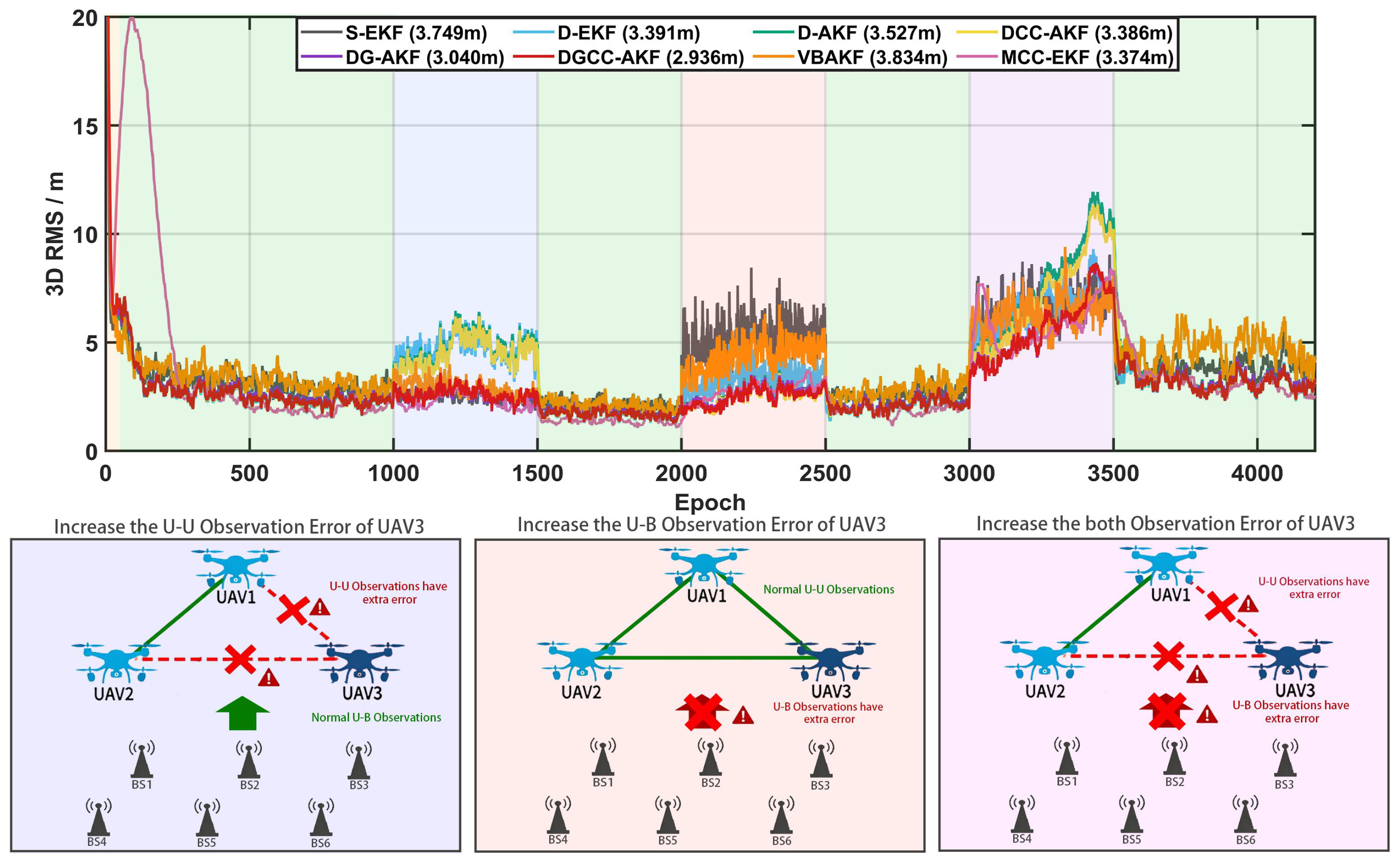
To verify the effectiveness of the grouped adaptive mechanism and CI compensation under observation anomalies, we inject additional ranging errors in Experiment 1. During epochs [1000, 1500] the error is added to the U-U observations of UAV3, and during epochs [2000, 2500] to the U-B observation between UAV3 and BS1. During epochs [3000, 3500], both are injected at the same time. The same composite error is used in all three windows. It superimposes three terms on the affected range. The first is a bias that ramps from 0 to 2 m over the first half of the window and then stays at 2 m. The second is zero-mean Gaussian noise with a standard deviation of 8 m. The third is a 20 m outlier that occurs with a probability of 5%. This experiment compares the two state-of-the-art (SOTA) baselines against the six DGCC-AKF ablation variants. The global positioning error RMS of UAV3 is shown in
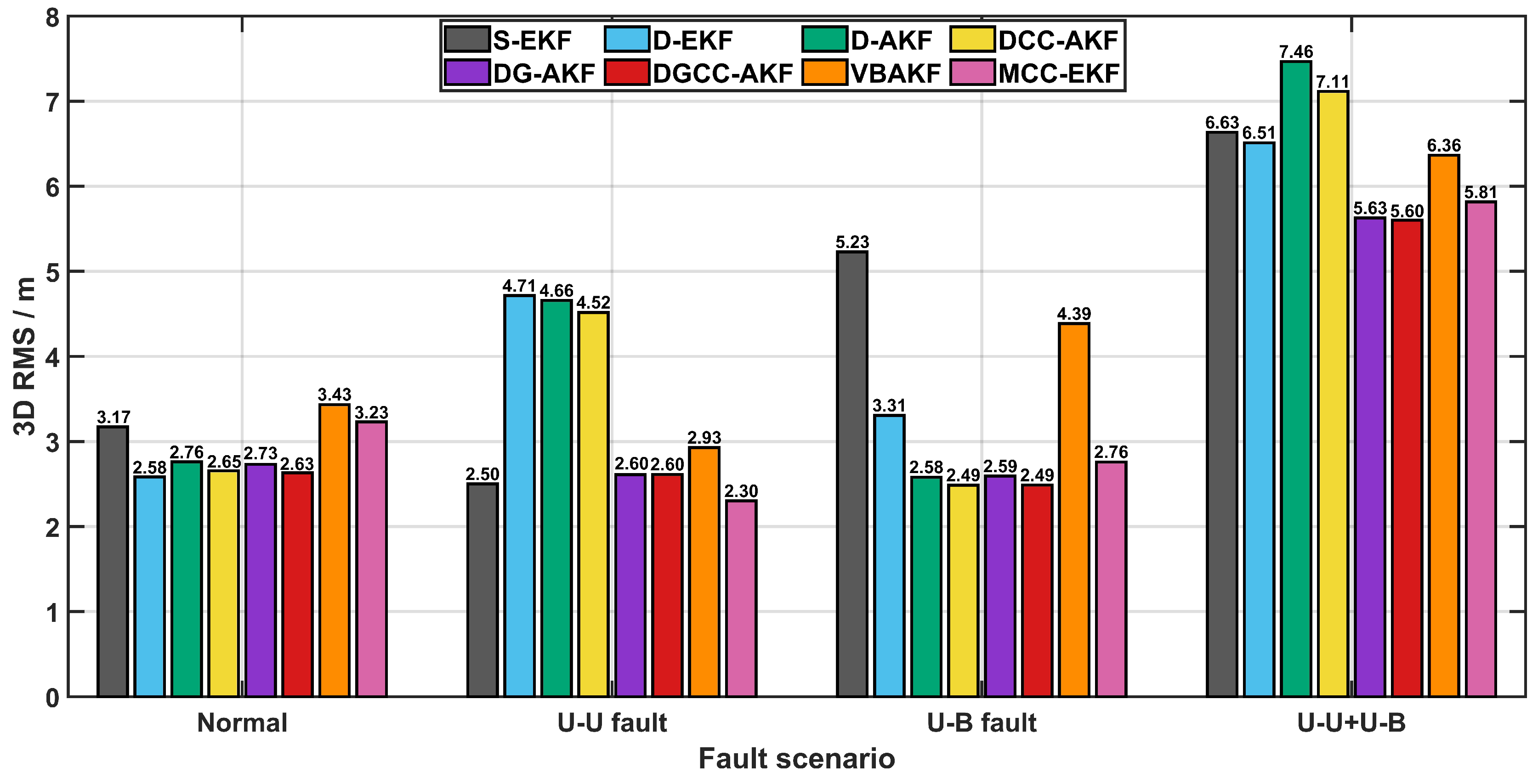
Figure 7, and the mean RMS over the normal, U-U fault, U-B fault, and concurrent fault periods is shown in
Figure 8. The corresponding statistical comparison across the four fault periods is summarized in
Table 5.
During the normal period, the five cooperative ablation schemes are all clearly more accurate than the single-UAV S-EKF (3.17 m), keeping the mean 3D RMS of UAV3 between 2.58 and 2.76 m. DGCC-AKF reaches 2.63 m, essentially the same as D-EKF. The other four ablation variants and the two SOTA baselines are all worse than DGCC-AKF. VBAKF is the worst at 3.43 m. MCC-EKF (3.23 m) is limited by slow convergence; its error does not settle until about the 25th second, which raises its P95 to 12.44 m, the largest of all methods.
During the U-U fault period, D-EKF, D-AKF, and DCC-AKF degrade sharply, with mean errors of 4.71 m, 4.66 m, and 4.52 m, about 85% higher than S-EKF (2.50 m), and CI95 intervals all above 4.4 m. In contrast, DG-AKF, DGCC-AKF, VBAKF, and MCC-EKF all suppress the fault and keep the mean error within 2.3–2.9 m. DGCC-AKF reaches 2.60 m with a P95 of 3.03 m. VBAKF is slightly worse than DGCC-AKF (2.93 m), while MCC-EKF is slightly better (2.30 m), the latter benefiting from the large number of base stations in this experiment. The grouped adaptation is decisive here: by isolating the U-U channel, DG-AKF and DGCC-AKF adjust only the affected weights and leave the healthy U-B observations untouched.
During the U-B fault period, DGCC-AKF is the best of all methods, with a mean error of 2.49 m and the lowest P95 (2.92 m) and CI95 ([2.43, 2.55] m). It improves on S-EKF (5.23 m) by 52% and on D-EKF (3.31 m) by 25%. VBAKF is again notable, as its accuracy deteriorates to 4.39 m, only slightly better than S-EKF. Together with its degradation in the normal period, this shows that the repeated online re-estimation of the state covariance and the noise covariance in VBAKF not only introduces extra estimation noise but can also destroy the inherent conservativeness of CI fusion, which in turn harms accuracy.
During the concurrent fault period, where U-U and U-B errors are injected at the same time, DGCC-AKF still gives the lowest mean error (5.60 m). The most notable change is that the two scalar adaptive schemes, D-AKF and DCC-AKF, degrade markedly to 7.46 m and 7.11 m, falling behind even S-EKF (6.63 m) and D-EKF (6.51 m). This reflects the risk of applying a single unified adjustment to the U-U and U-B observations: neither channel can be down-weighted correctly, which clearly lowers accuracy. The grouped schemes avoid this by estimating each channel separately; relative to D-AKF and DCC-AKF, DGCC-AKF reduces the error by about 25% and 21%, respectively.
In terms of overall performance across all periods, DGCC-AKF attains the lowest mean 3D RMS of all methods, 2.94 m, improving on S-EKF, VBAKF, D-AKF, D-EKF, DCC-AKF, MCC-EKF, and DG-AKF. To evaluate the parameter sensitivity and generalization capability of DGCC-AKF, we performed a parameter sweep over its key hyperparameters:
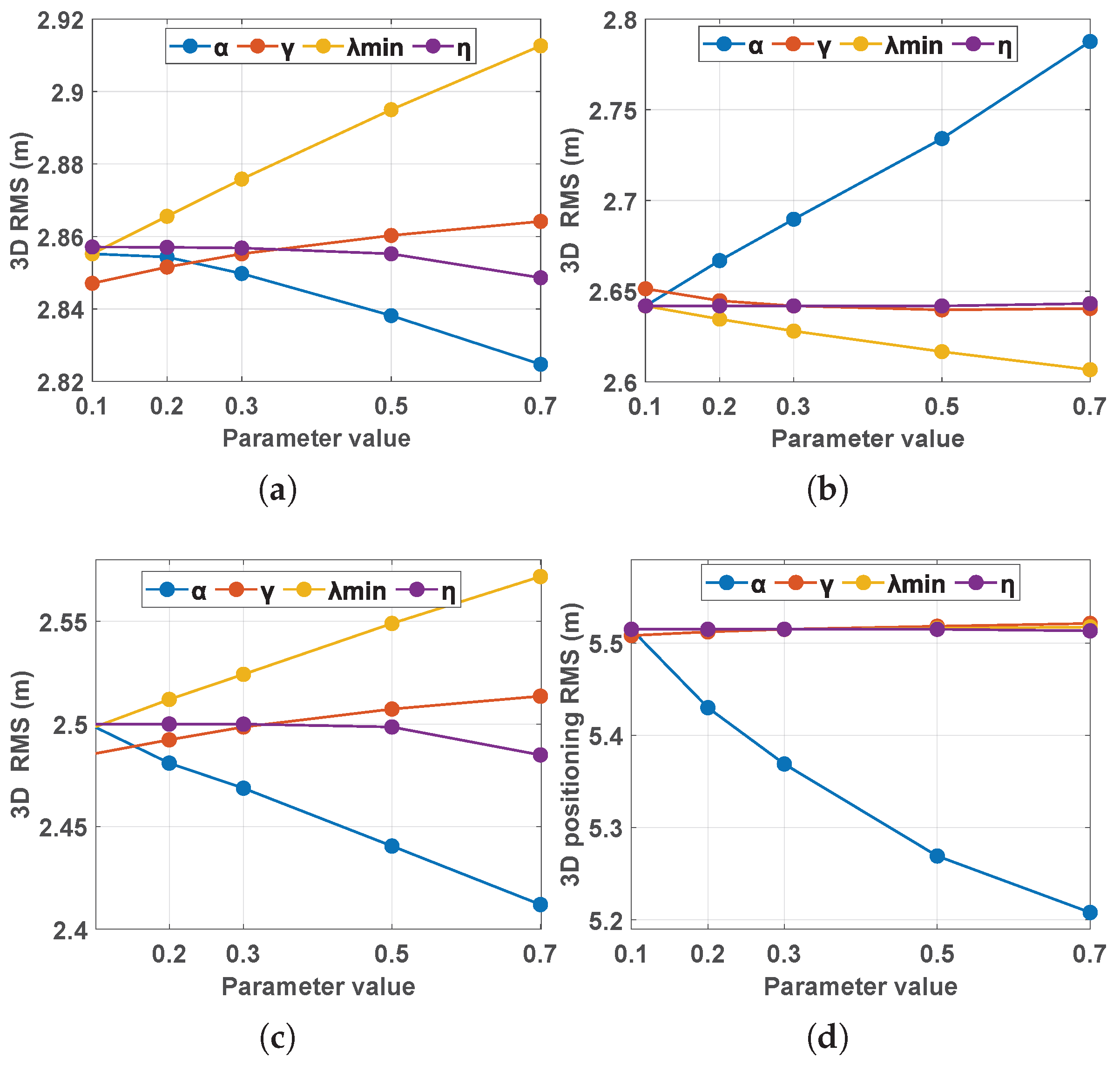
Figure 9 presents the 3D positioning RMS of UAV3 when each of the four parameters (
,
,
,
) is swept over
with the others fixed at their defaults. DGCC-AKF shows low sensitivity to all four parameters. Under the normal, U-U fault, and U-B fault conditions, the RMS variation caused by sweeping any single parameter stays at the centimeter level. Under the concurrent U-U and U-B fault condition,
has the strongest effect on accuracy, yet this effect remains within 5% of the overall positioning error. These results indicate that DGCC-AKF is robust to parameter variation, so default settings can be retained across the tested conditions without per-scenario retuning.
3.4. Semi-Physical Simulation Verification Using Multi-Group Measured U-B Observations
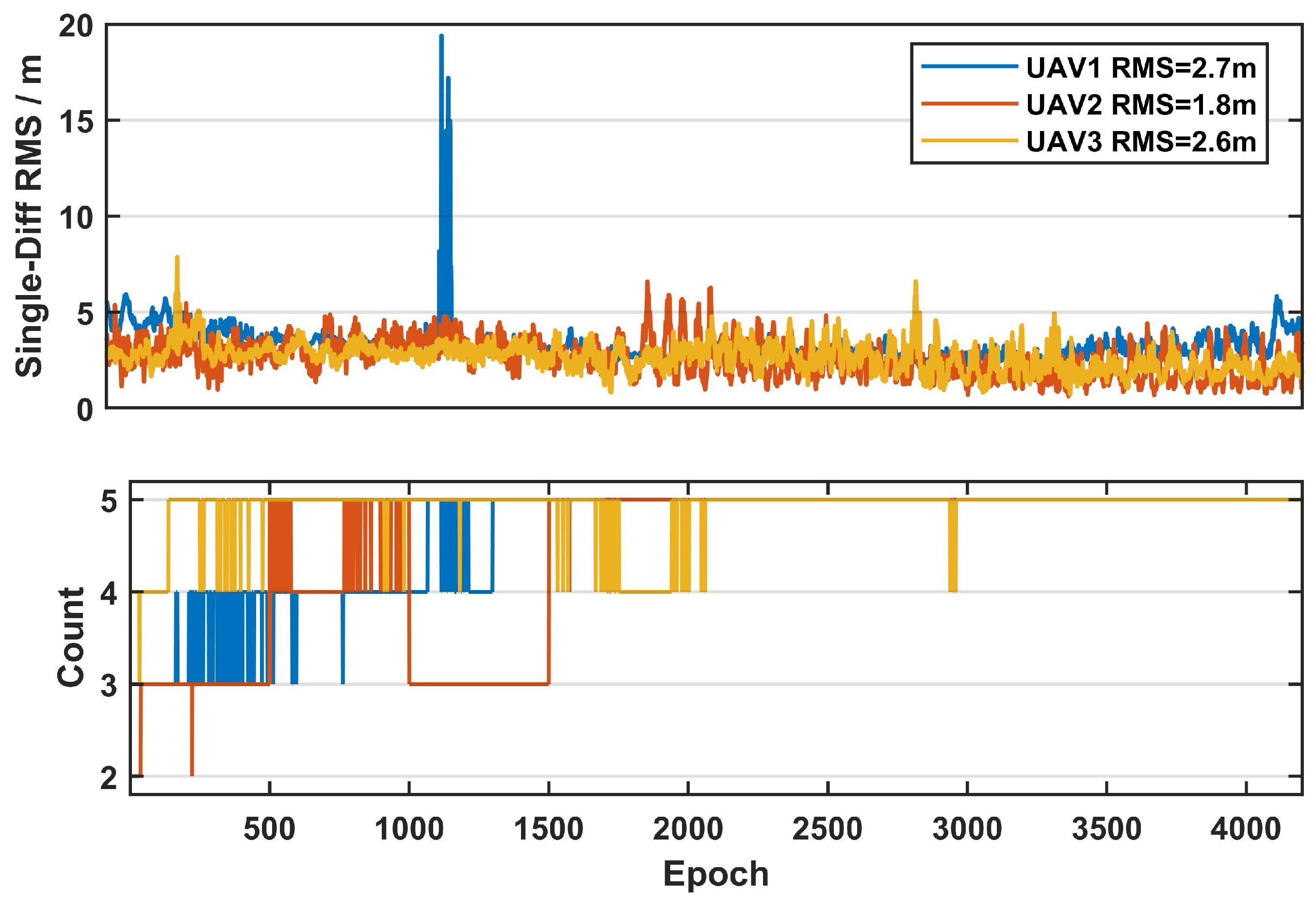
This subsection further employs measured U-B observation data for experimental verification. The inter-UAV observations were still generated through simulation with error characteristics consistent with the settings in the previous subsection, and a U-U observation anomaly was injected into the UAV3 observations during epochs [2500, 3000], configured in the same way as in the simulation experiment. The initial position was obtained using the first-epoch observations and a least-squares algorithm. The average 3D positioning errors of the three UAVs are as follows.
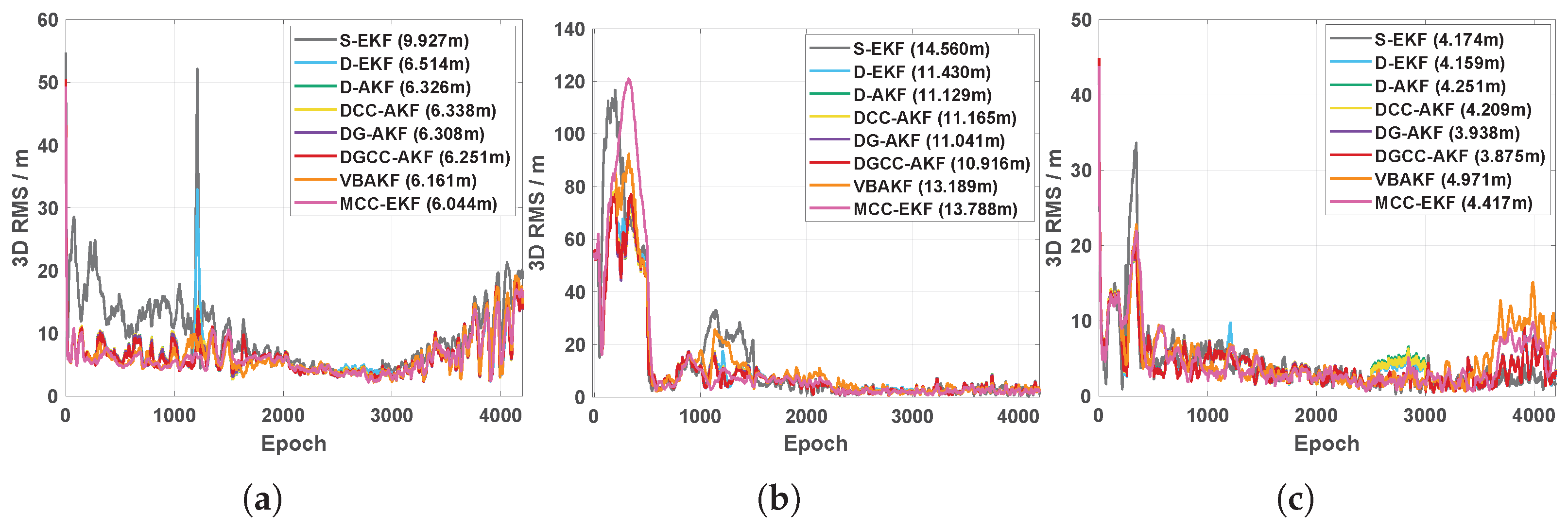
As shown in
Figure 10 and
Table 6, over all epochs DGCC-AKF achieves the lowest mean 3D error of the eight methods on UAV2 and UAV3 (10.91 m and 3.87 m, respectively). On UAV1 the two baselines are slightly more accurate, but the gap is small, and the difference between VBAKF and DGCC-AKF is not significant, since their CI
95 intervals ([6.87, 6.90] m and [6.86, 6.88] m) overlap. Because the base-station observation quality in this experiment remains generally stable, the overall improvement in positioning performance across the full time period comes mainly from cooperative localization rather than from the adaptive mechanism, so the five cooperative schemes perform similarly. Even so, the advantage of DGCC-AKF over the two SOTA baselines is consistent: on UAV2 its P95 (57.60 m) is 21.7% and 34.6% lower than VBAKF (73.60 m) and MCC-EKF (88.12 m), and on UAV3 it is 10.2% and 8.9% lower.
During the first 200 s the UAVs fly far from the base-station area, so the number of visible stations is small and fluctuates frequently. S-EKF therefore performs poorly, while cooperative localization improves the accuracy markedly. This phase also exposes the weakness of the two SOTA baselines on UAV2, where the geometry is worst: MCC-EKF yields the largest error of all methods (P95 111.33 m, even above the 103.25 m of S-EKF), and VBAKF (P95 83.45 m) lags clearly behind DGCC-AKF. DGCC-AKF holds the UAV2 P95 at 67.57 m, which is 19.0% and 39.3% lower than VBAKF and MCC-EKF and 34.5% lower than S-EKF.
Two localized observation anomaly conditions exist in this experiment: a naturally-occurring U-B observation anomaly on UAV1 (epochs [1200, 1300], observation error > 20 m) and the injected U-U observation anomaly on UAV3 (epochs [2500, 3000]) described above. The positioning accuracy during these two anomaly periods was further analyzed.
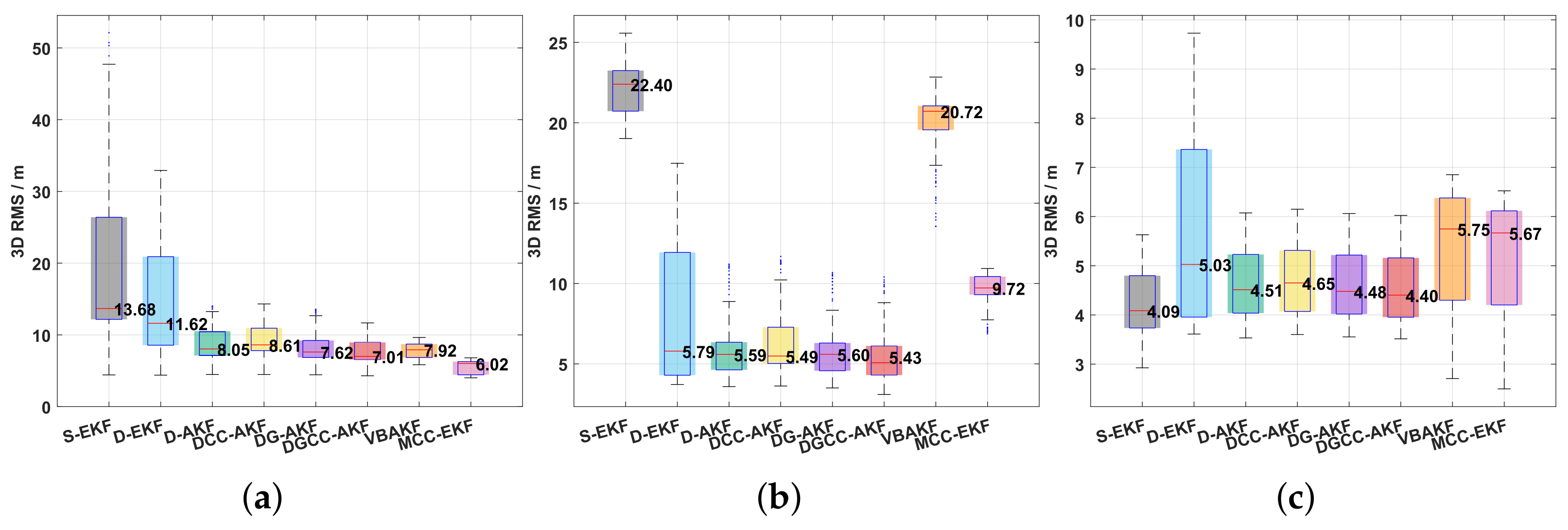
As shown in
Figure 11 and
Table 7, when the U-B observations of UAV1 are severely corrupted, S-EKF and D-EKF are the most affected: on the faulted UAV1 their median 3D errors reach 13.68 m and 11.62 m, and the S-EKF P95 rises to 47.26 m. On UAV1 the six adaptive schemes rank, from best to worst by median 3D error, as MCC-EKF (6.02 m) < DGCC-AKF (7.01 m) < DG-AKF (7.62 m) < VBAKF (7.92 m) < D-AKF (8.05 m) < DCC-AKF (8.61 m). Notably, on UAV2, although no anomaly is injected in this window, S-EKF, VBAKF, and MCC-EKF still degrade markedly—the P95 of VBAKF reaches 22.56 m and that of MCC-EKF 10.84 m—because the visible base stations here barely meet the minimum positioning requirement and leave no redundancy. By contrast, DGCC-AKF attains the highest accuracy on UAV2, with a median error 75.8% below that of S-EKF and 73.8% below that of VBAKF. Across the three UAVs, DGCC-AKF is the only method that combines accuracy and stability, remaining best or second-best under almost every condition with a narrow confidence interval.
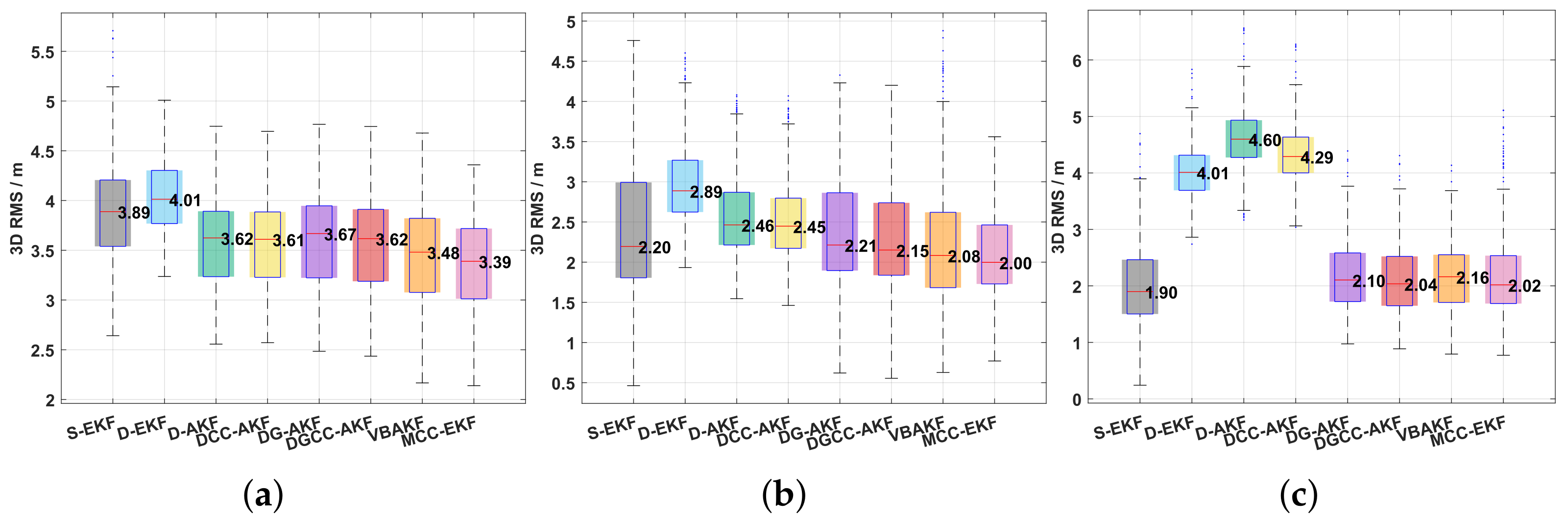
As shown in
Figure 12 and
Table 7, when the U-U observations of UAV3 are severely corrupted, the cooperative schemes without grouping degrade the most on the faulted UAV3: the median errors of D-AKF, DCC-AKF, and D-EKF rise to 4.60 m, 4.29 m, and 4.01 m—more than twice the 1.90 m of S-EKF—and their P95 reaches 5.41 m, 5.11 m, and 4.81 m. The grouped schemes DG-AKF and DGCC-AKF, together with the two baselines, stay near 2 m. DGCC-AKF reaches a median of 2.04 m and a CI
95 of [2.16, 2.21] m, about 56% and 52% below D-AKF and DCC-AKF. Its median is only marginally above MCC-EKF (2.02 m), but its P95 (3.18 m) is clearly below that of MCC-EKF (3.70 m), so DGCC-AKF bounds the worst-case error more tightly.
In summary, the simulation and semi-physical experiments show that DGCC-AKF combines high accuracy with high stability and copes well with changes in the number of base stations and with degraded observation quality. When base stations are sufficient and observations are stable, the cooperative schemes perform similarly and DGCC-AKF is on par with the best. Under observation loss or anomalies, it still maintains a superior overall accuracy. The two SOTA baselines are far less stable: MCC-EKF surpasses DGCC-AKF only when base-station observations are abundant, while VBAKF becomes unreliable whenever the visible-station set changes frequently or the U-B fault is correlated.