1. Introduction
The continuous stirred tank reactor (CSTR) is a conventional reactor configuration widely used in chemical [
1,
2], pharmaceutical [
3,
4], energy [
5,
6], and other industries. A CSTR operates under steady-state conditions with continuous addition of substrates and withdrawal of products. Internal coils or external jackets are typically employed to maintain the desired reactor temperature by circulating heat-transfer fluid (HTF). To achieve the desired reaction process and product quality, as well as to mitigate the safety concerns (e.g., sudden temperature rises during exothermic reactions), it is critically important to utilize practical and robust control approaches to regulate the temperature of the reactor.
The on–off (bang–bang) control method is one of the earliest techniques used to regulate reactor temperature by simply opening or closing the HTF flow based on deviation from the setpoint [
7,
8]. Although this method is simple and cost-effective, it often results in poor control precision, especially in systems with long response delays, and frequent actuator switching can lead to mechanical wear. To address process delays and nonlinearities in the regulation, Model Predicted Control (MPC) has been employed for CSTR temperature regulation. This approach offers high adaptability and good performance by discretizing the control process and using multiple linearization techniques [
9,
10]. As a model-based control methodology, adaptive control has also been implemented for the regulation of reaction temperature [
11,
12]. The technique performed with zero steady-state error, even with the presence of noise, and characterized competitive resilience in coping with uncertainties in tracking the reference signal. Sliding Mode Control (SMC), another model-based approach, enables direct shaping of system dynamics through a defined sliding surface [
13,
14]. Owing to its fast response and simple design, SMC has been widely applied and further enhanced for CSTR temperature control. However, accurate modeling of the CSTR remains challenging due to its complex nonlinear dynamics, arising from coupled mass and heat-transfer processes [
2]. Moreover, these model-based control schemes often require significant computational resources [
15]. To overcome the dependence on detailed process models, intelligent control approaches have emerged in recent years for CSTR temperature regulation. Refs. [
16,
17] designed a fuzzy logic-based controller to adjust coolant flow and maintain reactor temperature with promising industrial applicability. Refs. [
18,
19] proposed a Neural Network-based controller to obtain high accuracy in temperature control by addressing unknown system dynamics through data training. In addition, Artificial Intelligence (AI) approaches, such as machine learning and reinforcement learning, have also been applied to develop efficient controllers for regulating CSTR temperature, achieving improved temperature regulation and reduced energy consumption [
20,
21]. Despite these advancements, large-scale industrial deployment of these intelligent control methods remains challenging due to high operational costs, data dependency, and maintenance requirements.
PID controllers are widely used across numerous industrial domains due to their simplicity, reliability, and ease of implementation [
22,
23]. Beyond chemical reactors, PID-based schemes play a central role in motor-speed regulation, electrical-machine drives, power-system excitation control, HVAC temperature management, fluid-flow regulation in pipelines, and liquid-level stabilization in storage tanks. Recent studies demonstrate the broad utility of PID and fractional-order PID variants in applications ranging from PMSM speed servo drives [
24] to generator excitation control [
25] and advanced HVAC temperature regulation in industrial environments [
26]. However, efficient performance of the PID heavily depends on appropriate parameter tuning. To enhance control accuracy, numerous studies have explored powerful tuning techniques for PID controllers. Ref. [
27] applied fuzzy logic theory to determine PID gain values and demonstrated that the fuzzy-based PID controller achieved superior setpoint tracking compared with the conventional PID and Ziegler–Nichols (ZN) methods. To further improve parameter identification and control precision, intelligent optimization algorithms have also been used. Ref. [
28] integrated an improved Firefly Algorithm and an enhanced Sparrow Search Algorithm into the PID framework for the accurate control of CSTR temperature. A hybrid tuning method combining ZN based initialization with intelligent optimization algorithms was reported in [
29]. The results showed that the controller parameters were best optimized by Particle Swarm Optimization (PSO) irrespective of the disturbances compared with the Genetic Algorithm. The integration of Neural Network (NN) and PSO into the tuning of a PID controller was further investigated in [
30]. The proposed PSO-tuned NN-PID controller achieved faster rise time, reduced overshoot, and shorter settling time than both NN-PID controller and conventional ZN-tuned PID controller. In [
31], a nonlinear PID controller combined with a Radial Basis Function Neural Network (RBFNN) was proposed for CSTR temperature control. Simulation studies demonstrated notable improvements in setpoint tracking, disturbance rejection, and parameter variation compared with the adaptive RBFNN-based PID controller.
Recently, fractional-order PID (FOPID) controllers have emerged as promising alternatives to the classical control method in the industry [
32]. Compared to the conventional integer-order (IO) PID controllers, the FOPID controller possesses more tuning freedom and wider range of parameters for stable control, leading to the improvement in control robustness [
22,
33]. In this context, the FOPID has been adopted for stabilizing the temperature of the CSTR and to maintain optimal reaction processes. Ref. [
34] developed an efficient FOPID controller tuned by a Modified Grey Wolf Optimizer (MGWO) to regulate the temperature of a CSTR. Comparative results showed that the proposed MGWO-FOPID achieved a significantly lower fitness value compared with the conventional GWO-PID controller. In [
35], four different structures of FOPID were proposed by combining NN and Ant Colony Optimization (ACO), and the robustness of these controllers was investigated. The findings demonstrated that the FOPIDNN controller with a three-layer structure had a decent ability to rapidly minimize the variance between real and desired routes. Ref. [
36] investigated the hybridization of the State of Matter Search (SMS) algorithm with chaotic maps and elite oppositional-based learning. This hybrid algorithm was used to find optimal parameters of the FOPID controller for the temperature control of a CSTR and presented superior and optimum performance compared with FOPID controllers based on SMS-FOPID, PSO-FOPID, and Cuckoo Search (CS). Although these approaches improve transient performance, most existing optimizers either converge prematurely or exhibit limited precision near the optimal region when applied to strongly nonlinear thermal systems.
Recent studies have shown that the original Enzyme Action Optimizer (EAO), although competitive, exhibits several structural limitations, including early loss of population diversity, weak exploitation near the optimum, and stagnation in flat or shallow regions of the search landscape. These issues reduce its reliability when applied to strongly nonlinear thermal systems such as CSTR temperature regulation, which demand both reliable global exploration and precise local refinement.
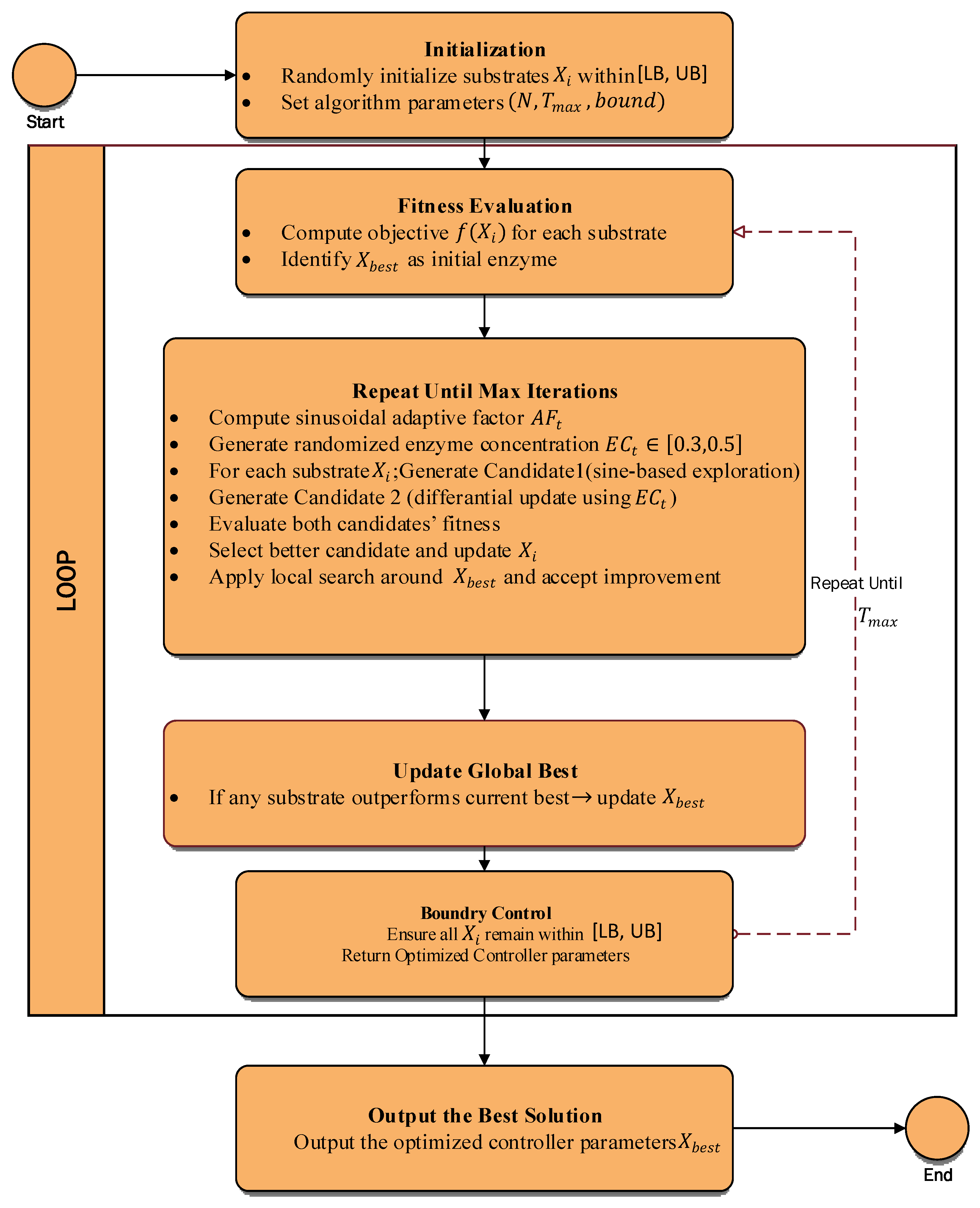
To address these limitations, this study introduces a modified Enzyme Action Optimizer (mEAO) that incorporates four dedicated enhancements:
A sinusoidal adaptive factor for dynamic step-size modulation;
Randomized enzyme concentration to enhance population diversity;
A dual-candidate update strategy for reinforced exploitation;
A lightweight local search step for fine-grained refinement.
These mechanisms are absent in the original EAO and collectively enhance both global search capability and local convergence precision in nonlinear thermal systems. To the best of our knowledge, this is the first application of an enhanced EAO variant for tuning FOPID controllers in CSTR temperature regulation. Additionally, a complete simulation-based tuning framework is constructed using normalized multi-objective performance metrics, supported by extensive comparative and robustness analyses, which further reinforce the methodological contribution of this work.
The remainder of this paper is organized as follows:
Section 2 presents the nonlinear CSTR model and its parameters.
Section 3 describes the structure and implementation of the FOPID controller.
Section 4 introduces the proposed mEAO algorithm, while
Section 5 outlines the mEAO-based FOPID control framework.
Section 6 and
Section 7 provide comparative simulation and robustness analyses, respectively. Finally,
Section 8 concludes the paper and discusses future research directions.
2. Continuous Stirred Tank Reactor
A CSTR represents one of the most fundamental configurations in chemical and process industries for investigating reaction dynamics under continuous operation [
37]. It is composed of a well-mixed vessel in which the reactant stream enters at a constant volumetric flow rate, while the outlet stream leaves at the same rate, maintaining a constant liquid level inside the reactor. Such a configuration ensures spatial homogeneity, meaning that the composition and temperature of the effluent are identical to those within the reactor bulk. This “perfect-mixing” assumption allows the CSTR to serve as an idealized benchmark system for studying nonlinear thermal behavior and for developing and validating advanced control algorithms.
The reactor considered in this study performs an irreversible, first-order exothermic reaction in the liquid phase. The system is equipped with an external cooling jacket surrounding the vessel, through which a heat-exchange medium circulates to remove the heat released during the chemical reaction. The cooling jacket acts as the manipulated unit of the process, by regulating the coolant temperature or flow rate, the rate of heat removal can be adjusted, thereby maintaining the reactor temperature within safe and optimal limits. Because of the strong coupling between the reaction rate and the temperature, the CSTR exhibits highly nonlinear behavior and may possess multiple steady-state solutions, including regions prone to thermal runaway if the temperature is not tightly controlled.
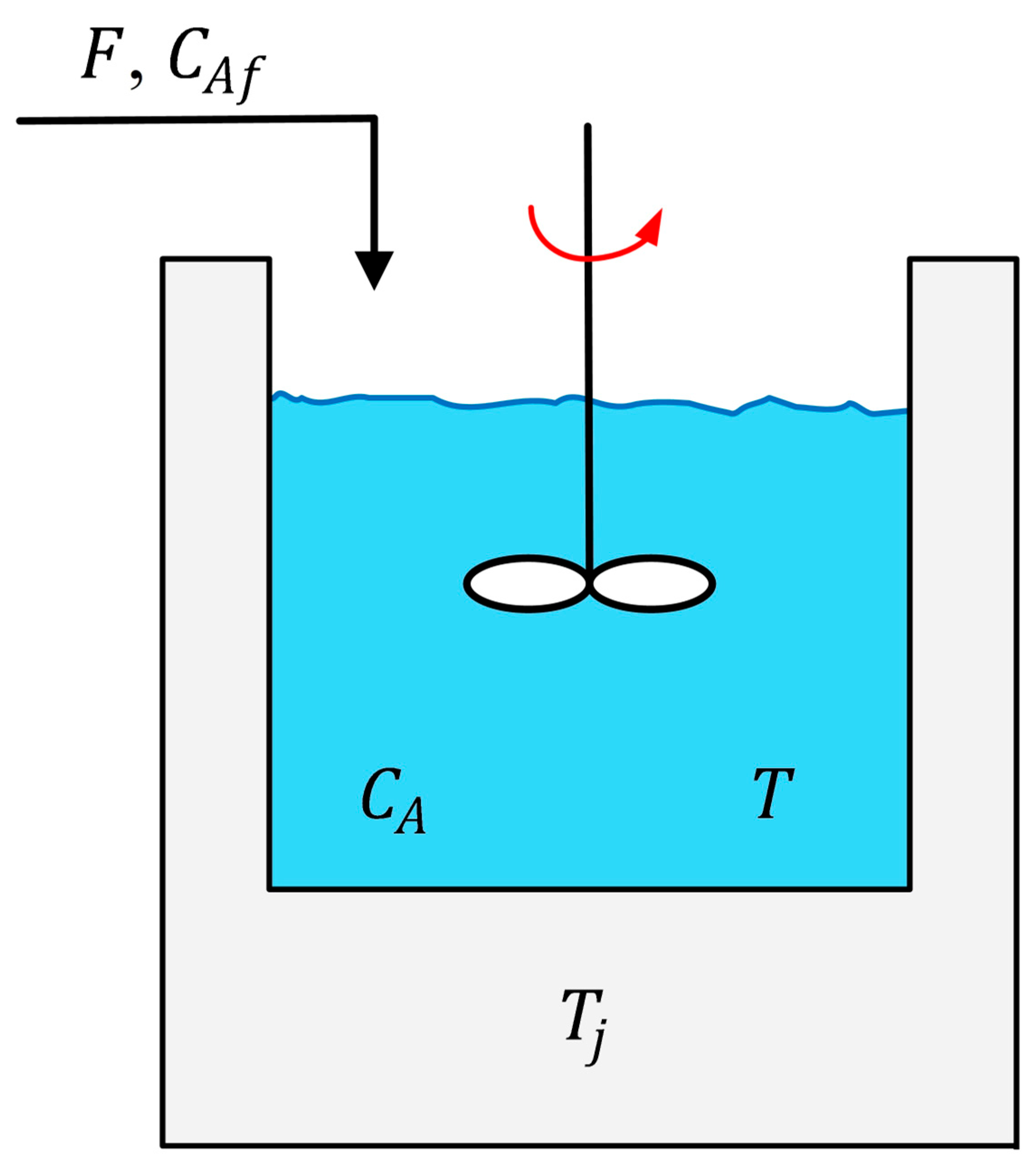
A schematic representation of the jacketed CSTR considered in this work is shown in
Figure 1, where the main process variables (reactor temperature, reactant concentration, and jacket temperature) are indicated. The thermal dynamics of this configuration form the basis for the development of the mathematical model presented in the following subsection, which is later utilized for controller design and performance evaluation.
2.1. Mathematical Modeling
To capture the nonlinear dynamic behavior of the reactor, material and energy balance equations are formulated under several realistic yet simplifying assumptions. The liquid phase is perfectly mixed, so the temperature and composition are spatially uniform. Physical properties such as density, specific heat, and overall heat-transfer coefficient are considered constant. The reaction follows a first-order, irreversible, exothermic mechanism of the form A → B and vapor-phase effects are neglected. In addition, the reactor volume remains constant due to the equality between inflow and outflow rates. The cooling-jacket temperature
is regarded as the manipulated variable and is assumed to respond much faster than the reactor temperature, allowing its dynamic behavior to be represented as a direct input.
The rate of reaction per unit volume is described by the Arrhenius law:
where
r is the reaction rate,
is the pre-exponential factor,
E is the activation energy,
R is the universal gas constant,
T is the reactor temperature, and
is the concentration of the reactant.
Applying the principle of conservation of mass to component A and conservation of energy to the reactor contents yields the following nonlinear differential equations that govern the transient behavior of the system:
where the parameters are defined as follows:
F is the volumetric feed flow rate,
V is the reactor volume,
and
are the feed concentration and feed temperature,
is the density of the reacting fluid,
is the specific heat capacity,
is the heat of reaction (negative for exothermic systems),
is the overall heat-transfer coefficient, and
A is the heat-exchange surface area. The last term in Equation (3) represents the heat transferred through the reactor wall to the cooling jacket, which serves as the thermal control mechanism.
Equations (2) and (3) jointly describe the nonlinear coupling between concentration and temperature. The exponential temperature dependence of the reaction rate introduces significant sensitivity and potential multiplicity of steady states. Even small perturbations in jacket temperature or feed conditions can cause abrupt changes in the reactor temperature, making accurate temperature control essential for maintaining safe and efficient operation. These nonlinear characteristics make the CSTR a canonical testbed for advanced controller design and optimization studies.
2.2. Model Parameters and Nominal Conditions
The physical, thermal, and kinetic parameters adopted in this work are summarized in
Table 1. They correspond to a standard benchmark scenario frequently used in CSTR temperature-control studies [
37,
38].
The computed steady-state operating conditions—obtained by setting
and
in Equations (2) and (3)—are T = 304.17 K and CA = 0.9774
. These serve as the nominal equilibrium point around which the control system performance is evaluated in subsequent simulations.
3. Structure of FOPID Controller
The FOPID control (also expressed as
) extends the conventional PID framework by allowing the integral and derivative operators to assume non-integer orders
and
. This generalization introduces two additional tuning parameters that significantly enlarge the stabilizing region and enable refined frequency-response shaping. By tuning the fractional orders
and
, the open-loop phase response of a FOPID controller can be made locally flatter near the gain-crossover frequency, achieving the iso-damping effect in which the closed-loop overshoot remains almost constant for moderate variations in the loop gain [
39]. This phase-flattening capability helps maintain the desired phase margin and transient damping under parametric uncertainty. When designed with suitable filtering of the fractional-derivative path, such controllers provide improved robustness compared with classical PID schemes [
40]. These attributes have motivated the growing use of FOPID controllers in industrial applications, including electromechanical drives, process–thermal systems, and other nonlinear plants, where wide-range robustness and precise frequency-domain tuning are of particular importance [
40,
41].
The continuous-time FOPID controller in parallel form
is written as
where
,
, and
denote the proportional, integral, and derivative gains in the Laplace domain, respectively. The parameters
and
represent the fractional orders of integration and differentiation. The conventional integer-order PID controller is recovered when
, while the other classical forms (for P is
, PI is
, and PD is
) arise as special cases for appropriate values of
λ and
μ.
Exact implementation of the fractional operators
and
is not directly realizable in finite-dimensional systems because they correspond to non-local, memory-dependent dynamics. In practice, band-limited rational approximations are used. The most widely adopted method is the Oustaloup recursive filter, which distributes poles and zeros logarithmically over a defined frequency band to emulate the desired fractional slope while maintaining stability [
42]. The resulting approximation can then be discretized for embedded or digital realization. Typical industrial implementations employ moderate filter orders (e.g.,
pole-zero pairs with
) within the operating-frequency range, which keeps the computational cost modest relative to modern controller hardware. In this study, an 11th-order (
) Oustaloup recursive approximation was implemented within the frequency band
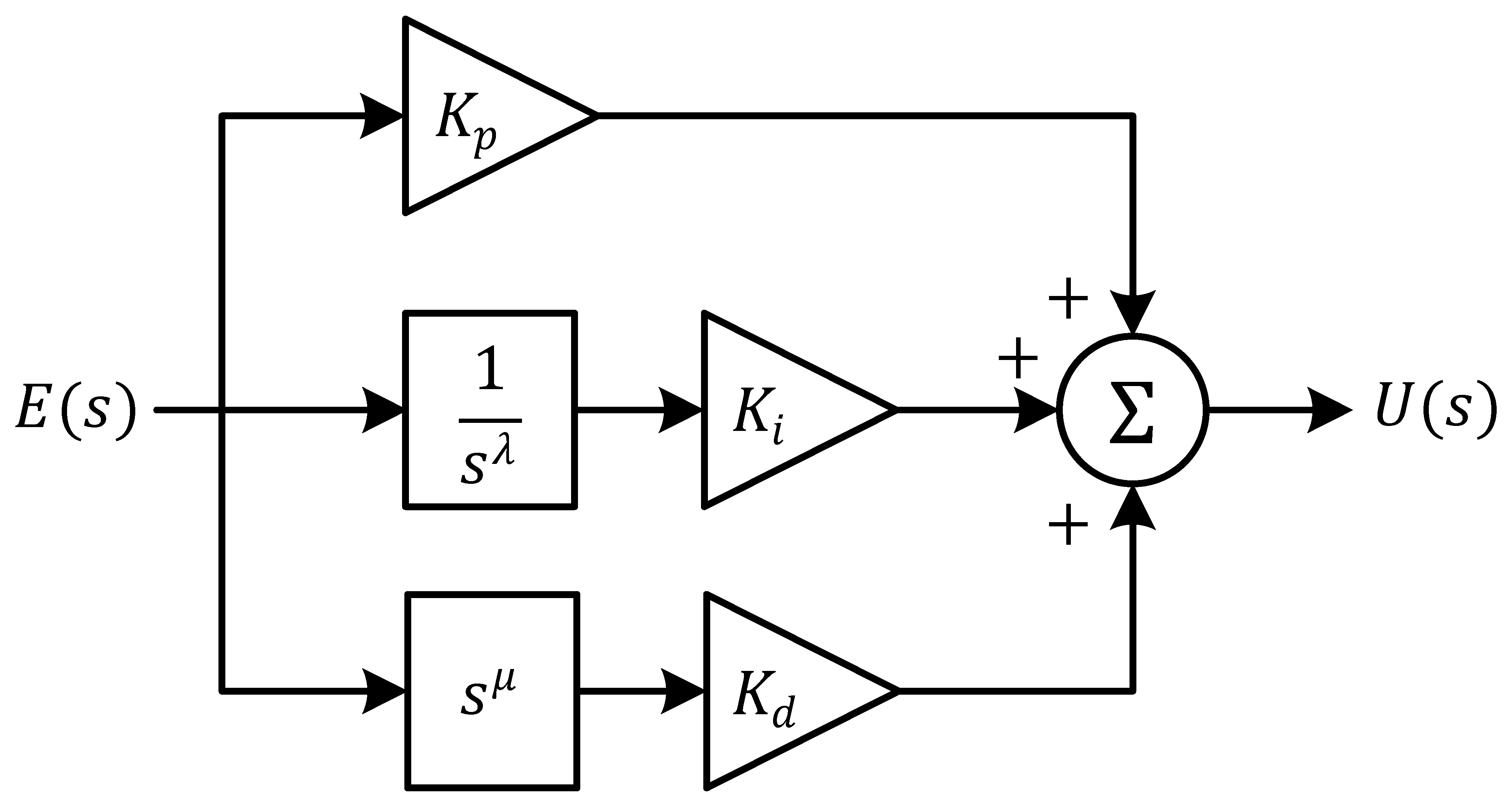
rad/s, which is a commonly adopted range in FOPID applications to ensure accurate representation of the fractional dynamics across the controller’s operating spectrum. A block diagram of the FOPID controller is shown in
Figure 2.
The error signal,
, is processed in three parallel paths: the proportional path
, the fractional-integral path
, and the fractional-derivative path
. The outputs of these paths are summed to produce the control signal
. In actual implementation, each fractional path is replaced by a stable, band-limited rational filter (e.g., Oustaloup) before discretization. This parallel architecture preserves the intuitive structure of classical PID, while embedding fractional dynamics that enhance tuning flexibility and disturbance robustness.
In the context of the CSTR, the closed-loop objective is to maintain the reactor temperature within safe bounds despite rapid and nonlinear heat-release dynamics. The two fractional orders (
and
) introduce additional degrees of freedom that allow precise phase and gain shaping of the loop, resulting in improved disturbance rejection and reduced actuator effort compared with an integer-order PID. Moreover, the FOPID’s ability to sustain nearly constant damping across a wide operating range mitigates oscillatory and unstable behavior, ensuring smoother thermal responses. Recent studies [
40,
41] have shown that these attributes make fractional-order controllers particularly well suited for industrial thermal processes such as CSTR systems, where robustness and energy efficiency are critical.
Despite their enhanced flexibility, FOPID controllers also introduce certain practical complexities. Accurate selection of the fractional orders
and
increases the computational burden, and rational approximation of fractional operators may introduce modeling errors outside the designed frequency band. If these approximations or tuning ranges are not properly handled, the closed-loop performance can degrade, particularly in highly nonlinear systems.
5. Proposed mEAO-Based FOPID Control Method
In the present study, the nonlinear CSTR model described in
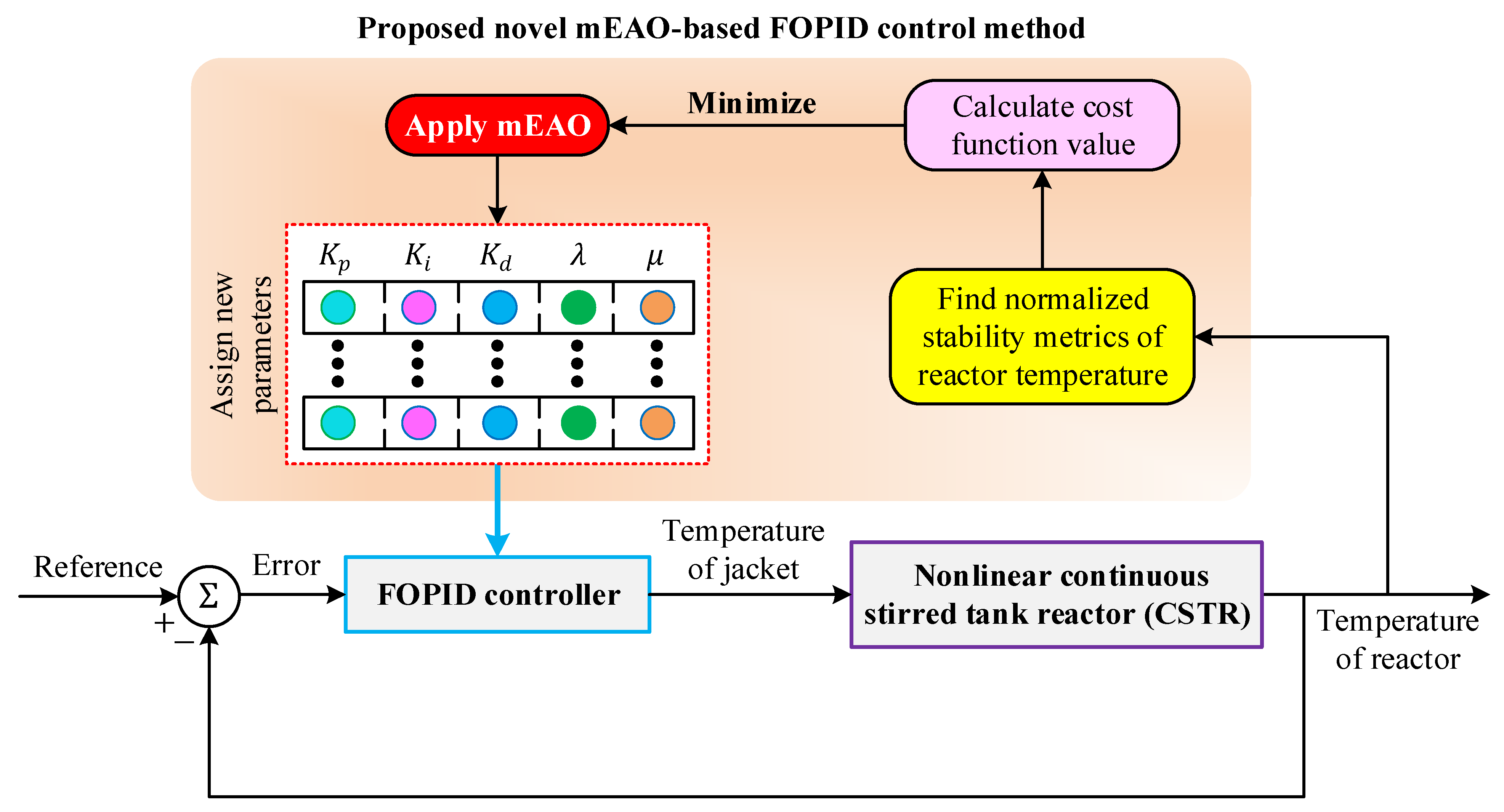
Section 2 was controlled by a FOPID controller whose parameters were optimally tuned using the mEAO. The overall optimization and control framework is illustrated in
Figure 4, showing the interaction between the optimizer, the FOPID controller, and the reactor model.
As shown in
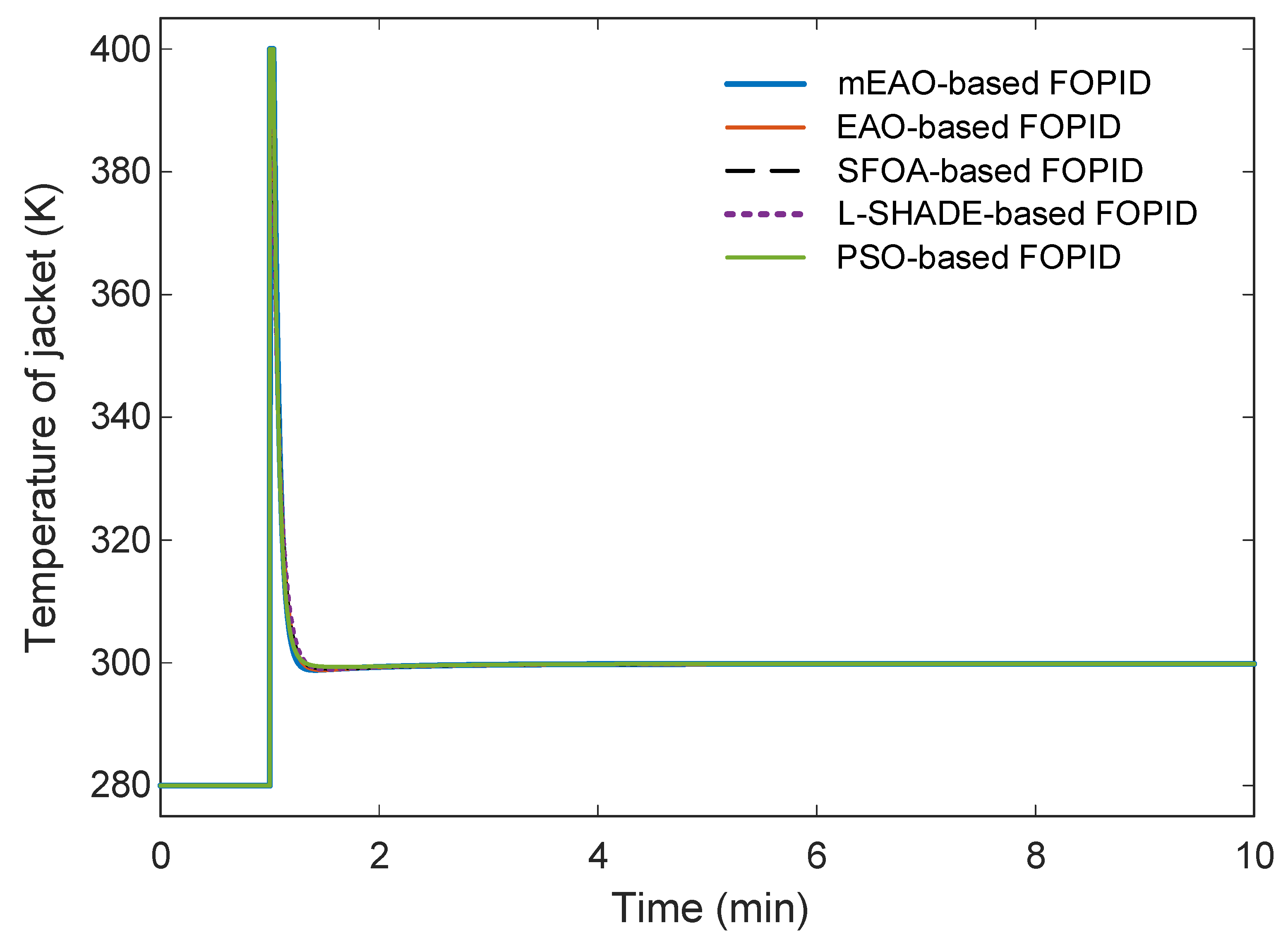
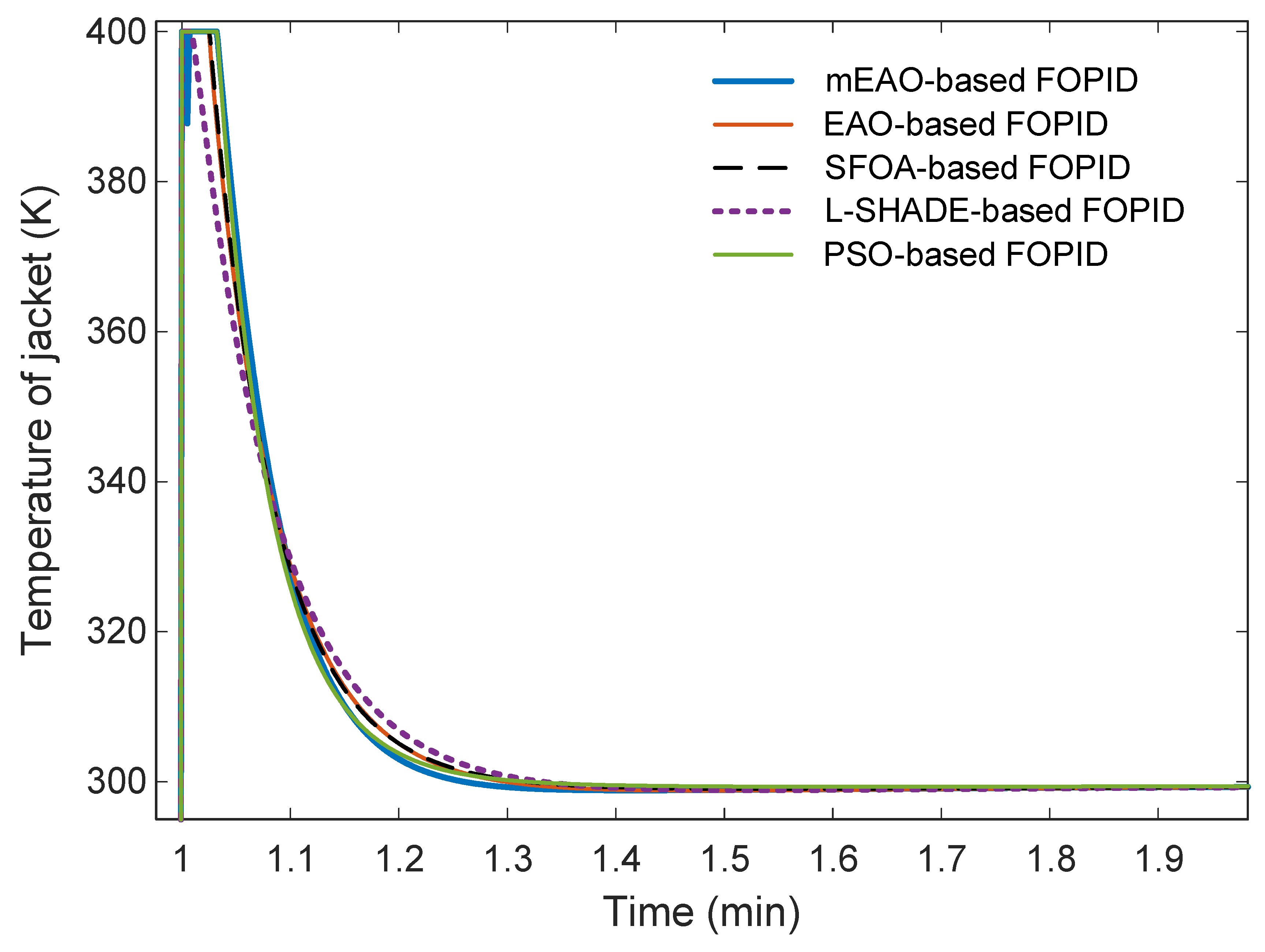
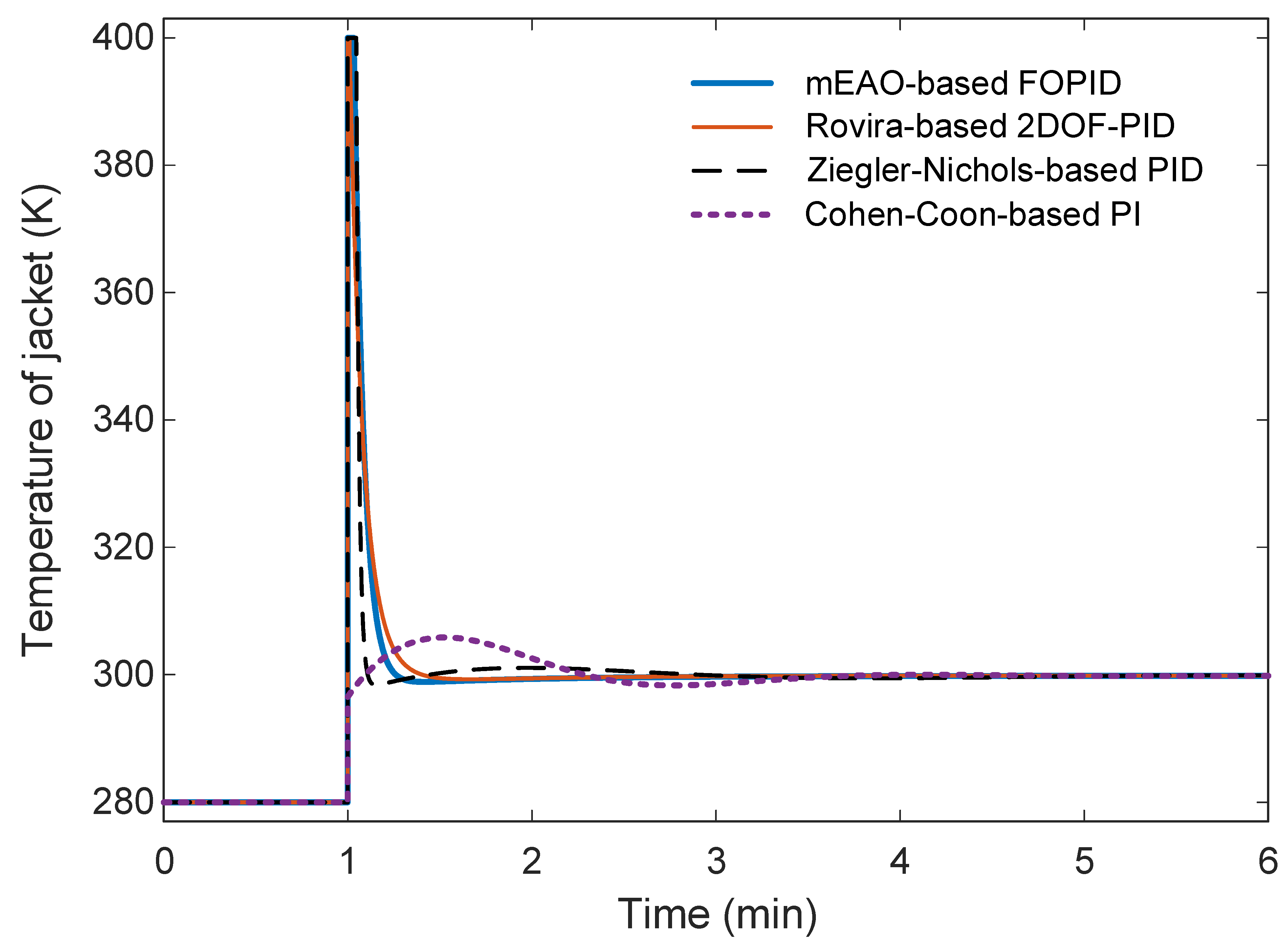
Figure 4, the error signal (“Error”) is obtained as the difference between the reference and the actual reactor temperature. The FOPID controller processes this error and generates the temperature setpoint for the cooling jacket. Accordingly, the controller output corresponds to the “Temperature of jacket”, while the closed-loop system output is the “Temperature of reactor”. This cascaded thermal interaction, where the manipulated variable is the jacket temperature and the controlled variable is the reactor temperature, forms a closed-loop structure typical of practical CSTR temperature regulation systems. Unity feedback is used (confirming that no additional gain is required in the feedback path), which is consistent with standard thermal CSTR control architectures [
44].
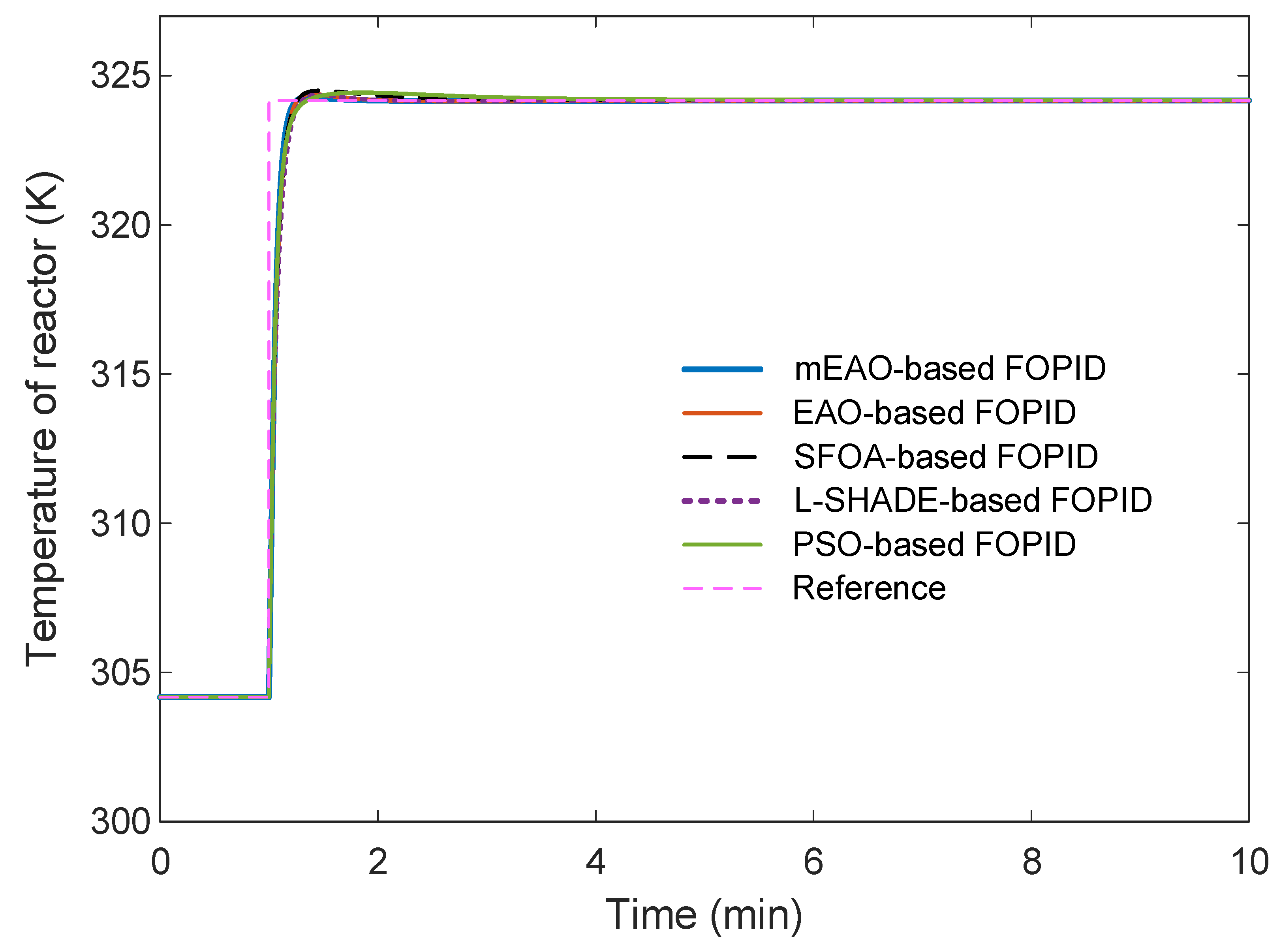
At the initial operating point, the reactor temperature was T = 304.16755 K. To evaluate the transient and steady-state performance of the designed control system, the reference temperature was increased by
at
, i.e., to
. This step-change scenario allowed the investigation of the controller’s ability to reject the strong nonlinearity and heat-release dynamics of the exothermic reaction.
The tuning objective was to determine the optimal set of FOPID parameters (
) that minimize a composite performance index as formulated in [
45,
46]. The employed cost function is given by
The balance factor was fixed at
, consistent with previous work [
47], which showed that this value provides a stable and well-defined weighting between transient and steady-state performance terms. Therefore,
is not treated as an additional optimization variable in this study. Here,
represents the normalized percent overshoot,
the normalized steady-state error (evaluated at
),
the normalized settling time within a ∓2% tolerance band and
the normalized rise time. A lower
value corresponds to faster response, smaller overshoot, and better steady-state accuracy, thereby ensuring both stability and energy-efficient thermal control. This composite structure is adapted from time-domain performance indices commonly used in PID/FOPID tuning, particularly the formulations presented in [
45,
47].
During optimization, the mEAO algorithm iteratively adjusts the FOPID gains based on the feedback obtained from the reactor-temperature response. Each candidate parameter set is evaluated by simulating the CSTR system and computing its
value. The best-performing set is preserved as the global best, and the process continues until the termination criterion () is reached. Once convergence is achieved, the optimal FOPID parameters are applied to the closed-loop system for verification.
The parameter search ranges used in this study are summarized in
Table 2. These limits were determined empirically to ensure system stability and adequate search-space diversity during the mEAO optimization process.
The mEAO algorithm minimizes the cost function
to optimally tune the controller parameters based on the normalized dynamic performance metrics of the reactor temperature. The obtained optimal controller parameters will be validated through comparative simulations in
Section 6 and robustness analysis under various disturbances as presented in
Section 7.
8. Conclusions and Future Work
This study presented an mEAO-based FOPID controller for precise temperature regulation of a nonlinear CSTR system. The detailed reactor model, adopted from the standard benchmark formulation widely used in CSTR control studies, served as a reference for simulation, while the tuning process itself retained simulation-based tuning, relying solely on time-domain data to evaluate the performance index
. The fractional-order controller provided enhanced flexibility in gain and phase shaping, enabling improved stability margins and dynamic response compared with classical PID schemes.
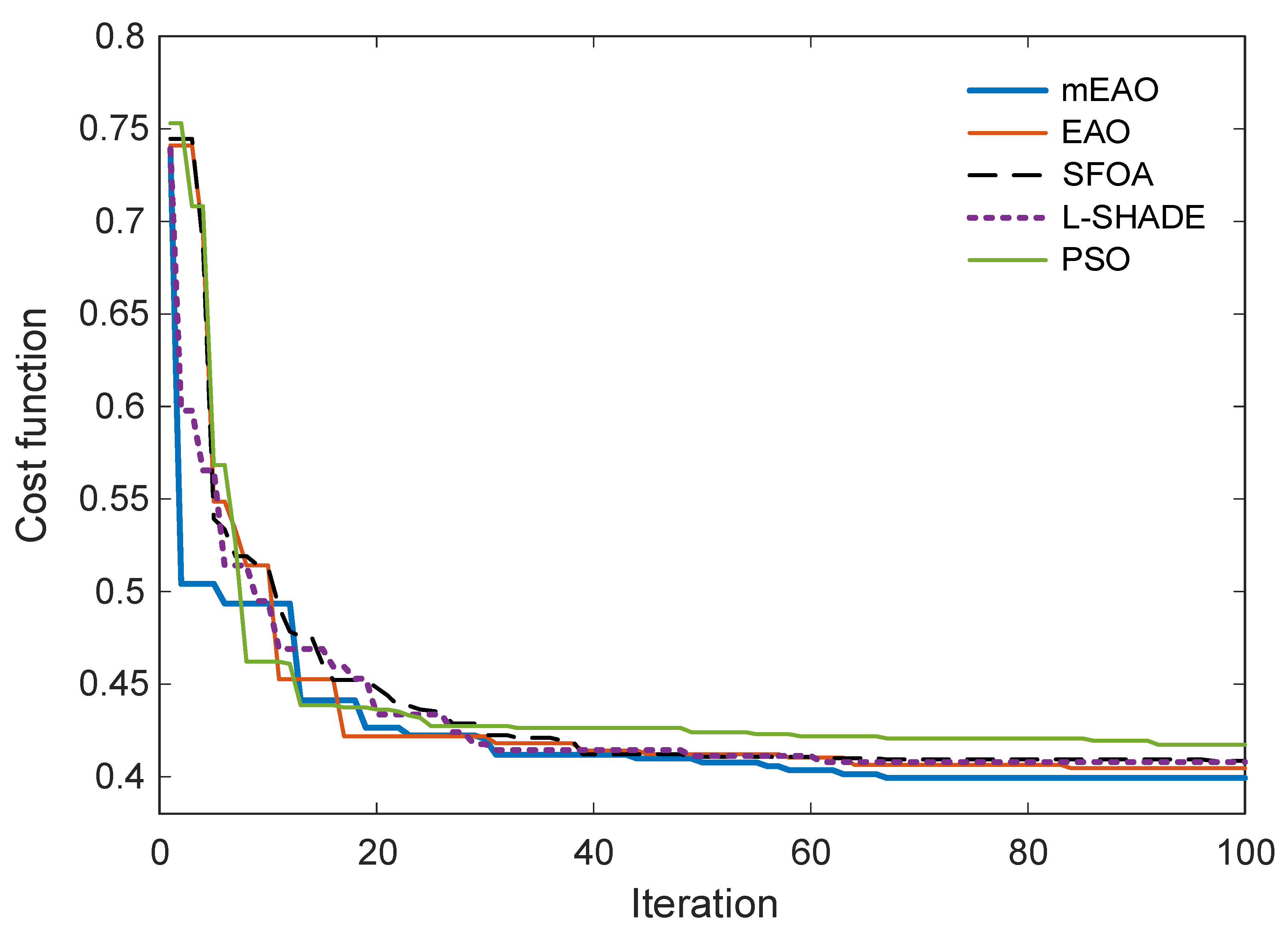
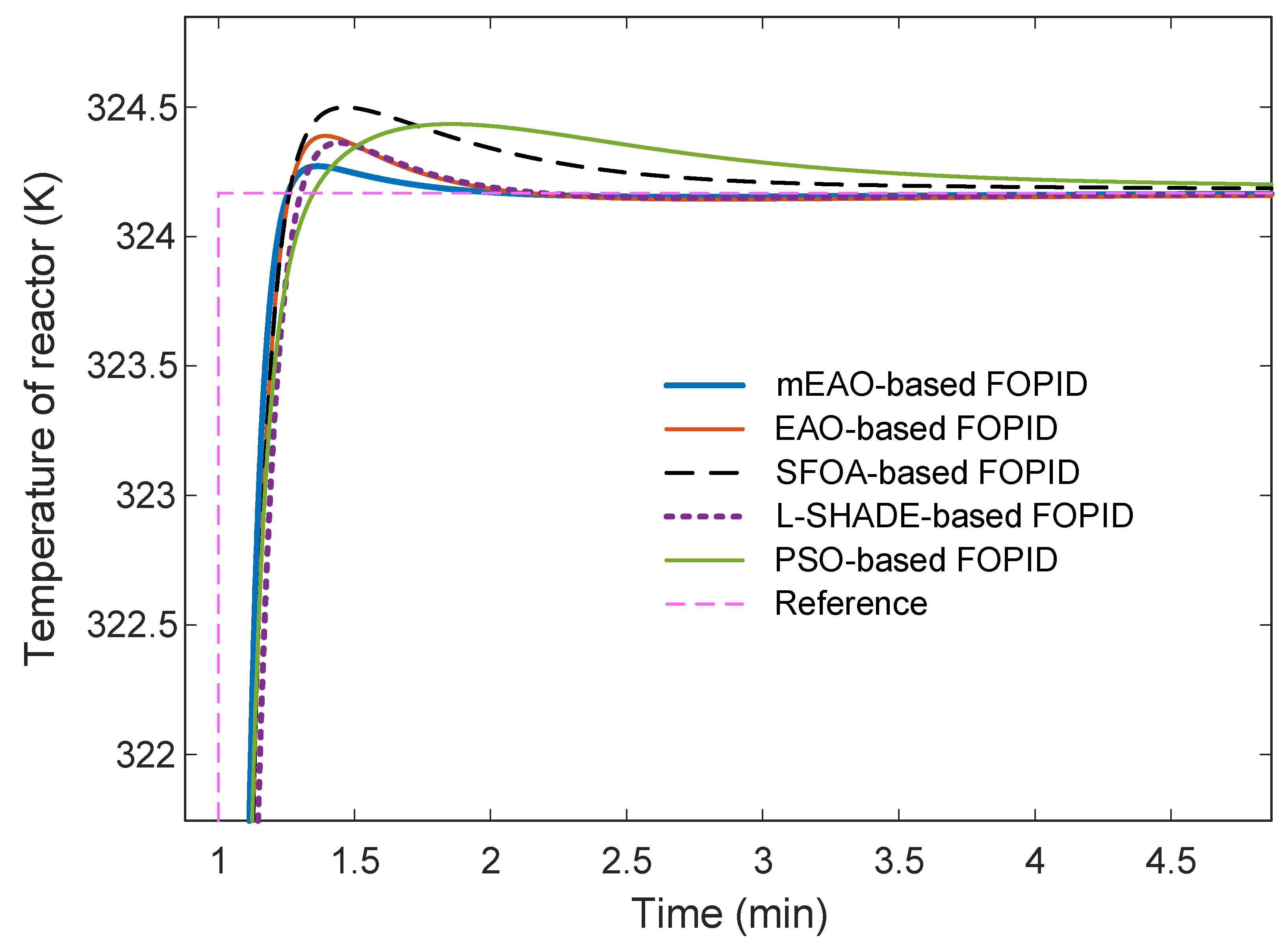
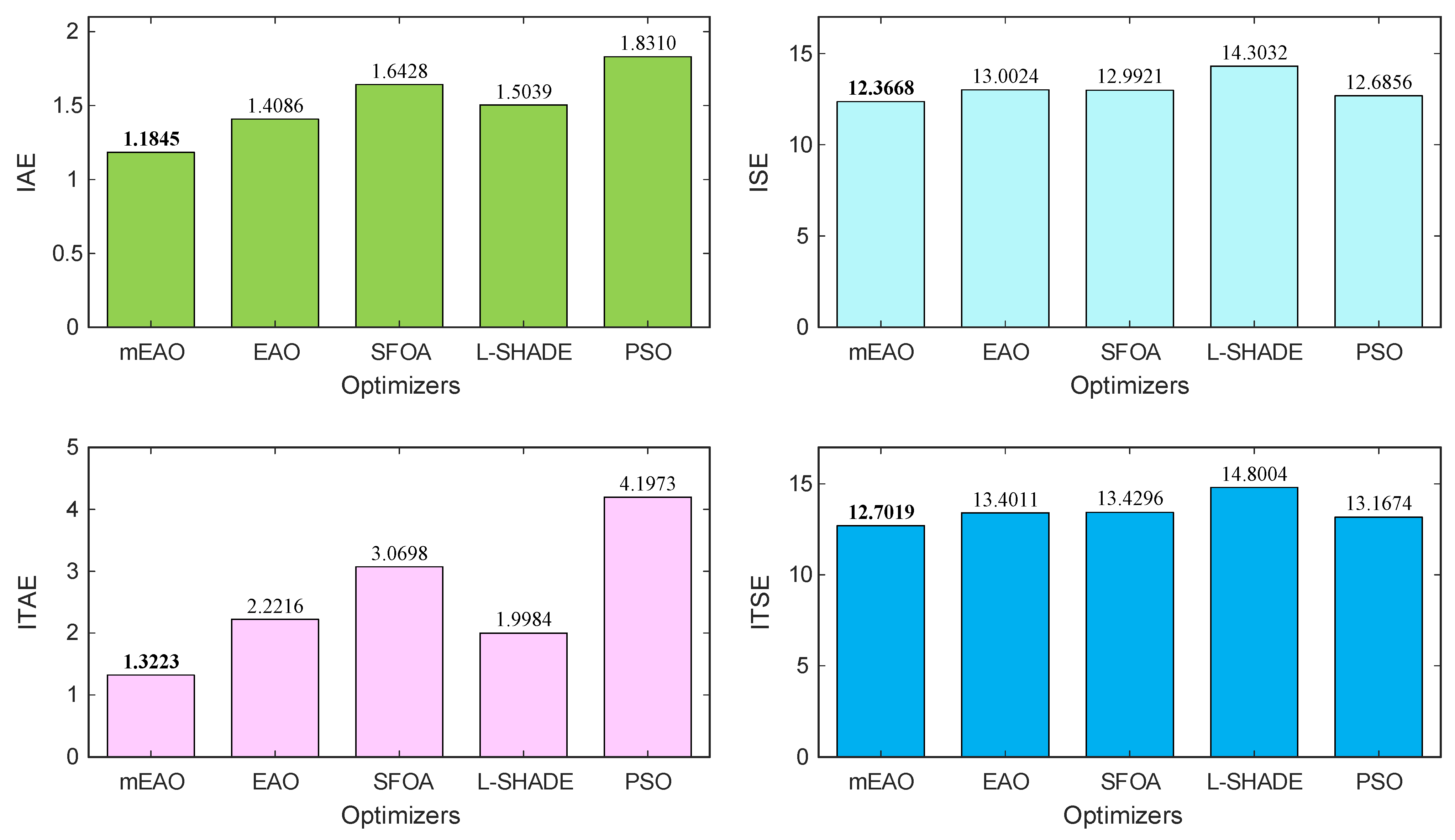
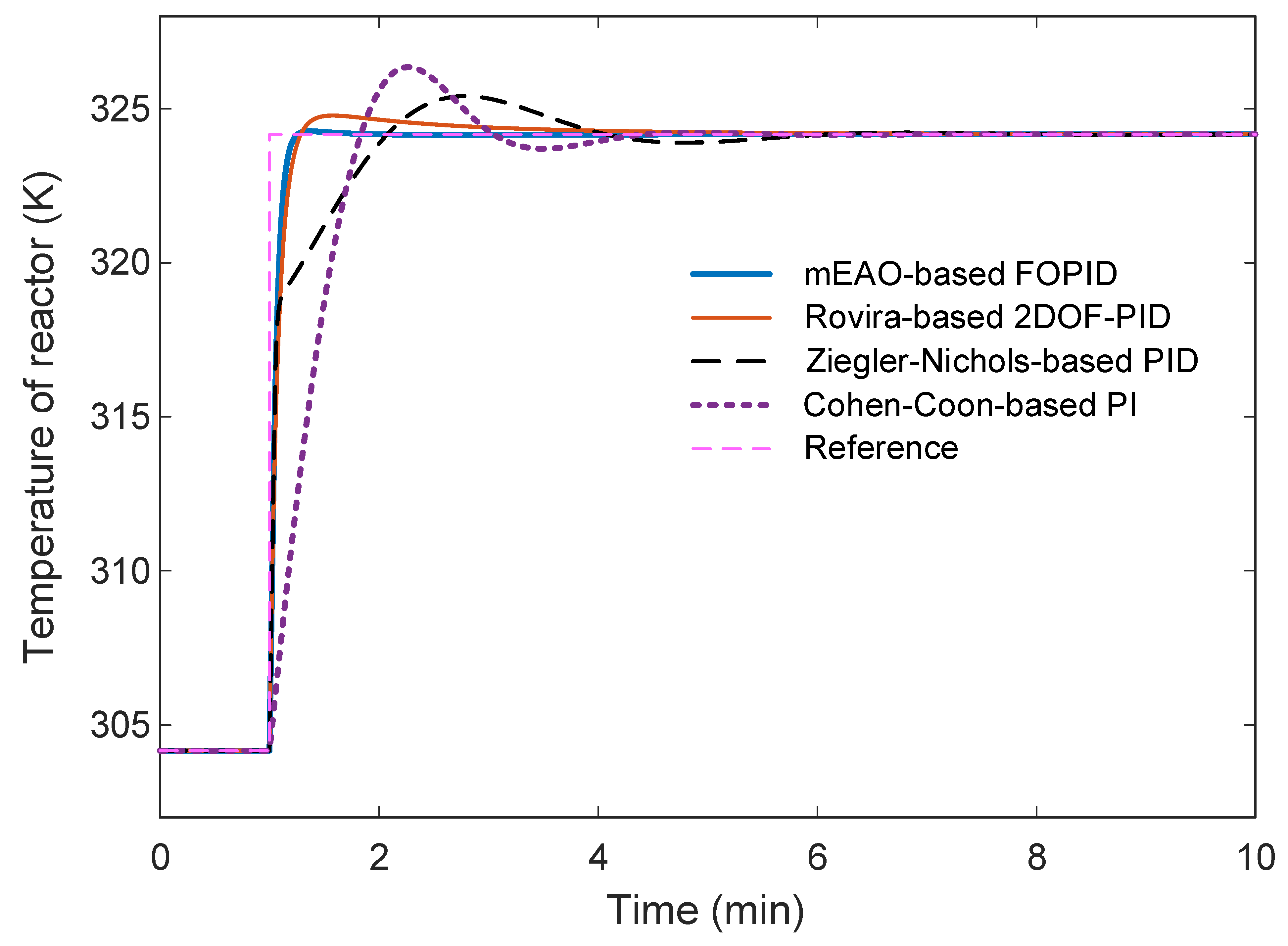
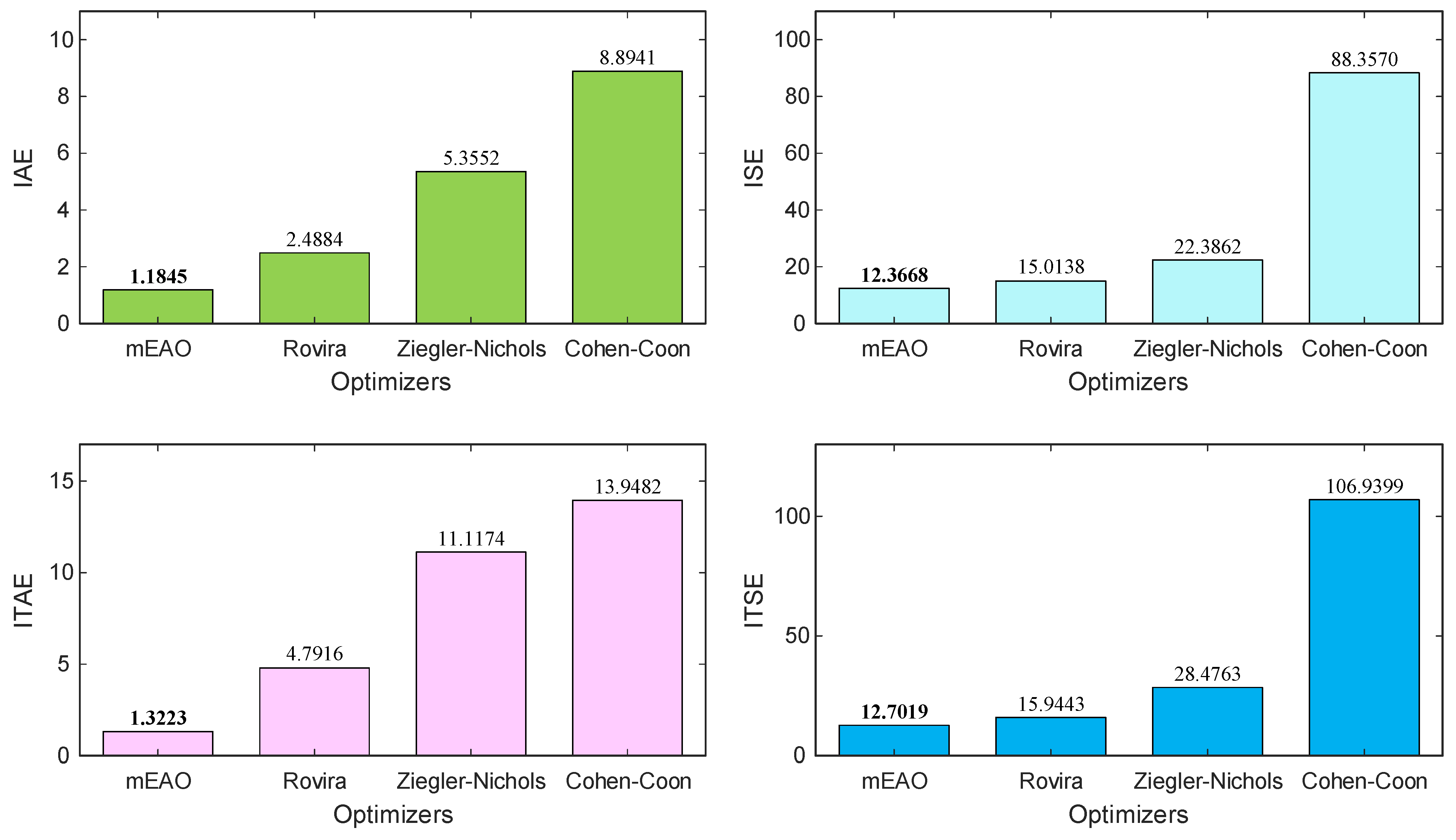
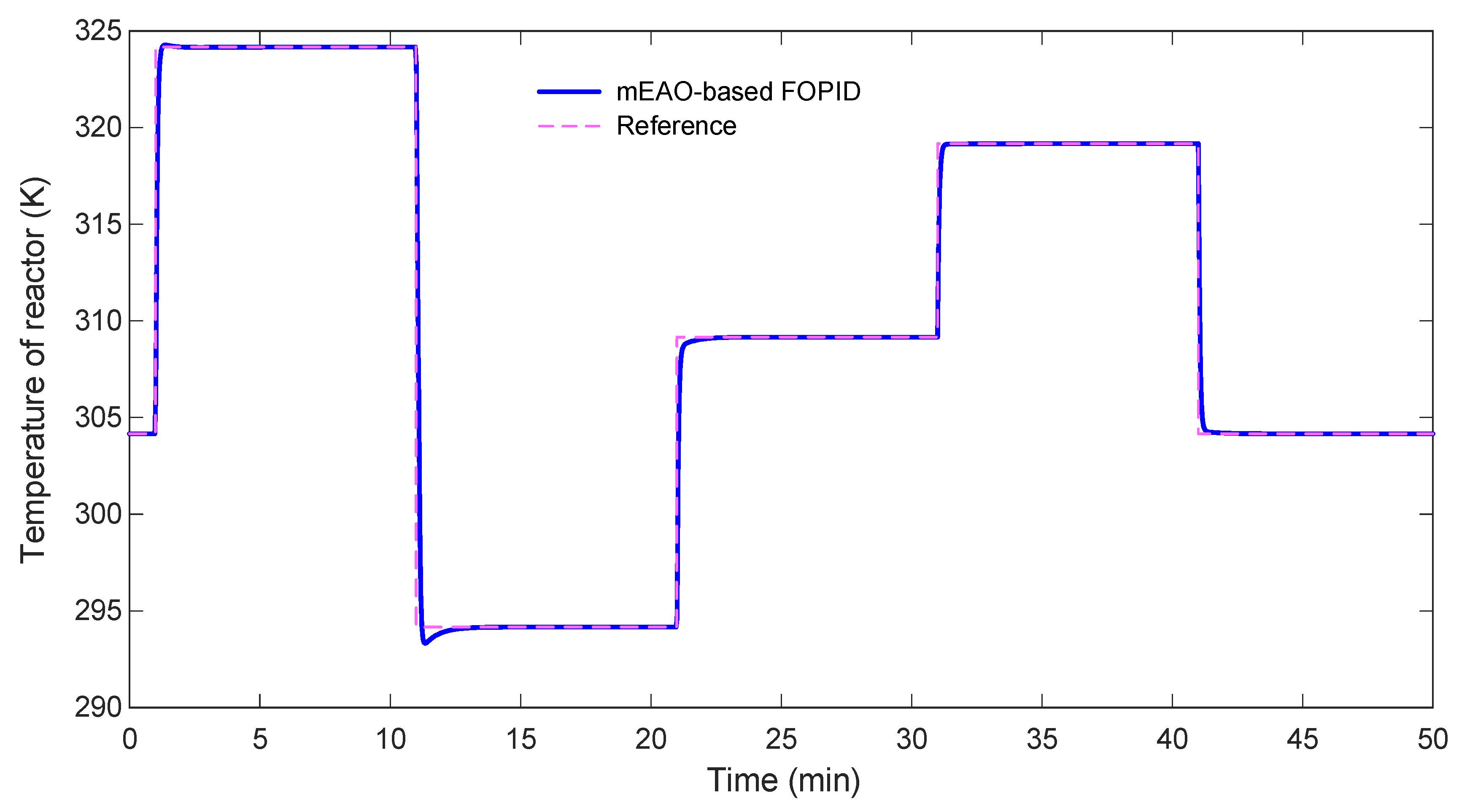
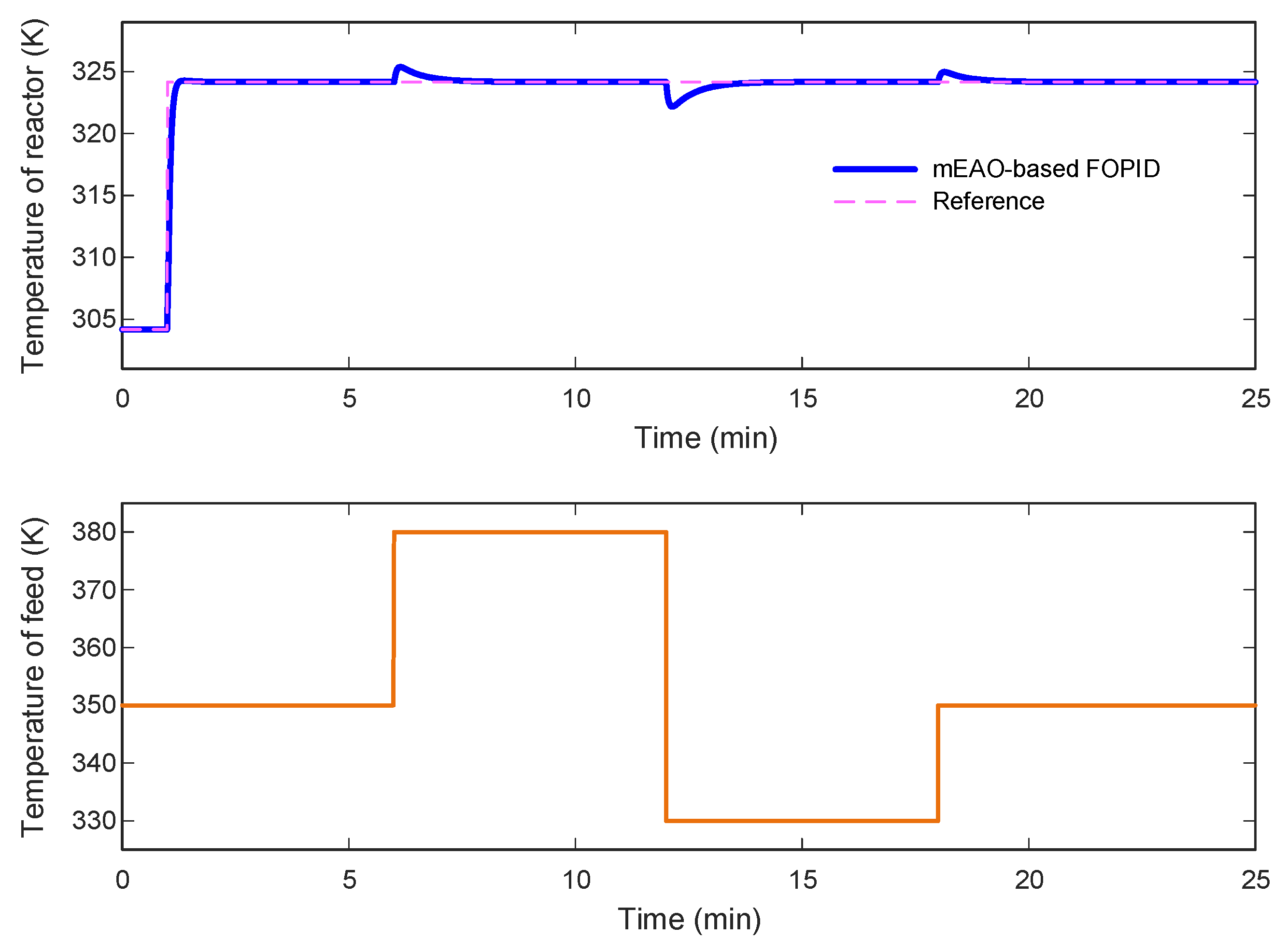
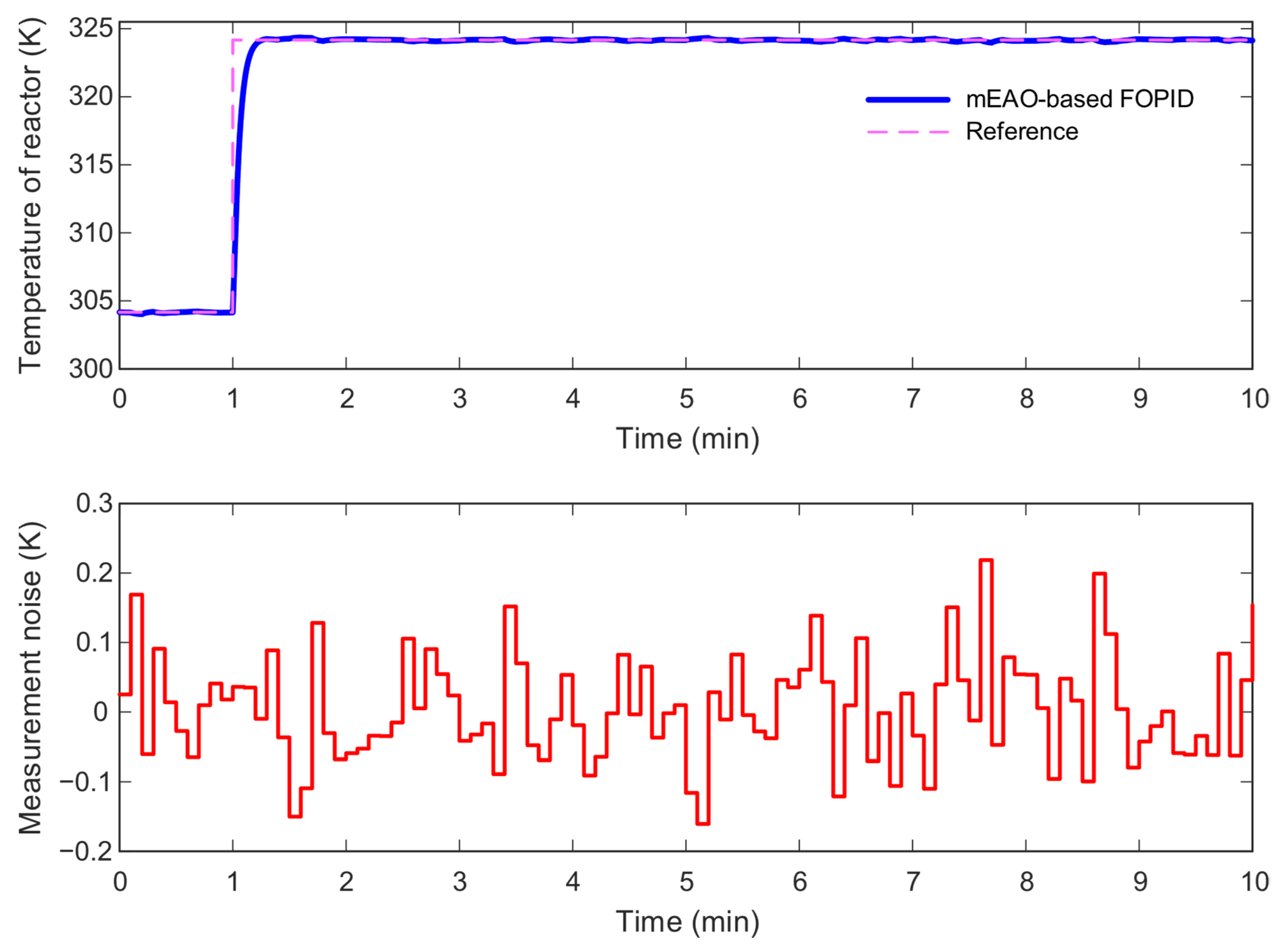
Comparative simulations demonstrated that the proposed approach consistently outperformed EAO, SFOA, L-SHADE, and PSO in terms of convergence speed, cost-function minimization, and transient-performance indices such as rise time, settling time, and overshoot. In addition, comparisons with classical tuning strategies, including Rovira-based 2DOF-PID, Ziegler–Nichols PID, and Cohen–Coon PI controllers, verified the superior tracking accuracy and smoother control effort of the proposed method. Robustness analyses under varying set-points, feed-temperature disturbances, and measurement noise confirmed the ability of the controller to maintain stability under varying conditions without re-adjustment.
Overall, the mEAO provides an efficient balance between exploration and exploitation through adaptive enzyme-reaction parameters, allowing faster and more reliable convergence. When combined with the FOPID controller, it forms a flexible, accurate, and noise-tolerant control framework suitable for nonlinear chemical and thermal systems.
Future extensions may involve experimental implementation using a laboratory-scale CSTR to validate real-time feasibility, multi-objective formulations of mEAO to handle performance-energy trade-offs, as well as hybrid adaptive or learning-based schemes for online parameter tuning. Application of the proposed strategy to multi-reactor networks and thermally coupled processes is also foreseen to further enhance its industrial relevance.