Article

Parameter Estimation of LFM Signals Based on PID-PSO-FRFT

1
Xi’an Key Laboratory of Active Photoelectric Imaging Detection Technology, Xi’an Technological University, Xi’an 710021, China
2
School of Optoelectronic Engineering, Xi’an Technological University, Xi’an 710021, China
*
Authors to whom correspondence should be addressed.
Fractal Fract. 2026, 10(3), 202; https://doi.org/10.3390/fractalfract10030202

Submission received: 12 February 2026 / Revised: 16 March 2026 / Accepted: 17 March 2026 / Published: 20 March 2026

Abstract

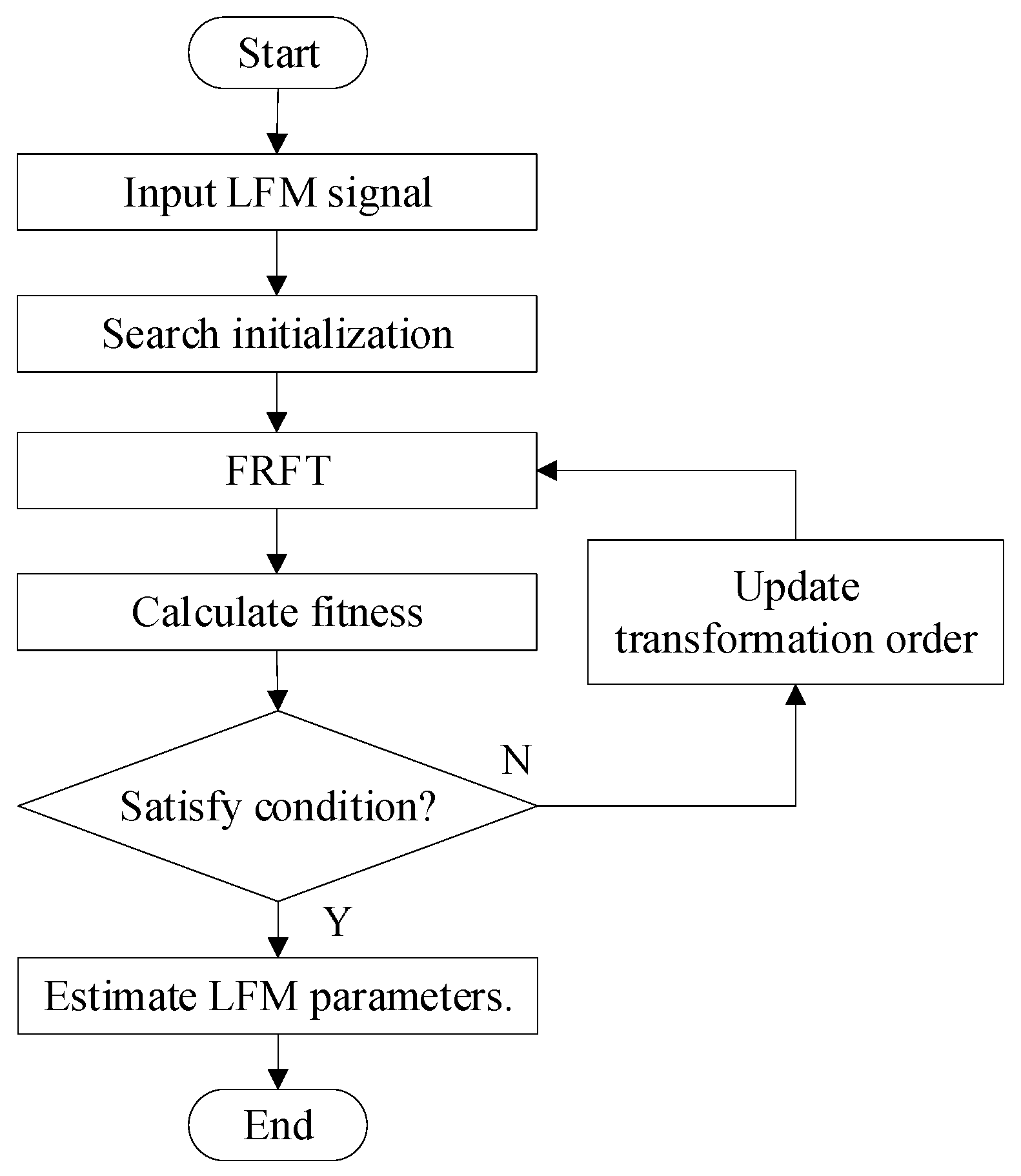
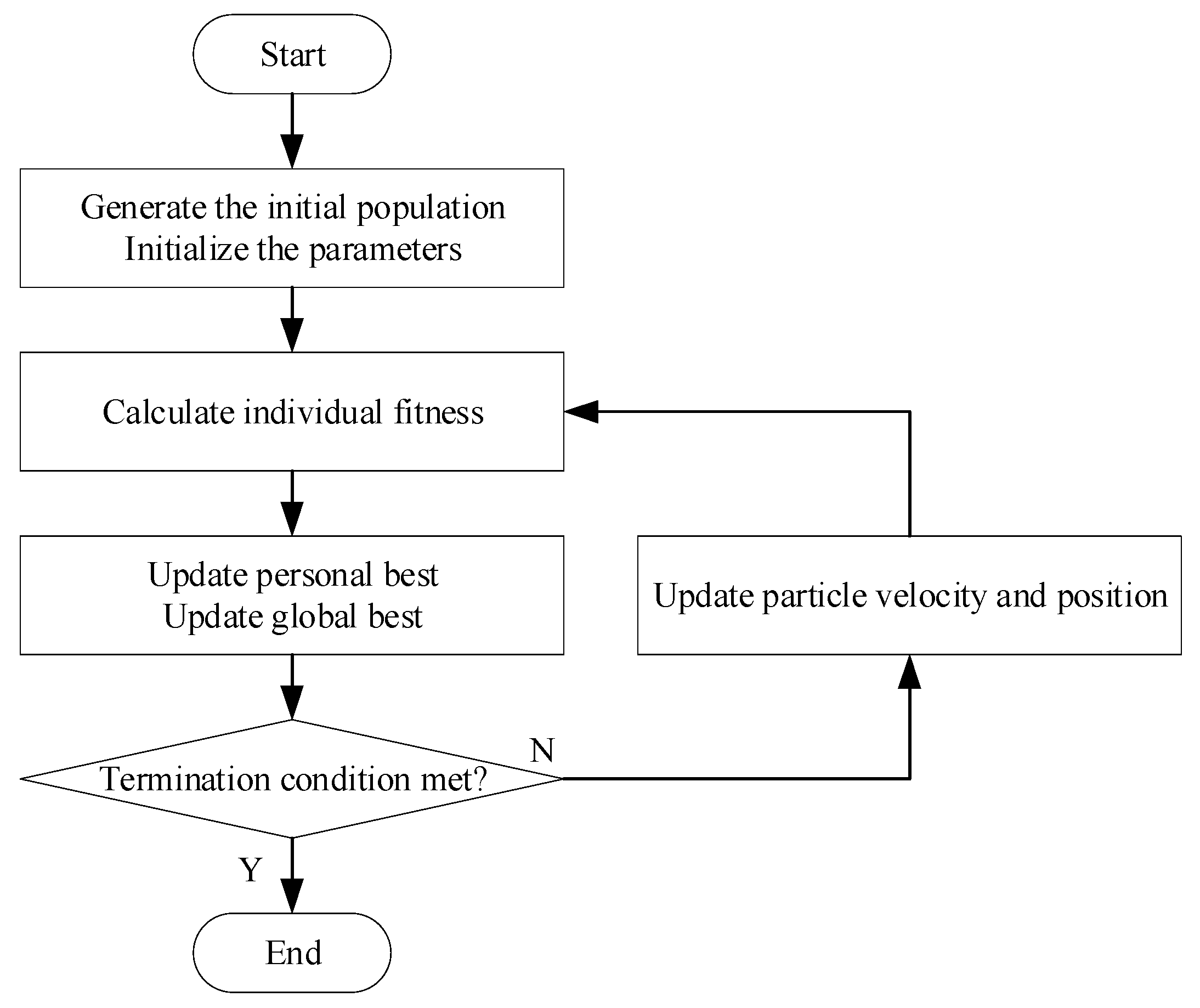
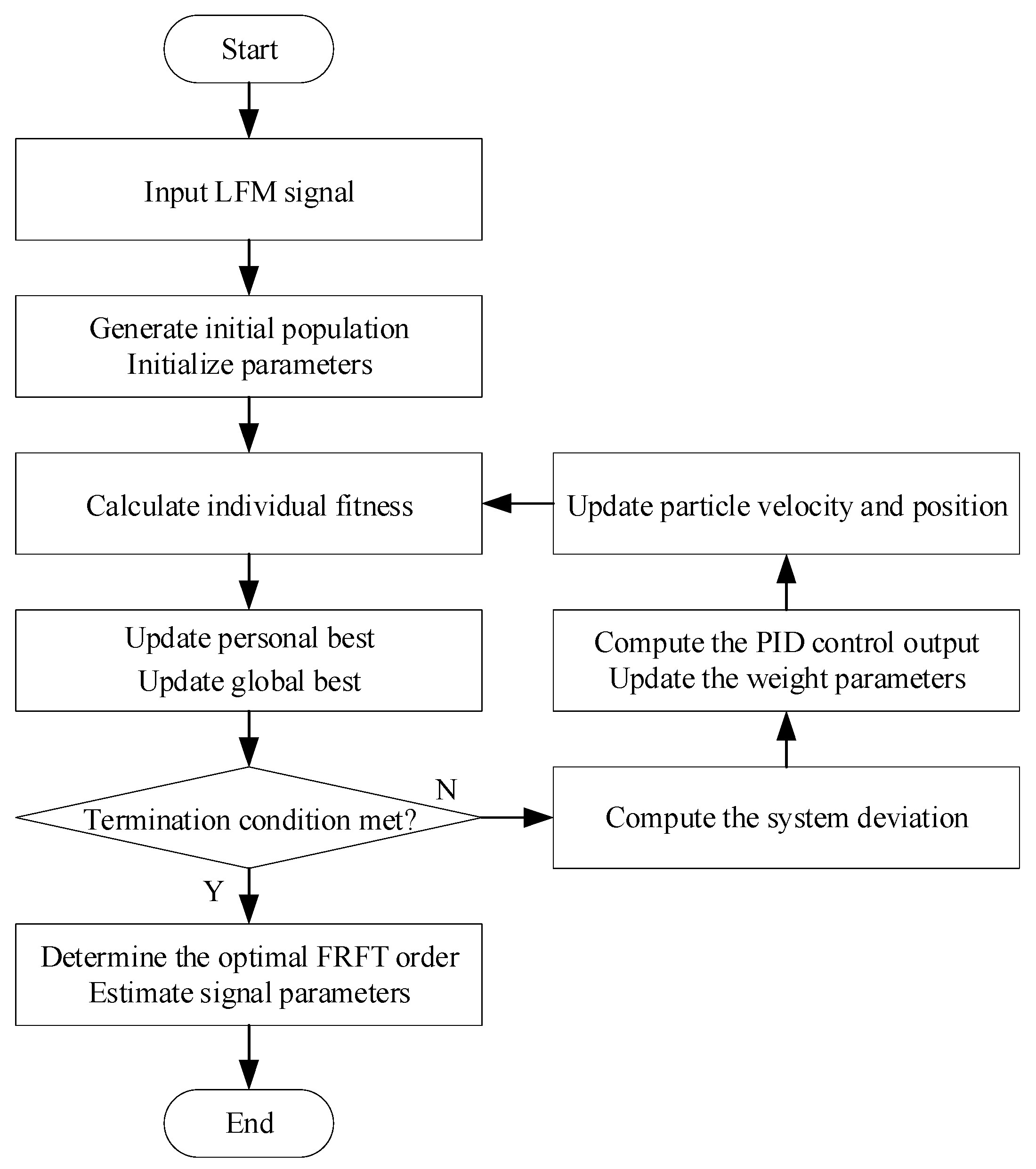
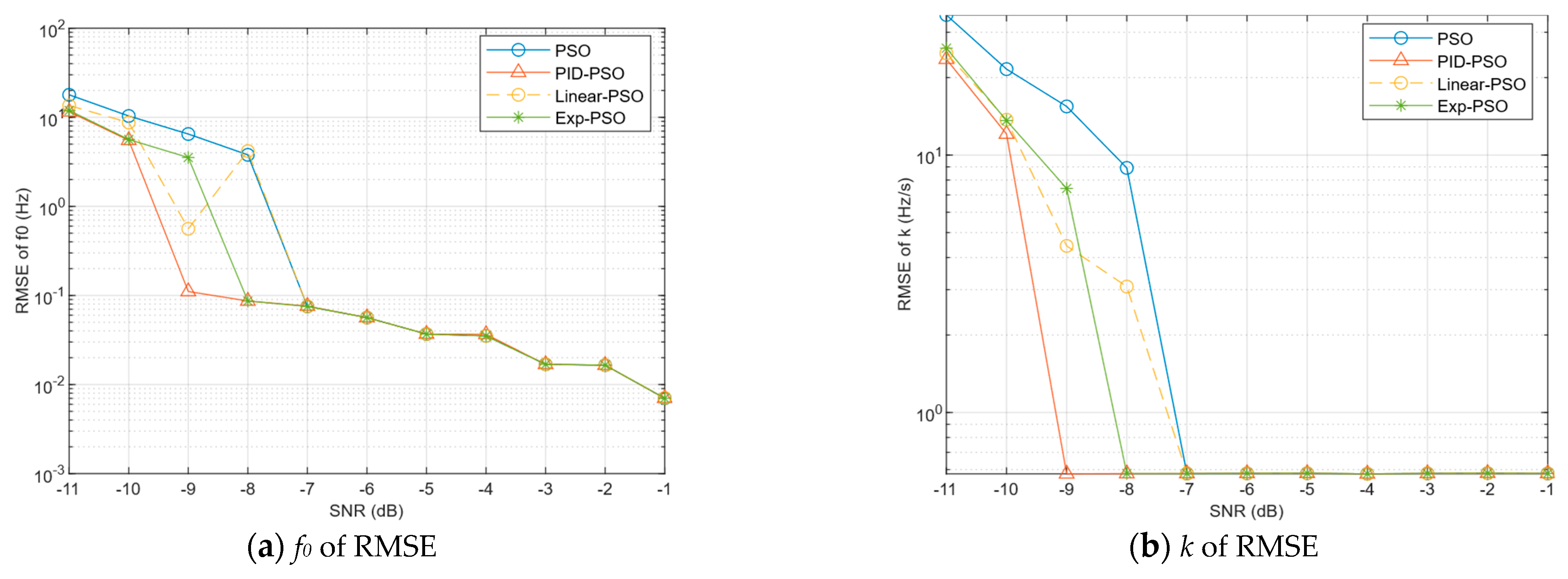
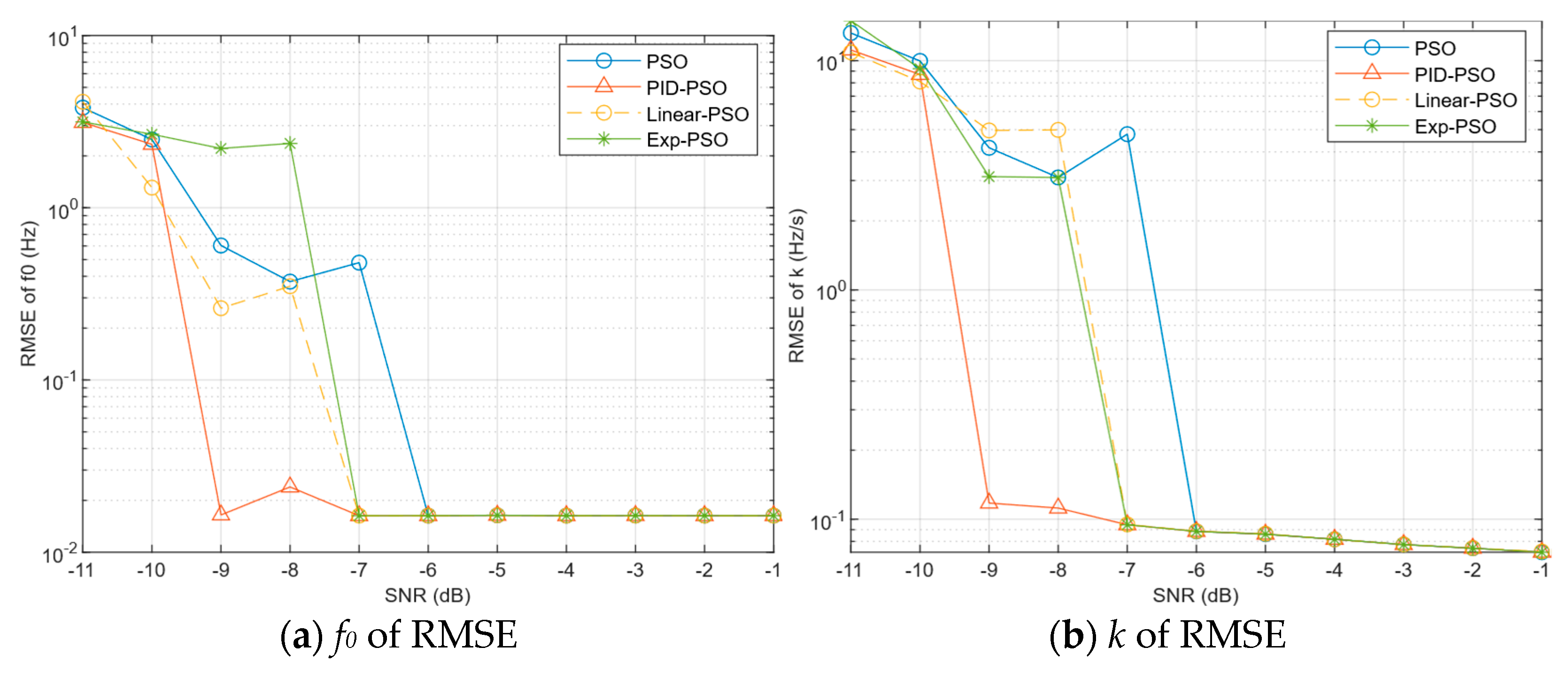
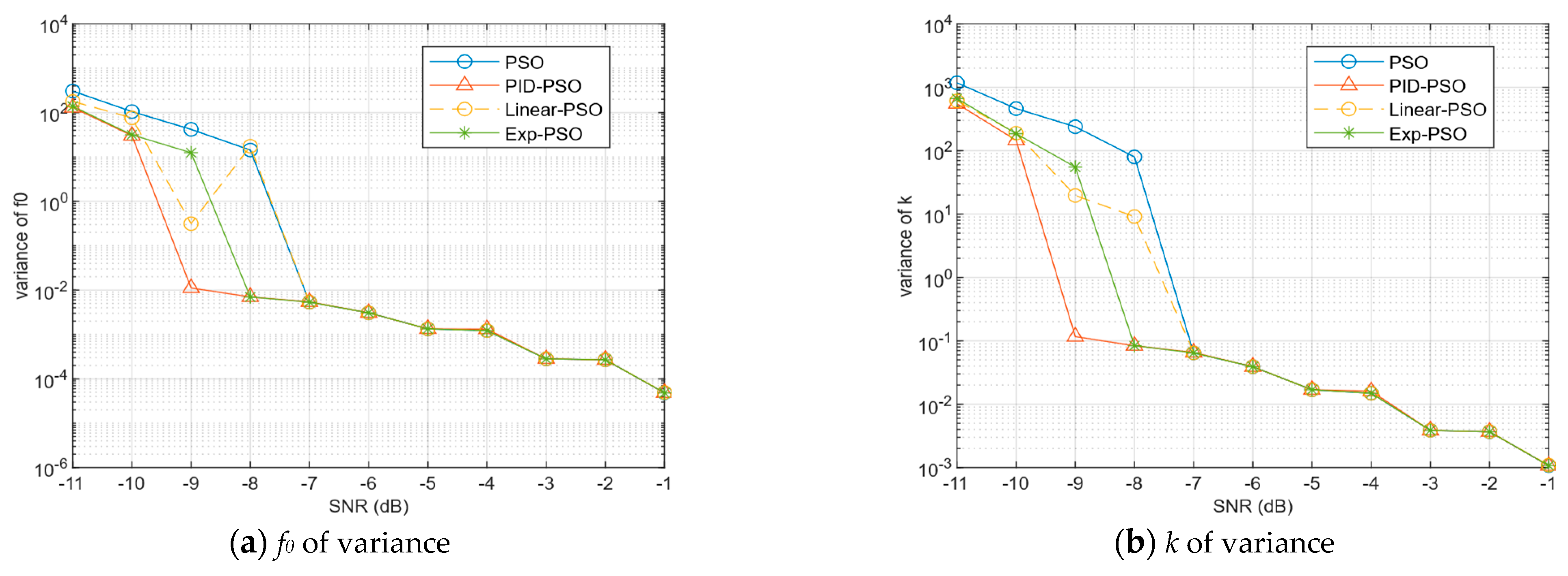
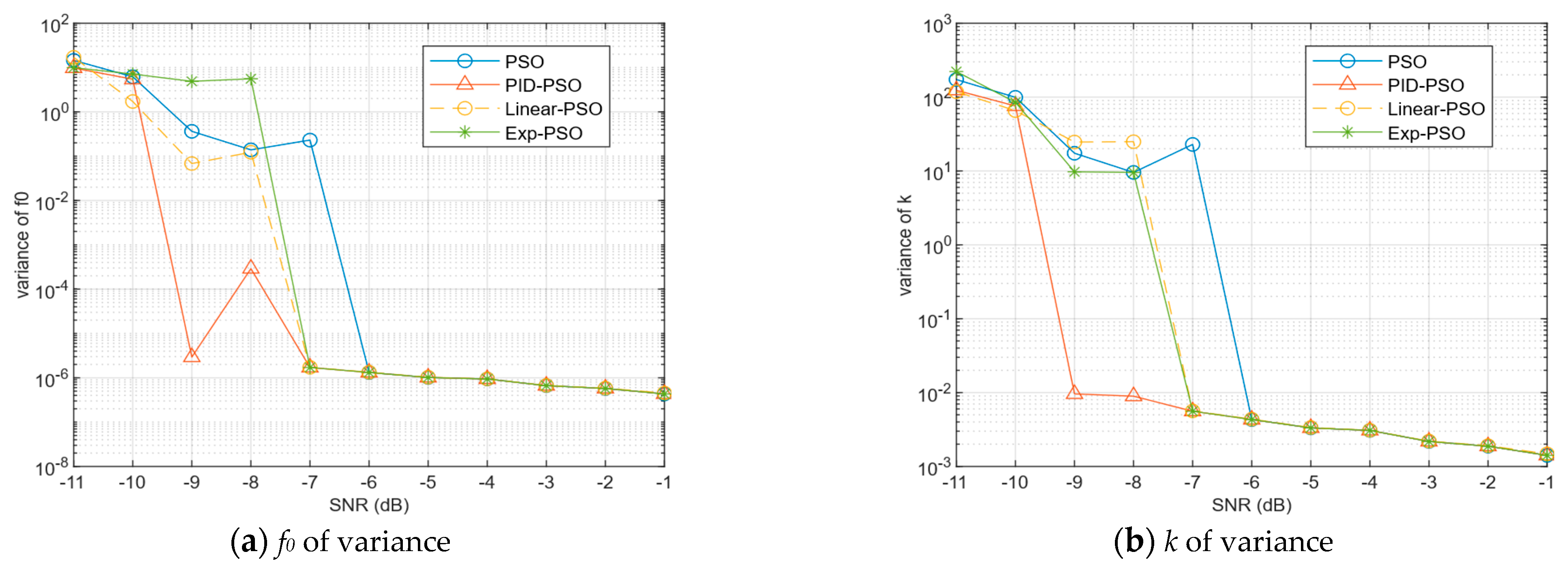
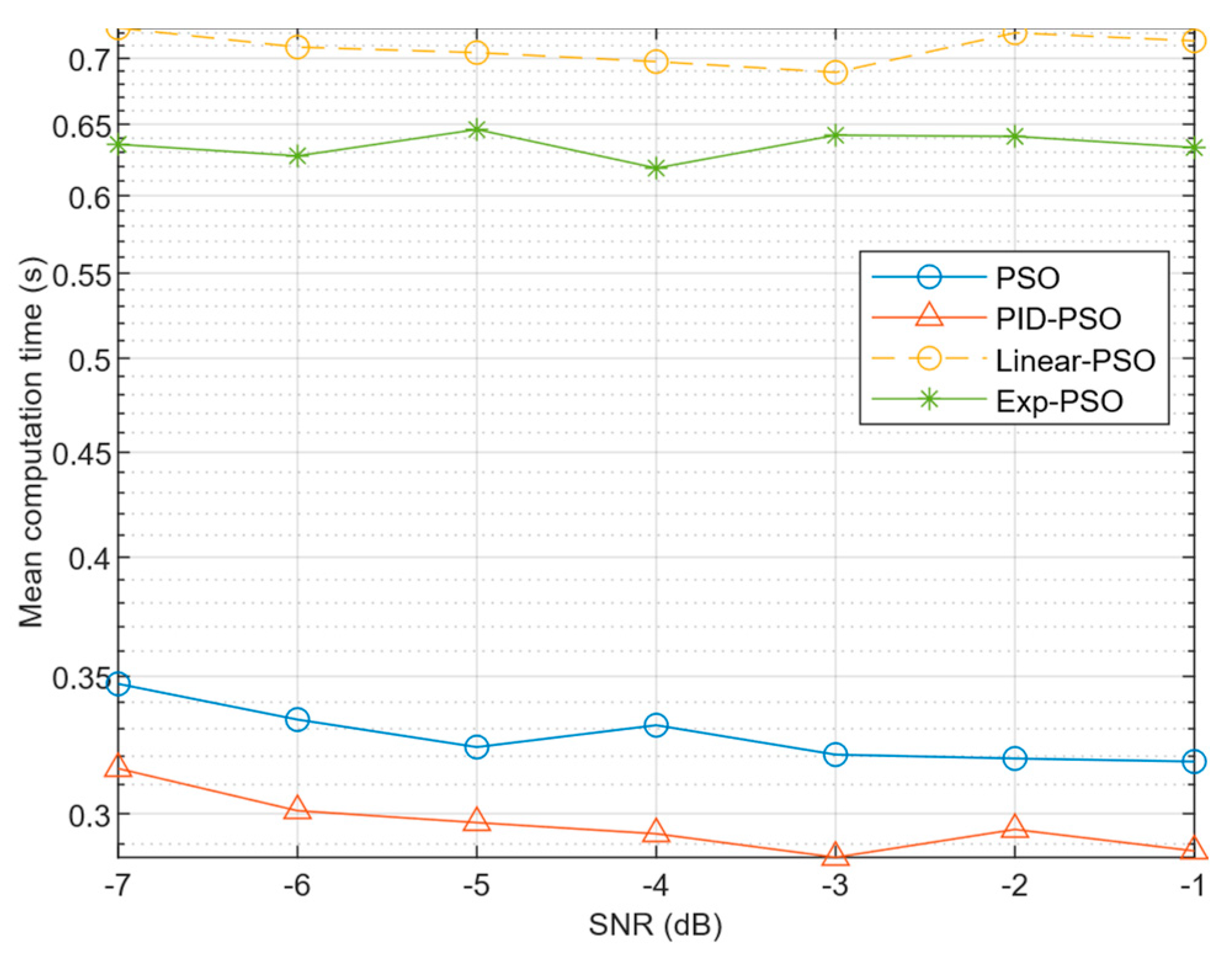
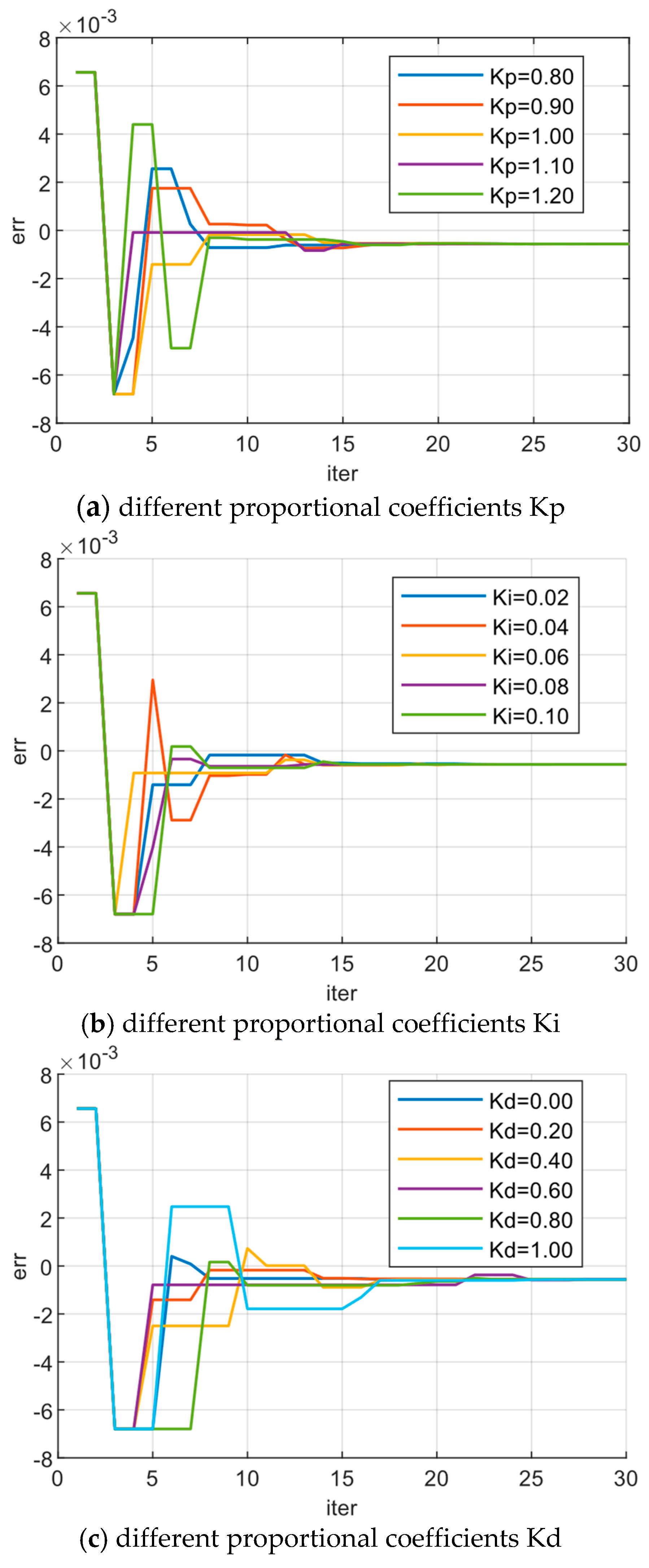
The fractional Fourier transform (FRFT) serves as an effective tool for linear frequency modulated (LFM) signal parameter estimation, whose performance depends on the search efficiency for the optimal transform order. To address the issues of fixed inertia weight in the standard particle swarm optimization (PSO) algorithm, which tends to fall into local optima and suffers from insufficient convergence accuracy, this paper introduces a proportional-integral-derivative (PID) control strategy and proposes a PID-PSO-FRFT-based LFM signal parameter estimation method. This approach introduces a PID controller, which takes the deviation between the particle’s current position and the global best position as input and dynamically adjusts the inertia weight through proportional, integral, and derivative regulation, thereby achieving an adaptive balance between global exploration and local exploitation capabilities of the particles. Simulation results demonstrate that, compared with the basic PSO-FRFT algorithm, the proposed method significantly improves the estimation accuracy of the center frequency and chirp rate of LFM signals under SNR conditions ranging from −9 dB to −7 dB, while considerably reducing computation time, exhibiting superior noise resistance, and exhibiting superior robustness.
Keywords: LFM signal; FRFT; PSO algorithm; PID; PID-PSO-FRFT algorithm LFM signal; FRFT; PSO algorithm; PID; PID-PSO-FRFT algorithm