Systematic Review

Synthesis of Qualitative Evidence on Malaria in Pregnancy, 2005–2022: A Systematic Review

by
Jaiberth Antonio Cardona-Arias
Research Group Salud y Comunidad—César Uribe Piedrahita, School of Microbiology, Universidad de Antioquia UdeA, Calle 70 No. 52-21, Medellin 050010, Colombia
Trop. Med. Infect. Dis. 2023, 8(4), 235; https://doi.org/10.3390/tropicalmed8040235

Submission received: 23 March 2023 / Revised: 11 April 2023 / Accepted: 17 April 2023 / Published: 20 April 2023
(This article belongs to the Special Issue Advances in Malaria Treatment and Prevention)

Abstract

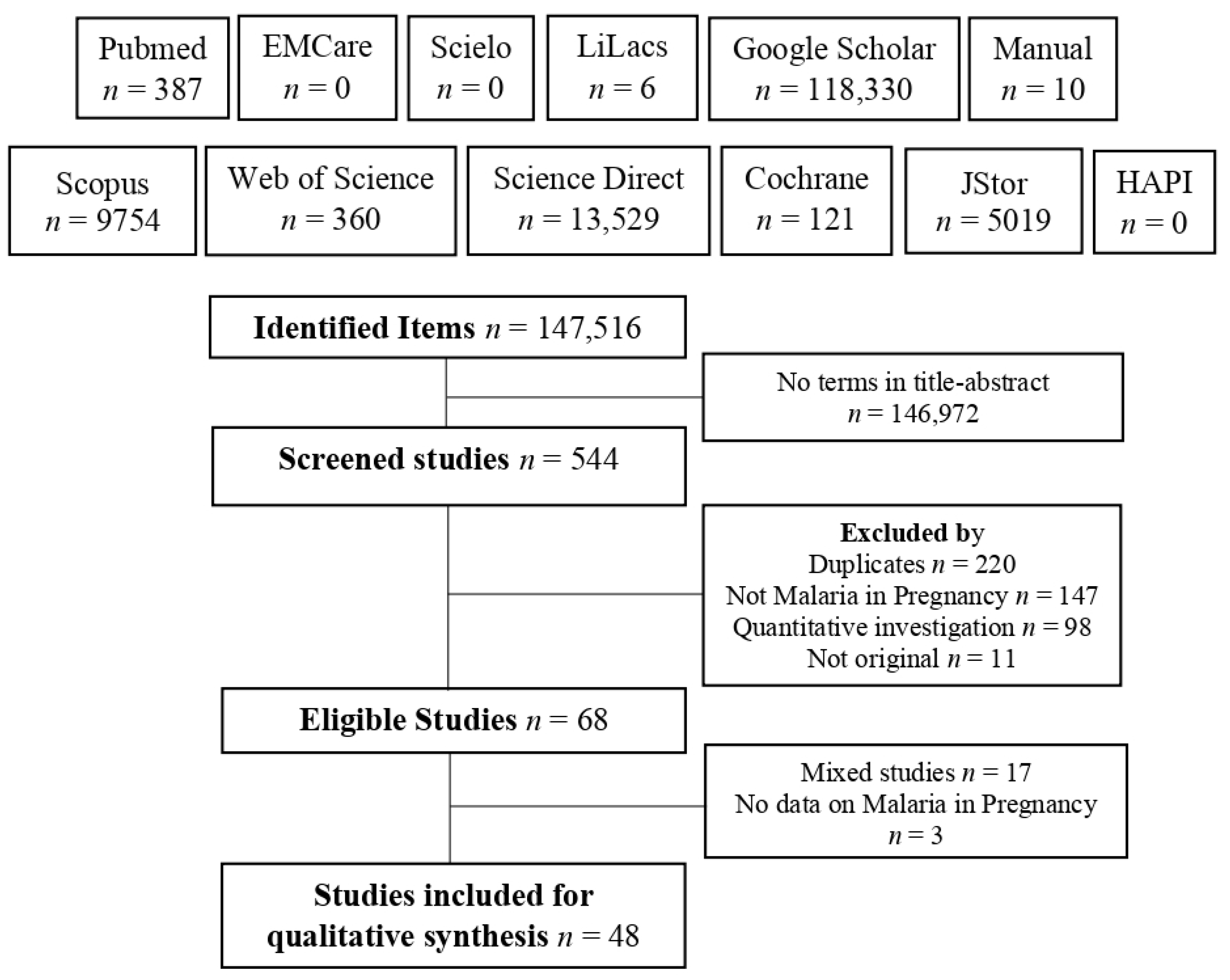
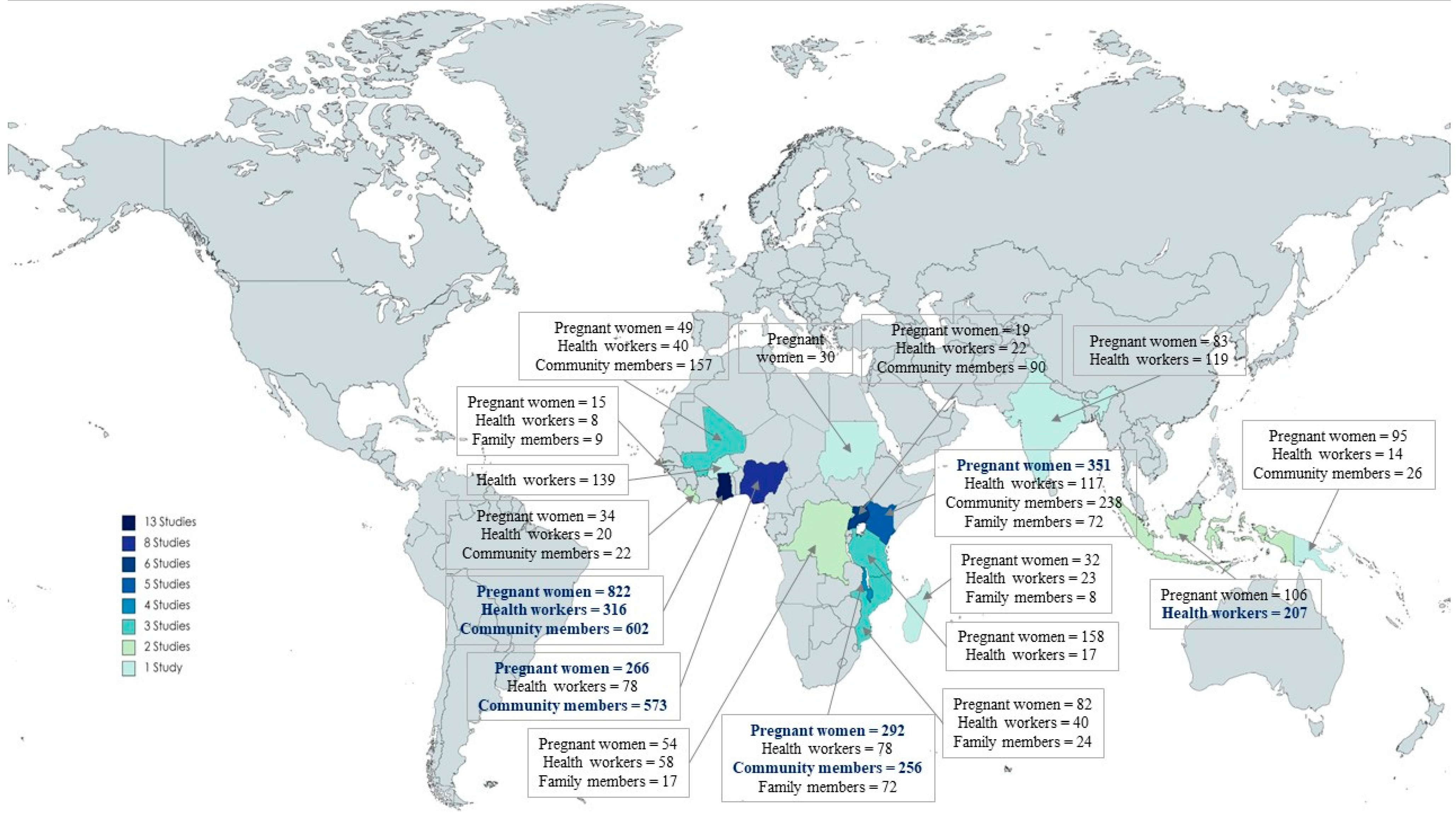
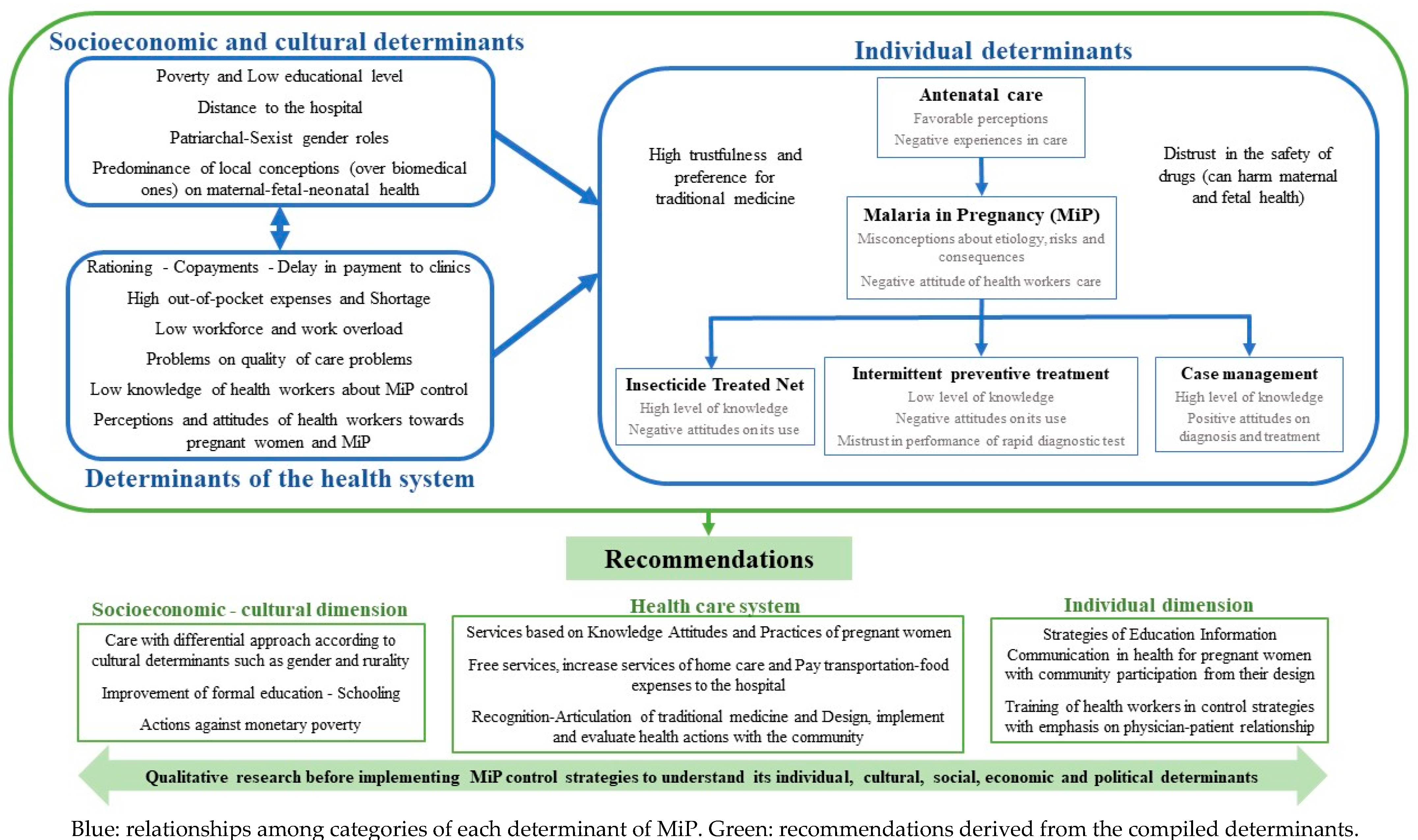
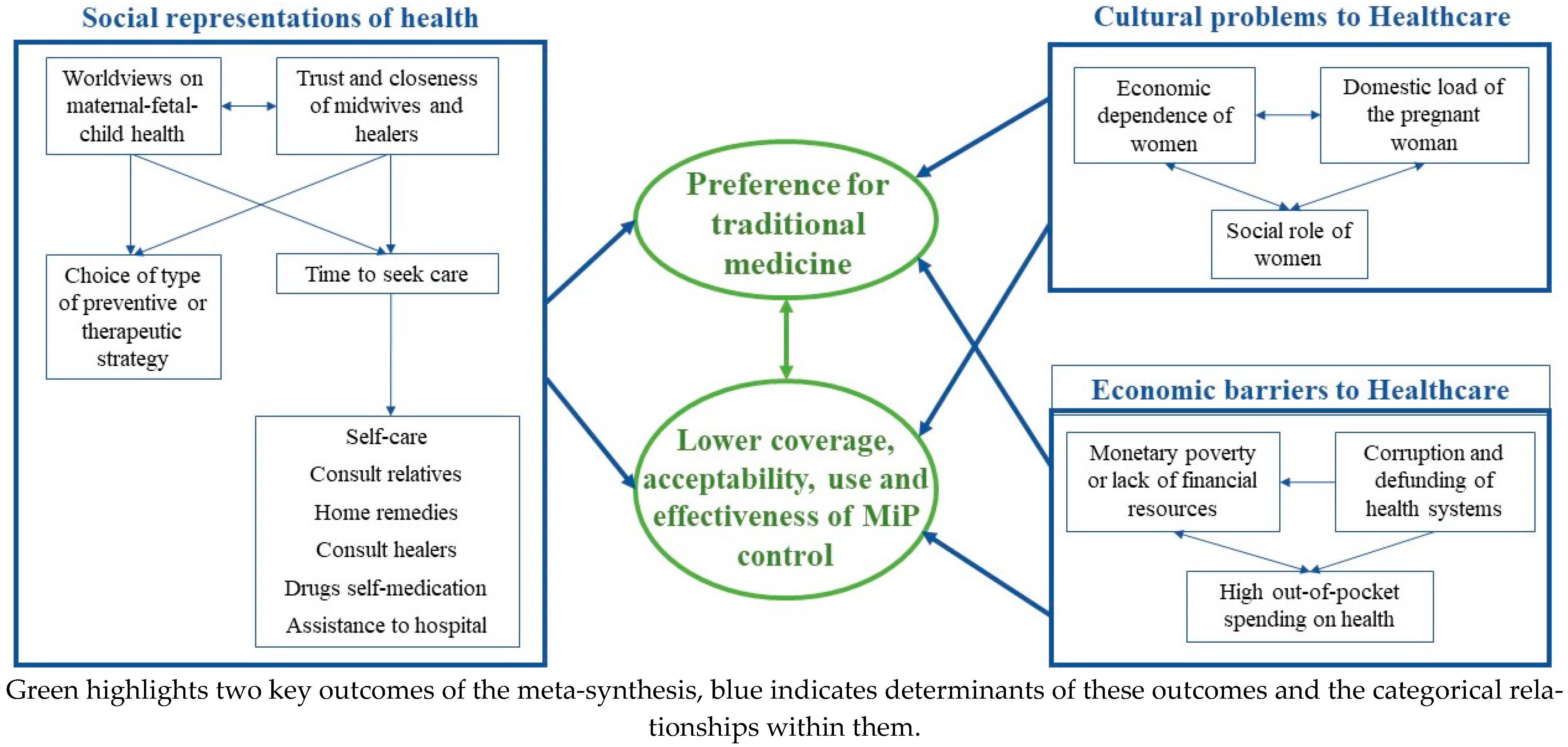
Qualitative research on malaria in pregnancy (MiP) is incipient, therefore its contextual, experiential and symbolic associated factors are unknown. This study systematizes the qualitative research on MiP, describes knowledge, perceptions and behaviors about MiP, and compiles individual, socioeconomic, cultural and health system determinants of MiP through a meta-synthesis in 10 databases. A total of 48 studies were included with 2600 pregnant women, 1300 healthcare workers, and 2200 relatives or community members. Extensive knowledge was demonstrated on ITN and case management, but it was lacking on SP-IPTp, risks and consequences of MiP. Attitudes were negative towards ANC and MiP prevention. There were high trustfulness scores and preference for traditional medicine and distrust in the safety of drugs. The main determinants of the Health System were rationing, copayments, delay in payment to clinics, high out-of-pocket expenses, shortage, low workforce and work overload, shortcomings in care quality, low knowledges of healthcare workers on MiP and negative attitude in care. The socioeconomic and cultural determinants were poverty and low educational level of pregnant women, distance to the hospital, patriarchal–sexist gender roles, and predominance of local conceptions on maternal–fetal–neonatal health. The meta-synthesis demonstrates the difficulty to detect MiP determinants and the importance of performed qualitative research before implementing MiP strategies to understand the multidimensionality of the disease.
Keywords: malaria; paludism; qualitative research; ethnography; grounded theory; participatory action research; systematic review; meta-synthesis malaria; paludism; qualitative research; ethnography; grounded theory; participatory action research; systematic review; meta-synthesis