1. Introduction
The global temperature is continuously rising, a phenomenon referred to as climate change. This global problem began in the 19th century, with temperatures increasing by an average of 0.06 °C per decade, accelerating to 0.2 °C per decade since the 1980s [
1]. Notably, 2023 recorded an additional 1.18 °C increase above the average [
2].
City centers are particularly vulnerable to climate change, accumulating higher temperatures than suburban areas, a phenomenon known as Urban Heat Island (UHI) [
3]. The primary cause of UHI is the reduced presence of vegetation and water bodies in urban centers compared to suburban areas. Additionally, human anthropogenic activities, including traffic, energy consumption, and the resulting carbon emissions, are significant catalysts for UHI intensification [
3].
UHI has various adverse effects on both the environment and human well-being. It damages ecosystems and increases surface temperatures [
4]. UHI also negatively impacts human health by causing heat-related illnesses and reducing thermal comfort in both outdoor and indoor spaces [
5]. The increasing rate of UHI leads to greater reliance on air conditioning to achieve thermal comfort, which in turn results in more carbon emissions and higher energy consumption [
6]. This creates a closed loop where increased energy consumption exacerbates UHI, which then demands more energy, a cycle that urgently needs to be broken [
7]. Buildings account for 40% of the total energy demand, with 55% of this energy consumption used for meeting occupants’ thermal comfort needs, with an annual increase rate of 1.5% [
8]. Thus, the continuous growth of cities calls for enhancing cooling strategies to mitigate the adverse effects of UHI and break this loop [
9].
Despite extensive research on passive UHI mitigation strategies, a critical gap persists in their application and optimization for hot arid climates. These regions exhibit distinct climatic challenges, including prolonged extreme temperatures, high solar irradiance, low atmospheric humidity, and pronounced diurnal thermal fluctuations [
10]. Such conditions exacerbate building cooling loads and urban overheating, intensifying energy demands and thermal discomfort [
11].
Researchers [
12,
13] have explored various passive heat mitigation strategies, including manipulating urban morphology, building forms, orientations, wall materials, and roof treatments. Roofs represent a critical interface between the built environment and climatic forces, making them a high-impact element for passive UHI mitigation and energy optimization. At the urban scale, roofs account for 20–25% of surface coverage in cities [
14], directly influencing radiative heat exchange, airflow patterns, and localized microclimates. Their large thermal mass and exposure to solar irradiance render them primary contributors to heat accumulation and re-emission, exacerbating UHI effects [
15]. At the building scale, roofs are responsible for up to 50% of heat gain in hot climates due to prolonged solar exposure [
16], making their design pivotal for reducing cooling loads. Passive roof strategies—such as cool, green, and pond roofs—leverage albedo enhancement, evaporative cooling, and thermal insulation to disrupt heat transfer mechanisms, thereby improving both urban thermal regulation and building energy efficiency [
17]. Unlike other building elements, roofs offer greater design flexibility for retrofitting and scalability, enabling widespread implementation without major urban restructuring [
17,
18]. This dual-scale impact (urban microclimate modulation and building energy conservation) underscores the roof’s unique role as a strategic passive design component, aligning with sustainability goals while addressing the climatic exigencies of hot arid regions. Consequently, the development of climate-specific passive roof strategies is imperative to enhance outdoor thermal comfort, minimize building energy consumption, and promote sustainable urban development in these vulnerable regions.
2. Research Gap and Scientific Contribution
Previous studies have predominantly focused on individual roof strategies (e.g., green roofs [
15,
19], pond roofs [
20], and cool roofs [
8]). Other studies have examined the impact of roof mitigation strategies on either indoor thermal comfort [
20], energy consumption [
21,
22], or outdoor surface temperature [
23]. Moreover, while simulation tools like ENVI-met [
12,
15] or Energy Plus [
24,
25] have been used to assess thermal impacts, few studies integrate MCDM methods [
26,
27]. Nevertheless, there is a lack of studies that present a systemic comparative evaluation of passive roof strategies for both indoor and outdoor thermal comfort, as well as building performance—particularly in hot arid regions [
22,
28]. Thus, this study addresses this gap by combining microclimatic simulation with MCDM to identify optimal roof strategies that balance UHI mitigation, outdoor and indoor thermal performance, environmental impact, long-term sustainability, and economic feasibility in hot arid regions. It also pinpoints the significance of coupling building-urban level assessment for a comprehensive analysis [
29]. By bridging simulation and MCDM, this work presents a data-driven, holistic framework that addresses a critical gap in region-specific UHI mitigation.
3. Passive Roof Mitigation Strategies in Hot Arid Climate
The following passive roof types are pinpointed in previous literature as the most commonly used: green roofs [
15,
19], pond roofs [
30], and cool roofs [
8]. These were selected based on their prevalence in hot arid regions [
22], practical feasibility [
27], and distinct thermal performance mechanisms [
28]. Each strategy represents a unique approach to UHI mitigation while addressing the climatic, hydrological, and socio-economic constraints of arid environments. These are compared to dark roofs with high heat absorption capacity to reflect the extreme case scenario [
31,
32].
3.1. Green Roofs
Green roofs, also termed ‘vegetated roofs’, simply involve covering the roof of the building with a vegetated area [
19]. They provide evaporative cooling, reducing ambient temperatures while improving urban biodiversity [
33]. Nevertheless, their high-water demand conflicts with arid-region sustainability; thus, their feasibility must be weighed against water availability and cost [
34]. Also, the structural requirements (substrate depth, load-bearing capacity) limit their widespread adoption in low-income areas [
27].
There are two types of green roof: intensive roofs, having a soil height of more than 15 cm, and extensive roofs, having a thinner layer that has a soil height of less than 15 cm, with less vegetation density [
9]. Although intensive green roofs performs better than extensive roofs in reducing air temperature and mitigating UHI, experts suggest using extensive green roofs due to their lower cost and maintenance requirements [
22]. Increasing vegetation by 10% has a large impact on reducing the UHI [
35] effect. Green roofs can reduce energy consumption from 6.6 to 9.2%, but the payback period is from 25 to 57 years, depending on the climatic zone; it has a minimal effect in cold climates, but perform best in hot climates [
36]. Green roofs can reduce the pedestrian air temperature by 0.1–0.3 °C, but its cooling effect varies at the roof canopy level as well, based on vegetation density, which in all results in better cooling performance to the surrounding area [
9].
While green roofs help mitigate UHI and sequester carbon, their environmental benefits must be weighed against their embodied energy from materials. This includes the waterproofing layers, drainage systems, and substrates. It should also account for the operational carbon footprint, which depends on irrigation needs—particularly in arid regions where water scarcity may offset cooling benefits [
37].
The viability of green roofs in different climates depends on their water efficiency. Unfortunately, their high-water demand in arid regions raises sustainability concerns. This necessitates using drought-resistant plant species or alternative irrigation strategies, and applying proper maintenance [
34].
3.2. Pond Roofs
Pond roofs involve covering the roof top with a shallow or deep layer of water. It is referred to as evaporative roof cooling, significantly improving thermal performance at multiple levels [
30]. At the pedestrian street level, the evaporative cooling effect can slightly reduce ambient temperatures, though the impact is often localized. At the roof canopy level, pond roofs absorb and dissipate solar radiation, reducing heat transfer to the building interior. Implementing pond roofs in water-scarce regions presents a unique set of advantages, challenges, and considerations. On the positive side, pond roofs can significantly improve building thermal performance by reducing heat gain through evaporative cooling, thereby lowering indoor temperatures and decreasing energy demand for cooling [
28]. In this regard, a previous study found that pond roofs decrease the peak internal surface temperature by up to 15 °C [
30]. However, their high water demand may be unsustainable in regions with limited water resources. Evaporative losses can exacerbate water scarcity, requiring alternative water sources or recirculation systems that increase costs. Additionally, structural considerations add complexity and expense—such as increased load-bearing capacity, waterproofing, and maintenance to prevent leaks [
38]. Operational and maintenance costs also factor into long-term viability, as regular upkeep is required to prevent algae growth, leaks, and system inefficiencies [
34].
While pond roofs reduce operational energy demand and associated carbon emissions, their embodied energy must be considered. The materials required for waterproofing, structural reinforcement, and water circulation systems contribute to their environmental footprint. However, the long-term reduction in cooling energy may offset these initial impacts, particularly in regions with high cooling demands [
34].
3.3. Cool Roofs
Cool roofs consist of a reflective bright material or coating with albedo of more than 0.7 that helps in reflecting more and absorbing less solar radiation, compared to traditional roofs [
22]. They contribute to lowering ambient temperatures at both the pedestrian and roof canopy levels. It can lower the maximum roof temperature by up to 24.8 °C and can reduce air temperature at the pedestrian street level by up to 2.4 °C [
39,
40].
Cool roofs can directly influence building thermal performance and have a high impact on reducing cooling demand by up to 20% through the day [
41], though this does not last at night. They are most compatible with hot and dry climates, where solar exposure is high and nighttime cooling allows for optimal heat dissipation [
12,
36]. However, their impact diminishes at night, making them less effective in climates where nighttime heat retention is necessary.
Cool roofs lower operational energy use, and thus their associated carbon emissions. It is noted that their environmental footprint depends on proper material selection. High-albedo coatings typically require low embodied energy compared to alternative roofing solutions. Nevertheless, further life-cycle assessments are needed to compare their net emission savings against conventional roofing materials [
42].
Furthermore, they are considered an optimal solution for UHI in hot arid regions due to their low associated cost and minimal maintenance requirements as well as their long service life [
28]. However, their performance may degrade over time due to weathering and soiling, necessitating periodic recoating to maintain high reflectivity.
3.4. Dark Roofs
Dark roofs are generally not recommended as a passive cooling strategy due to their high solar heat absorption and low reflectance [
43]. Thus, they are considered the extreme case scenario of using dark roofing, e.g., asphalt roofing shingles and dark tiles [
31,
32], which is still prevalent in some developing arid cities.
At the pedestrian street level, they contribute to elevated surface temperatures, increasing thermal discomfort [
44]. However, at the roof canopy level, some studies suggest that dark roofs may reduce the Mean Radiant Temperature (MRT) compared to white roofs, which can increase MRT by up to 2.9 °C despite lowering air temperature [
5]. It is noted that the MRT is more significant than the air temperature, because it represents the temperature reflected from the surrounding surfaces [
22]. This indicates a potential trade-off between air temperature reduction and radiative heat effects, warranting further investigation.
Dark roofing materials, such as asphalt shingles, typically have lower embodied energy and carbon emissions compared to high-reflectivity alternatives like coated membranes or metal roofs [
42]. However, their increased heat absorption exacerbates UHI effects, indirectly raising urban energy consumption and associated emissions [
45]. Thus, a life-cycle assessment is necessary to evaluate whether or not their lower production impacts offset their long-term environmental costs.
Dark roofs remain prevalent in developing arid cities due to their low upfront cost and maintenance requirements. This is because they exhibit reasonable durability due to their resistance to ultraviolet degradation and weathering [
27,
32]. Thus, their long-term sustainability depends on balancing durability with thermal performance in hot, dry regions [
31]. Noting that while they minimize the initial capital expenditure, their higher cooling loads increase operational energy costs over time. Thus, further analysis should compare their affordability against long-term energy savings from alternative roofing strategies.
In sum, while dark roofs are often dismissed for UHI mitigation due to their heat absorption, their unexpected effect on reducing MRT suggests a need for additional research. Furthermore, their economic and environmental trade-offs must be carefully evaluated against their thermal performance to determine their viability in different urban contexts.
4. Multicriteria Decision Making
Selecting the best roofing strategy to mitigate UHI effects in hot arid climates involves balancing multiple conflicting criteria [
27]. MCDM provides a structured approach to evaluate and optimize such decisions by adopting a holistic evaluation of multiple factors [
46]. It helps weigh trade-offs systematically, and hence enables handling conflicting objectives. It can apply quantitative and qualitative data integration [
26]. Through sensitivity analysis and scenario testing, MCDM investigates how changes in weights affect the optimal choice [
47]. A similar study developed a decision framework for the multi-dimensional analysis of roof retrofit scenarios to mitigate UHI effects and enhance energy efficiency in a temperate oceanic climate in Melbourne, Australia [
27]. Other analytical tools included the use of structural equation modelling to support the decision-making process, and to balance building performance efficiency with sustainable criteria [
48,
49]. In this regard, structured frameworks were used to bridge technical data with policymaker priorities [
50].
The limitations of using MCDM lies in the subjectivity in weight assignment, data availability and accuracy, complexity and computational effort, difficulty in capturing dynamic changes, and the risk of oversimplification [
51].
There are several methods used for MCDM. The Analytic Hierarchy Process (AHP) is a simple, structured, pairwise comparison method that breaks down decisions into a hierarchy of criteria and alternatives. It uses expert judgments to assign weights based on relative importance [
52]. Subjective judgments make the AHP method sensitive to inconsistent rankings, but it is ideal when expert opinions are the key [
53]. Technique for Order Preference by Similarity to Ideal Solution (TOPSIS) works well with quantitative data, as it ranks alternatives based on their closeness to the ideal best solution and distance from the worst solution [
47]. The limitation of using TOPSIS is that it assumes linear compensation, but it is best used when exact performance data exists [
54]. Elimination and Choice Translating Reality (ELECTRE) is useful for problems with tradeoffs and thresholds, as it uses outranking relations to eliminate inferior alternatives [
55].
Previous studies have pinpointed numerous roof design parameters to mitigate UHI effect. These were compared according to selected parameters pinpointed in past studies [
20,
21,
22].
Table 1 compares them in terms of their average thermal performance, environmental impact, sustainability, and feasibility.
This comparison shows that pond roofs offer the best cooling performance but are impractical in arid regions due to the high rate of water loss, and their high associated maintenance costs. Green roofs provide good thermal benefits but require significant irrigation, making them less sustainable in water-scarce areas unless drought-tolerant species are used. Cool roofs are cost-effective for hot arid climates due to their low water use, high reflectivity, and minimal maintenance. However, they provide limited ambient cooling. Finally, dark roofs exacerbate UHI and energy demands but have the lowest upfront costs. This shows the trade-offs for selecting UHI roof mitigation strategies in hot arid climates.
5. Method
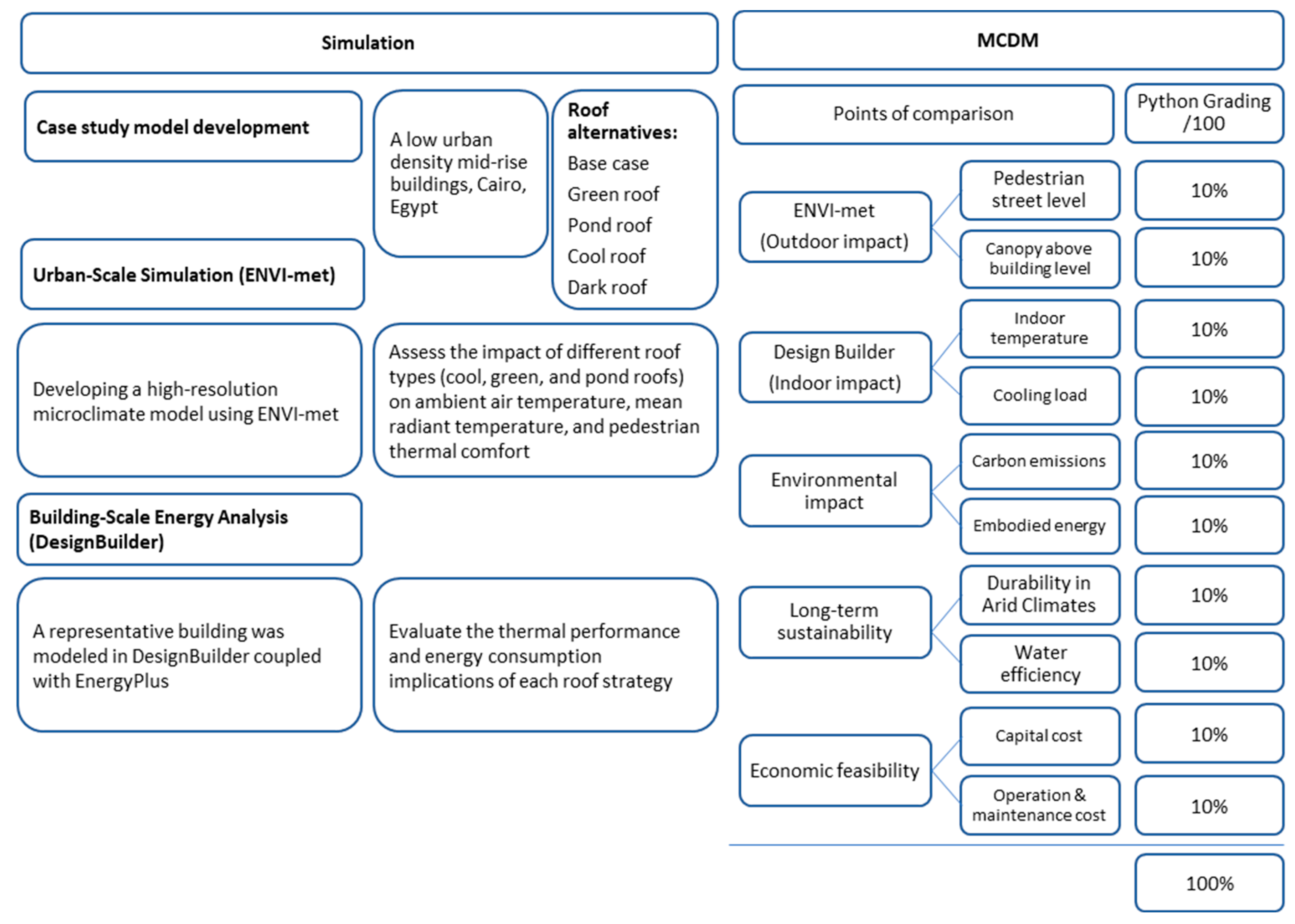
This study employs a multi-scale and multi-method approach to evaluate the effectiveness of UHI roof mitigation strategies in hot arid climates, as shown in
Figure 1:
A high-resolution microclimate model was developed using ENVI-met v5.7.1 to assess the impact of different roof types (green, pond, cool, and dark roofs) compared to the common base case of cement tiles. The effect is investigated on MRT on the pedestrian and roof canopy levels in a representative arid urban environment in Cairo, Egypt. The simulation domain covered a model grid volume of 239 m × 114 m × 36 m, with a spatial resolution of 2 m, incorporating local urban geometry, albedo, and vegetation parameters. Boundary conditions were derived from typical meteorological year data, and simulations were conducted over an hour representing peak summer conditions.
- 2.
Building-level Energy Analysis (Design Builder):
A representative building was modeled in Design Builder v7.3.1, coupled with Energy Plus, to evaluate the indoor thermal performance and energy consumption implications of each roof strategy. Key parameters included operative temperature and cooling energy demand. Material properties (e.g., albedo, thermal mass, vegetation layer characteristics) were calibrated based on empirical data from existing studies.
- 3.
Multi-Criteria Decision Analysis (Python):
A MCDM method was applied to evaluate trade-offs across key criteria (thermal performance, environmental impact, long-term sustainability in arid climates, and economic feasibility). A Python-based decision analysis framework was developed, integrating simulation results with weighted criteria. Each criterion was assigned equal percentage weight, contributing to an overall Python grading score out of 100. The weighted ranking method was applied to rank roof strategies based on their overall performance. Finally, the method culminates in an MCDM analysis to determine the optimal roofing solution based on the evaluated data.
5.1. Case Study Model Development
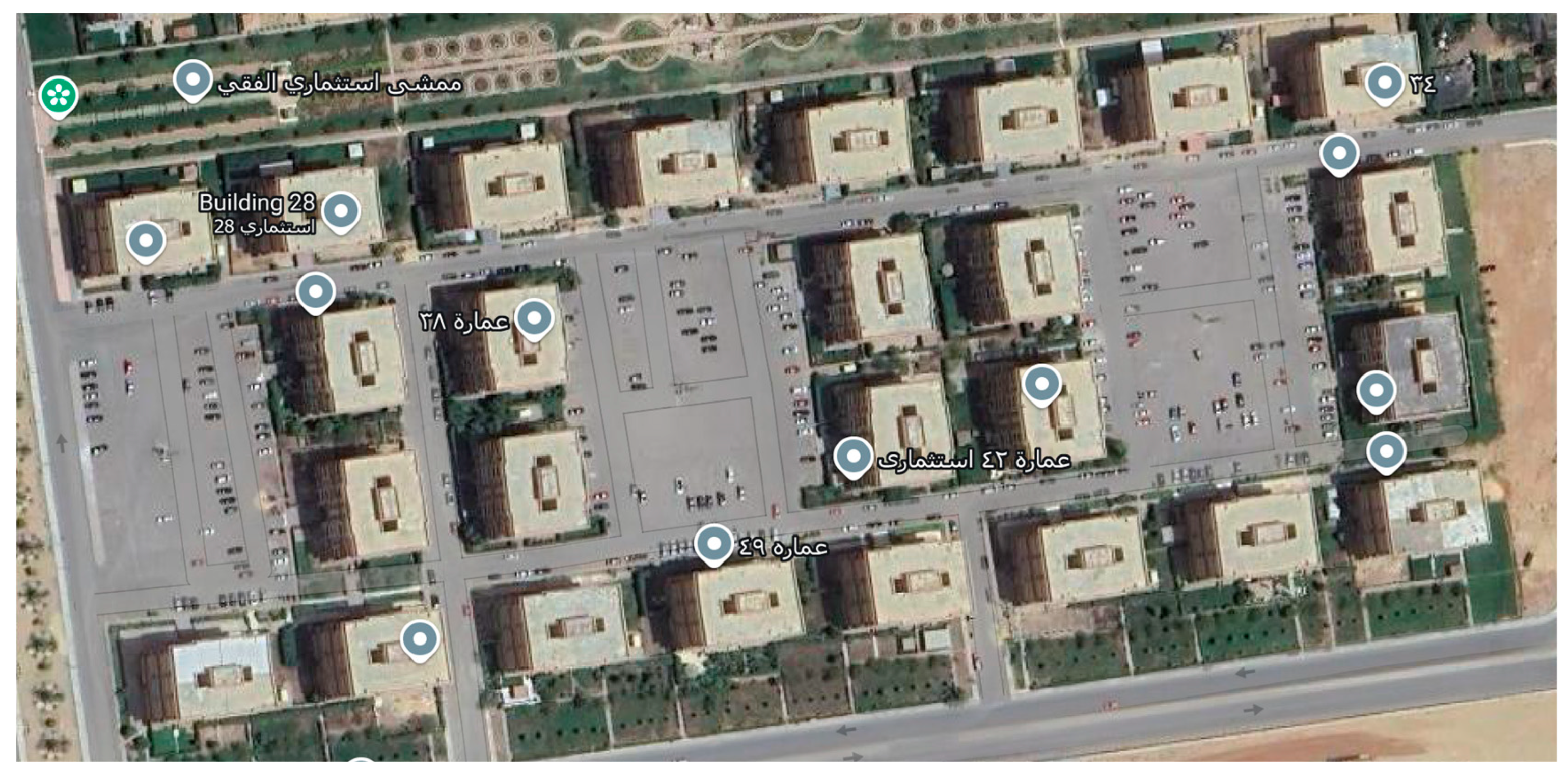
A prototype of low urban density mid-rise buildings in Mostakbal City located in Cairo was used as a case study to represent hot arid climates, as shown in
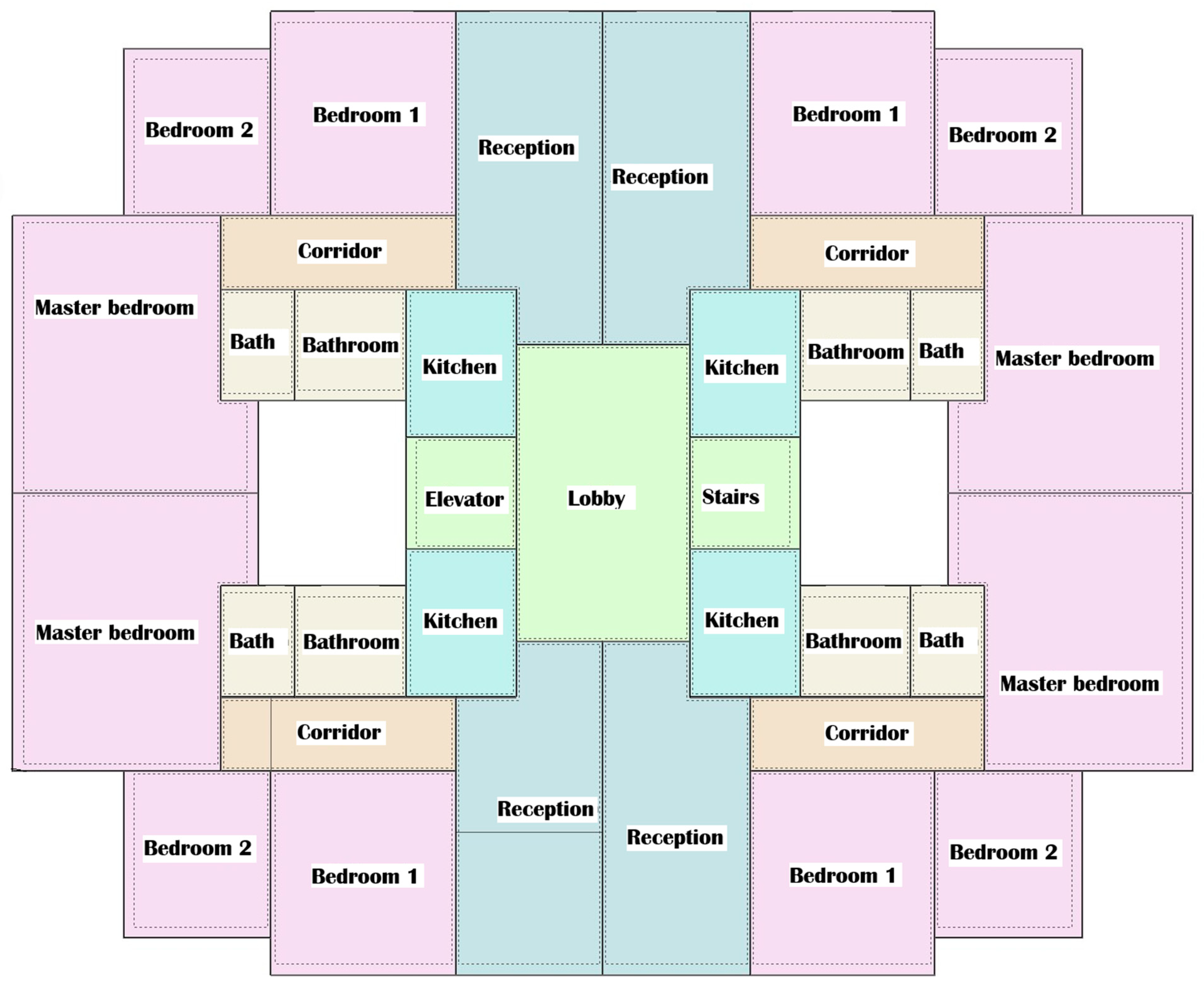
Figure 2. The ratio of buildings to void area was 25% urban density, with 12 m street width and 75 m wide open parking enclosed between buildings of 21 m height. Each building consisted of 7 floors, with 4 apartments per floor, and a total floor area of 710 m
2, as shown in
Figure 3.
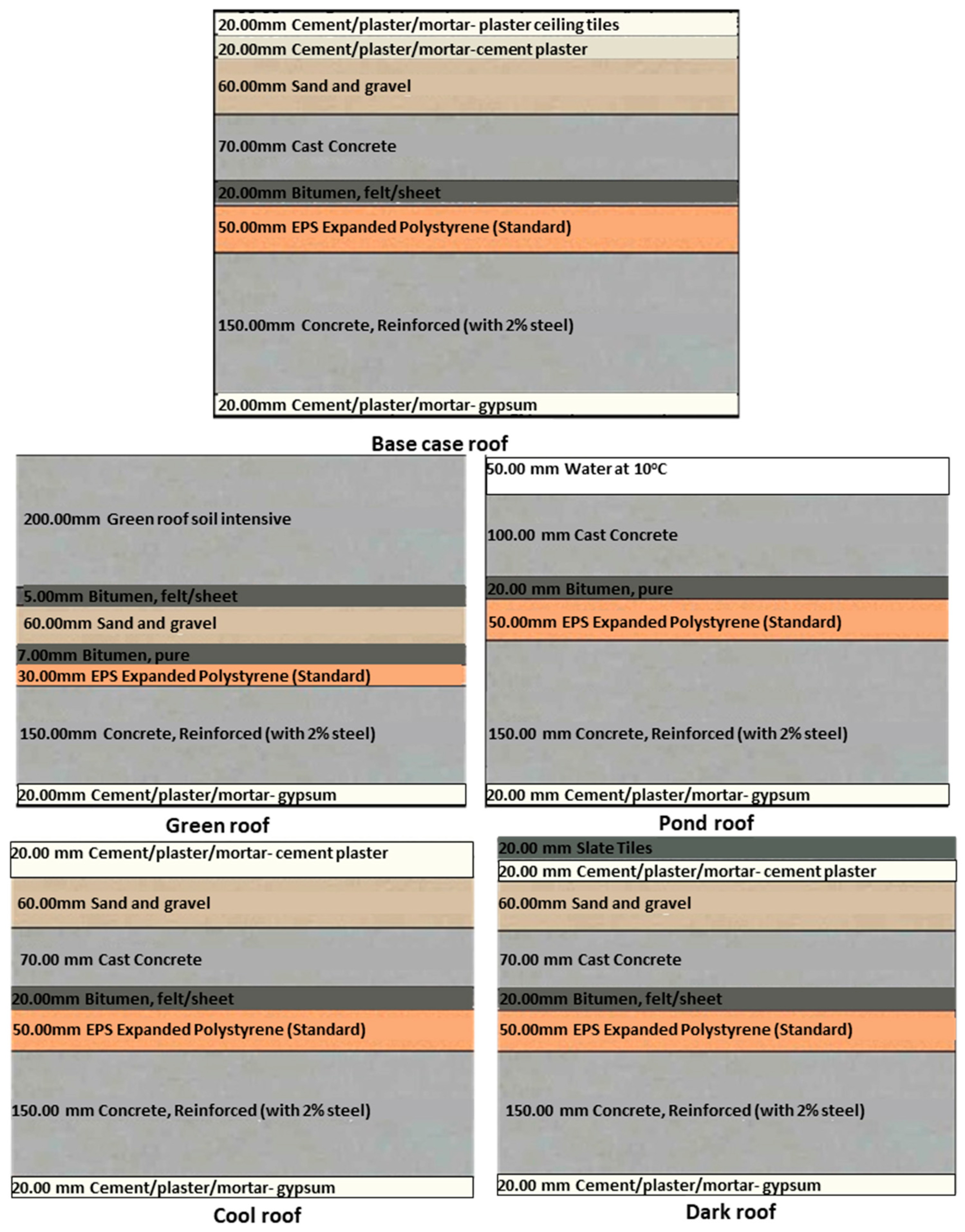
The base case, representing a typical cement tiled roof (with thermal insulation and 25 cm external brick walls) was compared with the four selected roof types. The material properties and layer dimensions of each roof type were selected based on recommended configurations from previous studies.
Urban scale and building scale analyses were performed via ENVI-met v5.7.1 and Design Builder v7.3.1 simulation, respectively, with the simulation setup as illustrated in
Table 2.
5.2. Urban Scale Simulation Using ENVI-Met
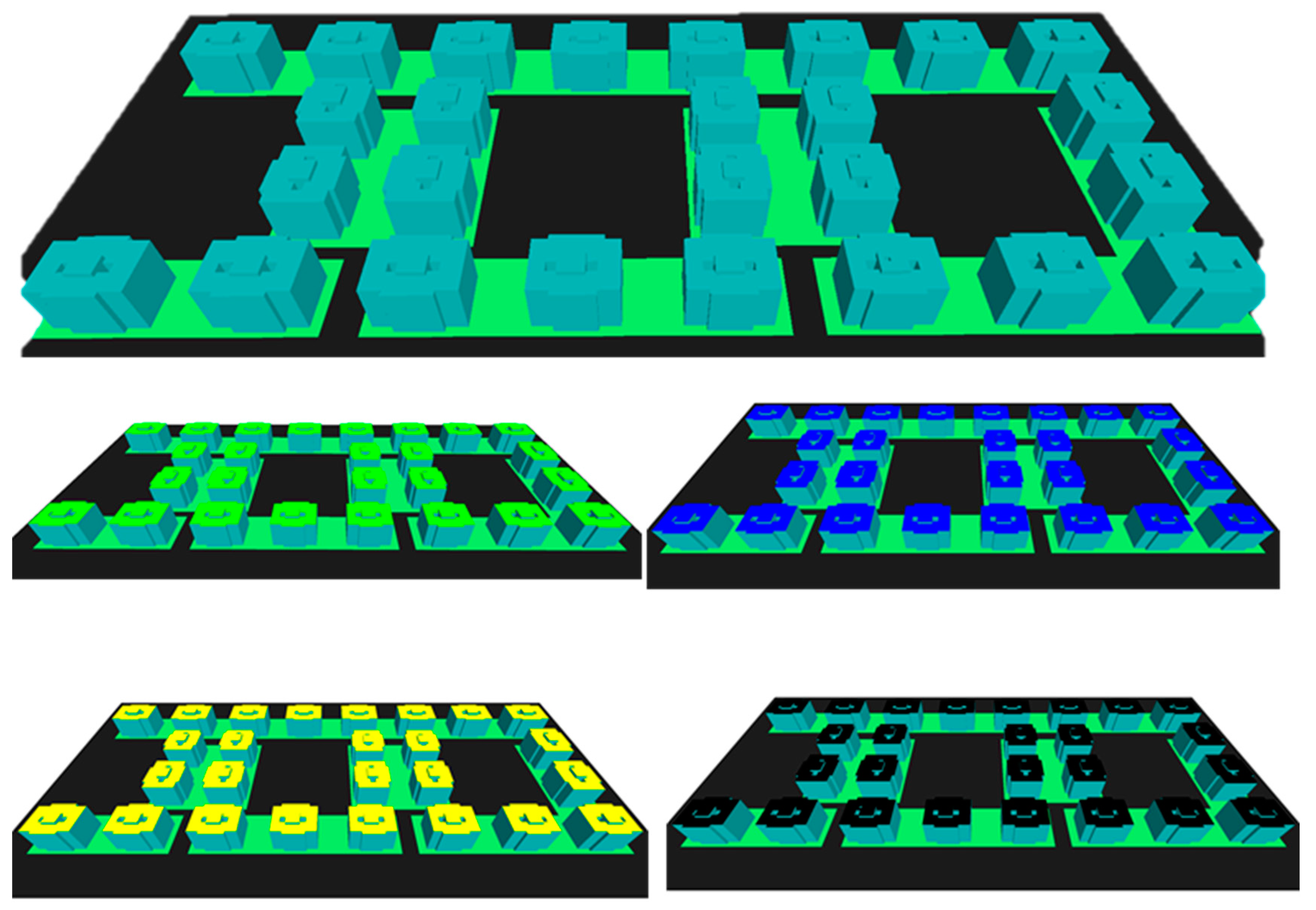
The ENVI-met- a microclimate three-dimensional software model was used to draw the urban space, and then analyze the impact of the selected roof strategies visually using Leonardo. The selected urban area of Mostakbal city is 478 m × 228 m × 21 m high. ENVI-met calculates MRT using Equation (1).
where T
MRT = MRT (°K), σ = Stefan–Boltzmann constant = 5.67 × 10
−8 W/m
2K
4, F
i = view factor between the person and surface I, ε
i = emissivity of surface i, T
i = surface temperature of surface i (°K), and n = total number of surrounding surfaces considered (walls, ground, sky, vegetation).
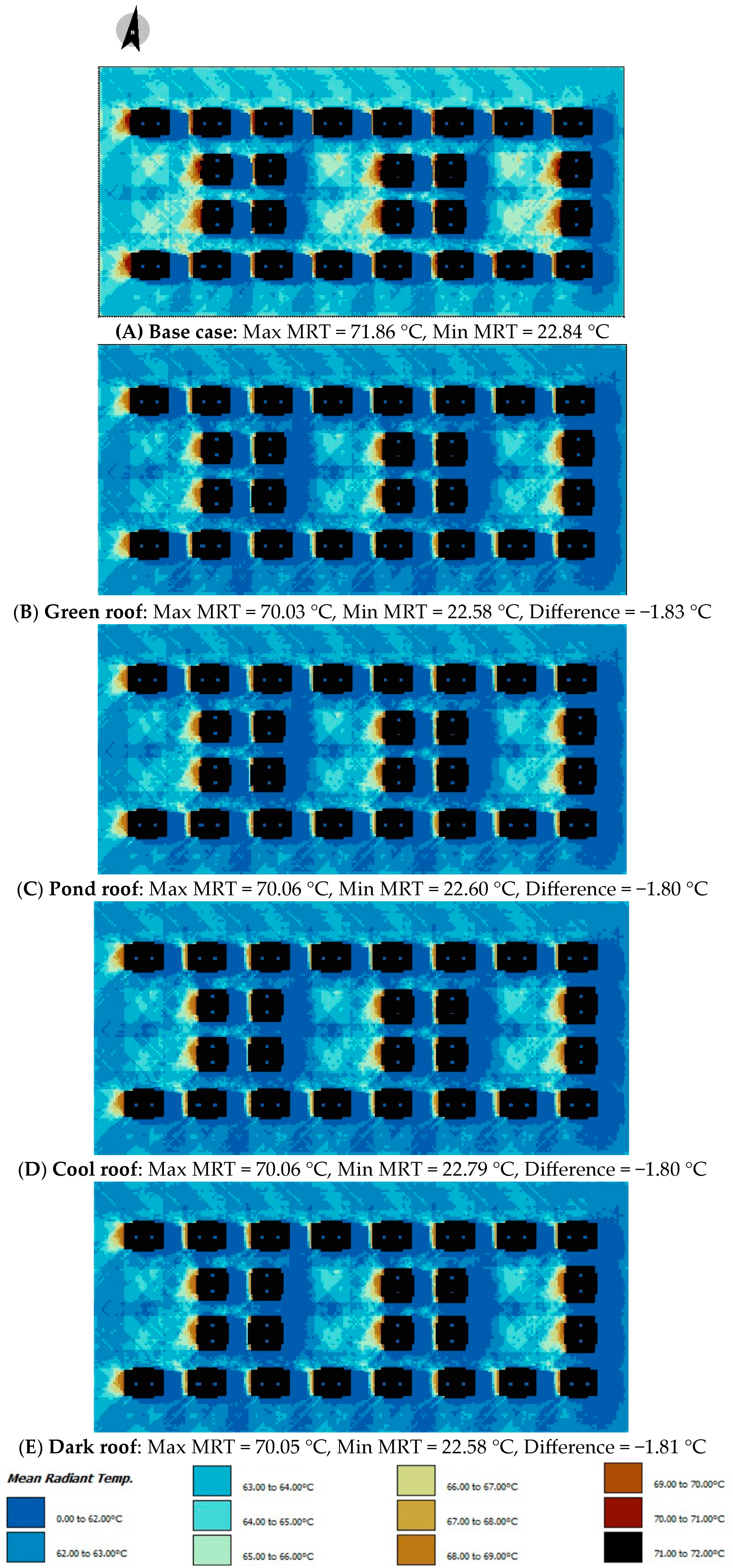
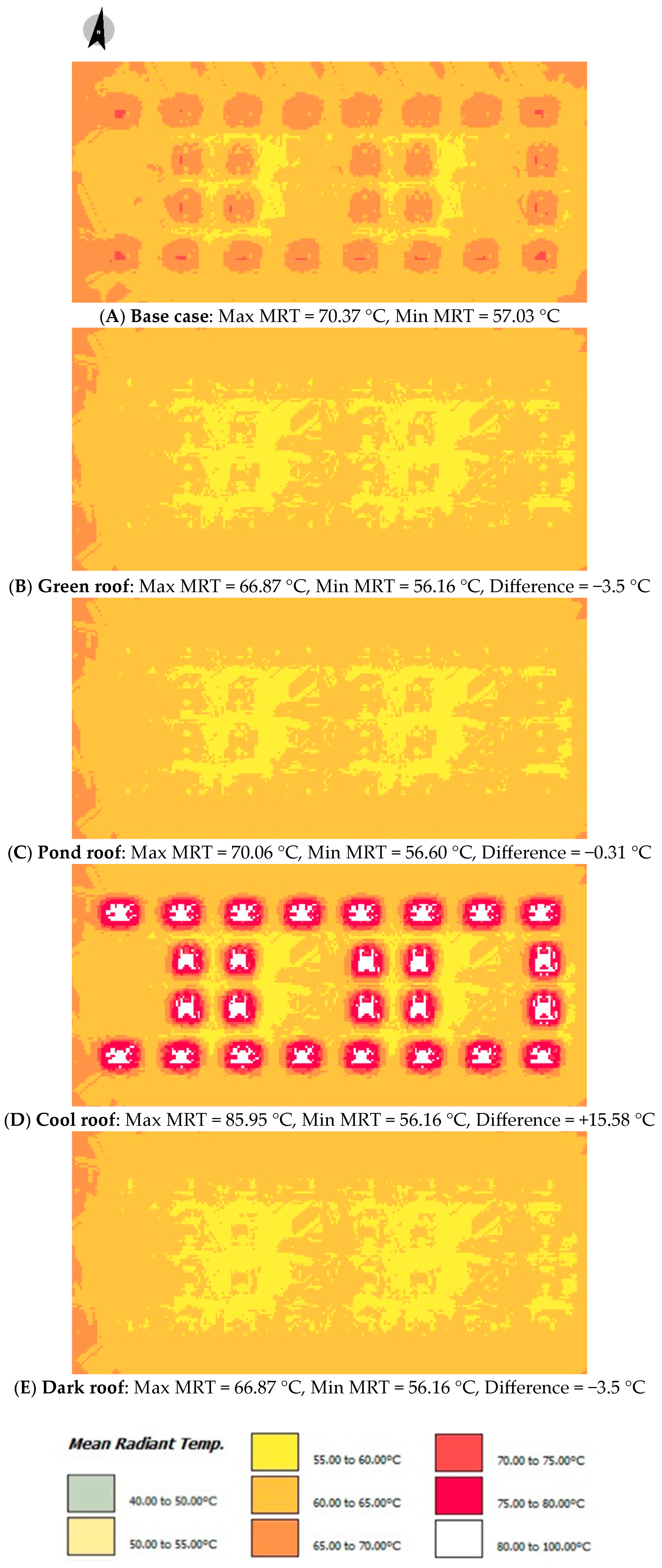
All roof alternatives were modeled, and the output data of MRT was computed at a pedestrian street level of 1.4 m and canopy above building level of 25 m. The simulation results are visualized in
Figure 4.
5.3. Building Scale Simulation Using Design Builder
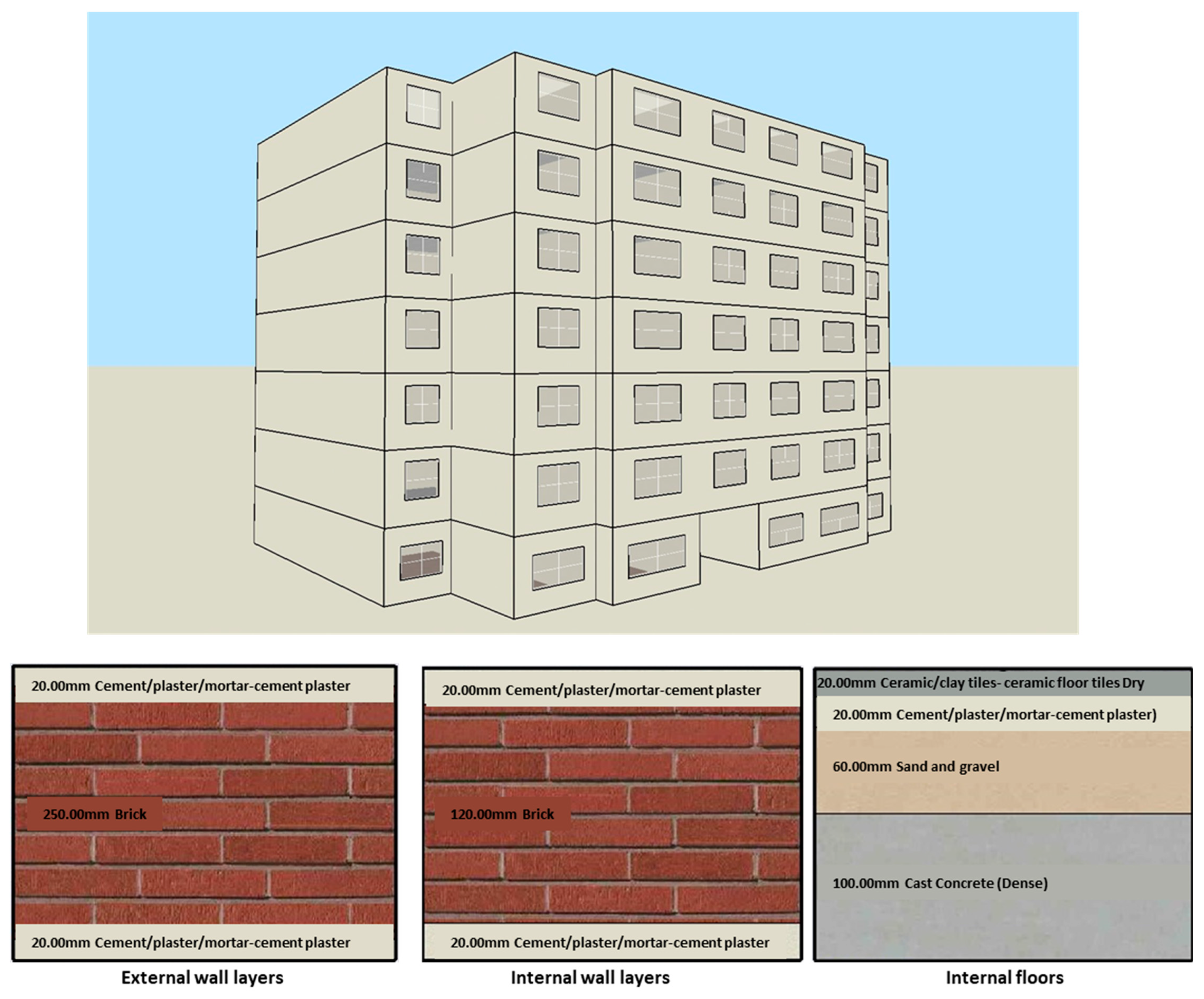
Design Builder—a simulation software—was used to analyze the impact of the selected roof strategies on the building’s scale. The model was built as shown in
Figure 5.
It was then simulated for a whole year for each roof alternative, with the layers shown in
Figure 6. The data of operative temperature, carbon emissions, cooling load, and cost were collected for each roof alternative.
Operative temperature is the weighted average of air temperature and MRT, representing how warm the space feels to occupants. It is calculated using Equation (2).
where T
op = operative temperature (°C), T
a = air temperature (°C), and T
r = MRT (°C).
Carbon emissions are calculated by multiplying the energy consumption by the emission factor for the energy source following Equation (3):
where CO
2 is the carbon emissions in Kg CO
2, E is the energy consumption in KWh, and EF is the emission factor in Kg CO
2/KWh.
Cooling load is the total heat that must be removed from a space to maintain the desired indoor temperature, and it is calculated following Equation (4) by subtracting the total heat losses from the total heat gain.
Finally, the roof cost is calculated as the sum of the cost of each material or component, based on the quantity and unit price following Equation (5).
where A
roof = roof area (m
2), t
j = thickness of layer j, d
j = density of layer j (if cost is per kg), P
j = unit price of layer j, and m = number of layers in the roof assembly.
5.4. Sensitivity Analysis and Calibration
A sensitivity analysis was performed to assess the ENVI-met model in response to variations in surface albedo and building height. Similarly, another sensitivity analysis was performed to assess the Design Builder model in response to variations in surface albedo and roof thickness, as shown in
Table 3. The results indicated that the ENVI-met model is sensitive to surface albedo and building height, while the Design Builder model is sensitive to roof thickness and surface albedo.
5.5. Multi Criteria Decision Making Analysis-Weighted Ranking Method
To systematically evaluate and rank different roofing strategies, a Python-based tool was used. Its code applies the MCDM framework, which integrates the following evaluation criteria into a decision-making model:
- ▪
Outdoor thermal performance, including roof effect on the pedestrian street level and the roof canopy level
- ▪
Indoor thermal performance, including roof effect on the building indoor temperature and cooling loads
- ▪
Environmental impact, including roof carbon emissions and embodied energy
- ▪
Long term sustainability, including roof durability in arid climates, and their water efficiency
- ▪
Economic feasibility including roof capital and operational and maintenance cost
The main purpose of the Python code is to read and analyze input data from an Excel spreadsheet. The input dataset includes performance values for the different roof strategies. When the data are imported, the code processes them by converting all values into numeric types. The analysis is centered around a scoring system that quantifies the performance of each roofing strategy across all criteria. For each criterion, strategies are ranked. The ranking is done using pandas’ rank method with the ‘average’ method for tie resolution. These ranks are then converted into normalized scores on a scale of 0 to 10. The formula used for scoring adjusts the rank based on the number of strategies, ensuring that the best-performing option receives the maximum score of 10 and the worst receives a score close to zero. This scoring transformation simplifies comparison and highlights performance differences in a more intuitive format.
After calculating individual scores for each criterion, the script sums them to compute a total score for each strategy, representing its overall performance across all dimensions. A final rank is then assigned based on the total score, with the top-performing strategy ranked first. Then, the Python code (matplotlib and seaborn) library functions were used for data visualization.
6. Results
6.1. Urban Scale Results
Leonardo v5.7.1 was used to visualize the numerical results from ENVI-met simulation into color coded maps. Outdoor urban scale simulations of MRT at a pedestrian street level of 1.4 m high are shown in
Figure 7, and MRT simulations above a building canopy level of 25 m high are shown in
Figure 8.
At pedestrian street level, the MRT in the base case ranged from 22.84 °C to 71.86 °C. Green roofs showed the greatest improvement, with MRT ranging from 22.58 °C to 70.03 °C, recording a notable reduction of 1.83 °C in the maximum MRT, the highest reduction among all cases. Pond roofs resulted in a maximum MRT of 1.80 °C, with values ranging from 22.60 °C to 70.06 °C. Similarly, cool roofs also achieved a 1.80 °C reduction, with MRT values ranging from 22.79 °C to 70.06 °C. Surprisingly, dark roofs performed slightly better than both pond roofs and cool roofs, reducing the maximum MRT by 1.81 °C, with values ranging from 22.58 °C to 70.05 °C.
Above the building canopy level, the MRT of the base case ranged from 57.03 °C to 70.37 °C. Green roofs once again demonstrated the greatest improvement, with MRT ranging from 56.16 °C to 66.87 °C, recording a significant reduction of 3.5 °C in the maximum MRT. Surprisingly, dark roofs performed similarly well, matching the green roof results, making both the most effective options at the canopy level. Pond roofs followed them, resulting in a slight 0.31 °C reduction in maximum MRT, with MRT values ranging from 56.60 °C to 70.06 °C. On the other hand, cool roofs exhibited the worst performance, increasing the maximum MRT by 15.58 °C, with MRT ranging from 56.16 °C to 85.95 °C.
This shows that, outdoors, all strategies moderately reduced MRT at the pedestrian level, but their effects diverged at the canopy level. Green roofs performed best, lowering MRT by 1.83 °C and 3.5 °C at the pedestrian and canopy levels, respectively. Dark roofs followed closely, reducing MRT by 1.81 °C and 3.5 °C, despite their heat-absorbing properties, challenging conventional assumptions. Pond roofs had a minimal impact, with reductions of 1.80 °C and 0.31 °C. Cool roofs, while effective at the pedestrian level with a 1.81 °C reduction, drastically increased canopy-level MRT by 15.58 °C due to reflected radiation.
6.2. Building Scale Results
Indoor results revealed minor reductions in operative temperature, with pond roofs leading by a 0.08 °C decrease compared with the base case of 33.07 °C. Cool roofs followed by 0.07 °C, then green roofs by 0.05 °C, while dark roofs increased temperatures by 0.07 °C. However, green roofs significantly reduced the cooling loads by 3.3%, outperforming pond roofs, with a 1.3% reduction. Dark roofs increased the cooling demand by 1.2%, making them unsuitable for indoor comfort.
Environmentally, dark roofs had the lowest embodied carbon, reducing emissions by 4% due to natural stone materials. In contrast, cool roofs increased emissions by 12%, while green and pond roofs surged by 39% and 42%, respectively, due to added structural demands. Sustainability assessments considered durability, water needs, and costs. Although the base case was the cheapest, it performed poorly in other metrics, underscoring the need for passive roof strategies despite higher costs. The findings highlight trade-offs between performance, sustainability, and feasibility, with green roofs emerging as a balanced option despite higher emissions.
6.3. MCDM Analysis Results
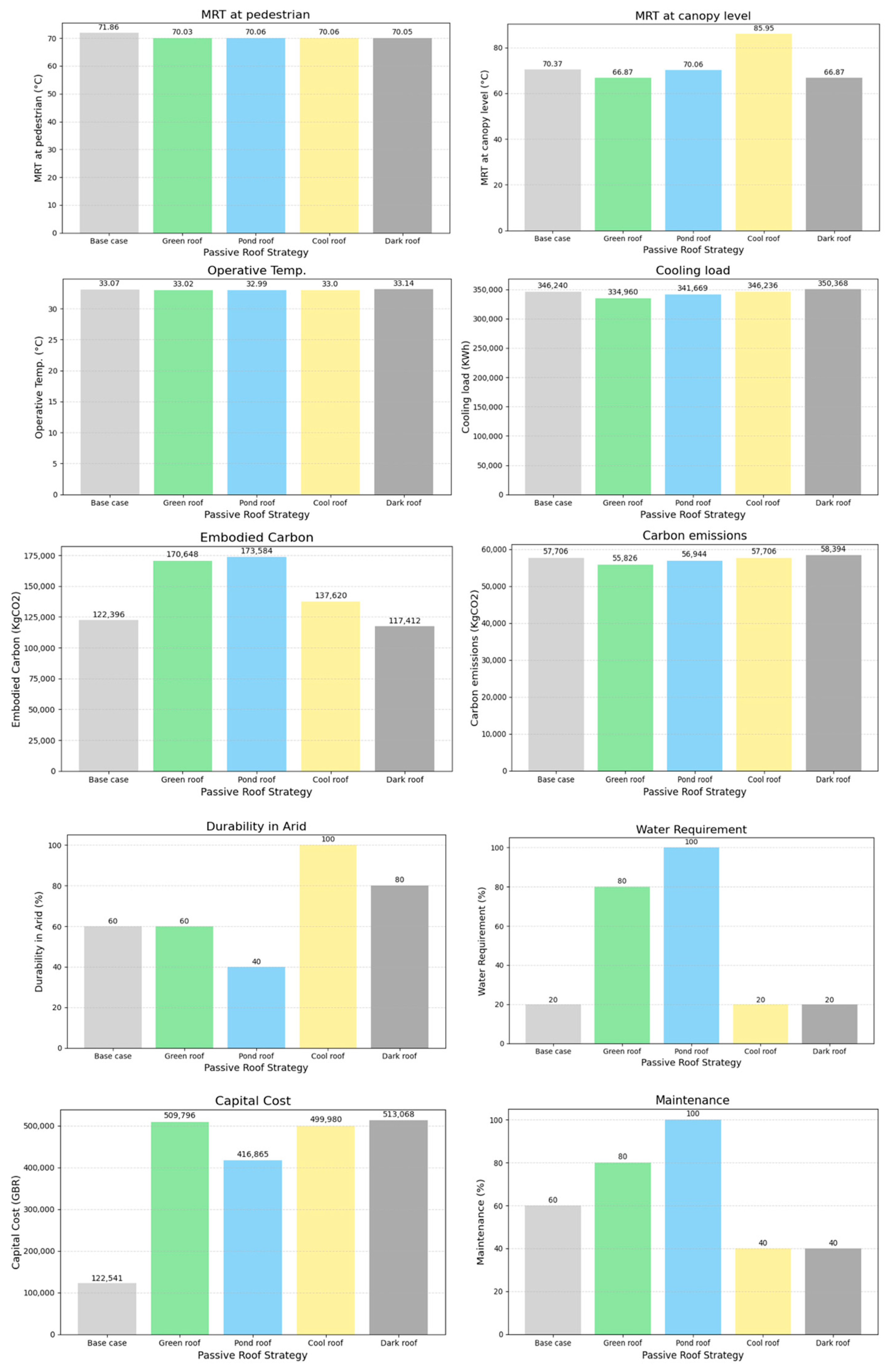
Table 4 shows the data for the 10 defined comparative criteria across each roof type. Python was used to visualize it in
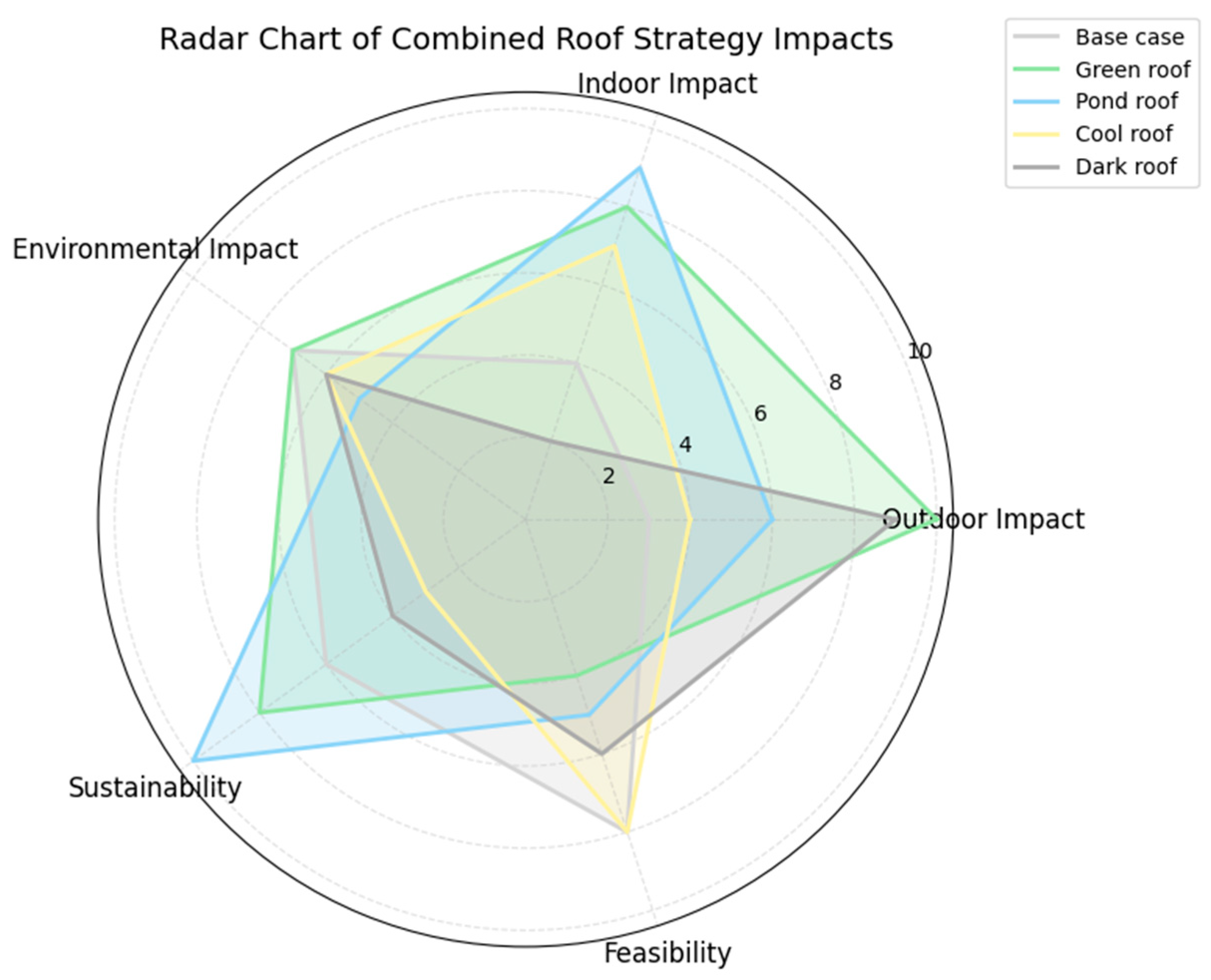
Figure 9, illustrating the individual impact of each criterion across the different roofs. Then, the combined impact of all criteria was visualized, as shown in
Figure 10.
Individual criteria bar charts revealed that green roofs performed best in terms of MRT at both the pedestrian street level and above canopy level, followed closely by dark roofs, and then pond roofs. Although cool roofs performed well at the pedestrian level, their performance was reversed at the canopy level. Conversely, cool roofs excelled at operative temperature, following pond roofs performing the best at operative temperature, while green roofs resulted in the lowest cooling load and dark roofs performed the worst. In terms of embodied carbon, dark roofs had the lowest impact, while green roofs had the lowest impact in terms of carbon emissions. Cool roofs proved to be the most durable in hot arid climates and required the least amount of water, similar to dark roofs. Finally, the base case had the lowest capital cost and required minimal maintenance, making it the most feasible option, but it failed in mitigating UHI, which can be addressed through the suggested passive roof strategies.
The combined criteria showed that the performance of each type of roof strategy varies when compared in terms of the selected parameters. Although the base case is the most cost-effective roof strategy, other strategies performed better in terms of thermal comfort and environmental impact. Green roofs showed a strong performance across the three pillars, with their most significant strength in their outdoor impact, followed by their indoor impact and sustainability. The strength of pond roofs was primarily in sustainability concerns, with indoor impact as a secondary advantage. Cool roofs performed best in terms of feasibility, followed by indoor impact. Lastly, the main strength of dark roofs lay in their outdoor impact.
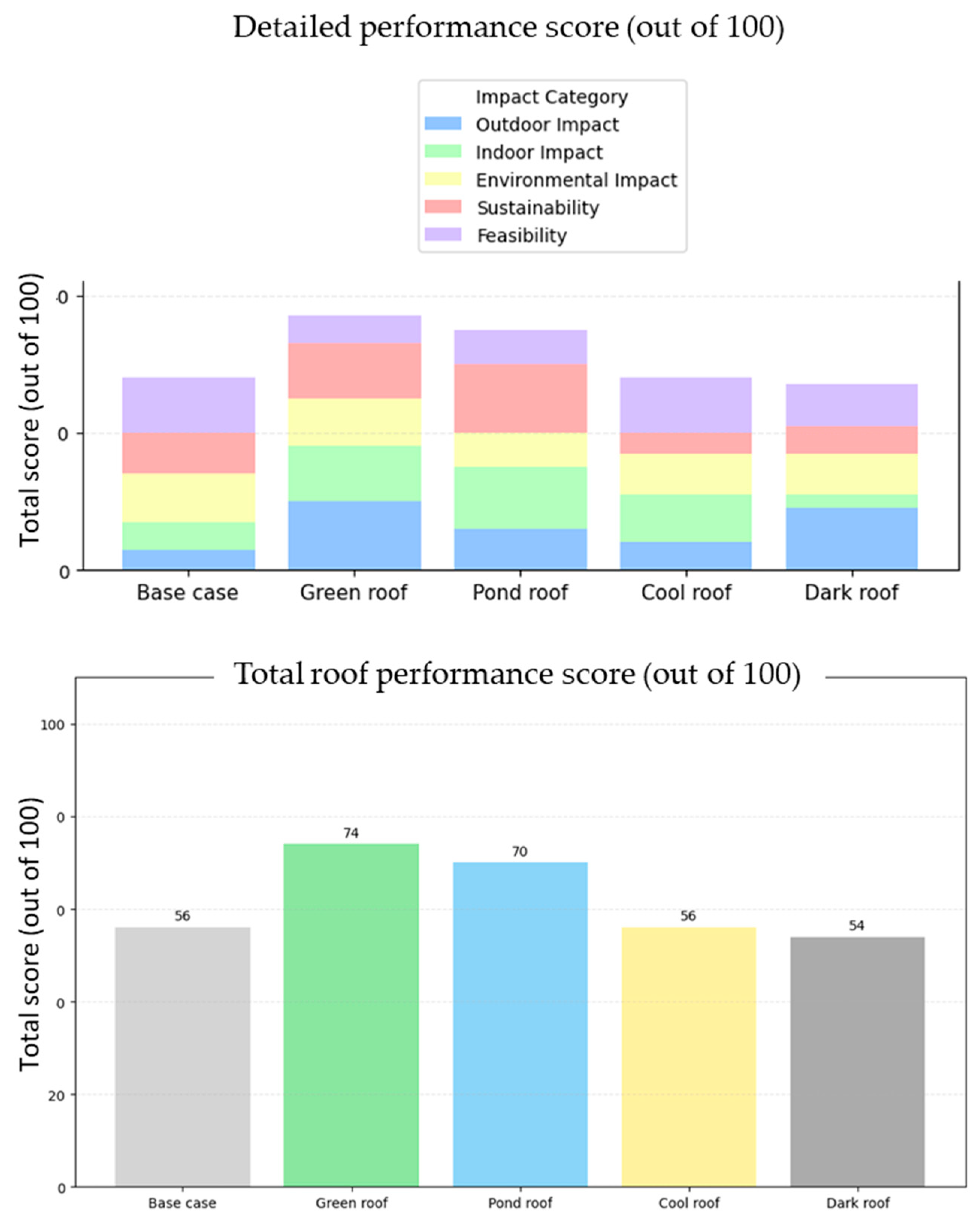
The contribution of each pillar to the overall performance of each roof strategy is illustrated as shown in
Figure 11. These contributions were then summed to calculate the total score of each passive roof strategy. The MCDM analysis proved that green roofs are the optimum roof strategy for mitigating UHI in hot arid climates, achieving a score of 74%. Pond roofs ranked second, with a score of 70%. Cool roofs and the base case came in third place, each scoring 56%, while dark roofs ranked last by scoring 54%.
7. Discussion
7.1. Justification for the Selected Roof Strategies, and Comparing to Previous Studies
The selected strategies (intensive green roofs, shallow ponds, cool roofs, and dark roofs) represent the most viable, debated, and climate-relevant roof alternatives for arid zones [
27].
Intensive green roofs, though resource-intensive, are included due to their proven evapotranspiration cooling effects in arid cities [
15,
19]. Shallow pond roofs, while less common, are justified by their passive evaporative cooling potential [
30]. Conversely, cool roofs are prioritized due to their widespread use in hot arid climates, where they reduce heat absorption and lower indoor energy demands cost-effectively [
8]. In contrast, dark roofs represent prevailing suboptimal practices in many arid urban areas [
31,
32].
Compared to previous studies, green roofs achieved only 3.2% reduction in the total cooling load, which is lower than the range set by Refahi and Talkhabi to be from 6.6 to 9.2% [
36]. This may be because they were tested in the dry climate of Iran, not in the same arid climate of Cairo. On the other hand, the impact of green roofs on pedestrian street level reached −1.83 °C, which is better than the value found by Zhang et al. of 0.1 to 0.3 °C [
9]. This may be due to building height and location differences. The cool roof impact on pedestrian street level was −1.8 °C, which is within the suggested value by Basyouni and Mahmoud with up to 2.4 °C for super cool roofs [
39].
7.2. Research Limitations
While this study provides a robust framework for evaluating roof-based UHI mitigation strategies in hot arid climates, its findings are subject to several key limitations that affect generalizability:
Climate-specific constraints are the main concern for this study. The thermal and hydrological performance of the assessed roof strategies is optimized for hot arid environments characterized by extreme solar radiation, low humidity, and limited precipitation. The results may not translate effectively to other contexts.
The simulations and MCDM analysis are based on a representative neighborhood typology, which may not capture high-density megacities, where canyon geometry and wind flow differ significantly, or informal settlements, with irregular building layouts and material heterogeneity, and low-rise sprawl, where roof-area-to-street-area ratios reduce the aggregate impact of roof strategies.
Additionally, these results are bounded under the current climatic conditions, but future projections are not considered. Also, the roof type, whether it is flat or sloped, may limit the adoption of certain strategies. Furthermore, due to time constraints, the simulation was tested for peak hours in mid-summer only, since it is the most crucial time. It is recommended to test it at different times and seasons as well.
It should also be noted that MCDM often assumes static conditions, but real-world factors, including climate change and water scarcity problems, evolve over time and require continuous weight update according to the latest scientific findings. Also, the risk of oversimplification is a main concern for using MCDM [
27]. Accordingly, in this study, combining MCDM with a real-world case study ensured robust, sustainable decisions. Furthermore, the choice to assign equal weights to all criteria in the MCDM analysis provided a transparent, unbiased baseline for the comparative analysis of roof strategies, and allows subsequent phases to adjust weights based on stakeholder input.
8. Conclusions and Future Recommendations
This study comprehensively evaluated four roof strategies (green, pond, cool, and dark roofs) against a base case in the context of a hot arid urban setting. These were compared considering the following evaluation criteria: thermal performance, environmental impact, sustainability, and feasibility. Their outdoor thermal performance was scrutinized regarding their effect on the pedestrian street level and the roof canopy level. Analysis of indoor thermal performance investigated their effect on the building operative temperature and its cooling loads. Their environmental impact was investigated regarding their carbon emissions and embodied energy. Their long-term sustainability was examined in terms of their durability in arid climates and their water efficiency. Finally, their economic feasibility was analyzed, included their capital cost as well as their operational and maintenance cost.
The method employed a multi-level and multi-method framework that comprised urban-level simulation using ENVI-met, building-level energy analysis using Design Builder, and MCDM analysis using Python code. This extends beyond single-metric assessments to resolve trade-offs between various performance indicators.
The results reveal that green roofs are the optimal choice for mitigating UHI in hot arid climates. They demonstrated the best outdoor thermal comfort, at both the pedestrian street level and above building canopy level, while achieving the lowest cooling load and least carbon emissions, thus obtaining the highest total score in the MCDM analysis. Pond roofs offered the best indoor operative temperature and maintained second position in minimizing cooling loads and carbon emissions, which placed them second in overall score. Cool roofs, though they did not score the highest in either indoor nor outdoor impact, scored first in maintenance and durability, which ranked them third place. Dark roofs showed some unexpected benefits in terms of MRT, but ultimately performed least favorably overall.
These findings underscore the importance of adopting a data-driven, context specific, decision-making methodology using the proposed Python-based weighted ranking method. This is useful to objectively evaluate trade-offs between different evaluation criteria. The research outcome provides actionable insights and evidence-based recommendations through ranked solutions aligned with arid-region priorities. These insights contribute to climate-responsive urban planning, enabling more informed selections of passive cooling strategies in hot arid climates.
These results are most actionable for low density arid-zone cities with similar climatic and infrastructural contexts. Transferring results to other regions requires careful calibration of urban form, climate data, and stakeholder priorities. Thus, future research should expand on these findings by testing across varied climatic conditions, diverse urban morphologies, building typologies, and seasonal cycles to ensure broader applicability and resilience in design. Furthermore, engaging local stakeholders would derive priority-specific weightings.