
Article

SARS-CoV-2 Lockdown and Ungulate Raids on Golf Courses

by
Jesús Duarte
1,*,†,
Javier Romero
2,†,
Diego Rodríguez
3 and
Miguel Ángel Farfán
2
1
Ofitecma Marbella S.L., Av. Ramón y Cajal 17, 29601 Marbella, Málaga, Spain
2
Department of Animal Biology, Faculty of Sciences, Universidad de Málaga, 29071 Málaga, Málaga, Spain
3
Rewilding Spain, 19431 Corduente, Guadalajara, Spain
*
Author to whom correspondence should be addressed.
These authors contributed equally to this work.
Urban Sci. 2026, 10(5), 245; https://doi.org/10.3390/urbansci10050245
Submission received: 18 February 2026 / Revised: 29 March 2026 / Accepted: 1 April 2026 / Published: 1 May 2026
(This article belongs to the Special Issue Biodiversity in Urban Landscapes)

Abstract

The presence of wild species in urban areas is becoming increasingly common. In southern Spain, species such as wild boar cause significant damage and problems in human-dominated environments, such as peri-urban areas, sports facilities, and urban parks. Here, we used camera trapping to monitor the entry rates of ungulates (wild boar and red deer) into three golf courses located in urban areas in southern Spain. The courses are surrounded by hunting estates and other non-urban areas where species are controlled through lethal methods. Wild boars are controlled year-round, and red deer are controlled during specific hunting periods. We tested for differences during periods of normal human activity and periods of the COVID lockdown using generalised linear mixed models. We controlled ungulate raids for 2639 trapping nights, obtaining 1093 wild boar and 225 red deer independent events. During the COVID lockdown, wild boar raids on golf courses decreased significantly. Meanwhile, equivalent deer raids increased significantly during the hunting period. The results indicate that certain urban areas where control by firearms is not permitted—such as golf courses—can function as safe zones for wild species. This reserve effect is related to the structure of the urban habitat and the resources it offers in terms of security and food.

1. Introduction

Human disturbance represents a threat to biodiversity [1,2]. Among the main threats to species survival are the loss and degradation of ecosystems [3]. However, a less well-studied aspect is the impact of human presence and outdoor recreational activities, which can induce wildlife changes at the individual level, affecting space use, resource selection, reproductive success, and behaviour [4,5,6,7]. These changes also include population-level changes such as the increasingly frequent use of urban spaces.
The infectious outbreak caused by the SARS-CoV-2 coronavirus in late 2019 (COVID-19) led to an unprecedented global confinement in 2020 aimed at reducing disease transmission, sharply restricting human mobility [8]. This period—termed the “anthropause”—offered a unique opportunity to investigate the effects of human presence and activity on wildlife [9,10,11], especially in urban environments where confinement resulted in reduced crowding, pollution, and noise levels in cities. Importantly, lockdown measures represented a rapid and transitory perturbation, allowing the evaluation of short-term behavioural responses to abrupt changes in human activity. These conditions provided a valuable framework for studying behavioural plasticity over a short temporal scale, particularly in synanthropic and highly adaptable species. The lockdown also allowed wildlife to move more freely, facilitating the observation of uncommon species in urban areas [12,13,14] and enhancing species detectability [15,16,17].
Among highly adaptable urban mammals, the wild boar (Sus scrofa) provides an ideal model in which to study behavioural responses to short-term reductions in human presence and hunting pressure. The wild boar is one of the most widely distributed mammalian species, naturally occurring across Eurasia and North Africa and introduced to North and South America and Australia [18,19]. An opportunistic and a generalist species, the boar has a highly heterogeneous diet and the ability to exploit a wide variety of habitats, from forests to agricultural landscapes [20,21,22]. In recent decades, their populations have expanded both within their natural range and in areas of introduction. This expansion process is generally attributed to a combination of factors, including insufficient hunting pressure that would control population growth on a global scale, a high reproductive capacity, large-scale favourable changes in habitat, and the absence of natural predators in many parts of its distribution range [23,24].
A remarkable feature of this expansion is the increasing presence of wild boars in urban and peri-urban areas worldwide [25,26,27]. This has generated multiple risks, including attacks on humans and pets, damage to green areas and fencing, traffic accidents, and disease transmission [24,28,29,30,31]. Their urban presence is specifically facilitated by dietary flexibility and easy access to anthropogenic food sources [22,32], the absence of natural predators, and the lack of hunting pressure; the latter has a significant influence on wild boar behaviour [33,34]. In urban areas, hunting with firearms is legally prohibited for safety reasons, whereas in peri-urban and rural areas, the wild boar is actively hunted. In response to growing populations and the associated risks, some regions—such as Andalusia in southern Spain—have adopted exceptional measures, temporarily allowing year-round hunting to control populations.
Despite the high levels of disturbance and stress associated with urban environments, cities provide wild boars with diverse habitats, offering refuge and relatively constant access to food and water [32,35,36]. Individuals capable of adjusting their behaviour to human-related stress and risk are more likely to survive and reproduce. Anthropogenic disturbances have been shown to shift activity patterns toward increased nocturnality and alter habitat use, with a preference for wooded areas during the day and herbaceous green spaces for nocturnal foraging [37]. In Mediterranean urban environments, wild boars preferentially select fragmented green areas with food availability, such as gardens, parks, and other managed green spaces [38].
The presence of red deer (Cervus elaphus) in urban environments is less well-documented. Deer are common urban exploiters in the American continent [39] and are also appearing in European urban and suburban areas [40]. In certain areas of Andalusia, animals that have escaped from hunting estates or emerged from expanding populations are also beginning to use peri-urban environments and urbanisations that integrate natural settings [41]. The factors that favour ungulates successfully settling in and using urban environments seem to apply equally to deer, including certain sports infrastructures, such as golf courses [42].
In Andalusia, golf courses represent one of the most common types of urban green spaces. The region hosts most of the golf courses in Spain, with the Costa del Sol alone accounting for 50% of these facilities [43]. The courses are located in residential and peri-urban areas, often accessible to ungulates via nearby natural vegetation and corridors such as rivers and streams [26,38]. These urban green areas meet favourable habitat conditions for these species and provide food and water throughout the year due to the presence of green, fresh grass and numerous permanent water points. The abundance of moist substrate and organic matter promotes the availability of highly valued resources for some species [44]. Patches of natural vegetation within golf courses also provide food but primarily function as daytime refuge areas when players and staff are present. At night, human activity ceases, and golf courses become quiet areas where wild boars can forage without disturbance. Finally, hunting pressure is non-existent, as hunting activities are not permitted on golf courses due to their legal classification as urban areas [45].
Urban green areas in general and golf courses in particular may exert a “reserve effect” for species that are actively hunted in adjacent peri-urban areas; this phenomenon has been described in previous studies [34,46,47,48]. Importantly, golf courses provide a well-defined and consistent habitat that allows for indirect assessment of this reserve effect, enabling comparisons of ungulate use before, during, and after periods of restricted human mobility.
The simultaneous interruption of hunting pressure and human presence and its effects on the use of urban refuges by ungulates has not yet been empirically evaluated. For this reason, we aimed to assess whether the confinement resulting from the SARS-CoV-2 outbreak affected golf course use by wild boars and red deer. We hypothesise that hunting activity ceased in peri-urban areas during confinement, temporarily removing the “reserve effect” of golf courses, resulting in ungulates reducing their use of these habitats.

2. Materials and Methods

2.1. Study Area

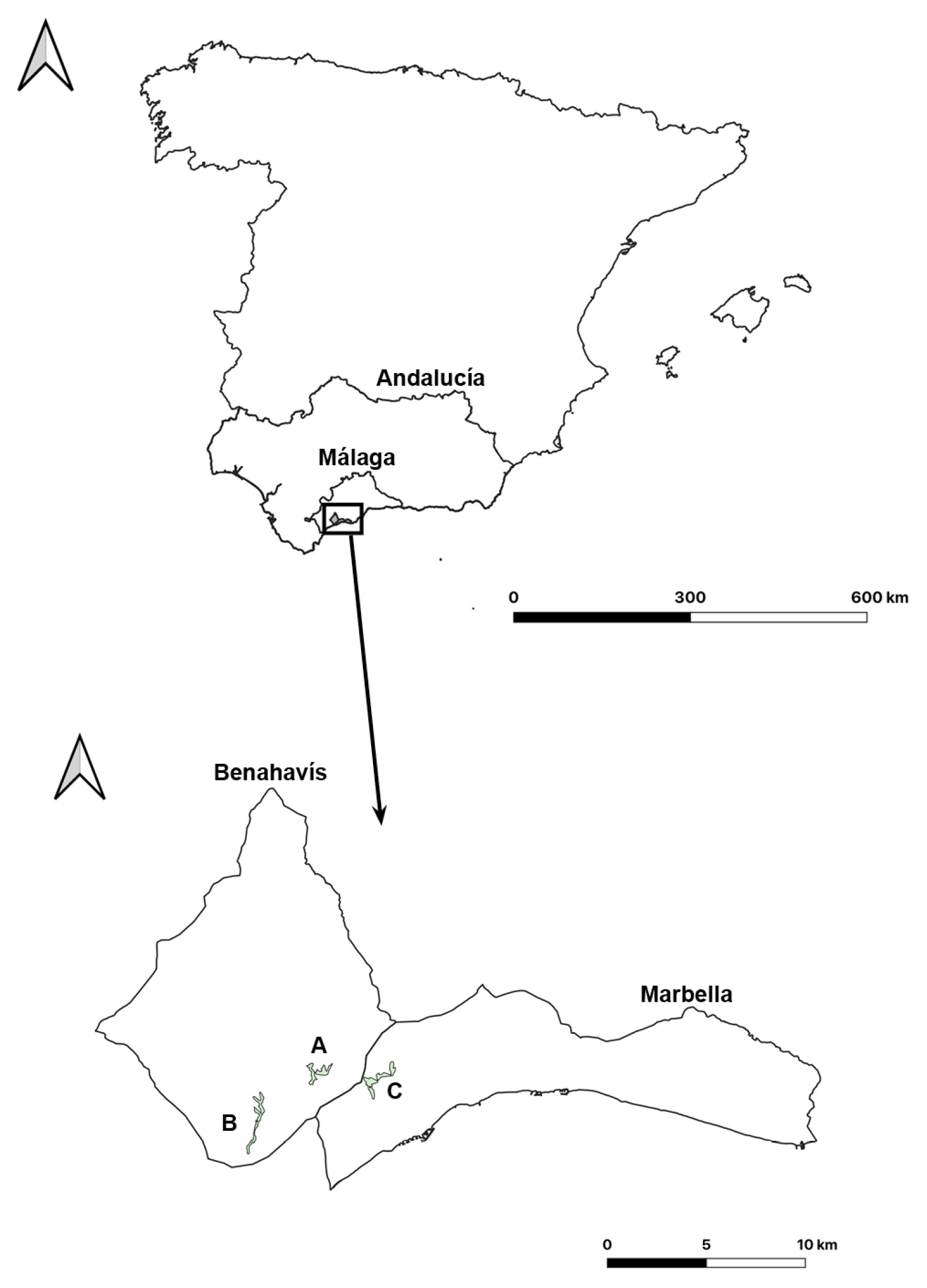
The study was carried out simultaneously at three 18-hole golf courses located in the south of Spain, Málaga province (Figure 1). The climate in the area is temperate-subtropical Mediterranean, with average temperatures of 11 °C in January and 25 °C in July, and with an annual rainfall of less than 1000 mm [49].
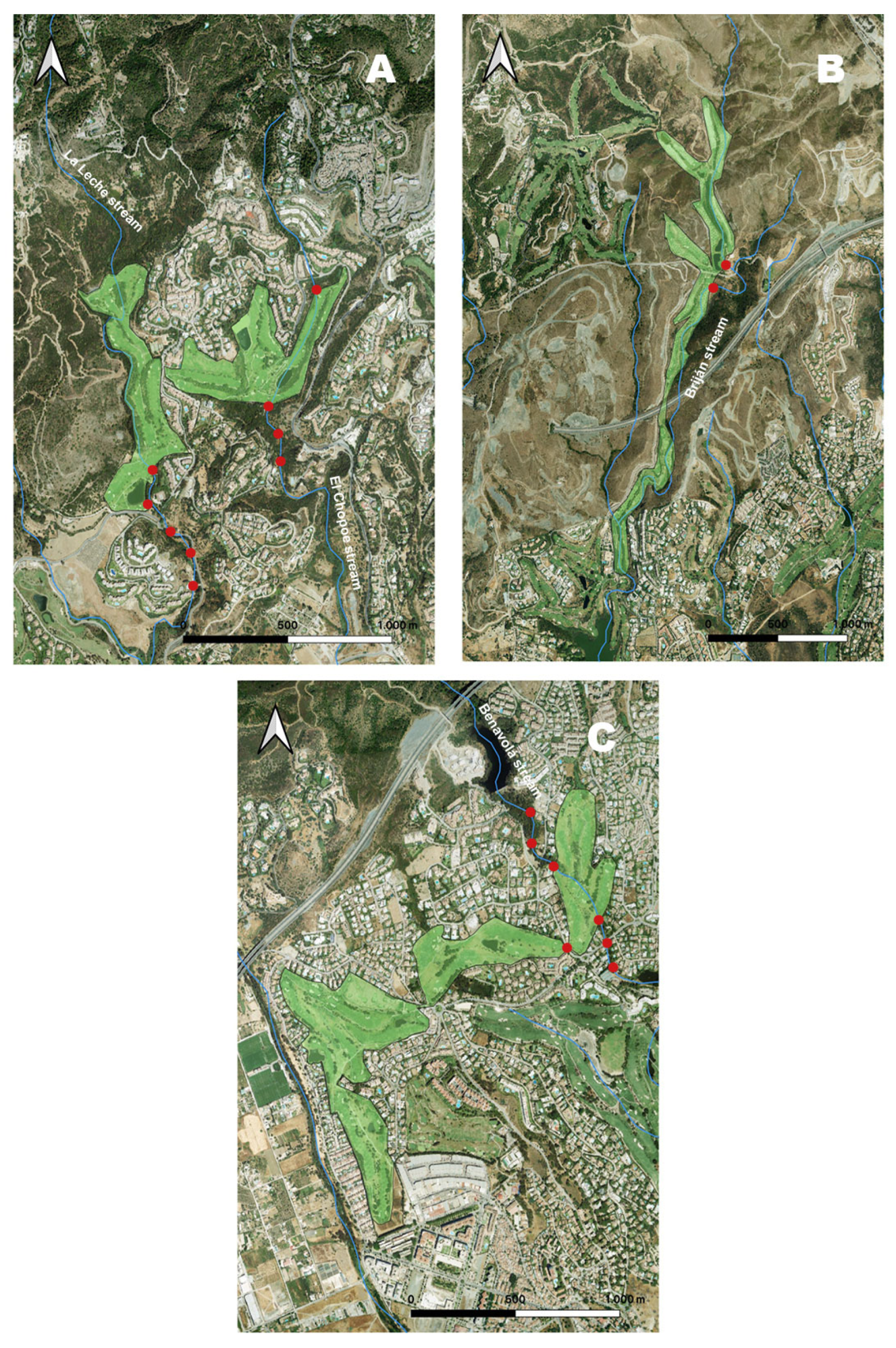
The first included course is called “Los Arqueros Golf & Country Club” (hereafter, golf course A; Figure 2), located in the municipality of Benahavís (36°30′38″ N, 5°00′58″ W; Málaga, the south of Spain). The golf course is a private estate of 99.7 ha in which an urbanised area comprises residential dwellings and apartments. Course fairways and facilities, adjoining villa garden areas, and green areas composed of patches of the original forest dominate the area interspersed with the golf course. The course is surrounded by an urban matrix, except on its western boundary, which borders a forest estate.
Elevation within the property ranges from 105 m to 195 m above sea level. The vegetation is typically Mediterranean. Some forest patches are found, dominated by maritime pine (Pinus pinaster) mixed with carob (Ceratonia siliqua), wild olive (Olea europaea var. sylvestris), and cork oak (Quercus suber). However, most of the green areas inside the estate consist of Mediterranean scrubland, largely composed of rock rose (Cistus sp.), European dwarf palm (Chamaerops humilis), Labiatae, and gorse (Ulex sp.), with some heather (Erica sp.) and strawberry trees (Arbutus unedo).
The streams that typically cross the golf courses in the study area are relevant landscape features for the purposes of this study because they function as wildlife corridors. Two streams cross golf course A, the “La Leche” stream to the west and the “El Chopo” stream to the east. Both streams have a border of riparian vegetation in which willows (Salix pedicellata), oleanders (Nerium oleander), and isolated examples of gall oaks (Quercus faginea) dominate. The “La Leche” stream flows to a reservoir with the same name, 850 m from the golf course, while the “El Chopo” flows to the “Las Medranas” reservoir. The surroundings of both reservoirs are populated with pine trees, eucalyptus (Eucalyptus camaldulensis), and scrubland.
The second golf course was “Aferini Golf” (hereafter, golf course B; Figure 2), also located in the municipality of Benahavís (36°29′36″ N, 5°02′44″ W; Málaga). Course B is part of a larger complex with two other 18-hole courses, a golf academy, and a residential area called “Los Flamingos”. The course is 49.3 ha. The property is located within a developing peri-urban area. It borders urbanised areas to the northwest and south; the remaining perimeter borders an estate that was a hunting reserve until a few years ago, when it was reclassified from rural to developable land.
Elevation within the course ranges from 100 m to 156 m above sea level. The plant community surrounding the course is composed mainly of scrubland associated with peridotites (Cistus albidus, Halimium atriplicifolium, Ulex baeticus, Quercus coccifera, Chamaerops humilis, and Asparagus spp.) and micaschists (Pistacia lentiscus, Cistus monspeliensis, Cistus crispus, and Calicotome villosa). This coverage sometimes appears mixed, with isolated Q. suber and small patches of P. pinaster.
Golf course B is crossed from north to south by the “Briján” stream, which flows into the “Cancelada” reservoir, 110 m from the southern course border. The stream is associated with dense formations of tamarisk (Tamarix spp.), oleander (N. oleander), brambles (R. ulmifolius), and willows (S. pedicellata).
Two ungulate species—the wild boar (S. scrofa) and red deer (C. elaphus)—inhabit the area surrounding both golf courses. Red deer populations come from escapes from a nearby estate [42], having acclimatised to urban areas, expanded, and become abundant.
The third golf course was “Los Naranjos” Golf Club (hereafter, golf course C; Figure 2), located in the Nueva Andalucía district of Marbella (36°30′54″ N, 4°58′18″ W; Málaga, south of Spain). The course is 57.3 ha. The course is surrounded by an urban matrix and integrated urban areas.
Elevation within the course ranges from 50 m to 80 m above sea level. The course is made up of three sectors connected to each other but discontinuous due to the intersection of the “Osa Mayor” and “Sirio” streets. The course is in a residential area, surrounded by houses and dwellings with gardens. There are no patches of natural vegetation in its surroundings except for a small pine forest (Pinus halepensis) mixed with eucalyptus plantations (E. camaldulensis) and associated scrubland (Ulex spp., Cistus spp., and P. lentiscus), located 600 m to the northwest and close to the “El Ángel” reservoir.
The “Benavolá” stream crosses golf course C, connecting two reservoirs: “El Ángel” to the north and a small reservoir called “Lagomar”, 270 m south of the course border. The stream is associated with riverside oleanders (N. oleander), brambles (R. ulmifolius), ferns (Pteridium aquilinum), tamarisk (Tamarix spp.), and willows (S. pedicellata), as well as some olive trees (O. europaea var. sylvestris) mixed with carob trees (C. siliqua). There are no red deer in this area, but wild boars are abundant.
The three golf courses each have a perimeter closure consisting of metal fencing. However, in some places, the fence is neither fixed to the ground by concrete—preventing access to wild boars—nor is it high enough to prevent jumping, in the case of deer. Nevertheless, the typical access routes for ungulates are the streams that cross the courses and connect them with areas which they normally inhabit. Streams also allow ungulates a safe way to move in the urban matrix, as green corridors with the greatest vegetative coverage.

2.2. Hunting Planning in the Study Area

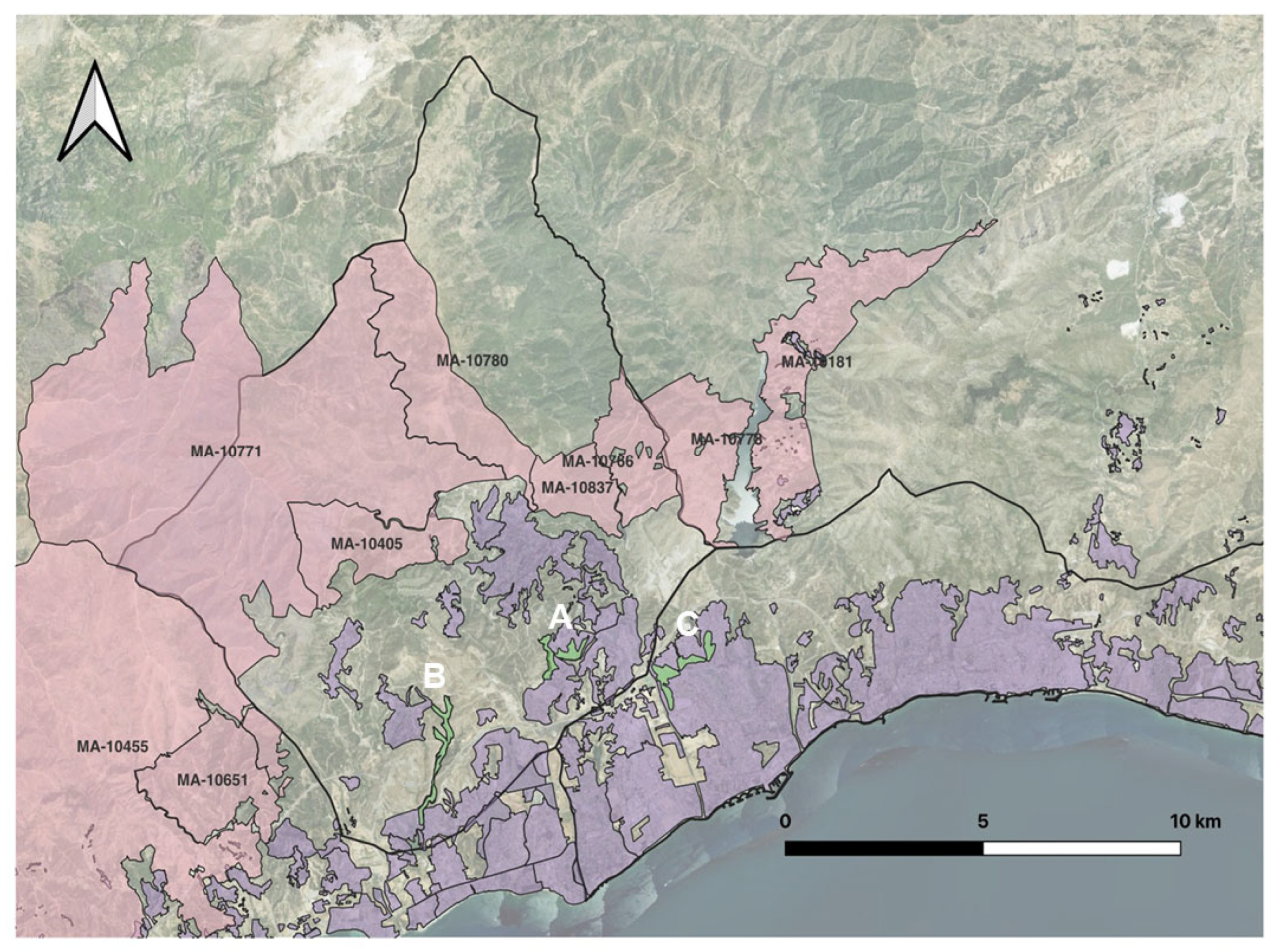
Golf course A is 2.8 km away from the hunting estate MA-10837, “La Máquina”, and 2.9 km from MA-10405, “La Toma”. Golf course B is 4.1 km away from MA-10455, “El Zorzal”, 3.3 km from MA-10405, “La Toma”, and 3.8 km from MA-10771, “La Resinera”. Golf course C is 2.1 km away from MA-10778, “Sierra Real”, and 3.2 km from MA-10766, “El Meliche” (Figure 3). These hunting estates are all located north of the golf courses. A rural area of variable width exists between the courses and the hunting estates, in which damage control hunting is permitted through authorised hunting blinds. According to Andalusian hunting regulations, the use of firearms for damage control is only forbidden in urbanised areas. However, most agricultural or undeveloped forestry properties in the area request permits for hunting blinds to prevent damage from wild boars [50]. Therefore, in practice, ungulate hunting with firearms takes place along the borders of the golf courses.

2.3. Hunting Seasons in Andalucía

Red deer hunting is allowed between mid-October and early February in Andalucía [51]. However, wild boar hunting is allowed year-round due to a temporary hunting emergency declared in response to damage and health risks from wild boars and feral pigs [50]. These emergency measures for wild boar hunting have been in effect for more than 10 years and have been exacerbated by the recent risk of swine fever [52].

2.4. Sampling Period and Ungulate Monitoring

We monitored ungulate raids on the golf courses by installing 18 camera traps. Normally, the stream connects the golf course through a road underpass located at the course border. We therefore installed camera traps at these underpasses facing the closest sections of the streams, 500 m apart. Detected ungulate activities in the direction of the golf course were selected, discarding sequential events (i.e., ignoring repeated detection of animals in successive cameras along the same stretch of the stream). Only independent species detections [53] were considered, comprising pictures taken >30 min apart, thus representing independent ungulate events [54]. The rate of ungulate detections (i.e., the trapping rate) for each trap location was estimated and expressed as the number of independent events per 1000 trapping nights. Sampling included 2639 trapping nights (see Table 1).
The sampling period covered June 2020 to March 2022. In Spain, there were three main COVID lockdown periods—the so-called “anthropauses”—in which human activity was reduced to a minimum. The first (spring 2020) was not covered by our study period. However, the second (autumn 2020) and the third (winter 2020 to spring 2021) were covered. During these lockdowns, not only was human activity reduced, but hunting was also not allowed. The golf courses had no commercial activity (players), with only minimal maintenance taking place during the day. This allowed us to compare wild boar raids between these lockdowns and normal periods of activity.

2.5. Data Analysis

We tested the effects of the COVID lockdown (binomial) and seasonality on the ungulate trapping rate (the dependent variable) using generalised linear mixed models (GLMMs) [55]. For red deer, the hunting period (binomial) and the interaction between seasonality and hunting period were also included as factors; for wild boars, the hunting period comprised the entire year. Seasons were previously defined according to solstices and equinoxes of the northern hemisphere, which according to the National Geographic Institute for Spain are spring (20 March to 20 June), summer (21 June to 23 September), autumn (24 September to 20 December), and winter (21 December to 19 March). The GLMM used a normal error distribution and an identity link function. The year and golf course sampled were included as random effects in the model. We generated one model each for wild boars and red deer. The differences in trapping rate were assessed through one-way ANOVA [56]. For deer, we identified sex from photo captures whenever possible to assess whether the raids by sex and season were different, assessed by chi-squared test using the Yate’s correction for one degree of freedom [57]. Wild boar sex could not be identified. Means are given with their standard errors.

3. Results

Golf course A was the most affected by ungulates. A total of 3288 wild boar raids were detected during the study period, of which 977 (29.7%) were considered independent events. Red deer numbers amounted to 1015 in total, of which 146 (14.4%) were independent events. At golf course B, 34 wild boar raids were detected, of which 25 (73.5%) were independent events, and 149 deer raids were observed, of which 79 (53%) were independent events. Finally, golf course C suffered 330 wild boar raids, of which 91 (27.6%) were independent events. In total, camera trapping captured 1093 independent wild boars and 225 independent red deer events (see Table 2 for more details).
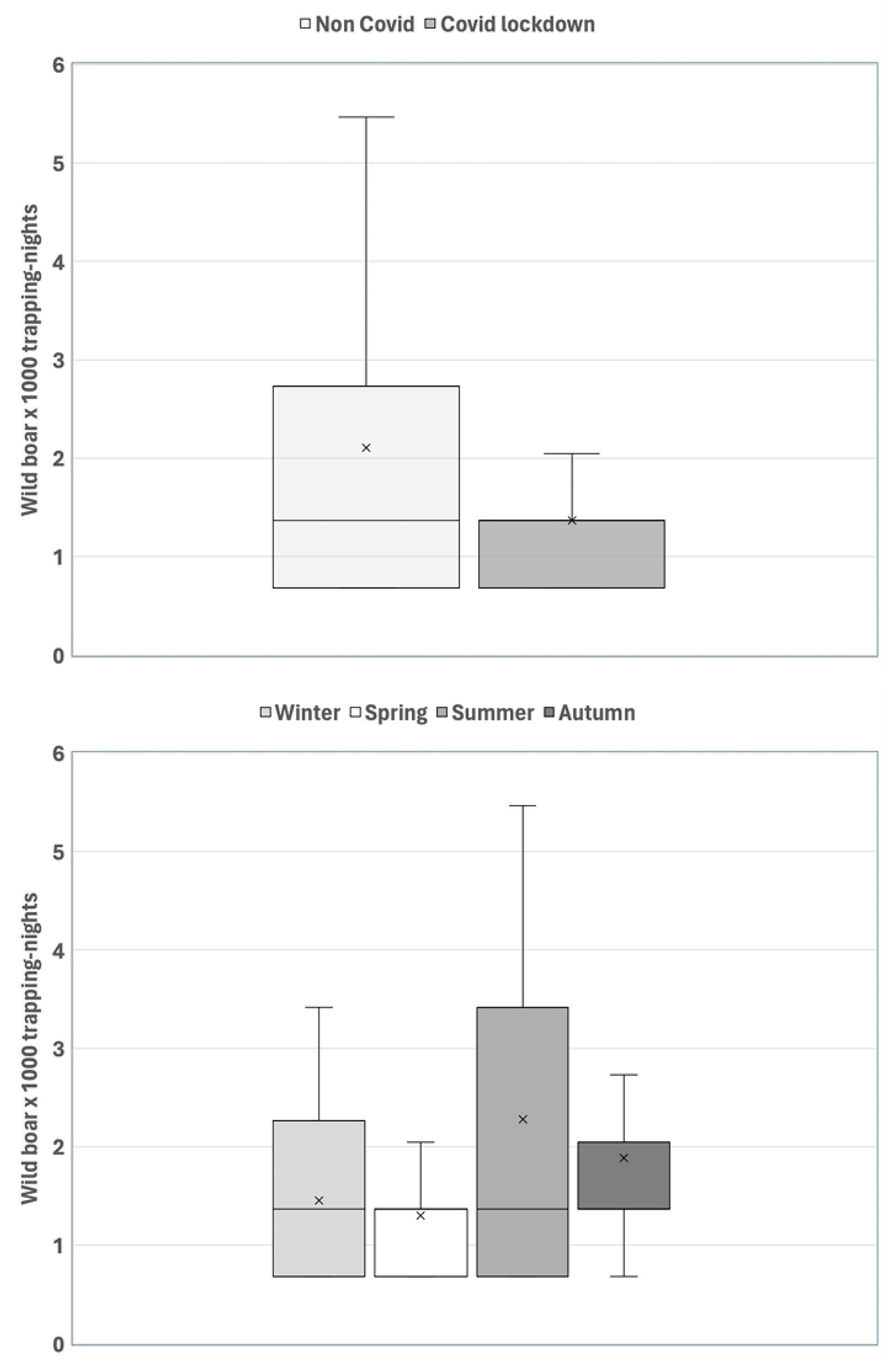
Wild boar trapping rate was significantly affected by the COVID lockdowns (GLMM; F = 11.483; p = 0.001). The wild boar trapping rate was significantly lower (ANOVA; F(1451) = 29.049; p < 0.001) during lockdown (1.370 ± 0.057 captures × 1000 trapping nights) than during the normal human activity period (2.108 ± 0.094 captures × 1000 trapping nights). The seasons did not significantly affect the trapping rate (GLMM; F = 2.325; p = 0.074), although trapping rates were significantly different between seasons (ANOVA; F(3451) = 19.393; p < 0.001; see Table 3). COVID lockdowns were therefore the main factor affecting wild boar raids into golf courses, which decreased during the anthropause; there were also seasonal changes in the frequency of these raids (Figure 4), which increased during summer and autumn.
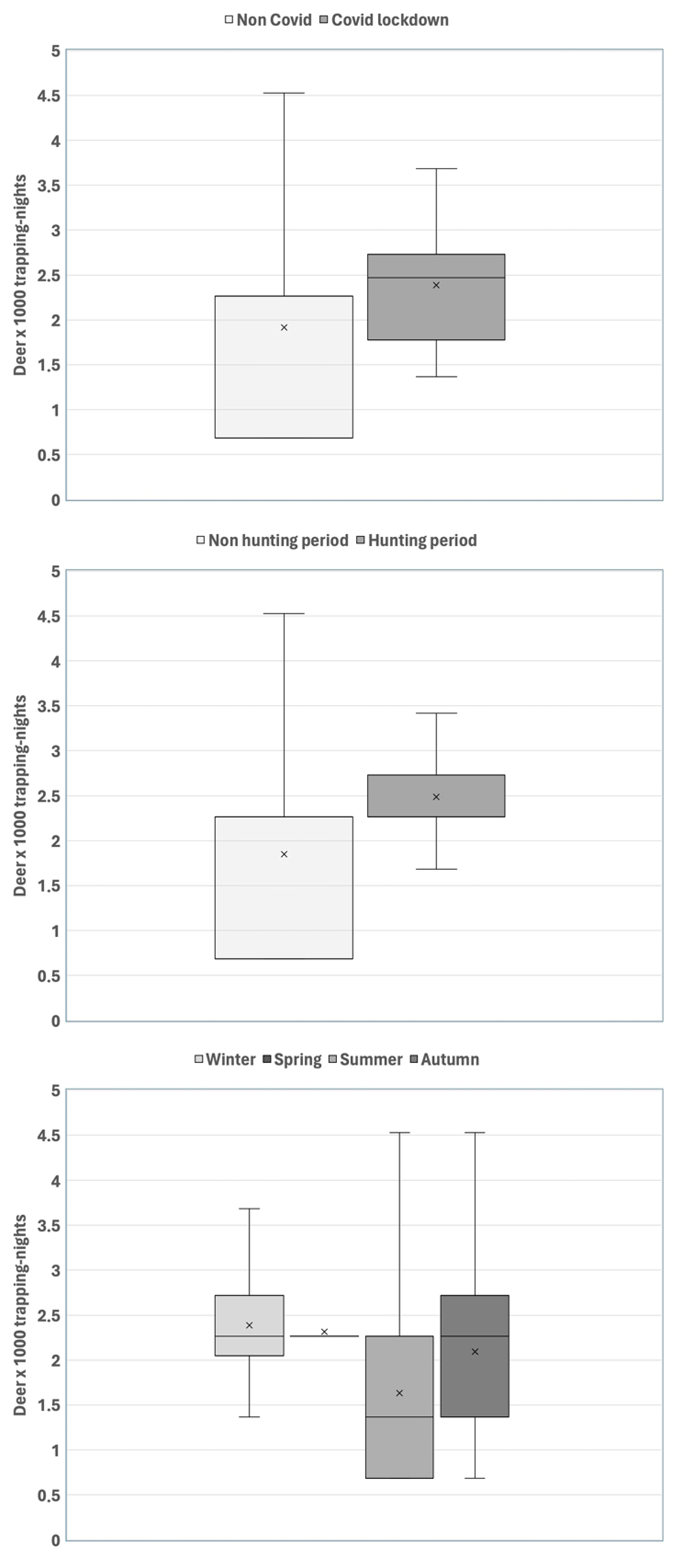
In contrast, the red deer trapping rate was not affected by the COVID lockdowns (GLMM; F = 0.358; p = 0.551), by seasonality (GLMM; F = 2.584; p = 0.056), or by the interaction between seasons and hunting period (GLMM; F = 1.118; p = 0.292). However, the hunting period did significantly affect the deer trapping rate (GLMM; F = 7.047; p = 0.009). Red deer raids on golf courses were significantly different between hunting periods (ANOVA; F(1149) = 9.958; p = 0.002), being higher during the hunting season (2.489 ± 0.128 captures × 1000 trapping nights) than during the closed period (1.848 ± 0.096 captures × 1000 trapping nights). In addition, the deer trapping rate was significantly different between seasons (ANOVA; F(3149) = 4.997; p = 0.003; see Table 3). Therefore, the main factor affecting red deer raids on golf courses was the hunting period, with deer accessing the courses more frequently during periods when they could be hunted. There were also seasonal changes in the raids (Figure 5), which decreased in summer.
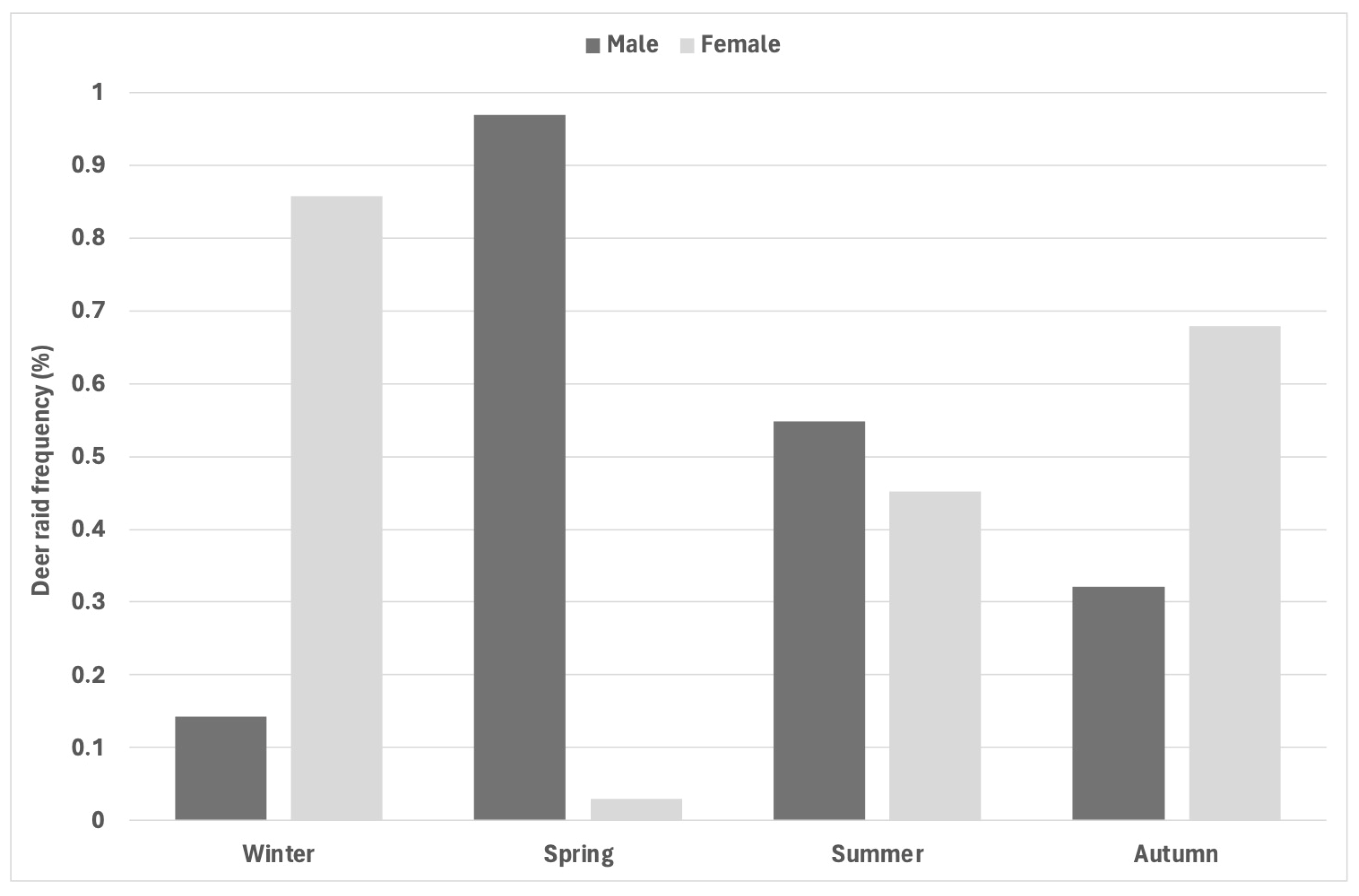
Sex was determined for 173 deer (76.9% of the total deer captured). Females, usually accompanied by fawns, entered golf courses significantly more frequently than males in winter (Chi2 = 5.758; df = 1; p = 0.016) and autumn (Chi2 = 4.830; df = 1; p = 0.027). Males entered more frequently in spring (Chi2 = 27.272; df = 1; p < 0.001); there were no significant differences during summer (Chi2 = 0.493; df = 1; p = 0.482). Figure 6 presents deer raids by sex and season.

4. Discussion

The ecological “landscape of fear” concept [58,59] proposes that animals alter their behaviour and habitat use based on perceived risk. The spatial and temporal distribution of high and low-risk areas forces species to balance their ecological requirements (foraging needs, movements, and habitat selection) with safety [60]. The concept shapes population dynamics across systems and provides a dimension for understanding how human activity can influence the creation of a landscape of fear [61].
Our results clearly indicate that hunting acts as a predatory activity, creating high-risk zones for the safety of ungulates. Conversely, urban areas, like golf courses, can function as low-risk zones where species perceive increased safety. In other words, a landscape of fear is created between areas where hunting activity is permitted and areas where it is prohibited. Wild boars accessed golf courses in the study area significantly less frequently during the COVID lockdown, while red deer used them more frequently during the hunting season. These results imply that golf courses are functioning as sanctuaries for these species. This “reserve effect” [34] is mainly explained by the lack of firearm use within these urban green spaces. Although other control methods can be used within golf courses (such as trap cages or dogs) [50], they do not appear to stop ungulate raids.
In the case of deer (which can only be hunted for a few months each year), golf courses represent lower-risk areas during hunting season. They therefore use golf courses significantly more during the hunting season (autumn and winter). The case of wild boars has an important peculiarity, in that they can be hunted year-round. This led to less frequent use of golf courses during the anthropause. In other words, the area outside golf courses ceased to be perceived as a high-risk zone for wild boars when human activity and hunting were drastically reduced.
In addition to the primary results of this study, we also show that there are raids of both ungulate species on golf courses throughout the year, more frequently in some seasons than in others. Wild boars access golf courses all year round, with a near-constant rate that increases in summer and a little less during autumn. This is logical; summer is a time of climatic stress in the Mediterranean basin, which may affect wild boars [62], as well as other species. There is less water available in the environment and, therefore, less food. At this time, golf courses provide not only refuge but also an easy larder where water, damp soil, and food may be plentiful. Autumn, especially in the early months, can function climatically like summer. Only with the arrival of the first rains and the falling of acorns (acorn-feeding season or “montanera”) does the need to search for food and water in golf courses potentially decrease [22,63], leading wild boars to use these facilities less.
Deer also access golf courses at a nearly constant rate, except during summer. Red deer are a browser species that select their habitat seasonally, seeking a balance between food and shelter [64,65]. These movements are also influenced by the reproductive season, which produces a sexual segregation in terms of nutritional requirements [65]. During certain periods, red deer select open areas and grassland [66,67]. In this context, ecotone zones, with availability of grass and woody vegetation (providing shelter and different types of food), are important for the species [65]. Golf courses may therefore become favourable habitats for deer [42].
According to our findings, the entry rate of deer into golf courses increases in winter and spring, with a marked difference between sexes. During summer, the entry rate descends, and it increases gradually during autumn. One possible hypothesis to explain the summer decline is that this is the time of greatest human activity on golf courses. Red deer have crepuscular habits that can change seasonally [68], especially in response to human activity in urban areas [69] that can force avoidance [70] and altered behaviour in urban mammals [71]. Females are more common on golf courses in winter and autumn—probably looking for easy food sources—while males are more elusive in these seasons. Females are rarely detected in spring because they are giving birth (mostly from May to June [72]. During this period, they are elusive, or their fawns are very young. Females protect their fawns; their diel activity pattern changes, prioritising safety over food [73]. Therefore, we hypothesise that they may use golf courses less frequently and look for natural areas with more vegetation cover. During summer, the critical period in the Mediterranean, both sexes access equally: males are preparing for the mating season and need to feed, while females may have fawns of several months of age, who also need food but are more capable of moving and less dependent on their mothers.

4.1. Limitations of the Study

One of the limitations of this study is the inability to provide the data on deer and wild boar hunting yields (animal catches and hunters involved) during hunting seasons in the study area. Regrettably, these data are not publicly available. In any case, reported catch figures do not usually reflect reality, as poaching is widespread and the truth about catches is rarely disclosed, so official figures are usually underestimated [74]. Another possible limitation is that there may have been some poaching during the COVID lockdown period. While this is likely, it must have been negligible, given the heavy police presence during those periods, both day and night.
Furthermore, our results associated with the cessation of hunting activity during confinement cannot be separated from the decrease in wild boar incursions, which could be due to a combination of factors such as reduced noise, human scents, or even changes in the availability of anthropogenic food resources outside the golf courses. The presence of wild boars in urban areas, even during the day, is very common in the study area. The animals are accustomed to noise, human presence, and traffic, so these factors do not seem to significantly affect their activity. Changes in food availability and anthropogenic subsidies could have had an impact (restaurant closures and less organic waste produced). However, results show that wild boars abandon safe areas (golf courses) when hunting activity ceases. Anthropogenic subsidies for these animals occur primarily in urban areas, where they scavenge for food in garbage. On golf courses organic waste production is very limited. There is only one club per golf course that offers food to the public, and it was closed during the lockdown, but existing residential properties continued to produce organic waste (i.e., subsidies availability). In any case, on golf courses, wild boars typically seek more natural food (earthworms and roots) in the fairways, which is why they cause so much damage in these facilities.

4.2. Urban Development, Ungulates, and Human–Wildlife Coexistence

Ungulates have great capacity to colonise new environments [75]. In the case of the wild boar, the species is widely distributed and uses a great variety of habitats [76]. Human disturbance, hunting, or the presence of large predators have been shown to be factors that influence them to avoid certain areas [75,77,78,79] or to alter their behaviour between day and night [80]. However, it has also been shown that these animals can become habituated to regular human disturbances in areas of low human impact [81] and alter the nature of their responses (such as level of vigilance vs. flight response) according to available cover [70]. Both cover availability and low-level human presence are the features of golf courses. In addition, it has been suggested that hunting induces stronger fear responses regardless of coverage availability [82]. This highlights the value of areas where hunting is prohibited and where other resources allow these species to meet their needs.
In this context of the great ecological plasticity of these species [83], personality plays a role. Bolder individuals emerge [84,85], capable of venturing into and adapting to new environments [32,35,86]. The spread of fearless behaviour favours the colonisation of urban areas [87], and microevolution from shyness to boldness [81] may be supported by their success and improved fitness in these new environments.
However, the question remains of why urban environments favour ungulate success. Several reasons have been proposed; of these, the spatial structure of the urban environment and the resources it offers fit the findings of this case study. Ungulate species do not typically live permanently in urban environments; instead, a source–sink dynamic is established between rural and urban environments [88]. The connectivity between both environments is important. Species look for fragmented areas, connected by green corridors [38]. These green corridors offer shelter and food for travel between environmental niches. Urban environments connected to their rural surroundings by streams offer optimal entry routes. Meanwhile, fragmented areas—the breaking apart of continuous, natural habitats into smaller, isolated patches, usually driven by human activities like urban expansion [89]—offer ecotones and diversity of resources to small populations. This fits well with the structure of peri-urban and ex-urban landscapes, and with the golf courses included in this study area.
Ungulates tend to avoid areas with high dwelling density, but their presence is favoured when building density is low, and dwellings are integrated into a matrix of green areas with a diverse environment, with integration of forest and open areas [90]. This pattern again applies to peri- and ex-urban environments. In these environments, animals find both natural resources to satisfy their needs and subsidies they can take advantage of, such as garden pruning waste [91]. These anthropogenic food sources are predictable and can improve the species’ reproductive success [92]. The adjustment of litter size to food availability [93] creates a feedback loop that leads the animals to return to the area. More stable environmental conditions than in a natural environment can be added to these conditions, especially in terms of the availability of water and humidity; this can occur in the form of irrigation systems or artificial wetlands, further favouring reproductive performance [94,95]. Finally, there is the security factor, which, in the case of urban areas, is provided by the prohibition of hunting [96], creating small-scale refuges from human activity for ungulates [79]. Urban areas that meet all these criteria, such as golf courses, therefore become an optimal habitat for ungulates.
The expansion of ungulates into urban areas has secondary consequences for humans: human–wildlife conflicts arise, damage occurs, adaptive control strategies are required, and, in some cases, society’s view of these animals becomes more negative [97,98]. Different capture methods have been tested, especially for wild boars [99]; there is still a lack of information on alternatives for controlling red deer populations, and on the general effectiveness of other options such as deterrents, fencing, and habitat management. Managing these species in urban habitats requires new approaches beyond simply trapping them. Urban structure and the management of green spaces can play a significant role in this. These should therefore be priority lines of research in a world where wild species are becoming increasingly common in human-modified habitats.

Author Contributions

Conceptualization, J.D. and D.R.; methodology, J.D.; software, J.D. and J.R.; validation, M.Á.F. and J.D.; formal analysis, J.D. and J.R.; data curation, J.D. and J.R.; writing—original draft preparation, J.D. and J.R.; writing—review and editing, M.Á.F. All authors have read and agreed to the published version of the manuscript.

Funding

This research received no external funding.

Institutional Review Board Statement

Not applicable.

Informed Consent Statement

Not applicable.

Data Availability Statement

The original contributions presented in this study are included in the article. Further inquiries can be directed to the corresponding author.

Acknowledgments

We would like to thank the golf course managers and staff that helped us during the monitoring.

Conflicts of Interest

Author Jesús Duarte was employed by the company Ofitecma Marbella SL. The remaining authors declare that the research was conducted in the absence of any commercial or financial relationships that could be construed as a potential conflict of interest.

References

  1. Mazor, T.; Doropoulos, C.; Schwarzmueller, F.; Gladish, D.W.; Kumaran, N.; Merkel, K.; Di Marco, M.; Gagic, V. Global mismatch of policy and research on drivers of biodiversity loss. Nat. Ecol. Evol. 2018, 2, 1071–1074. [Google Scholar] [CrossRef] [PubMed]
  2. Keck, F.; Peller, T.; Alther, R.; Barouillet, C.; Blackman, R.; Capo, E.; Chonova, T.; Couton, M.; Fehlinger, L.; Kirschner, D.; et al. The global human impact on biodiversity. Nature 2025, 641, 395–400. [Google Scholar] [CrossRef] [PubMed]
  3. Williams, B.A.; Venter, O.; Allan, J.R.; Atkinson, S.C.; Rehbein, J.A.; Ward, M.; Di Marco, M.; Grantham, H.S.; Ervin, J.; Goetz, S.J.; et al. Change in terrestrial human footprint drives continued loss of intact ecosystems. One Earth 2020, 3, 371–382. [Google Scholar] [CrossRef]
  4. Tucker, M.A.; Böhning-Gaese, K.; Fagan, W.F.; Fryxell, J.M.; Van Moorter, B.; Alberts, S.C.; Ali, A.H.; Allen, A.M.; Attias, N.; Avgar, T.; et al. Moving in the Anthropocene: Global reductions in terrestrial mammalian movements. Science 2018, 359, 466–469. [Google Scholar] [CrossRef]
  5. Corradini, A.; Randles, M.; Pedrotti, L.; van Loon, E.; Passoni, G.; Oberosler, V.; Rovero, F.; Tattoni, C.; Ciolli, M.; Cagnacci, F. Effects of cumulated outdoor activity on wildlife habitat use. Biol. Conserv. 2021, 253, 108818. [Google Scholar] [CrossRef]
  6. Whittington, J.; Hebblewhite, M.; Baron, R.W.; Ford, A.T.; Paczkowski, J. Towns and trails drive carnivore movement behaviour, resource selection, and connectivity. Mov. Ecol. 2022, 10, 17. [Google Scholar] [CrossRef]
  7. Farfán, M.A.; Díaz-Ruiz, F.; Duarte, J.; Martín-Taboada, A.; Muñoz, A.R. Wind farms and Griffon Vultures: Evidence that under certain conditions history is not-always turbulent. Glob. Ecol. Conserv. 2023, 48, e02728. [Google Scholar] [CrossRef]
  8. Abu-Rayash, A.; Dincer, I. Analysis of mobility trends during the COVID-19 coronavirus pandemic: Exploring the impacts on global aviation and travel in selected cities. Energy Res. Soc. Sci. 2020, 68, 101693. [Google Scholar] [CrossRef]
  9. Rutz, C.; Loretto, M.-C.; Bates, A.E.; Davidson, S.C.; Duarte, C.M.; Jetz, W.; Johnson, M.; Kato, A.; Kays, R.; Mueller, T.; et al. COVID-19 lockdown allows researchers to quantify the effects of human activity on wildlife. Nat. Ecol. Evol. 2020, 4, 1156–1159. [Google Scholar] [CrossRef]
  10. Chowdhury, R.B.; Khan, A.; Mahiat, T.; Dutta, H.; Tasmeea, T.; Arman, A.B.B.; Fardu, F.; Roy, B.B.; Hossain, M.M.; Khan, N.A.; et al. Environmental externalities of the COVID-19 lockdown: Insights for sustainability planning in the Anthropocene. Sci. Total Environ. 2021, 783, 147015. [Google Scholar] [CrossRef]
  11. Montgomery, R.A.; Raupp, J.; Parkhurst, M. Animal behavioral responses to the COVID-19 quietus. Trends Ecol. Evol. 2021, 36, 184–186. [Google Scholar] [CrossRef]
  12. Manenti, R.; Mori, E.; Di Canio, V.; Mercurio, S.; Picone, M.; Caffi, M.; Brambilla, M.; Ficetola, G.F.; Rubolini, D. The good, the bad and the ugly of COVID-19 lockdown effects on wildlife conservation: Insights from the first European locked down country. Biol. Conserv. 2020, 249, 108728. [Google Scholar] [CrossRef] [PubMed]
  13. Silva-Rodríguez, E.A.; Gálvez, N.; Swan, G.J.F.; Cusack, J.J.; Moreira-Arce, D. Urban wildlife in times of COVID-19: What can we infer from novel carnivore records in urban areas? Sci. Total Environ. 2021, 765, 142713. [Google Scholar] [CrossRef] [PubMed]
  14. Wilmers, C.C.; Nisi, A.C.; Ranc, N. COVID-19 suppression of human mobility releases mountain lions from a landscape of fear. Curr. Biol. 2021, 31, 3952–3955. [Google Scholar] [CrossRef] [PubMed]
  15. Gordo, O.; Brotons, L.; Herrando, S.; Gargallo, G. Rapid behavioural response of urban birds to COVID-19 lockdown. Proc. R. Soc. B Biol. Sci. 2021, 288, 20202513. [Google Scholar] [CrossRef]
  16. Louvrier, J.L.; Planillo, A.; Stillfried, M.; Hagen, R.; Börner, K.; Kimming, S.; Ortmann, S.; Schumann, A.; Brandt, M.; Kramer-Schadt, S. Spatiotemporal interactions of a novel mesocarnivore community in an urban environment before and during SARS-CoV-2 lockdown. J. Anim. Ecol. 2021, 91, 367–380. [Google Scholar] [CrossRef]
  17. Schrimpf, M.; Des Brisay, P.G.; Johnston, A.; Smith, A.C.; Sánchez-Jasso, J.; Robinson, B.G.; Warrington, M.H.; Mahony, N.A.; Horn, A.G.; Strimas-Mackey, M.; et al. Reduced human activity during COVID-19 alters avian land use across North America. Sci. Adv. 2021, 7, eabf5073. [Google Scholar] [CrossRef]
  18. Niedziałkowska, M.; Tarnowska, E.; Ligmanowska, J.; Jędrzejewska, B.; Podgórski, T.; Radziszewska, A.; Ratajczyk, I.; Kusza, S.; Bunevich, A.N.; Danila, G.; et al. Clear phylogeographic pattern and genetic structure of wild boar Sus scrofa population in central and Eastern Europe. Sci. Rep. 2021, 11, 9680. [Google Scholar] [CrossRef]
  19. Markov, N.; Economov, A.; Hjeljord, O.; Rolandsen, C.M.; Bergqvist, G.; Danilov, P.; Dolinin, V.; Kambalin, V.; Kondratov, A.; Krasnoshapka, N.; et al. The wild boar Sus scrofa in northern Eurasia: A review of range expansion history, current distribution, factors affecting the northern distributional limit, and management strategies. Mammal Rev. 2022, 52, 519–537. [Google Scholar] [CrossRef]
  20. Abaigar, T.; del Barrio, G.; Vericad, J.R. Habitat preference of wild boar (Sus scrofa L., 1758) in a Mediterranean environment. Indirect evaluation by signs. Mammalia 1994, 58, 201–210. [Google Scholar] [CrossRef]
  21. Acevedo, P.; Farfan, M.A.; Marquez, A.L.; Delibes-Mateos, M.; Real, R.; Vargas, J.M. Past, present and future of wild ungulates in relation to changes in land use. Landsc. Ecol. 2011, 26, 19–31. [Google Scholar] [CrossRef]
  22. Ballari, S.A.; Barrios-García, M.N. A review of wild boar Sus scrofa diet and factors affecting food selection in native and introduced ranges. Mammal Rev. 2014, 44, 124–134. [Google Scholar] [CrossRef]
  23. Barrios-Garcia, M.N.; Ballari, S.A. Impact of wild boar (Sus scrofa) in its introduced and native range: A review. Biol. Invas. 2012, 14, 2283–2300. [Google Scholar] [CrossRef]
  24. Massei, G.; Kindberg, J.; Licoppe, A.; Gacic, D.; Sprem, N.; Kamler, J.; Baubet, E.; Hohmann, U.; Monaco, A.; Ozolins, J.; et al. Wild boar populations up, numbers of hunters down? A review of trends and implications for Europe: Wild boar and hunter trends in Europe. Pest Manag. Sci. 2015, 71, 492–500. [Google Scholar] [CrossRef] [PubMed]
  25. Cahill, S.; Llimona, F.; Cabaneros, L.; Calomardo, F. Characteristics of wild boar (Sus scrofa) habituation to urban areas in the Collserola Natural Park (Barcelona) and comparison with other locations. Anim. Biodivers. Conserv. 2012, 35, 221–233. [Google Scholar] [CrossRef]
  26. Licoppe, A.; Prévot, C.; Heymans, M.; Bovy, C.; Casaer, J.; Cahill, S. Wild boar/feral pig in (Peri-) urban areas. In Managing Wild Boar in Human-Dominated Landscapes, International Union of Game Biologists Congress (IUGB), Brussels, Belgium, 28 August 2013; International Survey Report as an Introduction to the Workshop; International Union of Game Biologists: Cernier, Switzerland, 2013. [Google Scholar]
  27. Von Essen, E.; O’Mahony, K.; Szczygielska, M.; Gieser, T.; Vaté, V.; Arregui, A.; Broz, L. The many boar identities: Understanding difference and change in the geographies of European wild boar management. J. Environ. Plan. Manag. 2023, 68, 728–750. [Google Scholar] [CrossRef]
  28. Jägerbrand, A.K.; Gren, I.M. Consequences of Increases in Wild Boar-Vehicle Accidents 2003–2016 in Sweden on Personal Injuries and Costs. Safety 2018, 4, 53. [Google Scholar] [CrossRef]
  29. Abrantes, A.C.; Vieira-Pinto, M. 15 years overview of European zoonotic surveys in wild boar and red deer: A systematic review. One Health 2023, 16, 100519. [Google Scholar] [CrossRef]
  30. Ciach, M.; Tetkowski, P.; Fedyń, I. Local-scale habitat configuration makes a niche for wildlife encroaching into an urban landscape: Grubbing sites of wild boar Sus scrofa in a city matrix. Urban Ecosyst. 2023, 26, 629–639. [Google Scholar] [CrossRef]
  31. Rekiel, A.; Sonta, M.; Wiecek, J.; Dudzik, M. Problems of Synurbization—Wild Boar in the City. Sustainability 2025, 17, 8988. [Google Scholar] [CrossRef]
  32. Castillo-Contreras, R.; Mentaberre, G.; Aguilar, X.F.; Conejero, C.; Colom-Cadena, A.; Ráez-Bravo, A.; González-Crespo, C.; Espunyes, J.; Lavín, S.; López-Olvera, J.R. Wild boar in the city: Phenotypic responses to urbanisation. Sci. Total Environ. 2021, 773, 145593. [Google Scholar] [CrossRef]
  33. Johann, F.; Handschuh, M.; Linderoth, P.; Dormann, C.F.; Arnold, J. Adaptation of wild boar (Sus scrofa) activity in a human-dominated landscape. BMC Ecol. 2020, 20, 4. [Google Scholar] [CrossRef] [PubMed]
  34. Colomer, J.; Rosell, C.; Rodriguez-Teijeiro, J.D.; Massei, G. ‘Reserve effect’: An opportunity to mitigate human-wild boar conflicts. Sci. Total Environ. 2021, 795, 148721. [Google Scholar] [CrossRef] [PubMed]
  35. Stillfried, M.; Gras, P.; Börner, K.; Göritz, F.; Painer, J.; Röllig, K.; Wenzler, M.; Hofer, H.; Ortmann, S.; Kramer-schadt, S. Secrets of Success in a Landscape of Fear: Urban Wild Boar Adjust Risk Perception and Tolerate Disturbance. Front. Ecol. Evol. 2017, 5, 157. [Google Scholar] [CrossRef]
  36. Toger, M.; Benenson, I.; Wang, Y.; Czamanski, D.; Malkinson, D. Pigs in space: An agent-based model of wild boar (Sus scrofa) movement into cities. Landsc. Urban Plan. 2018, 173, 70–80. [Google Scholar] [CrossRef]
  37. Marin, C.; Werno, J.; Le Campion, G.; Couderchet, L. Navigating discreetly: Spatial ecology of urban wild boar in Bordeaux City’s landscape of fear, France. Sci. Total Environ. 2024, 954, 176436. [Google Scholar] [CrossRef]
  38. Castillo-Contreras, R.; Carvalho, J.; Serrano, E.; Mentaberre, G.; Fernández-Aguilar, X.; Colom, A.; González-Crespo, C.; Lavín, S.; López-Olvera, J.R. Urban wild boars prefer fragmented areas with food resources near natural corridors. Sci. Total Environ. 2018, 615, 282–288. [Google Scholar] [CrossRef]
  39. Adams, C.E.; LaFleur-Villareal, C. Urban Deer Havens; CRC Press: Boca Raton, FL, USA, 2020. [Google Scholar]
  40. Rotherham, I.D.; Derbyshire, M.J. Deer in the Peak District and its urban fringe. Br. Wildl. 2012, 23, 256–264. [Google Scholar]
  41. Duarte, J.; Farfán, M.A. Preferencias de hábitat del ciervo (Cervus elaphus) en una interfase urbano-forestal del sur de España. In Proceedings of the XIV Reunião de Ungulados Silvestres Ibéricos (RUSI), Figueira de Castelo, Portugal, 29–30 September 2023. [Google Scholar]
  42. Duarte, J.; Farfán, M.A.; Fa, J.E.; Vargas, J.M. Deer population inhabiting urban areas in the south of Spain: Habitat and conflicts. Eur. J. Wildl. Res. 2015, 61, 365–377. [Google Scholar] [CrossRef]
  43. Borrego, S. Campos de Golf y Turismo: Estudio de Málaga y su Provincia; Turismo Andaluz, D.L.: Sevilla, Spain, 2002; 278p. [Google Scholar]
  44. Baubet, E.; Ropert-Coudert, Y.; Brandt, S. Seasonal and annual variations in earthworm consumption by wild boar (Sus scrofa L.). Wildl. Res. 2003, 30, 179–186. [Google Scholar] [CrossRef]
  45. Junta de Andalucía. Por El Que Se Aprueba El Reglamento de Ordenación de la Caza en Andalucía. In Boletín Oficial de la Junta de Andalucía; Decreto 126/2017, 2017, de 25 de julio; Junta de Andalucía: Seville, Spain, 2017; Volume 149, pp. 102–165. [Google Scholar]
  46. Tolon, V.; Baubet, É. L’effet des réserves sur l’occupation de l’espace par le sanglier. Faune Sauvag. 2010, 288, 14–18. [Google Scholar]
  47. Grignolio, S.; Merli, E.; Bongi, P.; Ciuti, S.; Apollonio, M. Effects of hunting with hounds on a non-target species living on the edge of a protected area. Biol. Conserv. 2011, 144, 641–649. [Google Scholar] [CrossRef]
  48. Frank, B.; Monaco, A.; Bath, A.J. Beyond standard wildlife management: A pathway to encompass human dimension findings in wild boar management. Eur. J. Wildl. Res. 2015, 61, 723–730. [Google Scholar] [CrossRef]
  49. Capel Molina, J.J. Los Climas de España; Oikos-Tau: Barcelona, Spain, 1981; 429p. [Google Scholar]
  50. Junta de Andalucía. Resolución de 4 de junio de 2025 de la Dirección General de Política Forestal y Biodiversidad, por la que se declara el área de emergencia cinegética temporal por daños y riesgos sanitarios de jabalí y cerdos asilvestrados, en la Comunidad Autónoma de Andalucía. In Boletín Oficial de la Junta de Andalucía; Junta de Andalucía: Seville, Spain, 2025; Volume 112, pp. 8406/1–8406/10. [Google Scholar]
  51. Junta de Andalucía. Resolución de 28 de mayo de 2025 de la Dirección General de Política Forestal y Biodiversidad, por la que se publican los períodos hábiles de caza para la temporada 2025/2026. In Boletín Oficial de la Junta de Andalucía; Junta de Andalucía: Seville, Spain, 2025; Volume 105, pp. 7800/1–7800/6. [Google Scholar]
  52. Junta de Andalucía. Resolución de 5 de diciembre de 2025 conjunta de la Dirección General de Política Forestal y Biodiversidad, y la Dirección General de la Producción Agrícola y Ganadera, por la que se declara la emergencia cinegética temporal por daños y riesgos sanitarios de jabalí y cerdos asilvestrados, en la Comunidad Autónoma de Andalucía. In Boletín Oficial de la Junta de Andalucía; Junta de Andalucía: Seville, Spain, 2025; Volume 235, pp. 16590/1–16590/9. [Google Scholar]
  53. O’Brien, T.G.; Kinnaird, M.F.; Wibisono, H.T. Crouching tigers, hidden prey: Sumatran tiger and prey populations in a tropical forest landscape. Anim. Conserv. 2003, 6, 131–139. [Google Scholar] [CrossRef]
  54. Ferreras, P.; Díaz-Ruiz, F.; Monterroso, P. Improving mesocarnivore detectability with lures in camera-trapping studies. Wildl. Res. 2018, 45, 505–517. [Google Scholar] [CrossRef]
  55. Crawley, M.J. GLM for Ecologists; Blackwell Scientific Publications: Oxford, UK, 1993. [Google Scholar]
  56. Fowler, J.; Cohen, L. Practical Statistics for Field Biology; John Wiley & Sons: Chichester, UK, 1992. [Google Scholar]
  57. Sokal, R.R.; Rohlf, F.J. Biometry, 4th ed.; WH Freeman: New York, NY, USA, 2012. [Google Scholar]
  58. Laundré, J.W.; Hernández, L.; Altendorf, K.B. Wolves, elk, and bison: Reestablishing the “landscape of fear” in Yellowstone National Park, USA. Can. J. Zool. 2001, 79, 1401–1409. [Google Scholar] [CrossRef]
  59. Bleicher, S.S. The landscape of fear conceptual framework: Definition and review of current applications and misuses. PeerJ 2017, 5, e3772. [Google Scholar] [CrossRef]
  60. Laundré, J.W.; Hernández, L.; Ripple, W. The landscape of fear: Ecological implications of being afraid. Open Ecol. J. 2010, 3, 1–7. [Google Scholar] [CrossRef]
  61. Gaynor, K.M.; Brown, J.S.; Middleton, A.D.; Power, M.E.; Brashares, J.S. Landscape of fear: Spatial patterns of risk perception and responses. Trends Ecol. Evol. 2019, 34, 355–368. [Google Scholar] [CrossRef]
  62. Güldenpfennig, J.; Fattorini, N.; Ježek, M.; Morelle, K.; Podgórski, T. Effects of summer weather and heatwaves on wild boar activity. R Soc. Open Sci. 2025, 12, 242208. [Google Scholar] [CrossRef]
  63. Mikulka, O.; Zeman, J.; Drimaj, J.; Plhal, R.; Adamec, Z.; Kamler, J.; Heroldová, M. The importance of natural food in wild boar (Sus scrofa) diet during autumn and winter. Folia Zool. 2018, 67, 165–172. [Google Scholar] [CrossRef]
  64. Braza, F.; Álvarez, F. Habitat use by red deer and fallow deer in Doñana national park. Misc. Zool. 1987, 11, 363–367. [Google Scholar]
  65. Alves, J.; Alves da Silva, A.; Soares, A.M.V.M.; Fonseca, C. Spatial and temporal habitat use and selection by red deer: The use of direct and indirect methods. Mamm. Biol. 2014, 29, 338–348. [Google Scholar] [CrossRef]
  66. Bellu, A.; Bugalho, M.N.; Monteiro-Henriques, T.; Costa, J.C.; Rego, F.C. Habitat use at fine spatial scale: How does patch clustering criteria explain the use of meadows by red deer? Eur. J. Wildl. Res. 2012, 58, 645–654. [Google Scholar] [CrossRef]
  67. Laguna, E.; Carpio, A.J.; Vicente, J.; Barasona, J.A.; Triguero-Ocaña, R.; Jiménez-Ruiz, S.; Gómez-Manzaneque, A.; Acevedo, P. The spatial ecology of red deer under different land use and management scenarios: Protected areas, mixed farms and fenced hunting estate. Sci. Total Environ. 2021, 786, 147124. [Google Scholar] [CrossRef]
  68. Carranza, J.; Hidalgo de Trucios, S.J.; Medina, R.; Valencia, J.; Delgado, J. Space use by red deer in a Mediterranean ecosystem as determined by radio-tracking. Appl. Anim. Behav. Sci. 1991, 30, 363–371. [Google Scholar] [CrossRef]
  69. Gallo, T.; Fidino, M.; Gerber, B.; Ahlers, A.A.; Angstmann, J.L.; Amaya, M.; Concilio, A.L.; Drake, D.; Gay, D.; Lehrer, E.W.; et al. Mammals adjust diel activity across gradients of urbanization. eLife 2022, 11, e74756. [Google Scholar] [CrossRef]
  70. Jayakody, S.; Sibbald, A.M.; Gordon, I.J.; Lambin, X. Red deer Cervus elaphus vigilance behaviour differs with habitat and type of human disturbance. Wildl. Biol. 2008, 14, 81–91. [Google Scholar] [CrossRef]
  71. McCleery, R. Urban mammals. In Urban Ecosystem Ecology; Aitkemhead-Petersen, J., Volder, A., Eds.; Agronomy Monographs; American Society of Agronomy: Madison, WI, USA; Crop Science Society of American: Madison, WI, USA; Soil Society of America: Madison, WI, USA, 2010; Volume 5, pp. 87–102. [Google Scholar]
  72. Ballesteros, F. Las especies de caza en España. In Biología, Ecología y Conservación; Estudio y Gestión del Medio: Oviedo, Spain, 1998; 316p. [Google Scholar]
  73. Soriguer, R.C.; Fandos, P.; Bernáldez, E.; Delibes, J.R. El Ciervo en Andalucía; Junta de Andalucía, Servicios de Publicaciones y Divulgación: Sevilla, Spain, 1994; 244p. [Google Scholar]
  74. Farfán, M.A.; Duarte, J.; Fa, J.E. Oficialidad y realidad: Qué sabemos sobre las extracciones de caza? In Proceedings of the XIV Congreso de la Sociedad Española para la Conservación y Estudio de los Mamíferos, Jaca, Spain, 5–8 December 2009. [Google Scholar]
  75. Müller, A.S.; Dahm, M.; Bochnr, P.K.; Root-Bernstein, M.; Svenning, J.C. Large herbivores in novel ecosystems—Habitat selection by red deer (Cervus elaphus) in a former brown-coal mining area. PLoS ONE 2017, 12, e0177431. [Google Scholar] [CrossRef]
  76. Massei, G.; Genov, P.V. The environmental impact of wild boar. Galemys 2004, 16, 135–145. [Google Scholar] [CrossRef]
  77. Laguna, E.; Barasona, J.A.; Vicente, J.; Keuling, O.; Acevedo, P. Differences in wild boar spatial behavior among land uses and management in Mediterranean ecosystem. Sci. Total Environ. 2021, 196, 148966. [Google Scholar] [CrossRef] [PubMed]
  78. Marion, S.; Demšar, U.; Davies, A.B.; Irvine, R.J.; Stephens, P.A.; Long, J.A. Red deer behavioural response to hiking activity: A study using camera traps. J. Zool. 2022, 318, 152–165. [Google Scholar] [CrossRef]
  79. Rempfler, T.; Peters, W.; Signer, C.; Filli, F.; Jenny, H.; Hackländer, K.; Buchmann, S.; Anderwald, P. Contrasting daytime habitat selection in wild red deer within and outside hunting ban areas emphasizes importance of small-scale refuges from human. Ecol. Evol. 2025, 15, e71407. [Google Scholar] [CrossRef] [PubMed]
  80. Coppes, J.; Burghardt, F.; Hagen, R.; Suchant, R.; Braunisch, V. Human recreation affects spatio-temporal habitat use patterns in red deer (Cervus elaphus). PLoS ONE 2017, 12, e0175134. [Google Scholar] [CrossRef]
  81. Sibbald, A.M.; Hooper, R.J.; McLend, J.E.; Gordon, I.J. Responses of red deer (Cervus elaphus) to regular disturbances by hill walkers. Eur. J. Wildl. Res. 2011, 57, 817–825. [Google Scholar] [CrossRef]
  82. Meisingset, E.L.; Gusevik, J.; Skjorestad, A.; Brekkum, O.; Mysterud, A.; Rosell, F. Impact of human disturbance on flight response and habitat use of red deer. Ecosphere 2022, 13, e4281. [Google Scholar] [CrossRef]
  83. Podgórski, T.; Baś, G.; Jȩdrzejewska, B.; Sönnichsen, L.; Śniezko, S.; Jȩdrzejewski, W.; Okarma, H. Spatiotemporal behavioral plasticity of wild boar (Sus scrofa) under contrasting conditions of human pressure: Primeval forest and metropolitan area. J. Mammal. 2013, 94, 109–119. [Google Scholar] [CrossRef]
  84. Honda, T.; Iijima, H.; Tsuboi, J.; Uchida, K. A review of urban wildlife management from the animal personality perspective: The case of urban deer. Sci. Total Environ. 2018, 644, 576–582. [Google Scholar] [CrossRef]
  85. Martínez-Abraín, A.; Jiménez, J.; Oro, D. Pax Romana: ‘refuge abandonment’ and spread of fearless behavior in a reconciling world. Anim. Conserv. 2019, 22, 3–13. [Google Scholar] [CrossRef]
  86. Hagemann, J.; Conejero, C.; Stillfried, M.; Mentaberre, G.; Castillo-Contreras, R.; Fickel, J.; López-Olvera, J.R. Genetic population structure defines wild boar as an urban exploiter species in Barcelona, Spain. Sci. Total Environ. 2022, 833, 155126. [Google Scholar] [CrossRef]
  87. Martínez-Abraín, A.; Jiménez, J. Anthropogenic areas as incidental substitutes for original habitat. Conserv. Biol. 2016, 30, 593–598. [Google Scholar] [CrossRef]
  88. Stillfried, M.; Gras, P.; Busch, M.; Börner, K.; Kramer-Schadt, S.; Ortmann, S. Wild inside: Urban wild boar select natural, not anthropogenic food resources. PLoS ONE 2017, 12, e0175127. [Google Scholar] [CrossRef] [PubMed]
  89. De Montis, A.; Martín, B.; Ortega, E.; Ledda, A.; Serra, V. Landscape fragmentation in Mediterranean Europe: A comparative approach. Land Use Policy 2017, 64, 83–94. [Google Scholar] [CrossRef]
  90. Anderson, C.W.; Nielsen, C.K.; Storm, D.J.; Schauber, E.M. Modeling habitat use of deer in an exurban landscape. Wildl. Soc. Bull. 2011, 35, 235–242. [Google Scholar] [CrossRef]
  91. Oro, D.; Genovart, M.; Tavecchia, G.; Fowler, M.S.; Martínez-Abraín, A. Ecological and evolutionary implications of food subsidies from humans. Ecol. Lett. 2013, 16, 1501–1514. [Google Scholar] [CrossRef]
  92. Real, E.; Oro, D.; Martínez-Abraín, A.; Igual, J.M.; Bertolero, A.; Bosch, M.; Tavecchia, G. Predictable anthropogenic food subsidies, density-dependence and socio-economic factors influence breeding investment in a generalist seabird. J. Avian Biol. 2017, 48, 1462–1470. [Google Scholar] [CrossRef]
  93. Gamelon, M.; Douhard, M.; Baubet, E.; Gimenez, O.; Brandt, S.; Gaillard, J.M. Fluctuating food resources influence developmental plasticity in wild boar. Biol. Lett. 2013, 9, 20130419. [Google Scholar] [CrossRef]
  94. Fernández-Llario, P.; Carranza, J. Reproductive performance of the wild boar in a mediterranean ecosystem under drought conditions. Ethol. Ecol. Evol. 2000, 12, 335–343. [Google Scholar] [CrossRef]
  95. Fernández-Llario, P.; Mateos-Quesada, P. Influence of rainfall on the breeding biology of Wild boar (Sus scrofa) in a Mediterranean ecosystem. Folia Zool. 2005, 54, 240–248. [Google Scholar]
  96. Storm, D.J.; Nielsen, C.K.; Schauber, E.M.; Woolf, A. Deer-human conflict and hunter access in an exurban landscape. Hum.-Wildl. Confl. 2007, 1, 53–59. [Google Scholar]
  97. Valente, A.M.; Acevedo, P.; Figueiredo, A.M.; Martins, R.; Fonseca, C.; Torres, R.T.; Delibes-Mateos, M. Dear deer? Maybe for now. People’s perception on red deer (Cervus elaphus) populations in Portugal. Sci. Total Environ. 2020, 748, 141400. [Google Scholar] [CrossRef]
  98. Valente, A.M.; Figueiredo, A.M.; Acevedo, P.; Martins, R.; Fonseca, C.; Torres, R.T.; Delibes-Mateos, M. Is Pumba still beloved? People’s perception on wild boar in Portugal. Eur. J. Wildl. Res. 2024, 70, 17. [Google Scholar] [CrossRef]
  99. Torres-Blas, I.; Mentaberre, G.; Castillo-Contreras, R.; Fernández-Aguilar, X.; Conejero, C.; Valldeperes, M.; González-Crespo, C.; Colom-Cadena, A.; Lavín, S.; López-Olvera, J.R. Assessing methods to live-capture wild boars (Sus scrofa) in urban and peri-urban environments. Vet. Rec. 2020, 187, e85. [Google Scholar] [CrossRef]
Figure 1. The location of the study area in the south of Spain, Andalucía, Málaga province. Golf courses: (A) Los Arqueros; (B) Alferini; and (C) Los Naranjos.
Urbansci 10 00245 g001
Figure 2. The three golf courses sampled for estimating ungulate raids ((A) Los Arqueros; (B) Alferini; and (C) Los Naranjos), all of them located in the south of Spain, Andalucía, Málaga province. Courses (A,C) are in the Benahavís and Marbella municipalities, respectively, and are integrated within the urban matrix. Course (B) is in the Benahavís municipality, in a peri-urban context. The northern area in course (C) is still under urban development. The red dot indicates the access point from which camera traps were installed, downstream of the streams (marked in blue).
Urbansci 10 00245 g002
Figure 3. Hunting estates (shaded in pink) to the north and west of the golf courses (green) and the developed urban matrix (purple) in the study area. The spaces between the courses, the urban matrix, and the hunting estates are rural or agricultural properties, where damage control with firearms is permitted subject to authorisation. (A) Los Arqueros; (B) Alferini; and (C) Los Naranjos.
Urbansci 10 00245 g003
Figure 4. Wild boar trapping rate in relation to the COVID lockdowns and season in the study area. The cross represents the median.
Urbansci 10 00245 g004
Figure 5. Red deer trapping rate in relation to the COVID lockdowns, hunting period, and season in the study area. The cross represents the median.
Urbansci 10 00245 g005
Figure 6. Red deer raid frequency on golf courses by sex and season in the study area.
Urbansci 10 00245 g006
Table 1. Sampling effort and periods in the study area.
Golf CourseCams InstalledTrapping NightsStartFinish
A. Los Arqueros91464June 2020March 2022
B. Alferini2442March 2021March 2022
C. Los Naranjos7733July 2020March 2022
Total182639
Table 2. Independent ungulate events during the sampling period in the study area across different periods.
PeriodWild BoarRed Deer
Independent events (total)1093225
COVID lockdowns76741
Normal activity period326184
Hunting season---55
Non-hunting season---170
Table 3. Seasonal trapping rates (ungulate × 1000 trapping nights; mean ± SE) and effort in the study area.
WinterSpringSummerAutumn
Wild boar1.456 ± 0.0821.299 ± 0.1262.279 ± 0.1501.889 ± 0.107
Red deer2.388 ± 0.2122.316 ± 0.1271.631 ± 0.1422.094 ± 0.158
Trapping nights562546738793
Disclaimer/Publisher’s Note: The statements, opinions and data contained in all publications are solely those of the individual author(s) and contributor(s) and not of MDPI and/or the editor(s). MDPI and/or the editor(s) disclaim responsibility for any injury to people or property resulting from any ideas, methods, instructions or products referred to in the content.