



Effects of Sodium Hypochlorite on Daphnia spp. Populations and Resting Eggs Hatching in Urban Wastewater Treatment

 ,
,  ,
,
Abstract
1. Introduction
2. Materials and Methods
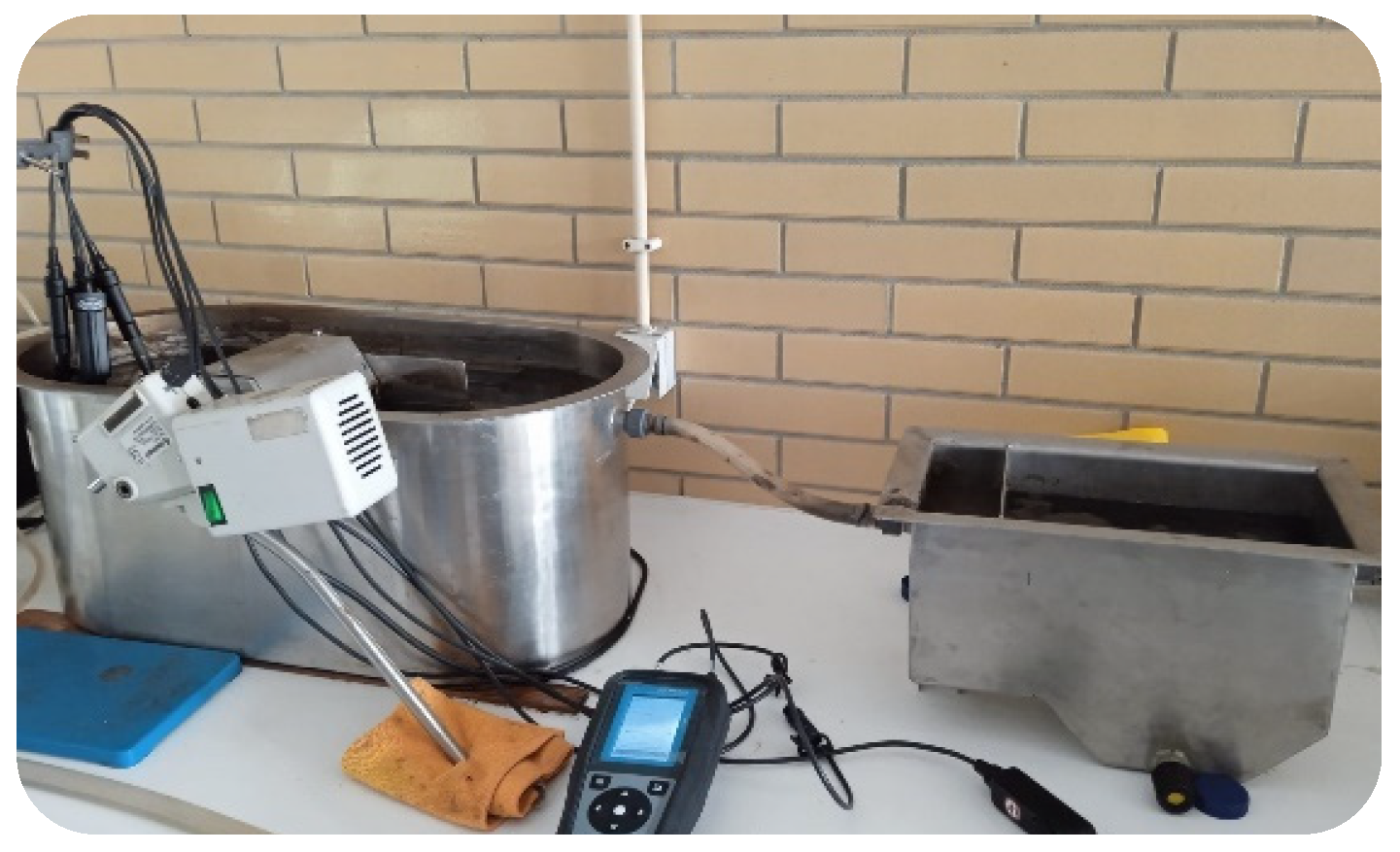
2.1. Pilot-Scale Biological Reactor and Daphnid Culture
2.2. Physico-Chemical Characterization of Clarified Water and Mixed Liquor
2.3. Toxicity and Hatching Rate Tests with NaOCl
3. Results and Discussion
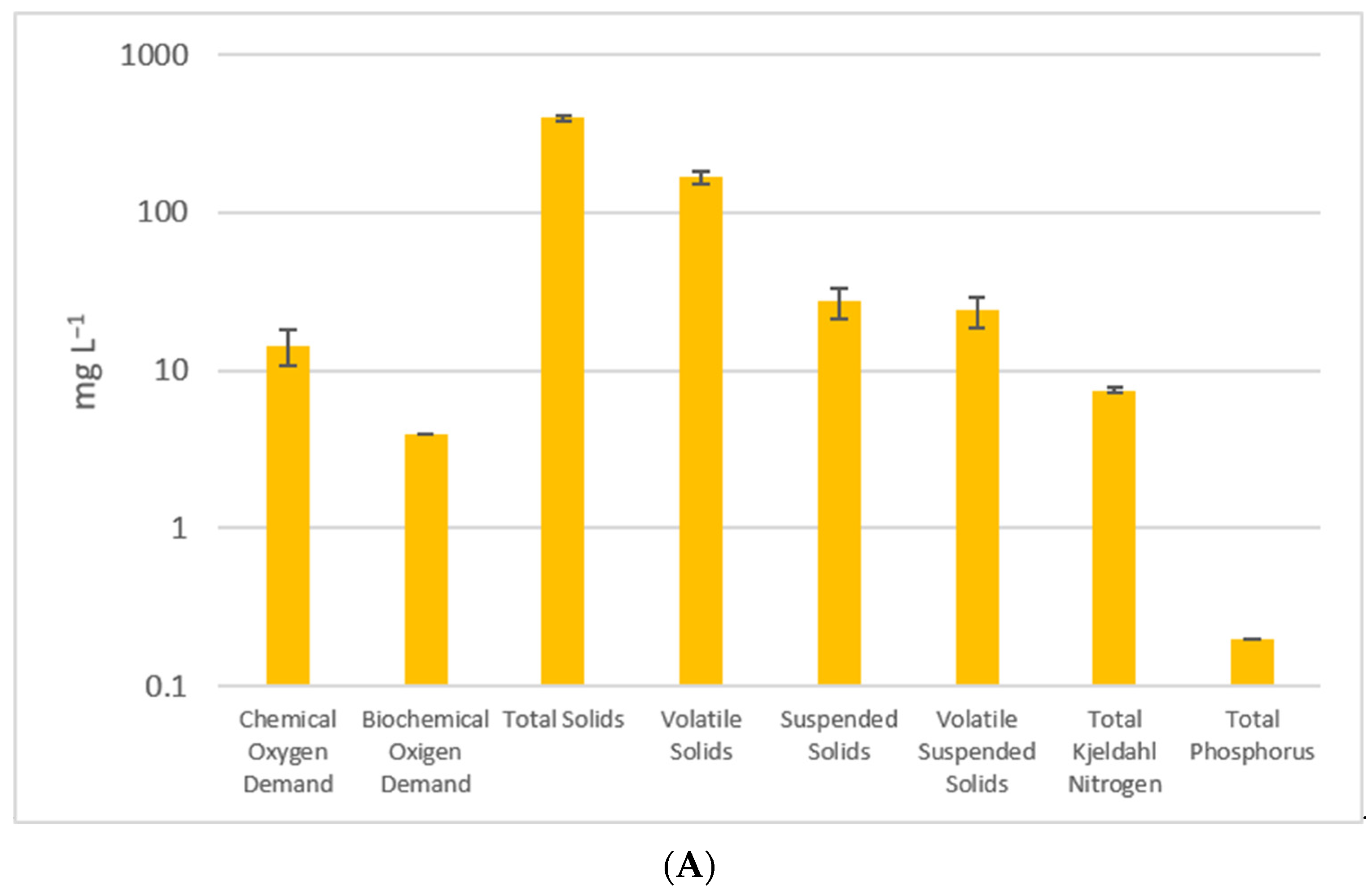
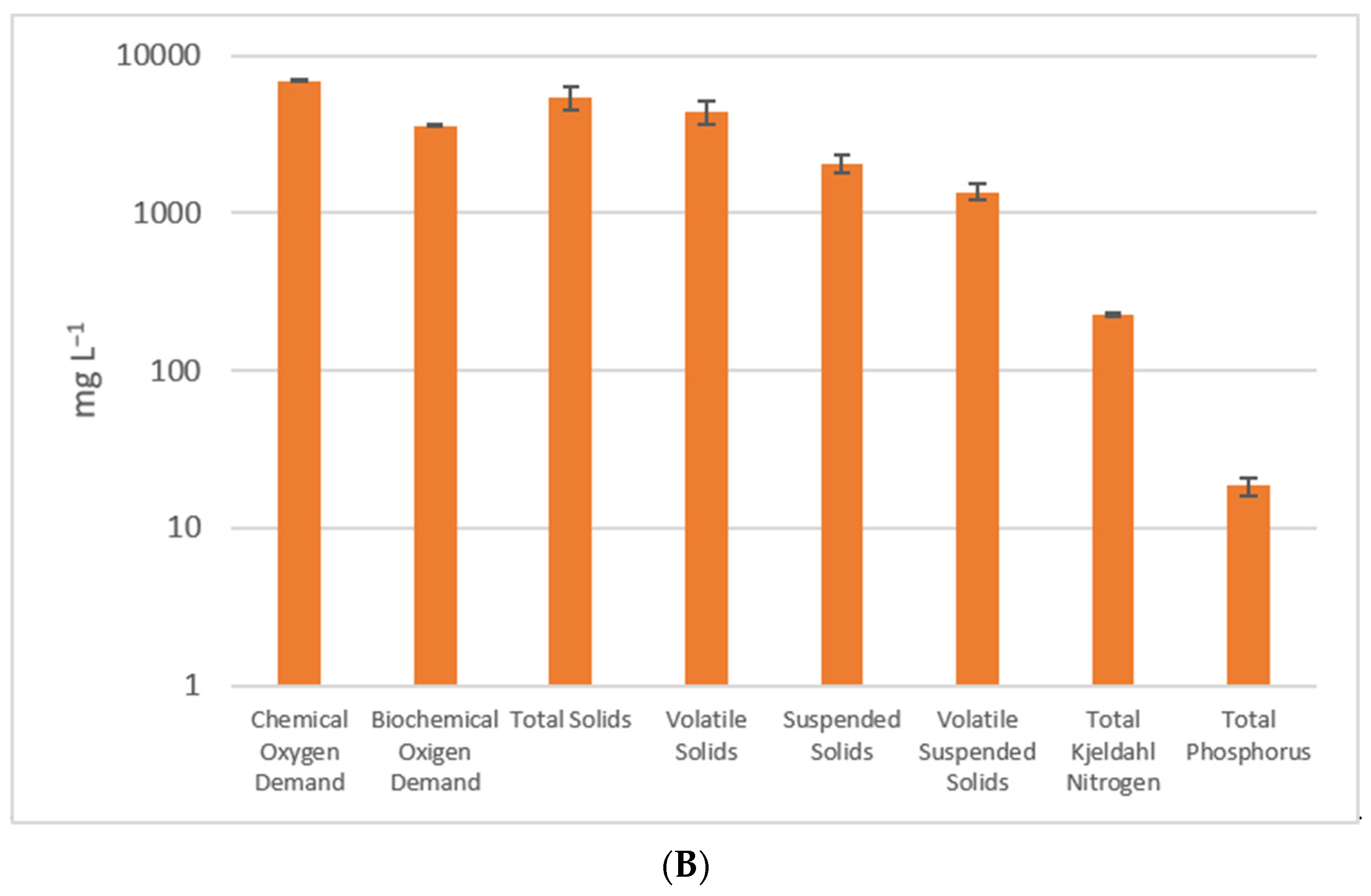
3.1. Physicochemical Characterization of Clarified Water and Mixed Liquor
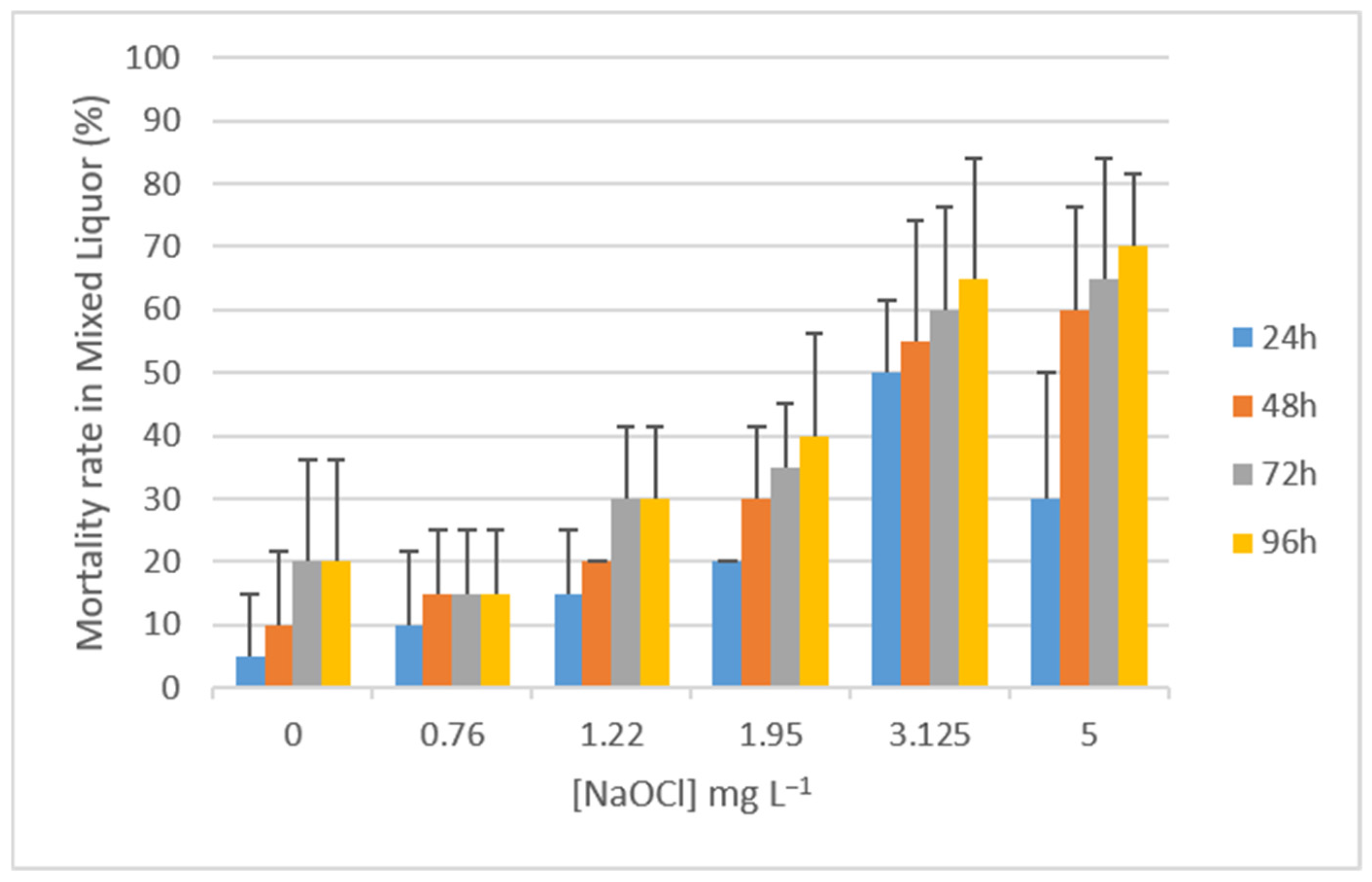
3.2. Acute Toxicity Tests
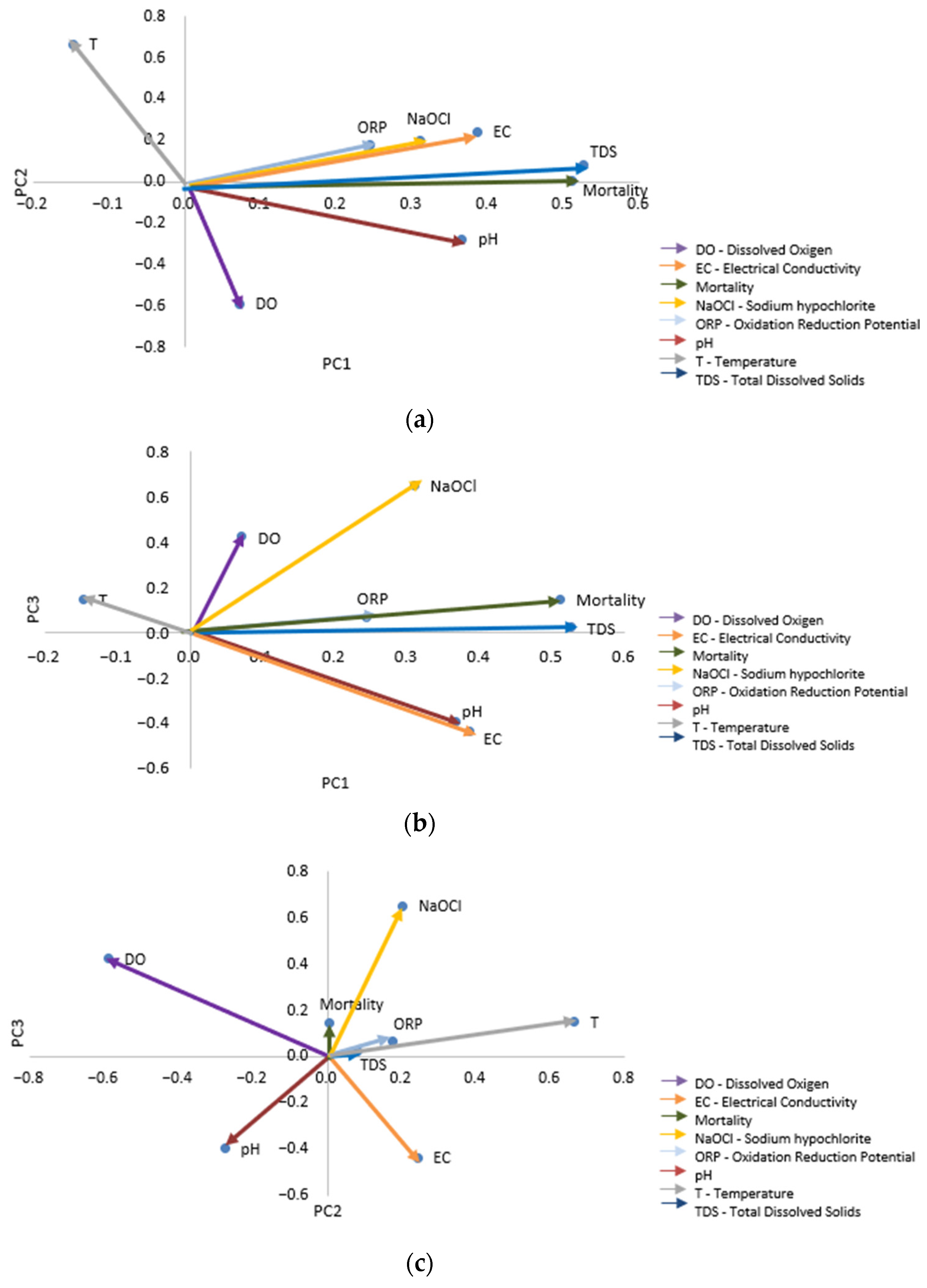
3.3. Influence of the Operational Conditions on the Toxicity Tests
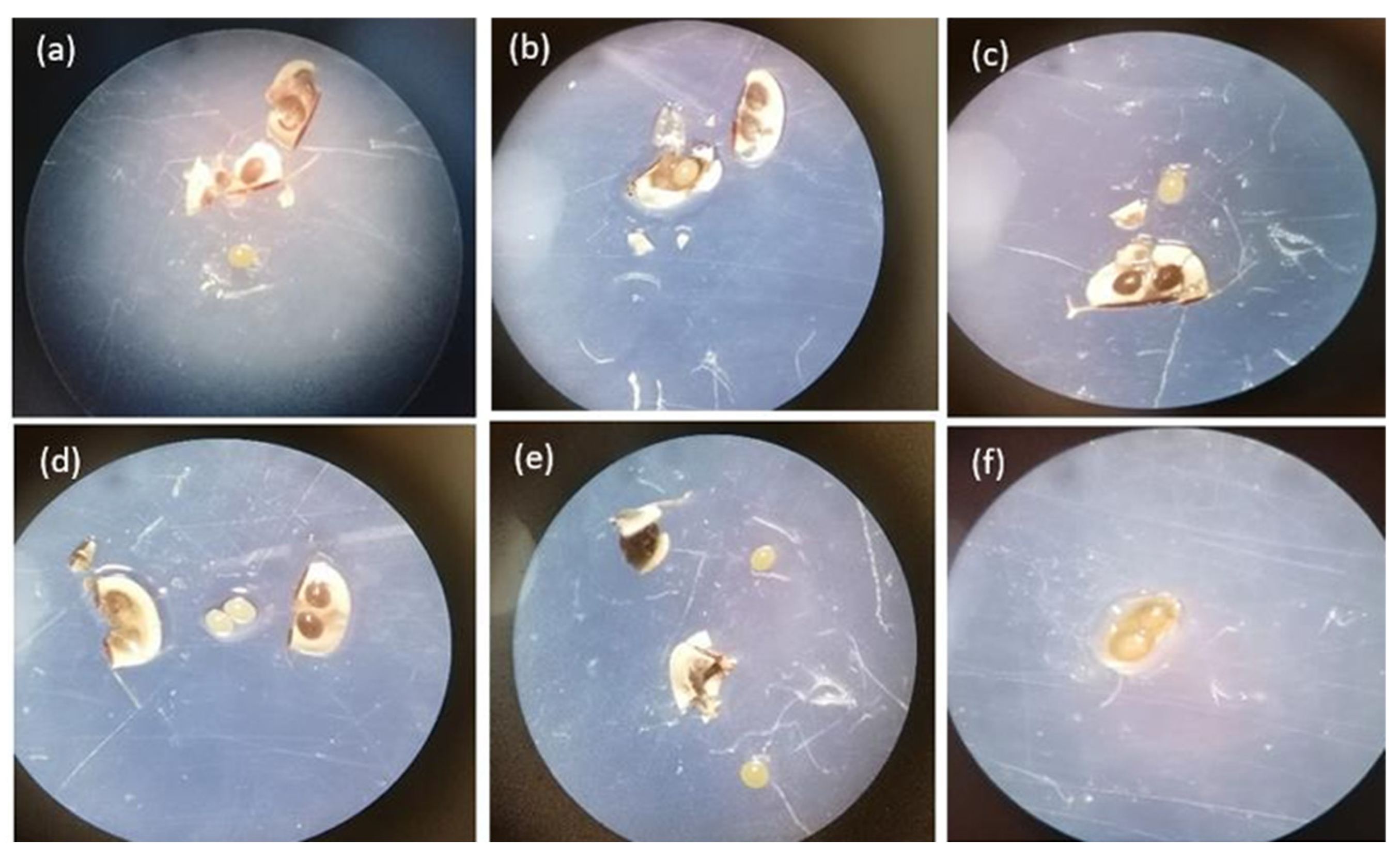
3.4. Hatching Rate Tests
4. Conclusions
Author Contributions
Funding
Institutional Review Board Statement
Informed Consent Statement
Data Availability Statement
Acknowledgments
Conflicts of Interest
Abbreviations
| BOD5 | Biochemical Oxygen Demand at 5 days |
| CW | Clarified Water |
| COD | Chemical Oxygen Demand |
| EC | Electrical Conductivity |
| DBP | Disinfection by-Product |
| DO | Dissolved Oxygen |
| EC50 | Effective Concentration 50% |
| ECHA | European Chemicals Agency |
| EPA | U.S. Environmental Protection Agency |
| h | Hour |
| L | Liters |
| LC50 | Lethal Concentration for 50% of the Tested Population |
| ML | Mixed Liquor |
| NaOCl | Sodium Hypochlorite |
| OECD | Organization for Economic Cooperation and Development |
| ORP | Oxidation–Reduction Potential |
| PC | Principal Component |
| PCA | Principal Components Analysis |
| rpm | Rotations per Minute |
| R | Correlation Coefficient |
| RW | Raw Wastewater |
| SS | Suspended Solids |
| T | Temperature |
| TDS | Total Dissolved Solids |
| TKN | Total Kjeldahl Nitrogen |
| TP | Total Phosphorous |
| TS | Total Solids |
| TVS | Total Volatile Solids |
| UV | Ultraviolet |
| VSS | Volatile Suspended Solids |
| WWTP | Wastewater Treatment Plant |
References
- Ebert, D. Ecology, Epidemiology, and Evolution of Parasitism in Daphnia; National Center for Biotechnology Information (US): Bethesda, MD, USA, 2005. [Google Scholar]
- Albuquerque, M.V.C.; Dias, J.; Batista, F.R.C.; Oliveira, E.M.A.; Silva, M.C.C.P.; Rodrigues, R.M.M.; Leite, V.D.; Lopes, W.S. Daphnia spp. as bioindicator organisms of toxicity and environmental characterization of eutrophized aquatic systems. Obs. De Econ. Latinoam. 2023, 21, 17419–17431. [Google Scholar] [CrossRef]
- Reilly, K.; Ellis, L.-J.A.; Davoudi, H.; Supian, S.; Maia, M.T.; Silva, G.H.; Guo, Z.; Stéfani, D.; Lynch, I. Daphnia as a model organism to probe biological responses to nanomaterials—From individual to population effects via adverse outcome pathways. Front. Toxicol. 2023, 5, 1178482. [Google Scholar] [CrossRef] [PubMed]
- Popova, E.V.; Petrusek, A.; Kořínek, V.; Mergeay, J.; Bekker, E.I.; Karabanov, D.P.; Galimov, Y.R.; Neretina, T.V.; Taylor, D.J.; Kotov, A.A. Revision of the Old World Daphnia (Ctenodaphnia) similis group (Cladocera: Daphniidae). Zootaxa 2016, 4161, 1–40. [Google Scholar] [CrossRef] [PubMed]
- de Castro Nascimento, L.; Naval, L.P. Toxicity determined by the use of agrochemicals in organisms indicators of water quality. Rev. Bras. Ciênc. Ambient. 2020, 53, 69–80. [Google Scholar] [CrossRef]
- Chin, T.A.; Cristescu, M.E. Speciation in Daphnia. Mol. Ecol. 2021, 30, 1398–1418. [Google Scholar] [CrossRef] [PubMed]
- La, G.-H.; Choi, J.-Y.; Chang, K.-H.; Jang, M.-H.; Joo, G.-J.; Kim, H.-W. Mating behavior of Daphnia: Impacts of predation risk, food quantity, and reproductive phase of females. PLoS ONE 2014, 9, e104545. [Google Scholar] [CrossRef] [PubMed][Green Version]
- Ebert, D. Daphnia as a versatile model system in ecology and evolution. EvoDevo 2022, 13, 16. [Google Scholar] [CrossRef] [PubMed]
- Chen, L.; Gómez, R.; Horstmann, M.; Weiss, L.C. Temperature and light timing effects on diapause progression in Daphnia magna. Freshw. Biol. 2024, 69, 1596–1606. [Google Scholar] [CrossRef]
- Navis, S.; Waterkeyn, A.; Putman, A.; De Meester, L.; Vanermen, G.; Brendonck, L. Sensitivity of Daphnia magna dormant eggs to fenoxycarb exposure depends on embryonic developmental stage. Aquat. Toxicol. 2015, 159, 176–183. [Google Scholar] [CrossRef] [PubMed]
- Santos, J.L.; Ebert, D. The limits of stress-tolerance for zooplankton resting stages in freshwater ponds. Oecologia 2023, 203, 453–465. [Google Scholar] [CrossRef] [PubMed]
- Hiruta, C.; Tochinai, S. Formation and structure of the ephippium in Daphnia pulex. J. Morphol. 2014, 275, 760–767. [Google Scholar] [CrossRef] [PubMed]
- Simoncelli, S.; Thackeray, S.J.; Wain, D.J. Effect of temperature on zooplankton vertical migration velocity. Hydrobiologia 2019, 829, 143–166. [Google Scholar] [CrossRef]
- Serra, T.; Müller, M.F.; Barcelona, A.; Salvadó, V.; Pous, N.; Colomer, J. Optimal light conditions for Daphnia filtration. Sci. Total Environ. 2019, 686, 151–157. [Google Scholar] [CrossRef] [PubMed]
- Belanger, S.E.; Cherry, D.S. Interacting Effects of Ph Acclimation, Ph, and Heavy Metals on Acute and Chronic Toxicity to Ceriodaphnia Dubia (Cladocera). J. Crustac. Biol. 1990, 10, 225–235. [Google Scholar] [CrossRef]
- Esperanço, P.; Egito, R.; Oliveira, V.; Amaral, A.L.; Rodrigues, C. Influence of Effluent Quality Parameters on Daphnia spp. Overgrowth in an Urban Wastewater Treatment Plant: A Multiyear Case Study Analysis. Processes 2025, 13, 1164. [Google Scholar] [CrossRef]
- Charazińska, S.; Łożyński, P. Wastewater treatment and immobilization of Daphnia magna. J. Environ. Res. 2022, 212, 113438. [Google Scholar] [CrossRef] [PubMed]
- Serra, T.; Barcelona, A.; Pous, N.; Salvadó, V.; Colomer, J. Disinfection and particle removal by a nature-based Daphnia filtration system for wastewater treatment. J. Water Process Eng. 2022, 50, 103238. [Google Scholar] [CrossRef]
- Stevčić, Č.; Pulkkinen, K.; Pirhonen, J. Efficiency of Daphnia magna in removal of green microalgae cultivated in Nordic recirculating aquaculture system wastewater. Algal Res. 2020, 52, 102108. [Google Scholar] [CrossRef]
- Pau, C.; Serra, T.; Colomer, J.; Casamitjana, X.; Sala, L.; Kamp, R. Filtering capacity of Daphnia magna on sludge particles in treated wastewater. Water Res. 2013, 47, 181–186. [Google Scholar] [CrossRef] [PubMed]
- Paes, T.A.S.V.; Rietzler, A.C.; Maia-Barbosa, P.M. Selection of Daphnia resting eggs. Braz. J. Biol. 2016, 76, 1058–1063. [Google Scholar] [CrossRef] [PubMed]
- Uddin, S.; Khan, A.; Hossain, M.E.; Moni, M.A. Comparing supervised machine learning algorithms. BMC Med. Inform. Decis. Mak. 2019, 19, 281. [Google Scholar] [CrossRef] [PubMed]
- APHA. Standard Methods for the Examination of Water and Wastewater, 20th ed.; American Public Health Association: Washington, DC, USA; American Water Works Association: Denver, CO, USA; Water Environment Federation: Alexandria, VA, USA, 1998. [Google Scholar]
- OECD. Test No. 202: Daphnia sp. Acute Immobilisation Test; OECD Publishing: Paris, France, 2004. [Google Scholar]
- ISO 6341:1996; Water Quality—Determination of the Inhibition of the Mobility of Daphnia magna—Acute Toxicity Test. International Organization for Standardization: Geneva, Switzerland, 1996.
- Retnaningdyah, C.; Ebert, D. Bleach solution requirement for hatching resting eggs. J. Trop. Life Sci. 2016, 6, 136–141. [Google Scholar]
- Schwartz, S.S.; Hebert, P.D.N. Activation of resting eggs. Freshw. Biol. 1987, 17, 373–379. [Google Scholar] [CrossRef]
- Pancella, J.R.; Stross, R.G. Light-induced hatching of resting eggs. Chesap. Sci. 1963, 4, 135–140. [Google Scholar]
- Yalcin, S.; Özkan, S.; Shah, T. Incubation temperature and lighting: Effect on embryonic development, post-hatch growth, and adaptive response. Front. Physiol. 2022, 13, 899977. [Google Scholar] [CrossRef] [PubMed]
- Graf, P.; Resgalla, C. Production and viability of resting eggs of the cladocera Daphnia magna Straus, 1820 in intensive culture. Braz. J. Aquat. Sci. Technol. 2018, 21, 1–9. [Google Scholar]
- The MathWorks Inc. MATLAB, Version 7.9 (R2010b); The MathWorks Inc.: Natick, MA, USA, 2010.
- Artusi, R.; Verderio, P.; Marubini, E. Bravais–Pearson and Spearman correlation coefficients: Meaning, test of hypothesis and confidence interval. Int. J. Biol. Markers 2002, 17, 148–151. [Google Scholar] [CrossRef] [PubMed]
- Rebekić, A.; Lončarić, Z.; Petrović, S.; Marić, S. Pearson’s or Spearman’s correlation coefficient—Which one to use? Poljoprivreda 2015, 21, 47–54. [Google Scholar] [CrossRef]
- Zhang, Z. Variable selection with stepwise and best subset approaches. Ann. Transl. Med. 2016, 4, 136. [Google Scholar] [CrossRef] [PubMed]
- Maćkiewicz, A.; Ratajczak, W. Principal component analysis. Comput. Geosci. 1993, 19, 303–342. [Google Scholar] [CrossRef]
- Jolliffe, I.T.; Cadima, J. Principal component analysis: A review and recent developments. Philos. Trans. R. Soc. A 2016, 374, 20150202. [Google Scholar] [CrossRef] [PubMed]
- Lozano-Fuentes, S.; Saavedra-Rodriguez, K.; Black, W.C.; Eisen, L. QCal: A software application for the calculation of dose–response curves in insecticide resistance bioassays. J. Am. Mosq. Control Assoc. 2012, 28, 59–61. [Google Scholar] [CrossRef] [PubMed]
- Shen, D.; Tian, L.; Hua, L.; Chen, X.; Wang, L.; Luo, Z.; Liu, M.; Li, Y.; Li, Y.; Zhu, X.; et al. Effect of sodium hypochlorite on aerobic granular sludge systems: Performance, extracellular polymeric substances structure and microbial response. J. Environ. Chem. Eng. 2025, 13, 118956. [Google Scholar] [CrossRef]
- Kang, S.-W.; Ahn, K.-H. The Influence of Organic Matter Origin on the Chlorine Bulk Decay Coefficient in Reclaimed Water. Water 2022, 14, 765. [Google Scholar] [CrossRef]
- Lee, W.; Westerhoff, P. Formation of organic chloramines during water disinfection—Chlorination versus chloramination. Water Res. 2009, 43, 2233–2239. [Google Scholar] [CrossRef] [PubMed]
- EPA-HQ-OPP-2008-0421-0027; Ecological Hazard and Risk Assessment for Sodium and Calcium Hypochlorite. U.S. Environmental Protection Agency: Washington, DC, USA, 2011.
- European Chemicals Agency (ECHA). Sodium Hypochlorite: Registration Dossier; ECHA—European Chemicals Agency: Helsinki, Finland, 2018. [Google Scholar]
- Connors, K.A.; Brill, J.L.; Norberg-King, T.; Barron, M.G.; Carr, G.; Belanger, S.E. Daphnia magna and Ceriodaphnia dubia have similar sensitivity in standard acute and chronic toxicity tests. Environ. Toxicol. Chem. 2021, 41, 134–147. [Google Scholar] [CrossRef] [PubMed]
- Ton, S.-S.; Chang, S.-H.; Hsu, L.-Y.; Wang, M.-H.; Wang, K.-S. Evaluation of acute toxicity and teratogenic effects of disinfectants by Daphnia magna embryo assay. Environ. Pollut. 2012, 168, 54–61. [Google Scholar] [CrossRef] [PubMed]
- Mattei, D.; Cataudella, S.; Mancini, L.; Tancioni, L.; Migliore, L. Effects of disinfectants on Daphnia and benthic communities. Water Air Soil Pollut. 2006, 177, 441–455. [Google Scholar]
- Angerville, R.; Boillot, C.; Perrodin, Y. Evaluation of the combined effects of binary mixtures of sodium hypochlorite and surfactants against Daphnia magna Straus. Int. J. Environ. Technol. Manag. 2009, 10, 353. [Google Scholar] [CrossRef]
- Wang, H.; Ma, D.; Shi, W.; Yang, Z.; Cai, Y.; Gao, B. Formation of disinfection by-products during sodium hypochlorite cleaning of fouled membranes in membrane bioreactors. Water Res. 2021, 188, 116540. [Google Scholar] [CrossRef] [PubMed]
- Papageorgiou, S.N. On correlation coefficients and their interpretation. J. Orthod. 2022, 49, 359–361. [Google Scholar] [CrossRef] [PubMed]
- Evans, J.D. Straightforward Statistics for the Behavioral Sciences; Thomson Brooks/Cole Publishing Co.: Pacific Grove, CA, USA, 1996. [Google Scholar]
- da Silva, M.I.B.; de Oliveira, D.M.; Brandão, L.P.M.; Barbosa, F.A.R.; Maia-Barbosa, P.M. Rethinking resting egg decapsulation. Acta Limnol. Bras. 2019, 31, e24. [Google Scholar] [CrossRef]
- Mushegian, A.A.; Burcklen, E.; Schär, T.M.M.; Ebert, D. Temperature-dependent benefits of bacterial exposure in embryonic development of Daphnia magna resting eggs. J. Exp. Biol. 2016, 219, 897–904. [Google Scholar] [CrossRef] [PubMed]
- Radzikowski, J.; Krupińska, K.; Ślusarczyk, M. Different thermal stimuli initiate hatching of Daphnia diapausing eggs originating from lakes and temporary waters. Limnology 2017, 19, 81–88. [Google Scholar] [CrossRef]
- Cuenca Cambronero, M.; Orsini, L. Resurrection of dormant Daphnia magna. J. Vis. Exp. 2018, 131, 56637. [Google Scholar] [CrossRef] [PubMed]





| Parameter | Units | Clarified Water | Mixed Liquor | ||
|---|---|---|---|---|---|
| Rho | p-Value | Rho | p-Value | ||
| pH | 0.522 | 0.003 * | 0.687 | 2.72 × 10⁻⁵ * | |
| T | °C | −0.266 | 0.156 | −0.623 | 0.000 * |
| DO | mg L−1 | −0.017 | 0.930 | 0.727 | 5.30 × 10⁻⁶ * |
| TDS | mg L−1 | 0.845 | 4.16 × 10⁻⁹ * | 0.495 | 0.005 * |
| EC | µS/cm | 0.761 | 1.64 × 10⁻⁶ * | 0.484 | 0.008 * |
| ORP | mV | 0.191 | 0.312 | −0.306 | 0.101 |
| Parameter | Units | Clarified Water | Mixed Liquor | ||||||
|---|---|---|---|---|---|---|---|---|---|
| Coeff. | Std. Error | p-Value | Status | Coeff. | Std. Error | p-Value | Status | ||
| pH | 0.2630 | 0.1203 | 0.0383 * | In | 0.2286 | 0.1605 | 0.1673 | Out | |
| T | °C | −0.1069 | 0.1141 | 0.3579 | Out | −0.5590 | 0.0850 | 6.92 × 10⁻⁷ * | In |
| DO | mg L−1 | −0.0251 | 0.1097 | 0.8211 | Out | −0.0278 | 0.1842 | 0.8813 | Out |
| TDS | mg L−1 | 0.4919 | 0.1376 | 0.0015 * | In | −0.0609 | 0.1538 | 0.6958 | Out |
| EC | µS cm−1 | 0.0458 | 0.1319 | 0.7317 | Out | −0.0724 | 0.1549 | 0.6445 | Out |
| ORP | mV | −0.1775 | 0.1072 | 0.1109 | Out | −0.2261 | 0.0860 | 0.0144 * | In |
| [NaOCl] | mg L−1 | 0.3776 | 0.1238 | 0.0053 * | In | 0.6799 | 0.0829 | 1.47 × 10⁻⁸ * | In |
| Clarified Water | Mixed Liquor | ||||||
|---|---|---|---|---|---|---|---|
| Parameters | R | Strength | p-Value | Parameters | R | Strength | p-Value |
| pH vs. TDS | 0.442 | Moderate | 0.014 | pH vs. T | −0.846 | Very strong | 3.97 × 10⁻⁹ |
| pH vs. EC | 0.411 | Moderate | 0.024 | pH vs. DO | 0.861 | Very strong | 1.08 × 10⁻⁹ |
| T vs. DO | −0.544 | Moderate | 0.002 | T vs. DO | −0.848 | Very Strong | 3.32 × 10⁻⁹ |
| TDS vs. EC | 0.578 | Moderate | 8.16 × 10⁻⁴ | TDS vs. EC | 0.994 | Very Strong | 1.07 × 10⁻²⁸ |
| TDS vs. NaOCl | 0.493 | Moderate | 0.006 | TDS vs. NaOCl | 0.840 | Very Strong | 6.33 × 10⁻⁹ |
| EC vs. NaOCl | 0.837 | Very Strong | 1.50 × 10⁻⁸ | ||||
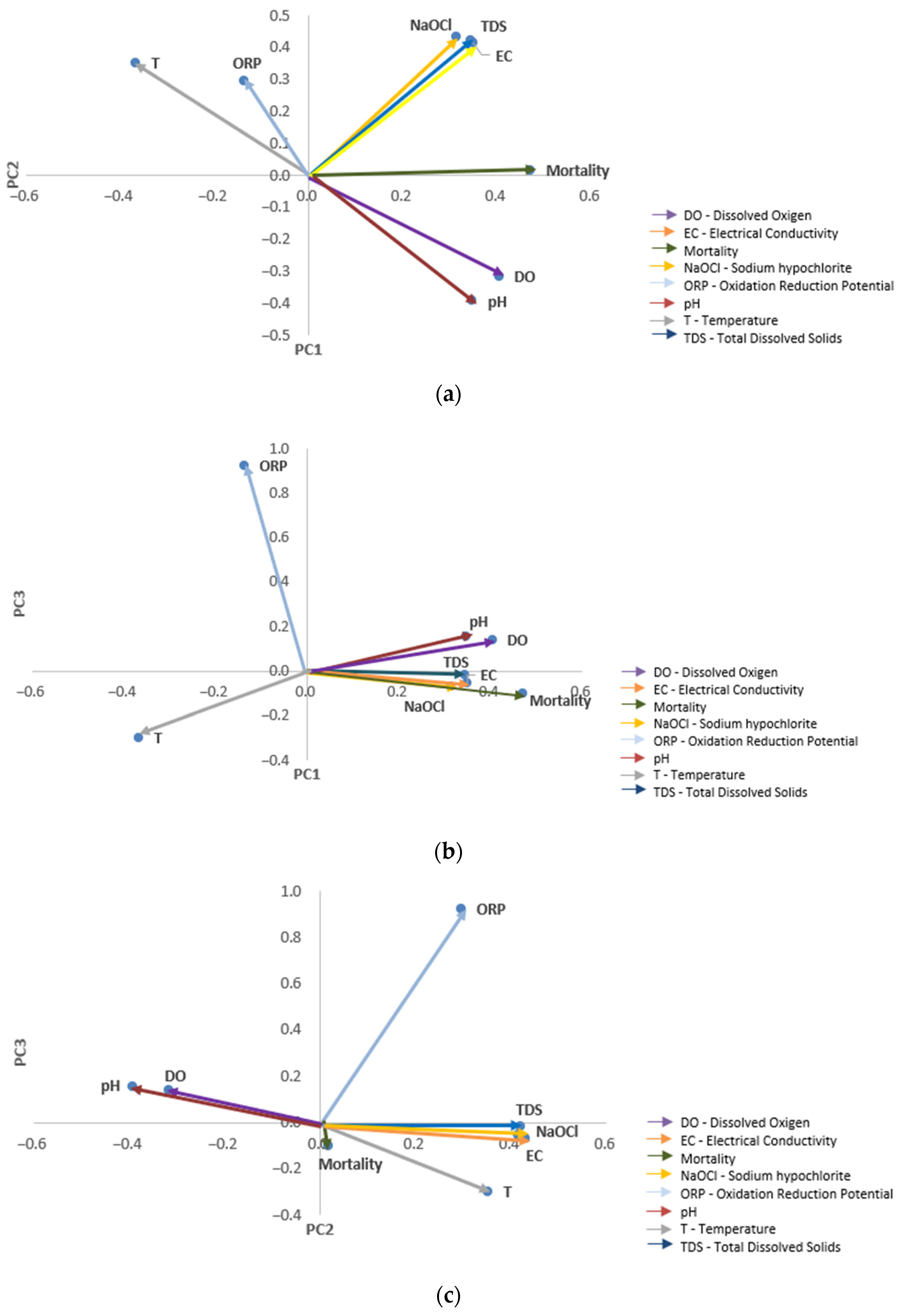
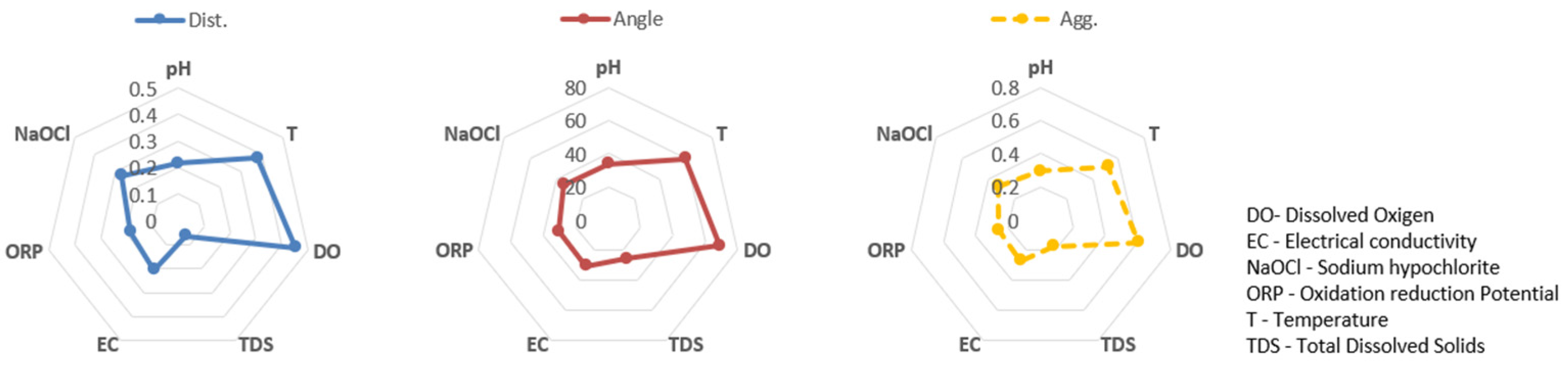
| Variable | pH | T | DO | TDS | EC | ORP | NaOCl |
|---|---|---|---|---|---|---|---|
| Angle | 33.7 | 59.3 | 68.5 | 25.9 | 30.6 | 30.3 | 33.9 |
| Distance | 0.216 | 0.379 | 0.451 | 0.063 | 0.205 | 0.185 | 0.274 |
| Aggregated | 0.296 | 0.519 | 0.606 | 0.176 | 0.273 | 0.261 | 0.325 |
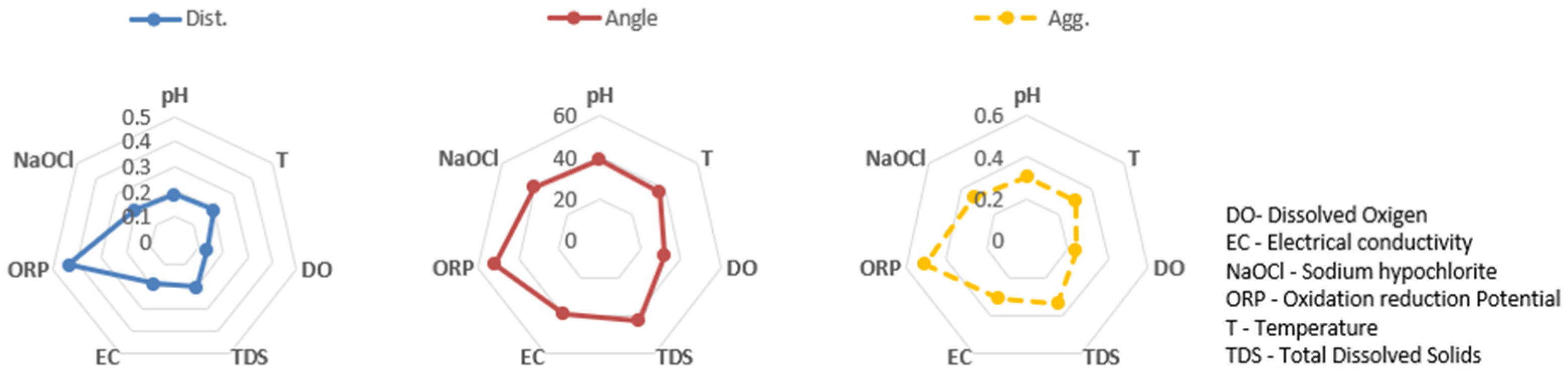
| Variable | pH | T | DO | TDS | EC | ORP | NaOCl |
|---|---|---|---|---|---|---|---|
| Angle | 36.6 | 34.6 | 30.4 | 41.4 | 37.9 | 47.7 | 38.5 |
| Distance | 0.186 | 0.200 | 0.134 | 0.203 | 0.189 | 0.435 | 0.206 |
| Aggregated | 0.308 | 0.305 | 0.244 | 0.343 | 0.316 | 0.506 | 0.328 |
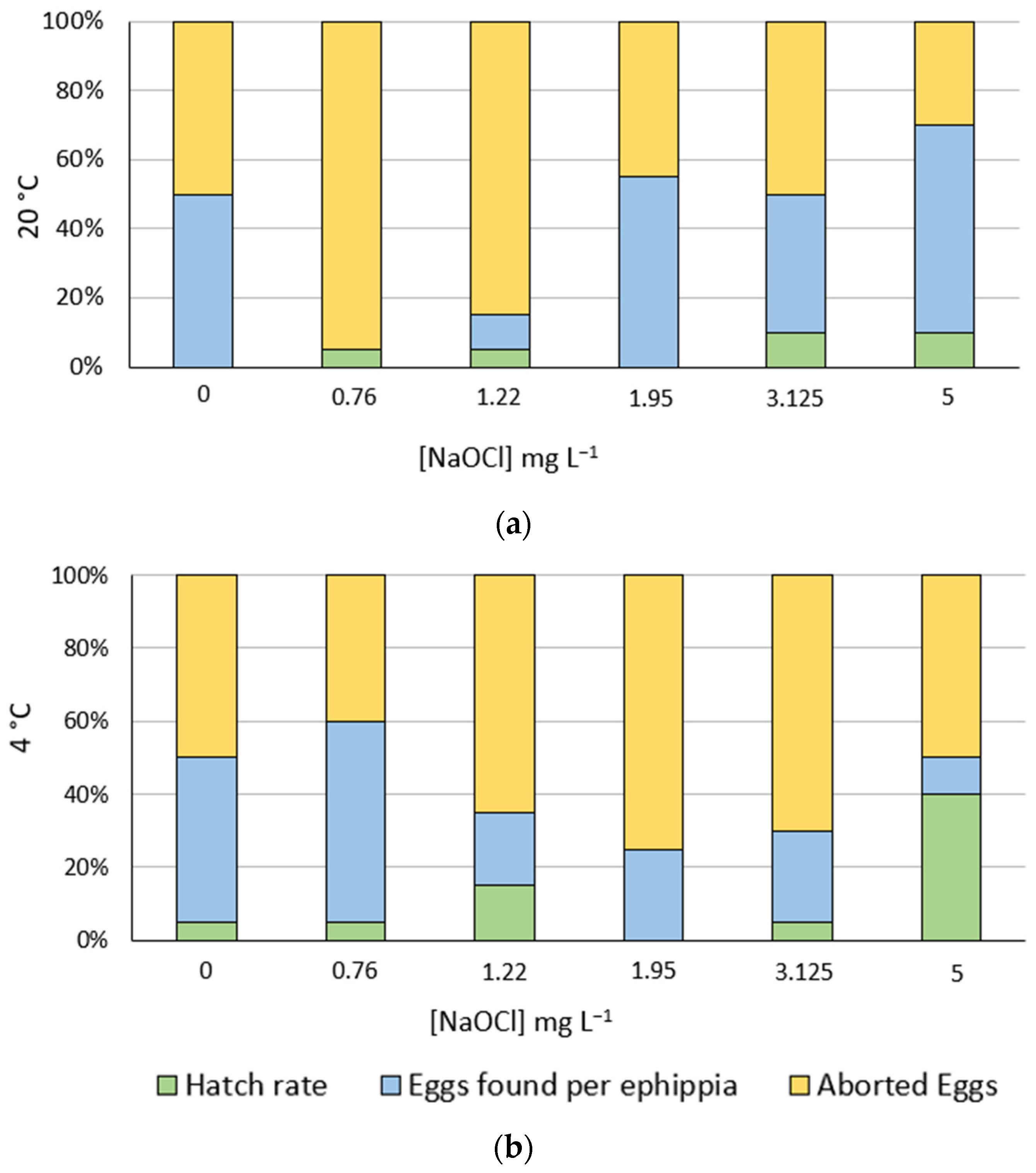
| Test Condition | Nb. of Ephippia Tested | % of Hatched Ephippia per Day | Chi-Squared Test | ||||
|---|---|---|---|---|---|---|---|
| Day 4 | Day 5 | Day 7 | Day 8 | Day 10 | |||
| 4 °C | 60 | 50 | 12 | 25 | 0 | 13 | χ2 = 12.86, df = 5, p = 0.025 * |
| 20 °C | 60 | 0 | 0 | 50 | 50 | 0 | |
Disclaimer/Publisher’s Note: The statements, opinions and data contained in all publications are solely those of the individual author(s) and contributor(s) and not of MDPI and/or the editor(s). MDPI and/or the editor(s) disclaim responsibility for any injury to people or property resulting from any ideas, methods, instructions or products referred to in the content. |
© 2026 by the authors. Licensee MDPI, Basel, Switzerland. This article is an open access article distributed under the terms and conditions of the Creative Commons Attribution (CC BY) license.
Share and Cite
Esperanço, P.; Coelho, C.; Sobral, O.; Oliveira, V.; Amaral, A.L.; Rodrigues, C. Effects of Sodium Hypochlorite on Daphnia spp. Populations and Resting Eggs Hatching in Urban Wastewater Treatment. Urban Sci. 2026, 10, 375. https://doi.org/10.3390/urbansci10070375
Esperanço P, Coelho C, Sobral O, Oliveira V, Amaral AL, Rodrigues C. Effects of Sodium Hypochlorite on Daphnia spp. Populations and Resting Eggs Hatching in Urban Wastewater Treatment. Urban Science. 2026; 10(7):375. https://doi.org/10.3390/urbansci10070375
Chicago/Turabian StyleEsperanço, Pedro, Carolina Coelho, Olímpia Sobral, Verónica Oliveira, António Luís Amaral, and Carla Rodrigues. 2026. "Effects of Sodium Hypochlorite on Daphnia spp. Populations and Resting Eggs Hatching in Urban Wastewater Treatment" Urban Science 10, no. 7: 375. https://doi.org/10.3390/urbansci10070375
APA StyleEsperanço, P., Coelho, C., Sobral, O., Oliveira, V., Amaral, A. L., & Rodrigues, C. (2026). Effects of Sodium Hypochlorite on Daphnia spp. Populations and Resting Eggs Hatching in Urban Wastewater Treatment. Urban Science, 10(7), 375. https://doi.org/10.3390/urbansci10070375