
Cartagena (Colombia) Residents’ Perceptions of Transport Safety, Mobility Legislation, and Public Participation in Planning Instruments: Proposals for Inclusive and Sustainable Mobility


Abstract
1. Introduction
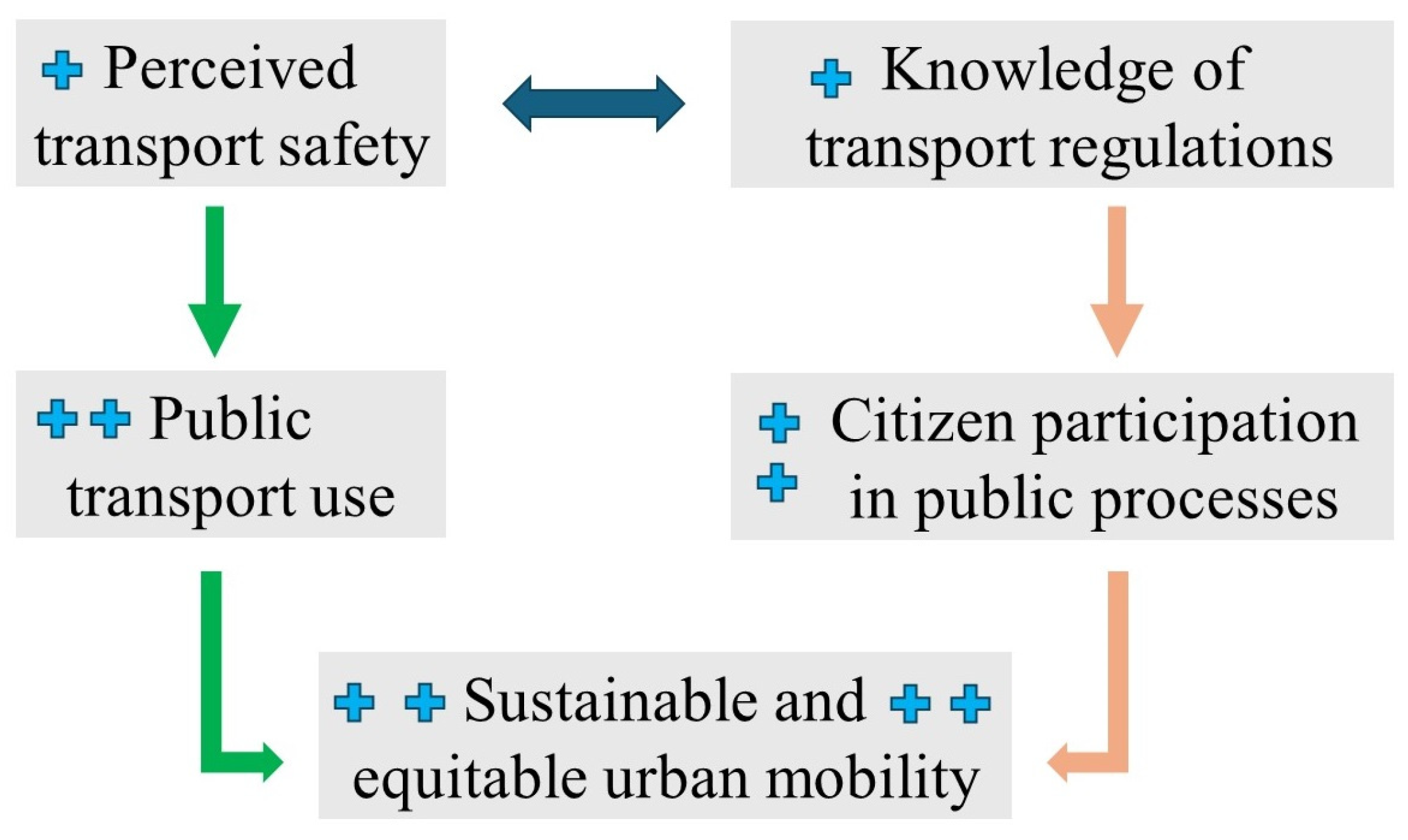
- An efficient, safe, and inclusive transport system is vital for a city’s economic growth and competitiveness.
- Accessible and affordable transport allows all citizens, including vulnerable groups with limitations or special needs, such as people with disabilities or those living in poverty, to access the various services provided by the State, thus contributing to equity and inclusion.
- The perception of safety, air quality and the reduction of road accidents are fundamental to sustainable mobility, which has a direct impact on quality of life and public health, contributing to social sustainability.
- The results of previous studies and the literature related to this topic suggest that the population’s perception of safety may be associated with reported use of public transportation and active mobility modes. This relationship is consistent with previous research indicating that perceived safety can influence mobility preferences. This could lead to a reduction in traffic congestion and pollution, with consequent benefits for health and the economy.
- Legislation, regulations, and planning tools for implementation (mobility plans and land use plans) geared toward sustainable mobility, provide the foundations for more harmonious and inclusive transport systems, thus contributing to urban development and long-term sustainability.
- Citizen participation in the formulation of legislation, regulations, and planning instruments is essential for building consensus, acceptance, and social ownership of mobility policies. This ensures that the solutions proposed are aligned with the real needs of the population and promote social sustainability.
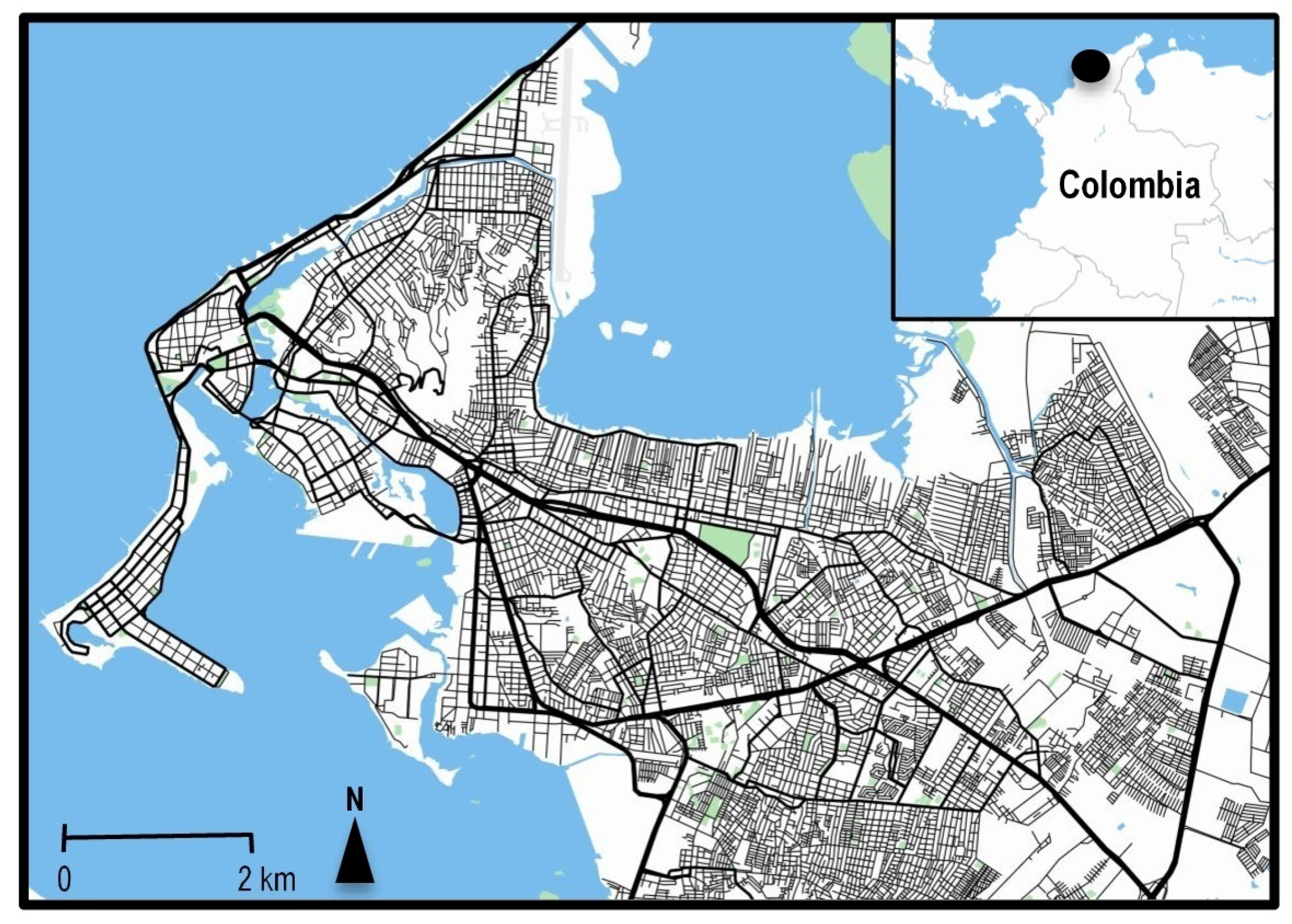
2. Study Area
3. Data and Methods
- −
- “Have you participated in the District Mobility Plan (DMP)?”
- −
- “If not, what were the reasons for not participating in the DMP?”
- −
- “Have you participated in the Land Use Plan (LUP)?”
- −
- “If not, what were the reasons for not participating in the LUP?”
- −
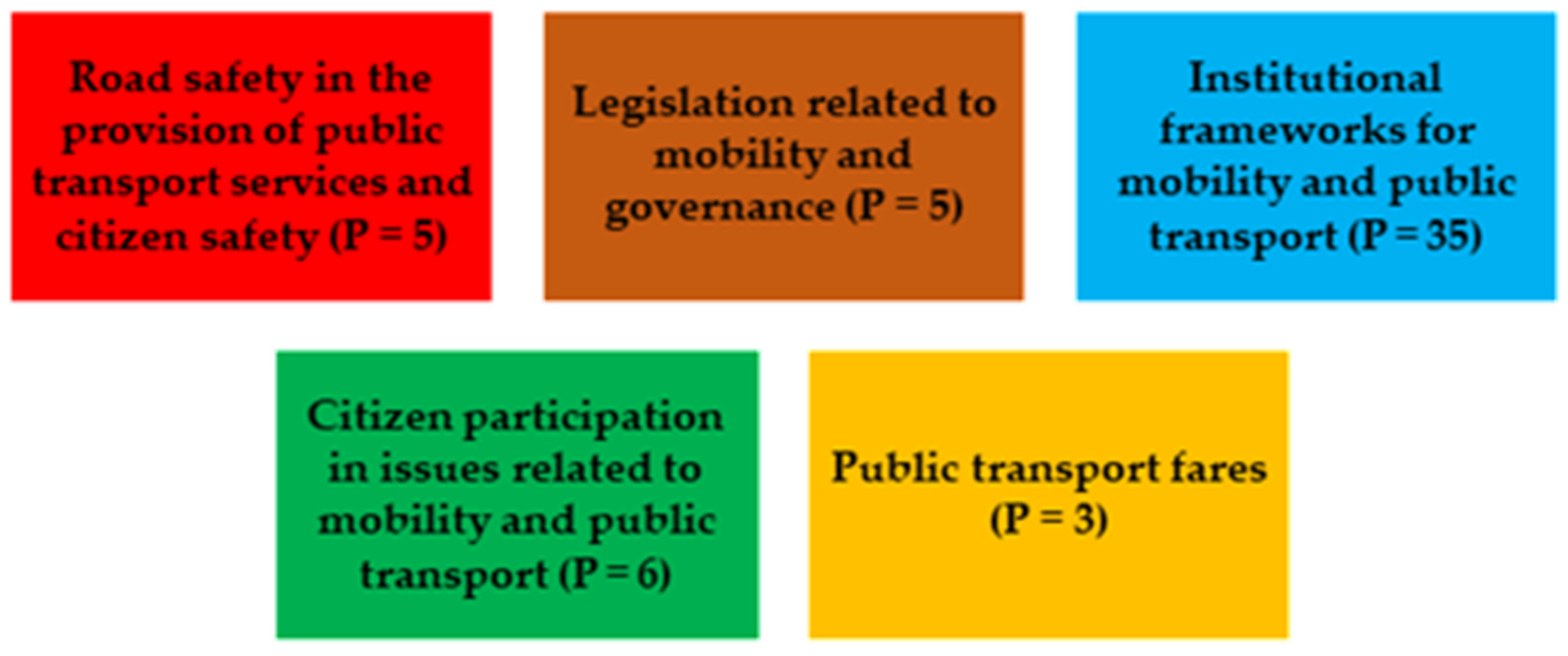
- Road safety in the provision of public transport services and citizen safety.
- −
- Legislation related to mobility and governance.
- −
- Institutional frameworks for mobility and public transport.
- −
- Citizen participation in issues related to mobility and public transport.
- −
- Public transport fares.
- Depending on the question to be addressed, the responses were filtered and extracted from the survey in Excel format, without disaggregation by gender, age, social class, ethnicity, or educational level.
- The KJ method allowed the identification of thematic groups of citizen proposals related to mobility improvement. These categories reflect the priorities and concerns expressed by participants and may provide useful insights for policy discussions. A different color was assigned to the responses, depending on the affinity between them.
- In line with this affinity and the objectives identified in Introduction Section 1, the responses were grouped into the categories presented.
- The classification was carried out by the lead researcher.
- Finally, in Section 4 (Discussion) and Section 5 (Conclusions), the analysis and synthesis of the classification carried out are developed, examining relationships, causes and effects, contradictions, and proposed solutions. All 54 proposals were ultimately grouped into the five areas presented in the section ‘Initiatives proposed by respondents’.
- (a)
- Recognize and analyze the priorities and proposals of respondents, thereby contributing to the development of sustainable planning for the city of Cartagena;
- (b)
- Raise awareness and encourage citizens to learn more about the city, foster a sense of belonging, and motivate their participation in processes related to sustainable development and growth;
- (c)
- Identify potential proposals with an impact on public policy.
4. Results
4.1. Perceptions Regarding Safety on Public Transport and Participation in Planning Instruments
4.2. Initiatives Proposed by Respondents
- (i)
- Safeguarding safety on the roads and in the provision of public transport services, including vehicles, bus stops, and their surrounding areas.
- (ii)
- Issue licenses to taxi and motorcycle taxi drivers to contribute to improving passenger safety and confidence.
- (iii)
- Promote the expansion of controls on taxis and minibuses to prevent reckless driving patterns.
- (iv)
- Facilitate the installation of security cameras or security guards and improve lighting at unsafe bus stops.
- (v)
- Promote driving in compliance with traffic laws and regulations.
- (i)
- Promote the review of existing laws and regulations at the district, departmental, and national levels to identify inconsistencies and legal loopholes.
- (ii)
- Encourage the development of a comprehensive and coherent legal framework that addresses all aspects of mobility and contributes to its improvement.
- (iii)
- Socialize and train citizens on legislation and regulations related to mobility.
- (iv)
- Encourage the rigorous application of mobility and road safety regulations.
- (v)
- Ensure that laws and regulations respond to the needs of the population and contribute to reducing conflicts between authorities and citizens.
- (i)
- Promote energy-efficient and nonpolluting mobility.
- (ii)
- Encourage an in-depth study on transport demand in Cartagena, and on formal and informal transport. Identify existing problems and necessary routes and optimize current ones.
- (iii)
- Analyze the possibilities of restructuring the DATT and reform the city’s current public transport model to organize it, dismantle informality/illegality, guarantee access to a greater number of routes, and thus ensure better public transport services.
- (iv)
- Promote investment in public transport, mobility infrastructure, and roads in Cartagena.
- (v)
- Establish the possibilities of increasing road control by traffic officers.
- (vi)
- Implement actions aimed at improving driver training and performance.
- (vii)
- Study the possibilities of formalizing, regulating, organizing, and controlling motorcycle taxis.
- (viii)
- Analyze the advisability of installing taximeters in taxis.
- (ix)
- Analyze the possibilities of controlling the circulation of vehicles and motorcycles to reduce traffic congestion.
- (x)
- Promote the renewal of the minibuses on different routes.
- (xi)
- Encourage a sense of belonging and civic culture in mobility among the population of Cartagena.
- (xii)
- Promote the reduction of public transport fares, publicize them to prevent price abuse, and ensure strict control of them by the Cartagena City Council.
- (xiii)
- Encourage the adoption of differential fares for young people, students, people with disabilities or special needs, and elderly or vulnerable adults.
- (xiv)
- Establish affordable prices for the purchase of bicycles and promote their use.
- (xv)
- Assist in the implementation of employment contracts with people from the communities to meet the demand for personnel due to the establishment of new public transport routes.
- (xvi)
- Encourage the restructuring of entities that provide public transport services, or create suitable institutions to guarantee the provision of a good service.
- (xvii)
- Stimulate the formulation of public transport policies with citizen participation.
- (xviii)
- Promote actions that prevent acts of vandalism or violence in the provision of public transport services.
- (xix)
- Promote active mobility.
- (xx)
- Promote measures that guarantee rigorous technical and mechanical inspections of vehicles.
- (xxi)
- Encourage the installation and operation of traffic lights where necessary.
- (xxii)
- Promote public safety in the city as a whole.
- (xxiii)
- Encourage transparency in the district administration in general, and in relation to mobility.
- (xxiv)
- Listen to the community, and generate agreements between them and the authorities.
- (xxv)
- Animate the control over motorcycle driving by minors.
- (xxvi)
- Encourage the immobilization of vehicles and motorcycles that do not have a driver’s license.
- (xxvii)
- Help strengthen the cooperation between different levels of government, and adopt a coherent approach among them.
- (xxviii)
- Enforce stricter speed limits within the city.
- (xxix)
- Promote the establishment of pedestrian crossings where necessary.
- (xxx)
- Establishing motorcycle taxis as a business to provide safety for those who use them.
- (xxxi)
- Restrict the circulation of motorcycle taxis to reduce traffic congestion.
- (xxxii)
- Prohibit the circulation of motorcycles.
- (xxxiii)
- Invest more in sustainable transport, ending the mismanagement of resources that could be used to solve problems in the city.
- (xxxiv)
- Restructure public institutions to eradicate the lack of transparency.
- (xxxv)
- Implement more peak and plate restrictions (vehicle restrictions during peak traffic hours, based on the last digit of the private vehicle or public transport license plate).
- (i)
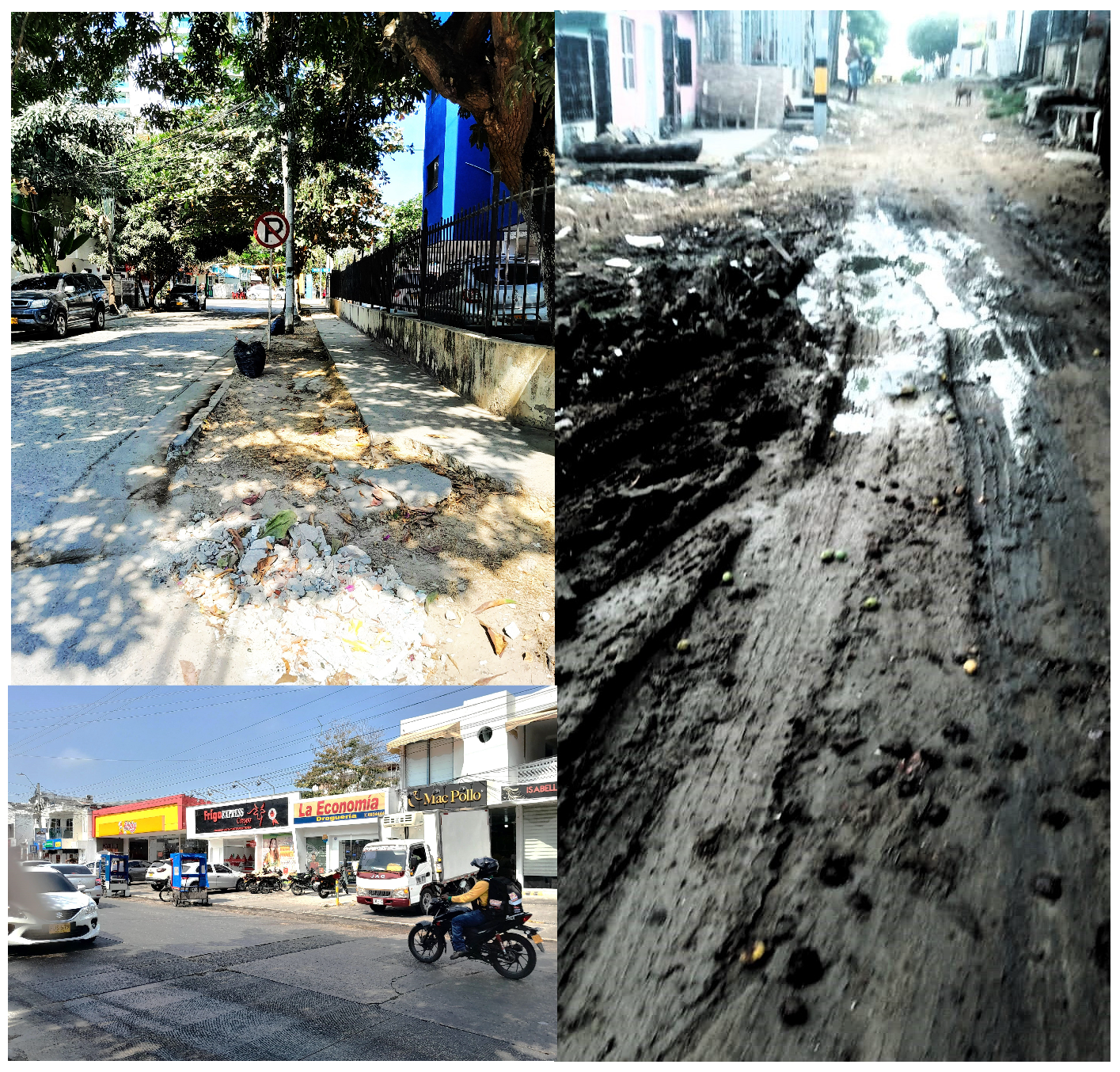
- Mobility infrastructure. Building, maintaining and optimizing the road network, and adapting pavements for people with disabilities or special needs.
- (ii)
- Means of transport. Innovating the public transport fleet.
- (iii)
- Multimodality. Promote active mobility; establish water transport.
- (iv)
- Comfort. Increase the frequency of public transport to avoid overcrowding.
- (v)
- Socialize public and private city projects (real estate, port, airport and logistics). From this perspective, the socialization of Law 70/1993 is an imperative to facilitate the inclusion of Afro-descendent people.
- (vi)
- Strengthen citizen participation in the formulation, implementation, and evaluation of all planning instruments.
- (i)
- Establish electronic payment for public transport fares.
- (ii)
- Adopt differential fares for young people, students, people with disabilities or specials needs, and elderly or vulnerable adults.
- (iii)
- Reduce public transport fares, publicize them to prevent price abuse, and ensure strict control of them by the Cartagena City Council.
5. Discussion
5.1. Moderate Safety of Public Transport and Low Public Participation
5.2. A Broad Range of Proposals and Numerous Challenges Ahead
- Security: Given that perceptions of security vary between moderate and low, the population demands the installation of cameras, greater police control, control of vehicle licenses, technical inspections, and lighting.
- Institutions: The population demands greater state control, more transparency, the strengthening of institutions, and the guarantee of legitimate, effective participation.
- Some people want to formalize motorcycle taxis, while others want to eliminate them.
- Some people demand more vehicle restrictions, while others call for an increase in the vehicle fleet.
- The desire for state order clashes with mistrust of institutions.
6. Conclusions
- (a)
- Advancing the development, well-being, and competitiveness of Cartagena. This suggests strengthening: (i) infrastructure in general and transport infrastructure in particular, which is a cross-cutting activity throughout the economy; (ii) the availability, connectivity, and accessibility of routes for different means of transport, modes, and transport systems; and (iii) the optimization of transport fares. This strengthening also implies the distribution of the benefits and costs of transport services in an equitable, inclusive, and fair manner among different groups, particularly the vulnerable. These measures would expand opportunities for citizens to access education, employment, and health, among other fundamental issues of competitiveness.
- (b)
- Ensuring the well-being of mobility and transport users in Cartagena. This requires improving the quality of travel and satisfaction with excursions. This initiative focuses on adapting different modes of transport to people with disabilities and special needs, older adults and pregnant women. Priorities include scrapping vehicles that need to be scrapped, renewing the vehicle fleet when necessary, improving mobility infrastructure and safety, increasing the frequency of transport services, and strengthening civic culture in mobility.Additionally, the proposals call for state control of transport companies and the circulation of illegal/informal modes of transport. The well-being of people in their daily travels also depends on the behavior of those who drive vehicles and those who use public transport. Respect, kindness, and order can create a more satisfactory travel environment in general and for older adults, people with disabilities and special needs, and women and children in particular. Travel with these characteristics can encourage participation in social activities related to travel, and thus social integration and cohesion. The quality and comfort of travel are also linked to the implementation of intelligent traffic management systems. However, the necessary actions and mechanisms must be implemented to ensure, through access to digital transport services, the inclusion in transport of older adults, those with limitations or special needs, and those with limited financial resources [62]. The quality of travel also requires a reduction in traffic congestion, so it would be important to coordinate the schedules of the different modes of transport without negatively affecting the demand of residents and visitors.
- (c)
- Moving toward sustainable mobility in Cartagena could require the equitable, inclusive and fair distribution of transport benefits and costs; the implementation of multimodality; the strengthening of a culture of citizen mobility; the development of necessary policies; and the strengthening of the State’s capacities in aspects related to planning, mobility, and consolidating social sustainability. In terms of multimodality, water transport and active mobility are pending issues in the city.
- (d)
- Adopting transport policies, systems, and projects that guarantee equal opportunities and are inclusive, which requires citizen participation, especially from vulnerable groups. To this end, public administrations at all levels must improve their dissemination and information systems. They must adopt measures that promote public participation and establish mechanisms that enable interaction between citizens and state institutions. Information, motivation, education, and training are needed to generate interest in the issues to be addressed and to enable channels for dialogue, consultation and commitment.
- −
- Improving its efficiency, which is related to decision-making procedures and trust in the government. The latter, which is crucial for social cohesion, implies transparency.
- −
- Optimizing budget management by promoting citizen participation, especially from vulnerable sectors, in the design of budgets. This would allow for progress in equal opportunities, equity, justice, inclusion in transport, and social inclusion in the distribution of resources. Citizen participation is also necessary in the design, implementation, and evaluation of mobility and transport systems, to integrate aspects related to “care mobility.” This implies encouraging the participation of women, as well as that of older persons. Cartegena’s aging population has increased according to “Cartagena Cómo Vamos” [36], and is demonstrated by the fact that the aging index rose from 11% in 1994 to 46% in 2024.
- −
- Ensuring citizen security is frequently highlighted in the literature as an important factor for improving urban mobility conditions and citizens’ quality of life. In this study, respondents also emphasized the importance of safety in relation to public transport use.
- −
- Guaranteeing citizen security, which is fundamental for stimulating investments, which could lead to job creation; facilitating active mobility; and improving the quality of life of the population. In fact, Stafford et al. [63], argue that fear of crime can be an obstacle to participation in physical and social activities that are beneficial to health.
- (a)
- Ex post studies on the actual effectiveness of mobility regulations. Applicable in different territorial contexts, these would make it possible to determine the impact on people’s quality of life and air quality, as well as on the reduction of emissions.
- (b)
- A more in-depth analysis of existing legislation to establish measures that help resolve certain transport crises in some areas, caused by heavy traffic congestion and the continuous growth of the vehicle fleet in the city of Cartagena.
- (c)
- Studies on citizen participation tools, which enable local authorities to identify people’s real needs and link them to urban planning. This contributes to the construction of more equitable, fair, democratic, transparent, and sustainable cities. This type of research is valid in different territorial contexts.
- (d)
- Research on the formalization vs. elimination of motorcycle taxis. This type of study could facilitate the understanding of motorcycle taxis as a complex socioeconomic phenomenon, caused by the lack of job opportunities, deficiencies in public transport, and the precarious state of mobility infrastructure in Cartagena in particular, and in other Colombian cities in general.
- (e)
- Studies on multimodality (especially water transport). Although they can be applied in cities in many different locations, in Cartagena, they would improve port logistics, reduce road congestion, and promote economic competitiveness by integrating maritime, river, and land transport. In addition, these studies make it possible to propose sustainable solutions that reduce travel times and carbon footprints and improve the quality of life of the population.
- (f)
- Research on civic culture in mobility. As in multimodal transport, these studies could be applied in different cities around the world. However, in Cartagena, they are positive and fundamental because they make it possible to define, highlight, and address structural problems of road behavior and use of public space in the city. These studies provide elements for improvement, such as strengthening road safety education and optimizing infrastructure.
- (g)
- Analysis differentiated by vulnerable groups (women, older adults, people with disabilities). These studies, like the previous ones, have a wide field of application as they allow structural inequalities, particular barriers, and differentiated risks to be highlighted, unlike general studies. Similarly, they can raise awareness and provide evidence to support equity, social justice, and the effectiveness of public policies. In addition, they can help to prevent discrimination and exclusion and ensure the equitable distribution of resources, considering the historical disadvantages and vulnerabilities of different population groups.
Author Contributions
Funding
Institutional Review Board Statement
Informed Consent Statement
Data Availability Statement
Acknowledgments
Conflicts of Interest
References
- Maza, F.; Agámez, A. Mobility infrastructure and its relationship to economic development and competitiveness: A conceptual review. Econ. Panor. 2012, 20, 147–164. [Google Scholar] [CrossRef] [Scilit]
- Delbosc, A.; Currie, G. The spatial context of transport disadvantage, social exclusion and well-being. J. Transp. Geogr. 2011, 19, 1130–1137. [Google Scholar] [CrossRef] [Scilit]
- Nussbaum, M.C. Creating capabilities: The human development approach. Hypatia A J. Fem. Philos. 2009, 24, 211–215. [Google Scholar] [CrossRef] [Scilit]
- Behbahani, H.; Nazari, S.; Kang, M.; Litman, T. A conceptual framework to formulate transportation network design problem considering social equity criteria. Transp. Res. Part A Policy Pract. 2019, 125, 171–183. [Google Scholar] [CrossRef] [Scilit]
- Martens, K.; Bastiaanssen, J.; Lucas, K. Measuring transport equity: Key components, framings and metrics. In Measuring Transport Equity; Elsevier: Amsterdam, The Netherlands, 2019; pp. 13–36. [Google Scholar] [CrossRef] [Scilit]
- Ryan, J.; Wretstrand, A.; Schmidt, S. Disparities in mobility among older people: Findings from a capability-based travel survey. Transp. Policy 2019, 79, 10. [Google Scholar] [CrossRef] [Scilit]
- Vella-Brodrick, D.; Stanley, J. The significance of transport mobility in predicting well-being. Transp. Policy 2013, 29, 236–242. [Google Scholar] [CrossRef] [Scilit]
- Friman, M.; Gärling, T.; Ettema, D.; Olsson, L. How does travel affect emotional well-being and life satisfaction? Transp. Res. Part A Policy Pract. 2017, 106, 170–180. [Google Scholar] [CrossRef] [Scilit]
- Bergstad, C.; Gamble, A.; Gärling, T.; Hagman, O.; Polk, M.; Ettema, D.; Friman, M.; Olsson, L. Subjective well-being related to satisfaction with daily travel. Transportation 2011, 38, 1–15. [Google Scholar] [CrossRef]
- He, S.; Thøgersen, J.; Cheung, Y.Y.; Yu, Y. Ageing in a transit-oriented city: Satisfaction with transport, social inclusion and well-being. Transp. Policy 2020, 97, 85–94. [Google Scholar] [CrossRef] [Scilit]
- Gao, Y.; Rasouli, S.; Timmermans, H.; Wang, Y. Trip stage satisfaction of public transport users: A reference-based model incorporating trip attributes, perceived service quality, psychological disposition, and difference tolerance. Transp. Res. Part A Policy Pract. 2018, 118, 759–775. [Google Scholar] [CrossRef] [Scilit]
- Ramírez-Saiz, A.; Baquero Larriva, M.T.; Jiménez Maretín, D.; Alonso, A. Enhancing urban mobility for all: The role of universal design in supporting social inclusion for older adults and people with disabilities. Urban Sci. 2025, 9, 46. [Google Scholar] [CrossRef] [Scilit]
- Gawlak, A.; Matuszewska, M.; Ptak, A. Inclusiveness of urban space and tools for the assessment of the quality of urban life—A critical approach. Int. J. Environ. Res. Public Health 2021, 18, 4519. [Google Scholar] [CrossRef] [Scilit]
- Doi, K.; Sunagawa, T.; Inoi, H.; Kento, Y. Transitioning to safer streets through an integrated and inclusive design. IATSS Res. 2016, 39, 10. [Google Scholar] [CrossRef] [Scilit]
- Swift, A.; Cheng, L.; Loo, Y.L.; Cao, M.; Witlox, F. Step-free railway station access in the UK: The value of inclusive design. Eur. Transp. Res. Rev. 2021, 13, 45. [Google Scholar] [CrossRef] [Scilit]
- Zhang, N.; Zhang, J.; Yang, Q.; Skitmore, M.; Yang, N.; Shi, B.; Zhang, X.; Qin, X. The impact of transport inclusion on active aging: A perceived value analysis. Transp. Res. Part D Transp. Environ. 2024, 127, 104029. [Google Scholar] [CrossRef] [Scilit]
- Di Ciommo, F.; Magrinya, F.; Rondinella, G.; Shiftan, Y. A behavioral framework for needs-based transport assessment. In Measuring Transport Equity; Elsevier: Amsterdam, The Netherlands, 2019; pp. 265–275. [Google Scholar] [CrossRef] [Scilit]
- Pereira, R.; Schwanen, T.; Banister, D. Distributive justice and equity in transportation. Transp. Rev. 2017, 37, 170–191. [Google Scholar] [CrossRef] [Scilit]
- Beyazit, E. Evaluating social justice in transport: Lessons to be learned from the capability approach. Transp. Rev. 2011, 31, 117–134. [Google Scholar] [CrossRef] [Scilit]
- Li, X.; Chen, H.; Shi, Y.; Shi, F. Transportation equity in China: Does commuting time matter? Sustainability 2019, 11, 5884. [Google Scholar] [CrossRef] [Scilit]
- Reinhard, E.; Carrino, L.; Courtin, E.; Van Lenthe, F.; Avendano, M. Public transportation use and cognitive function in older age: A quasi-experimental evaluation of the free bus pass policy in the United Kingdom. Am. J. Epidemiol. 2019, 188, 1774–1783. [Google Scholar] [CrossRef] [Scilit] [PubMed]
- Ziegler, F.; Schwanen, M. I like to go out to be energised by different people: An exploratory analysis of mobility and well-being in later life. Ageing Soc. 2011, 31, 758–781. [Google Scholar] [CrossRef] [Scilit]
- Anastasiadou, K.; Kehagia, F. Road safety improvement and sustainable urban mobility: Identification and priorization of factors and policies through a multi-criteria approach. Urban Sci. 2025, 9, 93. [Google Scholar] [CrossRef] [Scilit]
- Kronsell, A.; Rosqvist, S.; Winslott Hiselius, L. Achieving climate objectives in transport policy by including women and challenging gender norms: The Swedish case. Int. J. Sustain. Transp. 2015, 10, 703–711. [Google Scholar] [CrossRef] [Scilit]
- Kohon, J. Social inclusion in the sustainable neighborhood? Idealism of urban social sustainability theory complicated by realities of community planning practice. City Cult. Soc. 2018, 15, 14–22. [Google Scholar] [CrossRef] [Scilit]
- Nikulina, V.; Simon, D.; Ny, H.; Baumann, H. Context-adapted urban planning for rapid transitioning of personal mobility towards sustainability: A systematic literature review. Sustainability 2019, 11, 1007. [Google Scholar] [CrossRef] [Scilit]
- Rey-Tienda, S.; Rey-Moreno, M.; Medina-Molina, C. The transition pathways to sustainable urban mobility: Could they be extended to megacieties? Urban Sci. 2024, 8, 179. [Google Scholar] [CrossRef] [Scilit]
- Wilmsmeier, G. Infrastructure and Rail Transport Services Linked to River Navigation Routes in Latin America; Natural Resources and Infrastructure Series, No. 124; United Nations: Santiago de Chile, Chile, 2007; Available online: https://repositorio.cepal.org/entities/publication/6eb44777-48b1-4bbd-8cf1-0a0025024060 (accessed on 15 October 2025).
- Parnell, S. Fair cities: Imperatives in meeting global sustainable development aspirations. In Rethinking Sustainable Cities: Accessible, Green and Fair; Simon, D., Ed.; Policy Press: Bristol, UK, 2016; pp. 107–144. [Google Scholar] [CrossRef] [Scilit]
- Zhu, Z.; Li, Z.; Chen, H.; Liu, Y.; Zeng, J. Subjective well-being in China: How much does commuting matter? Transportation 2019, 46, 1505–1524. [Google Scholar] [CrossRef] [Scilit]
- Deng, X.; Xu, J.; Wang, B. Traffic countermeasures research for Guangzhou City in traffic mode transferring period after motorcycle forbidden ban effect. J. Transp. Syst. Eng. Inf. Technol. 2009, 9, 145–150. [Google Scholar] [CrossRef] [Scilit]
- Limao, N.; Venables, A.J. Infrastructure, geographical disadvantages, transport costs and trade. World Bank Econ. Rev. 2001, 15, 451–479. [Google Scholar] [CrossRef] [Scilit]
- Vilema, F. Banana Republic: Un Análisisi de Competitividad Entre Ecuador y Países de Asia Pacífico; Economic Research and Teaching Group-GRIDE: Guayaquil, Ecuador, 2010; p. 19. Available online: https://www.academia.edu/10398675/Infraestructura_de_Transporte_y_Comercio_Un_Análisis_Comparativo_entre_Ecuador_y_Países_de_Asia_Pacífico (accessed on 15 October 2025).
- Goytia, C.; Pasquini, R.; Sanguinetti, P.; Valdivia, M.; Cárdenas, M.; Sandoval, C.E.; Reid, J. Perspectivas. Análisis de Temas Críticos para el Desarrollo Sostenible; CAF: Caracas, Venezuela, 2008; p. 6. Available online: https://scioteca.caf.com/handle/123456789/180 (accessed on 15 October 2025).
- National Administrative Department of Statistics (DANE). Poverty. Incidence-Multidimensional; National Administrative Department of Statistics (DANE): Bogota, Colombia, 2023. Available online: https://www.dane.gov.co/files/operaciones/PM/pres-PMultidimensional-2023.pdf (accessed on 15 March 2025).
- Cartagena Cómo Vamos. Cartagena Quality of Life Report. Available online: https://cartagenacomovamos.org/wp-content/uploads/2025/02/comovamosen-movilidad-ICV2023-cartagenacomovamos.pdf (accessed on 20 March 2025).
- Cartagena District Planning Secretariat. Indicadores de ciudad. Gobierno de Colombia. Available online: https://planeacion.cartagena.gov.co/indicadores-ciudad (accessed on 18 April 2025).
- Bonet-Morón, J.; Hahn-De-Castro, L.W. La Gestión y Operación del Sistema Integrado de Transporte Masivo (SITM) de Cartagena: El Rol Dual de Transcaribe (Documento de Trabajo No. 286). Banco de la República, 2020. Available online: https://repositorio.banrep.gov.co/bitstream/handle/20.500.12134/9836/DTSERU_286.pdf (accessed on 6 October 2025).
- Croasmun, J.T.; Ostrom, L. Using Likert-type scales in the social sciences. J. Adult Educ. 2011, 40, 19–22. [Google Scholar]
- Tanujaya, B.; Indra Prahmana, R.C.; Mum, J. Likert scale in social sciences: Problems and difficulties. FWU J. Soc. Sci. 2022, 16, 89–101. [Google Scholar] [CrossRef] [Scilit]
- Otieno, M.A. Affinity Research Approach. In Varieties of Qualitative Research Methods; Okoko, J.M., Tunison, S., Walker, K.D., Eds.; Springer Texts in Education; Springer: Cham, Switzerland, 2023. [Google Scholar] [CrossRef] [Scilit]
- Cohran, W.G. Sampling Techniques, 3rd ed.; John Wiley & and Sons Inc.: Hoboken, NJ, USA, 1977. [Google Scholar]
- DANE. Proyecciones de Población por edad y sexo. Departamento Administrativo Nacional de Estadística. Available online: https://www.dane.gov.co (accessed on 20 April 2025).
- Lohr, S.L. Sampling Design and Analysis, 3rd ed.; CRC Press: Boca Raton, FL, USA; Taylor and Francis Group: Abingdon, UK, 2022. [Google Scholar]
- Groves, R.M.; Fowler, F.J.; Couper, M.P.; Lepkowski, J.M.; Signer, E.; Tourangeau, R. Survey Methodology, 2nd ed.; John Wiley & Sons: Hoboken, NJ, USA, 2009. [Google Scholar]
- Groves, R.M.; Peytcheva, E. The impact of nonresponse rates on nonresponse bias: A meta-analysis. Public Opin. Q. 2008, 72, 167–189. [Google Scholar] [CrossRef] [Scilit]
- Dillman, D.A.; Smyth, J.D.; Christian, L.M. Internet, Phone, Mail, and Mixed-Mode Surveys: The Tailored Design Method, 4th ed.; John Wiley and Sons: Indianapolis, IN, USA, 2014. [Google Scholar]
- Bethlehem, J. Applied Survey Methods: A Statistical Perspective; Wiley: Hoboken, NJ, USA, 2009. [Google Scholar]
- Tourangeau, R.; Edwards, B.; Johnson, T.P.; Wolter, K.M.; Bates, N. Hard-to-Survey Populations; Cambridge University Press: Cambridge, UK, 2014. [Google Scholar]
- Bokhari, A.; Sharifi, F. Public transport and subjective well-being in the just city: A scoping review. J. Transp. Health 2022, 25, 101472. [Google Scholar] [CrossRef] [Scilit]
- Slavich, G.M.; Roos, L.G.; Mengelkoch, S.; Webb, C.A.; Shattuck, E.C. Social Safety Theory: Conceptual foundation, underlying mechanisms, and future directions. Health Psychol. Rev. 2023, 17. [Google Scholar] [CrossRef] [Scilit]
- Campisi, T.; Russo, A.; Spadaro, C.; Tesoriere, G.; Torrao, G. Time slot analysis for demand-responsive transport service: Evidence from Ragusa province, Italy. Arch. Transp. 2025, 74, 5–59. [Google Scholar] [CrossRef] [Scilit]
- Klaever, A.; Rösner, V.; Becker, S.; Scheidler, V. Lived expertise of the structurally disadvantaged: Towards a more just participatory transport planning process. Mobilities 2025, 20, 555–572. [Google Scholar] [CrossRef] [Scilit]
- Hull, A. Policy integration: What will it take to achieve more sustainable transport solutions in cities? Transp. Policy 2008, 15, 94–103. [Google Scholar] [CrossRef] [Scilit]
- Graf, A.; Kantel, A. Planning sustainable and inclusive transformation: An energy democracy perspective on urban mobility. Front. Political Sci. 2025, 7, 1421569. [Google Scholar] [CrossRef] [Scilit]
- Xu, L.; Wang, X.; Liu, J.; He, Y.; Tang, J.; Nguyen, M.; Cui, S. Identifying the trade-offs between climate change mitigation and adaptation in urban land use planning: An empirical study in a coastal city. Environ. Int. 2019, 133, 105162. [Google Scholar] [CrossRef] [Scilit]
- Turok, I. Deconstructing density: Strategic dilemmas confronting the post-apartheid city. Cities 2011, 28, 470–477. [Google Scholar] [CrossRef] [Scilit]
- Dubey, S.; Bailey, A.; Lee, J. Women’s perceived safety in public places and public transport: A narrative review of contribution factors and measurement methods. Cities 2025, 156, 105534. [Google Scholar] [CrossRef] [Scilit]
- Shoaib, A. Addressing women’s mobility challenges in the public transportation system of Lahore, Pakistan. J. Transp. Geogr. 2025, 125, 1041887. [Google Scholar] [CrossRef] [Scilit]
- Canitez, F. Transferring sustainable urban mobility policies: An institutional perspective. Transp. Policy 2020, 90, 1–12. [Google Scholar] [CrossRef] [Scilit]
- Rye, T.; Monios, J.; Hrelja, R.; Isaksson, K. The relationship between formal and informal institutions for governance of public transport. J. Transp. Geogr. 2018, 69, 196–206. [Google Scholar] [CrossRef] [Scilit]
- Liu, Q.; An, Z.; Liu, Y.; Ying, W.; Zhao, P. Smartphone-based services, perceived accessibility, and transport inequity during the COVID-19 pandemic: A cross-lagged panel study. Transp. Res. Part D Transp. Environ. 2021, 97, 102941. [Google Scholar] [CrossRef] [Scilit]
- Stafford, M.; Chatterjee, T.; Marmot, M. Association between fear of crime and mental health and physical functioning. Am. J. Public Health 2007, 97, 2076–2081. [Google Scholar] [CrossRef] [Scilit]
- Santos-Lacueva, R.; Anton Clavé, S.; Saladié, Ò. The vulnerability of coastal tourism destinations to climate change: The usefulness of policy analysis. Sustainability 2017, 9, 2062. [Google Scholar] [CrossRef] [Scilit]
- Owais, M. Preprocessing and postprocessing analysis for hot-mix asphalt dynamic modulus experimental data. Constr. Build. Mater. 2024, 450, 138693. [Google Scholar] [CrossRef] [Scilit]
- Owais, M.; Ramadan, I. Integrated Deep Learning and Global Sensitivity Analysis Framework for Transportation Link Criticality Evaluation. Transp. Res. Rec. J. Transp. Res. Board 2025. [Google Scholar] [CrossRef] [Scilit]
- Owais, M.; Barhoum, E.; Younes, H. Studying high-density polyethylene effect in hot-mix asphalt mixtures: Preprocessing and postprocessing analysis. Innov. Infrastruct. Solut. 2026, 11, 32. [Google Scholar] [CrossRef] [Scilit]



| Gender | Age | ||
| Female | 58.3% | 16–29 | 48.8% |
| Male | 39.9% | 30–59 | 30.8% |
| No answer | 1.8% | 60–79 | 15.7% |
| Social Strata | >79 | 2.9% | |
| 1–2 | 61.6% | No answer | 1.6% |
| 3–4 | 23.5% | Studies | |
| 5–6 | 2.8% | Primary | 9.5% |
| No answer | 12.0% | Secondary | 30.9% |
| Ethnicity | Technological | 13.4% | |
| AD/I/Ra/Ro 1 | 23% | University | 39.4% |
| White and others | 62% | Other | 5.1% |
| No answer | 15% | No answer | 1.6% |
| Very safe | 3% | Unsafe | 24% |
| Safe | 11% | Very unsafe | 8% |
| Moderately safe | 40% | N.A. | 14% |
| Gender/Ethnicity | Female | Male | AD/I/Ra/Ro | White and Others |
|---|---|---|---|---|
| Very safe | 1.9% | 3.7% | 3.1% | 2.5% |
| Safe | 9.9% | 12.1% | 9.4% | 10.5% |
| Moderately safe | 39.8% | 42.1% | 36.7% | 41.9% |
| Unsafe | 27.1% | 19.4% | 23.6% | 24.2% |
| Very unsafe | 8.3% | 8.5% | 11.0% | 8.2% |
| N.A. | 13.0% | 14.2% | 16.2% | 12.7% |
| Age | 16–29 | 30–59 | 60–79 | >79 |
| Very safe | 3.2% | 2.0% | 2.3% | 0.0% |
| Safe | 11.8% | 8.7% | 13.1% | 8.3% |
| Moderately safe | 42.9% | 36.2% | 43.1% | 41.7% |
| Unsafe | 22.2% | 26.8% | 21.5% | 29.2% |
| Very unsafe | 7.4% | 10.6% | 6.2% | 12.5% |
| N.A. | 12.5% | 15.7% | 13.8% | 8.3% |
| Studies | Primary | Secondary | Technological | University |
| Very safe | 0.0% | 3.1% | 1.8% | 0.0% |
| Safe | 8.9% | 11.7% | 11.7% | 7.1% |
| Moderately safe | 53.2% | 34.4% | 39.7% | 28.6% |
| Unsafe | 17.7% | 25.8% | 18.9% | 39.3% |
| Very unsafe | 7.6% | 8.2% | 16.2% | 14.3% |
| N.A. | 12.6% | 16.8% | 11.7% | 10.7% |
| Social Strata | 1–2 | 3–4 | 5–6 | |
| Very safe | 2.6% | 1.5% | 4.4% | |
| Safe | 9.4% | 13.5% | 8.7% | |
| Moderately safe | 41.1% | 44.6% | 60.9% | |
| Unsafe | 25.9% | 22.3% | 13.0% | |
| Very unsafe | 9.4% | 5.7% | 0.0% | |
| N.A. | 11.6% | 12.4% | 13.0% |
| Totally agree | 5% | Disagree | 9% |
| Agree | 15% | Totally disagree | 3% |
| Neither agree nor disagree | 12% | D.K./N.A. | 39%/17% |
Disclaimer/Publisher’s Note: The statements, opinions and data contained in all publications are solely those of the individual author(s) and contributor(s) and not of MDPI and/or the editor(s). MDPI and/or the editor(s) disclaim responsibility for any injury to people or property resulting from any ideas, methods, instructions or products referred to in the content. |
© 2026 by the authors. Licensee MDPI, Basel, Switzerland. This article is an open access article distributed under the terms and conditions of the Creative Commons Attribution (CC BY) license.
Share and Cite
Salas-Franco, Z.; Saladié, Ò. Cartagena (Colombia) Residents’ Perceptions of Transport Safety, Mobility Legislation, and Public Participation in Planning Instruments: Proposals for Inclusive and Sustainable Mobility. Urban Sci. 2026, 10, 182. https://doi.org/10.3390/urbansci10040182
Salas-Franco Z, Saladié Ò. Cartagena (Colombia) Residents’ Perceptions of Transport Safety, Mobility Legislation, and Public Participation in Planning Instruments: Proposals for Inclusive and Sustainable Mobility. Urban Science. 2026; 10(4):182. https://doi.org/10.3390/urbansci10040182
Chicago/Turabian StyleSalas-Franco, Zaida, and Òscar Saladié. 2026. "Cartagena (Colombia) Residents’ Perceptions of Transport Safety, Mobility Legislation, and Public Participation in Planning Instruments: Proposals for Inclusive and Sustainable Mobility" Urban Science 10, no. 4: 182. https://doi.org/10.3390/urbansci10040182
APA StyleSalas-Franco, Z., & Saladié, Ò. (2026). Cartagena (Colombia) Residents’ Perceptions of Transport Safety, Mobility Legislation, and Public Participation in Planning Instruments: Proposals for Inclusive and Sustainable Mobility. Urban Science, 10(4), 182. https://doi.org/10.3390/urbansci10040182