Article

Efficiency and Sustainability of Local Public Budgets in Romanian Urban Areas—A Statistical–Territorial Approach


1
Department of Geography, Alexandru Ioan Cuza University of Iasi, Bd. Carol I, 20 A, 700505 Iasi, Romania
2
Geographic Research Center, Iasi Branch, Romanian Academy, Bd. Carol I, 5-7, 700505 Iasi, Romania
*
Author to whom correspondence should be addressed.
Urban Sci. 2026, 10(3), 143; https://doi.org/10.3390/urbansci10030143
Submission received: 26 January 2026 / Revised: 14 February 2026 / Accepted: 20 February 2026 / Published: 9 March 2026
(This article belongs to the Section Urban Economy and Industry)

Abstract

Against the backdrop of self-financing difficulties, an effect of the transition from a centralized to a market economy, Romanian cities are marked by significant differences in the way local public finances are used. The difficulties generated by insufficient income, complemented by subsidies from the centralized budget, create strong disparities that manifest themselves both vertically within the urban hierarchy (small towns are the most affected) and spatially along development axes. The influence of social, economic, and cultural factors can explain these cleavages, but also expresses the excessive centralization of governance in Romania. The statistical processing of information on budget execution for the years 2019–2023, at the level of the 319 official urban centers in Romania, provides an image of the structure of local budgets through the prism of their self-financing capacity and their supplementation with community funds or government subsidies. The descriptive analysis, which highlights specific structural patterns, is complemented by a multivariate analysis aimed at examining the relationships between self-financing capacity and a set of explanatory variables. The study’s results demonstrate the need to implement programs to reduce urban administrative units’ dependence on the centralized budget and to streamline their own revenue collection.

1. Introduction

The issue of the use of public budgets, particularly their structure, is a major topic. Their stability and sustainability, which are highly sensitive and often cause confusion [1], are of particular concern because they largely determine quality of life. If financial stability is expressed by fiscal balance in the short and medium term and by the capacity of an economic system to absorb shocks and prevent the amplification of disturbances, the sustainability of public finances represents the fiscal health and solvency in the long term, including the capacity of municipalities to adapt to structural disparities in the local budget [2]. The sustainability of public finances is an essential objective for any state, especially in crisis situations, with fiscal policies serving as the main instrument the government uses to optimize macroeconomic outcomes [3,4]. Geography is marginally interested in this topic, although the territorial dimension of fiscal capacity and public expenditure needs is important for understanding the disparities generated by the provision of public services [5]. Interest in the geography of public finance has been revived by the goals of territorial and social equity [4] and by the refocusing of attention on government’s role in the economy [6].
The allocation of financial resources to reduce disparities is an integrated concern in the current context of the “new economic geography” and is essential support for regional development policies [7,8]. In this sense, the relationship between the state and local public finances becomes very important for the provision of essential public services—education, health, public transport [9]. Ongoing demographic processes, such as aging, can unbalance local budgets [10], as can increases in public debt, macroeconomic developments, or political factors [11]. The performance of public administration is reflected in the structure of local authority budgets, which distinguishes three dimensions for analysis: the mode of establishment, human resource management, and the quality of governance [12]. Some in-depth analyses in this direction have highlighted strong imbalances, an expression of vulnerabilities that are difficult to avoid [13].
The relationships between public and private finances, shaped by asymmetric power relations, warrant special attention due to their strong socio-spatial effects [14]. The subject of the advanced financialization of public services, to the point of extreme dependence on private investment, is of real interest and is closely linked to processes such as gentrification and touristification [15,16,17]. Geography’s interest in these topics was enhanced by debates on local or regional administrative reforms carried out in the 1980s–1990s in Western European states [18], aimed at decentralization and ensuring the autonomy necessary for insertion into global economic circuits. The transition from hierarchical to network governance has heightened attention to the efficiency of public finance use. The direct consequence has been the emphasis on gaps and the increase in disparities. As a result, fiscal decentralization has been implemented, and regional convergence promoted [19]. In this context, Romania is a state that postpones necessary reforms and is unable to eliminate gaps, especially those that favor the capital. Thus, low-income regions need support to ensure access to public services through income redistribution and fiscal policies, which are frequently used to reduce gaps [20]. In this context, too, the geographical perspective is useful, as it brings into discussion territorial solidarity and subsidiarity, which can create the impression of a sustainable use of public finances [21].
In the Romanian case, however, such solutions are insufficient because disparities persist in the absence of effective fiscal pressure, owing to limited tax-collection capacity [22]. Support programs at the European level cannot replace public administration reform, which is often unable to access them [23]. Monetary and fiscal policies are not consistently harmonized, leading to contradictions or instability [24]. The recent pandemic crisis demonstrated the importance of fiscal sustainability [25], with local budget consolidation achieved by reducing government spending, increasing own-source revenues, and reducing public debt. These ideas, compatible with the principles of urban sustainable development, may, however, be hampered by Romania’s lack of prudent fiscal policy, exacerbated by the deep politicization of public administration [26]. The inconsistency of government policies and weak administrative capacity hinder any initiative to ensure economic resilience and sustainable financing, objectives often invoked [27].
These theoretical premises direct the present study toward a twofold analysis: the structure of local urban budgets by income and expenditure categories, highlighting correlations between cities’ self-financing capacity and various explanatory factors. All 319 localities with urban status in Romania are included, and the information covers the period 2019–2023, which partially overlaps with the COVID-19 pandemic.
The purpose of these analyses is to highlight regional urban patterns and territorial disparities, and to explain them through the prism of socio-demographic, economic, and geographical variables. In addition, the efficiency of budget execution (measured by the capacity of local authorities to provide public services at the lowest possible cost, maximize socio-economic outcomes, and minimize fiscal waste), the absorption capacity of European funds, and dependence on government subsidies are also monitored. Similar studies, from a regional development perspective, have already demonstrated that the potential of own revenues is limited in the absence of administrative reforms [28] or that budgetary autonomy is rare, at least in rural areas [29]. The dependence on political factors in balancing local budgets and the opposition of administrations in more developed cities, which conflicts with community principles of cohesion, is another reality [30]. A rethink of the transfer systems needed to balance local budgets and of local authorities’ responsibility for the efficient use of decentralized resources is necessary. Some authors have demonstrated, based on county-level analyses, that there is also a strong dependence on demographic evolution [31,32]. Efficiency and sustainability are easier to achieve in cities with a stable economic profile and a balanced population structure than in those in decline or affected by aging [33].
The hypothesis of the study can be formulated as follows: the distribution of the budget structure of Romanian cities is strongly dependent on the level of development, the hierarchical position within the national urban system and the level of adaptation of their socio-economic structures. From this, the secondary hypothesis holds that the weight of each category of budgetary expenditure is closely linked to the potential of its own revenues and to the absorption of community funds.

2. Materials and Methods

2.1. Study Area: Romanian Urban System

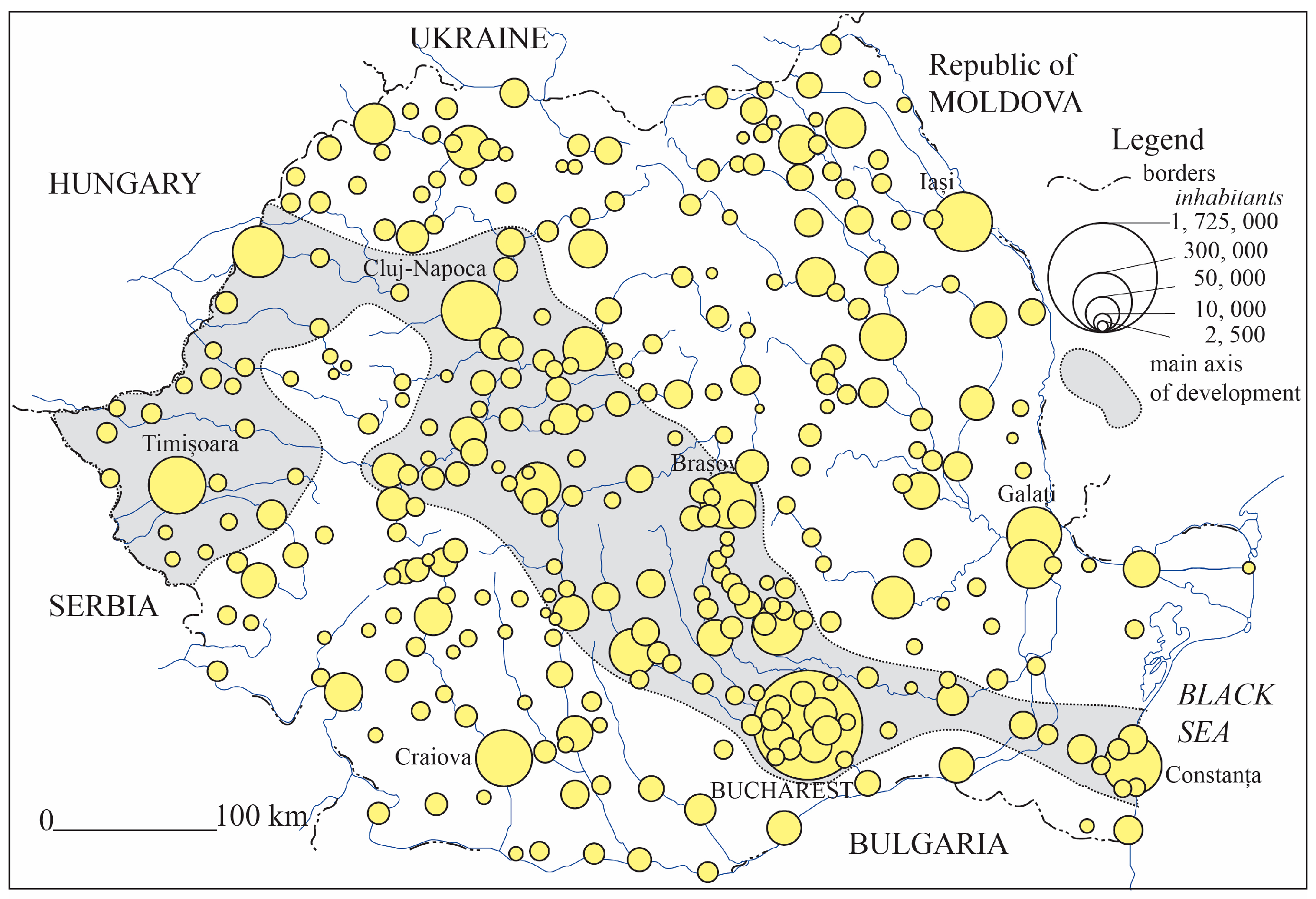
Romania inherited from the communist period an unbalanced urban system, dominated by the capital Bucharest, with a series of regional metropolises that were much undersized compared to their place in the urban hierarchy (Iasi, Cluj-Napoca, Brasov, Timisoara, Craiova, Constanta) and a large number of medium and small cities that presented serious deficiencies in terms of both functional structure and urban infrastructure. After Romania entered the European Union (2007), an attempt was made to implement a new urban development strategy, based on a polycentric and balanced system, to diminish the role of the capital Bucharest and consolidate the functions of second-tier cities in order to mitigate development inequalities between the country’s regions [34,35,36]. However, the regional policies implemented in Romania, poorly coordinated and highly centralized, failed to achieve their objectives and continued to ignore regional and territorial specificities. The discrepancies in the development of counties and regions have increased and a strong polarization is observed mainly between the capital and the center-west development axis, on the one hand, and the rest of the country, on the other hand (Figure 1), a fact also influenced by the priority modernization of the road and railway infrastructure from Bucharest to the western border of the country and to the seaport of Constanta, in the southeast.
Overall, the Romanian urban system comprises 224 small cities (70.2%), 75 medium-sized cities (23.5%), 19 large cities, and one very large city (over 1.7 million inhabitants). Large cities (over 200,000 inhabitants), with a relatively uniform territorial distribution and extensive areas of influence, account for a large share of jobs and corporate income, and are considered true regional metropolises with a complex functional profile. Cities with populations between 50,000 and 200,000 inhabitants play an important role in the urban network; 35 of them are also county seats, with administrative functions that coordinate the territory. However, due to limited functional flexibility, this category is quite unstable, with future evolution conditioned by the correlation between the secondary and tertiary sectors. Small towns (under 20,000 inhabitants) are experiencing population decline, are poorly adapted to the new economic environment, have an agro-industrial economic profile and limited local services, and are considered a very vulnerable category [37].

2.2. Data and Variables Used in Statistical Analysis

The information necessary for the analyses provided is centralized annually by government institutions. The document entitled “Situation regarding the execution of local budget revenues and expenditures by administrative-territorial units”, issued by the Ministry of Development, Public Works and Administration [38], publishes detailed information accessible free of charge. These data comply with the requirements of institutions responsible for financial supervision and are available at the level of basic administrative units. Thus, their use in responding to the study hypotheses is facilitated by the unitary nature of the registration, which provides a high degree of comparability.
This source was mainly used for descriptive, typological analysis, following a summary process that involved calculating the weight of each revenue and expenditure category. As for the specific financing potential, it was deduced using the total population registered in the December 2021 census [39] as a weighting factor.
For the multivariate analysis, in addition to the information from the aforementioned source, data on socio-demographic, economic, and cultural variables were also used. The relevance of these variables is validated by using specific analysis models. To make them compatible, this information was normalized using Z-scores, eliminating extreme values. The description of the variables used and the source of the raw information is shown in Table 1:
Processing the information collected in the database was performed in the XLStat program. Two distinct analyses were targeted, as follows:
(a)
The typology of the structure of income and expenditure budgets, using total income, expressed in Ron/capita and the weight of those categories considered essential, the values expressing the average of the years 2019–2023: own income, government subsidies, income from European Union funds, other income, personnel expenses, expenses with goods and services, social assistance expenses, expenses related to projects financed by the European Union, capital expenses, expenses with public services and other expenses. The typological classification used the AHC (agglomerative hierarchical clustering) option, which retains Euclidean distance to measure similarity, and the Ward method to structure the dendrogram.
(b)
Multivariate analysis of the relationships between self-financing capacity, expressed by the share of own income, and two sets of explanatory variables, one using structural data (7 variables) and another including data related to socio-economic and cultural factors (10 variables). The PLS (partial least squares) regression option accounted for the large number of explanatory variables and the high probability of multicollinearity. Two distinct analyses were performed, one targeting structural variables and the other targeting factorial variables. The first of these aimed to highlight the self-financing capacity, dependence on government subsidies, costs associated with social vulnerability, public services, investments, and the efficiency of budget execution. The second correlative analysis aimed to identify links with innovation capacity, relationships with the neighboring rural environment, and resilience capacity, as expressed through various socio-economic and cultural variables. The correlation matrices containing the specific coefficients, the coefficient of determination (R2), the root mean square error (RMSE), and the arrangement of the variables in the factorial plan are the results that will be interpreted in the context of the study’s scope.

3. Results and Discussion

3.1. Typology of the Budget Structure of Romanian Cities (2019–2023)

The distribution of the budget structure of Romanian municipalities is strongly differentiated by territorial profile, whether by dimensional or spatial criteria. Thus, the urban center’s population size is already a predictor of greater self-financing capacity or of a structure more strongly oriented towards capital expenditures or public services (Table 2). In practice, smaller cities survive solely by allocating subsidies from the central budget and accessing European funds, which, in cities with 5–10 thousand inhabitants, reach 18.5% of total. Personnel expenses, or the cost of general public services, are higher in smaller towns. This creates a significant dysfunction in the budget structure, with dependence on subsidies and European funds also driven by the high costs of the administrative apparatus and the provision of functional public services.
At the regional level, significant disparities are evident, with the capital region (Bucharest-Ilfov) clearly benefiting from a higher capacity to finance public budgets. The general level of development strongly influences this, with cities in the east and south of the country more dependent on additional funding from central budget allocations or European funds, which are largely consumed by social assistance or personnel costs (Table 3). Given lower per-capita funding, cities in these regions are much more vulnerable during crises. While in the capital, Bucharest, and in the economically more developed cities of the North-West Region, the share of investments is significantly higher, in the cities of the south and east of Romania, a high share of expenditure on the acquisition of goods and services is observed. Also, the costs of public services are much higher in the country’s southern cities. Balancing local budgets through centralized redistribution does not necessarily mean favoring cities in less developed regions. In absolute terms, more advanced cities with higher net budgets may receive higher subsidies.
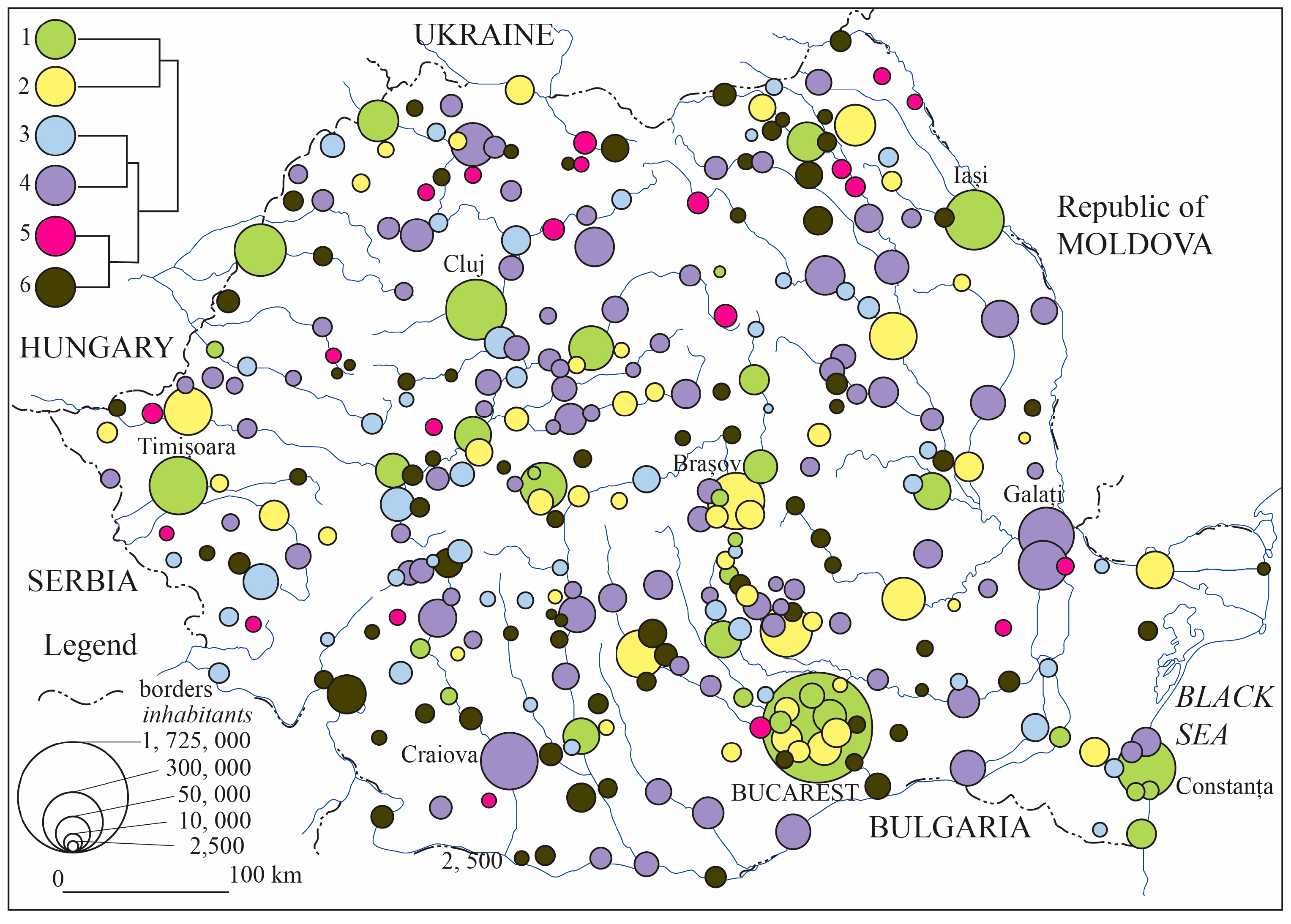
The typology identifies six distinct types, with the dispersion of values within them much lower than that separating them (12.89% compared to 87.11%). The typology was graphically illustrated using a cartogram in which urban centers are represented as circles sized by population from the 2021 census, with types differentiated chromatically. The profile of the types, compared to the average values in the 319 cities, completes the graphic representation. Their spatial distribution indicates dependence on hierarchical position, as confirmed above, but also a certain degree of regionalization, especially for less-represented types (Figure 2, Table 4).
The first type groups 35 cities whose main characteristic is the high potential of their revenue and expenditure budgets, as reflected in disposable income per capita, with a high share of own revenues and a significant absorption of European funds. Reduced subsidies, minimal spending on social assistance, leave room for directing financial resources towards investments (capital spending, goods and services). The budget execution for this category of cities is considered sustainable, with minimal dependence on the state budget and strong potential for self-financing. This category includes the most dynamic large cities, including the capital, and, less frequently, small or medium-sized cities favorably positioned relative to them.
A much larger group (47 cities forming type 2) presents a budget structure largely similar to type 1, but with more limited resources, which explains the significantly higher share of personnel expenses and those intended for general public services. Among the large cities, some that were heavily industrialized in the past fall here (Brașov, Ploiești, Pitești, Arad, Bacău), but most of the cities included in this category are medium or small in size, often located in metropolitan areas (such as around the cities of Bucharest or Brașov). This category of cities presents a budget execution that is exposed to risks, implying a relative dependence on the central budget. Type 3 is relatively well represented (47 cases) and is distinguished by its consistent total revenues, which are ensured by both massive absorption of European funds and government subsidies. It mainly includes small and medium-sized urban centers, which are more common in the center and northwest of the country. The expenditure structure is similar to the previous types but with a lower share of investments. This category of cities maintains balanced budgets, but the low share of own revenues and the relative dependence on European funds limit their self-financing capacity. The most represented is type 4 (93 cities, one-third of the total), distributed evenly nationwide, encompassing both large cities (Craiova, Galați, Brăila) and smaller cities or county seats. They are differentiated by their low revenue levels, but with a relatively high share of their own revenues and European funds. This implies, as in the case of type 2, a high share of personnel expenses (one quarter of the total) and of social assistance or public service costs. This also creates a vulnerability in crisis situations, as any reduction in external funds can increase dependence on government subsidies, which were at a reasonable level during the period studied.
A much smaller number of small cities (21) are grouped in type 5, more frequently in the north and north-west of the country. These have the lowest share of their own revenues in the budget, reflecting their precarious level of development. At the same time, they are strongly dependent on government subsidies and benefit from relevant support from European-funded projects. Apparently, budget execution is favorable, with average disposable income per capita relatively high, which is explained by the allocation of a large share to investments and the acquisition of goods and services. In reality, however, the contradiction between reduced self-financing capacity and relatively high budget costs implies high vulnerability in the absence of economic development projects. These would be necessary to increase the tax base. Most of these cities have recently received urban status (after 2000), presenting a profile closer to that of rural communes and being more receptive to European funds.
The remaining 76 cities (a quarter of the total) present the most problematic profile. Total available revenues are low, with a higher share of own revenues than in the previous type and, consequently, somewhat lower dependence on government subsidies. Reduced access to European funds explains this situation. However, the high cost of personnel expenses is problematic (almost a third). The burden of social assistance expenses indicates great difficulties in ensuring a dynamic labor market and serious inclusion problems. Relatively dispersed at the national level, they are much more frequent in former industrial areas (southern Transylvania) and in predominantly rural regions (the northeast and southwest of the country). The only county seat included in this category is Drobeta-Turnu Severin, along with all the other cities of Mehedinți county, in the extreme southwest of the country. The budget’s precariousness and the vulnerabilities it creates due to high social costs reflect an inefficient use of financial resources.

3.2. Multivariate Analysis of the Structure of Local Budgets and Explanatory Factors

The typological analysis revealed profound disparities in the self-financing capacity of Romanian cities and major differences in cost structures, reflecting specific needs. To explain these structural or spatial differentiations, two multivariate analyses were performed, with the own revenues (LBR) as the dependent variable. This is because the importance of the share of own revenues in the budget structuring was observed, regardless of the demographic size of the urban centers.

3.2.1. The Correlation Between Urban Local Budget Revenue (LBR) and Explanatory Variables

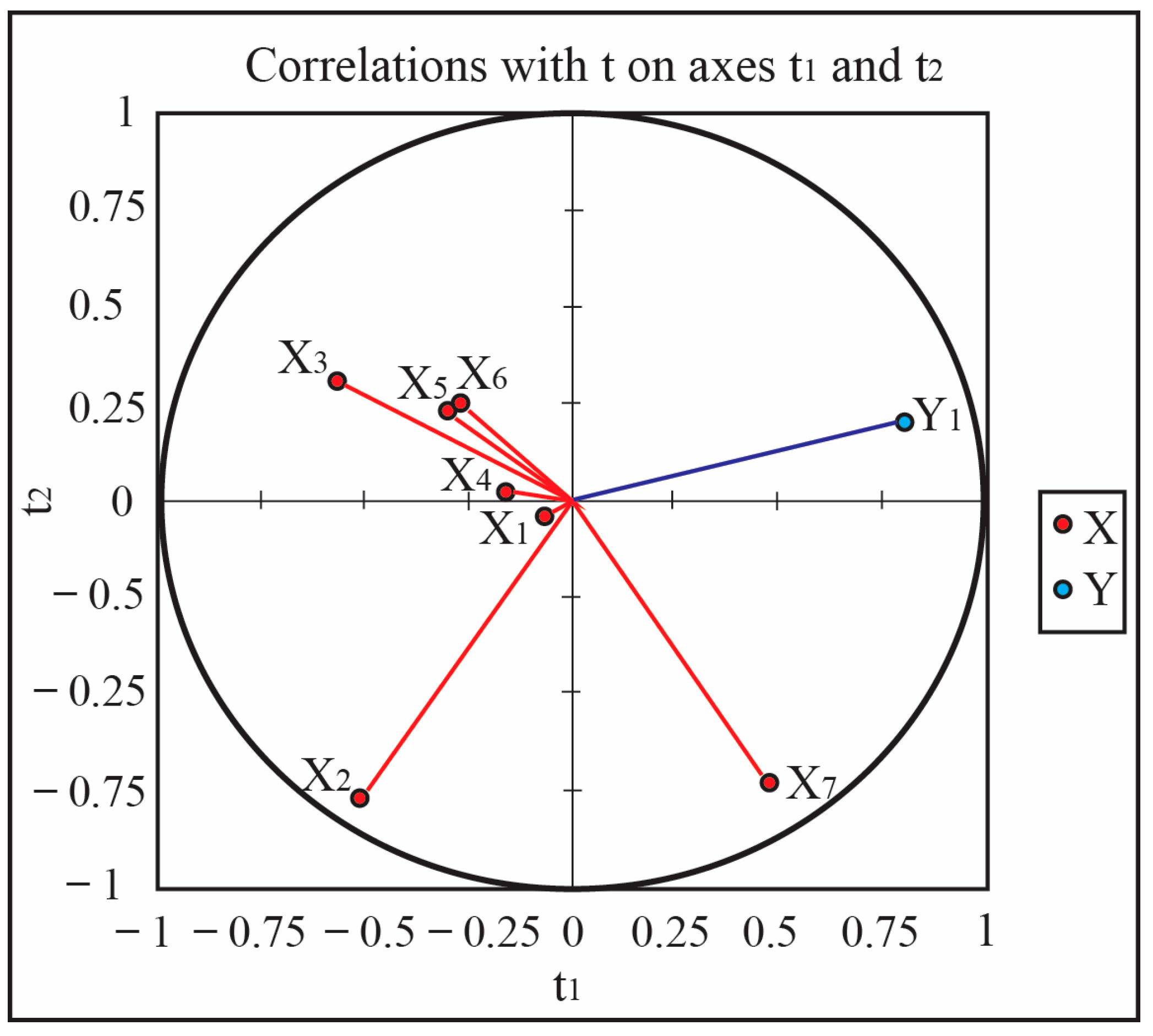
An initial analysis considered, as explanatory variables with predictive potential, the main components of the revenue and expenditure budgets, starting with total income per capita (ABR). Next comes the share of government subsidies (GS), which, as noted, often supplements local budgets and provides access to European funds (ACF). Alongside these variables expressing the components of the revenue budget, variables were also introduced to illustrate the shares of some expenditure chapters: social assistance-induced costs (SAE), personnel expenses (SE), cost of public services (GPS), and investments or acquisition of goods and services (IGS). The model is validated by a high R2 (0.733) and an acceptable RMSE (0.1045).
The PLS multiple regression results indicate a significant positive correlation between own revenues and IGS (Table 5, Figure 3). This certifies the advantage of cities with consistent own revenues in building a budget oriented towards investments or capital expenditures, i.e., towards infrastructure development or improving the quality of life.
It can thus be observed that reduced self-financing capacity is most frequently associated with underfinancing in many urban centers, especially small and medium-sized ones. The highlighting of a negative correlation with personnel costs, even stronger in the case of government subsidies and European funds, indicates that weak financial autonomy is a cause of the precarious level of overall economic development. It is also interesting that income per capita is not correlated with the share of own revenues. In other words, the problem of this dependence is not related to wealth but rather to the way in which the budget is structured. Access to European funds is undoubtedly a way to enhance local development, as the ACF variable is strongly correlated with per capita budget revenues. Supplementing the budget in this way can reduce dependence on government subsidies and help cover investment-related costs. An equally strong correlation links the supplement from the centralized budget to the IGS variable, indicating that many development projects depend on the political factor. Personnel, social assistance, and public service expenditures are positively correlated. This evidence shows that these categories most often imply vulnerability and participation in certain competitions, especially in cases of financial precariousness. However, their predictive value is low, as the available budget is not dependent on them.

3.2.2. The Correlation Between Urban Local Budget Revenue (LBR) and Factor Variables (Drivers)

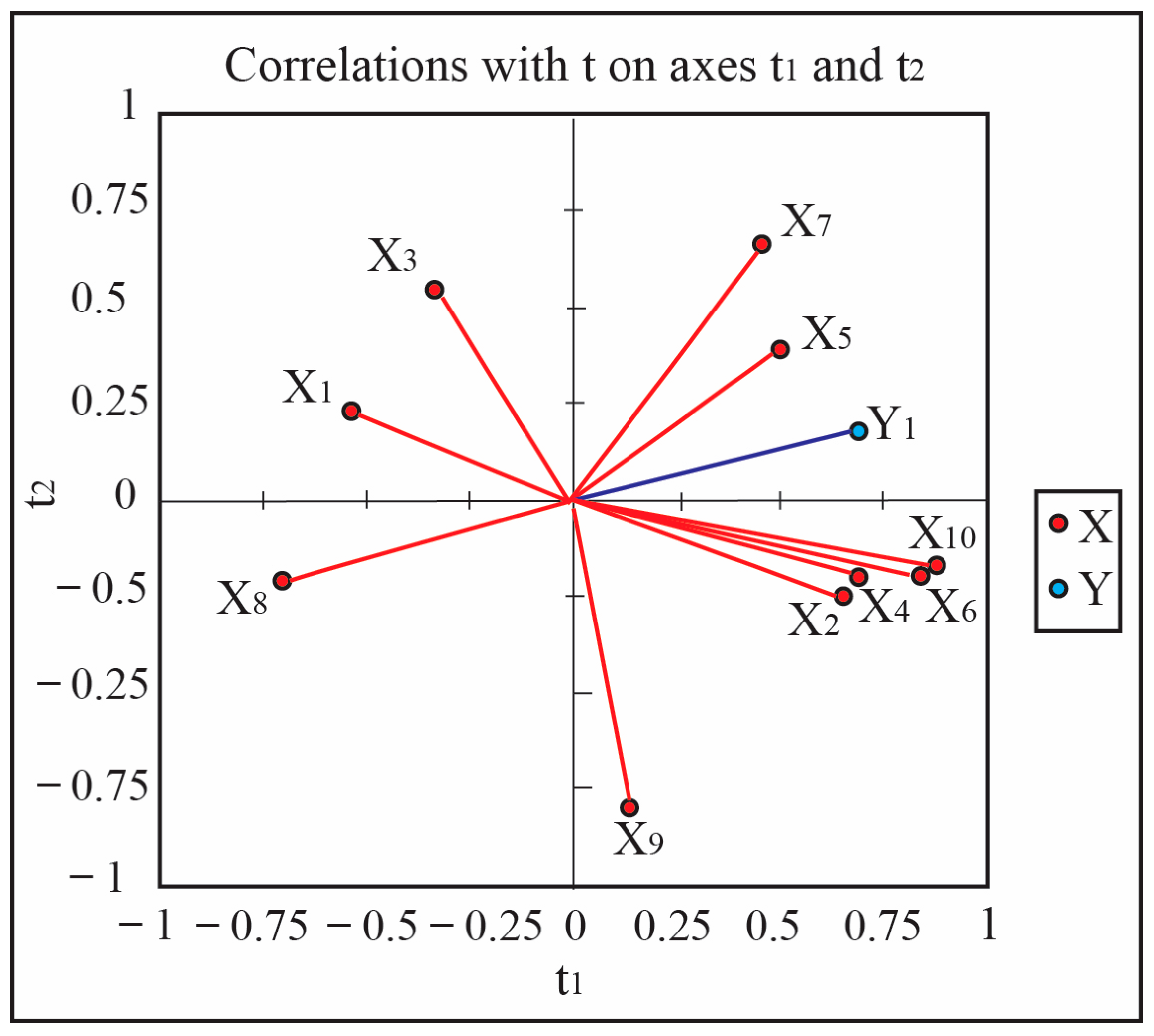
The second multivariate analysis targeted a series of explanatory factors for the level of the share of own income. The selection of the 10 variables was based on access to information, largely covering the socio-economic spectrum, and had the potential to affect the capacity to ensure budgetary revenues. The EOW variable (share of employers and own-account workers) captures openness to entrepreneurship and free initiative, and the ETS (share of employees in the tertiary sector) captures the level of service development, which reflects economic development. The share of employees working in other localities (EOM) indicates the extent of mobility of the active population. Along with the PI and the share of residents domiciled in other localities (PRL), the primacy index can attest to the importance of the urban hierarchy, with larger cities generally being more dynamic. Average income (AI) and the dynamics of the housing construction sector (NBH) were introduced as factors in ensuring the quality of life. Unemployment (UN) and the level of demographic aging (AG) were selected because they indicate vulnerability from the perspective of self-financing capacity. Finally, the level of education, measured by the share of the population with higher education (PHE), completes this list of variables, which also have valences related to cultural particularities. The R2 value indicates a satisfactory level of validity of the proposed model (0.4955), as does the RMSE (0.1437). With the exception of the EOM and AG variables, all the others are well correlated with the share of own income (Table 6, Figure 4). It can thus be concluded that the extent of the active population’s mobility or the population’s aging is unlikely to influence local budgets. In contrast, the average income, educational level, primacy index, share of the tertiary sector, extent of new housing construction, and share of residents residing in other localities show a net positive correlation.

4. Conclusions

The research found significant disparities in the establishment of revenue and expenditure budgets across Romanian cities, with regularities evident in population size, level of economic development, and regional positioning. The self-financing capacity, as expected, is higher in major urban centers with administrative coordination functions, but even among them, there are significant differences, as indicated by the typological analysis. The most advantaged are dynamic urban centers, more deeply anchored in contemporary economic circuits, with active labor markets that can support local budgets. In a country like Romania, where taxation of labor income is important, this matters a lot. The results also indicate the role of fiscal decentralization. Thus, dependence on government subsidies appears to be a clear indicator of inefficiency in local budget management, an issue currently intensely debated in Romanian society [41].
The regional variations observed constitute another significant result of the study. The capital, Bucharest, stands out for the sustainable nature of its revenue budget. There are also visible differences between cities in the southeast and those in the northwest, the latter having greater self-financing potential. Dependence on government subsidies and the high share of personnel costs, which are higher in the country’s south and east, constitute vulnerabilities that disadvantage them. Access to European funds is a solution to balance the budget, but it is uneven. The multivariate analysis highlighted a series of positive correlations: the higher average income of some cities is strongly linked to the development of the tertiary sector, the construction of new housing, a higher level of education and a dominant position in the urban hierarchy. At the same time, significant negative correlations are manifested with the high level of unemployment, the aging of the population and the mobility of the workforce. All this evidence indicates the need for fiscal decentralization to make revenue use more efficient and stimulate the entrepreneurial spirit. A redistribution of resources is necessary, consistent with the real needs of urban communities, to reduce regional disparities and those between large and small or medium-sized cities. An administrative reform capable of reducing personnel costs, directing revenues towards investment, and ensuring the quality of public services is imperative.
The observed disparities also demonstrate major deficiencies in the quality of local urban governance. Improving it and increasing administrative capacity are essential to strengthen self-financing and ensure the sustainable management of local budgets. National development policies should be oriented towards the development of small and medium-sized cities, which have been most affected by deindustrialization. In this way, their self-financing capacity can be increased, with government subsidies directed towards investments rather than personnel or social assistance expenses.
The study’s findings can inform the development of targeted policies to consolidate local government finances in Romanian cities and promote equitable access to public services. Despite the limitations imposed by access to information, we believe the study can serve as a basis for further research that could more comprehensively explore the causal relationships between the identified factors and urban self-financing capacity.

Author Contributions

Conceptualization, I.M. and M.I.; methodology, I.M.; software, I.M.; validation, I.M. and M.I.; formal analysis, I.M.; investigation, M.I.; resources, M.I.; data curation, I.M.; writing—original draft preparation, I.M.; writing—review and editing, M.I.; visualization, M.I.; supervision, M.I. All authors have read and agreed to the published version of the manuscript.

Funding

This research received no external funding.

Institutional Review Board Statement

Not applicable.

Informed Consent Statement

Not applicable.

Data Availability Statement

The data presented in this study are available on request from the authors (istrate.marinela@uaic.ro or ionel.muntele@uaic.ro) due to ethical restrictions, as the dataset may contain information about the vulnerabilities of some administrative units.

Acknowledgments

The authors thank the Ministry of Development, Public Works and Administration of Romania for the public information related to the budgets of the administrative units. We also thank the Department of Geography of the Alexandru Ioan Cuza University of Iasi and the Geographic Research Center, Iasi Branch, Romanian Academy for the technical support provided.

Conflicts of Interest

The authors declare no conflicts of interest.

References

  1. Perroti, R.; Strauch, R.; von Hagen, J. Sustainability of Public Finances; CEPR Discussion Papers No. 1781; CEPR: London, UK, 1997; pp. 32–44. [Google Scholar]
  2. Beldiman, C.M. The importance of maintaining long-term sustainability of public finances. Acta Univ. Danub. Œconomica 2024, 20, 253–260. [Google Scholar]
  3. Torianyk, Y. Sustainability of Public Finances: The Importance of Assessment and Stress Tests. Soc. Econ. 2025, 69, 273–283. [Google Scholar] [CrossRef]
  4. Göndör, M.L. Fiscal Sustainability: Comparative Trends in the European Union and Challenges for Romania. Curentul Jurid. 2019, 78, 18–26. [Google Scholar]
  5. Slack, E. The geography of local public finance. In Handbook on the Geographies of Money and Finance; Martin, R., Pollard, J., Eds.; Edward Elgar Publishing: Cheltenham, UK, 2017; pp. 253–278. [Google Scholar]
  6. Pacione, M. Geography and public finance: Planning for fiscal equity in a metropolitan region. Prog. Plan. 2001, 56, 1–59. [Google Scholar] [CrossRef]
  7. August, M.; Cohen, D.; Danyluk, M.; Kass, A.; Ponder, C.S.; Rosenman, E. Reimagining geographies of public finance. Prog. Hum. Geog. 2022, 46, 527–548. [Google Scholar] [CrossRef]
  8. Dixon, A.D. The Geography of Finance: Form and Functions. Geogr. Compass 2011, 5, 851–862. [Google Scholar] [CrossRef]
  9. Baldwin, R.; Forslid, R.; Martin, P.; Ottaviano, G.; Robert, F. Economic Geography and Public Policy; Princeton University Press: Princeton, NJ, USA, 2003; pp. 156–180. [Google Scholar] [CrossRef]
  10. Fisher, R.C. State and Local Public Finance, 5th ed.; Routledge: London, UK, 2022; pp. 158–189. [Google Scholar] [CrossRef]
  11. van Ewijk, C.; Draper, N.; ter Rele, H.; Westerhout, E. Ageing and the Sustainability of Dutch Public Finances; CPB Netherlands Bureau for Economic Policy Analysis: Hague, The Netherlands, 2006; pp. 25–38. Available online: https://research.tilburguniversity.edu/en/publications (accessed on 14 February 2024).
  12. Tujula, M.; Wolswijk, G. What Determines Fiscal Balances? An Empirical Investigation in Determinants of Changes in OECD Budget Balances; ECB Working Paper Series No. 422; European Central Bank (ECB): Frankfurt am Main, Germany, 2004. [Google Scholar] [CrossRef]
  13. Van Dooren, W.; De Caluwe, C.; Lonti, Z. A Conceptual Model with Applications for Budgeting, Human Resources Management, and Open Government. Public Perform. Manag. Rev. 2014, 35, 489–508. [Google Scholar] [CrossRef]
  14. Afonso, A.; Rault, C. 3-Step Analysis of Public Finances Sustainability: The Case of the European Union; CESifo Working Paper Series No. 2393; CESifo: Munich, Germany, 2008; pp. 1–47. [Google Scholar]
  15. Lake, R.W. Bring Back Big Government. Int. J. Urban Reg. 2002, 26, 815–822. [Google Scholar] [CrossRef]
  16. Pollard, J. Gendering capital: Financial crisis, financialization and (an agenda for) economic geography. Prog. Hum. Geogr. 2013, 37, 403–423. [Google Scholar] [CrossRef]
  17. Mawdsley, E. Development geography II: Financialization. Prog. Hum. Geogr. 2018, 42, 264–274. [Google Scholar] [CrossRef]
  18. Aalbers, M.B. Financial Geography III: The financialization of the city. Prog. Hum. Geogr. 2020, 44, 595–607. [Google Scholar] [CrossRef]
  19. Dostal, P.; Saey, P. Geography, public administration and governance. Belgeo (Rev. Belg. Géographie) 2000, 65–78. [Google Scholar] [CrossRef]
  20. Kyriacou, A.P.; Muinelo-Gallo, L.; Roca-Sagalés, O. Fiscal descentralization and regional disparities: The importance of good governance. Pap. Reg. Sci. 2015, 94, 89–108. [Google Scholar] [CrossRef]
  21. Obst, T.; Onaran, Ö.; Nikolaidi, M. The effects of income distribution and fiscal policy on aggregate demand, investment and the budget balance: The case of Europe. Camb. J. Econ. 2020, 44, 1221–1243. [Google Scholar] [CrossRef]
  22. Ferraz, R. Have Public Finances in the OECD Area been Sustainable? Econ. Bus. 2018, 32, 36–50. [Google Scholar] [CrossRef]
  23. Cristea, L.A.; Vodă, A.D. The Correlation between Fiscal Revenues of Romania and Gross Domestic Product in the last 12 years. Ann. Univ. Oradea Econ. Sci. 2018, XXVII, 84–93. [Google Scholar]
  24. Droj, L.; Droj, G. European Funding—Reduction of Economic Disparities or the Rich get Richer? In Proceedings of the 18th International Economic Conference “Crises After the Crisis. Inquiries from a National, European and Global Perspective”, Sibiu, Romania, 19–20 May 2011. [Google Scholar]
  25. Oprea, F.; Mehdian, S.; Stoica, O. Fiscal and financial stability in Romania—An Overview. Transylv. Rev. Adm. Sci. 2013, 9, 159–182. [Google Scholar]
  26. Gorie, C.A.; Nicola, B.L. Sustainability of Public Finances in Times of Crisis. Financ.–Chall. Future 2023, 22, 81–90. [Google Scholar]
  27. Bostan, I.; Toderaș, C.; Gavriluță, A.F. Challenges and Vulnerabilities on Public Finance Sustainability. A Romanian Case Study. J. Risk Financ. Manag. 2018, 11, 55. [Google Scholar] [CrossRef]
  28. Oprișan, O.; Pirciog, S.; Ionașcu, A.E.; Lincaru, C.; Grigorescu, A. Economic Resilience and Sustainable Finance Path to Development and Convergence in Romanian Counties. Sustainability 2023, 15, 144221. [Google Scholar] [CrossRef]
  29. Moldovan, O. Sustainability, Development Regions and Local Revenue Mobilization in Romania. J. Publ. Adm. Financ. Law 2023, 28, 250–274. [Google Scholar] [CrossRef]
  30. Istrate, M.; Muntele, I. Sustainability of local public finances from the perspective of territorial disparities in the rural areas of Romania. Land 2024, 13, 1773. [Google Scholar] [CrossRef]
  31. Finocchiaro Castro, M.; Guccio, C.; Romeo, D.; Vidoli, F. How does institutional quality affect the efficiency of local government? An assessment of Italian municipalities. Econ. Politica 2025, 42, 569–597. [Google Scholar] [CrossRef]
  32. Moraes Soares, R.; Nunes, A.M.; Heliodoro, P.; Ana Catarina Kaizeler, A.C.; Martins, V. Comprehensive quantitative evaluation of municipal budget allocation efficiency: The Portuguese case. Public Munic. Financ. 2025, 14, 59–73. [Google Scholar] [CrossRef]
  33. Platagea-Gombos, S.; Mocanu, V.; Istrate, B.; Bârlădeanu, T.V. Local budget balance and influence factors. In Proceedings of the International Conference on Business Excellence; Bucharest University of Economic Studies: Bucharest, Romania, 2022; Volume 16, pp. 400–408. [Google Scholar] [CrossRef]
  34. Dincă, M.S.; Dincă, G.; Andronic, M.L. Efficiency and Sustainability of Local Public Goods and Services. Case Study for Romania. Sustainability 2016, 8, 760. [Google Scholar] [CrossRef]
  35. Benedek, J. The role of urban growth poles in regional policy: The Romanian case. Procedia–Soc. Behav. Sci. 2016, 223, 285–290. [Google Scholar] [CrossRef]
  36. Bănică, A.; Istrate, M.; Muntele, I. Challenges for the Resilience Capacity of Romanian Shrinking Cities. Sustainability 2017, 9, 2289. [Google Scholar] [CrossRef]
  37. Mitrică, B.; Săgeată, R.; Ines Grigorescu, I. The Romanian urban system—An overview of the post-communist period. Forum Geografic. 2014, 13, 230–241. [Google Scholar] [CrossRef]
  38. Statement on the Execution of Incomes and Expenditure of Local Budgets by Administrative-Territorial Units. Ministry of Development, Public Works and Administration, EVC 2019–2023. Available online: http://www.dpfbl.mdrap.ro/sit_ven_si_chelt_uat.html (accessed on 14 January 2025).
  39. Census of Population and Housing (RPL 2021). Available online: https://www.recensamantromania.ro/rezultate-rpl-2021/rezultate-definitive/ (accessed on 12 February 2025).
  40. National Institute of Statistics (INS). Available online: http://statistici.insse.ro:8077/tempo-online/#/pages/tables/insse-table (accessed on 13 February 2025).
  41. Berceanu, I.B.; Nicolescu, C.E. Collaborative Public Administration—A Dimension of Sustainable Development: Exploratory Study on Local Authorities in Romania. Adm. Sci. 2024, 14, 30. [Google Scholar] [CrossRef]
Figure 1. Localities with urban status in Romania.
Urbansci 10 00143 g001
Figure 2. Typology of the structure of revenue and expenditure budgets of Romanian cities (average of 2019–2023).
Urbansci 10 00143 g002
Figure 3. Correlation diagram between the original variables (X1–X7 and Y1) and the latent variables (t1 and t2), extracted by the PLS model.
Urbansci 10 00143 g003
Figure 4. Correlation diagram between the original variables (X1–X10 and Y1) and the latent variables (t1 and t2), extracted by the PLS model.
Urbansci 10 00143 g004
Table 1. Variables used in factorial analysis—description and source of information.
Type of VariableVariableAcronymDescriptionInformation Source
Dependent
variable
Local Budget RevenueLBR% of total revenuesEVC (average 2019–2023) [38]
Explanatory Variables—StructuralAverage Budget Revenue per CapitaABRRon per Inhabitant
Government SubsidiesGS% of total revenues
Absorption Capacity of EU fundsACF
Social Assistance ExpensesSAE% of total expenses
Share of Staff ExpenditureSE
Cost of General Public ServicesGPS
Investment, Purchase of Goods and Services CostsIGS
Explanatory Variables—DriversShare of employers and own-account workersEOW% of active populationRPL 2021 [39]
Share of employees in the tertiary sectorETS% of active population
Share of employees in other municipalitiesEOM% of active population
Primacy IndexPIThe ratio of the city’s population to the average population of neighboring cities
Share of population residing in other localitiesPRL% of active population
Average IncomeAIAverage population income in 2021 (wages, pensions, various allocations)INS [40]
Newly built housingNBHRatio between the number of dwellings built (2012–2021) and the population in 2021
UnemploymentUN% of active populationRPL 2021 [39]
AgeingAGThe share of the population over 65 years of age
Share of population with higher educationPHE% of active population
Table 2. Distribution of the main chapters in the revenue and expenditure budgets of Romanian cities by dimensional categories. Primary data source: EVC (2019–2023).
Demographic Size of Cities
(Thousand Inhabitants)
RevenuesExpenses
Total RevenuesLocal Budget RevenueGovernment
Subsidies
European FundsStaff ExpensesSocial AssistanceInvestmentsGoods and ServicesPublic Services
Ron/Inhab.% of Total Revenues% of Total Expenses
Over 1700742782.53.21.912.86.514.121.215.2
200–300405272.34.410.514.75.39.727.710.8
100–200362571.74.49.116.55.811.022.811.6
50–100377760.25.914.9216.410.324.713.4
25–50342558.76.714.621.54.712.325.915.1
10–25332848.910.117.423.95.614.223.218
5–10368143.513.118.524.95.619.720.820.7
Under 5402641.612.615.928.45.520.319.825.6
Table 3. Distribution of the main chapters of the revenue and expenditure budgets of Romanian cities by development regions. Primary data source: EVC (2019–2023).
Development Regions
(NUTS 2)
RevenuesExpenses
Total RevenuesLocal Budget RevenueGovernment
Subsidies
European FundsStaff ExpensesSocial AssistanceInvestmentsGoods and ServicesPublic Services
Ron/Inhab.% of Total Revenues% of Total Expenses
Bucharest-Ilfov696382.23.22.012.86.214.222.315.3
North-East349755.97.114.619.95.310.926.313.9
South-East357162.95.913.118.15.69.826.612.9
South Muntenia344259.86.113.524.07.011.423.316.6
South-West Oltenia357158.59.812.020.86.411.726.116.3
West408058.86.516.421.04.811.421.013.8
Center373565.46.012.618.74.815.418.713.1
North-West388061.58.114.718.56.413.718.514.1
Table 4. Profile of types.
TypeRevenues (% of Total)Expenses (% of Total)
Total Revenues (Ron/Inhab.)Own RevenuesGovernment
Subsidies
Absorption of EU FundsStaff ExpenditureInvestments, Goods, ServicesSocial AssistanceGeneral Public Services
1521068612.617.443.33.814.1
2295262.16.34.927.442.8622
3469633932.522.728.4518.4
4334150.97.919.12534.96.118.6
5418932.22319.221.641.74.621.6
6286043.717.65.930.746.68.123
Table 5. Correlation matrix of the dependent variable (LBR) with structural variables.
VariablesABR (X1)GS (X2)ACF (X3)SAE (X4)SE (X5)GPS (X6)IGS (X7)LBR (Y1)
ABR (X1)1−0.0740.420−0.413−0.5072−0.244−0.144−0.036
GS (X2) 1−0.1770.0480.0950.1390.358−0.515
ACF (X3) 1−0.274−0.325−0.221−0.709−0.458
SAE (X4) 10.3630.1810.020−0.130
SE (X5) 10.514−0.019−0.205
GPS (X6) 10.119−0.148
IGS (X7) 10.235
LBR (Y1) 1
Table 6. Correlation matrix of the dependent variable (LBR) with the factor variables.
VariablesEOW (X1)ETS (X2)EOM (X3)PI (X4)PRL (X5)AI (X6)NBH (X7)UN (X8)AG (X9)PHE (X10)LBR (Y1)
EOW (X1)1−0.2500.371−0.195−0.192−0.515−0.0210.388−0.242−0.356−0.337
ETS (X2) 1−0.1440.3580.4000.4040.252−0.3480.2230.6120.392
EOM (X3) 1−0.4350.256−0.4360.2210.059−0.251−0.385−0.173
PI (X4) 10.0180.6860.122−0.3450.0600.6830.436
PRL (X5) 10.1470.589−0.380−0.0280.2790.361
AI (X6) 10.142−0.4900.2320.7750.582
NBH (X7) 1−0.320−0.2750.2230.399
UN (X8) 1−0.058−0.471−0.528
AG (X9) 10.170−0.071
PHE (X10) 10.535
LBR (Y1) 1
Disclaimer/Publisher’s Note: The statements, opinions and data contained in all publications are solely those of the individual author(s) and contributor(s) and not of MDPI and/or the editor(s). MDPI and/or the editor(s) disclaim responsibility for any injury to people or property resulting from any ideas, methods, instructions or products referred to in the content.