1. Introduction
Urban regeneration has emerged as a primary strategy for contemporary cities to address physical deterioration, restructure commercial districts, and strengthen their competitive advantage [
1]. These initiatives have increasingly targeted traditional food markets as a tool for revitalizing central neighborhoods, reshaping local identities, and enhancing urban attractiveness [
2,
3]. While such interventions are often framed as necessary modernization, they frequently alter the social, economic, and cultural roles that markets have historically played in cities [
4]. In Southeast Europe, and particularly in post-socialist urban contexts, market reconstructions reveal broader tensions between neoliberal policy orientations, public distrust in institutions, and the persistence of informal economic practices.
The role and identity of marketplaces have evolved over time, often influenced by changing consumer preferences [
5,
6,
7] and competition from supermarkets [
8], as well as urban development pressures and a desire to revitalize urban spaces [
3,
9,
10]. These factors have prompted cities to reconsider the purpose and design of marketplaces in order to ensure their continued relevance and economic success. Local authorities seek to improve the markets’ appeal and sustainability through modern regulation [
2,
5], with market rebuilding often motivated by the goal of attracting more visitors, including both locals and tourists, to increase profits [
9,
11].
Although food markets have been widely studied as historical institutions, socio-cultural spaces, and elements of urban food systems, there is limited empirical research on how contemporary regeneration projects reshape the social, spatial, and economic functions of markets in post-socialist cities. Existing studies on market modernization focus largely on Western European cases, where regeneration often leads to gentrification, commercial diversification, or tourism-oriented transformations [
4,
12,
13,
14,
15]. Less attention has been paid to understanding how market renewal unfolds under post-socialist neoliberal conditions. Furthermore, in Serbia, despite the cultural and economic importance of open-air markets [
16,
17], scholarship has not systematically examined how recent market reconstructions affect local producers, everyday vendor–customer interactions, or the socio-spatial identity of markets.
The transformation of Palilula Market in Belgrade, the capital of Serbia, offers a valuable case for addressing this research gap. Established in the late nineteenth century as an open-air marketplace known for its flexible layout and close interaction between producers and consumers, Palilula Market underwent a complete reconstruction in 2019. The result was a large, enclosed, and tightly regulated facility. Promoted by city officials as a modernization effort to improve comfort, safety, and economic vitality, the project also brought significant changes to the market’s physical structure, economic practices, and social life.
This study examines how modernization-driven regeneration reconfigures spatial practices, supply chains, and vendor livelihoods and alters the cultural and social roles traditionally associated with the marketplace. The main research question was: How does transforming an open-air market into an enclosed, multi-purpose commercial complex affect vendor livelihoods, market inclusivity, and the marketplace’s socio-cultural role in a post-socialist urban setting?
This study shows that, in post-socialist cities, market regeneration produces exclusion not primarily through tourism-led or consumption-driven gentrification, which are dominant patterns identified in Western European and global contexts, but through regulatory formalization and spatial enclosure that rework historically hybrid governance arrangements and selectively marginalize small-scale vendors and local producers. By positioning Palilula Market within broader discussions on urban regeneration, retail transformation, and post-socialist urban change, the research offers a more nuanced perspective on how modernization impacts traditional market spaces.
2. Theoretical Background
The modernization of marketplaces has long reflected dominant political and economic ideologies. In nineteenth- and twentieth-century Europe, reforms emphasized enclosure, standardization, and improved sanitation—changes seen as necessary to align urban commerce with the values of industrial progress and the bourgeois public sphere [
2,
3,
18]. Today’s regeneration narratives build on this legacy, presenting covered market halls as symbols of efficiency, consumer comfort, and urban competitiveness [
19]. As a result, markets are often selected for redevelopment not just for practical reasons, but because they serve as prominent public spaces where broader visions of modernization can be physically and visibly enacted.
Food markets have historically served as social institutions, embedded in local culture, community ties, and everyday rhythms of urban life [
10]. Their significance arises from various interconnected functions. Local food systems research highlights the importance of markets in supporting small-scale farmers and food entrepreneurs in selling their goods directly to consumers [
20], thereby boosting their incomes and promoting sustainable agricultural practices [
21,
22]. Historically, they have served as important gathering places for communities and have been considered the centers of urban life where diverse cultures, tastes, and traditions converge [
16,
23,
24]. As Mehta [
25] emphasizes, such public spaces generate “social life” that cannot be replicated in structured retail environments.
However, in many cities, market transformation is closely tied to broader retail restructuring strategies [
4]. Growing competition from supermarkets and global retail chains has pressured municipalities to rebrand and “upgrade” traditional markets in order to maintain their relevance [
6,
8]. Such interventions often seek to attract new consumer groups, such as tourists, middle-class residents, or creative city users, by enhancing esthetic qualities, integrating hospitality uses, or promoting experiential consumption [
26]. To enhance the overall experience, transformed markets sometimes include amenities such as shared seating areas, dedicated spaces for educational activities like workshops and cooking demonstrations, ample parking, and access to WiFi [
2]. In certain instances, markets have even integrated residential spaces for both the general population and specific groups, such as elderly residents [
26,
27].
Research has also shown that regeneration often results in processes resembling retail gentrification, i.e., the displacement of traditional vendors through rising rents, corporatized retail models, and the prioritization of higher-value commercial functions [
4,
14]. Several mechanisms contribute to this shift. Modernization projects typically increase vendors’ fixed costs, rendering participation unaffordable for lower-income or small-scale traders [
8,
13]. New management structures often bring stricter operating hours, product requirements, or design rules that limit informal practices and diminish flexibility, the character that has long defined traditional markets [
28]. Regenerated markets frequently integrate restaurants, gourmet shops, or specialty products, contributing to “gastrofication”, which is a process through which food consumption becomes a lifestyle-oriented, upscale experience [
26,
29]. In addition, the growing presence of large retail chains within regenerated market complexes, which is a common trend across Europe, creates uneven competition, often to the detriment of small-scale vendors [
11,
30]. Together, these shifts reflect a broader “upmarketization” of traditional food spaces, eroding the informal economies and community-oriented practices that once flourished there [
4]. As Balat [
31] notes, such spatial reorganizations frequently shift markets from community-serving institutions to curated commercial destinations targeting middle-class consumers. Moreover, Nanda et al. [
32] found that post-crisis retail restructuring is frequently justified through narratives of modernization and resilience, while its distributive effects remain uneven and socially selective.
In post-socialist cities, modernization processes intersect with unique social histories. Markets in Serbia and across South-Eastern Europe have historically combined formal regulation with deeply rooted informal practices, local agricultural trade, and neighborhood-level sociality [
17,
33]. Following the political and economic transition of the 1990s, these institutions remained important livelihood anchors and spaces of economic resilience [
34]. Therefore, in post-socialist cities, neoliberal urban restructuring has frequently unfolded through governance arrangements that differ from the public–private partnership models commonly discussed in Western urban literature [
35].
Recent scholarship highlights that post-socialist market transformations often reflect broader tensions between liberalization, Westernization, and inherited urban cultures [
36]. Planning studies in Serbia and the region demonstrate that local authorities increasingly pursue modernization agendas frequently influenced by global urban policies and competitive city narratives that prioritize visual upgrading, commercial diversification, and efficiency [
35,
37,
38]. Thus, analyzing market regeneration in post-socialist Belgrade requires attention to both macro-level governance changes and the micro-level social impacts experienced by vendors, consumers, and neighborhood communities. These strands frame Palilula Market as a case in which market regeneration must be understood simultaneously as a process of retail restructuring, real estate repositioning, and post-socialist governance-mediated formalization.
3. Materials and Methods
This study employs a qualitative research design to examine how the spatial transformation of Palilula Market has influenced the practices, experiences, and perceptions of market vendors. Given that regeneration processes shape both tangible and intangible dimensions of urban life, a qualitative approach enables an in-depth exploration of the socio-economic and cultural consequences of the market’s reconstruction. The methodology integrates historical analysis, semi-structured interviews, and systematic on-site observations, allowing for a multi-layered understanding of the transformation.
3.1. Historical and Document Analysis
To contextualize the contemporary transformation of Palilula Market, historical documents, archival records, municipal planning materials, and policy documents were reviewed. These materials provided insights into the evolution of the market’s spatial and functional characteristics, the motivations guiding the reconstruction, and the broader urban development discourse within which the intervention was framed. The historical analysis was essential for understanding how the market’s longstanding socio-cultural role contrasts with the objectives and outcomes of its recent transformation.
3.2. Semi-Structured Interviews with Vendors
The core of the empirical research consisted of semi-structured interviews with market vendors who experienced the transition from the open-air to the enclosed market environment. Vendors were prioritized because they were the most directly affected by spatial reconfigurations and faced the most immediate impacts on their livelihoods during and after reconstruction, compared with other key stakeholders, such as managers and customers.
Qualitative research was employed to avoid a uniform attitude across interviews, and open-ended questions were tailored to the interview context for each participant [
39]. A purposive sampling technique was used to select interview participants to ensure diversity in the sample [
40]. Of the 30 vendors currently operating in Palilula Market, 15 were interviewed, representing different product categories (fresh produce, dairy, and non-perishable goods), modes of supply (local producers and resellers), lengths of market participation, and spatial positions within the new market layout. Sample adequacy was evaluated through the principle of thematic saturation [
41]. After about eleven interviews, no substantially new themes appeared regarding spatial change, economic viability, regulatory constraints, or social interactions. The remaining interviews confirmed or added details to existing patterns across vendor profiles. Consequently, the final sample was considered sufficient to ensure analytical depth and internal validity of the research.
The interviews took place in July and September 2025, six years after the market completed and reopened. This relatively short period enabled the capture of early-stage impacts and vendor reactions to the new market environment. These interviews aimed to explore the following aspects:
vendors’ experiences prior to the transformation,
perceived changes in economic performance, rental conditions, and customer flows,
shifts in vendor–customer relationships,
assessments of spatial design, regulation, and management after reconstruction,
perceptions of inclusion, exclusion, and identity loss or reinforcement.
This interview format allowed participants to articulate their experiences in their own terms, while enabling comparison across cases. Interviews were conducted in person, typically at vendors’ stalls, ensuring contextual relevance and facilitating rapport. All interviews were transcribed and thematically coded. All participants were informed of the research’s purpose and consented to participate voluntarily. To ensure confidentiality, identifying details were removed from transcripts and pseudonyms were used in reporting the findings. The study complied with ethical guidelines for qualitative research involving human subjects.
3.3. On-Site Observations
Systematic observations were conducted after reconstruction to document spatial practices, movement patterns, use of common areas, and interactions between vendors and customers. Observations focused on the physical layout, accessibility, circulation routes, visibility of stalls, and the presence of new amenities introduced during the redevelopment. Particular attention was given to how the redesigned space supported or constrained traditional market practices, as well as to the emergence of new forms of commercial or social behavior. Observational notes were organized into descriptive and analytical categories and later triangulated with interview data.
3.4. Data Analysis
Data from all sources were analyzed through iterative cycles of coding and thematic synthesis [
42]. The analysis proceeded in three stages: (1) open coding of interview transcripts and observational notes to identify recurrent patterns related to spatial change, economic adaptation, social interactions, and identity shifts; (2) axial coding, linking themes to broader processes of urban regeneration, including formalization, commercialization, and spatial reordering; (3) triangulation across interviews, observations, and documentary evidence to validate interpretations and reveal contradictions between official narratives and vendor experiences. This analytical strategy allowed the study to capture both the intended and unintended consequences of the market’s reconstruction.
Table 1 summarizes the data collection methods, sample characteristics, and analytical procedures employed in the study.
4. Results
4.1. The Food Market Network in Belgrade: Historical Context
Understanding the transformation of Palilula Market requires placing it within the broader historical development of Belgrade’s food market network, which has long functioned as a key component of the city’s food provisioning system, social life, everyday urban economy, and informal exchange. This section provides historical context that highlights the institutional and spatial characteristics of Belgrade’s markets, directly relevant to understanding current processes of market renewal.
Early twentieth-century Belgrade hosted seven principal markets, many of which inherited spatial and functional characteristics from Ottoman-era bazaars [
16,
17,
43]. These spaces were initially characterized by makeshift stalls, minimal infrastructure, and a mix of local producers, artisans, and itinerant vendors [
44]. Despite their modest physical form, markets served as vital urban public spaces where socio-economic relations were anchored.
As Belgrade expanded, the municipal administration gradually formalized the market network through regulatory and organizational measures. The establishment of a Markets Department introduced rules governing daily operations, hygiene standards, rental fees, and trading rights, while maintaining preferential access for long-standing local producers and disadvantaged vendors [
44]. This institutional framework shaped a distinctive model in which formal regulation coexisted with flexible, small-scale, and relational trading practices. Subsequent political and economic shifts, from the capitalist interwar period to the socialist post-Second World War era, reshaped market operations, vendor composition, and the degree of municipal oversight [
45]. During the socialist period more focus was placed on large public agricultural enterprises, gradually decreasing the role of private traders in the market system.
Despite these transformations and the growing dominance of supermarkets in the 21st century, open-air markets have remained popular for daily shopping, maintaining their role as socially embedded and culturally valued urban spaces [
34,
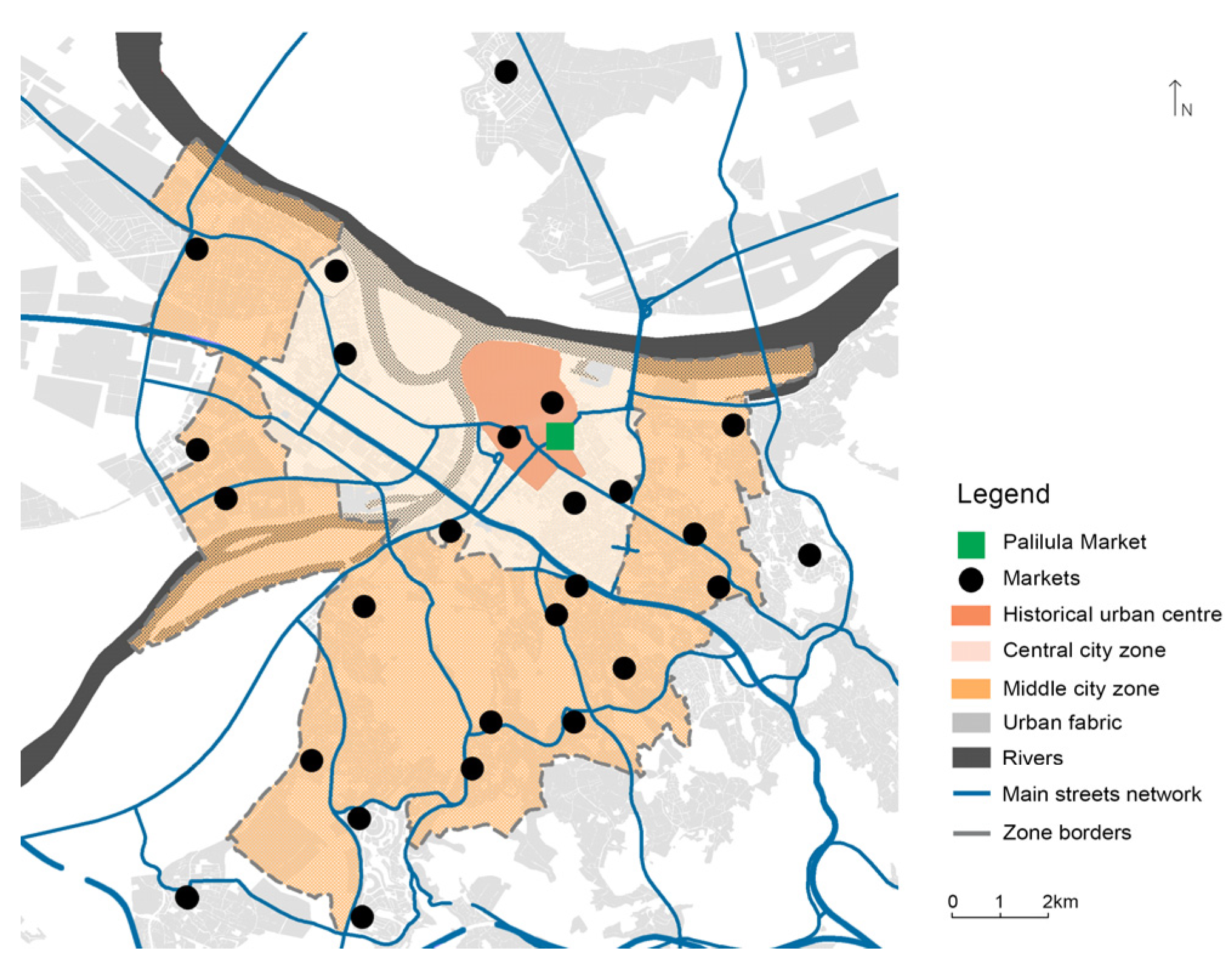
46]. Today, Belgrade’s metropolitan area includes 44 open-air markets of varying scale (
Figure 1) [
47,
48]. Among these open markets, there are also 29 modern farmers’ markets [
49]. At the same time, the City Administration of Belgrade continues with the policy of city markets’ regeneration and spatial restructuring. This policy orientation marked a shift from incremental maintenance toward more interventionist approaches, including proposals to transform selected open-air markets into enclosed or covered facilities [
50]. In this context, Palilula Market’s experience serves as an important reference for future interventions.
4.2. The Transformation of Palilula Market
Within the city market network, Palilula Market holds a unique position as one of the oldest markets and a longstanding site of small-scale, producer-oriented trade. Its historical development illustrates the broader tensions between continuity and change that have shaped Belgrade’s markets. This section provides a detailed analysis of Palilula Market’s specific development, culminating in its complete reconstruction, completed in 2019.
Founded in the late 1800s, Palilula Market originally served as an informal “market site,” as documented in 1888, and was officially recognized as a city marketplace in 1899 [
51]. Unlike other markets, Palilula Market was founded as a private initiative by the local Association “Miloševac” for the Beautification of the Palilula neighborhood, an organization established by local residents themselves. The Association was obliged to submit annual reports on income and expenditure, and any surplus funds were to be reinvested in improving the surrounding neighborhood. This governance model remained in place until 1927, when the market was transferred to municipal control following the expiration of the agreement [
52].
Spatially, the market occupied a triangular plot defined by surrounding streets, a configuration that strongly influenced its internal organization. For decades, Palilula Market consisted primarily of stalls, stands, and wooden cabins arranged on unpaved ground, conditions that led to persistent hygiene problems [
53]. During the mid-1930s, the market featured two aging structures that accommodated eight shops. In 1932, the municipality took steps to improve conditions in the market by partially concreting its surface and upgrading the water supply and sewage system [
44]. Although these measures brought some improvement in sanitation, issues of poor hygiene and overcrowding remained. Archival sources and contemporary press reports indicate that sanitation and spatial congestion remained unresolved issues, frequently debated in municipal council sessions.
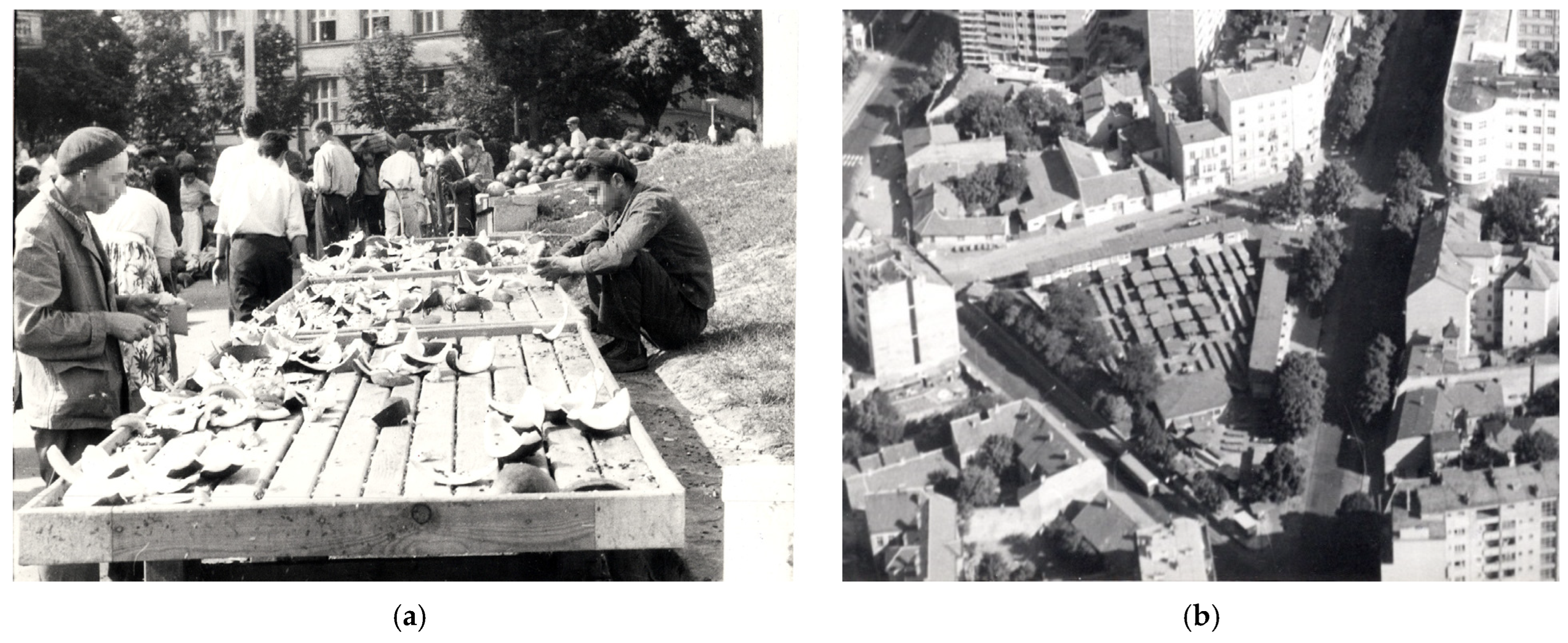
Following the Second World War, Belgrade’s authorities introduced a series of measures to reorganize the city’s food markets as part of broader urban restructuring policies. Palilula Market had undergone several minor interventions since 1948, primarily aimed at enhancing organization and hygiene (
Figure 2a). In 1954, a significant reconstruction effort was undertaken. The market area was divided into two levels, expanding space for food and product stalls while new retail shops were built along the perimeter. This configuration defined the market’s physical structure for several decades (
Figure 2b).
These historical interventions indicate that Palilula Market evolved through a series of gradual adjustments aimed at improving hygiene and organization while preserving its basic spatial form and socio-cultural identity. This long period of incremental change ended in the mid-2010s, when the market underwent a major reconstruction that significantly altered its physical structure and operating mode, completed in 2019. It is worth noting that, prior to the reconstruction, Palilula Market accommodated approximately 240 stalls within a total area of 3600 m
2, including nearly 950 m
2 of enclosed space [
54].
The decision to transform Palilula Market into a closed, contemporary facility marked a critical turning point in its history. Initiated in 2014, the comprehensive reconstruction was justified by the city authorities as a necessary step to improve organization, hygiene, operational efficiency, and the market’s overall public image [
54]. The architectural project was chosen through an open competition of ideas, and the final decision to construct it was determined by a public vote of the citizens, signaling an attempt to legitimize the intervention through participatory mechanisms. Official narratives framed the new building as comparable to modern European markets, combining functionality with a fashionable architectural expression [
55]. However, the transition disrupted market operations, forcing vendors to cease operations and prompting them to express their dissatisfaction through protests.
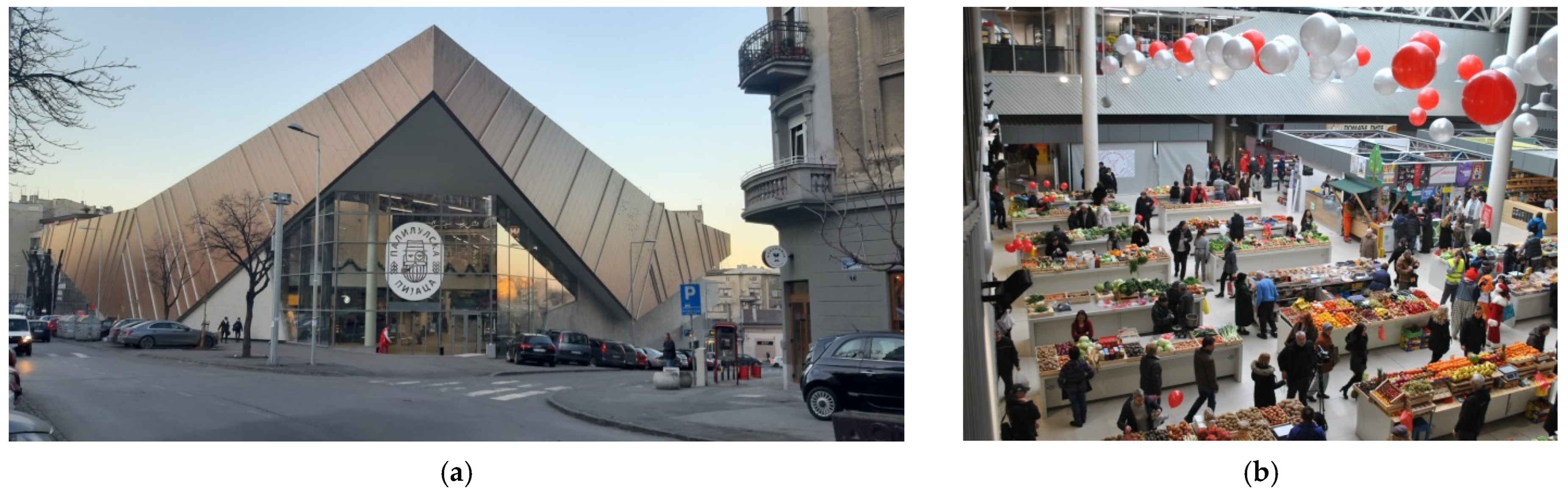
Completed and opened in 2019, the new Palilula Market building comprises four levels: underground storage facilities and a parking garage; a ground-floor food market with a limited number of stalls; modular retail units; cafés and restaurants; and upper levels housing a supermarket and office spaces (
Figure 3). Although the total area expanded to 12,689 m
2, five times the previous size, the number of market stalls was drastically reduced to only 30, effectively excluding local food producers from traditional market trading [
56]. Public reception of the new building has been mixed, with critical commentary highlighting its resemblance to a shopping center and questioning its compatibility with the neighborhood’s historical and spatial character [
57,
58,
59].
4.3. Vendors’ Perspectives on the New Market Environment
Vendors’ accounts of the reconstructed Palilula Market reveal a complex, often ambivalent assessment of the new market environment, in which improved physical conditions coexist with new economic pressures and altered social relations. Rather than expressing uniformly positive or negative opinions, vendors repeatedly articulated trade-offs between comfort, organization, affordability, and livelihood security.
Across interviews, vendors unanimously acknowledged the advantages of the new indoor setting—improved infrastructure, including protection from weather, better lighting, modern sanitation, and designated storage areas, enhanced working conditions and operational convenience. One vendor explicitly contrasted the previous open-air market with the new indoor environment: “Goods and sellers and buyers are now protected. We can operate year-round, 365 days a year, regardless of weather conditions. That is the advantage of this indoor market. In the open market, it can be very hot in the summer or cold, windy, and rainy in the winter, making the work difficult or impossible”.
At the same time, logistics emerged as recurring constraints that complicate daily operations, particularly parking arrangements. Although vendors are allowed one hour of free parking in the morning for unloading, they must pay standard fees during market hours, which they described as excessively high. Traffic congestion and limited parking in the surrounding area further increase the burden of delivery and commuting. Paradoxically, vendors also acknowledged that the garage’s presence attracts a broader clientele, underscoring the uneven distribution of infrastructural benefits.
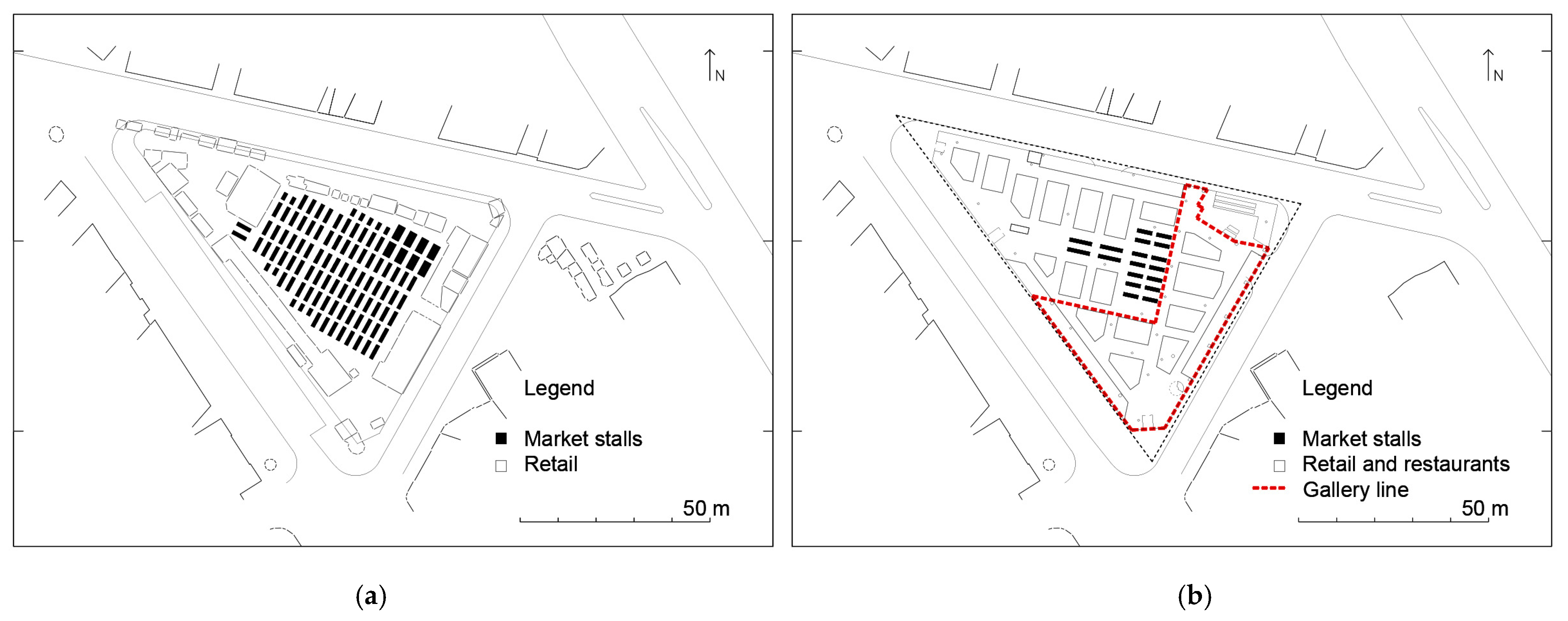
Spatial reconfiguration emerged as a central concern, especially the reduced number of food stalls relative to the growing presence of shops and restaurants (
Figure 4). Vendors consistently compared the current layout to the former market structure. As one interviewee explained: “Previously, the marketplace had a higher capacity with a greater number of stalls and fewer surrounding shops… It would be beneficial to increase the number of stalls in order to foster trade”. This perception reflects broader concerns that the redesigned market prioritizes non-market retail functions over food vending.
Views on architectural and esthetic qualities were more mixed. While many vendors appreciated the modern appearance and improved visibility, some questioned the functional efficiency of the design. One vendor linked public investment to perceived misallocation of space: “A lot of money was invested in the building, but the space is not used adequately for the food market. The restaurants and shops should be moved from the ground floor to gallery. That way, there would be more space for stalls”. Such reflections suggest that vendors evaluate design choices in terms of their capacity to sustain market activity, rather than esthetics alone.
Economic concerns were among the most frequently cited challenges. Vendors reported: (1) rent increases of approximately 50%, making participation unaffordable for many former stallholders, (2) a mandatory six-day workweek, which excludes local food producers who depend on agricultural labor, and (3) significant competition from the supermarket located directly above the market, which offers lower prices, accepts payment cards, and regularly promotes discounts.
These changes led to lower revenues for many traditional vendors, forcing some to downsize operations or leave the market entirely. Several interviewees noted that decreasing stall occupancy and increasing shop presence have altered the market’s economic landscape, shifting it toward higher-end retail. As one interviewee noted: “The current arrangement includes a small number of stalls and a larger number of shops around. It would be beneficial to increase the number of stalls in order to foster trade. If the market offered more, it would attract a greater number of people”.
Beyond economic considerations, vendors emphasized changes in the market’s social life. While the market remains a site of interaction, vendors noted a decline in spontaneous, informal exchanges typical of open-air markets. They also reported a shift in customer demographics, accelerated by the COVID-19 pandemic, with fewer older residents and more sporadic visits by younger customers who prefer retail stores rather than food markets. An important observation was that the growing dominance of cafés and restaurants attracts more affluent consumers but does not necessarily support stallholders’ business. Overall, vendors perceived a weakening of the market’s former community-oriented character, replaced by a more commercialized, consumption-driven ambiance.
5. Discussion
Generally, the transformation of Palilula Market aligns with long-term trends in the evolution of European and global marketplaces, where urban modernization, retail restructuring, and changing social behaviors reshape the role and identity of traditional food markets. However, the results of this study demonstrate a qualitatively different mechanism of transformation rooted in post-socialist governance conditions. Below, specific aspects and outcomes of the transformation of the Palilula Market are discussed.
5.1. Regeneration and Modernization
The transformation of Palilula Market into an enclosed, multi-functional commercial complex exemplifies the modernization strategies documented in European cities during the late 19th and 20th centuries [
2]. Much like the market hall reforms in Barcelona, Lisbon, and Paris [
11,
12], the findings of this study show that the Palilula Market project also reflects a governance logic that associates architectural enclosure with improved hygiene, safety, and commercial competitiveness.
At the same time, modernization carries symbolic weight, as it signals alignment with Western European models and embodies aspirations for urban progress, which is a pattern observed in numerous post-socialist cities [
36]. Therefore, the rebranding of Palilula Market as a “European-style” marketplace resonates with a broader tendency in recent Belgrade planning approaches to deploy architectural upgrading as a symbol of integration into global urban practices [
35,
37,
38]. However, the findings indicate that aligning symbolically with European market models might conceal locally rooted economic practices and social functions that are less compatible with standardized, enclosure-based regeneration strategies.
5.2. Reframing of Market Space and Competition
Findings from this study show that the expansion of retail, along with rising rents and a reduced number of stalls, positioned the transformed Palilula Market as a real estate asset, in which, according to Aranitou et al. [
61], spatial configuration and revenue maximization take precedence over social and economic practices. The reduction in food stalls from approximately 240 to only 30 should therefore be interpreted not as an unintended side effect of modernization, but as a structural redefinition of the market’s primary function—from food provisioning infrastructure to revenue-oriented retail real estate.
The introduction of a supermarket within Palilula Market complex intensifies this competition, illustrating what González and Waley [
14] describe as retail gentrification. The rise of supermarket chains and formal retail environments has long been shown to undermine small-scale traders [
8,
30]. In Belgrade, as noted by Todorić et al. [
48] and Lovreta [
34], the increasing dominance of supermarkets has reshaped urban shopping patterns, creating structural disadvantages for open-air vendors. These conditions limit opportunities for traditional local producers and small entrepreneurs, as observed in Palilula Market and other marketplaces undergoing redevelopment in Barcelona [
11], Ankara [
6], and Windhoek [
28]. However, the observed economic pressures experienced by Palilula Market’s vendors align with the structural vulnerabilities identified by Denda et al. [
33] and Petrović et al. [
62] in Serbian marketplaces, including limited adaptive capacity, low profitability, and dependence on aging customer bases, which are exacerbated when regeneration projects prioritize commercial diversification over vendor support.
Generally, the addition of a supermarket within the Palilula Market complex serves as a key mechanism through which transformation-driven formalization functions in practice. Specifically, beyond increasing price competition, the supermarket represents a standardized retail model marked by fixed operating hours, uniform product displays, card-based payment systems, and centralized supply chains. These features are institutionally aligned with the regulatory and spatial logic of the renewed market, giving the supermarket a structural advantage over traditional stallholders. For small-scale vendors, whose business models depend on flexible pricing, seasonal supplies, negotiated transactions, and informal customer relations, competing with such a formalized retail entity is inherently uneven, leading to the marginalization of vendors unable to meet these standards.
5.3. Socio-Spatial Reconfiguration of the Market
The addition of new content at Palilula Market, following its transformation, aligns with global shifts in consumer preferences toward convenience, leisure, and regulated shopping environments. As Morales [
10] and Ledesma and Giusti [
24] argue, markets increasingly serve dual roles as food provisioning spaces and sites of social interaction, but the form of sociality produced varies significantly depending on spatial design and commercial mix.
However, the study’s findings show that the shift toward leisure-oriented consumption in Palilula Market does not reflect changing consumer preferences alone. It is actively produced by a spatial and functional reconfiguration that favors cafés and restaurants over everyday food provisioning. In this way, in Palilula Market, cafés and restaurants have become primary social attractors, mirroring Cretella and Buenger’s [
26] observations of Rotterdam, where “food as creative city politics” encourages the gastrofication of market districts. These shifts align with Lütke and Jäger’s [
29] concept of gastro-gentrification, where food-oriented regeneration reorients public life around consumption rather than community exchange.
Vendors’ testimonies reflect this reorientation: while spaces remain socially lively, sociability increasingly revolves around leisure consumption rather than traditional vendor–customer interactions. This shift is consistent with Zukin’s [
7] notion of “consuming authenticity,” in which cultural markers of tradition are aestheticized but stripped of their socio-economic foundations. In addition, the findings of this study show that exclusion at Palilula Market is mainly caused by a combination of stricter regulations, neglect of the most vulnerable key actors, vendors, and the transformation of the traditional market into a real estate asset, which is contrary to the well-documented cases of retail gentrification in Western Europe mainly driven by tourism, lifestyle consumption, or culinary branding.
5.4. Informality and Post-Socialist Market Identity
Traditional Serbian marketplaces have historically embodied a hybrid urban culture at the intersection of formality and informality, reflecting patterns noted by Macura [
16], Đokić [
43], Vuksanović-Macura and Todorić [
17]. Unlike Western cases where informality is often framed as a problem to be managed, in the Palilula Market, it functioned as a stabilizing governance mechanism whose removal produced exclusion. In the context of Palilula Market, informality should not be understood as regulatory absence or institutional failure, but as a historically embedded governance modality that enabled affordability, flexibility, and social embeddedness.
With its long-standing presence of local smallholders and producers, Palilula Market historically operated through these hybrid arrangements. The recent redevelopment, however, disrupted the informal and relational practices that sustained its socio-economic role. Similar processes have been observed in other contexts, where increased regulation and privatization diluted the cultural and social functions of traditional markets, including cases in Malaysia [
23], Namibia [
28], and Spain [
27]. In Palilula Market, these changes contributed to the gradual erosion of local market identity.
This erosion aligns with Zukin’s [
7] argument that modernization projects often transform markets into controlled versions of authenticity that are visually appealing but socially narrowed. As Groenendaal [
63] suggests, such transformations undermine “people power markets,” replacing community agency and informal negotiation with formalized managerial control. While the renovated Palilula Market offers improved facilities and a more comfortable environment, the redistribution of space strongly favors shops, restaurants, and a supermarket over traditional food stalls.
From a spatial justice perspective, this shift raises questions about the distributive effects of regeneration. As documented by Denda et al. [
32], market reforms in Serbia frequently prioritize revenue-generating functions at the expense of low-income users and small vendors. Although sustainable market regeneration requires balancing economic development with social equity [
61], the Palilula Market case demonstrates how this balance can be undermined in practice. The reduced presence of local vendors, the decline in informal social interactions, and the shrinking cultural visibility signal a shift in Palilula Market from social infrastructure to a semi-privatized commercial node.
The Palilula Market case, therefore, questions the idea that physical upgrades and business diversification always improve market vitality, showing instead that regeneration can damage social infrastructure when distribution effects are uneven and vendor livelihoods are ignored. The regeneration process did not simply eliminate informality in Palilula Market; it selectively delegitimized these practices through spatial enclosure, standardized layouts, fixed rents, and rigid operating rules, without providing functional substitutes for the economic and social roles informality previously fulfilled. As a result, formalization became a mechanism of exclusion, favoring actors aligned with standardized retail models while marginalizing those reliant on flexible and relational forms of exchange.
6. Conclusions
The present research has investigated the transformation of Belgrade’s Palilula Market as a paradigmatic case of contemporary urban regeneration in a post-socialist, neoliberal context. Bringing together historical analysis, on-site observation, and interviews with vendors, the study has presented how the transformation of a traditional open-air market into an enclosed, multi-level commercial complex has reshaped the spatial configuration, economic dynamics, and social life of this marketplace. While the redevelopment enhanced infrastructural quality, providing better hygiene standards, protection from the weather, and modern amenities, it also introduced significant challenges for traditional vendors, local agricultural producers, and long-standing patterns of market-based sociability.
Theoretically, the Palilula Market case contributes to debates on market regeneration by revealing a distinct post-socialist pathway of exclusion. Unlike many Western European cases, where market transformation is closely linked to tourism, lifestyle consumption, or cultural rebranding, exclusion in Palilula Market emerged primarily through governance-mediated formalization. Spatial enclosure, regulatory tightening, and the reallocation of space toward higher-rent, revenue-generating uses collectively marginalized vendors whose livelihoods historically relied on informality, relational exchange, and low operating costs. This finding highlights the limits of applying dominant retail gentrification frameworks without sufficient attention to post-socialist governance conditions and inherited hybrid market practices.
Empirically, the findings indicate that modernization-driven regeneration had both intended and unintended effects. On the one hand, the new building is fully aligned with wider European trends, which frame regeneration in terms of esthetic upgrading, diversification of uses, and consumer comfort. On the other hand, the move toward higher rents, increased competition from an on-site supermarket, reduced stall capacity, and the growing dominance of hospitality and specialty retail tenants generated economic pressures and elements of retail gentrification. These changes undermined the market’s traditional identity and decreased the availability of space for informal social interaction. From this perspective, Palilula Market serves as an example of how physical improvements may not lead to social sustainability, especially in cities where markets have been significant socio-economic safety nets and culturally embedded urban institutions.
6.1. Policy Implications
The findings of this study have several implications for urban policy and planning practice, particularly in the regeneration of traditional food markets in post-socialist cities. In Belgrade, where reconstruction projects are planned for central markets such as Kalenić and Bajloni, the Palilula Market case provides a concrete empirical reference for evaluating the effects of interventionist regeneration approaches.
First, the experience of Palilula Market demonstrates that modernization without affordability safeguards can undermine the economic viability of small-scale vendors. The documented increase in stall rents and market fees following reconstruction contributed to the exit of numerous former vendors and reduced the diversity of the food trade. Regeneration strategies should therefore incorporate explicit affordability mechanisms, such as differential rent systems, subsidized stall fees for local producers, or tiered pricing models, to prevent the exclusion of low-income vendors and to maintain access to market spaces.
Second, the study highlights the consequences of limited vendor involvement in decision-making. Vendors reported that key aspects of the new market layout, operating rules, and rental conditions were defined without meaningful participation, resulting in spatial arrangements and regulations that were misaligned with everyday trading practices. Municipalities and market management bodies should therefore adopt inclusive planning processes that actively engage vendors, local producers, and nearby residents.
Third, the findings underscore the importance of recognizing markets as social infrastructure rather than treating them solely as commercial real estate assets. In Palilula Market, prioritizing shops, restaurants, and a supermarket over food stalls contributed to declining vendor numbers and weakened everyday vendor–customer interactions. Planning frameworks, therefore, need to balance revenue generation with the preservation of food provisioning functions, community identity, and neighborhood-based social relations that constitute the core public value of traditional markets.
Fourth, the case reveals that locating supermarkets within traditional market complexes can generate structural disadvantages for stallholders. At Palilula Market, vendors identified price competition, payment technologies, and product overlap as key factors reducing their competitiveness. While such arrangements may increase overall footfall, they risk marginalizing small-scale traders. Policy responses could include limits on supermarket floor space, restrictions on overlapping product categories, or incentives for complementary retail mixes that support, rather than compete with, traditional market vendors.
Lastly, the study demonstrates that rigid formalization can disrupt historically embedded trading practices without providing viable alternatives. Informal and flexible arrangements previously enabled vendors to maintain affordability and resilience. Regeneration policies should therefore pursue adaptive governance models that allow formal and informal systems to coexist productively, supporting more inclusive and sustainable market regeneration outcomes.
6.2. Limitations and Future Research
This study has several limitations. The research has focused on one market in Belgrade, limiting generalizability across Serbia and to other post-socialist cities. In addition, the study captures the early-stage impacts of the Palilula Market redevelopment, limiting the assessment of longer-term organizational adaptation, economic stabilization, and evolving market practices. Limited access to internal planning documentation restricted the analysis of the decision-making processes behind regeneration. Finally, lacking quantitative data also limits testing statistical aspects for the economic impacts of regeneration.
Future research would benefit from longitudinal study designs and the inclusion of additional stakeholder perspectives—such as planners, consumers, supermarket and retail operators, and market management—to explore how initial adjustment processes evolve into sustained outcomes over time. Such research should also adopt comparative multi-market approaches and integrate quantitative indicators of economic performance, in order to capture the full complexity of market transformation processes.
Taken together, such a transformation at Palilula Market highlights the need for regeneration models that transcend esthetic modernization to socially just, culturally sensitive, and economically inclusive approaches. Traditional markets are an integral part of urban life, supporting livelihoods, enabling short supply chains, and sustaining everyday sociability. As cities across Southeast Europe and elsewhere now pursue further modernization of marketplace infrastructure, regeneration in the years to come must focus on the long-term social and economic well-being of the communities that rely on such places, in tandem with physical improvements.




 ,
,