1. Introduction
1.1. Global Context of Post-Conflict Urban Regeneration
Post-conflict urban development initiatives often face a dilemma between the imperative for rapid reconstruction and the requirement for equitable social outcomes. Cities that have endured long periods of war must handle three conflicting demands, which include fast-paced construction for operational recovery and market trust and the requirement to help refugees and rebuild their economic base and the chance to create new urban designs while safeguarding local traditions [
1]. The Solidere project in Beirut (
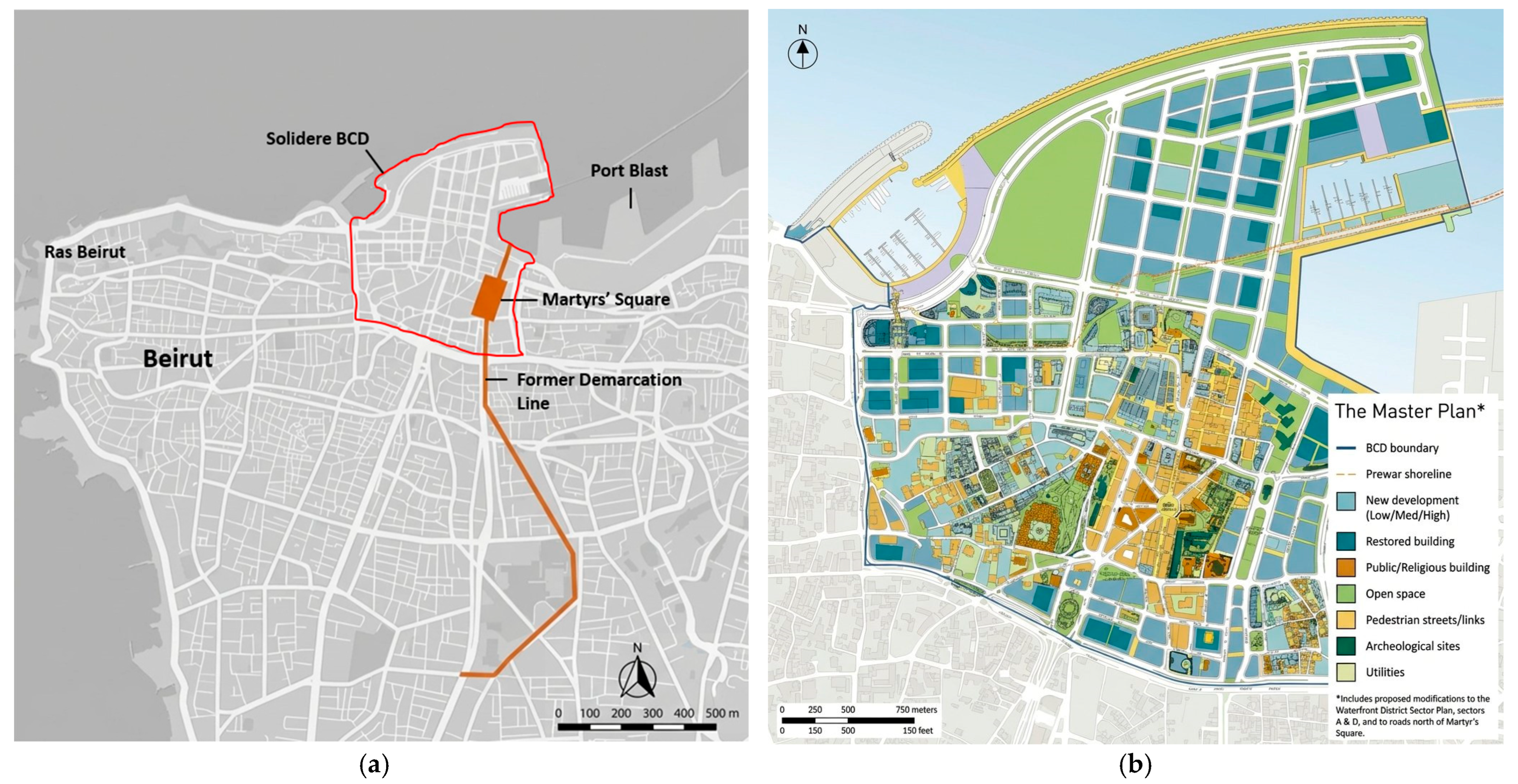
Figure 1), which started in 1994 and continues to this day, thus operates as a paradigmatic case within wider debates on post-conflict urbanism and the political economy of reconstruction, revealing how neoliberal governance arrangements shape heritage preservation, social equity [
2] and the distribution of post-war urban benefits.
Beirut Central District (BCD) experienced complete physical devastation and major social breakdown because it became the principal combat zone during the Lebanese Civil War (1975–1990). The earthquake destroyed over 65–70% of all buildings, which led to the total collapse of infrastructure, while it forced 40,000 to 60,000 people and 100,000 workers to leave their homes [
3]. The reconstruction approach granted Solidere, a private real estate company created through special legislation, complete authority to handle post-war urban development, which differed from all other reconstruction methods [
4].
Figure 1.
(
a) Aerial view of Beirut Central District (BCD) context (
b) the post-reconstruction spatial configuration map represents the 60 ha of new land developed at the North tip primarily for luxury residential and hospitality uses. Source: Adapted from [
5,
6].
Figure 1.
(
a) Aerial view of Beirut Central District (BCD) context (
b) the post-reconstruction spatial configuration map represents the 60 ha of new land developed at the North tip primarily for luxury residential and hospitality uses. Source: Adapted from [
5,
6].
1.2. Theoretical Framework: Regeneration Versus Gentrification
Research conducted in urban studies [
7,
8] shows that urban regeneration operates as an independent process from gentrification, yet these two concepts combine when projects get implemented in reality. The evaluation of Solidere’s accomplishments needs an understanding of these two distinct concepts.
Urban regeneration involves comprehensive integrated plans that work to prevent economic deterioration by developing physical structures, creating economic growth, building social connections, and improving environmental conditions [
9]. The internationally recognized regeneration process includes three essential principles that researchers have established [
10,
11,
12,
13,
14].
Community participation demands that current residents take an active role in decision-making processes instead of only getting project information.
The mixed-income development strategy unites affordable housing with small businesses that run their operations through market-based properties to stop residents from leaving their neighborhoods.
Heritage-led development through adaptive reuse protects architectural elements because it adds modern functional elements to existing buildings.
Public realm investment in developing accessible, high-quality public spaces enables social interaction and strengthens civic identity.
Integrated planning and coordination between housing, employment, education, health and environmental sectors instead of using physical interventions alone.
The three examples of Barcelona’s Ciutat Vella regeneration [
15], London’s King’s Cross redevelopment [
16] and Hamburg’s HafenCity [
17] show how these principles succeed in international implementation. During its transformation into a tourist destination, the Barcelona Ciutat Vella regeneration project safeguarded social housing and maintained community services. The King’s Cross redevelopment in London achieved industrial heritage preservation through its protection of public areas, which enabled new construction to occur. The HafenCity project in Hamburg functions as Europe’s biggest urban development initiative that combines residential areas with business districts and cultural attractions through its broad public waterfront areas.
Gentrification, a market-driven phenomenon, results in affluent individuals displacing lower-income residents, altering demographics, increasing property values, eroding local customs, and weakening community ties, ultimately transforming the neighborhood’s character to attract wealthier occupants [
18,
19,
20]. Research on gentrification as a critical issue has established several essential features that define this process.
Class-based displacement: The working class must move out of their homes because their housing expenses have surpassed the increasing rent and property tax rates.
Commercial transformation: The area now hosts upscale retail and hospitality businesses, which have taken over local businesses to serve wealthy customers.
Cultural erasure: Loss of neighborhood identity, traditions, and intangible heritage.
Spatial segregation: People who hold positions of power create private spaces through the process of spatial segregation, which results in special areas.
Heritage commodification: The historical aesthetic now operates as a shopping area instead of maintaining its original function as an active community area.
The phenomenon of gentrification, stemming from urban regeneration, is characterized by redevelopment efforts that, while conceived with good intentions, lead to the displacement of residents and their exclusion from their communities [
21]. Research has shown that this process has occurred in three Middle Eastern cities, which include Cairo’s historic areas, Amman’s city center and Jeddah’s Al Balad neighborhood, where development projects forced residents to move while destroying their traditional urban environment [
22,
23,
24].
The differential outcomes of these two terms stem from regeneration’s focus on improving existing residential areas, contrasted with gentrification’s displacement of current residents from their homes [
25]. This study examines whether Solidere’s actions in Beirut represented regeneration, characterized by revitalization for existing inhabitants, or gentrification, involving transformation for new, affluent populations. Together with Lefebvre’s “right to the city”, these distinctions are mobilised in this study alongside the HUL framework so that regeneration/gentrification debates, critical urban theory, and heritage-management principles jointly structure the assessment of Beirut’s post-war reconstruction.
1.3. Research Gap and Significance
Research studies [
25,
26] have shown Solidere achieved physical and economic success through architectural and planning evaluations, yet a comprehensive evaluation of its inclusive regeneration results remains limited. The existing body of research [
27,
28] predominantly focuses on descriptive historical narratives of reconstruction or ideological condemnations of neoliberalism, neglecting systematic analytical frameworks.
The research addresses this knowledge gap through three new methodological approaches:
Operationalization of the HUL framework: Translating UNESCO Historic Urban Landscape principles into specific analytical criteria that can be used for post-conflict areas.
Systematic regeneration vs. gentrification analysis: Applying established theoretical distinctions to evaluate Solidere’s socioeconomic outcomes.
Comparative post-conflict analysis: analyzing post-conflict governance of Beirut’s privatized reconstruction mechanisms against Sarajevo’s donor-directed rebuilding initiatives, revealing the consequences of differing governance paradigms on the final outcomes.
1.4. Research Question
The research examines three interrelated research questions.
- (a)
What was the impact of Solidere’s privatized governance system, established via Law 117/91 in 1991, on the social and physical structure of the Beirut Central District (BCD), specifically concerning social participation, urban organization, and cultural preservation?
- (b)
What was the extent of adherence of Solidere’s heritage preservation efforts to UNESCO’s Historic Urban Landscape principles, particularly in their integration of tangible and intangible heritage, community engagement initiatives, and interpretation of complex urban fabrics?
- (c)
What are the comparative aspects of Beirut’s private reconstruction system compared to Sarajevo’s donor-managed model and alternative governance structures that could prove effective in global post-conflict urban development?
2. Materials and Methods
2.1. Research Design: Critical Case Study Approach
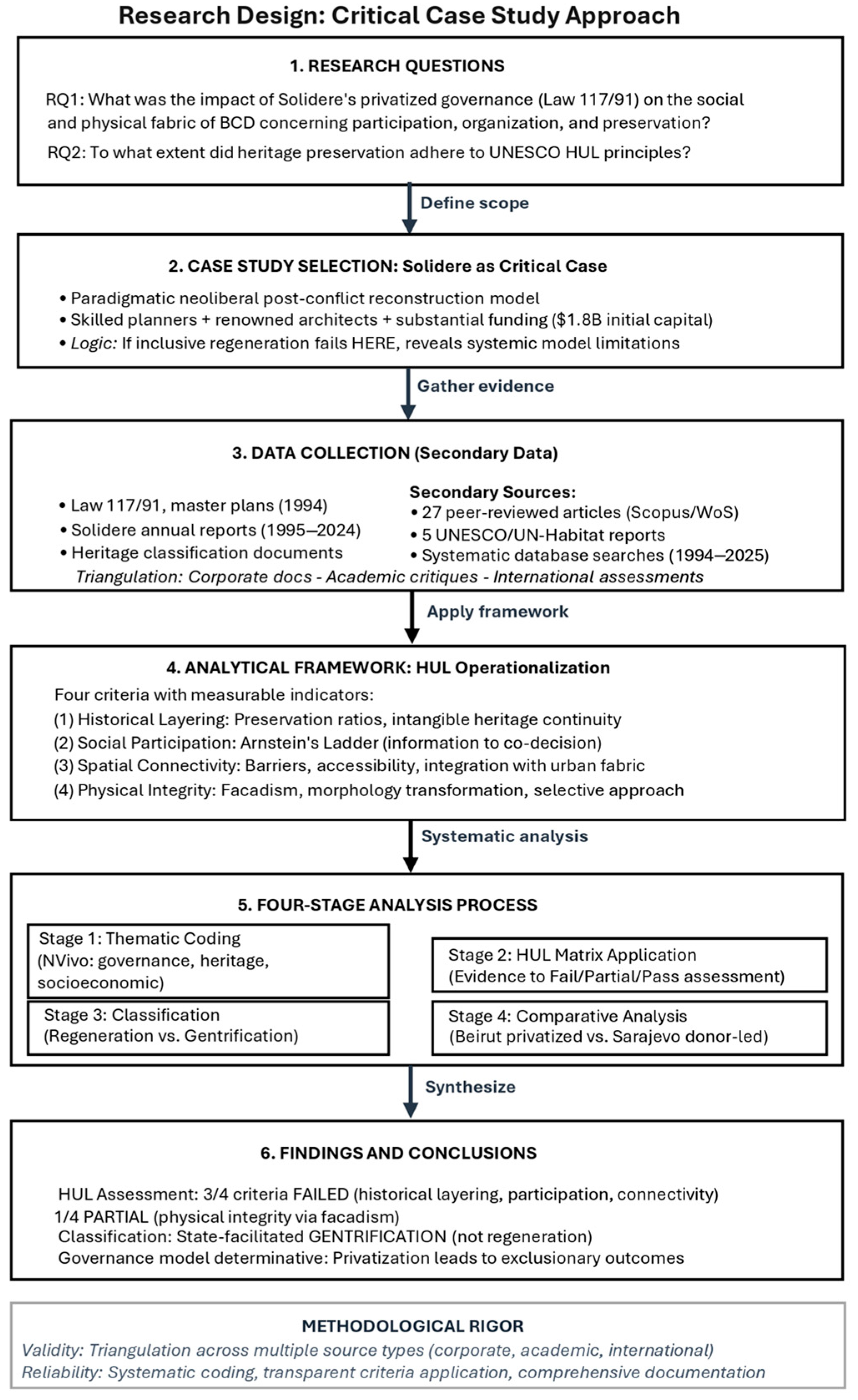
The research employs a critical case study approach (
Figure 2) to investigate intricate, contemporary phenomena where distinctions between the elements under study and their contexts are blurred, particularly when addressing inquiries into the mechanisms and rationales behind urban processes. Through the detailed examination of particular instances in real-world contexts, case studies provide profound insights that contribute to addressing general theoretical questions [
29].
The Solidere case serves as a crucial example for establishing logical correlations between its conclusions and diverse scenarios, enabling deductions of the form as if it is applicable here, it is applicable universally or broadly. The inability of reconstruction models focused on profit to foster inclusive development, despite the involvement of skilled planners, renowned architects, and substantial financial backing, highlights the inherent limitations of neoliberal approaches in post-conflict settings.
2.2. Analytical Framework: Operationalizing Historic Urban Landscape (HUL)
The UNESCO Historic Urban Landscape (HUL) Recommendation (2011) provides a comprehensive framework for managing heritage sites in active urban environments [
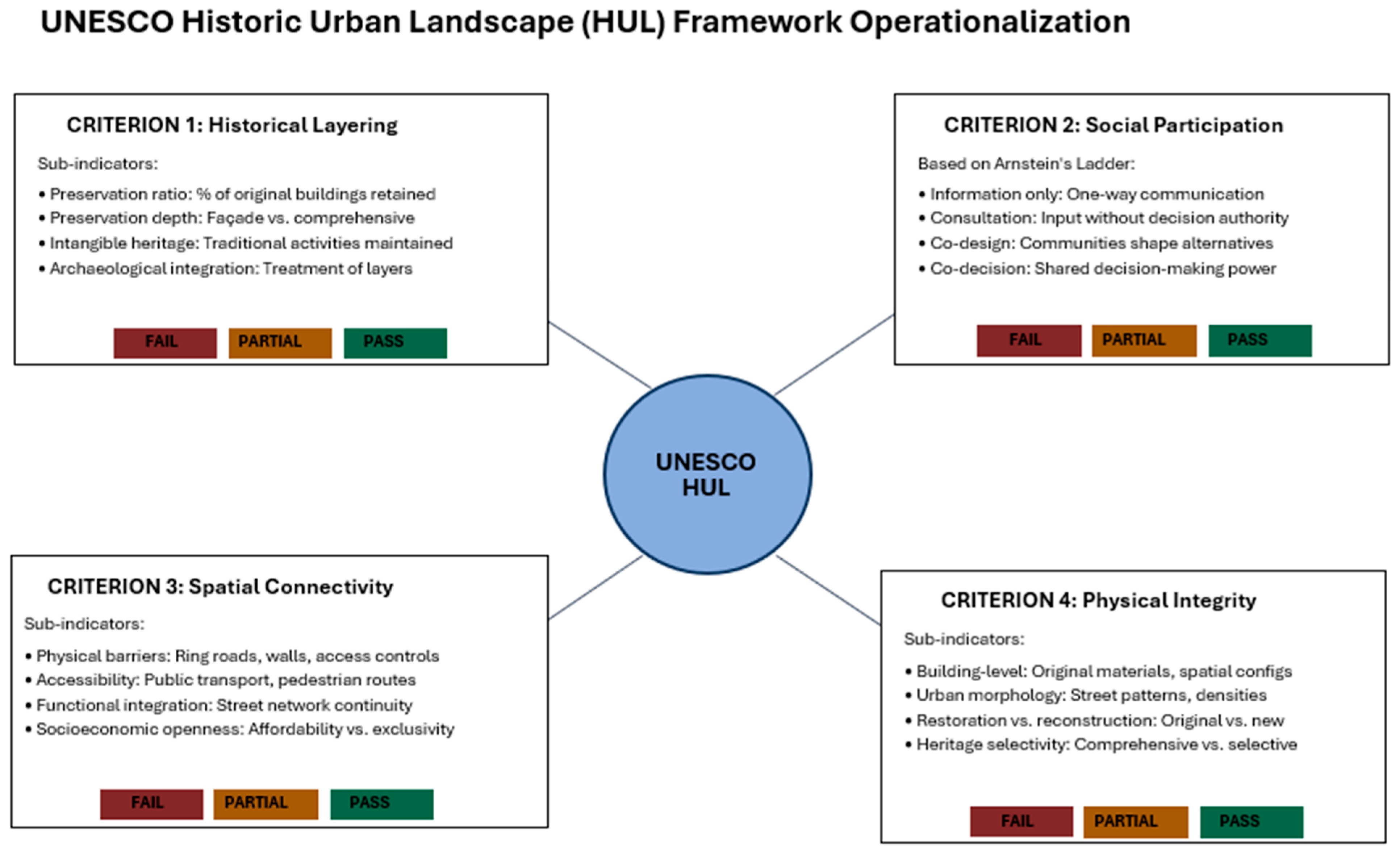
30]. This framework integrates tangible and intangible heritage, engages local communities in planning, and encourages sustainable development, recognizing cities as cumulative historical entities. The HUL theoretical framework requires transformation into precise, quantifiable indicators for application (
Figure 3). Drawing on recent scholarship on HUL operationalization [
31], this study develops four criteria, each assessed on a three-point scale (fail/partial/pass).
2.2.1. Criterion 1: Historical Layering
The first criterion measures the degree to which reconstruction integrates both tangible heritage—buildings, streets, and infrastructure—and intangible heritage, including social practices, traditional economic activities, and collective memory. It is assessed through the proportion of original buildings retained, the depth of preservation (façade-only versus structural), the continuity of intangible heritage, and the treatment of archaeological layers. A passing assessment requires comprehensive preservation of over 60% of the original building stock alongside the maintenance of intangible heritage; failure is showed by selective demolition exceeding 60%, combined with the elimination of non-monumental and intangible heritage.
2.2.2. Criterion 2: Social Participation
The second criterion measures the extent of meaningful community involvement in reconstruction planning by drawing on Arnstein’s Ladder of Citizen Participation [
10] to distinguish between tokenistic information provision and genuine co-creation. The scale distinguishes four levels—information only, consultation, co-design, and co-decision—with a passing assessment requiring at least co-design mechanisms that allow communities to shape planning alternatives. One-way communication without decision authority constitutes a failure.
2.2.3. Criterion 3: Spatial Connectivity
The third criterion measures the degree to which a reconstructed area integrates with the surrounding urban fabric rather than forming an isolated enclave. The assessment considers physical barriers such as ring roads or access controls; pedestrian and public transport accessibility from adjacent neighborhoods; functional integration through continuous street networks and mixed land uses; and socioeconomic openness, measured by affordability for diverse populations. A failing assessment reflects the creation of an enclave condition marked by physical separation, car dependence, and price-based exclusion.
2.2.4. Criterion 4: Physical Integrity
The fourth criterion measures the quality and authenticity of heritage preservation at both the building and urban morphology scales. It distinguishes comprehensive conservation, in which original materials, structural systems, spatial configurations, and street patterns are maintained, from superficial approaches such as façadism, in which exteriors are retained while interiors are entirely rebuilt. A passing assessment requires comprehensive preservation of more than 60% of the building stock using authentic materials; failure is indicated by dominant façadism and selective retention of fewer than 30% of structures. Below
Section 4.1.4 summarizes these ratings, whereas
Supplementary Tables S1 and S2 specify, for each sub-indicator, the evidence on which the Fail, Partial, or Pass assessments are based.
2.3. Data Sources and Selection Criteria
This study employs secondary data analysis by design, reflecting both the difficulty of fieldwork access in Lebanon, given the security conditions and the lack of comprehensive public records on ownership and demographic change, and the unusually rich documentary record generated by Solidere, Lebanese legislation, UN-Habitat, and three decades of academic critique. Primary sources include Lebanese Law 117/91 establishing Solidere and defining its legal powers [
32]; Solidere’s annual reports from 1995 to 2024 and associated corporate publications [
33]; the 1994 Dar al-Handasah master plan and sector-specific planning documents [
34]. Secondary sources were identified through systematic searches of Scopus, Web of Science, and Google Scholar using the terms “Beirut reconstruction,” “Solidere,” “post-conflict urbanism,” “Lebanon urban regeneration,” and “heritage preservation Beirut,” supplemented by snowball sampling from the reference lists of key articles. Sources were included if they were peer-reviewed, published between 1994 and 2025, and focused on BCD reconstruction, Lebanese urban policy, or comparative post-conflict urbanism. The final corpus comprises 27 peer-reviewed articles, 5 reports from UNESCO and UN-Habitat, 8 Solidere corporate documents, and 2 legal texts.
2.4. Data Analysis Procedures
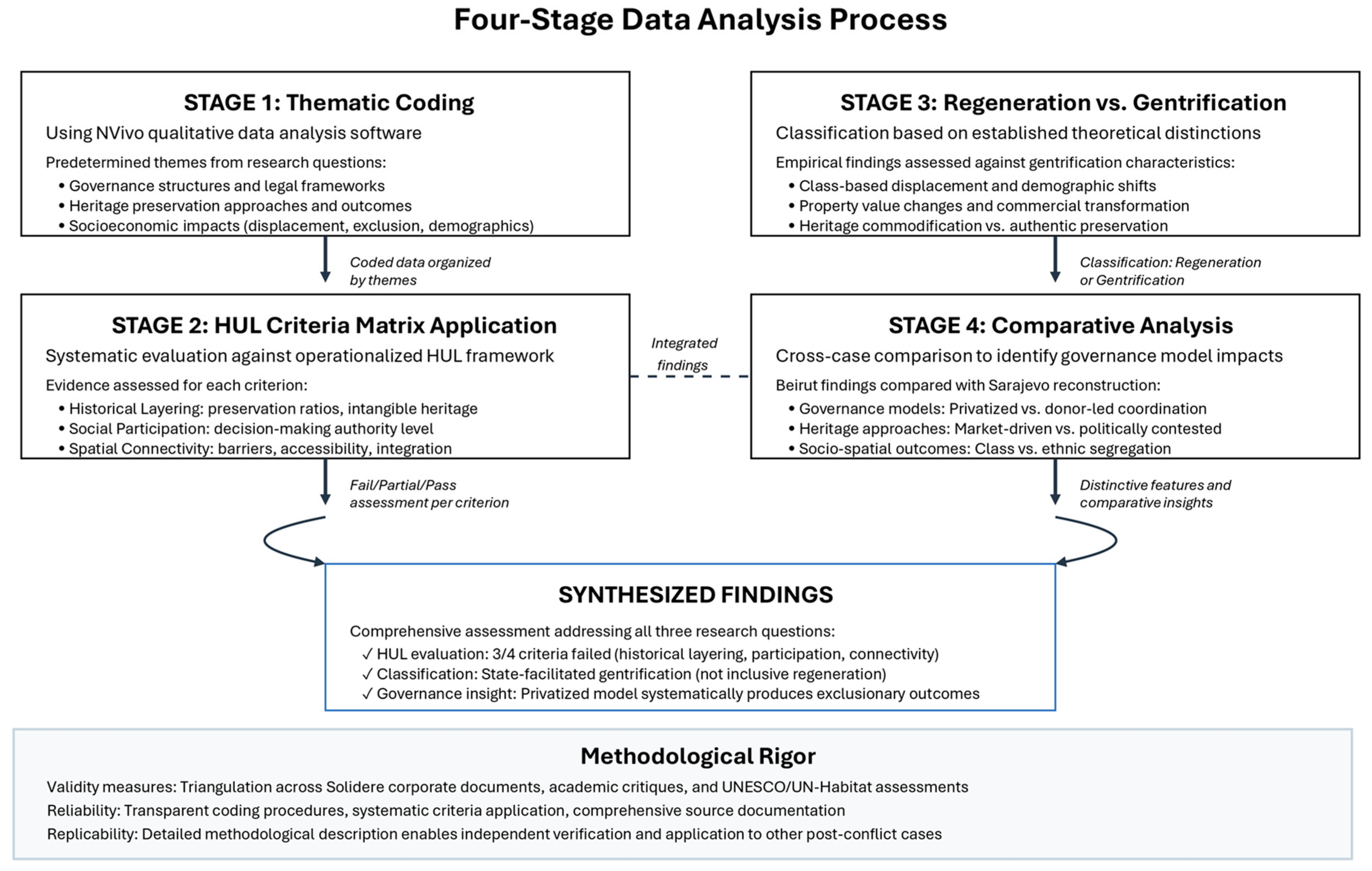
The analysis was conducted across four distinct phases, as depicted in
Figure 4. The initial coding of textual data in NVivo 15 [
35] was conducted thematically. A codebook was first derived from the theoretical frameworks (HUL, regeneration/gentrification, right to the city) and then refined inductively as new themes emerged. Codes were systematically arranged by theme, such as governance and legal structures, heritage preservation achievements, socio-economic effects (including population displacement and demographic transitions), modifications in spatial arrangements, and the perspectives of involved parties. Subsequently, the coded evidence was triangulated and systematically evaluated under the four HUL criteria. A Fail, Partial, or Pass rating was assigned to each HUL criterion only where multiple, concordant pieces of evidence from different source types supported the same judgement, and contested cases are documented in
Supplementary Tables S1 and S2. The subsequent analytical phase entailed evaluating the empirical evidence concerning displacement, property values, demographic shifts, and alterations to commercial and heritage sites. This evaluation was undertaken in alignment with established gentrification criteria, as detailed in [
8], to determine if Solidere’s outcomes indicated a greater propensity for inclusive regeneration or market-driven displacement. In addition, in the final phase of analysis, the empirical results obtained in Beirut were cross-referenced with a pre-existing study pertaining to Sarajevo [
36]. The emphasis was placed on discerning similarities and differences in the governance structures of each locale; the methodologies employed for heritage preservation, and the consequent societal effects, with the aim of contextualizing the Beirut findings within a wider classification of post-conflict reconstruction paradigms. Together, these procedures make clear how the analysis moves from a heterogeneous body of textual sources to systematically coded evidence and, finally, to cautiously framed conclusions about social impacts that are explicitly linked to the underlying data.
2.5. Validity, Reliability and Ethics
Validity was enhanced through source triangulation: Solidere’s corporate publications were consulted along with independent academic evaluations and reports from UNESCO and UN-Habitat, and the discrepancies between these that prevented a conciliatory synthesis were recorded rather than resolved in favour of any specific interpretation. Corporate sources were treated as indicative of the perspective and concerns of the company, while academic sources were evaluated for their empirical basis and internal coherence. Full methodological transparency is ensured so that the findings can be replicated independently. As the research only engages with publicly accessible documents and publications, it does not involve any human subjects and thus requires no ethical approval; in addressing a controversial post-conflict scenario, though, the treatment of the subject represents all relevant viewpoints equitably.
3. Results
The following section presents research findings, which follow a thematic organization based on the study questions and HUL evaluation standards. Results are presented descriptively here; interpretation and theoretical connection occur in
Section 4 (Discussion).
3.1. Governance Structure and Legal Framework
In 1994, Solidere s.a.l. was founded under Lebanese Law 117/91, which bestowed upon it a private corporation, a unique mandate for urban redevelopment, unmatched in Lebanese or global legal precedents [
32]. The legal framework functioned through three interrelated mechanisms. The process begun with the state utilizing a land pooling arrangement to secure roughly 4690 individual landholdings across a 1.8 million m
2 expanse, which were then merged into a singular development parcel under the jurisdiction of a private corporation. Second, and more notably, original property owners received compensation not in monetary form but in Solidere shares. Consequently, their property rights were effectively converted into a financial construct, eradicating any residual linkage to a specific locale. Third, Solidere was granted quasi-governmental powers that normally lie with public authorities over such matters as master planning for the entire BCD, infrastructure development and financing, regulation of building and design practices, land sales and leases, and management of public spaces [
32]. The Lebanese government contributed elements of the legal framework, public properties, and tax exemptions, while Solidere contributed capital, planning expertise, and implementation capabilities [
37]. Publicly presented as a public–private partnership (PPP), this arrangement in practice transferred core planning and regulatory functions to a single joint-stock company, creating an exceptional form of corporatised urban governance rather than a conventional PPP.
The financial architecture also exhibited features that favored this logic. Solidere’s initial capitalization of US
$1.8 billion was divided into two components: 60% (US
$1.08 billion) in property-rights shares, and 40% (US
$0.72 billion) in cash subscriptions from investors, with subsequent revenues derived from sales of land, rents on buildings, and even an initial public offering that allowed Solidere to list on the Beirut Stock Exchange [
33]. Such a model created a well-defined incentive for Solidere to maximize the value of its assets for the benefit of its shareholders—an incentive that, as shown by the evidence presented below, was directly at odds with the principles of heritage preservation of cultural heritage, social equity, and accessibility to a broad range of users [
2].
The political economy of the project also exhibited structures that exacerbated the tendencies inherent in these legal, financial, and institutional frameworks. Prime Minister Rafik Hariri—a construction magnate and billionaire who headed the Lebanese post-civil war government from 1992 to 1998, then again from 2000 to 2004—was Solidere’s principal shareholder and its most influential political supporter [
26]. The overlap between political office and economic control raised serious questions regarding accountability mechanisms and potential conflicts of interest [
27]. Critics of the reconstruction project argued that its objectives were determined less by the needs of a nation ravaged by civil war than by Hariri’s ambition to transform Beirut into a major regional center for financial activity—an ambition that favored the interests of investors and the wealthy elite while ignoring Lebanon’s deep-seated structural problems [
28].
3.2. Physical Transformation and Heritage Implementation
3.2.1. Master Plan Structure
The 1994 master plan, conceived by Solidere and developed by international consultant Dar al-Handasah, sought to establish a contemporary business district in BCD by integrating the conservation of select historical locations with novel construction initiatives [
33]. A total of 1.8 million m
2 (180 ha) was reconstructed, yet the aggregate of the above sectors only reached 140 ha. This discrepancy shows (
Table 1) that the residual 40 ha were likely because of infrastructure, public areas, or other unspecified sectors. An additional 60 hectares of land were developed through marine reclamation, principally to expand the Waterfront District and generate revenue [
33]. Within the approximately 140 ha of classified redevelopment area, the Waterfront District accounts for about 43%, the Traditional Center 25%, the Hotel District 11%, the Souks 9%, Saifi Village 6%, and Wadi Abou Jmil 7%.
3.2.2. Heritage Classification and Preservation Ratios
Solidere established a heritage committee in 1995, employing international conservation consultants to classify buildings into three categories based on architectural and historical significance:
Category A (66 buildings): Exceptional heritage value; complete restoration of exteriors and significant interior elements required;
Category B (226 buildings): Significant heritage value; façade preservation mandatory; interior adaptation to contemporary uses permitted;
Category C (remainder ~908 buildings): Limited heritage value; demolition permitted subject to archaeological clearance.
The practical outcome of this classification was that only 292 buildings—24.3% of the pre-war stock—were designated for any form of preservation, while 908 buildings, including virtually all vernacular, modernist, and post-1950 structures, were demolished (
Table 2). Preservation efforts concentrated on Ottoman-era and French Mandate structures, while the everyday architectural fabric—including war-damaged buildings and other forms of “difficult” conflict-related heritage that embodied memories of loss or resistance—was largely erased [
38].
Facadism, characterized by the meticulous deconstruction and subsequent reassembly of exterior masonry onto novel structural systems, constituted the principal approach to building repair, with an emphasis on utilizing extant limestone and procuring new material from the original sources. The specifications of the apertures, external projections, and similar elements were likewise replicated. The interior architecture underwent a comprehensive reconstruction with contemporary materials such as steel, concrete, and glass, aligning with current construction regulations [
39]. Therefore, despite successfully maintaining the visual character of historic street scenes, these edifices have relinquished the authenticity of their construction materials and internal arrangements. Scholars have characterized this methodology as the fabrication of heritage simulacra, referring to structures that emulate historical traditions without possessing genuine historical integrity [
39].
The BCD’s historical artifacts, spanning Phoenician, Roman, Byzantine, Crusader, and Ottoman periods, were handled with a distinct approach. Solidere undertook a comprehensive excavation campaign (1994–1997), creating open-air archaeological parks in which some of the in situ remains were left to view, and integrating into its building’s features like Roman columns and Byzantine mosaics into its buildings, using them as decorations for its public spaces [
40]. Yet these sites have also been subjected to what critics have called “park-ification”: they have been treated as attractions for tourists rather than as elements that can be lived with, and the construction process has irreparably damaged some sites and destroyed some of the historical evidence that was once available here [
40].
Solidere invested around US
$1.5 billion in infrastructure between 1994 and 2010 [
33], creating a comprehensive underground network for buildings (electricity, drinking water, sewage, telecommunications, district cooling), a new road network with a six-lane ring road at its center, a 650-berth yacht marina, a 1.5 km long promenade along the BCD’s waterfront at Zaitunay Bay, and reconfigured public squares (like Place de l’Etoile and Martyrs’ Square). The level of sophistication of the infrastructure that was developed was one that has been recognized around the world [
25]. However, its spatial structure was designed according to a logic that prioritized the needs of vehicular traffic and parking areas for the cars that come to visit the area, at the expense of features like accessibility for pedestrians to the surrounding neighborhoods. Thus, while it has created a well-served tourist enclave, it has not created an integrated area of the city [
2].
The resulting architecture of the reconstructed BCD has been influenced in part by a “starchitecture” approach: Solidere attracted an international community of architects who were interested in creating buildings with architectural features that would be recognized around the world, like the Beirut Souks of architect Rafael Moneo (who designed a contemporary interpretation of the structure of a traditional market that would house luxury retailers), the Marina Yacht Club of Steven Holl (a structure whose sculptural features are appreciated), and concept designs for luxury apartment buildings (unrealized) from architects Norman Foster and Zaha Hadid (the latter was cancelled because of the 2006 war) [
41]. These buildings have achieved impressive architectural successes, yet also have been criticized by their critics for using an aesthetic that is focused on the culture of international design, luxury products, and building materials in a way that has distanced the area from its local Beiruti identity. This has resulted in the site becoming an access point for the assimilation of worldwide capital within the city and its associated activities [
28].
3.3. Socioeconomic Outcomes and Displacement
The pre-war BCD had a population of 40,000 to 60,000 inhabitants distributed across a variety of income groups, and a workforce of around 100,000 in commerce, industry, finance, public services and administration [
3]. Evacuation was total by 1978 because of the civil war. When reconstruction began in 1994, there were no repatriation programmes, preference for return arrangements, or right-of-return provisions established for original inhabitants or commercial concerns [
27]. Thus, reconstruction began in complete abandonment, with no institutional mechanism for repair.
By the mid-2020s, the permanent population of the BCD had dropped to estimated levels of 4000 to 6000 (or approximately 90% less than pre-war counts), made up mostly of wealthy Lebanese returnees and other expatriates occupying around 2000 of the BCD’s 8000 luxury apartments (with a value of
$5000 to
$15,000 per square meter at pre-crisis prices) [
33]. About 30 to 40% of these buildings were vacant at this time and subject to speculative redevelopment rather than actual use. Original inhabitants were granted no compensation other than Solidere shares, which most sold immediately for cash; they were dispersed to peripheral neighbourhoods or sent into emigration, losing not just their homes but their businesses, networks and familiar settings [
37]. The transitions in population and housing are summarized in
Table 3.
The commercial transformation of the district was equally pronounced. The pre-war downtown had sustained a socially diverse economy of family-run textile, spice markets (the traditional souks), small restaurants, professional offices, and government facilities serving the city [
42]. The reconstructed BCD hosts an entirely different commercial ecology oriented toward international visitors, Gulf tourists, and expatriate professionals, with luxury fashion brands, international restaurant chains, and five-star hotels concentrated in the Souks complex and Hotel District (
Table 4). The traditional souks, their artisans, affordable food and retail options are entirely absent [
28]. Their decline reflects not a spontaneous loss of interest among visitors, but the displacement of craftspeople to peripheral areas and a leasing strategy and price structure in the reconstructed BCD that favour international brands over low-margin, workshop-based production. The 2019 economic crisis—bringing currency collapse, banking restrictions, and deepening political instability—shuttered many of these businesses, exposing the long-term fragility of a mono-functional, speculative enclave whose infrastructure is technically sophisticated but socially and economically unsustainable.
Access to the reconstructed BCD was further constrained by overlapping physical, economic, and cultural barriers [
37]. Physically, the six-lane ring road encircling the district created a significant psychological and practical boundary, with limited pedestrian crossings, underpass access points, and occasional security checkpoints during periods of political tension severing the pre-war continuity of street networks connecting downtown to surrounding residential neighbourhoods such as Bachoura, Khandak al-Ghamiq, and Ain al-Mreisseh [
2,
34]. Economically, price points for food and retail far exceeded what most Lebanese residents could afford—with coffee costing five to eight times the going rate in adjacent neighbourhoods, and retail targeted exclusively at luxury consumers [
33]. Culturally, working-class and middle-income Lebanese increasingly perceived the district as a space that did not belong to them, its international aesthetic and commercial register having severed continuity with the familiar social character of pre-war downtown [
27].
3.4. Spatial Fragmentation and Connectivity
The spatial implications of the ring road, however, went beyond the limitations of access. Its high-speed six lanes, together with the associated noise, pollution, and the hard territorial edge its layout helped establish, replaced the previously organic network of pedestrian streets that had sustained a continuum of connectivity between the downtown area and its surrounding urban network [
34]. The lack of any functioning public transport system for the BCD was another factor isolating it; Lebanon has no public transport system (buses or trains), and Solidere’s master plan prioritized underground car parking for the area’s inhabitants rather than developing infrastructure for pedestrians, buses or even bicycles. The effect was to make access restricted to those with private cars, while ruling out many lower-income families, elderly persons and, to an extent, even numerous young people [
3,
34].
The functional characteristics of the area echoed these spatial features. Support contributes to the sense of the BCD’s isolation. Prior to its destruction in the civil war, Beirut’s downtown area played a diverse functional role as a shared social space serving the city’s mixed population of civil servants, students, workers, shoppers, and other passersby drawn from its many socially diverse neighborhoods [
42]. Currently, the BCD operates predominantly as a district for premium shopping and high-end housing, with its secondary role as a venue for political gatherings such as rallies or protests [
37]. It is empty during the hours and days when its office-based functions are not operational; however, its price structure prevents any use of the area that might develop an informal social life, such as any that existed prior to its redevelopment. In short, rather than serving its intended role as a functioning civic area, the BCD has developed into a self-contained enclave [
2].
3.5. Public Responses and Criticisms
The reconstruction project has faced long-term criticism from Lebanese and international professionals. The architect Jad Tabet called for the comprehensive preservation of every preserved element of the historic fabric, arguing that the demolition of 76% of the buildings destroyed the historical fabric forever [
39]. The Lebanese architect Bernard Khoury described the project in an interview for a documentary as one that sought to combine the past and the future while ignoring the present, expressing its disconnection from the realities and needs of contemporary Lebanon [
39]. The UCLA scholar Saree Makdisi argued Solidere destroyed the historical fabric of the city, ignoring the cultural and emotive ties of its inhabitants to their urban environment, creating a cleansed environment for global capital rather than for the needs of its local community [
27].
Former residents and displaced business owners documented their ongoing grievances in academic research and media reports [
36]: lost livelihoods because of expropriation; compensation paid out in shares whose value was unstable and which most individuals quickly sold for much-needed cash; psychological trauma caused by the loss of familiar places, community networks; and a pervasive feeling of injustice, which reconstruction had benefited wealthy investors at the expense of justice for those who had lost their place-based rights. Beirut Heritage Initiative [
39] reported that perhaps the most colorful statement of this feeling was made by an activist who claimed that Beirut had been more disfigured and destroyed in times of peace than in times of war.
The contested character of the reconstruction project had perhaps its most enduring physical manifestation in the St. George Hotel. Its owner, Fady El-Khoury, refused to sell to Solidere, displayed a prominent “Stop Solidere” banner on its war-damaged façade, and has pursued ongoing legal battles against the company. The hotel—while all around its solidification and developments that fit into the Solidere vision for a luxury tourist zone occurred—remains an enduring physical expression of the unresolved conflicts of interest and unresolved questions of accountability that have characterised the Solidere project since its inception.
4. Discussion
The discussion that follows is explicitly normative in the sense that it evaluates the Beirut reconstruction against defined standards of inclusive regeneration and heritage management; however, its normative claims are grounded in empirically documented legal, spatial, and socio-economic transformations rather than in abstract ideological positions.
4.1. Evaluation Against HUL Framework
Solidere’s approach to the historic fabric of the BCD was structurally incompatible with the HUL principle of historical layering, which requires reconstruction to integrate both tangible and intangible heritage to treat the city as a multi-layered accumulation rather than a static monument [
30]. The pre-war downtown embodied precisely this kind of layering: Ottoman, French Mandate, early modernist, and post-independence architectural features had accumulated across the district over more than a century, producing a palimpsest of overlapping spatial and social histories [
41]. The demolition of 76% of that building stock—concentrated on vernacular, modernist, and post-1950 structures deemed of limited monumental value—eliminated virtually all tangible evidence of that layering [
37]. Façadism partially preserved the visual surfaces of the remaining 24%, but in removing original materials, spatial configurations, and construction methods, it produced what the HUL framework would classify as heritage simulacra: structures whose historical appearance is maintained while their authentic substance has been replaced [
30]. Losing intangible heritage was equally total: the traditional economic activities of the souks, the craftspeople and family businesses, the multi-generational social networks and collective memory embedded in neighbourhood life—all were erased without provision for their continuity [
27]. Archaeological layers received physical protection through open-air parks and museum displays, but their integration into the district followed a logic of tourism aesthetics rather than living urban fabric, a process critics termed “park-ification” that reduced historical depth to decorative spectacle [
40]. Taken together, these outcomes represent a failure on all dimensions of the historical layering criterion.
4.1.1. Criterion 2: Social Participation (FAIL)
HUL principles mandate meaningful community involvement in heritage valuation and planning decisions, distinguishing between tokenistic consultation and genuine co-creation [
30]. Solidere’s governance model offered none of the latter. While the master plan was presented at public consultations, original property owners and affected communities held no decision-making authority: they were informed of expropriation and the share-compensation mechanism but had no capacity to refuse, negotiate, or propose alternatives [
32]. All substantive decisions—on demolition ratios, heritage classification, land use, and spatial design—were made by Solidere executives, government officials, and international consultants, with no institutional mechanism for community input at any stage of the project’s thirty-year duration [
2]. Assessed against Arnstein’s Ladder of Citizen Participation [
10], Solidere’s engagement reached only the first rung—information provision—falling entirely short of the consultation, co-design, and co-decision stages that constitute meaningful participation. This was not merely a procedural failure; it meant that the communities with the deepest knowledge of and stake in the BCD’s social fabric had no role in shaping what replaced it.
4.1.2. Criterion 3: Spatial Connectivity (FAIL)
HUL advocates for integrating reconstructed areas into the surrounding urban fabric rather than their isolation as protected enclaves [
30]. The BCD’s post-reconstruction spatial condition represents the opposite. The six-lane ring road encircling the district—while effective for traffic management—created a hard territorial boundary separating downtown from adjacent residential neighbourhoods including Bachoura, Khandak al-Ghamiq, and Ain al-Mreisseh, replacing the pre-war continuity of pedestrian street networks with a barrier requiring underpasses and producing psychological as well as physical disconnection [
2,
34]. The absence of any public transport serving the district, combined with a design philosophy oriented toward car parks rather than pedestrian infrastructure, further restricted access to those with private vehicles, systematically excluding lower-income residents, the elderly, and young people [
3]. Price levels for food and retail, oriented toward international luxury consumption, reinforced this exclusion economically. The cumulative effect is an enclave that serves a privileged minority rather than functioning as the shared civic centre the pre-war downtown once was—a spatial outcome at direct odds with the connectivity principles the HUL framework requires.
4.1.3. Criterion 4: Physical Integrity (PARTIAL)
The physical integrity of the preserved buildings represents the project’s most credible achievement measured against HUL standards, though it is qualified by significant limitations. The 66 Category A buildings received thorough restoration—original materials reused, expert artisans engaged, interior spatial arrangements retained—that meets a high standard of conservation practice [
38]. However, this level of integrity applied to only 5.5% of the pre-war building stock. The 226 Category B buildings received façade preservation only, with interiors entirely rebuilt, eliminating their interior authenticity [
37]. At the scale of urban morphology, new developments—particularly the waterfront towers and the Souks shopping complex—introduced heights and densities dramatically exceeding pre-war patterns, fragmenting the historical urban grain that comprehensive preservation would require protecting [
41]. The assessment is therefore partial: execution quality for the limited set of preserved buildings is high, but the selectivity of the approach—concentrating preservation on monumental Ottoman and Mandate-era structures while erasing the broader fabric—and the morphological transformation introduced by new development together undermine the criterion’s requirement for integrity at the district scale.
4.1.4. Overall HUL Assessment
Solidere failed three of the four HUL criteria and partially met the fourth (
Table 5). This pattern is not incidental: it reflects the structural incompatibility between a governance model driven by shareholder returns and the integrative, community-centred principles the HUL framework embodies. Where physical quality could be achieved without threatening profit maximisation—as in the restoration of landmark buildings—the project performed well. Where HUL requirements demanded social inclusion, participatory planning, or the preservation of non-monumental heritage, profit logic consistently prevailed.
Applying the HUL framework to a post-conflict context such as Beirut inevitably involves adaptation. HUL was developed primarily for managing historic urban landscapes under conditions of relative stability; in Beirut, by contrast, reconstruction unfolded amid unresolved political tensions, rapid capital influx, and incomplete institutional reform. The framework is therefore used here not as a rigid checklist but as a normative benchmark that highlights where reconstruction practice diverges most sharply from international expectations of integrated heritage management, participatory governance, and sustainable urban development.
4.2. Regeneration Versus Gentrification: Classification
The theoretical framework discussed in
Section 1.2 shows that Solidere exhibits all the characteristics of gentrification, rather than inclusive regeneration. The analysis (
Table 6) examines how the right to the city and international heritage standards should guide urban development against the actual results that emerged from Solidere’s Beirut Central District reconstruction project. The Beirut case shows a complete breakdown of inclusive practice through its eight evaluation criteria, which support a private-led urban renewal model based on profit maximization [
22].
In the Beirut case, gentrification is not associated with an absolute absence of culture but with a profound reconfiguration of which cultural forms are made visible and valuable: craft traditions, family-run souks, and everyday religious and civic practices have virtually disappeared from the reconstructed district, replaced by curated cultural venues, international art galleries, and heritage-themed retail oriented toward affluent visitors.
Solidere makes a clear case of state-facilitated regeneration-led gentrification [
21]. While marketed as post-conflict regeneration restoring Beirut’s economic vitality and preserving heritage, the outcomes align precisely with gentrification processes: class-based displacement, cultural erasure, heritage commodification, spatial segregation, and transformation serving wealthier populations at the original communities’ expense [
18,
19,
20]. This approach to reconstruction faces opposition because it claims that physical construction work will automatically create advantages for both cities and their inhabitants [
1]. The case shows that distributional outcomes depend on governance systems because private profit-driven models result in gentrification even though they achieve physical development [
2].
4.3. Governance Failures: Consequences of Privatization
The Solidere case demonstrates three types of interrelated governance failures that together account for the technical sophistication and wealth of capital flows, yet regenerative outcomes that failed to conform to inclusive urban regeneration principles.
The first is a failure of accountability. By granting a private joint-stock company the planning and regulatory competences typically exercised by public authorities, the Law 117/91 regime created a context in which those competences were exercised without accountability mechanisms related to the public use of urban space Solidere’s obligations were addressed to its shareholders, not to the users or heritage of the BCD. There was no independent assessment of the effects of its operations regarding the displacement of populations or the social equity implications of its operations [
36]. What can be characterised as an accountability gap emerged: the exercise of quasi-governmental authority over public urban space with no mechanism for calling it to account.
The second is a structural conflict of interest. The imperatives of upgrading properties for financial return and shareholder value were irreconcilable with the requirements for inclusive regeneration. Conservation at a comprehensive level is costly; demolition that facilitates upgrading selectively will be less expensive to implement. The prospect of upgrading spaces for low-income housing and small businesses will divert resources that can be better used to improve value capture for luxury development. Accessibility to the public and openness to non-purist users is a prerequisite for maintaining an exclusivity premium that will generate maximum revenue. These conflicts of interest were not contingent; they were the inevitable outcome of assigning reconstruction tasks to an entity whose programme for action was constructed only in terms of financial performance [
2].
The third involves the effects of concentration. The concentration of all reconstruction authority in a single private developer entity eliminated the elements of diversity in a governance structure that European experiences with regeneration suggest yield more positive social outcomes. Structures that disperse governance between local councils, housing organisations, community development organisations, smaller scale private developers afford greater room for experimenting with new approaches and learning from experience while also ensuring that benefits generated through upgrading or redevelopment are distributed fairly across a wider group of stakeholders [
14]. Solidere’s corporate master plan was implemented over thirty years with no adjustments or responses to changing needs, new economic conditions, or even to the accumulating evidence regarding the impact of its operations on the displacement of populations.
It is important to recognize that, on its own terms, the Solidere model delivered several of its stated technical and economic objectives. The BCD today possesses infrastructure and public-realm improvements that are widely regarded as among the most advanced in the country, and the project succeeded—prior to the 2019 crisis—in attracting substantial private capital and positioning Beirut as a regional centre for finance and tourism. The critique developed in this paper therefore does not deny these accomplishments but argues that they were achieved at the cost of deep social displacement, heritage commodification, and spatial exclusion, outcomes that become visible only when evaluated through the combined lenses of HUL and regeneration versus gentrification.
4.4. Comparative Analysis: Beirut Versus Sarajevo Post-Conflict Reconstruction
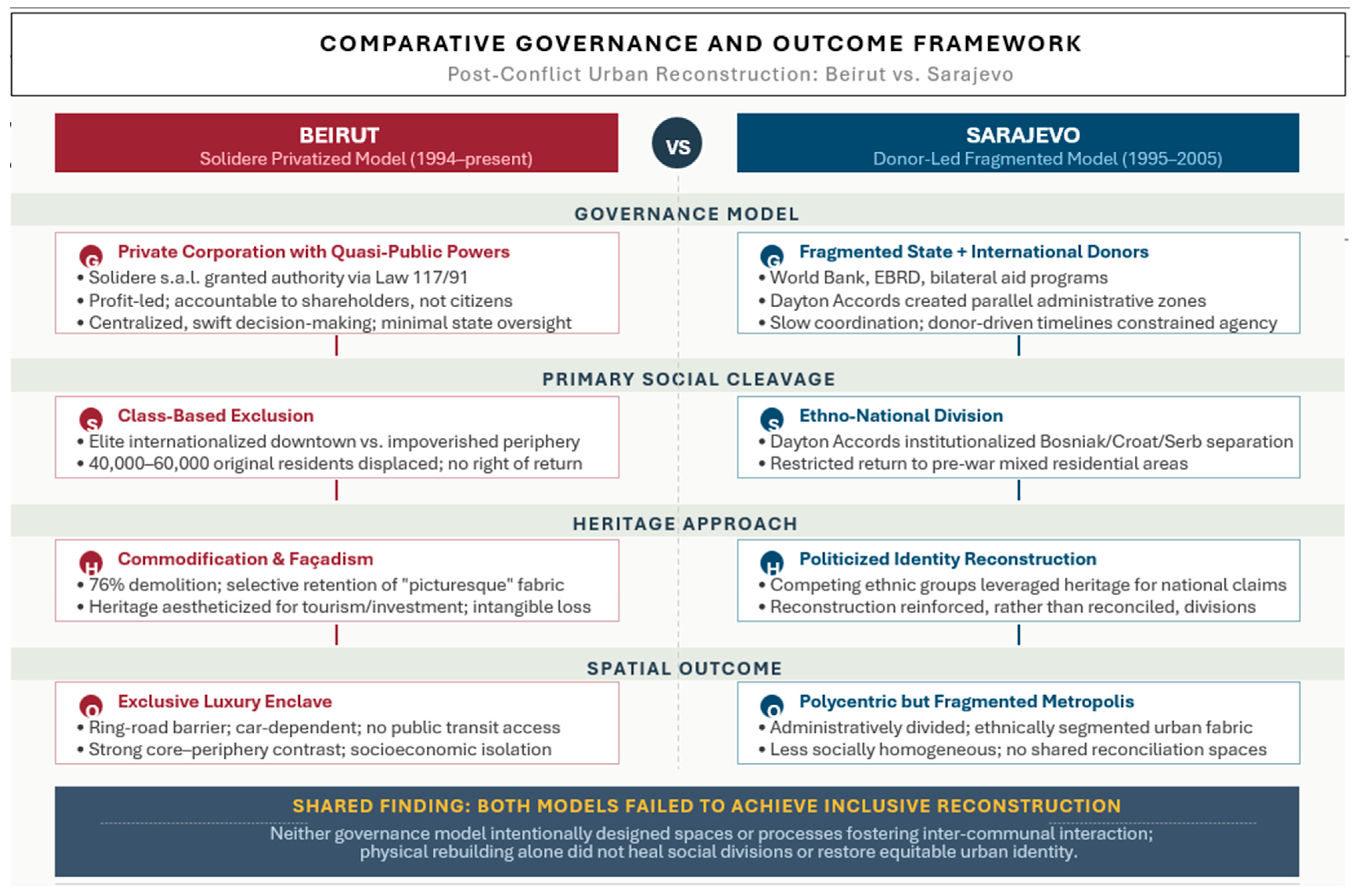
Beirut and Sarajevo present the clearest contrast between two post-conflict reconstruction paradigms: a highly centralised, profit-driven corporate model and a fragmented, donor-led regime, allowing a structured comparison of how different governance configurations shape heritage policy, social outcomes, and spatial form.
Beirut’s privatised model concentrated all power in a single commercially oriented entity operating with minimal oversight from the public, producing a technically competent and rapid physical reconstruction effort, but one that excluded all public oversight, community involvement, or social equity in its planning. Sarajevo’s reconstruction, conversely, was instead a donor-led effort managed by the World Bank, the European Bank for Reconstruction and Development, bilateral aid programmes, and UNESCO/ICOMOS heritage expertise, all within a politically fragmented framework according to the Dayton Accords that recognised separate entities requiring separate engagement strategies from a common pool of resources [
36]. This produced an inefficiently slow and ineffectively managed physical reconstruction effort, but one that at least provided a degree of formal visibility for community involvement through internationally managed processes; however, none of these models produced any meaningful co-design or co-decision from affected communities in advance, leaving both ultimately determined by external actors (investors in Beirut’s case, international donors in Sarajevo’s).
On heritage management, both cities have illustrated the same problematic approach despite differing approaches to address these issues. Beirut’s market-oriented approach treated heritage purely aesthetically, commodifying select elements of its past for tourism, investment without any regard for the social or cultural context they represented, and Sarajevo’s politically oriented approach treated heritage as a contested resource that competing ethnic communities used to symbolically declare their priority for reconstruction, with Bosniak, Croat and Serb communities each vying for privilege to manage structures dating back to the Ottoman Empire, Austro-Hungarian Empire, and modernist buildings [
30], ultimately exacerbating the divisions they needed to overcome. This suggests that neither the approach of aesthetic commodification nor political instrumentalisation aligns with the HUL’s integrated view of heritage as a living component of urban social life.
As socio-spatial outcomes, Beirut produced a model of class-based segregation that created a wealthy internationalised enclave with an infrastructure-based boundary surrounded by more impoverished peripheral areas, while Sarajevo produced a model of ethno-national segregation according to the dictates of the Dayton Accords, with undisturbed patterns from the war period still in place today as the city has not been able to fully recover from its war damage [
36], in which the movement of populations between different districts is still restricted, and all of which has resulted in neither city making use of urban design as a means of reconciliation or producing accessible shared public spaces that could have promoted inter-communal interaction (
Table 7,
Figure 5). The primary lesson from this comparison is that there is no governance model that can solve all problems: both privatised efficiency and donor-led multilateralism produced equally inequitable outcomes. What both equally lacked, and still lack today, is a governance model that is accountable to affected communities, sensitive to the entire heritage landscape of the urban area, and explicitly designed to use reconstruction as a vehicle for social cohesion rather than as an instrument of profit or identity politics. The comparison is organised around four analytical dimensions—governance model, primary social cleavage, heritage approach, and spatial outcome—summarised in
Table 7, in order to ensure that the analysis proceeds systematically rather than through impressionistic juxtaposition.
4.5. Theoretical Implications
The Solidere case makes three contributions to urban theory beyond application to the Beirut rebuild.
First, it calls into question a central tenet of neoliberal reconstruction orthodoxy—that marketised private-sector management reliably delivers urban sustainability and serves the common good—even under highly favourable conditions. Even with the presence of skilled planners, an internationally prominent architectural team, and a level of capitalization that is all the conditions under which neoliberal management is expected to deliver its highest value, Solidere’s management was instead consistently driven by the logic of gentrification rather than inclusive regeneration. The model’s incentives always trumped community needs, needs of the city gave way to the logic of heritage commodification and the transformation of an urban identity into a tourism product [
18,
19,
20]. The case shows that such outcomes are not the result of failure to implement the model correctly, but its inherent logic.
Second, it illustrates a post-conflict manifestation of Lefebvre’s concept of the “right to the city” [
43,
44]. Solidere’s reconstruction denied this right in every respect: original residents were excluded from the planning process that rendered their neighborhood unrecognizable; access to the rebuilt district was economically and physically barred to most Beirut’s population; and a once-shared civic space that served a variety of social needs in the day’s course was remade into a luxury consumption site for an elite cohort. The case study makes clear how post-conflict reconstruction can entrench rather than mitigate pre-existing inequalities under the cover of physical redevelopment.
Third, it clarifies the limits of heritage-led urban regeneration as a post-conflict development strategy. Heritage-led urban regeneration can serve as a basis for inclusive regeneration as long as the social heritage is preserved along with the physical: as long as people remain in the area, intangible heritage continues to be lived besides tangible heritage, and economic activities are retained in historic districts. Solidere’s experience shows what happens when heritage is instead instrumentalized as an economic asset whose only purpose is to be aesthetically and commercially appealing [
30,
39].
4.6. Policy Implications and Recommendations
The recommendations that follow are organised across three temporal horizons that reflect the realities of post-conflict reconstruction: immediate safeguards that can be embedded in legal frameworks before rebuilding starts; medium-term governance and design measures that shape implementation; and longer-term strategies to sustain inclusive outcomes as cities evolve.
The most fundamental requirement is the embedding of social equity obligations within the legal frameworks governing reconstruction. Without binding requirements—for example, reserving a substantial share of units for affordable or cost-rental housing, maintaining a stock of small business premises at accessible rents, and granting original residents preferential access—profit incentives will systematically produce exclusion regardless of the intentions of individual planners or architects [
9]. The Beirut case demonstrates that leaving these decisions to market logic is not a neutral choice but a decision in favour of displacement.
Equally essential is the mandating of meaningful community participation from the outset of the planning process. This means not consultation after decisions have been made, but genuine co-design mechanisms through which affected communities shape reconstruction priorities, assess heritage values, and hold developers accountable. Community organisations—including associations of former residents and business owners, neighbourhood committees from adjacent districts, workers’ groups, and heritage or public-space NGOs—need institutional support and capacity-building resources to participate meaningfully; participation cannot be reduced to attendance at presentations. Post-conflict reconstruction programmes could establish grant schemes, subsidised workspaces, and preferential leasing arrangements for traditional crafts, small family-run businesses, and locally rooted cultural initiatives within historic districts, facilitating the return of displaced economic actors and sustaining the intangible heritage that gives meaning to rebuilt urban spaces.
On heritage, the lesson from Beirut is that preservation frameworks must be comprehensive rather than selective: they should protect the everyday vernacular fabric alongside landmark monuments, maintain the social and economic activities embedded in historic buildings alongside their physical shells, and resist façadism as a default method by requiring that interior modifications be clearly distinguishable from original fabric rather than disguised behind replicated exteriors Large private investors and developers can be enlisted as partners in integrating remaining vernacular fabric and traditional practices into contemporary projects, for example by incorporating preserved structures into new building ensembles under rigorous conservation standards or sponsoring apprenticeship programmes in traditional crafts that operate in visible downtown locations.
Spatially, reconstruction designs should be evaluated against the criterion of connectivity—ensuring that rebuilt districts integrate with the surrounding city through continuous pedestrian networks, public transport provision, and mixed land uses at price points accessible to diverse social groups, rather than being enclosed by infrastructure barriers that produce enclave conditions.
Finally, the scale and pace of transformation matter. The evidence from both Beirut and comparative European cases suggests that phased, incremental reconstruction—allowing community stabilisation, organic economic recovery, and adaptive learning—produces better social outcomes than rapid wholesale transformation driven by investor timelines [
9,
14]. The urgency of post-conflict reconstruction creates pressure for speed; the evidence suggests that yielding to that pressure consistently produces outcomes that serve investors rather than the communities reconstruction is meant to serve.
4.7. Limitations and Future Research Directions
This study’s limitations suggest important directions for future research:
Secondary Data Reliance: The absence of primary interviews and ethnographic fieldwork impedes researchers’ ability to acquire specific community experiences, informal processes, and insights into daily life within the revitalized downtown area [
29].
Temporal Scope: The reconstruction process continues to this day because Lebanon experienced an economic breakdown which started in 2019 and still affects the country. Definitive long-term assessment is premature.
Generalizability: The political system of Beirut along with its weak central authority and private sector leadership model, creates obstacles for applying its solutions to different situations.
Quantitative Data Absence: The analysis of displacement through quantitative methods becomes restricted because researchers lack complete information about population characteristics, real estate ownership patterns, and financial conditions.
Stakeholder Perspective Gaps: The research depends on existing literature, but Solidere management, government officials, and international consultants lack sufficient representation in the study.
Language barriers: The search process failed to identify Arabic and French language sources despite a detailed systematic investigation.
Despite these limitations, this study produces vital information about post-conflict development through its application of the HUL framework and its method of comparing different systems.
Future Research
Three divergent approaches are required for the research: conducting oral history interviews with dispossessed property owners, executing current field studies of BCD users, and scrutinizing private documents from Solidere alongside official governmental communications [
29].
An investigation into economic dynamics, political developments, and generational succession’s influence on existing frameworks will be undertaken via sustained outcome surveillance spanning 2030 to 2040 [
33].
A comparative investigation will evaluate governance systems in various post-conflict urban areas. The study will contrast state-driven methods in Syria and Palestine with community- and heritage-oriented strategies in Sarajevo and Mostar, seeking to pinpoint the governance factors that promote inclusivity in distinct contexts [
36].
Following the stabilization of political conditions and the acquisition of more comprehensive data access for researchers, quantitative analyses will be conducted to track demographic transformations, changes in property valuation and ownership, rates of business creation and dissolution, and evolving accessibility patterns [
3].
It is imperative that the research incorporates discussions with Solidere executives, heritage consultants, government planners, international architects, investors, and critics to comprehend their decision-making rationales and dissenting opinions [
28].
5. Conclusions
This outcome is a direct result of the applied reconstruction model, not a mere coincidence, even if Beirut remains a single, though paradigmatic, critical case rather than a statistically representative sample. Solidere’s redevelopment of the Beirut Central District yielded a bifurcated urban environment, characterized by advanced infrastructure, premium housing, and award-winning international architecture while another of displaced residents, broken social networks, and heritage that is rendered meaningless through its commodification. The city was built—and built well, at considerable expense—but not the social city that was promised. This is the central finding of this study. This outcome is a direct result of the applied reconstruction model, not a mere coincidence.
The findings of this study can be evaluated against the four operationalized dimensions of UNESCO’s Historic Urban Landscape framework. Solidere failed on the grounds of historical layering, social participation, and spatial integration, and barely passed on physical integrity. It can also be evaluated in terms of conventional distinctions between urban regeneration and gentrification. In both cases, the results are unequivocal: the original residents were displacing without a right of return; the heritage that was preserved was selective in function of its market value; and the rebuilt district became an enclave for the city’s wealthy elite and international visitors rather than a vibrant public space that serves the needs of Beirut’s population. The comparison with Sarajevo is additional evidence of the same trend from a different angle; the donor-led model of reconstruction produced its own failures, and neither model achieved the level of community participation, social integration, or holistic management of cultural heritage that post-conflict cities require.
What Beirut contributes to the field of urban studies is a meticulously documented case study of the conditions under which physically successful reconstruction can fail socially. The study demonstrates that the governance structure is not a neutral technical framework, but the primary driver of the distributional outcomes of reconstruction: when reconstruction authority is vested in an entity whose incentive structure pushes it to pursue financial returns, gentrification is not a threat that needs to be managed; it is an inevitable outcome. It shows, using the HUL framework as its conceptual tool, what happens when heritage is treated as a resource and a commodity rather than a social relation: it produces simulacra rather than a living urban culture. Finally, it shows how, in ways that are consistent with Lefebvre’s theory of urbanization, post-conflict reconstruction can lock in existing inequalities rather than helping to overcome them, turning a potentially reconfiguring urban experience into a mechanism for exclusion.
The neoliberal phoenix that arose from the ashes of Beirut’s war-torn city center was a stunning spectacle. As a model for post-conflict cities to follow in their own reconstruction efforts, however, it is a cautionary tale rather than a roadmap. True urban regeneration—not just rebuilding buildings and infra-structure, but also reconstituting the social relations, memories, and shared experiences that make a city a city—requires a different set of preconditions. It requires a governance structure that is accountable to the affected communities; a heritage management regime that is holistic rather than selective; and a model of reconstruction that treats the rebuilt city as a shared resource that enhances civic life, not as a resource that can be exploited for profit or privilege. These preconditions are not options that can be added to a reconstruction agenda; as the example of Beirut shows, they are the prerequisites for any meaningful intervention.
Author Contributions
Conceptualization, S.A.-T., J.A. and R.F.; Methodology, S.A.-T.; Software, S.A.-T.; Validation, S.A.-T., J.A. and R.F.; Formal Analysis, J.A.; Investigation, S.A.-T., J.A. and R.F.; Resources, A.A. and J.H.; Data Curation, S.A.-T. and R.F.; Writing—Original Draft Preparation, J.A.; Writing—Review & Editing, J.A. and R.F.; Visualization, J.H.; Supervision, R.F. and A.A.; Project Administration, S.A.-T.; Funding Acquisition, S.A.-T. All authors have read and agreed to the published version of the manuscript.
Funding
This research received no external funding.
Institutional Review Board Statement
Not applicable.
Informed Consent Statement
Not applicable.
Data Availability Statement
The original contributions presented in this study are included in the article and
Supplementary Materials. Further inquiries can be directed to the corresponding author.
Acknowledgments
We also extend our gratitude to the statistician and anonymous reviewers for their constructive feedback, which enhanced this paper. In preparing this work, the author used the ProWritingAid online tool:
https://prowritingaid.com/ (accessed on 10 March 2026) to improve readability and language editing. After using this tool, the authors have reviewed and edited the content as needed and take full responsibility for the content of the publication.
Conflicts of Interest
The authors declare no conflicts of interest.
References
- Global Partnership for Sustainable Cities. Urban Resilience Through Post-Conflict Reconstruction. Available online: https://www.worldbank.org/en/topic/urbandevelopment (accessed on 1 January 2026).
- Schmid, H. Privatized urbanity or a politicized society? Reconstruction in Beirut after the civil war. Eur. Plan. Stud. 2006, 14, 365–381. [Google Scholar] [CrossRef]
- UN-Habitat. Beirut City Profile; UN-Habitat: Beirut, Lebanon, 2021. [Google Scholar]
- Solidere s.a.l. Annual Report 2023; Solidere: Beirut, Lebanon, 2023. [Google Scholar]
- Simak, L. Tourist Maps to capture place identity during Disruptive Events: The case of Beirut. Urban Plan. 2022, 7, 155–168. [Google Scholar] [CrossRef]
- TMS Consult. Parking Policy for the City of Beirut BCD Area; TMS Consult: Beirut, Lebanon, 2003; Available online: https://tmsconsult.com/project/parking-policy/ (accessed on 11 March 2026).
- Roberts, P.; Sykes, H.; Granger, R. Urban Regeneration; SAGE: London, UK, 2000. [Google Scholar]
- Lees, L.; Slater, T.; Wyly, E. Gentrification; Routledge: New York, NY, USA, 2008. [Google Scholar]
- Weaver, M. Urban Regeneration—The Issue Explained. The Guardian, 22 March 2001. Available online: https://www.theguardian.com/society/2001/mar/19/regeneration.urbanregeneration1 (accessed on 15 January 2026).
- Arnstein, S.R. A ladder of citizen participation. J. Am. Inst. Plann. 1969, 35, 216–224. [Google Scholar] [CrossRef]
- Bridge, G.; Butler, T.; Lees, L. Mixed Communities: Gentrification by Stealth? Policy Press: Bristol, UK, 2012. [Google Scholar]
- Ball, R. Re-use potential and vacant industrial premises: Revisiting the regeneration issue in Stoke-on-Trent. J. Prop. Res. 2002, 19, 93–110. [Google Scholar] [CrossRef]
- Madanipour, A. Public and Private Spaces of the City; Routledge: London, UK, 2003. [Google Scholar]
- Couch, C.; Fraser, C.; Percy, S. Urban Regeneration in Europe; Blackwell: Oxford, UK, 2003. [Google Scholar]
- Blanco, I.; Bonet, J.; Walliser, A. Urban governance and regeneration policies in historic city centres: Madrid and Barcelona. In Urban Challenges in Spain and Portugal; Routledge: London, UK, 2021; pp. 100–117. [Google Scholar]
- El-Barmelgy, M.M.; Shalaby, A.M.; Nassar, U.A.; Ali, S.M. The impact of urban regeneration on land use in land with high urban value: London VS Beirut. Earth Sci. Hum. Constr. 2021, 1, 6–17. [Google Scholar] [CrossRef]
- Landis, J.D. Urban regeneration meets sustainability: HafenCity, Hamburg. In Megaprojects for Megacities; Edward Elgar: Cheltenham, UK, 2022; pp. 407–428. [Google Scholar]
- Smith, N. The New Urban Frontier: Gentrification and the Revanchist City; Routledge: London, UK, 1996. [Google Scholar]
- Ley, D. The New Middle Class and the Remaking of the Central City; Oxford University Press: Oxford, UK, 1996. [Google Scholar]
- Zukin, S. Loft Living: Culture and Capital in Urban Change; Johns Hopkins University Press: Baltimore, MD, USA, 1982. [Google Scholar]
- Atkinson, R.; Bridge, G. Gentrification in a Global Context; Routledge: London, UK, 2005. [Google Scholar]
- Abdelfattah, R.; Maghelal, P. The anatomy of urban regeneration-led gentrification in the Middle East and North Africa. J. Infrastruct. Policy Dev. 2024, 8, 5993. [Google Scholar] [CrossRef]
- Strategy & PwC. How Urban Regeneration Can Transform MENA Cities; Strategy & PwC: Dubai, United Arab Emirates, 2024; Available online: https://www.strategyand.pwc.com (accessed on 10 September 2025).
- In Saudi Arabia, Gentrification is Bulldozing Down Jeddah. Le Monde, 20 August 2023. Available online: https://www.lemonde.fr/en/international/article/2023/08/20/in-saudi-arabia-gentrification-is-bulldozing-down-jeddah-it-s-a-real-urbanicide_6100191_4.html (accessed on 5 January 2026).
- Proctor, J.D. Gentrification Theory; University of Washington: Seattle, WA, USA, 2016; Available online: https://jimproctor.us/archive/envsalums/jessesimpson/gentrification-transit-equity/theory/ (accessed on 21 December 2025).
- Khalaf, S. Heart of Beirut: Reclaiming the Bourj; Saqi Books: London, UK, 2006. [Google Scholar]
- Makdisi, S. Laying claim to Beirut: Urban narrative and spatial identity in the age of Solidere. Crit. Inq. 1997, 23, 661–705. [Google Scholar] [CrossRef]
- Ragab, T.S. The crisis of cultural identity in rehabilitating historic Beirut-downtown. Cities 2011, 28, 107–114. [Google Scholar] [CrossRef]
- Yin, R.K. Case Study Research and Applications: Design and Methods, 6th ed.; SAGE: Thousand Oaks, CA, USA, 2018. [Google Scholar]
- UNESCO. Recommendation on the Historic Urban Landscape; UNESCO World Heritage Centre: Paris, France, 2011; Available online: https://whc.unesco.org/en/activities/638/ (accessed on 2 November 2025).
- Tian, Z. Heritage as a Driver for Resilience: A Four-dimensional Historic Urban Landscape (HUL) approach: A systematically constructed theoretical framework for operationalization. ISOCARP Rev. 2024, 19, 55–73. [Google Scholar]
- Republic of Lebanon. Lebanese Law 117/91: Law Establishing Solidere and the Reconstruction of Beirut Central District; Republic of Lebanon: Beirut, Lebanon, 1991.
- Solidere s.a.l. Annual Reports 2014; Solidere: Beirut, Lebanon, 2014; Available online: https://www.solidere.com/corporate/publications/annual-reports (accessed on 11 November 2025).
- Dar al-Handasah. Beirut Central District Master Plan 1994; Dar al-Handasah: Beirut, Lebanon, 1994. [Google Scholar]
- Lumivero. NVivo, Version 15; Lumivero: Denver, CO, USA, 2024. Available online: https://lumivero.com/products/nvivo/ (accessed on 10 March 2026).
- Makas, E.G. Representing Competing Identities: Building and Rebuilding in Postwar Mostar, Bosnia-Herzegovina. Ph.D. Thesis, Cornell University, Ithaca, NY, USA, 2007. [Google Scholar]
- Kabbani, O. The Reconstruction of Beirut; Centre for Lebanese Studies: Oxford, UK, 1992; Volume 6. [Google Scholar]
- Beirut Heritage Initiative. Report 2020–2021; Beirut Heritage Initiative: Beirut, Lebanon, 2021; Available online: https://beirutheritageinitiative.com/wp-content/uploads/2021/10/Beirut-Heritage-Initiative-Report-2020-2021.pdf (accessed on 13 December 2025).
- Solidere Heritage Committee. Building Classification Report; Solidere: Beirut, Lebanon, 1995. [Google Scholar]
- Solidere. Archaeological Report; Solidere: Beirut, Lebanon, 1997. [Google Scholar]
- Solidere. Architectural Projects Portfolio; Solidere: Beirut, Lebanon, 2020. [Google Scholar]
- Yassin, N. Beirut. Cities 2012, 29, 64–73. [Google Scholar] [CrossRef]
- Lefebvre, H. The Right to the City. In Writings on Cities; Kofman, E., Lebas, E., Eds.; Blackwell: Oxford, UK, 1996; pp. 63–181. [Google Scholar]
- Azhar, J.; Qureshi, S.A. Smart Cities: The Role of Entrepreneurship for Urban Leftover Spaces. In Proceedings of the 11th International Conference on Smart Cities and Green ICT Systems (SMARTGREENS 2022), Online, 27–29 April 2022; SciTePress: Setúbal, Portugal, 2022; pp. 165–171. [Google Scholar]
| Disclaimer/Publisher’s Note: The statements, opinions and data contained in all publications are solely those of the individual author(s) and contributor(s) and not of MDPI and/or the editor(s). MDPI and/or the editor(s) disclaim responsibility for any injury to people or property resulting from any ideas, methods, instructions or products referred to in the content. |