Article

What Is the Long-Term Fate of Green Roofs?


by
Taylor Wishart
and
Michael L. McKinney
*
Earth, Environmental and Planetary Sciences, University of Tennessee, Knoxville, TN 37916, USA
*
Author to whom correspondence should be addressed.
Urban Sci. 2026, 10(3), 124; https://doi.org/10.3390/urbansci10030124
Submission received: 18 January 2026 / Revised: 25 February 2026 / Accepted: 26 February 2026 / Published: 27 February 2026
(This article belongs to the Section Urban Environment and Sustainability)

Abstract

Despite the rapid expansion of green roof installations in the United States, little empirical evidence exists regarding their long-term persistence or post-installation management. This study evaluates post-installation outcomes for 46 green roofs across ten southeastern U.S. states using a structured survey and publicly available records. Roofs were classified by status (managed, abandoned, removed, mid-refurbishment, or unknown) and management intensity. Associations with ownership change, building type, and Leadership in Energy and Environmental Design (LEED) certification status were examined using Fisher’s Exact Tests and logistic regression. Only 47.8% of roofs were actively managed at the time of data collection, while 45.7% had been abandoned or removed. Ownership change was significantly associated with roof failure (Fisher’s Exact Test, p = 0.001), with no managed roofs experiencing post-installation ownership turnover. In contrast, LEED certification status was not associated with either roof persistence or management intensity. These findings indicate that institutional continuity and sustained management play a critical role in determining long-term green roof outcomes and suggest that installation-based incentives may overestimate the number of functioning green roofs. By shifting evaluation beyond ecological performance metrics alone, this study highlights governance and institutional stability as central factors shaping roof longevity.

1. Introduction

Green roof installation in the United States has grown steadily over the past decade, with the installation and management sector experiencing annual growth rates of approximately 5–15% [1]. Green roofs are promoted for their potential to provide multiple economic and environmental benefits, including reduced building energy use, stormwater retention, urban heat mitigation, biodiversity support, and noise reduction [2,3,4]. Despite these benefits, green roofs often require substantial upfront investment which may act as a deterrent to installation [5].
Green roofs vary considerably in design and function and are classified as intensive, semi-intensive, or extensive systems [6]. Intensive roofs typically incorporate deeper substrates and more complex plant communities, resulting in higher maintenance demands [7]. In contrast, extensive roofs use shallower substrates and are designed to minimize management inputs [8,9]. Vegetation composition, substrate depth, irrigation systems, and roof accessibility all influence the maintenance requirements, associated costs, and long-term viability [8]. Consequently, management intensity is a critical determinant of green roof performance and persistence, yet it remains one of the least studied aspects of green roof systems [10].
The expansion of the U.S. green roof industry has been strongly influenced by policy incentives, including zoning exemptions, subsidies, tax credits, and green building certification programs such as Leadership in Energy and Environmental Design (LEED) [11]. Many cities in the United States have implemented incentive programs to increase their green infrastructure, including Austin, Nashville, Portland, and New York City [10,11]. These incentives are typically awarded during the design or construction phase and rarely require post-installation monitoring or long-term verification of management [12]. As a result, it is possible that publicly available records may overestimate the number of functioning green roofs, as little is known about the fate of these roofs after incentives are granted.
This poses an issue as management practices have a high impact on green roof performance and longevity, which in turn determine the return on initial investment [6]. Ongoing costs associated with monitoring, irrigation, vegetation replacement, and labor can be substantial, particularly for roofs with complex designs or vegetation that is not appropriate for the local climate [8]. Previous studies have shown that green infrastructure is often constrained due to institutional failures at the level of public governance, such as weak leadership and organizational strain [13,14]; however, no work was found to have studied the institutional factors at the scale of an individual building. The effects of staff turnover, changes in ownership, and shifting economic priorities on the long-term management of green roofs remain underexplored.
Long-term infrastructure performance is shaped by continuity in institutional governance [15] and sustained financial oversight [16]. Research on green infrastructure implementation further demonstrates that organizational capacity and leadership stability influence whether projects persist beyond their initial installation phases [17]. Broader organizational studies show that turnover can result in institutional knowledge loss, weakening operational continuity and straining or eliminating relationships with external partners [18]. Taken together, this literature suggests that ownership turnover may disrupt maintenance contracts, erase accumulated knowledge, and shift financial priorities, increasing the risk of infrastructure neglect or abandonment. These dynamics are particularly relevant for green roofs, which require recurring maintenance inputs and coordination between building ownership, facility managers, and possible external contractors.
In addition to institutional continuity, the economics of long-term maintenance are central to green roof persistence. Maintenance and operating costs for green roofs vary with system type and complexity; studies have shown that roofs with built-in irrigation and other features typical of intensive roofs tend to incur higher maintenance costs than simpler extensive systems [19]. Even then, maintenance expenses for extensive green roofs have been estimated to range from approximately $0.13 to $3.45 per square foot annually depending on irrigation needs, monitoring frequency, and vegetation replacement rates [8]. For example, a 10,000 ft2 roof maintained at a cost of $2.00 per square foot annually would require roughly $20,000 a year in ongoing maintenance costs. These costs are the responsibility of building owners rather than incentive-granting institutions, creating a temporal mismatch between installation-based rewards and long-term financial responsibility.
In Europe, studies of green roof management and status have typically examined roofs with the goal of making recommendations on management practices and/or determining their success [20,21,22]. However, in the U.S. little work has been done to assess the status and longevity of green roofs on a large scale. Notably, the United States began its green roof research roughly 30 years after many European countries [10] which may partly explain this geographic gap in knowledge. Furthermore, research into green roof management should be expanded geographically, as different regions of the globe experience differences in climate, regulations, and development practices [23].
Previous studies of the overall body of literature surrounding green roofs have emphasized a great need for more regionally based approaches due to the variances in climate and appropriate vegetation [24]. The southeastern United States represents an important region for examining long-term green roof outcomes. The southeast experiences high temperatures, high humidity, and intense precipitation events [25], which have previously been noted in other countries to be important factors in roof effectiveness [26]. In humid subtropical climates, elevated heat, humidity, and precipitation events may increase plant stress, substrate nutrient leaching, and maintenance requirements [27,28]. These climatic pressures may amplify the consequences of weak management or institutional disruption, increasing the likelihood of abandonment compared to more temperate regions. Furthermore, the southeast is currently experiencing a large population influx to its urban areas [29]. These combined environmental factors and developmental pressures make the region well-suited for evaluating management and persistence of green roofs.
This study does not evaluate ecological or design-level performance drivers such as substrate composition or planting choice; rather, it focuses specifically on institutional factors that may influence whether green roofs persist and remain actively managed over time. This study focuses on three factors hypothesized to influence long-term green roof outcomes: ownership change, building type, and LEED certification status. Ownership change may disrupt knowledge transfer, maintenance budgets and contracts, and financial commitment, thus increasing the likelihood of roof abandonment or removal. Building type reflects differences in mission-scope, funding stability, and operational capability. For instance, government buildings typically operate within fixed annual budget cycles while non-profit and commercial entities may have more operational flexibility and various revenue streams. LEED certification serves as a proxy for incentive-driven installation and allows assessment of whether certification may be associated with sustained management following installation.
This study is a first step toward addressing this knowledge gap in understanding the long-term fate of green roofs in the United States. Using a structured survey and publicly available ownership records, we evaluate post-installation roof outcomes across ten southeastern states. Specifically, this research addresses the following questions:
  • What is the current post-installation status of green roofs in the southeastern United States?
  • How does management intensity vary among existing green roofs?
  • Are roof persistence and management intensity associated with building type, ownership change, or LEED certification status?

2. Materials and Methods

2.1. Study Area

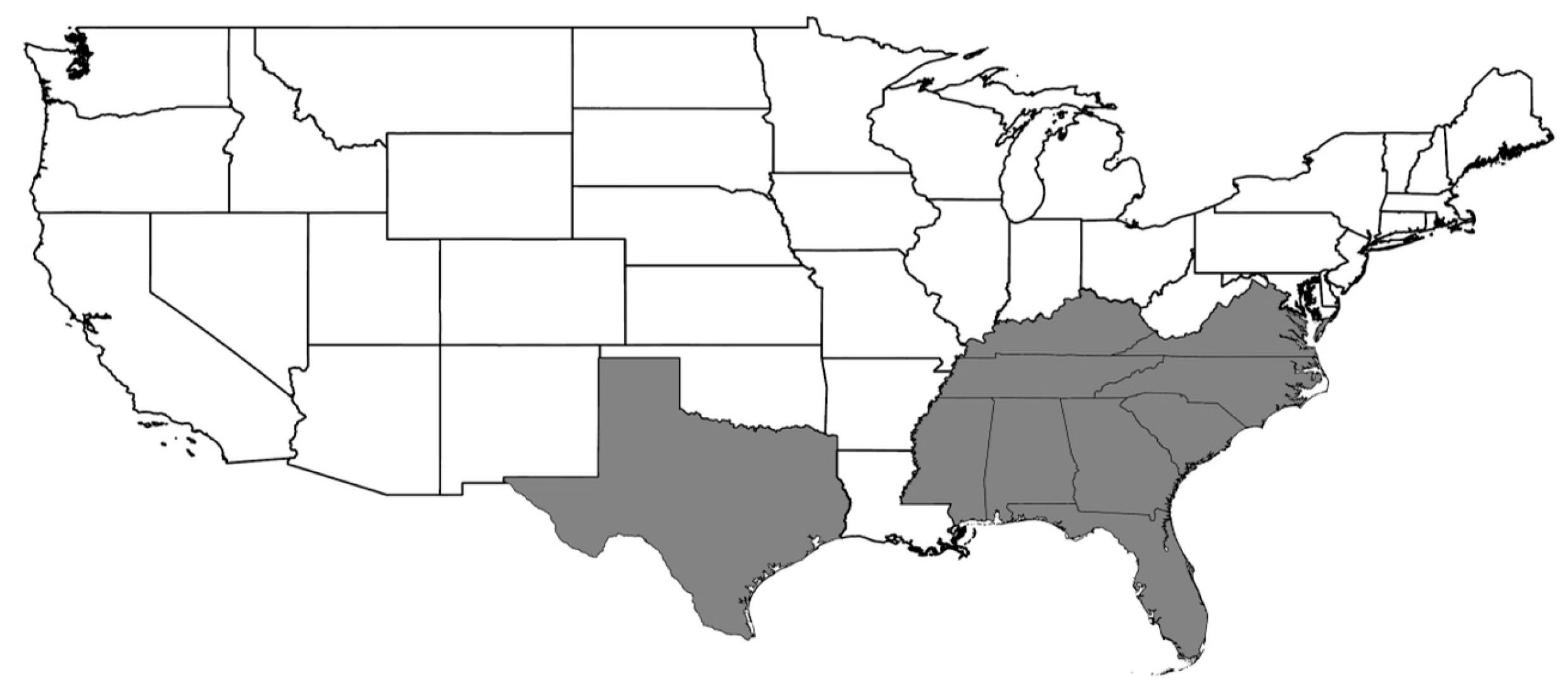
This study examined green roofs across ten Southern U.S. states: Florida, Georgia, Tennessee, South Carolina, North Carolina, Alabama, Texas, Kentucky, Mississippi, and Virginia (Figure 1). As previously mentioned, this region was selected due to its climate, rapid urbanization, and relative underrepresentation in green roof research compared to temperate and European contexts.

2.2. Identification of Green Roofs

Green roofs were initially identified using the green roof database available at greenroofs.com. Because entries are self-reported and coverage varied across states, additional green roofs were identified using targeted keyword searches (e.g., “green roof,” “green infrastructure,” combined with state names). Preliminary data including roof height, roof type, LEED status, and date of installation were compiled from existing publicly available documents and compiled in a database of roofs for contact. Green roofs on single and multi-family homes were excluded from the study due to limited publicly available information. In total, 66 buildings with documented green roofs were contacted via phone or email, and 46 of those responded (70% response rate).

2.3. Data Collection and Survey Design

Data were collected using a structured survey administered between June and November 2025. Respondents were initially contacted via phone to confirm that the roof remained in existence, to verify its management status, and to validate the publicly available data. Following confirmation, a structured survey (Table A1) was distributed via email. Roofs that had been removed or were no longer maintained were excluded from the structured survey portion but retained for persistence analysis. The survey was adapted from a previously published study examining the relationship between green roof management and roof biodiversity [30]. Participants were asked to fill out the survey to the best of their ability and return it.
County- and municipal-level tax databases were consulted for dates of ownership change. To protect respondent anonymity, particularly in states and cities with a limited number of publicly documented green roofs, specific databases are not named as their disclosure could permit the re-identification of individual roofs and owners.

2.4. Classification of Roof Status and Management Intensity

Roof status and management intensity were classified using predetermined operational criteria rather than respondent interpretation. Roofs were categorized as managed, abandoned, removed, mid-refurbishment, or unknown. Although technical guidelines exist for green roof design and installation, no standardized framework currently defines management intensity. For this study, managed roofs were classified as low, medium, or high based on reported irrigation frequency, vegetation management practices, and degree of monitoring. A high management regime involved regular irrigation and weeding with seasonal adjustments and active monitoring. Medium intensity included periodic irrigation and was informed by monitoring. Low intensity involved minimal irrigation or weeding and limited monitoring.

2.5. Predictor Variables

Three explanatory variables were selected based on hypothesized links to long-term green roof outcomes. Ownership change was coded as a binary variable indicating whether building ownership changed post-installation of a green roof. Ownership continuity was hypothesized to influence management through maintenance contracts, financial and mission commitments, and institutional knowledge.
Building type was classified into four categories: educational, government, non-profit, and private-commercial. Educational buildings include both universities and K-12 schools. Government buildings include all buildings owned and operated by a government entity that are not schools. Non-profit buildings are owned and operated by a registered non-profit entity and include museums, churches, and charities. Private-commercial buildings are privately owned and operated by corporations or businesses for either commercial, high-density residential, or mixed-use purposes.
LEED certification status was coded as a binary variable that indicated whether the building had achieved LEED certification associated with green roof installation. This variable was included to evaluate whether incentive-driven installations were associated with sustained post-installation management.

2.6. Statistical Analysis

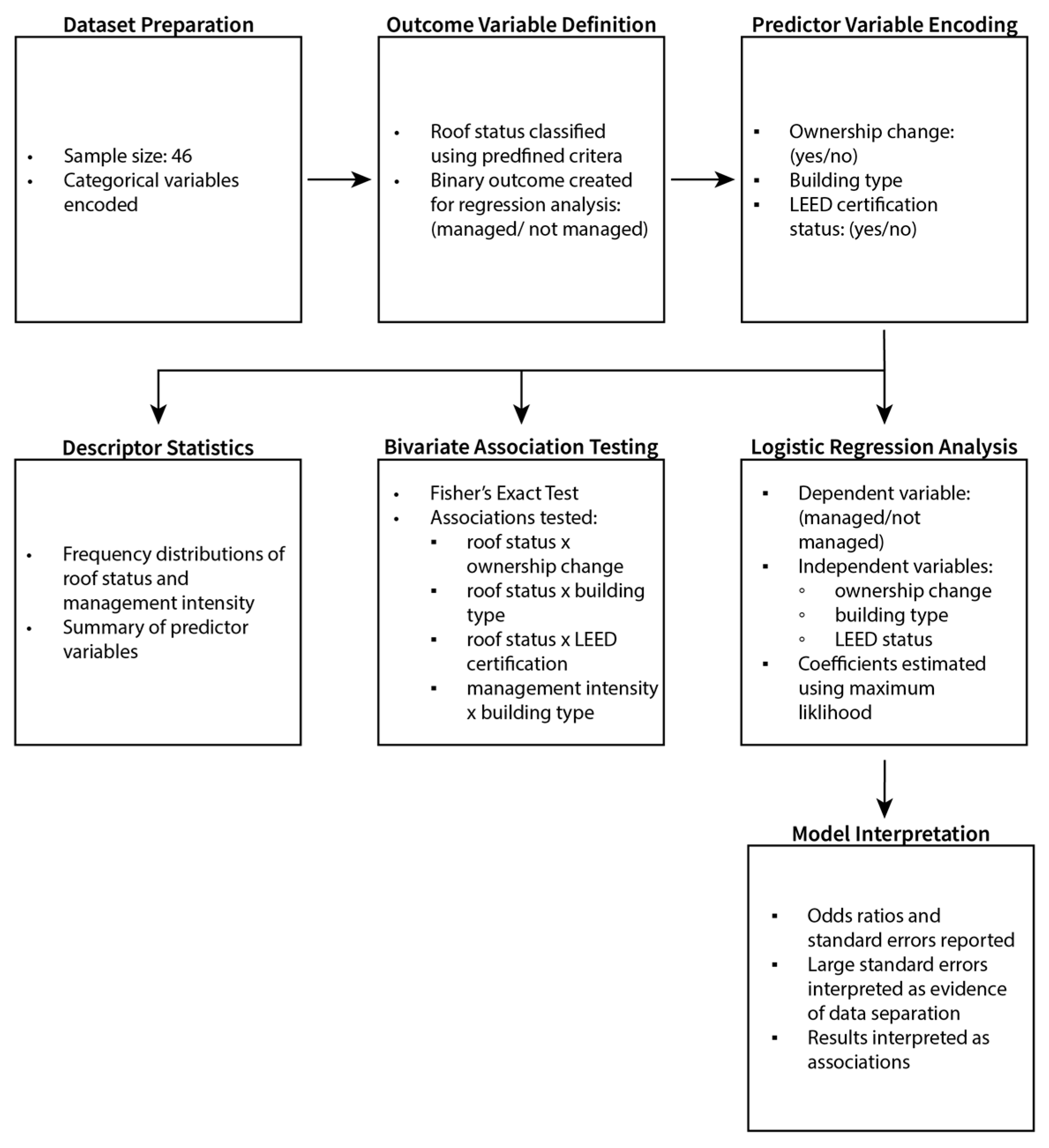
Survey data were compiled and analyzed using R statistical software (version 4.5.1) and followed a structured workflow including outcome classification, predictor variable encoding, descriptive analysis, bivariate association testing, and logistic regression modeling (Figure 2). Descriptive statistics were used to summarize roof status and management intensity. Associations between categorized variables were evaluated using Fisher’s Exact Tests due to small sample sizes and sparse contingency tables. A logistic regression model was used to evaluate predictors of whether a roof was managed:
log p i 1 p i = β 0 + β 1 G o v e r n m e n t i + β 2 N o n p r o f i t i + β 3 P r i v a t e C o m m e r c i a l I , w h e r e   p i = P Y i = 1 .
Predictor variables included building type, ownership change, and LEED certification status. Model coefficients were estimated using maximum likelihood methods. Statistical significance was evaluated at an alpha level of 0.05.

2.7. Data Availability

This study did not involve human subjects as defined under the U.S. Common Rule, as respondents provided information about buildings and management practices in a professional capacity rather than personal data. To reduce the risk of re-identification, spatial data were aggregated to the regional level and location identifiers were not disclosed. See Table A2 for analyzed data.

3. Results

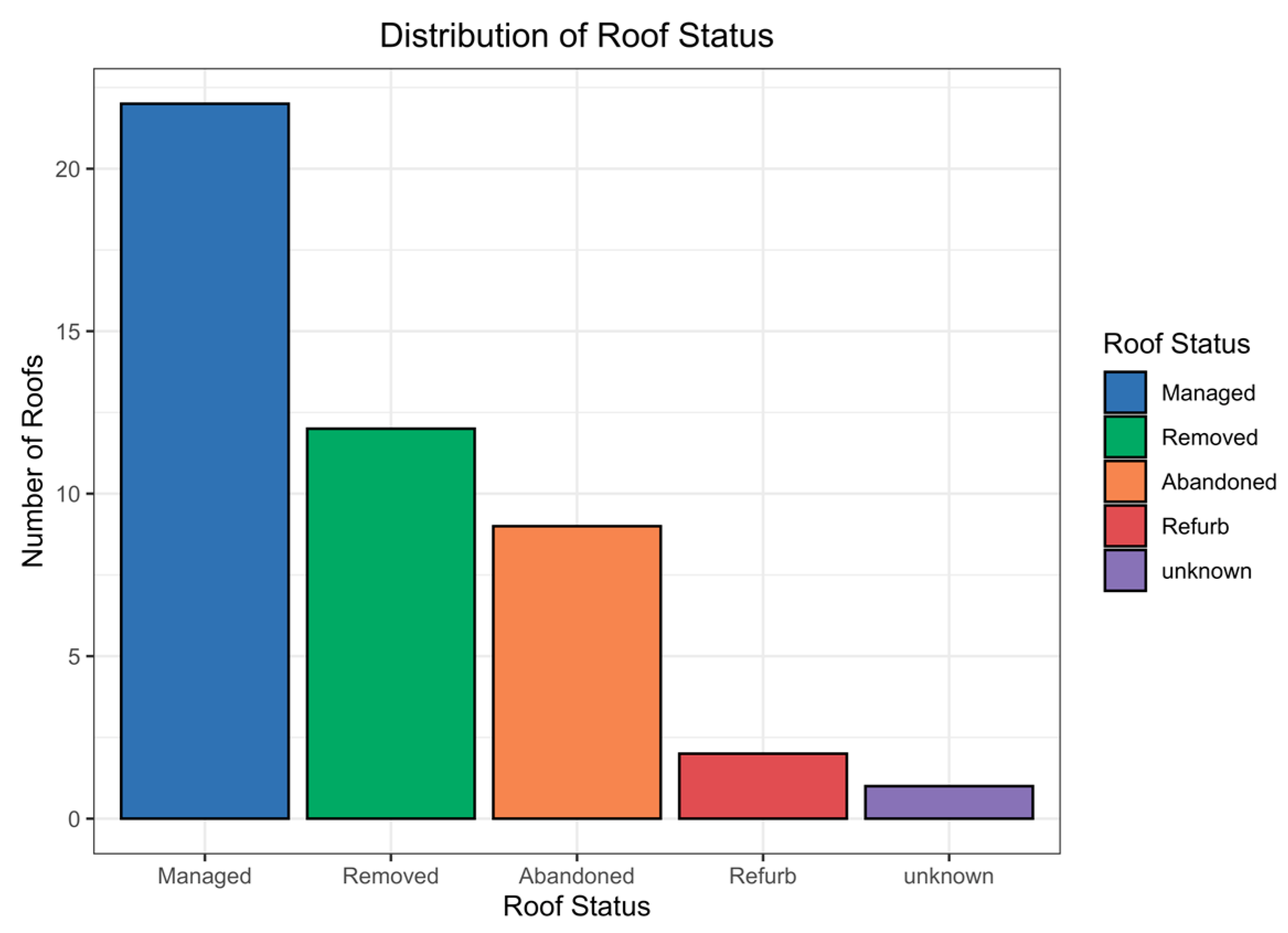
A total of 46 green roofs were included in the analysis. As seen in Figure 3, roofs were classified as managed (n = 22, 47.8%), abandoned (n= 9, 19.6%), removed (n = 12, 26.1%), mid-refurbishment (n = 2, 4.3%), or unknown (n = 1, 2.2%). Among managed roofs, management intensity was classified as low (n = 12, 55%), medium (n = 1, 4.5%), or high (n = 9, 40.9%).

3.1. Associations Between Roof Status and Predictor Variables

Associations between roof status and predictor variables were evaluated using Fisher’s Exact Tests due to the small sample size. No significant association was observed between building type and roof status (p = 0.57). When roof status categories were combined to compare managed, refurbished, and abandoned/removed to reduce sparsity, this relationship remained insignificant (p = 0.11). Non-profit and private/commercial buildings did exhibit higher proportions of managed roofs when compared to educational and governmental buildings; non-profit roofs were the only category to not exhibit any abandonment or removal.
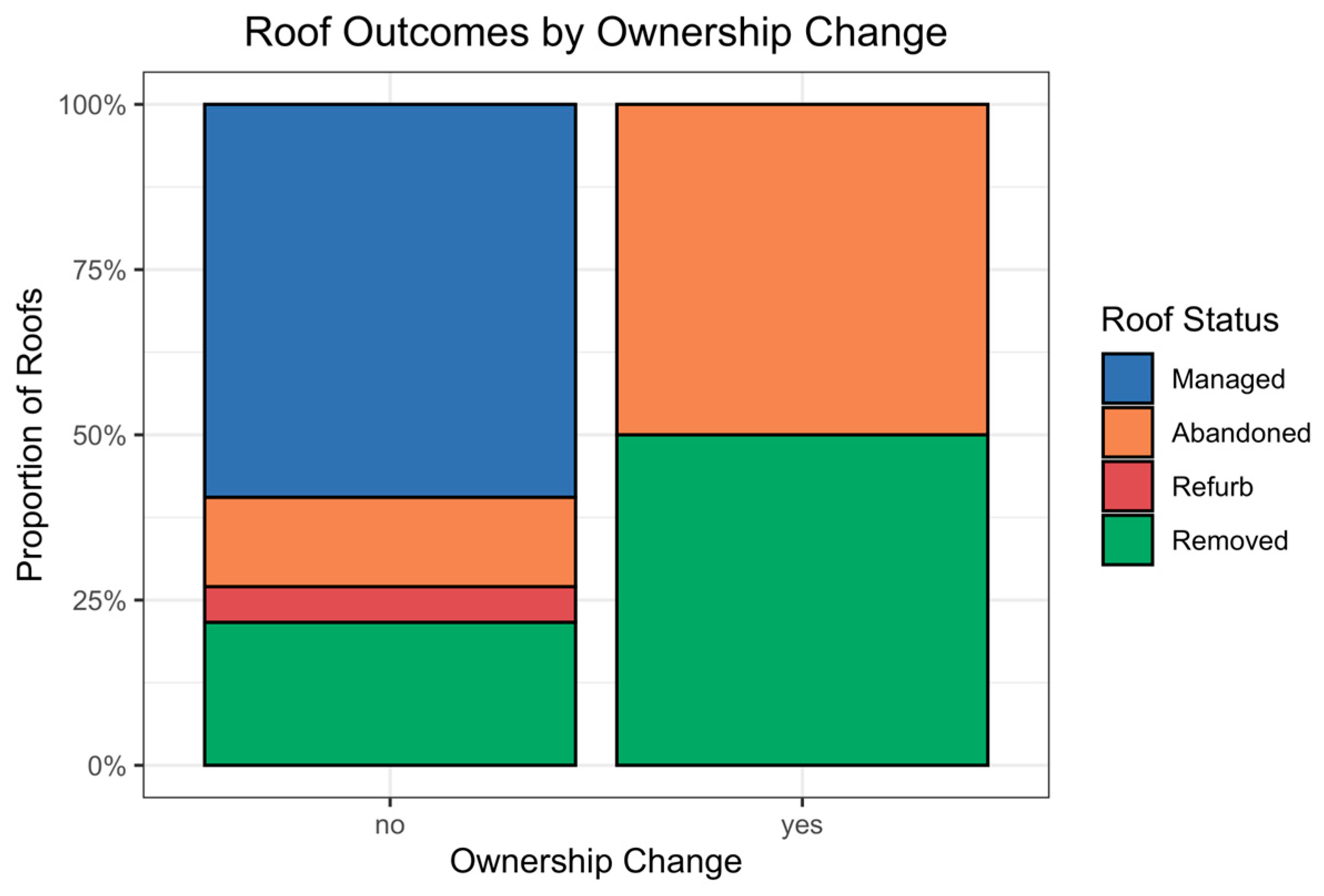
A change in ownership was strongly associated with roof status (p = 0.001). All roofs located on buildings that experienced an ownership change were classified as either abandoned or removed; no managed roofs had undergone any ownership changes (Figure 4). No statistically significant association was detected between LEED certification status and roof status (p = 0.51).

3.2. Management Intensity Among Managed Roofs

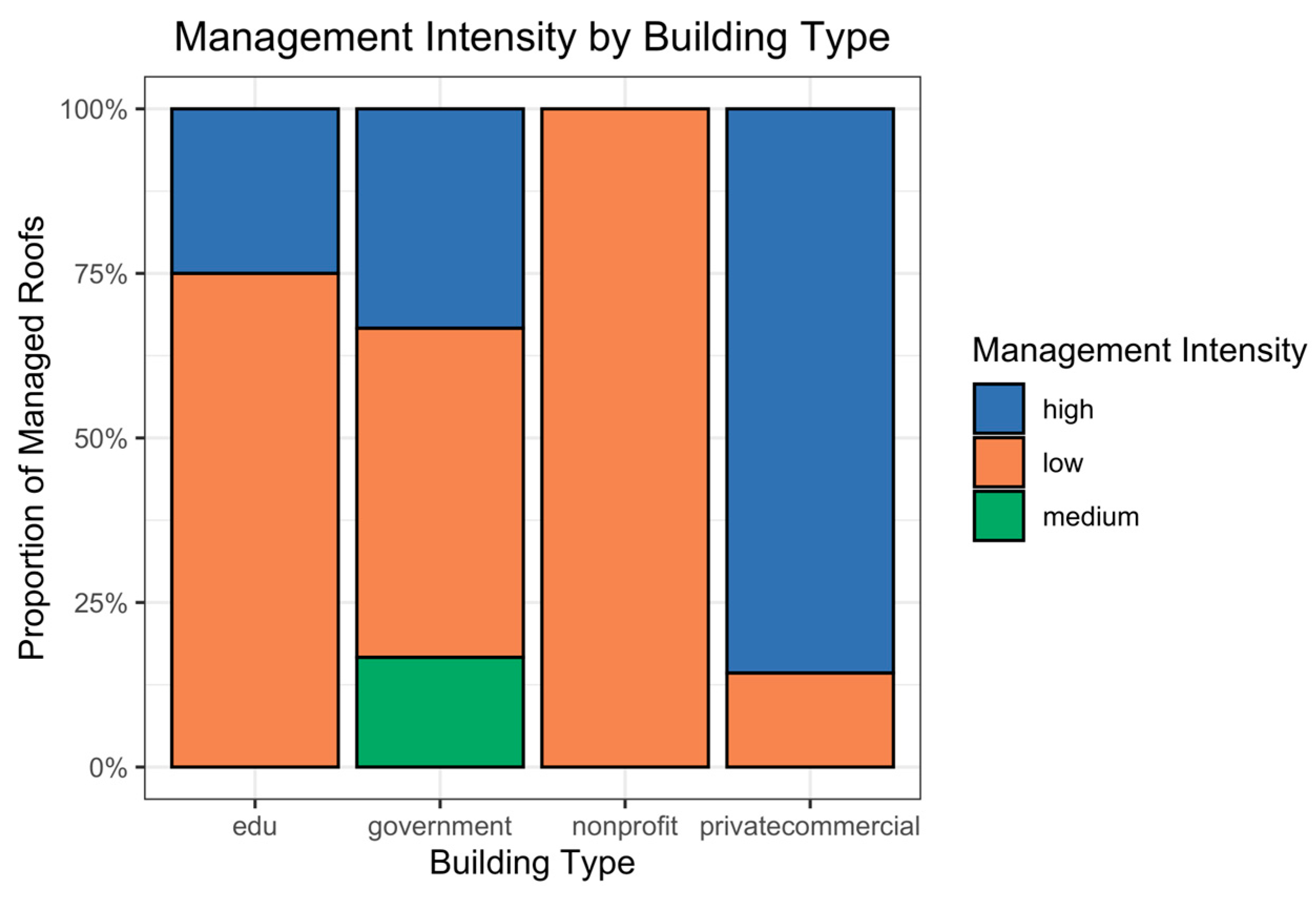
Among roofs classified as actively managed (n = 22), management intensity did significantly vary by building type (p = 0.02). High management intensity was more frequently observed among private-commercial buildings, while low management intensity more common among educational buildings and government buildings exhibited a mixed distribution (Figure 5). Non-profit buildings were uniformly classified as low management. LEED certification status was not significantly associated with management intensity among managed roofs (p = 1).

3.3. Logistic Regression Analysis

Regression results are shown in Table 1. Ownership change was associated with a significantly reduced likelihood of roof management. The large standard error associated with ownership change reflects complete separation in the data set, as no roofs experiencing ownership changes were classified as managed. Building type and LEED status were not significant predictors of management status. Given the modest sample size, coefficient estimates should be interpreted as associational rather than causal.

4. Discussion

While design characteristics undoubtedly influence maintenance needs, infrastructure persistence is also shaped by institutional capacity and organizational stability. Even well-designed systems require oversight and financial investment. By isolating institutional predictors, this study highlights an aspect of green roof performance that is often overlooked in ecologically focused research.

4.1. Ownership Change and Roof Persistence

Ownership change was the strongest factor associated with green roof outcomes. All roofs that experienced a change in ownership were either abandoned or removed, with none of them being actively managed at the time of data collection. This pattern suggests that continuity in building ownership is vital to the long-term success and functionality of green roofs; this aligns with previous notions that institutional knowledge, financial commitment, and continued oversight are necessary to ensure the long-term management of roofs [23,31,32]. When institutional responsibility becomes unclear or changes following an ownership change, these processes may be interrupted.

4.2. Building Type and Management Intensity

Building type was not significantly associated with overall roof persistence but was strongly associated with management intensity among actively maintained roofs. Private-commercial buildings were more frequently associated with higher management intensity, whereas educational, non-profit, and government buildings more often exhibited low management intensity. These patterns may reflect differences in financial resources, labor availability, operational flexibility, and organizational priorities. However, further research is needed to more fully evaluate maintenance costs and long-term returns on investment [31,33]. Importantly, this distinction suggests that persistence and management intensity are influenced by different mechanisms. While ownership continuity appears to play an important role in the prevention of abandonment or removal, building type may shape the intensity of ongoing management.

4.3. LEED Certification and Long-Term Outcomes

No statistically significant association was observed between LEED certification status and either roof persistence or management intensity. This finding suggests that the certification-driven installation alone does not guarantee long-term management of green roofs. It also highlights a potential weakness in existing incentive programs, which typically award points after the design phase and during or directly after the time of installation but rarely include long-term performance monitoring [34,35]. Several independent academic studies have reported that LEED-certified buildings do not always meet their projected energy conservation targets [36,37]. However, comparable studies specifically evaluating green roof performance within LEED-certified buildings remain limited.
It is notable that non-profit buildings seem to demonstrate higher rates of long-term management, as previous studies have indicated that they may build a greater percentage of platinum certified LEED buildings, likely due to their missions [34]. The relationship between LEED status, building type, and green roof management may warrant further investigation, as previous studies of LEED-certified school buildings in Chicago consumed more energy and emitted more carbon than their non-LEED counterparts [37]; however, no studies were identified that specifically evaluate green roof performance in this same context.

4.4. Practical and Policy Implications

Two practical implications emerge from this study. First, urban planning departments and building certification programs may need to incorporate post-installation management requirements or incentives to ensure that green roofs continue to deliver the intended benefits [31,38]. To our knowledge, no planning or certification agencies are conducting long-term, post-installation evaluations, despite evidence that such monitoring is necessary when assessing the success of a green roof [10,39,40]. Policies should be put into place that provide guidance, monitoring, or further incentives for management to lessen the risk of a roof being abandoned or removed.
Second, building owners and developers may benefit from greater awareness of the long-term realities associated with green roof management prior to implementation or purchase [32,40]. Complex designs, vegetation unsuited to the local climate, and aesthetic-driven planting schemes require higher levels of attention and management, and thus more financial investment, to upkeep [32,41,42]. By encouraging more deliberate consideration when planning and choosing a design for a roof, long-term outcomes may improve due to better operational planning [43,44]. This finding aligns with prior research that emphasizes the need for improved communication and coordination among the various stakeholders involved in the green roof lifecycle [10]. Low management does still preserve roof functionality, but the absence of management greatly increases the risk of roof failure or removal [45,46].

4.5. Risks Associated with Low or No Management

Green roofs with low to no management may not deliver anticipated environmental and economic benefits while also introducing unintended risks [38]. Poorly managed roofs can experience vegetation loss, reduced stormwater retention capacity, accrued costs over time, or premature removal [47,48]. From a life-cycle perspective, the environmental impacts associated with construction and material use may outweigh benefits if roofs are abandoned or removed early, especially in regions like the southeast with climatic stressors such as heat and humidity [33,49,50,51]. Therefore, it is critical to ensure long-term management to justify green roof promotion from a sustainability perspective.

4.6. Regional Context and Transferability

The southeastern United States presents a challenging environment for green roof performance due to high temperatures, humidity, and intense precipitation events. As previously noted, these climatic conditions may increase maintenance demands and accelerate vegetation stress compared to more temperate regions. While the observed associations between ownership change, building type, and management are likely relevant beyond the region, specific management outcomes may be context dependent. Future research should examine whether similar patterns occur in regions with different climates, governance, and incentive frameworks. Comparative studies may be helpful in discerning which factors are broadly transferable as opposed to regionally specific.

4.7. Limitations and Future Research

Multiple limitations of this study should be noted. The sample size was modest and relied on self-reported survey data. Subsequently, it is both constrained and may be subject to recall bias. Furthermore, roofs were identified in one region using publicly available databases and internet searches, which do not capture all existing roofs, thus limiting generalizability. Additionally, this study evaluates institutional predictors of green roof persistence but does not incorporate design-level variables such as vegetation composition, substrate depth, irrigation type, or structural complexity. These factors are known to influence ecological performance and management requirements may confound the observed relationships. The omission of these variables limits the ability to determine what relationships exist between these variables and the institutional factors observed. Future research should integrate design, ecological, and institutional predictors as well as expand the geographic scope beyond the southeast and into the rest of the United States.

5. Conclusions

This study evaluated the post-installation status and management outcomes of 46 green roofs across the southeastern United States using structured survey data and publicly available records. While green roof research frequently emphasizes installation rates and ecological performance, far less attention has been given to whether these systems persist beyond their initial implementation phase. The findings reveal that fewer than half of the sampled roofs were actively managed at the time of data collection, and nearly half had been abandoned or removed. Most notably, ownership change was consistently associated with roof abandonment or removal, whereas no actively managed roofs had experienced post-installation ownership turnover. In contrast, building type was associated with differences in management intensity rather than overall persistence, and LEED certification showed no significant relationship with either management intensity or survival.
These results underscore the importance of institutional continuity and sustained organizational oversight in shaping long-term infrastructure outcomes. Green roofs are often viewed as technical or ecological systems, yet their performance is reliant upon governance structures, budgetary priorities, and organizational stability. When ownership transitions occur, maintenance contracts, institutional knowledge, and financial commitments may be disrupted, increasing the likelihood of neglect. As such, the longevity of green roofs appears to depend not only on design characteristics but also on the durability of the institutions responsible for stewardship.
The findings also carry important implications for policy and incentive design. Installation-based incentive programs and certification frameworks, including those associated with sustainability rating systems, may overestimate functional green roof coverage if long-term management is not incorporated into evaluation criteria. Programs that reward installation without requiring ongoing monitoring or performance verification risk counting infrastructure that no longer delivers intended environmental benefits. Incorporating post-installation compliance checks, maintenance reporting requirements, or phased incentives tied to long-term performance could close the gap between policy objectives and realized outcomes.
Although the results are context-specific to the southeastern United States, the observed relationships may extend to other regions where green roofs are promoted through similar mechanisms. In climates characterized by high heat and humidity, vegetation stress may intensify when maintenance lapses occur, accelerating system failure. The interaction between climatic stressors and governance instability warrants further investigation in broader contexts.
This study is limited by its focus on institutional-level predictors and the exclusion of design and construction variables such as substrate depth, vegetation composition, and irrigation systems. These factors undoubtedly influence management demands and resilience and may interact with governance factors. Future research should include a larger geographic range and integrate ecological design variables with institutional and economic factors to more fully explain green roof longevity and further strengthen understanding of infrastructure persistence. By shifting attention from installation counts to post-installation governance and institutional continuity, this study contributes empirical evidence to an underexamined dimension of green roof performance. Long-term green infrastructure effectiveness depends not only on technical design but also on the sustained capacity of organizations to manage these systems over time.

Author Contributions

Conceptualization, T.W. and M.L.M.; methodology, T.W. and M.L.M.; validation, M.L.M.; formal analysis, T.W.; investigation, T.W.; resources, T.W.; data curation, T.W.; writing—original draft preparation, T.W.; writing—review and editing, M.L.M.; visualization, T.W.; supervision, M.L.M.; funding acquisition, M.L.M. All authors have read and agreed to the published version of the manuscript.

Funding

This research received no external funding.

Institutional Review Board Statement

Ethical review and approval were waived for this study due to the reason that this study did not involve research on human subjects as defined under U.S. federal regulations, specifically the U.S. Common Rule (45 CFR 46.102(e)(1)). https://www.ecfr.gov/current/title-45/part-46/section-46.102#p-46.102(e)(1) (accessed on 2 December 2025).

Informed Consent Statement

Informed consent was obtained from all subjects involved in the study.

Data Availability Statement

The data that support the findings of this study are available from the corresponding author upon reasonable request. Access is restricted to protect participant confidentiality, as many participants provided information under the assurance of anonymity.

Conflicts of Interest

The authors declare no conflicts of interest.

Abbreviations

The following abbreviations are used in this manuscript:
LEEDLeadership in Energy and Environmental Design

Appendix A

Table A1. Green Roof Survey.
General Questions:
1.
What is the substrate type and depth?
2.
What is the original plant list? (If possible)
3.
What is the current plant list? (If possible)
4.
Have there been any leakage issues?
5.
Was there any major die off? If so, how was this problem fixed?
6.
What year was the green roof installed? By what company (name, city, and contact info)?
7.
How many stories high is the green roof?
Present Management:
1.
How often is the roof watered?
2.
How often has the roof had plants added or replaced since the roof’s installation?
3.
How often do you remove weeds?
4.
Have you ever used pesticides/herbicides/fertilizers since it was installed? When?
5.
Have you added any substrate/soil since the roof was installed? When?
6.
Would you classify your current management strategy as:
(A)
high management (the roof is regularly watered/weeded every few weeks)
(B)
medium (roof is watered/weeded every 3–6 months)
(C)
low (little or no watering/weeding occurs throughout the year).
Past Management:
1.
Have your current management practices above generally been the same every year since the roof was installed?
2.
If not, how did past management differ in previous years?
Table A2. Analyzed Survey Data.
RoofRoof StatusMaintenance LevelOwner ChangeBuilding TypeLEED Status
1Removed noPrivate-Commercialyes
2Removed noEducationalyes
3Removed yesPrivate-Commercialno
4Removed noGovernmentno
5Abandoned noGovernmentno
6Unknown yesPrivate-Commercialyes
7Removed noGovernmentyes
8Removed yesPrivate-Commercialno
9MaintainedlownoNonprofityes
10Mid-refurb noGovernmentyes
11Abandoned yesPrivate-Commercialyes
12MaintainedlownoNonprofityes
13MaintainedlownoPrivate-Commercialyes
14MaintainedlownoNonprofityes
15MaintainedhighnoPrivate-Commercialno
16MaintainedhighnoPrivate-Commercialno
17Abandoned noEducationalno
18MaintainedhighnoPrivate-Commercialyes
19MaintainedlownoGovernmentyes
20Removed noEducationalyes
21MaintainedlownoNonprofitno
22Removed yesPrivate-Commercialno
23MaintainedhighnoPrivate-Commercialno
24Abandoned noGovernmentyes
25MaintainedlownoGovernmentyes
26MaintainedlownoEducationalno
27Mid-refurb noNonprofitno
28Removed yesPrivate-Commercialno
29MaintainedlownoEducationalno
30MaintainedhighnoGovernmentno
31MaintainedlownoGovernmentno
32MaintainedhighnoEducationalyes
33MaintainedhighnoPrivate-Commercialyes
34MaintainedhighnoGovernmentyes
35MaintainedlownoNonprofitno
36MaintainedmediumnoGovernmentno
37MaintainedhighnoPrivate-Commercialyes
38Removed noGovernmentno
39Removed noPrivate-Commercialno
40MaintainedlownoEducationalno
41Abandoned noEducationalyes
42Abandoned yesPrivate-Commercialno
43Abandoned yesPrivate-Commercialyes
44Abandoned yesPrivate-Commercialyes
45Removed noEducationalno
46Abandoned noGovernmentyes

References

  1. Stand, B.; Peck, S. 2019 Annual Green Roof Industry Survey; Green Roofs for Healthy Cities: Toronto, ON, Canada, 2019; Available online: https://cdn2.hubspot.net/hubfs/4115293/GreenRoofIndustrySurvey2019Report.pdf (accessed on 2 December 2025).
  2. Netusil, N.R.; Lavelle, L.; Dissanayake, S.; Ando, A.W. Valuing the public benefits of green roofs. Landsc. Urban Plan. 2022, 224, 104426. [Google Scholar] [CrossRef]
  3. Berardi, U.; GhaffarianHoseini, A.; GhaffarianHoseini, A. State-of-the-art analysis of the environmental benefits of green roofs. Appl. Energy 2014, 115, 411–428. [Google Scholar] [CrossRef]
  4. Lee, E.; Patel, R.; Hu, T.; Li, Y.; Chen, Q.; Sun, B. Enhanced environmental and economic benefits of green roofs in a humid subtropical region under future climate. Ecol. Eng. 2024, 201, 107221. [Google Scholar] [CrossRef]
  5. Bianchini, F.; Hewage, K. How “green” are the green roofs? Lifecycle analysis of green roof materials. Build. Environ. 2012, 48, 57–65. [Google Scholar] [CrossRef]
  6. Snodgrass, E.C.; McIntyre, L. The Green Roof Manual: A Professional Guide to Design, Installation, and Maintenance; Timber Press: Portland, OR, USA, 2010. [Google Scholar]
  7. Kader, S.; Hassan, A.S.; Omar, Z.; Abd Aziz, N.H.; Ghazali, C.M.R.C. Green roof substrates—A literature review. Front. Built Environ. 2022, 8, 1019362. [Google Scholar] [CrossRef]
  8. Sherk, J.T.; Fu, W.; Neal, J.C.; Ruffin, M. Site conditions, maintenance costs, and plant performance of 10 extensive green roofs in the Research Triangle area of central North Carolina. HortTechnology 2020, 30, 761–769. [Google Scholar] [CrossRef]
  9. Bellini, A.; Maesano, M.; Rossi, V.; d’Ippolito, G.; Di Filippo, A.; Rosati, L. Extensive green roofs (EGRs) and the five WS: A quantitative analysis on the origin and evolution, aims, approaches, and botanical views. Sustainability 2024, 16, 1033. [Google Scholar] [CrossRef]
  10. Shafique, M.; Kim, R.; Rafiq, M. Green roof benefits, opportunities and challenges—A review. Renew. Sustain. Energy Rev. 2018, 90, 757–773. [Google Scholar] [CrossRef]
  11. Liberalesso, T.; Oliveira Cruz, C.; Matos Silva, C.; Manso, M. Green infrastructure and public policies: An international review of green roofs and green walls incentives. Land Use Policy 2020, 96, 104693. [Google Scholar] [CrossRef]
  12. Strong, D.; Burrows, V. (Eds.) A Whole-System Approach to High-Performance Green Buildings; Artech House: Norwood, MA, USA, 2017. [Google Scholar]
  13. Zuniga-Teran, A.A.; Tan, P.Y.; Lee, A.C.K. Challenges of mainstreaming green infrastructure in built environment professions. J. Environ. Plan. Manag. 2019, 63, 710–732. [Google Scholar] [CrossRef]
  14. Chau, H.-W.; Sadiq, A.A.; Roiko, A.; Hewage, K. Key barriers and challenges to green infrastructure implementation: Policy insights from the Melbourne case. Land 2025, 14, 961. [Google Scholar] [CrossRef]
  15. Ogunnusi, M.; Akinsola, B.; Emmanuel, K.; Olanrewaju, A. Infrastructure development and abandonment. Proc. Int. Struct. Eng. Constr. 2021, 8, inf-08. [Google Scholar] [CrossRef]
  16. Hopkins, K.G.; Grimm, N.B.; York, A.M. Influence of governance structure on green stormwater infrastructure investment. Environ. Sci. Policy 2018, 84, 124–133. [Google Scholar] [CrossRef]
  17. Yuan, M.; Kim, J.-O. Unveiling participation dynamics: A comparative study of green infrastructure practices. Land 2025, 14, 2267. [Google Scholar] [CrossRef]
  18. Galan, N. Knowledge loss induced by organizational member turnover: A review of empirical literature, synthesis and future research directions (Part I). Learn. Organ. 2023, 30, 117–136. [Google Scholar] [CrossRef]
  19. Vilčeková, S.; Budajová, J.; Harčárová, K.; Mésároš, P.; Krídlová Burdová, E.; Zimermann, R. The impact of green roofs’ composition on its overall life cycle. J. Environ. Manag. 2024, 369, 122363. [Google Scholar] [CrossRef]
  20. Silva, C.M.; Gomes, M.G.; Silva, M. Green roofs energy performance in Mediterranean climate. Energy Build. 2016, 116, 318–325. [Google Scholar] [CrossRef]
  21. Catalano, C.; Marcenò, C.; Laudicina, V.A.; Guarino, R. Thirty years unmanaged green roofs: Ecological research and design implications. Landsc. Urban Plan. 2016, 149, 11–19. [Google Scholar] [CrossRef]
  22. Vanstockem, J.; Somers, B.; Hermy, M. Weeds and gaps on extensive green roofs: Ecological insights and recommendations for design and maintenance. Urban For. Urban Green. 2019, 46, 126484. [Google Scholar] [CrossRef]
  23. López-Silva, D.V.; Sigala-Meza, E.; Bullock, S.H.; Hernández-Pérez, I.; Sauceda-Carvajal, D.; Zavala-Guillén, I.; Méndez-Alonzo, R. Maintenance, operational costs, and plant performance in three extensive green roof designs from NorthwestMéxico. Urban For. Urban Green. 2024, 101, 128521. [Google Scholar] [CrossRef]
  24. Li, H.; Xiang, Y.; Yang, W.; Lin, T.; Xiao, Q.; Zhang, G. Green roof development knowledge map: A review of visual analysis using CiteSpace and VOSviewer. Heliyon 2024, 10, e24958. [Google Scholar] [CrossRef] [PubMed]
  25. Mercer, A.; Dyer, J. A southeastern United States warm season precipitation climatology using unsupervised learning. Climate 2022, 11, 2. [Google Scholar] [CrossRef]
  26. Li, Y.; Liu, J. Green roofs in the humid subtropics: The role of environmental and design factors on stormwater retention and peak reduction. SSRN Electron. J. 2022, 858, 159710. [Google Scholar] [CrossRef]
  27. Liu, T.; Wang, J.; Zhou, Q.; Xie, J.; Liu, X.; Zhang, Y.; Zheng, B. Unirrigated extensive green roofs in humid subtropics—Plant selection and substrate design for low maintenance and climate resilience. Urban For. Urban Green. 2024, 101, 128554. [Google Scholar] [CrossRef]
  28. Akther, M.; He, J.; Chu, A.; van Duin, B. Nutrient leaching behavior of green roofs: Laboratory and field investigations. Sci. Total Environ. 2021, 754, 141841. [Google Scholar] [CrossRef]
  29. United States Census Bureau. Population Growth Reported Across Cities and Towns in All U.S. Regions. 15 May 2025. Available online: https://web.archive.org/web/20260227030158/https://www.census.gov/newsroom/press-releases/2025/vintage-2024-popest.html (accessed on 16 January 2026).
  30. Swanson, R.A.; McKinney, M.L. Effects of green roof features, management practices, and age on decomposition rates, carbon storage, and substrate composition. Urban Sci. 2025, 9, 157. [Google Scholar] [CrossRef]
  31. Vijayaraghavan, K. Green roofs: A critical review on the role of components, benefits, limitations and trends. Renew. Sustain. Energy Rev. 2016, 57, 740–752. [Google Scholar] [CrossRef]
  32. Khairuddin, N.A.; Wan Ismail, W.Z.; Kamarudin, H.; Mohamad Yusof, M.S.; Mohd Zulkifli Cheng, M.Z. Challenges of facilities management in managing intensive green roofs in high-rise residential. Built Environ. J. 2025, 22, 72–89. [Google Scholar] [CrossRef]
  33. Teotónio, I.; Silva, C.M.; Cruz, C.O. Economics of green roofs and green walls: A literature review. Sustain. Cities Soc. 2021, 69, 102781. [Google Scholar] [CrossRef]
  34. Matisoff, D.C.; Noonan, D.S.; Mazzolini, A.M. Performance or marketing benefits? The case of LEED certification. Environ. Sci. Technol. 2014, 48, 2001–2007. [Google Scholar] [CrossRef]
  35. Afroz, Z.; Gunay, H.B.; O’Brien, W. A review of data collection and analysis requirements for certified green buildings. Energy Build. 2020, 226, 110367. [Google Scholar] [CrossRef] [PubMed]
  36. Menassa, C.; Mangasarian, S.; El Asmar, M.; Kirar, C. Energy consumption evaluation of U.S. Navy LEED-certified buildings. J. Perform. Constr. Facil. 2012, 26, 46–53. [Google Scholar] [CrossRef]
  37. Scofield, J.H.; Doane, J. Energy performance of LEED-certified buildings from 2015 Chicago benchmarking data. Energy Build. 2018, 174, 402–413. [Google Scholar] [CrossRef]
  38. Nawrath, M.; Furuseth, I.S.; Barkved, L.; Seifert-Dähnn, I. Incentives for the implementation and maintenance of urban blue-green infrastructure: A systematic review. Landsc. Urban Plan. 2026, 268, 105572. [Google Scholar] [CrossRef]
  39. Carson, T.B.; Marasco, D.E.; Culligan, P.J.; McGillis, W.R. Hydrological performance of extensive green roofs in New York City: Observations and multi-year modeling of three full-scale systems. Environ. Res. Lett. 2013, 8, 024036. [Google Scholar] [CrossRef]
  40. Shaharuddin, S.; Khalil, N.; Abdullah Saleh, A. Review of significant maintenance criteria for tropical green roofs in Malaysia. Int. J. Technol. 2019, 10, 69–76. [Google Scholar] [CrossRef]
  41. Ndayambaje, P.; MacIvor, J.S.; Cadotte, M.W. Plant diversity on green roofs: A review of the ecological benefits, challenges, and best management practices. Nat.-Based Solut. 2024, 6, 100162. [Google Scholar] [CrossRef]
  42. Grullón-Penkova, I.F.; Zimmerman, J.K.; González, G. Green roofs in the tropics: Design considerations and vegetation dynamics. Heliyon 2020, 6, e04712. [Google Scholar] [CrossRef]
  43. Susca, T. Green roofs to reduce building energy use? A review on key structural factors of green roofs and their effects on urban climate. Build. Environ. 2019, 162, 106273. [Google Scholar] [CrossRef]
  44. Raimondo, F.; Trifilò, P.; Lo Gullo, M.A.; Andri, S.; Savi, T.; Nardini, A. Plant performance on Mediterranean green roofs: Interaction of species-specific hydraulic strategies and substrate water relations. AoB Plants 2015, 7, plv007. [Google Scholar] [CrossRef] [PubMed]
  45. Liao, Z.; Xu, Y.; Liu, J. Toward low-maintenance extensive green roofs: A review for plant selection and substrate design. Urban For. Urban Green. 2025, 111, 128864. [Google Scholar] [CrossRef]
  46. Schrieke, D.; Lönnqvist, J.; Blecken, G.-T.; Williams, N.S.G.; Farrell, C. Socio-ecological dimensions of spontaneous plants on green roofs. Front. Sustain. Cities 2021, 3, 777128. [Google Scholar] [CrossRef]
  47. MacIvor, J.S.; Appleby, M.; Miotto, S.; Rosenblat, H.; Margolis, L. Plant cover and biomass change on extensive green roofs over a decade and ten lessons learned. J. Environ. Manag. 2024, 360, 121047. [Google Scholar] [CrossRef]
  48. Shahmohammad, M.; Hosseini, S.M.D.; Shahbazi, A.; Dvorak, B.; Bordbar, F.; Shahmohammadmirab, H.; Aghamohammadi, N. Sustainable green roofs: A comprehensive review of influential factors. Environ. Sci. Pollut. Res. 2022, 29, 78228–78254. [Google Scholar] [CrossRef]
  49. Pons Fiorentin, D.; Costa, J.; Silva, C.M.; Cruz, C.O. Life cycle assessment of green roofs: A comprehensive review of methodological approaches and climate change impacts. Sustain. Prod. Consum. 2024, 45, 598–611. [Google Scholar] [CrossRef]
  50. Rizzo, G.; Lo Giudice, R.; La Gennusa, M.; Peri, G.; Scaccianoce, G. Green roofs’ end of life: A literature review. Energies 2023, 16, 596. [Google Scholar] [CrossRef]
  51. Jamei, E.; Salama, A.M.; Ezeldin, A.S.; El-Hawary, M. Green roof and energy—Role of climate and design elements in hot and temperate climates. Heliyon 2023, 9, e15917. [Google Scholar] [CrossRef]
Figure 1. Geographic distribution of the study sample across the southeastern United States. The map identifies the ten states from which green roof data were collected and verified through survey response and public records (n = 46). This regional focus reflects the study’s emphasis on post-installation outcomes within a climate context characterized by high seasonal heat and precipitation variability.
Urbansci 10 00124 g001
Figure 2. Statistical analysis workflow illustrating the sequential analytical process used to evaluate green roof persistence and management intensity. The workflow begins with predictor variable encoding and outcome definition, followed by descriptive analysis, bivariate association testing using Fisher’s Exact Tests, and logistic regression modeling to assess relationships between institutional variables and post-installation outcomes.
Urbansci 10 00124 g002
Figure 3. Bar chart illustrating the distribution of green roof status across the study sample (n = 46). Fewer than half of the green roofs were actively managed at the time of data collection, while a substantial portion had been abandoned or removed. Only a small number were classified as mid-refurbishment or unknown. The relatively high rate of abandonment and removal highlights the importance of examining post-installation governance and management continuity rather than relying solely on installation counts as indicators of success.
Urbansci 10 00124 g003
Figure 4. Stacked proportional bar chart illustrating the relationship between ownership change and roof status. Roofs that experienced an ownership change were disproportionately represented among abandoned and removed roofs, while no actively managed roofs had undergone ownership changes. This finding reinforces the conclusion that institutional continuity plays a critical role in long-term green roof persistence.
Urbansci 10 00124 g004
Figure 5. Proportional bar chart illustrating management intensity across building types among actively managed roofs (n = 22). The bar chart shows the distribution of low, medium, and high management classifications across educational, government, non-profit, and private-commercial properties. Distinct ownership patterns are evident. Private-commercial buildings are predominantly high management, while non-profit buildings are concentrated entirely in the low management category. Educational buildings are majority low management, while government buildings exhibit a more mixed distribution. Fisher’s Exact Test indicates a statistically significant association between building type and management level (p = 0.02), suggesting that building type is related to management intensity.
Urbansci 10 00124 g005
Table 1. Logistic regression results for predictors of green roof maintenance. Coefficients are reported on the log-odds scale and with standard errors. Educational buildings, no ownership change, and non-LEED certified buildings were treated as reference categories. Odd ratios are provided for interpretability.
Predictor β (Log-Odds)Standard ErrorOdds RatioDirectionInterpretation
Intercept−0.130.740.88NegativeBaseline probability of management
Government+0.090.881.09PositiveSimilar to educational buildings
Non-profit+1.851.296.35PositiveHigher odds of management
Private-commercial+1.501.054.49PositiveHigher odds of management
Ownership change−19.852171<0.001NegativeStrongly reduces management likelihood
LEED certified−0.210.720.82NegativeNo meaningful association
Disclaimer/Publisher’s Note: The statements, opinions and data contained in all publications are solely those of the individual author(s) and contributor(s) and not of MDPI and/or the editor(s). MDPI and/or the editor(s) disclaim responsibility for any injury to people or property resulting from any ideas, methods, instructions or products referred to in the content.