
Article

Sustainable Interpretation Center for Conservation and Environmental Education in Ecologically Sensitive Areas of the Tumbes Mangrove, Peru, 2025

by
Doris Esenarro
1,2,
Miller Garcia
1,
Yerika Calampa
1,
Patricia Vasquez
1,
Duilio Aguilar Vizcarra
3,
Carlos Vargas
1,
Vicenta Irene Tafur Anzualdo
4,
Jesica Vilchez Cairo
1,2,* and
Pablo Cobeñas
1
1
Faculty of Architecture and Urbanism, Ricardo Palma University (URP), Santiago de Surco 15039, Peru
2
Research Laboratory for Formative Investigation and Architectural Innovation (LABIFIARQ), Ricardo Palma University (URP), Santiago de Surco 15039, Peru
3
Faculty of Mechanical Engineering, National University of Engineering (UNI), Rimac 15333, Peru
4
Institute of Research (ININ), Marcelino Champagnat University (UMCH), Lima 15039, Peru
*
Author to whom correspondence should be addressed.
Urban Sci. 2026, 10(1), 57; https://doi.org/10.3390/urbansci10010057
Submission received: 10 December 2025 / Revised: 31 December 2025 / Accepted: 4 January 2026 / Published: 16 January 2026

Abstract

The continuous degradation of mangrove ecosystems, considered among the most vulnerable worldwide, reveals multiple threats driven by human activities and climate change. In the Peruvian context, particularly in the Tumbes Mangrove ecosystem, these pressures are intensified by the absence of integrated spatial and educational infrastructures capable of supporting conservation efforts while engaging local communities. In response, this research proposes a Sustainable Interpretation Center for Conservation and Environmental Education in Ecologically Sensitive Areas of the Tumbes Mangrove, Peru. The methodology includes climate data analysis, identification of local flora and fauna, and site topography characterization, supported by digital tools such as Google Earth, AutoCAD 2025, Revit 2025, and 3D Sun Path. The results are reflected in an architectural proposal that incorporates sustainable materials compatible with sensitive ecosystems, including eco-friendly structural solutions based on algarrobo timber, together with resilient strategies addressing climatic variability, such as lightweight structures, elevated platforms, and passive environmental solutions that minimize impact on the mangrove. Furthermore, the proposal integrates a photovoltaic energy system consisting of 12 solar panels with a unit capacity of 450 W, providing a total installed capacity of 5.4 kWp, complemented by a 48 V LiFePO4 battery storage system designed to ensure energy autonomy during periods of low solar availability. In conclusion, the proposal adheres to principles of sustainability and energy efficiency and aligns with the Sustainable Development Goals (SDGs) 7, 8, 12, 14, and 15, reinforcing the use of clean energy, responsible tourism, sustainable resource management, and the conservation of marine and terrestrial ecosystems.

1. Introduction

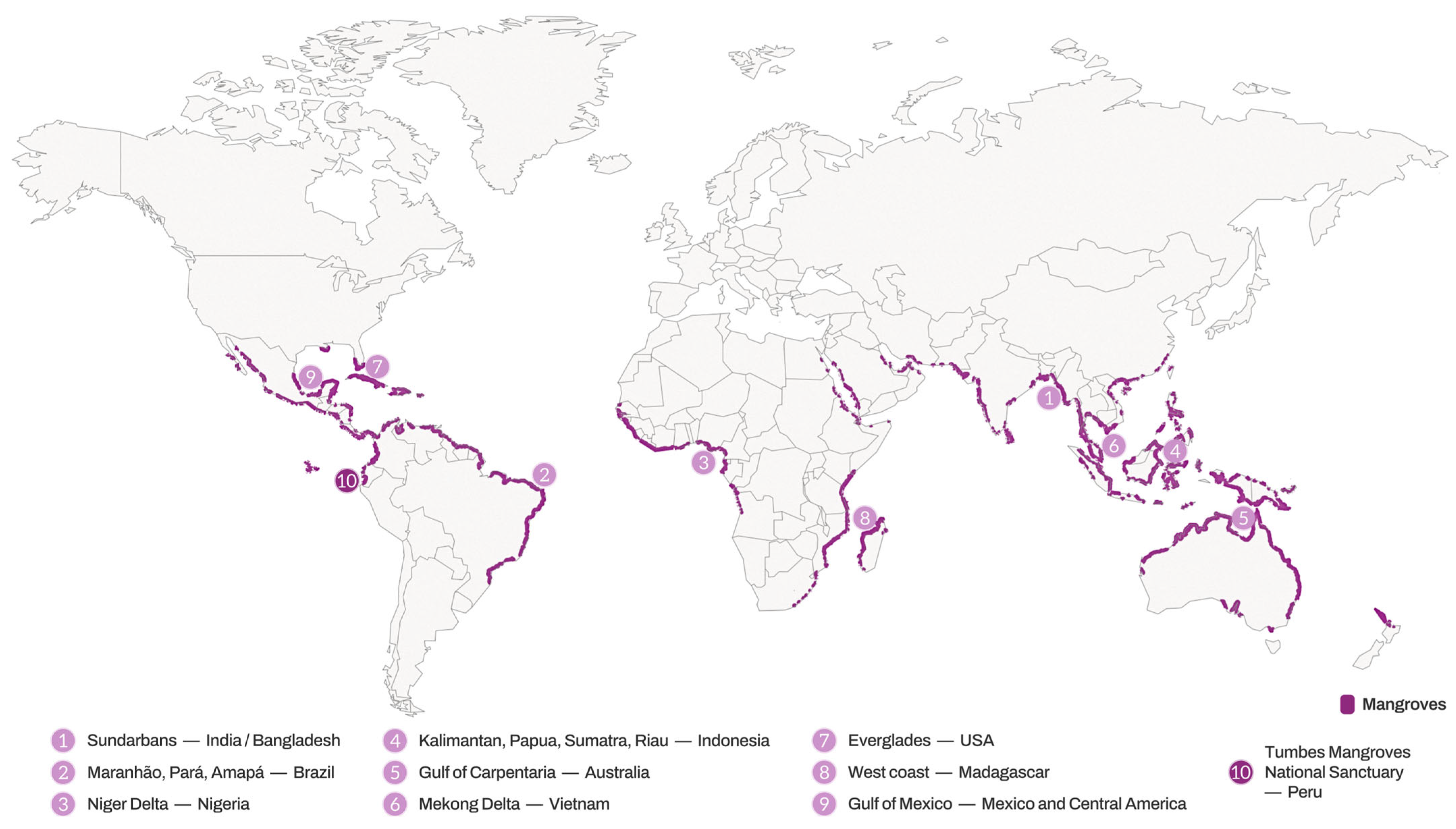
Mangrove ecosystems are among the most valuable coastal environments worldwide, distributed across tropical and subtropical regions and providing essential ecosystem services, including coastal protection, carbon sequestration, biodiversity support, and climate regulation. Due to their strategic position at the interface between land and sea, mangroves function as key socioecological systems that sustain environmental stability and human well-being in coastal regions (Figure 1) [1].
Despite their ecological and socioeconomic importance, mangrove ecosystems are increasingly exposed to multiple pressures associated with human activities and climate-related impacts. In the case of the Tumbes Mangrove ecosystem, land-use change, resource extraction, aquaculture expansion, and limitations in environmental management have intensified ecosystem vulnerability, reflecting broader global patterns of mangrove degradation [2]. These pressures compromise the capacity of mangroves to maintain their ecological functions and long-term resilience.
The convergence of ecological degradation and management challenges highlights the need for integrated conservation approaches that extend beyond ecological protection alone. In mangrove contexts such as Tumbes, the limited articulation between spatial planning, environmental education, and community participation constrains effective stewardship and adaptive management. Understanding these dynamics at both local and global scales provides a necessary foundation for analyzing the drivers, magnitude, and variability of mangrove loss worldwide [3].
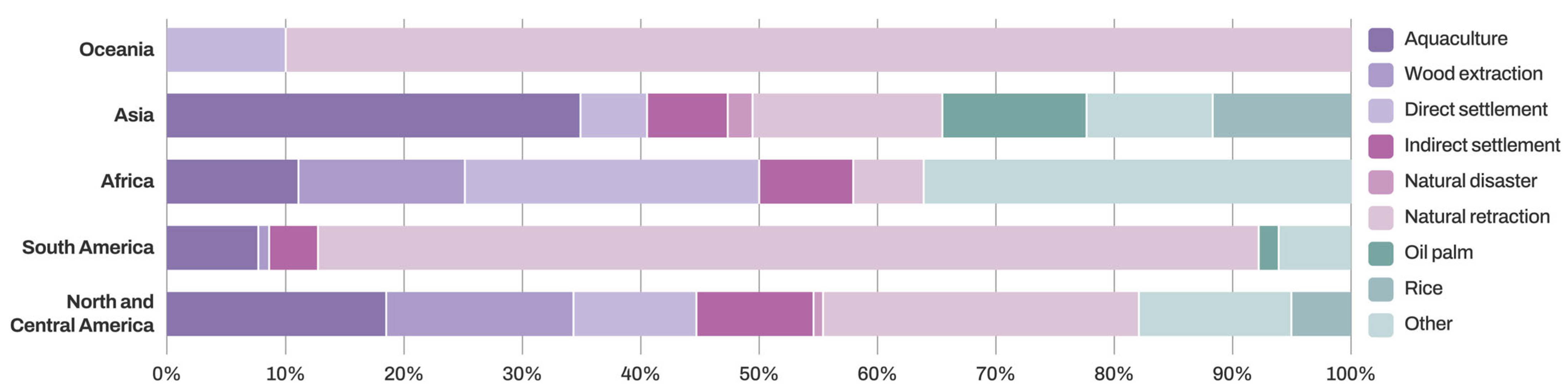
As shown in Figure 2, mangroves have undergone continuous degradation over the years due to multiple factors such as aquaculture expansion, timber extraction, oil palm cultivation, and the occurrence of natural disasters, among others. Regarding deforestation rates, it is estimated that each year, an area of mangrove larger than the city of Hong Kong—approximately 1440 km2—disappears, mainly to make way for industries such as shrimp farming, palm oil production, urbanization, and agricultural practices [4]. Over the past forty years, more than 20% of global mangrove cover has been lost, and a large proportion of the remaining areas show high levels of fragmentation and degradation. This dynamic not only undermines ecological balance but also directly threatens the safety and well-being of millions of people who depend on the environmental and productive services provided by this ecosystem [5].
Although mangroves share similar ecological functions, they are not homogeneous: their floristic composition, associated fauna, resilience capacity, and level of threat depend mainly on the environmental conditions in which they develop [6]. Factors such as temperature, salinity, tidal dynamics, urban pressure, and environmental management policies generate marked differences between regions [7]. In some cases—such as islands or river deltas—mangroves form unique ecosystems with a high concentration of endemic species.
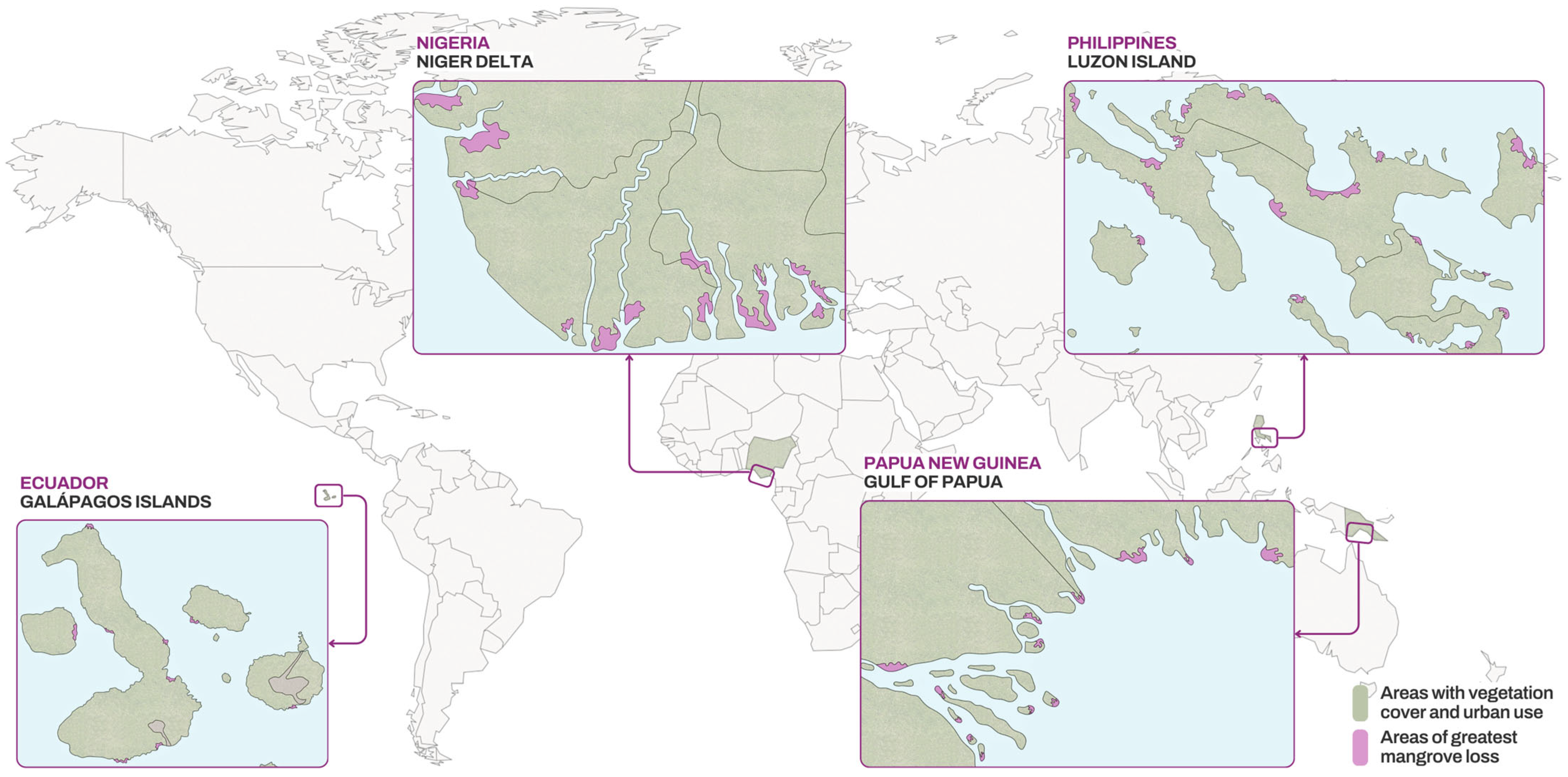
To contextualize the situation of mangroves at the global scale, four representative case studies were selected, one from each major region: America, Africa, Asia, and Oceania (Figure 3). The selection was guided by comparative criteria, including the dominant drivers of mangrove degradation, the stage and intensity of ecosystem disturbance, and differences in institutional capacity and management responses. The chosen cases reflect contrasting conditions: conservation areas facing pressures from human activities and tourism, regions affected by severe industrial pollution and weak institutional support, landscapes where aquaculture-driven degradation coexists with active restoration initiatives, and relatively intact systems where emerging extractive pressures pose future risks. Together, these cases illustrate the diversity of challenges encountered by mangrove ecosystems worldwide and provide a comparative basis for understanding patterns of vulnerability, management, and conservation responses across different contexts.
An example from the American continent is the Galápagos mangroves in Ecuador, which serve as a refuge and breeding ground for various endemic species, such as the Galápagos albatross, currently classified as critically endangered [8]. Only 5% of these mangroves are fully protected from extractive activities [9]. However, they face major challenges, including pollution from human activities, unregulated tourism, invasive species, and the effects of climate change.
In Africa, the Niger Delta mangroves in southern Nigeria are home to species such as the red colobus monkey, whose population has declined by 90% in the past two decades, leaving only about 500 individuals [10]. It is estimated that 35% of these mangroves have been destroyed or degraded in the last 20 years [11], largely due to frequent oil spills resulting from extraction and transport activities, with an estimated 80,000–300,000 barrels released into the ecosystem [12]. Currently, corruption and social conflict continue to hinder restoration efforts despite institutional support.
In the Philippines, on the island of Luzon (Asia), aquaculture is the main cause of degradation, with the loss of approximately 175,000 hectares—about 35% of the original cover [13]. Despite these challenges, restoration initiatives have proven successful when local communities are actively involved [14]. For example, in the Bicol Region, near the Ragay Gulf, 1034 hectares of mangrove ecosystems were successfully restored [15].
Finally, in Oceania, the mangroves of the Gulf of Papua in Papua New Guinea remain relatively intact, having been spared from aquaculture conversions and land reclamation projects [16]. Nevertheless, emerging threats such as indiscriminate logging by timber companies have begun to pose new risks [17].
In summary, mangrove conservation progresses where effective protection, community participation, and continuous monitoring exist, and declines where regulations are poorly enforced and pressures such as oil spills, extractive expansion, and institutional fragmentation persist. In practice, these differences are reflected in measurable outcomes, such as higher compliance with access regulations, improved reporting of environmental incidents, reduced localized disturbance in sensitive zones, and greater continuity of restoration and monitoring activities over time.
In this regard, interpretation centers can strengthen conservation not only by providing environmental education, but also by enabling measurable changes in conservation performance. By structuring visitor orientation, guiding routes and carrying-capacity practices, and supporting coordination between communities and authorities, these facilities can contribute to observable indicators such as increased adherence to site rules, improved waste and disturbance control along access corridors, higher participation in community-led monitoring, and more consistent implementation of management measures [18]. One example is the Casa del Manglar in Puerto Pizarro, Tumbes (Peru), which functions as an entry point to the mangrove ecosystem through guided boat tours that combine educational and cultural value. Another example is the Ecoparque Ciénaga de Mallorquín in Barranquilla, Colombia, designed as a model of ecological urbanism that integrates cultural and recreational infrastructure for wildlife observation, strengthening the city–nature connection.
In Peru, mangroves represent one of the country’s most unique and limited ecosystems, located exclusively along the northern coastal strip in two departments: Tumbes—within the National Sanctuary of the Tumbes Mangroves and the city of Puerto Pizarro—and Piura, in San Pedro de Vice [19]. Altogether, Peruvian mangroves cover approximately 8000 hectares, most of which are concentrated in Tumbes, where 37.15% are under protection and 25.35% remain unprotected [20]. Socially and economically, they also provide direct livelihood support for numerous coastal communities, particularly through artisanal fishing and the collection of resources such as black clam, red crab, and shrimp [21]. These activities not only generate income but also form part of the local population’s way of life and cultural identity. Although protected areas and specific management plans—such as those developed by SERNANP—exist, challenges persist regarding environmental governance and effective community participation [22].
The Department of Tumbes, located in the northwestern tip of Peru, contains the country’s only mangrove ecosystem of significant importance, encompassing nearly the entire national coverage [23]. Its tropical location, influenced by warm northern currents and the Tumbes River, creates favorable conditions for the development of these ecosystems, which act as transitional zones between terrestrial, fluvial, and marine environments [24].
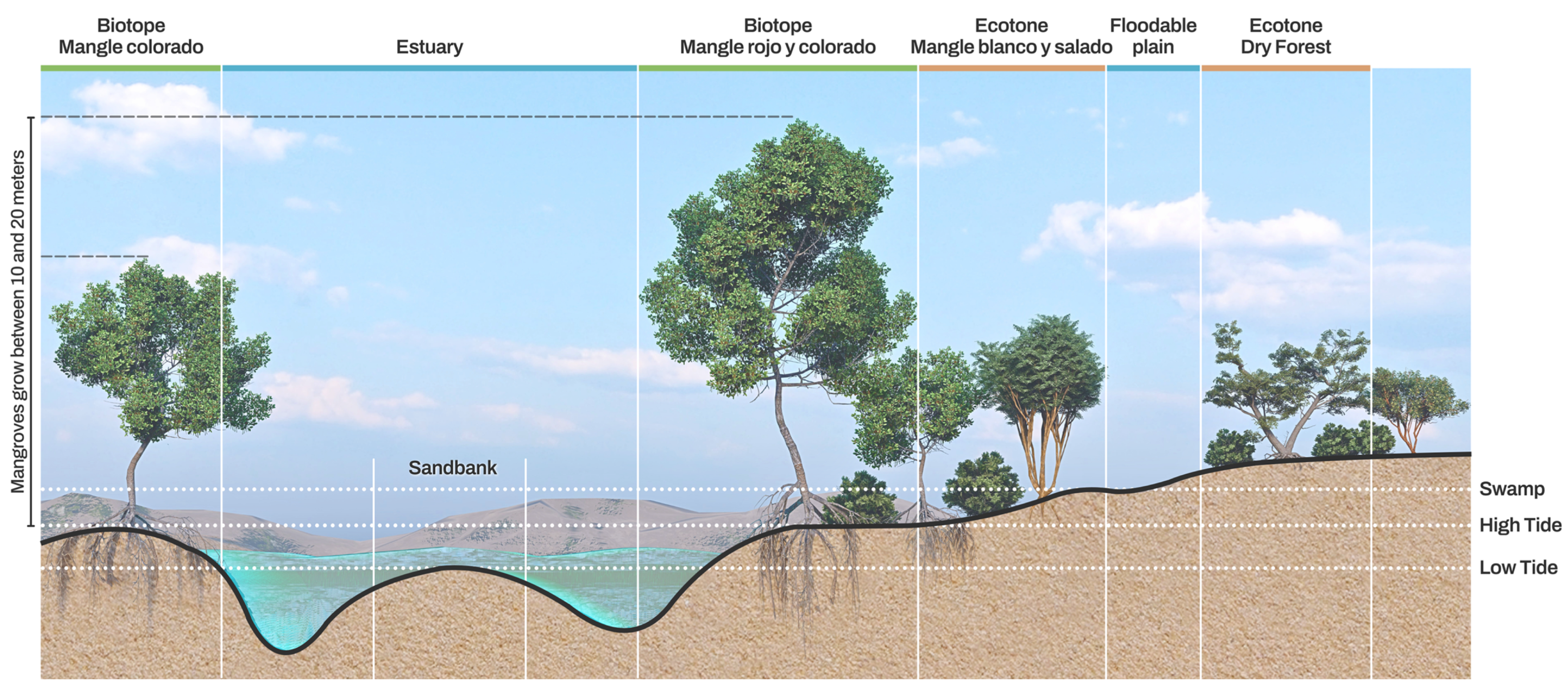
Interest in conserving these ecosystems dates back to 1957, when the Tumbes National Forest was established—although mangroves were not included at that time. Over the years, new protection measures were introduced, and on 2 March 1988, the National Sanctuary of the Tumbes Mangroves was officially created, currently managed by the National Service of Protected Natural Areas (SERNANP). The protected area covers approximately 2972 ha of mangrove forests and wetlands and has been designated a Ramsar Site for its international importance as a wetland [20]. The ecosystem operates as an open fluvial–marine system organized from the estuary toward inland zones, structured by the hydroperiod—defined by the duration, frequency, and level of tidal flooding—and by salinity and substrate gradients (Figure 4) [25].
This ecosystem provides ecological, social, and economic benefits that sustain environmental dynamics and local livelihoods [26]. It supports artisanal fishing and high-value aquatic resources, including black clam (Anadara tuberculosa) and mangrove crab (Ucides occidentalis), both of significant commercial importance [27]. Additionally, mangroves regulate hydrology, help control erosion processes, and act as blue-carbon reservoirs, reinforcing coastal protection by attenuating wave energy [28]. Their complex structure offers breeding and refuge habitats for a wide range of marine and coastal species, sustaining local trophic networks [29]. They also hold great potential for ecotourism and environmental education aimed at promoting awareness and responsible use of the ecosystem [30].
Nevertheless, the mangroves face anthropogenic pressures and natural threats that negatively affect their structure, function, flora, fauna, and landscape, resulting in the loss of approximately 1500 hectares. Shrimp aquaculture and agricultural expansion have led to the construction of ponds and land-use change, causing hydrological alterations and contamination from effluents and agrochemicals [28]. Overexploitation of aquatic resources has also increased due to weak management and control. Among natural threats, the El Niño phenomenon causes heavy rainfall that accumulates sediments and reduces tidal inflow, increasing the risk of mangrove mortality. Similarly, sea-level rise associated with climate change is projected to cause surface loss with local ecological implications [26].
This context leads to the following research question: To what extent can an interpretation center, conceived as a low-impact infrastructure, integrate environmental education, scientific dissemination, and participatory monitoring to strengthen mangrove conservation in Tumbes? Therefore, this research aims to analyze and propose a Sustainable Interpretation Center for Conservation and Environmental Education in ecologically sensitive areas of the Tumbes Mangrove in Peru. The proposal is conceived as an integrated intervention that combines climate-responsive architectural strategies with community linked education and monitoring mechanisms to strengthen local knowledge, promote responsible extractive practices, and consolidate ecotourism as an ally for conservation.

State of the Art

Sustainability
Sustainability applied to architectural projects can be understood as a design approach that reduces environmental impacts and improves performance (comfort, efficiency, and climatic adaptation), relying on passive strategies and design decisions consistent with the surrounding context [31].
In territorial and landscape interventions, “sustainable” is also expressed through environmental regeneration and ecological revaluation using strategies compatible with fragile ecosystems, seeking a balance between public use, environmental recovery, and low-impact criteria [18].
Conservation
Conservation is linked to protecting ecological integrity and ecosystem services, particularly in mangroves, where synthesized evidence highlights their value and the need to sustain ecological functions and associated social benefits [1].
In wetland and mangrove systems under productive pressure (such as from shrimp farm expansion), conservation emerges as an evidence-informed socioenvironmental response to land-cover change, environmental quality degradation, and conflicts related to resource use. This context calls for integrated management alongside educational tools that support awareness and stewardship [32].
Environmental education
Environmental education is a formative process aimed at building knowledge, attitudes, and proenvironmental practices; recent evidence shows that tools (including digital ones) can strengthen awareness and sustainability learning across different educational levels [33].
In territorially oriented projects, environmental education is articulated with sustainability goals and the SDGs, expanding its role toward natural resources, energy, and climate; therefore, an interpretation center functions as a pedagogical infrastructure to support conservation and responsible tourism [34].
Ecologically sensitive areas
Ecologically sensitive areas are understood as fragile territories where small disturbances can generate disproportionate impacts; therefore, they require ecosystem-based strategies, use control, and careful planning of access and infrastructure [35].
In wetland/mangrove contexts, ecological sensitivity is expressed through land-cover change and productive pressures that affect ecosystem services; this demands preventive and spatial-ordering approaches, consistent with minimal, low-impact infrastructure [32].
Ecological revaluation
Ecological revaluation is associated with strategies that restore the environmental and landscape value of a degraded place, promoting new readings and compatible uses (educational, recreational, cultural) that sustain ecosystem regeneration [18].
Through green infrastructure, revaluation is also achieved when design strengthens visitation experiences and ecotourism with territorial support, reinforcing the social perception of the landscape and its importance as natural heritage [36].
Biodiversity conservation
Biodiversity conservation involves sustaining biological diversity as the basis of ecosystem resilience and human well-being; in mangroves, this is justified by the wide range of documented ecosystem services and their vulnerability to multiple pressures [1].
At a conceptual level, the need to integrate conservation, biodiversity, and sustainability is emphasized to advance approaches more coherent with global agendas (including the SDGs), reinforcing the relevance of ecologically and educationally grounded proposals [37].
Environmental awareness
Environmental awareness refers to the social understanding of environmental problems and the willingness to support care-oriented practices; environmental education, including that mediated by contemporary tools, is associated with strengthening such awareness for sustainability [33].
In landscape regeneration and ecological revaluation interventions, environmental awareness is enhanced when the strategy incorporates interpretive and educational components, making the value of the environment visible and promoting responsible appropriation of natural space [18].
Resilient design
Resilient design is understood as the project’s capacity to maintain performance and habitability under climatic variability and future scenarios, relying on passive strategies (shading, ventilation, envelope, orientation) and adaptive solutions [38].
In green infrastructure/corridor projects, resilience is also expressed as ecological recovery and connectivity, integrating environmental and social dimensions; this guides decisions such as elevated platforms, controlled pathways, and design compatible with ecosystem dynamics [35].
Thus, sustainability, conservation, and environmental education are not treated as isolated concepts, but as interrelated theoretical components that collectively support community participation, stewardship, and low-impact architectural decision-making in ecologically sensitive areas.
Taken together, the reviewed literature allows this study to be theoretically grounded in an integrated framework that combines sustainability and low-impact architectural design in ecologically sensitive areas, conservation biology and ecosystem-based management of mangrove wetlands, and environmental education as a driver of environmental awareness, community participation, and stewardship. From an architectural perspective, sustainability is understood not only as environmental performance, but as a territorial strategy that minimizes ecological disturbance while enhancing social and educational functions through passive design, material efficiency, and climate-responsive solutions. This approach aligns with ecosystem-based management principles, which emphasize maintaining ecological integrity, regulating access, and adapting infrastructure to natural dynamics such as tides, flooding, and salinity gradients. In parallel, environmental education and interpretation are framed as operational tools that translate ecological knowledge into spatial experience, fostering environmental awareness, local engagement, and participatory monitoring. Within this framework, interpretation centers function as mediating infrastructures that connect conservation objectives with community livelihoods and regulated ecotourism. This integrated theoretical perspective informs the methodological approach and guides the spatial, functional, and constructive decisions of the proposed Sustainable Interpretation Center, ensuring coherence between ecological conservation objectives, architectural design strategies, and social participation.

2. Materials and Methods

2.1. Methodological Scheme

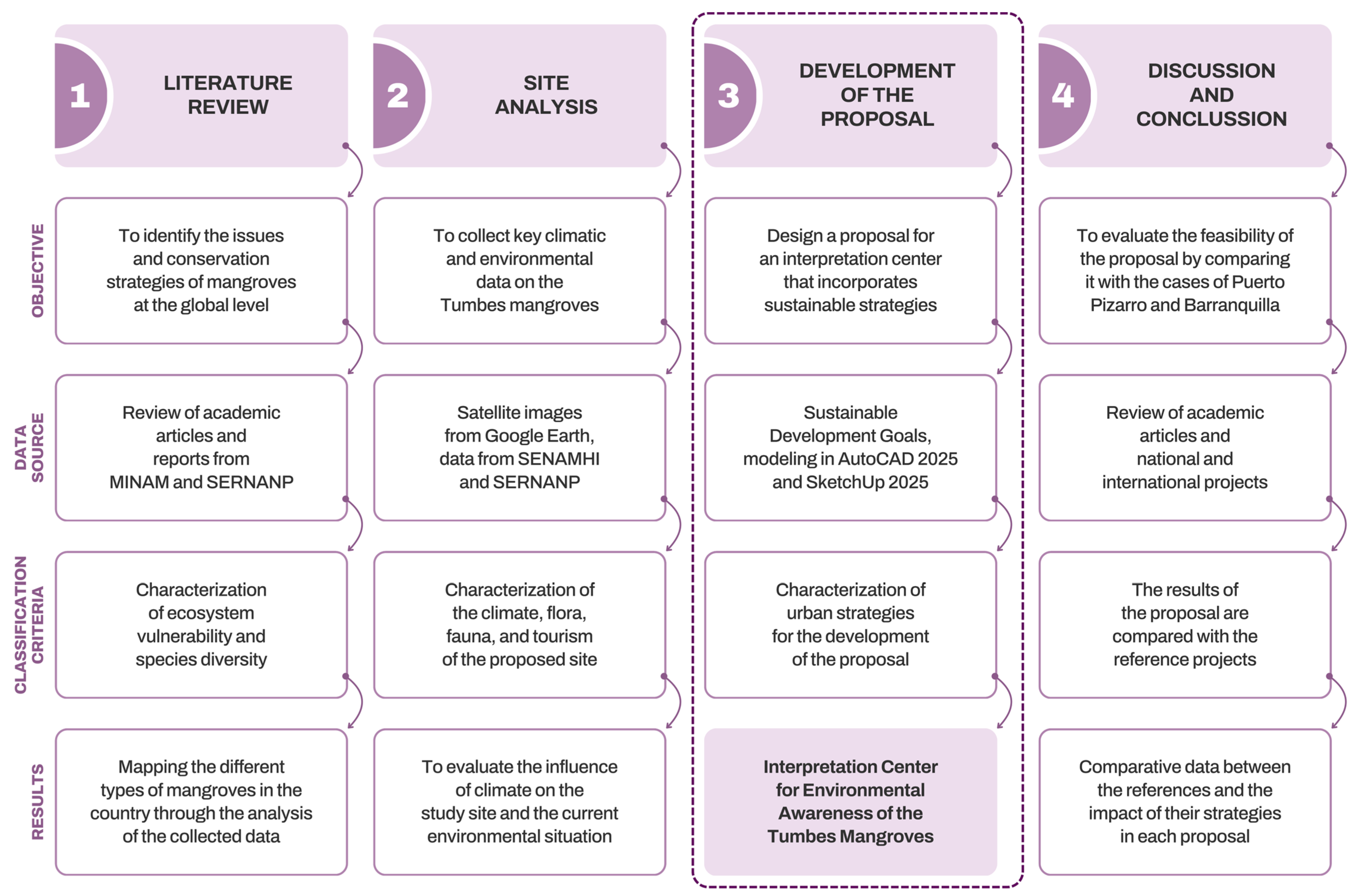
This study adopts a non-experimental design and is organized into four articulated phases that integrate information gathering, environmental and territorial analysis, and validation of the architectural proposal. In Phase 01, a literature review (reference framework) was conducted using multiple sources, primarily scientific articles, academic theses, and governmental databases. This review aimed to identify the importance, main challenges, and biodiversity of mangroves, with emphasis on the Tumbes Mangrove ecosystem and its relevance at national and international scales. In Phase 02, specific information required for the climatic analysis was collected. For this purpose, Digital Notebook No. 14 from the Faculty of Architecture and Urbanism of the Pontifical Catholic University of Peru was used [39], as it supports the identification of appropriate thermal environmental conditioning strategies for buildings according to Peru’s different climate types; this was complemented with original data obtained from SENAMHI [40]. The objective of this phase was to characterize the local climate and analyze its relationship with local flora, fauna, and the urban context. In Phase 03, digital tools were applied to identify potential intervention areas and to project relevant climatic and urban variables for design development, using resources such as Google Earth, AutoCAD 2025, Revit 2025, and 3D Sun Path. This phase focused on developing design proposals that promote learning, responsible tourism, and active community participation, aligned with the Sustainable Development Goals (SDGs) [41], strengthening the emotional and cultural connection between people and their natural environment to foster environmental awareness and mangrove conservation. Finally, in Phase 04, the collected information was contrasted with existing architectural references, evaluating the contribution of the proposed strategies to the initial problem and verifying their coherence and potential impact (Figure 5).

2.2. Methodological Process

The study was conducted using a non-experimental, descriptive, and project-based approach, structured into four consecutive methodological phases. These phases enabled the analysis of the Tumbes mangrove ecosystem and the formulation of a sustainable architectural proposal for an environmental interpretation center. The process integrated documentary review, environmental and territorial analysis, digital modeling, and the evaluation of sustainable design strategies, supported by specialized digital tools.

2.2.1. Literature Review and Conceptual Framework

In the first phase, a systematic literature review was conducted in order to establish a solid theoretical basis on mangroves as sensitive ecosystems and their relationship with sustainable architecture and environmental education. Institutional and regulatory documents produced by national and international organizations (SERNANP, INRENA, IGP, SENAMHI, and the United Nations) were reviewed, as they provide technical reports related to the following:
  • Mangrove conservation at global and regional scales.
  • Ecological, social, and economic functions of mangrove ecosystems.
  • Environmental interpretation centers and environmental education.
  • Sustainable and resilient architectural strategies in fragile ecosystems.
This review made it possible to identify design criteria compatible with ecologically sensitive areas, as well as reference experiences applicable to the context of the Santuario Nacional Los Manglares de Tumbes.

2.2.2. Study Area Analysis

The second phase consisted of a comprehensive analysis of the study area, located within the Santuario Nacional Los Manglares de Tumbes, Peru. First, the boundaries and location of the area were defined using Google Earth Pro 2025, which made it possible to obtain precise geographic coordinates, land measurements, and an overall understanding of the physical environment [31].
Subsequently, a climatic analysis was conducted using 2025 data from SENAMHI and historical climatic records covering the period 1981–2011 compiled in Digital Notebook No. 14 of the Pontificia Universidad Católica del Perú. The following parameters were evaluated:
  • Maximum and minimum temperatures;
  • Relative humidity;
  • Precipitation;
  • Solar radiation and hours of sunshine;
  • Prevailing wind speed and direction.
This analysis made it possible to understand the influence of the dry–equatorial tropical climate on the environmental behavior of the area and to establish bioclimatic criteria for architectural design.
In addition, an ecological analysis was conducted, identifying the main mangrove flora species, their spatial distribution, and their relationship with hydrological and tidal cycles, ensuring that the proposed intervention respects and integrates with the existing ecosystem.

2.2.3. Results

Site Analysis and Proposal Location
At this stage, the delimitation and characterization of the intervention area were carried out. The site is located near the El Algarrobo surveillance post, prior to the entrance to the Tumbes Mangroves National Sanctuary. Google Earth Pro 2025 was used to accurately define the surface area of the study site, its relationship with the existing road infrastructure, and its proximity to the city of Zarumilla. This analysis made it possible to understand the conditions of accessibility, territorial scale, and connectivity between the urban environment, the transition zone, and the natural mangrove ecosystem, establishing the basis for the strategic location of the project.
Urban and Hydrographic Analysis as a Design Starting Point
This stage involved an integrated reading of the immediate urban context and the hydrological system associated with the intervention area, considering the transition between the consolidated urban fabric of the city of Zarumilla, the natural environment of the Tumbes Mangroves National Sanctuary, and the river as a structuring element of the territory. Patterns of occupation, mobility dynamics, land use, and existing infrastructure were analyzed, as well as the relationship between the project and the river channel, its margins, and its areas of influence. In addition, the main access routes, vehicular and pedestrian flows, and points of connection between the urban area, the hydrological system, and the natural landscape were identified. This analysis defined the design starting point of the project, establishing initial criteria for site implantation, accessibility, and spatial articulation that guided the development of the master plan and ensured a progressive and respectful integration with the mangrove ecosystem and the fluvial system.
Conceptual Analysis and Territorial Structuring
Based on the territorial and environmental reading of the site, a conceptualization process was developed grounded in the natural morphology of the channels and estuaries of the Tumbes Mangroves National Sanctuary. Existing water bodies were identified, and primary and secondary connection axes were traced in alignment with the natural flows of the ecosystem. This analysis allowed the establishment of a conceptual matrix, referred to as the “Mother Meander of the Estuary”, which spatially organized the project by defining criteria for the arrangement of access points, circulation routes, programmatic nodes, and spatial sequences in coherence with the natural landscape.
Master Plan Analysis and Spatial Organization of the Project
In this phase, the master plan was structured as a transitional system between the consolidated urban fabric and the protected natural environment. Through the analysis of the substrate, existing vegetation, and flood-prone areas, a spatial organization was defined based on three main components: the interpretation center, elevated walkways through the vegetation, and the pier as a point of fluvial connection. This analysis established implantation criteria that prioritize elevating the complex on piles, ensuring free water circulation, preserving existing vegetation, and reducing the impact on the ecosystem.
Three-Dimensional Modeling and Architectural Visualization
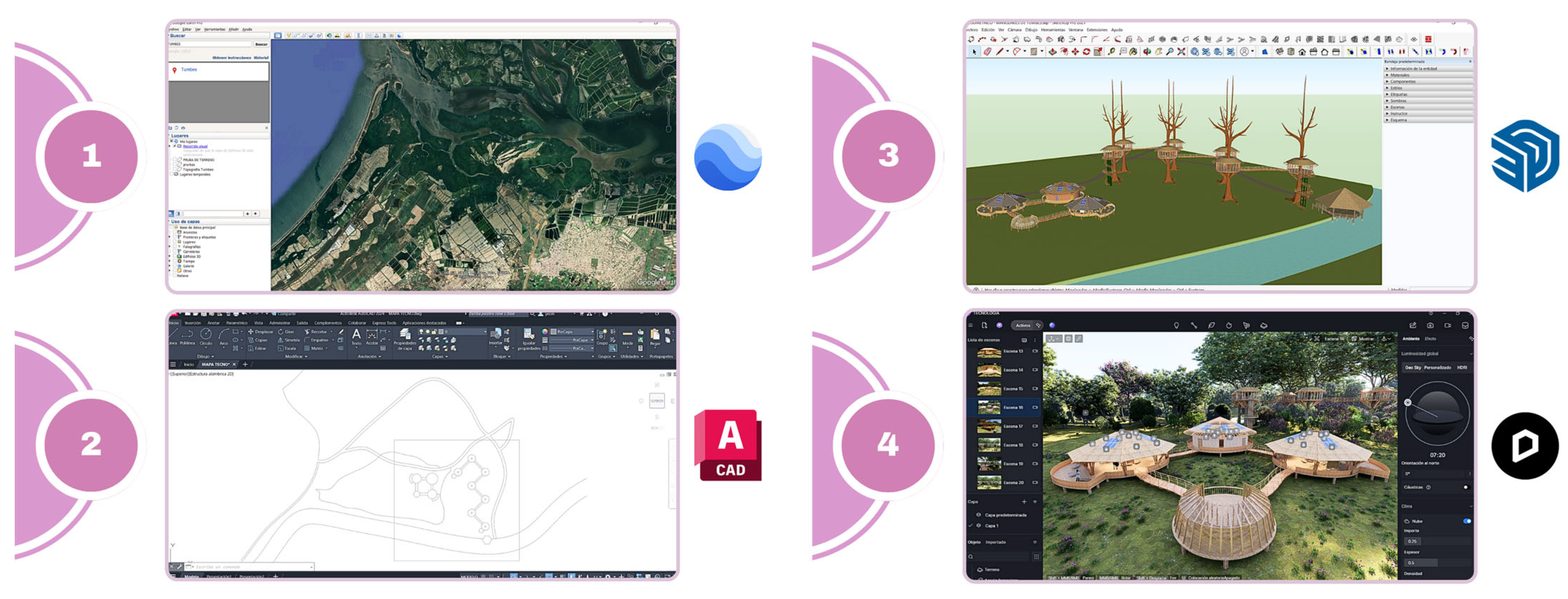
For the analysis and diagnosis of the intervention area, digital tools were employed to achieve an integrated understanding of the site’s spatial, environmental, and volumetric conditions. As shown in Figure 6, the methodological process was developed in four stages. First, the study area corresponding to the Tumbes mangroves was delimited using Google Earth Pro 2025, allowing for precise terrain measurements and an understanding of its relationship with the immediate surroundings. In the second stage, contextual elements such as green and arid areas, as well as pedestrian and vehicular access routes, were identified and mapped using AutoCAD 2025. Subsequently, a three-dimensional model of the terrain and its topography was developed using SketchUp 2025, enabling the analysis of elevation levels, flood-prone zones, and the placement of architectural volumes. Finally, D5 Render (https://www.d5render.com/) was used for the architectural visualization of the project, facilitating the evaluation of landscape integration, scale, materiality, and user experience within the natural environment. This methodological process supported design decision-making oriented toward a lightweight, permeable architecture adapted to the site’s environmental conditions.
Analysis of Sustainability, Reforestation, and Clean Energy Strategies
In the final stage of the methodological process, the environmental strategies applied to the project were evaluated and defined, addressing three main axes: the use of sustainable materials, ecological restoration, and energy efficiency. Low-environmental-impact materials were analyzed, prioritizing the use of local wood sourced from sustainably managed forests. In addition, a reforestation strategy was proposed based on the recovery of degraded areas through the incorporation of native species from the Tumbesian dry forest.
In parallel, an energy analysis was developed focusing on the incorporation of clean energy strategies, considering the use of solar radiation through photovoltaic systems. This approach aims to ensure the project’s energy autonomy, reduce carbon emissions, and protect local fauna through controlled lighting systems [18]. Furthermore, this strategy is supported by recent analyses on climate variability and environmental sustainability in the Peruvian context [3].

2.2.4. Discussion and Conclusions

Finally, in the fourth stage, a comparison is made between the Casa del Manglar (Puerto Pizarro, Peru) and the Ecoparque Ciénaga de Mallorquín (Barranquilla, Colombia).

2.3. Study Area Location

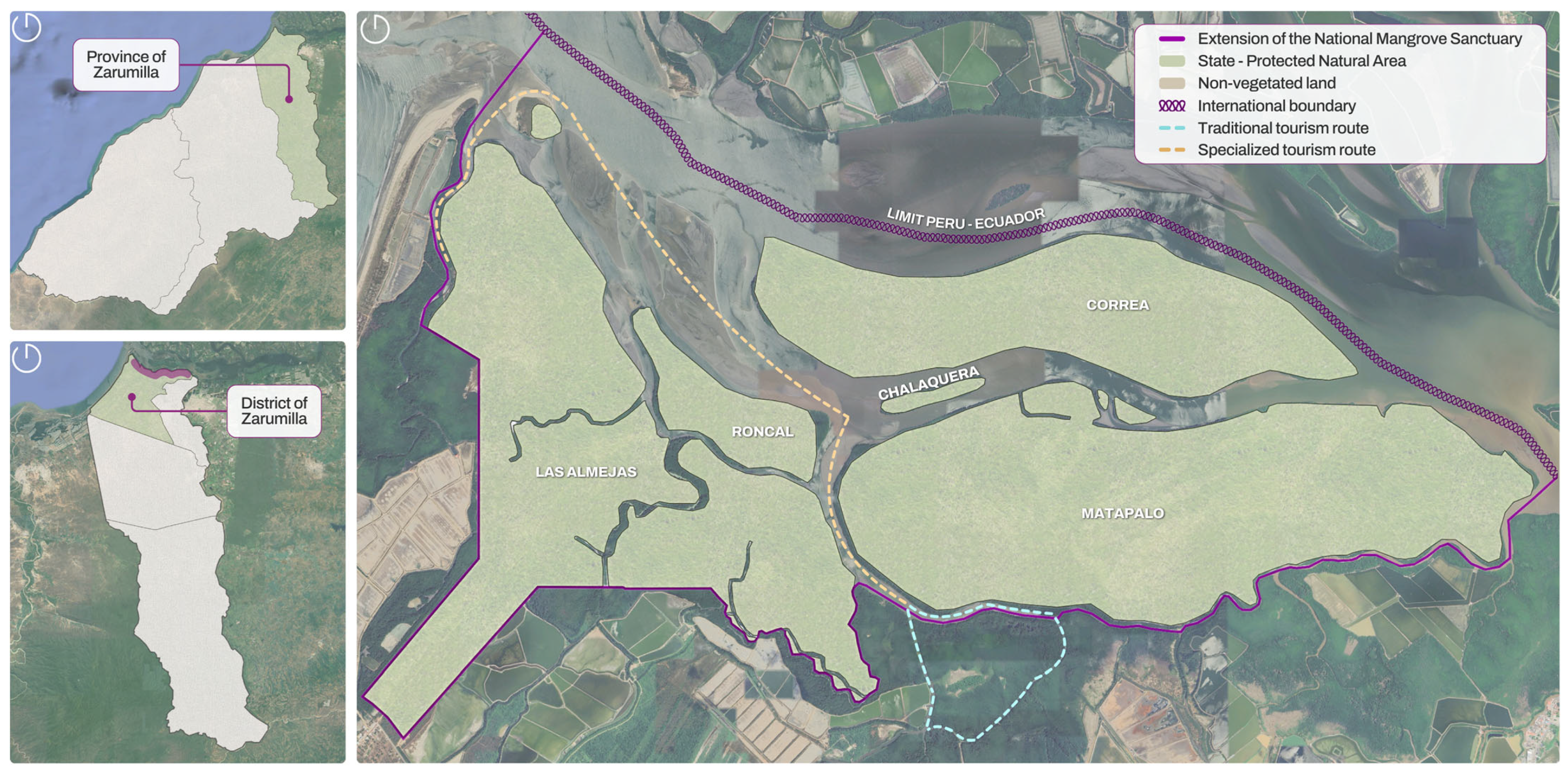
The National Sanctuary of the Tumbes Mangroves is located in the extreme northwest of Peru, within the Tumbes Department, Zarumilla Province, Zarumilla District, in a tropical coastal plain (Figure 7). This region forms part of the most representative mangrove ecosystem in the country and lies within the Regional Conservation Area of the Tumbes Mangroves. It borders Ecuador and the Zarumilla International Canal to the north, agricultural lands and urban settlements to the south, Cerros de Amotape National Park to the east, and the Pacific Ocean to the west. The area is characterized by the interaction between saline marine waters and the freshwater inputs of the Tumbes River. It is located at a latitude of 3°34′ S, a longitude of 80°27′ W, and an altitude of 7 m above sea level.

2.4. Climate Analysis

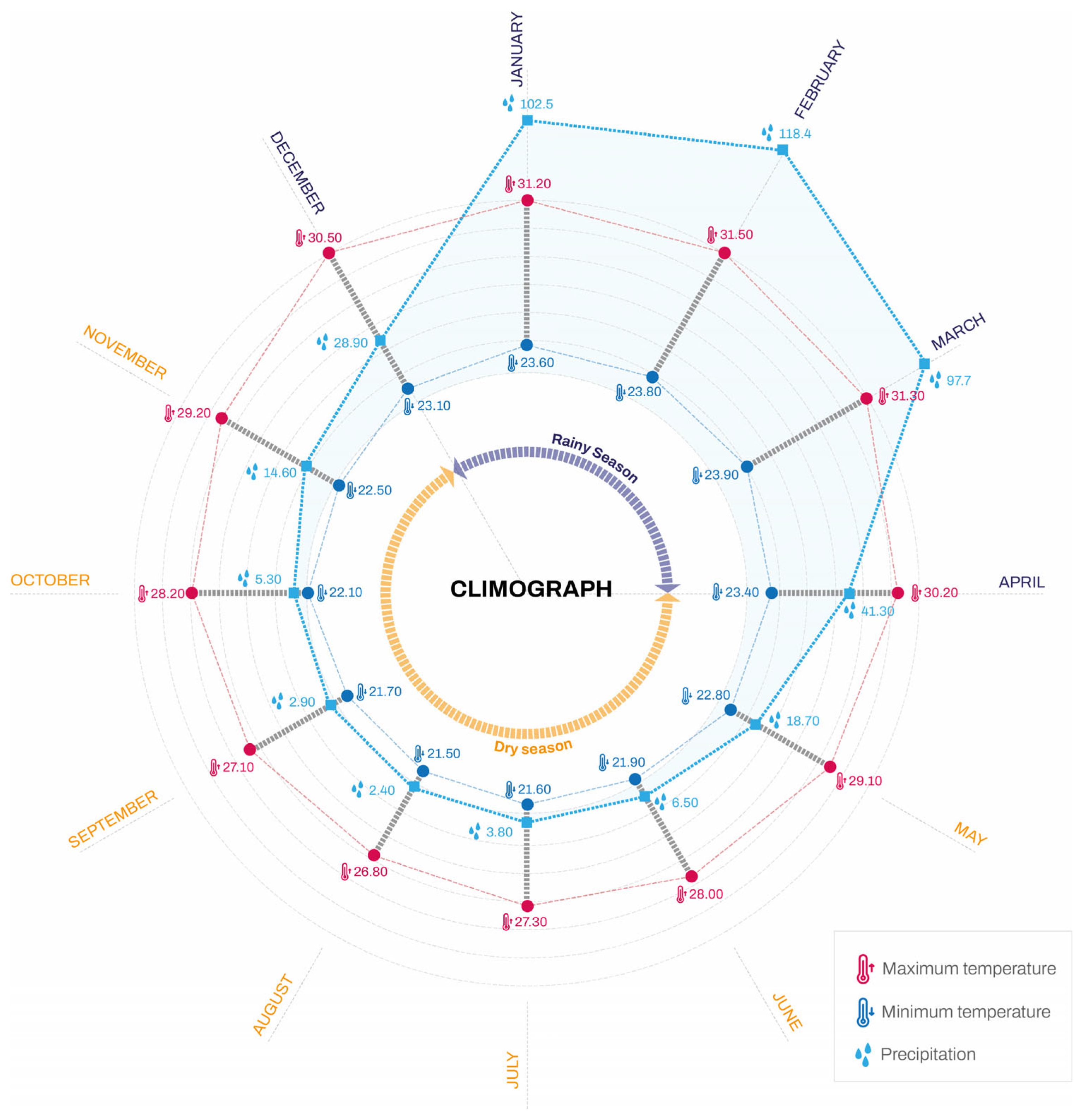
Located on the northern coast of Peru, Tumbes is characterized as the warmest region of the Peruvian coastline, presenting nearly uniform average temperatures throughout the year [42]. It has a dry tropical–equatorial climate with well-defined seasonality in precipitation, which favors the formation of microclimates that sustain coastal vegetation, mangroves, and marine ecosystems in the region. Tumbes experiences two distinct seasons: the dry season, from May to November, with minimal rainfall and moderate relative humidity; and the rainy season, from December to April, with higher precipitation intensity. This variability makes it essential for buildings to include efficient rainwater drainage systems—both on roofs and in the terrain—adapted to local environmental conditions.
Additionally, the El Niño phenomenon has had a negative impact on the ecosystem, as it is associated with heavy rains that cause flooding, sediment accumulation in estuaries, and alterations to channels and islands. Such intense rainfall reduces mangrove salinity, diminishes habitat availability, and leads to the loss of black clam and mangrove crab populations. Likewise, this phenomenon temporarily raises water levels, hindering or preventing extractive activities, as collectors rely on low tides to access the mangrove [43].
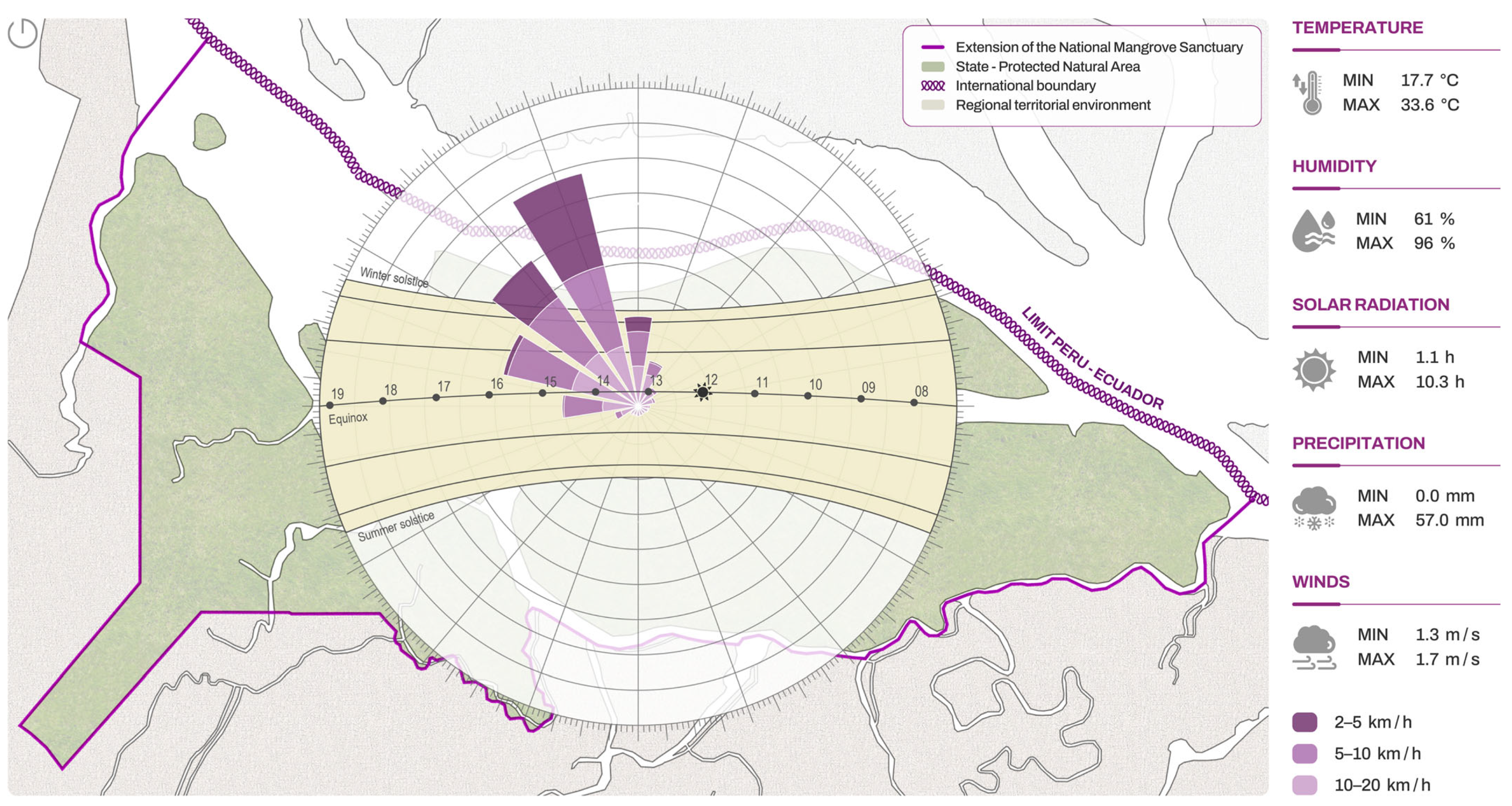
In summary, the climate of Tumbes plays an essential role in shaping its natural environment (Figure 8) [39].
Tumbes has a dry tropical climate throughout the year, with average temperatures ranging between 23.5 °C (August) and 27.9 °C (March). Maximum temperatures can reach 33.6 °C during the hottest months (March and April), while minimums drop to 17.7 °C in August, the coolest month of the year.
Relative humidity is high, peaking at 96% in September, with an annual mean ranging from 74% to 82%, particularly elevated between July and September. Combined with high temperatures, this humidity produces a sensation of sultriness during much of the year.
Prevailing winds blow from the northwest, with an average annual speed fluctuating between 1.3 m/s and 1.7 m/s.
Overall, the climatology of Tumbes—shaped by its varied microclimates—significantly contributes to the propagation and preservation of a diverse range of flora and fauna. This distinctive ecological environment is of great importance for sustaining the local economy, emphasizing the urgency of protecting its forests and blue ecosystems.

Hydrological Cycle

Regarding solar radiation, Tumbes shows marked seasonality in daily sunshine hours, reaching up to 10.3 h/day in March, whereas cloudier months such as August may record as little as 1.1 h/day. This contrast informs the project’s bioclimatic decisions, particularly the sizing and positioning of openings and shaded thresholds to balance daylight availability and thermal comfort. It also supports prioritizing semi-open circulation spaces to reduce heat gains during periods of intense sun exposure. In parallel, monthly variability is considered when defining photovoltaic placement and expected energy yield, ensuring system performance under lower radiation conditions.
Precipitation is concentrated in the first months of the year, with March being the wettest month (57 mm), followed by February and April. Conversely, from June to September, rainfall is almost absent (<1 mm), confirming a predominantly dry climatic condition (Figure 9). This pattern supports a dual approach: detailing roofs and drainage to safely convey intense seasonal runoff and protect circulation routes during the wet season, while in the dry period reinforcing passive strategies such as cross-ventilation, elevated platforms, and lightweight envelopes to maintain comfort with minimal operational demand.

2.5. Risk Protection

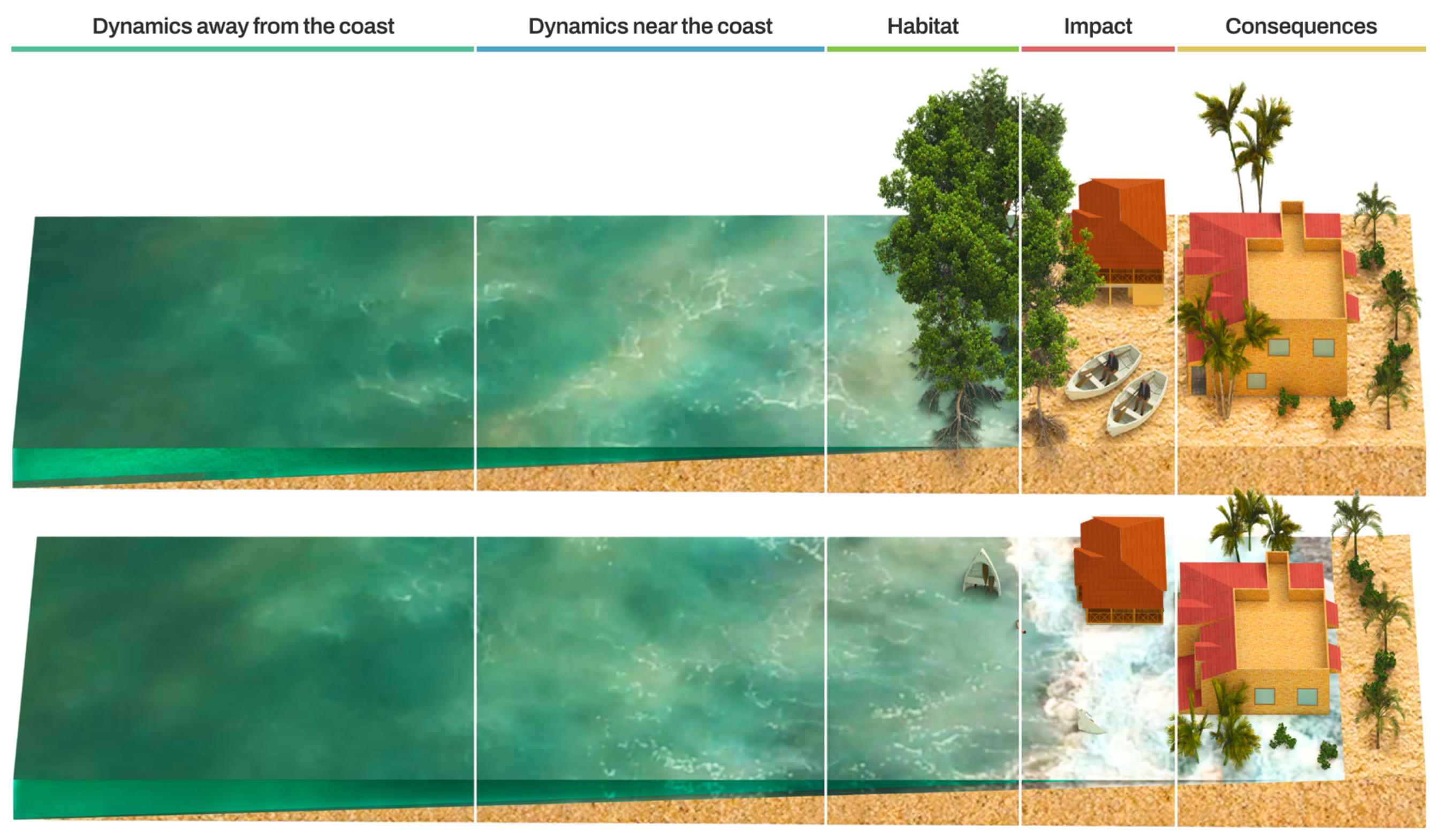
The presence of mangroves in coastal zones provides multifunctional natural protection against various risks: natural phenomena (hurricanes, storm surges, coastal erosion, and flooding) and the effects of climate change (such as sea-level rise). These ecosystems dissipate wave energy and buffer storm surges, reducing the impact of hurricanes and extreme storms in coastal areas [1]. Their root systems stabilize sediments and prevent erosion, helping maintain shoreline integrity even under progressive sea-level rise. Additionally, mangroves function as carbon sinks, capturing and storing large amounts of carbon dioxide (CO2) in their biomass and soils [44]. These ecological services translate into direct community benefits by protecting lives and infrastructure in coastal zones—reducing the severity of flooding and material damage—and by supporting fisheries and other livelihoods, thereby contributing to food security and strengthening socioeconomic resilience to natural disasters (Figure 10).

2.6. Flora Analysis

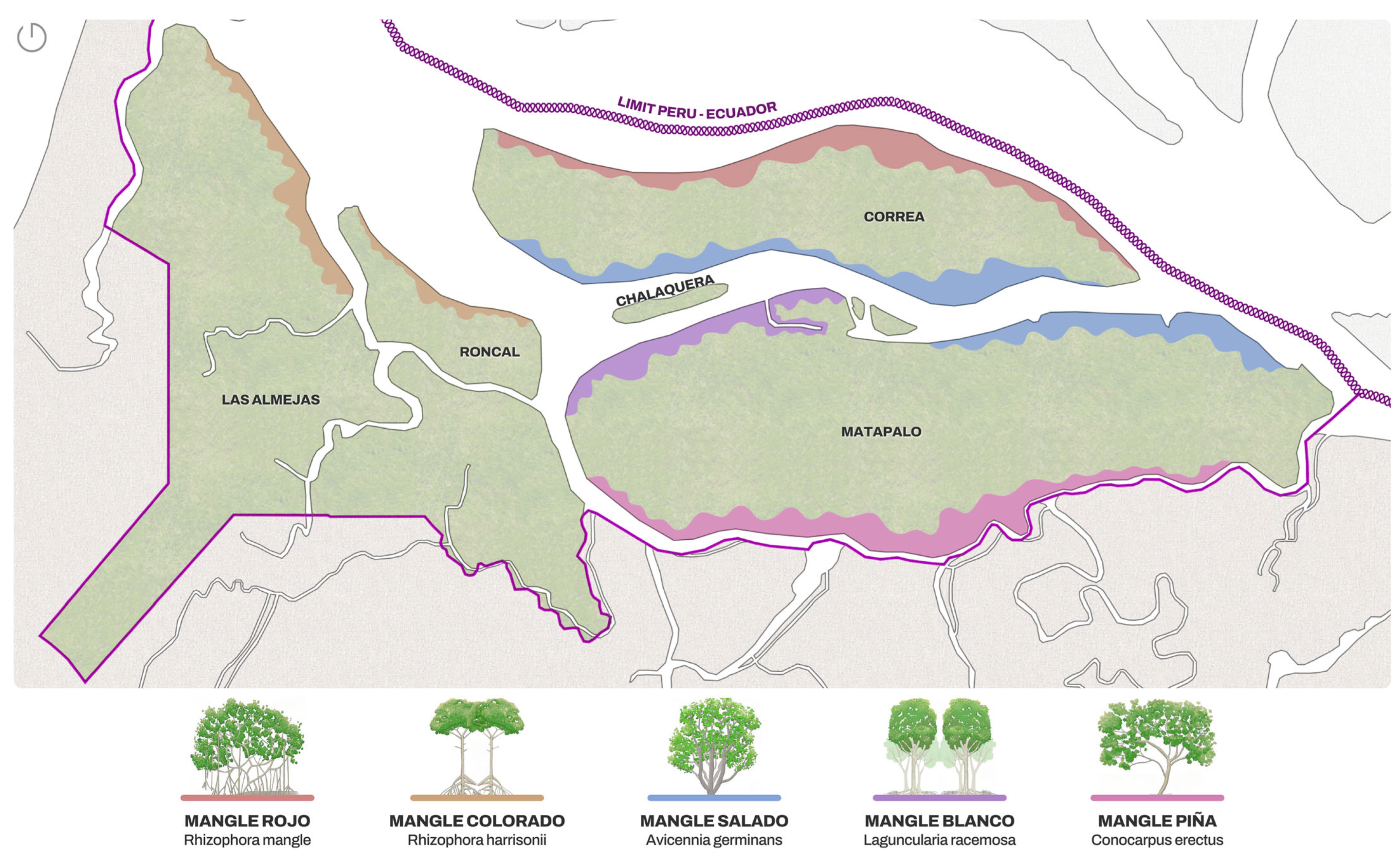
In Tumbes (National Sanctuary of the Tumbes Mangroves), five types of mangroves are found among the seventy mangrove tree species worldwide.
The distribution of these five species occurs around the five islands that make up the National Sanctuary. The red mangrove (Rhizophora mangle) and colored mangrove (Rhizophora harrisonii) grow near the tidal line and are characterized by aerial stilt roots that support them in muddy terrain exposed to tidal variations. The salt mangrove (Avicennia germinans) is located inland on the mangrove islands, in areas with less frequent flooding and higher elevations that are more exposed to evaporation processes, resulting in soils with higher salinity. The white mangrove (Laguncularia racemosa) is usually found alongside black mangrove individuals (Avicennia bicolor). The pine mangrove (Conocarpus erectus) grows in the innermost zones of the islands, where the soil is sandier and at higher elevations, rarely reached by tidal waters (Figure 11) [25].
These species also exhibit functional attributes that are relevant for ecosystem performance and management. Table 1 summarizes key parameters related to water use, estimated carbon sequestration, and pollution tolerance for the recorded flora, providing a comparative baseline for the Tumbes mangrove system.

2.7. Fauna Analysis

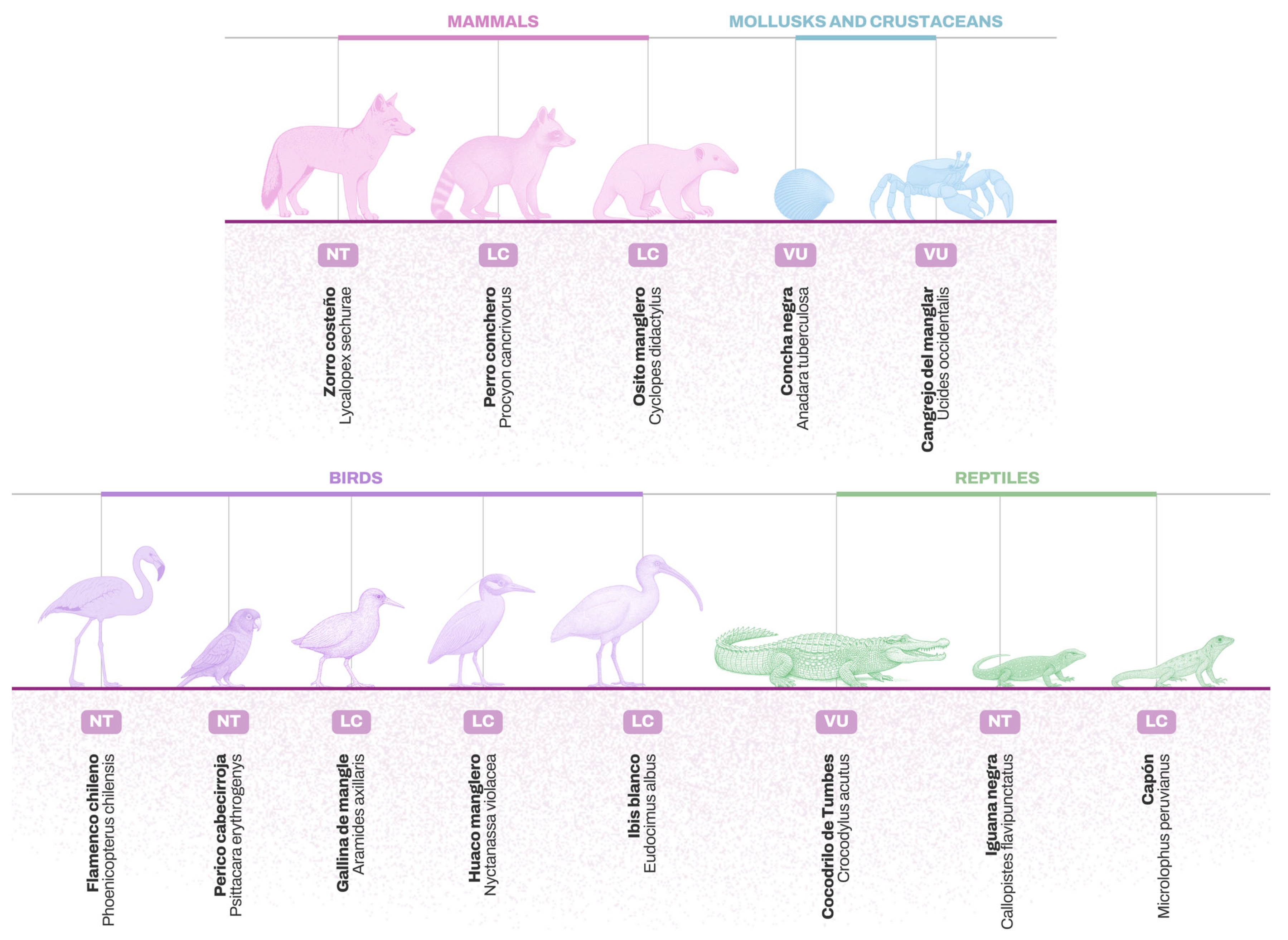
Various species inhabit the mangroves, some endemic and others seasonal visitors. These include mammals, fish, mollusks, crustaceans, birds, and reptiles [25]. Five species of mammals are recorded, notably the shellfish dog (Procyon cancrivorus) and the coastal fox (Lycalopex sechurae); short-term sightings of the mangrove bear have also been reported. Additionally, 105 fish species have been identified, 40% of which enter the mangrove, 20% remain permanently, and the remaining 40% vary according to their life cycle, alternating between mangrove and open-water habitats. A total of 71 mollusk and crustacean species have been documented; the most representative mollusk is the black clam (Anadara tuberculosa), and among crustaceans, the mangrove crab (Ucides occidentalis). In summary, the ecosystem is rich in mollusk and crustacean resources, which are essential for the socioeconomic activities of local artisanal collectors’ associations (Figure 12).

3. Results

3.1. Proposal Location

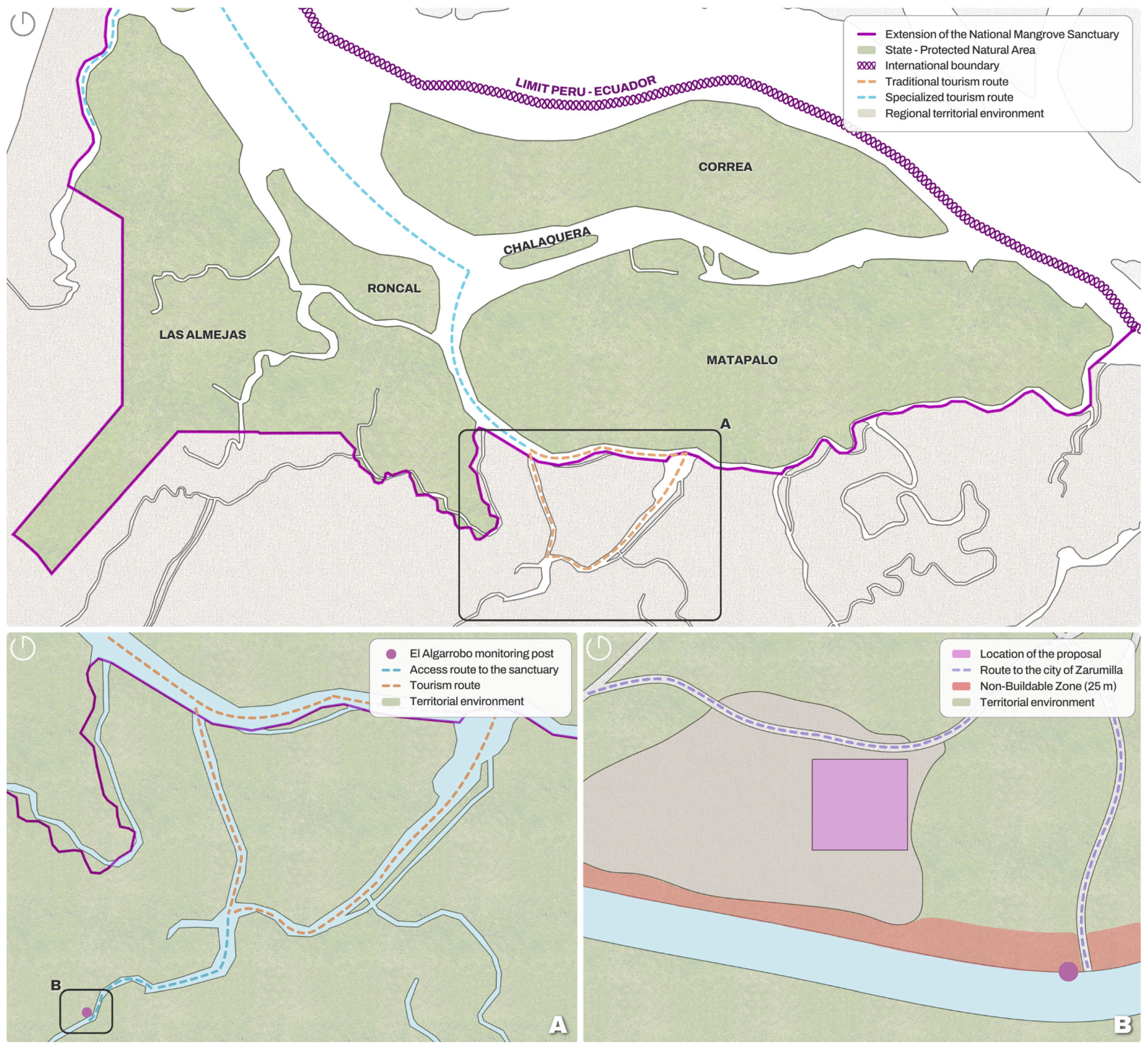
The proposal is located near the El Algarrobo surveillance post, before the entrance to the National Sanctuary of the Tumbes Mangroves and close to an access road leading to the city of Zarumilla. The intervention area covers approximately 1396 m2 (0.14 ha) and is situated 2.9 km from the TU-100 highway (Zarumilla–El Bendito); from this route, the distance to Zarumilla city is 3.3 km (Figure 13).
As shown in Figure 13A, the site is embedded within a transition setting that links the urban edge of Zarumilla with the protected mangrove landscape through a defined access route. This spatial relationship supports the strategic placement of the project as a threshold between public visitation dynamics and ecological sensitivity, enabling controlled entry into the sanctuary’s surroundings.
At the local scale, Figure 13B details the project footprint and its proximity to the river, incorporating a non-buildable zone (25 m) that constrains the placement of built elements and reinforces low-impact siting criteria. This setback informs the internal organization of the proposal, prioritizing elevated circulation and limited ground contact to reduce disturbance and maintain hydrological continuity.
Vehicular access from the city to the intervention site is planned. From this point, visitors enter the interpretation center, continue along elevated platforms built among the trees, and finally reach the pier, where boat rentals are managed. The itinerary then extends through a fluvial route toward the National Sanctuary of the Tumbes Mangroves.

3.2. Urban Analysis

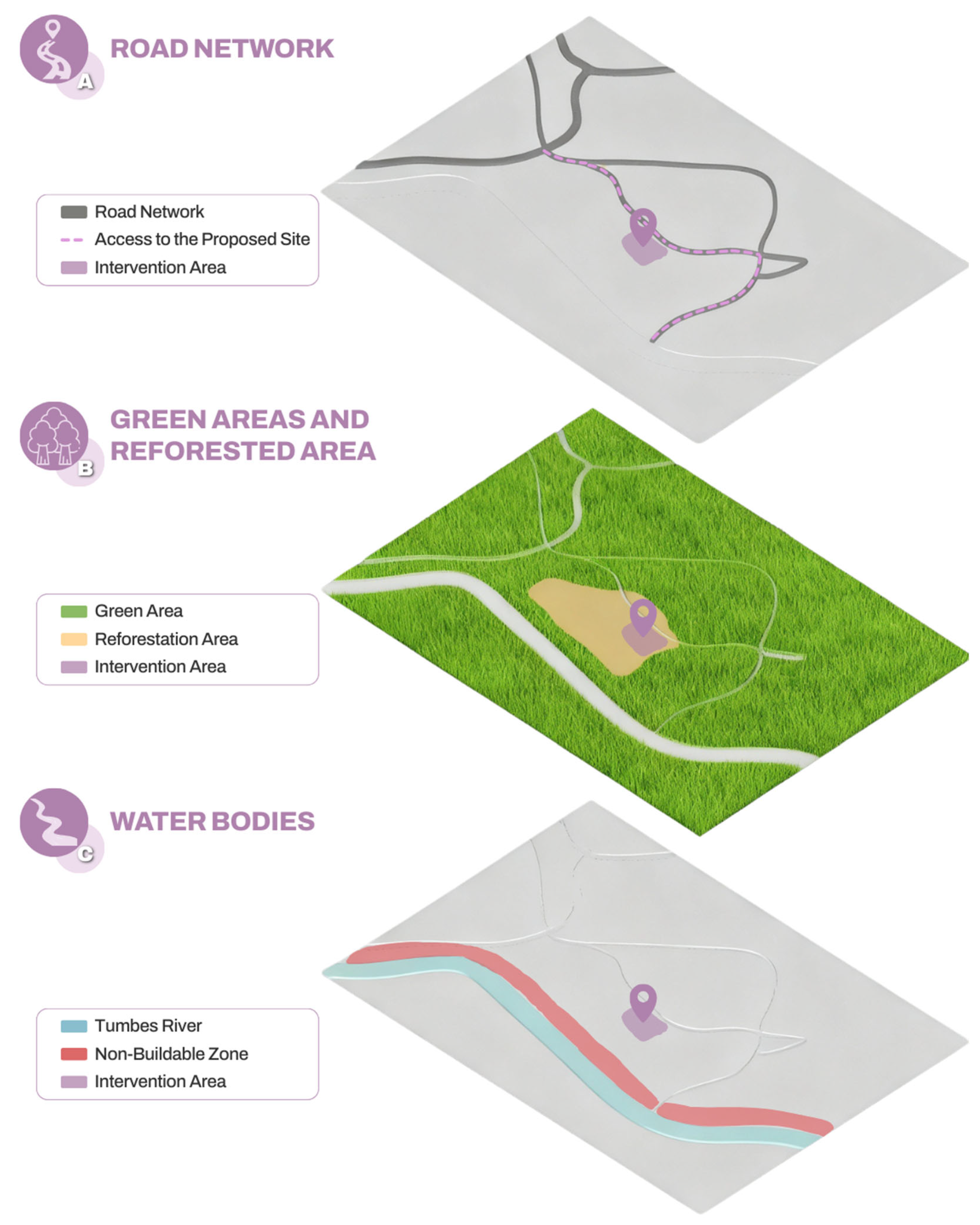
The urban analysis identified three key indicators that support the location and feasibility of the proposal, integrating accessibility conditions, ecological structure, and river-related constraints within the study area (Figure 14).
The first indicator corresponds to the road network and access conditions. Figure 14A shows that the intervention area is reached through a network of predominantly unpaved roads, which results in low-intensity mobility and limited vehicular loads. This condition supports a sitting rationale aligned with a minimal environmental footprint, allowing visitation and environmental interpretation without introducing heavy infrastructure that could increase disturbance in a sensitive setting.
The second indicator is related to green areas and the reforested area. Figure 14B indicates that the broader setting is predominantly vegetated, reflecting a landscape with high ecological value. In contrast, the reforestation area represents a localized discontinuity in vegetation cover, which is relevant for defining targeted restoration actions. This condition supports an approach that prioritizes ecological reinforcement in degraded patches while avoiding unnecessary intervention in intact vegetation.
Finally, the third indicator is the river system and its associated restriction zone. As illustrated in Figure 14C, the intervention area is located near the Tumbes River, a structuring element that shapes environmental dynamics and land-use decisions. The no buildable zone (25 m) establishes a clear spatial constraint that guides the placement of built elements and supports a low-impact siting and layout logic, encouraging elevated circulation, reduced footprint, and careful program distribution to maintain compatibility with the riverine landscape.
In summary, the urban analysis of the intervention setting reveals a territory where low-intensity accessibility, a predominantly vegetated ecological matrix, and river-related protection constraints associated with the Tumbes River coexist and condition the project’s siting. The combined interpretation of these dimensions allows the interpretation center to be conceived not only as an architectural facility, but as a transitional infrastructure between the urban fabric of Zarumilla and the Santuario Nacional Los Manglares de Tumbes, intended to organize access, reduce pressures on the ecosystem, and activate localized restoration processes through reforestation. In this way, the proposal is framed as a low-impact territorial strategy that integrates environmental education with controlled use of space, strengthening the community–mangrove relationship and the long-term sustainability of the area.
This urban analysis also implies that the project’s feasibility at the urban–protected-area interface depends on an explicit institutional arrangement able to coordinate access, define stakeholder responsibilities, and sustain long-term operation [56]. Accordingly, the proposed circulation is understood not only as a physical itinerary, but as a controlled-use system that requires clear thresholds and capacity-informed limits to prevent excessive visitor density and localized disturbance within the intervention area [57].

3.3. Conceptualization of the Proposal

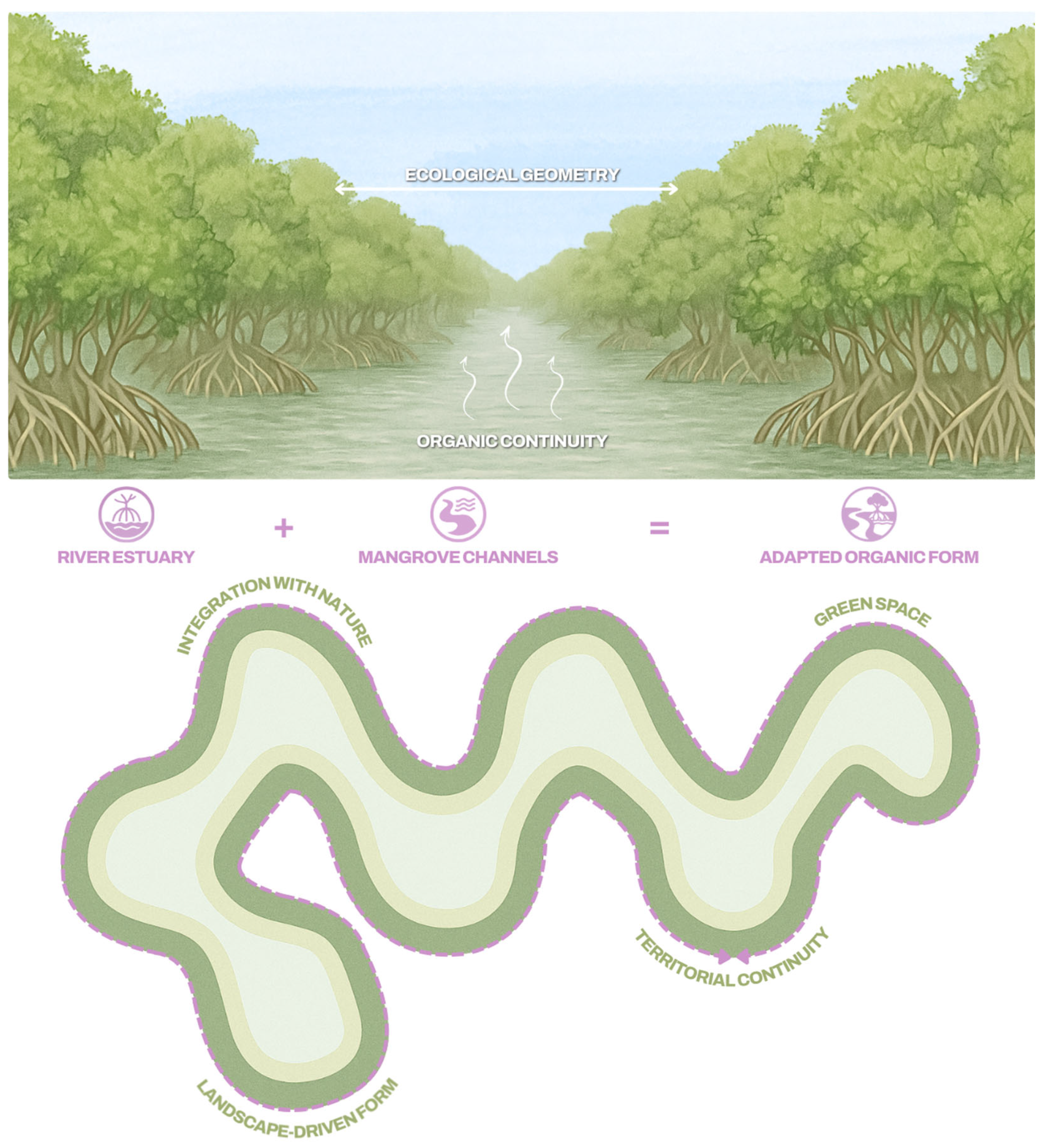
The urban proposal is inspired by the meandering morphology of the channels within the National Sanctuary of the Tumbes Mangroves and adopts as its main concept the “Mother Meander of the Estuary” based on the fluidity of water and integration with the environment. This concept synthesizes the hydro morphological identity of Tumbes and functions as the matrix from which the estuarine territory and its continuity with the mangroves are interpreted. Therefore, the water bodies present in the sanctuary were identified, and primary and secondary connection axes were traced, aligned with the natural flows; from these, an operational grid was derived that organizes access points, circulation sequences, and programmatic nodes (Figure 15).

3.4. Architectural Parti

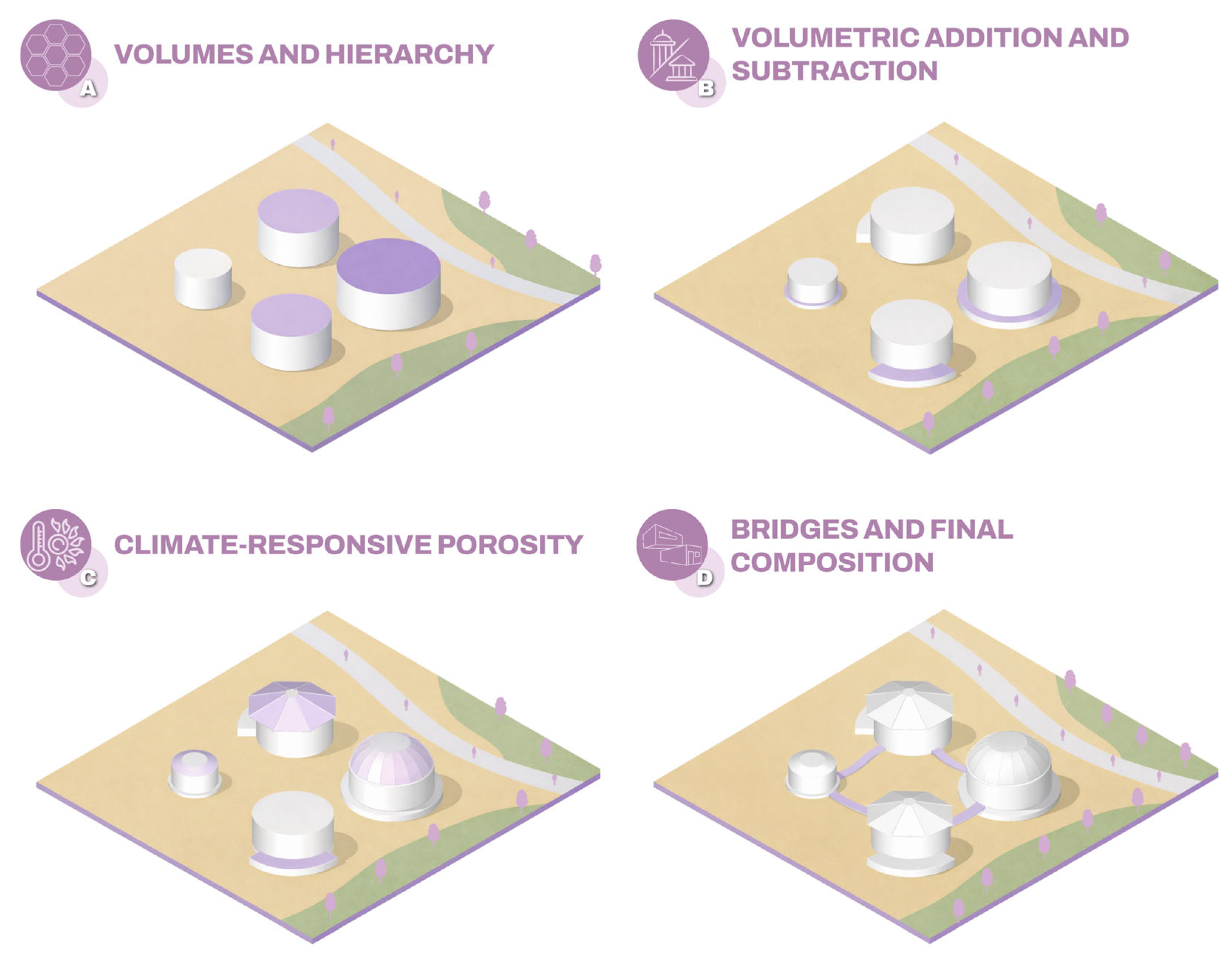
The architectural parti of the interpretation center is defined through a progressive volumetric strategy that translates environmental, functional, and climatic criteria into a coherent spatial configuration. The design process is structured as a sequence of transformations that articulate the hierarchy of uses, the relationship between built elements, and the adaptive response to local climatic conditions, resulting in a low-impact and legible architectural composition (Figure 16).
The first stage establishes the volumetric hierarchy and spatial organization of the proposal. Figure 16A illustrates the initial arrangement of circular volumes, where the interpretation center is defined as the primary element due to its scale and central position, while the workshop spaces and the observation unit are configured as secondary and tertiary volumes. This hierarchical distribution responds to programmatic relevance and allows the complex to be read as a system of interconnected yet differentiated components.
The second stage focuses on volumetric addition and subtraction as a mechanism to refine spatial relationships and functional performance. As shown in Figure 16B, selective offsets, recesses, and peripheral extensions are introduced, particularly in the workshop volumes, generating transitional spaces such as balconies and semi-open edges. These operations enable a more precise definition of interior functions while reinforcing the articulation between built mass and surrounding open space.
The third stage addresses climate-responsive porosity and formal adaptation. Figure 16C highlights how variations in height, roof geometry, and degrees of enclosure are employed to respond to the local climatic context. The interpretation center incorporates cross-ventilation through controlled openings, the workshop spaces adopt a predominantly open configuration, and the observation unit is conceived as a semi-open volume. The circular pitched roof systems further enhance thermal performance by facilitating air circulation and effective rainwater evacuation.
The final stage consolidates the proposal through connectivity and compositional integration. Figure 16D shows the incorporation of elevated bridges that link the different volumes, ensuring continuous circulation while minimizing ground disturbance. This final configuration synthesizes the previous operations into a unified architectural system, where functional clarity, environmental responsiveness, and formal coherence converge to define the overall spatial identity of the project.

3.5. Master Plan and Zoning

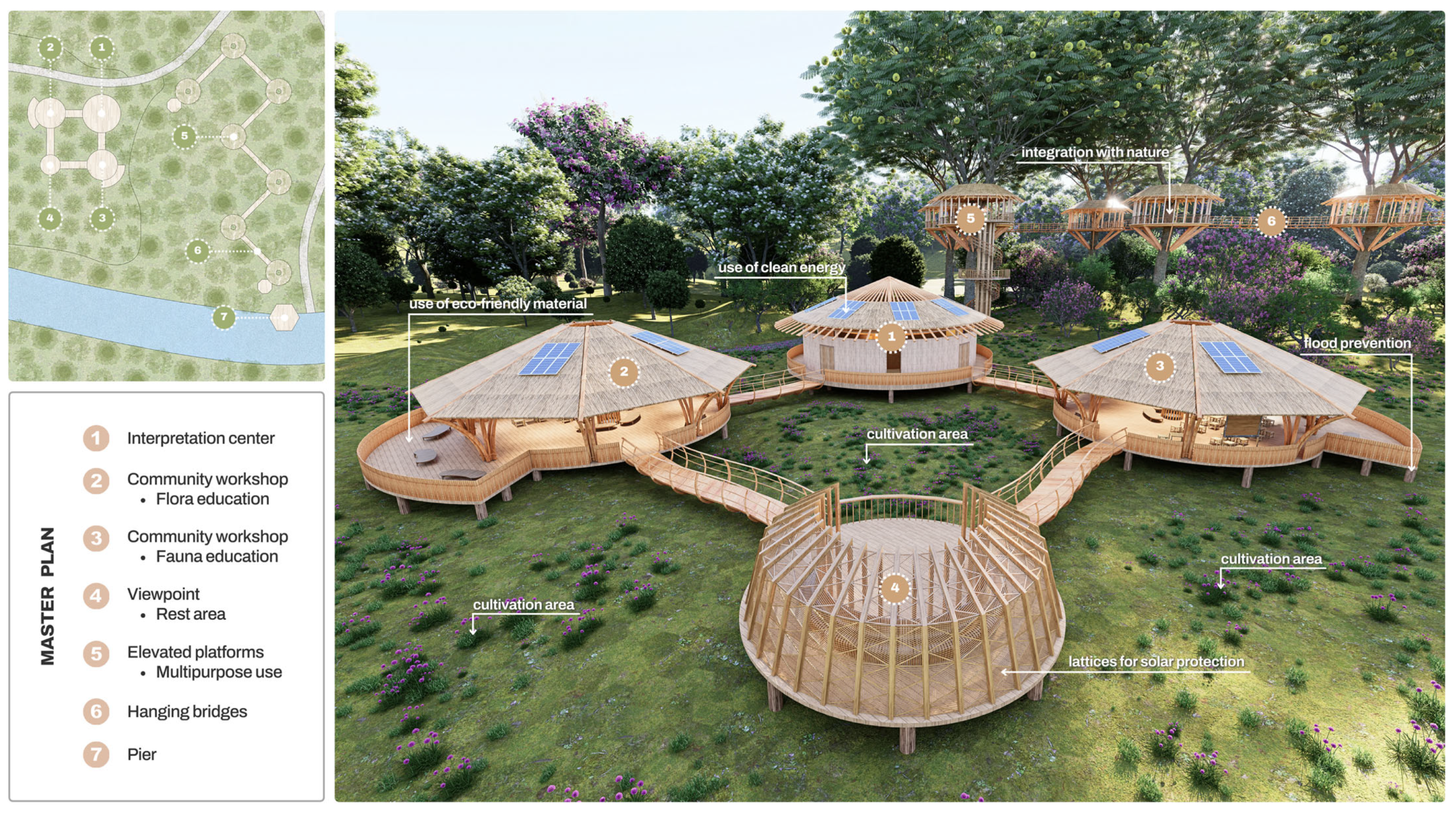
The urban proposal functions as a transition point between the consolidated urban fabric and the natural environment. The intervention area is divided into three main sections: beginning with a visit to the interpretation center and its educational workshops; continuing through elevated platforms among the trees, where each module illustrates and conveys the importance of preserving local flora and fauna; and finally arriving at the pier to begin the visit to the sanctuary (Figure 17).
To minimize intervention on the wet substrate and reduce the risk of flooding, the complex is elevated on piles, allowing free water circulation and preserving natural vegetation growth. Pedestrian walkways extend between the trees, creating a suspended path that connects the different areas of the project and organizes external circulation without disrupting the ecological balance. This constructive system not only responds to technical and environmental conditions but also provides visitors with an immersive experience from which they can observe nature from a new perspective, recognizing its fragility and ecological value.
To keep the master plan functional over time, the sequenced itinerary is paired with an operational scheme that concentrates visitor use on elevated, low-contact infrastructure while protecting sensitive ground conditions. A mixed revenue structure is proposed, prioritizing guided-visit fees and interpretive services, complemented by strictly regulated small-scale concessions; a defined share of these revenues is earmarked for a dedicated maintenance and conservation fund to ensure continuity of basic services and safety standards under humid, saline exposure [58]. In parallel, routine inspection schedules and participatory monitoring activities are incorporated to strengthen institutional transparency, oversight, and adaptive adjustments as visitation increases [59].
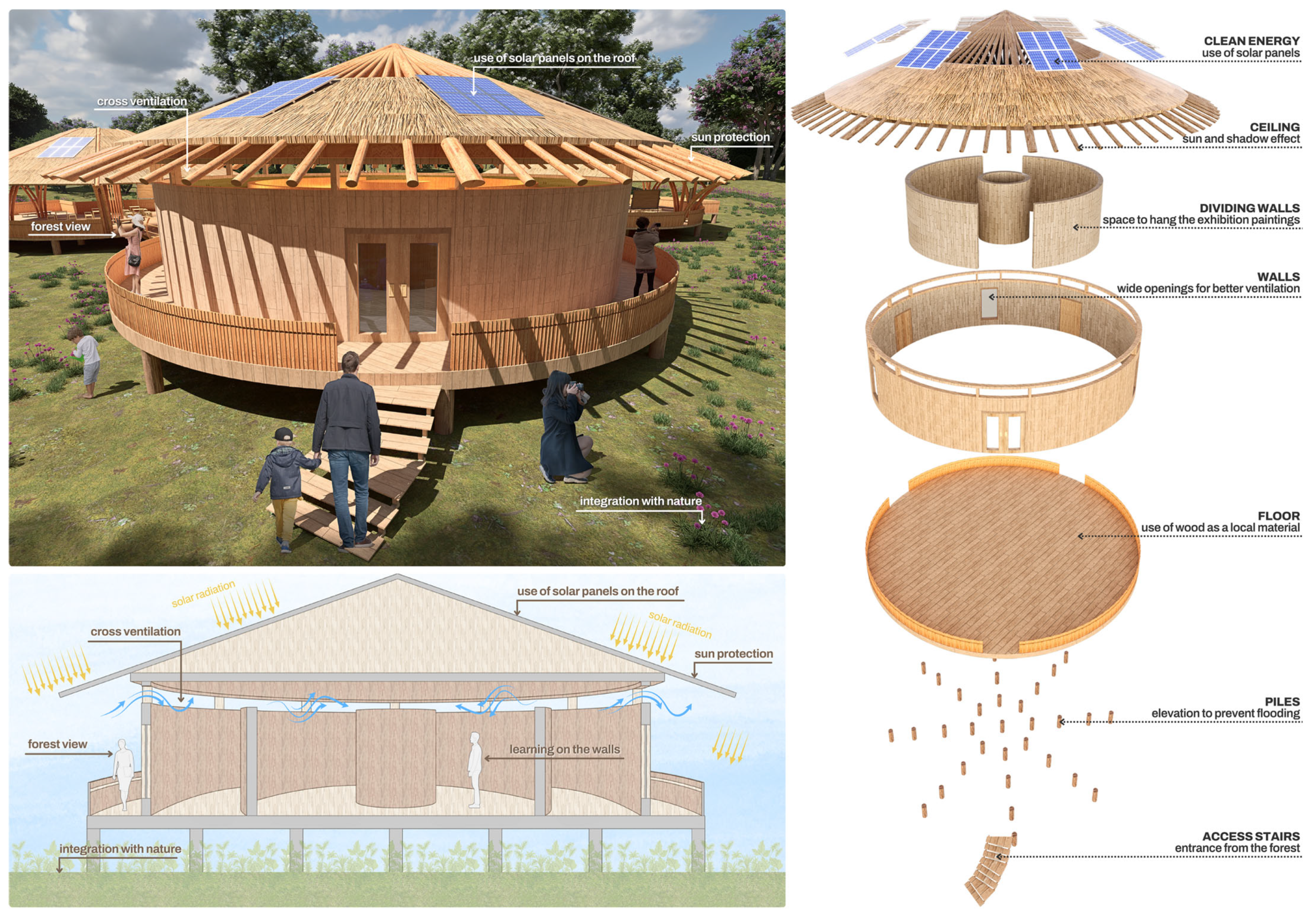
The main section of the route houses the interpretation center, the architectural focal point of the project, and a convergence space between visitors and the natural ecosystem. This facility hosts permanent exhibitions related to local culture, coastal ecosystems, and the environmental processes that affect mangroves. The design seeks integration with the landscape by using local materials and passive ventilation and natural lighting systems to minimize environmental impact.

3.6. Sustainable Material Strategies

The proposal relies on ecological, low-carbon materials. For elevated structures and walkways, locally sourced hardwood from sustainably managed forests is used. This material not only harmonizes with the mangrove landscape but also presents a highly favorable carbon balance: emissions associated with wood processing and construction are much lower than those of steel or concrete structures, and the trees used for timber have captured CO2 during their growth [60]. This strategy contributes to positioning the interpretation center as a low-emission building.
The center functions as an educational and awareness hub, where visitors can participate in interactive activities, projections, and guided tours that promote environmental conservation. Additionally, the space acts as a viewpoint toward the pre-mangrove forest, offering a visual and emotional connection with the landscape while reinforcing the importance of its preservation (Figure 18).
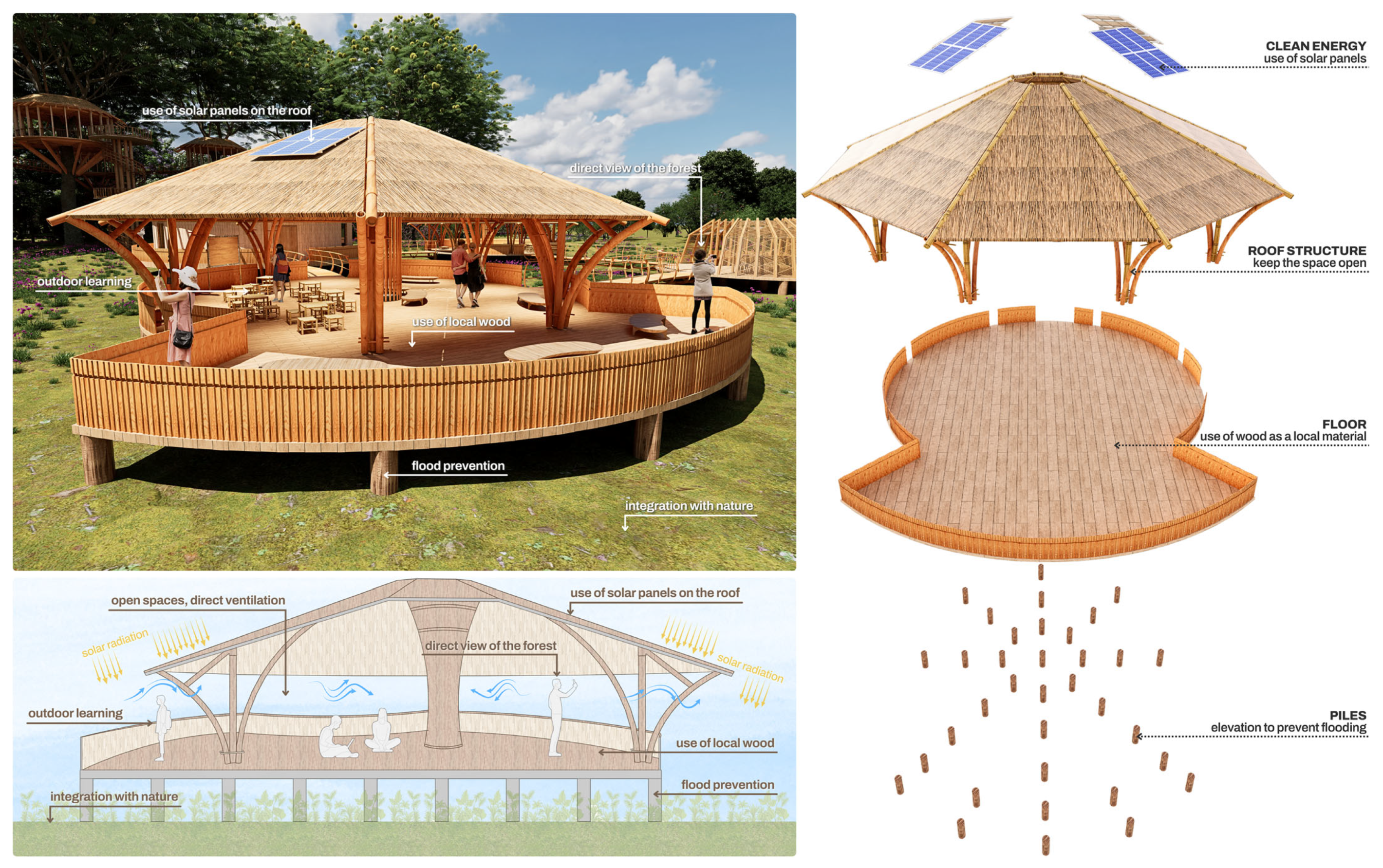
The project also incorporates two educational workshops: one dedicated to flora and the other to fauna. Both promote learning through practical and intuitive activities aimed at strengthening environmental self-awareness and appreciation of the natural surroundings. Each workshop terrace is strategically oriented according to its theme: the fauna workshop opens toward the existing forest, allowing direct observation of birds and other species in their natural habitat, while the flora workshop faces the newly reforested area, where users can actively participate in planting and caring for new vegetation. This layout not only reinforces the pedagogical relationship with the landscape but also transforms each space into a living extension of the ecosystem, where architecture mediates between knowledge and nature. The workshops are complemented by an integrated viewpoint featuring rest and social areas designed as pause spaces within the itinerary. From this point, visitors can admire the natural landscape, observe the dynamics of the ecosystem, and photograph the surroundings—strengthening their visual and emotional connection with nature. This area fulfils not only a recreational role but also serves as a collective space for contemplation, where architecture frames the landscape and promotes cohesion between visitors and nature (Figure 19).
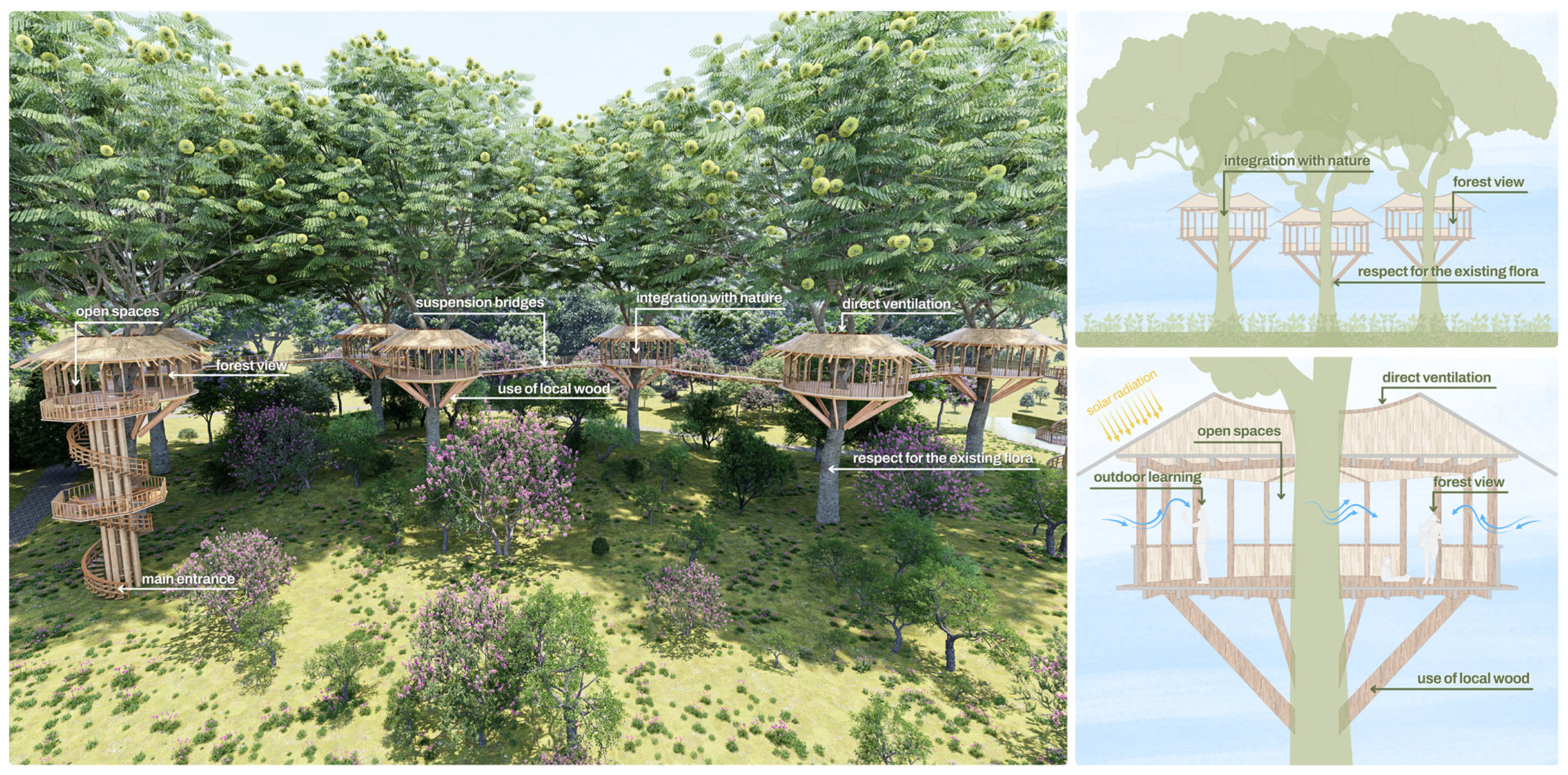
In the secondary section of the route, seven elevated modules rise ten meters above the ground, supported by the natural structure of trees and connected by hanging bridges. This elevated system offers an immersive and contemplative experience, allowing visitors to move among the treetops and observe the ecosystem from a different perspective. Each module serves an educational and reflective function, reinforcing the knowledge acquired during the visit. Inside, visitors learn about the history and evolution of the National Sanctuary of the Tumbes Mangroves and the best conservation practices to adopt during their tours. Comparative displays of mangroves from other countries are also presented, promoting a global perspective on these ecosystems and highlighting the importance of their conservation worldwide (Figure 20).
The route concludes at the pier, a connecting point between the terrestrial and fluvial routes that traverse the canal. This final platform functions as a space for transition and contemplation, from which visitors can begin their boat trips to explore the mangroves from the water. Its lightweight and permeable design allows for unobstructed landscape and wildlife observation without disturbing natural habitats, maintaining a respectful relationship with the environment. Moreover, it integrates with the broader network of routes within the National Sanctuary of the Tumbes Mangroves, consolidating a continuous experience that combines environmental education, interaction with nature, and ecological awareness, culminating in a comprehensive understanding of the ecosystem.

3.7. Reforestation Strategies

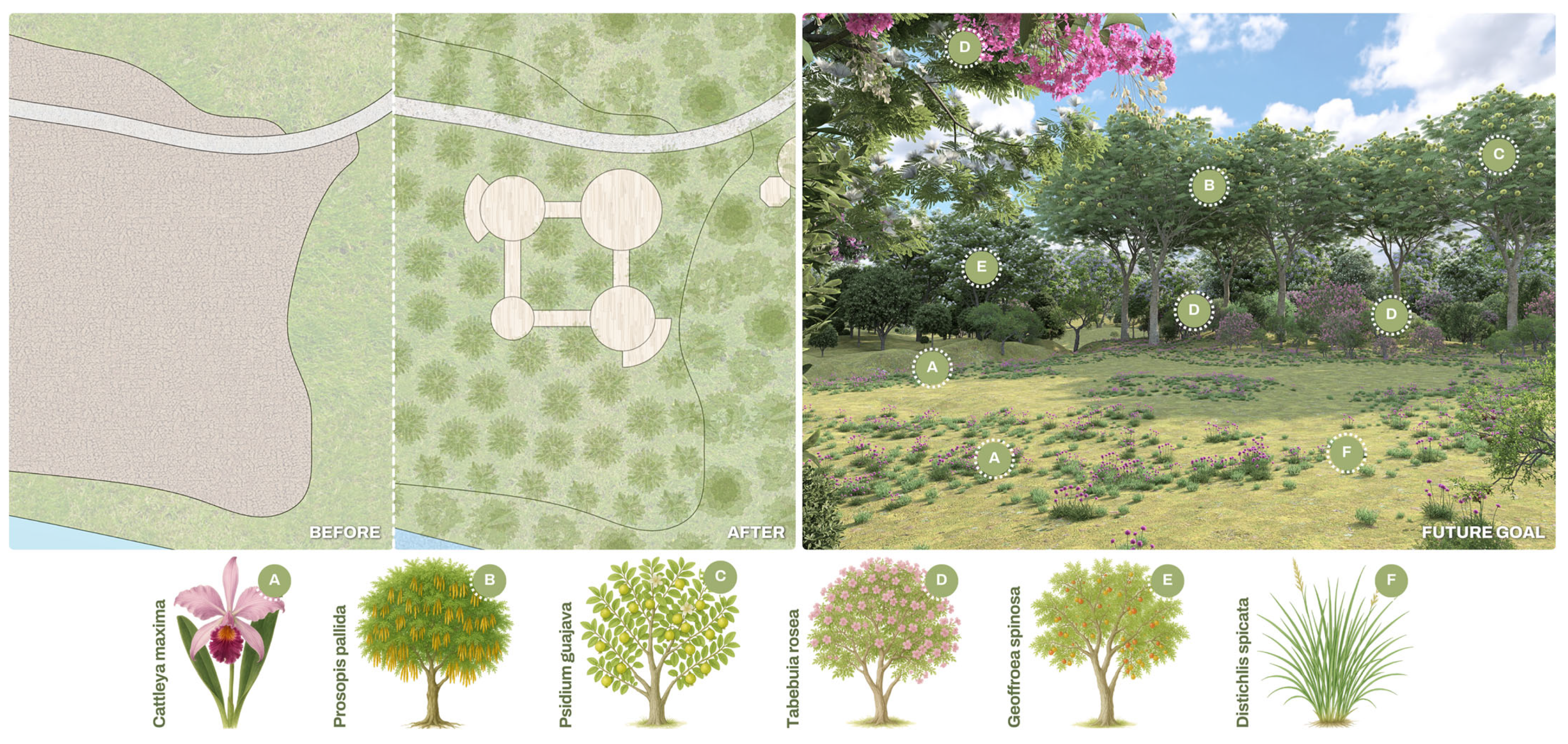
The reforestation strategy focuses on restoring degraded dry areas of the site through the planting of native species from the Tumbesian dry forest (Figure 21). Restoring dry forests is a priority because their conservation not only preserves endemic species but also provides long-term benefits such as improved soil fertility, food provision, firewood, medicinal resources, and water regulation. The strategy also includes the removal of invasive species, site preparation, and seedling planting. Additionally, active participation of local communities will be encouraged in planting and maintenance activities, and ongoing monitoring of survival and growth rates will be carried out to ensure that new plantations develop into functional forests.
The species selected for reforestation were chosen based on their ecological relevance, adaptability to dry coastal conditions, and carbon sequestration potential. Their distribution, canopy dimensions, and assigned surface area within the intervention site are detailed in Table 2, which supports the spatial planning and environmental impact estimation of the strategy.

3.8. Clean Energy Strategies

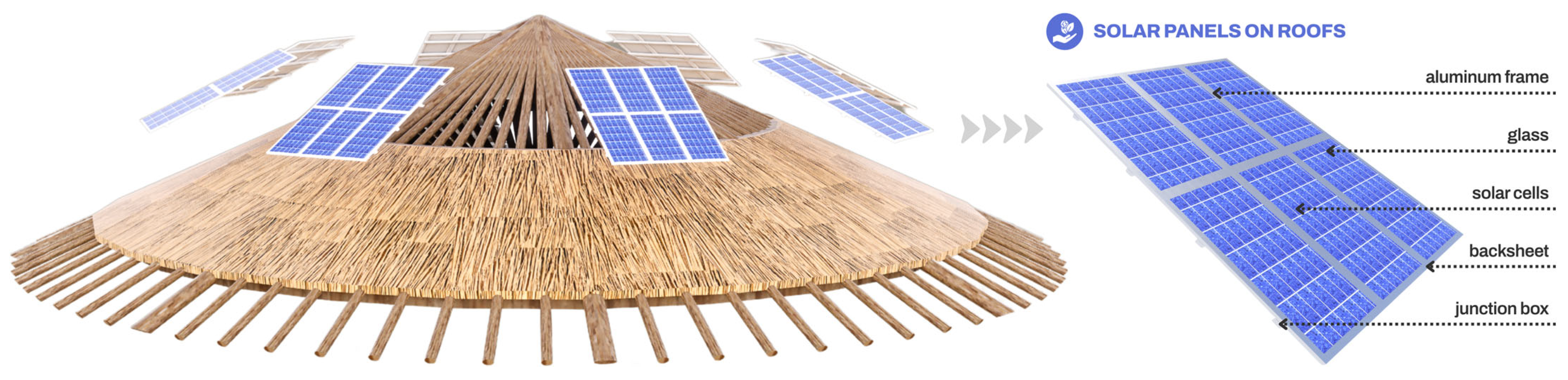
To reduce the carbon footprint and move toward an environmentally friendly proposal, an integrated approach to energy efficiency and clean energy use is adopted. The project prioritizes natural lighting and cross-ventilation to minimize energy demand, employs materials with low thermal inertia, and optimizes the orientation of volumes. The use of renewable energy serves as the foundation for powering the center’s services and as an educational tool to demonstrate to visitors the potential of clean technologies in mitigating climate change (Figure 22).

Solar-Powered Lighting

As a concrete application of clean energy strategies, the lighting of walkways and outdoor areas of the interpretation center will be powered exclusively by solar energy through photovoltaic modules installed on the building’s roof. To optimize the system, twilight and motion sensors will be used to adjust illumination levels according to natural light conditions and pedestrian circulation. Moreover, these luminaires minimize vertical light dispersion and prevent light pollution, protecting nocturnal fauna. In this way, photovoltaic lighting not only provides safety and comfort for users but also safeguards the well-being of the species inhabiting the area.

3.9. Use of Solar Energy

Clean energy use in the project is achieved through solar panels integrated into the green infrastructure to reduce operational emissions, decrease dependence on the electrical grid, and ensure service continuity in sensitive environments close to wildlife. The solution prioritizes low-maintenance, quiet-operation equipment with photoelectric control and time-based dimming to optimize energy consumption and minimize impacts on fauna. Its modular and scalable configuration allows adjustment of power and autonomy as needed (for the interpretation center, educational workshops, or the viewpoint), reinforcing nighttime accessibility and safety without compromising the landscape or the site’s ecological integrity.
The sizing of the solar panels according to the project’s energy demand was calculated considering the month with the lowest solar resource (August), using the local series of peak sun hours (PSHs) and a global performance ratio (PR = 0.78) that accounts for thermal and electrical losses in the system. For the load profile, the outdoor lighting system was dimensioned, assuming an average operating duration of 4 h per night, corresponding to the main evening period of pedestrian circulation and safety. In addition, the storage capacity was defined to provide two days of autonomy without solar input, ensuring continuity during consecutive low-irradiance days under the most restrictive monthly conditions. The monthly energy production per installed kilowatt-peak (kWp) was determined using the following equation:
Ym [kWh/Month × kWp] = PSHm [h/day] × Dm × PR
  • Ym: monthly energy per kWp;
  • PSHm: monthly peak sun hours;
  • Dm: number of days in the month;
  • PR: performance ratio.
For August, the value of PSH = 1.1 h/day was used. The following formula was applied:
Ym [kWh/Month × kWp] = 1.1 × 31 × 0.78
Ym = 26.6 kWh/Mes × kWp
Regarding the lighting demand of the entire project, 60 luminaires of 20 W each were considered, with a daily usage of 4 h. The calculation is as follows:
Ld [kWh/day] = nL × Pl × h/1000
  • nL: number of luminaires;
  • Pl: luminaire power (W);
  • h: daily operating hours.
The following formulas were applied for the proposed project:
Ld [kWh/day] = 60 × 20 × 4/1000
Ld [kWh/day] = 4.8 kWh/day
Lm [kWh/month] = 144 kWh/month
Based on these calculations, the maximum required power and the number of solar panels for the project were determined using the following equations:
kWpreq. = Lm/Ym
kWpreq. = 144 kWh/month/26.6 kWh/month × kWp
kWpreq. = 5.41 kWp
Solar panels of 450 W (0.45 kWp) were selected; thus, a total of 12 panels will be installed to supply the project’s energy needs (5.4 kWp in total). Each panel will be mounted using anti-corrosive materials suitable for the coastal environment and will operate with an efficiency of 20–22%. Additionally, an energy storage system will be implemented using a 48 V LiFePO battery bank with an autonomy of two days without solar input and a round-trip efficiency of approximately 95%, managed by a control system that provides protection against overloads and other events.
Table 3 summarizes the distribution of luminaires by area, the required energy, and the photovoltaic power needed to ensure service continuity during the month with the lowest solar resource. The equivalent number of panels per area is shown for reference; the total of 12 panels (5.4 kWp) will be concentrated in three specific zones to optimize cabling, shading, and performance.

3.10. Governance, Financing, and Operational Management Framework

To ensure implement ability and long-term continuity, the proposal incorporates an explicit governance and financing framework aligned with co-management approaches used in protected-area settings [67]. Governance is structured as a collaborative arrangement linking the protected-area authority, local government, and community organizations associated with sustainable mangrove-related livelihoods, supported by academic partners for education and monitoring activities [56]. Operational coordination is organized through a management committee with defined responsibilities for administration and permitting, infrastructure maintenance and safety, environmental interpretation and education programming, and participatory monitoring and periodic reporting, thereby strengthening institutional transparency and oversight [68]. Financial continuity is structured through a mixed scheme combining guided-visit fees and interpretive services with strictly regulated small-scale concessions; a fixed share of revenues is earmarked for a dedicated maintenance and conservation fund that supports inspections, minor repairs, replacement of exposed components, and basic monitoring activities under humid, saline conditions [58]. Organizational control is reinforced through capacity-informed visitor limits and route regulation to minimize localized impacts, with monitoring feedback used to adjust operational routines over time [57].

4. Discussion

Interventions in ecologically sensitive mangrove environments play a decisive role in ecosystem conservation, environmental education, and the sustainable use of natural resources. In these contexts, sustainable architecture can mediate between fragile ecosystems and human activity by responding to environmental constraints, climatic conditions, and social dynamics through low-impact criteria. Accordingly, approaches based on landscape integration, passive comfort, and controlled access can improve spatial performance without compromising mangrove ecological integrity, while reinforcing place-based learning processes.
The presence of precedents such as the “Casa del Manglar” in Puerto Pizarro (Peru) and the “Ecoparque Ciénaga de Mallorquín” in Barranquilla (Colombia) allows the identification of two complementary ways of shaping the relationship between the public and the mangrove. While the former focuses on local dissemination of the ecosystem’s ecological value [68], the latter demonstrates the potential of landscape-based interventions to restore degraded areas and enable walking and observation experiences through infrastructure compatible with wetland conditions [69,70]. These references provide a useful comparative basis for refining the role of architecture in highly sensitive territories.
From an educational and interpretive perspective, the “Casa del Manglar” fulfils a basic formative role through informative exhibitions and interpretive signage [63]; however, its reach remains limited in both scale and its capacity to actively involve the community, reducing its potential as an interactive learning space. The Ecopark, in turn, offers an immersive experience through direct contact with the landscape, yet the absence of a formal interpretive facility constrains the translation of ecological processes into structured and progressive content for diverse audiences [69,70]. In the case of the proposed interpretation center in Tumbes, architecture is conceived as a pedagogical device: spatial organization, educational environments, and community workshops are articulated with participation and monitoring dynamics, so that interpretive experience does not rely solely on circulation but is reinforced through programs and educational mediation.
From a constructability perspective with minimal site disturbance, the Ecoparque Ciénaga de Mallorquín stands out for its use of elevated walkways and timber-based solutions (platforms and pile systems), which reduce ground disturbance and avoid heavy conventional construction under wetland conditions [69]. This lightweight infrastructure logic is particularly relevant in ecosystems where direct contact with the substrate and hydrological alteration can amplify impacts. In the Tumbes proposal, a comparable strategy is adopted through elevated circulation and eco-friendly construction criteria, incorporating locally compatible timber (algarrobo) as a structural alternative and linking it to passive strategies and spatial decisions consistent with site sensitivity. In this way, the regional reference functions not only as a comparison but also as evidence of the technical and environmental feasibility of elevated solutions and appropriate materiality in mangrove landscapes.
Finally, the proposal indicates that visitation-oriented interventions in fragile wetlands must anticipate and manage potential negative effects to avoid undermining conservation outcomes. Increased visitor numbers may intensify disturbance if carrying capacity, guided circulation, and restricted zones are not enforced; therefore, controlled entry, route zoning, and guided interpretation should be applied to concentrate impacts and protect sensitive patches. Localized environmental damage, including trampling, waste, or noise, can be reduced through elevated walkways, clear codes of conduct, and routine on site monitoring supported by community participation. Maintenance remains critical in humid saline environments, so operational feasibility depends on scheduled inspections, protective detailing of timber components, and a dedicated maintenance fund supported by the mixed revenue scheme. Social inequity may arise if tourism-related benefits are unevenly distributed; consequently, governance should include transparent benefit sharing rules, local employment and training priorities, and participatory oversight through the management committee. Together, these measures position the interpretation center as a controlled-use system that internalizes ecological and social risks through adaptive management.

5. Conclusions

The urban proposal includes a variety of spaces that not only highlight the natural richness of the mangroves but also foster an active and conscious connection between the community and its environment. Through an urban design inspired by the fluvial order of local hydrology, the project prioritizes respectful landscape integration, minimizing environmental disturbance while enhancing the territorial identity of the site. In line with the theoretical framework adopted in this study, the proposal is approached as low-impact infrastructure that translates sustainability principles into spatial decisions compatible with an ecologically sensitive landscape.
The environmental analysis confirmed the importance of the Tumbes mangrove ecosystem as a climate regulator, biodiversity reservoir, and livelihood source for local communities. In response to threats such as deforestation, water pollution, and climate-related impacts, the proposal incorporates bioclimatic and low-impact strategies, including elevation on stilts and the use of context compatible local materials, to improve thermal performance while reducing pressure on sensitive ground conditions. This supports a resilient design logic in which passive performance and minimal disturbance are treated as core criteria for long-term feasibility.
The urban proposal promotes active community participation through educational spaces and community workshops intended to strengthen cultural and productive ties while encouraging knowledge exchange. Likewise, the integration of observation areas and recreational spaces supports an immersive learning experience that reinforces environmental awareness and a sense of belonging. From a community-based conservation perspective, these spaces operationalize participation and environmental education as mechanisms that support stewardship, responsible tourism, and adaptive management. This approach facilitates environmental education and promotes responsible tourism that contributes to ecosystem conservation without compromising ecological balance.
The decisions adopted in the urban and architectural development of the proposal are closely aligned with the Sustainable Development Goals (SDGs), informing both design strategies and socioenvironmental management actions. SDG 7 (Affordable and Clean Energy) is addressed through the integration of photovoltaic systems that support a clean energy supply; SDG 8 (Decent Work and Economic Growth) is promoted through local employment linked to the operation and maintenance of the center; SDG 12 (Responsible Consumption and Production) is reinforced through environmental education focused on responsible resource use; SDG 14 (Life Below Water) is supported through awareness and management measures associated with the sustainable extraction of species such as black clam; and SDG 15 (Life on Land) is advanced through actions oriented toward mangrove conservation and restoration as the central axis of the proposal.
To operationalize and assess this alignment in practice, the proposal can be evaluated through measurable indicators linked to each SDG, supported by periodic reporting and adaptive management. Examples include tracking photovoltaic generation and the share of operational demand met (SDG 7); documenting local jobs and training activities associated with center operations (SDG 8); measuring participation in environmental education programs and the uptake of responsible use guidelines (SDG 12); recording compliance and community-based oversight related to extractive practices for key species (SDG 14); and assessing mangrove condition through field observations and routine checks of restoration outcomes or disturbance indicators (SDG 15). Together, these measures provide a practical basis for verifying progress and adjusting management actions over time.
To support implementation and long-term operation, the project requires an explicit governance and financial sustainability framework. A collaborative management arrangement is proposed involving the protected-area authority, local government, and community organizations linked to sustainable mangrove use, formalized through a management committee. Defined responsibilities are assigned to administration and permitting, infrastructure maintenance and safety, environmental interpretation and education programming, and participatory monitoring with periodic reporting. Financial continuity is envisaged through a mixed scheme combining guided-visit fees and interpretive services, agreements with public institutions and academia for education and monitoring programs, and strictly regulated small-scale concessions compatible with conservation objectives. A fixed share of revenues is earmarked for a dedicated maintenance and conservation fund to support routine inspections, minor repairs, replacement of exposed components under humid saline conditions, and basic monitoring activities. Organizational control is reinforced through capacity-informed visitor limits, route regulation, maintenance schedules, and operational indicators that strengthen institutional transparency, oversight, and continuity.
This study is developed as a research-based architectural and urban proposal and should be interpreted within its scope and implementation conditions. Its applicability to other coastal ecosystems will depend on site-specific ecological constraints, land tenure conditions, and the institutional capacity available in each context. Long-term effectiveness will rely on coordinated implementation with protected-area authorities and local organizations to sustain participatory monitoring, regulate visitation, and ensure continuity of conservation measures. In operational terms, maintenance is a critical requirement in humid saline environments: elevated structures, circulation elements, and renewable energy components require stable financial planning, periodic inspection, and technical capacity to preserve performance over time. These considerations provide a realistic basis for implementation while consolidating the interpretation center as conservation support infrastructure.

Author Contributions

Conceptualization, M.G. and Y.C.; methodology, D.E. and J.V.C.; software, P.V.; validation, J.V.C.; formal analysis, C.V. and P.C.; investigation, M.G., Y.C., P.V. and J.V.C.; resources, D.A.V. and V.I.T.A.; data curation, D.E., C.V., P.C., D.A.V. and V.I.T.A.; writing—original draft preparation, M.G., Y.C., P.V. and J.V.C.; writing—review and editing, M.G., Y.C. and J.V.C.; visualization, M.G. and Y.C.; supervision, D.E., P.V. and J.V.C.; project administration, D.E. and J.V.C.; funding acquisition, D.E., C.V., P.C., D.A.V. and V.I.T.A. All authors have read and agreed to the published version of the manuscript.

Funding

This research received no external funding.

Institutional Review Board Statement

Not applicable.

Informed Consent Statement

Not applicable.

Data Availability Statement

The original contributions presented in this study are included in the article. Further inquiries can be directed to the corresponding author.

Acknowledgments

We sincerely thank our colleagues for the opportunity to develop an architectural design proposal for “Sustainable Interpretation Center for Conservation and Environmental Education in Ecologically Sensitive Areas of the Tumbes Mangrove, Peru, 2025”.

Conflicts of Interest

The authors declare no conflicts of interest.

References

  1. Bimrah, K.; Dasgupta, R.; Hashimoto, S.; Saizen, I.; Dhyani, S. Ecosystem Services of Mangroves: A Systematic Review and Synthesis of Contemporary Scientific Literature. Sustainability 2022, 14, 12051. [Google Scholar] [CrossRef]
  2. Mialhe, F.; Gunnell, Y.; Mering, C. The Impacts of Shrimp Farming on Land Use, Employment and Migration in Tumbes, Northern Peru. 2013. Available online: https://www.sciencedirect.com/science/article/abs/pii/S096456911200347X (accessed on 26 December 2025).
  3. Tafur Anzualdo, V.I.; Aguirre Chavez, F.; Vega-Guevara, M.; Esenarro, D.; Vilchez Cairo, J. Causes and Effects of Climate Change 2001 to 2021, Peru. Sustainability 2024, 16, 2863. [Google Scholar] [CrossRef]
  4. Planeta Futuro. Manglares en el Trópico. 2017. Available online: https://elpais.com/especiales/2017/planeta-futuro/manglares-en-el-tropico/ (accessed on 26 December 2025).
  5. FAO. Se Intensifican Los Esfuerzos Mundiales Por Proteger Los Manglares. 2023. Available online: https://www.fao.org/newsroom/detail/global-effort-to-safeguard-mangroves-steps-up/es (accessed on 18 June 2025).
  6. Moreno-Martínez, A.; Álvarez-Arteaga, G.; Orozco-Hernández, M.E. Heterogeneidad Ambiental Y Alteraciones antrópicas En Comunidades De Manglar En El pacífico Sur De México. Rev. Ambient. 2021, 55, 70–85. [Google Scholar] [CrossRef]
  7. Mira, J.D.; Urrego, L.E.; Monsalve, K. Determinantes Naturales y Antrópicos de la Distribución, Estructura y Composición Florística de Los Manglares de la Reserva Natural Sanguaré, Colombia. Available online: https://dialnet.unirioja.es/servlet/articulo?codigo=9440158 (accessed on 18 June 2025).
  8. Metropolitan Touring. Los Galápagos: BIG15. 2024. Available online: https://www.finchbayhotel.com/wp-content/uploads/2024/10/galapagos-big15-es.pdf (accessed on 18 June 2025).
  9. Fundación Charles Darwin. Manglares de Galápagos, Ecosistemas Clave Para Diversidad de Peces. 2021. Available online: https://www.darwinfoundation.org/es/noticias/todas-las-noticias/nuevo-estudio-revela-que-los-manglares-de-las-islas-galapagos-son-ecosistemas-clave-para-gran-diversidad-de-especies-de-peces/ (accessed on 18 June 2025).
  10. Quinlan, K. The Niger Delta Red Colobus. 2022. Available online: https://neprimateconservancy.org/niger-delta-red-colobus/ (accessed on 18 June 2025).
  11. Aransiola, S.A.; Zobeashia, S.L.-T.; Ikhumetse, A.; Musa, O.I.; Abioye, O.; Ijah, U.; Maddela, N.R. Niger Delta mangrove ecosystem: Biodiversity, past and present pollution, threat and mitigation. Reg. Stud. Mar. Sci. 2024, 75, 103568. [Google Scholar] [CrossRef]
  12. Kuta, A.A.; Grebby, S.; Boyd, D.S. Remote Monitoring of the Impact of Oil Spills on Vegetation in the Niger Delta, Nigeria. Appl. Sci. 2025, 15, 338. [Google Scholar] [CrossRef]
  13. Melana, D.M.; Melana, E.E.; Mapalo, A.M. Mangrove Management and Development in the Philippines. Available online: https://oneocean.org/download/20000427/mangrove_management_phils.pdf (accessed on 18 June 2025).
  14. Manos Unidas. Preservación del Medio Marino y Las Aguas Costeras en Luzón. Available online: https://www.manosunidas.org/proyecto/preservacion-del-medio-marino-aguas-costeras-luzon (accessed on 18 June 2025).
  15. Mongabay. A Philippine Town and Its Leaders Show How Mangrove Restoration Can Succeed. 2023. Available online: https://news.mongabay.com/2023/05/a-philippine-town-and-its-leaders-show-how-mangrove-restoration-can-succeed/ (accessed on 18 June 2025).
  16. Shearman, P.L. Recent Change in the Extent of Mangroves in the Northern Gulf of Papua, Papua New Guinea. AMBIO 2010, 39, 181–189. [Google Scholar] [CrossRef] [PubMed]
  17. World Rainforest Movement. Papua Nueva Guinea: Dos Enfoques Opuestos Sobre el Uso de Los Bosques. 2001. Available online: https://www.wrm.org.uy/es/articulos-del-boletin/papua-nueva-guinea-dos-enfoques-opuestos-sobre-el-uso-de-los-bosques (accessed on 18 June 2025).
  18. Cobeñas, P.; Esenarro, D.; Vilchez Cairo, J.; Gómez, A.; Prado, M.; Pérez Sosa, A.A.; Raymundo, V.; Garcia, F.L.P.; Peña, J.; Porras, E.; et al. Strategies for the Revalorization of the Natural Environment and Landscape Regeneration at La Herradura Beach, Chorrillos, Peru 2024. Urban Sci. 2026, 10, 2. [Google Scholar] [CrossRef]
  19. Contreras, D. ¿Por Qué Son Tan Importantes Los Manglares? 2023. Available online: https://inte.pucp.edu.pe/noticias-y-eventos/noticias/por-que-son-tan-importantes-los-manglares/ (accessed on 20 June 2025).
  20. SERNANP. Plan Maestro del Santuario Nacional Los Manglares de Tumbes. 2021. Available online: https://sinia.minam.gob.pe/sites/default/files/archivos/public/docs/PM_SNLMT_2017-2021.pdf (accessed on 20 June 2025).
  21. World Rainforest Movement. Manglares: Las Estrellas de la Conservación. 2023. Available online: https://www.wwf.org.pe/?384370/Manglares-Las-estrellas-de-la-conservacion (accessed on 20 June 2025).
  22. SERNANP. Santuario Nacional Los Manglares de Tumbes. 2019. Available online: https://www.gob.pe/institucion/sernanp/informes-publicaciones/1928742-santuario-nacional-los-manglares-de-tumbes (accessed on 20 June 2025).
  23. SPDA. Declaran Santuario Nacional Superficie Ubicada en Zarumilla, Tumbes. 1988. Available online: https://legislacionanp.org.pe/declaran-santuario-nacional-superficie-ubicada-en-zarumilla-tumbes/ (accessed on 20 June 2025).
  24. IGP. Gestión Sostenible de Recursos Naturales en el Ecosistema de Manglares de Tumbes: Análisis del Territorio y Diagnóstico Socioeconómico. 2014. Available online: https://repositorio.igp.gob.pe/items/6e6b69c7-6b75-405c-8643-c7ccabd09941 (accessed on 20 June 2025).
  25. IGP. Identificación de Servicios Ecosistémicos en el Santuario Nacional Los Manglares de Tumbes. 2013. Available online: https://repositorio.igp.gob.pe/items/15ace4c4-0d58-4435-b0b7-d89181ba984c (accessed on 20 June 2025).
  26. INRENA. Estrategia de Conservación del Ecosistema de los Manglares de Tumbes. 2001. Available online: https://sinia.minam.gob.pe/sites/default/files/sinia/archivos/public/docs/321.pdf (accessed on 20 June 2025).
  27. INRENA. Plan Maestro del Santuario Nacional Los Manglares de Tumbes. 2011. Available online: https://sinia.minam.gob.pe/sites/default/files/sinia/archivos/public/docs/319.pdf (accessed on 20 June 2025).
  28. Takahashi, K.; Martínez, A. Impacto de la Variabilidad y Cambio Climático en el Ecosistema de Manglares de Tumbes, Perú. 2015. Available online: https://repositorio.igp.gob.pe/items/653ef482-b087-42e3-a347-1c964038e84c (accessed on 20 June 2025).
  29. Idrogo, I. Estructura de Las Especies de Mangle en el Santuario Nacional Los Manglares de Tumbes. 2016. Available online: https://core.ac.uk/download/pdf/250077657.pdf (accessed on 20 June 2025).
  30. INRENA. Plan Maestro del Santuario Nacional Los Manglares de Tumbes. 2001. Available online: https://sinia.minam.gob.pe/sites/default/files/sinia/archivos/public/docs/320.pdf (accessed on 20 June 2025).
  31. Cuya, N.; Estrada, P.; Esenarro, D.; Vega, V.; Vilchez Cairo, J.; Mancilla-Bravo, D.C. Comfort for Users of the Educational Center Applying Sustainable Design Strategies, Carabayllo-Peru-2023. Buildings 2024, 14, 2143. [Google Scholar] [CrossRef]
  32. Rebolledo Monsalve, E.; Verduga, L.; Hurtado Ferreira, F. Wetland Ecosystem Service Preservation? Geochemical Changes in Systems with Mangroves and Shrimp Farms in the Northern Ecuadorean Coast. Sustainability 2024, 16, 11083. [Google Scholar] [CrossRef]
  33. Hajj-Hassan, M.; Chaker, R.; Cederqvist, A.-M. Environmental Education: A Systematic Review on the Use of Digital Tools for Fostering Sustainability Awareness. Sustainability 2024, 16, 3733. [Google Scholar] [CrossRef]
  34. Velempini, K. Assessing the Role of Environmental Education Practices Towards the Attainment of the 2030 Sustainable Development Goals. Sustainability 2025, 17, 2043. [Google Scholar] [CrossRef]
  35. Esenarro, D.; Montenegro, L.K.; Medina, C.; Cairo, J.V.; Legua Terry, A.I.; Veliz Garagatti, M.; Salas Delgado, G.W.; Escate Lira, M.M. Green Corridor Along the Chili River as an Ecosystem-Based Strategy for Social Connectivity and Ecological Resilience in Arequipa, Arequipa, Peru, 2025. Urban Sci. 2025, 9, 488. [Google Scholar] [CrossRef]
  36. Vilchez Cairo, J.; Rodriguez Chumpitaz, A.N.; Esenarro, D.; Ruiz Huaman, C.; Alfaro Aucca, C.; Ruiz Reyes, R.; Veliz, M. Green Infrastructure and the Growth of Ecotourism at the Ollantaytambo Archeological Site, Urubamba Province, Peru, 2024. Urban Sci. 2025, 9, 317. [Google Scholar] [CrossRef]
  37. Niesenbaum, R.A. The Integration of Conservation, Biodiversity, and Sustainability. Sustainability 2019, 11, 4676. [Google Scholar] [CrossRef]
  38. Diab, Z.; Younes, J.; Ghaddar, N. Optimal Passive Interventions for Enhancing Resilience of Naturally Ventilated Residential Buildings in Future Climatic Extremes. Buildings 2025, 15, 4016. [Google Scholar] [CrossRef]
  39. Pontificia Universidad Católica del Perú. Consideraciones Bioclimáticas en el Diseño Arquitectónico: El Caso Peruano. 2011. Available online: https://arquitectura.pucp.edu.pe/wp-content/uploads/2018/06/CUADERNOS-14_edicion-digital.pdf (accessed on 24 June 2025).
  40. SENAMHI. Pronóstico del Tiempo Para Tumbes. Available online: https://www.senamhi.gob.pe/?p=pronostico-detalle&dp=24&localidad=0002 (accessed on 24 June 2025).
  41. Naciones Unidas. Objetivos de Desarrollo Sostenible. Available online: https://www.un.org/sustainabledevelopment/es/objetivos-de-desarrollo-sostenible/ (accessed on 24 June 2025).
  42. IGP. Estudio de la Vulnerabilidad Presente y Futura Ante el Cambio Climático en la Región Tumbes. 2017. Available online: https://repositorio.igp.gob.pe/items/4dd5493c-562d-47e5-98f2-a4219fbe88d5 (accessed on 20 June 2025).
  43. Martínez, A. Relaciones Sociales de Poder y Desarrollo Territorial en la Creación de Áreas Naturales Protegidas: Caso del Santuario Nacional Los Manglares de Tumbes (SNLMT). 2021. Available online: https://hdl.handle.net/20.500.12404/18668 (accessed on 24 June 2025).
  44. Fundación Omacha. El Papel de Los Manglares en la Captura y Almacenamiento de Dióxido de Carbono CO2. 2021. Available online: https://omacha.org/manglares-captura-almacenamiento-dioxido-carbono/#:~:text=,protecci%C3%B3n%20ante%20tormentas%20y%20huracanes (accessed on 24 June 2025).
  45. Garcés, B.; Lozano, J. Características Estructurales del Mangle Rojo (Rhizophora Mangle) en Isla Payardi, Colón, Panamá. 2021. Available online: https://hdl.handle.net/1834/43822 (accessed on 24 June 2025).
  46. Lambs, L.; Saenger, A. Sap Flow Measurements of Ceriops Tagal and Rhizophora Mucronata Mangrove Trees by Deuterium Tracing and Lysimetry. 2011. Available online: https://www.researchgate.net/publication/51633337_Sap_flow_measurements_of_Ceriops_tagal_and_Rhizophora_mucronata_mangrove_trees_by_deuterium_tracing_and_lysimetry (accessed on 24 June 2025).
  47. Dazzini, M.; Navarrete, H. Bosques Azules: Humedales en Riesgo. Una Visión Latinoamericana. 2021. Available online: https://repositorio.puce.edu.ec/handle/123456789/1078 (accessed on 24 June 2025).
  48. González, D.; Grimaldo, O.; Cervantes, L. Los Elementos Potencialmente Tóxicos en las Plantas de Manglar: Una Revisión de Los Mecanismos de Tolerancia Involucrados. 2008. Available online: https://ve.scielo.org/scielo.php?script=sci_arttext&pid=S0378-18442008001100009&lng=es&nrm=iso (accessed on 24 June 2025).
  49. Emerhi, E. Variations in Anatomical Properties of Rhizophora Racemosa (Leechm) and Rhizophora Harrisonii (G. Mey) in a Nigerian Mangrove Forest Ecosystem. Available online: https://www.researchgate.net/publication/344299228_Research_Paper_variations_in_anatomical_properties_of_rhizophora_racemosa_leechm_and_rhizophora_harrisonii_g_mey_in_a_nigerian_mangrove_forest_ecosystem (accessed on 24 June 2025).
  50. Muller, E.; Lambs, L.; Fromard, F. Variaciones en el uso del agua por un manglar maduro de Avicennia germinans, Guayana Francesa. Ann. For. Sci. 2009, 66, 803. [Google Scholar] [CrossRef][Green Version]
  51. Pérez, H.; Victoria, S.; Millán, A.; Olivia, G.; Manzano, S.; Mercedes, M.; Hurtado, O.; Miguel, A.; Osuna, M.; Carmen, C. Mangles al Rescate: Cómo Estos Árboles Purifican Ecosistemas Costeros. 2024. Available online: https://www.revista.unam.mx/wp-content/uploads/v25_n5_a8.pdf (accessed on 24 June 2025).
  52. Cruz, D. Evaluación de Los Cambios en la Composición de Especies de Manglar Mediante Análisis Geoespacial en Marismas Nacionales. 2025. Available online: https://hdl.handle.net/20.500.14330/TES01000866600 (accessed on 20 June 2025).
  53. Cabañas, M. Efectos Fisiológicos, Morfológicos y Bioquímicos de la Exposición al Plomo en Las Especies Avicennia Germinans, Laguncularia Racemosa y Rhizophora Mangle. 2014. Available online: https://cicy.repositorioinstitucional.mx/jspui/handle/1003/997 (accessed on 24 June 2025).
  54. Ramanjaneyulu, A.; Chaitanya, T.; Joseph, B. Conocarpus Tree—A Boon or Bane. 2023. Available online: https://www.researchgate.net/publication/372649162_Conocarpus_Tree_-A_Boon_or_Bane (accessed on 24 June 2025).
  55. Rodriguez, Y.; Orta, S.; González, M.; Rodríguez, O. Estado Actual de Conocarpus erectus L., en el Sector Costero Cacongo, Provincia de Cabinda, Angola. 2021. Available online: https://www.researchgate.net/publication/351481564_Estado_actual_de_Conocarpus_erectus_L_en_el_sector_costero_Cacongo_provincia_de_Cabinda_Angola (accessed on 24 June 2025).
  56. Matović, S.; Lović Obradović, S.; Gajić, T. Sustainable Tourism in Protected Areas: Comparative Governance and Lessons from Tara and Triglav National Parks. Sustainability 2025, 17, 7048. [Google Scholar] [CrossRef]
  57. Tello Chan, J.M.; Magio, K.O.; Gayosso Soto, E. The Tourist Carrying Capacity as a Basis for Sustainable Management of Ecotourism Activities: Case Study of the Southern Mexican Caribbean. Sustainability 2025, 17, 7492. [Google Scholar] [CrossRef]
  58. Wyman, M.; Barborak, J.R.; Inamdar, N.; Stein, T. Best Practices for Tourism Concessions in Protected Areas: A Review of the Field. Forests 2011, 2, 913–928. [Google Scholar] [CrossRef]
  59. Costa, D.C.; Pereira, H.S.; Marchand, G.A.E.L.; Silva, S.C.P. Challenges of Participatory Community Monitoring of Biodiversity in Protected Areas in Brazilian Amazon. Diversity 2018, 10, 61. [Google Scholar] [CrossRef]
  60. Esenarro Vargas, D.; Arteaga Vega, D.J.; Vilchez Cairo, J.; Villena Móvil, M.F.; Raymundo Martínez, V.; Sánchez Medina, A.G. Structural system in wood and its impact on environmental design in the Surfer Bungalow in Canoas, Tumbes, Peru. In Lecture Notes in Networks and Systems, Proceedings of the 8th ASRES International Conference on Intelligent Technologies (ICIT 2023), Jakarta, Indonesia, 15–17 December 2025; Tripathi, V.K., Arya, K.V., Rodriguez, C., Eds.; Springer: Singapore, 2025; Volume 1031, pp. 431–451. [Google Scholar]
  61. Deepthi, A.S.; Joseph, N.; Thomas, R.P.; Karnaver, P.; Binu, M.S. Studies on Carbon Sequestration Potential of Trees with Epiphytic Orchid Association. Curr. Bot. 2025, 16, 76–80. [Google Scholar] [CrossRef]
  62. Postillon, E. Anatomia y Propiedades Físicas de Prosopis Pallida, k. Tumbes. 2009. Available online: https://hdl.handle.net/20.500.12894/2573 (accessed on 24 June 2025).
  63. Buitrago Hurtado, G.; Bustamante Rodríguez, S.L.; Corredor Huertas, G.A.; Saavedra Correa, J.D.; Pinzón Gutiérrez, Y.A.; Pinzón Pinzón, D.R.; Pérez González, D.A.; Diaz Rodríguez, D. Guayaba (Psidium guajava L.): Manual de Recomendaciones Técnicas Para su Cultivo en el Departamento de Cundinamarca. 2024. Available online: https://hdl.handle.net/20.500.12324/40711 (accessed on 24 June 2025).
  64. Ruiz-Blandon, B.A.; Hernández-Alvarez, E.; Bertolini, V.; Martínez-Trinidad, T. Productivity and Carbon Sequestration in Pure and Mixed Tropical Forest Plantations in Western Mexico. Forests 2025, 16, 1558. [Google Scholar] [CrossRef]
  65. Souza, R.; Assreuy, A.; Madeira, J.; Chagas, F.; Parreiras, L.; Santos, G.; Mourão, P.; Pereira, M. Purified polysaccharides of Geoffroea spinosa barks have anticoagulant and antithrombotic activities devoid of hemorrhagic risks. Carbohydr. Polym. 2015, 124, 208–215. [Google Scholar] [CrossRef] [PubMed]
  66. Marin, O.; Salazar, K. Captura del Carbono Azul Mediante La Grama Salada (Distichlis spicata (L.) Greene) en El Refugio de Vida Silvestre Los Pantanos De Villa. 2019. Available online: https://repositorio.untels.edu.pe/item/8a69f644-174f-46b6-a055-0a24cb12b7f6 (accessed on 24 June 2025).
  67. Orozco-Ospino, J.; Florez-Yepes, G.; Diaz-Muegue, L. Governance of Protected Areas Based on Effectiveness and Justice Criteria: A Qualitative Study with Artificial Intelligence-Assisted Coding. Sustainability 2025, 17, 8734. [Google Scholar] [CrossRef]
  68. Mincetur. Mincetur Entrega Centro de Interpretación “Casa del Manglar” de Puerto Pizarro. 2019. Available online: https://www.gob.pe/institucion/mincetur/noticias/65975-mincetur-entrega-centro-de-interpretacion-casa-del-manglar-de-puerto-pizarro (accessed on 24 June 2025).
  69. Ecoturismo Mallorquín. Beneficios del Turismo Sostenible: Proyecto Ciénaga de Mallorquín. Available online: https://ecoturismocienagademallorquin.com/beneficios-del-turismo-sostenible-proyecto-cienaga-de-mallorquin/ (accessed on 24 June 2025).
  70. Iñiguez, A. En Construcción: El Ecoparque de la Ciénaga de Mallorquín en Barranquilla. 2022. Available online: https://www.archdaily.pe/pe/985255/en-construccion-el-ecoparque-de-la-cienaga-de-mallorquin-en-barranquilla (accessed on 24 June 2025).
Figure 1. Location of the largest mangrove areas in the world.
Urbansci 10 00057 g001
Figure 2. Threat status and causes of mangrove loss by continent (2000–2020).
Urbansci 10 00057 g002
Figure 3. Comparison of the level of mangrove loss by continent.
Urbansci 10 00057 g003
Figure 4. Cross-section of the Tumbes mangrove.
Urbansci 10 00057 g004
Figure 5. Diagrams of the research stages.
Urbansci 10 00057 g005
Figure 6. Steps to implement the proposal using digital tools: (1) Google Earth Pro 2025; (2) AutoCAD 2025; (3) SketchUp 2025; (4) D5 Render.
Urbansci 10 00057 g006
Figure 7. Location of study area.
Urbansci 10 00057 g007
Figure 8. Climatic analysis of the Tumbes mangroves.
Urbansci 10 00057 g008
Figure 9. Solar radiation and precipitation in the Tumbes mangroves.
Urbansci 10 00057 g009
Figure 10. Representation of mangrove protection in the environment.
Urbansci 10 00057 g010
Figure 11. Plant species within the Tumbes mangroves.
Urbansci 10 00057 g011
Figure 12. Current status of the fauna of the Tumbes mangroves.
Urbansci 10 00057 g012
Figure 13. Location of the proposal. (A) Access context to the intervention area; and (B) details of the project area and the non-buildable zone.
Urbansci 10 00057 g013
Figure 14. Urban analysis. (A) Road network; (B) green areas and reforested area; and (C) water bodies.
Urbansci 10 00057 g014
Figure 15. Concept of the proposal.
Urbansci 10 00057 g015
Figure 16. Architectural parti. (A) Volumes and hierarchy; (B) volumetric addition and subtraction; (C) climate-responsive porosity; and (D) bridges and final composition.
Urbansci 10 00057 g016
Figure 17. Master plan.
Urbansci 10 00057 g017
Figure 18. Interpretation center.
Urbansci 10 00057 g018
Figure 19. Community educational workshops for local residents and tourists.
Urbansci 10 00057 g019
Figure 20. Elevated platforms that interact with flora and fauna.
Urbansci 10 00057 g020
Figure 21. Comparison of soil after reforestation and species to be cultivated.
Urbansci 10 00057 g021
Figure 22. Solar panels as clean energy.
Urbansci 10 00057 g022
Table 1. Parameters of water-use efficiency, pollution tolerance, and carbon sequestration in the recorded flora.
SpeciesUseful
Precipitation
Range (mm/Year)
Water
Required
≈ L/Day
per 1000 m2
Consumption ≈ L/Month
per 1000 m2
Estimated
Sequestration ≈
kg CO2/m2/Year
Estimated
Sequestration ≈
kg C/m2/Year
Pollution
Tolerance (%)
Rhizophora
Mangle
(Mangle rojo)
800–10,000 mm/year [45]500–1000
L/day [46]
15,000–30,000
L/month
0.48–0.74
kg CO2·m−2·yr−1 [47]
0.13–0.20
kg C·m−2·yr−1
70% [48]
Rhizophora
Harrisonii
(Mangle
colorado)
600–10,000 mm/year [49]500–1000
L/day [49]
15,000–30,000
L/month
0.48–0.74
kg CO2·m−2·yr−1 [49]
0.13–0.20
kg C·m−2·yr−1
70% [49]
Avicennia
Germinans
(Mangle salado)
800–7000 mm/year [50]600–1200
L/day [50]
18,000–36,000
L/month
0.48–0.74
kg CO2·m−2·yr−1 [51]
0.13–0.20
kg C·m−2·yr−1
90% [51]
Laguncularia
Racemosa
(Mangle blanco)
800–7000 mm/year [52]600–1000
L/day [52]
18,000–30,000
L/month
0.48–0.74
kg CO2·m−2·yr−1 [53]
0.13–0.20
kg C·m−2·yr−1
60% [53]
Conocarpus
Erectus
(Mangle piña)
800–7000 mm/year [54]500/800
L/day [54]
15,000–24,000
L/month
0.48–0.74
kg CO2·m−2·yr−1 [55]
0.13–0.20
kg C·m−2·yr−1
60% [55]
Table 2. Carbon sequestration and area distribution of native species in the Tumbes Coastal Reforestation Plan.
SpeciesEstimated
Sequestration ≈
kg C/m2/Year
Canopy
Diameter
(m)
Canopy
Area
(m2)
Total
Quantity
% of
Assigned
Area
Assigned
Area
(m2)
Cattleya
Maxima
0.005
kg C·m−2·year−1 [61]
0.50.2455010%910
Prosopis
Pallida
0.30
kg C·m−2·year−1 [62]
10793530%2730
Psidium
Guajava
0.05
kg C·m−2·year−1 [63]
8502715%1365
Tabebuia
Rosea
0.32
kg C·m−2·year−1 [64]
121131620%1820
Geoffroea
Spinosa
0.10
kg C·m−2·year−1 [65]
6284915%1365
Distichlis
Spicata
0.15
kg C·m−2·year−1 [66]
10.8115010%910
Table 3. Photovoltaic demand by zone.
AreasLuminairesPower
(W)
Daily
Hours
Daily
Energy (kWh)
Monthly
Energy
(kWh)
Required
kWp
450 W
Panels
% of
Monthly
Energy
Interpretation Center162041.2838.41.443.226.7
Flora
Workshop
122040.9628.81.082.420.0
Fauna
Workshop
122040.9628.81.082.420.0
Viewpoint82040.6419.20.721.613.3
Bridges122040.9628.81.082.420.0
TOTAL602044.8144.05.412100.0
Disclaimer/Publisher’s Note: The statements, opinions and data contained in all publications are solely those of the individual author(s) and contributor(s) and not of MDPI and/or the editor(s). MDPI and/or the editor(s) disclaim responsibility for any injury to people or property resulting from any ideas, methods, instructions or products referred to in the content.