Article

Urban Waste Composition Associated with Online Food Delivery in Bangkok, Thailand, with Emphasis on Plastic Waste Management

by
Yanasinee Suma
1,
Chongrak Polprasert
2 and
Numfon Eaktasang
3,*
1
Faculty of Public Health, Thammasat University (Lampang Campus), 248, M. 2, Pongyangkok, Hang Chat, Lampang 52190, Thailand
2
Department of Civil Engineering, Faculty of Engineering, Thammasat University (Rangsit Campus), 99, M. 1, Khlong 1, Khlong Luang 12121, Thailand
3
Faculty of Public Health, Thammasat University (Rangsit Campus), 99, M. 1, Khlong 1, Khlong Luang 12121, Thailand
*
Author to whom correspondence should be addressed.
Urban Sci. 2026, 10(1), 38; https://doi.org/10.3390/urbansci10010038

Submission received: 14 December 2025 / Revised: 3 January 2026 / Accepted: 6 January 2026 / Published: 9 January 2026

Abstract

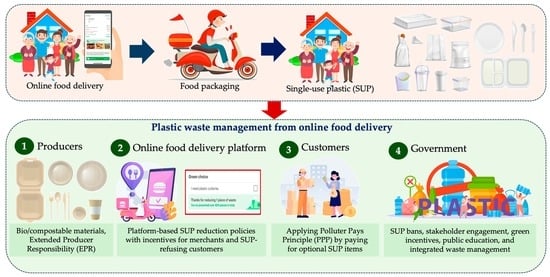
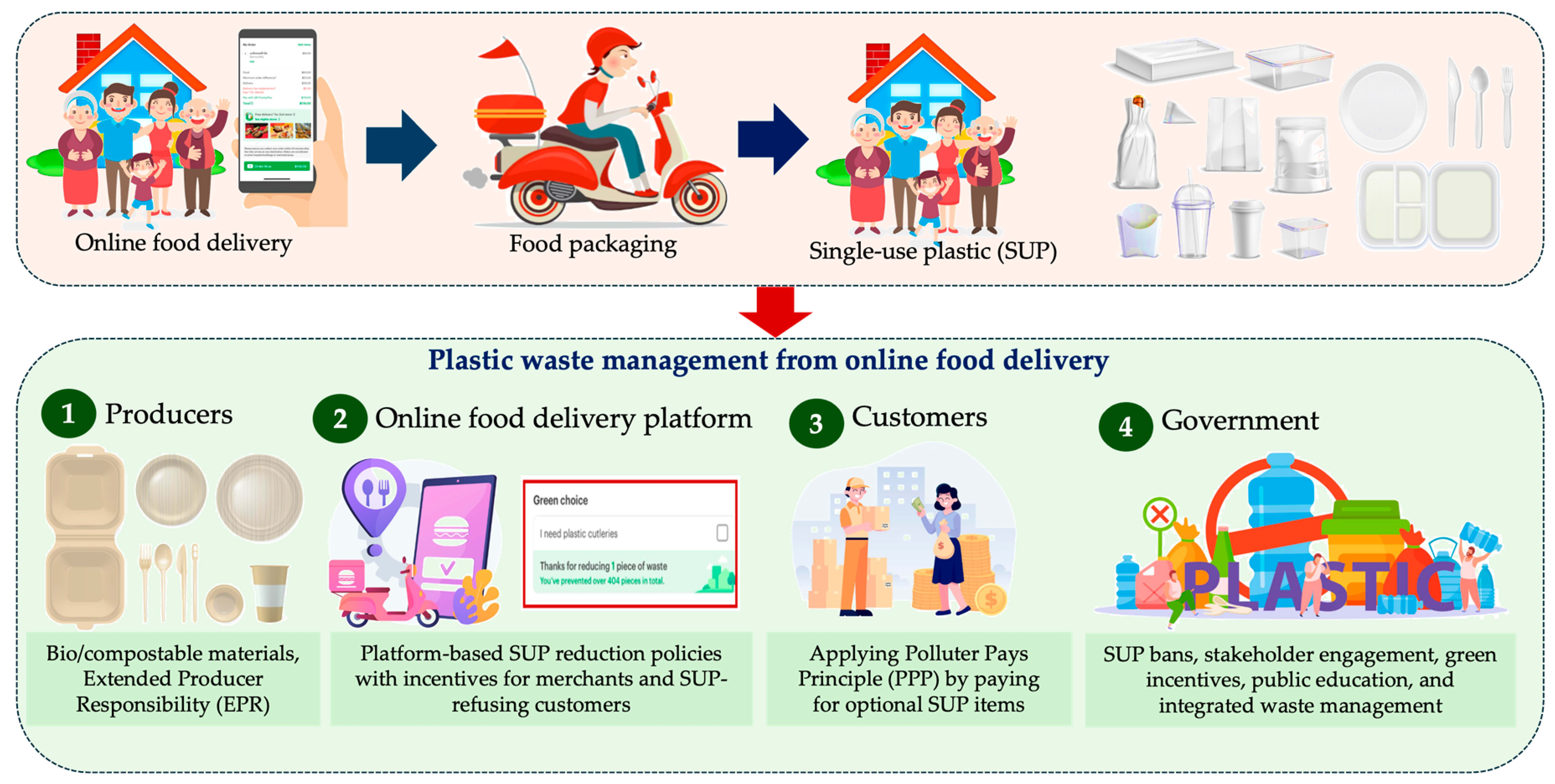
The rapid growth of online food delivery in urban areas reflects changing consumer lifestyles, but it has also contributed to increasing plastic waste and challenges in waste management. This study investigated the composition of municipal solid waste (MSW) related to online food delivery, consumer ordering behavior, and single-use plastic (SUP) generation in households in the Bangkok Metropolitan Area. Data were collected from 385 food delivery customers via online questionnaires. The results show that the proportion of plastic waste in MSW has increased, with 76.6% of participants reporting higher online food delivery usage. SUPs from food delivery, including non-essential items such as plastic films, spoons, and cutlery, were prevalent, and participants rarely selected green options to opt out of receiving them. These findings highlight the need for targeted interventions, including closed-loop management involving producers, platforms, consumers, and government. Policy recommendations include implementing extended producer responsibility (EPR) for environmentally friendly packaging, providing incentives for merchants and consumers to reduce SUP, applying the polluter-pays principle (PPP) to users, and designing government policies to regulate SUP and improve plastic waste management.

Graphical Abstract

1. Introduction

Waste generation is continuously increasing worldwide because of economic growth and unsustainable consumption [1]. Globally, more than two billion tons of municipal solid waste (MSW) are generated per year [2]. The amount of MSW is projected to grow from 2.1 billion tonnes to 3.8 billion tonnes from 2020 to 2050. In 2020, the amount of uncontrolled MSW was found to be the highest in East and South Asia when compared to other regions. Inadequate waste management contributes to environmental pollution: greenhouse gases are emitted from waste disposal sites; the long-term contamination of land by hazardous compounds affects ecosystems; and the open burning of waste releases unintentional persistent organic pollutants (UPOPs), such as dioxin compounds, which can pose a carcinogenic risk to human health [2]. Waste management is an important issue and is associated with the following Sustainable Development Goals (SDGs): Goal 3: good health and well-being; the negative effects of inadequate MSW management on public health include vector-borne diseases, odor nuisance, and respiratory system impacts resulting from emissions from open burning. Goal 12: Responsible consumption and production; production and consumption patterns directly impact MSW generation. Goal 13: climate action; poor waste management leads to the release of greenhouse gases (GHGs) through open burning and uncontrolled dumpsites, thereby contributing to climate change [3].
Currently, due to urbanization, modern life is changing, while global consumption patterns have already shifted. The key domains of urbanization included a population shift from rural to urban areas; city expansion in terms of area and infrastructure; an economic shift from agriculture to industry and services; social changes in lifestyle, education, employment, and consumption patterns; and an increase in environmental impacts. Rapid urbanization has positive and negative impacts: although it contributes to economic and social development, it poses challenges to the natural environment and social system [4]. The rapid expansion of urban areas, combined with the growing population, has caused an increase in the amount of waste generated, as reported in megacities, namely, Ho Chi Minh City [5], Beijing [6], China [7], and Brazil, and Vietnam [1]. Plastic waste pollution is mostly caused by urbanization and new consumer patterns. In addition, the outbreak of the COVID-19 pandemic has also had significant effects on the world and human life patterns [8]. As a result, delivery and online businesses, or e-commerce, were replaced by offline services. For example, the demand for online food delivery services increased in various countries during the pandemic [9]. According to Statista Digital Market Outlook, global revenues for online food delivery services were approximately USD 91 million in 2018 and USD 107 million in 2019 [10]. Additionally, the use of food delivery platforms in Thailand grew by 78–84% during lockdown compared to that before the COVID-19 pandemic [11].
The trends in food delivery service consumption are still increasing, especially in urban areas. Food delivery requires greater use of packaging and containers, most of which are made of plastic, especially single-use plastic (SUP). The amount of plastic waste generated was reported to be 6300 tons per day during the COVID-19 pandemic, which was approximately 15% higher than normal in Thailand [12]. A material flow analysis of plastic consumption associated with food delivery in South Korea showed that 600,000 tonnes of plastics were disposed of annually, including bottles, cups, and plastic bags [13]. About 8–12 million metric tonnes of plastic generated on land ended up in oceans in 2018, contributing to plastic pollution [14]. Macroplastics can break down into microplastics and accumulate in the environment, organisms, and food products. Several initiatives have been proposed worldwide to prevent plastic from entering the environment [15]. The ban on SUP and the use of reusable bags have been found to be effective preventive measures in reducing plastic waste [16].
Thailand is one of the countries facing municipal solid waste management (MSWM) problems. In 2024, Thailand generated a total of 27.2 million tonnes of MSW, or 74,529 tonnes per day, with a generation rate of 1.15 kg/capita/day [17]. Approximately 10.42 million tonnes (38%) were properly disposed of, and 10.51 million tonnes (39%) were utilized. The remaining 6.27 million tonnes (23%) were disposed of via improper methods, such as open dumping and open burning. An MSW composition analysis at a disposal site found that food waste (36.79%) accounted for the highest proportion, followed by plastic waste (29.38%). In 2022, SUP was reported to account for 2.83 million tonnes of the total waste generated, which was higher than the 2.76 million tonnes generated in 2021. Thailand created a roadmap for plastic waste management in the period of 2018–2030. The objective of this roadmap is to reduce and ultimately eliminate the use of plastic by replacing it with more environmentally friendly materials. According to the roadmap, Phase-1 aimed to ban the uses of OXO-degradable plastic and microbeads by the end of 2019, and Phase-2 aimed to ban four types of SUPs by the end of 2022. A progress report of the roadmap in 2023 found that Thailand did not achieve some of the plastic waste management targets [18].
As the capital city of Thailand, Bangkok provides job opportunities and supportive facilities, is a tourist destination, and has a large population. The solid waste problem has increased, thereby causing pollution problems, as reported by the Pollution Control Department (PCD) of Thailand [17]. The solid waste problem involves not only the huge amount of waste generated but also the composition of urban waste, which has significantly changed due to changing consumption patterns. With the convenience of online platforms, consumers increasingly rely on food delivery apps, resulting in the consumption of single-use packaging materials such as plastic containers, bags, and utensils. These materials provide convenience in the short term but pose problems in the long term for urban waste management. Food packaging is a major source of SUP, which is typically contaminated by food residues. Most SUPs are discarded with other MSW, ultimately ending up in landfills.
Understanding the composition of urban waste and the trends in the consumption of online food delivery services is necessary for urban waste management. Therefore, this study aimed to assess the composition of urban waste associated with online food delivery in the Bangkok Metropolitan Area, focusing on food delivery service consumption behavior and plastic waste generated from food delivery. Waste was collected and sorted at an official transfer station in the Bangkok Metropolitan Area. Online questionnaires were employed to collect data from customers about online food delivery service consumption and waste generation. The results of this study were used to provide data-driven recommendations for improving urban waste management and reducing the environmental footprint of food delivery service consumption.

2. Materials and Methods

2.1. Data Collection

Population data were obtained from the Bangkok Metropolitan Administration [19]. Secondary data on MSW generated in the Bangkok Metropolitan Area were collected from annual PCD reports published during the period of 2020–2024 [17], and they were used to calculate the MSW generation rate in this area.

2.2. MSW Sampling and Sorting

MSW samples were collected at a transfer station located in the Bangkok area. MSW from 50 districts in the Bangkok area was collected and loaded at the transfer station. This study was conducted from January to December 2024. The MSW samples were sorted according to ASTM D 5231-92 [20]. A total of 24 samples were collected and covered the wet and dry seasons in Thailand, with 12 collected in the wet season (May to October) and 12 collected in the dry season (November to April). The MSW at the transfer station was sampled two times per month. The sample size (n = 24) was determined based on statistical considerations for estimating the proportion of plastic among the MSW. Assuming a standard deviation of approximately 1.9% for the plastic fraction [21] and a desired margin of error of ±2% at a 95% confidence level (Z = 1.96), a minimum of 4 samples were required. By collecting 24 samples, this study ensured adequate representation of seasonal variability and increased the robustness of the estimates. After vehicle loading at the storage pit, MSW was collected, weighed (recording a value of 120 kg), and properly prepared to determine its composition. The physical composition was analyzed using the quartering method. Manual sorting was carried out to classify the waste into ten categories: food waste, plastics, paper and cardboard, rubber and leather, textile, wood and yard waste, glass, metal and aluminum, hazardous waste, and others (Table 1). Each category was weighted, and the percentage proportion was calculated. The manual sorting quality control procedure included sorter training and the use of standardized classification guidelines.

2.3. Questionnaire Designed for Data Collection

The questionnaires were divided into three sections: Section 1 focused on the demographic information of the participants (gender, age, income, educational level, residence type, and number of household members); Section 2 focused on the consumption of online food delivery services and waste generation related to food delivery ordering; and Section 3 focused on the awareness, usage, and attitudes toward plastic waste generation by food delivery services. The content of the online questionnaires was developed and reviewed for accuracy [22,23]. Validation of the questionnaire content was sought from three experts in the study field, resulting in an Index of Item-Objective Congruence of 0.98. The questionnaires and informed consent were approved by the Institutional Review Board (IRB) of the Human Research Ethics Committee, Thammasat University (Science) (HREC-TUSc; approval code COA No. 094/2564; approval date: 13 September 2021). Informed consent was obtained from all participants prior to data collection. Data were collected via the Microsoft Forms online platform, and a link was created so that the questionnaires could be shared with those interested. Non-probability sampling was employed, specifically accidental sampling. Any participant who experienced discomfort while responding to the questionnaire had the right to discontinue participation at any point. Data were not recorded until the questionnaires were fully completed and the participants confirmed their submission.

2.4. Sampling Size and Criteria

The sample size was calculated using Equation (1), resulting in 385 participants:
n   =   z 2   p ( 1 p ) / e 2
where
n is the sample size;
z is the z-score with a 95% confidence level, which is 1.96;
e is the 5% margin of error, which is 0.05;
p is 50% of the population, which is 0.5.
The inclusion criteria required participants to be of Thai nationality, aged 18 years or older, and residing in the Bangkok Metropolitan Area and to have previously used an online food delivery platform. The participants’ personal information was protected in accordance with the approved ethical protocol.

2.5. Data Analysis

The waste composition is reported as average values. Descriptive statistics are used to summarize participants’ demographic characteristics, food delivery service consumption behavior, plastic waste generation associated with food delivery, and awareness and usage and attitudes toward plastic waste generated from food delivery. All data were anonymized to ensure that no individual participant could be identified. The relationship between increased waste generation and SUP was analyzed using odds ratios with 95% confidence intervals.

3. Results

3.1. Population of Bangkok City

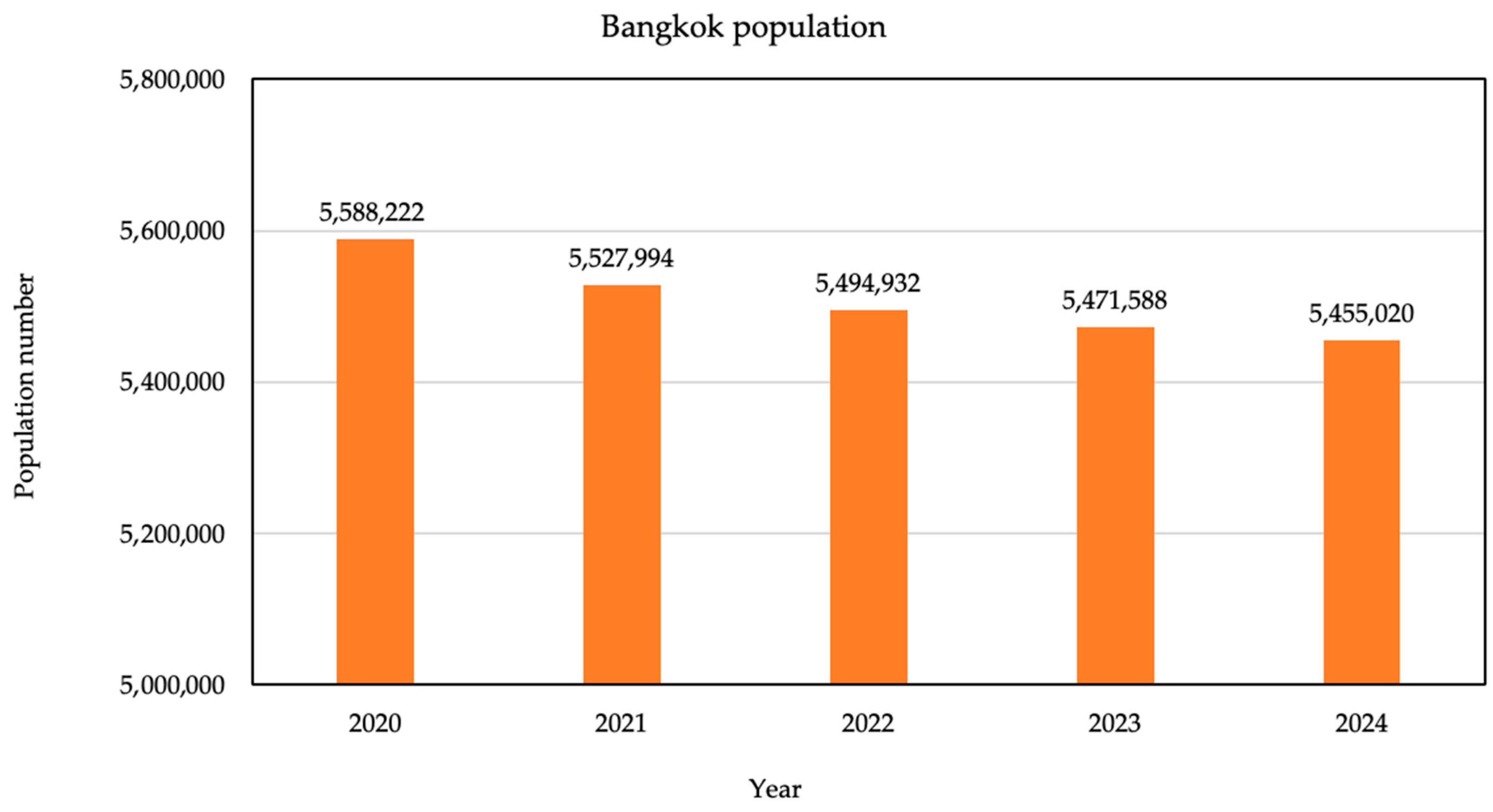
The population profile of the Bangkok Metropolitan Area from 2020–2024 [19], as shown in Figure 1, indicates that the population decreased by 2.4% within this period. The number of non-registered or transient residents significantly contributes to the increase in waste generation.

3.2. MSW Generation and Generation Rate

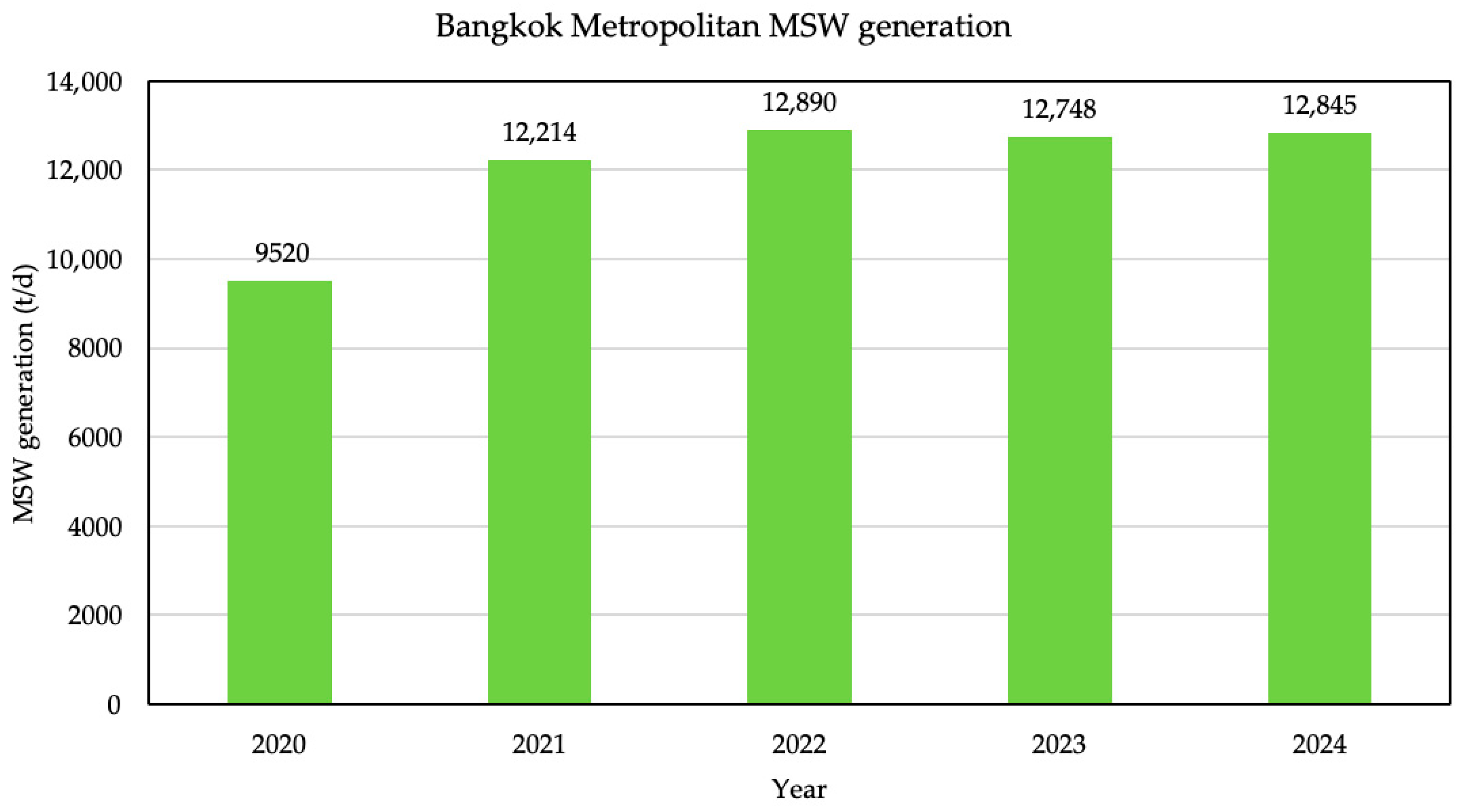
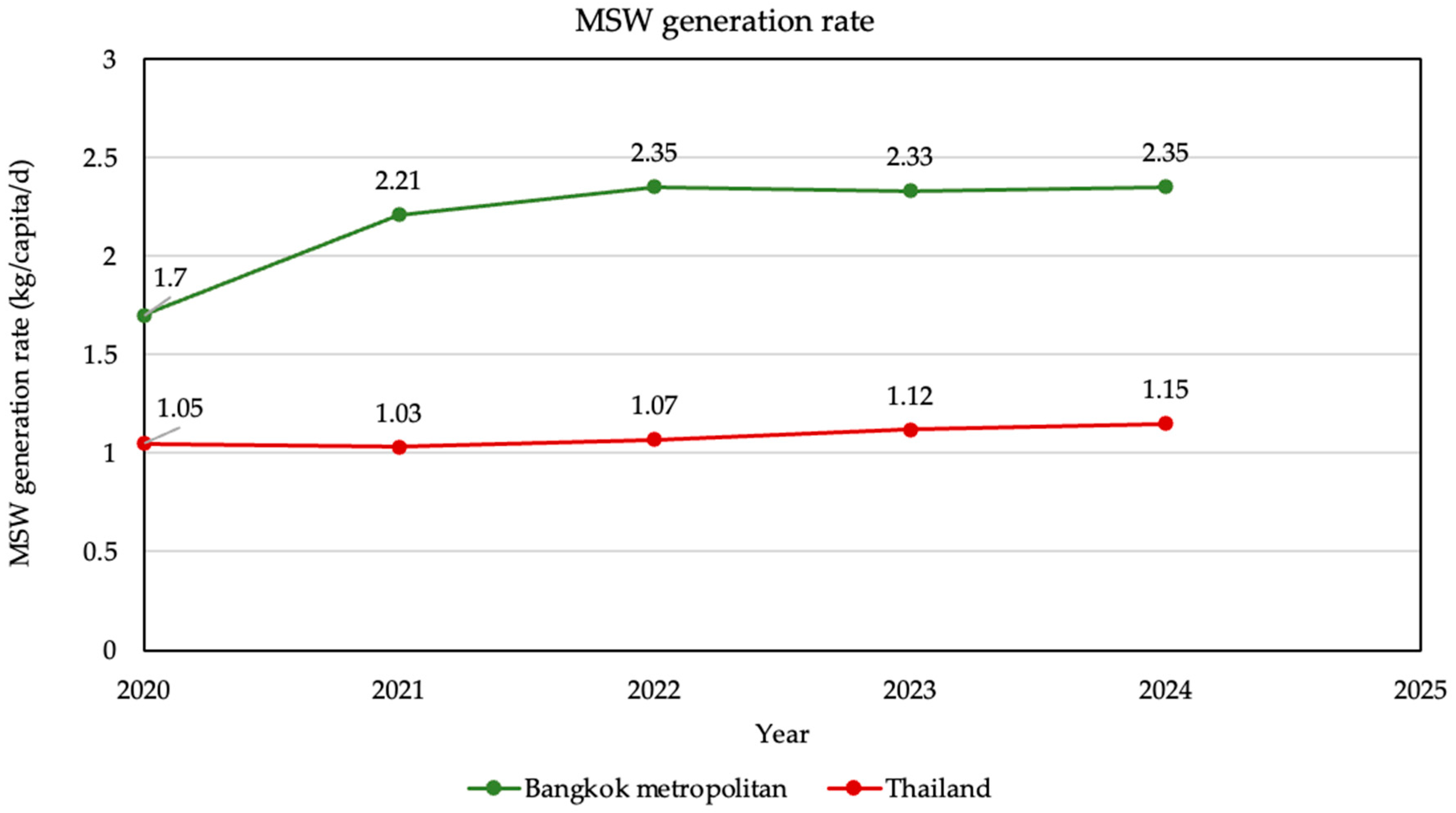
The amount of MSW generated in Bangkok increased by 4.9% from 2021 to 2024 (Figure 2), with the generation rate being approximately double that of Thailand, as shown in Figure 3. The waste generation rates were 2.1, 1.2, 0.79, and 0.6 kg/capita/day in high-income, upper-middle-income, lower-middle-income, and low-income countries, respectively. The amount of waste generated per capita in high-income countries was 3.5 times higher than that in low-income countries [24]. The waste generation rates in urban and rural areas in Mandalay, Myanmar, were found to be 0.91 and 0.37, respectively [25].

3.3. MSW Composition Analysis

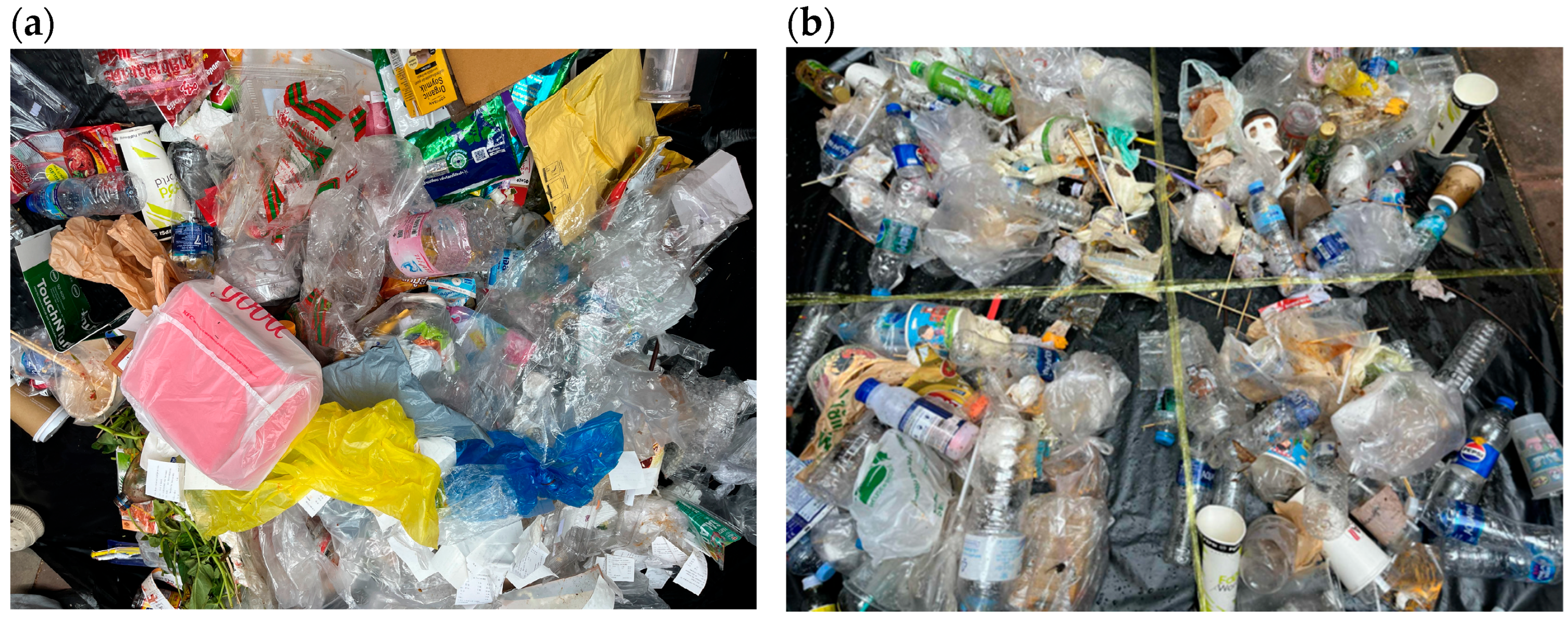
MSW was collected from a transfer station representing household sources in the Bangkok Metropolitan Area in accordance with ASTM D5231-92 [20]. The physical composition of this MSW was determined using the quartering method, followed by manual sorting into ten waste categories (Figure 4). The resulting MSW composition is presented in Table 2. Food waste was the dominant component of MSW in Bangkok, accounting for 39.3% of the total, with a relatively narrow uncertainty range (95% CI: 38.2–40.4%), indicating a consistently high contribution across sampling events. Plastic constituted the second largest component at 26.95% (95% CI: 25.6–28.2%), followed by paper and cardboard at 16.1% (95% CI: 15.2–17.0%). The non-overlapping confidence intervals among these three major components indicate clear quantitative separation at the system level, while the narrow confidence intervals support the robustness of the observed ranking of waste components. In this study, although the waste composition results did not vary in the wet and dry seasons, the wet weight composition of food waste in the wet season was higher than that in the dry season. Overall, these findings suggest that organic materials and packaging-related waste collectively dominate household MSW in Bangkok, which is consistent with the patterns reported for urban areas in tropical and middle-income regions. When compared with national-scale data for Thailand in 2024, the waste composition observed in this study is generally comparable in terms of the proportion of food waste (36.79%) and plastic (29.38%), although the proportion of paper reported nationally is considerably lower (4.58%) [17]. In contrast, earlier municipal-level reports from Thailand indicate a markedly higher proportion of food waste (65.17%), with lower contributions from plastic (17.0%) and paper (7.21%) during the previous five years [26]. Similarly, the MSW composition reported at Bangkok transfer stations showed food waste as the dominant component (43.1%), followed by plastic (16.6%) and paper (13.0%) [21]. Relative to these earlier datasets, the present results indicate a decreasing trend in food waste and increasing contributions from plastic and paper-based materials. The increasing proportions of plastic and paper waste are likely associated with changes in consumption behavior and urban lifestyles. The expansion of urbanization and online service platforms has facilitated home delivery of goods, leading to a substantial increase in packaging waste, particularly SUP and paper-based packaging. These materials contribute to a higher proportion of non-biodegradable waste, much of which ultimately ends up in landfills. Compared with previously reported waste compositions for upper-middle-income countries, where organic waste, paper, and plastic account for approximately 54%, 14%, and 11%, respectively [24], the composition observed in this study shows a relatively higher proportion of plastic and paper. Across income levels, organic waste generally remains the dominant fraction, with the highest proportions reported in low-income (64%) and lower-middle-income countries (59%). In urban areas, waste composition has been reported to consist primarily of organic waste (82.7%), followed by plastic (10.4%) and paper and cardboard (3.2%) [25]. These comparisons highlight the influence of income level, urbanization, and consumption patterns on MSW composition. In addition, hazardous waste was found to be mixed with MSW without proper separation, including chemical containers, batteries, and infectious waste such as medical masks and antigen test kits. Direct exposure to hazardous and infectious waste poses potential health risks to waste pickers and other workers involved in waste handling. Therefore, increasing public awareness of health hazards and strengthening waste segregation practices are essential to reduce environmental contamination and associated health risks.

3.4. Participant Demographics

An online questionnaire was used to collect the participants’ demographic information. As shown in Table 3, a total of 385 participants completed the questionnaire, which was distributed from January to December 2024. More than half of the participants were female (55.3%), and the rest were male (42.9%). Additionally, 37.3% of the participants were in the age range of 26–35 years, and 39.5% had a monthly income of THB 25,001 to 50,000 or USD 730 to 1460. In terms of education level, approximately 47.3% of the participants had graduate qualifications. Approximately 51.4% of the participants lived in detached houses, and 40.5% had 3–5 family members. According to the results, the gender and age ranges of the participants who had experience in ordering food online for delivery were similar to those in a previous study conducted on various countries [23,27]. Monthly income was influenced by consumer behavior toward online food delivery during the COVID-19 pandemic in Bangkok [27]. However, in terms of education level, 61.4% of the participants had post-graduate qualifications, and 33.2% were graduates [23]. The types of residence varied in each location studied. For example, in the Bangkok area, 33.0% of the respondents lived in dormitories or shared houses [28].

3.5. Online Food Delivery Consumption Behavior

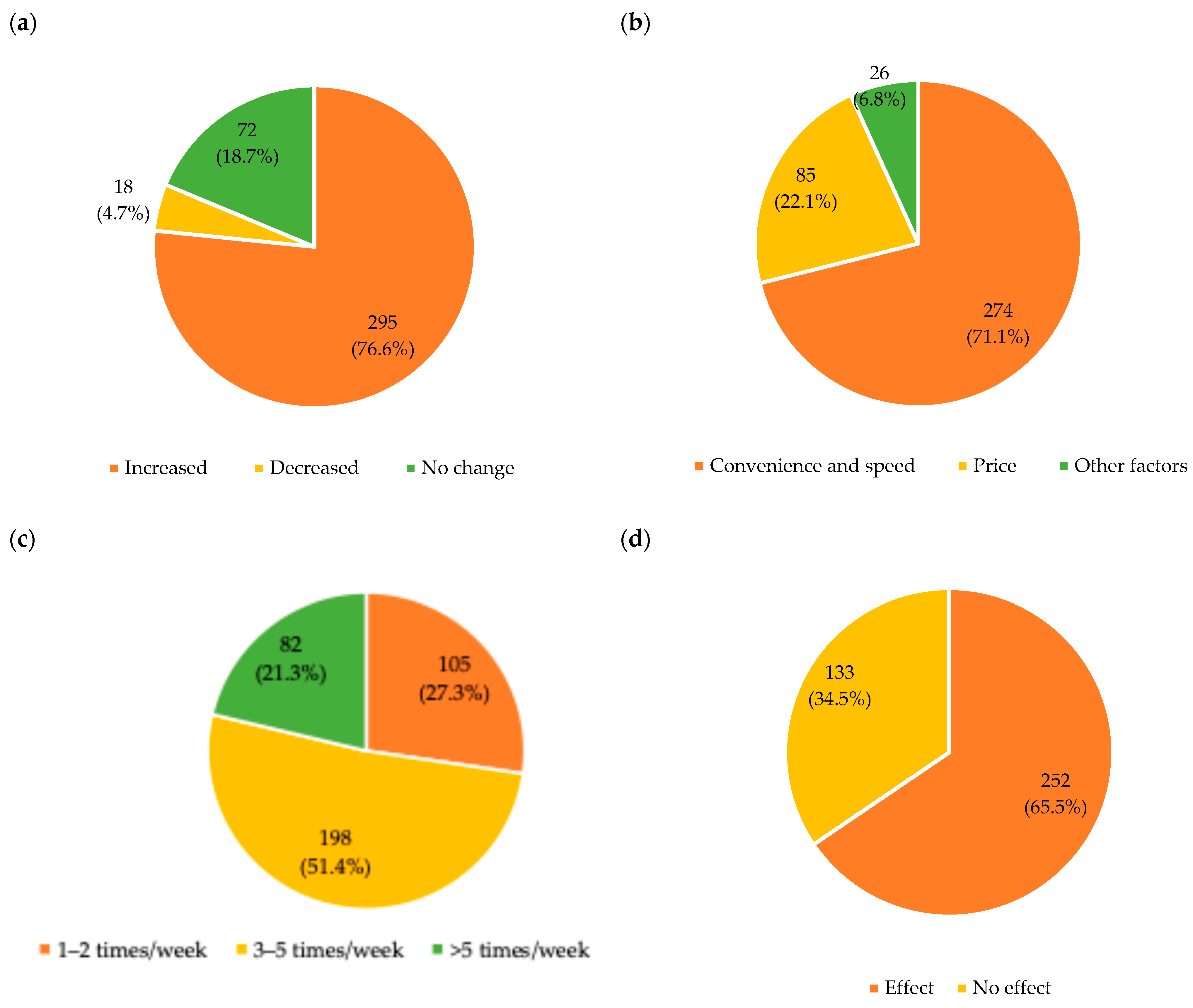
A total of 385 participants had experience with ordering food for delivery via online platforms. The results show that, since the COVID-19 pandemic, the consumption of food delivery services increased by 76.6% among the participants. The reasons for selecting food delivery services were convenience and fast delivery, cited by 71.1% of the participants, followed by price (22.1%) and other reasons (6.8%), such as discount coupons and multiple orders from various restaurants. Online platforms compete by presenting campaigns to customers that showcase attractive online ordering options. This result is similar to that reported by Liu et al., who found that food delivery has increased since the COVID-19 pandemic [28]. Regarding the frequency of food delivery, 51.4% ordered 3–5 times per week, 27.3% ordered 1–2 times per week, and 21.3% ordered more than 5 times per week. A total of 65.5% of the participants stated that platform brand did not affect food ordering. The results of the food delivery service consumption survey are presented in Figure 5. The results of this study are similar to those reported by Filho et al., who found that the consumption of food delivery services increased by 46.0% among the survey participants [23]. The estimated number of platform-to-consumer users was expected to reach 427 million in 2024, up from 263 million users in 2019 [8]. During the COVID-19 pandemic, food delivery platforms grew by 78–84% in Thailand [11]. Although the situation has since returned to normal, lifestyle and consumption patterns have changed. Online platforms and e-commerce serve and support new patterns of human life.

3.6. Waste Generation Related to Online Food Delivery

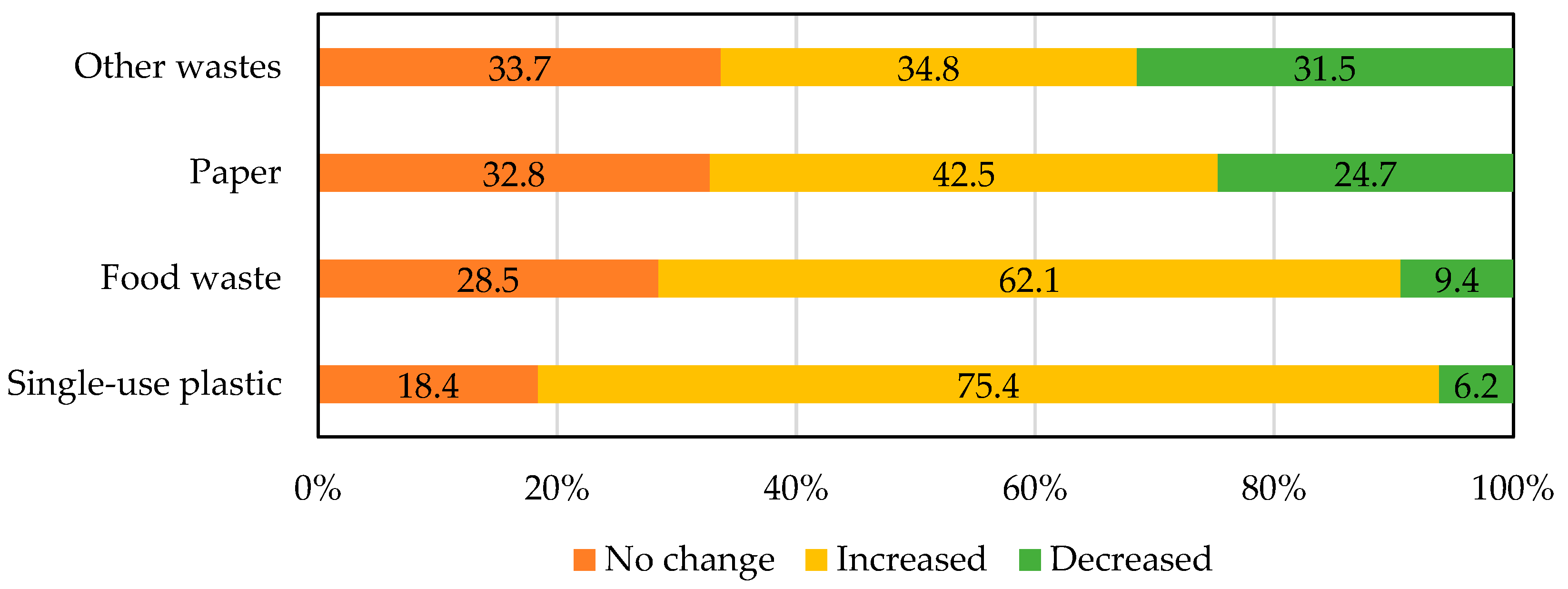
According to the survey results of waste generation related to food delivery, approximately 66.0% of the participants confirmed that their household waste generation increased, 20.8% reported no changes, and 13.2% stated that it decreased. A previous study reported that there has been an increase in the demand for food delivery and an increase in the generation of waste, especially plastic waste [29]. The composition of household waste, as observed by the participants, indicates notable changes since the COVID-19 outbreak. According to the results, in the household waste category, SUP increased by approximately 75.4% and food waste increased by 62.1% among the participants, as shown in Figure 6. The trends observed in plastic waste generation are similar to those in a previous report on the increase in plastic waste in Bangkok during the COVID-19 pandemic [30]. The highest increase was observed for plastic packaging and food waste, with an increase of 53% and 45%, respectively, during lockdown [23]. Approximately 76% of the participants indicated that the amount of food waste generated increased with the rise in online food delivery platforms [28]. Additionally, increased SUP consumption involved items such as take-away packaging from restaurants [31]. This result confirms that growth of the food delivery industry has contributed to the increase in the generation of household waste and the changes in its composition.

3.7. SUP Generation from Online Food Delivery

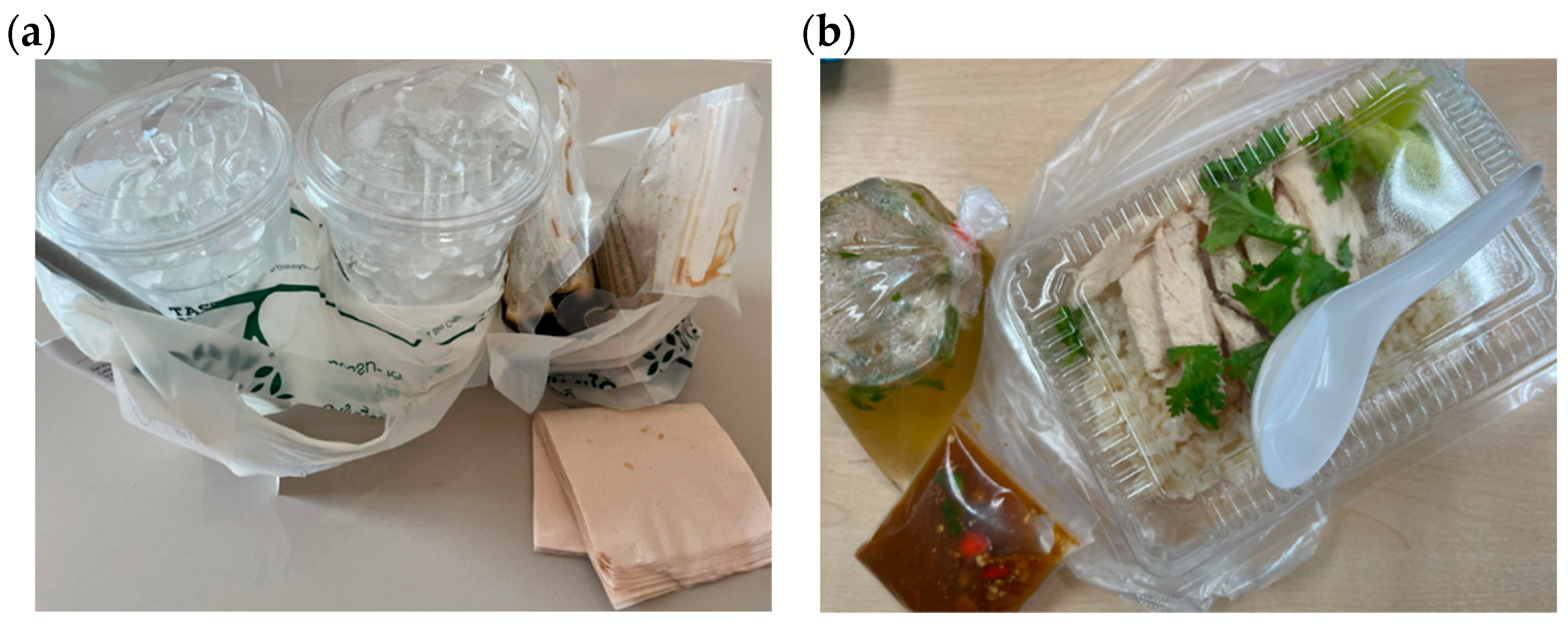
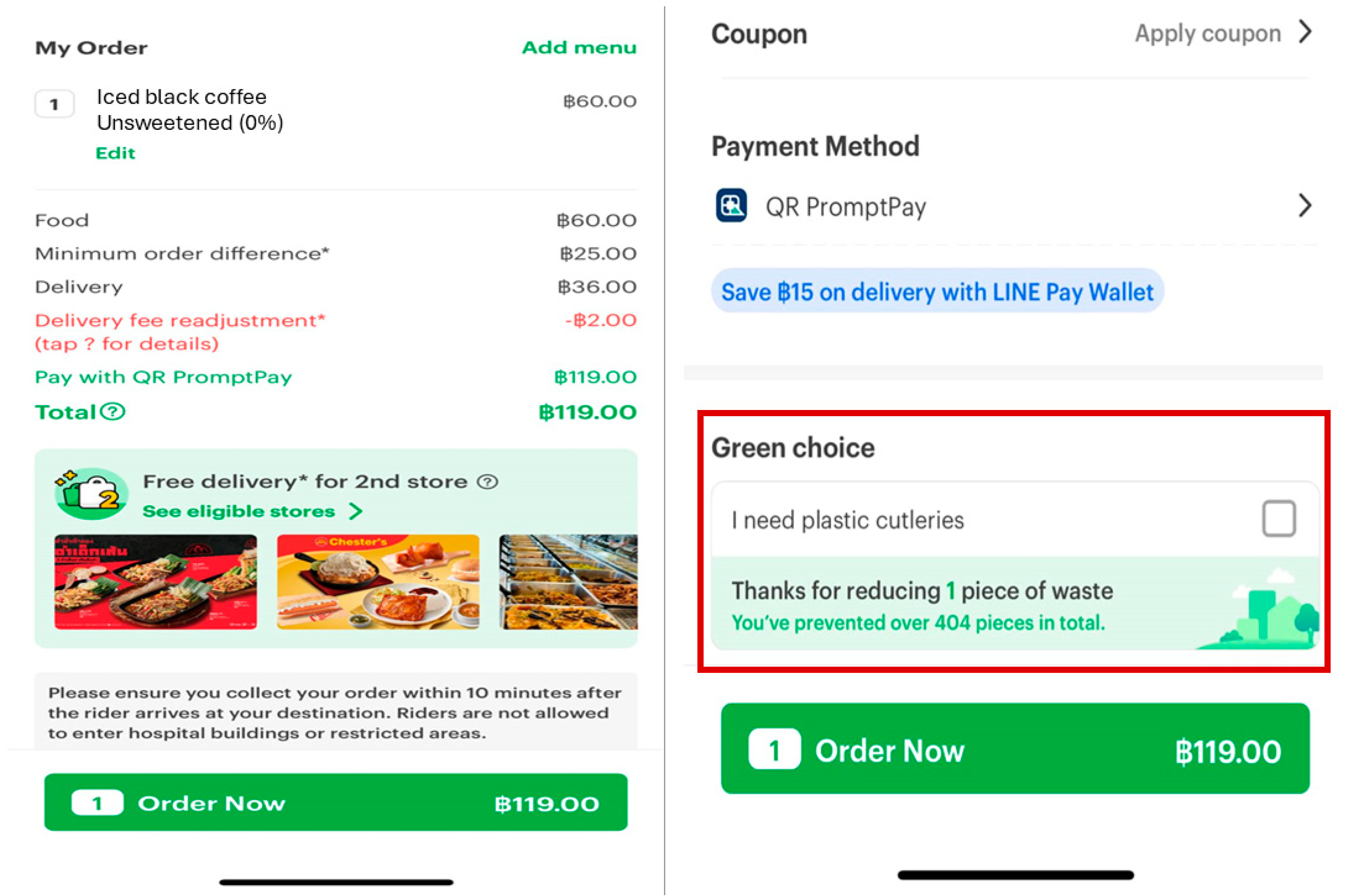
Ordering food from online platforms generates packaging waste, especially plastic waste. SUPs generated from ordering beverages for delivery included plastic cups, bottles, straws, lids, bags, and wraps. SUPs generated from ordering food for delivery include, at minimum, food packaging; plastic bags, films, cutlery, cups, and lids and other plastic items; and condiment or seasoning packages (Figure 7). Solid waste from online food delivery includes not only plastic but also paper, cardboard, rubber, wood, etc. The variation in SUP consumption is related to the type of order. Most participants agreed with the notion that SUP has increased due to the high demand for food delivery since the COVID-19 outbreak. SUP has increased along with food delivery in Thailand [32]. The top four wastes generated from food delivery were reported to be plastic bags, hot-and-cold food bags, plastic food containers, and food waste [28]. A total of 72,930 tonnes of plastic packaging was used for online food delivery in 2020, with SUP in South Korea accounting for a large proportion [33]. The COVID-19 pandemic has exacerbated the consumption of SUPs in restaurants due to the growing preference for food delivery services [8]. Typically, food plastic packaging waste is contaminated by food residues, making their separation for further benefit difficult. Therefore, most plastic packaging is disposed of in landfills [34,35]. Despite efforts by the Thai government to reduce the SUPs from food delivery platforms through memorandum of understanding (MOU) with the popular platforms such as LINE MAN, GrabFood, Foodpanda, and GetFood, the amount of SUP waste has not decreased [18]. Figure 8 shows the green choice of declining SUPs on an online food delivery platform. This choice presents an option to reduce SUP waste from food delivery.
Approximately 75.0% of the total food delivery packaging waste in weight is made up of polypropylene (PP) and polystyrene (PS) foam [34]. Most plastic packaging is used only once, and then it is discarded because it is not suitable for reuse or recycling. Consequently, these plastic materials from food delivery become wasteful and end up in landfills or are mismanaged, without proper environmental protection. These macroplastics can break down into plastic debris (microplastics or nanoplastics), contaminating the environment and accumulating in the food chain and food web [36]. The results show that online food delivery was a major source of SUP generation and that it also affected the proportion of plastic in household waste. Therefore, an increased awareness of the option to opt out of using plastic for online food delivery services may help to reduce the amount of household plastic waste.

3.8. Awareness, Usage, and Attitudes Toward SUP Consumption from Online Food Delivery

Most respondents were aware that online food delivery platforms provide an option to decline SUPs (71.4%) (e.g., plastic spoons, plastic cutlery, plastic straws, etc.). However, among those who were aware (n = 275), only 58.9% reported having used this option, and 41.1% had never used it (Table 4). Among the respondents who declined SUPs, spoons (42.0%) and cutlery (36.4%) were the most frequently declined items, whereas straws were less commonly declined (16.7%). Only 39.5% of the participants agreed with charging an additional fee for SUP, while 51.7% disagreed. Generally, customers expected to receive a service similar to that received when dining at a restaurant, as well as the same service quality. As previously suggested, food packaging or containers should be made of biodegradable or environmentally friendly materials [23].
The findings regarding the gap between the awareness of platform options and their actual use can be observed in Table 4, and they indicate that awareness alone does not translate into consistent behavioral adoption. This suggests the presence of behavioral barriers rather than informational deficits. Specifically, the option to decline SUP requires active user selection and is not configured as a default choice, which may introduce friction costs and discourage uptake despite high awareness. This interpretation is further supported by the low level of agreement with additional charges for SUP, indicating resistance to interventions that increase perceived effort or cost. Moreover, the selective avoidance of certain items (e.g., spoons and cutlery) suggests that users prioritize declining items perceived as unnecessary rather than engaging in comprehensive SUP reduction.

3.9. Plastic Waste Management from Online Food Delivery

Regarding the plastic waste generated from online food delivery, approximately 24.9% of the participants separated recyclable plastic waste from other types of wastes. Non-recyclable SUP is mixed and discarded with other waste types. Due to the packaging quality of SUP, 86.9% of participants did not reuse food containers. Most of the participants (74.5%) did not separate food waste before discarding plastic waste, resulting in bad odors by organic compound degradation.

4. Discussion

Urbanization has significantly influenced MSW generation and composition of MSW in Bangkok Metropolitan Area. The results indicate that the total amount of MSW increased between 2020 and 2024, accompanied by a compositional shift toward a higher proportion of plastic waste. This trend coincides with the rapid growth of online food delivery services in urban areas, which has emerged as an important contributor to packaging-related plastic waste. The survey data show that 76.6% of the participants reported increased use of online food delivery, largely driven by convenience and urban lifestyle patterns.
The participants consistently perceived that online food delivery contributes to increased generation of SUP in household waste, particularly items that are often unnecessary, such as plastic films, spoons, cutlery, and other disposable accessories. A quantitative analysis supported this perception: participants reporting an overall increase in household waste had significantly higher odds of reporting increased SUP than those reporting no overall waste increase (OR = 1.77; 95% CI: 1.04–3.01). This association is plausible given that packaging materials constitute a substantial share of waste generated from online food delivery, especially plastic containers, cutlery, and straws. These findings suggest that recent increases in MSW are not driven solely by food waste but are also closely linked to packaging-intensive consumption patterns. Nevertheless, this association should be interpreted with caution. SUP represents a subset of overall MSW, and the observed relationship may partially reflect overlap in the participants’ perceptions of waste increase rather than a fully independent effect. In addition, the survey data are self-reported and perception-based, which may be influenced by heightened public awareness of plastic pollution rather than objectively measured quantities. Accordingly, the results should be interpreted as indicative of behavioral and system-level patterns rather than as evidence of causal relationships.
From a behavioral and platform-design perspective, the findings suggest limited effectiveness of existing platform-level SUP reduction measures. Although many food delivery platforms provide options to decline SUP, these options are typically non-default and require additional user effort. Consequently, increased ordering frequency may translate into higher cumulative SUP generation, even among users who are aware of waste reduction options. This highlights the importance of packaging-specific interventions—such as default opt-out settings for SUP, improved information design, or modest economic disincentives—rather than relying solely on general awareness campaigns.
Beyond their role in shaping consumption patterns, digital food delivery platforms also represent potential enablers of circular economy solutions. Recent work by Giordano et al. highlights how circular economy research increasingly emphasizes digital and data-driven approaches, including behavioral nudging, monitoring, and accountability mechanisms across value chains. In this context, online food delivery platforms could function not only as sources of packaging-intensive consumption but also as intervention points for circular waste management [37]. Platform-mediated tools—such as default SUP opt-out design, feedback on packaging choices, digital tracking of packaging materials, and data-enabled reporting to producers and regulators—could complement policy instruments such as extended producer responsibility (EPR) and the polluter-pays principle (PPP) by embedding circular economy principles directly into everyday consumption practices. The broader implications of increased SUP waste extend beyond waste volumes to environmental and health concerns, as food delivery packaging is predominantly composed of non-degradable polymers such as polypropylene (PP) and polystyrene (PS), which can fragment into microplastics in the environment.
In Thailand, plastic waste management remains a significant challenge, and national targets outlined in the Plastic Waste Management Roadmap (2018–2030) have not yet been fully achieved. Within the scope of this study, policy implications are framed cautiously and directly linked to the empirical findings. For producers, the observed increase in packaging-related plastics supports the relevance of EPR to promote the development and end-of-life management of environmentally friendly or compostable packaging. For online food delivery platforms, the low effective uptake of SUP opt-out options underscores the need for platform-level policies that redesign default settings and provide incentives for merchants and consumers to reduce unnecessary SUP. For consumers, the findings suggest that voluntary measures alone may be insufficient, and carefully designed applications of the PPP, such as charges for optional SUP items, may help internalize environmental costs. At the governmental level, SUP restrictions, economic incentives for sustainable packaging, public education on waste separation, and planning for SUP-specific collection and disposal systems are necessary to support a coordinated waste management framework. Overall, effective plastic waste management in the context of online food delivery requires coordinated action among producers, platforms, consumers, government agencies, and civil society. Future research should extend this analysis to suburban and peri-urban areas and integrate direct quantitative measurements of SUP flows to better inform the design of targeted and scalable waste management strategies. This study has several limitations that should be considered. First, the data were aggregated at the municipal level in the Bangkok Metropolitan Area, which limits the generalizability of the findings to suburban, peri-urban, or rural settings. Second, the study did not include direct quantitative measurements of SUP or other waste streams, constraining the precision with which the contribution of packaging-related materials to total MSW can be estimated. Third, although platform-level SUP reduction options were examined, actual behavioral compliance may vary due to default settings and friction costs inherent in digital platforms. Fourth, the analysis relied primarily on descriptive statistics, and no statistical comparisons were conducted across demographic or socioeconomic subgroups (e.g., income, age, or residence type), limiting insight into potential heterogeneity in waste-related behaviors. Finally, the sample focused mainly on urban online food delivery customers and may not capture waste generation patterns in other demographic or geographic groups. Future studies should build upon the limitations identified in this work to provide a more comprehensive understanding of plastic waste generation associated with online food delivery. Specifically, future research should extend the geographic scope beyond the Bangkok Metropolitan Area to include suburban, peri-urban, and rural contexts in order to improve the generalizability of the findings. Incorporating direct quantitative measurements of SUP and other MSW streams, alongside survey-based data, would allow for a more precise estimation of packaging-related contributions to total waste. Further studies should also apply inferential statistical analyses to examine differences across demographic and socioeconomic subgroups, such as income level, age, and residence type, to better capture heterogeneity in consumption and waste-related behaviors. In addition, longitudinal or experimental designs could be employed to evaluate the effectiveness of platform-level interventions—such as default SUP opt-out settings, pricing mechanisms, or information nudges—on actual consumer behavior. Together, these approaches would strengthen causal inference and support the design of targeted, scalable, and evidence-based waste management strategies in rapidly urbanizing and digitally mediated food systems.

5. Conclusions

Based on the results of this study, the following conclusions can be drawn:
(1)
MSW generation in the Bangkok Metropolitan Area increased from 2020 to 2024, with a notable rise in the proportion of plastic waste.
(2)
The growth of online food delivery services, reported by 76.6% of the participants, is associated with an increased generation of SUPs in households, particularly non-essential items such as plastic films, cutlery, and spoons.
(3)
Although many platforms offer options to decline SUP, these measures are largely ineffective, as only 58.9% of aware participants used them, indicating behavioral and platform design barriers.
(4)
Targeted interventions in online food delivery are needed to mitigate plastic waste, including default opt-out SUP settings, incentives for merchants and customers, and coordination among multiple stakeholders, including producers, platforms, consumers, government, and NGOs.
(5)
Effective plastic waste management requires evidence-based strategies that consider both behavioral factors and urban consumption patterns, highlighting the importance of data-driven policy design.

Author Contributions

Conceptualization, Y.S. and N.E.; methodology, N.E.; data curation, Y.S. and N.E.; writing—original draft preparation, C.P., Y.S. and N.E.; writing—review and editing, Y.S. and N.E.; supervision, C.P.; funding acquisition, N.E. All authors have read and agreed to the published version of the manuscript.

Funding

This study was supported by Thammasat University Research Fund, Contract No. TUFT 98/2564.

Institutional Review Board Statement

The study was conducted in accordance with the Declaration of Helsinki, and approved by the Human Research Ethics Committee of Thammasat University (Science), (HREC-TUSc) (protocol code COA No. 094/2564, approval date 13 September 2021).

Informed Consent Statement

Informed consent was obtained from all subjects involved in the study.

Data Availability Statement

The original contributions presented in this study are included in the article. Further inquiries can be directed to the corresponding authors.

Acknowledgments

The authors gratefully acknowledge all participants for their valuable contributions and cooperation in providing the data for this research.

Conflicts of Interest

The authors declare no conflicts of interest.

References

  1. Silva, L.D.; Prietto, P.D.M.; Korf, E.P. Sustainability indicators for urban solid waste management in large and medium-size worldwide cities. J. Clean. Prod. 2019, 237, 117802. [Google Scholar] [CrossRef]
  2. United Nations Environment Programme (UNEP). Global Waste Management Outlook 2024: Beyond an Age of Waste—Turning Rubbish into a Resource; UNEP: Nairobi, Kenya, 2024; ISBN 978-92-807-4129-2. [Google Scholar]
  3. United Nations (UN). The Sustainable Development Agenda. Available online: https://www.un.org/sustainabledevelopment/sustainable-development-goals/ (accessed on 15 July 2025).
  4. Voukkali, I.; Papamichael, I.; Loizia, P.; Zorpas, A. Urbanization and solid waste production: Prospects and challenges. Environ. Sci. Pollut. Res. 2024, 31, 17678–17689. [Google Scholar] [CrossRef] [PubMed]
  5. Verma, R.L.; Borongan, G. Emissions of greenhouse gases from municipal solid waste management system in Ho Chi Minh City of Viet Nam. Urban Sci. 2022, 6, 78. [Google Scholar] [CrossRef]
  6. Li, Y.; Zhang, S.; Liu, C. Research on greenhouse gas emission characteristics and emission mitigation potential of municipal solid waste treatment in Beijing. Sustainability 2022, 14, 8398. [Google Scholar] [CrossRef]
  7. Pan, A.; Yu, L.; Yang, Q. Characteristics and forecasting of municipal solid waste generation in China. Sustainability 2019, 11, 1433. [Google Scholar] [CrossRef]
  8. Janairo, J.I.B. Unsustainable plastic consumption associated with online food delivery services in the new normal. Clean. Responsib. Consum. 2021, 2, 100014. [Google Scholar] [CrossRef]
  9. Charm, T.; Grimmelt, A.; Kim, H.; Robinson, K.; Lu, N.; Yvonne, M.M.O.; Yamakawa, N. Consumer Sentiment and Behavior Continue to Reflect the Uncertainty of the COVID-19 Crisis. Available online: https://www.mckinsey.com/capabilities/growth-marketing-and-sales/our-insights/a-global-view-of-how-consumer-behavior-is-changing-amid-covid-19#/ (accessed on 15 February 2025).
  10. Blumtritt, C. Online Food Delivery Report 2020. Available online: https://www.statista.com/ (accessed on 1 March 2025).
  11. Kasikorn Research Center. Competition Among Food Delivery Apps Continues to Push Food Delivery Business to THB 33–35 Billion in 2019. Available online: https://www.kasikornresearch.com/en/analysis/k-econ/business/Pages/z2995.aspx (accessed on 16 February 2025).
  12. Thailand Development Research Institute (TDRI). TDRI Policy Series on Fighting COVID-19. Available online: https://tdri.or.th/tag/tdri-policy-series-on-fighting-covid-19/ (accessed on 4 January 2025).
  13. Jang, Y.C.; Lee, G.; Kwon, Y.; Lim, J.H.; Jeong, J.H. Recycling and management practices of plastic packaging waste towards a circular economy in South Korea. Resour. Conserv. Recycl. 2020, 158, 104798. [Google Scholar] [CrossRef]
  14. Bondaroff, T.P.; Cooke, S. Masks on the Beach: The Impact of COVID-19 on Marine Plastic Pollution; OceansAsia: Hong Kong, China, 2020; Available online: https://oceansasia.org/wp-content/uploads/2020/12/Marine-Plastic-Pollution-FINAL.pdf (accessed on 16 February 2025).
  15. Shams, M.; Alam, I.; Mahbub, S. Plastic pollution during COVID-19: Plastic waste directives and its long-term impact on the environment. Environ. Adv. 2021, 5, 100119. [Google Scholar] [CrossRef]
  16. Schnurr, R.E.J.; Alboiu, V.; Chaudhary, M.; Corbett, R.A.; Quanz, M.E.; Sankar, K.; Srain, H.S.; Thavarajah, V.; Xanthos, D.; Walker, T.R. Reducing marine pollution from single-use plastics (SUPs): A review. Mar. Pollut. Bull. 2018, 137, 157–171. [Google Scholar] [CrossRef]
  17. Pollution Control Department (PCD); Ministry of Natural Resources and Environment. Thailand State of Pollution Report 2024; PCD: Bangkok, Thailand, 2024.
  18. Pollution Control Department (PCD); Ministry of Natural Resources and Environment. Thailand State of Pollution Report 2022; PCD No. 06-077; AP CONNEX Co., Ltd.: Bangkok, Thailand, 2023. Available online: https://www.pcd.go.th/wp-content/uploads/2023/01/pcdnew-2023-01-31_02-16-39_113228.pdf (accessed on 1 March 2025).
  19. Bangkok Metropolitan Administration (BMA). Bangkok Population by District. Available online: https://data.bangkok.go.th/dataset/bkkpopulationdistric (accessed on 1 March 2025).
  20. ASTM D5231-92; Standard Test Method for Determination of the Composition of Unprocessed Municipal Solid Waste. ASTM International: West Conshohocken, PA, USA, 2003.
  21. Eaktasang, N.; Suma, Y.; Kingkeaw, S.; Liang, L.; Mahiphot, J. Energy recovery of refuse-derived fuel components from municipal solid waste in Bangkok, Thailand. EnvironmentAsia 2022, 15, 54–64. [Google Scholar]
  22. Fan, Y.V.; Jiang, P.; Hemzal, M.; Klemeš, J.J. An update of COVID-19 influence on waste management. Sci. Total Environ. 2021, 754, 142014. [Google Scholar] [CrossRef] [PubMed]
  23. Filho, W.L.; Voronova, V.; Kloga, M.; Paço, A.; Minhas, A.; Salvia, A.L.; Ferreira, C.; Sivapalan, S. COVID-19 and waste production in households: A trend analysis. Sci. Total Environ. 2021, 777, 145997. [Google Scholar] [CrossRef]
  24. Zaman, A.U. A comprehensive study of environmental and economic benefits of resource recovery from global waste management systems. J. Clean. Prod. 2016, 124, 41–50. [Google Scholar] [CrossRef]
  25. Win, K.Z.; Yabar, H.; Mizunoya, T. Analysis of household waste generation and composition in Mandalay: Urban–rural comparison and implications for optimizing waste management facilities. Waste 2024, 4, 490–509. [Google Scholar] [CrossRef]
  26. Sununta, N.; Sampattagul, S. Greenhouse gas emissions evaluation from municipal solid waste management and mitigation planning for municipality in Thailand. In Proceedings of the 8th International Conference on Environmental Engineering, Science and Management, The Twin Tower Hotel, Bangkok, Thailand, 23–24 May 2019; pp. 1–7. [Google Scholar]
  27. Chalermdan, N. Consumers’ behavior on buying delivery food via mobile application during new species of corona virus 2019 (COVID-19) in Bangkok. J. Ind. Bus. Adm. 2020, 2, 92–106. [Google Scholar]
  28. Liu, C.; Bunditsakulchai, P.; Zhuo, Q. Impact of COVID-19 on food and plastic waste generated by consumers in Bangkok. Sustainability 2021, 13, 8988. [Google Scholar] [CrossRef]
  29. Sharma, H.B.; Vanapalli, K.R.; Cheela, V.S.; Ranjan, V.P.; Jaglan, A.K.; Dubey, B.; Goel, S.; Bhattacharya, J. Challenges, opportunities, and innovations for effective solid waste management during and post COVID-19 pandemic. Resour. Conserv. Recycl. 2020, 162, 105052. [Google Scholar] [CrossRef]
  30. Simachaya, W. Solid Waste During COVID-19. Available online: https://www.tei.or.th/en/article_detail.php?bid=49 (accessed on 5 March 2025).
  31. Ammendolia, J.; Walker, T.R. Citizen science: A way forward in tackling the plastic pollution crisis during and beyond the COVID-19 pandemic. Sci. Total Environ. 2022, 805, 149957. [Google Scholar] [CrossRef]
  32. Kamvanin, S.; Noosorn, N. Solid waste: What is the situation during COVID-19? J. Public Health Nurs. 2020, 34, 144–157. [Google Scholar]
  33. Jang, Y.; Kim, K.N.; Woo, J.R. Post-consumer plastic packaging waste from online food delivery services in South Korea. Waste Manag. 2023, 156, 177–186. [Google Scholar] [CrossRef]
  34. Song, G.; Zhang, H.; Duan, H.; Xu, M. Packaging waste from food delivery in China’s mega cities. Resour. Conserv. Recycl. 2018, 130, 226–227. [Google Scholar] [CrossRef]
  35. Khoo, K.S.; Ho, L.Y.; Lim, H.R.; Leong, H.Y.; Chew, K.W. Plastic waste associated with the COVID-19 pandemic: Crisis or opportunity? J. Hazard. Mater. 2021, 417, 126108. [Google Scholar] [CrossRef]
  36. Mallick, S.K.; Pramanik, M.; Maity, B.; Das, P.; Sahana, M. Plastic waste footprint in the context of COVID-19: Reduction challenges and policy recommendations towards sustainable development goals. Sci. Total Environ. 2021, 796, 148951. [Google Scholar] [CrossRef]
  37. Giordano, V.; Castagnoli, A.; Pecorini, I.; Chiarello, F. Identifying technologies in circular economy paradigm through text mining on scientific literature. PLoS ONE 2024, 19, e0312709. [Google Scholar] [CrossRef]
Figure 1. Population of Bangkok City from 2020 to 2024 [19].
Urbansci 10 00038 g001
Figure 2. MSW generation in Bangkok Metropolitan Area from 2020 to 2024 [17].
Urbansci 10 00038 g002
Figure 3. MSW generation rate in Bangkok Metropolitan Area from 2020 to 2024 [17].
Urbansci 10 00038 g003
Figure 4. (a) Representative MSW samples; (b) physical composition analysis by manual sorting.
Urbansci 10 00038 g004
Figure 5. Online food delivery patterns: (a) change in food delivery use; (b) reasons for choosing food delivery; (c) frequency of food delivery use; and (d) influence of platform brand.
Urbansci 10 00038 g005
Figure 6. Changes in waste generation associated with online food delivery.
Urbansci 10 00038 g006
Figure 7. SUP waste from online food delivery: (a) beverage-related SUP packaging, including plastic cups, lids, straws, and carrier bags, and (b) food-related SUP packaging, including plastic food containers, cutlery, sauce sachets, and plastic bags.
Urbansci 10 00038 g007
Figure 8. Screenshot of a “Green choice” feature in an online food delivery application, highlighting an opt-out option for plastic cutlery that contributes to reducing one piece of SUP waste per transaction. (Order confirmation screen of a food delivery application illustrating the “Green choice” option. The area highlight-ed by the red rectangle indicates the environmental preference feature that allows users to opt out of receiving plastic cutlery. The checkbox symbol represents user selection, while the green background and icons signify environmentally friendly choices and waste reduction feedback provided by the application.).
Urbansci 10 00038 g008
Table 1. Waste composition by category.
Waste CategoryDescription of Waste
Food wasteFood waste and food scrap.
PlasticAll plastics: single-use plastics, plastic bags, plastic films, plastic cutlery and spoons, plastic cups, plastic bottles, and plastic straws.
Paper and cardboardOffice paper, magazines, and cardboard.
Rubber and leatherRubber and leather materials.
TextileTextile materials.
Wood and yard wasteWood and yard waste (branches, twigs, leaves, grass, and other plant materials).
GlassAll glass.
Metal and aluminumFerrous materials (iron, steel, and tin can), and aluminum.
Hazardous wasteChemical containers, batteries, infectious waste (medical masks, and antigen test kits), and drugs.
OtherCeramic and plaster.
Table 2. Physical composition of the MSW at a transfer station in the Bangkok Metropolitan Area.
Waste CategoryComposition (wt.%)
This Study
(n = 24) *
MSW in Mega-City, Thailand [26]MSW in Bangkok City at Transfer Station [21]MSW in Thailand [17]
Food waste39.3 ± 2.5 (38.2–40.4)65.1743.136.79
Plastic26.9 ± 3.1 (25.6–28.2)17.016.629.38
Paper and cardboard16.1 ± 2.2 (15.2–17.0)7.2113.04.58
Rubber and leather3.6 ± 1.4 (3.0–4.2)0.452.80.91
Textile1.4 ± 0.5 (1.2–1.6)1.363.83.37
Wood and yard waste1.5 ± 0.7 (1.2–1.8)0.4513.812.25
Glass3.6 ± 1.2 (3.1–4.1)3.465.42.18
Metal and aluminum4.1 ± 0.8 (3.7–4.4)1.753.70.64
Hazardous waste2.5 ± 0.4 (2.3–2.7)--1.24
Other1.0 ± 0.2 (0.9–1.1)3.174.48.66
Total100.0100.0100.0100.0
* Mean ± standard deviation (95% confidence interval; CI).
Table 3. Demographic information of the participants.
Demographic DataNumber of Participants (n = 385)Percentage (%)
Gender
      -
Female
21355.3%
      -
Male
16542.9%
      -
Not identified
71.8%
Age (yrs)
      -
18–25
11229.1%
      -
26–35
14537.7%
      -
36–45
8221.3%
      -
46–60
359.1%
      -
>60
112.8%
Monthly income (THB)
      -
≤10,000
359.1%
      -
10,001–25,000
13635.3%
      -
25,001–50,000
15239.5%
      -
>50,000
6216.1%
Education level
      -
High school or less
5915.3%
      -
Graduate
18247.3%
      -
Post-graduate
14437.4%
Residence type
      -
Detached house
19851.4%
      -
Apartment/dormitory
12532.5%
      -
Condominium
5113.2%
      -
Other
112.9%
Number of household members (persons)
      -
1–2
15637.9%
      -
3–5
14640.5%
      -
>5
8321.6%
Table 4. Awareness, usage, and attitudes toward SUP reduction options on online food delivery platforms.
ContentsResponseNumber of Participants (%)
Awareness of the option to decline SUP (n = 385)
Are you aware that online food delivery platforms provide an option to decline SUP, such as plastic spoons, cutlery, and straws?Yes275 (71.4%)
No72 (18.7%)
Not sure38 (9.9%)
Use of the option to decline SUP * (n = 275)
Have you ever used the option to decline SUP when ordering through online food delivery platforms?Yes162 (58.9%)
No113 (41.1%)
Types of SUP declined ** (n = 162)
Which types of SUP do you usually choose to decline?Spoon68 (42.0%)
Cutlery59 (36.4%)
Straw27 (16.7%)
Other8 (4.9%)
Agreement with charging an additional fee for SUP (n = 385)
Do you agree with charging an additional fee for the use of SUP?Yes152 (39.5%)
No199 (51.7%)
Not sure34 (8.8%)
* Only respondents who were aware of the option to decline SUP were included. ** Multiple responses were allowed.
Disclaimer/Publisher’s Note: The statements, opinions and data contained in all publications are solely those of the individual author(s) and contributor(s) and not of MDPI and/or the editor(s). MDPI and/or the editor(s) disclaim responsibility for any injury to people or property resulting from any ideas, methods, instructions or products referred to in the content.