3.3.1. Environmental Quality and Comfort
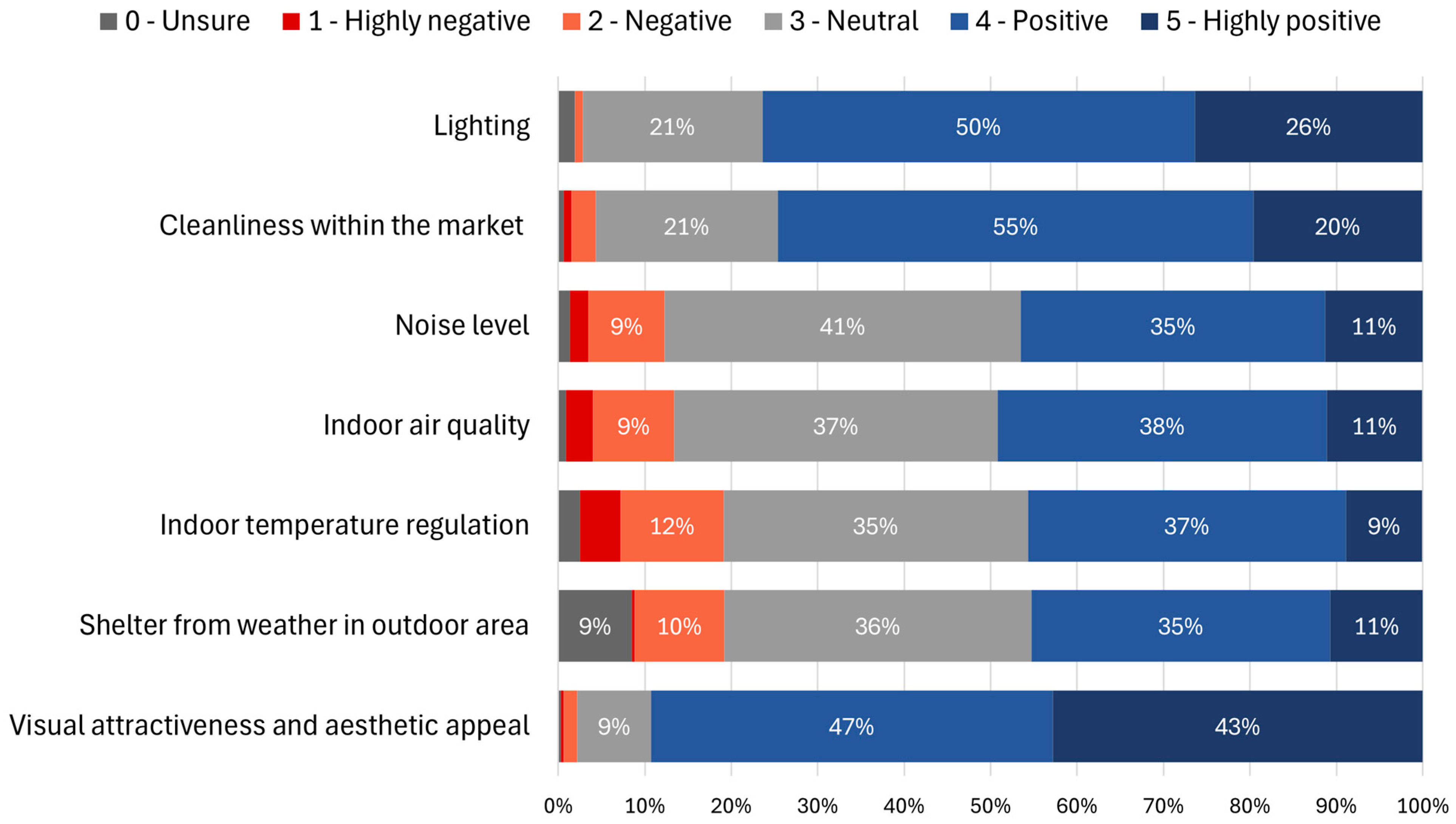
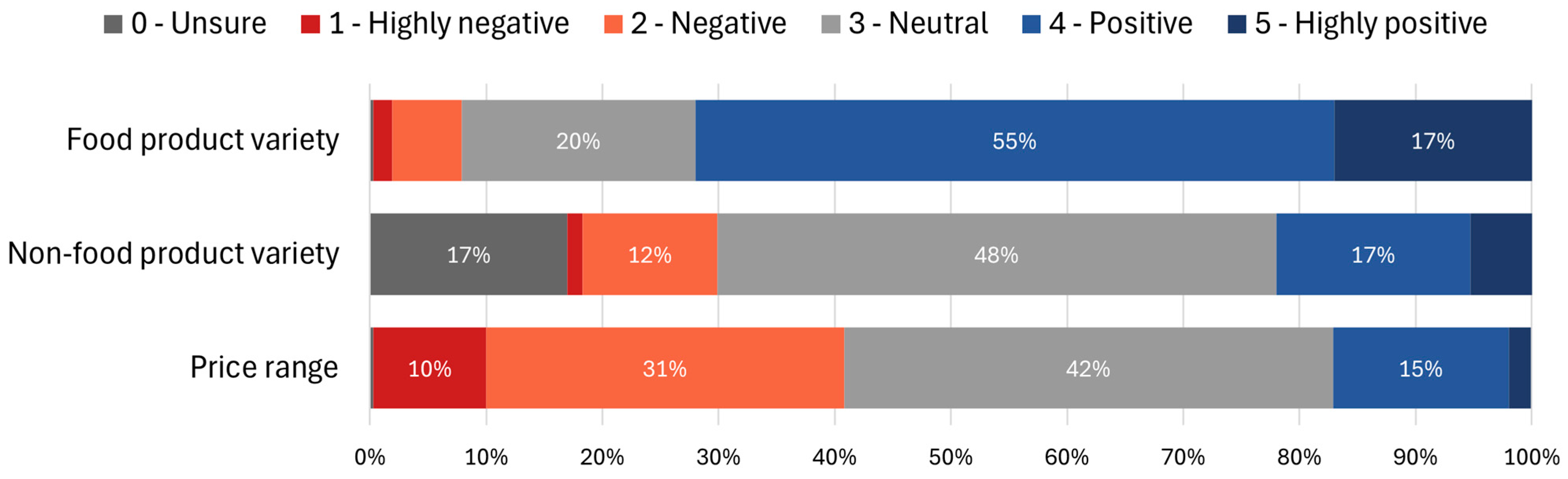
The overall ratings for environmental quality and comfort criteria were positive, suggesting that respondents largely perceive the market as a pleasant environment (
Figure 3). Aesthetic appeal, lighting, and cleanliness scored particularly high among quality aspects in this section. However, minor negative and moderately higher neutral results for indoor temperature and air quality, as well as outdoor weather protection and overall noise levels, suggest there is perceived room for improvement.
The highest-ranked quality aspects for aesthetic appeal and lighting—the former with 90% and latter with 76% of ratings in the positive range (4 or 5). Both criteria received relatively little feedback or suggestions for improvements in open-ended comments.
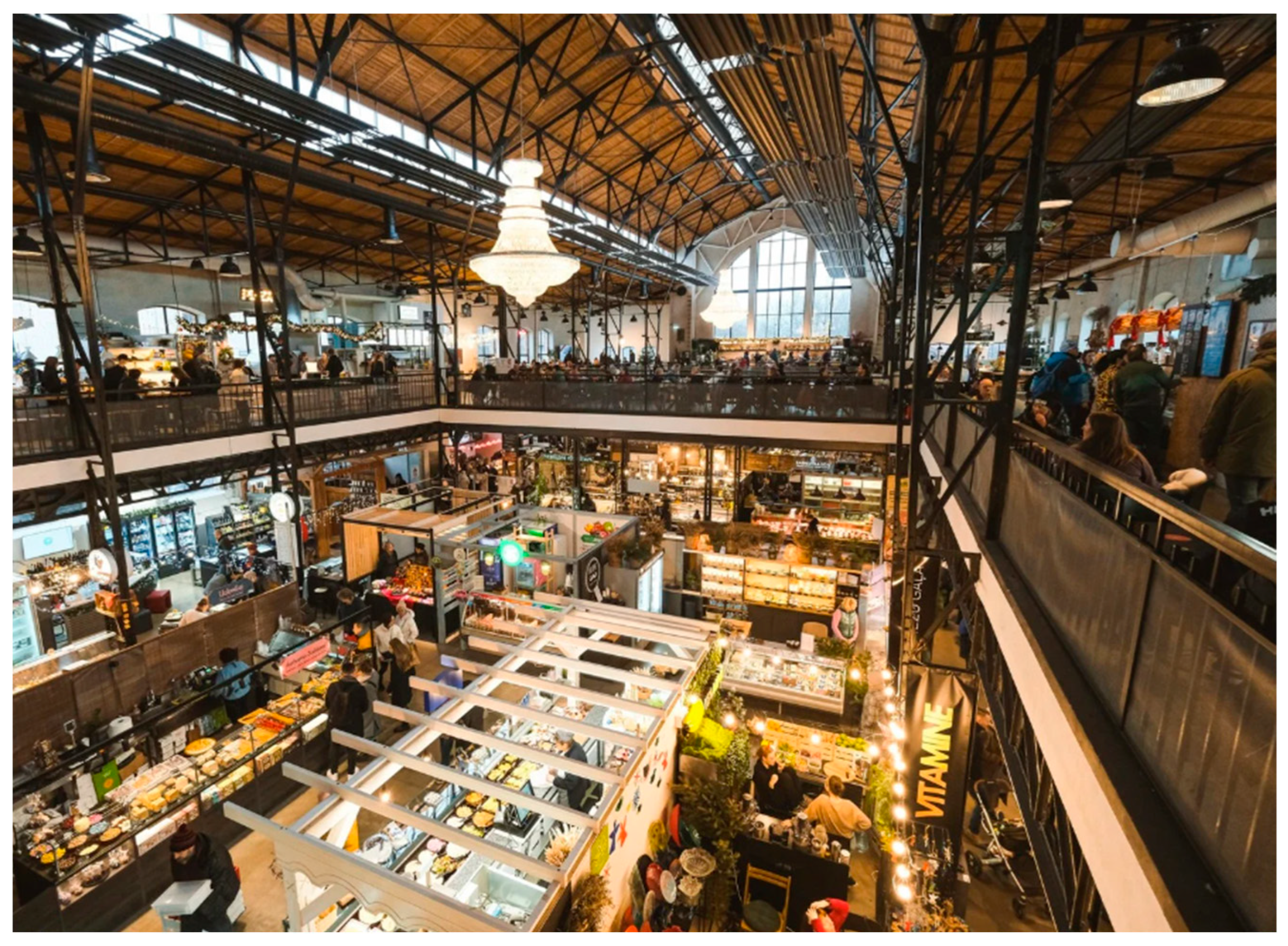
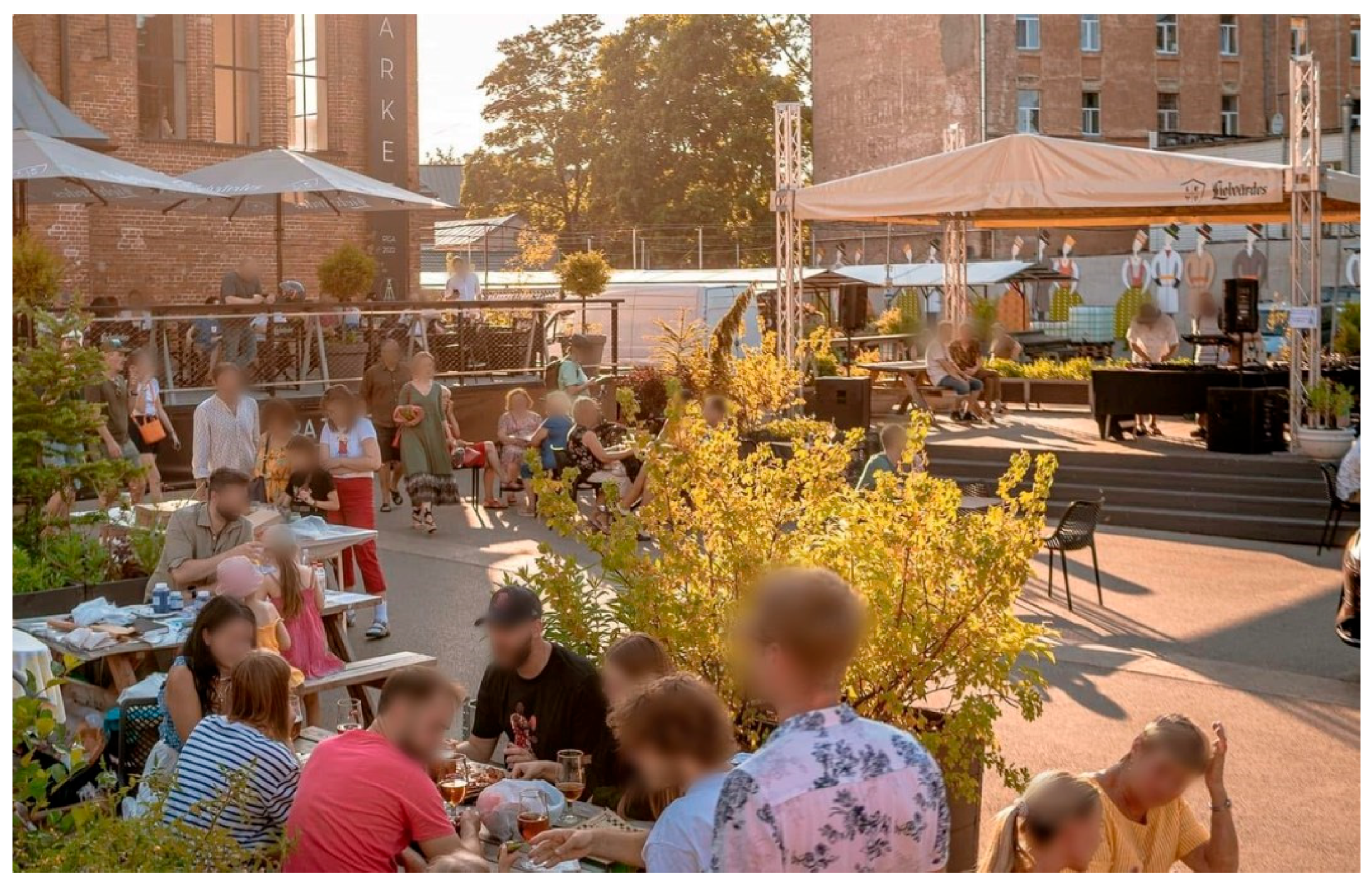
Despite being the highest-ranked aspect, comments from the open-ended section on memorable visits featured relatively little feedback on visual attractiveness. However, a notable number—56 respondents—commented they enjoyed the overall atmosphere of the market, with a few specifying that visual appearance and maintenance of the premises were contributing factors. Fieldwork reports noted the considerable effort invested in personalising the market while maintaining its distinct historic character and identity. The heritage architecture has been carefully restored and preserved. The indoor area features a large assortment of vendor and dining service stalls, each with their signs and distinct decorations, which, in combination with the varied produce on sale, create a vibrant and pleasurable milieu (
Figure 4). Tourists and other visitors were frequently observed taking photos and videos of both interior and exterior areas, with the hall’s chandeliers often serving as the main attractions. Moreover, reports highlight the variability of spatial accommodation and modifications during events, particularly in the courtyard. Event observations showcase the market’s capacity to adopt a wide range of appearances aligned with the specific needs of each occasion (
Figure 5).
The third-highest ranked aspect—cleanliness within the market—presented predominantly positive ratings but also revealed targeted concerns in the qualitative responses. While perception of the market’s maintenance on the whole was rated highly, with 75% of ratings in the upper range of the scale. In the criteria section comments, 28 respondents indicated that the venue’s toilet facilities require improvement. Specifically, 8 mentioned queuing and access issues, 18 called for enhanced upkeep efforts, and 3 proposed modernising the facilities to improve comfort. One female respondent suggested adding a child-sized toilet for increased accessibility. Additional maintenance concerns included better upkeep of outdoor areas (3 respondents) and clearing of dishes and cleaning of tables in the dining areas (4 respondents). One respondent recommended providing cleaning supplies and cloths to enable visitors to clean the tables themselves.
Fieldwork reports noted that the market’s premises were well maintained, with one observer emphasising their impression after visiting the renovated venue for the first time that it seemed “untypically clean for a market”. Observers documented two teams of market maintenance staff making regular rounds (at half-hour or hour intervals): one team swept both floors in the hall and emptied/replaced waste bags throughout the whole territory, taking gathered waste to the fenced disposal facility within the market’s territory. The second team focused primarily on table maintenance. Observations noted that in 2025, additional signage had been added on tables that encouraged visitors to bring dishes to collection points themselves. Visitor adherence to cleanliness norms—both explicit and tacit—varied. Some visitors were seen diligently following posted instructions and cleaning up on their own initiative, while others left dishes on tables for staff to collect. In general, a clean environment seemed to encourage visitors to keep it that way. Some issues were noted during peak visitor hours in the terrace area, where people tend to gather more during the warmer seasons. Notably, trash bins located alongside heavily used routes within the market—the hall entrance on the terrace—tended to fill up quicker than in other places, requiring increased staff attention and leaving some visitors unsure where to leave food packaging or remains after meals.
Noise level ratings clustered slightly more towards the middle, with the majority of respondents giving a positive range rating (4 or 5) at 46%, followed by 41% who gave a neutral rating (4), and 9% who gave a negative rating (5). In the criteria section comments, 12 respondents cited concerns: 3 indicated increased noise during specific events (2 mentioned temporary flea market events and 1 mentioned weekend event noise audible in neighbouring houses), 6 cited problems in the second-floor dining area related to music volume and background noises, and 3 noted raised noise levels at times in general without providing additional details.
Fieldwork reports documenting noise levels indicated variability based on the time and day of the week, noting that the level is higher during peak visitor hours. A small number of reports corroborated concerns expressed in survey qualitative responses. One report documented an instance where two concurrent events in the courtyard caused slight disruptions: loud noises from an antique car show in the parking lot would intermittently startle participants of a workshop in the outdoor community “Greenhouse”. As for the second floor, a few observations conducted near the community kitchen noted that, during peak hours, noises from different sources within the hall can have a cumulative effect. Cited sources of louder noises included young infants, pets, equipment being moved on the first floor, occasional louder behaving visitors, and varying background music volume. Furthermore, it was noted that the high ceilings, coupled with the open-gallery second floor design, appeared to amplify sounds when the hall was crowded. However, it should be added that reports also captured multiple instances of visitors working both indoors and outdoors, with observers noting times of the day when it is quieter, and people can find spaces within the market to engage in activities that require peace and prolonged focus.
Ratings for indoor temperature regulation centre in the mid-to-high range, with 46% giving this aspect a positive range score (4 or 5), 35% neutral (3), and 17% negative (2 and 1). In the criteria section comments, 25 respondents mentioned temperature issues at the market: 16 identified indoor heat as an issue (with 11 highlighting the second floor as problematic), 6 reported general heat issues without specific details, and 3 described a lack of warmth indoors (during winter, second floor, restrooms). Given that the survey was conducted during summer months, these results likely reflect seasonal bias toward cooling rather than heating concerns. Regarding indoor air quality, while 49% rated this aspect in the positive range (4 or 5), it is worth noting that 37% of participants rated it as neutral (3) and 12% in the lower range (2 and 1). Open-ended comments also point to this being an area in need of improvement, with 21 respondents suggesting enhanced ventilation—particularly on the second floor (7 respondents)—to ensure better air quality and circulation of aromas from dining stalls, especially during warmer seasons. A number of respondents expressed concerns that aromas from dining stalls may seep into clothes. Notably, air and temperature aspects were often mentioned in tandem in respondent feedback.
Fieldwork reports on the two previous aspects note variability. Two observations conducted at community kitchen indoor events on the second floor on warmer evenings in June yielded contrary findings, with one claiming ventilation systems provided sufficient cooling and air circulation and the other noting that, even though active, it did not seem to reduce heat sufficiently. In the latter case, the report documented workshop participants consuming water and leaving to purchase beverages more frequently, elderly members taking breaks from standing, as well as some using note-taking paper as improvised fans to cool off. Consistent with survey respondent feedback, fieldworkers also noted that heat emanating from dining service stalls appears to impact air quality and temperature indoors during warmer seasons. It should be noted that during the time observations and fieldwork were carried out, the market was in the process of implementing ongoing improvements in this area.
Ratings for shelter from weather (outdoors) clusters in the mid-to-high range, with 36% this aspect as neutral (3), followed by 35% positive (4), and nearly equal distributions between highly positive (5) at 11% and negative (2) at 10%. In open-ended comments, 3 respondents highlighted temperature problems in outdoor areas (insufficient shade was mentioned by 2 respondents—in the front square and courtyard area). No additional information was provided in the fieldwork reports.
3.3.2. Accessibility and Amenities
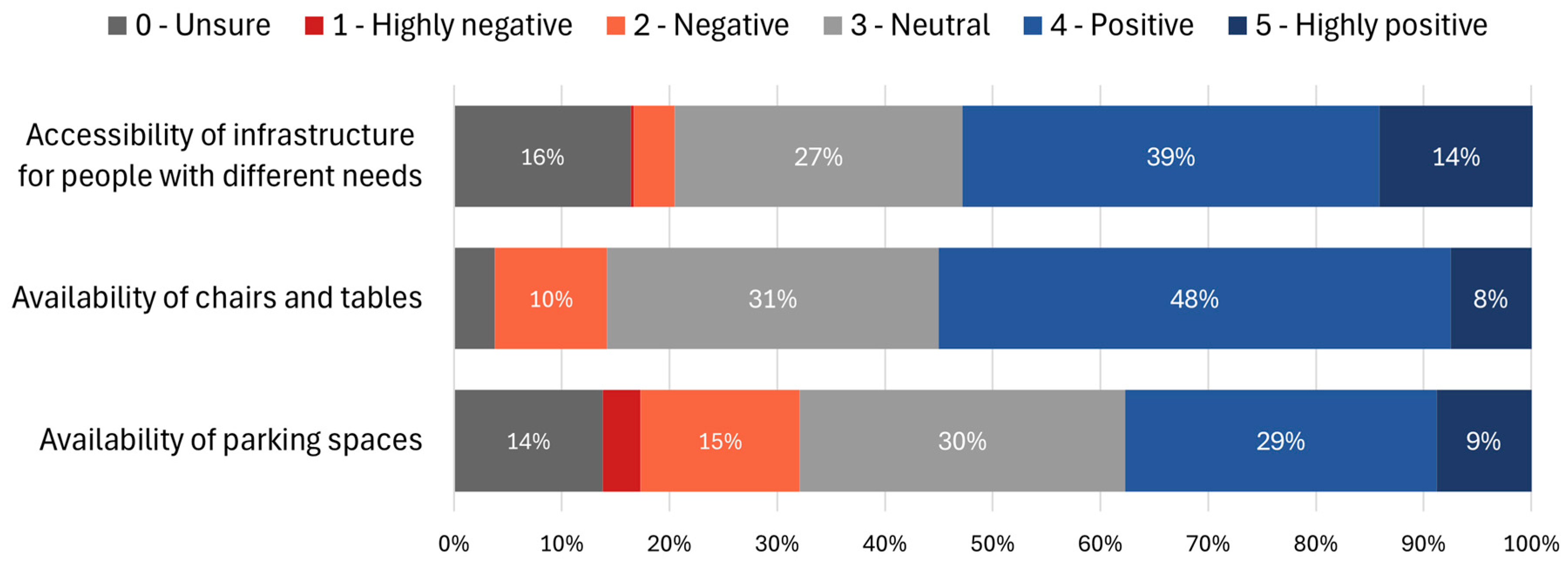
Ratings for accessibility and amenities show slightly more measured results (
Figure 6). While slightly above half of the ratings for accessibility of infrastructure and availability of seating and tables were in the positive range, parking space availability stood out as an area of concern.
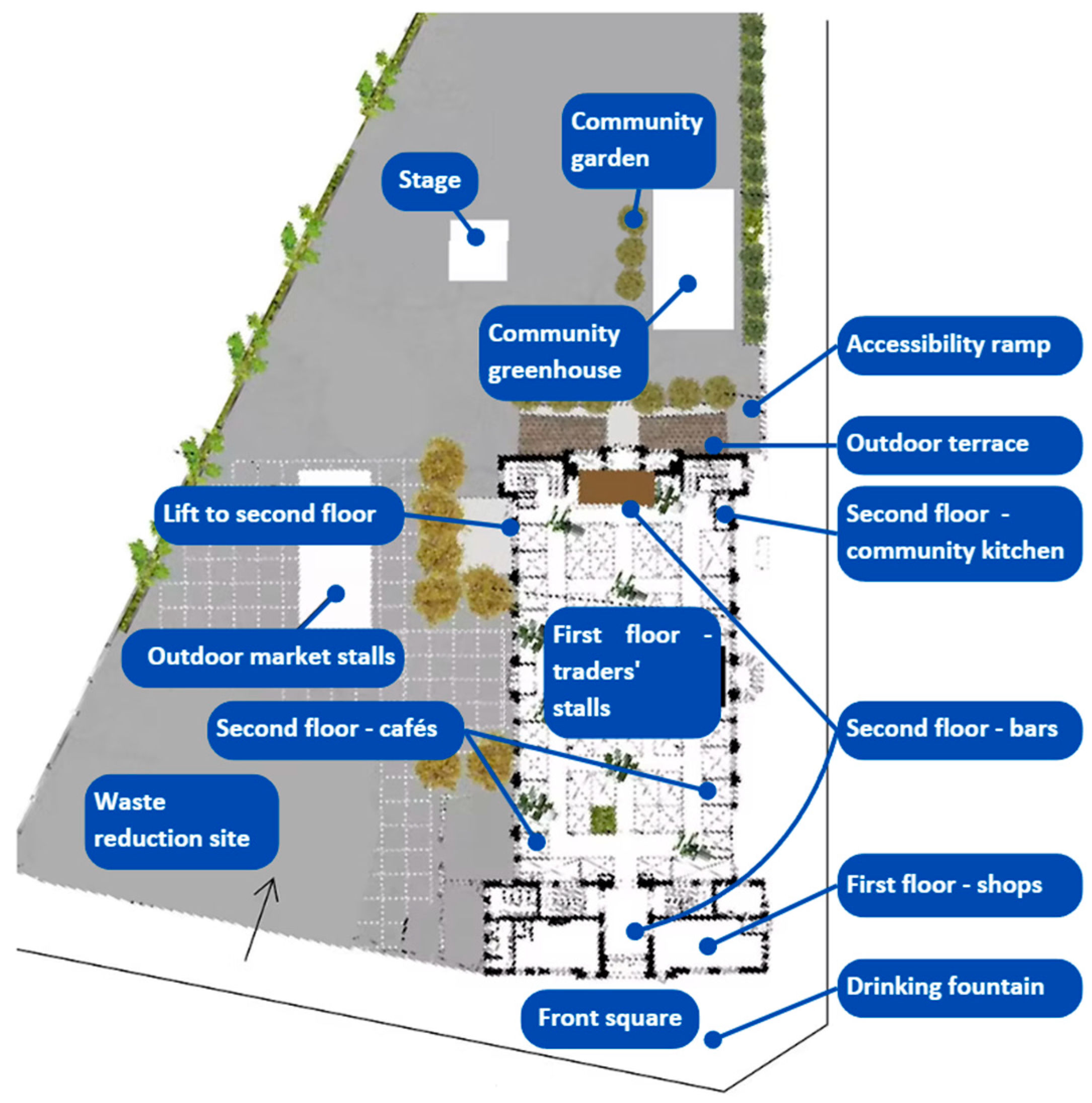
Accessibility was a key objective in the market’s restoration plan (activities such as installation of an elevator, building of an accessibility ramp and reorganisation of a parking lot), and survey results appear to indicate successful implementation. This aspect predominantly received favourable ratings, with 53% of respondents scoring it in the positive range (4 or 5). While 27% respondents gave a neutral (3) and 16% a “unsure” rating, importantly, negative ratings were minuscule. The criteria section comments featured 4 replies concerning accessibility: 2 respondents requested improved stroller access at the main and courtyard entrances (one of whom added the width of lift entrances poses trouble for strollers for twins), one respondent highlighted the need for stepping aids to help children reach the public sink on the first floor, and another respondent, who works with people with limited mobility, commended the existing accessibility features.
Fieldwork reports, which documented how elderly visitors, parents with strollers, and people with movement difficulties use the indoor lift and accessibility ramp, indicate that these infrastructure additions are largely effective in facilitating mobility within the market. Reports noted that there is ample space in front of lift entrances on the first and second floors for manoeuvring, and the outdoor ramp’s gentle gradient and width appeared suitable for visitors with more pronounced movement difficulties. One report detailed an elderly woman using a wheeled rollator to slowly descend the ramp from the raised terrace to street level without stopping or encountering difficulties along the way, only hesitating slightly before the end when transitioning over to the asphalt. Furthermore, reports noted that market entrances and the width of certain passages were at times slightly problematic. Specifically, reports documented instances when visitors with strollers and mobility aids encountered difficulties with the main and courtyard entrances to the market when the doors were not secured in an open position. Additionally, over the course of two years, reports documented ongoing implementation of new safety and accessibility features: the addition of safety nets on the second floor railings, bright markings on stair steps in the terrace, as well as signage in multiple languages.
As for parking spaces, 38% rated this aspect positively (4 and 5), a large portion of 30% gave a neutral rating, and 18% gave negative ratings (2 and 1). This was the highest negative score in this section. It also received a large amount of comments (31): 13 respondents cited vehicles entering and exiting the parking lot within the market’s fenced territory from the adjacent street with a tramline as problematic, with 2 respondents emphasising that it can create dangerous situations due to queuing and visibility issues. During the period the survey was carried out, the market introduced designated entrance and exit points to enhance traffic flow—3 respondents had suggested this improvement in open-ended comments before its implementation, and 2 respondents commended the solution when it was put into practice. Furthermore, 12 respondents highlighted the lack of parking spaces, with 2 of them emphasising that the issue is prevalent during events. No further details were noted in fieldwork observations or memorable visit qualitative responses.
Access to seating and tables was largely rated approvingly, with slightly above half respondents scoring this aspect in the upper range—56% positive (4 or 5). However, the neutral (3) score given by 31% alongside 10% negative (2) ratings highlight concerns. This aspect was mentioned in the criteria section comments by 11 respondents: 8 cited occasional shortages of seating and tables (with 1 respondent specifically noting problems during events and another citing this being an issue during peak visiting hours), 2 requested better seating near specific service providers located on the first floor, and 1 recommended adding more outdoor seating options during the summer.
Fieldwork observations corroborate the importance of these seating areas in supporting the market’s function as a public space. Limited access may account for neutral and negative ratings, as seating are key to ensuring visitors can fully partake in the social and leisure activities the market enables. On the whole, reports suggest they successfully function as gathering spaces within the market, offering visitors significant freedom to modify and claim space.
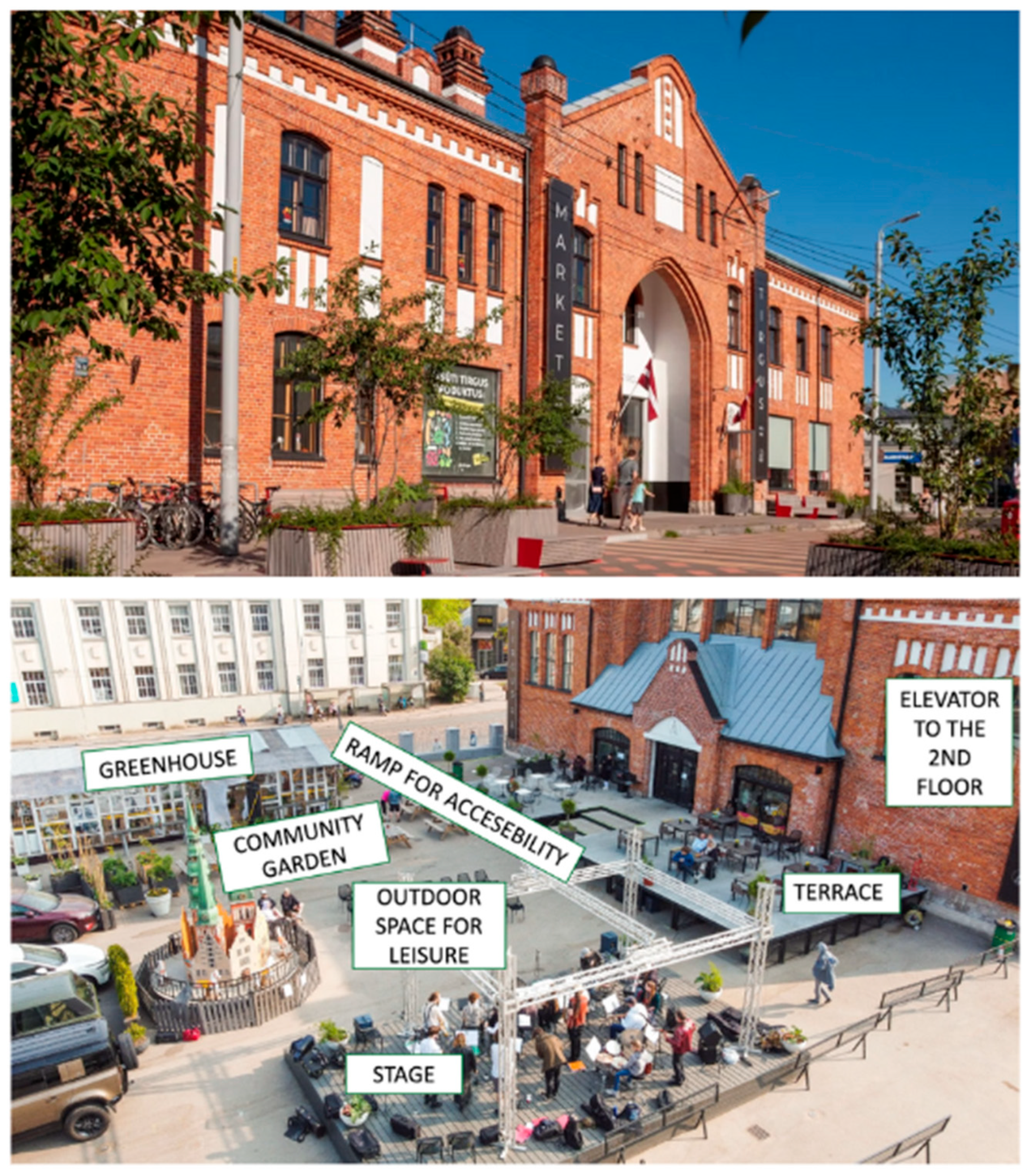
This flexibility is enabled by the provision of several seating areas and the capacity for visitors to freely choose where to sit, independent of where they made purchases from dining service providers or vendor stalls. Thus, visitors can make full use of the tables and seats located in the second-floor dining area, outdoor terrace, community “Greenhouse”, and stage area. Importantly, reports indicated visitors use these areas for several other purposes beyond dining. As one observer describes it, they appear to function as “public living rooms”—a characterisation supported by multiple observations of people lingering for extended periods after meals or without making purchases, as well as engaging in diverse activities: lengthy conversations, working on smartphones or laptops, observing the activities of others, taking pictures or videos, playing board games, among others.
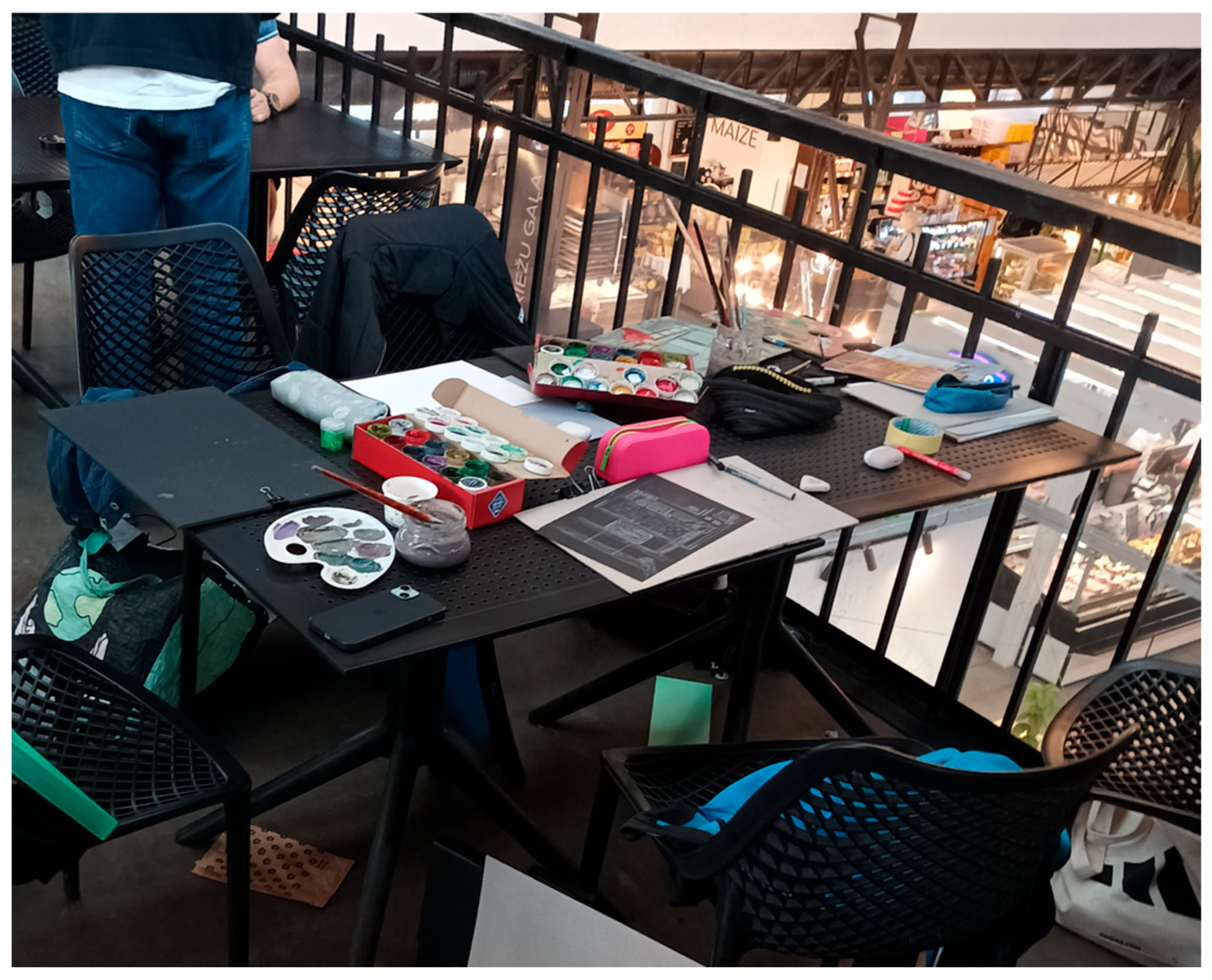
Two fieldwork examples highlighted a particularly high degree of personalisation and appropriation that sitting areas enable. The first was an infant’s six-month anniversary celebration held on the outdoor terrace, where a young father and visiting relatives had rearranged several tables and chairs in a compact configuration to accommodate purchases, baby essentials, and a diverse assortment of meals and beverages assembled from different stalls within the market. The group was present before observation commenced and remained on the terrace when the two-hour period ended—their overall demeanour gave the impression of an unhurried, leisurely mood. The second involved a group of art students who appropriated seven tables for an extended period in the second floor dining area, transforming them into an improvised “workshop” (
Figure 7). The students had covered the tables with art supplies and utensils and were using the location as a vantage point from which to paint and sketch the market’s interior for an assignment.
However, some reports suggest that the flexibility to modify and claim space has drawbacks during peak visitor hours. Observers reported crowding in the narrower sections of the second floor and on the outdoor terrace when larger groups occupy a table and borrow additional seats from adjacent tables. In the case of the latter, one report highlighted an instance of a large group taking up space near the entrance of the accessibility ramp, which impeded its use by visitors with strollers. Another report revealed that, in the second-floor dining area, such crowding can inconvenience market staff who collect dishes on moveable trolleys. Moreover, observations of a student group occupying the second-floor dining area for an extended period illustrated how prolonged stays during peak hours can prevent other visitors from finding available tables. While multiple seating areas largely help address this issue, reports noted some visitor frustration in such situations.
3.3.3. Social Experience
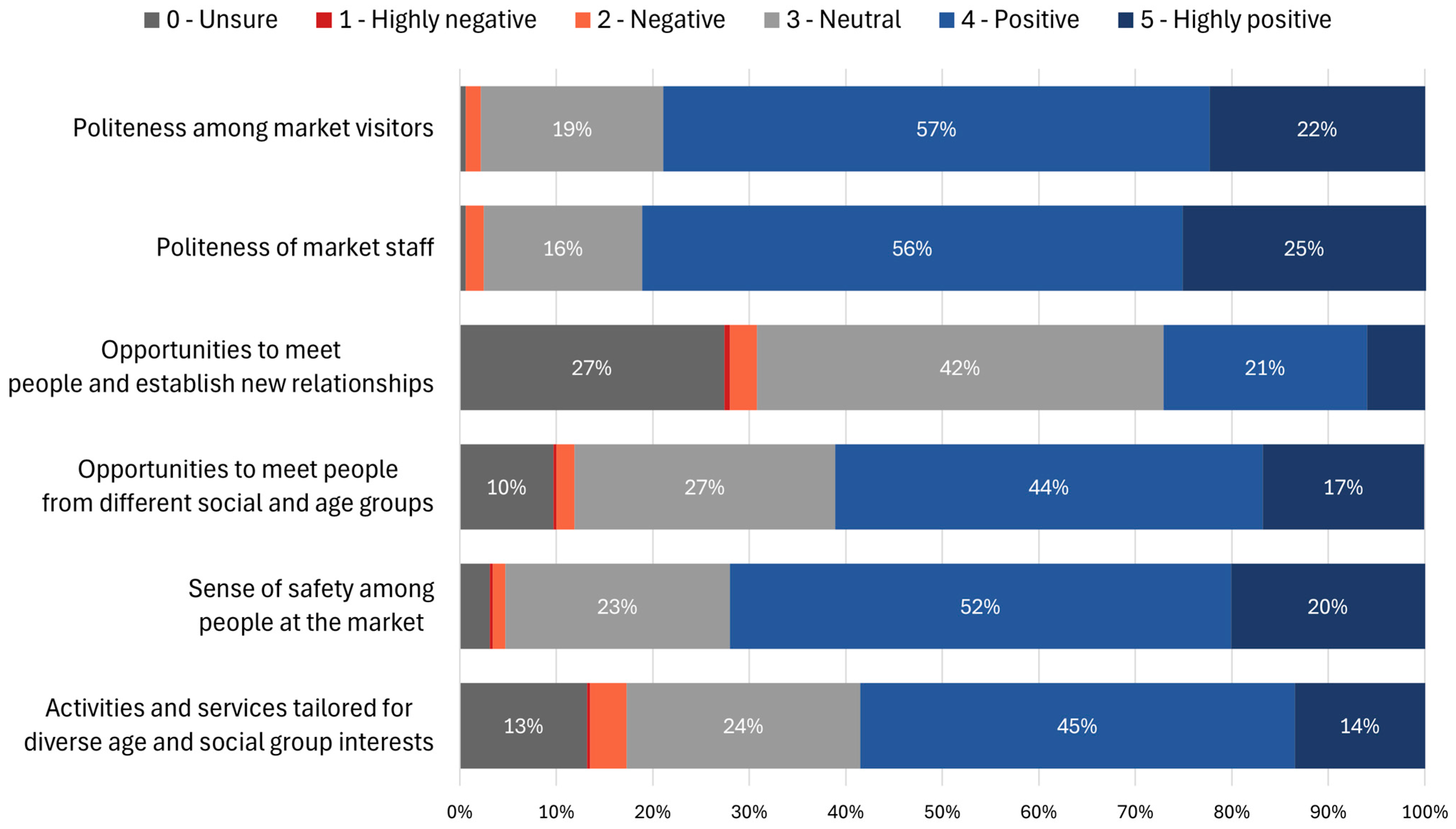
Overall results for social experience show positive ratings, especially in regard to sociability, measured as politeness of visitors and market staff, safety, and opportunities for meeting diverse social groups (
Figure 8). However, specific areas received a noteworthy proportion of neutral and “unsure” responses: opportunities to form relationships with strangers, and, to a lesser degree, activities tailored for diverse social groups. Notably, the criteria in this section received the lowest number of negative ratings out all four.
Politeness among both visitors and market staff was rated in the positive range (4 or 5) by approximately 80%. These results suggest that respondents generally perceive the market as a sociable and welcoming environment. However, despite the favourable perception, opportunities to meet people and form new relations received a high proportion of “unsure” and neutral ratings at 69%. In the criteria section comments, only 5 respondents commented on these aspects: 2 described their interactions with market vendors favourably, while 3 reported generally positive experiences but noted occasional instances with individual vendors where the interaction was less satisfactory. No comments were provided on opportunities to form new relations or visitor interactions.
Fieldwork reports complement survey findings on visitor and staff politeness, as well as provide more nuanced insights into social mixing and spontaneous interactions among unfamiliar visitors. Regarding the former, observations indicated that visitors not only interact with vendors to buy products but also occasionally engage in lengthier dialogues that go well beyond the purchase-related exchanges. This finding aligned with the qualitative responses about memorable visits, where some respondents noted that they had formed close ties with particular vendors. One respondent described a vendor she regularly interacts with as “extended family”, while others praised the personalised approach vendors take.
As for interactions among visitors, though reports mostly highlight that people tend to interact in small groups they arrive with to the market, they also noted instances where interactions among strangers occur, suggesting the market provides the necessary conditions for social mixing. Interactions among strangers were observed in queues and at vendor stands, with strangers engaging in discussions about products on sale and exchanging recipes. One report documented an exceptional case of multiple strangers forming spontaneous, temporary ties: in the courtyard, children from different families began an improvised ball game, which was later joined by several parents.
Observations during events involving joint activities also showed sustained interactions among participants who were previously unfamiliar with one another—in particular, during educational workshops, such as community kitchen cooking classes, where participants shared a common interest in the topic. No less significantly, reports also captured brief micro-interactions in both event and non-event scenarios. Passerby visitors were observed taking interest in the various events and activities taking place within the market, with some making comments as they walked by, briefly engaging with event participants, or in one reported case, spontaneously joining a workshop. Crucially, visitors were observed engaging in small acts of care, such as holding doors or assisting with grocery bags for elderly visitors and those with mobility issues, which contributes to creating an inclusive and friendly atmosphere in the venue, as well as compensating for minor infrastructure accessibility issues.
Rating for opportunities to meet people from diverse social and age groups also scored highly, with 61% of respondents rating this aspect in the positive range (4 or 5). However, this aspect also received a noteworthy proportion of neutral responses at 27%.
Fieldwork observations indicate that the market is frequented by a range of groups, including local residents, visitors from other city districts, migrants, tourists, families with children, people of different generations, and visitors with mobility difficulties. Reports highlighted that older adults and retirees are the consistent attendees, often visiting daily at the same time and speaking with the same vendors. However, proportionally, retirees were represented less than other age groups on average. Parents with children were observed frequenting the market more on weekends, combining shopping with leisure activities. As for young people and students, their presence varied, with reports noting they frequent the market less on weekday mornings and more during events. The outdoor dining area was observed to be particularly popular among younger visitors. As for ethnic and national diversity, reports note Latvian can be heard most often, but also document the use of English, Russian, German, Spanish, French, and other languages, indicating the market is frequented regularly by tourists and visitors from abroad. People with health-related or mobility difficulties were also reported attending the market, though their presence was less often documented. Importantly, in regard to perceived socio-economic background, reports suggested the market is frequented predominantly by mid- to high-level income visitors.
Ensuring activities and services are tailored for a variety of age and social groups was among the key objectives pursued by the market’s management. In survey ratings, 61% rated this aspect in the positive range (4 or 5). In the criteria comments, 8 respondents provided feedback. Although few, some highlighted perceived income and age bias, noting that activities and services do not seem tailored for the elderly and lower-income groups. Poignantly, two respondents drew attention to the changing character of the venue, emphasising that it seems less like a conventional market and more like a leisure centre. One respondent also provided positive feedback, indicating they appreciated the addition of the children’s play corner on the second floor.
Qualitative responses on memorable visits and fieldwork data revealed that respondents found meaningful engagement through several factors. These included the venue’s multi-use format, which offers a combination of necessary retail and optional leisure functions, varied programming, alongside tailored amenities to facilitate access for families with children and people with mobility issues.
Regarding events, 28 respondents cited them as a reason for visiting the market, suggesting that the diverse programming appeals to different interests. Specific mentioned types of events included concerts, educational workshops, dance nights, car shows, themed market days dedicated to particular food products, and marking personal occasions. Observations demonstrated that, in addition to opportunities for spontaneous social encounters, events fostered a convivial atmosphere. A series of observations of community kitchen workshops in 2025 provided notable examples. At a youth-dedicated session, observers noted parent–child bonding—displays of affection, playful exchanges, as well as joint picture-taking during meal preparation. In another workshop, a participant assisted the host when the equipment briefly malfunctioned. During a food fermentation-themed workshop, participants would actively engage in conversations, exchanging suggestions on techniques. Across all workshops, observers consistently documented expressions of positive affect among participants: laughter, applause, and warm conversations.
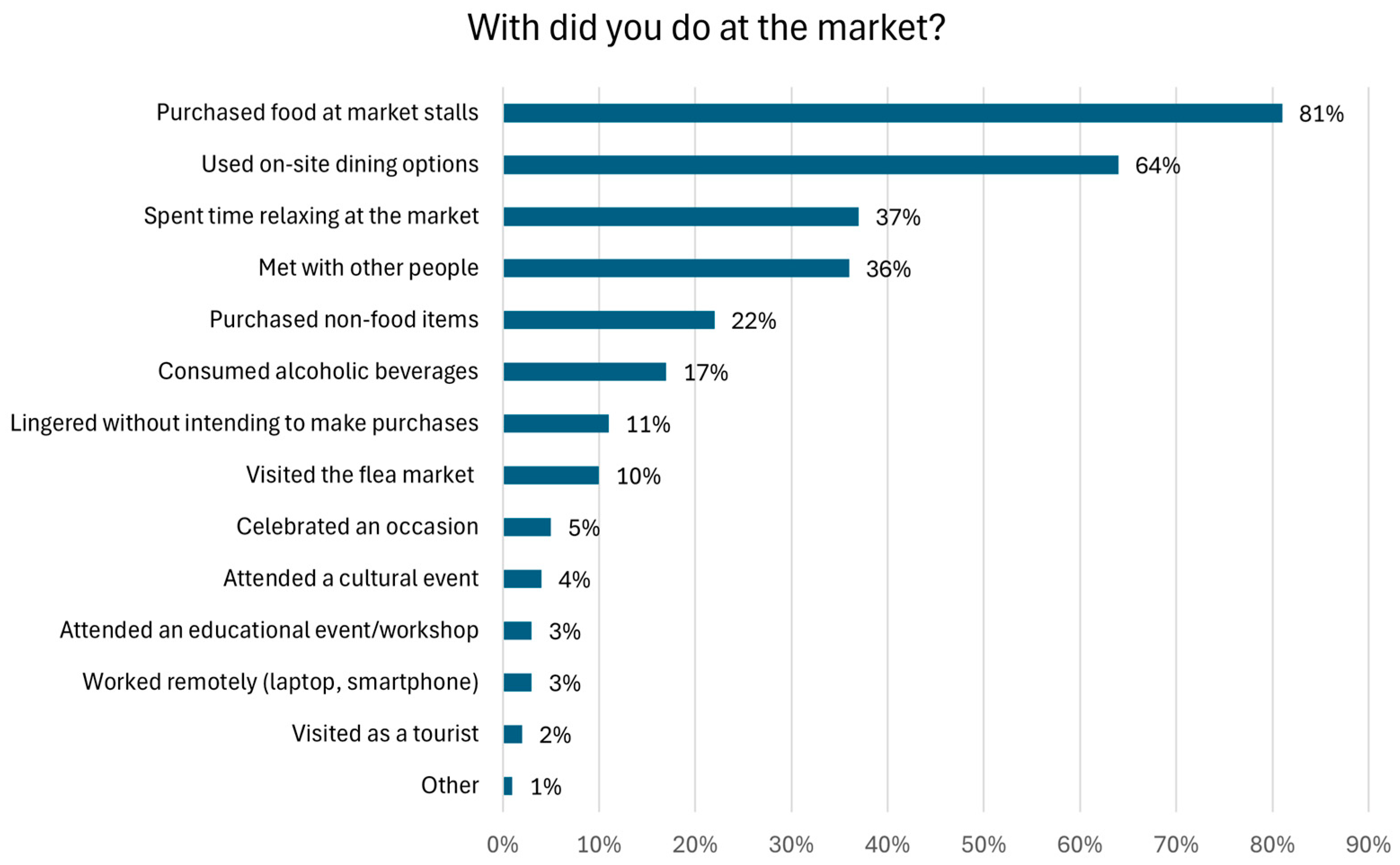
As for the multi-use format, 32 respondents cited a list of two or more activities they enjoy in qualitative responses, pointing to the complementary nature of various services and activities within the market. Responses provided varying combinations of dining, retail services, events, and socialisation. These findings corroborate multiple-choice question results on activities engaged in during the memorable visit. The distribution demonstrates that visitors predominantly engaged in necessary functions—purchasing food (81%); however, most also selected optional activities (
Figure 9).
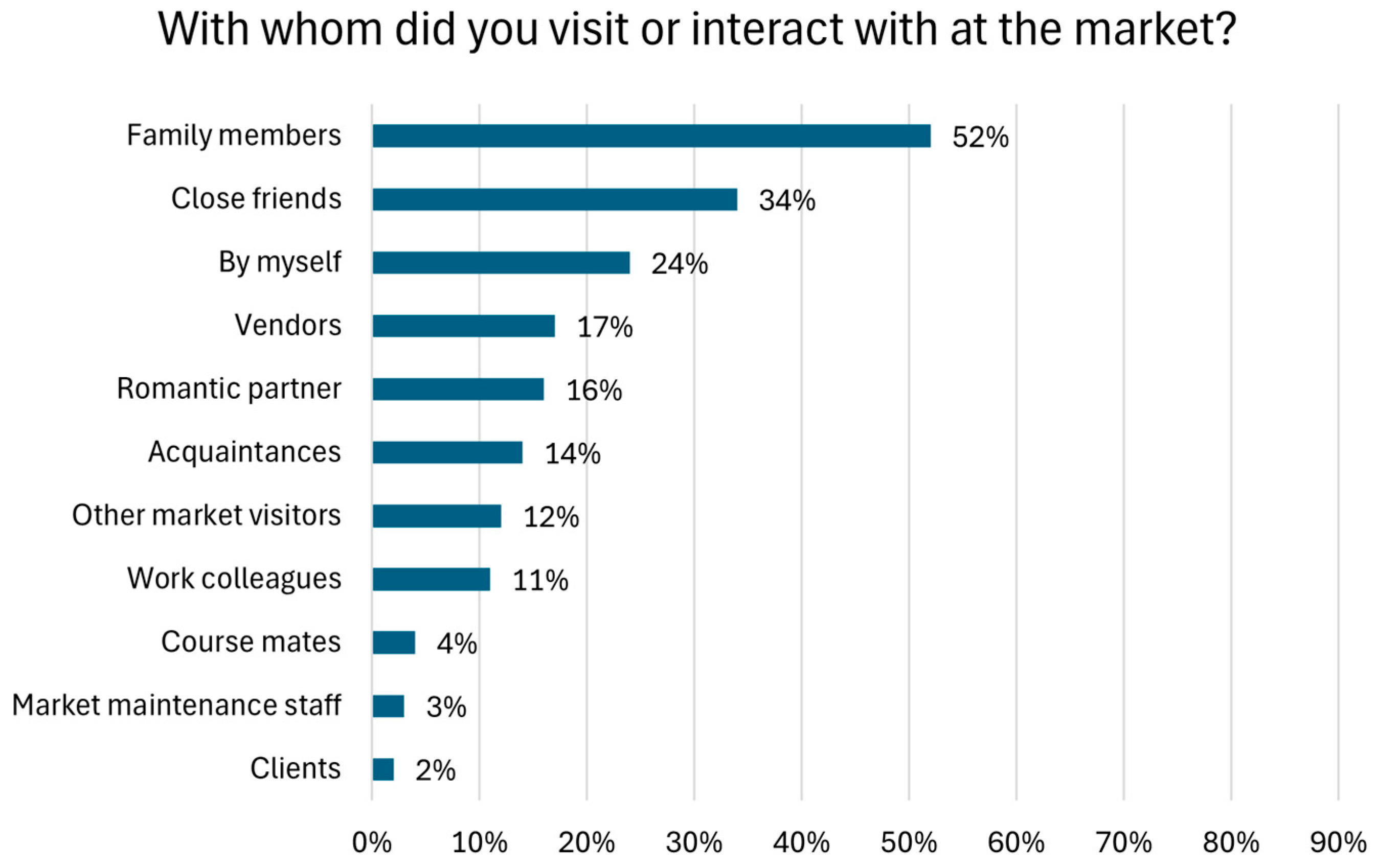
Responses in this section also highlight that the market helps foster intergenerational socialisation. In particular, four respondents provided detailed replies on how the market serves as a place for parents, grandparents, and children to meet and bond. These findings align with survey results on socialisation patterns (
Figure 10), with the majority indicating they visited the market with their family members (52%) and close friends (34%).
In terms of amenities providing diverse activity options, reports highlighted frequent use of the family area on the second floor (
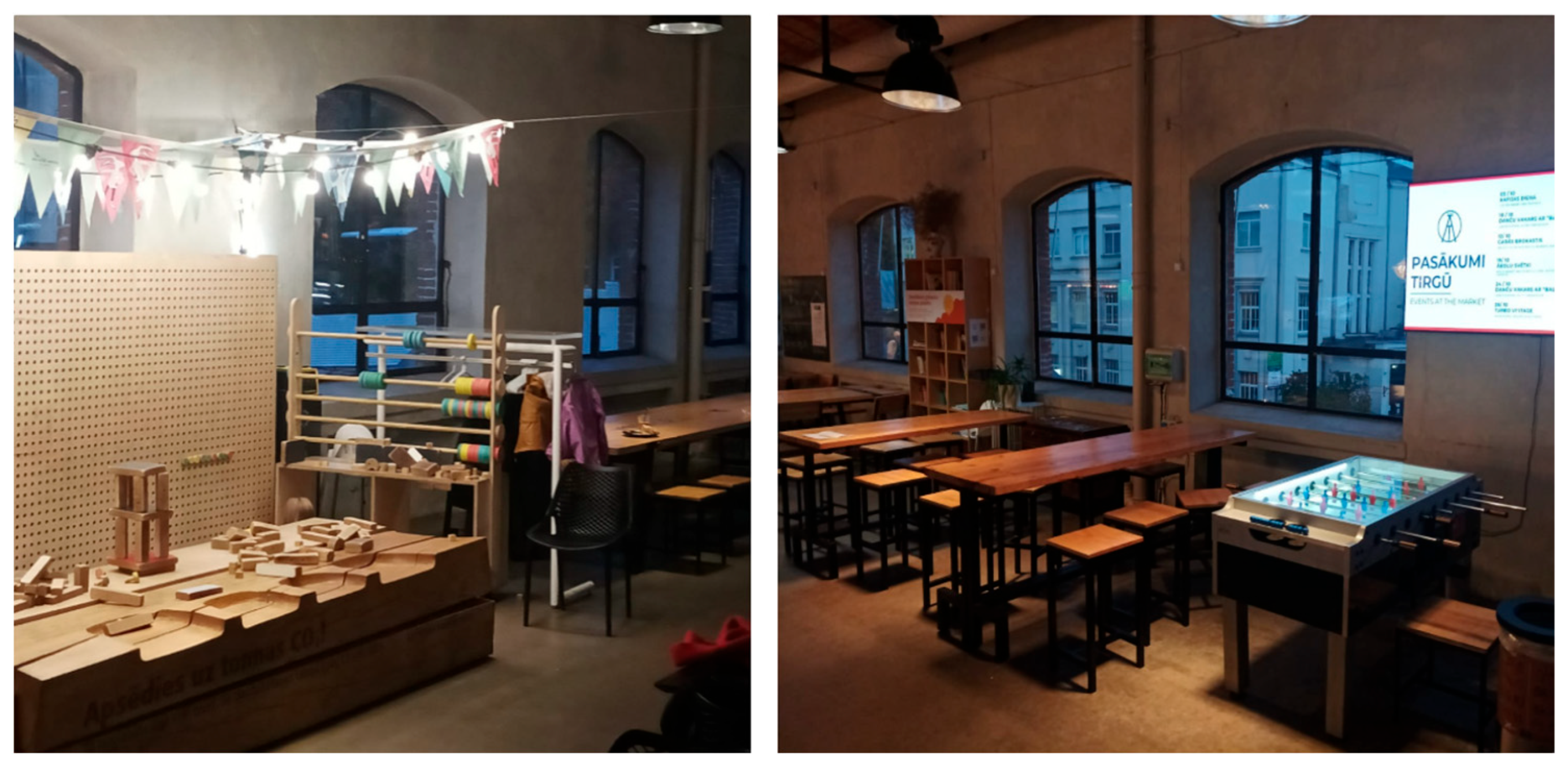
Figure 9), which facilitated market visits for parents with young children. Public amenities—high chairs for infants, coat hangers, a football table, long tables, and a children’s corner with an assortment of wooden toy blocks—create a convenient space where children can engage in play while parents supervise from the adjacent table (
Figure 11). Children from different families would often use the play corner simultaneously, fostering interactions among peers. Moreover, parents also used this space to bond with their children, creating an environment that can encourage social mixing between different families.
Sense of safety scored particularly high at 72% respondents giving a rating in the positive range (4 or 5). This aspect had minuscule negative ratings and 23% neutral scores. Two respondents commented on safety. One claimed they found Āgenskalns Market safer than another prominent market in the city, and another shared an observation of security personnel efficiently handling a situation where a fight broke out.
Fieldwork reports captured several scenarios demonstrating a high perception of safety in the market. The most prominent observation was that parents allowed their children to play freely within different areas in the market: the outdoor terrace, courtyard, and second floor family area. As one observer noted, some parents on the second floor appeared comfortable letting their children roam within a rather large radius and move among other visitors. Moreover, during a community kitchen workshop dedicated to adolescents and young children, a report documented parents entrusting event moderators to look after their children while they explore the market or attend to other activities, indicating a high degree of trust in the venue’s staff and partners invited to collaborate on hosting events. Reports also documented occasions when visitors left their belongings—clothes and backpacks—unattended in the indoor area to signal a table is “occupied” while they go purchase meals. In regard to security measures, while some reports noted a security worker making rounds within the premises, they were largely inconspicuous, and no conflict escalations were noted in any of the observations.