Article

Induction of Barley Resistance to Fusarium graminearum by Application of Bacterial Consortium with Agronomic Traits

1
Department of Biology and Biotechnology, Farabi University, Al-Farabi Ave. 71, Almaty 050038, Kazakhstan
2
Scientific Research Institute of Biology and Biotechnology Problems, Al-Farabi Kazakh National University, Al-Farabi Ave. 71, Almaty 050038, Kazakhstan
3
Research and Production Center for Microbiology and Virology, Almaty 050010, Kazakhstan
4
Department of Biotechnology and Chemical Technologies, Almaty Technological University, Almaty 050012, Kazakhstan
5
Institute for Bioengineering, FH Aachen—University of Applied Sciences, 52066 Aachen, Germany
*
Author to whom correspondence should be addressed.
Sci 2026, 8(7), 144; https://doi.org/10.3390/sci8070144
Submission received: 5 May 2026 / Revised: 16 June 2026 / Accepted: 23 June 2026 / Published: 25 June 2026
(This article belongs to the Section Biology Research and Life Sciences)

Abstract

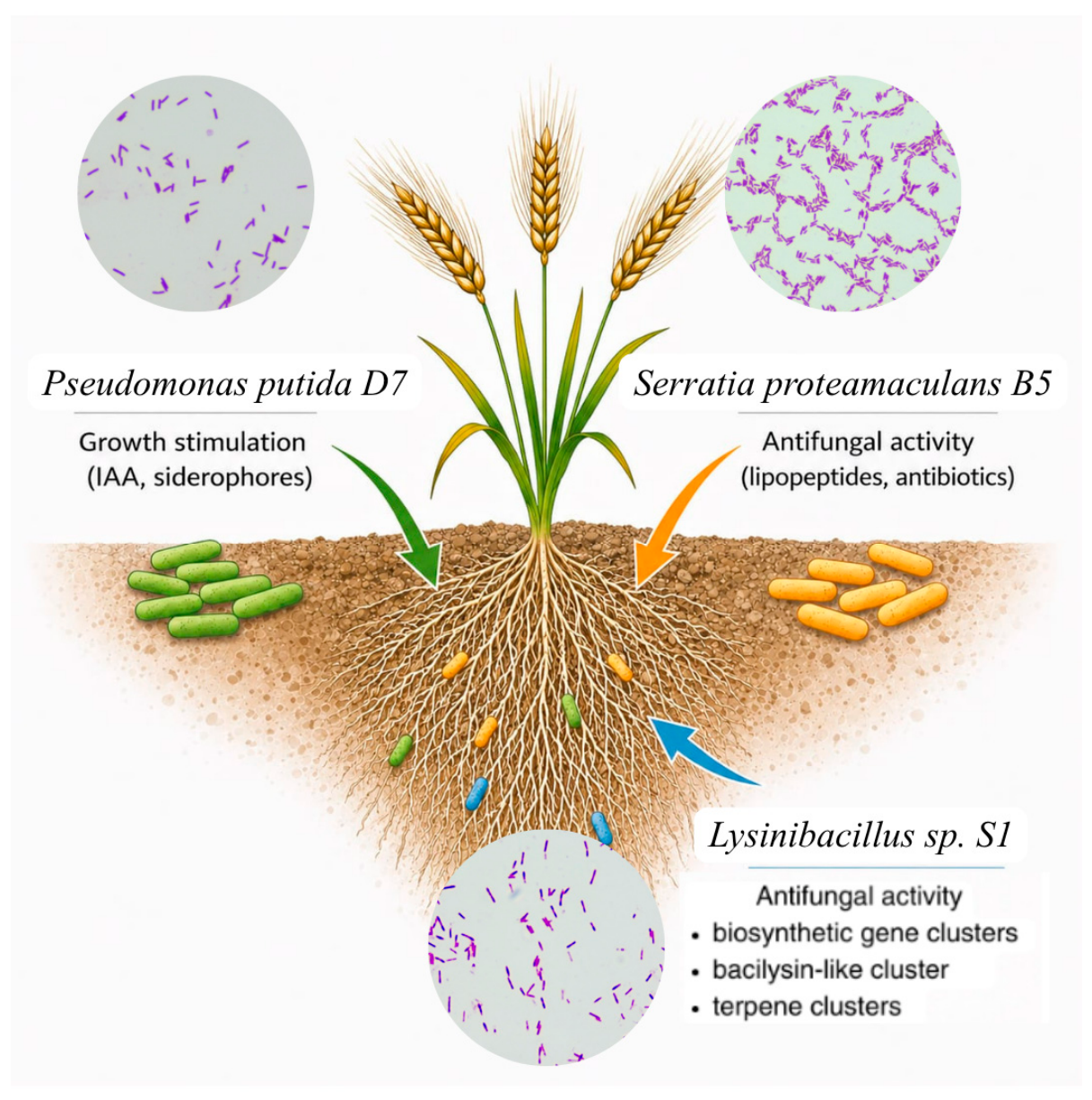
The aim of this study is to develop and comprehensively evaluate the efficacy of an innovative formulation of a biological preparation consisting of a bacterial consortium (Serratia proteamaculans B5, Pseudomonas putida D7 and Lysinibacillus sp. S1), embedded in a pullulan polysaccharide matrix, as an agent for inducing systemic resistance in barley (Hordeum vulgare L.) to phytopathogenic stress caused by Fusarium graminearum. To optimize the product’s protective efficacy and minimize the pesticide load on the agroecosystem, a reduced dose of Fundazol (50% of the standard rate) was incorporated into the formulation. The constituent strains exhibited high indole-3-acetic acid production (53.29–69.2 μg·mL−1) and strong antagonistic activity against phytopathogenic fungi, with inhibition zones reaching up to 32.5 mm. Pot and field trials were conducted to comprehensively assess the effect of the biological product on the stress tolerance of barley plants. Pre-sowing seed treatment reduced proline accumulation (by up to 2.3-fold), maintained photosynthetic pigment levels, and increased field germination to 79%. Under infectious field conditions, treatment with the biopreparation contributed to the stabilization of yield structure parameters (treated plants exhibited increases in height and biomass of 9–21%) and the improvement of grain quality indicators. Overall, the results obtained demonstrate the potential of the developed biopreparation as a component of comprehensive protection strategies and as an inducer of plant priming mechanisms.

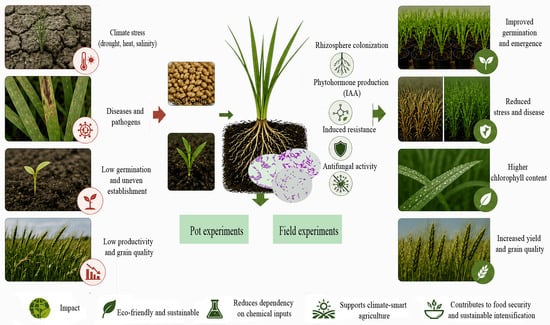
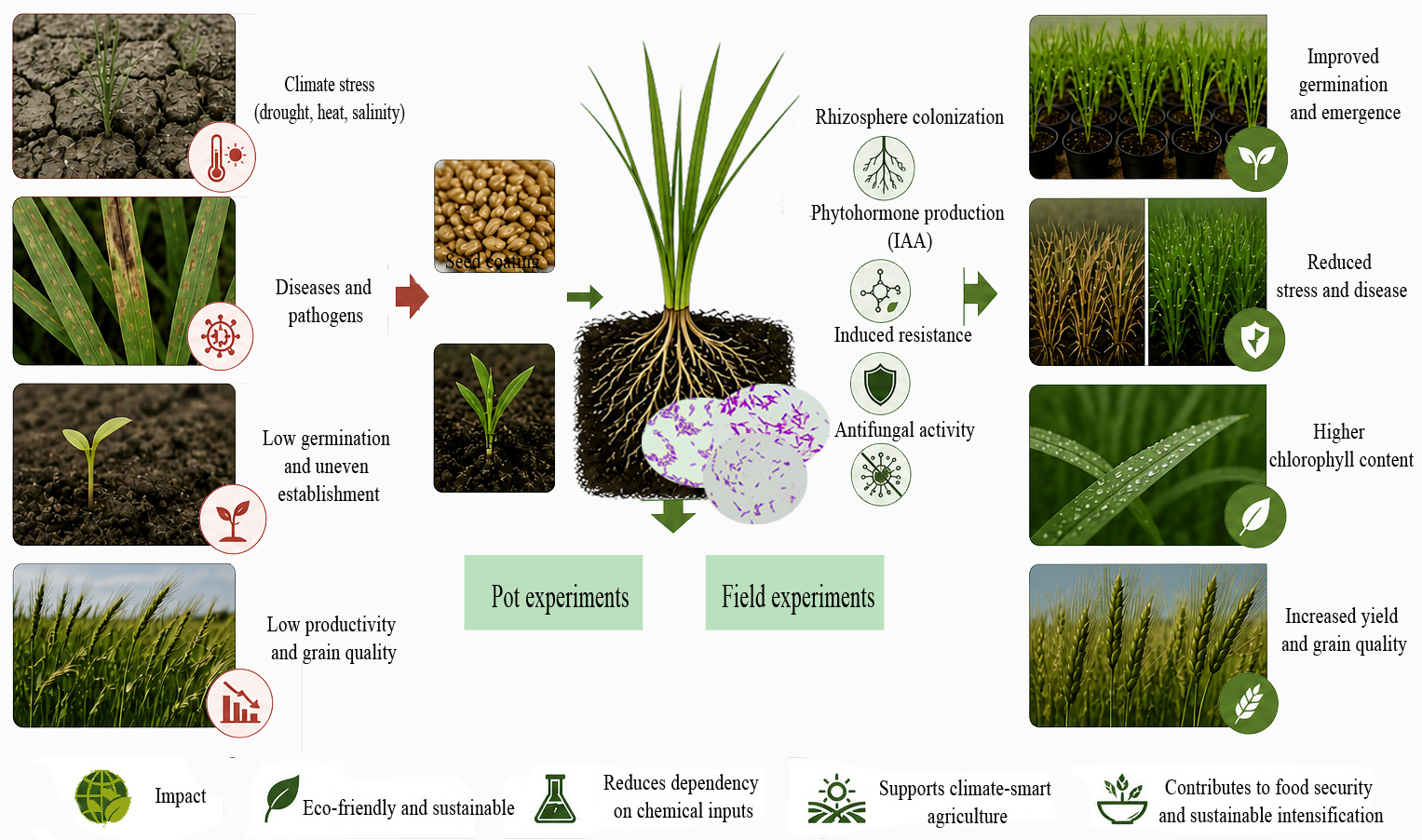
Graphical Abstract

1. Introduction

Global climate change and the increasing impact of plant pathogens pose serious risks to the agricultural sector [1,2]. Fusarium head blight (FHB) is one of the most damaging diseases affecting barley (Hordeum vulgare L.), caused by a complex of fungi of the genus Fusarium, including F. graminearum, F. culmorum and F. poae. The disease leads to reduced yields, poorer grain quality and the accumulation of mycotoxins, making it a serious problem for food and feed safety.
The application of microbial-based biological control agents, as well as their combination with chemical agents, not only minimizes the anthropogenic impact but also contributes to the activation of induced systemic resistance (ISR)—a complex adaptive response in plants that ensures systemic resistance to Fusarium wilt through the modulation of physiological status and the expression of defense genes [3,4,5].
For this reason, modern barley protection strategies are aimed at both limiting the development of the disease and reducing mycotoxin contamination of the crop.
In addition, recent years have seen a growing global trend towards the consumption of food products obtained using organic technologies [6]. The detection of residual chemical fungicides in raw food materials together with increased public awareness of food safety issues have contributed to stricter regulatory requirements and restrictions on the use of many synthetic plant protection products [7,8].
Under these conditions, interest in alternative phytoprotection strategies is increasing, particularly in the use of biological fungicides, which are considered more environmentally friendly and sustainable solutions for agricultural production. This approach is consistent with UN Sustainable Development Goals 2 (End Hunger) and 12 (Responsible Consumption and Production) [9].
In addition to stimulating plant growth, some biofertilizers also exhibit antagonistic activity against phytopathogens. The application of biofertilizers based on effective microbial strains can significantly reduce the required doses of pesticides and mineral fertilizers. The use of biofertilizers and biopreparation not only activates plants physiological processes but also enhances the activity of beneficial soil microorganisms, thereby contributing to increased crop yields and improved product quality [10,11,12,13].
The physiological response of plants to microbial treatment involves the integration of metabolic, hormonal, and antioxidant mechanisms. This leads to the formation of a stable phenotype capable of resisting phytopathogenic pressure and maintaining productivity under biotic stress. Colonization of the rhizosphere and internal plant tissues by plant growth promoting microbes (PGPMs) triggers the regulation of hormonal balance and redox status and the expression of defense-related genes [14].
Improved photosynthetic parameters (chlorophyll a and b content and the a/b ratio) indicate the stabilization of pigment–protein complexes and more efficient use of light energy [15,16].
Importantly, microbial inoculants influence the metabolism of osmoprotectants, including proline and soluble sugars. A reduction in excessive proline accumulation under stressful conditions while maintaining optimal water balance indicates a decrease in stress levels in plants [17,18].
Modulation of the phytohormone profile is also a key mechanism of plant defense. Microorganisms can synthesize or induce the formation of gibberellins, cytokinins, and indole-3-acetic acid (IAA), thereby stimulating root system development, increasing the root absorption surface area, and supporting water/mineral nutrition. Simultaneous upregulation of signaling pathways, mediated by salicylic and jasmonic acids, leads to the higher expression of genes encoding phenylpropanoid pathway enzymes, pathogenesis-related proteins (PR proteins), and other antimicrobial compounds [19,20].
Recent studies show that the use of microbial consortia is a more effective strategy than single-strain preparations [21,22,23].
The development of polymer matrices for stabilizing microbial inoculants is another very promising research direction within sustainable agriculture [24,25]. Pullulan, synthesized by Aureobasidium pullulans, is a polysaccharide suitable for plant seed coating and prolonged delivery of microorganisms to the rhizosphere [26,27].
Particularly important is to assess the stability of the desired biological effects in different soil and climate zones, as the effectiveness of microbial preparations may vary depending on soil type, humidity, temperature conditions, and the composition of the indigenous microbiota. Field studies enable the assessment of reproducibility, identification of potential limitations, and determination of optimal conditions for application [28,29].
In this study, in addition to developing an innovative formulation for a biological product incorporating a plant-safe polymer matrix, utilizing a new bacterial strain and providing its genetic profile, barley plants served as test subjects for studying the effect of the biopesticide and comparing its effects obtained in laboratory and field experiments. In addition to conventional yield assessment, physiological parameters, including proline content (a stress indicator) and photosynthetic pigment levels, were evaluated to assess plant stress status and systemic defense responses.
To bridge the critical gap between laboratory experiments and the application of the biopreparation under natural conditions, field experiments were conducted to fully assess the effect of microorganisms on reducing stress on plants in a natural environment, not limited by laboratory conditions. This is because, despite active research in the field of agriculture aimed at developing biological products for plant protection, only a small proportion of experiments go beyond laboratory testing.
The main objectives of this study were: (1) to develop an effective microbial consortium with agronomically valuable properties; (2) to characterize the genomic features of the new strain Lysinibacillus sp. S1; (3) to evaluate the physiological response of barley plants to biotreatment; and (4) to verify the effectiveness of the developed biopreparation in increasing barley resistance to Fusarium graminearum under field experimental conditions.
The data presented in this article provide a deeper understanding of the mechanisms by which plants are protected from phytopathogens using microorganisms, thereby enabling the development of effective and environmentally safe strategies for their application.

2. Materials and Methods

2.1. Bacterial Strains and Culture Conditions

In this study, endophytic bacterial strains isolated from medicinal plants, previously reported as growth promoters and antimicrobial properties [26], were used to construct a microbial consortium: Serratia proteamaculans B5 (OR858823) isolated from Iris scariosa leaves, Pseudomonas putida D7 (OR863903) isolated from the roots of Echinacea purpurea, and S1 strain (GenBank accession CP173154) from the leaves of Cichórium íntybus. Species identification of the strains was carried out based on an analysis of 16S rRNA gene sequences. Pure cultures of the strains are stored in the biobank of the Research Institute of Biology and Biotechnology (Almaty, Kazakhstan). To maintain genetic stability, the strains are stored in a 15% glycerol solution at −80 °C. According to international classification, the strains used belong to risk group 1 (BSL-1) and are not pathogenic to humans or warm-blooded animals.

2.2. Determination of Indole-3-Acetic Acid (IAA) Synthesis

The IAA content was determined using a colorimetric method. Bacterial strains were cultured at 28 °C in NB medium supplemented with 0.1% L-tryptophan, thereby preventing any restriction on the growth of the strains during the 48 h incubation period. The pH was maintained within the range of 7.0–7.5. The cultures were centrifuged using an RS-6MC centrifuge (Dastan Co., Bishkek, Kyrgyzstan) for 20 min at 6000× g. Salkowsky’s reagent was then added to the supernatant in a 1:2 ratio. Optical density of the cell-free filtrate was measured using a Leki SS2110 UV spectrophotometer (MEDIORA OY, Helsinki, Finland) at 530 nm. The IAA concentration was calculated from the calibration curve and expressed in μg·mL−1 [30].

2.3. Evaluation of Antifungal Activity

The antifungal activity of the bacterial strains was assessed using the agar well diffusion method on Sabouraud agar TM 387 (TM Media Co., Bhiwadi, India), pH 7.0. The phytopathogenic fungi Fusarium graminearum, Fusarium solani, Fusarium oxysporum, and Alternaria alternata were used as test cultures.
Fungal suspensions (1 × 10⁸ spores·mL−1) were evenly spread onto Sabouraud agar plates to form a uniform lawn which ensured the availability and utilization of nutrients. Aliquots (100 μL) of culture supernatant (the cell-free filtrate) from Serratia proteamaculans B5, Pseudomonas putida D7, and S1 bacterial strains were added to wells cut into the agar. The negative control was a culture medium intended for the growth of test cultures, which did not contain the supernatant.
The plates were incubated in a BD 56 thermostat (BINDER GmbH, Tuttlingen, Germany) at 25 ± 2 °C for 5 days. Antifungal activity was assessed by measuring the diameter of the inhibition zone, defined as the area of suppressed mycelial growth [31].

2.4. Genetic Identification of S1 Strain

Genomic DNA was extracted using a PureLink Genomic DNA Mini Kit (Invitrogen, Carlsbad, CA, USA). DNA quality and concentration were assessed by standard electrophoretic and fluorometric methods using a Qubit 3.0 fluorometer (Thermo Fisher Scientific, Waltham, MA, USA).
Libraries were prepared using a Nextera XT DNA Library Preparation Kit (Illumina, San Diego, CA, USA), and whole-genome sequencing was carried out on an Illumina MiSeq platform using a MiSeq Reagent Kit v3 (2 × 300 bp) (Illumina, San Diego, CA, USA).
Raw reads were quality-checked using FastQC (Babraham Institute, Cambridge, UK Bioinformatics Co., Lutterworth, UK), and trimming was performed with Trimmomatic v0.36 [32]. De novo assembly was carried out using SPAdes v3.12.0 [33], and genome annotation was performed with the NCBI PGAP pipeline.
Phylogenomic analysis was conducted using the TYGS platform [34], with the closest reference genomes identified using MASH and 16S rRNA gene comparison via RNAmmer [35,36]. Intergenomic distances were calculated using the GBDP method (d5 formula) [37,38]. Phylogenetic trees were reconstructed with FastME v2.1.6.1.
To determine the taxonomic position of strain S1, whole-genome similarity analyses were performed using Orthologous Average Nucleotide Identity (OrthoANI) and digital DNA–DNA hybridization (dDDH). OrthoANI values were calculated according to the method described by Yoon et al. [39]. Digital DNA–DNA hybridization values were estimated using the Genome-to-Genome Distance Calculator (GGDC) version 3.0 with Formula 2 [38], which is recommended for draft and complete genome sequences. Species boundaries were interpreted according to the accepted thresholds of 95–96% for ANI and 70% for dDDH [40].

2.5. Assessment of Strain Compatibility In Vitro and Formation of Microbial Consortium

Strain compatibility was assessed by co-cultivation on nutrient agar (Merck, Germany) at 36 °C. The absence of inhibition zones between bacterial cultures was considered as an indicator of compatibility.
To select the optimal liquid culture ratio, the following concentrations were tested: 1:1:1; 1.5:1:0.5; 1.5:1.5:0.5; and 2:0.5:1. Microorganisms were cultivated in NB on an orbital shaker-incubator ES-20 at 28 °C. Culture growth was evaluated after 6, 12, 18, and 24 h of incubation.
The specific growth rate (μ) was calculated using the standard Formula (1) [41]:
μ = (lnXfin − lnXinit)/(Tfin − Tinit)
where μ is the specific growth rate (h−1), Xfin is the final cell concentration (CFU·mL−1), Xinit is the initial cell concentration (CFU·mL−1), Tfin is the final cultivation time (h), and Tinit is the initial cultivation time (h).

2.6. Polysaccharide Extraction

The study used the polysaccharide pullulan isolated from the yeast-like fungus Aureobasidium pullulans C7 (accession number OR864236). The pullulan isolation process and the methods used to evaluate the economic efficiency of extraction were described in a previous study [42].

2.7. Obtaining a Stable Formulation of the Biopreparation

Cultures of S. proteamaculans B5, P. putida D7 and Lysinibacillus sp. S1 were inoculated into NB medium and grown for 12 h at (37 ± 1) °C on an IKAKS 260 basic orbital shaker (IKA-Werke GmbH & Co., Staufen, Germany). A 4% pullulan solution was prepared and sterilized by autoclaving (105 °C, 15 min). The bacterial strains were cultured together in nutrient broth for 48 h at 160 rpm and 28 °C. The cultures were then centrifuged at 6000× g for 10 min and resuspended in phosphate-buffered saline (PBS, Elabscience Co., Wuhan, Hubei, China). The cell concentration of each bacterial suspension was adjusted to 1010 CFU·mL−1.
The consortium of bacterial cultures was combined with a pullulan solution and incubated at 18–22 °C on an IKAKS 260 basic orbital shaker (130 rpm) for 20 min.
The fungicide Fundazol (active ingredient benomyl) (NPO Biotechnologies LLC, Moscow, Russia) was added to the resulting sample at concentrations of 115 and 230 g·L−1, corresponding to 50% and 100% of the recommended application rate, to control the primary infection of F. graminearum. The resulting experimental variants of the biopreparation were placed in sterile molds and stored at a temperature of (4 ± 2) °C until used in experimental studies.
In subsequent experiments, 150 mL of concentrated biological preparation was used per 1 kg of seeds, with a final microorganism concentration of 109 CFU/mL. The biological preparation was stored at 4 °C for 3 months (cell viability was no less than 86%).

2.8. Pot Experiments

Barley (Hordeum vulgare L., cv. Arna) was selected as the model plant for pot experiments. Phytopathogenic conditions were simulated by introducing a suspension of F. graminearum into the soil at a concentration of 108 spores mL−1, applied at a rate of 2 mL per 100 g of soil. The selected concentration of the phytopathogen creates conditions of increased infection pressure. The experimental design is as follows:
List 1—control without treatment and without infection;
List 2—plants without treatment + F. graminearum;
List 3—pre-sowing seed treatment by soaking (108 CFU·mL−1) + F. graminearum;
List 4—application of the biopreparation to the soil (108 CFU·mL−1) + F. graminearum.
Barley seeds were pre-sterilized for 1 min in 70% ethanol, followed by double rinsing with sterile tap water. For treatment List 3 the seeds were then immersed in a gel concentrate of the biopreparation (150 mL of per 1 kg of seeds) and incubated for 30 min on an orbital shaker at 100 rpm. After treatment, the seeds were removed from the gel, air-dried at room temperature for 20 min and sown in soil.
For treatment List 4, the working solution (108 CFU·mL−1) was added to the soil. This solution was applied once by soil watering. The plants were grown for 21 days in a climate chamber at 25/18 °C (day/night) under a 16 h light/8 h dark photoperiod and watered regularly with sterile tap water [43].

2.9. Determination of Free Proline Concentration

The proline content was determined in fresh barley leaves using the Bates method [44]. Proline concentration was calculated from a standard calibration curve and expressed in mg·g−1 fresh weight. The reagent blank containing all components except the plant extract was used as the control [44].

2.10. Determination of Chlorophyll Concentration

Chlorophyll a and b contents were determined spectrophotometrically using a UV-1900iPlus dual-beam spectrophotometer (Shimadzu Corp., Kyoto, Japan). Absorbance was measured at 649 and 665 nm, using 96% ethanol as a blank. Photocolorimetry was performed in a cuvette with a 1 cm optical path length.

2.11. Conducting the Field Experiment

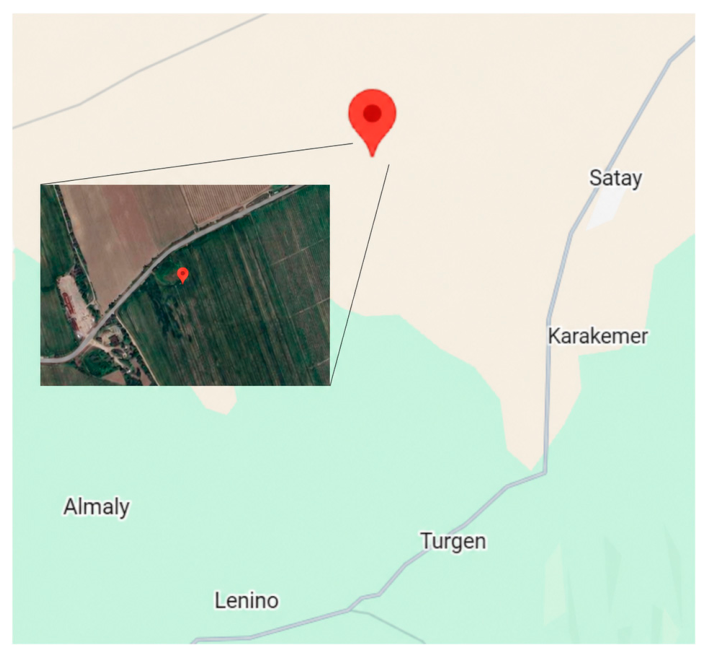
The field experiment was conducted from 21 April to 21 August 2025 on the grounds of the ‘Manshuk’ farm, located near the village of Turghen, Enbekshikazakh District, Almaty Region, Kazakhstan (43°27′ N, 77°34′ E, 900–950 m above sea level). Data from the Kazhydromet weather station showed that precipitation was uneven, with most of it falling in the third ten-day period of April and in May. June saw a moderate moisture deficit, whilst July was dry (Table 1). The absolute maximum for the period, +39.5 degrees, was recorded in the third ten-day period of July 2025, with a deviation from the norm of +3.1 degrees.
The soil on the experimental plot was classified as dark chestnut, and its characteristics are given in Table 2.
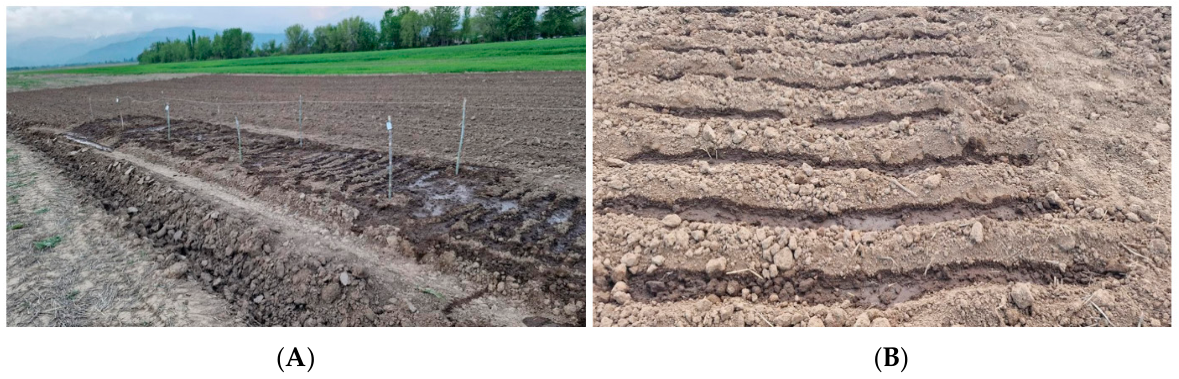
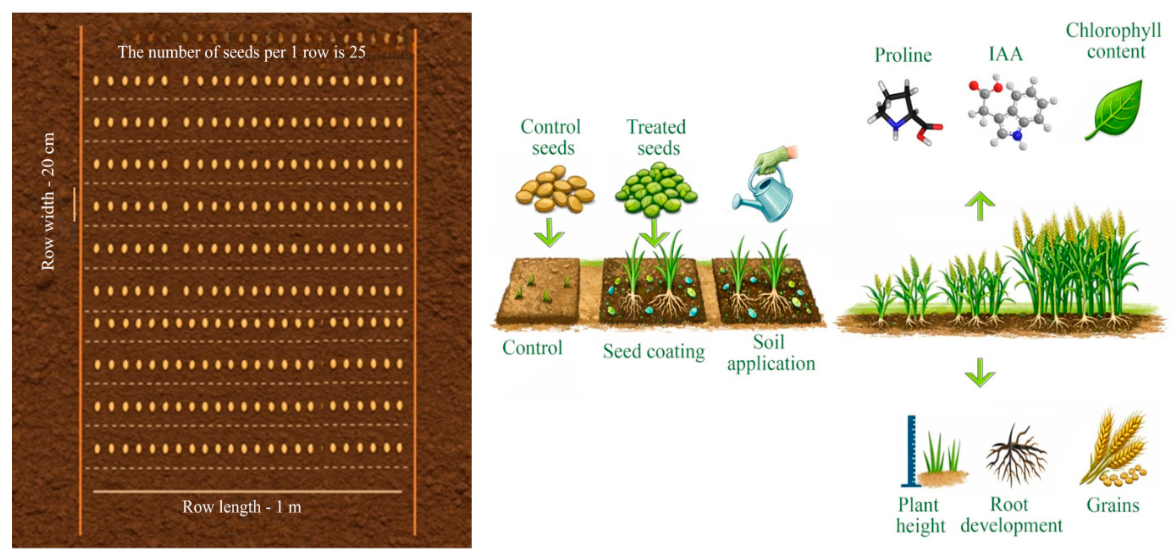
The main tillage on the experimental plot was carried out in autumn using a moldboard plough to a depth of 23–25 cm. Pre-sowing soil preparation involved harrowing with a disc harrow to a depth of 5–6 cm to break up clods and level the surface. The total area of the experimental plot was 80 m2 (Figure 1). The study was conducted using the small-plot method with ten replicates, each covering an area of 2 m2 (Figure 2). Seeds of the ‘Zhalgas’ barley variety were sown in rows 1 m long and 20 cm wide, with 25 seeds per row (Figure 3). No mineral or organic fertilizers were applied during the experiment. Irrigation was carried out as required throughout the growing season.
The field experiment followed the same experimental design and treatment groups as the pot experiment described in Section 2.8, including the untreated control, pathogen-inoculated control, pre-sowing seed treatment, and soil application of the biopreparation.
The control plots were spatially separated from the plots where the pathogen was introduced, in order to prevent accidental spread of the pathogen. In addition, plots sown with untreated seeds and plots sown with seeds treated with a biological agent were designated as separate blocks within the experimental area. Ten replicate plots were allocated for each treatment.
During the growing season, morphometric parameters were recorded, including plant height, root system development, and accumulation of vegetative biomass. Plant physiological status was assessed based on leaf proline content and photosynthetic pigment concentrations, allowing characterization of the functional state of the photosynthetic apparatus and the level of plant stress under field conditions. At harvest, yield structure parameters were evaluated, including plant height, productive tillering, ear length, number of grains per ear, grain weight per ear, and thousand-kernel weight.

2.12. Infectious Stress on the Experimental Plot

To determine the initial concentration of the phytopathogen F. graminearum in the soil, four randomly selected test plots were sampled one day prior to sowing and treatment. To create an artificial infection background, suspensions of F. graminearum spores were applied to the soil at a concentration of 2 × 10⁶ per 1 g of soil (2 mL of suspension 108 CFU·mL−1 per 100 g of soil). The inoculum was evenly distributed across all plots where the pathogen experiment was conducted. The second stage of determining the level of phytopathogens was carried out at the BBCH 14 stage of barley development, when the fourth leaf had unfolded on the main shoot. To assess the effect of treatment with the biopreparation on phytopathogens, additional soil samples were taken from all plots two weeks before harvest. Samples were collected from the root zone at a depth of up to 20 cm under aseptic conditions, then transported to the laboratory and inoculated onto potato dextrose agar (PDA). Quantitative counting of phytopathogens was carried out using the Waksman serial dilution method. To prevent the growth of associated bacterial microflora, the antibiotic streptomycin was added to the culture medium at a concentration of 50 mg·L−1. The plates were incubated at 25 °C for 5–7 days. The fungal colonies that grew were subjected to mandatory microscopic identification at 400× magnification. Confirmation of the fungal strain’s species affiliation was carried out on the basis of microscopic analysis of each isolate/strain (spore structure and size, colony color) using appropriate mycological keys.

2.13. Statistical Processing

All data are presented as mean ± standard deviation (SD) of three independent replicates, except for the field experiments, for which data are presented as mean ± standard deviation (SD) of ten replicates. Statistical analysis was performed using one-way analysis of variance (ANOVA). Data processing was carried out using Statistica® software package version 10.0 (TIBCO Software Inc., Palo Alto, CA, USA). Differences between means were evaluated using Tukey’s honestly significant difference (HSD) test, with statistical significance set at p < 0.05.

3. Results and Discussion

3.1. Selection of Microorganisms for Creating Microbial Consortium

The first step in developing a microbial biopreparation is the selection of microorganisms with agronomically valuable properties. According to numerous studies, the biotechnological potential of microbial cultures is often more fully realized in consortia rather than in single-strain biopreparation. Mutually biocompatible species can interact synergistically, enhancing each other’s activity and supporting the production of secondary metabolites [45,46].
The formation of a microbial consortium with agronomically valuable properties in this study was based on endophytic microorganisms isolated from the leaves and roots of medicinal plants: Serratia proteamaculans B5 and Pseudomonas putida D7, described earlier [26], as well as S1 strain, isolated from the flowers of common chicory (Cichórium intybus).
At the initial stage, the strains were tested for their ability to produce IAA and to suppress the growth of the tested phytopathogenic fungi.
Pseudomonas putida D7 exhibited the highest level of IAA production (69.2 ± 3.1 μg∙mL−1), whereas the Serratia proteamaculans B5 and S1 strains accumulated IAA in the range of 53.29 ± 2.7 μg∙mL−1 to 62.7 ± 2.1 μg∙mL−1. IAA is known to regulate not only plant growth and development but also plant defense responses, including modulation of the PR gene expression. Therefore, the strains studied may indirectly inhibit phytopathogen development through IAA production in the rhizosphere [47].
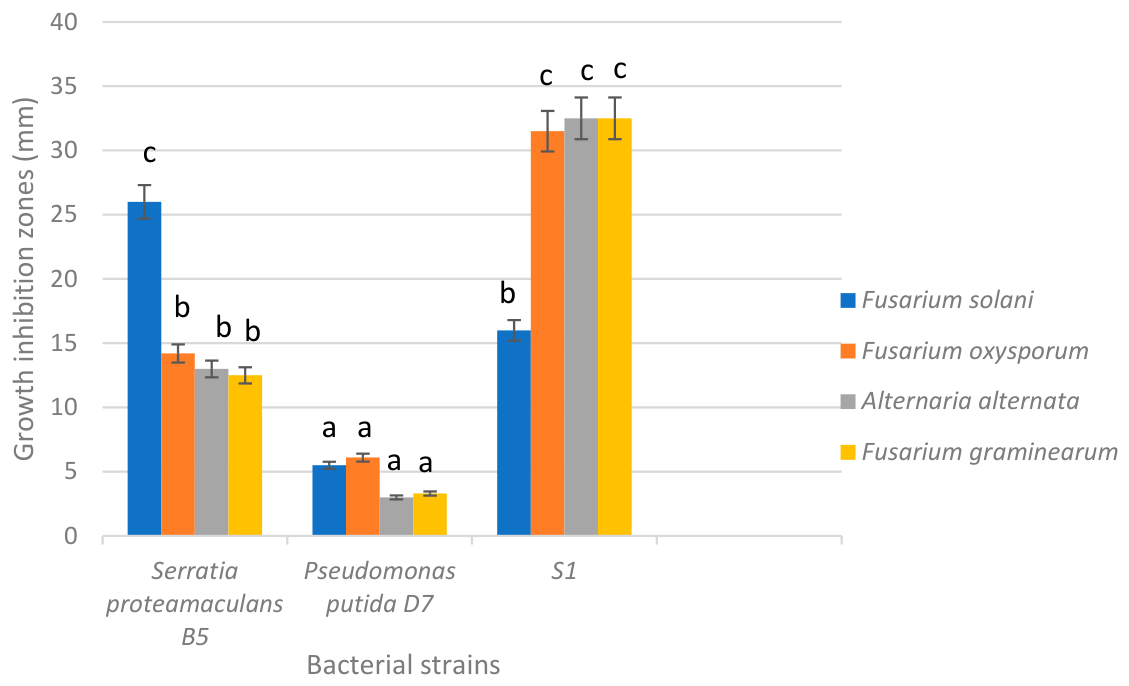
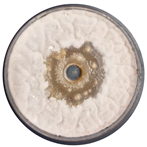
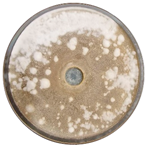
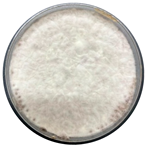
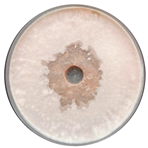
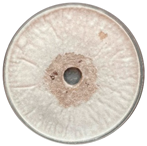
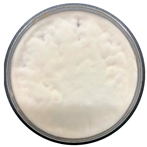
The antifungal activity of the strains against the phytopathogens F. solani, F. oxysporum, F. graminearum and A. alternata is presented in Figure 4 and Table 3.
Strain S1 exhibited high antifungal activity against all three plant pathogens tested, with growth inhibition zones ranging from 16 ± 1.1 to 32.5 ± 2.0 mm (Figure 4).

3.2. Identification of Bacterial S1 Strain

The next stage of the study focused on the identification of a promising biocontrol agent, the S1 strain. Microscopic examination combined with molecular analysis indicated that the S1 strain belongs to the genus Lysinibacillus, with 98% sequence identity (Table 4 and Figure 5). Members of this genus are Gram-positive mesophilic bacteria within the phylum Firmicutes and the family Bacillaceae and are phylogenetically related to the genus Bacillus [48].
Whole-genome sequencing of Lysinibacillus sp. S1 yielding paired-end forward (R1) and reverse (R2) reads that were subsequently assembled de novo. The assembled genome exhibited an average coverage depth of 160×, and the resulting sequence was deposited in the GenBank database under accession number CP173154.
The genome consists of a circular chromosome with total length of 4,710,018 bp and a GC content of 37.6%. Genome annotation predicted 4743 genes, including 145 RNA-encoding genes (rRNA, tRNA, and ncRNA) (Table 4).
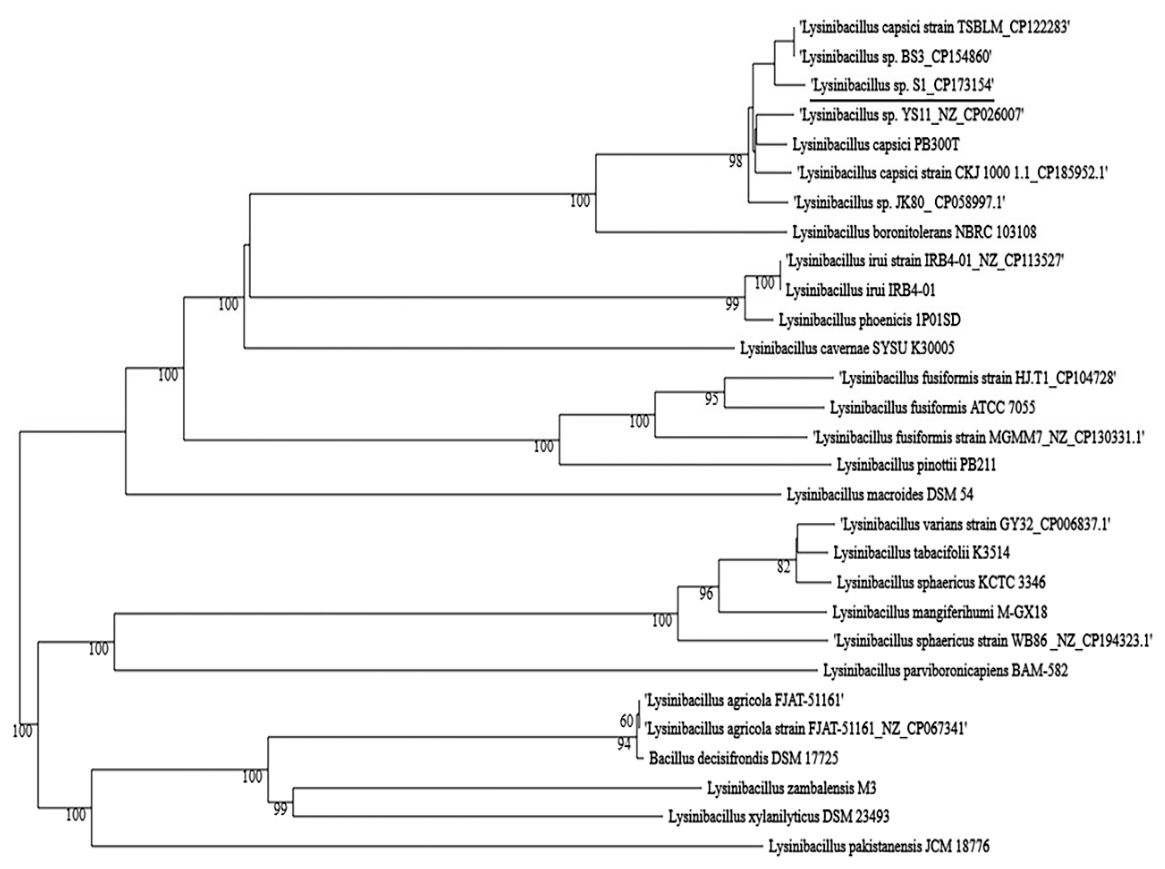
Phylogenetic analysis based on whole-genome sequences of reference strains within the genus Lysinibacillus revealed that Lysinibacillus sp. S1 (CP173154) consistently clusters within the clade corresponding to Lysinibacillus capsici. This clade includes L. capsici TSBML_CP122283, as well as strains L. capsici YS11, PB300T, CK1000-11, and JK80, and is clearly separated from other species of the genus, such as L. boronitolerans, L. irui, and L. fusiformis, forming a distinct monophyletic group. This position indicates that strain S1 belongs to the species Lysinibacillus capsici or to a closely related intraspecific lineage (Figure 5).
To determine the taxonomic affiliation of strain S1, whole-genome comparative analyses were performed using closely related Lysinibacillus genomes. Genome similarity was assessed using OrthoANI and digital DNA–DNA hybridization (dDDH).
The highest genomic similarity was observed between strain S1 and Lysinibacillus capsici TSBLM (CP122283), with an OrthoANI value of 99.53%. In addition, dDDH analysis using the GGDC platform yielded a value of 95.4% (95% confidence interval: 93.9–96.6%), substantially exceeding the accepted species threshold of 70% (Table 5).
Similarly high levels of genomic relatedness were observed with Lysinibacillus sp. BS3 (OrthoANI 99.50%, dDDH 95.4%), Lysinibacillus capsici CKJ1000 1.1 (OrthoANI 99.00%, dDDH 90.2%), Lysinibacillus sp. JK80 (OrthoANI 98.91%, dDDH 89.4%), and Lysinibacillus sp. YS11_NZ (OrthoANI 98.81%, dDDH 89.6%).
All OrthoANI values were well above the generally accepted species boundary of 95–96%, while all dDDH values exceeded the 70% threshold for species delineation. These results, together with the whole-genome phylogenetic analysis, support the assignment of strain S1 to the species Lysinibacillus capsici.
The presence of secondary metabolite biosynthetic gene clusters in the genome of Lysinibacillus sp. S1 was analyzed using antiSMASH software v.8.0.4. As a result, eight putative biosynthetic gene clusters were identified, including clusters associated with terpene, nonribosomal peptide synthetase (NRPS), and polyketide synthase (PKS) pathways (Table 6). The identified combination of biosynthetic clusters suggests a pronounced biocontrol potential of this strain and supports its possible role in suppressing phytopathogenic microorganisms in natural and agroecosystems.
The highest similarity was identified for a hybrid β-lactone/NRPS/T1PKS biosynthetic gene cluster associated with the fusarin C biosynthetic pathway. The presence of NRPS- and PKS-related clusters suggests that strain S1 possesses the potential to synthesize structurally complex secondary metabolites. However, these findings are based solely on genome analysis and do not provide evidence for the actual production of the corresponding compounds. Therefore, similarity to the fusarin C biosynthetic gene cluster should not be interpreted as evidence of fusarin C production by strain S1 [49]. The remaining predicted clusters showed moderate or low similarity to known biosynthetic clusters, suggesting the potential formation of structurally novel or distinct secondary metabolites.
Of particular interest is the predicted cluster related to the biosynthesis of bacilysin, a well-characterized dipeptide antibiotic widely distributed among members of the genus Bacillus. Bacilysin exhibits antibacterial and antifungal activity, including inhibition of phytopathogenic fungi of the genera Fusarium, Rhizoctonia, and Pythium, and is considered as an important factor in biological plant control [50,51]. The presence of a similar cluster in the genome of Lysinibacillus sp. S1 suggests the involvement of similar mechanisms of antagonistic activity.
Clusters associated with the biosynthesis of terpene compounds, including sodorifen, were also identified in the genome. Volatile terpenes are recognized as key mediators of microbial interactions in the rhizosphere and can suppress phytopathogen growth through both direct antimicrobial effects and indirect modulation of microbial community structure [52]. Thus, terpene metabolites of Lysinibacillus sp. S1 may contribute to plant protection through indirect and direct mechanisms.
NRPS-like clusters show similarity to those related to bicornutine biosynthesis and may be associated with the production of membrane-active peptides characteristic of antagonistic bacteria [53]. Furthermore, clusters annotated as lasso peptides or signaling molecules (e.g., burhizin) likely perform regulatory functions and may indirectly enhance the competitiveness of the strain within complex microbial communities.
Overall, the identified repertoire of secondary metabolite biosynthesis clusters supports the classification of Lysinibacillus sp. S1 as a promising source of bioactive compounds with anti-phytopathogenic properties. The moderate and low similarity of most of the predicted biosynthetic gene clusters of the Lysinibacillus sp. S1 strain to known clusters indicates the possibility of synthesizing structurally new metabolites, making this strain an attractive candidate for future functional, ecological, and biotechnological studies. However, the identification of these clusters is based solely on genome analysis and does not demonstrate their expression or production of the corresponding metabolites under the conditions studied. Further research, including transcriptomic and metabolomic analyses, are required to determine whether these pathways are active and to identify the metabolites produced.

3.3. Development of Biopreparation Prototypes

The first stage in creating a stable system capable of exerting a synergistic effect within a microbial consortium was to verify the biocompatibility of the selected strains. The criteria for strain selection included active growth in the co-cultivation zone and the absence of antagonism or substrate competition. The tested strains did not exhibit antagonistic interactions, and their growth characteristics remained unchanged during co-cultivation on agar medium. These results indicate their good mutual compatibility and suitability for combined use as a biopreparation.
Following confirmation of biocompatibility, the optimal ratio of strains within the consortium was determined experimentally (Table 7).
The age of the inoculum at 12 h was found to be optimal in terms of growth parameters, yielding a cell titer of (2.18 ± 0.01) × 1011 CFU∙mL−1 and a specific growth rate of 0.160 ± 0.006 h−1.
A ratio of 1:1:1 at a 12 h inoculum age was therefore selected for further formulation.
To stabilize the consortium, facilitate the delivery of microorganisms to the target area, achieve protection during storage, and improve in situ functionality, a gel matrix consisting of a 4% pullulan solution produced by Aureobasidium pullulans C7 was incorporated into the formulation. The suitability of pullulan as a seed-coating binder has been demonstrated previously [26].
A combined strategy integrating biological and chemical mechanisms of phytopathogen control was proposed to reduce pesticide load: the use of microbial biofungicides in combination with a reduced dose (50% of the recommended norm) of a synthetic fungicide [54].
It is assumed that microbial inoculants would ensure long-term rhizosphere colonization, competitive exclusion, and the induction of systemic resistance. Dose reduction is also expected to minimize negative effects on beneficial microorganisms and decrease selective pressure for fungicide-resistant pathogen strains [55].
To assess the feasibility of incorporating Fundazol into the formulation, the resistance of consortium strains to the fungicide was tested. In vitro, when strains were cultured on solid nutrient medium containing Fundazol at concentrations of 115 and 230 g∙L−1, which corresponds to 50% and 100% of the recommended application rate for Fundazol [54], all three cultures exhibited growth comparable to the untreated control, indicating tolerance to the tested concentrations.
Thus, the developed biopreparation consisted of a microbial consortium (108–109 CFU∙mL−1), a 4% pullulan solution, and Fundazol at a concentration of 115 g∙L−1.

3.4. Pot Experiments

Spring barley (Hordeum vulgare L. of the Arna variety; family Poaceae) was selected as the model plant. Most of the barley harvest is used for livestock feed, as well as for brewing and cereal production. Various stress factors, including adverse soil and climatic conditions and phytopathogen pressure, negatively affect both barley yield and grain quality. In this context, the application of novel biological products represents a promising approach to improving crop productivity and quality [56].
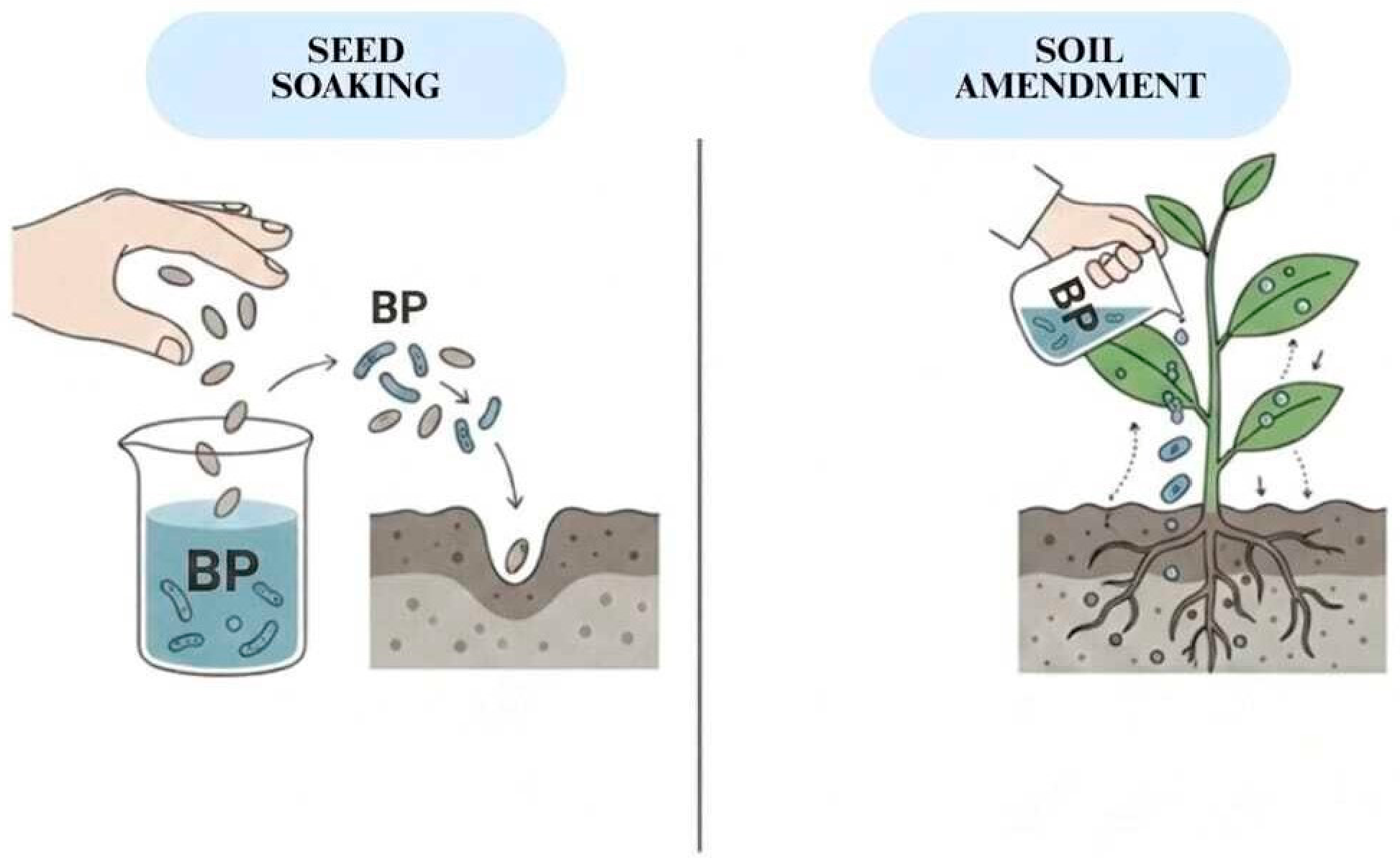
To assess the effect of the microbial consortium on barley morphophysiological parameters in planta, pot experiments were conducted. The study evaluated the effectiveness of two application methods of the biopreparation on 21-day-old barley plants grown under phytopathogenic pressure: (a) pre-soaking seeds in a concentrated gel biopreparation (1 × 10¹⁰ CFU∙mL−1) and (b) soil application of a working solution of the biopreparation (dilution 1:100) (Figure 6).
F. graminearum was selected as the target pathogen to induce phytopathogenic stress in pot experiments and was introduced into the soil at a concentration of 108 CFU∙mL−1. Morphometric and physiological parameters of 21-day-old plants were assessed, including shoot and root length, biomass, and chlorophyll and proline contents.
The experiment included the following variants: untreated seeds (control), untreated seeds + F. graminearum, seed soaking in gel biopreparation + F. graminearum, and soil application of gel biopreparation + F. graminearum. The results of pre-sowing treatments are summarized in Table 8.
The pre-sowing seed treatment had a pronounced growth-stimulating effect on barley plants, as evidenced by a significant increase (p < 0.05) in morphometric parameters. The reaction of the plants varied depending on the application method. The greatest elongation of the roots and stems was observed when the seeds were soaked. However, these results are consistent with reports indicating that seed soaking is an effective method of increasing seed viability and activating internal physiological processes [57].

3.5. Field Experiments

As the field experiment involved simulating a phytopathogenic load, the background level of infection caused by F. graminearum in the soil was first assessed (Table 9). An artificially induced increase in the titer of F. graminearum on the experimental plots was recorded at BBCH 14. A significant reduction in the concentration of the phytopathogen following the application of the biopreparation was observed two weeks prior to harvest.
In the next stage of the study, the effectiveness of the microbial consortium was evaluated under field conditions in order to validate the results obtained in controlled pot experiments. The transition from controlled growth conditions to open-field environments is a necessary step in the development and testing of biopreparation, since in field conditions plants are exposed to a complex combination of abiotic and biotic factors. This enables a more objective evaluation of the practical relevance and robustness of the proposed biological agents [58].
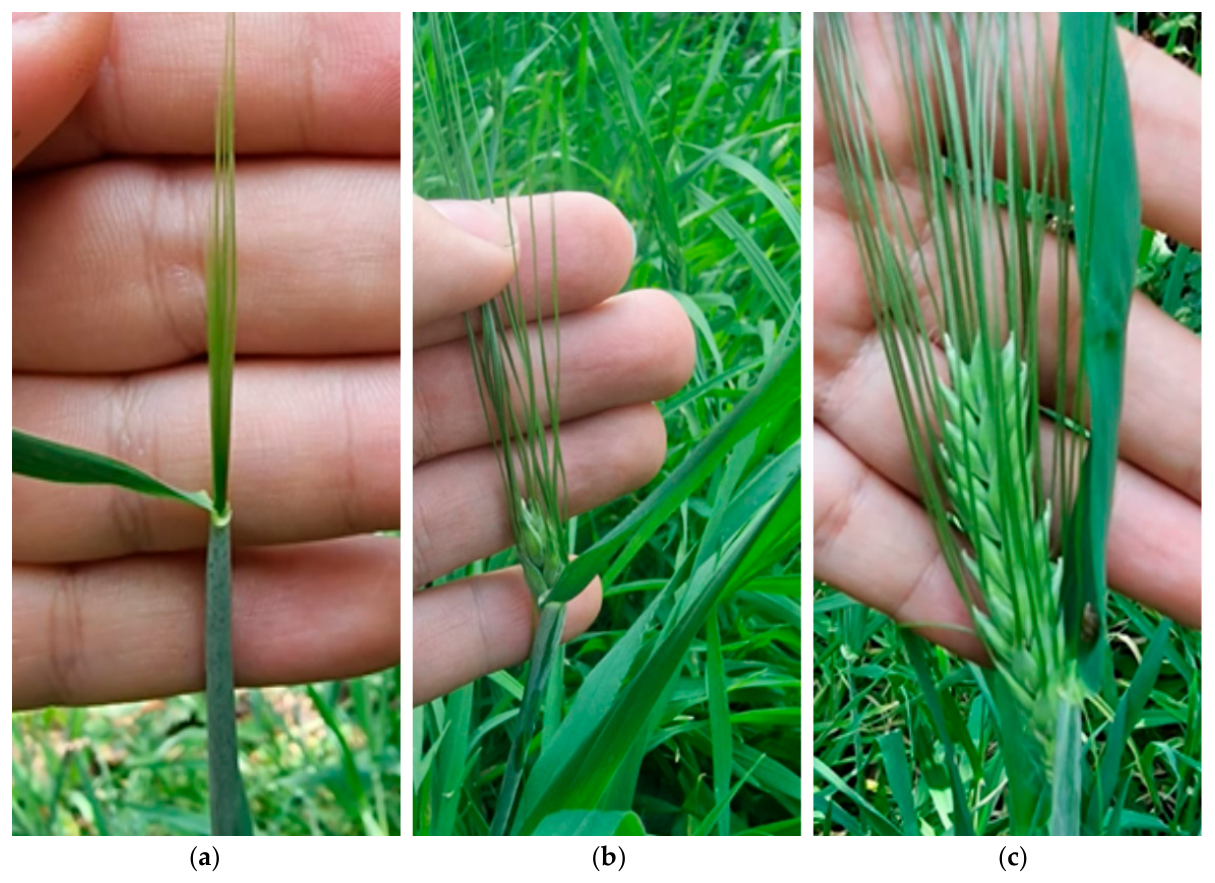
To obtain a comprehensive assessment of biopreparation performance, physiological and morphometric parameters of barley plants were analyzed at different stages of development. Plant developmental stages were described using the standardized BBCH scale (Biologische Bundesanstalt, Bundessortenamt und Chemische Industrie), which includes germination, leaf development, tillering, stem elongation, booting, heading, flowering, grain development, ripening, and senescence. Figure 7 illustrates BBCH stage 5, corresponding to ear emergence from the flag leaf sheath. Specifically, BBCH stages 51–53 represent the initial appearance of spikelet tips, BBCH stages 55–57 indicate partial ear emergence, and BBCH stage 59 corresponds to full ear emergence [59]. In addition, yield structure parameters were analyzed, and grain quality was assessed.
Optimal seeding density promotes uniform seed germination and crop establishment, thereby contributing to higher crop yields through more efficient utilization of light, moisture, and nutrients, reduced interplant competition, and minimized losses caused by diseases and pests [60].
Under phytopathogenic stress during the germination phase, barley plant density was 6 and 10% higher in the variants involving application of the biopreparation. Plant survival to harvest under stressful conditions ranged from 90.1 to 93.1% n treated variants, with the highest values observed in variant List 3 (Table 10). In the field experiments, seedling emergence occurred 10 days after sowing. Depending on the experiment variant, the field germination rate ranged from 70 to 79% (Table 10). Introduction of Fusarium graminearum into the soil exerted a pronounced inhibitory effect on the barley growth, development, and productivity. In contrast, application of the developed biopreparation promoted more uniform and complete germination of barley seeds under biotic stress conditions and increased field germination by 4–11%.
The use of the biopreparation helped to reduce the negative effects of the phytopathogen and ensured more stable plant development throughout the growing season. The most pronounced effects were recorded following pre-sowing seed soaking, which indicates the importance of early protection of seedlings and the establishment of favorable rhizosphere conditions even under increased infectious pressure.
When stress conditions were simulated (experimental variant List 2), the height and mass of plants were significantly reduced (by 18–21%) compared with plants grown under control conditions (variant List 1). Application of the biopreparation resulted in a significant increase in all evaluated morphometric indicators at both the tillering and heading phases. As shown in Table 11, treated plants exhibited increases in height and biomass of 9–21% relative to infected untreated variants. Under biotic stress, the greatest increase in plant height and biomass was recorded in the seed soaking variant (Table 11).
Productive tillering (bushiness) is an important determinant of barley yield potential, as a higher number of lateral shoots contributes to the formation of a greater number of ears [61]. In the present study, application of the biopreparation positively affected the development of side shoots, starting from the tillering stage, where their number ranged from 4.7 ± 0.1 to 5.2 ± 0.1 per plant. Notably, by the heading stage, shoot number increased in treatments exposed to phytopathogenic stress when the biopreparation was applied, whereas bushiness decreased in stressed variants without treatment (Table 12).
Crop formation is largely determined by photosynthetic processes; therefore, evaluation of any biopreparation requires assessment of its effects on the photosynthetic apparatus. The content of photosynthetic pigments in barley leaves was evaluated during the tillering and earing stages (Table 12).
During the tillering stage, biotic stress induced by F. graminearum resulted in a 12–25% decrease in chlorophyll a and b contents compared to control plants (Table 12). In addition, a reduction in the chlorophyll a/b ratio was observed under phytopathogenic pressure, indicating alterations in pigment–protein complexes of the light-harvesting antennae of photosystems I and II [62]. The trend of reduced pigment content and altered ratios persisted into the heading stage. Application of the biopreparation had a positive effect on the photosynthetic apparatus of barley, as reflected by increased chlorophyll a and b contents in treated plants. The strongest effect was observed in the seed soaking treatment (Table 12).
Thus, both at early vegetative stages and during further plant development, the developed biopreparation contributed to the maintenance and enhancement of the photosynthetic pigment content in response to stress factors.
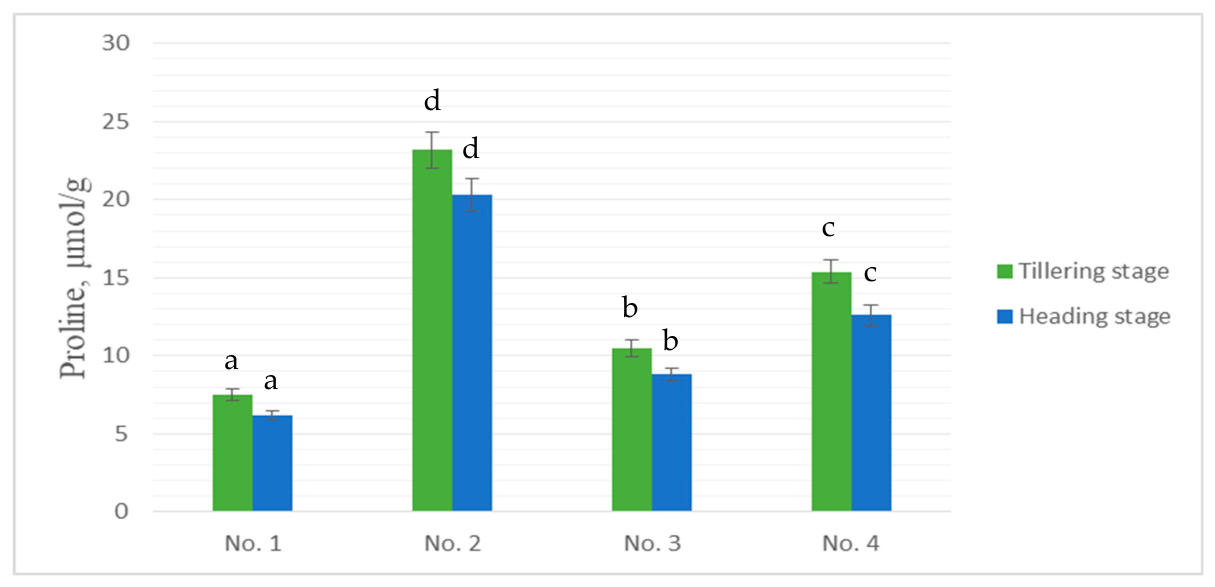
In addition, plants activate proline-related protective mechanisms [63,64,65]. When growing plants under stressful conditions, a higher level of proline was noted in barley leaves compared to control plants. The content of proline increased 3.1–3.3 times depending on the phase of development of barley. In response to the use of the biopreparation, proline levels decreased. Under conditions of phytopathogenic load, a 1.5–2.3-fold decrease in proline was observed with the use of the biopreparation (Figure 8). The observed reduction in proline accumulation following biopreparation application is likely associated with the activity of the constituent microorganisms [66].
To assess the effectiveness of the developed biopreparation on yield and grain quality, a detailed analysis of the crop structure was carried out (Table 13).
When barley was grown under stress conditions (List 2), linear growth parameters (plant height and ear length) decreased by 13–20% compared to the plants not exposed to stress factors (List 1). Application of the developed biopreparation had a significant positive effect on these parameters. In treated variants, plant height increased by 12% compared to untreated variants. The greatest plant height (76.1 ± 1.21 cm) was recorded in the seed soaking group under phytopathogenic pressure. Ear length in the treated variants ranged from 6.6 ± 0.11 to 6.9 ± 0.2 cm, corresponding to an increase of 8–11% depending on the method of biopreparation application (Table 13).
Productive tillering of barley plants ranged from 2.4 ± 0.07 to 3.0 ± 0.05 shoots per plant, depending on the experimental treatment. Under phytopathogenic stress without biopreparation application (variant List 2), a significant 20% reduction in the number of productive stems was observed compared to control plants. In contrast, under stress conditions, application of the biopreparation promoted the formation of a greater number of productive stems (Table 13).
Grain yield is closely linked to the number of grains per ear, which is influenced by varietal characteristics, soil and climatic conditions, and agronomic practices [67]. In the present study, the number of grains per ear ranged from 18.1 ± 0.99 to 23.7 ± 0.98. Application of the developed biopreparation resulted in a 20–28% increase in grain number per ear relative to untreated stressed variants (Table 13).
Grain size was evaluated based on grain weight per ear and thousand-kernel weight (TKW), both of which are key indicators of seed quality and are closely associated with seed germination and viability [68]. Significant differences in these parameters were observed among treatments. Grain weight per ear ranged from 0.83 ± 0.03 to 0.98 ± 0.05 g, while TKW ranged from 39.4 ± 1.09 to 46.4 ± 1.15 g. Under unfavorable growing conditions, both indicators decreased significantly. In contrast, biopreparation application increased grain weight per ear by 7–11% and TKW by 8–10% compared to untreated stressed plants (Table 13).
In addition to evaluating the effects of the biopreparation on yield structure, its influence on barley grain quality was also assessed (Table 14). Key indicators of grain quality include physical properties, such as grain weight, as well as chemical composition parameters, including protein and starch content.
Protein content in barley grain reflects its technological and nutritional value and determines its suitability for feed production (feed barley) or for malting (brewing barley) [69]. As can be seen from the data presented in Table 14, the grain protein content in our study ranged from 9.4 to 9.9% depending on the experimental variant. Under phytopathogenic stress conditions, no statistically significant differences in protein content were detected between treated and untreated variants.
Starch content represents an important indicator of grain energy value. Under stress conditions, starch levels were reduced compared to the control and did not exceed 44.3% (Table 14). Application of the biopreparation contributed to an increase in starch content under elevated phytopathogenic pressure.
Grain bulk density (grain nature) is an important parameter reflecting grain size, density, and the degree of filling [70]. Grain harvested from plants grown under control conditions exhibited a bulk density of 695.8 ± 21.2 g·L−1. Exposure to biotic stress impaired grain filling and led to the formation of smaller, lighter grains, resulting in an 11% reduction in bulk density in variant List 2 compared to the control (variant List 1). Application of the developed biopreparation significantly increased this parameter under stress conditions (Table 14).
The combination of data from the field experiment and the results of genomic analysis indicate a complex mechanism of action of the biopreparation, combining direct suppression of phytopathogens by antifungal metabolites and activation of induced systemic resistance (ISR). Identification in the genome of Lysinibacillus sp. S1 clusters of the biosynthesis of bacilysin, terpenes, and fusaricide-like compounds indicates not only direct antagonism but also the presence of elicitors capable of triggering the plant’s systemic defense mechanisms. Comparison with published data on the use of Serratia proteamaculans, Pseudomonas putida, and Lysinibacillus spp. in seed treatments indicates that the plant response profile observed in this study—enhanced growth, stabilization of the photosynthetic apparatus, and attenuation of stress responses—is consistent with trends reported for effective plant-growth-promoting rhizobacteria (PGPR) [71,72,73].
In the present study, Pseudomonas putida D7 predominantly exhibited growth-promoting properties, whereas the other two strains demonstrated more pronounced antifungal activity. Such functional specialization within the microbial consortium aligns with contemporary strategies for designing multi-strain formulations in sustainable agriculture [74].
Functional differentiation among the strains may be attributed to differences in genomic organization, particularly the presence of distinct biosynthetic gene clusters (BGCs) involved in secondary metabolite production (Figure 9). Antifungal strains commonly harbor clusters encoding antibiotics, cyclic lipopeptides, phenazines, polyketides, or hybrid NRPS/PKS systems that mediate antagonistic activity. In contrast, growth-promoting strains are often characterized by genes involved in phytohormone synthesis (e.g., indole-3-acetic acid), siderophore production, and phosphate solubilization. The protective and growth-promoting effects observed in the field experiments are consistent with the predicted metabolic potential of Lysinibacillus sp. S1. Although further functional validation is required, the identified biosynthetic capacities likely contribute to the biological control of Fusarium-associated diseases and to the overall protective effect observed in this study.
Experimental evidence reported by several authors indicates that fusaricidins play an important role in the biological control of fungal plant diseases and that their corresponding biosynthetic gene clusters are critical determinants of antagonistic activity in producing strains [75]. Accordingly, the presence of similar biosynthetic clusters in Lysinibacillus sp. S1 may partly explain the observed reduction in phytopathogenic pressure and the improvement of plant physiological status in the present field experiments.
Overall, the field experiment results corroborated the findings obtained under controlled conditions and demonstrated that the developed biopreparation effectively mitigates the negative effects of phytopathogenic stress, stabilizes key physiological processes, and promotes increased productivity and grain quality in spring barley. Among the tested application methods, pre-sowing seed soaking proved to be the most effective under Fusarium graminearum infestation, highlighting its practical potential for barley protection against fusarium diseases.


4. Conclusions

In this study, a comprehensive biopreparation was developed combining a microbial consortium (Serratia proteamaculans B5, Pseudomonas putida D7 and Lysinibacillus sp. S1), a delivery system based on a pullulan biopolymer matrix and field validation. Genomic analysis of Lysinibacillus sp. S1 revealed molecular determinants potentially associated with antagonistic activity, which characterizes its functional role in the consortium.
Vegetation and field experiments have demonstrated promising results of the drug’s effectiveness under conditions of infectious stress caused by F. graminearum, especially when using the method of pre-sowing soaking of seeds.
The response of plants to treatment was accompanied by stabilization of the photosynthetic apparatus and a decrease in the accumulation of proline in the leaves (up to 2.3 times). These physiological changes are considered as indirect markers of the possible activation of induced systemic resistance (ISR), contributing to the maintenance of plant homeostasis under pathogenic pressure.
The proposed strategy, integrating microbiological inoculants with a 50% reduced dose of Fundazol fungicide, is consistent with the principles of sustainable agriculture.
Although the use of the drug contributed to an increase in germination to 79%, an increase in biomass (by 9–21%) and an improvement in some quality indicators of grains (nature, starch content), practical recommendations for the introduction of this technology remain preliminary. The expected potential of biotechnology is based on the synergy of the components: while a reduced dose of benomyl is aimed at stopping the primary infection, the bacterial complex stabilized in the matrix provides growth support and prolonged protection.
Nevertheless, further research is required for the final implementation of the technology into widespread practice, including direct quantitative analysis of the pathogen biomass and verification of the reliability of the results in various soil and climatic zones.

Author Contributions

Conceptualization, L.I. and N.V.; methodology, Y.B., N.V., E.M. and S.M.; software, A.G. and T.K.; validation, L.I., M.A., A.B. and A.U.; formal analysis, L.I., I.D. and N.A.; investigation, Y.B., L.I. and N.V.; resources, S.K. and E.M.; data curation, S.M. and A.G.; writing—original draft preparation, L.I. and N.V.; writing—review and editing, L.I., T.K. and M.A.; visualization, A.B. and A.U.; supervision, N.V., I.D. and N.A.; project administration, L.I. and S.K.; funding acquisition, Y.B. All authors have read and agreed to the published version of the manuscript.

Funding

This research was funded by the Ministry of Science and Higher Education of the Republic of Kazakhstan, grant number AP26198317.

Institutional Review Board Statement

Not applicable.

Informed Consent Statement

Not applicable.

Data Availability Statement

The data that support the findings of this study are available upon request from the corresponding author.

Acknowledgments

During the preparation of this manuscript, the authors used ChatGPT-5.2 for the partial generation of schematic representations. The authors have reviewed and edited the output and take full responsibility for the content of this publication.

Conflicts of Interest

The authors declare no conflicts of interest. The funders had no role in the design of the study; in the collection, analyses, or interpretation of data; in the writing of the manuscript; or in the decision to publish the results.

Abbreviations

The following abbreviations are used in this manuscript:
PGSMsPlant-growth-stimulating microorganisms
IAAIndole-3-acetic acid
NBNutrient broth
PBSPhosphate-buffered saline
CFUColony-forming unit
SDStandard deviation
HSDHonestly significant difference
NRPSNonribosomal peptide synthetase
PKSPolyketide synthase
BBCHBiologische Bundesanstalt, Bundessortenamt und Chemische Industrie
TKWThousand-kernel weight
BGCsBiosynthetic gene clusters

References

  1. Singh, B.K.; Delgado-Baquerizo, M.; Egidi, E.; Guirado, E.; Leach, J.E.; Liu, H.; Trivedi, P. Climate Change Impacts on Plant Pathogens, Food Security and Paths Forward. Nat. Rev. Microbiol. 2023, 21, 640–656. [Google Scholar] [CrossRef] [PubMed]
  2. Lim, J.A.; Yaacob, J.S.; Mohd Rasli, S.R.A.; Eyahmalay, J.E.; El Enshasy, H.A.; Zakaria, M.R.S. Mitigating the Repercussions of Climate Change on Diseases Affecting Important Crop Commodities in Southeast Asia for Food Security and Environmental Sustainability—A Review. Front. Sustain. Food Syst. 2023, 6, 1030540. [Google Scholar] [CrossRef]
  3. Gai, Y.; Wang, H. Plant Disease: A Growing Threat to Global Food Security. Agronomy 2024, 14, 1615. [Google Scholar] [CrossRef]
  4. Degani, O. Plant Fungal Diseases and Crop Protection. J. Fungi 2025, 11, 274. [Google Scholar] [CrossRef]
  5. Gamage, A.; Gangahagedara, R.; Subasinghe, S.; Gamage, J.; Guruge, C.; Senaratne, S.; Randika, T.; Rathnayake, C.; Hameed, Z.; Madhujith, T.; et al. Advancing Sustainability: The Impact of Emerging Technologies in Agriculture. Curr. Plant Biol. 2024, 40, 100420. [Google Scholar] [CrossRef]
  6. Mkhize, S.; Ellis, D. Organic Consumption as a Means to Achieve Sustainable Development Goals and Agenda 2063. Sustain. Dev. 2024, 32, 5181–5192. [Google Scholar] [CrossRef]
  7. Leskovac, A.; Petrović, S. Pesticide Use and Degradation Strategies: Food Safety, Challenges and Perspectives. Foods 2023, 12, 2709. [Google Scholar] [CrossRef] [PubMed]
  8. Schriever, C.; Jene, B.; Resseler, H.; Spatz, R.; Sur, R.; Weyers, A.; Winter, M. The European Regulatory System for Plant Protection Products—Cause of a “Silent Spring” or Highly Advanced and Protective? Integr. Environ. Assess. Manag. 2025, 21, 3–19. [Google Scholar] [CrossRef] [PubMed]
  9. United Nations. The Sustainable Development Goals Report 2025; United Nations: New York, NY, USA, 2024.
  10. Shahzad, M.; Hayat, R.; Mujtaba, G.; Rehman, W.U.; Nadeem, M. Biofertilizers in Sustainable Agriculture: Mechanisms, Applications, and Future Prospects. Discov. Agric. 2025, 3, 224. [Google Scholar] [CrossRef]
  11. Ammar, E.E.; Rady, H.A.; Khattab, A.M.; Amer, M.H.; Mohamed, S.A.; Elodamy, N.I.; Al-Farga, A.; Aioub, A.A. A Comprehensive Overview of Eco-Friendly Bio-Fertilizers Extracted from Living Organisms. Environ. Sci. Pollut. Res. 2023, 30, 113119–113137. [Google Scholar]
  12. Daniel, A.I.; Fadaka, A.O.; Gokul, A.; Bakare, O.O.; Aina, O.; Fisher, S.; Burt, A.F.; Mavumengwana, V.; Keyster, M.; Klein, A. Biofertilizer: The Future of Food Security and Food Safety. Microorganisms 2022, 10, 1220. [Google Scholar] [CrossRef] [PubMed]
  13. Nosheen, S.; Ajmal, I.; Song, Y. Microbes as Biofertilizers, a Potential Approach for Sustainable Crop Production. Sustainability 2021, 13, 1868. [Google Scholar] [CrossRef]
  14. Santoyo, G.; Urtis-Flores, C.A.; Loeza-Lara, P.D.; Orozco-Mosqueda, M.C.; Glick, B.R. Rhizosphere Colonization Determinants by Plant Growth-Promoting Rhizobacteria (PGPR). Biology 2021, 10, 475. [Google Scholar] [CrossRef] [PubMed]
  15. Lazić, S.; Berić, T.; Milanović, S.; Medić, O.; Vemić, A.; Lučić, A.; Stanković, S.; Rakonjac, L.; Popović, V. Effect of Plant Growth-Promoting Bacteria on Photosynthetic Parameters of One-Year-Old Sessile Oak Seedlings. Environments 2025, 12, 409. [Google Scholar] [CrossRef]
  16. Sacristán-Pérez-Minayo, G.; López-Robles, D.J.; Rad, C.; Miranda-Barroso, L. Microbial Inoculation for Productivity Improvements and Potential Biological Control in Sugar Beet Crops. Front. Plant Sci. 2020, 11, 604898. [Google Scholar] [CrossRef] [PubMed]
  17. Gujjar, R.S.; Pathak, A.D.; Karkute, S.G.; Supaibulwatana, K. Multifunctional Proline Rich Proteins and Their Role in Regulating Cellular Proline Content in Plants under Stress. Biol. Plant. 2019, 63, 448–454. [Google Scholar] [CrossRef]
  18. Verslues, P.E.; Sharma, S. Proline Metabolism and Its Implications for Plant–Environment Interaction. Arab. Book 2010, 8, e0140. [Google Scholar] [CrossRef]
  19. Bhat, M.A.; Mishra, A.K.; Jan, S.; Bhat, M.A.; Kamal, M.A.; Rahman, S.; Shah, A.A.; Jan, A.T. Plant Growth Promoting Rhizobacteria in Plant Health: A Perspective Study of the Underground Interaction. Plants 2023, 12, 629. [Google Scholar] [CrossRef] [PubMed]
  20. Yang, L.; Qian, X.; Zhao, Z.; Wang, Y.; Ding, G.; Xing, X. Mechanisms of Rhizosphere Plant–Microbe Interactions: Molecular Insights into Microbial Colonization. Front. Plant Sci. 2024, 15, 1491495. [Google Scholar] [CrossRef] [PubMed]
  21. Liu, X.; Mei, S.; Salles, J.F. Inoculated Microbial Consortia Perform Better than Single Strains in Living Soil: A Meta-Analysis. Appl. Soil Ecol. 2023, 190, 105011. [Google Scholar] [CrossRef]
  22. Duncker, K.E.; Holmes, Z.A.; You, L. Engineered Microbial Consortia: Strategies and Applications. Microb. Cell Fact. 2021, 20, 211. [Google Scholar] [CrossRef] [PubMed]
  23. Getu, A.A.; Dessie, W.; Sugira Murekezi, J.; Sarker, M.S.; Chen, G.; Hazzan, O.O.; Xiao, Y. Microbial Synergistic Interactions in Mixed Cultures for Improved and Sustainable Power Generation in Microbial Fuel Cells: A Review. Sustainability 2025, 17, 10942. [Google Scholar] [CrossRef]
  24. Bashan, Y.; de-Bashan, L.E.; Prabhu, S.R. Superior Polymeric Formulations and Emerging Innovative Products of Bacterial Inoculants for Sustainable Agriculture and the Environment. In Agriculturally Important Microorganisms; Springer: Berlin/Heidelberg, Germany, 2016; pp. 15–46. [Google Scholar]
  25. Pereira, J.F.; Oliveira, A.L.M.; Sartori, D.; Yamashita, F.; Mali, S. Perspectives on the Use of Biopolymeric Matrices as Carriers for Plant-Growth Promoting Bacteria in Agricultural Systems. Microorganisms 2023, 11, 467. [Google Scholar] [CrossRef] [PubMed]
  26. Usmanova, A.; Brazhnikova, Y.; Omirbekova, A.; Kistaubayeva, A.; Savitskaya, I.; Ignatova, L. Biopolymers as Seed-Coating Agent to Enhance Microbially Induced Tolerance of Barley to Phytopathogens. Polymers 2024, 16, 376. [Google Scholar] [CrossRef] [PubMed]
  27. Erceg, T.; Mitrović, I.; Teofilović, V.; Micić, D.; Ostojić, S. Room-Temperature Synthesis of Pullulan-Based Hydrogels for Controlled Delivery of Microbial Fertilizers. Polymers 2025, 17, 3323. [Google Scholar] [PubMed]
  28. Zhou, W.P.; Shen, W.J.; Li, Y.E.; Hui, D.F. Interactive Effects of Temperature and Moisture on Composition of the Soil Microbial Community. Eur. J. Soil Sci. 2017, 68, 909–918. [Google Scholar] [CrossRef]
  29. Naylor, D.; McClure, R.; Jansson, J. Trends in Microbial Community Composition and Function by Soil Depth. Microorganisms 2022, 10, 540. [Google Scholar] [CrossRef] [PubMed]
  30. Tsalgatidou, P.C.; Thomloudi, E.-E.; Nifakos, K.; Delis, C.; Venieraki, A.; Katinakis, P. Calendula officinalis—A Great Source of Plant Growth Promoting Endophytic Bacteria (PGPEB) and Biological Control Agents (BCA). Microorganisms 2023, 11, 206. [Google Scholar] [CrossRef] [PubMed]
  31. Srinivasan, S.; Sarada, D.V.L. Antifungal Activity of Phenyl Derivative of Pyranocoumarin from Psoralea corylifolia L. Seeds by Inhibition of Acetylation Activity of Trichothecene 3-O-Acetyltransferase (Tri101). J. Biomed. Biotechnol. 2012, 2012, 310850. [Google Scholar] [CrossRef] [PubMed]
  32. Bolger, A.M.; Lohse, M.; Usadel, B. Trimmomatic: A Flexible Trimmer for Illumina Sequence Data. Bioinformatics 2014, 30, 2114–2120. [Google Scholar] [CrossRef] [PubMed]
  33. Bankevich, A.; Nurk, S.; Antipov, D.; Gurevich, A.A.; Dvorkin, M.; Kulikov, A.S.; Lesin, V.M.; Nikolenko, S.I.; Pham, S.; Prjibelski, A.D.; et al. SPAdes: A New Genome Assembly Algorithm and Its Applications to Single-Cell Sequencing. J. Comput. Biol. 2012, 19, 455–477. [Google Scholar] [CrossRef] [PubMed]
  34. Meier-Kolthoff, J.P.; Göker, M. TYGS Is an Automated High-Throughput Platform for State-of-the-Art Genome-Based Taxonomy. Nat. Commun. 2019, 10, 2182. [Google Scholar] [PubMed]
  35. Ondov, B.D.; Treangen, T.J.; Melsted, P.; Mallonee, A.B.; Bergman, N.H.; Koren, S.; Phillippy, A.M. Mash: Fast Genome and Metagenome Distance Estimation Using MinHash. Genome Biol. 2016, 17, 132. [Google Scholar] [CrossRef] [PubMed]
  36. Lagesen, K.; Hallin, P.; Rødland, E.A.; Stærfeldt, H.-H.; Rognes, T.; Ussery, D.W. RNAmmer: Consistent and Rapid Annotation of Ribosomal RNA Genes. Nucleic Acids Res. 2007, 35, 3100–3108. [Google Scholar] [CrossRef] [PubMed]
  37. Camacho, C.; Coulouris, G.; Avagyan, V.; Ma, N.; Papadopoulos, J.; Bealer, K.; Madden, T.L. BLAST+: Architecture and Applications. BMC Bioinform. 2009, 10, 421. [Google Scholar] [CrossRef]
  38. Meier-Kolthoff, J.P.; Auch, A.F.; Klenk, H.-P.; Göker, M. Genome Sequence-Based Species Delimitation with Confidence Intervals and Improved Distance Functions. BMC Bioinform. 2013, 14, 60. [Google Scholar] [CrossRef]
  39. Yoon, S.H.; Ha, S.M.; Lim, J.; Kwon, S.; Chun, J. A Large-Scale Evaluation of Algorithms to Calculate Average Nucleotide Identity. Antonie Van Leeuwenhoek 2017, 110, 1281–1286. [Google Scholar] [CrossRef] [PubMed]
  40. Chun, J.; Oren, A.; Ventosa, A.; Christensen, H.; Arahal, D.R.; da Costa, M.S.; Rooney, A.P.; Yi, H.; Xu, X.W.; De Meyer, S.; et al. Proposed Minimal Standards for the Use of Genome Data for the Taxonomy of Prokaryotes. Int. J. Syst. Evol. Microbiol. 2018, 68, 461–466. [Google Scholar] [CrossRef] [PubMed]
  41. Widdel, F. Theory and Measurement of Bacterial Growth; Corrected Version: 2010; Universität Bremen: Bremen, Germany, 2007. [Google Scholar]
  42. Vedyashkina, N.; Ignatova, L.; Brazhnikova, Y.; Digel, I.; Stupnikova, T. Development of Antimicrobial Wound Healing Hydrogels Based on the Microbial Polysaccharide Pullulan. Polysaccharides 2026, 7, 7. [Google Scholar] [CrossRef]
  43. Agha, S.I.; Jahan, N.; Azeem, S.; Parveen, S.; Tabassum, B.; Raheem, A.; Ullah, H.; Khan, A. Characterization of Broad-Spectrum Biocontrol Efficacy of Bacillus velezensis against Fusarium oxysporum in Triticum aestivum L. Not. Bot. Horti Agrobo. 2022, 50, 12590. [Google Scholar] [CrossRef]
  44. Bates, L.S.; Waldren, R.P.; Teare, I.D. Rapid Determination of Free Proline for Water-Stress Studies. Plant Soil 1973, 39, 205–207. [Google Scholar] [CrossRef]
  45. Paravar, A.; Piri, R.; Balouchi, H.; Ma, Y. Microbial Seed Coating: An Attractive Tool for Sustainable Agriculture. Biotechnol. Rep. 2023, 37, e00781. [Google Scholar] [CrossRef]
  46. Ma, Y. Seed Coating with Beneficial Microorganisms for Precision Agriculture. Biotechnol. Adv. 2019, 37, 107423. [Google Scholar] [CrossRef] [PubMed]
  47. Shinshi, H.; Mohnen, D.; Meins, F. Regulation of a Plant Pathogenesis-Related Enzyme: Inhibition of Chitinase and Chitinase mRNA Accumulation in Cultured Tobacco Tissues by Auxin and Cytokinin. Proc. Natl. Acad. Sci. USA 1987, 84, 89–93. [Google Scholar] [PubMed]
  48. Dunlap, C.A. Lysinibacillus mangiferihumi, Lysinibacillus tabacifolii and Lysinibacillus varians Are Later Heterotypic Synonyms of Lysinibacillus sphaericus. Int. J. Syst. Evol. Microbiol. 2019, 69, 2958–2962. [Google Scholar] [CrossRef] [PubMed]
  49. Brakhage, A.A. Regulation of Fungal Secondary Metabolism. Nat. Rev. Microbiol. 2013, 11, 21–32. [Google Scholar] [PubMed]
  50. Stein, T. Bacillus subtilis Antibiotics: Structures, Syntheses and Specific Functions. Mol. Microbiol. 2005, 56, 845–857. [Google Scholar] [CrossRef] [PubMed]
  51. Chen, X.H.; Koumoutsi, A.; Scholz, R.; Eisenreich, A.; Schneider, K.; Heinemeyer, I.; Morgenstern, B.; Voss, B.; Hess, W.R.; Reva, O.; et al. Comparative Analysis of the Complete Genome Sequence of the Plant Growth–Promoting Bacterium Bacillus amyloliquefaciens FZB42. Nat. Biotechnol. 2007, 25, 1007–1014. [Google Scholar] [CrossRef] [PubMed]
  52. Gao, Y.; Ren, H.; He, S.; Duan, S.; Xing, S.; Li, X.; Huang, Q. Antifungal Activity of the Volatile Organic Compounds Produced by Ceratocystis fimbriata Strains WSJK-1 and Mby. Front. Microbiol. 2022, 13, 1034939. [Google Scholar] [CrossRef] [PubMed]
  53. Bode, H.B. Entomopathogenic Bacteria as a Source of Secondary Metabolites. Curr. Opin. Chem. Biol. 2009, 13, 224–230. [Google Scholar] [CrossRef] [PubMed]
  54. Agrozon. Fungicide Fundazol. Agrozon, n.d, [Internet]. 2025. Available online: https://agrozon.com.ua/ru/products/fungitsid-fundazol-agro-kemi---20-kg (accessed on 15 January 2026).
  55. Schierling, T.E.; Vogt, W.; Voegele, R.T.; El-Hasan, A. Efficacy of Trichoderma spp. and Kosakonia sp. Both Independently and Combined with Fungicides against Botrytis cinerea on Strawberries. Antibiotics 2024, 13, 912. [Google Scholar] [CrossRef] [PubMed]
  56. Drakopoulos, D.; Sulyok, M.; Jenny, E.; Kägi, A.; Bänziger, I.; Logrieco, A.F.; Krska, R.; Vogelgsang, S. Fusarium Head Blight and Associated Mycotoxins in Grains and Straw of Barley: Influence of Agricultural Practices. Agronomy 2021, 11, 801. [Google Scholar] [CrossRef]
  57. Fiodor, A.; Ajijah, N.; Dziewit, L.; Pranaw, K. Biopriming of Seed with Plant Growth-Promoting Bacteria for Improved Germination and Seedling Growth. Front. Microbiol. 2023, 14, 1142966. [Google Scholar] [CrossRef] [PubMed]
  58. O’Callaghan, M.; Ballard, R.A.; Wright, D. Soil Microbial Inoculants for Sustainable Agriculture: Limitations and Opportunities. Soil Use Manag. 2022, 38, 1340–1369. [Google Scholar] [CrossRef]
  59. Meier, U. Growth Stages of Mono- and Dicotyledonous Plants: BBCH Monograph; Julius Kühn-Institut (JKI): Quedlinburg, Germany, 2018. [Google Scholar]
  60. Reed, R.C.; Bradford, K.J.; Khanday, I. Seed Germination and Vigor: Ensuring Crop Sustainability in a Changing Climate. Heredity 2022, 128, 450–459. [Google Scholar] [CrossRef] [PubMed]
  61. Kennedy, S.P.; Bingham, I.J.; Spink, J.H. Determinants of Spring Barley Yield in a High-Yield Potential Environment. J. Agric. Sci. 2017, 155, 60–80. [Google Scholar]
  62. Cheaib, A.; Killiny, N. Photosynthesis Responses to the Infection with Plant Pathogens. Mol. Plant Microbe Interact. 2025, 38, 9–29. [Google Scholar] [CrossRef] [PubMed]
  63. Liang, X.; Zhang, L.; Natarajan, S.K.; Becker, D.F. Proline Mechanisms of Stress Survival. Antioxid. Redox Signal. 2013, 19, 998–1011. [Google Scholar] [CrossRef] [PubMed]
  64. Fabro, G.; Kovács, I.; Pavet, V.; Szabados, L.; Alvarez, M.E. Proline Accumulation and AtP5CS2 Gene Activation Are Induced by Plant-Pathogen Incompatible Interactions in Arabidopsis. Mol. Plant Microbe Interact. 2004, 17, 343–350. [Google Scholar] [CrossRef] [PubMed]
  65. Hayat, S.; Hayat, Q.; Alyemeni, M.N.; Wani, A.S.; Pichtel, J.; Ahmad, A. Role of Proline under Changing Environments. Plant Signal Behav. 2012, 7, 1456–1466. [Google Scholar] [CrossRef] [PubMed]
  66. Liu, Y.; Shi, A.; Chen, Y.; Xu, Z.; Liu, Y.; Yao, Y.; Wang, Y.; Jia, B. Beneficial Microorganisms: Regulating Growth and Defense for Plant Welfare. Plant Biotechnol. J. 2025, 23, 986–998. [Google Scholar] [PubMed]
  67. Sakuma, S.; Schnurbusch, T. Of Floral Fortune: Tinkering with the Grain Yield Potential of Cereal Crops. New Phytol. 2020, 225, 1873–1882. [Google Scholar] [PubMed]
  68. Wu, W.; Zhou, L.; Chen, J.; Qiu, Z.; He, Y. GainTKW: A Measurement System of Thousand Kernel Weight Based on the Android Platform. Agronomy 2018, 8, 178. [Google Scholar] [CrossRef]
  69. Jaeger, A.; Zannini, E.; Sahin, A.W.; Arendt, E.K. Barley Protein Properties, Extraction and Applications, with a Focus on Brewers’ Spent Grain Protein. Foods 2021, 10, 1389. [Google Scholar] [CrossRef] [PubMed]
  70. Shirdelmoghanloo, H.; Chen, K.; Paynter, B.H.; Angessa, T.T.; Westcott, S.; Khan, H.A.; Hill, C.B.; Li, C. Grain-Filling Rate Improves Physical Grain Quality in Barley under Heat Stress Conditions during the Grain-Filling Period. Front. Plant Sci. 2022, 13, 858652. [Google Scholar] [CrossRef] [PubMed]
  71. Kulkova, I.; Wróbel, B.; Dobrzyński, J. Serratia spp. as Plant Growth-Promoting Bacteria Alleviating Salinity, Drought, and Nutrient Imbalance Stresses. Front. Microbiol. 2024, 15, 1342331. [Google Scholar] [CrossRef] [PubMed]
  72. Costa-Gutierrez, S.B.; Adler, C.; Espinosa-Urgel, M.; de Cristóbal, R.E. Pseudomonas putida and Its Close Relatives: Mixing and Mastering the Perfect Tune for Plants. Appl. Microbiol. Biotechnol. 2022, 106, 3351–3367. [Google Scholar] [CrossRef] [PubMed]
  73. Ahsan, N.; Shimizu, M. Lysinibacillus Species: Their Potential as Effective Bioremediation, Biostimulant, and Biocontrol Agents. Rev. Agric. Sci. 2021, 9, 103–116. [Google Scholar] [CrossRef]
  74. Minchev, Z.; Kostenko, O.; Soler, R.; Pozo, M.J. Microbial Consortia for Effective Biocontrol of Root and Foliar Diseases in Tomato. Front. Plant Sci. 2021, 12, 756368. [Google Scholar] [CrossRef] [PubMed]
  75. Li, Y.; Chen, S. Fusaricidin Produced by Paenibacillus polymyxa WLY78 Induces Systemic Resistance against Fusarium Wilt of Cucumber. Int. J. Mol. Sci. 2019, 20, 5240. [Google Scholar] [CrossRef] [PubMed]
Figure 1. Geographic location and the satellite image of the field experiment site (43°27′ N and 77°34′ E).
Sci 08 00144 g001
Figure 2. Field experiment site ((A)—location, (B)—surface appearance).
Sci 08 00144 g002
Figure 3. Field experiment diagram (created with partial assistance from AI).
Sci 08 00144 g003
Figure 4. Zones of inhibition of phytopathogen growth by selected strains (different Latin letters above columns of the same color indicate statistically significant differences between values according to the Tukey test at p < 0.05).
Sci 08 00144 g004
Figure 5. Whole-genome phylogeny of Lysinibacillus sp. S1 inferred using the GBDP method (TYGS).
Sci 08 00144 g005
Figure 6. Schematic representation of the experimental design and application methods of the biopreparation (BP) in pot experiments (created with partial assistance from AI).
Sci 08 00144 g006
Figure 7. Development of barley plants in variant List 3 at different stages of heading ((a)—BBCH 51–53, (b)—BBCH 55–57, (c)—BBCH 59).
Sci 08 00144 g007
Figure 8. Effect of biopreparation on proline content in barley plants in the tillering and heading phase (List 1—control, List 2—Untreated + Fusarium graminearum, List 3—Biopreparation (seed soaking) + Fusarium graminearum, List 4—Biopreparation (application to soil) + Fusarium graminearum): different Latin letters above columns of the same color indicate statistically significant differences between values according to the Tukey test at p < 0.05).
Sci 08 00144 g008
Figure 9. Functional differentiation of strains (created with partial assistance from AI).
Sci 08 00144 g009
Table 1. Data from the Kazhydromet weather station for the duration of the field experiment.
IndicatorResults
Average daily air temperature, °C+21.8
Average daytime temperature (maximum), °C+27.9
Average night-time temperature (minimum), °C+15.2
Absolute maximum for the period, °C+39.5
Total precipitation, mm112
Table 2. Physico-chemical characteristics of the soil on the experimental plot.
Soil Health IndicatorsResults
Total organic matter, %5.02
Nitrogen, mg/kg13.9 ± 0.1
Phosphorus, mg/kg85 ± 1.0
Potassium, mg/kg899 ± 2.4
pH8.33 ± 0.2
CO2, %0.45
Table 3. Antifungal activity of S1 and B5 strains on day 3 of incubation.
Test
Phytopathogens
S1B5Control
Alternaria alternataSci 08 00144 i001Sci 08 00144 i002Sci 08 00144 i003
Fusarium oxysporumSci 08 00144 i004Sci 08 00144 i005Sci 08 00144 i006
Fusarium solaniSci 08 00144 i007Sci 08 00144 i008Sci 08 00144 i009
Fusarium graminearumSci 08 00144 i010Sci 08 00144 i011Sci 08 00144 i012
Table 4. Genome characteristics of Lysinibacillus sp. S1.
CharacteristicsQuantity
Genes (total)4.743
Coding sequences (total)4.598
Genes (RNA)145
rRNAs12, 11, 11 (5S, 16S, 23S, correspondingly)
tRNAs106
Pseudo Genes (total)157
Table 5. Results of whole-genome comparison of Lysinibacillus sp. S1.
StrainAccessionSize (bp)GC%OrthoANI Value (%)dDDH (%) a
Lysinibacillus capsici strain TSBLMCP1222834,710,00237.5899.5395.4
Lysinibacillus sp. BS3CP1548604,710,01837.5899.5095.4
Lysinibacillus sp. YS11_NZCP0260074,584,91537.7098.8189.6
Lysinibacillus capsici strain CKJ 1000 1.1CP185952.14,679,98437.5899.0090.2
Lysinibacillus sp. JK80CP058997.14,668,06237.5598.9189.4
a Digital DNA–DNA hybridization calculated using GGDC.
Table 6. Putative gene clusters encoding secondary metabolites detected by anti-SMASH annotation of Lysinibacillus sp. S1.
RegionMetabolite TypeStart of RegionEnd of RegionMetabolite ReferenceDegree of SimilarityCompoundThe Organism in Which the Metabolite Was First Identified
1terpene1.050.9531.071.774BGC0000888.50.45bacilysinBacillus sp. CS93
2terpene1.179.0831.199.712BGC0001948.30.43naseseazine C, C3-aryl pyrroloindolinesStreptomyces sp.
3beta-lactone, NRPS, T1PKS2.244.0542.302.519BGC0001268.40.80fusarin CFusarium fujikuroi
4T3PKS3.086.2893.127.371BGC0000282.30.682-methoxy-5-methyl-6-(13-methyltetradecyl)-1,4-benzo-quinone, 2-methoxy-5-methyl-6-(13-methyl-tetradecyl) phenolStreptomyces griseus subsp. griseus NBRC 13350
5terpene precursor3.167.2583.188.160BGC0000516.40.46geobacillin IIGeobacillus thermodenitrificans
6NRPS-like3.245.4763.288.640BGC0001135.50.61bicornutin A1, bicornutin A2Xenorhabdus budapestensis
7lasso peptide, cyclic-lactone-autoinducer3.473.6533.504.794BGC0000571.30.32burhizinParaburkholderia rhizoxinica HKI 454
8terpene precursor4.523.6754.544.556BGC0001361.30.49sodorifenSerratia plymuthica 4Rx13
Table 7. Growth dynamics at different strain ratios.
OptionCell Titer, CFU∙mL−1
1:1:11.5:1:0.51.5:1.5:0.52:0.5:1
Lysinibacillus sp. S1(2.21 ± 0.01) × 1011(2.09 ± 0.01) × 1011(1.98 ± 0.01) × 1011(2.11 ± 0.01) × 1011
Serratia
proteamaculans B5
(2.19 ± 0.01) × 1011(2.01 ± 0.01) × 1011(1.68 ± 0.01) × 1011(1.89 ± 0.01) × 1011
Pseudomonas putida D7(2.17 ± 0.01) × 1011(1.96 ± 0.01) × 1011(2.08 ± 0.01) × 1011(2.07 ± 0.01) × 1011
Table 8. Effect of various options for applying the experimental biological product on barley growth parameters.
Processing OptionStem Weight, gRoot Mass, gStem Length, cmRoot Length, cm
List 1Control1.3 ± 0.03 b 10.7 ± 0.04 b21.0 ± 0.9 b10.5 ± 0.3 b
List 2Untreated seeds + Fusarium graminearum0.7 ± 0.02 a0.6 ± 0.03 a16.0 ± 0.7 a8.7 ± 0.3 a
List 3Soaking seeds + Fusarium graminearum1.7 ± 0.03 d1.5 ± 0.03 c23.8 ± 0.9 c13.9 ± 0.5 d
List 4Application to soil + Fusarium graminearum1.6 ± 0.04 c1.5 ± 0.04 c21.5 ± 0.9 b12.8 ± 0.2 c
1 Different letters in the same column indicate statistically significant differences between values according to Tukey’s test at p < 0.05.
Table 9. The level of infection in the soil.
Sampling StageConcentration of the Plant Pathogen
per 1 g of Soil, CFU
Initial titer(5.011 ± 0.24) × 103
Titer at BBCH stage 14(2.005 ± 0.07) × 106
Titer 2 weeks before harvest(8.354 ± 0.17) × 104
Table 10. Effect of the developed biopreparation on the seedling emergence and survival of barley plants.
OptionsField Germination, %Plant Density, Plants∙m2Plant Survival Rate Prior to Harvesting, %
During the Sprouting StageIn the Ripening Stage
List 1Control79 ± 2.2 c 1117.4 ± 5.8 b106.4 ± 4.5 c90.6 ± 3.5 b
List 2Untreated + Fusarium graminearum70 ± 2.1 a105.3 ± 3.8 a89.3 ± 2.9 a84.8 ± 2.8 a
List 3Biopreparation (seed soaking) + Fusarium graminearum78 ± 1.7 c115.18 ± 5.0 b107.8 ± 4.6 c93.1 ± 3.8 c
List 4Biopreparation (application to soil) + Fusarium graminearum75 ± 1.5 a111.6 ± 4.8 ab100.5 ± 4.7 b90.1 ± 3.0 b
1 Different letters in the same column indicate statistically significant differences between values according to Tukey’s test at p < 0.05.
Table 11. Comparison of morphometric parameters of barley plants in different treatment variants in the tillering and earing phase.
OptionsTillering StageEaring Stage
Height of 1 Plant, cmWeight of 1 Plant, gNumber of Shoots, pcs/plantHeight of 1 Plant, cmWeight of 1 Plant, gNumber of Shoots, pcs/plant
List 1Control29.2 ± 0.9 c 14.7 ± 0.1 d5.7 ± 0.2 c56.4 ± 1.1 d8.6 ± 0.3 d6.3 ± 0.2 c
List 2Untreated
+ Fusarium graminearum
23.8 ± 0.6 a3.7 ± 0.1 a4.5 ± 0.2 a43.4 ± 0.8 a6.5 ± 0.2 a3.9 ± 0.1 a
List 3Biopreparation (seed soaking)
+ Fusarium graminearum
28.8 ± 0.8 c4.4 ± 0.1 c5.2 ± 0.1 b51.1 ± 1.1 c7.7 ± 0.2 c6.0 ± 0.2 c
List 4Biopreparation (application to soil)
+ Fusarium graminearum
26.7 ± 0.7 b4.1 ± 0.1 b4.7 ± 0.1 a47.4 ± 0.9 b7.1 ± 0.2 b5.1 ± 0.1 b
1 Different letters in the same column indicate statistically significant differences between values according to Tukey’s test at p < 0.05.
Table 12. Effect of biopreparation on the content of photosynthetic pigments in the leaves of barley plants during the tillering and earing stages.
OptionsTillering StageEaring Stage
Chl a, mg/gChl b, mg/gChl a/bChl a, mg/gChl b, mg/gChl a/b
List 1Control1.75 ± 0.07 bc 10.65 ± 0.01 c2.69 ± 0.10 b1.66 ± 0.07 c0.59 ± 0.02 b2.81 ± 0.13 c
List 2Untreated + Fusarium graminearum1.31 ± 0.03 a0.57 ± 0.01 a2.30 ± 0.11 a1.09 ± 0.01 a0.47 ± 0.01 a2.32 ± 0.10 a
List 3Biopreparation (seed soaking) + Fusarium graminearum1.62 ± 0.02 bc0.64 ± 0.01 c2.53 ± 0.11 b1.54 ± 0.02 bc0.56 ± 0.02 b2.75 ± 0.12 b
List 4Biopreparation (application to soil) + Fusarium graminearum1.55 ± 0.05 b0.62 ± 0.01 b2.50 ± 0.11 b1.49 ± 0.05 b0.57 ± 0.02 b2.61 ± 0.13 b
1 Different letters in the same column indicate statistically significant differences between values according to Tukey’s test at p < 0.05.
Table 13. Impact of the developed biopreparation on the structural indicators of the barley harvest.
OptionsPlant Height, cmProductive Handicraft, pcsEar Length, cmNumber of Grains in the Ear, pcsGrain Weight in Ear, gWeight of 1000 Grains, g
List 1Control78.1 ± 1.10 c 13.0 ± 0.05 d7.1 ± 0.10 c23.7 ± 0.98 c0.98 ± 0.05 d46.4 ± 1.15 c
List 2Untreated + Fusarium graminearum67.9 ± 0.99 a2.4 ± 0.07 a6.1 ± 0.15 a18.1 ± 0.99 a0.83 ± 0.03 a39.4 ± 1.09 a
List 3Biopreparation (seed soaking) + Fusarium graminearum76.1 ± 1.21 c2.8 ± 0.05 c6.8 ± 0.12 b23.1 ± 1.01 c0.92 ± 0.01 c43.3 ± 1.11 b
List 4Biopreparation (application to soil) + Fusarium graminearum73.2 ± 1.05 b2.6 ± 0.06 b6.6 ± 0.11 b21.8 ± 0.08 b0.89 ± 0.03 b42.6 ± 1.10 b
1 Different letters in the same column indicate statistically significant differences between values according to Tukey’s test at p < 0.05.
Table 14. The influence of the developed biopreparation on the quality of barley grain.
OptionsProtein, %Starch, %Grain Nature, g·L−1
List 1Control9.9 ± 0.4 a 153.2 ± 2.1 c695.8 ± 21.2 c
List 2Untreated + Fusarium graminearum9.4 ± 0.3 a44.3 ± 1.5 a619.3 ± 19.4 a
List 3Biopreparation (seed soaking) + Fusarium graminearum9.8 ± 0.3 a49.2 ± 1.6 b673.6 ± 25.1 bc
List 4Biopreparation (application to soil) + Fusarium graminearum9.7 ± 0.2 a47.4 ± 1.8 b659.4 ± 14.2 b
1 Different letters in the same column indicate statistically significant differences between values according to Tukey’s test at p < 0.05.
Disclaimer/Publisher’s Note: The statements, opinions and data contained in all publications are solely those of the individual author(s) and contributor(s) and not of MDPI and/or the editor(s). MDPI and/or the editor(s) disclaim responsibility for any injury to people or property resulting from any ideas, methods, instructions or products referred to in the content.