
Proteomic Differences in the Hypothalamus May Influence Weight Gain in Rats Fed a Cafeteria Diet

 , , , , ,
  and
and
Abstract
1. Introduction
2. Materials and Methods
2.1. Animals
2.2. Access to Overfeeding and Quartile Classification
2.3. Open-Field Test
2.4. Hypothalamus Extraction
2.5. Tissue Lysis and Protein Extraction
2.6. Tryptic Digestion
2.7. Proteomics LC-MS/MS Conditions
2.8. Proteomic Data Analyses
Data and Statistics
3. Results
3.1. Effects of the Cafeteria Diet on Body Mass
3.2. Open-Field Paradigm
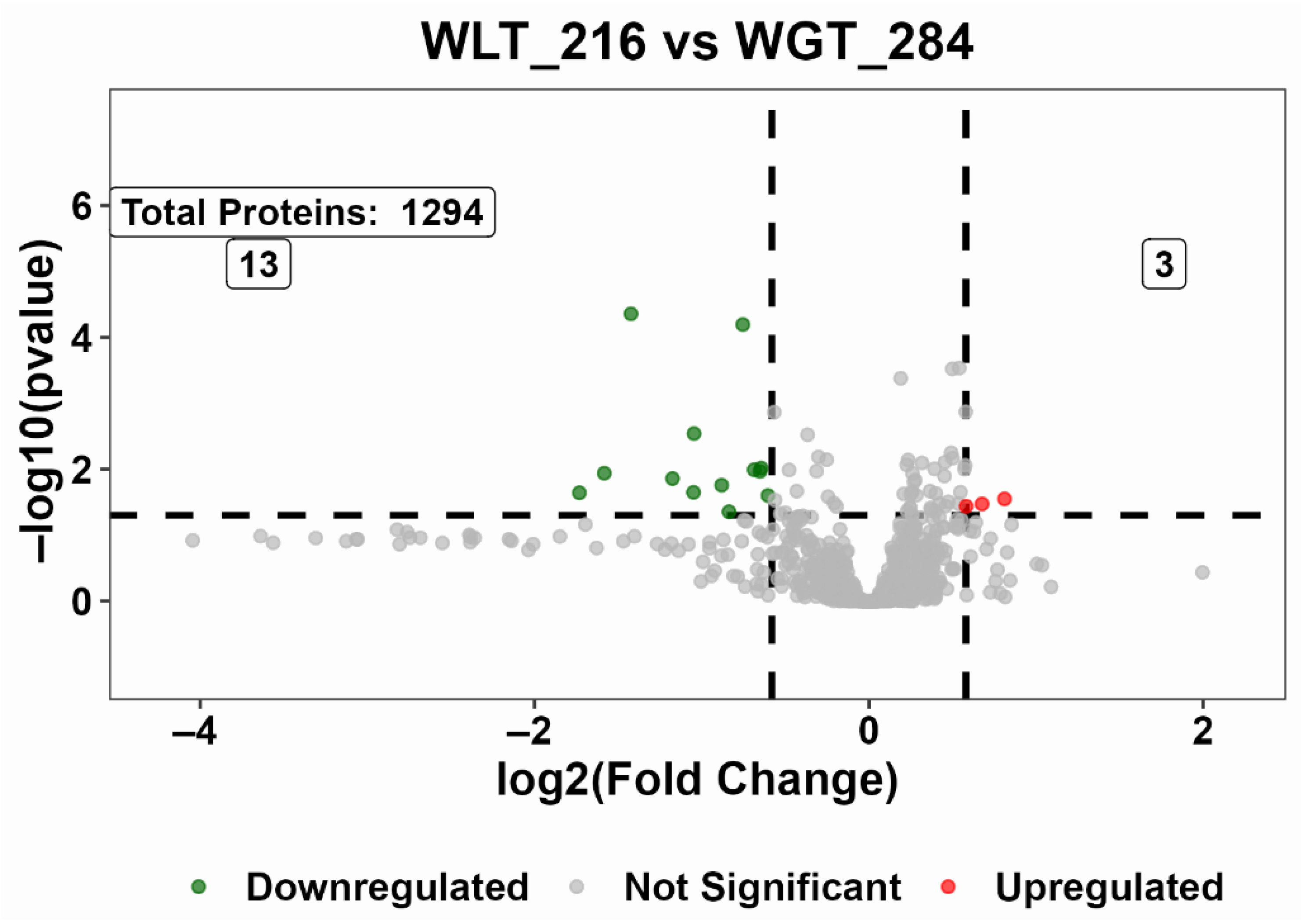
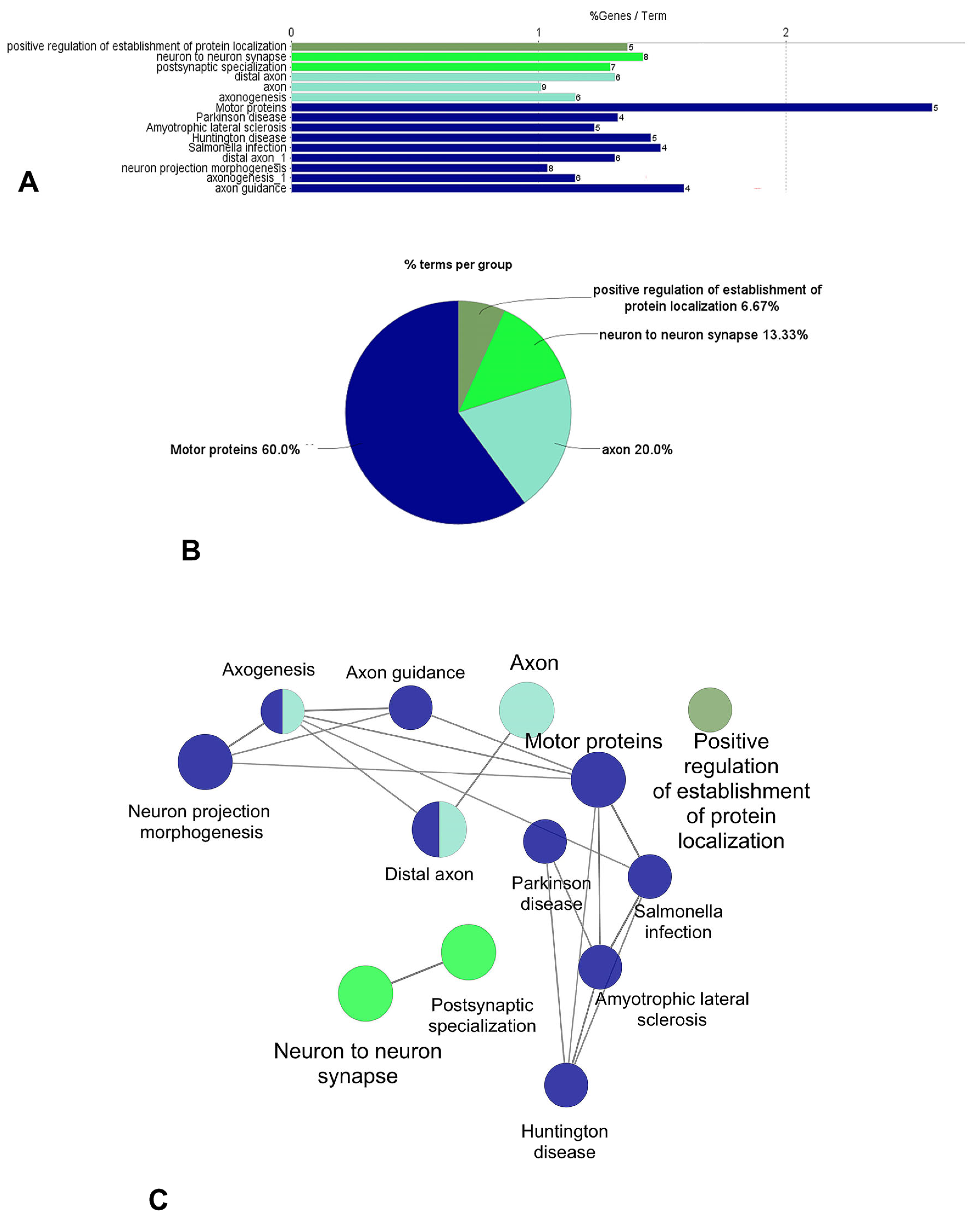
3.3. Hypothalamic Proteomics
4. Discussion
4.1. General Discussion
4.2. The Open Field and Anxiety-like Behaviors
4.3. The Hypothalamic Proteome and Its Possible Role in Resistance/Susceptibility to Overweight
5. Conclusions
Author Contributions
Funding
Institutional Review Board Statement
Data Availability Statement
Conflicts of Interest
References
- Peri, K.; Eisenberg, M. Review on the update in obesity management: Epidemiology. BMJ Public Health 2024, 2, e000247. [Google Scholar] [CrossRef] [Scilit]
- Lin, H.; Deng, K.; Zhang, J.; Wang, L.; Zhang, Z.; Luo, Y.; Sun, Q.; Li, Z.; Chen, Y.; Wang, Z.; et al. Biochemical detection of fatal hypothermia and hyperthermia in affected rat hypothalamus tissues by Fourier transform infrared spectroscopy. Biosci. Rep. 2019, 39, BSR20181633. [Google Scholar] [CrossRef] [Scilit]
- Mohajan, D.; Mohajan, H. Obesity and Its Related Diseases: A New Escalating Alarming in Global Health. J. Innov. Med. Res. 2023, 2, 12–23. [Google Scholar] [CrossRef] [Scilit]
- Purnell, J.Q.; le Roux, C.W. Hypothalamic control of body fat mass by food intake: The key to understanding why obesity should be treated as a disease. Diabetes Obes. Metab. 2024, 26, 3–12. [Google Scholar] [CrossRef] [Scilit] [PubMed]
- Odoemelam, C.S.; Naz, A.; Thanaj, M.; Sorokin, E.P.; Whitcher, B.; Sattar, N.; Bell, J.D.; Thomas, E.L.; Cule, M.; Yaghootkar, H. Identifying four obesity axes through integrative multi-omics and imaging analysis. Diabetes 2025, 74, 1168–1183. [Google Scholar] [CrossRef] [Scilit] [PubMed]
- Ayuzo Del Valle, N.C.; Pérez-Treviño, P.; Cepeda Lopez, A.C.; Murillo-Torres, R.M.; Castillo, E.C.; Gutierrez-Cantu, D.; Tamez-Rivera, O.; Paez Flores, M.; Flores-Ayuzo, I.; Luévano-Martinez, L.A.; et al. Beyond BMI: A comprehensive approach to pediatric obesity assessment. Front. Pediatr. 2025, 13, 1597309. [Google Scholar] [CrossRef] [Scilit]
- Youssef, D.A.; El-Fayoumi, H.M.; Mahmoud, M.F. Beta-caryophyllene alleviates diet-induced neurobehavioral changes in rats: The role of CB2 and PPAR-γ receptors. Biomed. Pharmacother. = Biomed. Pharmacother. 2019, 110, 145–154. [Google Scholar] [CrossRef] [Scilit]
- Farr, O.M.; Li, C.R.; Mantzoros, C.S. Central nervous system regulation of eating: Insights from human brain imaging. Metab. Clin. Exp. 2016, 65, 699–713. [Google Scholar] [CrossRef] [Scilit]
- Campos, A.; Port, J.D.; Acosta, A. Integrative Hedonic and Homeostatic Food Intake Regulation by the Central Nervous System: Insights from Neuroimaging. Brain Sci. 2022, 12, 431. [Google Scholar] [CrossRef] [Scilit]
- Abdalla, M.M. Central and peripheral control of food intake. Endocr. Regul. 2017, 51, 52–70. [Google Scholar] [CrossRef] [Scilit] [PubMed]
- Roger, C.; Lasbleiz, A.; Guye, M.; Dutour, A.; Gaborit, B.; Ranjeva, J.P. The Role of the Human Hypothalamus in Food Intake Networks: An MRI Perspective. Front. Nutr. 2021, 8, 760914. [Google Scholar] [CrossRef] [Scilit] [PubMed]
- Clemmensen, C.; Müller, T.D.; Woods, S.C.; Berthoud, H.R.; Seeley, R.J.; Tschöp, M.H. Gut-Brain Cross-Talk in Metabolic Control. Cell 2017, 168, 758–774. [Google Scholar] [CrossRef] [Scilit] [PubMed]
- Jais, A.; Brüning, J.C. Arcuate Nucleus-Dependent Regulation of Metabolism-Pathways to Obesity and Diabetes Mellitus. Endocr. Rev. 2022, 43, 314–328. [Google Scholar] [CrossRef] [Scilit]
- Oliveira, C.; Oliveira, C.M.; de Macedo, I.C.; Quevedo, A.S.; Filho, P.R.; Silva, F.R.; Vercelino, R.; de Souza, I.C.; Caumo, W.; Torres, I.L. Hypercaloric diet modulates effects of chronic stress: A behavioral and biometric study on rats. Stress 2015, 18, 514–523. [Google Scholar] [CrossRef] [Scilit] [PubMed]
- Papalini, S. Stress-induced overeating behaviors explained from a (transitory) relief-learning perspective. Physiol. Behav. 2024, 287, 114707. [Google Scholar] [CrossRef] [Scilit]
- Wijnant, K.; Klosowska, J.; Braet, C.; Verbeken, S.; De Henauw, S.; Vanhaecke, L.; Michels, N. Stress Responsiveness and Emotional Eating Depend on Youngsters’ Chronic Stress Level and Overweight. Nutrients 2021, 13, 3654. [Google Scholar] [CrossRef] [Scilit]
- Levin, B.E.; Dunn-Meynell, A.A.; Balkan, B.; Keesey, R.E. Selective breeding for diet-induced obesity and resistance in Sprague-Dawley rats. Am. J. Physiol.-Regul. Integr. Comp. Physiol. 1997, 273, R725–R730. [Google Scholar] [CrossRef] [Scilit]
- Pedroso, A.P.; Watanabe, R.L.H.; Albuquerque, K.T.; Telles, M.M.; Andrade, M.C.C.; Perez, J.D.; Sakata, M.M.; Lima, M.L.; Estadella, D.; Nascimento, C.M.O.; et al. Proteomic profiling of the rat hypothalamus. Proteome Sci. 2012, 10, 26. [Google Scholar] [CrossRef] [Scilit]
- Xi, P.; Ma, S.; Tian, D.; Shen, Y. Comparative Hypothalamic Proteomic Analysis Between Diet-Induced Obesity and Diet-Resistant Rats. Int. J. Mol. Sci. 2025, 26, 2296. [Google Scholar] [CrossRef] [Scilit]
- Omme, S.; Wang, J.; Sifuna, M.; Rodriguez, J.; Owusu, N.R.; Goli, M.; Jiang, P.; Waziha, P.; Nwaiwu, J.; Brelsfoard, C.L.; et al. Multi-omics analysis of antiviral interactions of Elizabethkingia anophelis and Zika virus. Sci. Rep. 2024, 14, 18470. [Google Scholar] [CrossRef] [Scilit]
- Sanni, A.; Goli, M.; Zhao, J.; Wang, J.; Barsa, C.; El Hayek, S.; Talih, F.; Lanuzza, B.; Kobeissy, F.; Plazzi, G.; et al. LC-MS/MS-Based Proteomics Approach for the Identification of Candidate Serum Biomarkers in Patients with Narcolepsy Type 1. Biomolecules 2023, 13, 420. [Google Scholar] [CrossRef] [Scilit]
- Makar, M.; Nwaiwu, J.; Agami, M.; Hemdan, M.; Elhamammy, R.; Abuiessa, S.; Daramola, O.; Wahid, A.; Mechref, Y.; El-Yazbi, A. Thermogenic Modulation Reduces Adipose Tissue Inflammation and Complications of Early Metabolic Dysfunction: Impact on Mitochondrial Proteomics and Adipose Lipidomics (Abstract ID: 159767). J. Pharmacol. Exp. Ther. 2025, 392, 100582. [Google Scholar] [CrossRef] [Scilit]
- Bayne, K. Revised Guide for the Care and Use of Laboratory Animals available. American Physiological Society. Physiologist 1996, 39, 208–211. [Google Scholar]
- McGrath, J.C.; Drummond, G.B.; McLachlan, E.M.; Kilkenny, C.; Wainwright, C.L. Guidelines for reporting experiments involving animals: The ARRIVE guidelines. Br. J. Pharmacol. 2010, 160, 1573–1576. [Google Scholar] [CrossRef] [Scilit] [PubMed]
- Lalanza, J.F.; Snoeren, E.M.S. The cafeteria diet: A standardized protocol and its effects on behavior. Neurosci. Biobehav. Rev. 2021, 122, 92–119. [Google Scholar] [CrossRef] [Scilit] [PubMed]
- Schindelin, J.; Arganda-Carreras, I.; Frise, E.; Kaynig, V.; Longair, M.; Pietzsch, T.; Preibisch, S.; Rueden, C.; Saalfeld, S.; Schmid, B.; et al. Fiji: An open-source platform for biological-image analysis. Nat. Methods 2012, 9, 676–682. [Google Scholar] [CrossRef] [Scilit]
- Gulyás, M.; Bencsik, N.; Pusztai, S.; Liliom, H.; Schlett, K. AnimalTracker: An ImageJ-Based Tracking API to Create a Customized Behaviour Analyser Program. Neuroinformatics 2016, 14, 479–481. [Google Scholar] [CrossRef] [Scilit]
- Ibe, C.S.; Onyeanusi, B.I.; Hambolu, J.O. Functional morphology of the brain of the African giant pouched rat (Cricetomys gambianus) Waterhouse, 1840). Onderstepoort J. Vet. Res. 2014, 81, e1–e7. [Google Scholar] [CrossRef] [Scilit]
- Paxinos, G.; Watson, C. The Rat Brain in Stereotaxic Coordinates, 7th ed.; Academic Press: New York, NY, USA, 2014. [Google Scholar]
- Zheng, J.; Wang, K.; Jin, P.; Dong, C.; Yuan, Q.; Li, Y.; Yang, Z. The association of adipose-derived dimethylarginine dimethylaminohydrolase-2 with insulin sensitivity in experimental type 2 diabetes mellitus. Acta Biochim. Biophys. Sin. 2013, 45, 641–648. [Google Scholar] [CrossRef] [Scilit] [PubMed]
- Hasegawa, K.; Wakino, S.; Kimoto, M.; Minakuchi, H.; Fujimura, K.; Hosoya, K.; Komatsu, M.; Kaneko, Y.; Kanda, T.; Tokuyama, H.; et al. The hydrolase DDAH2 enhances pancreatic insulin secretion by transcriptional regulation of secretagogin through a Sirt1-dependent mechanism in mice. FASEB J. 2013, 27, 2301–2315. [Google Scholar] [CrossRef] [Scilit]
- Minakuchi, H.; Wakino, S.; Hosoya, K.; Sueyasu, K.; Hasegawa, K.; Shinozuka, K.; Yoshifuji, A.; Futatsugi, K.; Komatsu, M.; Kanda, T.; et al. The role of adipose tissue asymmetric dimethylarginine/dimethylarginine dimethylaminohydrolase pathway in adipose tissue phenotype and metabolic abnormalities in subtotally nephrectomized rats. Nephrol. Dial. Transplant. 2015, 31, 413–423. [Google Scholar] [CrossRef] [Scilit] [PubMed]
- Kumar, D.; Mains, R.E.; Eipper, B.A. 60 YEARS OF POMC: From POMC and α-MSH to PAM, molecular oxygen, copper, and vitamin C. J. Mol. Endocrinol. 2016, 56, T63–T76. [Google Scholar] [CrossRef] [Scilit] [PubMed]
- Umapathysivam, M.M.; Araldi, E.; Hastoy, B.; Dawed, A.Y.; Vatandaslar, H.; Sengupta, S.; Kaufmann, A.; Thomsen, S.; Hartmann, B.; Jonsson, A.E.; et al. Type 2 Diabetes risk alleles in Peptidyl-glycine Alpha-amidating Monooxygenase influence GLP-1 levels and response to GLP-1 Receptor Agonists. medRxiv 2023. [Google Scholar] [CrossRef] [Scilit]
- Ilina, Y.; Kaufmann, P.; Melander, O.; Press, M.; Thuene, K.; Bergmann, A. Immunoassay-based quantification of full-length peptidylglycine alpha-amidating monooxygenase in human plasma. Sci. Rep. 2023, 13, 10827. [Google Scholar] [CrossRef] [Scilit]
- Tirincsi, A.; O’Keefe, S.; Nguyen, D.; Sicking, M.; Dudek, J.; Förster, F.; Jung, M.; Hadzibeganovic, D.; Helms, V.; High, S.; et al. Proteomics Identifies Substrates and a Novel Component in hSnd2-Dependent ER Protein Targeting. Cells 2022, 11, 2925. [Google Scholar] [CrossRef] [Scilit]
- Zhang, I.X.; Raghavan, M.; Satin, L.S. The Endoplasmic Reticulum and Calcium Homeostasis in Pancreatic Beta Cells. Endocrinology 2020, 161, bqz028. [Google Scholar] [CrossRef] [Scilit]
- Jung, M.; Zimmermann, R. Quantitative Mass Spectrometry Characterizes Client Spectra of Components for Targeting of Membrane Proteins to and Their Insertion into the Membrane of the Human ER. Int. J. Mol. Sci. 2023, 24, 14166. [Google Scholar] [CrossRef] [Scilit]
- Tang, S.; Tabet, F.; Cochran, B.J.; Cuesta Torres, L.F.; Wu, B.J.; Barter, P.J.; Rye, K.-A. Apolipoprotein A-I enhances insulin-dependent and insulin-independent glucose uptake by skeletal muscle. Sci. Rep. 2019, 9, 1350. [Google Scholar] [CrossRef] [Scilit]
- Wei, H.; Averill, M.M.; McMillen, T.S.; Dastvan, F.; Mitra, P.; Subramanian, S.; Tang, C.; Chait, A.; LeBoeuf, R.C. Modulation of adipose tissue lipolysis and body weight by high-density lipoproteins in mice. Nutr. Diabetes 2014, 4, e108. [Google Scholar] [CrossRef] [Scilit] [PubMed]
- Cunningham, J.T.; Moreno, M.V.; Lodi, A.; Ronen, S.M.; Ruggero, D. Protein and Nucleotide Biosynthesis Are Coupled by a Single Rate-Limiting Enzyme, PRPS2, to Drive Cancer. Cell 2014, 157, 1088–1103. [Google Scholar] [CrossRef] [Scilit] [PubMed]
- Hove-Jensen, B.; Andersen, K.R.; Kilstrup, M.; Martinussen, J.; Switzer, R.L.; Willemoës, M. Phosphoribosyl Diphosphate (PRPP): Biosynthesis, Enzymology, Utilization, and Metabolic Significance. Microbiol. Mol. Biol. Rev. 2017, 81, 10-1128. [Google Scholar] [CrossRef] [Scilit]
- Allegrini, S.; Camici, M.; Garcia-Gil, M.; Pesi, R.; Tozzi, M.G. Interplay between mTOR and Purine Metabolism Enzymes and Its Relevant Role in Cancer. Int. J. Mol. Sci. 2024, 25, 6735. [Google Scholar] [CrossRef] [Scilit]
- Paoli, D.; Pelloni, M.; Gallo, M.; Coltrinari, G.; Lombardo, F.; Lenzi, A.; Gandini, L. Sperm glyceraldehyde 3-phosphate dehydrogenase gene expression in asthenozoospermic spermatozoa. Asian J. Androl. 2017, 19, 409–413. [Google Scholar] [CrossRef] [Scilit]
- Gill, J.G.; Leef, S.N.; Ramesh, V.; Martin-Sandoval, M.S.; Rao, A.D.; West, L.; Muh, S.; Gu, W.; Zhao, Z.; Hosler, G.A.; et al. A Short Isoform of Spermatogenic Enzyme GAPDHS Functions as a Metabolic Switch and Limits Metastasis in Melanoma. Cancer Res. 2022, 82, 1251–1266. [Google Scholar] [CrossRef] [Scilit]
- Tran, M.; Mostofa, G.; Picard, M.; Wu, J.; Wang, L.; Shin, D.J. SerpinA3N deficiency attenuates steatosis and enhances insulin signaling in male mice. J. Endocrinol. 2023, 256, e220073. [Google Scholar] [CrossRef] [Scilit] [PubMed]
- Guzmán-Herrera, N.; Ruíz-Madrigal, B.; Parés-Hipólito, J.; Salazar-Olivo, L.A. SERPINA3 is expressed in human adipocytes and modulated by TNF-α and vitamin B6. Vitr. Cell. Dev. Biol.-Anim. 2025, 61, 627–634. [Google Scholar] [CrossRef] [Scilit] [PubMed]
- Ye, X.; Li, Y.; González-Lamuño, D.; Pei, Z.; Moser, A.B.; Smith, K.D.; Watkins, P.A. Role of ACSBG1 in Brain Lipid Metabolism and X-Linked Adrenoleukodystrophy Pathogenesis: Insights from a Knockout Mouse Model. Cells 2024, 13, 1687. [Google Scholar] [CrossRef] [Scilit] [PubMed]
- Kanno, T.; Nakajima, T.; Kawashima, Y.; Yokoyama, S.; Asou, H.K.; Sasamoto, S.; Hayashizaki, K.; Kinjo, Y.; Ohara, O.; Nakayama, T.; et al. Acsbg1-dependent mitochondrial fitness is a metabolic checkpoint for tissue T(reg) cell homeostasis. Cell Rep. 2021, 37, 109921. [Google Scholar] [CrossRef] [Scilit]
- Mutch, D.M.; O’Maille, G.; Wikoff, W.R.; Wiedmer, T.; Sims, P.J.; Siuzdak, G. Mobilization of pro-inflammatory lipids in obese Plscr3-deficient mice. Genome Biol. 2007, 8, R38. [Google Scholar] [CrossRef] [Scilit]
- Liu, J.; Dai, Q.; Chen, J.; Durrant, D.; Freeman, A.; Liu, T.; Grossman, D.; Lee, R.M. Phospholipid scramblase 3 controls mitochondrial structure, function, and apoptotic response. Mol. Cancer Res. 2003, 1, 892–902. [Google Scholar]
- Chang, C.; Worley, B.L.; Phaëton, R.; Hempel, N. Extracellular Glutathione Peroxidase GPx3 and Its Role in Cancer. Cancers 2020, 12, 2197. [Google Scholar] [CrossRef] [Scilit] [PubMed]
- Hauffe, R.; Stein, V.; Chudoba, C.; Flore, T.; Rath, M.; Ritter, K.; Schell, M.; Wardelmann, K.; Deubel, S.; Kopp, J.F.; et al. GPx3 dysregulation impacts adipose tissue insulin receptor expression and sensitivity. JCI Insight 2020, 5, e136283. [Google Scholar] [CrossRef] [Scilit] [PubMed]
- Quiroga, A.D.; Li, L.; Trötzmüller, M.; Nelson, R.; Proctor, S.D.; Köfeler, H.; Lehner, R. Deficiency of carboxylesterase 1/esterase-x results in obesity, hepatic steatosis, and hyperlipidemia. Hepatology 2012, 56, 2188–2198. [Google Scholar] [CrossRef] [Scilit]
- Wang, H.; Wu, S.; Weng, Y.; Yang, X.; Hou, L.; Liang, Y.; Wu, W.; Ying, Y.; Ye, F.; Luo, X. Increased serum carboxylesterase-1 levels are associated with metabolic dysfunction associated steatotic liver disease and metabolic syndrome in children with obesity. Ital. J. Pediatr. 2024, 50, 162. [Google Scholar] [CrossRef] [Scilit]
- Yang, H.; Wang, Q.; Xi, Y.; Yu, W.; Xie, D.; Morisaki, H.; Morisaki, T.; Cheng, J. AMPD2 plays important roles in regulating hepatic glucose and lipid metabolism. Mol. Cell Endocrinol. 2023, 577, 112039. [Google Scholar] [CrossRef] [Scilit]
- Andres-Hernando, A.; Orlicky, D.J.; Kuwabara, M.; Fini, M.A.; Tolan, D.R.; Johnson, R.J.; Lanaspa, M.A. Activation of AMPD2 drives metabolic dysregulation and liver disease in mice with hereditary fructose intolerance. Commun. Biol. 2024, 7, 849. [Google Scholar] [CrossRef] [Scilit]
- Zhao, X.Y.; Li, S.; DelProposto, J.L.; Liu, T.; Mi, L.; Porsche, C.; Peng, X.; Lumeng, C.N.; Lin, J.D. The long noncoding RNA Blnc1 orchestrates homeostatic adipose tissue remodeling to preserve metabolic health. Mol. Metab. 2018, 14, 60–70. [Google Scholar] [CrossRef] [Scilit] [PubMed]
- Zhang, X.; Xue, C.; Lin, J.; Ferguson, J.F.; Weiner, A.; Liu, W.; Han, Y.; Hinkle, C.; Li, W.; Jiang, H.; et al. Interrogation of nonconserved human adipose lincRNAs identifies a regulatory role of linc-ADAL in adipocyte metabolism. Sci. Transl. Med. 2018, 10, eaar5987. [Google Scholar] [CrossRef] [Scilit]
- Mastrolia, V.; Flucher, S.M.; Obermair, G.J.; Drach, M.; Hofer, H.; Renström, E.; Schwartz, A.; Striessnig, J.; Flucher, B.E.; Tuluc, P. Loss of α(2)δ-1 Calcium Channel Subunit Function Increases the Susceptibility for Diabetes. Diabetes 2017, 66, 897–907. [Google Scholar] [CrossRef] [Scilit]
- Yang, Y.; Yamane, S.; Harada, N.; Ikeguchi-Ogura, E.; Yamamoto, K.; Wada, N.; Fauzi, M.; Murakami, T.; Yabe, D.; Hayashi, Y.; et al. Voltage-gated calcium channel α(2)δ-1 subunit is involved in the regulation of glucose-stimulated GLP-1 secretion in mice. Am. J. Physiol. Gastrointest Liver Physiol. 2025, 328, G243–G251. [Google Scholar] [CrossRef] [Scilit]
- Zhang, Y.; Liu, Y.; Qu, J.; Hardy, A.; Zhang, N.; Diao, J.; Strijbos, P.J.; Tsushima, R.; Robinson, R.B.; Gaisano, H.Y.; et al. Functional characterization of hyperpolarization-activated cyclic nucleotide-gated channels in rat pancreatic beta cells. J. Endocrinol. 2009, 203, 45–53. [Google Scholar] [CrossRef] [Scilit]
- Combe, C.L.; Gasparini, S. I(h) from synapses to networks: HCN channel functions and modulation in neurons. Prog. Biophys. Mol. Biol. 2021, 166, 119–132. [Google Scholar] [CrossRef] [Scilit]
- Pan, S.; Souza, L.A.; Worker, C.J.; Reyes Mendez, M.E.; Gayban, A.J.B.; Cooper, S.G.; Sanchez Solano, A.; Bergman, R.N.; Stefanovski, D.; Morton, G.J.; et al. (Pro)renin receptor signaling in hypothalamic tyrosine hydroxylase neurons is required for obesity-associated glucose metabolic impairment. JCI Insight 2024, 9, e174294. [Google Scholar] [CrossRef] [Scilit] [PubMed]
- Ren, L.; Sun, Y.; Lu, H.; Ye, D.; Han, L.; Wang, N.; Daugherty, A.; Li, F.; Wang, M.; Su, F.; et al. (Pro)renin Receptor Inhibition Reprograms Hepatic Lipid Metabolism and Protects Mice From Diet-Induced Obesity and Hepatosteatosis. Circ. Res. 2018, 122, 730–741. [Google Scholar] [CrossRef] [Scilit]
- Huang, D.W.; Sherman, B.T.; Lempicki, R.A. Systematic and integrative analysis of large gene lists using DAVID bioinformatics resources. Nat. Protoc. 2009, 4, 44–57. [Google Scholar] [CrossRef] [Scilit]
- Sherman, B.T.; Hao, M.; Qiu, J.; Jiao, X.; Baseler, M.W.; Lane, H.C.; Imamichi, T.; Chang, W. DAVID: A web server for functional enrichment analysis and functional annotation of gene lists (2021 update). Nucleic Acids Res. 2022, 50, W216–W221. [Google Scholar] [CrossRef] [Scilit] [PubMed]
- Chan, C.C.; Harley, I.T.W.; Pfluger, P.T.; Trompette, A.; Stankiewicz, T.E.; Allen, J.L.; Moreno-Fernandez, M.E.; Damen, M.; Oates, J.R.; Alarcon, P.C.; et al. A BAFF/APRIL axis regulates obesogenic diet-driven weight gain. Nat. Commun. 2021, 12, 2911. [Google Scholar] [CrossRef] [Scilit]
- Kim, C.Y.; Ahn, J.H.; Han, D.H.; NamKoong, C.; Choi, H.J. Proteome Analysis of the Hypothalamic Arcuate Nucleus in Chronic High-Fat Diet-Induced Obesity. Biomed Res. Int. 2021, 2021, 3501770. [Google Scholar] [CrossRef] [Scilit]
- Calvillo-Robledo, A.; Samson, S.; Marichal-Cancino, B.A.; Medina-Pizaño, M.Y.; Ibarra-Martínez, D.; Ventura-Juárez, J.; Muñoz-Ortega, M. Rapid liver self-recovery: A challenge for rat models of tissue damage. Life Sci. 2024, 357, 122975. [Google Scholar] [CrossRef] [Scilit] [PubMed]
- Kovačević, S.; Pavković, Ž.; Brkljačić, J.; Elaković, I.; Vojnović Milutinović, D.; Djordjevic, A.; Pešić, V. High-Fructose Diet and Chronic Unpredictable Stress Modify Each Other’s Neurobehavioral Effects in Female Rats. Int. J. Mol. Sci. 2024, 25, 11721. [Google Scholar] [CrossRef] [Scilit]
- Pérez, C.; Canal, J.R.; Domínguez, E.; Campillo, J.E.; Guillén, M.; Torres, M.D. Individual housing influences certain biochemical parameters in the rat. Lab. Anim. 1997, 31, 357–361. [Google Scholar] [CrossRef] [Scilit]
- Lopak, V.; Eikelboom, R. Pair housing induced feeding suppression: Individual housing not novelty. Physiol. Behav. 2000, 71, 329–333. [Google Scholar] [CrossRef] [Scilit] [PubMed]
- Akkaya, A.; Aykan, D.; Gencturk, S.; Unal, G. Intermittent environmental enrichment induces behavioral despair, while intermittent social isolation impairs spatial learning in rats. Pharmacol. Biochem. Behav. 2025, 250, 174001. [Google Scholar] [CrossRef] [Scilit] [PubMed]
- Cloutier, S.; Newberry, R.C. Physiological and behavioural responses of laboratory rats housed at different tier levels and levels of visual contact with conspecifics and humans. Appl. Anim. Behav. Sci. 2010, 125, 69–79. [Google Scholar] [CrossRef] [Scilit]
- Varlinskaya, E.I.; Spear, L.P.; Spear, N.E. Social Behavior and Social Motivation in Adolescent Rats: Role of Housing Conditions and Partner’s Activity. Physiol. Behav. 1999, 67, 475–482. [Google Scholar] [CrossRef] [Scilit]
- Krohn, T.C.; Sørensen, D.B.; Ottesen, J.L.; Hansen, A.K. The effects of individual housing on mice and rats: A review. Anim. Welf. 2006, 15, 343–352. [Google Scholar] [CrossRef] [Scilit]
- Decavel, C.; Van den Pol, A.N. GABA: A dominant neurotransmitter in the hypothalamus. J. Comp. Neurol. 1990, 302, 1019–1037. [Google Scholar] [CrossRef] [Scilit] [PubMed]
- Jiang, H. Hypothalamic GABAergic neurocircuitry in the regulation of energy homeostasis and sleep/wake control. Med. Rev. 2022, 2, 531–540. [Google Scholar] [CrossRef] [Scilit]
- Kotz, C.M.; Wang, C.; Teske, J.A.; Thorpe, A.J.; Novak, C.M.; Kiwaki, K.; Levine, J.A. Orexin A mediation of time spent moving in rats: Neural mechanisms. Neuroscience 2006, 142, 29–36. [Google Scholar] [CrossRef] [Scilit]
- Herrmann, M.J.; Tesar, A.K.; Beier, J.; Berg, M.; Warrings, B. Grey matter alterations in obesity: A meta-analysis of whole-brain studies. Obes. Rev. 2019, 20, 464–471. [Google Scholar] [CrossRef] [Scilit]
- Mozolewski, P.; Jeziorek, M.; Schuster, C.M.; Bading, H.; Frost, B.; Dobrowolski, R. The role of nuclear Ca2+ in maintaining neuronal homeostasis and brain health. J. Cell Sci. 2021, 134, jcs254904. [Google Scholar] [CrossRef] [Scilit]
- Dunn-Meynell, A.A.; Le Foll, C.; Johnson, M.D.; Lutz, T.A.; Hayes, M.R.; Levin, B.E. Endogenous VMH amylin signaling is required for full leptin signaling and protection from diet-induced obesity. Am. J. Physiol.-Regul. Integr. Comp. Physiol. 2015, 310, R355–R365. [Google Scholar] [CrossRef] [Scilit] [PubMed]
- Manousopoulou, A.; Koutmani, Y.; Karaliota, S.; Woelk, C.H.; Manolakos, E.S.; Karalis, K.; Garbis, S.D. Hypothalamus proteomics from mouse models with obesity and anorexia reveals therapeutic targets of appetite regulation. Nutr. Diabetes 2016, 6, e204. [Google Scholar] [CrossRef] [Scilit]
- Levin, B.E.; Dunn-Meynell, A.A.; Routh, V.H. Brain glucose sensing and body energy homeostasis: Role in obesity and diabetes. Am. J. Physiol.-Regul. Integr. Comp. Physiol. 1999, 276, R1223–R1231. [Google Scholar] [CrossRef] [Scilit]
- Luo, X.D.; Tang, S.; Luo, X.Y.; Quzhen, L.; Xia, R.H.; Wang, X.W. Mitochondrial regulation of obesity by POMC neurons. Biochim. Biophys. Acta Mol. Basis Dis. 2025, 1871, 167682. [Google Scholar] [CrossRef] [Scilit] [PubMed]
- Michael, N.J.; Simonds, S.E.; van den Top, M.; Cowley, M.A.; Spanswick, D. Mitochondrial uncoupling in the melanocortin system differentially regulates NPY and POMC neurons to promote weight-loss. Mol. Metab. 2017, 6, 1103–1112. [Google Scholar] [CrossRef] [Scilit]
- Hu, H.; Lu, X.; He, Y.; Li, J.; Wang, S.; Luo, Z.; Wang, Y.; Wei, J.; Huang, H.; Duan, C.; et al. Sestrin2 in POMC neurons modulates energy balance and obesity related metabolic disorders via mTOR signaling. J. Nutr. Biochem. 2024, 133, 109703. [Google Scholar] [CrossRef] [Scilit]
- Wu, X.; Wang, Y.; Du, X.; Liu, Y.; Gao, Y.; Tuo, Y.; Mu, G. Proteomics analysis of the hypothalamus of high-fat diet fed mice after Lactiplantibacillus plantarum Y44 administration. Food Biosci. 2022, 47, 101762. [Google Scholar] [CrossRef] [Scilit]

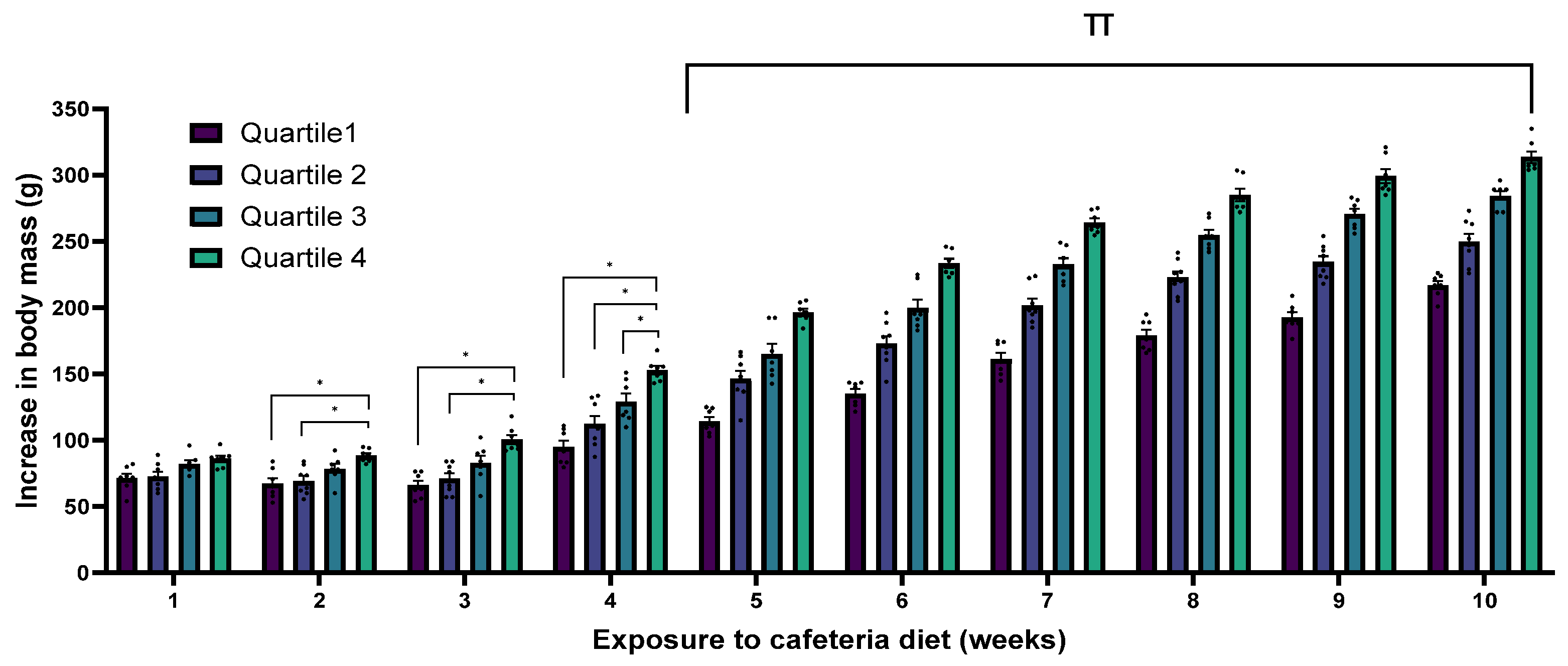




| Parameter | Quartile 1 | Quartile 2 | Quartile 3 | Quartile 4 | All Subjects |
|---|---|---|---|---|---|
| Minimum | 201 g | 226 g | 272 g | 304 g | 201 g |
| Maximum | 226 g | 273 g | 296 g | 335 g | 335 g |
| Mean | 216.8 g | 249.7 g | 284.3 g | 313.6 g | 265.5 g |
| Median | 217 g | 249.5 g | 289 g | 308 g | 272 g |
| Std. Dev. | 8.6 g | 16.9 g | 9.2 g | 11.6 g | 38.2 g |
| Gene | Uniprot | Fold Change Relative Abundance Q1/Q4 | p-Value | Relative Abundance Q1 | Relative Abundance Q4 |
|---|---|---|---|---|---|
| Apoa1 | P04639 | 3.3209 | 0.0229 | 0.0674 | 0.0203 |
| Prps2 | P09330 | 2.9960 | 0.0115 | 0.0197 | 0.0065 |
| Gapdhs | Q9ESV6 | 2.6820 | 0.0000 | 0.0088 | 0.0032 |
| Serpina3n | P09006 | 2.2575 | 0.0139 | 0.0120 | 0.0053 |
| Acsbg1 | Q924N5 | 2.0695 | 0.0225 | 0.0294 | 0.0142 |
| Plscr3 | Q6QBQ4 | 2.0653 | 0.0029 | 0.0079 | 0.0038 |
| Gpx3 | P23764 | 1.8411 | 0.0175 | 0.0103 | 0.0056 |
| Ces1c | P10959 | 1.7861 | 0.0443 | 0.0192 | 0.0107 |
| Ampd2 | Q02356 | 1.6869 | 0.0001 | 0.0397 | 0.0235 |
| Hnrnpu | Q6IMY8 | 1.6094 | 0.0102 | 0.0277 | 0.0172 |
| Cacna2d1 | P54290 | 1.5708 | 0.0108 | 0.1350 | 0.0859 |
| Hcn1 | Q9JKB0 | 1.5636 | 0.0096 | 0.0288 | 0.0184 |
| Atp6ap2 | Q6AXS4 | 1.5200 | 0.0251 | 0.0096 | 0.0063 |
| Tprg1l | A8WCF8 | 1.4806 | 0.0014 | 0.0380 | 0.0257 |
| Arhgdia | Q5XI73 | 1.4756 | 0.0295 | 0.0176 | 0.0119 |
| Sv2c | Q9Z2I6 | 1.4431 | 0.0477 | 0.0087 | 0.0060 |
| Pgm1 | P38652 | 1.4135 | 0.0459 | 0.0187 | 0.0132 |
| Cadm3 | Q1WIM3 | 1.3922 | 0.0103 | 0.0173 | 0.0124 |
| Gpm6b | Q9JJK1 | 1.3488 | 0.0216 | 0.0129 | 0.0095 |
| Ubr4 | Q2TL32 | 1.2894 | 0.0030 | 0.1473 | 0.1142 |
| Uggt1 | Q9JLA3 | 1.2425 | 0.0107 | 0.0706 | 0.0568 |
| Slc25a11 | P97700 | 1.2323 | 0.0065 | 0.1412 | 0.1146 |
| Itih3 | Q63416 | 1.1909 | 0.0072 | 0.0269 | 0.0226 |
| Kif15 | Q7TSP2 | 1.1846 | 0.0263 | 0.1486 | 0.1255 |
| Stx1b | P61265 | 1.1557 | 0.0329 | 0.1906 | 0.1649 |
| Slc6a1 | P23978 | 1.1437 | 0.0371 | 0.0327 | 0.0286 |
| Myh10 | Q9JLT0 | 0.8764 | 0.0004 | 0.2091 | 0.2386 |
| Map1b | P15205 | 0.8654 | 0.0238 | 0.1517 | 0.1753 |
| Tomm70 | Q75Q39 | 0.8549 | 0.0086 | 0.0731 | 0.0856 |
| Pgrmc1 | P70580 | 0.8536 | 0.0433 | 0.0480 | 0.0562 |
| Vsnl1 | P62762 | 0.8501 | 0.0073 | 0.1145 | 0.1348 |
| Ckb | P07335 | 0.8434 | 0.0379 | 0.2926 | 0.3470 |
| Ndufb1 | P0DN35 | 0.8429 | 0.0391 | 0.0120 | 0.0142 |
| Kif5c | P56536 | 0.8414 | 0.0239 | 0.0436 | 0.5190 |
| Gsto1 | Q9Z339 | 0.8374 | 0.0499 | 0.0705 | 0.0842 |
| Dctn1 | P28023 | 0.8366 | 0.0493 | 0.0487 | 0.0582 |
| Unc13c | Q62770 | 0.8354 | 0.0219 | 0.1228 | 0.1470 |
| Sfxn5 | Q8CFD0 | 0.8346 | 0.0116 | 0.0418 | 0.0501 |
| Slc2a3 | Q07647 | 0.8298 | 0.0157 | 0.0357 | 0.0430 |
| Rtn3 | Q6RJR6 | 0.8251 | 0.0147 | 0.1343 | 0.1628 |
| Kcnab2 | P62483 | 0.8218 | 0.0249 | 0.0164 | 0.0200 |
| Septin11 | B3GNI6 | 0.8023 | 0.0080 | 0.0745 | 0.0929 |
| Pccb | P07633 | 0.7761 | 0.0216 | 0.0197 | 0.0254 |
| Fth1 | P19132 | 0.7742 | 0.0388 | 0.0115 | 0.0149 |
| Rab6a | Q9WVB1 | 0.7722 | 0.0420 | 0.0220 | 0.0284 |
| Rpl13a | P35427 | 0.7620 | 0.0099 | 0.0167 | 0.0219 |
| Gstm5 | Q9Z1B2 | 0.7592 | 0.0433 | 0.0130 | 0.0172 |
| Tfam | Q91ZW1 | 0.7577 | 0.0233 | 0.0039 | 0.0052 |
| Tubb2a | P85108 | 0.7470 | 0.0334 | 0.5263 | 0.7045 |
| Camk2d | P15791 | 0.7310 | 0.0127 | 0.0054 | 0.0074 |
| Ran | P62828 | 0.7296 | 0.0078 | 0.0087 | 0.0120 |
| Psmd13 | B0BN93 | 0.7271 | 0.0362 | 0.0078 | 0.1070 |
| Actb | P60711 | 0.7195 | 0.0313 | 0.9731 | 0.3524 |
| Ywhah | P68511 | 0.7112 | 0.0057 | 0.0408 | 0.0574 |
| Rpl18a | P62718 | 0.7078 | 0.0003 | 0.0440 | 0.0622 |
| St13 | P50503 | 0.7070 | 0.0068 | 0.0356 | 0.0503 |
| Rab4a | P05714 | 0.6897 | 0.0335 | 0.0060 | 0.0087 |
| Prpsap1 | Q63468 | 0.6875 | 0.0003 | 0.0667 | 0.0971 |
| Wasf1 | Q5BJU7 | 0.6842 | 0.0224 | 0.0120 | 0.0176 |
| Cfi | Q9WUW3 | 0.6731 | 0.0100 | 0.0059 | 0.0087 |
| Emc8 | Q5FVL2 | 0.6706 | 0.0088 | 0.0126 | 0.0188 |
| Tubb3 | Q4QRB4 | 0.6693 | 0.0014 | 0.0541 | 0.0808 |
| Tmem109 | Q6AYQ4 | 0.6682 | 0.0366 | 0.0051 | 0.0076 |
| Pam | P14925 | 0.6255 | 0.0337 | 0.1338 | 0.2139 |
| Ddah2 | Q6MG60 | 0.5699 | 0.0283 | 0.0037 | 0.0065 |
| Higher Relative Expression in Overweight (Q4) Than in Underweight Rats (Q1) | |
| Gen | Possible Function in Metabolism and Body Mass Regulation |
| Ddah2 | DDAH2 regulates insulin secretion, sensitivity, energy expenditure, and thermogenesis via asymmetric dimethylarginine-independent pathways. Furthermore, it supports healthy lipid distribution and storage in adipocytes and responds to inflammatory signaling [30,31,32]. |
| Pam | Changes in PAM activity reshape amidated peptides, impacting appetite, gastric emptying, lipid metabolism, and insulin secretion [33,34,35]. |
| Tmem109 | Involved in the biogenesis of ER membrane proteins (including lipid droplet formation). It modulates ER/SR Ca2+ permeability, which is closely related to insulin secretion, lipid metabolism, and ER stress responses [36,37,38]. |
| Lower relative expression in overweight (Q4) than in underweight rats (Q1) | |
| Gen | Possible function in metabolism and body mass regulation |
| Apoa1 | It is the main protein of HDL and is essential for reverse cholesterol transport. It has metabolic functions such as improving insulin sensitivity, stimulating insulin secretion, promoting energy expenditure of brown adipose tissue through UCP1, and modulating lipolysis in adipocytes [39,40]. |
| Prps2 | It generates phosphoribosyl pyrophosphate (PRPP), a central metabolite linking the pentose phosphate pathway with nucleotide and amino acid biosynthesis, integrating nutrient availability and growth signaling through glycolysis, PPP, and the mTOR axis to ensure nucleotide supply [41,42,43]. |
| Gapdhs | It modulates cellular metabolism (by altering the glycolytic–oxidative balance and affecting ATP and ROS levels). GAPDHS acts as a metabolic switch in melanoma, reducing glycolysis and limiting metastasis [44,45]. |
| Serpina3n | It is involved in relevant metabolic processes, such as hepatic stasis, non-alcoholic fatty liver disease, regulation of hepatic metabolism, adipose inflammation, insulin resistance, and central control of energy balance [46,47]. |
| Acsbg1 | It activates long-chain fatty acids, allowing their incorporation into complex lipids, their β-oxidation, and the production of signaling lipids, which enables the synthesis of membrane lipid mediators. Furthermore, it is related to mitochondrial function and specific tissue metabolisms [48,49]. |
| Plscr3 | It helps remodel mitochondrial phospholipids (particularly cardiolipin), mitochondrial bioenergetics and β-oxidation; regulates lipid droplet formation; and influences the mobilization of pro-inflammatory lipids in adipose tissue, thereby affecting mitochondrial structure and function [50,51]. |
| Gpx3 | It is an extracellular antioxidant that reduces hydrogen peroxide and lipid hydroperoxides, thereby protecting tissues from oxidative damage. Furthermore, it influences insulin receptor expression and the insulin response in adipocytes [52,53]. |
| Ces1c | It can be considered a metabolic regulatory enzyme that links the storage, mobilization, and flow of lipids throughout the body, with important implications for obesity, non-alcoholic fatty liver disease, hyperlipidemia, and insulin sensitivity [54,55]. |
| Ampd2 | It functions as a whole-body metabolic regulator, especially in the liver, affecting lipid metabolism, glucose homeostasis, gluconeogenesis, fat mass, fat accumulation, insulin sensitivity, and the metabolic stress response to diet [56,57]. |
| Hnrnpu | It acts as an essential cofactor for several lncRNAs expressed in adipose tissue (e.g., Blnc1 and linc-ADAL) that control the thermogenesis of brown adipocytes and the differentiation–lipid accumulation of white adipocytes, influencing adipogenesis, thermogenic gene programs, and lipid storage, processes directly related to energy expenditure and body weight regulation [58,59]. |
| Cacna2d1 | It plays a vital role in the secretion of hormones (insulin, GLP-1) and therefore in the regulation of glucose homeostasis, energy balance, and, potentially, body weight [60,61]. |
| Hcn1 | It is a membrane channel that shapes excitability in pancreatic β cells and neurons. Through these effects, it can influence the secretion of insulin and possibly incretins; in addition, it could affect the hypothalamic control of feeding and energy expenditure [62,63]. |
| Atp6ap2 | It integrates RAS-dependent and RAS-independent signaling and regulates lipid metabolism, glucose metabolism, adipogenesis, hepatic lipid management, energy balance, and the central control (hypothalamic paraventricular nucleus) of glucose [64,65]. |
Disclaimer/Publisher’s Note: The statements, opinions and data contained in all publications are solely those of the individual author(s) and contributor(s) and not of MDPI and/or the editor(s). MDPI and/or the editor(s) disclaim responsibility for any injury to people or property resulting from any ideas, methods, instructions or products referred to in the content. |
© 2026 by the authors. Licensee MDPI, Basel, Switzerland. This article is an open access article distributed under the terms and conditions of the Creative Commons Attribution (CC BY) license.
Share and Cite
Guzmán-Rodríguez, S.; Nwaiwu, J.; Gutiérrez-Reyes, C.D.; Romero-Guevara, R.; Chávez-Reyes, J.; Chukwubueze, F.; Daramola, O.; Bhattacharjee, T.; Mechref, Y.; Marichal-Cancino, B.A. Proteomic Differences in the Hypothalamus May Influence Weight Gain in Rats Fed a Cafeteria Diet. Sci 2026, 8, 90. https://doi.org/10.3390/sci8040090
Guzmán-Rodríguez S, Nwaiwu J, Gutiérrez-Reyes CD, Romero-Guevara R, Chávez-Reyes J, Chukwubueze F, Daramola O, Bhattacharjee T, Mechref Y, Marichal-Cancino BA. Proteomic Differences in the Hypothalamus May Influence Weight Gain in Rats Fed a Cafeteria Diet. Sci. 2026; 8(4):90. https://doi.org/10.3390/sci8040090
Chicago/Turabian StyleGuzmán-Rodríguez, Sergio, Judith Nwaiwu, Cristian D. Gutiérrez-Reyes, Ricardo Romero-Guevara, Jesús Chávez-Reyes, Favour Chukwubueze, Oluwatosin Daramola, Tuli Bhattacharjee, Yehia Mechref, and Bruno Antonio Marichal-Cancino. 2026. "Proteomic Differences in the Hypothalamus May Influence Weight Gain in Rats Fed a Cafeteria Diet" Sci 8, no. 4: 90. https://doi.org/10.3390/sci8040090
APA StyleGuzmán-Rodríguez, S., Nwaiwu, J., Gutiérrez-Reyes, C. D., Romero-Guevara, R., Chávez-Reyes, J., Chukwubueze, F., Daramola, O., Bhattacharjee, T., Mechref, Y., & Marichal-Cancino, B. A. (2026). Proteomic Differences in the Hypothalamus May Influence Weight Gain in Rats Fed a Cafeteria Diet. Sci, 8(4), 90. https://doi.org/10.3390/sci8040090