1. Introduction
The intersection of food security and sustainable energy presents one of the most pressing challenges of our time. With projections indicating a global population of nearly 10 billion by 2050, agricultural systems must transform to meet rising food demands while remaining within planetary boundaries. The agri-food sector currently accounts for approximately 30% of global energy consumption and contributes 31% of greenhouse gas emissions [
1]. Achieving the 1.5 °C global warming target requires agricultural systems that are simultaneously efficient, sustainable, and resilient. The Food and Agriculture Organization of the United Nations (FAO) has emphasized that agricultural decarbonization is impossible without addressing energy consumption patterns, advocating for a transition toward energy-smart agri-food systems [
1].
Biomass offers a strategic opportunity to integrate energy recovery and nutrient recycling within circular economy frameworks. Anaerobic digestion of organic materials produces biogas for energy generation and digestate that can serve as biofertilizer [
2]. Despite these dual benefits, bioenergy derived from organic residues receives less attention and investment than other renewable sources such as wind and solar power [
3]. Understanding the full potential of biomass—particularly from organic waste and livestock manure—is therefore essential to achieve an inclusive and sustainable energy transition.
The quality of liquid biofertilizer (biol) generated from anaerobic digestion depends heavily on feedstock characteristics. Digestates obtained from different organic materials—such as guinea pig manure, cow dung, pig manure, or household organic waste—vary widely in nutrient content (N, P, K), stability, and pathogen load [
4]. This variability requires careful characterization to ensure appropriate nutrient supply and compliance with safety standards. In this context, biofertilizers derived from organic residues represent valuable inputs for organic and regenerative farming systems, aligning with the principles of natural soil enrichment and reduced dependence on synthetic fertilizers [
5].
However, few studies have explored the comparative performance of guinea pig manure and vermicompost leachate (VL) as feedstocks for liquid biofertilizer production in multi-stage biodigestion systems. Guinea pig farming plays a crucial role in the Andean region, providing protein, income, and organic residues that are rarely valorized. The manure of guinea pigs, despite being nutrient-rich and readily available, remains scientifically underexplored as a biodigester substrate. Similarly, VL, the liquid fraction that percolates through vermicompost during the composting process, contains soluble nutrients, humic substances, and beneficial microorganisms. Unlike traditional compost extracts, VL presents a dynamic microbial profile that can enhance nutrient mineralization and plant biostimulation. Yet, its optimization for use as feedstock in sequential biodigester systems remains limited in the literature.
This study addresses these gaps by comparing the physicochemical properties and agronomic performance of liquid biofertilizers produced from guinea pig manure and VL in a three-chamber anaerobic biodigestion system connected in series. The research aims to provide scientific evidence supporting policies that integrate renewable energy generation, nutrient recycling, and organic agriculture within the Andean context. Specifically, it asks: How does the type of feedstock—guinea pig manure or vermicompost leachate—affect the nutrient composition, stabilization, and quality of liquid biofertilizer produced in a multistage anaerobic system? The experimental approach is quantitative and comparative, focusing on measurable differences in nutrient dynamics and stabilization mechanisms between both substrates.
Ultimately, the results of this research are expected to advance understanding of sustainable biofertilizer production while offering evidence-based insights for the design of circular agri-energy systems in Peru and other regions with similar agroecological and socioeconomic conditions.
3. Operational Methodology of the Multi-Chamber Biodigester with Two Different Feedstocks
3.1. Research Method
The study employs a longitudinal quasi-experimental design with two treatments corresponding to the two feedstocks: guinea pig manure and vermicompost leachate. Data were collected after defined stabilization periods to capture the physicochemical evolution of the biodigestion process. The design is considered quasi-experimental because not all environmental conditions (e.g., ambient temperature and barometric pressure) could be fully controlled under real operational settings. Nevertheless, key variables such as substrate loading rate, hydraulic retention time, and reactor configuration were carefully standardized to ensure reproducibility and comparability between treatments. This approach allows for a realistic evaluation of biodigester performance under field-simulated conditions, maintaining experimental rigor while reflecting the operational constraints typical of rural biofertilizer production systems.
Study Variables. Independent Variable: Type of organic feedstock: Treatment 1: Guinea pig manure and Treatment 2: Vermicompost. Although the study focused on two main treatments corresponding to the independent variable—type of organic feedstock (Treatment 1: Guinea pig manure; Treatment 2: Vermicompost leachate)—the experimental design incorporated temporal replicates throughout the biodigestion process. Samples were taken at defined stabilization periods to monitor changes in physicochemical parameters over time, rather than relying on a single endpoint. This approach allowed the identification of stabilization trends and ensured that the observed differences between treatments were consistent and reproducible. The longitudinal nature of the data provides robustness despite the limited number of feedstock types. Additional temporal and microbiological replicates are being processed and will be reported in a forthcoming publication focused on microbial succession and long-term performance of the system, thereby expanding the analytical depth of the present study.
Dependent Variables: Physicochemical properties of the liquid biofertilizer, including: pH, Electrical conductivity (EC), Total solids (TS), Soluble Organic Matter. Macronutrients: Nitrogen, Phosphorus, Potassium (NPK), Calcium (Ca), Magnesium (Mg), Sodium (Na). Micronutrients (Ca, Mg, Fe, Mn, Zn, B, Cu)
Analytical Instruments and Methods: The physicochemical analyses of the liquid biofertilizers (bioles) were conducted at the Agronomic Chemistry Laboratory of the Nacional University Agrarian of the Molina (UNALM), Lima, Peru, following national and international reference standards. The methodologies applied for each parameter were as follows:
- ○
pH: Potentiometric method
- ○
Electrical Conductivity: Conductimetry
- ○
Total Suspended Solids: Drying of liquid sample at 70 °C
- ○
Soluble Organic Matter: Total organic carbon (calcination of organic material)
- ○
Total Nitrogen: Macro-Kjeldahl method
- ○
Total Phosphorus: Vanadomolybdate Yellow method
- ○
Total Potassium: Atomic Absorption Spectrophotometry (nitroperchloric digestion)
- ○
Total Calcium: Atomic Absorption Spectrophotometry (nitroperchloric digestion)
- ○
Total Magnesium: Atomic Absorption Spectrophotometry (nitroperchloric digestion)
- ○
Total Sodium: Atomic Absorption Spectrophotometry (nitroperchloric digestion)
- ○
Total Iron: Atomic Absorption Spectrophotometry (nitroperchloric digestion)
- ○
Total Copper: Atomic Absorption Spectrophotometry (nitroperchloric digestion)
- ○
Total Zinc: Atomic Absorption Spectrophotometry (nitroperchloric digestion)
- ○
Total Manganese: Atomic Absorption Spectrophotometry (nitroperchloric digestion)
- ○
Total Boron: UV–Visible spectrophotometry (curcumin method)
- ○
Total Lead: Atomic Absorption Spectrophotometry (nitroperchloric digestion)
- ○
Total Chromium: Atomic Absorption Spectrophotometry (nitroperchloric digestion)
- ○
Total Cadmium: Atomic Absorption Spectrophotometry (nitroperchloric digestion)
To enable consistent comparison between biols with different solid contents, nutrient concentrations (N, P, K) were normalized to total solids (g L−1), thus expressing results on a dry-weight basis (%). This approach allows distinguishing between absolute nutrient concentration in solution (mg L−1) and intrinsic nutrient density within the solid fraction, providing a more reliable indicator of biofertilizer quality.
Study Population: All anaerobic serial biodigester systems potentially operating with organic inputs in rural or peri-urban Andean regions, under agroecological principles. Sample: A purposive and experimental sample was used, composed of: One biodigester system with three connected chambers (2 m3, 2 m3, 3 m3) located in the INIA, of the Ministry of Agriculture of Peru. Two successive treatments with different feedstocks: 1. Guinea pig manure (3-month operation) 2. Moist vermicompost (6-month operation). Two main biol samples collected at months 6, and 9 after feedstock change or stabilization.
Microbial Monitoring. The monitoring of microbial community dynamics was not included within the analytical scope of this study, as the main objective focused on the physicochemical characterization and agronomic evaluation of liquid biofertilizers. Parameters such as nutrient stabilization, salinity, and micronutrient profiles were prioritized to assess product quality and field performance. Nevertheless, microbial succession during anaerobic digestion and subsequent maturation stages is recognized as a critical factor influencing nutrient mineralization and biofertilizer stability. Future studies are planned to address this aspect through microbial and enzymatic activity analyses, which will complement the present results and provide deeper mechanistic understanding of the biotransformation processes involved.
Statistical Analysis. The physicochemical results were analyzed using descriptive statistics and comparative tests to evaluate differences between the two treatments. Given the limited number of feedstocks and the focus on parameter-level comparisons, punctual statistical tests (Student’s t-test) were applied to identify significant differences (p < 0.05) in nutrient concentrations (N, P, K, EC, and micronutrients) between the biofertilizers derived from guinea pig manure and vermicompost leachate. Data normality was verified prior to analysis. The tests were performed using IBM SPSS Statistics 25, ensuring consistent analytical criteria across variables. This approach allowed validation of treatment-level differences without extending inference beyond the defined experimental scope.
3.2. General System Description
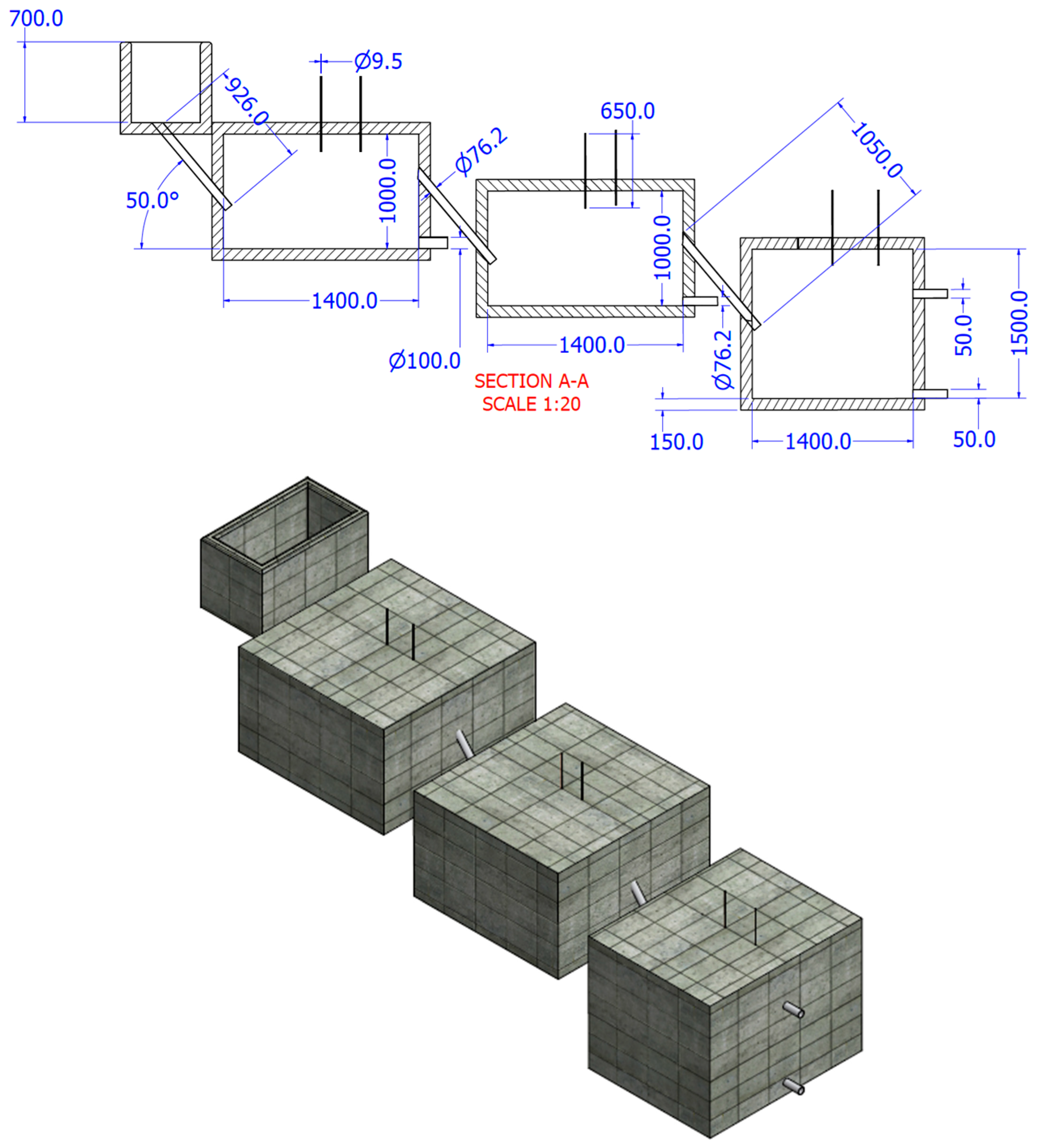
In
Figure 1 is presented the three-stage biodigester designed. The experimental setup consists of three biodigesters connected in series, with volumes of 2 m
3, 2 m
3, and 3 m
3, respectively. This cascade configuration allows for functional separation of the biological stages of anaerobic digestion and maturation of the biol, optimizing biofertilizer quality. The system was operated under two independent feeding conditions: Phase I: Guinea pig manure (duration: 3 months) and Phase II: Moist vermicompost (duration: 6 months).
Initial Inoculation: Prior to initiating the feeding cycles, a biological inoculation phase was carried out. Effluent from four plastic biodigesters (1 m3 each), continuously operated for one year using guinea pig manure as the sole substrate, was used as the inoculum. This strategy enabled rapid microbial colonization of the first 2 m3 chamber, significantly reducing the latency period before the onset of methanogenesis.
Feedstock Change and Stabilization Timeline: Each phase was operated under the same hydraulic and functional conditions, allowing for a direct comparison of the system’s performance with different feedstocks. Laboratory samples were collected three months after the introduction of each new feedstock, allowing sufficient time for stabilization and representative results.
Functional Configuration of the Digesters: Chamber 1 (2 m3) served as the main reactor, where the full sequence of anaerobic digestion occurred, including hydrolysis, acidogenesis, acetogenesis, and initial methanogenesis. The hydraulic retention time (HRT) was approximately 20 days. Chamber 2 (2 m3) functioned as an intermediate maturation reactor, continuing the methanogenic process and initiating stabilization of the digestate. It also maintained an HRT of 20 days. Chamber 3 (3 m3) acted as the final maturation chamber, refining the biofertilizer’s nutrient profile and continuing residual biogas production. This chamber also had a 20-day HRT. Overall, each substrate batch remained in the system for approximately 60 days, ensuring thorough stabilization and nutrient transformation.
Feeding and Recirculation Protocol: The system was operated in a semi-batch mode with weekly transfers. Each week, Chamber 1 received a fresh 0.5 m3 mixture, either of: Guinea pig manure + water (Phase I), or Vermicompost + water (Phase II). Sequential transfers were performed: From Chamber 1 to Chamber 2, From Chamber 2 to Chamber 3 and Effluent and biogas were collected from Chamber 3. During the first 20 days of each feeding phase, no effluent was extracted to allow for progressive accumulation and stabilization in the final chambers.
Laboratory Sampling and Analysis: Liquid samples were collected directly from Chamber 3 (final maturation) under controlled conditions using sterile containers and without prior aeration. Samples were taken: At the end of month 3, after operating with guinea pig manure, at month 6, following the change to vermicompost. Each sample was analyzed to determine the following: Physicochemical parameters.
Operational Observations: Biol quality gradually improved during Phase II with vermicompost, particularly in terms of physicochemical stability and micronutrient availability. Phase I showed a faster onset of biogas production due to the higher energy content of guinea pig manure. Despite the absence of mechanical agitation, the system achieved efficient digestion thanks to the extended retention time and the sequential three-chamber configuration, which favored stratified microbial activity and nutrient transformation.
3.3. Field Validation
To validate the laboratory results under real conditions, an agronomic trial was conducted at the facilities of the INIA, using maize (Zea mays L.) as the indicator crop. The experiment was carried out in an open field of approximately 3000 m2. An area of 100 m2 was allocated for each type of biofertilizer, with four independent plots per treatment to obtain replicates and ensure a reliable statistical analysis. The treatments included: A: Biol from VL; B: Guinea pig manure biol. C: VL (without biodigestion). D: Guinea pig manure (without biodigestion). The experimental design was completely randomized. The response variable considered was the total above-ground biomass per hectare, measured as a direct indicator of the biofertilizer’s effect on crop yield.
4. Results of Analysis of Biofertilizers
Table 1 presents the test results for the samples from the biodigesters (B2 and B3) of the in-line biodigester system, with two feedstocks: guinea pig manure and VL. The analyses were conducted at the Agronomic Chemistry Laboratory of the UNALM, Lima, Peru.
4.1. Comparative Analysis of General Physicochemical Properties of Liquid Biofertilizers (Bioles) Derived from Two Organic Feedstocks
Liquid biofertilizers, commonly referred to as
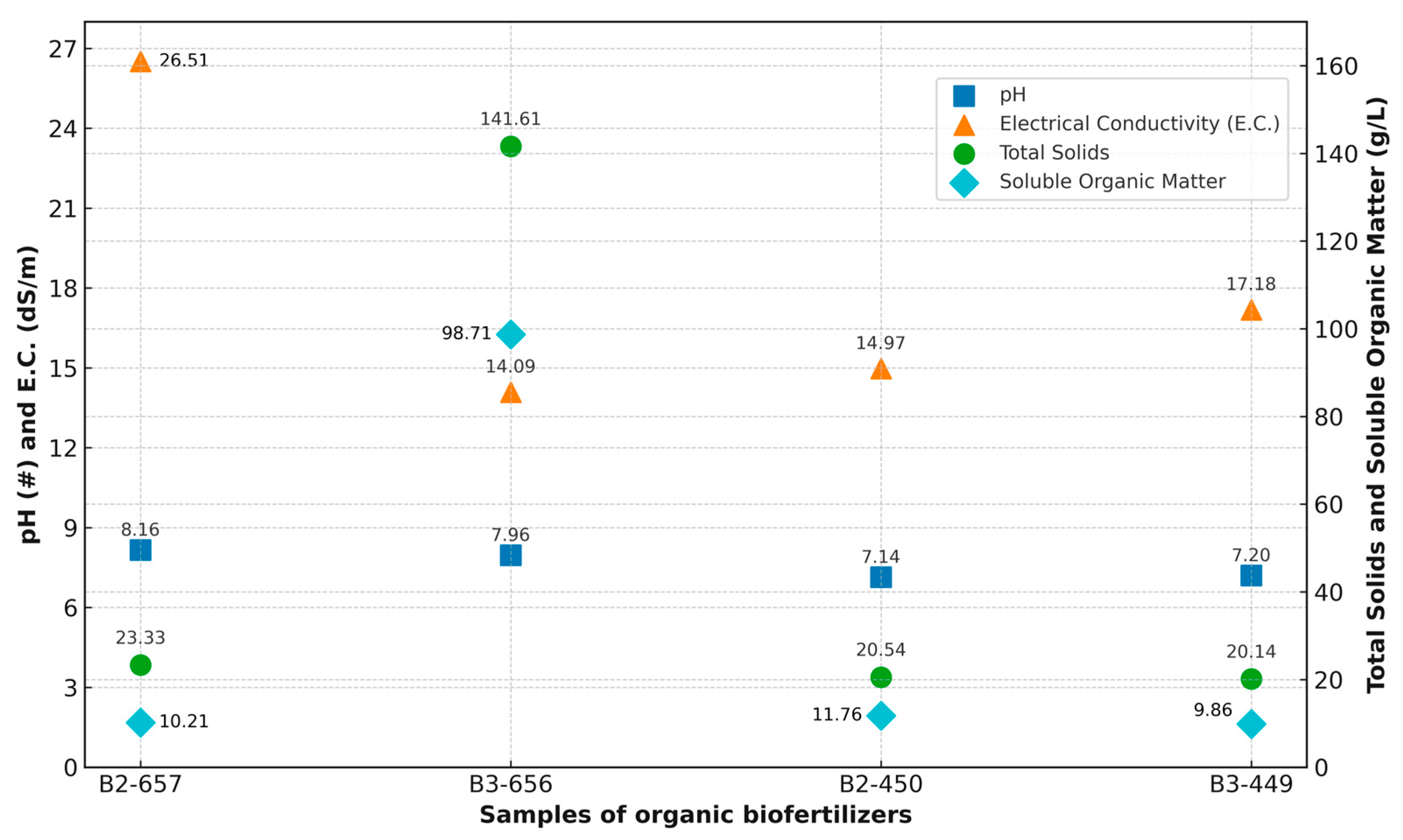
bioles, are widely used in sustainable agriculture due to their capacity to enhance soil fertility, promote microbial activity, and improve crop productivity. However, their physicochemical characteristics can vary significantly depending on the organic feedstock used and the operating conditions of the biodigester. This study presents a comparative analysis of general physicochemical parameters (pH, electrical conductivity, total solids, and soluble organic matter) of bioles obtained from two different substrates: guinea pig manure and VL. In
Figure 2, the general physicochemical properties of liquid biofertilizers are presented.
The pH of a biol is a key indicator of its chemical stability and compatibility with soil and crops. The FAO and EU guidelines recommend a pH range between 6.0 and 8.5 for liquid fertilizers. In this study, the pH values observed were: Guinea Pig Manure: 8.16 (B2) and 7.96 (B3) VL: 7.14 (B2) and 7.20 (B3). All samples fall within the acceptable range, indicating chemical stability and safe potential for agricultural application. The slightly alkaline pH of the bioles derived from guinea pig manure may enhance nutrient availability in acidic soils, whereas the vermicompost-derived bioles present more neutral values, suitable for a broader range of crops and soil types.
Electrical Conductivity (EC) is used to estimate the concentration of soluble salts, which can affect plant growth, especially in salt-sensitive species. International guidelines suggest that values above 10 dS/m may require dilution before application [
9]. The EC values found were: Guinea Pig Manure: 26.51 dS/m (B2), 14.09 dS/m (B3), VL: 14.97 dS/m (B2), 17.18 dS/m (B3). All samples exceed the recommended threshold, indicating high salinity. Thus, dilution in water is necessary before field application, especially for foliar use or in young seedlings. Ratios between 1:5 and 1:10 are suggested depending on crop tolerance and irrigation conditions [
10]. The EC values obtained for the liquid biofertilizers indicate a moderate to high salinity level, particularly in the guinea pig manure biol compared to the vermicompost leachate biol. According to FAO recommendations for liquid fertilizers, EC values above 3.0 mS cm
−1 require dilution prior to application on sensitive crops, and concentrations exceeding this value may pose salinization risks in poorly drained soils [
19]. In this study, dilutions of 1:10 for guinea pig biol and 1:7 for vermicompost leachate were applied during field validation to ensure safe salinity levels within agronomic thresholds. These dilution ratios align with international guidelines and local agricultural practices in Andean systems, confirming the importance of EC adjustment to prevent potential osmotic stress on crops.
Total Solids. The concentration of total solids gives insight into the potential clogging risk in irrigation systems and the overall concentration of suspended matter. Reference values for liquid fertilizers typically range from 20 to 50 g/L [
15]. The results were: Guinea Pig Manure: 23.33 g/L (B2), 141.61 g/L (B3), VL: 20.54 g/L (B2), 20.14 g/L (B3). Three out of four samples lie within acceptable ranges. However, the B3 sample from guinea pig manure presents an high concentration, suggesting the need for filtration or decantation prior to use in fertigation systems.
Soluble Organic Matter (SOM) contributes to microbial stimulation and plant nutrition, particularly in organic farming. Optimal SOM values are expected between 5 and 50 g/L, although they may vary depending on the substrate and digestion time. The values recorded were: Guinea Pig Manure: 10.21 g/L (B2), 98.71 g/L (B3), VL: 11.76 g/L (B2), 9.86 g/L (B3). Except for the B3 sample from guinea pig manure, which exhibits a high SOM value, all other samples are within normal ranges. The elevated SOM in B3 could indicate excess residual organic matter, which might affect its stability and shelf life.
The comparison reveals clear trends between the two feedstocks: Bioles from guinea pig manure showed higher pH, E.C., and SOM, particularly in B3, possibly due to overloading. Bioles from VL demonstrated greater stability and homogeneity, with moderate pH, acceptable SOM levels, and lower total solids. These qualities suggest their superior suitability for direct application or fertigation. Due to the elevated salinity in all samples, it is recommended that bioles be diluted before application, especially for salt-sensitive crops or in hydroponic systems. Furthermore, the significant variation between biodigesters using the same substrate suggests the need to standardize operational parameters such as loading rate, C/N ratio, retention time, and agitation.
4.2. Evaluation of Macronutrient Content (NPK) in Liquid Biofertilizers from Guinea Pig Manure and VL
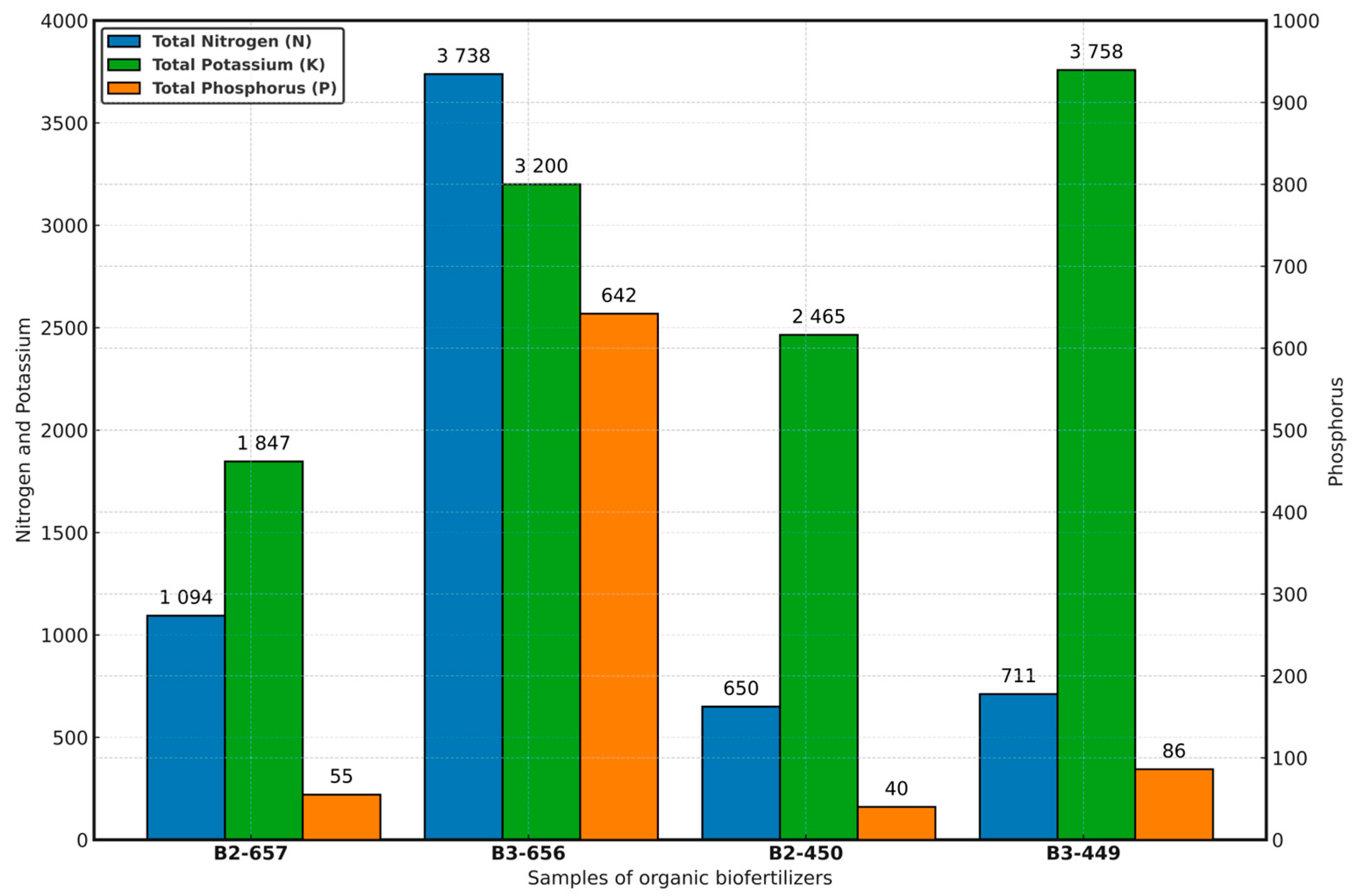
Figure 3 presents the NPK test results for biodigester samples. Macronutrients such as nitrogen (N), phosphorus (P), and potassium (K) play a crucial role in plant nutrition and are key indicators of the agronomic value of organic liquid fertilizers like bioles. The concentration of these nutrients varies depending on the type of organic feedstock used and the conditions of the anaerobic digestion process. In this study, we analyze the NPK content in bioles derived from guinea pig manure and VL, comparing the results against reference guidelines to determine their suitability for agricultural use.
Total Nitrogen (N): Nitrogen is essential for vegetative growth and protein synthesis in plants. According to FAO and related international guidelines for organic fertilizers, total nitrogen in liquid biofertilizers generally ranges from 500 to 2000 mg L−1. The measured concentrations, determined by the Macro-Kjeldahl method, correspond to total nitrogen (Nt)—that is, the combined organic and ammoniacal fractions obtained after acid digestion. The values were: Guinea pig manure biol: 1093.67 mg L−1 (B2) and 3737.51 mg L−1 (B3); vermicompost leachate biol (VL): 649.60 mg L−1 (B2) and 711.20 mg L−1 (B3). Three of the four samples fall within or near the expected range, whereas B3 (guinea pig manure) exceeded the upper threshold by nearly twofold, likely due to a higher concentration of proteinaceous material and extended retention time, which reduced nitrogen volatilization losses. While elevated total nitrogen enhances plant productivity, excessive levels may lead to nutrient imbalance or phytotoxicity in sensitive crops, emphasizing the need for dilution or rate adjustment according to crop type and application frequency. Future analyses will include specific determinations of ammonium (NH4+) and nitrate (NO3−) to better characterize nitrogen availability and transformation dynamics during multistage biodigestion.
Total Phosphorus (P): Phosphorus is vital for root development, flowering, and energy transfer in plants. According to FAO and European guidelines for organic liquid fertilizers, total phosphorus levels typically range between 30 and 200 mg L−1. The concentrations obtained through the Vanadomolybdate Yellow method were: Guinea pig manure biol: 55.04 mg L−1 (B2) and 642.21 mg L−1 (B3); vermicompost leachate biol (VL): 40.45 mg L−1 (B2) and 86.49 mg L−1 (B3). All samples fall within or near the expected range, except B3 (guinea pig manure), which exceeds the upper threshold by more than threefold. This elevated value likely results from sediment-rich extraction and higher particulate mineralization during prolonged retention in the final biodigester stage. While increased phosphorus can benefit nutrient-depleted soils and improve root vigor, excessive concentrations may raise environmental risks such as eutrophication if runoff occurs. Therefore, controlled dilution and targeted application are recommended to optimize nutrient delivery while minimizing environmental impact.
Total Potassium (K): Potassium plays a central role in enhancing plant stress resistance, enzyme activation, and fruit quality. According to FAO and international benchmarks for organic liquid fertilizers, total potassium concentrations typically range from 1000 to 3000 mg L
−1 [
1,
5,
18]. The concentrations measured by Atomic Absorption Spectrophotometry (nitroperchloric digestion) were: Guinea pig manure biol: 1846.94 mg L
−1 (B2) and 3200 mg L
−1 (B3); vermicompost leachate biol (VL): 2464.99 mg L
−1 (B2) and 3758.06 mg L
−1 (B3). Most samples fall within or slightly exceed the expected range, with B3 from VL showing the highest potassium content. This enrichment likely reflects enhanced mineral solubilization in the final digestion stage, where microbial activity and organic acid formation increase K
+ release from particulate matter. Elevated potassium levels are beneficial for crops with high K demand—such as maize, potatoes, and fruit species—by improving water-use efficiency, stress tolerance, and yield quality. However, dose management is necessary in sandy or salinity-prone soils to prevent ionic imbalance and excessive osmotic pressure.
Comparative Analysis by Feedstock. Bioles from guinea pig manure tend to show higher nitrogen and phosphorus concentrations, especially in B3, indicating a more protein-rich and nutrient-dense profile, likely due to a higher organic loading. Bioles from VL are more balanced, with slightly lower N and P but higher potassium levels, potentially due to the mineralization of stable humic compounds and the bioavailability of K in vermicompost.
Agronomic Implications. The NPK profiles suggest that guinea pig manure-derived bioles are better suited for vegetative and early growth stages, while vermicompost-based bioles are more suitable for fruiting stages or potassium-demanding crops like tomatoes, potatoes, and bananas. All bioles exhibit concentrations that qualify them as valuable organic nutrient sources, though in cases with elevated nutrient levels (B3 samples), dilution or application protocols should be carefully designed.
The elevated concentrations of macronutrients observed in Biodigester 3 (B3), for both guinea pig manure and VL feedstocks, can be attributed to the strategic use of a series-configured biodigestion system. In this configuration, substrates undergo successive stages of anaerobic treatment, resulting in extended residence times that enhance the breakdown and mineralization of organic matter. As the digested material progresses through the system, soluble nutrients such as nitrogen, phosphorus, and potassium accumulate, leading to a more concentrated and mature biol. Additionally, reduced temperatures and stabilized microbial activity in the final stage minimize nutrient losses through volatilization or precipitation. This approach is intentionally designed to produce a high-quality biofertilizer with increased nutrient availability, although proper dilution may be necessary before field application depending on the crop and soil characteristics.
4.3. Analysis of Secondary Macronutrients: Calcium (Ca), Magnesium (Mg), and Sodium (Na) in Liquid Biofertilizers
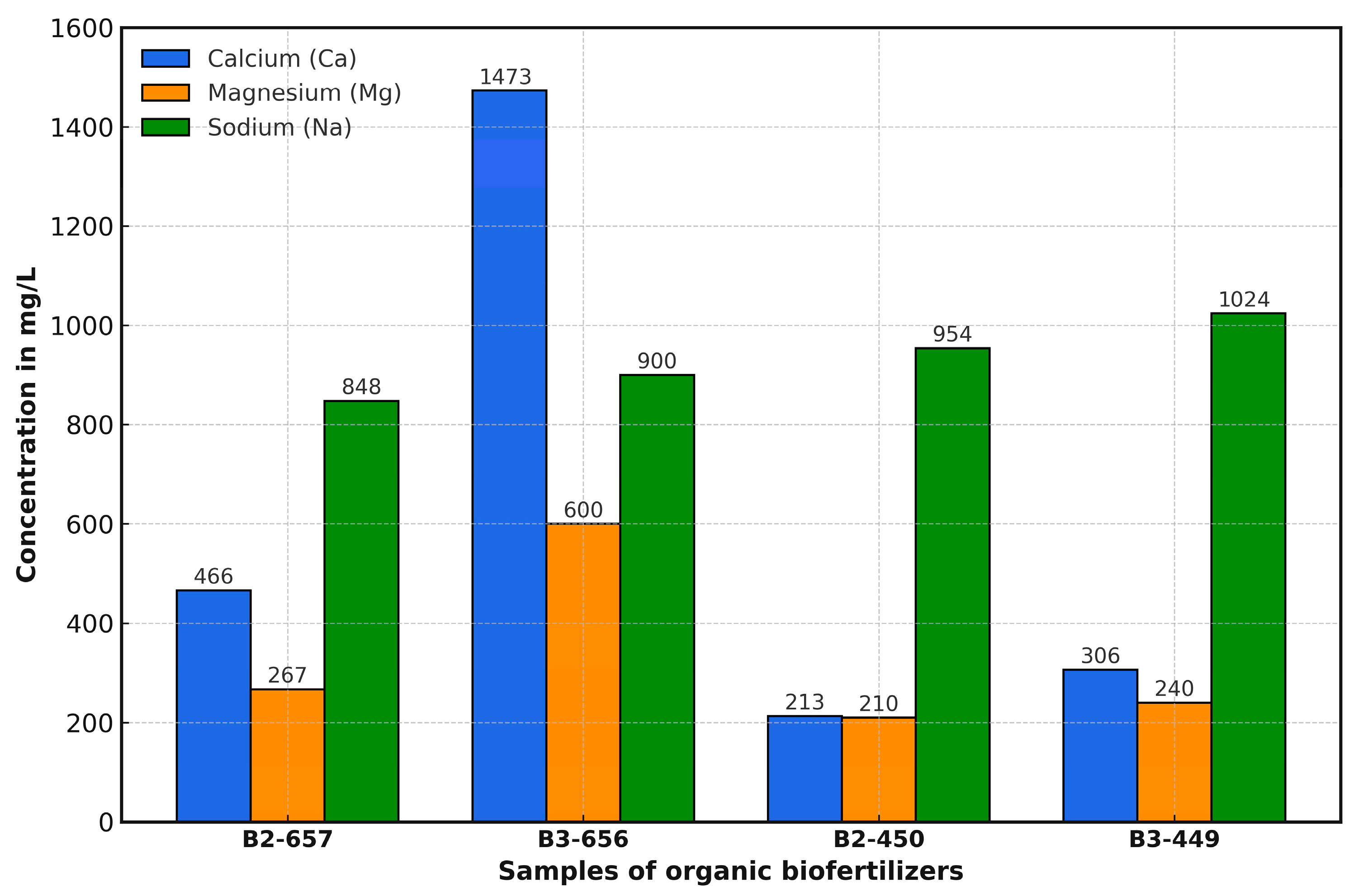
Figure 4 presents the Ca, Mg and Na test results for biodigester samples. The liquid biofertilizers produced from different organic feedstocks exhibit variable concentrations of key secondary macronutrients. This section analyzes three essential elements for plant growth and soil quality—calcium (Ca), magnesium (Mg), and sodium (Na)—and evaluates them according to reference standards and international guidelines provided by the FAO [
7].
Regarding calcium (Ca), which is critical for cell wall structure and soil aggregation, the concentrations ranged from 212.9 mg/L to 1473.33 mg/L. The highest value was recorded in Biodigester 3 (B3) fed with guinea pig manure, reaching 1473.33 mg/L, which is near the upper recommended limit of 1500 mg/L. This high calcium content is agronomically favorable, particularly in acidic or degraded soils. In contrast, the biofertilizers produced from VL showed lower levels of calcium—212.9 mg/L (B2) and 306.06 mg/L (B3)—yet still within optimal ranges for general soil amendment.
For magnesium (Mg), an essential component of chlorophyll and numerous plant enzymes, concentrations ranged from 209.68 mg/L to 600 mg/L. The maximum value, also observed in B3 with guinea pig manure, slightly exceeds the ideal upper limit of 500 mg/L, potentially posing a risk of nutrient imbalance when applied excessively. However, the other samples—ranging between 209 and 267 mg/L—fall within acceptable thresholds and can contribute significantly to correcting magnesium-deficient soils.
The sodium (Na) content, however, presents a limiting factor for agricultural application. All biol samples contained sodium levels well above the recommended maximum range of 300 to 500 mg/L. The values ranged from 847.76 mg/L (B2 with guinea pig manure) to 1024.19 mg/L (B3 with VL). Such high concentrations could induce soil salinization, reduce nutrient availability, and hinder root development, particularly in clay soils or poorly drained environments. While some salt-tolerant crops might endure elevated sodium, application strategies should include dilution, alternation with freshwater irrigation, or site-specific assessment to minimize risks. The evaluated biofertilizers demonstrate promising qualities in terms of calcium and magnesium content, especially those derived from guinea pig manure in biodigester B3. However, sodium levels remain a critical concern, requiring caution and proper management for safe and effective use in agricultural settings. The differences in nutrient concentrations also reflect the influence of feedstock type and hydraulic retention time, which are key parameters for optimizing biol quality.
4.4. Micronutrient Analysis and Agronomic Use Recommendations
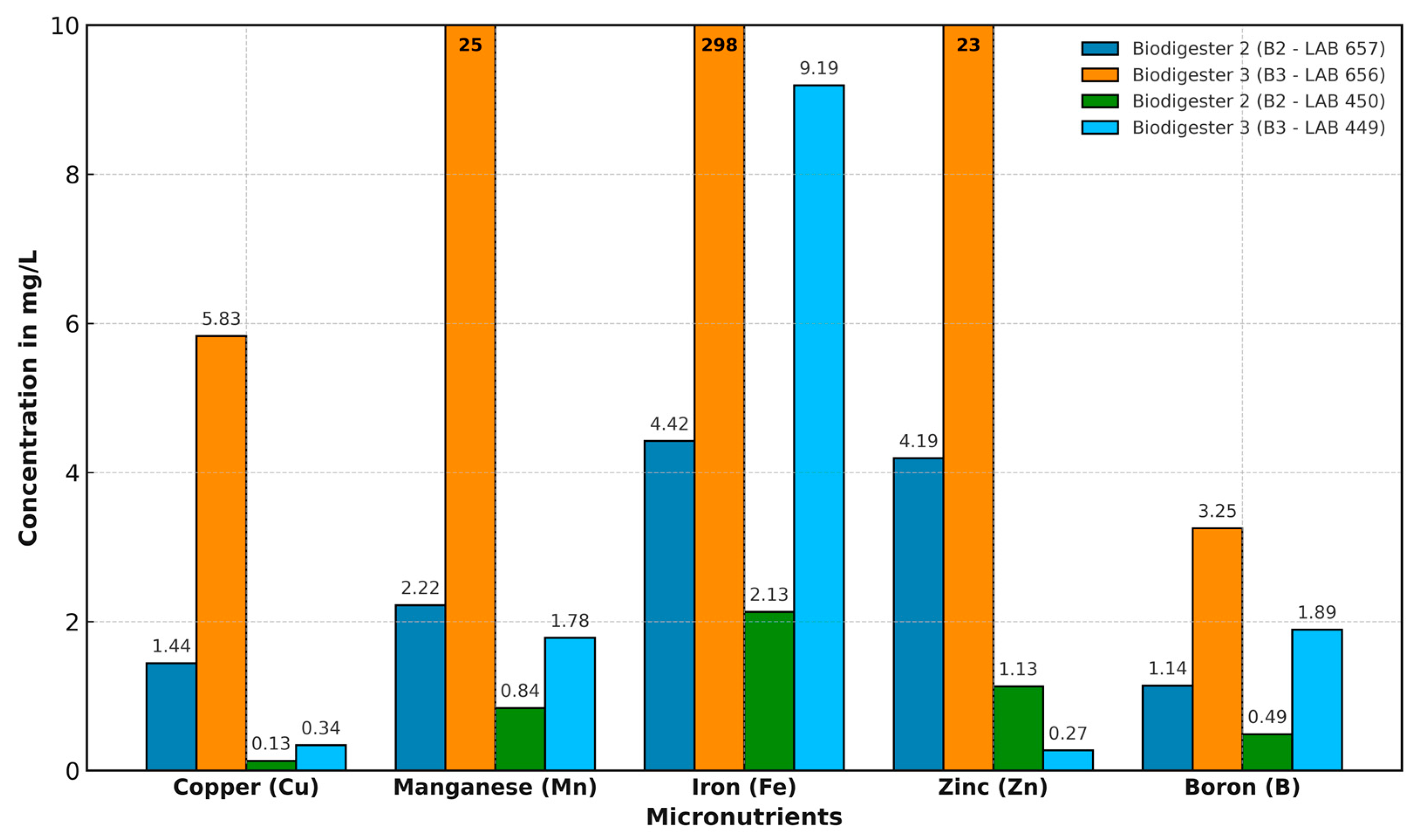
Micronutrients such as copper (Cu), manganese (Mn), iron (Fe), zinc (Zn), and boron (B) play a crucial role in plant metabolic, enzymatic, and physiological processes. However, elevated concentrations may cause phytotoxic effects, particularly in sensitive crops. The liquid biofertilizers obtained from guinea pig manure and leachate from VL showed significant variations in micronutrient concentrations, determined by the type of feedstock and the retention time within the biodigester.
Figure 5 presents the Cu, Mn, Fe, Zn and B test results for biodigester samples.
Copper (Cu) levels ranged from 0.13 to 5.83 mg/L. The Biodigester 3 fed with guinea pig manure showed the highest value (5.83 mg/L), well above the agronomic threshold of 1.5 mg/L. This concentration may be phytotoxic, especially for foliar application, and thus it is recommended to dilute the biol at least 1:5, preferably applying it to soils with documented Cu deficiency. In contrast, bioles derived from VL (0.13–0.34 mg/L) and Biodigester 2 with guinea pig manure (1.44 mg/L) remained within safe levels.
Manganese (Mn) displayed high variability, reaching up to 25 mg/L in Biodigester 3 with guinea pig manure, exceeding the typical upper limit for most crops by five times. A dilution of 1:8 or greater is recommended, with use restricted to Mn-deficient soils. Other bioles showed Mn values between 0.84 and 2.22 mg/L, considered appropriate for standard agronomic use.
Regarding iron (Fe), a remarkably high concentration was found in Biodigester 3 (298 mg/L), significantly above the recommended limit of 5 mg/L. This biol should only be used in alkaline or severely iron-deficient soils, avoiding foliar application unless diluted at least 1:10. The other bioles, ranging from 2.13 to 4.42 mg/L, fall within the safe range.
Zinc (Zn) concentration was also high in Biodigester 3, at 23.67 mg/L. Although essential for plant growth, levels exceeding 2.0 mg/L may be toxic. Therefore, this biol must be diluted at least 1:10 and applied only to zinc-deficient soils. Biodigester 2 presented 4.19 mg/L, also above the agronomic threshold. Conversely, vermicompost-derived bioles (0.27–1.14 mg/L) contained safe and adequate Zn concentrations for broader application.
As for boron (B), both guinea pig manure bioles exceeded 1.0 mg/L, with Biodigester 3 reaching 3.25 mg/L. These levels may be toxic to sensitive crops such as lettuce or legumes. It is advised to apply only to B-deficient soils, preferably via soil application rather than foliar spraying. Bioles from vermicompost (0.49–1.89 mg/L) presented more moderate values, within acceptable limits for most crops.
This analysis demonstrates that biodigesters fed with guinea pig manure, particularly those with extended retention times (as in B3), tend to accumulate higher levels of micronutrients. While such bioles may be nutritionally richer, they require careful agronomic management, especially concerning dosage and the specific needs of soil and crops. In contrast, bioles derived from VL, despite having lower micronutrient concentrations, offer a more balanced and safer profile for general use, both in soil and foliar applications. Therefore, a differentiated strategy is recommended based on the origin and composition of the biol. Bioles with high micronutrient content should be appropriately diluted and applied only when supported by soil analysis, while those with lower concentrations can be used more flexibly in a variety of agricultural contexts. This approach ensures the maximization of agronomic benefits without the risk of toxicity to plants or soil systems.
The results obtained show significant differences in the composition of the bioles depending on the feedstock used and the biodigestion system design. VL, when processed through a series-connected biodigester system, produces a biol with a more balanced profile of macronutrients and micronutrients, with concentrations that, in most cases, remain within or very close to the ranges established by international standards. This characteristic makes it a versatile and safe alternative for different crops, reducing the risk of toxicity from excessive trace elements. In contrast, guinea pig manure subjected to the same series system exhibits a marked increase in the concentration of certain micronutrients, particularly iron (Fe), manganese (Mn), zinc (Zn), and boron (B), exceeding in several cases the maximum reference values. While this excess may be beneficial in nutrient-deficient soils, it represents a potential risk of toxicity in soils with adequate levels or in crops sensitive to the accumulation of these elements.
These findings suggest that VL is more suitable for multi-stage anaerobic digestion, due to its more stabilized initial composition and the process’s capacity to concentrate nutrients without exceeding critical levels. In contrast, guinea pig manure may be more appropriate for a single-stage system, where the excessive concentration of micronutrients is limited, maintaining a balance that favors the safe nutrient uptake by crops. Due to the high concentrations of Zn, Fe, Mn, and Na, biol produced from guinea pig manure should be applied at a dilution ratio of 1:10, whereas biol derived from VL can be used at a lower dilution, approximately 1:7. Consequently, the selection of feedstock and the number of digestion stages should be jointly considered as a key strategy to optimize biol quality, tailoring the system design to the nutritional requirements of the soil and the target crop.
4.5. Macronutrient Analysis and Agronomic Use Recommendations
The analysis of macronutrients (N, P, and K) in the biol obtained from the different biodigesters shows that, regardless of the feedstock used (guinea pig manure or VL) and the method of expressing results (mg/L or percentage relative to total solids), in all cases the total NPK content exceeds the minimum reference value established by the standard (>3%), as is presented in
Table 2, confirming that the produced biols have an acceptable nutritional quality for agricultural use. When nutrients are expressed in mg/L, the result reflects the absolute concentration of each element in the solution, highlighting that biodigester B3 with guinea pig manure presents the highest values for N (3737.51 mg/L), P (642.21 mg/L), and K (3200.00 mg/L). However, this approach does not consider the solid content, which can lead to an overestimation of the relative quality of the biol.
In contrast, expressing results as a percentage relative to total solids provides an indicator of the actual nutrient density of the solid fraction, allowing for more precise comparisons between biols of different compositions. Using this method, biodigester B3 with VL recorded the highest total NPK value (22.62%), followed by B2 with VL (15.36%), B2 with guinea pig manure (12.84%), and B3 with guinea pig manure (5.35%). The notable difference in this last case is due to the fact that, despite having high values in mg/L, the elevated solid content (141.61 g/L) dilutes the relative percentage of nutrients. Overall, the results demonstrate that all biols comfortably exceed the regulatory minimum of 3% total NPK, while also showing that the method of expressing results significantly influences interpretation: the mg/L analysis highlights nutrient concentration in solution, whereas the percentage over total solids calculation more accurately reflects the intrinsic nutritional quality of the product. This distinction is critical for the standardization of evaluation and certification processes for liquid biofertilizers.
From an agronomic perspective, the fact that all biols exceed the 3% total NPK threshold ensures their potential as effective nutrient sources for crops. However, the differences observed between feedstocks and calculation methods highlight the importance of tailoring application strategies to both the nutrient density and the specific tolerance of the target crop. For example, biols with high nutrient density (e.g., VL in multi-stage digestion) may require lower application volumes to avoid nutrient oversupply, while those with high mg/L concentrations but lower nutrient density in solids (e.g., guinea pig manure in multi-stage digestion) may provide a more gradual nutrient release. Therefore, integrating both evaluation approaches—absolute concentration and nutrient density—offers a more comprehensive basis for optimizing fertilization practices, ensuring crop safety, and maximizing soil fertility.
The data obtained in the trial show that treatments with biols outperformed those without biodigestion and the control. In particular: A: Biol from VL: 43,036 kg/ha. B: Guinea pig manure biol: 42,540 kg/ha. C: VL: 39,368 kg/ha. D: (Guinea pig manure): 37,960 kg/ha.
These results confirm that anaerobic biodigestion enhances the agronomic value of organic fertilizers, increasing nutrient availability and uptake by the crop. Biol from VL showed slightly higher yields than guinea pig manure biol, consistent with the physicochemical characterization carried out in the laboratory and suggesting a more balanced and sustained nutrient release. The consistency between laboratory and field results reinforces the conclusion that integrating vermicompost and biodigestion represents an effective strategy for producing high-performance liquid biofertilizers.




 ,
,