Article

Coulomb Spike Model of Radiation Damage in Wide Band-Gap Insulators

by
Jean-Marc Costantini
1,* and
Tatsuhiko Ogawa
2
1
Université Paris-Saclay, CEA, Service de Recherche en Matériaux et Procédés Avancés, 91191 Gif-sur-Yvette, France
2
Nuclear Science and Engineering Center, Japan Atomic Energy Agency (JAEA), Shirakata 2-4, Tokai, Ibaraki 319-1195, Japan
*
Author to whom correspondence should be addressed.
Quantum Beam Sci. 2024, 8(3), 20; https://doi.org/10.3390/qubs8030020
Submission received: 31 May 2024 / Revised: 8 July 2024 / Accepted: 25 July 2024 / Published: 9 August 2024
(This article belongs to the Special Issue Quantum Beam Science: Feature Papers 2024)

Abstract

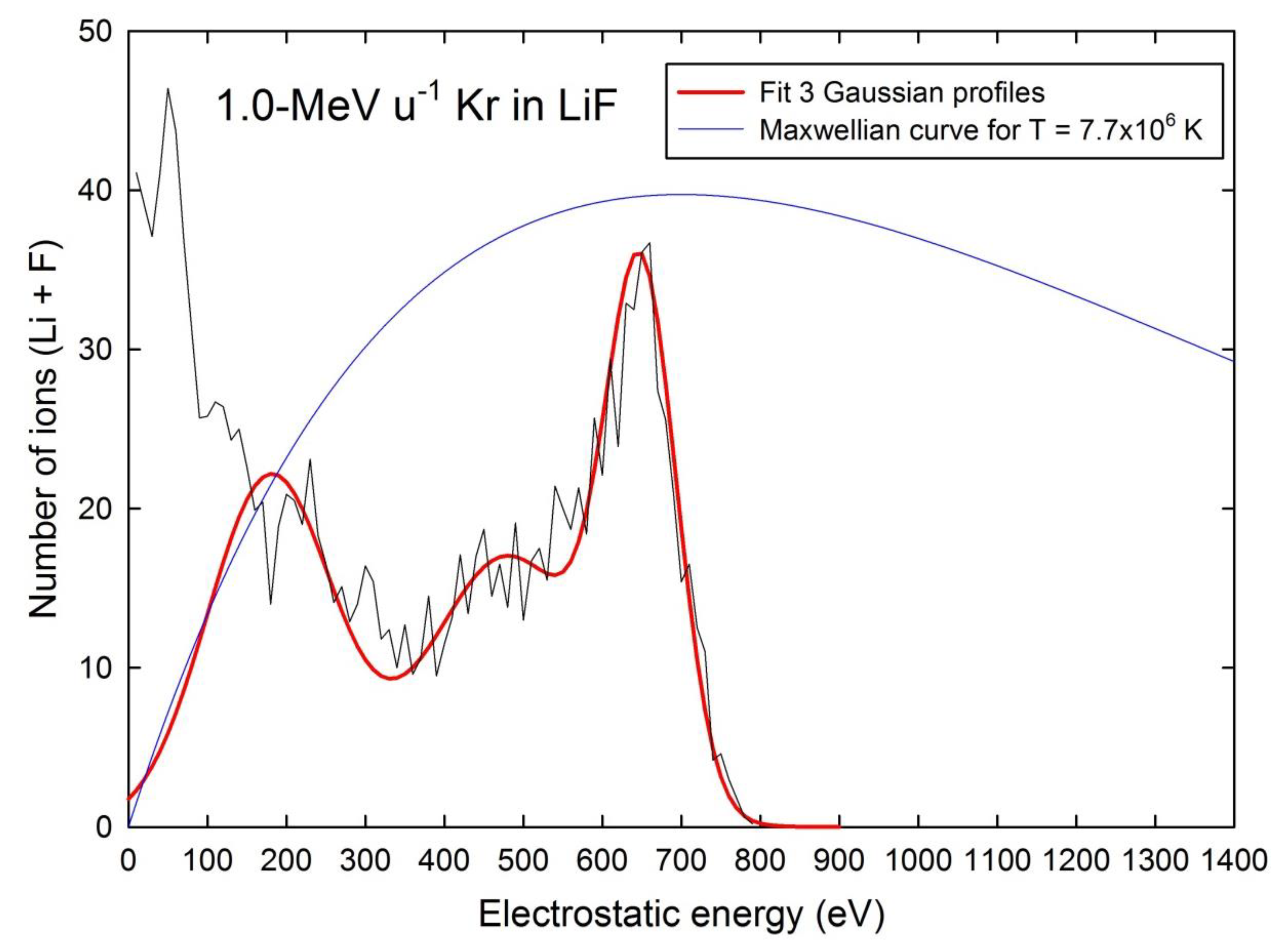
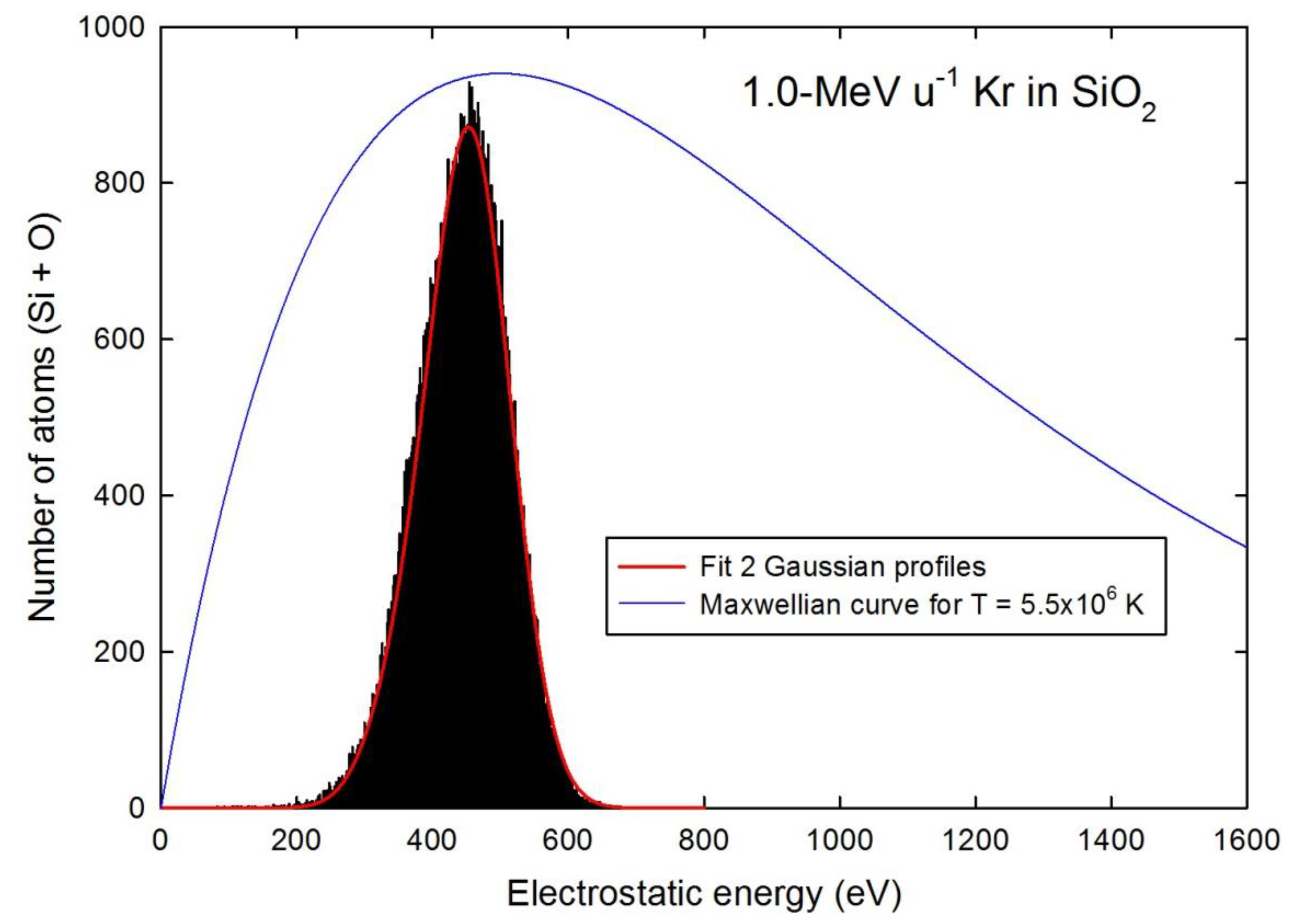
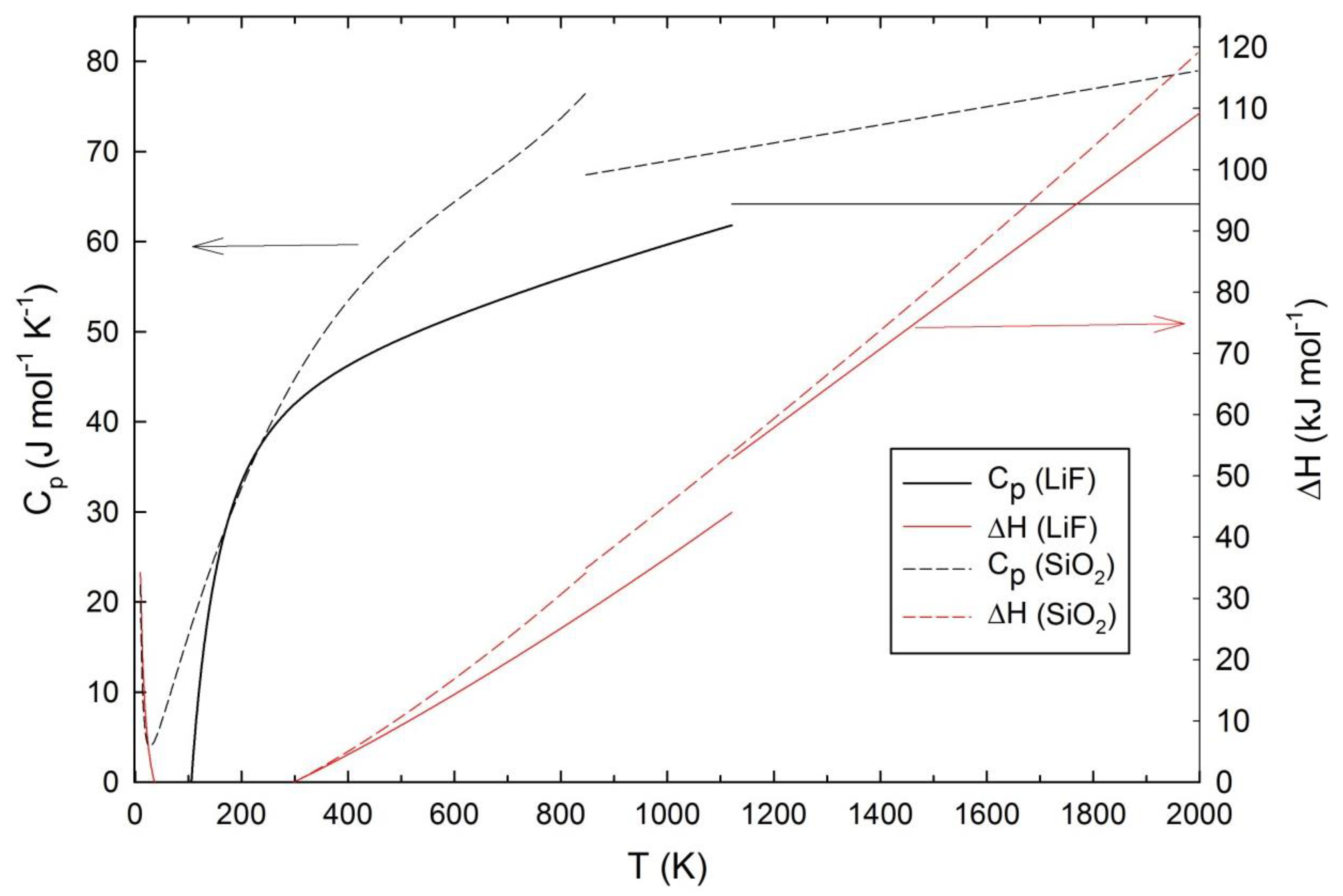
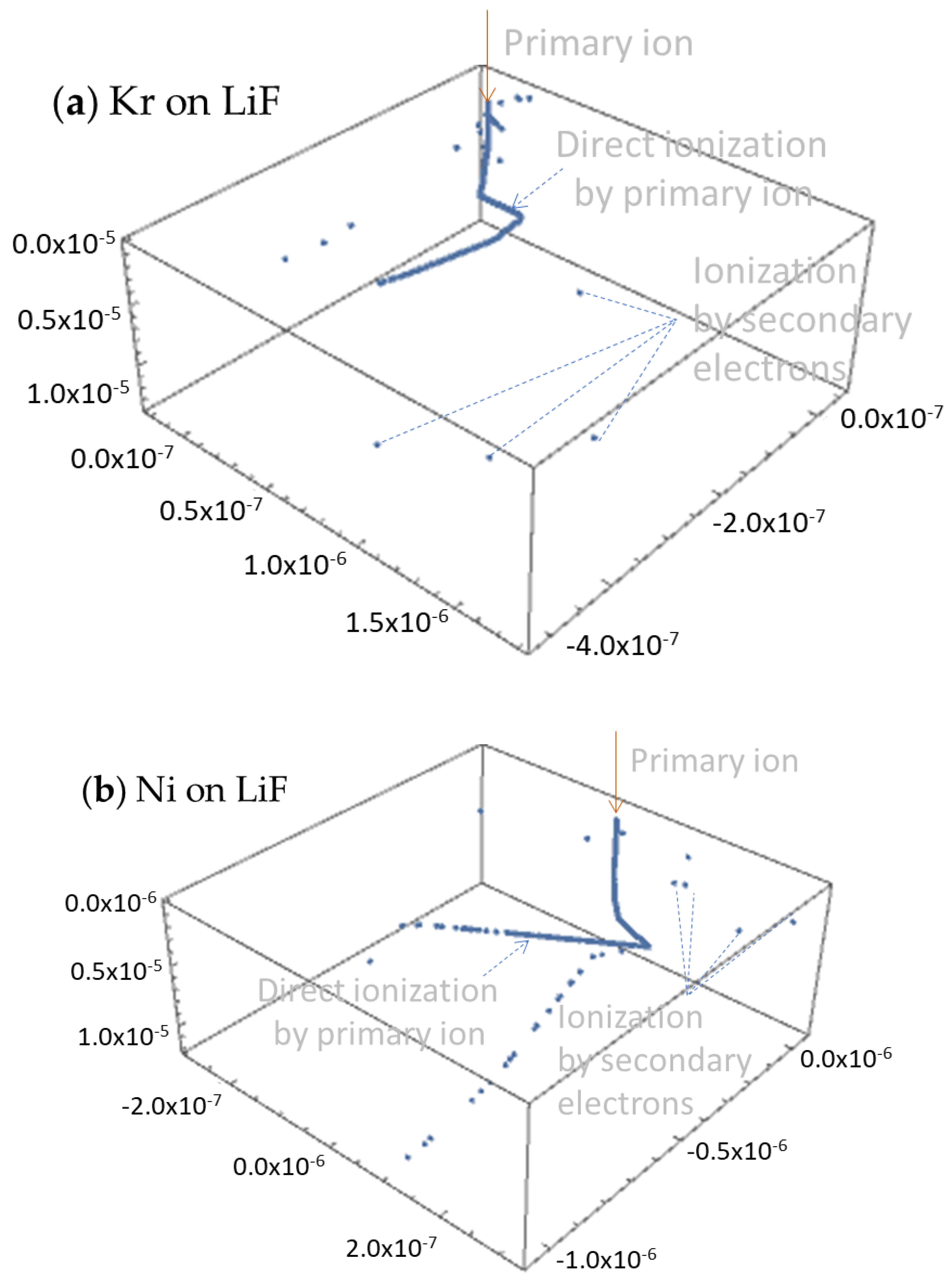
A novel Coulomb spike concept is applied to the radiation damage induced in LiF and SiO2 with about the same mass density (~2.65 g cm−3) by Ni2860 and Kr3684 ions of 1.0-MeV u−1 energy for about the same electronic energy loss (~10 MeV µm−1). This is an alternative concept to the already known models of the Coulomb spike and inelastic thermal spike for the damage induced by swift heavy ion irradiations. The distribution of ionizations and electrostatic energy gained in the electric field by the ionized atoms is computed with the PHITS code for both targets. Further, the atomic collision cascades induced by these low-energy hot ions of about 500 eV are simulated with the SRIM2013 code. It is found that melting is reached in a small volume for SiO2 due to the energy deposition in the subthreshold events of nuclear collisions induced by the Si and O ions. For LiF, the phonon contribution to the stopping power of the lighter Li and F ions is not sufficient to induce melting, even though the melting temperature is lower than for SiO2. The formation of amorphous domains in SiO2 is likely after fast quenching of the small molten pockets, whereas only point defects may be formed in LiF.
Keywords: radiation damage; coulomb spike; swift heavy ion irradiations; insulators; lithium fluoride; silicon dioxide radiation damage; coulomb spike; swift heavy ion irradiations; insulators; lithium fluoride; silicon dioxide