
Sustainable Surface Treatments Using Dry-Process Rubber-Modified Asphalt in Cold Regions: A Laboratory, Field, and LCA Study



Abstract
1. Introduction
- Enhancement of the performance of asphalt pavement in Michigan’s wet-freeze climate by incorporating rubber into conventional asphalt;
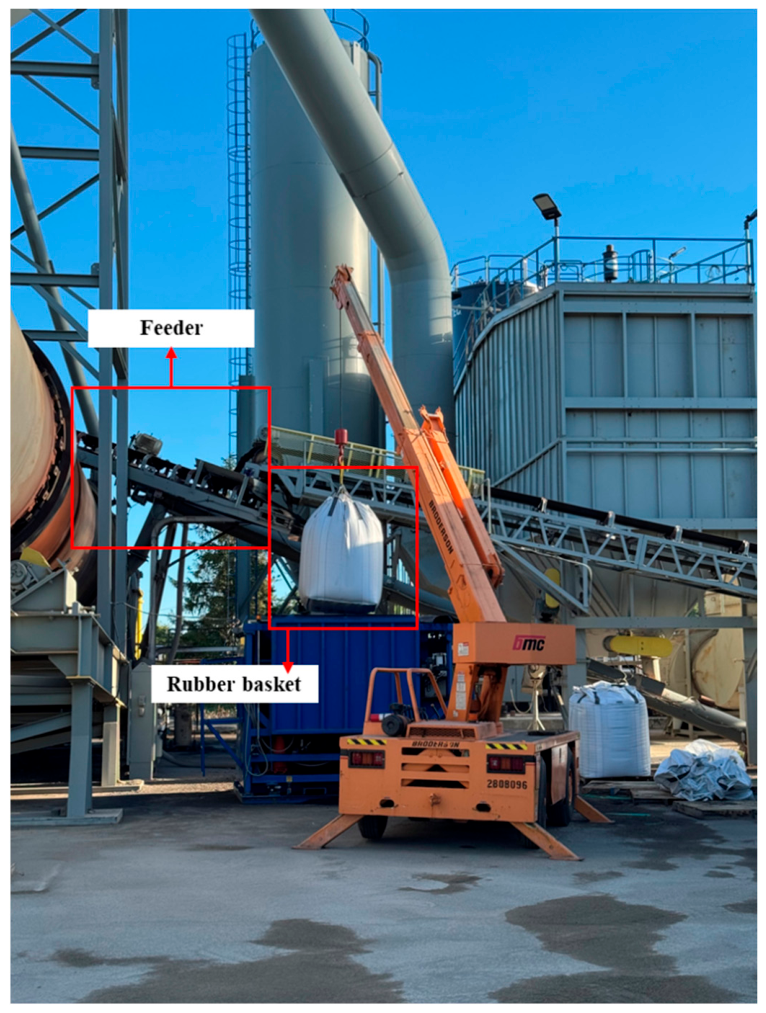
- Demonstration of effective asphalt plant operations when rubber is incorporated into asphalt pavement by the dry process;
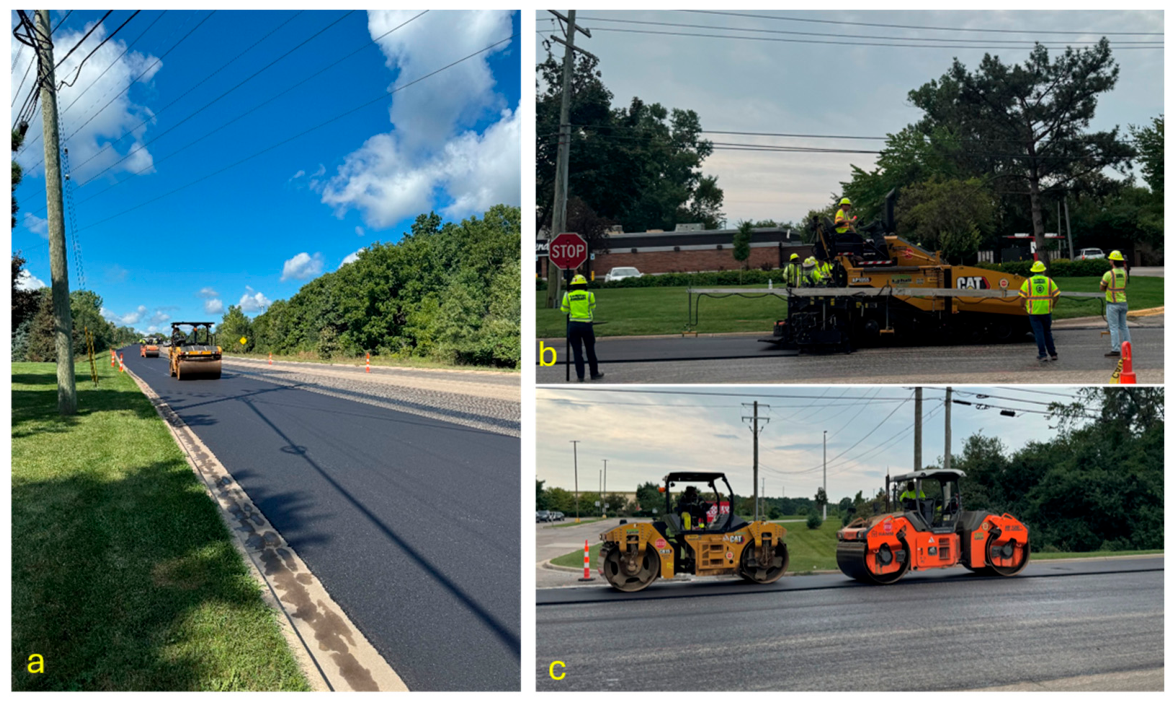
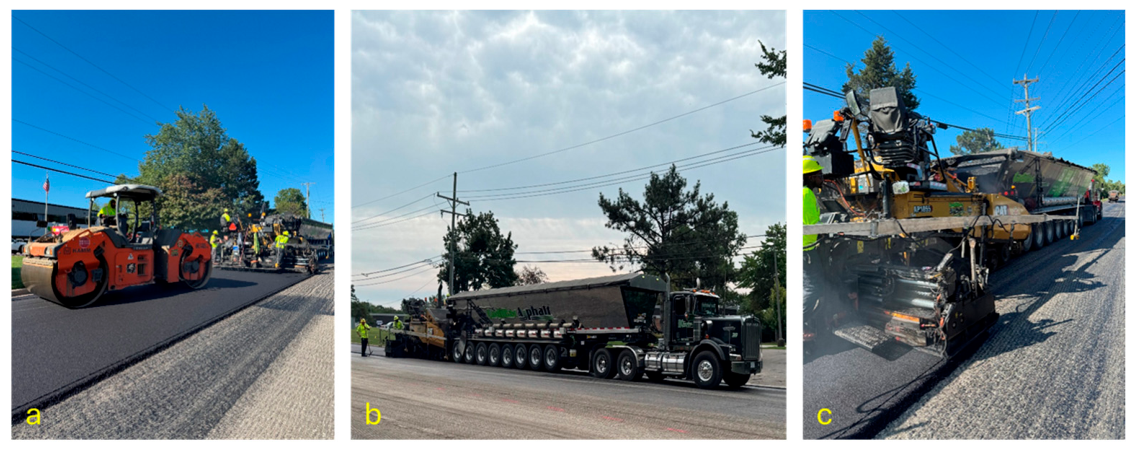
- Demonstration of field practices for placing and compacting dry process rubber asphalt pavements;
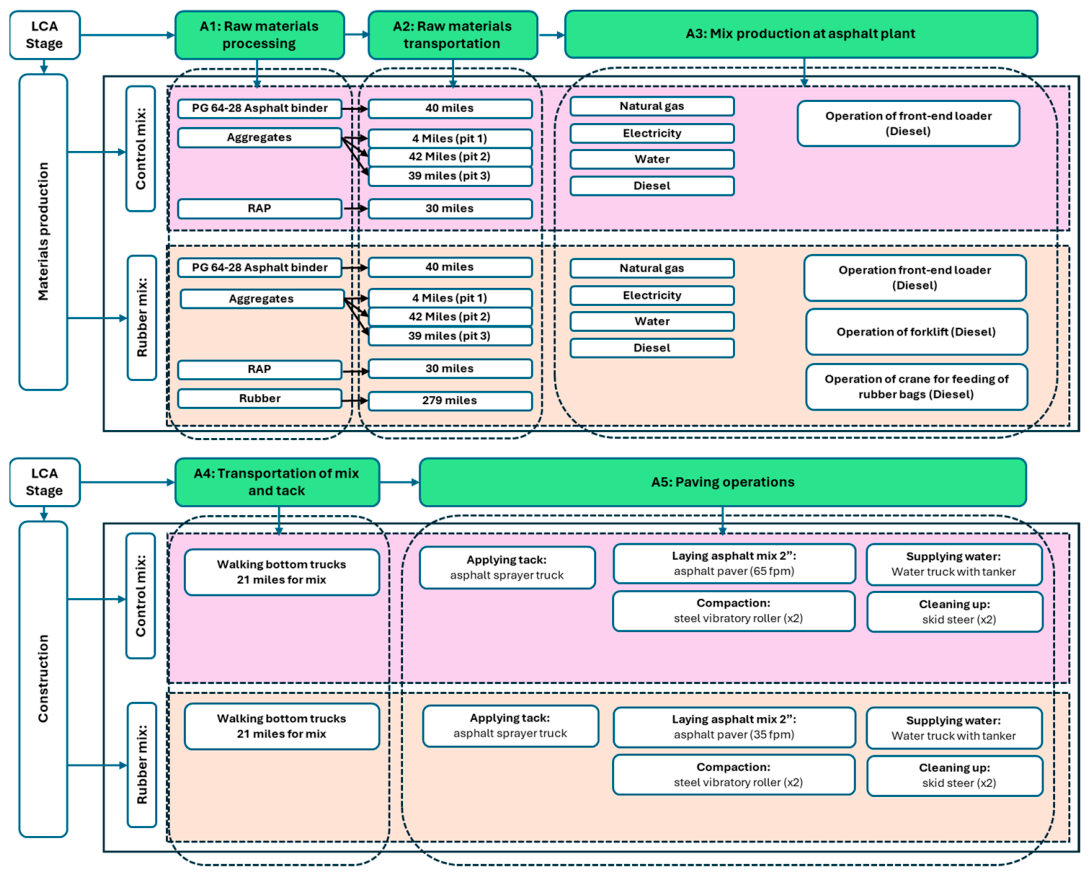
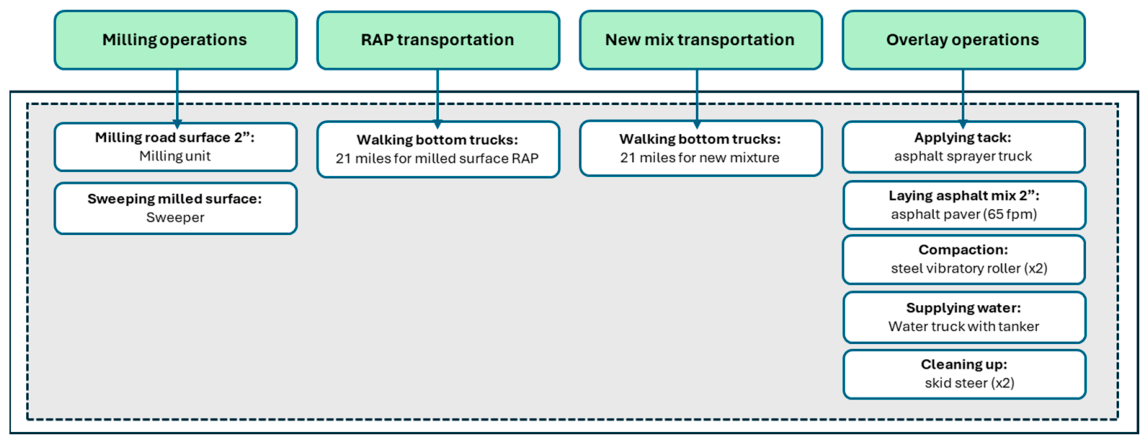
- Quantify and compare the environmental impacts of dry process rubber-modified asphalt and conventional mixtures across production and construction stages;
- Evaluate whether plant modifications and rubber incorporation methods contribute additional carbon impacts.
2. Materials and Methods
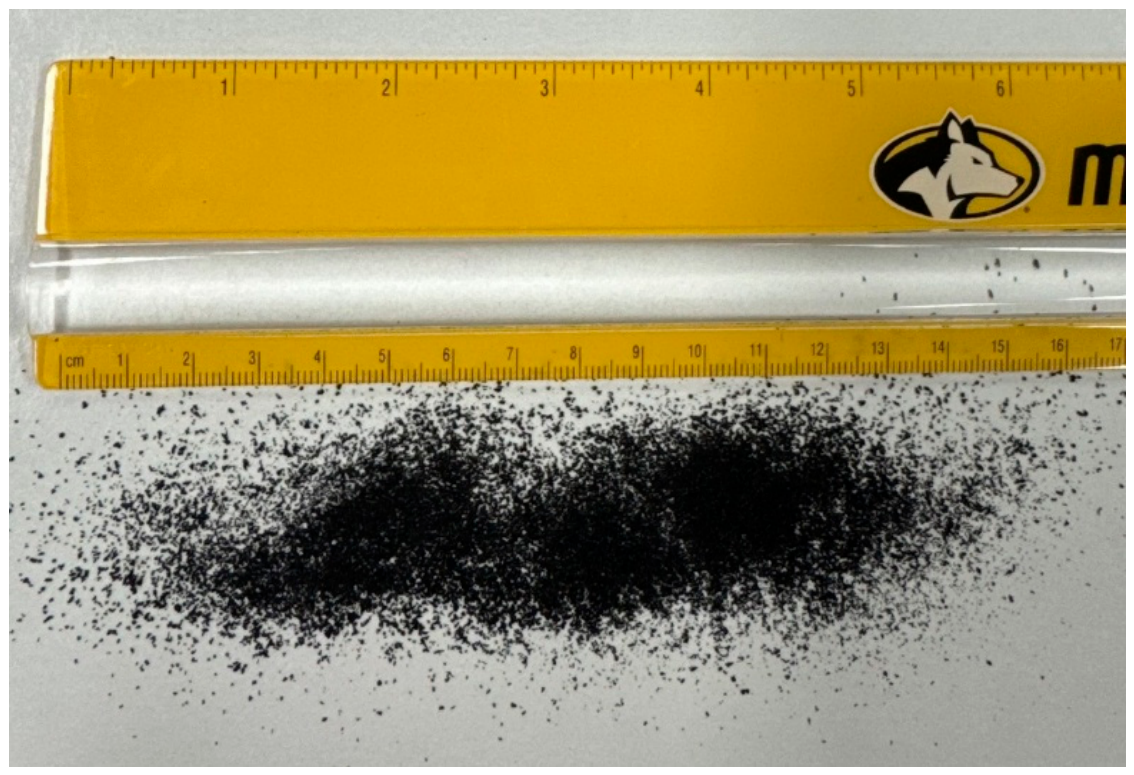
2.1. Material Description and Mix Production at the Asphalt Plant
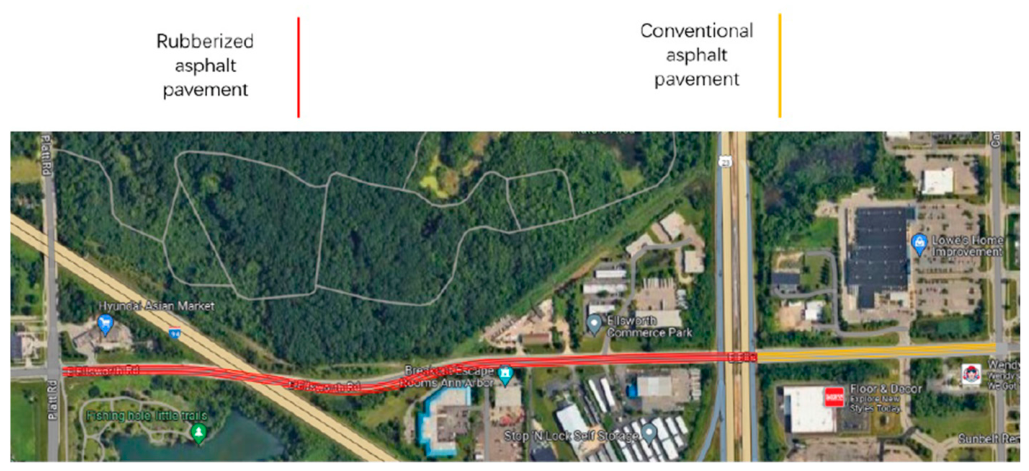
2.2. Constructions of Field Sections
2.3. Laboratory Experimental Plan
2.3.1. Preparation of Rubber-Modified Asphalt Binder
2.3.2. Aging Procedures
2.3.3. Asphalt Binder Cracking Device (ABCD) Test
2.3.4. Asphalt Binder Temperature Sweep Tests
2.3.5. Compaction of Rubber-Modified Asphalt Mixture
2.3.6. Disc-Shaped Compact Tension (DCT) Test
2.3.7. Hamburg Wheel Tracking Device (HWTD) Test
2.4. Life-Cycle Assessment (LCA) Methodology
3. Results and Discussion
3.1. Asphalt Binder Cracking Resistance
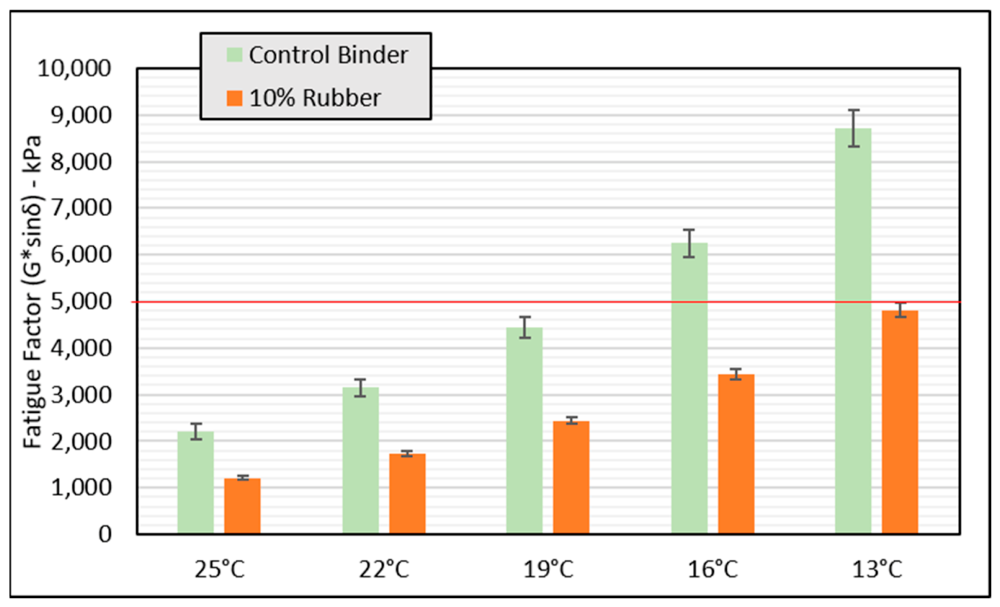
3.2. Asphalt Binder Fatigue Resistance
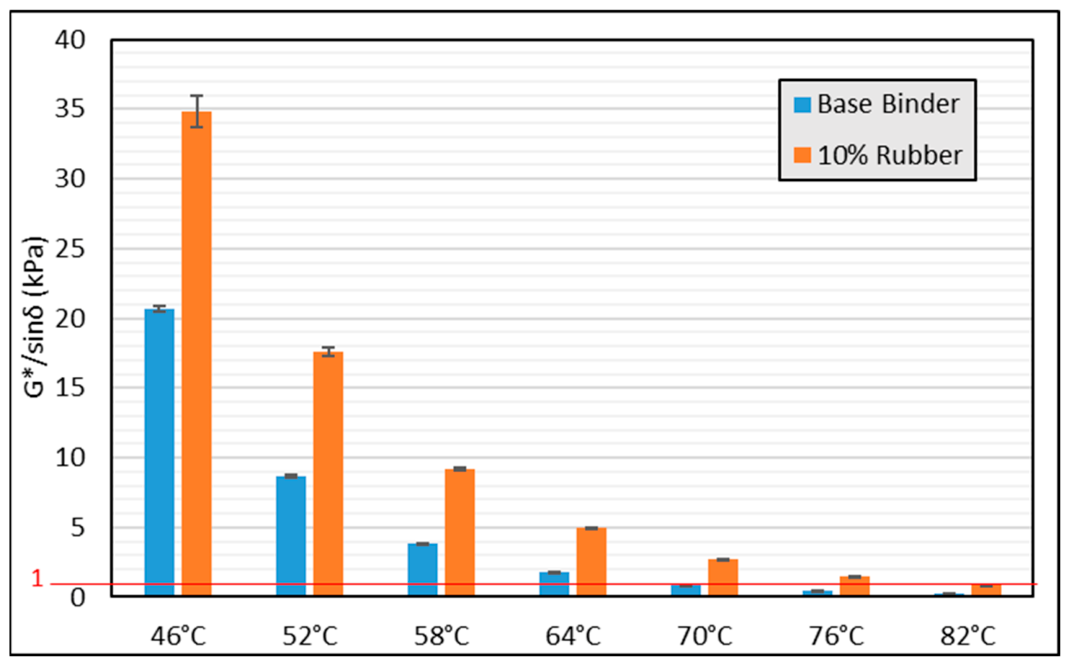
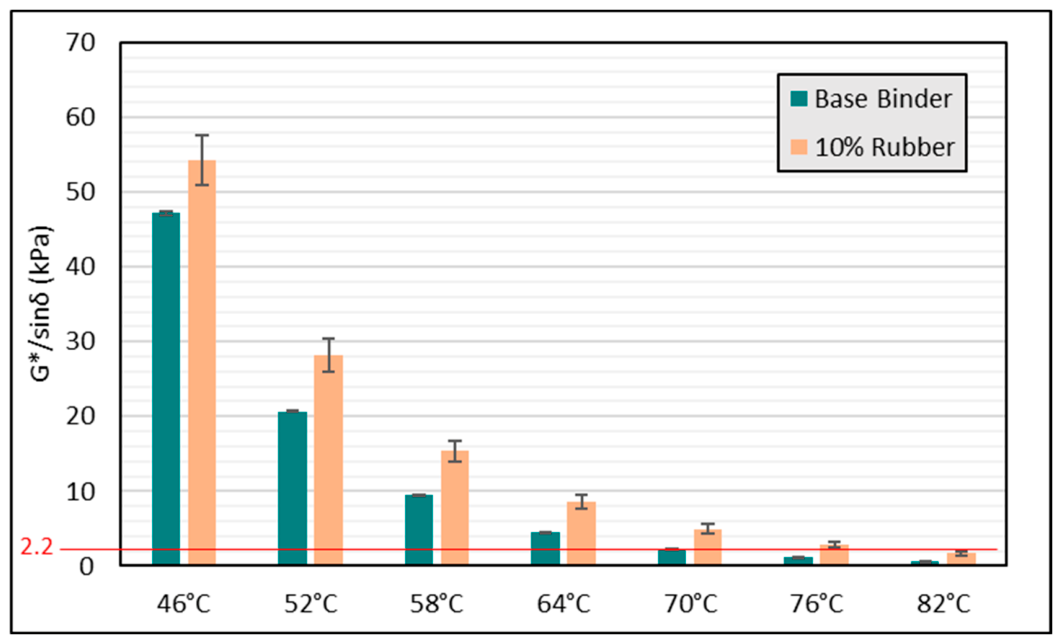
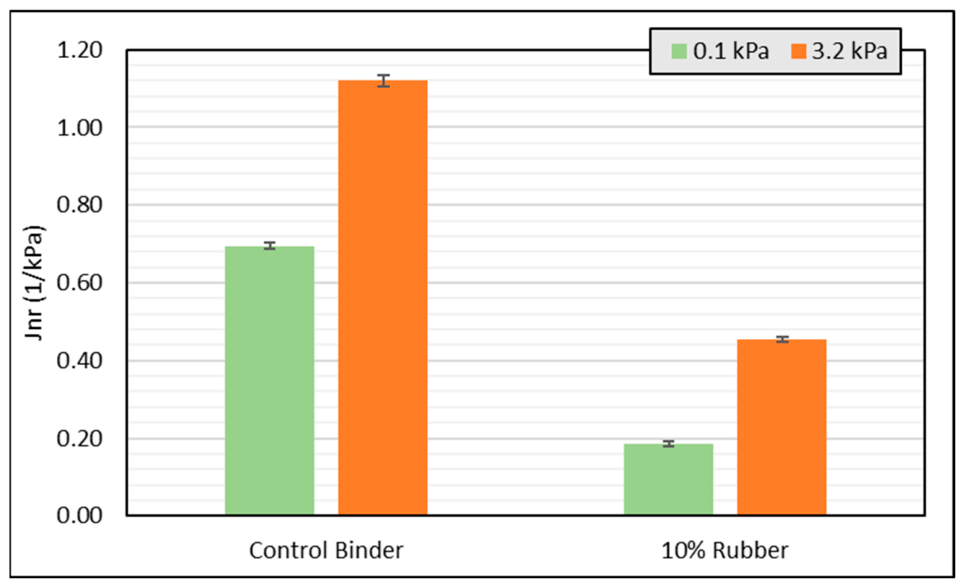
3.3. Asphalt Binder Rutting Resistance
3.4. Asphalt Mixture Fracture Energy
3.5. Asphalt Mixture Rutting and Moisture Resistance
3.6. GWP Impacts
4. Conclusions
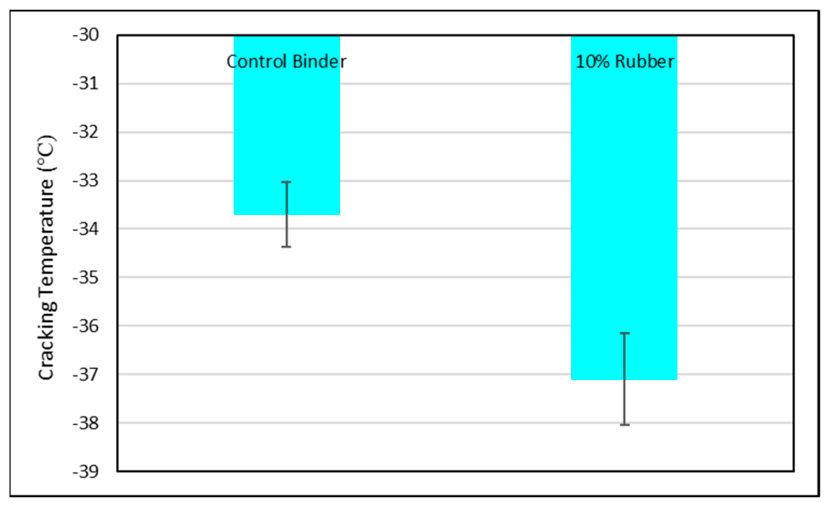
- Asphalt binder’s low-temperature cracking results obtained from the ABCD tests highlighted the positive role of rubber in improving the low-temperature performance of conventional asphalt binder.
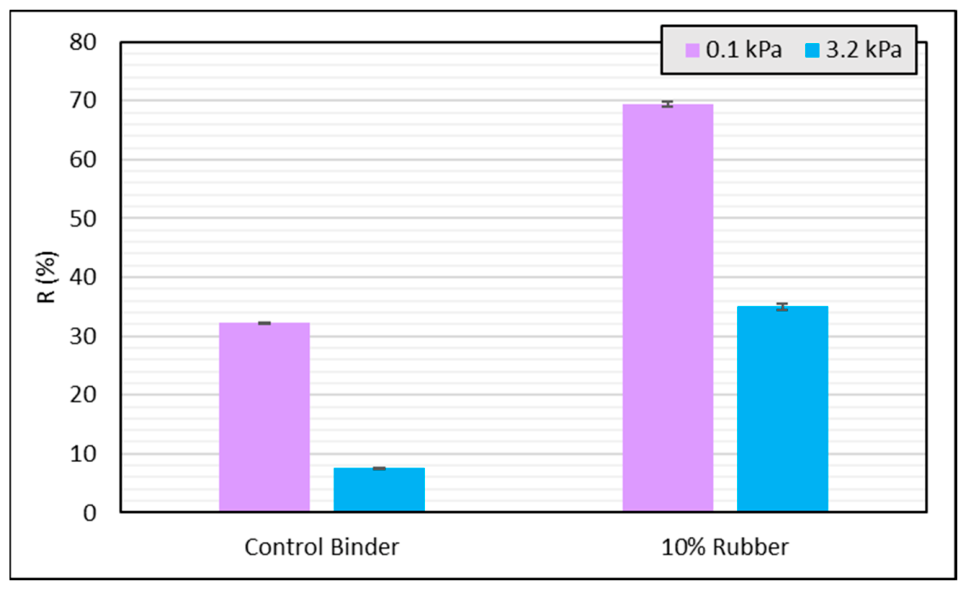
- For asphalt binder’s high-temperature performance, the addition of 10% rubber product significantly improved the rutting resistance performance under both unaged and RTFO-aged conditions by demonstrating higher rutting factor values (G*/sinδ). When compared with the control binder, samples containing rubber passed the Superpave criteria at 76 °C, indicating the enhancement of the high-temperature performance grade of asphalt binder by two grades.
- For asphalt binder’s intermediate-temperature performance, fatigue factor (G*sinδ) results for PAV-aged samples further highlighted the positive effects of rubber on viscoelastic properties of asphalt binder, with samples containing 10% rubber demonstrating superior fatigue-resistant performance when compared with the control asphalt binder. Based on fatigue factor results, the addition of 10% rubber significantly reduced the fatigue factor values of the control binder.
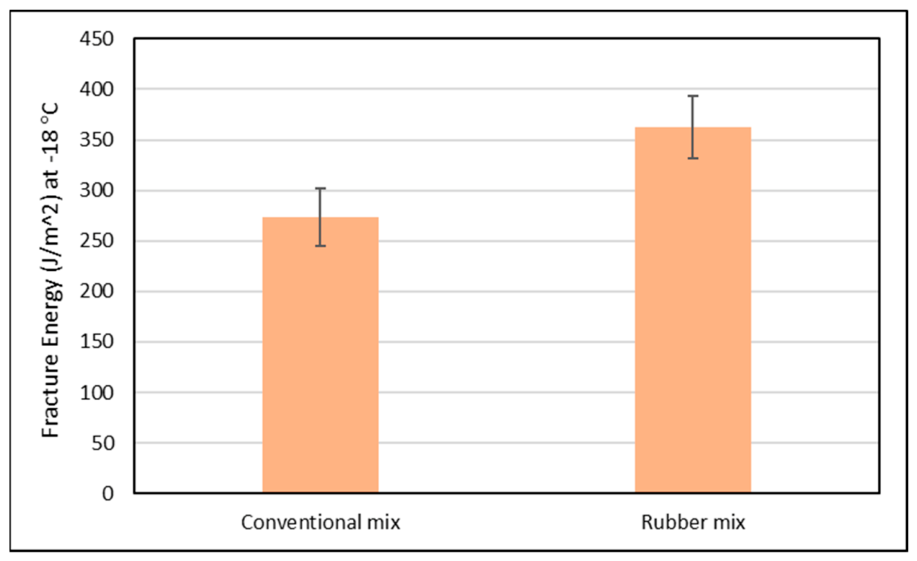
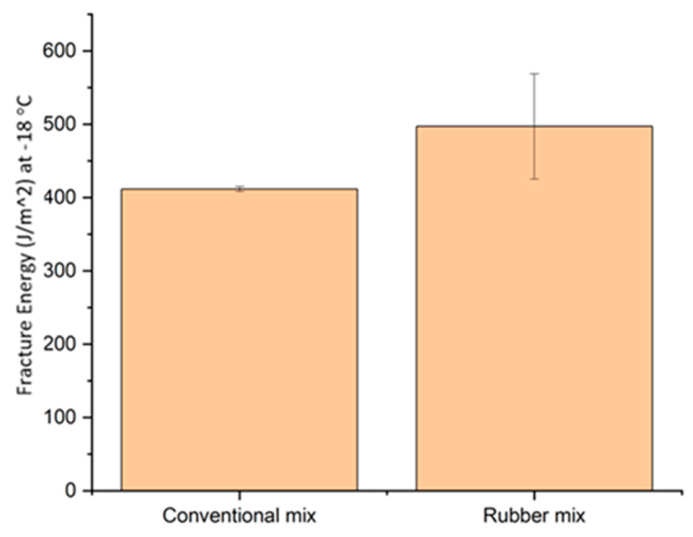
- For the asphalt mixture’s low-temperature cracking results, the DCT test results showed that the rubber-modified rubber mix had a 32.5% improvement in fracture energy, indicating the positive influence of rubber on low-temperature cracking resistance when compared with the conventional asphalt mixtures. Additionally, DCT testing of field cores showed that the rubber mix exhibited a 20% higher fracture energy than the control mix.
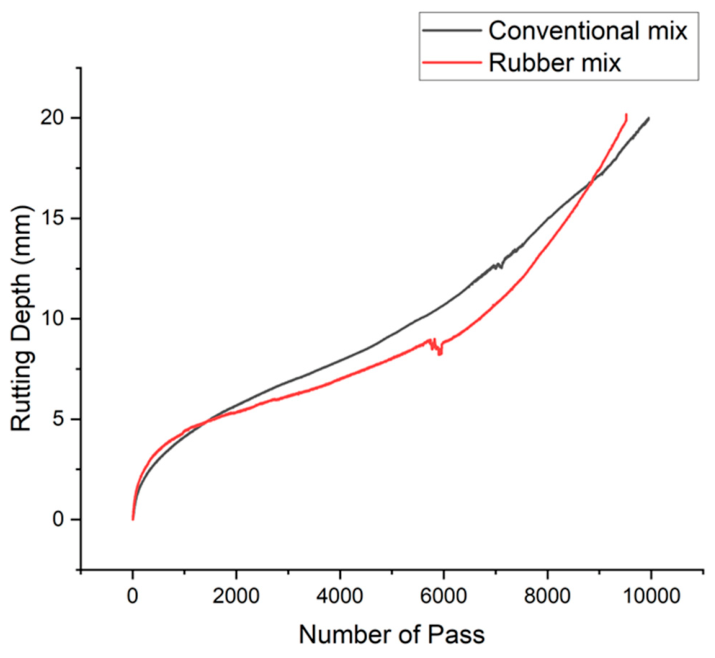
- HWTT testing on field cores indicated that while the rubber mix provided rutting resistance comparable to that of the conventional mix, it demonstrated substantially enhanced resistance to moisture-induced damage.
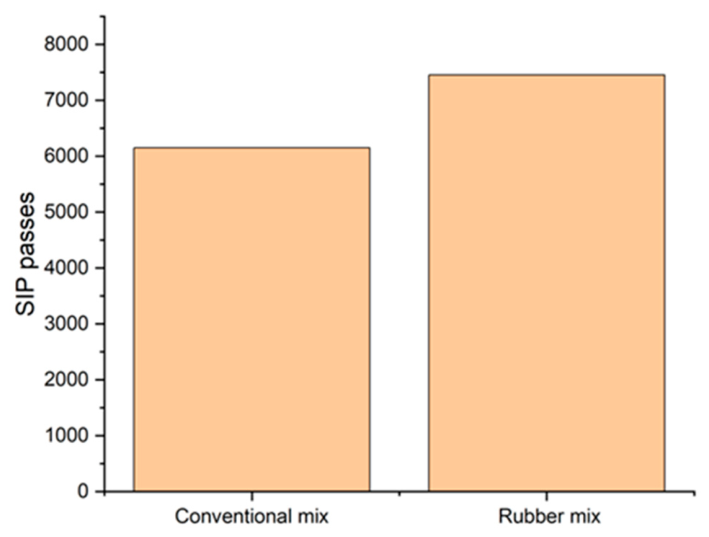
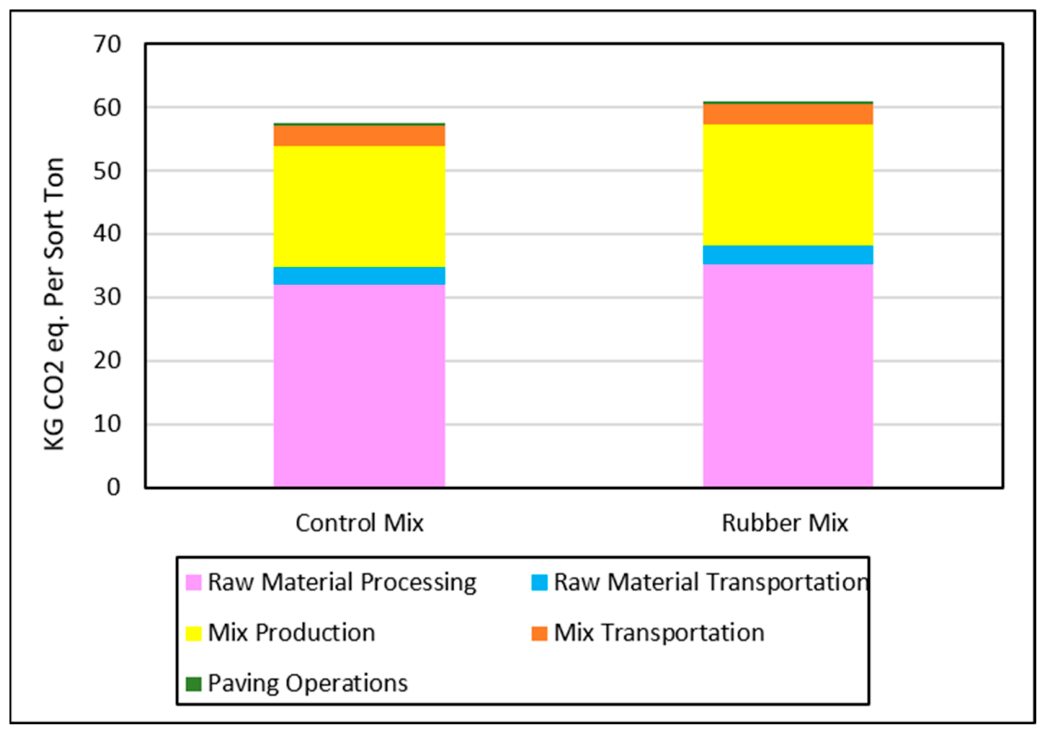
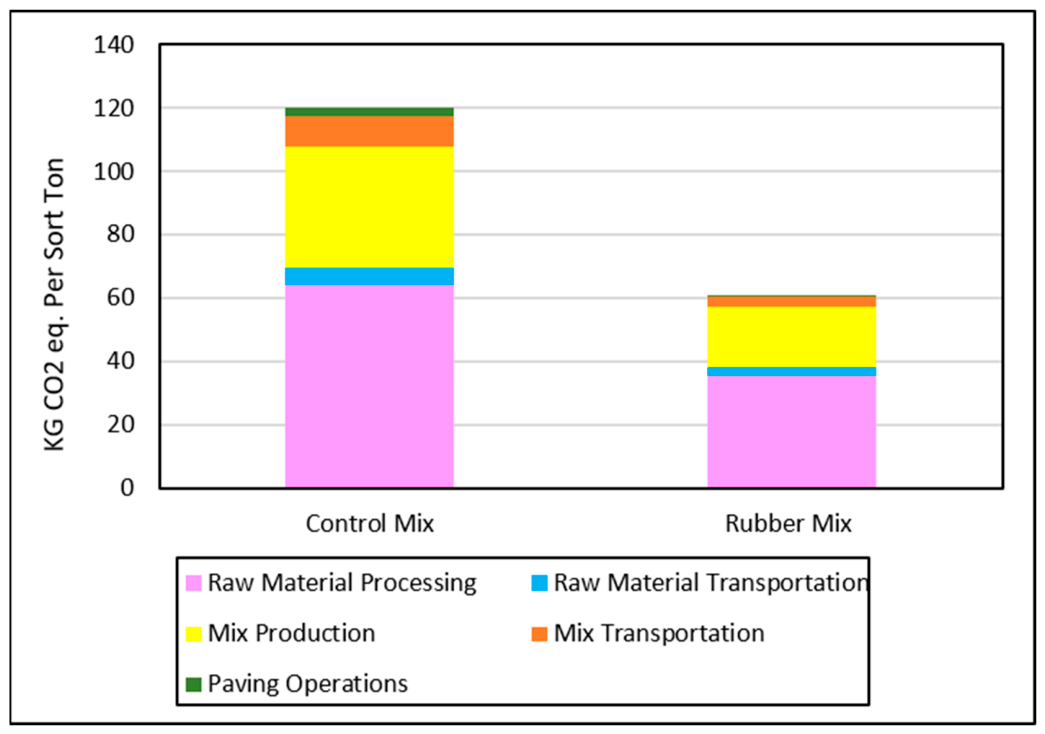
- The LCA results indicate that the rubber-modified mix has a slightly higher GWP at the initial construction stage, primarily due to increased material demand associated with the slightly higher asphalt binder content required for coating the rubber particles. However, when performance-based scenarios are considered, the reduced maintenance frequency of rubber-modified asphalt leads to lower cumulative environmental impacts compared with the conventional mixture. Moreover, the impacts associated with the asphalt plant adjustments for the feeding process of rubber particles were found to be negligible.
Author Contributions
Funding
Data Availability Statement
Conflicts of Interest
Appendix A

References
- Lyu, L.; Fini, E.H.; Pei, J.; Poulikakos, L.D. Aging evolution and sustainability implications of crumb rubberized asphalt binder: A state-of-the-art. J. Clean. Prod. 2024, 434, 140202. [Google Scholar] [CrossRef]
- Imoh, U.U.; Akinmade, D.; Movahedi Rad, M. Rutting Resistance and Fatigue Performance of Crumb Rubber-Modified Asphalt Concrete: Experimental Investigation and Mechanistic–Empirical Modeling. Infrastructures 2026, 11, 133. [Google Scholar] [CrossRef]
- Tang, N.; Xue, C.; Hao, G.; Huang, W.; Zhu, H.; Li, R. Sustainable production of eco-friendly rubberized asphalt binders through chemically crosslinking with polymer modifier. J. Clean. Prod. 2023, 422, 138633. [Google Scholar] [CrossRef]
- Jin, D.; Ge, D.; Wang, J.; Malburg, L.; You, Z. Reconstruction of Asphalt Pavements with Crumb Rubber Modified Asphalt Mixture in Cold Region: Material Characterization, Construction, and Performance. Materials 2023, 16, 1874. [Google Scholar] [CrossRef]
- Ma, R.; Li, Y.; Cheng, P.; Chen, X.; Cheng, A. Low-Temperature Cracking and Improvement Methods for Asphalt Pavement in Cold Regions: A Review. Buildings 2024, 14, 3802. [Google Scholar] [CrossRef]
- Alam, G.; Ibrahim, H.; Faheem, A. Combining pavement mechanistic-empirical predictions and life-cycle modeling for low-carbon asphalt mixtures with sensitivity insights. Resour. Conserv. Recycl. Adv. 2026, 29, 200321. [Google Scholar] [CrossRef]
- Yang, Q.; Ren, M.; Wu, Y.; Ma, L.; Han, Q.; Pei, Z.; He, Z. Modeling fracture evolution of crumb rubber asphalt concrete under long-term vapor exposure: A coupled moisture-mechanical approach. Clean. Mater. 2026, 19, 100384. [Google Scholar] [CrossRef]
- Picado-Santos, L.G.; Capitão, S.D.; Neves, J.M.C. Crumb rubber asphalt mixtures: A literature review. Constr. Build. Mater. 2020, 247, 118577. [Google Scholar] [CrossRef]
- Badughaish, A.; Mohamed, A.S.; Alae, M.; Amirkhanian, S.; Xiao, F. Influence mechanism of crumb rubber pretreatment and antioxidants on aging and cracking behavior of rubberized asphalt. Constr. Build. Mater. 2026, 514, 145625. [Google Scholar] [CrossRef]
- Jiang, X.; Ge, D.; Lv, S.; Ju, Z.; Luo, K. Aging mechanisms of rubber-modified asphalt: Particle effect and interaction effect. Constr. Build. Mater. 2026, 507, 145079. [Google Scholar] [CrossRef]
- Zhou, T.; Liu, R.; Cao, L.; Jin, C.; Dong, Z.; Gershome, A.G.; Huang, Q. Integration of warm mix technology and high crumb rubber content for enhanced asphalt treated base material. J. Clean. Prod. 2025, 525, 146555. [Google Scholar] [CrossRef]
- Duan, K.; Wang, C.; Liu, J.; Song, L.; Chen, Q.; Chen, Y. Research progress and performance evaluation of crumb-rubber-modified asphalts and their mixtures. Constr. Build. Mater. 2022, 361, 129687. [Google Scholar] [CrossRef]
- Miller, L.; Ciavola, B.; Mukherjee, A. EPD Benchmark for National Asphalt Pavement Association Version 2.0: Including Round 2 of Data Collection; National Pavement Association (NAPA): Lanham, MD, USA, 2024. [Google Scholar]
- Li, J.; Santos, J.; Vargas-Farias, A.; Castro-Fresno, D.; Xiao, F. Prospective LCA of valorizing end-of-life tires in asphalt mixtures with emerging pretreatment technologies of crumb rubber. Resour. Conserv. Recycl. 2024, 210, 107828. [Google Scholar] [CrossRef]
- Mattinzioli, T.; Sol-Sánchez, M.; Jiménez del Barco Carrión, A.; Moreno-Navarro, F.; Rubio-Gámez, M.d.C.; Martínez, G. Analysis of the GHG savings and cost-effectiveness of asphalt pavement climate mitigation strategies. J. Clean. Prod. 2021, 320, 128768. [Google Scholar] [CrossRef]
- Chen, S.; Ge, D.; Jin, D.; Zhou, X.; Liu, C.; Lv, S.; You, Z. Investigation of hot mixture asphalt with high ground tire rubber content. J. Clean. Prod. 2020, 277, 124037. [Google Scholar] [CrossRef]
- Wu, M.; Boateng, K.A.; Yin, L.; Liu, Z.; You, Z.; Jin, D. High-content crumb rubber modified asphalt mixture via wet process: Laboratory evaluation and field application. Constr. Build. Mater. 2025, 494, 143438. [Google Scholar] [CrossRef]
- Jin, D.; Boateng, K.A.; Chen, S.; Xin, K.; You, Z. Comparison of Rubber Asphalt with Polymer Asphalt under Long-Term Aging Conditions in Michigan. Sustainability 2022, 14, 10987. [Google Scholar] [CrossRef]
- Mohammadi, S.; Solatifar, N. Optimized Preparation and High-Temperature Performance of Composite-Modified Asphalt Binder with CR and WEO. J. Mater. Civ. Eng. 2023, 35, 04022395. [Google Scholar] [CrossRef]
- Guo, P.; Li, C.; Lu, W.; Lv, S.; Duan, H.; Lv, H.; Ding, L. Road performance and noise reduction characteristics of dense graded dry-process rubberised asphalt mixture. Constr. Build. Mater. 2025, 467, 140312. [Google Scholar] [CrossRef]
- Liu, S.; Lu, P.; Sun, X.; Wang, H.; Fei, Z. Research on the Durability of Modified Crumb Rubber Asphalt Mixtures in High-Altitude and Seasonally Frozen Regions. Coatings 2025, 15, 102. [Google Scholar] [CrossRef]
- Jin, D.; Yin, L.; Nedrich, S.; Boateng, K.A.; You, Z. Resurface of rubber modified asphalt mixture with stress absorbing membrane interlayer: From laboratory to field application. Constr. Build. Mater. 2024, 441, 137452. [Google Scholar] [CrossRef]
- Zheng, F.; Chen, Z.; Hu, W.; Hu, D.; Zhang, S.; Zhang, J. Particle effect and interaction effect of scrap tire crumb rubber on adhesion of asphalt-aggregate interface. J. Clean. Prod. 2026, 554, 147959. [Google Scholar] [CrossRef]
- Huang, Y.; Long, K.; Qu, C.; Yan, C.; Ai, C.; Zhou, S. Evaluation of terminal blend rubberized asphalt incorporating high crumb rubber content. Case Stud. Constr. Mater. 2025, 22, e04285. [Google Scholar] [CrossRef]
- Phan, T.M.; Seo, J.W.; Nguyen, A.Q.; Lee, C.B.; Park, D.W. Performances assessment of crumb rubber modification in asphalt mixtures: Dry, wet, hybrid, and pellet techniques. Constr. Build. Mater. 2025, 491, 142663. [Google Scholar] [CrossRef]
- Li, Y.; Zhao, C.; Li, R.; Zhang, H.; He, Y.; Pei, J.; Lyu, L. Dry-process reusing the waste tire rubber and plastic in asphalt: Modification mechanism and mechanical properties. Constr. Build. Mater. 2025, 458, 139759. [Google Scholar] [CrossRef]
- Tahami, S.A.; Mirhosseini, A.F.; Dessouky, S.; Mork, H.; Kavussi, A. The use of high content of fine crumb rubber in asphalt mixes using dry process. Constr. Build. Mater. 2019, 222, 643–653. [Google Scholar] [CrossRef]
- Jin, D.; Xin, K.; Yin, L.; Mohammadi, S.; Cetin, B.; You, Z. Performance of rubber modified asphalt mixture with tire-derived aggregate subgrade. Constr. Build. Mater. 2024, 449, 138261. [Google Scholar] [CrossRef]
- Lo Presti, D. Recycled Tyre Rubber Modified Bitumens for road asphalt mixtures: A literature review. Constr. Build. Mater. 2013, 49, 863–881. [Google Scholar] [CrossRef]
- Zheng, W.; Wang, H.; Chen, Y.; Ji, J.; You, Z.; Zhang, Y. A review on compatibility between crumb rubber and asphalt binder. Constr. Build. Mater. 2021, 297, 123820. [Google Scholar] [CrossRef]
- AASHTO T240; Standard Method of Test for Effect of Heat and Air on a Moving Film of Asphalt Binder (Rolling Thin-Film Oven Test). American Association of State Highway and Transportation Officials: Washington, DC, USA, 2009.
- AASHTO R28; Standard Practice for Accelerated Aging of Asphalt Binder Using a Pressurized Aging Vessel (PAV). American Association of State Highway and Transportation Officials: Washington, DC, USA, 2022.
- AASHTO TP92; Method of Test for Determining the Cracking Temperature of Asphalt Binder Using the Asphalt Binder Cracking Device (ABCD). American Association of State Highway and Transportation Officials: Washington, DC, USA, 2014.
- AASHTO T315; Standard Method of Test for Determining the Rheological Properties of Asphalt Binder Using a Dynamic Shear Rheometer. American Association of State Highway and Transportation Officials: Washington, DC, USA, 2020.
- AASHTO TP 70-12; Standard Method of Test for Multiple Stress Creep Recovery (MSCR) Test of Asphalt Binder Using a Dynamic Shear Rheometer (DSR). American Association of State Highway and Transportation Officials: Washington, DC, USA, 2012.
- AASHTO T209; Method of Test for Theoretical Maximum Specific Gravity (Gmm) and Density of Asphalt Mixtures. American Association of State Highway and Transportation Officials: Washington, DC, USA, 2023.
- AASHTO T166; Standard Method of Test for Bulk Specific Gravity (Gmb) of Compacted Asphalt Mixtures Using Saturated Surface-Dry Specimens. American Association of State Highway and Transportation Officials: Washington, DC, USA, 2025.
- ASTM D7313-20; Standard Test Method for Determining Fracture Energy of Asphalt Mixtures Using the Disk-Shaped Compact Tension Geometry. ASTM International: West Conshohocken, PA, USA, 2021.
- AASHTO T 324; Standard Method of Test for Hamburg Wheel-Track Testing of Compacted Asphalt Mixtures. American Association of State Highway and Transportation Officials: Washington, DC, USA, 2019.
- ISO 14040; Environmental Management-Life Cycle Assessment-Principles and Framework. International Organization for Standardization: Geneva, Switzerland, 2006.
- ISO 14044; Environmental Management-Life Cycle Assessment-Requirements and Guidelines. International Organization for Standardization: Geneva, Switzerland, 2006.
- Shacat, J.; Willis, R.; Ciavola, B. The Carbon Footprint of Asphalt Pavements: A Reference Document for Decarbonization; National Pavement Association (NAPA): Greenbelt, MD, USA, 2024. [Google Scholar]
- Miller, L.; Ciavola, B.; Mukherjee, A. EPD Benchmark for Asphalt Mixtures; National Pavement Association (NAPA): Greenbelt, MD, USA, 2024. [Google Scholar]


Disclaimer/Publisher’s Note: The statements, opinions and data contained in all publications are solely those of the individual author(s) and contributor(s) and not of MDPI and/or the editor(s). MDPI and/or the editor(s) disclaim responsibility for any injury to people or property resulting from any ideas, methods, instructions or products referred to in the content. |
© 2026 by the authors. Licensee MDPI, Basel, Switzerland. This article is an open access article distributed under the terms and conditions of the Creative Commons Attribution (CC BY) license.
Share and Cite
Mohammadi, S.; Jin, D.; Wu, M.; Liu, Z.; You, Z. Sustainable Surface Treatments Using Dry-Process Rubber-Modified Asphalt in Cold Regions: A Laboratory, Field, and LCA Study. Infrastructures 2026, 11, 199. https://doi.org/10.3390/infrastructures11060199
Mohammadi S, Jin D, Wu M, Liu Z, You Z. Sustainable Surface Treatments Using Dry-Process Rubber-Modified Asphalt in Cold Regions: A Laboratory, Field, and LCA Study. Infrastructures. 2026; 11(6):199. https://doi.org/10.3390/infrastructures11060199
Chicago/Turabian StyleMohammadi, Sepehr, Dongzhao Jin, Meng Wu, Zhongda Liu, and Zhanping You. 2026. "Sustainable Surface Treatments Using Dry-Process Rubber-Modified Asphalt in Cold Regions: A Laboratory, Field, and LCA Study" Infrastructures 11, no. 6: 199. https://doi.org/10.3390/infrastructures11060199
APA StyleMohammadi, S., Jin, D., Wu, M., Liu, Z., & You, Z. (2026). Sustainable Surface Treatments Using Dry-Process Rubber-Modified Asphalt in Cold Regions: A Laboratory, Field, and LCA Study. Infrastructures, 11(6), 199. https://doi.org/10.3390/infrastructures11060199