Article

Sustainable Surface Treatments Using Dry-Process Rubber-Modified Asphalt in Cold Regions: A Laboratory, Field, and LCA Study


Department of Civil, Environmental, and Geospatial Engineering, Michigan Technological University, 1400 Townsend Drive, Houghton, MI 49931-1295, USA
*
Author to whom correspondence should be addressed.
Infrastructures 2026, 11(6), 199; https://doi.org/10.3390/infrastructures11060199
Submission received: 8 May 2026 / Revised: 5 June 2026 / Accepted: 9 June 2026 / Published: 11 June 2026

Abstract

The incorporation of crumb rubber derived from waste tires in asphalt pavements has gained increasing attention as a strategy to enhance performance while reducing environmental impacts, particularly in cold regions such as the Midwestern United States, where pavements are subjected to severe thermal stresses and freeze–thaw cycles. Despite the numerous performance benefits observed in previous laboratory-scale studies, field demonstrations can play a critical role in validating the use of recycled waste tires as asphalt additives. This study examines the performance benefits and environmental impacts of incorporating recycled tire rubber into asphalt mixtures via a dry modification process for cold-climate applications. Building on these findings, this paper is based on a full-scale field demonstration of a dry-process rubber-modified asphalt pavement constructed in Ann Arbor, Michigan. Performance testing was conducted at both the binder and mixture levels, and field cores were collected during the construction of field sections. To complement the performance evaluation, a life-cycle assessment (LCA) was conducted to quantify the environmental impacts of rubber-modified asphalt and conventional asphalt. The results indicate that successful rubber incorporation, combined with improved low-, intermediate-, and high-temperature performance, enhances long-term durability compared with control sections. Moreover, despite slightly higher initial environmental impacts associated with rubber incorporation, improved durability and reduced maintenance frequency can lead to lower life-cycle impacts over the long term. The findings highlight the potential of rubber-modified asphalt as a sustainable, resilient solution for cold-region pavements, offering practical insights for agencies seeking to balance performance and environmental impacts in future infrastructure design.

1. Introduction

The use of waste tires in asphalt pavement supports sustainability goals by diverting large volumes of end-of-life tires from disposal pathways. By incorporating recycled tire rubber into asphalt pavement, waste scrap tires can be repurposed into a beneficial pavement material while simultaneously improving the mechanical performance [1,2]. This recycling approach supports the development of more sustainable transportation infrastructure [3]. Particularly in cold regions, modifying asphalt with waste tires offers a promising approach to enhance pavement durability under severe thermal conditions while promoting sustainable infrastructure development [4]. Reducing life-cycle impacts and costs is particularly important in cold regions with high transportation demand, where severe climatic conditions accelerate pavement deterioration and increase maintenance costs [5]. In response to these challenges, the asphalt industry has increasingly focused on balancing pavement durability requirements with sustainability objectives [6].
Crumb rubber asphalt technologies are increasingly recognized for their carbon reduction benefits in asphalt pavements [7,8]. From a life-cycle perspective, rubberized asphalt offers valuable opportunities to lower costs and environmental burdens [9,10,11]. Recent findings indicate that modified asphalt with rubber can exhibit a lower global warming potential (GWP) than conventional neat asphalt binders, highlighting the potential of crumb rubber as a sustainable modifier that reduces reliance on virgin materials. With growing emphasis on low-carbon and energy-efficient transportation, rubber-modified asphalt technologies have emerged as a promising solution for enhancing pavement performance while supporting sustainability goals [12,13]. In addition to cost-effectiveness and carbon reduction benefits reported in life-cycle assessment (LCA) studies of rubber-modified asphalt technologies [14,15], extensive laboratory studies have shown notable performance benefits, particularly in resistance against cold-weather cracking. Furthermore, modification of asphalt binders with crumb rubber improves elasticity, thermal cracking resistance, and fatigue performance, enabling pavements to better withstand temperature fluctuations common in northern environments. Furthermore, comparative case studies between rubber-modified asphalt and polymer-modified asphalt underscore the advantages of rubberized asphalt in cold climates. In addition to performance benefits, rubberized asphalt was found to mitigate tire–pavement noise more effectively than conventional asphalt and polymer-modified asphalt [16,17,18,19].
In terms of noise reduction characteristics, rubber particles can increase the ability of asphalt mixtures to absorb sound and dissipate vibrations, leading to enhanced noise reduction performance [20]. Additionally, under freeze–thaw cycles in cold regions, rubber-modified mixtures have the capability to delay microcrack growth and enhance self-healing properties of the pavement, reducing performance degradation [21]. On the other hand, successful field implementations have demonstrated encouraging performance, reinforcing the potential of these approaches for real-world application in different areas [22]. With increasing attention on sustainable transportation and environmentally responsible infrastructure, the recycling of waste tires into asphalt pavement has become an important focus in advancing pavement material technologies [23].
Rubberized asphalt is typically produced using two techniques: the wet process, where crumb rubber is blended with asphalt binder at elevated temperatures, and the dry process, where aggregates are replaced with rubber particles prior to mixing with asphalt binder [24,25]. The dry modification process effectively simplifies production and logistics while improving the energy efficiency compared with the wet modification method [26]. The dry process can also be more cost-effective and simpler than the wet process, while also allowing higher crumb rubber usage, improving resource conservation and environmental benefits [27]. Despite the numerous performance benefits observed in laboratory-scale testing, field demonstrations can play a critical role in validating the use of recycled waste tires as asphalt additives. Moreover, successful large-scale adoption of rubber-modified asphalt depends on continued improvements in material handling, plant integration, and production reliability [4,28]. Previously, it was reported that factors such as handling and storage of rubber-modified asphalt, suitable equipment for sufficient blending and mixing of rubber particles at asphalt plants, non-uniform interactions, and operational issues such as agglomeration and plant build-up could limit the large-scale application of scrap tires in pavement engineering. As a result, ongoing efforts can be focused on optimizing constructability, production consistency, and material compatibility of rubber-modified asphalt to support its broader application across different traffic levels and climatic conditions [8,29,30].
In cold-region applications, field-based case studies can provide critical insights into how rubber-modified asphalt technologies can be effectively implemented within the constraints of plant operations and construction practices. Therefore, this paper is motivated by a field demonstration project that evaluates performance in both laboratory and construction conditions. More specifically, the project focuses on a cold-region case study in which a dry-process crumb rubber modification approach is examined as a surface layer in a mill and overlay project, with emphasis on constructability, production consistency at the asphalt plant, and a full-scale performance evaluation, providing practical insight into how rubber-modified asphalt systems can be implemented in real-world paving applications. Moreover, while LCA studies exist for rubber-modified asphalt, none combine detailed performance evaluation with comprehensive environmental impact assessment of both production and construction stages. Motivated by this, this study aims to evaluate the performance and sustainability of dry-process rubber-modified asphalt using an integrated framework that includes binder- and mixture-level laboratory testing, field validation using extracted cores, and life-cycle assessment of both production and construction stages under cold-region conditions.
In this demonstration project, a dry-process rubber-modified asphalt pavement was constructed on Ellsworth Road in Ann Arbor, Washtenaw County, Michigan. The project featured a 9.5-mm dense-graded hot-mix asphalt modified with crumb rubber in a surface layer of road pavement. The construction consisted of milling and placing a 2-inch overlay along approximately 1.5 miles of a four-lane roadway (equivalent to six lane-miles). In total, about 2435 tons of dense-graded rubber-modified mix were produced, placed, and compacted.
Based on the case study presented, this paper establishes objectives to assess the performance, production, and field implementation of dry-process rubber asphalt pavements. More specifically, the main objectives of this paper are as follows:
  • Enhancement of the performance of asphalt pavement in Michigan’s wet-freeze climate by incorporating rubber into conventional asphalt;
  • Demonstration of effective asphalt plant operations when rubber is incorporated into asphalt pavement by the dry process;
  • Demonstration of field practices for placing and compacting dry process rubber asphalt pavements;
  • Quantify and compare the environmental impacts of dry process rubber-modified asphalt and conventional mixtures across production and construction stages;
  • Evaluate whether plant modifications and rubber incorporation methods contribute additional carbon impacts.
To achieve the objectives, performance assessment in this study includes testing conducted on both laboratory-compacted specimens and field-extracted cores to capture material behavior under controlled and in-service conditions. On the other hand, the LCA study was conducted by collecting extensive field and production data during the construction of the project. In terms of paper organization, construction activities and field implementation are presented first, followed by the LCA methodology and evaluation of laboratory, field performance, and environmental impact results.

2. Materials and Methods

2.1. Material Description and Mix Production at the Asphalt Plant

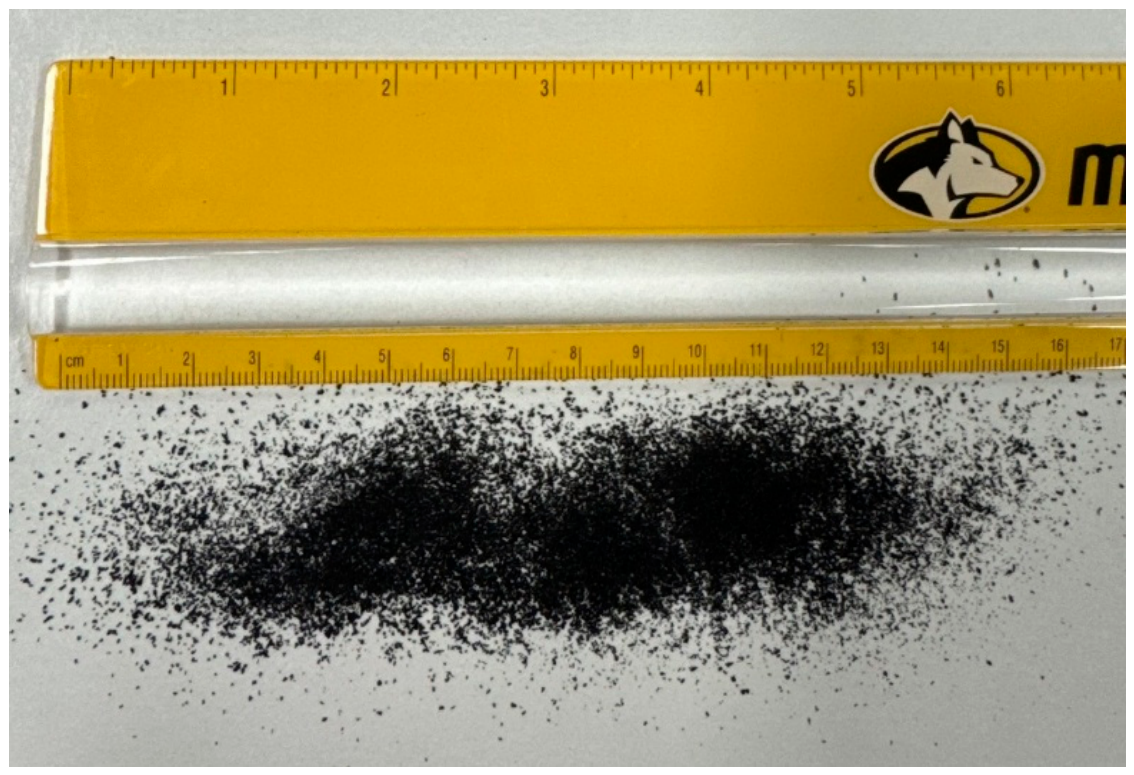
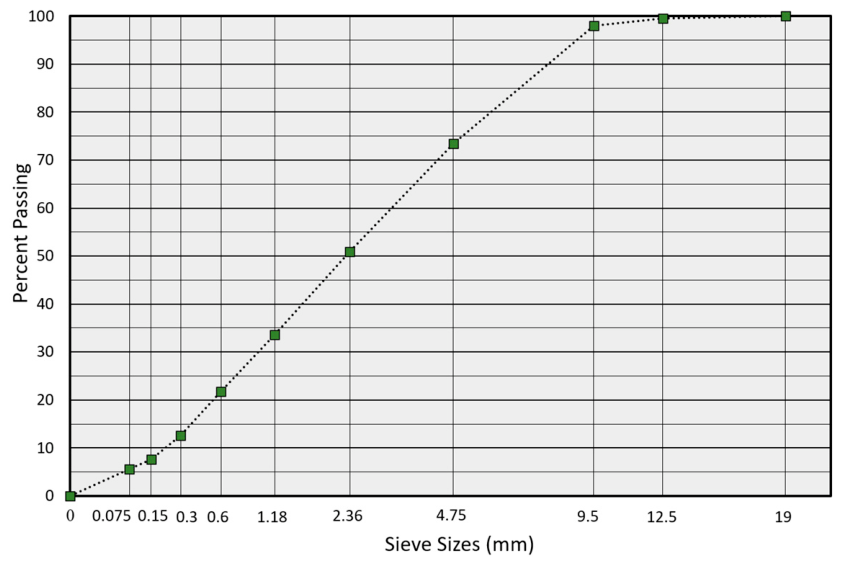
The rubber used in this project was a minus-30 mesh ground scrap tire crumb rubber with particle sizes smaller than 600 microns. Figure 1 shows the rubber product utilized in this project. The rubber-modified mix was developed by adding 10% rubber by weight to the neat binder on top of a 5EML T1 (MDOT Specification) mix design, along with a small amount of supplemental neat binder to coat the rubber. The gradation curve for the rubberized mixture in this project is provided in Appendix A. The project mix design called for approximately 5.19 kg of rubber product added per mix ton, which was 10% of the neat binder content. The mix design had an average neat binder content of 6.4%, which remained about the same throughout all production runs (0.2% was supplemental binder used to coat the rubber addition, and 6.2% was neat binder in the mix).
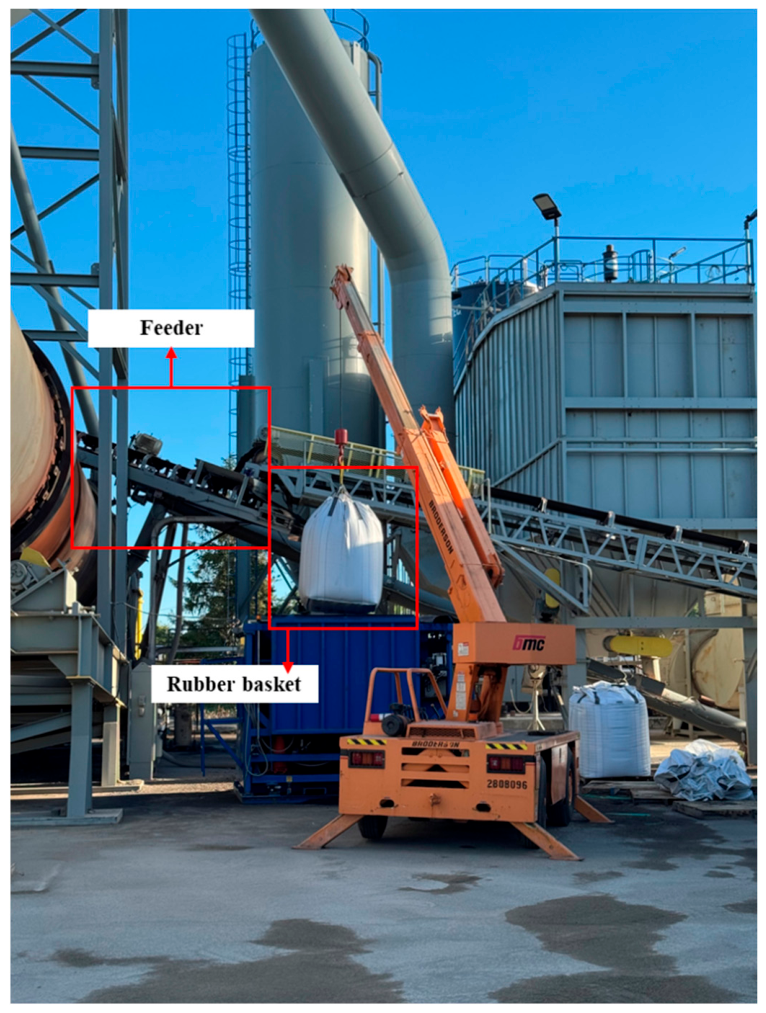
During production, the rubber feed rate per minute setting on the feeder was adjusted based on the plant’s speed, typically during plant startup. It should be noted that the mix neat binder content was set at 6.4%, 0.2% of the neat binder was used to cover the rubber fines added to the mix, and 6.2% neat binder content was used as the basis for calculating the rubber addition rates, which were 51.9 kg of rubber per mix ton. For rubber-modified asphalt mix production, rubber particles were pneumatically injected into the drum through the RAP port of the asphalt plant, similar to the injection of fibers. The feeding process was accomplished using a Hi-Tech fiber feeding system, as shown in Figure 2. After startup, the plant typically operated at 148–165 °C, and plant production speeds were set at approximately 235–272 tons per hour (TPH). The produced mix was stored in heated silos, and the stored mix volumes typically ranged from 90 to 180 tons, depending on the paving plans and schedules for each day. The mix was in the silo for at least 30 min before load-out. The plant operators noted no buildup of material in the plant, on the belts, or in the silos during and after production. Furthermore, no change in the energy requirements of the plant due to the mix viscosity was observed, and the rubberized mixture was handled comparably to a standard dense-graded hot mix.

2.2. Constructions of Field Sections

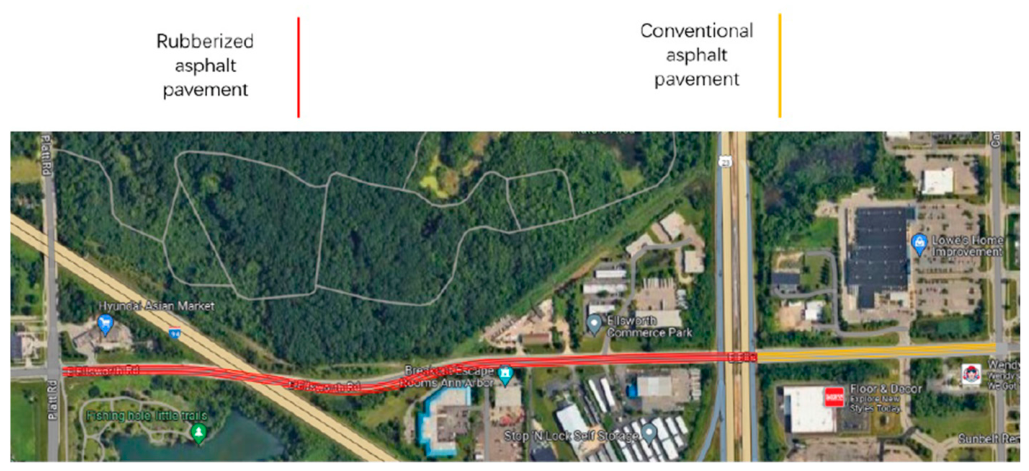
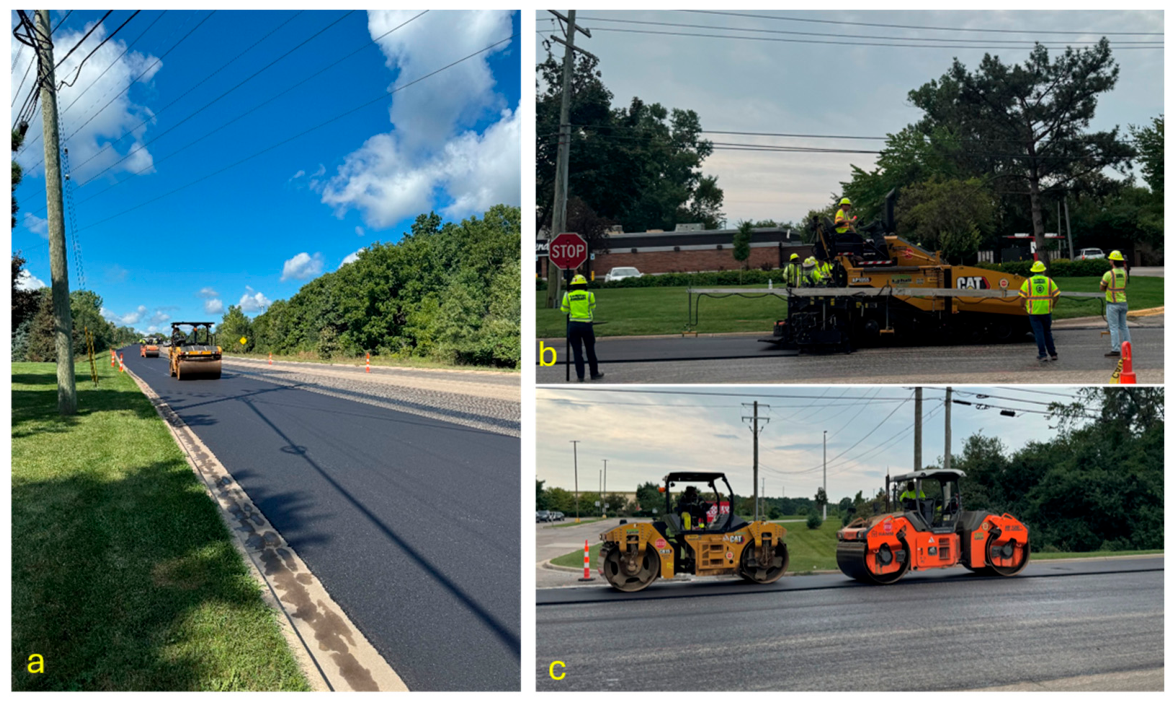
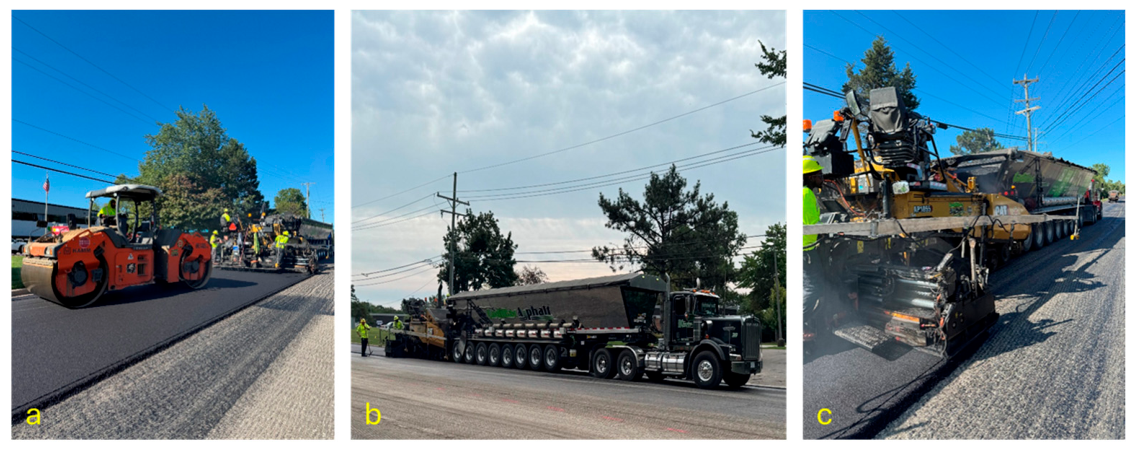
As shown in Figure 3, the two pavement sections in this demonstration project included a 2-inch rubber-modified asphalt wearing course (section #1) and a 2-inch conventional asphalt wearing course (section #2). These sections were used to construct the rubber asphalt test area and the corresponding control area for comparison. Pre-construction activities of the project included milling approximately 2 inches of the existing road surface, completed on a lane-mile basis for each operation. The milled reclaimed asphalt pavement (RAP) material was transported off site following completion of milling. Afterward, the roadway was swept multiple times to remove loose debris and prepare the surface for paving. A tack coat was then applied using an asphalt emulsion spray to ensure proper bonding between the milled surface and the new overlay. Water trucks were also utilized to manage dust during milling and sweeping operations. Due to high traffic volume in construction zones, traffic control measures were carefully implemented throughout the milling and sweeping operations. The main construction of the Ellsworth Road overlay started with paving the control section on 23 August 2025 (Figure 4a). The paving operations for the control section were carried out by a single asphalt paver (Figure 4b) operating at the speed of 65 feet per minute (FPM), followed by two vibratory rollers for compaction (Figure 4c).
On 26 August 2025, paving operations continued on the rubber-modified asphalt section (Figure 5a). The rubber mix was released easily from the walking bottom truck beds (Figure 5b). No unusual build-up of mix in the trucks was observed throughout the project. For the rubber-modified asphalt section, the contractor maintained the same equipment line-up as the control section; however, the paving speed was reduced to 35 FPM to ensure proper placement and quality (Figure 5c), given that the rubber asphalt was new to their operations. The mix passed through the paver without any issues, and there were no issues with bed release and no buildups in the paver. Further inspection of paver operations revealed no visible segregation in the placed mix, consistent with observations from other dense-graded paving projects. Moreover, laydown crew managers noted that the mix was laid and worked like a regular, dense-graded hot mix. During compaction, field densities were tested for the control and rubber-modified pavements. The target minimum density for both pavement types was set at 92%. The control (unmodified) pavement averaged 95.4% compaction with a standard deviation of 1.6%, meeting compaction quality requirements for a theoretical maximum density of 92%. On the other hand, the rubber-modified pavement also had a mean compaction of 95.4% but lower compaction variability, with a compaction standard deviation of 1.3. In short, the rubber-modified mix achieved comparable compaction and lower compaction variability than the control pavement.

2.3. Laboratory Experimental Plan

This sub-section presents the experimental plan and performance evaluation in three stages. Initially, asphalt binder-level sample preparation and testing are discussed to characterize the rubber-modified asphalt binder behavior and compare it with the control asphalt binder. This is followed by performance evaluation of laboratory-compacted control and rubber-modified asphalt mixtures, and finally, performance results obtained from field-extracted cores from control and rubber-modified sections are presented.

2.3.1. Preparation of Rubber-Modified Asphalt Binder

To prepare rubber-modified asphalt binder samples, rubber particles (shown in Figure 1) were added to base PG 64-28 asphalt binder and mixed in a high-shear mixer for approximately 25 min with the blending speed of 5000 rpm. The mixing temperature for rubber-modified samples was controlled at around 170 °C. The selected conditions were intended to ensure proper dispersion of rubber particles within the asphalt binder while minimizing excessive aging during the blending process. The fabricated samples were later used to simulate aging conditions and conduct performance testing at the asphalt binder level [17,19]. The rubber-modified asphalt binder produced for testing is labeled as the 10% rubber binder for the remainder of the discussions in the subsequent sections.

2.3.2. Aging Procedures

Short- and long-term aging of control and rubber-modified asphalt binder samples was simulated using the rolling thin film oven (RTFO) and the pressure aging vessel (PAV), respectively [31]. The residues were later used to characterize the rutting susceptibility of control and rubber-modified binder samples through dynamic shear rheometer (DSR) and multiple stress creep recovery (MSCR) tests. Long-term aging was simulated by placing approximately 50 g of RTFO residues in PAV pans and conditioning them at 100 °C under 2070 kPa for 20 h. PAV aging procedure was conducted according to AASHTO R28 [32]. The PAV-aged control and rubber-modified binder samples were later used to evaluate fatigue performance via a DSR test.

2.3.3. Asphalt Binder Cracking Device (ABCD) Test

Low-temperature behavior of the control and rubber-modified binder samples was monitored using ABCD test in accordance with AASHTO TP 92 [33]. The test determines the binder’s cracking temperature by monitoring strain development during controlled cooling in the ABCD chamber. For each test, the binder was added into invar rings equipped with an electronic strain gauge and temperature sensors, and the assemblies were placed inside an air-cooled environmental chamber. Inside the ABCD chamber, the binder samples were initially conditioned at 25 °C and then subjected to an automated cooling cycle from +25 °C to −60 °C at a constant rate of 20 °C/h. Throughout the procedure, temperature and induced strain were continuously recorded. While recording, cracking of binder samples was identified by a sudden drop in measured strain, corresponding to the release of accumulated thermal stress. The temperature at which this strain release occurred was reported as the binder’s cracking temperature.

2.3.4. Asphalt Binder Temperature Sweep Tests

Elastic and viscous responses of control and rubber-modified binder samples were monitored using a DSR test in accordance with AASHTO T 315 on unaged, RTFO-aged, and PAV-aged samples [34]. For unaged and RTFO-aged samples, a 25 mm spindle and a 1 mm gap were used. The unaged and RTFO-aged specimens were tested over the temperature range of 46 °C to 82 °C, with 6 °C temperature intervals, to assess anti-rutting behavior. On the other hand, the spindle and gap for the PAV-aged samples were 8 mm and 2 mm, respectively. The PAV-aged specimens were tested at intermediate temperatures between 13 °C and 25 °C, with 3 °C temperature intervals, to assess the fatigue resistance of the binder samples.
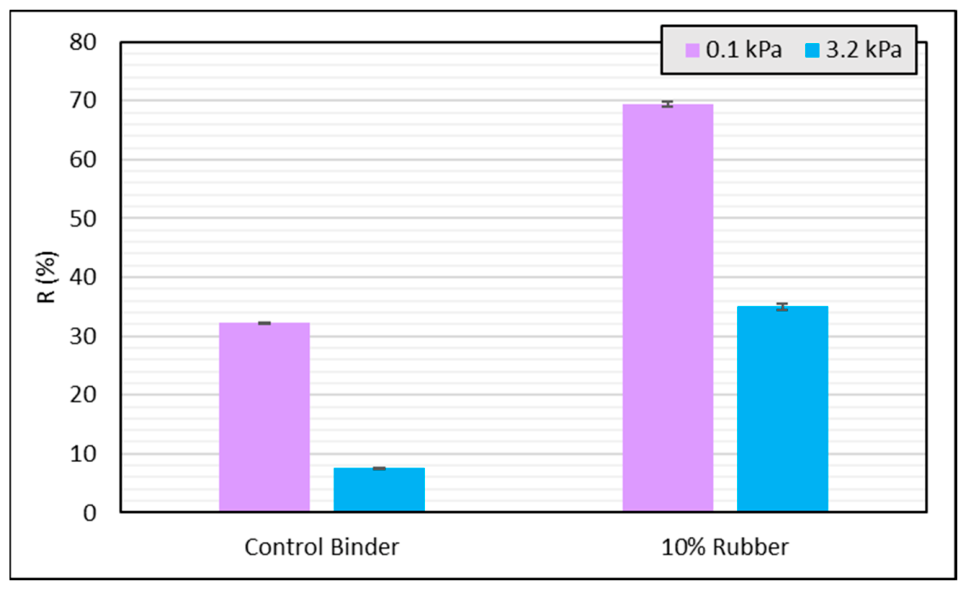
The rutting susceptibility of the control and rubber-modified binder samples was further assessed using MSCR test, which was performed in accordance with AASHTO T350-14 using the same DSR apparatus [35]. A temperature of 64 °C was selected as testing temperature based on the performance grade (PG) of the control binder (PG 64-28). In the MSCR test process, RTFO-aged samples were subjected to 10 cycles of 1 s creep loading followed by 9 s recovery at two stress levels of 0.1 kPa and 3.2 kPa. From these measurements, two key rutting resistance indicators, which were non-recoverable creep compliance (Jnr) and percent recovery (R%), were calculated to quantify the binder’s anti-rutting behavior.

2.3.5. Compaction of Rubber-Modified Asphalt Mixture

For loose-mix samples collected directly in sealed buckets from the plant during production, the Superpave gyratory compaction method was used in the laboratory. The control and rubber-modified loose-mixture samples were placed in a pan and spread to an even thickness of 2.5–5 cm; they were then conditioned according to AASHTO R 30 prior to compaction. Immediately after conditioning, the assembly of preheated gyratory molds, loose mixture, top and bottom plates, and paper disks was placed in the gyratory compactor chamber and compacted to the desired height according to the laboratory performance test criteria. It should be noted that loose mixture samples were subjected to theoretical maximum gravity (Gmm) tests based on the AASHTO T 209 standard [36], and compacted samples were subjected to bulk specific gravity (Gmb) tests based on the AASHTO T 166 standard [37]. The outcomes of the Gmm and Gmb tests were key for determining important mixture properties, such as air voids, and for calculating and adjusting the mass required for the compaction of loose mixtures. Moreover, the optimum asphalt contents for both conventional and rubber-modified asphalt mixtures were determined using Superpave 4-point mix design process prior to mix production at the asphalt plant.

2.3.6. Disc-Shaped Compact Tension (DCT) Test

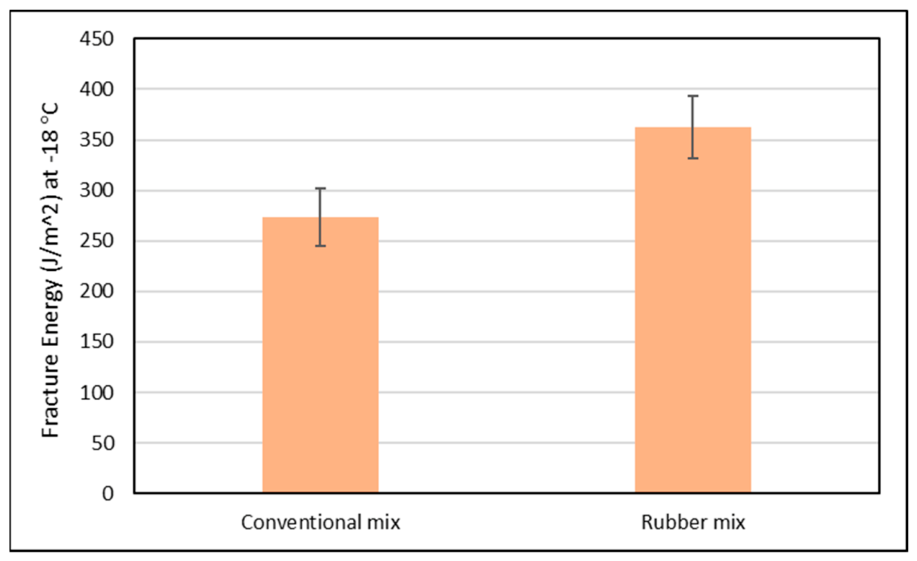
The DCT test was utilized to evaluate the cold-weather cracking resistance by measuring the fracture energy of control and rubber-modified asphalt mixtures. Cylindrical specimens (150 mm diameter and 50 mm height) were prepared by the gyratory compactor for testing in accordance with ASTM D7313. The DCT test was conducted at −18 °C, and compacted samples were conditioned for 2 h at −18 °C prior to measurement of fracture energy [38].

2.3.7. Hamburg Wheel Tracking Device (HWTD) Test

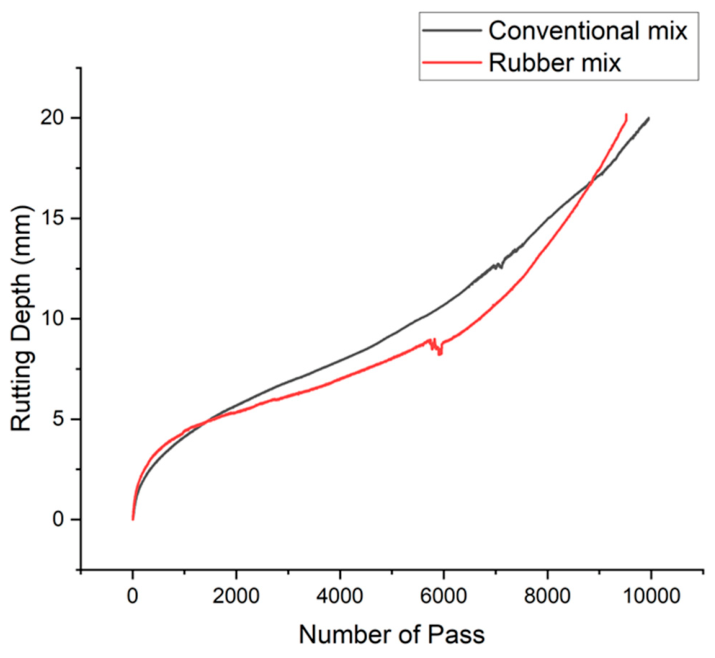
The HWTD test was performed to determine the anti-rutting properties of both control and rubber-modified asphalt mixtures by simulating repeated traffic loading. This test is typically performed while compacted mixtures are submerged in water at a temperature of 50 °C, which can also provide valuable insights into control and rubber-modified asphalt mixture’s susceptibility to moisture-induced damage. In the test procedure, cylindrical specimens (150 mm diameter and 60 mm height) were prepared by the gyratory compactor for testing in accordance with AASHTO T 324 [39].

2.4. Life-Cycle Assessment (LCA) Methodology

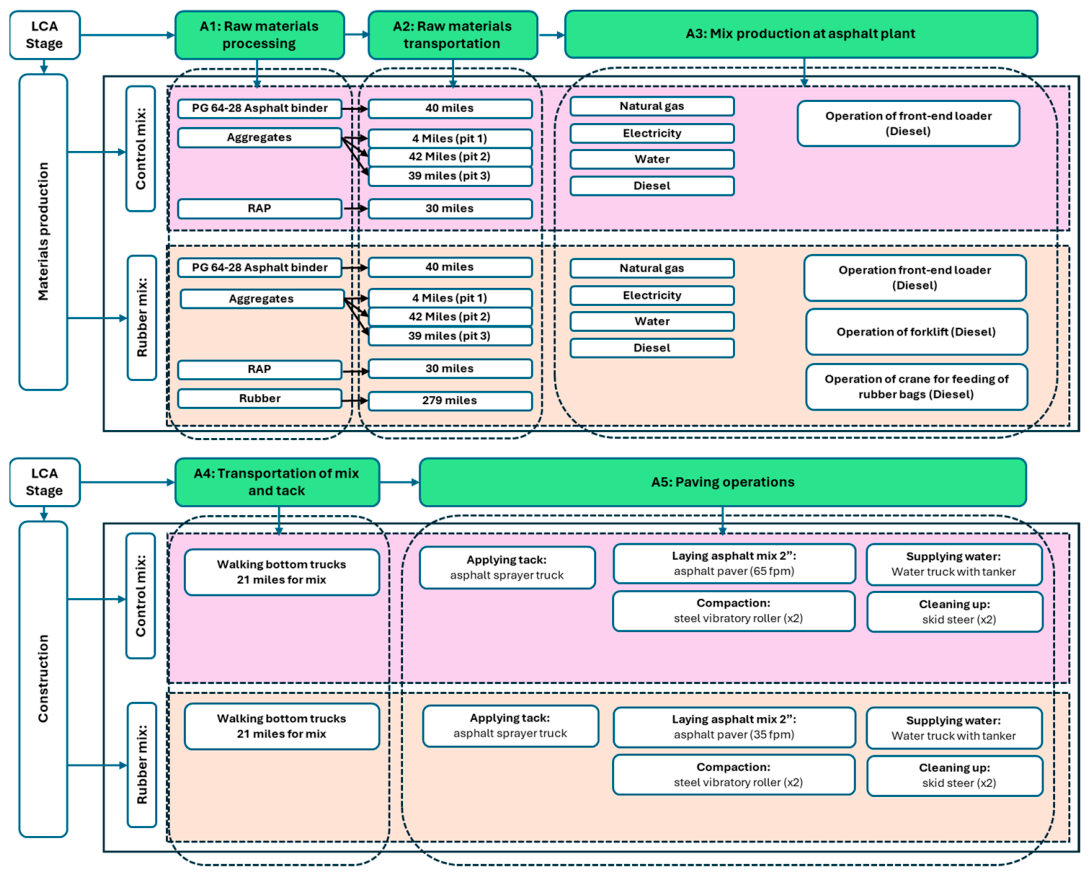
The objective of the LCA was to compare the GWP impacts of conventional and rubber-modified asphalt mixtures used in maintenance and rehabilitation applications. The assessment focused on quantifying greenhouse gas (GHG) emissions across the cradle-to-construction stages (A1–A5). As shown in Figure 6, the system boundary follows a cradle-to-construction (A1–A5) approach in accordance with ISO 14040/44 [40,41] and pavement LCA practices. This comparison is intended to isolate the effect of material design, specifically the incorporation of crumb rubber, on environmental performance during material production, transportation, and construction operations. As shown in Figure 6, the system boundary followed a cradle-to-construction (A1–A5) framework, which includes raw material supply (A1), material transportation (A2), mix production at the plant (A3), transportation of the mixture from the plant to the jobsite (A4), and on-site construction and placement activities (A5). More specifically, the A1 stage accounts for the extraction and processing of aggregates, binder, and crumb rubber, while A2 includes the transportation of raw materials to the plant. The A3 stage represents plant operations, including fuel combustion and energy consumption during mixing. The A4 stage captures hauling of asphalt mixtures to the job site based on haul distances and trucking operations, and A5 includes fuel consumption from paving equipment such as pavers, rollers, material transfer vehicles (MTVs), and other support equipment [42,43].
The system boundaries also provide detailed representation of each life-cycle stage. For example, A1 includes mix design parameters for each mix type. On the other hand, A2 includes transportation distances, and A3 captures the key plant operations such as fuel consumption and electricity use. As shown in the A3 stage, the only difference for the rubberized mixture was the additional on-site diesel equipment used for the material feeding process as both mixtures were produced at similar mixing and compaction temperatures. On other hand, the primary difference in the A5 stage was the paving speed, expressed in FPM. As mentioned earlier, the rubberized mixture was placed at a lower speed (35 FPM) compared with the conventional mixture (65 FPM) as the material was new to the paving crew and required more cautious operation.
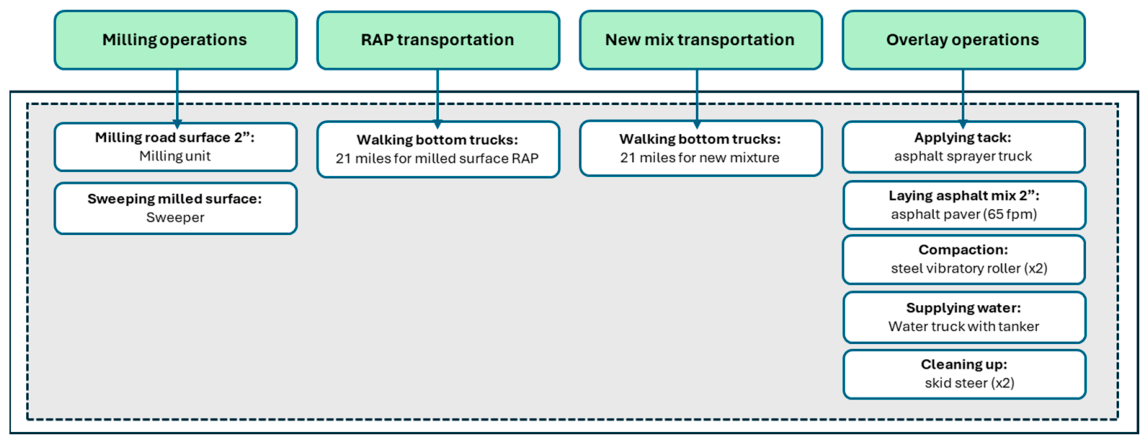
Beyond the initial construction impacts, an additional scenario was defined to account for the differences in performance of the two types of asphalt pavement. In this performance-informed scenario, the mixture with superior performance was assumed to delay a major rehabilitation activity (e.g., milling and overlay) within a defined analysis period of 15 years based on the performance results at both asphalt binder and mixture levels. Consequently, the mixture with lower measured performance was assigned an additional burden for milling operations, transportation of reclaimed asphalt pavement (RAP), and overlay operations. The details of this additional scenario, which include stages associated with milling operations, transportation of RAP, transportation of new mix, and overlay operations, are demonstrated in Figure 7.
The reference unit for this study was defined as one short ton of asphalt mixture produced and installed in a roadway. This reference unit was used as a consistent basis for comparing GWP results for the two test sections. All operations were modeled in openLCA (version 2.2.0), and the impact assessment method of TRACI 2.1 was used as the primary indicator to express the results in terms of KG CO2 equivalent per short ton of asphalt across A1–A5 stages for both conventional and rubber-modified asphalt sections.

3. Results and Discussion

3.1. Asphalt Binder Cracking Resistance

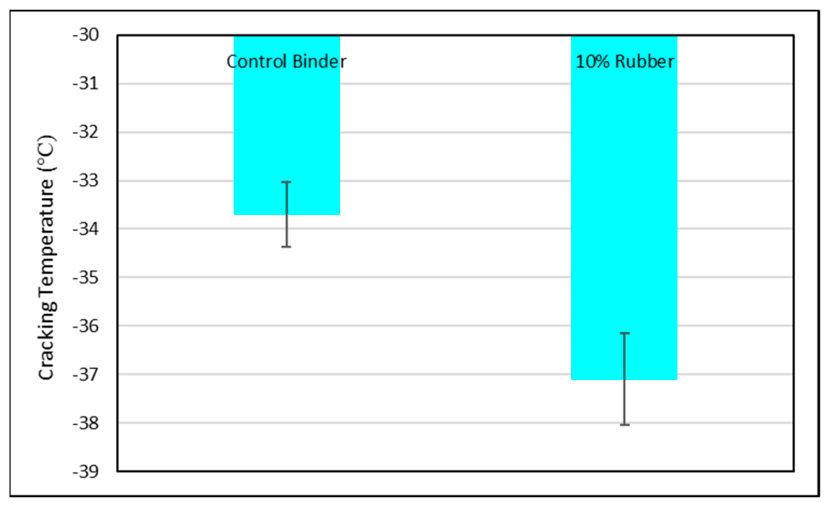
Figure 8 shows the cracking temperature for control and rubber-modified binder samples. In general, a lower cracking temperature indicates improved resistance to cold-weather cracking by binder samples. As seen in this figure, the addition of 10% rubber led to a lower (better) cracking temperature than the control binder, indicating that rubberized binder can tolerate greater thermal contraction before failure.

3.2. Asphalt Binder Fatigue Resistance

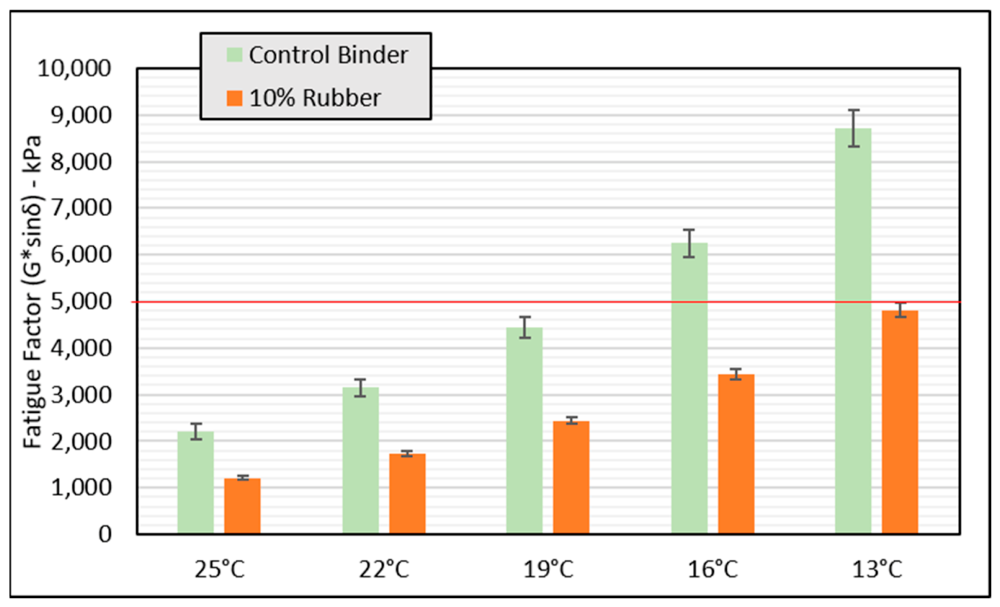
The DSR results for the fatigue factor (G*sinδ) of PAV-aged control and rubber-modified binder samples are shown in Figure 9. Overall, binders exhibiting lower fatigue factor values are considered more resistant to fatigue-related cracking at intermediate temperatures, indicating enhanced durability under repeated traffic loading. The results showed that adding 10% rubber significantly improved the fatigue resistance of the control binder, leading to lower (better) fatigue factor values. Furthermore, according to the Superpave specification, the fatigue factor of binder samples tested at a frequency of 10 rad/s should not exceed 5000 kPa at any testing temperature. As shown in the results, as the testing temperature was reduced from 19 °C to 16 °C, the control binder failed to meet this criterion. However, the rubber-modified asphalt binder successfully met this requirement at all test temperatures. The results once again highlighted the positive impact of rubber on improving the fatigue behavior of control asphalt binder.

3.3. Asphalt Binder Rutting Resistance

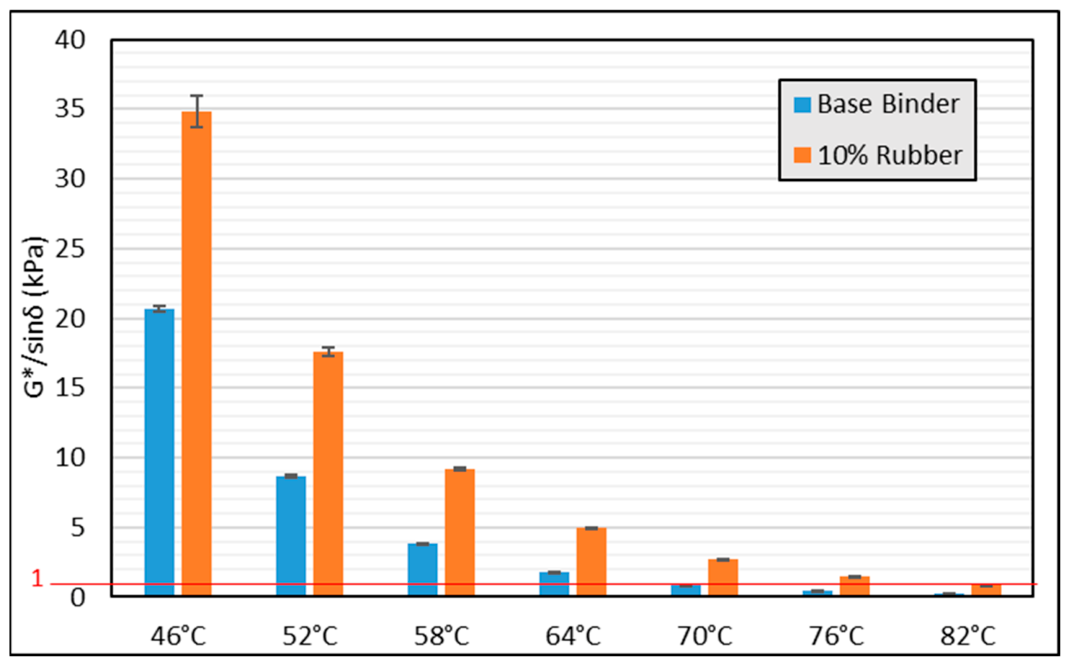
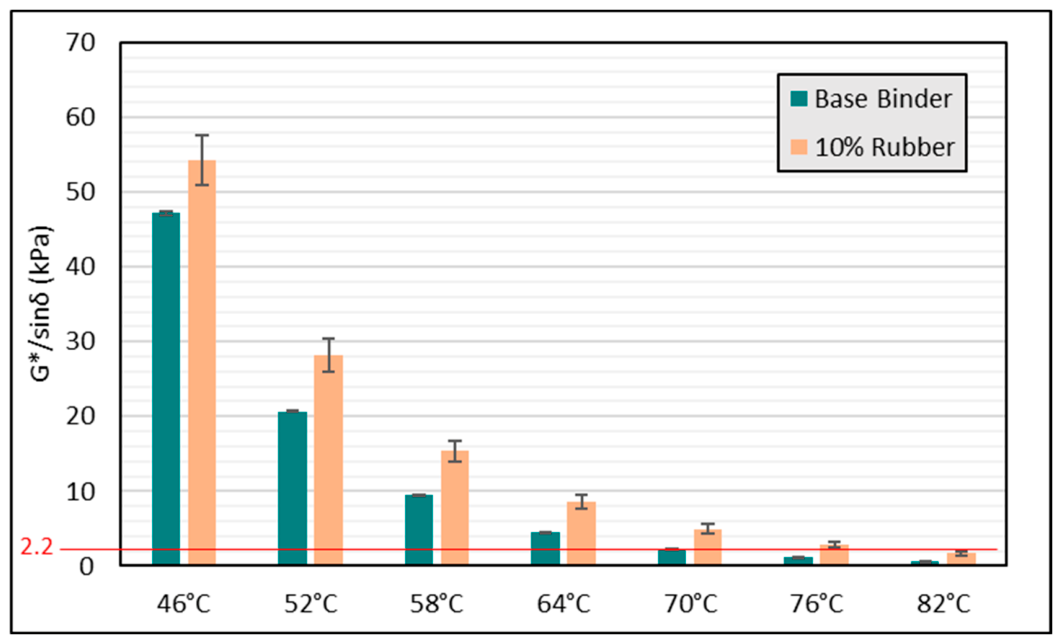
The DSR results for the unaged and short-term-aged rutting factor values (G*/sinδ) are summarized in Figure 10 and Figure 11, respectively. The addition of 10% rubber significantly improved rutting resistance under both unaged and RTFO-aged conditions, as shown by higher rutting factor values. When compared with the control binder, samples containing rubber passed the Superpave criteria at 76 °C, which specifies that rutting factor values should be above 1 and 2.2 kPa under unaged and RTFO-aged conditions, respectively. Based on this specification, the high-temperature performance grade of the control asphalt binder (PG 64-28) was increased by two grades, highlighting the positive role of rubber in improving the high-temperature anti-rutting behavior.
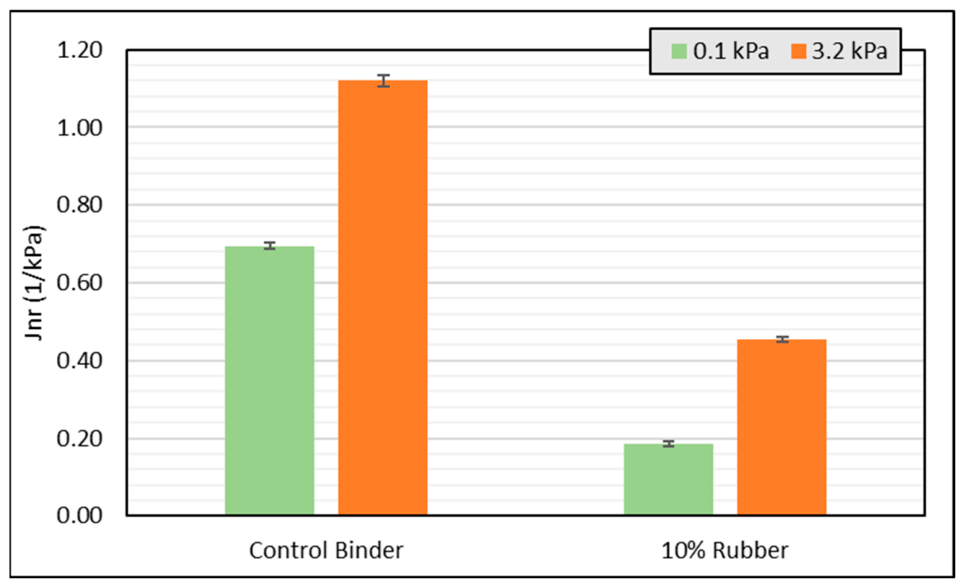
To further assess the anti-rutting performance, the key parameters obtained from the MSCR test, including Jnr and R%, which serve as primary indicators of rutting susceptibility, are shown in Figure 12 and Figure 13, respectively. In general, lower Jnr values and higher recovery rates are desirable in MSCR test as they reflect improved resistance to permanent deformation under elevated temperature conditions. According to non-recoverable creep compliance results, the addition of rubber significantly improved the rutting resistance of control binder by leading to lower (better) Jnr results. On the other hand, the addition of rubber also improved the elastic recovery of the control binder by leading to higher (better) R% results. The MSCR results further corroborated the findings from DSR rutting factor values in terms of high-temperature rutting resistance of rubber-modified asphalt binders, by demonstrating the superior performance enhancements when rubber is added to a control binder.

3.4. Asphalt Mixture Fracture Energy

Cold-weather cracking resistance properties are particularly important in Michigan’s cold climate and severe winter conditions, and ensuring sufficient cold temperature cracking resistance is essential for the long-term durability of asphalt pavements. Fracture energy from DCT test can be a valuable indicator of asphalt pavement’s resistance to cracking induced by cold climates. In general, higher fracture energy values indicate that more energy is required to initiate and propagate a crack through the asphalt mixture. This reflects the enhanced ability of the asphalt mixture to withstand cold-weather cracking, particularly in cold regions such as Michigan, USA. The results for the fracture energy of control and rubber-modified asphalt mixtures obtained from the DCT test at −18 °C are plotted in Figure 14. Generally, higher fracture energy values indicate greater resistance to cold-weather cracking. As shown in the DCT test results, the addition of rubber significantly enhanced the low-temperature cracking resistance of the conventional asphalt mixture. Based on fracture energy results, the rubber-modified rubber mix had a 32.5% improvement in fracture energy, indicating the positive influence of rubber on low-temperature cracking resistance when compared with the conventional asphalt mixtures.
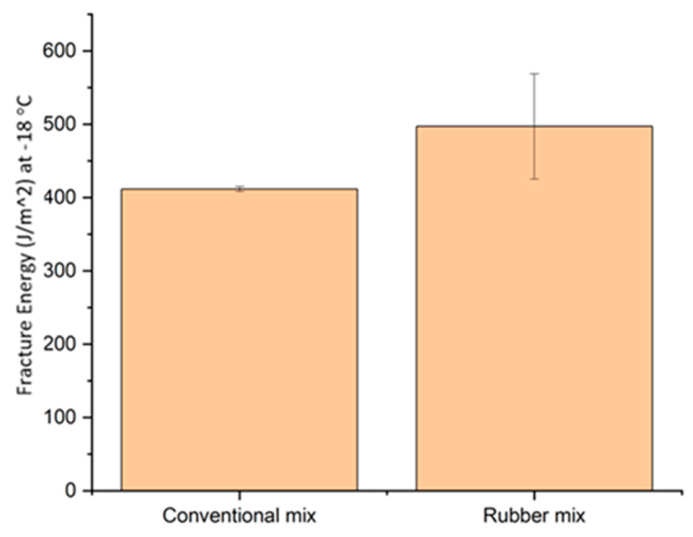
On the other hand, Figure 15 shows the DCT test results on the field core samples obtained during construction. Based on fracture energy results at −18 °C from field cores, the addition of rubber significantly improved low-temperature cracking resistance, with the rubber mix exhibiting a 20% higher fracture energy than the control mix.

3.5. Asphalt Mixture Rutting and Moisture Resistance

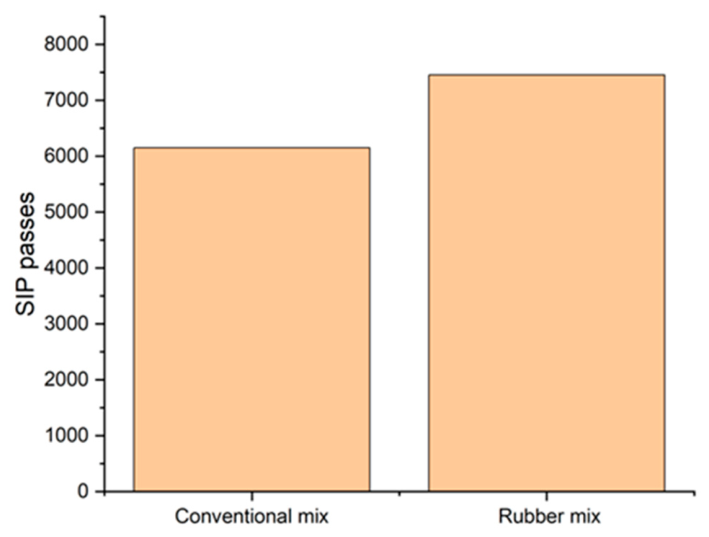
Figure 16 summarizes the HWTD test results in terms of resistance against rutting for field core samples collected after construction of control and rubber-modified sections in the project. This plot provides valuable insights into the rutting resistance of conventional and rubber-modified asphalt mixtures by showing rut depths observed during the HWTD test as a function of the number of passes. As shown in this figure, the rubber-modified mix exhibited equivalent rutting resistance to the conventional mix, as measured by the number of passes and rutting depth. On the other hand, another important performance indicator, resistance to moisture-induced damage, was also recorded during the HWTD test and plotted in Figure 17, showing that the stripping inflection point (SIP) passes for conventional and rubber-mix field cores. As shown in this figure, the SIP passes value for the rubber mix was higher than that of the control (conventional mix), indicating better resistance to moisture damage. In summary, based on the HWTD results, alongside equivalent rutting resistance to the conventional mix, rubber mix offered notably better moisture damage resistance.

3.6. GWP Impacts

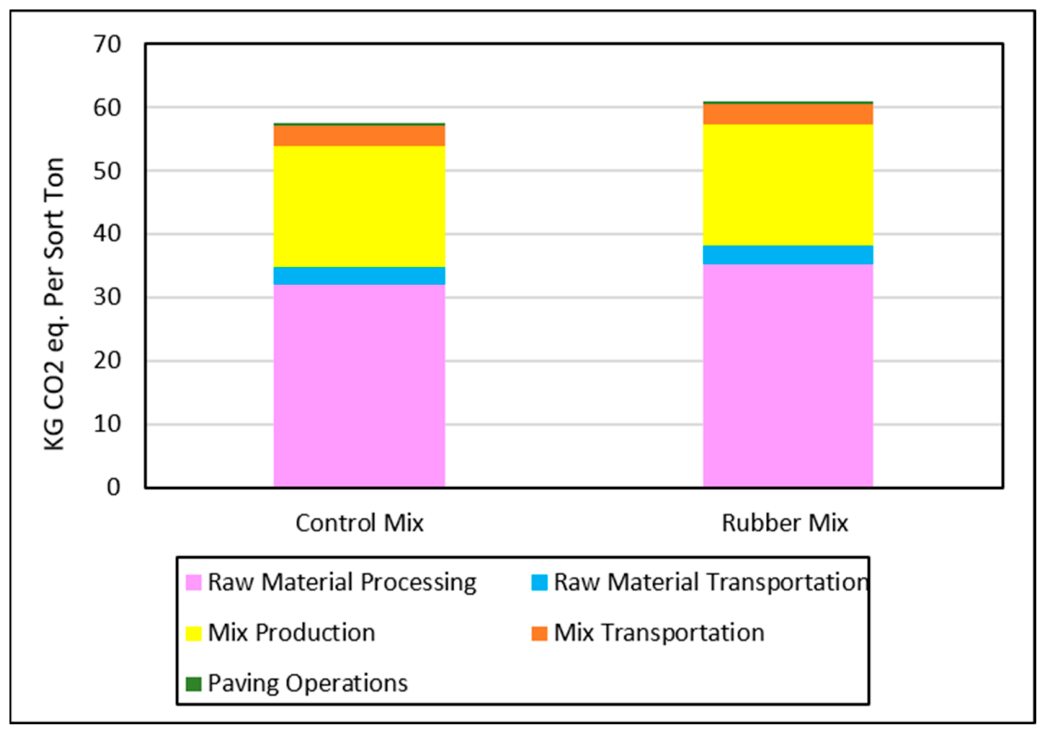
The GWP results presented in Figure 18 compare the initial cradle-to-construction impacts for both types of pavements, expressed in kg CO2 equivalent per short ton. In terms of the impacts associated with new construction, the rubber mix shows a slightly higher total GWP compared with the control mix. This difference is primarily driven by the A1 stage (raw material extraction and processing), where the rubber mix reaches about 35.21 kg CO2 equivalent per short ton compared with 32.11 kg CO2 equivalent per short ton for the control mix. This increase is attributed to the slightly higher material demand in the rubber mix, specifically the additional 0.2% binder content associated with the rubber dosage, as defined in the mix design. For the A2 stage (transport of raw materials), both mixes show relatively small contributions, with only a minor increase in the rubber mix due to the additional hauling distance of the rubber additive. The A3 stage (mix production) contributes significantly to both mixes and remains nearly identical. Importantly, the results indicate that the incorporation method and feeding process for the rubber material added only a minor increase of approximately 0.2 kg CO2 equivalent per short ton, demonstrating that plant-level modifications have a negligible effect on overall production emissions. For A4, both mixes show identical impacts, reflecting consistent hauling operations across both conventional and rubber-modified sections. Finally, in the A5 stage (paving operations), the rubber mix shows a slightly higher impact. This difference is attributed to a slower paving speed during construction as the contractor was implementing the rubber mix for the first time. It is anticipated that with increased familiarity and operational optimization, future applications will achieve comparable paving speeds and thus similar A5 impacts.
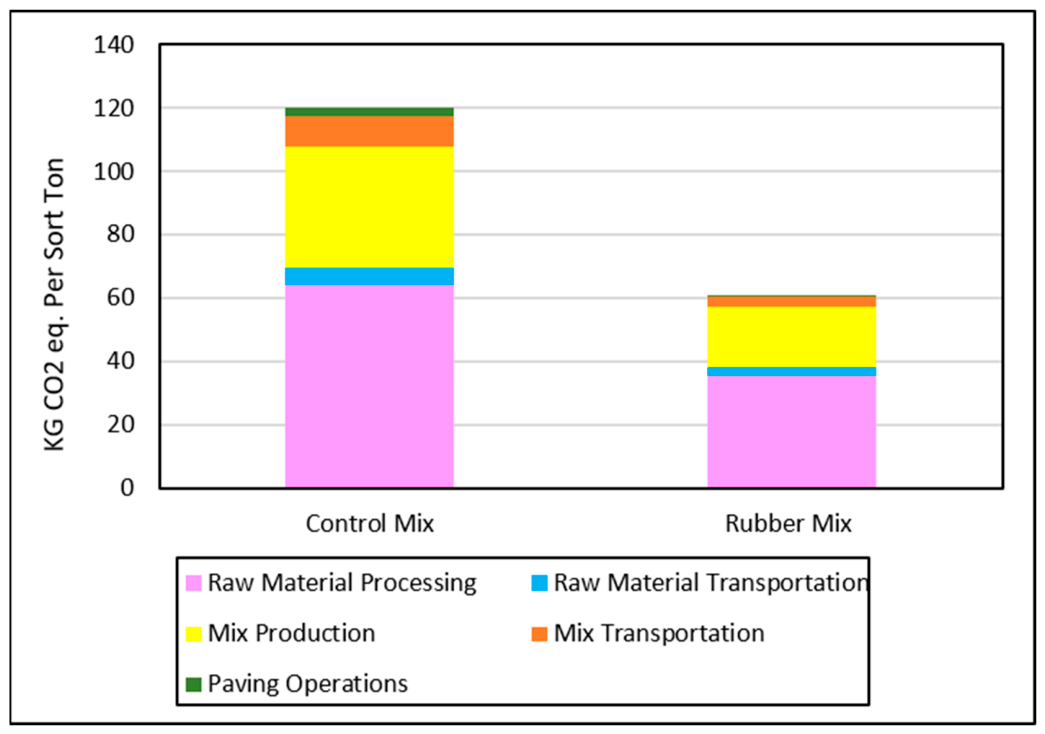
While the rubber mix shows a slightly higher up front GWP, its improved mechanical performance and durability are expected to reduce the frequency of maintenance and rehabilitation activities over time. Figure 19 demonstrates the GWP results over a 15-year analysis period for both the control and the rubber-modified mix. Based on the performance-informed scenario, the long-term life-cycle impacts associated with the rubber-modified mix are anticipated to be significantly lower than those of the conventional mix. Based on the performance assessment at both asphalt binder and mixture levels, the conventional mix exhibited lower overall performance compared with rubber mixture. Therefore, a rehabilitation scenario was defined in which the conventional mixture was assumed to require an earlier major rehabilitation activity (e.g., milling and overlay) within the 15-year analysis period, which significantly increases the long-term GWP impacts associated with the conventional mixture. In summary, the LCA results indicate that the rubberized mixture exhibited a slightly higher GWP during the initial construction stages. However, when the performance-informed rehabilitation scenario over a 15-year analysis period is considered, the reduced need for major intervention leads to a lower CO2 burden for the rubberized mixture.

4. Conclusions

This study assessed a dry-process rubber-modified 9.5 mm dense-graded HMA using combined field demonstration and laboratory/field performance testing at both binder and mixture levels, as well as field cores collected from the construction site. The following conclusions were drawn after the performance assessment phases of this project:
  • Asphalt binder’s low-temperature cracking results obtained from the ABCD tests highlighted the positive role of rubber in improving the low-temperature performance of conventional asphalt binder.
  • For asphalt binder’s high-temperature performance, the addition of 10% rubber product significantly improved the rutting resistance performance under both unaged and RTFO-aged conditions by demonstrating higher rutting factor values (G*/sinδ). When compared with the control binder, samples containing rubber passed the Superpave criteria at 76 °C, indicating the enhancement of the high-temperature performance grade of asphalt binder by two grades.
  • For asphalt binder’s intermediate-temperature performance, fatigue factor (G*sinδ) results for PAV-aged samples further highlighted the positive effects of rubber on viscoelastic properties of asphalt binder, with samples containing 10% rubber demonstrating superior fatigue-resistant performance when compared with the control asphalt binder. Based on fatigue factor results, the addition of 10% rubber significantly reduced the fatigue factor values of the control binder.
  • For the asphalt mixture’s low-temperature cracking results, the DCT test results showed that the rubber-modified rubber mix had a 32.5% improvement in fracture energy, indicating the positive influence of rubber on low-temperature cracking resistance when compared with the conventional asphalt mixtures. Additionally, DCT testing of field cores showed that the rubber mix exhibited a 20% higher fracture energy than the control mix.
  • HWTT testing on field cores indicated that while the rubber mix provided rutting resistance comparable to that of the conventional mix, it demonstrated substantially enhanced resistance to moisture-induced damage.
  • The LCA results indicate that the rubber-modified mix has a slightly higher GWP at the initial construction stage, primarily due to increased material demand associated with the slightly higher asphalt binder content required for coating the rubber particles. However, when performance-based scenarios are considered, the reduced maintenance frequency of rubber-modified asphalt leads to lower cumulative environmental impacts compared with the conventional mixture. Moreover, the impacts associated with the asphalt plant adjustments for the feeding process of rubber particles were found to be negligible.
In summary, based on the conclusions of this project, specifically, the successful incorporation process of rubber into asphalt and performance benefits in terms of low-, intermediate-, and high-temperature performance, it is anticipated that rubber-modified asphalt demonstrates a superior long-term durability when compared with control sections. Moreover, in a cold region like Michigan, where pavements experience prolonged freezing and frequent freeze–thaw cycles, improved low-temperature resistance is even more important with the successful implementation of rubber. The limitations of the study included field evaluations at an early stage of the construction for both conventional and rubber modified asphalt mixtures. Future research should focus on long-term monitoring of both testing sections and assessment of the life-cycle impacts and sustainability benefits of rubber-modified asphalt in the long term.

Author Contributions

Conceptualization, S.M. and Z.Y.; methodology, S.M. and D.J.; validation, S.M. and D.J.; formal analysis, S.M., D.J., M.W., and Z.L.; investigation, S.M. and D.J.; resources, Z.Y.; data curation, S.M., D.J., M.W., and Z.L.; writing—original draft preparation, S.M.; writing—review and editing, S.M., M.W., D.J., Z.L., and Z.Y.; supervision, Z.Y.; funding acquisition, Z.Y. All authors have read and agreed to the published version of the manuscript.

Funding

This project was supported by the Washtenaw County Road Commission and the Michigan Department of Environment, Great Lakes, and Energy (EGLE).

Data Availability Statement

All data presented in this study are available in the article.

Conflicts of Interest

The authors declared no potential conflicts of interest with respect to the research, authorship, and/or publication of this article.

Appendix A

Figure A1 demonstrates the gradation curve for the rubberized mixture used in this study, which was developed by adding 10% rubber by weight to the neat binder on top of a 5EML T1 mix (MDOT Specification).
Figure A1. Gradation curve for rubber mix in this project.
Infrastructures 11 00199 g0a1

References

  1. Lyu, L.; Fini, E.H.; Pei, J.; Poulikakos, L.D. Aging evolution and sustainability implications of crumb rubberized asphalt binder: A state-of-the-art. J. Clean. Prod. 2024, 434, 140202. [Google Scholar] [CrossRef]
  2. Imoh, U.U.; Akinmade, D.; Movahedi Rad, M. Rutting Resistance and Fatigue Performance of Crumb Rubber-Modified Asphalt Concrete: Experimental Investigation and Mechanistic–Empirical Modeling. Infrastructures 2026, 11, 133. [Google Scholar] [CrossRef]
  3. Tang, N.; Xue, C.; Hao, G.; Huang, W.; Zhu, H.; Li, R. Sustainable production of eco-friendly rubberized asphalt binders through chemically crosslinking with polymer modifier. J. Clean. Prod. 2023, 422, 138633. [Google Scholar] [CrossRef]
  4. Jin, D.; Ge, D.; Wang, J.; Malburg, L.; You, Z. Reconstruction of Asphalt Pavements with Crumb Rubber Modified Asphalt Mixture in Cold Region: Material Characterization, Construction, and Performance. Materials 2023, 16, 1874. [Google Scholar] [CrossRef]
  5. Ma, R.; Li, Y.; Cheng, P.; Chen, X.; Cheng, A. Low-Temperature Cracking and Improvement Methods for Asphalt Pavement in Cold Regions: A Review. Buildings 2024, 14, 3802. [Google Scholar] [CrossRef]
  6. Alam, G.; Ibrahim, H.; Faheem, A. Combining pavement mechanistic-empirical predictions and life-cycle modeling for low-carbon asphalt mixtures with sensitivity insights. Resour. Conserv. Recycl. Adv. 2026, 29, 200321. [Google Scholar] [CrossRef]
  7. Yang, Q.; Ren, M.; Wu, Y.; Ma, L.; Han, Q.; Pei, Z.; He, Z. Modeling fracture evolution of crumb rubber asphalt concrete under long-term vapor exposure: A coupled moisture-mechanical approach. Clean. Mater. 2026, 19, 100384. [Google Scholar] [CrossRef]
  8. Picado-Santos, L.G.; Capitão, S.D.; Neves, J.M.C. Crumb rubber asphalt mixtures: A literature review. Constr. Build. Mater. 2020, 247, 118577. [Google Scholar] [CrossRef]
  9. Badughaish, A.; Mohamed, A.S.; Alae, M.; Amirkhanian, S.; Xiao, F. Influence mechanism of crumb rubber pretreatment and antioxidants on aging and cracking behavior of rubberized asphalt. Constr. Build. Mater. 2026, 514, 145625. [Google Scholar] [CrossRef]
  10. Jiang, X.; Ge, D.; Lv, S.; Ju, Z.; Luo, K. Aging mechanisms of rubber-modified asphalt: Particle effect and interaction effect. Constr. Build. Mater. 2026, 507, 145079. [Google Scholar] [CrossRef]
  11. Zhou, T.; Liu, R.; Cao, L.; Jin, C.; Dong, Z.; Gershome, A.G.; Huang, Q. Integration of warm mix technology and high crumb rubber content for enhanced asphalt treated base material. J. Clean. Prod. 2025, 525, 146555. [Google Scholar] [CrossRef]
  12. Duan, K.; Wang, C.; Liu, J.; Song, L.; Chen, Q.; Chen, Y. Research progress and performance evaluation of crumb-rubber-modified asphalts and their mixtures. Constr. Build. Mater. 2022, 361, 129687. [Google Scholar] [CrossRef]
  13. Miller, L.; Ciavola, B.; Mukherjee, A. EPD Benchmark for National Asphalt Pavement Association Version 2.0: Including Round 2 of Data Collection; National Pavement Association (NAPA): Lanham, MD, USA, 2024. [Google Scholar]
  14. Li, J.; Santos, J.; Vargas-Farias, A.; Castro-Fresno, D.; Xiao, F. Prospective LCA of valorizing end-of-life tires in asphalt mixtures with emerging pretreatment technologies of crumb rubber. Resour. Conserv. Recycl. 2024, 210, 107828. [Google Scholar] [CrossRef]
  15. Mattinzioli, T.; Sol-Sánchez, M.; Jiménez del Barco Carrión, A.; Moreno-Navarro, F.; Rubio-Gámez, M.d.C.; Martínez, G. Analysis of the GHG savings and cost-effectiveness of asphalt pavement climate mitigation strategies. J. Clean. Prod. 2021, 320, 128768. [Google Scholar] [CrossRef]
  16. Chen, S.; Ge, D.; Jin, D.; Zhou, X.; Liu, C.; Lv, S.; You, Z. Investigation of hot mixture asphalt with high ground tire rubber content. J. Clean. Prod. 2020, 277, 124037. [Google Scholar] [CrossRef]
  17. Wu, M.; Boateng, K.A.; Yin, L.; Liu, Z.; You, Z.; Jin, D. High-content crumb rubber modified asphalt mixture via wet process: Laboratory evaluation and field application. Constr. Build. Mater. 2025, 494, 143438. [Google Scholar] [CrossRef]
  18. Jin, D.; Boateng, K.A.; Chen, S.; Xin, K.; You, Z. Comparison of Rubber Asphalt with Polymer Asphalt under Long-Term Aging Conditions in Michigan. Sustainability 2022, 14, 10987. [Google Scholar] [CrossRef]
  19. Mohammadi, S.; Solatifar, N. Optimized Preparation and High-Temperature Performance of Composite-Modified Asphalt Binder with CR and WEO. J. Mater. Civ. Eng. 2023, 35, 04022395. [Google Scholar] [CrossRef]
  20. Guo, P.; Li, C.; Lu, W.; Lv, S.; Duan, H.; Lv, H.; Ding, L. Road performance and noise reduction characteristics of dense graded dry-process rubberised asphalt mixture. Constr. Build. Mater. 2025, 467, 140312. [Google Scholar] [CrossRef]
  21. Liu, S.; Lu, P.; Sun, X.; Wang, H.; Fei, Z. Research on the Durability of Modified Crumb Rubber Asphalt Mixtures in High-Altitude and Seasonally Frozen Regions. Coatings 2025, 15, 102. [Google Scholar] [CrossRef]
  22. Jin, D.; Yin, L.; Nedrich, S.; Boateng, K.A.; You, Z. Resurface of rubber modified asphalt mixture with stress absorbing membrane interlayer: From laboratory to field application. Constr. Build. Mater. 2024, 441, 137452. [Google Scholar] [CrossRef]
  23. Zheng, F.; Chen, Z.; Hu, W.; Hu, D.; Zhang, S.; Zhang, J. Particle effect and interaction effect of scrap tire crumb rubber on adhesion of asphalt-aggregate interface. J. Clean. Prod. 2026, 554, 147959. [Google Scholar] [CrossRef]
  24. Huang, Y.; Long, K.; Qu, C.; Yan, C.; Ai, C.; Zhou, S. Evaluation of terminal blend rubberized asphalt incorporating high crumb rubber content. Case Stud. Constr. Mater. 2025, 22, e04285. [Google Scholar] [CrossRef]
  25. Phan, T.M.; Seo, J.W.; Nguyen, A.Q.; Lee, C.B.; Park, D.W. Performances assessment of crumb rubber modification in asphalt mixtures: Dry, wet, hybrid, and pellet techniques. Constr. Build. Mater. 2025, 491, 142663. [Google Scholar] [CrossRef]
  26. Li, Y.; Zhao, C.; Li, R.; Zhang, H.; He, Y.; Pei, J.; Lyu, L. Dry-process reusing the waste tire rubber and plastic in asphalt: Modification mechanism and mechanical properties. Constr. Build. Mater. 2025, 458, 139759. [Google Scholar] [CrossRef]
  27. Tahami, S.A.; Mirhosseini, A.F.; Dessouky, S.; Mork, H.; Kavussi, A. The use of high content of fine crumb rubber in asphalt mixes using dry process. Constr. Build. Mater. 2019, 222, 643–653. [Google Scholar] [CrossRef]
  28. Jin, D.; Xin, K.; Yin, L.; Mohammadi, S.; Cetin, B.; You, Z. Performance of rubber modified asphalt mixture with tire-derived aggregate subgrade. Constr. Build. Mater. 2024, 449, 138261. [Google Scholar] [CrossRef]
  29. Lo Presti, D. Recycled Tyre Rubber Modified Bitumens for road asphalt mixtures: A literature review. Constr. Build. Mater. 2013, 49, 863–881. [Google Scholar] [CrossRef]
  30. Zheng, W.; Wang, H.; Chen, Y.; Ji, J.; You, Z.; Zhang, Y. A review on compatibility between crumb rubber and asphalt binder. Constr. Build. Mater. 2021, 297, 123820. [Google Scholar] [CrossRef]
  31. AASHTO T240; Standard Method of Test for Effect of Heat and Air on a Moving Film of Asphalt Binder (Rolling Thin-Film Oven Test). American Association of State Highway and Transportation Officials: Washington, DC, USA, 2009.
  32. AASHTO R28; Standard Practice for Accelerated Aging of Asphalt Binder Using a Pressurized Aging Vessel (PAV). American Association of State Highway and Transportation Officials: Washington, DC, USA, 2022.
  33. AASHTO TP92; Method of Test for Determining the Cracking Temperature of Asphalt Binder Using the Asphalt Binder Cracking Device (ABCD). American Association of State Highway and Transportation Officials: Washington, DC, USA, 2014.
  34. AASHTO T315; Standard Method of Test for Determining the Rheological Properties of Asphalt Binder Using a Dynamic Shear Rheometer. American Association of State Highway and Transportation Officials: Washington, DC, USA, 2020.
  35. AASHTO TP 70-12; Standard Method of Test for Multiple Stress Creep Recovery (MSCR) Test of Asphalt Binder Using a Dynamic Shear Rheometer (DSR). American Association of State Highway and Transportation Officials: Washington, DC, USA, 2012.
  36. AASHTO T209; Method of Test for Theoretical Maximum Specific Gravity (Gmm) and Density of Asphalt Mixtures. American Association of State Highway and Transportation Officials: Washington, DC, USA, 2023.
  37. AASHTO T166; Standard Method of Test for Bulk Specific Gravity (Gmb) of Compacted Asphalt Mixtures Using Saturated Surface-Dry Specimens. American Association of State Highway and Transportation Officials: Washington, DC, USA, 2025.
  38. ASTM D7313-20; Standard Test Method for Determining Fracture Energy of Asphalt Mixtures Using the Disk-Shaped Compact Tension Geometry. ASTM International: West Conshohocken, PA, USA, 2021.
  39. AASHTO T 324; Standard Method of Test for Hamburg Wheel-Track Testing of Compacted Asphalt Mixtures. American Association of State Highway and Transportation Officials: Washington, DC, USA, 2019.
  40. ISO 14040; Environmental Management-Life Cycle Assessment-Principles and Framework. International Organization for Standardization: Geneva, Switzerland, 2006.
  41. ISO 14044; Environmental Management-Life Cycle Assessment-Requirements and Guidelines. International Organization for Standardization: Geneva, Switzerland, 2006.
  42. Shacat, J.; Willis, R.; Ciavola, B. The Carbon Footprint of Asphalt Pavements: A Reference Document for Decarbonization; National Pavement Association (NAPA): Greenbelt, MD, USA, 2024. [Google Scholar]
  43. Miller, L.; Ciavola, B.; Mukherjee, A. EPD Benchmark for Asphalt Mixtures; National Pavement Association (NAPA): Greenbelt, MD, USA, 2024. [Google Scholar]
Figure 1. Rubber product used in this project.
Infrastructures 11 00199 g001
Figure 2. Rubber feeding system at the asphalt plant.
Infrastructures 11 00199 g002
Figure 3. Description of project location and test sections.
Infrastructures 11 00199 g003
Figure 4. Construction of control section: (a) Main construction of control section. (b) Asphalt paver laying control mix. (c) Compaction of control mix with two vibratory rollers.
Infrastructures 11 00199 g004
Figure 5. Construction of rubber modified section: (a) Main construction of rubber modified section. (b) Rubber modified mix transfer from truck to paver. (c) Paver laying the rubber modified asphalt mix.
Infrastructures 11 00199 g005
Figure 6. System boundaries for the initial construction scenario.
Infrastructures 11 00199 g006
Figure 7. System boundaries for the performance-informed scenario.
Infrastructures 11 00199 g007
Figure 8. ABCD Cracking temperature results.
Infrastructures 11 00199 g008
Figure 9. DSR results for fatigue factor values vs. temperature at 10 rad/s.
Infrastructures 11 00199 g009
Figure 10. DSR results for unaged rutting factor values vs. temperature at 10 rad/s.
Infrastructures 11 00199 g010
Figure 11. DSR results for RTFO-aged rutting factor values vs. temperature at 10 rad/s.
Infrastructures 11 00199 g011
Figure 12. MSCR test results for Jnr at 64 °C.
Infrastructures 11 00199 g012
Figure 13. MSCR test results for R% at 64 °C.
Infrastructures 11 00199 g013
Figure 14. DCT test results for laboratory compacted asphalt mixtures.
Infrastructures 11 00199 g014
Figure 15. DCT test results for field core asphalt mixtures.
Infrastructures 11 00199 g015
Figure 16. HWTD results for rutting depth and number of passes.
Infrastructures 11 00199 g016
Figure 17. HWTD results for number of SIP passes.
Infrastructures 11 00199 g017
Figure 18. LCA results for GWP across A1–A5 stages for initial construction scenario.
Infrastructures 11 00199 g018
Figure 19. LCA results for GWP across A1–A5 stages for the 15-year analysis scenario.
Infrastructures 11 00199 g019
Disclaimer/Publisher’s Note: The statements, opinions and data contained in all publications are solely those of the individual author(s) and contributor(s) and not of MDPI and/or the editor(s). MDPI and/or the editor(s) disclaim responsibility for any injury to people or property resulting from any ideas, methods, instructions or products referred to in the content.