1. Introduction
The main advantages of single-lane roundabouts in road networks, compared to conventional intersections, are increased traffic safety, lower air pollution, and lower maintenance costs. Previous studies have reported that roundabouts, compared to signalised intersections, reduce the emissions of carbon monoxide by 21–42%, emissions of carbon dioxide by 16–59%, emissions of oxides of nitrogen by 20–48%, emissions of hydrocarbons by 18–65%, and the noise emission from 1 to 4 dB(A) [
1,
2,
3,
4,
5,
6,
7,
8,
9,
10,
11,
12,
13,
14,
15,
16]. Safety benefits of single-lane roundabouts stem from their reduced number of potential conflict points between vehicles compared to conventional intersections, and from their geometry, which results in deflected vehicle trajectories that force drivers to reduce their speed, thereby lowering both crash probability and severity [
17,
18]. A meta-analysis [
19] of the impact of converting conventional unsignalised intersections to single-lane roundabouts on safety found that such conversions are associated with a reduction of about 65% in fatal accidents and about 40% in accidents with injuries. According to a Danish study [
20], converting intersections to roundabouts led to reductions in of 27% crashes and 60% in injuries. The number of fatal accidents fell by 87%, and the number of crashes with property damage fell by 16%. The number of bicycle crashes and injured cyclists increased by 65% and 40%, respectively. According to studies conducted in the US, converting conventional intersections to single-lane roundabouts reduced the number of fatal and serious-injury accidents by over 80% [
21]. It led to a 51% reduction in the total number of crashes [
18]. The studies focused on the conversion of unsignalised intersections and have shown a significant reduction in the number and severity of accidents. The aim of the studies [
20,
22,
23,
24,
25] was to close this gap by evaluating the safety effectiveness of converting signalised intersections into roundabouts. Despite the safety benefits that roundabouts offer, accidents still occur. A study [
26] conducted in Italy at 15 urban roundabouts concluded that the factors contributing to accidents were primarily related to the roundabout’s geometric design, markings, and signage. This study emphasised the role of a moderate deflection radius and a large deviation angle in the design of new roundabouts, as improving these factors in existing roundabouts can be quite costly. Another study from Italy [
27] was carried out to determine the geometric characteristics of roundabouts that influence the perception of safety during typical driving manoeuvres (entry, circulation, exit). The study concluded that users clearly prefer single-lane roundabouts. This can be described by the fact that users perceive the highest level of safety in configurations with one entry, one exit and one roundabout lane.
The roundabout design process is specified by national guidelines, standards, and recommendations [
28,
29,
30,
31,
32,
33,
34,
35,
36,
37,
38,
39]. As shown in
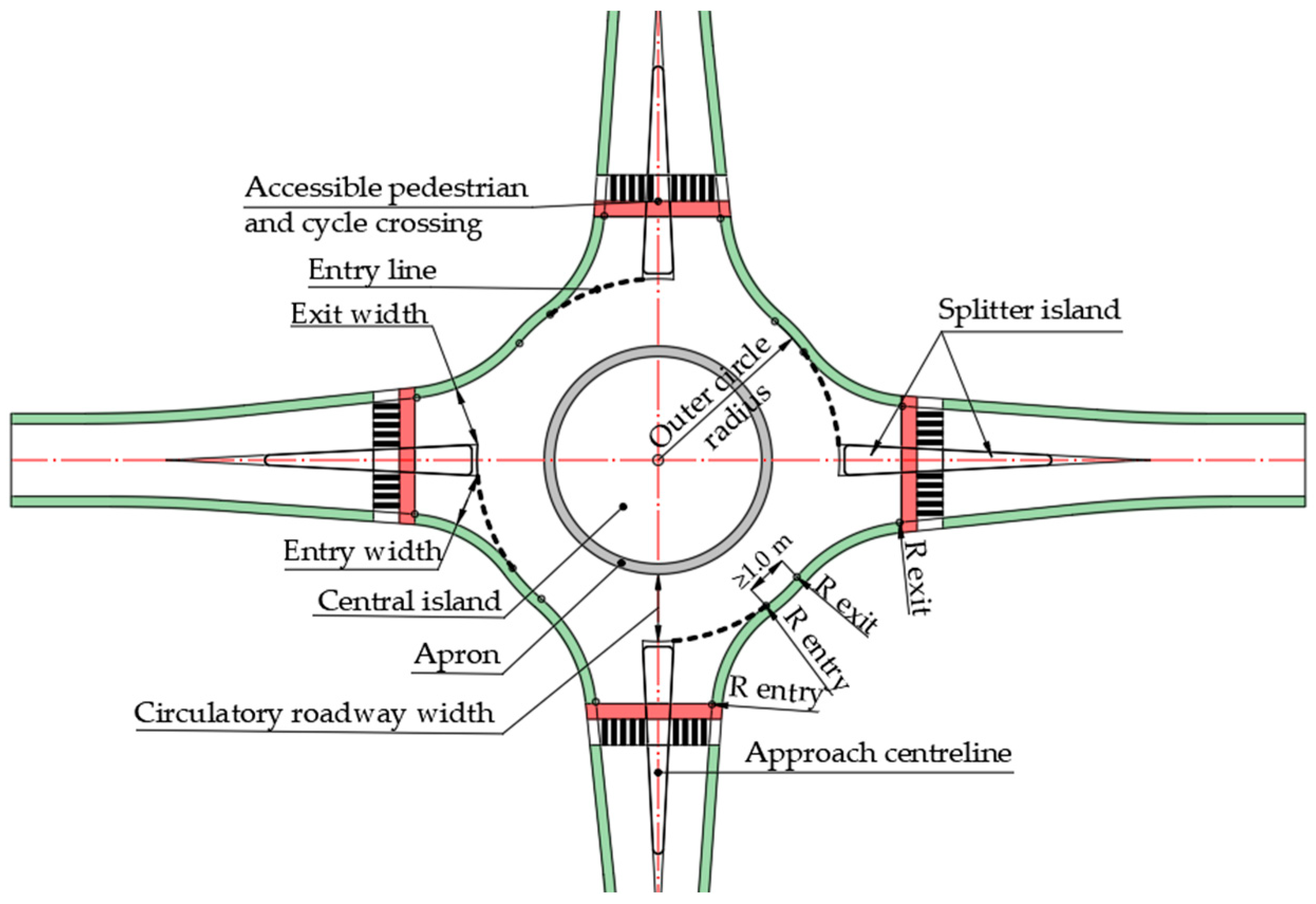
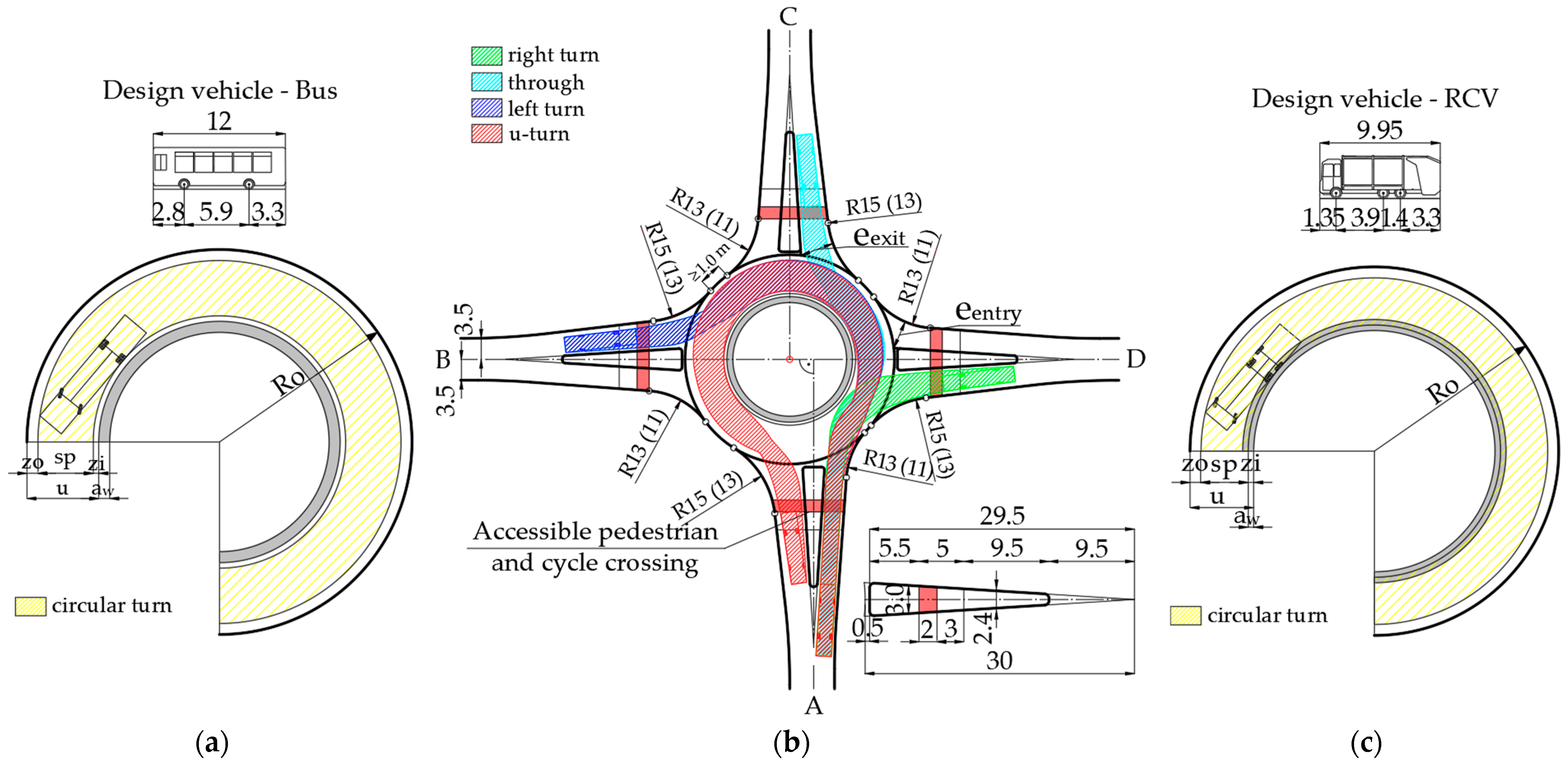
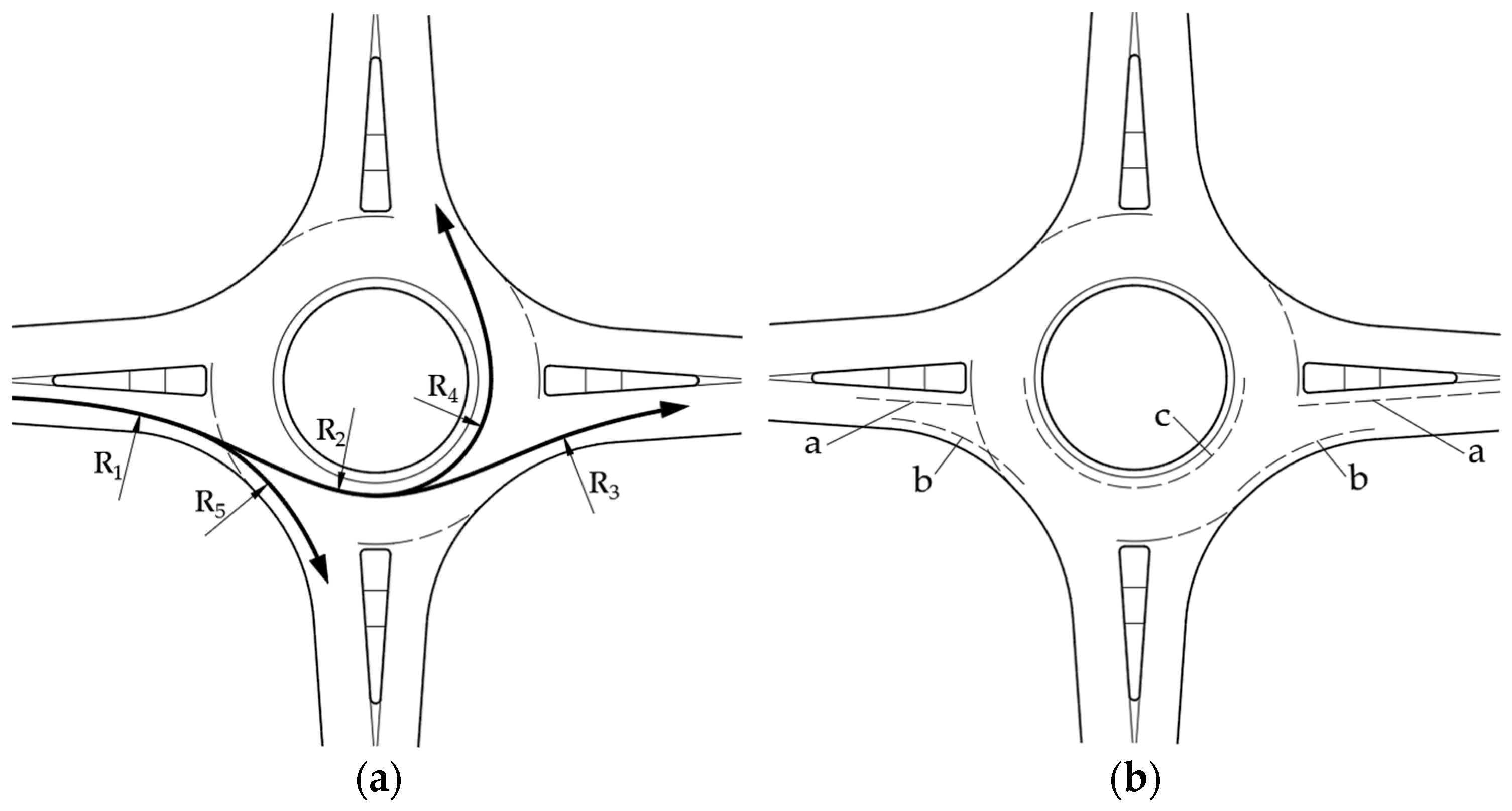
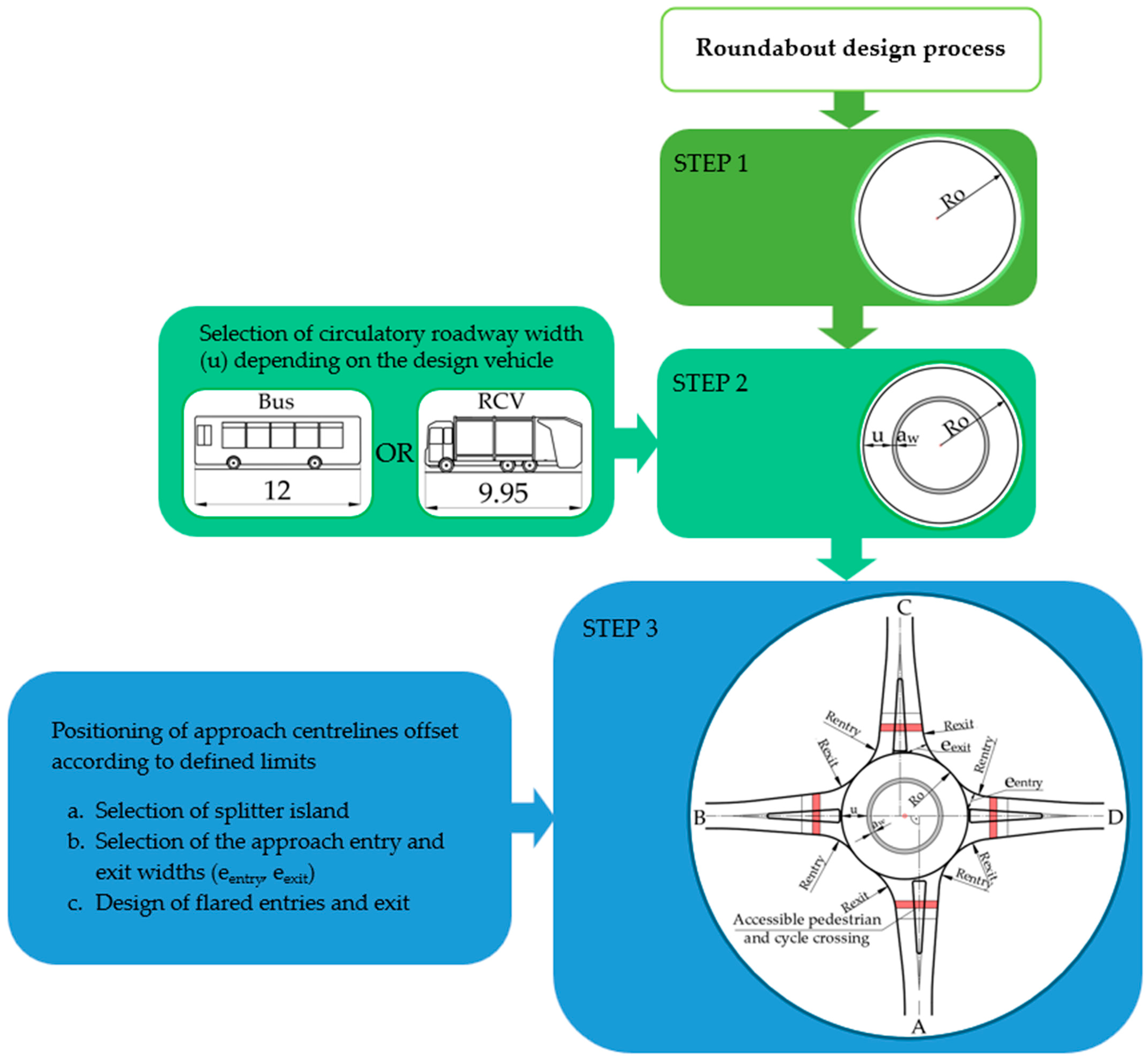
Figure 1, the key elements of an urban single-lane roundabout are the splitter islands, pedestrian and cycle crossings, entry and exit radii, entry and exit widths, central island, apron, and circulatory roadway width.
The roundabout design process is highly iterative and consists of the initial design, performance checks (swept path analysis for the design vehicle movements, speed analysis, and visibility tests), and the final design of the elements. Swept path analysis is needed to ensure that design vehicles can safely navigate the roundabout. This analysis, usually conducted using specialised software, yields the required entry, exit, and circulatory lane widths based on the characteristics of the selected design vehicle.
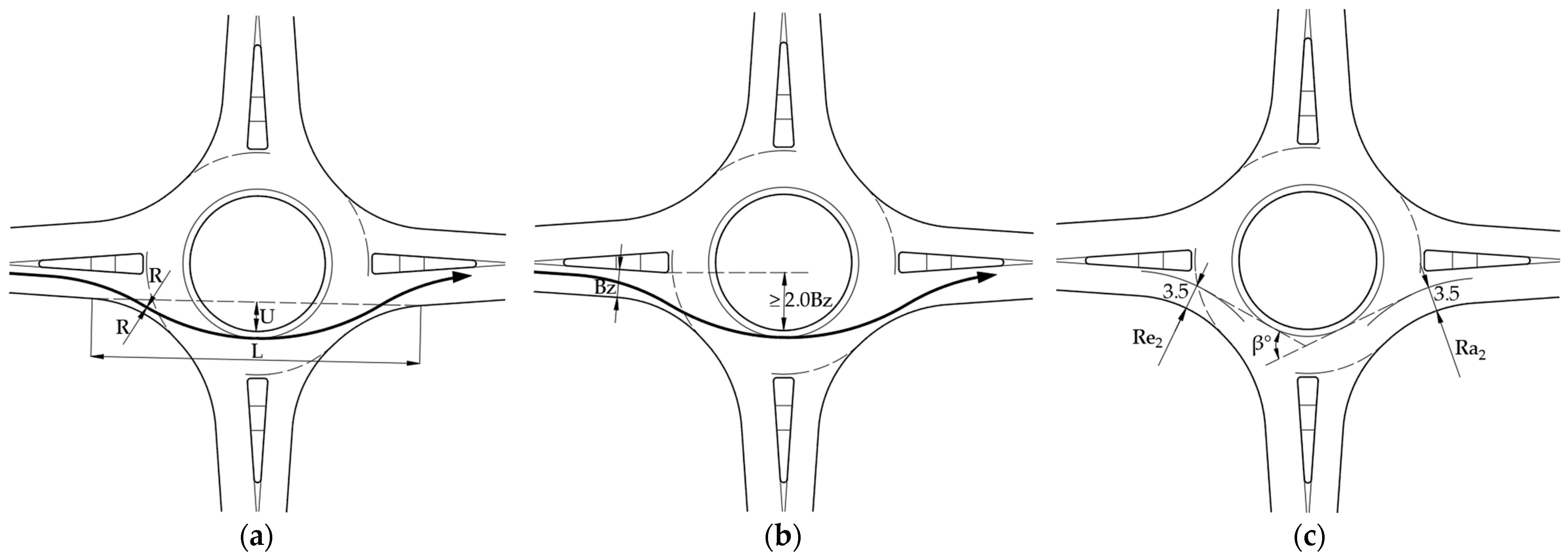
Speed analysis is usually conducted by measuring the roundabout geometric characteristics and checking the obtained deflection [
31,
32,
37,
38], by measuring the geometric characteristics of the roundabout and calculating the path radii and vehicle speeds [
30,
39], or by drawing the fastest vehicle path, measuring the path radii and estimating the vehicle speed based on the radii [
28,
29,
33,
34,
35,
36]. If the initial roundabout geometric design does not meet the requirements of the selected design vehicle and required vehicle speed, the initial design is revised. Predicting speeds at roundabouts in urban areas, where severe spatial and environmental constraints dictate layouts that do not conform to design standards, is challenging and can lead to inconsistent speed analysis results. As a result, standardised speed prediction models have been tested in several studies. For instance, design and operating speeds were evaluated for several urban roundabouts in the Municipality of Cuneo, Italy [
40]. The observed speeds were comparable to those derived from the US guidelines’ speed model [
34], despite certain discrepancies that arose from local driver behaviour, vehicle performance, and design practices. Only one roundabout presented in this study strictly adhered to the Italian design standards [
38]. Consequently, this was the only case in which the variance between observed speeds and those predicted by the US guidelines [
34] remained below 10%. According to the findings of a study [
41] conducted on urban roundabouts in Zagreb, Croatia, deviations between design speeds calculated using US guidelines [
33] and measured speeds ranged from −45.69% to +13.07%. As in the Italian study, these deviations were attributed to various factors, including intersection geometry, vehicle characteristics, and driver behaviour. Another recent study [
42] analysed connected vehicle (CV) trajectory speeds at 56 roundabouts in Carmel, Indiana. Comparing passenger vehicle speeds with theoretical models revealed that certain aspects of the US guideline speed model [
36] require updating. Specifically, future models should account for lower entry speeds and higher speeds within the circulatory and departure sections for vehicles approaching slowly. Notably, however, deceleration and acceleration values remained consistent across both the theoretical approach and the sampled data, suggesting that current modelling of speed change rates remains accurate.
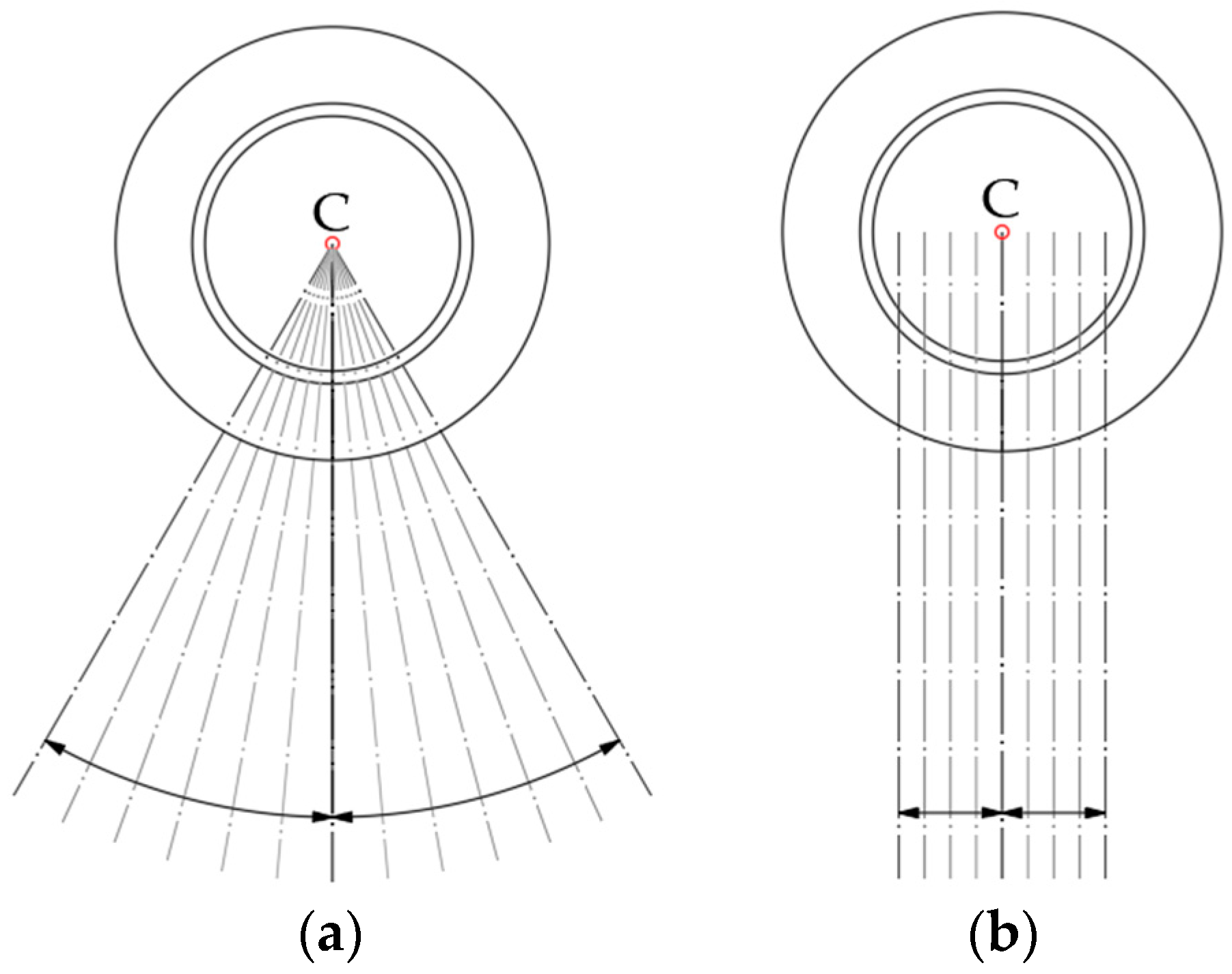
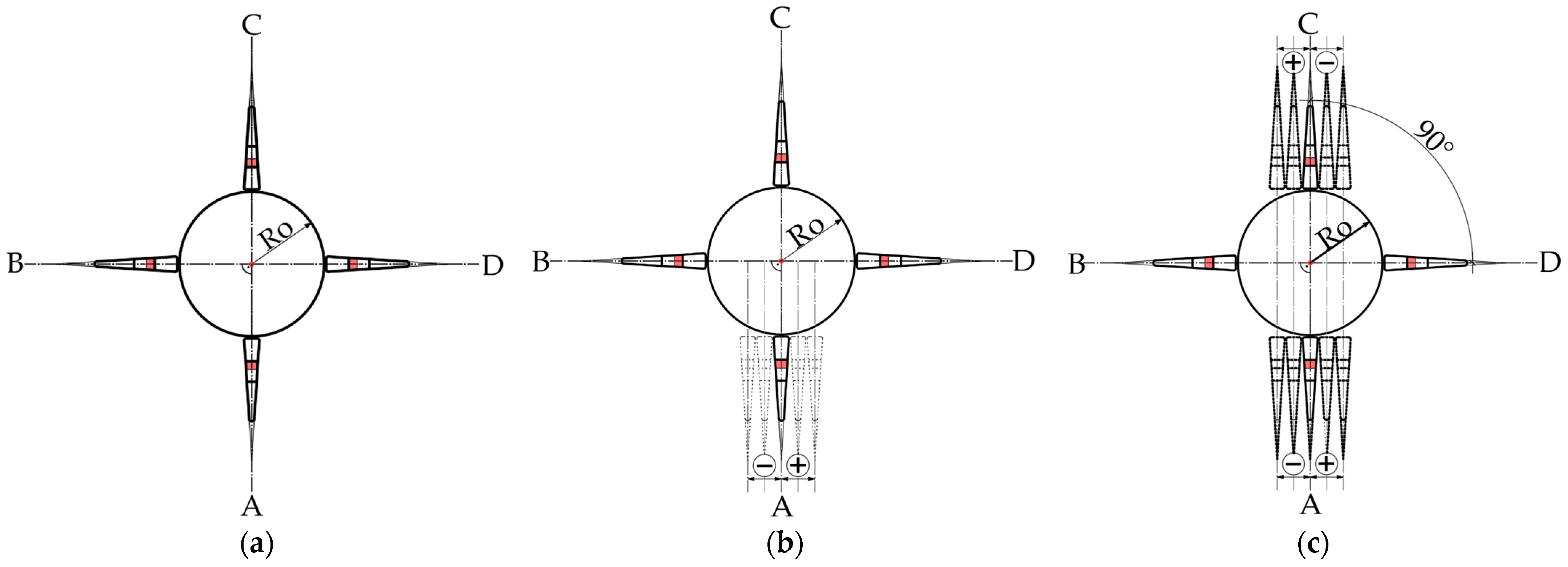
The initial geometric design of the roundabout elements begins with the horizontal alignment of the approaches (
Figure 2, dash-dot lines) relative to the geometric centre of the intersection, i.e., the centre of the central island (
Figure 2, point (C)). In real-life scenarios, this alignment can be radial or offset laterally [
36,
39]. With radial alignment, the centerline of each leg crosses the geometric centre of the roundabout, i.e., the centre of the central island, as shown in
Figure 2a. Lateral alignment offset, shown in
Figure 2b, can be applied to the left or right relative to the geometric centre. The approach centreline alignment influences vehicle paths through the intersection and is therefore an important input for swept path analyses. It also influences the deflection of the central island, providing the required vehicle speeds on entry, around the central island, and on the exit.
According to the analysed roundabout design guidelines, standards, and recommendations [
28,
29,
30,
31,
32,
33,
34,
35,
36,
37,
38,
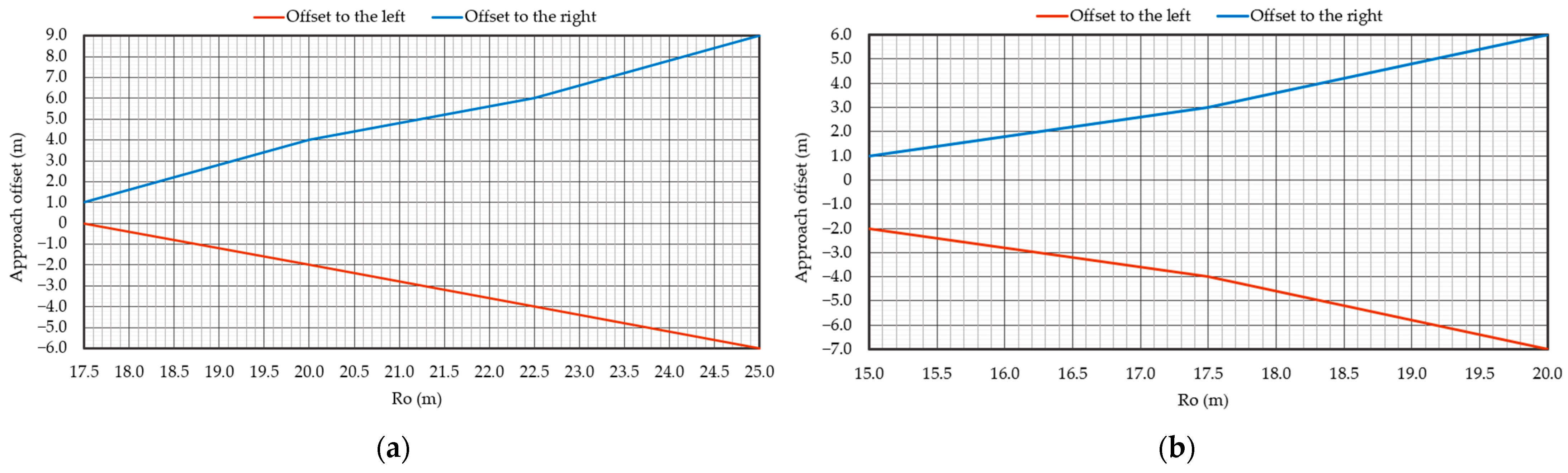
39], optimal roundabout design requires that the centrelines of all approaches intersect at right angles at the roundabout’s geometric centre. In the design practice, this alignment cannot always be achieved due to spatial restrictions, especially in urban areas. In these cases, approach centrelines are offset; offset placement provides flexibility in roundabout design, allowing engineers to adapt the roundabout geometry to specific site conditions and traffic patterns. Approach offset should not result in a tangential entry and exit. A slight left offset is suitable, as it increases vehicle path deflection, thereby reducing vehicle speed. Still, a right offset could result in a tangential entry and a high entry speed. Tangential entry increases entry vehicle speed and crash severity between vehicles in the roundabout and those entering it. Generally, offsetting the approach centerline to the right should be avoided. Still, it can be applied if the correct entry speed can be achieved and other geometric elements of the roundabout can be formed [
28,
29,
35,
36,
39]. The Croatian guidelines [
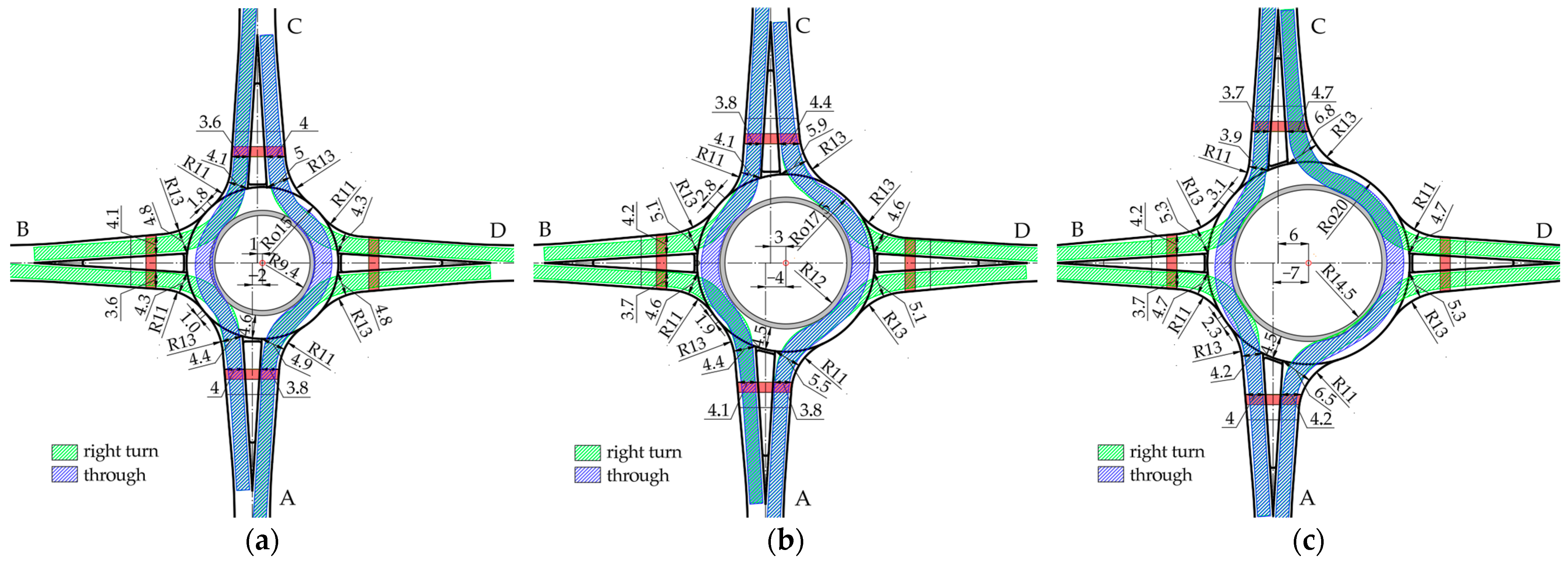
39] recommend that the maximum offset be 15% of the outer roundabout radius and that the angle between two consecutive approach centrelines should allow the right carriageway edge to be designed with three distinct consecutive arcs, as shown in
Figure 1.
Recently, multi-objective optimisation models for the design of single-lane roundabouts have been proposed in studies [
43,
44]. They yield optimal roundabout geometric dimensions, thereby reducing the number of design iterations. Nevertheless, the aforementioned performance checks should always be conducted, as these models have not yet been included in guidelines or standards, and their effectiveness still needs to be tested.
Design limits for intersection angles between approach legs are described in [
45], while the influence of the radial offset on the geometric design of roundabouts is described in [
46]. This investigation of radial offset was based on the analysis of the design vehicle path and the fastest vehicle path, and the results showed that it is possible to radially offset roundabout approaches to the right and left without compromising safety. The lateral offset of the approach was also analysed using predefined roundabout geometry in the study [
47]. In this study, a model was developed for the geometric design of single-lane roundabouts with offset approaches. The presented optimisation methodology was intended to determine balanced minimum design values among the correlated parameters and rather than to identify an optimal roundabout design [
47].
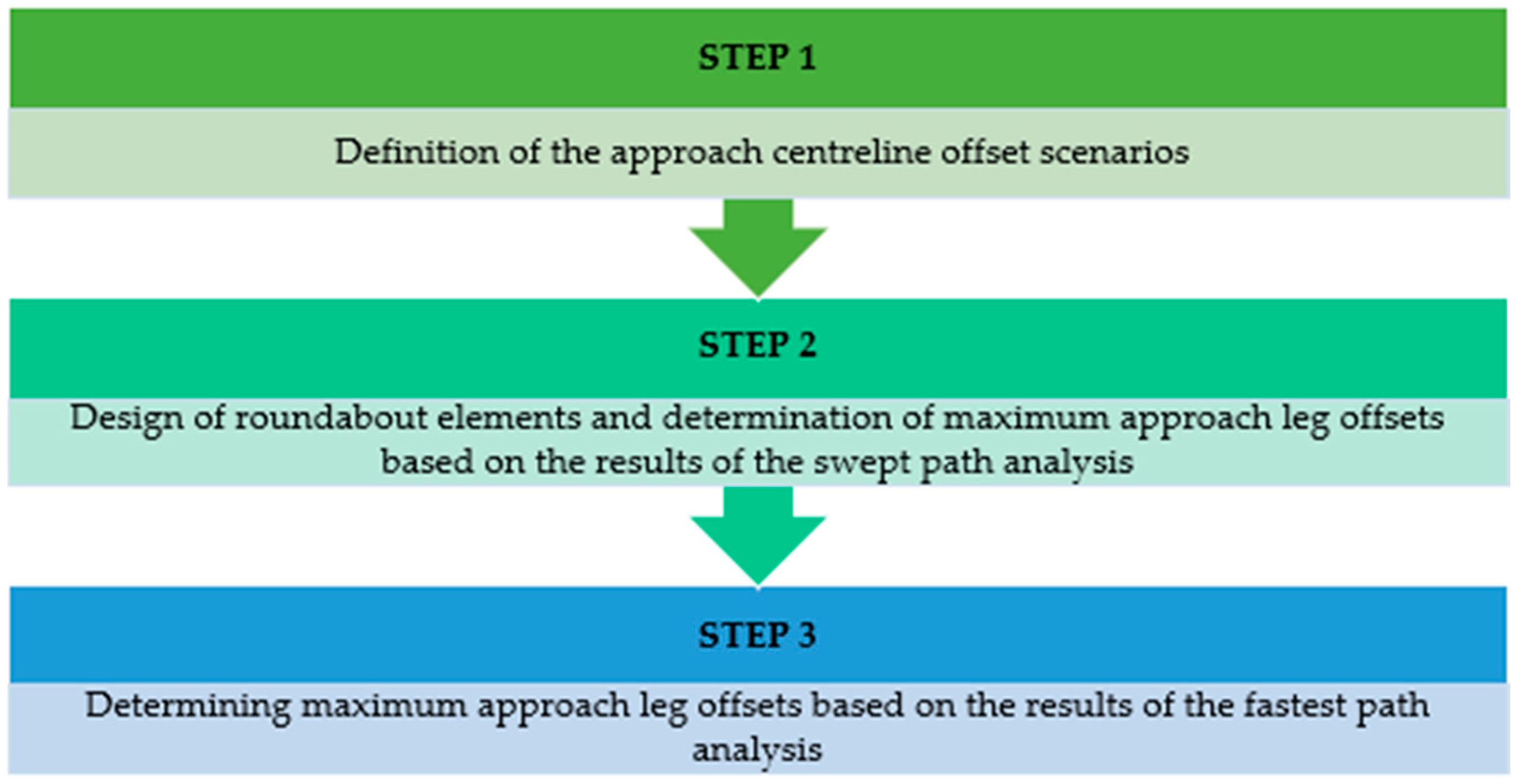
In this paper, the methodology and results of an investigation into the effects of the approach centreline offset on the geometric design and safety performance of urban single-lane roundabouts are presented. This research aimed to define the maximum lateral offset as a function of the design vehicle swept path and fastest path analyses, and to develop a model for the design of urban single-lane roundabouts with varying outer radii and approach centreline offsets to eliminate numerous iterations in the roundabout design process. As the influence of the approach offset on the geometric design of single-lane roundabouts is particularly problematic in urban and suburban locations due to spatial constraints, the analyses conducted in this research were focused on theoretical examples of four-legged single-lane roundabouts with geometric elements whose dimensions are in line with values given in roundabout design guidelines, standards, and recommendations [
28,
29,
30,
31,
32,
33,
34,
35,
36,
37,
38,
39] for urban and suburban roundabouts. This approach fills a gap in the fields of civil and transport engineering by eliminating the need for time-consuming, numerous iterations of swept path and fastest path analyses. These models enable the selection of outer roundabout radii or offsets beyond those specifically presented in this paper, with a high degree of certainty in the results. While most current guidelines merely suggest avoiding offset approaches without providing supporting numerical data, this study provides the specific parameters required for informed design to prevent inconsistent results, offers a clear design methodology, and shortens the time needed for quality roundabout design.
Following this introduction,
Section 2 outlines the research methods and highlights considerations regarding approach alignment, the geometric design of roundabout elements based on swept path analyses, and the safety performance assessment.
Section 3 presents the results of the analysis, i.e., maximum allowable lateral offsets of the approaches, a proposed model for the design of urban single-lane roundabouts with various lateral offsets of the approach alignments, and model validation.
Section 4 discusses the results, highlights the key findings, and provides directions for future research and applications.
4. Discussion
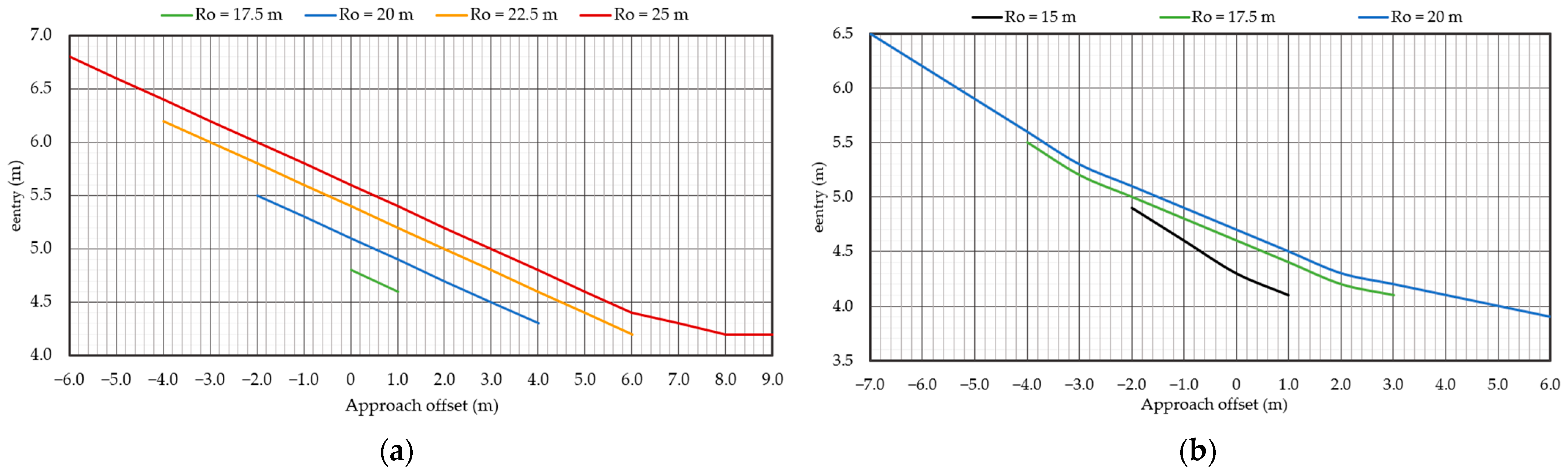
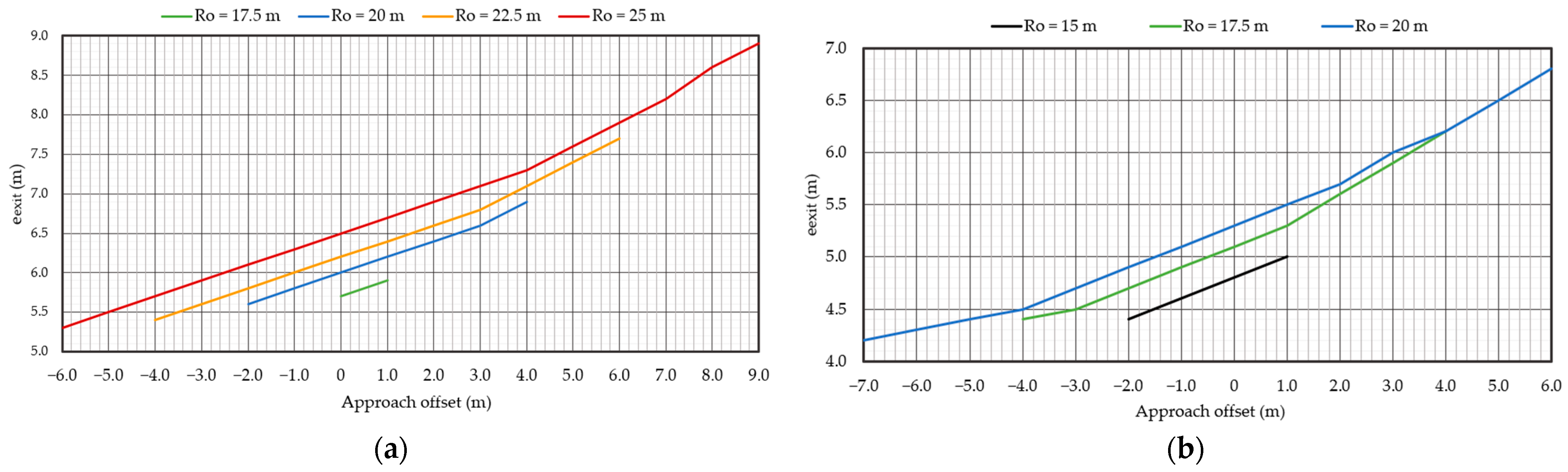
This study establishes a unique design model for roundabouts with offset approaches and outer radii ranging from 15 to 25 m using two design vehicles; a bus and a refuse collection vehicle RCV. The model is based on an analysis of 95 single-approach offsets (64 for the bus and 31 for the RCV) and up to 377 dual-approach offset combinations (229 for the buses and 148 for the RCV), using 1.0 m increments. The results indicate that approach legs (A) and (C) can be offset further to the right and left for the RCV compared to the bus for identical outer radii. This is due to the fact that the RCV features a shorter front overhang and wheelbase, as well as a self-steering rear axle. Consequently, utilising the RCV as the design vehicle yielded larger approach offset limits for roundabouts with outer radii between 15 and 20 m, which are most prevalent in urban areas.
This study addresses a critical gap in civil and transport engineering by eliminating the requirement for time-consuming iterations of swept path and fastest path analyses. The proposed model allows for the selection of roundabout radii and offsets beyond the specific study combinations with high confidence in the outcomes. Unlike existing guidelines, which often discourage the use of offset approaches, this research provides the definitive numerical data necessary for informed design. By establishing specific parameters to prevent inconsistent results, this work represents a significant scientific advancement in the area of civil and transport engineering and offers a transparent, replicable methodology.
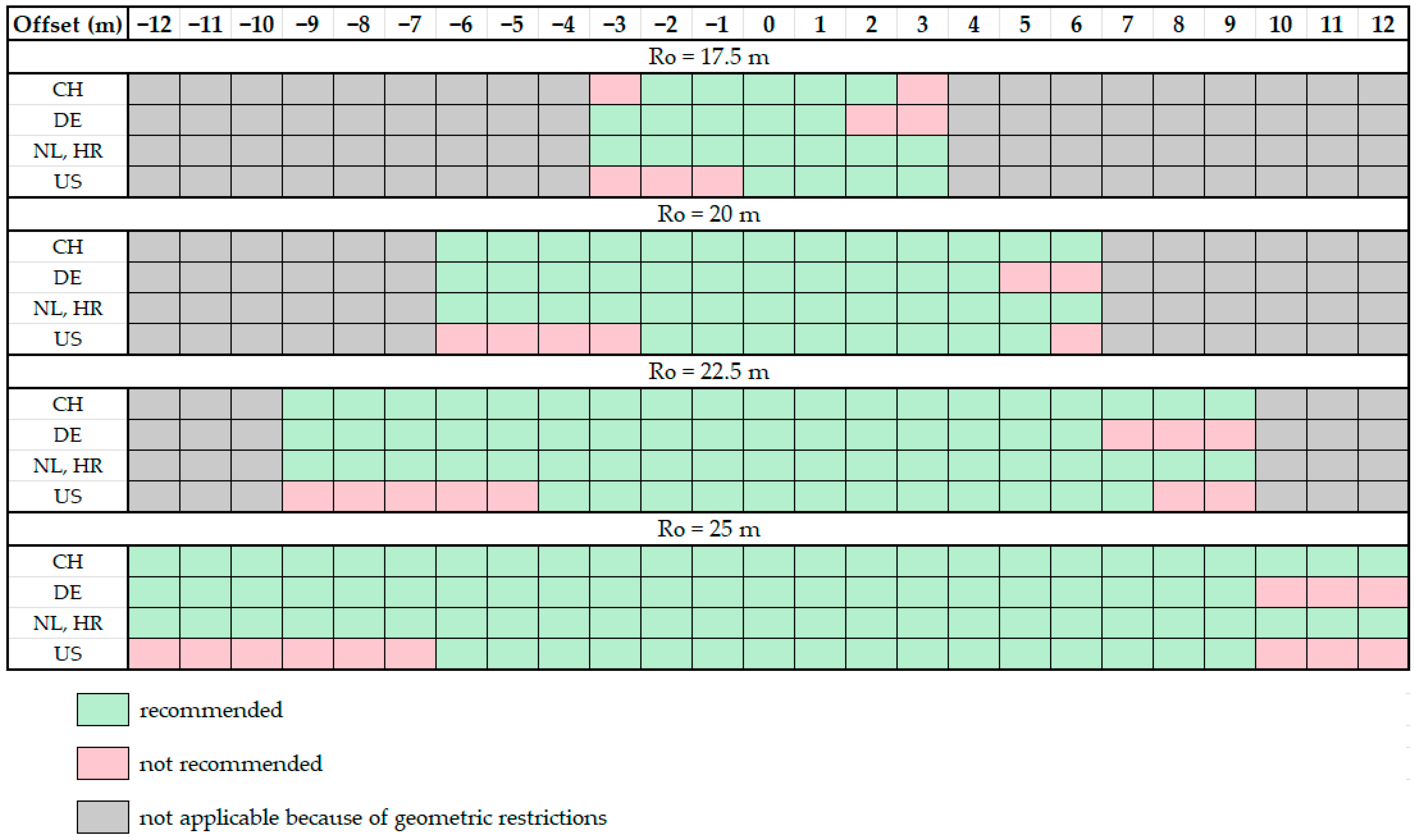
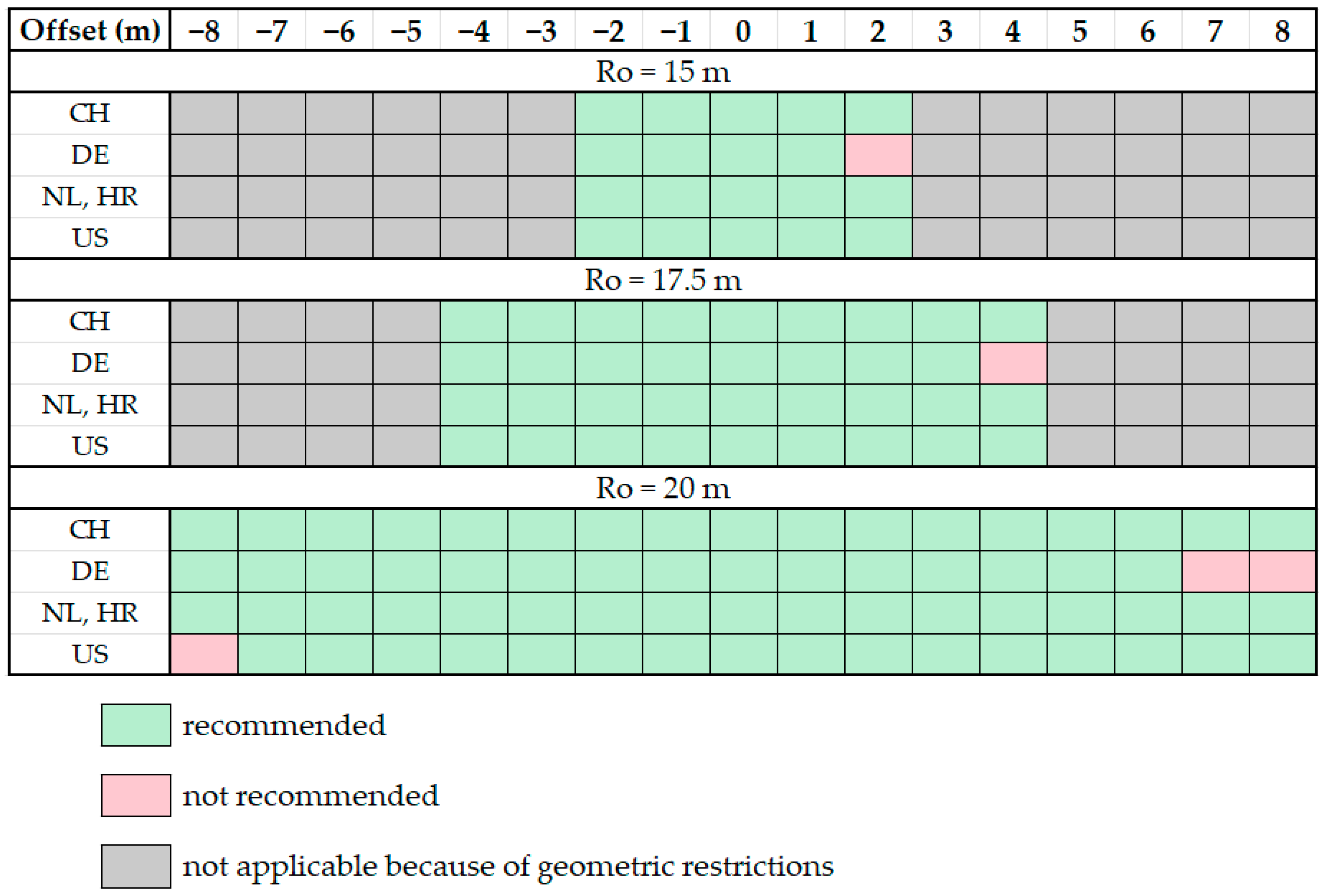
The approach offset values determined in this study are considerably higher for the outer radius (Ro) of 17.5–25 m than those recommended by the Croatian guidelines [
39], which set the maximum offset at 0.15 Ro. These findings are based on speed and deflection analyses conducted in accordance with the US [
36] and German guidelines [
31,
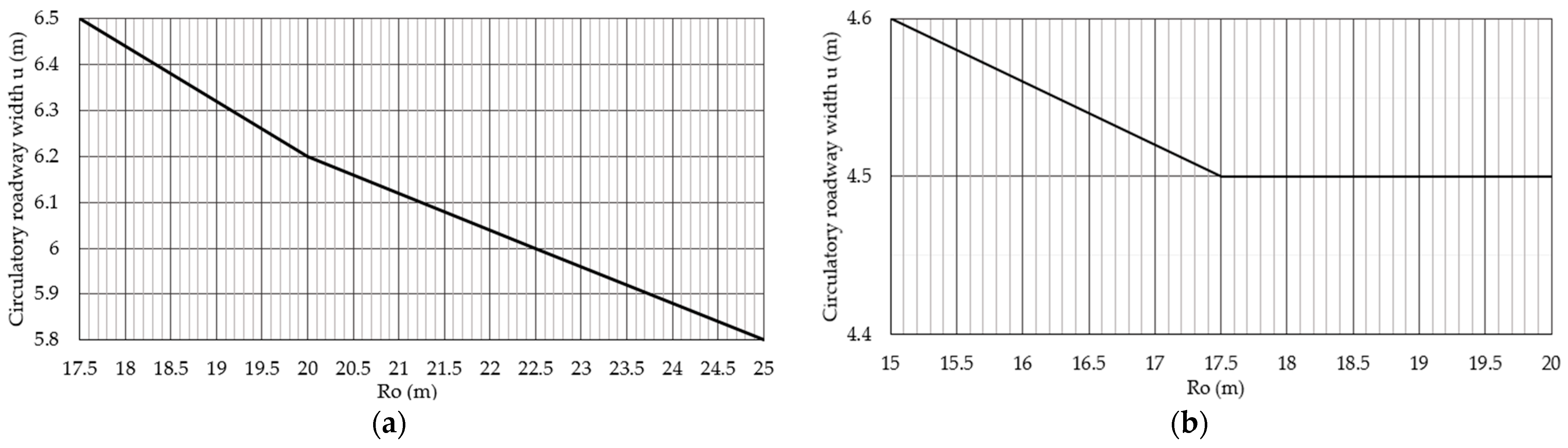
32], which are the most restrictive among the documents analysed in this research and provided the most comprehensive results by considering entry, through, and exit speeds and deflection. Additionally, the speed at the exit of the roundabout increases more rapidly when the approach is shifted to the left than the entry speed increases when the approach is shifted to the right, even though shifting the approach to the left reduces the required exit width. The design vehicle swept path naturally influences the determination of entry, exit, and circulatory roadway widths, and thus the driving speed. The aim was to design entry and exit widths to be as narrow as possible, with lateral clearances sufficient to ensure smooth movement of the chosen design vehicle.
Given that no single model perfectly predicts roundabout speeds, our study employed established European and US guidelines that have remained industry standards for over two decades. This study found the German [
31,
32] and US guidelines [
36] to be robust indicators for bus and RCV related restrictions. Furthermore, this research provides the specific parameters required for the prevention of inconsistent design outcomes.
The results of the investigation presented in this paper could not be compared with the results of a similar study given in [
47], because it used a predefined roundabout geometry and had the following limitations: the analysed roundabouts were designed without splitter islands, the design vehicle swept path was not considered, the safety performance was not tested, and the two adjacent approach edges at entry and exit could touch each other, i.e., there was no outer circular arc.
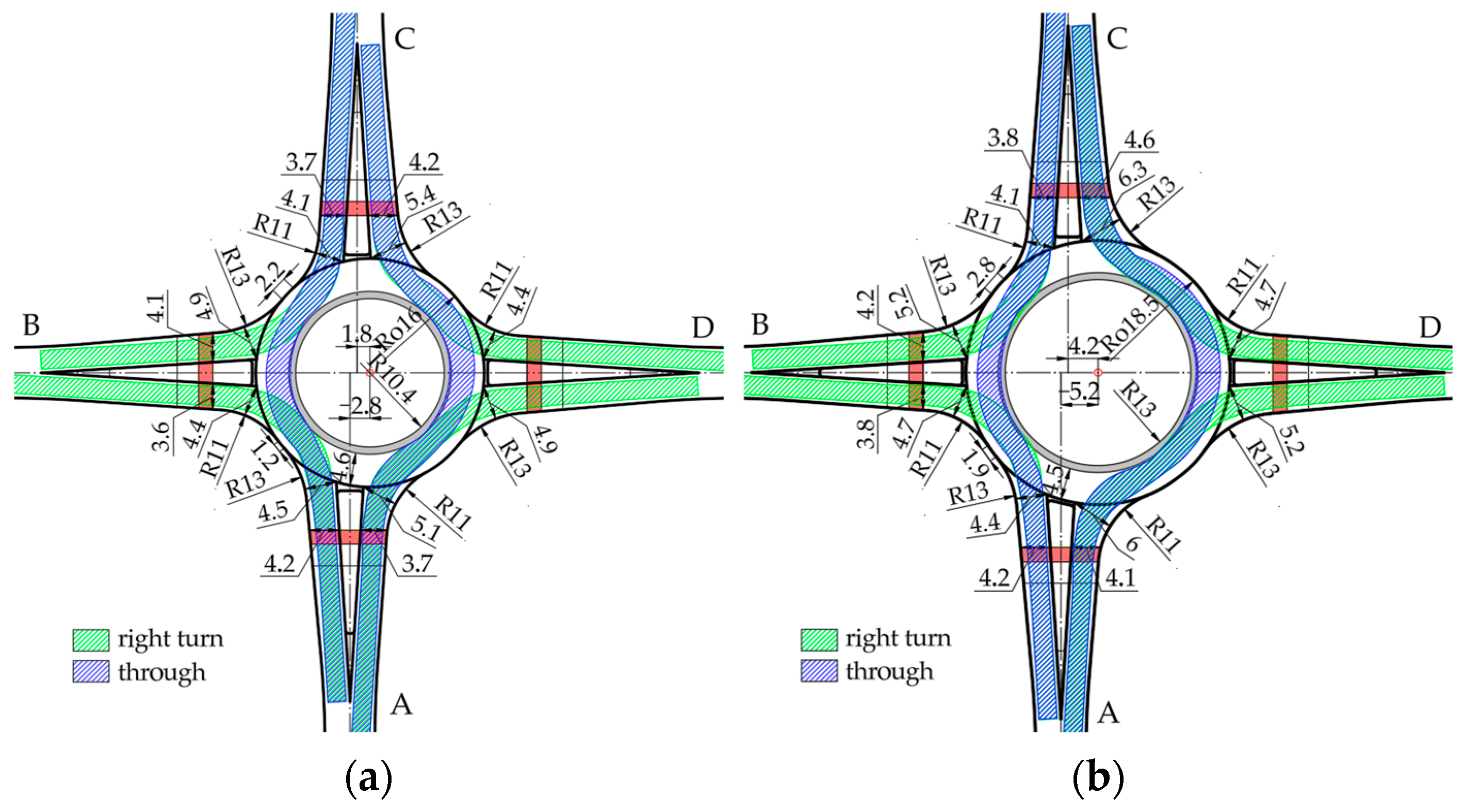
The design vehicle’s manoeuvres and swept paths at entry and exit are not identical, which directly affects the shape of the roadway edges. Because the rear wheels do not follow the front wheels, the vehicle requires a longer distance to realign upon exit; therefore, a larger roadway curvature radius is necessary. The applied entry radii of 11 or 13 m and exit radii of 13 or 15 m, depending on the design vehicle, combined with flared entries and exits, ideally follow the swept path with lateral clearances, aligning with results from previous studies [
45,
46].
In this study, roundabouts were designed so that the design vehicle, a two-axle, 12-metre-long bus, does not traverse the apron. This ensured passenger comfort, as recommended by the US guidelines [
35]. For the analysed roundabouts with an outer radius of 15 m designed for this bus, swept path analyses showed that the adjacent approach roadway edges (entry and exit) were less than 1.0 m apart. When a shorter and more manoeuvrable refuse collection vehicle (RCV) was introduced, which could traverse the apron by 0.5 m, the roundabout entries and exits became narrower. Consequently, the potential for approach offsets in roundabouts with an outer radius (Ro) of 15 to 20 metres increased. Designers must choose between the two vehicles depending on the location and local vehicle fleet composition. If a roundabout is designed specifically for RCVs, buses will experience significant traversing difficulties negotiating it; conversely, a bus-oriented design will seamlessly accommodate RCVs.
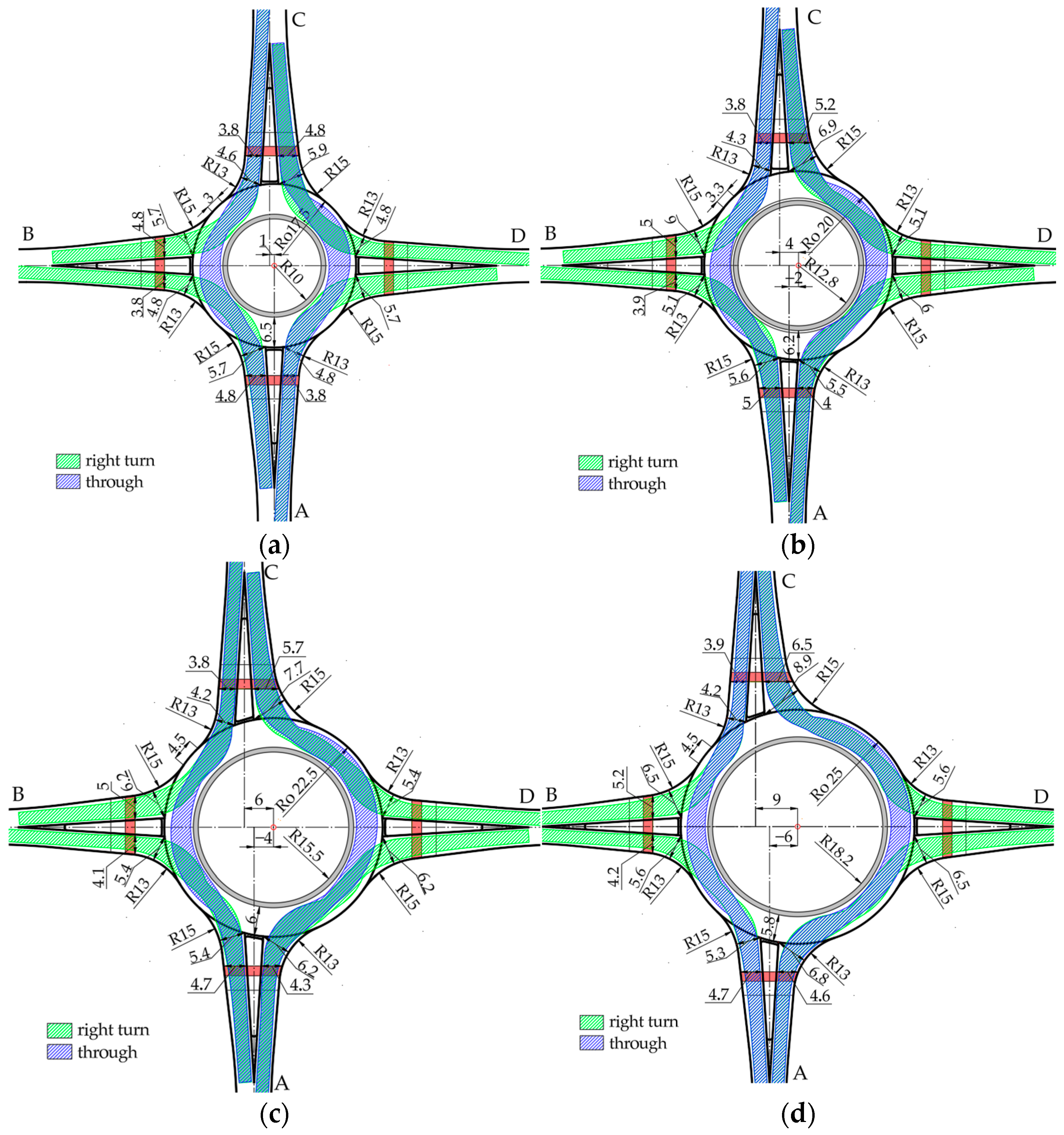
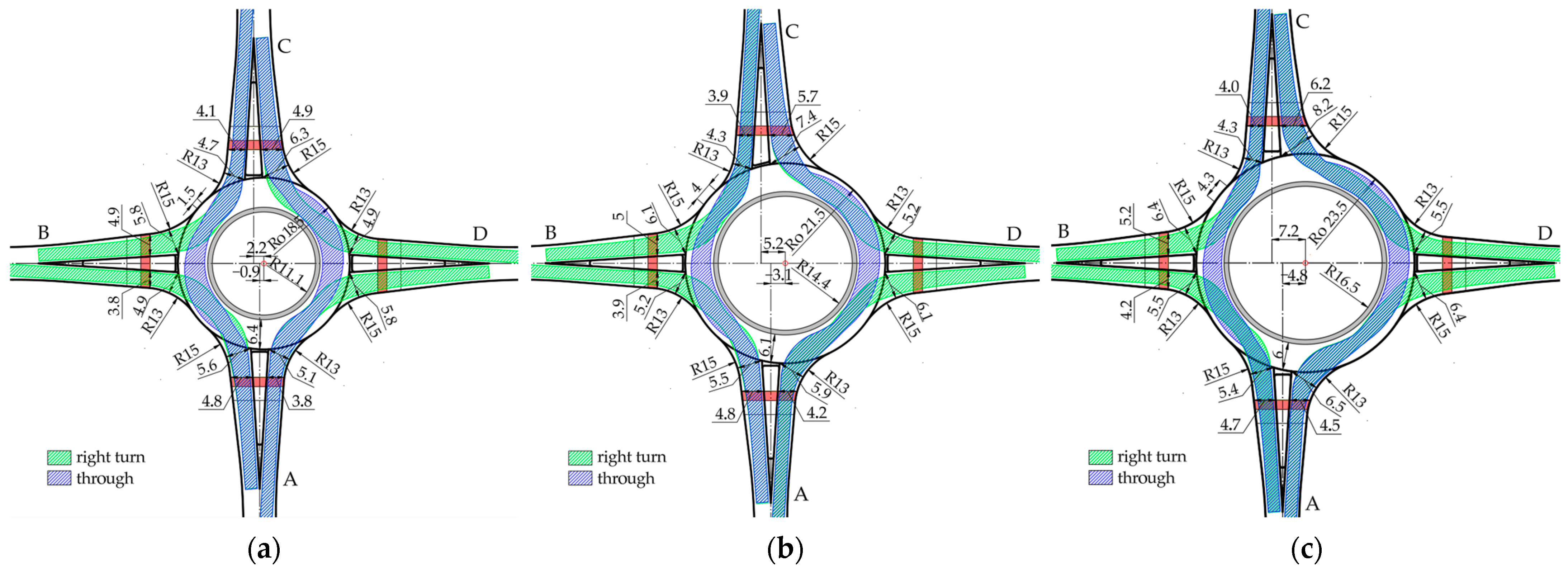
The crossing lengths for pedestrians and cyclists across entry and exit lanes were evaluated (
Figure 10 and
Figure 11). At the entry lane, crossing lengths decrease when the approach offset is to the right and increase when it is to the left; for the exit lane, the opposite is true. The greatest variance was observed between roundabouts, designed for the bus, with no offset and those with a 9.0 m offset to the right at a 25 m outer radius. Specifically, with a 9.0 m offset, the entry crossing length decreases by 0.3 m, while the exit crossing length increases by 1.3 m. Similar trends were observed for other radii: for an outer radius of 17.5 m with a 3.0 m offset, crossings were 0.1 m shorter at the entry and 0.1 m longer at the exit. At a roundabout with an outer radius of 20 m with a 5.0 m offset, crossings were 0.2 m shorter at the entry and 0.4 m longer at the exit. In comparison, at a 22.5 m radius with a 7.0 m offset, the entry decreases by 0.3 m and the exit crossing increases by 0.9 m. Based on the previous research, a pedestrian crossing at a roundabout with offset approaches that is up to 2.0 m longer than at a standard roundabout layout would not pose a problem even for the slowest pedestrians, as it would require only approximately 2 extra s for them to cross. Namely, according to Giannoulaki and Christoforou [
54], the slowest measured walking speeds range from 1.2 m/s to 1.4 m/s, while for seniors, the speed drops to 0.9 m/s. Furthermore, Gates et al. [
55] analysed 1947 crossing events across eleven intersections in Wisconsin and recommended a walking speed of 0.88 m/s for areas where nearly all pedestrians are over age 65. They suggest that 1.2 m/s is only appropriate for locations with very few older or disabled pedestrians, such as college campuses, while 1.15 m/s is the general recommendation for timing clearance intervals. Consequently, an additional 1.5 to 2.0 m of crossing distance would only require approximately 2 extra seconds for even the slowest pedestrians. To reduce pedestrian and cyclist exposure, crossings can be positioned further back from, but not too far away from roundabout exits (splitter island should not be narrower than 2 m in that place) or supplemented with road markings such as ‘shark’s teeth’ (triangular yield markings). Widely used in the Netherlands, these markings legally prioritise vulnerable road users by requiring exiting motorists to slow down and yield to those crossing their path. For the roundabouts designed for the RCV, the maximum difference in crossing lengths on the entry lane is 0.4 m, while the maximum difference on the exit lane is 0.6 m, depending on the outer radius (Ro) and the approach offset. Consequently, there are no significant changes in crossing lengths between approaches with and without an offset.
The limitations of this study were that it was not conducted on real examples of urban single-lane roundabouts with offset approaches, that the approach axes on the analysed roundabouts were all positioned at right angles, and only the triangular splitter island was evaluated. To help identify potential shortcomings in the roundabout design model, future research will include analysis of roundabout schemes with approach angles ranging from 70° to 90° in 5° increments, as well as one-approach offsets, two design vehicles, and other splitter island types. Furthermore, the model will be applied to a real-world roundabout experiencing safety or operational issues due to an offset alignment, and the real-world parameters will be compared with those suggested by the model.
5. Conclusions
High-quality geometric design of intersections is essential for safe and uninterrupted traffic flow and for maintaining an adequate level of service. The study presented in this paper focuses on the geometric design of urban four-leg single-lane roundabouts, specifically the possibilities of offsetting the approaches and modifying the shapes of roundabout design elements (entry and exit widths, circulatory roadway width) to accommodate different offset values. The motivation for this study was the need to construct roundabouts with offset approaches, especially in urban and suburban road networks. This study aimed to determine the influence of approach offset on the geometric design of roundabouts. The research was conducted using theoretical roundabout examples with outer radii (Ro = 15, 17.5, 20, 22.5, and 25 m) designed to accommodate a 12 m long two-axle bus and 9.95 m long three-axle refuse collection vehicles (RCV). The results showed that offsetting an approach is possible for roundabouts with outer radii ranging from 15 to 25 m, depending on the design vehicle, and that this offset affects entry and exit widths. Offsetting the approach leg to the left increases the required entry width and decreases the required exit width. Offsetting the approach leg to the right decreases the required entry width and increases the required exit width. The offset value is proportional to the roundabout outer radius. The speed analysis results further restricted the approach leg offsets.
This study and the new model contribute to the consistent design of roundabouts, particularly in the redesign of standard four- and three-legged intersections, by providing a model that does not require swept path and speed analyses. The efficiency of roundabouts designed using the new model is demonstrated by the smooth and unobstructed movement of the design vehicle, ensuring sufficient lateral clearances.
Future research should focus on the effects of varying splitter island widths on the fastest path or deflection, as well as the combined effects of radial and lateral approach offsets in urban roundabout design. In addition, the results obtained in this study should be compared with those from real examples of roundabouts with approach offsets to reach conclusions. This study provides researchers, practitioners involved in roundabout design, and decision-makers with valuable insights into the impact of approach offset on roundabout design.