Article

A State-of-the-Art Engineering Synthesis of Port Pavement Infrastructure Systems

by
Christina N. Tsaimou
and
Vasiliki K. Tsoukala
*
Laboratory of Harbour Works, School of Civil Engineering, National Technical University of Athens, 5 Iroon Polytechniou Str., 15780 Athens, Greece
*
Author to whom correspondence should be addressed.
Infrastructures 2026, 11(5), 157; https://doi.org/10.3390/infrastructures11050157
Submission received: 6 March 2026 / Revised: 17 April 2026 / Accepted: 29 April 2026 / Published: 1 May 2026

Abstract

Ports are complex infrastructure systems operating under adverse marine environments, diverse loading regimes, and significant economic pressures. Among their critical assets are pavement infrastructures that serve multiple functional domains, including container handling and storage areas, internal circulation corridors, passenger–vehicle interfaces, and auxiliary parking zones. However, existing port pavement research remains predominantly concentrated on heavy-duty container applications, while other functional categories are comparatively underexplored. This study develops a structured engineering synthesis of port pavement infrastructure assets by integrating bibliometric mapping, conducted using Scopus-indexed publications, with a functional–structural analysis of worldwide practices. Following the identification of research trends, additional insights from engineering-oriented studies and technical guidance documents were incorporated to strengthen the practical relevance of the investigation. These findings indicate that functional classification should precede structural design decisions, enabling the systematic identification of loading conditions, serviceability requirements, and transition demands across port environments. Heavy-duty operational zones require high-stiffness systems capable of resisting concentrated and repetitive loads, while circulation areas are particularly sensitive to low-speed traffic effects. In contrast, passenger and mixed-use zones necessitate hybrid design strategies that balance structural adequacy with serviceability and long-term durability under marine exposure, whereas auxiliary areas are primarily governed by cost-efficiency and maintenance considerations. The overall research provides a rational basis for investment prioritization, material selection, lifecycle planning, and performance-based pavement management within multifunctional port environments.

1. Introduction

Ports constitute some of the most complex and heterogeneous infrastructure systems, integrating a wide range of structural and operational components [1,2] within a confined, highly dynamic, and harsh environment [3]. Unlike linear critical infrastructures such as roads and railways, ports function as nodal structural systems that combine marine structures, transportation facilities, buildings, utilities, and terminals [4] to collectively support logistics, passenger mobility, vessel traffic, and economic activity [5]. Their performance depends both on the reliability of individual assets and the interaction between different structural subsystems operating under demanding environmental and operational conditions [5]. As a result, port engineering requires a multi-scalar perspective in which diverse infrastructure assets are designed, operated, and maintained as interdependent components of an integrated system, simultaneously supporting supply chain performance, maritime and hinterland connectivity, financial viability, customer service quality, sustainability objectives, governance structures, and long-term resilience [6].
Within this broader system, port pavements constitute a critical infrastructure subsystem composed of multiple function-specific categories that collectively support the operational continuity of port activities. Pavements in port environments include container yards, terminal and quay aprons, berth operational surfaces, internal circulation roads, parking areas, and passenger terminal access zones [7,8,9]. Each category is characterized by distinct structural configurations, material systems, loading characteristics, and performance requirements. Similar to other pavement systems such as airports and highways where different types of pavement cross-sections are applied, port pavements are influenced by the combined effects of heavy static and dynamic loads from cargo-handling equipment, repetitive maneuvering stresses, exposure to aggressive marine conditions, and stringent serviceability demands. These factors govern pavement design decisions, including the selection among flexible, rigid, semi-rigid, block, and other structural solutions [8,10,11,12,13,14]. Consequently, port pavements should be understood as a heterogeneous and functionally differentiated infrastructure system, requiring specialized engineering consideration.
In 1990, the United Nations Conference on Trade and Development (UNCTAD), in collaboration with the International Association of Ports and Harbours (IAPH), published Monograph No. 5 within its Port Management Series, dedicated to container terminal pavements [15]. This monograph provided one of the earliest structured overviews of port pavement engineering and management, addressing both theoretical considerations and practical implementation aspects. Despite this early institutional recognition, subsequent research has largely concentrated on heavy-duty container terminal applications, particularly on pavements supporting container loads and handling equipment such as cranes, straddle carriers, and reach stackers [8,13,14]. This emphasis is closely associated with the economic significance of containerized freight, which represents a dominant component of global trade flows and supply chain networks, with substantial implications for employment and economic development [6,16,17,18]. Failures in container pavements can compromise container stability and stacking integrity, disrupt cargo-handling operations, and impair logistics efficiency, ultimately leading to increased maintenance costs, elevated safety risks, and substantial financial losses due to delays within the supply chain [19]. As a result, a significant engineering effort has been devoted to optimizing the design, performance, and maintenance of container terminal pavements.
Despite the critical importance of container terminals, modern ports increasingly accommodate a diverse range of functions beyond freight handling, including passenger transport, ferry services, cruise tourism, and mixed-use urban interfaces, all of which rely on dedicated infrastructure [20,21,22]. In this context, pavements in ferry terminals, cruise terminals, parking areas, and internal circulation zones are subject to distinct operational patterns, loading characteristics, and serviceability expectations compared to container yards and, therefore, require tailored engineering consideration. However, these pavement categories have received comparatively little systematic attention in the scientific literature. This imbalance raises fundamental questions for port engineers and infrastructure managers: how should different port pavement areas be identified, categorized, and assessed, and what engineering requirements should guide their design, maintenance, and lifecycle management?
In response to these challenges, this paper advances a structured engineering synthesis of port pavement infrastructure assets. This study begins with systematically mapping the existing scientific literature through a bibliometric analysis based on Scopus-indexed publications to identify dominant themes and underexplored areas within port pavement engineering (Section 2). Once research trends are identified, additional insights from engineering-oriented studies and technical guidance documents are incorporated to strengthen the practical relevance of the analysis. Subsequently, port pavement areas are classified according to their functional role within the port system, and examined in terms of loading mechanisms, structural typologies, material systems, type of engineering approach (e.g., laboratory tests or in situ measurements), and performance requirements (Section 3). The synthesized knowledge is then integrated and discussed in Section 4, where key engineering perspectives are further developed, including the influence of subgrade conditions, the impact of aggressive marine environments, pavement requirements in transition zones, and the relevance of lifecycle-oriented considerations for pavement design. In addition, in Section 4, the limitations of the study are addressed, noting that while the bibliometric analysis is limited to publications of a single well-established database. Furthermore, the study does not include primary experimental or numerical investigations, as its objective is to build upon and synthesize existing validated research. The overall investigation consolidates worldwide practices across port pavement categories to derive key engineering insights and to formalize a decision-oriented framework for the systematic understanding of port pavement systems before design, intervention, or lifecycle planning.
The novelty of the present study lies in developing an integrated functional–structural framework for interpreting port pavement infrastructure assets within multifunctional port environments. The principal contributions of this paper are as follows:
  • Providing a comprehensive background of pavement research conducted within the port industry through a bibliometric analysis;
  • Systematically linking previously fragmented attempts on functional classification, structural design considerations, and serviceability requirements;
  • Addressing overlooked interface conditions and operational transitions that necessitate hybrid design solutions within multifunctional port environments;
  • Developing a unified analytical perspective for interpreting port pavement systems;
  • Identifying transition zones between functional pavement areas as critical design interfaces, and proposing an engineering perspective based on current practices in similar pavement infrastructure systems.

2. Bibliometric Mapping of Port Pavement Research

2.1. Search Strategy and Dataset Construction

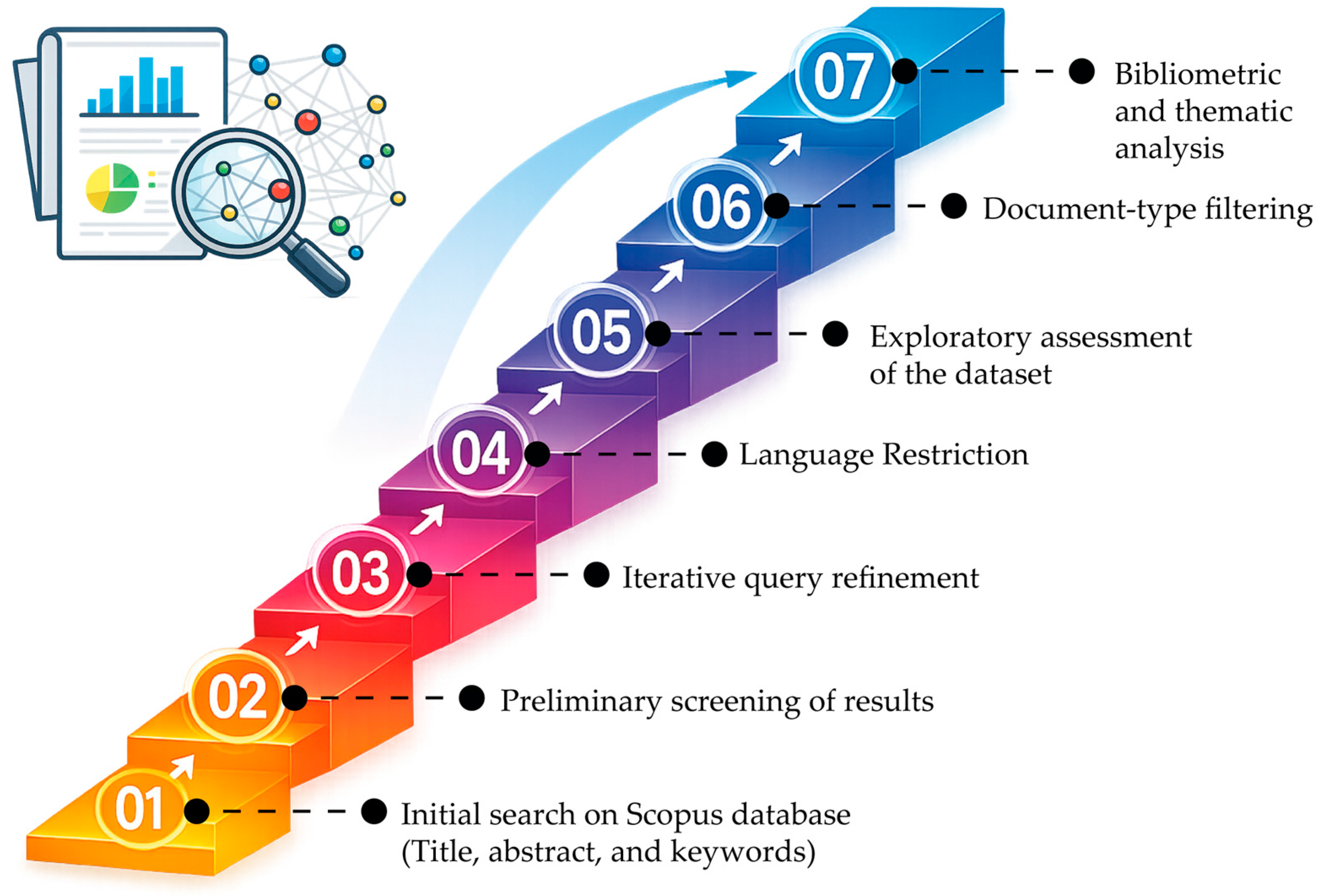
To support the development of a structured engineering synthesis of port pavement infrastructure assets, it was first necessary to examine the evolution and thematic orientation of existing research in this field. Bibliometric surveys have been widely used to explore research history in various marine topics such as “climate change adaptation in the port industry” [23] or “marine spatial planning” [24]. Therefore, a stepwise bibliometric framework was adopted herein (Figure 1) to provide a foundation for identifying dominant research streams, methodological approaches, and potential gaps that justify the need for a unified engineering perspective. robustness. A stepwise bibliometric framework was applied to ensure thematic precision and dataset robustness. Specifically:
  • Step 1—Initial Database Search: An initial search was conducted in the Scopus database using the fields Article title, Abstract, and Keywords to ensure comprehensive retrieval of literature directly addressing port pavement–related research topics. At this exploratory stage, broad expressions such as “port pavement” and “port pavement engineering” were tested to observe database behavior and identify potential sources of ambiguity or irrelevance.
  • Step 2—Preliminary Screening: The retrieved records were subjected to rapid relevance screening to evaluate thematic alignment with the research objective. This step revealed the need for more precise proximity-based expressions and the consideration of contextual inclusions and exclusions.
  • Step 3—Iterative Query Refinement: Based on the screening process, the search string was iteratively refined to improve precision while maintaining adequate thematic coverage. The final query employed proximity operators to capture context-specific associations between pavement-related terminology and core port infrastructure terms (port, seaport, container, quay, berth), thereby reducing ambiguity while retaining comprehensive thematic coverage. This formulation resulted in 153 documents.
  • Step 4—Language Restriction: To ensure consistency in interpretation and comparability of findings, the dataset was limited to publications in the English language, resulting in 131 documents.
  • Step 5—Preliminary Dataset Investigation: An exploratory assessment of the refined dataset was conducted to examine publication trends, subject areas, document types, temporal evolution, and emerging thematic clusters.
  • Step 6—Document-Type Filtering: For analytical consistency and to focus on validated scientific contributions, the dataset was further restricted to peer-reviewed journal articles. This filtering step resulted in a final core dataset of 51 articles.
  • Step 7—Bibliometric Analysis: The final dataset was analyzed using bibliometric techniques, including co-authorship mapping, keyword co-occurrence analysis, temporal trend evaluation, and geographical distribution assessment. Visualization and clustering were performed using VOSviewer (version 1.6.19) to identify dominant themes, collaboration networks, and underexplored areas within port pavement engineering.
Figure 1. Stepwise bibliometric framework applied to structure the port pavement literature retrieved from the Scopus database.
Infrastructures 11 00157 g001

2.2. Bibliometric Overview

The exploratory application of the initial search expressions (“port pavement” and “port pavement engineering”) revealed a relatively limited number of directly indexed publications explicitly framed under these general terms (Step 1 in Figure 1). This observation suggests that research activity in the field is not commonly labeled under a unified port pavement terminology. Instead, many studies appear to associate pavements with specific operational contexts, particularly container terminals and heavy-duty applications. Consequently, the search strategy was expanded to include proximity-based combinations of pavement-related terminology with more specific port infrastructure terms (Steps 2 and 3 in Figure 1).
Following the restriction to English-language publications, the refined dataset comprised 131 documents (Step 4 in Figure 1). The earliest records were identified in 1983, including two journal articles and two conference papers, all addressing container or heavy-duty pavement applications. This early concentration on container-related systems indicates that port pavement research initially emerged in response to structural demands associated with containerization. Moreover, in total, eight documents were recorded for the year 2025, including two journal articles and six conference papers. Among the journal publications, ref. [25] examines container terminal pavements in Somalian ports, while ref. [26] addresses crack segmentation in port road pavements. The presence of multiple conference contributions in recent years suggests ongoing technical interest and emerging research activity within the field (Step 5 in Figure 1).
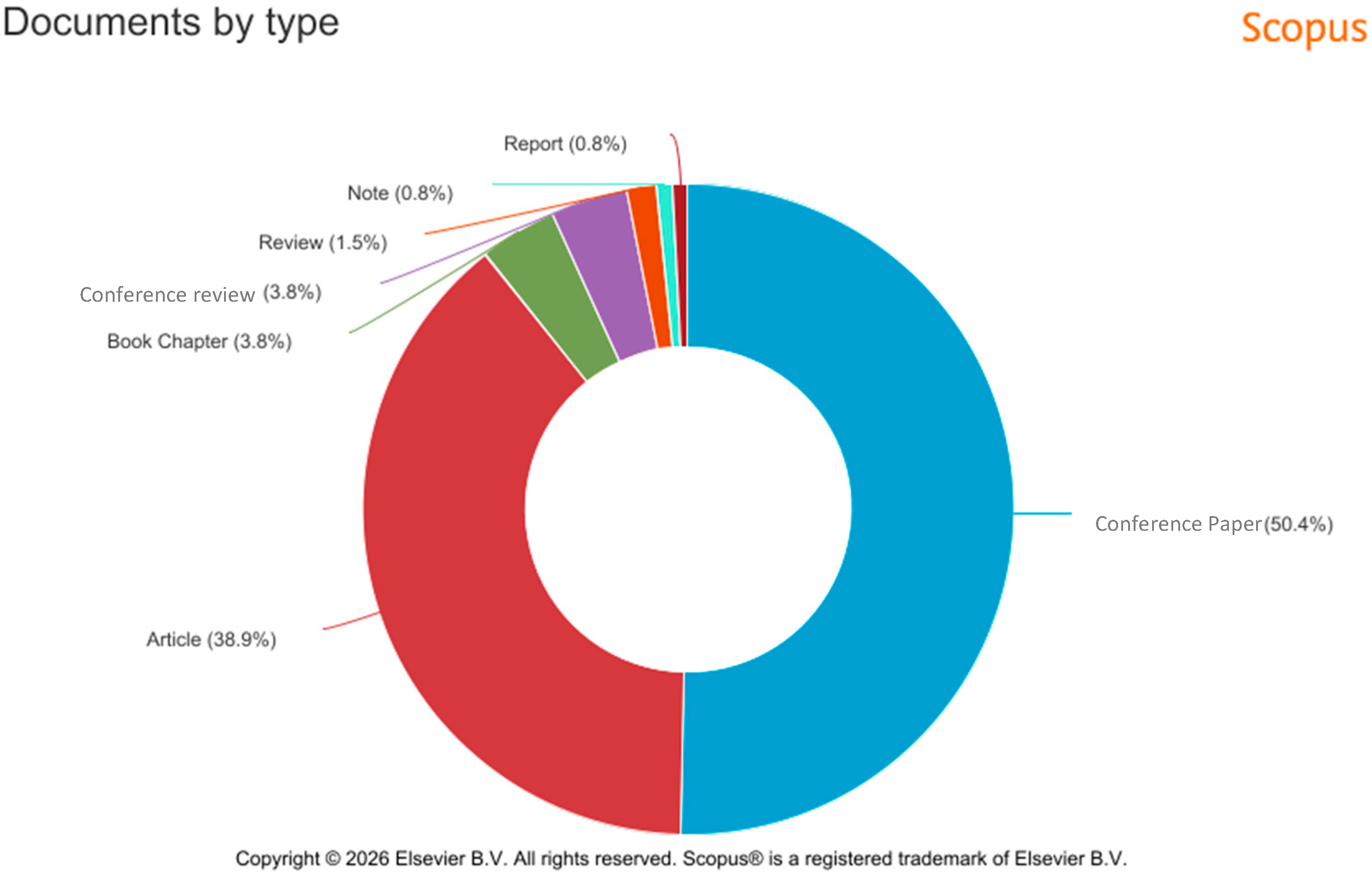
Figure 2 presents the annual distribution of publications. The highest number of documents was recorded in 2004 (n = 11), followed by 2024 (n = 9) and 2025 (n = 8). Although the field does not exhibit a steady linear growth pattern, recent years have demonstrated renewed research attention. Figure 3 illustrates the distribution of documents by type. Conference papers account for 50.4% of the retrieved publications, while 38.9% correspond to peer-reviewed journal articles. This distribution indicates that a substantial portion of port pavement research is disseminated through conference venues, further supporting the characterization of the field as specialized and technically oriented.
The investigation proceeded with filtering by document type in order to ensure analytical consistency and focus on peer-reviewed scientific contributions (Step 6 in Figure 1). Following dataset consolidation, the first analytical component of Step 7 involved the examination of co-authorship patterns. The VOSviewer software [27] was employed to construct and visualize the collaboration network.
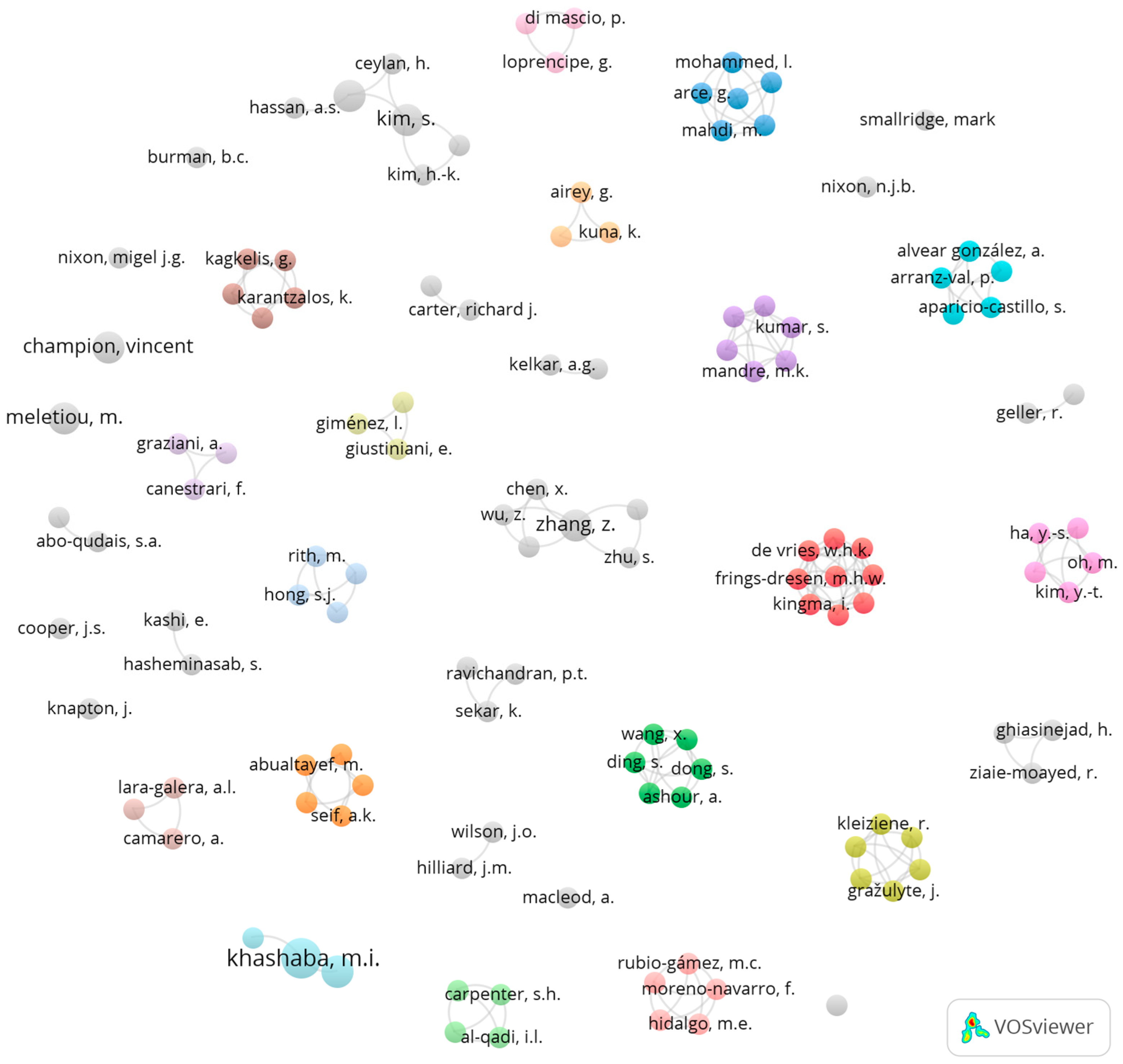
Figure 4 presents the co-authorship landscape for the complete sample of 124 identified authors. The network illustrates the overall collaboration structure, highlighting the degree of fragmentation and the presence of isolated or weakly connected contributors. The map indicates a dispersed research activity pattern and suggests limited structural consolidation within the field of port pavement engineering. When the threshold was restricted to authors with at least two publications, the network was substantially reduced, leaving only eight recurring contributors and forming largely disconnected nodes. This contraction further confirms the absence of a stable or consolidated research core. Overall, the field appears characterized by dispersed contributions, with the majority of authors publishing only once and collaboration density remaining relatively limited.
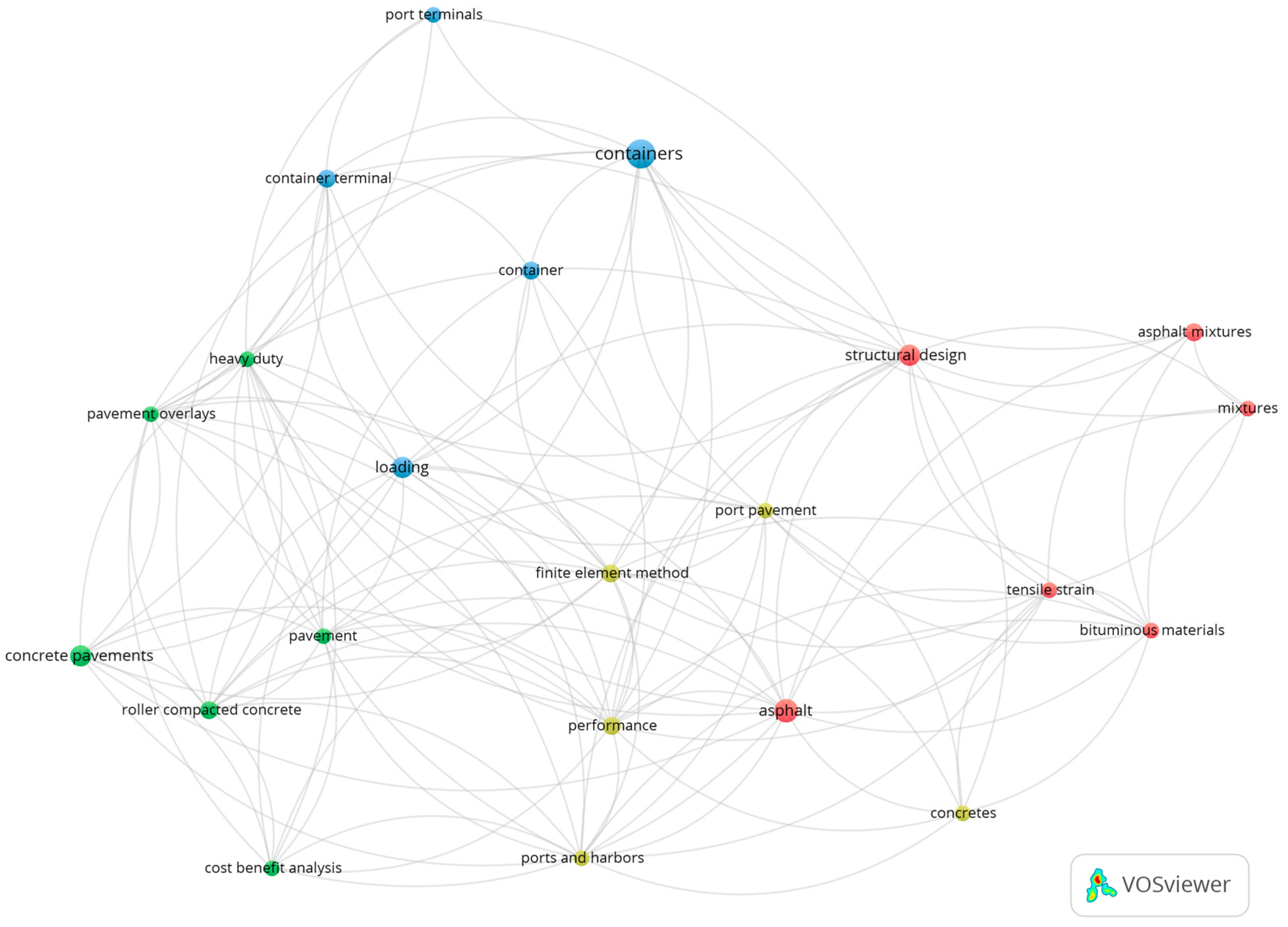
Within the framework of semantic analysis, a keyword co-occurrence network was constructed using author-provided keywords as input data. A minimum occurrence threshold of three was applied to ensure thematic relevance while preserving representative secondary terms. To enhance interpretative clarity, generic and corpus-defining terms (e.g., “pavement”), inherently embedded in the search query, were excluded from the analysis, following established bibliometric practices (e.g., [23]). Association strength normalization was employed to identify meaningful relational patterns among the remaining terms. The resulting network visualization is presented in Figure 5 and was generated using VOSviewer software.
The keyword co-occurrence network (Figure 5) reveals a structured yet thematically differentiated landscape within port pavement research. Four primary thematic groupings can be identified. A first cluster centers on container-related infrastructure, including terms such as containers, container terminals, and port terminals, reflecting the dominant focus of the field on heavy-duty operational areas associated with container handling. A second cluster relates to structural and material design considerations, linking structural design, asphalt mixtures, bituminous materials, tensile strain, and mixtures, indicating a strong emphasis on mechanistic performance and material behavior. A third thematic grouping is associated with heavy-duty and concrete pavement applications, incorporating concrete pavements, roller compacted concrete, pavement overlays, and heavy-duty, which highlights research attention on rigid and semi-rigid pavement systems in demanding operational contexts. Finally, cross-cutting terms such as loading, finite element method, and performance occupy more central bridging positions, suggesting that numerical modeling and load-response analysis function as integrative research approaches across multiple pavement types. Overall, the network indicates that port pavement research remains largely oriented toward container terminal applications and structural performance analysis, while broader operational and multifunctional port pavement contexts appear comparatively underrepresented.
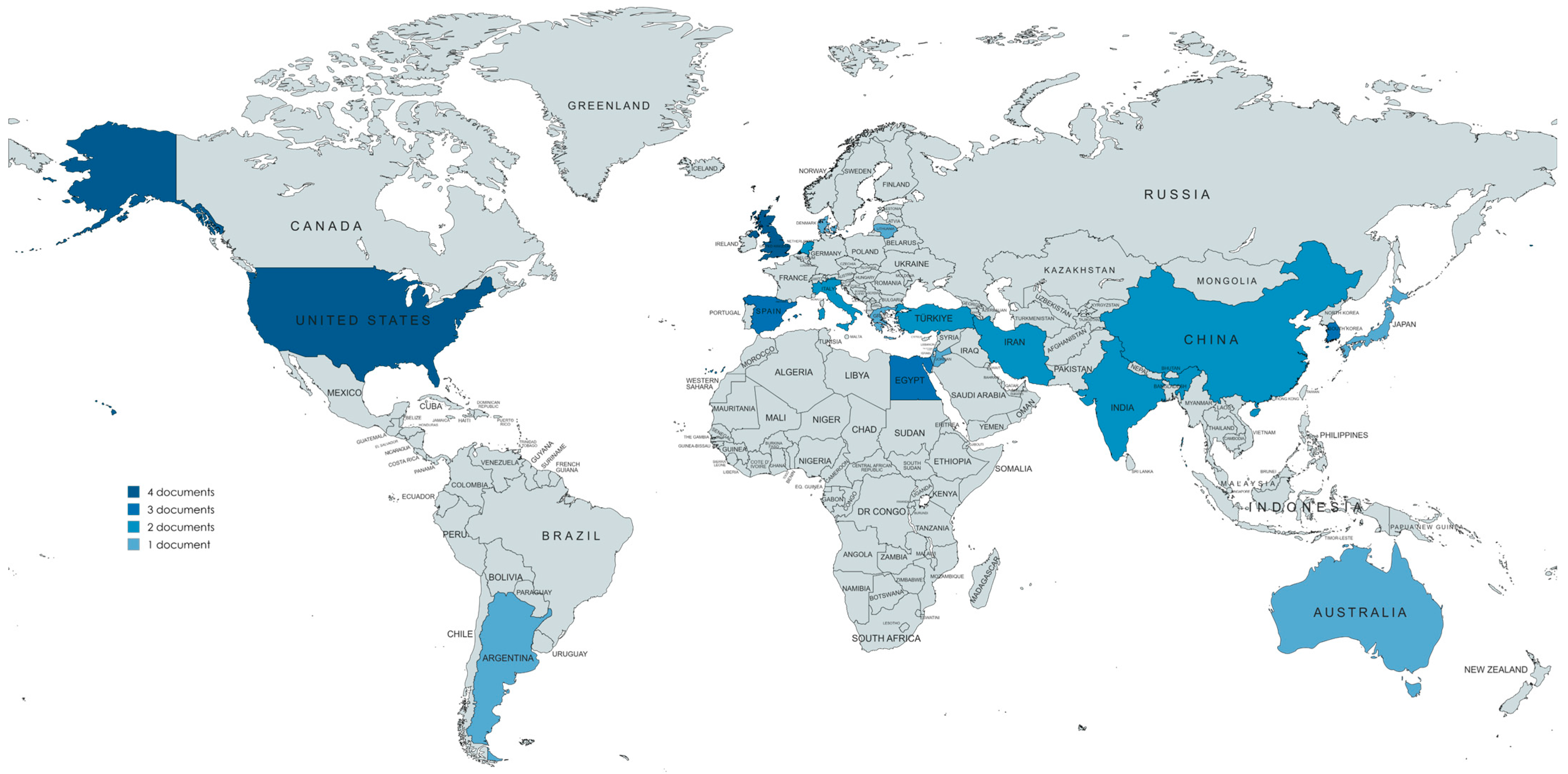
The geographical distribution of publications in port pavement research (Figure 6) indicates a dispersed and globally distributed research activity, albeit with limited concentration in specific regions. The United Kingdom and the United States lead the field with four publications each, followed by Egypt, South Korea, and Spain with three publications each. A second tier of contributions includes China, India, Iran, Italy, the Netherlands, and Turkey, each with two publications. Several countries, including Argentina, Australia, Denmark, Greece, Israel, Japan, Jordan, and Lithuania, are represented by single contributions.
It is noteworthy that a substantial portion of early publications (n = 18) was categorized as “Undefined” in the Scopus database, primarily corresponding to documents published before 2000, when standardized affiliation metadata was not consistently recorded. Overall, the results suggest that port pavement research does not exhibit strong geographical concentration, but rather reflects a fragmented and internationally distributed research landscape without a dominant regional hub.

2.3. Key Insights

Based on the above, the bibliometric mapping of port pavement research aimed to identify prevailing thematic orientations, chronological evolution, collaboration patterns, and geographical distribution within the field. The analysis highlights the dominance of container-related and heavy-duty pavement applications as the principal subject areas shaping existing research. From a temporal perspective, publication activity appears relatively stable over the years, with notable peaks in 2004 and renewed momentum in the last two years, suggesting a re-emerging interest in the topic.
At the same time, co-authorship patterns and thematic structures reveal limited consolidation and relatively weak interconnection among studies, indicating that research efforts remain largely dispersed and independently developed. This fragmentation underscores the need for a structured and unified perspective capable of integrating existing knowledge across functional, structural, and operational dimensions of port pavement infrastructure. Through the bibliometric observations, the following section advances an engineering-oriented interpretation of port pavements based on functional classification and dominant loading mechanisms.

3. Port Pavement Approaches

3.1. Functional Classification of Port Pavement Areas

The bibliometric mapping presented in Section 2 provided a structured understanding of prevailing research orientations while simultaneously consolidating the relevant body of literature required to develop an integrated engineering framework for port pavement infrastructure. Considering this, the first step toward a unified perspective involves the functional classification of port pavements before their structural or material differentiation.
Ports operate as multifunctional environments supporting a broad spectrum of activities [28]. As noticed in several major ports worldwide such as the port of Singapore [29], the port of Los Angeles [30], the port of Rotterdam [31], the port of Hamburg [32], the port of Piraeus [33], these activities include container handling and storage, cruise and ferry operations for passenger and vehicle transport, fishing activities, marina and small-craft operations, shipyard facilities for vessel construction and repair, and various administrative and public-service functions. In addition, ports incorporate internal circulation roads, inter-terminal connectors, hinterland access corridors, and parking areas serving both operational vehicles and public users. Each of these operational domains requires dedicated paved surfaces, in the form of yards, aprons, quay surfaces, or roadways, designed to satisfy specific performance and serviceability requirements. While some ports are functionally specialized (e.g., primarily commercial container ports or small-craft harbors), contemporary port systems increasingly operate as multi-purpose hubs integrating freight, passenger, and urban-interface functions within the same spatial boundary. This multifunctionality further reinforces the necessity of distinguishing pavement areas based on their operational role before considering structural typology.
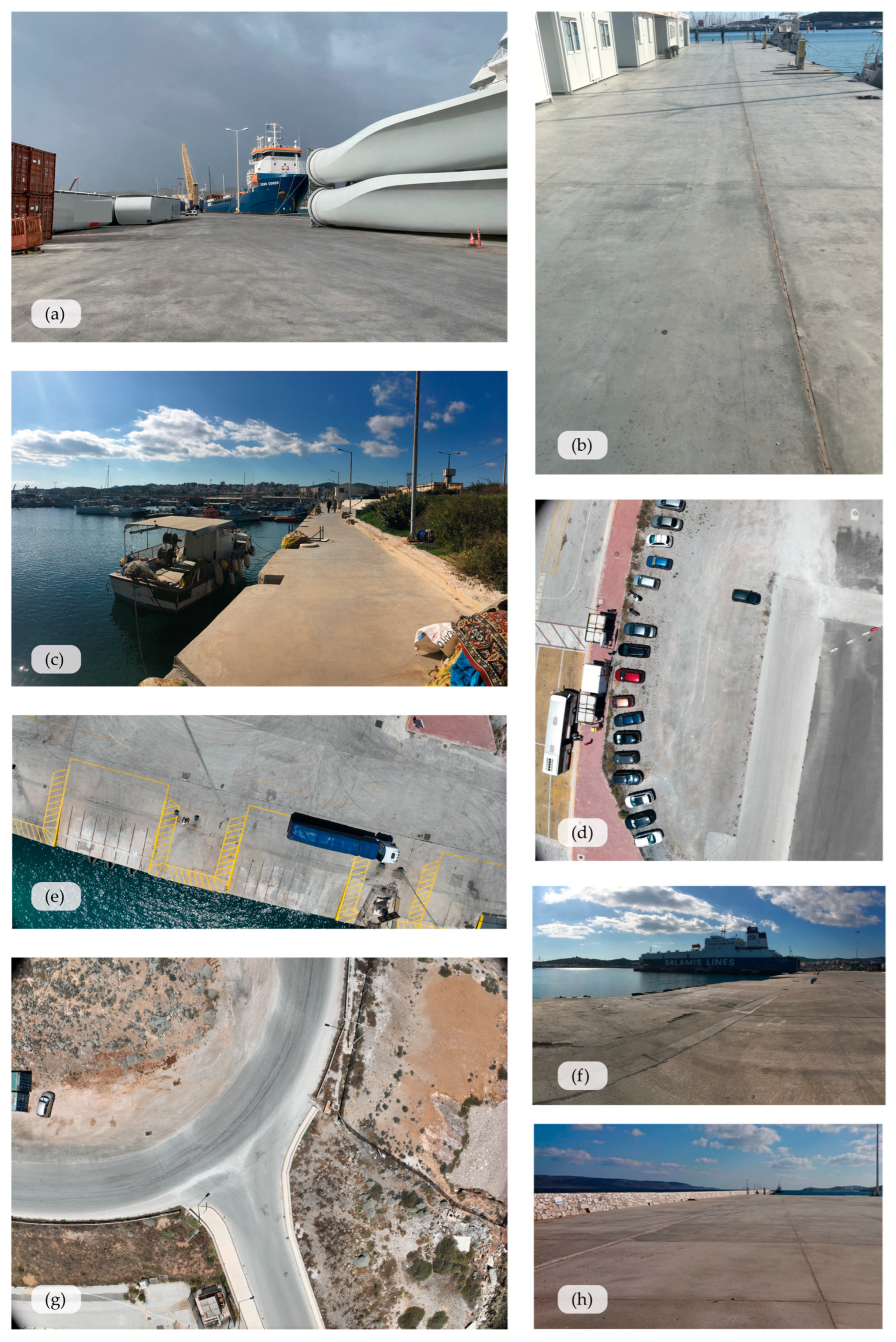
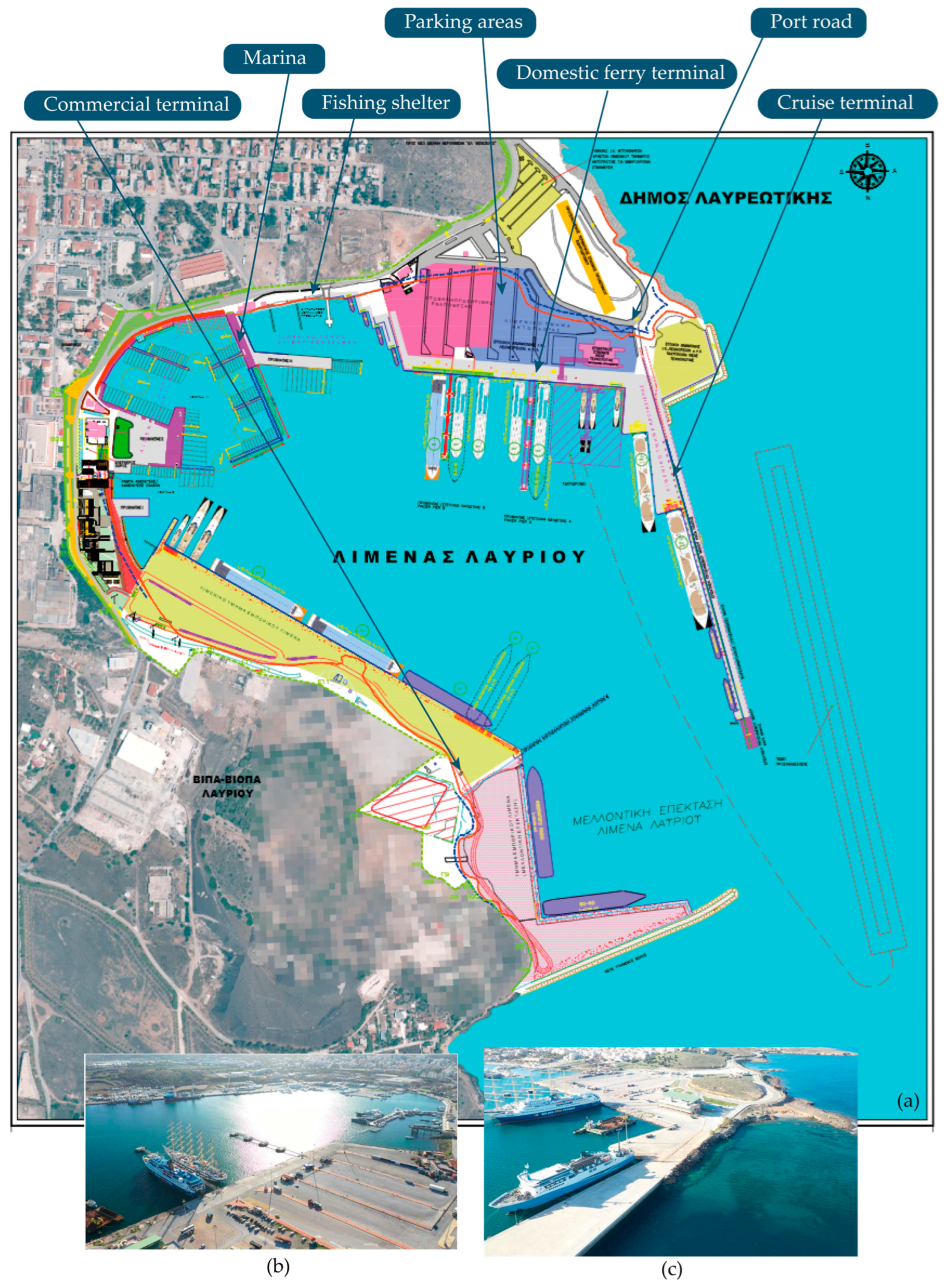
To illustrate the practical implications of functional pavement differentiation within multifunctional port environments, the Port of Lavrio, located at the southeastern tip of Attica, Greece, provides a representative example. According to the Greek legislative framework [34], Lavrio is officially classified as a port of international interest. The masterplan of the port, as presented on its official website [35], is illustrated in Figure 7 and indicates its multiple functionalities. Within its spatial boundary, Lavrio accommodates commercial terminal operations, marina facilities, fishing shelter areas, domestic ferry services, cruise activities, parking zones, and port road networks. Each of these functional domains requires dedicated pavement systems designed to withstand distinct loading regimes, traffic characteristics, and serviceability demands. Consequently, pavement cross-sections must be selected and dimensioned in accordance with the operational requirements associated with each specific port activity.
Characteristic examples of the different pavement types observed in Lavrio are presented in Figure 8. The dominant surface materials identified during site observation include asphalt mixtures and concrete systems. Specifically, Figure 8a illustrates asphalt pavement in the commercial sector; Figure 8b and Figure 8c present concrete pavements in marina and fishing shelter areas, respectively; Figure 8d shows asphalt pavement in parking zones serving the domestic ferry terminal; Figure 8e,f depict concrete pavements within the domestic ferry operational area; Figure 8g presents asphalt pavement in peripheral port road sections facilitating exit circulation; and Figure 8h illustrates relatively recent concrete pavement construction in the cruise terminal domain.
The diversity of pavement applications observed within a single multifunctional port environment, i.e., the port of Lavrio, further confirms that port pavement infrastructure cannot be approached as a uniform engineering entity. Instead, pavement systems must first be differentiated according to their functional role and associated operational demands before structural cross-sections and material solutions are considered. Following this, the present study proposes a functional classification framework intended to support engineering decision-making in the design, selection, and management of port pavement systems, distinguishing pavement areas according to their operational role within the port system and the dominant loading mechanisms they experience.
The proposed classification organizes port pavements into four principal functional categories:
  • Heavy-duty operational zones;
  • Circulation and transfer zones;
  • Passenger and mixed-use zones;
  • Service and auxiliary zones.
This classification provides a structured engineering basis for linking operational requirements with pavement structural typologies, material selection, and performance evaluation.
Table 1 summarizes the proposed functional classification and the associated operational characteristics of each pavement category, with its dominant loading characteristics and performance requirements. Heavy-duty zones, particularly those serving container and bulk cargo operations, are primarily controlled by static and low-speed repetitive loading conditions [10,13,37], whereas circulation corridors are dominated by dynamic traffic-induced stresses [38]. Passenger-oriented areas introduce additional serviceability and safety requirements [39] linked to mixed-use operation. Finally, service and auxiliary zones are typically subjected to predominantly static or low-speed loading conditions and are therefore governed primarily by serviceability considerations [40], requiring adequate surface performance. Although certain localized interface areas, such as ramp contact zones, may experience concentrated loading effects, and mooring or bollard regions constitute structural elements in their own right, these specialized components fall outside the primary scope of the present pavement-focused analysis. Besides loading conditions, port pavements are exposed to aggressive marine environments characterized by salinity, moisture variability, and temperature fluctuations, further differentiating their performance demands from conventional inland pavement systems [41,42,43].
The next step involves examining how existing research and engineering practices correspond to these operational pavement categories. The following section synthesizes documented approaches, design considerations, and material solutions reported in the literature to identify prevailing trends and areas requiring further consolidation.

3.2. Worldwide Engineering Approaches

3.2.1. Heavy-Duty Operational Zones

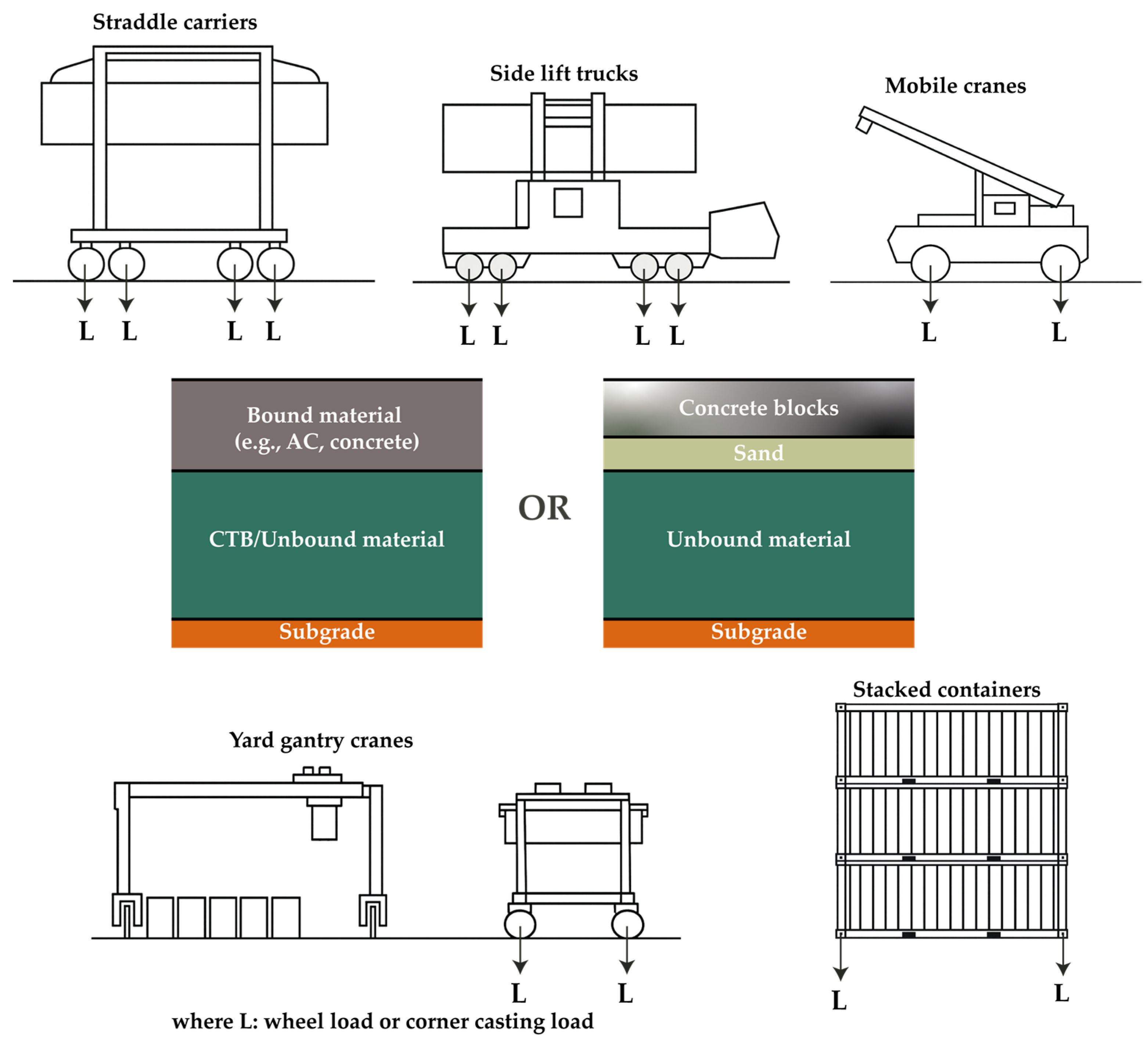
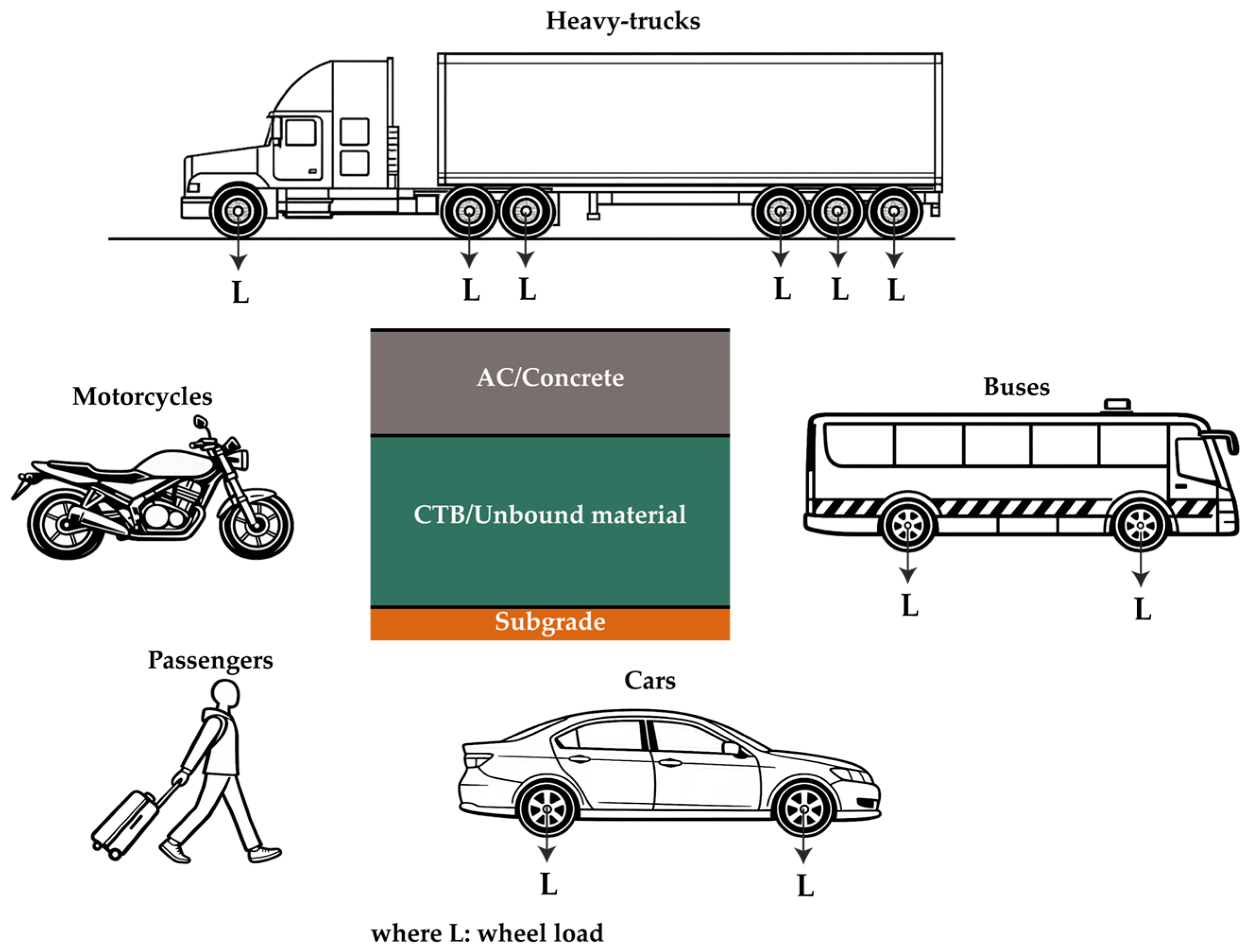
Heavy-duty operational zones represent the structurally most demanding areas within container terminals, where pavement systems are subjected to combined static stacking loads, low-speed repetitive trafficking by heavy container-handling equipment (Figure 9), horizontal braking forces, and, in some cases, impact loading [10,44]. International design guidance, such as the Guide to the Structural Design of Flexible Pavements for Ports and Container Terminals developed by the Australian Flexible Pavement Association (AfPA), emphasizes that container terminals cannot be treated as homogeneous paved surfaces [44].
In general, a number of technical guidelines and engineering reports have been developed specifically for heavy-duty port pavement applications, in contrast to other functional categories. This can be attributed to the unique and highly demanding loading conditions associated with container handling and storage operations. Early contributions date back to the 1990s (e.g., [15,45]), while more recent developments continue to refine design approaches for these environments. For example, Knapton [46], building upon earlier work associated with the British Ports Association, provides a comprehensive framework for the design of heavy-duty port pavements, addressing key aspects such as loading types, material selection, resurfacing practices, and case-based applications related to different handling equipment. More recent guidelines, including those developed by PIANC [47], further expand these approaches by providing design procedures for asphalt, concrete, and concrete block pavements, as well as roller-compacted concrete systems. These guidelines also address critical aspects such as equipment load repetitions, differences between port, highway, and airport pavement design, and foundation design considerations, including the need for specialized treatment of reclaimed materials to limit long-term settlement.
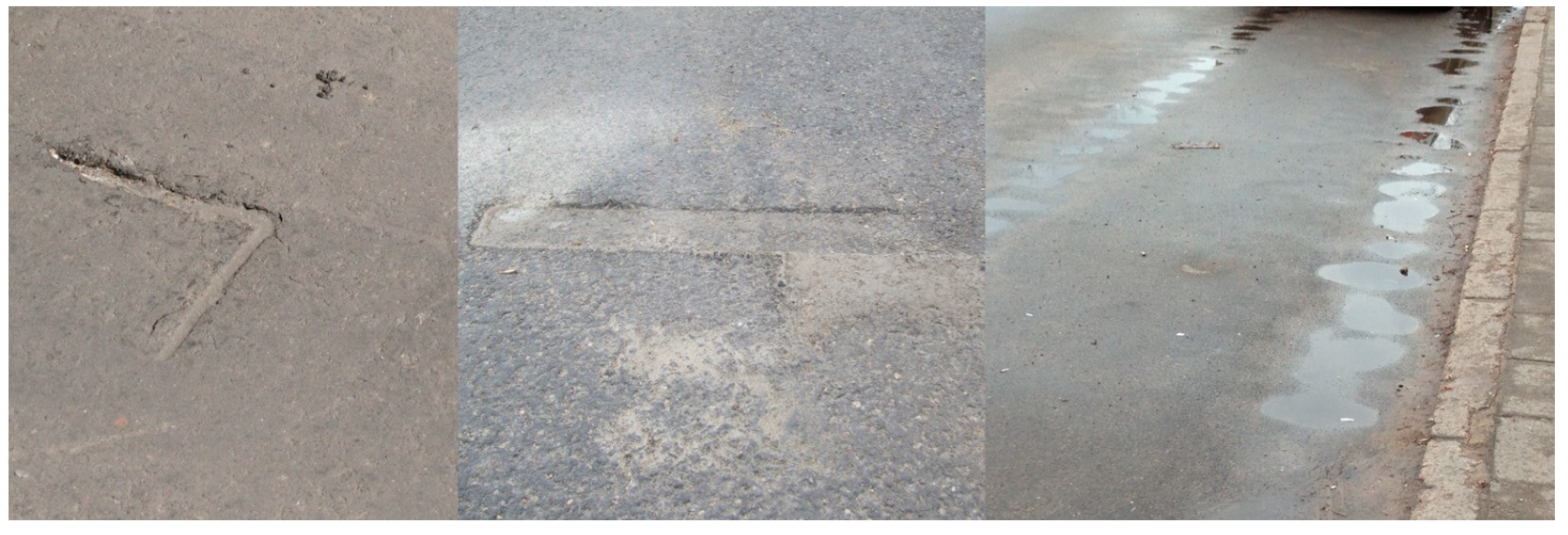
Container terminals require extensive paved areas for handling and storage, and inappropriate pavement design or premature deterioration directly affects port competitiveness [8]. These pavement systems should satisfy structural requirements, while remaining compatible with terminal equipment, storage configurations, and operational logistics. Surface irregularities, rutting, faulting, and differential settlements may reduce the speed of container movements, interfere with stacking operations, and lower container turnover rates. Excessive deformations may create water ponding areas, facilitating water ingress into containers and damaging stored goods. Corner casting indentation may further cause contact between the underside of containers and the pavement surface, potentially damaging both the container and the pavement structure. Repeated exposure to surface distress produces sudden dynamic impacts and vibrations that can accelerate mechanical wear, particularly in suspension and shock-absorbing systems of container-handling equipment. Settled or uneven pavements are directly associated with increased frequency of equipment breakdowns, leading to higher maintenance costs and operational interruptions. Besides the above, operator safety and comfort are highly affected. Vibrations and abrupt movements generated by distressed surfaces may create occupational health concerns. In extreme cases, loss of support due to localized deformation or puncture can compromise equipment stability, increasing the risk of overturning incidents. Finally, pavement deterioration may also influence terminal planning and logistics.
The above considerations have motivated the development of pavement performance assessment tools specifically tailored to container terminal environments. In this context, Marcobal-Barranco et al. proposed a Pavement Condition Index (PCI) adapted to the functional requirements of container terminals [8]. Their study involved surveys across 20 Spanish ports, encompassing 388 sample areas composed of approximately 79% concrete pavements, 19% asphalt pavements, and 2% block pavements. Based on these observations, the authors developed a formalized evaluation framework incorporating a weighting parameter (U factor), which reflects the influence of pavement condition on the operational importance of each area (e.g., working areas, traffic lanes, storage or handling areas, and auxiliary areas).
Due to the structural severity of heavy-duty operational zones, considerable research has focused on identifying appropriate material systems capable of resisting combined static, low-speed, and impact loading conditions. In this context, as noted in [10], pavement loading is strongly governed by container stacking configuration, wheel or support-leg arrangement, and load spacing. Reduced spacing between wheels or container legs results in increased stress concentration within the pavement structure. Although contact pressure remains constant for a given contact area, the cumulative stress demand increases with stacking height when loads are vertically accumulated over the same footprint (Figure 10). In areas subjected to impact loading, such as during container handling operations, the pavement response depends not only on load magnitude and contact area but also on drop height. The adverse structural effect increases proportionally with the dropping height, intensifying deformation and stress propagation (Figure 10). Following these, concrete pavements are generally recommended for container stacking areas governed by high static and impact loads, while paving block systems are identified as suitable solutions for port and terminal environments where localized stress concentration occurs. Asphalt pavements are considered appropriate primarily in areas dominated by moving handling equipment rather than long-term static stacking.
The above description of the suitability of pavement typologies for heavy-duty areas is in line with established engineering practice and design guidelines, highlighting that only a limited number of pavement systems are considered suitable for such extreme loading environments. These typically include high-capacity solutions such as reinforced concrete pavements, interlocking concrete block pavements, and, in some cases, well-designed granular systems. Other pavement types, such as unreinforced concrete or conventional bituminous pavements, may be more susceptible to cracking or permanent deformation under concentrated loading conditions, particularly at container corner casting locations. However, their use may still be acceptable under controlled operational conditions, provided that design adaptations are implemented in accordance with the characteristics of the handling equipment and service requirements [45].
In fact, the recommendation of building rigid pavements in heavy-duty port areas can be explained through mechanistic considerations related to load distribution and structural response. Rigid pavements, such as Portland cement concrete (PCC), exhibit high flexural stiffness, allowing loads to be distributed over a wider area of the subgrade through slab action. This behavior significantly reduces stress concentrations at depth, making rigid systems particularly suitable for the high-magnitude, localized loads typical of container yards that may result in permanent deformations [48,49].
The different material systems have been tested by several researchers. To begin with, asphalt concrete (AC) pavement, although disputable in some studies [7], is one of the most common types of pavement for container terminals. AfPA has introduced a Guide to the Structural Design of Flexible Pavements for Ports and Container Terminals with a detailed description of AC pavements in such heavy-duty areas [44]. High-modulus asphalt mixtures (HMAM) subjected to static punching from container stacking, dynamic impact during unloading, and fuel exposure have been analyzed through laboratory and full-scale testing [50]. The experiments demonstrated that modified binders significantly enhance mechanical resistance compared to conventional mixtures. Moreover, it was stated that HMAM could function as a structural layer in port pavements, potentially replacing traditional concrete in certain configurations when functional surface properties are also required.
Grouted macadam (GM) mixture as a surface layer for semi-flexible heavy industrial pavements has been examined by [51]. Field cores extracted from the Port of Thessaloniki and Ravenna were tested, and the results indicated improved fatigue resistance under high deformation levels due to grout-induced stiffening. However, a tendency toward brittle behavior was identified as the asphalt skeleton ages, suggesting that long-term performance should account for material hardening effects.
Moreover, roller-compacted concrete (RCC) pavements are adopted in container stacking areas due to their high stiffness and resistance to static loads [25,52]. Sengun et al. [52] conducted an extensive finite element investigation involving 84,000 simulations to evaluate RCC behavior under static container stacking. Their parametric analysis highlighted the sensitivity of slab response to joint configuration, demonstrating that heavy container loads placed near contraction (cold) joints significantly increase stress concentrations. The study culminated in the development of preliminary thickness design charts for RCC pavements under stacked container scenarios, providing practical design guidance tailored to heavy-duty port environments. RCC pavements have been compared with pavements under critical static stacking and dynamic operational loads [25]. It was found that conventional AC pavements experienced high stress levels and early deterioration under heavy stacking conditions. RCC pavements, by contrast, reduced deformation by up to 50% and demonstrated improved structural performance. A life-cycle cost analysis further revealed potential long-term cost reductions of approximately 23% when RCC systems were implemented, despite higher initial construction costs.
RCC has also been applied as a base layer for composite pavement systems [53]. One of the most critical issues encountered in such composite cross-sections is the effect of horizontal loading on top-down cracking and interfacial bonding behavior. Finite element analyses demonstrated that braking and accelerating heavy container-handling vehicles introduce horizontal shear stresses capable of initiating top-down cracking and bond failure at layer interfaces. Temperature effects were also shown to influence crack initiation and propagation.
Concrete block pavements constitute another widely implemented solution in heavy-duty container yards. They were mainly introduced by [15], building a pioneering study on port heavy-duty pavements. Since then, block pavements have continued to raise attention within the port industry. Their popularity raised interest in comparing with conventional pavement types, including AC and concrete pavements. Hasheminasab & Kashi [54] applied the British Ports Association (BPA) block pavement design methodology and subsequently performed numerical modeling using ABAQUS to simulate concentrated and distributed container loads. The results indicated lower displacement responses for block pavements compared to both conventional rigid and flexible systems under similar loading conditions, suggesting structural robustness when base layer thickness and confinement are properly designed. Another comparison between AC and block pavements was performed by [7], designed for reach stacker operations using both empirical and analytical methods. Both types of pavements satisfied fatigue and rutting criteria, with conservative safety margins. Moreover, the use of cement-bound base course in the block pavement is expected to reduce the risk of premature failure.
The applicability of block pavement systems in container storage facilities was investigated through Falling Weight Deflectometer (FWD) testing and Light Detection And Ranging (LiDAR)-based settlement monitoring by [13]. Measurements were conducted before construction, immediately after construction, and during operational phases. It was shown that when supported by cement-treated base (CTB) layers, block pavements can achieve sufficient bearing capacity under heavy equipment operations and exhibit favorable maintenance characteristics, with lower long-term repair costs compared to asphalt systems. However, forensic evidence demonstrates that detailing is critical for block pavement performance. Distresses, including rutting, faulting, and loss of interlock due to inadequate edge restraint and improper bedding sand specification, imperil block pavements’ performance [55].
The structural performance of heavy-duty pavements is also strongly dependent on subgrade condition and base layer configuration. As indicated by reported modulus values and conversion factors in [14], CTB layers provide significantly higher stiffness and load-spreading capability compared to unbound granular materials, resulting in improved resistance to deformation and enhanced structural capacity. Hence, for the cases where the wheel load exceeds 11,400 kg, it was suggested that stabilized bases should be used. Moreover, in the context of subgrade and base investigation, the use of geocomposite reinforcement (geogrid combined with nonwoven geotextile) was investigated in container pavements constructed over weak subgrades [56]. Static plate load tests conducted on reinforced and unreinforced configurations demonstrated that geosynthetic reinforcement can significantly reduce required base course thickness while maintaining load-bearing capacity.

3.2.2. Circulation and Transfer Zones

Circulation and transfer zones within port complexes function as internal road networks that accommodate continuous traffic by trucks, terminal tractors, buses, and vehicles, generally (Figure 11). These corridors are primarily subjected to dynamic traffic-induced stresses, braking forces, shear effects, and repetitive axle loading. Therefore, surface deterioration mechanisms resemble those observed in heavily trafficked urban roadways. Considering this, studies focusing on high-traffic road environments adjacent to port areas provide valuable insight. Yoon et al. [26] developed a high-precision crack segmentation dataset for in-service asphalt pavements in the vicinity of the Port of Busan, South Korea, where heavy-freight vehicles operate intensively. The study documents distress types such as rutting, slip-page cracking, and construction-related defects, which are exacerbated by frequent heavy vehicle passage. Although the investigation was conducted outside the strict terminal boundary, the traffic composition and loading frequency closely resemble those of internal transfer and access roads within port environments. Importantly, the work emphasizes the role of advanced monitoring tools, including deep learning-based crack detection and polygon-based segmentation masks, for accurate condition assessment in high-traffic circulation corridors.
Compared to heavy-duty stacking areas, circulation and transfer zones have received less targeted research attention within port-specific literature. This may be attributed to the fact that their structural design principles can often be derived from conventional road pavement frameworks. However, a key distinction lies in the operational speeds of heavy vehicles. Internal port traffic frequently operates at very low speeds due to congestion, maneuvering constraints, gate control systems, and safety regulations. These low-speed conditions significantly influence pavement response.
Mshali and Steyn [57] investigated the influence of truck speed on the evaluation and design of flexible pavement systems, highlighting the importance of accounting for reduced operational speeds in structural performance predictions. Similarly, Shakhan et al. [58] analyzed the behavior of flexible pavements under varying truck speeds (1–75 km/h) using AASHTOWare Pavement ME Design for different traffic levels and subgrade conditions. Their findings demonstrate that reductions in truck speed substantially increase predicted rutting and cracking. In particular, speeds below 25 km/h were identified as critical for rutting and alligator cracking, while speeds below 10 km/h significantly amplified top-down cracking. For example, decreasing truck speed from 25 km/h to 1 km/h resulted in marked increases in total rutting and asphalt concrete rutting, as well as a substantial rise in top-down cracking. Conversely, thermal cracking was found to be relatively insensitive to speed variation, and base and subgrade deformation showed limited dependence on speed.
These findings are highly relevant for port circulation corridors, where vehicle speeds are frequently below 25 km/h and often approach walking speed near gates or loading interfaces. The structural implication is that flexible pavement systems in such zones may experience accelerated surface distress, particularly rutting and cracking, despite not being subjected to the extreme static stacking loads typical of heavy-duty operational areas. Therefore, while flexible cross-sections are commonly selected for circulation and transfer zones, their mechanistic evaluation must explicitly account for low-speed heavy vehicle behavior to ensure long-term performance.

3.2.3. Passenger and Mixed-Use Zones

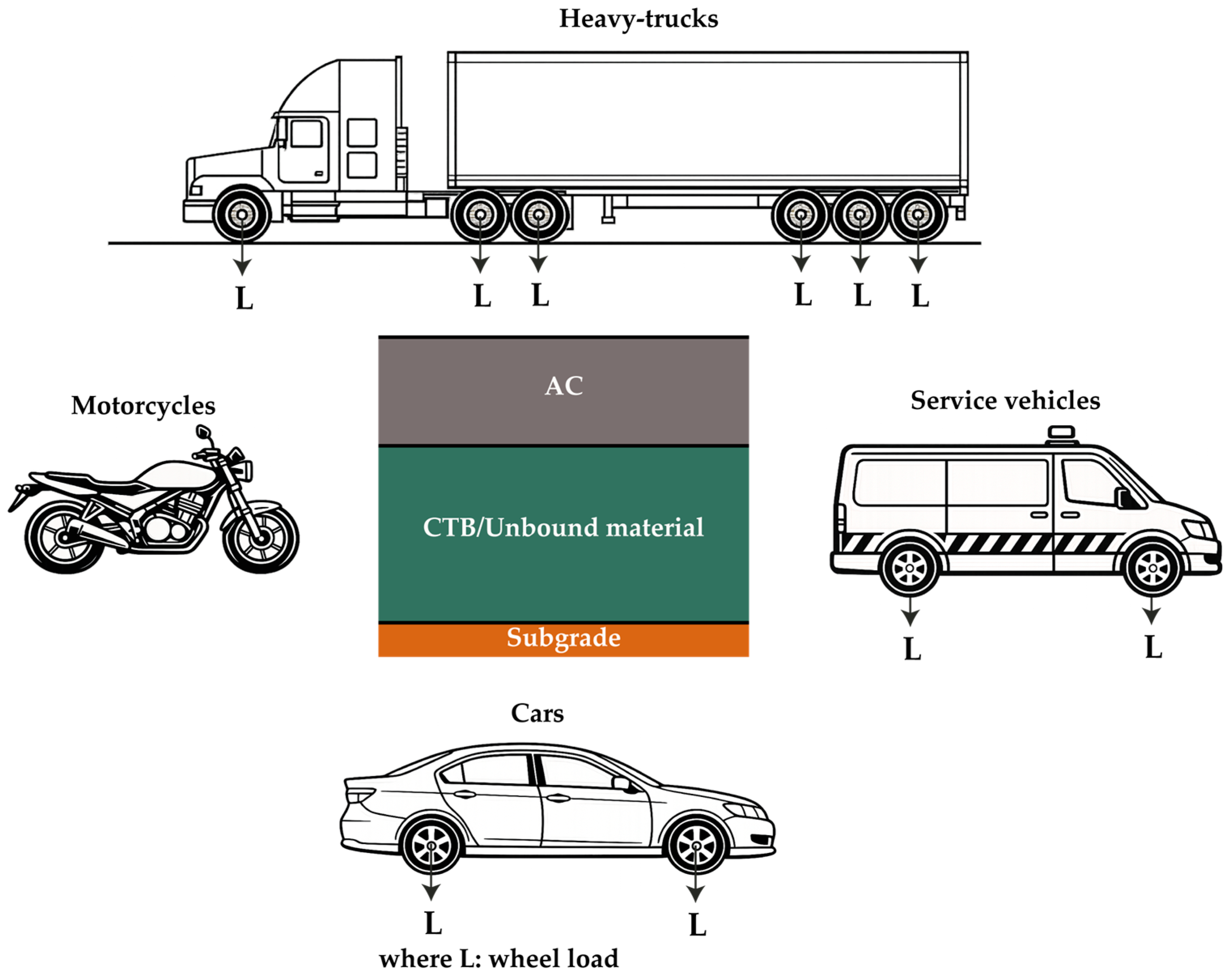
Passenger and mixed-use zones within port environments constitute transitional interfaces extending from ship berthing areas through embarkation and disembarkation platforms, bus bays, drop-off lanes, waiting zones, and areas adjacent to terminal buildings. These zones are characterized by the simultaneous presence of pedestrians, luggage-handling devices, buses, taxis, service vehicles, and occasionally freight vehicles operating at low speeds (Figure 12). Their spatial configuration integrates maritime infrastructure with land-based mobility systems. Passenger terminals (PTs), whether marine, bus, railway, or airport-related, must be designed considering multiple functional dimensions, including pedestrian and traffic flows, spatial–temporal distribution of passenger movements, emergency evacuation, thermal comfort, acoustics, and safety [39]. In port-specific contexts, these requirements are directly translated into pavement design considerations. The interaction between pedestrians and paved surfaces becomes critical, particularly in zones where passengers move with suitcases or trolley systems, remain stationary during embarkation procedures, or cross vehicular paths. Kinematic behavior associated with luggage transport introduces surface regularity, vibration control, and skid resistance as key serviceability parameters [39]. At the same time, vehicular movements, although generally at low speed, induce braking forces, shear stresses, and localized static loading in waiting or queuing areas.
These areas are typically located in proximity to the sea surface (deck pavements), exposing pavements to saline environments, moisture fluctuations, and potential splash or inundation effects. Consequently, issues such as localized settlement, depressions, or holes in pavement, surface drainage, and open cracking in the pavement parallel to the face of the retaining structure become integral to structural assessment [59].
Regarding pavement design, passenger and mixed-use zones may employ flexible, rigid, or semi-rigid pavement systems [9,59]. Importantly, due to the spatial continuity from berth to terminal building, different pavement cross-sections may be applied adjacently within short distances. Although originally investigated in cargo-oriented environments, the findings of [50] remain relevant to passenger zones, where mixed loading and durability demands coexist. Their study on high-modulus asphalt mixtures (HMAM) demonstrated improved resistance to static punching, dynamic impact, and fuel exposure compared to conventional asphalt mixtures. Modified binders significantly enhanced mechanical performance, suggesting that HMAM can serve as structural layers in port pavements where both structural adequacy and functional surface properties are required. In passenger-related areas, such materials may offer advantages in balancing mechanical resistance with improved ride quality.
Monitoring and condition assessment are equally critical in these zones due to their direct interaction with users. Tsaimou et al. [9] implemented a computer vision-based crack detection methodology for concrete pavements at domestic ferry berthing facilities in Lavrio Port, Greece. Using UAV-acquired imagery to generate georeferenced orthophotos, combined with Geographic Information System (GIS)-based visualization and database development, the study demonstrated the feasibility of systematic, geospatially referenced surface distress assessment in operational passenger environments. Such approaches are particularly valuable in areas where pavement condition influences both structural performance and passenger safety, esthetics, and operational continuity.
Overall, passenger and mixed-use zones demand an integrated pavement strategy that accommodates low-speed vehicular loading, pedestrian serviceability, environmental exposure, and spatial transitions between functional domains. Their design cannot be derived solely from heavy-duty or conventional roadway paradigms but should reflect the hybrid character of ship-to-land mobility interfaces.

3.2.4. Service and Auxiliary Zones

Service and auxiliary zones within port environments include administrative areas, parking facilities, maintenance yards, and other low-intensity operational domains [8]. Pavement response is governed primarily by low-speed vehicular movements, prolonged static parking loads, and repetitive parking maneuvers (Figure 13). In parking areas, vehicles typically operate at very low speeds or remain stationary for extended periods. Ghadi et al. [40] investigated the principal traffic-related factors affecting the PCI of asphalt pavements in parking facilities. Their findings indicate that repeated low-speed turning and parking maneuvers influence surface aging and distress development differently from high-speed roadway conditions. Drivers were found to tolerate relatively lower PCI levels in parking areas compared to roadways, suggesting that minimum acceptable maintenance thresholds may be adjusted according to functional role. This has significant implications for pavement management strategies that should be adjusted accordingly for such auxiliary zones.
Regarding pavement design, service and auxiliary zones typically employ flexible or semi-rigid pavement systems due to their cost-efficiency and maintenance flexibility, while rigid systems may be selectively adopted in areas subject to heavier parking loads [7]. Although mechanically less demanding, auxiliary areas remain integral to overall port functionality, safety, and user perception. Moreover, such zones may intermittently accommodate heavy-truck parking, particularly where vehicles temporarily queue while awaiting embarkation procedures, documentation verification, or customs inspections. Consequently, localized loading conditions may occasionally exceed those expected for typical light-vehicle parking areas.

4. Synthesis and Discussion

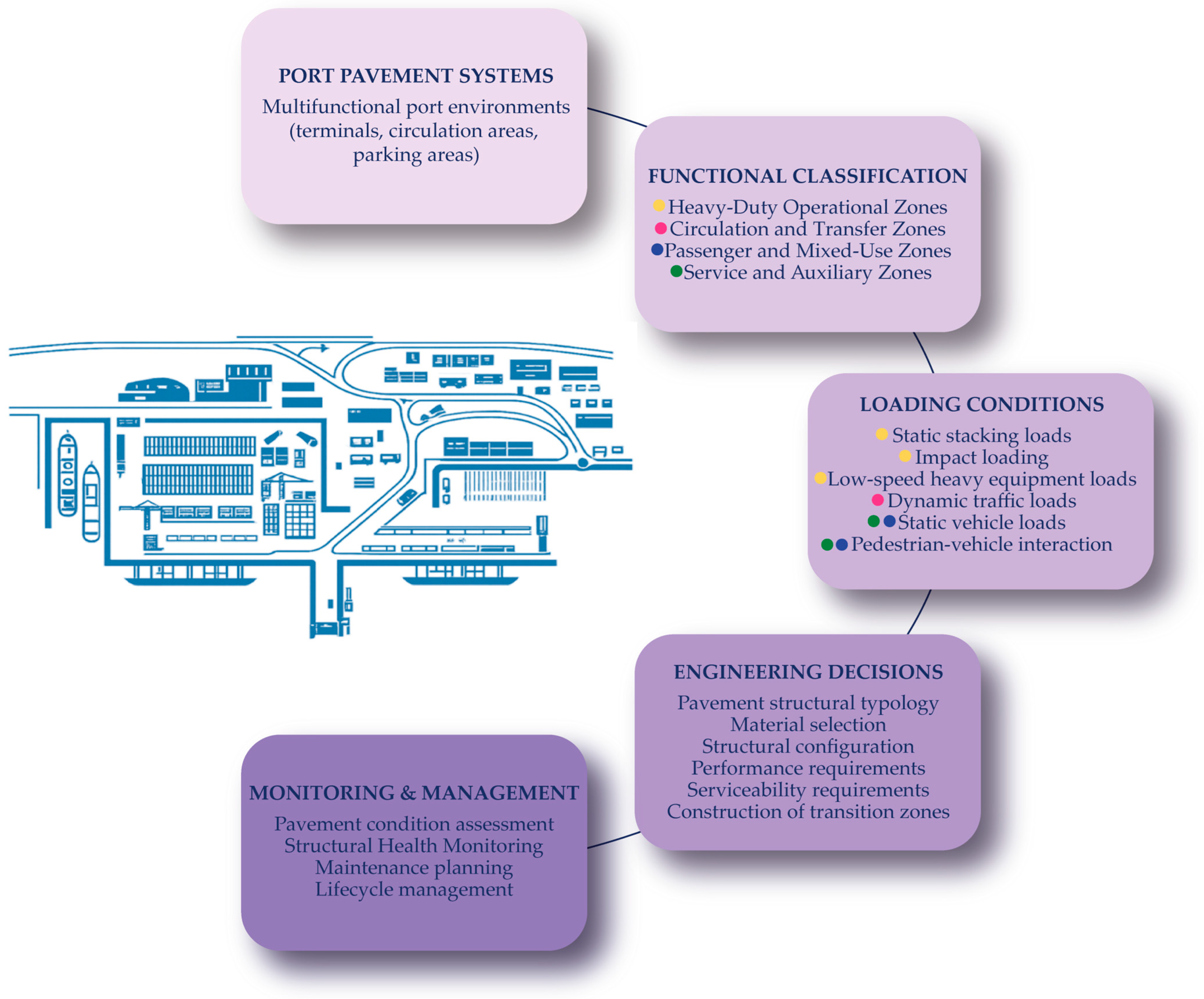
The analysis presented in Section 3 demonstrates that port pavements should not be interpreted as a uniform engineering system. Instead, their design, material selection, and performance evaluation must be approached through a functional–structural decision framework, where pavement typologies are aligned with the operational role of each port area and the corresponding loading mechanisms. Table 2 synthesizes the examined literature by linking functional zones with prevailing material systems, structural approaches, and performance considerations. Moreover, Figure 14 illustrates the finalized synthesis of the reviewed literature, suggesting a conceptual engineering framework for interpreting port pavement systems.
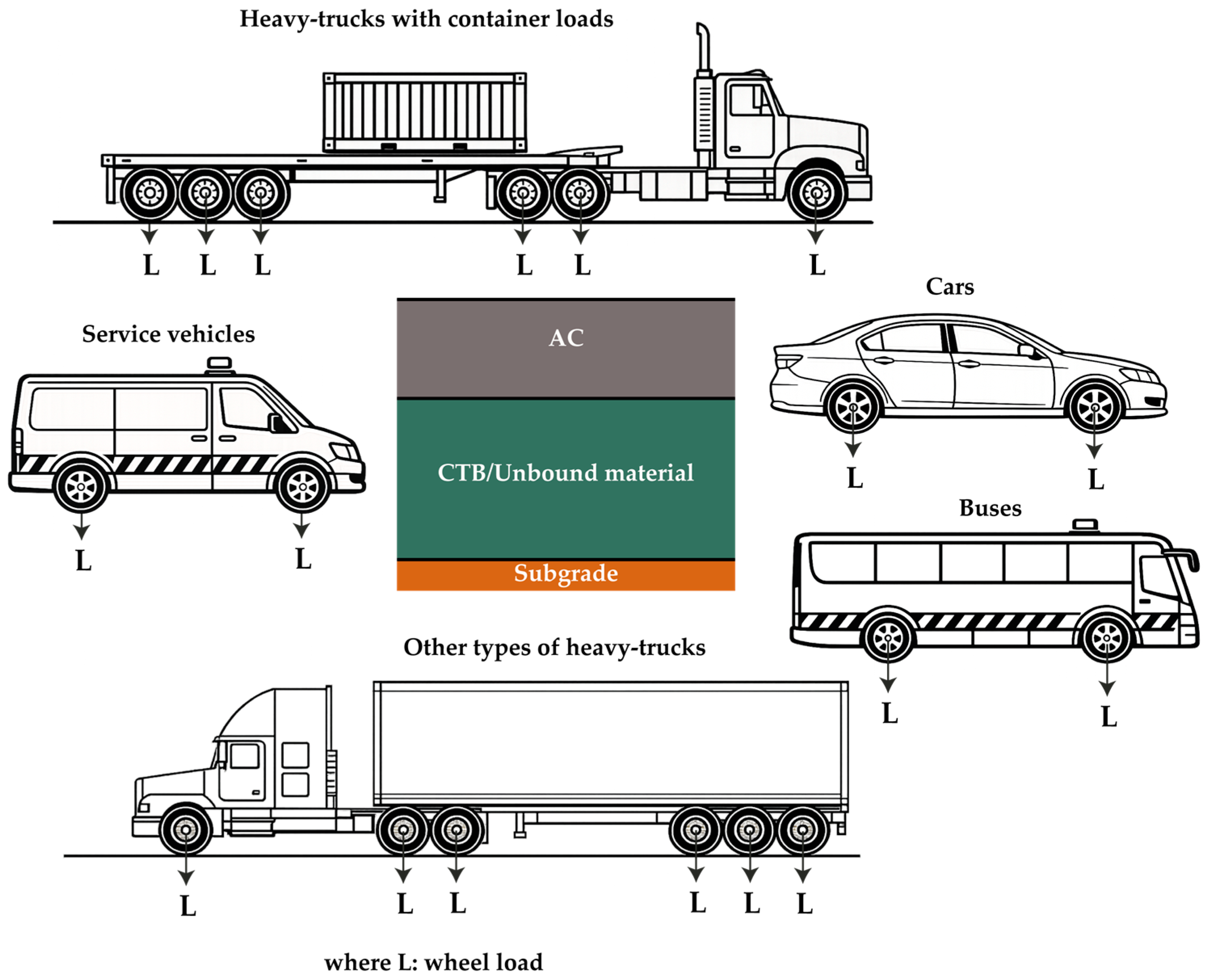
Functional classification should precede material selection in port pavement engineering. Heavy-duty operational zones, circulation corridors, passenger–mixed-use interfaces, and auxiliary areas each present distinct loading regimes and serviceability demands. Consequently, pavement structural design is fundamentally governed by loading characteristics, including axle loads, load configurations, load repetitions, and operational conditions such as low-speed or stationary loading. Heavy-duty operational zones are subjected to substantially higher localized loads associated with container handling operations. Based on engineering practice and reported data, point loads from container handling equipment may reach values on the order of 150–600 kN per wheel, depending on equipment type (e.g., forklifts, reach stackers, Rubber Tired Gantry—RTG) [60]. For such equipment, assuming approximately circular tire contact areas, the resulting contact stresses may be on the order of 1.6 MPa. Furthermore, loading conditions are influenced by dynamic effects associated with braking, acceleration, and surface irregularities, which are commonly accounted for through dynamic load factors in pavement design [14]. In addition, container stacking operations introduce significant stress concentrations through corner castings, where individual container loads (approximately 20–22 tons) are transferred through relatively small contact areas (approximately 175 × 150 mm). This results in high localized stresses, which may range from approximately 2.5 MPa to over 10 MPa depending on stacking height and loading conditions [14].
In circulation and transfer zones, loading conditions are governed by a combination of heavy truck traffic and lighter vehicles. The total weight of heavy vehicles may typically range from approximately 16 to 49 tons, with corresponding axle loads that may exceed 100 kN depending on vehicle configuration [61,62,63]. For example, an indicative value for a heavy vehicle transporting a 40-ft ISO container is approximately 44 tons [64]. Similar loading conditions may also be observed in passenger–mixed-use zones and auxiliary areas, where heavy trucks coexist with lighter vehicles.
Overall, in heavy-duty container storage and handling areas, pavement systems are governed primarily by high static stacking loads, low-speed repetitive heavy trafficking, and impact stresses. In contrast, circulation and transfer zones are dominated by dynamic loading under reduced vehicle speeds. Passenger and mixed-use areas introduce hybrid demands, where structural adequacy must coexist with user comfort and safety. Finally, service and auxiliary zones are largely serviceability-controlled, affected by static loading.
This functional hierarchy is consistent with the framework proposed by [7], who synthesized structural pavement typologies according to the operational areas they are intended to serve. In their study, concrete pavements are recommended for both heavy and light vehicle parking areas, while semi-rigid and flexible systems are considered more appropriate for light vehicle parking areas and pedestrian-related functions, where serviceability and cost-efficiency become dominant criteria. Block pavements are strongly recommended for container storage areas due to their robustness under concentrated loads, yet are discouraged for access roads and internal circulation corridors, where continuous dynamic traffic may compromise interlock performance. In agreement with [7], the integrative synthesis presented herein further confirms that no single pavement system can be considered universally optimal within port environments. Instead, material selection must be explicitly aligned with functional loading severity, operational significance, and the specific performance requirements of each pavement category.
The reviewed literature reveals three dominant structural perspectives in port pavement engineering: high-stiffness systems for zones governed by static stacking and impact loads; enhanced flexible systems for areas dominated by dynamic traffic-induced stresses; and modular systems, such as block pavements, for environments characterized by localized stress concentration. Complementary research further refines this structural perspective by emphasizing interface performance and advanced material behavior. Hungria et al. [65] investigated the bonding behavior between Engineered Cementitious Composite (ECC)/concrete overlays and AC layers, and highlighted the critical importance of interfacial integrity in ultra-thin whitetopping (UTW) applications. In parallel, Ding et al. [66] examined stainless steel wire (SSW)-reinforced Ultra-High-Performance Concrete (UHPC), demonstrating enhanced self-moderating and self-sensing capabilities under temperature-induced deformation. Such properties are particularly relevant in aggressive marine environments, where port pavements are exposed to salinity, moisture fluctuations, and thermal gradients. Together, these studies underscore the growing emphasis on material innovation and interface performance as integral components of durable port pavement design.
An important aspect that remains relatively underexplored in port pavement literature is the systematic design of transition zones between pavement systems of differing structural behavior or different cross-sections. To address this issue, an indicative approach is to consider well-established design practices that exist in related infrastructure, such as airport pavements. In these applications, detailed transition solutions are implemented between flexible (asphalt) and rigid (concrete) pavements to mitigate differential stiffness effects and reduce the risk of distress at the interface. Typical approaches include the use of intermediate layers, gradual variation in structural properties, and localized reinforcement to ensure continuity in load transfer and deformation response. Further details can be found in [67], where analytical figures demonstrate how to construct the transition zone. Adopting similar principles in port environments could provide a rational basis for improving the performance of transition zones, particularly in areas where heavy-duty operational pavements are connected to lighter-use sections. This cross-disciplinary perspective further supports the need for integrating transition-specific design considerations within the proposed functional–structural framework.
While a significant portion of the literature aligns clearly with functional categories, other studies address port pavements from a broader material or performance perspective without explicitly focusing on specific operational zones. For example, the study of [68] examined foamed bituminous mixtures incorporating high percentages of reclaimed asphalt pavement (RAP), targeting applications not only in ports but also in airports and road infrastructure. Their findings can be linked to the sustainability dimension of port pavement engineering. Considering the above, while functional classification clarifies operational requirements, material innovation research often evolves independently and must subsequently be interpreted within the functional framework.
In addition to the above considerations, it should be emphasized that the selection of pavement design alternatives is not governed solely by functional classification and loading conditions, but is also influenced by practical and site-specific constraints. These include material availability, particularly in geographically isolated regions such as island environments, where the sourcing of suitable aggregates or the establishment of concrete production facilities may be limited. Furthermore, existing ground conditions, especially in coastal and port areas, often involve subgrades of relatively low strength, typically reflected in low CBR values. Subgrade performance is primarily defined by its ability to resist deformation under applied loads, and is, therefore, strongly dependent on the stress levels transmitted through the overlying pavement structure. These stress levels are, in turn, influenced by the thickness and stiffness of pavement layers as well as the magnitude and frequency of traffic loading. In this context, appropriate subgrade preparation, including adequate drainage, uniform compaction, and moisture control, is essential to ensure long-term pavement durability [69].
The long-term performance of port pavements is also strongly influenced by aggressive marine environmental conditions. Exposure to saline environments, high moisture levels, and cyclic wetting–drying processes may accelerate material degradation, particularly in concrete, asphalt, and other bound layers [42,70,71]. For concrete pavements, common deterioration mechanisms include reinforcement corrosion and chemical attacks such as alkali–aggregate reaction, sulfate attack, delayed ettringite formation, carbonation, and acid attack [59]. In asphalt pavements, the presence of salt solutions increases permeability compared to freshwater conditions, promoting moisture ingress and accelerating erosion, while reducing the material’s resistance to both elastic and permanent deformation [42]. These effects are further intensified in areas with direct proximity to seawater, such as berthing facilities within heavy-duty operational zones and passenger–mixed-use areas. In addition, waterfront transition zones may introduce further geotechnical challenges. Structural elements such as pendant walls, when combined with inadequate filter design or movement of supporting layers, may lead to soil migration and localized subsidence. This, in turn, can result in surface depressions and progressive pavement deterioration [59]. Considering all these impacts of the marine environment, port pavement design should incorporate durability-oriented adaptations, including adequate concrete cover to reinforcement, appropriate drainage provision, effective backfill retention systems, and the use of well-prepared and stable subgrade or capping layers. These measures, which are already recognized in current engineering practice, are essential to mitigate the combined effects of mechanical loading and environmental exposure.
Based on the above port pavement design must be approached as a multi-parameter problem, where functional classification, loading conditions, material characteristics, and site-specific constraints are jointly evaluated. Hence, future research can investigate the interaction between these parameters, particularly under the combined effects of aggressive marine environments, variable subgrade conditions, and evolving operational demands.
Overall, from a practical engineering perspective, the proposed functional–structural framework can also support decision-making processes related to Life Cycle Cost (LCC) considerations and pavement asset management. Each functional category is associated with different levels of structural demand, maintenance requirements, and operational criticality, which directly influence investment prioritization and long-term cost efficiency. For example, heavy-duty operational zones may require higher initial construction costs but offer improved durability and reduced maintenance frequency, whereas auxiliary and low-demand areas may be designed with more cost-efficient solutions, accepting higher maintenance needs over time. In this context, the integration of functional classification with performance expectations provides a useful basis for aligning pavement design strategies with asset management principles and long-term infrastructure planning.
The present study is subject to certain limitations. Specifically, the bibliometric analysis was based on Scopus-indexed publications and English-language journal articles, which may exclude relevant contributions published in other languages, conference papers, or technical reports from industry practice. Nevertheless, the overall adopted approach provides a representative overview of the scientific literature and supports the development of the proposed engineering interpretation of port pavement systems. Hence, although the bibliometric analysis was conducted based on Scopus-indexed publications, once the main research trends were identified and analyzed, the subsequent sections of the study incorporated additional insights from engineering-oriented studies and available technical guidance documents. Moreover, pavement areas located directly above quay-wall structures may require additional structural considerations related to vessel loads, mooring forces, and other port-specific loading conditions.

5. Conclusions

This study developed a structured engineering synthesis of port pavement infrastructure assets by integrating bibliometric mapping with a functional–structural analysis of worldwide practices, and introduced a unified framework for interpreting port pavement systems within multifunctional environments. The main conclusions of the research are summarized as follows:
  • Bibliometric mapping confirms that port pavement research remains focused on heavy-duty container applications, while circulation corridors, passenger–mixed-use zones, and auxiliary areas are comparatively underexplored.
  • The fragmented nature of existing research underlines the need for a unified engineering framework capable of integrating functional classification, structural design considerations, and serviceability requirements.
  • Functional classification should precede structural design decisions, enabling the systematic identification of loading conditions, serviceability requirements, transition demands between adjacent zones, and cost–benefit considerations for investment prioritization.
  • Heavy-duty operational zones require high-stiffness structural systems capable of resisting static, low-speed repetitive, concentrated, and impact-induced stresses, with RCC, concrete pavements, HMAM, composite systems, and properly detailed block pavements dominating pavement design.
  • Circulation and transfer zones, particularly sensitive to low-speed effects, necessitate pavement design solutions that address rutting and permanent deformation.
  • Passenger and mixed-use zones demand hybrid pavement strategies that balance structural adequacy with serviceability, safety, surface regularity, and long-term durability under saline exposure.
  • Service and auxiliary zones are primarily serviceability-controlled environments and governed by cost-efficiency and maintenance-oriented management strategies.
  • Transition zones between functional pavement areas or different cross-sections represent critical design interfaces, where differential loading and structural incompatibilities may lead to localized distress.
  • Effective port pavement engineering requires a layered decision-making process that combines functional classification, loading and environmental considerations, material selection, and long-term performance objectives, including durability and lifecycle aspects.
Future research should move beyond the dominant focus on container terminals and systematically investigate circulation, passenger, and auxiliary zones within a unified functional framework. Greater emphasis is required on long-term material durability under aggressive marine environmental exposure. Sustainable material approaches, such as foamed bituminous mixtures incorporating reclaimed asphalt pavement, should be considered complementary strategies that must be positioned within the established functional and structural hierarchy. Operational importance weighting across all pavement categories can be integrated in research related to function-adjusted pavement management systems. Finally, the development of a standardized international classification and evaluation framework for port pavement assets, analogous to the ACN/PCN system in airports or PCI-based systems in roadway infrastructure, would significantly enhance comparability, planning consistency, and long-term asset management practices.

Author Contributions

Conceptualization, C.N.T. and V.K.T.; methodology, C.N.T. and V.K.T.; formal analysis, C.N.T.; investigation, C.N.T.; data curation, C.N.T.; writing—original draft preparation, C.N.T.; writing—review and editing, C.N.T. and V.K.T.; visualization, C.N.T.; supervision, V.K.T. All authors have read and agreed to the published version of the manuscript.

Funding

This research received no external funding.

Data Availability Statement

The original contributions presented in this study are included in the article. Further inquiries can be directed to the corresponding author.

Acknowledgments

The authors acknowledge the contribution of Mr. Panagiotis Sartampakos from NIREAS Engineering to UAV data acquisition at Lavrio Port.

Conflicts of Interest

The authors declare no conflicts of interest.

References

  1. Wang, S.; Yin, J.; Khan, R.U. Dynamic safety assessment and enhancement of port operational infrastructure systems during the COVID-19 era. J. Mar. Sci. Eng. 2023, 11, 1008. [Google Scholar] [CrossRef] [Scilit]
  2. Paraskevas, A.; Madas, M.; Zeimpekis, V.; Fouskas, K. Smart ports in industry 4.0: A systematic literature review. Logistics 2024, 8, 28. [Google Scholar] [CrossRef] [Scilit]
  3. Verschuur, J.; Koks, E.E.; Li, S.; Hall, J.W. Multi-hazard risk to global port infrastructure and resulting trade and logistics losses. Commun. Earth Environ. 2023, 4, 5. [Google Scholar] [CrossRef] [Scilit]
  4. Sun, B.; Kauzen, R. The impact of port infrastructure and economic growth in Tanzania: Adopting a structural equation modeling approach. Sage Open 2023, 13, 21582440221145894. [Google Scholar] [CrossRef] [Scilit]
  5. Anand, N.; Grainger, A. The port as a critical piece of national infrastructure. Saf. Reliab. 2017, 37, 106–127. [Google Scholar] [CrossRef] [Scilit]
  6. Notteboom, T.; Pallis, A.; Rodrigue, J.-P. Port Economics, Management and Policy, 1st ed.; Routledge: London, UK, 2022. [Google Scholar]
  7. Di Mascio, P.; Loprencipe, G.; Moretti, L. Technical and economic criteria to select pavement surfaces of port handling plants. Coatings 2019, 9, 126. [Google Scholar] [CrossRef] [Scilit]
  8. Marcobal-Barranco, J.R.; Lara-Galera, A.L.; Camarero-Orive, A. Functional assessment of port pavements: The case of container terminals. J. Test. Eval. 2021, 49, 1824–1836. [Google Scholar] [CrossRef] [Scilit]
  9. Tsaimou, C.N.; Kagkelis, G.; Sartampakos, P.; Karantzalos, K.; Tsoukala, V.K. Mapping cracks on port concrete pavements by analyzing structural health monitoring metadata with computer vision-based techniques. Complex Eng. Syst. 2024, 4, 21. [Google Scholar] [CrossRef] [Scilit]
  10. Vaitkus, A.; Škulteckė, J.; Kleiziene, R. Influence of static and impact load on pavement performance. In Proceedings of the 9th International Conference “Environmental Engineering”, Vilnius, Lithuania, 22–23 May 2014. [Google Scholar]
  11. Meng, Q.; Zhong, K.; Li, Y.; Sun, M. Comparative study on mechanical response in rigid pavement structures of static and dynamic finite element models. Aerospace 2024, 11, 596. [Google Scholar] [CrossRef] [Scilit]
  12. Assogba, O.C.; Tan, Y.; Sun, Z.; Lushinga, N.; Bin, Z. Effect of vehicle speed and overload on dynamic response of semi-rigid base asphalt pavement. Road. Mater. Pavement Des. 2021, 22, 572–602. [Google Scholar] [CrossRef] [Scilit]
  13. Ha, Y.-S.; Kim, Y.-T.; Pham, M.-V.; Park, H.; Oh, M. Fabrication and assessment of port block pavement based on the deflection and settlement characteristic. Case Stud. Constr. Mater. 2024, 20, e03284. [Google Scholar] [CrossRef] [Scilit]
  14. Knapton, J.; Smith, D.R. Port and Industrial Pavement Design with Concrete Pavers, 2nd ed.; York Building Products: Leicester, UK, 2020. [Google Scholar]
  15. Meletiou, M.; Knapton, J. Monograph No. 5—Container Terminal Pavement Management; United Nations Conference on Trade and Development (UNCTAD): Geneva, Switzerland, 1990. [Google Scholar]
  16. Ayesu, E.K.; Boateng, K.A.B. Estimating the impact of container port throughput on employment: An analysis for African countries with seaports. J. Ship. Trade 2024, 9, 8. [Google Scholar] [CrossRef] [Scilit]
  17. Song, D.-W.; Panayides, P.M. Global supply chain and port/terminal: Integration and competitiveness. Marit. Policy Manag. 2008, 35, 73–87. [Google Scholar] [CrossRef] [Scilit]
  18. Sirimanne, S.N. 50 Years of Review of Maritime Transport, 1968–2018: Reflecting on the Past, Exploring the Future; United Nations: Geneva, Switzerland, 2018. [Google Scholar]
  19. Jakovlev, S.; Eglynas, T.; Jusis, M.; Jankunas, V.; Voznak, M. Mitigating container damage and enhancing operational efficiency in global containerisation. Sensors 2025, 25, 2019. [Google Scholar] [CrossRef] [Scilit]
  20. Krile, S.; Maiorov, N.; Fetisov, V. Modernization of the infrastructure of marine passenger port based on synthesis of the structure and forecasting development. Sustainability 2021, 13, 3869. [Google Scholar] [CrossRef] [Scilit]
  21. Tsvetkova, A.; Wahlström, I.; Edelman, K.; Franzén, R.; Chen Zhou, Y.; Hellström, M. Smart port city: Digital interfaces for enhancing RoPax port and city co-existence. Cities 2025, 161, 105936. [Google Scholar] [CrossRef] [Scilit]
  22. Baños-Pino, J.F.; Tovar, B. Cruise passengers’ perception of port attributes and their influence on revisiting and recommending. Evidence from the Canary Islands. Res. Transp. Bus. Man. 2025, 60, 101386. [Google Scholar] [CrossRef] [Scilit]
  23. Panahi, R.; Ng, A.K.Y.; Pang, J. Climate change adaptation in the port industry: A complex of lingering research gaps and uncertainties. Transp. Policy 2020, 95, 10–29. [Google Scholar] [CrossRef] [Scilit]
  24. Chalastani, V.I.; Tsoukala, V.K.; Coccossis, H.; Duarte, C.M. A bibliometric assessment of progress in marine spatial planning. Mar. Policy 2021, 127, 104329. [Google Scholar] [CrossRef] [Scilit]
  25. Hassan Abdirahman, S.; Sengun, E. Sustainable infrastructure choice for Somali ports: Modeling and comparative study of roller-compacted concrete pavement. J. Transp. Eng. Part B Pavements 2025, 151, 05025003. [Google Scholar] [CrossRef] [Scilit]
  26. Yoon, H.; Kim, H.-K.; Kim, S. PPDD: Egocentric crack segmentation in the port pavement with deep learning-based methods. Appl. Sci. 2025, 15, 5446. [Google Scholar] [CrossRef] [Scilit]
  27. van Eck, N.J.; Waltman, L. VOSviewer Manual; Univeristeit Leiden: Leiden, The Netherlands, 2023. [Google Scholar]
  28. Mendes Constante, J.; de Langen, P.W.; Furió Pruñonosa, S. Innovation ecosystems in ports: A comparative analysis of Rotterdam and Valencia. J. Ship. Trade 2023, 8, 18. [Google Scholar] [CrossRef] [Scilit]
  29. Port of Singapore Authority. Available online: https://www.singaporepsa.com/ (accessed on 22 February 2026).
  30. The Port of Los Angeles. Available online: https://portoflosangeles.org/ (accessed on 22 February 2026).
  31. Port of Rotterdam. Available online: https://www.portofrotterdam.com/en (accessed on 22 February 2026).
  32. Port of Hamburg. Available online: https://www.hafen-hamburg.de/en/ (accessed on 22 February 2026).
  33. Piraeus Port Authority S.A. Available online: https://www.olp.gr/en/ (accessed on 22 February 2026).
  34. Government Gazette. Ports classification B(202). Gov. Gaz. Hell. Repub. 2007, B, 2783–2790. [Google Scholar]
  35. Lavrio Port Authority. Available online: https://oll.gr/en/ (accessed on 22 February 2026).
  36. Tsaimou, C.N.; Sartampakos, P.; Tsoukala, V.K. UAV-driven approach for assisting structural health monitoring of port infrastructure. Struct. Infrastruct. Eng. 2025, 21, 1655–1674. [Google Scholar] [CrossRef] [Scilit]
  37. Zhang, Y.; Alamir, R.; Jacob, A. Simulation-based load repetition estimation for automated terminals to support pavement design. In Ports 2025; Proceedings; American Society of Civil Engineers (ASCE): Reston, VA, USA, 2025; pp. 1141–1151. [Google Scholar]
  38. Muho, E.V.; Beskou, N.D. Review on dynamic analysis of road pavements under moving vehicles and plane strain conditions. J. Road Eng. 2024, 4, 54–68. [Google Scholar] [CrossRef] [Scilit]
  39. Garilli, E.; Autelitano, F.; Freddi, F.; Giuliani, F. Impact of pedestrian pavement design on the users’ comfort level in an intermodal passenger terminal. Int. J. Pavement Res. Technol. 2025, 18, 586–599. [Google Scholar] [CrossRef] [Scilit]
  40. Ghadi, M.Q.; Ahmad, H.; Jannoud, I. Influence of traffic characteristics on pavement performance of parking lots. Infrastructures 2023, 8, 65. [Google Scholar] [CrossRef] [Scilit]
  41. Huang, K.; Wei, J.; Liang, X.; Nong, H.; Xu, Y.; Huang, L. Effects of salt-induced degradation on the moisture stability and high-temperature performance of PPA/BF/SBS composite modified asphalt mixture. Front. Mater. 2026, 12, 1748571. [Google Scholar] [CrossRef] [Scilit]
  42. Jiang, Q.; Chen, M.; Zhao, Y.; Wu, S.; Fan, Y.; Gan, Z.; Zhang, Y. Comprehensive assessment of the durability deterioration of asphalt pavement in salt environment: A literature review. Case Stud. Constr. Mater. 2022, 17, e01706. [Google Scholar] [CrossRef] [Scilit]
  43. Sun, J.; Jin, Z.; Chang, H.; Zhang, W. A review of chloride transport in concrete exposed to the marine atmosphere zone environment: Experiments and numerical models. J. Build. Eng. 2024, 84, 108591. [Google Scholar] [CrossRef] [Scilit]
  44. Sullivan, B.; Leader, B.; Kartsounis, M.; Denneman, E.; Lau, B.; Prasad, A.; Van Wijk, I.; Patrick, K. A Guide to the Structural Design of Flexible Pavements for Ports and Container Terminals; Australian Flexible Pavement Association: Melbourne, Australia, 2021. [Google Scholar]
  45. Puertos del Estado. Recommendations for Maritime Works—Guidelines for the Design and Construction of Port Pavements; Departamento Tecnico de Tecnologia y Normativa: Madrid, Spain, 1994.
  46. Knapton, J. The Structural Design of Heavy Duty Pavements for Ports and Other Industries; Interpave: Leicester, UK, 2008. [Google Scholar]
  47. PIANC. Design and Maintenance of Container Terminal Pavements—Report No 165; The World Association for Waterbone Transport Infrastructure: Brussels, Belgium, 2015. [Google Scholar]
  48. Huang, Y.H. Pavement Analysis and Design, 4th ed.; Pearson/Prentice Hall: Upper Saddle River, NJ, USA, 2004. [Google Scholar]
  49. Gopalakrishnan, K.; Ceylan, H.; Kim, S.; Yang, S. Wireless MEMS for transportation infrastructure health monitoring. In Wireless MEMS Networks and Applications; Uttamchandani, D., Ed.; Woodhead Publishing: Cambridge, MA, USA; Kidlington, UK, 2017; pp. 53–76. [Google Scholar]
  50. Sol-Sánchez, M.; Moreno-Navarro, F.; Hidalgo, M.E.; Pérez, V.; Rubio-Gámez, M.C. Laboratory study on asphalt mixtures for application in port pavements. Constr. Build. Mater. 2020, 235, 117513. [Google Scholar] [CrossRef] [Scilit]
  51. Spadoni, S.; Graziani, A.; Canestrari, F. Laboratory and field investigation of grouted macadam for semi-flexible pavements. Case Stud. Constr. Mater. 2022, 16, e00853. [Google Scholar] [CrossRef] [Scilit]
  52. Sengun, E.; Kim, S.; Ceylan, H. Optimizing roller compacted concrete pavement design for steel container stacking in heavy-duty terminals. Steel Compos. Struct. 2024, 53, 613–628. [Google Scholar] [CrossRef]
  53. Rith, M.; Kim, Y.K.; Hong, S.J.; Lee, S.W. Effect of horizontal loading on RCC-base composite pavement performance at heavy duty area. Constr. Build. Mater. 2017, 131, 741–745. [Google Scholar] [CrossRef] [Scilit]
  54. Hasheminasab, S.; Kashi, E. Finite element analysis of ports pavement under container loading. J. Eng. Des. Technol. 2020, 19, 497–508. [Google Scholar] [CrossRef] [Scilit]
  55. Talesnick, M.; Geller, R. Case study of premature failure of a concrete block pavement system at a shipping container logistics site. J. Perform. Constr. Facil. 2020, 34, 04019093. [Google Scholar] [CrossRef] [Scilit]
  56. Nazeri, A.; Ziaie-Moayed, R.; Ghiasinejad, H. Evaluating the efficiency of a composite geosynthetic reinforcement in container yard pavements via laboratory plate load test. Int. J. Pavement Eng. 2022, 23, 1622–1633. [Google Scholar] [CrossRef] [Scilit]
  57. Mshali, M.R.S.; Steyn, W.J. Incorporating truck speed effect on evaluation and design of flexible pavement systems. Int. J. Pavement Res. Technol. 2020, 13, 55–63. [Google Scholar] [CrossRef] [Scilit]
  58. Shakhan, M.R.; Topal, A.; Sengoz, B. The influence of truck speed on pavement defects. Int. J. Pavement Eng. 2023, 24, 2128348. [Google Scholar] [CrossRef] [Scilit]
  59. Heffron, R.E. Waterfront Facilities Inspection and Assessment; American Society of Civil Engineers: Reston, VA, USA, 2015; pp. 1–392. [Google Scholar]
  60. Majer, S.; Budziński, B.; Gardas, P. Loads and road design for intermodal container terminals with untypical heavy load traffic. Logist. Transp. Rev. 2020, 45, 103–110. [Google Scholar] [CrossRef] [Scilit]
  61. Al-Janabi, A.J.; Obaid, H.A. Analysis of the impact of overloading for trucks on the design life of flexible pavement. IOP Conf. Ser. Earth Environ. Sci. 2024, 1374, 012089. [Google Scholar] [CrossRef] [Scilit]
  62. Kumar, A.; Suman, S.K. Effects of overloaded commercial traffic on pavement surface layer. Intell. Transp. Infrastruct. 2025, 4, liaf005. [Google Scholar] [CrossRef] [Scilit]
  63. Adigopula, V.K.; Kumar, A.J.B. Investigating the effect of overloaded vehicles on asphalt pavement: A case study in India. Discov. Civ. Eng. 2025, 2, 106. [Google Scholar] [CrossRef] [Scilit]
  64. Lumsden, K. Truck Masses and Dimensions—Impact on Transport Efficiency; European Automobile Manufacturers’ Association: Brussels, Belgium, 2013. [Google Scholar]
  65. Hungria, R.; Arce, G.; Hassan, M.; Mohammed, L.; Mahdi, M.; Rupnow, T. Interface bond strength of engineered cementitious composites (ECC) in pavement applications. Int. J. Pavement Rres. Technol. 2024, 17, 952–966. [Google Scholar] [CrossRef] [Scilit]
  66. Ding, S.; Dong, S.; Ashour, A.; Wang, J.; Wang, X.; Han, B. Stainless steel wires reinforced ultra-high performance concrete for self-moderating and self-sensing temperature deformations. Constr. Build. Mater. 2024, 431, 136563. [Google Scholar] [CrossRef] [Scilit]
  67. Federal Aviation Administration. Airport Pavement Design and Evaluation—Advisory Circular 150/5320-6G; Federal Aviation Administration (FAA): Washington, DC, USA, 2021.
  68. Kuna, K.; Airey, G.; Thom, N. Structural design of pavements incorporating foamed bitumen mixtures. Constr. Mater. 2017, 171, 22–35. [Google Scholar] [CrossRef] [Scilit]
  69. Jameson, G. Guide to Pavement Technology Part 5: Pavement Evaluation and Treatment Design; National Academy of Sciences: Sydney, Australia, 2019. [Google Scholar]
  70. Arowojolu, O.S.; Rangelov, M.; Nassiri, S.; Bayomy, F.; Ibrahim, A. Concrete durability performance in aggressive salt and deicing environments—Case study of select pavement and bridge concrete mixtures. Materials 2025, 18, 1266. [Google Scholar] [CrossRef] [Scilit] [PubMed]
  71. Yi, Y.; Zhu, D.; Guo, S.; Zhang, Z.; Shi, C. A review on the deterioration and approaches to enhance the durability of concrete in the marine environment. Cem. Concr. Compos. 2020, 113, 103695. [Google Scholar] [CrossRef] [Scilit]
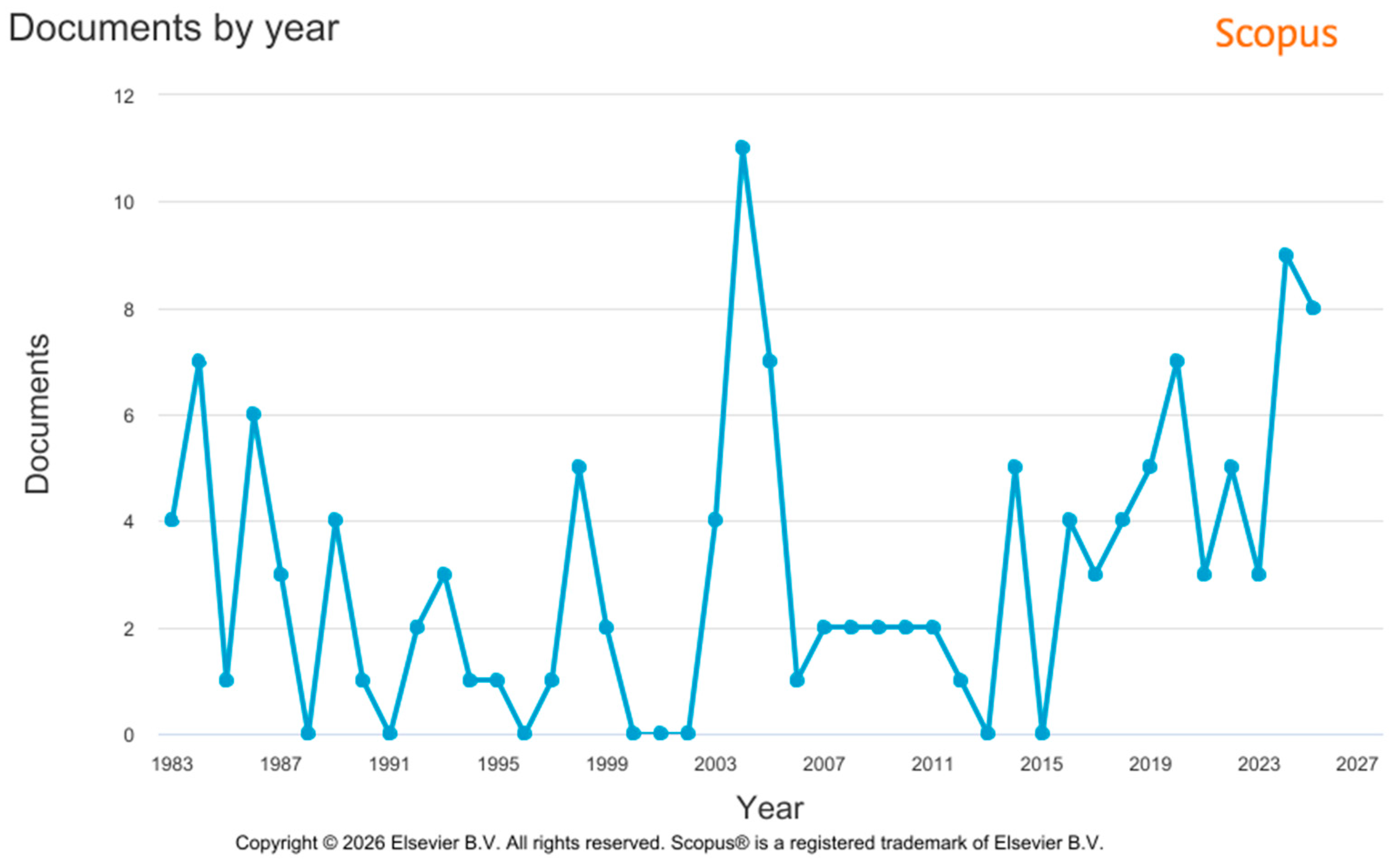
Figure 2. Temporal distribution of publications in the port pavement dataset derived from the Scopus database.
Infrastructures 11 00157 g002
Figure 3. Classification of port pavement–related publications by document type as indexed in the Scopus database.
Infrastructures 11 00157 g003
Figure 4. Co-authorship network of authors contributing to port pavement research (minimum one publication), visualized using VOSviewer (Step 7 in Figure 1—type of documents: articles, language: English). Nodes represent authors, sized by publication output, and links indicate co-authorship relationships.
Infrastructures 11 00157 g004
Figure 5. Keyword co-occurrence network of port pavement research (minimum occurrence = 3), generated using VOSviewer with association strength normalization (Step 7 in Figure 1—type of documents: articles, language: English). Node size represents keyword frequency, and links indicate co-occurrence relationships.
Infrastructures 11 00157 g005
Figure 6. Global geographical distribution of peer-reviewed publications in port pavement research (Step 7 in Figure 1—type of documents: articles, language: English). Shading intensity reflects the number of documents per country, based on Scopus-indexed journal articles. Generated with https://www.mapchart.net/world.html (accessed on 21 February 2026).
Infrastructures 11 00157 g006
Figure 7. Representative pavement applications observed within the multifunctional port environment of Lavrio: (a) official masterplan (in Greek) published by [35], annotated to indicate the principal functional domains requiring dedicated pavement systems; (b,c) aerial images acquired during an Unmanned Aerial Vehicle (UAV) survey conducted on 10 February 2021 [36].
Infrastructures 11 00157 g007
Figure 8. Representative examples of pavement applications within Lavrio Port: (a) commercial terminal sector; (b) marina facilities; (c) fishing shelter area; (d) parking zone serving the domestic ferry terminal; (e,f) domestic ferry operational area; (g) peripheral port road facilitating exit circulation; (h) cruise terminal operational domain.
Infrastructures 11 00157 g008
Figure 9. Indicative examples of handling equipment and container loading in heavy-Duty Operational Zones based on information included in [14].
Infrastructures 11 00157 g009
Figure 10. Representative images of static and impact loading effects on pavements included in [10].
Infrastructures 11 00157 g010
Figure 11. Indicative example of loading conditions in circulation and transfer zones.
Infrastructures 11 00157 g011
Figure 12. Indicative example of loading conditions and serviceability requirements in passenger and mixed-use zones.
Infrastructures 11 00157 g012
Figure 13. Indicative example of loading conditions in service and auxiliary zones.
Infrastructures 11 00157 g013
Figure 14. Conceptual engineering framework for port pavement systems. The framework illustrates the progression from multifunctional port environments to functional classification, which constitutes the primary step in the analysis. For each functional category, the corresponding loading conditions are identified (indicated through color-coded markers), guiding the selection of appropriate pavement design solutions. Finally, monitoring and management strategies are incorporated to support performance assessment and lifecycle-oriented decision-making.
Infrastructures 11 00157 g014
Table 1. Functional classification of port pavement areas and associated operational characteristics.
Functional CategoryTypical Operational
Areas
Dominant Loading
Characteristics
Operational/Performance Requirements
Infrastructures 11 00157 i001Heavy-Duty
Operational Zones
Container yards; bulk cargo storage areas; quay aprons; cargo handling areasHigh static stacking loads; low-speed heavy equipment (e.g., straddle carriers, loaders, reach stackers); repetitive wheel paths; concentrated axle loadsHigh structural capacity; resistance to rutting, cracking, abrasion, and settlement; durability under heavy and repetitive loading
Infrastructures 11 00157 i002Circulation and Transfer ZonesInternal port roads; terminal connectors; hinterland access corridorsPredominantly dynamic loading; mixed heavy and light traffic; variable speeds; traffic-induced fatigueFatigue resistance; geometric stability; smoothness; skid resistance; safety under dynamic conditions
Infrastructures 11 00157 i003Passenger and
Mixed-Use Zones
Ferry terminals; cruise terminals; embarkation/disembarkation areas; public interface zonesMixed traffic (passenger vehicles, buses, service vehicles); intermittent heavy loads; frequent maneuveringSurface serviceability; comfort; skid resistance; durability under variable loading; integration with pedestrian safety requirements
Infrastructures 11 00157 i004Service and
Auxiliary Zones
Parking areas; administrative areasModerate loading; intermittent heavy vehicle presence; lower traffic intensityCost-efficiency; adequate bearing capacity; ease of maintenance; acceptable surface performance
Table 2. Overview of port pavement engineering approaches.
Functional
Category
Loading
Conditions
Reported
Materials/
Pavement Types
Analytical/
Experimental
Approaches
Reported Monitoring/Management ToolsKey Notes
Infrastructures 11 00157 i005Heavy-Duty Operational ZonesStatic container stacking; low-speed repetitive heavy equipment; impact loadsAC; HMAM; RCC; GM; Concrete blocks; Composite RCC–AC systems; Geosynthetic-reinforced basesFEM Analysis; laboratory punching and impact tests; full-scale experimental sections; ABAQUS modelingFWD testing; LiDAR settlement monitoring; static plate load tests; Port-specific PCI; interface bonding evaluationRCC reduces deformation; HMAM improves resistance via modified binders; GM improves fatigue but may become brittle with aging; block pavements show low displacement when confined; CTB sub-layer for block pavements; geosynthetics reduce required base thickness
Infrastructures 11 00157 i006Circulation
and Transfer Zones
Dynamic traffic-induced stresses; low-speed effects Primarily flexible pavementsMechanistic–Empirical design; speed variation modeling Deep learning-based crack detectionLow speeds significantly increase rutting, alligator cracking; thermal cracking is less speed-sensitive; flexible systems are vulnerable under slow heavy traffic
Infrastructures 11 00157 i007Passenger and Mixed-Use ZonesMixed pedestrian and low-speed vehicle loading; queuing loads; environmental marine exposureFlexible, rigid, semi-rigid systemsLaboratory and full-scale HMAM testing; UAV-based orthophoto generation; GIS-based distress mapping; computer vision crack detection; passenger serviceability evaluationUAV-based orthophoto generation; GIS-based distress mapping; computer vision crack detectionHMAM can be an alternative material; adjacent cross-sections may coexist over short transitions; environmental exposure intensifies deterioration
Infrastructures 11 00157 i008Service and
Auxiliary Zones
Static parking loads; low-speed maneuvers; moderate heavy vehicle presenceFlexible; semi-rigid; selective rigid for heavier parking-Function-adjusted PCI thresholds; cost-oriented pavement managementUsers tolerate lower PCI vs. highways; maintenance thresholds may be adjusted
Disclaimer/Publisher’s Note: The statements, opinions and data contained in all publications are solely those of the individual author(s) and contributor(s) and not of MDPI and/or the editor(s). MDPI and/or the editor(s) disclaim responsibility for any injury to people or property resulting from any ideas, methods, instructions or products referred to in the content.