1. Introduction
The engineered cement composite (ECC) is one of the types of high-performance building materials, discovered in the early 1990s by Li [
1]. To improve effective cooperation between the fibers, matrix, and ECC components, efforts were made to develop them based on the principles of micromechanics theory. The tensile strain capacity of ECC ranges from 2% to 10%, which is significantly higher than the 0.01% often found in conventional concrete [
2,
3,
4,
5]. One of the advantages of ECC is the formation of numerous fine cracks, accompanied by its ability to harden under tension, which significantly contributes to the durability of ECC structures to a level that far exceeds that observed in traditional concrete structures [
6,
7,
8,
9,
10]. Therefore, the combination of rapid population growth and limited buildable land has led to extremely dense urban environments, and resorting to tall structures significantly enhances the energy absorption properties of concrete [
11,
12]. Based on this, numerous investigations have been carried out to improve the ductility, toughness, and resilience of structures by replacing ECC with traditional concrete and verifying them [
13,
14,
15,
16,
17,
18,
19,
20].
Over the past ten years, in several construction applications, the performance of crumb rubber concrete (CRC) has become a hot topic in structural and civil engineering [
21]. One of the current environmental problems facing the world today is the disposal of used tires. Nearly a billion tires reach the end of their usable life each year, and at least half of them are discarded untreated. By 2030, that number is predicted to increase to 1.2 billion tires every year. In addition to the stored quantities, we would need to regularly dispose of approximately five billion tires. Incineration has proven to provide significant environmental pollution and fire hazards. Similarly, the consumption of readily available areas and the health hazards caused by rodents and other insects have made landfill disposal difficult [
22,
23,
24]. Concrete that incorporates rubber in its manufacturing has properties that distinguish it from traditional concrete. Higher damping qualities, greater ductility, superior resistance to impact and toughness, lightweight, and high acoustic and thermal insulation capabilities are some examples of these characteristics [
25]. Because of its low compressive strength, rubberized concrete has primarily been used for non-structural components that are prone to impact or vibrations, such as railroad tracks, pipe caps, and traffic barriers.
The replacement of crumb rubber (CR) as fine aggregate in conventional concrete and mortar mixes has been the subject of numerous investigations. Nevertheless, these investigations substituted some of the silica sand in advanced cementitious concrete with ground rubber in engineered cementitious concrete (ECC). Therefore, none of the previous studies used recycled rubber as a complete (100%) substitute for traditional sand as aggregate. The impact of untreated crumb rubber on up to 100% of the characteristics of ECC was examined by Adeyemi Adesina et al. [
26]. Similarly, Huang et al. [
27] introduced shredded rubber as a substitute for iron ores (i.e., not silica sand) in ECC mixtures, and no study was conducted on the bending and permeability properties of the resulting compounds. These investigations, with their limited scope, were unable to understand the overall performance of the ECC mix that incorporates recycled treatment rubber, especially those that incorporate recycled rubber at up to 100% as a substitute for sand. Therefore, this research was carried out to present a comprehensive study to identify the impact of using CR as a sand substitute at a rate of up to 100% on the performance of ECC mixtures. Both mechanical properties and sulphate resistance were evaluated for 180 days in the present research, with exposure periods extended to over 365 days and complemented with data on ultrasonic pulse velocity (UPV), mass change rate, and wear resistance in the subsequent study.
Numerous investigations have been carried out to treat the rubber surface with sodium hydroxide (NaOH) [
28,
29], cement paste as a coating layer [
30], ultraviolet radiation [
31], and simple water washes in order to address the strength loss caused by the rubber surface’s poor adherence [
32]. Through treatment with heating of the rubber, the loss of compressive strength was retrieved by 93%, 60%, and 47% when using rubber at 10%, 20%, and 30%, respectively [
33]. Another study presented five different methods for treating rubber surfaces: sodium hydroxide, sulfuric acid soaking, silica dust, cement coating, and potassium permanganate [
34]. These techniques were costly and could only boost compressive strength by a maximum of 40% [
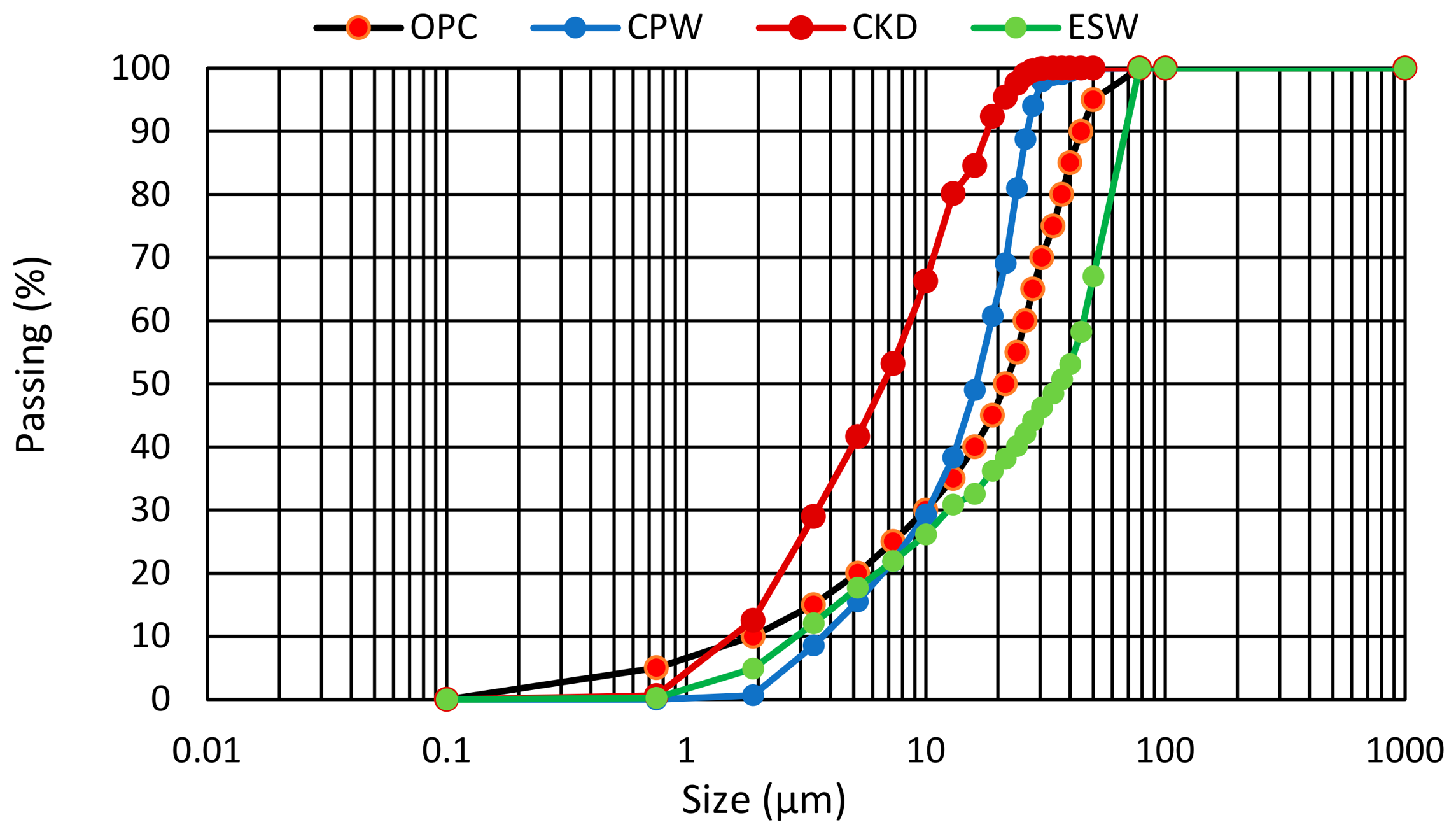
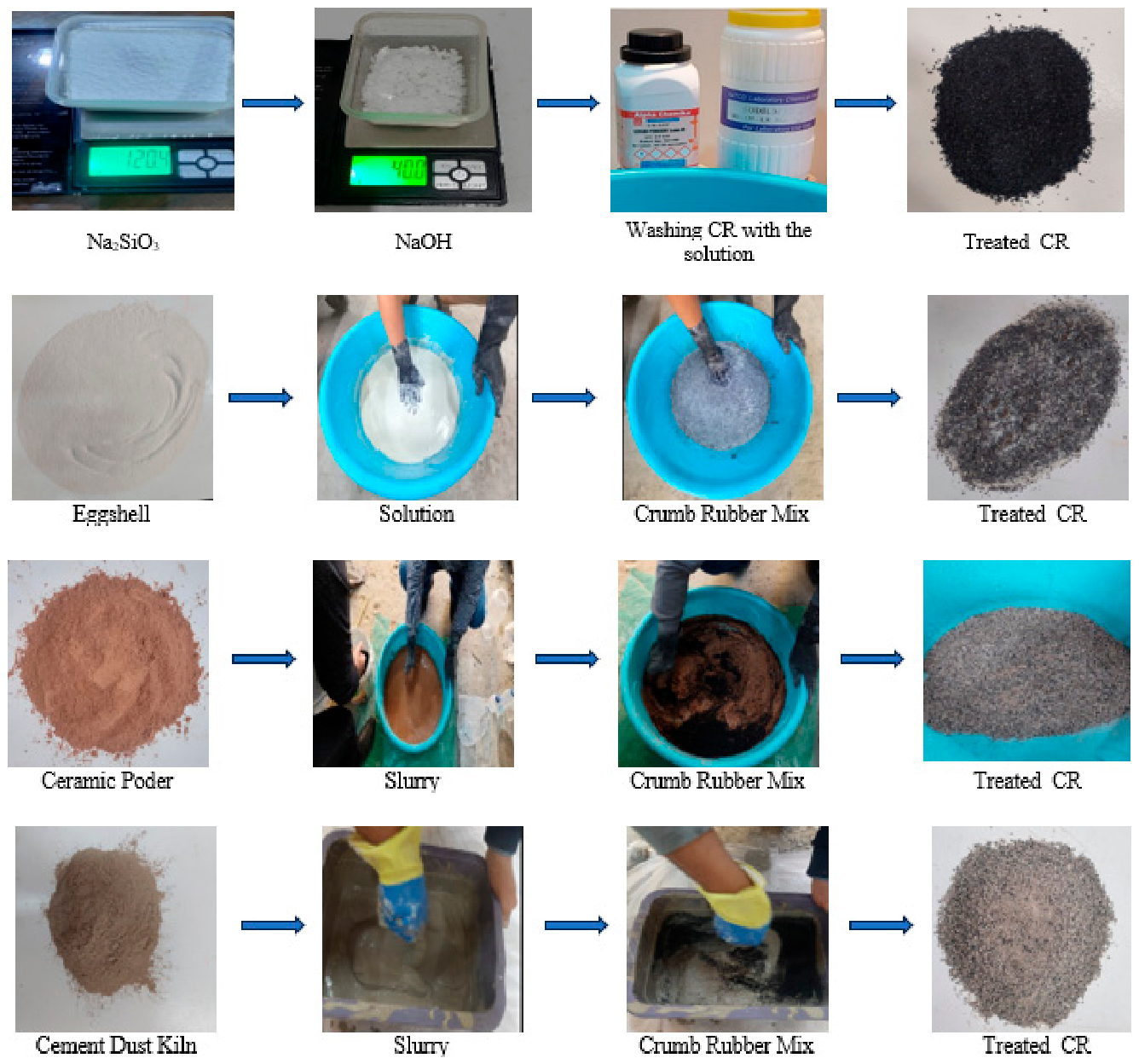
32]. However, processing rubber using quarry dust (WQD) such as ceramic powder (CPW), which is considered waste, is much better among the previously mentioned processing methods, as the loss of strength was much lower than the previously used technique [
35]. The success of the WQD pretreatment of rubber particles is ascribed to the treatment material particles’ adherence to the rubber, which enhanced the rubber’s ability to repel water [
36].
Cement kiln dust (CKD) is a byproduct of the production of cement. The material under examination is a fine, powdery substance that resembles Portland cement. The substance under scrutiny is constituted of fine particles on a micron scale taken from electrostatic precipitators during the cement clinker manufacturing process. Aluminum, calcium, iron, magnesium, potassium, silica, sodium, and titanium are some of the most crucial components in chronic kidney disease. Additionally, manganese, sulfur, and chloride are among the chemical components of CKD bulk ingredients [
37]. It is expected that the cement manufacturing sector in America produces about 15 million tons of CKD on an annual basis [
38]. A medium-sized cement mill might generate up to 30,000 tons of CKD every year. Usually, these quantities are not recycled during production or used in any other way. A survey encompassing 60% of cement production facilities in the United States revealed that, owing to the elevated alkali content, substantial quantities of cement kiln dust are unfit for recycling [
38].
CKD has a pH of almost 12, making it a very alkaline substance. Its sodium and potassium hydroxides speed up the blended slag cement’s increase in compressive strength by breaking down the slag’s glassy phase [
39]. Cement kiln dust has the same fine-grained components as Portland clinker, but in different amounts. The range of its specific surface area is 4000–14,000 cm
2/g. Important elements of CKD include carbonates and chlorides, which are used as active agents in accelerating admixtures. Additionally, cement pastes that contain CKD are relatively less porous [
40,
41,
42]. Using CKD in concrete manufacturing makes it possible to reduce the associated environmental effect and construction cost [
40,
41,
43,
44,
45,
46].
Eggshell waste (ESW) is categorized as trash or by-products from hatcheries and the food industry, and the majority of it is dumped in landfills untreated. In conventional concrete, ESW has been studied as a partial cement alternative; 5–15% substitutions have shown promising results [
47], with a 5% substitution optimizing strength beyond control material qualities and demonstrating its viability in improving concrete properties. ESW exhibits resilience and a washable surface while reducing alkali-silica and sulphate expansions [
47].
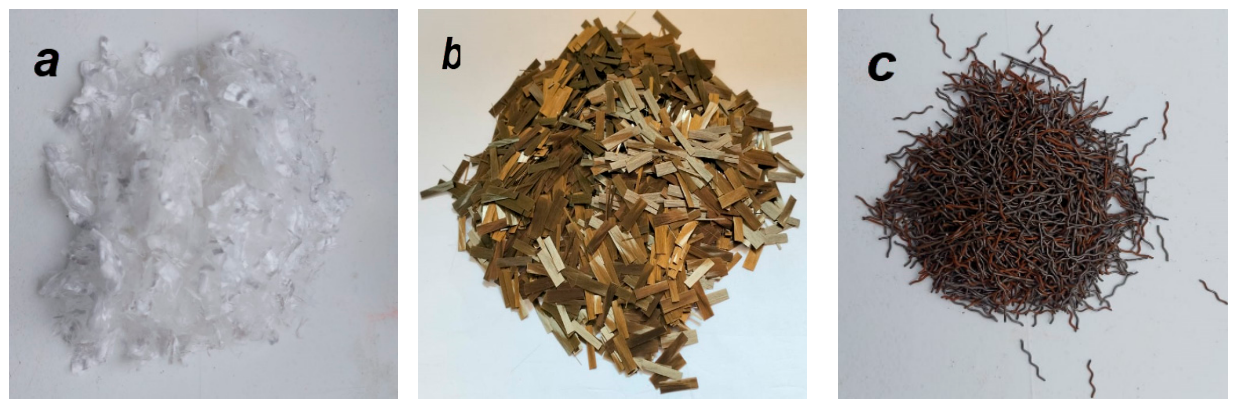
Polyvinyl alcohol fibers (PVA), polypropylene fibers (PPF), and polyethylene fibers (PE) are examples of fibers that are currently utilized in ECC. Synthetic fibers are a class of artificial polymeric fibers that are produced chemically. Steel and other synthetic fibers have been produced (S
tF) and carbon fibers (CF) are more prevalent in traditional concrete. Because of their low cost, the abundance of mineral resources in the Earth’s crust, and minimal environmental impact, basalt fibers (BF) are popular [
5,
48]. Although PPF-ECC has a lower tensile strength than PVA-ECC, comparable levels of tensile ductility are seen when comparing the two materials [
49,
50,
51]. PPF may be a desirable alternative to PVA in several applications due to its inexpensive cost and strong chemical stability [
5]. PPF was added to standard concrete to improve its mechanical properties, including its compressive strength, split tensile strength, and flexural strength. But a high fiber content severely impairs the concrete’s workability, durability, and compressive strength [
52,
53,
54].
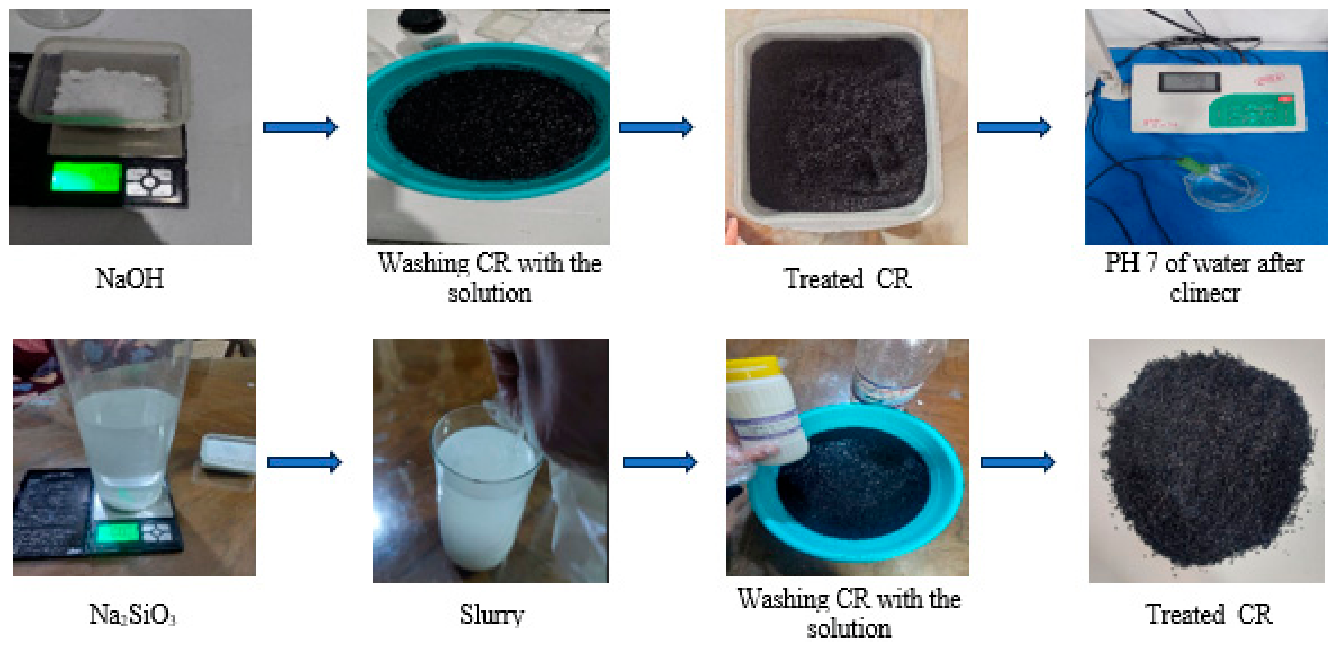
There is limited study on the application of ESW and CKD in cementitious products. To protect the environment, the need to recycle industrial by-products is increasing, this requires providing technical data on the performance of concrete and mortar containing CKD. The goal of this project was to create an environmentally friendly ECC by partially substituting different waste materials for cement and sand. In doses of 10% and 20%, CKD, CPW, and ESW were utilized as partial cement substitutes. In doses of 25, 50, 75, and 100%, CR was utilized as a partial replacement for sand. Physical treatment using the same cement substitution materials (CKD, CP, ESP), and chemical treatment using sodium hydroxide, sodium silicate, and mix of sodium hydroxide and sodium silicate were carried out for the CR in the production of the proposed ECC. The effect of fiber types—such as StF, PPF, and BF—on the performance of ECC was also investigated.
3. Results and Discussion
3.1. Workability
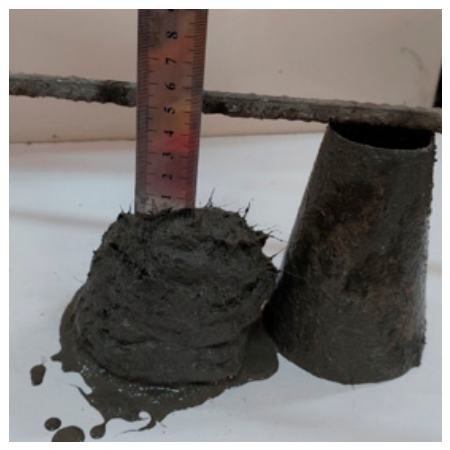
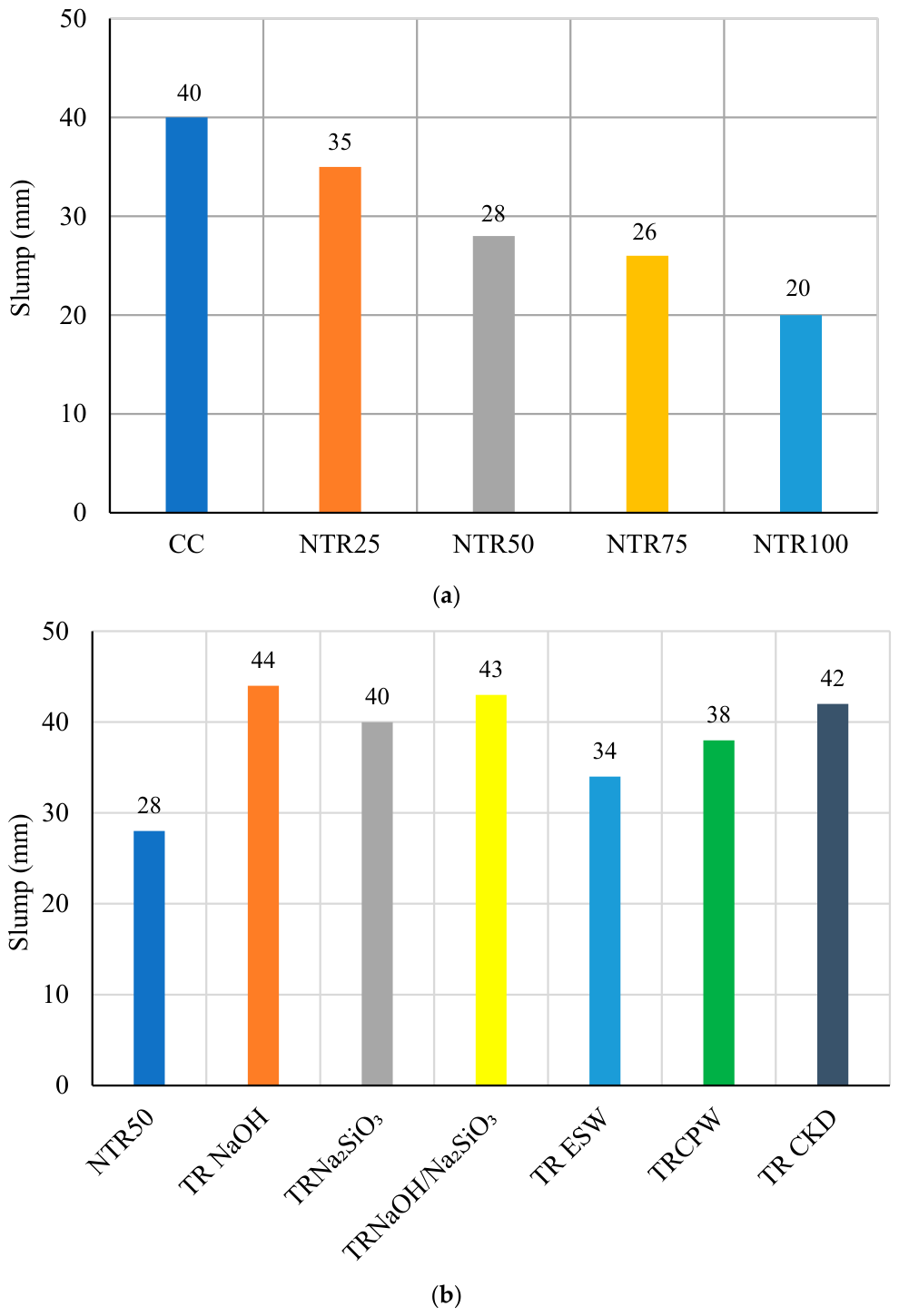
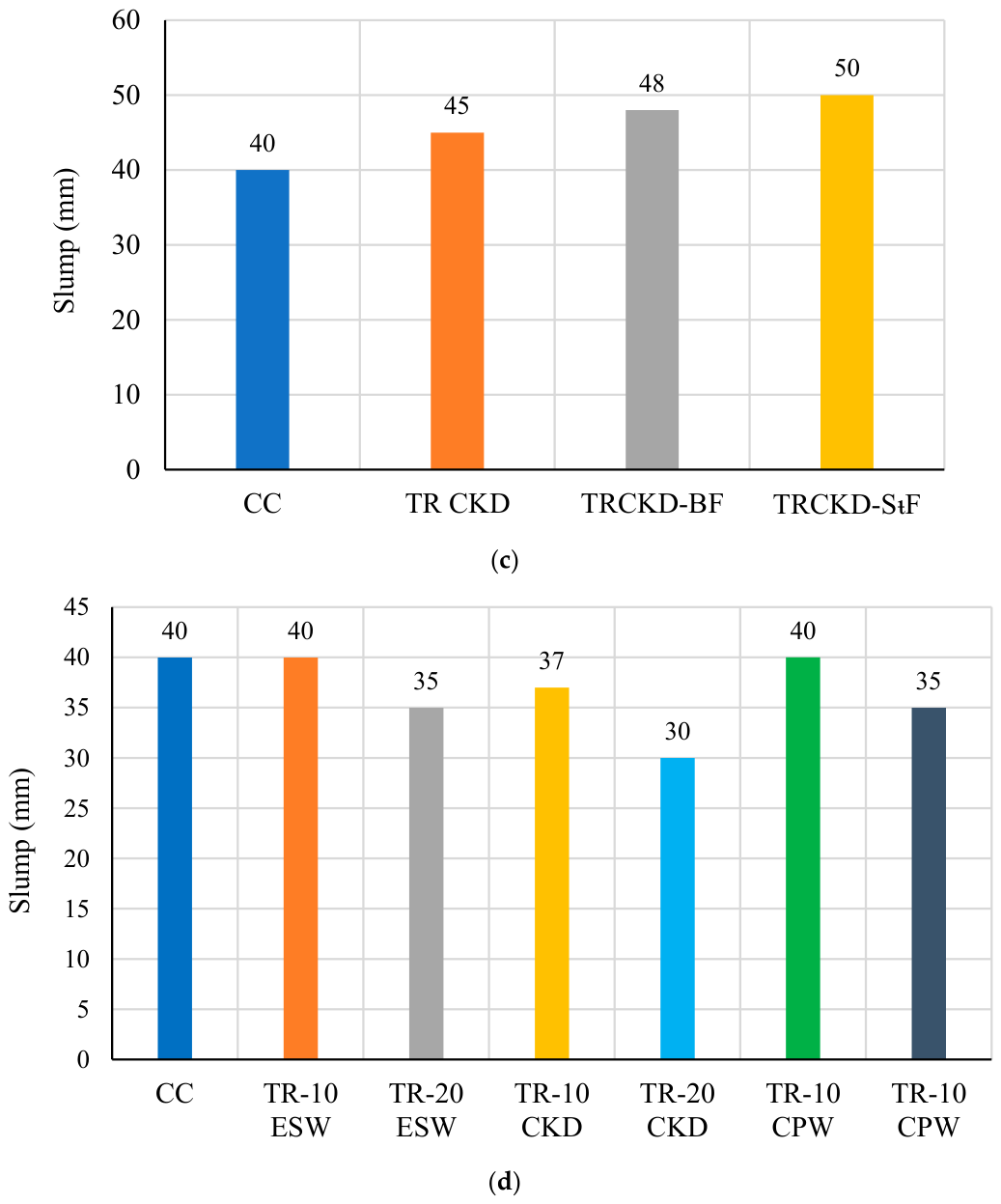
Figure 9a illustrates the results pertaining to the workability of ECC mixtures that contained rubber crumbs. In ECC concrete mixtures including untreated rubber, the slump value dropped as the rubber replacement ratio for fine particles increased. The results revealed that the slump values decreased by 13%, 30%, 35%, and 50% at sand replacement ratios of 25%, 50%, 75%, and 100%, respectively, relative to the control mix. This reduction is attributed to the untreated rubber fragments containing contaminants on their outside surfaces, which increase water requirements. The existence of crumb rubber in ECC mixtures results in diminished workability, attributable to the hydrophobic characteristics of rubber, inadequate particle gradation, and the porosity of the concrete relative to traditional ECC mixtures. Rubber also has an irregular shape, slightly serrated edges, and a rough texture, unlike the natural shape of sand, which adds to this appearance.
As shown in
Figure 9b, a substantial improvement in workability was observed for chemically treated samples at a 50% rubber replacement ratio. Specifically, the slump value for the mixture incorporating sodium hydroxide and sodium silicate treatments increased by 57%, indicating the highest operational performance among all tested samples. This enhancement was notably superior when compared to the mixture containing untreated rubber at the equivalent replacement level.
The mix’s workability is enhanced by sodium silicate’s lubricating effect, while the use of NaOH improves surface roughness, leading to better enhanced adherence with the cement paste. Ewan et al. [
61] reported that NaOH reacts with rubber particles due to the presence of a zinc stearate layer on their surface. This layer is responsible for the hydrophobic nature of the rubber. The reaction converts zinc stearate into soluble sodium stearate, which can be removed by washing with tap water, thereby reducing the hydrophobicity of the rubber crumbs. Furthermore, the Na
+ ions from the treatment solution can replace the H
+ ions from the acidic carboxyl groups on the surface of the rubber crumbs, forming of a fundamental layer surrounding the rubber particles is pivotal in impeding deleterious interactions between the acidic carboxyl groups and alkaline hydration products [
61]. However, the NaOH treatment did not demonstrate any capability to overcome the issue of voids.
As illustrated in
Figure 9b, ECC mixtures incorporating physically treated rubber crumbs demonstrated a significant enhancement of workability relative to the control sample. The treated rubber tire crumbs’ (TCR) smaller particle size is the main reason for this improvement compared to the coarser untreated rubber, as well as the increased air entrainment observed on the surface of untreated rubber, which contributed to the reduction in slump. Notably, the reduction in slump spread was less substantial in the TRESW sample; however, the application of eggshell-based treatment led to a 21% increase in workability. Furthermore, in mixtures containing TRCPW and TRCKD, compared to the mixes that use untreated rubber with a 50% replacement rate, the slump values improved by 0.35% for the mix treated with TRCPW and by 50% for the mix treated with TRCKD. These results indicate an improvement in the soft properties of the ECC mix after physical treatment.
In terms of the influence of adding steel fibers and basalt fibers instead of polypropylene fibers, as shown in
Figure 9c, it can be observed that the mixture containing BF had lower workability compared to the S
tF mixture by 14% and 19%, respectively, compared to the polypropylene fibers mixture. This causes difficulties in the movement of the concrete, making the mixture more cohesive. The effect of BF on slump was less significant than the effects of steel fibers due to the relatively smaller aspect ratio and the flexibility of the fibers used, which can reduce this slump reduction.
The increased water absorption rate is responsible for the decrease in slumps. This is a property of the PPF dosage, resulting in a lower amount of free water within the concrete matrix. Moreover, the consumption of available cementitious materials due to the relatively large surface area of BF reduces the lubrication within the concrete matrix. Sadrmomtazi [
52] mentioned that high doses of BF have a negative effect during mixing and placing the mortar.
In comparison to the mixture produced with untreated rubber at the same replacement ratio, the workability of the ECC mixture with crumb rubber at a 50% sand replacement ratio treated with Na
2SiO
3, NaOH/Na
2SiO
3, and NaOH improved by 28%, 42%, and 57%, respectively. There was a gradual increase in the combined water content up to 2.5% as the CKD increases. The presence of alkalis, chlorides, and sulfates in the CKD, along with hydrated lime, is the reason for the activation of GBFS. As the CKD reaches 10% and 20%, the combined water content reduces compared to the control mixture. This is shown in
Figure 9d. This is primarily due to the decrease in OPC, which is itself a result of the rise in cement dust. Therefore, the phases of OPC decreased, including C3S, β C2S, C3A, and C4AF. And for the hydraulic properties of these phases, the significant Impact is on the chemically bound water [
62].
3.2. Compressive Strength
Compressive strength tests were conducted on all mixes at 7, 28, and 56 days after curing. As illustrated in
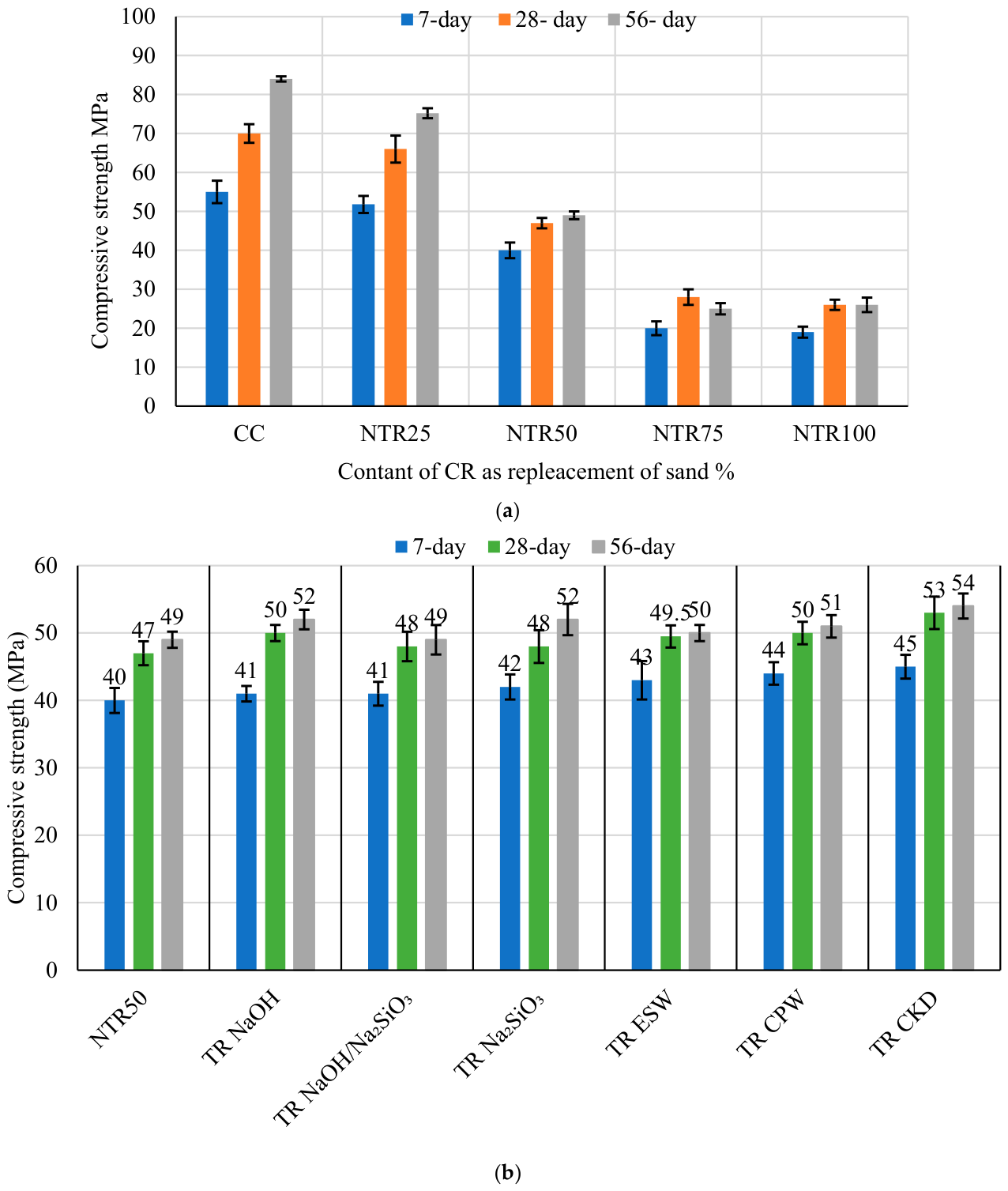
Figure 10, the compressive strength gradually decreased as the CR content was increased in substitution of fine aggregate. For sand replacement ratios of 25%, 50%, 75%, and 100%, the compressive strength dropped by 5.6%, 24.3%, 60%, and 62.8% at 28 days. The mixture with 100% replacement of rubber for sand had the lowest observed compressive strength of 26 Mpa.
Compared to natural sand, the hardness of CR caused a noticeable decrease in compressive strength, accompanied by a higher CR rate in the mix, in addition to the potential development of a weaker interfacial transition zone between the CR particles and the surrounding cementitious matrix. Furthermore, studies have shown that the number of closed pores increases within the matrix with the incorporation of CR—it is likely that the compressive strength reduction is due to this. These findings are consistent with previous studies involving the utilization of CR as an aggregate in conventional concrete mixes [
47,
48]. Despite this,
Figure 10a demonstrates that all CR-ECC mixes investigated maintained compressive strengths above 24 Mpa, indicating their suitability for various structural applications.
Chemical treatment of CR was conducted using NaOH, Na
2SiO
3, and NaOH/Na
2SiO
3. Meanwhile, TR NaOH exhibited the greatest strength at all of the chemically treated ages for TRECC specimens. TR Na
2SiO
3 exhibited the lowest compressive strength. Enhancements in CRECC compressive strength were noted at 28 days, with increases of 7.5%, 3%, and 2.5% when chemically treated with NaOH, NaOH-Na
2SiO
3, and Na
2SiO
3, respectively, as illustrated in
Figure 10b. Consequently, treatment with 10% NaOH is optimum for augmenting the compressive strength of the CR. Awan et al. [
53] demonstrated that treatment with NaOH improved the rough texture of the rubber particles. Mohammadi et al. [
55] showed that the zinc stearate layer present in rubber reacts with NaOH during processing, causing the rubber to become hydrophobic due to the sodium stearate produced from the reaction, which can be easily removed with water when washing the rubber because it dissolves in water, thereby reducing its hydrophobicity. Additionally, the H
+ in the acidic carboxylic group on the surface of CR can replace Na
+ from the treatment solution, which stops the undesirable reaction between the acidic carboxylic group and the alkaline hydration products. Due to this, a basic layer surrounding CR is formed [
54]. Nonetheless, the NaOH treatment did not overcome the issue of voids in the rubber particles.
On the other hand, significant improvements in the compressive strength of ECC were observed on days 7, 28, and 56 when 50% of the sand was replaced with physically treated CR. Specifically, enhancements of 12.5%, 15%, and 12.5% were recorded with CR treated using cement kiln dust (TRCKD); 10%, 7.5%, and 5% with CR treated using ceramic powder (TRCPW); and 7.5%, 1%, and 2% with CR treated using eggshell powder (TRESW), relative to the control CC mixture. These enhancements are attributed to the physical surface treatment, which modifies the hydrophobic properties of rubber to become more hydrophilic, particularly in the presence of waste, thereby strengthening the bond between the particles of the rubber and the cement matrix. Additionally, the treatment process helps regulate the porosity of the CR, further contributing to improved mechanical performance. As illustrated in
Figure 10b, the use of physically treated CR with a 50% replacement rate of CR coating improves the cement’s adherence to rubber.
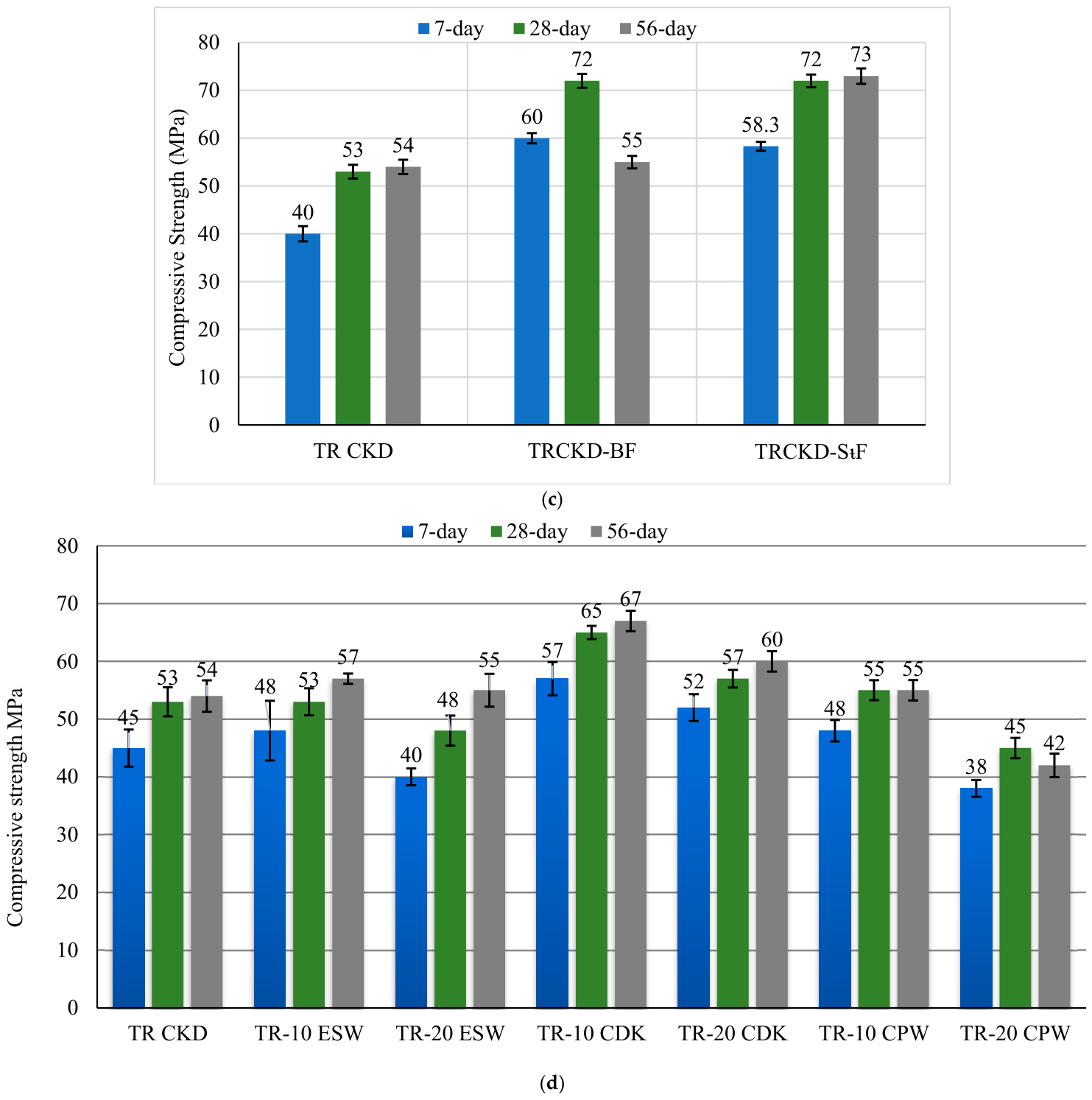
Figure 10c presents the compressive strength results of ECC mixtures at 7 and 28 days. After 28 days, it is evident that the mixtures containing equal proportions of BF and S
tF, each constituting 2% of the ECC volume, exhibited higher compressive strength compared with the mix reinforced with PPF. In addition, a slight increase of about 3% in compressive strength was observed for the mixture incorporating BF and S
tF at a dosage of 0.35%. At 7 days, the results indicate that S
tF had a similar effect to BF on the compressive strength of ECC, showing comparable performance at both 7 and 28 days.
Upon comparison of the data after 56 days, it is evident that the ECC mix incorporating StF exhibits superior compressive strength relative to the other mixes, succeeded by those containing equivalent ratios of BF and PPF. This contradicts the observations made on compressive strength at 7 days. It is clear that there is a difference in compressive strength between the mixture containing StF and the one containing PPF attains 35%. This demonstrates the significant contribution of steel fibers to the enhancement of compressive strength.
As shown in
Figure 10d, the compressive strength of ECC was significantly increased by replacing 10% of the cement with waste material, CKD, CPW, and ESW. In comparison to the TCR-ECC mixture, the compressive strength of ECC containing TR-10CKD rose by 26.6%, 22.2%, and 24% on days 7, 28, and 56, respectively. This improvement is due to the smaller particle size of CKD, which enhances the cohesion of the mixtures. When TR-10CPW was used, the corresponding increases were 6.5%, 3.7%, and 3.6% at the same time intervals, while TR-10ESW addition led to gains of 6.6%, 5.4%, and 5.5%, respectively. Both the chemical and physical contributions of waste are responsible for these improvements. Because there are fewer voids and more surfaces available, the fine particles of waste materials physically act as fine fillers between the cement grains, increasing the formation of calcium silicate hydrates (C–S–H), calcium hydroxide (CH), and other hydration products that improve the hydration process [
63]. Chemically, the pozzolanic nature of CKD enables additional C–S–H formation through reactions with cement hydrates. Moreover, the particle morphology of CPW and ESW characterized by fine size, irregular shape, and rough texture not only increases filler effectiveness but also enhances the interfacial transition zone (ITZ) between the aggregates and the paste, thereby improving the overall composite structure [
19].
Mixtures containing 20% CPW demonstrated reduced compressive strength. It was observed that with the increase in replacement content, there was a decrease in the compressive strength of the TR CKD mixture. A previous study [
44] showed a decrease in strength with an increase in the CPW ratio. The ceramic particles present in the ceramic powder deplete the C–S–H gel during hydration when cement is replaced with CPW. The pozzolanic property of CPW particles during hydration played a significant role in improving strength noticeably at early ages.
The compressive strength exhibited a minor reduction at 20% CKD as a partial substitute for cement. A decline in compressive strength typically refers to the diminished cement content, and higher porosity and advanced stages of the choro and sufflaminate phases enhance the softening and expansion of hydration products due to the high percentage of free lime in cement dust. Wang et al. [
64] also investigated the impact CKD on the compressive strength of mortar over 28 days with a water/binder ratio of 0.50 and partial replacement ratios (0%, 15%, and 25%) of PC. When the replacement reaches 15% of cement with CKD, it leads to an increase in the compressive strength of the mixtures (47.8 MPa) compared to cement alone (46.3 Mpa); this is what the authors discovered. In addition to this, specifically at 25% CKD (39.4 Mpa), the compressive strength declined compared to the ordinary cement sample. Increasing the percentage of added cement kiln dust leads to a decrease in the compressive strength compared to the sample with the lower percentage, due to the reduction in the hydraulic properties of CKD. Wang et al. [
64] assumed that the strength improves for the 15% ratio; it is attributed to an appropriate alkalinity level for the dissolution of silicates and the production of C–S–H.
According to
Figure 10d, it is evident that the compressive strength began to rise at a 10% substitution of eggshell powder in comparison to the control mix design TR CKD. The compressive strength is enhanced by adding eggshell powder. The same effect has been observed—with the highest value reaching 57 megapascals after 65 days of treatment and the lowest value being 48 megapascals after 21 days of treatment. The compressive strength also improved on the twenty-eighth day compared to what it was on the twenty-first day during the curing period. The rationale is that an extended curing phase enhances the workability and durability of concrete. It was noted that the strength augmented with both the curing age and the proportion of eggshell substitution. The strength surpassed that of the control mix due to the incorporation of eggshell powder into the cement. Compared to the reference sample, the concrete made from eggshells shows superior early compressive strength during the initial curing phase. The interaction between silica in cement and calcium oxide from eggshell powder is augmented when cement is partly substituted with eggshell powder, owing to the persistent moisture from the process of cement hydration, which is a byproduct of the process. Additionally, filling the existing voids with eggshell powder makes the internal structure of the concrete more cohesive and leads to an increase in compressive strength. However, the additional increase in eggshell powder negatively affects the compressive strength at all curing ages.
3.3. Flexural Strength
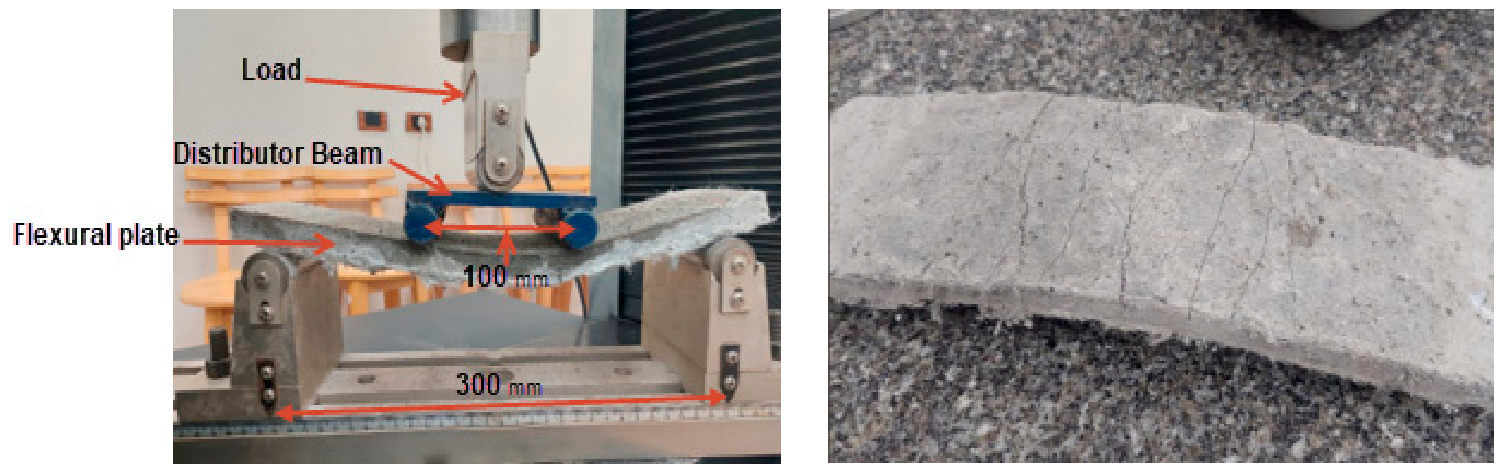
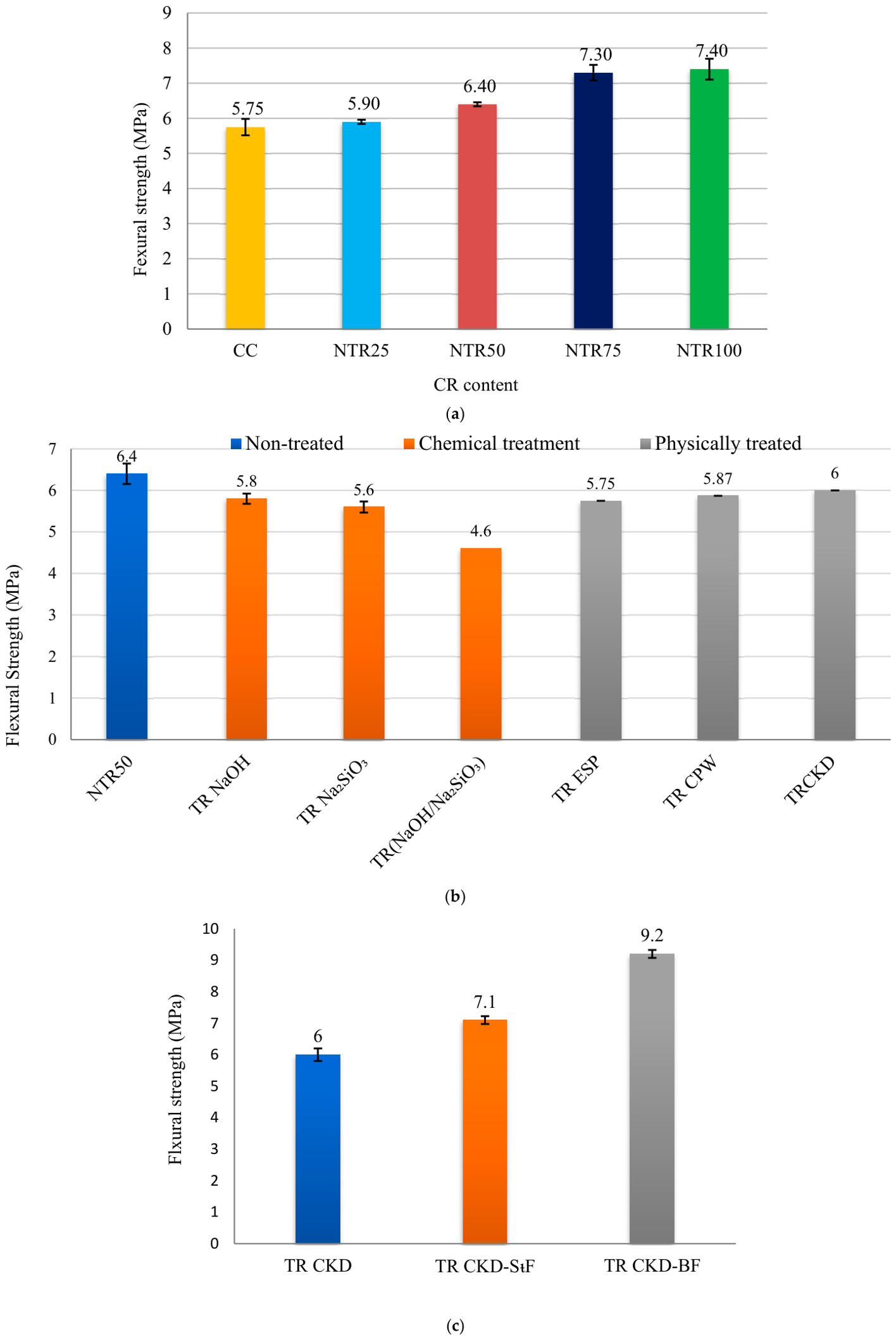
The flexural strength results of the prepared composites are shown in
Figure 11. As indicated in
Figure 11a, the addition of CR to the composite mixtures led to an enhancement in their load-carrying capacity. Specifically, the included ECC mixture 25%, 50%, 75%, and 100% CR as replacements for sand exhibited increases in flexural strength of 2.6%, 11.3%, 26%, and 28.6%, respectively, this is in comparison to the control sample, which consists of sand as the fine aggregate. The maximum flexural strength, recorded at 7.4 Mpa, was observed for the mixture with 100% CR, while the minimum value, 5.75 Mpa, was noted for the control mixture CC. Introducing CR as a fine aggregate improves flexural strength due to its elastic properties and resistance to deformation through energy dissipation. This is what previous studies indicated about incorporating CR as an aggregate in traditional mortar and concrete [
58].
Compared to physical therapy, the chemical treatment had less of an impact on flexural strength. The flexural strength of rubber concrete (CR-ECC) diminished from 6.4 MPa to 5.6 MPa when treated with sodium silicate, and further fell to 4.6 MPa with the combined treatment of sodium silicate and sodium hydroxide, resulting in loss percentages of 28.12% and 12.5%, respectively. The enhancements administered with NaOH markedly increase the bending strength of the rubberized concrete, exhibiting a 9% reduction relative to the reference sample (NTR50) as illustrated in
Figure 11b.
The physical treatment of CR increased the bending strength of ECC (
Figure 11b), although it remained lower than that of mixtures containing untreated CR. The observed improvement with untreated CR is attributed to the high elasticity of the rubber particles, which facilitates energy absorption and effective crack bridging under bending loads. Additionally, untreated CR improves flexural performance by increasing the ductility of the interfacial transition zone (ITZ) between the rubber and the cement matrix. In contrast, treated CR exhibits a stiffer coating and stronger bonding with the matrix, reducing particle deformability and limiting crack-bridging ability. Consequently, treatment decreases flexural strength despite enhancing compressive performance. These micromechanical interactions highlight the critical balance between particle elasticity, ITZ properties, and coating stiffness in controlling crack propagation and bending behavior of ECC mixtures containing CR.
Rubber is known for its high elasticity; however, treatment with NaOH or Na
2SiO
3 solutions slightly reduces elasticity. Nuzaimah et al. [
65] reported a decrease in elongation at break for rubber treated with 1% NaOH compared to untreated rubber, although elongation slightly increases with higher NaOH concentrations, remaining below that of untreated CR.
The TR CKD, TR CPW, and TRESP combinations exhibited reductions in flexural strength of 6.3%, 8.28%, and 9.10%, respectively, when compared to the analogous mixtures prepared with untreated CR. The reduction in flexural strength associated with treated CR is ascribed to the coating produced by waste, which may modify the elastic properties of the rubber.
Upon comparison, with reference to
Figure 11c, TRCKD-S
tF—which incorporates steel fibers—exhibited an 18% enhancement in flexural strength relative to TR CKD, which utilizes polypropylene fibers. The findings align with studies [
66,
67], indicating that while PPF somewhat improves flexural strength, the incorporation of S
tF substantially increases it. PPF have a lower modulus of elasticity than S
tF fibers, so their tensile strength is lower, which affects the flexural strength of the samples. They are effective in filling fine cracks. On the contrary, steel fibers have a better modulus of elasticity and tensile strength, which significantly improves the flexural strength.
BF enhances the longevity of composite materials by vertically spanning cracks and striving to preserve the integrity of the composites, therefore mitigating the propagation of both big and minor fissures. Conversely, BF exhibits cracking at far smaller deformations than the control mix, although they markedly enhance the linear slope of the curve. The use of basalt fibers enhanced the flexural strength by 53.3% relative to the control sample.
It was observed that increasing the volume fraction of basalt fibers reduced the crack width in concrete, substituting larger cracks with finer ones. Previous studies have confirmed the effectiveness of basalt fibers in enhancing flexural performance [
65], reporting that their addition can increase bending strength by up to 57%. Moreover, the inclusion of basalt fibers shifted the failure mode of concrete from brittle to ductile, in agreement with findings from other relevant investigations [
68].
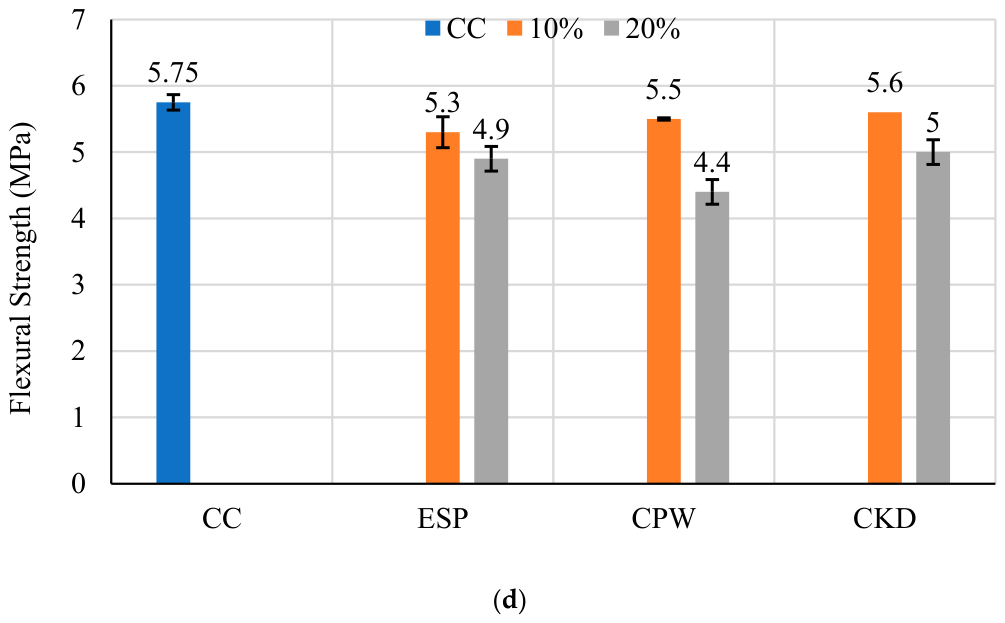
As shown in
Figure 11d, the flexural strength value started to decrease after the ESW was added into ECC. The flexural strength started decreasing compared to the control mix that contains 50% CR treated with CKD (TRCKD). The highest flexural strength recorded was 5.3 MPa on the 28th day of curing. At a 20% content, the lowest recorded bending strength is 4.9 MPa, while 10% gave a higher value, but it remains lower than the reference mix strength.
The free lime present in CKD is less than 10%, and therefore it does not possess high cementitious properties [
58]. The strength decreases when replacing cement with CKD due to the reduced cement content. This is accompanied by a decrease in flexural strength relative to the reference mix, which exhibits the maximum flexural strength. The substitution of 10% does not have a detrimental effect on flexural strength. At replacement rates of 10% and 20% of Portland cement with CKD, the reduction in flexural strength values after 28 days was 4.3% and 23%, respectively.
The flexural strength of the control mix is 5.75 MPa. The flexural strength of concrete containing 10% and 20% CPW is 5.5 and 4.4 MPa, respectively. On the contrary, the flexural strength of ECC containing CKD, CPW, and ESW as partial cement replacements was enhanced. Compared to the control mixture CC,
Figure 11d shows an improvement in flexural strength when using CKD, CPW, or ESW by 16.2%, 12.6%, and 14.6%, respectively, at a 10% replacement rate, and by 24.1%, 21.5%, and 23.0%, respectively, at a 20% replacement rate.
The results cited above suggest that an ideal replacement ratio of 10% produces the best outcomes. This can be attributed to the pozzolanic activity of ceramic powder employed, which are primarily composed of SiO2, CaO, and Al2O3. These components enhance the formation of high-quality calcium silicate hydrate (CSH), thereby improving the ITZ. Additionally, the incorporation of ESW and CKD as fine fillers further contributes to the improved concrete matrix. Nevertheless, the observed reduction in flexural strength with the utilization of treated rubber (TCR) appears to result from the coating formed on the CR by the waste materials, which may alter the elastic properties of the rubber particles. A major observation from 11d is that, in general, it shows a reduction in flexural strength with an increase in the substitution ratio of ESW, CPW, and CKD.
3.4. Uniaxial Tensile Strength
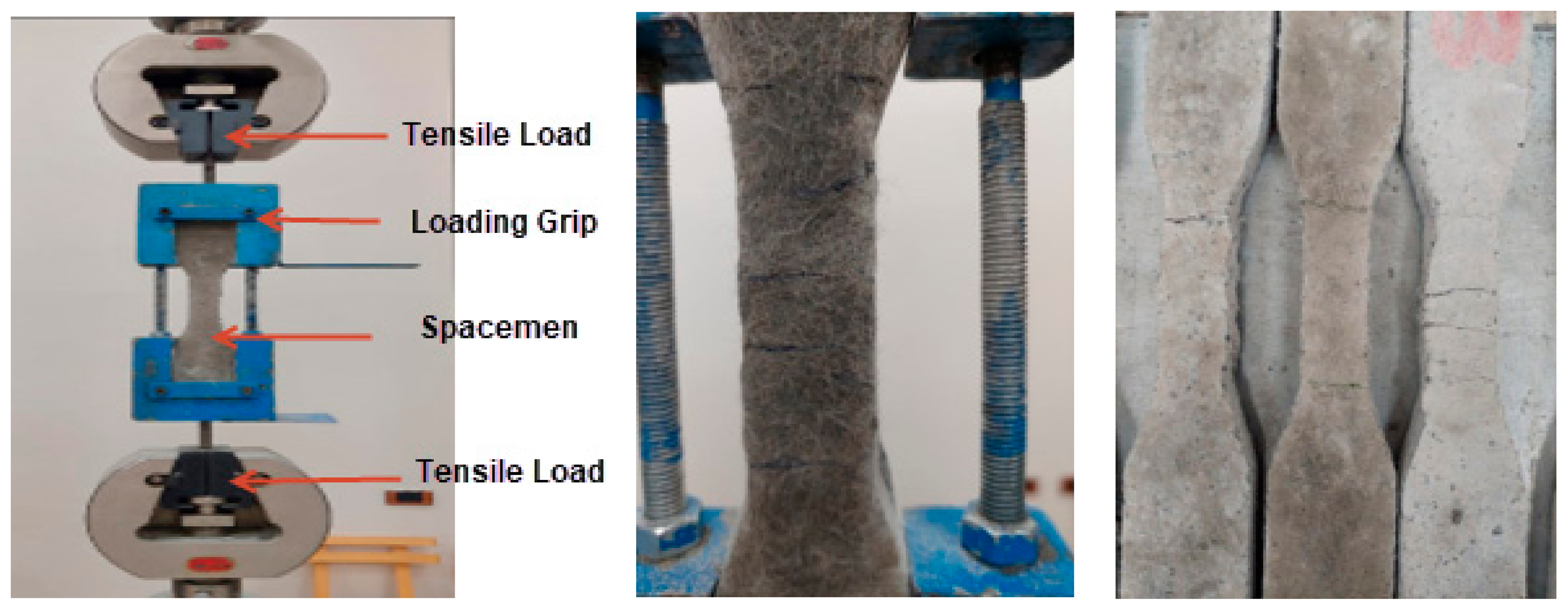
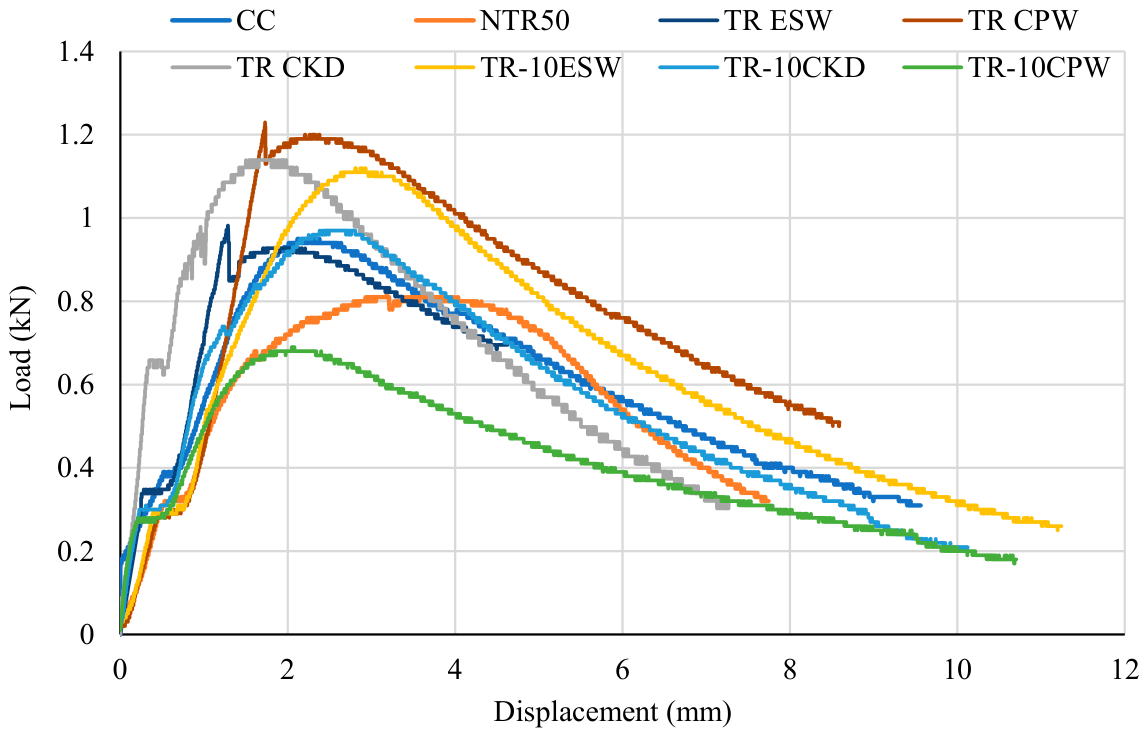
The standard tensile load–displacement curves for the ECC mixtures assessed after 28 days are presented in
Figure 12. Looking at the pictures, there are three separate regions on the displacement curve for the tensile load. The first stage (pre-cracking) ends with the appearance of the first crack at the beginning of loading. The second (post-crack) occurs between the initial crack and the maximum load. The third (failure zone) begins after the ultimate load and continues until the sample fails. All ECC mixes showed clear strain hardening properties.
The uniaxial tensile strength results indicate that the mixtures using cement kiln dust for CR treatment achieved the highest maximum loads among all the tested mixtures. The control specimen exhibited a maximum tensile strength of 0.98 MPa at 28 days. In comparison, specimens incorporating untreated crumb rubber demonstrated reductions in split tensile strength by 14.4%, 16%, 20%, and 26% relative to the control mix at rubber contents of 25%, 50%, 75%, and 100%, respectively. This decrease in strength is attributed to mechanisms similar to those causing the decline in compressive strength. Notably, specimens containing treated rubber showed enhanced tensile strength.
The obtained result revealed that the incorporation of the NTR50 mix resulted in a decline in tensile strength of 18.2% compared to the control CC mixture. This reduction in strength is due to inadequate cement paste coating on the non-treated CR area and poor particle gradation in the NTR50 mixture. Whereas, the findings of the mixtures with 50% of the CR treated physically showed a greater uniaxial tensile strength of 16.4% and 14.2%, respectively using CKD and CPW, compared to the traditional CC mix, shown in
Figure 12. The pozzolanic behavior, as well as the coarse texture and irregular shape of the physically treated CR elements, contributed to the increase in tensile strength. This process enhanced the bond between the cement paste and the particles of the cured materials [
36]. While CKD acted as a filler, it filled the existing pores due to the precision of its particle size, which enhanced the internal structure density of the concrete and increased its tensile strength.
According to
Figure 12, the tensile strength commenced an increase at a 10% replacement of eggshell powder relative to the control mix. When eggshell powder is added, the tensile strength increases, reaching a maximum value of 26.6 Mpa at 28 days of curing. It was noted that the tensile strength rises with the percentage of ESW at 10%, after which the strength begins to decline [
59]. Partially replacing cement with ESW enhances the reaction between the calcium oxide in ESW and the silica present in cement, which is a result of the cement hydration process in the absence of continuous moisture. Moreover, the existing pores are filled with ESW, where it acts as an additional filler, filling the existing pores, thus enhancing the density of the concrete’s interior structure and resulting in increased tensile strength. Nonetheless, an additional increase in ESP will decrease compressive strength in all treatment ages.
Among all tested groups, the specimen designated TRCKD achieved the highest tensile strength, outperforming both treated and untreated counterparts. When 10% of the cement was substituted with ceramic powder in conjunction with 50% treated rubber (TRCPW), a reduction of 20% in tensile strength was observed. On the other hand, tensile strength increased by 15% in comparison to the control mix when 10% of the cement was substituted with cement kiln dust and 50% treated rubber.
This data indicates enhanced the effectiveness of these particular mixtures emphasizes that the approach of substituting 50% of the sand with physically treated CR and 10% of the cement by CKD, is especially efficacious. Thus, this method not only raised the highest load capacity of ECC, it also markedly improved its general structural performance. The results suggest that a 10% cement substitution may be an effective method for enhancing the strength of ECC materials in practical applications.
3.5. Sorptivity
The surface quality of concrete can be identified through the capillary property index. It also provides information on the continuity of capillaries and the structure and size of pores, which determine the water absorption capacity of concrete and its transfer in an unsaturated state [
69].
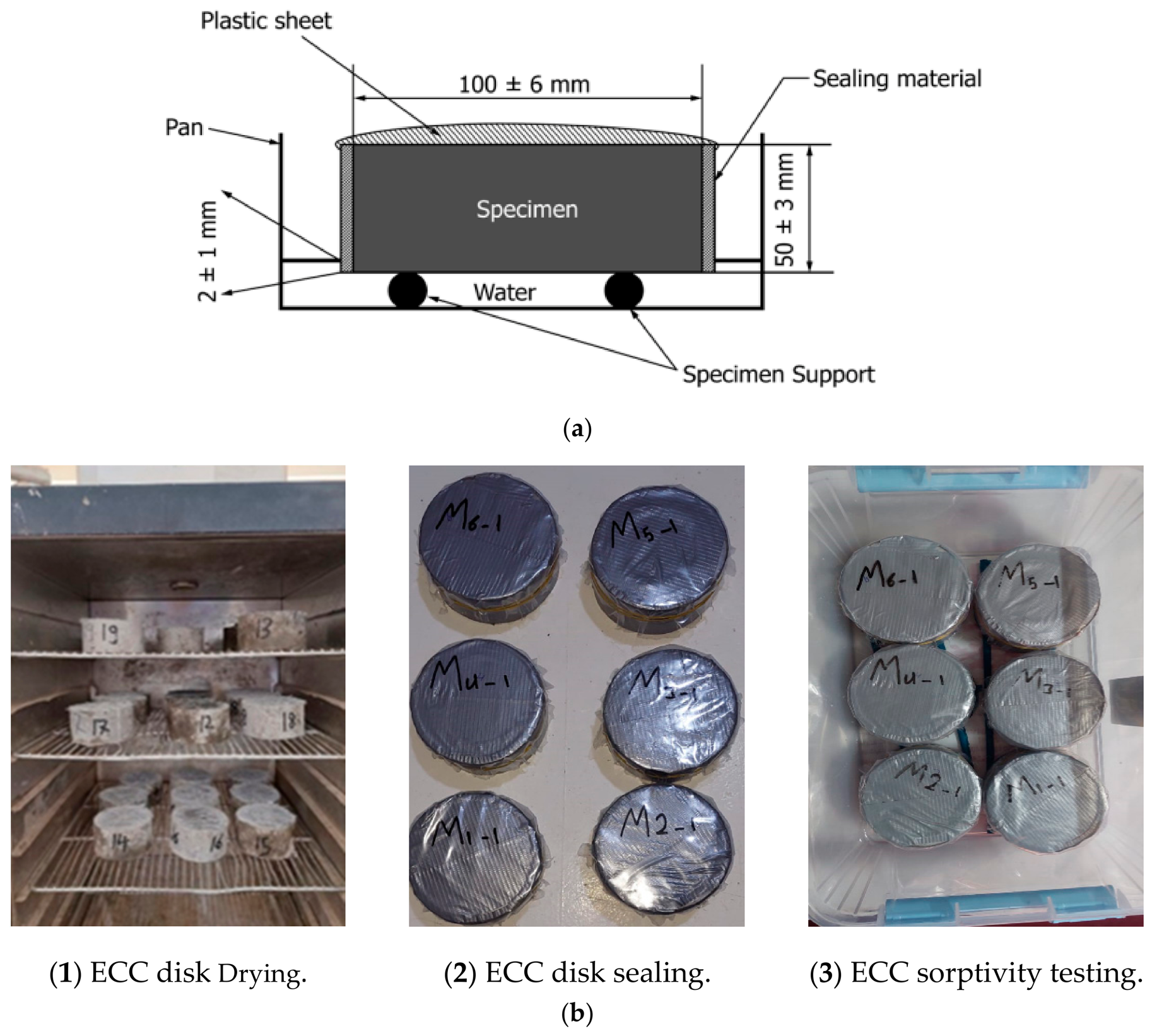
To prepare the absorption test samples, three disks were taken from the middle part of the cylinder with a diameter of 100 mm and a thickness of 50 mm to ensure the uniformity of the samples in quality and reduce the variation between them. A summary of absorption values and coefficients for ECC mixtures is shown in
Table 4.
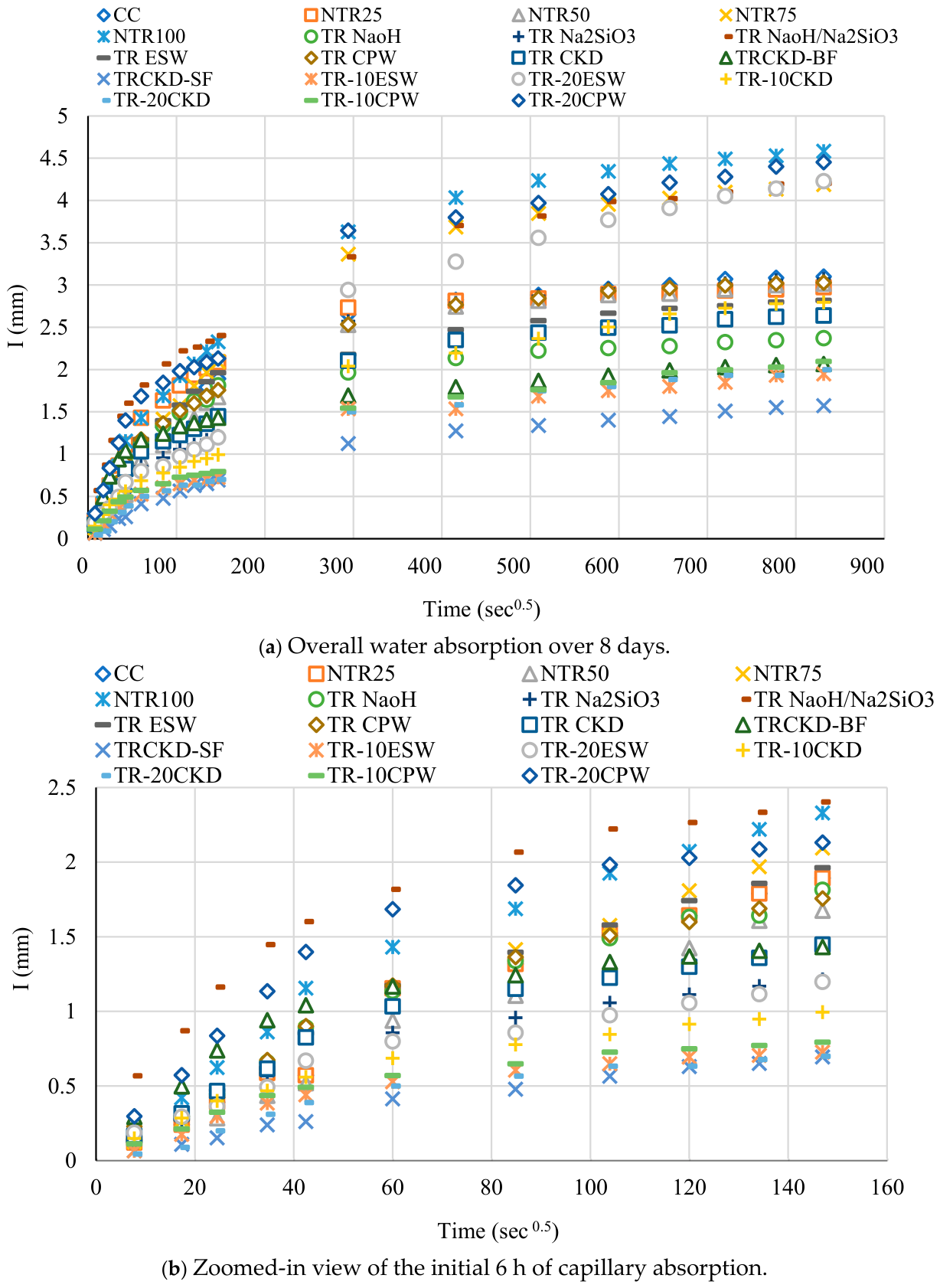
Figure 13 illustrates the connection between the square root of time and the average cumulative water absorption per unit area. As seen in
Figure 13a,b, the peak water absorption occurs at the beginning of the test before it starts to gradually decline.
From the results, it is clear that ECC mixtures containing unprocessed rubber have the highest absorption coefficient values. Due to the internal pores resulting from the presence of unprocessed rubber in the ECC mixture, there was an increase in the absorption rate. Accordingly, proportional reduction ratios for the mixtures are observed in harmony with the rubber content in the mixtures as follows: 25%, 50%, 75%, and 100% of untreated CR to 3%, 20.5%, 30%, and 38.3%, respectively, compared to the control CC mix. Due to the presence of rubber in ECC, there are many inaccessible pores within the cement paste, which increases the high air content. And consequently, it has a high air content. The weak bond between CR and the matrix creates more accessible pores for water penetration, which in turn reduces the impact of the paste’s porosity.
In contrast, the physical treatment of CR and its incorporation at 50% into ECC reduced water absorption per unit area and enhanced all absorption parameters; see
Figure 13 and
Table 4. Furthermore, treating 50% of CR using ESW, CPW, CKD, and replacing sand contributed to reducing the water absorption rate 1.2%, 11.11%, and 20%, respectively, Compared to the NTR50 sample mixture. The decrease in the water absorption property of ESW particles and the filling provided by CPW and CKD in the NTR50 matrix is what generally improved the absorption of the samples. Additionally, high water absorption properties in CKD and CPW particles also effectively contribute to this property.
In the identical direction, the water absorption capacity per unit area and all absorption standards of the ECC mixtures containing ESW, CPW and CKD as a 10% cement substitute improved. These mixtures showed a decrease in water absorption values and standards by approximately 8.3%, 12.5%, and 34%, respectively, compared to the reference NTR50 mixture. Combining waste with ECC effectively reduces its water absorption according to the results. The introduction of waste materials used in appropriate quantities as a substitute for cement ideally reduces water absorption due to the improved secondary hydration reactions of the waste, resulting in the formation of C–S–H, which reduces capillarity due to the densification of the microstructure of the ECC mix. Moreover, partially replacing cement with waste materials is one way to improve the water resistance of engineered cementitious composites (ECC). The reduction in cement content results in a decrease in hydration products, and consequently, the water absorption capacity increases at a waste ratio of 20%, which cannot fill the pores in ECC.
Among the mixtures containing chemically treated rubber, the CR treatment using Na2SiO3/NaOH mixture showed the highest absorption rates, with water absorption values and standards of approximately 21.1%. Meanwhile, the CR treatment using NaOH mixture showed a decrease in water absorption values by 3.2% compared to NTR50 mixtures.
As presented in
Table 4, both the initial and secondary absorption values were evaluated for the prepared mixtures. Notably, the mixtures incorporating CKD and 50% rubber as a sand replacement, along with S
tF, demonstrated reduced absorption rates of 2.1 and 1.1, respectively. These values are lower than those observed in all other treated mixtures containing the same proportion of rubber crumb. This indicates that the combined use of cement kiln dust and S
tF contributes to a significant decrease in water absorption in high-rubber-content mixtures.
Steel fibers used with NTR50 mixtures showed a decrease in the amount of water absorbed per unit area compared to basalt and polypropylene fibers. Where S
tF acts as a barrier to water flow, it limits water leakage. Additionally, the steel fibers can reduce the fine cracks resulting from the heat of hydration reactions [
61]. Compared to PPF, basalt fibers showed a decrease in water absorption at the same mix ratios, with better dispersion and less agglomeration of basalt fibers behind this improvement. Which gives it greater effectiveness in enhancing durability due to its reduction in capillary pores.
The reduction percentage for the mixture containing StF and BF in equal proportions was 2% of the mixture volume. These mixtures showed a decrease in water absorption values and standards by nearly 23% and 5.6%, respectively, compared to the TRCKD mixture which used polypropylene fibers.
3.6. Acid Attack—Strength Changes
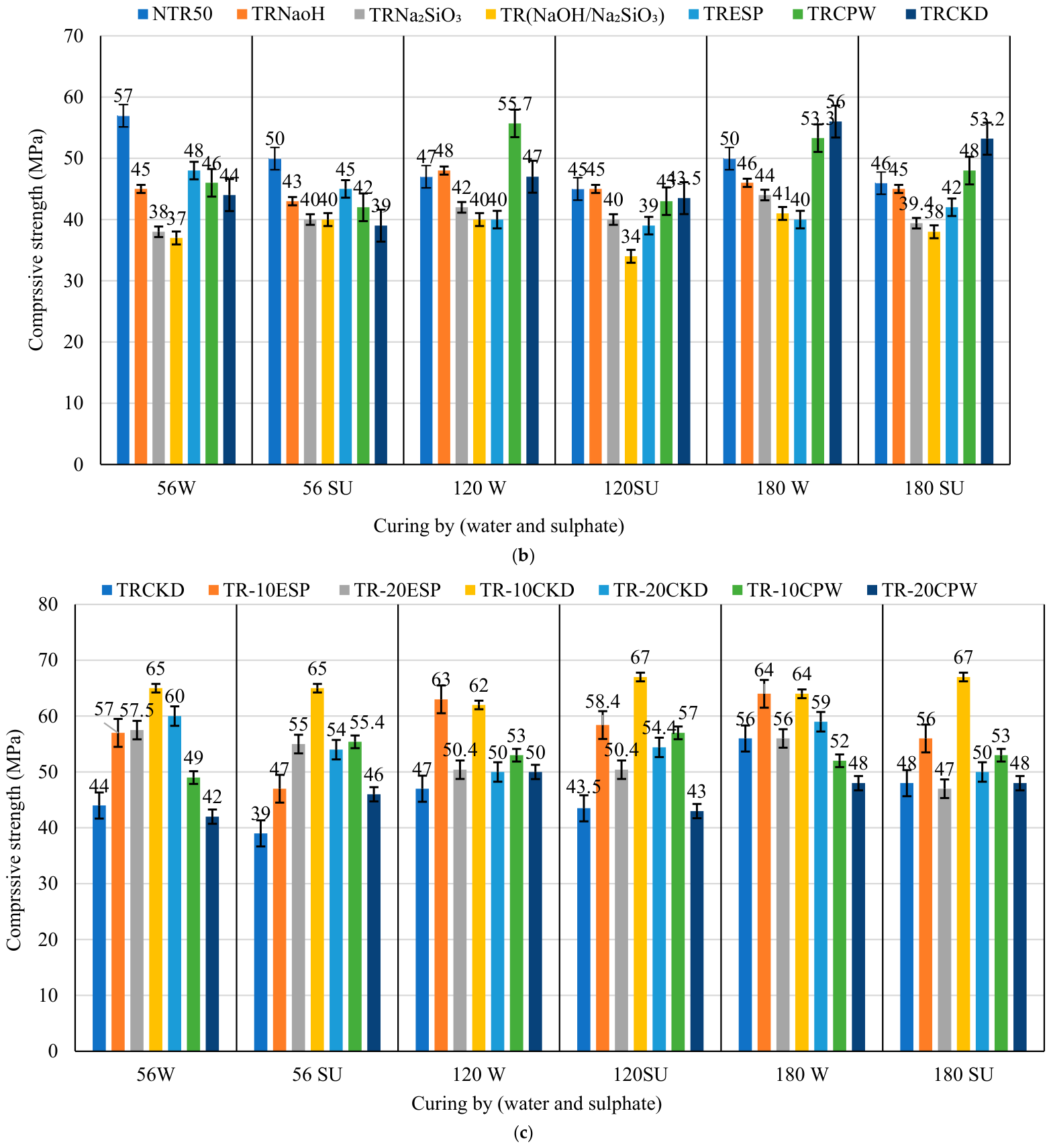
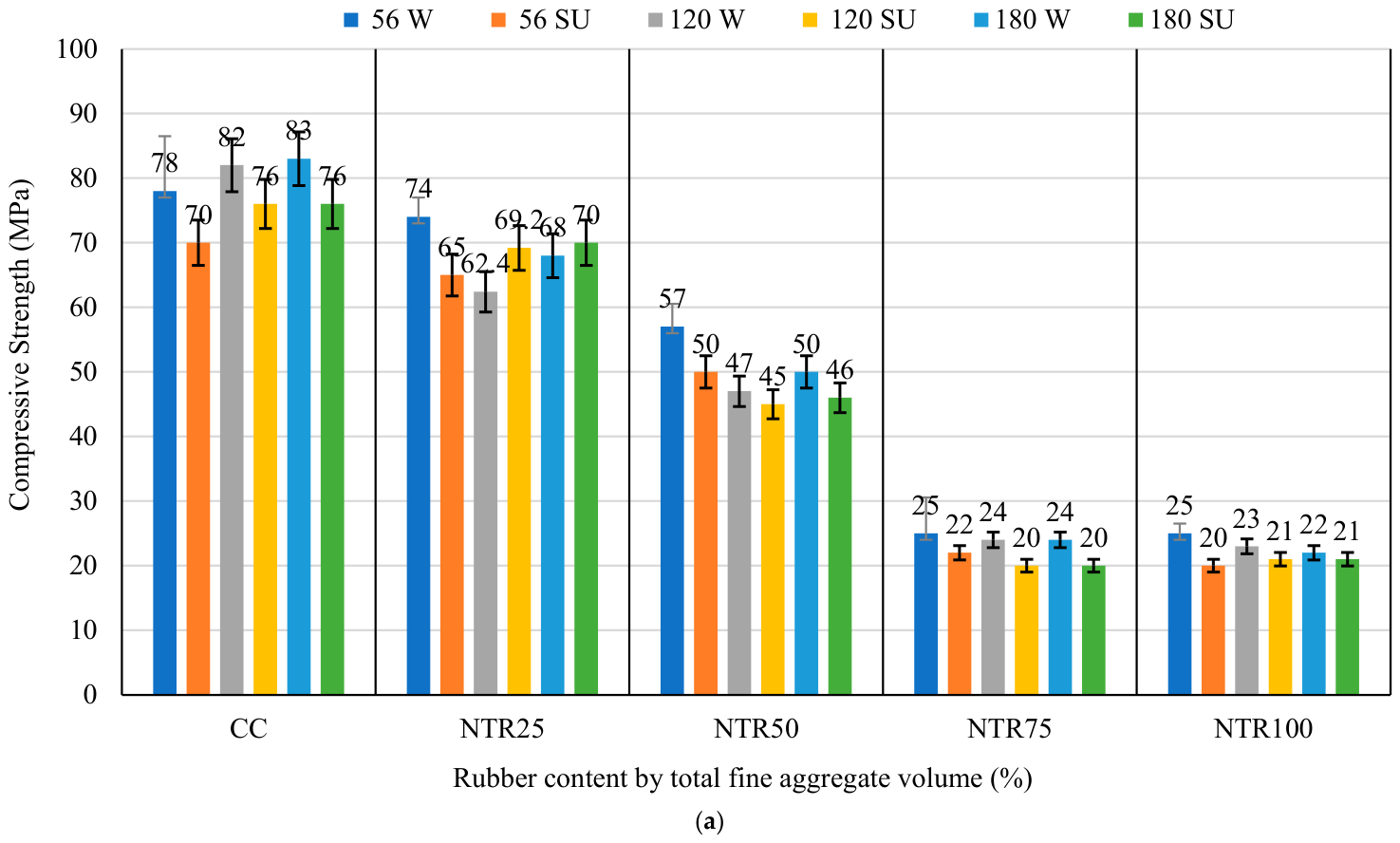
Figure 14 shows the decrease in compression strength following immersion periods of 28, 58, 120, and 180 days in a 4% H
2SO
4 solution. The compressive strength of CC decreased by 11.76% and 13% at 120 and 180 days, respectively, this indicates the deterioration of the fine internal structure in the control mix due to corrosion from acid infiltration, putting the structural integrity at risk.
Concrete specimens cured in water and those submerged in a 4% Na
2SO
4 solution were compared for compressive strength, as shown in
Figure 14a. This comparison encompasses both control CC and ECC mixes in which CR was used as a partial substitute for sand and was evaluated under both water curing and sodium sulphate immersion (Na
2SO
4) conditions. Across all mixes, specimens subjected to water curing irrespective of rubber incorporation demonstrated a consistent increase in compressive strength with prolonged curing periods. Furthermore,
Figure 14a displays the reduction in compressive strength observed after exposure to a 4% H
2SO
4 solution for 56, 120, and 180 days. Specifically, the CC sample exhibited compressive strength losses of 10.2%, 7.3%, and 8% at 56, 120, and 182 days, respectively. These results suggest that immersion in sulfuric acid significantly undermines structural integrity, primarily due to acid-induced leaching and the subsequent deterioration of the concrete’s internal microstructure in control mixture.
The compressive strength decreased by 12.28%, 4.4%, and 8% for the NTR50 model at 56, 120, and 180 days, respectively. These results are consistent with those reached by [
62,
64], which indicate a direct relationship between the increase in CR content, the appearance of micro-cracks, and the increase in porosity, causing weight loss and strength deterioration under acidic conditions.
When the NTR25 samples were assessed and submerged in sodium sulfate, it was found that there was an initial increase in strength that strength improved initially, followed by a decrease at the end of the immersion period, at 180 days. However, at the end of the soaking period in the sodium sulfate solution, it was found that the strength was equal to its original strength. The material’s enhanced strength is ascribed to the higher formation of C–S–H gel as a secondary product, along with expansive products arising from reactions between hydration products and sodium sulfate solution during immersion. The formation of extension products led to cracking and flaking, resulting in reduced strength. The highest reduction value in compressive strength was found for the reference mix with 25% rubber at 56 days, and the lowest reduction value was found for the same mixture at 120 and 180 days exposed to 4% Na2SO4.
It was found that at a 50% replacement ratio of physically treated rubber crumbs, an improvement in sulfate resistance was observed compared to chemically treated ones,
Figure 14c, and it was noted that this resistance decreases as the amount of rubber in the concrete increases. Because the treated rubber particles in the rubberized concrete prevented fracture development and physical disintegration, the untreated control mix samples showed the greatest loss in durability.
The treatment of CR with cement kiln dust and ceramic powder plays important roles in improving the durability of ECC, as an increase in sulfate resistance of 1.15 and 1.04 was observed, respectively, in harsh environments. Therefore, it is obvious that the TR-ECC processor is successfully resistant to the harmful environment
Figure 14b. The findings of the test can be explained by observing modifications in the values of the two existing parameters, which are NTR and TCR. The CR particles existing in the CR-ECC caused microcracking cracks in the specimens, allowing the acidic medium to penetrate more deeply. However, in TR-ECC with CKD or CPW, fewer cracks grew, and the constituent materials had separated less.
Concrete exposed to Na2SO4 solution with a replacement ratio of 10% and 20% for cement (using CDK, CWP, and ESW) showed improvements in compressive strength over the exposure period, indicating that exposure to the solution does not negatively affect the mechanical strength of these mixes.
All samples with a 10% replacement ratio exhibited a slight increase in average compressive strength compared to their counterparts cured in water, as shown in
Figure 14c. In contrast, when the replacement ratio was raised to 20%, the mixes experienced a reduction in strength after 120 and 180 days of exposure (refer to
Figure 14c). Specifically, the TR-20ESW, TR-20CKD, and TR-20CPW mixes recorded strength losses of 16%, 15%, and 1%, respectively, relative to the water-cured specimens. After 180 days, the reference mix TR CKD showed a 14% decrease. The results of this study suggest that there are two distinct stages in the formation of compressive strength.
At early curing ages, an increase in compressive strength was observed for all mixtures except those in which cement was partially replaced with eggshell powder. This enhancement is attributed to the predominance of hydration reactions during the initial stages, leading to the formation of ettringite. The generated ettringite occupies the pore spaces within the concrete matrix, contributing to an overall improvement in strength [
70]. However, at later curing ages, deleterious chemical reactions become more pronounced, adversely affecting the mechanical performance of the mixes. The observed decrease in strength is primarily associated with the presence of gypsum and the formation of secondary ettringite. These expansive phases contribute to microstructural deterioration and subsequent strength loss. This transition in behavior underscores the impact of processing time on the durability and performance of the materials under study.
The average loss in compressive strength at the 180th day for the reference TRCKD, TR-10ESW, TR-10CKD, and TR-10CPW mixes subjected to Na
2SO
4, compared to their water-cured equivalents, was 1.4%, −16%, −4.7% and 12%, respectively, as illustrated in
Figure 14c.
5. EDX Analysis
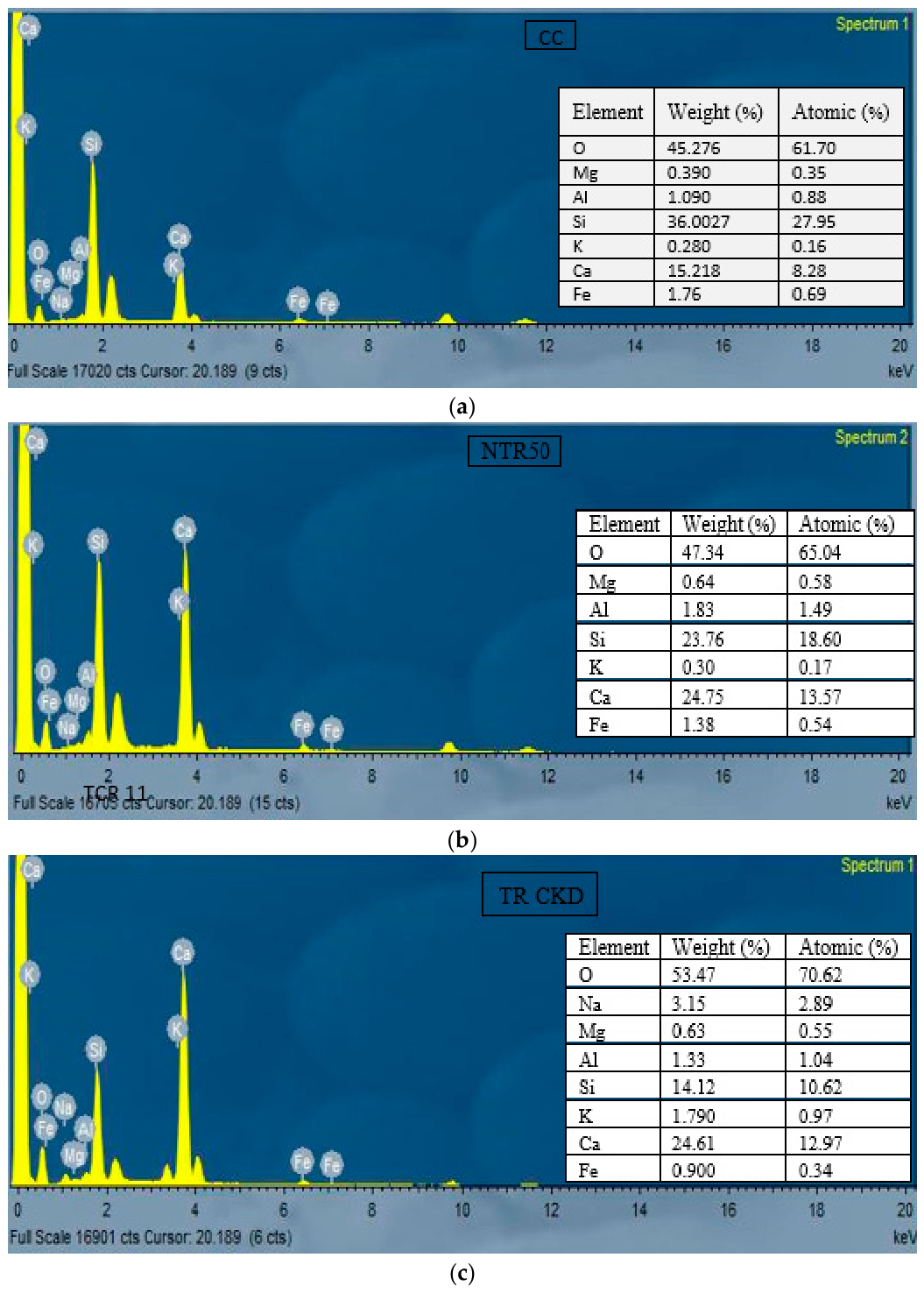
As indicated in
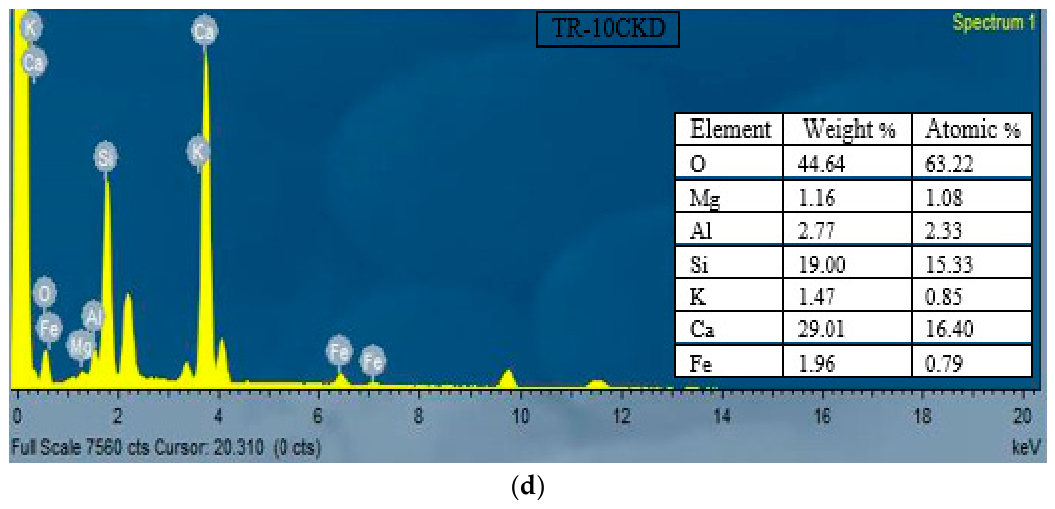
Figure 16, the comparative analysis of EDX patterns reveals the different additives embedded in the cement matrix and their elemental composition for four ECC mixtures (CC, NTR50, TRCKD, TRCKD-BF, TRCKD-S
tF, and TR-10CKD). The control mixture (CC) had the appearance of a typical cementitious compound, with a high content of oxygen and calcium, The high content of silicon and aluminum elements in both SF and GGBFS is involved in the manufacturing of cement hydration products such as C–S–H and CH. It enhances the density and strength of the matrix. The robust and durable characteristics of the control mix is attributed to the excellent and balanced distribution of the elements, making it a benchmark for comparison with the compacted mixtures (
Figure 16a). On the contrary, the high calcium content in the TR CKD mixture reflects the significant input of untreated CR, which was partially replaced with cementitious components (
Figure 16b).
Figure 16c indicates that the contained TR CKD shows a more balanced distribution of elements. Compared to NTCR d, a decrease in carbon content is observed, indicating a pathological dispersion of CKD and adequate coverage of rubber crumbs, while the increase in silicon, aluminum, and alkali content is prominent in CKD.
This high silicon content and more uniform distribution of other elements indicates that good integration within the cement matrix for rubber particles has occurred. It seems that treating rubber with CKD enhances the performance of the interfacial transition zone (ITZ) and the overall adhesion of the matrix, which in turn improves the compressive and tensile strength.
Figure 16d illustrates the mix TR-10CKD for treated rubber is shown in addition to replacing 10% of the cement with cement kiln dust. A strong dispersion of CKD particles results in an augmentation of the filler’s surface area and consequently reduces stress concentration spots. An increase in CKD leads to a significant improvement, gradually raising the combined water content to 2.5%. This improvement is due to the alkaline content, chlorides, and sulfates present in the cement kiln ash, in addition to the water lime, which acts as a catalyst for GBFS. Increasing the replacement of cement kiln dust by more than 10% leads to a decrease in the combined water content because the amount of ordinary Portland cement is reduced as the amount of cement dust increases. Based on this, the reduction in OPC phases had a significant impact on chemically bound water, due to their hydraulic properties. Among these phases are C3S, β-C2S, C3A, and C4AF.
6. Conclusions
In order to improve environmental sustainability, this study investigates the use of treated crumb rubber as a partial replacement for sand at levels of 25%, 50%, 75%, and 100%, given the importance of engineered cementitious composites (ECC). The compressive strength and overall mechanical performance of ECC were assessed in relation to various curing techniques. Rubber particles (both treated and untreated) were used to partially replace cement and sand in the suggested ECC combinations that included waste materials. These mixtures were evaluated using tests for compressive strength, uniaxial tensile strength, flexural strength, and water absorption. Additionally, to describe the internal morphology and elemental content of specific combinations, microstructural investigations using SEM and EDX were carried out. The main conclusions reached from this research study were as follows:
The workability of ECC mixtures was affected by the addition of rubber and supplementary materials. Replacing 50% and 100% of sand with untreated rubber reduced slump by 30% and 50%, respectively. Physically treated rubber increased slump by 42–57%, while chemically treated rubber increased it by 21–50% at 50% replacement. Partial replacement of cement with 10% ESW or CPW raised slump by 43%, and CKD increased it by up to 32% at the same replacement level, with smaller improvements at higher contents.
When untreated rubber was added to ECC mixtures, their compressive and uniaxial tensile strengths declined. This decline became more noticeable as replacement ratios increased in comparison to the control mixture. In contrast to untreated rubber at the same level, the application of chemically or physically treated rubber at a 50% replacement level enhanced both compressive and uniaxial tensile strengths. The mixture including 50% treated rubber (TR-CKD) with 10% ESW, 10% CKD, and 10% CPW showed a discernible improvement in compressive and uniaxial tensile strengths at 28 days.
Increasing the replacement ratio of untreated CR in ECC mixtures reduced the compressive strength by up to 33% at a 50% replacement level. In contrast, using 50% physically treated CR with CKD improved the compressive strength by about 20%. Moreover, partial replacement of cement by 10% with ESW, CKD, and CPW enhanced the compressive strength by approximately 15%, 30%, and 18%, respectively.
ECC mixtures containing untreated rubber exhibited improved bending strength, which increased with higher rubber content. In contrast, using 50% physically or chemically treated rubber reduced flexural strength by 6.3–10.2% and 9.4–28%, respectively. Partial replacement of cement by 10% with ESW, CKD, or CPW in mixtures with 50% treated rubber further decreased bending strength by 11.6%, 8.3%, and 6.7%, respectively.
Water absorption and sorptivity of ECC mixtures improved with the incorporation of physically treated rubber. Partial replacement of fine aggregate with ESW, CPW, and CKD reduced water absorption by 16.2%, 22%, and 31.4%, respectively. Chemically treated rubber decreased water absorption by 25.7% with NaOH and 12.4% with Na2SiO3, while the combination of both treatments slightly increased absorption by 3.3%. Additionally, replacing 10% of cement with ESW, CKD, or CPW reduced water sorptivity by 43%, 22%, and 40%, respectively, whereas exceeding 10% replacement with ESW or CPW increased sorptivity.
The incorporation of basalt fibers (BF) and steel fibers (StF) significantly influenced compressive strength compared to polypropylene fibers (PPF). StF-reinforced samples exhibited brittle behavior with surface spalling, whereas BF reduced crack propagation and prevented spalling. Both BF and StF enhanced compressive strength by up to 17%.
Basalt fibers (BF) contributed to the tensile failure pattern in concrete, where fine cracks appeared within the sample. Overall, the addition of BF and StF led to significant improvements of 53.33% and 18.33% in flexural strength, respectively.
BF addition and StF in the concrete mixture increased the concrete workability. However, PPF showed lower slump values when compared to BF and StF.
All combinations of released rubber showed a similar pattern of compressive strength losses of 10.25% when exposed to acid; treated rubber mixtures demonstrated the least decline, ranging from 4.4% to 11.6%. The compression strength of TR Na2SiO3 was 4.4% higher when subjected to acid assault.
Low cement replacement levels (10%) with CKD and CPW enhanced compressive strength due to filler effects, matrix densification, and the pozzolanic activity of CPW, with increases of 7.4% and 13% after 120 days, respectively. In contrast, 10% ESW reduced compressive strength by 7.5%. Higher replacement levels (20%) with CKD, CPW, or ESW decreased compressive strength, attributed to increased porosity and poor adhesion caused by micro-cracks and impurities.
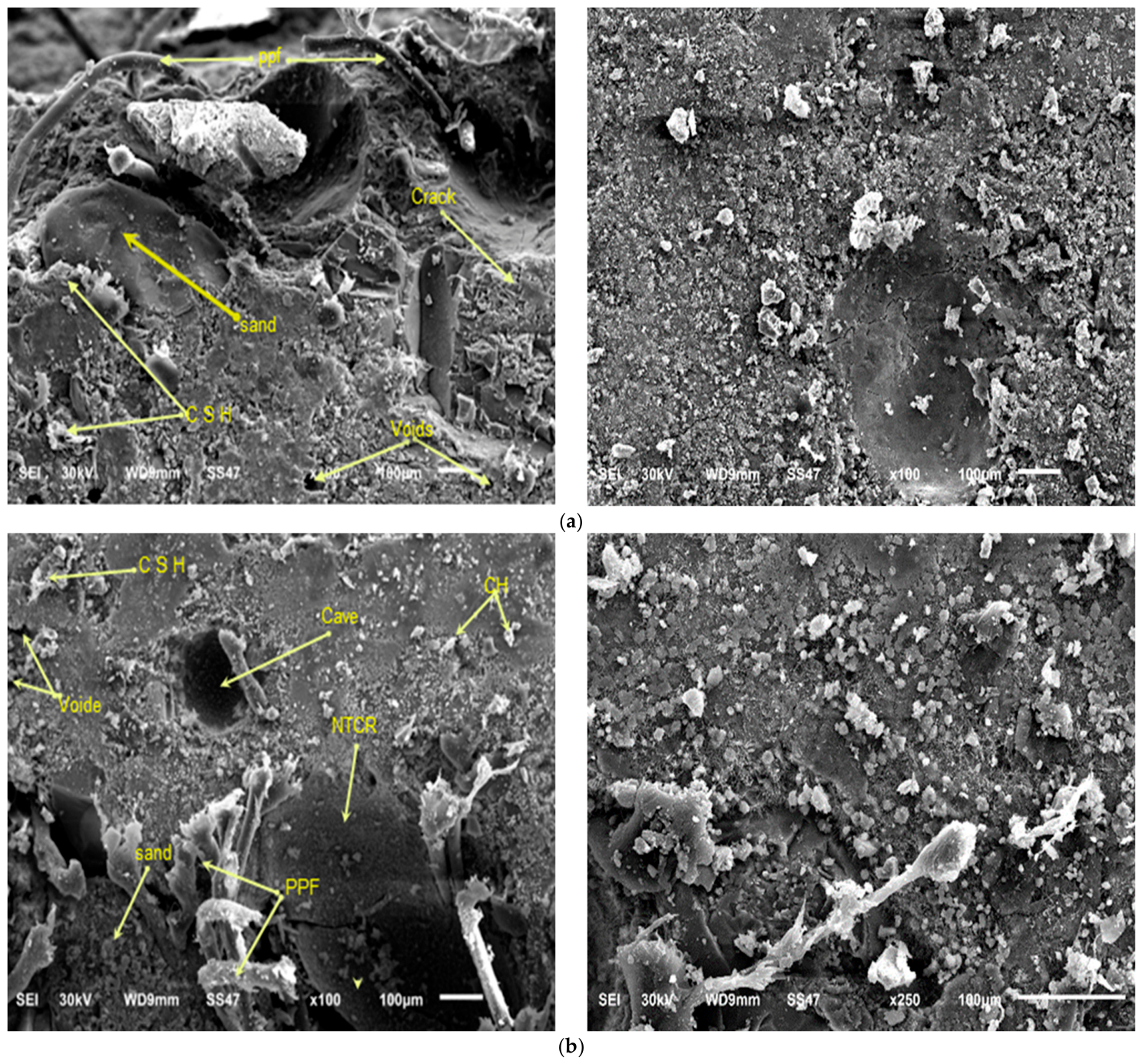
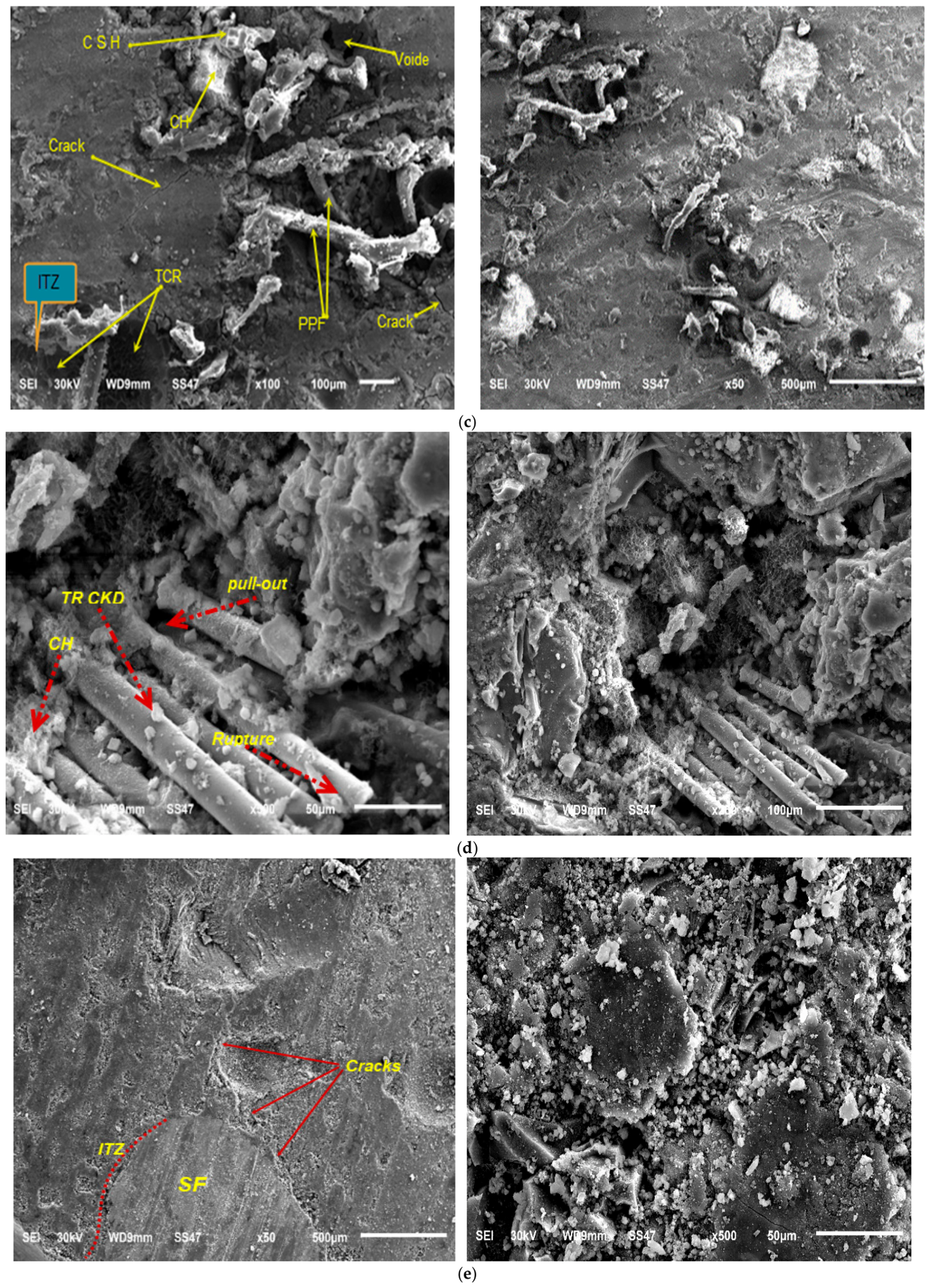
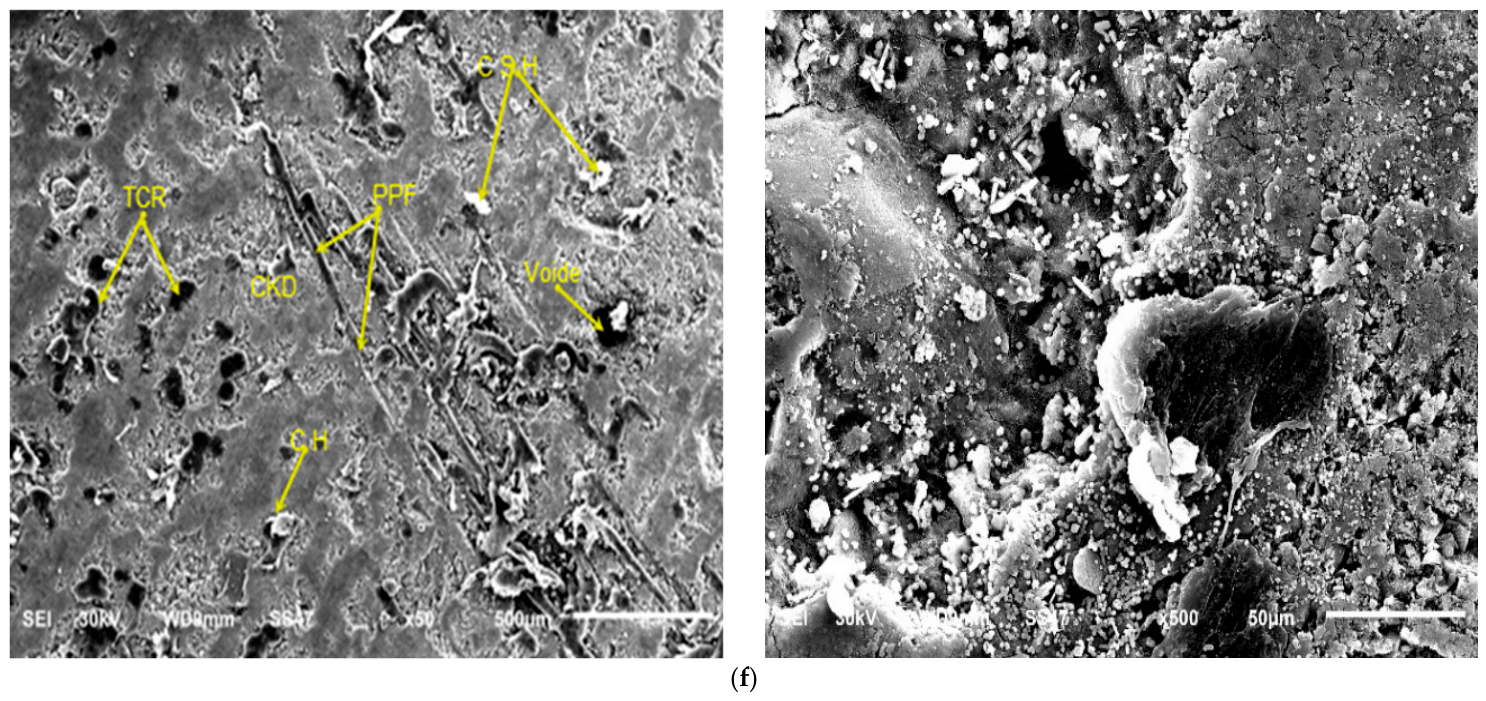
Microscopic examination revealed that untreated rubber increased porosity in ECC, weakening the transition zone and reducing compressive strength. In contrast, cured rubber improved matrix cohesion and transition zone bonding, enhancing overall mechanical properties. Partial replacement of cement with 10% CKD further improved matrix density, bonding, and performance through effective pozzolanic reactions, contributing to the sustainability of ECC.
Overall, rubber treatment significantly contributes to the mechanical properties of engineered cementitious composite (ECC) concrete that includes rubber, specifically through physical treatment. Partial replacement of certain pozzolanic waste materials in specific proportions enhances the performance of ECC. Therefore, adding rubber to mixers in proportions to replace fine aggregates reduces the consumption of natural resources and helps solve the problem of disposing of tires that are harmful to the environment. Additionally, to save energy consumption and reduce the carbon footprint, these materials (ESW, CKD, and CPW) can be used in ECC to lower the overall cost and produce environmentally friendly concrete.
Future Work
As a future extension of this research, it is recommended to quantify surface energy changes through contact angle testing, Zeta potential analysis, or interfacial shear strength testing. In addition, it is recommended to supplement dynamic contact angle data of rubber surfaces and nanoindentation hardness gradients in the interfacial transition zone (ITZ) to confirm the micro-mechanical essence of improved bonding. It is also recommended to extend the sulfate and acid exposure periods to beyond 365 days and supplement with ultrasonic pulse velocity (UPV) and mass change rate data. Life cycle analysis is also recommended for future work to quantify environmental impacts across raw material acquisition, transportation, production, and disposal phases, and to assess potential harmful substance leaching risks.