1. Introduction
The rapid reconstruction and replacement of aging transportation infrastructure in the United States generate substantial quantities of concrete debris each year. Recycled concrete aggregate (RCA), produced through the crushing and processing of demolished concrete structures, offers a viable opportunity to divert construction and demolition waste from landfills while reducing reliance on virgin aggregate resources. It has been estimated that more than 140 million tons of RCA are generated annually in the United States [
1], and this volume is expected to increase as bridge and roadway rehabilitation efforts accelerate nationwide.
The use of RCA in concrete has been extensively investigated over the past several decades, with a growing body of recent review studies summarizing its mechanical performance, durability characteristics, and sustainability implications [
2,
3,
4]. Recent studies have also explored the incorporation of recycled and waste materials into transportation infrastructure to improve sustainability and material performance, including the reuse of plastic waste in asphalt pavements [
5,
6]. Internationally, standards and guidelines permitting the use of recycled aggregates in nonstructural and, in some cases, structural applications have been established [
7,
8,
9]. Previous research has shown that partial replacement of natural coarse aggregate with RCA can achieve comparable compressive strength performance when appropriate mix adjustments are implemented [
10,
11,
12]. More recent studies further indicate that long-term durability aspects, including shrinkage, permeability, and freeze–thaw resistance, are strongly influenced by the quality of the adhered mortar and processing methods [
3,
13]. However, the presence of adhered mortar on RCA particles generally leads to increased water absorption, reduced density, and potential variability in mechanical properties [
14,
15]. This heterogeneity has been identified as one of the primary barriers to large-scale implementation, as it introduces uncertainty in both fresh and hardened concrete behavior [
2,
16]. These characteristics necessitate careful processing, quality control, and mix proportioning to ensure consistent performance.
In the United States, several state departments of transportation (DOTs) permit the use of coarse RCA in nonstructural concrete applications, such as curbs, sidewalks, barriers, and low-volume pavements [
17]. Recent field studies and implementation reports have also highlighted the feasibility of incorporating RCA in transportation infrastructure under controlled production conditions, particularly in low-risk applications [
16,
18]. Technology-driven approaches and sustainable material strategies are increasingly recognized as essential components of modern infrastructure systems [
19,
20,
21]. Nonetheless, regional material availability and economic conditions strongly influence adoption rates. In eastern North Carolina, limited access to high-quality natural aggregates, coupled with long hauling distances, significantly increases material costs for infrastructure projects. At the same time, ongoing bridge replacement projects generate substantial quantities of concrete debris that could serve as a local aggregate source. This combination of resource constraints and demolition output provides a compelling context for evaluating RCA as a viable material for new nonstructural concrete.
Although numerous laboratory-based studies have examined RCA performance, recent reviews have emphasized a critical gap between controlled laboratory conditions and field-scale material variability, particularly for transportation-derived recycled aggregates [
4,
18]. Moreover, the integration of locally available supplementary recycled materials, such as electric arc furnace (EAF) steel slag, produced in Nucor Steel in Hertford County, eastern North Carolina, remains underexplored in regional implementation frameworks. Steel slag has been reported to enhance mechanical properties due to its angularity and surface texture, which may improve aggregate–paste bonding [
22], yet its combined use with RCA in transportation-related nonstructural concrete warrants further evaluation. Recent studies have further explored hybrid systems combining RCA with industrial by-products, demonstrating potential improvements in strength, stiffness, and durability performance [
18,
23].
The objective of this study is to assess the mechanical performance of nonstructural concrete incorporating coarse RCA derived from demolished bridge structures in eastern North Carolina. Specifically, the research aims to:
Characterize the physical and mechanical properties of processed field-sourced RCA and evaluate compliance with state transportation specifications for Class B concrete;
Compare fresh and hardened concrete properties of mixtures containing varying RCA replacement levels to those of conventional natural aggregate concrete;
Examine strength development at multiple curing ages;
Explore the potential strength enhancement effect of blending RCA with EAF steel slag.
This study investigates the mechanical behavior of nonstructural concrete incorporating RCA obtained from bridge demolition projects in eastern North Carolina. The research emphasizes the relationship between aggregate characteristics, strength development, and deformation behavior across a wide range of replacement levels. Attention is given to stress–strain response and brittleness behavior, which are rarely reported in studies of nonstructural recycled aggregate concrete. The results establish experimentally supported performance boundaries for field-sourced RCA mixtures and provide rare experimental evidence on the mechanical behavior of transportation-derived recycled aggregates under realistic production conditions.
2. Materials and Methods
2.1. Source of Recycled Concrete Aggregate
The coarse recycled concrete aggregate (RCA) used in this study was obtained from three bridge replacement projects in eastern North Carolina in Divisions 1, 2, and 3. The demolished bridge decks were originally constructed from the late 1950s to early 1960s and consisted of reinforced concrete superstructures supported by timber substructures. They were classified as Type A concrete according to NCDOT specifications, corresponding to a minimum compressive strength of approximately 3000 psi. Although direct coring or nondestructive testing was not conducted in this study, the classification provides a representative estimate of the parent concrete strength. The bridges were removed as part of scheduled transportation improvement projects.
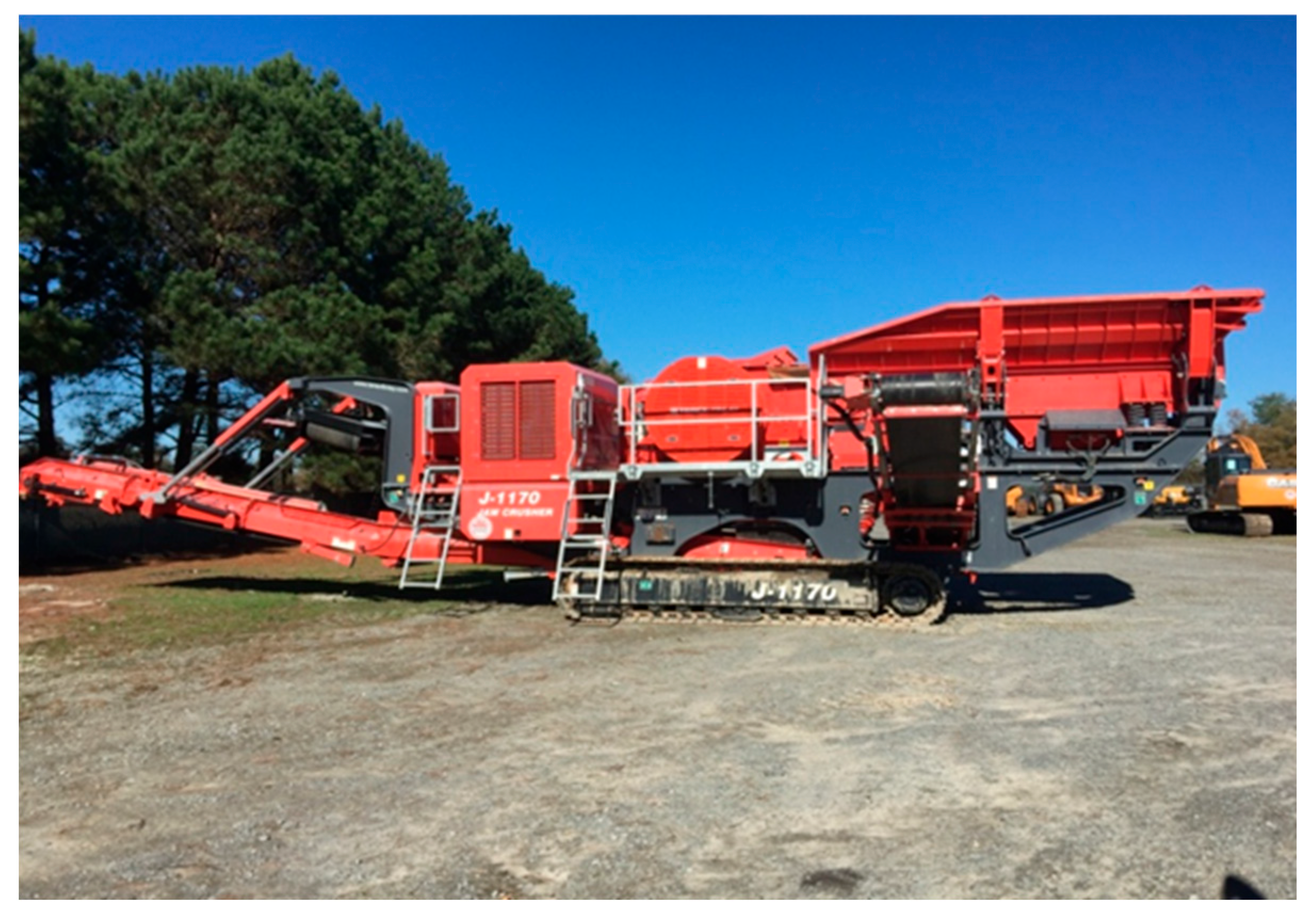
Concrete slabs were saw-cut during demolition and transported to a regional concrete recycling facility. The slabs were processed using a tracked jaw crusher (Terex Finlay J-1170) to reduce size, remove reinforcing steel, and perform crushing, screening, and magnetic separation. The processed material was screened to obtain coarse particles between No. 4 sieve (4.75 mm) and 1.5 in. (38 mm), consistent with state specifications for coarse aggregate in Class B concrete. Each source location was processed and stockpiled separately to maintain traceability.
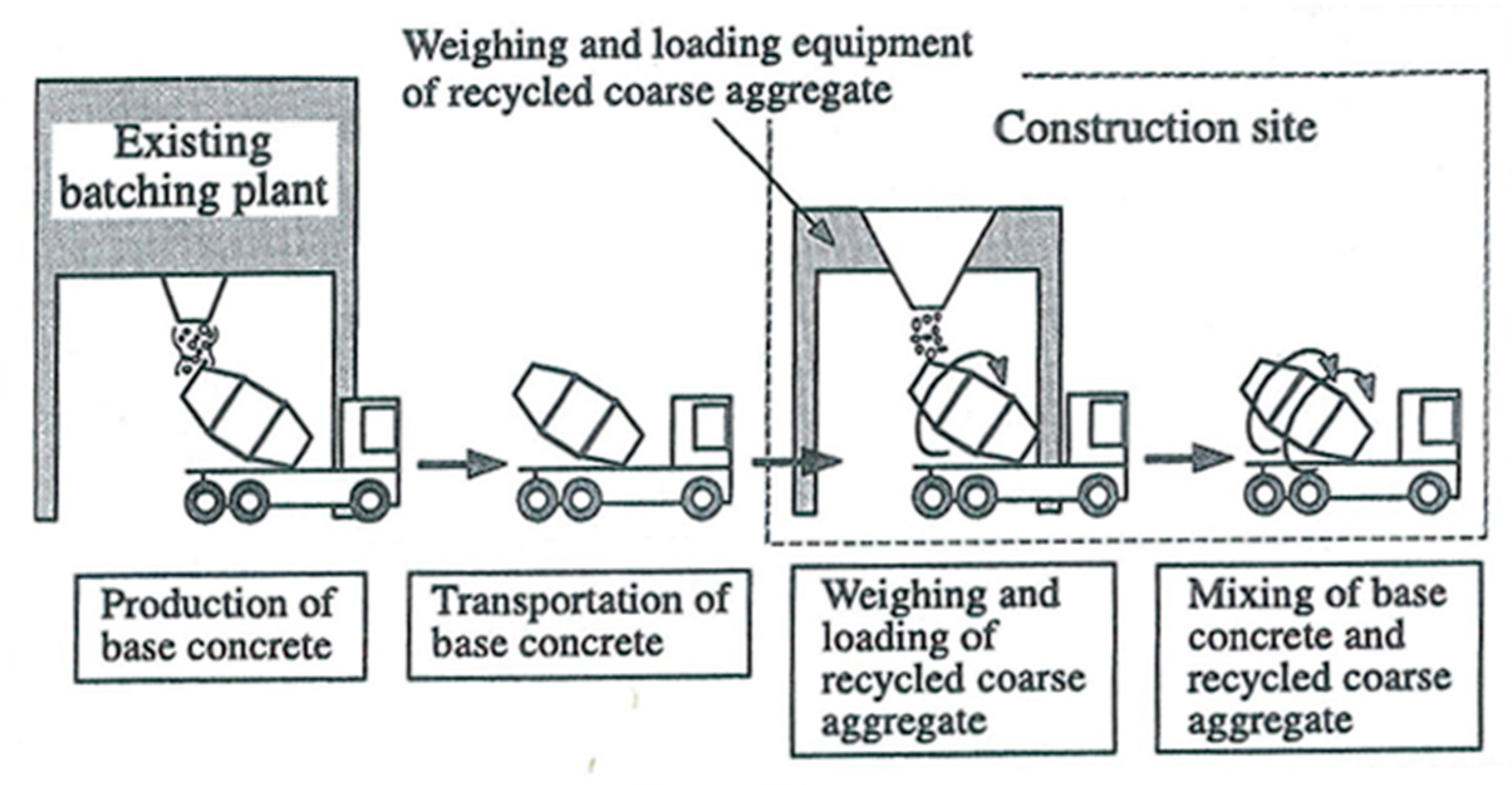
Figure 1 presents the Terex Finlay J-1170 Compact And Tracked Jaw Crusher for crushing, screening, and magnetic separation used in this project. The advantages of onsite processing include using the processed aggregate nearby by allowing the coarse RCA to be added to the ready-mix concrete trucks that have base concrete mixes (partial coarse aggregate), thereby saving transportation costs, and the integrated process using a singlecrusher, which increases the productivity and recovery rate. Coarse aggregate can be recovered up to 77% of the processed volume. Adding RCA as coarse aggregate in concrete is illustrated in
Figure 2.
The use of field-sourced demolition concrete introduces realistic variability in aggregate properties, reflecting differences in source structures, service history, and processing conditions, providing a representative basis for evaluating RCA performance under practical production conditions.
2.2. Aggregate Characterization
Processed RCA samples from the three bridge sites were tested in accordance with ASTM standards to evaluate compliance with transportation specifications. Tests included gradation analysis (ASTM C136), specific gravity and absorption (ASTM C127), Los Angeles abrasion resistance (ASTM C131), alkali–silica reactivity screening (ASTM C1260), and impurity content determination.
Fine particles passing the #4 sieve were separated and quantified to evaluate crushing-induced fines generation. The #4 sieve refers to the No. 4 sieve (4.75 mm) in ASTM standard notation. Impurities, including residual metal fragments, wood, asphalt, or other debris, were manually separated and weighed to determine percentage by mass.
Crushed granite was used to control the natural coarse aggregate. Natural sand meeting ASTM C33 requirements was used as fine aggregate. The properties of RCA were compared with those of conventional aggregates to assess suitability for concrete production.
2.3. Concrete Mix Design
Concrete mixtures were proportioned to meet the requirements for Class B nonstructural concrete according to state transportation specifications. These specifications include minimum cement content, maximum allowable fly ash content, workability criteria, and air content requirements.
When coarse RCA is used with natural sand, it may be assumed at the design stage that the free-water-to-cement (W/C) ratio required for a certain compressive strength will be the same for RCA concrete as for conventional concrete. If trial mixes show that the compressive strength is lower than required, an adjustment of the W/C should be made which would be up to 10 L/m3 (or 5%) higher than for conventional concrete. In some cases, if free water content of RCA concrete is increased, the cement content may also need to be higher to maintain the same W/C ratio.
Five RCA replacement levels were investigated: 0% (control), 15%, 30%, 50%, and 100% replacement by volume of coarse aggregate. The mix proportions and fresh concrete properties are summarized in
Table 1.
Replacement was performed by the volume of coarse aggregate. Type I portland cement was used as the primary binder. Class F fly ash was incorporated to improve workability and mitigate potential alkali-related concerns. A water-reducing admixture and air-entraining agent were used as required to achieve the target slump and air content. A Type A water-reducing admixture was applied, with dosage adjusted within typical ranges to maintain workability without increasing water content, while air-entraining agent dosage was controlled to meet specified air content requirements.
Mix designs were adjusted through trial batching to ensure consistent workability while maintaining comparable water-to-cementitious material ratios across mixtures.
2.4. Fresh Concrete Testing
Fresh concrete properties were evaluated through slump testing (ASTM C143), air content measurement (ASTM C231), and unit weight determination (ASTM C138).
Workability adjustments were made primarily through admixture dosage rather than increasing water content to preserve mechanical performance consistency. Observations on the mixture’s cohesiveness and handling were recorded during batching.
2.5. Hardened Concrete Testing
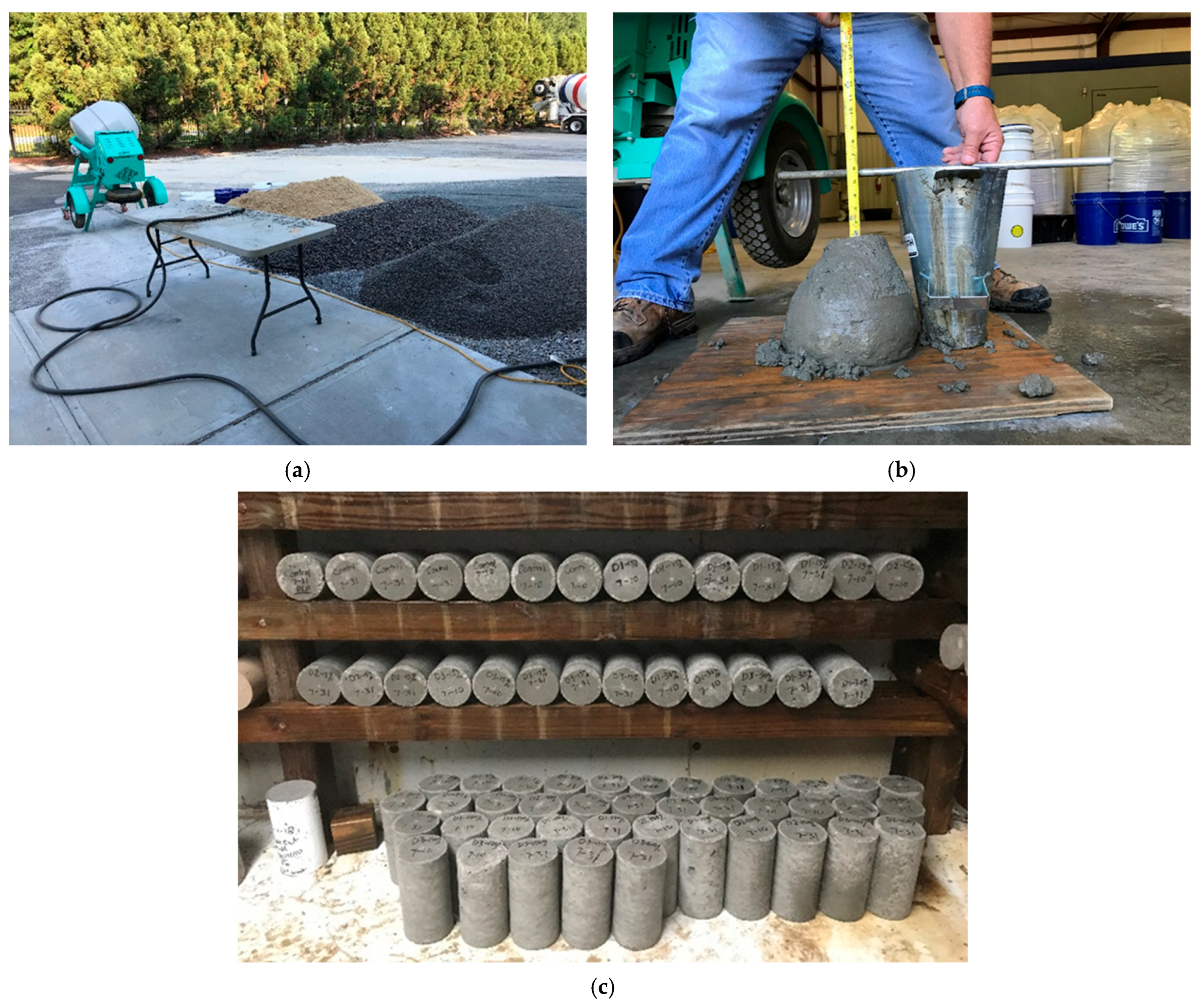
Cylindrical specimens were cast and cured under standard laboratory conditions. Specimens measured 4 inches (102 mm) in diameter and 8 inches (203 mm) in height, consistent with ASTM C39 requirements. Curing was conducted at 23.0 ± 2.0 °C (73.5 ± 3.5 °F) and ≥95% relative humidity in accordance with ASTM C511. Compressive strength tests were conducted at curing ages of 7, 28, and 90 days in accordance with ASTM C39. For each mix and age, three cylindrical specimens were tested to obtain representative average values.
Figure 3 illustrates the experimental process, including concrete batching, fresh concrete slump testing, and specimen curing conditions. Compressive strength was selected as the primary mechanical indicator for evaluating performance of nonstructural concrete mixtures.
2.6. Steel Slag Blending Trial
An exploratory trial was conducted to evaluate the potential mechanical enhancement of RCA concrete through partial replacement with electric arc furnace (EAF) steel slag aggregate sourced from a regional steel producer. Slag was introduced as a partial replacement of coarse aggregate in selected mixtures.
Mixtures containing RCA combined with 20% and 50% slag (by volume of coarse aggregate) were prepared. The corresponding mix proportions and fresh concrete properties are summarized in
Table 2. The same admixture system described for the RCA mixtures was used for the slag-containing mixtures. Compressive strength testing was conducted at 7, 28, and 90 days for these mixtures. The objective of this phase was to investigate the feasibility of combining two recycled materials to enhance mechanical performance. Three specimens were tested for each slag-containing mixture to obtain representative average values. The slag mixtures were prepared using the same procedures as the RCA mixtures to allow direct comparison of strength development. The slag phase was exploratory in nature; results are reported and discussed accordingly.
The critical characteristic governing the use of steel slag is its volumetric stability. For this reason, the autoclave disruption test is commonly used to evaluate the stability of slag aggregate particles. In this test, slag samples are first separated into several particle size fractions. After visual examination and petrographic analysis, 50 coarse particles from each size fraction are selected, washed, and placed in an autoclave for three hours of treatment. The ratio of particles exhibiting cracking, powdering, or visible fractures after treatment to the total number of selected particles is defined as the particle disruption ratio, R.
It is generally recognized that autoclave testing accelerates the hydration of free lime and, in particular, periclase, which hydrates at a slower rate. Therefore, this test provides an indication of the long-term volumetric stability of steel slag aggregates, especially with respect to reactions involving free magnesium and water. The method is relatively simple and has been demonstrated to be both reliable and effective. The R value is thus an important parameter for evaluating the overall stability of steel slag aggregates when used in concrete matrices and under constrained conditions.
The volumetric stability of the slag samples in this study was evaluated using the above method in a pressure cooker for three hours, and disruption ratios were calculated.
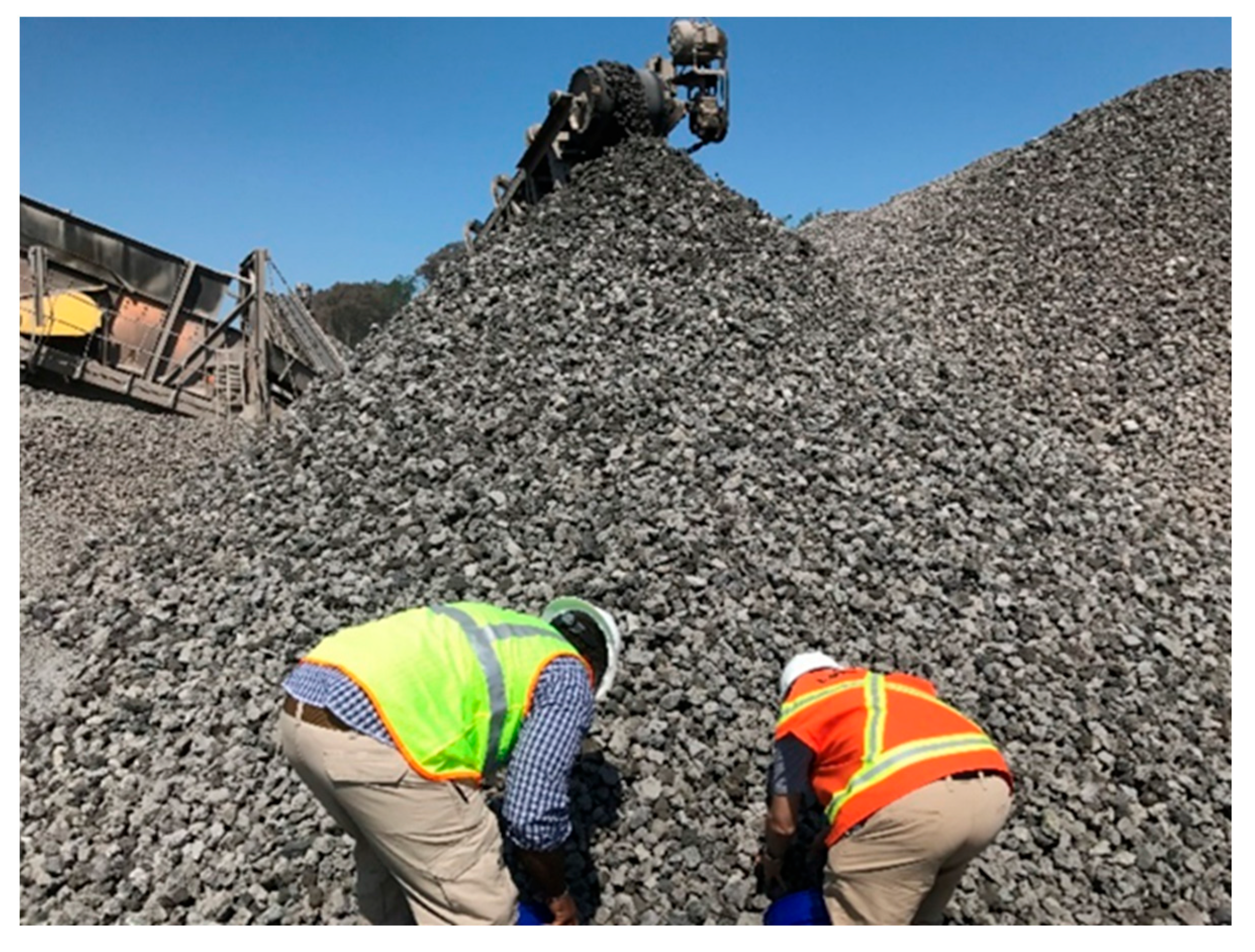
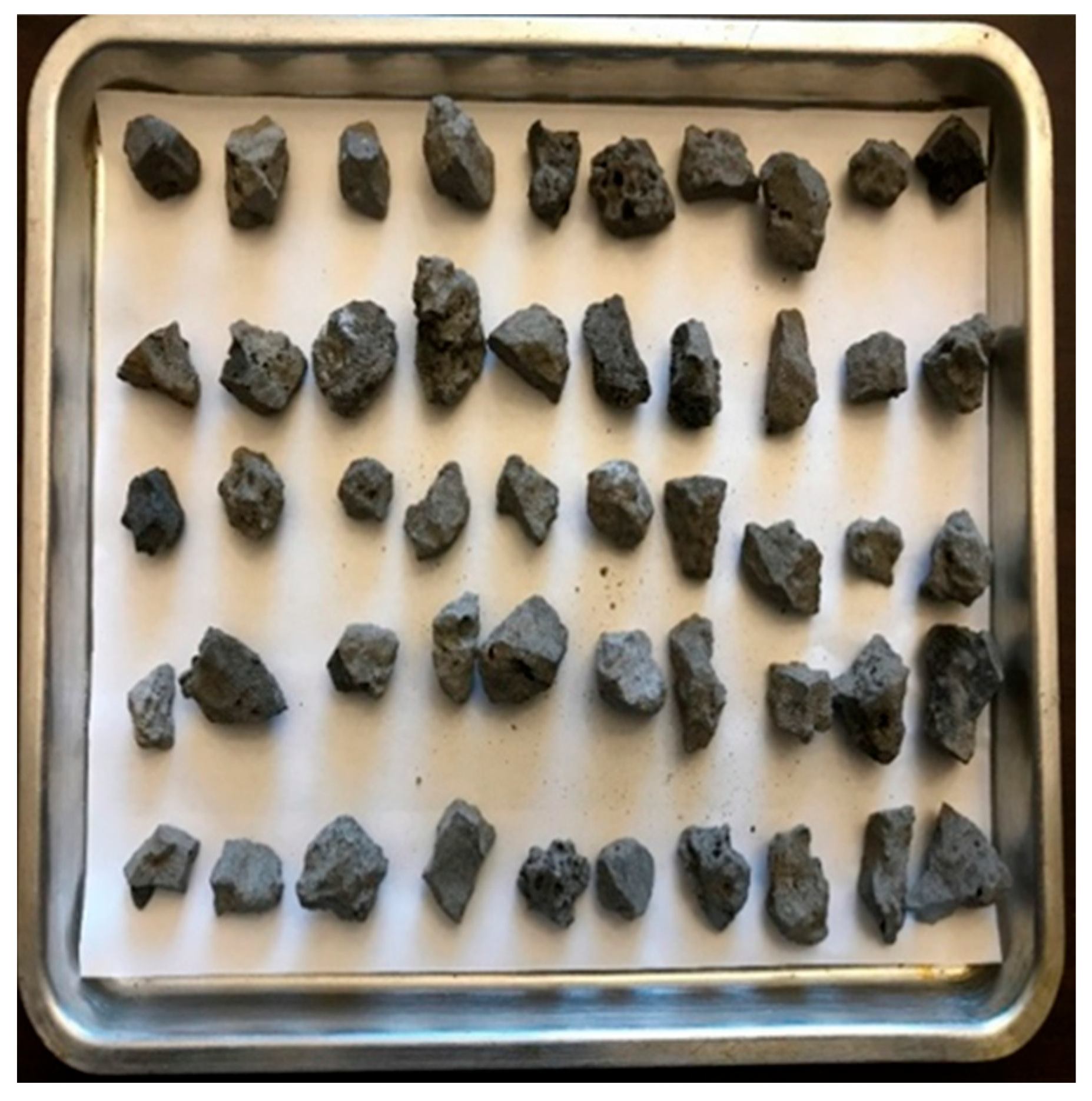
Figure 4 presents the sampling site at the steel plant, while
Figure 5 shows the slag particles after the three-hour treatment. The disruption ratio was zero, indicating that the slag particles are volumetrically stable under ambient conditions.
2.7. Engineering Analysis
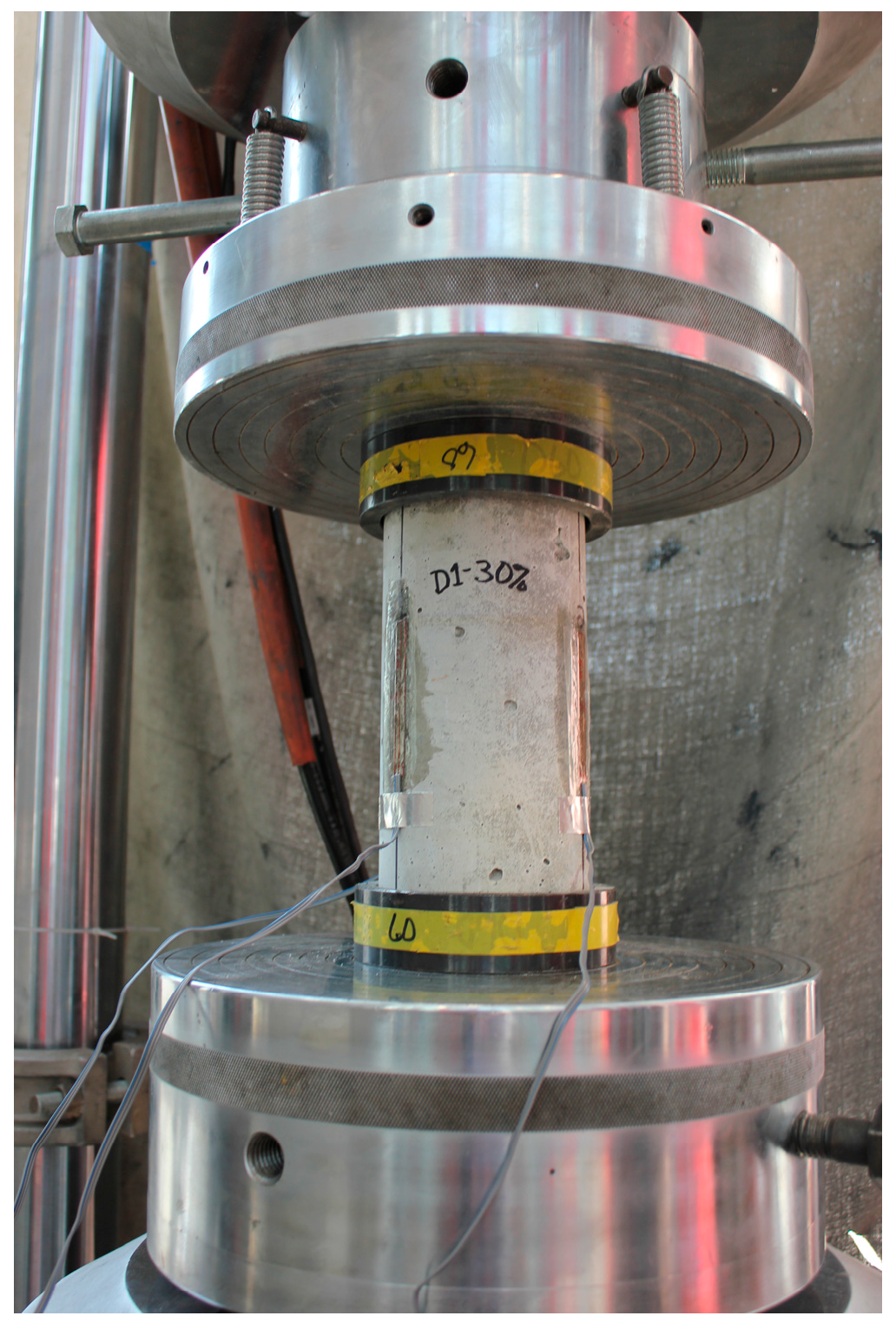
For selected mixtures, full stress–strain curves were obtained using a universal testing machine at the Civil Engineering Structural Laboratory at North Carolina State University, and multiple specimens were tested for each mixture to confirm repeatability. Cylindrical specimens were instrumented to capture load–deformation behavior beyond peak stress. From these curves, a brittleness index was calculated based on the area under the stress–strain curve and post-peak softening characteristics.
Figure 6 shows a representative specimen during uniaxial compression testing. The stress–strain response was recorded up to near the peak load; the Instron testing machine automatically ceased loading as the specimen approached its yield point. Note that the control mixture (0% RCA) was not included in the stress–strain and brittleness analysis, as the primary objective of this phase was to characterize the effect of RCA replacement level on deformation behavior.
This analysis provided insight into deformation behavior and aggregate–mortar interaction characteristics, complementing compressive strength results.
2.8. Data Analysis
Test results were compiled and compared across replacement levels. Performance was evaluated relative to specification requirements for nonstructural concrete and compared with control mixtures containing natural aggregate. Test results were analyzed to identify systematic relationships between RCA replacement level and mechanical performance indicators, including strength development, density variation, and deformation behavior. Performance trends were interpreted relative to mixture composition and aggregate characteristics rather than solely specification compliance.
Statistical evaluation included the calculation of mean values and standard deviations for key properties. Variability was defined in terms of dispersion among replicate specimens and differences across RCA sources and replacement levels. The analysis revealed consistent performance trends across replacement levels and established experimentally supported performance boundaries for field-sourced RCA mixtures. Given the sample size of three specimens per condition, formal inferential significance testing was not applied. Differences between mixtures are interpreted in terms of practical engineering significance relative to specification thresholds rather than statistical significance, which is consistent with the applied and exploratory nature of this study.
3. Results
3.1. Aggregate Properties
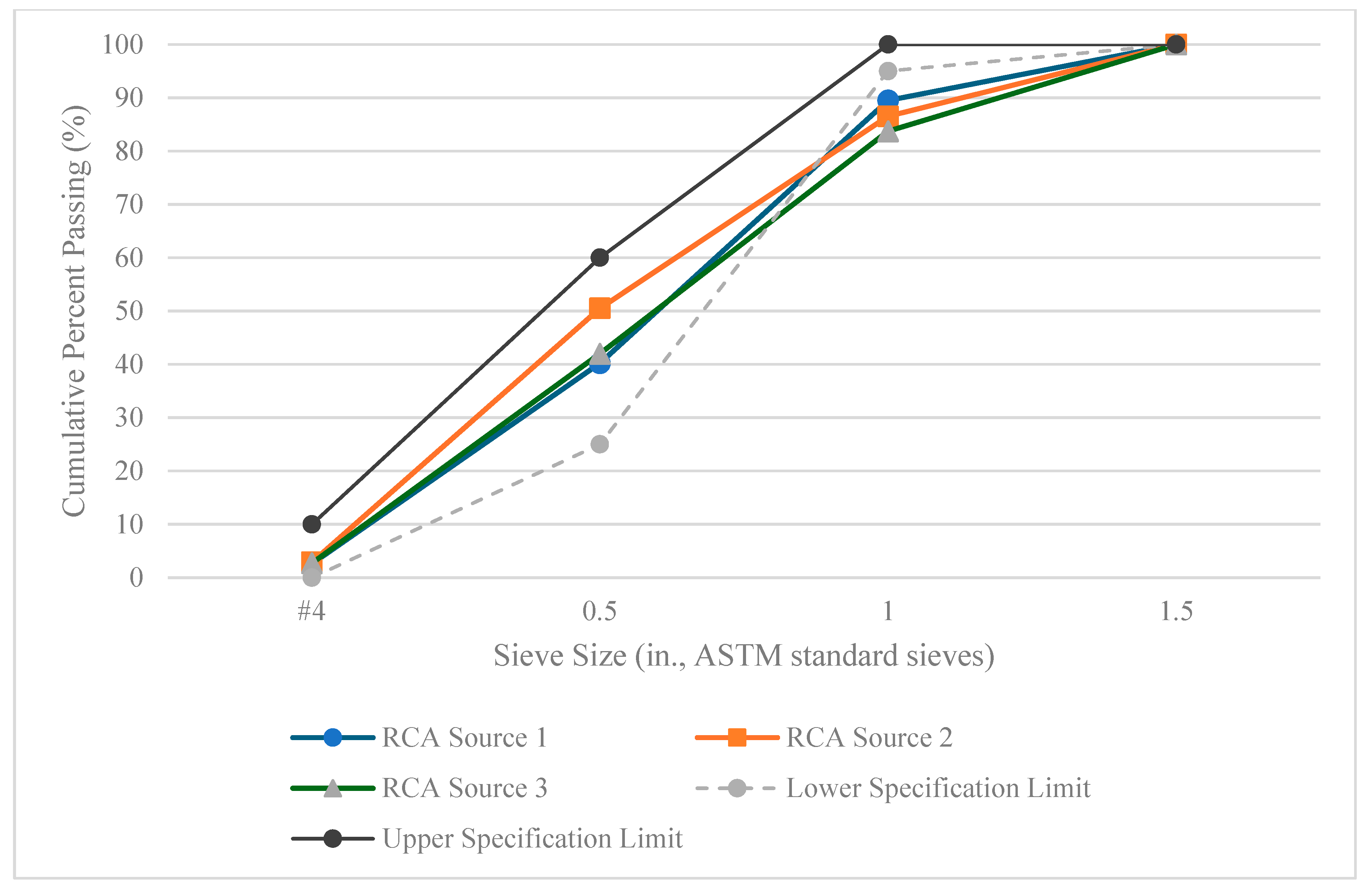
The processed recycled concrete aggregates (RCAs) obtained from the three bridge demolition sites exhibited gradation characteristics consistent with the requirements for coarse aggregate in Class B concrete. The particle size distribution curves generally satisfied the specified limits for concrete proportioning, with a minor deviation at the 1-inch sieve, where the values fall slightly below the lower boundary. This deviation is considered acceptable for laboratory testing purposes (
Figure 7). The percentage of impurities detected after screening and manual separation ranged from 0.23% to 0.28% by mass, with an average of 0.26%, indicating effective removal of reinforcing steel and foreign materials during processing.
Key aggregate properties are summarized in
Table 3. Bulk specific gravity ranged from 2.25 to 2.29 (mean = 2.27; SD = 0.02). Water absorption ranged from 4.97% to 5.33% (mean = 5.11%; SD = 0.20%). LA abrasion values ranged from 35.4% to 35.8% (mean = 35.6%; SD = 0.2%), which satisfied the NCDOT specification limit. The percentage of fines passing the No. 4 sieve ranged from 39.0% to 49.6%, with an average of 43.4%.
Specific gravity values of RCA were slightly lower than those of crushed granite, while absorption values were higher, consistent with the presence of adhered mortar on recycled particles [
14]. The relatively small variation across the three sources indicates comparable aggregate characteristics despite differences in structure age and service history. LA abrasion results met specification limits, confirming adequate resistance to mechanical degradation. No excessive expansion was observed in alkali–silica reactivity screening tests.
Overall, the physical properties of field-sourced RCA satisfied relevant specification criteria and demonstrated consistent characteristics across sources.
3.2. Fresh Concrete Performance
Fresh concrete properties for all mixtures are summarized in
Table 1.
Slump values ranged from 1.5 to 4.5 inches across mixtures. The lowest slump (1.5 in.) was observed at 30% RCA replacement, while the control and several other mixtures maintained values near 3.5 inches. Unit weight decreased from 147.7 pcf for the control mixture to 134.8 pcf at 100% RCA replacement, representing an approximate 8.7% reduction. Air content ranged from 3.5% to 5.5% across all mixtures.
No significant segregation or excessive bleeding was observed during batching. Increasing RCA replacement resulted in a gradual reduction in unit weight and increased admixture demand, consistent with the lower density and higher absorption of recycled aggregates. Despite these changes, all mixtures maintained workability and air content within acceptable ranges for nonstructural concrete.
3.3. Compressive Strength
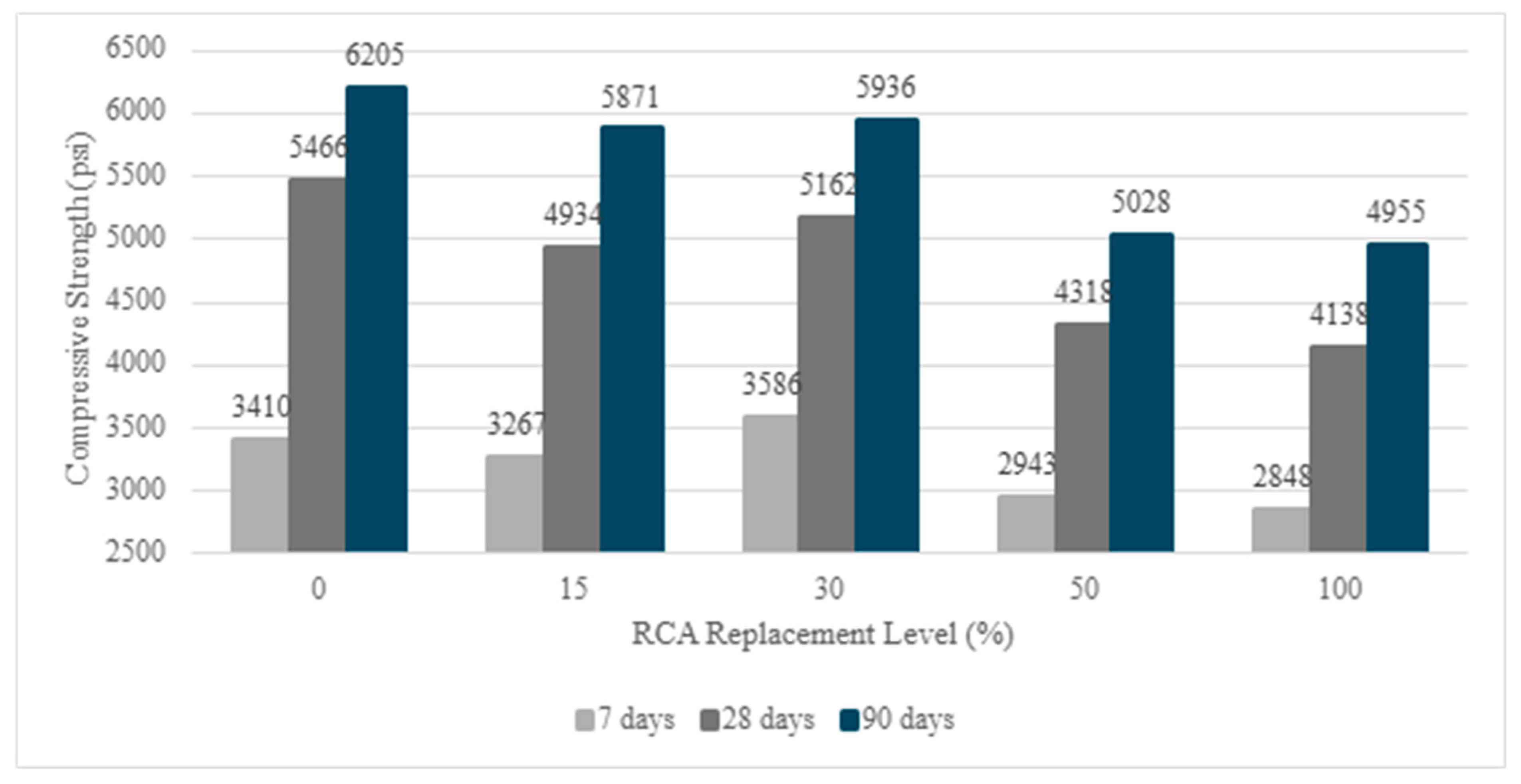
Compressive strength results at 7, 28, and 90 days are presented in
Figure 8.
At 7 days, compressive strength ranged from 2848 psi (100% RCA) to 3586 psi (30% RCA), compared to 3410 psi for the control mixture. Standard deviations across the three division sources ranged from 14 psi (15% RCA) to 113 psi (30% RCA), reflecting consistent behavior across sources. Mixtures with higher RCA content (50% and 100%) exhibited reduced early-age strength relative to the control.
At 28 days, compressive strength ranged from 4138 psi (28.5 MPa; 100% RCA) to 5466 psi (37.7 MPa; control). Mixtures containing 15% and 30% RCA achieved strengths of 4934 psi (34.0 MPa) and 5162 psi (35.6 MPa), respectively, indicating performance comparable to the control mixture. Standard deviations at 28 days ranged from 11 psi (15% RCA) to 230 psi (30% RCA). All mixtures exceeded typical Class B concrete requirements at this age.
At 90 days, compressive strength ranged from 4955 psi (34.2 MPa; 100% RCA) to 6205 psi (42.8 MPa; control). Strength differences between mixtures decreased with curing time, indicating continued hydration and strength development across all replacement levels.
For slag-containing mixtures, compressive strengths were 3168 psi and 3241 psi at 7 days, 3838 psi and 4373 psi at 28 days, and 4939 psi and 5504 psi at 90 days for the 20% EAF slag + 80% RCA and 50% EAF slag + 50% RCA mixtures, respectively. The higher slag replacement level resulted in improved later-age strength relative to the lower slag replacement level. Results are summarized in
Table 4.
Overall, increasing RCA content primarily affected early-age strength, while long-term strength development remained comparable across mixtures.
3.4. Stress–Strain Behavior
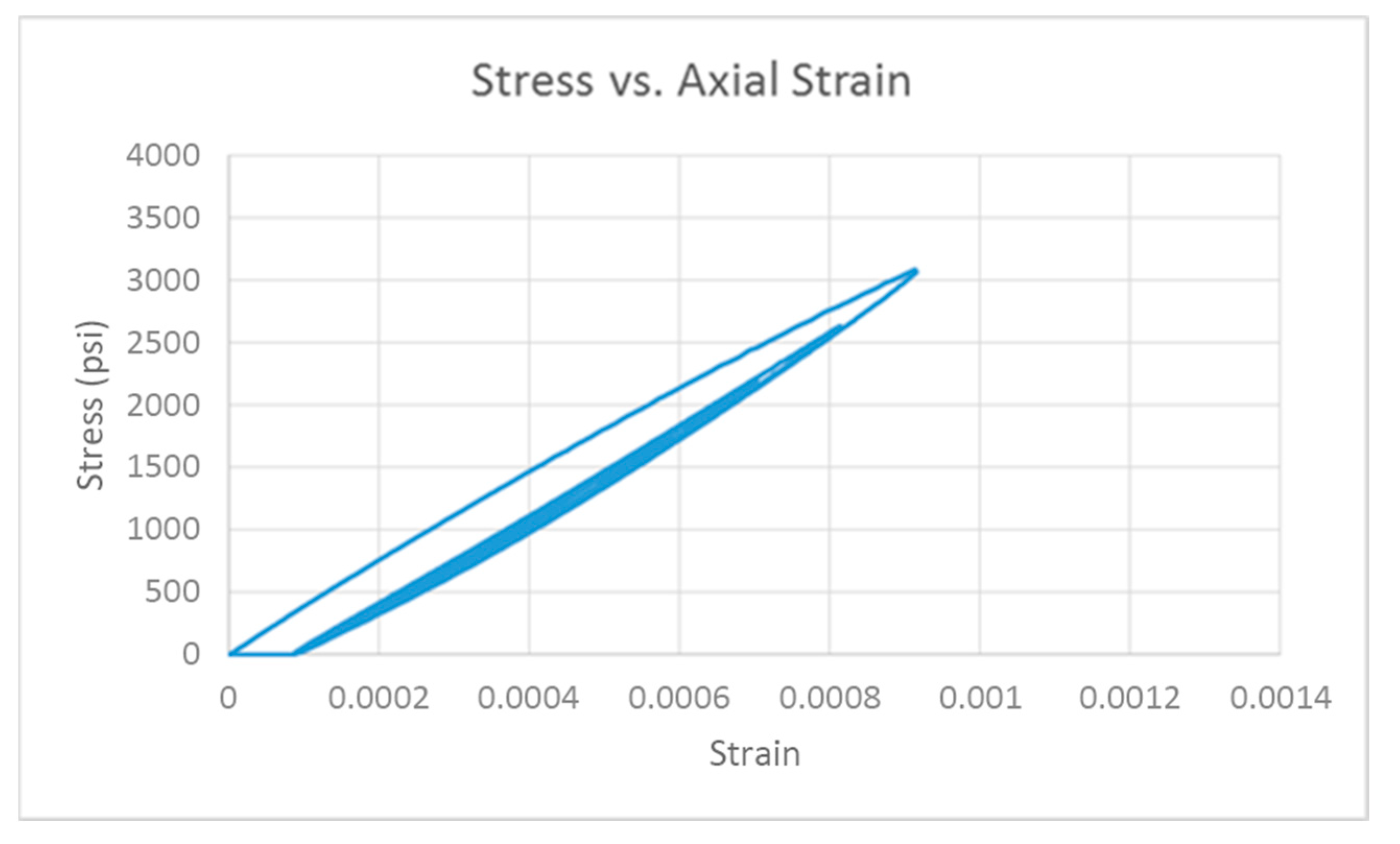
Representative full stress–strain curves for selected mixtures are shown in
Figure 9. The curves were recorded up to near-peak response; strain values stabilized at approximately 0.009% as the specimens approached their yield point, at which point the Instron machine automatically ceased loading.
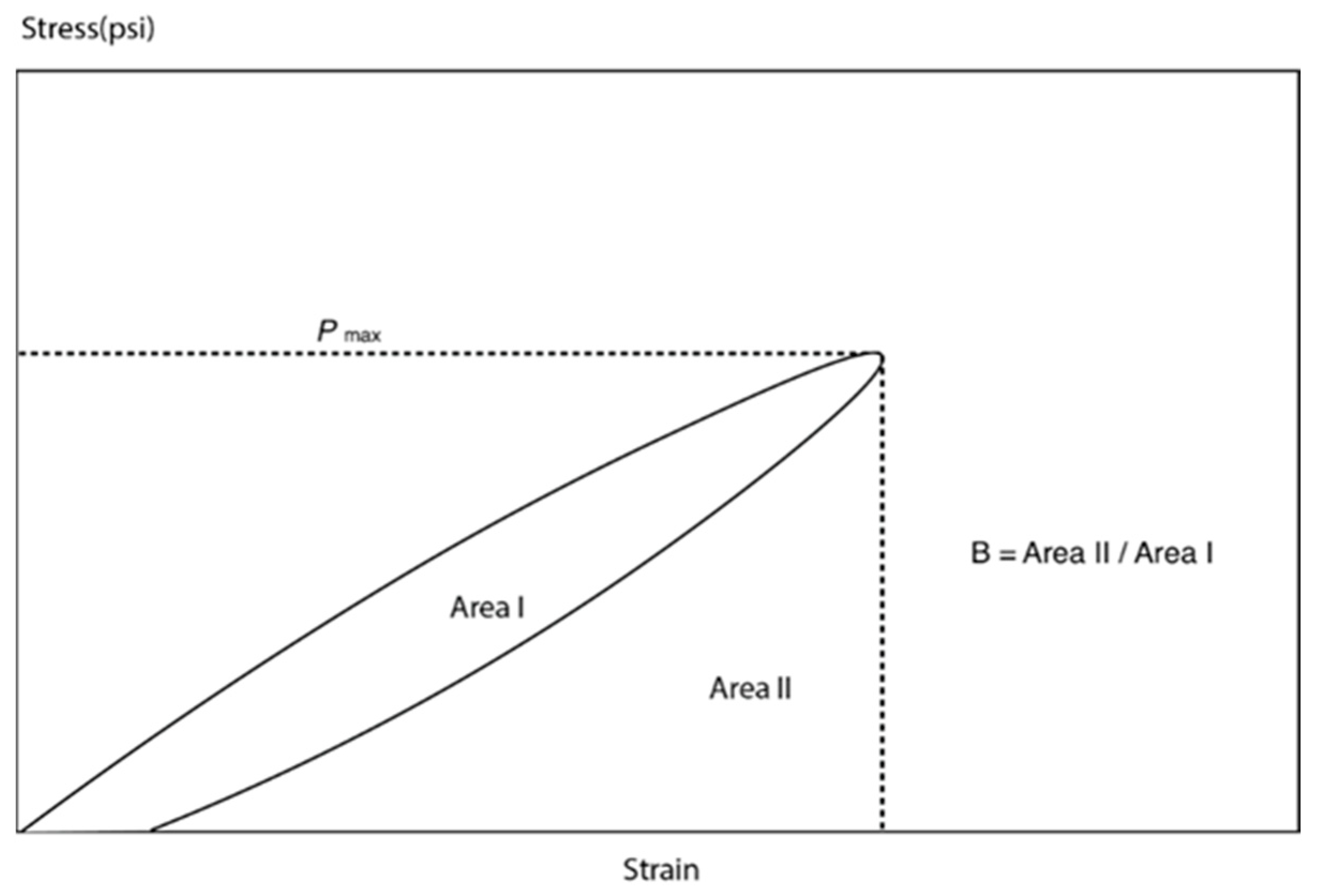
Figure 10 defines the brittleness index B calculated as the ratio of the area of elastic recovery (elastic deformation energy) to that of the nonelastic portion (irreversible deformation energy) corresponding to the peak point of the σ–ε curve (i.e., B = Area II/Area I).
All mixtures exhibited typical nonlinear compressive behavior characterized by an ascending branch to peak stress followed by post-peak softening. Variations in post-peak slope with increasing RCA content were moderate and did not indicate systematic loss of deformation capacity. Additional stress–strain curves obtained from other tested mixtures are available from the authors upon request and show consistent trends with the representative curve presented in
Figure 9.
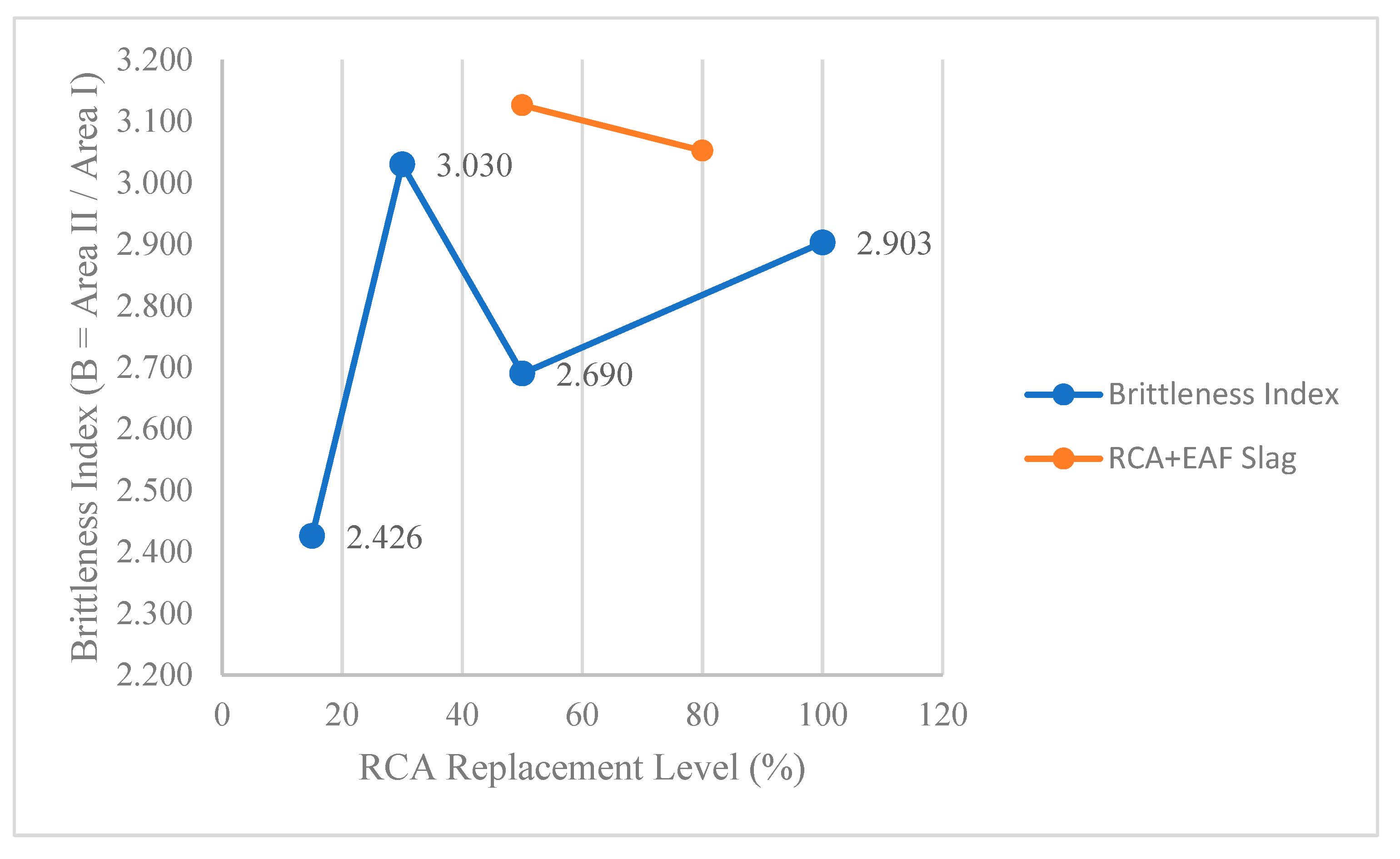
Brittleness index values (
Table 5), defined as the ratio of post-peak energy (Area II) to pre-peak energy (Area I), ranged from 2.426 to 3.030 across mixtures. The 30% RCA mixture exhibited the highest brittleness index (3.030), while the 15% RCA mixture exhibited the lowest (2.426). No consistent trend of increasing brittleness with RCA content was observed. The inclusion of steel slag in selected mixtures resulted in slightly improved post-peak behavior compared to RCA-only mixtures. The variation of brittleness index with RCA replacement level is illustrated in
Figure 11.
3.5. Summary of Performance Trends
Across the investigated replacement range, consistent performance trends were observed. Unit weight decreased approximately in proportion to RCA content, while compressive strength reductions were most pronounced at early ages and diminished with continued curing. At later ages, all mixtures achieved comparable strength levels.
Deformation behavior and brittleness indices exhibited relatively small variations across replacement levels, indicating stable aggregate–paste interaction under compressive loading.
These results suggest that the primary influence of RCA in nonstructural concrete is associated with changes in physical aggregate characteristics, such as density and absorption, rather than fundamental alterations in load-transfer mechanisms within the cementitious matrix.
4. Discussion
4.1. Performance of Field-Sourced RCA in Nonstructural Concrete
The results of this study demonstrate that coarse recycled concrete aggregate (RCA) derived from bridge demolition projects can be processed to meet specification requirements for nonstructural concrete applications. The observed aggregate properties—specifically gradation, abrasion resistance, and impurity content—indicate that appropriate crushing and screening procedures are critical in achieving consistent quality.
The slightly lower specific gravity and higher absorption of RCA compared to natural granite are consistent with the presence of adhered mortar, a well-documented characteristic of recycled aggregates [
14,
15]. Increased absorption may influence workability and early-age strength development due to internal water redistribution. However, in this study, adjustments in admixture dosage effectively mitigated these effects without increasing the water-to-cementitious material ratio.
The findings align with previous investigations reporting that coarse RCA can be incorporated into nonstructural concrete without significant loss of mechanical performance when proper mix adjustments are implemented [
10,
11]. The strength reductions observed at higher replacement levels were modest and did not compromise compliance with performance criteria for Class B concrete.
Importantly, the RCA evaluated in this study originated from real field demolition projects rather than laboratory-prepared recycled aggregates. This distinction captures the natural variability and realistic behavior of transportation-derived RCA that is rarely captured in controlled laboratory studies.
4.2. Strength Development and Hydration Behavior
The slight reduction in early-age compressive strength observed in higher RCA replacement mixtures can be attributed to the porous nature of adhered mortar and the resulting increase in effective water demand. Similar early-age strength reductions have been reported in prior research [
11]. The presence of residual hydrated cement paste within RCA particles may also influence hydration kinetics through internal curing effects.
At later curing ages, the strength differences between RCA mixtures and the control mixture diminished. This trend suggests that long-term strength development is less sensitive to RCA replacement ratios, particularly in nonstructural applications with moderate strength requirements. The continued strength gain at 90 days indicates that adequate hydration and bonding occurred within the recycled aggregate concrete matrix.
These observations suggest that RCA replacement primarily influences early-age mechanical behavior while long-term strength potential remains governed by cementitious matrix development.
4.3. Influence of Steel Slag on Mechanical Performance
The increased compressive strength observed in slag-containing mixtures is consistent with the well-documented physical characteristics of EAF slag, which exhibits higher angularity and surface roughness than conventional crushed stone [
16]. These properties have been associated with improved mechanical interlock between aggregate and cement paste in prior studies [
18,
19]. In the present study, the strength increase was most pronounced at later ages: from 20% to 50% slag replacement, 28-day strength increased from 3838 psi to 4373 psi, and 90-day strength increased from 4939 psi to 5504 psi. The volumetric stability of the slag was confirmed prior to batching through pressure-cooker testing (disruption ratio = 0), indicating no expansion risk under the evaluated conditions.
Although the slag blending phase in this study was exploratory, the results demonstrate that incorporating EAF slag as a partial replacement of RCA coarse aggregate consistently increased compressive strength at all tested ages. The findings are based solely on measured compressive strength data and physical properties. No microstructural analysis was conducted, and the observed strength trends are reported without mechanistic interpretation beyond what the data directly support. These results provide a basis for future investigation into the combined use of locally sourced recycled materials in regional transportation concrete applications.
4.4. Implications for Transportation Infrastructure Sustainability
The results demonstrate that field-sourced RCA can provide stable mechanical performance under realistic production conditions, supporting its broader use in transportation infrastructure. The combination of acceptable strength development, consistent deformation behavior, and manageable fresh concrete properties suggests that RCA mixtures can satisfy performance requirements for nonstructural applications without extensive modification of conventional mix designs.
In regions where natural aggregate sources are limited, localized recycling of demolition concrete may provide both economic and environmental advantages. The experimental results presented here provide quantitative evidence supporting the expansion of recycled aggregate use in regional transportation projects. The findings are based on materials obtained from a limited number of bridge demolition sources and therefore represent realistic field conditions but may not capture the full variability of regional recycled aggregates.
5. Conclusions
This study evaluated the feasibility of incorporating field-sourced recycled concrete aggregate (RCA) derived from bridge demolition projects into nonstructural concrete applications. Based on the experimental results and analysis, the following conclusions are drawn:
Processed coarse RCA derived from bridge demolition exhibited physical and mechanical properties comparable to conventional aggregates and satisfied specification requirements for Class B nonstructural concrete.
Fresh concrete mixtures containing up to 100% coarse RCA achieved acceptable workability and air content when appropriate admixture adjustments were implemented, with only minor reductions in unit weight compared to natural aggregate concrete.
Compressive strength at 7, 28, and 90 days exceeded the minimum requirements for Class B concrete across all replacement levels. Although slight reductions in early-age strength were observed at higher RCA contents, long-term strength development remained comparable to conventional mixtures.
Full stress–strain behavior indicated no abrupt deterioration in deformation characteristics with increasing RCA replacement, suggesting stable aggregate–paste interaction for nonstructural applications.
The exploratory blending of RCA with electric arc furnace (EAF) steel slag consistent compressive strength increases at 7, 28, and 90 days, with the 50% slag replacement yielding the highest values at all tested ages.
Overall, the results demonstrate that field-sourced RCA can provide stable mechanical performance across a wide range of replacement levels under realistic production conditions. The experimental findings clarify the relationships among RCA content, strength development, and deformation behavior, and establish experimentally supported performance limits for field-sourced RCA in nonstructural transportation concrete.
This study is applied in nature, and the authors do not intend to generalize the results. The findings are based on materials from eastern North Carolina. Accordingly, when using RCA in concrete, it is essential to evaluate and test locally sourced aggregates to ensure performance suitability.