Article

The Impact of Recycled Glass and Demolition Sand on Delayed Ettringite Formation and Mechanical Performance of Sustainable Concrete


by
Seleem S. E. Ahmad
1,2,*,
Samah A. Ahmed
2,
Ahmed A. Elshami
3 and
Yasmine Elmenshawy
2
1
Faculty of Engineering, Zagazig University, Zagazig 44519, Egypt
2
Department of Engineering Materials, Zagazig University, Zagazig 44519, Egypt
3
Housing and Building National Research Centre, Giza 11511, Egypt
*
Author to whom correspondence should be addressed.
Infrastructures 2026, 11(2), 68; https://doi.org/10.3390/infrastructures11020068
Submission received: 27 January 2026 / Revised: 12 February 2026 / Accepted: 13 February 2026 / Published: 16 February 2026

Abstract

Concrete poses many environmental and economic problems due to its heavy reliance on natural resources. The objective of this study was to explore the potential of utilizing recycled materials, specifically waste glass powder and demolition sand, to assess their effectiveness in reducing the formation of delayed ettringite and consequently enhancing the strength of sustainable concrete. This study assesses the combined effects of waste glass powder and demolition sand on stable, sustainable concrete under sulfate exposure. A comprehensive experimental program included 23 mixes using different types of fine aggregate in concrete: standard sand, demolition sand, and mixes with 10–30% ground glass fines replacing Portland cement (PC). Also, the effects of added sodium sulfate and gypsum (1%, 3%, and 5%) on compressive, tensile, and flexural strengths were analyzed by conducting mechanical tests at 7, 28, and 56 days. Finally, SEM, EDS, and XRD were conducted to analyze the microstructures of the concrete mixes. Using gypsum and sodium sulfate provides sulfate ions to study their effects on Delayed Ettringite Formation and mechanical performance. The results of the present work showed that the optimal mix (20% glass powder with 1–3% gypsum) achieved a 21% increase in 28-day compressive strength and a denser microstructure with reduced microcracking. Gypsum showed more stable behavior under the tested conditions compared with sodium sulfate. The microstructure studies supported this conclusion and further demonstrate that optimal amounts of glass result in a denser concrete matrix with less cracking, which is used much more effectively.

1. Introduction

Concrete is the most widely used building material in the world. It is a composite material made of sand, gravel, and Portland cement, which binds everything together chemically. Raw materials make up about 60 to 75% of concrete’s total volume. Most of these materials are taken from the environment, which could lead to a shortage of natural resources in the future [1]. Because of this, many researchers have started looking for alternative materials to replace traditional concrete ingredients [2]. One possible substitute is waste glass, which can be recycled multiple times without losing its chemical properties [3].
It is well known that the two main oxides in cement composition are calcium oxide (CaO) and silicon dioxide (SiO2); therefore, the key concept behind using waste materials in concrete is to identify waste products that contain one or both of these oxides. Glass is a silica-rich material and has been utilized in various ways in concrete production [4,5]. Kuo and Xiong investigated the properties of high-performance concrete incorporating glass waste with particle sizes smaller than 0.0045 mm, and their results demonstrated that replacing cement with glass waste can be highly effective [6]. In general, glass waste can be used in concrete either as an inert filler aggregate when applied in larger particle sizes or as a supplementary cementitious material when finely ground and used to partially replace cement [7,8]. Most waste glass powder (WGP) is derived from soda–lime glass, which accounts for about 81% of total glass production among glass waste sources. The polished surface texture of WGP reduces interparticle friction, while its dense microstructure results in lower water absorption than that of other supplementary cementitious materials. Consequently, recycled glass powder has recently attracted significant attention in scientific research as an alternative to cement, particularly because cement production is highly energy-intensive, accounting for approximately 5% of total industrial energy consumption and about 3% of global energy use [9,10].
Gypsum powder has also attracted attention in scientific studies, as gypsum is a fundamental component in the production of Portland cement and serves as a setting regulator. The clinker of Portland cement typically contains about 5% gypsum. Without gypsum, Portland cement would react rapidly with water, resulting in excessively fast setting and rendering the cement unusable. Therefore, a small amount of gypsum is an essential constituent of Portland cement, controlling the setting process. Crushed gypsum boards may perform a similar function within Portland cement. On the other hand, using a relatively large amount of gypsum may cause false setting (premature hardening) of the fresh concrete mixture due to the rapid formation of large gypsum crystals [11]. Up to 10% of the total cementitious materials can be replaced with crushed gypsum boards as a supplementary material without adversely affecting the properties of concrete. Recycling gypsum boards not only reduces the demand for landfill space but also decreases sulfur emissions from their decomposition in landfills. Furthermore, it helps reduce carbon dioxide and other greenhouse gas emissions by lowering the amount of cement used in concrete mixtures [12].
According to the Gypsum Recycling International Organization (2008), approximately 80 million tons of gypsum boards and drywall are produced annually, a significant portion of which is disposed of in landfills due to construction, demolition, and renovation activities; in the same year, about 15 million tons of gypsum waste were reported to have been landfilled [13]. After clay-based materials, gypsum waste is the second largest type of waste from construction and demolition [14]. This shows how serious the problem is for the environment. Using recycled gypsum powder from drywall waste as a partial substitute for cement in concrete is an effective way to mitigate the environmental impacts of cement production and gypsum drywall waste disposal [15]. Because gypsum boards are used extensively in partition systems, flooring, ceilings, and wall coverings, people are more concerned about the large amount of waste they generate, mostly from cutting, handling, damage, and disassembly. This waste is often thrown away with regular trash, which means that valuable recycling opportunities are lost. A lot of research has been done on recycling gypsum board, focusing on recovering gypsum through wet separation, calcination, and thermal treatment [16].
Delayed ettringite formation (DEF) is a type of internal sulfate attack resulting from the thermal decomposition and/or the inhibition of normal ettringite formation during the initial hydration of cement at elevated temperatures (above approximately 70 °C), followed by its recrystallization within the hardened material [17]. DEF is a physico-chemical phenomenon that causes expansion of the cement paste, which may lead to cracking in cementitious materials. These cracks reduce both the material’s mechanical performance and durability. This pathological condition was first identified in the mid-1980s and has since been reported in many regions worldwide. The deterioration of concrete and the concrete structures that use precast concrete surfaces are a major problem affecting the way these structures perform in regard to their durability, and they can cause a great deal of economic impact and costly repairs [18,19]. Although no heat curing was applied in the present study, the presence of internal sulfate sources (gypsum and sodium sulfate) may promote sulfate-related reactions and delayed ettringite-like features within the cement matrix. Therefore, the term DEF is used here to describe sulfate-induced expansion mechanisms identified through microstructural observations, while acknowledging that classical DEF is typically associated with elevated curing temperatures, sulfate availability, and sufficient moisture [20]. When concrete is exposed to sulfate salts, it is subjected to one of the most severe hazards to the durability of cementitious products. Concrete, when exposed to sulfate solutions, experiences chemical reactions between the solid phase of the cement and the sulfate solutions, as demonstrated by the chemical interactions within the concrete itself [21].
Sulfate attack on concrete is a deterioration process caused by both physical and chemical reactions involving crystallization. As sulfate ions penetrate the concrete matrix, they form crystals in the minute voids, causing physical damage to the concrete. For example, the volume of anhydrous sodium sulfate increases significantly when it hydrates. This volume increase creates a high internal pressure within the concrete. Simultaneously, chemical reactions occur when sulfates interact with byproducts of cement hydration. The reaction produces expansive compounds like gypsum and ettringite. The formation of these expanded substances produces internal stresses within the concrete, and over time, microcracks develop within the concrete, which eventually results in a significant reduction in strength in the concrete throughout its structure [22].
The nature and severity of sulfate-induced deterioration depend on the type and concentration of sulfates present and can be classified into three main forms: acidic attack, which promotes the decalcification of the calcium silicate hydrate gel and converts concrete into a weak granular mass; expansive attack under alkaline conditions, where reactions among sulfates, calcium hydroxide, and aluminates stimulate ettringite formation and cracking; and spalling-type attack in environments containing mixed sulfate species, characterized by surface layer detachment, scaling, or flaking as a result of progressive material degradation [23].
Ground-glass powder in the concrete mix promotes ettringite formation due to the glass’s high pozzolanic properties and high silica content. Furthermore, calcium hydroxide (Ca(OH)2) produced during cement hydration forms additional calcium silicate hydrate when finely ground glass reacts with it. When calcium hydroxide reacts with glass, the amount of calcium and aluminum available in the concrete mix decreases, so less ettringite forms. In addition, incorporating ground-glass powder increases microstructural density, thereby limiting the ingress of sulphate ions into the concrete and reducing the rate of sulphate reaction. Consequently, the incorporation of ground-glass powder is extremely beneficial for boosting sulphate resistance by delaying the formation of ettringite and limiting the expansion-driven damage caused by the formation of ettringite [24].
The importance of this research is to identify a solution to the large amount of waste produced by current construction methods by examining how using crushed and recycled glass and demolition sand can improve concrete performance over time, specifically by reducing delayed ettringite formation. Most research in this field has not addressed how different particle sizes of recycled glass will affect concrete’s performance, but this will help to find a better way to reuse those materials in order to reduce the amount of landfill waste created in Egypt and improve concrete’s long-term performance, especially through higher strength, durability, and stability. Moreover, the use of gypsum and sodium sulfate provides a controlled source of sulfate ions, allowing the assessment of how these ions affect delayed ettringite formation and mechanical performance. The study examines these two sulfate sources to determine which is more effective and less harmful in sustainable concrete made with recycled materials. Sodium sulfate is a more soluble and aggressive sulfate source that is often found in the environment (like soils and groundwater). Gypsum is a common setting regulator in cement. Adding them enables the examination of sulfate-related expansion and microstructural changes in systems that use waste glass and demolition sand.

2. Experimental Work

2.1. Experimental Outline

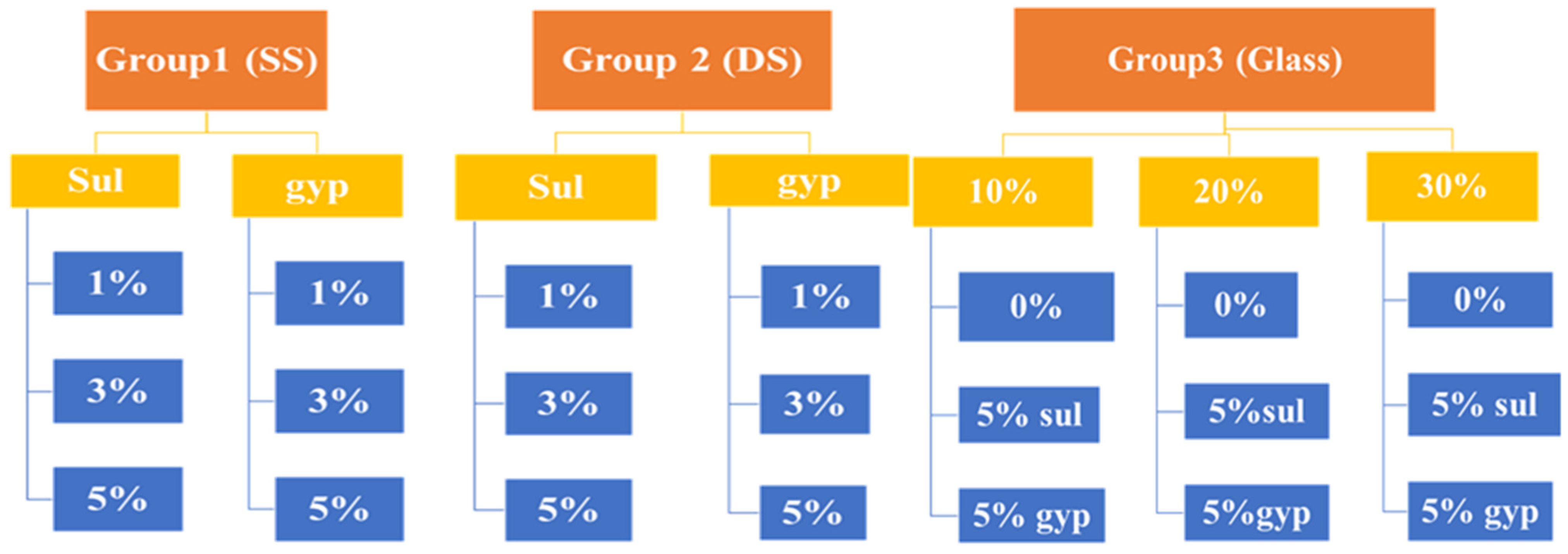
The experimental program included testing 23 mixes. The samples were divided into three groups based on the type of fine aggregate used. The first group (M1–M7) used standard sand, the second group (M8–M14) used demolition waste sand, and the third group (M15–M23) included partial replacement of cement with ground glass at 10%, 20%, and 30%. Gypsum and sodium sulfate were incorporated at concentrations of 1%, 3%, and 5% in the first and second groups, and at a uniform 5% in the third group. These replacement levels were selected based on previous studies that commonly investigated glass powder contents between 10% and 30%, while sulfate additions in the range of 1–5% are widely used in laboratory studies to evaluate sulfate-related reactions and expansion severity [25]. Figure 1 below shows a diagram of the samples studied, along with the determined proportions and quantities. The use of gypsum (calcium sulfate) and sodium sulfate provides researchers with a controlled source of sulfate ions (SO42−), allowing them to assess how these ions affect Delayed Ettringite Formation and mechanical performance. Sodium sulfate is a more soluble and aggressive sulfate source that is often found in the environment (like soils and groundwater). Gypsum is a common setting regulator in cement. Adding it enables the examination of sulfate-related expansion and microstructural changes in systems that use waste glass and demolition sand [26].

2.2. Materials

The properties of different materials that are used in this study are described as follows:

2.2.1. Cement

All mixes used Ordinary Portland cement (OPC) produced by Al Sewedy Company, Ataqa heavy industrial zone, Old El Katameya-El Sokhna road, Kilo 106, Suez Governorate. The grade used was CEM I 42.5 N, which meets the Egyptian Code ECP 203 2020 [27]. Table 1 shows the chemical analysis of the cement used, conducted using X-ray fluorescence (XRF) spectroscopy.

2.2.2. Aggregates

The coarse aggregate used in this work consisted of crushed dolomite with a specific gravity of 2.60. To avoid the effect of fine materials in the coarse aggregate, it was washed and left to dry for 24 h before use. The coarse aggregate was sourced from Royal Mix Modern Hydraulic Station. The nominal maximum size is 12.5 mm. Coarse aggregate testing was done in compliance with Egyptian Code ECP 203 2020 [27].
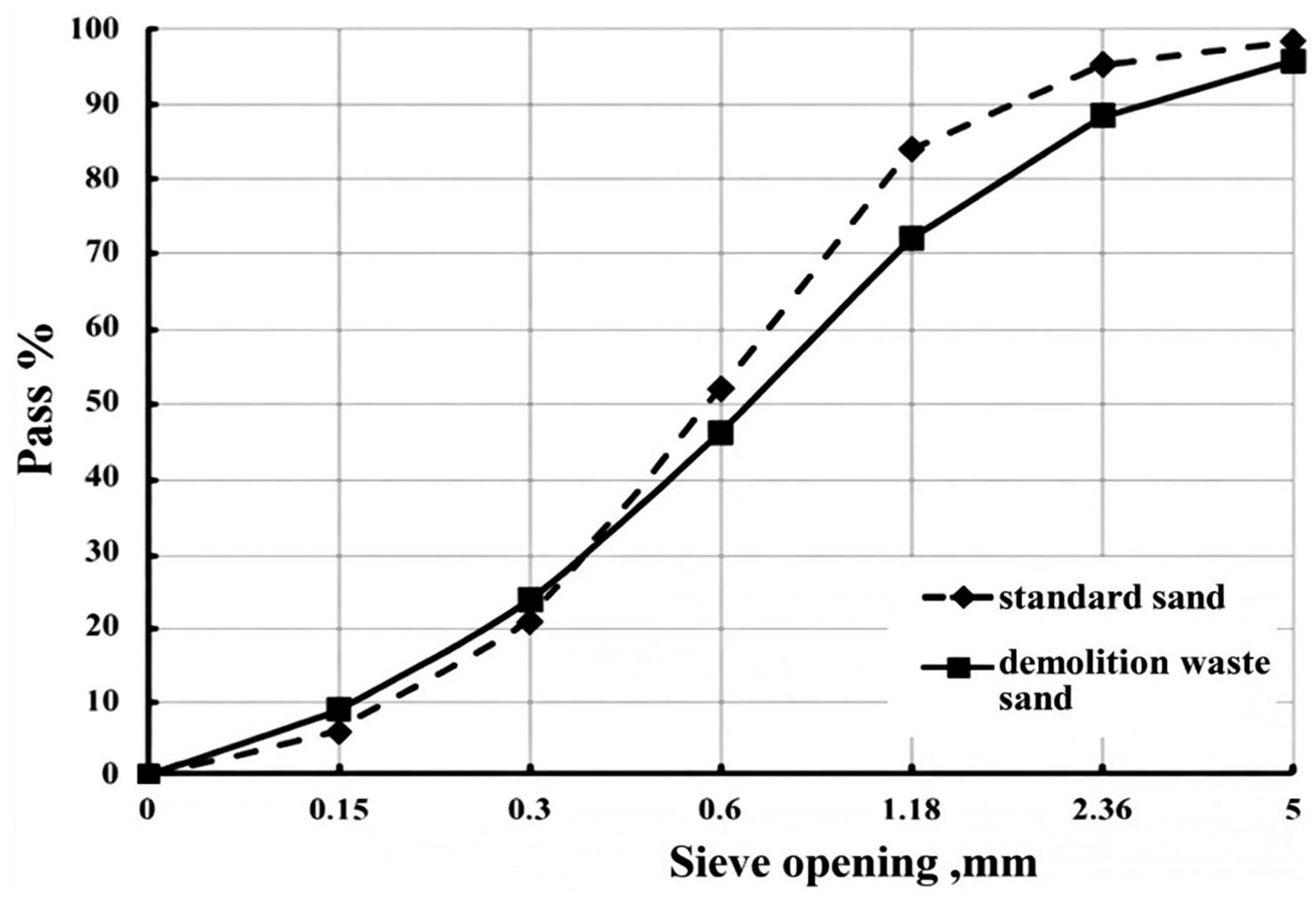
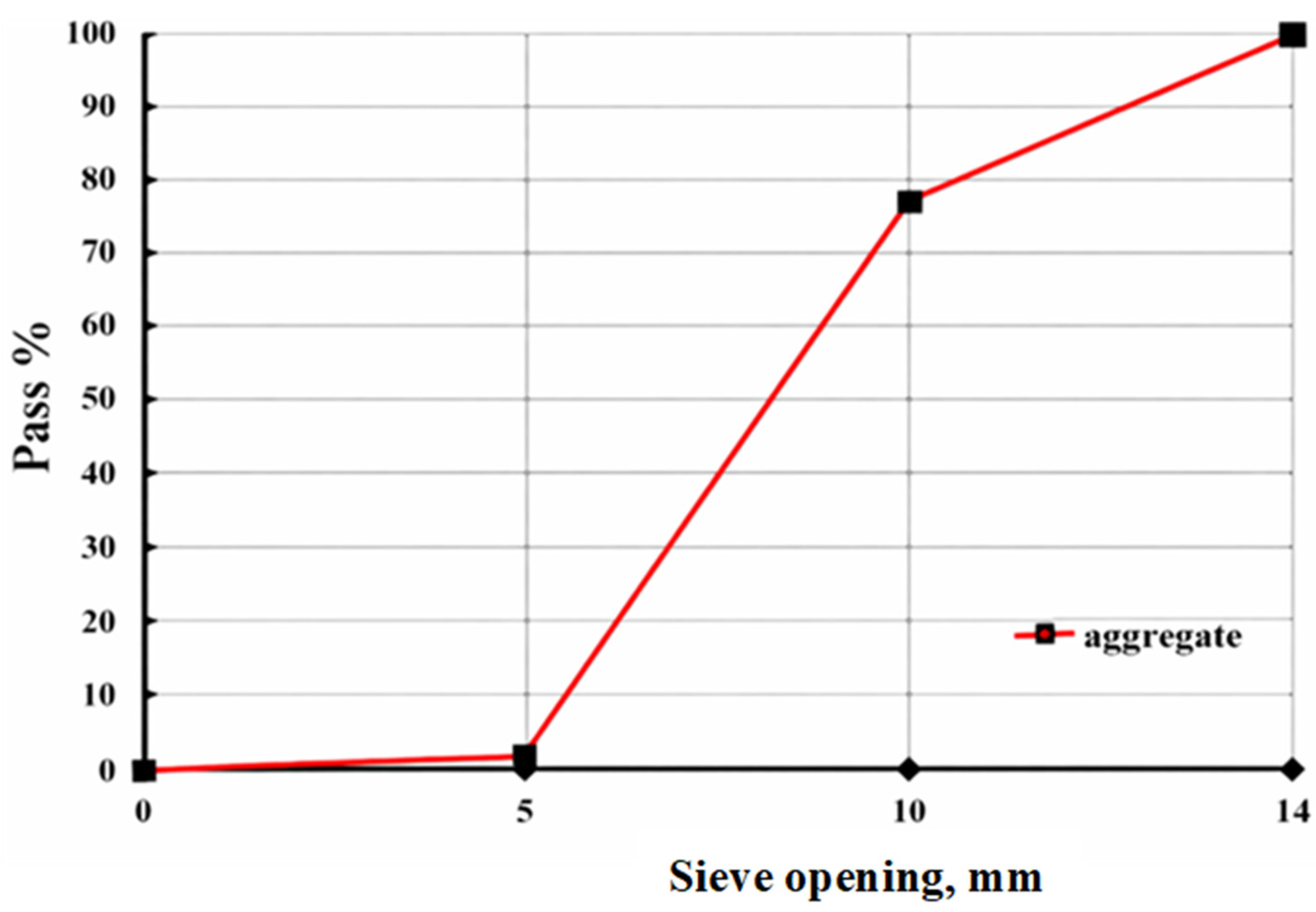
Two types of sand, natural standard sand and demolition waste sand, both with a fineness modulus of 2.60, were employed in this research. The used sand was tested in accordance with the Egyptian Code ECP 203 2020 [27]. Table 2 presents the chemical analysis of the demolition waste sand used, conducted using XRF spectroscopy. Figure 2 and Figure 3 illustrate the grading of both coarse and fine aggregates, comparing standard and recycled types.

2.2.3. Glass Wastes

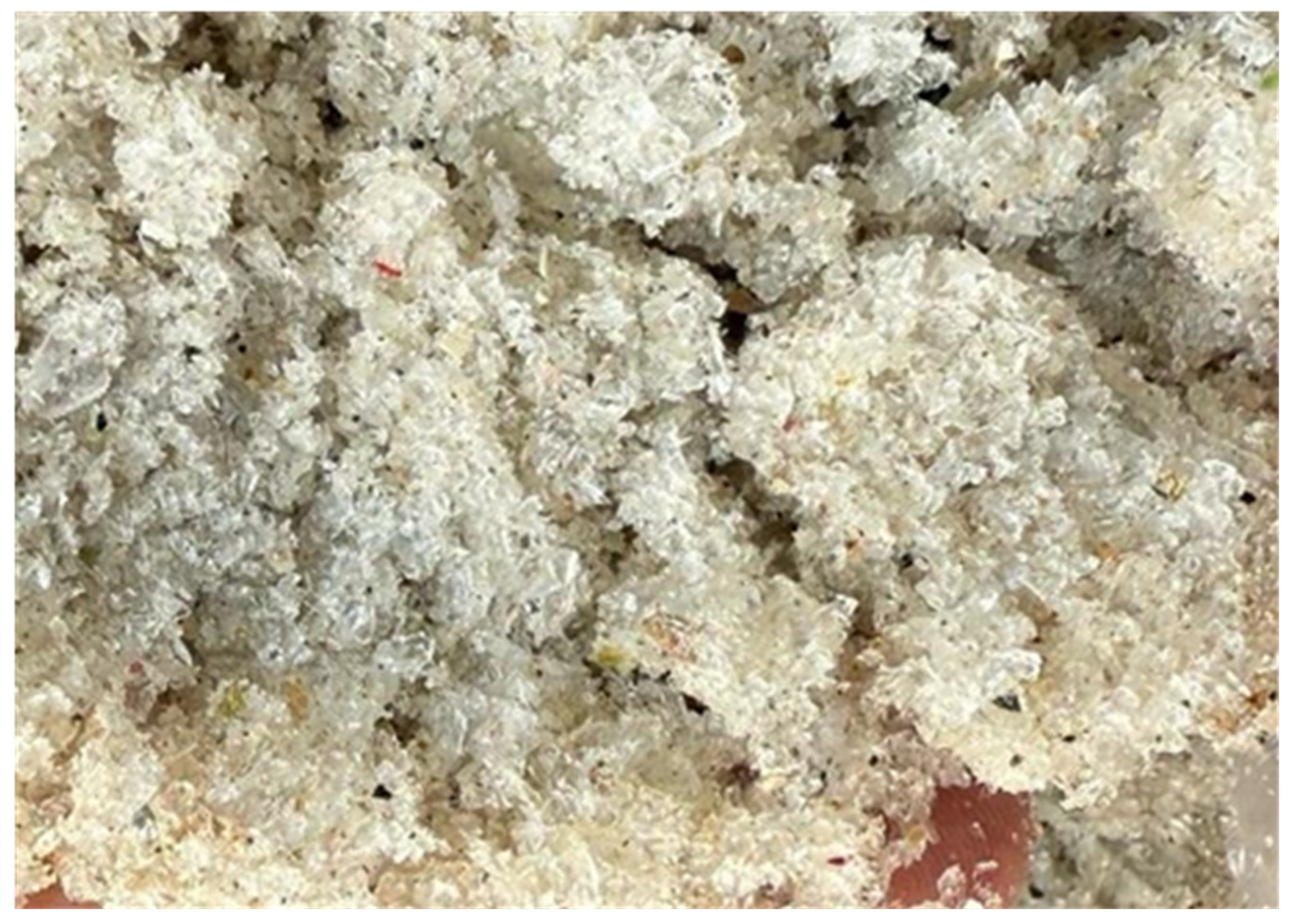
The specific gravity of the used glass was measured and found to be 2.53. The glass was ground until it reached a fineness comparable to cement, as verified by passing it through a #200 sieve. It was then used as a partial replacement for cement at 10%, 20%, and 30% ratios. Figure 4 shows the waste glass used in the concrete mix. Table 3 shows the chemical analysis of the glass waste used, conducted using XRF spectroscopy.

2.2.4. Gypsum

The white gypsum was finely ground and used as a partial replacement for the mix at 1%, 3%, and 5% by weight of the used cement. The gypsum was sourced from Al Kayan Board Company, Zagazig, Egypt. The main properties of the gypsum used are given in Table 4.

2.2.5. Sodium Sulfate

Sodium sulfate powder was employed as a partial replacement for cement at substitution levels of 1%, 3%, and 5%. The specific gravity of the sodium sulfate was measured to be 2.68. The chemical analysis of the used sodium sulphate is given in Table 5.

2.2.6. Superplasticizer

The superplasticizer admixture used in the present experimental work is Sika Viscocrete 3425, a high-range water-reducing admixture. The physical properties of the superplasticizer, according to the product datasheet, are shown in Table 6, and they meet the requirements of ASTM C494 Type G [29] and BS EN 934-2 [30].

2.3. Mixing Procedures

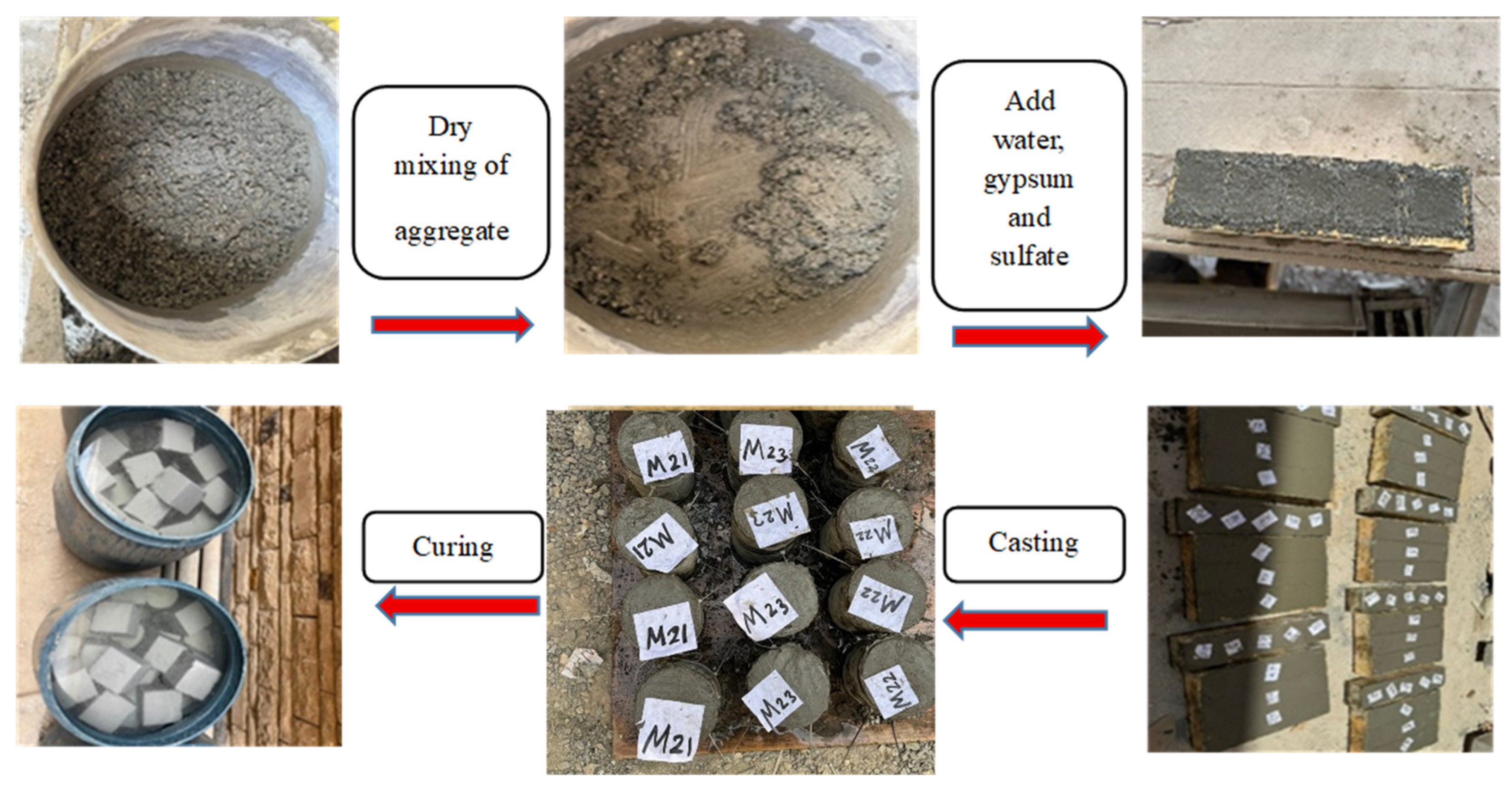
For both the standard sand and demolition waste sand groups, groups 1 and 2, all dry components, dolomite, sand, and cement, were first mixed together for one minute. Then, half of the mixing water was removed, and the specified proportion of gypsum or sodium sulfate was dissolved in it until a homogeneous mixture was achieved. This solution was then added to the dry mixture and stirred for an additional minute. Finally, the remaining half of the mixing water was gradually added while continuing the mixing, resulting in a more homogeneous mixture. For Group 3, the ground glass powder was added to the dry components and mixed thoroughly for one minute. The same mixing procedures were followed for the previous two groups. Figure 5 shows the steps of sample mixing; Table 7 shows the concrete mix proportion. After casting, specimens were demolded after 24 h and cured in water at room temperature until the designated testing ages; no heat curing was applied. For curing, specimens were placed in a freshwater curing tank maintained at 23 ± 2 °C, in accordance with the Egyptian Code ECP 203 2020 [27]. The specimens were immersed in tap water until the specified test ages of 7, 28, and 56 days had elapsed, which are standard testing intervals for determining the strength development of concrete at the early, standard, and later ages, respectively. Controlled curing minimizes moisture loss and temperature fluctuations in the curing environment, thereby providing an unbiased basis for comparing compressive, tensile, and flexural strength results across all 23 mix designs.

2.4. Detailed Mechanical, Physical, and Structural Analysis Tests

Three mechanical tests were conducted on the concrete specimens: compressive strength, indirect tensile strength, and flexural strength. These tests were performed after 28 and 56 days of casting. Cubic specimens of 10 cm × 10 cm × 10 cm dimensions were used to measure the compressive strength of concrete; cylindrical specimens of 10 cm × 20 cm dimensions were used to calculate the indirect tensile strength of concrete. For the flexural test, prisms measuring 50 cm × 10 cm × 10 cm were used.
To study and characterize cementitious materials, X-ray diffraction (XRD) was used to analyze the phases of hydrated and anhydrous cement after 56 days of concrete curing. The test was conducted using a Philips X’Pert Pro MPD PW 3050/60 X-ray diffractometer (Almelo, Netherlands) with an X-ray wavelength of 0.154 nm to scan powdered samples at room temperature. All XRD measurements were carried out at The Ministry of Petroleum, The Egyptian Mineral Resources Authority, Central Laboratories Sector, Cairo, Egypt. In addition, the microstructure of eight concrete mixes (M0, M4, M7, M11, M14, M18, M19, and M20) was investigated using a scanning electron microscope (SEM), FEI Company, Netherlands, at The Egyptian Mineral Resources Authority, Central Laboratories Sector, Cairo, Egypt. The SEM analysis was performed using a microscope with a maximum magnification of 300,000×, and the specimens were examined at seven different magnifications: 800×, 1000×, 1200×, 1600×, 2000×, 2400×, and 5000×. After conducting the 56-day compressive strength test, concrete samples were extracted from the inner cores of the crushed specimens, dried at 70 °C until a constant weight was achieved, and mounted on specimen holders using carbon adhesive tape. The elemental composition of the samples was further analyzed through energy-dispersive X-ray spectroscopy (EDS), FEI Company, Netherlands, using an Oxford X-Max 20 detector.

3. Results and Discussion

3.1. Compressive Strength

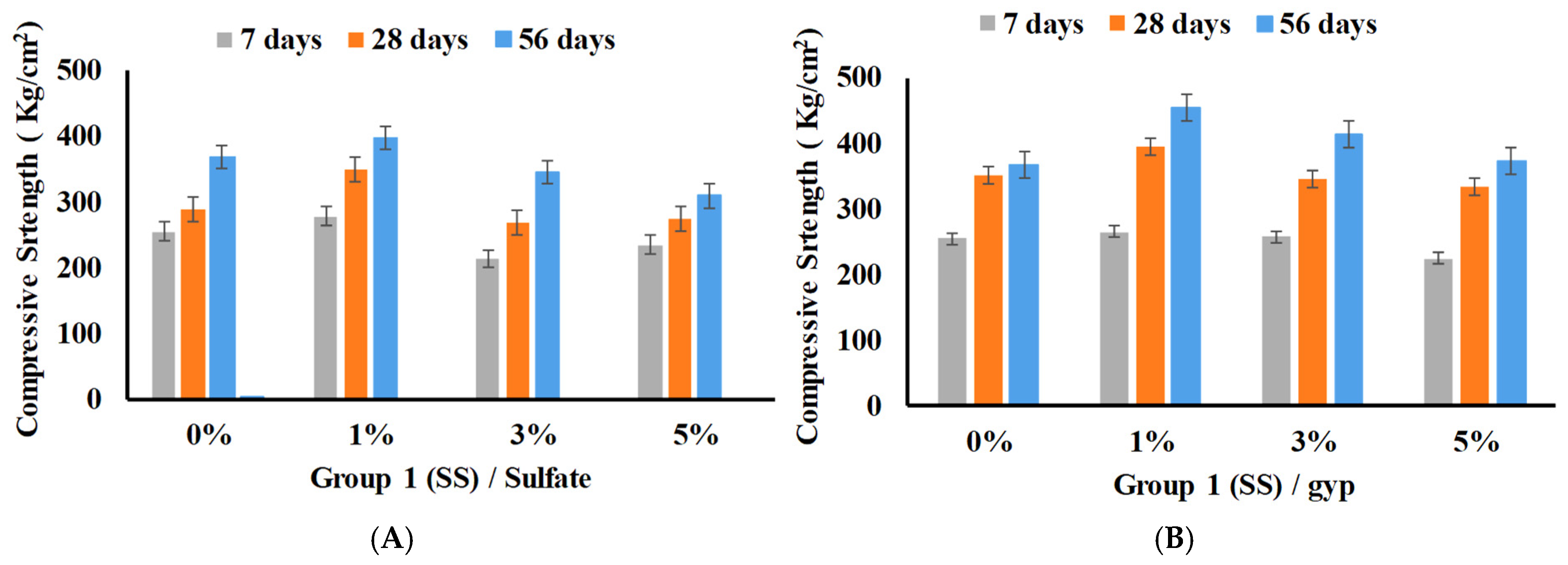
Figure 6A illustrates the compressive strength development of Group 1 (M1- M7) concrete mixes prepared with standard sand and incorporating different percentages of sodium sulfate. In general, all mixes exhibited a gradual increase in compressive strength with curing age; however, both the magnitude of strength and the rate of strength development were strongly influenced by the sulfate content [31]. At a sodium sulfate replacement level of 1%, a noticeable enhancement in compressive strength was observed compared to the control mix, with an increase of approximately 9% at 7 days [32].
This improvement was clearer at 28 days, where the strength increased by about 21%. At 56 days, the increase was smaller, reaching nearly 8%, indicating that this percentage had a positive effect on both early and later strength. This mix also showed the highest rate of strength development, with an increase of about 26% between 7 and 28 days, followed by another increase of around 13% between 28 and 56 days, indicating that the concrete developed steadily and in a balanced way over time. On the other hand, when the sodium sulfate content was increased to 3%, the compressive strength was lower than that of the control mix, with decreases of about 16% at 7 days, 8% at 28 days, and 6% at 56 days, even though the strength still increased with curing time. A stronger negative effect was observed when the sulfate content reached 5%, with a drop of about 8% at 7 days, 5% at 28 days, and nearly 16% at 56 days. This happened because the high sulfate content triggered more sulfate reactions within the concrete, leading to the formation of expansive products and small internal cracks, which reduced the concrete’s ability to gain strength at later ages. Therefore, the results show that adding 1% sodium sulfate is the best option for standard sand mixes, as it provides a good balance between strength and strength development, whereas higher sulfate contents negatively affect the mechanical performance of concrete. These results are similar to those reported by other researchers [33,34].
Figure 6B illustrates the strength development of Group 1 (M1–M7) concrete mixes prepared with standard sand and compressive strength incorporating different gypsum contents, where all mixes showed a continuous increase in strength with curing age. Compared with the control mix, adding 1% gypsum resulted in a clear improvement in compressive strength. The strength increased by about 4% at 7 days, then became higher at later ages, reaching around 13% at 28 days and nearly 24% at 56 days. This shows that gypsum is more effective in improving strength at later ages in standard sand mixes.
The mix with 1% gypsum also showed a continuous increase in strength from 7 to 56 days, indicating good, steady hydration. When the gypsum content was increased to 3%, the compressive strength stayed higher than that of the control mix at all ages, but the rate of strength gain was slightly lower than that of the 1% gypsum mix. At 5% gypsum, the early-age strength decreased by about 12% compared to the control mix [35]. However, this reduction was partially recovered at later ages, as the 56-day strength remained slightly higher than that of the control. This suggests that higher gypsum content may delay early-age strength development but improve later-age strength. Overall, compared with sodium sulfate-based mixes in the same group, gypsum-containing mixes showed a more stable pattern of strength development and greater late-age strength gains. This indicates that gypsum showed more stable behavior under the tested conditions, with improved strength development compared with sodium sulfate [36,37].
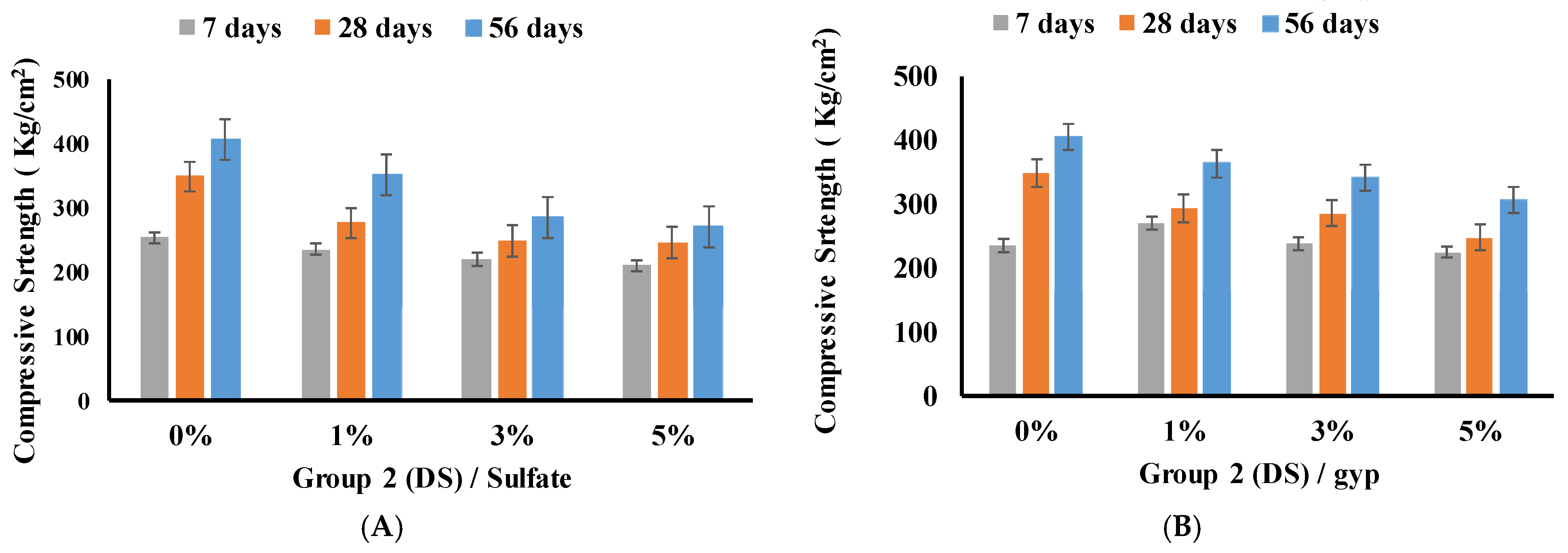
Figure 7A,B illustrate the development of compressive strength for Group 2 (M8–M14) concrete mixes prepared with demolition waste sand incorporating sodium sulfate and gypsum, respectively. In general, all mixes showed an increase in compressive strength with curing age; however, both the achieved strength level and the rate of strength gain were strongly influenced by the sulfate source type. Mixes containing sodium sulfate showed a clear decrease in compressive strength compared to the reference mix, even at low replacement levels. This reduction became more pronounced as the sulfate content increased, indicating that the development of strength over time was less efficient. The negative effect was more noticeable at later ages, showing that recycled sand mixes are more sensitive to the harmful action of soluble sulfates [38].
On the other hand, mixes containing gypsum showed a more stable strength behavior. They had higher compressive strength and a more consistent rate of strength gain than sodium sulfate mixes at the same replacement levels. Although increasing the gypsum content also led to a gradual decrease in strength, this reduction was smaller than that observed with sodium sulfate. In addition, strength development at later ages remained better in gypsum mixes [35]. Overall, the comparison between Figure 7A,B demonstrates that, for recycled sand mixes, gypsum provides a more controlled sulfate source than sodium sulfate, leading to improved compressive strength stability and a higher rate of strength acquisition [39].
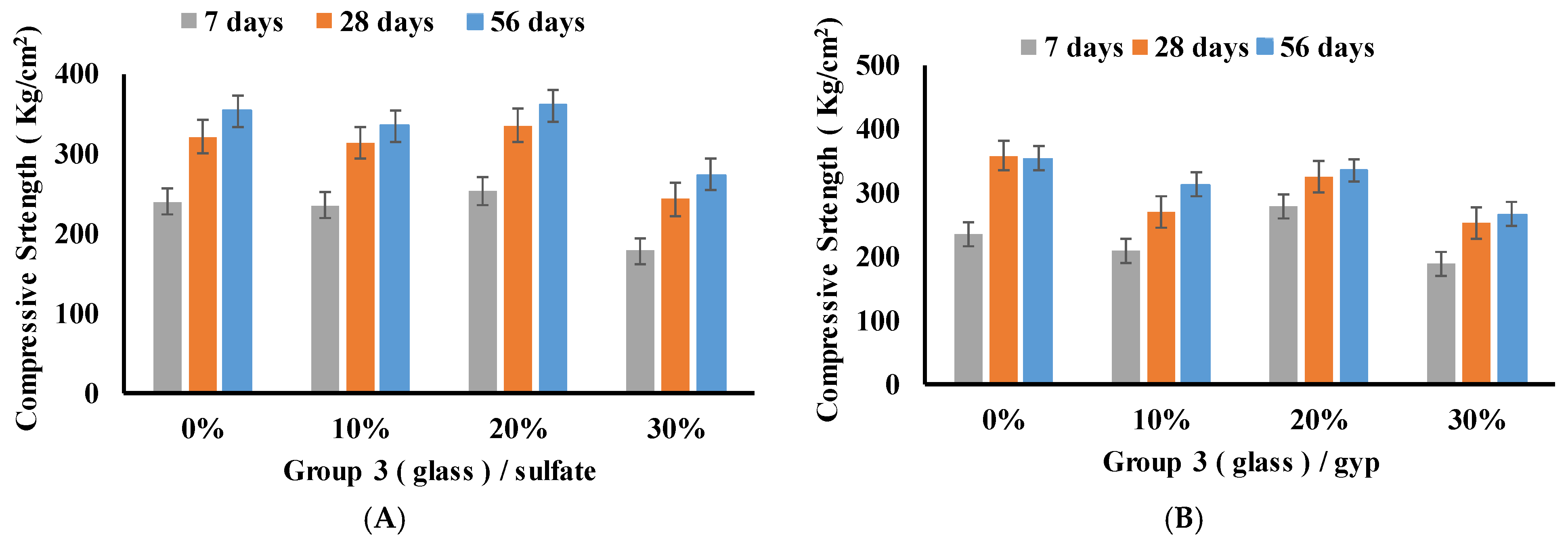
Figure 8A,B illustrate the compressive strength development of Group 3 concrete mixes incorporating ground glass powder as a partial replacement of cement, with sodium sulfate and gypsum, respectively. In general, all mixes exhibited an increase in compressive strength with curing age; however, both the achieved strength level and the rate of strength gain were strongly affected by the sulfate source and the glass replacement ratio.
For mixes containing sodium sulfate, compressive strength increased at moderate glass replacement levels but then decreased sharply at higher glass contents. This indicates reduced strength efficiency and slower strength development at later ages. This behavior can be explained by the dilution effect of the high glass content and the aggressive action of soluble sulfates, which negatively affect long-term strength development. In contrast, mixes containing gypsum showed a more stable strength response with increasing glass content. These mixes maintained higher strength values and showed a more consistent rate of strength gain than the corresponding sodium sulfate mixes. In both cases, a glass powder replacement level of about 20% yielded the best compressive strength and the highest strength development efficiency. Similar findings were reported in previous studies [40]. However, increasing the replacement level to 30% led to a clear reduction in strength [41]. This is because the cement content was insufficient, limiting the amount of calcium hydroxide available for the pozzolanic reaction. Overall, the comparison between Figure 8A,B shows that gypsum performed more stably than sodium sulfate under the tested conditions. In addition, 20% glass powder can be considered the optimal content for improving compressive strength and the rate of strength development. Similar behavior was reported by previous research [42]. This agrees with the findings of previous studies [43,44].

3.2. Tensile Strength

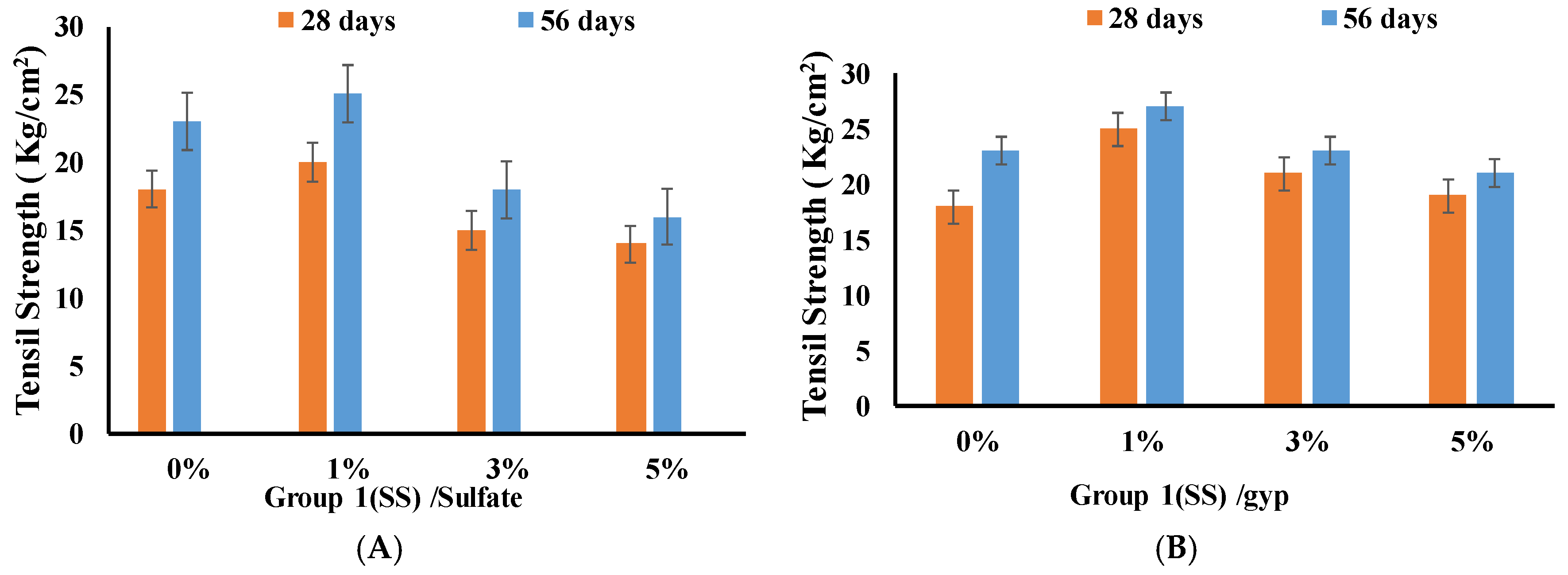
Figure 9A,B illustrate the splitting tensile strength results for Group 1 (M1–M7) mixes prepared with standard sand and incorporating sodium sulfate and gypsum at different replacement levels after 28 and 56 days of curing. Overall, all mixes showed a gradual increase in tensile strength with curing time. The strength increased by about 20–30% from 28 to 56 days, which indicates continuous hydration and a denser cement matrix [45,46]. For mixes containing sodium sulfate, adding 1% sulfate led to a small improvement in tensile strength, increasing it by about 10–12% compared to the control mix. However, when the sulfate content was increased to 3% and 5%, the tensile strength decreased by around 15–20%. This reduction can be explained by excessive sulfate reactions, which caused microcracks inside the cement matrix and weakened the concrete [47]. On the other hand, mixes containing gypsum showed better tensile performance. Using 1% and 3% gypsum resulted in a clear increase of about 30–35% in tensile strength compared to the control mix. This improvement is related to stable ettringite formation and a better refinement of the pore structure, which enhanced the concrete’s internal structure. Other researchers have reported similar results [48]. Nevertheless, at a gypsum content of 5%, the tensile strength declined by about 15% relative to the optimum, indicating deterioration of the internal microstructure. Comparatively, gypsum-containing mixes consistently outperformed sulfate-containing mixes at equivalent replacement levels and exhibited a higher rate of strength gain between 28 and 56 days, confirming the more favorable role of gypsum in enhancing both early- and long-term splitting tensile strength.
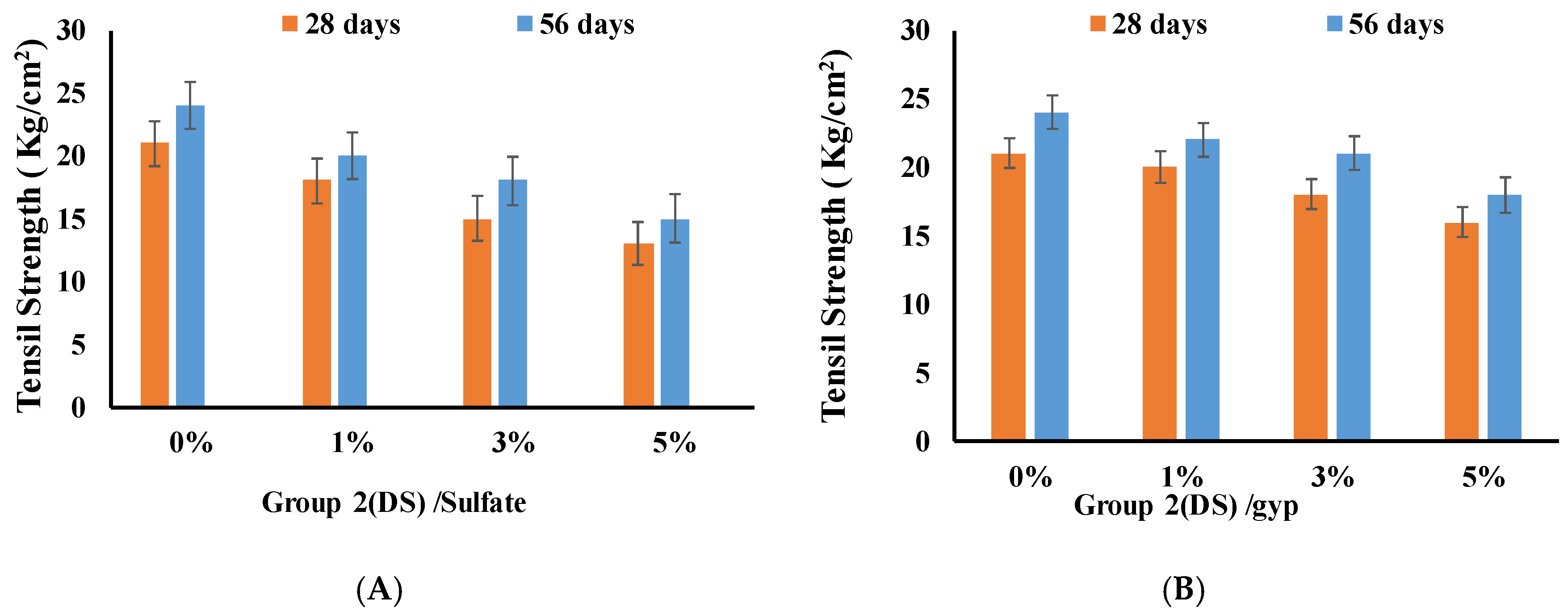
Figure 10A,B illustrate the splitting tensile strength results of Group 2 (M8–M14) concrete mixes incorporating demolition waste sand and modified with sodium sulfate and gypsum at replacement levels of 1%, 3%, and 5% after 28 and 56 days of curing. Overall, all mixes showed an increase in tensile strength with curing time. The strength increased by about 15–25% at 56 days compared with 28 days, indicating continuous hydration and a denser concrete matrix [49]. For mixes containing sodium sulfate, adding 1% sulfate decreased tensile strength by about 14% compared to the control mix. When the replacement level was increased to 3%, the reduction became about 29%, and it reached nearly 38% at 5%.
This clearly shows the harmful effect of high sulfate content on tensile strength, mainly due to expansive reactions and the formation of microcracks inside the concrete [50]. On the other hand, mixes containing gypsum showed a more stable behavior. At 1% gypsum, the tensile strength decreased slightly by about 5% compared to the control mix. When the gypsum content increased to 3% and 5%, the reduction became about 14% and 24%, respectively. Even with this decrease, gypsum mixes showed more stable performance than sodium sulfate mixes at the same replacement levels. Similar trends were also reported by other researchers [51,52].
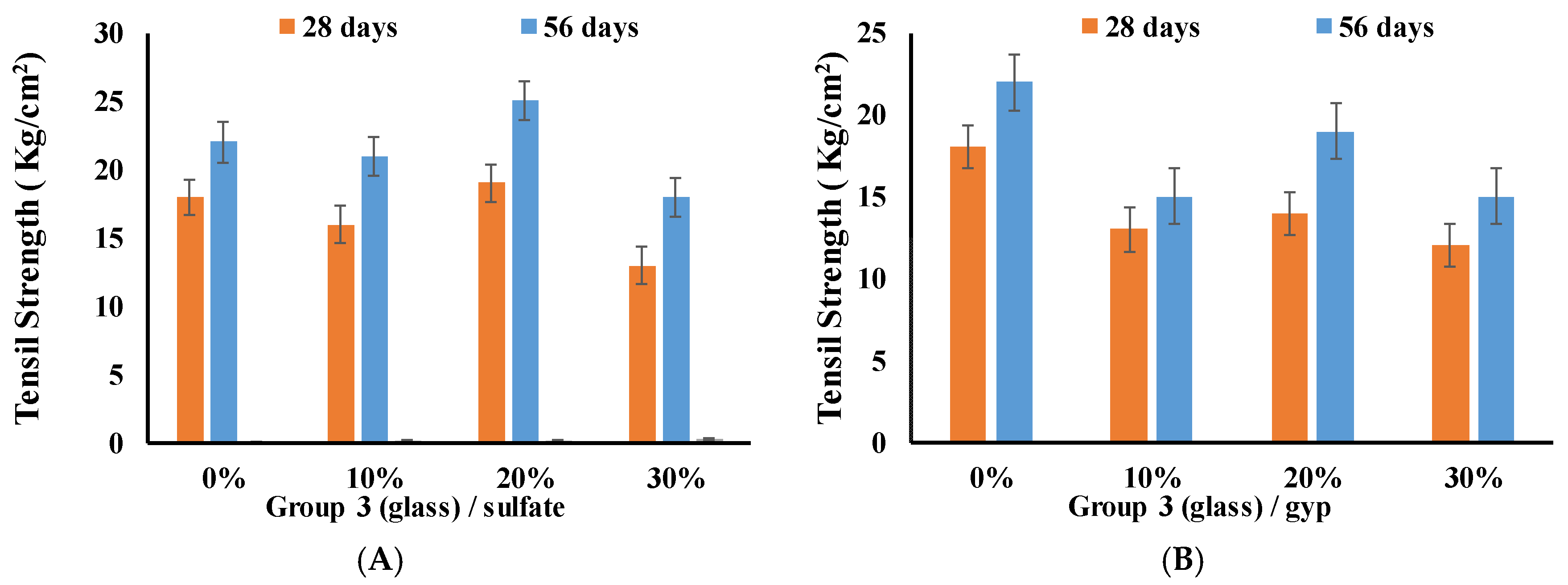
Figure 11A,B present the splitting tensile strength results of Group 3 (M15–M23) concrete mixes incorporating ground waste glass and modified with sodium sulfate and gypsum after 28 and 56 days of curing. Overall, all mixes showed an increase in tensile strength with curing time, with strength increasing by about 20–30% from 28 to 56 days, indicating continuous hydration [41]. For sulfate-modified mixes, using 20% glass powder gave the highest tensile strength, with an improvement of about 12–15% compared to the control mix. However, increasing the replacement level to 30% led to a clear reduction in strength of about 18–20% compared to the optimum level, indicating the negative effect of the high glass content. In contrast, gypsum-modified mixes showed different behavior: 20% glass decreased tensile strength by about 12–15%, while 10% and 30% glass led to larger reductions of about 30–32%. Despite this, strength gain between 28 and 56 days remained stable, confirming continuous hydration. This can be explained by the pozzolanic reaction of glass, which consumes calcium hydroxide and forms more C–S–H, resulting in a denser microstructure at the optimal replacement level. This was also mentioned by others [53,54].

3.3. Flexural Strength

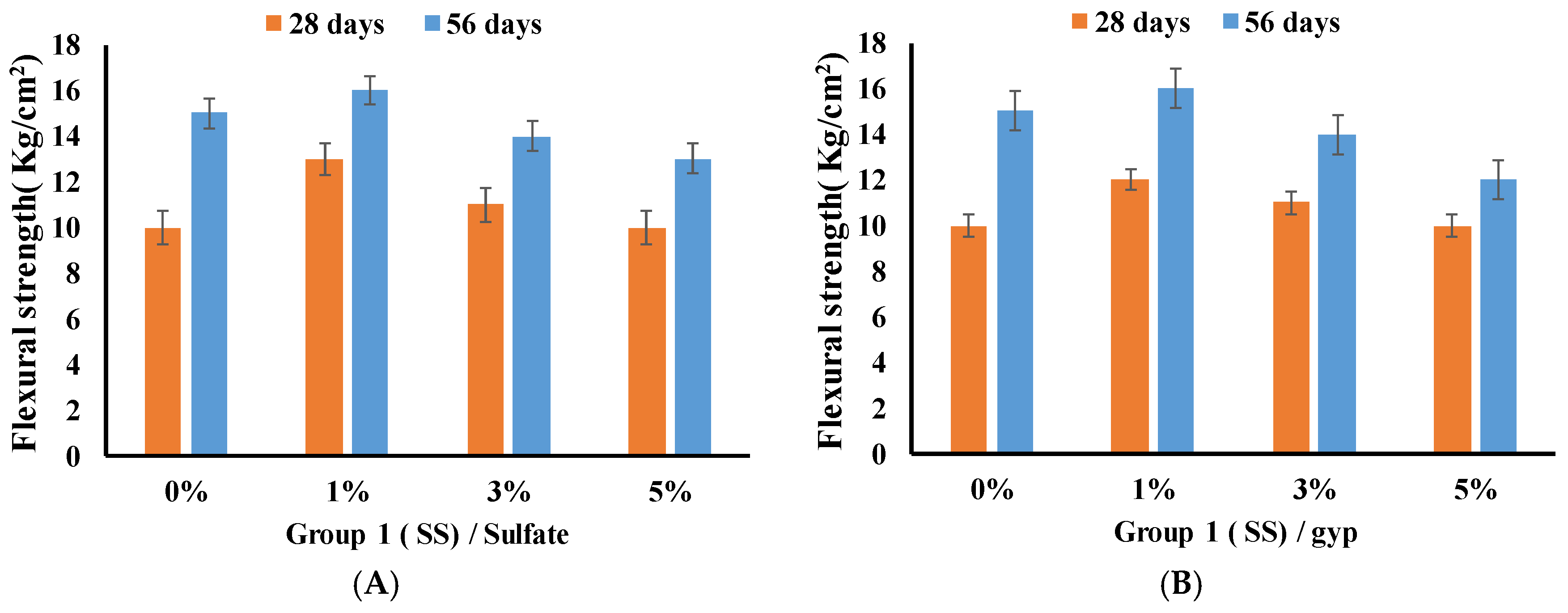
Figure 12A,B show the flexural strength of mixes made with natural sand (Group 1 (M1–M7)) cured for 28 and 56 days, respectively, with sodium sulfate and gypsum. Overall, all of the mixes got stronger over time. For example, the flexural strength increased by about 25–40% from 28 days to 56 days. Sodium sulfate-addition mixes showed a clear improvement, with flexural strength going up by about 10–20% compared to the control mix. This was because the pozzolanic reactions were better, and more C–S–H was formed [55]. In contrast, mixes with gypsum addition had less flexural strength. At 1% replacement, the strength dropped by about 5–8%, and at 3% and 5% addition levels it dropped by about 12–18% because too much ettringite formed too soon [52]. In Group 1 mixes, sodium sulfate overall gave better flexural performance than gypsum [56].
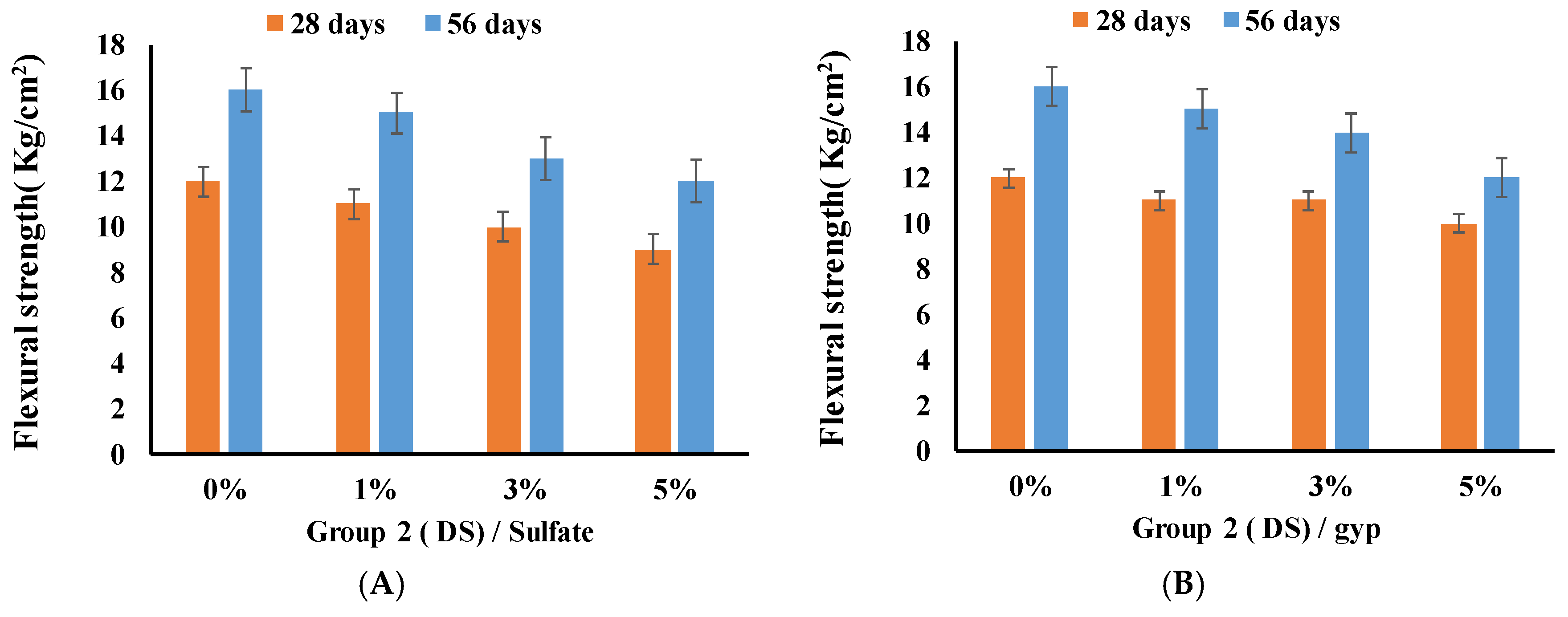
Figure 13A,B show the flexural strength results of Group 2 (M8–M14) mixes. These mixes contain demolition waste sand as the fine aggregate, with additions of sodium sulfate and gypsum at 28 and 56 days of curing. In general, all mixes showed strength development over time, with flexural strength increasing by approximately 25–35% at 56 days compared with 28 days [57]. Sodium sulfate-addition mixes showed a clear improvement, with flexural strength increasing by about 10–18% compared to the control mix across all sodium sulfate levels, which is attributed to enhanced pozzolanic reactions and additional C–S–H formation [58]. In contrast, mixes with gypsum addition exhibited a reduction in flexural strength, decreasing by approximately 5–8% at 1% replacement and increasing to about 12–20% at 3% and 5% replacement levels, due to excessive early ettringite formation. Overall, sodium sulfate provided better flexural performance than gypsum in demolition waste sand, Group 2, mixes [59].
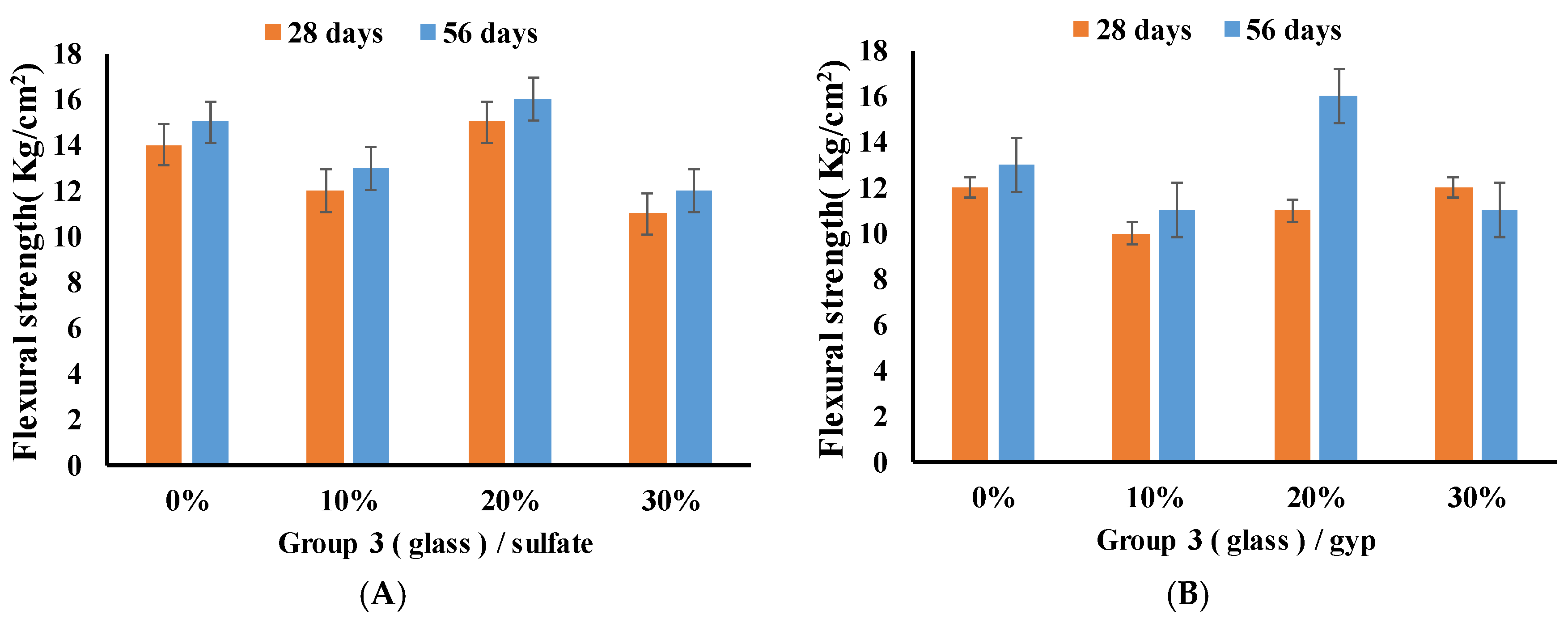
Figure 14A,B show the flexural strength results for Group 3 (M15–M23) mixes that had ground waste glass instead of sand and 5% sodium sulfate and gypsum added at 28 and 56 days of curing, respectively. All mixes became stronger over time, and flexural strength increased by about 10–20% from 28 days to 56 days, indicating that the mixes continued to gain strength [60]. When sodium sulfate was added to the mix, replacing 20% of the glass powder made the mix much stronger, with flexural strength going up by about 12–15% compared to the control mix. However, when the replacement level was raised to 30%, the strength decreased by about 18–22%, indicating that too much glass content is detrimental to the mix. In [61], you can find a similar result. In contrast, the mixes with gypsum addition showed a different pattern. When 20% of the glass was replaced, flexural strength increased by about 20–25% compared with the control mix. However, when 10% and 30% of the glass was replaced, the strength dropped by about 10–15%. This shows that only the right amount of glass can improve flexural performance [60]. According to this study, mixtures with ground glass and gypsum at the ideal replacement level exhibited superior flexural performance compared with sulfate-modified mixtures, underscoring the importance of glass powder’s regulated pozzolanic activity in improving concrete’s flexural properties [62].

3.4. Scanning Electron Microscope (SEM)

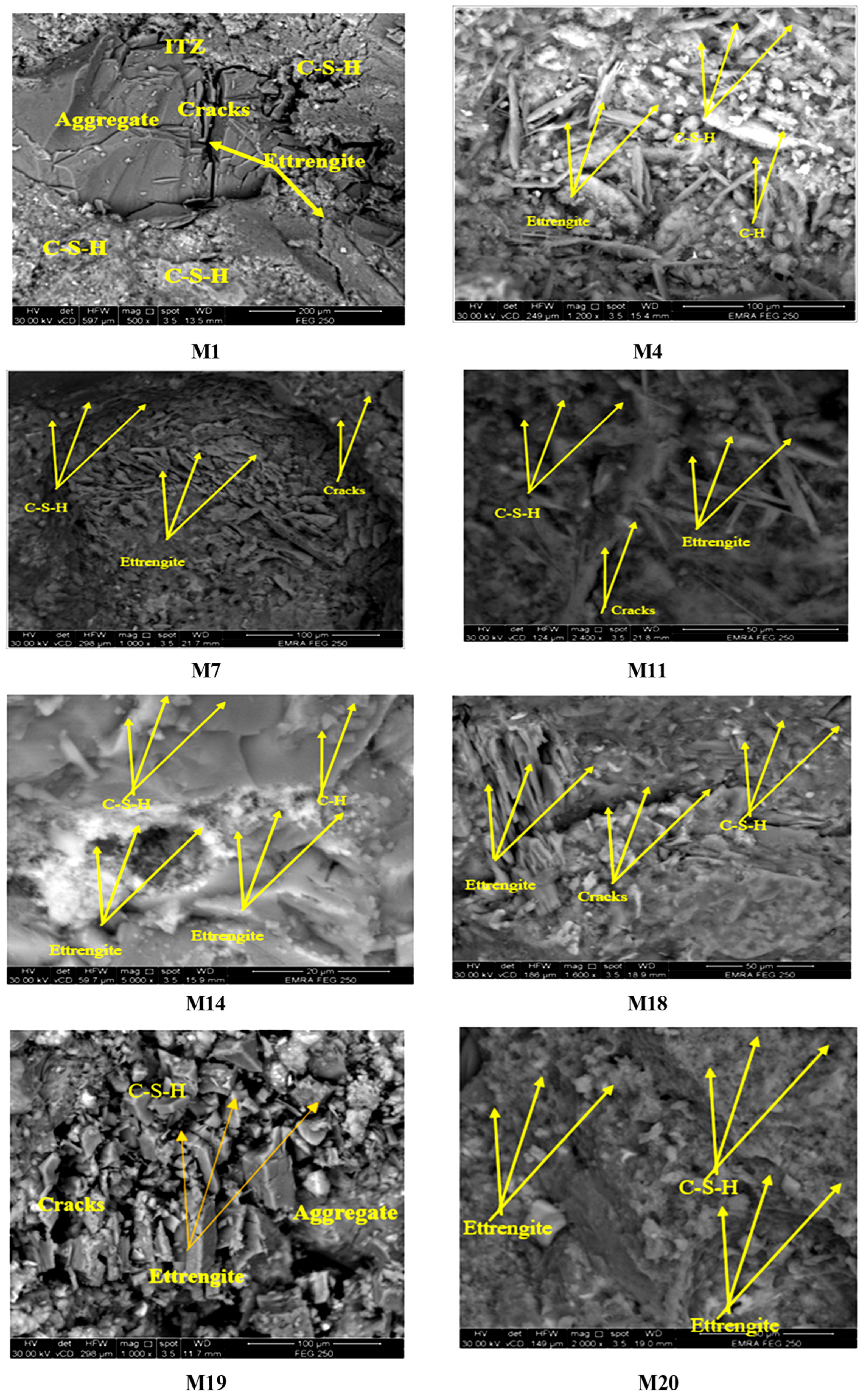
Figure 15 shows SEM micrographs of mixes M1, M4, M7, M11, M14, M18, M19, and M20, highlighting the main hydration products, including C–S–H gel, ettringite, calcium hydroxide, pores, microcracks, and the interfacial transition zone (ITZ) [63]. The observed features were identified as C–S–H gel, portlandite crystals, and ettringite needles based on their typical morphology and distribution within the matrix. The control mix M1 exhibits a heterogeneous microstructure with a porous ITZ, visible microcracks, and abundant ettringite crystals, indicating weak bonding and limited matrix densification [64]. In M4 and M7, there is a higher formation of hydration products. However, the presence of dense ettringite needles and microcracks suggests that expansive sulfate reactions are taking place. Mixes M11 and M14 have a more compact and even matrix with a well-developed C–S–H network and fewer cracks. This shows that the hydration process is more efficient and the microstructure is stronger. On the other hand, M18 and M20 show too much ettringite formation and noticeable microcracking, which means that the matrix is breaking down because it has too much sulfate in it. For M19, the microstructure looks fairly dense, and the ITZ quality has gotten better, but there are still some cracks in certain places. Overall, the SEM observations confirm that moderate replacement levels result in a denser microstructure and improved bonding, while too much sulfate addition causes microstructural damage [63]. These results are consistent with the mechanical tests, which showed that the best mixes exhibited better tensile and flexural performance.

3.5. Energy-Dispersive X-Ray Spectroscopy (EDS)

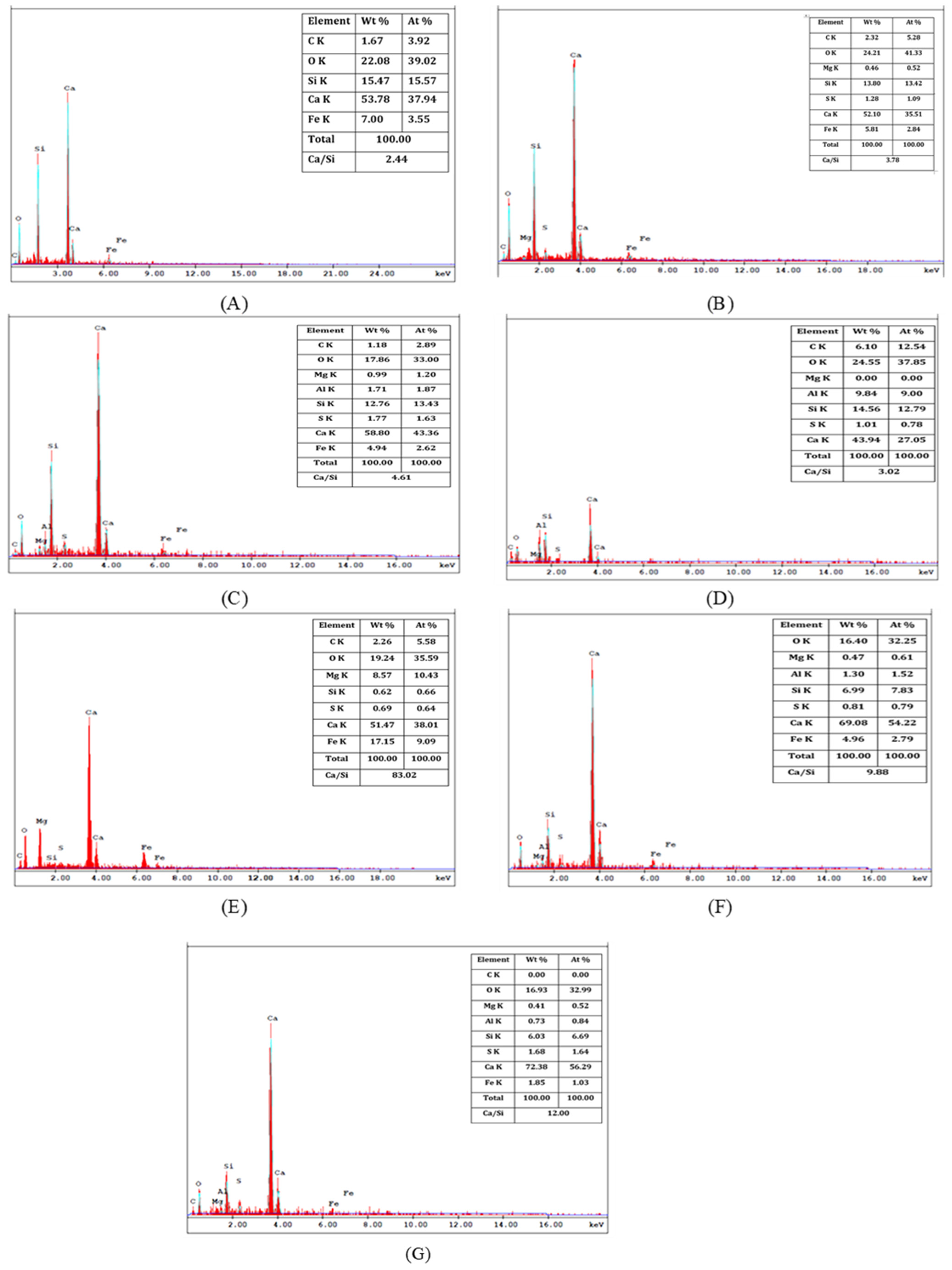
Energy-Dispersive X-ray Spectroscopy (EDS) was used to identify the elements present in the concrete samples, and Scanning Electron Microscopy (SEM) confirmed the findings. The Ca/Si ratios were also estimated from the EDS results to better characterize the nature of the hydration products and the development of the C–S–H phase. The estimated Ca/Si ratios were used as an indicator of C–S–H development and matrix densification. The elemental spectra show that calcium (Ca), oxygen (O), silicon (Si), and iron (Fe) are the main elements in all four concrete mixtures. These elements are also found in any cementitious material. The results also show the presence of oxygen, carbon, and calcium, confirming that calcium carbonate (CaCO3) deposits have formed within the concrete matrix. Figure 16 shows clear calcium peaks in all the samples. The peaks become stronger when sulfate and ground glass are added, indicating that these products help form calcium-rich hydration products [65]. The quantitative EDS analysis showed that the calcium content was 53.78% in the control sample (M1), decreased slightly to 52.10% in M4, and increased significantly to 58.80% in M7. This means that both sulfate and glass powder helped the cement matrix to hydrate and densify more completely. Also, M1 contained 1.67% carbon, indicating that the formation of calcium carbonate was limited. M11 contained 9.84% aluminum, indicating that hydration products rich in alumina formed. As a result, adding sulfate and glass powder alters the chemical makeup of the concrete matrix by promoting the formation of secondary hydration phases.

3.6. X-Ray Diffraction Analysis

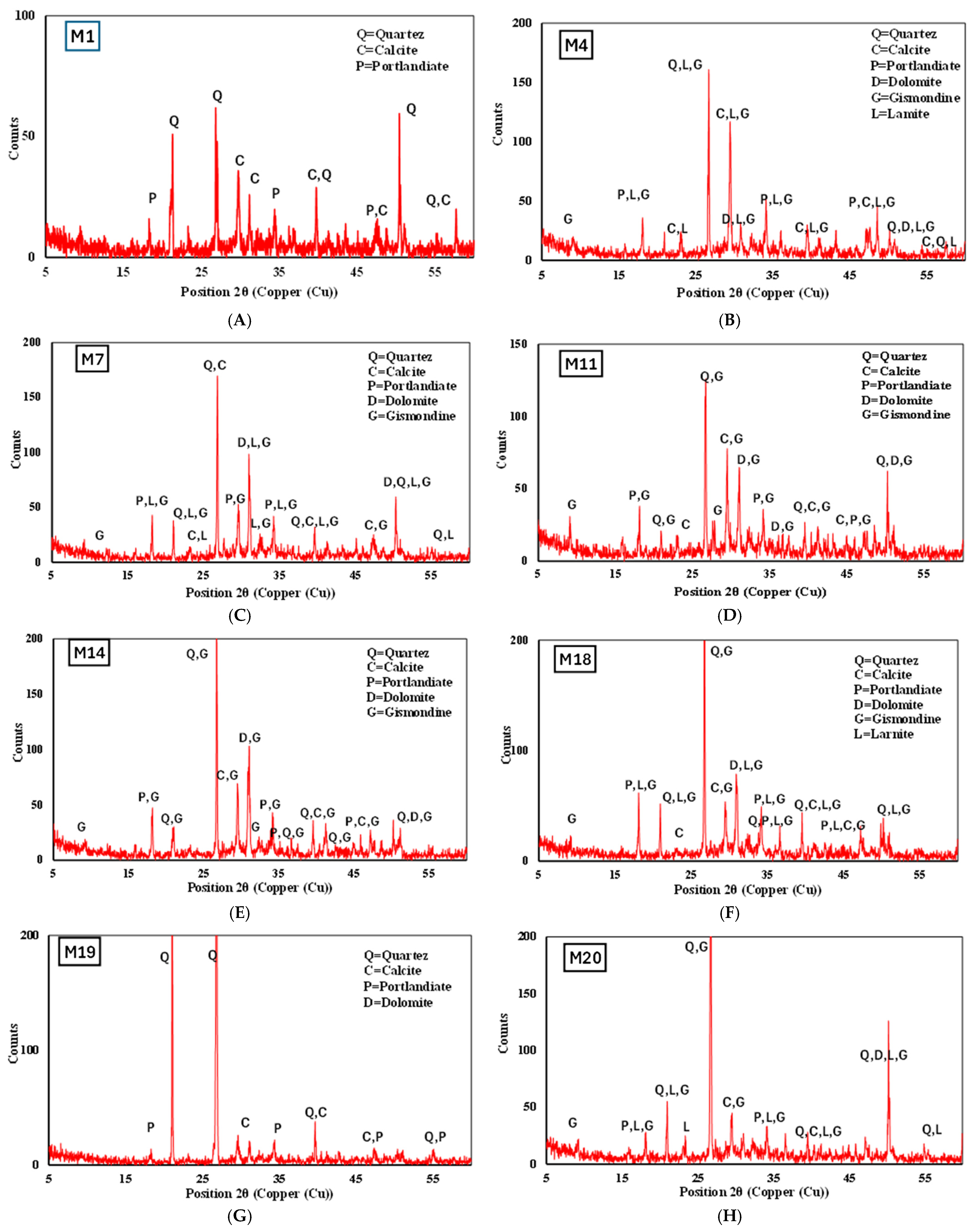
X-ray diffraction (XRD) was used to identify the crystalline phases of the concrete mixtures and to assess the effect of sulfate, gypsum, and ground glass on secondary hydration products, particularly ettringite. The XRD patterns of the mixes at 56 days (M1, M4, M7, M11, M14, M18, M19, and M20) are shown in Figure 17 and reveal similar minerals in each case (i.e., gismondine, larnite, portlandite, calcite, quartz, and dolomite). The intensity of the peaks was very different for each mix due to the source of the additive used. Mix M1 (control mix) contained hydration phases that typically formed without an additive, and there was no evidence of sulfate’s influence on ettringite formation, consistent with the data presented in Figure 17. In contrast to M1, M4 (5% Na2SO4) had a substantially increased intensity for calcium-related peaks, thus confirming that the presence of sulfate in a mix was an influential factor in the formation of ettringite. This is further supported by the increased intensities of the calcite-related peak in the gypsum-modified mix M7 due to the relatively rapid reaction of the aluminate in the gypsum-modified mix [66]. The mixes containing the contaminated sand (M11 and M14) formed higher amounts of gismondine and dolomite due to impurities in the sand. The influence of ground glass on the performance of the cement mixes was evident in mixes M18, M19, and M20, where the ettringite peaks were significantly lower in height than those in mixes with either sulfate or gypsum only [67]. The reduced intensity of ettringite-related peaks supports the delayed formation of ettringite observed in the corresponding SEM micrographs. The reduction in the intensity of the ettringite peak is attributed to the pozzolanic reaction between the ground glass and portlandite, which consumes portlandite to produce more C-S-H and makes ions less available to form ettringite. As a result, ground glass appears to delay the formation of ettringite and increase the microstructure stability of the cement [68].

3.7. Interpreting Mechanical Performance Through the Microstructure Results

The control mix M1 has a weak, classic interfacial transition zone and a porous matrix with randomly distributed ettringite needles. This is what makes mediocre concrete. On the other hand, SEM shows that mixes like M11 and M14 have a denser, more uniform C-S-H network. This finding is thought to be the direct microstructural reason for the improvement in their tensile and compressive strength. This density keeps chloride out and protects against damage from freezing and thawing. The SEM supports the mechanical tests’ findings: an uncontrolled internal reaction can completely break down a strong matrix, as seen in micrographs M18 and M20, which show excessive ettringite and microcracks. So, we looked into failures that happened in early high-sulfate waste applications [63,65].
The EDS data here provide an important chemical map that makes sense of the SEM’s physical story. The calcium content in M7 (58.80%) compared to the control shows a significant change in the water’s chemistry. This kind of spike often happens at the same time as the formation of stable, strength-giving phases like well-crystallized portlandite and interlocked C-S-H, not just loose, expansive ones. The aluminum peak in Mix M11 often indicates whether alumina is added to the C-S-H gel or whether stable, non-expansive sulfoaluminate phases form. This is exactly what we want for sulfate resistance. To determine whether we are producing useful, dense reaction products or the harmful, expansive ettringite, we need to monitor both aluminum and sulfur simultaneously [66,68].
Finally, the XRD patterns are the fingerprints that connect everything. The lower ettringite peak intensity in the glass-powder mixes (M18–M20) is proof that they last longer. The concrete samples with visible DEF cracks failed under load, and XRD always showed tall ettringite peaks. This drop in intensity supports the idea that glass-consuming portlandite is the mechanism that stops ettringite from forming. It is a better solution than just blocking sulfates. But the presence of dolomite and gismondine peaks in the demolition sand mixes (M11, M14) is a sign that the aggregates are not pure.
The mechanical performance may be fine for a while, but these foreign phases can make the material less durable over time through alkali–silicas reaction or differences in thermal expansion. The study’s conclusion that demolition sand is acceptable is technically correct, given its strength, but the XRD reminds us that carefully managing impurities is key to making concrete that lasts [63,64].

4. Conclusions

This study examined the synergistic effects of recycled glass powder, demolition waste sand, and sulfate sources (gypsum and sodium sulfate) on the mechanical properties and microstructural attributes of sustainable concrete. From the experimental results, the following specific conclusions can be made:
  • The best mechanical performance at all test ages was when 20% finely ground waste glass powder was used instead of cement. This best replacement level increased compressive strength by 21%, splitting tensile strength by 12–15% and flexural strength by 20–25% compared to control mixes. However, a higher replacement level (30%) reduced strength by 18–22%.
  • Adding 1–3% gypsum increased the compressive strength by 4–13% at 28 days and by up to 24% at 56 days, showing that it developed strength better at later ages. Gypsum-modified mixes had a 30–35% higher tensile strength when 1–3% of the mix was replaced, and their strength gain patterns were more stable than those of sodium sulfate mixes.
  • When the replacement levels were the same, gypsum-modified demolition sand mixes had a 5–24% higher compressive strength than sodium sulfate-modified mixes. But as the sodium sulfate content increased, tensile strength decreased by 14% to 38%. The gypsum mixes only lost 5% to 24% of their strength.
  • Adding 1% sodium sulfate increased compressive strength by 9% after 7 days and 21% after 28 days. Adding 3% or 5% decreased strength by 6% to 16% because of expansive reactions and microcracking. Across all replacement levels, sodium sulfate improved flexural strength by 10% to 20%.
  • SEM analysis showed that mixes with 20% glass powder and 1–3% gypsum made dense, even C-S-H matrices with much less microcracking and better quality in the interfacial transition zone (ITZ). EDS analysis showed that the calcium content was higher (58.80% in M7 vs. 53.78% in control) and the Ca/Si ratio was higher, indicating that hydration products formed more easily. XRD patterns demonstrated significantly diminished ettringite peak intensities in glass powder mixtures, thereby directly validating the delayed formation of ettringite resulting from the pozzolanic reaction with portlandite.
  • The current experimental findings determined the ideal sustainable concrete composition to be: 20% ground glass powder substituting cement, 1–3% gypsum serving as a sulfate source, and demolition waste sand utilized as the fine aggregate. This mix had 21% higher compressive strength, 30–35% higher tensile strength, a denser microstructure, and lower DEF.

Limitations and Future Work

This study focused mainly on mechanical and microstructural evaluation. Future work should investigate long-term durability properties such as water absorption, sulfate resistance, and chloride penetration.
Future studies can examine the effect of adding glass powder fibers to enhance crack control and mechanical performance.

Author Contributions

Conceptualization, S.S.E.A., Y.E. and A.A.E.; Methodology, S.S.E.A., S.A.A., Y.E. and A.A.E.; Validation, S.S.E.A., Y.E. and A.A.E.; Formal analysis, S.A.A.; Investigation, S.S.E.A., Y.E. and A.A.E.; Data curation, S.A.A.; Writing—original draft, S.A.A., Y.E., A.A.E. and S.S.E.A.; Writing—review and editing, S.S.E.A., Y.E., A.A.E. and S.A.A. All authors have read and agreed to the published version of the manuscript.

Funding

This research received no external funding.

Institutional Review Board Statement

Not applicable.

Informed Consent Statement

Consent was obtained from all individual participants included in this study. All the authors agree that the article will be published after acceptance.

Data Availability Statement

All data are reported in this manuscript.

Acknowledgments

This work represents the experimental portion of the second author’s M.Sc. thesis.

Conflicts of Interest

The authors declare no conflicts of interest.

References

  1. Oan, A.F.; Alrefaei, A. Using Glass Wastes as Partial Replacement of Coarse Aggregates in Concrete. Key Eng. Mater. 2022, 921, 207–215. [Google Scholar] [CrossRef] [Scilit]
  2. Kumar, G.; Bansal, T.; Haq, M.; Sharma, U.; Kumar, A.; Jha, P.; Sharma, D.; Kamyab, H.; Valencia, E.A.V. Utilizing E-Waste as a Sustainable Aggregate in Concrete Production: A Review. Buildings 2024, 14, 2495. [Google Scholar] [CrossRef] [Scilit]
  3. Lopez, R.; El-Fata, C. Environmental Implications of Using Waste Glass as Aggregate in Concrete. J. Compos. Sci. 2024, 8, 507. [Google Scholar] [CrossRef] [Scilit]
  4. Oan, A.F.; Yub, O.Y.; Elrefaei, A.E. The influence of using Cattle Bone Ash (CBA) and Waste Glass Powder (WGP) on Mortar and concrete compressive strength. Eng. Res. J. 2023, 47, 123–129. [Google Scholar] [CrossRef] [Scilit]
  5. Khan, A.; Haq, M.; Naqvi, T. Towards Enhancing Properties of Concrete Mixed with Silica. In Lecture Notes in Civil Engineering; Springer: Singapore, 2023; Volume 269, pp. 707–717. ISBN 9789811933707. [Google Scholar]
  6. Taman, M.; Maaty, E.; Mehrez, A.; Isaac, A.K. Optimizing and validation of sustainable UHPC with waste glass powder utilizing modified particle packing approach and response surface methodology. J. Eng. Res. 2024, 8, 4. [Google Scholar] [CrossRef] [Scilit]
  7. Lee, H.; Hanif, A.; Usman, M.; Sim, J.; Oh, H. Performance evaluation of concrete incorporating glass powder and glass sludge wastes as supplementary cementing material. J. Clean. Prod. 2018, 170, 683–693. [Google Scholar] [CrossRef] [Scilit]
  8. Ma, Z.; Zhang, Z.; Liu, X.; Zhang, Y.; Wang, C. Reusing waste glass fines to substitute cement and sand for recycled ultra-high performance strain-hardening cementitious composites (UHP-SHCC). Constr. Build. Mater. 2024, 455, 139186. [Google Scholar] [CrossRef] [Scilit]
  9. Hashmi, A.F.; Ayaz, M.; Bilal, A.; Haq, M.; Shariq, M. ANN modeling of mechanical properties in high-volume fly ash concrete: Multi-objective cost optimization using NSGA-II for sustainable construction. Asian J. Civ. Eng. 2024, 25, 2867–2882. [Google Scholar] [CrossRef] [Scilit]
  10. Kamali, M.; Ghahremaninezhad, A. Effect of glass powders on the mechanical and durability properties of cementitious materials. Constr. Build. Mater. 2015, 98, 407–416. [Google Scholar] [CrossRef] [Scilit]
  11. Naik, T.R.; Kumar, R.; Chun, Y.M.; Kraus, R.N. Utilization of powdered gypsum-wallboard in concrete. In Proceedings of the Second International Conference on Sustainable Construction Materials and Technologies, Ancona, Italy, 28–30 June 2010; pp. 1863–1873. [Google Scholar]
  12. Hansen, S.; Sadeghian, P. Recycled gypsum powder from waste drywalls combined with fly ash for partial cement replacement in concrete. J. Clean. Prod. 2020, 274, 122785. [Google Scholar] [CrossRef] [Scilit]
  13. Takbiri, K.; Sadeghian, P. Partial Cement Replacement in Concrete with Gypsum Powder Recycled from Waste Drywalls. Lect. Notes Civ. Eng. 2024, 359, 871–881. [Google Scholar] [CrossRef] [Scilit]
  14. Trivedi, S.S.; Das, B.B.; Barbhuiya, S. Performance of construction and demolition waste as recycled aggregates in concrete—Review. Proc. Inst. Civ. Eng. Constr. Mater. 2024, 178, 20–47. [Google Scholar] [CrossRef] [Scilit]
  15. Nascimento, E.S.S.; Oliveira, H.A.d.; Santos, C.P.d.; Gomes, M.d.A.; Valerio, M.E.G.; Macedo, Z.S. Sustainable Use of Gypsum Waste for Applications in Soil–Cement Bricks: Mechanical, Environmental, and Durability Performance. Ceramics 2025, 8, 83. [Google Scholar] [CrossRef] [Scilit]
  16. Puerto, J.D.; Uribe, S.; Ayala, L.; Padilla, A.; Rodriguez, A. Reliability of Reusing Gypsum Flat Board Grinded Waste as a Conventional Plaster Replacement for Buildings. Sustainability 2024, 16, 7889. [Google Scholar] [CrossRef] [Scilit]
  17. Nguyen, V.H.; Leklou, N.; Mounanga, P. The effect of metakaolin on internal sulphate attack of the heat-cured mortars. Rev. Rom. Mater. Rom. J. Mater. 2019, 49, 51–57. [Google Scholar]
  18. Hime, W.G. Delayed ettringite formation—A concern for precast concrete? PCI J. 1996, 41, 26–30. [Google Scholar] [CrossRef] [Scilit]
  19. Ramu, Y.K.; Thomas, P.S.; Vessalas, K.; Sirivivatnanon, V. Submicroscopic Evaluation Studies to Minimize Delayed Ettringite Formation in Concrete for a Sustainable Industry and Circular Economy. In Lecture Notes in Civil Engineering; Springer Nature: Singapore, 2023; Volume 356 LNCE, pp. 445–455. [Google Scholar]
  20. Thomas, P.; Ramu, Y.K.; Martin, L.; Vessalas, K.; Sirivivatnanon, V. Assessment of the Potential for Delayed Ettringite Formation in Heat Cured Mortars and Concrete Using Australian Materials. Constr. Mater. 2023, 3, 529–542. [Google Scholar] [CrossRef] [Scilit]
  21. Lorente, S.; Yssorche-Cubaynes, M.P.; Auger, J. Sulfate transfer through concrete: Migration and diffusion results. Cem. Concr. Compos. 2011, 33, 735–741. [Google Scholar] [CrossRef] [Scilit]
  22. Wu, H.; Lv, C.; Xu, Y.; Sun, Y.; Qu, S.; Zhou, X. Deterioration of Concrete Under the Combined Action of Sulfate Attack and Freeze–Thaw Cycles: A Review. Materials 2025, 18, 4309. [Google Scholar] [CrossRef] [Scilit] [PubMed]
  23. Wagner, M.; Heisig, A.; Machner, A.; Beddoe, R.; Heinz, D. External Sulfate Attack on Cementitious Binders: Limitations and Effects of Sample Geometry on the Quantification of Expansion Stress. Materials 2022, 15, 3677. [Google Scholar] [CrossRef] [Scilit]
  24. Sapkota, S.C.; Sapkota, S.; Bansal, T.; Haq, M.; Al-Osta, M.A. Leveraging Interpretable Ensemble Machine Learning for Predicting Interfacial Bond Strength Between Normal-Strength Concrete Substrate and UHPC Overlays. Arab. J. Sci. Eng. 2025, 50, 8621–8645. [Google Scholar] [CrossRef] [Scilit]
  25. Mansour, M.A.; Ismail, M.H.B.; Imran Latif, Q.B.a.; Alshalif, A.F.; Milad, A.; Bargi, W.A.A. A Systematic Review of the Concrete Durability Incorporating Recycled Glass. Sustainability 2023, 15, 3568. [Google Scholar] [CrossRef] [Scilit]
  26. Onuaguluchi, O.; Ratu, R.; Banthia, N. Effect of sodium sulfate activation on the early-age matrix strength and steel fiber bond in high volume fly ash (HVFA) cement mortar. Constr. Build. Mater. 2022, 341, 127808. [Google Scholar] [CrossRef] [Scilit]
  27. E. C. P. Committee-203, “The Egyptian Code for Design and Construction of Concrete Structures,” Hous. Build. Res. Center, Giza, Egypt, 2020. Available online: https://www.eos.org.eg/en/standard/288 (accessed on 4 April 2021).
  28. ASTM C22/C22M; Standard Specification for Gypsum. ASTM International: West Conshohocken, PA, USA, 2021.
  29. ASTM C494/C494M; Standard Specification for Chemical Admixtures for Concrete. ASTM International: West Conshohocken, PA, USA, 2024.
  30. BS EN 934-2; Admixtures for Concrete, Mortar and Grout—Part 2: Concrete Admixtures—Definitions, Requirements, Conformity, Marking and Labelling. British Standards Institution: London, UK, 2009.
  31. Scrivener, K.L.; Juilland, P.; Monteiro, P.J.M. Advances in understanding hydration of Portland cement. Cem. Concr. Res. 2015, 78, 38–56. [Google Scholar] [CrossRef] [Scilit]
  32. Etcheverry, J.M.; Villagran-Zaccardi, Y.A.; Van den Heede, P.; Hallet, V.; De Belie, N. Effect of sodium sulfate activation on the early age behaviour and microstructure development of hybrid cementitious systems containing Portland cement, and blast furnace slag. Cem. Concr. Compos. 2023, 141, 105101. [Google Scholar] [CrossRef] [Scilit]
  33. Wang, Q.; Kunther, W.; Li, Y.; Visalakshi, T.; Gomasa, R.; Amroun, S.; De Souza, D.J.; Kasaniya, M.; Tole, I.; Li, X.; et al. Sulfate attack testing approaches from concrete to cement paste: A review by RILEM TC 298-EBD. Mater. Struct. Constr. 2025, 58, 232. [Google Scholar] [CrossRef] [Scilit]
  34. Marchand, J.; Odler, I.; Skalny, J.P. Sulfate Attack on Concrete; Taylor & Francis: Abingdon, Oxfordshire, UK, 2001. [Google Scholar]
  35. Herrera-Mesen, C.; Salvador, R.P.; Cavalaro, S.H.P.; Aguado, A. Effect of gypsum content in sprayed cementitious matrices: Early age hydration and mechanical properties. Cem. Concr. Compos. 2019, 95, 81–91. [Google Scholar] [CrossRef] [Scilit]
  36. He, W.; Li, B.; Meng, X.; Shen, Q. Compound Effects of Sodium Chloride and Gypsum on the Compressive Strength and Sulfate Resistance of Slag-Based Geopolymer Concrete. Buildings 2023, 13, 675. [Google Scholar] [CrossRef] [Scilit]
  37. Han, M.; Li, J. Enhancement of Compressive Strength and Durability of Sulfate-Attacked Concrete. Buildings 2024, 14, 2187. [Google Scholar] [CrossRef] [Scilit]
  38. Caneda-Martínez, L.; Kunther, W.; Medina, C.; Sánchez de Rojas, M.I.; Frías, M. Exploring sulphate resistance of coal mining waste blended cements through experiments and thermodynamic modelling. Cem. Concr. Compos. 2021, 121, 104086. [Google Scholar] [CrossRef] [Scilit]
  39. Liu, Y.; Zhang, J.; Jiang, Y.; Li, C.; Xi, Z.; Cai, J.; Xie, H. Investigation of secondary phase separation and mechanical properties of epoxy SBS-modified asphalts. Constr. Build. Mater. 2018, 165, 163–172. [Google Scholar] [CrossRef] [Scilit]
  40. Ahmed, S. Improving Sustainability of Concrete Using Waste Glass Powder. Fayoum Univ. J. Eng. 2024, 7, 82–90. [Google Scholar] [CrossRef] [Scilit]
  41. Sivasuriyan, A.; Koda, E. Incorporation of Waste Glass Powder in the Sustainable Development of Concrete. Materials 2025, 18, 3223. [Google Scholar] [CrossRef] [Scilit]
  42. Fakhri, A.I.; Khattab, E.A.; Abdelkhalik, A.M. The Role of Glass Powder in Strength and Durability Improvement of Concrete. Eng. Res. J. 2025, 184, 150–161. [Google Scholar] [CrossRef] [Scilit]
  43. Shi, C.; Wu, Y.; Riefler, C.; Wang, H. Characteristics and pozzolanic reactivity of glass powders. Cem. Concr. Res. 2005, 35, 987–993. [Google Scholar] [CrossRef] [Scilit]
  44. Baikerikar, A.; Mudalgi, S.; Ram, V.V. Utilization of waste glass powder and waste glass sand in the production of Eco-Friendly concrete. Constr. Build. Mater. 2023, 377, 866–877. [Google Scholar] [CrossRef] [Scilit]
  45. Si, R.; Han, X.; Zhang, Y.; Zeng, H. Effect of Sodium Sulfate on Fracture Properties and Microstructure of High-Volume Slag-Cement Mortar. Materials 2026, 19, 43. [Google Scholar] [CrossRef] [Scilit] [PubMed]
  46. Ponduru, S.A.; Aylas-Paredes, B.K.; Han, T.; Neithalath, A.; Neithalath, N.; Sant, G.; Kumar, A. Effects of Gypsum and Limestone on Early-Age Hydration and Strength Optimization in Belite Calcium Sulfoaluminate Cement. Infrastructures 2025, 10, 27. [Google Scholar] [CrossRef] [Scilit]
  47. Chau, V.N.; Dang, V.Q.; Kawai, K. Mechanical properties, sorption characteristics, and microstructure of Portland cement concrete containing sulfate-resistant mineral admixture and sugarcane bagasse ash. Sci. Prog. 2025, 108, 00368504251341950. [Google Scholar] [CrossRef] [Scilit] [PubMed]
  48. Baran, E.; Hynowski, M.; Kotwica, Ł.; Rogowski, J. A Study of the Influence of Cement Addition and Humidity on the Mechanical Strength and Microstructure of Flue Gas Desulfurization Gypsum–Cement Plasters. Materials 2024, 17, 2374. [Google Scholar] [CrossRef] [Scilit]
  49. Muthu, M.; Kumar, B.G.; Govindaraj, V.; Sadowski, Ł. Performance and life cycle of Portland limestone cement mixes admixed with gypsum. Eur. J. Environ. Civ. Eng. 2025, 29, 966–982. [Google Scholar] [CrossRef] [Scilit]
  50. Fu, Y.; Zhao, Q.; Sun, Q.; Chen, S.; Shi, H.; Zhang, F.; Bai, C. Experimental study on the influence of recycled aggregate substitution rate on the mechanical properties of recycled aggregate concrete under sulfate erosion conditions. Sci. Rep. 2025, 15, 29405. [Google Scholar] [CrossRef] [Scilit]
  51. Xia, Y.; Wang, L.; Zhao, R.; Wu, J.; Liu, Z.; Li, H.; Guo, B.; Yan, J. Industrial gypsum-driven in-situ ettringite formation for enhanced all-solid-waste alkali-activated materials. Compos. Part B Eng. 2026, 309, 113077. [Google Scholar] [CrossRef] [Scilit]
  52. Wang, Q.; Wang, Y.; Gu, X.; Liu, J.; Xu, X. Study on the Properties and Hydration Mechanism of Calcium Carbide Residue-Based Low-Carbon Cementitious Materials. Buildings 2024, 14, 1259. [Google Scholar] [CrossRef] [Scilit]
  53. Yu, S.; Jing, J.; Zhao, Y.; Sun, Y.; Zhao, Q.; Li, X. Study on the influence of waste glass powder particle size and content on bond-slip performance of reinforced concrete. AIMS Mater. Sci. 2025, 12, 728–743. [Google Scholar] [CrossRef] [Scilit]
  54. Liu, S.; Xie, G.; Rao, M. Effect of waste glass powder on properties and microstructure of ultrahigh performance cement based materials. Mater. Res. Innov. 2013, 17, 210–214. [Google Scholar] [CrossRef] [Scilit]
  55. Abdelsattar, D.M.; Owais, M.; Fahmy, M.F.M.; Osman, R.; Nafadi, M.K. Optimizing Pozzolanic Concrete Mixtures Using Machine Learning and Global Sensitivity Analysis Techniques. Int. J. Concr. Struct. Mater. 2025, 19, 77. [Google Scholar] [CrossRef] [Scilit]
  56. Jasme, N.; Mo, K.H.; Akashah, F.W.; Cheah, C.B. Performance of Sulfate-Activated Self-Compacting Concrete with High-Volume GGBS–Fly Ash and Steel Slag Aggregates. Constr. Mater. 2025, 5, 91. [Google Scholar] [CrossRef] [Scilit]
  57. Mohamed, O.A.; Ghanam, O.; Hamdan, A.; Zuaiter, M.; Kim, T.Y. Mechanical properties and durability of concrete with recycled air-cooled blast furnace slag aggregates. Sci. Rep. 2025, 15, 24384. [Google Scholar] [CrossRef] [Scilit]
  58. Zhang, Y.; Hua, Y.; Zhu, X. Investigation of the durability of eco-friendly concrete material incorporating artificial lightweight fine aggregate and pozzolanic minerals under dual sulfate attack. J. Clean. Prod. 2022, 331, 130022. [Google Scholar] [CrossRef] [Scilit]
  59. Fawzy, A.; Elshami, A.; Ahmad, S. Investigating the Effects of Recycled Aggregate and Mineral Admixtures on the Mechanical Properties and Performance of Concrete. Materials 2023, 16, 5134. [Google Scholar] [CrossRef] [Scilit] [PubMed]
  60. Taher, M.J.; Al-Attar, T.S.; Al-Adili, A.S. Compatibility and Mechanical Performance of High-Strength Self-Compacting Concrete Produced With Recycled Glass Powder. Civ. Environ. Eng. 2024, 20, 1107–1119. [Google Scholar] [CrossRef] [Scilit]
  61. Gholampour, A.; Ozbakkaloglu, T.; Valizadeh Kiamahalleh, M.; Gencel, O. Waste glass as a substitution for bi nder and sand in concrete: Mechanical and physical properties. Innov. Infrastruct. Solut. 2025, 10, 179. [Google Scholar] [CrossRef] [Scilit]
  62. Zhou, C.; Li, M.; Nguyen, Q.D.; Lin, X.; Castel, A.; Pang, Y.; Deng, Z.; Shi, T.; Mai, C. Application of Waste Glass Powder for Sustainable Concrete: Design, Performance, Perspective. Materials 2025, 18, 734. [Google Scholar] [CrossRef] [Scilit]
  63. Ahmed, A. Assessing the effects of supplementary cementitious materials on concrete properties: A review. Discov. Civ. Eng. 2024, 1, 145. [Google Scholar] [CrossRef] [Scilit]
  64. Li, Y.; Zhang, J.; Ding, J.; Chen, F.Z.; Liu, M.Z.; Liu, J.; Hou, Z. Performance Evaluation and Microstructure Study of Pervious Concrete Prepared from Various Solid Waste Admixtures. Int. J. Concr. Struct. Mater. 2025, 19, 7. [Google Scholar] [CrossRef] [Scilit]
  65. Hu, Y.; Wei, Y.; Zhao, L.; Zhang, W.; Chen, S. Study on the Strength and Microcosmic Characteristics of C50 High-Performance Concrete (HPC) Containing Manufactured Sands. Buildings 2022, 12, 1657. [Google Scholar] [CrossRef] [Scilit]
  66. Qoku, E.; Bier, T.A.; Westphal, T. Phase assemblage in ettringite-forming cement pastes: A X-ray diffraction and thermal analysis characterization. J. Build. Eng. 2017, 12, 37–50. [Google Scholar] [CrossRef] [Scilit]
  67. Hassani, M.S.; Matos, J.C.; Zhang, Y.; Teixeira, E.R. Green Concrete with Glass Powder—A Literature Review. Sustainability 2023, 15, 14864. [Google Scholar] [CrossRef] [Scilit]
  68. Kriptavičius, D.; Girskas, G.; Ivanauskas, E.; Korjakins, A. Complex Effect of Portland Cement Modified with Natural Zeolite and Ground Glass Mixture on Durability Properties of Concrete. Buildings 2023, 13, 2576. [Google Scholar] [CrossRef] [Scilit]
Figure 1. Outline of the experimental work.
Infrastructures 11 00068 g001
Figure 2. Grading of the used coarse aggregate.
Infrastructures 11 00068 g002
Figure 3. Grading of the used demolition waste sand and standard sand.
Infrastructures 11 00068 g003
Figure 4. The used waste glass.
Infrastructures 11 00068 g004
Figure 5. The procedures of casting and curing.
Infrastructures 11 00068 g005
Figure 6. Compressive strength against (A) sodium sulfate content, (B) gypsum content for mixes made with standard sand as fine aggregate; Group 1.
Infrastructures 11 00068 g006
Figure 7. Compressive strength against (A) sodium sulfate content, (B) gypsum content for mixes made with demolition waste sand as fine aggregate; Group 2.
Infrastructures 11 00068 g007
Figure 8. Compressive strength against glass powder content as a replacement of cement for mixes with 5% (A) sodium sulfate, (B) gypsum; Group 3.
Infrastructures 11 00068 g008
Figure 9. Tensile strength against (A) sodium sulfate content, (B) gypsum content for mixes made with standard sand as fine aggregate; Group 1.
Infrastructures 11 00068 g009
Figure 10. Tensile strength against (A) sodium sulfate content, (B) gypsum content for mixes made with demolition waste sand as fine aggregate; Group 2.
Infrastructures 11 00068 g010
Figure 11. Tensile strength against glass powder content as a replacement of cement for mixes with 5% (A) sodium sulfate, (B) gypsum; Group 3.
Infrastructures 11 00068 g011
Figure 12. Flexural strength against (A) sodium sulfate content, (B) gypsum content for mixes made with standard sand as fine aggregate; Group 1.
Infrastructures 11 00068 g012
Figure 13. Flexural strength against (A) sodium sulfate content, (B) gypsum content for mixes made with demolition waste sand as fine aggregate; Group 2.
Infrastructures 11 00068 g013
Figure 14. Flexural strength against glass powder content as a replacement of cement for mixes with 5% (A) sodium sulfate, (B) gypsum; Group 3.
Infrastructures 11 00068 g014
Figure 15. Scanning electron microscope (SEM) for M1 (control), M4, M7, M11, M14, M18, M19, and M20 mixes.
Infrastructures 11 00068 g015
Figure 16. EDS spectra of mixes (A) M1, (B) M4, (C) M7, (D)M11, (E) M14, (F) M18 and (G) M20.
Infrastructures 11 00068 g016
Figure 17. X-ray diffraction analysis (XRD) for (A) M1, (B) M4, (C) M7, (D) M11, (E) M14, (F) M118, (G) M19, and (H) M20.
Infrastructures 11 00068 g017
Table 1. XRF results of the used cement.
OxideSiO2Al2O3Fe2O3CaOMgOSO3L.O.INa2OK2OTiO2P2O5Mn2O3Total
Result (%)20.373.684.2062.491.952.503.530.350.300.260.050.2599.92
Table 2. XRF of demolition waste sand.
OxideSiO2Al2O3Fe2O3CaOMgONa2OK2OSO3TiO2P2O5Cr2O3ZrO2SrO
Result (%)89.203.722.141.210.440.520.900.180.450.050.190.030.01
Table 3. XRF of the waste glass.
OxideSiO2TiO2AL2O3Fe2O3MnOMgOCaONa2OK2OP2O5SO3LOI
Result (%)68.360.091.600.240.010.3514.5612.440.230.051.350.51
Table 4. Physical properties of the used gypsum.
PropertyValue *
Chemical FormulaCaSO4·2H2O
Bulk Density (Loose)700 kg/m3
Specific Gravity2.31
Initial Setting Time15 min
Final Setting Time35 min
* Accepted by ASTM C22/C22M—Standard Specification for Gypsum [28].
Table 5. The chemical analysis of the used sodium sulphate.
OxideWeight % (Pure)Weight % (at 98% Assay)
Na2O43.642.7
SO356.355.2
Loss0.002.00
Total100100
Table 6. Physical properties of the used superplasticizer.
PropertyValue
BaseAqueous solution of modified Polycarboxylates
Appearance/ColorClear liquid
Density1.08 kg/lit (ASTM C494)
PH Value4.0
Solid Content40% by weight
Table 7. Concrete mix proportions.
Mix IDCement (Kg/m3)Water
(Kg/m3)
Dolomite
(Kg/m3)
Standard Sand
(Kg/m3)
Demolition Waste Sand (Kg/m3)Glass Powder (Kg/m3)Sodium Sulphate
(Kg/m3)
Gypsum (Kg/m3)
M14001681100708--00
M23961681100708--4-
M33881681100708--12-
M43801681100708--20-
M53961681100708---4
M63881681100708---12
M73801681100708---20
M84001681100-708-00
M93961681100-708-4-
M103881681100-708-12-
M113801681100-708-20-
M123961681100-708--4
M133881681100-708--12
M143801681100-708--20
M153601681100708-4000
M163401681100708-40200
M173401681100708-40020
M183001681100708-8000
M193001681100708-80200
M203001681100708-80020
M212601681100708-10000
M222601681100708-100200
M232801681100708-100020
Disclaimer/Publisher’s Note: The statements, opinions and data contained in all publications are solely those of the individual author(s) and contributor(s) and not of MDPI and/or the editor(s). MDPI and/or the editor(s) disclaim responsibility for any injury to people or property resulting from any ideas, methods, instructions or products referred to in the content.