1. Introduction
According to IATA’s Chart of the Week, hydrogen-powered aircraft could represent 18% of the global fleet by 2050, and small regional aircraft would make up ~54% of that hydrogen fleet [
1]. Hydrogen is one of the most promising solutions for decarbonizing air transport, as it eliminates carbon dioxide emissions during flight when utilized in fuel cells or direct combustion [
2]. Additionally, it offers a higher energy density per unit mass than kerosene (
Table 1) [
3,
4]. On the other hand, the low volumetric energy density of liquid hydrogen and the requirement for storage under cryogenic conditions introduce substantial design constraints, resulting in the need for larger tanks, alternative propulsion integration into the airframe, and dedicated safety systems as compared to contemporary aircraft powered by Jet A-1 [
4,
5,
6]. In particular, hydrogen fuel cells generally achieve higher electrical efficiencies and near-zero direct emissions, but they suffer from lower power density and more complex thermal and architectural integration compared with hydrogen combustion turbines, which benefit from lighter and more compact and technologically mature configurations, albeit with residual NO
x emissions [
7]. Moreover, while fuel cells are particularly suited to smaller-scale or distributed propulsion applications, combustion-based solutions appear more compatible with higher power requirements and potential retrofitting strategies, though at the expense of lower overall efficiency [
8].
Major manufacturers and international institutions see hydrogen as a good solution for short- and medium-range traffic. The first commercial aircraft is expected to enter service around the mid-2030s, if the technological and infrastructural challenges are addressed [
9,
10]. Several conceptual studies and demonstration programs have indicated that hydrogen-powered configurations are particularly well suited to regional and single-aisle segments. In such cases, mission profiles and range requirements can be met with acceptable trade-offs in terms of payload and operating costs [
11,
12]. In this context, it is probable that airports will host mixed fleets, with Jet A-1- and hydrogen-powered aircraft coexisting for a protracted transition period [
13,
14]. Although hydrogen is widely regarded as a leading long-term option for aviation decarbonization, its large-scale adoption depends on simultaneous progress in low-carbon hydrogen production, airport infrastructure, onboard storage, and aircraft redesign, meaning that commercial deployment is expected only through a phased introduction extending toward mid-century rather than in the near term [
15,
16]. From both an industry and technological perspective, recent studies highlight that, while sustained investments and coordinated roadmaps support the feasibility of hydrogen-powered flight, significant challenges remain in aircraft-level implementation and certification constraints, which may slow down large-scale deployment despite ongoing progress [
17]. From an industry perspective, the continued investment and technological milestones achieved by major manufacturers suggest that hydrogen-powered aviation is likely to become a tangible reality, even if timelines shift as engineering and infrastructure challenges are progressively resolved [
18]. However, the repeated postponement of entry-into-service targets also highlights persistent uncertainties—particularly around certification, supply infrastructure, and cost competitiveness—indicating that while hydrogen technology is credible, its large-scale commercial adoption may remain slower and more complex than initially anticipated [
19].
Several technological and economic research questions remain open. These include whether current fuel-cell stacks meet the required power-density targets for aviation applications, their operational lifespan, overall system costs, and the timeline for technological maturity. Moreover, other unresolved questions arise, concerning NOx emissions, hydrogen storage concerning gravimetric and volumetric power density, the state of the art of liquid-hydrogen (LH2) tank integration, the positioning of storage systems within the aircraft, and the extent to which existing airframes would require structural redesign. While manufacturers are actively addressing many of these challenges, the pace of progress and the principal factors causing delays are still under discussion. These topics are highly relevant to the broader transition toward hydrogen aviation; however, they lie outside the primary scope of this study and need to be explored in another paper. Indeed, the present manuscript does not aim to assess propulsion technologies, on-board storage solutions, aircraft design, or economic performance. Instead, it focuses exclusively on apron capacity with the progressive introduction of hydrogen-powered aircraft.
From an airport perspective, the introduction of hydrogen primarily affects production, storage, distribution, and refueling operations with direct effects on apron configuration and capacity [
20,
21]. Hydrogen can be supplied in liquid or gaseous form, with production occurring on site or via external facilities. Its conditioning and storage take place in dedicated infrastructure, prior to its transfer to aircraft via cryogenic tankers or hydrant systems [
22]. For airports with limited initial demand, refueling concepts based on mobile cryogenic tankers are the most viable solution in the short term, while hydrant systems become more attractive as traffic volumes and consumption increase [
23,
24]. The process of refueling hydrogen differs from refueling Jet A-1 in several aspects. These include the management of cryogenic temperature and boil-off gas, and the utilization of larger-diameter pipes. Furthermore, there are specific purging and chill-down phases, which necessitate revised safety perimeters and dedicated ground handling protocols [
5,
25]. However, recent studies have indicated that, under optimized conditions, the utilization of liquid hydrogen for refueling can result in turnaround times that are comparable to or even shorter than those achieved with kerosene, particularly when refueling processes are automated and integrated with other ground handling facilities [
5,
26]. The overall impact on turnaround is therefore not solely determined by refueling; rather, it is a consequence of the combined effect of stand segregation, additional safety constraints, and the coordination of apron operations [
18].
In operational terms, hydrogen-powered aircraft may require dedicated or multi-fuel stands, increased separation from terminal buildings and other traffic, and specific routing of ground support equipment, all of which influence apron flexibility and the effective utilization of available parking positions [
2,
27]. As the fleet of hydrogen-powered aircraft expands, the coexistence of various refueling systems and aircraft categories may impede the interoperability of different stand systems and increase sensitivity to periods of high demand. This potentially decreases the effective apron capacity, even in the presence of an unchanged or growing number of stands.
Furthermore, the potential associated with hydrogen-powered operations includes additional areas of study, currently underway, with a particular focus on three main issues:
Hydrogen-powered ground support equipment (GSE) reducing apron congestion and emissions, improving overall coordination without new stands.
Zero-loss liquid hydrogen (LH2) systems minimizing boil-off, enabling higher refueling throughput and stand utilization.
Robotic refueling for further turnaround gains and safety zone optimization.
Hydrogen-powered GSE, such as baggage tugs, pushback tractors, and belt loaders powered by hydrogen fuel cells, offers zero-emission operation on the apron, eliminating exhaust from diesel vehicles that contribute to local air pollution and safety hazards near passengers and personnel. These vehicles produce only water vapor, aligning with airport sustainability goals and reducing the carbon footprint during ground operations [
28], which account for a significant portion of airport emissions [
29]. Zero-loss LH2 systems minimize boil-off losses, boosting refueling throughput and apron stand utilization. Advanced designs with integrated refrigeration recover boil-off gas for recooling, ensuring stable density and high flows. This sustains rapid chill-down and refueling for regional jets, matching turnaround requirements, although safety is a major challenge in the development of this technology [
30,
31]. Since its first implementation at Munich Airport in 1999, robotic refueling has streamlined hydrogen-powered aircraft operations by shortening turnaround times and refining safety perimeters on the apron. Automated systems deftly manage cryogenic hose connections with pinpoint accuracy, slashing connection durations and enabling seamless integration of purging and fueling phases [
5].
On aprons, zero-loss systems enable reliable hydrant delivery without venting interruptions, potentially increasing peak stand utilization by 15–20% through more stable hydrogen supply under mixed-fleet operations. For short-haul Italian airports, these systems expand capacity envelopes, averting saturation from quick cycles per Mirković models. Scalable to 320 t LH2 daily, these cut costs by 25% through energy recovery, enhancing flexibility without new infrastructure.
Airport capacity is commonly defined as the maximum number of arrivals and departures that can be handled safely while maintaining an acceptable level of service (LoS). Institutions such as the FAA, ACI, and Eurocontrol define capacity in slightly different ways, distinguishing between theoretical and practical levels based on acceptable delays and operational conditions [
32,
33,
34]. These definitions highlight that capacity is dynamic, because it depends on performance objectives, traffic characteristics, and external constraints. Runway configuration and operating procedures constitute the primary determinants of airport capacity [
35,
36,
37,
38], as they govern the maximum number of allowable movements per hour. Improvements such as reduced runway occupancy time (ROT) [
39] and rapid-exit taxiways can significantly enhance throughput [
40,
41]. Moreover, apron capacity is equally important: the number and flexibility of stands, together with turnaround efficiency, shapes the airport’s ability to accommodate traffic peaks. Digital coordination systems like A-CDM can help reduce ground times, improving overall performance [
34]. Mirković and Tošić [
42] propose the use of an apron capacity envelope, which describes capacity not as a single value but as a range of possible configurations depending on the proportion of small-, medium-, and wide-body aircraft. The same study introduces the notion of apron flexibility, defined as the system’s ability to adapt to changes in demand or traffic mix. A flexible apron with multi-purpose, reconfigurable stands is more resilient than one with rigid stands dedicated to specific aircraft categories. Apron saturation often occurs before runway saturation, particularly at airports dominated by short-haul traffic, where rapid turnarounds generate stand congestion [
43]. In such cases, stand shortages affect ground delay and become the main operational bottleneck, causing cascading delays affecting the entire airport system [
36,
44]. Delays can occur at different stages of an aircraft’s movement [
37,
42] and constitute one of the main key performance indicators (KPIs) for evaluating the level of service at an airport [
37,
44]. According to the FAA [
34], a delayed flight deviates by at least 15 min from its scheduled time. Other studies [
38,
41] identify three service levels based on average delay: optimal service if the average delay per flight is 3–4 min; critical capacity conditions with average delays of 10–15 min; and system saturation when delays exceed 20 min.
This study aims to assess through a fast-time simulation how the gradual introduction of hydrogen-powered aircraft may affect the apron capacity of an Italian airport herein not disclosed due to privacy reasons. The results offer insights for infrastructure planning and for supporting the aviation sector’s energy transition.
3. Case Study
3.1. Description of the Airport
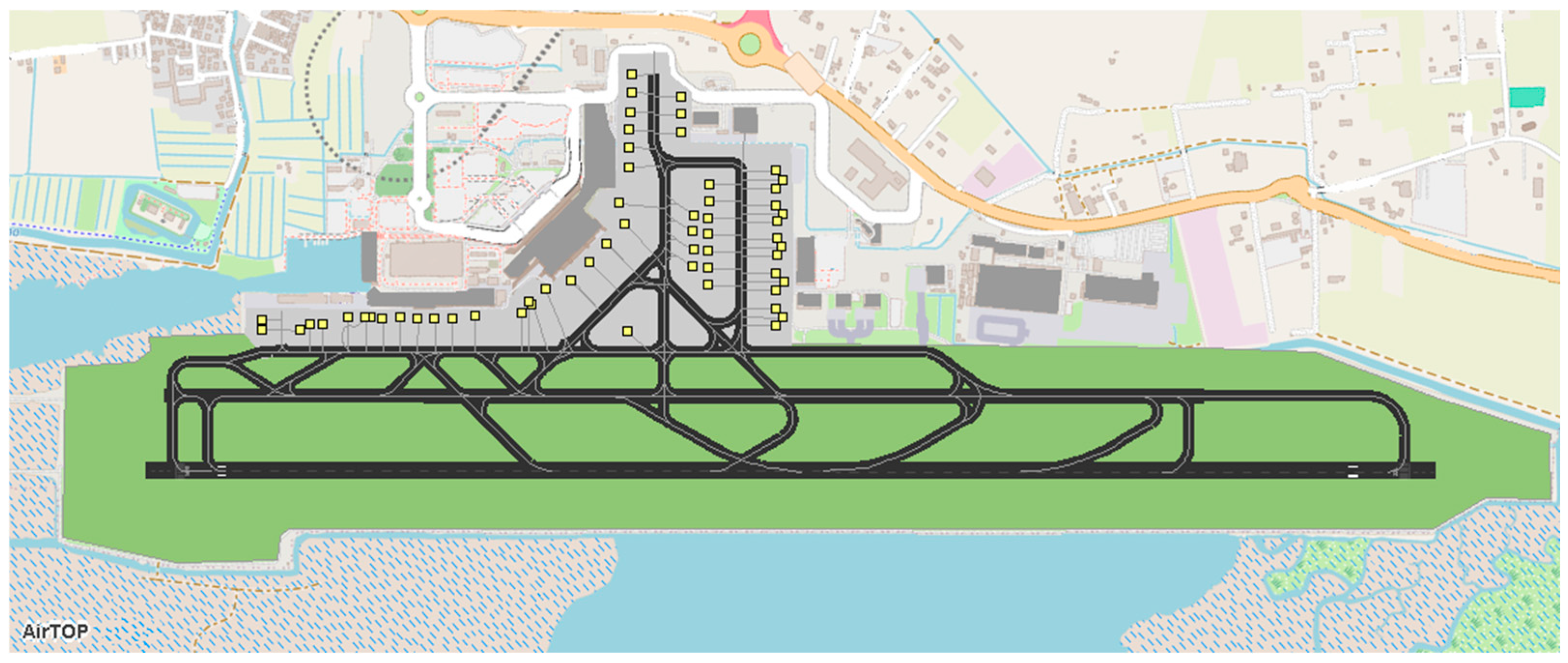
This paper examines a case study of a Code 4E Italian airport [
49] that plays a strategic role for both passenger and cargo traffic (
Figure 1). The airport has two parallel runways, with a centerline separation of 202 m, which prevents their simultaneous use.
The main runway is 3300 m long, 45 m wide, and equipped with 15 m shoulders on each side. It is fitted with an Instrument Landing System (ILS) Category III B. The second runway is not used for regular commercial traffic and primarily serves as a parallel taxiway to the main runway. Its dimensions are 2780 m × 45 m, with 7.5 m shoulders on each side. The approach path is Category I.
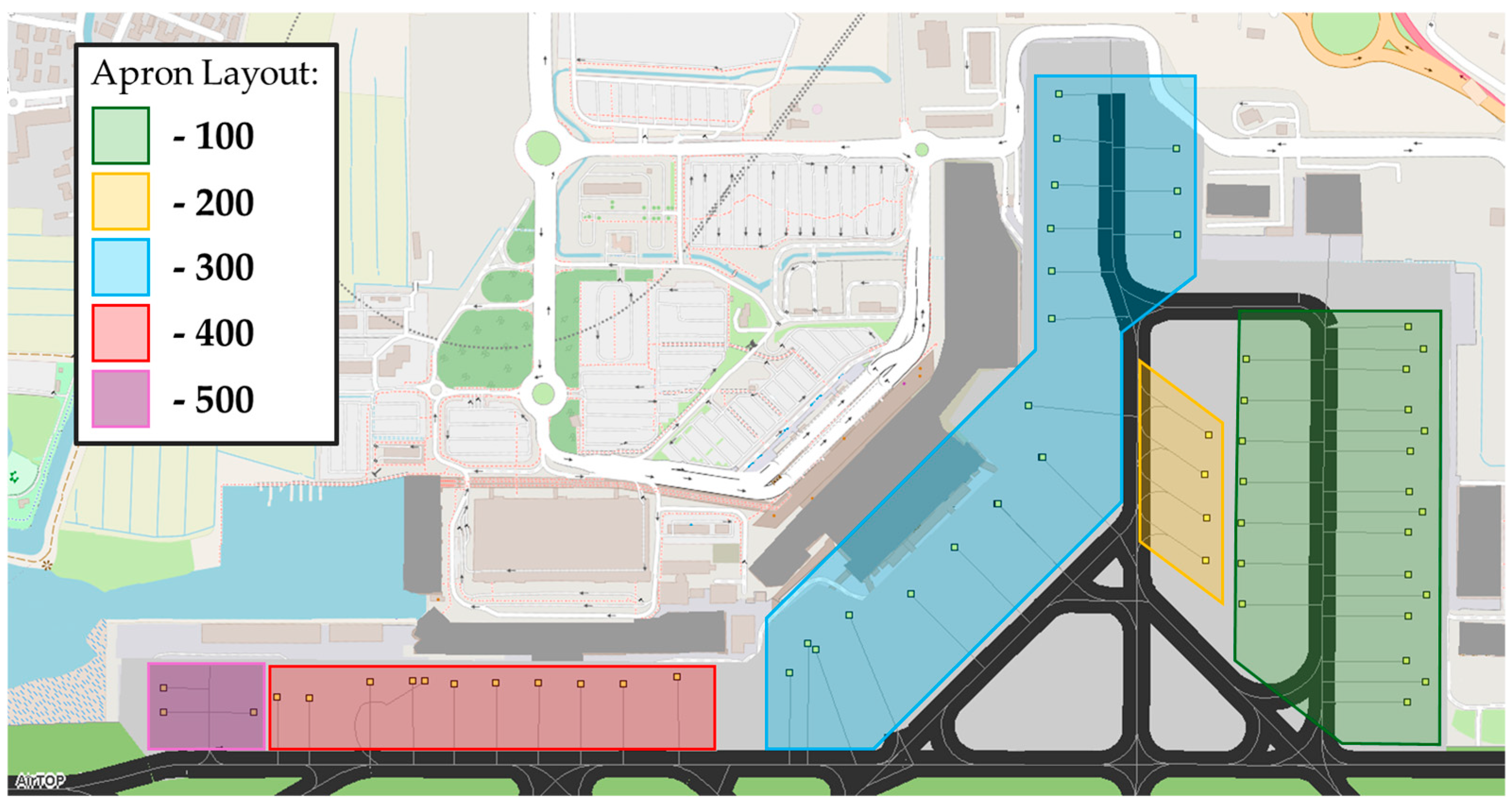
The apron can accommodate both narrow-body and wide-body aircraft and includes two main types of stands: contact stands, directly connected to the terminal via loading bridges, and remote stands. The stands are divided into five main areas (i.e., 100, 200, 300, 400, and 500) (
Figure 2):
Area 100 consists of five MARS (Multiple Aircraft Ramp System) stands and seven narrow-body remote stands. The MARS stands can alternately accommodate five class D or E wide-body aircraft, or ten class C narrow-body aircraft, providing significant operational flexibility.
Area 200 consists of four remote stands primarily for class C aircraft. Passenger boarding and disembarking are carried out via shuttle buses.
Area 300 is a mixed zone, with a total of sixteen stands, comprising seven contact stands, including a MARS stand, for class up to D and E aircraft and nine stands for class C or lower aircraft.
Area 400 includes one MARS stand, different stands for class C or lower aircraft, and one stand for class D or E.
Area 500 is the general aviation apron and includes three stands for class A or B aircraft.
The entire apron is configured for pushback procedures in tractor-assisted mode.
3.2. Traffic Data
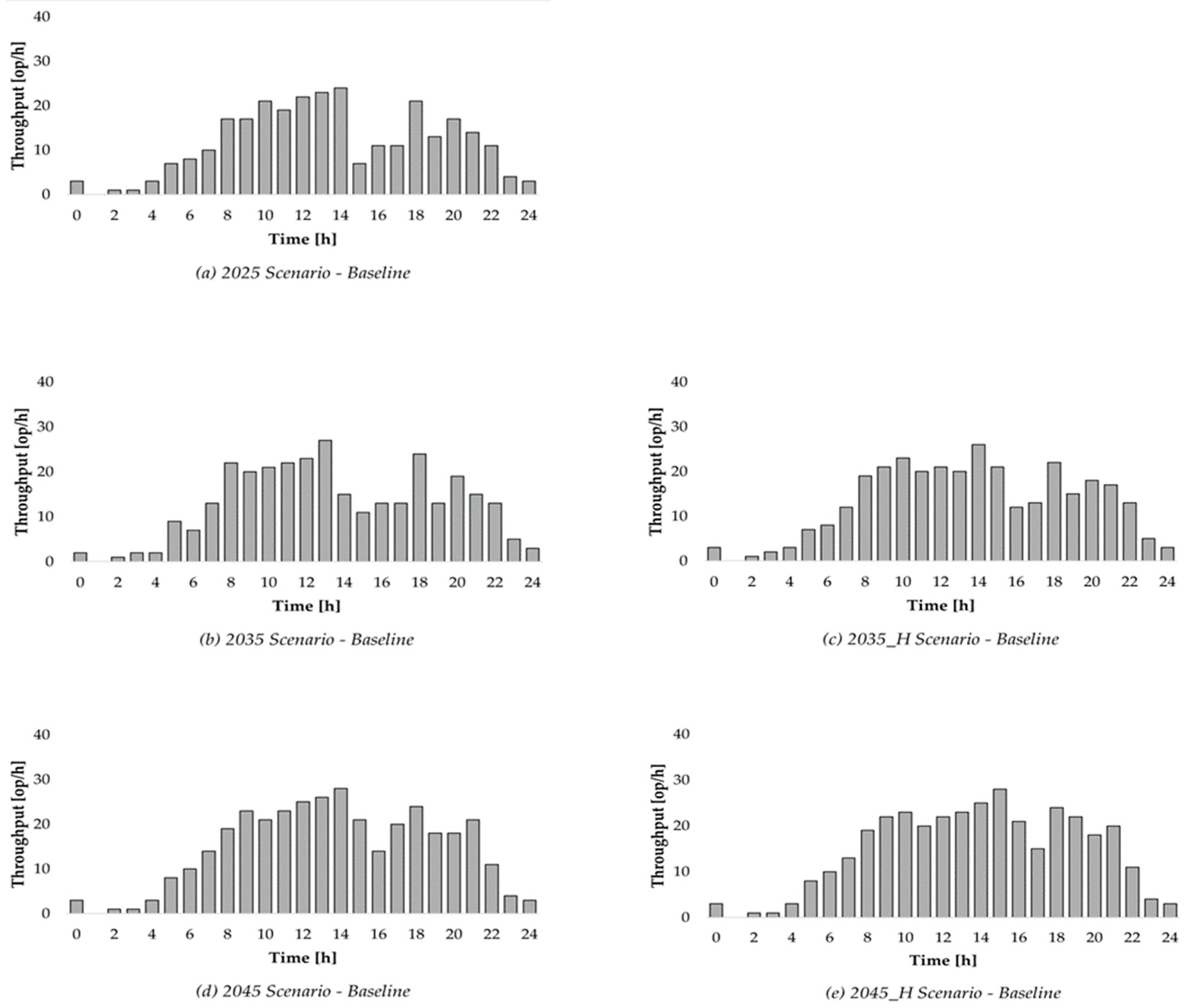
For the capacity assessment, a representative day in July 2025 was selected, as this month exhibits the peak air traffic intensity according to official Eurocontrol data. The selected day shows values slightly above the monthly average, providing a representative basis and adding a reasonable margin to the assessment of the airport operational capacity.
Table 2 shows the percentage distribution of the aircraft fleet by ICAO code. The aircraft were subsequently grouped into categories as the stands are not differentiated between classes A and B, nor between classes D, E, and F.
3.3. Airport Development and Hydrogen Implementation Scenario by 2035
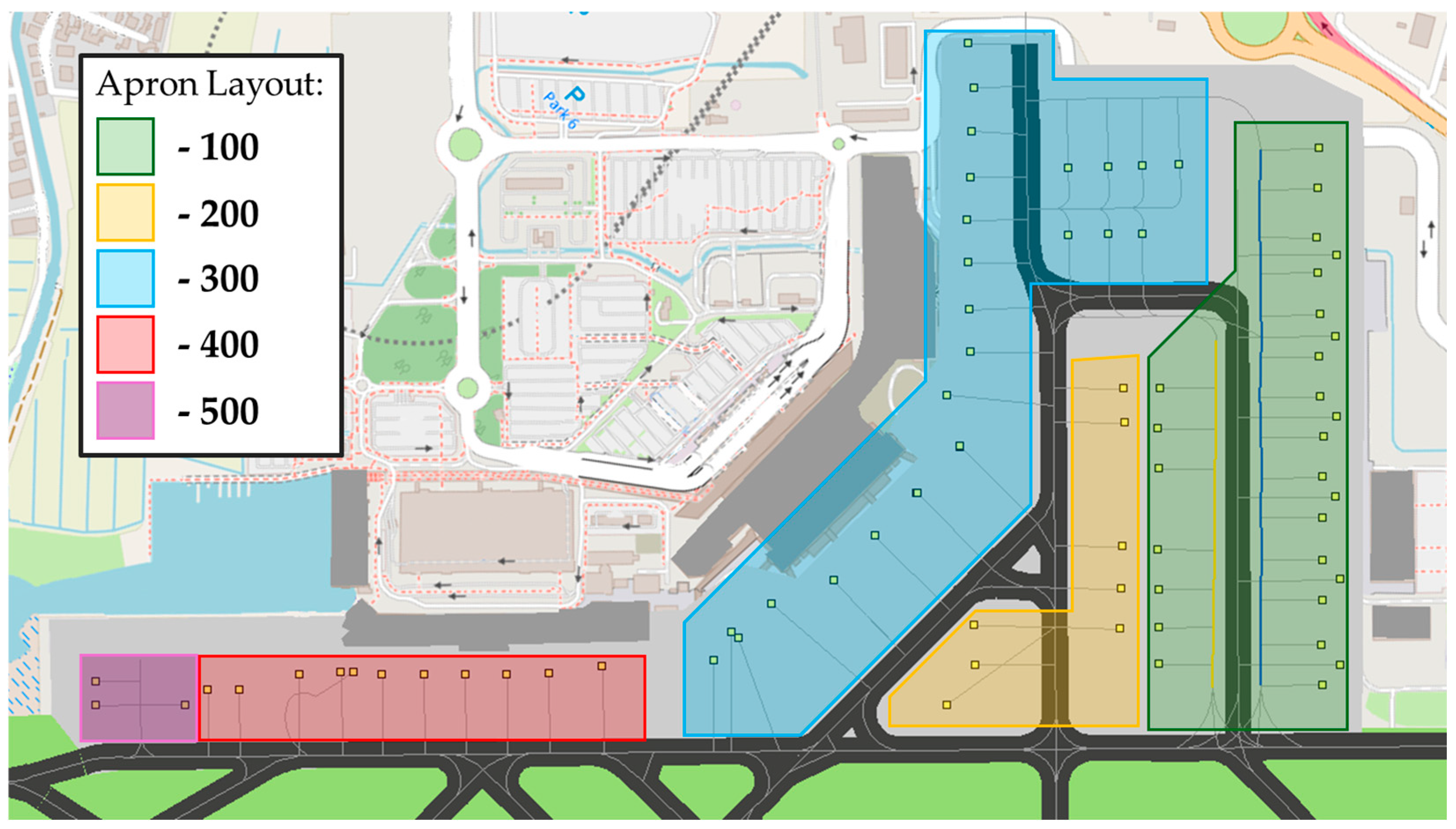
By 2035, the aprons will be expanded and reorganized as in
Figure 3. The total number of stands will be increased compared to the current scenario:
Area 100: Addition of one MARS stand and two narrow-body stands and redesign of the narrow-body stands after the removal of one taxiway.
Area 200: One additional MARS stand.
Area 300: Additional stands for narrow-body aircraft in the north area of the apron, both self-maneuvering and pushback. Some terminal stands are reorganized to accommodate more wide-body aircraft.
Area 400: Adjusted stand geometries to accommodate some wide-body aircraft.
Area 500: The layout remains unchanged.
In the 2035 hydrogen scenario of this airport layout, 4% of total traffic (i.e., 25% of aircraft categories A and B) will be replaced with hydrogen-powered aircraft of the same class. This area is at a sufficient distance from the passenger terminal to ensure safe cryogenic operations and fuel handling. The stands in this area have longitudinal dimensions suitable for accommodating hydrogen-powered aircraft with longer fuselage than current short-range models, ensuring operational flexibility. The hydrogen-powered aircraft considered in this scenario have storage tanks located at the rear of the fuselage, near the tail. Refueling will take place on the apron 500 stands, via mobile cryogenic tanks, which will draw liquid hydrogen from storage tanks located in a dedicated area of the airport and transfer it directly to the aircraft. However, a change in the aircraft’s wingspan has not been considered at this stage, assuming that future hydrogen-powered configurations will maintain dimensions similar to those of conventional aircraft of the same category.
Traffic estimates for 2035 derive from the project forecasts [
50] in
Table 3. The fleet mix was kept unchanged compared to the 2025 scenario.
3.4. Airport Development and Hydrogen Implementation Scenario by 2045
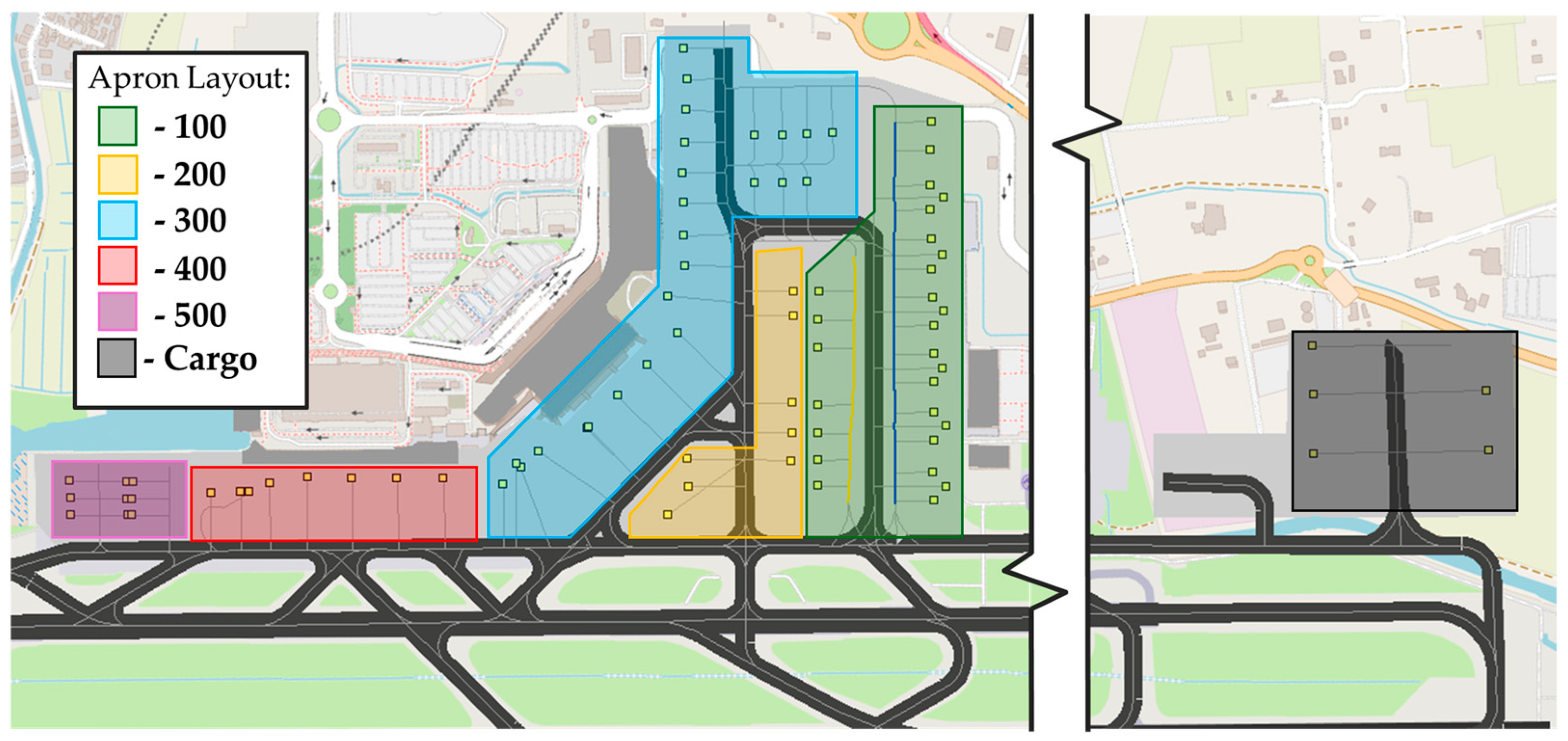
By 2045, the airport’s apron system (
Figure 4) will be further expanded and reconfigured to accommodate the estimated traffic growth. The new configuration prioritizes operational flexibility and the efficiency of taxiing flows.
The main changes compared to the 2035 scenario consist of the reorganization of Area 400 to accommodate four stands for class D, E, and F aircraft, and the expansion of Area 500 to a total of nine stands. A cargo area is added on the eastern side of the airport, far from the other aprons. It consists of five stands for class D, E, and F aircraft. This area is designed for logistics and cargo operations, with direct access to the airside network.
In the 2045 hydrogen scenario for this layout, hydrogen-powered aircraft are 16% of the operating fleet. Hydrogen-powered aircraft account for approximately 75% of the total fleet in classes A and B and 15% of the class C fleet. Hydrogen-powered aircraft in classes A and B will be parked in Area 500, which remains separated and sufficiently distanced from the passenger terminal to ensure the necessary safety standards for the handling of cryogenic fuels. Hydrogen-powered aircraft of class C will be allocated in the north self-maneuvering stands of Area 300, where the same segregation and cryogenic configuration considerations apply.
Concerning the refueling methods, class A and B aircraft will be refueled using mobile cryogenic tankers, following the model described in 3.6, and class C aircraft will use a partial cryogenic hydrant system integrated into the stands. Underground pipelines will connect the hydrogen stands to the main storage tanks, whose position is not herein considered. The designated stands have adequate longitudinal dimensions for aircraft with extended fuselages. However, no changes to wingspan have been considered.
In the absence of specific forecasts for the individual airport, the traffic volume for 2045 was derived by applying an average annual growth rate of 1.2% compared to the reference traffic of 2025, in line with Eurocontrol forecasts [
51]. According to this report, the average increase in IFR European flights between 2019 and 2050 is estimated at around 1.2% per year, with slightly higher dynamics for passenger and cargo connections.
3.5. AirTOP Model Construction
The creation of the model in AirTOP requires the following steps:
Definition of all structural and operational elements in the airport: runway layout, taxiway system, apron stands, and the logical connections between them.
Input of all simulated flights during the sample period including aircraft type, airline, arrival and departure times, destination, origin, and assigned stand.
Use of the Eurocontrol aircraft performance database, which includes all parameters (such as maximum takeoff weight, climb and descent routes, operating speeds, fuel consumption, and engine power curves at different flight stages) required to calculate taxi times, takeoff and landing distances, climb gradients, and runway occupancy times.
Definition of the minimum separation rules (longitudinal, lateral, and temporal) among aircraft; holding areas (in-flight waiting); ground waiting points (holding points); and sequencing zones for approach and takeoff regulation. These parameters allow the simulator to manage traffic conflicts, reduce delays, and analyze the impact of new operational configurations or infrastructure changes on the airport performance.
Description of runway, taxiway, and apron configurations. The runways are defined by specifying operational directions, intersections, lengths, reference ICAO category, and usage rules (arrivals only, departures only, or mixed). The taxiways are represented as a network of nodes and segments, to which parameters such as maximum allowed speed, directions of travel, usage priorities, and any restrictions related to aircraft wingspan are assigned. The aprons include the stands, operational entry and exit modes (power-out or pushback), and compatibility with different aircraft classes, along with any restrictions due to wingspan and/or aircraft length, to avoid interference with adjacent areas or limit the simultaneous use of multiple stands.
Description of Standard Instrument Departure (SID) and Standard Instrument Arrival (STAR) procedures. The simulation is set up to replicate in detail the arrival, parking, and departure operations of aircraft, to observe the effective apron capacity by varying demand conditions.
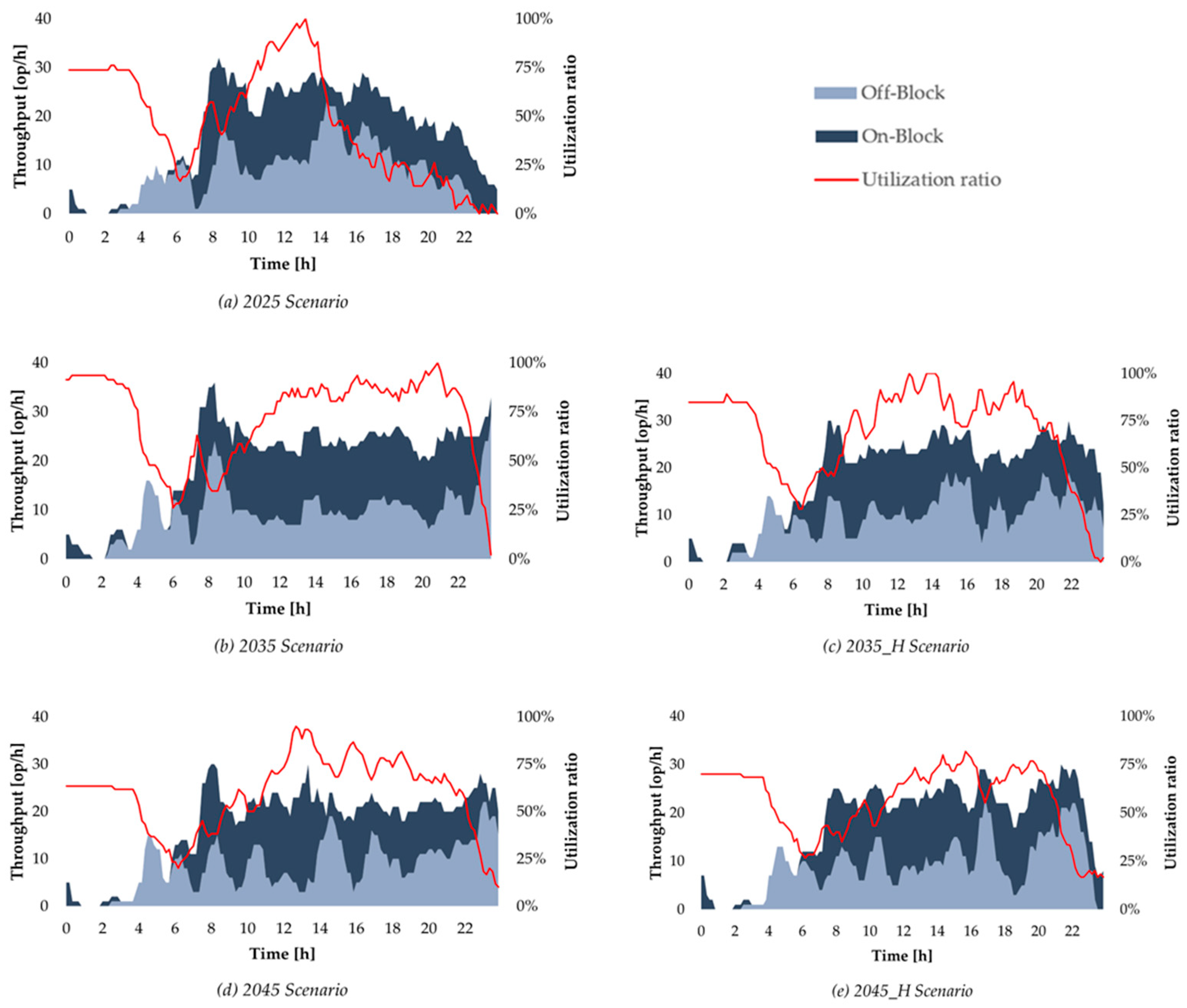
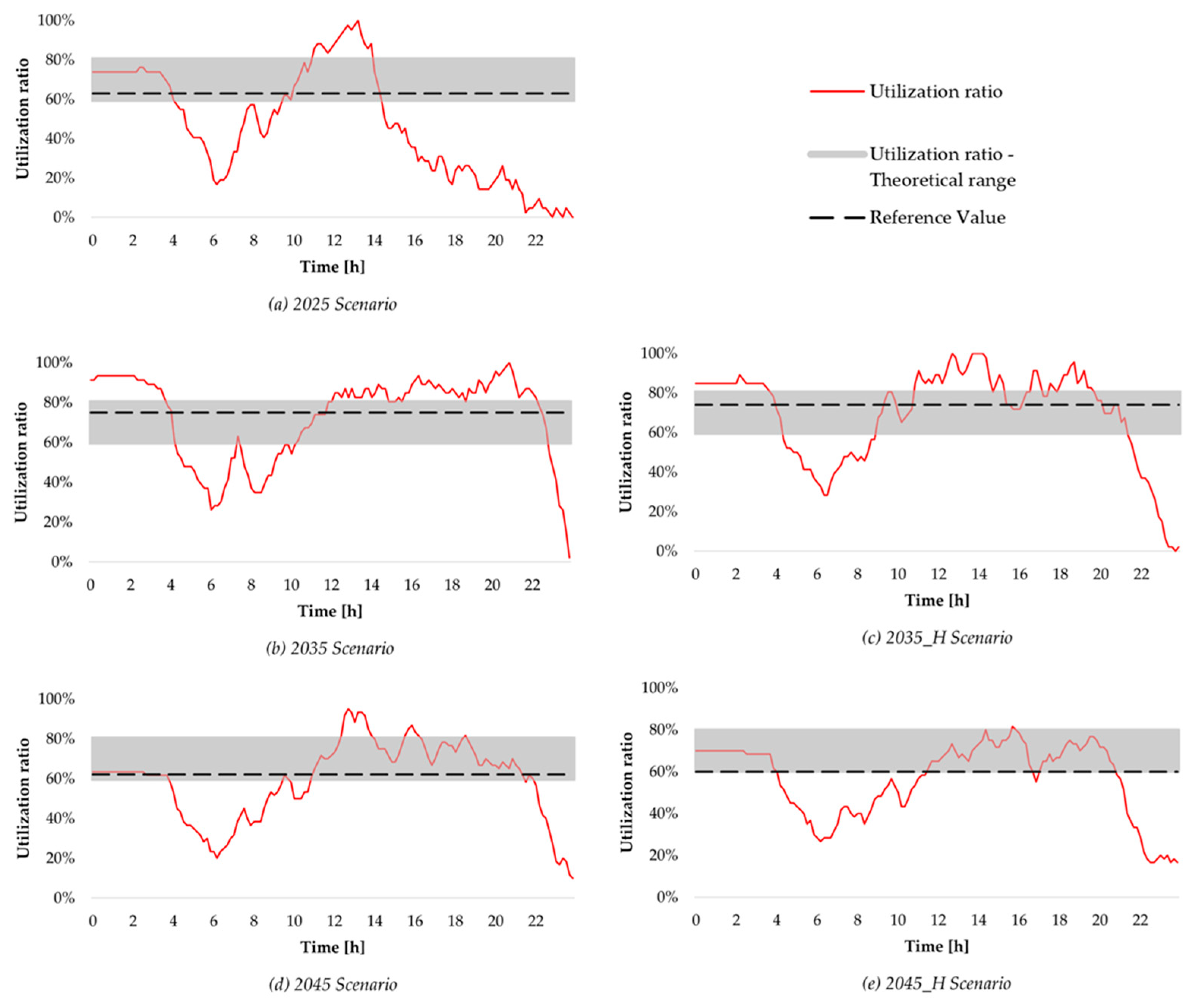
The traffic is managed by the software’s built-in Traffic Increase feature, which generates copies (“clones”) of the flights included in the base scenario, incremented with progressive values (+10%, +20%, +40%, etc.) until saturation is reached. The clones are distributed randomly throughout the operational day, with slight modifications to arrival and departure time slots, but keeping all original operational parameters (aircraft type, airline, parking duration, and stand compatibility) unchanged. In this way, each subsequent simulation cycle represents a scenario with increasing demand. The system is assumed to be at its overall capacity when at least one aircraft category can no longer be serviced by the apron. The analysis was conducted by monitoring the maximum number of hourly movements, the average stand occupancy time and its variation as demand increases, and the utilization ratio of stands.
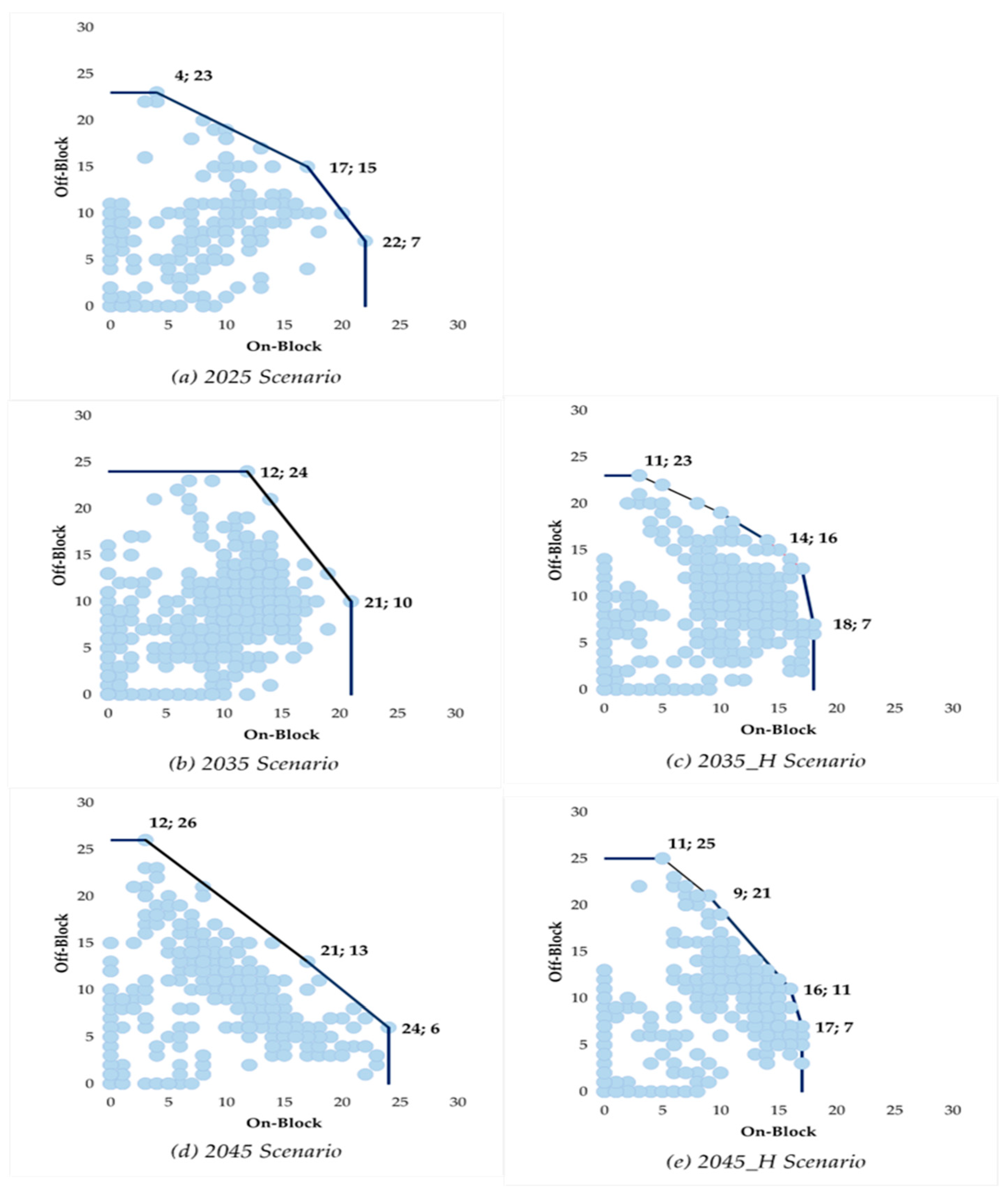
The apron capacity study analyzed five traffic scenarios: 2025 (i.e., the current one); 2035 (i.e., a 2035 scenario with only kerosene-powered aircraft); 2035_H (i.e., a 2035 scenario with 25% of aircraft types A and B replaced by hydrogen-powered aircraft); 2045 (i.e., a 2045 scenario with only kerosene-powered aircraft); and 2045_H (i.e., a 2045 scenario with 75% of aircraft types A and B and 15% of aircraft type C replaced by hydrogen-powered aircraft).
Finally, the theoretical capacity of the apron was calculated by applying the Horonjeff analytical model [
35] and then compared with the maximum value of operations managed by the apron as obtained from FTS.
3.6. Hydrogen-Powered Aircraft Operations
Several hypotheses have been proposed regarding how hydrogen-powered operations will integrate into airport environments and change air transport (
Table 4) [
2]. A NASA study [
24] evaluated two options, trucks and pipelines, and concluded that pipelines represent the most economically viable long-term solution, while trucks provide a practical short-term approach during the initial deployment of hydrogen-powered aircraft. This study assumes that hydrogen is already available at the airport in its final gaseous or liquid form.
Although the fuselage is expected to be approximately 5 to 10 m longer, this constraint can be accommodated within the existing stand dimensions in the modeled airport.
However, the introduction of liquid hydrogen refueling likely implies specific turnaround challenges, including longer stand times, wider safety zones, and the need for new equipment, although Fly Zero indicates that these can be mitigated [
22] in the long term. With LH
2, refueling may move onto the critical path of turnaround, and because LH
2 has lower volumetric energy density than kerosene, in the first years of implementation, refueling at equivalent hose diameter and flow rate would take longer [
22]. Following these findings, hydrogen refueling was treated as a non-simultaneous activity, separated from other turnaround operations, adding from 10 to 20 min to the turnaround of hydrogen operations, depending on the refueling mode for each aircraft type.
Depending on the airport size and hydrogen traffic demand, the implementation of a full-hydrant system can occur at different time rates, with large airports capable of considering hydrants starting from 2040 and medium airports from 2045, while small airports will probably continue to use trucks [
22].
In this study, different systems are used by varying aircraft sizes. For small and regional aircraft, mobile cryogenic tanks draw liquid hydrogen from storage tanks in a dedicated airport area and transfer it directly to the aircraft. In the software, this is modeled with a single truck that fuels aircraft one at a time; if an aircraft is still refueling, other hydrogen-powered aircraft should wait until the truck is available. For narrow-body aircraft, a partial cryogenic hydrant system will be modeled on one of the airport aprons. This system connects the main storage tanks to the dedicated stands via underground pipelines. By adding time to the parking duration of hydrogen-powered aircraft, we simulate the impact of these operations on capacity and delay.
5. Conclusions
Hydrogen represents a promising pathway for aviation decarbonization due to its high specific energy and zero carbon emissions at the point of use, but its low volumetric density requires complex storage solutions that significantly impact aircraft design and operations. Beyond technical challenges, the widespread adoption of hydrogen is constrained by high production costs, limited availability of low-carbon supply, stringent safety and certification requirements, and long development timelines typical of the aviation sector. Consequently, while hydrogen-powered aviation is technically feasible, its large-scale implementation will depend on the gradual resolution of these challenges and the parallel development of a global refueling infrastructure, implying a long-term and incremental transition. The introduction of hydrogen-powered aircraft in existing airports forces the analysis of airside infrastructures to assess the variation in capacity due to the different operational constraints. In this study, the apron capacity of a medium-size Italian airport was calculated by analyzing the evolution of traffic from 2025 to 2045, both without and with the introduction of hydrogen-powered aircraft and modifications of the apron layout. The analysis was carried out using a fast-time simulation (FTS) and the analytical model developed by Horonjeff.
The results show good consistency between theoretical and simulated capacity, with minimal discrepancies (about 2%) in the 2025 baseline scenario that plays a central role in validating the model. The discrepancies observed in future scenarios should not be interpreted as limitations of the models, but rather as consequences of the greater uncertainty of traffic forecasts, since flight schedules and fleet mix were not modified compared to the 2025 scenario, and of the increasing operational complexity due to the progressive introduction of hydrogen-powered aircraft. In the 2035 and 2045 scenarios, the increase in demand and the increased number of stands do not lead to a corresponding increase in throughput.
The progressive introduction of hydrogen-powered aircraft further amplifies this tendency. The 2035 and 2045 hydrogen scenarios show a reduction in effective apron capacity of 16% and 6% compared to the conventional scenarios for the same year. These effects are attributable to compatibility constraints between stands and hydrogen-powered aircraft and longer refueling times, which lead to an increase in average turnaround time. However, the overall throughput does not suffer a substantial reduction, confirming that the introduction of hydrogen does not change the maximum daily capacity but reduces operational efficiency and increases the system’s sensitivity to high-traffic conditions; the apron modification in 2045_H limits the reduction in capacity. The combined analysis of the Pareto charts confirms the findings from the comparison between analytical and FTS results. In all the scenarios analyzed, the Pareto frontiers show that the progressive introduction of hydrogen-powered aircraft shrinks the frontier to lower values. This indicates a simultaneous reduction in the maximum number of operations and in apron utilization efficiency, due to the constraints imposed by longer turnaround times and selective stand compatibility. Further increases in the number of stands or local modifications to the parking areas would not yield significant throughput improvements, because the main capacity constraint for the analyzed airport is not the apron but the runway and taxiway system.
Future steps in studying the impact of hydrogen-powered aircraft on airport infrastructure and capacity could focus on different hydrogen and conventional-fuel fleet compositions and extend the investigation to multiple airports with diverse layouts and traffic profiles. Additional developments could include testing alternative traffic samples, introducing variability in turnaround times to assess the operational impact of hydrogen refueling, and incorporating delay analysis to provide a more comprehensive evaluation of system performance. Increasing the number of simulations combined with stochastic variations in turnaround times could strengthen the robustness of the analysis by capturing a wider range of operational dynamics, reducing sensitivity to deterministic assumptions. Moreover, further research should address the technological and economic uncertainties associated with hydrogen propulsion, including fuel-cell power density and durability, system costs and maturity timelines, emissions to air, and the gravimetric and volumetric performance and aircraft integration of liquid-hydrogen storage, together with the implications for airframe redesign. These aspects fall outside the infrastructure-focused scope of the present study, but their resolution will be essential to understand the operational and capacity impacts of hydrogen-powered aviation and support the long-term planning of airport systems.