1. Introduction
Driving is definitely a complex task that is carried out in a constantly evolving environment where road crashes are caused by multiple factors. Traffic signs play a pivotal role in ensuring the safety and efficiency of road traffic by providing essential directions, warnings, and regulations for road users [
1,
2,
3]. Their visibility, especially in low-light conditions at night or in fog, is crucial to enable drivers to react quickly and make informed decisions [
1,
2,
4]. Signals are useful for suggesting the correct behavior the driver should adopt when driving [
5]. The task of driving is more difficult when done at night. Reduced environmental visibility leads to a contraction of the driver’s field of vision, impairing their capacity to discern colors, shapes, and textures. As a result, this limitation may hinder drivers’ ability to promptly and accurately perceive other road users and their surroundings, potentially elongating the perception–reaction time [
6,
7]. In conditions of reduced visibility, drivers considerably rely on traffic signs to facilitate critical decision-making processes, including the identification of junctions and the recognition of speed limits [
8]. Failure to meet minimum visibility standards by these signs may result in drivers being unable to perceive crucial information, thus leading to significant safety concerns. In nighttime conditions, the most significant feature of road signs is retroreflectivity, which is the ability of the material to reflect light, creating a brighter surface in the case of low-light environments [
1].
Retroreflectivity is a critically important characteristic of both road markings and vertical signs [
9]. Compared to other road signs, vertical signs have the advantage of being elevated above the carriageway and therefore should be more visible. The use of contrasting colors and reflective treatments means that they are more conspicuous than road surface markings. The application of retroreflective materials not only improves road safety by reducing road crashes but also positively affects drivers’ subjective perception of safety, especially in adverse weather conditions [
10]. Improvements should be introduced to make vertical traffic signs more conspicuous: increase their dimensions and number, add flashing lights or other visual, bottom-up effects, as well as promote an intuitive approach to road design, automatically inducing the driver to comply with driving regulations.
Numerous studies highlighted the correlation between retroreflectivity and road crash rates, demonstrating the positive impact of maintaining retroreflectivity performance on road safety, both in dry and wet conditions [
11,
12,
13]. Fiolić et al. [
4], with a driving simulation, in which the virtual scenario presented a series of road markings and road signs, showed that a high level of visibility of the road and vertical signs corresponds both to an increase in speed and to the achievement of an optimal level of mental load and better detection of road signs. This means that good visibility of road signs, during night hours, promotes good driver alertness and awareness towards the road and its surroundings. Ferko et al. [
1] analyzed how the quality of traffic signs affects the frequency of road crashes in low visibility conditions. Statistical analysis results indicated a higher frequency of road crashes involving fatalities and injuries on roads characterized by elevated Average Annual Daily Traffic (AADT) and a greater prevalence of traffic signs failing to meet the minimum prescribed retroreflection per kilometer. These findings substantiate the hypothesis regarding the correlation between road crashes resulting in injuries or fatalities and the presence of non-compliant traffic signs on roads [
14]. This prior knowledge provided by traffic signs is indispensable for safer driving [
15,
16].
It should be noted that the supply of vertical road marking materials and accessories is subject to strict compliance with the legal and technical provisions in force, as outlined in the EN 12899-1:2007 standard, entitled “Fixed vertical road traffic signs—Part 1: Fixed signs”, approved by CEN on 4 February 2007 [
17]. Despite this, critical issues remain related to the use of vertical signs. First of all, it has been demonstrated that over time, traffic signs suffer a deterioration in their retroreflectivity due to environmental factors, including exposure to weather, pollution, wear and tear [
3] as well as vehicle load, material type, and location of the signs. A comprehensive understanding of the factors influencing signal deterioration is essential for the effective management of traffic signals [
3]. In fact, the above decline can have negative effects on the visibility of signs, increasing the risk of traffic road crashes, especially in low visibility conditions [
1]. A regular monitoring and assessment program should be implemented to address the issue of deteriorating retroreflectivity of traffic signals [
18]. When values fall below the prescribed minimum levels, maintenance or replacement measures should be taken [
19], including replacement or restoration of signs, to ensure adequate road visibility [
20].
Retro-reflective films can be categorized into three distinct classes, namely Class 1, which represents the lower performance level, Class 2, which denotes the basic performance level, and Class 3, which indicates the higher performance level [
21,
22]. In their seminal study, Colomb and Michaut [
23] explored the factors that influence the legibility of traffic signs, highlighting the importance of various parameters, such as film quality, character height, and illumination, in determining the legibility distance. They observed that, when switching from Class I to Class II, retroreflectivity increased and, consequently, the first viewing distance of the sign increased by 15%.
But planning a maintenance schedule is an arduous task and not easily accomplished [
24,
25,
26,
27]. Khrapova et al. [
28,
29] demonstrated that the degradation rate of different retro-reflective materials lacks uniformity. Factors affecting retroreflection also include the presence of dirt or water on the surface. In a series of measurements conducted by Khrapova [
30], a decrease in the level of retroreflectivity was found in signals in the presence of water or precipitation, especially with frost. Then, by measuring the level of retroreflection of some signals before and after precipitation, Khrapova obtained a higher level of retroreflection after precipitation, which means that the signals after being cleaned of dirt are more retroreflective [
30,
31].
In addition, vertical signs are positioned at an angle slightly facing away from the carriageway, forcing the driver, who usually looks and focuses ahead, to make a lateral saccadic movement to look at vertical signs. At a given speed, the lateral space between the sign and the edge of the carriageway and the time it takes to read and understand the message may affect the legibility of a sign. Costa et al. [
15,
32] verified the extent to which drivers look at vertical signs. Signs were classified according to their shape, size, color, and inscriptions to assess which signs were perceived longer or did not attract attention at all [
32,
33]. The study showed how poorly vertical road signs were looked at by drivers, possibly because they were not particularly easy to see, set at an angle from the direct eye-fixation area of the driver (ahead). On the contrary, road surface markings are placed directly in front of the driver and are probably the most effective in influencing driver behavior, considering that drivers fix their eyes mostly on the center of the road [
33].
As for the road design, there has been an increasing trend in implementing infrastructure that influences driver behavior, aligning it with the design of the road [
34]. This is achieved through the dissemination of information regarding the impending situation. However, factors inherent to the road environment can also contribute to driver error, thus potentially leading to road crashes [
9,
35]. The analysis by Larocca et al. [
36] examined the impact of system awareness on drivers’ perception of road signs. Using a steering and eye-tracking simulator, the study revealed that speed limit signs significantly influenced drivers’ speed, while signs such as curve warning signs exerted less effect. Additionally, the majority of signs were perceived at distances ranging from 160 to 50 m.
Most of the studies about sign degradation and their maintenance were carried out within the confines of a laboratory and translated into terms of retroreflectivity. Moreover, many previous studies relied primarily on literature reviews to discuss retroreflectivity, without conducting empirical tests aimed at investigating user behavior [
9]. Most existing research on user perception has focused primarily on the readability of road signs, analyzing factors such as size, color, text, and pictograms, and has been conducted predominantly in controlled laboratory environments.
However, there have been no studies that specifically consider the visibility of signs, that is, how retroreflectivity affects a driver’s ability to recognize the sign. Although it is undoubtedly useful and essential to investigate potential variations in signage conditions, it is equally interesting to observe variations in user perception when faced with different signage configurations. Moreover, it is important to investigate this aspect in real-world contexts rather than in simulated environments [
37,
38]. This study stands out for its special attention to the analysis of the perception that users have of road signs’ visibility in real contexts. The significance of this aspect lies in the fact that the perception of vertical signs is influenced not only by the physical characteristics of the sign (such as color and size), but also by psychological factors, including visual attention, familiarity with the environment, and cultural context. In a laboratory setting, where attention is focused on a single stimulus, these factors may be r or ignored. In a real-world scenario, these factors significantly influence an individual’s perception and response.
By bridging the gap between laboratory findings and on-road experience, this research provides a more realistic and applicable understanding of how drivers perceive signage, contributing to improved maintenance strategies and road safety policies. The novelty of this study lies in its emphasis on real-world user perception of road signs, analyzed under natural environmental and cognitive conditions.
This paper presents a project aimed at identifying parameters that indicate the user’s perception of vertical signs in nighttime environments. The experiment focused on evaluating the impact of the retroreflectivity of the signal film on the driver’s perception of it. In this regard, the objective was to ascertain how altered retroreflectivity and conditions of the sign affected the driver’s level of attention to the sign.
2. Materials and Methods
2.1. Experiment Procedure
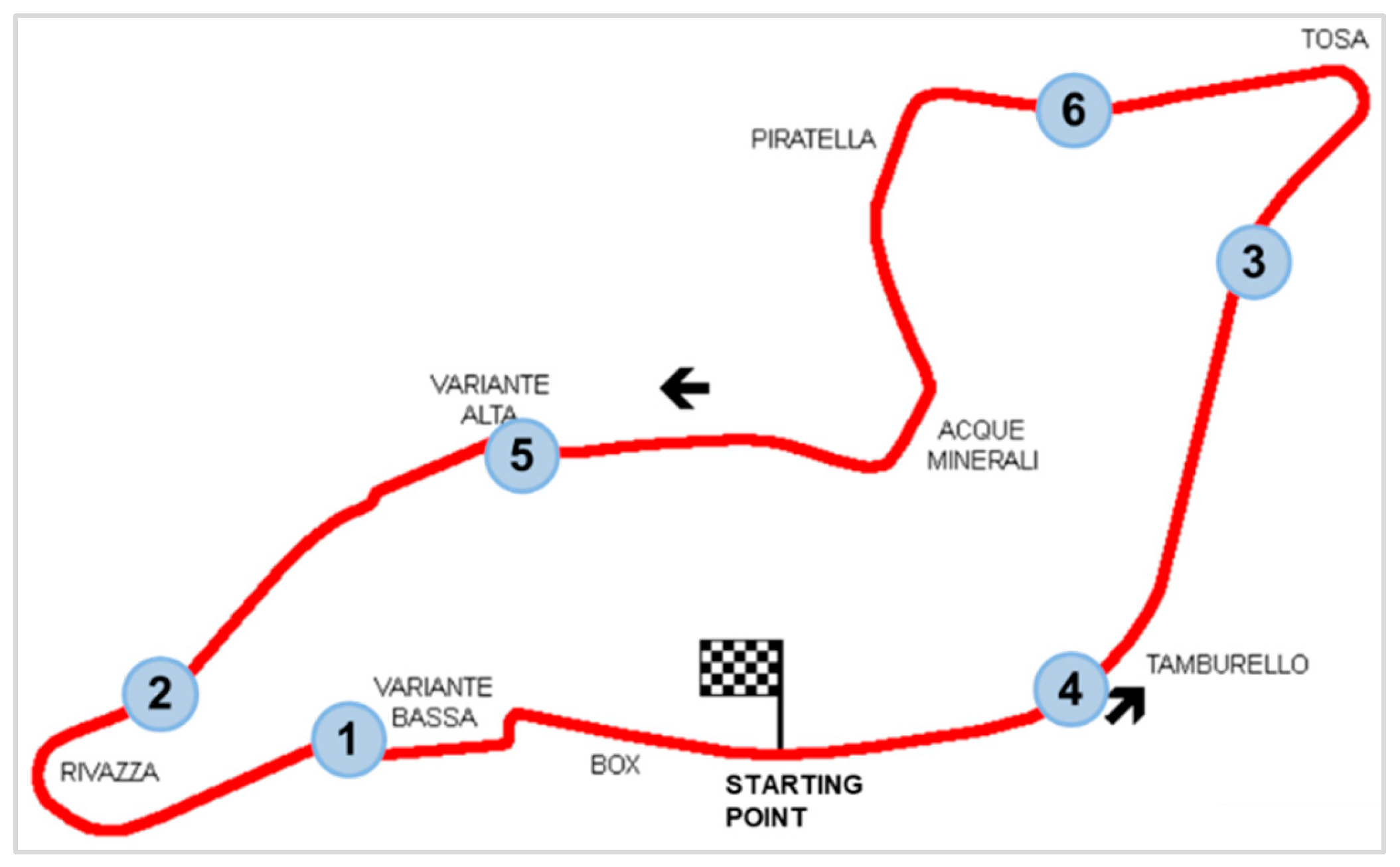
The testing campaign was conducted in a real scenario exclusively within the confines of the ‘Enzo and Dino Ferrari’ Autodromo of Imola, which boasts a total length of 4.9 km. Since 2020, the modernized racetrack has become a multifunctional hub for racing, sustainability research, and road safety, in collaboration with institutions, companies, and universities. This scenario enabled the creation of a controlled environment in which the positioning of the signs could be adjusted as required while preserving the authenticity of a real road. Since the retroreflective performance of traffic signs is evident only under low-light conditions, all experiments were carried out during nighttime hours (from 11:00 p.m. to 4:00 a.m.). This ensured that the effects of retroreflectivity and the different surface conditions could be accurately evaluated without the influence of daylight.
The study involved a group of 25 volunteers, all holding valid driver’s licenses (mean age = 40 years; Age range: 25–66; SD = 11.74). To ensure the reliability of the findings and reduce inter-individual variability, only males were included in the study. The number of participants was limited to 25 due to the restricted availability of the racetrack and the need to conduct all trials during nighttime, which imposed a narrow time window to ensure consistent lighting conditions and experimental uniformity for all participants. In addition, the sample size is consistent with previous exploratory studies on driving behavior and eye-tracking, which often employ small but controlled groups to ensure manageable experimental sessions, high-quality data acquisition, and strict control over experimental conditions [
33,
36,
39]. Only individuals with perfect vision and no need for corrective lenses were included, to prevent any interference with eye-tracking accuracy. All drivers, unaware of the purpose of the experiment, completed the experiment under identical conditions: driving the same Renault gasoline-powered vehicle with a manual transmission, following the same route, and using the same equipment.
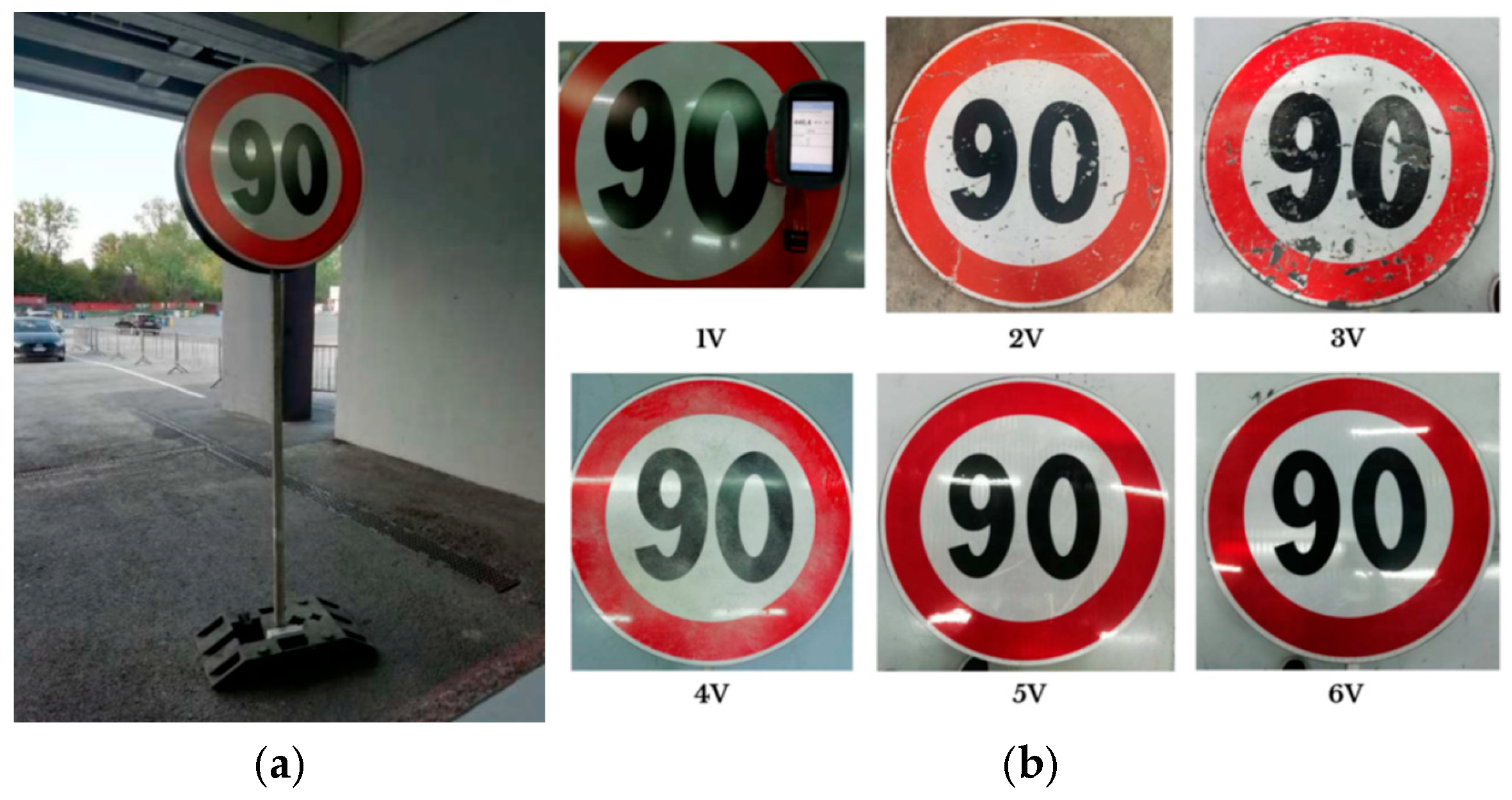
For each participant, the test took about half an hour, consisting of instrument calibration followed by two complete laps of the circuit. Along the route, participants encountered signs at the edge of the circuit. A circular 90 km/h speed limit sign with a diameter of 90 cm, featuring a red outer border, a white background, and black numerals, was used in accordance with standard regulatory specifications. The signs, without participants knowledge, were changed from one lap to the next. In fact, between the first lap and the second, the visual properties of the signs were modified. In the initial round of the experiment, six 90 km/h speed limit signs, designated as ‘Normal’ (N series) (
Figure 1a), were positioned under standard conditions with Class II film, exhibiting no signs of degradation and a clean, visible surface. On the second lap, the driver was confronted with 6 signs, referred as ‘Varied’ (V series) (
Figure 1b), of the same type and the same boundary conditions but different in terms of surface conditions and reflectivity, in the same position as the signals on the first lap. This was done to verify whether this variation would result in different driver behavior, specifically in terms of perception and response time to the signal.
The placement of these signs along the circuit’s various straights was motivated by the objective of enhancing driver visibility, thereby promoting safety (
Figure 2).
In addition to the conditions under which the sign was presented, it was necessary to measure the Ra coefficient (retroreflectivity coefficient) to take into account the level of visibility. The Ra coefficient is a parameter that quantifies the capacity of signals to reflect incident light from car headlights back towards the car itself. The coefficient Ra is understood to refer to the angles of observation and illumination at the time of measurement. In this text, the angle of observation α = 20′ and the angle of illumination β = 5′ will be referred to exclusively.
Retroreflective sign films are classified into 3 performance levels: Class I “Lower performance level”, Class II “Basic performance level”, and Class III “Superior performance level”. Of these classes, the EN 12899-1:2007 indicates the minimum Ra coefficient that the film must maintain throughout its service life. In this experiment, a Class II and Class III white and red films were used. For Class II, the minimum Ra coefficient for the white and red films is 180 and 25, respectively. For Class III, the minimum Ra coefficient for the white and red films is 300 and 60, respectively. The Ra coefficient of the signs present in the circuit for the current test was measured using a ZEHNTNER ZRS 6060 retro-reflectometer (Zehntner HmbH Testin Instruments, Gewerbestrasse 4, CH-4450 Sissach, Schweiz/Switzerland) (
Table 1).
In the case of the 1V sign, the surface was maintained in a state of humidity using water throughout the entirety of the experiment, thereby simulating the condition of rain. In the second case, the surface of the 4V sign was first wetted with water and then sprinkled with cement mortar. This procedure was intended to simulate the deposition of dirt normally found on signs due to smog and weathering. These arrangements have been invaluable in enabling the collection of data on the various scenarios found in roadside signage. This increases the likelihood of recording significant variations in user behavior.
Conducting all tests within a few hours allowed us to maintain consistent surface conditions of the signs, ensuring the same degree of deterioration, dirt accumulation, and surface wetness on the visible face.
2.2. Data Collection and Variables Description
In order to acquire driving data for each driver, it was necessary to utilize specialized instruments capable of recording data related to both the driver’s behavior, in terms of visual interaction with road signs, and the movement of the vehicle.
It was requested that each participant wear an eye tracker throughout the duration of the simulation in order to record their eye movements [
40,
41]. In particular, the Tobii Pro Glasses 3 mobile eye tracker, a wearable device specifically engineered for real-time gaze tracking and visual attention analysis, was utilized. Before each session, eye-tracking calibration was performed individually for each participant. Calibration accuracy was visually verified and maintained within acceptable limits (<0.5°), ensuring negligible calibration error. Subsequently, the videos were analyzed using Tobii Pro Lab_25.19.1151_x64 software. The Tobii Pro Lab software has been developed to identify a fixation when the gaze remains fixed on a point, or in a group of points with the same set of coordinates, for a duration of 0.06 s. The number of lost fixations was minimal and considered negligible.
Vehicle kinematic data acquisition was carried out using a device known as the Video V-Box Pro Racelogic VBOX Pro 10Hz (Racelogic, UK, Unit 10-11, Swan Business Centre, Osier Way, Buckingham, MK18 1TB), specifically designed for capturing the motion dynamics of a vehicle along a predefined course [
39]. The raw data collected during the test are processed through a specialized software platform called Circuit Tools Version 2.10.10, which enables comprehensive post-processing.
Objective of this study is to examine the impact of various signs on driver kinematic and visual behavior, with the hypothesis that certain signs may exert a more significant influence than others.
According to Larocca et al. [
36] it is appropriate to study not only how many drivers perceived the sign, but also the distance of perception, the number of fixations, the total fixation time and the variation in speed during fixation. In the following project, the variables described in the table below were taken into consideration, and hypotheses were formulated for each variable (
Table 2).
2.3. Statistical Analysis
Subsequent to the acquisition of the requisite data and parameters for the research, a statistical analysis was conducted to investigate the varying influences of road signs under different conditions. The Wilcoxon test for paired samples, the Spearman correlation coefficient, and a regression were employed to analyze the data.
Wilcoxon signed-rank test
The Wilcoxon test for paired samples was employed to assess the statistical significance of any observed differences in performance between the two conditions. Given that these measurements are of the same sample, the nonparametric Wilcoxon test is indicated in cases where the distributions are non-normal.
The Wilcoxon test is a statistical method that is employed to identify the average effect of a change in signaling. This test determines whether there is a significant difference in the data recorded between the first lap, which involved standard condition signaling, and the second lap, which involved varied condition signaling. For this test, the independent variable is the sign condition (N or V), and the dependent variables are the participants’ performance measures (longitudinal distance of first fixation, number of fixations, intensity of fixation, and speed finishing point). Considering that W is the minimum value between W+ (sum of positive ranks) and W− (sum of negative ranks), the formula for the test is as follows (Equation (1)):
Sperman correlation
Subsequently, Spearman’s correlation was calculated to ascertain the relationship between the two sets of measurements, followed by an investigation into individual and intra-subject consistency. In essence, the objective was to ascertain whether participants who demonstrated superior (or inferior) performance in the standard condition would exhibit analogous behavior in the varied condition. This methodological approach enables the exploration of the stability of individual differences. Considering that d is the difference between the ranks of the two variables for the i-th observation, the test is calculated by Equation (2):
Regression
Regression analysis can provide a quantitative metric of the degree of correlation between two variables, thereby quantifying the relationship between their variations. When R2 is high, it suggests that users exhibit similar or analogous behavior across the two tests.
3. Results
To gain a comprehensive understanding of how users perceive signage under different conditions, all variables were analyzed for each pair of signs. The results of the statistical analysis are presented together with the range of percentages derived from the differences between the first and second tests for each participant. The box plots provide a clear visualization of the extent to which user behaviors varied across the two conditions. Finally, the average total time spent by users in observing each sign was calculated. This measure was adjusted according to the maximum duration of the straight section preceding the sign, allowing for meaningful comparisons across results despite the varying lengths of the road segments.
Longitudinal distance first fixation
The different conditions of the vertical signs, between the first and second lap, were selected to investigate drivers’ perception and behavior towards signage with varying retroreflectivity and surface film conditions. The variable of the initial perception distance was chosen to assess whether signs in better condition were detected from a greater distance compared to the others. Detecting a sign from farther away provides drivers with more time to react [
36].
The results indicate that signals 1, 2, 3, 5, and 6 demonstrate no statistically significant difference between the N and V conditions (
p > 0.05). However, the percentage signal approaches the significance threshold (
p = 0.053). Conversely, signal 4 demonstrates a statistically significant discrepancy between the two conditions (
p < 0.001), exhibiting a median reduction from 247.16 (N) to 210.01 (V). This finding suggests a potentially significant impact of the signal V condition, specifically the presence of dirt, on drivers (
Table 3).
The signals demonstrate various variations between the two N and V conditions (
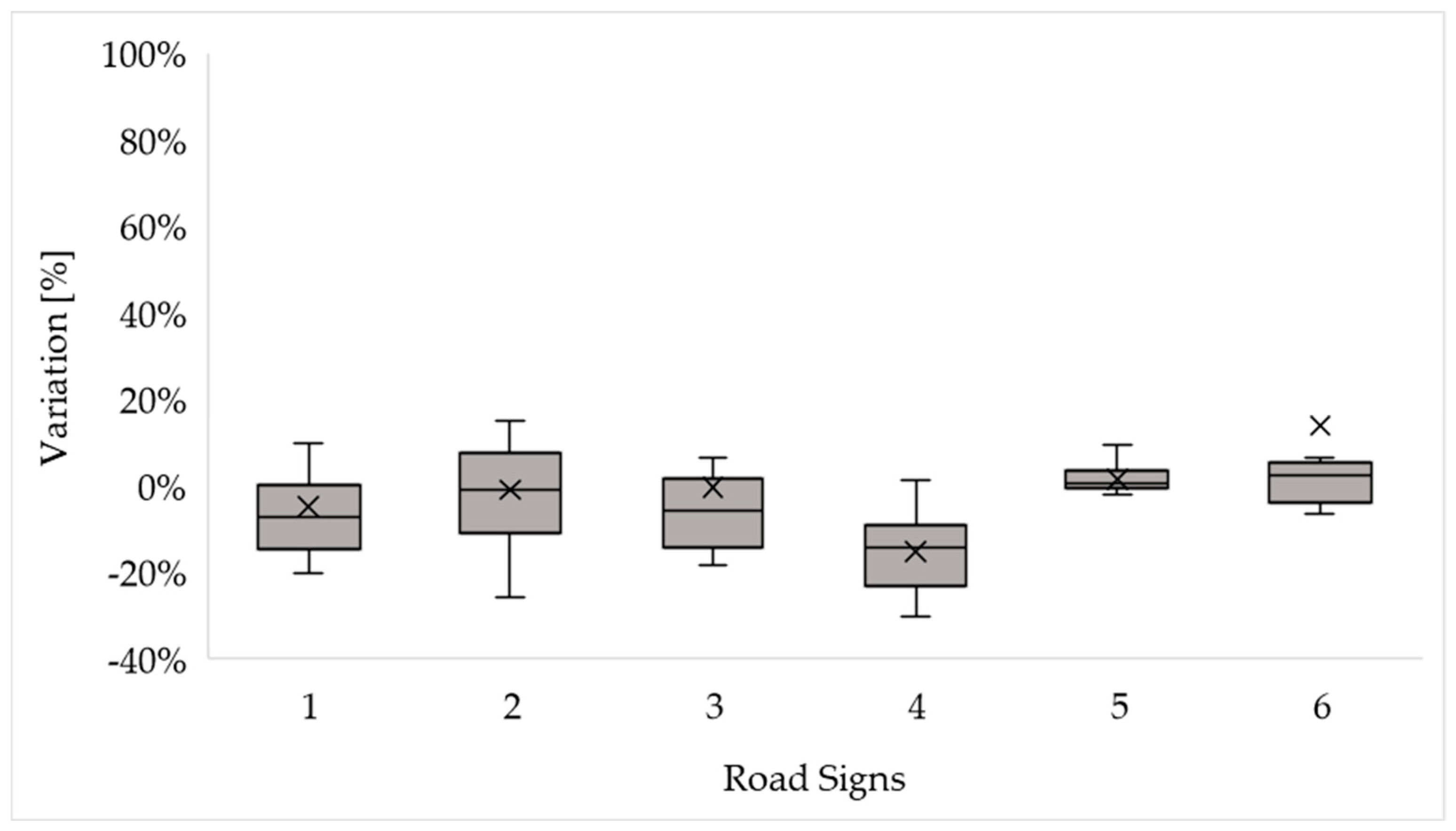
Table 4). A decline in the transition between N and V is indicated by signals 1, 2, and 4. Signal 4 demonstrates the most significant change, exhibiting a 15% decrease. The third signal remained unaltered when comparing the pathway containing N signals with the pathway containing V signals. As postulated in the hypothesis, signals 5 and 6 demonstrate a mean increase in the longitudinal distance. As illustrated in
Table 1, the Ra coefficient of signals 1, 2, and 4 exhibit minimal variation between the N condition and the V condition. However, the state of signal V, the presence of water in signal 1, the degradation of signal 2, and the presence of dirt in signal 4 have a not negligible effect. Anomalous behavior is exhibited by sign 3, characterized by a significant decrease in the Ra coefficient and an evident degradation state, with no discernible effect on the parameter. Signs 5 and 6, which exhibited higher performance in condition V, support the hypotheses.
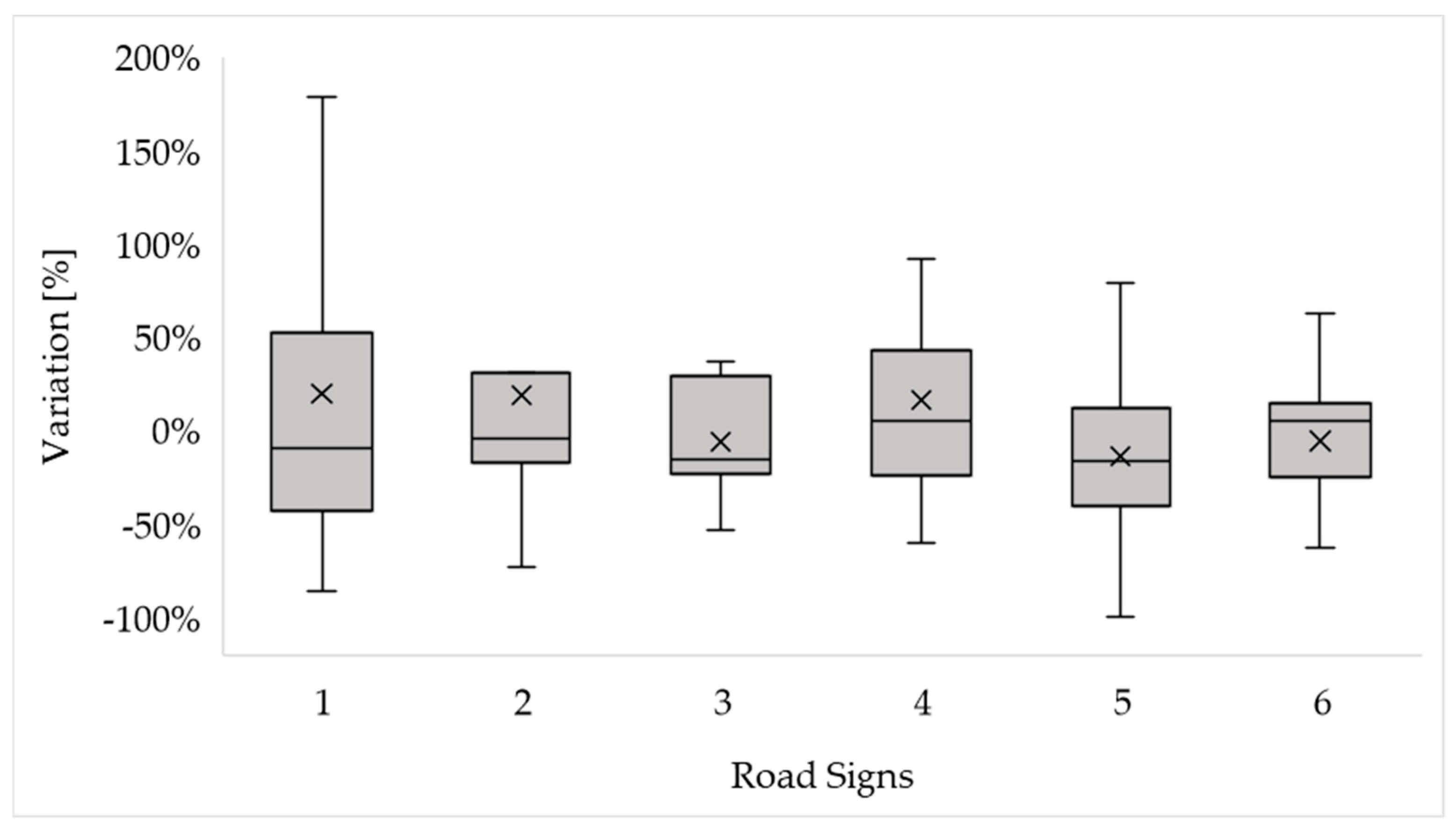
However, the range of individual variation is quite wide in many cases, suggesting considerable inter-subject variability, for example: the range of variation for signal 3 is from −18% to +88%, while the range of variation for signal 6 is from −6% to +198% (
Figure 3). The strongest correlations were recorded for signals 1, 3, and 5 with a significant
p value.
The most significant result is that obtained from the data recorded for sign 4, as the significance of the Wilcoxon test is high, and the correlation is low. In general, the R2 value is high, equal to 0.855, and the data adequately describe the parameter variation.
Number of fixations
It is important to investigate the extent to which one sign is observed compared to another, since it has been hypothesized that a sign that is clearly visible, in good condition, and with a high retroreflective coefficient (Ra), can be recognized earlier than a sign with opposite characteristics [
36].
The fourth signal indicates a statistically significant difference (
p < 0.05), with a reduction in the median from 15 (N) to 8 (V) (
Table 5). Signals 1, 2, 3, 5, and 6 demonstrate no statistically significant differences between conditions (
p > 0.05).
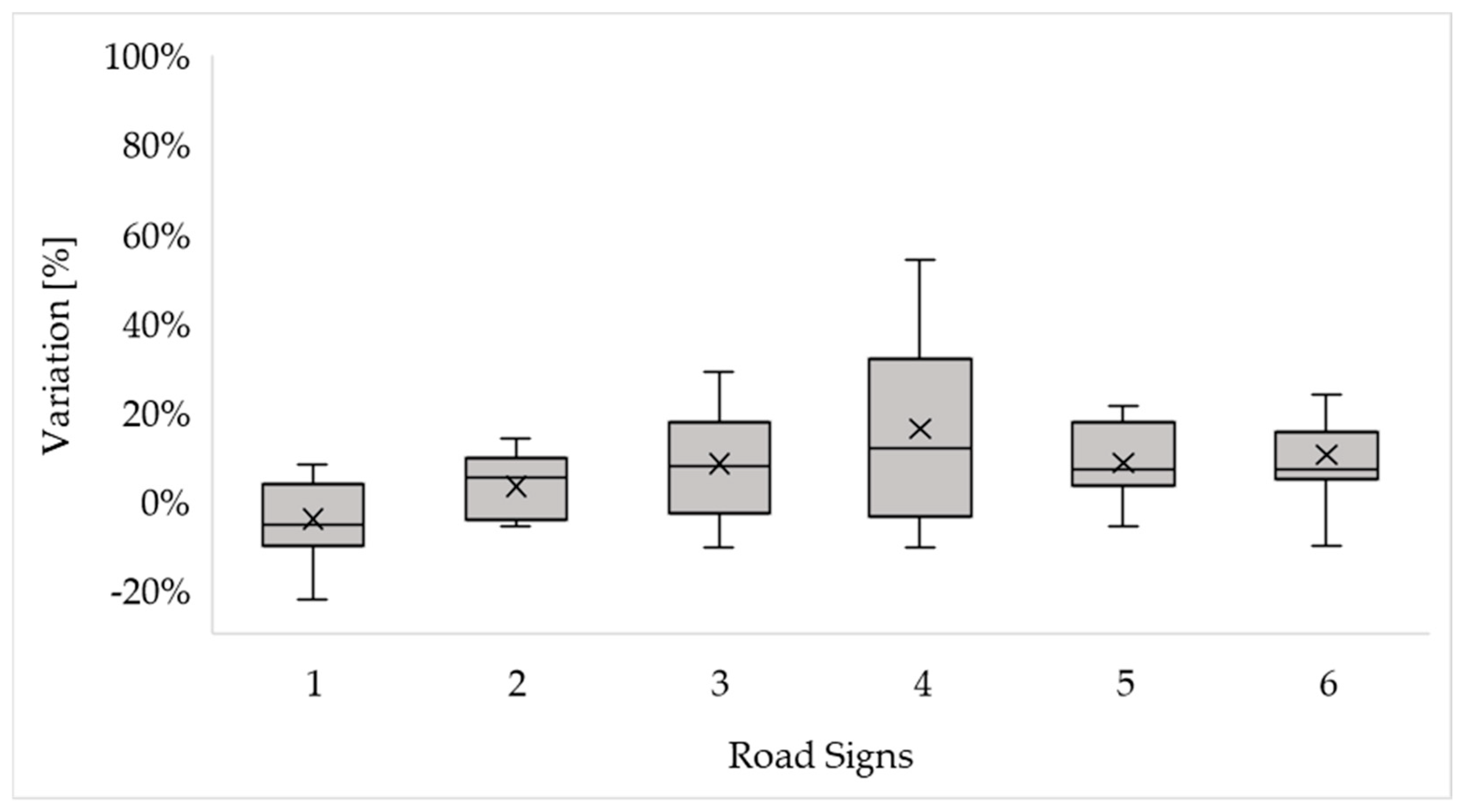
Table 6 presents the findings from an investigation into the number of fixations each user directed towards each sign. The mean variation between N and V signs is negative for signs 1, 2, and 4, with a minimum value of −37% for sign 4, the sign with dirt presence (
Figure 4). However, the average change remains minimal for signs 5 and 3, while the most significant positive change was observed for sign 6, which exhibited the highest performance. A low degree of correlation is exhibited by the signs 2, 3 and 4. The coefficient R
2 of this parameter is equal to 0.4756, indicating significant individual variability among cases.
Intensity of fixations
The average observation time of a sign is useful for assessing whether signs with better performance require less time to be recognized and interpreted.
Signals 1, 2, and 6 exhibited a high degree of similarity in their medians between N and V, and these signals also demonstrated very high
p-values (
Table 7). This finding suggests that there is an absence of significant or systematic differences between the two conditions. As indicated by the findings, signals 3, 4, and 5 demonstrate notable numerical disparities between their respective medians. However, these disparities do not attain statistical significance.
The fixation intensity parameter is indicative of the number of seconds, on average, that users observed the sign during each fixation (
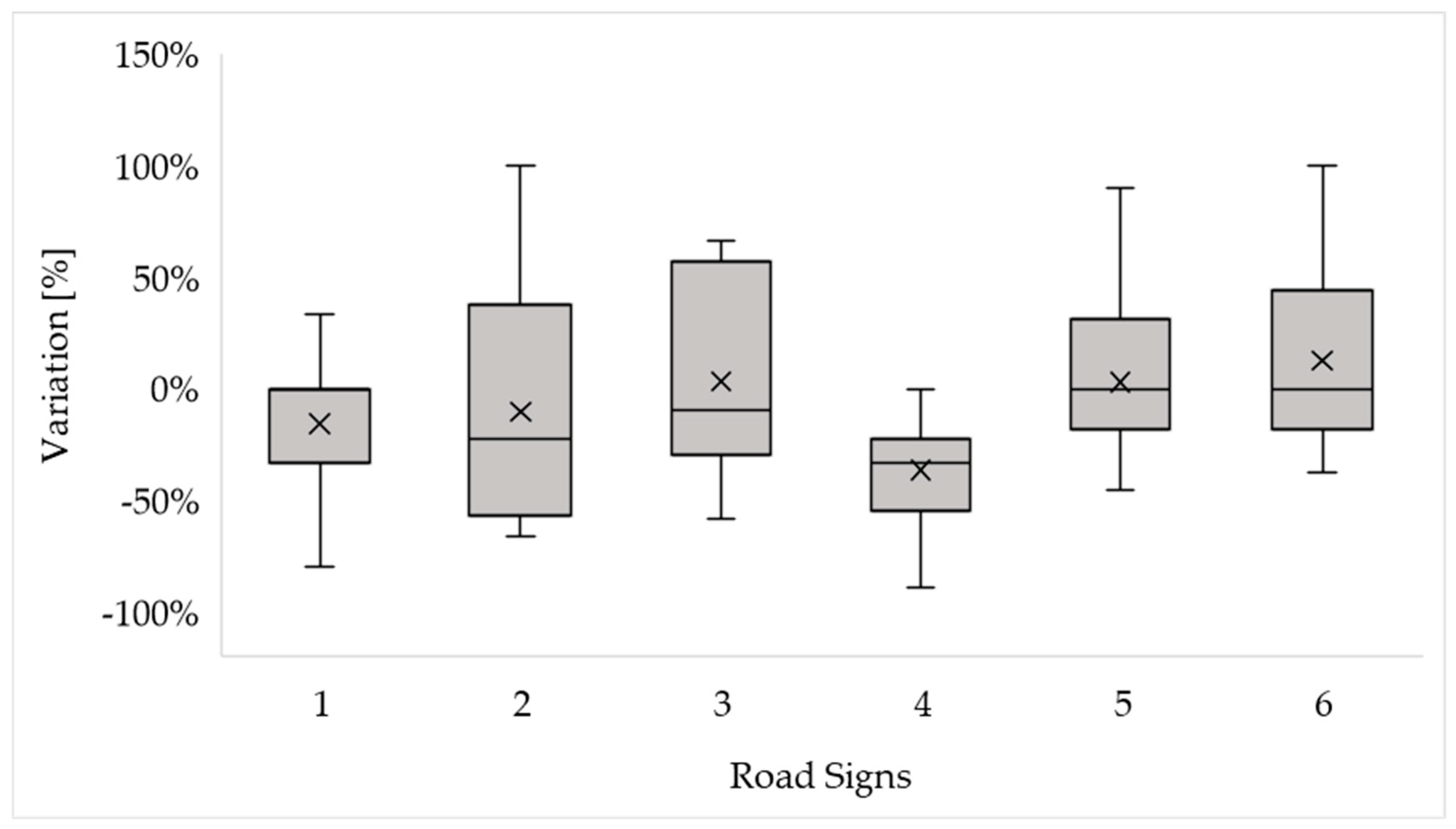
Table 8). The most significant increases in intensity, from condition N to condition V, were observed for signs 1, 2, and 4. This outcome aligns with the hypothesized model, as the presence of factors that diminish the signal’s visibility leads to prolonged user perception times. The most variable data for the two conditions was recorded for signs 1, 2 and 4, with a positive peak of 228% and a negative peak of −100% (
Figure 5). It is evident that signs 5 and 6 align with the hypothesized outcomes, as evidenced by the decline in the mean value observed in condition V in comparison to condition N. This phenomenon can be attributed to the enhanced visibility of the signal, which is attributed to an augmentation in the coefficient of retroreflectivity. Sign 3 is counterintuitive in that it should have the same effect as sign 2. The range of data dispersion is the lowest, and it is statistically the most stable. A general observation indicates that the dispersion of the data for each sign is very wide, and the R
2 value is very low, equal to 0.355.
Speed finishing point
In accordance with Larocca [
36], the first variable to be investigated, which can preliminarily indicate whether the sign has been correctly perceived or not, is, in the case of speed limit signage, the variation in speed.
Signals 3, 4, 5, and 6 exhibited a statistically significant increase in condition V compared with condition N. This finding indicates that condition V exerts a systematic and positive influence on the activity measured by these signals. Conversely, signals 1 and 2 did not attain statistical significance (
p = 0.088 and 0.078), though they exhibited a decreasing trend in condition V (
Table 9).
The speed finishing point parameter is defined as the velocity at which the driver arrives at the sign. Therefore, the objective is to ascertain whether users consistently adhere to the stipulated speed limit as indicated by the road signs. As evidenced by the mean values, the average velocity across the entire track was consistently below the established limit. The highest increment was recorded for sign 4, where users had an average speed of 70.20 km/h near sign 4N and 79.86 km/h near sign 4V. The signs generally indicate a modest increase between N and V (between −10% and +54%), suggesting that the V condition induces a slight increase in average values (
Table 10). It is important to note that most confidence intervals encompass both negative and positive values, thereby suggesting the presence of individual variability in responses. The high correlation and statistical significance indicate that these signals are reliable and consistent between the two conditions (
Figure 6). For this parameter, it is obtained a high R
2, equal to 0.605.
Total Duration of Fixation/Total Duration of the Segment
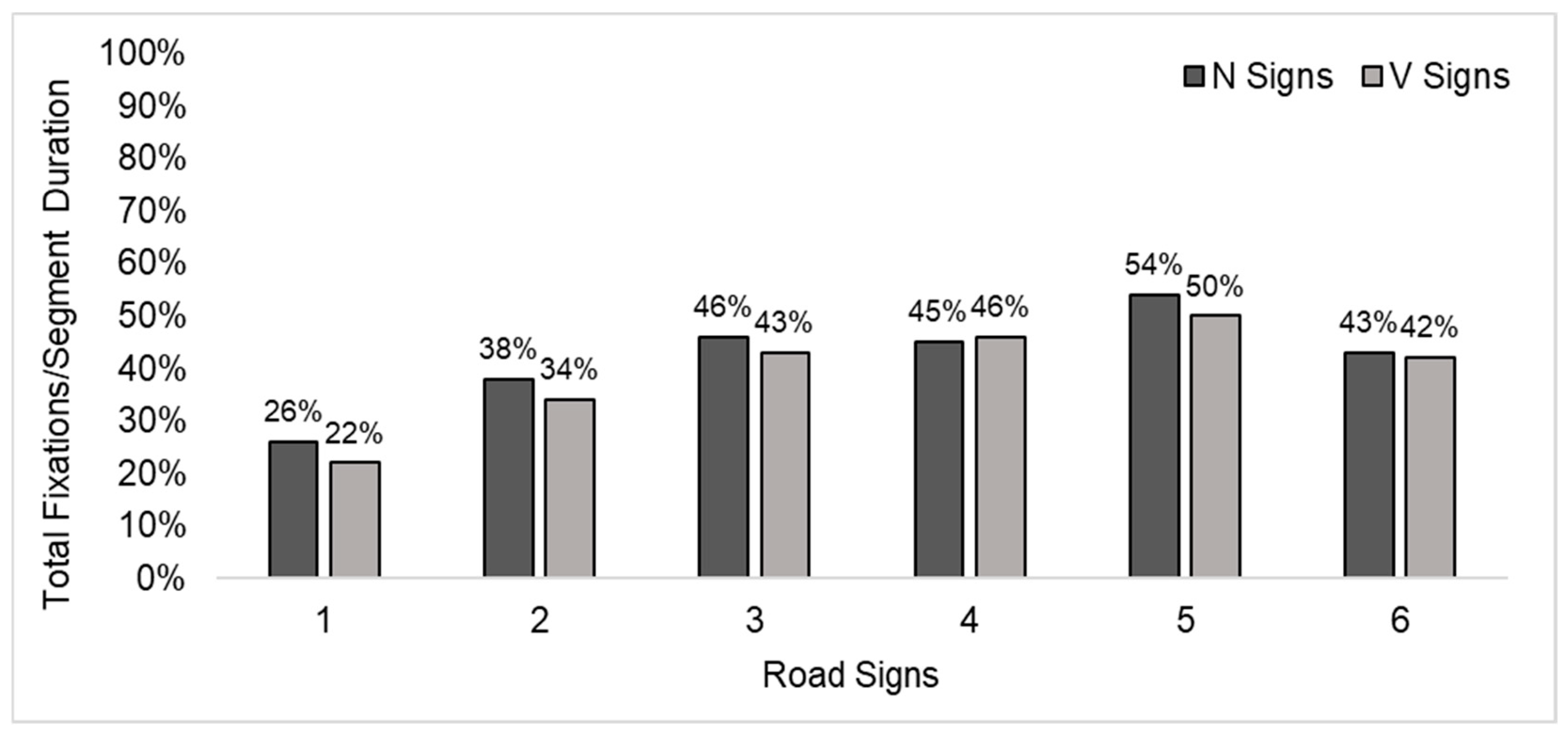
Subsequent to an analysis of the preceding parameters, an additional analysis was conducted to provide a collective evaluation of users’ perceptions of the signs. Despite the placement of signs at the extremities of varying lengths, a comprehensive view of the subsequent outcome was possible by considering each length individually. Indeed, the total time each user spent looking at the sign was related to the total time each user took to cross the respective segment of the sign (
Figure 7).
The trend clearly indicates that all signs were observed more frequently in their standard (N) condition than in their variate (V) condition, except Sign 4. This result suggests a general preference or greater visibility for the standard configuration across most signs. Signs 1 and 2 consistently registered the lowest viewing frequencies in both conditions. These two signs are located at the end of the shortest straight segments, which may account for their limited visibility due to shorter approach times.
An opposite pattern emerges when comparing signs 3 and 4 to signs 5 and 6. It is expected that signs 5 and 6, positioned at the ends of shorter straights than signs 3 and 4, would be observed for a shorter duration. However, the data reveal that signs 5 and 6 were viewed for almost the same amount of time as signs 3 and 4. This is particularly notable in the case of sign 5, which shows a notably high percentage of observations despite its placement disadvantage. Such results suggest that additional variables, such as sign design, context, or visual salience, may be influencing attention and visibility beyond just spatial positioning.
4. Discussion
Following the analysis of the parameters and the establishment of the assumptions, observations can be made regarding the effect that different sign conditions have on driver perception, particularly in consideration of the variation in retroreflectivity.
Concerning sign 1, which exhibited visible drops of water, it demonstrated adequate levels of retroreflectivity, both for the white film and the red film, in both the N and V conditions, and these levels were notably similar to each other. This was done solely to investigate the effect of the presence of water. As indicated by the parameter results, the presence of water did not affect the performance of the retroreflectivity level, particularly regarding the signal’s perception at initial viewing. The first-observation distance remained constant, while the number of fixations and the intensity of fixations underwent, though not excessive, changes. This indicates that the level of perceived retroreflectivity remained unaffected by the presence of water.
About signs 2 and 3, the level of retroreflectivity exhibited a minimal decline in condition V compared to condition N. However, visible degradation was observed on the front surface. Signal 3 exhibited a significantly higher degree of degradation in comparison to signal 2. In general, the varied conditions of these two signals had no particular effect on driver perception and behavior. The distance of perceptions remained constant between signs 2N and 2V, as well as between signs 3N and 3V. The most significant alterations were observed for sign 2, which was exhibited less frequently in condition V but for a greater duration.
Sign 3 tended to manifest fewer fixations of condition V than condition N. However, the average of individual variation between N and V was found to be positive. This suggests that the variation in the sign had a significant impact on certain subjects, who exhibited a greater propensity to observe sign 3V compared to sign 3N.
A general observation indicates that sign 3 had a comparatively diminished impact in comparison with sign 2. However, the coefficient of retroreflectivity appears to exhibit greater variability among sign 3 than sign 2.
In the case of sign 4, both conditions exhibit a notably high level of retroreflectivity, and the transition in retroreflectivity between condition N and condition V remains undetectable. Once more, the decision was made to accentuate the impact of dirt on users, even on signs that were in satisfactory condition.
Sign 4 exhibited the greatest variability between conditions N and V across all parameters.
With regard to the outcomes observed in signs 5 and 6, the results align with the hypothesized outcomes, particularly concerning the distance of perception. The findings indicate that the distance of perception increases in the V condition, thereby substantiating the hypothesis that a high level of retroreflectivity facilitates signal perception. Furthermore, the fixation intensity in the V condition is reduced. This is because high-performance films permit greater readability, which in turn necessitates less time to be perceived.
Wilcoxon tests demonstrated that for the longitudinal distance of first fixation and number of fixations, the p value of sign 4 is the only significant one, that is, the only one for which data with significantly different medians were recorded. The presence of dirt, therefore, on signs with adequate retroreflectivity performance exerts a significant influence on the perception distance, causing a 15% reduction in the perceived distance. Furthermore, it is the sign that undergoes the most significant reduction in the number of fixations from condition N to condition V.
In summary:
Longitudinal distance of first fixation: the hypotheses are respected, and the most influential sign on perception is the 4V sign with the presence of dirt;
Number of fixations: the results obtained are opposite to the hypotheses, and the least seen sign is the 4V sign with the presence of dirt.
Intensity of fixations: the results are in line with the hypotheses, and the sign that needed more time to be perceived than the standard condition was the 4V sign.
Speed of finishing point: the results obtained do not meet the hypotheses for all signs, and the sign with the least effect on speed was the 4V sign.
The longitudinal distance parameter obtained results in line with the hypotheses. In fact, signs with reduced visibility in condition V compared to condition N (1, 2, 3, 4) were seen for the first time at an average distance closer to the sign. However, in the case of signs 5 and 6, which performed better in condition V than in condition N, the average distance of the first observation was greater in condition V than in condition N. This observation is further supported by the findings of Colombo and Michaut [
23], who reported that the readability distance can increase by 15% when transitioning from a higher-performance film to a lower-performance film.
In general, the results of the parameter of the number of fixations go against the trend of the hypotheses. The hypotheses had suggested that high-performing signs should be seen less because drivers do not need many observations to understand their content. The results showed that the highest positive increases in the number of observations were for signs 5 and 6, so drivers observed more signs in their V conditions, thus with high-performance film, rather than in their standard condition. This could be interpreted from the fact that, because a sign is more visible from the retroreflectivity point of view, it attracts more driver attention. In line with this trend, the 4V sign turns out to be the one that attracts less attention due to reduced visibility. In this case, the level of retroreflectivity is greatly influenced by the presence of dirt, which reduces its perception.
With regard to the observation intensity variable, as hypothesized, the signs with reduced visibility in their V condition, with the exception of sign 3, had longer observation times, and therefore participants needed more time to recognize them. Conversely, the signs 5V and 6V exhibited a decline in average observation time when compared to the respective signs with lower performance, 5N and 5V.
However, the findings concerning the speed finishing point parameter do not align with the initial assumptions. The hypothesis was that signs with high retroreflectivity performance would have a greater effect on drivers’ attention to their driving speed.
Even though the average speeds recorded were below the speed limit imposed by the vertical signs, drivers maintained a higher speed in the presence of the 5V and 6V signs than in the presence of the respective N signs. In consideration of this parameter, the sign that exerted the least influence on driver kinematic behavior, when accounting for the transition from the N condition to the V condition, was the 4V sign.
In accordance with the findings of Colombo and Michaut [
23], it is evident that other factors, frequently challenging to predict, quantify and maintain, such as dirt residue in this instance, exert a substantial influence on the legibility of road signs.
5. Conclusions
This study investigated how different conditions of retroreflectivity and surface alterations of vertical road signage affect driver perception and driving behavior. A test was conducted in a real scenario to achieve results that closely reflect real-world conditions. A sample group of users drove around a circuit twice. During the first lap, they encountered six signs under standard conditions (condition N) featuring a class II retro-reflective film without alterations. During the second lap, they encountered a set of six signs of the same type and in the same positions as in the previous lap. The signs were in different conditions on the second lap compared to the first (condition V). Sign 1V had water droplets on its visible surface. Signs 2V and 3V showed obvious signs of deterioration. Sign 4V had dirt residue, and signs 5V and 6V had Class III retro-reflective films, which performed better than the standard signs. Therefore, signs 1, 2, 3 and 4 had reduced visibility in condition V compared to condition N in the first round, and signs 5 and 6 had better visibility in condition V compared to condition N in the first round.
Overall, signs with high-performance films (5V and 6V) confirmed the expected improvements in visibility, while water (sign 1V) and moderate degradation (signs 2V and 3V) did not produce significant changes in driver perception.
The most critical result concerns sign 4V. Despite maintaining technically adequate retroreflectivity of the surface, the presence of dirt could significantly reduce its perceptual effectiveness. It was the only case where statistically significant differences emerged, with a 15% reduction in the longitudinal distance of the first fixation, fewer visual fixations, and longer observation times. In general, these results highlight how surface dirt can undermine sign visibility more than the level of retro-reflective performance itself.
These findings emphasize that, beyond material quality, maintenance plays a crucial role in ensuring road sign effectiveness. Even high-performing signs lose their impact if surface conditions compromise their visibility. Making regular cleaning and monitoring is essential for road safety.
This study is subject to limitations. The experimental sample was relatively small and consisted exclusively of male drivers, which, although aligned with the methodological choice to reduce inter-individual variability, limits the statistical strength and the generalizability of the findings. Future research should therefore involve larger datasets and include female drivers to facilitate gender balance and enhance the representativeness of the results.







 ,
,