Article

Bridging Gaps in Landslide Mapping: A Semi-Quantitative Empirical Framework for Delineating Key Areas to Improve Collection of Essential Field-Based and Supplementary Remote-Based Data


FABRE Consortium, University of Pisa, Largo Lucio Lazzarino 1, 56122 Pisa, Italy
*
Author to whom correspondence should be addressed.
Infrastructures 2026, 11(1), 11; https://doi.org/10.3390/infrastructures11010011
Submission received: 30 October 2025 / Revised: 12 December 2025 / Accepted: 22 December 2025 / Published: 25 December 2025
(This article belongs to the Section Infrastructures Inspection and Maintenance)

Abstract

Accurate landslide mapping near critical infrastructure requires not only data on landslide characteristics but also clear definitions of the spatial extent of surveyed areas. While national projects like Italian Landslide Inventory (IFFI) and Italian Guidelines for the classification and management of risk, safety assessment and monitoring of existing bridges (LLG 2022) provide a list of data to collect during a field visit survey, they lack clear specifications for buffer zones, limiting data comparability and risk assessment reliability. This study refines a hierarchical framework developed by the FABRE Geo Working Group, in alignment with LLG 2022, introducing five key zones—Landslide Inventory Reference Area, Diagnostic Area, Geomorphological Significant Area, Relevant Area and the Approach Zone, plus a newly defined Geomorphological Significant Area—Close Zone. By explicitly quantifying buffer zones and their hierarchical roles, the framework ensures consistent data collection across varied terrains and reduces ambiguity in landslide risk evaluation. Applied to 95 bridges in Tuscany and Basilicata, the framework offers standardized definitions and dimensions for Diagnostic Area, Geomorphological Significant Area and Relevant Area, based on detailed field surveys. Approach Zone and Geomorphological Significant Area—Close Zone are quantified as percentages of Relevant Area and Geomorphological Significant Area, supporting efficient, reproducible inspections using both manual and UAV-assisted methods. The Geomorphological Significant Area—Close Zone distinguishes core data, which requires direct surveys, from supplementary data that can be analyzed remotely or in the office. This distinction ensures that essential hazards are observed directly, while supplementary insights are efficiently integrated, enhancing field reliability and desk-based analysis. This integrated approach enhances the accuracy of landslide susceptibility assessment and the classification of attention levels, supporting the maintenance of the national IFFI. Ultimately, the comparison of IFFI catalog data, available in the Diagnostic Area, Geomorphological Significant Area, and Relevant Area, revealed previously unrecorded landslides in Matera and confirmed the reliability of the catalog in Lucca, highlighting that inventories can be systematically integrated only by using standardized areas with field verification to improve risk and infrastructure management. The structured framework bridges gaps between national inventory standards and localized survey needs, ensuring that both previously recorded and new landslide events are systematically captured.

1. Introduction

Extensive research highlights the importance of mapping complete landslide systems—including source, transport, and deposition zones—using fine-scale data to accurately quantify landslide activity, displacement, and volume [1,2,3,4,5]. However, few studies consider surrounding buffer zones, which are essential for assessing impacts on adjacent areas and identifying regions at risk [3,4,5,6,7]. Guidance on the spatial dimensions of survey areas is largely absent, which makes it difficult to ensure consistent and comparable data across sites. Establishing clear, standardized spatial extents is essential to ensure reliable and comparable landslide susceptibility assessments.
Recent advances in physics-informed and transfer learning approaches further underline the importance of consistent and well-defined spatial units, as model reliability and cross-regional generalization strongly depend on the quality and comparability of input data [8,9,10,11].
The Italian IFFI Project, designed to develop and maintain the national landslide inventory, offers a comprehensive framework for recording landslide type, activity, velocity, and volume [12,13,14,15,16]. The original data format of the landslide inventory (IFFI) is fully described in [17,18,19,20,21]. Nonetheless, it does not define the spatial extent of surveyed areas or provide guidance on buffer zones. Similarly, the LLG 2022 Guideline, which mandates risk assessments for existing infrastructure, including landslide susceptibility around bridges, does not define the spatial extent of inspection areas, and inspectors often apply arbitrary boundaries, reducing data comparability and reliability. To overcome these limitations, the FABRE Geo Working Group at the University of Pisa [12,13] proposed a hierarchical, nested framework for survey areas: the Landslide Inventory Reference Area (LIRA) contains the Diagnostic Area (DA), which includes the Geomorphological Significant Area (GSA), itself comprising the Relevant Area (RA) and the Approach Zone (AZ).
Building on this framework, and in alignment with LLG 2022, this study synthesizes detailed 1:10,000 and 1:5000 scale surveys of the DA, GSA, and RA for 95 bridges in the provinces of Lucca and Matera (Tuscany and Basilicata regions). It refines the sizing proposed by Perilli et al. [22,23] and, for the first time, proposes the dimensions of the Approach Zone (AZ) and the GSA Close Zone (GSA CZ). The newly defined GSA CZ enables a clear separation between ground-based “essential” data and back-office or remote “supplementary” data, allowing a more precise assessment of primary and secondary parameters required by LLG 2022 Guideline. Consequently, our approach, combined with the provided dimensions, enables a balanced and accurate evaluation of the Landslide Class of Attention (CdA), using all the data necessary to properly complete the Level 1 Field Survey Form [24], instead of relying on a limited subset.
By providing standardized, hierarchical boundaries for DA, GSA, RA, and AZ, this study directly addresses the inconsistencies and gaps in LLG 2022 survey practices. These clear definitions not only improve survey consistency but are essential for reliable assessment of landslide hazard and infrastructure vulnerability. Without such standardized boundaries, comparisons between field surveys and official inventories may be unreliable, potentially underestimating landslide occurrence and its interactions with infrastructure. By establishing well-defined, nested survey areas, the study ensures that landslide data are comprehensive, comparable, and accurate, forming a robust foundation for monitoring, risk assessment, and infrastructure management. This manuscript is organized as follows.
Section 2 builds upon the framework proposed by Perilli et al. [22,23] and introduces the study areas together with the methodology adopted to define and delineate the hierarchical key zones—DA, GSA, and RA—alongside the newly proposed Approach Zone (AZ) and GSA Close Zone (GSA CZ).
Section 3 presents the empirical results obtained from the analysis of 95 bridges, from which minimum–maximum dimensional ranges are derived.
Section 4 offers a critical discussion on how the standardized dimensions of the survey key areas contribute to addressing the current gap in the 2022 LLG concerning the spatial extent of landslide inspections around infrastructure.
Section 5 outlines the operational implications for inspection workflows. Taken together, these elements represent the core innovations of the study and provide the first reproducible framework for defining survey areas around bridges.

2. Materials and Methods

2.1. Setting

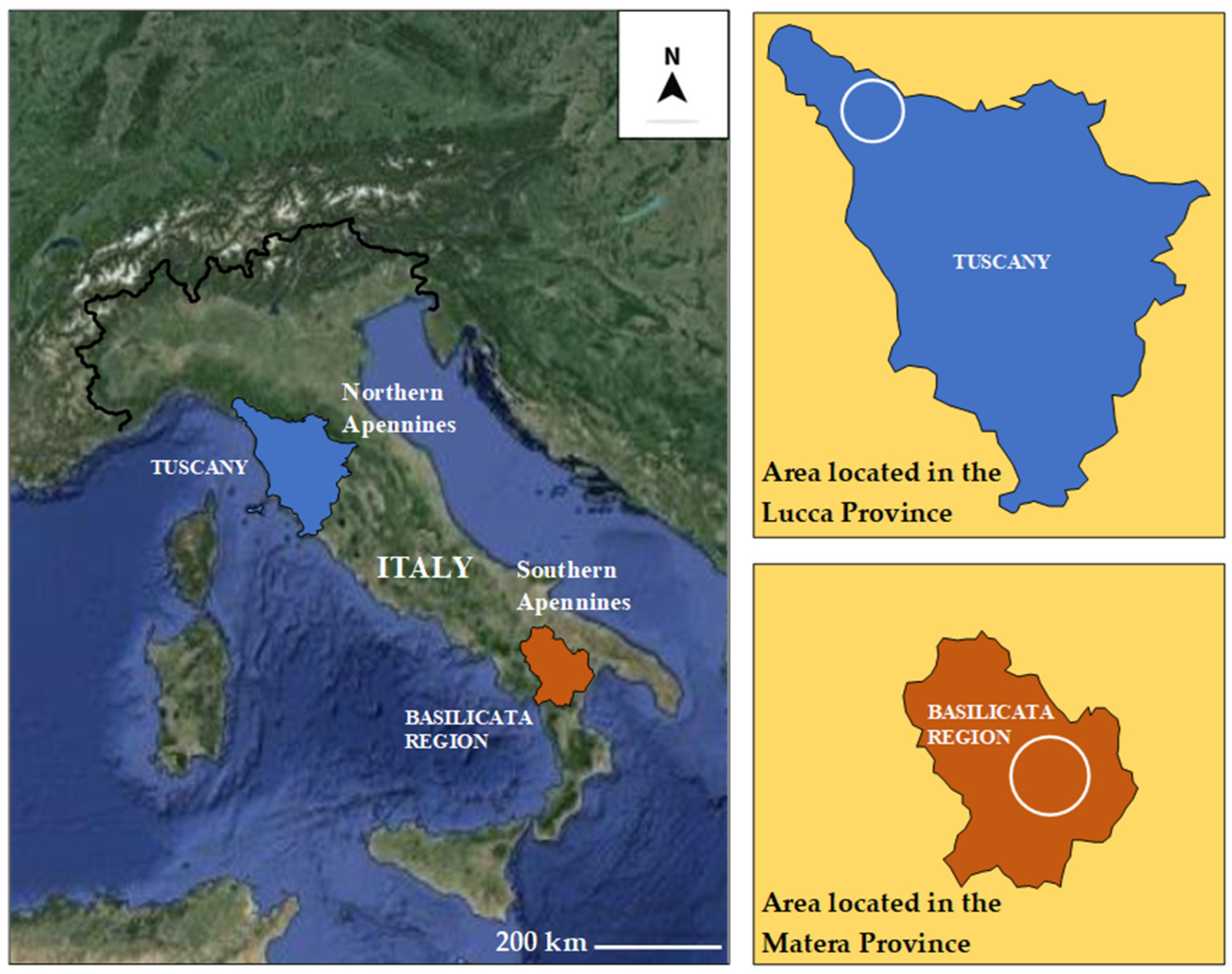
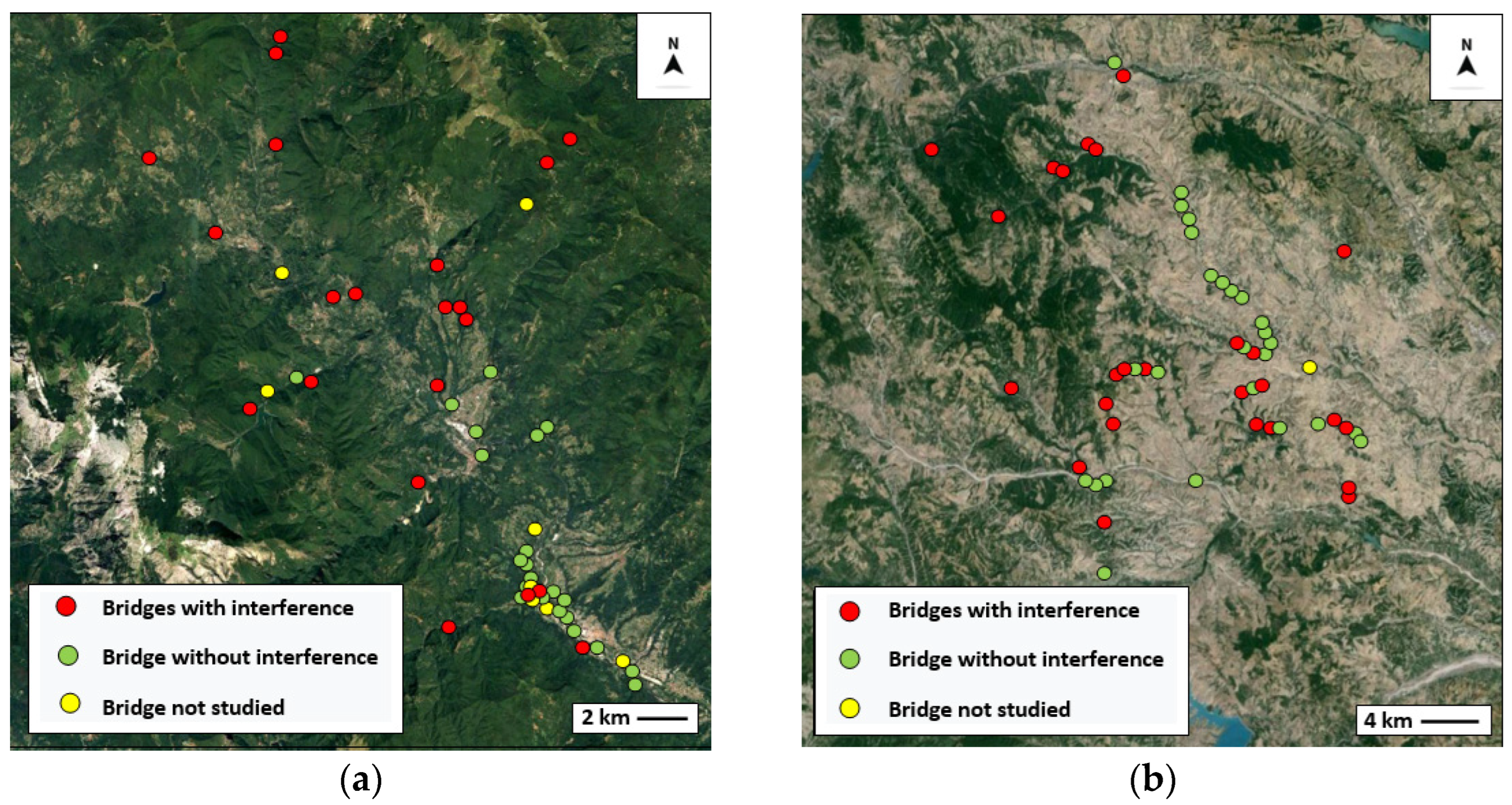
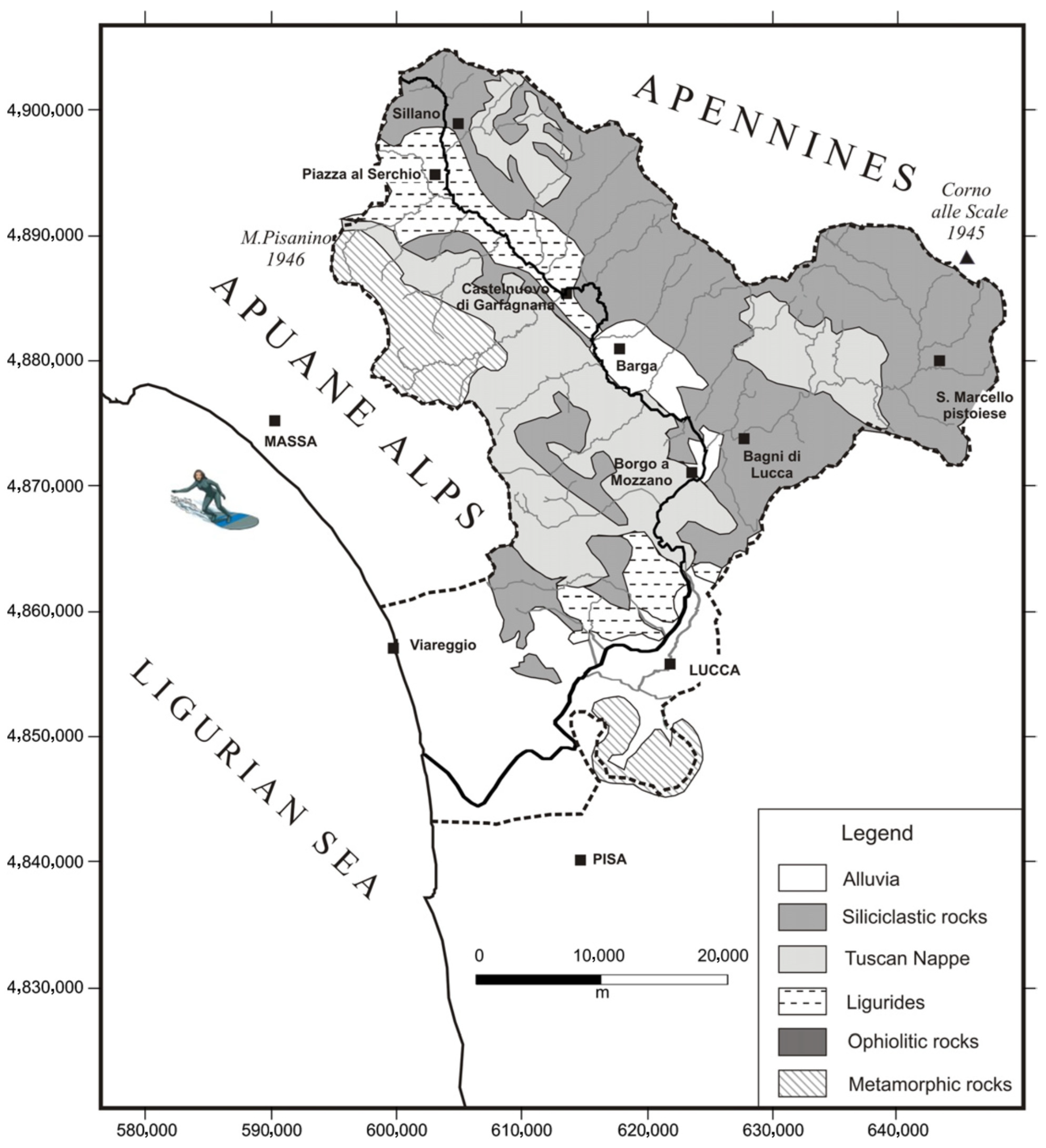
The selected study areas are located in the Northern and Southern Apennines (Figure 1). In the northwestern sector of the Northern Apennines (Figure 2a), the pivot area, located in the Lucca Province, extends from Borgo a Mozzano to Vagli. The area features a multifaceted landscape, with elevations ranging from 100 to 2000 m above sea level, ranging from steep mountainsides to gently rolling hills that slope down into the relatively narrow, flat Serchio Valley—particularly broadening in the Castelnuovo di Garfagnana and Borgo a Mozzano areas. Both the steep and gentler slopes are dissected by narrow, often steep first- and second-order streams. These tributaries flow into the Serchio River, which runs through a valley floor floored by coarse-grained braided deposits. The steep mountain slopes and part of the hills flanking both sides of the Serchio Valley are mainly composed of Meso-Cenozoic tectono-sedimentary formations of the Tuscan Nappe. These include massive to stratified carbonate units, pelite-dominated successions, and thick siliciclastic turbiditic deposits [25,26] (Figure 3).
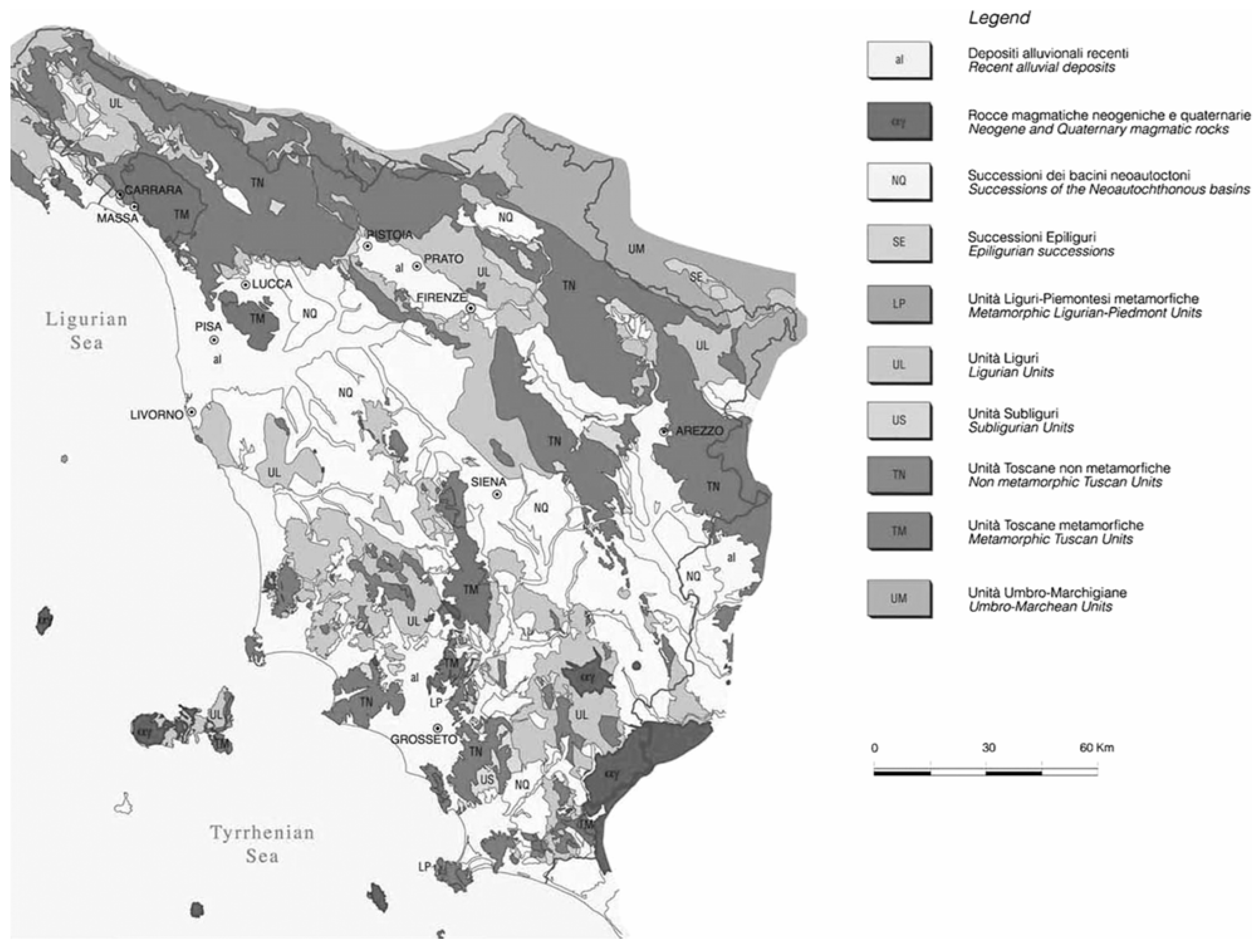
The Tuscan Nappe units are irregularly overlain by Meso-Cenozoic marly-calcareous deposits (Flysch ad Helmintoidi Unit) and pelite-rich successions (Canetolo Unit), which belong to the External Ligurid and Subligurian Units, respectively [27] (Figure 4). The deformed Meso-Cenozoic units—and particularly the turbiditic deposits and pelite-rich successions—are overlain by thin to thick eluvio-colluvial deposits, whilst along the eastern margin of the Serchio Valley, they are unconformably overlain by Plio-Pleistocene fluvio-lacustrine to fluvial successions [28], in turn draped by thick, coarse-grained alluvial fan deposits, such as those forming the prominent Barga alluvial fan.
Located in the northwestern sector of the Southern Apennines (Figure 2b), the other study area lies within the Province of Matera and extends from the mountainous Stigliano–Accettura sector to the hills of Craco and Pisticci (boundary verification required). The north–south-trending mountain belt reaches elevations between 400 and 1.200 m above sea level, while eastwards most of the area consists of hilly reliefs shaped by gully erosion, with elevations ranging between 100 and 500 m. The hydrographic system in the Materano area includes relatively wide-braided channels, supplied by numerous first- and second-order tributaries. These tributaries consist mainly of narrow, straight first-order channels and more sinuous higher-order ones. They dissect the badland landscape, characterized by slopes ranging from moderate-to-steep on dip slopes (dip-slope) and from steep to very steep on scarp slopes (anti-dip slope), where the strata dip in the direction opposite to the slope.
The steep slopes of the Stigliano–Accettura area are primarily composed of thick turbiditic sequences of the Gorgoglione Flysch (Lagonegro Unit), overlain by the pelitic Argille Scagliose formation. This latter unit, intensely deformed, contains thick, well-laminated turbiditic bodies of Numidian sandstones, often showing inclined, lens-shaped geometries resulting from the compressive tectonics of the Lucanian Apennines. All these folded, faulted, and tilted units—the Gorgoglione Flysch, Argille Scagliose, and associated formations—are thrusted onto the Plio-Pleistocene sedimentary succession of the Bradanic Trough. This very thick succession records the progressive infill of a foredeep basin in front of the advancing Southern Apennines, documenting the shift from deep-marine to continental environments [29]. At the base, Pliocene deposits are divided into two cycles [30]. The Lower Pliocene Santeramo Formation consists of marls and silty clays with minor sandstones and thin interbeds, indicating deep-marine conditions [31]. The overlying Altamura Formation (Late Lower–Upper Pliocene) includes marls, sandy marls, and medium- to coarse-grained sandstones with cross-bedding and hummocky lamination, reflecting higher-energy marine settings [31]. The Pleistocene succession (Laterza and Metaponto Formations) comprises coastal sands, conglomerates, alluvial fan gravels, and lacustrine silts and clays with paleosols, marking the shift to continental deposition controlled by tectonics and influenced by climate [32].

2.2. Methodology

This study builds on the framework proposed by Perilli et al. [22] and aims to more precisely define the minimum and maximum thresholds of three critical spatial units essential for the accurate characterization of landslide phenomena. These spatial units are fundamental not only for understanding the dynamics of slope instability but also for delineating the primary and secondary boundaries of landslides in accordance with current national regulations [24], which provide legal and technical guidelines for risk assessment and the planning of mitigation measures.
Key Areas Considered
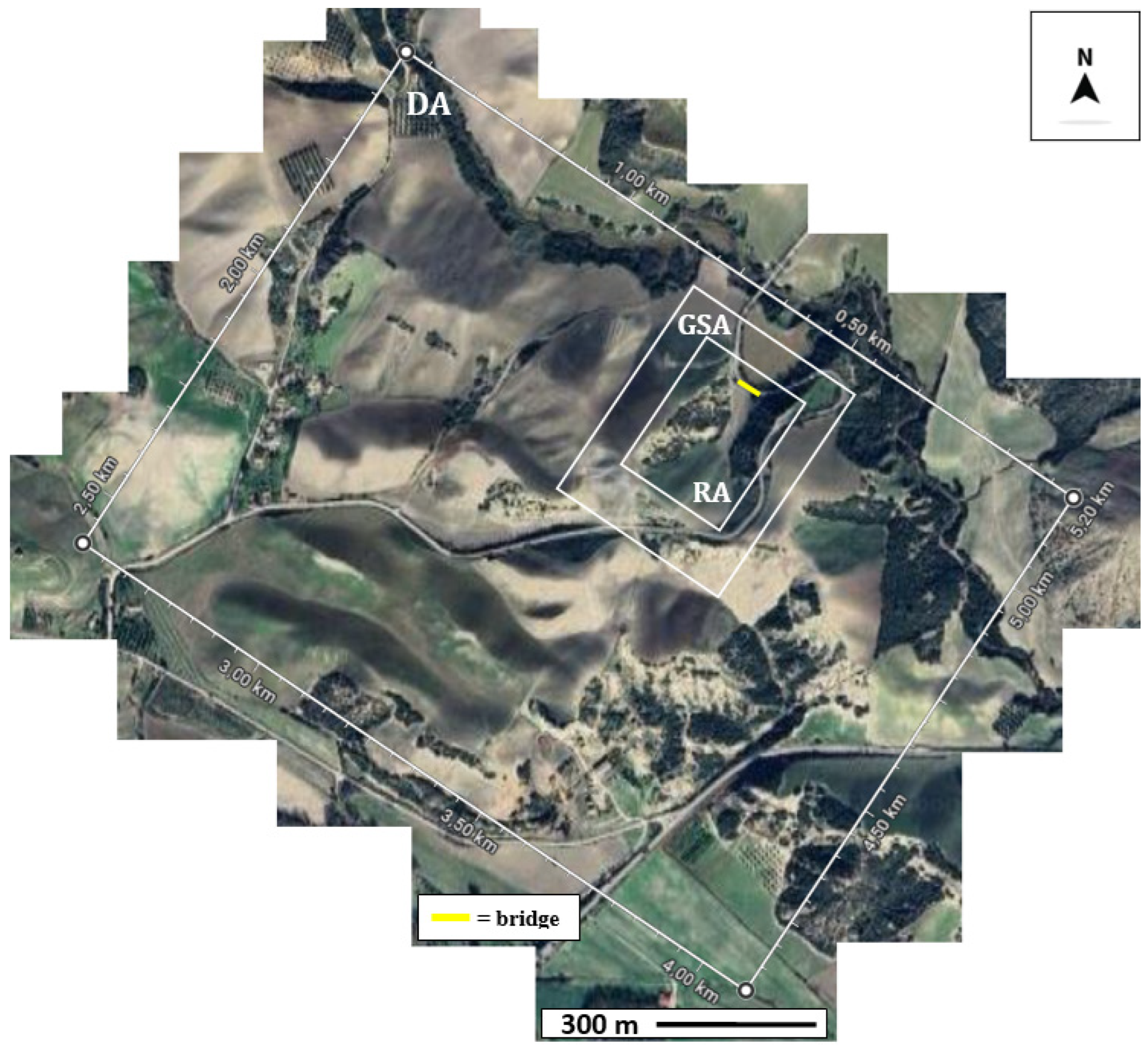
The three spatial units, illustrated in Figure 5, are organized hierarchically and include the following:
Diagnostic Area (DA)
This represents the broadest spatial reference and provides the geomorphological, lithological, structural, hydrographic, and environmental context of the study area. It allows for the framing of morphodynamic processes and the relationships among morphology, geology, and land use, serving as the basis for identifying the Geomorphological Significant Area (GSA) and the Relevant Area (RA).
Geomorphological Significant Area (GSA)
Located within the DA, this area represents the spatial extent where it is possible to identify and analyze geomorphological, lithological, hydrographic, and environmental (LULC) evidence of landslide phenomena, as well as areas that could potentially generate such events. The GSA enables a detailed characterization of the physical context and verification of the presence of past or active landslides that could, in the future, affect the bridge.
Relevant Area (RA)
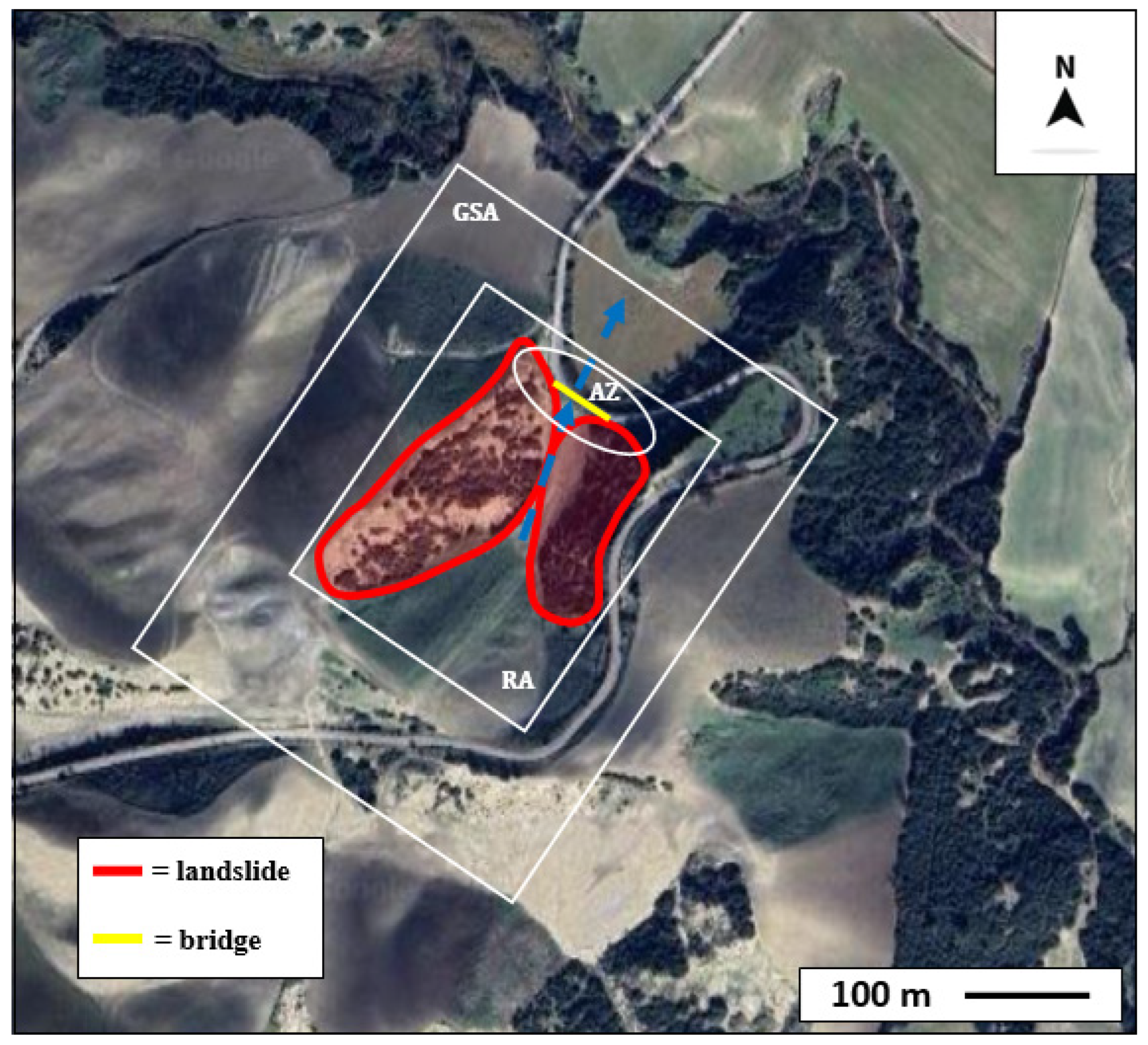
This is the zone within the GSA where the bridge is located and where the presence of landslide evidence or precursors is verified. It includes the Approach Zone (AZ), within which direct interactions between landslides and infrastructure are analyzed (see Figure 6).
The pilot areas of this study are located in two sectors of the Apennines with contrasting geological and climatic contexts: 44 bridges in the province of Lucca (Northern Apennines) and 51 bridges in the province of Matera (Southern Apennines).
Geometric Definition of Spatial Units in narrow valleys (V- or U-shaped): For bridges crossing narrow valleys—characterized by V- or U-shaped morphology and steep or rocky slopes that completely or almost completely confine the watercourse—the delineation of the DA and GSA follows a standardized geometric approach based on topographic and structural parameters.
Length of the area: the length along the valley axis is divided into two segments: the upstream section (Lup) and the downstream section (Ldown), measured orthogonally to the bridge axis. Empirical observations indicate that instability phenomena have a greater influence upstream; therefore, Lup = 2 × Ldown. The total length (Tl) is thus calculated as Tl = Lup + Lbridge + Ldown, where Lbridge is the length of the bridge.
Width of the area: the total width (Wt) is defined as Wt = Wleft + Lbridge + Wright where Wleft and Wright are the lateral buffers on the left and right sides of the bridge, respectively.
Geometric Definition of Spatial Units in wide valleys: For bridges located in wider valleys with gentle slopes, the upstream and downstream buffers (Lup and Ldown) are equal and measured parallel to the bridge axis. The total longitudinal length (L) is thus calculated as L = Lbridge + 2 × Lab, where Lab is the buffer beyond each end of the bridge, typically equal to twice the length of the bridge’s abutment.
Width of the Area (Wide Valleys): The total width (Wtotal) is defined as Wtotal = 2 × Lup/down + Wbridge. This formulation ensures complete consideration of the sectors both upstream and downstream of the bridge.
Semi-Quantitative and Empirical Criteria for the Delineation of Key Areas: The delineation of the Relevant Area (RA), Geomorphological Significant Area (GSA), and Diagnostic Area (DA) was carried out to optimize field survey time while ensuring spatial representativeness of environmental and geomorphological variables in the provinces of Lucca and Matera.
The hierarchical structure proceeds from the smallest to the largest unit:
  • RA, including the Approach Zone (AZ), represents the most localized scale, where direct landslide–infrastructure interactions occur.
  • GSA, encompassing landforms and processes that influence slope stability at a broader scale.
  • DA, the largest unit, capturing the general geomorphological and hydrographic context.
For each RA, field data were collected using Garmin GPS devices to record coordinates and aerial dimensions. The AZ was quantified as a percentage of the total RA surface.
The initial delineation of GSA and DA was conducted using high-resolution satellite imagery (Google Maps) and subsequently refined with 1:10,000 topographic maps of the Tuscany and Basilicata regions. Topographic data allowed precise measurements of slope, drainage patterns, and elevation variations.
To improve survey efficiency without compromising scientific reliability, the area sizes were estimated using a statistical filter: minimum and maximum values of GSA were determined by analyzing 95% of the sampled bridges, excluding anomalous cases.
To define representative extents of GSA, extreme values were excluded using a 95% threshold. This approach removes rare, exceptional cases that could disproportionately affect the results, providing a robust and reproducible basis for the analysis. No formal assumptions on data distribution were made; the method is designed to standardize the spatial extents while mitigating the influence of outliers.
The spatial delineation protocol, based on a hierarchical model and supported by field data, cartography, and robust statistical analysis, ensures methodological consistency across heterogeneous geomorphological contexts and operational feasibility for large-scale surveys.
The work was carried out in two phases. In the first phase, based on the methodology described above, an analysis of the selected case studies was conducted to systematically understand the different modes of interaction between landslide phenomena and bridges. This analysis integrates field surveys, geomorphological observations, historical data on landslide events, and structural information on the infrastructures, allowing the identification of the main controlling factors and the most recurrent types of interference. In the second phase, once the collection, validation, and comparative analysis of data from the various landslide–bridge interaction cases are completed, the study aims to accurately and replicably define the criteria for identifying and delineating the key areas (RA, GSA, and DA).
Furthermore, in this study, the number of landslides recorded in the IFFI database and those identified during field surveys (Li) were verified, also distinguishing cases of landslides interfering with infrastructure (Lbi). The data was organized to highlight agreements and discrepancies between sources, assess the reliability of the catalog, and identify potential gaps. Field verifications, integrated with photogrammetric and GIS analyses, allowed the identification of previously unrecorded instabilities, the assessment of landslide–bridge interactions, and the updating of available data. The recorded phenomena were classified as confirmed events, new occurrences, and significant infrastructure interactions, providing a solid basis for the analysis of results and subsequent discussion.

3. Results

Field surveys were conducted to collect detailed semi-quantitative data on the spatial extent of the main hierarchical key areas—Diagnostic Area (DA), Geomorphological Significant Area (GSA), and Relevant Area (RA)—around bridges in the two study sectors located in the Northern (Lucca Province) and Southern Apennines (Matera Province), as previously defined by Perilli et al., 2024 [22]. This study enabled the semiquantitative minimum and maximum dimensions for each area, establishing a standardized and reproducible framework for bridge-related surveys. Furthermore, this study also provides the extent of the Approach Zone (AZ) and of the Geomorphological Significant Close Zone (GSA CZ). This supports a more accurate evaluation of primary and secondary parameters and a reliable determination of the Landslide Class of Attention (CodA). In the following sections, all the results collected, including quantitative data for each main survey area, are shown. The length is measured perpendicular to the bridge, and the width is measured parallel to the bridge for the narrow valley, and vice versa, parallel to the bridge and the width is measured perpendicular for the wide valley.

3.1. Extension of the Key Area

3.1.1. Diagnostic Area

As shown in Table 1, the dimensions of the Diagnostic Area (DA) show comparable variability between the Lucca (LU) and Matera (MT) sites.
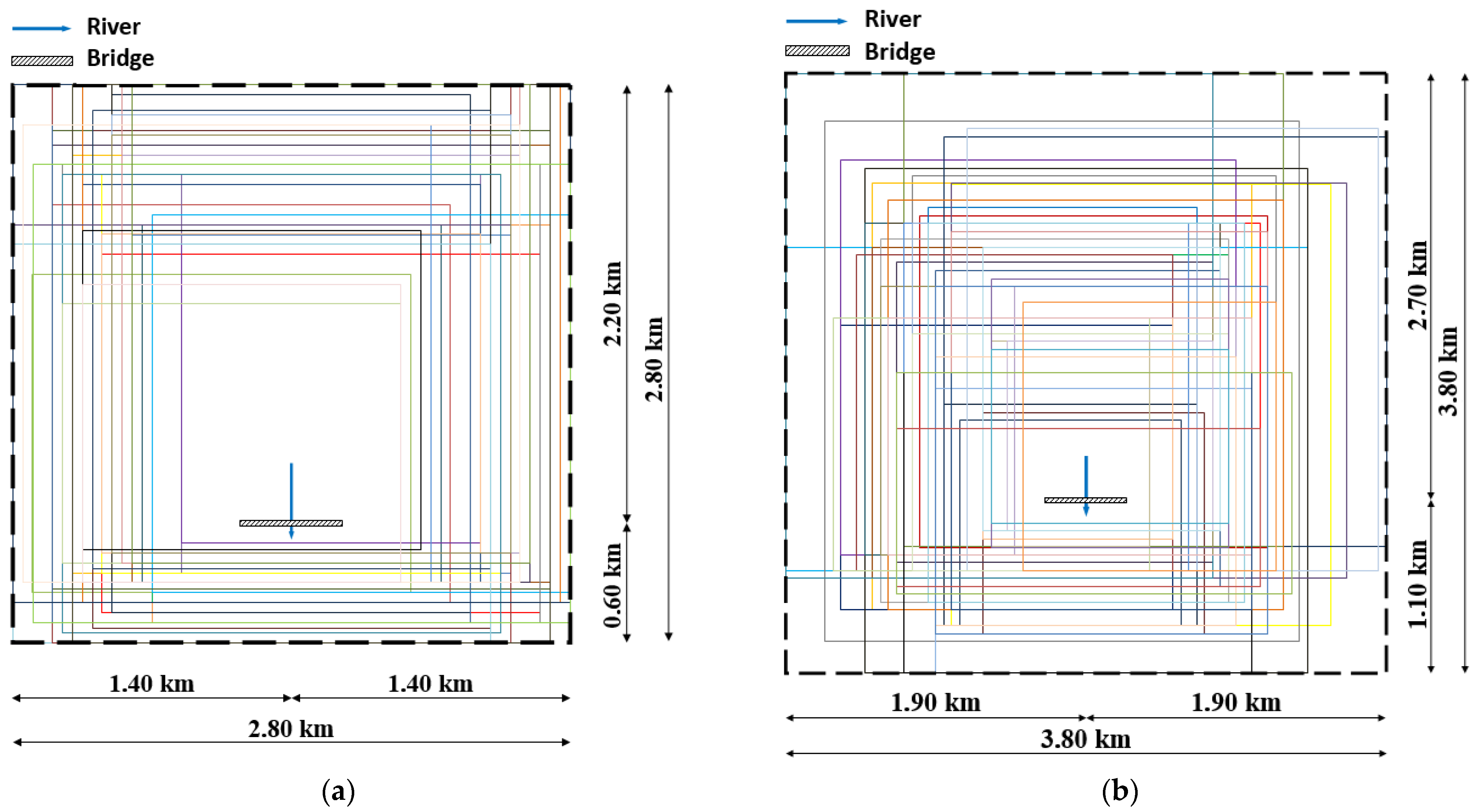
In the LU area, the upstream and downstream strips range from approximately 1.1 to 2.8 km in total length, while in the MT area, they extend from 0.6 to 3.8 km. Widths are similarly variable, ranging from about 1.1 to 2.8 km in LU and from 0.8 to 3.8 km in MT. Consequently, the maximum extent of the DA reaches 2.8 × 2.8 km in the LU area (Figure 7a) and 3.8 × 3.8 km in the MT area (Figure 7b).

3.1.2. Geomorphological Significant Area

As shown in Table 2, the dimensions of the Geomorphological Significant Area (GSA) show greater variability in the Matera (MT) sites than in the Lucca (LU) sites.
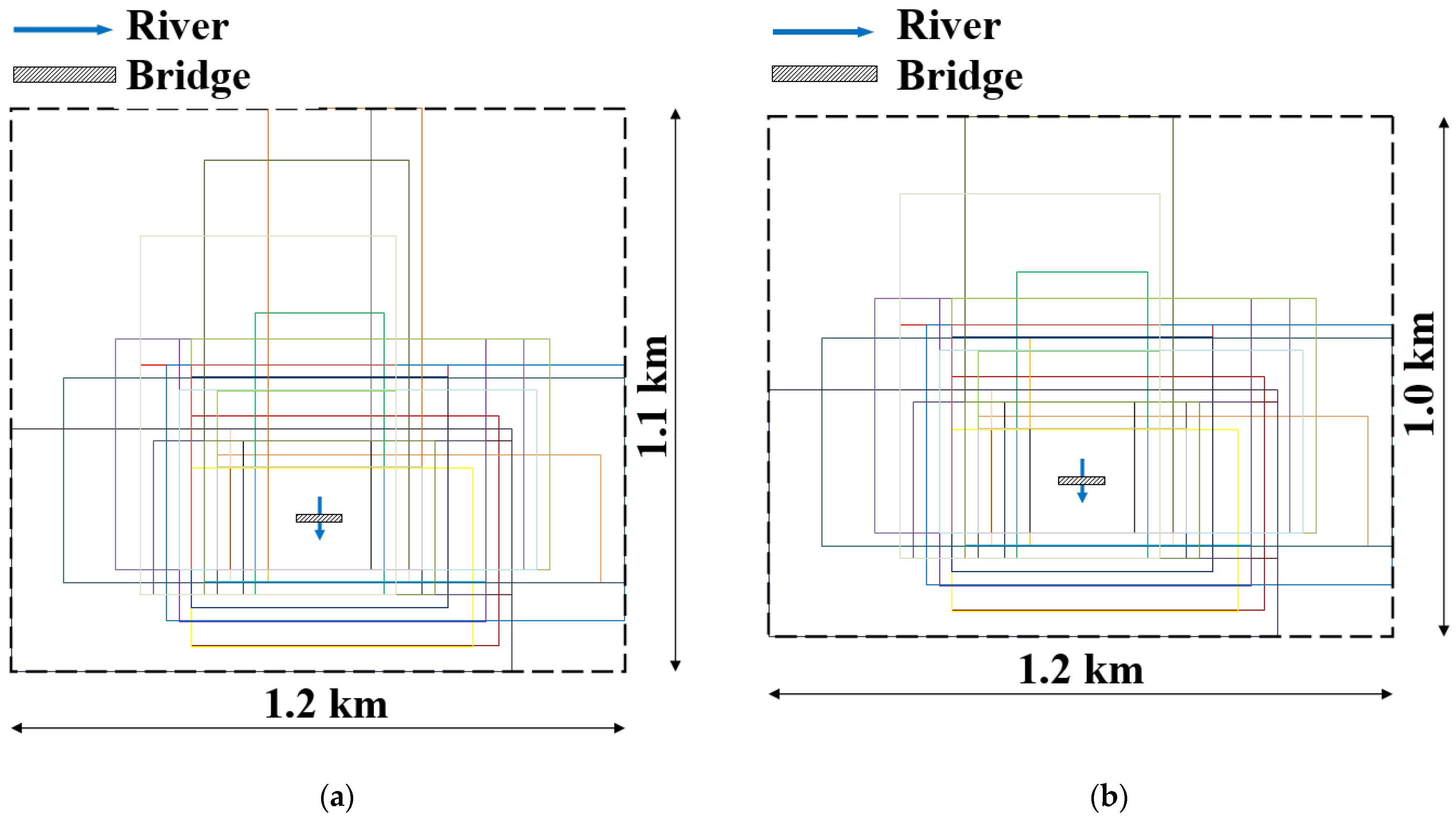
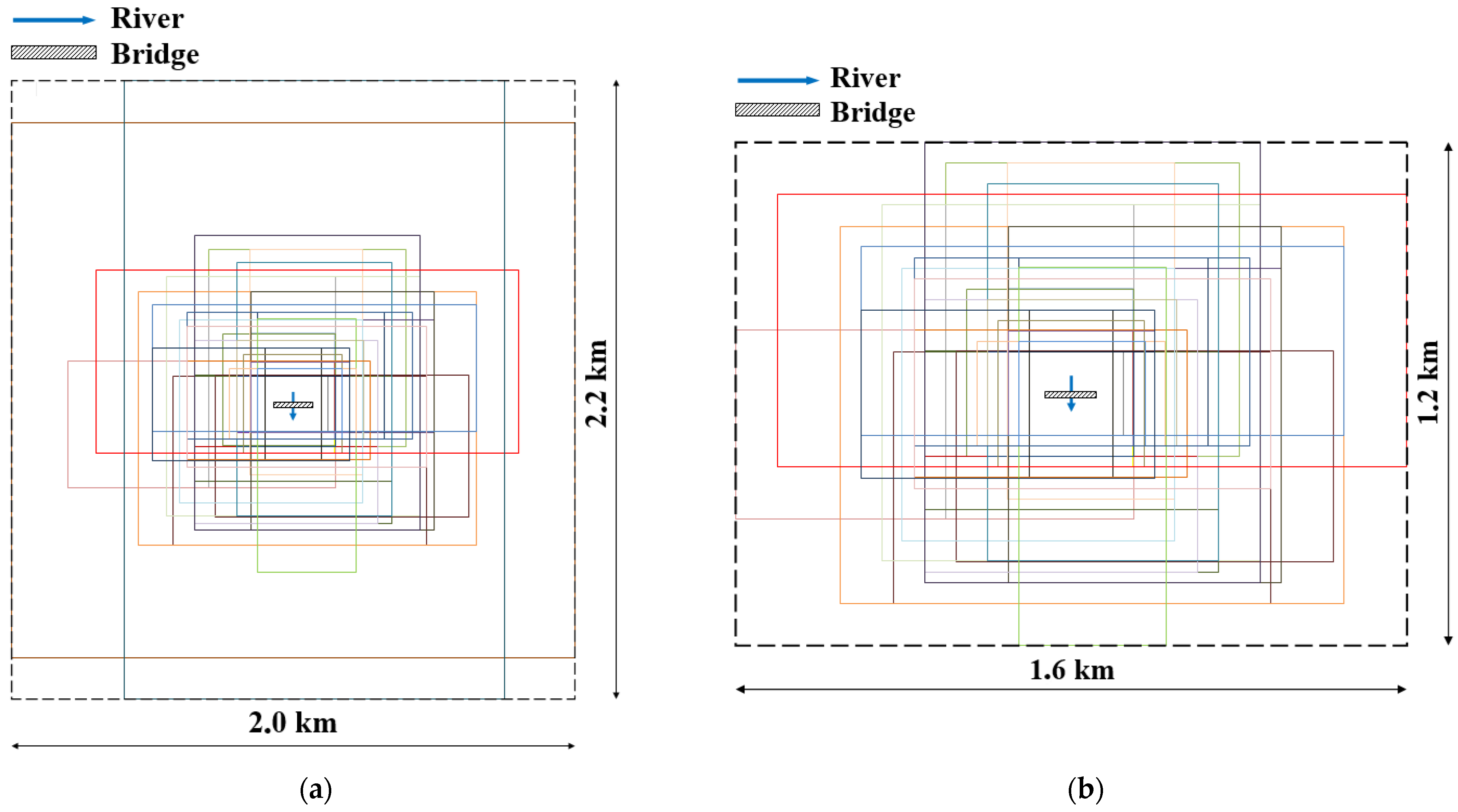
In the LU area, the total length of the GSA ranges approximately between 0.2 and 1.1 km, while in the MT area it extends up to about 2.2 km. The 95% confidence interval indicates slightly smaller values, confirming that most GSAs are under 1.0 km in LU and under 1.2 km in MT. Widths show similar variability, generally between 0.1 and 0.6 km in LU and up to 1.0 km in MT. Consequently, the maximum extent of the GSA reaches 1.2 × 1.1 km in the LU area (Figure 8a) and 2.0 × 2.2 km in the MT area (Figure 9a), in 95% of cases, corresponding to 1.2 × 1.0 km and 1.6 × 1.2 km, respectively (Figure 8b and Figure 9b).
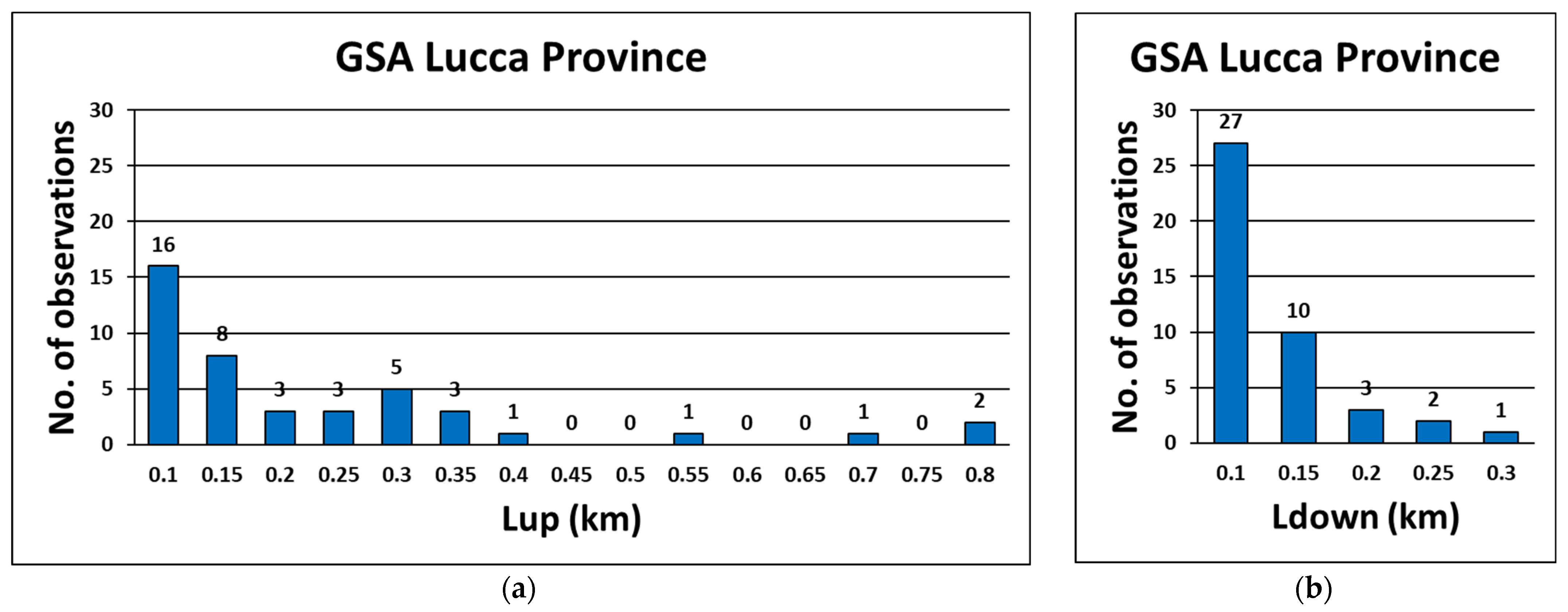
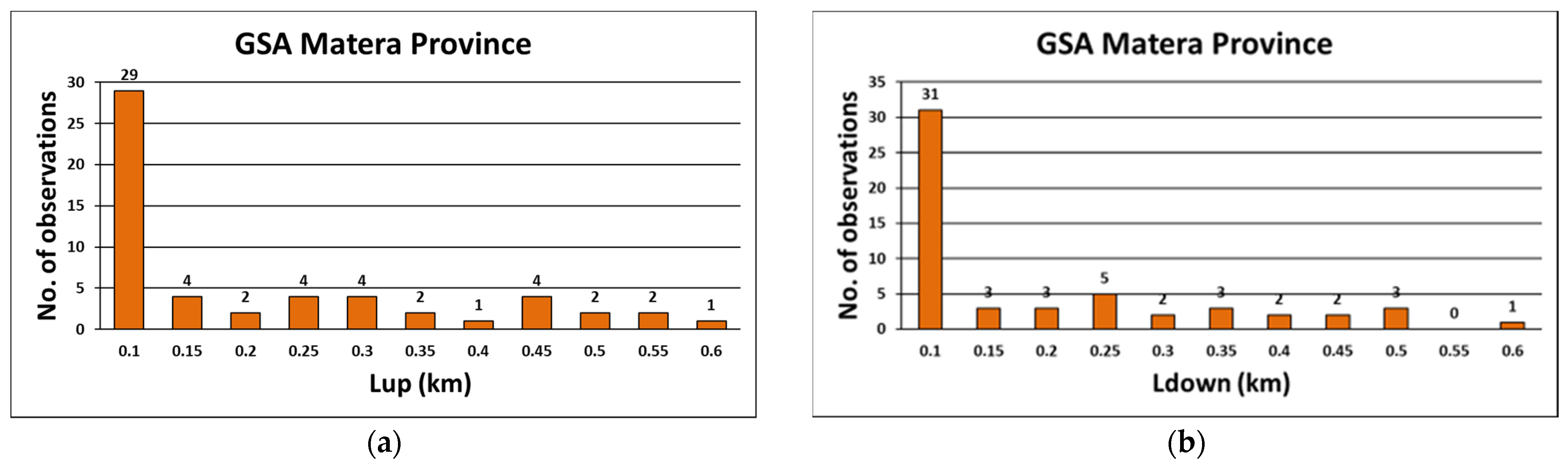
Considering the overall distribution of the upstream (Lup) and downstream (Ldown) components, and to optimize field survey efforts, the representative dimensions of the GSA can reasonably be approximated as 0.5 × 0.3 km in the Lucca Province and 0.6 × 0.6 km in the Matera Province.
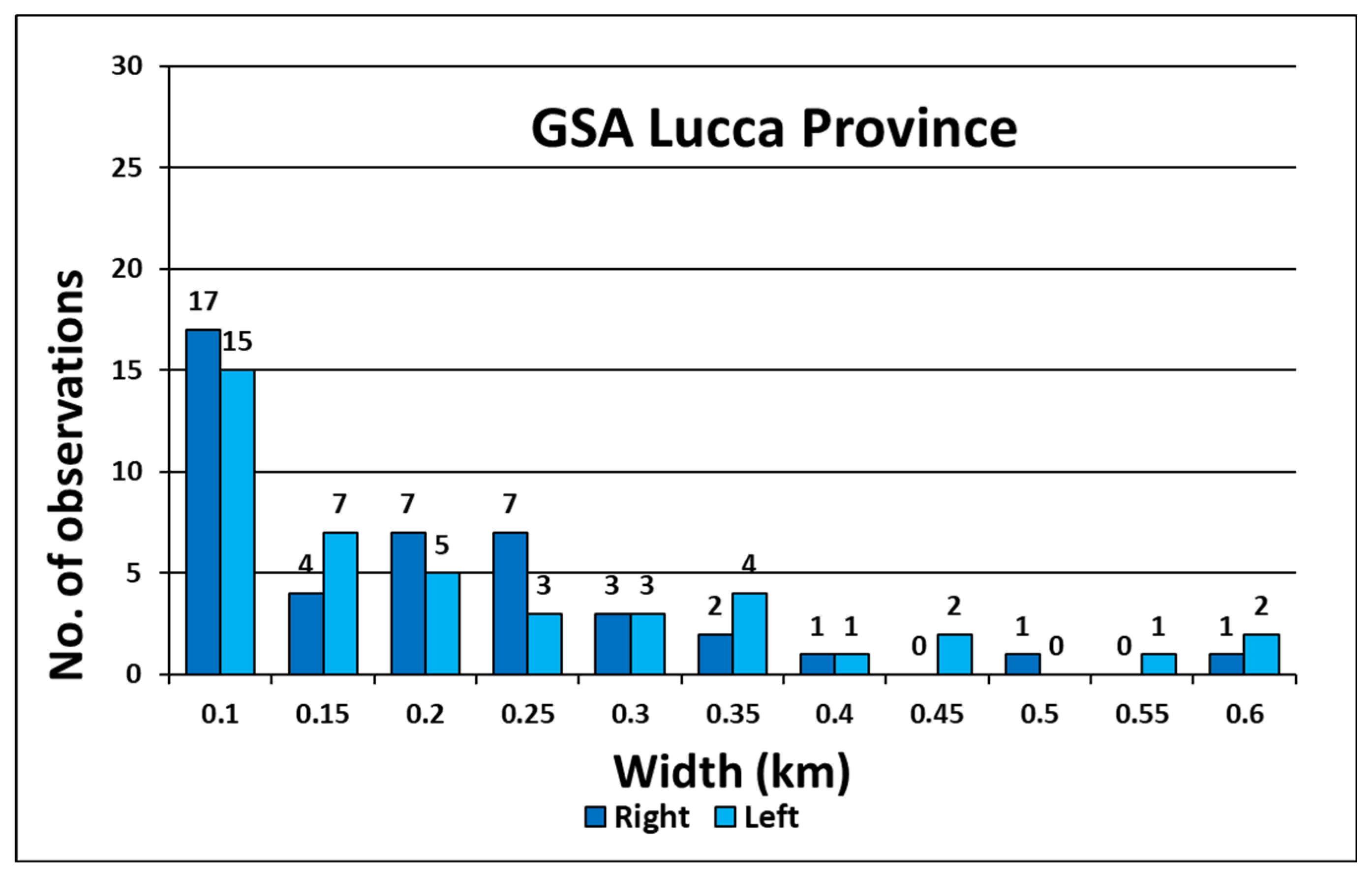
Width distribution of the Geomorphological Significant Area (GSA) for bridges in the province of Lucca (100% of the bridges studied) are shown in Figure 10a,b and Figure 11.
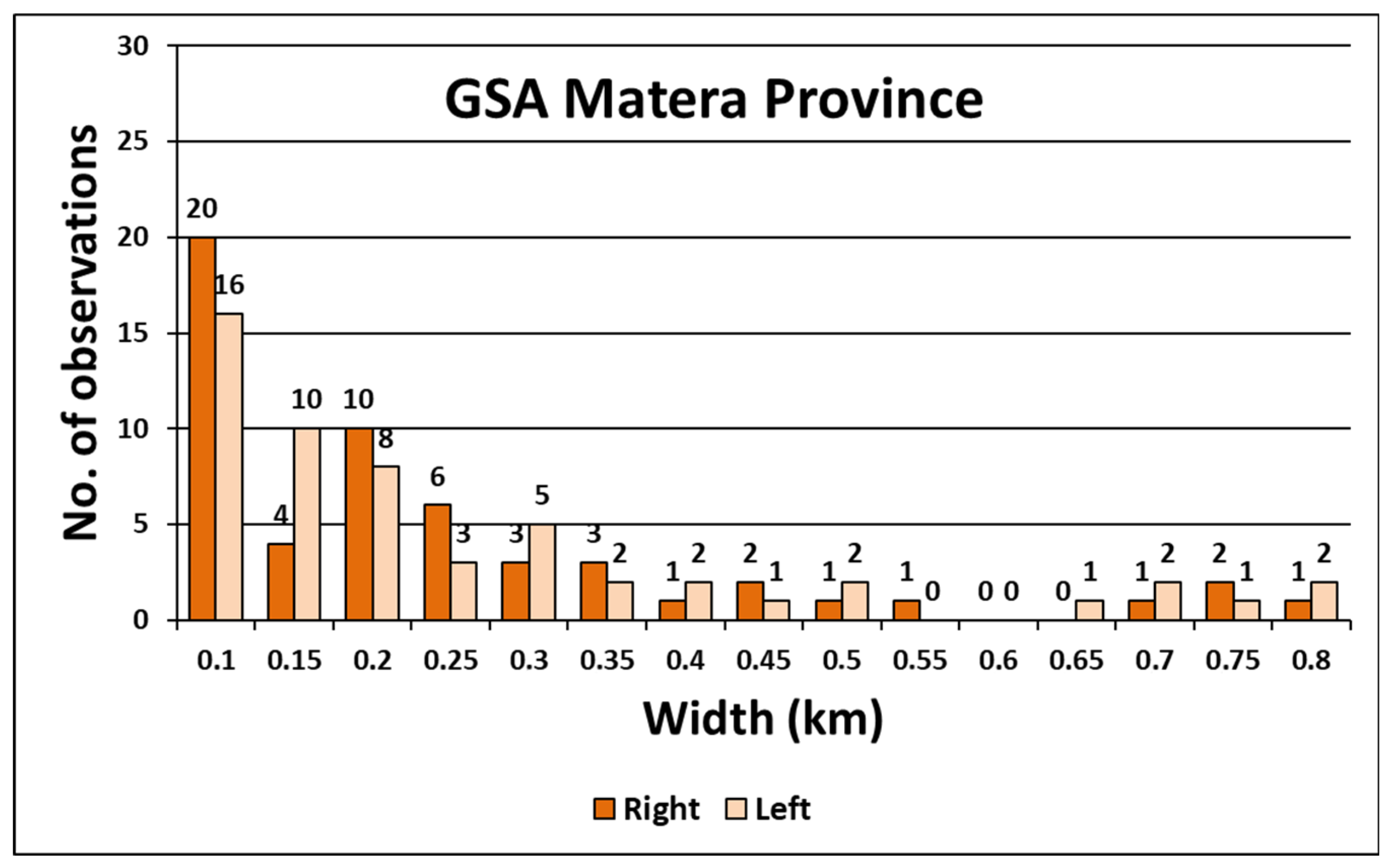
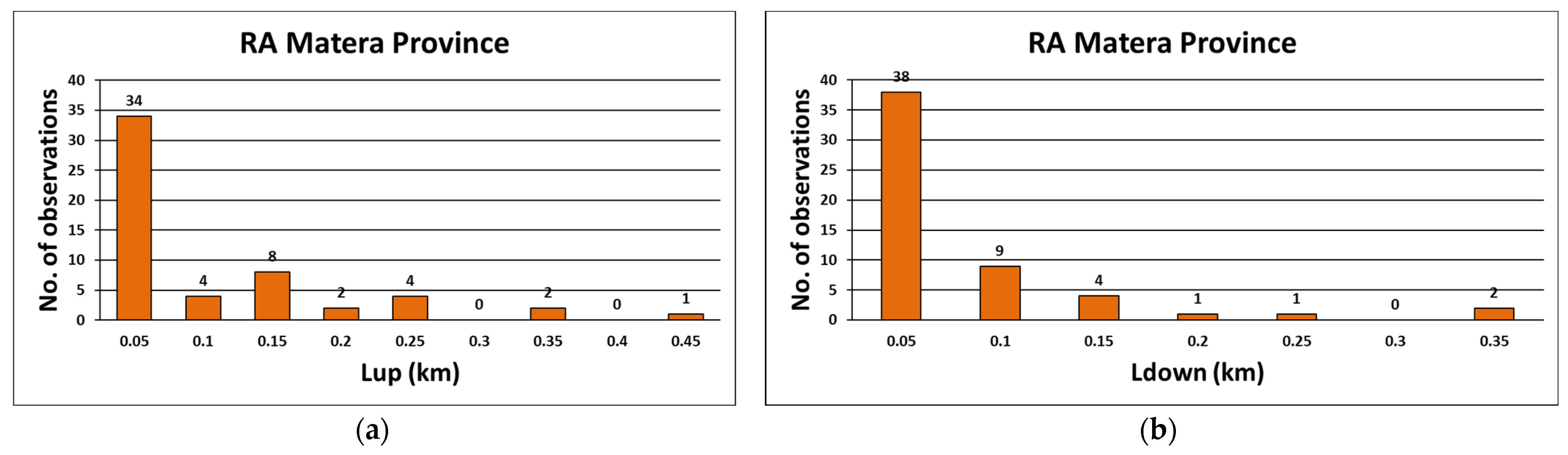
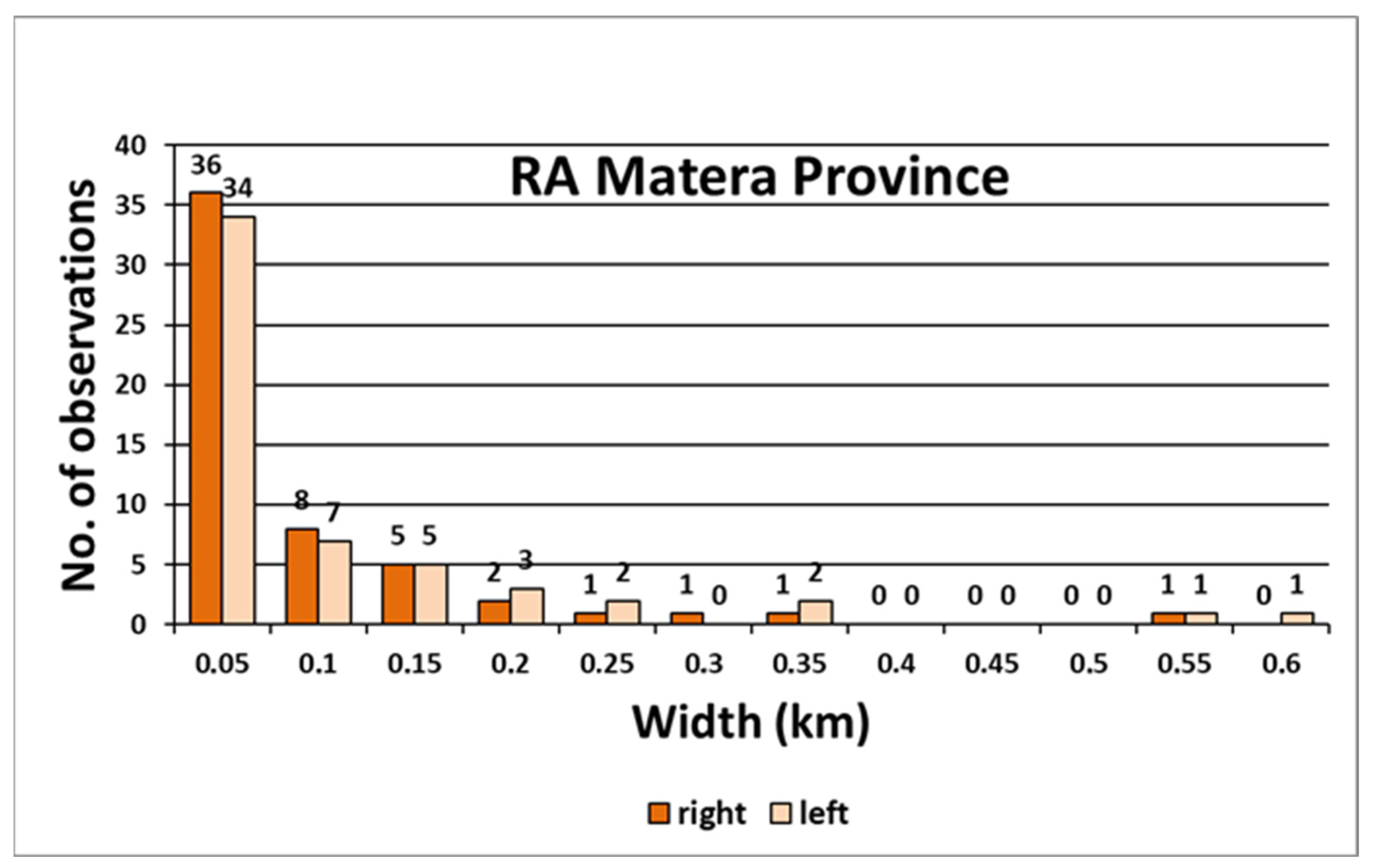
Width distributions of the Geomorphological Significant Area (GSA) bands of bridges in the province of Matera (100% of the bridges studied) are shown in Figure 12a,b and Figure 13.

3.1.3. Relevant Area

Based on the collected data (excluding the two bridges exceeding 1 km in length) in the Matera (MT) Province (Table 3), the dimensions of the Relevant Area (RA) are smaller and more homogeneous than the broader GSA and DA zones.
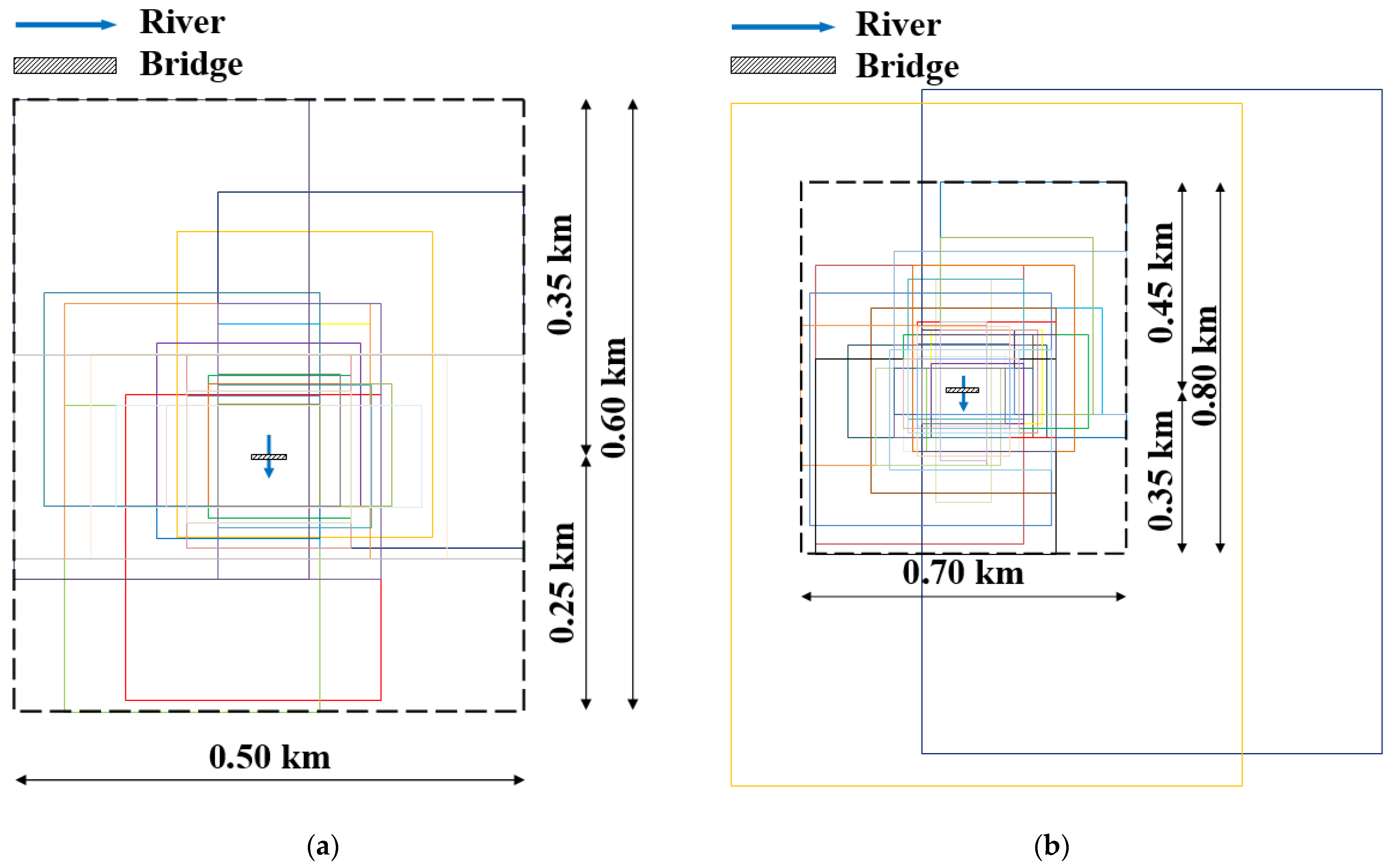
In the Lucca (LU) area, the total length ranges approximately from 0.10 to 0.60 km, while in the MT area it extends up to 0.80 km. Widths show similar proportions, varying from about 0.10 to 0.50 km in LU and up to 0.70 km in MT. Consequently, the maximum extent of the RA reaches 0.5 × 0.6 km in the LU area (Figure 14a) and 0.7 × 0.8 km in the MT area (Figure 14b).
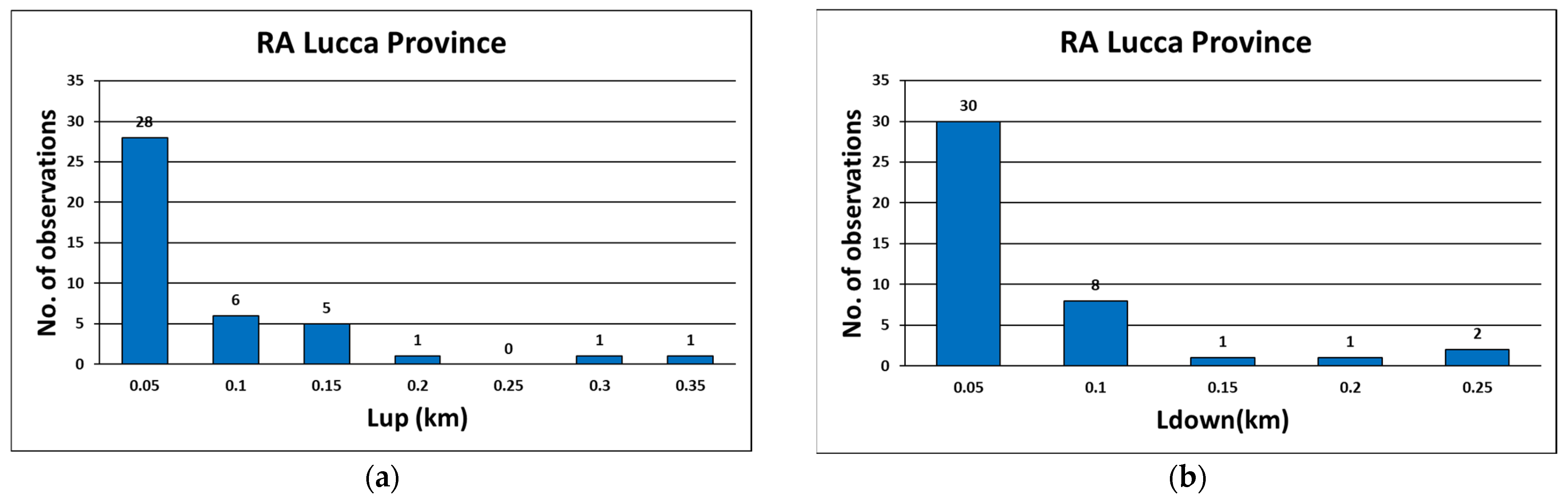
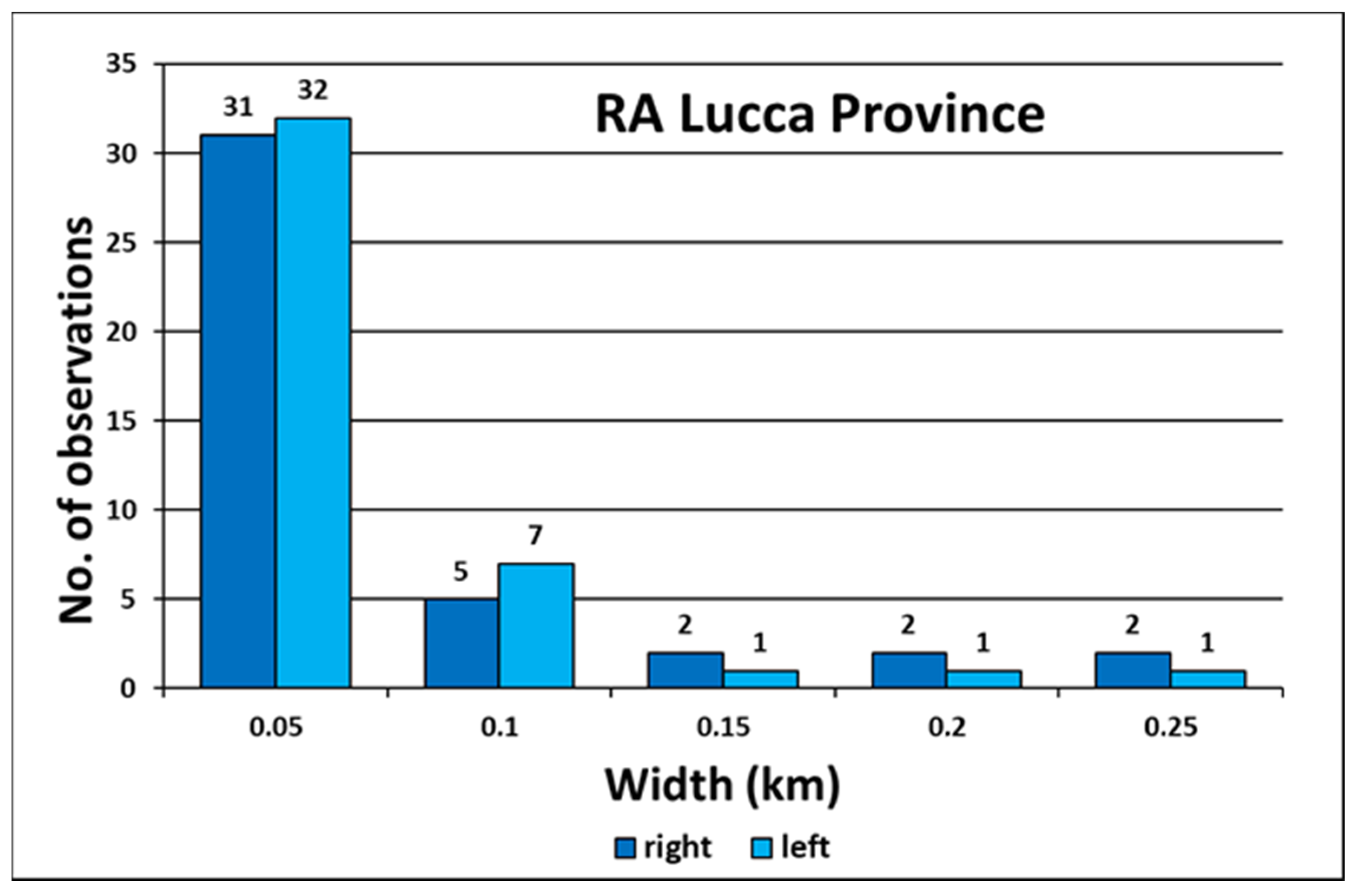
Width distributions of the Relevant Area (RA) bands of bridges in the province of Lucca (100% of the bridges studied) are shown in Figure 15a,b and Figure 16.
Width distributions of the Relevant Area (RA) bands of bridges in the province of Matera (100% of the bridges studied) are shown in Figure 17a,b and Figure 18.

3.1.4. Approach Zone (AZ) and Close Geomorphological Significant Area (GSA CZ)

To support inspectors during the identification of potential landslide–bridge interactions, this study introduces the Approach Zone (AZ), defined as 30% of the total extension of the Relevant Area (RA). The AZ represents the immediate vicinity of the bridge where geomorphological and hydraulic conditions may directly influence structural stability and accessibility and therefore require focused survey attention.
In addition, the Close Geomorphological Significant Area (GSA CZ)—introduced here for the first time—is defined as 30% of the GSA. The GSA CZ allows for a clear distinction between “essential” field-based data and “supplementary” remote or desk-based data, which are collected from RA + GSA CZ and DA + GSA, respectively. This hierarchical refinement improves survey efficiency and methodological consistency, ensuring inspections focus on the most critical sectors while maintaining full coverage of the surrounding terrain.
The comparison between the IFFI catalog data and field survey observations (shown in the following) reveals variable correspondence across Key Areas (DA, GSA, RA) in Lucca and Matera. Field surveys identified several previously unrecorded landslides, mainly in GSA and RA, suggesting that official inventories underestimate landslide occurrence. In Lucca, catalog-field agreement is generally high, though some additional landslides and bridge interactions (Lbi > 0) were detected. In Matera, discrepancies are greater—several bridges show new landslides (Li > 0) and multiple landslide–bridge interactions, such as bridge 47 with five new landslides, one directly affecting the structure. These results highlight the need for regular updates and integrated field verification to improve hazard and infrastructure risk assessment.

3.2. Key Areas for Landslide Data Comparison

A comparative analysis between the landslides recorded in the IFFI catalog (Inventory of Landslide Phenomena in Italy) and those identified in the surveyed areas (DA, GSA, RA) revealed significant variations in the level of correspondence between the two datasets.

3.2.1. Lucca Province

The investigated area in the Province of Lucca is characterized by a high density of landslides. Data analysis within the DA allowed the classification of landslides into four distinct clusters based on the frequency of events per bridge (Table 4).
A good level of correspondence was observed between the landslides reported in the IFFI catalog and those identified in this study for the GSA and RAs. Alignment was confirmed for eight bridges (or 30 bridges if cases with zero landslides in both datasets are included). This consistency supports the reliability of the previously recorded data. However, the analysis also revealed several new instances of instability not documented in the IFFI catalog: 12 new landslides in the GSA and 12 in the RA. In summary, in the Province of Lucca, a total of 4413 landslides were recorded in the DA. Both the GSA and RAs exhibited a higher number of landslides than those listed in the IFFI catalog (Table 5).

3.2.2. Matera Province

A comparative analysis between the IFFI catalog and the landslides identified in the surveyed areas (DA, GSA, RA) of the Province of Matera revealed notable differences in the number of recorded events.
Although the inspected area is larger than that of Lucca, the number of landslides recorded in the IFFI catalog is generally lower, and for many bridges across the three KAs, it is entirely absent. Data analysis within the DA allowed the classification of landslides into four clusters based on the frequency of events per bridge (Table 6):
A good level of correspondence was observed between the landslides reported in the IFFI catalog and those identified in this study for the GSA and RAs. Alignment was confirmed for six bridges (or 32 if cases with zero landslides in both datasets are included), largely confirming the reliability of the pre-existing data. At the same time, the investigation revealed several new instances of instability not previously recorded in the IFFI catalogue:
  • GSA: 26 new landslides
  • RA: 26 new landslides
In summary, in the Province of Matera, 911 landslides were recorded in the DA. Both the GSA and RAs exhibited more landslides than those reported in the IFFI catalog (Table 7). Table 8 and Table 9 show the comparison between the IFFI catalog data and field survey observations.

4. Discussion

Mapping the full extent of landslides—from source to toe—is widely recognized as essential for understanding landslide dynamics [1,2,3,4,5]. However, few studies address the characterization of surrounding buffer zones, which are crucial for assessing impacts on adjacent areas and ensuring consistent and reliable data collection [3,4,5,6,7]. Existing studies, including work from the Italian IFFI Project [12,13,14,15,16], provide limited guidance on the precise spatial extent of surveyed areas or recommended dimensions for buffer zones.
By defining hierarchical buffer zones with clear extents, the framework ensures reproducible data collection and reliable landslide risk assessment.
In line with Italian Regulation LLG 2022, which requires risk assessments for infrastructure based on primary and secondary parameters, Perilli et al. [22,23] offered preliminary guidance on the size of key areas encompassing landslides and surrounding zones. Building on this framework, the present study empirically refines the dimensions of hierarchical survey zones: Diagnostic Area (DA), Geomorphological Significant Area (GSA), Relevant Area (RA), and Approach Zone (AZ). Existing international buffer-zone approaches are not tailored to LLG 2022 operational needs or to define standardized survey extents around bridges. A detailed comparison is therefore beyond this study’s scope. Our framework focuses on providing practical, reproducible survey areas for bridge inspections and LLG-compliant monitoring. Minimum and maximum extension values are proposed for DA, GSA, and RA. The AZ is defined as 30% of RA, and the GSA Close Zone (GSA CZ) as 30% of GSA—definitions introduced here for the first time. This distinction between core areas for direct survey and peripheral zones for remote analysis streamlines inspections and ensures critical hazards are captured.
Applying the 95% threshold allows for more coherent and representative spatial extents of GSA, eliminating rare extreme cases such as exceptionally long viaducts. This standardization enhances comparability across different regions and provides a reliable operational basis for defining survey areas around bridges, ensuring that the results are robust and meaningful for subsequent analyses.
Rectangular survey areas were chosen to standardize inspections, despite not perfectly matching specific topographic, geomorphological, or hydrographic features. These refined dimensions provide a clear, replicable framework for landslide susceptibility surveys and allow adjustments under specific conditions (Table 10). For example, surveyed areas can be reduced when no landslides are present in DA or when potential sources of rapid shallow landslides are absent in GSA, indicating low susceptibility. Providing explicit numerical dimensions improves inspection prioritization and clarifies the distinction between “essential” field data (RA + GSA CZ) and “supplementary” data (DA + GSA). This approach supports systematic evaluation of primary and secondary parameters, aiding precise determination of the Landslide Attention Class in accordance with legislation.
A 30% threshold was adopted to identify the sector of RA and GSA where landslides are most likely to threaten the bridge. This proportion reflects the frequent asymmetry of slope instabilities—often confined to one sector of the valley—and has proven effective in our ongoing analyses of landslide–bridge interactions. As additional cases are evaluated, this threshold may be further refined.
Refined key area dimensions are essential for validating existing landslide inventories and ensuring reliable records relevant to bridge safety. Periodic surveys of DA GSA and RA enable verification of landslide presence and support the continuous development of updated inventories that capture direct and indirect impacts on infrastructure. Integrating field-based “essential” data with “supplementary” remote or back-office datasets enhances the robustness of the inventory (Table 11).
Quantitative metrics, such as the number of landslides per DA or GSA and the ratio of DA to GSA landslides, provide valuable insight into landslide distribution and dynamics. These metrics support informed allocation of financial and human resources, guiding targeted monitoring, maintenance, and mitigation while ensuring systematic and comparable survey efforts across sites.
Field surveys in Lucca and Matera revealed numerous previously unrecorded landslides, particularly within GSA and RA. Integrating standardized survey zones with field verification both validates existing inventories and uncovers previously undocumented hazards, strengthening infrastructure risk management. In Lucca, IFFI records generally align with field observations in DA and GSA, but RAs show additional landslides and direct infrastructure interactions (Lbi > 0), highlighting the importance of field verification. Discrepancies are more pronounced in Matera; for example, bridge 47 exhibited five previously undocumented landslides, one directly impacting the structure.
The number of landslides interacting with infrastructure (Lbi) serves as a key indicator of bridge vulnerability. Combining catalog data with systematic field surveys provides a more complete and accurate assessment of landslide hazard, enabling prioritization of mitigation, maintenance, and emergency response measures.
In summary, this study provides:
  • Empirically refined dimensions for hierarchical key zones (DA, GSA, RA, AZ, and cGSA).
  • Consolidated guidelines for adjusting survey areas based on landslide absence or low susceptibility.
  • Demonstration of the critical role of field surveys in validating official inventories and capturing locally significant instabilities.
  • Metrics and methodologies that support targeted resource allocation, systematic monitoring, and improved infrastructure safety.
By integrating field verification with existing inventories, the proposed framework ensures methodological consistency across heterogeneous geomorphological contexts and operational feasibility for large-scale surveys.
The proposed 30% threshold for AZ and GSA CZ represents a practical and evidence-based starting point for identifying the most critical portions of the surveyed areas; ongoing work on a larger dataset will allow refinement of this proportion and validation of its applicability across diverse geomorphological contexts.
The framework supports LLG 2022 operational requirements and provides a flexible structure that can be adapted and tested in diverse geomorphological contexts, facilitating broader applicability beyond the current case studies.

5. Conclusions

This study highlights the importance of a systematic and standardized approach to landslide mapping, particularly in infrastructure-critical areas such as bridges. Traditional surveys often focus only on mapping landslides from source to toe, neglecting surrounding buffer zones, which limits the effectiveness of susceptibility assessments and the standardized collection of key data, here distinguished as essential and supplementary. The approach proposed in this study addresses these gaps, enhancing dataset comparability and supporting more reliable hazard evaluation. By defining clear spatial hierarchies and mandatory survey extents, it removes ambiguity in data collection, enabling reproducible assessments across different regions.
This work refines the previous dimensions proposed by FABRE Geo by establishing minimum and maximum dimensions for the Diagnostic Area (DA), Geomorphological Significant Area (GSA), and Relevant Area (RA), while introducing the Approach Zone (AZ) and GSA Close Zone (GSA CZ). This framework provides a structured, replicable methodology that supports both field-based and remote data collection, ensuring systematic coverage and reproducibility of surveys.
The framework was applied to 95 bridges in the Northern and Southern Apennines, demonstrating its practicality across diverse geomorphological and hydrographic settings. Rectangular survey zones, though simplified representations of the actual topography and geomorphological features of the areas around the bridges, maintain efficiency while ensuring the reliability of collected data. This pragmatic design balances operational feasibility with analytical rigor, allowing consistent application without compromising essential geomorphological insights. Conditional reductions in survey areas further enhance efficiency without compromising the integrity of primary and supplementary datasets.
The delineation of DA, GSA, RA, AZ, and GSA-CZ clearly prioritizes zones for collecting essential and supplementary data, defined here for the first time, and supports precise determination of the Landslide Attention Class (CdA) in compliance with LLG 2022 requirements. Essential data from RA and GSA CZ are critical for assessing both primary and secondary parameters required by current legislation. Supplementary data from DA and GSA, integrated with desk-based and remotely sourced information, support parameter weighting and help identify potential rapid shallow landslide sources.
In addition, this approach facilitates the development of a robust landslide inventory structure, particularly for phenomena that threaten or affect Italian bridges. Such inventories are essential for planning interventions, improving susceptibility maps, managing periodic inspections, allocating resources efficiently, and supporting technicians responsible for monitoring. Standardized delimitation of key areas (DA, GSA, and RA) enabled comparison of IFFI catalog data with field surveys in Lucca and Matera. Results revealed previously unrecorded landslides and bridge interactions in Matera, while Lucca showed strong agreement between catalog and field data. These findings highlight the value of integrating standardized inventories with field verification to improve landslide susceptibility assessment and infrastructure risk management.
The methodology ensures that critical infrastructure assessments are grounded in both standardized guidelines and localized field realities, closing the gap between theory and practice in landslide risk management.
In conclusion, this study presents a comprehensive and practical methodology for landslide survey and classification around bridges. The definition and sizing of DA, GSA, and RA, along with the operational introduction of AZ and GSA CZ, constitute a foundational contribution. These empirically derived areas provide standardized, reproducible survey extents that can guide field inspections, improve inventory validation, and support systematic data collection. While full integration into regulatory frameworks is beyond the scope of this work, the results establish the technical and operational basis for the future development of practical tools, checklists, and potential policy adoption. Together, these elements enhance reproducibility, comparability, and long-term monitoring, promoting safer and more resilient infrastructure management and providing a solid foundation for future studies on landslide susceptibility, hazard, and risk reduction.
The proposed approach establishes a practical, scalable foundation for improving LLG-compliant surveys, supporting systematic field inspections, and enabling future application in wider geomorphological and infrastructural contexts.

Author Contributions

Conceptualization, N.P., N.S. and S.P.; methodology, N.P., M.L., N.S., S.S. and S.P.; validation, N.P., N.S., S.S. and S.P.; formal analysis, M.L.; investigation, N.P. and M.L.; data curation, N.P., M.L., N.S., S.S. and S.P.; writing—original draft preparation, N.P., M.L. and S.S.; writing—review and editing, N.P., M.L. and S.S.; visualization, N.S. and S.P.; supervision, N.P., N.S. and S.P. All authors have read and agreed to the published version of the manuscript.

Funding

This research received no external funding.

Data Availability Statement

The raw data supporting the conclusions of this article will be made available by the authors on request.

Acknowledgments

This research was supported by FABRE Research Consortium for the evaluation and monitoring of bridges, viaducts, and other structures through the project titled “Methodological Approaches for RIsk assessment in the framework of landslide–bridge IntEraction (MARIE)”.

Conflicts of Interest

The authors declare no conflicts of interest.

Abbreviations

The following abbreviations are used in this manuscript:
LIRALandslide Inventory Reference Area
DADiagnostic Area
GSAGeomorphological Significant Area
RARelevant Area
AZApproach Zone
cGSAClose GSA Zone
GSA/CZGSA Close Zone
CofAClassification of Attention levels

References

  1. Fell, R.; Corominas, J.; Bonnard, C.; Cascini, L.; Leroi, E.; Savage, W.Z. Guidelines for landslide susceptibility, hazard and risk zoning for land use planning. Eng. Geol. 2008, 102, 85–98. [Google Scholar] [CrossRef]
  2. WP/WLI. A suggested method for reporting a landslide. Bull. Int. Assoc. Eng. Geol. 1990, 41, 5–12. [Google Scholar] [CrossRef]
  3. Guzzetti, F.; Galli, M.; Reichenbach, P.; Ardizzone, F.; Cardinali, M. Landslide hazard assessment in the Collazzone area, Umbria, Central Italy. Nat. Hazards Earth Syst. Sci. 2006, 6, 115–131. [Google Scholar] [CrossRef]
  4. Corominas, J.; van Westen, C.; Frattini, P.; Cascini, L.; Malet, J.P.; Fotopoulou, S.; Catani, F.; Van Den Eeckhaut, M.; Mavrouli, F.; Agliardi, F.; et al. Recommendations for the quantitative analysis of landslide risk. Bull. Eng. Geol. Environ. 2014, 73, 209–263. [Google Scholar] [CrossRef]
  5. Strauch, R.; Istanbulluoglu, E.; Riedel, J. A new approach to mapping landslide hazards: A probabilistic integration of empirical and physically based models in the North Cascades of Washington, USA. Nat. Hazards Earth Syst. Sci. 2019, 19, 2477–2495. [Google Scholar] [CrossRef]
  6. Zhang, Y.; Wu, C.; Cui, P.; Yi, S.; Yuan, R.; Jiang, Z.; Li, Y.; Kong, W. Geological Complexity: A novel index for measuring the relationship between landslide occurrences and geological conditions. Bull. Eng. Geol. Environ. 2025, 84, 301. [Google Scholar] [CrossRef]
  7. Patel, A.; Kumar, D.; Yadav, V.S.; Harode, P.K.; Kaushal, A. Comparison of Aridity Indices in Mahi River Basin under Climate Change Scenarios. J. Exp. Agric. Int. 2025, 47, 234–257. [Google Scholar] [CrossRef]
  8. Wang, Y.; Wang, L.; Liu, S.; Han, L.; Zhang, W.; Hong, L.; Zhu, Z.; Zhu, X. Region similarity assessment for empowering physics-informed transfer learning-based landslide susceptibility mapping. J. Rock Mech. Geotech. Eng. 2025; in press. [Google Scholar] [CrossRef]
  9. Wang, Y.; Zhang, W.; Wang, L.; Liu, S.; Zhang, K.; Liu, P.; Sun, W.; Jiang, S. Cross-regional extrapolation of landslide susceptibility mapping via transfer learning. Geosci. Front. 2025, 102212. [Google Scholar] [CrossRef]
  10. Wei, X.; Zhang, L.; Gardoni, P.; Chen, Y.; Tan, L.; Liu, D.; Du, C.; Li, H. Comparison of hybrid data-driven and physical models for landslide susceptibility mapping at regional scales. Acta Geotech. 2023, 18, 4453–4476. [Google Scholar] [CrossRef]
  11. Liu, S.; Wang, L.; Zhang, W.; Sun, W.; Wang, Y.; Liu, J. Physics-informed optimization for a data-driven approach in landslide susceptibility evaluation. J. Rock Mech. Geotech. Eng. 2024, 16, 3192–3205. [Google Scholar] [CrossRef]
  12. ISPRA (Istituto Superiore per la Protezione e la Ricerca Ambientale). Inventario dei Fenomeni Franosi in Italia (IFFI); ISPRA: Roma, Italy, 2007. [Google Scholar]
  13. Trigila, A.; Iadanza, C. L’Inventario Nazionale dei Fenomeni Franosi Italiani (IFFI): Metodologia e risultati preliminari. Geogr. Fis. Din. Quat. 2010, 33, 1–10. [Google Scholar] [CrossRef]
  14. Trigila, A.; Iadanza, C. La mappa di suscettibilità da frana dell’Italia alla scala 1:1,000,000. Geophys. Res. Abstr. 2012, 14, 7655. Available online: https://hdl.handle.net/2158/776961 (accessed on 11 December 2025).
  15. Trigila, A.; Iadanza, C.; Bussettini, M.; Lastoria, B.; Barbano, A.; Munafò, M. Dissesto idrogeologico in Italia: Pericolosità e indicatori di rischio. GEOmedia 2018, 22, 49–56. [Google Scholar]
  16. Trigila, A.; Iadanza, C.; Romeo, S.; Di Paola, G.; Gambino, P.; Calcaterra, S.; Zastrow, L.R.; Romano, D.; Biondo, T.; Noman, M.; et al. Advancing landslide knowledge and dissemination in Italy through IdroGEO 2.0 web platform: IdroGEO 2.0: Advancing landslide knowledge and dissemination in Italy. Landslides 2025, 1–11. [Google Scholar] [CrossRef]
  17. ISPRA. Italian Institute for Environmental Protection and Research (IFFI): Technical and Methodological Documentation. 2024. Available online: https://www.progettoiffi.isprambiente.it/?page_id=66 (accessed on 11 December 2025).
  18. ISPRA. Environmental Indicators—Italian Landslide Inventory (IFFI); Italian Institute for Environmental Protection and Research: Rome, Italy, 2024; Available online: https://indicatoriambientali.isprambiente.it/it/pericolosita-da-frana/inventario-dei-fenomeni-franosi-ditalia-iffi (accessed on 11 December 2025).
  19. Amanti, M.; Casagli, N.; Catani, F.; D’orefice, M.; Motteran, G. Guida al censimento dei fenomeni franosi ed alla loro archiviazione. In Presidenza del Consiglio dei Ministri—Dipartimento per i Servizi Tecnici Nazionali—Servizio Geologico; Istituto Poligrafo e Zecca dello Stato: Roma, Italy, 1996. [Google Scholar]
  20. Amanti, M.; Chiessi, V.; Bertolini, G.; Ramasco, M.; de Nardo, M.T. Guida Alla Compilazione della Scheda Frane IFFI (Inventario Fenomeni Franosi in Italia), Allegato 1 al Progetto IFFI; Servizio Geologico Nazionale: Roma, Italy, 2001. [Google Scholar]
  21. Trigila, A.; Iadanza, C.; Bussettini, M.; Lastoria, B.; Barbano, A.; Munafò, M. Dissesto Idrogeologico in Italia: Pericolosità e Indicatori di Rischio, Edizione 2024; Rapporti 415/2025; Istituto Superiore per la Protezione e la Ricerca Ambientale (ISPRA): Roma, Italy, 2025. [Google Scholar]
  22. Perilli, N.; Stacul, S.; Lombardi, M.; Nenci, N.; Squeglia, N. Key areas and rearrangement of the workflow for the evaluation of the landslide class of attention parameters of existing bridge. Struct. Integr. Procedia 2024, 62, 538–545. [Google Scholar] [CrossRef]
  23. Perilli, N.; Stacul, S.; Lombardi, M.; Nenci, N.; Squeglia, N. Target areas to survey for the evaluation of the parameters required for the assessment of the Landslide Class of Attention of existing (Italian) bridges. In Proceedings of the 6th Euro-Mediterranean Conference for Environmental Integration, EMCEI, Marrakesh, Morocco, 15–18 May 2024. [Google Scholar]
  24. Ministry for Sustainable Infrastructure and Mobility (MIMS). Ministerial Decree 204 on 01.07.2022. In Guidelines for the Classification and Management of Risk, the Safety Assessment and the Monitoring of Existing Bridges; Italy. G.U. Serie Generale n.196; Ministry for Sustainable Infrastructure and Mobility: Rome, Italy, 2022. [Google Scholar]
  25. Conti, P.; Cornamusini, G.; Carmignani, L.; Molli, G. The geological structure of the Emilia-Tuscany Northern Apennines and Alpi Apuane. Geol. Field Trips Maps 2019, 11, 42. [Google Scholar] [CrossRef]
  26. Cortecci, G.; Dinelli, E.; Boschetti, T.; Arbizzani, P.; Pompilio, L.; Mussi, M. The Serchio River catchment, northern Tuscany: Geochemistry of stream waters and sediments, and isotopic composition of dissolved sulfate. Appl. Geochem. 2008, 23, 1513–1543. [Google Scholar] [CrossRef]
  27. Fratini, F.; Rescic, S. The stone materials of the historical architecture of Tuscany, Italy. In Geological Society, London, Special Publications; GeoScienceWorld: McLean, VA, USA, 2013. [Google Scholar] [CrossRef]
  28. Perilli, N.; Puccinelli, A.; Sarti, G.; Avanzi, G.D.A. Villafranchian deposits of the Barga and Castelnuovo Garfagnana basins (Tuscany, Italy): Lithostratigraphy and sedimentary features. Il Quaternario. Alp. Mediterr. Quat. 2004, 17, 313–322. [Google Scholar]
  29. Sabato, L.; Tropeano, M.; Cilumbriello, A.; Gallicchio, S.; Pieri, P. Stratigraphic architecture of Bradanic Trough deposits (southern Italy): Geological news and their potential use in applied fields. Rend. Online del la Soc. Geol. Ital. 2011, 12, 83–86. [Google Scholar]
  30. Lentini, F. La Formazione di Santeramo: Studio stratigrafico e paleogeografico. Mem. del la Soc. Geol. Ital. 1969, 8, 1–37. [Google Scholar]
  31. ISPRA. Geological Map of Italy, CARG Sheet 438 “Bari”, 1:50,000 Scale; ISPRA: Rome, Italy, 2010. [Google Scholar]
  32. ISPRA. Geological Map of Italy, CARG Sheet 508 “Policoro”, 1:50,000 Scale; ISPRA: Rome, Italy, 2006. [Google Scholar]
Figure 1. Geographic Location of study areas. Latitude and Longitude of the center of the study area in the Lucca Province: 44.1384, 10.3551; Latitude and Longitude of the center of the study area in the Matera Province: 40.3978, 16.2749. The circles indicate the areas under investigation.
Infrastructures 11 00011 g001
Figure 2. Investigated bridges: (a) in the Lucca Province; (b) in the Matera Province.
Infrastructures 11 00011 g002
Figure 3. Geological sketch map of the Serchio River catchment (adapted from Cortecci et al., 2008 [26]).
Infrastructures 11 00011 g003
Figure 4. Geological map of Tuscany showing the distribution of the Ligurian, Sub-Ligurian, and Tuscan units, highlighting the successions overlying the Tuscan Nappe (adapted from Fratini and Rescic, 2013 [27]).
Infrastructures 11 00011 g004
Figure 5. The spatial distributions of the Diagnostic Area (DA), Geomorphological Significant Area (GSA), Relevant Area (RA), and Approach Zone.
Infrastructures 11 00011 g005
Figure 6. Key areas sized to scale, along with the extent and location of the Approach Zone (AZ) and GSA Close Zone (GSA/CZ).
Infrastructures 11 00011 g006
Figure 7. Envelope of the spatial dimensions (length and width) of the Diagnostic Areas (DA) in Lucca Province (a) (100% of the studied bridges) and in Matera Province (b) (100% of the studied bridges).
Infrastructures 11 00011 g007
Figure 8. Envelope of the spatial dimensions (length and width) of the Geomorphological Significant Area (GSA) in Lucca Province (a) 100% and (b) 95% of the studied bridges.
Infrastructures 11 00011 g008
Figure 9. Envelope of the spatial dimensions (length and width) of the Geomorphological Significant Area (GSA) in Matera Province (a) 100% and (b) 95% of the studied bridges.
Infrastructures 11 00011 g009
Figure 10. Range of the lengths of the upstream (Lup) (a) and downstream (Ldown) (b) strips of the Geomorphological Significant Area (GSA) in Lucca Province (100% of the studied bridges).
Infrastructures 11 00011 g010
Figure 11. Width range of the Geomorphological Significant Area (GSA) strips to the right and left of the bridge abutments in the Lucca Province (100% of the studied bridges).
Infrastructures 11 00011 g011
Figure 12. Range of the lengths of the upstream (Lup) (a) and of downstream (Ldown) (b) strips of the Geomorphological Significant Area (GSA) in Matera Province (100% of the studied bridges).
Infrastructures 11 00011 g012
Figure 13. Width range of the Geomorphological Significant Area (GSA) strips to the right and left of the bridge abutments in the Matera Province (100% of the studied bridges).
Infrastructures 11 00011 g013
Figure 14. Envelope of the spatial dimensions (length and width) of the Relevant Area (RA) of the 100% and of the studied bridges in Lucca Province (a) and of the studied bridges in Matera Province (b).
Infrastructures 11 00011 g014
Figure 15. Range of the lengths of the upstream (Lup) (a) and downstream (Ldown) (b) strips of the Relevant Area (RA) in Lucca Province (100% of the studied bridges).
Infrastructures 11 00011 g015
Figure 16. Width range of the Relevant Area (RA) strips to the right and left of the bridge abutments in the Lucca Province (100% of the studied bridges).
Infrastructures 11 00011 g016
Figure 17. Range of the lengths of the upstream (Lup) (a) and downstream (Ldown) (b) strips of the Relevant Area (RA) in Matera Province (100% of the studied bridges).
Infrastructures 11 00011 g017
Figure 18. Width range of the Relevant Area (RA) strips to the right and left of the bridge abutments in the Matera Province (100% of the studied bridges).
Infrastructures 11 00011 g018
Table 1. Dimensions of the Diagnostic Area (DA) in the Lucca (LU) and Matera (MT) sites.
ParameterLucca (LU) (km)Matera (MT) (km)
Upstream length (Lup)1.10–2.200.45–2.70
Downstream length (Ldown)0.10–0.600.15–1.10
Total length1.20–2.800.60–3.80
Width (left side)1.10–2.80 0.80–3.80
Width (right side)0.55–1.400.40–1.90
Maximum DA extent (km × km)2.8 × 2.83.8 × 3.8
Table 2. Dimensions of the Geomorphological Significant Area (GSA) in the Lucca (LU) and Matera (MT) sites.
ParameterLucca (LU) (km) Matera (MT) (km)
100% 95% 100% 95%
Upstream
length (Lup)
0.10–0.800.10–0.700.10–1.150.10–0.60
Downstream
length (Ldown)
0.10–0.300.10–0.300.10–1.050.10–0.60
Total length0.20–1.100.20–1.000.20–2.200.20–1.20
Width (left side)0.10–0.600.10–0.600.10–1.000.10–0.80
Width (right side)0.10–0.600.10–0.600.10–1.000.10–0.80
Maximum GSA extent (km × km)1.2 × 1.11.2 × 1.02.0 × 2.21.6 × 1.2
Table 3. Range of the length and width of the RA measured in the LU and MT Provinces.
ParameterLucca (LU) (km)Matera (MT) (km)
Upstream length (Lup)0.05–0.350.05–0.45
Downstream length (Ldown)0.05–0.250.05–0.35
Total length0.10–0.600.10–0.80
Width (left side)0.05–0.250.05–0.35
Width (right side)0.05–0.250.05–0.35
Maximum RA extent (km × km)0.5 × 0.60.7 × 0.8
Table 4. Classification of landslides into four distinct clusters based on the frequency of events per bridge (Lucca Province).
Cluster 1up to 48 landslides9 bridges
Cluster 2from 53 to 98 landslides16 bridges
Cluster 3from 116 to 190 landslides13 bridges
Cluster 4from 222 to 293 landslides5 bridges
Table 5. Landslides recorded (Lucca Province).
KAsIFFINew LandslidesConcordance (%)
DA4.413-
GSA13112109%
RA1912163%
Table 6. Classification of landslides into four distinct clusters based on the frequency of events per bridge (Matera Province).
Cluster 1<10 landslides31 bridges
Cluster 2from 11 to 20 landslides10 bridges
Cluster 3from 32 to 49 landslides5 bridges
Cluster 4from 66 to 11 landslides5 bridges
Table 7. Landslides recorded (Matera Province).
KAsIFFINew LandslidesConcordance (%)
DA911-
GSA15926116%
RA5926144%
Table 8. Lucca Province.
BKaIFFILiLbiBKaIFFILiLbiBKaIFFILiLbi
1DA70 24DA182 42DA62
GSA44 GSA00 GSA34
RA441RA000RA011
2DA65 26DA116 43DA190
GSA33 GSA00 GSA00
RA111RA000RA000
3DA53 27DA79 44DA95
GSA33 GSA00 GSA66
RA222RA000RA000
4DA16 28DA56 45DA48
GSA44 GSA22 GSA44
RA331RA000RA211
6DA34 29DA51 46DA67
GSA01 GSA11 GSA33
RA011RA000RA000
7DA32 31DA141 47DA58
GSA23 GSA33 GSA22
RA011RA000RA222
8DA155 32DA21 48DA222
GSA01 GSA00 GSA11
RA011RA000RA000
9DA117 33DA141 49DA258
GSA77 GSA00 GSA00
RA221RA000RA000
10DA60 34DA293 51DA263
GSA1111 GSA00 GSA00
RA222RA000RA000
11DA70 35DA117 52DA174
GSA88 GSA22 GSA01
RA111RA000RA011
12DA55 36DA149 53DA176
GSA22 GSA33 GSA01
RA000RA000RA011
13DA55 37DA88 54DA32
GSA78 GSA67 GSA34
RA011RA011RA011
14DA67 38DA128 55DA17
GSA1112 GSA00 GSA00
RA011RA000RA000
17DA105 40DA10 DA
GSA2121 GSA23 GSA
RA000RA011RA
22DA210 41DA15 DA
GSA44 GSA34 GSA
RA000RA011RA
B = ID bridge, Ka = Key area, IFFI = IFFI landslide, Li = landslide identified, Lbi = Landslide bridge-interaction.
Table 9. Matera Province.
BKa IFFILiLbiBKa IFFILiLbiBKa IFFILiLbi
1DA37 20DA3 38DA19
GSA01 GSA00 GSA910
RA011RA000RA232
2DA1 21DA5 39DA15
GSA01 GSA00 GSA01
RA011RA000RA011
3DA10 22DA14 40DA9
GSA00 GSA02 GSA01
RA000RA022RA011
4DA11 23DA1 41DA6
GSA00 GSA01 GSA00
RA000RA011RA000
5DA49 24DA32 42DA5
GSA1414 GSA12 GSA23
RA663RA122RA011
6DA9 25DA14 43DA7
GSA00 GSA22 GSA01
RA000RA222RA011
7DA11 26DA42 44DA6
GSA00 GSA22 GSA11
RA000RA111RA111
8DA2 27DA67 45DA7
GSA00 GSA01 GSA00
RA000RA011RA000
9DA62 28DA20 46DA4
GSA00 GSA01 GSA00
RA000RA011RA000
10DA85 29DA7 47DA45
GSA00 GSA11 GSA77
RA000RA000RA551
11DA111 30DA4 48DA18
GSA6565 GSA00 GSA13
RA17172RA000RA022
12DA86 31DA6 49DA1
GSA4446 GSA00 GSA01
RA23253RA000RA011
13DA15 32DA6 50DA0
GSA44 GSA00 GSA01
RA000RA000RA011
14DA0 33DA7 51DA4
GSA03 GSA00 GSA02
RA033RA000RA022
15DA2 34DA1 52DA13
GSA22 GSA00 GSA12
RA000RA000RA011
17DA4 35DA6 53DA7
GSA00 GSA00 GSA00
RA000RA000RA000
18DA3 36DA4 DA
GSA00 GSA12 GSA
RA000RA121RA
19DA5 37DA3 DA
GSA00 GSA22 GSA
RA000RA000RA
B = ID bridge, Ka = Key area, IFFI = IFFI landslide, Li = landslide identified, Lbi = Landslide bridge-interaction.
Table 10. Dimension of the Surveyed areas.
Survey ZoneDefinition/RoleMinimum ExtensionMaximum ExtensionNotes
DA
Diagnostic Area
Core landslide area for detailed mapping0.7–0.75 km215 km2Reduced if landslides are absent
GSA
Geomorphological Significant Area
Surrounding area with potential shallow landslide sources0.05 km21–2 km2Reduced if potential landslides are absent
GSA/CZ
GSA Close Zone
Core portion of GSA for essential data30% of GSA30% of GSAEnsures distinction between essential and supplementary data
RA
Relevant Area
Extended zone to assess broader impacts0.01 km20.5-0.6 km2Standardized for consistency
AZ
Approach Zone
Buffer around RA30% of RA30% of RADefined for the first time in this study
Table 11. Comparison between “essential” and “supplementary” data.
Types of DataEssential Supplementary
On-Site, Ground-Based SurveyBack-Office
Remote Sensing Analysis
LocationRelevant Area (RA)
Surrounding portions of the Geomorphological Significant Area Close Zone (GSA/CZ)
Geomorphological Significant Area (GSA)
Diagnostic Area (DA)
ObjectiveComply with the Field Survey Form required by legislation
Purpose- Assess landslide activity
- Measure volume of displaced material, including floating debris
- Determine movement speed
- Evaluate interaction between landslide and bridge
- Identify areas prone to slope instability considering slope inclination, lithology, land use, and environmental factors
- Detect locations where prolonged rainfall or extreme events may trigger rapid phenomena (e.g., debris flows, mudflows)
MandatoryYesNo
Disclaimer/Publisher’s Note: The statements, opinions and data contained in all publications are solely those of the individual author(s) and contributor(s) and not of MDPI and/or the editor(s). MDPI and/or the editor(s) disclaim responsibility for any injury to people or property resulting from any ideas, methods, instructions or products referred to in the content.